Southern Accent
Amanda Blake Managing Editor
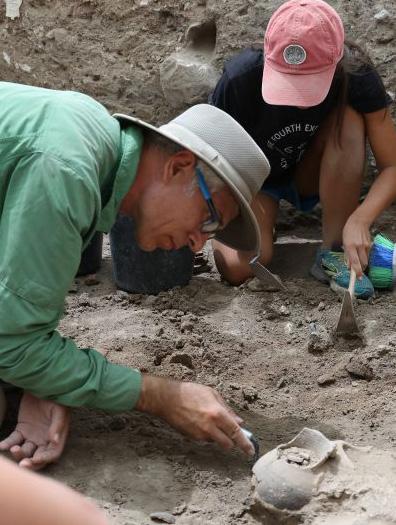
On the first day of the Fourth Expedition to Lachish’s 2016 exca vation season, Katherine Hesler, a Southern Adventist University stu dent at the time, held a curious item. The object, which had just been dis covered, was fully encrusted in dirt and resembled a bone. Yet Hesler could tell there was something spe cial about it.
“We were still getting started with the project, still cleaning up, getting ready. … [The comb] was in the western corner of the square, and we hadn’t even dug that much,” Hesler, who was the square super visor, recounted in an interview with the Accent. “ … I remember holding it in my hand. It was not a perfect square … sort of a squaredoff piece, which is unusual. I defi nitely did not know what it was, but it was a curious thing. It was obvi ously something unique.”
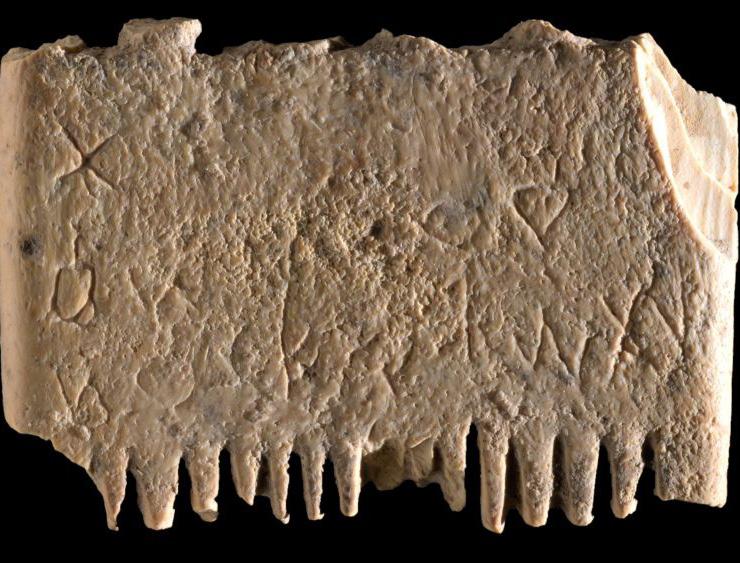
Hesler placed the strange object in a bone bag to be stud ied by the team’s zooarchaeolo gist, Ed Maher. Later that day, he contacted the digging team to tell them that the object was actually an ivory lice comb.
“There weren’t a lot of bones to analyze, so he immediately went to work,” Michael Hasel, Southern archeology professor, said in an interview. “ … By that evening, he contacted us and said, ‘Look, this thing that you have in this bone bag is not a bone; it’s actually ivory,' which is technically a type of bone. He says, ‘It’s elephant ivory. I’ve cleaned it, and it looks like it was an ancient comb. I can see the remains on both ends of the actual teeth that were broken off in antiquity.’”
Hasel is co-director of the Fourth Expedition to Lachish, a five-season excavation of Tel-Lachish, which was the second most important city in Judah after Jerusalem. Southern is a partner in the expedition, which
occurred from 2013 to 2017.
When the comb was discovered, the team was excited, said Hasel, but the artifact, like hundreds of other artifacts found that season in Tel-La chish, including sling stones, arrow heads, pieces of mail armor and loom weights, was sent to a lab in Jerusalem to wait for post-processing.
A Breakthrough Discovery Unbeknownst to Hasel and Hes ler at the time, an inscription was engraved on the comb. Earlier this year, Madeleine Mumcuoglu, a par asitologist and archaeologist at the Hebrew University of Jerusalem, found the inscription. Soon after, Daniel Vainstub, a semitic epigra pher from Ben Gurion University, deciphered the inscription and realized it is the oldest, fully deci pherable alphabetic sentence ever discovered. According to Hasel, it consists of 17 letters written in the Canaanite alphabet, dating to about 1700 B.C., and translates to,
Alana Crosby Edior-in-Chief
Editors Note: The Accent is pub lishing this story with the consent of the family, which hopes sharing their experience will help others whose loved ones are struggling with emotional instability and/or mental illness.
Fourteen-year-old Hudson Baker loved making people smile, accord ing to his father, Andy Baker, an assistant professor of applied tech nology. The teenager accomplished that goal by wearing bright-colored outfits and unique accessories.
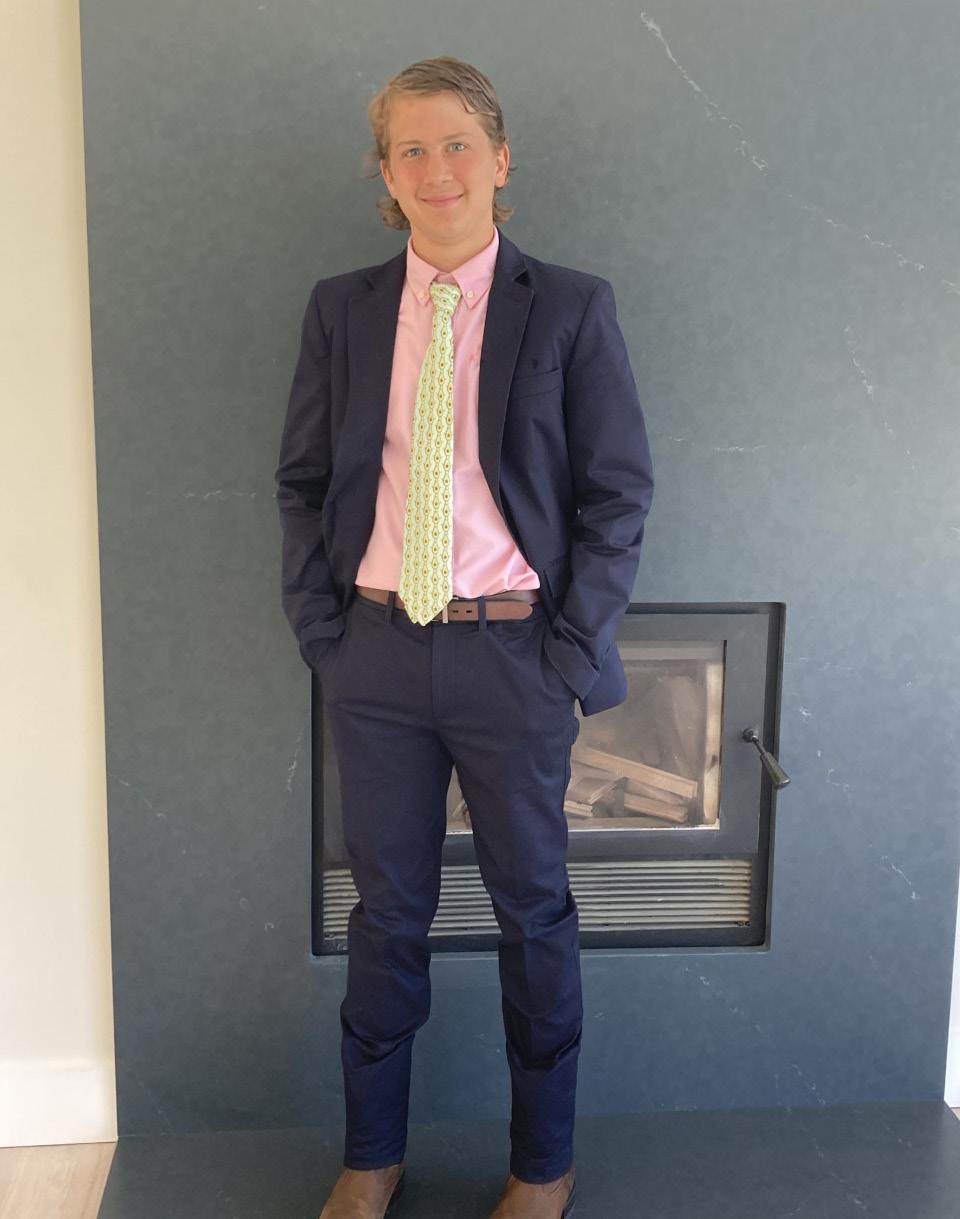
“I think he loved to stand out whether it was with a weird hat, or having his hair long or wearing [a] bright, different pair of socks for every day of the week,” the father said in an interview with the Accent while reflecting on his young son’s life. “I think he enjoyed making other people happy and feel good by his goofy little moves.”
Andy Baker made the com ments in his office at Southern Adventist University about four weeks after the loss of his son to suicide. As the Thanksgiving holi day approached, the family strug gled to heal and cope with the roller coaster emotions associated with the untimely death. However, they remained grateful for the love and support they received from the Col legedale community in the wake of the tragedy.
“My wife and I have been blown away by the love [and prayers we received],” Baker said. “It's been a month ago now. The amount of support from the college, from the boys’ school, from our churches, it has been a lot. It has been over
whelming. We are definitely riding the wave of a prayer.”
Hudson was the middle-child in a family with three boys, an eighthgrader at Collegedale Academy and a dedicated student. His father said he enjoyed learning and worked hard to achieve good grades.
The teenager also had a compas sionate spirit, according to those who knew him. After his death, his family received a flood of letters from parents recounting how he impacted their children’s lives. The letters depicted Hudson seeking out and befriending bullied, lonely and friendless schoolmates, reveal ing his kind spirit.
“We have been told how Hud son would be the one that would be nice [to other children], or that he would give them a part of his lunch,” Baker said. “And that's a very interesting thing, because Hudson never told us any of this.”
On Oct. 21, the family held a memorial service to celebrate Hud son’s brief life. The event drew hun dreds of people, including many of the teenager’s schoolmates, teach ers and friends.
While memorializing his son, a visibly emotional Baker stood in front of the audience and recalled his son’s active imagination, which engendered various theories and mind-bending conundrums.
“Hudson had all these crazy ideas; [they] would wear me out,” Baker said. “He was the ‘what-if’ guy: ‘What if cars could go under water?’ ... But so many of these crazy ideas would come to life.”
One day, Baker was half-listening to Hudson brainstorming about one of his ambitious projects, but
Baker’s mind was somewhere else. The next day Baker returned home to discover that the concept Hud son envisioned had become a real ity. Using a mountain bike, some rope and a ladder, Hudson had cre ated a simulation device to practice popping wheelies. Baker said it was exactly how Hudson had explained it, and he [Baker] had blown it off as just another “wacky” idea.
Baker also recalled his son hav ing a special bond with his mother, Wencke Baker. During the memo rial service, he referred to their rela tionship, saying, “She just got him.”
Though Baker had a little more difficulty understanding his son, he said he and Hudson worked together on many projects.
“We just moved into a brand new house and all my boys worked on it,” he said. “I mean, we built it all. Other than just roofing, masonry and drywall, we did everything. And so we framed it, put the win dows in, put the hardwood in, trimmed it … We did a lot of neat projects and things.”
In addition to ventures at home, Baker said he made it a point to take one of his sons on a trip every other year. He and Hudson went to Alaska when Hudson was in sec ond grade, which did wonders for their relationship.
“I was really happy that we could have that one-on-one time,” he said. “On that trip something hap pened, like we got very bonded. We came back, and it was just different. We were really buddies.”
Hudson loved books, so much so that his parents would have to
“May this tusk root out the lice of the hair and the beard.”
News of the discovery took off on Nov. 10. Soon after, publications around the world, including The New York Times, ran stories about it.
“To find an artifact from 3,700 years ago is incredible, but to find one that has a complete sen tence is a breakthrough discovery,” wrote Southern President Ken Shaw in a statement to the Accent.
“I am very proud of Dr. Hasel and his leadership in working with professor Yosef Garfinkel from the Hebrew University of Jerusa lem and engaging our students in uncovering the many mysteries of ancient Biblical times.”
Hasel realized the significance of the inscription when he received the epigrapher’s analysis confirm ing that the writing’s script dated back to the second millennium. After the story came out, however, he was
New lighting and cameras are being added to campus, accord ing to Marty Hamilton, associ ate vice president for Financial Administration.
The project, a collaboration between Campus Safety, Financial Administration and Information Technology, involves a four-phase proposal to add more CCTV cam eras to campus. Phase one has been approved by administration.
Phase one of the proposal would add 25 exterior cameras covering the Hulsey Wellness Center, Taylor Circle West parking lots, the track, the tennis and pickleball courts and the sidewalk to the new SuCasa Church. These areas were included in the first phase because Cam pus Safety found that they had the highest number of incident reports, according to the proposal.
The CCTV proposal is a fouryear plan to add cameras across campus. After phase one, the next three phases would add cameras to many of the parking lots across campus and some of the entry and exit points of campus. Each phase is estimated to cost around $40,000.
While cameras on campus are helpful to Campus Safety, they typ ically do not stop incidents from happening, Hamilton said.
Cameras on campus record to a server that can be accessed by Campus Safety. Campus Safety can also pull up the live feed of a cam era on campus when necessary, according to Haas.
“Cameras have been used in the past to help resolve incidents. The
on
Baker
Suicide Prevention Tips
If you or someone you know is struggling with thoughts of suicide, help is available. For the Suicide Crisis Lifeline, text or call 988 to speak with a trained crisis counselor.
If you know of someone who is having suicidal thoughts, Healthline provides the following tips: 1) Don’t be afraid to ask them directly, and encourage them to talk about it. 2) Offer support and encourage them to seek professional help. 3) Stay with them. 4) Involve others. 5) Let them know they are not alone and they have been heard.
The student voice since 1926 November 30, 2022 Collegedale, Tennessee Vol. 78 Issue 10 An essay on memory and photo contributions Lifestyle | 7 Self-compassion and its impact on mental health Mental Health | 5 Soup-covered 'Sunflowers': An ineffective and flippant protest Opinion | 6 Paraphrase of two Psalms: 'You won't let me slip' Religion | 6
(Photos from left to right) The ivory comb and Michael Hasel and Katherine Hesler in area where comb was found
SAFETY on page 2 See HUDSON BAKER on page 3
(Photo credits: (Photo 1: Dafna Gazit, Israel Antiquities Authority) (Photo 2: Zachary Kast, Fourth Expedition to Lachish))
See CAMPUS
‘We are very broken’: Southern professor reflects
the life and untimely death of his late son Hudson
Southern archeologists uncover ancient lice comb featuring oldest alphabetic sentence ever discovered See LICE COMB on page 2
Campus Safety to add lights and cameras around campus
Matthew Orquia News Editor
Hudson Baker (Photo courtesy of source)
hit by the magnitude of the discovery.
“It kind of sunk in … when we started getting phone calls through all hours of the night, particu larly because of the time change between Israel and here, and Europe and here,” he said.
According to Hasel, the discov ery has been rewarding for South ern students, as several hundred worked on the dig site. Their sched ule was grueling, Hasel said, with a 4:30 a.m. wake-up time and 15-hour workday. He described this signifi cant discovery as payoff for the exca vating team’s hard work and sweat.
“Students are super excited,” Hasel said. “ … I’m getting emails from former students and col
“Not only is it sort of funny and sort of an inti mate snapshot of some body's real-world expe rience in a really unique way, but this is the old est alphabetic sentence that we've found."
leagues in different parts of the world [saying], ‘Look, [the news] hit in Denmark,’ ‘Look it hit in Austria,’ ‘Look at this news item here.’ … [However], the news is up for a day or two, and then it’s over. Peo ple move on to the next thing. So
CAMPUS SAFETY continued from page 1
new cameras will give Campus Safety a better view of areas that do not currently have coverage,” Haas said.
Since November of 2021, two suspects have been arrested and charged after incidents on South ern’s campus, according to previous Accent articles. One suspect was involved in incidents that included sexual assault and stalking. The
what’s going to be important is the scientific report that scholars are now going to be able to look at.”
Hasel added that the worldwide attention given to this discovery could bring an increase in atten tion, including increased funding and student interest, to Southern and its Institute of Archeology, of which he is the director.
The Path to Discovery
When Mumcuoglu first began studying the artifact, she did so under a microscope. It was not until she took photos of the comb with her iPhone and zoomed in that she saw the engraving.
Hasel explained that it was not unusual for the discovery of the inscription to take place five years after the comb was found.
“They say for every season you spend in the field, you have to at least figure on two years of publish ing the data,” Hasel said. “So, for a five-season excavation, it’s 10 years of publication minimum. And we’re in the middle of that right now."
After Mumcuoglu found the inscription, she contacted Hasel, who then called Hesler, who is pur suing a doctorate in archeology at Lipscomb University in Nashville, Tennessee. At the time, however, she was in the Chattanooga area.
The professor and his former student met in Hackman Hall to study records of the 2016 excava tion. Hasel brought database doc uments. Hesler brought her field
other was charged with stalking.
Lighting campus is part of the efforts to make campus safer, Hamilton said.
“The track is probably the first area that we are going to address,” Hamilton said. “We have had some complaints that the lighting could be improved.”
Students who have concerns about lighting in an area on cam pus can talk to Campus Safety or a dean to raise the issue, Hamil ton said.
Campus Safety night shift offi
notes. They spread the various papers out on a table and began intently working to determine the discovery location of the comb. They succeeded, and by doing so pro vided helpful historical context to the artifact that would later be pub lished in the team’s scientific article.
Hesler later explained that the location of the artifact’s discovery was not easy to pinpoint.
“It was actually a little more dif ficult to pin down exactly where it was found because it was found in a pit,” she said. “ … These pits were probably from right before the destruction caused by Nebuchad nezzar. So, we basically just went through all the notes and found exactly where it had been located.”
“[Hesler] is a very meticulous archeologist,” Hasel said. “She had made a notation in her notebook — as she was supposed to do — but she did something beyond what she was normally to do, I think, and she actually marked where in the square [the comb] was found, just in a drawing she did by hand out in the field. That helped us tremendously.”
The Significance
Hasel said the comb, which comes from the Middle Bronze Age, was a surprise, as the expe dition’s goal in Tel-Lachish was to study the growth of the Judean kingdom through much later years.
“What made this discovery so exciting is that we weren’t working in a Middle Bronze Age context,”
cers also look for areas with insuf ficient lighting and lights that have gone out, according to Shawn Haas, associate director for Cam pus Safety.
“If an area is identified that should have a light that does not have a light, that is also turned in to plant service for evaluation for pos sibly adding a light,” Haas wrote in an email to the Accent.
Haas said that he felt appropriate lighting on campus helped prevent campus safety incidents.

When adding new lighting, the focus is on areas with the most student activity, especially where students are walking often, Ham ilton said.
“From the Bietz Center along Col cord Drive to Summerour we put in a brand new sidewalk. There’s no lights,” Hamilton said. “ … One of the things we’re wanting to do is light Colcord from the Bietz Center [to the] Spanish Church all the way to Summerour.”
When light fixtures that use the orange-glowing sodium vapor bulbs go out, they will be replaced with LED bulbs, accord ing to Hamilton.
Hasel said. “ … The fact that we actually found an artifact that dates back to that time period, at least based on the scripts and the shape of the script, is very significant.
He and Hesler both explained the discovery’s significant contribu tion to studies of the alphabet.
He added that hyper-critical scholars claim the Hebrew lan guage was invented during the time of Alexander the Great, around 332 B.C. If that statement were true, it would discredit the historicity of the biblical account. A Southern archeology team discov ered ancient Hebrew inscriptions in Khirbet Qeiyafa in 2008 and 2012, helping disprove that statement, said Hasel. Yet, the comb’s inscrip tion further strengthens the argu ment that parts of the Old Testa ment were not written hundreds of years after the events they describe.
“This is huge because not only is it sort of funny and sort of an intimate snapshot of somebody's real-world experience in a really unique way, but this is the oldest alphabetic sen tence that we’ve found,” Hesler said, “which not only is unique, but it also shows us that writing and then lit eracy was probably more common earlier than we may have thought.”
Hasel said the invention of the alphabet was one of three major innovations that changed commu nication forever, the others being the inventions of the printing press and internet. The alphabet was a breakthrough in literacy, he said, as writing systems beforehand, such as hieroglyphics and cuneiform, were enormously complex.
“The invention of the alphabet … was the most important contri bution that the Canaanites or the Semitic people or whoever did this in ancient times gave us,” Hasel said.
“Now, we have an alphabetic script that is not Hebrew but is using what later would develop into the Hebrew alphabet, the same alphabet,” Hasel said. “ … So we now have an inscription that is 1,400 years older than the time of Alexander the Great.”
Hasel continued to emphasize the importance of the role pri vate Christian universities play in biblical archeology.
“Why are we working in the Mid dle East? Why are we working in Israel? We’re Americans,” Hasel said. “ … I think first and foremost it’s because of our love for the Bible and our mission as Christians to understand that world better. That is what is going to keep this field going in the future. … It’s a field that’s not going to survive unless there are institutions like Southern that continue to invest and want to do those kinds of things.”
House Representative Chuck Fleischmann visits campus
Kathy Zelidon Reporter
Fresh from his victory as the continuing House representa tive for the 3rd District of Tennes see, Chuck Fleischmann came to Southern Adventist University on Nov. 10 to participate in a Q&A ses sion. The event was sponsored by the Pre-law club at Southern. At the end of the session, students in the audience could ask Fleis chmann questions through a QR code or by raising their hands.
Fleischmann answered ques tions, taught about the structure of the government and shared sto ries at the event.
The congressman began the Q&A by speaking about his back ground and the circumstances that led him to become a House representative. He recounted his childhood. His mother was diag nosed with terminal cancer when
he was 9 years old and died when he was a freshman in high school. His family lived in five different states and he went to a total of seven schools before he was 18.
During this time, Fleischmann found himself drawn to politics and sports.
“I was one of those rare young people who just happened to love politics at a very early age,” he said. “I love two things. I love politics, and I love sports, both of which are very competitive, and both of which I still do.”
Fleischmann has served Tennes see’s 3rd District for 12 years and will soon begin his seventh term.
He first ran for Congress in 2010 after being a lawyer for 24 years. He explained during the Q&A that he was motivated to run because he wanted to make a difference. Since he was not a local and a
Thatcher dorms reserve Hulsey Wellness Center for Girls Gym Night
Charlene Arnold Reporter
Every Sunday from 9 to 10 p.m., Hulsey Wellness Center is reserved for Girls Gym Night, an opportunity for all ladies of Southern to workout in the building, including the second-floor indoor walking track.
According to Associate Dean of Thatcher Hall Tisha Looby, Aug. 28 marked the beginning of the Sunday night ladies-only workout sessions. About 30 girls on average attend each week, said Looby.
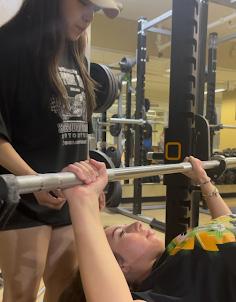
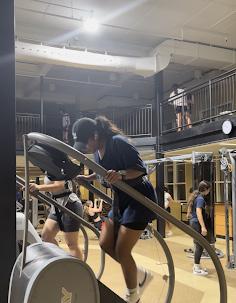
Looby added that Girls Gym Night takes place conveniently outside of Hulsey’s regular operat ing hours, and there has been no interference from the general public as a result. The Sunday night event requires no prior sign-up and is pro moted on the Thatcher Ladies Insta gram account, @thatcherladies, and via Southern email.
“There is no dress code for girls
Southern Accent
The Accent encourages readers to write articles and voice their opinions. However, the views expressed do not necessarily reflect the opinions of the Accent, Southern Adventist University or the Seventh-day Adventist Church. For any questions, comments and article submission information, email the editor at acrosby@southern.edu
For all advertising inquiries, email studentadmgr@southern.edu.
during this time,” said Looby. “I enjoy seeing the girls feel comfortable to work out as they please.”
Looby stated that the dean on duty for that Sunday monitors the gym door from 9 to 10 p.m. As long as there is a dean available during that time frame and no emergencies arise, All Girls Gym Night is expected to continue.
“We will try to keep it up,” Looby said. “A dean must be present at the gym during the after-hours but can be pulled away for an emergency at any time. Therefore, if we don’t have one available, then it has to
be canceled for that day. Depend ing on interest, if we notice that it is something that the girls really love, we will try to figure out a way to keep it going.”
Darin Bissell, facilities manager for the School of Health and Kinesiol ogy, also expressed his support of the event, which allows ladies living in the dorms to have the gym all to them selves and feel more comfortable.
According to Looby, the idea for the weekly event originated in a dis cussion among the resident assis tants (RAs), student deans (SDs) and herself one day in her office. Soon after this, she arranged Girls Gym Night for her workers.
“After I did it for my RAs and stu dent deans, I felt there would be a lot of other girls that would want to par ticipate,” said Looby.
Looby said that in her role as an associate dean of Thatcher Hall, she
has primarily served as an advocate for girls. According to Southern’s resident life page, Looby is known for her creativity and infectious laugh. The website also explains that Looby is not only an alumna and associate dean of Thatcher Hall
but also displays a great passion for ministering to young women.
“I am the dean covering Sigma Theta Chi, a girls’ club. So yes, in a way, my entire job is [arranging] all-girl events,” Looby said.
Editor-in-Chief Alana Crosby Managing Editor Amanda Blake
NEWS If you would like to be a contributor, contact
Crosby at acrosby@southern.edu 2 | Wednesday, November 30, 2022
Alana
News Editor Matthew Orquia
Collegedale News Editor Elsie Pak
Jacob
C
Sarah
Stefanie
Layout
Anton
Hannah
Web
Nickolas
Social Media Manager Anna
Lifestyle Editor Christina
Opinion Editor Xavier
Photo
Adam
Religion
Madison
Circulation Manager Norelie
Reporters Génesis
Charlene
Kathy
Photographers Preston
Ron
Mila
Staff Sponsor Alva James-Johnson
Sports Editor
Nevis
opy Editors
Klingbeil
Green
Designers
Kannenberg
Mortenson
Manager
Nieves
Estep
Cannon
Quiles
Editor
De Lisser
Editor
Wilcox
Cabrera
Ventura
Arnold
Zelidon
Waters
Cabacungan
Bales
LICE COMB continued from page 1
See CHUCK FLEISCHMANN on page 3
"We now have an inscription that is 1,400 years older than the time of Alexander the Great."
"If we notice that it is something that the girls really love, we will try to figure out a way to keep it going.”
Girls workout on Girls Gym Night.
(Photos courtesy of Tisha Looby)
Light on campus (Photo by: Preston Waters)
CHUCK
Roman Catholic, Fleischmann didn’t believe he would be able to win.
“I just really wanted to make a difference, but I never thought I'd have an opportunity to win,” he told the audience. “I got out there, I ran and I won. And thank God, I've been elected seven times since I was elected the other day. I love this country, and I love our pro cesses, but I never thought I would actually get a chance to win. I’m very thankful.”
Fleischmann explained his role in Congress. Since the Democratic Party held a majority in the House of Representatives before this cur rent election, and Fleischmann is a part of the Republican Party, he serves on the House Committee of Appropriations. The committee is in charge of the spending and budgeting in Congress. For a bill to receive the funding it needs, it must pass through the Committee of Appropriations first.
During each of his terms in office, Fleischmann has served on
HUDSON BAKER continued from page
three subcommittees. Currently, he is on the Energy and Water Development, and Related Agen cies subcommittee; the Labor, Health and Human Services, Edu cation, and Related Agencies sub committee and the Homeland Security subcommittee. With the
changes and will work with us, and if we will work with him, we may be able to accomplish some things. Candidly, we are going to have a very difficult government over the next two years.”
for six years, but he believes both parties and the president will be signing it off. A Republican sena tor had been blocking his bill for six years but will finally be retiring, allowing the bill to pass.
for office someday.
1
make him quit reading at night. And he loved playing baseball.
“He played on a really good base ball team that actually won the championship,” Baker said. “He was definitely not the best player on the team, but he was good. And in the last playoff game, and then in the championship game, he played his best ever. He played great, and I think he took so much pride in that. He loved it.”
Yet, even with all of the positives in his life, the teenager experienced emotional turmoil.
Baker said Hudson often worried about what people thought of him,
Republican Party becoming the House Majority in this election, Fleischmann assumes he will become the chairman of one of the first two.
Fleischmann was asked during the Q&A what he expected the Republican Party to accomplish in this upcoming term. He then explained that it has been difficult for his party to get things done.
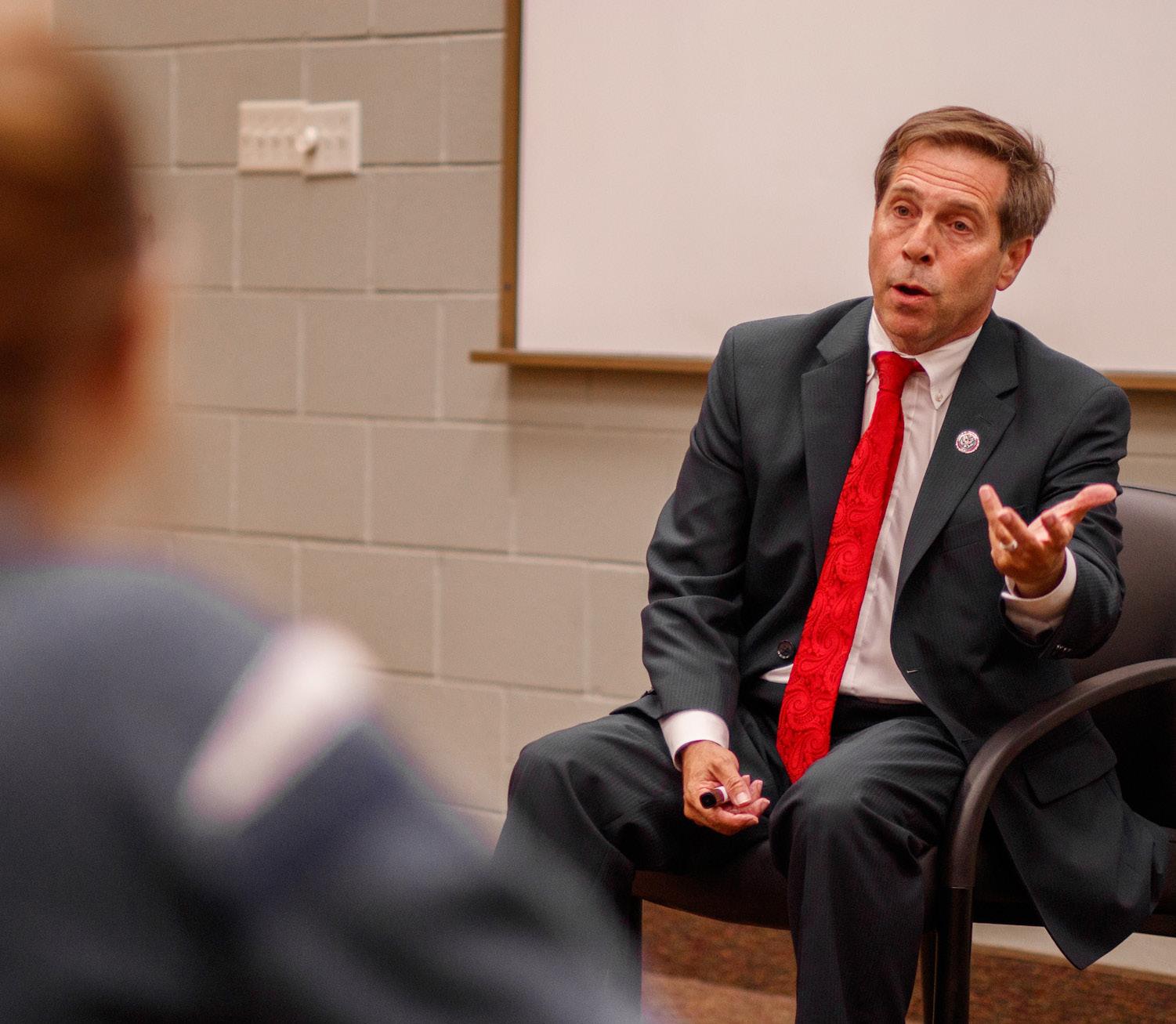
“I’ve been through three admin istrations, and so far this admin istration has been the most diffi cult to work with. President Biden has control of the Senate, and he's only been working with the Dem ocrats,” Fleischmann said. “If he
and as an eighth-grader, he told his parents he thought maybe he wanted to die.
“And we jumped on this,” Baker said. “We jumped on it right away. We talked to people at the school to let them know what was going on and ask for help.”
Hudson began seeing a coun selor at the school, “and he really enjoyed that. I think it really helped,” his father said. “He and I made sure that we would have our time in the evening where it would be a com pletely judge-free time, where he was encouraged to express what he felt and what was going on, and it was great.”
Just prior to Hudson’s death, everything seemed to be going
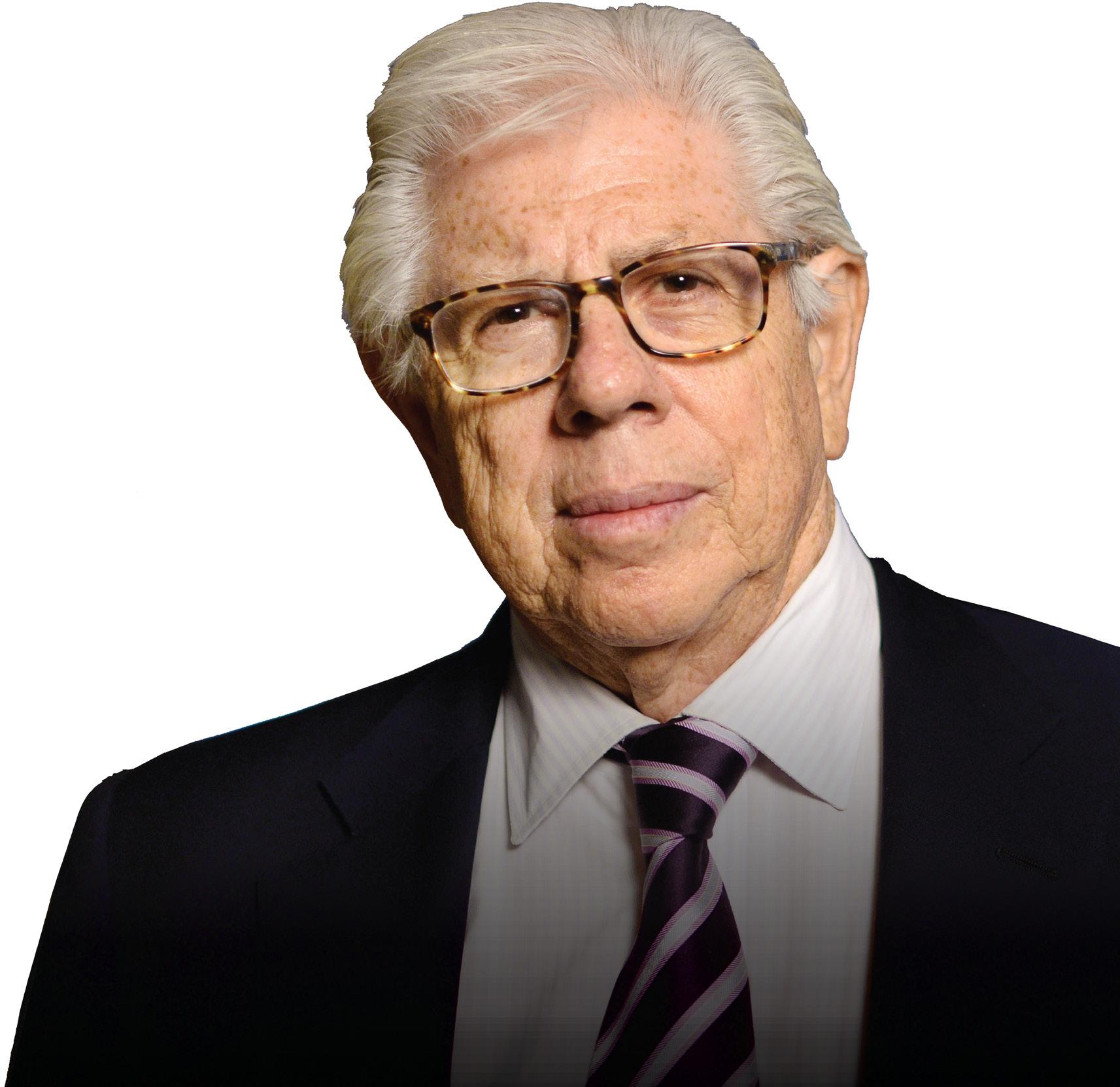
50 years after Watergate, hear legendary journalist
Fleischmann was then asked about his vision for bipartisanship in Congress. He told students that Congress has become more polar ized in the past few years since dis tricts have been voting for more left-leaning or right-leaning candi dates rather than moderate can didates. Despite this trend, Fleis chmann assured students that he is capable of working with both.
“I know what I'm doing when I get there. I know what to do on the floor; I know what to do on the committees and how to work with both bodies,” Fleischmann said. “Maybe I can take both of my skill sets, sit down and get some things done. That won’t be easy, but that's where you get the benefits of hav ing a skilled legislator and some one like myself.”
He explained that while the House is divided, he’s looking for ward to passing a bill to return 70 acres of land to the Cherokee nation. The bill has been in motion
well, according to his father. His mother had made an appointment to take the counseling to the next level, and Hudson was looking for ward to fall break. He wanted to just play in the woods, which he thought would be beneficial to his mental health.
“We had fall break, and it was great,” Baker said. “ ... Even on the last day, which was Sabbath, we had a good day. He had a brand new outfit that he had liked and wore to church, and we had a good afternoon, [but] that night is when he just made a choice.”
Baker said his son’s decision to take his life has caused other par ents to reach out to him and his wife about their families' mental
Finally, Fleischmann gave some words of encouragement and advice to those who want to run
“I don't care if you're a Repub lican, a Democrat or an Indepen dent,” Fleischmann said. “If you have it in your heart that you want to serve and run, do it. Pick the right race at the right time, and do it the right way. Do it.”
health challenges. At the funeral, several walked up to him and whis pered in his ear that their children were having suicidal thoughts, he said. He even heard from one par ent who said they struggled with such ideations.
Baker said it broke his heart hear ing the stories, and he hopes his family’s experience will help bring awareness to the issue and, ulti mately, healing to other families.
At the funeral, he encouraged peo ple with questions about his son’s struggle to contact him.
“You know, we on the outside probably looked like what most families I would think want to be,” he said. “We were the perfect Amer ican family, you know, boys playing
baseball, whatever. So, if there is any positive [outcome], maybe it got a family talking, maybe it got a kid talking, maybe it got a mom and dad talking.”
Now that Hudson is gone, the house that he and his brothers built with their father seems too big, Baker said. The family misses the boy’s vivacious spirit and the joy that he brought to the home.
In the wake of the tragedy, they continue to cling to their faith while working through the pain together.
“Things have very much changed,” said Baker, as he grieved the loss of his son. “We're very broken. … And we’re going to have to learn who we are now.”
Commission workshop members discuss reformatting public hearings
Elsie Pak Collegedale News Editor
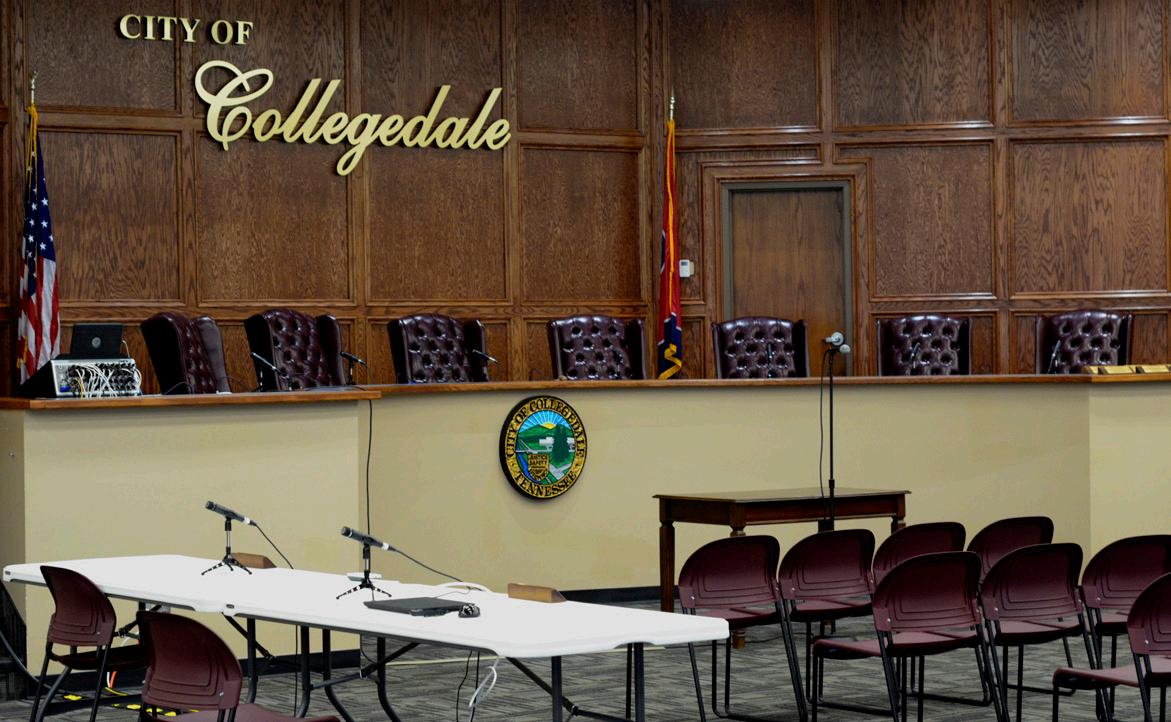
At the most recent Commission Workshop on Oct. 24, a discus sion arose among the members about changing the current pub lic hearing format process for Col legedale meetings. According to the agenda, which can be found on the City of Collegedale web site, the item was brought to the discussion floor by City Manager Wayon Hines.
Hines started off the discussion by posing a question to the other workshop members.
“Given the last case that had lots of public input, it would be good to discuss if there’s a bet ter way to manage, for the future, that the county allows the appli cant to speak for seven minutes, the audience to speak for nine, then the applicant to rebuke or
answer questions for an addi tional two,” Hines said, address ing the Oct. 17 commission meet ing discussed in a previous Accent article.
“What is said in those 18 min utes is said, and it’s up to each party to be concise in that length of time.”
Hines also noted that those ini tial numbers may be too strict, and there is a possibility of allot ting more time to the public hear ing portion. However, the goal, he said, is to create a framework for how to handle the process.
The members discussed the possibility of the public electing a spokesperson to represent them in the public hearing in order to avoid repetition of addressing the same issues over and over.
Commissioner Larry Hanson
asked what means of communi cation residents of the city have to address issues other than the public forum. Emailing the City of Collegedale website or the elected members themselves were offered as solutions.
Hines observed during this dis cussion that the time frame allot ted for the speaking is already longer than the stated times found in the municipal code.
“The municipal code states that during public hearings, each
speaker gets five minutes max imum, and that’s it,” Hines said. “Then each commissioner gets two to five minutes, which is something in a whole we don’t really follow, but I think decorum is very important.”
Another member proposed the idea of 15 minutes for public con versation and also receiving writ ten questions ahead of time.
Ultimately, the members made the decision to consider a change of format recommendation that will be presented at a later date and handled by Hines and Staff Planner Jason Allin.
The recording of this session can be found on the City of Col legedale’s YouTube channel, with the discussion about public hear ings taking place between marks 16:18 and 46:44.
NEWS
NEWS For more related news, visit our website at southern-accent.org 3 | Wednesday, November 30, 2022
COLLEGEDALE
Collegedale City Hall (Photo by: Adam De Lisser)
FLEISCHMANN continued from page 2
2 Cultural Credits southern.edu/truth Why Truth Still Matters Thursday, Dec. 1, 7 p.m. Iles P.E. Center
BERNSTEIN
United States Representative Chuck Fleischmann meets with Southern students to discuss politics. November 11, 2022 (Photo by: Ronnell Cabacungan)
CARL
"Pick the right race at the right time, and do it the right way. Do it.”
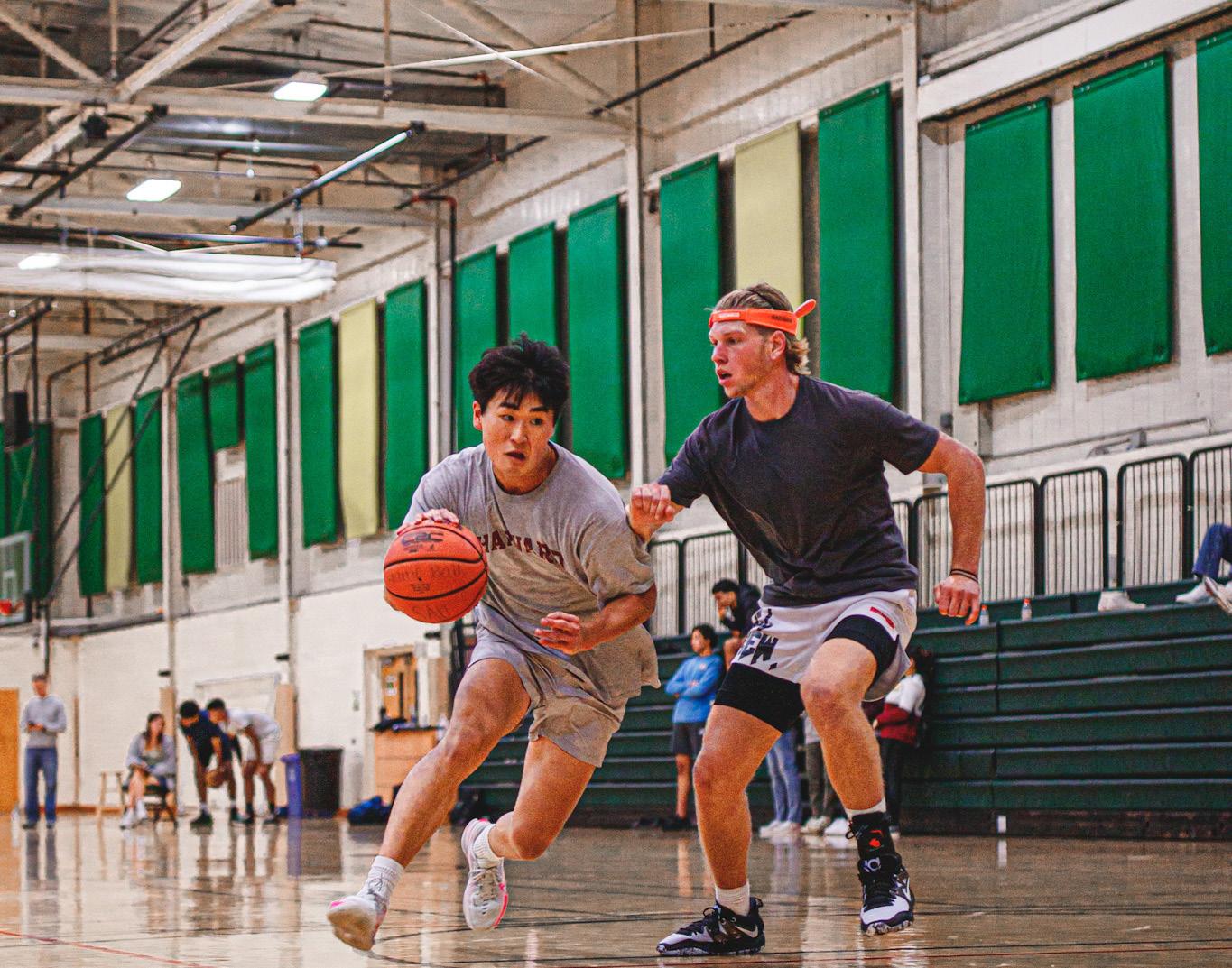
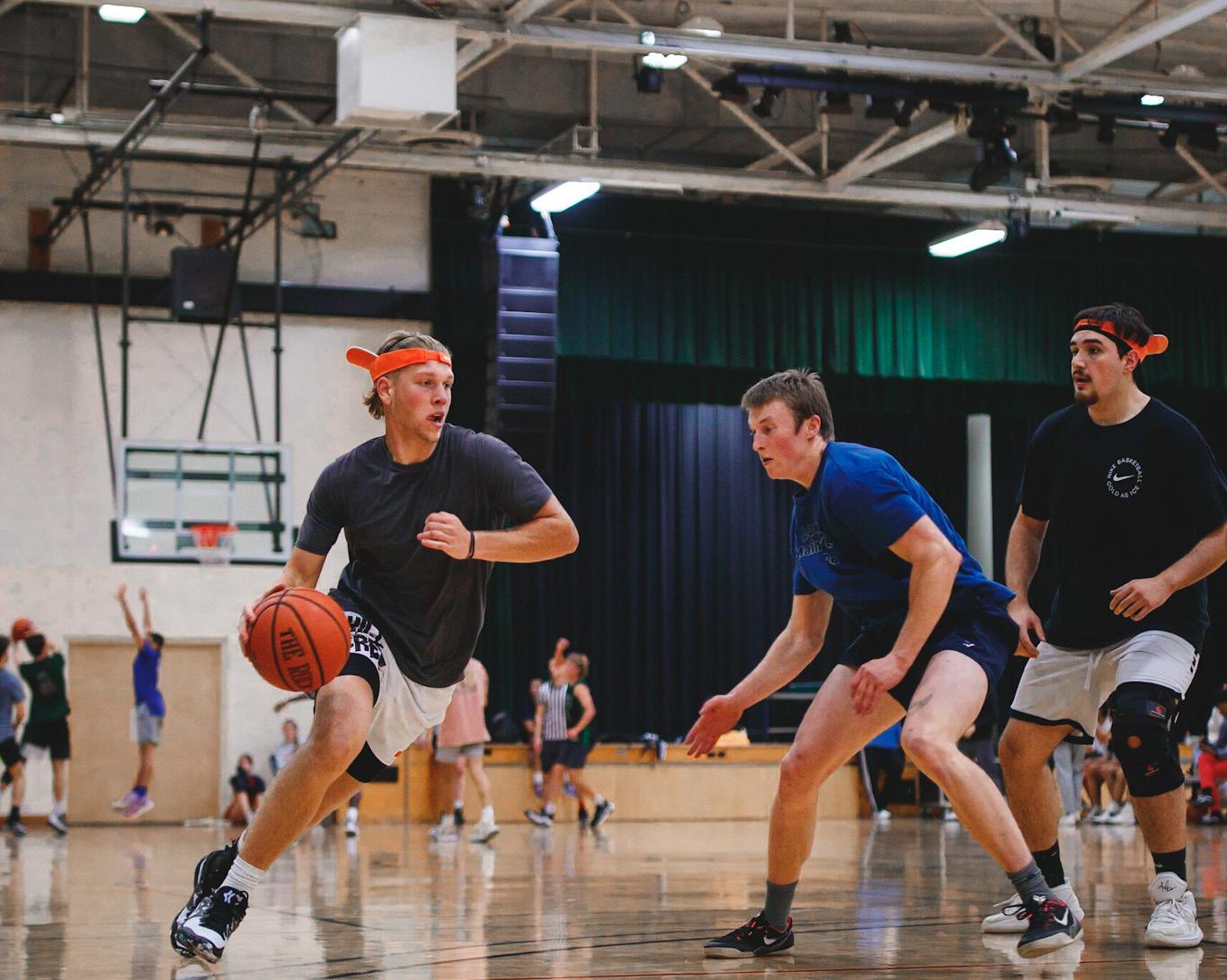
3v3 Basketball








If you would like to be a contributor, contact Alana Crosby at acrosby@southern.edu NEWS 4 | Wednesday, November 30, 2022
Daniel Im charges in against Nick Thompson.
October 22, 2022 (Photo by: Ronnell Cabacungan)
Gordon Cho takes a shot!
October 22, 2022 (Photo by: Ronnell Cabacungan)
Nick Thompson runs the floor past Noah Allen and Robert Estrada. October 22, 2022 (Photo by: Ronnell Cabacungan)
Emil Alav finds an opening underneath the basket to score against Sungrae Kim.
October 22, 2022 (Photo by: Ronnell Cabacungan)
Ben Bryant fades away from the net while Hica Tresor gets ready for the rebound.
October 22, 2022 (Photo by: Ronnell Cabacungan)
Lauren Keller lays it in to take the lead.
October 22, 2022 (Photo by: Ronnell Cabacungan)
Avana Im steals the ball away from Faith Pepple to prevent her from scoring.
October 22, 2022 (Photo by: Ronnell Cabacungan)
Self-compassion and its impact on mental health
Tiffany Bartell, LPC MHS Healthy Minds QEP Director
Have you ever said something harsh or unkind to yourself that you’d never say to someone else?
If so, you might be struggling with self-compassion.
What is self-compassion? It is the practice of extending the same kindness, warmth and sup port to ourselves that we give to others. Self-compassion enables us to have a non-judgmental, warm and understanding response to ourselves when we are suffering, make mistakes or feel unworthy.
According to an article by re searcher Kristin Neff, there are three main elements of self-com passion. The first is self-kindness instead of self-judgment. Accord ing to Neff, this involves a warm kindness we use with ourselves when we fail or struggle, instead of being hard on ourselves when

we feel we have fallen short or ig noring how we feel altogether.
If we are practicing self-com passion, we realize that every one struggles in their own way, and it is impossible to be perfect all of the time or be successful in everything we try. According to Neff, without this kind and rea sonable approach, individuals ac tually experience greater distress and harsher self-talk when they suffer. It can be hard to learn to speak to yourself with kindness, but it is possible. And the rewards are rich.
The second element of self-compassion is replacing iso lation with common human ity. Suffering and struggle, espe cially in college, can be isolating at times. It is easy to feel that you are the only one who is having a hard time in a class or struggling to make close friends. Neff points out that common humanity, how ever, points out the truth that all humans experience suffering,
and being human means that we are vulnerable, fallible and imper fect. Self-compassion removes the isolation and judgment and lets us see that we are part of the whole of humanity and not alone in our struggles.
The third and final element is mindfulness instead of over-iden tification. According to Neff, mindfulness allows us to be pres ent in the moment of our suffer ing or struggle and notice how we feel without judgment. Mind fulness helps us notice when we are struggling. It enables us to observe how we are feeling and thinking without over-identify ing with how we feel and conse quently allowing our feelings or experience tell us who we are or whether we are worthy.
How can self-compassion ben efit mental health? Studies out lined in a 2010 article published in “The Journal of Positive Psy chology” have shown that regu lar practices of self-compassion
have been shown to decrease de pressive symptoms and increase feelings of happiness. It also can lead to higher levels of life satis faction. Neff reports that practic ing self-compassion is thought to trigger the release of oxytocin.
Oxytocin is a hormone that in creases feelings of being con nected, calm, safe and trusting. Self-compassion enables us to ex perience those feelings towards and with ourselves. Being self-crit ical, according to Neff, is related to activation of the amygdala as your body detects the lack of emo tional safety that emotionally at tacking yourself creates. Practicing self-compassion also has the power to decrease the levels of cortisol — a stress hormone — showing that not only does self-compassion give you a positive emotional experi ence but also affects your body physiology, according to Neff.
Sold on self-compassion, yet? If yes, you might be wondering how to get started. I recommend start
ing off with Neff’s self-compassion test: https://self-compassion.org/ self-compassion-test/. If you take it online, you can see how you score in each domain, and it can offer you helpful advice on where to start in growing your self-compassion.
You may be surprised by the re sults. My results indicated that I scored well in mindfulness but also high in self-judgment, which af fected my self-compassion score.
The next step is to actually practice self-compassion. Neff’s website also contains specific ex ercises to increase your self-com passion: https://self-compassion. org/category/exercises/#exer cises. There are exercises of vary ing time lengths, and you can find scripts, as well as audio-narrated exercises.
Self-compassion might feel hard and unattainable, but feeling un worthy and being hard on yourself is also hard. Why not try self-com passion for your brain, for your body and for your happiness?
The NFL dedicates Thanksgiving football to the late John Madden
Jacob Nevis Sports Editor
This past week, many Ameri cans had the pleasure of being at home to spend Thanksgiving with their families and, of course, enjoy great food. A Thanksgiv ing tradition for some families is to watch football together. This year, the NFL dedicated the Thanksgiving football games to the late John Madden.
Madden is known to many dif ferent people and in many dif ferent forms. The Hall of Famer was a Super Bowl-winning coach for the Oakland Raiders. He was a sports commentator for foot ball games for a long time and called games for all the major networks. He also lent his name to the long-running football vid eo game series “Madden NFL.”
Madden was also well-known for his Thanksgiving celebration, helping football become synony mous with the holiday. He start ed the famous Turducken cele bration, during which he would hand out a Turducken to play ers of the game he commentat ed. Madden called 20 games on Thanksgiving day throughout his broadcasting career.
This year, the NFL honored Madden by renaming the an nual Thanksgiving day football gameday to the “John Madden Thanksgiving Celebration.” The players also wore a special de cal on their helmets of a picture of Madden, and there was also a special logo of the photo on the fields.


This Thanksgiving’s NFL games were also a huge success for the
franchise. The matchup of the New York Giants and the Dallas Cowboys was the most watched regular season game of all time, with 42 million viewers, accord ing to Fox. This helps show how football has become connected to the Thanksgiving holiday.
Next year, on Thanksgiving and for all the years to follow, the NFL will continue to honor Madden. For fans, he will forever be a sym bol of the sport’s special relation ship with Thanksgiving.
“There’s no place that I would rather be today on Thanksgiving than right here, right now, at a football game. There are just cer tain things that go together; the Turkey, the Family, the Tradition, Football … and we have it all to day.” – John Madden
Editor’s Note: I don’t believe the NFL would be where it is today without the help of John Madden. While I don’t personally remem ber Madden as an announcer, I, like many others, have still been touched by him. Some of my fa vorite video games to play grow ing up were the Madden games, and they helped further my love for the sport of football. All the different aspects of football that he was able to touch is the rea son why he is one of the most im portant people for the success of the NFL. Madden will always be remembered by football fans, and his legacy will never be for gotten.
Editor’s note: The following article is written in partnership with Counseling Services and the Southern Accent.
MENTAL HEALTH
“Self-compassion removes the isolation and judgement and lets us see that we are part of the whole humanity and not alone in our struggles.” (Photo by: Dave Lowe)
”
For more related news, visit our website at accent-southern.org 5 | Wednesday, November 30, 2022
“There are just certain things that go together; the Turkey, the Family, the Tradition, Football...
(Photo sourced from: Flickr)
SPORTS
Amanda Blake Managing Editor
I never used to consider my self an art person. I don’t draw; I don’t paint. I’m not even that good at graphic design. But, after spending five transforma tive months studying in Europe, I came to appreciate art — the detail, the story, the emotion behind every brush stroke and chiseled crevice.
I cried when I saw Michelan gelo’s Pietà for the first time, resting near the entrance to St. Peter’s Basilica, surround ed by fervent silence. That is why I was appalled when I first watched the video of a man disguised as an elderly wom an throwing cake at the “Mona Lisa,” Leonardo Da Vinci’s most famous painting. The dissident shouted at his fellow Louvre vis itors to “think of the earth.” That was May, the beginning of an ac tive protest season full of similar affronts to famous artworks.
In July, climate activists in Flor ence’s Uffizi Gallery — perhaps the most gorgeous building I’ve ever wandered through — glued their hands to the glass covering of Sandro Botticelli’s “Primavera.” Around that same time, members of Just Stop Oil, an environmental activist group based in the United Kingdom, spray painted around and/or glued their hands to artworks in Glasgow, London and Manches ter, including Vincent van Gogh’s “Peach Trees in Blossom” and a copy of Da Vinci’s “Last Supper.”
The group has dramatical ly resurfaced in the past two months, with members throw ing soup on Van Gogh’s “Sun flowers” and “The Sower” and mashed potatoes on Claude Monet’s “Les Meules.” They show no signs of stopping.

None of the paintings target ed by Just Stop Oil have been permanently damaged, and Phoebe Plummer, a protestor who tossed soup at “Sunflow ers,” stated in a viral video that the group would not have used such messy methods if they didn’t know the artwork was guarded by glass.
I respect that logic. In their post-protest tweet, Just Stop Oil wrote, “Is art worth more than life? More than food? More than justice?” I respect those questions and the necessary conversation on climate change they were meant to generate. I respect Just Stop Oil’s commit ment to drawing attention, but I cannot ignore the flaw in their method of doing so.
Although a key component of their message is the importance of art — if art were not important then stating that life is even more so would lack significant mean ing — I do not believe that com ponent is being properly com municated. After Just Stop Oil’s unique protests go viral, many individuals (perhaps the major ity) don’t read comprehensive articles or visit Just Stop Oil’s web site to learn the organization’s reasoning behind their actions. They watch the videos, share them with friends and talk about them with coworkers. And they’re talking about what they see: envi ronmental activists disrespecting and temporarily defacing art.
A 2020 study on extreme pro tests and their effects on public
support, published in “Journal of Personality and Social Psy chology,” found that extreme protest actions, including van dalism, often reduce support for social movements’ funda mental positions. I am afraid Just Stop Oil’s protests will fol low this trend and people will begin associating Van Gogh’s iconic “Sunflowers,” symbols of gratitude, tarnished by soup with the protestors who threw the soup and the movement they represent. Just Stop Oil’s intention won’t matter; public support will likely fall.
I visited the Van Gogh Muse um in Amsterdam. I journeyed through the artist’s tragic life by studying his work up close, and I was moved by his passion
for the common man and the peace of nature.
Just as I cannot ignore the flaw in Just Stop Oil’s method of communication, I cannot ignore the disrespect they’ve shown to ward artists such as Van Gogh, who said: “A good picture is equivalent to a good deed.”
Many of the artistic master minds whose works have been recently blemished created to inspire, to get people thinking, to make a statement, to commit a good deed. That may be what these climate change protes tors believe they are doing, but I cannot support those who, by trying to stop harmful destruc tion, mimic that destruction and disrespect beneficial cre ations such as “Sunflowers.”
RELIGION
Paraphrases of two psalms: ‘You won’t let me slip’
Madison Wilcox Religion Editor
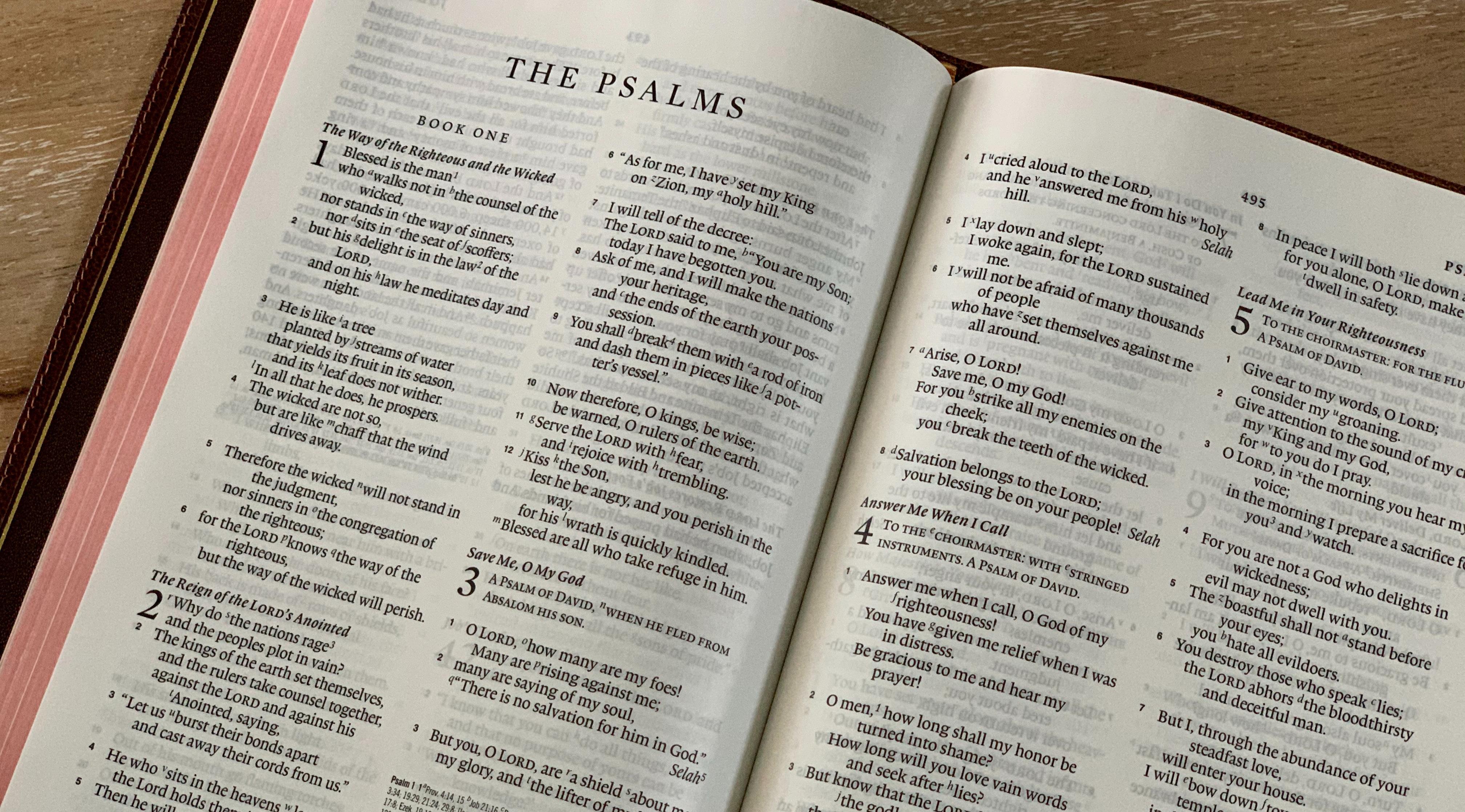
Psalm 121
I need help, so I’m looking up, up to the highest thing I can see.
Right now it’s just the Tennessee hills, but that’s the closest I can get to heaven, where you are.
I know my help comes from you because you made this place.
You made the blue sky and the chock-full earth.
And I know you won’t let me slip, even when it’s my fault that I stepped on the wrong foothold.
I know you can take care of everything because you never have to stop taking care.
Yes, you’re the one that takes care of me; you’re always there, and you’re always awake, too.
Yes, you take care of me; you are a place of refuge from the burning sun of stress and work and school and everything else I can’t figure out for myself.
Because of you I know it won’t bring me down.
I won’t die by its heat or by its haunting residue that shines over me, even at night.
You will protect me from ev erything that tries to destroy me; you will keep the deepest
parts of me from falling apart.
Everything I do will be shield ed by your hand; wherever I go you will protect me.
And all of this will go on and on without end.
Psalm 18:28-33
You’re the God who puts the flame on the piece of wax I hold out to you.
Somehow you know where the light switch is in any room.
I know you’re strong because with you, I’ve run.
Not away from my enemies,
but straight at them.
Together we have jumped higher than I ever could by my self; we’ve leapt straight over walls that for years I tried to scale alone. It’s you.
Every single step you take is the right one.
Every turn on the path you lead me down is flawless.
Your words have been trusted before, and they’ve held weight every time—anyone’s weight, my weight.
It’s a proven fact: you’re trust worthy like a shield made of dia
mond, as bright as a star.
No one can take your place.
You’re like a mountain, steady through the seasons.
And you are the one that makes these weak arms strong.
You help these stumbling feet walking down the flawless path in any situation.
You’ve given me new feet even, tough like a deer;so unlike mine that after all these miles I look back, and it’s like you’ve lift ed me up in your hand and set me right at the top of the moun tain I was trying to climb.
If you would like to be a contributor, contact Alana Crosby at acrosby@southern.edu 6 | Wednesday, November 30, 2022
OPINION
“Many of the artistic masterminds whose works have been recently blemished created to inspire, to get people thinking, to make a statement, to commit a good deed.” (Photo by: Diogo Fagundes)
soup-covered ‘Sunflowers’:
and flippant protest “Yes, you take care of me; you are a place of refuge from the burning sun of stress and work and school and everything else I can’t figure out myself.” (Photo by: Tim Wildsmith)
Tomato
An ineffective
LIFESTYLE: Arts & Ideas
An essay on memory and photo contributions
Christina Cannon Lifestyle Editor

“Tell me, what do you remember?”
Not much.


I struggle under the weight of the work of trying to dredge up the past.
I hear no echoing footsteps, catch no scent of simmering cranberry sauce or scorched Brussels sprouts. Shreds of images and sensations begin to catch in the cogs of my brain then evaporate before they can run in front of the projector light of my mind so I can relive them.
Memories somehow never just roll out as they happened; they’re like
dreams — a scene here, or a keen glance or shoulder-slump of disap pointment there, drops into con sciousness that are suddenly gone. But this is different — here, there’s nearly nothing at all, nothing to be caught and relived.
I remember that I have forgotten that my memory is not my own. I ex pect it to be something I can beckon at will, as if I had the ability to stand on the rocky shore of the Oregon coast and summon a cold, lively wave to wash over me if I wanted. But mem
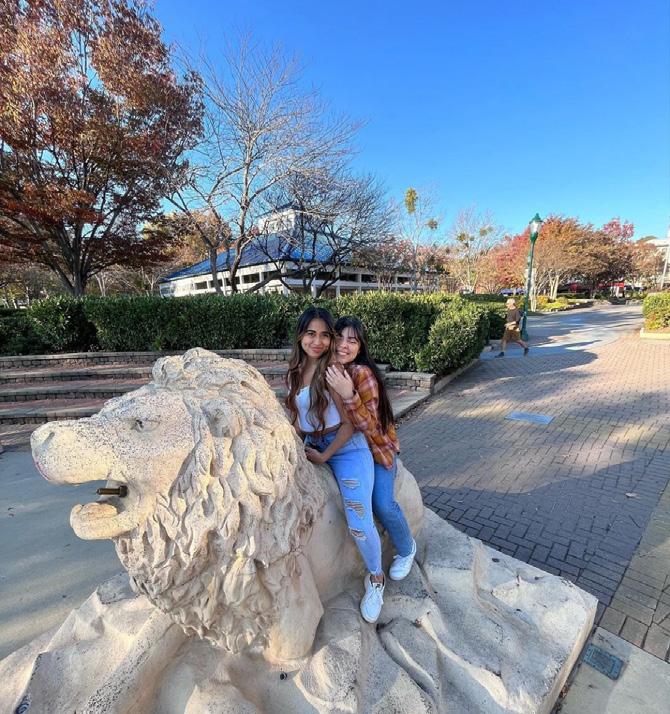
ory is communal, a web knit of path ways between people, like the little racetracks that deepen and run be

tween neurons to speed up the pro cess of remembering and imagining (which are nearly one in the same). The little “Remember when…?s” ex
changed between people, when they momentarily live in the past as well as present and therefore live more deeply, are what turn a group of people into a communi ty. Shared history is what knits the neurons together.
Every holiday spent with a dif ferent family member in a dif ferent state quickly eats at these networks of wrinkles in time, as if a spider was trying to crochet its web in a rock in a tidepool, and waves keep washing away the
“ties that bind” as they begin to appear.
Holidays, I remember, are about building this communal memory, setting signposts to measure life by (“A year ago today…” “By this time next year…”).
“Tell me, what do you remember?” Let me get back to you on that.
I’ll have to ask the others who were there. Perhaps I ought to share a Christmas with them this year, and ask them to help me find my place in our web.
Kevin’s Holiday Gift Guide



It’s that time of year again, the season of getting. I mean giving. With Christmas fast ap proaching, I have decided to lend a hand to you poor addled folks searching frantically for the right gift for a special per son. Keep in mind, the best gifts are thoughtfully picked out with the receiver in mind.
Unique Gifts for close friends and family
Fill-in-the-blank book: These little books include fun graph ics and prompts to write short notes. They are a good choice for the friend who has it all
Apple AirTag: For the person who is always losing everything.
For your roommate
Photo album: A timeless col lection of memories.
Merch from their favorite city/hometown: Everyone loves a hoodie or a t-shirt represent ing their roots.
For your significant other Thankfulness Journal: So they can remember how thank
ful they are for you.
A mixed tape: Just because cassette tapes and CDs have fallen doesn’t mean personalized playlists must follow their demise.
Dear Kevin: How do I avoid political arguments with my family during the holidays?
Dear Non-Confrontational Conversationalist:
Dinner conversations can often go downhill as family members with a wide range of perspectives and beliefs gath er to celebrate the holidays.
At the risk of sounding cheesy, remember that Christmas is about goodwill and cheer. When a conversation starts to take a turn for the worse, try to pull it back to a happy place. Yes, your opinion is valid. But consider whether the comment is worth a possible nasty argument. If you must weigh in on a politi cal conversation, remember to make your point concisely and respectfully, and be respectful of other people’s opinions as well, even if they’re wrong.
For more related news, visit our website at southern-accent.org 7 | Wednesday, November 30, 2022
Kevin Southern Accent Mascot
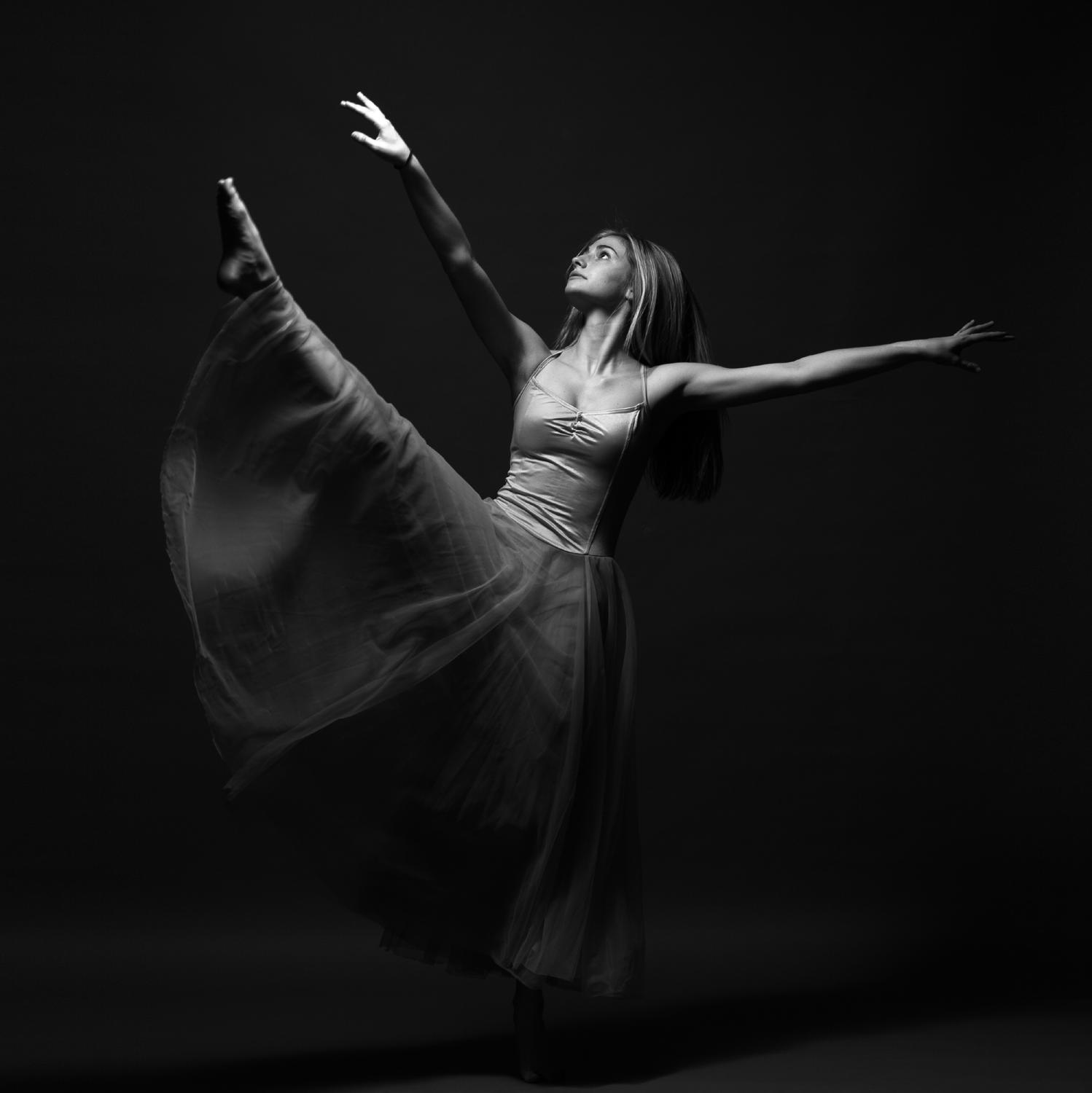
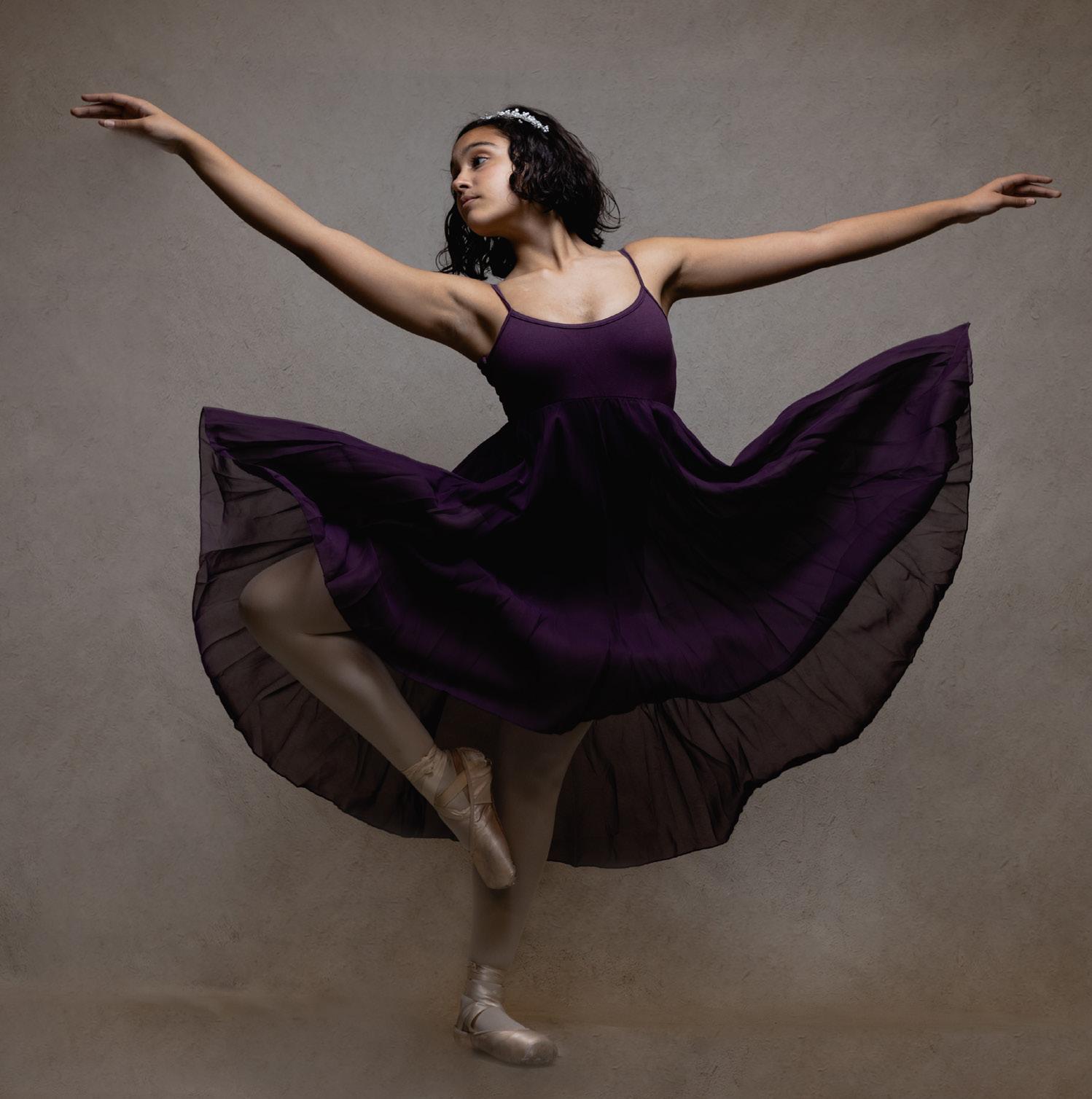
Gracie Tyson extends her leg through Développé (Photos by: Maiya Banks)
Riley West places her foot in a Passé position
Congratulations @alan.baur20, you found Kevin last week! Your prize is waiting for you in the Student Development office. For a chance to be featured, use or tag @sauaccent on Instagram in your posts! Dear Kevin SOCIAL iammaryzp My loves! Stay with me for the rest of my life
Shared history is what knits the neurons together.
#SAUlife
in case you forgot….
lilmisslady
María Hernández
juliajjuler rainy day jamileethh always a good time w you <3
Mile Piñero M M
Julia Juler
allizon_sky7 Just long enough to Walden it with you caleb_alvare I don’t know how to longboard
Jessica Galdamez J
Allison Grundy
A C Knowing that students love footlongs, Kevin is offering a DM us on Instagram with a photo of where Kevin is hiding! $10 Subway Gift Card! J
Caleb Alvarez
11:00 a.m. Convocation: SA Town Hall, Iles PE Center 7:00 p.m. Lynn Sauls Lecture Series - Carl Bernstein, Iles PE Center
Basketball Sign-ups begin Payday: Hourly/Students 5:28 p.m. Sunset 6:00 p.m. Star Watch, Hickman Parking Lot 7:30 p.m. Vespers: Joseph Khabbaz, Col legedale Church 8:45 p.m. Afterglow, Collegedale Church South Atrium No Field Trip or Tours 7:00 p.m. SA Christmas Party, Bietz Center
9:00 a.m. Adoration Worship, Collegedale Church 9:00 a.m. Connect Worship, Student Park Goliath Wall 11:45 a.m. Renewal Worship, Collegedale Church 11:45 a.m. Merge Worship, Lynn Wood Chapel 5:30 p.m. Evensong: Harp Ensemble, Col legedale Church 8:00 p.m. Wind Symphony Christmas Con cert, Iles PE Center 12:00 p.m. Sophomore Success, The Grid at Bietz
Weekly Birthdays
TODAY |30
Carmen Barber Benjamin Bryant
Kaleb Coleman Anita Collins
Ashley Hill Melani Huerta-Casta
neda

Avana Im

Carole Innocent
Charlotte Ishikawa
Jeremy Luedtke
Gabrielle Newman Mel Owiti Melissa Tornel
Rossy Vargas Zapata Noah Wolfe
Thursday |1 Collette Hannawi
Dwight Marbun Amanda McClellan Julian Mercado Annette Metz
Ishmael Perez Helen Pizarro
Katelyn Savino Friday |2
J.T. Appel Celeste Brooks Lauren Lapham Caleb Mohns Esther Reese Leesh Zheng Saturday |3
Diana Alarcon
Daisy Almeida Sarah Gregory
Joy Harwood Beatrice Ngugi Verenize Romero Olivia Slabbert Jennifer Watkins Sunday |4 Roy Cho Taylor Donato Wendy Hall
SA Announcements
Kleber Hernandes

Felicia Ju Ira V. Mills



Ian Olson
Emma Tol Eve Tol
Monday |5
Malia Berry Ethan Emde
Stefanie Green Katherine Harter
Abby Kishihara

Sadie Lujan Gabriel Mays Daniel Patil Gary Whitney
Tuesday |6 Luke Foster Betsy Mansilla Marcus Maynes Julie McKinney Ysani Pena

The SA Christmas Party is this Sunday at 7 p.m. Stop by with your ugly Christmas sweater, and sing your favorite Christmas jams. It will be an evening of joy and cheer. Come to Bietz Center on Dec. 4, you will not regret it!

Check out our website! www.southern-accent.org


12:00 p.m. Tornado Siren Test

MASTER’S DEGREE IN SOCIAL WORK Facilitate Positive Change in People’s Lives
Southern’s Master of Social Work program prepares you for excellent service and leadership positions.
It works Our evidence-based program equips you with effective intervention tools.
It’s convenient Classes meet all day Sunday, twice a month. With careful planning, you can complete a bachelor’s degree AND a master’s degree in five years!
You’ll be ready Our approach is competency based. That means you get hands-on skills and experience in social work practice while you’re in school.
Master of Social Work
With a multi-disciplinary approach and a variety of concentrations, an MSW from Southern prepares you to serve a wide variety of people in need.
at acrosby@southern.edu 8 | Wednesday, November 30, 2022
If you would like to be a contributor, contact Alana Crosby
CHATTER 61-30
58-48 62-55 64-45 Today — 30 Thursday — 1 Saturday — 3 Monday — 5 Friday — 2 Sunday — 4 Tuesday — 6
50-32 62-49 64-56
1.800.SOUTHERN • southern.edu/graduatestudies
filing
Senate, Bietz Center 3rd Floor Testing Room
Priority Deadline for
2023-24 FAFSA Payday: Salary 8:00 p.m. SA
