The Skinny is Scotland's largest independent entertainment & listings magazine, and offers a wide range of advertising packages and affordable ways to promote your business. Get in touch to find out more.
E: sales@theskinny.co.uk
All rights reserved. No part of this publication may be reproduced in whole or in part without the explicit permission of the publisher. The views and opinions expressed within this publication do not necessarily represent the views or opinions of the printer or the publisher.
Printed by DC Thomson & Co. Ltd, Dundee
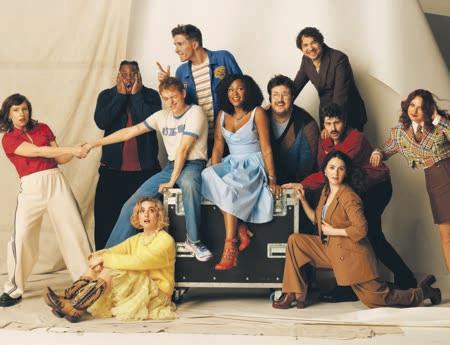
Meet the team
Championing creativity in Scotland
What work of art offends you to your core?
Senior
Rosamund West Editor-in-Chief
"Anything by erotica creep Jack Vettriano. The fact that his work's now on display in our national collections due to, presumably, a big £££ bequest is, frankly, embarrassing. "
Myrtle Boot Clubs Editor
"I do not wish to wade in on the separating the art from the artist debate, HOWEVER, I would like to see Gauguin get his comeuppance. Pervy colonial artists out for 2026?"
Laurie Presswood
General Manager
"The statues in Caesar's Palace that are like ancient greek replicas except every woman has had a pronounced boob job."
Sandy Park
Commercial Director
"Crushed velvet anything. Inspired by Dalila's Live, Laugh, Love hatred. The two go hand in hand."
Peter Simpson Deputy Editor, Food & Drink Editor
"Paintings of swans should *not* be allowed. Those are the King's property, stop exploiting their image or He'll see you in court."
Eilidh Akilade Intersections Editor
"I'd like to also rage against the wall art of short term lets. Would have a much nicer time on holiday without playing witness to a blurred image of the New York skyline."
Production
Dalila D'Amico Art Director, Production Manager "Live Laugh Love signs. A phrase so inspirational it can be found in dentists waiting rooms, budget Airbnbs and the depths of human despair."
Joanna Hare Business Development Executive
"The Duke of Wellington without the traffic cone on his head."
Anahit Behrooz Events Editor, Books Editor "A 4000-word Substack about offensive art."
Rachel Ashenden Art Editor
"Anything by Damien Hirst. It's estimated that 900,000 animals have died for his art."
Phoebe Willison Designer "NFTs."
Jamie Dunn Film Editor, Online Journalist
"Those paintings of psychedelic Highland coos that you find in every tourist tat shop on the Royal Mile and hanging in every Scottish Airbnb. Plus anything made with AI, obvs."
Polly Glynn Comedy Editor
"A wall-mounted volcano at the Berlin Museum of Modern Art circa 2012. I thought I might get it more if I stuck my head inside. Cue four verrrry angry German security guards rescuing me from the artwork."
Ellie Robertson Editorial Assistant
"The opposite of Laurie's answer; anytime there's a picture of David but the crotch is censored. Michaelangelo spent days chiselling away on that thing."
Ema Smekalová
Media Sales Executive
"I couldn't think of anything so asked my mom what she would say for the lols. She went with the medieval anti-witchcraft treatise, Malleus Maleficarum by Heinrich Kramer. OK, pop off."
Emilie Roberts Media Sales Executive
"Still life paintings of fruit bowls offend me because they're boring, but then John Berger says they're capitalistic so now I have a real reason, which is cool."
Tallah Brash Music Editor
"I saw a big (not that big) hook at [redacted] recently and the artist wanted £30k for it. Absolutely not, mate."
Mika Morava Theatre Editor
"Any gallery art that makes me think 'I could do that' and then go home and not be able to Do That."
Editorial
Words: Rosamund West
Art takes centre stage this June. Glasgow’s in for an even more exciting time than usual, as Glasgow International Festival of Visual Art arrives with its biennial programme and eleventh edition. This year there’s a new director, Helen Nisbet, at the helm – we talk to her about the thinking behind the 2026 edition, and the challenges of producing against the backdrop of threatened closures for some of the city’s more significant cultural institutions.
Community is at the heart of it – the new strand of Special Projects celebrates organisations deeply embedded in the communities of Glasgow including Easterhouse and Govanhill. Of course, it wouldn’t be an arts festival in Scotland without an adjoining fringe of activity outwith the official programme – we pick out some highlights from the DIY artists and galleries exhibiting this month.
Scotland has made a welcome return to the international stage of the Venice Biennale with a new pavilion by artists Bugarin + Castle curated by Mount Stuart. We take a tour of Glasgow-based queer and trans artist-duo Davide Bugarin and Angel Cohn Castle’s immersive installation reimagining crosscultural traditions of public shaming.
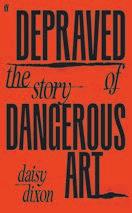
The design column sticks with the theme, talking to the duo behind a new collaborative print magazine straight out of Glasgow, Piscine. We talk to author and art philosopher Daisy Dixon about her new book, Depraved: the Story of Dangerous Art, about how to deal with harmful art and its makers.
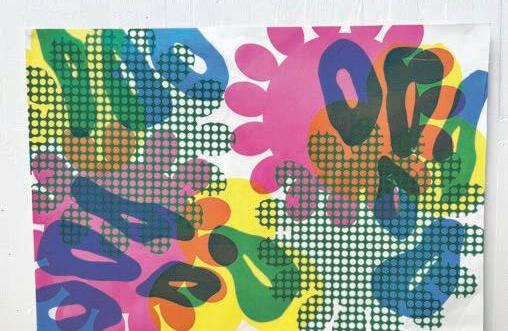
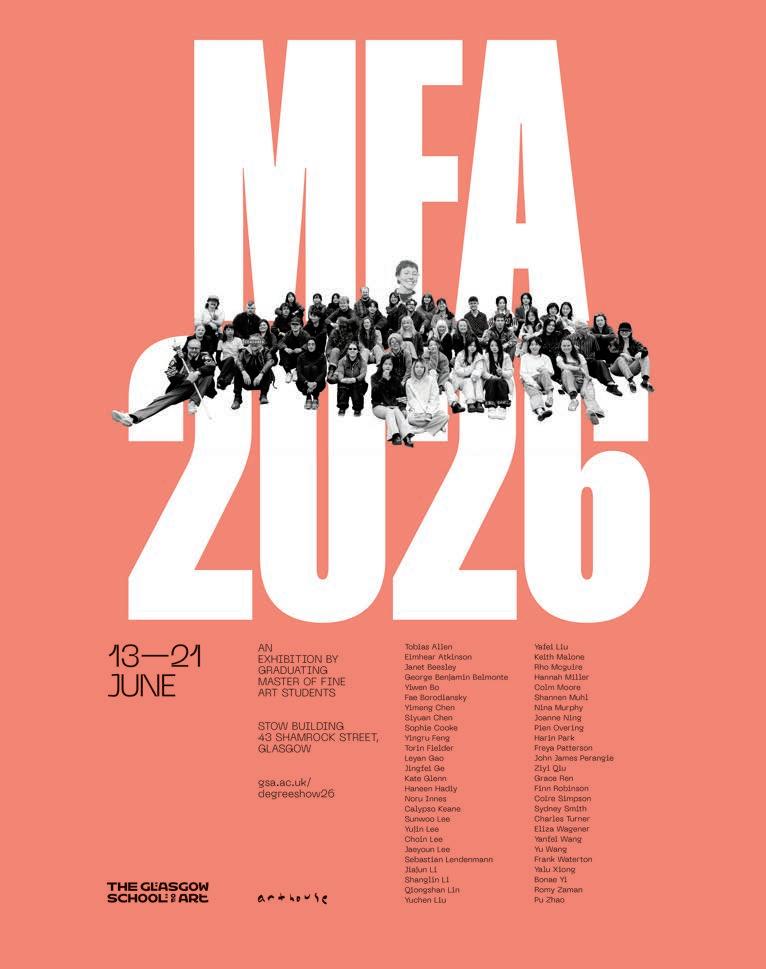
It’s degree show season – our poster this month comes from fresh Dundee graduate Isabel Roles. This magazine also contains our annual comprehensive guide to the Glasgow School of Art degree show, written by the students themselves for some insider knowledge.
There’s some stuff happening that isn’t art this month too, I guess. Football’s really having a moment apparently – one writer amps up the anticipation by trawling through all of the songs vying to become Scotland’s World Cup anthem for 2026. Reports are mixed. Theatre’s also getting into football, as A Play, a Pie and a Pint stage Joe McCann’s Corinthian, which restores Andrew Watson – the world’s first Black international footballer – to Scottish history.
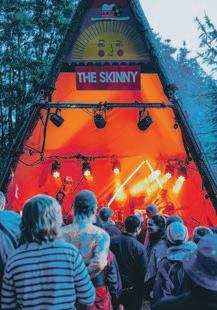
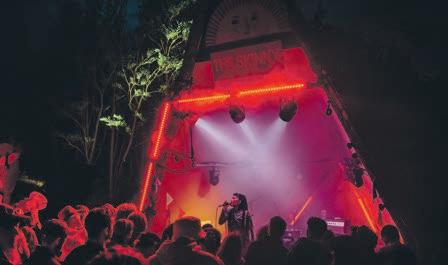
Kelburn Garden Party is coming up too. We (truly, exclusively, Tallah) have programmed their Pyramid stage again this year. We’ve got a run through the lineup alongside some words with Grace LaNasa, AKA Buckfast Barbie ahead of her takeover of the Saloon Bar.
Music looks forward to the debut of UK-wide Everywhere At Once festival, talking to Music Venue Trust, Purple Orange Arts Venue and Brooke Combe about the importance of grassroots venues. We meet Nigeria-born, Edinburgh-based soul singer James Emmanuel ahead of the release of his latest EP, Good Man, while Clubs responds to the Nightshift Glasgow blueprint to transform the city’s nightlife infrastructure.
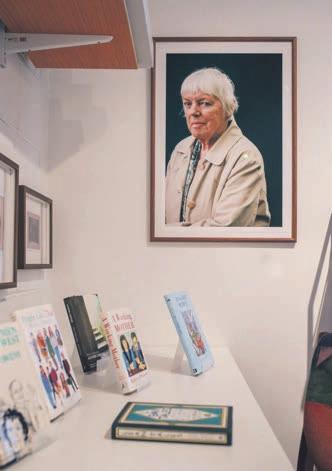
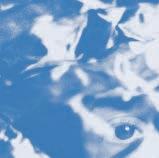
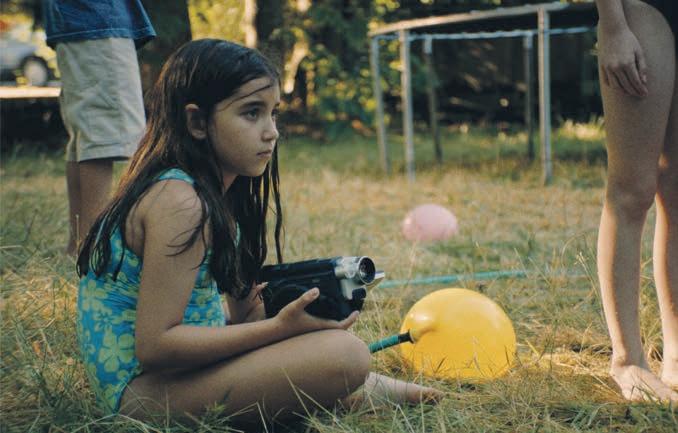
Film talks to Sophy Romvari about her extraordinary debut, Blue Heron, and the fragmentary, deceptive nature of memory. Director Pete Ohs discusses his collaborative filmmaking process ahead of the release of Charli xcx’s latest film project, Erupcja, and Books celebrates the centenary of Milngavie’s very own Agnes Owens.
We’s back in the Art theme to close the magazine – Tahliah Simumba (also sometimes known by her musical alias TAAHLIAH) has an exhibition as part of Glasgow International, so she takes on this month’s Q&A.
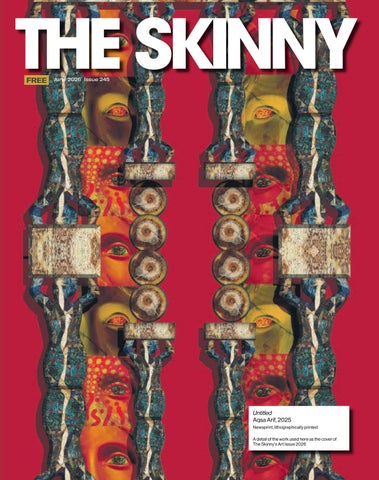
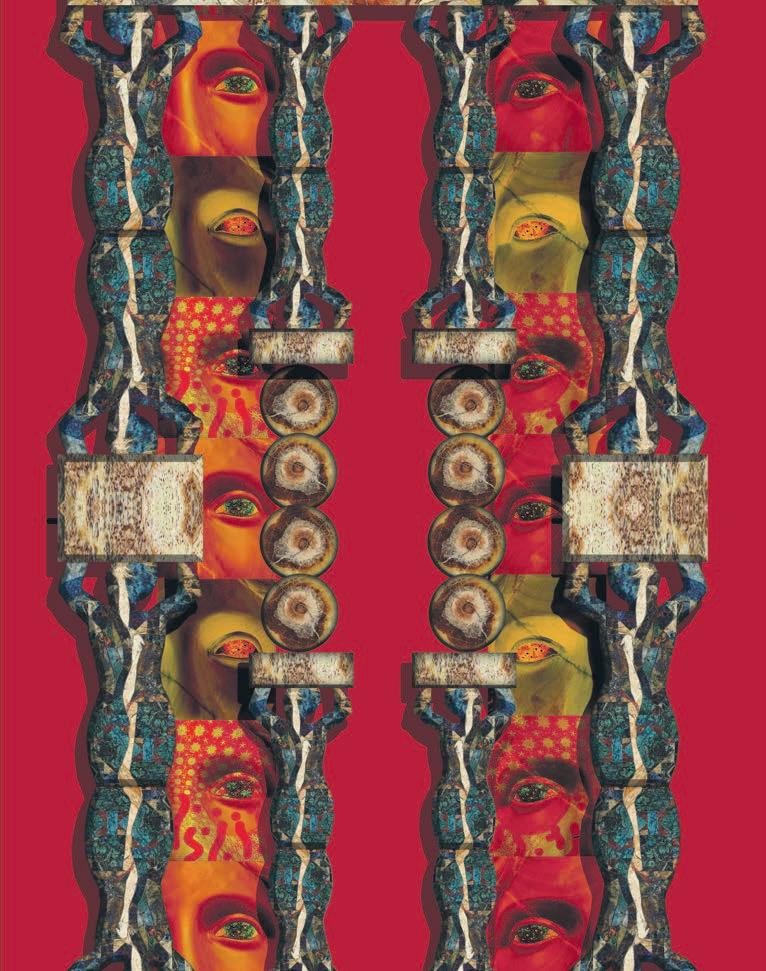
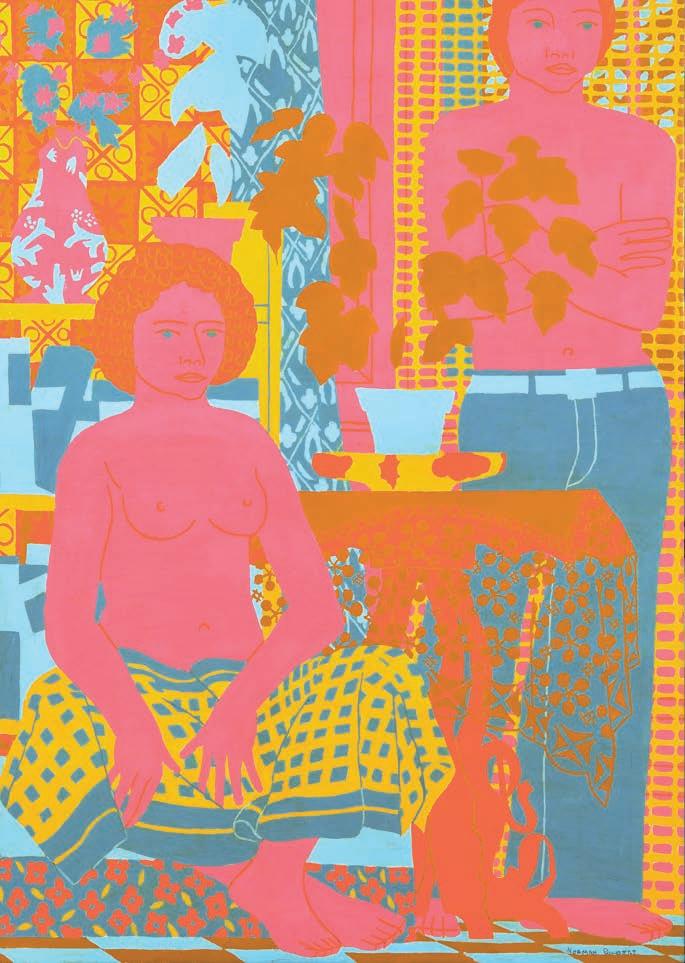
Cover Artist
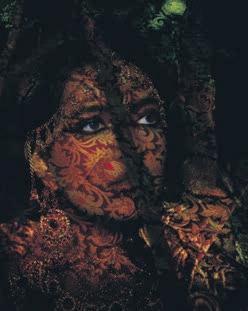
Aqsa Arif is a Scottish-Pakistani artist and filmmaker based in Glasgow. Her work has been exhibited across the UK, including at Edinburgh Printmakers, Kelvingrove Art Gallery and Museum, GoMA, Southwark Park Galleries, G39, and Site Gallery. She has undertaken residencies at Cove Park, Street Level Photoworks, Hospitalfield, Jupiter Artland, and The British School at Rome.
In 2023, Arif received the Platform: Early Career Artist Award and the RSA Morton Award, and was nominated for Jerwood Survey III, touring nationally from 2024–25. Her film Spicy Pink Tea was selected for BAFTA-qualifying festivals, winning Best Dance Film at Aesthetica and earning a nomination for Young Scottish Filmmaker at Glasgow Short Film Festival 2023. In 2022, she was awarded the 20/20 residency by UAL’s Decolonising Arts Institute, resulting in 20 permanent acquisitions across UK public collections.
Aqsa Arif's exhibition Beneath the Ivory is Molten Brown combines moving image installation and textile photo prints, crafting a narrative of the Lakshmi/Yakshi/Nymph, oscillating between South Asian ancestral memory and western assimilation. It's on display at Street Level Photoworks, 5-21 Jun, part of Glasgow International.
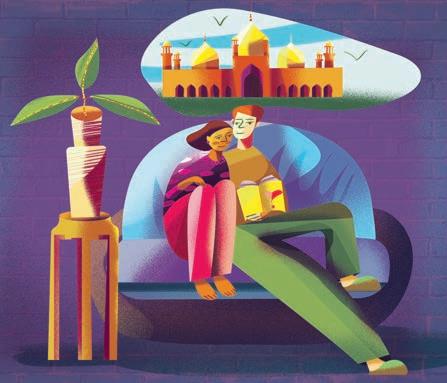
Love Bites: The Olives
This month’s columnist reflects on how a friendship – and its name –comes to be
Words: Parisa Hashempour
We’re unsure why we’re called The Olives. E says it’s because a picture of olives was plastered above a kitchen table we once shared. C thinks it’s because we fantasised about painting our flatshare green. I always thought it had surfaced, nonsensical, from some hungover misadventure at the student union. Bickering over the cheesiest and most guacamolied nacho in a heaping bowl. Anyway, it stuck. A decade on, ‘The Olives’ remains shorthand for myself and these four grown women I call close friends.
Like the foodstuff, The Olives are good for my heart. They cheer for my wins; know my flaws and love me still; cling on when life rips me up at the roots. But like olives, we’re a bit complex. Bitter sometimes. Stony. Words sometimes tough to swallow.
I read somewhere that it takes 200 hours to make a best friend. Takes 10,000 to master anything. As Olives, our hours are many. But BFFs doesn’t capture it; nor is it a kind of mastery. Being an Olive is being braided into each woman’s history, even as the flesh and pulp of her present ripens somewhere just beyond view. It’s being knotted into the same vine we gently tug on now and then.
Remember when we –? Remember when you –? Remember evenings spent preening and the sureness (I don’t have N’s skirt!), until she emerged from my room with a victorious flourish of her A-line leather flag. Remember the mornings after spent sprawling in bed until K thundered in, inky black smudging her laughing eyes.
As C put it, an Olive by any other name would be an Olive. It doesn’t matter what we call ourselves; it’s finding ways to keep faith. At communion with the girls we once were.
Heads Up
Refugee Festival Scotland
Various venues, Scotland, 12-21 Jun Ten days, 150 events, venues across Scotland… Refugee Festival Scotland returns as big and as good as ever. The programme features events, performances and workshops that place solidarity at the heart: there’s a Southside Open Air Cinema Day with a screening of Everybody to Kenmure Street, a performance by Glasgow-based hip-hop group Makongo and so much more.
Arooj Aftab with London Contemporary Orchestra
Usher Hall, Edinburgh, 24 Jun, 7pm
Blending together jazz, minimalism and South Asian classical traditions, Pakistani musician Arooj Aftab’s work defies simple categorisation, although it did win her the Grammy Award for Best Global Music Performance in 2022. Her delicate compositions and haunting vocals are presented on a brand new scale on this tour alongside the London Contemporary Orchestra, lending a cinematic quality to her intimate soundscapes.
To celebrate the beginning of summer we’ve pulled together our favourite events from this month, from sweaty club nights to outdoor festivals and exhibitions galore.
Compiled by Anahit Behrooz
Glasgow International 2026
Various venues, Glasgow, 5-21 Jun
Glasgow’s biennial festival of visual art returns to the city’s big and small galleries, with exhibitions, performances and events platforming the cutting edge of contemporary art, both in Scotland and beyond. Highlights include Tahliah Simumba's debut solo show A star that burns forever is a star that burns in me and a collection of David Wojnarowicz’s works in The Modern Institute’s new gallery space.
Porty Pride 2026
Various venues, Edinburgh, 4-7 Jun
Scandal.gla x Stereo: Six Sex
Stereo, Glasgow, 20 Jun, 11pm Glasgow queer clubbing institution Scandal.gla welcomes Six Sex to their June night. A major rising star in the dance music scene, Argentinian electronic musician and producer Six Sex draws influence from and brings new life to the Latin American perreo tradition, promising a high-energy, sensual night. Support on the night comes from Scandal.gla founder Rahul.mp3.
Sandra George: Start from the Level City Art Centre, Edinburgh, 27 Jun-27 Sep
Sandra George was the epitome of a community-driven artist, working primarily as a social documenter and arts activist in Craigmillar through the latter decades of the 20th century. Bringing together over 200 of her photographs alongside personal ephemera, this exhibition offers an alternative and necessary social history of Scotland told through her distinctive eye.
Hidden Door
The Paper Factory, Edinburgh, 3-7 Jun
In a city filled with festivals, Hidden Door is one of Edinburgh’s weirdest and most fun. Every year the festival takes over an abandoned building, filling it with art and music and performances for one long weekend. This year they’re returning to The Paper Factory for a final time following the factory’s inaugural outing last year: on the programme are American pop sensation Caroline Kingsbury, producer and writer Jenny Hval amongst many others.
Jun, 7:30pm
Lara Kramer: Gorgeous Tongue Tramway, Glasgow, 3
Glasgow Jazz Festival
Various venues, Glasgow, 10-14 Jun
ECA Degree Show Edinburgh College of Art, Edinburgh, until 5 Jun
Two new dance pieces get their world premiere in this celebration of 40 years of innovation and creativity at Scottish Dance Theatre. Emilie Leriche’s Rotten Work explores intimacy and connection through slow-burn choreography, while Edouard Hue’s The Game of Life employs frenetic movement to examine ideas of identity formation.
Robyn
OVO Hydro, Glasgow, 26 Jun, 6:30pm
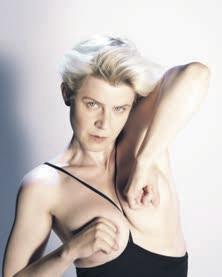
The queen, king and entire royal family of electro pop, Swedish artist Robyn stands in a league of her own (is there a more iconic song than Dancing On My Own? I mean, really?). After eight sad, Robyn-less years, she released her latest album Sexistential in April, an exuberant, unapologetic exploration of physicality, desire and sensuality.
Filmhouse Birthday
Filmhouse, Edinburgh, 5 Jun-14 Jul
Filmhouse 2.0 turns one this year, marking a whole journey round the sun since the beloved cinema institution was resurrected. To celebrate, they’ve put together a programme of classic films, 2025 and 2026 gems, and beloved picks from their staff taking place over the summer, from screenings of Marty Supreme and Sentimental Value to Edward Yang’s 2000 masterpiece Yi Yi
St Luke’s, Glasgow, 6 Jun, 7pm
People’s Disco Club: Aroop Roy + Toni McVey + Ricardo People’s Leisure Club, Edinburgh, 5 Jun, 11pm
Dyke Just Do It
SWG3, Glasgow, 5-6 Jun, various times
Filmmaker and artist Sweatmother brings a new iteration of their moving image work and performance piece Dyke Just Do It to Glasgow International, following its premiere at ICA London. This experimental cinema performance explores queer desire, taking capitalist misrepresentations of dykes and creating a counternarrative through eroticism and embodied performance.
Dracula
Festival Theatre, Edinburgh, 12-14 Jun, various times
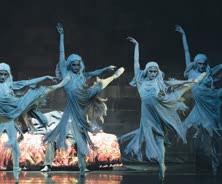
Set to music by the heaviest of hitters – think Bach, Rachmaninov, Mozart and Debussy – this acclaimed balletic reinterpretation of Bram Stoker’s OG vampire tale breathes new life, as it were, into the immortal figure of the Count, exploring the familiar tale of desire and torment with breathtaking, bloodsucking new energy.
Queer Cinema Sundays: Nowhere
Glasgow Film Theatre, Glasgow, 28 Jun
This month’s Queer Cinema Sundays, Glasgow Film Theatre’s monthly film club dedicated to queer cinema past and present, is presented alongside The Cineskinny, The Skinny’s very own film podcast. They’ll be screening New Queer Cinema pioneer Gregg Araki’s Nowhere, a black comedy about the chaos and fluidity of desire, followed by a discussion and live podcast recording about the film.
They Had Four Years ‘26 Generator Projects, Dundee, until 12 Jul
Various venues, Dundee, 27 Jun
Brownbear
Dundee Pride
Image: courtesy of People's Leisure Club
Photo: Abi Houliston
Photo: Paul Reid
Photo: Jock Thomson
Image: courtesy of Filmhous
Photo: Gregg Araki
Photo: Anne Tetzlaff
Photo: Marili Andre
Photo: Genevieve Reeves
Image: courtesy of Capital Theatres
Robyn Dracula Nowhere at Queer Cinema Sunday
Yi Yi
Rotten Work + The Game of Life
Dyke Just Do It
Megan Black for Dundee Pride
They Had Four Years
Brownbear
Aroop Roy
What's On
Music
Air out your tent, festival season is in full swing as Eden Festival (11-14 Jun) returns to the Raehills Meadows in Dumfries & Galloway and Solas Festival (19-21 Jun) is back in Perthshire’s Errol Park; both have stacked lineups featuring a glut of homegrown and international talent. If the thought of camping is too much, the central belt has you covered. Hidden Door (3-7 Jun) returns to The Paper Factory in Edinburgh for a second time with Jenny Hval, Lauren Auder and Cowboy Hunters set to play alongside a massive visual arts programme, and on 20 June, trad fest The Reeling sets up shop at the Royal Highland Centre for the first time.
In Glasgow, the Glasgow Jazz Festival (10-14 Jun) returns for its 40th edition with a specially curated programme of 40 performances. Highlights include two nights at the Old Fruitmarket: the Homegrown Showcase (13 Jun) featuring Kai Reesu, GAÏA, Pippa Blundell and Sekoya, and New Jazzwegians (14 Jun) featuring Azamiah, Nathan Somevi Trio, Sonedo and Unoma Okudo. TRNSMT (19-21 Jun) is also back at Glasgow Green with big hitters like CMAT, Wolf Alice, The Beta Band, English Teacher, The Last Dinner Party, Loyle Carner and more on the bill, and check out the UK- and Scotland-wide Everywhere At Once (26-28 Jun) festival from Music Venue Trust at the end of the month. More about that on p39.
Beyond the festivals, Scottish folk singer and multi-instrumentalist Julie Fowlis plays shows in Inverness (5 Jun), Stirling (6 Jun), Aberdeen (9 Jun), Dundee (11 Jun), Perth (12 Jun) and Edinburgh (13 Jun), Twin Atlantic play Stirling (9 Jun), Edinburgh (10 Jun) and Aberdeen (11 Jun) and Mull Historical Society take In My Mind There’s a Photograph out for a spin in Stirling (11 Jun), Glasgow (12 Jun) and Edinburgh (13 Jun).
In Edinburgh, SHEARS and Shuna Lovella play Lounge 33 (3 Jun), Dara Dubh previews her new album at the Bruntsfield Pianodrome (5 Jun), Bicycle Trip launch Losers at The Banshee Labyrinth (6 Jun) and DOSS bring the doss e.p. to Leith FAB Cricket Club (14 Jun). In Glasgow, Radhika launches Cine-Pop at Mono (5 Jun), Fatherson celebrate ten years of Open Book at the Barrowlands and Brownbear performs What Is Home? and Demons in full at Saint Luke’s (both 6 Jun), Casual Drag headline The Art School (12 Jun), pedalo launch Delicate Thing at King Tut’s (13 Jun), Jo Mango launches The Lightswitch at Saint Luke’s (26 Jun) and Belle and Sebastian play Kelvingrove Bandstand (26 & 27 Jun), celebrating 1996 debut Tigermilk and its follow-up If You’re Feeling Sinister respectively.
There’s big touring energy this month too. In Glasgow catch Aldous Harding (Kelvingrove Bandstand, 3 Jun), Princess Nokia (The Art School, 10 Jun), The B-52s (Barrowlands, 18 Jun), Robyn (OVO Hydro, 26 Jun) and Alanis Morissette (Bellahouston Park, 30 Jun), while in Edinburgh seek out Cupcakke (La Belle Angele, 3 Jun), Los Campesinos! (The Liquid Room, 6 Jun), Kraftwerk (Edinburgh Playhouse, 9 Jun) and Ethel Cain (Usher Hall, 28 Jun). [Tallah Brash]
Film
Just under a year ago, Filmhouse made a phoenix-like return, and the cinema is celebrating this comeback with the Filmhouse Birthday programme. The lineup features the cinema’s top performing releases since reopening, the Filmhouse staff’s favourite new films since reopening, and classics chosen by Filmhouse members. There’ll also be opportunities to tour their projection booths, food and drink discounts and even birthday cake.
Photo: Ben Grieve
Photo:
Craig McIntosh
Photo: Dollie Kyarn
Kai Reesu
Ethel Cain
Radhika
Pessimists, rejoice! Bleak Week: Cinema of Despair, the global film festival celebrating godforsaken cinema, is coming to Scotland for the first time. GFT and Filmhouse are among the six cinemas in the UK taking part. The pick of GFT’s seven-strong lineup includes the apocalyptic anti-war drama Threads, haunting wartime anime Grave of the Fireflies and Agnes Varda’s sombre road movie Vagabond
Filmhouse’s assortment is even more harrowing. Among their 15 titles are bleak masterpieces like Come and See, bleak epics like Das Boot, and rarely screened bleak gems like Dustin Hoffman as a recidivist thief in Straight Time and Stanley Kramer’s 1959 nuclear war drama On the Beach. Refugee Festival Scotland returns 12-21 June with a wide-ranging programme featuring live performances, talks and workshops as well as lots of film – not least at the Southside Open Air Cinema Day in Glasgow’s Queen’s Park on 14 June. There are three screenings across the day: Natxo Leuza’s climate displacement doc Black Water, short film programme Routes & Returns, and a sure-to-be-electric screening of Everybody to Kenmure Street
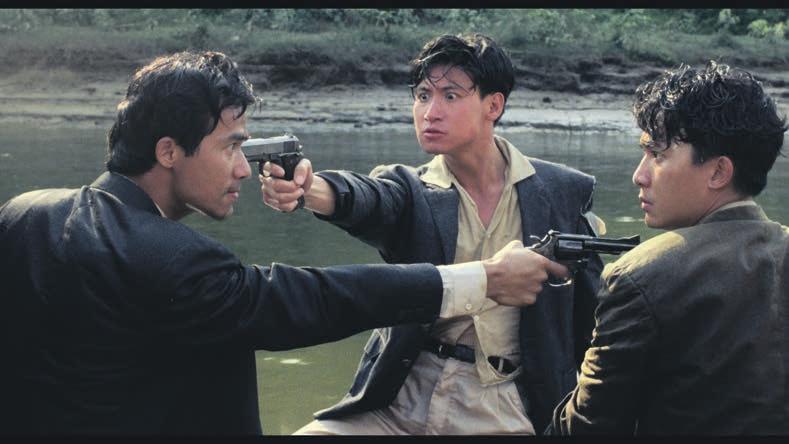
The great Hong Kong director John Woo is celebrated at GFT in June. Five of his films – characterised by balletic action setpieces that manage to be both elegant and preposterous, screen – from Hard Boiled (6 Jun) to A Better Tomorrow (27 Jun & 2 Jul) via his exceptional, highly implausible US actioner Face/Off (13 & 17 Jun).
One of the most promising new directors of 2026 is Seán Dunn with The Fall of Sir Douglas Weatherford, his wry and moving comedy about a tour guide (Peter Mullan) losing his grip on reality; it’s out 12 June, and ahead of that release, the Edinburgh-born, New York-based filmmaker will be at Edinburgh Filmhouse (10 Jun), GFT (11 Jun) and DCA (12 Jun) for Q&A screenings.
And last but not least, The CineSkinny, our film podcast, is once again teaming up with Queer Cinema Sundays. We’ll be presenting one of the touchstones of New Queer Cinema, Gregg Araki’s candy-coloured Nowhere, the final instalment of his Teen Apocalypse Trilogy, on 28 June at GFT. Following the screening, the Cineskinny team will take to the stage to discuss this bratty, hyperactive queer teen classic and the fluidity of sex and desire in Araki’s cinema as part of a live podcast recording. [Jamie Dunn]
Clubs
Kicking off the month, KIN-TU bring baile funk, dembow and techno to Stereo, Glasgow on Friday 5 June – Kontronatura and softchaos front the lineup. Blurr launch their inaugural club night at The Wee Red Bar, Edinburgh, spotlighting minimal ambient sounds and euphoric trance on Saturday 6 June. EHFM’s start to Pride unites the station’s LGBTQIA+ DJs at Sneaky Pete’s, Edinburgh for a night of queer joy (6 Jun). Berlin-based DJ and producer Benedikt Frey joins the Wrong Party! residents for an early evening party at La Cheetah Club, Glasgow – expect an eclectic selection of club sounds, from two-step to industrial (6 Jun).
Hang Tough welcome Wisdom Teeth label-heads Facta and K-Lone to the Berkeley Suite, Glasgow, for experimental electronica and UK bass on Friday 12 June. Still in Glasgow, Sub Club’s roof party returns with techno mainstays Slam, before the duo take to the basement all night long (12 Jun). From afterparties to prematch parties, NO SCOTLAND NO PARTY comes to Sketchy Beats Cafe, Edinburgh, on Saturday 13 June in anticipation of Scotland’s World Cup return. For fans of gabber, hardcore and breakneck bpms, Violent Magic Orchestra performs live at Out of Bounds, Stereo, Glasgow (13 Jun). In Edinburgh, Jamaica Yard, sees Talawa Mama celebrate sounds from the Caribbean – expect soca, dancehall and vegan Caribbean bites included in your ticket (13 Jun).
Edinburgh Pride makes a colourful return as Femmergy take over The Biscuit Factory with Rahul.mp3, Annafleur and more on Friday 19 June. Expect a raunchier affair at the People’s Leisure Club, Edinburgh, as DRIP Pride explore queerness as commodity until 4am (19 Jun). Ten Years Lost, C Frame and 222babychai join CORP for a phone-free night of techno, electro and connection at The Poetry Club, Glasgow (20 Jun). On Friday 26 June, Daniel Avery and Richard Fearless begin their new residency, Goo, at The Berkley Suite, Glasgow (26 Jun). Lone closes out the month with his Hyperphantasia Tour – catch early shows at The Berkeley Suite, Glasgow (27 Jun) and Sneaky Pete’s, Edinburgh (28 Jun). [Myrtle Boot]
Rahul.mp3
Nowhere
Come and See
Hard Boiled
Femmergy
Photo: Andrea Brodi
222babychai
Photo: Jock Thomson
Photo:
@h_olograms
Art
Glasgow International (5-21 Jun), Scotland’s biennial festival of contemporary art, features multimedia work from over 50 artists in more than 20 spaces across the city. Dyke Just Do It promises an exhilarating start to the festival on 5 and 6 June, with Sweatmother collaborating with emily claid and Mirabelle Haddon in a live, expanded cinema experience that explores “dyke counternarratives, anti-assimilation and queer desire.” You can find a full preview of highlights from the festival on p22.
Over to Edinburgh, where Katie Paterson presents Afterlife at Collective from 19 June. This serene, politically-charged installation is comprised of nearly 200 amulets created with materials sourced from endangered landscapes and fragile ecosystems. Towards the end of the month, an exhibition devoted to the late community worker and photographer Sandra George opens at City Art Centre. Open from 27 June, Sandra George: Start from the Level displays over 200 photographs from her archive.
It’s also Degree Show season – a chance to see how Scotland’s emerging artists are responding to the Zeitgeist. Glasgow School of Art’s showcase is open until 7 June, while Edinburgh College of Art closes on 5 June. [Rachel Ashenden]
Theatre
June begins with a few productions carrying over from May. At Edinburgh’s Festival Theatre, Scottish Opera’s The Marriage of Figaro runs until 6 June, bringing Mozart’s comedy of mistaken identities, romance and social upheaval to the stage in an English-language production. Elsewhere, the Royal Lyceum Theatre continues its run of Lynn Nottage’s Sweat (until 13 Jun), an examination of working-class lives in America’s Rust Belt, while Dundee Rep hosts Educating Rita (until 13 Jun), Willy Russell’s story of friendship and self-discovery.
Morbid history takes the stage at Glasgow’s Citizens Theatre, where The Long Drop (5-20 Jun) adapts Denise Mina’s novel about one of Glasgow’s most notorious murder cases, the Peter Manuel trial. When the Rain Stops Falling
(9-12 Jun) offers a dysfunctional and dark family story, tracing secrets and consequences across generations and continents.
For those looking for some spectacle, Dracula arrives at Edinburgh’s Festival Theatre (12-14 Jun) following a sold-out London run. This dance adaptation turns Bram Stoker’s gothic classic into a balletic experience. There seems to be plenty of life left in the vamp, after all.
At the Traverse Theatre, The Table (18-20 Jun) uses intergenerational dance theatre to ask who gets a seat at society’s table, while Revolution Days (19-20 Jun) arrives at the Studio Theatre, drawing on real experiences of humanitarian aid work during the Arab Spring.
The month closes with two productions exploring collective memory. At Dundee Rep, RECollect (26-27 Jun) brings together members of the local dancing community and Scottish Dance Theatre professionals in a new collaborative work. Meanwhile, Kanpur: 1857 comes to the Tron Theatre (27 Jun). Niall Moorjani’s anticolonial drama premiered at the 2025 Edinburgh Fringe, where it won a Scotsman Fringe First Award, and now arrives in Glasgow following a year of acclaim. [Mika Morava]
Comedy
We’re really excited to see Elaine Robertson back on Scottish stages (The Stand, Glasgow, 1 Jun; The Stand, Edinburgh, 3 Jun). The Gateshead-native, with a flair for the surreal, brings Delulu back after a run at The Stand last August and comes highly recommended with her Sean Lock Award nomination and her ISH Comedy Award win in 2024. Abby Govindan’s show Pushing 30 also sounds like a lot of fun (Monkey Barrel, Edinburgh, 20 Jun). With backing from both Daniel Sloss and Hasan Minhaj, the Indian-American comic’s show sounds like a smart, satirical swipe at dating, generational curses and the immigrant experience in Trump’s America.
Get in on the ground floor with Kate Hammer and Eva Peroni – they’ve got plenty of WIPs to choose from. Kate has WIPs in June and July (Monkey Barrel, 1 Jun; Gael & Grain, Glasgow, 13 Jun with Grace Mulvey; Monkey Barrel, 18 Jul) while Eva tests her show out in a couple of spots too (Gael & Grain, 6 Jun; Monkey Barrel, 17 Jul). Both doing their first proper hours at the Fringe this year thanks to Brass Tacks’ Fringe funding scheme, the pair have been working their way up the Scottish scene for the past few years and really are at the top of their game.
And don’t forget to book ahead for these local legends gearing up for August too. Matt McDonald and Jack Brookmyre have a double-hander WIP coming up (The Stand, Glasgow, 11 Jul). And on 12 July, MC Hammersmith & Sam Lake share a preview (The Stand, Edinburgh), while a stone’s throw away, Marjolein Robertson’s back with her first new show after her acclaimed Marj-O-Lein trilogy (Monkey Barrel). [Polly Glynn]
Books
What better way to get your summer reading list sorted than with a whole slew of book events this month? For the fantasy fanatics, Cymera Festival returns to Edinburgh from 5-7 June with a programme of events and workshops revolving around all things fantasy, sci-fi and horror, featuring authors like Shannon Chakraborty, Soraya Bouazzaoui and Eris Young. There’s more horror at Lighthouse Bookshop as Kat Dunn launches her latest novel Rotten Heart on 9 June; she’ll also be doing a Glasgow launch at Waterstones Argyle Street on 10 June. Also at Argyle Street, Lex Croucher launches their dark academia novel The Unmagical Life of Briar Jones on 12 June, while Hamnet author Maggie O’Farrell launches her latest novel Land at the Glasgow University Union on 8 June.
Over at The Portobello Bookshop, Jackie Kay celebrates her storied career for Porty Pride (3 Jun), literary magazine Extra Teeth launches its eleventh issue on 5 June, Olivia Laing celebrates the paperback launch of The Silver Book on 9 June, and Daisy Dixon launches Depraved: The Story of Dangerous Art with our Art Editor Rachel Ashenden on 25 June. And for more hands-on literary shenanigans, do some drop-in zine making at Glasgow Zine Library on 17 June, or head to Inn Deep’s poetry night on 1, 15 and 29 June.
[Anahit Behrooz]
Photo: Peter Dibdin
Photo: Kat Soriano
Photo: Nicholas Elliot
Mihaela Bodlovic
Abby Govindan
Eva Peroni sweat
The Table
Jackie Kay
Photo: Mary McCartney
Features
22 Kicking off the Art Issue, we celebrate the return of Glasgow International
24 We spotlight some of the exhibitions Glasgow’s DIY galleries are staging on the fringe of GI.
26 Bugarin + Castle present Scotland’s return to the Venice Biennale – we take a tour.
29 The founders of new Glasgow magazine Piscine tell us about their process.
33 One writer listens to all the Scotland World Cup songs so you don’t have to.
34 Playwright Joe McCann on his new football-based play, The Corinthian
36 Looking forward to Kelburn Garden Party with a rundown of our Pyramid stage lineup, and a chat with import ahead of their Saloon Bar takeover.
38 We take a look at the Nightshift Glasgow report offering a blueprint to transform the city’s nocturnal infrastructure.
39 Ahead of the UK-wide Everywhere at Once festival, we discuss the importance of grassroots venues.
40 Director Pete Ohs on Charli xcx film project Erupcja
42 A look at the events celebrating the centenary of Milngavie author Agnes Owens
49 A very special supplement offering a comprehensive guide to the Glasgow School of Art degree show 2026.
On the website...
Cinema! We report back from Alchemy Film & Moving Image Festival, review some hot arty films from Cannes, and the now award-nominated Cineskinny podcast continues fortnightly. Sonica’s back so we look at the lineup, and Doja Cat and PinkPantheress were in town so we reviewed their gigs.
Shot of the month
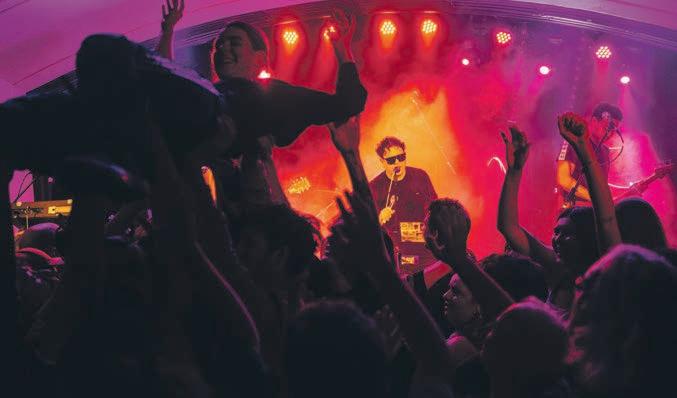
Warmduscher @ Classic Grand, Glasgow, 19 May by
Dale Harvey
Across 1. Hello / Goodbye (4)
4. Betty Crocker staple (4, 3)
6. Capable of being rectified (7)
8. Shrooms (5)
9. Sexy art (7)
10. Small country in the Pyrenees (7)
13. Greek goddess of health; Water of Leith statue (7)
15. Vertical (7)
17. Contemporary or electric (7)
18. Mistake (5)
19. Adjust; bug out (5)
20. Smaller than the smallest matter, mosaic tub (anag) (9)
22. Having a thick or sticky consistency (7)
23. Brief respite, or to pacify (4)
1. Cup of Joe lover (11)
2. Eggs (3)
3. Before birth (8)
4. Unphased, like a vegetable (4, 2, 1, 8)
5. Prayer call tower (7)
7. Engaged woman (5-2-2)
11. Different, 2014 Theo James film (9)
12. Anachronistic, outwith time or context (11)
14. To channel, or a strap (7)
16. Motionless balance (6)
21. Eg. olive, crude, coconut (3)
Compiled by Ema Smekalová
GOT A QUESTION?
In this month’s advice column, one reader wonders how soon is too soon when it comes to voice notes
How long do you have to know someone before you can send them a voice note?
I love this question because unlike the concerning emotional crises of the last few months, this is not a problem at all. I mean this as a good thing!!! This column was invented for petty nonsense and this question has understood the assignment in a beautiful and profound way. It does not matter what I say or what you do and ultimately, isn’t that the dream?
Because it literally Does Not Matter, I’ll just tell you my personal rules that are subjective and shifting and I have only really set in stone since you asked this. I think it really depends on what your relationship with the person is and what you want it to be. Are you trying to build a particular kind of intimacy? What is your capacity for vulnerability and embarrassment within this relationship? Essentially – let me cut to the chase – do you fancy this person or not?
If I fancy someone and am not sure they fancy me back and am actually concerned they maybe find my whole thing a little annoying, I will avoid sending them a voice note until I find out how they feel about voice notes and whether that will endear me to them or not. If I fancy someone and am reasonably sure there is a vibe, I will feel a lot more chill about sending them a voice note after say… a month? Probably? Of increasing friendship? I should say here and now I am a voice note girlie and I think they are a really beautiful way of combining the intimacy of phone calls with the immediacy and asynchronicity of texting. But not everyone feels that way and I suppose you have to respect that. But also I am in weekly therapy for my people pleasing behaviours so like… you could also do whatever the fuck you want to do.
This question was originally sent in when our film editor, Jamie Dunn, was covering my agony aunt sabbatical a couple of months ago but, like a coward, Jamie elected to answer a question about Letterboxd reviews instead. So, for posterity’s sake, I also checked with him what he thinks. I quote: “I think you can send them fairly early on in a friendship, but sending too many voice notes is a sign of psychosis.” So there you have it, two for the price of one. You’re welcome!
Jj Fadaka returns to the warm embrace of Josie KO’s Big Lady, a sculptural reimagining of the Black female body, which glittered in Glasgow International 2024
Stop asking, you already know what to do. Josie Ko’s Big Lady (2024) is a big, blue mother ready to hold you. Come into her skirts and be away from that prickly world.
A mother comes in many forms: the one who birthed you, the one who took you under their wing at your first job, the one whose advice you actually listen to. These are all different people for me. I have been nursed by a mother who came in the form of a gesture. “Here have this,” and it’s the last resource they have because our love runs that deep, and they know I’d do the same.
Big Lady offers itself like a winter store for a hungry traveller. Hang up your dreams and wash your feet in this sprouting fountain. Let yourself be a child clinging to an adult’s trouser leg, watching through the gaps, adults who pretend they don’t long for touch and warmth.
What is it with the colour blue? The way it holds grief and possibility in the same breath, each sparkle under this roof is a life full of colour and contrast. Whether I consciously give myself that grace or not, my life shines alongside theirs, and we are a current of people trying, retreating, and coming back to try again. Those waves of action, rest and care seem cyclical, but are actually propelling us forward. And even if the pace is slow, you need to move, because heaven for sure isn’t where you’re standing.
Your Mother, the colour blue and water all have this in common: they give you a place to retreat to, but will subsume you if you stay too long. A safe place can become a numb place or a comforting clutch. Someone should have told that to the sailors who met a slippery death, trying to jump ship to the Big Lady underwater and cheat their way into paradise.
glasgowinternational.org/artists/josie-ko/
Do you have a problem Anahit could help with? Get in touch by email on pettyshit@theskinny.co.uk, send us your quandaries with an almost-unhelpful level of anonymity via NGL, or look out for Ask Anahit callouts on our Instagram stories
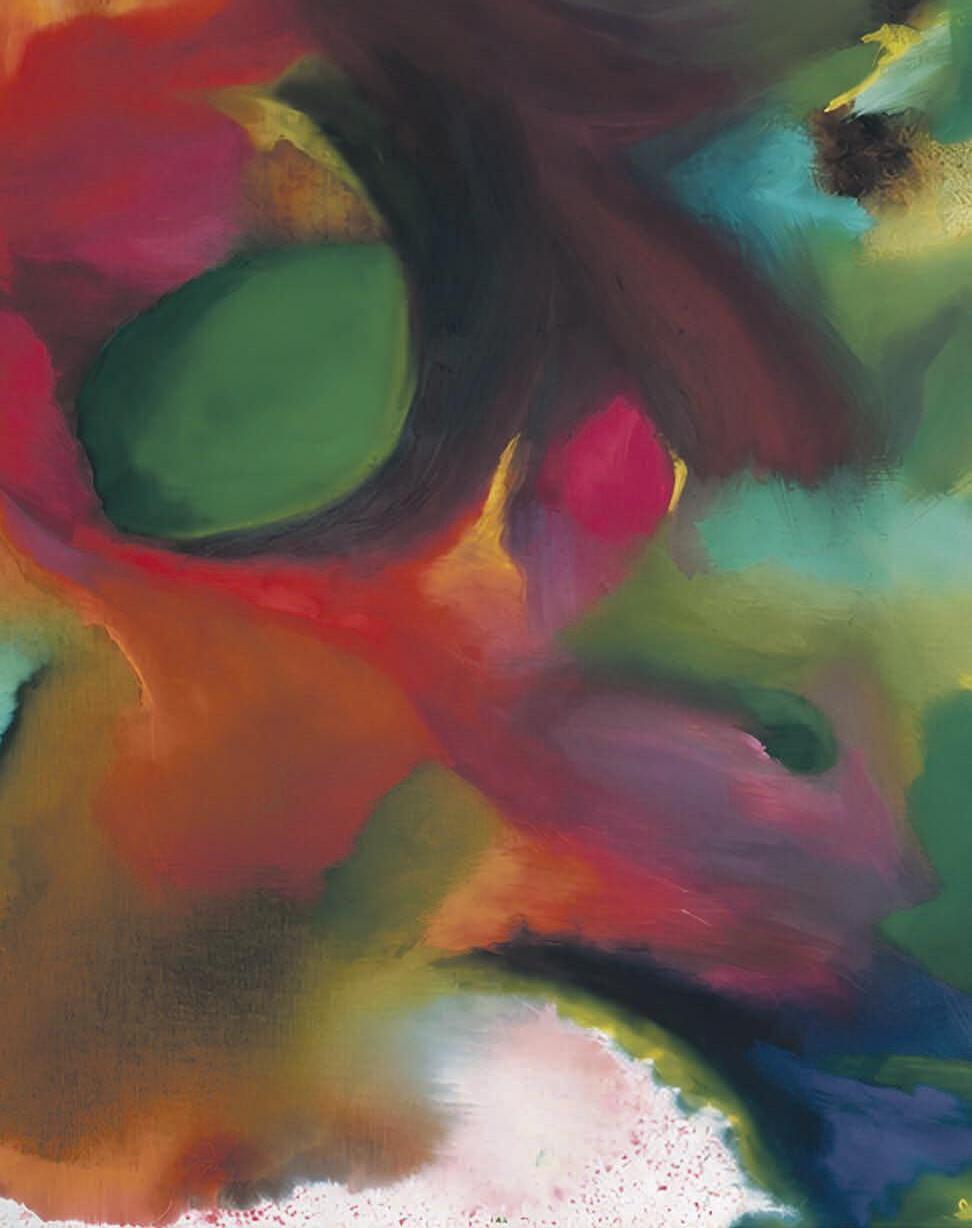
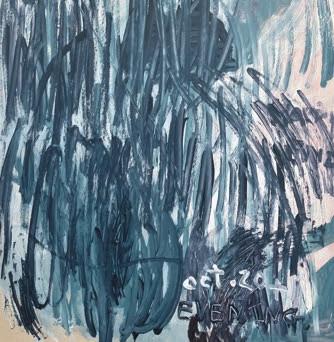
Poster by Isabel Roles (p44-45)
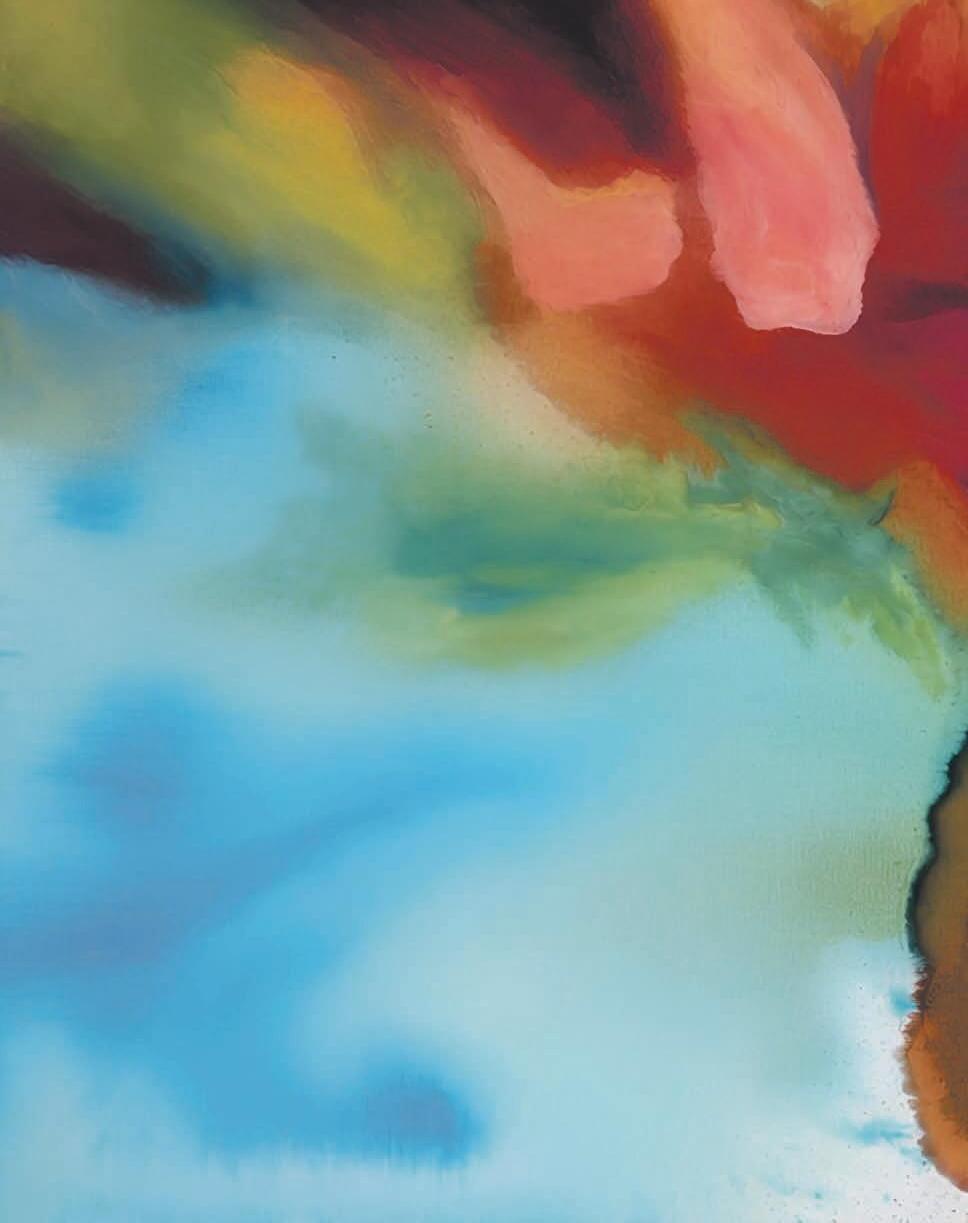
Isabel Roles is a fine artist from Manchester, currently based in Dundee while completing her studies at DJCAD. Working with acrylic and oil paints on canvas and wood board, her abstract practice is deeply inspired by nature and the form of flowers. Recently featured in the DJCAD Degree Show, Isabel’s vibrant work captures the shifting colours, shapes, and movement of the natural world.
The Art Issue (2026)
It’s visual art’s time to shine again this June – Glasgow International, the biennial celebration of the indomitable creative communities of the city and the wider world, returns with a new director and a renewed vigour. We also look beyond the main programme to see what’s happening on the fringes of the festival.
It’s degree show season across the nation, and we have an artwork from one of the Dundee graduates as the poster in our centre pages. We’re also hosting a very special supplement on the Glasgow School of Art degree show, produced by the students themselves.
Scotland returns to the international stage with our first presentation in the Venice Biennale since 2022 – we take a tour around Bugarin + Castle’s immersive exhibition on a quiet island in Castello. An exhibition in Perth shines a light on the vennels, the little streets that have shaped the city for centuries. Art philosopher Daisy Dixon discusses her new book, Depraved: The Story of Dangerous Art, and we meet the creative minds behind new Glasgow magazine Piscine (fka Piss Scene).
GI June
Scotland’s biennial of contemporary art is back under the communitydriven vision of its new director, Helen Nisbet. We highlight the mustsees of this expansive programme, featuring the likes of Aqsa Arif, Cathy Wilkes and Michelle Williams Gamaker
In January, the Centre for Contemporary Arts locked its doors for the final time in a dramatic denouement to a familiar tragedy: Glasgow’s great fall from a ‘City of Culture’ to a ‘City of Closure’. In April, Streetlevel Photoworks, Glasgow Print Studio, Transmission Gallery, Project Ability and Glasgow Independent Studio almost met the same fate before a breakthrough in negotiations barely saved Trongate 103 from their private landlord-cum-council quango, City Property. Helen Nisbet, Glasgow International’s latest director, has been organising Scotland’s biennial of contemporary art amid it all.
“Alarming is the word I would use,” Nisbet tells me when I ask her what it felt like to plan GI while its host city was clamming up around her. It has been “alarming to witness [arts spaces] boarded up, closing, in peril around us and so many of those organisations are or were central to
our programme.” Yet, she is also acutely aware of the political decisions that cause these closures: “We’re coming from a prolonged period of austerity, precarity and global chaos, so it’s inevitable, sadly, that arts and culture fall into this black hole.”
When talking about the political backdrop that informs a city’s culture, she references Keira McLean’s Fire Stories, one of the central works in the programme. The multimedia project is presented by Platform, in collaboration with the filmmaker Caireen Stuart and animator Akvile Dirmauskaite, alongside residents of Easterhouse. It draws on the community’s archives, histories of grassroots organising and the lives of local campaigners like Cathy McCormack who fought against urban poverty while living through it. Two cabaret performances, held over the final weekend, will conclude the project with a prevailing theme of hope in solidarity.
Fire Stories forms part of GI’s ‘Special Projects’ programme, which also includes a series of public events presented by Rumpus Room from 12 until 14 June at The Bowling Green in Pollokshields. Self-consciously aware of the art-world tendency towards extractive curation that is ‘community engaged’ only insofar as it ticks a box on a funding application, these Special Projects spotlight cultural groups working to strengthen communities year-round and across Glasgow’s peripheries.
Nisbet seems to take an approach to festival programming that is hyper-aware of its own blindness. She tells me: “It’s really brilliant to be working with organisations in Glasgow who are already doing really excellent work, rather than trying to replicate that ourselves.”
With such considerations of voice and visibility in uneven power relations at its helm,
Words: Evie Glen
Photo:
Keira McLean, The Fire That Never Went Out 2026
Image: courtesy of the artist
“Now is a vital time to throw support behind structures and people that keep artists in a city supported and safe”
Helen Nisbet
against a backdrop of infrastructural flux, it is unsurprising that this year’s programme is threaded with deeply introspective works and artists who linger in uncertainties. These works are all variously ambiguous, fluid, abject or satirical.
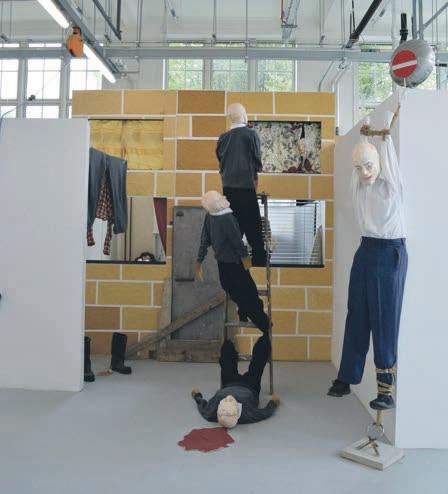
Cathy Wilkes, an artist known for installations that straddle conceptualism and realism in their near depictions of almost recognisable domestic scenes, presents an exhibition at The Modern Institute, Aird’s Lane. Her sculptural scenes are often populated by blank-eyed mannequins with the same uncanny haze as the smudged faces of Joan Eardley’s tenement children. Yet their arbitrary assemblage makes the ambiguity of Wilkes’ work more explicit – the settings of an artist keen to displace histories rather than set them to rest in paint.
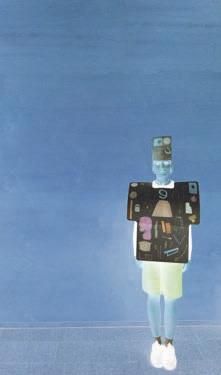
Similarly, Aqsa Arif’s multidisciplinary exhibition at Street Level Photoworks traces the shoots of identity back through both ancestral and assimilated histories. Drawing on her dual Scottish-Pakistani heritage, Beneath the Ivory is Molten Brown highlights the complexities of our relationship to the place and places we’re from. The exhibition spans film, installation, textile and photography, with thematic reference to GrecoRoman and South Asian mythology. The political relevance of Arif’s work is revealed in the resonances between these two distinct cultures, resisting illusions of ancestral purity.
Wilkes’ and Arif’s works find alignment in The Subtle Body, which unifies the work of Katy Dove and Lygia Clark in their mutual preoccupation with the body and the unconscious. Both artists’ practices centre collaborative movement and performance underpinned by psychoanalytic theory. Presented together, their archival materials investigate how meaning is understood in more ambiguous ways, while evincing the creative potential of an open and unfixed archive. The exhibition is presented by the Katy Dove Archive, an organisation that Nisbet said was “absolutely overdue in Glasgow” given the volume of work Dove produced here.
Balancing the more personal works in the programme are those explicitly tied to Glasgow. Milngavie Columbo, an experimental installation in Govan Project Space, makes a sardonic critique of the ‘City of Culture’ moniker by way of its petty bourgeoise forebears. Imagining a not-too-distant world wherein Britain’s first Guggenheim Museum is built in Milngavie, the exhibition satirises the lengths Glasgow’s art world archvillains would go to for the top job. There is a murder and a clockfaced detective brought in to solve the case, revealing, as he does, all the undercurrents of neoliberal cultural policy.
That exhibition might be interestingly viewed alongside Disrupting Space: Sharing Practice, a discussion event by three artists occupying Outer Spaces studios across Glasgow. One consequence
of arts cuts is the lack of affordable studio space in the city, birthing initiatives like Outer Spaces which allow artists to temporarily occupy buildings. On 19 June, the artists, Gianni Esporas, Olivia Priya Foster and Amy Louise Lawrence will discuss what it means to occupy these spaces in a transient, “meanwhile” capacity.
Moving beyond the city, Michelle Williams Gamaker presents an experimental film about 1930s actor Merle Oberon, who hid her mixed Sri Lankan, Indian and British heritage for the sake of her career. Using tropes from various genres including body horror and film noir, Gamaker’s Strange Evidence is a tentatively psychoanalytic study of Oberon’s self-censorship that touches on continued prejudices and labour restrictions in the modern film industry.
Moving also beyond this year’s programme, Nisbet is keen to highlight the exhibitions and events happening alongside GI. She is “really grateful” for initiatives like the Glasgow Art Map, who have compiled an alternative programme of non-GI events. The fact that the city has enough art to fill two programmes across just three weeks is a testament to the long-mythologised community and DIY strength of Glasgow’s art scene.
However, while the grassroots might be buoyed by the spirit of perseverance, the grass is too tall to see very much of it. What GI can do,
rather than import culture to the city, is “shine a light” on what is already here. Given the last five months have exposed the frailties of cultural institutions forced to rely on government underfunding and the ulterior generosity of private landlords, Nisbet feels that “now is a vital time to throw support behind structures and people that keep artists in a city supported and safe.”
Those structures extend beyond folk-happy notions of community to “the basic facts of what artists need – genuinely affordable studio space, paid opportunities and brilliant organisations to support them across all stages of their careers.”
Providing those resources, without impinging on the freedom to make experimental and exciting work, is one of the biggest challenges facing art scenes globally. “This feels like a very different time to 15 or 20 years ago when people could travel internationally with a bit more lightness and freedom,” Says Nisbet. “But I find that wherever I go in the world people are really inspired by what’s happening in Glasgow and know about the artists who are based here and the art scene here. So I think that knowledge is already there... it’s really about making sure there’s visibility and interest, because international working and international solidarity is more important than ever.”
Glasgow International, 5-21 Jun
Photo:
Michelle Williams Gamaker, Strange Evidence 2026
Katy Dove, material from Make a Shape, 2008
Image: courtesy of the artist.
Image: courtesy of the artist.
DIY Darlings
With Glasgow International in town, fringe artists and curators present an eclectic array of exhibitions outwith the official programme
Glasgow International has always been bigger than its official programme. The contemporary art biennial sprouts exhibitions and performances all across the city; some in white cube galleries, some in artists’ studios, and others in libraries, bowling greens, graveyards and even a car park. In Glasgow’s true DIY spirit, each year many artists and organisations curate a parallel programme of fringe exhibitions, hoping to catch the wave of people on their GI pilgrimage. While it’s the biennial’s official programme that captivates the attention of the mainstream, travelling a little off the map in search of its satellite programme can lead to the most fruitful discoveries.
First up on this whistle stop tour of GI’s fringe exhibitions is Horsepower, one of Glasgow’s newest galleries, in Haghill. In her exhibition Porthole, visual artist Holly O’Brien presents new sculpture, video work and live performance exploring connection, fantasy and intimacy. Through the myth of the mermaid, O’Brien interrogates the Jungian idea of collective unconscious, asking how this theory holds up in today’s digital realm where the self can become distorted and distant. Her choice of materials throughout the work – latex and gelatine – only add to this feeling of simulacra which underpins the show.
Flying from Haghill to Garnethill, we arrive at Grateful Gallery, a community-focused and freshfaced space specialising in bold painting, street art and graffiti styles. Their group show, More Friends, encapsulates what they do best; curate a melting pot of an exhibition, jam-packed with work from friends, collaborators and those they admire.
At Kendall Koppe, the two-person show Signals & Echoes presents work from Spanish painter Gori Mora and New Zealander James Rigler, who specialises in sculpture. Concerned with the duality and friction of queer identity, the works navigate lust and longing and the feelings in-between.
Inside Govan’s artist-run gallery and studio Board Room Committee Room, interdisciplinary artist and architect Monya Riachi will be presenting her solo show, A Present Disturbance. Much like Riachi’s earlier work, the works interrogate loss as it pertains to ecological transformation, examining the politics of land and time.
Next up, we have Bonny Don’t Live at Home, a DIY gallery space in Hyndland. Curated by painter France-Lise McGurn and writer/biographer John Douglas Millar, the group show ‘I only have apple juice’ boasts some heavy hitters including photographer Peter Hujar and curator/writer Vince Aletti. Positioned from the complicated or uncomfortable gaze, the show focuses on overlooked works which interrogate desire and the messy ways we connect to art, history and each other. Not content with a single fringe show, creative co-operative SaltSpace have programmed a series of exhibitions over the course of GI. Kicking off the programme is Andrew Sutherland’s Yes Sesame, a collection of textile and light works inspired by fantasy characters, childhood and horror. Utilising embroidery, patchwork and mono-printing, Sutherland has created a collection of illustrative light-boxes, wall hangings and functional art objects which blur the boundaries of craft, design and fine art.
Words:
Holly Allan
‘What the city lacks in infrastructure, it makes up for in determination and gumption’
Next in line at SaltSpace is a series of new works from Rosie Aspinall Priest. Their show TUN poses questions about the cosmos, scale and survival, using the vehicle of the tardigrade, an eight-legged, microscopic creature known for its extreme resilience, including its ability to survive in space. Through large scale sculpture and experimental sound, the works on display veer slightly existential, coaxing us to reflect on our own survival.
Closing SaltSpace’s GI-adjacent run is group show Whereas My Eyes Rest on the Ground featuring work by Anna de Souza, Ines Hügle, Barnaby Wessell, Coraline Chen, Aurora Bucca, Amy Mei Sandler and Allegra Lavinia Fleur. Through the textures of abstract mark-making and lyrical line work, the works capture glimpses, touches and fleeting moments of uncertain landscapes. They communicate an openness and resistance, like traversing an unknown land through the haze of a dream.
It is these shows which orbit the biennial which are most effective in showing Glasgow in its truest light; as a city in flux. This is both its most exciting feature, and its biggest downfall. Although one could look at this vast satellite programme as a signal of precarity – a manifestation of the citiy’s lack of infrastructure, long-term arts spaces and shortage of funding – it also cements Glasgow’s reputation as a DIY darling; what the city lacks in infrastructure, it makes up for in determination and gumption. This network of shows illustrates the porousness of the city, reflecting a grassroots scene that is deeply collaborative, innately curious and fiercely self-driven. Glasgow International may be anchored by the festival’s official programme, but the city is buoyed by its fringe shows.
→ Porthole, Holly O’Brien, Horsepower, 22 May-14 Jun
→ Monya Riachi, Board Room Committee Room, 7-14 Jun
→ I only have apple juice, Vince Aletti, Paul Becker, Phil Collins, Moyra Davey, Peter Hujar, Patrick McAlindon, France-Lise McGurn, Gary Schneider, Bonny Don't Live at Home, 7-22 Jun
→ Signals & Echoes, Gori Mora, James Rigler, Kendall Kope, 2 Jun-17 Jul
→ More Friends Group Show, Various Artists, Grateful Gallery, 6-28 June
→ Andrew Sutherland, Yes Sesame, SaltSpace Coop, 5-8 Jun
→ TUN, Rosie Aspinall Priest, SaltSpace Coop, 12-14 Jun
→ Whereas My Eyes Rest on the Ground, Various Artists, SaltSpace Coop, 18-21 Jun
Photo:
Anna de Souza, Crow’s Nest, 2026
Image: courtesy of the artist
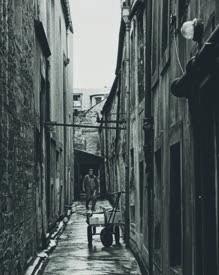
Vennels: Perth’s Little Streets
At Perth Museum, a new exhibition explores the backstreets and alleyways that run through the UK’s only UNESCO City of Craft and Folk Art
Avennel is a narrow lane that runs between the gables of two buildings. In Perth, they cross the streets like ancient arteries through which the makers’ histories of this craftis toun (‘craft town’) flow. Drawing those histories out from the sidelong shadows of these wee lanes, Vennels: Perth’s Little Streets is an exhibition that balances local stories with global resonance, offering a chance to affirm Perth’s ingrained cultural significance.
Throughout the medieval and early modern ages, Perth was a military and religious centre of the Kingdom of Alba – owing to the nearby Scone Abbey which at one point housed the Stone of Destiny on which every Scottish King and, latterly, English monarch was crowned. Invaded, walled and gated in a six-century long oscillation between Scottish and English power, the city has historically occupied a kind of borderland in central Scotland. Perth’s vennels reveal its history as an ancient craft town, through which traders would travel from across the country to buy and sell their wares. Lanes like Ropemakers Close and Weaver Vennel signpost the long-held craft traditions of local makers – traditions recognised in 2021 when
Perth was named the UK’s only UNESCO City of Craft and Folk Art. The title positions Perth in a global network of 102 cities, though, as Poppy Jarrett, UNESCO Programme Officer for the city says, “it’s a lot harder to say ‘come to Perth and look around’” than the likes of Cairo or Santa Fe. Jarrett’s aim through this exhibition and her continuing work in the city is to make sure Perth is firmly centred on that global stage. This cannot be achieved, however, without first nurturing civic pride at home. Alan Farnington (who works for Perth and Kinross Council and is responsible for commissioning new artworks for the exhibition) is cautious of not isolating locals in Perth’s outwardlooking, culture-led approach to placemaking.
Speaking from the council’s perspective, he says candidly, “There’s always a sort of negativity towards putting money towards arts and not filling in potholes and what have you.” While he feels the museum, which opened in 2024 after a £27 million regeneration project, “has done a fantastic job” and “exceeded expectations even locally,” he is hyperaware of the need to continue making the case for cultural investment to a “negative vocal minority.” One of the ways to do that, he hopes, is to “tell the story of the place” through “public art in the public realm,” beyond the sometimes-isolating threshold barriers of a museum.
Alongside the museum’s exhibition of rarely seen archival photographs and archaeological findings then, Vennels: Perth’s Little Streets will also feature five newly commissioned public artworks by artists based in Scotland and Ireland. The artists’ practices span ceramics, sculpture, graphic design, textiles, murals and sign-making, though their new works are allied in their engagement with Perth’s craft heritage.
These works are part of a broader series of council-led public art commissioning which began in 2019 with Elizabeth Ogilvie’s homage to the River Tay projected on the facade at Burt’s Vennel. This was followed in 2022 with a light piece by Turnernominated artist Nathan Coley entitled The World Without And The World Within, Sunday Talks With My Children, which hangs in Cutlog Vennel.
Both pieces are inspired by the work of Scottish polymath Patrick Geddes, who was an alumnus of Perth Academy and
Words: Evie Glen
“Perth punches well above its weight in terms of its cultural offerings”
Alan Farnington, Perth and Kinross Council
one of the first advocates of the ‘Think globally, act locally’ concept in sociology and urban planning. Contemporary placemaking efforts in Perth seem rooted in Geddes’ philosophy, using public art and local heritage as the bridge towards global thinking on sustainability, fair trade and the protection of endangered crafts.
The Vennels exhibition, viewed alongside these public works, helps define a contemporary identity for Perth rooted in its ancient streets, like unchanging threads continually woven in new ways. With the Stone of Destiny now encased in the museum, returned only in 2024 after nine centuries, Perth seems on the way to setting its national history in place to move beyond it. As Farnington says, “For the size of the city, Perth punches well above its weight in terms of its cultural offerings.” By nourishing the global resonances of that culture, Farnington hopes to give residents a reason to champion it while proudly feeling like “this is ours.”
Vennels: Perth’s Little Streets, Perth Museum, until 6 Sep
Photo:
T Berthon, Perth High Street, vennel.
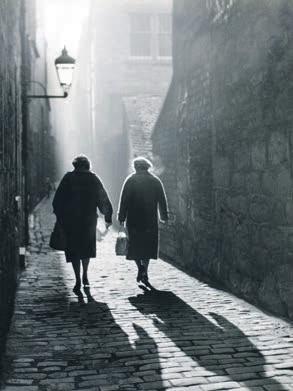
W Armstrong, Two women in a Perth Vennel (1950)
Image: courtesy of Perth Museum
Image: courtesy of Perth Museum
Shame Parade
At the Venice Biennale, Bugarin + Castle’s Scotland + Venice pavilion reverberates against rising transphobia, reimagining cross-cultural traditions of public shaming through sound, sculpture and spectacle
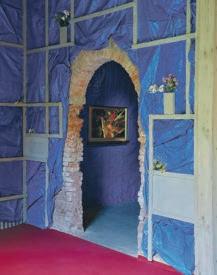
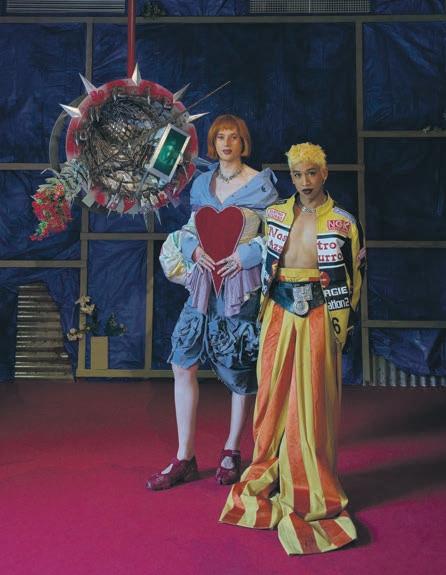
Tucked within San Pietro di Castello, an otherwise unassuming doorway draws visitors into the Scotland + Venice pavilion through a narrow corridor – as if passing through a portal – that opens onto a garden and the gallery beyond. A haunting sonic landscape of breathing, heaving, gulping, and swallowing reverberates through the passage, building a sense of anticipation before arriving at the exhibition itself. There is something about a pull inward: an auditory, visual and spatial beckoning that draws the viewer deeper into the space, another timeline, or another state of perception. Marking Scotland’s return to the 61st Venice Biennale after a four-year hiatus, the 2026 Scottish Pavilion presents Shame Parade by Glasgow-based queer and trans artistduo Davide Bugarin and Angel Cohn Castle, who first began collaborating over a decade ago through Castle’s cabaret company Pollyanna. This year, the Pavilion is curated by Morven Gregor and presented by Mount Stuart Trust. Using sound, spatiality and performance to explore how identity and memory move through changing structures of control, the exhibition takes its title from the historical European practices of ‘charivari', ‘rough music' and ‘scampanate', alongside post-Reformation Scottish traditions of public shaming, in which people accused of moral
or social transgressions were publicly mocked and ridiculed through parades, effigies, impersonation, and the historical use of cross-dressing – spectacles used to enforce social conformity. Shame Parade reimagines these histories in relation to the hostility faced by trans communities, considering how shame operates today, while also acknowledging its layered relationship with drag, cabaret, queer culture and trans identity. Sound and spectacle extends into the exhibition’s approach as well, drawing on theatrical excess, glossy surfaces and camp aesthetics.
A sense of distortion and disorientation runs throughout the exhibition through both imagery and architecture. Rooms bleed into one another physically and optically, pulling viewers through three-dimensional perspectives and disjointed encounters, producing a feeling at once interior and exterior, architectural, anatomical and mechanical. In the first room, blue tarpaulin wraps around spalling brick walls, held in place by wooden stretcher frames that partially expose silver corrugated panels beneath. Vases of artificial plastic flowers are placed against these harsher surfaces, suggestive of vulnerable interiors of temporary shelters and shanty dwellings.
Suspended at the centre here is At Certayne Tymes, a clock-like metal sculpture, somewhat
Words: Shalmali Shetty
resembling a murex seashell. Covered in sharp lines, encrusted spikes, grips and grids, the work embodies time, its central vortex pulling one unto itself. Resembling public clocks, the piece reflects on time as a structure of control, as well as decorative symbols of authority, while reinterpreting the word ‘clock’ through a queer and trans lens: to be ‘clocked’ meaning to be recognised as trans, often involuntarily. The work further reflects on mortality, memory and self-determination, exploring how queer and trans lives often experience time differently, through delayed transitions, chosen timelines and alternative forms of becoming.
On the opposite end of the room, a large structure acts as one of the clearest cultural anchors within the space, drawing on Bugarin’s Filipino background. Nocturnal Amusements is a jeepney-inspired façade, assembled in bright colours and layered with painted text, graphics and anime visuals that echo the excess of ornamentation, slogans and graffiti found on Manila’s public transport. Complete with handles, rearview mirrors, number plates, headlights and a tyre, the structure features the phrase ‘Are You Discreet?’, and a central viewing window that draws the gaze through a tunnel-like perspective; yet another portal moving from the interior to exterior. At its end, curiously, sits a miniature diorama of an unkempt domestic backyard space – comprising scenes from the Manila North Cemetery and medieval charivari imagery. With the installation physically cutting across two rooms, spatial movement becomes part of the work requiring multiple viewpoints to understand it, suggesting that identities, histories and experiences cannot be fully grasped from a single perspective.
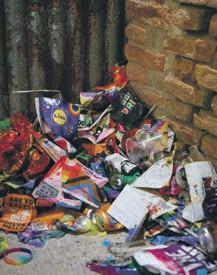
In a corner of the room sits an easily missable pile of what appears to be discarded waste. Titled Pride Debris, the material was collected over the course of a summer from what was left behind after Pride parades across Scotland: fragments of banners, decorations, plastic and paper waste, tin cans, and other remnants of celebration. Acting as an archive, these objects from the parade trace queer public life through joy, exhaustion, political struggle and disappearance. The second room opens onto a single print on metal, lined at the bottom right with shiny embellished acrylic nails, alongside a five-channel film titled Submit to Sound, both of which explore the concept of the trapdoor, referencing ‘trap’ as a slur historically directed at trans people.
Photo: Bugarin + Castle, Installation view of the exhibition Shame Parade Bugarin + Castle, 3rd May
Photo: Dimitri
D’Ippolito
Photo: Dimitri
D’Ippolito. Courtesy of the artists and Scotland + Venice.
‘There is something about a pull inward: an auditory, visual and spatial beckoning that draws the viewer deeper into the space, another timeline, or another state of perception’
Originating in anime subcultures, the term frames trans and gender non-conforming people as deceptive, carrying deeply violent implications. The film, presented as a 20-minute loop and staged like a pantomime with Bugarin and Castle as lead actors, depicts voice feminisation therapy sessions through arresting visuals and sound, where a trans woman instructed to raise her larynx is mirrored by a more exaggerated, ‘draggified’ double who lip-syncs and gradually overtakes her, ultimately causing her to fall through a trapdoor. It interrogates the pressures surrounding vocal performance and authenticity, asking what it means to ‘shape’ a feminine voice, who defines femininity, and how ideas of ‘passing’ or being ‘clocked’ operate under conditions of increasing scrutiny, which can force people into a kind of ‘defensive crouch’, leaving little space for introspection within queer and trans experience.
The research spans both Scottish and Filipino contexts. Bugarin, whose background is in architecture, was conducting architectural and sound-mapping work around Manila North Cemetery, a vast cemetery that also functions as a densely inhabited neighbourhood. Despite the intensity of the city, the area would be unusually quiet at night, as a result of increasing sound restrictions, including limitations on karaoke that is an important part of everyday social life in the Philippines. The artists first encountered the term ‘charivari’ in Article 155 of the Revised Penal Code of the Philippines, a public disturbance offence, but a colonial remnant inherited from Spanish rule.
Originating in French and largely surviving within academic and legal contexts, this unexpected appearance of a European term within contemporary Philippine law indicated a link between colonial histories of shame, sound, movement, surveillance and public regulation.
The project further draws on other archival and historical references, from the 17th century satirical poem Hudibras by Samuel Butler, to William Hogarth’s 18th century prints that Castle studied at London’s Warburg Institute, both linked to charivari traditions. Hogarth’s prints influenced the film’s imagery and scenes in the diorama, alongside research tracing objects that were historically used to create noise and enact public humiliation in charivari processions. The artists also reference Robert Burns, who was made to sit on a cutty stool and responded to public shaming with poetry that celebrated the very behaviour for which he had been condemned.
This year’s Biennale In Minor Keys, posthumously curated by Koyo Kouoh (1967–2025), invites attention to meditation on quieter, peripheral, and
often overlooked forms of expression, and alternative ways of sensing and inhabiting the world: ‘The songs of those producing beauty in spite of tragedy. The tunes of the fugitives recovering from the ruins. The harmonies of those repairing wounds and worlds…’
Within this framework, Shame Parade emerges in response to an increasingly hostile climate for trans people in Scotland and across the United Kingdom. The Pavilion engages with the complexities of trans experience through the presentation of minoritarian voices and identities that cut through the contemporary political climate. By situating these within histories shaped by Scotland, the Philippines, and their overlapping colonial pasts, it takes on an outward-facing perspective and works across wider historical timelines.
Bugarin + Castle: Shame Parade, Scotland + Venice, Olivolo Castello 59, Venice, until 22 Nov, part of La Biennale di Venezia 2026
scotlandandvenice.com
Photo:
Bugarin + Castle on the occasion of Shame Parade opening at Scotland + Venice during the 61st International Art Exhibition - La Biennale di Venezia
Photo: Dimitri D’Ippolito. Courtesy of the Artists and Scotland + Venice
The Water’s Fine
Print is alive and well in Glasgow, as we hear from Calum Herbert and Molly Hooper about their process and the inspiration behind Piscine magazine
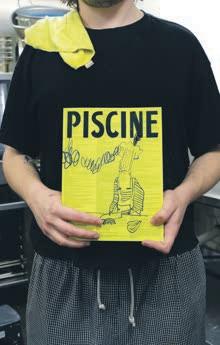
“It’s an art and culture magazine, for and about Glasgow,” Calum Herbert and Molly Hooper explain of Piscine magazine, Glasgow’s newest print publication, started by a group of recent-ish graduates from Glasgow School of Art. Originally named Piss Scene, but softened into today’s more welcoming liquid title, the magazine aims to “show off all the fun work that everyone’s doing… documenting all the cool things that are happening.”
Its first issue contains insightful commissioned writing, with highlights including food reviews by Mike Hill and a piece by artist Briony Godivala documenting a project in which she tattooed a QR code onto her arm, linking to a webpage changed daily via public vote. Alongside these longer features are columns written by artists, musicians and organisers within Glasgow’s creative scene. “We just let the people – that have so far mostly been pals – write them,” the pair explain, creating a democratic and naturalistic way to discover new corners of the city’s culture.
Herbert and Hooper are the design duo behind Piscine’s visual identity, and issue one marked the first time they had worked together formally. Herbert was initially approached by the editorial team to design the masthead and, through his extended residency at local letterpress studio The Caseroom, crafted the logo using a wooden typeface found in the cases and printed using a traditional press. “It looks gorgeous because you get the texture of the wood – it’s just amazing,” he explains.
Asked how they approach the design partnership, the pair joke that they “parallel play.” But readers of the magazine will be able to see play within its pages, deftly woven with experimentation, care and a clear love for design and printed material. The cover, for example, lays bare the team’s entire WhatsApp chat history, with only bank details removed, and overlaid with an illustration by artist Freddie Guthrie. This simple idea intersects insight, humour and style, which continues throughout the magazine. Hooper takes the reins on graphic design, producing thoughtful typography and layouts, while Herbert’s influence appears through collograph illustrations and the use of woodblock and letterpress forms.
Their time studying together at Glasgow School of Art has proven to be an influential foundation for their design sensibilities. They were taught, alongside Pickstone, by Matthew Walkerdine, founder of independent small press bookshop Good Press. “[Walkerdine] instilled prints in us. Books. Just feel the material, get the paper in your hands,” Herbert enthuses.
“That’s kind of what we rave about and talk about all the time in studios, just pulling out books. Just really loving books. I almost see the magazine more of a publication, like an actual book.”
Words: Phoebe Willison
I wonder if this is a response to the cold world of phones, doomscrolls, collapsing attention spans? Dare I say, a response to the un-nameable form of ‘intelligence’ coming to eat artists alive, up and down the land? “Actually, no, I don’t think so,” Herbert responds. “I think we just love print stuff, like genuinely.”
“It’s also quite nice, I think, with print, to say okay, it’s done, it’s done now, it’s been sent off,” Hooper adds. “You kind of have to let it go, whereas on digital... I mean, I tweaked some of the things on the Instagram the other day.”
A print-only publication was not the original plan. Early discussions involved publishing more work online, but the realities of producing issue one – which arrived almost ten months later than intended – forced a reconsideration of priorities.
“After this one came out, I think we were kind of like, why are we messing around with trying to put too much out? Why are we trying to churn out lots of writing, when actually we could just have a bit more control.”
“We just love print stuff, like genuinely” Calum Herbert
Starting a print magazine in 2026 is not for the faint of heart, or those shirking from hard work, but luckily the team behind Piscine suffer from neither such ails. With issue one dedicated to labour and work, Piscine looks graft right in the eye. Herbert was the only member who didn’t hold a hospitality job alongside his practice, although he has recently picked one up. Hooper, alongside her hospitality work, also runs R.A.T., an independent artist studio and gallery space in the city centre.
Despite the workload, issue two is due to hit Glasgow’s streets soon, this time in the form of a broadsheet newspaper. Expect Piscine’s signature yellow and tactile masthead, but beyond that, there are no rules. As for future issues? The boundaries of print and publication are set to be tested. “What we really want to do is to start a kind of workshop situation,” Herbert explains. “Actually getting people involved to construct a magazine – we’ve been calling it Day Mag, because what we really want to do is do a magazine in a day.”
“Real time printing, real time making, editing – everything’s happening, and at the end of it you have a magazine. Hopefully.”
For Piscine, print is neither a nostalgic medium in decline, nor an opportunity for mawkish pastiche. The team treats print as a living, collaborative medium, one which is growing and changing shape as much as Glasgow’s culture itself.
Photo:
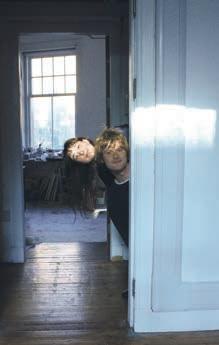
Molly Hooper and Calum Herbert
Photo: Kate McMahon Image: courtesy of Piscine Magazine
Bad Art
We chat with author and art philosopher Daisy Dixon about her new book Depraved, and what we should be doing about harmful art
What should we do with depraved art?
Take Titian’s The Rape of Europa (1560-62), for example, which depicts Zeus, disguised as a bull, abducting a young princess. Europa’s mouth is seductively ajar, and her legs are parted as she is swept away, clutching the horn of her rapist. The implicit message behind Europa’s conflicted arousal is that consent is unnecessary – that her ‘no’ really means ‘yes.’ So, should we slash it or let it grace our gallery walls?
According to philosopher and author Daisy Dixon, the painting is a form of hate speech against women, as described in her new book, Depraved: The Story of Dangerous Art: “its true depravity […] emerges from its position in a wider web of cultural domination and white cis-male supremacy.” Yet Dixon is not in the business of cancelling Titian, who remains one of her favourite artists.
“Big questions tend to attract black-andwhite answers [because that] makes them more attractive or interesting,” Dixon tells me. “The reality of these things is normally far more complicated.” In her book, Dixon conjures a Hydra to help us wrestle with the many-headed nature of immoral art and the urgent political question of what we should do with it. The Hydra’s five heads show that art can be depraved in five, intersecting different ways: by explicitly depicting immoral acts; by influencing people towards harmful behaviour; by expressing dangerous ideas; by reflecting the character of immoral artists; and by being produced through the exploitation of humans, animals or the natural world. These heads bump together – immoral art cannot be slain neatly.
In the near-distant past of the pandemic, the challenge of immoral art rose ferociously to public consciousness; suddenly, Dixon found that her doctoral research “had a foothold outside the ivory tower” of academia. She cites the #MeToo movement, the 2019 allegations of sexual abuse against Michael Jackson, and the toppling of slave trader statues during the 2020 Black Lives Matter protests as motivators for writing Depraved
Dixon sets her Hydra on an eclectic range of art, from Hitler’s watercolours to Marina Abramović’s performances. Notably, she focuses on Edward Colston’s statue in Bristol, which was famously pulled down, defaced and rolled into the river by BLM protestors. Pushing against Keir Starmer’s lacklustre tweet in response (he said that it should have been removed from our streets long ago, but not in this way), Dixon argues that protestors rightfully, and colourfully, engaged with Colston’s injustices through the attack on the statue. She suggests that if we follow Starmer’s wishes and quietly remove the public art commemorating problematic figures, we sweep their atrocities under the carpet. Rather, it is through community-driven spectacle that we can confront the atrocities of our past and present.
The original plaque that accompanied Colston’s statue erased his active participation in slavery – a kind of censorship that extends to gallery wall labels. In recent years, there has been a considerable rise in public galleries and museums updating their interpretation frameworks to decentre colonial, patriarchal and ableist language and narratives. Tate, for example, actively invites visitors to report interpretations that overlook or misrepresent perspectives, suggesting that art history is not static or singular. In Depraved, Dixon claims that “curators have a social and moral responsibility to provide counternarratives and tell honest stories about the art they display.” Delving further into these wall texts, she cites Gauguin and Picasso as “classic” examples of this kind of censorship, in which the gallery texts obfuscate the artists’ abuse of underage girls, some of whom were painted subjects. But Dixon is pleased when galleries acknowledge that these artists pursued these underage ‘girls’ and not ‘women.’ “The subtle language changes are really important,” Dixon explains, “otherwise not only is it inaccurate, there is something sinister about obscuring the reality behind these works.”
Words: Rachel Ashenden
We end our conversation with a discussion about the art that is yet to come. Dixon’s Hydra is equipped at interpreting the immoral art that already exists in the world, but should there be parameters in place for making art? According to Dixon, “blanket censorship” is never the answer. Rather, she thinks that “there are certain [ethical] ideals that artists could aim for,” explaining that artists who kill animals or harm the planet should think seriously about whether there are alternative ways to express their ideas.
She extends these ethical considerations to AI, while acknowledging that this edition of Depraved entirely steers clear of AI. In part, this is because debates around AI hadn’t exploded during the writing of Depraved She might set her Hydra on AI in a future edition, particularly as it raises concerns around the exploitation of the environment and of intellectual property. There is a tendency to forget that AI is a human invention, and that humans are responsible for its depraved outputs, produced at great speed and volume. But for Dixon, the “pure” use of AI to create multimedia content cannot constitute art. For her, she explains, art is “a distinctively human thing, or indeed sort of animal thing – a living, sentient thing to do.” Why replace something so existentially affirming and philosophically complex with the press of a button?
Depraved: The Story of Dangerous Art is out with Faber on 18 Jun
Daisy Dixon will be in conversation with Rachel Ashenden at the Portobello Bookshop on 25 Jun
Photo:
Photo: Balazs Toro
VARIOUS DATES BONGO’S BINGO
VARIOUS DATES BELFAST BRUNCH CO
VARIOUS DATES FROM FEAST TO FLING
SUNDAY 14 JUNE THE ULTIMATE K-POP LIVE SHOW EDINBURGH
SATURDAY 27 JUNE DROPKICK MURPHYS
SUNDAY 28 JUNE NATIONAL BRICK EVENTS: EDINBURGH
FRIDAY 3 JULY ANTARCTIC MONKEYS
MONDAY 6 JULY THE MACCABEES
Tuesday 16 June Lola Young
TUESDAY 28 JULY LENNY PEARCE
SATURDAY 1 AUGUST AN EVENING WITH CHICANE
SATURDAY 15 AUGUST DEFINITELY OASIS:
96 REVISITED - CELEBRATING 30 YEARS SINCE KNEBWORTH, LOCH LOMOND & MAINE ROAD
TUESDAY 25 AUGUST
WEDNESDAY 26 AUGUST KINGFISHR
THURSDAY 27 AUGUST OCT (ON COMPANY TIME) UK TOUR
SATURDAY 5 SEPTEMBER ARMAND VAN HELDEN
SUNDAY 20 SEPTEMBER DEATH CAB FOR CUTIE
THURSDAY 1 OCTOBER DON BROCO
FRIDAY 2 OCTOBER AGNIESZKA CHYLINSKA
SATURDAY 3 OCTOBER THE UNDERTONES 50TH ANNIVERSARY SHOW
FRIDAY 16 OCTOBER HEAVEN 17
SATURDAY 17 OCTOBER THE REYTONS
FRIDAY 30 OCTOBER BLACK STONE CHERRY THE CELEBRATE TOUR
SATURDAY 7 NOVEMBER ELVANA ELVIS FRONTED NIRVANA
SUNDAY 8 NOVEMBER A NIGHT AT THE DARTS
MONDAY 9 NOVEMBER SKYE NEWMAN
FRIDAY 13 NOVEMBER PICTURE THIS
FRIDAY 27 NOVEMBER BBC RADIO 2 DANCE SOUNDS OF THE 90S WITH VERNON KAY
SUNDAY 29 NOVEMBER AVATAR
WEDNESDAY 9 DECEMBER SEX PISTOLS FEATURING FRANK CARTER
THURSDAY 10 DECEMBER ARTEMAS GETTING UP TO NO GOOD
Football’s Cooming Hoom
ICYMI, Scotland are competing in this year’s FIFA World Cup. In celebration, we get stuck into some of the songs vying to become Scotland’s 2026 World Cup anthem
If you think the worst thing about Scotland’s first World Cup since 1998 might be zero wins, zero goals and an early flight home, think again. Instead, look to YouTube, streaming services and TikTok for the folk who have hitched themselves to the Tartan Army bandwagon for a bit of Jules Rimet rub by adding to the infamous pantheon of World Cup anthems.
For science and The Skinny, I have subjected myself to, picked apart and even sometimes begrudgingly enjoyed at the very least parts of some of the tunes that have filtered through in the weeks and months since Kenny McLean’s steady strike wafted over the head of a floundering Kasper Schmeichel. These ditties are often tongue-in-cheek, fall firmly into the bracket of ‘novelty song’, and have a quality ceiling so low, a mere sprinkle of humour or originality would immediately punt such recordings into the very best of this crop. World Cup songs, even for the Scottish, are not a recent concept. Who can forget hit single We Have a Dream by (checks notes) the entire 1982 Scotland World Cup squad? Or the better, but still pretty risible, 1998 Del Amitri effort Don’t Come Home Too Soon, the tone of which tells you all you need to know about Scottish football fans’ admittedly self-deprecating approach to supporting their sporting heroes.
But to 2026, the prevalence of social media raconteurs and an industry gripped by the need to latch on to anything that could funnel attention.
There isn’t just one (cough) composition vying for a place in history. I know the Hampden stands will often belt out unrepentant bangers that find their way into the wider public consciousness (see: Yes Sir, I Can Boogie) but these simply do not count. If you covered some such song, it’s been stricken from the record (as some of the qualifying recordings have been stricken from my memory for mental health reasons).
Ok, ok, let’s get to these much-mooted songs already. JJ Bull’s LCD Soundsystem-aping sprechgesang electroclash (words I did not expect to write in this article) is easily the best of the bunch. He calls it the Very Unofficial Scotland World Cup Song, and while factually accurate, it’s actually more of an anti-World Cup anthem, with real jokes and an ability to match the tone of its forefathers (namely, Del Amitri, see above). I listened to this song four times, which is eight times more than some of the others.
As I burrowed deeper into an internet hole of Gerry Cinnamon wannabes I thought I may not escape from, five words danced into my inbox like a shot of the finest amphetamine: ‘metal Gaelic World Cup song.’ Gun Ghaol’s effort Gun Alba is certainly unique. Is it good? I recuse myself from the case, your honour. The mix of bagpipes, thrashing guitar chords and DJ scratching with the gurgling and spitting of cutting lines like ‘There’s only like 50 other teams, easy’ is a level of selfawareness worthy of praise. That a song
Words: Tony Inglis
‘That a song coinciding with a competition which is fleecing fans can combine community, genre, language and intentional stupidity is genuinely moving’
coinciding with a competition which is fleecing fans can combine community, genre, language and intentional stupidity is genuinely moving.
Inevitably, there’s the lowest common denominator entries. The Poundland One Direction of Just The Brave’s Go Scotland Go is very of this time, with its cultural references begging you for recognition. Any old no-name with an acoustic guitar, a plodding dance beat, an unenviable ability to rip off anything remotely familiar, and the most inane hype lyrics you could think of, are seemingly infinite: Scotland’s on the Way (Bucks’ Bravehearts), Back On Tour (Farrah Robb), and The Saltire’s Back (Ole Ole) (Phil Ciarletta). It’s all in good fun I know, but spend some time in this pocket and you will be hard pressed not to become deeply cynical.
Even Belle and Sebastian have got in on it. It Only Takes One Lion is actually fine! A largely benevolent acousto-pop dance-a-long, only really worth mentioning because the Glasgow band have had the good decency not to actually officially release it (yet, anyway), skyrocketing its novelty clout and allowing me to look over the weirdly out of touch clanger: ‘This is Scotland, where everybody knows you start with nothing.’
Well, my algorithm is now fucked. I’m doomed to stare eternally into the abyss of troubadours eerily smiling in their blue jersey that ‘Scott McTominay scores the goals and wears the number four.’ I didn’t even get to the pseudo-trad that is everywhere. I reject Calum MacPhail’s Bonnie Wee Team.
The antidote is the Codist boys’ Football’s Cooming Hoom (feat. Horselife). Originally released for the Euros, and re-released to coincide with Scotland’s efforts in North America, its wistful, childlike reveries were too irresistible to disqualify. Is it too unlikely that football is cooming hoom to Scotland? At least we’re in amongst it. Glorious failure and all that.
Photo: Photo:
Photo: Jonny Ruff JJ Bull
The Theatre of Football
As Scotland prepares for the World Cup, The Skinny speaks to Joe McCann about restoring Andrew Watson – the world’s first Black international footballer – to Scottish history
Football tends to admire itself through the analogy of theatre; in the ensorcelled eyes of supporters, stadiums become amphitheatres – their fans an ever-expressive Greek chorus –while viewers at home learn lines of colourful commentary. But ‘the beautiful game’ did not begin this way. And with their attention transfixed by craftful direction, fans have not only overlooked the game’s current climate, but failed to tell perhaps the most important story of its past.
Joe McCann’s new play, The Corinthian – directed by Martin McCormick for A Play, a Pie and a Pint at Òran Mór, 1-6 June, and Assembly Roxy, 10-14 June – is set to correct that, by breathing life into the forgotten figure of Andrew Watson: the world’s first Black international footballer. Watson’s achievements surpassed breaking into an all-white XI in the 1880s, or even bearing the captain’s armband; he pioneered the Scottish style of football, unique for its emphasis on threading the ball between players, rather than through them. This fluid, more elegant way of playing not only gave football its ‘beautiful’ quality, but also quickly eclipsed English tactics. Playing the passing game under Watson’s leadership,
‘Football and theatre share a profound faculty: both offer an escape from the world – a peace and solitude born out of the thrill of their craftsmanship’
Andrew Watson
Scotland dealt England two of their worst losses in history. This set the cogs in motion for the establishment of The Corinthians, an English team built with the Scotch Professors’ plans, which went on to spread football to the world.
But after his death, Watson wasn’t revered as an inspiration. Instead, he was consigned to a set of dust-gathering records, a victim of the artificial amnesia invoked by history’s discomfort with Black pride. Watson was effaced, and with him, Scotland’s contribution to its favourite game.
A poetic rhythm courses through McCann’s The Corinthian, transporting viewers from Watson’s early childhood in Demerara, to his life and career in Glasgow. But rather than a historical reconstruction, McCann’s first ever one-person play is a tapestry of record, memory and imagination. Watson (Dayton Mungai) appears as an omniscient manifestation of these elements, excited but also embittered at the prospect of telling his story here – on a stage, over 100 years after his death, bound by the dimensions of depiction. “Alright,” he says. “I’ll come to you, then. I’ll come to you.”
Words: Sebastian Elder
He does so with an air of consciousness, aware that what we’re seeing isn’t really him, and that this story isn’t entirely his anymore – that the crime of erasure means it can’t be. “One of the toughest things was that I’m telling Watson’s story, but I’m not telling a true story,” McCann explains. He fills in the gaps with fragments of his own life, injecting personality, drama and the lived experience of a Black Scotsman. In some ways, the play becomes a vicarious two-way stream: Watson emitted by McCann, McCann emitted by Watson – the aggregate of which is neither fact nor fiction, but speaks to truths across time and context all the same.
McCann has made a powerful mark in contemporary Scottish theatre, predominantly telling stories which shine a light on the Black working class experience. His previous A Play, a Pie and a Pint production (Alföld, directed by Dominic Hill) was nominated for a CATS award in 2022, and in 2025 he was named as one of just ten writers for BBC Scottish Voices. Bravery propels McCann’s work, converting vulnerabilities into hope, and his successes into shared exclamations of existence. You can hear this determination in the voice of Watson’s mother, who tells the young man as he packs his bags, wishing to abandon a Scotland that won’t accept him: “Take up room, Andrew.”
The Corinthian opens ten days prior to the FIFA Men’s World Cup, which will feature a Scottish team for the first time in 28 years. And while times like these can stage lasting scenes of unity, there’s also a risk that impassioned narratives will veil the oppressive elites cashing in on them: “Having the FIFA Peace Prize joke of a President as host for 2026 feels pretty fitting,” McCann says. “I’d want folks to enjoy the tournament, but perhaps sit with the messier truth of who gets to belong on the field, and remember the likes of Andrew Watson who made that belonging all the easier for those who came after him.”
Beyond analogies and metaphorical embellishments, football and theatre share a profound faculty: both offer an escape from the world – a peace and solitude born out of the thrill of their craftsmanship. In Watson’s words, via McCann: “The quiet of a thing that’s mine and will stay mine.” Silences such as these belong to those who fill them, meaning that for Watson, McCann, and anyone else outcast because of who they are, both the sport and the art become vessels of acceptance: “[Football] is something that can’t be taken away from [Watson],” McCann says. “For me, it’s similar to writing.” As political vulgarity and dizzying commodification continue to blemish the beautiful game, our best hope of salvaging it lies in looking back to the start. Enter Andrew Watson: captain, trailblazer, and now, storyteller, poised to reclaim his chapter in history.
The Corinthian, Òran Mór, Glasgow, 1-6 June; Assembly Roxy, Edinburgh, 10-14 June
Photo: Photo:
Joe McCann
Photo: Virag McCann-Toth
Spotlight On... James Emmanuel
Ahead of releasing his latest EP, Good Man, we catch up with Nigeria-born, Edinburgh-based soul singer James Emmanuel
James Emmanuel left Nigeria as a teenager after the death of his father. Finally settling in Edinburgh, he cleaned toilets for a living but also found his voice. From singing in the gents to busking and playing karaoke nights in the capital, the soul singer is now a full-time musician signed to Decca and last year won the Spotlight Award at the Scottish Music Awards. This year Emmanuel is taking it up a gear making his debut at TRNSMT, supporting Nile Rodgers and releasing some of the best songs coming out of Scotland right now.
Where did you live in Nigeria and how did you come to live in Edinburgh?
I was born in Benin City, Nigeria. I moved to London very briefly because I had some extended family and friends there. I moved to Glasgow, but a chance visit to Edinburgh to see an old friend is how I ended up getting a job as a cleaner at the
club he worked in and I just never left. I was 20 when I moved here. The first day I got to Edinburgh, the bus driver came down from his bus on Princes Street to give me proper directions on how to get to my mate’s house in Niddrie. I thought that was a complete sea change from London. I found Scottish people really friendly and easy going. I worked at the bar opposite Waverley Station called Sportsters at the time. It took some time to adjust to the job and how degrading it could feel in certain circumstances.
The catalyst for your move was the death of your father, a preacher known as Mr Mathias. How difficult was it to leave Africa?
It was daunting at first. I barely had time to think because I was on a mission. The mission was working as hard as I could, saving as much as possible and sending money back home to support my mum and keep my siblings in school. My childhood was amazing. I look back now and I’m eternally grateful to him and my mum for all the sacrifices they made. We had very little but it never stopped them making sure we had what we needed.
How do you find Scotland and Edinburgh?
I’d be lying if I said I’ve never experienced racism. Of course, mopping toilets in a men’s bathroom you’re likely to encounter a few people who’ve had one too many beers and make racial remarks. But for me, the overwhelming majority of people in Scotland are welcoming and beautiful. It’s the reason I’ve stayed here as long as I have. I played Burns Night this year and wore my first kilt and it felt like such a proper welcome.
Words:
Rick Fulton
Did you always want to be a singer?
I heard Marvin Gaye at five years old and I think that’s when the seed was planted. When I was 11 I started sneaking off church to go play video games and gamble. My dad found out and he took me to the children’s choir leader and said, “Put him in the choir and keep an eye on him please.” That was the beginning of my singing journey. Then when I was in Edinburgh I’d sing while I worked in the toilets and people began giving me tips to sing them birthday songs which helped build my confidence. After years of singing in karaoke bars and open mics, I wanted to put on my own shows but I didn’t have the money to promote the music so I went busking. I started singing at Tron Kirk karaoke and then Whistle Binkies where I was nicknamed Captain Love.
Big year for you this year. What are you most looking forward to?
Releasing more music. Recording my album. Sharing the stage with so many musical icons like Nile Rodgers who I’m supporting on his UK summer tour dates. That’s a big one for me and I’m most excited just to share the stage with him. He heard my music and loved my voice and that’s how I got the nod to support him. Still can’t believe it.
How excited are you to play TRNSMT?
It’s my first time and one of my biggest dreams. To do it at this stage of my career is exciting and humbling.
Tell us about the title track of your new EP, Good Man?
The title track is a special celebration of my father and men like him. He never really got celebrated while he was here with us. Men like him are often forgotten but now more than ever they should be celebrated and put in front of young people, especially young men, to help correct some of the negative role models they’re often exposed to.
What are your dreams moving forward?
I dream of bringing classic soul music back to the charts and Radio 1. I want to be part of a new generation of soul artists pushing the genre forward in a way that feels modern, open and connected to the world we live in right now. I want all kinds of people at my shows regardless of race, gender, sexuality or religion. Music should bring people together and make people feel seen.
Bridge Over the Tears I’ve Cried comes out on 12 Jun; Good Man is released on 26 Jun; James Emmanuel plays TRNSMT, Glasgow, 19 Jun; King Tut's, Glasgow, 16 Dec
jamesemmanuel.co.uk
James Emmanuel
Photo: Izzy Leach
Start the Party!
With Kelburn Garden Party returning next month, the full lineup for our Pyramid Stage takeover is finally here, with SAY Award winners Kai Reesu joining the bill alongside GAÏA, Isa Gordon, Chef The Rapper and loads more
This year, across the Friday, Saturday and Sunday of Kelburn Garden Party, we’re bringing a record-breaking 22 artists to our small but perfectly formed corner of the festival, aka The Pyramid Stage, and we cannot wait to start the party.
Easing us into the weekend will be the amazing Isa Gordon. No stranger to the festival, Gordon arrives fresh from releasing 8Men, where she reinterprets traditional and classic songs, one of which was inspired by a grime tune she heard once at Kelburn. Maz & The Phantasms also aren’t new to the festival. “Kelburn has been my spiritual home for a long time,” Maz says ahead of returning to play The Pyramid Stage for the first time. “It’s great to be sharing a stage with so many new and exciting independent artists and feel part of a wider local community.”
The rest of Friday’s lineup are all brand new to the festival. Expect gorgeous alt-folk from two rising talents – Glasgow six-piece Lacuna and Edinburgh five-piece Curiosity Shop. “I’ve been before as a punter and had a fantastic time, it’s such a great place to explore, I never get tired of that castle,” Curiosity Shop’s Ru Wallace states. “We are going to be playing tunes from our upcoming debut EP (ssshh), as well as a few other songs, come along if you like harmonies.” Later, the night will descend into the perfect swirl of chaos as quirky post-punk outfit Conscious Pilot arrive fresh from releasing their excellent debut album Human Poultry, while closing out the night will be outspoken punk four-piece SOAPBOX. “We’ve never been to Kelburn before but a lot of our friends have told us stories about their time there.
Excited to get in for a swim in the mornings,” singer Tom Rowan tells us. But what about their headline set? “Expect a bit of everything,” Rowan says, “not just moshing but a bit of a boogie too.”
Saturday gets underway with quirky pop maestro Gurry Wurry who once described his singing as sounding like he was trapped in a bin, and well, who are we to argue with that. It’s weird but great, we promise. Also weird but great is experimental musician Samwooddoowmas. If you want to see a man make music out of a can of Tennent’s, or turn a dildo into a theremin-like device, then Sam is your guy. Then for a dose of gorgeous mid-afternoon neo-soul, look no further than GAÏA. “Kelburn is my favorite festival by far!! It’s always such a magical weekend honestly,” she tells us. “It’s the first time I’ll be bringing my music to the festival. Truly cannot wait.”
In the words of Charli xcx it’s then time for a back to back to back dance break with three perfect pairings. Kicking off the dancing is bouncy electronic producer CUZINO, accompanied by ultra-talented singer Nwanneka. Majesty Palm will then bring a slice of pure pop to proceedings; think woozy dreampop through a Dua Lipa filter, followed by Solar Exterior, the new project from Doug MacDonald (aka Exterior) and Numbers Are Futile’s Panos Baras. “We’re excited to inject a small but concentrated amount of interdimensional static into The Pyramid Stage,” they tell us. “We play semi-improvised music that’s part dance, part drone, occasionally loud in ways you might not have anticipated. Drums that feel inevitable. Electronics that feel ancient.”
Then it’s over to a pair of alt-indie-pop big-hitters, the snarling and infectious grooves of Tina Sandwich and the fiery, feisty and mildly unhinged Martha Barr, aka Indoor Foxes. Of her
headline set, Barr says to expect “lots of energy, lots of noise, lots of music... I love jumping around so hopefully everyone wants to join me in going absolutely feral. I’m hoping for a mosh hahaha!!”
With restoration top of our Sunday priority list (this isn’t our first rodeo) we’ve planned a suitably calming start to the day for you, kicking off with the gentle balm of Hawick-based folk singer-songwriter Miwa Nagato-Apthorp. The chill vibes continue with the contemporary folk of Perth singer-songwriter Mairi Sutherland, before Rubie debuts her “new five-piece mega band. The Pyramid was my favourite stage at Kelburn last year; such fond memories dancing to TAAHLIAH, Water Machine and Dancer... it’s a total honour to be joining the ranks of these legends,” she tells us. “Expect Bond theme drama, maximum heartbreak strings, and slinky apocalyptic bangers.”
The genre journey continues with harp-led alt-folk from Dara Dubh, before Azamiah’s INDIA BLUE brings her gorgeous soul to the stage. Then it’s time for an energy switch-up with Raj Mahal’s rap-jazz ensemble before Chef The Rapper is joined by a DJ and saxophonist for an intoxicating fusion. Finally, closing out our stage is the fantastic Kai Reesu, whose effortless blend of jazz and hip-hop helped them claim the 2025 SAY Award. “We’re excited to raise the roof at the end of the weekend – the set we have prepared is about to go off. To play to the crowds at Kelburn – so engaged, supportive and passionate about having a good time together, is such an honour. We’re buzzing for a fantastic weekend!!”
Kelburn Garden Party takes place at Kelburn Castle, Fairlie, nr Largs, 2-6 Jul
Remaining tickets available at kelburngardenparty.com
Words: Tallah Brash
Photo: ReCompose
Kelburn Garden Party Pyramid Stage 2024 featuring BRENDA
Kelburn Garden Party Pyramid Stage 2024 featuring LVRA
Photo: ReCompose
Global Rhythms
With a weekend of buckie and basslines on the horizon, we chat with import founder, Grace LaNasa, about her upcoming Kelburn Garden Party takeover
On a dreich Wednesday afternoon, I meet Grace LaNasa, aka Buckfast Barbie, in anticipation of her Saturday takeover of The Saloon Bar at Kelburn Garden Party. Is the rain lashing against the coffee shop window a meteorological omen for the festival to come? We hope not. LaNasa tells me about her first time attending the festival three years before; discovering the Neverending Glen and the Waterfall Pool, volunteering in return for a ticket before spending nights dancing under a blanket of Ayrshire stars. “I fell in love with it the second I got there,” LaNasa says, a statement proven by her return every year since. From stewarding the site to working backstage at the Viewpoint Stage, LaNasa has seen the underbelly of the festival firsthand. So what does she want to impart on Kelburn? “When I pitched the idea, I knew I wanted to get as many people involved in this takeover as I possibly could. I wanted as many festival debuts [as] I could get and I wanted it to be a full FLINTA* lineup.” Her solution has been to programme a lineup of back-to-back sets from DJs within marginalised groups – whether that’s through gender, ethnicity or sexuality: “I wanted it to [represent] the femmes and the queers because that’s who’s bringing the heat and talent in Scotland right now.”
LaNasa reflects on her own identity, having moved to Scotland from Minnesota four years previously: “I am a queer immigrant, [so] I’m trying to platform people with strong ties to both of those identities. I want to platform people that need that support and deserve it.” This philosophy is integral to LaNasa’s monthly Edinburgh club night, import; its name a reference to the global exchange of music, people and culture fundamental to nightlife. “Immigration is such a hot topic right now. Minnesota is where I’m from, [so] it’s been very hard to watch everything that’s going on with ICE,” she says, reflecting on the deadly Minnesota shootings carried out by federal immigration agents in January 2026.
Words: Myrtle Boot
“Having your identity tied into what you’re doing is just inherent to good art”
Grace LaNasa
With the UK implementing stricter immigration rules and the rise of anti-immigrant sentiment in the UK and US, creating a space where cultural migration and identity are celebrated has become all the more pressing. She considers her own situation since settling across the Atlantic, “I’m very privileged. I’m an American white woman in the UK, but what I need people to understand is immigration looks like that. Immigration is very diverse, [it] isn’t always people seeking refuge. Immigration can be anything and it’s everywhere. It makes culture better because it’s a blending of cultures, and that’s what we need.”
Blending cultures is exactly what import sets out to do, physically importing DJs and producers to Edinburgh who play music which falls under the umbrella genre of global bass. “I love global bass as a blanket term… I just find it exciting when people bring their background into what they do,” says LaNasa, whose club night has seen artists from Poland play Jersey club, Canada play hyperpop and Lebanon play Arab bass. She mentions her own early musical influences: “I grew up going to a Spanish immersion school, so I [listened] to Spanish music all the time… I always found that I gravitated towards global bass sounds, whether it was Latin bass or looking at producers from all over the world,” she sums up her outlook unequivocally, “Having your identity tied into what you’re doing is just inherent to good art.”
An aspect of identity set to be explored on the grounds of Kelburn Castle will be that of friendship. For many of the artists featured on import’s lineup, their relationships have been shaped through years
standing shoulder to shoulder behind DJ decks. “Duos like Chromatic and shahazadi [are] used to playing with each other,” says LaNasa. “It’s really nice to have somebody who you feel that give and take of energy [with], you’re not trying to go too hard [and] you’re not trying to subdue yourself.”
LaNasa is joined in the early hours of Sunday by DJ and producer, al gu: “When we DJ together, it’s like, flirting. It’s like this bubble of love that I can’t explain to anyone. Everyone on the dancefloor is like, ‘are they gonna kiss?’” Like passing a baton (or bottle of Buckfast) back and forth, the atmosphere is shaped by each DJ offering a piece of themselves over the nine-hour takeover.
Grace LaNasa concludes, “The whole point of import isn’t for me to platform myself. It’s for me to boost other people and platform the talent that we have here.” Import’s Kelburn Garden Party takeover will surely do that, as festival goers congregate to dance in the spot LaNasa first came three years earlier. “I love a full circle moment. I’m constantly worried about being deported so I’m like, wow… I can’t believe it. I get to see this [come] to fruition.” As sounds imported from across the globe ricochet through Kelburn’s glen, revellers gather in the same spirit of friendship that built the lineup itself.
import x DYKESTEP, Sneaky Pete’s, Edinburgh, 4 Jun
Import takes over The Saloon Bar, Kelburn Garden Party, 4 Jul
Listen to Buckfast Barbie’s Kelburn Mixtape: mixcloud.com/KelburnGardenParty
Photo:
The Saloon Bar
Photo:
ReCompose
Grace LaNasa
Image: courtesy of Grace LaNasa
24 Hour Party People
Nightshift Glasgow lays out a blueprint to transform the city’s nocturnal infrastructure – but what does it actually mean for the scene? One writer pieces together opinions from a cross section of Glasgow’s clubland
Resilient and gritty to the end, Glasgow has a legacy of survival that is undeniably marked in its club scene. “We have so many limitations, but we are still going out and enjoying ourselves,” says maveen, DJ and owner of independent label KIN-TU. Populated purely by passion and insatiable energy, to describe the scene here as magic almost doesn’t go far enough. But passion doesn’t always pay the bills. Financial accessibility for grassroots collectives and punters is being achieved to the detriment of venues and promoters. Regularly working 60-hour weeks and running on fumes, the creatives who make club nights happen are exhausted and getting by on low or no pay. Cath Allison from Flos Collective CIC says, “I would do it all for free, again and again and again… but I’m knackered, and I need to have another job to support myself.”
Nightshift Glasgow: Glasgow City Centre Night Time Vision was produced and published by Glasgow City Council on 12 March 2026. Led by Sub Club’s Managing Director Mike Grieve, Nightshift proposes a comprehensive approach to Glasgow’s night-time economy that promises change.
Detailing a vision for the city centre that sees it blossom into a ‘global 24-hour city’, the plan is ambitious, hoping to achieve both ‘cultural and social’ transformation through the improvement of transport links, wayfinding, safety in and around the centre, and fundamental changes to leadership. It represents a recognition of value in the scene that has not gone unnoticed.
Speaking to Allison, she says, “When I first looked at the document, I thought it was amazing… it feels like someone’s looked at Glasgow and seen the opportunity for the city.”
Nightshift Glasgow provides a glimmer of hope, but not without caution. With it only being a steering document, the direction in which action is taken is still to be decided.
“It’s life or death,” says Sam Clayton, co-founder of Save The Scene, an organisation dedicated to advocating for the grassroots music ecosystem, the artists, promoters, venues and workers who have made the scene home. “I think the document is a good start, but it really depends on how it’s implemented and how the energy is matched, because there is a lot of enthusiasm from a lot of different sectors.”
Facilitating conversation within the scene, a discussion was held by the organisation at
The Pyramid about representation of the grassroots scene within the document. Looking to the future and the development of the plan, Save The Scene is concerned about how the grassroots community will be involved. Sophia Constantinou, director of FemmeDM, worries that “it will become too top-down or corporate, where the people actively sustaining nightlife don’t really have a voice within it.”
The document promises to engage with ‘underheard groups’ such as the LGBTQ+ community, ethnic minority groups, young people, and disabled people, but engagement is not necessarily enough. “You represent people by listening to them,” Clayton tells us, “[but] you can’t share power through consultation – people need to hear that their voices are being listened to… that they’re being taken seriously.” Giving people agency over the decisions that will directly impact them allows real collaboration to be achieved and sustainable change to be effected: “It goes back to access and representation,” says Clayton. For Save The Scene, collaboration is not just about representation; it’s about ensuring success. “We can revolutionise things,” Clayton says, “but it’s important to get everybody on board.”
For Cath Allison at Flos Collective, the people must come first. “The city is more than lights and pathways… it’s about the organisers, the venues and the people too... It’s a grassroots city, 100%.” With the recent closure announcement
Words: Lani Heywood
Illustration: Vaso Michailidou
“It feels like someone’s looked at Glasgow and seen the opportunity for the city”
Cath Allison
from The Flying Duck, the precarity of grassroots venues is on everyone’s minds. “Good transport links don’t matter if there are no venues to go to,” Allison tells us. “What’s missing is that there needs to be a first line of action which is – give the venues money.”
For maveen, it’s all part of a wider issue: “All these different societal issues come down to one bigger thing – either cheaper bus fares or cheaper rent leads to people having more money to go out and people feeling safer to go out… if you don’t have the ability to get in and out of Glasgow it’s difficult to see yourself going into town regularly.” It’s a two-way street. Without financial relief for grassroots collectives, venues and artists, new infrastructure won’t matter, but without improvements to infrastructure and accessibility, you’ll lose the punters. It’s precarious, but there is hope. With proper collaboration, the city might find itself on solid ground: “Glasgow is keen,” says Allison. Clayton reiterates: “People are so willing and have so much energy to be involved.” “It’s important for me to look back in 10 years and [see] something still here,” says Clayton.
For many, the club is a lifeline – a home. Across the city people are fighting for a culture that they recognise is vital for social mobility, cohesion and a sense of belonging. There is hope that Nightshift Glasgow shares this vision – in many ways, it’s a last hope.
With thanks to Flos Collective, Save The Scene and maveen
→ floscollective.com
→ instagram.com/savethescenescotland
→ instagram.com/kin_tu_
→ instagram.com/femmedm.uk
Photo:
MVT Cribs
Ahead of this month’s inaugural UK-wide Everywhere At Once festival, we catch up with the Music Venue Trust, Purple Orange Arts Venue and Brooke Combe to discuss the importance of grassroots venues
Last month, beloved Glasgow venue The Flying Duck announced they’d have to close their doors at the end of May. The Music Venue Trust (MVT) immediately published a statement encompassing the heartbreak punters around the city were feeling. “In its current form since 2007, with roots stretching back to 1991, The Flying Duck has long been embedded in the city’s DIY scene. It has consistently provided a platform for emerging artists, nurtured local communities, and created space for the kind of underground culture that so often shapes what comes next.”
Established as a UK-registered charity in 2014, MVT’s mission is to protect, secure and improve grassroots music venues exactly like The Flying Duck, so with the absence of Glastonbury on our festival calendar this summer, they’ve reimagined a camping festival as Everywhere At Once, with artists set to perform in local grassroots music venues across the country from 26 to 28 June.
“When we’re having a mental health crisis at the moment in the UK, the festival is about being with other people and improving our lives,” Music Venue Trust’s campaign and comms manager Toni Coe-Brooker tells us on a sunny morning over Zoom. “The whole purpose is more the social outcome by being part of a community.” Everywhere At Once festival’s purpose is to fill over 400 grassroots music venues with punters keen to enjoy the sense of community a scene offers though live music just a short trip from their doorstep.
To name a few gigs from the weekend's line-up: VLURE, a Glasgow three-piece whose music is propelled by their love of electronic beats, will play Stirling’s Tolbooth (26 Jun); alt-folk artist Jo Mango will release her latest album The Lightswitch at Saint Luke’s in Glasgow (26 Jun); and in Bathgate, the phenomenal Scottish soul singer Brooke Combe will play Purple Orange Arts Venue (26 Jun). “I’m so honoured to be involved,” Combe tells us. “I’ve made my way through some of Scotland and the UK’s best independent venues from King Tut’s to Barrowland Ballroom.” Without the infrastructure of local music venues to practise her craft, becoming the touring musician she is today would have been ten times harder. “I love the small intimate gigs, the atmosphere is always great,” she says. “I can’t wait to play in Bathgate, we’ll have a ball!”
“We are over the moon to be involved with Everywhere At Once,” Michael Mathieson, co-owner of Purple Orange Arts Venue tells us. “We put on around 15 to 20 original acts every month, platforming everything from younger artists starting out, open mics and older musicians in bands. We think our venue is really important for the area to get people out into a small but vibrant music scene. We recently had our licence changed to allow 16 and 17 year olds into our shows, as well as under 16s with an adult. Even just in the last
Words: Billie Estrine
two weeks we have seen a slight increase of gig-goers coming into the venue.”
Mathieson’s work at Purple Orange exemplifies Coe-Brooker’s point that “ the festival’s really beautiful and unique in itself, because it’s a nationwide celebration of grassroots venues. The whole point is that people are not gonna be travelling to one festival. This is about celebrating the incredible and unique artists, communities and venues that already exist in their own towns and cities.” Curious about MVT’s work with the local Scottish music scene, Coe-Brooker reassures us: “It just makes total sense that Scotland would be included, especially with such a huge membership up in that one nation in itself.”
Stina Tweeddale (aka Honeyblood), is MVT’s Scotland coordinator and oversees the charity’s work in the country alongside the Scottish steering group, which meets every six weeks. One of the key issues MVT’s Scottish branch has been lobbying to achieve is accessible public transport for gig-goers. To achieve this goal, Coe-Brooker shares: “ We’ve been working to help the public transport go later into the evening so people can actually attend shows and watch the headliner before the last bus goes home.” In MVT’s five-point
plan for the next Scottish Parliament, to remedy this issue, point four includes a pilot late-night services programme until 3am in key routes serving venues in Glasgow and Edinburgh. Back to the main event, Everywhere At Once, in large part due to Tweeddale and the steering group’s direction, is decentralising the major metropolitan areas in Scotland. “By working with venues and artists across Scotland, Everywhere At Once can showcase the diversity of Scotland’s music scene while ensuring support and visibility reaches communities beyond the major cities,” says Tweeddale. “It also reflects MVT’s longstanding view that grassroots venues are far more than just places to put on gigs; they are essential cultural spaces that nurture future talent and ensure communities have access to culture wherever they live.”
Everywhere At Once takes place at grassroots venues across Scotland and the rest of the UK, 26-28 Jun – find out more at everywherefest.com
Find out more about Music Venue Trust at musicvenuetrust.com
Photo:Photo:
Photo: Serena Milesi
Brooke Combe @ Barrowland, Glasgow
xcx and the City
Charli xcx is all over movies in 2026, and one of the first and best of that cinephile pop star’s film projects is Erupcja. Director Pete Ohs talks to us about his collaborative filmmaking process and teasing audiences’ expectations
Whether in supporting parts or front and centre, 2026 would seem to be the year of Charli xcx becoming a film star. Since January, audiences have had the chance to see her on cinema screens in the graphic novel adaptation 100 Nights of Hero and playing ‘herself’ in the mockumentary The Moment. And while UK release dates for the movies are still to be confirmed, the 2026 festival circuit so far has already seen her pop up in Gregg Araki’s I Want Your Sex, Cathy Yan’s The Gallerist and Daniel Goldhaber and Isa Mazzei’s Faces of Death. It’s funny, then, that the first released independent film in which the British singer-songwriter is fully in a leading role – without the meta trappings of The Moment – immediately pulls the rug for stans or just casual fans looking to get a sense of xcx’s acting chops: the opening stretch is entirely in Polish.
“All my films are some sort of genre experiment,” Pete Ohs, the director and co-writer of Erupcja, tells me, “and with this, part of the fun was that I was getting to make a Polish film.”
Examples of Ohs’ other genre experiments include The True Beauty of Being Bitten by a Tick (2025) and ghost story Jethica (2022). “My movies are full of a lot of inside jokes where, ideally, the audience feels like they’re part of it,” he continues. “One of the first [in-jokes] in this movie is that for the first four minutes, there’s no Charli xcx, and it seems like this is a Polish film. Doing the [opening] credits in Polish, having it start with a Polish song, was all part of that fun of being an American filmmaker getting to make a film that would be in the foreign film section at Blockbuster.”
Particularly prolific in the last few years, Ohs is a filmmaker who specialises in modest productions where the seed of a film idea doesn’t start with a fully outlined story, but rather the opportunity to assemble a particular cast and crew. The finished film may be about a British tourist, Bethany (Charli xcx), and a Polish florist, Nel (Lena Góra), rekindling their strange and estranged relationship when the former gets both stuck in Warsaw for a few extra days and increasingly
“I don’t really care what movie I’m making as long as it’s a movie. I’m fine for it to become some creepy horror, a quirky comedy or an international romance”
Pete Ohs
Words: Josh Slater-Williams
fatigued by her boyfriend Rob’s (Will Madden) romantic itinerary on holiday. But the project came from simply wanting to explore a story of coincidences in the Polish capital.
“The same week that I met Charli, I was hanging out with Jeremy O. Harris, who’s also one of the actors and collaborators on [Erupcja],” Ohs says. “We were at this bar with filmmaker Oliver Hermanus [The History of Sound]. I mentioned I was living in Warsaw and he then shared that he was once stuck in Warsaw for a month in 2010 because that volcano in Iceland had erupted. When I heard that, I thought about how I’d been living in Iceland in 2010. Those synchronicities felt exciting to use for a story. I didn’t know exactly how, I just liked the narrative kernel of somebody being stuck in Warsaw because of a volcano. That opens the door to the creative brainstorming process, and then we started to explore all the different metaphors that a volcano can be.”
Erupcja was filmed guerilla-style, effectively, during a lull in xcx’s ‘Brat Summer’ schedule, the timing of which also landed another cool casting coup. If we ignore one uncredited cameo, Erupcja features the first feature-film performance by Polish actor Agata Trzebuchowska since her debut leading role in Pawel Pawlikowski’s Oscar-winning Ida (2013). “The way my movies get made is through friends,” Ohs says. “It’s just who’s around and who are we excited to make something with. And Lena just said, ‘What if [my friend] Agata was in it?’ They liked the idea of getting to play girlfriends in a relationship. I was excited by that, but we still didn’t really even know what her part was going to be until halfway through the shoot. But that’s the fun of making stuff. I don’t really care what movie I’m making as long as it’s a movie. I’m fine for it to become some creepy horror, a quirky comedy or an international romance. They’re all worthwhile experiments for me.”
Expanding on his unique production process of “almost method writing,” where he and four of his actors (including xcx) are credited writers who determine their characters’ mindsets and choices on a day-to-day basis across the shoot, Ohs tells me that he’s been wanting filmmaking to feel more like musicmaking, more like a jam session. “The freedom and fluidity of how a song can come into existence is something I try to feel with filmmaking. And getting to hear Charli reflect on how my filmmaking process reminds her of her musicmaking process made me feel really good; it made me feel excited that I am getting closer to the way in which somebody can pick up a guitar, start to strum and a song can just come into existence. I want it to be that immediate, if possible.”
is released 5 Jun by Vertigo Releasing
Erupcja
Photo: Michał Więckowski
Digging Up the Past
Sophy Romvari’s extraordinary debut, Blue Heron, explores the unmoored nature of memory. She tells us how she uses cinema as a way of grappling with the past and filling in the gaps in her memories that may not have even existed in the first place
Sophy Romvari’s debut feature Blue Heron is, she insists, a work of fiction. Like her, the protagonist, Sasha, is one of four children born to Hungarian immigrants in Canada. Like her, Sasha’s childhood is shaped by the increasingly troubling behaviour of her oldest brother, Jeremy, whose lapses into anger and threatened violence consume the family’s everyday existence. And like her, adult Sasha becomes a filmmaker, preoccupied by the tragic enigma of her brother and struggling to make sense of it through her craft (Romvari’s critically acclaimed short film, Still Processing, confronts the loss of two of her brothers through family photos).
Yet Blue Heron, for all these parallels, refuses the limitations of autobiography, becoming instead an investigation into the nature of memory, and the gaps that exist between our childhood and adult subjectivities. “I struggle now to remember much of my childhood,” Sasha confesses in the film’s very first line. “It only comes back to me in small fragments.”
“The way I define it is it’s true but not real,” Romvari says of her film’s fictionalising approach. “I think those things are very different. There are scenes that are complete fiction [and] scenes that are drawn from memory, but memory is very subjective. So many of the memories that we have as adults come from being told stories about our
pasts and not necessarily from images we remember; from photographs or videos which we reinterpret into memory.”
Like his cinematic offspring, Romvari’s father was drawn to photography and documentation, resulting in a rich archive of family images from which Romvari continues to draw, not only in what they depict, but also in what she fails to remember from them. She points to a scene towards the beginning of Blue Heron, where Jeremy lies on the front step of the house and refuses to move for hours. “Jeremy lying on the front step is based on something that my brother used to do,” Romvari explains. “I’ve seen photographs of it, but I don’t remember it happening, so it’s not based on a memory. I know he did that, I was around, but do I have memory of it? No.” The scene has emotional resonance not only because of what it shows – an unwell child, anxious parents, nervous siblings – but because it’s not really remembered at all.
For Romvari, understanding the inherent falsity of memory was an act of compassion, both for herself and for the brother she lost. Rather than moving towards catharsis, Romvari uses filmmaking as a way to concretise the gaps that exist within families – between people, between memories, between their past and present selves – that are quietly devastating precisely because of their inability to be resolved. The fictionalising
Words: Anahit Behrooz
approach of Blue Heron is an acquiescence to the impossibility of ever fully understanding another person or the trauma that binds you together, married with the need to try.
“It feels like evidence that the past existed in a way that is forever solidified, but also inaccessible,” Romvari says of the act of documentation. “A lot of my work is balancing between those two things. You can’t access it, but you know it happened. Part of the making of the film is the acceptance of the inability to recreate this person.”
Sasha, too, has to move towards this acceptance. Blue Heron is split into two halves: the first shows a hazy, half-remembered summer in Sasha’s childhood; the second sees an adult Sasha interviewing social workers (played by actual professionals), speaking to her parents and revisiting her childhood home where so many of the events from which she is drawing took place. Romvari’s bifurcating structure is deliberate, accentuating the gap between the bewildered innocence of childhood and the shattering realisation of adulthood.
“Traditionally, what you have in a film like this is flashbacks,” Romvari says. “All the difficult things that Sasha is told about her brother. But she never had access to those scenes. This is what happens when you become an adult: you’re told information and you have to apply it to your understanding of the past. I didn’t need to sensationalise that [by showing it]. I’m doing a lot of ‘tell, don’t show’, which is the opposite of what you’re supposed to do in a film. But to me, it was not about seeing Jeremy do those things. It was about having Sasha come to terms with the things she didn’t understand.”
“I think there’s a lot you don’t remember,” adult Sasha is told towards the end of the film. For Romvari, this act of simultaneous forgetting and remembering has become her creative touchstone, from her short documentaries to the tender transience of Blue Heron and the grace it lends to a family stuck in their present and past. Filmmaking is her way of coming to terms with memory, the past that it recalls and her own uncertainty around it. “It is,” she explains, “proof that something really happened.” In Blue Heron, so much of what happens is not real. But it is, in spite of this, proof of something devastatingly true.
Blue Heron is released 26 Jun by Conic
Sophy Romvari will take part in a Q&A screening of Blue Heron at Glasgow Film Theatre on 30 Jun
Liminal Space
Marking the centenary of one of Scotland’s most unique and forgotten voices, a new programme of events celebrates the life and work of Milngavie author Agnes Owens
Take a train fifteen minutes west of Glasgow and you’ll end up in Milngavie; a semi-rural suburb whose ageing population is hardly stirred by the turtle-back tourists who turn up at the train station often, waving their walking sticks like blind men looking for the Highlands. Above the station, up a sloping path and across a narrow road, the town hall stands self-consciously grand. When I go, one Saturday in early May, its fleshcoloured bricks seem burnt by the anxious sun and streaks of black rain. A flower bed by the entrance is planted in concrete. The steps up to it are shallow. It is an odd place for a book launch, though less so when the author is Agnes Owens, whose contribution to the second Scottish literary renaissance is obscured by the indefinability of her stories.
Owens was born in Milngavie, “the ordinary bit, not the posh end,” as she told Herald journalist Ann Shaw in 1984. When Shaw interviewed
Owens about the publication of her first book, Gentlemen of the West, she described the struggle to locate Owens’ home in nearby Vale of Leven since, as her accompanying photographer put it, “we don’t expect authors to live on council estates.” It’s unclear whether the pair were surprised by the fact that someone living on a council estate could write as well as Owens, that a novel does not pay enough for a house in the posh end or that, even if it did, Owens would have chosen to stay in the ordinary bit.
If the first, their short-sighted assumption aligned with Owens’ publicly accepted origin tale – of a ‘natural’ writer ‘discovered’ against all odds in an Alexandria writing group led by Alasdair Gray, James Kelman and Liz Lochhead. If the second, it highlighted the gap between the cultural and little economic capital afforded an author. If the third, then they underestimated the potential stories that abound from ordinary life when people are granted the time and energy to imagine them.
Owens published her first story, A Hopeless Case, in The Scotsman when she was 32. Before that, she was a typist, a factory worker, a mother of four, a wife and a voracious reader. After, she was a cleaner, a secretary, a mother of seven, a widow, a wife again, a reader still and a novelist. By the time she died in 2014, her published oeuvre consisted of six short novels and 35 short stories, though only when the latter were bound together in a chunky collection did Owens, at 81, say she felt like a novelist for the first time.
Words: Evie Glen
Her lack of ego owes more to the social, literary and media landscape into which her stories were received rather than any lack of writerly conviction. In a short film made by the Agnes Owens Archive, Owens’ editor Peter Kravitz describes how little he had to amend her work, given its carefully wrought precision. He suggests that, “had she been born in a different place, a different time, a different class, she’d have won prizes… everyone would know about her and she’d be a Penguin modern classic.”
Though, of course, had she been born in a different place, time and class, her writing would not have been the same. One of the greatest peculiarities of Owens’ writing is a sense of ambiguity that derives from a lack of any clear setting, akin to the edgelands of Milngavie or a Vale of Leven council estate. Unlike her contemporaries – often explicitly Glaswegian, working class and male – Owens’ work does not fit neatly into any genre of national, classed or gendered literature. Her writing is rich by virtue of that dislocation.
Though she wrote from a box bedroom in an estate on the edge of Loch Lomond, Owens’ writing pushes against provincial borders of nation and a sentimentalised and nostalgic Scotland; of class and the romanticised image of the heavydrinking, Socialist proletarian hard man; and of gender, both sanitised womanhood and perfect feminism. Milngavie’s incongruous Soviet-style town hall feels, then, a fitting place to celebrate Owens’ centenary.
To mark the occasion, Polygon and the Agnes Owens Archive are publishing seven new editions of her novels and short stories, with introductions by contemporary Scottish writers and cover designs featuring Joan Eardley paintings. The first four, launched in early May, include Owens’ debut as well as her novels, A Working Mother, Like Birds in the Wilderness and For the Love of Willie The final three will be launched in September, after a summer of events including archival and art exhibitions at Alexandria Library and The Lillie Art Gallery in Milngavie.
When Owens published her first book, her local paper, the Lennox Herald, described it as ‘a remarkable achievement for a 57-year-old grandmother’. One can only wonder what that journalist might say now of the fresh care and admiration her writing is attracting over 40 years later.
Agnes Owens republished works are out now with Polygon. The Agnes Owens centenary programme is curated by Sorcha Dallas and The Agnes Owens Archive. Agnes Owens: Out of the Margins is at the Lillie Art Gallery, Milngavie, until 18 Jun
Photo: Alasdair Watson
Can we please talk about SNL UK?
The US institution has kicked its first season in the UK squarely in the dick thanks to a brilliant team and a helping hand from a little old place called Scotland
The start of 2026 has been pretty solid for new comedy – Mackenzie Crook’s captivating Small Prophets, a new series of Last One Laughing, the final season of Hacks – but that’s all been steamrollered lately by SNL UK
Before it started, SNL UK had done such a number on press and socials, something screamed either ‘this will be a hot pile of crapola’ OR ‘it’ll be brilliant and you won’t want to miss it.’ Luckily, it’s been pretty excellent, largely thanks to its very talented cast, writing team, and incredibly game guest hosts.
It’s also been uniquely British. Sending up national treasures and cultural institutions (who knew Big Davey Attenborough could rival Stone Cold Steve Austin?), it’s doubled down on smartly written, savagely barbed comedy with a cast of proper UK comedy stars. There’s also been a healthy dose of British surrealism too – where else would you see a sketch about pussy-popping end by the characters turning into mysterious orbs?
It spawned some massive viral hits from the get-go. I could have died happy from breakout star George Fouracres’ ‘What Kind of Irish is your Granddad’*, and Jack Shep’s wry Diana gaze. Also the British Pork advert fever dream and the Mr Blobby mining horror, both of which would have never seen the light of day on NBC.
Ania Magliano and Paddy Young’s Weekend Update has been a highlight of every episode too, with rapid-fire savagery which wouldn’t fly Stateside. It’s also firmly put Charlie Skelton, segment head, in pole position as comedy writer of the moment.
But something no one seems to be talking about is how much the success of the show owes to Scotland.
Take Larry Dean. Announced in February as one of the main cast, the Glaswegian stand-up has proved himself a pretty versatile sketch actor on the show. He got some killer impressions in (Charles, Daniel Day Lewis, Dobby) while also being one of the most naturalistic actors on the team.
In the writer’s room, there’s Edinburgh’s own Ayo Adenekan. Having started stand-up in the last few years, and only debuted at Fringe thanks to Brass Tacks’ Red Bull partnership, he’s had quite the 12 months. The brain behind the Doctor Who sketch featuring Hammed Animashaun and Aimee Lou Wood, you’ll have also caught glimpses of him on screen (like as one of the Speed Awareness Course attendees with Hannah Waddingham’s deranged instructor).
Three more of the writers’ team have been nurtured by Scotland. Hari Kanth, Lorna Rose Treen and Humphrey Ker are all Edinburgh
Words: Polly Glynn
University alumni, with Ker and Treen being big in Bedlam Theatre, while Kanth was once the President of the University’s Comedy Society (and much less important credits like being a BBC New Comedy Award finalist and writing for Horrible Science). Ker won Edinburgh Best Newcomer in 2011 and now spends much of his time in the States (he’s been in Always Sunny, American Auto and Mythic Quest) when he’s not being an exec for Wrexham Football Club with Ryan Reynolds. And Treen’s been grafting away as a character comic and actor for a good few years (with a Dave’s Joke of the Fringe Award, a clutch of Chortle Awards, and Radio 4 sitcom Time of the Week under her belt).
And obviously, we can’t not mention the Edinburgh Fringe, where a good deal of the team were scouted. All of the core cast have appeared at the Festival, as have much of the writing team. They’re a highly decorated bunch: between them there’s two Best Newcomer winners, four Best Newcomer nominees and six Best Show nominees (and if we’re really wringing it out, Performance Director Tom Parry has three noms, Max & Ivan – thrown through a table by David Attenborough – have one, as does guest host Jack Whitehall). But if that’s not enough, you can see a heap of them at this year’s festival.
And sure, although it often feels like the whole of London moves to the Scottish capital for August, it’s easy to forget that the whole shebang simply wouldn’t happen without Scottish people – from the venue staff to journalists to the flyerers and the punters who make the Fringe what it is.
SNL UK, you owe Scotland a lot. We’ll wait for our collective cheque in the post by next season, thanks. Can’t wait to see Scrimpch there.
*Mine was a fella from Co. Mayo.
Ayo Adenekan WIP, Monkey Barrel, 20 Jun, 8pm, £7
Jonno (SNL UK Head Writer): Here Comes Mr Funny WIP, Monkey Barrel, 6 Jun, 6pm, £8
Those three will also be at Fringe alongside Paddy Young, Chris Cantrill, Ayoade Bamgboye, Flo & Joan’s One Man Musical (previously starred George Fouracres), Larry Dean, Celya AB, Omar Badawy, Lorna Rose Treen and Bella Hull
SNL UK will return in Sep
Image: courtesy of Sky UK
Celeste Dring, Hammed Animashaun, Annabel Marlow, Jack Shep, Larry Dean, Ayoade Bamgboye, Al Nash, George Fouracres, Emma Sidi, Paddy Young & Ania Magliano
Isabel
Roles, Unfolding acrylic and oil on canvas, 180 x 160 cm, 2026
Dating Outwith
How does love orientate us? One writer explores dating someone outside her ethnic group and considers its impact on her Pakistani identity
There are a few thoughts that keep me up at night: shiny, dark threads that feel capable of unravelling my life if I pull at them. There is one that I keep returning to, night after night. I lie awake beside my partner, listening to his soft breathing in the dark. I love watching him sleep: the perfect pout of his mouth, the way his glossy eyelashes fan gently across his cheeks. But as I look at him, my calm calcifies into a cold thought: I should be with a Pakistani.
Like the majority of second-generation immigrants, I have an unstable, sticky, overly romanticised relationship with my ‘country of origin.’ Pakistan was a place where I felt deeply understood as a child. But over time, my memories have dissolved into an amorphous mist; I can no longer distinguish between memory and fantasy. Standing now on the firmer ground of adulthood, I have tried to negotiate with that childhood wonder – to theorise it, contextualise it, diminish it, suppress it. But no matter which lens I approach it through, I cannot shake the feeling that Pakistan contains the possibility of an intimacy I may never fully experience elsewhere.
But I am not oblivious to my own reality. When I tell one of my Pakistani friends that my partner – who I live with – is not Pakistani, she raises an eyebrow. “Do your parents know about
him?” she asks. I tell her that yes, they do. “You’re like the ultimate white girl,” she replies.
I can see what she means. Pakistani people tend to find one another, even those born far from Pakistan itself. My Pakistani friends are getting engaged to each other at what feels like a startling pace. For some, perhaps there is familial pressure. But for most of them, I think there is also relief. I see it with my parents too: the shared language, the shorthand, the ease of recognition. The relief of not having to perpetually translate oneself.
In my own relationship, I often feel as though I am constantly decoding things for my partner. At family gatherings, I lean over to whisper urgent fragments of context that a Pakistani would instinctively understand. I translate jokes, stripping them of their euphemism, spontaneity and rhythm until they are rendered lifeless. A joke in English is not the same as a joke in Urdu.
To belong to two cultures is to move constantly between different ways of understanding how bodies relate to each other. Each of these configurations of family, friendship, love, desire, and intimacy shifts shape across cultures. When I look at my Pakistani friends in relationships with one another, I see how seamlessly they embody these different configurations together. With my partner, I sometimes feel that no matter how hard
Words: Laila Ghaffar
Illustration: Mahnoor Khan
‘To belong to two cultures is to move constantly between different ways of understanding how bodies relate to each other’
he tries, there will always be parts of me he cannot fully inhabit.
And then there is Pakistan itself. My partner, who is easily overwhelmed and overstimulated, has never visited Lahore, famously one of the most populated and polluted cities in the world. Over the course of our relationship, visits to Pakistan have been something I’ve done alone, FaceTiming him from Lahore so that he can see it through the screen.
Part of why I guard my relationship to Pakistan so fiercely is because it no longer feels permanent. My grandparents died, so parents visit less now, which means I visit less too. The connection feels fragile, tenuous, as though it could disappear entirely if I lose my love for Pakistan. And when I look at Pakistani couples around me – people born abroad who have nonetheless managed to revitalise their connection to Pakistan through their relationships – I can’t deny my envy.
But when I survey my romantic life, I can’t deny that my choices have always privileged emotional understanding over shared culture. My partner quiets the chaos inside my head. I rarely feel like I’m holding myself together. He cannot resolve that for me, nor would I ask him to. But he does make each day feel less like a disaster. And who could turn away from such a gift?
In loving him, I have discovered a softer experience of time, and a sense of belonging that is not contingent on nationality or cultural symmetry. While my partner can’t be Pakistani himself, he accepts the possibility of multiple versions of me. He remains curious when it feels appropriate, and stops asking questions when it does not. He understands that, fundamentally, he will never fully understand. And in his acceptance of this fact, he has shown me that it is possible to hold multiple versions of myself.
What feels more urgent now is reimagining what belonging itself could look like outside the intransigent framework of identity. Of allowing it to be something constructed rather than inherited or married into; something chosen as much as received. Perhaps the real transformation is not that I might lose Pakistan, but that love has begun to loosen my understanding of belonging from the rigid boundaries of identity, and taught me that intimacy can create its own kind of homeland.
To Protest & Post
Encouraging or endangering? In an age of heightened surveillance, we unpack the ethics of posting protest photos online
In the only photo I took of myself at London Trans Pride in 2024, I’m wearing a black face mask as well as my ‘trans people deserve better’ tank top. But the photos I posted on Instagram are of the flags and banners and the backs of people’s heads in the 50,000 strong march. I took photos of the clever, creative signs and the trans joy all around me, but I made sure that the ones I posted didn’t include anyone’s faces. In 2026, we’re used to seeing photos of protests on social media. Not because young people are unable to do anything without documenting it online, but because there’s plenty to protest about.
And there’s a real value to these photos – people posting photos of themselves at protests can encourage others to get involved. It was photos of people (including his friends) marching in London Trans Pride that led to Elliot getting involved in local organising. He now helps run two trans community groups and has got more involved in his local Jewish community, helping to “provide more alternative spaces to anti-zionist/ pro-Palestine Jews.”
Elliot explains that the photos of London Trans Pride and people he followed on social media attending the Jewish bloc for pro-Palestine protests made him realise a lot: “I wanted my voice to be heard, I wanted to make it clear to the British public that the rights of minority groups are important and that there are a lot of people who support everyone of every creed having equal rights.”
Elliot wanted to find community but also to “be a part of something bigger than just [my] immediate community.” Rather than simply liking the photos on Instagram, he ended up walking in one of the first Sheffield Radical Pride marches – not just marching but actually holding the banner, “which was terrifying as I didn’t realise we were going to block roads.”
It can be powerful not just to turn up and make your voice heard, but to share photos of you protesting too. Research published in October 2020 by Greijdanus et al reports, “In many cases online and offline activism correlate, either because people’s online and offline behaviours are intertwined or because one person’s online activism can mobilise others for offline protest.”
“Social media can help people feel ‘invited’ to join community actions because they actually understand who is there”
Arlo
Words: Quinn Rhodes
Arlo*, who is also involved in local organising, agrees: “Social media can help people feel ‘invited’ to join community actions because they actually understand who is there.” Despite such benefits, Arlo’s worries about having their photo taken has prevented them from attending protests that they would otherwise have loved to support. “I could potentially lose my job if the photos were taken out of context or I am seen to be undertaking ‘radical activity’. As a working class person I am reliant on my income for survival.”
It’s entirely legal to take – and publish – photos you’ve taken in a public space, even if they include people’s faces. But something being legal and being ethical can be worlds apart. Arlo explains that “as a survivor of domestic violence and stalking, I am also worried about details being broadcast online that would give clues as to my location or where I live.”
While Elliot loves seeing photos of protests and is always excited to see himself here, being part of a movement and pushing for change – though he notes that he’s quite short so he’s usually hard to spot – he’s also conscious of people being doxxed so tends to mask up when they attend.
These fears aren’t baseless; they’re entirely justified. A paper by Gino Canella and Mary Angela Boc published in 2025 explores the ethics of journalists publishing photos of protesters. They conclude: “Protesters’ fears about their identities circulating online have been realized. US law enforcement and private vigilante groups have used facial recognition technology to identify people who participated in the 2024 pro-Palestine encampments.”
While Canella and Bock focus on the US, the
same issues exist in the UK. You might say that showing up and being seen is why you go to a protest, but that ignores how state surveillance and anti-terrorism laws are being used (or, perhaps more accurately, abused) to drastically change the potential consequences of protesting in 2026.
And when the stakes are higher, putting your body on the line (or your face online) has different risks. James* – who is also based in Sheffield – admits that while he believes that visibility and accountability are “the whole point of a protest,” he would think twice about being one of a small number of protesters, or if some part of the protest might be seen as “violent.” He is the parent of a vulnerable young person, and feels that “it would be irresponsible to put myself at a much higher risk of arrest.”
Unfortunately, the UK puts the power to decide what counts as a ‘peaceful’ protest in the hands of the police. In January 2026, the Human Rights Watch released a report detailing how “protesters [in the UK] are increasingly detained, charged, and in some cases sentenced to multiyear prison terms for non-violent actions such as attending planning meetings.”
Posting photos of protesters might put them in very real danger. But the threat of repercussions for just showing up to a protest, which should be protected in the UK by Article 11 of the Human Rights Act, might actually be all the more reason to do so. Like Elliot, I love seeing photos of protests – they remind me that people do care, that they are out there trying to make a difference. They remind me that we have more power than we realise.
*Name has been changed for anonymity.
Photo:
Degree Show 2026
Welcome
At the end of each May, The Glasgow School of Art (GSA) Degree Show stops the city in its tracks. More than just an annual exhibition of graduating students’ work, the Degree Show has become a defining moment in the Scottish arts calendar. For ten days, the studios transform into a huge public gallery of art, design, architecture and innovation and are the meeting point where our emerging talent collides with the city’s makers, industry, gallerists, and the curious public in a unique celebration of Glasgow’s creative DNA.
What truly makes the GSA special, though, is what happens after the lights go down. A large number of GSA graduates choose to stay right here in the city after graduation. They put down roots. They open studios, businesses, start collectives, lead community projects, and quietly drive the city’s cultural engine. The energy you feel at the Degree Show extends well beyond the physical run of the show; it ripples outward for years as these globally connected graduates continue to shape Glasgow’s cultural and creative identity. They ensure the city’s creative network stays dense, engaged and alive.
This student-led supplement of The Skinny is a love letter to the collaboration and creativity which takes shape within the School. It serves as both a survey and a guide to a fraction of the incredible output from the graduating class of the GSA’s four specialist schools: Mackintosh School of Architecture, School of Fine Art, School of Design, and School of Innovation and Technology.
Our writing team, comprising third-year students, brings an insider’s eye to the techniques, the people, and the stories behind the work. What they reveal here are threads that weave between disciplines and through the exhibition: reinvention, material culture, landscape, health and wellbeing, and the sheer power of ideas to inspire, comfort, and challenge. Civic responsibility runs deep through the Show, with a push to amplify marginalised voices and for urgent, creative solutions to the societal challenges we all face. Whether you’re exploring the physical galleries across the Garnethill campus or taking a deep dive into our immersive digital showcase – you’re bound to find something that resonates.
The GSA pulses with energy all summer long, and our Heads Up section will keep you in the loop on upcoming events and exhibitions, including a look at Glasgow International, Open House, and our Summer Show at our campus in the Highlands & Islands.
We hope you enjoy this exclusive glimpse into the work of The Glasgow School of Art Degree Show 2026. If you can, please come along and enjoy the work of the next generation of Glasgow artists, designers, architects, filmmakers, educators, entrepreneurs, makers and leaders.
A massive thank you to our student writers, whose passion and insight made this supplement possible. Congratulations to The Glasgow School of Art’s Class of 2026.
gsa.ac.uk/degreeshow2026 | This supplement was produced in association with The Glasgow School of Art
Eve McLaughlin, Textile Design
Features
4 The School of Fine Art features work with an emphasis on the material and the subjective, across Fine Art Photography, Sculpture & Environmental Art, and Painting & Printmaking.
6 Across a range of design disciplines from Fashion Design to Product Design Engineering, the School of Design proposes thoughtful responses to contemporary life, with a deep interest in materiality and form.
8 Work from the MDes Communication Design cohort questions the best ways to communicate personal, public and political ideas.
9 The School of Innovation and Technology emphasises design and ideas which respond to a range of social and environmental needs utilising technology and innovative ways of working with people.
10 From the Highlands to Copenhagen and back to Glasgow, the Mackintosh School of Architecture investigates how architectural design can adapt to evolving human relationships with the environment and with each other.
13 Work from the Master of Fine Art programme is a boundary pushing showcase which takes over the Stow Building.
14 From summer courses to exhibitions, here’s a Heads Up of what’s happening at the GSA in the next few months.
The student writing team is comprised of Riley Lawless, Sam Riddy, AJ Glover, S arah Kefford, Lynne McKay, Anya Lunny, Phoebe Wells, Omnia Ghanem and Emily Weaver
Image Credits: (Top to bottom, left to right) Dylan Hope, Nikola Dzigda; Winnie Wang; Jessica Payne; Daniil Solomou; Finn Robinson; Esmé
Fine Art
Students from the School of Fine Art have explored perception and scale across all degree programmes. Their installations invite immersion across diverse ideas, intentions and forms
Words: Riley Lawless and Sam Riddy
This year’s Painting & Printmaking students show a departure from traditional modes of abstraction and figuration, with interdisciplinary methods and unique material processes featuring prominently.
Malak Naseem’s work explores connections between material, heritage, craft and remembrance. Three tapestries on packing paper engulf the viewer, presenting archival images of Maldive newspapers, maternal affection and Dhivehi text. Assembled with strands of Naseem’s own hair, the fragility of these colonial histories is keenly emphasised.
In another departure from traditional painting, Joe Neil has constructed an installation featuring large-scale sculpture, ceramics and reclaimed AI video technology. Its centrepiece is a fossil-like centaur assembled from technological detritus. Suspended above water, the work is ironically framed as a ‘fountain of youth,’ critiquing Silicon Valley’s obsession with immortality.
Connor Draycott takes a similarly interdisciplinary approach, showcasing representational paintings alongside figurative wax sculpture. Draycott’s work investigates UFO sightings in his hometown of Falkirk, examining overlaps between conspiracy and local folklore. This instigates a personal examination of home and identity,
wherein distinctions between the personal, archival, truth and superstition remain ambiguous. Lou Palmer also works figuratively, examining human reactions to loss. Palmer’s graphite drawings are interlaced with wood patterns, shifting her subjects between representational and graphic forms.
Returning to the medium of paint, Maj Olsson engages with painting as a scientific and material process, investigating how substances react and transform autonomously. Layers of muted acrylic wash dissolved rabbit glue primer to produce intricate patterns. Olson’s works depict interiors devoid of human inhabitants, echoing her ceding of human control to her materials.
Finley Highton exhibits three works generated with a pen-plotter machine, opening the boundaries between printing, drawing, and photography. Small errors emerge organically, positioning Highton as a catalyst for autonomous technological processes. As image-making is increasingly shared between the human and non-human, Highton interrogates our definitions of agency and labour. In another use of technology, Angus Hamilton James creates ‘conductive photographs’: intricate systems that combine electricity and light to produce photographic imagery. This work carries photography’s logics
into a strange and mesmerising aesthetic territory. This year’s Fine Art Photography students explore how the camera can alter and challenge perception, moving beyond traditional technical approaches. Jamie King reimagines perception through the layered materiality of his photographs and textual pieces, revealing alternative meanings that recontextualise the ordinary. It provides breathing space to reflect on throwaway phrases like “don’t worry” and the playful accidents of intersecting a banana with a circuit board, reflecting the natural and the absurd, as technology intrudes upon it. There is a continuous perceptual flow within Isabel Bohlman’s installation that draws on a passage of consciousness in phenomenology. These ideas involve the experience of human perception as she technically modifies photographs, both by engaging with and rejecting traditional darkroom techniques, shifting the obvious focal point and mystifying the context. Rita Rogers focuses on militarised landscapes that are hidden in plain sight. The camera becomes a counter-surveillance to the dystopian action of airsoft and the rehearsals of dramatised re-enactments, simulating the proximity of military operations. The photographs present the performance of a war that has not yet happened,
and rooted in a similar research-based practice, Callum Harrison discovers the critical charge within spatial design. He explores the similar geopolitical power dynamics of the hidden and the apparent, woven into architecture originally designed for military strategy. The installation is materially layered, featuring double-exposed imagery of archival fireworks, thereby heightening the tension between militarised critical theory and its aesthetic reflection.
Betty O’Connell-Rogers’ project was shaped by the study of the innate human act of gossip, and its dismissal through the portrayal of a female-centred performance. The installation challenges idle stereotypes by embedding engraved acrylic sculptures with material and sound. These mixed media sculptures transform the space from human to material, building community through gossip that connects people by sharing perspectives. It reflects on why these acts have been negatively tainted and encourages acceptance of these relatable behaviours.
Jacob Flint Oliver also uses mixed media to transform their installation into an abandoned laboratory, built through a mania of self-created pseudo-scientific systems that reflect the unquantifiable research of a non-binary identity slipping through. The works derived from private performance have undergone systems to obscure readings, to be immersed in public viewing, and even to decode the measurement of 1000 wax spark plugs.
This year’s Sculpture and Environmental Art students have demonstrated a range of approaches to sculptural works, from initial sketches to transformations of largescale construction.
Eve Giltinan Allais’ project has spiralled from her obsession with the throbber – the loading symbol. She has installed vinyl reCAPTCHAs across the hoarding of the Stow car park, making it
instantly recognisable as a space for transient experiences of waiting to load. Eve’s work embodies a throbbing through drawing, offloading information that is displayed alongside video. The projection of liminal time invites us to notice the absurdity of ignoring time’s existence.
Also in video, Jordan MacRae exhibits a 16mm film examining the landscape of Orkney, the home of the poet George Mackay Brown. MacRae’s work engulfs the viewer in atmospheric narration and noise while fragmentary images of the island’s natural beauty circulate. Brown referred to life in Orkney as having a “marvellous simplicity”, and the film pays broader tribute to Orkney as a home for its contemporary and historic populations.
Robyn McCrae has manufactured a conveyor belt of eight cow heads, programmed via an Arduino-controlled motor to move continually back and forth, kissing the cow seated opposite, attached by a red seatbelt stitched into its mouth. Coward is a tongue-in-cheek political reflection on conformity in society, highlighting the behaviour of silence and inaction. The kinetic Mexican wave is a statement that life continues, and nothing changes in the same cycle. It visually performs a kick up the arse.
Jess Pickering exhibits a two-part installation engaging with the erasure and exposure of archival information. Archival text is stored in structures mimicking office shelves, then visibly
corroded in acid over the course of the exhibition. Across the room, metal flooring is gradually shaped by the viewer’s footsteps to reveal fragmented text. Together, these works explore how history is uncovered, lost and preserved.
Celeste Knight sets five large ceramic pots on top of sculpted plinths that stage the act of interpreting subtle hints of jest embedded in their structural forms. Her practice is materially driven, with a focus on ceramics and clay. She uses coil building to create scale. The act of making emerges as if it were materially alive and unpredictable.
Scale grows within Dylan Hope’s constructed tenement dollhouse. Its inhabitants are handsculpted dolls who animate various human behaviours. The windows invite an onlooker into the absurdity of these recognisable and humorous intricacies. The dolls’ anatomy is built separately and pieced together, fashioned into a state of ‘not quite human’. Viewing them plays with our perception and prompts us to fill in the gaps.
Across the cohort, a shared interest in the esoteric and the reflective quietly emerges. Visitors are invited to slow their gaze and tune into the varied histories, processes, and perceptions that follow.
School of Fine Art, Stow Building, 29 May-7 Jun
Cave, silver gelatin print, Isabel Bohlman, Fine Art Photography
Tenement, Dylan Hope, Sculpture and Environmental Art
Design
Together, these emerging designers are challenging conventional boundaries while proposing thoughtful responses to contemporary life
Words: AJ Glover and Sarah Kefford
The School of Design’s 2026 graduates showcase an energetic mix of work across disciplines – work spanning Communication Design, Fashion Design, Interaction Design, Interior Design, Product Design Engineering, Silversmithing and Jewellery, and Textile Design. What connects it all is a spirit of experimentation, a sharp sensitivity to materials, and a clear engagement with the world around them.
Maya Randall, a Communication Design student who is graduating from illustration, explores childhood nostalgia through playful and tactile animation. Rooted in the magic of children’s media, her practice foregrounds physical making and human touch, inviting viewers to reconnect with the joy of handmade processes. By revealing the labour behind her work, she builds emotional resonance while encouraging renewed appreciation for creativity in its most tangible form.
Graphic designer Belle Breslin similarly embraces experimentation, blending analogue and digital processes across film, design, and objectmaking. Their surreal imagery and distinctive use of colour draw attention to inner worlds and overlooked details, transforming the mundane into something curious and unexpected. This approach
encourages viewers to reconsider everyday objects and find beauty in the unfamiliar.
Themes of intimacy and observation are central to Olivia Proto’s lens-based practice. Working primarily with medium format film, she captures subtle, often overlooked aspects of human experience, such as the cultural and personal significance of hair. Her images evoke warmth and reflection, offering quiet moments that celebrate connection and everyday beauty.
In Interior Design, several projects address the relationship between space, accessibility, and community. Zoe Dowman reimagines Glasgow’s former British Home Stores building as an inclusive music centre, opening it to the street to merge public and creative life. Her proposal seeks to revitalise the city while breaking down social barriers and making music more accessible.
Iona Taylor’s work explores accessibility, inspired by personal experience. Her work reimagines a historic building to show that inclusive spaces can also be beautiful and thoughtfully designed. Aiming to shift perceptions, the work encourages reflection on overlooked barriers while proving accessibility and strong design can coexist seamlessly.
Similarly, Carrie Matossian’s project, The Fold, proposes a safe and supportive environment for women and non-binary individuals in fabrication industries, combining workshop and gallery spaces to encourage participation while confronting systemic exclusion.
Fashion Design projects explore identity, environment, and representation through material and form. Kristin Wood draws on lesbian history and queer club culture, using fluid silhouettes and unexpected colour palettes in traditional suiting fabrics to challenge norms and celebrate inclusivity. Nikola Dzigda rethinks outerwear by introducing more feminine perspectives into a typically masculine space, utilising sustainable materials such as Ventile to maintain performance while reducing environmental impact. Both designers highlight the potential for fashion to communicate identity while responding to broader cultural and ecological concerns.
Material exploration is also central to Meraud Pengelly’s work, which investigates ‘liminal skins’ through combinations of contrasting textures including acrylic, wool, fur and silk. These pieces blur the boundaries between digital and physical, comfort and unease, prompting viewers
Belle Breslin, Communication Design
Carrie Matossian, Interior Design
Nikola Dzigda, Fashion Design
to question perception and engage emotionally with the work.
Product Design Engineering projects demonstrate a strong focus on functionality and realworld application. Erin Duffy’s Sonarc is a portable, low-cost ultrasound device designed to improve access to medical imaging in resourcelimited settings. Through a simplified and repairable system, the project balances usability and durability while addressing a critical global need.
AJ Baines takes a similarly analytical approach, developing a rucksack that converts into a sled for winter terrain. By focusing on efficiency and adaptability, the design reduces physical strain and showcases a rigorous, process-driven methodology.
Students across Textile Design explore personal and process-led themes that merge disciplines. Christie Shannon explores the intersection of colour and line with her reversible knitted fabrics. Inspired by the playful distortion of underappreciated architectural forms like railings and staircases, she has created patterns that blend together the real and the transposed. Hand-manipulated techniques and pleating highlight these dual visuals, which work both in a fashion and interior setting.
Nell Burgess explores community-based practice and the ritualistic nature of weave. Interested in sustainability, locality and fibre, she delves into wool production and investigates how process-led slow-crafts can lead to a more intentional way of working. She merges disciplines, using natural dyes to emulate traditional Ikat weaving and creates a strong visual language of blurry-edged shapes and blended hues.
Sustainability is also a key component in Kirsten Harper’s embroidery. Exploring preservation and decay, she uses hand stitching, secondhand materials, and natural dyeing, to create material artefacts that exist within the boundary of the modern day and the distant past. Her work is process-led, using found objects like bones, hair, and metals which emphasise textural qualities to evoke a sensory experience for the wearer.
Print student Maia McLaren reimagines botanical forms through a pop-art lens. Inspired by her time spent in Tokyo, she merges traditional Japanese florals with the neon lights of city streets, creating large-scale wall hangings and wallpapers that mirror these urban backdrops. Her work is process-led, using collage and screen printing to create graphic, multi-layered designs.
The Silversmithing and Jewellery cohort explore vessels in dialogue with the wearer. Lani Ward explores narrative jewellery as a tool to portray escapism. Inspired by the intimate nature of the medium, her collection of pendants acts as the physical embodiment of an imaginary world, moulded from the unconscious influence of a lifetime of reading. She is interested in combining textile processes and tactile qualities in her work, which create a sensory experience that brings this story to life through interaction with the wearer, using movement and sound.
Hannah Redpath explores materiality and movement through her monochromatic collection Still in Motion. She is interested in creating sculptural pieces with illusory qualities; static pieces that appear in flight, solid materials made delicate, and valuable materials that imitate paper.
Paper forms are the central theme: intentional tears, thin, airy qualities, and hand-formed textures, and her collection of rings, brooches, and neck pieces appear as lightweight, fluid extensions of the body.
Sophie Izard’s multi-use candlesticks and vases invite you to gather and make connections at the kitchen table. Interested in glorifying everyday items, her designs embrace their hidden beauty and draw you into the space. They function as connecting sets that can be reordered and mismatched, showcasing practical and visually engaging statement kitchenware pieces for the home.
This year Interaction Design showcases a variety of installations that encourage new forms of communication. Marco Azzolina’s custom cybernetic sculpture uses motion sensors to ‘talk back and forth’ with the observer on an anthropomorphic scale. He explores therolinguistics, finding inspiration from animals that live like robots – imagine creatures from the depths of the ocean floor. The installation’s inverted communication dynamic mimics that of a zoo enclosure. Unlike common interactions with a screen or remote knowing you’re in control, here it is the installation that is engaging with you.
The School of Design hosts a diverse group of graduating designers, whose practice is rooted in building narratives and inviting connection. Their innovative approaches towards technology and craft showcase an exciting glimpse into the new wave of design.
School of Design, Reid Building, 29 May-7 Jun
Hannah Redpath, Silversmithing and Jewellery
Marco Azzolina, Interaction Design
Maia McLaren, Textile Design
Erin Duffy, Product Design Engineering
MDes Communication Design
For students on the MDes Communication Design programme this year, location and surroundings appear as a framework exploring how images, narratives and landscapes shape, fix, or unsettle the ways in which people are defined
Words: Lynne McKay
The MDes Communication Design programme brings together graphic, illustrative and lens-based practices, encouraging students to develop their own visual narratives articulated through an engaging and adaptable visual language. This cross-medium approach gives students the space to shape, experiment and communicate their work in varying contexts.
Winnie Wang’s publication Tâi-uân Gín-á is a witty and playful body of work, delving into the identities of Taiwanese children, while engaging with Taiwanese Hokkien. Unfolding over a threepart structure, Wang takes us on a journey tracing her generation’s relationship to national identity and examines how identity is formed. Centring on the ‘Naturally Independent Generation’, Wang’s intention for starting the project was inspired by the Great Recall Movement of 2025. She invites us to consider the question – is Taiwan the Republic of China, or does Taiwan belong to the Taiwanese people? Recontextualisation is at the core of Wang’s approach. Using authentic materials and objects, she introduces humour to offset the seriousness of political issues. Bringing cultural significance and Taiwanese aesthetics into the publication and with a small gesture of wit she remarks, “some still may not know their identity, as the moon blocks are hanging in the air.”
Ó na Cruacha is a pulication by Hannah Grajciar which centres on archival information within the Monoglot Gaeltacht community of the remote Croagh’s region of Tír Chonaill, Donegal. Grajciar, a native of Belvidere, Illinois, was inspired to create this piece through family heritage in Ireland. Offering insight into the rich language and culture that has survived to the present day, Grajciar carefully selected three songs to bring to life through illustration. This includes hundreds of pieces of folklore, collected by folklorist Seán Ó hEochaidh in the mid-twentieth century from Anna Nic an Luain, who lived all of her life in the shadows of the Blue Stack Mountains. Grajciar acknowledges that the mountains are not just a backdrop but are a part of the stories themselves. Celebrating the seanchaí tradition, Grajciar reflects on a time when oral storytelling was a primary means of passing knowledge, values and history between generations.
Blending recorded histories with speculative interpretation is at the heart of this work; in doing
so it resists fixed narratives and instead proposes a more fluid, affective archive, one that centres women’s voices and the living nature of oral cultural tradition in the Croagh’s and beyond. Within the region, identity is carried through language. Grajciar presents to us a foreground of the often underacknowledged role of women as custodians of community memory. This role in the community is influential and rooted in lived experience. Grajciar’s work is a wonderful preservation piece, carrying centuries old traditions, into the present day.
Shuhan Jia presents a two-part publication blending illustration and graphics – Orientalism and the Feminised East: Bodies as Threat, Bodies as Ornament and Orientalism and the Ornamentalism: Signs as a Surface, Signs as Myth. This structure introduces a focus on visual elements. It invites us to consider stereotypes and misrepresentation of Asian women in Western media and film, in parallel with Chinoiserie, where East Asian design features are disproportionately emphasised and presented as ornaments, while misrepresenting the realities of Asian culture. Jia asks the question – “is misrepresentation the only way to design?” Delving into works such as Madama Butterfly, and films such as Memoirs of a Geisha and The Teahouse of the August Moon, Jia chooses not to focus on a sense of victimhood, but questions how visual representations of East Asia inspired design in the West in a way not indicative of real life.
Juntao Yuan’s photographic zine Water of Life is a truly captivating body of work, skilfully produced through the technical discipline of photogram printing. Carefully composed and visually considered, it examines Uisge Beatha, the Water of
Life and the cultural role of Scotch whisky, tracing its shift from medicinal purposes to national spirit. The title foregrounds both the original Scottish Gaelic term and the anglicised evolution – from uisge to usky and eventually whisky. Working from visits to several distilleries, where water is taken from local sources before being transformed through distillation, the publication situates whisky within the material and cultural landscape. The result is a measured, poetic study of a practice deeply embedded in Scotland. Storytelling, music, and film form the basis of work across the cohort, anchoring projects that open up a shared experience of how environments shape meaning. MDes Communication Design, Reid Building, 29 May-7
Shuhan Jia, MDes Communication Design
Winnie Wang, MDes Communication Design
Innovation and Technology
The work of students at the School of Innovation and Technology embodies the space where future and present overlap, at the intersection of art and technology
Words: Anya Lunny
The School of Innovation and Technology (SIT) develops design skills, focusing on how innovation and technology impact and aid future society. Offering various specialisms and degree pathways, students in SIT showcase a variety of self-initiated projects, reflecting the ethos of understanding and future thinking taught on their programmes. This year, ‘doing good’ is at the forefront of graduating students’ minds, with almost every project sharing a common goal of creating work that instils hope and tackles problems facing societies, especially those within Scotland.
Declan Murphy, a student of Immersive Systems Design – 3D Modelling, and a self-described “generalist in 3D”, showcases a wide variety of projects, each sharing a common lens of interacting with audiences through digital simulation. Murphy delves into a diverse range of aspects within modelling and simulation. With work exploring simulated explosions as they appear in media, Murphy experiments with the physics of 3D explosion simulation and evaluates the interplay and differences of viewer expectation, which has been impacted by the unrealistic exaggeration of film pyrotechnics when compared to real detonations. Elsewhere, investigating the design of club visuals, Murphy also models a 3D environment of Manchester’s Warehouse Project to create visuals designed to play behind the song always believed by sim0ne, a design balancing both the emotional and artistic value of the song with the needs of the space. Finally, exploring heritage on the Isle of Iona, Murphy showcases an XR visualisation of Iona Abbey.
Similarly, exploring heritage and life on the islands and coasts of Scotland, Joseph Hunter, a Product Design student, explores the coastal communities’ relationship with the viable byproducts of scallop shells. Inspired by his own experiences of the Scottish coasts, his project centres on turning byproducts into viable products in three distinct opportunities: personal, industrial, and speculative, proposing circular economies for the life cycle of a material.
The Product Design programme provides students with the opportunity to explore various aspects of design with the aim of developing personal practice and encouraging students to refine their lens and methodology from speculative to system design, often with community and social understanding at the heart.
Cairn, a project by Product Design student Alasdair Haig, aims to foster community connection to woodland restoration through the monitoring and removal of the rhododendron ponticum plant. The project is a multipart system consisting of soil monitoring equipment and an output hub that utilises soundscapes to notify communities of outputs, allowing the care of land to be placed within communities rather than authority bodies.
Maya Lo’s project, How Do You Spell Scotland, deeply investigates the diverse experiences of Scottish identity, more specifically young female Scots. It takes the form of a community exhibition inviting visitors to explore what identity and belonging mean
from different perspectives through reflection and language, with the end goal of facilitating tangible examples of community understanding and seasonally rotating curatorial work.
The Sound for the Moving Image programme showcases students working on exploring the relationship between conceptual and technical sound skills, developing its symbiotic nature with various visual outputs. Jessica Payne demonstrates the relationship between sound and emotion, specifically the gender expression surrounding screaming, working with abstract audio-visual works. Payne detaches the emotions of screaming from the human body, investigating the subject through the visual method of clay stop motion, inspired by the works of Kaja Silverman and Anne Carson. Secondly, Payne also presents an eternal loop stop motion film, an allegory for menstrual depression, following a character who wakes up on a beach, attempting to build a raft while a wave resets their progress.
Across the School, whether working through sound, product, simulation or any other approach, there is a wider lens and a common theme of 'doing good'. Through connection with people, land, and heritage, there is an underlying tone of hope in many works across the Degree Show, reflecting on the designers’ personal lenses on practice through their own design pathways.
School of Innovation and Technology, Haldane Building, 29 May-7 Jun
Jessica Payne, Sound for the Moving Image
Declan Murphy, Immersive Systems Design
Architecture
From the conceptual reimagining of the Highlands to an analysis of the city of Copenhagen, the MSA Degree Show covers the breadth of the built environment today
Words: Phoebe Wells and Omnia Ghanem
The Mackintosh School of Architecture Degree Show displays work which examines the social, environmental and cultural forces that shape modern society. The projects in Stages 3, 4 and 5 travel between three different locations including the Scottish Highlands, Glasgow and Copenhagen to investigate how architectural design can adapt to evolving human relationships with their environments and social groups. The research investigates ecology, public interaction, memory, ritual and production to show how architects practice while developing new ways to experience and comprehend their surroundings.
Stage 3’s Semester 2 project centres on an observatory in Lochaber, encouraging alternative engagement with the landscape and ideologies that surround it, offering a varied and critical outlook on a range of perceived issues within the context of the Highlands. From reviving historic vernacular practices to reinvigorating the landscape, Stage 3 invites us to re-examine the romanticised environment at closer proximity.
Iris Lam, inspired by her fascination with biology and biomimicry, investigates some of these challenges, choosing to incorporate an alternative
material in her project: mycelium. She highlights the hidden natural wonders of the Glenfinnan area, focusing on the loss of the temperate rainforest and biofluorescent fauna, often overlooked in the shadow of the famous Glenfinnan Viaduct. Biofluorescent species can be lichen, mosses or fungi and host a secret communication used to manage excess light and attract pollinators by absorbing and then reflecting light. Utilising information gathered by the British Lichen Society, Lam’s project employs a timber rod structure coated in mycelium to facilitate the lichens’ growth. The observatory allows people to shine UV light onto the species to see the fluorescence. The mycelium eventually decomposes into the ground, providing nutrients and neutralising soil acidity to create more favourable growing conditions for both the bioluminescent species, and the genetically distinctive pine. This scheme will allow temperate rainforest to eventually regenerate fully with the bioluminescent species.
In contrasting context from the rural aspects of Scotland, Stage 4’s work turns our attention closer to home, focusing on the city centre of Glasgow. Tasked with creating an urban building
for civic activities in conjunction with housing two familiar offices, Glasgow Institute of Architects (GIA) and Glasgow Building Preservation Trust (GBPT), Arun Bhogal chooses to draw on the city’s rich port history. He aims to “reinstate the frontage of the Clyde and re-establish the relationship that Glasgow has with the river,” recognising the loss of industry, but in addition, the loss of activity in those areas. The monolithic blonde sandstone façade complements the neighbouring category A-listed Clyde Port Authority building. Bhogal conscientiously considered form through iterative practice to ensure generous amounts of light would still reach surrounding areas of the site which has been vacant for a prolonged period. The traditional elevation alludes to an unusual but historic structural system comprising of pretensioned stone columns and beams. The addition of steel rods in the stone composition provides increased stability against bending motion, allowing for longer spans. The building exhibits Mackintosh drawings as well as keepsakes from past GBPT restorations projects, to create ‘a place of memory, dreams and journeys.’ By pairing archives with offices, it aims to ‘keep the building
as open as possible,’ to integrate the public into the fabric of the city.
Continuing in the idea of openness and public engagement in this project, Ailsa Hutton explores the fabrication of inclusivity on her site on Mitchell Street. She highlights the disconnected world we live in, asking key questions such as ‘how do you engage local people continually?’ and avoids placing ‘invisible barriers’ in civic spaces. In facilitating a temporary gallery on the ground floor, the space provides an ever-changing environment that people can visit many times with different experiences ‘to re-engage, to learn more and to have conversations.’ The positioning of the circulation route draws the visitor through and up the building, creating a journey of experience in the building and the city, moving through a ‘Glasgow room’ and an ‘urban room’ for education and discussion. In order to address rising concerns regarding adaptability of buildings in the future of cities, Hutton has designed a ‘loose fit’ structural programme of glulam with foldable sliding CLT partitions, allowing spaces to be used for many different purposes as demonstrated in her renders. She shows how the partitions manipulate light and sound for activities such as a ballet or school workshops, ‘leaving the design to the people.’
In a time filled with uncertainty, including climate anxiety, political instability, technological threats and rising concerns about overconsumption, architecture is increasingly expected to do more than just build. This year’s Stage 5 projects address these issues not with fixed solutions but with spatial ideas that connect to how we live, feel and interact. The work moves between care rituals, defence infrastructures and production spaces. It
unfolds as a series of environments that encourage reflection, participation and exchange. In these projects, architecture shifts from being about objects to focusing on experiences. It becomes open, adaptive and responsive to the complexities of modern life.
Anca Iliescu, inspired by the book Religion for Atheists, examines what religion does well for societies, such as support in grief, collective celebration and structured moments of reflection. Iliescu reinterprets these as secular architectural rituals in her Stage 5 thesis project, Temple Without a God. Set in a historic block in central Copenhagen, within one of the most secular societies in the world, the project responds to the gradual loss of religious feeling by proposing a new support system that scaffolds major moments of life. A currently disused, inward facing courtyard is opened, reconnecting two major cultural axes and transforming the block into a public landscape of temples that foster connection, introspection and mutual care rather than worship.
Superimposing a church-like arrangement onto the urban fabric, the site is organised into an Axis of Life, Axis of Grief and Axis of Celebration. A family of secular temples are supported by workshops, support groups and spaces for art-making, learning and gathering, where community becomes a means of alleviating loneliness and supporting people through grief and celebration. The Temple of Grief moves from a heavy, grounded hall of depression to a luminous tower of acceptance that re-engages the city. Through a repetitive arch plinth, reused brick, concrete, pebbles, planting and choreographed light, the project creates a phenomenological, multi-sensory environment,
proposing a non-religious social structure centered on togetherness, reflection and shared experience.
Shifting towards production, Daniil Solomou proposes a large, flexible craft and design infrastructure on an island in Copenhagen, bringing together metalwork, ceramics, textiles and other crafts under one roof. Situated between the Design Museum, the Royal Danish Academy and major design brands, it acts as a mediator between the legacy of Danish mid-century design, future designers and contemporary consumerism, allowing the process of making to become visible and valued. A large steel megastructure organises workshops at ground level with public spaces and a living archive elevated above, accessed by a long, slow ramp that reveals the spectacle of making. Bright blue and red steel, exposed structure, glass roofs and floors, and curtains instead of walls create an atmosphere of transparency and openness. In countering overconsumption, the project promotes durable, meaningful objects and circular systems, while elevating crafts people and positioning mastered craft as a form of interactive art within a public, civic environment.
From the conceptual reimagining of the Highlands to the analysis of Copenhagen, the show covers a multitude of issues in the built environment today. The Mackintosh School of Architecture Degree Show this year demonstrates the scope of critique and questioning with which graduating students are entering the profession, displaying the skills and critical thinking required to create conscientious and meaningful interventions in the future.
Mackintosh School of Architecture, Bourdon Building, 29 May-7 Jun
Daniil Solomou, Stage 5
Ailsa Hutton, Stage 4
Master of Fine Art
The MFA programme offers an expansive and ambitious cohort of young artists who look primed to push boundaries in Scotland’s creative sphere and beyond
Words: Emily Weaver
This year, the Master of FIne Art Degree Show redefines the relationship between artist and audience by occupying new planes of viewing. Tender sentimentality blend with multi-disciplinarity, producing a breadth of material conversations. Many have reflected on how their own personal history inhabits not only ideas of the self but of how we perceive the world around us. What do we keep and choose to leave behind?
Frank Waterton’s process of ‘journeying’ captures human experience situated within natural spaces through a deliberate walking practice. Raw, organic materials pressed into man-made forms display the relationship between artist and land. These works suggest moments of connection leading us to consider the time they exist within as well as moments lost to them. As the work erodes, the viewer is faced with reflecting on their own role in shaping landscapes.
Choin Lee considers similar environmental sensibilities as the foundation for sculptural explorations of queer identity. Lee’s mixed media installations evoke such sensory reflexes as fogged up lenses, or moisture in the air preceding a storm. Dampness and leaking are key motifs, evoking perspiration, decay and shame. Identity is presented as a damp spot that will never dry, accumulating over time. Sinking
contours and delicate metalwork immersed in material ripplings guide the viewer through a shifting atmosphere.
Movement and transition remain at the forefront as we are invited to stretch into a new state. Rho McGuire disentangles binary movement through bodily exploration and collaboration. With a background in dance, clowning and radio, this cross-pollination results in a practice stressing the importance of co-creation and community. McGuire’s experimental workshops toe the line between improvised and choreographed. Participants are asked to reflect on the freedom of space afforded by the environment, directed with simple prompts or non-verbal environmental instruction encouraging an instinctual physical response. In McGuire’s pilgrimage to feel alive, performance creates ephemeral space, inviting viewers to slow down, enter and transcend.
Intangible spaces and shifting perception are expressed in the work of Colm Moore through analogue photography and sculpture. Moore captures tactile space, referencing exposure, duration and physical intervention represented in the material process but also by the tenderness of image creation. Where McGuire’s documentation eliminates physical surroundings, focusing our attention on the space created by the performers, Moore uses natural manipulations of light to focus our attention on the space it creates. Moore’s sculptural work blends environment with image, co-exhibiting darkroom prints with steel structures and drifting soundscapes. The viewer participates in this space, interacting with the palpable surface detail of a beam of light.
Kate Glenn captures memory through a series of mirror self portraits. By
reproducing images of mirror selfies, initially taken as visual journal entries, oil paint marks these memories with a profound sense of time. Glenn challenges us to consider how memory is stored, reinterpreted and reversed. Finn Robinson approaches painting as if setting a stage, directing actors in grandiose compositions, blending a rich colour palette and dreamlike figuration. We are induced to imagine the lives behind the smirks, rippling flesh and sparkling metallic threads of his compositions. Viewers glimpse into fictitious landscapes and private conversations. Both Glenn and Robinson translate the fleeting into a materially dictated, lengthy process. Intimate personal histories are frozen in detail through painting. Viewer becomes archeologist, confronted with deciphering the truths and untruths within the drying paint.
By playing with norms of artistic engagement, these artists represent an expansive and ambitious cohort who look primed to push boundaries in Scotland’s creative sphere and beyond.
An exhibition showcasing work from the GSA Highlands & Islands campus, generating future opportunities for collaboration across the region in learning, research and knowledge exchange.
GSASA Degree Show After Party 2026: The Last Dance!
The Vic & Assembly Hall, 28 May, 8pm-3am
Start the summer strong at 2026’s Degree Show After Party. On Thursday 28 May, we’ll be hosting the party of the year in The Vic & Assembly Hall. From 8pm until very late, you’ll be treated to sets by Butho the Warrior, Corran, Junglehussi, Gamma Knife Machine, RubyD, Viv and Hill52.
Open Studio Summer Exhibition
Fleming House 134 Renfrew Street, 29 May-7 Jun
Running as part of the Degree Show, the Open Studio Summer Exhibition features work by young people involved in the Widening Participation programme, Castlehead School of Creativity and the Glasgow Clyde College Associate Student Scheme.
Portfolio Preparation –Creative Practices Course
Courses running from June
The Portfolio Preparation course is a great way to learn about crafting a portfolio in a collaborative and welcoming studio environment. Ideal for those intending on applying to art schools, the course is structured to help you choose an area of art and design to study, and has a track record of getting students places at top art schools across the UK. Visit the Study pages on the GSA website for more information on the course and how to apply.
The Degree Show isn’t the only event to look forward to at the GSA this summer. Here are some events, exhibitions and talks to keep an eye on
Postgraduate Degree Show 2026 End of summer
Later in the year, you can explore a showcase of work from students on Postgraduate programmes across the GSA. You’ll find innovations in design and technology alongside explorations in sculpture, painting, printmaking and fashion. And just like the undergraduate Degree Show, there is an online showcase which gives you the chance to experience the show beyond exhibition spaces. Visit gsapostgradshowcase.net for more information.
Anya Paintsil – The delight of walking alone
Glasgow International 2026, Burns Street Studios, Glasgow, 5-21 Jun
The delight of walking alone presents the work of Welsh and Ghanaian artist Anya Paintsil. Based in Glyn Ceiriog and London, Anya draws inspiration from her childhood in North Wales and her ancestral Fante tradition of figurative textiles. Anya combines craft practices she was taught as a young child, including rug making, appliqué, and hand embroidery, with afro hairstyling techniques to create large scale portraits. Inspired by North Welsh folklore, since her own return to a small village in North Wales, this new work imagines giantesses, who delight in their freedom in the landscape, swamps and hills.
Afterlives: The Weaver, A Score, An Archipelago Reid Gallery, 10 Jul-8 Aug
Inspired by the Glasgow 2026 Festival theme of ‘social justice’, this group exhibition curated by Alaya Ang brings together artists whose work engages with Southeast Asian legacies of the Commonwealth. Focusing on practices that draw from archival materials and oral histories, the exhibition approaches history as partial, contested and continually reworked, and considers how contemporary artists revisit and reframe inherited narratives to uncover obscured or marginalised histories. The works aim to sensitively deal with routes to a just future through the acknowledgement of individual histories.
GSA Highlands & Islands
Esmé Haddrill Selman, water bugs (MLitt Fine Art Practice, 2025), Postgraduate Degree Show 2025
Anya Paintsil, BUTTERFLY BUDDLEIA 2025
Commonwealth Games Medals at The Glasgow School of Art Window on Heritage, Reid Building, GSA, 10 Jul-8 Aug
Inspired by the Glasgow 2026 Festival theme of ‘celebration’, this exhibition brings the medal design process to life, featuring materials from The Glasgow School of Art Archives & Collections alongside other sources. Medals are the ultimate symbols of sporting excellence, embodying athletes’ dedication and the collective pride of the communities coming together in their support. This excellence in sporting attainment is mirrored by the excellence in design, curation and creative practice taught at GSA.
The Glasgow 2026 medals have been designed by award-winning artist, designer, silversmith and GSA graduate Militsa Milenkova. The exhibition will premiere a short film by BAFTA Scotland–winning filmmaker and GSA graduate Callum Rice, documenting the journey behind the 2026 medal design.
Josie KO & The Jardine Sisters Reid Gallery, 19 Sep–31 Oct Glasgow-based artist Josie KO presents a commission of new work, as part of the programme for RSA200 Celebrating Together which brings together over 70 cultural partners from across Scotland and celebrating 200 years of the Royal Scottish Academy. KO, a 2021 GSA graduate, has been invited to respond to an archive of The Jardine Sisters. Bridget ‘Jet’ Jardine (1881-1964, born Helensburgh) and Aeta Jardine (1886-1969, born Georgetown, Demerara) both studied at GSA in the early 1900s and went on to exhibit their work at the Royal Scottish Academy Exhibition between 1918 and 1929.
The Jardine Sisters grew up between Glasgow and Georgetown, Guyana. Their lifetime work, held in a private family archive, encompasses watercolour landscapes, figurative studies, still lives and illustrations of figures from folklore and mythology such as goblins and fauns. Through their father, the Jardine Sisters were direct descendants, six generations removed, of Scipio Kennedy, the formerly enslaved African who lived at Culzean Castle in Ayrshire c.1700-1774. KO’s commission will respond to the life of Scipio Kennedy, in the format of a sculptural monument and installation. This will be exhibited with selected work by the Jardine sisters.
Sam Ainsley and Alex Dempster –What if it isn’t there… Garnethill Gallery, 4 Jul-8 Aug
This two-person exhibition presents shared interests in natural systems and the Earth’s structures and rhythms. Sam Ainsley (D.Litt., R.S.A.) thinks of her work as a form of “emotional and intellectual mapping” that tries to uncover correspondences and relationships between natural (biological, geographic, geological) phenomena, the human body and the human condition. For this exhibition, she will show a body of new work called ‘bed drawings’, made during a long period of recuperation after being knocked over by a vehicle. Glasgow-born Alex Dempster’s artistic practice is shaped by a lifelong fascination with nature, geology and the branching networks that appear across myriad forms in nature. From the delicate veins of leaves to the intricate patterns of river systems and geological fault lines, these interconnected structures embody the hidden order of the natural world.
Open Studio Summer Courses
Courses running throughout summer
The Glasgow School of Art’s Open Studio offers a range of creative short courses for both adults and young people. Courses for Young Creatives (7-15 years old) will run in week-long blocks between 27 July and 2 August, with classes bookable in morning or afternoon groups each day of the week. Young people can learn about what they like within art while picking up some skills in a range of areas like photography, creative sculpture and ceramics, graphic design and 2D and 3D making.
This year’s summer courses for adults are ideal if you’re looking to hone a new skill or develop your practice within a specialist area. Courses include painting, wood carving, sculpture, graphic design, and jewellery.
Race, Rights & Sovereignty
Established as a partnership between GSA’s Students’ Association (GSASA) and GSA Exhibitions, this public event series explores the relationship between race, place and creative practice. Events in the last year have included public lectures and artist-led talks, events and performances from Sequoia Danielle Barnes and Hardeep Pandhal, Sean Wai Keung and Ebun Sodipo. RRS is programmed by culture writer Eilidh Akilade. You can listen to a GSA Podcast episode about RRS on Spotify, Apple Music and Amazon Music.
GSA OPEN
Sonica
24 Sep-4 Oct
The Glasgow School of Art will be taking part in Sonica 2026, an 11-day biennial festival dedicated to world-class audiovisual art and sound. Loved for its adventurous, international programme, the event is an essential part of arts and culture within Glasgow. Visit sonic-a.co.uk for more information.
Whether you’re just starting to consider coming to art school, or you’re almost ready to hit ‘send’ on your application, GSA OPEN offers events to support you at whatever stage you are on your application journey. Our year-long programme encompasses campus open days, online open house events, student-led campus tours, portfolio advice sessions and one-to-one sessions with staff. Find out more on the GSA website.
Sonica Festival
Evamay Lang, WP Summer Exhibition
Commonwealth Games Medals at The Glasgow School of Art
Sounds Good
June Highlights
3rd Scott Bradlee’s Postmodern Jukebox - The Future Is Vintage
8th Ibrahim Maalouf
9th Mario Biondi - This Is What You Are (20th Anniversary)
17th & 18th Sleeping At Last - SOLD OUT
20th John McCusker Trio
25th Tim Kliphuis TrioRhapsody in Blue
28th Natalie MacMaster & Donnell Leahy
July Highlights
17th Edinburgh Jazz & Blues Festival: Tuba Skinny
18th Edinburgh Jazz & Blues Festival: Davina & The Vagabonds
23rd Edinburgh Jazz & Blues Festival: Brian Kellock: A Life in Music
24th Edinburgh Jazz & Blues Festival: Classic Jazz Orchestra
24th Edinburgh Jazz & Blues Festival: Jerron Paxton
25th Edinburgh Jazz & Blues Festival: Afrobeat Party: London Afrobeat Collective | Samson Sounds | Samedia Shebeen
30th The Songs of Joni Mitchell with Jesca Hoop, Lail Arad & more
0131 668 2019
6–25.
Alex Medland Johnny McKnight Maryam Hamidi
Ned Glasier Greg McHugh
Xhloe and Natasha
Album of the Month Boards of Canada — Inferno
As its title suggests, the first album from Boards of Canada in 13 years is a dark reaction to uncertain, sinister times. A foundation of unsettling, decaying fragments are offset by chaotic vocal manipulations and crisp beats. Where woozy synths once offered warm nostalgia, now the production is often pointedly sharp, cutting through the haze with warped new wave and skittering percussion. Inferno is split into 18 discrete tracks, but operates as a continuous 70-minute suite; a longform meditation on a chaotic world that refuses to explain itself. Contorted vocal samples feature heavily on the first half, usually with the dark forebodings of forgotten wisdom. There are prophecies about capricorns, proclamations of the absolute truth, disembodied chants, and reams of other unintelligible ephemera. This reaches a fever pitch on Father And Son as a discombobulated conversation takes place in constantly shifting pitches, like an Avalanches song produced by the Safdie brothers. ‘I love you’ never sounded less comforting. Despite the mood swings and diverse sonic palette, the way BoC warp disparate sounds into some sort of cohesive shape remains their most impressive skill. The fragmented snatches of vaporous synth on Hydrogen Helium Lithium Leviathan give way to cut-glass beats before
melodic phrases appear, dovetailing in unexpectedly satisfying ways. They continually wring clarity and harmony from unlikely sources; the murky woodwinds and pitter-pattering UK Garage percussion of Prophecy At 1420 MHz, retro-futurist synths on Naraka and All Reason Departs, the mild panic of a tannoy voice on The Process that gives way to gentle, childlike chatter.
The Word Becomes Flesh is a masterclass in layering and demonstrates the duo’s tinkering prowess and ability to forge a groove from anything. An early vibe of lounge-funk is undercut by the distant whirr of a malfunctioning hardware unit, before vocal samples interrupt, this time cut up into melodic sense, talking about eyes, embryos, blood vessels. It all builds to an intricate, slinky slab of danceable darktronica.
The second half of the album settles into a more familiar mode, with less vocals and more considered synth work; feather-lite motifs washing in and out of frame; sparse, meandering soundscapes and an undercurrent of gloomy unease. Inferno may the wonkiest and most unnerving album from the duo, not uniformly menacing, but one undoubtedly apt for the current climate in its restless energy. Hope may be in short supply, but at least we’ve got a brilliant soundtrack for the apocalypse. [Lewis Wade]
Listen to: The Word Becomes Flesh, Hydrogen Helium Lithium Leviathan
Iceage
For the Love of Grace & the Hereafter Out now via Mexican Summer
Rosa Walton Tell Me It’s a Dream Out 5 Jun via Transgressive
Death Cab For Cutie I Built You a Tower Out 5 Jun via ANTI-
The Strokes Reality Awaits Out 26 Jun via Cult/RCA
Kelsey Lu describes So Help Me God as “an act of self-possession”, born from a “long period of grief, spiritual questioning, and rebuilding after loss”. Across ten tracks, this bursts into life in vibrant textures and sound, jazzinfused melodies, orchestral arrangements and some of Lu’s most arresting vocal performances to date.
Each song on this album is a new world unto itself. Opener Reaper floats over eight-and-a-half minutes: dreamy, cinematic arrangements seeing Lu lament with spiritual poeticism on longing and pain, as saxophones and piano swell and build. Running to Pain, the album’s most uplifting track builds into emotional crescendos, joyfully blending electronics with acoustics. Meanwhile, Better Than That features South London’s Sampha with piano and vocal interludes, adding new layers of feeling to the track’s introspective back-and-forth.
A cellist, Lu expertly wields instrumentation throughout: steady plucking and strings melding into soundscapes evoking grounding presence and being; vivid breathing and feeling. Delivered together, there’s a cohesion and flow running through this album that feels utterly life affirming. A stunning celebration of the complexities of existence, So Help Me God showcases Lu at a new creative peak.
[Anita Bhadani]
A decade in the making, Public Luxury is an unashamedly political exercise that never strays into preaching to the converted. Delivered mostly in Spanish, it’s a blast of heat and light in dark times. Imagine early Pixies but they’re only playing Isla de Encanta and Kim isn’t letting Black Francis near the mic. And it’s not all screams and shouts; on tracks such as Yellow Sun, there’s a melodic softness that reveals a fragility under the surface, something which might even appeal to fans of The Killers.
Perhaps it’s unsurprising that an album that was ten years in the making may have a disjointed edge. That’s a blessing and a curse of course, the stylistic twists and turns offer something fresh with each track but makes for a slightly more fractured listen. Albuterol finds lead singer Victoria Marie crooning ‘I’m still smoking in bed’, and if there’s a spirit that pervades this album, it’s an uncompromising refusal to fit in. All of this will really come to life when they play live, a prospect which is hopefully not too far away. Perhaps in an era when Bad Bunny can win a Grammy, Downtown Boys represent a new dawn for Latinx rock.
[Andrew Williams]
Vince Staples’ punk rock meditation on violence and war, Cry Baby stands in opposition to his patriotic institutionalism; painting himself at the centre of a storm. Like so many disillusioned by their government’s actions, he frames his guilt against his nation with shame and contempt. Sonically, Staples has been teasing this new direction for a while, with the project fully embracing a more punk/alt-rock style. The shift is evident both sonically and lyrically; never have his words been so sparse, yet so powerful. His dejection against a corrupt system, which has seen his colour oppressed, drives the sombre tone throughout the project. Look no further than on Go! Go! Gorilla; a distillation of how his lyrics, flow and production merge seamlessly within this new approach. The album is packed with quotable lyrics, as well, with every track offering a standout line. This is exemplified on another album highlight, Cotton: ‘Music makes me feel just like cotton / Pick me up when I’m falling down’. Staples’ devilish hymns from the depths make Cry Baby his most focused and concentrated work in recent memory. Not one to miss as the uncomfortable truths ring out like war cries. Outstanding. [Nicolas Coz]
Since emerging from Bristol's experimental scene, Tara Clerkin Trio have specialised in making music that refracts familiar melodies into something eerily new. Lake Walk opens the record like the title screen of an 8-bit videogame you swear you played before, Space Echo and clarinet sketching a landscape somewhere between The Legend of Zelda and a half-formed dream. It's an invitation to press start, accept the quest and let the album guide you through shifting worlds of jazz-folk, avant-pop and trip-hop.
Lazy Daisy suspends time entirely, Clerkin's unhurried vocals drifting over a hazy dub bassline. Meanwhile the loose drums, plodding bass and haunting vibrato of Ups & Downs gives the record a smoky jazz club warmth, whilst the title track locates the album's emotional centre: looping piano and vibraphone rhythms turn hypnotic as Clerkin sings of leaping fields and falling leaves. Elsewhere, Slow Island turns the album's blurred nostalgia toward something more concrete, a hometown hollowed out by gentrification rendered in the faded language of trip-hop and dub. Tumbling through primary-coloured melodies and toy-box percussion, Movin' On closes the album on a note of childlike wonder as reality gradually flickers into focus. [Patrick Gamble]
Vince Staples Cry Baby Loma Vista Recordings, 5 Jun rrrrr
Tara Clerkin Trio Somewhere Good World of Echo, 5 Jun rrrrr
Kelsey Lu So Help Me God Dirty Hit, 12 Jun rrrrr Downtown Boys Public Luxury Sub Pop, 26 Jun rrrrr
Listen to: Go! Go! Gorilla, Cotton, 7 in the morning
Listen to: Lazy Daisy, Slow Island, Somewhere Good
Listen to: Reaper, Running to Pain
Listen to: Sirena, Yellow Sun, Albuterol
Almost 18 months since releasing double A-side Ketchup / Detour, Montreal/Tiohtià:ke-based collective La Sécurité’s follow-up to Stay Safe is worth the wait. Opening sophomore LP Bingo! is a goofy collection of yummy treats to heal your inner child of the munchies. Snack City leaps in with strong bass and guitar chord progressions that swirl around each other. While a beep-boop synth line always brings us back down to earth after singer Éliane Viens’ list of delectable snacks is done rolling off the tongue. Being a primarily Quebecoisspeaking band, you can tell the collective excels at tunes in their native language. For example, Princesse kicks off with a thick bassline and some of the weirdest guitar slides that combine with Viens’ French inflection to create an incredible sonic landscape. Immediately following, and almost like La Sécurité is instructing a dancefloor, Viens calls out the letter and number combo on the title track, Bingo – bouncing around the senior centre’s bingo cards to the beat of the collective’s off-kilter and nevertheless dancey polyrhythms. Bingo! is pulsating with energy, humour and intimacy. Viens’ lyricism continues to use poetry to magnify pieces of everyday life with increasingly evident skill. [Billie Estrine]
Roses is a mesh of tender images and homely romance. Widowspeak, the songwriting duo of Molly Hamilton and Robert Earl Thomas, dodge cliches, painting cosy, familiar pictures. On No Driver, a relationship exists in quiet spaces between journeys: ‘You still believe you know the road by heart / But all things rust and all things rattle apart’. Routine domestic memories are second nature, conjured in vivid flushes. Wondering exists in slow, sultry spaces, creeping into an ode to romance found in the ordinary: ‘In a leather booth, with a red glass candle / Share a plate and slide closer to you’. Lazy guitars snake around Mazzy Star-esque vocals, while Heaven is Waiting lulls us into serenity. While softer tracks are lush and soothing, there’s a unique grittiness in the tracks which blur floaty vocals with volatile guitars. Often in unpredictable outbursts of colour and crescendos, tracks like If You Change blend breathy melodies with earthy tones. The nostalgic, lived-in No Driver’s wandering riff feels reminiscent of classic rock. Engine-like driven guitars on Soft Cover give way to dreamy, carefree chords. This combination of hushed melodies and harshness should clash, but instead balances in a push-and-pull harmony. [Juliette Pepin]
It wouldn’t come as a surprise to any listener of Jalen Ngonda’s second album that the Maryland-born, London-based artist claims to listen to almost nothing released after 1972. Tracing out cadences reminiscent of Smokey Robinson over 70s Marvin Gaye drum grooves and summoning the impassioned intensity of James Brown, Ngonda delves deeper into the vintage influences that furnished his 2023 debut.
Anyone in Love opens the album with a bold brush of strings and rolling drums. Gospel-inspired backing vocals are haloed in soft, organic reverb, creating a warmth and sense of space which producers Vincent Chiarito and Michael Buckley carry throughout the album. The title track follows: a solemn minor-key sermon with horns punching through the strutting riff and resounding authoritative church bells, while it would be easy to dismiss Ngonda’s work as pastiche, the strength of his melodies shows a deep reverence for his craft. The sunny groove of Mr. Train Conductor and the piano-studded doo-wop of Good Good Love are undeniably spirit-lifting. I Can’t Ever Leave You is more adventurous, with its fanfaring horns and twisting guitar solo, while Hang It On the Shelf soars to the album’s most feel-good chorus. [Zoë White]
Helen Svoboda’s latest is in the lost tradition of album as journey. Announcing itself like glaring daybreak, it pulls you down into the depths of its own nocturnal dreamworld, one of dusky beauty and clammy tension. This shift is skilfully done, the album’s opening third slowly shifting from the gently off-centre but relatively linear If and Child into something more sunken and strange, the album’s final stretch forming an almost uncomfortably raw three-part howl of dissonance.
Svoboda has created an interesting sound world, one of spartanly recorded bowed double bass pushed into the panicky clamour of nightmares, as on Solo, or soothing, as it is on the swooning Chords. That said, as the album commits further to its feeling of dwelling in discordant miasma the more missteps it takes. The vocal-centric work, while technically dexterous, feels lacking, rarely achieving the highs found elsewhere; on Ymni, two aimlessly yammering vocal lines coalesce offering a feeling of being privy to some subconscious breakthrough, but moments like this are hard to come by for stretches of the album. And so you’re left with a record that feels patchy, one that, while often entrancing, can’t quite coral everything it wants into its singular vision. [Joe Creely]
Jalen Ngonda Doctrine of Love Daptone Records, 5 Jun rrrrr
Helen Svoboda Headwater Room40 , 26 Jun rrrrr
La Sécurité Bingo! Bella Union, 12 Jun rrrrr
Widowspeak Roses
Captured Tracks, 5 Jun rrrrr
Listen to: Hang It On the Shelf, I Can’t Ever Leave You, Good Good Love
Listen to: Evening Hepuli, Chords, If
Listen to: Princesse, Trixie, Nah Nah
Listen to: No Driver, Heaven is Waiting, Soft Cover
Music Now
June abounds with happy-go-lucky slacker-rock, dark, atmospheric concept albums and plant-produced electronica; here are some suitably summery offerings
Words: Ellie Robertson
The Scottish music scene has been boiling over with great releases, and last month’s column simply couldn’t contain the totality of our favourite tunes. You’ll want to catch up on Kitchen by Dovetailed (the new collab of Raveloe and Simon Liddell of Frightened Rabbit), and other singles by Susan Bear (Utopia), Kilimanjaro (I Don’t Want To Go), corto. alto (THIEF), Kohla (Venus), Walt Disco (Coup de foudre), pedalo (You Might Be Right), Maz and the Phantasms (Pigeon Song), Arab Strap (You You You), The XCERTS (rinse repeat), Conscious Route & Wends (High & Mighty), Katherine Aly (THIS IS NOT A DRILL [for the player]), Casual Drag (The Talk), Twin Atlantic (Don’t Quit It) and Lucia & The Best Boys (Big Romance).
R’n’B beatmaster Russell Stewart released the soulful SCRAP METAL MIXTAPE, PINLIGHT released her debut album, All Things Nice, and there were excellent EPs from Man of Moon (In the Echo) and Sonotto (Think Pieces), and contributing to the heatwave at the end of the month was Inferno, the long-anticipated release by Boards of Canada – a record so volcanic it won our album of the month in this issue; flip back to p67 for the full review.
Kicking off the first weekend in June, Bicycle Trip release Losers (5 Jun), in which the Edinburgh trio present themselves as the eponymous outsiders. Their high-tempo flavour of alt-rock might seem like an odd fit for anthems about not fitting in, but the band revel in the offbeat. Lead single Plea from a Scrub is just one set of self-deprecating lyrics with an in-yourface, 90s-rock style zeal. Goes To Work rounds off with a face-melting guitar solo, a more funk feel emerges with the bassline in I Don’t Want It, and lisping, caterwauling lyrics serenading the summits of a Toblerone make for a real energy boost this early in the summer.
The same day brings Our Ship Is Ready by the consortium of Scottish, Irish and German traditional musicians that is CARA. The seasoned musicians put their folk know-how forward; as well as incorporating classic ballads like Lord Bateman, the album blends in original compositions, creating a narrative about love, separation, and particularly in the title track, emigration.
The following weekend is when storied Scottish multi-instrumentalist Jo Mango releases The Lightswitch (12 Jun), a record of her own journey navigating the toxicity of the music industry. Despite her reach as a writer – having collaborated with the likes of Teenage Fanclub, Karine Polwart and Admiral Fallow – it has been 14 years since Mango released a solo full-length. The Lightswitch is an illuminating, atmospheric concept album, contemplating the history of female artists who have walked away from the pressures of the industry, through the lens of sensory, everyday
experiences. Tracks are named after familiar and tangible touchpoints: The Bed, The Clock, Your Ear, Your Heart. Expect effects like rattling cages and distorted guitars across these stormy tableaus, above which Mango’s delicate vocals shine like a light.
Also on the 12th, catch Osprey Season, the debut from Glasgowbased Jack Brotherhood. These Americana/indie-rock ballads have the same personal and confessional realism of others like Frightened Rabbit and Idlewild. The charming guitarwork on I Think About You might bring to mind other buttonedup indie lovesongs of the 00s/10s, but pedal steel on songs like Flightless Bird give the release some more country texture. Another debut that day comes from Isle-of-Mull-based Finlay Birch, who delivers ten tempestuous hits in Weight Will Unwind, pairing smooth, smoky guitar riffs with a ghostly backing choir.
Back in time for summer, Brian d’Souza, aka Auntie Flo, brings to life another record of plant-infused mood music. His process of biosonification, interpreting the electrical signals of plantlife into musical notations, is expanded with a pantheon of fellow innovators – Plants Can Dance (26 Jun) is a compilation where d’Souza pairs his music with the biosonifcation of worldwide musicologists, jazz artists and other innovators.
There’s also a wave of wonderful EPs worth listening to this month. Psychedelic electronica duo Sarah/Shaun drop Remix Through the Heavy Static (5 Jun), seven reworkings of their ethereal dance compositions by contributors like Iain Cook of CHVRCHES and Sonic Boom (Spacemen 3); heartpounding grunge-punks Grogg release their aptly-named EP Grogg II on the 19th; Paulie Swan releases Swans Today (24 Jun), his debut EP that pairs full-bodied instrumentalism with an off-kilter, emotional vocal performance, taking major inspiration from Cameron Winter, and Edinburgh-based rising soul star James Emmanuel releases Good Man (26 Jun), four euphoric tracks celebrating positive masculinity. Read our full interview on p35.
There’s also a mixtaple from new analog electronica project MKNTRL (5 Jun), plus a glut of singles for keeping cool; the 5th sees releases from Doom Scroller and Oedipus & the Mama’s Boys, plus a pair up of Hanna Tuulikki & Tommy Perman. Out on the 12th you’ll find new songs from Pinc Wafer and Megan Black, while later in the month there are releases by Both Hands (16 Jun), Tina Sandwich (19 Jun), Nick Dow (25 Jun) and Puppy Teeth (26 Jun).
Scan the QR code to follow and like our Music Now: New Scottish Music playlist on Spotify, updated on Fridays
The slipperiness of memory is a common theme in cinema, but it’s rarely been explored more evocatively than in Sophy Romvari’s shattering debut feature, Blue Heron. It sees the filmmaker looking back at a fictional version of her own childhood sometime in the late 1990s. Romvari’s surrogate is Sasha (Eylul Guven), a cheery eight-year-old who’s recently moved with her parents, who are émigrés from Hungary, and three brothers, to a peaceful suburb in British Columbia. It’s an idyllic summer, with trips to the beach, water balloon fights in the garden and lazy days indoors watching cartoons. But there’s a fly in the ointment: Sasha’s oldest brother, Jeremy, a gangly teen with floppy blonde hair and wire-rimmed glasses, who haunts the edges of Blue Heron’s frame.
Jeremy is a troubled young man, but he seems to have little ability to articulate what ails him. Instead, the darkness within reveals itself in chaotic, unexplained behaviour. Sometimes his erratic conduct is playful, like when he suddenly dusts his giggling brothers in a blizzard of icing sugar.
Sometimes it’s expressed as common childhood mischief, like pinching an inexpensive trinket from a museum gift shop. But by the time he’s punching holes in glass windows and walking across their family’s steeply pitched roof, we’re far beyond teenage rebellion.
The parents (Iringó Réti and Ádám Tompa), who remain unnamed, are deeply worried about their eldest, but have little idea how to support him. They’ve created a home that could hardly be more loving (the production design of the family’s suburban abode creates one of the cosiest cinematic homes since E.T.), and they’ve consulted psychiatrists and social workers, whose diagnoses and solutions don’t help.
None of this unfolds in conventional, fully formed scenes. Romvari instead lays out this family crisis drama as a mosaic of
fragments that are rich in visual and sonic details – the tapping of keyboard strokes on an old computer, the crunch of sugary cereal in the morning, the rush of cold water from a garden hose on a balmy day – but vague on facts. The haziness is apt: the film isn’t rigidly from Sasha’s point of view, but like any childhood memory, this story is full of ellipses.
While it’s artfully told, Romvari’s film is a fairly conventional memory piece... until it isn’t. What clinches Blue Heron’s brilliance is its audacious narrative structure. With little fanfare, the film switches at the midpoint to Sasha in the present (now played by Amy Zimmer), having seemingly got off the phone with her distraught mother in the past. She’s now a filmmaker in her mid-20s who’s investigating Jeremy’s troubles via cinema – perhaps she’s making the film we’ve been watching. We see her presenting a group of mental health workers with Jeremy’s case notes, to see if the psychoanalytic profession is any closer to answering the mystery of his illness 20 years on, and later she visits the childhood home we’ve just witnessed through fractured memories. The results of these daring formal choices are both thrilling and deeply affecting.
Earlier in the film, while developing a photograph of his boys playing, Sasha’s father observes that the photochemistry process is like “time is going backwards.” Romvari’s filmmaking aspires to something similar. Whether it’s past, present, or some fluid space between the two, she understands that our memories and great cinema operate on similar planes, where reality and imagination collide. A handful of filmmakers have mastered this kind of cinema of consciousness (Alain Resnais, Nic Roeg, Terrence Malick); with this dizzyingly experimental and original work, Romvari wouldn’t be out of place in that lofty company.
[Jamie Dunn]
Scotland on Screen: Mitchell Robertson
Richard Gadd has followed up his blistering Baby Reindeer with the similarly intense Half Man, the story of two young men who forge a toxic codependent friendship. We speak to one of the show’s young stars, Mitchell Robertson
Words: Katie Driscoll
Filmography (selected): Half Man (2026), Curfew (2024), Harvest (2024), Mayflies (2022), A Very British Scandal (2022)
I’m speaking to Cumbernauld-born actor Mitchell Robertson and trying not to call him Niall, the name of the character the young up-and-coming talent plays in the BBC/HBO series
Half Man, Richard Gadd’s follow-up to his Netflix hit Baby Reindeer. “Other journalists have accidentally called me Niall too,” Robertson says, smiling. “But I take it as a compliment”.
The show is a Shakespearean tale of two half-brothers, Niall and Ruben; Robertson plays the teenage Niall, and Jamie Bell plays the older version of the character, while Ruben is portrayed by Stuart Campbell in his younger years, and later by Gadd. Robertson/Bell’s aww-shucks character is the boy next door to Campbell/Gadd’s tearaway juvenile delinquent; if Ruben is a pit bull, then Niall is a Labrador puppy, cowering in the corner and eager to please.
Half Man jumps around through working-class West Scotland in the 1980s, the 90s and 2000s, and like other recent buzzy cultural artefacts like Adolescence and Louis Theroux’s Inside the Manosphere, it paints a bleak and brutal tableau of modern masculinity and its effects on mental health. It’s an intense watch, and I am curious how vulnerable it felt to shoot.
Robertson says his affinity with Niall and his upbringing certainly helped: “I definitely could relate to parts of Niall in terms of growing up in the west of Scotland and that socio-economic background, being a bit more of a softer male. I grew up a little bit more sensitive than a lot of the males around me.” However, there’s plenty of universality to Niall’s coming of age, too.
“Everyone can probably relate to [Niall] in the sense that he has a lot of shame. I think all of us carry a little bit of shame and don’t really know what to do with it or how to shake it.”
We follow Niall from a teen loner into indie music and
“Niall does a lot of watching. He’s just constantly searching for danger”
Mitchell Robertson
Doctor Who, who’s being bullied by his classmates, to a sensitive soul at the University of Glasgow, who’s trying to grapple with his sexuality, to a failed writer in his 30s, who cruises for anonymous sex in library toilet stalls. When Niall is a teen, the arrival of half-brother Ruben – slick, confident, menacing – gives the sensitive boy a newfound social validation, but Ruben also brings with him a plethora of problems. Niall, who always appears to be drowning on the inside, just needs a hug, but is instead told to man up.
Ruben nicknames Niall ‘Bambi’, and it’s an apt moniker for someone whose big brown eyes can break your heart. “It’s funny because sometimes when actors talk about acting, it gets super mystical,” Robertson laughs. “The truth is, sometimes I am acting. Sometimes I am sitting there being like, right, [Ruben] is about to walk in the door, I need to look like I’m nervous. How do I make myself look like that?” The secret is in those Bambi peepers. “I knew going into it, I wanted a lot of it to be in the eyes. Especially with episode one, Niall does a lot of watching. He doesn’t actually say that much. He’s just constantly searching for danger. And he’s also trying to hide something. So I knew a lot of that had to be in the eyes.”
Robertson’s mature intensity belies humble roots: his interest in acting came from watching EastEnders with his mum. “I wish I had something [more highbrow to cite] like The Good, The Bad and the Ugly,” he smiles when I ask about his acting influences. “But I grew up on TV.” In fact, it was seeing David Tennant as Doctor Who and discovering he was Scottish that gave the then 13-year-old Robertson the confidence “to start thinking, maybe this is something I could do.” He started trying out for school plays and making YouTube sketches with his friends, copying things like Limmy’s Show
This led to the creation of jintyhouse, Robertson’s “rustic” indie production company. “It was more of a place to make some stuff and direct and be on the other side of the camera as well,” he explains. “It has a very specific aesthetic, I guess, along the lines of Noah Baumbach’s Kicking and Screaming. It’s a chance to work with some of my mates who [like Robertson] are writers and poets. Sometimes the label of being an actor can be quite difficult, in the sense that you don’t have a lot of control over it.”
Though it’s his big breakthrough, Robertson is still reluctant to call himself an artist. “Maybe it’s a West Scotland working-class thing that, you know? I’m so reluctant to cross my legs and call myself an artist. I think maybe it feels like a heavy word, or it feels like a word that you have to earn. Maybe I don’t feel like I’ve earned it quite yet.”
Robertson may be hesitant, but watching him onscreen in Half Man, there’s little doubt he’s earned that title.
The finale of Half Man screens 2 Jun on BBC One
Mitchell Robertson as Young Niall in Half Man
Photo: Anne Binckebanck. Image courtesy of BBC/ Mam Tor Productions
Effi o Blaenau
Director: Marc Evans
Starring: Leisa Gwenllian, Tom Rhys Harries, Gavin Lee Lewis rrrrr
Back in 2015, theatre audiences were treated to a bravura one-woman show when Gary Owen reinvented Euripides’ Iphigenia in Aulis as a gut-wrenching monologue by a lairy, vodka-swilling young woman living in a deprived area of Cardiff at the height of austerity. Marc Evans’ new film adaptation transplants Effi (Leisa Gwenllian) into Blaenau Ffestiniog, a former mining town in Eryri. There she remains just as rowdy and her story just as vital.
The film opens with Effi in full flow. Unemployed, short on cash, rowing with her nain (Carys Gwillym) in the street and flipping gawping neighbours the bird. Still adamant to have a big night out, she and her friends end up in a nightclub, where Effi locks eyes with Lee (Tom Rhys Harries), a handsome, wounded
Lesbian Space Princess
Director: Emma Hough Hobbs, Leela Varghese
Starring: Shabana Azeez, Bernie Van Tiel
rrrrr
Set in a universe doused in a late noughties, Tumblr-esque aesthetic, Australian animation Lesbian Space
Princess is a quirky feast for the eyes, ears and heart, but it’s slightly dated. This sci-fi odyssey is set in a distant future where space has a gay-safe space and an extremely dangerous ‘straight’ zone, and sees Saira, the socially awkward princess of the exclusively lesbian planet Clitopolis, embark on a journey to rescue her ex-girlfriend Kiki and win back her love. Saira inadvertently stumbles upon a journey of self-discovery instead, and the rest is fairly unremarkable.
The spectacularly fizzy animation style is let down by poor writing steeped in a feminist politics that feels more 2014 than 2026. Stuffed with genitalia
soldier. A one-night stand follows, and then a positive pregnancy test and the revelation that Lee is happily married, leaving Effi alone and adrift.
The myth of Iphigenia centres on her being sacrificed to allow the Greek army safe travel to the Trojan War. Effi’s story – co-scripted by Evans and Owen – feels quite distinct but ultimately treads a similar path of unjust female sacrifice and the individual, human cost of cold, political decisions. The narrative beats around living on the breadline and desperately underfunded healthcare services feel as urgent as ever, and the setting combines the weight of history with a moody, slate-grey atmosphere. Amongst it all is Gwenllian, who’s on blistering form as Effi – by turns magnetic, harrowing and bracingly defiant.
[Ben Nicholson]
gags that read as gender-essentialist and transmisogynist and unimaginative straight-male villains that ‘turn’ gay when they can’t get ‘hot chicks’, these overshadow the genuinely earnest core of the storytelling. This might have worked better in an episodic format, but it falls flat when situated within the predictable three-act structure. Fantastic voice performances suture the gaps, spearheaded by the incredible chemistry between Saira (Shabana Azeez, The Pitt), Willow (Gemma Chua Tran), a nonbinary goth-folk musician, and their trusted steed, a mansplaining spaceship (Richard Roxburgh) with a heartwarming redemption arc. Their camaraderie and sincerity nudge Saira towards tackling her disorganised attachment issues and finding security within herself and her relationships – which is what lesbians really want, after all.
[Lakshmi Ajay]
Released 19 Jun by Peccadillo Pictures; certificate 15
Erupcja
Director: Pete Ohs
Starring: Charli xcx, Lena Góra, Will Madden, Jeremy O. Harris rrrrr
Bethany and Rob should be having a lovely romantic holiday – Warsaw is not a conventional couple’s getaway, but Bethany, with her love of 19th-century art and four previous visits behind her, suggested it rather than Paris. But their carefully planned itinerary is derailed by two things: a volcanic eruption in Italy that grounds all flights for three days, and Bethany’s nocturnal search for Nel, the woman who made her first trips so memorable.
Erupcja is a breezy affair. The score (wistful, saxophone-heavy) and naturalistic dialogue (the three leads all receiving writers’ credits) help director Pete Ohs soak up Warsaw’s quotidian existence in its 71-minute runtime; pedestrian crossings are shot with as much love as the great museums. An unnamed narrator, while slightly overused,
A Private Life Director: Rebecca Zlotowski Starring: Jodie Foster, Daniel Auteuil, Virginie Efira, Mathieu Amalric rrrrr
A Private Life follows Dr Lilian Steiner (Jodie Foster), a Jewish-American psychiatrist living in Paris. Her office, complete with earth-tone cushions and appealing design objects, is the soulless theatre where she has mastered the art of selective listening. The clients pouring their hearts out on Lilian’s chaise longue are but background noise, their life stories compressed into the obsolete MiniDiscs that she stubbornly arranges for her records. The shrink’s aloofness crumbles when one of her patients, Paula (Virginie Efira), dies by suicide. In an uncharacteristic bout of compassion, Lilian suspects foul play and ropes her ex-husband (Daniel Auteuil) into solving the puzzle.
Director Zlotowski, with co-writers Anne Berest and Gaëlle Macé, crafts a maybe-whodunnit that’s as
gives the impression that viewers are peering into everyday lives, sharing in the characters’ intimate wins and worries, even as the coincidences stack up with something beyond serendipity. Ohs, also responsible for the cinematography, lingers on buildings at sunset and bodies in space, no words audible, as the nights stretch on.
While Charli xcx and Góra excel at palpable longing, lending Bethany and Nel’s missed connection genuine poignancy, the relationship between Bethany and Rob somewhat strains credulity – even when taking into account the stereotypical obliviousness of the cishet white man. Therefore, mileage may vary as to the efficacy and impact of this love triangle. But the smaller characters the trio encounters are memorably drawn, adding to a slice-of-life that’s been so effectively rendered through the camera’s gaze. [Carmen Paddock]
much of a self-examination for a repressed protagonist. The movie’s twists and turns are diverting, but its potpourri of genres bears none of the bittersweetness that imbued Zlotowski’s excellent Other People’s Children, also starring Efira. A lesser, if compelling, companion to that 2022 drama, A Private Life balances Lilian’s cynicism with levity and playfulness courtesy of the chemistry between Foster and Auteuil and some fine psychiatry humour. It’s a lot to juggle — the film could’ve done without some of its more outlandish elements — but Foster spins the plates with such poise that you’ll want to go along on her character’s journey. A terrible listener who’s forced to reopen the archives of her life, Lilian learns to lend an ear to her own desires and those of others in this subtle, sophisticated study of empathy and healing. [Stefania Sarrubba]
Released 26 Jun by Altitude; certificate 15
Lesbian Space Princess
Effi
o Blaenau
A Private Life
Erupcja
Released 19 Jun by MetFilm; certificate 15
Released 5 Jun by Vertigo; certificate 15
Hannah Cruickshank and Jeff Khan are a pair of absolute clowns. With an aim to make clowning accessible to all, particularly outside of the Fringe, they talk about their monthly gig, That’s Clown
Words: Polly Glynn
Tell me about That’s Clown...
That’s Clown is a monthly comedy night in Glasgow dedicated to bringing the world’s best clowning talent to Scotland. It’s hosted by us, Hannah Cruickshank and Jeff Khan (good friends, sassy brunettes, big gossips).
Each month we feature a headline act supported by brilliant, local talent. We’ve had amazing headliners including Piotr Sikora’s Furiozo, Meg Hodgson’s Moonface, and Daniel Maseda’s ‘Be Good!’ With Paulette
Clowning’s still relatively niche and while there’s lots of it at the Edinburgh Fringe, we want people to be able to see these exciting, unique shows year-round. We also want to encourage people to be clowns, so we facilitate workshops usually taught by our headliners.
How did it come about?
Jeff: At Fringe 2023, I walked into LA-based clown Claire Woolner’s mind-blowing show A Retrospection as a comedian and left desperate to be a clown. I spent the rest of August watching all the clowns I could find.
Hannah: Jeff said, “There’s this thing called clowning and we need to be doing it.” It was clear that there were not many gigs where this sort of comedy would fit in and that if there was ever going to be a clown scene in Glasgow, there needed to be a dedicated night to nurture it.
What was the first That’s Clown night like?
Hannah: We had the wonderful Phil O’Shea as our headliner and the show was a delight, as the rest of them have been. We haven’t changed the formula since the first night because it just worked.
Jeff: I remember standing watching Phil wring laugh after laugh out of the audience by wandering about with a dog mask on and feeling so excited about what we’d put together. I’ve felt that at every show since.
Who would be your dream artist to work with and why?
Julia Masli is such a captivating performer and her show ha ha ha ha ha ha ha is magical. If she ever stands on our stage, we’d be blessed.
What’s been your best takeaway from running That’s Clown?
Hannah: The biggest thing for us about running the night is that it’s enjoyable. We book people we think are funny, we perform things we think are funny, and we’re nice to each other when we’re doing admin.
Jeff: Hannah and I have been doing comedy together for over a decade, so we have a solid foundation of love and respect
for each other’s work and opinions. My big takeaway is if you can do this sort of thing with your best mate, it’s so much more enjoyable.
Who on the comedy scene do you think we should look out for?
Us (wink). Also Phil O’Shea’s monthly show Clown Extravaganza in Edinburgh is a lovely show for the clown-curious on the east coast – next show is 5 June at Banshee Labyrinth.
What’s the funniest gig you’ve seen and why?
Jeff: The Underground Monk Show is filled with my favourite clowns. It’s a perfect hour that I’ve seen twice already and will see again when they return to Fringe 2026. You won’t have a better time anywhere this August.
Hannah: This is a cruel question because I love to go to comedy shows and laugh. I second the Monks endorsement but I’m adding a special mention for Tarot’s ghost train sketch that made me cry laughing both times I saw it. I would like to see it a third time.
What’s clown?
Jeff: People always ask us, “What is clown?” It’s a hard one because if you watched twenty clown shows, they’d all be very different. Clowning can be surreal, silly, moving, scary, and odd in ways other forms of comedy usually can’t. It’s all about being sensitive to the audience. Clown isn’t easy to define but anything you see at our show, that’s clown.
Hannah: I didn’t spend thousands of pounds going to clown school in France to just give the secrets away.
What’s next for That’s Clown?
We’re booked up with incredible talent from far and wide deep into 2026, so any show you come to will be unreasonably brilliant. We’re also hoping a little Fringe run might materialise.
Is there anything else you’d like to tell us about?
You can follow us on Instagram to see exactly what excellent clowns we have at our upcoming shows and you can also subscribe to our Substack, we’re @thatsthatco on both. And we’re not allowed to say officially yet but we’re going to be [redacted] with none other than [redacted] on the 16th of [redacted]. We’re so excited.
Whirlybird brings some great Scottish ingredients and a rustic cool to the very heart of tourist Edinburgh
36-38 Victoria St, Edinburgh, EH1 2JW
open daily 9am-late, lunch
midday-5pm, dinner 5-9.30pm
whirlybirdedinburgh.co.uk
Famous cities have an interesting relationship with their residents. For one thing, those residents are constantly changing and rotating, forever getting into arguments with one another about who’s more ‘real’. But the iconic cities of the world also exist as entirely separate entities in the minds of visitors and admirers from afar; someone who’s dreamed of visiting your town for decades is not fussed about the fact that they used to take the bins every Monday, or that the bus tracker app was better three or four versions ago. Instead, these are the semi-mythic places where towers from the movies poke out of the skyline, where history lives on in the present day, where certain people wrote certain books that we don’t like to talk about in these pages thank you very much.
All of which brings us to Victoria Street in the middle of a mini-heatwave, and to a seemingly endless dribble of visitors to Edinburgh getting their photos taken and exploring some of the buildings which may or may not have inspired locations in the aforementioned series of books. A brand new
addition to Victoria Street’s run of multicoloured shopfronts is Whirlybird – billing itself as a ‘modern tavern’ and launched by a team with a pedigree that includes stints at Hawksmoor, Panda and Sons, The Kitchin and Herringbone, it’s an interesting take on the kind of all-day venue that almost needs to appeal to everyone at once. In our hour-and-a-bit inside, we overhear a group of Jordanian tourists having a coffee, two hospitality industry folk swapping war stories, some marathon runners, and a reasonable number of small children. Like we say, everyone at once.
Inside, Whirlybird is full of lovely little details, from a tile mosaic in the entranceway to draping plants hanging off the walls, and a slightly labyrinthine split level layout. There are tiles, there is exposed brickwork, and there’s a coolness and laidback air to the place that’s pretty refreshing. Then there are the big windows which flood the place with light and offer observers a front row seat to the goings on of the most Instagrammable street in this particular bit of Edinburgh.
As for the food, the menu pulls a lot of riffs on the classic ‘Scottish pub that does a nice lunch’ playbook. For one thing, there’s a lot of fish and seafood – given that it’s about 25 degrees outside, we forego the bowl of chowder we’d had our eye on and go instead for a very very nice smoked mackerel salad (£9). It’s delicious and surprisingly hefty, with each forkful revealing some new pocket of flavour or another big chunk of smoked fish. The smoked almonds scattered throughout give little pops of colour and punctuate the dish nicely, and there’s another wedge of mackerel, lovely stuff.
The garlic and rosemary grilled chicken (£18) for our main is extremely juicy – when your head chef used to work at the Hawksmoor, you should be able to cook a piece of chicken, and these, lads, are some well-cooked pieces of chicken. Brilliantly fatty with some lovely charred spots from the grill, there are juices running all over the place, and half a grilled lemon to just fire all over the shop like a bottle of champagne at the end of a Grand Prix. The apple and fennel slaw on the side is a little bit too creamy and quite a bit too salty so clashes with the rivers of lemony chicken fat, but when you get a side order of supremely crunchy fries (£5) and chuck those into the poultry zone, it makes for a pretty tasty bit of lunch.
From the perspective of a twenty-year Edinburgh resident who eats somewhere new every month for work, Whirlybird is nice but not hugely exciting. But here’s the thing: I’m the odd one, as that is simply not how most people interact with food, or with a city. For everyone else – the visitors, the tourists, the work lunches and the pre-gig pints and nibbles – Whirlybird is a very nicely turned-out space with a great feel, loads of room and a menu that should appeal to pretty much anyone. As we’re paying up, a nineperson e-Bike tour rolls down the cobbles through the Victoria Street crowds in what can only be described as a disasterclass in forward planning. Couldn’t be us, but everybody sees this city differently, and Whirlybird seem pretty well-placed to get plenty of those disparate
Words: Peter Simpson
Image: courtesy of Whirlybird
Nymph
By Sofia Montrone rrrrr
Set in the picturesque Italian mountains, Nymph is an exploration of love, family and growing up. A novel of two parts, the story opens with protagonist Leo’s childhood in a remote Italian hotel and her relationship with her father. In this hotel, the world is shrouded in an eternal summer; the World Cup is always playing, a constant stream of guests are coming and going, and Leo’s life is suspended in a perpetual liminality. Her childhood is filled with the accumulated detritus of hotel guests and her father’s stories of Odysseus told in a twilight summer haze beside the pool.
But when tragedy cleaves her life in two, the novel moves forward in time to explore Leo’s early teens. The arrival of Dolores at the hotel brings excitement, desire, and the sharp taste of young love. While at times leaning towards overly philosophical, the conversations Montrone crafts between Leo and Dolores create a poignant image of first love that exudes a raw relatability.
One of the most striking features of Nymph is the setting. Montrone’s descriptive prose and attention to detail plunge the reader into the languid, summer-drenched world of the quaint Italian hotel, making this the perfect summer read. Nymph is a novel for those who love a poignant coming-of-age narrative that grapples with both the grief and joys that exist within the mundanity of everyday life. [Lilia Harris]
A Pizza Hut, A Pizza Hut, Kentucky Fried Chicken and a Pizza Hut
By Hannah Levene rrrrr
Suburbia is reimagined as a space for queer invention, perhaps even utopia, in Hannah Levene’s marvellous second novel. Friends Herb and Lara have found contentment at the Watford Caffè Nero, where Herb scribbles the great gay plays of the future during his breaks and Lucy courts Cynthia, a PhD candidate who seeks to reclaim the overwhelmingly masculine field of robotics in her high femme fashion. In a parallel plot that occasionally passes through the Caffè Nero, Laz finds her feet and herself in the safety of her hometown, working on a Yiddish translation of Vonnegut’s Cat’s Cradle and rediscovering how life can be alongside friends old and new.
A near-future fantasy of community, A Pizza Hut, A Pizza Hut, Kentucky Fried Chicken and A Pizza Hut packs big ideas and big humour into its 170 pages. While at times a bit dense with theory and somewhat stilted until all characters are introduced, the novel evolves from simple vignettes (think a Richard Linklater film, but queer) to a radical, empowering alternate vision of suburban life (for this, there is no parallel).
Levene’s background as a poet is evident in her precise storytelling language and unforced ability to paint the mundane as beautiful. As the story moves from a recognisable quasi-present to a surprising future, every development and reveal reaffirms the truth that, whatever we create, human solidarity is our way forward. [Carmen Paddock]
By Luis Othoniel Rosa rrrrr
It’s the year 2034, and a pair of sci-fi obsessed streamer twins from Bayamón, Puerto Rico connect via intercerebral synapsis for the first time, awakening the collective consciousness known as ‘the Animal’ and triggering a revolutionary cascade of events that will ultimately liberate all from the oppression of colonial capitalism. But at what cost? Animal Spiral careens through 400 years of human and post-human history, and its themes are equally expansive, covering Central American and Caribbean mythology, the art of cooking, spiral mathematics, anarchism, artificial intelligence, quantum physics, diaspora, migration, love, and most importantly, cats (in the novel’s Spanish counterpart, the Animal is referred to as el gato).
Luis Othoniel Rosa’s language is poetic, sharp and colloquial, giving these ideas room to play without overworking them. Animal Spiral can be read in different ways: from ‘start to finish’ as normal, though not in keeping with linear time, or in terms of the Animal’s chronology as advised by the author’s note. The protagonists’ experiences mirror the novel’s Fibonacci-inspired narrative structure as they contend with a feral drive to master the constantly snagging, spinning, repeating nature of time. Animal Spiral will appeal to fans of Octavia Butler, Jorge Luis Borges and Donna Haraway with its exploration of radical reimaginings, the magic of dreams and cyborg-like assemblages. [Ema Smekalova]
Skin Contact
By Elisa Faison rrrrr
Frances wants to open the relationship. Ben complies. Elisa Faison’s debut novel Skin Contact examines non-monogamy, grief, and motherhood, and the ennui faced by millennials who were forced by the pandemic to both grow up and delay their young adulthood. What follows is two years of characters Ben and Frances exploring non-monogamy as Frances deals with her mother’s death and their friend’s own similar grievances with traditional heterosexuality.
Skin Contact is a book for the heteropessimistic, for those who use The Cut essays to navigate the contradictions in their politics and personal life. Yet in its attempt to capture the discourse, Skin Contact threatens to shorten its shelf life. Faison references Oscar Isaac thirst traps, tradwife influencers, “deeply unserious” male blondes and Amber Heard. Ben critiques another man as biphobic who “privileges heterosexuality”, and Frances flirts with an ex through Kant quotes. It is so of a particular moment, that it almost feels dated as soon as it ends.
This book does not fail, and does add complexity to this modern parable with its omniscient point of view. Towards the end we even time travel, learning about Frances’ mother and grandmother in their early 30s. It is ambitious and admirable, exploring the evolution of the relational gender dynamics that persist. However in doing so, it spreads itself too thin, instead of just letting Frances and Ben speak for their polyamory themselves.
[Chelsea Daniel]
Animal Spiral
Åsa Johannesson: The Queering of Photography @
Stills, Edinburgh
At Stills in Edinburgh, Åsa Johannesson’s photography exhibition reconfigures the queer gaze and plays with the relationships between sitter, photographer and viewer
In Åsa Johanesson's exhibition
there is an almost life-size photograph of a large format camera on display, its lens pointed directly across from the gallery entrance. The camera operator’s body is obscured by a black cloak; only their white hand appears in the foreground to steady the tripod. We know the photographer under the dark cloth is the artist Åsa Johannesson, who directs her camera lens outwards and asks us to pause. Accompanying the exhibition is Johannesson’s prose poem, Coda (The Queering of Photography), which enlivens the intimately relational, yet ultimately mediated experience of creating a photographic portrait: “I hold you with my eyes. But I remain behind the camera. I do not touch you.”
In the first room, an arm detached from its body holds the camera’s trigger release and protrudes into the photographic frame. In a small-scale print nearby, the fabric backdrop from this scene is found elsewhere pinned to the white walls of an emptied studio. Between these photographs a portrait of a subject, with short white fluffy hair, is hung upside down, mimicking the process of viewing the sitter through the glass focusing screen of a 5x4” large-format camera. Throughout the exhibition, Johannesson fragments and subverts the conventions of the traditional studio portrait, before assembling their constitutive elements back together again.
The exhibition at Stills is Johannesson’s first time showing work in Scotland and builds on her doctoral thesis from the Royal College of Art and recent research monograph Queer Methodology for Photography (Routledge, 2024). In this long-term project, Johannesson proposes that we rethink the queer gaze by going beyond what or who is being photographed, to consider how queering is activated in the photographic process of production. Playing with assumptions around queer portraiture, Johannesson writes in her prose poem: “I explain that I do not wish to represent you.” She extends her practice beyond the bounds of visibility and representation, and side steps fixing queer image-making in the sitter’s identity.
Formal black-and-white studio portraits populate the gallery space at Stills, staged as conversations between sitter, photographer and viewer. Some subjects meet our gaze with astounding directness, while others turn away from the camera to refuse identification or codification by the photographic portrait.
Experimenting with a large-format plate camera allows Johannesson to capture her sitters with exacting detail and texture, while the long exposure time requires a great deal of stillness and precision from the sitter. What emerges on the chemically altered surface of the print are minute details: the metallic sheen of a nose ring, dark fuzzy midriff hairs, a white painted star on an eyelid, and a finely rendered tattoo of a flower. Johannesson uses Polaroids as exposure tests for her large-format works, a technical role which is transformed in her series Skin to create a collection of three-dimensional works. For Skin, Johannesson separates the Polaroid emulsion from the weight of the photographic paper. These become fragile sculptures which in the exhibition are anchored by stainless steel wires in frames. Johannesson’s Polaroid skins are difficult to categorise and their elusive materiality queer the assumed function and limits of the photograph.
‘Johannesson extends her practice beyond the bounds of visibility and representation, and side-steps fixing queer imagemaking in the sitter’s identity’
Oscillating between transparency and opacity, the see-through emulsion furls up to obscure the identity of the sitters. Johannesson writes, “you are fragile and thin. Your existence in doubt, see-through and groundless. Yet still a Photograph.”
In another series of Polaroid portraits, titled Turn, the sitters evade identification by turning away from the camera. The instantaneity of the Polaroid print, versus the darkroom development process, becomes a site of negotiation for photographer and sitter. Rather than deciphering individual features, Johannesson’s Polaroids accentuate the negative shapes created by the sitters’ elongated necks and also replicate the head and shoulder format of a marble bust.
The sculptural returns in the second and third rooms of the exhibition, with Johannesson’s portraits of Roman statues that she developed at artist residencies at the British
School at Rome. Statues are positioned in dialogue with her human portraits in the exhibition but offer Johannesson a different set of formal possibilities to experiment with longer exposure times. Smooth, hard textures of marble bodies queerly correspond with the androgynous look of her human subjects, where flesh and skin transform into marble. The stillness of the statue is disrupted by Johannesson’s moving image piece, Coda (The Queering of Photography), which depicts the artist posing in the photographic studio as she reads her accompanying poem. Here, Johannesson becomes subject in the studio; the ‘I’ and the ‘you’ of the prose poem are inverted, made strange and slippery: the queering of photography.
Åsa Johannesson: The Queering of Photography, Stills, Edinburgh, until 27 Jun stills.org
Words: Lucy Howie
Åsa Johannesson, Looking Out, Looking In #21, 2021 Åsa Johannesson, Looking Out, Looking In #32, 2025 Image: courtesy of the artist Image: courtesy of the artist
Listings
Looking for something to do? Well you’re in the right place! Find listings below for the month ahead across Music, Clubs, Theatre, Comedy and Art in Glasgow, Edinburgh and Dundee. To find out how to submit listings, head to theskinny.co.uk/listings
UB40 (MAXI PRIEST + ASWAD)
THE OVO HYDRO Reggae from the UK.
BCUC
ORAN MOR
Afropop from South Africa. LAKEVIEW
KING TUT'S Country rock from Pittsburgh.
ALI AFLECK (QUEENS OF SWING)
DRYGATE BREWING CO.
RIFF WOOD
Rock from the US.
COCO COSETTE (JACK BRODIE + CORA MANCHESTER + SEAN GUIDERA)
NICE 'N' SLEAZY Acoustic from Glasgow.
Fri 12 Jun
BAYYMACK THE GARAGE Hyperpop.
MARTIN TAYLOR ORAN MOR Jazz from the UK.
MULL HISTORICAL SOCIETY (SISTER JOHN)
KING TUT'S Indie from the Isle of Mull. THE WAKES ST LUKE'S Folk rock from Glasgow.
1.5 MONTHS THE OLD HAIRDRESSERS Ambient and experimental lineup.
GLASGOW JAZZ
FESTIVAL: QOW TRIO THE GLAD CAFE
Sat 13 Jun
MAMA TERRA
ORAN MOR Jazz from Scotland. PEDALO
KING TUT'S Indie from Glasgow. DANNY KAMINS (EROSION CONTROL + KIT BULA)
THE OLD HAIRDRESSERS Jazz from Texas. HOMEGROWN SHOWCASE THE OLD FRUITMARKET Jazz lineup.
GLASGOW JAZZ
FESTIVAL: PEJLA
THE GLAD CAFE Indie jazz from Scotland and Scandinavia. A DOSE OF DEATH
NICE 'N' SLEAZY Metal from Glasgow.
Sun 14 Jun
PAINTED X-RAY
THE GLAD CAFE
Experimental.
HALESTORM'S LZZY AND JOE THE GARAGE Rock from the UK. THEO KATZMAN
ORAN MOR Indie rock from LA. OCT (ON COMPANY TIME) ORAN MOR Rock.
GLASGOW IMPROVISERS ORCHESTRA + BLACK
TOP ST LUKE'S Jazz.
COURTNEY PINE ST LUKE'S Jazz from the UK. SIIGA DRYGATE BREWING CO. Folk from Skye. NEW JAZZWEGIANS THE OLD FRUITMARKET Jazz lineup. THE SLINGERS NICE 'N' SLEAZY Motel pop from Australia.
Mon 15 Jun
LETLIVE THE GARAGE Rock from LA.
Tue 16 Jun
LOLA YOUNG O2 ACADEMY Pop from London. SILK THE HUG AND PINT Metal from the UK. ANT & SEB STEREO Pop from Wales.
Wed 17 Jun
THIS WILL DESTROY YOU (CAHILL// COSTELLO) THE GARAGE Post-rock from the US. TOOTH THE GARAGE Alt rock from London. LILY ALLEN THE OVO HYDRO Pop from London. WITH EVE THE HUG AND PINT Rock from Glasgow. RED LEATHER SWG3 Country from the US. GRETEL SWG3 Goth pop from the UK.
ALYSSA BONAGURA
THE GLAD CAFE Country from the US. WYNONA BLEACH (BRSR)
NICE 'N' SLEAZY Alt rock from Belfast.
Thu 18 Jun
ABI FLYNN THE GARAGE Neo-soul from Brighton. THE B-52S BARROWLANDS Post-punk from the US.
BILLY FULLER THE HUG AND PINT Rock from the UK. SHADY NASTY SWG3 Punk from Sydney. ALISON COTTON (COLOSSAL LETDOWN) THE GLAD CAFE Folk.
Fri 19 Jun
VIEIRA AND THE SILVERS (LADY JESUS + GROW UP) NICE 'N' SLEAZY Garage rock from Norwich. THE DISTANT FEW NICE 'N' SLEAZY Alt from Glasgow. Sat 20 Jun
CHAIDURA THE HUG AND PINT Alternative from the UK. ANDREW DICKSON SWG3 Singer-songwriter from Scotland. GNAWA TRANCE FUSION THE GLAD CAFE Gnawa from Edinburgh. KOALA BAR NICE 'N' SLEAZY Indie from Malmoe.
Sun 21 Jun
AMY DUNCAN (BIFF SMITH + CHIARA BERARDELLI) THE HUG AND PINT Indie from Glasgow. JOHN MCCUSKER TRIO THE GLAD CAFE Trad.
BECCI WALLACE THE GLAD CAFE Singer-songwriter from Glasgow.
AGRICULTURE STEREO Black metal from LA. MIXED SIGNALS
NICE 'N' SLEAZY Indie rock from Ayr.
Mon 22 Jun
CULTURE WARS KING TUT'S Rock from Austin. RUTH BROWN AND CAXXIANNE STEREO Hip-hop.
Tue 23 Jun
BRENN!
KING TUT'S Folk pop from Alabama.
Wed 24 Jun
NUKE WATCH (WORMHOOK + 12TH ISLE DJS)
THE OLD HAIRDRESSERS Jazz from New York.
BARRETT SWG3 Indie from the US. LEVITATION ROOM
STEREO Psych rock from LA.
Thu 25 Jun
THE WOLFE TONES THE OVO HYDRO Folk from Ireland.
SIERRA FERRELL BARROWLANDS Country folk from the US. NUOVO TESTAMENTO STEREO Synth pop from LA and Bologna.
LEWIS BRENNAN NICE 'N' SLEAZY Singer-songwriter from Glasgow.
Fri 26 Jun
THE NORTHERN THREADS THE GARAGE Indie rock from the UK.
ROBYN (SMERZ) THE OVO HYDRO Alt pop from Sweden.
HAYLEY WILLIAMS O2 ACADEMY Pop rock from the US.
JO MANGO (ADEM) ST LUKE'S Alt folk from Glasgow. SUPERCHUNK ROOM 2 Rock from North Carolina.
DIRTY BLOND SWG3 Singer-songwriter from Wales.
MIDRIFT + GLIXEN + GLARE STEREO Shoegaze. GUSH VALLEY NICE 'N' SLEAZY Synth punk from Vienna.
DOPAMINE (TOO RED + CLEAN SLATE) NICE 'N' SLEAZY Indie from Dundee.
Sat 27 Jun
HAYLEY WILLIAMS O2 ACADEMY Pop rock from the US. THE MILK THE RUM SHACK Indie rock from Chelmsford. LONG EARTH (JONNI SLATER) THE GLAD CAFE Prog rock from Glasgow. SMC X THE GEORGE TAVERN NICE 'N' SLEAZY Indie from the UK.
Sun 28 Jun
BANKS ARCADE THE GARAGE Heavy metal from Melbourne. DEF LEPPARD (EXTREME) THE OVO HYDRO Rock from Sheffield. CROWE BOYS KING TUT'S Folk from New Orleans. JUNI HABEL (DUNCAN MARQUISS) THE GLAD CAFE Singer-songwriter from Norway.
Mon 29 Jun
BOWLING FOR SOUP (FRANK TURNER & THE SLEEPING SOULS) O2 ACADEMY Rock from the US.
BILMURI
BARROWLANDS Metalcore from Ohio. INTELLIGENCES FROM THE UNDERGROUND THE OLD HAIRDRESSERS Experimental lineup.
GLITTERER STEREO Hardcore from DC.
Tue 30 Jun
BILMURI BARROWLANDS Metalcore from Ohio.
Edinburgh Music
Mon 1 Jun
MARC MCLAUGHLIN (ELLA MAY MCKAY + EZRA BRIGGS) SNEAKY PETE'S Indie rock.
Regular Edinburgh club nights
Cabaret Voltaire
TUESDAYS
MIDNIGHT BASS, 23:00
Big basslines and small prices form the ethos behind this weekly Tuesday night, with drum’n’bass, jungle, bassline, grime and garage aplenty.
FRIDAYS
FLY CLUB, 23:00
Edinburgh and Glasgowstraddling night, with a powerhouse of local residents joined by a selection of guest talent.
SATURDAYS
PLEASURE, 23:00
Regular Saturday night at Cab Vol, with residents and occasional special guests.
Sneaky Pete’s
MONDAYS
RIDE N BOUNCE, 23:00
R‘n’B, pop, rap and hip-hop bangers every Monday.
TUESDAYS
RARE, 23:00
House, UKG and occasional techno from special guest DJs and rising locals.
FRIDAYS (FIRST OF THE MONTH)
HOT MESS, 23:00
A night for queer people and their friends.
SATURDAYS (LAST OF THE MONTH)
SOUL JAM, 23:00
Monthly no-holds-barred, down-and-dirty disco.
SUNDAYS
POSTAL, 23:00
Bass, breaks, grime and more from a selection of Cowgate all stars.
The Bongo Club
FRIDAYS (SECOND OF THE MONTH)
ELECTRIKAL, 23.00
Sound system and crew,
part of a music and art collective specialising in BASS music.
FRIDAYS (MONTHLY, WEEK CHANGES)
SOUND SYSTEM LEGA-
CIES,23:00
Exploring the legacy of dub, reggae and roots music and sound system culture in the contemporary club landscape.
FRIDAYS (EVERY OTHER MONTH)
DISCO MAKOSSA, 23:00
Disco Makossa takes the dancefloor on a funk-filled trip through the sounds of African disco, boogie and house – strictly for the dancers.
FRIDAYS (EVERY OTHER MONTH)
OVERGROUND, 23:00
A safe space to appreciate all things rave, jungle, breakbeat and techno.
SATURDAYS (FIRST OR SECOND OF THE MONTH)
MESSENGER, 23:00
Roots reggae rocking since 1987 – foundation tune, fresh dubs, vibes alive, rockers, steppers, rub-a-dub.
SATURDAYS (MONTHLY)
CHROMATIC, 23:00
Championing all things UKG, grime, dubstep, bass and more, with disco, funk and soul from Mumbo Jumbo upstairs.
SATURDAYS (EVERY OTHER MONTH)
PULSE, 23:00
Techno night started in 2009 hosting regular special guests from the international scene.
SATURDAYS (MONTHLY)
HOBBES MUSIC X CLUB
NACHT, 23:00
A collaboration between
longrunning club night and Edinburgh record label ft. house, techno, electro, UKG and bass.
The Liquid Room
SATURDAYS (FIRST OF THE MONTH)
REWIND, 22:30
Monthly party night celebrating the best in soul, disco, rock and pop with music from the 70s, 80s, 90s and current bangers.
The Hive
MONDAYS
POPTASTIC, 22:00
Pop, requests and throwbacks to get your week off to an energetic start.
TUESDAYS
TRASH TUESDAY, 22:00
Alternative Tuesday anthems cherry picked from genres of rock, indie, punk, retro and more.
WEDNESDAYS
COOKIE WEDNESDAY, 22:00 90s and 00s cheesy pop and modern chart anthems.
THURSDAYS
HI-SOCIETY THURSDAY, 22:00 Student anthems and bangerz.
FRIDAYS
FLIP FRIDAY, 22:00
Yer all-new Friday at Hive. Cheap entry, inevitably danceable, and noveltystuffed. Perrrfect.
SATURDAYS
BUBBLEGUM, 22:00
Saturday mix of chart and dance, with retro 80s classics thrown in for good measure.
SUNDAYS
SECRET SUNDAY, 22:00
Two rooms of all the chart, cheese and indie-pop you can think of/handle on a Sunday.
Subway Cowgate
MONDAYS
TRACKS, 21:00
Blow the cobwebs off the week with a weekly Monday night party with some of Scotland’s biggest and best drag queens.
TUESDAYS
TAMAGOTCHI, 22:00
Throwback Tuesdays with non-stop 80s, 90s, 00s tunes.
WEDNESDAYS
TWISTA, 22:00
Banger after banger all night long.
THURSDAYS
FLIRTY, 22:00
Pop, cheese and chart.
FRIDAYS
FIT FRIDAYS, 22:00
Chart-topping tunes perfect for an irresistible sing and dance-along.
SATURDAYS
SLICE SATURDAY, 22:00
The drinks are easy and the pop is heavy.
SUNDAYS
SUNDAY SERVICE, 22:00
Atone for the week before and the week ahead with non-stop dancing.
The Mash House
MONDAYS
MASH MONDAYS, 23:00
Edinburgh’s new Monday night.
SATURDAYS (FIRST OF THE MONTH)
SAMEDIA SHEBEEN, 23:00
Joyous global club sounds: think Afrobeat, Latin and Arabic dancehall on repeat.
SATURDAYS (LAST OF THE MONTH)
PULSE, 23:00
The best techno DJs sit alongside The Mash House resident Darrell Pulse.
Wed 17 Jun
BFJ BAND (WINSTON
PARKER LEWIS + HOTEL MOTEL + TRAM SURFER)
WEE RED BAR Indie. ALL THEM WITCHES
LA BELLE ANGELE Hard rock from Nashville. FAETOOTH THE MASH HOUSE Fairy doom from LA.
Fri 19 Jun
KOALA BAR THE MASH HOUSE Indie from Malmö.
Sat 20 Jun
SHA RIVARI & THE MAYBES LEITH DEPOT Garage from the UK. SILVER DOLLAR ROON SNEAKY PETE'S Alt rock.
COMFORT (RESTLESS TAXIS + FAKING PRETTY)
WEE RED BAR Post-punk.
JOHN MCCUSKER TRIO
THE QUEEN'S HALL Roots from Scotland.
Sun 21 Jun
LA DOLCE VITA SWING COLLECTIVE VOODOO ROOMS Swing.
TIM KLIPHUIS TRIO THE QUEEN'S HALL Blues from the Netherlands.
Fri 26 Jun
Regular Glasgow comedy nights
The Stand Glasgow
FIRST MONDAY OF THE MONTH
MONDAY NIGHT IMPROV, 20:30
Host Billy Kirkwood & guests act entirely on your suggestions.
TUESDAYS RED RAW, 20:30
Legendary new material night with up to 8 acts.
FRIDAYS THE FRIDAY SHOW, 20:30
The big weekend show with four comedians.
SATURDAYS THE SATURDAY SHOW, 20:30
The big weekend show with four comedians.
Regular Glasgow club nights
The Rum Shack
SATURDAYS (LAST OF EVERY OTHER MONTH)
VOCAL OR VERSION, 21:00
Vintage Jamaican music on original vinyl by resident DJs and guests. Sub Club FRIDAYS (SECOND OF THE MONTH) RETURN TO MONO SLAM’s monthly Subbie residency sees them joined by some of the biggest names in international techno.
Tue 2 Jun
DAVID CRONENBURG’S WIFE
SNEAKY PETE'S Anti folk.
YE VAGABONDS LA BELLE ANGELE Folk from Ireland.
Wed 3 Jun
FLAM (JIMMY STEELE TRIO)
WEE RED BAR Indie and alternative.
SCOTT BRADLEE'S POSTMODERN JUKEBOX THE QUEEN'S HALL Pop from the US.
CUPCAKKE LA BELLE ANGELE Rap from the US.
Thu 4 Jun
MAD LUDWIG SNEAKY PETE'S Indie rock.
THE JIMMY CARPENTER BAND + BRIAN RAWSON BAND
LA BELLE ANGELE Electric blues from the US.
Fri 5 Jun
SUNI (BECCA HUNTER)
SNEAKY PETE'S Indie folk.
Sat 6 Jun
LOS CAMPESINOS! THE LIQUID ROOM Emo from the UK. HER NAME WAS? SNEAKY PETE'S Indie rock. THE MANFREDS THE QUEEN'S HALL Rock from the UK. 53 WEST THE MASH HOUSE Country rock from Manchester.
Sun 7 Jun
TOM WATERS + GEOFF ACHISON (GREIG TAYLOR BAND) VOODOO ROOMS Blues and roots. THE BEVIS FROND SNEAKY PETE'S Psych rock.
SATURDAYS SUBCULTURE, 23:00 Long-running house night with residents Harri & Domenic, oft’ joined by a carousel of super fresh guests.
Mon 8 Jun
IBRAHIM MAALOUF THE QUEEN'S HALL Jazz from Lebanon.
Tue 9 Jun
DAVID LEON SNEAKY PETE'S Rock.
MARIO BIONDI THE QUEEN'S HALL Blues from Italy.
Wed 10 Jun
FRANCIS DUNNERY
VOODOO ROOMS Rock from the UK.
CARL MARAH
VOODOO ROOMS Indie from Edinburgh.
PIGEON PIT (CHEAP
DIRTY HORSES + MAZ & THE PHANTASMS)
WEE RED BAR Folk.
TWIN ATLANTIC
LA BELLE ANGELE Alt rock from Glasgow.
Fri 12 Jun
JASMIN JET
VOODOO ROOMS Pop from Scotland.
MAGNETIC SKIES
VOODOO ROOMS Synth pop from the UK. APHASIA (BLUE VELVET + JACK STEWART-CONNELL)
SNEAKY PETE'S Shoegaze. UNSPEAKABLE
MONDAY (SHIFTER + THE LOST CONFORMISTS)
WEE RED BAR Indie rock.
Sat 13 Jun
DOM MALIN
SNEAKY PETE'S Singer-songwriter.
JULIE FOWLIS THE QUEEN'S HALL Folk from Scotland. MULL HISTORICAL SOCIETY
LA BELLE ANGELE Indie folk from Mull.
Sun 14 Jun
DAVY KNOWLES
VOODOO ROOMS Blues from Manchester.
Mon 15 Jun
JAN DOYLE BAND (TFG + VOODOO TWINS)
SNEAKY PETE'S Goth punk.
Tue 16 Jun
TOOTH SNEAKY PETE'S Alt rock.
OCH VEY (CHAIA + MICHAEL ALPERT)
WEE RED BAR Klezmer folk.
THE JIG SHOW
WEE RED BAR Folk rock.
Sat 27 Jun
SENSER VOODOO ROOMS Rap rock from London. DROPKICK MURPHYS EDINBURGH CORN EXCHANGE Celtic punk from the US. DECADE SNEAKY PETE'S Indie rock.
GIRLS ROCK SCHOOL (DRIVEN BY HARNESS + SCOTT CURLEY ALLAN)
WEE RED BAR Punk.
Sun 28 Jun
ETHEL CAIN USHER HALL Alt folk from the US. LONE
SNEAKY PETE'S Electronica.
NATALIE MACMASTER + DONNELL LEAHY THE QUEEN'S HALL Folk and roots from Canada.
Dundee Music
Sat 6 Jun
CLAIMED CHOICE BEAT GENERATOR LIVE! Rock.
Tue 9 Jun
BLUE FAT SAM'S Pop from the UK.
The Glee Club
FRIDAYS FRIDAY NIGHT COMEDY, 19:00
The perfect way to end the working week, with four superb stand-up comedians.
SATURDAYS SATURDAY NIGHT COMEDY, 19:00
An evening of awardwinning comedy, with four superb stand-up comedians that will keep you laughing until Monday.
Regular Edinburgh comedy nights
The Stand
Edinburgh
MONDAYS
RED RAW, 20:30
Legendary new material night with up to 8 acts.
TUESDAYS (FIRST OF THE MONTH)
STU & GARRY’S IMPROV SHOW, 20:30
The Stand’s very own Stu & Garry’s make comedy cold from suggestions.
THURSDAYS THE THURSDAY SHOW, 20:00
Simply the best comics on the contemporary Scottish circuit.
FRIDAYS THE FRIDAY SHOW, 21:00
The big weekend show with four comedians.
SATURDAYS THE SATURDAY SHOW (THE EARLY SHOW), 17:00
A slightly earlier performance of the big weekend show with four comedians.
SATURDAYS THE SATURDAY SHOW, 20:30
The big weekend show with four comedians.
Glasgow Clubs
Wed 3 Jun
EL PADRE: FOLLOW THE SOUND NICE 'N' SLEAZY Techno.
Fri 5 Jun
MIDNIGHT BASS: DOC SCOTT (METALHEADZ / 31 RECORDINGS) SUB CLUB Drum 'n' bass. MISSING PERSONS CLUB THE BERKELEY SUITE Techno. FULL DOSE RECORDS SOUNDCLASH X RADIO BUENA VIDA PRESENT DJ SOTOFETT THE RUM SHACK Dub.
LEZURE 087: DANNY GREENMAN B2B SLOAN OF LEZURE LA CHEETAH CLUB Techno. OBSCURA PRESENTS: JO3Y3T ROOM 2 Techno. RIAN TREANOR & CARA TOLMIE, LADY NEPTUNE, PLANTAINCHIPPS, DJ TONY WEBSITE EXIT Experimental. RED LIGHT DISCO THE BUFF CLUB House and disco.
Monkey Barrel Comedy Club
SECOND AND THIRD
TUESDAY OF EVERY MONTH
THE EDINBURGH REVUE, 19:00
The University of Edinburgh’s Comedy Society, who put on sketch and stand-up comedy shows every two weeks.
WEDNESDAYS TOP BANANA, 19:00
Catch the stars of tomorrow today in Monkey Barrel’s new act night every Wednesday.
THURSDAYS BEST OF THE FRINGE, 19:00 + 21:00 Four acts every Thursday take to the stage to try out new material.
FRIDAYS MONKEY BARREL COMEDY’S BIG FRIDAY SHOW, 19:00/21:00 Monkey Barrel’s flagship night of premier stand-up comedy.
SATURDAYS MONKEY BARREL COMEDY’S BIG SATURDAY SHOW, 17:00/19:00/21:00 Monkey Barrel’s flagship night of premier stand-up comedy.
KIN-TU X STEREO: KONTRONATURA & SOFTCHAOS (MAVEEN, NAMAN, PLANTAINCHIPPS) STEREO Baile funk and techno. DOMINO DANCING NICE 'N' SLEAZY Synth and disco. Sat 6 Jun
A LOVE FROM OUTER SPACE WITH SEAN JOHNSTON THE BERKELEY SUITE House. WORLD OF TWIST PARTY: GLOBAL GROOVES ALL NIGHT LONG THE RUM SHACK Disco and Afrobeat. WRONG PARTY! WITH BENEDIKT FREY LA CHEETAH CLUB House and electro. ELISCO LA CHEETAH CLUB Disco. KRYLA: FUNDRAISER FOR UKRAINIAN CHARITY PTAHY STEREO Techno and industrial. DARK PROTOCOL NICE 'N' SLEAZY Techno.
Tue 9 Jun
A-TON AND FRIENDS NICE 'N' SLEAZY Open decks.
SUNDAYS
MONKEY BARREL COMEDY’S BIG SUNDAY SHOW, 19:00/21:00 Monkey Barrel’s flagship night of premier stand-up comedy.
The Gilded Saloon FRIDAYS (EXCEPT LAST) THE COMEDY SHOW, 20:00 Mixed bill comedy lineup. LAST FRIDAY OF THE MONTH STORY PLATFORM, 19:30 + 21:00 Comedy sketch show with local comedians. SECOND THURSDAY OF THE MONTH ROBIN GRAINGER'S SPECIALIST SUBJECT, 20:00 Mixed-bill of stand-up comedy and live podcast. LAST THURSDAY OF THE MONTH GARETH MUTCH, 20:00 Mixed bill comedy lineup.
Wed 10 Jun
ONE UNDER PRESENTS: NAY BARR B2B SCON LA CHEETAH CLUB House and disco. Thu 11 Jun SUZIE MAC NICE 'N' SLEAZY Disco.
Fri 12 Jun
WISDOM TEETH X HANG TOUGH: FACTA + K-LONE, TRISTAN ARP [LIVE], SADSUGAR + HT RESIDENTS THE BERKELEY SUITE House and experimental. COLD CUTS SUB126 TURNS 2 LA CHEETAH CLUB Techno and house. INTRA: ANDREW CAIRNS, LIV ARNSBY, APOLLO, JAXEN ROOM 2 Techno. SUPERTOUCH - DJ SHUFFLEMASTER & ZOLF EXIT Techno.
Sat 13 Jun SHOOT YOUR SHOT X JOY ENERGIZER LA CHEETAH CLUB House.
HOT MESS SWG3 Disco and house.
SELN MEETS TANUM SOUND: CELEBRATING NEW INDUSTRIAL EXIT Techno and dub.
OUT OF BOUNDS X STEREO: VMO, S280F, VANGOTH666, AKUMU, SORETSIA STEREO Hardcore.
Tue 16 Jun
OZONE NICE 'N' SLEAZY Hip-hop.
Thu 18 Jun
DUURTY TECHNO
NICE 'N' SLEAZY Techno.
Fri 19 Jun
BREATHE X FUNK THE SYSTEM: PLOY
SUB CLUB House and bass.
CO-ACCUSED WITH BEN PEST THE BERKELEY SUITE Techno and acid.
RUFFNECK SERENADE THE ART SCHOOL Drum 'n' bass and jungle.
WHACKING WEEKENDER AFTERPARTY STEREO House.
DARKERR NICE 'N' SLEAZY Techno.
Sat 20 Jun
10 YEARS OF LEZZER QUEST THE BERKELEY SUITE Techno. INTRA: FIRST BIRTHDAY ROOM 2 Techno.
SUMMER BREAKS \\\ PRAY TO GOOD THE ART SCHOOL Drum 'n' bass and jungle.
SCANDAL.GLA X STEREO: SIX SEX STEREO Reggae and pop.
DOMINION NICE 'N' SLEAZY Goth.
DARKCORE TRUTH NICE 'N' SLEAZY Hard techno.
Thu 25 Jun
AWRB
NICE 'N' SLEAZY Techno.
Fri 26 Jun
ANIMAL FARM - QUAIL SUB CLUB Techno.
GOO: DANIEL AVERY + RICHARD FEARLESS THE BERKELEY SUITE House.
DOOZY / DJ PLANET EXPRESS SWG3 House and trance.
EWAN PEARSON MCCHUILLS House.
MONO CULTURE FUNDRAISER PARTY (RYANS.REEL, HEATNAVI, MELLIN, DJ PURE CHAOS)
STEREO Jungle and drum 'n' bass.
D/RANGED
NICE 'N' SLEAZY Jungle and drum 'n' bass.
Sat 27 Jun
HEADSET STEREO Bass and dubstep. 909 SOCIETY NICE 'N' SLEAZY House.
Edinburgh Clubs
Thu 4 Jun
REVEL: RUBBLE
PEOPLE'S LEISURE CLUB Dub and experimental.
IMPORT X DYKESTEP
SNEAKY PETE'S Dubstep.
Fri 5 Jun
UNTITLED X QUALITY
EVENTS PRESENTS:
HEADHIGH (IE)
CABARET VOLTAIRE Techno and garage.
PULSE WITH GARY
BECK THE BONGO CLUB Techno.
PEOPLE'S DISCO CLUB
W. AROOP ROY + TONI MCVEY + RICARDO
PEOPLE'S LEISURE CLUB House and disco.
JACUZZI GENERAL PARADISE PALMS Disco.
Sat 6 Jun
YBZ PRESENTS: PJ
STATHAM AND GILBO EP LAUNCH PARTY
PEOPLE'S LEISURE CLUB House and garage.
EHFM'S START TO PRIDE
SNEAKY PETE'S Club. THE YEAR GRUNGE
BROKE LA BELLE ANGELE Alt rock.
DECADE CLUB NIGHTMCR VS BMTH LA BELLE ANGELE Emo.
SAMEDIA PRESENTS DJ ROSA PISTOLA THE MASH HOUSE Dancehall and Latin.
EUAN MONTGOMERY
PARADISE PALMS House.
BLURR
WEE RED BAR Trance and techno.
Mon 8 Jun
KONVERSION SNEAKY PETE'S Club.
Wed 10 Jun
REDEMPTION // PHATBELLY INVITES
SNEAKY PETE'S House.
Fri 12 Jun
NIGHTCORE RAVE: SUMMER EDITION
THE BONGO CLUB Trance and hardcore.
MANTLE: AXLE, JEMIMA FROM THE BIBLE, FEENA
SNEAKY PETE'S Dubstep.
NIKKI GUILD PARADISE PALMS House.
Sat 13 Jun
EPIKA: IONA VIOLET
THE BONGO CLUB Techno and electro.
TUTTI FRUTTI PEOPLE'S LEISURE CLUB House and balearic.
BONNIE TROPICAL 8 LAUNCH X SCOTLAND V HAITI PEOPLE'S LEISURE CLUB House. HAND-MADE SNEAKY PETE'S House.
ABSYNTH: 20TH ANNIVERSARY LA BELLE ANGELE Industrial.
TUTTI FRUTTI PARADISE PALMS House.
Wed 17 Jun
BORLEY ROOM: MIKE MOMBURG SNEAKY PETE'S House.
Thu 18 Jun
AGORA SNEAKY PETE'S Techno.
Fri 19 Jun
DISORDER PRESENTS: CONRAD SUBS THE BONGO CLUB Drum 'n' bass.
TIERHAUS AT SUMMERHALL NEWINGTON SUMMERHALL Techno and house.
DRIP PRIDE PEOPLE'S LEISURE CLUB Disco and house.
DISCOTIA SNEAKY PETE'S Disco. SLOPEN THE MASH HOUSE Techno. DISCJOCELYNE PARADISE PALMS Post-punk.
Sat 20 Jun
START OF SUMMER SHINDIG: OOFT! THE BONGO CLUB House and disco. ACID KANTINA PEOPLE'S LEISURE CLUB House and acid. FERAL THE MASH HOUSE Electronic. HEADSET THE MASH HOUSE Hybrid techno. PALMS PRIDE PARADISE PALMS Club.
Tue 23 Jun
TEED DJ-KICKS TOUR SNEAKY PETE'S House.
Wed 24 Jun
OVERGROUND SNEAKY PETE'S Rave.
Thu 25 Jun
HAPTIC SNEAKY PETE'S House. SONIC TONIC: RAVELSTON + SMALL CAR NRG + LARA SINCLAIR PARADISE PALMS Experimental.
Fri 26 Jun
ALIEN DISKO THE BONGO CLUB Hardcore and gabber. TELFORT'S GOOD PLACE
SNEAKY PETE'S House.
SO FETCH LA BELLE ANGELE 2000s pop. AL GU PARADISE PALMS Club.
Sat 27 Jun
LIKE THIS #025DELONTE RIVERS / ELTB
PEOPLE'S LEISURE CLUB House and disco. WE COME TO DANCE: DAVID ELDERS + RICARDO PARADISE PALMS Disco.
Sun 28 Jun
REGGAETON PARTY LA BELLE ANGELE Reggaeton.
Dundee Clubs
Fri 5 Jun
CONNECT CANVAS Tech house.
Sat 13 Jun
2 STEPPIN' RECORDS PRESENTS: KEGG & CONOR DONAGHEY NOLA BAR Deep house.
Sat 27 Jun
DAY MOVES 2ND BIRTHDAY WITH EWAN PEARSON NOLA BAR House.
Glasgow Comedy
The Glee Club
RAHUL
SUBRAMANIAN
THU 11 JUN
After touring for over two years and earning a nomination for Best Show at the Melbourne International Comedy Festival 2025, Rahul is back on the road with a brand new show.
MATT FORDE:
DEFYING CALAMITY
TUE 16 JUN
In his biggest live tour to date leading political comedian Matt Forde (The Royal Variety Performance, Spitting Image, HIGNFY, British Scandal) finds positivity in life despite all the evidence to the contrary in politics and his own health.
LENNY HENRY: STILL AT LARGE - WORK IN PROGRESS
SUN 21 JUN
For over five decades, Lenny Henry has been telling stories and he shows no sign of stopping.
The King's Theatre
JAMES ACASTER
TUE 23 JUN-FRI 26 JUN
Brand new show from buzzy comedian.
The Old Hairdressers
HAROLD NIGHT
TUE 2 JUN
Two Glasgow Improv Theatre house teams performing The Harold. Feat. Saved By The Beep and With Bits.
HAMISH NIGHT
TUE 2 JUN
Two Glasgow Improv Theatre house teams performing The Harold. Featuring tubducky and Smoking Cat.
BOUNCE HOUSE: SOLVES EVERYTHING
TUE 9 JUN
Solving all of the petty squabbles they come across with improv comedy.
SPREAD: UNDER THE COVERS
TUE 9 JUN
Improvised comedy inspired by print media.
PERFECT IMPROV -
STEPHEN BUCHANAN GUEST MONOLOGIST
TUE 16 JUN
GIT's flagship improv show with a special guest monologist and an all-star improv cast.
ACTOR VS IMPROVISER
TUE 23 JUN
An improv show where the actor knows their lines but the improviser... doesn't.
COUCH SURFS THE WEB
TUE 30 JUN
A night of improv comedy where Couch looks up bad reviews of places the audience have been to.
GIT IMPROV CAGE MATCH
TUE 30 JUN
Two improv teams battle to be crowned champions of the Glasgow Improv Theatre this month.
Edinburgh Comedy
Monkey Barrel Comedy Club
ROGER O'SULLIVAN:
FEKKEN
MON 1 JUN
Join Edinburgh Comedy Awards Best Newcomer nominee Roger O’Sullivan as he returns to Edinburgh.
KATE HAMMER: WORK IN PROGRESS
MON 1 JUN
One Canadian needs to make you laugh, otherwise she will be deported. Join Kate as she navigates proving herself to get a Global Talent Visa, getting dominated on Vinted, and breaking up with an identical twin.
PAT REGAN
TUE 2 JUN
Pat Regan is a stand up comedian, actor and writer currently serving as a CoExecutive Producer on HBO Max's critically acclaimed series Hacks, where he has written since the show’s inception.
JONNO: HERE COMES
MR FUNNY (WIP)
SAT 6 JUN
A stand up show of mostly daft stuff, including songs and lies.
MAISIE ADAM: WORK IN PROGRESS
SUN 7 JUN-MON 8 JUN
Straight off the back of the latest season of Taskmaster, Maisie's working up her new tour show.
ALISON SPITTLE: BIG
THU 11 JUN
After an encounter on a train with a man triggers a series of events that change Alison’s life, she ponders if it’s easier to change herself than the world around her.
ABBIE MURPHY: GARAGE GIRL (WORK IN PROGRESS)
SAT 13 JUN
A love letter to UK Garage and the iconic tunes that defined a generation.
SAMI ABU WARDEH: WORK IN PROGRESS
SAT 13 JUN
An hour of comedy from Sami Abu Wardeh, a very silly man and trained clown, trying to shirk his newfound reputation as a serious, political theatremaker.
SERGI POLO LIVE IN EDINBURGHSPANISH SHOW!
WED 17 JUN
Join multi-award-winning comedian Sergi Polo as he brings his sell-out show to Edinburgh.
SERGI POLO LIVE IN EDINBURGHENGLISH SHOW!
THU 18 JUN
Join multi-award-winning comedian Sergi Polo as he brings his sell-out show to Edinburgh.
ABBY GOVINDAN: PUSHING 30
SAT 20 JUN
Abby Govindan is back with a new show about breaking dating, getting older, and breaking generational curses.
AYO ADENEKAN: WORK IN PROGRESS
SAT 20 JUN
BBC New Comedy Award finalist and writer for SNL UK previews a romantic new hour.
MC HAMMERSMITH AND FRIENDS
SUN 21 JUN
Multi-award winning freestyle rap comedian MC Hammersmith presents an evening of improvised comedy raps based entirely on audience suggestions.
JOSEPHINE LACEY: AUTISM MAMA
FRI 26 JUN
Welcome to Josephine’s world. Expect visual aids, balloons, and a heartwarming insight into the relationship between mother and son.
PAUL HILLEARD:
WORK IN PROGRESS
SAT 27 JUN
Channel 4 Sean Lock
Finalist 2025 Paul Hilleard debuts this Fringe: expect dry oddball observations from the Valleys and beyond.
HELICOPS: WORK IN PROGRESS
SAT 27 JUN
From the trio who brought you Bot Brothers and Pasta Piñata, meet HELICOPS – an elite underground force of anthropomorphic helicopters take on cases too extreme for normal police officers to handle.
CATHERINE BOHART: WORK IN PROGRESS
SUN 28 JUN
Catherine Bohart - as seen on Live at the Apollo, QI and LOL Ireland is back with the beginnings of a new show.
The Gilded Saloon
TARTAN TABLETOP: A DUNGEONS & DRAGONS COMEDY
THU 4 JUN
Scotland's number one D&D live comedy show is back.
THE LAUGHTERNOON SHOW WITH SOPHIE
SAT 6 JUN
Hosted by UK Funny Women Awards finalist, local comedian and cringe millenial mum, Sophie Rose McCabe, alongside a different diverse mix of Scotland’s comedy talent.
MADELEINE
BRETTINGHAM: WORK IN PROGRESS
SAT 6 JUN
Madeleine Brettingham is a writer and rising star on the stand-up circuit, winning the prestigious So You Think You’re Funny 2025 and taking silver in Funny Women in the same year. Join her at the Gilded Saloon to see her work in progress of her debut show.
KAYLEIGH JONES: I FED MY DAD TO A PELICAN SAT 13 JUN
After a successful Edinburgh Fringe debut, Kayleigh returns to the Gilded Balloon with her ridiculously true-story comedy show.
THE GILDED KABARET WITH MYSTIKA GLAMOOR
SUN 14 JUN
Mystika Glamoor presents a brand new show to platform local queer artists, invite special guests from across the UK, and offer the best Sunday evening of entertainment in town.
FUNGASM GAMESHOW: 10TH
BIRTHDAY PARTY
THU 18 JUN
Celebrate 10 years of Fungasm at this surprise party preview ahead of their Fringe show, featuring favourites old and new.
KATE HAMMER: WORK IN PROGRESS
FRI 19 JUN
One Canadian needs to make you laugh, otherwise she will be deported. Join Kate as she navigates proving herself to get a Global Talent Visa, getting dominated on Vinted, and breaking up with an identical twin.
EVA PERONI: WORK IN PROGRESS
SAT 20 JUN
Eva Peroni is working on a brand new show and needs you to be there to see if it's funny. At 17, Eva Peroni left Livingston a straight, tracksuit-wearing teenager and returned two years later a bald lesbian.
FAB GOUALIN: WORK IN PROGRESS
SAT 20 JUN
A self-professed storyteller with a sharp eye for the absurd, Fab Goualin blends nationality-based observations with witty anecdotes to offer a fresh take on cultural differences.
HOT COMEDY
SUN 21 JUN
Hot Comedy is a bold, inclusive comedy compilation show in Edinburgh, hosted by Nicholas Elliott and Eva Peroni.
Glasgow Theatre
Citizen's Theatre
THE LONG DROP
FRI 5 JUN -SAT 20 JUN
From one of Scotland’s most acclaimed crime writers Denise Mina comes an electrifying story of one of the most infamous trials in Scottish history.
Royal Conservatoire of Scotland
ALICE BIRCH'S
ANATOMY OF A SUICIDE
WED 11 JUN -FRI 13 JUN
Three generations of women come together in this compelling and unflinching look at mental illness.
NORA: A DOLL'S
HOUSE
TUE 2 JUN -FRI 5 JUN
Two families gather. The table is set. One kitchen table. Four generations. The same secret.
WHEN THE RAIN
STOPS FALLING
TUE 9 JUN -FRI 12 JUN
Nora is the perfect wife and mother. She is dutiful, beautiful and everything is always in its right place. But when a secret from her past comes back to haunt her, her life rapidly unravels.
The King's Theatre
CHITTY CHITTY BANG BANG
WED 3 JUN -SAT 6 JUN
Hitch a ride in one of musical theatre's most iconic vehicles.
MISS SAIGON
TUE 9 JUN -SAT 20 JUN
Set against the turmoil of the Vietnam War, this classic romance features iconic music by Boublil and Schönberg.
AUSTENTATIOUS SAT 27 JUN
How often do you get to experience a brand new Jane Austen novel? Hiilarious improv legends return, making up a whole new novel based on a title from the audience.
MEAN GIRLS
MON 29 JUN -SAT 11 JUL
Get in loser, it's a Mean Girls musical adaptation.
Theatre Royal
SINGLE WHITE FEMALE
TUE 2 JUN -SAT 6 JUN
The iconic 90s thriller is brought sharply up to date for the technological age.
TSP PRESENTS THE CHER SHOW WED 10 JUN -SAT 13 JUN Cher's life and art is broken down into three chapters, told through an all-singing all-dancing script.
DANCE SCHOOL OF SCOTLAND
SHOWCASE 2026 FRI 19 JUN -SAT 20 JUN
Dance School of Scotland's annual showcase.
ALLEGRA MON 22 JUN -SAT 27 JUN
National treasure Dame
Maureen Lipman stars in a tender heartwarming story of family and joy.
THE BIG SHOW SUN 21 JUN
Glasgow’s Hamilton Theatre Arts, Hamilton Junior School and Hamilton Junior Associates come together for their annual celebration of dance and musical theatre.
Tramway
LARA KRAMER: GORGEOUS TONGUE WED 3 JUN
Solo dance piece exploring the choreographer's relationship to her Anishinaabe lineage and looking forward to imagined futures.
DAINA ASHBEE: SERPENTINE SAT 6 JUN
Installation performance exploring the intensification of time, space and attention.
BALFOUR
REPARATIONS
FRI 12 JUN
Performance lecture investigating ways of confronting the United Kingdom's colonial legacy in Palestine.
Tron Theatre
MY ROMANTIC HISTORY
FRI 5 JUN -SAT 13 JUN
A sharp romantic comedy about a couple made for each other, if only their emotional baggage doesn't get in the way.
KANPUR: 1857
SAT 27 JUN
Having won a Fringe First at last year's festival, Niall Moorjani's blazing anticolonial play comes to Glasgow.
Edinburgh Theatre
Festival
Theatre
SCOTTISH OPERA: THE MARRIAGE OF FIGARO FRI 29 MAY -SAT 6 JUN It’s Figaro’s wedding day, and to add to the usual worries, Figaro learns that his philandering master, the Count, is out to tempt away his bride-to-be Susanna.
DRACULA FRI 12 JUN -SUN 14 JUN
Following a sold out season in London, vampiric forces make their way to Edinburgh in this acclaimed balletic reimagining.
LES BALLETS
TROCKADERO DE MONTE CARLO TUE 16 JUN -WED 17 JUN
Blending drag and ballet, this all-male troupe celebrate 50 years of their bold comedic takes on classical ballet.
BALLET BLACK AT 25 FRI 19 JUN
New choreography created for and by dancers from across the world.
THE KARATE KID: THE MUSICAL TUE 23 JUN -SAT 27 JUN
Music, choreography and fighting come together in this musical adaptation of the beloved 80s film.
Royal Lyceum
Theatre
SWEAT WED 27 MAY -SAT 13 JUN
Friendships are forged in a Pennsylvania Rust Belt town in this examination of America's working class.
THE BURNS PROJECT
WED 24 JUN -SUN 5 JUL
The complex legacy of Scotland's most iconic poet is laid bare in this immersive theatrical experience.
Studio Theatre
REVOLUTION DAYS
FRI 19 JUN -SAT 20 JUN
Blazing drama based on real life experiences of humanitarian aid work during the Arab Spring.
Summerhall
AUTOBAHN
FRI 5 JUN -SAT 6 JUN
Short play cycle set within the claustrophobic confines of a car.
THE KIND COMPLEX
SAT 13 JUN -SUN 14 JUN
Award-winning playwright Isla Cowan's play explores the endpoint of sanitised tech and sinister ambitions.
HEART OF THE STORM
SAT 13 JUN -SUN 14 JUN
Suffocating in a bothy at the end of the world, a group of girl guides confront the daunting task of surviving a never-ending storm of dust.
LOVE BITES
SAT 13 JUN -SUN 14 JUN Fraught and frantic tales of love.
Traverse Theatre
THE TABLE
THU 18 JUN -SAT 20 JUN
A bold new intergenerational dance theatre production that questions who gets a seat at the table - and what unfolds once we’re there.
Dundee Theatre
Dundee Rep
EDUCATING RITA
SAT 23 MAY -SAT 13 JUN
Tender revival of one of the UK's most heartwarming plays, about an unexpected friendship that forms between a hairdresser and a university lecturer.
ROTTEN WORK + THE GAME OF LIFE
FRI 19 JUN -SAT 20 JUN
The premiere of two new choreography pieces from Scottish Dance Theatre celebrating four decades of creative innovation.
RECOLLECT
FRI 26 JUN -SAT 27 JUN
A new work created with and performed by the local dancing community in collaboration with Scottish Dance Theatre professionals.
Glasgow Art
5 Florence Street
RIVER IS/AS
FRI 5 JUN -SUN 21 JUN
Group exhibition curated by 16 Collective unpicking the colonial, social and political history of the River Clyde.
Britannia
Panopticon
MORAL INJURY
FRI 5 JUN -SAT 20 JUN
New bodies of work by a group of artistis individually and collaboratively examining movements of crisis and ethics.
Burns Street
Studios
ANYA PAINTSIL: THE DELIGHT OF WALKING ALONE
FRI 5 JUN -SUN 21 JUN
Textile work drawing inspiration from the artist's childhood in North Wales and her ancestral Fante tradition of figurative textiles.
Cento
BETTINA: FINITE STRUCTURES
FRI 5 JUN -SUN 21 JUN
Bringing together sculptural, photographic, and animated film works by the iconic conceptual artist who lived and worked in the Chelsea Hotel from 1972 until her death.
David Dale Gallery
IRIS TOULIATOU: NO ONE IS READY
FRI 5 JUN -SAT 11 JUL
Conceptual exhibition interrogating the concept of the international.
PROTECT ME FROM WHAT I KNOW FRI 5 JUN -SUN 21 JUN
Group exhibition considering the fluidity of meaning and representation.
Glasgow Print Studio
ANDREW CRANSTON + LORNA ROBERTSON: PAINTING, OUR MUTUAL FRIEND
FRI 5 JUN -SAT 1 AUG
Exploring the dynamic relationship between printmaking and painting through the longterm collaboration between the two artists.
Glasgow School of Art
DEGREE SHOW 2026
FRI 29 MAY -SUN 7 JUN
Graduating students from across GSA's four schools – School of Fine Art, School of Design, Mackintosh School of Architecture, School of Innovation and Technology – exhibit their final works.
Glasgow Women's Library
WE MAKE MUSEUMS: SUSTAINING AND CHANGING WORLDS FRI 5 JUN -SAT 26 SEP
Showcasing three new commissions by Sohaila Baluch, Ruth Ewan, and Alixandra Prybyla highlghting their creative approaches to activism, feminist protest and antiracism.
GLOSS
LUKE FOWLER: A SENSATION NEVER YET KNOWN FRI 5 JUN -THU 18 JUN
Combining the artist's pull towards music and filmmaking, this moving image work explores the ongoing history of electronic music in Scotland.
GoMA
STILL GLASGOW
SAT 29 NOV -SUN 13 JUN
An extensive exhibition using photography to look at Glasgow's past and present.
JASMINE TOGO-
BRISBY: LIQUID LAND
FRI 5 JUN -SUN 6 SEP
Spanning sculpture, photography, installation, and video, this exhibition looks at colonial legacies of kidnap and exploitation within Pacific Islander communties.
Govan Project Space
MILNGAVIE COLUMBO FRI 5 JUN -SUN 21 JUN
Drawing on the television show's spirit of class warfare, this satirical exhibition takes down the bourgeous art world.
Gulabi Photo
LTD
LISETTE MAY
MONROE: HARD LINES
FRI 5 JUN -SUN 21 JUN
An autobiographical installation exploring the aftermath of a relationship breakdown.
iota
KELVIN GUY: BIBLE
LAND PICTURES
SAT 6 JUN -SAT 20 JUN
Mixed media works responding to and exploring turbulent political climates.
Kelvin Hall
REHANA ZAMAN:
PLANTATION
FRI 5 JUN -SUN 21 JUN
Moving image works and immersive sculptures exploring labour and environmental collapse through the experiences of agricultural workers.
KATE COOPER:
SCREEN BODIES
FRI 5 JUN -SUN 21 JUN
Immersive installation exploring the relationship between bodily affect and fascism, and the ways the politics of the body play out across technologies and statehood.
Kinning Park Complex
KATY DOVE + LYGIA
CLARK: THE SUBTLE
BODY
FRI 5 JUN -SUN 21 JUN
Bringing together two artist archives to explore their dual preoccupation with bodily knowledge.
Mackintosh
Queen’s Cross THIS HOME, THIS VOICE
FRI 5 JUN -SUN 21 JUN
A collaboration between the Maryhill Integration Network and artists Helen McCrorie and Annabel Wright examining the vital community building work of the network.
Many Studios
ZOË ZO, ZOË TUMIKA + ZOË GUTHRIE: AWEYS
GAUN
FRI 5 JUN -SUN 21 JUN
Honouring the longstanding “hereness” of Black life in Scotland through ceramic and sculptural pieces.
Market Gallery
IN THE GUISE OF THE COMMONPLACE
FRI 5 JUN -SUN 21 JUN
Bringing together moving image pieces by Glasgowbased artist Hannan Jones and artists Mira Adoumier and Carine Doumit from the Beirut-formed collective The Camelia Committee.
Offline
MICHELLE WILLIAMS
GAMAKER: STRANGE
EVIDENCE
FRI 5 JUN -SUN 21 JUN
A horror film noir exploring the life of 1930s star Merle Oberon, who spent her career hiding her racialised background.
Patricia Fleming
SOOUN KIM: QUIET
FOLDS DISPERSING
YOU
FRI 5 JUN -SUN 21 JUN
Film installation examining the artist's sense of disconnection after migrating to Glasgow.
AMELIA BARRATT +
ANNA PATERSON
FRI 5 JUN -SUN 21 JUN
Works on paper and paintings spotlighting the minor poltiics of everyday life.
Project Ability
JAMES GLADWELL
FRI 5 JUN -SUN 21 JUN
Cross-stitched drawings inspired by the artist's childhood spent within or running away from the system.
Stereo
WHO'D'AVE'EM?
SUN 7 JUN -SUN 21 JUN
An exhibition of art made by adults in collaboration with kids.
Strange Field
TAHLIAH SIMUMBA:
A STAR THAT BURNS FOREVER IS A STAR THAT BURNS IN ME
FRI 5 JUN -SUN 21 JUN
The first solo exhibition by Scottish artist and musician also known as TAAHLIAH, combining oil paintings with a durational sound installation.
Street Level
Photoworks
AQSA ARIF: BENEATH THE IVORY IS MOLTEN
BROWN
FRI 5 JUN -SUN 21 JUN
Moving image and textile photo prints crafting a narrative of the Lakshmi/ Yakshi/Nymph, oscillating between South Asian ancestral memory and western assimilation.
AYESHA JONES: THE BACKBONE
FRI 5 JUN -SUN 21 JUN
Photograph drawing on the artist's experience with scoliosis to examine narratives around female health.
The Briggait
TANOA SASRAKU:
TROPICAL HARDWARE
FRI 5 JUN -SUN 21 JUN
Sculptural work exploring the role of uniforms and trinkets in carrying personal and political memory.
RENÈE HELÈNA
BROWNE: FLAT
FRI 5 JUN -SUN 21 JUN
Moving image installation exploring the so-called “mica scandal” in Donegal and conditions of repair, structure and care.
The Hunterian
NAEEM MOHAIEMEN: THROUGH A MIRROR, DARKLY
FRI 5 JUN -SUN 11 OCT
Film work pinpointing the turbulent moments of transition and rebellion in the 1970s, through the the legacy of students killed during Vietnam War protests.
The Mitchell Library
IRINEU
DESTOURELLES: FAINT LIGHT OF THE WORLD WITH CONTRADICTIONS
FRI 5 JUN -SUN 21 JUN
Interrogating the tension between colonialist and anti-colonial ideologies in a sensory, spatial encounter.
ALICE BROOKE: WOUND DUTY
FRI 5 JUN -SUN 19 JUL
Photos created through experimental darkroom processes examining the smartphone as both wound and portal.
The Modern Institute
CATHY WILKES
FRI 5 JUN -WED 19 AUG
New sculptures and exhibitions drawing on the artist's experience growing up in a working class area of East Belfast.
VICTORIA MORTON
FRI 5 JUN -SAT 5 SEP
Work spanning the artist's interest in pushing the bounds of both painting and music.
DAVID WOJNAROWICZ:
SOME DAY THIS WILL ALL BE CRUMBLING
RUINS
FRI 5 JUN -SUN 21 JUN
The inaugural show in The Modern Institute's new Carlton Place space by seminal New York artist.
The School House
DEFEND THE DEAD
FRI 5 JUN -SUN 21 JUN
Group exhibition by artists Tami Elkilani, Inès Heddar, Mana Tashakorinia, and Myles Westman, creating a shared diasporic language of cultural and historical displacement and archival salvage.
Tramway
RAE-YEN SONG
WED 15 OCT -MON 24 AUG
Glasgow artist transforms Tramway’s vast gallery space into a sub-aquatic world, which serves simultaneously as a spectacle, a memorial and a refuge.
JERICHO MARS: MY HEART IS DRENCHED IN BLOOD! MY HEART IS DRENCHED IN BLOOD!
FRI 5 JUN -SUN 9 AUG
Objects and words removed from their context consider the construction of image, language and meaning.
JAMIE CREWE: DEFILING RAIN
FRI 12 JUN -SAT 13 JUN
Audiovisual vignettes taking the animals of medieval fables and placing them in disaster-stricken cities.
Edinburgh Art
&Gallery
SHARED MATERIAL
SAT 6 JUN -WED 1 JUL
Sculptural ceramic works by eleven artists using the medium as a point of departure.
City Art Centre
JEAN F. WATSON: AN ARTISTIC LEGACY
SAT 16 MAY -SUN 4 OCT
Works acquired through the Jean F. Watson Bequest Fund, including pieces by Arthur Melville, Joan Eardley and Eduardo Paolozzi.
SANDRA GEORGE: START FROM THE LEVEL
SAT 27 JUN -SUN 27 SEP
Themes of community and activism are explored in this archival exhibition from seminal Craigmillar photographer.
Collective Gallery
KATIE PATERSON:
AFTERLIFE
FRI 19 JUN -SUN 6 SEP
200 amulets inspired by cultures around the world consider ideas of protection, ecological fragility and care.
Dovecot
Studios
THE BIBA STORY: 1964–1975
FRI 6 FEB -SAT 27 JUN
Journey into 60s and 70s fashion through the world of Biba, a fashion phenomenon who became the world's first lifestyle label.
DAVID REMFRY: IN RESIDENCE
SAT 21 FEB -SAT 13 JUN
Paintings and drawings of neighbours and friends by Royal Academician.
ELIZABETH BLACKADDER: A LIFE IN COLOUR
SAT 20 JUN -TUE 14 JUL
Looking at 50 years of the artist's collaboration with Dovecot Studios, through textile works produced in the space and beyond.
Edinburgh College of Art
ECA GRADUATE SHOW 2026
FRI 29 MAY -FRI 5 JUN
An exhibition of cutting edge work by graduating students in Art, Design, Music, Architecture, and Landscape Architecture.
Edinburgh Printmakers
SUSAN ALDWORTH: BELONGINGS
FRI 3 APR -SUN 28 JUN
An immersive installation challenging anti-immigration narratives by imagining the contents of a suitcase containing displaced belongings.
SUSAN ALDWORTH: MODERN ALCHEMY
FRI 3 APR -SUN 28 JUN
Print works created in collaboration with scientists at the University of Edinburgh exploring how to use greener methods of chemical synthesis.
Edinburgh Sculpture Workshop
DAVID LEMM: INITIATED DESIRING
UNIVERSE
SAT 21 MAR -SUN 7 JUN
Examining the tensions between the life cycles of manmade beach objects and organic matter.
Ingleby Gallery
CALLUM INNES: FOUR
SAT 11 APR -SAT 6 JUN
Exploring the physicality of colour and paint in the architectural space of the gallery.
SONGS OF INNOCENCE & EXPERIENCE PART II
SAT 20 JUN -SAT 5 SEP
Celebrating the centenary of Caribbean artist Frank Walter.
Jupiter Artland
TAI SHANI: THE SPELL OR THE DREAM
SAT 11 OCT -TUE 1 SEP
A new sculpture by Turner-prize winning artist, in which a luminous giant figures lies and breathes gently in Jupiter Artland's orchard space.
EXTRACTION
SAT 11 APR -SUN 26 JUL
An examination of how energy systems shape culture, land and belief, through work by artists Carol Rhodes, john gerrard, Marguerite Humeau, Siobhan McLaughlin and John Latham, informed by the gallery's own landscape.
National Portrait Gallery
WENDY MCMURDO: THE DIGITAL MIRROR
SAT 30 MAY -SUN 25 OCT
Reflections on childhood, the digital world and imagination by pioneering photographer.
Open Eye
Gallery
CHRIS BUSHE RSW: EARTH, FIRE, WATER AND AIR
FRI 29 MAY -SAT 20 JUN
A body of work reflecting the artist's ongoing fascination with the elemental forces that shape the landscapes.
Out of the Blue
Drill Hall
EXPOSED 26’
GRADUATE PHOTOGRAPHY
EXHIBITION
WED 3 JUN -THU 11 JUN
A highly anticipated annual showcase featuring the breakthrough work of Edinburgh College's graduating photography students.
RSA: Royal Scottish Academy 200TH RSA ANNUAL EXHIBITION
SAT 9 MAY -SUN 14 JUN
The bicenntenial annual exhibition from the RSA platforming contemporary art from Scotland and further afield.
FAR AFIELD
SAT 9 MAY -SUN 14 JUN
Artworks by Royal Academicians created on location and through travel, considering ideas of space and place.
CHAOS AND CONTROL: PRINTMAKING IN SCOTLAND NOW
SAT 27 JUN -SUN 26 JUL
A snapshot of contempory printmaking in Scotland, curated by acclaimed printmaker Ade Adesina RSA and Head of Programme Flora La Thangue.
Stills
ÅSA JOHANNESSON: THE QUEERING OF PHOTOGRAPHY
FRI 1 MAY -SAT 27 JUN
Part of a career-long project exploring how to develop a queer vocabulary in portrait photography.
Studies in Photography
ANDY WIENER: A PHOTOGRAPHIC MASQUERADE
FRI 1 MAY -SAT 20 JUN
Staged photographic works from A Rake’s Progress (1986-2019) which explore individual identity in relation to mass commercialisation and media influence.
HILL & ADAMSON'S FISHERWOMEN AND MEN OF THE FIRTH OF FORTH
FRI 1 MAY -SAT 25 JUL
Exploring the lives of the fisherwomen through the eyes of Scotland's pioneers in social documentary.
Summerhall
CIRCUM|STANCE
FRI 5 JUN -THU 11 JUN
Group exhibition bringing together ten contemporary artists exploring connection and perspective.
Talbot Rice Gallery
ANNE HARDY SAT 27 JUN -SUN 27 SEP
An examination of the technology of exhibition making, transforming the gallery into an immersive space.
Dundee
Art
DCA: Dundee Contemporary Arts
FRANCIS DOSOO: PORTRAIT OF DOROTHY GALE SAT 16 MAY -SUN 2 AUG
Installation inspired by the 1978 film The Wiz, a reimagining of The Wizard of Oz, as a way to explore the way we look at historic moving images.
Generator
Projects
THEY HAD 4 YEARS '26 SAT 30 MAY -SUN 12 JUL
Annual group show featuring newly commisioned work from five recent art graduates from Scottish art schools.
V&A Dundee
CATWALK: THE ART OF THE FASHION SHOW FRI 3 APR -SUN 17 JAN
Charting the evolution of catwalk art and culture, from 19th-century salons to contemporary immersive runways.
DESIGN AND DISABILITY
FRI 5 JUN -THU 31 DEC
Showcasing the radical contributions of Disabled, Deaf, and neurodivergent people to contemporary design and culture.
The Skinny On... Tahliah Simumba
Ahead of her exhibition in this month’s Glasgow International Festival of Contemporary Art, Tahliah Simumba (also known by her musical alias TAAHLIAH) answers the tough questions on favourite colours, fight styles, and different modes of creativity
What’s your favourite place to visit?
Brighton. So many people I tell this to express an almost innate disgust at my answer but I was born there and always find so much comfort in going back. There’s also something about being close to the sea that just feels right.
Favourite food?
God it has to be red grapes. Or kiwis. Strawberries? I mean just fruit in general. Any time I’d stay at my best friend’s house, he’d always buy a little packet of red grapes for me coming. Now that’s real love.
Favourite colour?
It’s changed over the years. Before it used to be mint green. Now it’s pink – the colour of love.
Who was your hero growing up?
I grew up up on Tumblr in the 2010s so obviously it was Lana Del Rey.
Whose work inspires you now?
Reading has been bringing me a lot of inspiration at the moment too. For my solo show, I was reading a lot of trans studies, titles like Selfie Aesthetics by Nicole Erin Morse or Once Out of Nature by Joy Ladin. It has made me want to go back to school again.
What three people would you invite to your dinner party and what are you cooking?
Whitney Houston, Cookie Mueller, and my boyfriend because he will obviously be the one cooking.
What’s your all-time favourite album?
I have definitely answered this before so I’m going to give you my favourite album of 2026 thus far and it’s Blue Angel Sparkling Silver 2 by Quiet Light.
What’s the worst film you’ve ever seen?
Starrbooty (2007) written by RuPaul. It’s also the best film I’ve ever seen.
What book would you take to a desert island?
To Rest Our Minds and Bodies by Harriet Armstrong.
Who’s the worst?
It’s hard to pinpoint because it feels like the world is on fire. Bigots. Or anyone who stands still on the left hand side of the tube escalators – did I mention I live in London now?
When did you last cry?
Last night seeing Joy Guidry perform at Cafe OTO. It was probably the first time in my life that I have ever been emotionally captivated by a performance in a completely sentimental and
melancholic way. Transformational.
What are you most scared of? Unfulfilled dreams.
When did you last vomit?
I don’t think anyone would win if I were to divulge this.
Tell us a secret? I have leopard print car mats.
Which celebrity could you take in a fight?
I’m a lover, not a fighter.
If you could be reincarnated as an animal, which animal would it be?
Hmmm a black panther cat for sure. Like that’s one real chic bitch!
What’s your favourite plant?
Pothos! They respond to care so well and when you look after them, they really let you know it. I’m a bit of an avid plant propagator so now I have so many in my flat and in my studio and it’s becoming a bit of a problem.
Has a piece of art ever changed your life? Of course – there’s too many to tell you just one though.
You have an exhibition in Glasgow International – how does your approach to creating visual art differ from making music?
I’d say my approach differs more depending on the project rather than the medium itself. However, there are a few almost physical differences. Painting feels more instinctual, music feels more methodical. Also, painting is a uniquely isolated creative experience, whereas music-making is usually collaborative and requires a more deliberate sociality, I suppose. Truthfully, I find I do work my best when I am alone.
Tahliah Simumba: A star that burns forever is a star that burns in me, Strange Field (105 French St), 7-21 Jun, part of Glasgow International
Catch Tahliah Simumba in conversation with Gray Wielebinski ahead of the preview on Sat 6 Jun
Tahliah Simumba
“THE FORMIDABLE PETER MULLAN DELIVERS A TENDER PERFORMANCE” THE