
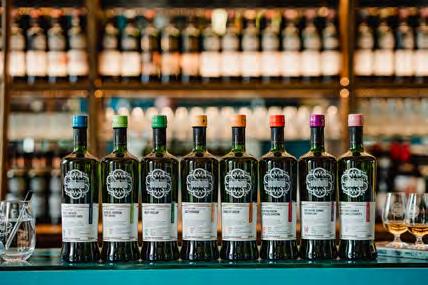
Whisky crafted by us. Tasted by experts. Reserved for you.
Enjoy VIP access to the best whiskies on the planet from over 150 distilleries.
Access to our four Members' Rooms in Edinburgh, London and Glasgow.
Drams non-members can only dream about. Get into the good stuff.

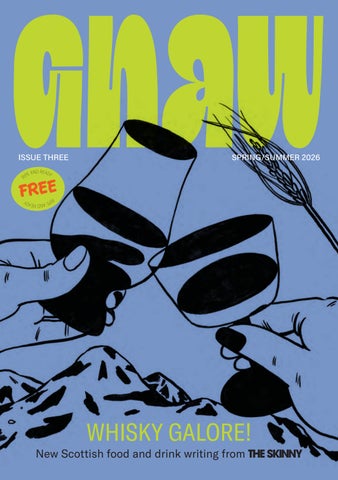
For GNAW’s third issue, we’re tackling one of the icons of Scottish food. The national drink for everyone who doesn’t like Irn-Bru, and Scotland’s liquid emissary in every airport gift shop and on every pub shelf – it’s time to talk about whisky. But also, not really. In this issue, we are talking about whisky – distilleries, bars, casks, we use the word ‘Speyside’ quite a few times – but we’re also talking about family, legacy, and personal, cultural and political history. We’re talking about home, but also homes away from home. We’re talking about the way that whisky allows us to distil the essence of an environment, chuck it in a barrel for several years then uncork it at the other side of the world, and the impact that process has
on the environment it leaves behind. Whisky is time travel; whisky is magic; whisky is an excellent excuse to talk about the world we live in, and our place within it.
Whisky and Scotland have a complex relationship, and modern Scotland has a complicated relationship with that relationship – that tangle of thoughts, hopes, fears and goals is what we hope to reflect in these pages. From the smallest, newest distilleries to the legacies of some of the biggest names in whisky, from childhood desserts to memories of those who’ve sadly passed on, from the Islamic Golden Age to present-day Australia via Islay, Ayrshire, Japan and elsewhere, this issue is all about whisky. It is also about everything else.

Tintin Lindkvist Nielsen is a Swedish illustrator based in Glasgow. Her works are often inspired by her surroundings, feelings, and colours. She’s drawn to experimenting with different printmaking techniques and the happy accidents that can occur, allowing spontaneous marks and textures.
IG: @tintinart
Editor
Peter Simpson
Writers
Rachel Ashenden, Janette Ayachi, Anna Comrie, Debora Krut, Kerry McGahan, Masa Nazaal, Ellie Nichols, Matthew O’Donnell, Joe Rogers, Alisa Wylie
Editor-in-chief
Rosamund West
General Manager
Laurie Presswood
Senior Editorial
Anahit Behrooz, Tallah Brash, Jamie Dunn
Editorial Assistant
Ellie Robertson
GNAW Issue Three, May 2026
© Radge Media C.I.C.
Get in touch:
E: food@theskinny.co.uk
IG: @gnawmag
Find your nearest copy of our free monthly magazine, The Skinny, here:

Designer Phoebe Willison
Art Director + Production Manager
Dalila D’Amico
Illustration
Tintin Lindkvist Nielsen
Commercial Director
Sandy Park
Business Development Executive Joanna Hare
Sales Executives
David Hammond, Emilie Roberts, Ema Smekalova
GNAW is produced by the team behind The Skinny, Scotland's largest independent entertainment & listings magazine, and Fest, the biggest free guide to the Edinburgh Festivals. We offer a wide range of advertising packages and affordable ways to promote your business. Get in touch to find out more.
E: sales@theskinny.co.uk
All rights reserved. No part of this publication may be reproduced in whole or in part without the explicit permission of the publisher. The views and opinions expressed within this publication do not necessarily represent the views or opinions of the printer or the publisher.
Printed by Acorn Web Offset Ltd
10 Wild, Wild Country: Anna Comrie reflects on a childhood in the heart of Speyside, and whisky’s impact on its land and inhabitants
17 Walking Away: Kerry McGahan tells the intimately connected stories of one of the world’s most famous whiskies, and her home town
26 Raise A Glass: Alisa Wylie reflects on her late father, the role of whisky in her life, and the ways it can foster and renew connections
32 This Woman’s Work: Ellie Nichols highlights some of the women who have played a key role in whisky over the centuries
38 Spirited Away: Rachel Ashenden tells a story of the inception and growing popularity of Japanese whisky, via judo classes and uni love affairs
44 Stoory Time: Matthew O’Donnell shares an ode to absent friends, and maintaining a connection via one fairly pricey bottle of whisky
46 Water of Life: Masa Nazaal on the unsung influence of the scientists, scholars and alchemists of the Islamic Golden Age on modern whisky production
54 A Vessel for Language: Whisky is a portable, shareable piece of its environment – Janette Ayachi reflects on bringing Scotland’s national drink to the UAE
60 Community Spirit: Joe Rogers talks grassroots whisky with the folk behind micro-distillery Kythe and independent bottler The Heart Cut

69 Directory: Go forth with our guide to some of our favourite whisky-adjacent bars, pubs, shops and distilleries
78 Glossary: Step into terminology corner to sort your Lowland from your Highland, your Scotch from your Scottish, and so on and so forth
80 An Ode to Cranachan: Whisky isn’t all smoky backrooms and tiny glasses – as Debora Krut explores, it’s also the backbone of some excellent desserts

Whisky takes water and grains and turns them into something special, but it also takes a toll. Anna Comrie reflects on a childhood in the heart of whisky country, and the impacts of the region’s lifeblood industry on its land and inhabitants

The winters of my childhood were brutal, bitter things, drifted high with snow, nestled as we were at the foot of the Cairngorms. This place that I call home is Morayshire, known to tourists as Whisky Country. All of my childhood memories are tinged in the golden light of the drink.
I’m thinking now of Hogmanay. My brother and I curled up in our pyjamas in front of the stove, watching the Edinburgh street party on the telly. It was close to midnight when we heard a heavy thud outside. When we pulled open the back door, we found our neighbour straddling a horse, a bottle of whisky held triumphantly aloft. “My car was snowed in,” he told us after we’d wrapped him in a blanket and poured him a dram, “but it takes more than a little snow to stop me first-footing”.
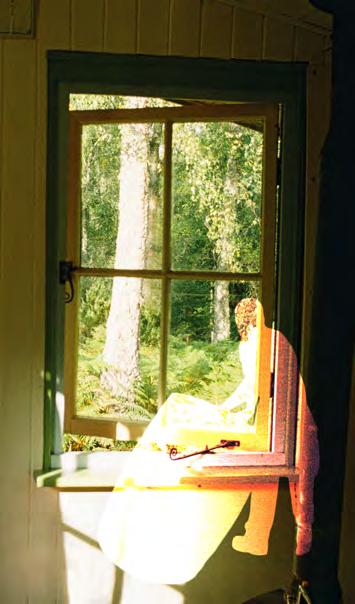
In this way, whisky shaped my childhood long before I ever drank it. In Speyside, whisky is less a drink than a way of life. Over half of Scotland’s whisky is produced within a 25-mile radius of Dufftown, and this is reflected in the landscape – endless barley fields, pagoda roofs, and warehouses scattered across valleys.
‘In Speyside, whisky is less a drink than a way of life’
A key part of this landscape is the River Spey. When I was young, my father took me fishing along its banks. He and his friends would cast their lines and wait. ‘For salmon’, they told our Mums, but really they were waiting on the Clearic Man – a warehouse worker who would siphon off a little unaged spirit and sell it in plastic bottles along the river, the whisky travelling the same paths as the fish.
Barley, too, shaped the land. Single malts have to be made from
malted barley, so in Speyside, barley is the dominant crop. Summer for the farming children stretched on just a little longer than it did for the rest of us, as they were needed to help with the harvest. We loved that time of year, full of endless days and harvest dances. Tucked away in a bird-hide after one of those ceilidhs, I had my first taste of alcohol, a stolen sip of whisky from an unlabelled bottle. It burned, bright and violent, while around us the barley fields danced in the wind.
But soil is not meant for the same crop, year after year. Now the barley is stringy and sparse, the nutrients sucked from the soil as result of the same strains of barley being planted in the same fields year after year, needed for the whisky. This monoculture has
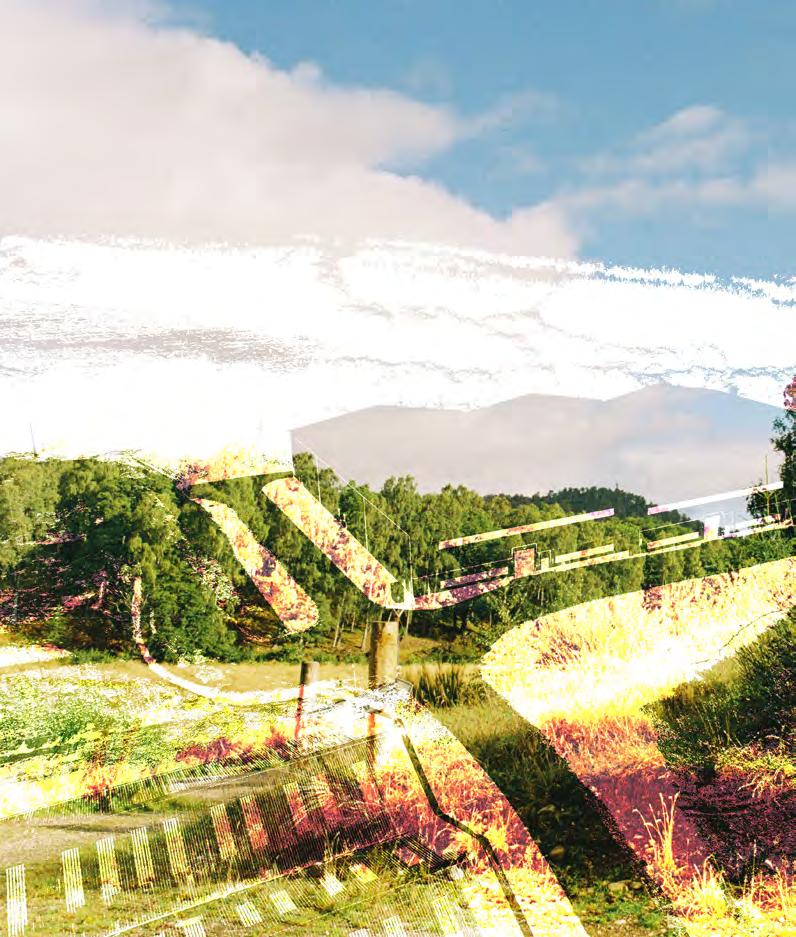

Difford has reported that we now have to ship the barley in from England and Canada in order to keep up with the increasing demand.
The rivers too are drying up. According to SEPA reports from 2025, last spring was the second driest the East of Scotland has experienced in
the last century, with many distilleries closing due to water shortages. Whisky requires vast quantities of water – for mashing, for cooling, for cleaning. In a recent study, it was estimated that for a single litre of whisky, 46.9 litres of water are used, meaning that roughly 61 billion litres of water are used in whisky production each year. With increasingly hotter summers, it is not
unusual to arrive at a familiar stretch of a river and find only a trickle.
We ship the water too.
Glenfiddich distillery, for example, admitted in a recent article with Esquire that they load water in tankers down to Glasgow for bottling. The lorries thunder down the narrow roads, which are always littered with the victims of these black exhaust
‘The more we do to preserve the spirit, the further we alter the climate that made it possible’
smoking beasts: badgers, foxes, pheasants. I used to go out with a stick and poke at the roadkill, wondering how many more corpses littered the whisky trail.
We rarely connected these things. The distilleries provided work. They funded improvements, sponsored events, and supported the local economy; to question whisky was to question our community. So we ignored the cost – the thinning water, the poor harvests, the corpses in the ditches.
The warehouses that once relied on the steady rhythm of the Scottish climate have had to adapt. Warmer summers mean more whisky is lost to the so-called ‘Angel’s Share’, the spirit that evaporates through the wood of the cask. With changes to Scotland’s climate come changes to the processes that rely on it. Climate-controlled warehouses can be used to mitigate the amount of spirit lost to the angels, and so the valleys hum with cutting-edge HVAC systems.
“The whisky’s evaporating too quickly,” one warehouse worker told me. “It’s too hot for too long.”
So the solution is an artificial winter.
Those cooling systems require energy. Energy produces emissions. Emissions warm the air. The loop closes in on itself; the more we do to preserve the spirit, the further we alter
the climate that made it possible. In a press release from 2021, the Scottish government stated that the whisky industry produced around 530,000 tonnes of CO2 equivalent a year. We no longer get winters like the ones I remember. Snow rarely drifts high enough to block the roads. My neighbour no longer arrives on horseback at midnight, whisky raised against the storm. He comes by car, stepping from one heated box into
another. There is no stamping of snow from boots, no red noses, no shock of cold air following him through the door. And the whisky. The whisky is still there, of course. But it doesn’t seem to taste as sweet when the daffodils are blooming in December.
Anna Comrie is an Edinburgh-based writer from Speyside. Although her first job was in a distillery, she now spends her time writing local histories and documenting her travels







FRIDAYS & SATURDAYS
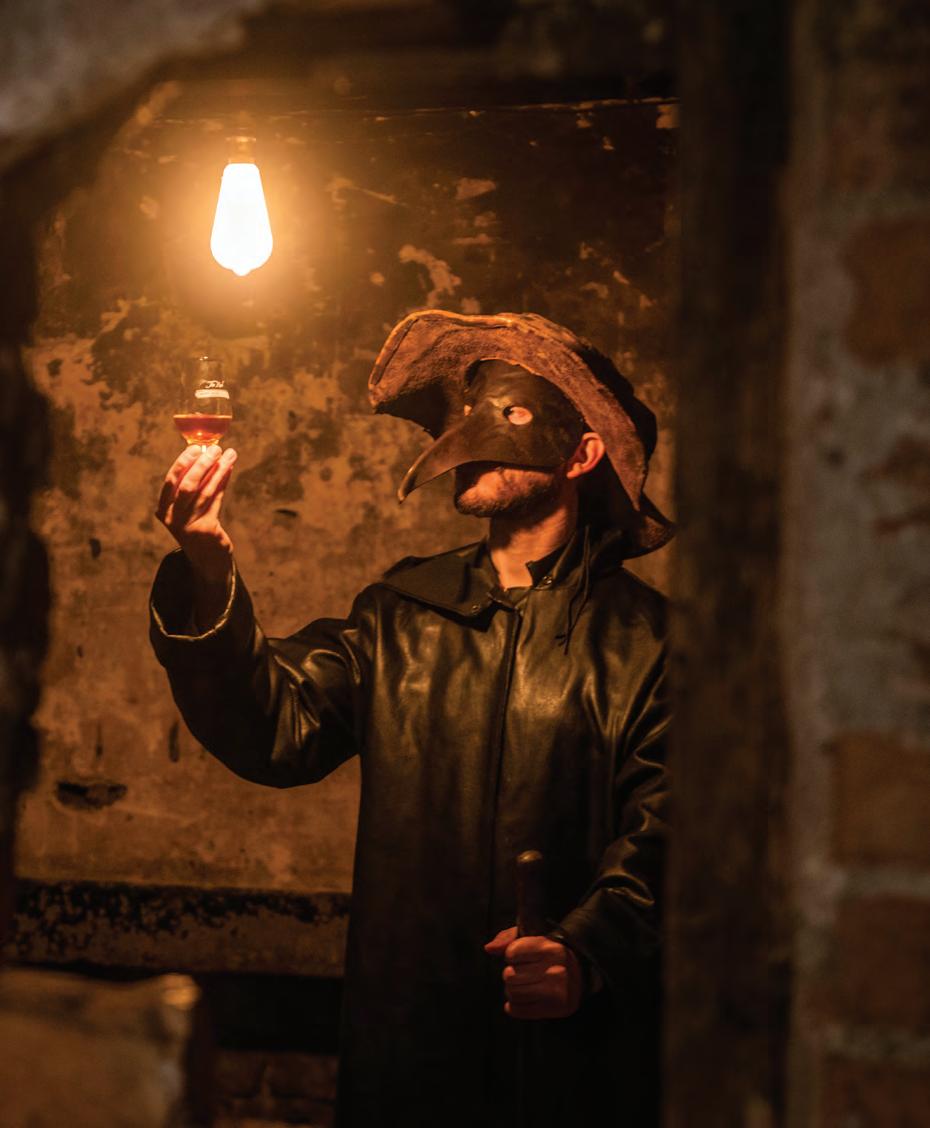

Whisky is tied to place – but what happens when it leaves its roots behind? Kerry McGahan tells the intimately connected stories of one of the world’s most famous whiskies, and her home town, Kilmarnock
Recently, while visiting a friend in Valencia, I stumbled upon something surprising. In the neighbourhood of Russafa, there appeared a looming mural of the famed striding man, Johnnie Walker whisky’s iconic symbol, across the side of a brick building. Johnnie Walker’s humble roots are firmly planted a thousand miles away in my hometown of Kilmarnock, East Ayrshire, but it was glaringly apparent that his influence reaches well beyond that of a local hero.
I could not help thinking of the statue residing beside Johnnie Walker’s gravesite back home, which features him standing up straight, differing significantly from that renowned bottling walk pose. So, who exactly is the man striding across this Valencian building?
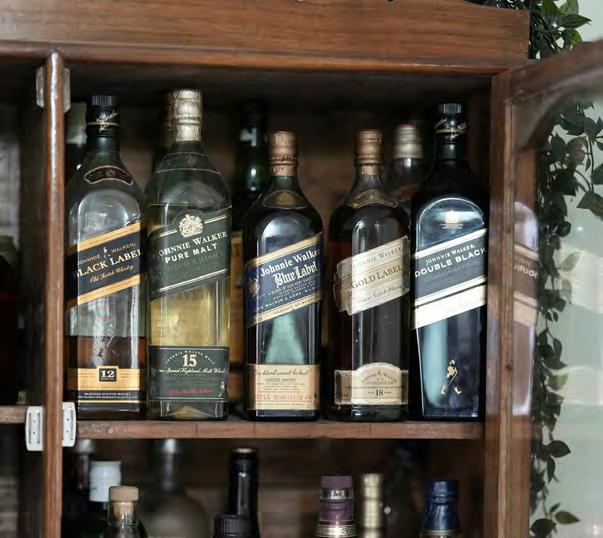
Johnnie Walker’s global success highlights the power of commercialisation. There is a clear distinction between Johnnie Walker, the brand, and John Walker, the man who began
it all from a humble grocer’s on King Street. The empire started in 1820 when John’s father died, bestowing him the aforementioned store. Grocers traditionally sold a range of single malts, but John, unsatisfied with this, used his experience as a tea blender to combine them, creating an original whisky blend of his own. In 1852, tragedy struck in the form of a flood, devastating Kilmarnock and destroying the majority of John’s stock. Nevertheless, he persevered.
When John Walker passed away in 1857, his son, Alexander, led the company to soaring new heights. The blend, originally named Walker’s Kilmarnock Whisky, went through several alterations. From Old Highland Whisky to Johnnie Walker Black Label, the company learned to adapt in the name of consumerism. In 1908, Alexander’s sons commissioned painter and illustrator Tom Browne to create the striding man, and from these calculated business efforts, John Walker, the grocer, was nixed. Johnnie Walker, the titan of industry, emerged.
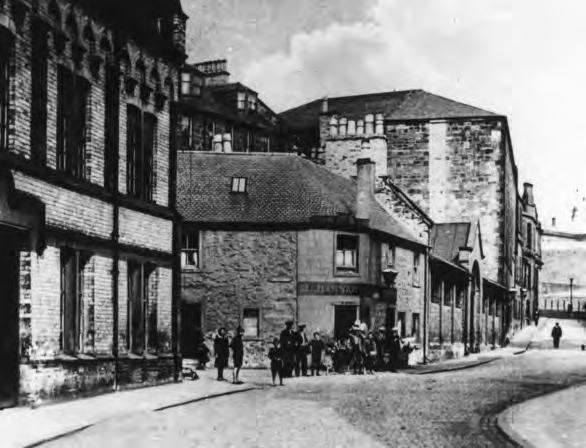

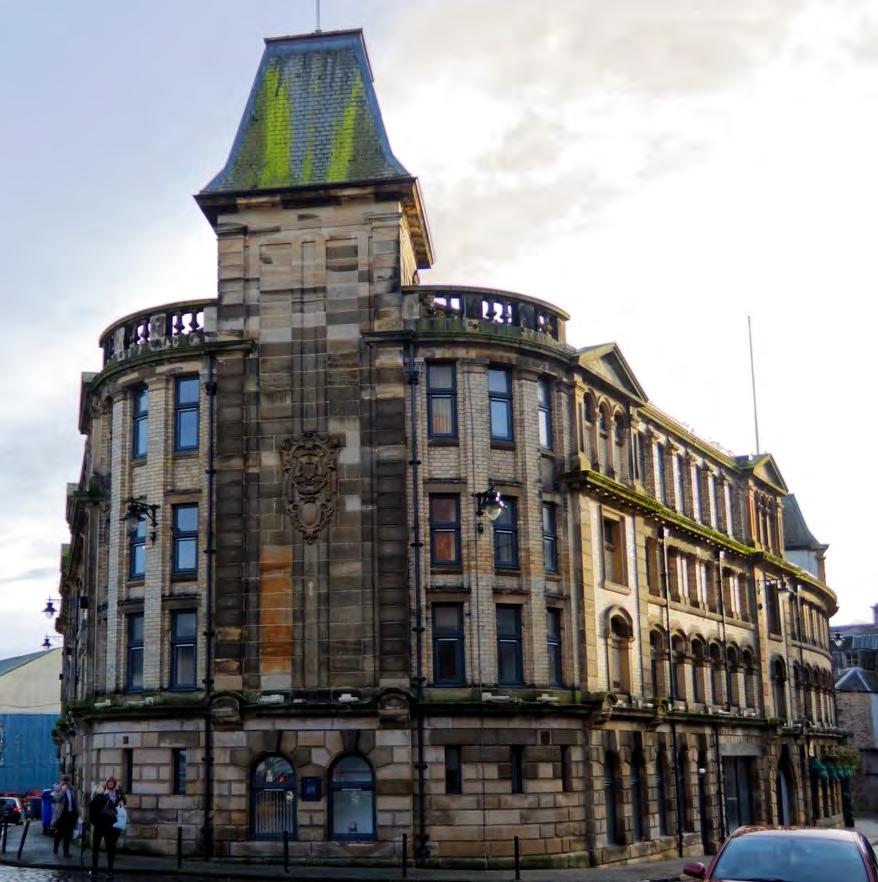
By 1937, the company had outgrown the various cramped Kilmarnock town centre establishments from which it had been operating. They relocated to a plot of land on Hill Street where, following the end of the Second World War, Johnnie Walker was able to begin blending whisky on a significantly larger scale. At this point, Johnnie Walker remained a hometown hero. It was a success story that Kilmarnock could proudly revel in, and wholly emblematic of Ayrshire’s thriving industrial sector.
To the dismay of over 700 workers, the Hill Street plant announced its closure in 2009; the process was finalised by 2012. The news came as a horrible surprise to staff who had dedicated their working lives to the company. All but the senior managers at the plant’s owners, Diageo, had been left in the dark. Rage and injustice rippled through the community. Alex Salmond, the then-First Minister of Scotland, joined a march of 20,000 people through the streets of Kilmarnock, vowing to not let Diageo go quietly.
But Diageo stood firm. Despite a noble fight from trade unions, staff and townspeople alike, the majority of the town’s 700 jobs were lost. Of those, 194 continued to work for the company, whilst 434 accepted ‘voluntary’ redundancy packages. In truth, there was no real alternative. The most common option provided was a transfer to Diageo’s Shieldhall Plant in Glasgow. Unfortunately, the early starts and late finishes required at a whisky plant worked poorly in tandem with a commute of over an hour from Kilmarnock to Shieldhall, particularly when the necessary public transport links did not exist.
In the years since the Hill Street Plant closed its doors, tens of millions of pounds have been poured into the
'There is a clear distinction between Johnnie Walker, the brand, and John Walker, the man who began it all from a humble grocers on King Street'
Johnnie Walker visiting experience on Princes Street, Edinburgh. A variety of tour packages exist, ranging from a 90-minute sensory experience of light shows and live performances to sophisticated cask draw tastings and rooftop lunches, and a £450 full-day experience including a trip to Glenkinchie Distillery, the “Lowland Home of Johnnie Walker”. Kilmarnock is notably absent from the trail. The smack of betrayal stings.
Nevertheless, there is a marked sentiment of resignation among those residents who dedicated their careers to Johnnie Walker. A Facebook group titled ‘Johnnie Walker – Kilmarnock’ has over 1,200 members, and reads as a roll-call of nostalgic reminisces and funeral announcements. It is evident that when Johnnie Walker departed, it took an immeasurable amount with it – socially, culturally, and economically. Pensions were lost, and lifelong friendships were tethered as economic pressures took sudden precedence.
Alex Rae, a Kilmarnock resident who formerly worked in spirits supply and blending, spoke to the BBC in 2019, ten years on from the announcement of the closure. In his opinion, it was important to let ‘bygones be
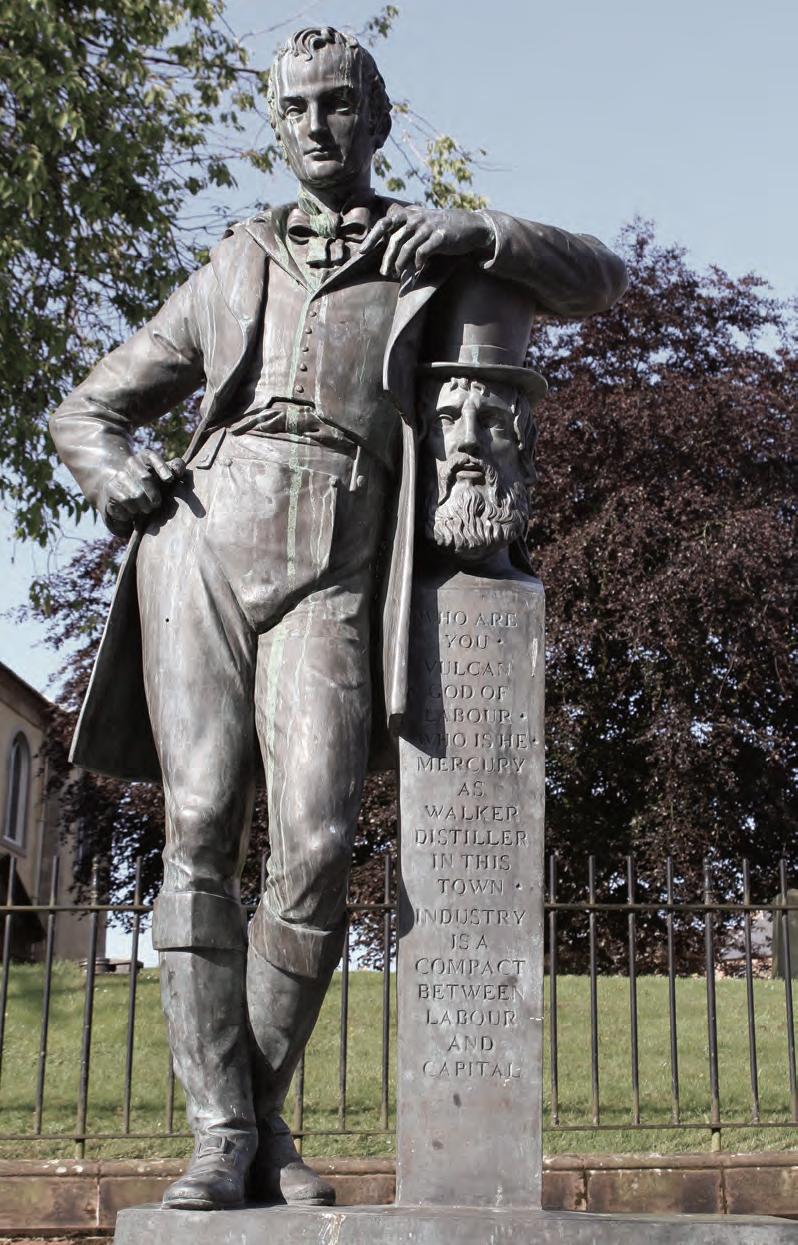
bygones’. In other words, get yourself to the job centre and find something new to do. Halfway down John Finnie Street, white lettered graffiti reads ‘Pay Your Leccy’. I ask, haven’t we given enough?
In 1985, Glengarnock Steelworks shut its doors. In 2023, the Aquafil carpet factory closed in Kilbirnie. In the years between, Kilmarnock alone has also seen the closure of Saxone Shoes, Massey Ferguson (makers of combine harvesters), and Glenfield & Kennedy (water valves and fittings specialists). Ayrshire’s industrial hub has been in a state of uncertainty for decades. By expanding the company outside of Kilmarnock, did Johnnie Walker teach us a lesson about persistence and adaptation in the face of adversity? Was it a blessing in disguise?
Should we, as Rae suggests, let it go – be grateful that Scotch whisky expanded outward, rather than inward? That it didn’t fall into disrepair along with the rest of Kilmarnock, eaten alive by poverty, deprivation and governmental failure? After all, with alcohol-related deaths at 22.5 per
100,000 and drug-related hospital deaths at 305 per 100,000, both higher than the national average, I cannot help but understand why Kilmarnock has not been included in the Johnnie Walker heritage trail.
When water gathered in the Fenwick Moors in 1852, swelling the burns that came together to form the Kilmarnock rivers, it would have been easy for John Walker to allow nature to take its course. Instead, he showed remarkable persistence.
Since its days as an industrial powerhouse, Kilmarnock’s reputation has notoriously suffered. Coinciding with the closure of the Hill Street plant was the 2010 television show The Scheme. Following the lives of six families living in the housing estates of Onthank and Knockinlaw, the programme was simultaneously a national success and the nail in Kilmarnock’s proverbial coffin. Albeit exploitative, there is obvious, aforementioned legitimacy to the drug and alcohol-related problems which The Scheme
'It is evident that when Johnnie Walker departed, it took an immeasurable amount with it –socially, culturally, and economically'
presents. In 2022, over a quarter of the town’s population still lived in some of the country’s most deprived areas.
Based on the current state of affairs, it does feel that a fatalistic viewpoint on the future of Kilmarnock would be the easiest to take. But while looking up at the legendary striding
man immortalised by that Valencian graffiti, I felt a swell of pride for my hometown. Ayrshire needs practical change: access to viable employment, quality education, job security, and reliable pensions. The sort of action that requires patience, attention, and investment from local councils and the Scottish government alike.
However, it is easy to forget that people are the most important factor in any town’s success. After all, John Walker began as merely a grocer. A flourishing community and cultural enrichment are vital to economic prosperity. Opportunity, change; we can find them right where we are. Alright, Johnnie Walker marched away. Now, what can be rescued from the flood?
Kerry McGahan is a Glasgow-based writer who was born-and-bred in Kilmarnock, Ayrshire. Her work touches on culture, lifestyle and social inequality from a uniquely Gen Z perspective
Pleasance Courtyard (Baby Grand)
5—30 Aug, (Not 19), 15:25
Underbelly Cowgate (Belly Dancer) 5—30 Aug, (Not 19), 19:20
Angry Humour From a Really Nice Guy (Work-in-Progress)
Monkey Barrel Comedy (MB3)
6—30 Aug, (Not 19), 14:50
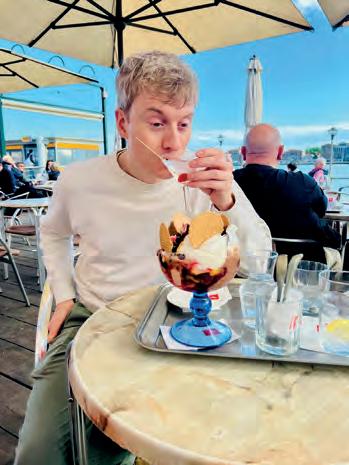

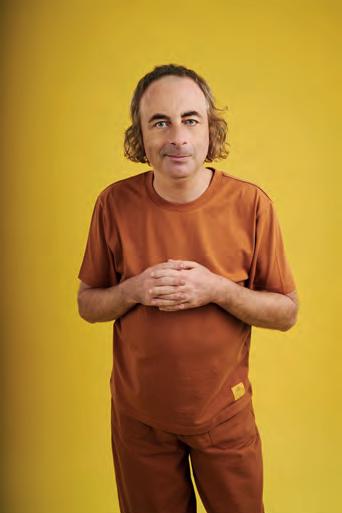
Floozy (Work-in-Progress)
Monkey Barrel Comedy (MB4) 19—26 Aug, 12:45

Monkey Barrel Comedy (MB3) 4 Aug, 11:00, 15:00, 19:00, 22:00

57.49 mm
Pleasance Two (Pleasance Courtyard) 5—30 Aug (Not 15 & 18), 20:00





Whisky can toast to absent friends and family, but it isn’t always that straightforward. Wylie reflects on her late father, the role of whisky in her life, and the ways it can foster and renew connections
YOU MAKE IT. YOU KEEP IT.
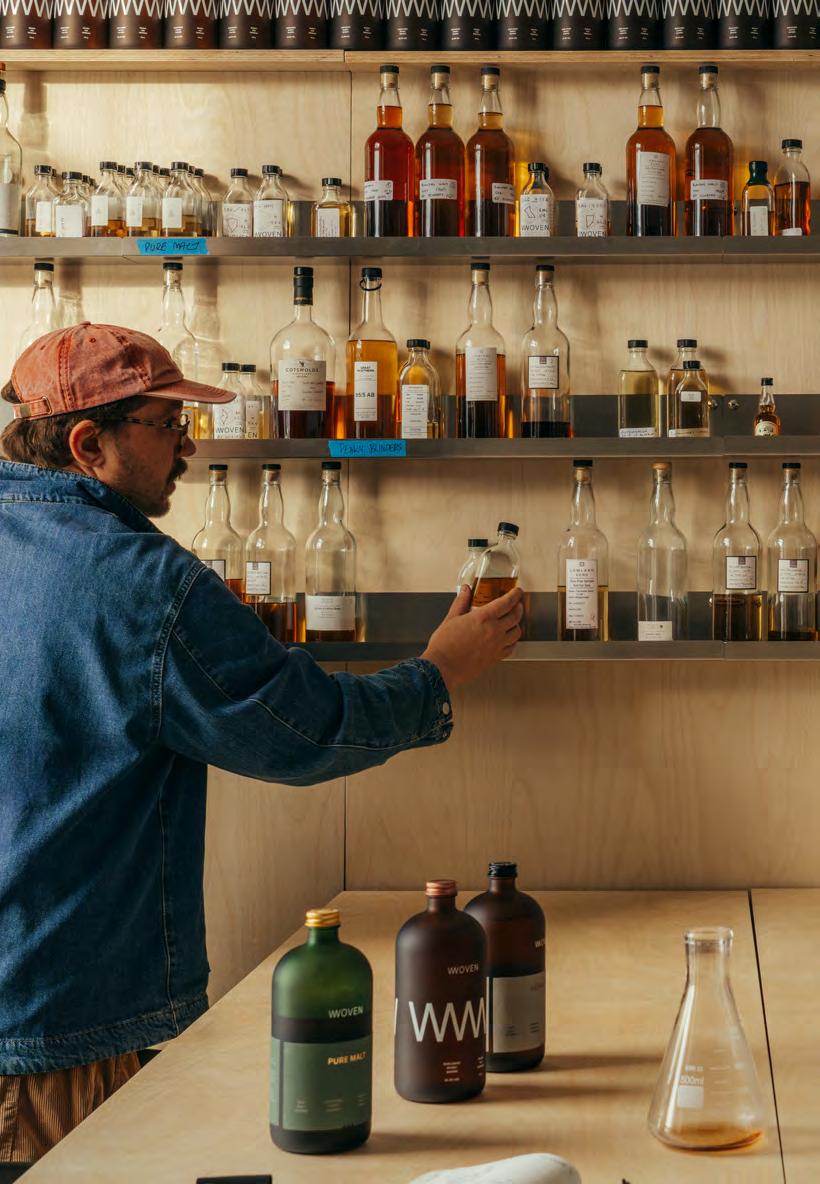
Now booking two-hour workshops in our blending room at Browns of Leith. You’re the guest. You’re the whisky maker. Taste, experiment, blend, bottle. Leave with something that didn’t exist before you arrived. Launching June 2026

Ican’t remember exactly what day it was, but it has been a decade since my father received his terminal cancer diagnosis. He phoned me to say he had been to the doctor, who told him his calcium levels were high. I didn’t know the significance of this at the time, but it meant that he had multiple myeloma, a rare blood and bone cancer that I had never heard of before.
Right up until he was diagnosed, he had been a warehouse worker at the Beam Suntory distillery in the east end of Glasgow. Prior to this, he had worked in distillery warehouses for all of his adult life, also working at White Horse and Long John distilleries.
When speaking to my mother for this article, it came to light that, unfortunately, my dad actually blamed where he worked and attributed whisky itself to his diagnosis, citing it
as a “poison” rather than something to be enjoyed. Although I don’t blame him for looking for some kind of reason or something to cling to that might make his diagnosis make sense, the reality is we don’t know, and he didn’t know, the cause of his cancer. Therefore, my personal relationship with the drink has become a bit skewed. I had never really been a whisky drinker; it wouldn’t be something I ever reached for, but I was aware of the cultural status that it had. Maybe I’d like it when I was older.
Over his career, my dad had accumulated a small collection of whisky, and during his illness, I had been working in Òran Mór, the grand former church-turned-venue in
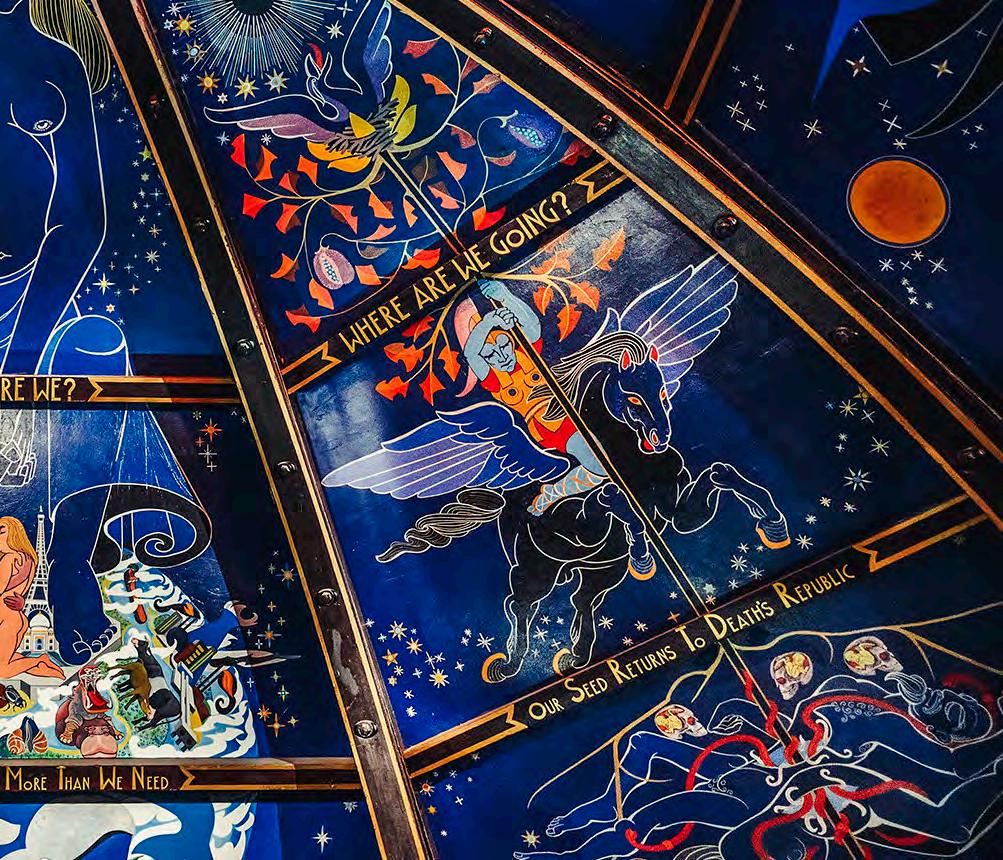
Glasgow’s West End. Kenny Macdonald was also working there as a steward, and I knew he had great connections in the whisky world. I had asked him for help with selling my dad’s collection; he was kind and helpful. At the time, his two sons worked in the main bar of Òran Mór and seeing that familial connection within the place that I worked was both comforting and sad.
Now, Kenny is a director at Dràm Mòr, an independent single cask spirits bottling company. His son Ruaraidh previously worked for the company. They began in 2013, initially as a whisky training and events company, before they moved on to bottling their own spirits. I wanted to speak to Kenny to get a different perspective on the world of whisky as it is now.
“Whisky, when treated properly, is an experience for every single person,” Kenny says, “whether they are an experienced whisky connoisseur, or whether they are a complete novice.”
Kenny’s own grandfather spent 33 years in the industry, working at the Hiram Walker distillery in Dumbarton; when he retired in the mid-70s, he had
“Whisky, when treated properly, is an experience for every single person”
Kenny MacDonald




become the head foreman. Kenny himself became interested in whisky as a young man, trying different drams when he was out with his pals. They told him that was an “old man’s drink” – but Kenny saw the beauty in the spirit. He still does, now.
“We want the whisky to sing its song. We’ve got to allow it to tell us its story,” Kenny remarks when I met with him. His passion for how to properly treat the spirit was palpable and moving. “We don’t listen. We drink it too fast. Slow down. Watch how it plays in the glass. Watch the tears form, and it’ll tell you who it is. ‘I am a light-bodied spirit’. ‘I am a full-bodied, robust spirit’. It’s telling you who it is. ‘Here is what I am’.
“Then, you get to taste it. It gets to your heart. And it means something to you. By the time you finish that glass, you miss it as an old friend, because you’ve allowed it to sing its song; you’ve understood what it’s all about. And if you’re lucky, you might bump into that old friend again one day.”
After speaking to Kenny, I realised that whisky is bigger than me and how I feel about it personally. What it really can boil down to is connection, to sharing moments with people. It is, in fact, an experience that expands over time and history.
Raising a dram to those we have lost holds so much weight and power. Whisky being one of Scotland’s biggest exports, and both Kenny and my father acting as cogs in that machine, is not lost on me. These were two men who dedicated their lives to this spirit, whether enthusiastically or not.
My father passed away on the 4th of August, 2017. Since his passing, I have avoided drinking whisky. However, almost a decade later, I’d like to let it sing its song, to let it tell its story. Down the line, I would hope to meet it again, as an old friend.
Alisa Wylie is a Glasgow-based writer who writes about music, mental health, and grief
Women have played an integral role in whisky history – Ellie Nichols highlights a few key figures from across the centuries
The recent struggles of women in the whisky industry can be traced back, sadly, to an older generation who viewed whisky as a ‘man’s drink’ – the same kind of man who would happily describe his female assistant as ‘Busty Elenore’ in his memoir. Not naming names, but it’s happened!
Unfortunately, poor Elenore won’t be the last to experience this kind of behaviour. As a woman currently working in the whisky industry, I’ve been exposed to numerous instances of casual misogyny, which got me thinking: what about the whisky women who walked so others could run?
Women have been brewing beer as far back as ancient Mesopotamia. In Medieval England, it would have been completely normal to see
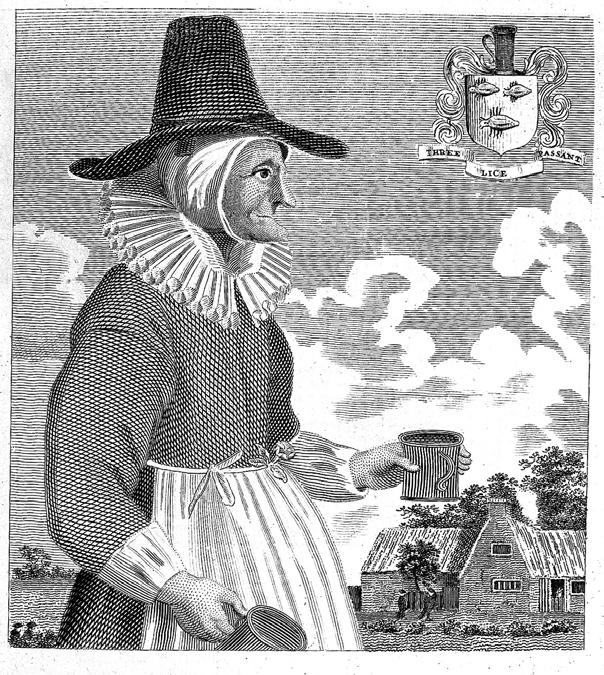
alewives brewing and selling their wares from their farmhouse window to use up the excess grain. Some increased their earnings by taking their craft to local markets, dressing in pointy hats to stand out, stirring a cauldron full of mash, with a feline friend to chase away the vermin. Witches’ brew indeed!
Just as women established a foothold at these beer markets, the Reformation began and tighter gender roles took hold. Being accused of ‘witchcraft’, for as little as brewing beer, could result in the death penalty.
As times changed and distilling professionalised, however, widows would gather and operate communal stills, selling their barley spirit to smugglers who would then distribute it



around Scotland – not just to supplement the family income, but as a means of survival for these women.
Take the formidable Helen Cumming of the remote Cardow Farm atop a hill in Speyside, who, like many of her neighbours, illegally distilled leftover grain to help ease finances. When weary excisemen, looking for shelter while collecting the extortionate taxes on spirits during the early 1800s, were lured into resting there by the smell of freshly baked bread, Helen would discreetly hoist a red flag to warn her fellow distillers of the impending visitors. In 1824, those taxes were lowered so that Cardow Farm could officially become Cardhu Distillery, which still stands today.
'When weary excisemen were lured into resting at Cardow Farm, Helen Cumming would discreetly hoist a red flag to warn her fellow distillers of the impending visitors'
In Victorian times, women were still not taken seriously in business – perish the thought of a woman running a whisky distillery. But what if a woman should inherit a distillery?








When poor Margaret Sunderland’s husband died in 1850, he left his widow a huge fortune… and Dalmore Distillery. Margaret’s father and brother figured they knew better, so they immediately intervened to run the distillery on her behalf but soon drove it into bankruptcy.
Come the 20th century, Bessie Williamson was the first woman to own and run a Scotch whisky distillery. Arriving in Islay for a summer job as a temporary secretary at Laphroaig, she became a hugely trusted employee who rose through the ranks and was bequeathed the business when the owner died.

Nowadays, women have a more secure footing in the distilling world, including the wonderful Rachel Barrie, the first official female master blender at Brown-Forman (covering Glendronach, Glenglassaugh and Benriach); Annabel Thomas, owner of Nc’nean Distillery on the west coast; and Gillian Macdonald (master blender) and Bryony McNiven (distillery manager) of Ardbeg on Islay.
In addition to creating the malts and blends, women are also to the fore in sharing whisky knowledge through social media. Influencers include Moa Reynolds (aka Swedish Whisky Girl), Kristiane Westray, Becky Paskin and Millie Milliken – the latter two also run the non-profit Our Whisky Foundation, designed to give women the strength to showcase their expertise and expand their network.

Ellie Nichols is a Northern lass dramming it in Edinburgh since 2022. Enthusiastic about whisky and telling stories, she loves to venture into interior design, history and music. Follow Ellie on Instagram at @thedram.aqueen


Some of the world’s best whisky is made in tells a story of its inception and popularity, via judo classes, love affairs and lockdowns


In the depths of lockdown, when we swapped sweaty bars for Zoom quizzes, I treated myself to a bottle of Nikka Whisky. It stood proudly on a shelf in my Edinburgh press; I marked the passing of days through the incremental decline of that warming brown stuff, and decanted it into tiny bottles as a pick-me-up for my neighbours. Though locally distilled whisky was readily available, I found hope in that bottle of Nikka – a reminder that one day we would not be confined to these four walls and would be free to travel again.
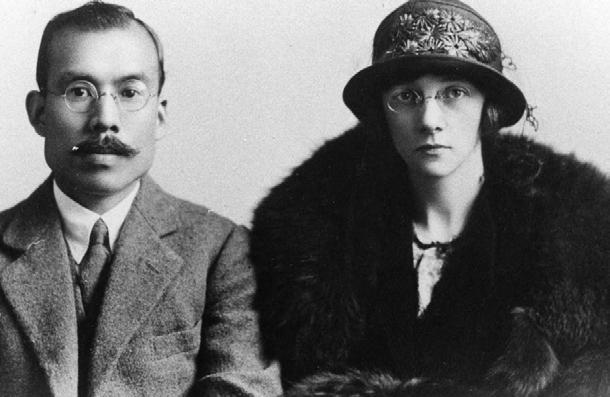
It wasn’t until five years later, while visiting the sleepy temple town of Takehara, on the coast of the Hiroshima prefecture in southern Japan, that I realised that my bottle of Nikka played a very small part in the UK’s Japanese whisky boom, and a tiny role in a history of shared information and inspiration. In Takehara, a bronze sculpture of Masataka Taketsuru and Rita Cowan nods to the story of the Japanese-Scots couple who introduced whisky production to Japan.
Despite the mutual fondness of each other’s spirits, it remains relatively unknown that Scotland and
Japan’s cultural exchange of whisky began in 1918, when the Japanese chemist Masataka Taketsuru ventured to Glasgow on a mission to learn the alchemy of whisky production.
Taketsuru gained in-depth knowledge of distilling processes while studying Organic Chemistry at the University of Glasgow under Thomas Stewart Patterson. At the same time, Taketsuru gained experience in whisky production as an apprentice at Hazelburn Distillery in Campbeltown, recording his findings in ‘Taketsuru Notes’; only recently translated into English, they have been described as a Japanese manual for Scotch whisky production.
During the course of Taketsuru’s overseas research, he fell in love with a Scot. In 1919, a fellow university student invited him to teach her younger brother judo. There, he met the family’s eldest sibling Rita Cowan, and the rest is history. Both sets of parents disapproved of the union, but they married in secret anyway, later relocating to Japan to introduce whisky production to the economy.
After managing the Yamazaki distillery near Osaka – which produced Japan’s first whisky, Suntory Shirofuda – Taketsuru searched for the climate and peat that resembled Scotland, in
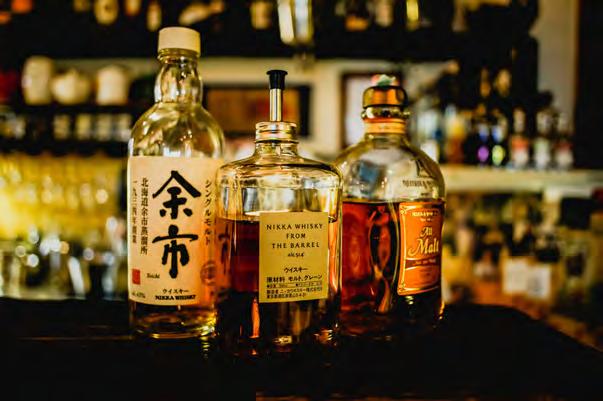
order to start his own business. The small rural community of Yoichi in Hokkaido, the northernmost of Japan’s main islands, offered similar conditions to Campbeltown. It was here, in 1934, that Masataka Taketsuru founded Nikka Whisky, replicating the techniques and production processes of Scottish distilleries. He remained passionate about managing the production until his death in 1979.
Demand for Japanese whisky in the UK has grown exponentially in recent years. In 2015, Jim Murray’s Whisky Bible named the Yamazaki Single Malt Sherry Cask 2013 as the world’s best whisky. In the aftermath, the bottle’s retail price skyrocketed from £100 to £3000, and kept going. The numbers reveal all: spirits merchant BI reported a 232% surge in sales of Japanese whisky in 2017. When the pandemic hit, many of us sought comfort in the small investment of a premium spirit, numbing the memory of a few pints of Tennent’s at our local, thereby amplifying the Japanese whisky boom in the UK. Mirroring that incline, Scotch whisky exports to Japan have steadily grown since 2010; Japan is the
‘Taketsuru’s legacy is in that long-gone bottle of Nikka that saw my neighbours and me through the early days of the pandemic’
fourth largest importer of the Scottish stuff in the world.
Masataka Taketsuru’s legacy is in that long-gone bottle of Nikka Whisky that saw my neighbours and me through the early days of the pandemic, and it is in the soaring 21st-century demand for a Japanese spirit, even in a country renowned for its own.
Japanese whisky represents the passion and innovation forged through a cross-cultural exchange.
Rachel Ashenden is The Skinny’s art editor, and a freelance arts writer, curator and researcher

20 Woodlands Road, Glasgow
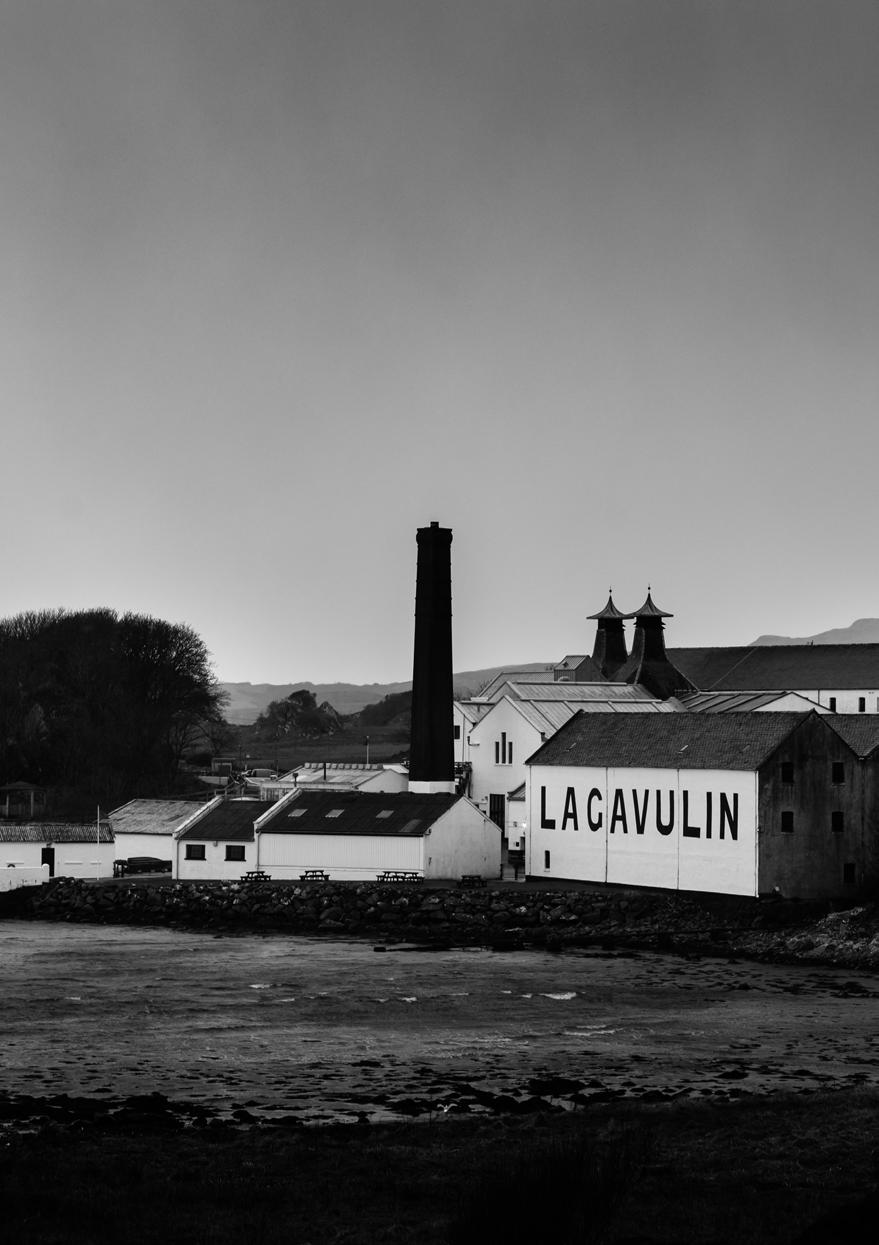
A bottle of whisky holds more than just liquid. Matthew O’Donnell shares an ode to absent friends, and maintaining a connection via one fairly pricy bottle
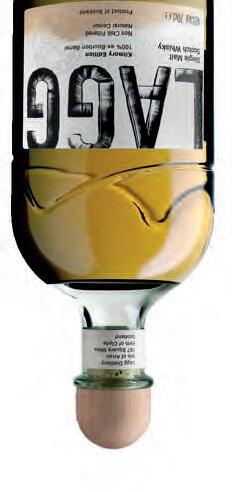
In 2018 my friend Neil moved to Australia. As a last hurrah, we went on a trip to Islay, we visited a distillery, and we splashed out on a bottle. Lagavulin Jazz Festival 2017 – a limited edition, with a price tag to match. We had a dram and made a pact: the bottle stays in Scotland, only to be drunk on the rare occasions when we’re together.
Neil visited Scotland once or twice a year. We’d gather and have a dram just like we’d said. It was a set date in our calendars – using the ritual of a nice bottle of whisky to stay in touch, ending our evenings together with a “same time next year?” It was a life ring, keeping our friendship afloat. It wouldn’t last – Neil was set up down under. He was studying for a degree, he’d made new friends, got a girlfriend. He had commitments. He was visiting less, we were chatting less. The bottle sat stoory on the shelf, and one evening I found myself staring at it. I was worried this was our 30s, and that we’d simply grow apart without this tether. It can be easy for friendships to wither when not watered – they require maintenance and care – and I was worried I hadn’t done enough. Staring at the bottle, I had to do something. I reached out to Neil, I felt I owed him something? Reassurance that I was thinking of him outside of our annual drams? I was anxious to put

myself out there, to be vulnerable, but it has to be done sometimes.
Neil was grateful to hear from me, of course he was. He let me know I should have never doubted myself, and I could always speak to him. Friendship watered – it was that easy. And we did finish that bottle eventually: not on a special occasion, but just another Thursday evening.
Matthew O’Donnell is a writer based in the East End of Glasgow. After cutting his teeth as a music critic, he has expanded into a broader literary world – find his writing on Substack, and as part of the Q Canvas art collective

Whisky carries history – perhaps more history than you’ve really considered. Masa Nazaal looks at the unsung influence of the scientists, scholars and alchemists of the Islamic Golden Age on modern whisky production

Sitting on a stool at Captain’s Bar on South College Street in Edinburgh, a row of whiskies lines my eyeline: The Macallan, Glenfiddich, Laphroaig. Each distilled and bottled in Scotland.
A man in the corner of the pub stands, and the room’s constant clatter falls quiet. He begins to sing, lifting a glass of whisky above his head: “Campbeltown Loch, Och Aye! / Campbeltown Loch, I wish ye were whisky! / Ah wid drink ye dry.” The song, popularised by Andy Stewart in the 1960s, is just one of many that fix the spirit in Scotland’s cultural imagination, echoing through pubs as both celebration and ritual. Robert Burns cemented his devotion to the drink in 1786: ‘O thou, my muse! guid auld Scotch drink! / Whether thro’ wimplin worms thou jink, / Or, richly brown, ream owre the brink, / In glorious faem, / Inspire me’.
This ‘richly brown’ drink is woven into Scottish culture as a vessel for togetherness as much as for sorrow. However, its story does not begin in Scotland, but further east, in the Islamic world, where the science of distillation was refined long before it travelled, centuries later, into the making of the nation’s signature spirit.
Looking closely at the drink itself, traces of these origins remain. The word ‘alcohol’ derives from the Arabic kohl, a fine black powder traditionally made by heating minerals until they vaporise and condense again in purified form. Over time, the term came to describe substances produced through similar processes of refinement, like distillation.
What begins as a word opens into something much larger: a history of experimentation, movement, and exchange. To trace it properly, we have to return to the world in which this process first took shape.
The Islamic Golden Age unfolded during the medieval period, at a time when Southwestern Asia and North Africa were experiencing an extraordinary expansion of knowledge, culture, invention, philosophy, and art. Experimentation was at the heart of this world, as scholars sought new ways to understand and engage with the natural world. Central to this pursuit was a desire to comprehend the unity of creation, and to connect with God. From this impulse arose numerous fields of knowledge, including alchemy. Alchemy, in the Islamic context, was both a practical science and a philosophy. Its aim was to transform metallic substances, like iron and copper, into silver or gold. At its core, it was about synthesis, transformation, and the creation of something new.
Alchemists sought the elusive (and mythical) ‘philosopher’s stone’ that would help turn metal into gold and create an elixir of life, yet their work extended beyond metallurgy: it encompassed health, mystical inquiry, and the natural processes of the earth. By experimenting with materials like stones, water, and other natural substances, they attempted to reproduce the processes of creation on an accelerated scale. They did so because they wanted to experience and participate in the divine act of creation,
seeking understanding, mastery, and closeness to God.
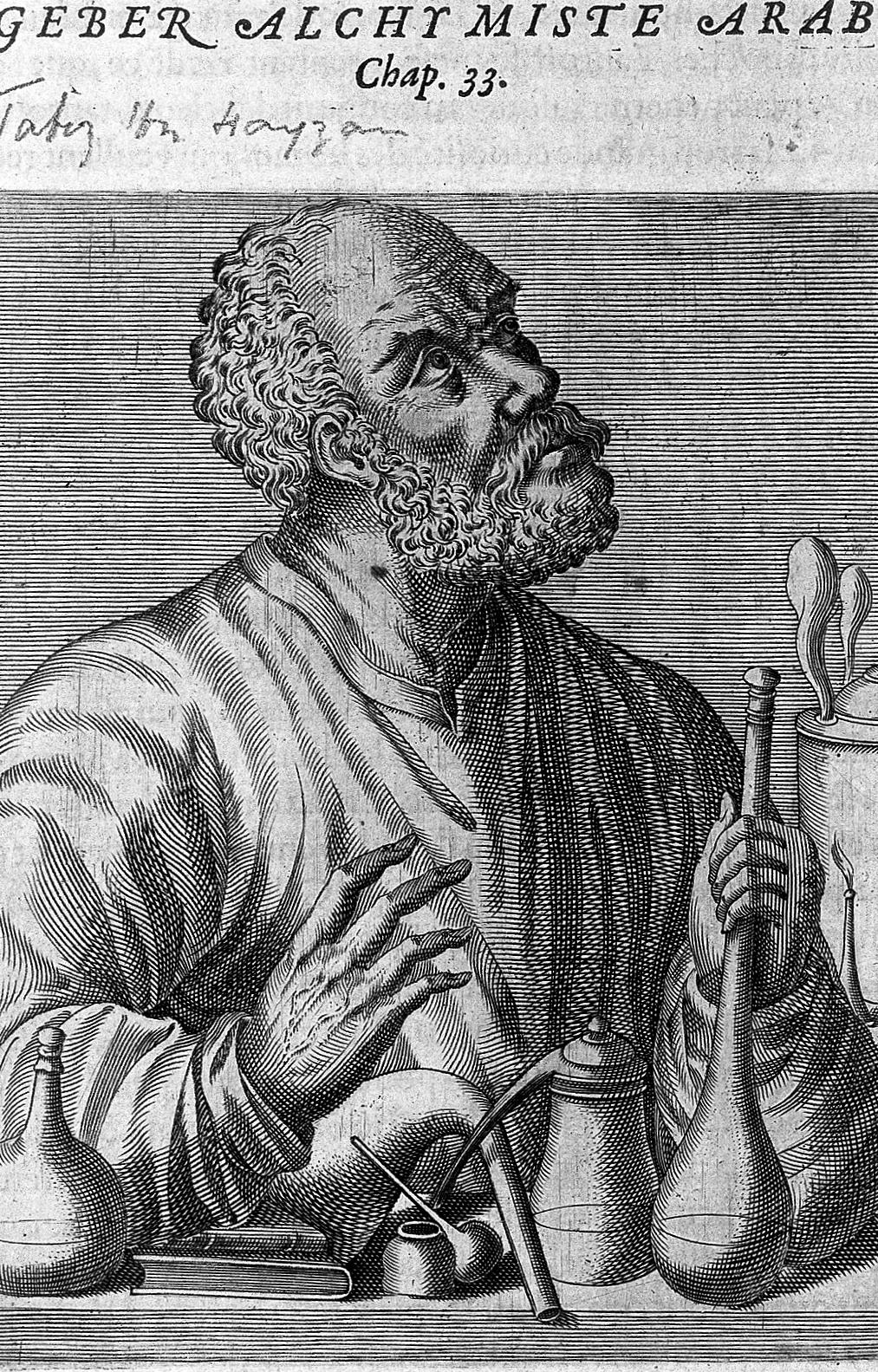
It was through this culture of experimentation that the process of distillation was refined. The goal was not to produce alcohol, which was prohibited under Islamic law, but to explore transformation and transmutation in matter. From these experiments came scientific methods that endure today. Distillation, as we know it, was formalized by the scholar Jabir ibn Hayyan in the 8th and 9th century, laying the foundation for techniques that would travel across continents and centuries.
‘Alchemy, in the Islamic context, was both a practical science and a philosophy... it was about synthesis, transformation, and the creation of something new’
Jabir Ibn Hayyan, a ninth-century scholar of Persian background from Kufa, Iraq, is often called the father of chemistry. It’s a title reflecting the immense influence of his work at a time when alchemy and chemistry were closely intertwined. His fascination with transforming metals and materials led him to develop some of the earliest and most important forms of chemical technology. Among his most influential inventions was the alembic still, a tool that remains central to distillation.
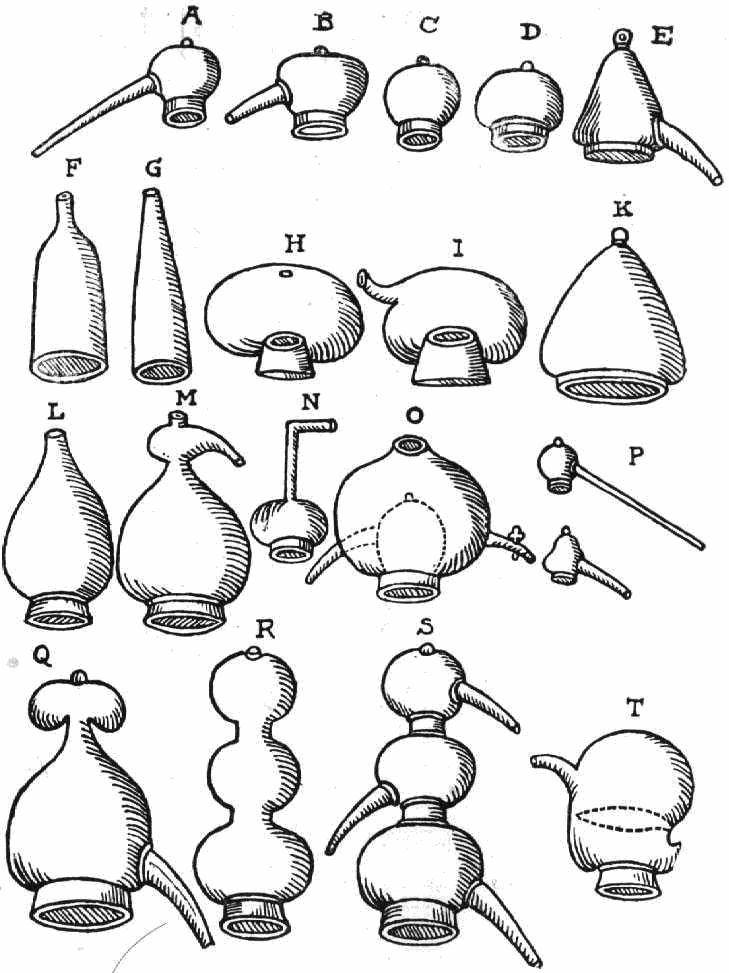
The alembic itself is a striking vessel: a bulbous base swelling like a globe, narrowing into a tall, tapering neck that curves into a slender tube leading to another container. As the
‘It wasn’t whisky that travelled across the world, it was the process’
liquid heats, vapors rise through the neck and tube, cool down, and drip into the receiving vessel. This condensed essence, capturing the heart of the original liquid, became known as the ‘spirit’. Because alcohol boils at a lower temperature than water, heating wine in the alembic allows the alcohol
to evaporate first, separating it from the water and leaving a purer, concentrated substance.
This newly concentrated alcohol was not initially used for drinking, but for practical purposes like antiseptics and lamp fuel. Over time, however, its use as a beverage grew as knowledge




of distillation spread throughout the Islamic world and into Europe. Ibn Hayyan’s methods first appeared in the medical school in Salerno, Italy, in the 12th century. Around the same time, it began to be consumed more widely, earning the nickname ‘water of life’ as it moved across Europe.
Traveling monks, bringing with them Ibn Hayyan’s alembic still, are believed to have played a key role in the spread of distillation, especially to the British Isles. It’s thought that some of these monks arrived in Scotland, where they established Lindores Abbey in Fife and began developing what would become the Scottish distillation tradition.
Once in Scotland, however, they faced a problem for distillation: a lack of the vineyards they had been used to. Instead, they turned to fermenting grain mash, and this adaptation eventually became the foundation for what we now know as whisky.
It wasn’t the whisky that travelled across the world, it was the process. The distillation of a substance, transforming it into something new. The experimentation of alchemy, and
the knowledge behind it, moved across borders and across time. A process first developed in a laboratory in Iraq in the 9th century now finds itself in a bottle on a shelf in a pub in Scotland.
This process doesn’t belong to a single place; it’s shared. It moves, crosses borders, and settles wherever it’s practiced. Scottish whisky is Scottish because of an Islamic alchemist who developed a method that could travel, and be adapted, reshaped, and made specific to the contexts that took it in. It found a home here.
In a time so marked by Islamophobia and xenophobia, where borders feel rigid and heavily policed, it’s worth remembering the history behind something that has come to define Scotland’s cultural landscape. In a drink, there is a story of migration, a cross-continental exchange that was once allowed to flow.
To acknowledge the story of whisky is to acknowledge that Scotland does not exist in isolation. Neither do the things it creates. They are shaped by movement, by exchange, and by a shared process carried across the world.
Masa Nazzal is an artist and researcher who focuses on community education and border abolition. She uses sound, embroidery and writings to imagine borderless futures
masanazzal.neocities.org


Whisky is a portable, shareable piece of its environment – and it can go to somewhat unexpected places. Janette Ayachi on one such experience, bringing Scotland’s national drink and poet to the UAE










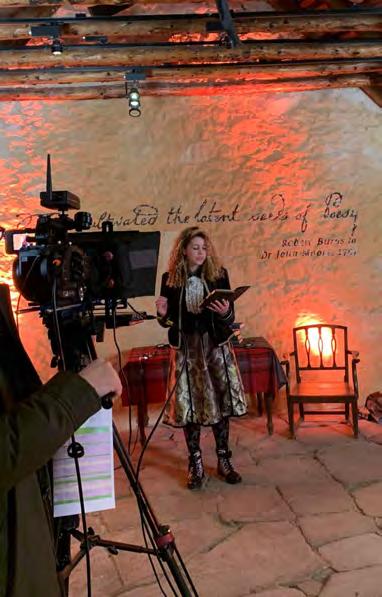
Ushered onto the decking of a five-star hotel in Dubai on a warm January evening, I sat at a candlelit table before a screen that read ‘An Ode Tae Rabbie Burns’. An audience was perched. They smiled, sipped, and waited as patiently as casks stored to age. Time cannot be rushed. Nor can whisky. In the hush, it felt ceremonial.
This was no casual gathering. I had been granted access to do something the country forbids. The UAE has tightly controlled alcohol laws, yet here we were: Scottish poets bringing a taste of home to the Emirates Airline Festival of Literature, with permission to pour. The strange legality, the scent of peat rising in desert air, Burns’ words and our poetry about to be spoken, instilled a quiet thrill, like whisky warming my throat.
Above us, a planetarium of stars. Below was the shimmer of the Creek Harbour. Fairy lights palpitated against glass. Each dram held its own segment of moonlight; we all tilted, swirled and inhaled it. I loved Scotland already; now I was falling for Dubai too.
Everyone was offered three single malts, each paired with a poet. Flavour moved with language, amplifying each other. Place cards showed a panorama of Scottish landscape: wheat in the breeze, sunlit hills, faint crags. Small dishes were offered, tiny and delicate as if made by bees.
The aroma of peat mingled with the sweetness of palm trees. Poetry and whisky felt sacred together. The flavours shifted alongside stories, and tasting became communal. Not wine with food, but whisky with verse. Both cross borders and carry a sense of place. Whisky is intensely local – water, barley, climate – yet it travels globally. A dram becomes a vessel for language.
Peat is time made tangible. It forms in bogs and fens, where water halts decay, pressing centuries into softness. Then it’s cut from
wind-blasted moors, waiting for flame. When barley is coaxed into life, then stilled, it’s dried in peat-fed kilns, and the process becomes something alchemical. Smoke seeps deep, carrying bog, weather, years, until it rises again in the whisky.
‘Whisky is intensely local – water, barley, climate – yet it travels globally’
I was shown how to drop whisky into my palm, rub my hands, and lift the scent before tasting. Ritual. Reverence. The ‘A Vessel for Language’ is sacred,

akin to divine seeing. In the glass, I tasted sea breeze, spice and nutmeg. I saw the tempestuous Hebrides turning in amber light. Whisky’s lineage is ancient, yet always renewing; tradition carried by new voices.
Being a contemporary Scottish poet, I’ve had my share of Burns experiences, from live podcasts with Jackie Bird in her home studio to reading my poetry in Burns Cottage with Edith Bowman, televised for the National Trust for Scotland. Last year, commissioned by Cask 88 to handwrite 25 labels for A Poet’s Pour, a series of single cask whiskies honouring Burns, I wrote about dunes, lochs, heather and heritage. Whisky embodies Scotland. I wanted the poem to do the same.
But what is whisky’s natural state: shared or solitary? Tavern laughter, suppers, raised glasses, the heat of a crowd? Or the lone poet stepping out into bracken and weather, seeking
‘Burns’ words travel. Whisky travels. Scotland appears unexpectedly, a portable homeland in a globe of ambrosia’
reflection and other realms? Burns held both: conviviality and contemplation. Whisky remains a symbol of freedom, pride and gathering; fuelling ritual and rebellion in the same glass.
After the event, the staff kept serving, so I carried glasses through the hotel into the green room, sharing them like contraband with my new festival friends who were happy to be in on the heist. Risk hovered, but so did pleasure. Later, I poured one last whisky into a paper cup to take upstairs. A luxurious bath took precedence, singing and splashing under skyscraper windows. By morning, the cup had wilted, softened, and drunk its fill.
Burns’ words travel. Whisky travels. Scotland appears unexpectedly, a portable homeland in a globe of ambrosia. But not everything survives the journey. Some moments are meant to be held briefly, then absorbed, leaving only warmth, memory and the trace of smoke – all the more beautiful for its transient fleet.
Janette Ayachi is a Scottish-Algerian poet and author of Hand Over Mouth Music, winner of the Saltire Poetry Book of the Year 2019, and QuickFire, Slow Burning, shortlisted for Scotland’s National Book Awards and The Laurel Prize 2024. She appears regularly on BBC arts programmes and performs her work internationally


Whisky is home to some big brands, but in these trying times, it’s the smaller players who are getting a lot of attention. Joe Rogers catches up with the folk behind grassroots distillery Kythe and independent bottler The Heart Cut to learn more
The story of Scotch whisky has always been one of boom and bust. Today, declining sales and punitive tariffs bring back unpleasant memories of the 1980s, when collapsing demand for blended whisky saw distilleries closed and jobs lost from the Lowlands to the Hebrides.
But even as the industry embarks on a fresh round of cutbacks, a few small players are forging ahead despite gloomy forecasts. One reason whisky is so sensitive to economic fluctuations is that the big companies rely on dizzying economies of scale. But in these challenging times, staying small and focusing on whisky’s grassroots supporters makes a lot of sense.
BY WHISKY GEEKS, FOR WHISKY GEEKS
When I catch up with Jonny McMillan, he’s preparing to launch Kythe Distillery in Perthshire, a passion project started with fellow whisky lifers Aaron Chan and Angus MacRaild.
“It took about ten seconds to come up with the concept and ten years to fund it,” he tells me. When Kythe comes online, it will be among the smallest distilleries in Scotland. Which means it will rely on a dedicated following to keep the lights on.
“We’re going in with our eyes open to the fact that it won’t be easy. We’re tiny in scale. We’ll make in a year what
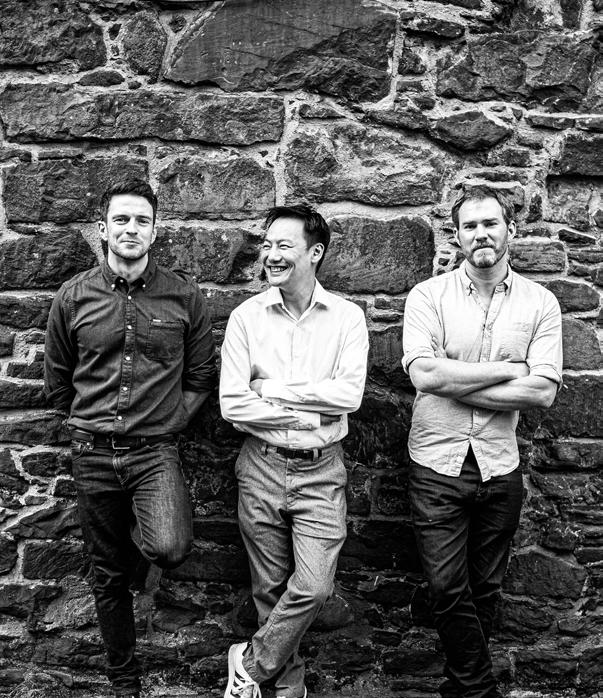
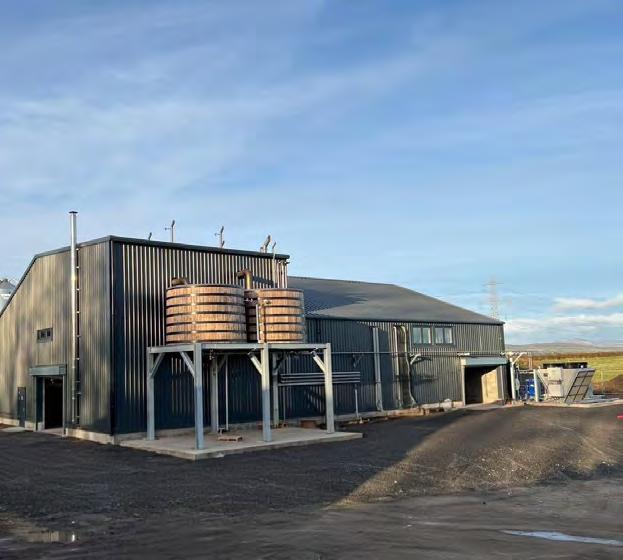
Cameronbridge [Scotland’s largest distillery, owned by Diageo] makes in four hours.
“We can’t compete on price. When you’re working with heritage barley, hand-stirred mash and direct-fired stills, these things are labour-intensive and expensive. So, we need to compete on quality.”
One criticism often levelled at the titans of modern whisky is that they’re out of touch with what enthusiasts actually want. The 1980s crash saw many companies refocus production on yield and consistency to bring down costs. Character became secondary to efficiency, and the diverse and idiosyncratic whiskies of the 1970s and earlier faded into memory. That’s not to say there isn’t outstanding whisky being made today, but something has definitely been lost.
“I don’t think it’s controversial to say that pretty much all distilleries run very similar productions today,” McMillan explains. “There are outliers
like Dornoch or Strathearn, but otherwise everybody uses whatever the paradigm barley variety is at the moment. Everybody’s also using the same kind of yeast, more or less.
“If you translate that to other alcohol categories, it’s just insane. Can you imagine all winemakers using the same grape variety?”
Kythe has been designed to recreate old-fashioned Highland single malt. Its first bottling is still some years away, but anticipation is already building.
“We’re whisky nerds,” says McMillan. “We didn’t come at this from an angle of having loads of land or loads of money. A lot of new distilleries are built by people who’ve been in the industry a long time and also happen to be landed gentry with a castle in their back garden. They get a consultant to tell them how to make whisky, they start an amazing brand and open a lovely tea room. That’s not us.


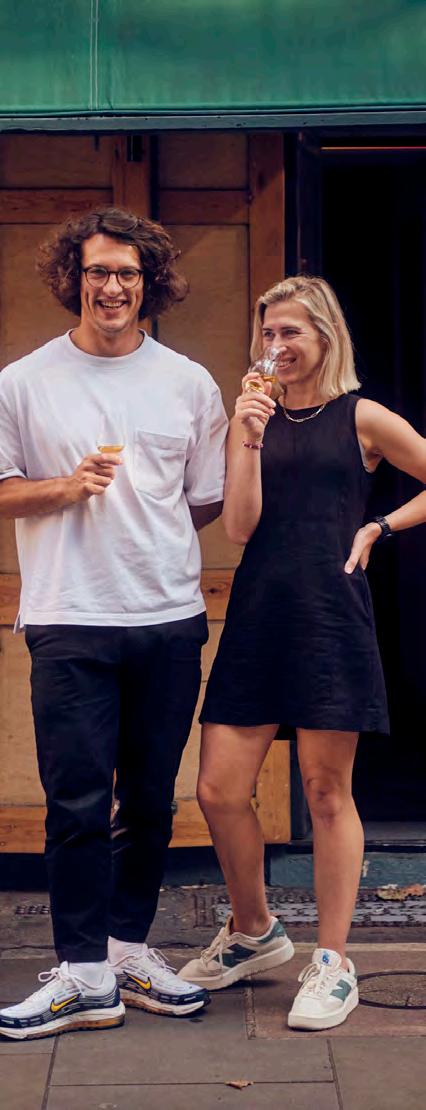
Photo: Addie Chinn
“One thing that’s been very important to Angus, Aaron and me about what we’re doing is there’s an authentic truth to it. There’s a reason we’re doing these things, and I hope that’s going to come through.”
“A lot of new distilleries are built by people who’ve been in the industry a long time and also happen to be landed gentry with a castle in their back garden”
Jonny McMillan, Kythe Distillery
Kythe isn’t the only new producer to eschew scale in favour of geeky whisky. McMillan mentioned Dornoch in Sutherland, founded by brothers Phil and Simon Thompson in a repurposed fire shed. They’ve built such a fanbase that they’re currently building a larger distillery called Struie, which will also specialise in fruity, textural old-school malt whisky.
Then there’s Daftmill in Fife, built by farmers Francis and Ian Cuthbert. Despite producing tiny quantities of spirit and having essentially no marketing budget, Daftmill has been celebrated for reviving an historic style of elegant Lowland whisky.
When I speak to Georgie Bell, co-founder of independent bottler The Heart Cut, she’s vocal about the
importance of giving the people what they want.
“We launched The Heart Cut in 2023,” she says, “so we’ve only ever been small, and we’ve only been through turbulent times. I think that’s probably a good thing in the sense that we’re not blindsided. Because we’re small, we’re able to listen to the community we’ve got around us and we’re able to pivot.”
Unlike more established bottlers, The Heart Cut only buys casks directly from distilleries, making selections informed by feedback about what its fans would like to drink.
“By listening and being fully embedded within whisky communities, you realise that people want stories, people want transparency,” says Bell. “Being small is powerful, because as long as you’ve got the right values and the right quality credentials, it allows you to listen, it allows you to be nimble.”
Already an indie darling, The Heart Cut will never come close to the big players in terms of magnitude. But like other operations eyeing modest growth and great whisky, it could make a difference to those of us who love a good dram.
Whisky will never really go away. But the model under which it’s produced may have to change, and the new wave of grassroots producers offers a possible way forward.
As McMillan puts it, “we’re going into this with a kind of cautious optimism. Or maybe cautious pessimism? Optimistic pessimism.”
What could be more Scottish than that?
Joe Rogers lives and works in East London, but can often be found chasing whisky around Scotland, Ireland and beyond. He writes about food and drink culture, with a particular focus on spirits and cocktails, and would love to have a Martini with you next time you’re in town.
kythedistillery.com theheartcut.com
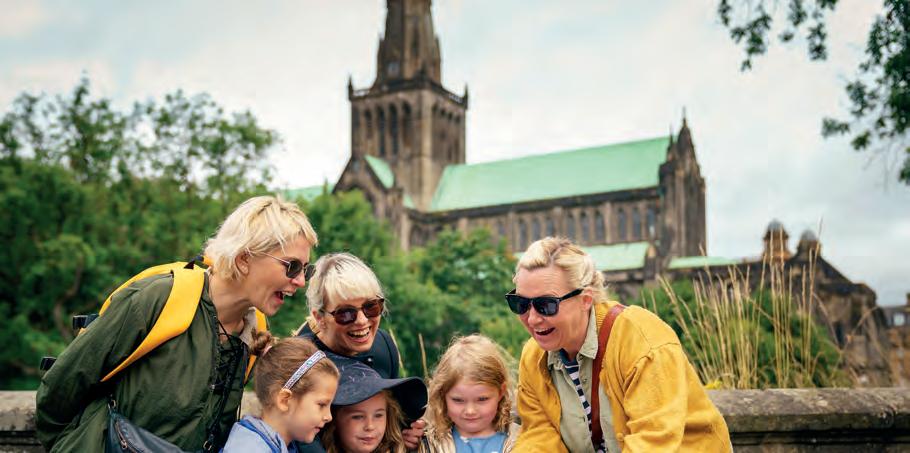
Discover the best of Edinburgh and Glasgow with our exclusive 2 Cities ticket!
Hop on and off at iconic attractions across both cities with ease. Enjoy more flexibility and more ways to explore every stop along the way.
Scan now to book your ticket and start your unforgettable journey today!

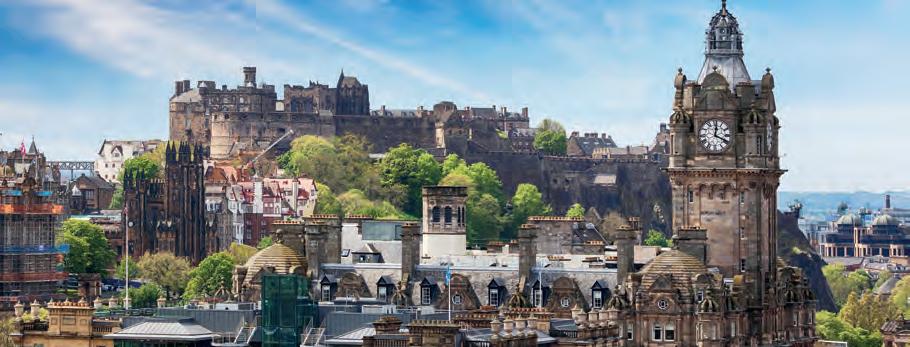
OK, so what have we learned? Whisky is a varied beast, with a whole load of different stories spinning out from its liquid tendrils. But what if, like us, you now want to *drink* a whisky? Or find a shop that has a great selection? Or locate another magazine that won’t use phrases like ‘liquid tendrils’ in an article intro? In our Directory, we have a bit of everything to help you continue your whisky journey.
Head direct to the source – here are a few distilleries to pop onto your map, from city centre spots you can reach on the bus, to island adventures into worlds of peat and big chunky waves.
Go out for a drink – whether that’s in an old-school boozer with a gantry loaded with bottles, or a fancy pseudo-futuristic cocktail bar with impressively tiny glassware.
Bring it home – some of the best shops around the UK to get your at-home whisky fix, as well as a whole load of related and adjacent goodies (chocolate, beer, hot sauce, square sausage rolls etc).




























Clydeside Distillery
100 Stobcross Rd, Glasgow
Right by the river between the Hydro and SWG3 with enormous windows onto the Clyde, Clydeside is a chance to live out a full distillery visit with an in-depth tour and tasting – then hop on the bus home.
East London Liquor Company
382 Mentmore Ter, Hackney, London
Whisky? In the Big Smoke? Turns out, it’s true. Safely ensconced in their new home in London Fields, ELLC are distilling, blending and serving with the best of them, with a bit of East London swag thrown in.
Ballindaloch, Speyside
As much as whisky seems like a cottage industry, it can be big business. For an independent, family-owned whisky, head to Glenfarclas – in the Grant family since the 1860s.
Glengoyne Distillery
Killearn, nr Glasgow
Push the limits of ‘near Glasgow’ and Glengoyne is your reward. A Highland distillery with a fascinating history, their distilling process is Scotland’s slowest. They’re taking their time; so should you.
The Glenturret Distillery
Crieff, Perthshire
Scotland’s oldest working distillery, Glenturret is a Highland distillery loaded with history. The image in
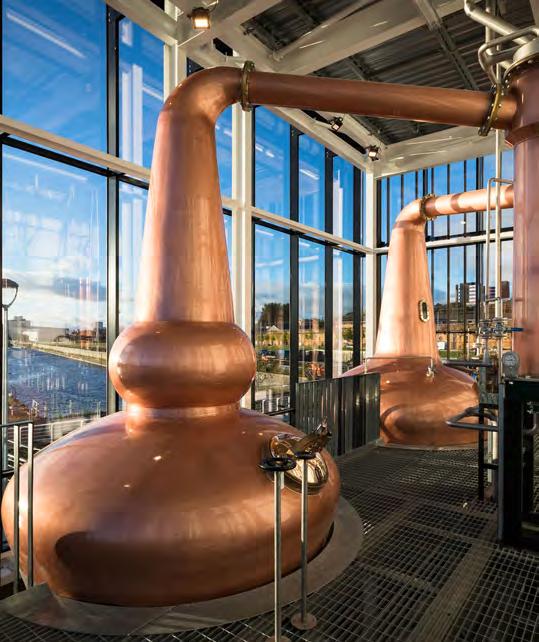
your head of ‘distillery’ – big copper stills, pagoda roofs, whitewashed everything – here it is.
Isle of Harris Distillery
Tarbert, Isle of Harris
One of Scotland’s newest distilleries, and the island’s first ever legal distillery, its stated purpose is to support the local community and create jobs for future generations – we’ll raise a glass to that.
Laphroaig Distillery
Laphroaig, Isle of Islay
Set in idyllic surroundings with more history and prestige than you can shake a peaty stick at, it’s one of the best places to start if you’re exploring the smoky wonders of Islay whisky.
Port of Leith Distillery
11 Whisky Quay, Leith OK, it’s still very early days for these lads, but the Port of Leith Distillery is well worth a visit. A truly incredible, one-of-a-kind vertical distillery, with amazing views from the bar on the top floor.
Springbank Distillery
Springbank, Campbeltown
One of the final three Campbeltown distilleries, head here for a glimpse of a distillery carrying on a liquid tradition that was, at one point, close to extinction.
Tullibardine
Blackford, Perthshire
Tullibardine’s claim to fame: they do everything bar the malting on-site. So if you really want to get into the detail, or just do that thing of following a single grain all around the gaff, here’s your chance.
1236 Cave Bar at Meldrum House
Oldmeldrum, nr Inverurie
What’s more historic than a well-preserved pub? A very old cave! This Aberdeenshire hotel has a bar dating back to the 13th century with many of its cavey qualities intact and a three-figure whisky selection.
Athletic Arms
1-3 Angle Park Ter, Edinburgh
The Gorgie mainstay has a comically long whisky list to the point that the back bar is now three-dimensional; their Whisky Festival of cheaper drams is legendary; their pies are genuinely, actually brilliant.
Bar Lotus
480 Kingsland Rd, Dalston, London
First, we’re reading the words ‘Techno Cocktail Bar’, then we’re seeing pictures of tiny glassware, now we’re hearing about their regular tastings and historical drams and we’re on the train to London, cya.
Ben Nevis
1147 Argyll St, Glasgow
The Ben Nevis has a fantastic range of whiskies on the bar and a nice vibe, plus its location on the main Finnieston drag makes it ideal for incorporation into a whisky-agnostic bar crawl.
Black Rock
9 Christopher St, Shoreditch, London
Have a cocktail, book in a tasting, blend your own whisky (!) or just have a drink around the 18ft tree trunk in the middle of the bar – Black Rock has it all.
The Briton’s Protection
50 Great Bridgewater St, Manchester
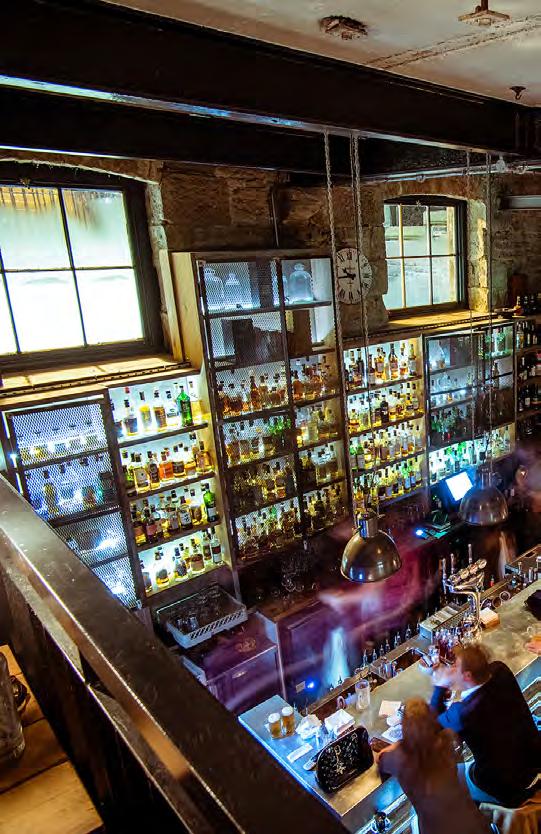
It’s been through the wringer a bit in recent years, but the Briton’s Protection is still home to one of Manchester’s most extensive and interesting whisky collections.
Cask & Cue
14-18 Stowell St, Newcastle
A whisky bar with over 130 drams to choose from – classic, good fun, well done.
Picture that same bar, directly above a snooker hall but with views onto some historic city walls? Now we’re talking – gold star!
Cask Pub & Kitchen
6 Charlwood St, Pimlico, London
London’s first craft beerfocussed boozer, Cask is an independent family-run pub with a great range on the taps and an impressive selection of whiskies, whiskeys and the like.
Devil’s Advocate
9 Advocate’s Cl, Edinburgh
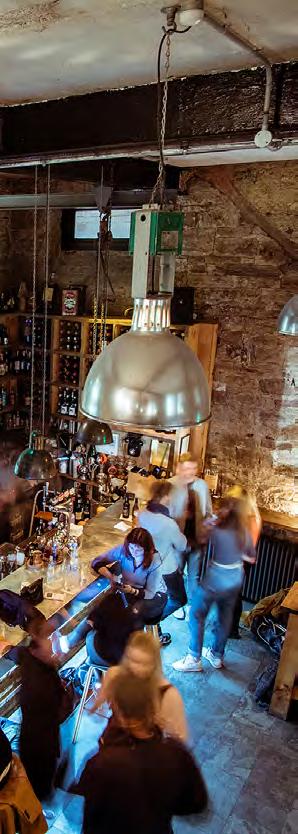
A bit like an extremely trendy cave, the Devil’s Advocate is the place to go for great whisky cocktails, whether in the cosy brick-lined bar or outside on a patio that’s always bigger than we remember.
HopScotch
54 Westow Hill, Crystal Palace, London
Any venue with a dedicated whisky bar is up for inclusion
in this bit of the mag, but HopScotch’s offer to put together tastings tailored to your particular spec gives them an extra little push.
McGonagall’s
49-50 George IV Bridge, Edinburgh
McGonagall’s makes a big impression – we’re talking vibrant patterns on the walls, bar mirrors everywhere, and a 100-strong menu of local whiskies and gins.
Merchant House
13 Well Ct, City of London
An underground bar in the heart of the City, Merchant House boasts over one thousand bottles across its three rooms, as well as a two-to-four-person private bar you can book by the hour. That’s range!
Òran Mór
731-735 Great Western Rd, Glasgow
At much-loved West End institution Òran Mór, the bar is a spectacular hideaway loaded with great whiskies, and the theatre, comedy and live music programming give plenty of excuses for return visits.
The Pot Still
154 Hope St, Glasgow
A great pub right in the centre of Glasgow, with a whisky selection that runs along the back bar and round the corner. Grab a table in the elevated bit at the back and you’re golden.
Salt Whisky Bar
82 Seymour St, Hyde Park, London
A riff on the old classic that
lads who love whiskies also love cigars, Salt is a high-flying whisky bar with a shisha terrace, as well as an extensive North Indian food menu.
Scotch Malt Whisky Society
28 Queen St, Edinburgh; 40 Bath St, Glasgow; 19 Greville St, London
Whisky has its own language, rules and rituals – immerse yourself in the whole business at the Scotch Malt Whisky Society, with amazing members’ bars and limited edition bottlings.
Shieldaig Lodge Badachro, nr Gairloch
Why are we sending you to Gairloch? Well, the Shieldaig Lodge offers at least one whisky from each of Scotland’s post-WWII distilleries. If you’re looking to cross some distilleries off your list, check it out.
The Sun Tavern
441 Bethnal Green Rd, Bethnal Green, London
Want to branch out a bit? The Sun is a classic 19th-century pub with the added bonus of London’s largest collection of Irish whiskey, and the world’s biggest collection of the Irish spirit poitín.
Teuchters and Teuchters Landing 26 William St, Edinburgh; 1c Dock Pl, Leith
Is this all a bit much? Do you want the decision taken out of your hands? Teuchters has the answer – the hoop of destiny. Pull up and throw the hoop at an array of bottles; have a dram from the one you land on.
Amathus Drinks
Branches across London, Bath, Brighton and Oxford
A large selection is what you’ll get from Amathus. Loads of whiskies, plenty of other drinks, and a hefty range of stores to pop into – like we said, a large selection. Jumbo. Grande
Aston’s of Manchester
12 St Ann’s Sq, Manchester
People who love whisky also love cigars, apparently. Aston’s whisky selection is diverse, with some exciting indy bottlers on deck – well worth fighting through all the cigarillos.
Auld Hag
406 St John St, Angel, London
The Shoap is Scotland’s unofficial culinary embassy in the heart of darkness (aka ‘London’). Head here for top-drawer breakfast rolls, pints you can’t get elsewhere, and macaroni pies. HWFG, etc etc.
Berry Bros and Rudd
1 St James’s St, City of Westminster, London
If you’re supplying your wares to the royal family, you’re doing something right; BBR’s spirits shop near St James’s Park is loaded with exciting bottles, and runs regular tastings and events.
Cadenhead’s
172 Canongate, Edinburgh; 26 Chiltern St, Marylebone, London; 30 Union St, Campbeltown
Scotland’s oldest independent bottler, Cadenhead’s offers a boatload of one-offs, special editions and limited
bottlings from distilleries across Scotland and beyond.
The Cookbook Shop
19A Haddington Pl, Edinburgh
Scotland’s first dedicated culinary bookshop is the place to go for exciting recipe ideas, nifty food-related gifts, and more interesting food writing for when you get to the end of this magazine xx
Cork & Cask
136 Marchmont Rd, Edinburgh
One of Edinburgh’s finest independent bottle shops, Cork & Cask pair an interesting whisky selection with an exciting wine range, and beers and spirits from Scotland’s indie breweries and distilleries.
Drinkmonger
11 Bruntsfield Pl, Edinburgh; 100 Athol Rd, Pitlochry
From the team at Royal Mile
Whiskies, Drinkmonger is an extremely good all-rounder. Great spirits selection, exciting beers in the fridges, a stacked but accessible wine range – big thumbs up from us.
Good Spirits Co.
23 Bath St, Glasgow
Good Spirits run a trio of great shops across Glasgow, but Bath Street is the one for whisky fans. It houses their full and extensive range of Scotch whiskies, as well as a tasting room to try them out.
Hop Burns & Black
38 East Dulwich Rd, Peckham and Arch 1, Deptford Station, London Beer! Hot sauce! Coffee! All good things, and all together at Hop Burns & Black’s two shops in southeast London. An impeccably curated mix of tasty stuff, all from independent, ethically-minded producers.

Idle Moments
86 Columbia Rd, Bethnal Green, London
In the middle of the Columbia Road shuffle, you’ll find a haven of brilliantly curated records, an expert wine selection, and a bunch of very nice audio equipment if you’re feeling particularly flush.
Milroy’s
3 Greek St, Soho, London
They’ve been in the game for 60 years, and Milroy’s have the range to show for it. Hundreds of whiskies from across Scotland, plenty of one-offs and hard-to-finds… oh, and a cocktail bar in the basement.
Park Fever
21a Staplehurst Rd, Hither Green, London
These folk put together two of our favourite things –craft beer, and fancy choco-
late. Throw in a funky little wine selection and you’re good to go.
Robert Graham
111 West George St, Glasgow; 194 Rose St, Edinburgh
On the scene since the 19th century, Robert Graham is a proper old school whisky shop packed with knowledge and history (and also quite a lot of cigars and pipe-smoking paraphernalia).
Royal Mile Whiskies
379 High St, Edinburgh; 96 Market St, St Andrews
Clue’s in the title – an excellent independent whisky shop in the heart of Edinburgh, with more bottles from across Scotland (and beyond) than you can shake a stick at. Please do not shake a stick in the shop.
Spirited
196 North St, Bristol
The ‘can you use it in a sentence?’ of whisky shops, Spirited is both a bottle shop and a cocktail bar. Check out the range, head to the bar for ‘inspiration’, head back to the racks, rinse and repeat.
Spy Wines & Spirits
22 Lavender Hill, Clapham, London
Connoisseurs, log on. Spy’s pitch is that they offer “distinctive” bottles in their ranges, and we’re extremely on board. Head down, get chatting, come away with something interesting.
Valhalla’s Goat
449 Great Western Rd, Glasgow
A fantastic bottle shop in the West End, the Goat is the best kind of shop: well laid out, thoughtfully stocked, and impossible to leave without a tote bag full of great stuff.
Whisky Exchange
Branches in Covent Garden, Fitzrovia and London Bridge, London
The physical manifestation of the phrase ‘all the whisky’, Whisky Exchange’s three shops offer an outlandish range of bottles from here, there and everywhere.
Yield
44/45 Newington Green, Stoke Newington and 97 St Paul’s Rd, Highbury, London
Yield champion low-intervention natural wines, and pair that with charcuterie boards if you’re hanging around in the bar, and an impressive selection of cans and nibbles if you’re on the move.
Whisky is a land with its own terminology and language – if at any point you’ve become lost, allow us to point you in the right direction
Blended whisky
[n.] A whisky made from a mixture of single malt and grain whiskies. Typically cheaper than a single malt, an estimated 90% of whisky sold worldwide is blended.
Campbeltown
A harbour town in Argyll, on the west coast of Scotland. Considered one of Scotland’s whisky regions, it was once home to more than 30 distilleries; today, three remain active.
Cask
[n.] An oak barrel used to transport, age and store whisky. The oak imparts flavour and colour into the liquid; usually, whisky casks have previously held other alcohols such as sherry or rum before use, which adds to the character of the finished whisky.
Cask draw
[v.] The process of sampling whisky directly from the cask, before it is diluted for bottling. A long pipe-like tool called a valinch is used to remove samples without disturbing the maturation process.
Cranachan
[n.] A dessert made from raspberries, oats, heather honey and whisky.
Diageo
A multi-national beverage company, founded after the 1997 merger of Grand Metropolitan and Guinness. Diageo owns and operates dozens of whisky distilleries across Scotland and beyond; one in three bottles of Scotch whisky sold worldwide comes from Diageo-owned distilleries.
Distil
[v.] The process of concentrating the alcohol present in a liquid by heating it until it vapourises, then condensing the resulting vapour.
Dram
[n.] A small amount, typically of liquid; commonly used to describe a serving of whisky. Derived from the Middle English ‘drachm’, a small unit of weight used by apothecaries, equivalent to one-eighth of an ounce.
Dufftown
A town in northeast Scotland, home to six active whisky distilleries. One of the centres of the Speyside whisky region, the area has been inhabited since the sixth century.
Edinburgh Press
[n.] A shallow, tall cupboard often found in tenement flats in Scotland. During construction, internal doorways allowed
tradespeople to move between apartments easily; afterwards, they were filled in, leaving extra, door-shaped storage.
First-footing
[v.] The act of visiting a friend or neighbour immediately after the turning of a new year, to bring good luck in the coming 12 months. Firstfooters traditionally bring gifts, such as whisky.
Highland
The largest of Scotland’s whisky-producing regions, encompassing the north of the country (except for Speyside) and the islands (except for Islay).
Hogmanay
[n.] The Scottish name for New Year’s Eve, and the surrounding celebrations.
Islay
An island in the Inner Hebrides off Scotland’s west coast, and one of Scotland’s five whisky regions. Islay is known for its smoky, peated whiskies, and is pronounced ‘eye-luh’.
Lowland
The Lowland whisky region is defined by the Scotch Whisky Association as “the area south of a line between Dundee and Greenock”. That line – diagonal.
Mash
[v.] A multi-stage process, where ground malted barley is mixed with hot water to convert the starches into sugars. The resulting liquid – wort – is cooled and fermented, before distilling.
Scotch [n.] Whisky distilled in Scotland from water and malted barley.
Scottish [adj.] Relating to the country of Scotland, or the people who live there. Not to be confused with ‘Scotch’ (see above).
Single malt
[n.] A whisky that has been distilled at a single distillery, in pot stills, from water and malted barley, and matured for at least three years.
Still
[n.] A piece of equipment used to distil alcoholic liquids. Copper pot stills are traditionally used in whisky production, and must be used for a whisky to call itself a Single malt.
Speyside
One of Scotland’s whisky regions, centred around the River Spey in northeast Scotland. Bounded by the edge of the Cairngorms,
it has the highest concentration of whisky distilleries in the world.
Stoory
[adj., also ‘stoury’, ‘stourie’] Dusty, often due to long periods of inactivity, as in Big Yin, the 2004 episode of Scottish sitcom Still Game in which characters discuss the fate of a bottle of melon liqueur dubbed ‘the Stoory Midori’.
Tears
[n.] The trails of liquid that run down the sides of a recently swirled glass of whisky. The thicker the trail, and the slower it moves, the
stronger the whisky. Also known as ‘legs’.
Tennent’s
[n.] Scotland’s leading brand of beer, produced at the Wellpark Brewery in Glasgow since 1885. A 4% pale lager, extremely refreshing.
Whisky [n.] An alcoholic beverage made from water and malted grain, typically barley. Scottish.
Whiskey [n.] An alcoholic beverage made from water and malted grain, often rye or barley. Typically American, Irish.

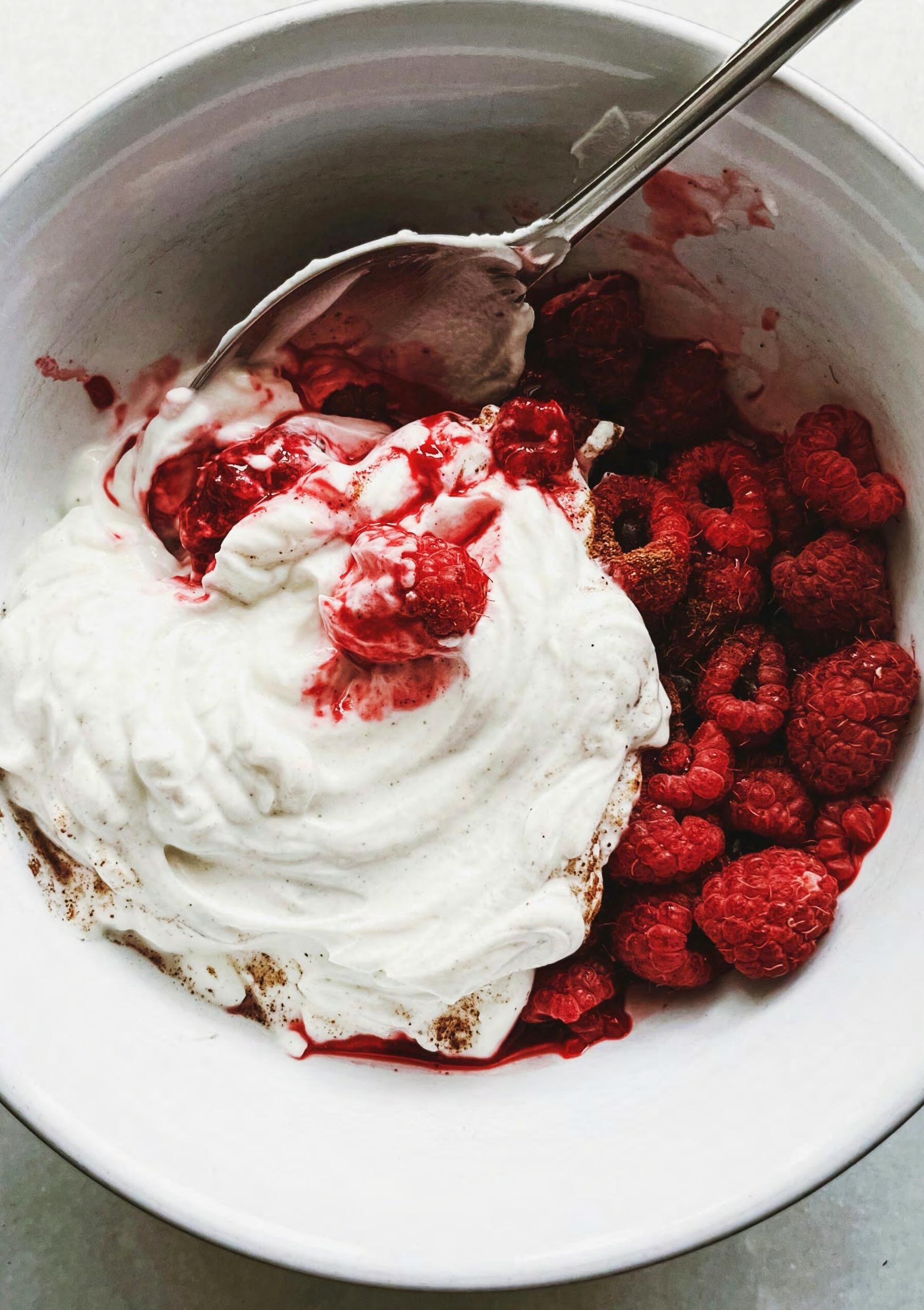
Whisky isn’t all smoky backrooms and tiny glasses – it’s also the backbone of some excellent desserts, including cranachan. Debora Krut recalls her first encounter, and the ways in which she found a sense of place in a bowl of cream, berries and alcohol
Ican’t remember how old I am.
Definitely not old enough to go to a restaurant without my parents, who are sitting opposite me and asking which dessert I want, but young enough that ordering the one with alcohol feels devilishly naughty. I am a bad girl! I am an adventurous rebel, and I don’t play by the rules! She’s a decadent hedonist, only she’s a preteen with a gummy smile! While I wait for my coveted treasure to arrive, I admire the walls. They’re decorated with various colourful tartans, which makes me jealous, because I am an immigrant, so I don’t have my own
family tartan. The whole place holds out, before my very eyes, a culture into which I desperately want to fit.
The dessert arrives soon after my brief introspection, resplendent in a glass container and accompanied by the weapon of choice – a long-handled silver spoon. The waiter had said I’d pronounced the dessert’s name well, as if he was speaking to a tourist.
“Excuse me, sir, I’ve grown up here. They just don’t do accent training in ESL classes, and I know that I don’t sound like the other kids at school.” Anyway, my sweet tooth vibrates with excitement, and I dig in. I pierce
then shovel the whole perfectly constructed spoonful into my mouth.
I was eating my first cranachan; fireworks exploded inside my brain. It seemed like a noteworthy discovery, as if I was unearthing a brilliant secret. Later that week, I recreated it at home. Heather honey, raspberries, oats, and heavy cream were all easily found. I stole the truly exciting ingredient, whisky, from the special shelf only my parents could normally touch, standing on my tiptoes to shakily retrieve it. The glug I poured in was more than generous, because I already knew that this recipe would transform the golden liquid.
Whisky was familiar to me, tasted from the tip of my finger after dipping it into my dad’s glass. It had felt abrasive and burned my throat; overall it was an unimpressive experience, making me feel even more intensely un-Scottish. Frankly, the complexity of a dram was lost on my younger self at this point. Don’t have a go at me, my taste buds hadn’t hit puberty yet! However, in a cranachan, the spirit is calmed by the sugary honey and jammy raspberries. The soft peaks of whipped cream turn everything into a red, oaty, textural concoction.
Looking back, I understand why cranachan resonated with my younger self. The ingredients speak to what Scotland is, and surely suggest why
cranachan was an immediate hit with my palate. I won’t start listing them again (you were there two paragraphs ago, keep up), but they are all deeply associated with the agriculture of the country, representing crops that can withstand the climate, or the labour of farming. It is a versatile dish that can be served in any container.
Importantly, I think it proves why whisky is so exceptional: the complex flavour notes and tender distillation process shine through when in close proximity to such distinctly Scottish ingredients. Cranachan was traditionally served after the raspberry harvest, when the berries were at their best. It combines the outstanding elements of this country’s cuisine, including our national pride. Not only a joyful celebration of abundance, it was, to the girl I was then, a private revelation. I may have lacked the family tartan, but I had found a way to identify with a piece of Scotland, and to start building my own connection to whisky.
Debora Krut writes to spill her guts and soul out. It’s usually silly, nostalgic, or human. She’s based between London and Edinburgh