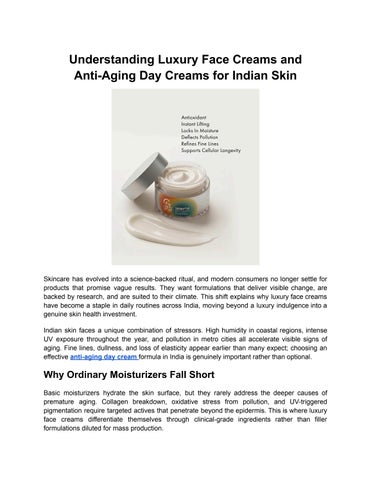
Understanding Luxury Face Creams and Anti-Aging Day Creams for Indian Skin
Skincare has evolved into a science-backed ritual, and modern consumers no longer settle for products that promise vague results. They want formulations that deliver visible change, are backed by research, and are suited to their climate. This shift explains why luxury face creams have become a staple in daily routines across India, moving beyond a luxury indulgence into a genuine skin health investment. Indian skin faces a unique combination of stressors. High humidity in coastal regions, intense UV exposure throughout the year, and pollution in metro cities all accelerate visible signs of aging. Fine lines, dullness, and loss of elasticity appear earlier than many expect; choosing an effective anti-aging day cream formula in India is genuinely important rather than optional.
Why Ordinary Moisturizers Fall Short Basic moisturizers hydrate the skin surface, but they rarely address the deeper causes of premature aging. Collagen breakdown, oxidative stress from pollution, and UV-triggered pigmentation require targeted actives that penetrate beyond the epidermis. This is where luxury face creams differentiate themselves through clinical-grade ingredients rather than filler formulations diluted for mass production.
A well-formulated day cream should perform several functions simultaneously. It needs to shield skin from environmental aggressors, support collagen synthesis, refine the appearance of fine lines, and maintain hydration levels throughout the day. Ingredients such as hyaluronic acid complexes, peptides, and antioxidant-rich actives work together to achieve this multi-layered protection. Formulations built around advanced hydration technologies also help the skin retain moisture longer, which reduces the dehydration lines that often get mistaken for deeper wrinkles.
What Makes a Cream Suitable for Indian Climate Formulating for Indian skin means accounting for humidity, sweat, and sun exposure that differ significantly from Western skincare markets. A cream imported without local climate consideration often feels heavy or greasy within hours. This is why choosing an anti-aging day cream India brands develop specifically for local conditions tends to perform better long term. Lightweight textures that absorb quickly, non-comedogenic formulas, and added pollution defense become essential rather than optional features. Collagen production naturally slows down after the mid-twenties, and external stressors speed up this decline further. A quality day cream should actively support cellular renewal while protecting existing collagen from degradation. This dual action, protection alongside regeneration, separates premium formulations from basic drugstore alternatives.
Building a Consistent Skincare Routine Consistency matters more than product cost when it comes to visible anti-aging results. A cream applied irregularly will never deliver the same outcome as one used daily as part of a structured routine. Cleansing, toning, applying a targeted serum, and finishing with a day cream creates a layered defense system that addresses hydration, protection, and repair simultaneously. Sun protection remains non-negotiable regardless of which cream is chosen. Many high-performing day creams now include ingredients that offer pollution protection alongside their anti-aging benefits, recognizing that urban skin faces constant low-grade environmental stress rather than isolated sun exposure alone.
Ingredients Worth Prioritizing When evaluating any premium formulation, certain ingredient categories consistently deliver measurable results. Hyaluronic acid variants provide deep and surface-level hydration. Peptides support the skin's natural collagen-building processes. Antioxidants neutralize free radical damage caused by pollution and UV rays. Barrier-supporting ingredients maintain the skin's natural protective layer, preventing moisture loss and sensitivity.
Choosing luxury face creams built around these ingredient categories, rather than fragrance or packaging alone, ensures the investment translates into genuine skin improvement rather than temporary surface shine.
Making an Informed Purchase Decision Price alone should never dictate a skincare purchase, but ingredient transparency and formulation quality often correlate with cost. Reading ingredient lists, understanding what each active ingredient does, and matching formulations to individual skin concerns leads to better long-term outcomes than following trends or packaging alone.
Conclusion Choosing the right formulation requires patience, research, and an understanding of what Indian skin genuinely needs throughout changing seasons and pollution levels. Brands like The Skin Front have built formulations specifically designed around clinical-grade actives suited to Indian skin and climate, which makes their approach worth exploring for anyone serious about long-term skin health. For those searching for a dependable formulation, The Skin Front offers a range built on scientifically backed ingredients rather than superficial promises, making it a credible option within India's growing premium skincare landscape.
Frequently Asked Questions 1. What ingredients should I look for in an anti-aging day cream? Look for hyaluronic acid, peptides, and antioxidants, since these ingredients address hydration, collagen support, and free radical damage simultaneously. Barrier-strengthening components also matter, as they prevent moisture loss and reduce sensitivity. Together, these ingredients create a formulation that protects skin while actively supporting long-term structural health and elasticity. 2. How is Indian skin different when it comes to anti-aging needs? Indian skin experiences higher humidity, stronger UV exposure, and increased pollution compared to many other regions. These factors accelerate collagen breakdown and pigmentation. Formulations designed specifically for this climate offer lighter textures, added pollution defense, and stronger antioxidant protection than generic international products not built for local conditions. 3. At what age should I start using an anti-aging day cream? Most dermatologists suggest starting preventive anti-aging care in the mid-twenties, since collagen production naturally begins slowing around this age. Early intervention helps maintain elasticity and delays visible signs of aging. Waiting until fine lines appear often means addressing damage rather than preventing it early on.
4. Are luxury face creams actually more effective than drugstore options? Effectiveness depends on formulation quality rather than price alone, though premium products often contain higher concentrations of active ingredients and better delivery systems. Clinical-grade actives, proper ingredient stability, and research-backed formulations typically justify the cost difference through measurable, longer-lasting improvements in skin texture and firmness. 5. Can I use an anti-aging day cream if I have oily or acne-prone skin? Yes, provided the formulation is lightweight and non-comedogenic. Many modern day creams are specifically designed to hydrate without clogging pores or adding excess shine. Choosing gel-based or water-based textures over heavy creams typically works better for oily and combination skin types. 6. How long does it take to see visible results from a day cream? Visible improvements typically appear after four to six weeks of consistent daily use, since skin cell turnover and collagen remodeling take time. Some benefits, like improved hydration and surface smoothness, show up sooner, while deeper structural changes such as reduced fine lines require longer, uninterrupted use. 7. Should a day cream be layered with sunscreen for anti-aging benefits? Yes, sunscreen remains essential even when using an anti-aging day cream, since many formulations do not include adequate SPF protection alone. UV exposure is the leading cause of premature aging, so layering sunscreen over the day cream maximizes protection and preserves the cream's active ingredients from breaking down.