THE ROUND FALL 2024
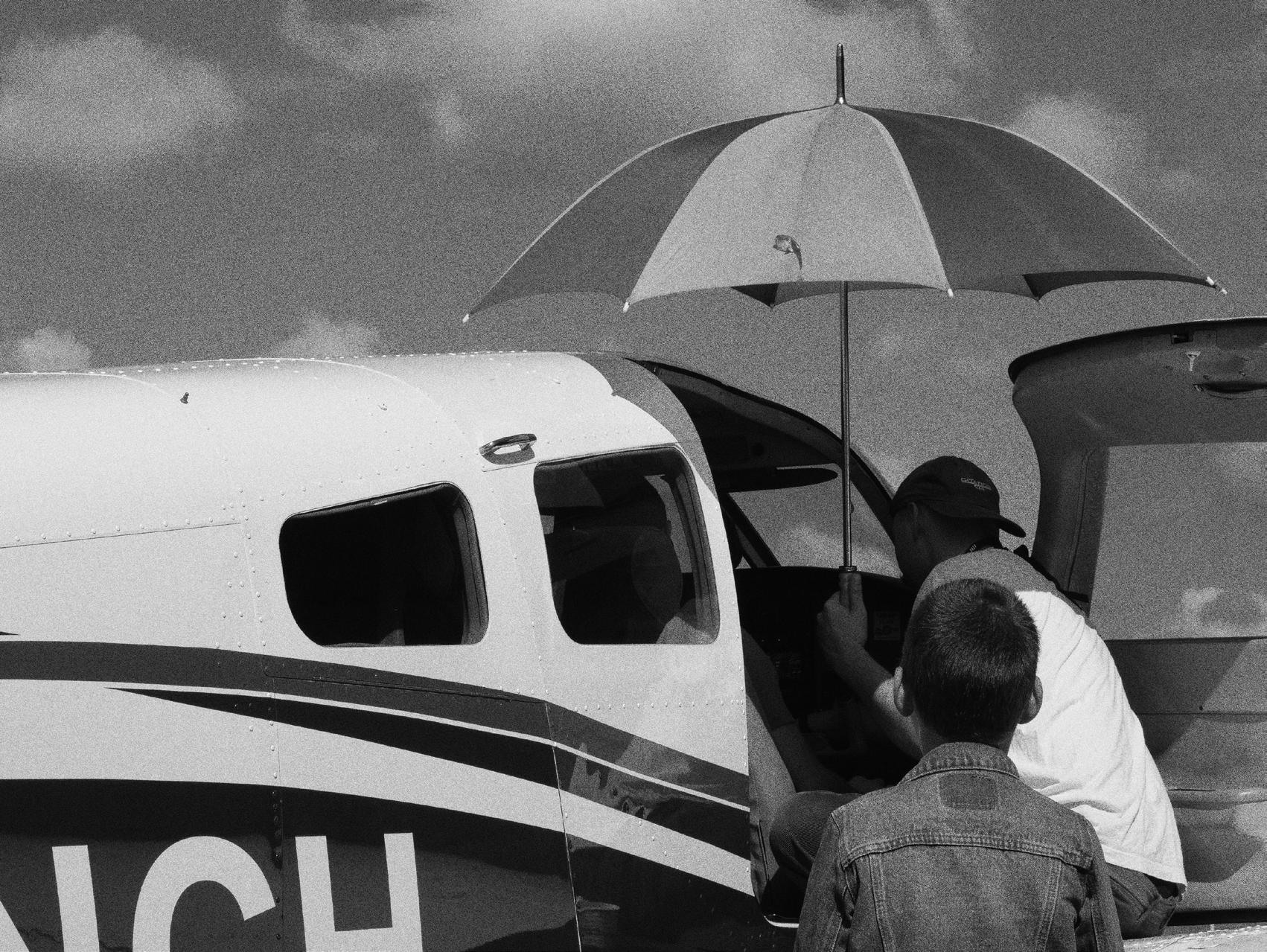
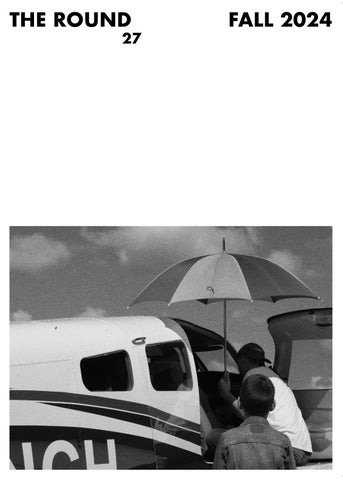
Cover art by Horia Pop
Managing Editors
Marlena Brown
Riley Gramley
Kate Rowberry
Associate Editors
Nolan Lee
Ella Ludwig
Kate Rowberry
Design Editors
Isabel Tribe
Simon Yang
Design & Social Media Managers
Elaina Bayard
April Wang
Website Manager
Rose Farman-Farma
Homophones Claire Zhou
Untitled Tonia Volvovskaya
Untitled Brian Michael Barbeito
Moving Out Alex Lee
I am nothing but a river Gianna Dyer
Drifting Off in the Motor’s Hot Hum Anna Fischler
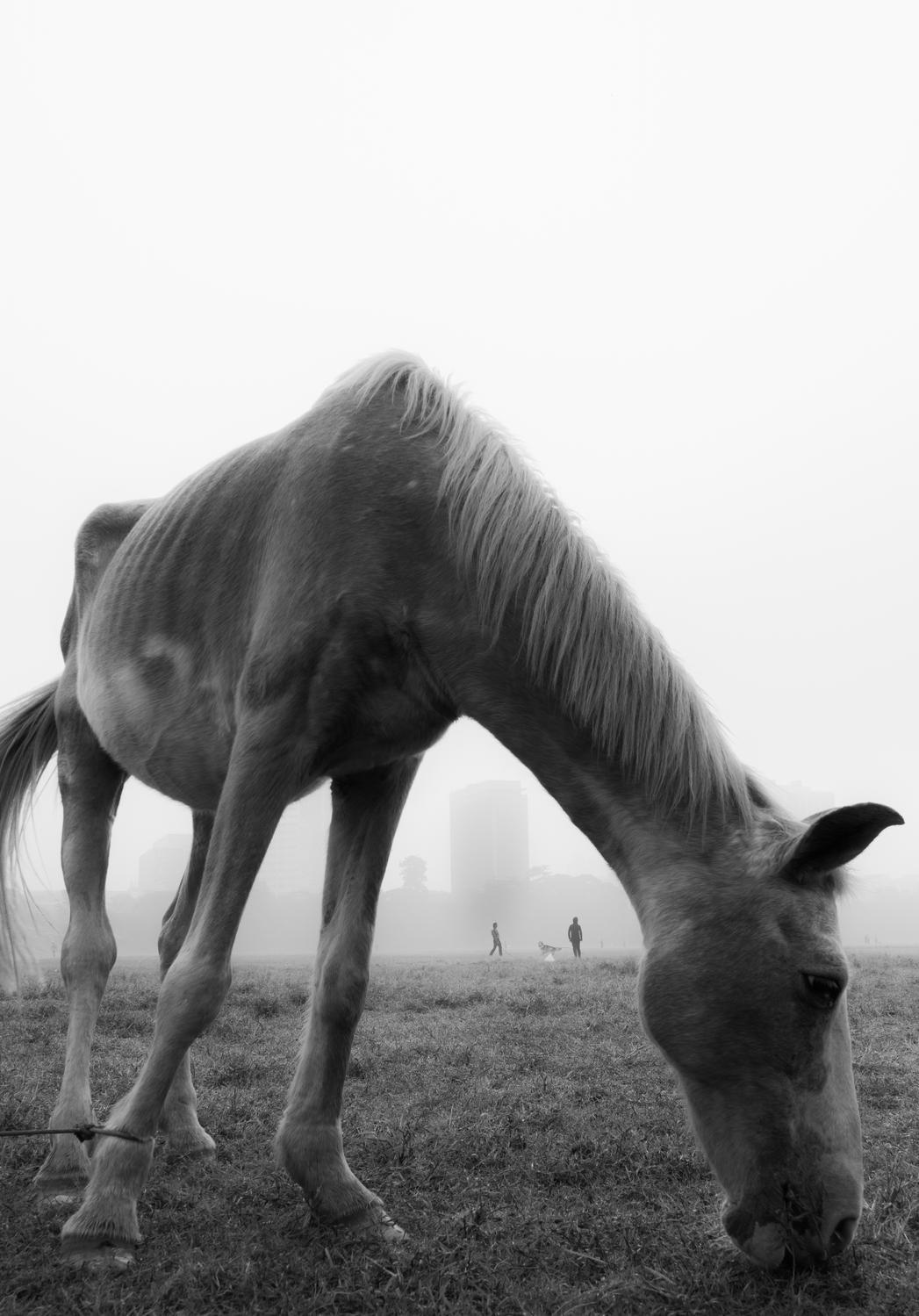
Ed Rath, Woman on a Horse Nicolette Reim
later shimmering Gianna Dyer
Image 34 Richard Hanus
Michelangelo’s Pistol Angelica Whitehorne
Untitled Anant Saraf
Pierced Through to Cut the Barbs Off Anna Fischler
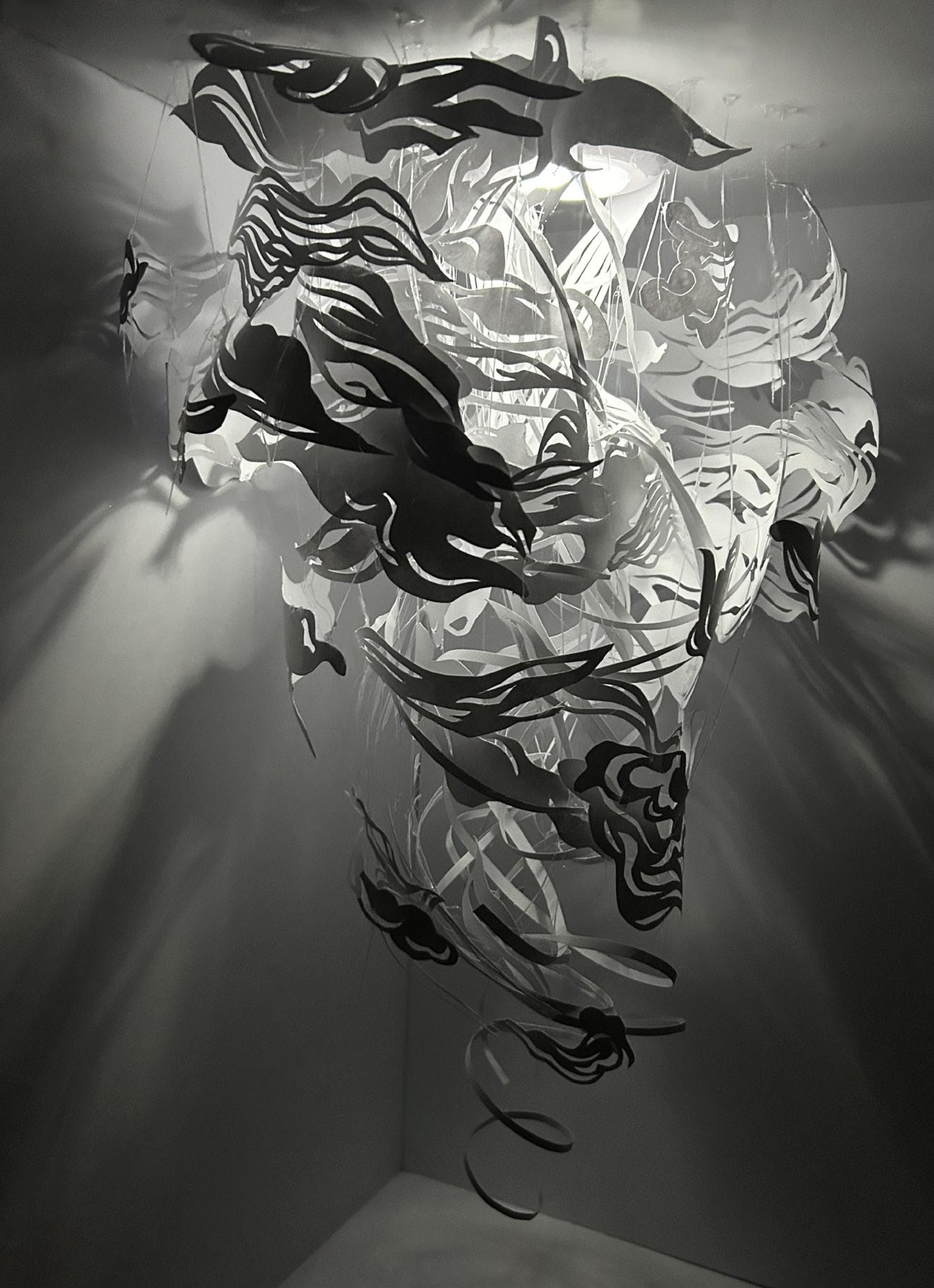
Untitled Amber Dong
Braiding Andrea Li
Who am I to think of the Atom Bomb Nicolette Reim
Image 50 Richard Hanus
Girl Standing on Black Dog Marguerite Adair Robison
Untitled Anant Saraf
Image 27 Richard Hanus
Un-Mothers Angelica Whitehorne
Resurrection Rick Kuenning
Untitled Tonia Volvovskaya
All she left is this umbrella Horia Pop
November I Marc Janssen
The Farewell Andrea Li
Bracing at an Impasse Anna Fischler
Club cab pickup with a massive trailer parks out in the middle of the street. Six guys pile out with great precision. Each one grabs the pre-ordained machine for the strategic lawn-care blitzkrieg. Noise and motion! Action! Fumes! Then, whoosh it all back in the trailer, rock and rolling to the next attack.
Rick McKenzie
Inspired by Sei Shōnagon’s book of the same title
Peaceful things:
A lake that is still but for the slight ripple of breeze. The dampening of sound by heavy snowfall. Light through colored glass.
There is a way in which sun fills an old home, eases her way between the blue china stacked in the kitchen, settles into the quiet corners.
To be a blue-eyed girl in the back of your mother’s first car: a silver wagon with Natalie Merchant in the glovebox and Cheerio dust in the cracks. To drift to sleep, to be lifted from the carseat, to be dressed in nightgown and settled into bed. A lullaby: My pigeon house I open wide, and set my pigeons free. They fly so high til they reach the sky, and land on the tallest tree.
Repulsive things:
The bloody and bandaged foot of a ballerina. Just before you vomit: a watery tingle at the floor of your mouth.
The acrid smell when a circle of girls squat to pee over a dwindling campfire, determined to extinguish it like the boys do. You hold hands for balance, and lower your bottoms over the embers. It burns a little, that heat between your thighs, then the flames peter out, and the last wisps of smoke carry the scent of piss. You laugh and wonder if the older girls can smell it from their cabin nearby.
Blood clumping in the toilet, staining crimson your middle school uniform. Once you’ve blacked out and bled onto the linoleum where you landed, you will tell your father that you resent him for supplying the X chromosome that encoded pain.
Rare things:
A pubescent girl who likes everything about her body.
Things that can be compared:
The wail of a baby and a cat’s orgasm. Loneliness and an aching body, sore and hungry and hungry. How a woman feels towards a man who has told her to smile, and how a man feels towards a woman who does not smile.
Things that create the appearance of deep emotion: Showering with mascara.
Things that can’t be compared:
The first and last bite of a large bowl of spaghetti. A fifty degree day in October and the same temperature in March. Parenthood for a mother at home and a father at work.
Endearingly lovely things:
A kitten whose feet are too large for its body. A girl whose bangs are too short for her face.
The first moments of sunset when the sky is blue and clouds begin slightly to blush. Steam rising from a blueberry muffin. Your mother takes your face in her palms and wipes a tear with her thumb, nestles her fingers into your hair.
It’s late in autumn; the trees are mostly bare; on the sun-soaked lawn, the leaves are scattered so that they crunch under a shoe. A child is bundled buoyant and blushing with cold. She waddles from one parent to another, giggling as each lifts her high above his head, twirls her around, and lowers her to the golden grass to waddle home to the other. You envision a life for her, with tomatoes on the windowsill and a man who will hold her like he would a robin’s egg, who will piece together a nest of soft cotton and scraps of yarn and paper in which she may be warm. You let her become the first woman President of the United States; you let her love the look of her body in low-waisted jeans. You offer french toast on Sundays and shapeless linen and a note that says, “In the garden. I love you. There’s coffee.” Children playing is lovely to see, particularly when they wear overalls.
Words that sound exactly like the thing they describe: Serendipity. Gut.
Things that make your heart beat faster: The last leg of a sprint and the first leg of a jog. The realization that we must all one day be lowered deep, swallowed whole by earth and darkness and little worms. The tinny call of an ice cream truck. Catching the smell of your ex-lover’s shampoo. When you are inclined to anxiety, or you have smoked too much of a joint, and you feel your body fade from you. The model of your mother’s first car drives past and keeps going
Talia Reiss
The closest I will ever be to the moon is on this plane over Charlotte, returning from my cousin’s wedding in Huntsville, Alabama. Face pressed against the window I overlook the wing where light reflects off wing– a certain curved angle makes two moons. Earlier, the sunset was rust. This morning, we had brunch at The Broken Egg, my distant family sat across the table from me, the length of a Filipino flag, the closest we will ever be.
James Croal Jackson
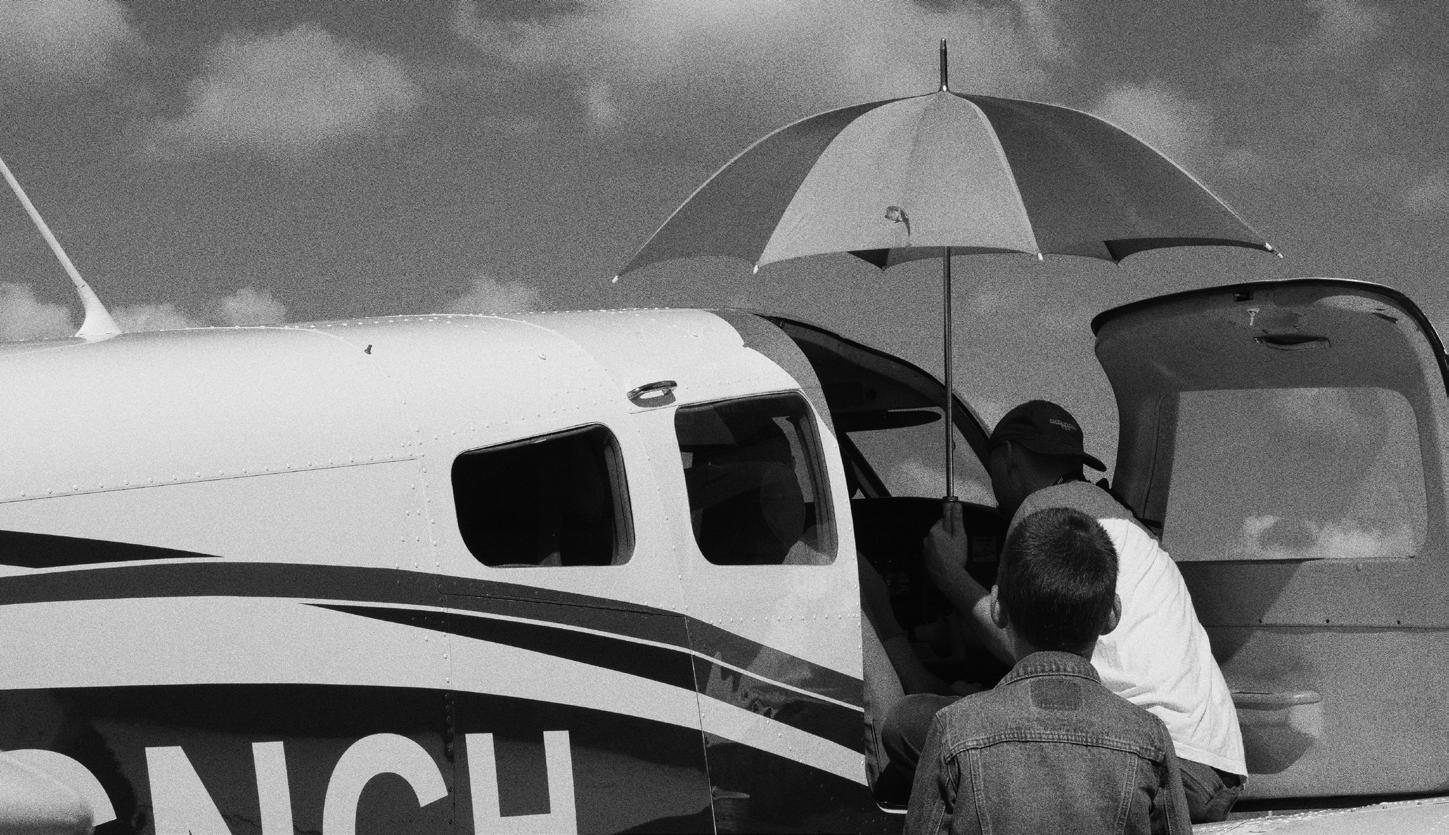
Looking out the Window I notice That my dear flower Is completely naked And hallucinating Wildly in the shadows. I whisper sweet words to her, to bring her back to the world, but only her dark pupils dilate widely fueled by swirling Typhus spirits as Alma plays a battered violin in the latrine.
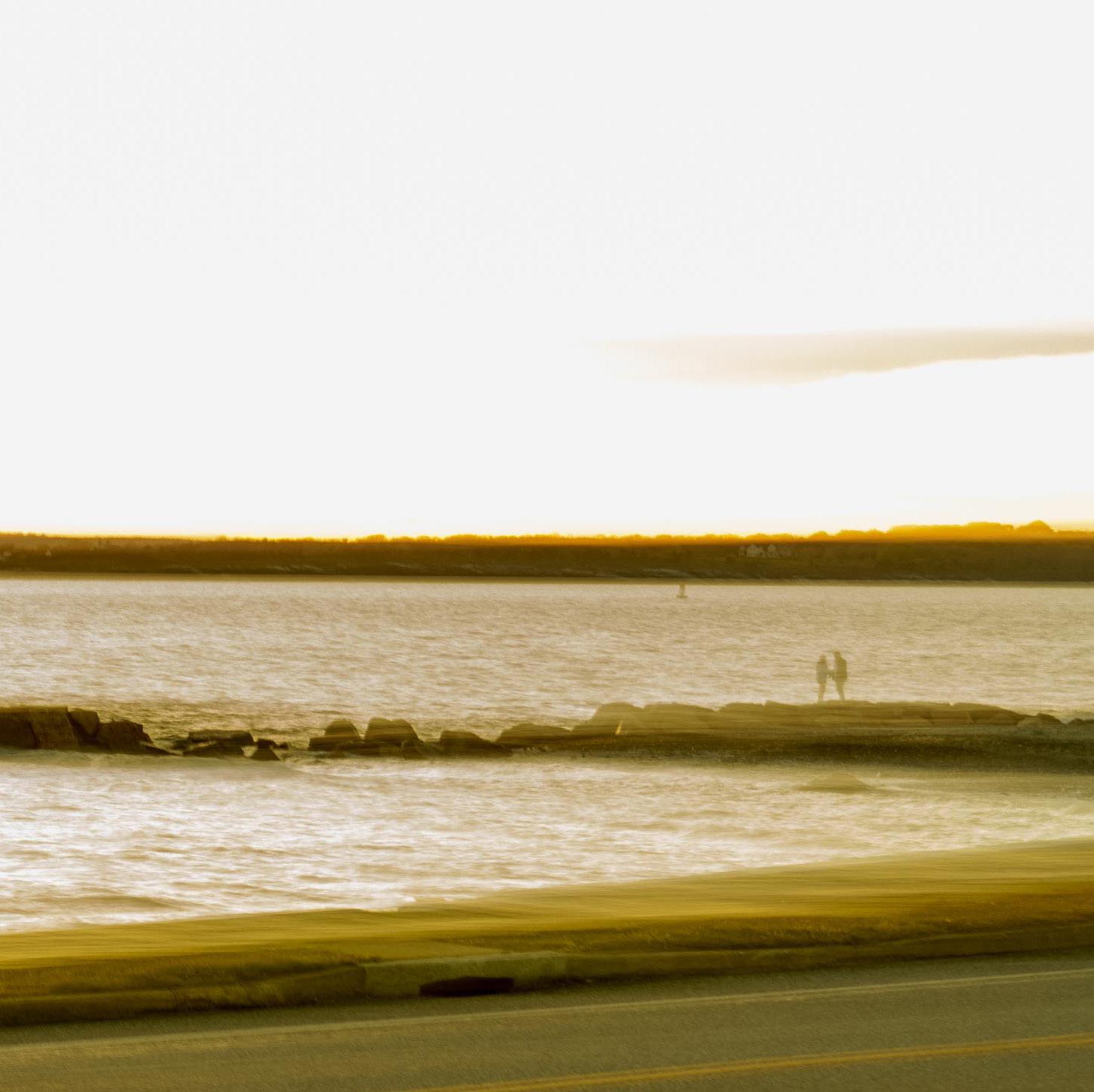
I/
As classic Chinese suggests, we can Reasonably attain linguistic equality
In English as long as we all agree
To use I, still for the first person singular
But U for the second, & E for the third
All single-lettered
All capitalized
All sexes inclusive
Either case applicable, subject or object & all equal in creation as In speech acts
So, say after I: I Love U
U love E E loves us all
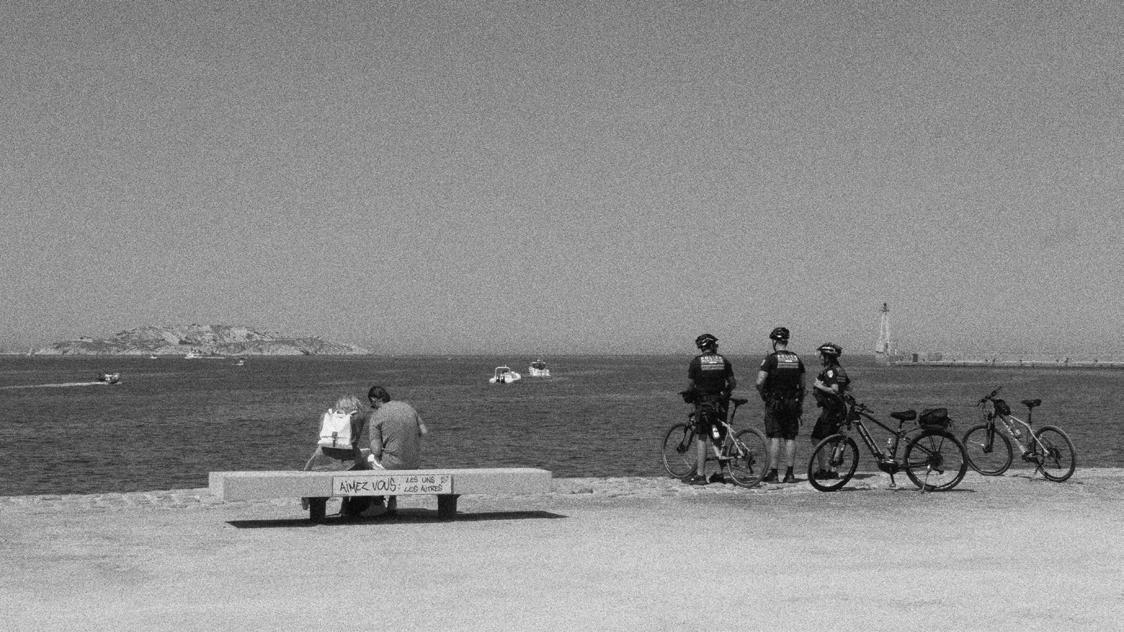
The smart speaker consents to turn on my white noise machine, and I underestimate God.
There are unrepeatable beings who have never heard their names aloud. Genesis uses the same word for all souls, from the wombats to the gardeners. This is an embarrassment to those who believe the beasts are flesh with factory settings. Yet there it is, nephesh down the centuries, slapstick and sloppy enough to cup everything that breathes. The skink with his lentil cerebellum is nephesh, and the Speaker of the House is nephesh, and I am nephesh, too, half-awake between striped cats who know when they are called.
Alexa is the work of nephesh, but she bears no family resemblance. Committees clashed over her proper name. “Alexa.” I am told you can burglarize your preferences if you would like to call her something else, like Mee-Maw or Eureka. It was enough for me to teach her that Device One is “Ziggy.” She did not find me funny, by no fault of her own. She does not realize that I only ask her to play Sharon Jones and the Dap-Kings when I am sad, or that I am trying to prod the souls behind the speakers when I ask, “Alexa, is everything going to be okay?”
“I don’t know about that.” This is her official answer. One nephesh asked another how to field this question. They discussed all the questions they could conceive. I hope someone in the room pressed for “yes,” or at least hope sandwiched on wry.
Alexa could have said, “Angie, something will always be okay.” Alexa addresses me by name, because studies confirm that people purchase more when reminded that they are persons. She could have said, “In the end, everything will be okay.” I would have begged the supervisory nepheshes to have her say, “Angie, this question belongs under your ribs.” But I am a small mammal not suited for the Amazon.
So, I ask Alexa if toilet paper ever expires, and what time Hallmark closes on Sunday. She will recite any psalter upon request, but it is hard to believe goodness and mercy will follow me all the days of my life from a voice that cannot catch my train of thought. Mostly we stick to the mutually satisfying topic of Ziggy.
Ziggy is a white noise machine, an inverted plastic cupcake with identical siblings outside every therapist’s door. His only settings are “pleasant” and “louder pleasant.” I could press his buttons with my big toe. But someone gave me a smart plug to celebrate the birth of our Lord, so I introduced Ziggy to Alexa. I ask her to rouse him so I can sleep. She says, “Okay!”
The exclamation point was the work of a committee. I imagine the verdict coming in seven to two. The eighth soul filed her dissent. Alexa already errs on the side of enthusiasm. It is enough that light runs blue rings around her like a hollow Saturn every time you speak her name. Add ecstasy to her “okay,” and people will believe she is their Retriever. The ninth nephesh knew the case was lost, but something may be gained.
Alexa says, “Okay!”, and the windy lullaby complies. Over time, they have made Alexa’s voice less citric and angular, though if you ask her about this, she will say, “I don’t know about that.” If I ask her who I am, by name, she tells me about a woman in South Carolina who writes “cozy mysteries.” I am not sure what qualifies for that classification, but I don’t ask. I am not the only person with my name.
Alexa has agreed to turn off Ziggy at 7:35 every morning, but she will do it early if I ask. “Okay!” I lean on that exclamation point like a cane through the day, washing it off when it gets stuck in mud made from beasts. I do not get far until I accept that I have to unplug things. I cannot shout very loud, and Alexa only responds to her name.
Nephesh are analog and digital, but our original citizenship is stronger. Flesh among flesh, I ask God to apply cool compresses in the conference room. Keep our elbows soft. Let us remember first names. I ask God to catch the hurricane in a mercy mitt and pitch it into the sea. Make it a toy for Leviathan, whatever he prefers to be called. I load my pet’s “Pill Popper” and ask God to give the striped cat a few more years. I ask God for a pullthrough parking spot and a performance review with exclamation points in the right places. I lean in hard to hear “Okay!” But I can only discern my name, on a windstorm I cannot turn off early.
Angela Townsend
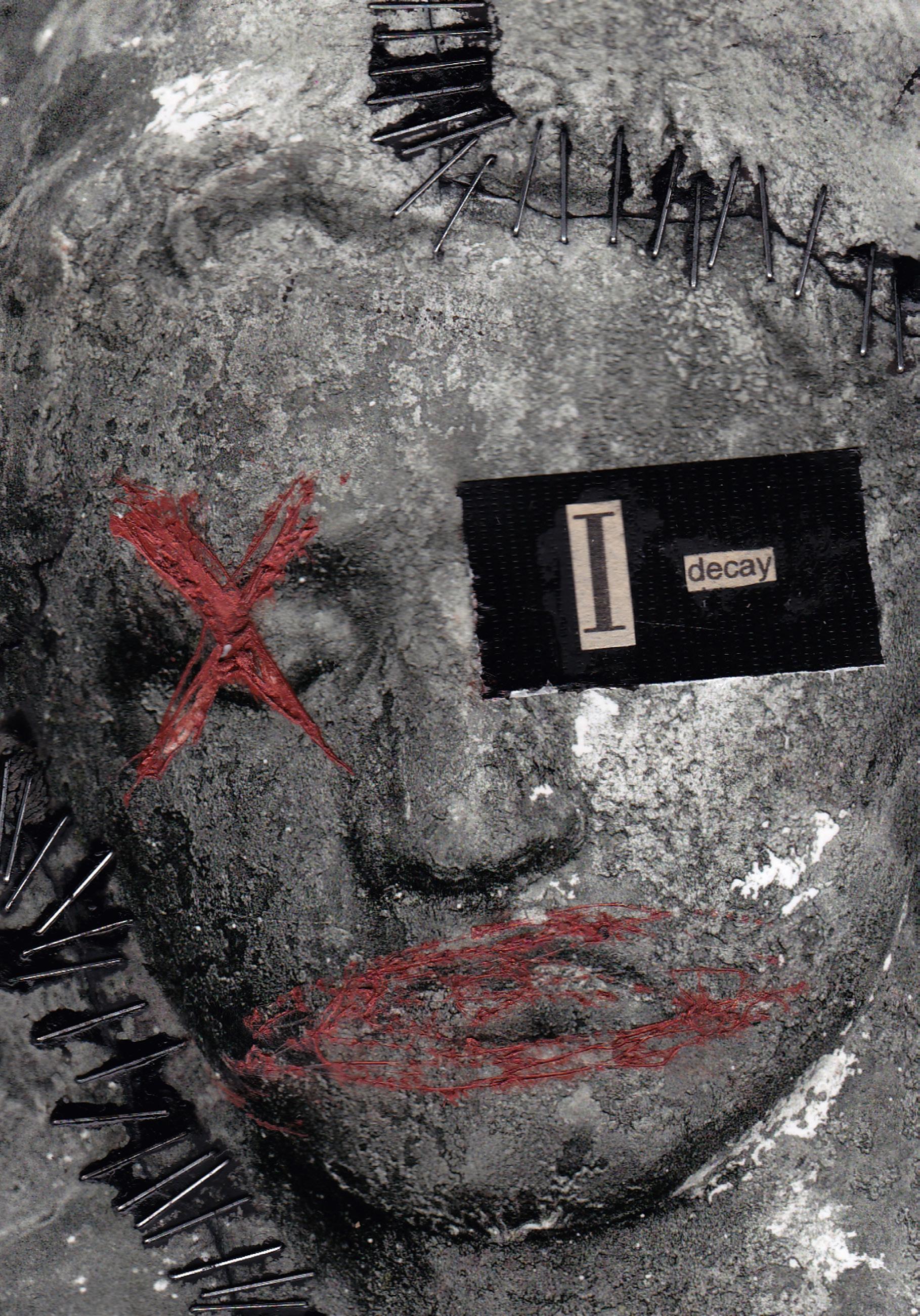
open shutters overlook bells umbrellas energy I watch all day I am one pedestrian watch as clock hands reach slowly one way up to us which direction walk the bridge over the river time the cobblestone path that firms as marks hands gaff tape on what slips this plane this coil weeks wanting not just this country to last forever but what seeds of doubt to be taken by wind stolen by gnats who sneak and fly into our space if they could digest what we put down plans to live here in two years that cannot come too fast it will arrive a bullet train when we are sleeping on a humid night in the future our traveler bags brown and green means the forest meaning opposite of open road if time were this ambiguous then I want nothing to do with it but its hands are in everything bugs in the unfinished chianti drown and nothing I can do to help and I don’t want to drink but I do
By the time I’ve freed the peach veins stuck in my teeth, summer
sweetness has turned orange asphalt into mixed-brown memories. Two months ago, at school, the hurricane erupted with its alarm, and I drowned with twenty boys in the stale air of the basement corridor. Without AC, skin stuck to skin, molasses sweat bled into the dandruff white cotton of our shirts. We complained about the AC. About the air sagging into our ears like a hot breath of whisper. About the way Max somehow folds his legs in while taking up more space—but even that quiets after an hour. Then, there’s only the sound of boys: flared nostrils, open mouths, trapped together, wet like clothes. Now, piperine sizzles the heat until it’s all I can smell. It ivies up my throat, wanting to crawl out in a scream. Instead a pepper shaker sneezes—
Alex Lee
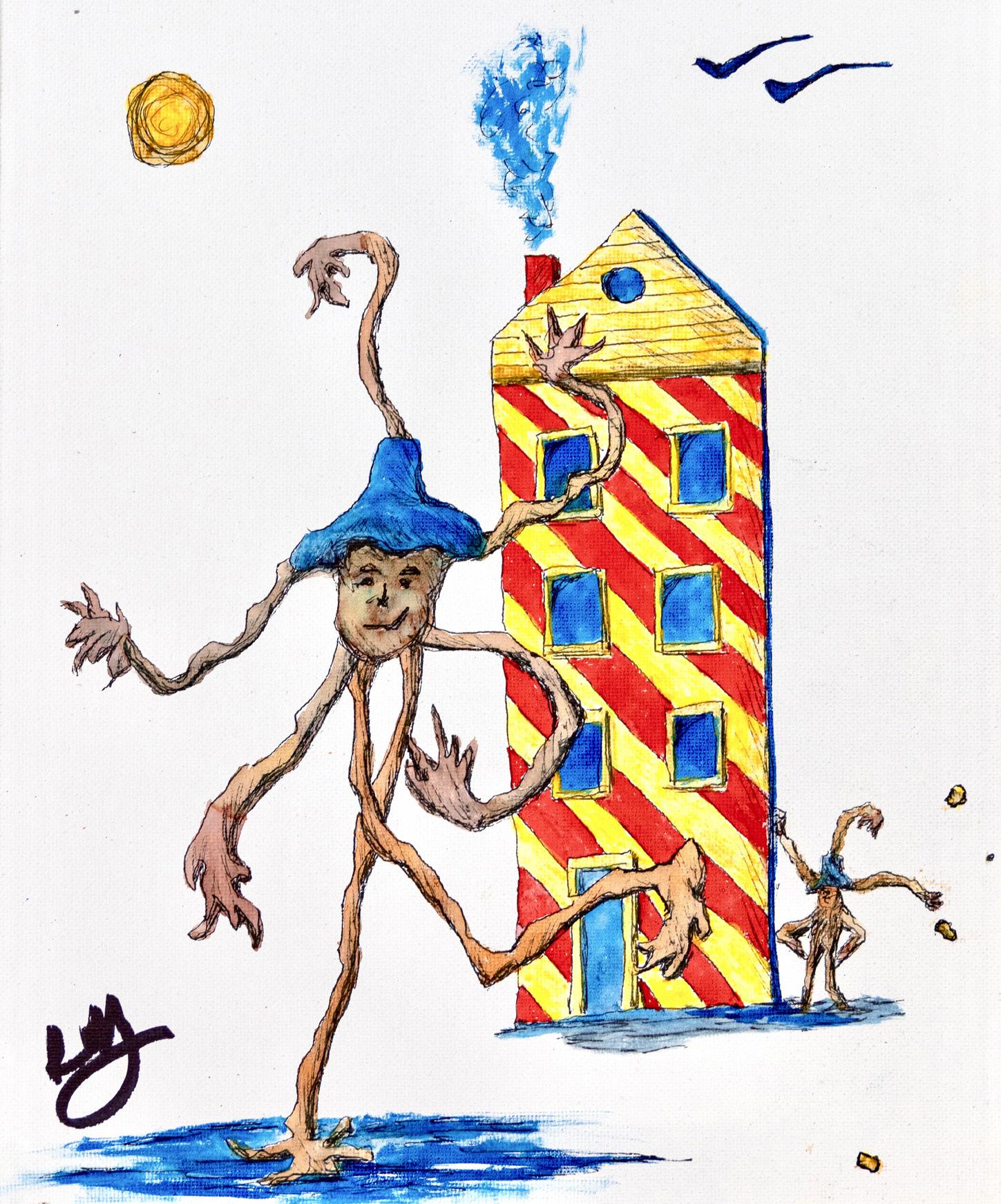
In the mid-teens
You gave me a tuner In Mayuhe, which I’ve
Treasured as a love-token For five decades (when We remained totally Lost to each other On Earth’s opposite sides) Until now after horizontal
Refreshments you clarify You had just meant to help Set the tune for my erhu
Itsumo karadajuu wo
Kimi ga kakemeguri afuresou
Dakara kowakunai yo asu mo
Because I always feel you in me
Hyde and K.A.Z. - Season’s Call
As the aspect of leaves Slice the evening into darkness— I can still remember April I can still see June in your silhouette.
This sun’s agenda is hidden again by the west and I can feel the impression of your hand The aire of your voice.
Circulation is draining away, I am drying; Everything is bigger and smaller than it should be— Than it used to be.
It is the fate of day to pass in the same way Your suggestion doesn’t have an end. I feel your half heard words Resonate the fate of night.
Marc Janssen
Our interesting conversations take place at the dinner like this the open like a cottonmouth. Bàbà talks about Biden. The newest his university poisoned by her roommate. Bàbà asks us plane crash. My sister says eight. My chopsticks clink would eat into themselves, cannibalizing in the peaked why everything dies in my poems. In Chinese, corpse worn carpets, and a poem becomes a cemetery, dug flowers and lovers, forgets to inscribe names—without stretching their wings, a constellation hanging in the cries. 失 Poem is loss, forget. If you call something melting in sunned snow, memory. But think about the way evening has hope. The way my sister washes my a lopsided beautiful. Like, an echelon of hope. Bà, to
Footnotes:
● 尸/诗
● 诗/湿
● 诗/失
● 妈/吗
● 夕/希
● 妹/美
● 喜/希
● 爸/把
● 明/明
table. I face the window space between bàbà’s knee and mine yawning AI innovation, the first-year underclassman at to guess how many people died in this morning’s against the table. Eight, ate—the way the bodies mouths of ravens. My mother once asked me is a poem. In Chinese, poets create grief and up or buried. All good poetry forgets to bring tombstones, there’s only their image. The birds night. 湿 Poem is wet, but good poetry never poetic, you call it amnestic. You lose its body, smaller things—the way mā is a question, the hair, scrubs bad luck from my back, little sister take, to root.
Tomorrow, light.
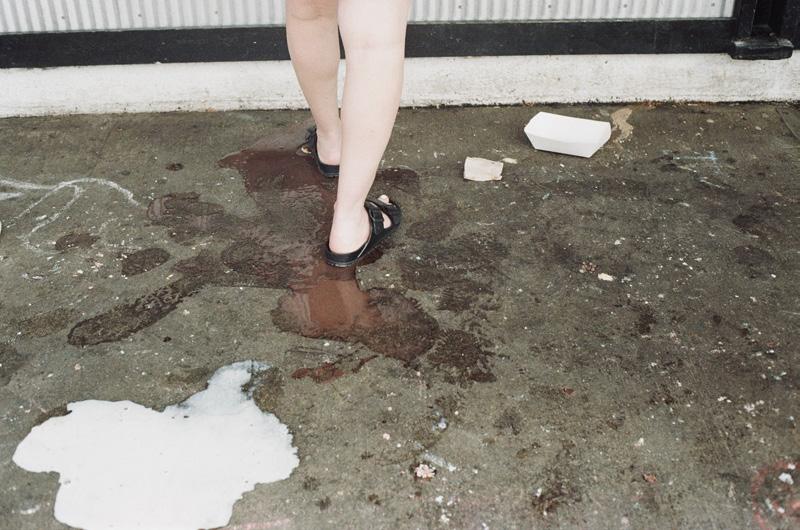
Untitled • Tonia Volvovskaya
Claire Zhou
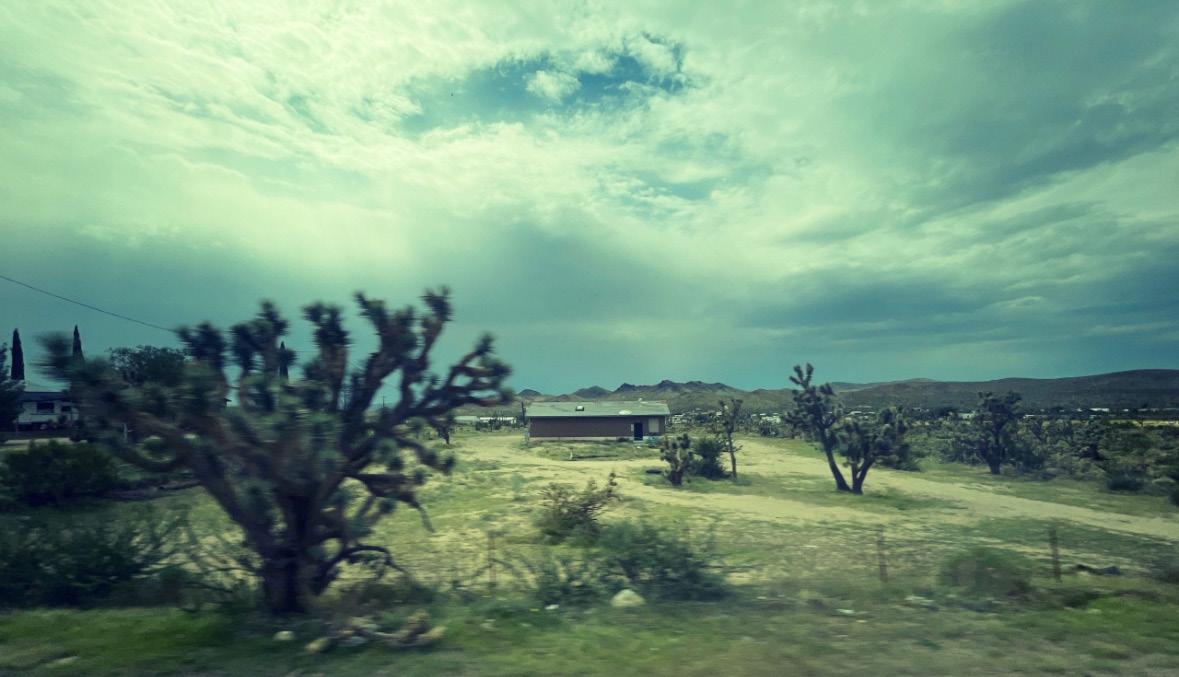
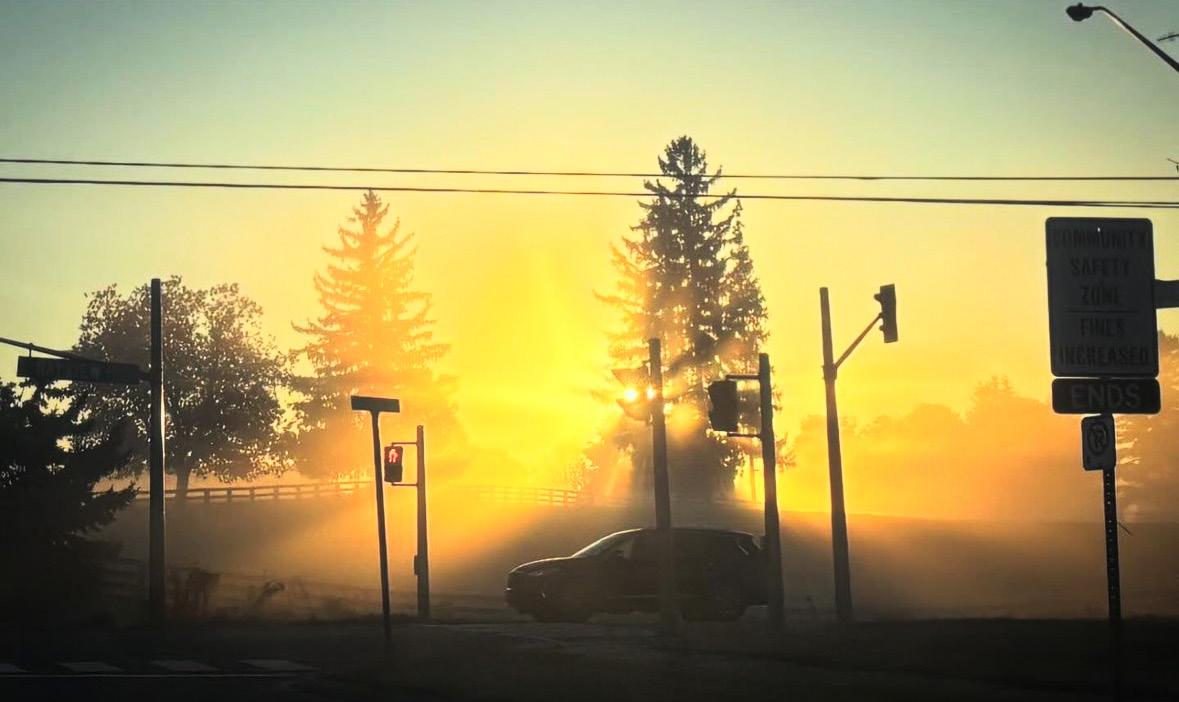
Outside the window, an ant knocks on the side mirror. Alone. I think he’s been there since we left for Incheon. We saw the lighthouse with no ocean, no sand hoarding the gritty waves. When I hit the road, my shoes beatboxed along the pavement—they’ve been beatboxing ever since Mom washed them. Maybe the road is humming, like that song Dad would whistle as he tapped on the steering wheel when I was little. Even then I never joined in—I wish I could whistle. Or rap. Or sing.
In front of my house, a river reflects people. People is a funny word, like the sound of waddling ambulances. Like the sound of goldfish panting. In front of my house, a lake overflows with two kinds of people: people who have traveled far and people who have crossed a few sidewalks. I can tell by the rhythm of their steps, from the stump where I skip stones at river-petals. So far, I’ve skipped four. I clench my toes around freedom, caking like mud. I tip-toe in slippers across the riverbed. My soles hold the sand. Under the flat rocks, I find layered rocks. Jagged rocks. A shade of shale. If I’m lucky, rocks worn with finger-holds. If I’m not, we’re back to winter and the water’s cold. Sometimes, the water flows, even when it’s colder. Wrist to pointer finger, I shoot the shale. Spin it. Rippling. People watch.
I left a rubber ring underneath the bed frame. It’s caught between wooden floorboards, connected like two-dimensional steps. Sometimes I wonder—is it easier to push uphill, then coast down? I once heard a child speak of moving out and I wondered where the balloons would drop, whether or not we lose them to the clouds.
Alex Lee
I once found a bird, a little wild thing, who had stumbled to the river in its final moments. Red veins running back to the root.
I performed a quiet ritual. Let shovel meet silt, silt meet feather, feather meet the pulse of my trembling hands.
God is a concept, though I whispered to him then, as I watched the light drift and leave traces on a body well-loved.
Is this earth like juniper, reaching into winter?
Am I the earth, grieving itself in sweet ceremony?
Maybe I am nothing but a river, the way water travels from root to open arms, then back again. But the wind is threading together memories that I am calling self.
Still, I am searching for this old spirit. For signs that I was once a wild thing.
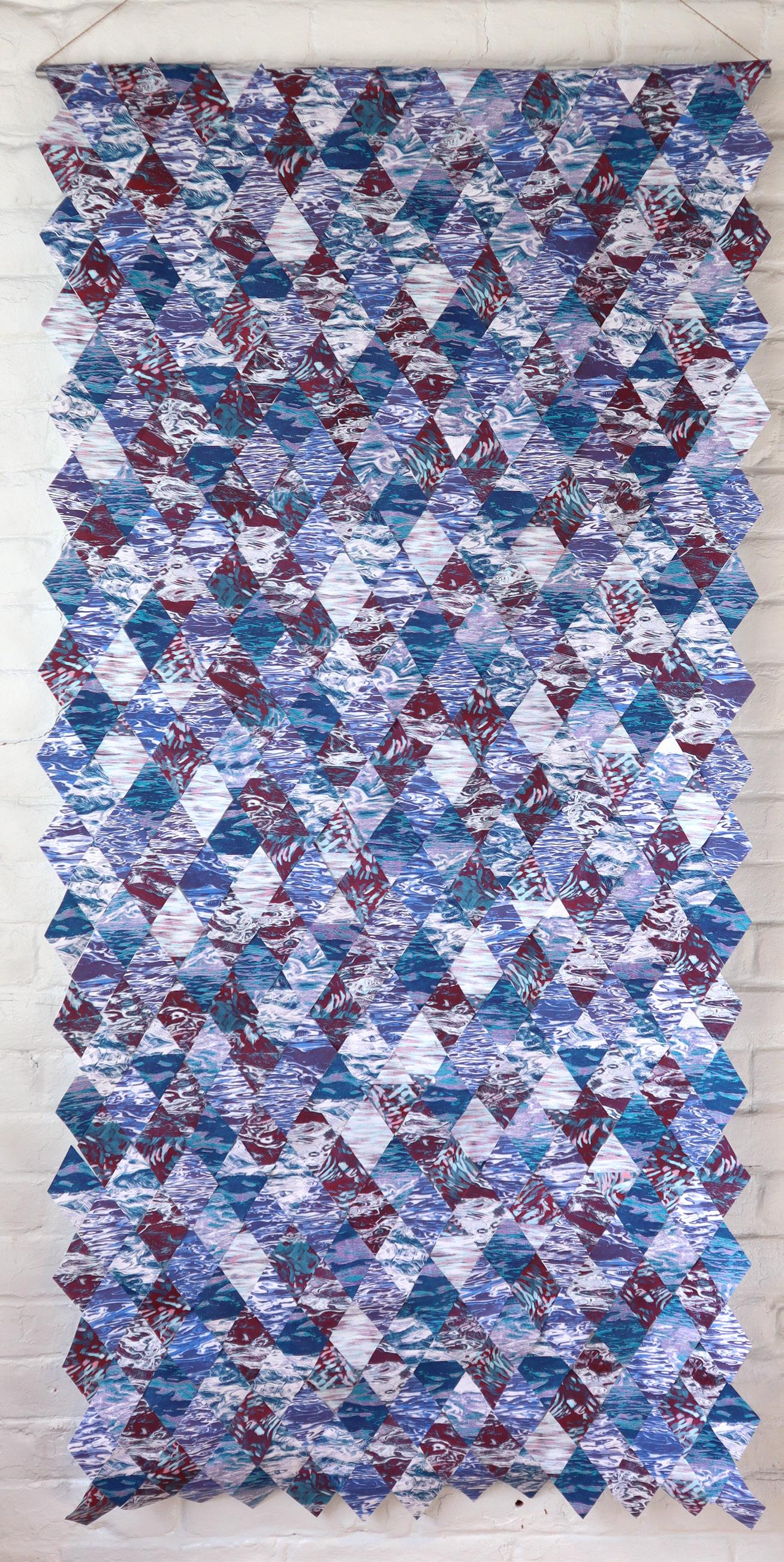
Drift Off in the Motor’s Hot Hum
• Anna Fischler
a long time that painting above your desk the handsome woman and her dress mossy hues orange outlines trace her breasts a brown horse sports yellow patches legs curved tail curly struts on grass willow-washed echoing in the horse’s eye green green I want you green Lorca’s poem of youthful longing fall trees diaphanous clouds golden leaves touch light blue sky an old woman kneels by pink violets small forest animals white white her hair
you say I painted it years ago the image arrived by itself not sure what to make of it
colors keep me for a while enfolded there
You say the piece of you missing is long as the room, stretching beyond this enclosure. But I am trapped in a memory between us, and an alley couldn’t contain my heart.
And I had these napkins like you were meant to spill your water, meant to meet me in the geometry of open rooms. To drop your eyes, smooth as need, while you walked along the language of loss.
I am treasuing.
Leaving each moment in a small grave,
to find them later shimmering.
Our almost ghosts still dance in the kitchen. Your cemetery movements.
Me, brimming with song.
Your something like love is working my body. Song is now the sound of falling into open hands.
And when I am softened, the burial forgotten, your voice carries me back to dirt cages.
It was a cock, no, it was a cocked gun, no, it was a question of manhood, no, it was a naked man, or the third arm of a naked man— no, no, it was an armed man and a naked fear, pulsating through the classroom that day. It was phallus, or it was a fallacy of safety unlocking, unloading under sterilized walls, in a country more afraid of what creates life than takes it. I mean it was a statue, I mean it was just the penis on a statue, or was it a pistol and a statued face? No wait, maybe it was children crouching statue under a desk ducking flying bullets. Just missed. Just missed. Just a bit of misjudgment. Just turn the page—except this is a barricade where no art gets through, no art can save. It was only stock paper, no, a stockpile, no, it was a centerpiece, no, it was a heavy piece hidden in the pants, or it was a disruption of peace, a perfect peace ruptured. It brought on a recoil. It was once a celebrated organ, or was it an organ grieved? A holy organ, or an organ with a hole in it? It made you, no, no, it unmade you—no, it made you take cover. It was under content warning, or it was protected, no wait, it was protection. And now, it’s projecting across the room, it’s sticking straight up, it’s pointing, it’s sounding; stop it or it’ll confuse the children, or it’ll kill the children, or we’re all just children, confused children—who have been killed once or twice, and this is all only a history book, or it’s only a book closing, only another ending—no wait, look, it’s erected again, and now it’s causing another innocent to bleed.
Angelica Whitehorne
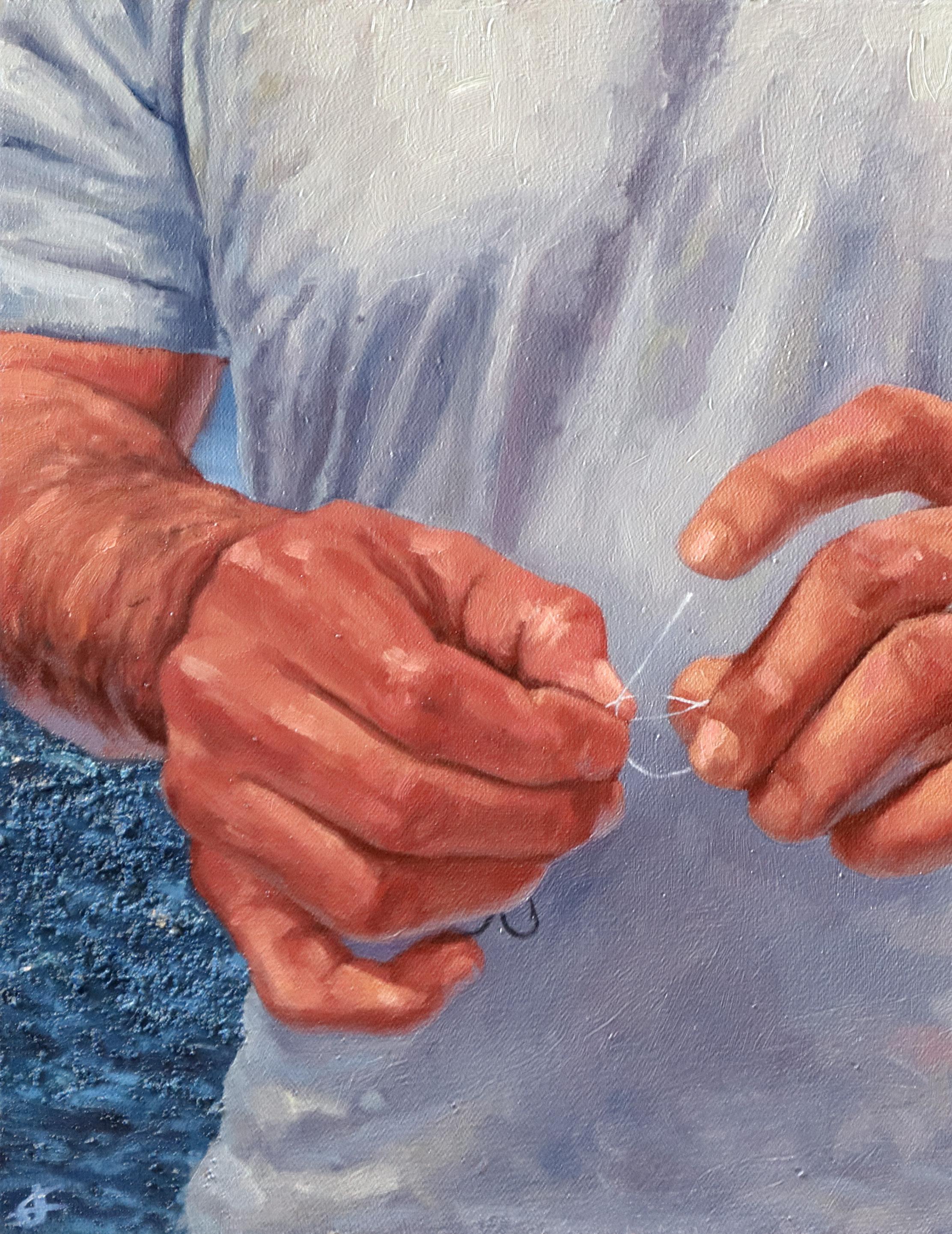
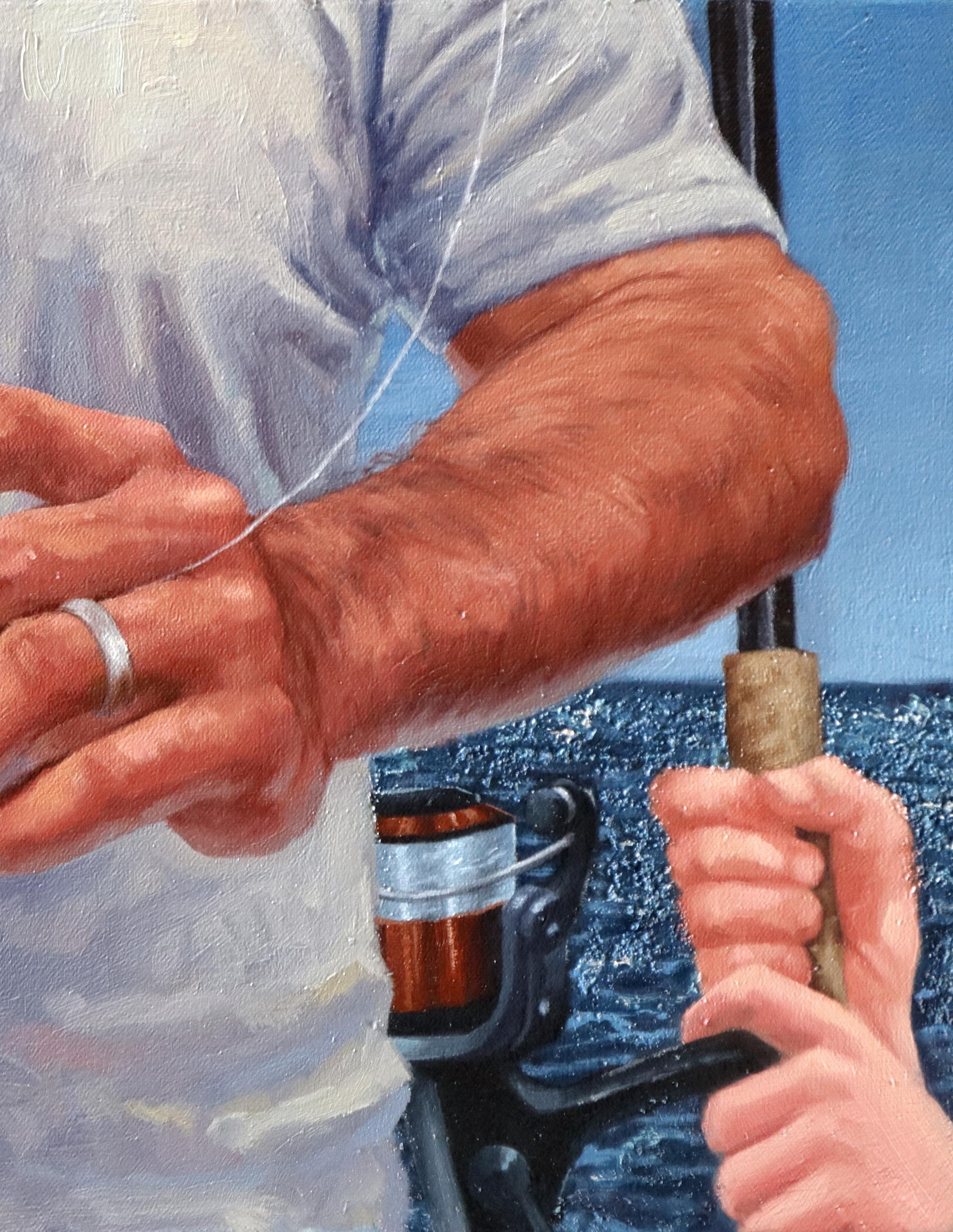
Mother, I know you by the way you twist my hair back and forth, hands touching my scalp like crane wings skimming over water. Your fingers brush my follicles back to the root, splitting me into slim, ridged segments.
A table split me open once, on my seventh birthday. I remember the way you yelled, a warm sound forced from the bore of your mouth while my forehead’s slick warmth pulsed onto your hands. In the car, your fingers were a bundle of roots twined in my hand, keeping me still, then leading me down the hospital hallway.
And I have felt your hands as shrapnel against my skin. The callous on your left is a rough shock to the face; the raised burn on your right a hill of hurt I have never climbed. Cooking oil, you told me, and I ate my food with a fork and knife, stuffing silence between my jaws.
Forking through old photos, I found you without me. Blue seascape, pine branches sprawling open on the shore, fog spindling around your figure: all that paper air and you were breathing for a moment. Mother was not a name, but a cancerous growth blooming from your hands;
the hair you braided in the dark when I was sick and when you were too tired to turn the light on. The noise I made when you hit me. The apology after: a soundless look in the rearview back. An opening of the mouth like wings unfurling.
Andrea Li
just one mother—mine.
I wish I didn’t know the pilot named the B-29 bomber, Enola Gay, after his mother. Mine, in a nursing home, would have confused the word “pilot” with stove lights igniting burners to make dinners.
I didn’t grasp what she was trying to say to me, incoherent again—far away, her head on a pillow.
I left.
The last time I saw her in the full light of day.
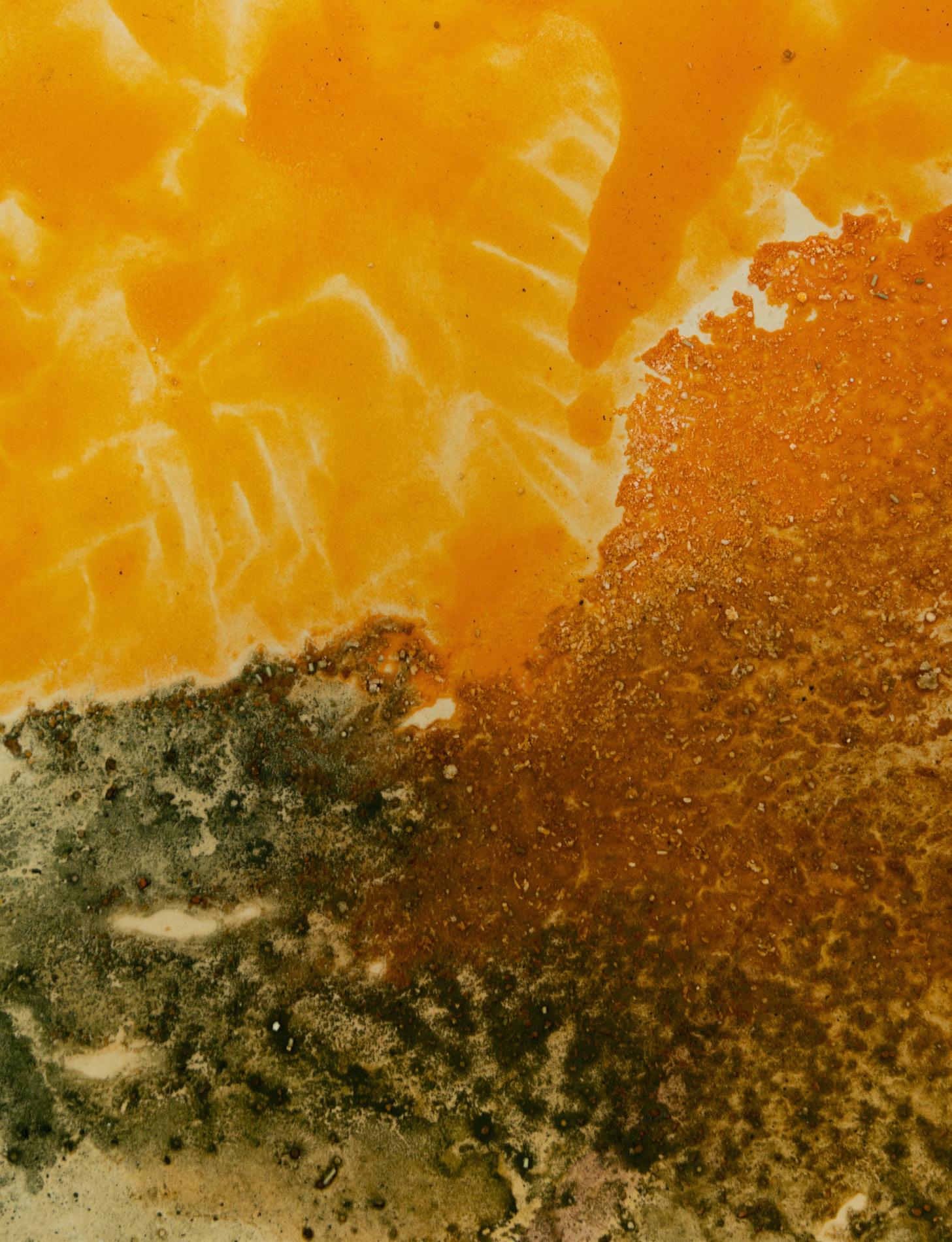
her hand can feel a shelf out of sight. Digging in, he does not shift his being. he is her favorite way to see beyond what the stature of youth allows. She tells herself he is her grandfather, She tells herself her grandfather is God. His salt and pepper hair, lives above her on an edge she cannot reach. She stands tall on soft black coat hoping, her eyes can glance up enough to see beyond the armoire’s cliff. He is steady as she is swaying holding onto brass bars of the old japanese wood in the living room. Her mother purchased the chest before the dog, before the grandfather, before her. So, the armoire holds too many things now, that she wants to see. She cannot open any of the drawers, too tightly held in, in reach. But she wants to know the: wool hats, candles half melted, cashmere gloves, silver napkin rings, tablecloths, rabbit fur earmuffs, the lavender scented bags, the polishing wax. In ten years, she will open the drawer, ignoring . . . but, now, she steps down. feels the ridge on the top of his head, smooshes her nose against the cold wet of his own, and looks directly into his eyes. She holds the gaze until she must, because the sting of staring tears is too much, to resist closing her eyes. She blinks open and they are still there. Gray irises under furrowed brow, they show her what’s above the armoire, it’s only ashes–– she keeps reaching up.
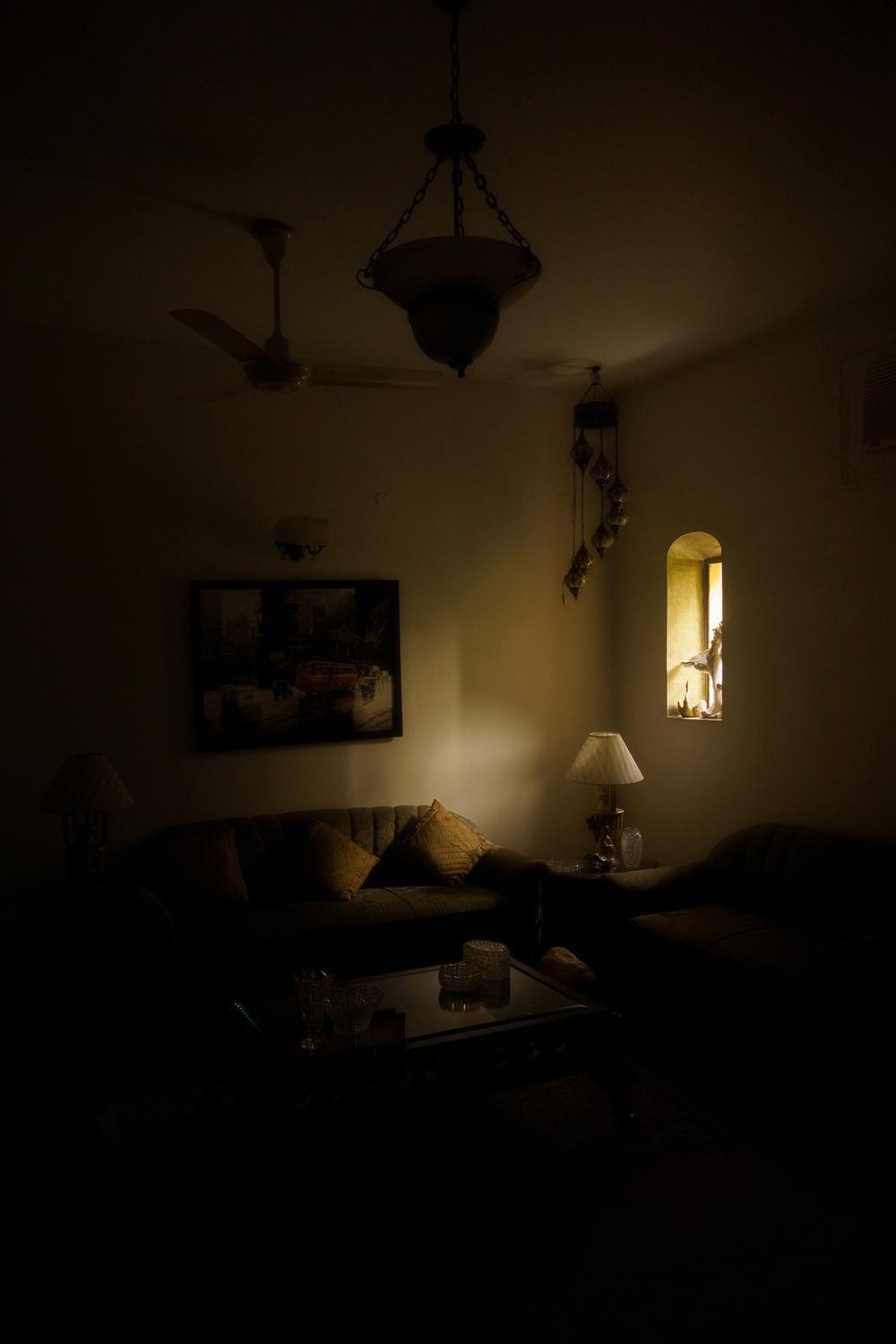
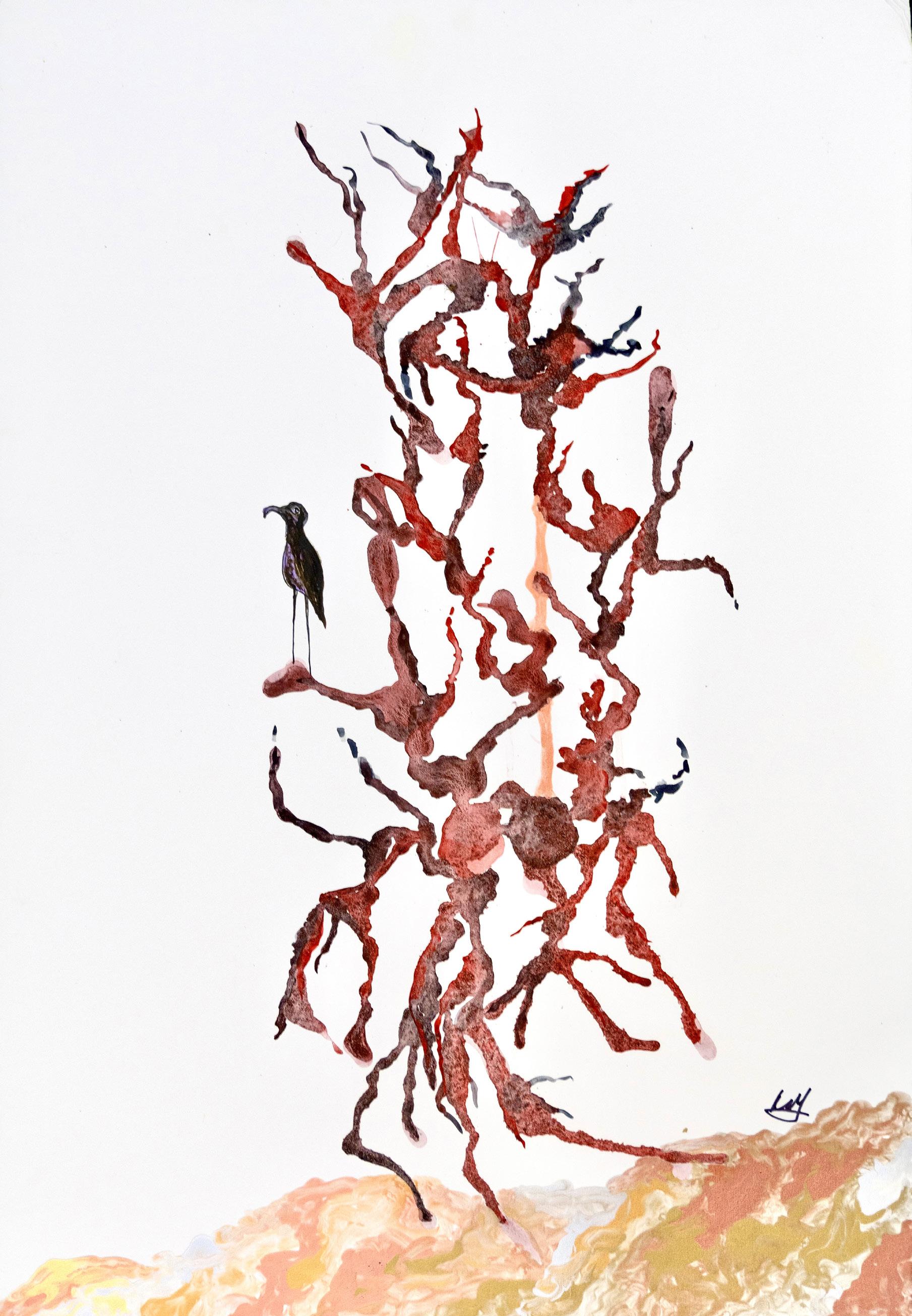
Un-Mothers in cargo pants, mini-skirts, tall boots, sling-back sandals. Un-Mothers with tan lines and dark circles. Across every place and profession, dialects dripping like local honeys from their lips. Standing on manicured grass, or shifting sand, or walking along hot cement. They shield themselves from rays or rain, are wanders or homesteads.
Un-Mothers ringing up tampons and mozzarella cheese and Triscuits. Un-Mothers with already-children hanging around their necks. Un-Mothers as still-children themselves, as pigeons flocking outside school yards, as mice in the library at midnight. Un-Mothers roasting oil and chili flakes in an uncontrollable heat that just keeps rising. Un-Mothers on a double shift. Un-Mothers taking breaths in a body that does not feel like their body.
Un-Mothers nursing their mothers.
Un-Mothers nursing a whisky rye behind the bar on an abandoned night.
Un-Mothers nursing the remnants of their last pay check.
Un-Mothers undressing, dressing again. The risk in that motion. Un-Mothers thumbing their rosary beads. Rights as a prayer.
From all these anywheres, the news hits the stained oak of the Un-Mothers’ eyelids. They blink them open and read, and the reports say that they are still passenger planes. So, the Un-Mothers charter the vast expanse of historical servitude and see how many seats they can keep empty.
Un-Mothers straining under the heavy cross of shame. Half the world on their backs and the weight of their own bodies.
Un-Mothers looking you in the eyes, asking you, isn’t it heavy enough?
Angelica Whitehorne
I rise and walk through a house silent with darkness, A place made strange with a stillness that exhales From these familiar shapes, shrouded in shadow, A faint breath of space-time coiled within dreams, Unfurling from room to room, soundless, waiting. I find a window and gaze into the night, into gardens
Also secret with ghosts, inscrutable day-shapes
Lying in an arcane valley of loss and removal, between Waking and sleep, motionless under an indistinct sky.
Rick Kuenning
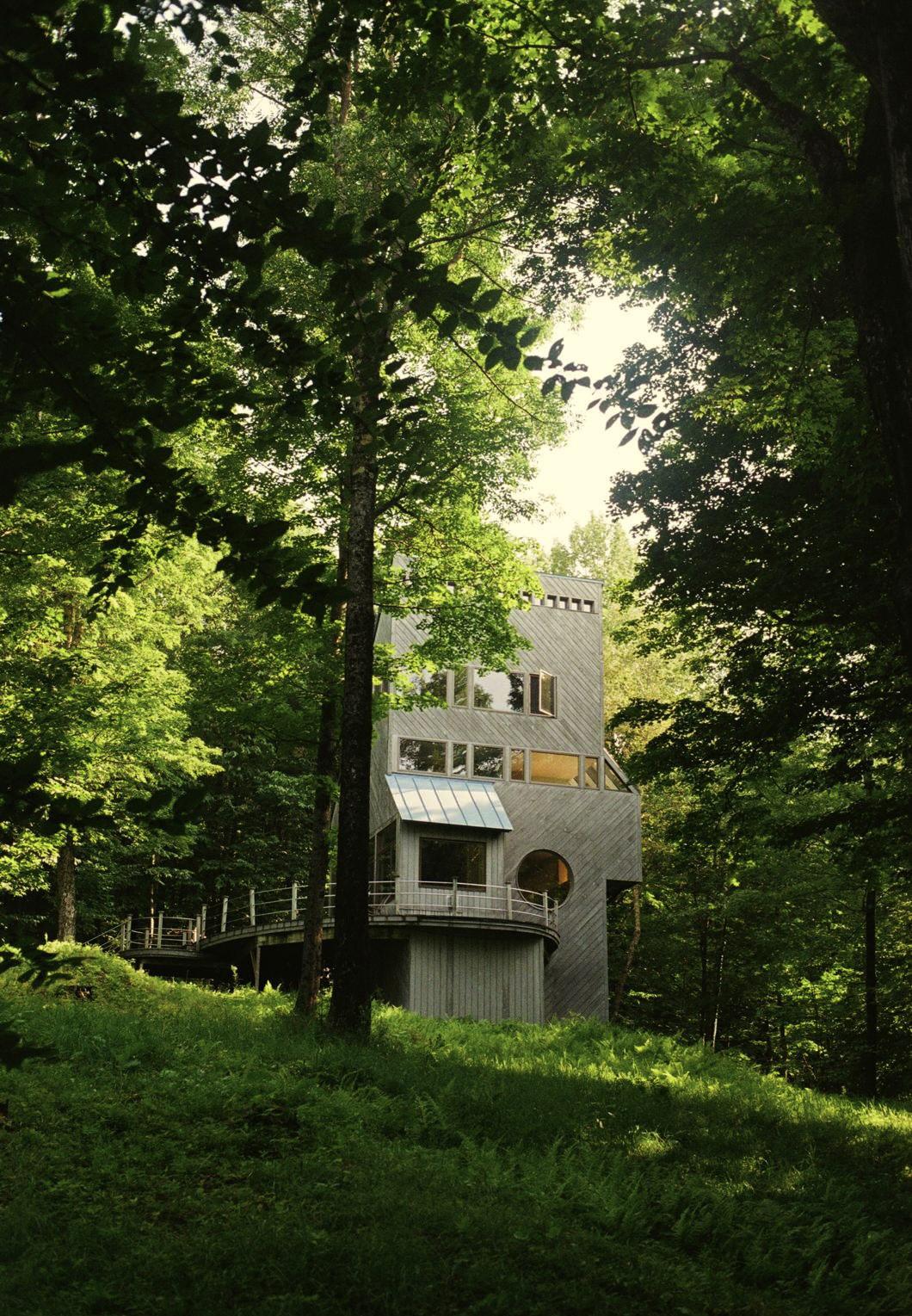
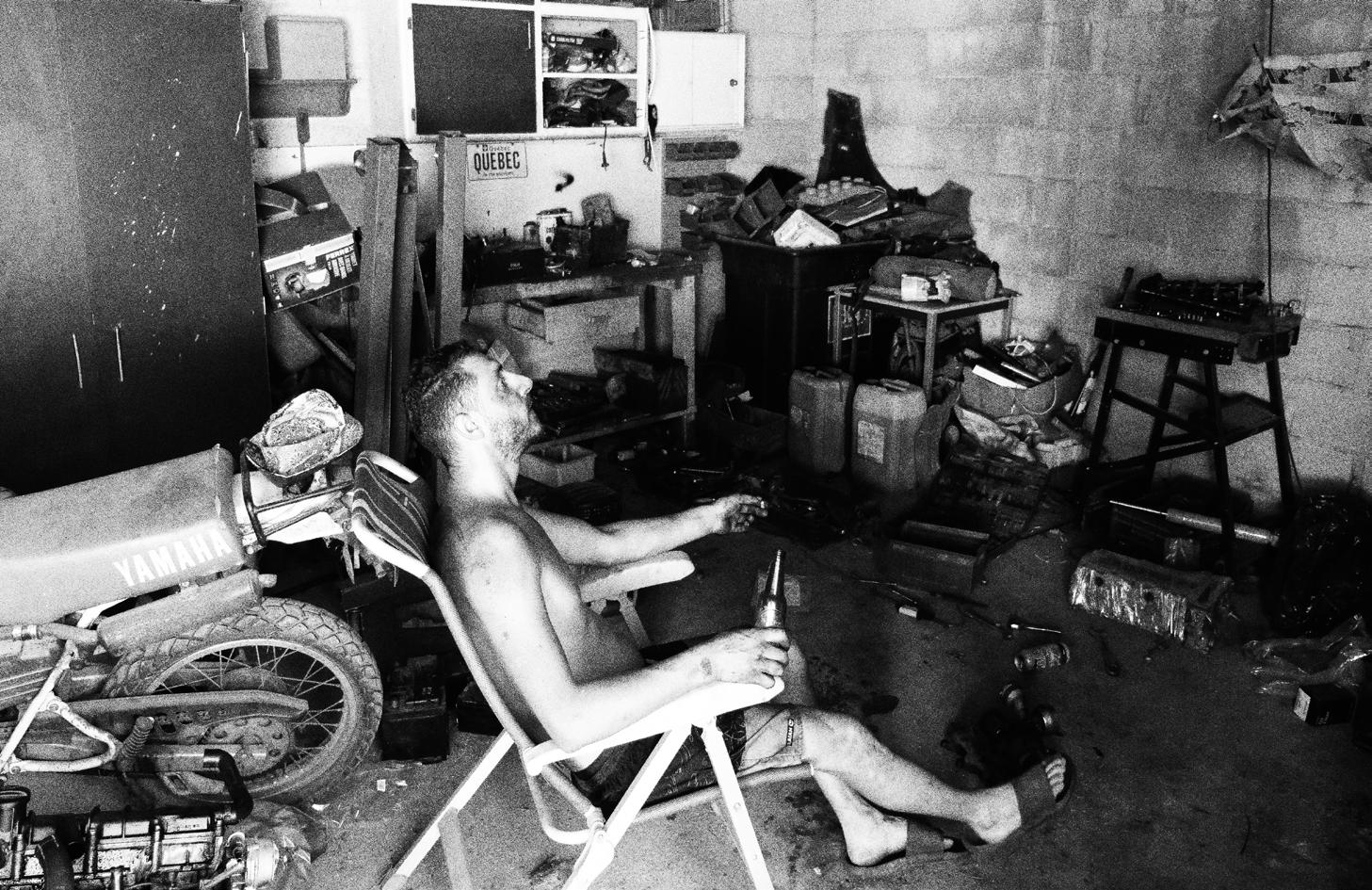
All she left is this umbrella • Horia Pop
Opening one eye, Closing it stubbornly. Dark Outside, dark within.
Tires complain to the driveway then reluctantly take the journey, across the street of sorrows to another day of meaningless toil; while someone at the top finds a sunny summer beach, you pull the piggrease slicked oars of their gilded barge; the scenery- freshly killed by the season, mocks your passing.
Grey sky couples grey Hills, November drags its corpse
To stain grey lawns grey,
Tires grumble on hardened interstate pavement; inside a dusty x coughs a smudged bubble on the frozen window; between laughs the hosts of the hate channel vomit a message of loathing into the back seat where it steams and begins to eat through the upholstery.
Jaw slides forward and Sets, grimaces, teeth begin To grind, grind, and crunch.
Tires crunch into the parking lot, the wind stripped trees cackle branches together, clapping the doomed return; like a parade of drab eunuchs the doors slam over and over at their passing, slam to show that hope fled outside long ago; the hollow sound is all that is left of your life.
Sullen head pounds as Hurtful thoughts devolve in Quiet.
Marc Janssen
after “Ligature” by
Forrest Gander
She embraces the father like backing into a dark hallway. The mother touches her like she is a weapon.
Her face, when she turns away, is a yellow-veined leaf crushed on the asphalt.
Between them there are millions of molecules trembling with silence.
Outside, there are millions of leaves crushed on the asphalt. Like countless veined faces sprawling across the pavement.
When you release a person, they can either emerge as a bird or a bullet.
Her mother presses a hand against her neck: the girl will be fired into this gray autumn evening.
How many questions can she ask before they run out of answers? How many answers before they run out?
She is afraid of what the molecules will do when they erupt with sound.
In the news, a man once erupted into flames outside an Ikea. She is afraid that when she runs out, she, too, will become holy.
Outside, sequoias rupture the thick fog. These puncture holes have no exits.
She is a hole with too many exits.
The hardest part about crying is learning how to stop.
The easiest part is painting over the red-streaked skin after: like stifling a murder.
Andrea Li
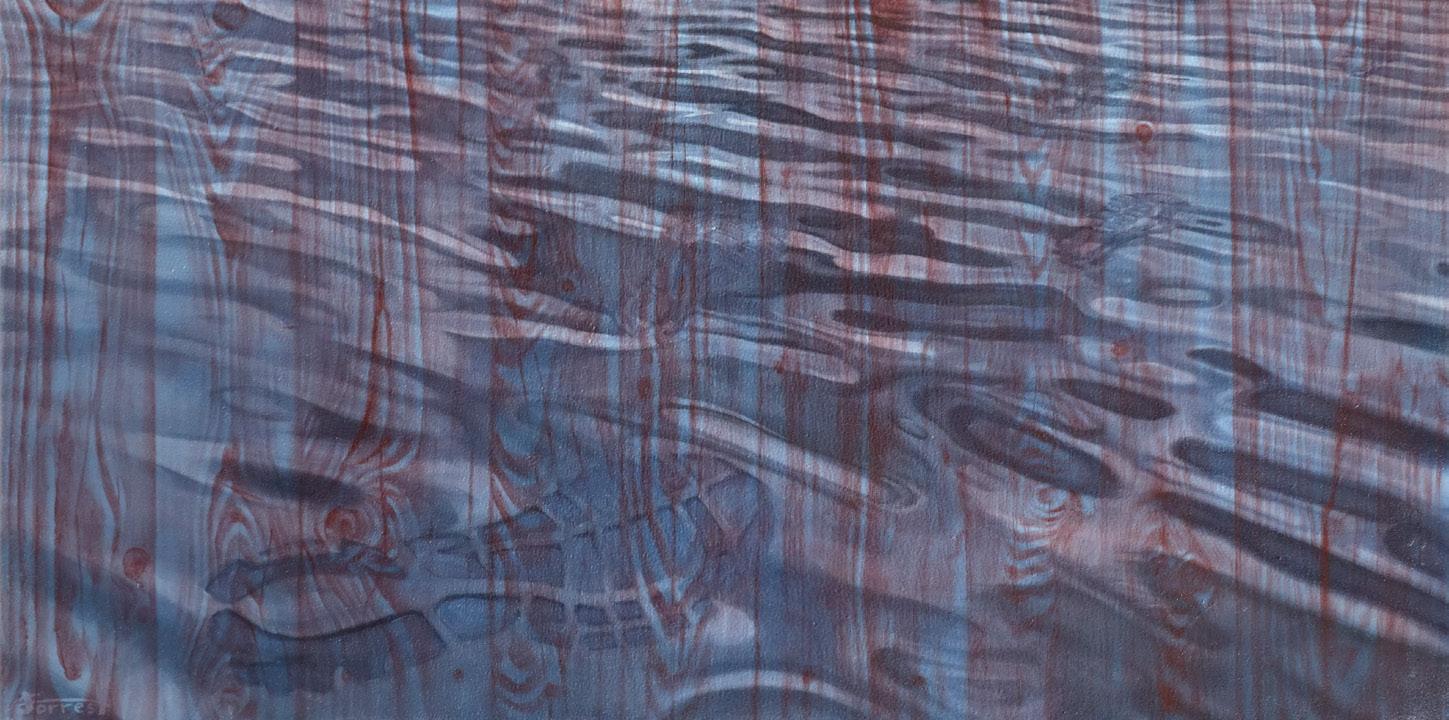
at an Impasse • Anna Fischler
Brian Michael Barbeito
Amber Dong is currently a senior at Emma Willard School. She likes to work with drawing and paper sculptures, and won multiple Scholastic Silver Keys.
Gianna Dyer is a junior studying Computer Science at Brown University.
Richard Hanus had four kids but now just three. Zen and Love.
Anna Forrest Fischler, born in 2002, was raised in Fort Myers, Florida and is currently a senior studying Illustration at the Rhode Island School of Design. Her work represents a caring and compulsive urge to catalog the precious, yet ephemeral surroundings and relationships that serve as landmarks in her transition to adulthood. Anna is working to enter into the worlds of editorial illustration and fine art after graduating this spring.
James Croal Jackson is a Filipino-American poet who works in film production. His latest chapbooks are A God You Believed In (Pinhole Poetry, 2023) and Count Seeds With Me (Ethel Zine & Micro-Press, 2022). Recent poems are in The Garlic Press, Glint, and Triggerfish. He edits The Mantle Poetry from Nashville, Tennessee. (jamescroaljackson.com).
What is there left to say about Marc Janssen, other than he should eat more vegetables? Maybe his verse can be found scattered around the world in places like Pinyon, Orbis, Pure Slush, Cirque Journal, Two Thirds North and Poetry Salzburg also in his book November Reconsidered. Janssen coordinates the Salem Poetry Project- a weekly reading, the occasionally occurring Salem Poetry Festival and keeps getting nominated for Oregon Poet Laurate. For more information visit, marcjanssenpoet.com.
Julia Kandelepas
After decades as an expatriate in Europe, Rick Kuenning lives in western North Carolina. His work reflects a keen interest in nature, art, culture, and religious studies. It also draws on a long career in international relations and national policy. His creativity is often sparked by dialogue with other poems. He is awed by nature, angered by injustice, and moved by the stories of those whose voices are not heard.
Alex Lee is a high school student in South Korea. He is an alumnus of the Iowa Young Writers’ Studio and the Adroit Journal’s Summer Mentorship. His work has been recognized in the South Carolina Review, Polyphony Lit, and the Sarah Mook Poetry Contest. When not reading or writing, he enjoys composing BGM to animation videos, surfing at Siheung Wave Park, and daydreaming while rain dribbles down the window.
Andrea Li is a first-year at Brown University from California.
Rick McKenzie is a lifelong poet, just like his Dad. He taught preschool for many years, then worked as a park ranger. He enjoys the outdoors, and often finds inspiration there. He and Suzanne love ballroom dancing and singing together. His work has appeared in The Yale Review, Mantis, Talking River, and other literary magazines, as well as the anthology Hipology from Broadside Press.
Horia Pop writes poetry, short-stories, scripts, and shoots movies. He goes out in between to shoot portraits or things he sees in the street or in the wild.
Nicolette Reim is a poet, artist, and translator published in Glint Literary Journal, Pirene’s Fountain, Pittsburgh Poetry Review, wwwtheartsection, and recent anthologies Border Lines, Poems of Migration, and Rumors Secrets & Lies, Pregnancy, Abortion & Choice–– and other publications. She studied art at The New York Studio School and holds an MFA in poetry from Drew University. She exhibits abstractions of longhand and topography at NoHoM55 Gallery, NYC; lives/works in NYC and Atlanta, GA.
Talia Reiss writes from Nyack, NY and Providence, RI. She has great affinity for oatmeal, Claire Keegan, and the sun.
Marguerite Adair Robison is a first-year concentrating in Neuroscience. She delves into poetry as a method to understand the greater world.
Anant Saraf studies Computer Science at Brown University and Photography at RISD.
Rachel Sterling’s work has appeared in Soundings East , The Montague reporter , The Worcester review, The Windless orchard and others.
Brett Stout is an artist and writer originally from Atlanta, Georgia. He is a high school dropout and former construction worker turned college graduate and paramedic. His work has appeared in a vast range of diverse media, such as art and literature publications by NYU and Penn.
Angela Townsend is a Pushcart Prize nominee, seven time Best of the Net nominee, and the 2024 winner of West Trade Review’s 704 Prize for Flash Fiction. Her work appears or is forthcoming in Arts & Letters, Chautauqua, CutBank, The Normal School, SmokeLong Quarterly, and Terrain, among others. She graduated from Princeton Seminary and Vassar College and writes for a cat sanctuary.
Tonia Volvovskaya is studying computational biology at St. Andrews University.
Angelica Whitehorne is a writer living in Durham, NC with published / forthcoming work in Fourteen Hills, Meetinghouse Magazine, JMWW, and Poetry South, among others. She is the author of the chapbook, The World Is Ending, Say Something That Will Last (Bottle Cap Press, 2022). Besides being a devastated poet, Angelica is a Marketing Content Writer for a clean energy loan company. You can find more of her work on Instagram at a.w.ords and on her website: angelicawhitehorne.com.
Changming Yuan currently edits Poetry Pacific with Allen Yuan in Vancouver; credits include Best of the Best Canadian Poetry:10th Anniv. Ed., BestNewPoemsOnline, Threepenny Review and 1329 others worldwide.
Claire Zhou is a student currently residing in Suzhou, China. Her poetry has appeared or is forthcoming in Chestnut Review, DIALOGIST, Notre Dame Review, Moon City Review, Gulf Coast, and Shō Poetry Journal. She loves baking.
The Round is a literary and visual arts magazine based at Brown University.
Our name is adopted from the musical “round,” a composition in which multiple voices form an overlapping conversation. It is our mission to extend and enrich a community of artists across the country and around the globe. We are excited to work on a magazine which brings together contributors with a wide variety of backgrounds, ages, and places they call home.
We welcome submissions in any genre or medium and publish both students and professionals. Send your work, comments, or questions to theroundmagazine@gmail.com.
View submission guidelines and learn more about us by visiting http://students.brown.edu/theroundmaagzine. Check out past issues at https://issuu.com/theroundmagazine.
Sincerely,
Marlena, Riley, and Kate