BARNSLEYHOSPITAL
Barnsley Hospital’s new Intensive Care Unit (ICU) is preparing to accept its first patients.
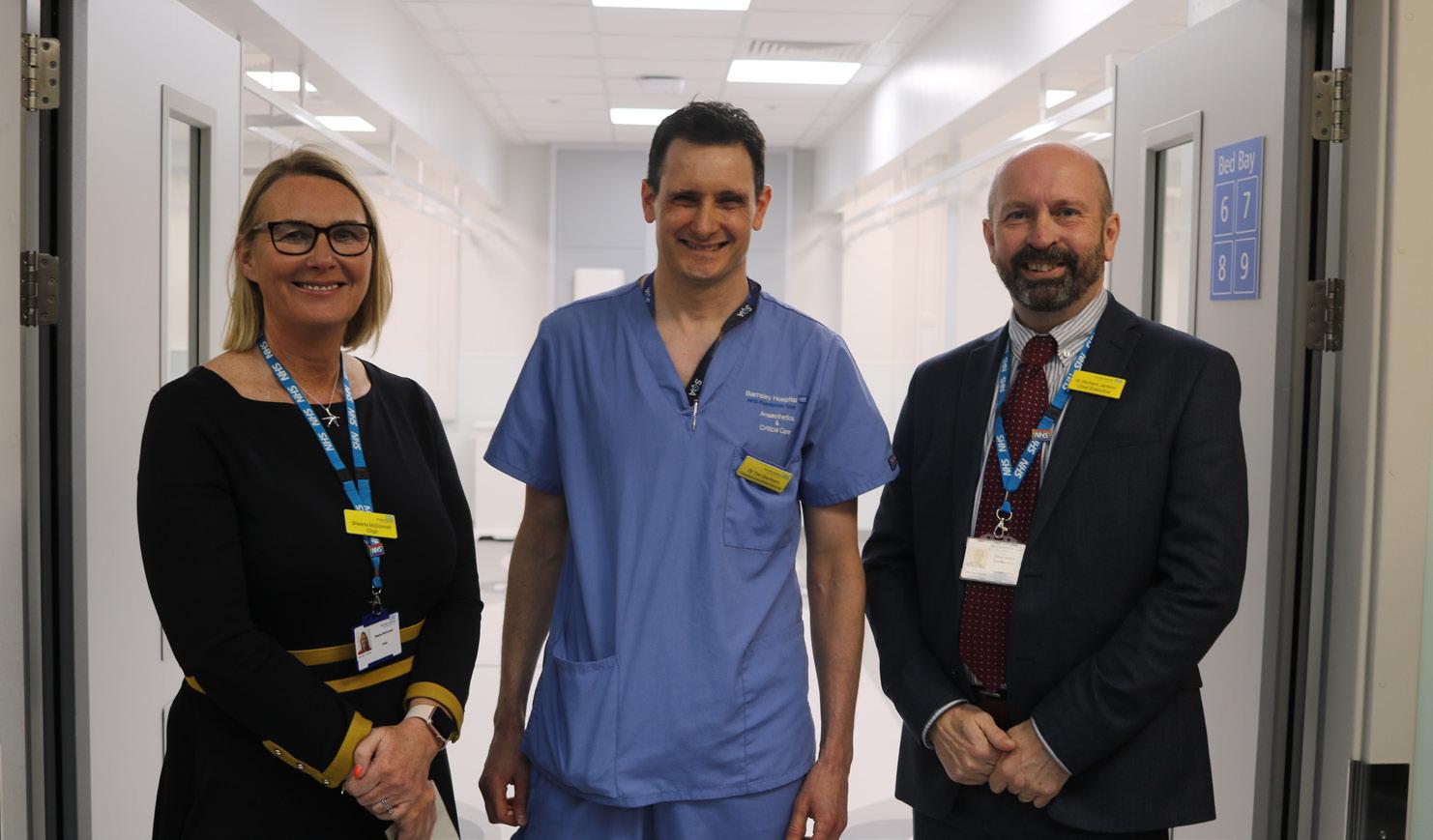
The £7.3m unit had an official launch in March, when media and local dignitaries gathered for speeches and tours following the 16-month construction. The development is a landmark for Barnsley in future-proofing the town against current and future demand for intensive care beds.
The unit increases capacity from the hospital’s pre-pandemic seven critical care beds to 16 (plus 8 escalation bays). It will also enhance patient experience and wellbeing with more spaced out beds, better lighting and décor, and enhanced patient privacy. These factors all contribute to shorter stays, quicker discharges, and speedier recoveries.
Hospital Chief Executive Dr Richard Jenkins commented: “We’re investing heavily in our facilities right across the Trust. These critical care beds will not only expand our
capacity to care for the most poorly patients, but will help relieve some of the pressures elsewhere in our hospital and allow our teams to ensure their patients receive the best possible treatment and care.’’
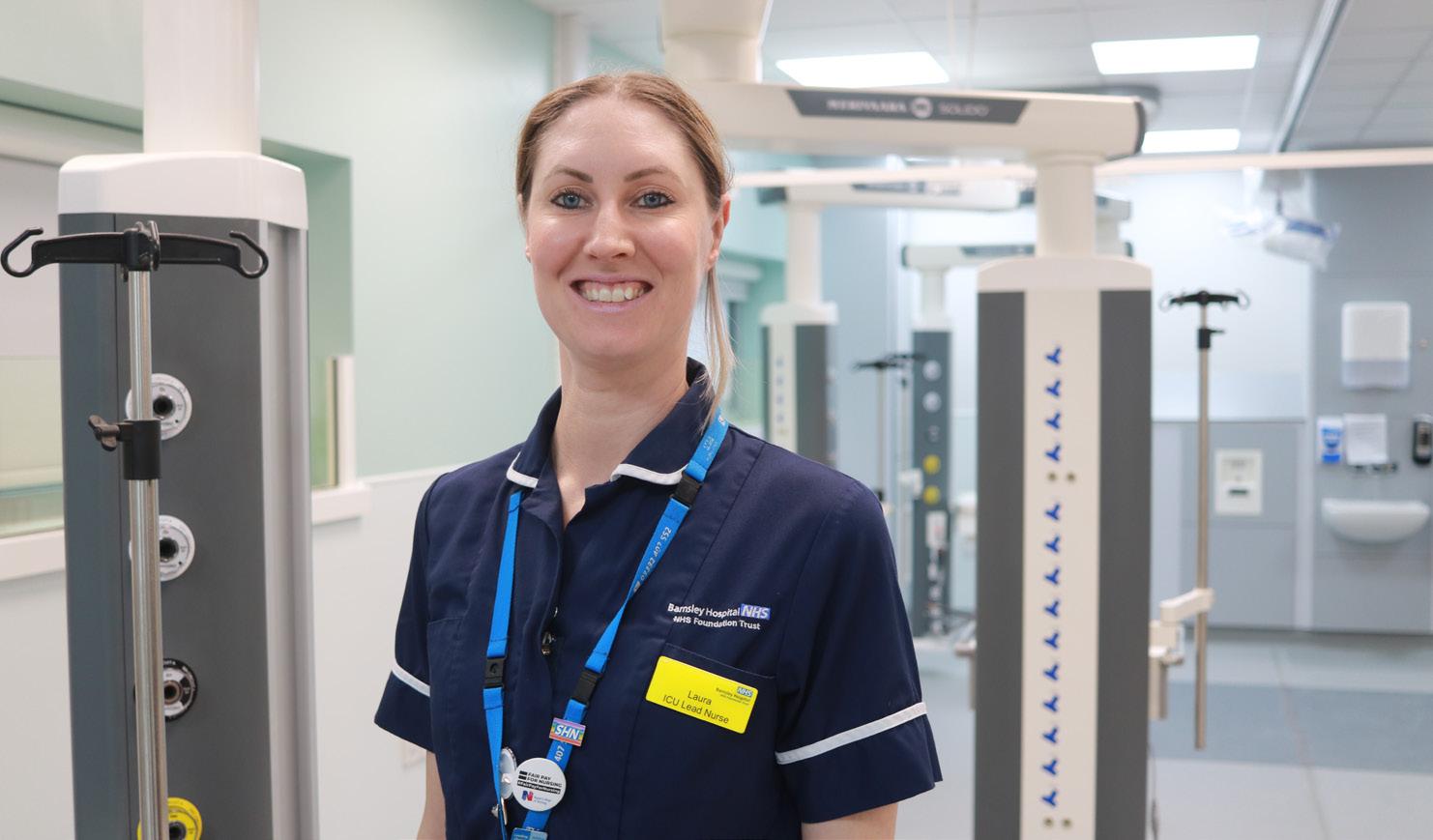
Laura Limb is an Intensive Care Lead Nurse at Barnsley Hospital who worked through the worst of Covid. She explained: “We had wanted a new unit for some years because we needed the capacity and there were other issues like a lack of natural light. When Covid hit, the entire unit had to move up to floor 5 and take over two general ward areas – not ideal for an Intensive Care Unit, but we had to find a makeshift solution during the pandemic.”
The hospital critical care teams are delighted to move into their new ICU on the ground floor at the front of the hospital. The ICU is now co-located with the Surgical High Dependency Unit (SHDU), which is not only an effective use of resources, but will also improve patient
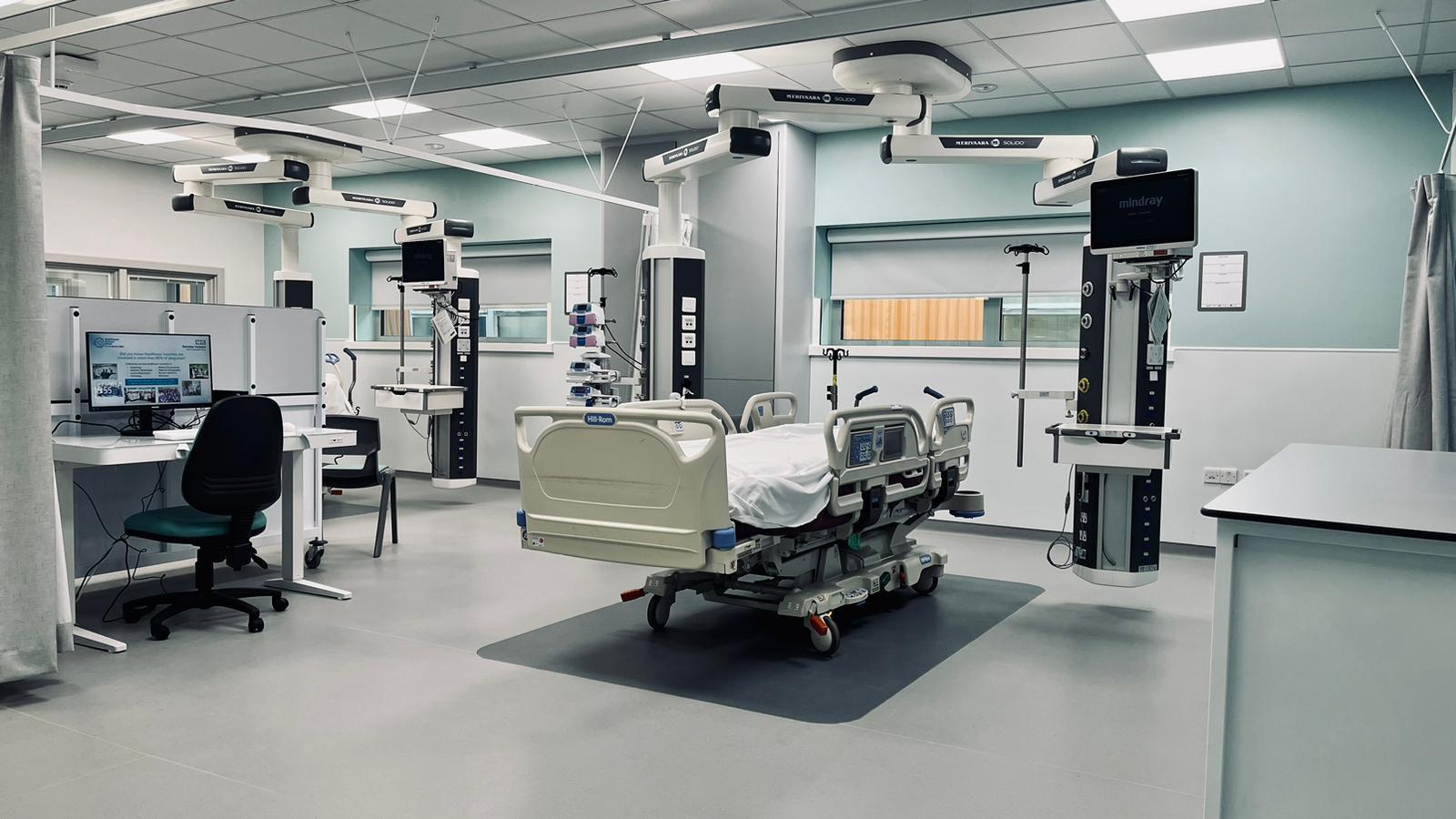
journeys in a safe care setting. The new unit has more space for each bed, providing a more useful environment for all the people and activities necessary to support the most poorly patients in the hospital, with clinicians more easily able to use specialist equipment directly at the bedside.
Barnsley Hospital’s Clinical Director for Surgery Dr Tim Wenham said of the new unit: “This high-quality, purpose-built unit will allow us to provide the best possible care.
In addition to the massively improved space and environment there is also the huge safety advantage of greater proximity to theatres, radiology and the emergency department.”
Staff will have an area to relax and eat, as well as a suite of offices, changing facilities and showers, and for the first time in Barnsley Hospital, ICU patients will be able to use a dedicated outdoor courtyard. Relatives will also have improved facilities and more space, closer to loved ones.
Barnsley Hospital has introduced ‘eco-friendly’ operating theatre gowns and hats – which is set to reduce greenhouse gas emission by 66 per cent and waste by 83 per cent. This is part of the Trust’s commitment to NHS net zero targets and a further step towards lessening the environmental impact of the Trust and broader NHS.
The pandemic caused a boom in single use personal protective equipment (PPE), which creates a big carbon footprint as it is developed using polypropylene and natural gas. It also uses coal and oil-based manufacturing systems and the PPE is then transported by air and sea over long distances. After being used, PPE is taken to a waste plant for
incineration which is also polluting.
To combat this, the Trust developed some successful trial projects, which led to bringing in reusable cloth theatre hats and gowns. The studies engaged staff and PPE users across the hospital and includes the capability to sew in names and roles of team members into the garments - assisting communication in busy settings. The garments also mean a vast reduction in plastic waste.
Doctor Andy Snell who was involved in the project said: “The use of reusable theatre hats and gowns allows for more comfortable working, better clinical practice, improved communication and greater environmental benefits. This switch will provide a
range of benefits for patients, staff and Barnsley, some of which we already saw through the pilot and others that will come with the Trust-wide rollout.
“People can find it hard to distinguish each other when wearing PPE. The additional options some of this reusable gear will offer, such as names on the caps, will help address this. We are introducing this change with a phased approach – with the successful pilots and feedback complete, we will now roll out caps and gowns across the Trust and ensure this continues to be successful, and then we can look at introducing these wider benefits. We’re already considering our next steps to doing our bit to improve the environment.”
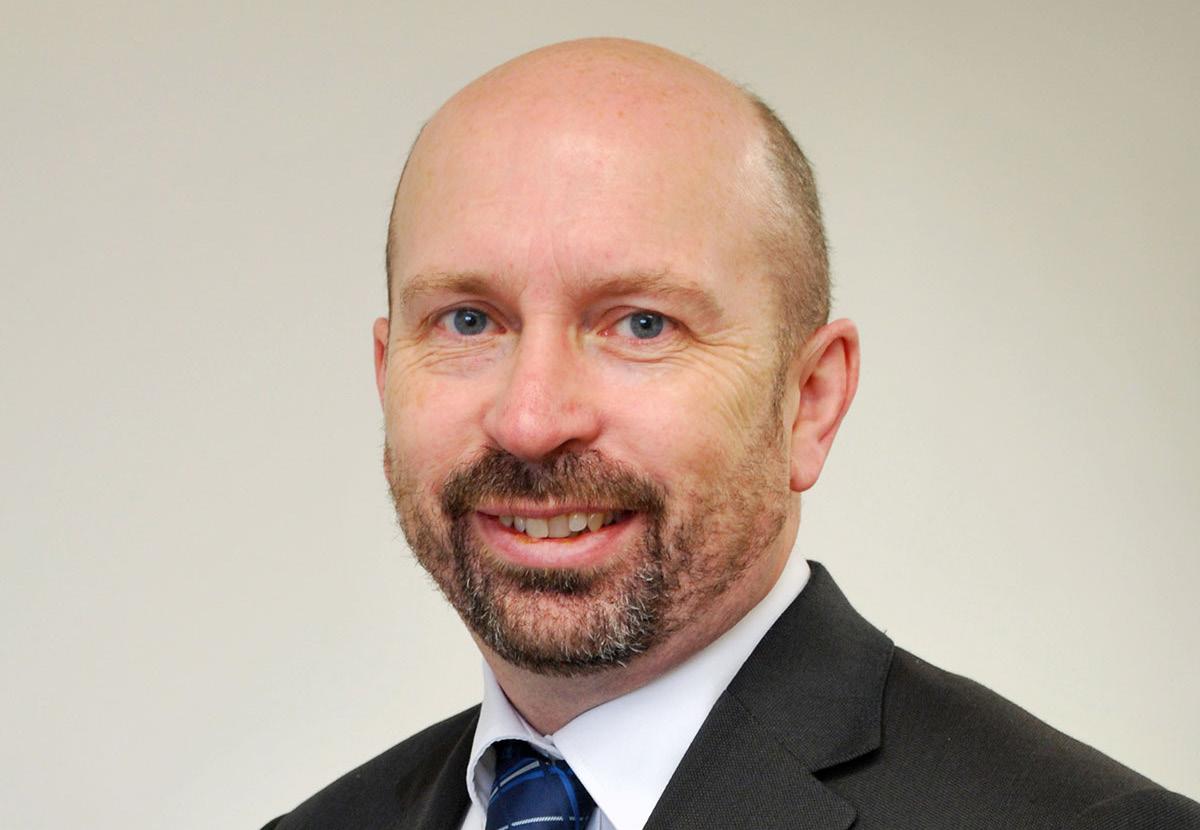
Since the last edition of Barnsley Hospital News in January, we’re proud to have completed a major investment in our services that will serve our whole community – a brand new, state-ofthe-art Intensive Care Unit (ICU). This has been a challenging project, especially as the hospital worked round the build as we continued to respond and learn from the ongoing health needs created by the pandemic.
The new £7.3m ICU was formally opened in March and will soon receive its first patients (see main article).
This ‘future-proofs’ our town against demand for intensive care beds – an increase from seven pre-pandemic to 13 now with the physical capacity for up to 24 should this be needed over future years. It’s also a hugely improved work environment for our ICU staff. Furthermore, our Community Diagnostics Centre (CDC) in The Glass Works continues to grow. The CDC received an additional £4.6m in capital funding, enabling access to more diagnostic tests for Barnsley people including ECG heart tests and specialist lung condition tests. On performance, we are on track with reducing waits for most of our diagnostic tests against the national six-week target, and we have no patients waiting longer than 78 weeks for planned care. As always in the NHS though, other challenges have emerged. We have been working hard to manage the effects of industrial action, and we will be doing a lot towards the four-hour Emergency Care Standard. This is an incredibly important standard – it links to quality of care and patient experience across the whole Trust. Recent performance is already better than the 76% level required by the NHS by March 2024.
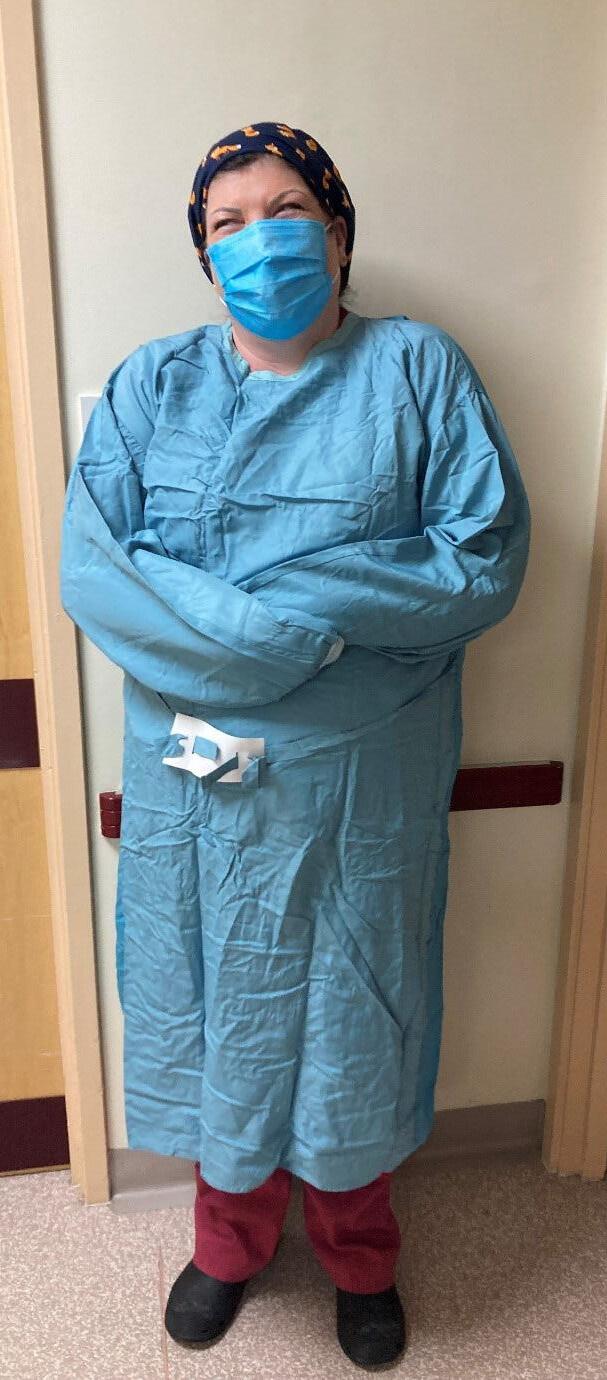
Deputy Chief Executive and Chief Delivery Officer, Bob Kirton added: “This is a really important step the Trust is taking and meets our commitments to helping improve place and planet. It is part of the Trust’s Green Plan and comes alongside other important steps like reducing our use of environmentally harmful anaesthetic gases. Not only do steps like this benefit the environment, but they also improve patient and staff experience and mean we are contributing to making the planet better for our local population and future generations. By switching to reusable PPE, we will achieve a 66 per cent reduction on greenhouse gas and will reduce waste by 83 per cent.” The hats and gowns were introduced from April 24, 2023.
The 2023/24 national NHS priorities reconfirm the ongoing need to recover our core services. We will make progress in a whole host of ways, whether that’s preventing and managing long-term health conditions in our population or improving staff recruitment.
Using innovation and technology to increase value received from every pound spent is more vital than ever. Our greatest asset in meeting these challenges is our staff. Our staff survey revealed that we have the highest scores of trusts in England for compassionate leadership, flexible working and team working. We still want to do more, and continue to invest in a broad range of health and wellbeing options for employees.
Our hospital charity has played a large role in this work, providing complementary therapies and support to patients and staff.
Thank you to every member of our Barnsley community for your continued support.
Hello, and welcome to the summer 2023 edition of Barnsley Hospital News. It’s been a busy time since our last publication. The Integrated Care Board (ICB) health and wellbeing strategy launched recently. For those who may not know, all the organisations who work to support people in South Yorkshire to live healthy, happy lives – such as the NHS, councils, voluntary organisations and the South Yorkshire Mayor – now work together in partnership. They are known as the South Yorkshire Integrated Care Partnership (SYICP), and I am a member on behalf of Barnsley. Last year, people told SYICP about their health and wellbeing and this helped them to write the Integrated Care Partnership Strategy https://bit.ly/3W0ARXO. We would still like your views now, as they will help SYCIP write the ‘Joint Forward Plan’. This will set out how the NHS in South Yorkshire will change to deliver the strategy and work over the coming years. Please tell us ‘what matters to you about your
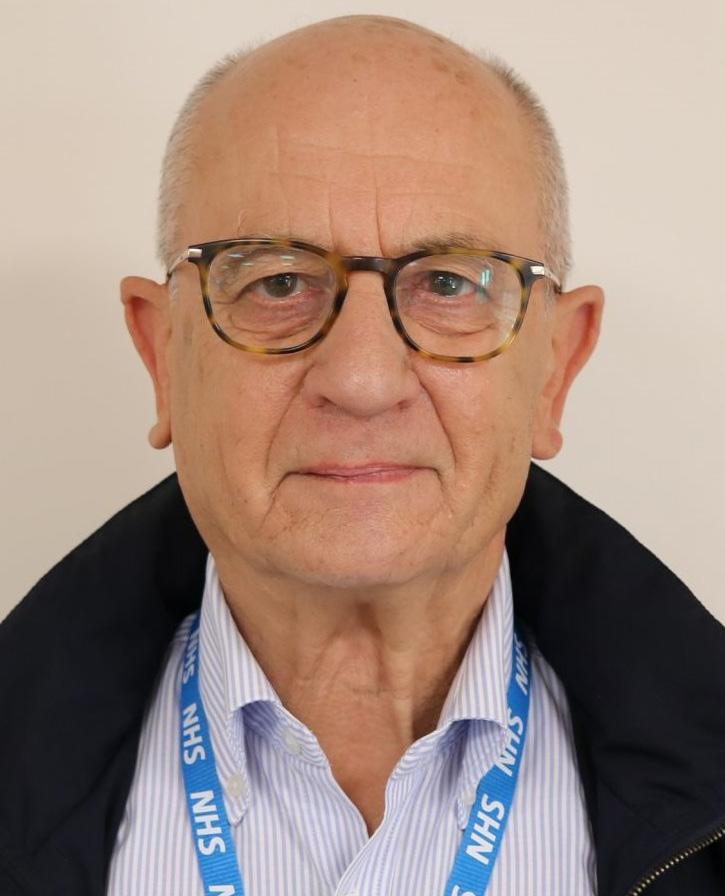
with Graham Worsdale
Barnsley Hospital is pleased to report there are five new elected governors joining the Council of Governors. They are Rebecca Makinson, a staff governor, Phil Carr, Lisa Kelly, Rob Lawson and Tom Wood, public governors. I look forward to their contributions to the council given their expertise and experience.
The governors were pleased to be involved in the opening ceremony of the hospital’s new Intensive Care Unit.
As part of the ceremony, we were given a tour of the facility. It is a great facility and one we should be proud of. The work of staff who contributed to this major development is recognised by the governors.
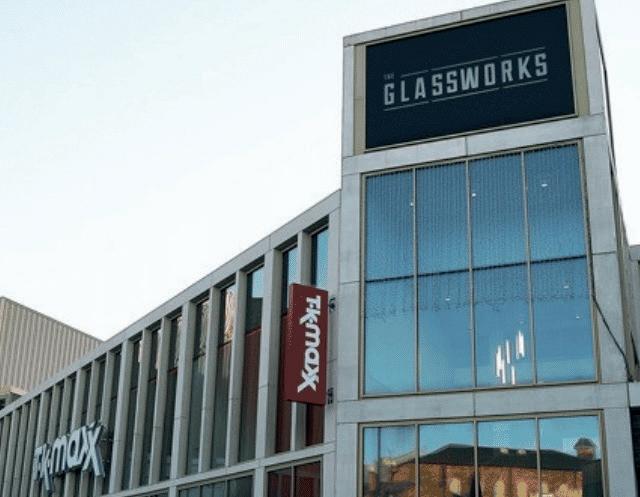
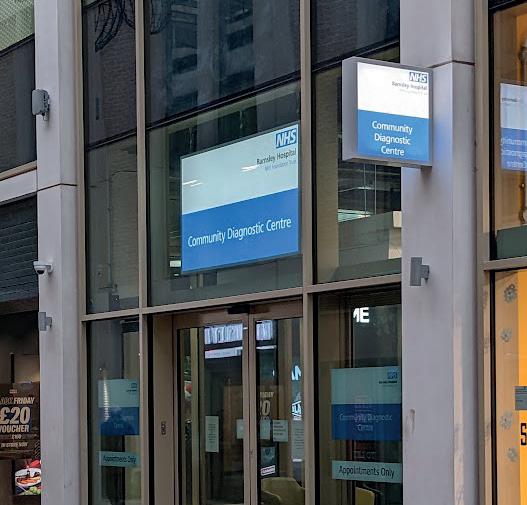
During 2022, the hospital opened the Community Diagnostic Centre at the Glassworks in Barnsley Town Centre. The feedback from patients on the service has been excellent, providing services at the centre of the town. This is one of the few developments of this type across the country. Having established phase one, phase two development is now underway. We look forward to seeing this further development up and running in the near future.
Barnsley Hospital has joined with Rotherham Hospital and Doncaster and Bassetlaw Hospital to develop the Montagu Elective Orthopaedic Hub at Mexborough. This will, for example, provide operations for those in need of hip and knee replacements. This funded project is seen by the governors as a significant development in helping patients from Barnsley. The Hub is expected to be up and running towards the end of the year.
If you would like further information on being a governor, and how you can help the way local health services are shaped in future, please email: Barnsleynhsft.governors@nhs.net
health and wellbeing’, what matters to your communities, how can we make services better quality and more accessible, and how health services can help you live a healthier, happier life. We are really keen to hear your views, so please fill in the survey by scanning the QR code.
We have also welcomed some new governors since our last edition. Interested members of the public from Barnsley can find details on our hospital website if anyone would like to contact them.
On Page 3, you can read about our latest Heart Awards event held on May 5. I attended my first Heart Awards a week into my role as Chair and was delighted to be back a year later to present a Chair award and to recognise all colleagues for their continued dedication.
One of our key objectives is to help make Barnsley a great place to live and work and we’re always keen to provide local employment opportunities. We encourage everyone to check
out our vacancies for the many and varied roles at the hospital, and see if there is something there to suit. You might like an apprenticeship in nursing or midwifery and there are roles in admin, finance and digital services to name a few. It’s a great place to work and we have just had some of the best staff survey results in the country too, so that view is shared by our colleagues.
We know people across Barnsley continue to face tough financial challenges. With our Cost of Living group, we have been supporting the council through promotion of the ‘more money in your pocket’ campaign, as well as providing discharge packs for vulnerable households and via the ‘pantry’ at the hospital.
We hope you enjoy the summer – and stay healthy and happy.
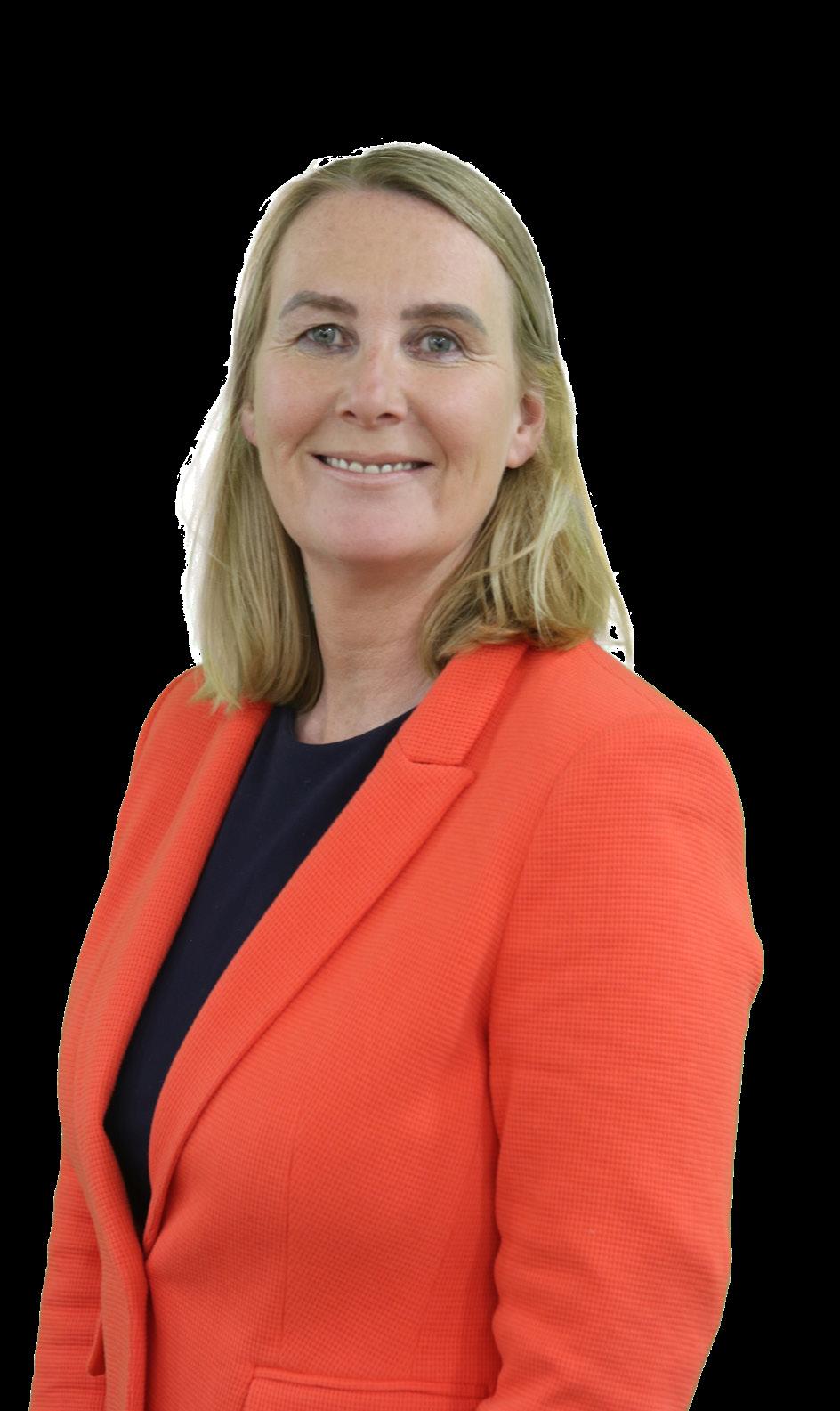
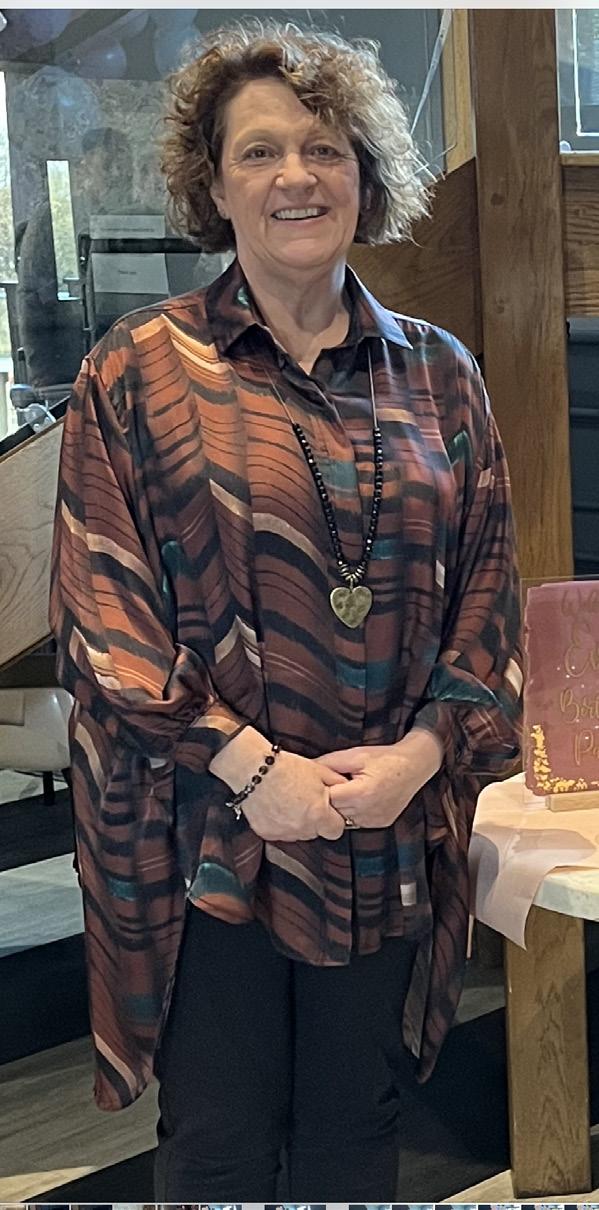
Staff governor Jo Smith has lived in Barnsley all her life, served 24 years with Barnsley NHS, and lives near the hospital.
It wouldn’t be an exaggeration to say Jo, 56, has pretty much seen it all in the NHS - and had some interesting jobs outside it too. She was breaking the mould even in her 20s, when she had a spell as the first female forklift truck driver for the Co-op warehouse. “That was a time when most blokes thought women should be at home doing the washing-up. Can you imagine that now?” says Jo, a mum and grandma.
She was elected as a staff governor in December 2021 and works at the hospital as Compliance Co-ordinator in Clinical Governance. She started out as a part-time night telephonist and with hard work and study progressed to Switchboard Manager and eventually to Corporate Support Service Manager and Service Manager for medicine.
“Before I had my son, I’d been working 40 hours a week shift work, and couldn’t go on doing that. Flexible working is one of the great things that the NHS offers,” she said. Even with two small children, Jo
went to college in her own time and gained a raft of qualifications from NVQs to a degree in Chartered Management and the NHS Leadership academy.
Her many achievements at the hospital include developing the Contact Centre, Stroke/HASU work and the initiation of Frailtyshe has won two hospital Heart Awards for her work. Care Quality Commission (CQC) work, peer reviews, quality assurance visits, accreditations, regulatory requirements, quality standards and supporting teams across the Trust is what Jo does now.
“My role as staff governor
is to be visible, raise issues and hold non-executives to account. Staff can have all types of concerns, from how to improve life for patients to whether the hospital heating or lifts are working properly. We have made some real progress in Barnsley, especially in supporting staff health and wellbeing which is reflected in the good results of our last staff survey.”
She added: “My heart’s in Barnsley and I’m loyal to Barnsley. I’m proud of what I’ve done and privileged to have worked with some really good people. And I’ve never been scared to challenge!”
with Jo Smith
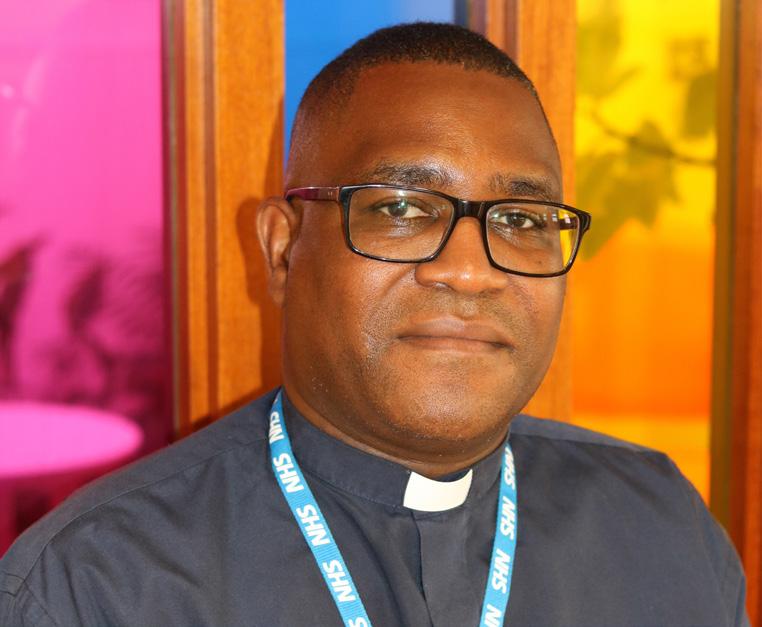
Barnsley Hospital’s Chaplaincy Team is appealing for volunteers to help provide support to patients, staff and other volunteers.
Hospital Chaplain Rev Cornelius Kachere said: “There are many benefits to being a volunteer. It’s an opportunity to gain
experience of a hospital setting, and a chance to serve your local hospital and community. The role is flexible so it can fit around existing commitments, and it also provides experience of working within a vibrant and caring chaplaincy team.”
If you would like to know more

Every year, hundreds of lives are saved with the help of donated organs such as hearts and kidneys, but you may not realise that donated tissue such as skin, bone and heart valves can also save and dramatically improve the quality of life for many.
Thanks to donors and their families the NHS is able to provide skin, tendons, bone and other tissues to repair or rebuild the bodies, faces and lives of thousands of severely injured people each year.
A team of specialist tissue donation nurses work nationally to coordinate tissue donation after death, and provide support and assistance to the newly bereaved families of tissue donors.
Register to be a tissue donor today and give someone a new lease of life. For enquiries relating to tissue donation please contact the Tissues National Referral Centre on 0800 432 0559. Register your organ donation choices on the NHS Organ Donation Register at organdonation.nhs.uk
and are interested in becoming a chaplaincy volunteer, you can request an application pack from Voluntary Services. Email: barnsleyhospital.volunteers@ nhs.net or call 01226434979. For an informal visit or chat, contact the Chaplaincy Team by email: chaplaincy.barnsley@ nhs.net or call 01226 435751.
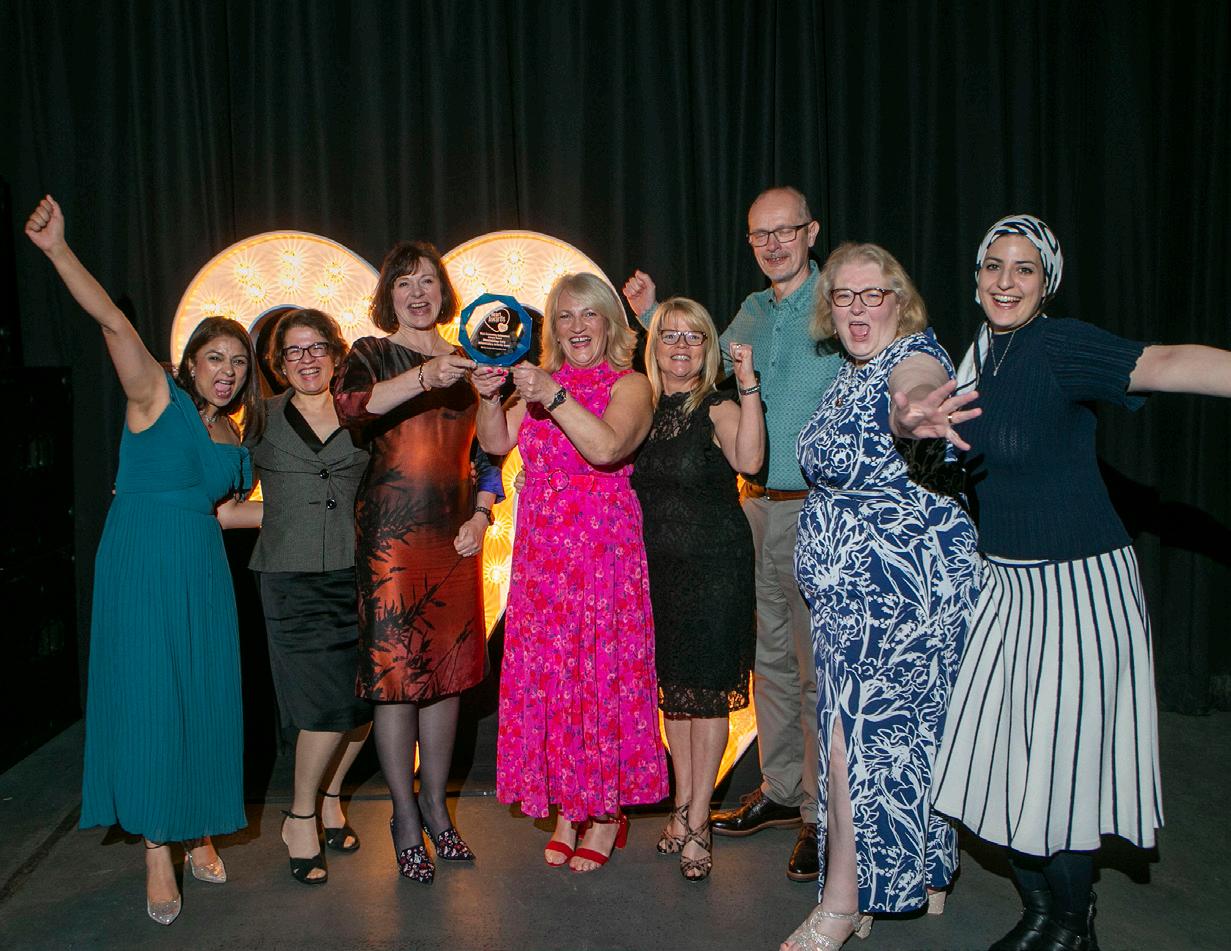
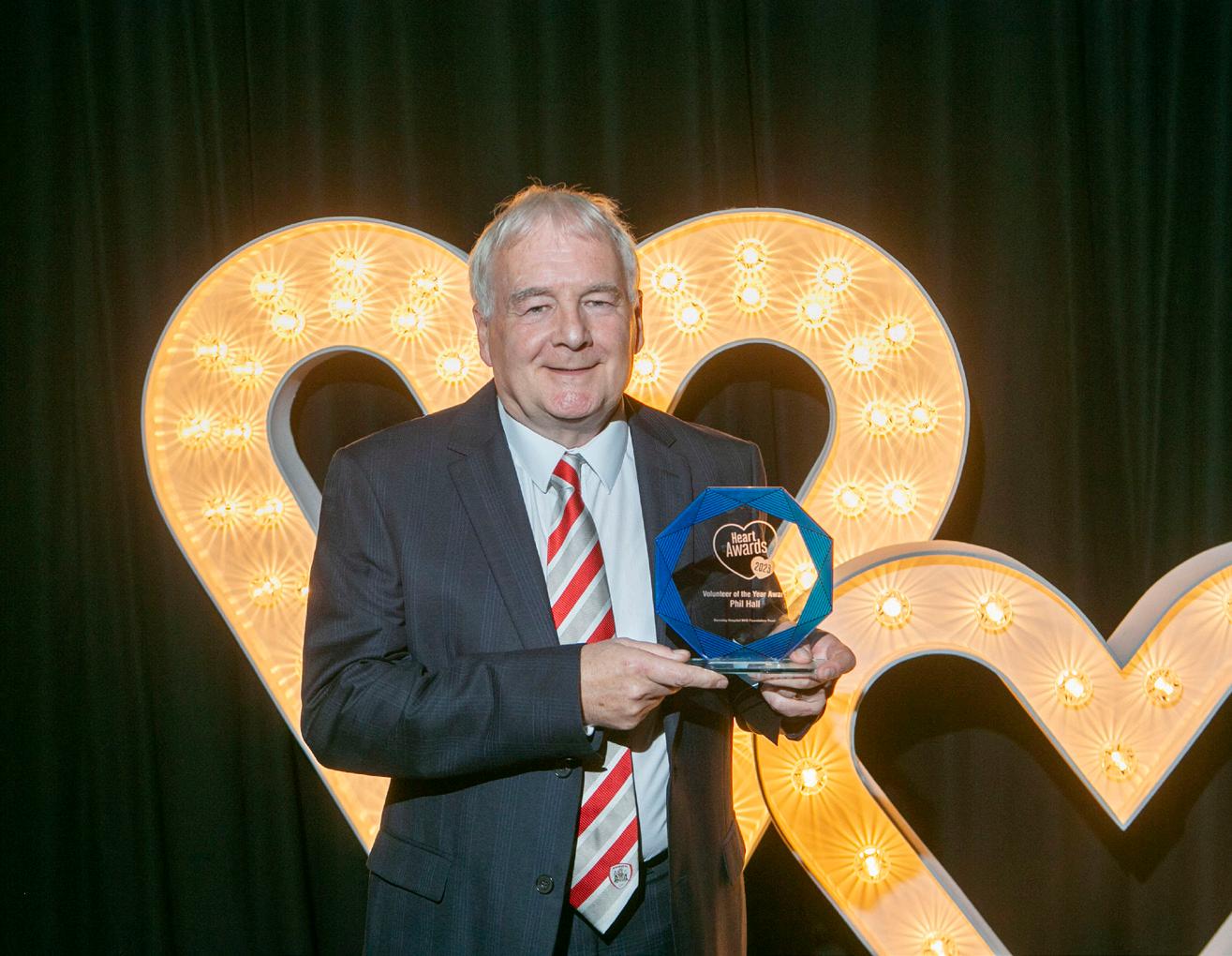
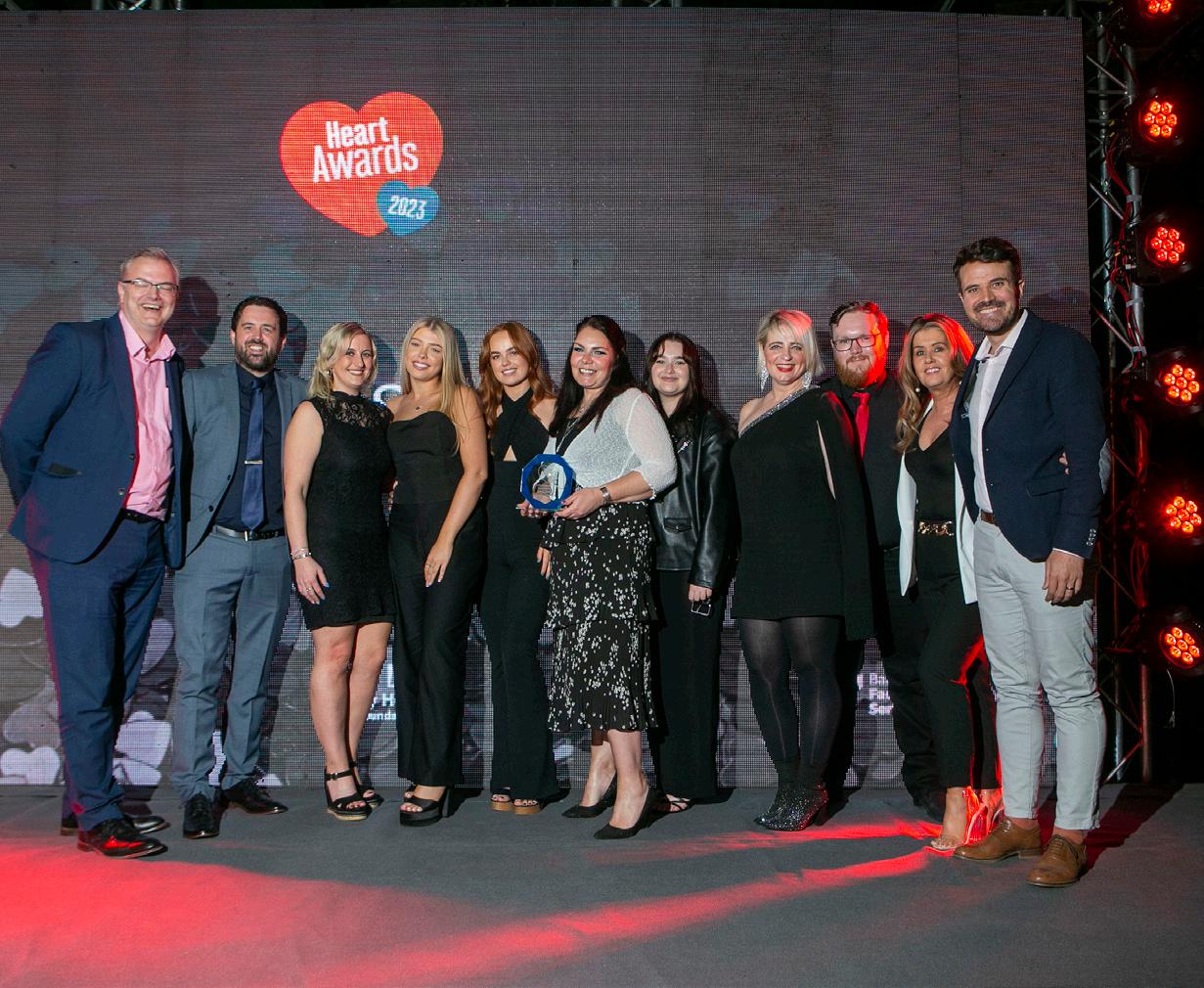
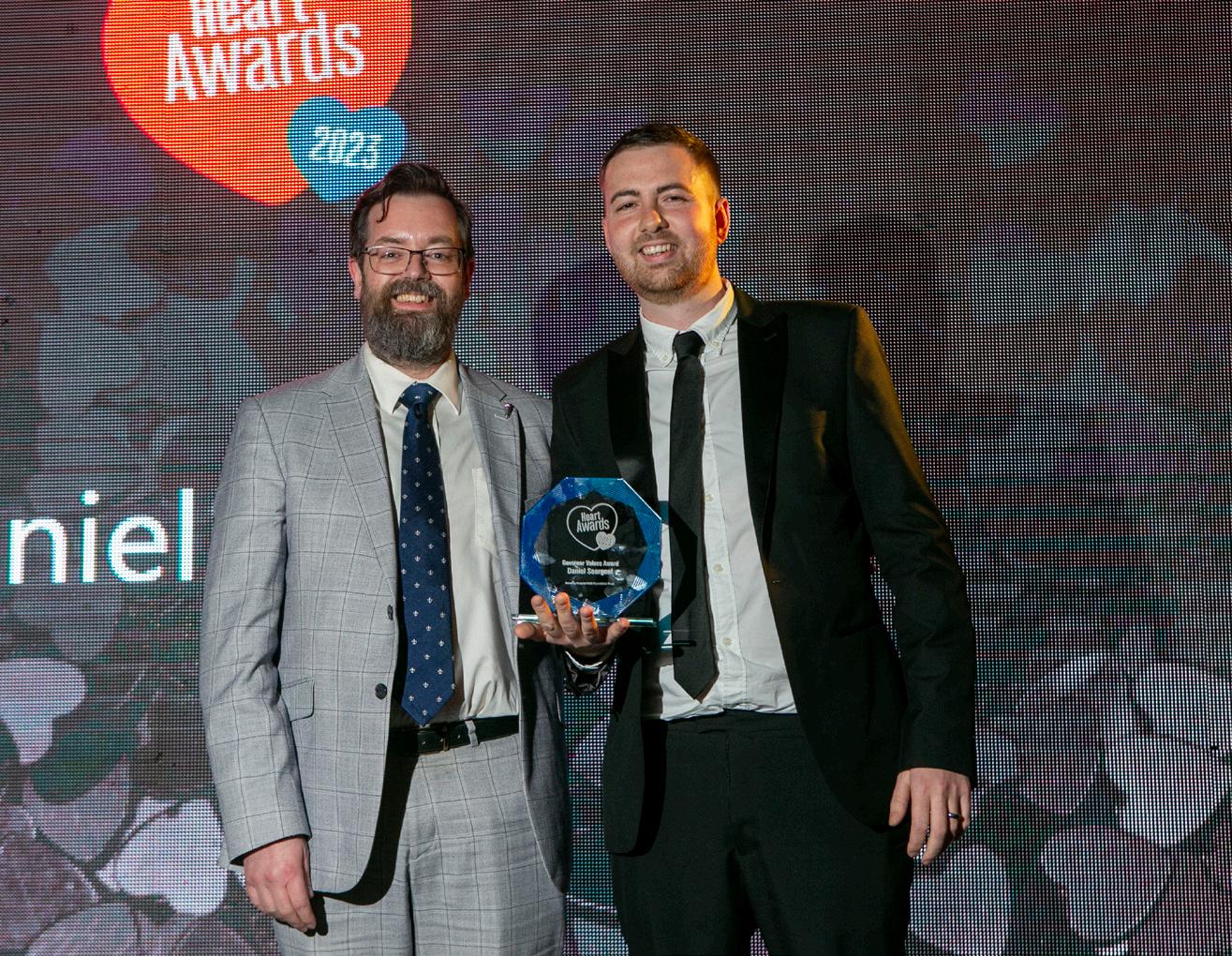
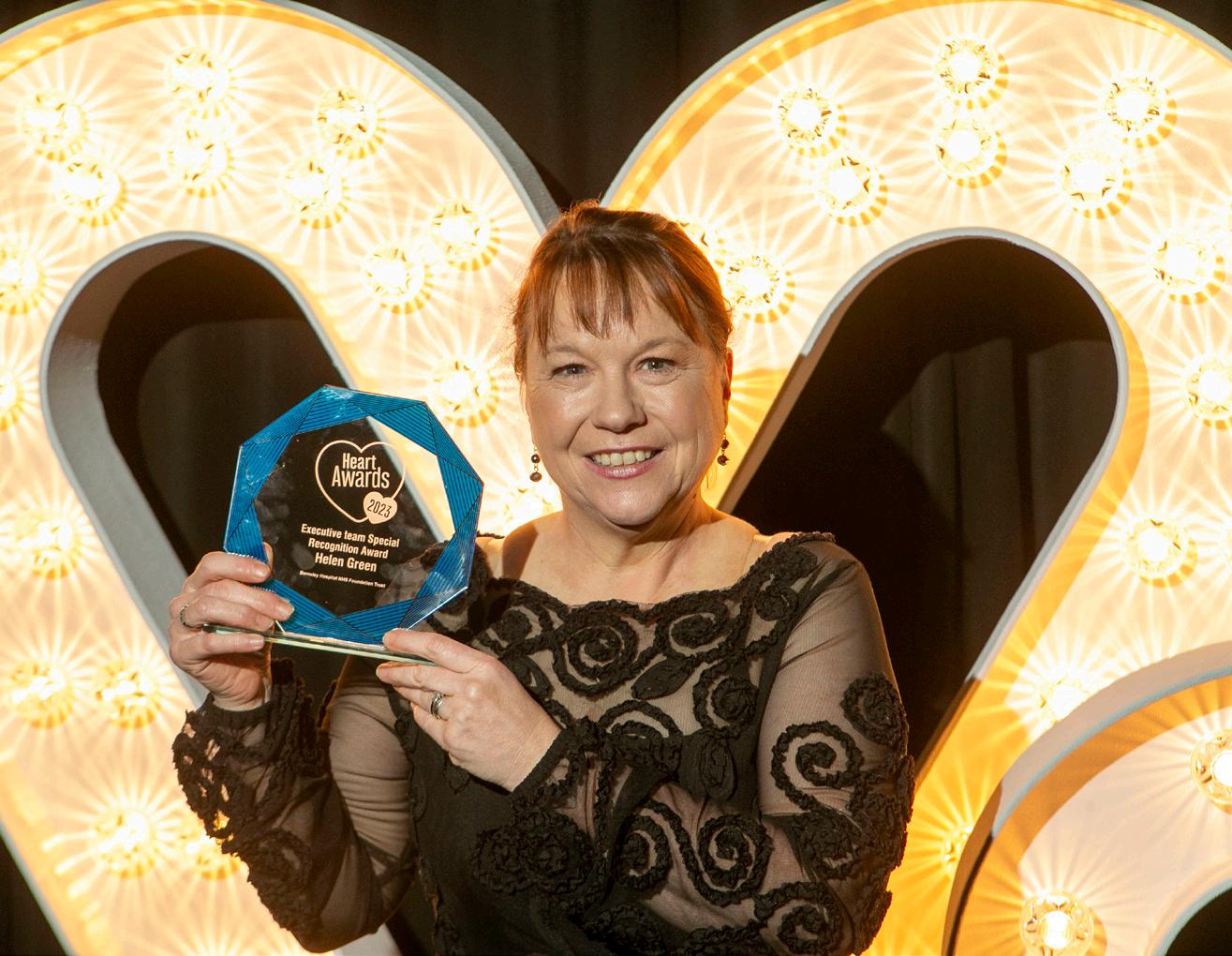
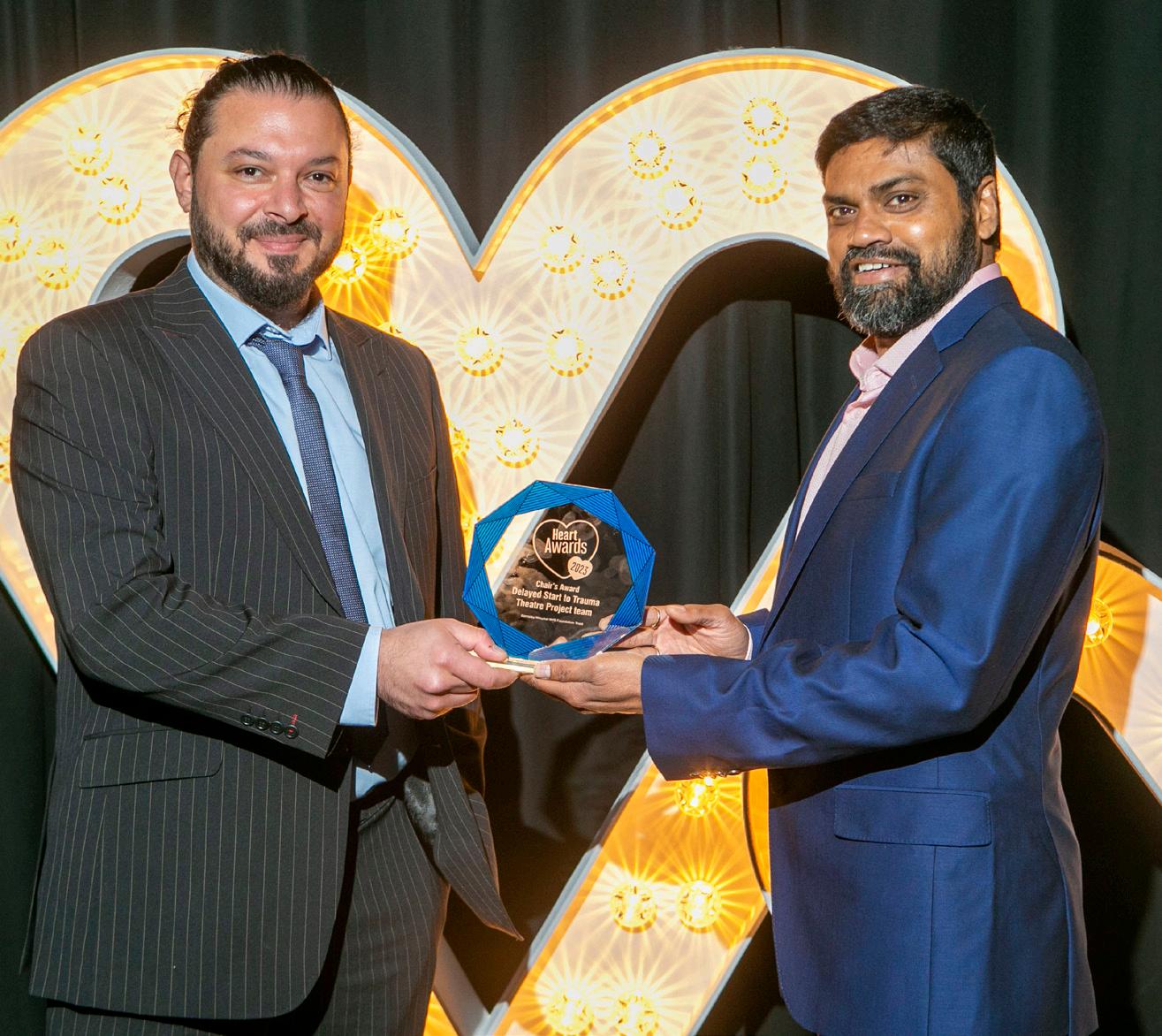
The Heart Awards are Barnsley Hospital’s annual staff recognition awards. This year they were presented at a celebration event at the Ironworks at Elsecar Heritage

Centre. We had over 200 nominations which really is a testament to the hard work of all the people who make the hospital what it is. Thank you to everyone who
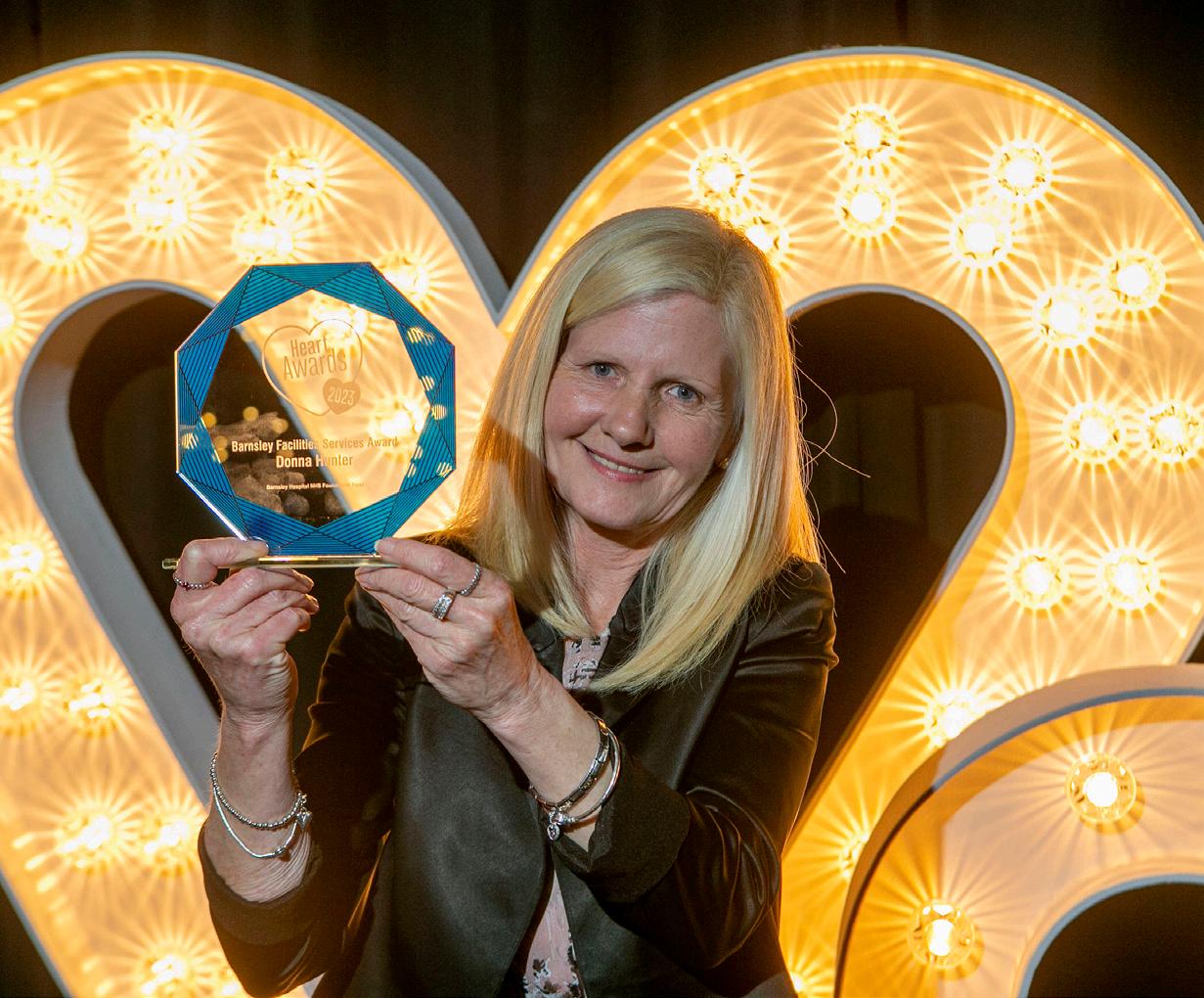
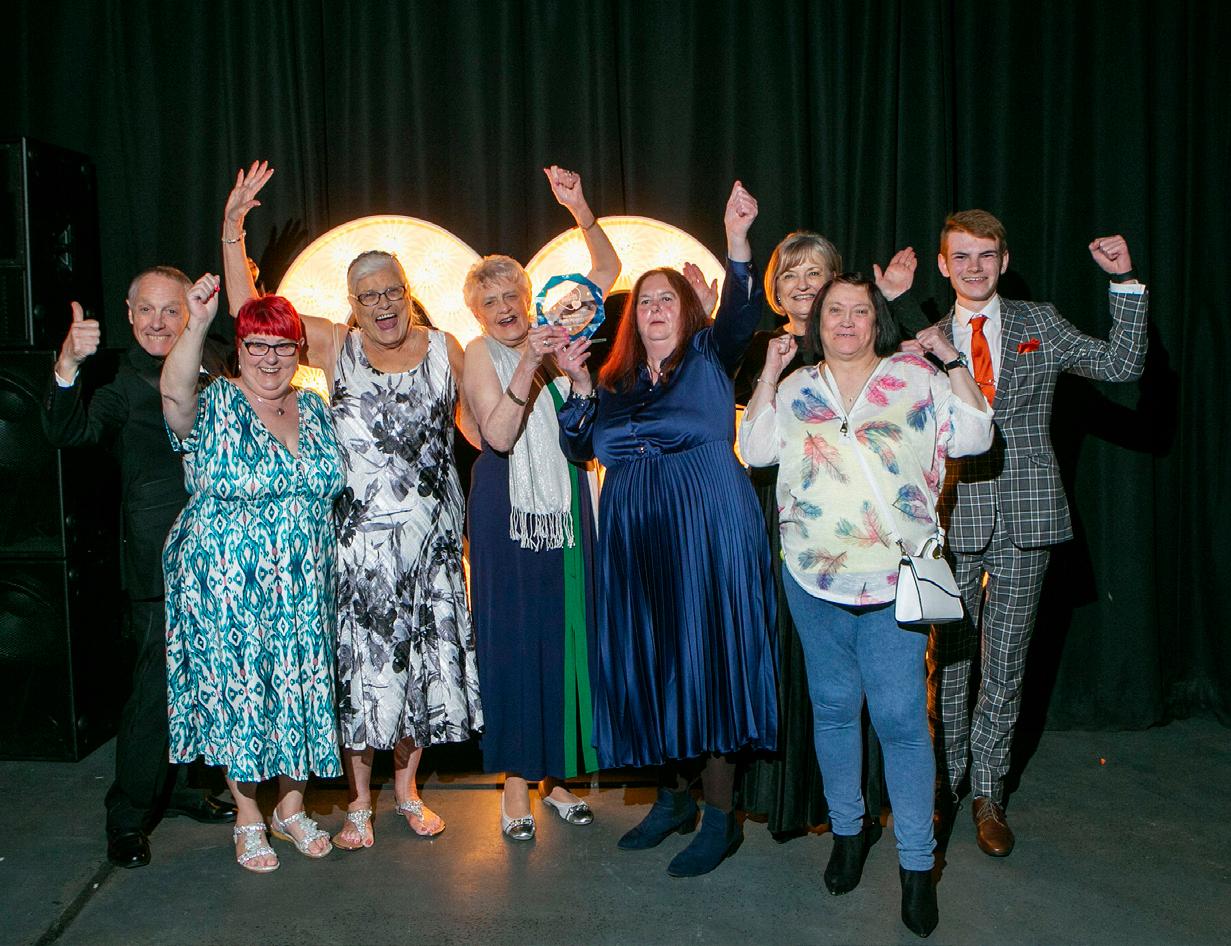


took time to make a nomination, and to our staff, volunteers, governors, and board for undertaking the difficult task of shortlisting.

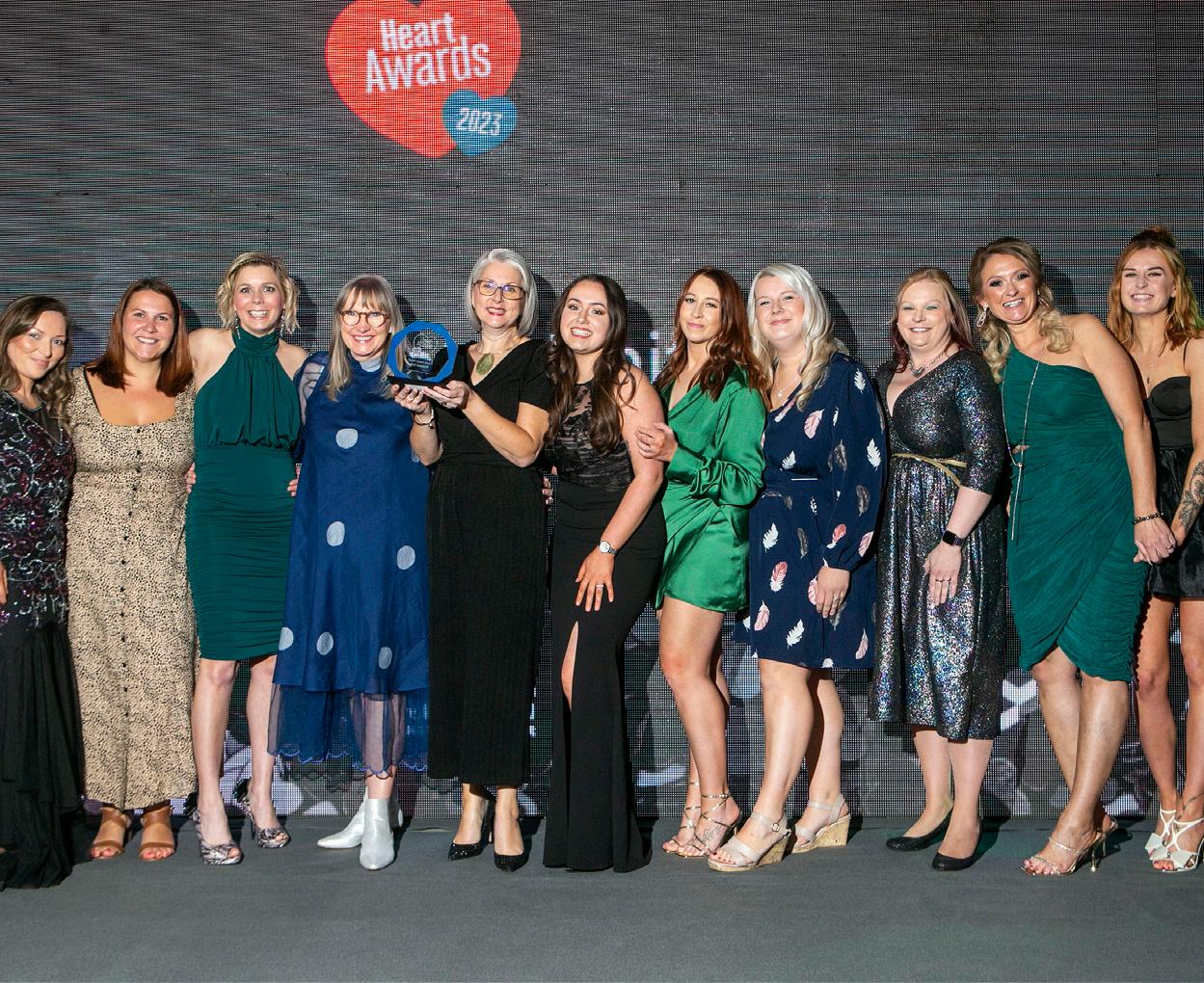



Outstanding Achievement Award (Clinical) Rheumatology Early Inflammatory Arthritis

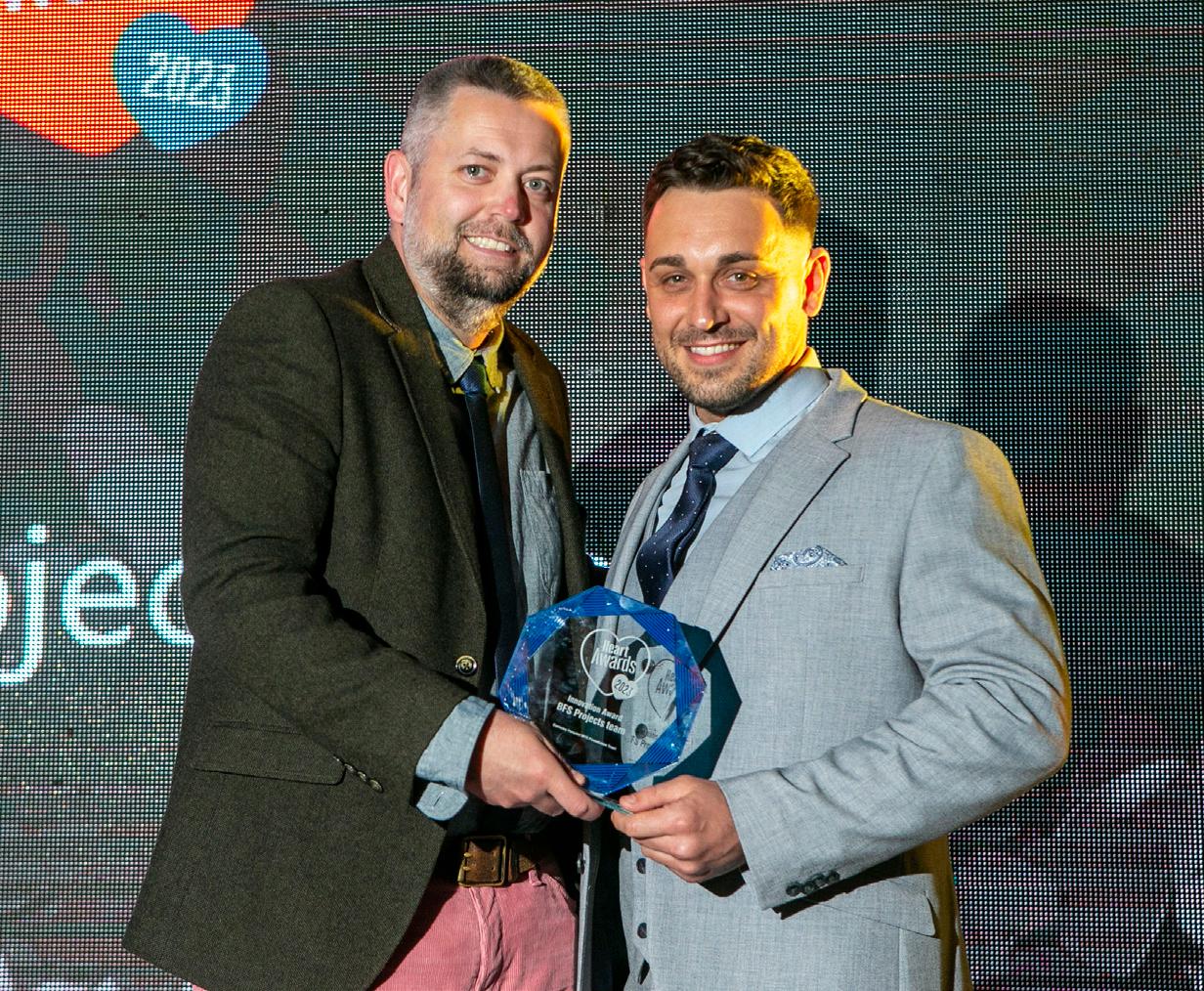


Other winners unable to be with us on the night ...

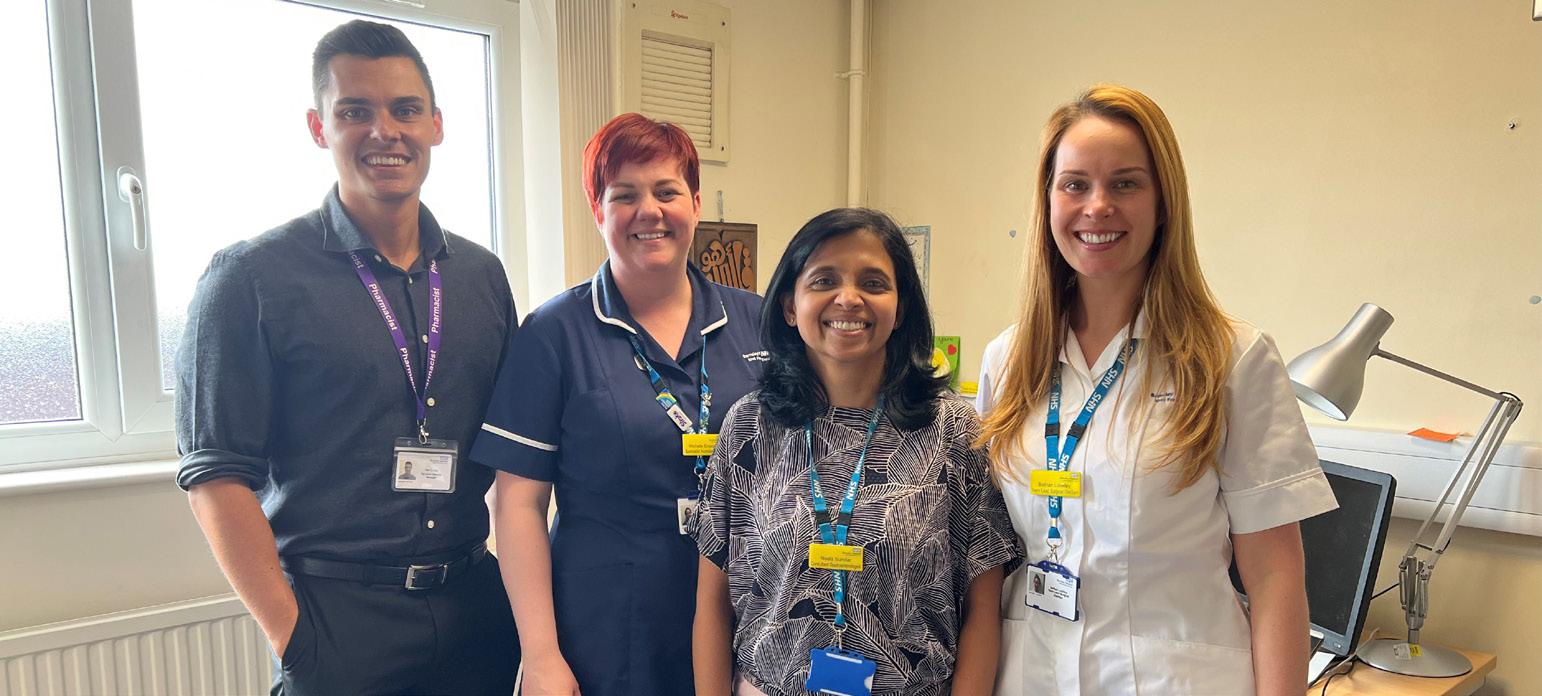
Good nutrition is vital for recovery from illness. Michelle Emptage is Barnsley Hospital’s Specialist Nutrition Nurse and has a vision to create a tailor-made nutrition service for Barnsley’s needs. Tell us what you do?
I am the new Specialist Nutrition Nurse here at Barnsley Hospital. My background is as a Stroke Specialist Nurse and I came from Rotherham Trust to join Barnsley at the end of October 2022.
The whole nutrition service is new to Barnsley Hospital and my vision is to look at all nutritional support needs. These span from eating and drinking orally and the difficulties patients may have such as swallowing, to being an artificially-fed dependent patient.
We take eating and drinking for granted sometimes – but there are many acute to long-term condi-
tions patients may have that can affect their ability to eat and drink. Patients need support not only as inpatients but ongoing, so liaising with the community team is very important.
My first job was to look at our service, work out a strategy to fill any gaps and update policies. We are multidisciplinary which means I am one of many professionals (dietitians, consultants, junior doctors, Speech and Language Therapy (SALT) team and catering staff).
How does your work fit with the wider NHS?
In my new role, I look at tools we use to assess a patient’s malnutrition risk. We also review patients’ feeding devices like PEGs (Percutaneous Endoscopic Gastrostomy) tubes. We do regular ward rounds to support patients with feeding needs.
I spent time with Mid Yorkshire Hospital Nutrition Team and they are definitely setting the standard in the Yorkshire region. Their support is priceless. They gave me ideas on setting the service up here at Barnsley and how to improve. In the future we aim to develop clinics and improve community services for PEG and NG (nasogastric feeding), such as developing an on-call service. We’re working with our Same Day Emergency Care Service (SDEC), with a view to reducing unnecessary A&E admissions and lengths of wait.
I also was part of the recent Nursing Summit 2023 at the Ibis Hotel, where I had lots of engagement with nurses. It’s a skilled job putting a feeding tube in, learning about safety procedures, and one I hope to support by lifting competence compliance at Barnsley.
What are the challenges of your role?
One is to work on education about the importance of nutrition. Poor nutrition has many knock-on effects such as tissue damage; if you’re not eating or drinking properly, you can’t heal those wounds. People also need to eat in accordance with their medications.
Plus, we need to ensure nurses are supported to keep up with their training/competencies as new feeding methods and equipment
becomes available.
What’s coming up in the future?
We are holding a ‘Re-Launch for Nutrition’ education event in the hospital restaurant on 29 June. We aim to provide a ‘Dinner with a difference’ experience for all who attend. It’s important to make myself visible to other teams around the hospital. I have developed some great working relationships and regional networking in the six months I have been here, and I endeavour to keep those open.
Our supporters choose to donate or fundraise for us for a variety of reasons including appreciation of theirs or their loved one’s care, to leave a lasting legacy to Barnsley in their will, to challenge themselves to help a particular area of the hospital or simply as a thank you to our amazing NHS.
Our Make A Memory Appeal has reached the two thirds marker with a grand total of £200,000 raised so far!
Thank you to everyone who has fundraised and donated to help achieve this as we push towards reaching our target of £300,000 to transform our Care of the Elderly Ward, helping older patients and those living with dementia.
A special thank you to Premier Foods and Barnsley Norse who are supporting us as their charity of the year in 2023 for this appeal.
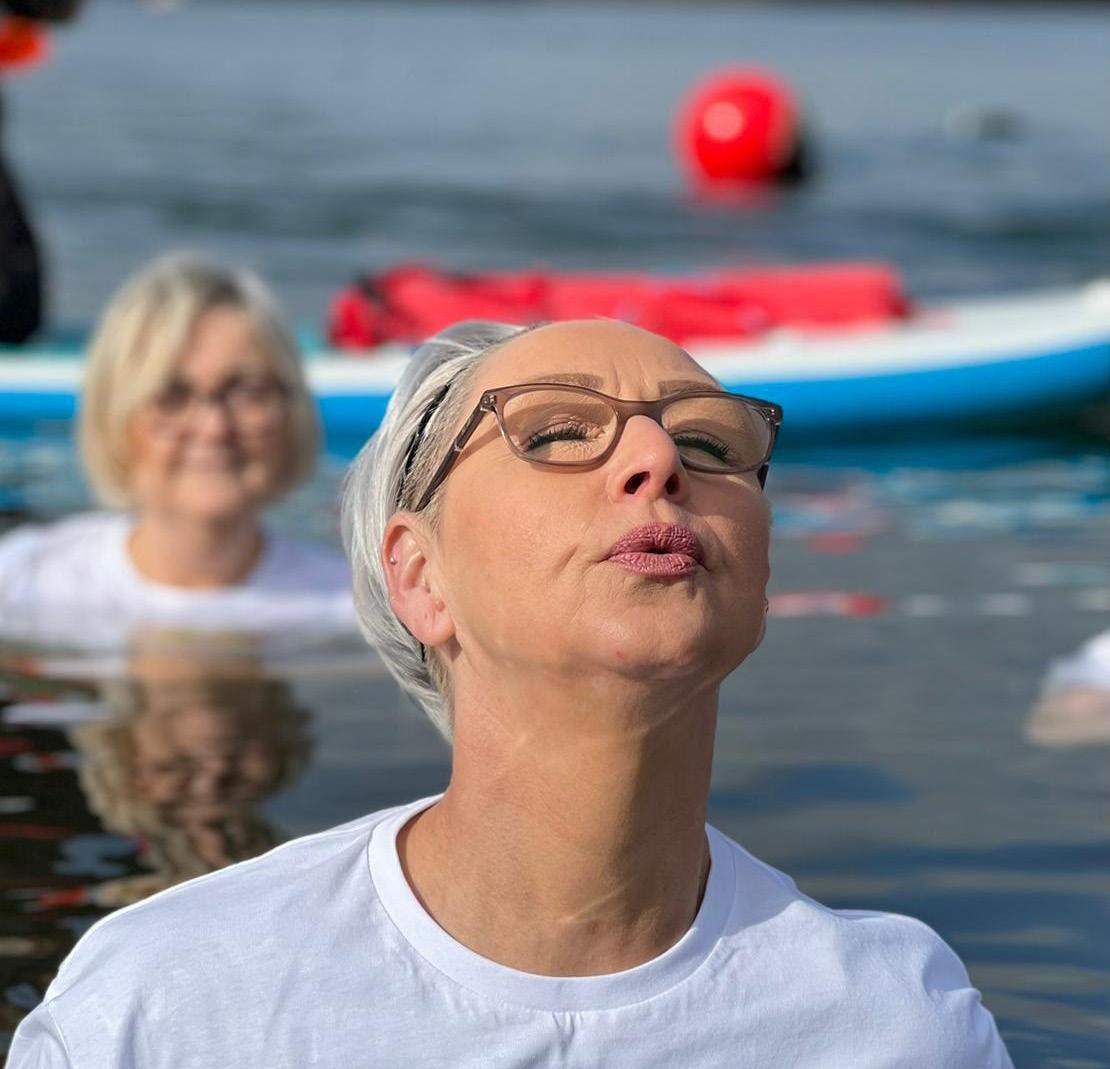
Premier Foods have been taking the plunge in our Cold-Water Challenge held at Manvers Lake on April 2 2023 where six colleagues took part raising a fabulous £840.
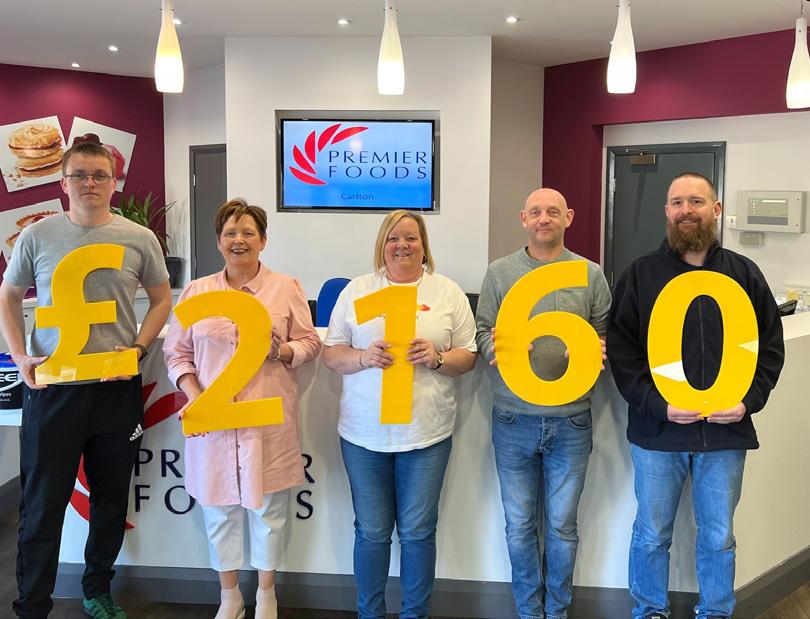
The team from Company Shop within Premier Foods also raised £1,300 from their Easter raffle and a further 14 colleagues are set to conquer Mount Snowdon on May 20. Barnsley Norse colleagues also took part in the Cold-Water plunge and several have already signed up for skydiving in June and our Firewalk on 1 November 2023.
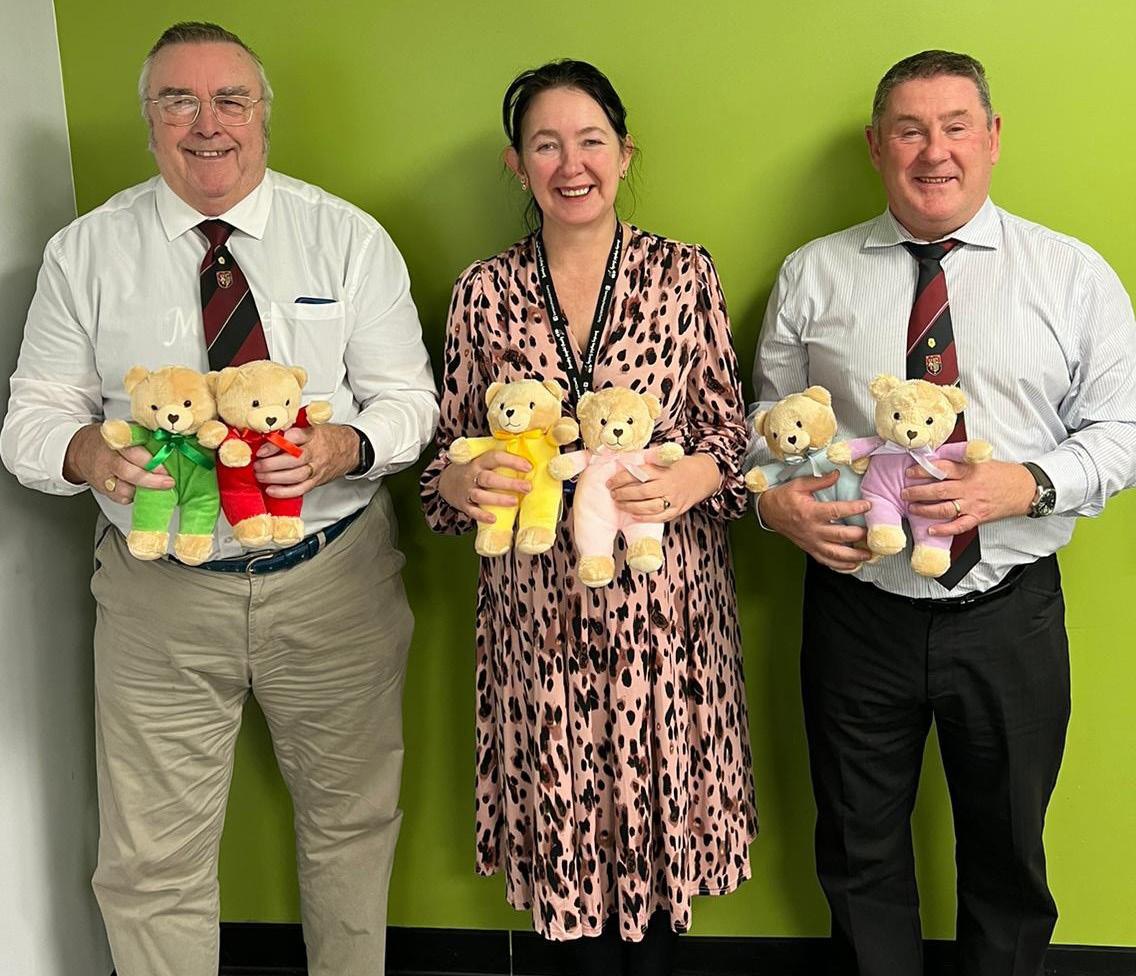
Thank you, Teddy much
Children visiting and staying in Barnsley Hospital have benefited from generous donations by local Freemasons groups since 2009 with 72 of the cute little teddies being delivered each month.
Teddies for Loving Care (TLC) provides cuddly bears for medical staff to give to young children. The bears are often used by staff to calm children down, reward them for being brave, and – in some cases – demonstrate procedures.
The TLC is a national programme, locally-led by Freemasons across England and Wales with 150 generous individuals in four lodges across Barnsley Bretton Priory, Holgate, Friendly and Penistone contributing.
David Cunningham, Secretary Bretton Priory Lodge, said: “It is always gratifying supporting charity, even more so when you receive good feedback and hopefully are making a difference however small.”
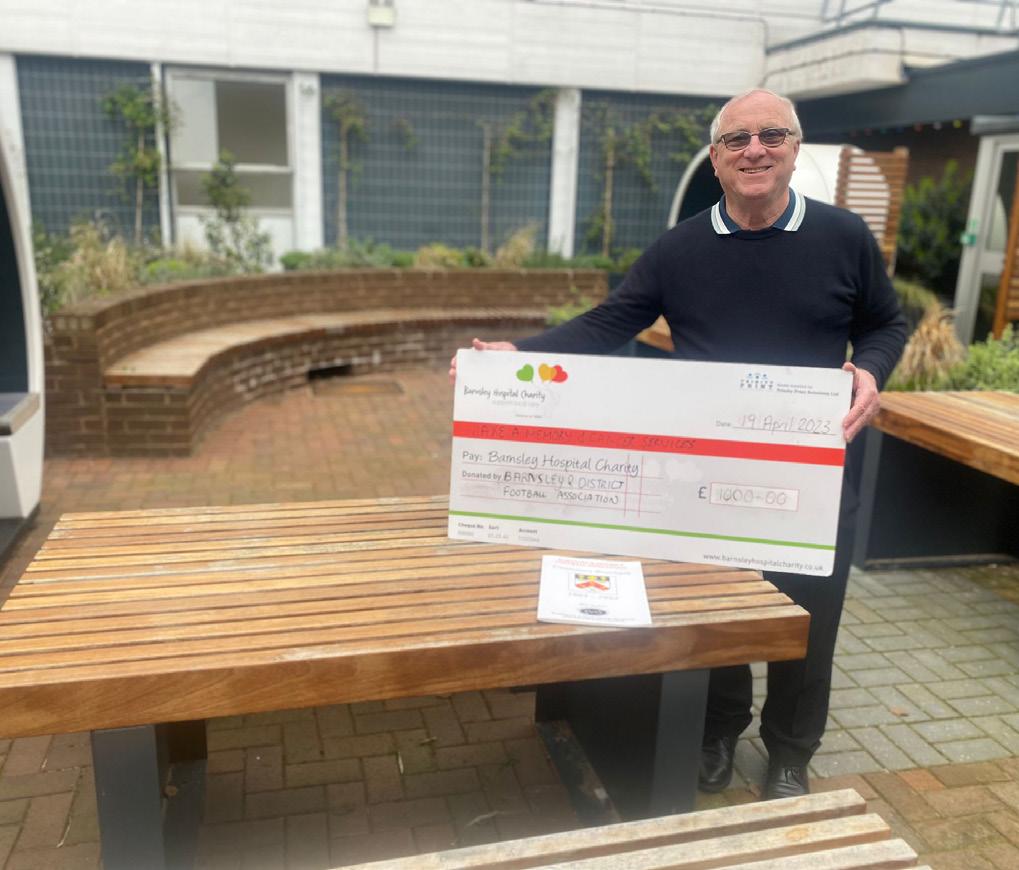
Lifting the cup for Barnsley Hospital Charity
Back in 1896, the Barnsley & District Football Association were asked to run the Beckett Hospital cup, now known as the Barnsley Hospital Cup.
Over the years since then an annual football competition involving teams from across the borough has been held and a donation made to Barnsley Hospital Charity. The Association celebrated its centenary year in 1993.
Roy Parden, 74, has been involved with the association for over 49 years performing various voluntary roles, 45 years as secretary. Roy managed to win the cup once as player/manager. Roy dropped off a cheque for £1,000 to support Cancer Services and our Make A Memory Appeal.
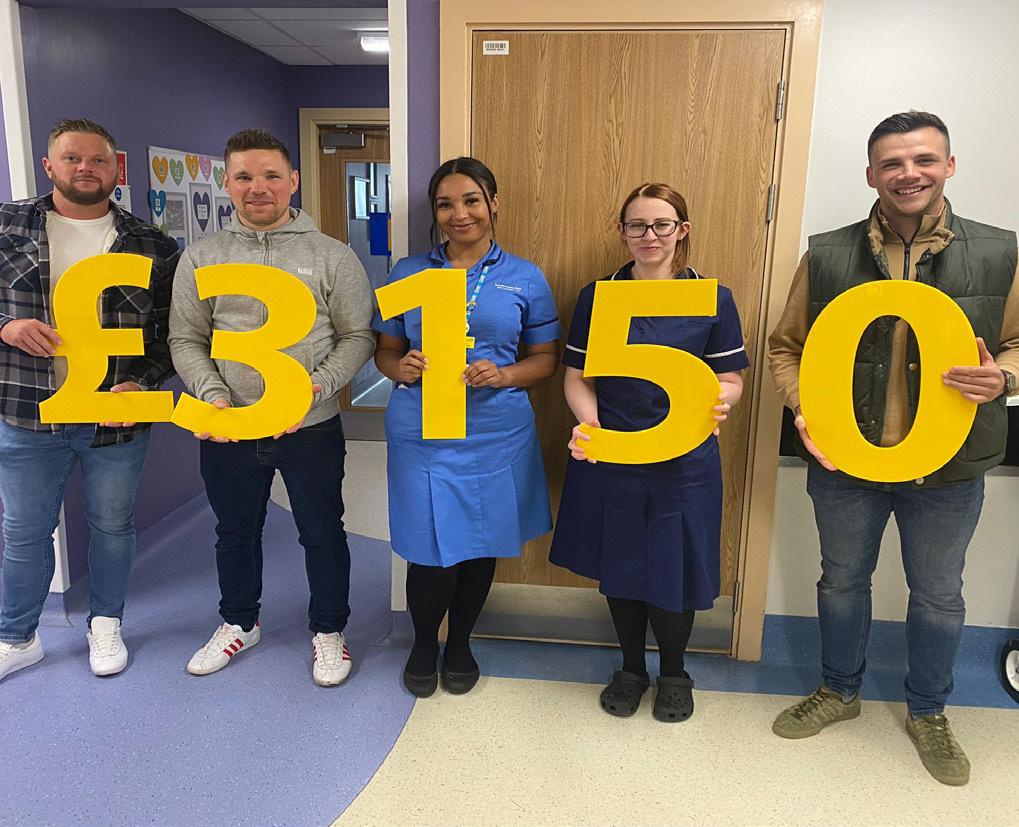
You’ve got a friend in me Ryan Hinchliffe and friends Lee, Dan, Sean, Ashley, Nathan, Sam, Sammy and Ian smashed the Sheffield Half Marathon carrying additional weighted vests weighing 20kg and topped their fundraising target.
Ryan’s son Freddie was born two months prematurely on August 18, 2022, and Ryan wanted to give something back in appreciation of care that partner Hayley and Freddie received. Ryan along with some of his friends like a challenge and so he approached them to take part. The friends said they were ‘volun-told’ but wouldn’t have it any other way.
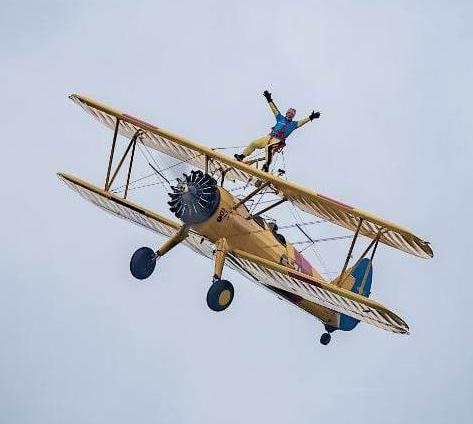
Reaching new heights
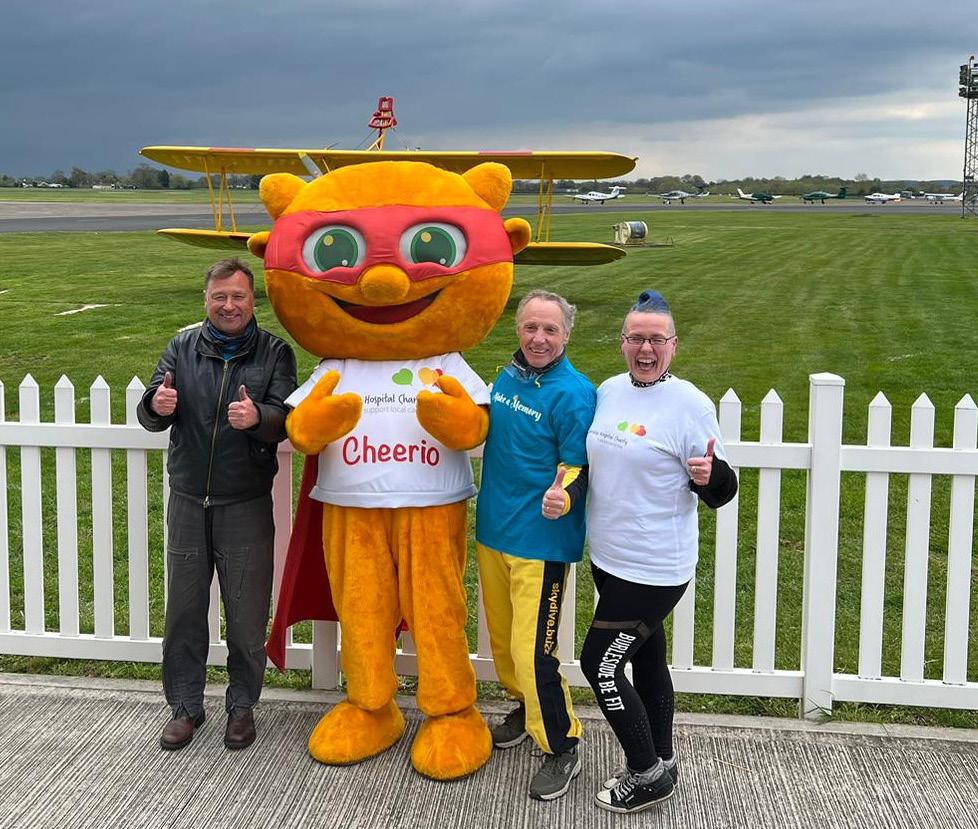
Well done to our daring charity volunteer David Armitage and our supporter Kim O’Brien for reaching new heights to support our Make A Memory Appeal.
Thank you to them both and all their fabulous family and friends for donating and coming along to cheer them on at their wingwalk!
Special shout out to David who can now stop checking the weather and free up his weekends after his previous four attempts were thwarted by rain and wind.
Are you ready for a challenge in 2023? Email barnsleyhospitalcharity@nhs.net to sign up today!
Wednesday July 5
Dress in Blue Day to support the 75th birthday of the NHS
Sunday July 23
We invite our young supporters to attend our 1st ever Grand Ball in partnership with The Copy Cat Party Company
If you have your own fundraising idea we would love to support you in the 75th NHS Birthday year, our supporters never fail to amaze us with their kindness and generosity from maternity to end of life care. Your fundraising helps us make a difference for patients and staff at Barnsley Hospital.
Sunday June 25
Skydiving
Saturday September 23
Wingwalking
Wednesday November 1
Walk on Hot Coals or challenge yourself to walk over glass