Bound by Beauty
By Dani O’Connor
When two masters of aesthetic storytelling come together one from the world of fashion, the other from the world of luxury publishing the result is nothing short of legend.
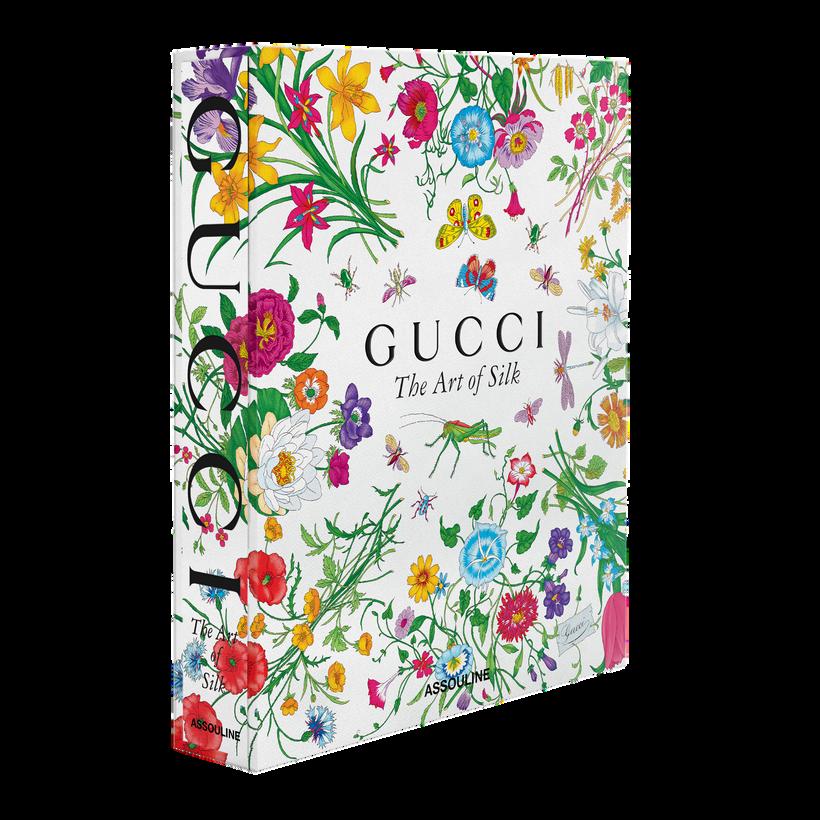
The latest volume from Assouline’s Legends Collection, Gucci: The Art of Silk, is a visually arresting tribute to one of the most iconic yet often underexplored elements of the House’s creative legacy: the silk scarf Lavish, oversized, and wrapped in Gucci’s iconic Flora motif, the book is both object and artifact blending archival richness with contemporary visual culture in a way only Gucci and Assouline can.
It’s not just a publication It’s a portal into Florentine ateliers, royal wardrobes, artistic collaborations, and a century of exquisite Italian savoir-faire
At the heart of Gucci: The Art of Silk is a story about evolution of material, of house identity, and of the role of fashion in cultural memory.
The book traces the history of Gucci scarves from their origin as aristocratic accessories including an early bespoke gift to Princess Grace of Monaco to modern interpretations by legendary creative directors Tom Ford, Frida Giannini, Alessandro Michele, and current artistic lead Sabato de Sarno Each chapter is a moodboard of influence: from Renaissance Florence to 1970s equestrian elegance, from celebrity iconography to avant-garde reinvention
The narrative, penned by noted editor and fashion writer Jo-Ann Furniss, is lyrical yet deeply informed, drawing connections between silk design and the grand tradition of Italian textile arts. With imagery pulled directly from the Gucci archives many of which have never before been published the book recontextualizes the scarf as a canvas of history, emotion, and style.
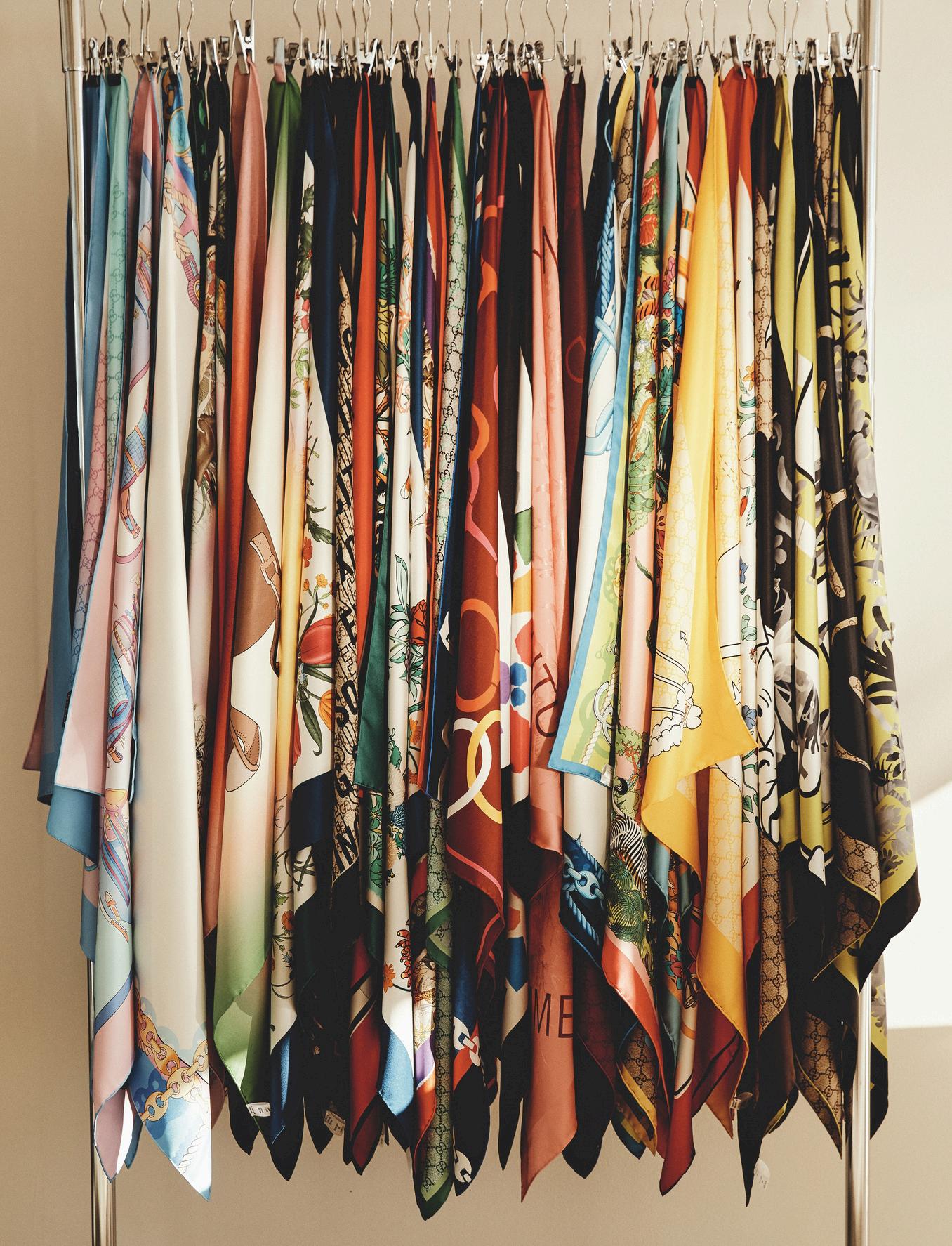
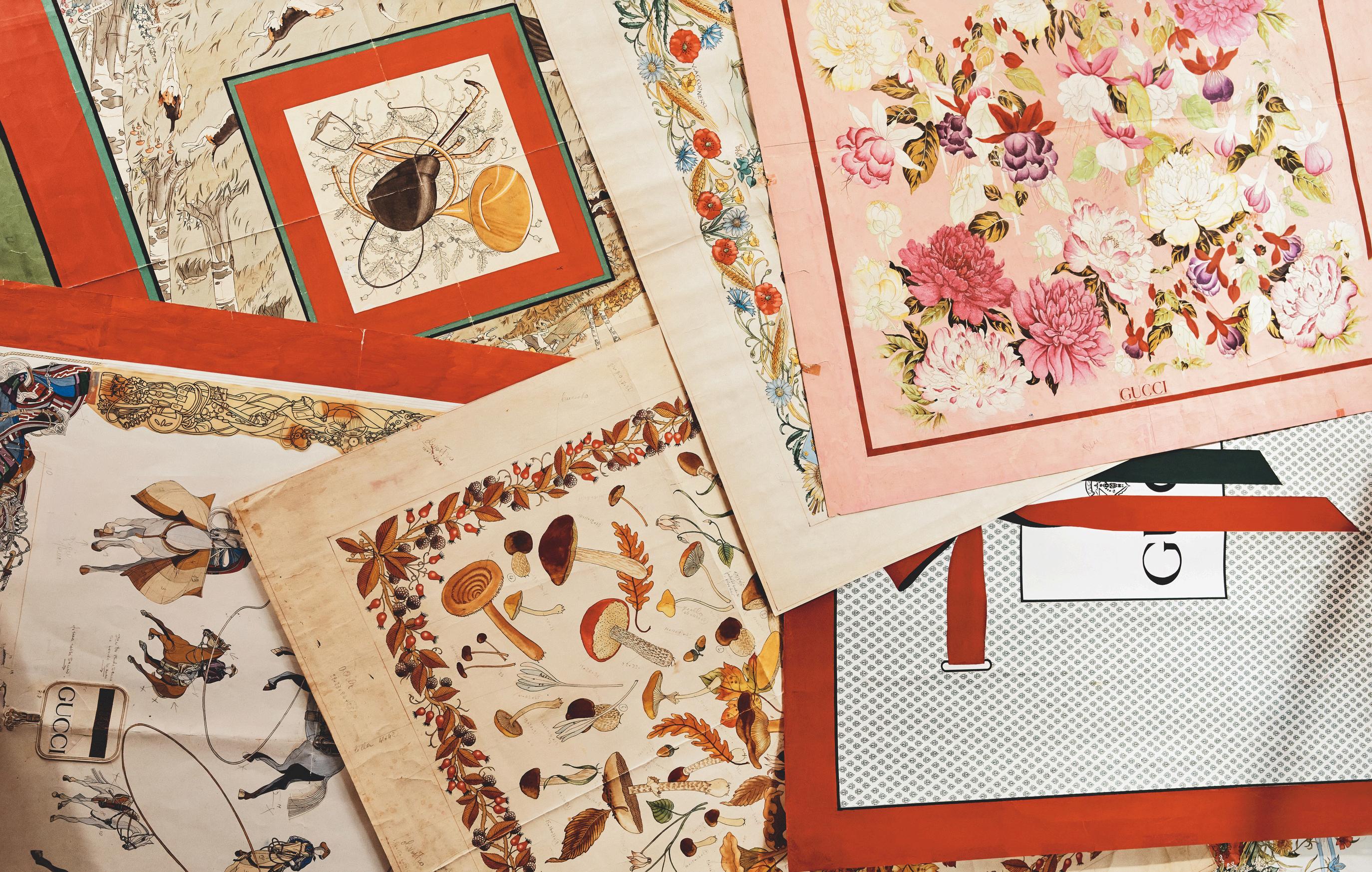
The collaboration offered Assouline unparalleled access to the Gucci archives, housed in the fifteenth-century Palazzo Settimanni in Florence Inside these walls, readers are given a rare glimpse into drawers of original sketches, sample fabrics, and hand-painted prototypes that trace back decades
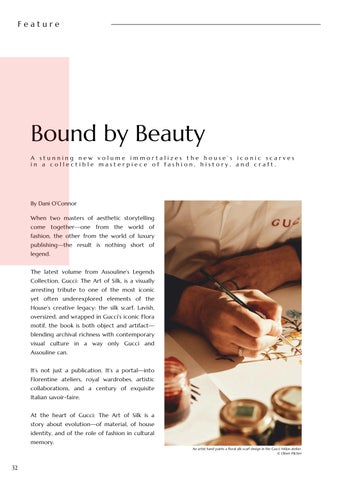
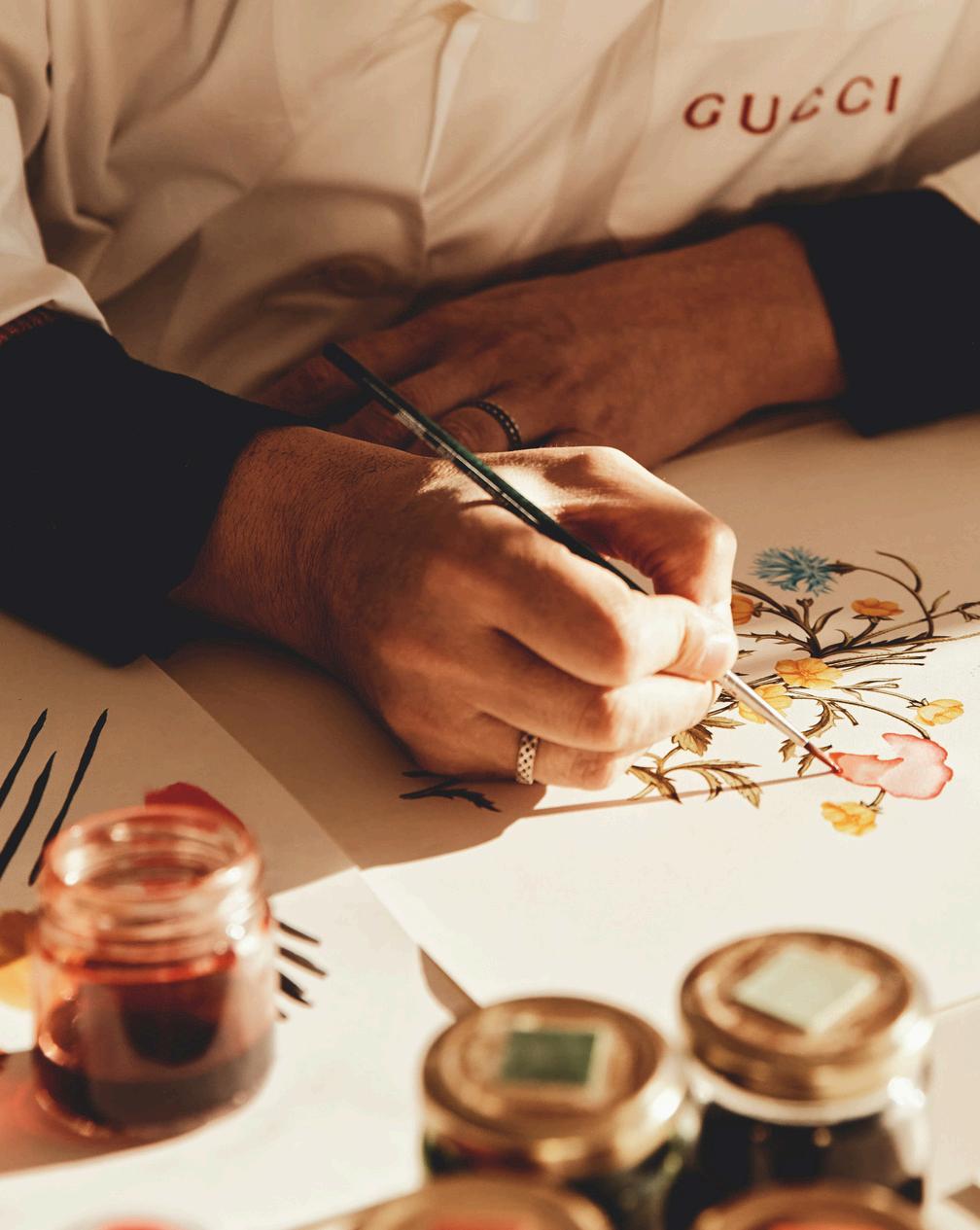
Images of artisans hemstitching scarves by hand or meticulously recreating the hues of the original Flora palette in Como paint a portrait of a house that is not just fashionable but deeply reverent of craft
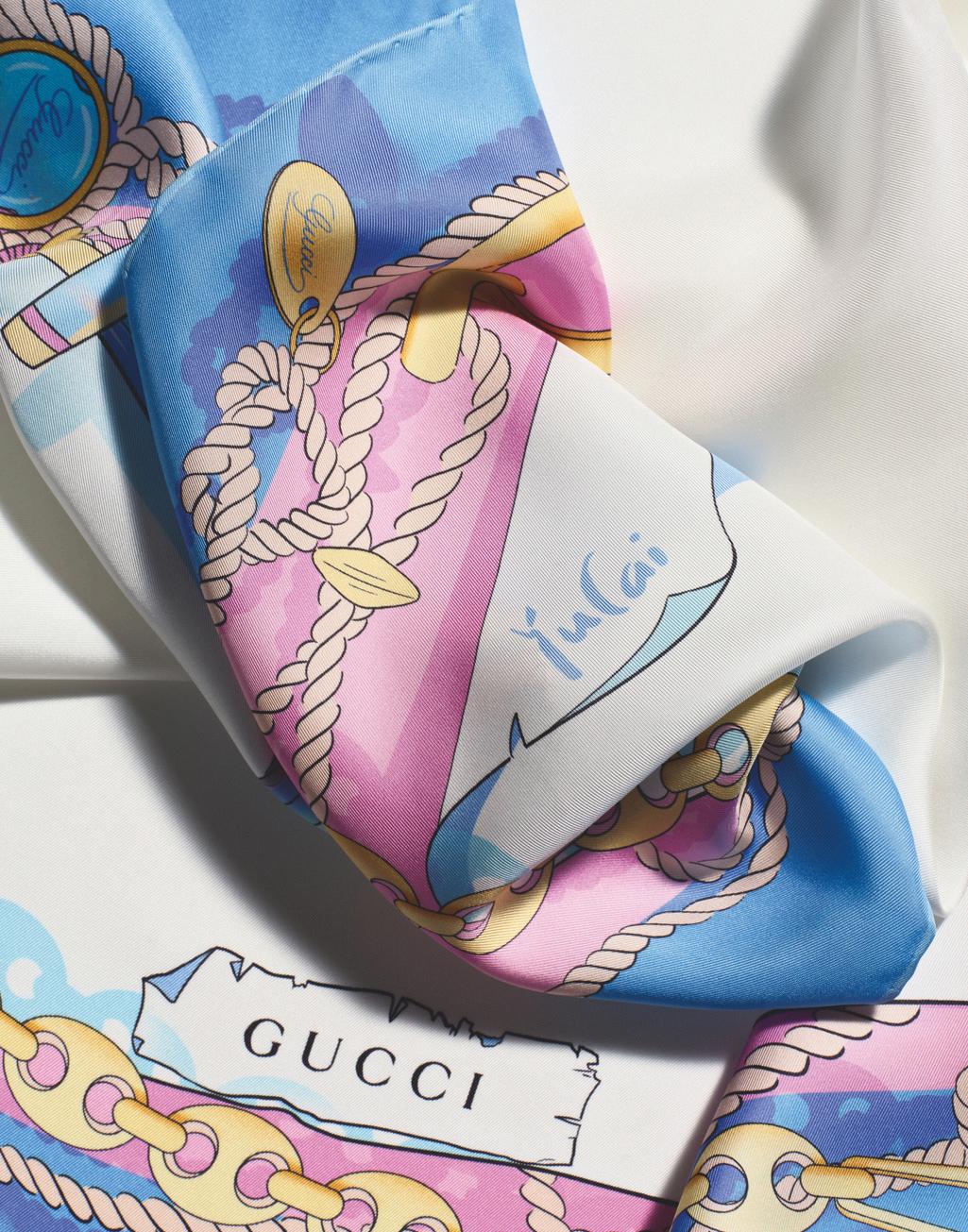
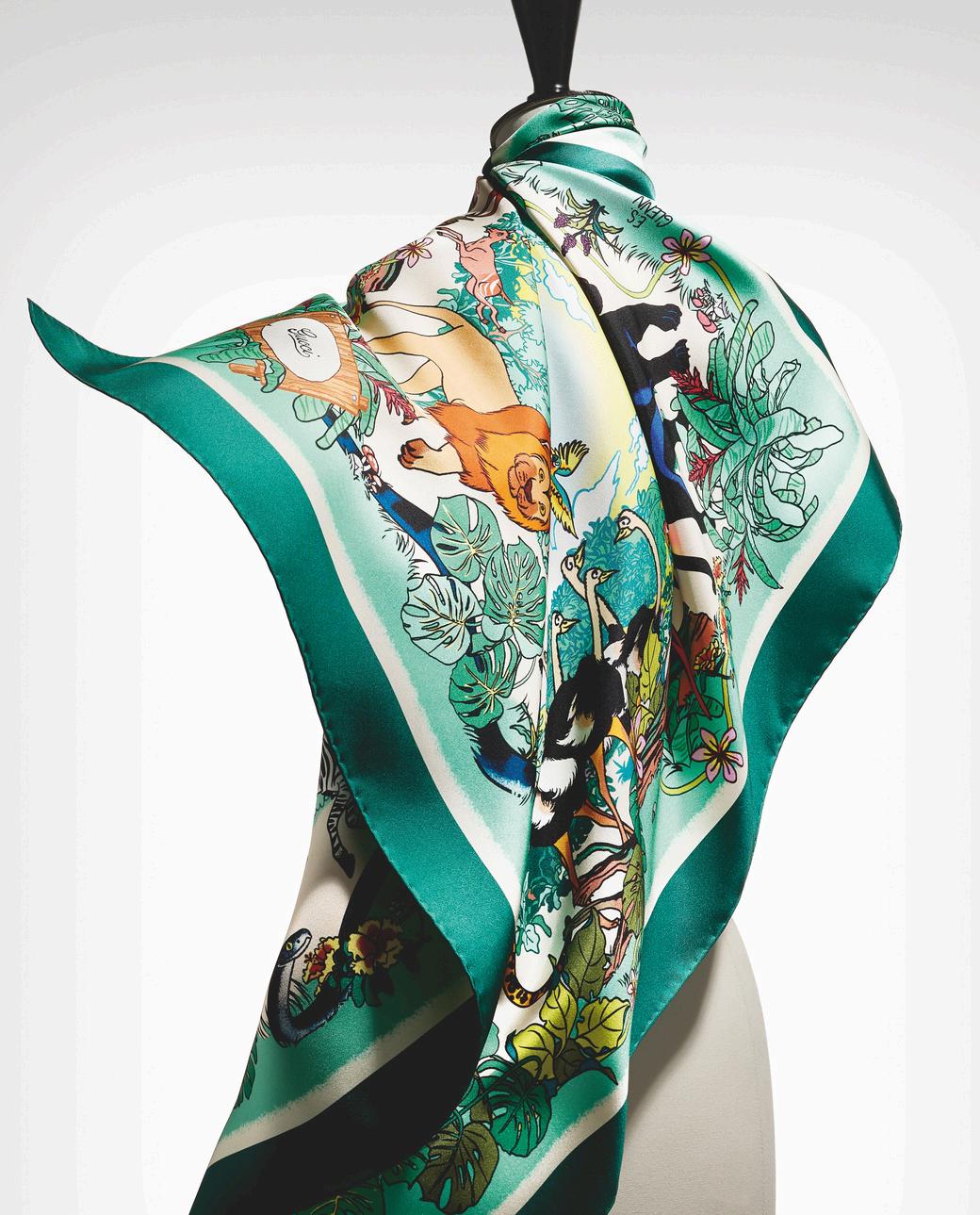
One of the most powerful throughlines in the book is Gucci’s seamless dialogue between past and present You’ll find archival prints once worn by Queen Elizabeth II, Jackie Kennedy, and Princess Grace, side by side with bold new artist collaborations from the 90x90 project, where nine contemporary visionaries including Yu Cai, E S Glenn, and Currynew reinterpret the scarf as modern art.
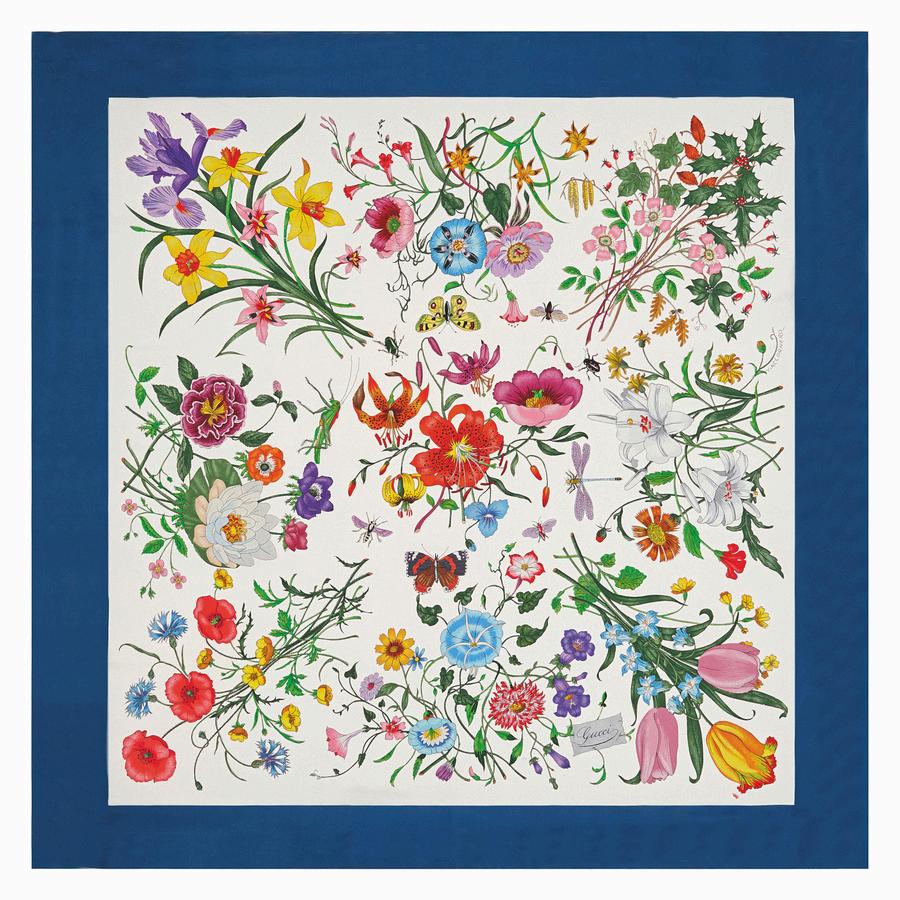
Gucci: The Art of Silk is as much a visual object as it is a narrative Measuring 11 x 14 inches and printed with a silk cover and foil-stamped slipcase, the volume is designed for both reading and reverence. The cover features Gucci’s most famous print, Flora, originally created in 1966 by artist Vittorio Accornero and inspired by Botticelli’s Allegory of Spring. The design, painted by hand in thirty-seven colors and depicting forty-three varieties of flowers and insects, encapsulates the lush, botanical romanticism that has come to define Gucci’s silk language
Inside, photographs by Oliver Pilcher and Laziz Hamani bring movement and tactility to the narrative scarves laid out like scrolls of memory, studio portraits of craftsmen mid-process, and color palettes preserved like museum treasures.
This is not the first time Assouline has translated fashion into literature, but the collaboration with Gucci may be its most poetic yet Known as the first true luxury publishing house, Assouline has spent three decades redefining what a book can be elevating culture, art, travel, and style into tangible heirlooms
For Gucci, this partnership reinforces its place as more than a fashion label it is a cultural house One that doesn’t just produce garments but builds meaning The book cements Gucci’s scarves not as fleeting accessories, but as visual language fluid, collectible, and full of story
As Martine Assouline once said, “These books are designed to be lived with, like a painting, like music
They are companions to beauty” In Gucci: The Art of Silk, that ethos is felt on every page
Whether you ’ re a fashion historian, a collector, or simply someone who appreciates artistry at its highest level, Gucci: The Art of Silk is a must-have. It is both a mirror and a memory of the House’s most whimsical, elegant chapter woven not only in silk, but in symbolism.
In Riyadh, the book is available in limited quantities at Assouline, with signed collector’s editions and presentation boxes available by special request
Because in a city where fashion is becoming its own language, this book is not just decoration It is a declaration of heritage, of beauty, and of the enduring power of a well-told story.
About Assouline:
Founded in Paris in 1994 by Prosper and Martine Assouline, Assouline is the first luxury brand on culture. Guided by a passion for knowledge, culture and travel, the company has published over 2,000 titles in five main collections, along with special editions and unique library accessories. Assouline’s roster of collaborators includes some of the world’s most respected brands, artists, photographers, writers and designers With an unparalleled signature style and elegant savoir- faire, Assouline has globally redefined modern publishing.
Learn more at www assouline com