


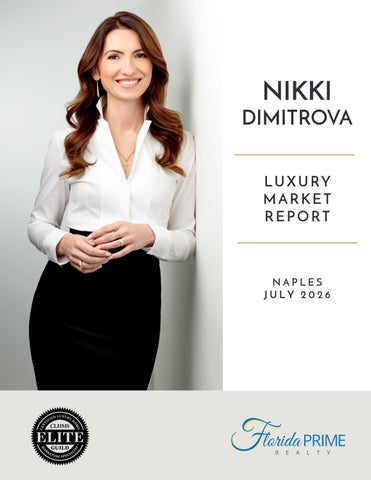
Meet Nikki Dimitrova, an esteemed Real Estate Advisor and Broker Associate with Florida Prime Realty who has earned not only a sterling reputation in the luxury real estate market but also the gratitude and admiration of her clients. With over a decade of experience, she has achieved numerous milestones exceeding the expectations of her clients’ time and again. Whether working with buyers or sellers, Nikki takes the time to understand her client’s objectives fully no matter how complex or demanding the situation may be.
The driving force behind all her interactions is integrity and trust, and with this unwavering commitment her clients can rely on her to provide candid advice that ensures well-informed decisions are made with confidence! One of her greatest assets is her vast network cultivated over years of dedicated service in the industry, and her revolutionary marketing techniques.
Every home has its own story, and every situation is unique, and in this ever-changing world of technology Nikki believes in the personalized service, thus leverages her expertise to develop a tailored approach to all her clients ensuring their real estate success! Sellers can confidently rely on her thorough knowledge of what it takes to market their property to the right buyer in a global market, and a buyer can do the same knowing that her diligence and commitment to excellence will ensure they are paired with a property and lifestyle that aligns with their desires and preferences. Whether you are in search of refined living, especially in the realm of waterfront or golf course communities or looking for the right person to prepare and position your luxury property in front of right audience then get ready to achieve results that go beyond the temporal transaction and with the utmost care and precision.
In pursuit of her clients’ success, she corroborates with a team of experts who all bring diverse qualities to the table. With extensive experience in the luxury market, unparalleled marketing knowledge, and global networks, Nikki is the seasoned realtor you can trust! In her spare time, you will find Nikki enjoying the simple things in life such as enjoying a good book on our Naples beaches, traveling, and making memories with her family, or volunteering and giving back to her local community and church.


PAGE 4-7
PAGE 8
PAGE 9
PAGE 10
PAGE 11-14
PAGE 15
PAGE 16
PAGE 17-21
PAGE 22
NORTH AMERICAN LUXURY MARKET REVIEW
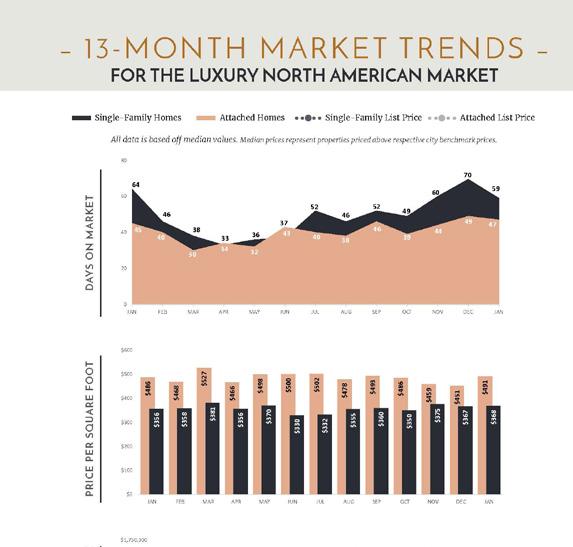
13-MONTH MARKET TRENDS
SINGLE-FAMILY HOMES MONTHLY OVERVIEW
ATTACHED HOMES MONTHLY OVERVIEW
MONTHLY STATISTICS BY CITY
LUXURY REPORT EXPLAINED
WELCOME MESSAGE
LOCAL LUXURY MARKET REVIEW
THANK YOU
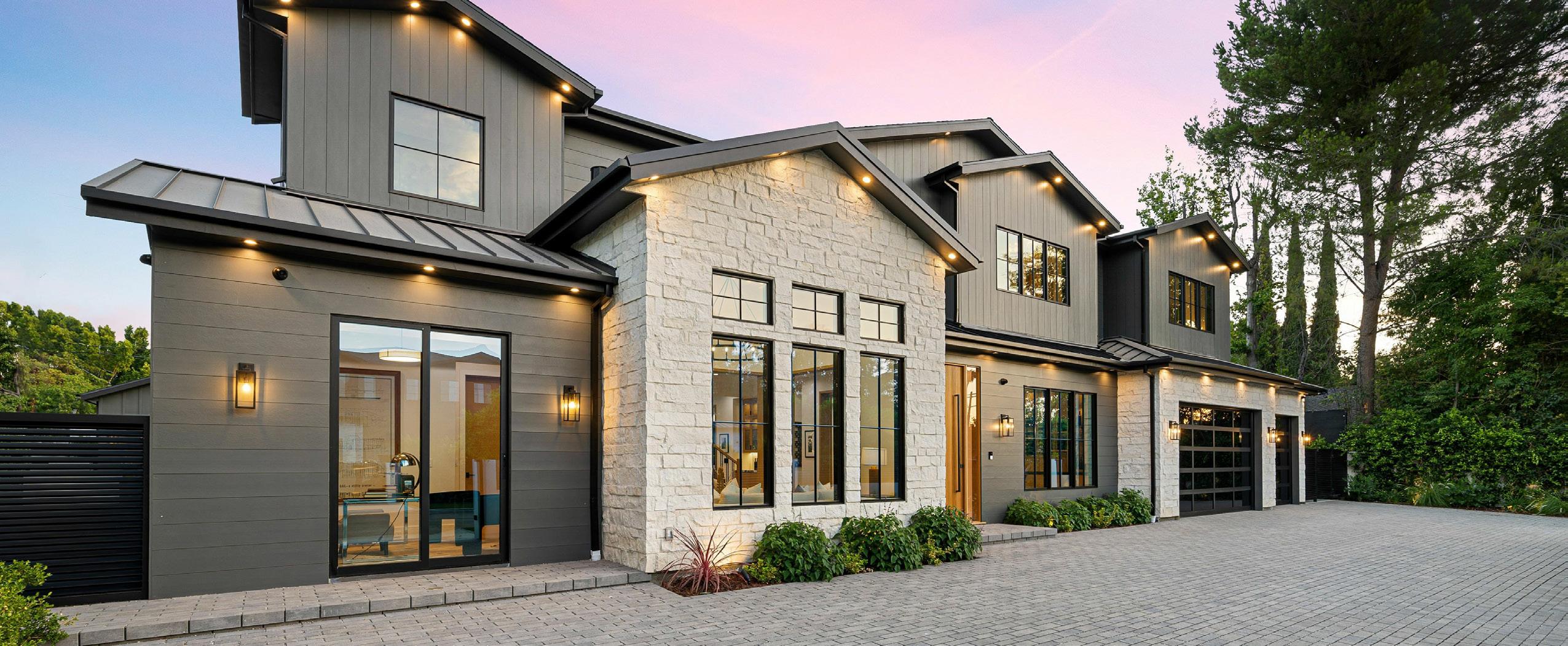
As we close out the first half of 2026, North America’s luxury real estate market continues to distinguish itself from the broader housing sector. While economic uncertainty, interest rate expectations, and geopolitical events have prompted caution across many segments of the economy, affluent buyers have remained remarkably active, reinforcing luxury real estate’s reputation as a resilient long-term asset.
Rather than experiencing the slowdown many anticipated, the luxury market has spent the past six months demonstrating steady sales growth, stable pricing, and increasing competition for desirable properties. At the same time, however, inventory growth has slowed considerably compared to 2025 as fewer homeowners choose to bring their properties to market.
The result is a luxury market that remains fundamentally healthy, but one that is becoming increasingly strategic. Buyers have become more discerning, sellers more cautious, while exceptional properties continue to command strong demand.
The first quarter established the tone for the year, with the luxury market demonstrating steady, sustainable growth despite ongoing economic uncertainty.
January closely mirrored the unusually strong start to 2025. While year-over-year sales were relatively flat, stable pricing and modest inventory growth reinforced that buyer demand remained intact. More notably, new listings declined compared to January 2025, signalling that last year’s inventory expansion might be beginning to slow.
February reinforced these trends. Luxury single-family prices edged higher year-over-year, attached properties remained relatively stable, and sales activity held firm. Although inventory remained above 2024 levels, year-over-year growth moderated while the flow of new listings slowed, suggesting the market had reached a more balanced equilibrium following 2025’s supply recovery.
March provided the clearest evidence of the market’s underlying strength. Sales accelerated across both property types, significantly outpacing seasonal norms despite inventory remaining virtually unchanged from the previous year and new listings continuing to fall below 2025 levels. Rather than weakening demand, tighter supply resulted in available inventory being absorbed more quickly, gradually shifting market conditions back in favour of sellers.
Overall, the first quarter established the key themes that would define the first half of 2026: resilient demand, price stability, and tightening supply.
If the first quarter demonstrated the market’s resilience, April and May revealed one of the year’s defining trends: a growing disconnect between buyer demand and housing supply. Spring is typically the strongest season for new listings, but in 2026 both inventory growth and new listing activity consistently lagged behind 2025.
April provided the first clear indication that this was more than a temporary fluctuation. Compared to April 2025, inventory declined across both single-family and attached luxury markets, by 4.4% and 8.5% respectively, while new listings also fell despite entering what is traditionally the busiest selling season.
Under normal market conditions, this would suggest softening demand. Instead, sales continued to strengthen. Year-over-year single-family luxury sales rose nearly 7%, attached properties saw a slight gain of 0.6%, and pricing, sold-to-list ratios, and days on market remained remarkably stable.
By May, the divergence became even more pronounced. Single-family sales accelerated by 10.3%, while attached properties rebounded by 2.7% after the brief slowdown in April. At the same time, inventory fell further below 2025 levels, as new listings declined by 10.0% and 8.8% respectively, which also saw an unusual month-over-month drop that typically does not occur until the summer season.
However, rather than signalling weakening demand, available inventory was simply being absorbed faster than it could be replenished, which subsequently saw intensified competition for well-located, high-quality properties, particularly in the single-family segment.
June provided the strongest confirmation yet that the luxury market has entered a distinctly different phase than many expected at the start of the year.
Sales accelerated significantly across both property types, with luxury single-family transactions rising 15.8% compared to June 2025 and attached luxury sales increasing 8.7%. Month-over-month activity also remained strong, demonstrating that buyer momentum had not faded as the market moved towards the traditionally slower summer season.
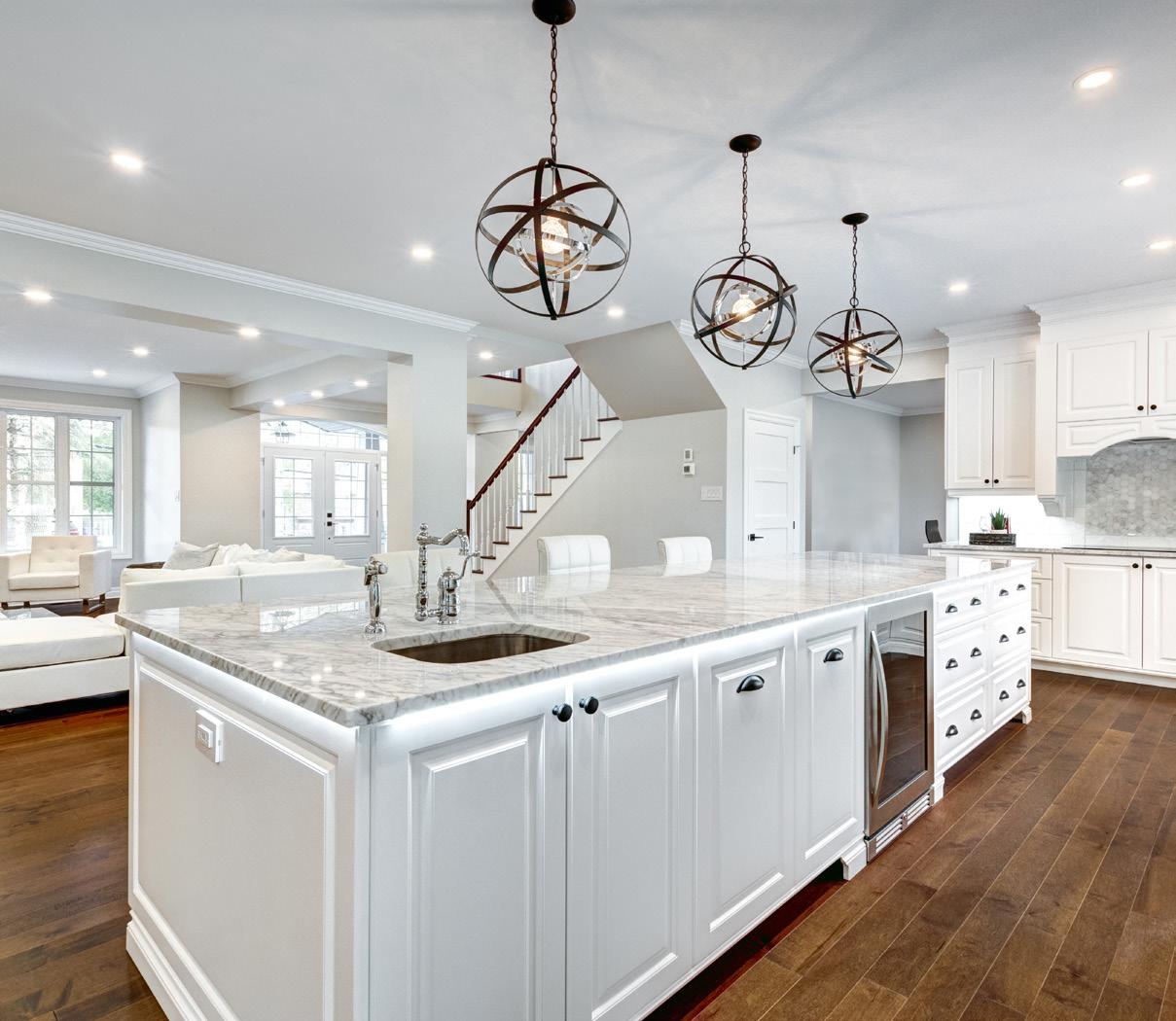
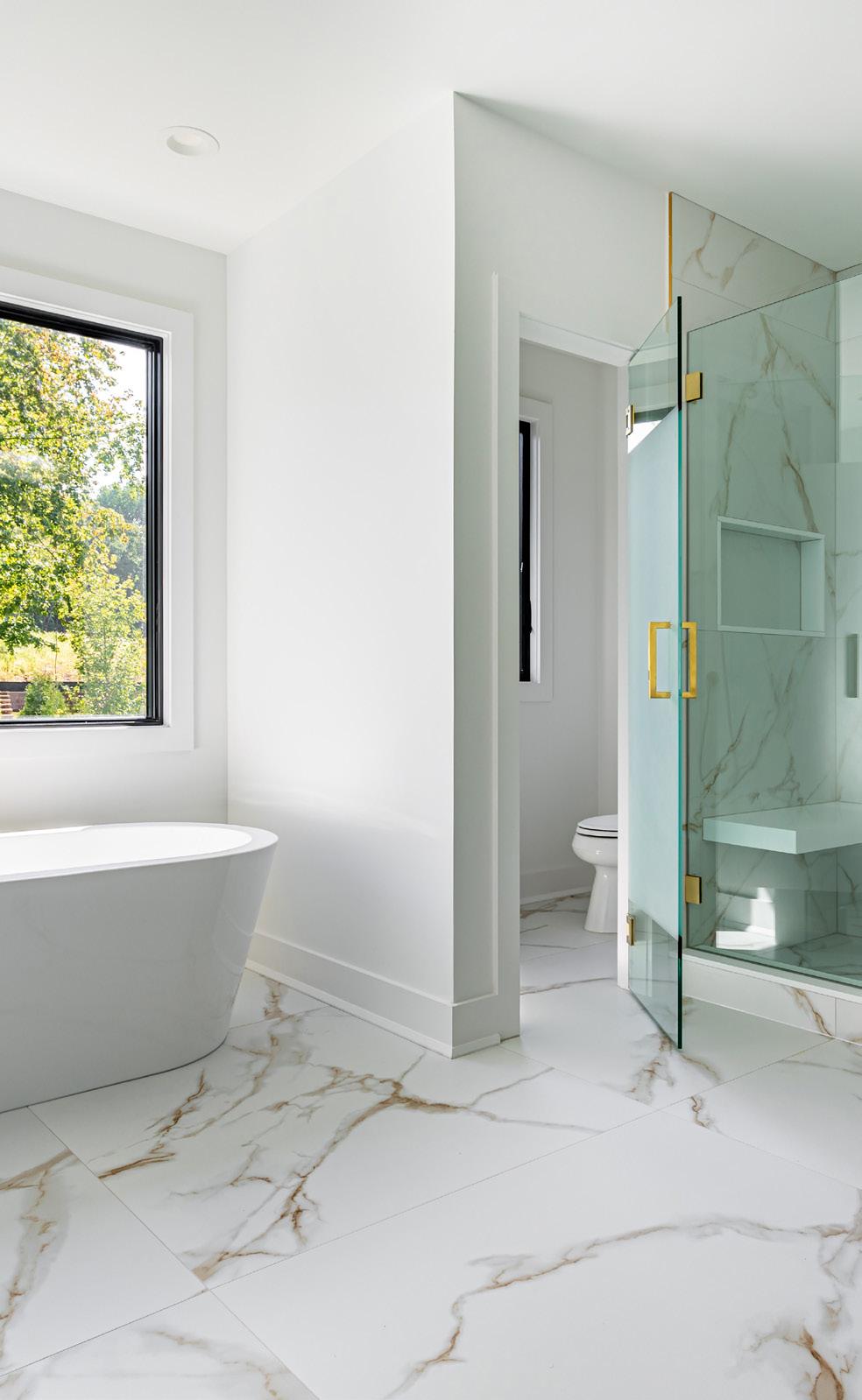
Pricing also remained stable. Luxury single-family homes posted year-over-year and month-over-month price gains of 3.9% and 3.6%, while attached properties maintained their median price despite minor monthly fluctuations. Just as importantly, sold-to-list price ratios strengthened slightly and days on market remained consistent with last year’s levels, indicating that buyer demand continues to support pricing without creating excessive market pressure.
Constrained inventory continued to be the dominant theme. New listings trailed both the previous month and June 2025, pushing overall inventory below last year’s levels across both market segments. By mid-year, this had become a consistent pattern rather than a short-term anomaly.
Looking across the first half of 2026 puts these monthly trends into perspective. Compared to the first six months of 2025, luxury single-family sales have increased by 8.3%, while attached luxury sales rose by 3.2%. Median sold prices also appreciated, increasing 1.2% for single-family homes and 2.1% for attached properties, while average inventory levels declined 3.9% and 5.9%, respectively.
Taken together, these results paint a picture that differs markedly from much of the broader housing market narrative, as the luxury sector continues to chart its own course.
The luxury market’s performance during the first half of 2026 has been shaped by buyer confidence, constrained supply, strategic demand and the enduring appeal of luxury real estate as a long-term investment.
Unlike the broader housing market, where affordability continues to be heavily influenced by borrowing costs, affluent buyers have remained relatively insulated from higher interest rates. Many luxury purchases are supported by significant equity or cash, allowing buyers to focus less on financing conditions and more on long-term lifestyle and investment opportunities.
At the same time, ongoing financial market volatility, geopolitical uncertainty, and inflation concerns have reinforced luxury real estate’s role as a stable store of wealth. For many affluent individuals, premium properties continue to offer both portfolio diversification and lasting lifestyle value, supporting buyer confidence even during periods of broader economic uncertainty.
Perhaps the most significant trend has been the growing imbalance between supply and demand. As fewer homeowners chose to sell, available inventory was absorbed faster than it could be replenished, gradually strengthening seller leverage across many luxury markets. Tightening inventory has also heightened buyer selectivity, with well-designed, move-in-ready homes continuing to command premium prices.
While the luxury market enters the second half of the year from a position of strength, several factors will determine how conditions evolve in the months ahead.
Inventory will continue to be the key variable. If more homeowners choose to list after the summer months, buyers may see greater choice and more balanced market conditions. However, if new listings remain below historical norms, competition for high-quality homes is likely to intensify, particularly in the single-family segment.
Affluent buyers are expected to remain active despite ongoing economic uncertainty. Supported by strong equity positions, accumulated wealth, and a long-term investment outlook, demand should continue to underpin pricing. While significant price acceleration appears unlikely, limited inventory is expected to help sustain home values, with local market conditions increasingly driving regional performance.
The first half of 2026 confirmed that the luxury market continues to chart its own course, as affluent buyers have transacted with confidence despite a more uncertain economic backdrop.
The year’s defining story has been the resilience of the luxury buyer. Continued demand from affluent purchasers has sustained sales, supported home values, and increased competition for exceptional properties, even as fewer homeowners chose to bring their homes to market.
Although economic uncertainty will continue to influence consumer sentiment, the luxury market enters the second half of 2026 from a position of strength, supported by resilient demand, constrained supply, and buyers who continue to view luxury real estate as both a lifestyle choice and a long-term investment.
Single-Family Homes
Attached Homes Single-Family List Price Attached List Price
All data is based off median values. Median prices represent properties priced above respective city benchmark prices.
$1,700,000
$1,500,000
$1,300,000
$1,100,000
$900,000
$700,000
$500,000
• Official Market Type: Seller's Market with a 30.81% Sales Ratio.1
• Homes are selling for an average of 98.65% of list price.
• The median luxury threshold2 price is $900,000, and the median luxury home sales price is $1,350,000.
• Markets with the Highest Median Sales Price: Whistler ($18,880,000), Silicon Valley ($5,475,000), Telluride ($4,647,500), and Los Angeles Beach Cities ($4,215,000).
• Markets with the Highest Sales Ratio: San Francisco (183.1%), Baltimore City (161.9%), Chicago (106.4%), and Central Connecticut (96.9%).
1
• Official Market Type: Balanced Market with a 20.93% Sales Ratio.1
• Attached homes are selling for an average of 98.57% of list price.
• The median luxury threshold2 price is $700,000, and the median attached luxury sale price is $900,000.
• Markets with the Highest Median Sales Price: Whistler ($3,537,500), San Francisco ($2,700,000), Park City ($2,337,500), and Naples ($2,200,000).
• Markets with the Highest Sales Ratio: Morris County (100.0%), Howard County (88.1%), Arlington & Alexandria (87.0%), and San Francisco (79.7%).
The Institute for Luxury Home Marketing has analyzed a number of metrics — including sales prices, sales volumes, number of sales, sales-price-to-list-price ratios, days on market and price-per-squarefoot – to provide you a comprehensive North American Luxury Market report.
Additionally, we have further examined all of the individual luxury markets to provide both an overview and an in-depth analysis - including, where data is sufficient, a breakdown by luxury singlefamily homes and luxury attached homes.
It is our intention to include additional luxury markets on a continual basis. If your market is not featured, please contact us so we can implement the necessary qualification process. More in-depth reports on the luxury communities in your market are available as well.
Looking through this report, you will notice three distinct market statuses, Buyer's Market, Seller's Market, and Balanced Market. A Buyer's Market indicates that buyers have greater control over the price point. This market type is demonstrated by a substantial number of homes on the market and few sales, suggesting demand for residential properties is slow for that market and/or price point.
By contrast, a Seller's Market gives sellers greater control over the price point. Typically, this means there are few homes on the market and a generous demand, causing competition between buyers who ultimately drive sales prices higher.
A Balanced Market indicates that neither the buyers nor the sellers control the price point at which that property will sell and that there is neither a glut nor a lack of inventory. Typically, this type of market sees a stabilization of both the list and sold price, the length of time the property is on the market as well as the expectancy amongst homeowners in their respective communities – so long as their home is priced in accordance with the current market value.
DAYS ON MARKET: Measures the number of days a home is available on the market before a purchase offer is accepted.
LUXURY BENCHMARK PRICE: The price point that marks the transition from traditional homes to luxury homes.
NEW LISTINGS: The number of homes that entered the market during the current month.
PRICE PER SQUARE FOOT: Measures the dollar amount of the home's price for an individual square foot.
SALES RATIO: Sales Ratio defines market speed and determines whether the market currently favors buyers or sellers. A Buyer's Market has a Sales Ratio of less than 12%; a Balanced Market has a ratio of 12% up to 21%; a Seller's Market has a ratio of 21% or higher. A Sales Ratio greater than 100% indicates the number of sold listings exceeds the number of listings available at the end of the month.
SP/LP RATIO: The Sales Price/List Price Ratio compares the value of the sold price to the value of the list price.
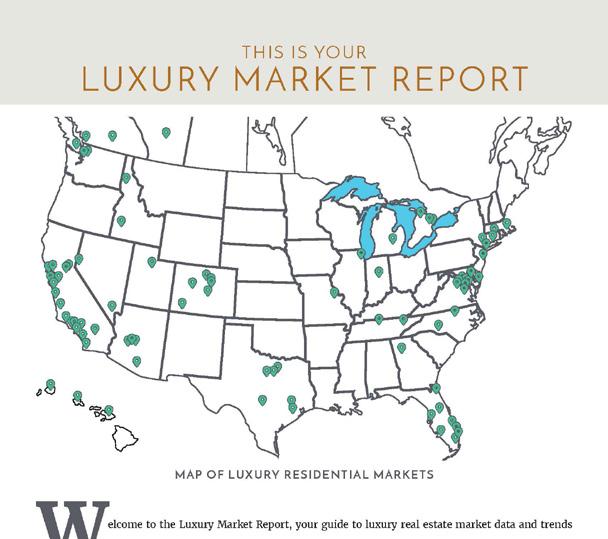
The Luxury Market Report is your guide to luxury real estate market data and trends for North America
Produced monthly by The Institute for Luxury Home Marketing, this report provides an in-depth look at the top residential markets across the United States and Canada. Within the individual markets, you will find established luxury benchmark prices and detailed survey of luxury active and sold properties designed to showcase current market status and recent trends. The national report illustrates a compilation of the top North American markets to review overall standards and trends.
Copyright © 2026 Institute for Luxury Home Marketing | www.luxuryhomemarketing.com | 214.485.3000
The Luxury Market Report is a monthly analysis provided by The Institute for Luxury Home Marketing. Luxury benchmark prices are determined by The Institute. This active and sold data has been provided by REAL Marketing, who has compiled the data through various sources, including local MLS boards, local tax records and Realtor.com. Data is deemed reliable to the best of our knowledge, but is not guaranteed.

Buyer's Market
$20,000,000+
$15,000,000 - $19,999,999
$10,000,000 - $14,999,999
$9,000,000 - $9,999,999
$8,000,000 - $8,999,999
$7,000,000 - $7,999,999
$6,000,000 - $6,999,999
$5,000,000 - $5,999,999
$4,000,000 - $4,999,999
$3,500,000 - $3,999,999
$3,000,000 - $3,499,999
$2,800,000 - $2,999,999
$2,600,000 - $2,799,999
$2,500,000 - $2,599,999
$2,400,000 - $2,499,999
$4,600,000 - $5,099,999
$4,100,000
$3,600,000
$1,800,000 - $1,899,999
$1,700,000 - $1,799,999
$1,600,000 - $1,699,999
$1,500,000 - $1,599,999
Luxury Benchmark Price 1: $1,275,000
Median Sales Price Inventory
Solds
INVENTORY TOTAL SOLDS
• The attached luxury market is a Balanced Market with a 14% Sales Ratio
• Homes sold for a median of 93.62% of list price in June 2026.
• The most active price band is $1,600,000-$1,699,999, where the sales ratio is 35%.
• The median luxury sales price for attached homes is $2,200,000.
• The median days on market for June 2026 was 90 days, down from 110 in June 2025.