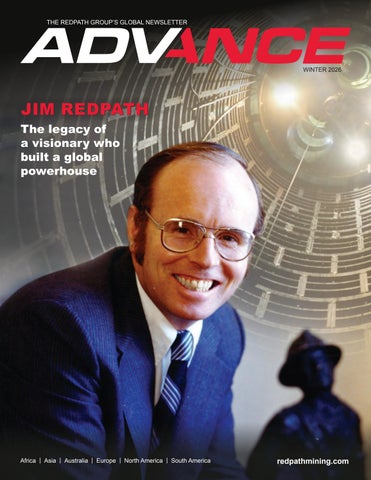
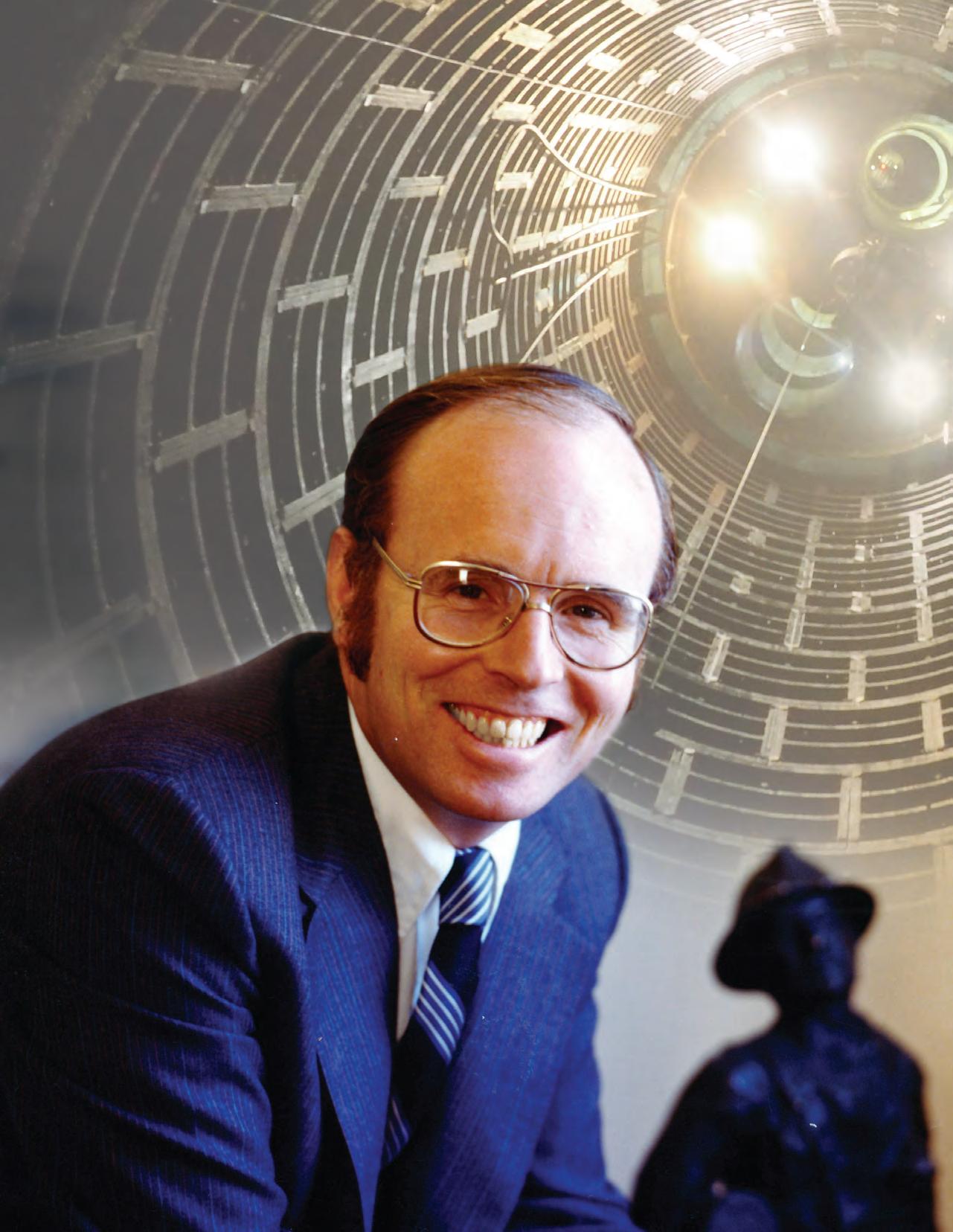
JIM REDPATH JIM REDPATH
The legacy of a visionary who built a global powerhouse
to our contributors:
Bob Rappolt, Senior Consultant – Mining
Chris Hickey, Independent Consultant & former Redpath VP
David Hansman, Senior Vice President, The Redpath Group
David Marshall, Founding President, Nipissing University
Dennis Geden, Professor Emeritus, Nipissing University
Frank Otten, Senior Vice President, Redpath Deilmann
Fred Edwards, Consulting Mining Engineer
Gerry Foster, Former Vice President & General Manager, Boart Longyear
George Flumerfelt, CEO, The Redpath Group
George Martin, Former Redpath VP of Operations
Graham Speirs, Mining Entrepreneur
Jack de la Vergne, Former Mining Consultant, Author, Jim’s cousin
Johan Davel, President, Redpath Raiseboring Limited
John Gilbert, Senior Consultant - Mining
John Redpath, Son of Jim Lok Home, President, The Robbins Company
Michael Winship, Past President, CIM
Mike Kelly, Former President, Redpath Raiseboring Limited
Moira Jackson, Author of the Redpath histories
Morris Medd, Former President, The Redpath Group
Ricardo Lopez, General Counsel/CCO, The Redpath Group
Rod Johnston, DDS and Community Volunteer
Rory Burke, Chief Operating Officer, Redpath Australia
Roy Slack, Past President CIM, Founder & Board Member, Cementation Americas
Sarah Fitzgerald, General Manager, HR, Redpath Americas
Scott Hayne, Senior Vice President, Redpath Americas
Scott McIntosh, Former President & CEO, McIntosh Engineering
Shemara Watts, Global Tax Manager, The Redpath Group
Sudesh Deonarain, General Manager, Engineering, Redpath Mining South Africa
Wolf Seidler, Former Redpath VP of Engineering
A special thank you to Jim Redpath’s family for generously sharing content and thoughtful guidance during the development of this publication.
This edition was created by David Hansman, Senior Vice President, Catharina Nordbeck, Global Marketing Manager, and Redpath’s Global Marketing Team in January of 2026.
GEORGE FLUMERFELTChief Executive Officer,
The Redpath Group
HONOURING JIM REDPATH’S LEGACY
Those of us who had the opportunity to work with, or even just meet and have conversations with Jim Redpath, quickly realized that he was a very humble guy who rarely spoke about himself, but who was intensely interested in you as a person.
So, when we set out to celebrate his remarkable journey, we turned to those who knew him best; his family, friends, colleagues, clients, and partners who lived, travelled, and worked with and alongside him. Their stories paint a vivid picture of a visionary leader whose humility was matched only by his determination to build something great. In achieving that, he never sought credit for himself; instead, he celebrated the accomplishments of his team.
Central to Jim’s success was his unwavering commitment to the Philosophy and Guidelines for Success which he penned in the early days of our organization. These principles shaped not only his leadership but also the culture that defines Redpath today, prioritizing safety, integrity, and innovation in every project. They remain the foundation upon which our teams still operate, guiding decisions and driving excellence across the globe.
Several aspects of Redpath have personally inspired and influenced me. I first came to learn about the company when I was a college student, and Alex Speirs gave us a presentation on the Black Angel project in Greenland. “Wow,” I thought, “what an amazing effort to execute a complex project in such a remote location!”
My next exposure to Redpath occurred in 1977 when I spent a summer working at the Brunswick mine project. There, the quality and skill of the workforce was impressive. It was obvious to me that Redpath earned its reputation by tackling hard projects head-on with skilled people and persevering to overcome difficult challenges.
When I began my current role in 2005, the greatest pressure I felt was the need to do whatever I could to preserve, and continue to build, the company’s hard-won reputation for delivering safe and first-rate projects for its clients. The Philosophy and Guidelines for Success have been the source that I turn to, and rely on, to help guide us on our journey. Their simple, straightforward nature make them easy to commit to memory and remember when needed. I view them as the greatest gift that Jim gave us; they have proven invaluable to me.
The principles behind that gift reflect the very essence of Jim’s leadership. His influence lives on in every shaft sunk, every metre of development excavated, every raise bored, and every milestone achieved. His vision transformed Redpath from a small Canadian contractor into a global leader in mining services.
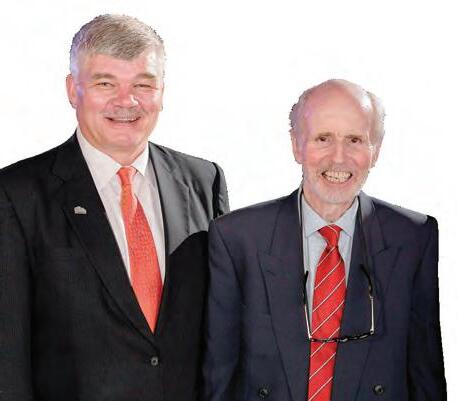
Today, we proudly serve as the longest-standing Canadian-based mining contractor; a testament to Jim’s enduring impact and the trust placed in us by clients worldwide.
As we look ahead, we will honour Jim’s legacy by continuing to deliver world-class solutions — built on the same values that started it all.
George and Jim at Redpath’s 50th anniversary celebration in 2012.
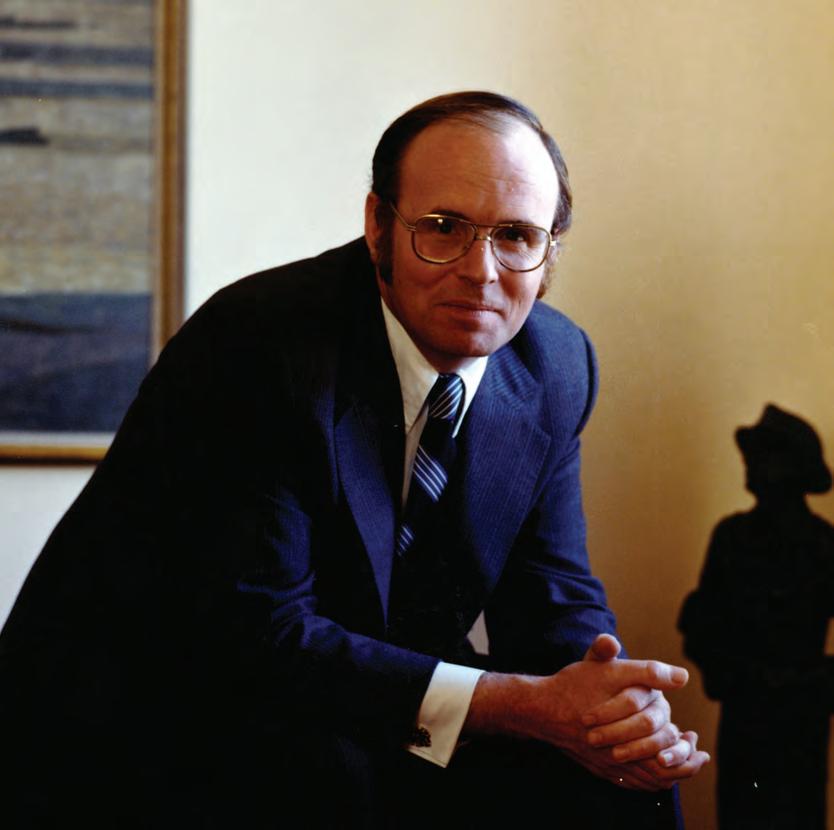
At 26 years old, Jim Redpath founded J.S. Redpath Ltd. from the basement of his Québec apartment. When asked why he started his own business, his answer was simple: “Because I didn’t like working for others!” Jim was with Redpath for 35 years.
In Jim Redpath’s own words:
“I was raised in Val-d’Or, born in 1936, the same year the town was founded. My father, a mining engineer from Pincher Creek, Alberta, was mine superintendent and, later, mine manager at the Sigma Mine, an underground gold mine.
We lived about 100 yards from the mine’s bunkhouse. Prospectors, diamond drillers, and miners were the men I was exposed to from birth.”

Dad’s father was a mining engineer, and his mother was a geologist. He spent his childhood near the Sigma gold mine in Val-D’or, Québec, where my grandfather was the mine manager. As a child, he was immersed in the culture of mining: the business, the stories and the characters.
He studied Mining Engineering at McGill, and worked in mines during and after university. He learned by visiting as many sites as he could, asking questions along the way. He toured mines right across Canada, and took an ocean liner to Europe with his friend Don “Ducky” MacLean (now a Canadian Mining Hall of Fame
member) to tour mines there. After graduation, it took him four years to figure out that he wanted to work for himself. He had a certain vision of how business should be done, and he thought he could execute it.
When Jim graduated as an engineer, his dad lined him up for a job with a mine in Sudbury. There, he noticed a suggestion box which employees could use. Jim was keen and most evenings he would write up ideas for the suggestion box based on what he was observing around the mine. About one month into his employment, he arrived in the office and discovered that all his suggestions were in the garbage can. He felt that if this was the way they dealt with suggestions, then it was not a place where he wanted to work. He quit that same day and went to work at a shaft sinking project.
BIOGRAPHY
BORN on September 24, 1936.
SUMMER WORK as a teenager at Sigma Mine. Exploration in Cape Breton, and prospecting in Hudson Bay.
FIRST JOB as an underground miner at Giant Yellowknife.
ENROLLS AT MCGILL UNIVERSITY in the Mining Engineering program.
SUMMER WORK at Inco Garson Mine in Sudbury. Also visits mines and tunnels in Europe and attends a Commonwealth Mining Congress tour of Canadian mines coast to coast.
GRADUATES FROM MCGILL UNIVERSITY as a Mining Engineer in 1958.
TIMBERMAN’S HELPER at Kerr Addison Gold Mine. Becomes a stope miner and, in 1960, a shift boss.
SHAFTMAN for Boland Development Co. in the East Malartic winze, and shaft leader in Butte, Montana.
NIGHT CAPTAIN at the Kelly Shaft, then sent to Québec to start the Joutel shaft.
FOUNDS
J.S. Redpath Limited in 1962, at age 26, and manages the company for 25 years (19621987). Serves on the company’s Board of Directors until 1997.
PASSES AWAY on August 2, 2025 in St. John’s, Newfoundland.
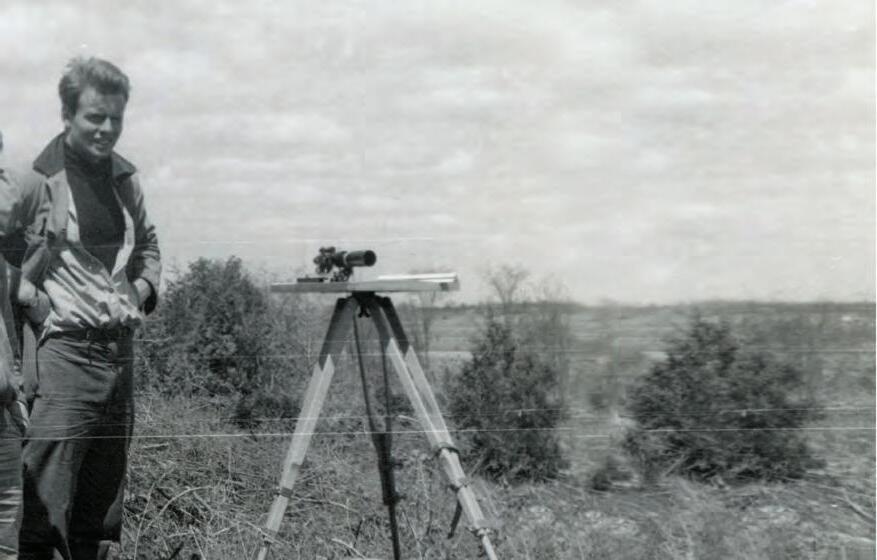
JOHN REDPATH:
Jim surveying as a young engineering student at McGill University. JAMES
JACK DE LA VERGNE:
Jim as a newly graduated Mining Engineer.
OUR PHILOSOPHY
The Redpath Group Philosophy makes a commitment to: provide a level of service to the mining industry which will exceed normally accepted standards; create a desire in the industry for our continuing services; provide scope and challenge for our employees; control growth in order to maintain a high calibre of service to the industry. This philosophy has served Redpath well since 1962, and it will continue to support our belief that, at Redpath, “Challenge is an important part of life.”
redpathmining.com
THE VISION THAT
Developed in the 1960s, decades before “sustainability” concepts in the mining industry, Jim Redpath’s alive and thriving in the company.
When Jim Redpath developed Our Philosophy and Guidelines for Success in the 1960s, he was ahead of his time. Built on values of safety, integrity, and innovation, these principles became the foundation of a culture that continues to guide every decision and action within Redpath. They remain as relevant today as they were more than half a century ago.
Leadership Grounded in Values
Jim understood that success in mining required more than technical expertise; it demanded a commitment to people, partnerships, and progress. His vision positioned Redpath to embrace change and lead advancements in technology, productivity, and collaboration.
GUIDELINES FOR SUCCESS
We are honest, fair and responsible. We make accurate schedules and budget forecasts that are managed and met to the best of our abilities without surprise.
We work by our principles of “Safety — First, Last and Always.”
We never criticize our competition.
We give and publish well-written technical papers.
We do not overcommit.
We ask if we don’t know the answer.
We remember that our goal is to serve our clients well.
Excuses are unacceptable.
We act in the long-term interest of our company and our clients.
We do not take advantage of short-term situations.
redpathmining.com
Jim Redpath was recognized not just as a leader, but as a genuinely good human being whose humility and integrity left a lasting mark. He believed that every employee should focus on delivering exceptional work for the client, act with honesty, fairness, and responsibility, and uphold an unwavering commitment to ‘Safety — First, Last and Always’.
These principles weren’t just words on paper; they became a living legacy, guiding every decision, every project, and every interaction to this day From these values, the foundation of Redpath was born.
By following his example, Redpath today strives to set new standards in the mining industry, by leveraging strategic partnerships, sharing knowledge, and fostering initiatives that drive efficiency and sustainability.
It is Jim’s moral compass, rooted in fairness, respect, and responsibility, that has enabled Redpath to grow from a small Canadian contractor into a global leader.
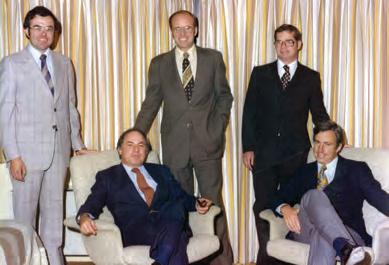
Redpath’s Board of Directors in 1978. Standing: Bob Dengler, Jim Redpath, Jim Proudfoot. Sitting: David Taylor and John Thompson.
THAT ENDURES
“sustainability” and ESG became Redpath’s foundational principles remain
Sustainability in Action
In 2021, Redpath’s Executive Team decided to take a closer look at the whole concept of sustainability and Environmental, Social and Governance (ESG) as it relates to the mining industry and mining contracting, in particular. Consultants were hired to assist in the effort. The findings during that process concluded that the company’s commitment to sustainability was already woven into the fabric of the organization through “Our Philosophy” and the “Guidelines for Success”. There was still work ahead, but Redpath already possessed a strong base from which to accelerate meaningful progress.
Although the specific terms “sustainability” and “ESG” were not a part of the mining lexicon in the 1960s, Jim’s principles have stood the test of time and still help guide the company in its decisions and actions.
A Legacy of Responsible Practices
Redpath continues to be a responsible business with a keen focus on safety and wellness, environmental stewardship, financial stability, and community and indigenous engagement. These commitments, complemented by robust corporate governance practices, continue to influence, sustain, and improve Redpath’s relationships with its stakeholders, including clients, employees, partners and the communities where the company is active. They were “sustainability in action” long before such terms became commonly used.
The Path Forward
Today, as the longest-standing Canadian mining contractor, we honour Jim’s legacy by building on the principles he established. His foundational principles are not just part of Redpath’s history, they are the blueprint for our future.
“Our vision is to set a global standard for excellence, innovation and integrity in our industry.”
Redpath
Executive Leadership Team


SCOTT MCINTOSH Former President & CEO McIntosh Engineering
THE UNIVERSITY OF REDPATH
Perhaps the most remarkable testament to Jim’s impact was something we called “The University of Redpath” — not a university in the traditional sense, but a place where everyone learned and grew. The curious fact was that many of our competitors had come through Redpath.
But here’s the beautiful paradox: we appreciated our competition because they shared our same values and did mine contracting the right way — caring about customers and employees. We were fierce competitors, but competitors with whom we could always share a beer at the end of the day. Jim hadn’t just built a company, he had launched an entire movement of ethical, innovative mining contractors.
We honour Jim Redpath by continuing to live the philosophy he taught us. We celebrate his life by staying committed to the guidelines for success he established. In doing so, we ensure that his ripples continue to spread through our own careers, our own teams, our own families — creating waves of positive change that will touch generations to come.
The University of Redpath never really closed. It just spread to wherever each of us landed. And that's exactly how Jim would have wanted it.
“Jim didn’t just build a company — he created a philosophy that continues to ripple through countless lives more than six decades later. Hundreds, if not thousands, of individuals — customers, employees and competitors who learned from him — carry forward his philosophy into their own lives and organizations.”
Scott McIntosh
Redpath’s ESG Statement is structured around four key areas: care for the company’s people, safety, the natural environment and the social environment.
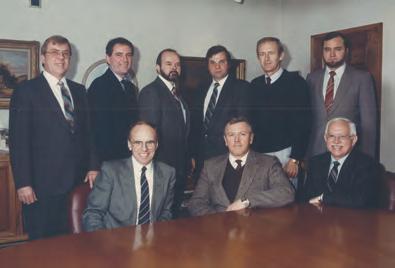
Redpath’s Senior Management Team in 1990. Back row (l to r): Neil Pacey, Dan Watts, John Gilbert, John Goodchild, Morris Medd, Wolf Seidler. Front row (l to r): Jim Redpath, Bob Brown, Alex Speirs.
Redpath Executive Leadership Team in 2026. Back row (l to r): Paul Healy, Gary Hughes, Rouan du Rand, Derek Budge. Middle row: Jochen Greinacher, Stuart White, George Flumerfelt, Torsten Kahn.
Front row: Lelani Robertson, Johan Davel, Gavin Ramage, David Hansman.
THE JIM WE KNEW
A leader defined by humility, clarity, and care — the stories ahead show how Jim empowered others to excel, creating ripple effects that shaped careers and built a culture of shared success.
THE BUILDER OF STRONG TEAMS
One obvious characteristic of Jim was that he never pretended to be an expert at everything, and he was quick to find the appropriate individual who had the necessary knowledge or skills and engage them to accomplish the specific task at hand.
The lessons I learned from Jim continue to guide my work, particularly in developing high-performing teams:
Trust: Jim built a culture that created deep trust. His focus on what was in the best interest of the customer longterm solved nearly every people issue we faced.
Productive Conflict: At Redpath, we had strong personalities who shared their opinions forcefully in meetings, sometimes with colourful field-construction language. But it rarely got personal because we cared about each other and our customers. This productive conflict, grounded in shared values and trust, made us stronger.
Commitment: We were all committed to Jim and the culture he had built. We were going to compete and win, together.
Mutual Accountability: Everything was done as a team. We were accountable to each other, and with that philosophy, we couldn’t fail.
Focus on Results: Behind all the caring and culture was a fierce focus on outcomes. The northern Canadian wilderness environment that shaped Jim taught us that obstacles make us stronger, and bottom-line results were necessary for survival and success.
Something very important that I absorbed while working for Jim was his strong belief in getting help. He used to say the cheapest thing you will ever buy is good advice when you need it. He never hesitated to pay other consultants to make our work better.
THE STEWARD OF WIN-WIN-WIN
DAVID
Jim always took a very uncompromising approach to safety, stressing that no matter how well we are doing, we must strive to do better.
However, in business, he was prepared to compromise if that compromise benefited the client, the project, its people, and us as the contractor. Jim believed in win-win-win approaches, not compromises where no one was happy. He constantly encouraged us to look for better ways to go about doing things, be that through better planning, better equipment selection, novel approaches, or direct collaboration with the client’s people.
He also encouraged curiosity and partnership, urging us to really
GERRY FOSTER:
SCOTT MCINTOSH:
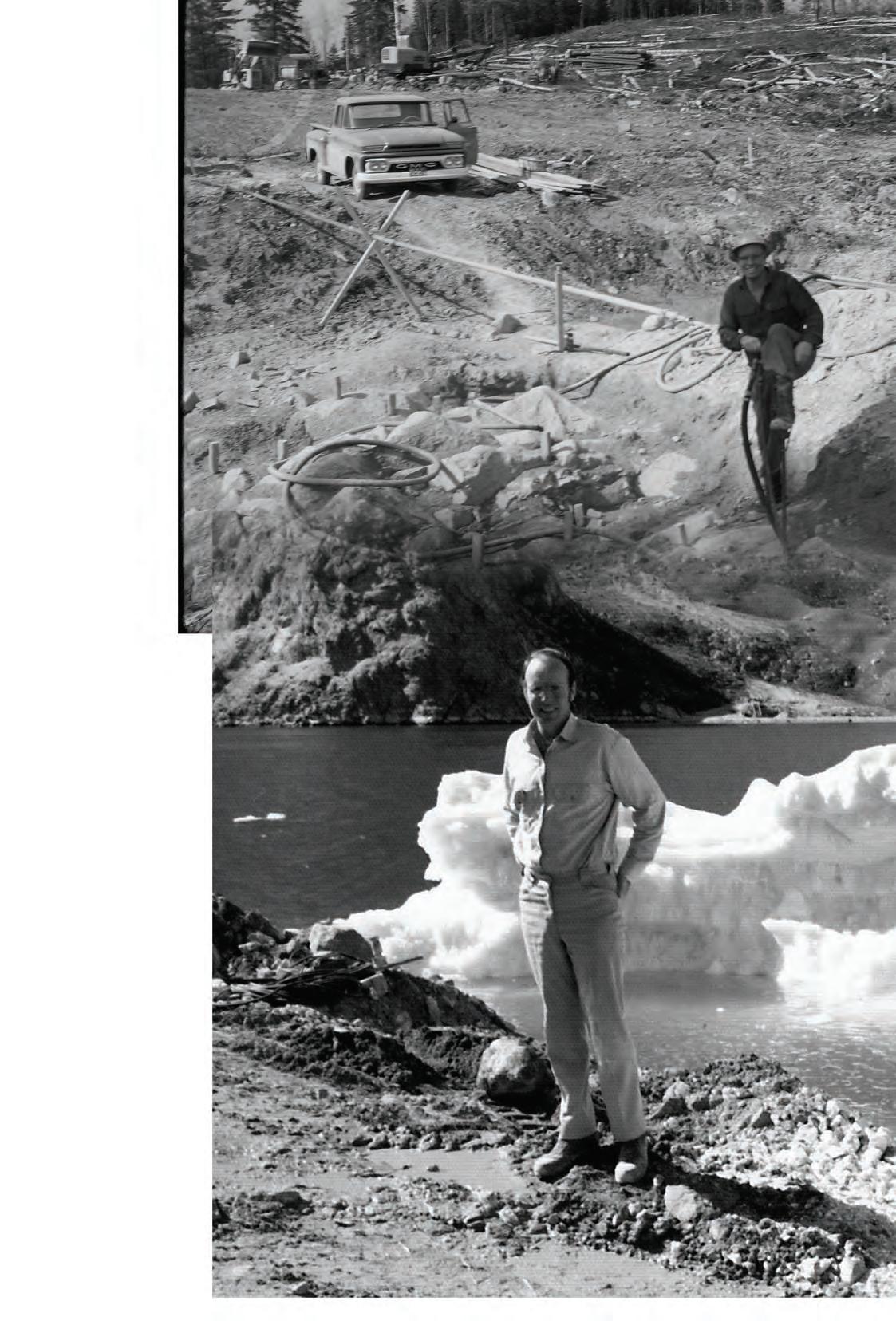
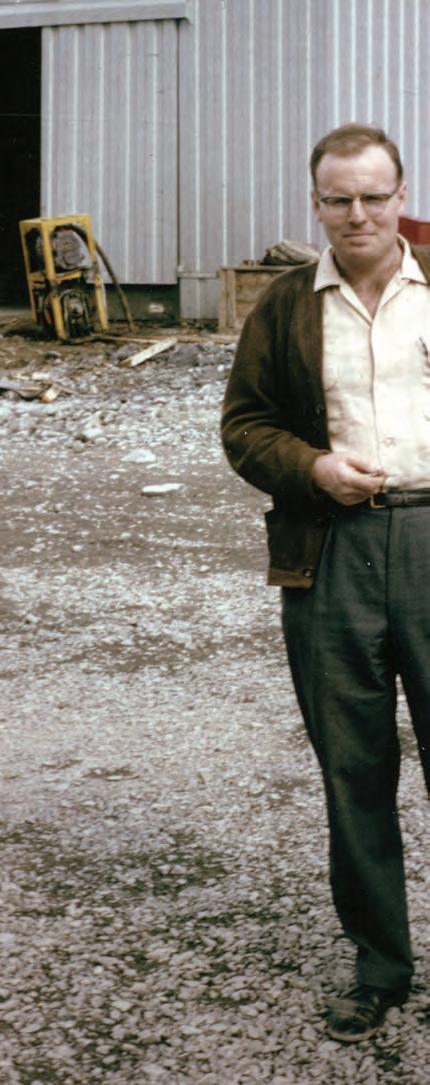
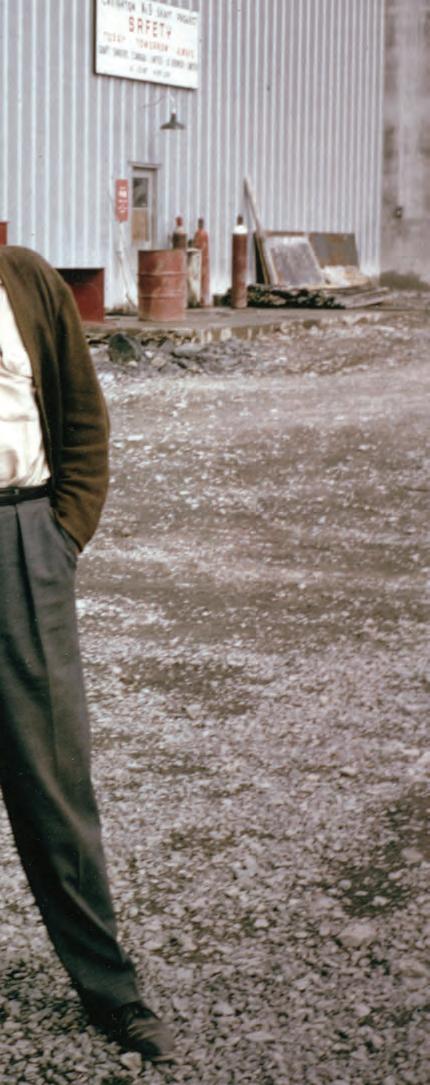
Photo: Jim in his early thirties at the Creighton No. 9 shaft in Sudbury, Ontario, which became the deepest single-lift circular concrete-lined shaft in North America. The shaft is still in operation.
HANSMAN:
WOLF SEIDLER:
Dad valued skill, real-world knowledge and experience, and he had a keen eye for potential. He respected agency, and had the humility to understand that, in every domain, there was someone more capable than he was. He was remarkably good at finding and connecting with those people. He befriended them, hired them, or partnered with them.
understand what our clients needed and look for positive possibilities, because that was a big part of what made him what he was.
Time and again, he reminded us that our job was to take on the challenges that clients presented to us, and manage them to the best of our abilities. In doing so, he stressed that we could create project success for both parties and, at the same time, help our people, and our clients’ people, succeed and further their careers.
THE MASTER OF QUESTIONS
Jim possessed a remarkable gift: the art of asking questions. During project reviews, his questions seemed unending. You had better be prepared when you participated in a meeting with Jim. But here’s what made him extraordinary — his questions were never meant to put anyone to shame. His curiosity and methodology always led individuals to become better people and engineers. This questioning approach became part of who I am.
answer to Jim’s key question: “Where have we, or anyone, ever done that before?” If you failed to have a valid response, you were doomed to be sent back to the drawing board for detailed rethink and revisions.
When presenting schedules and estimates to Jim and it came time to review advance rates, I quickly learned that one better be prepared with an
As a young engineer, I was in a review meeting after the Dome 8 shaft project was completed, one in which there was a lot of discussion along with some finger pointing. At one point, Jim asked a simple question that was right to the point and which refocused the group on the issues at hand. I thought to myself, “Now that is leadership!”
The way Jim’s mind worked was dizzying. I advised people not to sit next to him on a plane as I am not sure he ever slept. Once on a trip to Indonesia with him, he questioned me on highly technical issues, everything from gear ratios to rod drops, stabilizers to speed of rotating cutters, then back again from a different angle. Just when I thought I had answered all his questions, he’d ask the same questions in a different context. It was a brutal trip — I arrived a wreck after the 30-hour question period. He, on the other hand, was energized and ready to go underground.
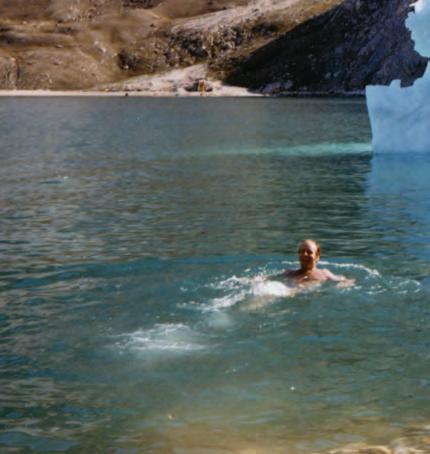
Jim swimming in the fjord at Cominco’s Black Angel Mine in Greenland. This was Redpath’s first major international project, cementing Redpath’s reputation for taking on challenging projects.
SCOTT MCINTOSH:
CHRIS HICKEY:
ROY SLACK:
MIKE KELLY:
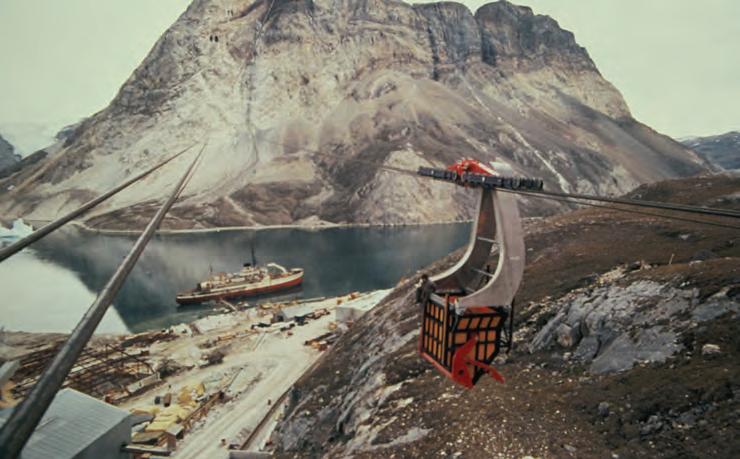
Aerial tramway to the Black Angel Mine transporting people and material across the fjord.
JOHN REDPATH:
THE HUMAN LEADER
I am sure my many current and former fellow Redpath team members have written extensively about their appreciation of Jim and his ability to wear many hats…miner, visionary, innovator, art aficionado, teacher, mentor, trainer, and a true leader. Above all, he proved himself to be very “human”. Jim always encouraged us to do better whether it was business related or personal. He was truly an exceptional and unique individual.
WOLF SEIDLER:
The most remarkable thing about our meetings, something that I admired and has stayed with me forever, was Jim’s ability to listen intently as if our discussion was the most important thing in the world to him. Most of us, especially when we are very busy as Jim surely always was, will find our minds wander to other pressing matters. Jim’s never seemed to. Double proof of that is that when Jim and I got together the next time he would open by referring to something from our previous conversation.
“Jim was genuinely interested in getting to know me. I never forgot this.”
Michael Winship
MENTOR
JOHN
GILBERT:
I first met Jim while I was working at Denison in Elliot Lake. It was 1973, and the local branch of the CIM had invited guest speakers to their regular monthly meetings. One winter night, the guest was Jim Redpath. He spoke about mine contracting in general and the development phase of the Black Angel Mine in Greenland. The crews were still living on the old Canadian icebreaker, the C.D. Howe. He talked quite openly about the living conditions, the working conditions, and the relative ease of getting personnel to go to Greenland on six-month contracts. He got me! When I got home that evening, I told my wife, Diane, “I’m going to work for that man!”
Jim focused on good bids, good people running the mine projects, honest schedules, and always said that the best jobs were those that finished on or ahead of schedule and budget. Jim said a good job was one that had no cost-plus. What a man!
GRAHAM SPEIRS:
Jim taught me to think out of the box, to take calculated risks and to be confident trying new ideas. If you want a new idea to have a chance, you need to have people that believe in them and will do all they can to make them work.
ROY SLACK:
When I was a VP at Redpath in the mid ‘90s, we established an internal management training program. Jim was retired by then, but I asked him if he would address the group at our completion dinner. He asked what he should talk to the group about, and I told him it didn’t matter, they would all be thrilled just to have him at the table. I think he started his story at age 6 digging an open pit in a sandbox in Val-d’Or and then went on from there! I recognized early on that storytelling was an important part of leadership, and we got a masterclass in the subject that evening.
GEORGE MARTIN:
GERRY FOSTER:
I personally knew several people throughout my life who I considered to be mentors. These people demonstrated to me some very unique and successful habits and strategies and offered me a great learning experience. Jim was one of them and I feel so fortunate to have learned so many critical life lessons from him.
“He was recognized as one of the most honest men in the business.”
John Gilbert
LOK HOME:
In 1984, at the age of 40, I decided to be an independent “Entrepreneur” and started my own company, called Boretec, with a focus on rebuilding used Tunnel Boring Machines (TBMs) and Raise Boring Machines (RBMs). One of my first customers was Redpath. The company had an opportunity to excavate a two-kilometre-long exploration tunnel near Val-d’Or, Québec. Jim saw this as a chance to further introduce more mechanical rock excavation to the mining industry, so a meeting was arranged with him and his team to discuss this possibility.
During the meeting, we worked through a lot of technical matters, costs and potential contract details. This included the price for the TBM and the rebuild cost. Later, Jim called me to his office and said: “I will buy the TBM and have you look after rebuilding it”. He subsequently wrote me a cheque for the full rebuild amount plus a 10% contingency.
His words were: “I know how hard it is to get a business up and running, especially the cash flow part of it. Do a good job”.
Now, if you have ever tried to start a business, or have purchased from a start-up company, you can likely appreciate the magnanimity of this gesture.
I have repeated this act of goodwill a few times, trying to duplicate the learned example provided to me by the great man that Jim Redpath was.
Success followed and, years later, I was able to buy The Robbins Company. I may not have had such good success in my business if it was not for the vote of confidence and initial financial assistance that Jim Redpath had given me.
“Jim taught me to be honest, respectful, passionate, curious, confident, realistic, safe, and innovative.”
Graham Speirs
Jim Redpath with Alex Speirs, Executive Vice President Redpath Australia, and Bob Brown, Executive Vice President Redpath Americas at a meeting in Hawaii in 1984.
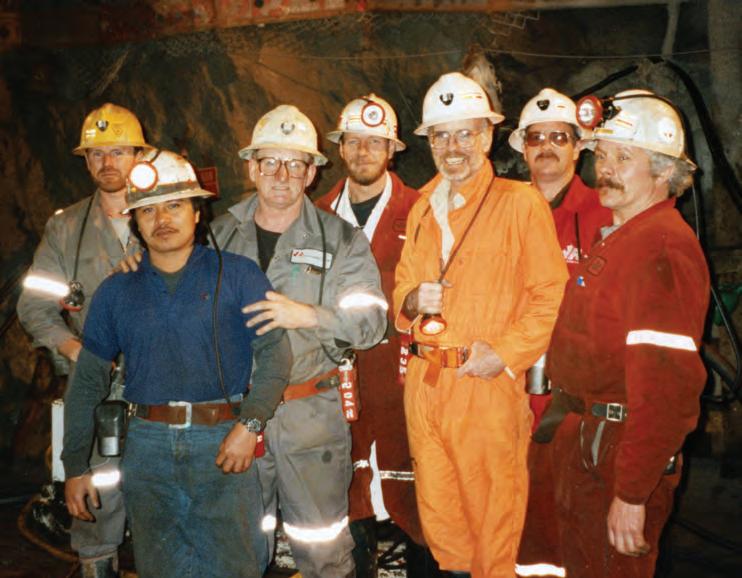
From left to right: Bruce Mennie, Ferry Mannopo, Roger Cayouette, Russell Willock, Jim Redpath, Mike Kelly and Guy Julian underground at PT Freeport Indonesia’s operations in 1992.
THE SAFETY ADVOCATE
ROY SLACK:
I was hired at Redpath in 1982 and went out to the Madeleine Islands on a shaft project at the Mines Seleine as my first field assignment. My second field project with Redpath was the Dome Number 8 Shaft project in Timmins.
At that early stage in my career, I hadn’t met Jim Redpath yet but at the Dome I was given a copy of a memo he had written in 1981 concerning the project. He outlined, in detail, the 15 points that he felt must be addressed to make the job a success.
I still have that memo and I think it is probably one of the best project management 101 guidelines I’ve ever seen, and I’ve seen lots of them! It may also have been the first time I heard anyone talk seriously about safety. “Safety must be at the top of the list as far as the project goes.”
He went on to say “instilling the proper attitude towards safety in these employees …. will make safety throughout the job a fact.”
THE ARCHITECT OF A CULTURE OF INNOVATION
Jim had set the tone in the Canadian mining industry by providing empowering leadership, enabling his managers to take calculated risks on challenging projects in a typically change-adverse industry. Shaft sinking can be a dangerous line of work, but I remember him as a strong leader in safety.
It was clear that Jim cared for his people and made his best efforts as head of the company to make sure projects were carried out safely. He was a role model for me and the Canadian mining industry in safety.
“We learned to prioritize safety above all else.”
Scott
McIntosh
When Jim wrote the words “Challenge is an important part of life”, and included them in our corporate Philosophy, there is no question that he wanted his people to be prepared to tackle the tough technical challenges that mining presents and find innovative solutions to those challenges.
Since much of Redpath’s work involves the many complex aspects of shaft sinking, mine development and construction, Jim encouraged us to step back from the tiny details and ask appropriate questions so we could better understand the big picture of what we were being asked to do. In other words, look for further options, possibilities, or opportunities to accomplish what was needed to solve specific problems.
He later told me that he had considered expanding his words about challenge to include: “and finding solutions to those challenges is what makes life worthwhile.”
I realize that this was exactly what he always wanted for his people: to meet challenges head on, find or create solutions, then share the learnings with others in the industry.
GEORGE MARTIN:
It was joked around the office that Jim invented a quiz show called “64 Questions”. In review meetings, Jim would ask question after question. Most were designed to test the individual and ensure that we had done our homework and were committed to the idea. As a result, Redpath came to be known as a company of innovators.
MORRIS MEDD:
I have a memory which highlights the innovative mind of Jim. This came when Brunswick Mining & Smelting decided to sink a large 26 ft diameter production shaft near Bathurst, NB. After researching Brunswick’s needs and schedule, Jim decided to put in a completely different tender submittal, one which proposed the drilling of a raisebore hole which would be equipped with guides and a skip. This would allow the main shaft to be slashed and the associated development rock hoisted to surface via the borehole without unduly affecting the mine production skipping operations. The project was awarded to Redpath based on the innovative solution proposed. We had a very long-term and close working relationship with the client as a result.
I had the privilege of working directly with Jim as his technical assistant in the mid 80s. Being a technical assistant to Jim could be explained this way: He would have a bright idea about some new technique or innovative approach, then his technical assistant would try to figure out if it
MICHAEL WINSHIP:
DAVID HANSMAN:
DAVID HANSMAN:
could be applied in a practical manner. It was an interesting time!
One of those ideas was the possibility of using a small TBM for exploration development at an underground hardrock mine in Canada. But the story I want to share is about an idea based on a question: What is the smallest diameter shaft that can be sunk by conventional means?
In the process of trying to come up with an answer, various drawings were produced. However, it was hard to place oneself into the drawing to get a feel for the environment. So, to that end, Jim had me transcribe the drawing of a 4m diameter shaft at full size on his office floor carpet using masking tape. With the full-size drawing now in place, he could gaze at, or stand “in”, the shaft and think about it. That “drawing” stayed there for a couple of months before we finally concluded that particular study. We did get to sink that little shaft at a project in Québec.
LOK HOME:
I first met Jim in Sudbury. His team was sinking the Creighton #9 shaft. A few years after that first meeting, I left Dravo to start working for The Robbins Company based in Seattle.
EXAMPLES
The first contractor I was able to sell a Raise Boring Machine (RBM) to was Redpath. Redpath quickly became one of Robbins’ top customers and, to this day, they continue to be a world leader in raisebore contracting by utilizing these successful mechanical rock excavation machines. Over the years, Redpath has performed a lot of “firsts” in the raiseboring business.
GRAHAM SPEIRS:
One sunny, spring day in the early 90s, Jim became inspired while sitting on the beach at his Trout Lake home. On an old Valentine’s card he wrote 100 innovative ideas to apply in our work, including the concept of a portable headframe. This idea was conceived as a way to decrease the time between completing the shaft collar and installing and equipping a standard headframe.
We applied this innovative approach on two projects in Québec that I was involved with. In one case, we put the headframe and hoist on skids and then slid it over the collar. In three days, we were sinking. On the other, the headframe was trucked to site and installed using pivot brackets on the shaft collar and lifted with a crane. We had it ready in 10 days.
OF INNOVATIONS AND TECHNOLOGY ADOPTIONS WITH JIM REDPATH AT THE HELM OF THE COMPANY
1968: First use of trackless jumbo drill in the Canadian mining sector.
1974: Redpath constructs mining’s first “borehole hoisting system” at Brunswick Mining & Smelting to speed up shaft sinking and mine development (New Brunswick, Canada).
1974: Introduction of target price contracts to the Canadian mining industry; first used for shaft construction at Brunswick Mining & Smelting, ushering in a new era of client-contractor collaboration on major, complex mining projects.
1983: Redpath Robbins Shaft Boring Machine is designed and built.
1986: The Redbore 40 concept is initiated, with design and production of the first two units in 1988.
1989: Full-face, “Long Round”, shaft sinking introduced to the Americas at the TL shaft for Falconbridge in Sudbury (Ontario, Canada). This method was conceived under Jim’s guidance and encouragement.
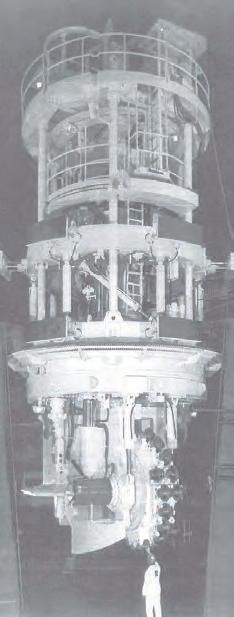
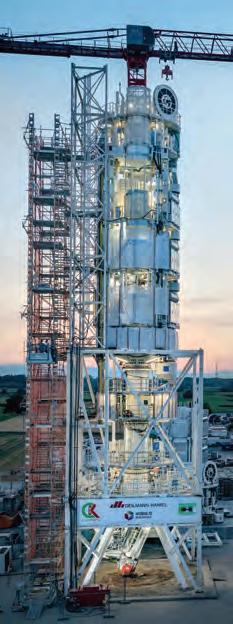
Redpath Robbins Shaft Boring Machine, 1982.
Shaft Boring Roadheader, developed by Redpath Deilmann and Herrenknecht, 2018.
THE ADVENTURER
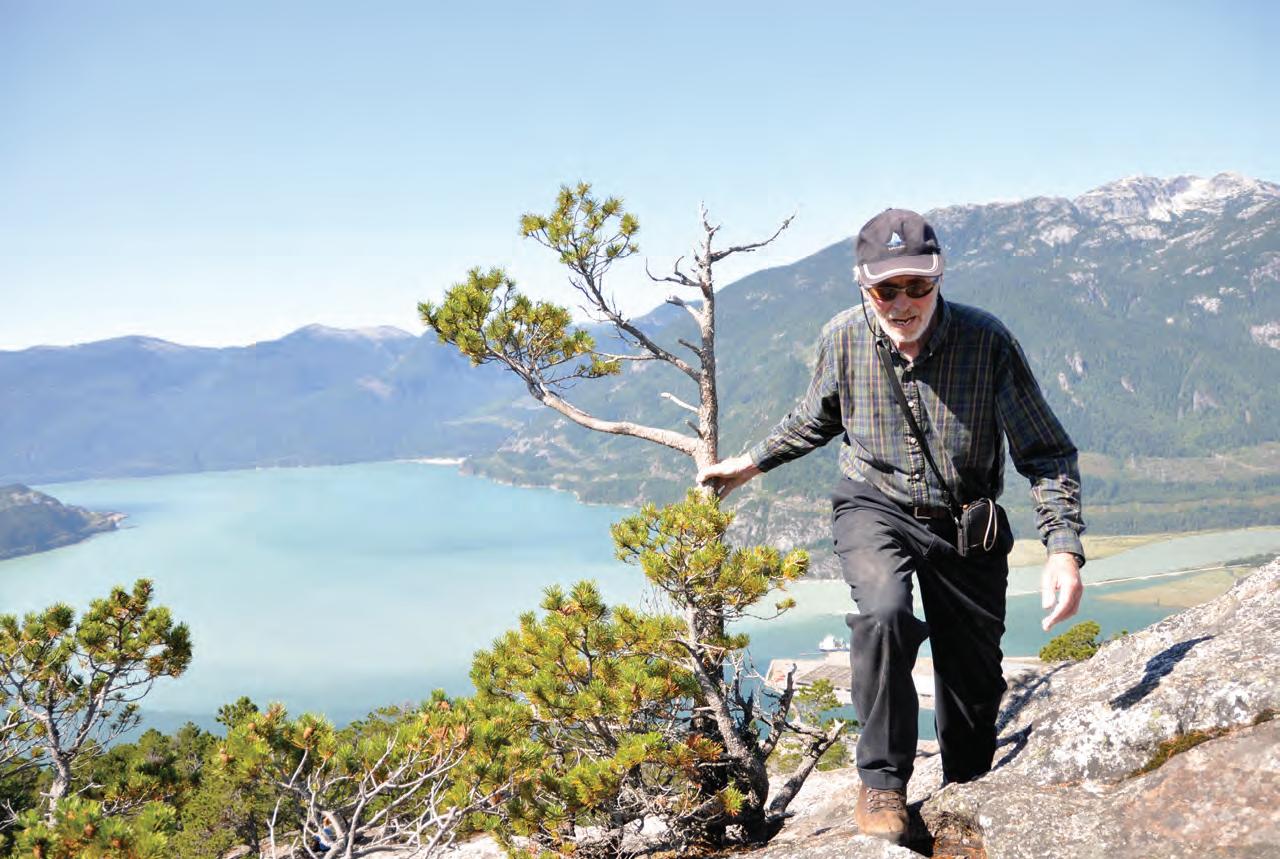
Epic walks, remote summers, and bold adventures — Jim approached life with a spirit of exploration.
JOHN REDPATH:
As a teenager, Dad worked on a small prospecting boat in Hudson Bay called the Ungava Queen. For a few summer months each year, it felt as though he were living in a boy’s adventure novel. On one occasion, he found himself on a remote island, with a polar bear between him and the boat.
That was the beginning of a life of travel. Through his work, and by always saying “yes” to friends and
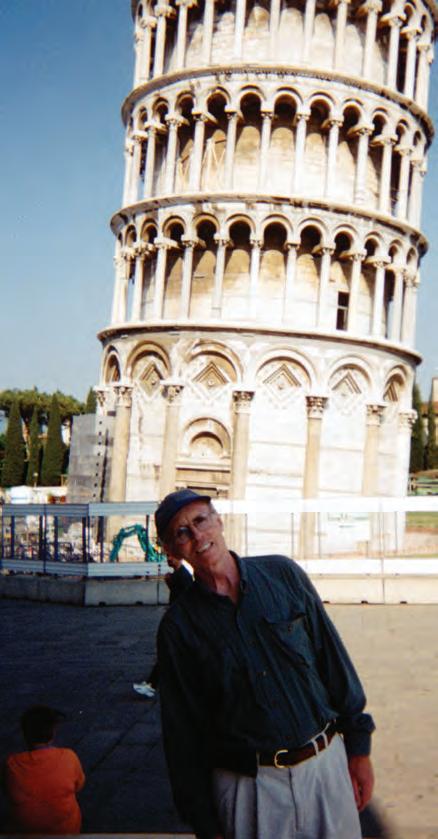
family, he set foot on every continent, climbed Mount Kilimanjaro, backcountry skied in Colorado, paddled the Nahanni River, and attended the 1972 Canada-Russia hockey summit in Moscow.
And he walked. Walking was one of Dad’s favourite pastimes. I remember him spending hours on old logging roads and trails around North Bay and Mattawa, hoping a partridge might flush. After moving to Newfoundland, he went on epic walks, sometimes
lasting all day. He usually had no set destination, no phone, and carried only an ancient little knapsack with a tiny bottle of water in it.
DR. ROD JOHNSTON:
I had told Jim that one of my bucket list items was to go on the Copper Canyon train in Mexico, a difficult mountainous rail journey covering 650 kilometers. He said “let’s go!”, so off we went with our wives, and it was amazing.
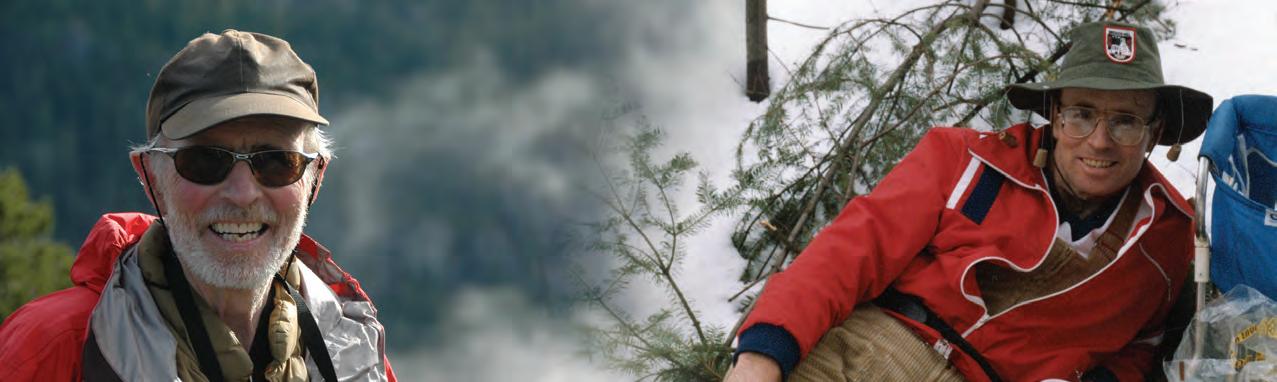
Climbed Mount Kilimanjaro in Tanzania in his late 60s.
Participated in the Tely 10 Mile Road Race at age 79.
Climbed the Gross Morne Mountain in western Newfoundland on his 80th birthday.
THE ART AFICIONADO
As a young man, Jim purchased a few pictures he admired in the window of an art store in Maine. They turned out to be magazine cutouts, but that moment sparked a lifelong passion for art.
DENNIS GEDEN:
I first met Jim in his office in 1975. I was one of five artists taking turns approaching local businesses seeking support for the formation of the White Water Gallery.
The vision for the gallery was an artist-run, non-profit space dedicated to exhibiting visual art. As you might guess, artists looking for funds to open an art gallery in North Bay was a ‘hard sell’ so, honestly, I wasn’t expecting much. But Jim couldn’t have been more accommodating and friendly. He discussed our plan with genuine interest, promised to think it over and, when he contacted us the next day, it was to say “yes”.
Jim’s endorsement warmed other business owners to the idea — doors began opening all over town. That community backing went a long way toward the White Water being granted long-term support (fifty years and counting) from the Ontario Arts Council, and the Canada Council for the Arts.
Jim’s interest in visual art grew stronger over the years. He studied and researched artists and art every chance he got and joined in conversation with all who shared an interest. He really liked buying art and didn’t discriminate between major historic pieces and the art of young artists struggling to put together their first show. He created a large, varied, and truly unique collection of paintings, drawings, prints and sculpture and always insisted it be on display. He thought art should never be in storage. At first glance it seemed a huge eclectic grouping, remarkable in itself, but then viewers would begin to find interrelationships and connections between the artworks and the decades. And of course, if you asked Jim, you would quickly learn his motives and the thought he put into this pastime.
Various gallery and museum curators visited and studied his collection knowing Jim would generously loan anything they might want to show in exhibitions they were planning. All the Redpath Group buildings, and Jim’s own office building after he ‘retired’, had art hanging on every available wall space. There are a hundred stories of Redpath employees who had never in their life given art a thought then becoming as passionate about it as Jim, and insisting on carrying their favorites with them when they changed offices. There were also local artists struck dumb when seeing their painting hanging between a Picasso and a David Blackwood.
I loved helping Jim with his collection, sharing a passion for art, our long discussions, his fairness, and constant aspiration to learn and grow.
“Jim’s interest in visual art grew stronger over the years.”
Dennis Geden
JOHN REDPATH:
At the age of 50, Dad left the day-to-day running of the Redpath organization and moved us to New York for a year, where he enrolled in an American art history program at Sotheby’s Institute of Art. The highly specialized course was designed for future museum curators. The small cohort traveled throughout the United States, visiting galleries, museums, and private collections, and participated in Sotheby’s auctions.


Art adorning Redpath’s offices.
Jim and Dennis Geden visited Canadian artist Alex Colville in his home in Nova Scotia, when preparing an exhibition with his works at the Kennedy Gallery in North Bay.
THE COMMUNITY PATRON
Jim and his wife, Bobbi, spent years championing North Bay community projects, especially in arts and culture. Jim believed that the best way to inspire support for such initiatives was to lead by example. His fundraising approach was simple: make the first commitment, establish the level of giving, and watch the momentum grow.

I remember going in to the Capitol Centre one time, and seeing all sorts of charts and graphs on the walls of the ticket area. Jim had the staff track when and how people bought tickets so that they could focus their marketing at the peak times when it would be most effective.
When I got involved in the North Bay Waterfront Project, the first piece was
to renovate the Canadian Pacific station so that it could be the new museum. I asked Jim if he would help with raising the necessary funds needed to match the government funding. Jim put up half the amount and my wife and I put up the same amount. This allowed us to get government funding without having to raise any more. The station was completely gutted, and a whole new steel infrastructure and HVAC system was installed. There were lots of naysayers at the
“He was always generous, always anonymously.”
Dr. Rod Johnston
time, and it looked like it was going to be next to impossible to get things started, but he believed in the vision, and because of Jim’s initial support, other people started to believe in it as well. It turned out to be a $1.2 million project that was completed on budget.
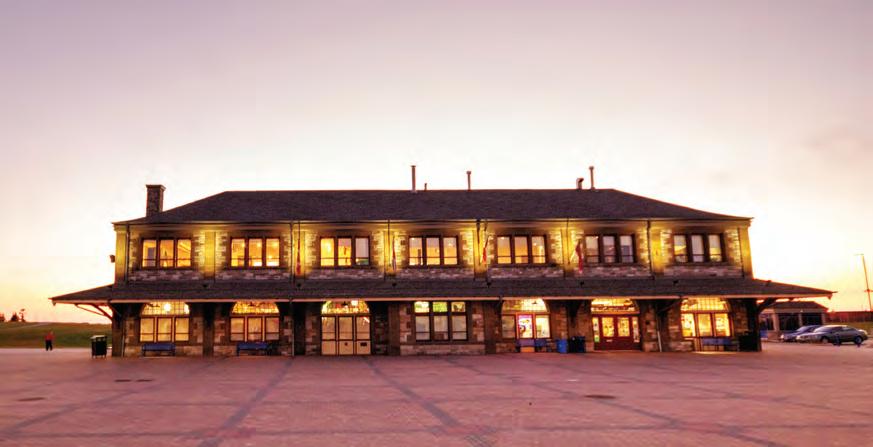
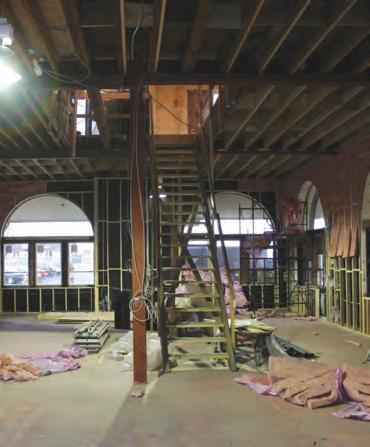
The North Bay Canadian Pacific Railway Station (now North Bay Museum) during renovations. Photo credit: Dr. Rod Johnston.
Photo credit: The Capitol Centre
Photo credit: North Bay Museum
In 1988, Jim became the General Manager of the North Bay Arts Centre — now known as the Capitol Centre — which encompasses the Betty Speers Theatre and the WKP Kennedy Gallery. Redpath continues to serve as the Capitol Centre Box Office sponsor, a commitment the company has maintained since 2006.
DR. ROD JOHNSTON:
Giving was a central part of Dad’s life, through volunteering, financial support, and enabling others. He was deeply humble, and much of what he did was under the radar. He never sought credit and donated only on the condition of anonymity.
There is the story of King Redpath of Cameroon, when Jim was made an honorary king of a tribal region in Cameroon where he had donated the funds to build a water pipeline from the mountains to a village. On that same trip, when climbing Mount Cameroon, he taught us the Redpath shuffle...”one small step in front of another always gets you to the top.” A fitting Redpath metaphor for life.
My main relationship with Jim was when combining our efforts for promoting and supporting essential community projects within the North Bay area. We both felt that supporting the communities where we operated provided corresponding benefits to our employees.
Jim, who was generally directly involved in these projects, felt that by giving them an initial financial boost, supported by a couple of local companies, would provide a good kick start to the campaigns and encouragement for others to join in.
Examples include Nipissing University, the North Bay Capitol Centre, the YMCA, the Gathering Place, the North Bay hospital and other areas of need. These projects normally started out by Jim inviting me for lunch to discuss the project benefits for the community and how we could set an example to move the project forward. Jim had a very clear fundraising approach - set an example and establish the level of giving, i.e. “put our money where our mouth is”.
These conversations put life in perspective as to what the important lessons in life really are. Jim never wanted to be in a position of recognition, staying comfortable working in the background to get things moving. In reality, he didn’t fool many people as we all knew that he was the key enabler of many successful local projects.
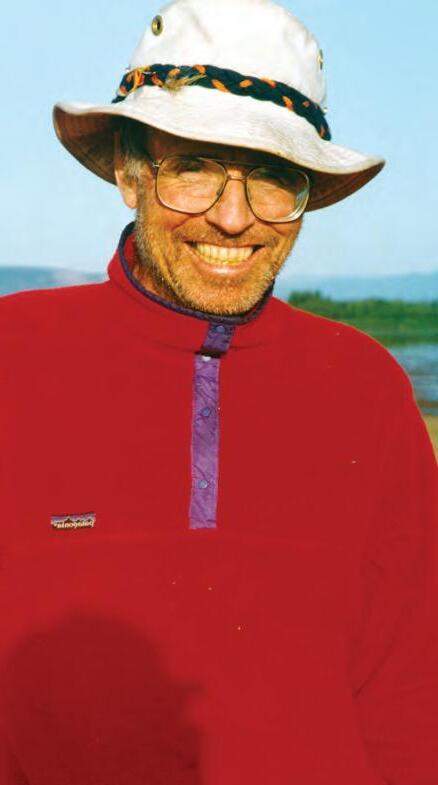
As Nipissing’s first Chancellor, Jim will always be remembered for his humour, wisdom and empathy. Only Jim could pull off introductory Convocation remarks that included an anecdote of how he had his head stuck in the washroom sink with his new Nipissing Convocation hat wedged between the tap and the drain. Or when he announced that his speech would be short and then proceeded to unroll a dozen sheets of text-scribbled paper over the front of the lectern. But then, in all instances, he proceeded to stun the new graduates with his wit and wisdom.
Jim was a true university Chancellor, honorific in title, yet always providing encouragement and timely advice. He was proud of “his” university and proud of his role. We were all exceedingly honoured to have him as a member of the University community.

“Jim Redpath wants you!” A snapshot of Jim’s community involvement and role as a mentor with the North Bay Centre of Entrepreneurship.
JIM’S COMMITMENT TO COMMUNITY LIVES ON
The Redpath organization continues the tradition of being an active community partner in the areas where we live and work, by supporting a variety of programs and charitable works that address local needs and priorities.

Jim served as Nipissing University’s Chancellor from 1994-2002, and supported a wide range of initiatives over the years, from capital projects to the establishment of scholarships, awards, and bursaries.
JOHN REDPATH:
DAVID MARSHALL:
GERRY FOSTER:
DAVID MARSHALL:
THE WIT AND THE WISDOM
JOHN REDPATH:
Dad loved telling stories. Even in his later years, he could spin a seemingly endless tale in excruciating historical detail. You might think he was telling you about how the brother-in-law of the master mechanic at a mine in Nova Scotia roasted his coffee beans (something he’d heard from an injured shift boss he once sat next to on an airplane sixty years earlier).
But… along the way, he would weave in tangents five layers deep, with so many names and places that you’d be squinting to keep it all straight. Just as your brain was ready to implode under the weight of the minutiae, he would tie it all up in a neat bow, and you’d realize the story was really about how a birder in a small village in Gaspé got his first pair of binoculars from the Sears catalogue.
“The good grace and humour he brought to our conversations gave a sense of an exceptional person.”
Moira Jackson
MORRIS MEDD:
One fun memory I have is from the time at the start of Creighton #9 shaft. That was when I first worked for J.S. Redpath Limited. Jim drove around in a beat-up old Volkswagen Beetle and, even though it was an easy-on-gas car, there were a few times we had to make unplanned trips to bring him gas when he ran out on his way to or from work. His mind was only on the shaft. Cars were never a high priority for him.
DAVID MARSHALL:
We will remember Jim Redpath as having been one of the kindest, empathetic, humorous, wise and talented persons we have had the privilege to know. He was simply a good human being. I am grateful to have been his friend and colleague.
FRED EDWARDS:
In getting ready for a trip, Alex Speirs took me aside to give me some advice about travelling and working with Jim. Firstly, he said, Jim is often close to missing the flight in North Bay. However, the people at the airport are accustomed to Jim’s habits and would hold the plane for him, so don’t worry if you find yourself without a seat partner until the last minute. Secondly, Jim does not always have any money (cash), or very little of it, so be prepared to pay for the rental car, hotel, meals, etc. In the end, I only experienced the forecasted close call at the airport in North Bay. They held the plane!
“It’s been great to have been a small part of it”
– Jim Redpath’s handwritten words in a copy of Redpath’s 50th anniversary book, summarizing the company’s journey from a one-man corporation to a leading multinational mining contractor.
“Look after your people, and your people will look after you.”
Jim Redpath
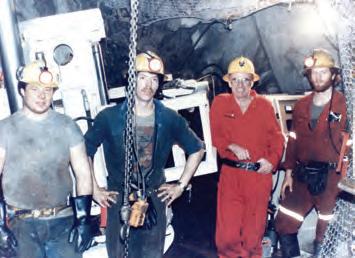
Jim (third from the left) with Dan Charbonneau, Kevin Anderson and Reg Kelly at LAC Minerals’ Macassa Mine in Kirkland Lake in 1988.
On a trip to Phoenix, from our then Denver office, to negotiate new work for a project in Missouri, four Redpath people attended the meetings, including Jim. On the return trip Jim asked if anyone had any money. He borrowed $20 with which he bought three drinks on the plane, not having one himself. Back in Denver he stopped at a 7-Eleven convenience to get $5 worth of gas and a loaf of bread. The next morning, he returned the $20. That was Jim.
Jim lost his car keys so many times his Administrative Assistant bought him a giant key fob shaped like a paperclip that would be impossible to lose. You guessed it! That was Jim.
Twice during my early days with Redpath, sickness struck my family — once my daughter and then my wife. When Jim heard the news, he asked me to stop by his office. He expressed
his concern and offered me time off, money and anything else I might need to get through these difficult times. I was in total shock and could not say thank you enough. There is no way I could (or ever will) repay his kindness. That was Jim.
“I used to say that Mr. Redpath was “one in a million”. I was wrong. He was much more unique than that in so many ways.”
Bob Rappolt
JAMES S. REDPATH: AWARDS, PUBLICATIONS AND DIRECTORSHIPS
Awards:
2012 Queen Elizabeth II Diamond Jubilee Medal (Governor General of Canada)
2002 Queen Elizabeth II Golden Jubilee Medal (Governor General of Canada)
2001 Order of Ontario (Government of Ontario)
1999 “Paul Harris Fellow” (The Rotary Foundation of Rotary International)
1991 Lescarbot Award, in recognition of outstanding contributions to community cultural activities (North Bay Arts Centre on behalf of the Government of Canada)
1990 “Citizen of the Year” (North Bay Kiwanis Club)
1990 CIM Fellow (Canadian Institute of Mining and Metallurgy)
1981 Past President’s Medal (Canadian Institute of Mining and Metallurgy)
1975 Engineering Medal (Association of Professional Engineers of Ontario)
Publications:
1966 Author: “Collaring a Shaft in Deep Overburden at Chimo Gold Mines Ltd.”
Author: Creighton No.9 Shaft, 7,137 Feet Sunk in One Lift
1968 Co-author: The Mechanical & Electrical Aspects of Sinking the Creighton No. 9 shaft
1977 Co-Author: Towards a Better Understanding of Mine Shaft Guides, C.M.M.B.
1977 Author: Mining Contractors — A Necessary Evil or an Increasingly Valuable Service to the Industry, C.M.M.B.
1980 Co-author: Securing Maximum Effectiveness from Mining Contractors, C.M.M.B.
1984 Author: Mining Related Underground Construction, What’s New in Canada, Tunnelling Association of Canada
1988 Author: Hoisting — A Trip to the Year 2013
Directorships:
1999-2003 Member, Canadian Curatorial Committee, Art Gallery of Ontario
1998-2001 Member, Fine Art Acquisitions Committee, W.K.P. Kennedy Gallery
1996-2006 Member, Fine Art Acquisitions Committee, MacLaren Art Centre
1996-2005 Member, Fine Arts Advisory Board, Georgian College
1996-2000 Director, Ontario Development Corporation
1995-2007 Director, The Physicians’ Services Incorporated Foundation
1994-2002 Chancellor, Nipissing University
1994-1995 Joint Founder, Redpath Gallery, Vancouver
1993-2001 Director, Bishop’s College School
1993-1994 Director, Mid Canada Communications (Canada) Corp.
1990-1994 Director, Pegasus Gold Inc.
1990-1992 Chairman, Northern Ontario Relocation Program (NORP) Art Advisory Committee
1990-1991 Chairman, Cornerstone Gifts Division for the Partners for Life Campaign
1988-1995 Director, Skega Limited
1988 - 1993 Director, W.K.P. Kennedy Gallery Board
1988-1990 General Manager, North Bay Arts Centre
1982-1986 Director, Ontario Mines Accident Prevention Association
1982-1983 Director, Art Advisory Board, North Bay City Hall
1978-1982 Director, Campbell Red Lake Gold Mines Limited
1976-1977 Board Member, North Bay Theatre & Arts Community Centre
1972-1978 Chairman, Advisory Board to the Canadian Tunnelling Office
1968-1980 Director, Jarvis Clark Company
1962-1997 Founder and Non-Executive Chairman
J.S. Redpath Ltd.
GEORGE MARTIN:
Jim Redpath photographed with his wife, Bobbi, during Redpath’s 50th anniversary celebration in 2012. “Dad may have been a leader at Redpath, but Mom was the leader at home.” (John Redpath)

SARAH FITZGERALD General Manager, HR Redpath Americas
When I joined Redpath in 2000, Jim Redpath had already retired but his reputation and influence continued to run strong. Many of my colleagues shared stories about Jim, and I regularly admired his beautiful art collection on our office walls.
Jim’s Philosophy makes a commitment to provide scope and challenge for its employees, and I have certainly experienced this through the years. I am extremely fortunate to have had the support and experiences that shaped my career. From being among the first members of our HR department, to numerous professional development opportunities along the way, I’ve always felt supported.
Another of Jim’s Guidelines that resonates with me is “We ask if we don’t know the answer.” This is powerful because it creates a culture of learning and collaboration. I’ve never hesitated to ask questions, sometimes a lot of them. I believe curiosity drives growth and better outcomes, helping us learn, align, avoid mistakes, and deliver the best possible results.
I had the privilege of meeting Jim at the Redpath 50th Anniversary celebration — a moment I will always treasure. It was a great honour, and I am proud to work for an organization that carries his legacy forward with integrity and purpose.

SUDESH DEONARAIN General Manager, Engineering, Redpath South Africa
Young leaders share what the Philosophy
leadership, my answer is straightforward: profoundly. I’ve been with Redpath for more than 16 years, because this work feels meaningful.
Jim’s Philosophy and Guidelines are used across all our operations and in our daily lives. They reflect the core values and moral obligations we, as leaders, must uphold to ensure that our operational teams are guided and managed in a way that best supports the projects we execute.
One of the most important guidelines I follow is the principle of acting in the long-term interests of our company and our clients. Success is rarely the result of a single defining moment, but rather the outcome of small, disciplined actions repeated consistently over time.
When challenges arise, we focus on reinforcing steadiness instead of panic, reminding the team to concentrate on what can be controlled today. This ensures that we create stability and trust, helping others understand that meaningful progress is built step by step. As well, such an approach maintains momentum, builds confidence, and ensures sustainable, long-term results rather than shortlived successes.

RICARDO LOPEZ General Counsel and Corporate Secretary, Redpath Mining Inc.
When I’m asked how Jim Redpath’s philosophy has influenced my
Jim believed in “providing scope and challenge for our employees” and that “challenge is an important part of life.” That mindset shapes how I view performance and growth. The best work is rarely comfortable; it stretches us, keeps us honest, and reminds us that what we do should matter. We shouldn’t be indifferent to our work; we should be engaged by it, challenged by it, and motivated by the impact we have on others and on the company.

SHEMARA WATTS Global Tax Manager, Redpath Mining Inc.
As I turn my phone face down at meetings, I see the Guidelines for Success which I tucked into the cover. The MagSafe circle of the phone case frames “Safety — First, Last and Always.” Being associated with the mining industry for years, not only do I quote safety in conversations, at Redpath I’m living it.
Jim’s principles reveal his character — honesty, integrity, inclusiveness, respect. They guide how decisions are made and how processes are structured. In tax and sustainability, the principles translate into preparing well, challenging assumptions, making the best decisions possible while protecting people and reputation, being accountable, allowing people to safely voice their views because better decisions are made when perspectives differ, and finishing everything well. I apply these principles daily by trying to get it right the first time, treating people with respect, being approachable and (hopefully) leaving relationships stronger after each interaction.
JIM’S LEGACY
Philosophy and Guidelines mean in practice.

JOHAN DAVEL President, Redpath Raiseboring Limited
Although I never met Jim Redpath personally, his presence is felt every day in the ideals that continue to guide our company. Remarkably, Jim’s Philosophy and Guidelines for Success remain exactly as he crafted them, and the reason is simple: he got them right. His words capture the true essence of our company and stand as a reflection of the man he was.
Every person I meet who knew Jim describe him as a humble and visionary leader who left a lasting impression on everyone around him. Those stories speak volumes about the character and integrity that shaped this organization.
In Raiseboring, we see Jim’s legacy in the way our teams approach challenges with a commitment to doing things safely and professionally. For leaders like me, his legacy is a foundation and a compass. It grounds us in our roots and guides us as we carry his values forward.

SCOTT HAYNE Senior Vice President, Redpath Americas
As an employee of Redpath for nearly 25 years, I am deeply indebted to the experience and opportunities made possible by the company Jim Redpath founded.
Jim created a lasting legacy founded on discipline, integrity, and a sound philosophy; principles that continue to shape how I collaborate with colleagues and serve clients every day.

FRANK OTTEN
Senior Vice President, International Projects, Redpath Deilmann
As an engineer, I am fascinated by entrepreneurs who build companies from the ground up and turn them into global corporations. It is impressive to see the courage and vision that these individuals display at a young age.
The Guidelines for Success that Jim Redpath established were born out of real-life practice. It is easy to see how they positively influenced the company’s development and remain valid to this day. We also recite these principles from time to time, out of respect and because we identify with them.
Redpath Deilmann’s other founder wrote a similar story. In 1888, Carl Deilmann founded a mining company in Dortmund and, as early as 1889, added a drilling department for exploratory drilling in shaft construction. By the late 1920s, the company was sinking potash shafts in Russia.
Combining the two names in Redpath Deilmann’s logo reflects the tradition of both companies, their origins, and the determination to carry forward this visionary heritage. Employees feel proud to have the Redpath Deilmann logo on their helmets and to say that the company they work for has been delivering challenging mining projects worldwide for a very long time.
Despite being more than forty years his junior, I was fortunate to meet Jim and, on occasion, share thoughtful and insightful conversations with him about past projects and the lessons learned along the way. His wisdom was practical, grounded, and always focused on doing things the right way. His inter-office memos, particularly those focused on “Starting Well On Time” and “shaft sinking”, remain highly relevant today and are still circulated among colleagues as guiding principles for project execution.
Jim will be deeply missed but never forgotten. From admiring his art

RORY BURKE Chief Operating Officer, Redpath Australia
What continues to guide and inspire me in my role here in Australia are the practical and ethical values which Jim Redpath penned. They are not wishful slogans to appease or inspire shareholders, they are simple, easily understood dot points that, if followed, will continue to bring success. They also remind us of the importance of being honest, hardworking human beings with the focus on delivering the scope safely to our clients.
In addition to this, I received a copy of a 1995 letter from Jim to his Shaft Business Manager, which I continue to use in senior management forums that I hold. What it specifically speaks to is the criticality of good planning, “Starting Well On Time” and how much easier that is compared to fixing an underperforming job. This continues to be our biggest focus here in Australia and aligning that with LEAN/5S philosophies of standardisation, and in particular “Chasing the Waste” which Jim articulates very passionately in that letter.
I never had the opportunity to meet Jim Redpath in person, but it is obvious that he was, as we would say in Australia, a “bloody good bloke”.
collection or sharing a quirky story, his presence, character, and influence will be felt for generations to come.

Scott Hayne in conversation with Jim Redpath during Redpath’s 50th Anniversary celebrations.