How to Get Rid of Bed Bugs

Page 1


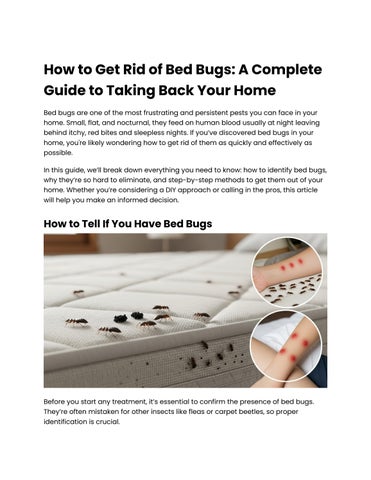
Common signs of a bed bug infestation include:

● Itchy red bites, often in clusters or lines, usually appearing after sleep

● Tiny blood stains or dark spots (feces) on your sheets and mattress

● Shed skins or eggs near mattress seams or cracks in furniture

● A musty odor in heavily infested areas

● Live bed bugs, which are small (about the size of an apple seed), brown, and flat

If you see these signs, especially in combination, it’s likely you're dealing with bed bugs.

Why Bed Bugs Are So Hard to Get Rid Of

Bed bugs are survivors. They hide in cracks and crevices during the day, can live for months without feeding, and are becoming increasingly resistant to certain pesticides.

Here’s what makes them so challenging:

● They multiply quickly: A single female can lay up to 500 eggs in her lifetime. They hide well: Behind baseboards, in furniture joints, inside electrical outlets even under wallpaper.

● They resist treatment: Over-the-counter sprays may not reach all hiding places or kill eggs.

● They can spread fast: Bed bugs hitchhike on clothing, luggage, and furniture, quickly infesting multiple rooms or even neighboring apartments.

Because of this, thoroughness and consistency are key to successful elimination.

Step-by-Step Guide: How to Get Rid of Bed Bugs at Home

1. Declutter and Contain the Infestation

Start by removing unnecessary items from the room. Don’t move them to other areas unless they’ve been treated or sealed in plastic bags.

● Wash all linens, clothing, and curtains in hot water (60°C/140°F) and dry them on high heat

● Place cleaned items in sealed bags to avoid recontamination.

● Vacuum thoroughly especially around the bed, baseboards, and furniture seams and dispose of the vacuum bag immediately.

2. Use Mattress Encasements

Cover your mattress and box spring with bed bug-proof encasements. This traps any remaining bugs inside and prevents new ones from getting in.

● Keep the encasements on for at least a year bed bugs can survive several months without feeding.

● Inspect the encasements regularly for tears or openings.

3. Apply Heat Where Possible

Bed bugs can’t survive high temperatures. In addition to laundering, consider:

● Using a portable steam cleaner (at least 120°C/250°F) on carpets, mattresses, furniture, and baseboards.

● Placing small items in a black plastic bag and leaving them in direct sunlight for several hours during hot weather.

Heat treatment is one of the most effective ways to kill both adult bugs and eggs though it requires careful application to be effective.

4. Use Diatomaceous Earth (DE)

Food-grade diatomaceous earth is a natural powder that kills bed bugs by damaging their exoskeleton. Sprinkle it in cracks, along baseboards, under furniture, and behind electrical outlets.

● Leave it undisturbed for several days before vacuuming.

● Wear a mask while applying it’s non-toxic but dusty.

5. Try Bed Bug Sprays and Insecticides

There are many sprays on the market, but results can vary. Look for:

● EPA-registered bed bug products

● Sprays that target both adult bugs and eggs

● Products safe for indoor use and fabrics

Use according to the label, and always test on a small area first. Be cautious many strains of bed bugs have developed resistance to common chemical treatments.

6. Monitor and Repeat

Bed bug removal isn’t a one-time task. You’ll need to:

● Re-treat weekly for several weeks

● Monitor regularly with bed bug traps placed near bed legs

● Continue vacuuming and inspecting furniture and seams

Even one surviving egg can restart an infestation, so follow-up is essential.

When DIY Isn’t Enough: What to Watch For

While some mild infestations can be handled at home, there are signs it’s time to call a professional:

● Bites continue despite repeated cleaning and treatment

● Infestation spreads to other rooms

● You’ve seen live bugs after multiple attempts to remove them

● You have health issues, pets, or children that make chemical treatments risky

Why You Should Consider Professional Bed Bug Pest Control

Getting rid of bed bugs isn’t easy and it often requires specialized tools, high-heat equipment, or chemical solutions that aren’t available to the general public. Pest control professionals are trained to find every hiding place and apply targeted treatments that eliminate not only live bugs but their eggs as well.

Benefits of hiring a professional include:

● Accurate identification and assessment

● Access to industrial-grade heat treatments

● Safe and effective chemical applications

● Guaranteed results and follow-up service

Final Thoughts: Don’t Let Bed Bugs Take Over

A bed bug infestation can feel overwhelming, but with persistence and the right approach you can reclaim your space. For many people, DIY steps may help reduce the problem, but total elimination is rarely easy without expert help.

If you’ve been battling bed bugs for weeks with little success, or if the infestation is growing despite your efforts, it’s time to bring in professionals. Pest control companies have the tools, knowledge, and experience to eliminate bed bugs safely and completely.

Don’t wait until the problem gets worse call a trusted pest control provider and sleep easy knowing your home is in good hands.

Turn static files into dynamic content formats.

Create a flipbook
How to Get Rid of Bed Bugs by therealguide - Issuu