QUAKER CAMPUS

Paola Ruiz NEWS EDITOR
A Whittier College fourth-year student described a series of encounters with U.S. Immigration and Customs Enforcement that has left them fearing for their family’s safety, unsure of their academic future, and with a shaken sense of security both at home and on campus.
The student, who requested anonymity, said that the most frightening encounter out of multiple, occurred during winter break in December 2025. This happened while they were running errands for their family-owned construction business in San Diego. While picking up materials from Home Depot, the student explained that an unmarked vehicle began following them through the parking lot before pulling up next to and stopping them.
“They asked if I was a U.S. citizen,” the student shared. Although they carry both a passport and a Real ID at all times, the interaction was still unsettling. The student recalled the agents wearing masks and tactical vests and carrying firearms, appearing as people usually describe and see them on the news or videos on social media.
The student had previously warned their father to evade the premises if immigration enforcement were to show up. Their father was at the Home Depot waiting in the parking lot for them, but was able to drive away to avoid potential detainment.
“If something happened to me, I could come back,” the student commented. “But if they took my dad, there’s no way he would [be able to come back to the U.S.]”
The agents ultimately left after being redirected through radio communication, but the student shared that they felt a lingering fear long after the encounter ended.
While most of the student's immediate family members are documented, their father is not. The fear intensified over the holidays when the student learned that a close family member had
been detained—and later deported to Mexico—for weeks without any way to contact their family. In addition, a coworker in the family business had also been deported, the student stated that the person had been absent from work for several days.
“That is the scariest part,” the student uneasily stated.“Not knowing where someone is or if they are okay.” They have acknowledged the feeling of fear other families have felt when their loved ones cannot be reached for long periods of time. The student also stated that unmarked immigration enforcement vehicles have become increasingly common in San Diego, particularly near large retail stores and construction supply outlets.
The student’s experience reflects broader national trends.
Immigration enforcement activity has increased sharply over the past year, especially in San Diego. Data reported by CalMatters shows a 1500 percent increase in arrests between May and Oct. 2025. This data pertains to the San Diego and Imperial counties. In Sept. and Oct. 2025 alone, more than twice as many people in the San Diego
them to continue into what they described as their final semester.
Although the student is now back on campus, they emphasized that they do not feel entirely safe. The College is an open campus, and while it has been previously stated that immigration agents cannot freely enter campus buildings without proper legal documentation, the student noted that the reassurance feels abstract.
“I know they say to call Campus Safety,” the student said. “But five minutes is all it takes for something to happen.”
The student said they reached out to campus legal resources (Immigration Attorney Mercedes Castillo) but were told their father’s case was too complex for her to assist with. They did not pursue counseling services, stressing that emotional support alone did not address the situation’s urgency.
According to the student, the father’s immigration case is complicated by a prior deportation from the state of New Jersey, meaning his paperwork must be resolved through that state’s legal system.
A process the student described as slow, costly, and difficult to navigate.
“That is the scariest part,” the student uneasily stated. “Not knowing where someone is or if they are okay.”
region were arrested than all the arrests in California of 2024.
The ongoing stress has taken a measurable toll on the student’s mental health and academics. The student confessed how they dreaded phone calls from home during the Fall semester, fearing each one might bring news of detention. At one point, they considered withdrawing from Whittier College to work fulltime at their family business and support their household if their father were to be deported.
The student ultimately remained enrolled after contributing earnings from working over winter break to an emergency fund, allowing
Concerns like those expressed by the student have prompted demonstrations across college campuses nationwide. At the University of California, Los Angeles (UCLA), more than 1,000 students participated in walkouts and protests on Jan. 28 and Jan. 30, calling attention to immigration raids and demanding stronger protections for undocumented communities.
According to the Daily Bruin, UCLA students and faculty came together to voice their concerns on ICE and the administration under President Donald Trump.
On Jan. 30, in downtown Los Angeles, thousands of protestors
EDITOR-IN-CHIEF Paige Meyer-Draffen
DePUTy eDiTOr
eMMa galvan
Managing eDiTOr
PenelOPe TUrgen
neWS eDiTOr PaOla rUiz
OPiniOnS eDiTOr
angelica HenneSSy
SPOrTS eDiTOrS
Maia cHaiDez
MOnze Meraz-lerMa
caMPUS life
eDiTOr
naDia Miller
FEATURES EDITOR eMMa cianciOla
a&e eDiTOr eliaS lOya
HeaD cOPy eDiTOr clOver MOraleS
SOcial MeDia MOnze Meraz-lerMa
STaff WriTerS allara Baker
eTHan raMillanO OWen MarTinez
JayDen garreT JayDen BOrgOna
XOcHilT HOOD
STeven lOPez
lUiS SanDOval Jay fUenTeS
cOPy eDiTOrS eTHan ariaDa Daniel gOMez
graPHic DeSigner naDia Miller
carTOOniSTS neMi DOc
PHOTOgraPHer Derek alOnSO
facUlTy aDviSOr JOSePH DOnnelly

gathered to protest the recent actions of ICE across the country.
USC Annenberg Media shared that people were “waving signs, chanting ‘ICE out of LA,’ and marching in protest of the presence and recent actions of ICE.”
Businesses in LA were closing, donating, or supporting the protest with any efforts possible, since LA is made up of 33 percent of people born in foreign countries.
With rising national attention, Whittier College has issued two campus-wide statements addressing immigration enforcement since June 9, 2025, when an email was sent to the student body. In addition, on Aug. 28, 2025, President Kristine Dillon sent out condolences for the tragic shooting that occurred at the Annunciation Catholic Church in Minnesota.
Another email was sent out to the student body by President Dillon on Feb. 4 reiterating the procedure if ICE agents were to come onto campus. The procedure is that students who encounter ICE or DHS agents on campus are advised to contact Campus Safety, which is responsible for verifying warrants or court orders.
Residential Life has told Residential Advisors (RAs) that the student dorms are considered
private property and students should follow household protocols if immigration agents were to approach. The protocol is to request a warrant and to call Campus Safety.
The College has resources for students who are currently facing hardships or need someone to talk to. Students experiencing fear or distress may seek confidential support through the Counseling Center and use other Student Health and Wellness resources: You@whittier , the Talk Campus app, a crisis line available 24/7 at (833) 646 1526, and the UWill platform. Students may also reach out to trusted faculty members or residential advisors for academic or logistical support.
In addition, the Office of Inclusivity of Excellence (OIE) can help students get more tailored resources. Attorney Castillo is providing free consultations to Whittier College students, staff, and parents who want to talk about their immigration issues.
For the student, immigration enforcement is not an abstract political issue but a daily reality. They only have one message for those people who “…think it’s not real until it happens to them,” the student warned. “But once it does, everything changes.”
Submissions may be emailed to qc@poets.whitttier.edu in .doc or .docx format. Submissions must include the author’s name and year of graduation or position at the college in the signature. Letters are due by Monday at 5 p.m. to make it into that week’s issue. Submissions should be no more than 500 words. Submissions will undergo the same editing process from our production pipeline if selected. All stories must follow the same journalistic standards.
Due to the high cost of publication, members of the Whittier College community are permitted three copies per issue. Additional copies may be purchased with prior apporval for 50 cents each by contacting the Quaker Campus. Newspaper theft is a crime, and those who violate the three copy rule may be subject to civil and criminal prosecution.
The Quaker Campus does not change material posted on online articles once they have been published in the paper — with the exception of an error being found. Only then will a correction be made to the online version. The Quaker Campus is a publication of Whittier College. Columns and Signed editorials do not necessarily reflect the opinions of Whittier College or its affiliates.
Paige Meyer-Draffen EDITOR-IN-CHIEF
This fall, all 435 seats in the House of Representatives and 33 seats in the Senate will be up for election. Those who voted in California’s election in November will recall the No Kings protests that centered on Proposition 50, the Election Rigging Response Act. After this law was passed with 64.4 percent of the vote, California has been redistricted for the upcoming 2026 election. Prop. 50 effectively eliminated five Republican districts across California to combat Texas Governor Greg Abbot’s redistricting in Aug. 2025 that created five new Republican districts.
Eyes are turned north to District 22 in Bakersfield County, which notably contains the most prisons in the state and one of the largest populations of Medicaid & Medi-Cal recipients in the country. 22 has had Republican representatives since 2003, and Rep. David Valado (R) has held the seat since 2022.
22’s new district lines reach up into Fresno and pushed Pleasant Valley and Avenal state prisons into the 18th district. District 22 was ‘cracked’—when gerrymandering separates the population with the disadvantaged party alignment into different districts—to dilute the purple political alignment and ease the battleground standing. According to GV Wire, 22’s redistricting raised

Democrat registration numbers to 42 percent to 26 percent of registered Republicans. Democrats Randy Villegas and Jasmeet Bains are challenging Valado’s seat and have raised over $875,000 and $649,000 over their respective campaigns as of Feb. 4.
In District 22, the data from the 2024 Census shows that farming, fishing and forestry are the occupations with the highest population. Deep in California’s Central Valley, “Zohran Mamdani of the West” Villegas was endorsed by farm labor activist Dolores Huerta and Sen. Bernie Sanders in Nov. 2025. Bains, a physician and assemblywoman, seeks to restore
healthcare access in District 22 and was endorsed by several labor groups such as the United Nurses Association and the American Federation of State, County and Municipal Employees. Valado leads the campaign's fundraising efforts raising a total of $3 million as of Feb 4.
Down south, the race to win East San Diego, Palm Springs and Temecula is heating up in District 48. 48 has seen close races in the previous elections. According to Inside Elections, District 48 has
been a battleground since being redistricted in 2020. It now includes pieces of “almost exactly evenly divided by adding large
chunks of heavily Democratic Palm Springs and San Diego.”
Current Representative Republican Davis Issa has been outraised this quarter by previous opponent, Democrat Ammar Campa-Najja and is currently falling behind Democrat Brandon Riker’s Campaign. The California Democratic Party’s preendorsement committee endorsed San Diego Councilmember Marni von Wilpert with 70 percent of their vote, followed by CampaNajja with 14.3 percent and Riker with 10.4 percent.
District 38, represented by Orange County native Representative Linda Sánchez, was redrawn a few miles from Whittier College’s campus. Whittier College now sits under the 41st district of California. This district was originally deep in the "red foothold" of Riverside County and is currently represented by Republican Ken Calvert. District 41 now contains pieces of former Districts 38, 42, 45, 44, and 47.
District lines were redrawn into the Whittier, Norwalk, Downey, La Habra area, and reached down into Los Alamitos. The once 30 percent Latino demographic of 41 has jumped to more than half of the district population.
The race for the 41st district is led by Democrat Sánchez, Democrat Hector De La Torre, and Democrat Shonique Williams, as more than eight candidates have lined up to challenge Calver’s 33year seat. Ultimately, one of these candidates will take the 41st seat
because Calvert is running in the 40th district, just east of the 41st. 41 was one of the more dramatic redistricting efforts that “retains nothing more than its name,” quips Inside Elections. The new population would have quickly unseated Calvert, had he run in the 41st district.
Rep. Sánchez has held the office that represents Whittier residents since 2003. Since then, she has been serving on the Committee of Ways and Means (the committee that legislates taxation) in Congress. Assembly Member De La Torre, who ran against Sanchez in 2002, stated that his priorities would include “championing good governance, health care access and improving the environment.” Williams, a criminal justice lawyer, shared that she would prioritize affordable housing, mental health services and livable wages for District 41.
Prop. 50 redistricting efforts have subdued battleground districts to lessen the pressure of Republican congressional power. Although five districts now have the chance to turn blue, Whittier shares a district with Los Alamitos in a classically gerrymandered irregular shape that locks in a Democrat in the House, however awkward it may appear.
Primaries will be held on June 2 and official elections will begin on Nov. 3.
As the Californian candidates prepare for the 2026 election, voters will prepare to elect the state’s next Lieutenant (Lt.) Governor, a position that plays a quiet but influential role in shaping higher education, economic development, land use, and statewide policy.
Under California’s Constitution, the Lt. Governor serves as Acting Governor whenever the Governor is out of the state, and automatically becomes Governor if the seat is vacant. The Lieutenant Governor also serves as President of the State Senate and casts tie-breaking votes when needed.
For college students, the Lt. office has a direct impact on their lives.
The Lt. Governor serves as a voting member of the University of California (UC) Board of Regents, the California State University (CSU) Board of Trustees, the Board of Governors of the California Community Colleges (CCC), and the Calbright College Board of Trustees.
These boards influence tuition rates, campus expansion, and longterm planning across California’s public higher education systems. The Lt. Governor also sits on major boards overseeing land use, environmental policy, and economic development statewide.
The current Lt. Governor, Eleni Kounalakis, is term-limited and is currently not seeking re-election. The statewide direct primary election will be held on June 2, and the general election is scheduled for Nov. 3. Several
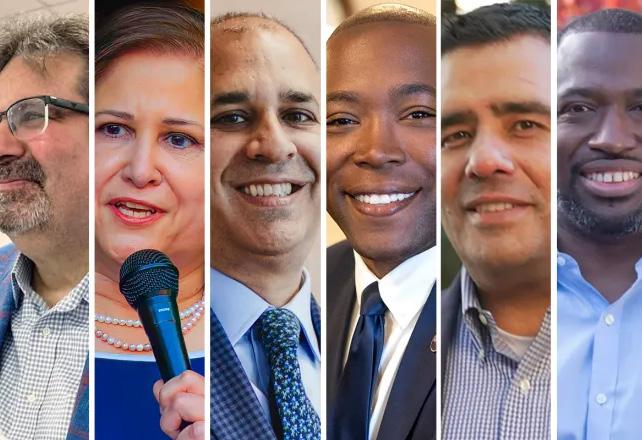
to run, each outlining different priorities for the role.
Josh Fryday, a Democrat, is running on a platform centered around education, workforce development, housing, and clean energy. Fryday has called for fully funding public education, increasing teacher pay, and reducing student debt for educators. He supports expanding the College Corps program across UC, CSU, and community colleges so students can earn money for college through public service. His campaign also emphasizes building housing near campuses and transit, smooth construction approvals, and accelerating clean energy infrastructure while protecting California’s resources.
Janelle Kellman, also a Democrat, is focusing her campaign on wildfire
prevention, affordable housing, and job-aligned education. Kellman has proposed year-round wildfire prevention efforts, limits on wildfirerelated insurance increases, and making it easier to convert public land into affordable housing. Her education platform emphasizes expanding vocational programs to better connect students with jobs in technology, climate solutions, and skilled trades.
David Fennell, a Republican, is running on a platform emphasizing economic growth, public safety, and land and water management. Fennell has highlighted concerns over jobs leaving California, rising costs, crime, and land mismanagement contributing to wildfires and water shortages. He has said he would use the Lieutenant Governor’s role as
chair of the California Commission for Economic Development to write a new statewide economic growth plan. Fennell cites his background in business, economic development, and crime prevention as preparation for the office.
Tim Myers, a Democrat, is campaigning on a message of balancing economic growth with environmental protection and worker rights. Myers supports expanding public transit, promoting offshore wind and clean energy, and holding California’s high-speed rail project accountable through independent audits and transparency requirements. Myers is also a founding member of the pop band One Republic.
His platform includes freezing UC and CSU tuition increases for five years, expanding Cal Grants and the Middle Class Scholarship Program, strengthening healthcare access through Covered California, and increasing mental health services in schools. Myers also emphasizes housing affordability and repairing our infrastructure.
Oliver Ma is running as a Democrat Socialist centered on housing affordability, immigrant protections, healthcare access, and labor rights. Ma supports expanding rent control, preventing large corporations from buying up housing, and strengthening tenant protections. He has called for universal single-payer healthcare in California, stronger union protections, and a Green New Deal–style climate agenda focused on clean energy jobs and wildfire
prevention. Ma also supports free public transit, universal childcare, and stripping state investments from companies connected to human rights violations abroad.
Fiona Ma, a Democrat, is running on her experience in state government and financial oversight. Currently serving as State Treasurer, Ma emphasizes fiscal responsibility, affordability, and accountability in government spending. Her platform includes making college more affordable, expanding healthcare access, supporting first responders, and building more housing statewide. Ma has highlighted her background in budgeting, pension oversight, and socially responsible investing as preparation for the lieutenant governor role.
Other candidates who have filed to run include Michael Tubbs, former mayor of Stockton; Mike Schaefer, a member of the state’s equalization board; and Brian Jones, California State Senator for the 40th district and Minority Leader for the Senate. Detailed campaign platforms for those candidates have not yet been publicly released.
While the Lt. Governor’s race may receive less attention than the gubernatorial ticket, the position has significant influence over higher education governance, housing development, environmental policy, and economic planning. For California college students, the outcome of the 2026 election could shape tuition decisions, campus housing availability, and workforce opportunities in the years ahead.
What’s up,
Stay up to date on events! For further info, visit https://whittier. campuslabs.com/Engage/
Pre-Law Club Meeting
• Thursday, Feb. 12 at 12:30 p.m.
• Platner 202
Deco Your Love
• Thursday, Feb. 12 at 12:30 p.m.
• Campus Courtyard
Poet Pantry
• Thursday, Feb. 12 at 12:30 p.m.
• Campus Center Room 141
Thiving Authentically
• Thursday, Feb. 12 at 4:30 p.m.
• Whittier College Career Center
Third Space Thursday:
Valentine's Day Craft Night
• Thursday, Feb. 12 at 4:30 p.m.
• Club 88
Tatreez & Tea: Palestinian Storytelling in Stitches
• Thursday, Feb. 12 at 5:00 p.m.
• Villalobos Hall
Valentines With TOBGLAB
• Thursday, Feb. 12 at 5:00 p.m.
• Campus Courtyard
Valentine's Day Gram Fundraiser
• Friday, Feb. 13 at 9:00 a.m.
• SLC Patio
Fieldtrip to the Huntington Museum
• Friday, Feb. 13 at 9:00 a.m.
• The Huntington Museum Drawin' Together
• Monday, Feb. 16 at 4:00 p.m.
• Dezember House Craft Night with Fiber Arts Club
• Monday, Feb. 16 at 5:00 p.m.
• Ettinger Lounge
Uno, Cards & Chill (Game Night)
• Monday, Feb. 16 at 6:00 p.m.
• Johnson Hall 1st Floor Lounge
Lunar New Year Luncheon
• Tuesday, Feb. 17 at 11:00 a.m.
• Campus Inn
TOBGLAD Weekly Meeting!
• Tuesday, Feb. 17 at 12:15 p.m.
• Johnson Hall Lounge
Overcoming Math Anxiety
• Tuesday, Feb. 17 at 12:30 p.m.
• LIS in Wardman Library
Pet Therapy
• Tuesday, Feb. 17 at 12:30 p.m.
• Founder's Hill Lawn
Pet Therapy - Spring 2026
• Tuesday, Feb. 17 at 3:00 p.m.
• Dezember House Patio
Documentary Night: The Social Dilemma
• Tuesday, Feb. 17 at 6:30 p.m.
• Johnson Hall 1st Floor Lounge
Waistbeads & Bracelet Making
• Tuesday, Feb. 17 at 6:30 p.m.
• Harris B1
Emma Galvan DEPUTY EDITOR
Every year during the first week of February, Whittier College holds the Black History Month Luncheon. The event was hosted by the Office of Inclusive Excellence (OIE) and the Black Student Association (BSA) and was held in the Campus Inn (CI) from 11 a.m. to 2:30 p.m. The Luncheon was intended to both honor and celebrate the traditions of Black History Month for everyone on campus to enjoy. As such, it is one of the few days that commuters (students who do not have a meal plan and do not reside on campus) are welcomed to attend with a free meal voucher.
The menu for this year’s Luncheon included traditional soul food such as fried catfish, collard greens, red rice and beans, mac and cheese, and black eyed peas. Special desserts were also on display, such as a peach cobbler station, and fried donut holes stacked on top of one another.
Declared in 1976 by President Gerald Ford as a nationally recognized celebratory month, Black History Month is reserved for teaching and celebrating Black
history, works, and culture.
Although it was met with resistance from the South when it was first created, the month itself had been honored throughout the ‘60s and ‘70s by the majority of the U.S..
The holiday was created by Black historian Carter G. Woodson in the early 20th century. The idea came from the existing celebration of the birthdays of President Abraham Lincoln and Abolitionist Frederick Douglass. Two key figures in Black history, who were both born in February thus creating “Negro History Week," the predecessor to the full month we recognize today.
Although it is unknown when the College started celebrating Black History Month, the Luncheon was created for the holiday and has been celebrated in the beginning of February for the last few years.
While students were waiting in the winding lines around the counters, stomachs grumbling in anticipation, they were welcomed to look around and interact with the vendors in the East side of the CI. The BSA spotlighted three Black Women-owned businesses this year.
Summerbody Spa offered a selection of body butters and oil fragrances for attendees to sample.
HipHalos, a waistbeads vendor led by Pris H. that sells handmade waistbeads to track weight loss and encourage body positivity.
And a returning vendor, Cacao Cookies, owned by Ranesha Rene that catered gourmet chocolate chip pecan cookies, and red velvet, german chocolate, and peach cobbler cupcakes.
Next to the vendors was a photobooth for attendees to come and take group photos with fun props.
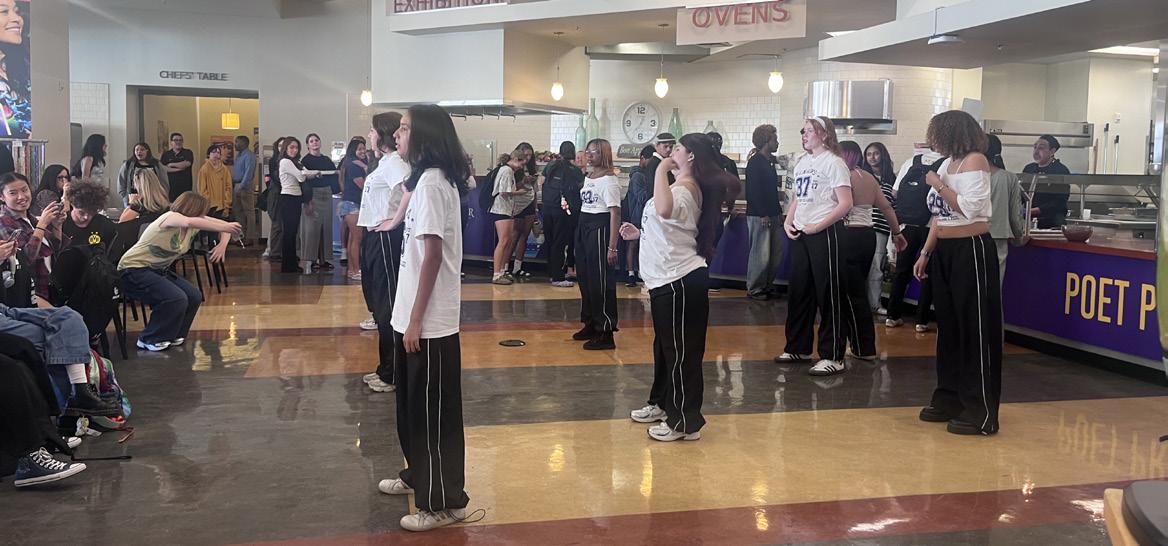
Midway through the event after everyone sat down, the Whittier College dance team gathered in the middle of the CI for their performance. Led by third-
years Jasmine Barajas and Leah Triana, the Dance Team performed a routine to a medley of songs by Black musicians such as Kelis, Busta Rhymes, and The Pussycat Dolls as the tables full of staff, faculty, and students cheered them on. Reggae group Island Rythms, a campus favorite, performed live for attendees.
The CI was the most packed it has been since the Spring semester began. Although the luncheon only celebrated one day of Black History Month, students at the College make efforts to uplift the black community on campus year-round. To see more events for Black History Month, check BSA's Engage or look out for any announcements on the BSA's Instagram, @wc_bsa.
Jay Fuentes STAFF WRITER
The Brotherhood Leadership Program (BLP or Blips) is a retention program for men of color on campus. The Office of Inclusive Excellence (OIE) founded the BLP program in 2018 but it looks much different now after it's matured.
Over the years, the program has gained more members and traction and is meant to support men of color, who are considered a vulnerable group of students.
The U.S. Department of Education concluded that men of color are graduating at lower rates than fellow students nationwide.
According to Whittier College’s data from 2016, the six-year graduation rates for men of color mirrors the national data.
This program is committed to creating a safe space on campus that prides itself in solidarity, community, and leadership opportunities to retain enrollment. Usually recommended for incoming first-years, it provides additional support during the transition into Whittier College through workshops, mentoring, activities and an annual retreat.
The BLP retreat is held in the
Spring semester right after winter break. It is a three-day natrure retreat at Pathfinder Ranch on Thomas Mountain. This year the BLP retreat was held from Jan. 23 through Jan. 25, and many incoming first-years, departing fourth-years, and those in between have had their first or final experience with the BLP retreat.
First-years Jesse Lopez and Kevin Padilla are two BLP members who gave a fresh perspective when asked about their retreat experience. “There were a lot of fun activities to do, it felt really nice because there were a lot of bonding moments we had with one another. And it was very secluded and in the mountains,” Lopez reflects.
“I feel like the retreat was a perfect mix between feeling safe and cozy, but at the same time, you're exposed to a lot of new things. And there’s always people around you that are gonna help you if something bad happened, you know?” Padilla adds.
Lopez and Padilla both have said that BLP is where they met new people and made new connections they would not have made if they hadn't joined. BLP has also impacted incoming first-
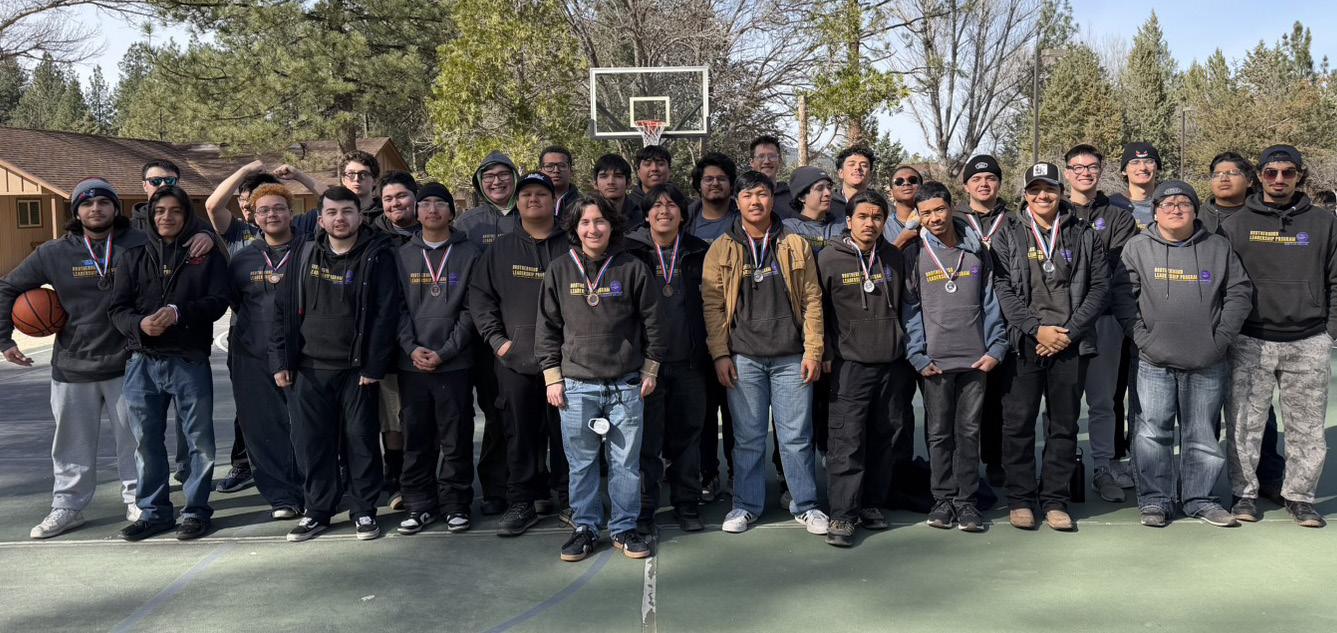
years and new students by having events, a mentorship program, and mandated study hours. The retreat especially has made first-year BLP students feel as though they've been a part of something that’s been there forever.
Second-year Devin Tovar, a member of Program Board, the William Penn Society, Senate, and many more organizations, accredits these accolades to BLP. Tovar asserts that experiencing the BLP retreat for a second time has allowed him to show his appreciation for nature and wildlife.
Although the program overall has a lot of campus and college activities, the retreat provides a safe outdoor environment. The 5 a.m. hike was something that was a pivotal moment for Tovar. “I feel like the people that went, we all kind of got to experience nature, like, fully together,” Tovar states.
The retreat also provides a scenic safe space for students to talk about their experiences, life, and aspirations. BLP as a whole has changed Tovar’s experience on campus, thanks to his BLP mentor, fourth-year Duncan Smith. “He kind of guided me into [joining] Senate, into being more proactive on campus, joining a lot of clubs, even societies. It allows networking in the college community,” Tovar says.
BLP has given Tovar and many other students the stepping stools that are needed to evolve into the people they are now.
A pivotal figure, Daniel Casillas, better known as Danny, is the lead student coordinator for the Brotherhood Leadership Program. Casillas is a fourth-year who has been essential to the
evolution of the program and what it is today. Casillas is thrilled about how far both BLP and the retreats have come and for the future of BLP overall.
Casillas joined the program as a first-year, and with BLP's help he’s paying that forward at the OIE, as he transitioned into a Lead Student Coordinator for BLP. Casillas has not only changed what the program looks like today, but he feels as though he's “been behind a lot of those changes, so it’s been really cool to sort of see that like, as I’ve grown, the program has sort of grown alongside me, into what it is now.”
BLP is not just a support network but it’s also a safety net and social connections. Casillas, having experienced highs and lows throughout his time here at the College, reflects on his time being a first-year in BLP and exploring his insecurities.
“It’s kind of weird how quickly that changes when you sort of see it, when you become a sophomore, a junior, a senior. You see those same insecurities in underclassmen, and just how much harder you kind of want to rebel against that or fight back against those insecurities in yourself so that the people who come after you don’t feel insecure about those same things,” Casillas reflects.
The Brotherhood Leadership Program allows students to overcome insecurities and others around them. It strengthens relationships and creates new lasting bonds. And BLP allows members to grow alongside each other and uplift one another throughout thier undergraduate career.

Allara Baker STAFF WRITER
As it approaches that lovely time of year again, we start to remember how different Valentine's Day once felt. It’s unfortunately long past the time for paper sacks in class with Valentines cards and candies.
Now our feeds have become oversaturated with couples and romantic comedies. Maybe, over time, you stopped really seeing the point of celebrating without that special someone or Feb. 14th began passing through as if it were any other day.
But, not to worry! Even if you're by yourself, with friends, or even your beau, we’ve got some Valentine’s Day activities that will make you see the holiday with a fresh pair of heart-eyes.
Love itself is one of the most poignant muses in art and culture. There are love songs, romantic poems, novels, paintings, drawings; tap into the wonderful creations centering the holiday. And if you feel like there are too many pieces centering around sappy tropes or romantic one-liners, there’s art out there expressing different
perspectives that fit your tastes. There is bound to be an artist that knows exactly how you’re feeling.
Even if there isn't an artist with your ideal voice yet, you can make some art of your own. You don’t even have to be particularly skilled. This can include journaling about your feelings, making a magazine collage, or making a card addressed to no one but yourself. Paper hearts, painting, doodling, whatever comes to mind. You can even vent about your romantic frustrations.
The sky’s the limit when your heart is in the right place. If you’re proud of what you came up with, hang it up in your room or on your door. Make gift bags for your friends, and express how much they mean to you, too!
Speaking of art, seeing pieces up close and personal may also give you some much needed inspiration. Find out about local Valentine’s Day events in your area. There may even be some that fit your taste or speak to you personally. Have a self-care day, try a themed menu, get a fake plush bouquet, treat yourself to a box of chocolates or a heartfelt plushie.
You don't need a partner to find an excuse to buy these things.
If they make you happy, you can have that mega pack of candy all to yourself.
Have a favorite romantic movie or maybe a TV show that has festive episodes? Now’s the perfect time to curl up and binge it. Or, if you want to shake it up, maybe even some least favorites that you can rant about to a friend. Maybe your tastes are in a different place? Let off some steam by ranting about your fictional favorites or celebrities; this is the time.
You could host a presentation night with your friends, expose your untold secrets, and maybe even decorate your door with your “blorbo” (silly term for favorite character). Have fun with it! Make a shrine, make a themed photo collage on Canva or Pinterest Wherever your passions lie, then there’s no need to feel isolated by the sentiments that dominate the holiday.
Whether you try these things with your friends, your partner, or by yourself, you don’t have to despair feeling left out during the “most romantic time of the year.” Who knows, maybe you can find some new avenues of appreciation for it by exploring these activities.

Angelica Hennessy OPINIONS EDITOR
Every romantic yearns to experience an epic love story akin to those that they see portrayed in popular media. However, with this yearning, also comes the romanticization of toxic behaviors that while inconsequential in a fictionalized setting can utterly destroy real relationships or even the parties themselves.
When one hears the term “toxic relationship,” typically certain attributes come to mind: physical abuse, verbal abuse, cheating–primarily acts of overt and purposeful cruelty. But a "toxic relationship” can entail more than the obvious signs.
Toxicity does not always stem from maliciousness, and it does not always come from one person in the relationship. This can make it hard for many to understand that the behaviors they see could be considered toxic.
One of the most common examples I see of this is when some people get so caught up in their relationships that they forget how to be their own individual. They become codependent, their identity gets so tied to their partners that they cannot function without them by their side.
Much of the content we consume romanticizes this, but in reality it can be incredibly harmful. I have had countless friends who I have lost touch with because their
lives had become entirely centered around their partner after they entered relationships. They don’t have time to entertain their non-romantic relationships anymore. You ask them to hang out, and they say that they have to ask their partner first or even that they need to bring their partner along.
It’s one thing to put time and effort into your romantic relationships, or even to prioritize your partner. It’s another thing entirely to sacrifice all your other relationships to do so, or to feel that you need your partner’s permission and supervision before leaving the house, seeing friends, or doing most anything.
We have all consumed media where the main character finally
gets with their perfect love interest, and all of their other struggles and fears simply fade away. Romance is treated like the solution to all troubles. Nothing else matters.
An excellent example of this is the Twilight movies, a love story that became a global phenomenon. Once Bella meets Edward the vampire, her entire life revolves around him.
When he leaves her for a short period of time, her mental health crashes and she’s unable to function or find any joy in life anymore. And when they’re reunited, suddenly everything is okay again. There is no attention paid to any of her friends or herself for that matter.
The two get married, Bella now practically having no life or relationships outside of her

Courtesy of Discover
Toxic codependency can easily wreck a relationship.
Counseling
relationship with Edward and his family. Bella and Edward’s relationship was heavily idolized, especially by younger, impressionable girls.
This attitude breeds codependent ideology and toxic expectations because this is not how functional relationships work. While having a loving partner certainly can make your life feel more fulfilling, simply being in a relationship is never going to be enough to truly fix all your problems.
Your mental health should not solely rely on a romantic relationship. It is far from a long-term solution. These issues will instead manifest themselves insidiously, and when left unacknowledged can have devastating consequences for both you and your partner.
If you'd feel you have nothing if your partner left you—no friends, no safety net, no sense of self—then that relationship is always going to be toxic. A healthy relationship requires trust. It requires everyone involved to be treated as equals. It requires set boundaries, active communication, and genuine effort.
On this upcoming Valentine’s Day, it’s the perfect time to remember that while no relationship is ever perfect, it is vital that you are conscious of and adequately address when your relationship is falling into toxic or harmful territory. For your own sake, as well as your partner's.
Penelope Turgen MANAGING EDITOR
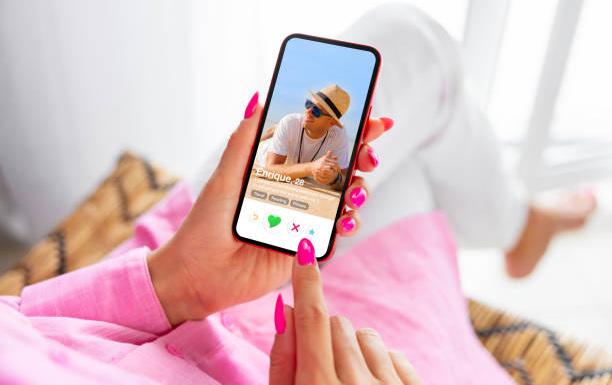
If love is a battlefield, dating apps are the front lines. Single people are in the trenches dodging bombs; it’s kill or be killed out there. The times to meet eligible singles at bars, cafes, or anywhere in the real world have long passed.
Now, every available person can be found, and find you on dating apps. Whether it’s Tinder, Hinge, Bumble, Grindr, eHarmony, or even Raya, you can sift through a pool of potential partners. The question is: did we upgrade to a modern way of courting or are we doomed to swipe through surface-level resumés fruitlessly?
No matter what you’re looking for, you’ve been promised it can be found on a dating app. Commitment, casual, nonmonogamy, friendship, affairs, or even financial support. Any form of connection imaginable. Like online shopping, you can filter what type of person you are looking for. You can filter by age, height, religion, sexuality, political views, and proximity.
You can further filter out users with a fine tooth comb through your bio. Though its intended use is to give others a brief overview of your entire personality, many users choose to write what they do or do not want in a partner. Such as “Looking for someone, loyal, obsessive, and honest!” or "Just here
to meet new people and have fun. Don’t want anything serious.”
While it’s easy to get matches on dating apps, it is significantly harder to actually get that connection to go anywhere. Clearly, dating apps would work perfectly for you if you are looking for a non-committal relationship. But what if you’re looking for a long-term relationship, a life partner, someone to marry one day?
According to a survey done by hims.com, 77 percent of people age 18-29 married or in a relationship, say that they found their match in the “real world.”
So if only 23 percent of couples in our generation seem to find their partner on a dating app (18 percent in total for those ages 18-65), why is it that dating apps are seen as the best solution to date?
Through the buffer of a phone screen, the distance created allows for cavalier and flippant treatment towards other users without guilt or much thought. Ghosting is an easy way out made harder through a connection. While ghosting your mom isn’t the best idea, ghosting a random Hinge connection can be done without shame.
Judging them superficially and playing with feelings makes it feel much more like a game on your phone than dating, almost as though it was designed to function this way.
Unfortunately for straight
men, these apps only bring a limited availability of options. Women make up less than 35 percent of users on dating apps across the board according to Tinder, Bumble, and Hinge demographics records. This means that two-thirds or more of swipers are men. Their pool is small and shrinks with their preferences.
Gender dynamics play a major role in social interactions and they carry over online. Women have the upper hand. They often have to wait for a move from the men they’re interested in and there is
no shortage of this on the apps. The straight girls simply have more options, as well as an easier time finding a match.
American online dating is a multi-billion dollar industry and it can’t be lucrative if customers leave the apps when they get into relationships. It’s better for business to keep you engaged by the illusion of infinite choice, and by feeding you people who you aren’t likely to match with.
“Don’t hate the player, hate the game.” But who’s really being played with?
Courtesy of iStock

Dear Poets,
My friend thinks that this one guy they know has a crush on them. How do I kindly tell them that they’re just being delusional? - A Concerned Poet
Jane:
Oh man this one’s simple. Just say YOU’RE in love with your friend. This gets rid of any complications that come from possibly losing your friend to this guy you’ve never even met, and you get a date for Valentine’s Day!
Jo:
Sometimes the best way to deal with a weird situation is to be just as weird and unpredictable. They think that guy has a crush on them? No, YOU have a crush on them!
Seize this opportunity to ask them out on a date. Won’t have to deal with their delusions of other people now that you’re their muse.
Johnny:
It’s either letting your friend get rejected in an embarrassing fashion or risk a small argument that will be forgotten by next week, one clearly sounds better. They’re going to be hurt eventually, it’s just best to have a sit down conversation with them and try to convince them that what they’re viewing as flirting really isn’t that.
They might not listen at the moment, but make sure to tell them that it’s not with bad intentions and you’re just looking out for them.
Besides, maybe your gut feeling is right and the guy is actually an awful person, you’re going to be seen as the life saver then so think about that! You can be saving your friend a possibly stressful relationship because you stepped up.
So, sit them down and actually explain your arguments, ask about their interactions and if this guy genuinely seems the type to be acting the way she says he is. Maybe she is taking things in a different way, like asking for the date and thinking he was blushing when really he was half asleep.
If they still don’t listen, then there’s nothing you can really do but watch, but hey at least you tried to do something.
- The Poets
Dating
Paola Ruiz NEWS EDITIOR
On Thursday, Feb. 5, two members of the Class of '79 returned to Whittier College to speak with students in Professor McBride’s International Organization class.
Edwin Keh and James Baca shared how their paths were influenced by the classes they took at the College. Keh’s path was rooted in global humanitarian work and Sustainability, while Baca’s path is grounded in Education and Labor Law. Both alums shared that the experiences at the college shaped their skills in adaptability, thinking, and community.
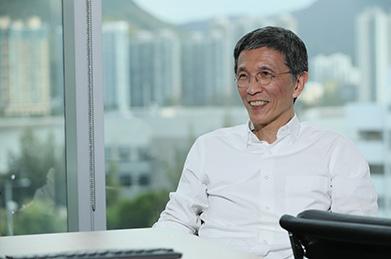
Keh, born in Hong Kong, describes Whittier College as a transformative space where he developed not only academically, but personally. Majoring in Sociology, Political Science and Urban Design, Keh credits the College with sharpening his communication skills and broadening his worldview.
“I acquired my American accent here on campus. It also helped me to learn how to listen, ask questions, and understand people from different backgrounds.,” Keh jokes.
A defining moment in Keh’s career came through an internship after his bachelors degree with the United Nations High Commissioner for Refugees (UNHCR). What began as an internship, turned into three years working in refugee camps, where
he was responsible for external communications and reporting back to international donors, like the Red Cross and other non-governmental organizations (NGOs).
“I remember stepping onto a camp that was initially only supposed to hold 8,000 people, but on its first day held over 13,000 individuals,” Keh shares. “How do you stay calm and set priorities?”
He underscored the emotional and logistical complexity of doing humanitarian work.
He spoke about negotiating refugee settlements quotas which determines just how many refugees the United States would accept.
Besides having to make difficult decisions, he remembers his positive experiences. For example he had the opprutunity to utter something most induviduals do not get the chance to say: “No, I do not have time to meet with Senator Kennedy today.”
During his time in the United Nation, Keh met his wife in a refugee camp, further intertwining his personal and professional life with global humanitarian efforts. He later earned a national delegation status and continued working at the intersection of policy, logistics, and human rights.
His career eventually expanded into global supply chain operations and sustainability, driven by what he described as a desire to “try to stop unnecessary deaths and suffering" through smarter systems and ethical decision-making.
For the past 15 years, Keh has served as a lecturer at the Wharton School at the University of Pennsylvania, teaching courses on Global Supply Chain Operations, Sustainability, Innovation, and Decision-Making Frameworks. Despite his resume, which he joked would be several pages long, Keh emphasizes that his foundation for all of his work was built at the College.
“The beauty of a Liberal Arts education is that it is adaptable,” he shares. He notes that understanding communities, whether in Sociology or Urban Design, has helped him navigate fields ranging from refugee resettlement to environmental sustainability.
Baca’s path, while different in scope, echoed many similar themes of adaptability and purpose. As a firstgeneration college student, Baca shares that he entered the College without a clear roadmap for higher education, but he knew deep down that “education was the way out of poverty.” He ultimately chose Whittier College after being recruited for an Education degree and receiving a matched financial aid package which he described as something that changed the trajectory of his life.
While at the College, he participated in Model UN under the mentorship of Professor McBride. During Model UN, he was the representative of Cypress, where he learned to think critically about policy, negotiation, and
Keh remains forever grateful for his time here
public service—skills that he would later use in law school and in his legal career.
After graduating, Baca went on to earn his Masters and Ph.D. in Law from UCLA. He now serves as managing partner at Atkinson, Andelson, Loyal, Ruud & Romo, one of California’s largest education and labor law firms. His work focuses on school law, labor relations, collective bargaining, employment discrimination, and general education litigation.
Baca has also been involved in precedent-setting cases at the California Court of Appeal and holds an AV rating from Martindale-Hubbell, a distinction recognizing professional excellence. Despite his success, Baca described his undergraduate experience as atypical experience emphasizing that the College’s small class sizes and close
faculty relationships required students to be active participants in their education.
Both alumni encourage students to take full advantage of its intimate academic setting. Keh urged students to engage with professors and peers, saying “the more you interact, the more your education will benefit.” He framed college as an opportunity to formulate meaningful questions rather than chase a single predetermined outcome. Their return to campus served as a reminder that the skills learned at The College remain forever constant. Whether negotiating refugee policy, teaching global sustainability, or reshaping educational law across California, Keh and Baca demonstrated how a Whittier education can prepare students not just for a first job, but for a successful lifetime of evolving work and purpose.
Men’s Tennis vs. Ventura College Location: Whittier, CA
• 3 p.m.
• February 12
Women’s Tennis vs. Arizona Christian University Location: Whittier, CA
• 4 p.m.
• February 12
Women’s Water Polo @ Fresno Pacific University
Location: Fresno, CA
• TBA
• February 13
Baseball vs. Lewis & Clark College
Location: Whittier, CA
• 2 p.m.
• February 13
Men’s Tennis @ Hope International Location: Fullerton, CA
• 3 p.m.
• February 13
Men’s Track & Field vs. Ron Kamaka Open
Location: Walnut, CA
• All Day
• February 14
Women’s Tennis vs. Lewis & Clark College Location: Whittier, CA
• 11 a.m.
• February 14
Softball vs. Trinity University Location: Whittier, CA
• 11 a.m. and 1 p.m.
• February 14
Men’s Basketball vs. Caltech Location: Whittier, CA
• 5 p.m.
• February 14
Women’s Basketball vs. Caltech
Location: Whittier, CA
• 7 p.m.
• February 14
Women’s Water Polo vs. Fresno City College
Location: Fresno, CA
• TBA
• February 14
Women’s Water Polo vs. Merced College
Location: Fresno, CA
• TBA
• February 14
Baseball vs. Whitworth
UniversityLocation: Whittier, CA
• 10 a.m.
• February 15
Visit wcpoets.com/calendar for the full sports schedule!
“The Next One.” NHL’s New Big Name
Penelope Turgen MANAGING EDITOR
Even if you aren’t a hockey fan, you might know the names Wayne Gretzky, Sidney Crosby, Mario Lemieux, or Connor McDavid. All of these players are generational talents. They changed the game, played exceptionally well, and left behind legacies. Playing for the San Jose Sharks, #1 pick of the 2024 NHL draft at 18 years old, only the fifth player to be drafted at first overall coming from the NCAA, is Macklin Celebrini. Is he the NHL’s next true generational talent?
Gretzky dominated hockey in the ‘80s, followed by Lemieux. The 2000s had Crosby and Alexander Ovechkin, and for the past 10 years, McDavid has dominated the NHL. Ovechkin just last season beat Gretzky’s record of most career goals, and McDavid won the Gold Medal for Team Canada in the 4 Nations Face-Off and looks to bring that success to the 2026 Winter Olympics. Their careers aren’t slowing down by any means, and yet, hockey fans are on the edge of their seats wondering: who’s next?
Celebrini is a legendary player, even if he were to retire after this season, he would go down in history. But, he somehow just keeps getting better. On the ice, he is known for his high hockey I.Q., his ability to maintain possession of the puck, evade defensemen, and make impossible wrist shots. Despite being a forward, Celebrini even outperforms some defensemen in Turnovers Created and Puck Recovery, and having 32 PIM (penalty minutes) this season so far shows that this kid is not scared to drop the gloves.
Celebrini, originally from Vancouver, British Columbia, played amateur hockey for the Chicago Steel in the USHL (a junior development hockey league in the U.S.), followed by the NCAA for Boston University. Starting at 16, he amassed points, awards, and a reputation.
Celebrini had 150 points and

eight awards to show for just two seasons before he was 18 years old. He started his NHL career in the 2024-2025 season with the San Jose Sharks. No one was surprised when Macklin Celebrini was the #1 overall draft pick. Despite this, he didn’t have much momentum from fans or the media because just one year earlier at the 2023 draft, the first overall pick was Connor Bedard.
Bedard and Celebrini grew up playing hockey together, and Bedard was anticipated to be one of the best players of our generation. The excitement for Bedard’s second season after he won Rookie of the Year his freshman season drew attention away from Celebrini.
Every hockey fan was watching Bedard, a player who got 143 points in one season in the Western Hockey League (a junior development hockey league in Canada). These two players grew up playing hockey together, entered the NHL one year apart, both play center, and their successes were highly speculated.
Many fans saw Celebrini’s talent and potential, but so many of them thought Bedard was better and on track to be legendary. But while Bedard was knee-deep in his “Sophomore Slump,” Celebrini was on the rise in his first season.
They nearly tied in points even though Bedard played the entire 82 games with Celebrini only played 70. The NHL has no shortage of great players, but generational talents are trailblazers who bring something new to the sport. And no one could have predicted Celebrini.
Celebrini is in his sophomore season in the NHL and he has not stopped breaking records, contrasting Bedard’s slump that followed him into his third season. Celebrini is a favorite for the 20252026 NHL M.V.P. Award: the Hart Trophy, and is responsible for over half of the Sharks’ goals this season.
This 19-year-old has been near trailing veteran players and skating circles around rookies. Now, he is the youngest player ever to be selected to play for Canada in the 2026 Winter Olympics alongside legends and superstars like Crosby, Nathan MacKinnon, McDavid, and Cale Makar.
Hockey was created in Canada, so assuming their Olympic teams will rake in gold is an easy bet. The men’s team brought home two Gold Medals with NHL players most recently in 2010 and 2014. Meanwhile, the U.S. Men’s team hasn’t won a Gold Medal in hockey since 1980. Canada was finally allowed to stack their roster
with NHL players for the first time in 12 years, due to the league not giving players a break for the Olympics. It is more than fair to expect Canada to do extremely well at the Olympics.
Following North America, the Scandinavian nations are predicted to follow close behind. In the NHL, many of the best players are Russian (i.e. Ovechkin, Nikita Kucherov, Evengeni Malkin), but Russia is not welcome in the 2026 Winter Olympics because of their occupation of Ukraine. With high expectations and a strong team, Celebrini is going to come home with a gold medal.
Wayne Gretzky was, is, and will always be known as “The Great One,” but after his retirement, fans want to know who will be “The Next One?” This title has been given to only six players: Eric Lindros, Paul Kariya, Sidney Crosby, John Tavares, Connor McDavid, and, most recently, Connor Bedard.
But as Celebrini has proved time and time again, he may in fact be “The Next One.” The one that the NHL has been eagerly waiting for. If Celebrini continues to grow exponentially and play with his own nuanced excellence, this beauty may simply be known to generations of hockey fans to come as “The Greatest One.”
Maia Chaidez SPORTS EDITOR
On Feb. 8 at exactly 12:02 p.m. in Cortina d’Ampezzo, Italy’s Tofane Alpine Skiing Centre, hearts were shattered.
Skiing for the United States, Lindsey Vonn made an unexpected return to the slopes after rupturing her ACL only a week prior. Vonn began her run down the 1.6-milelong course, but never made it to the finish line.
13.4 seconds into Vonn’s downhill run, the previous Gold Medal winner wiped out after losing control on a drop. The race was put on an “indefinite hold” as emergency staff tended to her the
best they could. Approximately 25 minutes later, Vonn was airlifted out of the slope, with the audience left in silence.
Karin Kildow, Vonn’s sister, said to NBC reporters that Vonn “put her whole heart” into making these Olympics and no one wanted to see it end like this. “She dared greatly, and she put it all out there,” Kildow said.
This wasn’t the United States’ last chance at this race’s gold medal, however. Earlier in the race, sixth skier, America’s Breezy Johnson, took provisional gold with a time of 1:35.10. Tenth skier Germany’s Emma Aicher got close to toppling this time, finishing just 0:04 seconds behind Johnson. 26 skiers later, and no one

come close to that time.
Vancouver. Johnson earned the first gold medal not only for herself, but for
the U.S.’s this Winter Olympics. The medal recipients include the Gold Medal winner America’s Breezy Johnson, with Silver going to Germany’s Emma Aicher (1:36.14), and Bronze going to Italy’s Sofia Goggia (1:36:69).
Monze Meraz-Lerma SPORTS EDITOR
On Jan. 31, Whittier College’s Baseball and Softball teams welcomed their alumni players home to participate in and watch the teams’ annual Alumni Games. Hugh B. Mendez Stadium and Palmer Field were filled with past Poets, some graduating as early as last year, with other alumni graduating between the 1970’s and early 2000’s. The games and the audience were full of fun and nostalgia, but most importantly, history and precedents.
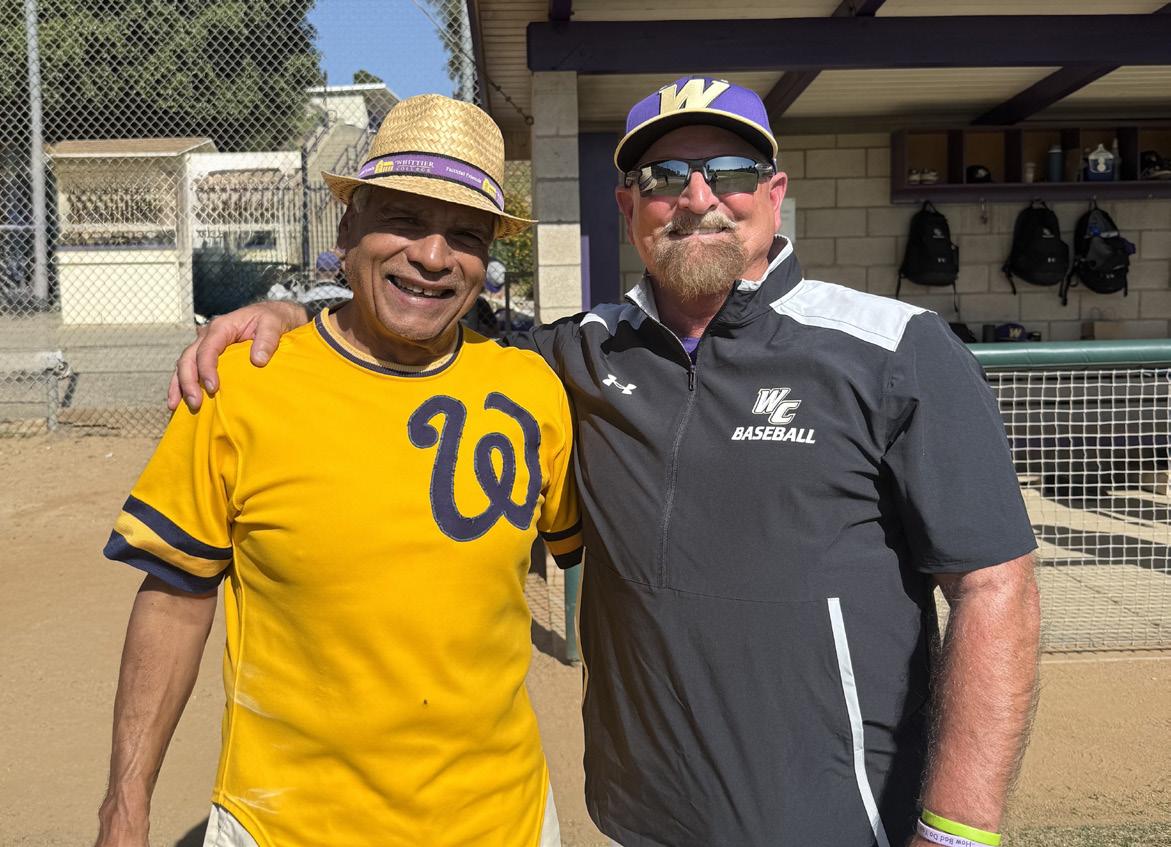
“The glue that held us together was the great game,” said Frank Mendoza ‘80 as he stepped onto the field.
Mendoza sported his original Whittier College yellow and navy blue jersey, colors the school used to rep when the cost of purple dye used to be too expensive. He laughed over the origin of his jersey, still in good condition, with the Baseball team’s current coach, Mike Rizzo ‘86. The two did not play any seasons together but became connected through their shared coach, Hugh B. Mendez, the first Black coach to head two varsity programs in California and whom the field is now named after.
“Last year, I think I was probably 35 years older than the next guy,” said Dave McCann ‘87.
The previous year was McCann’s first year coming to an alumni game since his time on the team, claiming it was time to, “Just come back and see some of the fellas.” Alongside him sat Patrick Castle ‘09 and Thomas Phelps ‘09. As Castle stretched, Phelps admitted he injured himself after
attempting to prepare for this game, forcing him to take the bench. The men noted differences in the field and facilities since their time at the College and even poked fun at some more minor changes.
“Rizzo still looks exactly the same,” Phelps said. “I mean, like, except for when he doesn’t dye his goatee.”
Up the street from the baseball field, the softball field held its own share of traditions and changes. The current team slathered on some sunscreen, circled up, and stretched together while the alumni settled into the opposite dugout and warmed up their arms.
Former teammates, including Megan Heal ‘19 (the College’s Director of Operations, Senior Woman’s Administrator, and softball assistant coach), and Alexis Hernandez ‘20, chatted in between their warm ups.
“We won a championship together!” Heal said. “We were carpool buddies!” said Hernandez.
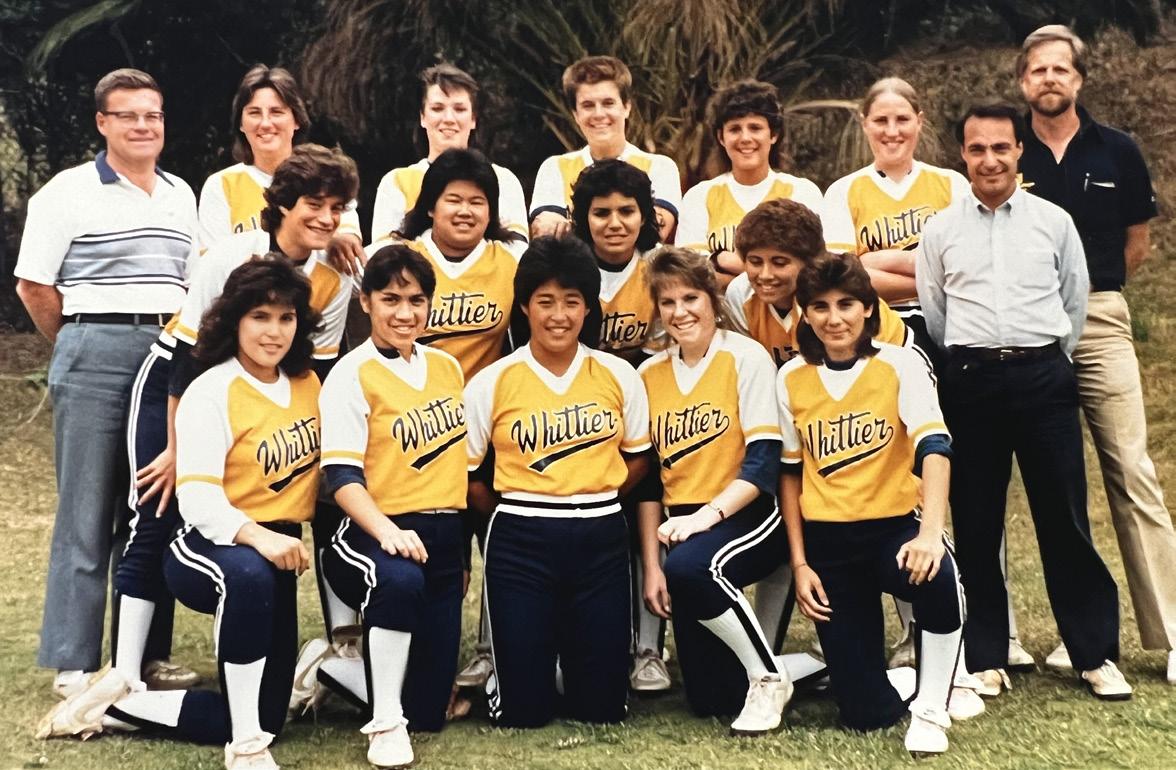
Meanwhile, the bleachers were full of the program’s origin. Mary Butterly ‘87, calls herself the team’s “super fan.” She wasn’t officially on the team, but all of her Thalian sisters played. She chuckled as she remembered that she wore a softball cap with a big yellow “W” and navy blue coloring every day for a whole year, supporting the team at every game. As the team’s biggest fan, she saw the development of the program as it developed into the College’s first official NCAA softball team, making a huge stride in women’s sports.
“The credit should go to Mike [McBride],” Butterly said. “He took the program and made it what it is now. He really was the dad for everyone.”
McBride, along with Bob Giomi—a former associate dean of students—and Warren Hanson, created the opportunity for women at the time to become part of an official sport, and now, decades later, come back and support the
next generation. Hanson leaned against the bleachers as he recounted the start of the team with Debbie Countess ‘86, the very first player of the program to receive All-American Honors (1983).
“I think a half a dozen women came into [Giomi’s] office and talked to him,” Hansen said. “They said, ‘We can play softball, let’s start a team.’”
Warren credited his partners in doing the brunt of the work, claiming he merely put the lines for the field. Countess quickly corrected him, calling the team “spoiled” as Warren would always be sure to bring the players Peanut M&M’s. Beyond this thoughtful treat, Warren, Giomi, and McBride built the team by recruiting students in the Campus Inn (CI). However, Warren says Countess, the star player, kickstarted the success of the program.
“When you [Countess] got here, that was when we realized that we actually could compete and we could play,” Hansen said. Countess’ name is now
engraved on a plaque along the field’s wall as the first of the list of players to receive an honors recognition. Also included in the plaque is Janet Wheeler, recognized in 1989 as an Academic All-American. Wheeler’s wife, Chris Kleinke, attended the game to commentate her late wife. Wheeler and the rest of the 1987 Softball team were inducted into the Whittier College 2018 Hall of Fame, the first female team to be given this recognition. This honor comes after the team won the SCIAC Championship with an 11-1 conference record.
The alumni fell short in both games with the current baseball team winning 15-5 and the current softball team narrowly reaching a 4-3 victory. These present-day teams used this game as a warmup to their official seasons. For the alumni, this game meant returning to the special spirit of the sport and the school that keeps these Poets tied forever through the legacies and history created.
“We did good,” said Countess. “We did good,” Warren agreed.
Jayden Borgna STAFF WRITER
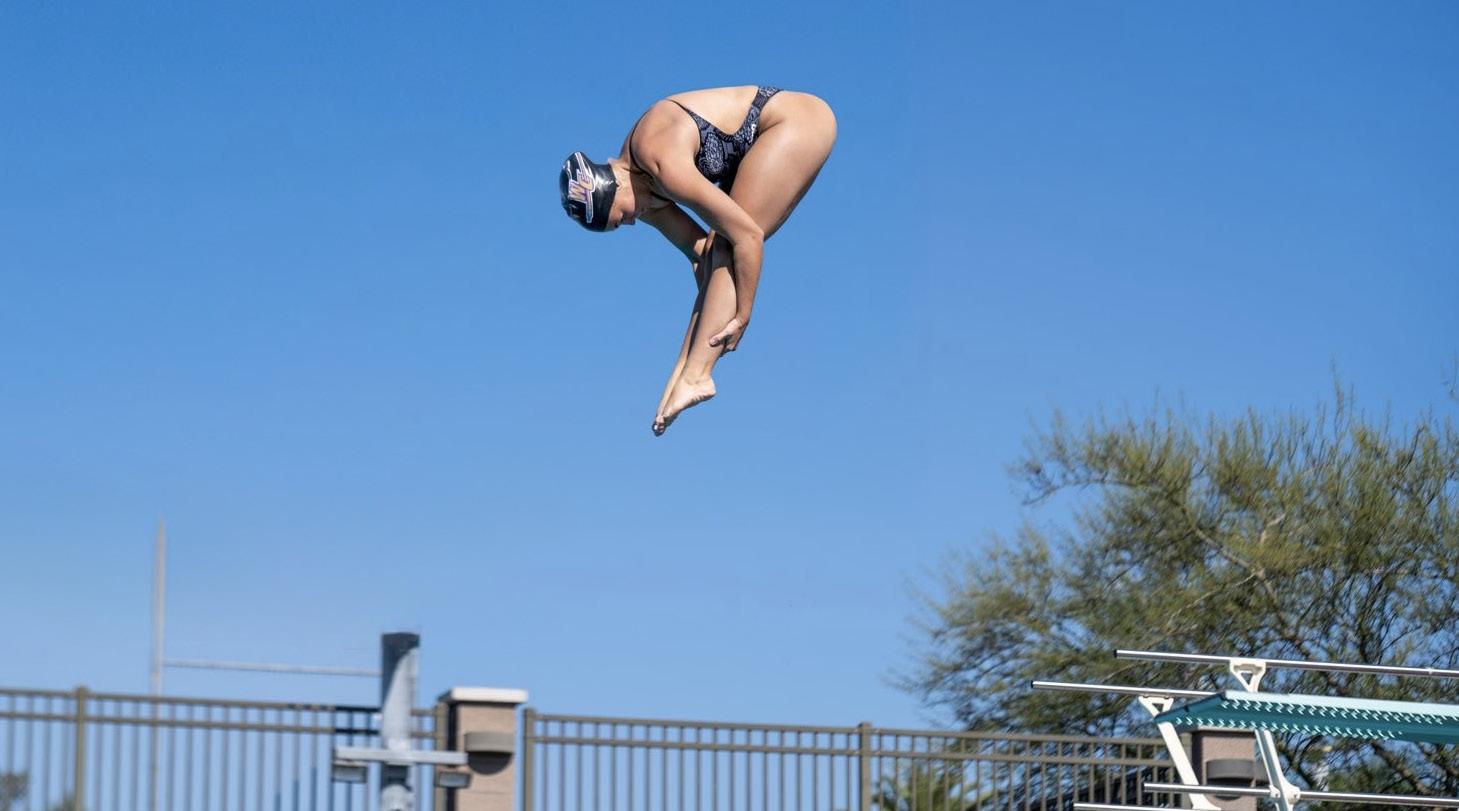
Miriam Brownell, a third-year diver, will be competing at the NCAA Regionals, marking the first time a Poet has qualified for this competition since 2019. The competition will be in Georgia from Feb. 25 through Feb. 28. Brownell has been undergoing intense training with her coach, Marisa Refe, in order to wholly prepare.
Brownell transitioned into diving in her second year, making immense breakthroughs, thanks to her previous experience in gymnastics. She has been a decorated gymnast since childhood, providing her with strong form and flexibility that she uses when diving.
Though her athletic resume expanded, Brownell began her journey at The College as a swimmer, not a diver. But she now competes as a diver, she credits the swimmers for the intense cardio training and early morning practices while also recognizing the challenges that come with diving.
“My biggest mental concern with swimming was that I was worried about a hard set or my
arms would be tired,” Brownell says. “But with diving, it is more mental with the fact that I have to be focused and concentrated, or I am going to get hurt.”
Diving can be a dangerous sport, so practicing and perfecting technique is essential. Practices are long and daunting: four hours Monday, Wednesday, and Friday, which include a variety of focuses. Brownell trains on dry land for about an hour, doing abdominal and leg training. For the next hour, she works on the trampoline, practicing diving motions while safely harnessed. Finally, the last two hours consist of diving off the board and working on specific dives.
Beyond the precautions and physicality needed for success, the team aspect between swimming and diving also plays a role in Brownell’s performance. Swimmers are surrounded by their teammates in the pool, but diving forces a player to be isolated. Up until this year, Brownell has been the only member of the diving team, now having two teammates alongside her. Overall, the feeling of being surrounded by a second family is gone.
“I don’t have people to laugh
with and joke with [during practice],” says Brownell. “So it was a huge adjustment for me to switch from a bigger team, when you have people to share what you’re going through, versus in dive, where I am now somewhat alone.”
Despite these physical and mental hurdles, Brownell has proven that she is willing to push through in order to reach her goal of qualifying for Regionals. Although this is only her second year in Diving, she has established herself as a key player in school history.
“For regionals, it requires two scores to advance, two different meets on the same board,” Coach Refe says, “Whoever qualifies will all compete at regionals with 11 total dives.”
In her second-year, Brownell only had one qualifying score, falling short of Regionals. But this year, she created history the diving program. Brownell achieved her first score when she broke the 11 dive record on the one-meter while competing against Cal Lutheran University in November. Then, she received her second qualifying score in late January at a meet against Cal Tech.
Refe ‘16 is an alumni diver of The College, where she made similar feats. Refe also made it to Regionals as a third-year in 2015, making Brownell’s qualification a full-circle moment for her as a coach. As Refe was once in Brownell’s shoes, she understands the preparation it takes to make it this far.
“I think [Brownell] takes it seriously,” Refe says. “She knew her goal was Regionals at the beginning of the season, and she was determined to reach her goal.” Regionals take place right after the Swim and Dive SCIAC Championships, which start on Feb. 18. This schedule gives Brownell only one practice before competing in Georgia, where she
will be participating in both boards doing both one meter and three meter. She will put up 11 dives on both boards: five voluntary dives (one in each direction), and six optional dives, which Brownell jokingly describes as “the crazier dives with more flips” as there is no limit on difficulty.
“I am more proud of the accomplishment of qualifying than anything else,” says Brownell. “But, realistically, my goal is to finish top ten at regionals which will move me to NCAA Nationals.”
Brownell will continue to put in hard work leading up to her trip to Georgia on Feb. 25. Updates on this record-breaking performance will be easily accessible on the Poets’ Athletics website.
Nadia Miller CAMPUS LIFE EDITOR
Want to know what our Campus Life Editor recommends this week?
Show:
Star Wars: The Clone Wars is such a great animation. I grew up watching it and I still remember the half season seven that they did before the actual season seven. Also my favorite character is Ahsoka Tano.

Musical:
I love the musical Wicked
Not the new part one and two movies but the musical. It was the first musical that I ever saw and I will always remember the first time I watched Elpheba flying in the sky on stage with her big dramatic black cloak swirling around her.

Game:
Potion Craft is such a fun and simple game. You brew potions, grow herbs, and speak with different people that want the potions you brew. Each day is different but the game gets harder as potions become harder to reach.

Courtesy
Hobby:
A hobby I picked up and don’t use very often is book binding It can be difficult to get down but once you learn it, it’s like riding a bike. I still remember how to bind a simple sketchbook together with just a thumbtack, needle, thread, and paper of course.

Ethan Ramillano STAFF WRITER
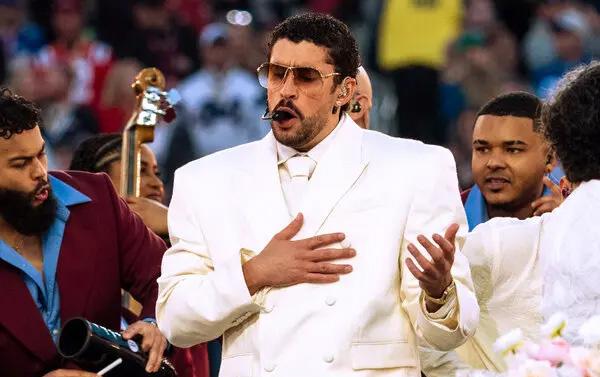
Months before Bad Bunny graced Levi’s Stadium with a colorful “love letter” to his homeland of Puerto Rico, the Super Bowl 60 halftime show had already become a contentious talking point. Ever since he was first announced to headline the event in September of last year, Bad Bunny has been lambasted as “un-American” from virtually the entire conservative media sphere. From influencers noting his lack of English songs, to threats from Homeland Security Secretary Kristi Noem that ICE agents would be present to ensure only “law-abiding Americans” attended the Super Bowl. However, the NFL later confirmed that ICE would not be present among preexisting security, and therefore no ICE presence was seen at the event.
President Donald Trump has also been vocal in his strong displeasure with Bad Bunny, saying, “I think it’s a terrible choice. All it does is sow hatred. Terrible.” Weeks later, Turning Point USA announced its own alternative “All-American Halftime Show” to air at the same time as Bad Bunny’s performance, starring conservative musician Kid Rock. What could have inspired such animosity toward one of the world’s most popular artists?
For Bad Bunny, or Benito Antonio Martínez Ocasio, his entire musical career has gone hand-inhand with his love and advocacy for Puerto Rico, an unincorporated U.S. territory. Despite being American citizens, Puerto Ricans have long lacked political representation and autonomy. Particularly amid President Trump’s second term, Bad Bunny has
taken a strong stance opposing Trump’s aggressive deportation agenda, such as avoiding stops in the United States during his 2025 tour out of concern for potential ICE raids at his concerts.
When accepting the Best Música Urbana Album award at this year’s Grammys, Bad Bunny made a point to begin with “ICE out!” before reiterating that, “We’re not savage, we’re not animals, we’re not aliens. We are humans, and we are Americans.”
In the lead-up to the Super Bowl, NFL Commissioner Roger Goodell has repeatedly defended the choice to select Bad Bunny and assured journalists that the Puerto Rican star would use his platform responsibly “to unite people and to be able to bring people together with [his] creativity.”
Sure enough, Bad Bunny did not make any overt, “divisive” political messages during his 13-minute-long halftime show. Rather, the entire set and choreography were bountiful with references to not just Puerto Rican and Latin American culture, but also strong symbols representing the island’s long history of struggle against oppression by the U.S.
To only list a few: Bad Bunny has explained the number “64” jersey he wore during the performance is a tribute to his late uncle’s birth year. Fans have also connected it to the U.S. government’s notorious mishandling of supporting Puerto Rico following Hurricane Maria in 2017. The death toll remained at “64” despite thousands more not being reported.
Surprise guest Ricky Martin performed a version of Bad Bunny’s 2025 “Lo Que Le Pasó a Hawaii” (What Happened to Hawaii), a protest song recalling the erasure of Hawaii’s
native cultures under U.S. statehood as a warning against the potential downsides of Puerto Rico’s statehood movement. This segment is then cut off as utility poles spark out, and Bad Bunny transitions into “El Apagón” (The Blackout), a song that addresses the island’s frequent power outages, due to the privatization of its power grid under the U.S.-Canadian energy company, LUMA Energy.
In a powerful conclusion to the show, Bad Bunny says “God bless America,” before shouting out nations from across the Americas (including the U.S. and Canada) while leading a parade of flags outside the set. He finished by holding up a football to the camera, with the message, “Together, we are America,” while saying, “Seguimos aquí” (We are still here).
Almost as a direct refutation to conservative claims of Bad Bunny not being “American enough” to perform for the Super Bowl, the star advocates for the audience to expand our notion of who is American: not merely exclusive to a narrow
population in a singular country, but to encompass a far greater and inclusive community of people of all kinds across the entire hemisphere. As Bad Bunny led the dancers from the field, the Jumbotron above showed the message, “The only thing more powerful than hate is love,” reaffirming his words from his Grammys speech.
On TruthSocial shortly after, President Trump decried the performance as a “slap in the face” to the nation, and claimed that it “doesn’t represent our standards of Success, Creativity, or Excellence.”
The timing of the post following the halftime show has suggested to most that Trump ignored the All-American Halftime Show, unlike what White House press secretary Karoline Leavitt suggested days before.
Ultimately, as the first-ever Super Bowl halftime show to be performed almost exclusively in Spanish (save for Lady Gaga), and Bad Bunny’s message itself may not be explicitly political, its impact for Latin American representation and resilience is sorely needed in these tremendous times.
Clover Morales HEAD COPY EDITOR
On Jan. 22, TikTok finalized a deal for new ownership to comply with President Trump’s demands for TikTok to be majority owned by U.S. investors. The main one being Oracle, a Texas-owned database and cloudflare company, and other U.S. partners instead of ByteDance’s exclusively Chinese ownership.
In January 2025, TikTok had previously been set to be taken offline in the U.S., but on the first day in office, President Trump signed an executive order to keep the app online while his administration found an agreement for the sale of the company. Now that an agreement has been reached and TikTok has been sold, users are quickly noticing the changes.
To start, the new Terms and Conditions pop up the second you open the app under U.S. ownership. However, users had no choice but to accept the terms, with two buttons popping up: one that stated “I agree” and another that stated “Remind me later.”
With no option to opt out of the terms, most users accepted the them without understandimg the consequences. The new terms and
conditions would increase the data collected on users, including your precise GPS location, biometric data, financial information, citizenship status, religious beliefs, and whether or not you identify as transgender or nonbinary, among other pieces of personal information.
Additionally, many users have noticed that their For You Pages have been completely wiped of their familiar algorithm. Creators that users were following were pushed out of their FYP, and replaced by a bunch of vapid AI-generated content, low-effort voiceovers of random movies and shows, and old videos from 2020 to 2022.
Even though this was eventually reversed, what remained was the many ways the app now censored information from users. For example, before Oracle purchased TikTok, users would see videos of anti-ICE and proPalestinian protesters, critiques of the Trump Administration, and other dissenting and diverse viewpoints.
After the purchase by Oracle, however, many users have reported that videos that are critical of Trump, ICE, and Zionists have been suppressed and received limited traction compared to videos that don’t promote these views.
In addition, many users also report receiving content promoting
opposing views, such as Christian Evangelicalism, even when users have never previously engaged with such content. Something to note, however, is that users outside of the U.S. were able to look up anti-ICE and other content without an issue.
TikTok encouraging censorship and obliviousness of current events sets a worrying precedent for social media going forward, as few of the millions of people who access the app in the U.S. are aware of these changes. Platforms like X, Instagram, and Facebook have already experimented with similar
strategies of censoring content that promoted views critiquing MAGA conservatives.
As people keep idly scrolling through micro-videos designed for addiction, how much of their life, free will, and thought are they willing to give to the oligarchy before they pluck away social awareness through influencing what people can see?
Sooner rather than later, AI slop and the jingling keys of uninspired content pushed by conservatives will fully replace any forums for critical thought and discussion that TikTok had before being owned by Oracle.

Paola Ruiz NEWS EDITOR
Love and heartbreak have always shaped the way we listen to music. From songs that feel warm and comforting, to the ones that hit a little too close to home, music can capture emotions that are often hard to put into words. Whether it is the rush of falling for someone new, the fear that comes with vulnerability, or the quiet ache after things fall apart. This week, the Quaker Campus shared their favorite love and breakup songs, tracks that make them feel hopeful, nostalgic, uneasy, or, possibly, understood.
Paige Meyer-Draffen (Editor-In-Chief)
“I think ‘Zombie Dance’ by Escape the Fate is such a romantic song[...] it's really corny but it's vulnerable and everyone dies in the end. My ideal romance.”
Emma Galvan (Deputy Editor)
“My favorite love song has to be ‘Porcelain Face’ by 4 Door Theatre. It’s one that I often visit whether I actually am experiencing romantic feelings or not. The soft guitar melodies make it very soothing and it’s honestly nice to
hear a song about falling in love with someone that you don’t feel worthy of. Sometimes you do feel like someone with a ‘cardboard face’ that wouldn’t have a shot with someone so wonderful, and yet it’s possible. The confusion and hesitance also add the realism of catching feelings, I sure as heck don’t know what to do when I’m in love and this song best represents that.”
Emma Cianciola (Features Editor)
“My favorite love song is probably ‘Me & You Together Song’ by The 1975. The 1975 is one of my absolute favorite bands and when I listen to this song by them specifically, it gives me the same feeling as finishing a great romcom. It’s so cute and bubbly, it makes you feel as though you wrote the song yourself with your crush or partner in mind.”
Monze Meraz-Lerma (Sports Editor)
"Mac Miller's The Devine Feminine is such an amzing album, and 'We' is one of the softer-toned, smooth songs. I really started to listen to this song even more when I got into my relationship, so I loved the lyrics of being better as an individual with a supportive and
loving partner."
Maia Chaidez (Sports Editor)
“‘Falling in Love Again’ - Joyce Manor It’s just so great. Everyone makes love songs about how beautiful it is, but Joyce Manor takes a different approach to it and makes you feel how scary love can be. Even though the lyrics feel and sound like words someone in love would say— constantly stumbling over your own words—the music makes it sound ominous, like something is about to go wrong. I think that's not being explored enough about love and that’s why this song is my favorite ‘love’ song.”
Elias Loya (A&E Editor)
“I think my favorite love song at the moment has to be ‘Lovers Rock’ by Sade. Sade Adu's velvety, tender vocals pair so well with the reggaeinspired instrumentation of her backing band. Lyrically speaking, it takes a more naturalistic approach to discussing love, connecting Sade's lover to the beauty of the world around her. To her, love is in the music of a radio, in the stability of a rock amid a storm. "Lovers Rock" makes love feel natural, freeing, and healing.”
Daniel Gomez (Copy Editor)
“‘Hot Tea’ by Half Alive is soft, intimate, and shows a deep desire for another. That desire stems from a level of comfort and fulfillment that love brings and wanting nothing more than to hold and gently caress it. Loving so deeply might ruin them but it is so worth it to have that deep intimate love, that sense of comfort that can only come from sharing your soul with another and knowing they cherish yours in return.”
Luis Sandoval (Staff Writer)
“Right now my favorite love song
is ‘Someone like you’ by Adele because it feels real and easy to relate to. The lyrics sound like something you’d actually think or say after a breakup.”
Jayden Garrett (Staff Writer)
“‘Is It Really You’ by Loathe and ‘In my room’ by Julia Wolf. I don’t decide why I like ‘em man shit just hit different, HEART WANTS WHAT IT WANTS.”
Love is much more thna a feeling; It's beautiful and multifaceted. Although Valentine's Day is about showing love to the people around you, it's just as important to show yourself that same love.

Angelica Hennessey OPINIONS EDITOR
If you are active within fandom spaces, shipping is simply unavoidable. Shipping—the act of rooting for or creating content around the romantic or sexual relationship between fictional characters—is a hallmark of fandom culture. If a piece of fiction has a fanbase, you can almost guarantee that there will be at least one ship that the community is rallying behind.
Even if the source material itself is absent of any romantic plotlines, fans will still find a way. Shipping is meant to be fun! It’s a way to engage creatively with the characters you love and make the stories that you personally want to read. But this does not mean that shipping should be above critique.
In modern online fandom spaces, shipping has become something which many take deadly serious, to the point that differing opinions are now treated like a declaration of war. Post about disliking a popular ship at your own risk or you may wake up to 50 death threats and your address posted online for everyone to see.
I regularly see shipping used in a way that waters down complex characters to fit them into various stereotypical romance tropes. Like stepping on a Lego, it is painful to watch the compelling themes of the source material be overshadowed by a fandom’s obsession with onedimensional romantic slop.
But most prominently, shipping culture is overrun with racism, misogyny, and other forms of bigotry

that tend to go ignored. With more than 10 million users and 16.8 million fan works as of February 2025, the fanfiction site Archive of Our Own (AO3) is one of the best places to study how these aspects of shipping operate.
Every year since 2014, AO3 user @centreoftheselights has compiled comprehensive statistics of the top 100 most written about relationships, particularly with the goal of highlighting the extreme gender and racial disparities when it comes to character popularity. In 2025, out of the 202 characters featured on the top 100 pairings list, there were only 35 women and 83 characters of color.
So why do women and characters of color get less fan content written about their relationships? Why do White male characters get the most fandom attention? Whenever this phenomenon is discussed, the primary
justification is typically that female characters in the source material tend to be less developed, have less screen time, play less important roles, and are used primarily to prop up the main male characters and thus resonate with fans less.
Characters of color tend to be similarly excluded or sidelined in favor of their White counterparts as well. But while there certainly is some level of truth to this claim, racism and misogyny in these fandom spaces play just as much of a role. In our modern day, there are many pieces of media focused on female characters and characters of color, but they tend to be overlooked.
Even when people of color are represented in the most popular ships, harmful stereotypes always follow. The most written about ship on AO3 in 2025 was between the characters
Jayce (a Latino man) and Viktor (a White man) from the animated show Arcane. When it comes to relationships between a White character and a character of color, there is a common practice where the character of color is hyper-masculinized.
They are portrayed as being aggressive, assertive, and less intelligent. They serve as the protector of their white partner, who is portrayed as being frail, sensitive, and knowledgeable in comparison. This was especially true for fandom depictions of Jayce and Viktor, despite both men in canon being scientists; Jayce, the man of color, is commonly portrayed in fanworks as a dumb brute, domineering over a soft and sullen Viktor.
In the case of Jayce and Viktor, it is also incredibly important to acknowledge how Jayce’s canon love interest, Mel, a Black woman, was treated by fans.
In general, when there is a woman “standing in the way” of a popular ship, they will oftentimes be characterized by the fandom in two equally misogynistic ways. Either they are written as a jealous, cruel, and unsympathetic antagonist, typically in opposition to their canon characterization.
Or they are dumbed down to friends whose primary narrative function is offering romantic advice and emotional support; they have no complicated emotions, story, or a personality of their own.
In fanwork, they are used solely as a narrative tool to help the popular ship get together. When it comes to
female characters of color like Mel, overwhelmingly popular fandom depictions put them in the first category. Despite Mel canonnically being an incredibly complex, empathetic, and emotionally intelligent character, fans tear her apart for their own narratives. She is instead stripped of those quality traits and villainized.
Racist and misogynistic portrayals in the name of shipping can partially be explained by the demographics of fandom spaces, fanwork sites like AO3 especially.
In 2024, @centreoftheselights conducted a survey on the demographics of 16,131 AO3 users. Notably, they found that 78.8% of users were actually White.
This statistic helps explain the lack of representation of characters of color, as whether they are being innately racist, many of these White creators are prioritizing shipping White characters with other White characters. And when they do portray characters of color, many tend to do so in a problematic or harmfully stereotypical manner.
Interestingly, despite the lack of female representation in the top 100 ships, this survey also found that the vast majority of AO3 users are women (men making up only 12.4% of users). Internalized misogyny undoubtedly has a massive impact on why many women in fandom seem to prefer writing male characters.
Shipping may be an outlet for creativity, but it is also an activity where the internalized and externalized biases of fans become most apparent.