QUAKER CAMPUS
Jan. 29, 2026
Jan. 29, 2026

“It is not ok and against the constitution.” Although short, the response reflects concerns about civil liberties and the legality of enforcement tactics.
Students commented on whether they personally knew people who are currently scared or anxious because of ICE raids. 90 percent of students said yes, while 10 percent of students selected no. This indicates that fear surrounding immigration enforcement is not distant for many students, but connected to people they know personally.
Students shared their opinion on whether President Donald Trump is worsening or helping the current ICE raids. All students said that the President is worsening the situation. No students said President Trump is helping, reflecting strong dissatisfaction with federal leadership and the current direction of immigration enforcement.
Student concerns come as widely reported incidents have intensified national backlash.
As Immigration and Customs Enforcement (ICE) raids increase across the United States, students at Whittier College report growing fear, anxiety, and frustration about enforcement tactics and their impact on immigrant communities.
A Quaker Campus survey that was sent out to the student body gathered student perspectives on the ongoing raids, how they are affecting campus climate, and whether protests and government actions are making a difference.
The survey’s respondents were diverse in identity and political alignment. Of the students who responded, 88.9 percent identified as U.S. citizens or permanent residents, while 11.1 percent identified as not being U.S. citizens or permanent residents. In addition, 55.6 percent aligned with the Democratic Party, while 44.4 percent aligned as Independent. The respondents were 66.7 percent female and 33.3 percent male. Furthermore, 44.4 percent identified as White, 44.4 percent identified as Hispanic and/or Latino, and 11.2 percent identified as White and Hispanic and/or Latino.
When asked who they voted for in the 2024 Presidential Election, 77.8 percent said they voted for Kamala Harris, while 22.2 percent said they could not vote due to eligibility reasons, including age and citizenship status.
Students were asked to rate how aware they are of ICE raids happening across the U.S. 80 percent of students rated their awareness at the highest level, while 20 percent of students selected lower ratings. This suggests that most students feel sufficiently informed and that the issue is widely discussed through media and conversation.
The survey asked students to rate their concern for immigrant communities being affected by ICE raids. 80 percent of students selected the highest level of concern, while 20 percent of students selected the level just below it. No students selected low concern options, showing that student responses were overwhelmingly unified in worry about how the raids are impacting immigrant communities.
In addition, asking them to rate how they are currently feeling amid the ongoing situation.
One student who identifies as a Hispanic and/or Latino student described their emotional state by writing, “Sad. Worried,
Students also reflected on ICE raids becoming more or less violent compared to previous raids in 2025. 90 percent of students said the raids have become more violent, while 10 percent of students said the raids are around the same level of violence. No students said raids have become less violent, which demonstrates growing alarm about the intensity of enforcement practices.
Students shared where they have seen information about ICE raids. All students reported seeing information through social media platforms such as Instagram, TikTok, or Facebook. 80 percent of students said they saw information through news outlets such as AP News, CNN, or Fox. While 70 percent of students said they received information from friends and family, that 60 percent of students said they learned about ICE raids through professors and classes. No students reported not seeing information about the raids.
"This is how the Nazi party began. Donald Trump’s own personal Gestapo (ICE) is acting above the law [...]"
scared, concerned.” The student’s response highlights the anxiety many respondents communicated as raids continue and protests spread across the nation.
Other students connected the raids to broader political and historical concerns. One student who identifies as a White student wrote, “This is how the Nazi party began. Donald Trump’s own personal Gestapo (ICE) is acting above the law [...] We are at the point where we cannot peacefully protest against ICE anymore. It took a war to stop Hitler. Let’s end what’s happening today before we get there again.” The student’s statement indicates concerns that immigration enforcement is shifting into authoritarian practices that target vulnerable communities.
A student who identifies as Native American criticized the raids through a legal lens, writing,
The results show that students are not relying on only one source for updates. Instead, they are staying informed through a combination of mainstream news coverage, social media, and personal community connections.
Students reflected on whether they think their local and state governments are doing something to combat ICE raids. When talking about local city government, 50 percent of students said maybe, 30 percent of students said yes, and 20 percent of students said no. When asked about the state government, 50 percent of students said maybe, 30 percent of students said no, and 20 percent of students said yes. These results suggest that many students are uncertain about how effective government actions are at the local and state levels or how visible those actions have been to the public.
On Jan. 22, a five-year-old boy, Liam Conejo Ramos, was detained alongside his father in Minnesota and later transferred to a detention facility in Texas. According to reporting from the Associated Press , the case drew national attention and increased public scrutiny toward immigration enforcement, especially involving children.
Student fear has also grown amid cases involving deaths connected to federal enforcement operations. Renée Macklin Good, a thirty-seven-year-old U.S. citizen, was fatally shot by a federal immigration agent in Minneapolis. According to The Guardian , the case became a national flashpoint, with a federal investigation and public criticism surrounding the actions taken during the operation.
As immigration enforcement expands, detention has increased as well. According to the American Immigration Council, the number of people held in ICE detention on any given day increased by over 75 percent in one year.
The Council also reported that ICE was using 91 percent more detention facilities by late 2025 compared to early 2025, and that “at-large” arrests increased by six hundred percent, showing a shift toward broader enforcement strategies.
Students were asked whether protests are an effective way to bring awareness to issues like ICE raids. 70 percent of students said yes, while 30 percent of students said maybe. No students said no. The responses reflect students' belief that public action can bring attention to immigration enforcement, which aligns with the national trend of growing demonstrations.
Although Whittier College is not a central site of immigration raids, the survey results show that students are still affected emotionally and socially through fear, stress, and concern for those in their communities.
As ICE raids continually increasing, and protests grow in response, Whittier College students’ responses suggest that immigration enforcement is not only a political issue, but a human issue shaping the daily lives of families, communities, and students.
• On Wednesday, Jan. 28, the United Kingdom's Prime Minister Keir Starmer arrived in Beijing, China to meet with its President Xi. Starmer plans to "bring benefits for the people 'back at home,'" explains BBC This visit has been long awaited since 2018.
• On Tuesday, Jan. 29, India and the European Union (EU) reached an agreement on a tariff deal that will remove most of the taxes on imported and exported goods. This deal has been in the works for over two decades. Reuters reports that “the deal is expected to double EU exports to India by 2032, by eliminating or reducing tariffs in 96.6 percent of traded goods.”
• On Jan. 29, Cuba failed to receive a shipment of oil from Mexico. Mexican President Claudia Sheinbaum states her decision was "sovereign” and was not pressured by the U.S. for making that decision, shares The Guardian. Cuba has currently been facing blackouts and Mexico has been the biggest exporter of oil supply globally since the U.S. has blocked all oil shipments from Venezuela.
• On Jan. 29, U.S. President Donald Trump cautioned Iraq that it would lose the support of the U.S. if its former Prime Minister, Nouri al-Maliki, comes back into power. According to a Truth Social post by President Trump, he writes, “because of [Nouri al-Maliki's] insane policies and ideologies, if elected, the United States of America will no longer help Iraq [...] Iraq has ZERO chances of Success, Prosperity, or Freedom.”
• On Sunday, Jan. 25, the acting President of Venezuela, Delcy Rodriguez, pushed back on taking U.S. orders. CNN adds, “She has had ‘enough’ of Washington’s orders, as she works to unite the country after the U.S. capture of its former leader Nicolas Maduro.”

ousting of a dictator as a new first step in restoring democracy to their country. With so many moving pieces, how can we best understand the situation in Venezuela and the future ramifications of American intervention for the Venezuelan people?
For Deborah Norden, professor of Political Science at Whittier College, the story begins not with Maduro, but with his far more popular predecessor, Hugo Chávez.
and literacy for the people.
On Jan. 3, the United States military carried out a largescale operation across Venezuela, striking multiple military installations and capturing President Nicolás Maduro and his wife, Cilia Flores. The two were then taken into United States custody to face federal charges, including allegations of narcoterrorism.
In a press conference that same day, President Donald Trump announced that with the removal of the “outlaw dictator,” Maduro, the country would effectively be run by the U.S. “until […] a safe, proper, and judicious transition” is ensured. However, the Secretary of State, Marco Rubio quickly clarified that the U.S. would not seek extensive governance of Venezuela, distancing the operation from previous nationbuilding attempts in recent memory, as seen in countries such as Libya and Afghanistan.
With Vice President Delcy Rodríguez appointed as interim president by the Venezuelan Supreme Court, she has softened the administration’s tone towards
future cooperation with the U.S., particularly in the return of foreign oil company investments into Venezuela’s vast crude oil industry. At the same time, the rest of Maduro’s administration remains untouched and continues to use security forces to repress freedom of speech, arresting
Following violent police crackdowns on civilian protests over a growing economic crisis and widespread government corruption in 1989, a tragedy known as the Caracazo, thenmilitary officer Chávez led his fellow disgruntled soldiers in an attempted coup against President Carlos Pérez in 1992, which ultimately failed.
Yet Chávez’s arrest has only made him a face of hope for Venezuela’s disenfranchised, and his popularity soon skyrocketed. Norden recalls her time interviewing Chávez himself in the days after his release in 1994, remembering the crowds of
“Maduro is clearly an undemocratic leader […] but the Trump administration doesn’t care about democracy either.”
-
those who have shown support for Maduro’s ousting. The intervention has left public opinion fractured, particularly among Americans, Venezuelans, and the Venezuelan immigrants caught in between. Critics of the intervention, ranging from pro-Maduro supporters to those simply opposed to Trump’s agenda, have denounced the operation as a return to “American imperialism.”
Supporters of the intervention, particularly many Venezuelan citizens and immigrants abroad, took to the streets to celebrate the
people following after him in the streets, and even had witnessed a judge overseeing the trial of one of Chávez’s friends practically “swooning” for the man.
What made Chávez so appealing, according to Norden, “was his absolute sincerity in caring for the needs of the poor.”
This popularity propelled Chávez to a landslide victory to become the president in 1998, ushering in the beginning of his “Bolivarian Revolution” for Venezuela. With the country’s oil exports, Chávez could provide public services to support healthcare
EDITOR-IN-CHIEF Paige Meyer-Draffen
DePUTy eDiTOr eMMa galvan
Managing eDiTOr
PenelOPe TUrgen
neWS eDiTOr PaOla rUiz
OPiniOnS eDiTOr
angelica HenneSSy
SPOrTS eDiTOrS
Maia cHaiDez
MOnze Meraz-lerMa
caMPUS life
eDiTOr
naDia Miller
FEATURES EDITOR
eMMa cianciOla
a&e eDiTOr eliaS lOya
HeaD cOPy eDiTOr clOver MOraleS
SOcial MeDia MOnze Meraz-lerMa
STaff WriTerS
allara Baker
eTHan raMillanO
MaDySOn eScOBeDO
OSWen MarTinez
JayDen garreT
JayDen BOrgna
XOcHiTl HOOD
lUiS SanDOval
STeven lOPez
SiMOn SanTana
Jay fUenTeS
cOPy eDiTOrS
eTHan ariaDa
Daniel gOMez
graPHic DeSigner
naDia Miller
carTOOniSTS neMi DOc
PHOTOgraPHer Derek alOnSO
facUlTy aDviSOr
JOSePH DOnnelly
Among these reforms was the rewriting of the Venezuelan constitution in 1999, which Norden notes allowed Chávez to gradually centralize power within the presidency while weakening the legislature over the years. This backsliding of democracy grew worse following a brief coup against him in 2002, and Chávez further leaned into authoritarianism, such as blacklisting his growing number of political opponents from elections and access to the media.
The economy soon entered trouble once again due to a combination of Chávez’s policies, labor strikes from the opposition, and eventually, U.S. sanctions on allegations of narcotics trafficking.
A significant factor to consider is Chávez’s nationalization of the oil industry in 2006, requiring all foreign oil companies to cede a majority of ownership and profits to the state-owned oil company, PDVSA. This brought a mass exodus as oil companies took their investments and left, with many suing for damages as the government seized their assets.
By the time of Chávez’s death in 2013, the country was teetering towards a downward spiral, which would be left to his chosen successor, Nicolás Maduro, to resolve. However, Maduro was simply unable to maintain a similar popularity. Norden argues that with Maduro’s inability to capture the same loyalty of the people, particularly the Chavistas, supporters of Chávez’s ideology, he resorted to further escalation of state repression to maintain power.
Under Maduro, nearly 25 percent of Venezuelans have fled the country, seeking to escape widespread malnutrition and inflation in the country.
Maduro’s administration has been accused of multiple cases of electoral fraud and extrajudicial killings of political opponents over the years, yet the most recent (and blatant) example of the regime’s corruption is the fraudulent results of the 2024
presidential elections, as Maduro allegedly ignored the overwhelming evidence that proved the victory of opposition candidate Edmundo González and instead proclaimed himself the winner.
Norden recalls seeing crowds of Venezuelan immigrants in Wisconsin waiting for the results of the election, excitedly waving flags to see Maduro lose against such a unified opposition, only for him to steal the election.
For Norden, there are two crucial questions to consider when understanding the United States’s intervention in Venezuela: “Why did they remove Maduro? [And] how are Venezuelans responding to this?” To best understand the Trump administration’s motives, she breaks it down into three levels. This begins with drug trafficking, which has been the main narrative that the U.S. has been pushing against Venezuela for months, such as the bombing of alleged drug boats in the Pacific. Norden flatly calls this a cover, reiterating that Venezuela has never been a major narcotics distributor, especially in comparison to other Latin American countries.
This moves us to the next obvious motive for oil, but it is not as simple as merely ensuring American access to Venezuela’s vast crude oil reserves. Even with Trump’s encouragement, oil companies have been hesitant to invest in the country again, due to the region’s unstable conditions and a reluctance to lower oil prices. There’s also a geopolitical angle in reducing China’s access to Venezuelan oil, a major rival that has been steadily reaping the benefits amid Trump’s dizzying array of global tariffs since last year.
This leaves us with the question of the current state of democracy in Venezuela and arguably the area of most interest for Norden, who says, “Maduro is clearly an undemocratic leader […] but the Trump administration doesn’t care about democracy either.”
Cont. on pg 3
Submissions may be emailed to qc@poets.whitttier.edu in .doc or .docx format. Submissions must include the author’s name and year of graduation or position at the college in the signature. Letters are due by Monday at 5 p.m. to make it into that week’s issue. Submissions should be no more than 500 words. Submissions will undergo the same editing process from our production pipeline if selected. All stories must follow the same journalistic standards.
Due to the high cost of publication, members of the Whittier College community are permitted three copies per issue. Additional copies may be purchased with prior apporval for 50 cents each by contacting the Quaker Campus. Newspaper theft is a crime, and those who violate the three copy rule may be subject to civil and criminal prosecution.
The Quaker Campus does not change material posted on online articles once they have been published in the paper — with the exception of an error being found. Only then will a correction be made to the online version. The Quaker Campus is a publication of Whittier College. Columns and Signed editorials do not necessarily reflect the opinions of Whittier College or its affiliates.
Venezuela Cont. from pg. 2
It is clear that undertaking any kind of full regime change of Maduro, given the presence of armed Chavista militias who are willing to violently oppose any form of American intervention, would be extremely difficult.
As a result, the U.S. has reached a murky middle ground of arresting Maduro while also keeping the rest of his regime intact. This essentially leaves all Venezuelans unhappy: from Chavistas who resent American interference in their affairs to pro-opposition supporters who continue to face repression by the government, there is no meaningful improvement for the freedoms of Venezuelans.
Notably, while Trump has said he’s open to working with interim President Rodríguez, he has repeatedly dismissed the idea. That allows the popular opposition leader, María Machado, to lead the country, even after Machado offered her Nobel Peace Prize to the President.
This may come as a surprise, given that Machado is a fellow right-wing politician through her repeated appeals to his ego, but Norden theorizes that Trump’s reluctance to accept Machado comes down to the way he approaches foreign relations, particularly his emphasis on personal relationships with world leaders.
“He particularly seeks out fellow right-wing populists who are either aligned with him or defer to him personally […] and it’s better to make friends with undemocratic leaders, those who are least likely to be forced out of office too soon,” Norden shares.
In other words, there’s more of a reason for Trump to work with an administration that is arguably illegitimate since 2024, rather than risk supporting politicians who can lose status in elections.
The hope for Venezuelans is that the current Rodríguez administration holds new elections, which they are required to do in the next 30 days under Article 233 of the 1999 Venezuelan constitution. However, with a lack of urgency from either the current regime or the Trump administration for elections anytime soon, what’s left is uncertainty for the Venezuelan people.
For non-Venezuelans, Norden stresses the importance of avoiding the perspective of the situation strictly through a binary of “U.S. imperialism” or “heroic American intervention” alone. Rather, we should try to understand what the Venezuelan people want for their country and how we can best support them. Norden reiterates the capture of Maduro is “clearly imperialist and illegal,” but she acknowledges that this was the removal of an illegitimate leader who stole an election from the Venezuelans.
Angelica Hennessy OPINIONS EDITOR
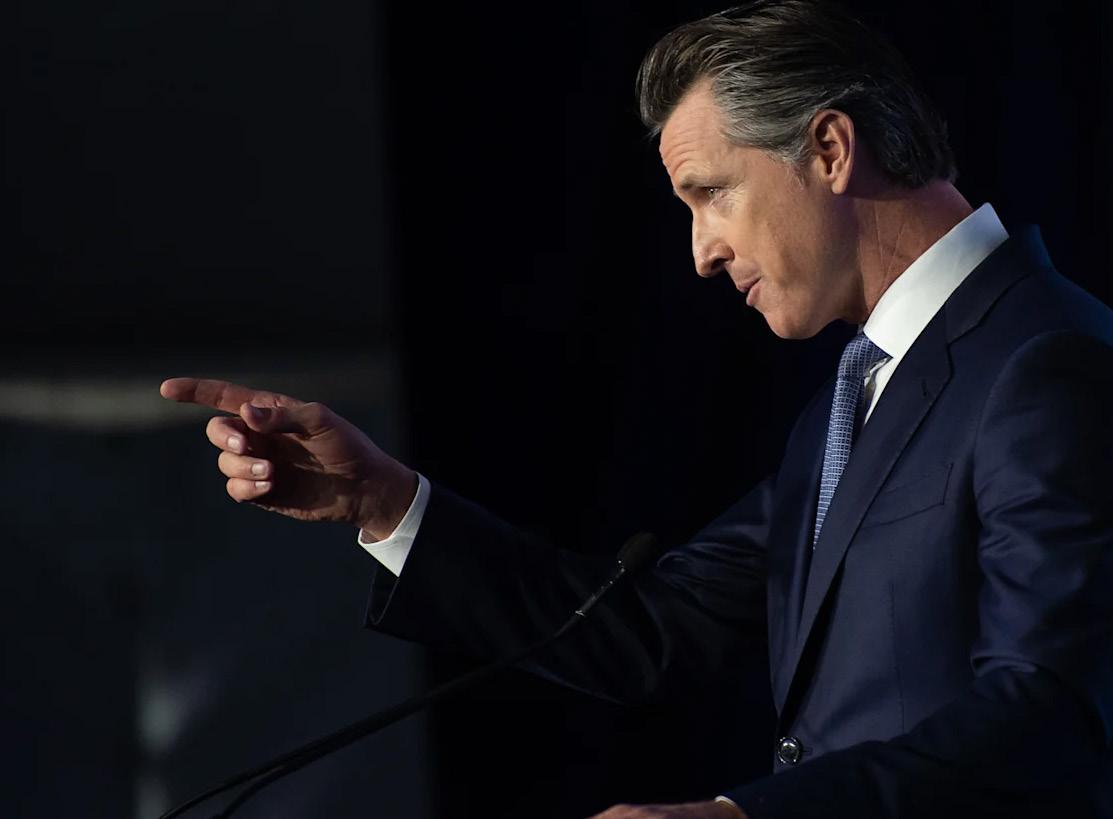
With California Governor Gavin Newsom leaving office this year, it is important for Californians to be aware of the politicians who will potentially be replacing him. While the certified list of candidates will not be released until March 26, ten notable politicians have already declared that they will be running for governor.
On June 2, California will be holding the primary election to choose which two of these candidates will be going up against each other in the official election on Nov. 3. There are currently eight Democrats campaigning for the position: Katie Porter, Xavier Becerra, Ian Calderon, Tom Steyer, Eric Swalwell, Tony Thurmond, Antonio Villaraigosa, and Betty Yee.
Congresswoman Porter has outlined the six priorities of her campaign: defending access to healthcare (especially in the midst of U.S. President Donald Trump’s cuts to Medicare), lowering the cost of living, creating affordable housing initiatives, improving the economy by creating better-
paying union jobs, improving government response to natural disasters, and expanding clean energy.
Similarly, former Californian Attorney General Becerra is primarily campaigning on tackling the affordability crisis and protecting Californians' access to quality, affordable healthcare. U.S. House Representative Swalwell has centered his campaign around lowering costs and improving California’s economy. Porter, Becerra, and Swalwell’s campaigns have also all greatly emphasized the importance of standing against President Trump’s policies and challenging his unconstitutional decisions in a court setting.
While addressing affordable housing and healthcare, former Californian assembly member Calderon’s campaign notably emphasizes eliminating regulations put on small businesses, housing, transportation, and the selling of food in order to drive down the cost of living. Billionaire Steyer’s campaign has focused on increasing taxes on large corporations, funding public education, building affordable housing, and lowering the cost of electricity.
California’s State Superintendent of Public Instruction, Thurmond, campaigns on fully funding public education, increasing the minimum wage, building more housing, and making rent affordable.
EDITOR
Former Los Angeles Mayor Villaraigosa has built his campaign on protecting immigrant communities and reforming clean energy policies to make them more affordable and productive, as well as promoting the government utilizing cryptocurrency.
Former California State Controller Yee has also focused on clean air policies, particularly investing in low-cost renewable energy generation as well as a new water conservation system, which she believes will create new jobs. Yee promised to defend access to Medi-Cal, create affordable housing, and fund the implementation of Proposition 36, which intends to increase the prison sentences for drug and theft-related crimes.
Despite the lineup being primarily Democrat, there are also two Republican candidates in the running: Chad Bianco and Steve Hilton.
Riverside County Sheriff Bianco is campaigning on increasing
the funds towards law enforcement, strengthening penalties to keep criminals off the streets, cutting taxes for businesses, decreasing economic regulations, lowering gas prices, securing the border, and abolishing sanctuary state policies.
While former Fox News host Hilton’s campaign has been dedicated to reducing taxes, ending regulations on businesses and housing, parental rights (control over the information children are exposed to in schools), and cracking down on crime, homelessness, and illegal immigration.
According to recent polls by Emerson College, Republican Bianco is currently the most popular choice among voters with a 13 percent approval rating. Among Democrats, Swalwell and Hilton are both in the lead with 12 percent. However, Porter is only one percent below them. Most notably, 31 percent of participants marked their choice as undecided.
Although the basics of these politicians’ campaign priorities have been outlined above, it is essential for one to do their own research on candidates, especially as we grow closer to both the primary and official elections.
Paige Meyer-Draffen
EDITOR-IN-CHIEF
This past May, after five years of revolving doors and interim personnel, Whittier College has announced Vanessa Gonzalez as the new Clery and Title IX Coordinator. Gonzales has been a part of the Whittier College community for four years, starting with her leadership role at the Department of Campus Safety in the Spring of 2021. Gonzalez worked with the previous Clery Coordinator as Corporal of Safety and Compliance and grew familiar with the policy and procedure through administrative work and first-responder experience. She also found herself working closely with John LeJay II, who stepped down from his role as
Associate Dean of Title IX and Bias in October of 2024, when Gonzalez processed Title IX and Clery incidents that Campus Safety responded to.
Students, faculty and staff are hopeful Gonzalez will bring some stability to a critical campus role. Take, for example, the multiple students living in a campus dorm in November 2024 who filed a Title IX case against a fellow resident. Full disclosure: as their resident advisor, I was caught in the crossfire and supported them by taking them to the Title IX office and the Police Station. At the time, the case was being overseen by the Title IX coordinator, who was not available in person and could only be reached via email or Zoom. Administrative support came in the form of staff in the
Dean of Students' office, such as Conduct and Residential Life, but there was no Title IX and Clery coordinator on campus to talk with. There is now. A Title IX case starts with a complainant filing a case against a respondent. The complainant can then decide if they want to pursue a formal or informal case, meaning a full investigation can be pursued— which can take months—or the complainant can resolve the case with a structured interaction with the respondent. Briefly, a Formal Grievance Complaint (a formal investigation) involves testimonies, witnesses, crossexaminations and a final hearing with a decision-maker. The Whittier College website describes over 30 phases of the
investigation process in detail. Over the last four years, students have seen the Title IX coordinator role change hands four times. Administrative roles change regularly, but a role that is central to emotionally weighted problems, such as sexual assault and discrimination, can make or break a student’s undergraduate experience.
Students may remember LeJay, who stepped down from his role as Associate Dean of Title IX and Bias in October of 2024. Before LeJay, Lafayette Baker served as the Title IX Coordinator in the Dean of Students’ office under then Vice President Deanna Merino-Contino (now Associate VP of Student Life at University of Nevada Las Vegas) from the fall of 2021 until LeJay took over. Cont. on pg. 5
Stay up to date on events! For further info, visit https://whittier. campuslabs.com/Engage/
Pre-Lw Club Meeting
• Thursday, Jan. 29 at 12:30 p.m.
• Platner Hall Lobby
Palestine in Context: Critical Conversations
• Thursday, Jan. 29 at 12:30 p.m.
• Campus Inn
Poet Pantry
• Thursday, Jan. 29 at 12:30 p.m.
• Campus Center Room 141
ASA Movie Night - Tokyo Godfathers
• Thusday, Jam. 29 at 5:30 p.m.
• Deihl 004
Moonlight Picnic
• Thursday, Jan. 29 at 8:00 p.m.
• Upper Quad
Game Night
• Friday, Jan. 30 at 6:00 p.m.
• Dezember House
AOKP Game Night
• Friday, Jan. 30 at 7:00 p.m.
• Hoover 104
Casino Night Theme Party
• Saturday, Jan. 31 at 7:45 p.m.
• Hoover 004
Drawin' Together
• Monday, Feb. 2 at 4:00 p.m.
• Dezember House
Black History Month Luncheon
• Tuesday, Feb. 3 at 11:00 a.m.
• Campus Inn
Math Skills Workshop
• Tuesday, Feb. 3 at 12:30 p.m.
• LIS in Wardman Library
Pet Therapy - Spring 2026
• Tuesday, Feb. 3 at 3:00 p.m.
• Dezember House Patio
Grad Fair
• Wednesday, Feb. 4 at 10:00 a.m.
• Campus Courtyard
Craft Night with Fiber Arts Club
• Wednesday, Feb. 4 at 5:00 p.m.
• Ettinger Lounge
Spring 2026 Fellowships Info Sessions
• Wednesday, Feb. 4 at 5:30 p.m.
• SLC 311
Mellon Mays Undergraduate Fellowship Info Sessions
• Thursday, Feb. 5 at 5:30 p.m.
• SLC 204
Celebrating Us and the Cultural Diaspora
• Saturday, Feb. 7 at 11:00 a.m.
• Villalobos Hall
Show Some Love to your Old Clothes
• Monday, Feb. 9 at 3:00 p.m.
• Turner Lawn
Emma Galvan DEPUTY EDITOR
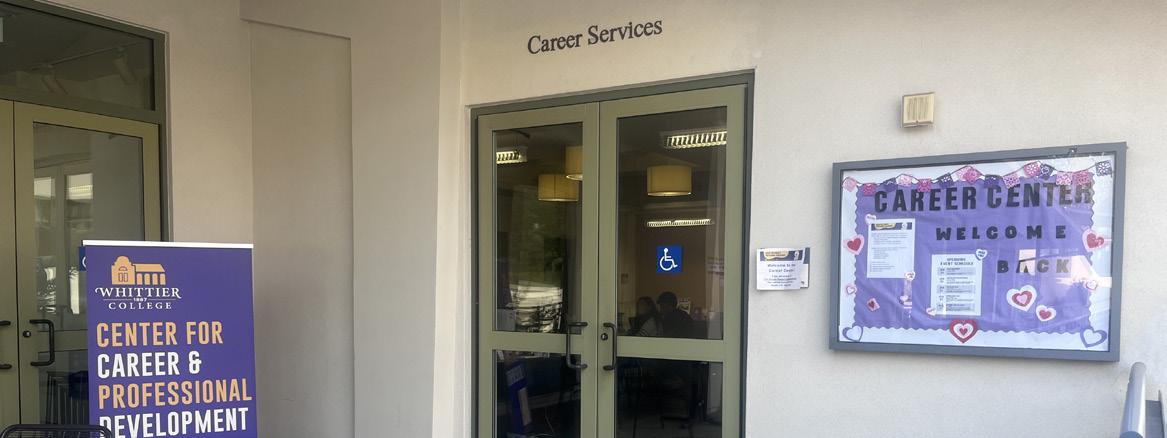
As you aproach gradutaion are you figuring out graduate school? Find a job to pay off your tuition? Or even figure out what a resume actually is and why yours isn't getting you hired? Because the Whittier College Career Center is there to help you answer these questions.
Located right next to the Campus Inn (CI), on Jan. 20 from 11:30 a.m. to 1:30 p.m., the Center for Career and Professional Development put together an open house event for students, staff, and alumni to come by to meet the staff and get to know about the resources and programs available. The Career Center had its doors open during peak lunch rush hour, welcoming anyone and everyone.
Upon entering, guests were met with balloons on the wall above a small table full of refreshments for attendees to enjoy while talking amongst each other and the staff. In the middle of the room, there was a long table that had three different stacks of papers that had information about future events and Whittier Works, a new program that was recently introduced to the College last academic year. The TV at the entrance of the office was also showing various other events and resources, such as job fairs and workshops that were happening soon.
The Career Center is a one stop shop to help students develop their professional skills and careers during or after their time at the College. These resources include employer training, resume and cover letter development, preparation for interviews, how to use LinkedIn workshops,
personal marketing, internship opportunities, and resources for soon-to-be graduates to prepare and apply for grad school.
These resources also extend to alumni. The Career Center sends newsletters to alumni about job fairs, internships, and workshops to come by and use. According to the Assistant Director of the Career Center, Deseray Rivas, “As long as the person is still here [at Whittier], services will always be open for our alumni indefinitely. […] There are a lot of Cal States and UCs that charge their alumni when they come back to receive those types of services.”
These services are also here for the staff and faculty of the College as well, “We offer workshops for a lot of our faculty members on campus and will partner and support them, typically in senior seminars. Sandra [Arana], our current Director, actually teaches two classes that are on campus. One of them is specifically geared towards students that want to receive credit for their internships,” Rivas explains.
The Career Center ensures funding for any students in their internships and creative projects, though the students must contact the Career Center first and let them know so they can provide the right applications.
The Career Center is directly involved in Whittier Works. Described on a flyer as a “collegeto-career success initiative that provides students with opportunities to connect with academic coursework, cocurricular experience, community involvement, and career skills.”
Any form of skills or experience that one may have can be shaped and formed by the Career Center to make you look the best as
Career Center is here for all your needs with finding a job.
possible for future employers.
Whittier Works allows students to have better access to networking services, opportunities, and tools to develop their working skills. Students are eligible for Whittier Works if they have worked a minimum of 20+ hours of work and service in their field, if the project supports a regional agency, group, or civic cause, and they have their supervisor sign off on their learning agreement. After applying on Handshake and all of the paperwork has been reviewed and approved, eligible students can earn up to $6,000 for how many hours they are involved with Whittier Works and their projects and internships. To learn more about the program, you can reach out to Megan Gray, the Assistant Dean and Director of Experimental Education through her email mgray1@poets.whittier. edu
If Whittier Works doesn’t work for you, there are still a plethora of events and opportunities throughout the semester. On Feb. 4, the Career Center will be collaborating with the Bookstore for the Senior Grad Fair, where seniors can stop by and learn about the actual graduation process while getting the last bit of everything that they need. In collaboration with the OIE and Alumni relations, the Center will be hosting on Feb. 12 and Mar.
25, Thriving Authentically, a series where alumni return and talk about their experiences in different industries.
Feb. 27 is the return of the JCPenny suit up, where students, staff, and faculty can get around 20-25% discounts on professional attire, as long as they show their Whittier College ID. March 18 and 19 is the Spring Industry Hiring Fair, where numerous companies that have collaborated with the Career Center stop by and offer information about their services and hiring opportunities for any current and former student that is interested. Finally, the Career Center will do its yearly Lunch N’ Learn: 6-step job research panel on April 8 and 15, a panel where students learn how to successfully navigate the job research process. The Career Center is the perfect place to start learning about your career and post-grad journey. The staff understand the fear and anxiety of not knowing the next step or how to do certain processes. Whether it’s for jobs or going into higher education, they are always willing to listen and help. To contact the Career Center, you can email Samdra Arana at sarana@whittier.edu and Deseray Rivas at drivas2@whittier. edu, email the Career Center directly at careercenter@whittier. edu, or stop by between 8:00 a.m. and 5:00 p.m..
Nadia Miller CAMPUS LIFE EDITOR
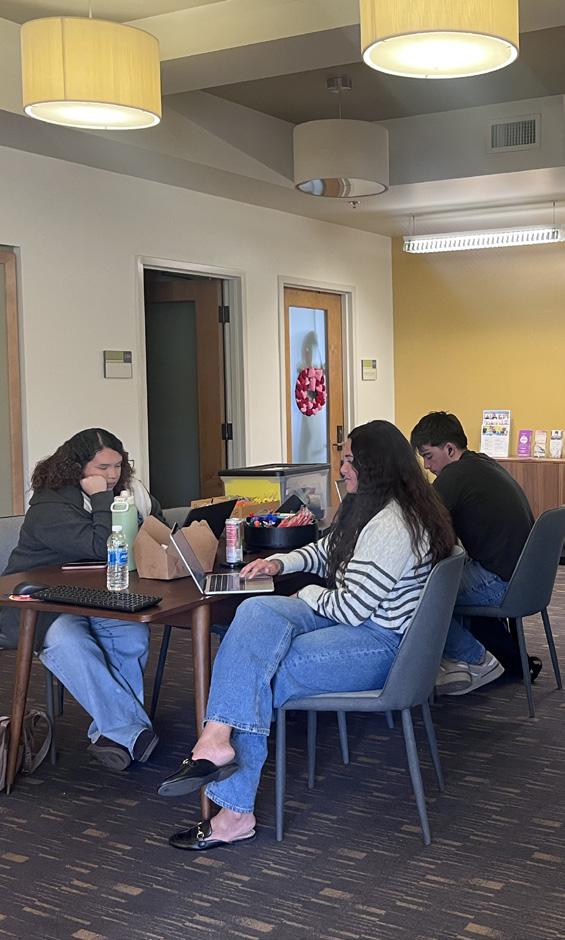
As the spring term starts so does the countdown to graduation. To the Class of 2026: Do you know where you are going after graduation? What you are you going to do with the degree you have been working on for the past four years? If you don’t know then maybe reading further can give you a few ideas on where to start looking and what steps to take.
First things first: do you have a resume? A good resume can open the gates to the job market. If you haven't made one before, there are plenty of templates available for free online. Just don’t forget to change out all of the information on the template for your own. Still not sure what to do? The Career Center on campus holds workshops to help students figure out how to build your resume. Now that you have a resume, there are a couple options available to you. A good place to start is to look at what you decided to major in and figure out what comes next.
Internships are a great way to get experience in a field you are
interested in. Starting to look for internships to apply to now is a great way to put yourself out there. A quick search on Handshake or ProFellow and you can have an application in hand and the dates for when an internship opens. Another option is to check out the internship opportunities offered through the College. The INTEX Internship is open to all students, no matter what year or
major you are. The Parker Dewey Micro-Internships are different internships offered that work well with students' schedules and figuring out what it is you want to do. To learn more about either internship check out the Career Center’s page on the Whittier College website. What internship you get in, make sure it is one that you can can actually get to and is applicable to your major.
You might already have work experience through your major. That’s great! Hopefully you remembered to put it on your resume, but now you can start looking for jobs in the field you want. So, get out there and start looking. The College offers Handshake as an option to look for different work opportunities. Handshake is a website that students can search for jobs, find out about working related events, and even get an appointment with a job councelor. You can also check Indeed or go directly to the websites of companies you want to work for.
Once you have an interview scheduled, make sure to be prepared. This can look like going and buying proper interview attire.
It’s always safe to wear something professional or something formal. Also, think about how you will answer questions, like “What are your strengths?” and “Where do you see yourself in five years?” Just remember that it is a labor of love and time consuming search for any available position you are qualified for. No matter how long it may take, you got this!
Now, if you feel like you want to continue with higher education, there is always the option to pursue a graduate degree. For this, look into graduate and PhD programs that fit what you want to do. Make sure to check application dates for any programs that do catch your interest, and keep in mind that the earlier you submit your application, the better. Look into faculty at the institution you want to work with.
And with that, here are a few options after earning your Bachelors Degree. While these options seem limited, there is still so much out there to discover. It is only a matter of time before you, the Class of 2026, take the world by storm, even if it took four years to get here.
LeJay was well-known around campus for his dedication to student life and involvement with affinity groups like the Black Student Association. At his new institution, College of the Canyons, LeJay laments the distance between the Title IX office and the student body.
“The students are kept away, it’s all cases with no faces,” he sighed over Zoom.
Just before Merino-Contino stepped down in June 2023, the Dean of Students’ office dedicated its efforts to increasing student awareness of the Title IX office in hopes of furthering a culture of selfadvocacy on campus. LeJay argued that a lack of resources could lead to long-term trauma if students don’t have the tools to learn how to advocate for themselves in a professional setting.
LeJay implemented structural changes aimed at demystifying the Title IX office and offering students more avenues to approach the Title IX process. He introduced more training to faculty and staff, and implemented the Bias Team for identity-based discrimination investigations. Merino-Continto and LeJay created a network of Title IX advisors in 2022 for students to pull from, which was an important step in departmental improvements.
He is seen as instrumental in creating a campus-wide understanding of what Title IX is. “It [did] nothing for me to be the sole person that knew about Title IX then,” LeJay laughs.
LeJay stepped down in October of 2024 after contract negotiations with the current administration did not meet his needs.
In transitional periods, LeJay’s departure and before Gonzalez’s appointment, there was no designated person to talk to when students had Title IX concerns, sometimes leaving students with nobody and their cases feeling like they were in limbo.
“It [did] nothing for me to be the sole person that knew about Title IX then.”
Title IX Advisor is an official role described by Title IX Solutions, Whittier College’s main provider of Title IX training and consulting. Cases are adjudicated on campus by the coordinator. An advisor serves as support who attends investigation meetings and can connect students to wellness resources.
Francisco Gomez, the Director of The Office of Inclusive Excellence, became an Advisor in 2022 and continues to help students navigate the Title IX process today.
Whittier College offers a small, tight-knit community among students, faculty, and staff. Many students have a rapport with a faculty member who also serves as an official Title IX advisor, and dozens more share a similar bond with staff who serve as colleagues and supervisors in Student Life Departments.
One of the main issues in the frequent turnover in the coordinator’s role is the changing of priorities in how to handle ongoing cases in the Title IX office. Dr Mikiba Morehead was the Title IX Office’s consultant through TNG Consulting since 2022 and was promoted to Interim Coordinator for the 2024–2025 academic year after LeJay’s departure. Dr Morehead was based in Washington, D.C. and was an asynchronous presence when handling the Title IX Cases she inherited during this period.
Transitional periods can leave students searching for support in advisors or feeling unfamiliar with whatever staff in the Title IX office. Even though advisors have basic Title IX training, they do not have the authority to make any decisions about the investigation and are functionally there for emotional support and advocacy.
With so much turnover in the Title IX Coordinator role, students have trouble keeping up with the central figure who actually oversees their cases. As their residential advisor, I was in a position of trying to support the students who filed the case last November, but felt a little inadequate without being able to direct students to an on-campus Title IX coordinator.
As my residents twisted in the wind, the college was still trying to sort out the position after LeJay’s departure. Even with the advisor model that students in place to help during such transitions, students sometimes felt underserved.
A student who will remain anonymous filed a formal Title IX complaint days after LeJay’s departure.
“In the beginning, it was cool to chat over Zoom [with Dr Morehead], but even then, I felt disconnected,” the student explained. “My frustrations go to the school because why was there no Title IX coordinator in person, as if this weren’t a college… Dealing with Title IX and the situation itself, I can truly say I’ve never felt more isolated and stupid.”
This student felt that their case was not sufficiently resolved and ended up filing a no-contact order that they say was repeatedly violated before the Dean of Students Office had to intervene.
Students can feel discouraged
by this isolation and may abandon the investigation altogether if they do not see progress or action being taken. Although these investigations can take months and involve tedious cross-examinations, a visible and present coordinator on campus would provide a readily accessible place to check in on the progress of cases.
Enter Vanessa Gonzalez.
Gonzalez earned her Master's Degree in Criminal Justice in December of 2024. Upon LeJay’s departure, she approached the Dean of Students Administrators to fill the position. She was warned about the emotional and mental toll of handling Title IX cases.
“They did recommend me to start looking into what [the position] actually entails, because you can’t speak to anybody about cases the same way you would talk to your coworkers,” she says.
Given her prior role with Campus Safety, Gonzalez felt prepared for the weight of the role, and she is already a familiar face to students. She was introduced as the new Title IX and Clery Coordinator to student leadership teams like the Residential Advisors when she began her new role in May of 2025.
She also finds the network of trained faculty and staff to be an indispensable support system. The Interim Coordinator, Dr Morehead, walked Gonzalez through the onboarding process over the summer when Gonzalez inherited active cases.
“The members [of faculty and staff] that I have interacted with have all been supportive, and there’s an aspect that they don’t question me or make me feel like I don’t know what I’m doing,” says Gonzalez.
“The members [of faculty and staff] that I have interacted with

have all been supportive.”
This past August, Conduct Coordinator Christina Nevaja departed, leaving the role to be handled by the Dean of Students' office. Students have been watching turnover in these sensitive roles, especially figures who built strong connections with the community on campus. The same is to say, more stability is being welcomed.
“It’s hard when there’s a lot of transitions, especially in higher roles,” Gonzalez says. Because Coordinators work closely with Advisors and other offices, they inherit highly confidential information. The transfer of this sensitive knowledge, limited to only a few staff, caused friction during previous handovers.
So far, the transition into the role has been smooth for Gonzalez, and she has been making efforts towards participating in Student Life events like Denim Day in the spring.
Having someone on campus in a permanent role, at least for now, presents an opportunity to build stronger relationships between students and the Title IX office. Students can reach out at titleIX@whittier.edu
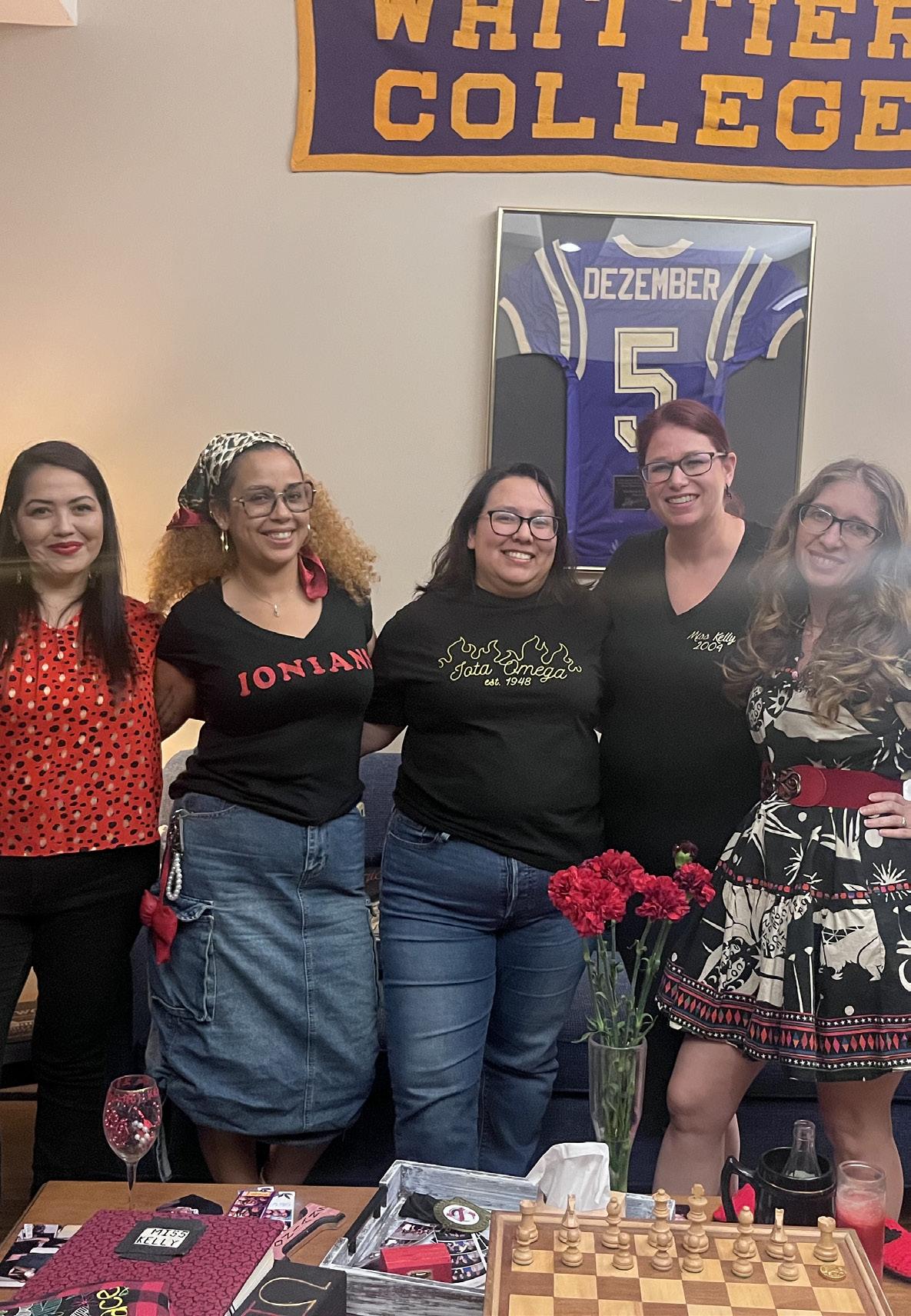
Spring has sprung, societies are on the lookout for new members, and the Ionians are no exception. The Ionian Society brought warmth and casual conversation to Whittier College at their Open House on Friday, Jan. 16, from 5:30 p.m. to 7:00 p.m. Welcoming any interested sisters to check out what they are all about, the Ionian Alumni kitted out Dezember House in all things Ionian. From crew necks, to t-shirts, pictures, and even photo albums, these Ionians meant business.
Dezember House filled with voices as introductions began. First up was Sophia Renteria (Class of 2018), the current Vice President on the Alumni Board and main point of contact for anything Ionian. Next was Dr. Jaimis Ulrich (Class of 2015) as Alumni Advisor and Jasmine Nútt (Class of 2013) as Diverse Equity and Inclusion (DEI) Co-Chair. Alicia Atkinson (Class of 2002) is the current Secretary but was previously the President for ten years. Finally, Kelly Milbourn (Class of 2005) is the current Homecoming Chair.
As introductions began, the conversation continuously moved to loving memories shared between
the sisters before shifting back into introductions. Each time the conversation would switch there would always be something fun and new to learn about each of these Ionian Alumni.
When asked what the Ionians are known for, being loud and proud was first on the list. But when digging deeper, the Ionians' stated that community service plays a big part in what the I’s do. As one of the I's explained they are "service hearted."
While having no current events planned for the coming semester, the I's are putting all of their energy into recruiting new members with the hope that next year they can hold more events with new active members.
This isn’t the first time the Ionians have been inactive. They were founded back in 1948 but were brought back on campus in 1991.
As a community based sisterhood, their phrases of "Individually unique, together complete,” and “In unity lies victory,” are key to their ideology.
It's no wonder these sisters are so welcoming to anyone. With values of empowerment and inclusivity, the Ionians are full of diversity that include international sisters.
Inclusivity is such an integral
part of the society. Each of the five Ionian Alumni answered what it is like to be part of the Ionians. Renteria explains she feels the Ionians are home. A home of sisters being together and feeling all the love, and always pushing you towards your full potential that you get from being with family. The Ionians are their own tight knit family.
Nútt reflected that the Ionians carve out a space to stand out with opportunities to feel seen and, most importantly, to heal. Dr. Ulrich shared that being an Ionian is like being on an adventure. It's an experience that gives sisters an empowering and goal driven environment.
Milbourn “can’t imagine a life without” the Ionians and feels that it is like nothing else. Atkinson said that the Ionians are a “lifetime of friendships,” and “a lifetime of service.” The Ionians are so deeply rooted in storytelling that these sisters' stories become mythic for any member of the sisterhood.
While the Ionians may not have a huge presence on campus now, they are certainly working towards regrowing it. These ladies are loud, proud, and excited to bring the society roaring back to life here at Whittier College.
Clover Morales HEAD COPY EDITOR
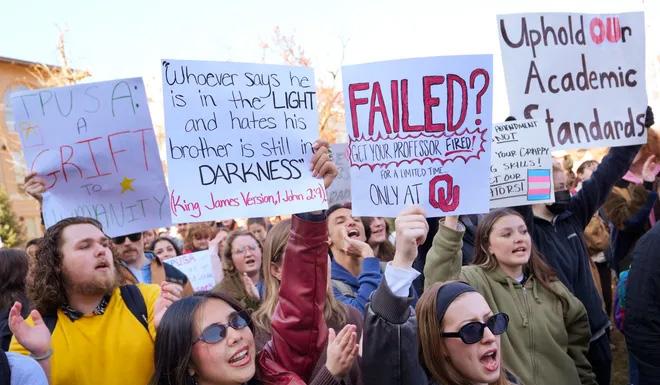
The University of Oklahoma (OU) has been facing heavy criticism for the removal of an assistant professor on Dec. 22 over a failing grade given on a student's psychology paper. The assignment was to write a response to a scholarly article about how gender expectations in society— particularly in adolescents—shape relationships with their peers and their mental health.
However, third-year Samantha Fulnecky failed to address the prompt using the article, instead choosing to cite the Bible to justify her belief that multiple genders are “demonic.” Her teaching assistant, Mel Curth, who is transgender, marked the essay with a failing grade, not because of the topic of the essay but because the essay did not meet assignment guidelines.
The essay failed to address the prompt, lacked proper citation, and had a word count that didn’t meet the standards in the rubric, among other valid reasons for being given a failing grade. Fulnecky submitted a claim against both Curth and her instructor on the basis of religious discrimination. The University of Oklahoma agreed with the claims,
placing the instructor on academic leave and removed Curth from the university.
However, this decision did not come internally from the university but rather from the backlash that it was receiving from farright conservatives for not taking Fulnecky’s side immediately.
Despite personal beliefs being cited constantly by Fulnecky and parroted by conservatives, the reason the essay was given a failing grade is clear. It wasn’t rejected because she was Christian but because the essay failed to fulfill the outlined requirements.
Her essay focused on gender through the lens of religion, which wasn’t the topic of the essay. It used religious material that had no academic backing as her primary and only source and was based more in personal ideology instead of an academic analysis of the material presented.
This essay wasn’t solely a matter of personal belief. While academia should respect and explore personal, especially religious, beliefs, it should not excuse an assignment that failed within the academic parameters. Fulnecky hid behind the excuse of personal belief to deploy hatred against marginalized groups. The
university’s response to the situation alongside Fulnecky’s escalation of has set a dangerous precedent for academia. Fulnecky chose to appeal to far-right conservatives under the pretext of religious discrimination, and MAGA conservatives are latching onto the situation in order to further their own narratives.
One of the main delusions MAGA Republicans are feeding into is the belief that White Christians are being silenced by the “leftist,” “crazy,” and “woke” academia. Ironically, these conservatives are employing more censorship than they claim Democrats are. They are advocating for the removal of queer, transgender, AfricanAmerican, and Latin American history and topics from the realm of academia and trying to advocate for a Western and White-based view of academia.
Under immense pressure from MAGA conservatives, the University of Oklahoma gave in and fired Curth. The university claims that the decision was made in good faith.
OU’s cowardice only gives conservatives the courage to weaponize the university’s
response against other colleges nationwide. Professors now face a real risk of being removed for discussing material conservatives disagree with, which only amplifies their rampant desire to censor and silence.
This has been seen with a case in Sep. 2025, in which Melissa McCoul from Texas A&M university was laid off for discussing “Jude Saves the World,” a story which features a middle schooler coming out as nonbinary. McCoul was also laid off after being pressured by MAGA conservatives.
Although academia as an institution can be discriminatory against a wide number of races,

The Poets are still recovering from Winter Break and will be returning this Valentine's Day!
genders, and religions, conservative, White Christians are not part of the groups being discriminated against. Marginalized groups like transgender people, especially transgender women, like Curth, are instead the ones who have to endure the repercussions.
Ethan Airada COPY EDITOR
Living in California has been a n emotional rollercoaster these last few years. Most of us can’t afford groceries, we deal with constant earthquakes, it’s never cold during winter, and we were just flooded right after other parts of the state experienced devastating wildfires.
All of this, and we had to do it alongside that guy we’ve just been dying to dump: Gavin Newsom. Newsom has been the governor of California for the last seven years, and he’s finishing his second term while California is looking for its rebound. He’s done some good, some bad, and a lot in between, but it looks as if there is nobody, nobody, who truly likes him. So, assuming this is true, how did he last an entire two terms?
To start, Newsom has received significant criticism over his economic policies during his tenure. California is the state with both the highest cost of living and the highest rate of homelessness in the U.S. Most voters blame his inaction more than anything. It is rather mysterious that nearly $24 billion was set aside for homelessness since 2019, a number which has only increased since then. But opening more homeless shelters is like putting a band-aid on a stab wound. It doesn’t address the root of the problem at all, and you can’t just call it a day after leaving the victim to bleed.
As governor, Newsom also has a great deal of control over the state’s economy, and California’s is the fourth largest in the world. Does it really seem implausible to address the wealth gap when there is so
much money to work with? The worst part of it is that it wouldn’t be out of character to assume that it was a full-on conspiracy.
It is made clear through his policies that Governor Newsom would rather dump homeless people down an incinerator than, say, tax higher incomes more, raise the minimum wage to account for rising living costs, or even use the money for direct aid.
He also created the State Action for Faciliation on Encampments task force, which is specifically dedicated to destroying homeless encampments by force, and there is footage of him personally tearing down a homeless person’s tent. You can’t have any dirt on the “Golden State” now, can you?
Newsom only enacted all of this when President Xi Jinping of China was visiting in 2023 during a summit for Asian-Pacific based businesses. He can take action whenever a world leader comes over, but not for the people of California or, god forbid, the homeless people of California?
Speaking of which, he has a very developed a performative persona. A cursory glance on TikTok shows multiple videos framed like popular, short brainrot videos featuring top ten lists, edits of him and other politicians superimposed over WWE, or memes about JD Vance.
Made by anyone else, you might exhale from your nose in place of a laugh, but this is from a public servant that we elected. It’s all very obviously a ploy to get as many votes from younger generations as possible, especially as he leaves the office. Whatever it takes to be president, so to speak. He’s not the only politician doing this either. President Trump himself has posted
similar videos in a meme-like format, including an AI-generated one featuring him dumping fecal matter onto protesters like that’s something the President of a great nation should be doing.
So if Newsom's methods are not necessarily unique, why did people even vote for him to begin with? For one, people say they voted for him because he was the “lesser of two evils.” Most Californians would rather have someone who would visibly oppose President Trump amongst a sea of yes men, which is important for democracy to function. However, this is also a dangerous precedent; we shouldn’t have to pick our leaders based on opposing an entire section of a differing ideology. We should argue and disagree, not go to war with each other.
Newsom’s transparent ploy to perform for young voters is miraculously working. Despite how artificial his social media may appear, most voters still consider him because he is still younger than most of Congress. Despite how fake it is, he is still considered more in tune with younger generations than most American politicians currently in office who are also doing the same exact thing.
In fact, in a poll conducted by Yale University, this rings true across the nation as Governor Newsom is considered the top option for the Democratic Party against JD Vance. This is mostly because, during his tenure, California has remained one of the few states in the US that has remained left-leaning and took strong stances amongst the weirdest occurrence of far-right unity ever. Why are Florida and Texas getting along?
Regarding the economy, just
last year, he enacted a new plan to address the budget deficit that all of us are suffering from. It includes making the state government more efficient, a focus on education and public safety, and more accountability on homeless spending.
Governor Newsom stated earlier this month that he wants to assure California with “a strong economic future well into the 21st century.”
Whether or not this plan will work is yet to be felt, but it shows that, at least, he is aware of what people are blaming him for. Even regarding last year’s redistricting election, designed to put more Democrats in Congress, most people note that it was at least done with the consent of the voters. Despite the implications of Prop. 50 redistricting throughout the states, it did win him higher approval in districts that voted for him. This is in line with the greatest reason voters even put up with him.
Throughout his career, Newsom has signed many bills into California law to protect the rights of many demographics, including parents, labor unions, and for reproductive freedom. California, a majorityblue state, considered Newsom the
only option since he was the only candidate willing to protect it. It was a freedom granted to everyone a long time ago to decide what they want to do with their bodies. Rights should never be revoked from the people living in the “land of the free.” Gavin Newsom was the only politician who sought to guarantee this. It’s important to consider that even though Newsom is leaving, California will probably stick with him. Despite how people find his actions and disposition rather nauseating, California won’t be able to escape his influence and will, eventually, participate in this song and dance all over again. We know that he’s not special. He’s just like any politician that will do anything for power. California doesn’t care if Newsom wins, only that Trump loses. We also know that we shouldn’t have to vote for him based on anti-campaigning, either.
In the midst of a cultural civil war, having another poser to rally behind doesn’t fix anything at all; it just adds to the inevitable destruction this divide between ideologies will bring. There are no good options, only the least bad.

Brandon Diaz FOR THE QC
The usage of AI tools in classrooms is at an all-time high. When Open AI, Google Gemini , and Grok at students’ fingertips, classwork is now more avoidable than ever. professors and fellow students are having to adapt to this new era of learning which brings its own challenges. These issues are attempting to define boundries in terms of how AI is used as well as its potential for misinformation and misuse. Some professors are also concerned about AI diminishing students' critical thinking capacities.
Gage Smith, a lecturer in Sociology and Anthropology, was an early adapter when it came to preparing for the AI flood. He structured his classes using oldschool methods such as in-class blue-book essays and journaling and in-class discussions.
“It’s been a few years of me running my classes like this to the point of when I first did it other professors looked at me like I was crazy,” he says.
As for the current scramble to come to terms with AI in education, Smith says, “The discussions are like, two, three years too late. I was talking about it at my departmental meetings back in like 2022 when I started changing stuff, but we started as a faculty talking about it in late 2024.”
Smith is not entirely against the use of AI. “If it is collaborative work with AI, which is what I try to encourage in all my classrooms and promote in all my classrooms, I think it could be a beneficial thing.” Smith claims, “but if you are going to lean on AI to do everything and just take a back seat, you will fail.”
Still, Smith says he encounters
students misusing AI in his classes.
“There was a group of students that I could tell just copy and pasted the prompt from inside the syllabus and gave it to AI. AI wasn’t able to parse the nuance of that prompt very well and ended up doing a little bit on all the topics that were assigned to all the other groups.”
This is just one of many incidents that Smith has run into as a professor, and he cares about students misusing AI. “What I am hopeful students will take away from my classes is that critical thought is important, and by gathering information and going through that process on paper you will not lose that skill of critical thinking, which I believe we will lose when we over rely on AI,” says
Smith
A survey done by the Digital Education Council revealed that 86 percent of students globally are using AI in their studies, with 54 percent of them using AI on a weekly basis. The survey indicates that while students are regularly using AI, they feel undereducated about how to use it responsibly and wary of its effects on education in both learning and evaluating.
Smith doesn’t hide his use of AI and states he uses AI to create discussion questions for his classes, such as finding scenes from stories he can use to correlate with events from the class readings. However, he warns against not being well-versed in the texts used in class and relied on AI alone to make the proper connections.
“The likelihood of me grabbing something that would not pair well or would only be tenuous or a weak connection to the material would be high.”
This is why he encourages students to be well versed in the material they are giving to AI, in order to point out when you are

Is AI making us evolve or devolve?
being given bad information from AI. Smith also says that his class is structured to give students a way to effectively use AI in a responsible way that they will be able to bring with them in the outside world.
“You’ve had to sit down in a class for an hour and a half, you’ve had to think about subjects, you’ve had to write about them and put those ideas together and into words and onto paper,” Smith says. By dedicating class time to reading, thinking and writing without AI, he hopes students will learn how to use AI as a study resource rather than doing the work for them.
While the increased use of AI by students is alarming to many, on the other hand, professors such as Smith argues that AI may be helping students become well versed and responsible in how they use it. Still, the allure of convenience is hard to deny.
An anonymous student who is majoring in Physics says, “I use AI often, but mainly to understand
how something works or how it is done.”
Although he said that AI can’t always be a substitute for learning, the students note that when he doesn’t understand a subject and turns to AI for help, it delivers a different way of solving the problem than originally shown by his professor, offering a different perspective. This presents the worry and cloncern of potential misinformation and artificial bias incoded within the AI models data base, or just overall confusion for students.
The student also admits, “Sometimes I just get lazy. If it’s like something I do not want to spend time on or I just really need it to be done, I will use AI." In this way, AI acts as a sort of false security blanket students believe they fan fall back on as a last resort, which disincentivizes the learning process.
Faculty, of course, are not immune to the lure of AI
convenience, especially when it comes to grading. “I don’t think that there is a lot of motivation even on the faculty end of things to do something proactive about AI,” Smith says. “They view it as like, well if I’m going to be overworked and underpaid, this is a good way to cut corners and shortcut.” Which then is another debate within itself.
Smith continues to explain how in his head, “We’re going to lose critical thought. I mean, already, we’re at this phase in our society where you ask someone something. ‘What’s the weather gonna be like? How do I get to this place? How much is the new Nintendo Switch Two?’ And they tell you, ‘Google it,’ or 'Ask Google" and I think within a few years, we’re gonna be in this place where it’s no longer Google, it’s, ‘Chat GPT it’" or 'Ask Chat." The interesting thing is, that future may be closer than we expect, it might already be here.
Men’s and Women’s Track & Field vs. NAU Ron Mann Invite
Location: Flagstaff, AZ
• All day
• January 30
Men’s and Women’s Track & Field vs. NAU Ron Mann Invite
Location: Flagstaff, AZ
• All day
• January 31
Men’s Swimming & Diving vs. University of La Verne
Location: Whittier, CA
• 10 a.m.
• January 31
Women’s Swimming & Diving @ University of La Verne
Location: Whittier, CA
• 10 a.m.
• January 31
Softball vs. Alumni Game
Location: Whittier, CA
• 11 a.m.
• January 31
Baseball vs. Alumni Game
Location: Whittier, CA
• 1 p.m.
• January 31
Men’s Basketball vs. University of La Verne
Location: Whittier, CA
• 2 p.m.
• January 31
Women’s Basketball vs. University of La verne
Location: Whittier, CA
• 4 p.m.
• January 31
Men’s Tennis vs. Ottawa Univeristy (Arizona)
Location: Whittier, CA
• 4 p.m.
• February 4
Men’s Basketball @ Chapman
University
Location: Orange, CA
• 7 p.m.
• February 4
Women’s Basketball vs. Chapman University
Location: Whittier, CA
• 7 p.m.
• February 4
Men’s Tennis @ Westmont College
Location: Santa Barbara, CA
• 2 p.m.
• February 5
Baseball vs. UOR University of Redlands
Location: Whittier, CA
• 2 p.m.
• February 6
Visit wcpoets.com/calendar for the full sports schedule!
Maia Chaidez SPORTS EDITOR
Season one of Heated Rivalry captivated audiences in late November, concluding the day after Christmas of 2025. It drew a lot of attention from both ice hockey fans and those who heard of the series through word of mouth or social media. The series received a lot of attention for two reasons. The more notable reason being its very explicit sex scenes and the other reason was because it talked about the very real issue that the NHL and ice hockey has as a whole: it’s very conservative. Beware: spoilers of Heated Rivalry are ahead and if you haven’t watched it yet, go watch it.
In 1958, the Boston Bruins called up Willie O’Ree. O’Ree kept his partial blindness a secret, and he made history by finally breaking the color barrier in the NHL. The league was the last of the major four leagues (NBA, NFL, MLB, NHL) to do so.
In addition, of the four major sports leagues in North America, only the NHL has never had an openly gay or queer player— whether when playing or in retirement. And there’s a very good reason as to why.
If you’ve kept up to date with the intricacies of ice hockey and the NHL, you’ve definitely heard of the term “the Boys’ Club.” It’s a locker room culture that practically rewards masculinity, racism, misogyny, and sexual assault. It’s a toxic environment for not just marginalized groups, but everyone involved.
In 2010, one of the first six teams in the league, the Chicago Blackhawks, faced allegations of one of their coach’s, Brad Aldrich, sexually assaulting multiple young players during the team’s Stanley Cup run. The young players were part of the “Black Aces,” players who rode the bench and would only play if a player on the main roster got injured or suspended for any games.
Another player identified as John Doe came forward and claimed that Aldrich “used his authority as a coach to groom, harass, threaten, and assault John Doe for sexual gratification.”
The team ended up settling two cases of negligence while fellow players, coaches, and the general manager knew of the incident but turned a blind eye. The league fined the team $2 million for the “inadequate internal procedures and insufficient and untimely response in the handling of matters related to former video coach Brad Aldrich’s employment with the Club.”
More recently, the 2018 Hockey Canada’s World Juniors’ team made headlines for the alleged rape of a woman identified as as E.M. Though the events of the alleged rape did take place, the five players accused were acquitted due to a lack of a beyond reasonable doubt that E.M. withdrew consent.

This case also exposed something larger; the “Participants Legacy Trust Fund.” This trust fund, supported by the National Equity Fund, a reserve built from player fees, and was used, but not limited to, handle cases of sexual assault against the organization, per The Athletic. Hockey Canada, a government funded ice hockey organization used to develop players, had a reserve of money funded by said players, to handle sexual assault cases.
fans, especially queer fans. It conveys the message that you shouldn’t have to hide who you are.
Brock McGillis has become a queer icon and ice hockey legend in the queer sports community.
McGillis was the first openly male pro hockey player to come out during his time playing. Though he never made it to the AHL or the NHL, he was onpace to be drafted into the NHL as a goaltender if it wasn’t due to
“Hockey Canada, a government funded ice hockey organization used to develop players, had a reserve of money funded by said players, to handle sexual assault cases.”
Needless to say, ice hockey’s “Boys’ Club” culture is a problem. And that’s an understatement. This unfortunate incident shows that this sport—its leaders, its players, and everyone in between—has to fix this problem, inside the locker room.
To be gay or queer in the sports world, more specifically in men’s sports, is still seen as a taboo and scandalous. So in episode five of Heated Rivalry, when New York Admirals captain Scott Hunter called for his partner-insecret Kip Grady in the stands to come down to the ice to celebrate with Hunter’s team winning the fictional league’s version of the Stanley Cup, it meant something more than just fan service.
It meant that Scott Hunter, captain of the New York Admirals, fictionally founded in 1926, in a hyper-masculine sport, with a culture that is actively hurting those like him, was ready to face those who opposed him–whether with words or with fists–and embrace the one whom he loves regardless of the pressure that surrounds him.
Though the rating has gone down to 9.9, the episode initially sat at a perfect 10/10 on IMDb, a feat that hasn’t been done since Breaking Bad’s season five episode 14’s “Ozymandias,” which was released in 2013. There’s a reason this episode is beloved by many
internal politics within the league he was developing in and injuries which cut his prospective career to the show short.
Today, McGillis has become a pillar in dismantling the Boys’ Club culture that plagues ice hockey locker rooms. As stated before, the change in the locker room has to come internally, so McGillis took that upon himself and coaches youth hockey while also being a pillar in the queer sports community. He teaches that the “cooler” and “braver” thing to do, as McGillis says, isn’t to bully your teammates for being a certain way or looking a different way, but to stand up for them when they are being bullied.
His impact reaches further than just LGBTQ+ advocacy. He fights just as fiercely for “the straight white kid who’s being bullied because they have a lisp or stutter. Or the indigenous kid who’s tired of the jokes [...] It’s for all of them…” McGillis shares to reporter Geoff Baker of One Roof Foundation
Season one of Heated Rivalry ended on a happy note. Shane Hollander’s parents found out he’s gay, with their only irk being that he is with his archrival Ilya Rozanov. The two discuss their plan on how they’re going to come out publicly together later down their careers. As they quite literally drive off into the sunset,
they know that with the world figuratively against them, they’ll make it work.
Since the show’s release, many queer ice hockey players have come forward and have said how deeply the show truly hit close to home. McGillis shared with John Casey of OutSports that, “I lived the show, and when I saw the first episode, it gave me a dose of PTSD [...] how the show is imitating life—ours [him and his now ex, then boyfriend of his time playing].”
Zach Sullivan, an out pro hockey player playing in the UK’s Elite Ice Hockey League, shares the same sentiment. “It felt like I was watching two actors, act out parts of my life” he said in his very thought out Instagram post where he shares his personal experiences and thoughts on the show.
Both Sullivan and McGillis share the sentiment that the show is great for the LGBTQ+ community, and give those who may know a queer athlete some insight into their life and how they have to navigate it. With season two of Heated Rivalry expected to release in late 2026 or early 2027, the plotline is expected to adapt Rachel Reid’s sequel to Heated Rivalry, The Long Game. Fans, of any orientation, are eager for the second season with hopes it will further challenge the culture within the locker room.
Although the show won’t make closeted players come out, and it won’t make this hypermasculine sport into one that is accepting of everyone, it helps the audience of the show understand how closeted athletes of ice hockey and other hyper-masculine sports have to live.
In McGillis’ tour across Canada and some parts of the U.S., he tries to inspire what he calls shift makers, those who aren’t afraid to stand up to discrimination. This show has the potential to create even more “shift makers” in every sports’ locker room. This show isn’t supposed to be the end all be all of the toxic culture within locker rooms, more specifically ice hockey locker rooms, but the show’s success is a wake up call that things need to change now that the issues are front and center.
Monze Meraz-Lerma SPORTS EDITOR
While many Poets returned home for the holidays, the Men’s and Women’s Basketball teams dove into the thick of their season. The Men’s team played eight games over winter break, three of which were conference games, and the Women’s team totaled seven games, also completing three SCIAC matches. Through high anticipations from the successful 2024-25 season, and the fresh new rosters both teams brought to the court this season, this break has shown what can be expected from the teams as they storm through the rest of their games.
Jaden Mathis, a fourth-year forward and Men’s captain, along with Yaneli Rosales Beltran, a third-year guard and Women’s captain, breaks down the teams’ latest developments. The Men’s team is holding onto their fourth place in the conference with the Women’s team trailing behind in seventh after some tough losses, unfortunate injuries, and hopeful wins for both teams.
The teams spent the last days of 2025 playing at the D3 Hoops Las Vegas Classic. The tournament gave the teams the opportunity to play against schools of varying levels. The Men’s team finished with a 1-1 record, finding a 70-67
victory against Amherst College, which originally held a steady 8-1 record.
“We took it really seriously because it was a big chance to send a message to everyone else,” Mathis says, “It was the only game that day, so all of the media and attention was on us.”
Unfortunately, for Rosales Beltran, the Vegas tournament meant cheering from the bench after fracturing her hand while playing Claremont-MuddScripps, the top team in the conference, on Dec. 6. The Poets were dealt a hard loss that game after going into overtime, proving a long fight to go head-to-head with a top-ranked team. Yet, once in Vegas, the Women’s team took down both of their matchups with a 72-70 overtime win against Bridgewater State University and a huge 20-point advantage over Wesleyan University.
“Those two games were really important for the team,” Rosales Beltran says. “It gave us the confidence that we needed after the CMS game.”
After the New Year began, the teams continued their stride into conference. The Men secured wins against Pomona-Pitzer and the University of La Verne but suffered losses against Occidental College and No. 10 Redlands University. The Poets’ first matchup against Occidental resulted in a painful
one-point loss after the Tigers scored a tough shot in the game’s last seconds. Unfortunately, in their next game against Occidental two weeks later, the Poets faced another loss of five points after battling out into overtime.
Just before this second matchup, Whittier was struck down by Redlands in a 60-105 loss. The Poets did their best to match the fast pace and aggression of the nationally ranked team. Mathis reflects that their efforts fell short of the team’s expectations and that they are not “45 points worse than that team.” However, he also notes that the team has been struggling since third-year Sean Cervantes tore his PCL (posterior cruciate ligament), benching him for the rest of the season.
“It hurts us a lot not having our point guard out there,” Mathis says. “Sean, he’s like our coach, too—like the coach on the court.”
The women’s team has also been falling short because of their injured players, including Rosales Beltran. However, even in the games lost, the bench has proved its increasing strength in time of need.
First-year Lanakila Nitta debuted her abilities against Chapman University, where she scored nine out of her ten shots. Rosales Beltran also shouts out third-year Delaney Castagna for the team’s Vegas victory against

Wesleyan. Still, Rosales Beltran’s absence is felt on court, but she insists on continuing to be a leader.
“I’m still a captain, I’m still a leader,” Rosales Beltran says.
“Being on the bench is really hard, but I always try to stay positive because if [my teammates] see me being negative or sad, that’s [going to] affect the team.”
Mathis and Rosales Beltran are both part of the few returners
on the teams that experienced the glory of the historic post-season experience last year. While this season’s results have differed from last year’s undefeated streaks, the captains are learning to adjust to the difficulties, helping their teammates, and ultimately, having fun. Both teams play at their home court this Saturday, Jan. 31 starting at 2:00 p.m. against the University of La Verne.
Luis Sandoval STAFF WRITER
On paper, swimming looks like a race against the clock. In reality, for the Whittier College swim team, it is just as much about who is standing behind the lane ropes when the race gets hard.
For the Women’s swimming captain, third-year Riana Barrett, growth this season has been aimed less towards chasing faster times and more towards learning how to sit with discomfort. She says her strongest performances tend to come during individual and championship-style meets, while dual meets present a different mental challenge.
Racing while fatigued forces swimmers to compete at times slower than their usual pace, something Barrett explains can be mentally difficult when you know you are capable of more.
That mental tug-of-war is familiar to these athletes, especially distance swimmers. Barrett competes in events that stretch close to 18 minutes, where pacing, patience, and mindset matter as much as conditioning.
“You’re going slower than what you know you can do, and you have to tell yourself, ‘I’m tired, but I can still race,’” she asserts. “That’s why dual meets are fun. You’re not racing the clock. You’re racing people.”
That mindset has shaped the team’s season as they move through the SCIAC competition. While swimming is an individual sport
by design, both Barrett and Men’s captain fourth-year Garrett Dykier say the team’s culture has defined how they approach competition.
“No matter who’s swimming, we’re always behind their lane cheering,” Barrett remarks. “Even if someone isn’t the fastest, we’re still there. If they hit their best time, we’re louder than [the other team] are.”
Dykier, a relay swimmer, echoes that feeling. Describing meets as long, collective efforts rather than isolated performances.
He explains that every player swims about four events, making swim meets long and tiresome, yet rewarding days.
“You’re there from the morning until mid-afternoon,” Dykier says. “Whether it’s home or away, you’re setting up the pool, racing, and breaking everything down together.”
That shared effort often shows up when meets come down to the wire. Dykier recalls a home meet earlier this season that hinged on the final relay, with the team needing a strong finish to secure the win.
“We had to win the relay to win the meet,” he points out. “I was the anchor, the last person in, and I was able to ‘out touch’ the other team. When that happened, the whole team just exploded.”
Moments like that are built on preparation that happens long before race day. As SCIAC championships approach, the team’s focus has shifted toward small technical adjustments rather than dramatic changes.
“It’s the little things,” Barrett points out. “Better turns, better streamlines, fixing your stroke just a bit. Any small change can make you faster.”
For Dykier, that attention to detail is what makes championship racing less intimidating. Knowing he has practiced each race scenario in his head repeatedly allows him to trust his preparation and focus on executing his role rather than worrying about the pressure of the moment.
“If you’ve practiced the race over and over, when it finally counts, it’s not as scary,” he explains. “You’ve already been there.”
Still, not every challenge is technical. Barrett pointed to one of the most physically demanding days of her season: swimming the mile followed shortly by the 200 butterfly.
“My legs were already cramping, and fly uses everything,” she says. “But mentally, I told myself ‘I can finish.’ My team was there, and that made the difference.”
That sense of support extends beyond race days. Dykier describes the swim team as one of the most close-knit communities he has experienced on campus, built through early mornings and shared exhaustion.
“Swimming is hard—there are days you don’t want to be there,” he says. “But this team is like a family. We show up for each other.”
The team’s diversity adds another layer to that bond. Dykier notes that the team’s roster
includes swimmers from across the United States and around the world, with teammates’ paths to the College beginning in Hungary, Czech Republic, and Uganda.
“We’re all from different places, but we’re here doing the same hard thing,” he says. “That’s what brings us together.”
Both captains emphasize that
progress is often internal. As the season enters its final stretch, the College’s swimmers are not just chasing points. They are leaning on each other and trusting the work they have put in together.
“You may not be the fastest in the pool,” Barrett comments. “But you’re the fastest you’ve ever been. Be proud of that.”

Monze Meraz-Lerma SPORTS EDITOR
Want to know what our Sports Editor recommends this week? Read on!
Show:
I am late on the Grey’s Anatomy train, but I began binging the show about a year and a half ago. Now, it’s a staple for my mom and I to watch together. The characters are so lovable with fun (sometimes predictable) storylines, which makes it an enjoyable show after a hard day.

Movie:
I recently watched Cars with my boyfriend, and it had been over 15 years since the last time I watched it! Recently, I have loved rewatching nostalgic Disney movies, but Cars took an unexpected top favorite spot. As a child, I totally overlooked the great life lessons about work/ life balance, friendships, and humility.

Music:
Most recently, I’ve been stuck on Lana Del Rey’s Ultraviolence
She’s one of my top artists, and I know so many of her songs recommended to me by my best friend, but I’ve never gone through an album in full until now. It’s on while I study, work out, shower, and any other hour of the day.

Courtesy of Vertigo
Workout Classes:
This past year, I have loved going to workout classes, mainly reformer pilates, mat pilates, and most recently, cycling classes! It is so fun to take advantage of the nearby studios here in Uptown Whittier. Plus, it is so cool to bring a friend to these classes and suffer but get fit together.

Emma Galvan DEPUTY EDITOR
When the new year comes around, it brings with it a wave of joy fand celebrations. For football fans, it means the start of the playoffs, college students begin to receive their FAFSA refund, and resolutions are made and quickly forgotten by overachievers. For cinephiles around the world, this marks the beginning of awards season.
Primarily spanning from the end of January to the middle of March, films that were released throughout the previous year are honored through various awards ceremonies that leave thousands at the edge of their living room couches. These ceremonies include the Golden Globes, the Critics’ Choice Awards, and the Academy Awards, popularly known as the Oscars. The Oscars ceremony has been regarded as one of the most anticipated events for moviegoers, with this year’s ceremony taking place on March 12.
The nominations for the 98th ceremony, which were made public on Jan. 22, have been met with mixed reception, and there have been a lot of reactions to the films that were chosen for their respective categories, some are in support of the nominations made while others were left confused and even upset at the Academy and its voters.
There is a pink and green elephant in the room, that being how Wicked: For Good did not receive any nominations this year. Wicked, the film adaptation of the novel-turnedBroadway show, was a well-received success in last year’s awards season, receiving 10 Oscar nominations and winning Best Costume Design and Production Design. The sequel, Wicked: For Good, was one of the most anticipated films of 2025, with fans hoping that the sequel would finally claim all of the awards that the first one lost.
One award that fans were expecting was Ariana Grande’s performance as Glinda, which would secure the victory for Best Supporting Actress after losing to Zoe Saldaña’s performance as Rita Mira Castro in Emilia Pérez last year. Predictions left and right were putting the film in the technical categories— Costume Design, Production Design, and Hair and Makeup—and Grande and co-actress Cynthia Erivo’s spot in the acting categories, certain that the sequel would receive the same amount of nominations as the first film. But the film went completely undetected by the Academy voters, and Wicked was left out of the running, for good.
Soon after the nominations were announced, angry fans of the musical took to social media to question the Academy’s decisions. Numerous accounts posted about how the film was "one of the best they’d ever seen," that the finale "left them in tears," and there "had to have been something fishy that went on." There have been other perspectives about the situation, however, which argued that the film was mediocre and weren’t up to the same standards as the movies that were actually nominated.
Wicked: For Good was an alright movie, but there is no denying that it was not the same quality as the first movie. Having split the original Wicked musical into two films gave the
hint that the director, John M. Chu, would expand on and fix the problems that the original had, but it did not seem to be the case and instead posed as a “cash grab” to some moviegoers.
Wicked: For Good was exactly like the actual second act; a rushed and confusing mess that almost made it unnecessary to make the split in the first place. The main changes are the two additional songs that were written just for the film. Many pointed out that “Girl in the Bubble” and “No Place Like Home” were not as good as the songs taken from the musical, almost posing as what many call, “Oscar bait,” a term used for aspects added to a film that seemed to be made just to gain the attention and nominations from the Academy voters.
Wicked: For Good resonated with a lot of audiences, and there is no denying the wonderful craftsmanship that went into the production. Each of the props and environments were hand-crafted rather than using CGI, and the costumes from the first film were carefully designed and awarded, so the snub was confusing.
But, the Academy has had a history of not awarding sequels, often under the excuse that they want to highlight originals rather than award the same winner over and over again. The excuse of Emilia Pérez, an awful movie that received a worryingly large number of nominations, also applies here. No, it did not deserve 13 nominations because of its story and songwriting, but last year’s Oscars were different compared to now.
Films such as Sinners, One Battle After Another, Hamnet, and even Marty Supreme are well-loved by voters, as opposed to last year where the Academy focused more on how the films were “in tune” with modern times. Wicked: For Good was also in and out of consideration throughout the awards season; its lack of nomination at the Oscars was obvious, and it does not excuse fans putting down of other actresses and films.
Sinners, the film that took the world by storm upon its release, broke the record for the most nominations in Oscar’s history with 16. The previous record of 14 was held by three films: Titanic (1997), La La Land (2016), and All About Eve (1950). Sinners is the first film of that honor to have an almost fully Black cast and crew. And yet, after this beloved film’s record-breaking praise and cheers, the critiques were sure to follow.
“Sinners is just okay,” “It didn’t deserve all of that,” “It’s just a summer film, who cares.” And even “this mid movie got nominated, but Wicked, a masterpiece, didn't get any?” It’s disheartening to see a film that was built with so much love and passion by Ryan Coogler and the crew to be put down seemingly because a white woman (Grande) was not nominated in an already white-dominated field.
For Michael B. Jordan, Wunmi Mosaku, and Delroy Lindo, this was their first-ever Oscar nomination, and for Lindo it is the first one he’s gotten in his long 50-year acting career. All the nominations were rightfully earned for their hard work in a beautifully executed film that people only hoped Wicked: For Good would achieve. Sinners brought people back time and time again, and people continue to be
amazed, myself included. Saying that "it’s just okay" because of such an achievement doesn’t make the person unique or different from others; it makes them appear contrarian and not appreciative of what good cinema truly is.
Although, there are rightful concerns about Sinners getting the most nominations. Despite the fact that the Academy made the right calls, there is still fear from fans that the film will get snubbed out of their categories in favor of other films, especially in Best Actor. Timothée Chalamet and Michael B. Jordan are the clear front-runners of the campaign race, and yet, nearly every award ceremony has given Chalamet the award over Jordan. Chalamet is a great actor, getting three nominations back-to-back is no easy feat at his young age, but to some, it seems suspicious.
Marty Supreme was released later than the other remaining Best Picture nominees, having premiered on Christmas Day in the U.S. But Jordan’s performance doesn’t get as much recognition as Chalamet’s, despite Sinners being out longer.
Jordan not only plays two characters, but brothers that have different personalities and mannerisms that he must maintain throughout the entire film.
Both performances deserve their recognition, but if the Academy goes with Chalamet over Jordan, it'll understandably be a bit disappointing in the end. Only time will tell who will win the Best Actor race, but there’s a clear winner in sight for Best Original Song.
Sinners’ soundtrack was full of captivating songs, both lyrically and melodically. But, “I Lied To You” has once again been nominated alongside KPOP Demon Hunter’s “Golden,” and it might be the loser like it has been for the past ceremonies. “Golden” is a song about overcoming hardship and learning to embrace yourself and what you’ve overcome.
It’s the classic “I want” song in every musical, and it’s one that deeply resonates with the cast and crew of KPOP Demon Hunters
It’s popular for a reason, so much so that it reached number one on the Billboard Global 200 for several months upon its release. On the other hand, “I Lied To You” is a piece that is meant to move you; it’s an integral part of Sinners, with the different melodies coming together in a seamless flow that shows the passage of time. It has a good chance, but with the worldwide popularity of “Golden,” there’s a possibility that Sinners might not be able to win in
this category.
The biggest shock of the nominations has to be F1 sneaking into Best Picture. F1 is a film based on Formula One, one of the highest levels of single seater racing. The film’s nominations in the technical categories such as Best Editing and Best Sound were given. But, for it to be nominated next to Sinners, One Battle After Another, Frankenstein, and Hamnet, it makes the movie a clear outlier. Like Wicked: For Good, the movie itself is a good time and fun watch, just one that is very forgettable. It’s a standard action blockbuster starring Brad Pitt that follows the storyline of two unlikely companions who clash but overcome their differences, becoming friends.
It has the blockbuster formula: there are action scenes, a romance that doesn’t make sense, an arrogant male protagonist, some emotional scenes about past trauma that is constantly foreshadowed with “since the incident,” some impressive editing here and there, and then they win and everything is okay in the end. To have F1 be nominated for Best Picture is confusing, because it feels so out of place alongside the other nominees. Other movies came out that felt like a near certainty for Best Picture.
It Was Just An Accident is a thriller film about former Iranian prisoners and was made by someone who filmed the movie without permission from the Iranian government; No Other Choice, a crime comedy film done by Oscar winning director Park Chan-Wook; and even somehow Avatar: Fire and Ash, one of the biggest film series that always gets a Best Picture nomination, doesn’t get one because they decide to give it to F1? It simply doesn’t stand toe to toe with the other nominees. It’s not going to win, but the nomination feels like a slot was wasted. And to even say it's a better movie than Sinners is abysmal and unrealistic. People joke that there’s always a “villain” of the awards season, a film that nobody really wanted to be nominated for, and I believe we found ours this year.
The nominees have been picked out, and there is nothing that can be done. Whether we like it or not, this year was very stacked for filmography. It might be “the same five films over and over again,” but it’s those five films that earned the respect and love of many cinefiles.
They are nominated for a reason; they bring out the best parts of filmmaking that inspire many Filmmakers and majors to this day. So start refreshing your Letterboxd accounts, make those predictions, and get ready for the "Film Student Super Bowl" on March 12.
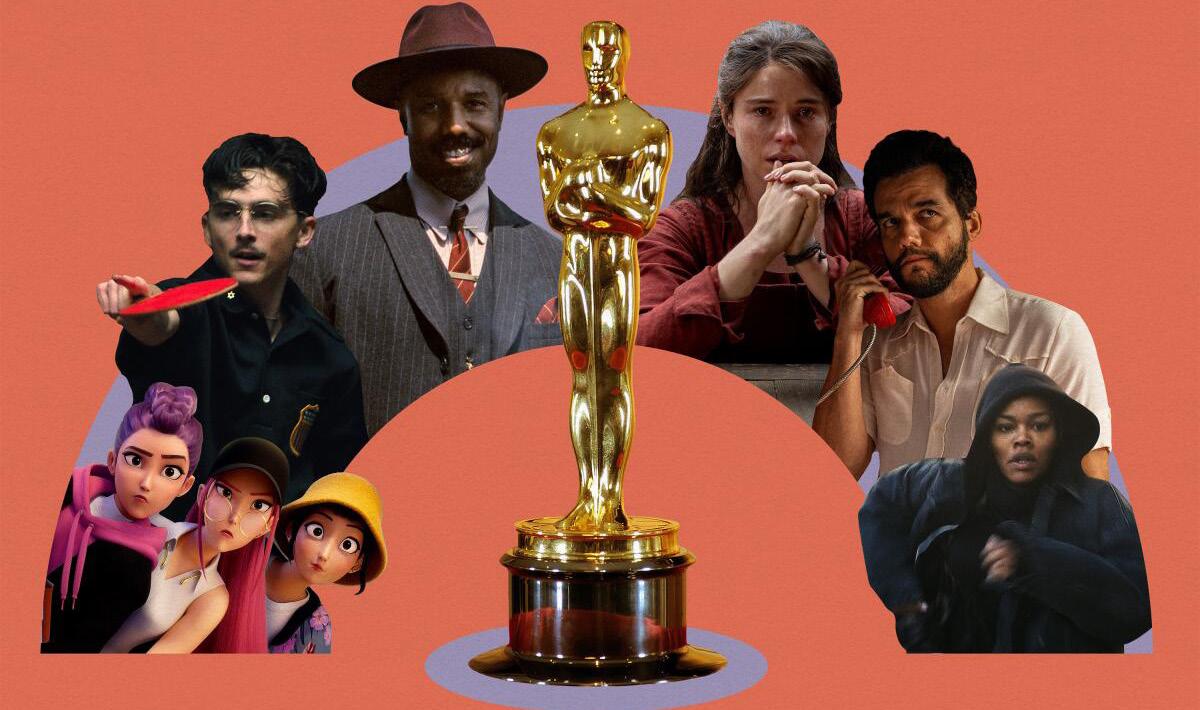
Elias Loya A&E EDITOR
It’s been eight years since rapper, producer, actor, model, and fashion designer A$AP Rocky released his last full-length album, TESTING . Since then, Rakim Mayers (professionally known as A$AP Rocky) has collaborated with Puma and fathered three children with Rihanna. He also debuted his own fashion brand, American Sabotage, and was featured on several other artists’ tracks. Not to mention, he was briefly incarcerated on assault charges in Sweden and faced other assault charges from A$AP Relli. To put it bluntly, Rocky has been busy.
After dropping many singles, including “D.M.B." and “HIGHJACK,” and repeatedly delaying his fourth album, many fans speculated that his new project would be scrapped. However, during his performance at Camp Flog Gnaw in 2025, Rocky was seen sporting a sweater with the numbers 1612026, while also selling “ALBUM NEVER DROPPING” merchandise. Weeks later, Rocky went to Instagram to promote his fourth album, DON’T BE DUMB, so at long last, the album is here.
When compared to previous
works, like AT.LONG.LAST.A$AP, or even TESTING , DON’T BE DUMB is Rocky’s most experimental album to date. The album has 15 tracks on disc one and four on disc two, and is jampacked with intriguing features and several different styles of music, ranging from trap, to psychedelic rap, indie, and even jazz.
The lead-off singles, “PUNK ROCKY” and “HELICOPTER,” differed greatly in style, with the former being similar to that of his 2018 hit “Sundress,” and the latter being a bass-heavy, braggadocious anthem. While he isn’t a renowned lyricist, Rocky is known for his flow, and his versatility is scattered all throughout. In one instance, you’ll be bobbing your head to the aggressiveness from “STOLE YA FLOW,” to laying back and daydreaming about your lover in “STAY HERE 4 LIFE.”
DON’T BE DUMB is packed with themes of love, introspection, and flexing, but overall, a sense of maturity. Rocky’s pen had its touching moments. He covered a range of emotions, like in the despondent tone of “PUNK ROCKY,” where he mourns a failed relationship, or when he reflects on how fulfilled he is in his life, warning himself
to not take anything for granted in the aptly named “DON’T BE DUMB/TRIP BABY.”
Rocky even takes shots at Drake in “STOLE YA FLOW,” poking fun at the “BBL Drizzy” moniker and questioning Drake’s ability as a father, all while flexing his relationship with Rihanna (whom Drake used to date). The features are also spotlightworthy, like Brent Faiyaz and his angelic vocals on “STAY HERE 4 LIFE,” Doechii’s sultry verse on “ROBBERY,” and Sauce Walka’s lustful bars on “STOP SNITCHING.” Production-wise, DON’T BE DUMB both deviates from and celebrates A$AP Rocky’s original sound, with chopped and screwed sampling, psychedelic instrumentation, and traces of dancehall music.
On another note, this album can come off as unruly during the first couple of listens. Some features, like those of BossMan Dlow and Gorillaz, were very short, and Westside Gunn’s feature was nothing but his signature adlibs (which were, admittedly, fun to listen to). Slay Squad’s features on “STFU” were, to some fans, utterly obnoxious (the entire point of the track).
Despite displaying his six different personas over the years
on the album cover, DON’T BE DUMB doesn’t do much to tie the actual story together. It relies on your knowledge of A$AP Rocky’s life outside of music to understand where these personas fit into the bigger picture.
Was DON’T BE DUMB worth the eight-year wait? Yes. It arguably isn’t his best work, some of the features could’ve been better, and several tracks that debuted from years prior did not make the final cut, but there’s something so exciting about seeing an artist return to the game
after so long. In what other project can we see Rocky be as vulnerable, emotionally and creatively?
DON’T BE DUMB is innovative because it isn’t trying to be confined to one facet of hip hop, nor is it attempting to appeal to just one emotion. It’s a culmination of A$AP Rocky’s maturation as an artist and a now father. In its own chaotic way, DON’T BE DUMB speaks to the chaotic, complex lives of its listeners, and just like TESTING , this album will age like wine.
Final rating: 8.7/10

Ethan Airada COPY EDITOR
Three years after season four’s conclusion and a total of ten years of production, the phenomenal and mysterious Stranger Things has finally ended, and it certainly left the audience asking one question that remains to be answered: Is that it?
All the pieces were in place for something spectacular. The series was going like a firework show that captivated its audience, with colorful shapes and patterns that painted the sky with wonder. But, when it was time for the finale, it suddenly seemed to end on a flat note. A few explosions, maybe more than usual, but nothing new. There’s no “wow” at the end, just a disappointed “oh.” So, what happened?
The main plotline is simple. The cast (Mike, Lucas, Dustin, Will, El, Joyce, Hopper, Steve, Robin, and many others) has to defeat the main villain Vecna, an interdimensional man made out of hamburger meat, and save the world from being merged with the Upside Down. This is often interrupted by the unresolved drama and other developments between the characters.
This is important since the audience has been attached to these characters for a long time, but it works better in some places than others. On the one hand, Dustin confessing that he’s terrified of losing anyone else is heartfelt and is the result of him losing people all throughout the series.
On the other hand, the scenes

Things
seem rather shoehorned—first with Max taking her time to give a speech to Holly in the realm where Vecna has functionally infinite power, and Will finally coming out as gay to his friends and family.
These scenes are important for resolving every personal conflict, but they could have been executed much better. They were both scenes set up in places and times where the characters had no time for it—places that interrupt the story, legitimately five minutes before the world is going to get crushed—something that has never happened before in the show.
This highlights the main problem with the writing overall, in that the stakes felt artificial and there were no real risks taken. There was the fakeout with Steve, one of the most popular characters, the death of Kali, perhaps
the least popular character, and El’s “death” scene. In the documentary released after the fact, One Last Adventure: The Making of Stranger Things 5, the Duffer Brothers go on record to say that this was supposed to be one of the aspects leading to the characters eventually moving on, “closing the door to Narnia.”
However, one of the final scenes in the show is Mike telling what he chooses to believe about how El survived, therefore making the scene ambiguous. It’s a sign that the script wasn’t willing to commit to a major decision that might disappoint the audience, even though that is exactly the problem here. It’s reductive to the impact of what could have been a truly heart-wrenching scene.
Speaking of the documentary, it’s also on record that the writing is where
most of the difficulties occurred, with them even saying that writing this season was the “most difficult writing circumstances."
This is debatable since, although it is rather arduous to write the ending of a generational show like this, the Duffer Brothers still had three whole years to finish a project they have dedicated everything to.
The documentary shows that they were even making the story up as they filmed. It was clear that the production was more focused on “making it work” instead of giving the show the proper sendoff it deserves.
There is even speculation that Leigh Janiak, now Ross Duffer’s exwife, was the ghostwriter for the show the entire time. The divorce lines up right around when the show was being “written.” It’s not impossible; she did write and direct Netflix’s Fear Street trilogy, but, assuming this is true, it’s not like anyone would admit anything.
In their defense, however, the scale of the production as a whole is a demanding affair to manage. Most episodes have the same production and effects as a feature-length film, with the last few episodes even reaching the same length.
That is not to say that, despite most of this, the season was not bad; it just didn’t fulfill the potential it had to be a true sensation. It must have been agonizing to make millions on their dream job, right?
Were the Duffer Brothers just so burnt out that they couldn’t follow their own planning? Did they buy into their own hype and think that this was enough? It’s the same story all
over again, such as with other shows with finales like Game of Thrones or even The Sopranos, both infamous for their endings after genuinely masterful runs.
Audiences are clearly disappointed. So much so that fans have gone back and dissected every detail of the series— only to be more disappointed—and eventually accuse the Duffer Brothers of using AI software to write the finale after catching it open for a few frames in the documentary.
The director of the documentary, Martina Radwan, has tried to deny these claims, saying, “Nobody has actually proven that it was open” in an interview from The Hollywood Reporter, though this hasn’t been disproven either.
Fan reactions were so intense that a conspiracy theory, “Conformity Gate,” appeared a few days after the final episode aired this past Christmas. It assumes that there was a “secret final episode” in which Vecna won and everyone is in an illusion. This has so far proved false, despite the mountains of evidence that TikTok users continue to invent. Fans even made Netflix crash on the date of the supposed secret ninth episode.
The conspiracy theories are just a coping mechanism, for sure, but they all cement one thing in particular: the worst kind of endings for stories aren’t bad, just bland. If it were just bad, fans would trash it and move on.
If it were good, fans would be watching it again right now. But no, the fans are in denial. But who knows? They could be right. Stranger things have happened…

Clover Morales HEAD COPY EDITOR
With so many games using or becoming free-to-play, as well as adopting a battle pass model, Fortnite stands out. it's one of the few games so heavily based around its collaborations, but few realize just how much these collaborations have impacted the world of gaming as a whole.
Fortnite is a game that is well-known for its many collaborations with popular franchises such as Marvel, DC, and Star Wars ; celebrities like Kim Kardashian and Michael J. Fox; and popular music artists such as Hatsune Miku and Tyler, The Creator. With so many collaborations happening in such a short span of time, many fans are worried that the collabs are overshadowing the actual gameplay and quality of the game.
These concerns are not unwarranted, as collaborations take priority with Fortnite, as seen with the recent South Park, Fiona and Cake , and Pulp Fiction skins. Although these skins have a great amount of effort put into them, fans are begging Epic Games to fix latency and lag issues (which have been prevalent since the start of the new chapter). Another complaint is that Epic keeps
putting smaller characters like the South Park kids in mech suits so they fit the player model size, instead of sticking to regular full skins. Despite these concerns, Fortnite continues to push out big-name collaborations.
Fortnite also has a unique way of handling its collabs. On occasion, Fortnite creates entire seasons themed around collaborations, such as The Simpsons , Remix (full of music icons), and Star Wars , with varying degrees of reception from fans. For example, many fans praised The Simpsons season for its attention to detail with nods to iconic locations, characters, and balancing the loot pools.
On the other hand, some were critiquing the Star Wars season for its lackluster additions and clunky-feeling gameplay. Despite the reception, the impact these collabs have doesn’t go unnoticed, with player counts and skin sales surging during these collaboration events.
Additionally, these collaborations have laid the groundwork for collaborations in other video games, with games like Call of Duty Black Ops 6 adding Beavis and ButtHead as a collab, who were an extremely controversial addition to the game as their
cartoony style juxtaposed the military style of the game.
The addition of the two is indicative that adding collaborations to games just for the sake of manufacturing hype is something that more developers are emulating. With more celebrities having concerts in games like Roblox , it's only a matter of time before more celebrities do more collaborations, such as skins with other games.
Fortnite also has several collaborations that have taken place outside of the game too, with concerts in New York City starring Ice Spice and Snoop Dogg during the Fortnite Remix Prelude Event, several Homer Simpson impersonators invading Santa Monica, and even having props “rifted in” real life to promote season five in 2018.
These collabs are paving the way for collaborations outside of the game, especially with Disney being rumored to be working with Epic Games on a new experience for Fortnite , with the Disneyowned Simpsons seeming to solidify these plans. Fortnite’s momentum for collabs doesn’t seem to be slowing down, and fans are looking forward to seeing which new brand or icon will be dropping from the battle bus.