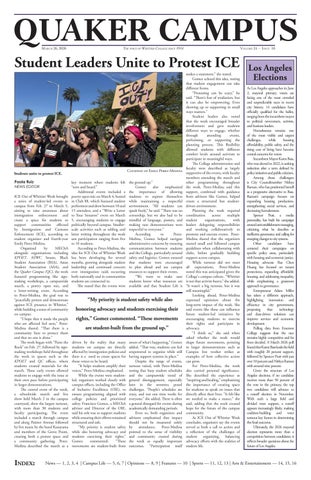
Student Leaders Unite to Protest ICE

key moment where students felt “seen and heard.”
the ground up.”
ICE Out of Whittier Week brought a series of student-led events to campus from Feb. 27 to March 5, aiming to raise awareness about immigration enforcement and create a space for students to support communities affected by Immigration and Customs Enforcement (ICE), according to student organizer and fourth-year Emily Perez-Medina.
Organized by MEChA alongside organizations including KPOET, ASWC Senate, Black Student Association (BSA), Asian Student Association (ASA), and the Quaker Campus (QC), the week featured programming like signmaking workshops, a campuswide march, a poetry open mic, and a letter-writing event. According to Perez-Medina, the goal was to “peacefully protest and demonstrate against ICE presence in Whittier,” while building a sense of community on campus.
“I hope that it made the people who are affected feel seen,” PerezMedina shared. “That there is a community here to protect them and that no one is alone.”
The week began with “Paint the Rock” on Feb. 27, followed by signmaking workshops held throughout the week in spaces such as the KPOET and QC offices, where students created materials for the march. These early events allowed students to engage with the issue at their own pace before participating in larger demonstrations.
The central event of the week, a schoolwide march and live show held March 2 in the campus courtyard, drew the largest turnout, with more than 30 students and faculty participating. The event included a march through campus and along Painter Avenue followed by live music by the band Kasuyama and members of the Grove Poom, creating both a protest space and a community gathering. PerezMedina described the march as a
Additional events included a poetry open mic on March 4, hosted in Club 88, which featured student performers and drew between 10 and 15 attendees, and a “Write a Letter to Your Senators” event on March 5, encouraging students to engage politically beyond campus. Smallerscale activities such as tabling and letter writing throughout the week saw participation ranging from five to 10 students.
According to Perez-Medina, the idea for ICE Out of Whittier Week has been developing for several months, growing alongside student leadership and continued concern over immigration raids occurring both nationally and in communities students are connected to.
She stated that the events were
Gomez also emphasized the importance of allowing students to express themselves while maintaining a respectful environment. “All students can speak freely,” he said. “There was no censorship, but we also had to be mindful of language, posters, and making sure demonstrations were respectful to everyone.”
According to PerezMedina, Gomez helped navigate administrative concerns by ensuring communication between students and the College, particularly around safety and logistics. Gomez ensured that students were encouraged to plan ahead and use campus resources to support their events.
“We want to make sure students know what resources are available and that Student Life is
“My priority is student safety while also honoring advocacy and students exercising their rights,” Gomez commented. “These movements are student-built from the ground up.”
driven by the reality that many students on campus are directly affected by immigration policies and there is a need to create spaces for those voices to be heard.
“It helps students amplify their voices,” Perez-Medina emphasized.
While the events were studentled, organizers worked closely with campus offices, including the Office of Inclusive Excellence (OIE), to ensure programming aligned with college policies and prioritized safety. Francisco Gomez, a MEChA advisor and Director of the OIE, said his role was to support students while ensuring their efforts remained structured and safe.
“My priority is student safety while also honoring advocacy and students exercising their rights,” Gomez commented. “These movements are student-built from
aware of what’s happening,” Gomez added. “That way, students can feel empowered to organize while still having support systems in place.”
Despite the range of events, turnout varied, with Perez-Medina noting that busy student schedules and the campuswide trend of general disengagement, especially later in the semester, posed challenges. “People’s schedules are crazy, and not one time works for everyone,” she added. There is often a general disregard for events during academically demanding periods.
Even so, both organizers and advisors emphasized that impact should not be measured solely by attendance. Perez-Medina pointed to the sense of visibility and community created during the week as equally important outcomes. “Participation itself
makes a statement,” she stated.
Gomez echoed this idea, noting that student engagement can take different forms.
“Protesting can be scary,” he said. “There’s fear of retaliation, but it can also be empowering. Even showing up or supporting in small ways matters.”
Student leaders also noted that the week encouraged broader involvement and gave students different ways to engage, whether through attending events, performing, or supporting the planning process. This flexibility allowed students with different comfort levels around activism to participate in meaningful ways.
The College administration and faculty were described as largely supportive of the events, with faculty members attending the march and other programming throughout the week. Perez-Medina said this support, combined with guidance from advisors like Gomez, helped create a structured but studentdriven environment.
Planning the week required coordination across multiple student organizations, with leaders delegating responsibilities and working collaboratively to promote and execute events. PerezMedina shared that the organizers started small and followed campus guidelines when collaborating with clubs, before gradually building support across campus.
While turnout did not meet all expectations, Perez-Medina noted this was anticipated given the College's campus culture. “Whittier is not that activist-heavy,” she added. “It wasn’t a big turnout, but it was still meaningful.”
Looking ahead, Perez-Medina expressed optimism about the long-term impact of the week. She said events like these can influence future student-led initiatives by encouraging students to exercise their rights and participate in advocacy.
“I think so,” she said when asked whether the week would shape future movements, pointing to larger demonstrations such as Campus Inn worker strikes as examples of how collective action can grow.
For Perez-Medina, the week also carried personal significance. She described the experience as “inspiring and healing,” emphasizing the importance of creating space for students to speak on issues that directly affect their lives. “It felt like we needed to make a stance,” she said, adding that the week created hope for the future of the campus community.
As ICE Out of Whittier Week concludes, organizers say the events served as both a call to action and a reflection of the challenges of student organizing, balancing advocacy efforts with the realities of student life.
Los
Angeles Elections
As Los Angeles approaches its June 2, mayoral primary, voters are facing one of the most crowded and unpredictable races in recent city history. 14 candidates have officially qualified for the ballot, ranging from the incumbent mayor to political newcomers, activists, and business leaders.
Homelessness remains one of the most visible and urgent challenges, while housing affordability, public safety, and the rising cost of living have become central concerns for voters.
Incumbent Mayor Karen Bass, who was elected in 2022, is seeking reelection after a term defined by policy initiatives and public criticism.
Among those challengers is City Councilmember Nithya Raman, who has positioned herself as a progressive alternative to Bass. Raman’s campaign focuses on expanding housing production, strengthening social services, and decreasing homelessness.
Spencer Pratt, a media personality, has built his campaign around anti-establishment messaging, criticizing what he describes as ineffective governance and calling for sweeping changes to city systems.
Other candidates have centered their campaigns on specific policy areas, particularly with housing and economic justice. Housing advocate Rae Chen Huang has focused on tenant protections, expanding affordable housing, and addressing inequality, while emphasizing a grassroots approach to governance.
Entrepreneur Adam Miller has taken a different approach, highlighting innovation and efficiency in city government, proposing that technology and data-driven solutions can improve services and economic development.
Polling data from Emerson College suggests that the race remains highly competitive and far from decided. A March 2026 poll found that Karen Bass leads the field with roughly 20 percent support, followed by Spencer Pratt with just over 10 percent and Nithya Raman with around nine percent.
Given the structure of Los Angeles elections, if no candidate receives more than 50 percent of the vote in the primary, the top two candidates will advance to a runoff election in November. With such a large field and divided voter support, a runoff appears increasingly likely, making coalition-building and voter turnout key factors in determining the final outcome.
Ultimately, the 2026 mayoral election represents more than a competition between candidates; it reflects broader questions about the future of Los Angeles.
The voice of WhiTTier college since 1914 VoluMe 24
Students unite to protest ICE.
Courtesy of Emily Perez-Medina
Paola Ruiz NEWS EDITOR
Does Whittier Meet Accessibility Standards?
Paige Meyer-Draffen EDITOR-IN-CHIEF
Going to class is something we always find ourselves doing. But one bad fall can change how we see this simple task, and we soon realize we may have taken opening a door unassisted, walking up a flight of stairs, and sitting comfortably at a desk for granted.
As a small college, we have the advantage of a close-knit community to offer support to students by helping them get food in the CI, offering rides between upper and lower campus, and otherwise advocating for our peers to have a more accessible campus. These personal connections can help, but without systemic processes, progress relies on individual persistence.
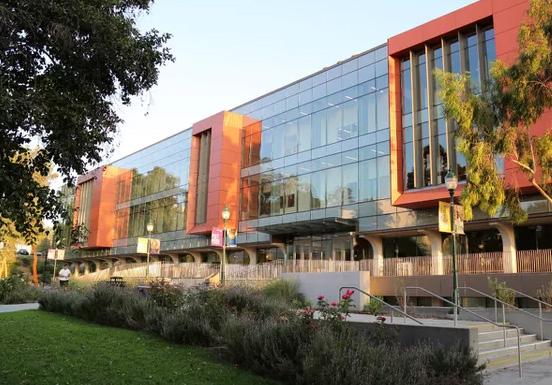
The campus’ personality is steeped in rolling hills and historic buildings, and the only buildings that have elevators and are in compliance with the Federal ADA Standards are the Science Learning Center (SLC), Wardman Library, the Graham Athletic Center (GAC), and Turner Hall. Every other building on campus was constructed before 1991, when these standards were first put into place. Some completely inaccessible classrooms for those with mobility issues are the Hoover Basement and second floor, Diehl Basement, the upper floors of Harris, Stauffer, Ball Hall, and all of Wardman Hall.
The College is required to provide equal access to postsecondary education to students with disabilities under Title III of the "Americans with Disabilities Act", according to the ADA National Network.
The able-bodied Whittier College community doesn’t consider these accessibility standards during their dayto-day routines. Until someone gets
made before the Fall semester begins. There are exceptions that are made on a case-by-case basis, but due to most buildings being inaccessible, the scarcity of available rooms becomes a problem.
Student Accessibility Services (SAS) provides accommodations for students in academic settings and in their role as students. One of SAS’s missions is to help students develop self-advocacy skills. Hayley Cox, the Assistant Director of SAS, says the accommodation process is initiated by students. Although accommodations are voluntary, Cox values holistic support, and the department regularly practices check-ins and progress updates with students during processing time.
Cox says about 80 percent of accommodation requests are academic accommodations, followed by housing, meal plan exemptions, Emotional Support Animals (ESAs), and structural accommodations. SAS pursues structural accommodations by coordinating with Dean of Academic Planning and Associate Dean of Faculty Fritz Smith, through his office accomodate classroom arrangements.
The small Liberal Arts college culture shapes how accessibility is addressed. The small class sizes can invite students to talk openly with their
“I lived in Harris D on the second floor, and it was near impossible to go up and down the stairs without risk of falling and hurting myself.”
- Student respondent with crutches
injured. The College’s large athletic population on campus has experienced mid-year injuries that can suddenly show the cracks where accessibility falls through.
A second-year student respondent to a survey by the Quaker Campus shared that they experienced an athletic injury that left them on crutches. “I lived in Harris D on the second floor, and it was near impossible to go up and down the stairs without risk of falling and hurting myself.”
Of course, the campus cannot anticipate these injuries. Accommodations that place classes or residents in accessible buildings are
professors about their needs. Similar to the Title IX structure, where there are formal and informal approaches to cases, students can choose to work informally with faculty for academic accommodations or choose to formalize that process through SAS. SAS offers warm handoffs to departmental referrals or professors upon request, but accommodations are largely initiated by the students.
This culture also allows for a larger platform for community-led initiatives. Movements for change on a campus that is physically small and under 1500 students are going to be heard more than at larger institutions.
THE QUAKER CAMPUS STAFF
EDITOR-IN-CHIEF
Paige Meyer-Draffen
DePUTy eDiTOr
eMMa galvan
Managing eDiTOr
PenelOPe TUrgen
neWS eDiTOr PaOla rUiz
OPiniOnS eDiTOr
angelica HenneSSy
SPOrTS eDiTOrS
Maia cHaiDez
MOnze Meraz-lerMa
caMPUS life
eDiTOr
naDia Miller
FEATURES EDITOR
eMMa cianciOla
a&e eDiTOr
eliaS lOya
HeaD cOPy eDiTOr clOver MOraleS
SOcial MeDia MOnze Meraz-lerMa
STaff WriTerS
allara Baker
eTHan raMillanO
OSWen MarTinez
Tralee JacOBS
Jay fUenTeS
JayDen garreT
JayDen BOrgna
XOcHiTl HOOD
lUiS SanDOval
STeven lOPez
cOPy eDiTOrS eTHan ariaDa Daniel gOMez
graPHic DeSigner
naDia Miller
carTOOniST neMi DOc
facUlTy aDviSOr JOSePH DOnnelly
Professor Joanne Hash is currently one of two resident faculty on campus. Hash has been teaching Health Psychology at the College since 2011 and has seen most residential faculty live in the Hartley House, which has upstairs living quarters. Hash uses an electric wheelchair as mobility aid.
“It's always been something I've been curious about. But for the longest time, I just self-excluded because none of the houses were accessible,” Hash recounts. However, the College must guarantee equal access to this opportunity. So, Professor Hash put the College to the test.
“I figured, you know, they'll figure something out as long as I do a good job of making a good narrative in terms of the programming that I want to do and the support for students,” Hash laughs. Hash now resides in Dezember Alumni house, where admin has ramps installed to accomodate her.
She has hosted weekly Game Nights for Residential Life, open hours in the house for creative activities, and offered her space as a venue for student organizations like the Black Student Association.
Professor Hash learned this selfadvocacy for academic settings during her graduate education at Rutgers University. Its flagship campus in New Brunswick, spanning over 2,700 acres. Whittier College, for comparison, is 75 acres. The Rutgers campus was so difficult to navigate, she found herself shouting through a window to speak with the Accessibility Coordinator because the office was up a flight of stairs.
“[A] lot of structures, not just on campus but in life in general, are not built for people who have physical challenges in any shape or form, whether that's blindness or motor disabilities or broken limbs or whatever [it may be].” Hash has experienced this most commonly in the SLC. The SLC elevator was the only way she was able to reach her office on the third floor with the rest of the Psychology faculty, but due to the frequent outages, she moved her office to the second floor.
“It just got to the point where, you know, I'd have to scramble to figure out, well, where am I going to hold my office hours? I can't get to my class […]
[and] I’ve known many students with disabilities that have gotten stuck on the fourth floor.”
Respondents to the survey resonated with Professor Hash. A fourth-year student shared that they “had a friend freshman year that used a wheelchair every day, and he had a tough time going to classes, so he transferred after a semester.” Some respondents described the SLC elevator as highly trafficked, unreliable, and scary. Many spoke to the inconvenience that a slow, crowded elevator presents, but students seem to be reluctant to use it after receiving the multitude of notifications about outages over the last few semesters.
Campus Safety issues campuswide notifications when an elevator on campus is broken, but this is not the case with stairlifts. Students and faculty have experienced nonoperational stairlifts multiple times throughout their Whittier College experiences.
ASWC Senate President Izzy Brookshire (‘26) has been pushing for repairs on accessibility equipment like stairlifts since Fall 2025. “I believe they are one of the most student-facing accessibility options on campus. My concern was between […] the GAC lift on the outside, the Diehl lift, and the Wardman Art Gym. I was told that the Diehl lift was now fully operational and that the GAC lift wouldn't be worked on due to access to an elevator inside the building.” As of March 20, Brookshire reports that Diehl Hall’s stairlift is the only operational one on campus.
Voices of those like Brookshire, Cox, and Hash are driving the conversation around accessibility on campus. Although students in develop self advocacy skills through navigating the SAS processes and the close campus community, some students have been left working where they will land when they fall through the cracks. And they are also wondering why there is a fake elevator in Hoover Hall.
For suggestions to make Whittier more accessible or for accommodations, please contact your student representative President Izzy Brookshire ibrooksh@ poets.whittier.edu or Student Accessibility Services at sas@whittier.edu.
LETTERS TO THE EDITOR
Submissions may be emailed to qc@poets.whitttier.edu in .doc or .docx format. Submissions must include the author’s name and year of graduation or position at the college in the signature. Letters are due by Monday at 5 p.m. to make it into that week’s issue. Submissions should be no more than 500 words. Submissions will undergo the same editing process from our production pipeline if selected. All stories must follow the same journalistic standards.
Due to the high cost of publication, members of the Whittier College community are permitted three copies per issue. Additional copies may be purchased with prior apporval for 50 cents each by contacting the Quaker Campus. Newspaper theft is a crime, and those who violate the three copy rule may be subject to civil and criminal prosecution.
The Quaker Campus does not change material posted on online articles once they have been published in the paper — with the exception of an error being found. Only then will a correction be made to the online version. The Quaker Campus is a publication of Whittier College. Columns and Signed editorials do not necessarily reflect the opinions of Whittier College or its affiliates.
Courtesy of the Whittier College Whittier College offers accomodations for accessibility through SAS.
Whittier College Hosts Diplomats of Model UN
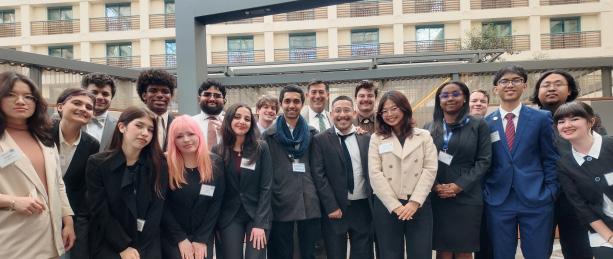
This year is the 75th anniversary of Model United Nations of the Far West and Whittier College is hosting the conference in San Francisco. Students who are part of the on-campus program have been preparing all semester for the conference, focusing on the four countries they will be representing: Kenya, Côte d'Ivoire (Ivory Coast), Japan, and Greece.
Established in 1951, Model United Nations of the Far West (MUNFW) is one of the longeststanding MUN conferences in the United States. This session marks 75 years of MUNFW,
and the theme is: “75 Years of Diplomacy, Dialogue, and Development: Sustaining the Spirit of United Nations,” according to the MUNFW website.
Prior to this conference, the College had hosted the conference in San Francisco 11 times before. President of the General Assembly and fourth-year Evan Josten states that, “Whittier has been participating since its founding.” Thanks to Professor Mike McBride, students have the opportunity to gain experience and learn the role diplomats play by working with each other and others states.
Josten says they have been
preparing in class by “[Going] over how to complete our deliverables like policy statements, speeches, and resolutions. We also review the rules and discuss what the conference looks like. Further into the semester, we do mock sessions to practice what we will be doing at the conference.”
Since this year is the 75th anniversary of MUNFW, there are special additions to the conference. Third-year Sarah Sullivan states, “We will also have our opening session at the San Francisco Opera House, which is where the UN charter was first signed in 1945.”
Alumni have been invited to attend. As Josten shares, “We are also having a special session for alumni. As my
father is a Whittier College Model UN alumnus (Class of '95), he will be at the conference too!”
Paola Ruiz NEWS EDITOR
Sullivan also says “close to 20 alumni from Whittier are involved some way or another, whether it includes participating in the conference itself or donating to make it more affordable for Whittier students to attend.”
While alumni are excited for this session, here are what some students are expecting.
Josten is “eager to see how the representatives for the United States play their roles.” He goes on to say, “In Model UN, it is important for delegates to act how their
countries would in the real UN.”
Sullivan says, “Something I am looking for this year is to make connections with everyone.” While new to MUNFW, fourth-year Evan Godley is “hoping [he] will represent [his] country well and get a good resolution through at the end.”
Beyond being a special tradition for the College, it’s an opportunity for students to not only improve their vocational abilities, but also a way for everyone to understand how the nations and organizations running the world work. Now we wait to see what this year’s MUNFW session brings.
Russia and the United States' Nuclear Negotiations
QC
New START, a nuclear arms control treaty between the United States and Russia, officially ended on Feb. 5, 2026. With New START being extended only for a year with no new negotiations on the horizon, the future of nuclear arms control is unclear and frightening to many.
The relationship between the U.S. and Russia since the end of World War II has been characterized by competition for nuclear armament. According to Statista , nuclear warhead production between the U.S. and Russia reached its peak during the 1970s and 1980s, with over 60,000 nuclear warheads stockpiled.
This came after the Treaty on Non-Proliferation of Nuclear Weapons came into effect in 1970. The treaty established that states without nuclear weapon capabilities would not develop their own nuclear programs. The treaty also required that states with nuclear capabilities would share peaceful nuclear technologies with other nations.
This treaty allowed for the U.S. and the then-USSR to

Courtesy of RueteRs
U.S. President Trump tries to negotiate with Putin.
continue developing their nuclear arsenals, with the concept of Mutually Assured Destruction (MAD) keeping nuclear war at bay.
The first Strategic Arms Reduction Treaty (START I) came into force on Dec. 5, 1994. By 2001, START I resulted in the removal of about 80 percent of the strategic nuclear weapons that existed at that time.
After the expiration of START, the U.S. and Russia negotiated a new treaty: Measures for the Further Reduction and
Limitation of Strategic Offensive Arms, known colloquially as New START. Coming into force on Feb. 5, 2011, the treaty would continue to decrease the nuclear arsenals of both countries for the next 25 years.
The New START treaty did not call for limitations of stockpiled nuclear warheads, but rather the limitation of strategic nuclear missile launchers and a new government body to inspect and verify abidance to the treaty. Article II of the treaty outlined three specific limits for the U.S.
and Russia: 700 deployed missiles and bombers, 1,550 deployed warheads, and 800 deployed and non-deployed launchers.
As of 2022, the U.S. State Department reported that Russia had 540 deployed missiles and bombers, 1,549 deployed warheads, and 759 deployed and non-deployed launchers. In comparison, the U.S. had 659 deployed missiles and bombers, 1,420 deployed warheads, and 800 deployed and non-deployed launchers.
Under both Trump administrations, the outlook on New START changed. In 2017, Reuters reported that the subject of extending New START was brought up by Vladimir Putin in his and Donald Trump’s first phone call.
Trump argued that New START was too favorable to Russia, arguing that it was "one of several bad deals negotiated by the Obama administration."
According to Vox , on Feb. 21, 2023, Russian President Vladimir Putin announced that Russia would be suspending its participation in New START but still abiding by the numerical rules of the treaty. The clock began to tick in Trump’s first term to either extend New START or negotiate a new treaty with
Russia. In 2019, Putin hurriedly offered an extension without modification of New START, as time was running out to draft and ratify a new treaty.
In 2020, Trump met with Putin to discuss nuclear arms control. Trump invited representatives from China to be part of a new treaty, but China declined. At these meetings, the U.S. proposed a binding agreement for Russia to sign. This agreement would outline a new treaty, which would continue and expand the nuclear monitoring and restrictions from New START, while also establishing a plan to include China in future negotiations.
The Moscow Times reported that Putin proposed a oneyear extension to New START with no new additions, but that proposition was shot down by the Trump Administration. The U.S. responded with a proposal to freeze nuclear warhead production for a year and to extend the treaty for a year. The U.S. was “prepared to meet immediately to finalize a verifiable agreement," according to the Associated Press.
Nadia Miller CAMPUS LIFE EDITOR
Courtesy of San Francisco State University
Students from various colleges will be at the MUNFW 75th anniversary.
Evan Josten FOR THE
New START Cont. from pg. 3
In 2021, under former U.S President Joe Biden, it was agreed by the U.S. and Russia to extend New START for five more years.
The Russian invasion of Ukraine in 2022 strained relations between the U.S. and Russia, making it difficult to make more progress on nuclear arms control.
On Feb. 21, 2023, Vladimir Putin announced that Russia would be suspending its participation in New START, preventing the U.S. and NATO from investigating its facilities.
This was based on the Russian claim that the U.S.
was continuing to develop nuclear weapons. NHK-World Japan reported Putin’s warning to the West that any nuclear tests from the U.S. would be met with nuclear tests from Russia.
Following outrage and disappointment from U.S. leadership, Russia reassured the West that it would continue to follow the limits outlined by New START, according to Reuters
A month later in March, Russian officials said that “Russia, despite the suspension, had pledged to stick to the warhead limits and would also continue to implement a 1988 agreement on the exchange of missile
launch notifications."
New START expired Feb. 2026. Despite this, Putin stated that Russia would continue to follow its provisions up to a year after its expiration, granted that the U.S. would do the same.
Currently, President Trump and the U.S. have expressed the desire for a new treaty including China, but no official negotiations have taken place.
Experts at the Harvard Kennedy School’s Belfer Center argue that the absence of restrictions on nuclear arms development presents strategic instability for the global political climate.
Some scholars fear that the expiration of New START
could result in the collapse of the Non-Proliferation Treaty as well, resulting in a nuclear arms race that could end in disaster.
Nuclear arms control between the U.S. and Russia helped ease tensions during the Cold War and has played a part in preventing the use of nuclear weapons since the atomic bombings of Hiroshima and Nagasaki in 1945.
Other scholars argue that, while frightening, the expiration of New START likely will not result in the immediate stockpiling and development of more nuclear weapons.
However, the absence of a formal agreement presents
many risks for what actions either country may take. While some argue a new agreement will emerge, it will not come soon.
While Russia would likely enter into another treaty to protect itself from the U.S., Trump’s adamancy that China be included in a multilateral nuclear treaty delays a future treaty further, as China has explicitly rejected working with the U.S. and Russia unless given nuclear equivalence.
The expiration of New START without a clear replacement in place does not bode well for the stability of peace between the U.S. and Russia.
Prof. Norden's Outlook on War with Iran

Ethan Ramanillo STAFF WRITER
On Feb. 28, the U.S. and Israel began a series of air strikes across Iran, assassinating high-ranking officials of the government such as former supreme leader Ali Khamenei and other key leaders of the state and military. This was met by a barrage of Iranian missiles targeting Israeli and American military bases through the Persian Gulf and across the broader Middle Eastern region, further expanding the conflict on the world stage.
In the four weeks since military operations began, Israel has intensified a ground invasion in southern Lebanon in response to retaliatory missile attacks from Hezbollah, a paramilitary group aligned with Iran. Iran has also effectively shut off access to the crucial Strait of Hormuz chokepoint by threatening merchant ships, raising oil prices across the world, and inducing a global energy crisis.
A major component of the international anxiety over the war has been the ever-changing statements coming from the White House since “Operation Epic Fury” began nearly a month ago, particularly from the mouth of President Donald Trump. He has seemingly pivoted from encouraging a
complete regime change of the Iranian government that indiscriminately massacred tens of thousands of civilian protesters in January to claiming that “the war is very complete” and postponing strikes on Iranian infrastructure over alleged peace talks.
Other figures have equally given conflicting talking points on the nature of the war. This includes Defense Secretary Pete Hegseth's lack of a “definitive timeframe” to prevent Iran’s access to nuclear weapons to Secretary of State Marco Rubio’s remarks. These remarks included that Iran posed an “imminent threat,” and even suggesting that Israel was planning on launching preemptive strikes regardless of U.S. intervention.
To best understand the U.S.’ role in this conflict, Deborah Norden, professor of Political Science at Whittier College, first points out that, despite appearances, the Trump administration’s motivations in this war have nothing to do with genuine regime change or addressing the state violence imposed on the Iranian people.
Had this been the case, she explains, there would be a more visible display of planning and cohesion among the U.S. allies in ensuring a safe transition of power from the current regime. But as it currently stands,
Norden says that the war will not weaken the Iranian government’s ability to repress its people but will only further intensify it.
Much like the U.S. capture of Venezuelan dictator Nicolás Maduro in January, Norden stresses that this is “clearly an illegal war,” yet it is being waged against an equally repressive regime that has only been a destabilizing force in the region.
All the while, the Iranian people are left as victims of bombings from the U.S. and Israel and violent repression by their own government, who view its own citizens as an equally existential threat to its survival.
Among Norden’s concerns about the conflict have been the clear problems with the capabilities of U.S. intelligence agencies, as seen in the tragic bombing of a girls’ elementary school in the city of Minab, which killed over 168 people, most of them children.
While the U.S. and Israel have denied responsibility, independent investigations into the attack have revealed that the school was likely struck by American bombs due to outdated intelligence of the school being a former site of a neighboring IRGC military base since 2016.
With the shocking reality that the U.S. no longer has
reliable, up-to-date intelligence, Norden says this is likely a major consequence of Trump’s political purges and budget cuts to federal agencies since the start of his second term, favoring loyalists to the broad MAGA movement over competence.
This can lead to consequences for American civilians across the Atlantic as well: “There’s now more of a risk of the war coming home, especially now that Homeland Security’s funding was cut for ICE’s billion-dollar budget to threaten mere gardeners.”
As Iran’s closure of the Strait of Hormuz has sent major shockwaves through the energy market, a move that the Trump administration allegedly did not anticipate Iran was capable of, Norden says that the “biggest winner” that has emerged from Trump’s miscalculation has been Russia.
To ease rising oil prices, the Trump administration imposed a 30-day suspension of sanctions on Russian crude oil on March 9, which is expected to bring in millions of dollars for Moscow while doing little to lower prices for the market.
In turn, this will further amplify Russia’s ongoing invasion of Ukraine since 2022, in which Ukrainian President Volodymyr Zelensky has warned that a prolonged war in Iran will
further threaten the safety of his people.
Similarly, the U.S. has begun to redeploy missile defense systems the Terminal High Altitude Area Defense from South Korea to the Middle East, which can increase the nation’s vulnerability to North Korea, particularly after relations were strained with the initial deployment of the missiles back in 2017.
With both major global ramifications and Trump’s national approval rating dropping to 36 percent, the President is now pushing to “wind down” the conflict through alleged peace talks, though the Iranian government has repeatedly denied any deals or giving concessions, such as giving up its enriched uranium supplies.
It is also not in Israel’s interests for the U.S. to back out of the war without any regime change within Iran, which was among Israel’s main objectives for initiating the conflict against its primary opponent in the region.
Norden says that while the total human cost of the war so far has not reached the thousands of Iranian protestors massacred by the regime, with no clear end to the conflict in sight, the number of innocent lives lost is certain to rise.
Courtesy of CNN
Iranian citizens are enraged with the war and death of their leader.
Mar. 26, 2026 5
What’s up,
Whittier?
Stay up to date on events! For further info, visit https://whittier. campuslabs.com/Engage/
Whittier Votes - Voter Registration Drive
• Thursday, Mar. 26 at 11:00 a.m.
• Campus Center Lower Courtyard
Resume Workshop
• Thursday, Mar. 26 at 12:30 p.m.
• SLC 204
Chair Massage
• Thursday, Mar. 26 at 12:30 p.m.
• Naylor Portico (Deihl Hall Patio)
Poet Pantry
• Thursday, Mar. 26 at 12:30 p.m.
• Campus Center - Room 141
Third Space Thursday: Mosaic Making Night
• Thurday, Mar. 26 at 4:30 p.m.
• Club 88
First Gen Week: E-Sports X First-Gen Game Night
• Thursday, Mar. 26 at 6:30 p.m.
• E-Sports Lounge-Ball Hall
Reel Resistance: Israelism
• Thursday, Mar. 26 at 6:30 p.m.
• Campus Center Courtyard Lower Level
86th Annual Whittier College Bach Festival
• Friday, Mar. 27 at 12:00 p.m.
• Memorial Chapel Game Night
• Friday, Mar. 27 at 6:00 p.m.
• Dezember House
86th Annual Whittier College Bach Festival
• Sunday, Mar. 29 at 6:00 p.m.
• Memorial Chapel
TOBGLAD Slumber Party
• Sunday, Mar. 29 at 6:00 p.m.
• Johnson Lounge
Drawin' Together
• Monday, Mar. 30 at 4:00 p.m.
• Dezember House
Community Eid Celebration
• Monday. Mar. 30 at 5:00 p.m.
• Dezember House
Cafe con Profe
• Monday, Mar. 30 at 6:00 p.m.
• Stauffer First Floor Lounge
ASA Movie Night - Nausicaa
• Tuesday, Mar. 31 at 5:15 p.m.
• Deihl 004 (Basement
Craft Night with Fiber Arts Club
• Wendesday, Apr. 1 at 5:00 p.m.
• Ettinger Lounge
Pie-a-PEK member
• Thursday, Apr. 2 at 11:30 a.m.
• Upper Quad
Res Life Cafe
• Saturday, Apr. 4 at 11:00 a.m.
• Hanover House
CAMPUS LIFE
Poets Get Philosophical With Harman
Nadia Miller CAMPUS LIFE EDITOR
The warm and welcoming atmosphere of Garrett House rivaled the raging heatwave outside as faculty and students gathered to hear from Contemporary Philosopher Graham Harman. Held on Mar. 19 from 4:30 p.m. to 6:00 p.m. in Garret House, Harman visited Whittier College to speak on his most recent book Waves and Stones: On the Ultimate Nature of Reality.
As the event geared up to begin, more and more people poured into the small space. Wall to wall, shoulder to shoulder Poets gathered. Provided in a separate room, crisp refreshments were offered to help folks cool off from the heat outside.
Kicking off the event was Professor and host Tony Barnstone with a few notes, explaining that while this was an event with a visiting author, that an open dialogue between speaker and listener was welcome. He then introduced the current resident of Garrett House, President Kristine Dillion.
President Dillion explained that the location and nature of The President’s House gives unique opportunities to hold speakers and classes. She goes on to say, “this is why Whittier College makes a difference.” Being a close knit community and coming together for events such as these, really shows
how much the administration of The College cares about the world around them. Taking the time out of their days during a heat wave to sit in a room full of attendees to listen and learn from a visiting Philosopher.
Harman’s most recent book Waves and Stones: On the Ultimate Nature of Reality finds the sweet spot between continuity and discontinuity. “Art and Objects” is about aesthetics being integral in Philosophy and Anthropology. Specifically expanding on Object Oriented Ontology, a concept Harman explains further on during the event. Professor Barnstone stated, “[Harman] tries to write no sentence he wouldn’t say outloud,” before inviting the man of the hour, Graham Harman, to take the floor.
To begin, Harman gave a brief background about his life. From a small town in Eastern Iowa, Harman started his career in Egypt. He spent sixteen years teaching there before coming to L.A. where he has been teaching for the past decade. He currently teaches Philosophy at the Southern Californian Institute of Architecture.
It is after this brief introduction that Harman begins to explain Object Oriented Ontology. A term he “stole” from Object-Oriented Programming in Computer Science, he uses the term to describe the relationship between objects, philosophically.
Object-Oriented Programming takes the parts of a program and encapsulates them. Harman took this idea and tried to apply it to Philosophy. Here he mentioned Martin Heidegger, a German philosopher who introduced the ‘tool analysis’ theory. This theory encapsulates that the world is made up of a series of tools that refer to each other. Harman pushes this ‘tool analysis’ theory further to say that the physical contact of objects makes no more contact than simply theorizing about the objects. That objects are bottomless mysteries that can never fully be uncovered. Here Harman began expanding on the idea that it is not just about humans and animals that can connect. Objects are no different and do this as well. The example Harman used was fire burning cotton. The fire only knows the burnt cotton, it does not know the qualities of cotton untouched by a flame. In this instance, the two objects are interacting as much as a human starting the fire and spinning the cotton. These interactions all hold the same limitations of depth.
Another example was Homer’s illustration of the red sea, described with the same attributes as red wine. “The better the metaphor, the easier it is.” remarked Harman. Harman then continued about Negative Theology. Tying in rhetoric and Aristotle. Harman used a joke to explain that any more context than necessary, and
the joke would be ruined. He went on that some things that can remain unstated should for such things to work.
These metaphorical statements can drive a “wedge,” as Harman calls it, between objects and their qualities. He is interested in the way HP Lovecraft does this.
At this point in the event, Harman discussed the premise behind his latest book. As he explained, he “wrote it to read it.” In the book he talks about the person who came up with the idea that human cells came from a parasite. This parasite became part of our genetic code, eventually leading to us being able to breathe oxygen. The idea is expanded to the point that we may find parts of ourselves that would be considered ‘alien.’
Then, the questions and answers part of the event began. The audience quietly followed along as questions were asked while answers were still being given. A constantly bouncing and flowing, vibrant discussion formed. The conversation took many turns until the event eventually reached its end.
Graham Harman’s visit to Whittier College went swimmingly, considering the miserable heat. The event ended on a bright note, swelling with conversation as warm as the concrete just outside. If you would like to see the event for yourself, a recording will be availible on YouTube
The Long 'Herstory' of Feminism
Daniel Gomez COPY EDITOR
On Tuesday, March 17, the Dezember Alumni House hosted Feminism: Back by Popular Demand, an event that gave thee College community the opportunity to learn and reflect on the ‘herstory’ of Feminism and engage in thoughtful discussion.
The event started at 5:30 p.m. and ran until 7:30 p.m., with a variety of drinks and snacks to enjoy while conversing with fellow students. The Herstory commenced when when Xenia Markowitt, Vice President of Student Life and Dean of Students, took center stage and began her presentation.
Markowitt started by giving a bit of background on herself, her involvement with a feminist organization in New York during the early 1980s, and spoke about the first feminist she had heard of, Sor Juana Inés de la Cruz de Asbaje Y Ramirez (1651–1695).
Markowitt made it a point to state that although Mary Wollstonecraft might be commonly considered to be the first feminist, with her writing Vindication of the Rights of Women in 1792, Olympe de Gouges had written the Declaration of the Rights of Woman and the Female Citizen in 1791.
She noted that they were both in France around the same time and how things may have turned out if they talked with each other.
No discussion of feminism can go without talking about the
different waves of feminism over the years. Womens' ever-evolving goals in their pursuit to give more rights and recognition to women is what makes each iteration of the feminist movement so powerful.
Markowitt noted that the label of “first wave” for feminism wasn’t established until the second wave arrived needing to find some way to distinguish themselves.
The first wave of feminism was primarily a fight for women’s right to vote, led by the Suffragettes, followed by the abolitionist movement of the time. A notable feminist, abolitionist, and freed slave was Sojourner Truth, who had given a famous speech in 1851: “Ain’t I a woman?”
While the first wave of feminism unfortunately left out women of color, the second wave of feminism was spurred by the civil rights movement. Among those leading this new era of feminism were women of color.
Gloria Steinem worked alongside Dorothy Pitman Hughes and made it a point to stand and pose alongside each other; however, the media often cut Dorothy out of any photos they used of the two. During this time, Shirley Chisholm was the first African-American woman to be elected into the U.S. Congress and the first woman to run for the Democratic Party’s presidential nominee.
Post-Feminism rose into popularity, rejecting social movements in favor of
individualism, with Madonna being the poster child of this era. During this time there was much discussion on whether or not sex work was feminist empowerment. Susan Faladi wrote Backlash in 1991 which exposed media manipulation, anti-feminist reaction, and gave feminists the framework to understand recurring cycles of resistance to gender equality.
“I am not a post-feminist feminist, I am the third wave,” Rebecca Walker states. Third wave feminism throughout the 2000s was marked by trying to reclaim the power of vulgar words, phrases, and just like the suffragettes, fashion. Markowitt's opinion is that this attempt to reclaim sex positive culture only ended up confusing the overall message.
During this feminism as viewed through the scope of intersectionality and digital movements. Notably, Paris Hilton and Kim Kardashian had their sex tapes leaked online, and Rebecca Solnit came out with the book Mansplaining (2014).
Markowitt noted that although there was no clear end to third wave feminism or start of a fourth wave feminism, there was still a notable increase in the usage of social media platforms which led to the “#metoo” movement. Fourth wave feminism was marked by much uproar, particularly around sexual assault. During this time Supreme Court judge Ruth Bader Ginsburg passed away and Roe v Wade was
overturned. Paris Hilton and AOC had been trying to pass The DEFIANCE Act which aims to allow victims to take civil action against deepfake AI pornography. Markowitt ended her presentation by offering a question: “What does feminism mean to you, now having heard all this history?” This moment of reflection led to deep discourse amongst attendees, which then led to further questions from Markowitt such as “Where is feminism in Whittier? Do you see it as students?”
There was a hesitant response, though the feelings were mutual amongst attendees, accepting the ideals of feminism. Many felt safer discussing such topics privately, not engaging publicly with them.
This seems to be the general sentiment with any social movement since the Covid shutdowns. Even protests seem to be social gatherings rather than true tools for change, all because social media has worn us down with the constant negative news cycles and online grifting.
To end the evening there was a raffle, free hand lotions, two flyers of filmography, and a bibliography for people to browse later in their free time.
This event was more than just a lecture on the history of feminism. It was a reminder that feminism, as well as all social movements, are compounded on one another. Feminism is constantly expanding the conversation on inclusivity and advocating for the rights of all.
CAMPUS
Founding Fathers in Purple Sleeves: The Franklins
This Society has an Electrifying Mascot
Tralee Jacobs STAFF WRITER
Benjamin Franklin has been revived, and he’s on Whittier College's campus. But not in the way you might remember from history class. He isn’t just a face on currency, he’s the mascot of the Franklin Society, the College’s oldest student organization, now returning after a three-year hiatus. If you’ve seen someone sporting Franklin grooving on an electric guitar on the back of their shirt, you’ve already met them.
Founded in 1921, the Franklins are the oldest society on campus, closely followed by their sister society, the Palmers. What began as a literary group has evolved into something more social, but its core remains the same: a shared appreciation for betterment, individuality, and, of course, Benjamin Franklin.
“What can we say, we look good in purple,” said President David O’Connor. That confidence fits well. The Franklins are one of the only societies to consistently use the likeness of a Founding

Father, territory usually reserved for institutions like the U.S. Mint. There’s even a rumor that former President Richard Nixon once tried to join, but didn’t make the cut.
Still, for all its history, most members didn’t arrive on campus planning to become Franklins. Like many things in college, it happened through friends, chance encounters, and an overall pull toward the group.
That pull often results into lasting connections. The society has
built strong connections with their alumni, and members spend time together off campus, from local outings to Korean barbecue dinners. For members coming from out of state, that sense of place matters.
These connections are evident in the way they talk about each other.
When asked what the society means to him, new member and first-year Chris Olivo paused before saying, “It’s nice. It’s beautiful.”
Laughter from the room
followed. “Don’t mind him. Chris is Chris.”
The closeness these brothers have is obvious.
Being a Franklin comes with its own kind of education, too.
Members casually swap facts about their namesake, describing him as a “ladies’ man,” “an inventor,” and “someone who had gout.”
Miles Del Gatto put it simply: “It’s a straight brotherhood who thinks Ben Franklin was pretty cool." Underneath the layers of humor, though, there’s intention.
“The main mantra is to make each other better,” said Cooper Yozamp. “We help lift each other up.”
That mindset doesn’t end with the group. Like other societies on campus, The Franklins place an emphasis on philanthropy and community engagement, encouraging members to show up for the wider community just as they do for each other.
Now, they’re rebuilding. As one of the first new classes in several years, current members are actively restoring the society, bringing back
traditions that once defined it. Plans are already underway to revive the “Franklinstein” Halloween party, along with the return of a Franklin formal, signaling renewal while honoring tradition within the group.
For students who may not connect with a traditional brotherhood structure, there are alternatives, including a smaller, more flexible "littles" process known as the “Daughters of Ben.” And if the Franklins aren’t the right fit, members are quick to point students toward the many other societies at Whittier College.
“It’s a great way to bring people together,” said Yozamp, The Franklins’ representative on the Inter-Society Council. After more than a century, that may be the real legacy of The Franklins, a history that stretches across class, across time, and outward into the community around it.
And Benjamin Franklin might not recognize the guitar T-shirts.But the revival? He’d probably approve. And who knows, maybe purple is your color too.
The Greenleaf Review is Here to Better Your Days
Emma Galvan DEPUTY EDITOR
Founded in 1933, The Greenleaf Review (GLR) is a schoolwide literary magazine produced, edited, and written by Whittier College students for Whittier College students. Each issue contains written works, both fiction and nonfiction, poetry, artwork, and photography that are submitted by the student body throughout the Spring semester every year.
This year, the Greenleaf Review’s theme is “Better Days,” a reflection on the past in order to look ahead at a brighter future. Third-year Yen Tran is this year’s Editor-inChief, working alongside secondyear Claud Steen as Production Manager. Using her experience as President of Program Board and eyeing the GLR since freshman year, Tran wanted to jump at the chance of being the editor-in-chief.
Even though executive board is historically taken up by upperclassmen, Steen is ecstatic to take on such a position in just their first year. They were interested in the GLR for their future career in publishing and their past experience in their high school’s literary magazine, Sugar Pine. Tran and Steen have been working together quite well, with Tran noting that the pressure of making their various deadlines feel "significantly reduced" with Steen's help in organization.
This year’s issue also welcomes a new faculty advisor; although The GLR was run by Professor Joe Donnelly for several years, The GLR will now be under the advisory of Professor Michelle Chihara.
Chihara has experience working with numerous literary magazines and published journals in the past, making her a valuable addition to the team. She had worked on last
year’s “Fever Dream” issue alongside Donnelly to see how the GLR worked before taking the reins this year. According to Chihara, “Joe really built something that has a lot of momentum; it’s been a pleasure to take it on. This class is very motivated.”
Although she is learning the design and distribution attributions of magazines alongside this year’s class, Chihara is teaching the students about the editorial process, an area where she has expertise.
or the future? Are we wishing for better days or are we reminiscing?" Tran mentions a cynical route of questioning the phrase 'better days are coming,' with if that is truly possible.
Speaking of change, in comparison to “Fever Dream,” this year’s GLR team is allocating more focus on spreading the word through social media. Primarily through the use of Instagram reels, Tran and Social Media Manager and fourthyear Jadyn Patterson have created a
"Are we looking to the past or the future? Are we wishing for better days or are we reminiscing?
“I’m both trying to teach the editorial aspects and really make sure that people are thinking about what it means to choose and edit and publish a literary magazine. Everyone’s sick of the screens all the time, so having something that we’re going to be able to hold in our hands is motivating people,” Chihara shares. She also notes, though, that she and Professor Donnelly will be alternating every year, leaving her time between issues to brainstorm new ideas.
According to Steen, the idea of “Better Days” was an immediate and unanimous decision by the team. “I was the one who came up with the theme,” they explain. “We were talking about how our current political climate is very uncertain. We realized that the analog year was on trend for 2026, and we wanted to hop on that trend.”
To them, they wanted to make a commentary that despite current times, there is still hope for a better future; “We have hope that we can make a change.” For Tran, the theme leaves a lot of liberty to the reader, "Are we looking to the past
series of popular social media skits to promote student submissions.
They also set up events to further promote and encourage the student body to submit, handing out free coffee and donuts in a collaboration with Local Fixture, a coffee shop in Uptown Whittier.
In our current tech-boom, the rise of AI-generated content, primarily in the arts, has impacted the arts. Although the GLR will not accept AI-generated material, there is still the worry of receiving such submissions, but both Chihara and Steen are not worried. “As my students know, I am quite depressed about AI,” Chihara says. “I understand that it is ubiquitous right now. I’m sure there will be some, but one of the things that’s happening is that AI is getting increasingly good at making secure detection impossible.”
Chihara is noticing that as the more present generative AI becomes, the more human writing will start to emulate AI itself. “I don’t want to spend any more of the time that I have left on Earth trying to detect large language
models.” She elaborates that if any of the students suspect a piece is computer-generated, then she will step in. She primarily wants her students to experience the joys of working with other humans and editing their writing.
This year brings a new challenge that leaves the team in a worried and uncertain position. Although the last five issues and their respective release parties had been fully funded by the ASWC Senate through a budget request, this year’s GLR had been denied for pitching and is currently in limbo for the magazine’s future. “In the middle of the semester we had the rug pulled out from under us,” Steen recounts.
Tran had been contacted by the ASWC Treasurer Ty Carlson, who explained to her that the Office of Student Engagement (OSE) had told the Senate that they were no longer allowed to approve the printing of the GLR. Steen revealed that “The OSE cited a specific code for funding, saying that the Senate cannot approve funds for charitable organization donations. They said, ‘oh well because you give the student [body] a free Greenleaf Review at the end of the year, it counts as a charitable donation.’
Though they actually misread it.”
The actual wording, according to Tran and Steen, is that the Senate can’t provide funds that will be donated to charitable organizations, which is something the GLR isn’t.
“As it stands, nothing’s been happening. We haven’t been able to make any movement,” Steen says. “We aren’t pointing fingers; nobody’s at fault, and we do understand that the College is facing a really big budget crisis.”
Steen explains that Tran has been trying to push the argument of making the issue as cost-effective as possible to avoid any big budget cuts. “This [GLR] brings students
to the College. I see it as a solution to this budget crisis,” they add, noting that the GLR was the reason they even chose to attend Whittier. “It’s important for the student community and creative work.” As of now, there are no updates from the OSE, and the team is beginning to consider other options for funding and how to get the book published.
Nevertheless, Chihara has hope that the GLR will continue, as she and Donnelly are utilizing as much of their resources and connections as possible. Chihara has had previous experience with publications that no longer exist because of funding, namely a newspaper in Boston that she worked for when it suddenly disappeared despite being influential. “I still think that Whittier is pretty committed to a lot of this stuff,” she argues. “The fact that students want it can help get it across to the higher-ups so we can keep doing it.”
However, she also has been working on ideas of bringing in assistance from the Business department, creating possible ad sales to soften the financial burden. “I’ve already spoken with some folk in Business Administration about getting a formal internship run through the class so that business folks can do ad sales to expand the funding. It’s not a good idea to replace all the funding with it, but we can pad it out.” She aims to solidify and go through with the plan for Donnelly’s team next year so they will not face the same obstacle being faced this year.
As the Call for Submissions ends March 27 and the release party is set for April, the GLR still needs your support. Be sure to keep an eye out for any future posts on their Instagram , @the.greenleaf.review , to see how things progress behind the scenes.
The Franklin Society recently recieved new members.
Courtesy of Franklin Society
CAMPUS LIFE
25 Years of Celebrating Latinx Cultural Graduation
This Year's Committee Gives a Sneak Preview
Luis Sandoval STAFF WRITER
As graduation approaches, students across campus are preparing for the many celebrations that recognize the achievements of the Class of 2026. Among them is the Latinx Cultural Graduation, a long-standing tradition at Whittier College that honors Latin American identity, community, and accomplishment. This year’s celebration, on Thursday, May 7, marks an important milestone: the 25th Latinx cultural ceremony at the College.
Student co-chair, fourth-year Daniel Casillas, who is helping organize the event, said the preparation process begins months in advance and involves students all over campus working together to plan the ceremony.
The planning committee, which recruits students from across campus, operates through the Office of Inclusive Excellence (OIE), where student workers help coordinate the event. Casillas serves as a chair alongside co-chair, fourth-year Oswen Martinez, with additional students and staff supporting different parts of
the event.
“We have different subcommittees that focus on specific things like entertainment, food, music, and programs,” Casillas esplained. “Throughout the year we meet every two weeks to talk about what we’ve done so far, make decisions, and figure out the next steps.”
Each meeting helps move the event closer to completion.
Students bring updates from their subcommittees and vote on decisions ranging from the ceremony’s theme to entertainment and design choices.
While many traditions remain part of the celebration, organizers are also making adjustments this year in response to feedback. Casillas explained that previous students expressed interest in making the ceremony more inclusive of the broader Latin American experience.
In past years, some aspects of the event were seen as centered mostly around Mexican-American culture.
“The celebration is meant to represent all students with connections to Latin America,” Casillas disclosed. “So we’ve been thinking about how to make sure the ceremony reflects that diversity
a little more.”
Some changes include updating the graduation stoles and reconsidering certain entertainment choices. For example, organizers decided not to include a mariachi band this year, which has traditionally been part of the celebration. Casillas said the decision was partly due to cost, but it also aligns with the committee’s goal of making the ceremony feel welcoming to students from many different backgrounds.
Another change this year involves the location of the ceremony. The celebration will take place in the Shannon Center rather than the Harris Amphitheater, where it was held last year.
Beyond logistical changes, this year’s ceremony also carries special significance.“This is the 25th ceremony that celebrates Latin American graduates at Whittier,” Casillas emphasised. “That’s a really big milestone for the College and for the students who have helped build this tradition.”
The theme for this year’s celebration is centered on the idea of living between dreams and sacrifices. The concept reflects the journeys that many students and

their families have taken to reach graduation.
Casillas said organizers hope to highlight the role that family members, mentors, and ancestors have played in helping students reach this moment. One idea the committee has discussed is creating opportunities during the ceremony for graduates to express gratitude toward those who supported them.
“We want to acknowledge the people who helped us get here,” Casillas stated. “A lot of students wouldn’t be in this position without the sacrifices that their families made.”
For Casillas, helping plan the event has also been a full
circle experience. After working on cultural graduation planning committees throughout his four years at the College, he will now take part in the ceremony himself as a graduating student. “These celebrations are always a highlight of the year,” he said. “They make Whittier feel like a place where students can see themselves and their experiences reflected.”
As the planning continues, Casillas hopes students, families, and members of the Whittier College community will attend and celebrate together. “I hope as many people come as they can,” he said. “It’s a really special moment, and it’s exciting to be part of it.”
A Guide to Registration: Poets with the Know-How
Tralee Jacobs STAFF WRITER
Ethan Ramillo STAFF WRITER
Registration is here. Some of you are logging in for the first time and feeling lost. Others are checking off the last few courses on the way to graduation. No matter where you are, it can feel complicated and daunting, but it doesn’t have to be impossible. We’ll walk you through the process from both perspectives.
A First-Year's Registration Guide
Looking at registration as a first-year can seem like there is a long road ahead of you, with requirements looming from further down the path. How am I supposed to complete my degree when I don’t even know how to register? Or how DegreeWorks works? Or what it is?
Fear not! I have been where you are, but I see the summit. Here is a registration guide from a once clueless, now not-so-clueless first-year.
Step 1: Meet DegreeWorks First, let’s talk about DegreeWorks It’s a tool you can find on the “Welcome to MyWhittier ” square of the MyWhittier website (EllucianCloud.com). It shows you what requirements you’ve completed and what you still need to finish your degree. There are sections for general education, major requirements, and outsidemajor requirements. If you’re double-majoring, some classes can count for both.
“But what if I don’t know my major? Or what if I want to
change my major? Or what if I want to add a minor?”
Do not worry, my friend! The good people of DegreeWorks have thought of that. You only need to slide over to the “What If” tab. There, you can see what you would hypothetically need for hypothetical majors to your heart’s content. It’s the easiest way to explore your options without committing to anything.
Step 2: Navigate MyWhittier
Once you understand your requirements, head back to MyWhittier. Go to the Academics tab, then find the Registrar section. “Look Up Classes” lets you browse what’s being offered, and when it’s time to register, you’ll use “Add or Drop Classes.” You can also use the search feature to look up courses by number, title, instructor, or attributes. This helps you find classes that satisfy specific requirements or broaden your schedule.
Check your registration time under Student Profile in the Registration Notices section. While you’re there, check for holds. A common one is the advising hold: you won’t be able to register until you meet with your advisor. Advisors are faculty members (often already assigned to you!) within your major(s), who can help you plan your courses. With their expertise, they can best guide you through the labyrinth of registration.
Step 3: Register like a pro When you’re ready to register, have your list of classes and backup options prepared. If a class is full, reach out to the instructor. They may be able to make room. Use the search tool to add your classes, keeping in mind that the system won’t allow time conflicts, missing prerequisites, corequisites, or other
restrictions like course level or instructor permission.
Registration is open from your assigned time ticket until the last day to switch classes next September. You have time to reconsider or adjust your schedule, but popular classes fill fast, so don’t wait too long.
Once your roster is full and your credits are correct, confirm your schedule. And just like that, you’re registered.
It may feel overwhelming at first, like staring up at an impossible summit. But step by step, the path gets clearer. Now, let’s see how a seasoned climber navigates the final stretches.
A Senior's Look-Back
As a fourth-year student who’s about to graduate, the one thing I would tell my past self over and over about courses is to plan ahead. Throughout the semester, it can be easy to get caught up in keeping up with project deadlines and friends, and before you know it, you’ll be surprised by email reminders about
registering when you’re neck-deep in finishing papers!
It’s always a good idea to keep checking DegreeWorks, along with staying in touch with your advisor(s) and the professors of your intended majors. I was fortunate that my advisors always sent reminder emails to their students about meeting with them to clear the advisor hold, which also allowed me to ask about planning for future classes and to ask careerrelated questions.
Depending on your course load or academic goals, you may run into moments where you simply can’t take all the classes you need for requirements. Maybe two classes you need for different majors are scheduled for the exact same time, or you just can’t register for a class in time before it fills up.
In these cases, I can’t stress enough the power of reaching out to your professors! Even if they can’t make space in a class, they can notify professors and staff to find similar courses that meet requirements or even arrange for one-on-one Directed Study courses
for you to learn the necessary material.
Of course, this level of response will vary depending on your needs, such as how close you are to graduation. If you have several more semesters ahead with your time at the College, your best bet would be to plan your future schedule accordingly for when that missing class becomes available again. But either way, communication with advisors and professors goes a long way in keeping you on track with your classes and keeping registration stress-free.
The registration process isn’t always simple, and course plans that seemed solid might go astray. When you’re a freshman staring up the mountain of prerequisites or a senior just inches away from the finishing line, we can all at least take a moment to appreciate how far we’ve gone every semester, taking every small step and success when we can. Just remember to keep checking DegreeWorks and ask your advisor for help when you need it!

The MyWhittier homepage for all things registration.
Nadia Miller / Quaker Cmpus
Courtesy of Office Euity and Inclusion
Last year's Lantix Cultural Graduation.
Is Whittier A Place Worth Living?
Clover Morales HEAD COPY EDITOR
With many students coming from different backgrounds, commuting or living on campus, everyone has a different opinion of the City of Whittier, whether it's positive or negative.
The community itself seems very inviting, with many vibrant local businesses, a variety of events during the day, and an array of beautiful hills, rivers, and lakes.
With a good amount of students residing on campus for their time at the College, some may feel that they want to live here after they graduate. Especially when the city itself provides pull factors to keep young college students interested.
There is an undeniable sense of community here as well, but as someone who has lived in the city for my entire life, there are many things that are brushed under the rug. Some of the biggest issues include the local politics, the lack of resources and support for marginalized groups, and the overall lack of safety.
The city often portrays itself as a progressive area, when in reality Whittier has had a Republican
of vital community supporting infrastructure. In fact, current mayor Joe Vinatieri has gone on record to claim that Whittier is a red city, openly encouraging shifts in the community, especially in the hills of Whittier, to far-right ideologies.
The City has chosen to take no action regarding ICE agents actively harrassing Latin-American residents about their citizenship status. A choice which makes Whittier an outlier when compared to most other cities in California.
Alongside this, the city provides very limited resources for LGBTQ+ people, with the LGBTQ+ Community Center only recently opening on Sep. 21 2024. Until
that point, many people had to seek care from third-party services, sometimes through medical care, or they had to travel to neighboring cities to receive the proper support they needed.
The combination of these factors, which have been amplified by the current administration, have led to many residents, including myself, to feel less safe.
Despite all of this, however, there are some good things about the city. One such positive is the new LGBTQ+ Center, which is a crucial space for queer people in the City, giving them access to therapy, health resources, and awareness of local events.
The center gives significant

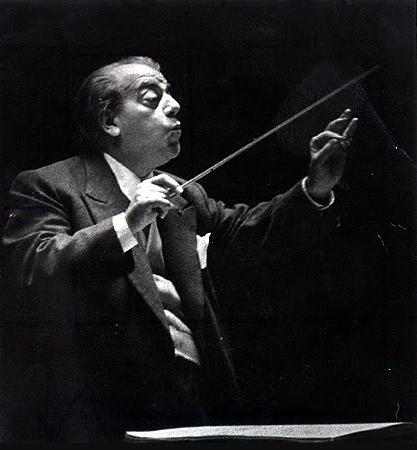
MUSIC DEPARTMENT PRESENTS

economic help to struggling and/ or homeless queer people, and helps others in the community to be aware of the issues and the lack of support many queer people face. Many cities do not have a center such as this one, and it helps build community through outreach, which has slowly made the city more welcoming to queer people.
Additionally, there are many beautiful places around the city besides the area surrounding Uptown and Whittier College, like Whittier Narrows, the Nature Center, and Rose Hills.
Although many businesses have been closing, that gives opportunity to local businesses, such as Bark Coffee, which have become hotspots for people to hang out in. Now, with services such as the Whittier Cruiser, there are promising signs for cheap and accessible public transportation, at least in the area of Uptown Whittier.
Overall, the City of Whittier has many pros and cons which should be considered when contemplating moving off campus. And with the upcoming election in April, many residents are looking forward to seeing if more of the problems with the City will be addressed under potential new leadership.
The City of Whittier may not be the perfect place to live, but rest Celebrating T he 86 W hittier College Bach Festival th J.S Bach: The Fabric of Inspiration

Dear Poets, I've been at Whittier for a few years but still struggle to make friends. People I knew early on found their own cliques and groups while I seemed to drift away from them, and it always feels like there's an invisible wall when I try to approach new people. Are there any tips I can keep in mind?
- A Lonely Poet
Jane:
People always clown on social media, but it’s been one of the many ways I’ve met some people here at the College. Just follow people that you know are on campus! Post about a yummy meal you made in the dorms or just post about yourself! This is starting to sound more like a “How to make a good dating profile” tutorial, but you get the gist! It’s hard to put yourself out there in real life, so let your social media speak for yourself. And if you see someone on campus post something about a common interest, DM them about it! I’m sure they’d be happy to talk about their interest with someone else.
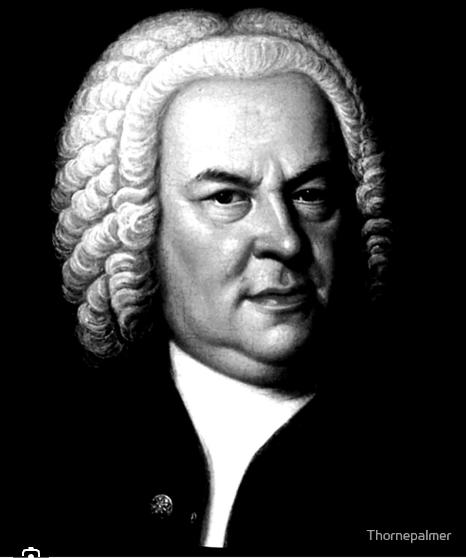
Bach Poet Musicale, March 27, Noon Celebrating students, alumni, and artists-in-residence.
Making friends is one thing, but keeping them is an entirely different process. Friendships, just like every other relationship in your life, take a reciprocal amount of time and effort. You may have made some friends at the start of your collegiate career, but stuff is always bound to happen.
The friends I made in my first year were great, but after numerous schedule changes and shifting priorities, we all ended up growing apart. Losing and gaining relationships is a natural part of life. Even then, it’s not like these people are gone forever. It may be nerve-wracking, but doing something like reaching out and checking-in with these old friends might be worthwhile.
Johnny:

5:30pm Pre-Concert Lecture, 6:00pm Concert
Collaboration with Chorale Bel Canto. Experience the brilliance of Johann Sebastian Bach alongside the vibrant, Bach-inspired sounds of Heitor Villa-Lobos, whose celebrated Bachianas Brasileiras blend Baroque elegance with the colors and rhy thms of Brazil

Making connections is so hard. College is a whole different ballpark in comparison to high school. Honestly, the best tips that I figured out in my years here is to find a club, join it, and let yourself ease in.

Please join us in the Memorial Chapel.

Even if the club is something that you’re not remotely interested in, there’s gonna be some people in it that will be just like you. Don’t be too harsh on yourself, sometimes the greatest people in your lives just suddenly appear even when you least expect it.
The Poets
Courtesy of Living in Whittier has its benefits but it also has its issues.
Courtesy of The Music Department
OPINIONS
Don't Let This Museum Get Your Autopsy Photos
Angelica Hennessy OPINIONS EDITOR
The Museum of Death is known for offering an uncensored glimpse into the brutality and cruelty humanity is capable of at its worst. It’s always been a place I’ve avoided, having heard horror stories of visitors fainting or vomiting upon entering its doors.
Made up of a massive collection of graphic autopsy and crime scene photos, serial killer artifacts and memorabilia, mortuary tools, and far more–this museum is intended to disturb, horrify, and educate its guests. This February, I was talked into finally visiting the Hollywood branch of the museum by a friend of mine. And ever since the—frankly—sickening trip, there has only been one question on my mind: Can a place like the Museum of Death exist without being inherently exploitative?
As humans we are equally terrified and fascinated with death. It’s inevitable. It's one of the few things we will all eventually experience. None of us know for sure when death will come for us or what could happen after. It’s a complete mystery, one that we can’t help but be interested in.
While we all know death is natural, we are aware that some deaths are anything but. Those unnatural deaths are, of course, going to be the ones we are the most drawn to. Murder cases are broadcasted on television, written about in books and newspapers, and portrayed in films and documentaries. Morbid curiosity is
only natural.
We hear about tragic deaths and know it could have easily been us instead. We hear about serial killers and want to know what could possibly push another human being into becoming so monstrous.
But there is a difference between this interest in what we don’t understand and treating the deaths of others as a commodity. A distinction between fascination and real cases of murder being turned into entertainment to be profited off of. This distinction is where True Crime as a genre struggles, and where institutions like the Museum of Death toe the moral line.
The Museum of Death primarily sources their collection from police auctions and private collectors, not legally needing to receive permission from the victim’s family beforehand. These photos being put on display are graphic, uncensored, and gory. You see nudity, blood, severed limbs, the aftermath of brutal murders, and even bodies cut up after autopsies have been performed. These sights are so horrifying that I left the museum shaking, unable to get the gruesome images out of my mind.
In a 1999 interview, one of founders of the museum, Catherine Schultz stated, "You need to shock people to get their attention in our society." But should the lives of our fellow human beings be boiled down to shock value?
Should relatives and friends of the victims have to live knowing, that for a $20 entrance
fee, strangers get to gawk at the brutalized remains of their loved ones?
The Museum of Death claims to be about education, about preserving the dark parts of history we are too squeamish to examine. While I do believe I learned a lot during my visit, those insights primarily came from the text boxes describing the murder cases, letters, artifacts, and art. They did not come from the graphic, exploitative images that the museum seems to prioritize. In fact, I would even argue that they took away from the educational experience, turning death into a spectacle rather than something to learn from.
The best parts of the museum were the smaller exhibits depicting how death is treated in different cultures, how corpses are prepared for burial, and the mementos families keep to remember their loved ones.
When asked about the key
objective of their museum, founders Jason Dean Healy and Schultz always repeat the same answer: “To make people happy to be alive.” And I believe that these parts of the museum were the only ones that actually accomplished this goal.
If this museum is truly intended to make people grateful for their lives, then I do not believe that relief should be coming from looking at the deaths of others and thinking “Well, at least that’s not me!” It should be coming from seeing death being treated as something normal, as something meaningful.
Despite my issues with the Museum of Death, one thing I did appreciate was the effort put into keeping the general atmosphere of the museum solemn. There were staff members in each room to guarantee visitors were not taking photographs, or even using their phones at all. Something which was certainly necessary, as the
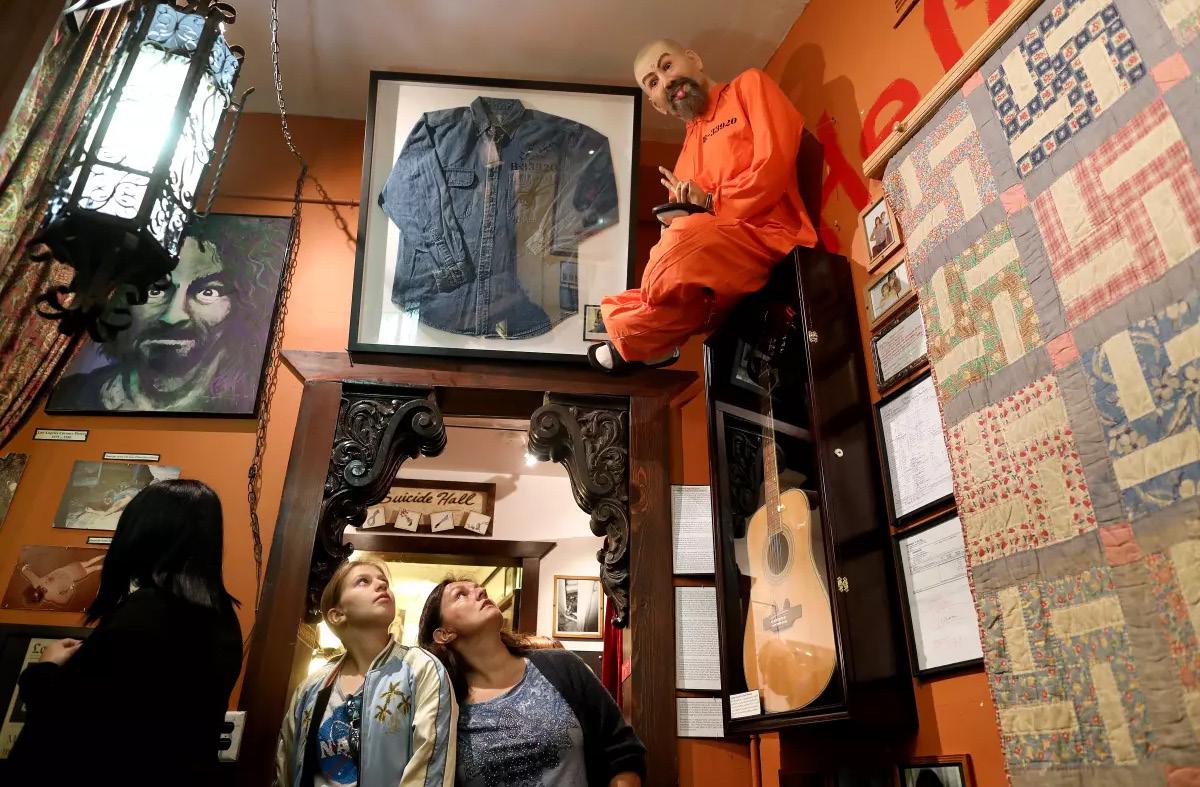
content being displayed was not something that should ever be shared with others lightly.
In my experience, all the guests treated the exhibits with a serious, horrified, but respectful attitude, something that the staff encouraged. I appreciated that while the images being displayed were undoubtedly predatory, I did not feel that the exhibits themselves were glorifying serial killers. This is why walking back into the lobby afterwards hit me with such intense tonal whiplash.
In the gift shop, I saw t-shirts being sold depicting cartoon versions of the serial killers whose victims I had just learned about.
Upon opening the museum's website, I also noticed that they were selling enamel pins depicting Elizabeth Short’s (The Black Dahlia) brutalized corpse. These choices feel completely in dissonance with the respectful tone curated throughout the actual exhibits.
Overall, I believe that the Museum of Death has the potential to be more educational than exploitative , but in its current state—it is failing. The museum has the perfect opportunity to teach about the brutality of man or even the peace that comes with death Instead they are making the active decision to prioritize shock value and profit over quality or any consistent moral message.
Death will one day come for us all, but the Museum of Death should not need to rely on the further exploitation of victims to get this message across.
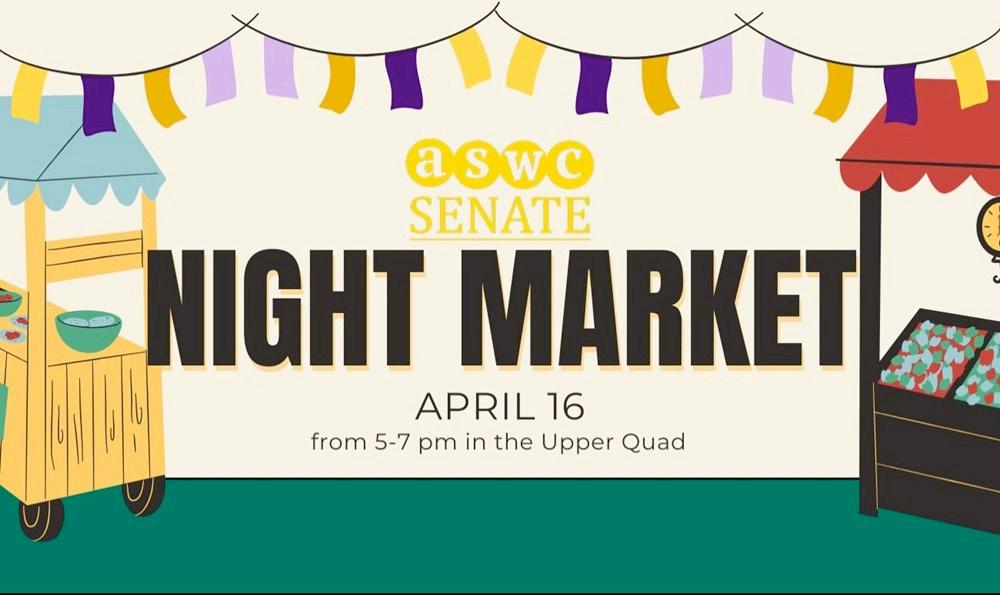
Courtesy
Courtesy of Los AnGeLes Times
The Museum of Death wants to horrify you.
Retired Pro Escobedo Joins Tennis Staff
Monze Meraz-Lerma SPORTS EDITOR
Ernesto Escobedo, a retired Association of Tennis Professionals (ATP) player, has joined the coaching staff as an assistant coach for Whittier College’s men’s and women’s tennis teams. After touring for 10 years and with an impressive career, Escobedo retired in January 2025 and has since devoted his time to coaching. He joins head coach, Ronald Kang, and assistant coach, Ismael Rodriguez, as he leads the College’s team through their 2026 season.
Escobedo, a local from West Covina, began playing tennis at five years old and turned professional at 17 years old. By the time he was 20, he broke the top-100 global ranking. At 21, he peaked as the No. 67 men’s singles player in the world. He has played and succeeded in large competitions, including four Grand Slams, Indian Wells tournaments, the Davis Cup (where he played for Mexico), and the Masters 1000 tournaments. After a decade of playing pro, he has retired at the age of 28.
"I would win matches, [and] it wasn’t fulfilling,” Escobedo says. “I would lose matches, [and] it didn’t hurt one bit.”
Escobedo explains that in the last six months of playing, he lost the fire that once kept him
motivated. The touring lifestyle meant traveling 45 weeks out of the year for 10 years straight, which had exhausted him. He admits that he never wants to see an airport ever again. In fact, he had planned a six-month vacation around the world post-retirement until he started receiving calls from prospective students in Southern California. He ditched the vacation and started coaching three months after retiring.
With such an impressive career, Escobedo expresses that he wants to pay forward what he has learned to students. He gives lessons to highly experienced players; some of his students are now committed to continuing their athletic careers at top schools, including Princeton, University of Southern California, and Stanford.
As Escobedo started his new coaching career, Coach Kang reached out to him through Gordon Hong, Escobedo’s good friend and an Azusa Pacific University alumnus, like Kang. From there, Kang recruited Escobedo to join the Poets, making him a crucial addition to the team.
The College’s tennis program has suffered in the past years due to the constant changes in coaching staff, creating difficulties in recruitment and retention of players. Despite these challenges, Kang is dedicated to a long-term plan and vision to strengthen

the program, and Escobedo is committed to making these changes possible.
"I told [Escobedo] that eventually I want [the team] to be more competitive,” Kang says. “But until we get there, [the plan is] just finding high character kids who are passionate about tennis and us, as coaches, just helping them along their journey as best we can.”
Escobedo states that he wants to be a part of the changing culture in the program, even if it takes a couple of years. As a professional player, he was often isolated and far from a team setting. Now, being
a building block to The College’s program fits right into Escobedo’s desire to oversee development within a team environment while staying close to home. Kang reports that Escobedo has played a key role in training the players in their mentality, conditioning, nutrition, and what to do on the tennis court.
He focuses on high-intensity, structured practices and workouts while emphasizing accountability and discipline. As the program is still rebuilding, it contains players of varying levels, all of which Escobedo approaches with the same mindset.
"It doesn’t matter about the level,” Escobedo explains. “It’s about, ‘How can I get this player to their goal, to their dream?’ It could be college, it could be pro, it could be high junior tennis.”
In the future Kang hopes to see both the men’s and women’s teams break away from their individualized mindsets and seperations and finally begin to work together as a united force. Escobedo’s team environment values and invaluable professional tennis experience, are a surefire path to success in its program in the coming years.
Meet Joe Dmohowski, Resident Nixon Archivist
Ethan Ramillano STAFF WRITER
Typically, after retirement, most people run from work and never look back. However for Joe Dmohowski, he turned right back around.
Dmohowski been at Whittier College since 1985. These days, you might catch Joe Dmohowski working behind the front desk at Wardman Library in the evening.
He was first hired shortly after graduating from USC as an academic librarian, under Library Director Phil O’Brien. For the first 11 years on the job, he recalls the library’s reliance on print materials, save for the Psychology department’s reliance on expensive Dialog search machines.
The biggest change came with the launch of the World Wide Web in 1996, which, for Dmohowski, was “the best thing to ever happen” in expanding access to new materials and information for the College. He remembers when Director O’Brien signed up for Whittier College’s first digital subscriptions, such as JSTOR, a crucial digital library that houses millions of academic journals and primary sources that students and staff use to this day. “It was very expensive […] but compared to the costs for print materials like periodicals, digital subscriptions were well worth it.”
The library had continued its transition towards digital technologies for the next several
years, and Dmohowski played a crucial role in connecting students to these new tools as the Serials & E-Resources Librarian.
Aside from his work as a librarian, another specialty of Dmohowski has been his impressive scholarship studying the lives of Whittier College’s most famous alumni: President Richard Nixon and his cousin, Jessamyn West.
He has published a multitude of papers detailing the lives of the two at Whittier College. He fondly remembers going on a red-eye flight with other faculty members to serve as moderators for Hofstra University’s conference on interpreting Nixon’s legacy, which included speakers such as Henry Kissinger and Bob Haldeman, both members of Nixon’s administration during the Watergate scandal.
With how divisive Nixon was during his lifetime, Dmohowski remarks that handling Nixon’s status was a very delicate issue for Whittier College’s admistration, especially when it came to securing sponsors while remaining neutral about opinions of Nixon’s policies.
This was especially the case for President Eugene Mills, who was in charge when Dmohowski was first hired. He stresses that the influence of the 37th President could not be ignored, pointing out that the number of student enrollments at the College skyrocketed to over two thousand in 1971. A significant growth.

After all, “he was a reflection of Whittier College.” and still is.
The 1990s and the early 2000s are what Dmohowski recalls as the peak when librarians were the most engaged with the College. However, when the COVID-19 pandemic had occured, it sent the College into lockdown on the infamous date of March 13, 2020.
Dmohowski laments that this was when “everything fell apart” for the library, and a struggle that the library is still recovering from even 6 years later. With nobody allowed inside Wardman Library until the Summer of 2020, he recalls the lengthy irrevesible time it took for everyone to process the sudden changes and adapt to this new way of living. “... even the mail was all over the place, and someone had to go out and
manually fetch it for a while!”
Aside from former Whittier College President Sharon Herzberger, whom Dmohowski remembers as being the most open to embracing Nixon’s legacy out of all of the College’s presidents, the alumni presence on campus and in the city of Whittier is not as profound as one would expect.
“Lots of references to him have been removed in Whittier itself … but he’s still a part of the local history.” Doing his part in preserving the memory of Nixon, Dmohowski has also given various interviews over social media and newspapers as an expert on the President’s life as a Whittier College alum. He has also written what he calls a “trilogy” of articles highlighting the struggle between author Jessamyn West and producer Michael Wilson over
the 1956 adaptation of her book, Friendly Persuasion
Particularly in the two’s conflict over depicting the lives of Quakers during the Civil War, Wilson was later questioned by the House Un-American Activities Committee (HUAC) and blacklisted over alleged communist sympathies, a history which Dmohowski says is a complex one to navigate. Dmohowski writes about the conflict in a digestible manner in his collection of literary work.
Be sure to ask him about Nixon's legacy when you see him on campus in the Wardman Library. Whether it's his knowledge on Nixon, his work in the Wardman Library, or his life experience, Dmohowski is the kind of educator you'd want to engage in conversation with.
Courtesy of Ruth Fremson / The New York times
Ernesto Escobedo, a top-100 retired ATP vet, joins Whittier College's tennis coaching staff.
Courtesy of Joe Dmohowski
The friendliest face in the Wardman Libray.
SPORTS
They Don’t Ask How, They Ask How Many
Maia Chaidez
SPORTS EDITOR
It was just another Tuesday night when NBA history was made. On March 10, the Miami Heat would welcome the Washington Wizards into Kaseya Center in Downtown Miami, Florida. The match would end with the Heat taking the win 150-129 over the Wizards, but that wasn’t why this game was making headlines. Heat’s Bam Adebayo, a player best most known for his defensive play, scored 83 points, becoming the second-highest scorer in a single game, second only to Wilt Chamberlain with 100, which was set in 1962.
Heading into the game, Adebayo just started his ninth season in the NBA and has been praised for being the Heat’s secondary offensive choice and one of the league’s best defenders. The 3x All-Star, All-Defensive First Team, and 4x All-Defensive Second Team, was averaging 18.9 points per game this season. His career high in points was 41. By halftime, he had already passed his own record.
Adebayo finished the game with 20/43 shots from the field, 7/22 from the three-point range, and an outstanding 36/43 from the free-throw line. As the game went
on, the Wizards tried everything to slow him down. Everything from double-teaming to even quadruple-teaming Adebayo was done in an attempt to slow him down. But he never let up.
With 1:37 left in the game, Wizards’ Jaden Hardey fouled Adebayo, to which Adebayo scored his 80th and 81st points in the game, tying Kobe Bryant’s record. Within the same minute at 1:16, Adebayo was fouled by Anthony Gill. Adebayo would score both of his free throws and end the game with 83 points, surpassing Kobe’s record and trailing Chamberlain’s.
As the game finished, Adebayo hugged his mom, Marilyn Blount, before leaving the court. He stated, “For me, it was just remaining calm, remaining locked in and understanding that I can go for something special. I didn’t think it was going to be 83. But to have this moment is surreal…”
However, this doesn’t come without its own controversy. Many viewers expected the Heat’s head coach to bench Adebayo after tying Kobe’s record out of respect, with even the Wizards’ play-by-play announcer Chris Miller saying that during the game. Stephen A. Smith, a prolific sports analyst, stated that, “They [Wizards] actually looked like

Bam Adebayo, from the free-throw line, breaks a record no one could have
they were helping Bam Adebayo capture the record.”
Many fellow NBA players have come out in defense of Adebayo. Houston Rockets’ Kevin Durant said, “40 shots, 40 free throws, 20 3s—that takes a lot of stamina, man. [...] Huge accomplishment.”
Milwaukee Bucks’ Giannis Antetokounmpo stated, “It doesn’t matter how you got there. All that matters is that you made it.”
They don’t ask how, they ask how many. And in years to come when fans revisit this historical performance, they won’t be caught up on his shots from the field or
his free-throw percentage. They’ll be talking about Bam Adebayo, a defensive first player, scored 83 points and broke a league record. Adebayo said to reporters after his record breaking game, “I wish I could relive it twice [...] Wilt, me, and then Kobe—which sounds crazy.”
USA Loses WBC Championship as Venezuela Unites
World Baseball Classic’s Championship was Filled with Political Tension
Maia Chaidez SPORTS EDITOR
For a sport often referred to as “America’s Favorite Pastime,” Team USA has failed yet again to win the World Baseball Classic (WBC) championship. On Tuesday, March 17, Team USA and Team Venezuela would face each other in the WBC finals, with Venezuela taking the victory 3-2 over Team USA.
Seemingly, no matter the sport, Team USA will always have a star-studded team. Earlier this year we saw the Men’s and Women’s ice hockey teams put on their own clinics at the Winter Olympics, both winning Gold over Canada. Historically, our women’s national soccer team has always been dominant, winning five Gold medals at the Olympics and four World Cups. But soccer and ice hockey doesn’t compare to the love America has for baseball. People expected the U.S. to easily win this year’s WBC. So, what happened?
Team USA’s roster was stacked with stars, but they couldn’t tap into their star power. Most notably, Aaron Judge, arguably the team’s best player, went 0-for-4 in his plate appearances, striking out thrice. The only offensive player who showed up was Bryce Harper, who hit a 2-run homer to briefly tie the game in the eighth inning. But any sort of hopes of the U.S. walking away with a victory was quickly snubbed in the top of the ninth when Eugenio Suarez hit a double far into center field, with Javier Sanoja coming in with the go-ahead run.
Despite the USA’s best efforts, all they would be able to do in the bottom of the ninth was a groundout by Kyle Schwarber, a pop out by Gunnar Henderson, and a strikeout swinging by up-and-coming talent Roman Anthony.
In what could only be described as one of the most emotional sports celebrations I’ve ever witnessed, the Venezuelans brought pride to their country in a time of political instability.
Earlier this year, President Trump enacted a military operation codenamed Operation Absolute Resolve. This military operation would see the Venezuelan President Nicolás Maduro be abducted by the United States’ military and transported to the U.S. Maduro to face federal charges of alleged narco-terrorism.
Here at The College, Professor of Political Science, Deborah Norden, has previously stated that, “Maduro is clearly an undemocratic leader [...] but the
Trump Administration doesn’t care about democracy either,” while also stating that the country of Venezuela has never been a major distributor in narcotics.
The U.S.’ involvement in Venezuela didn’t end there, however. President Trump has dismissed the idea of allowing the popular opposition leader, Maria Machado, to lead the country, opting to fully support and work with the current interim President of Venezuela, Delcy Rodriguez. Though people celebrated the capturing of Maduro, an illegitimate leader who had previously stolen the presidential election and has silenced the people of Venezuela, it also can’t be ignored that the U.S. acted on this operation for imperialist purposes.
When Daniel Palencia sent that 99.7 mph fastball straight down the middle to get the final strike and out on Anthony, he instantly threw his glove up to celebrate the win while his

Venezuelan teammates stormed the baseball diamond to celebrate with him.
In Venezuela, people filled the streets of to celebrate this win.
Lanjhonier Lozada, a hospital worker in Venezuela, said to reporter Regina Garcia Cano of the Associated Press, that “This championship isn’t just about a baseball game, as people may think. This game is historic. Words fail me. We are world champions!
Who would have imagined it!” This championship win meant something more than just another sports championship. The Venezuelan team lifted the spirits of the entire country amidst political turmoil and an uncertain future. “I’m convinced that this is Venezuela’s year,” Venezuelan citizen, Yenny Reyes, said to Garcia Cano. “This is the beginning of many good things to come for Venezuela.”

Courtesy of The New York Times
imagined him breaking.
Courtesy of reuTers
Venezuelans storm the streets, celebrating their country’s win amidst endless political turmoil.
Courtesy of ChiCago suN-Times With the weight of his country in his hands, he struckout the last batter.
Poet’s Sports Schedule:
Baseball vs. Whitman College Location: Whittier, CA
• 3 p.m.
• March 26
Baseball vs. Pomona-Pitzer Location: Whittier, CA
• 3 p.m.
• March 27
Softball vs. University of Redlands Location: Whittier, CA
• 3 p.m.
• March 27
Men’s Tennis vs. University of Redlands
Location: Whittier, CA
• 10 a.m.
• March 28
Women’s Water Polo vs. California Lutheran University Location: Whittier, CA
• 11 a.m.
• March 28
Baseball @ Pomona-Pitzer
Location: Claremont, CA
• 11 a.m. & 2:30 p.m.
• March 28
Softball @ University of Redlands
Location: Redlands, CA
• 12 p.m. & 2 p.m.
• March 28
Men’s and Women’s Track and Field vs. SCIAC Quad Cup
Location: Whittier, CA
• All Day
• March 29
Men’s and Womens Track & Field @ Moorpark Open Location: Moorpark, CA
• All Day
• April 3
Men’s Tennis @ Occidental College
Location: Los Angeles, CA
• 3 p.m.
• April 3
Baseball @ Claremont-MuddScripps Colleges
Location: Claremont, CA
• 3 p.m.
• April 3
Softball @ Occidental College
Location: Los Angeles, CA
• 3 p.m.
• April 3
Women’s Water Polo vs. Chapman
Location: Whittier, CA
• 11 a.m.
• April 4
Visit wcpoets.com/calendar for the full sports schedule!
F1 Season Off to a Very Bumpy Start
Maia Chaidez SPORTS EDITOR
F1’s CEO, Stefano Domenicali confirmed on Saturday, March 14, that the racing league would be cancelling their scheduled races in Bahrain and Saudi Arabia as a result of the ongoing war in the Middle East.
This is the first time that F1 has been forced to cancel a grand prix since 2023, which was the Emilia Romagna Grand Prix in Imola, Italy, due to severe flooding. Formula 2, Formula 3, and F1 Academy’s races in Bahrain and Saudi Arabia were also cancelled as a result of the war.
“While this was a difficult decision to take, it is unfortunately the right one at this stage considering the current situation in the Middle East,” Domenicali stated.
The races, which were originally going to take place on April 12 and April 19, now being cancelled, means that there will be five whole weeks without an F1 race. The F1 mandatory summer break this season is four weeks in comparison, from July 26 to August 23.
This also comes with the ongoing controversy over the car’s regulations. One of the new rules introduced this season was energy management and power deployment, with the total power deployment being split 50-50 between the combustion engine and electrical power. This is a huge increase in the dependency of electrical power, as from 2014 to 2025, the split was 80 percent combustion engine and 20 percent electrical power. This has led

to many fans calling the races “artificial” as any overtaking or racing seen on the track is simply a result of the increase in electrical power.
Fans aren’t the only ones upset. Drivers have also voiced their concerns and complaints about the new regulations. Max Verstappen, a driver who is easily becoming a household name due to his dominant performances, has slammed the new regulations multiple times. He’s stated, “It’s not fun at all. It’s playing Mario Kart. This is not racing.” He explains the problem with the regulations simply, “You are boosting past, then you run out of battery the next straight. They boost past you again.”
F1 is the pinnacle of motorsports. It’s one of the only racing leagues where skill and finesse are rewarded. As Verstappen previously stated, comparing the current regulations to Mario Kart, this racing series shouldn’t be decided by drivers who have more energy stored in their battery. It takes away from the ethos of this racing league.
Reigning World Champion Lando Norris has also weighed in on this year’s new regulations. He’s stated, “We’ve come from the best cars ever made in Formula 1 and the nicest to drive to probably the worst.”
However, another constructor is dealing with a whole different issue. Leading up to F1’s first race this season in Melbourne, Australia, Team Principal Adrian Newey of Aston Martin, who has now stepped down from the role as of March 19, confirmed that the team’s drivers, Fernando Alonso and Lance Stroll, would be running limited laps during the race. The reason why? Severe vibration issues due to the chassis. These aren’t just any severe vibrations. Stroll described the vibrations as, “just electrocute yourself on a chair or something like that, not far off.” Driving in a car like this could risk you permanent nerve damage in your hands, Newey revealed. Of the two races that have taken place so far this season, Aston Martin’s only race finish comes from Stroll, who completed a race 15 laps behind
pace at the Australian Grand Prix.
Speaking of finishing behind pace, a new team has entered the F1 competition: Cadillac. Their first race in Melbourne had one of their drivers, Valtteri Bottas, not finishing, while their other driver, Sergio “Checo” Perez finished 16th, three laps off pace. Both drivers would improve in their next race in Shanghai, China, with Perez finishing 15th and Bottas finishing 13th. However, both were still a lap off pace.
The next race, taking place on March 28 in Suzuka, Japan, will be the last race before the unexpected five week break. Due to the long break, it’s possible to expect improvements in the team’s cars once the racing league returns.
So far, Mercedes have won both races, with George Russel and Andrea-Kimi Antonelli winning the only two races that have happened. But can Aston Martin bounce back and get their car onto podiums? Is Cadillac stuck to being a backmarker or can they find their stride? And can Norris, the defending World Champion, be able to run it back?

Courtesy of moTorsporT week
New season means less power, less races, and less safety for some cars.
SPORTS
The Killer Mindset Behind the Poet Sluggers
Monze Meraz-Lerma SPORTS EDITOR
The morning after a 16-7 win against Illinois Institute of Technology, Whittier College baseball players, Alex Jasso, Jay Shulze, Jack Lee, and Mathieu Ortega meet in the batting cages at 8:15 a.m. after their 6:00 a.m. weight lifting session. They gather on the bench with their bats and gloves ready for their weekly extra hitting practice.
Their teammate, Matthew Mecate, walks down the hill to the cages with his uncle, Jimmy Mecate. They carry a pail filled over the brim with baseballs and a separate bag with brown papersack breakfasts, containing power bars, power bread, and chunky, homemade chocolate chip walnut cookies.
Jimmy starts with a quick greeting and throws in a “You’ve gotten bigger” to Lee before he gets straight to business. “What are the five commandments of baseball?” he asks. Shulze, Matthew, and Jasso rapid fire answers for the first three: hands in, head down, come to calm.
Silence lingers on the last two as Lee and Ortega, the recent newcomers to the weekly sessions, are left to answer. Jimmy begins to hint at one of the commandments, “One of them changed my life.” Jasso jumps in with the final answers: be aggressive and have one thought.
“Being aggressive changed everything,” Jimmy explains. “I could never hit in high school. I went and tried out at Rio Hondo after getting cut at Mt. Sac, and
the coach said, ‘We’ve never seen you play before, just be aggressive,’ and from then on, I hit 300 every year.”
While playing at Rio Hondo in 1981-82, Jimmy was drafted to play for the Kansas City Royals. He declined and instead went to play for Brigham Young University.
At BYU (1983-84), the team finished their first season as the No.1 Division I team, and he was named as captain the following season. Following his collegiate career, he briefly became the BYU JV team head coach then spent over 20 years as the head coach at Imperial Valley College. Now, on his days off, he makes the long haul from Imperial to Whittier to serve as a volunteer mental and athletic coach to Poets that seek the help.
The players take turns requesting pitches from Jimmy and abide by the five commandments. The cage is full of encouragement as the boys root for each other. They focus on the fifth commandment of one thought, a method that has proved to be effective for the team’s top leaders: Matthew Mecate, Jasso, and Joe Plaskett. The seniors lead the team in batting averages, RBIs, and home runs.
Matthew prides himself on his dedication to mental improvement and his “killer mindset”, which he began to prioritize after reading 30 Days to Mental Performance Mastery for Athletes by Brian Cane, a book given to him by his dad before he passed. Matthew reached out to Cane, from whom he received personalized techniques, including concentration grids, visualization, breathing techniques, and
meditation, which help him center a calm mentality.
“Last year, I was more result oriented,” Matthew says. “Now, I’m more process oriented, so I’m just worried about how I perform and how I compete. I call it calm but ferocious.”
As per Matthew’s advice, Jasso and Plaskett jumped on the “competing ferociously” bandwagon, and the results can speak for themselves, but more importantly, their attitude as they approach the plate is unflappable. They stay calm and confident, whether they hit a homerun or strike out.
Jasso, arguably the best follower of “being aggressive”, leads the team with a batting average of .375 and clocked in his most impressive performance against Illinois Tech. He brought in the first hit of the game, tripling to right field to later score the first run. Next was a homer to left field, and later, a double, creating anticipation for him to complete a cycle with only a single left. Jasso emphasizes that even in big moments like these, he comes to calm, commandment three.
“I was still trying to do my thing,” Jasso says. “I was like ‘If I hit a double, I’m going for it. I’m trying to hit a bomb. I don’t care about the cycle right now.’”
Plaskett, who had to miss Jimmy’s hitting session because of class, has so far blasted five HRs, tallied 26 RBIs, and maintained a .326 batting average, evening out to his success last season with similar stats and a notable 10 HRs. He explains that his one thought is to keep his chin and head down, but the most impactful mentality
he learned is “212”.
“When I was working with [Matthew’s] uncle, they told me water boils at 212 degrees fahrenheit, so normally, I’m at like 230–way above boiling,” Plaskett says, referencing his energetic personality. “I’m more like too hyper, so my mindset is to come to calm.”
As Plaskett walks up to every at bat, he centers his vision on one spot of his bat, closes his eyes, takes a deep breath, and steps to the plate at the perfect temperature: 211 degrees. With every pitch, he whips his bat strongly but maintains a steady expression. He admits it can be easy to dwell on strikeouts or bad swings, but instead, he uses it as motivation.
On the other hand, big moments, for him and his teammates, also require that even temperature.
“Jasso just hit a home run in front of me today, that’s electric. It’s really hard not to get too high because you’re hyped,” Plaskett says. “I love when my guys do well, and that thing was a nuke.”
The morning crew finishes up their hitting session and returns the scattered baseballs into Jimmy’s pail. The players round up once more to reflect on the day’s takeaways to bring into their next games. The team is 8-13 overall with a less consistent 2-7 conference record. Balancing eager wins and calm performances is just what the Poets need to find crucial SCIAC wins.
Women’s Water Polo Fights for SCIAC Top-Five Title
Monze Meraz-Lerma SPORTS EDITOR
The Whittier College’s Women’s Water Polo team has been battling their way into the top five teams of the SCIAC after being the underdog in the past years. The team, taken over by Head Coach Preslav Djippov in 2024, has been rebuilding, and is now slowly growing with 14 players—the most since 2022. Nevertheless, the team is relentlessly approaching these next key games to grasp onto a top-five ranking, a spot the Poets also haven’t seen since 2022.
The team is composed of a freshman and junior heavy roster, with only one sophomore and two seniors. The balance of underclassmen and upperclassmen means that while there are many players unfamiliar with the collegiate level of the sport, over half of the team are seasoned players ready to lead. Alexandra Haluska, a fourth-year captain, explains that the college level of water polo means dirtier and more aggressive playing, something that can only be developed through game experience. However, the younger players are ready to learn.
”A lot of [the freshmen] have been super receptive to tips and
help from me and some of the other older girls on the team,” Haluska says. “It’s been great seeing them want to learn, want to play, and earn their spot [on the starting lineup].”
This development has been crucial as the team is nearing the close of their season with four games left. Within the conference, Pomona-Pitzer, ClaremontMudd-Scrips, and Cal Lutheran are expected to take the top three out of five spots, leaving the rest of the teams in a scramble for the remaining two. As a result, the Poets had placed especially heavy importance on their game against Occidental College on March 21.
The College had found previous significant wins against Cal Tech and Redlands but had still shown struggles in preceding games. On March 20, the day before playing the Tigers, the Poets were handed an unfortunate 5-7 loss against Macalester College, a non-conference game.
“Going into that game against Macalester, we had a lot of nerves, a lot of rushed decision making, and I think we misjudged our opponents,” Haluska says. “They came out wanting that win, and we let them back into that game and blew our early lead.”
While Haluska admits that the
team did not play their best, they took this defeat as a wake-up call for what awaited them the next day. After reflecting with Djippov and the team, the Poets took on Oxy the following morning with focus, consideration, and patience, ultimately rewarding them with an impressive 12-7 win. Haluska believes this high performance is what they are capable of upholding for the rest of their season.
“We cleaned up our game as a whole, and our defense was on lock,” Haluska says. “We played as one cohesive team as opposed to a few individuals trying to make something happen.”
A key component of the defensive makeup is Aubrie Kirkby Tatro, a third-year goalie. She displayed her talent in her seasonhigh of 13 saves when playing Redlands and brought the same effort against the Tigers with 10 saves. Despite her impressive stats, she admits that her position often makes it difficult to maintain a strong mindset.
“No matter what happens, it falls onto me to be the last leg of defense, and in close games when we’re losing, I especially get into my head,” Kirkby Tatro says. “My coach really tries to tell me to control the things that I can control…and not focus on the

things I can’t control.”
Kirkby Tatro transferred to The College after playing two seasons at Cuesta College, giving her the essential collegiate water polo experience, which has been helping to lead this year’s team of eager pupils. In comparison, the 2025 season saw a small roster of 10 players, which made it more difficult to find success and set high goals, like this season.
“We’re just able to work really well together, as opposed to last year,” Kirkby Tatro says. “We were just fighting for our lives.
We didn’t have enough people to battle the way that we could have if we had more people.”
Most recently, the Poets gained another prominent win against La Verne on March 25 with a final score of 9-5. Kirkby Tatro stayed dominant in the net, taking 11 saves, and Madison Mathewson led with three goals and won a sprint. The team currently stands at fifth in the SCIAC Haluska and Kirkby Tatro credit the underclassmen for their motivation to improve, while Djippov shouts out the upperclassmen for being the leaders of the team. With this combination, the Poets are on their way to setting a new standard of being a top-ranked team within the conference.
Courtesy of Tony Leon / aCTioN wesT phoTographY Mecate, Jasso, and Plaskett lead the baseball team in impressive stats.
Courtesy of Tony Leon / aCTioN wesT phoTographY Alexandra Haluska leads the team in goals, boosting their SCIAC standings.
The QC Staff
Suggests:
Tralee Jacobs STAFF WRITER
Want to know what our Staff Writer recommends this week?
Movie: Lars and the Real Girl is genuinely one of the most healing movies I’ve experienced. It's a tender story about love in all forms. I've written essays about it. I won’t say much, but you’ll feel shocked, uncomfortable, and mad at yourself for ever feeling that way. It stars a singing Ryan Gosling, need I say more?

Band:
I love both the albums Forever Howlong and Ants From Up There by Black Country, New Road. All the lyrics are poetry and the instrumentals make you feel like you're floating. Here's some lyrics from “Good Will Hunting”: “You walk up on the raised edge, Hands out for balance, You slip and you almost grab mine, but you find your feet, And I never wanted so much someone to fall.”

TV Show:
My roomate and I have been watching The Good Place. It's one of those shows that is completely ridiculous but also intellectual, with strange and endearing characters. I also causally love mentioning philosophy I learned from it. It makes me feel smart.

Just Dance:
If you need a pick-me-up, look up the Mr. Blue Sky Just Dance 2022 routine on YouTube. It features a stop-motion panda with adorable outfits, flying around on a wooden hoverboard through a treehouse neighborhood to visit his animal friends. It’s very cute and joyful, and the choreography is actually fun. Highly recommend trying it with friends.

ARTS & ENTERTAINMENT
It Was "One Battle After Another" at the Oscars
This Year's Oscars were Controversial, to Say the Least.
Emma Galvan DEPUTY EDITOR
Another year, another Oscars ceremony, and one can say it was one of the most memorable ceremonies of all time.
To put it bluntly, this year’s Oscars was very predictable, with a lot of the winners being chosen repeatedly throughout the entire awards season. Wow, the film based on Frankenstein and set in Victorian England won Best Costume Design and Best Makeup? Who knew? On the other hand, it was still satisfying to see certain awards be given to the deserving cast and crew. That does not mean this year’s ceremony was without questionable decisions and moments, albeit with some noticeable peaks and valleys.
One of the biggest controversies from this year’s ceremony has to be Sean Penn’s win in Best Supporting Actor for his performance in One Battle After Another (2025). Before the ceremony, many were rallying behind the idea of actor Delroy Lindo finally getting his long overdue Oscar win, myself included. It was going to be perfect.
Lindo should have been honored for his entrancing performance in Sinners (2025); his character was emotionally complex and narratively tragic. Instead the Academy decided to award yet another Oscar to Penn, who had already won for performances in Mystic River (2003) and Milk (2008).
Penn gave a dedicated performance in One Battle After Another, but to award him for acting as a character whose whole schtick is a racist villain over the Black actor whose character is a victim of racism is a choice, to put it lightly. It does not help that Penn was absent at the Oscars, just like he has been doing every ceremony this awards season. Why are we awarding people who clearly do not care?
The Academy has a pattern when it comes to choosing the winners for Best Supporting Actor/Actress. It has to be someone who has been seen as overdue for recognition, an actor that never won before despite having memorable performances.
Take Jamie Lee Curtis for example. Her character in Everything Everywhere All At Once (2022) was not nomination worthy, and it was definitely not better than the performances given by Stephanie Hsu and Angela Bassett. Her character, a dry and witty IRS employee, doesn’t fit the title of “Supporting Actress” like Hsu and Bassett’s do, but since Curtis has been a prominent figure in the industry who had not been awarded until then, it fit the pattern.
People are saying that is the case for Amy Madigan, who won for playing Aunt Gladys in Weapons (2025). It was a career win. However, Madigan is not as prominent in the industry as Curtis is, and her performance is arguably one that is noteworthy. Weapons getting a victory is also a win for the entire horror genre, which is often snubbed by the Academy.
Madigan’s last nomination was over 40 years ago, as most of her career was spent on films in the ‘80s. For Madigan to be awarded for the film's only nomination is nothing to scoff at.
But, if the Academy does the “overdue victory” trope, how come Lindo was not given the award? It’s simple. Even though Sinners got the most nominations in Oscar history, the Academy still has their Whitewashed preferences. The ones who often are awarded the “overdue victory” are old, white actors in roles that are not particularly outstanding, while people of color like Lindo rarely get the chance to be on that stage. They’re never afforded the same level of urgency.
Hsu and Bassett’s snub in 2022 was a harbinger for what happened with Penn, and it justifies why Lindo did not clap when Penn was announced as the winner. The man gave the performance of a lifetime and most likely will never get the honor of being nominated again.
Penn’s absence just rubs salt in the wound, he did not care about
This year’s ceremony had some small victories that are important to take note of. Autumn Durald Arkapaw won the award for Best Cinematography this year for her work on Sinners, being the first woman in 98 years to ever do so.
98 years is an embarrassingly long time for a woman to not win in the category. Time and time again, they’re always snubbed in favor of their male peers. Outside of Best Costume Design, women are severely underrepresented and under appreciated year after year. For example, there have only been 16 winners for Best Original and Adapted Screenplay, three winners for Best Visual Effects, and somehow there have only been three women who won Best Director.
A first time victory in Best Cinematography is a good sign for the future for women in the film industry, especially in the current
"Even though Sinners got the most nominations in Oscar history, the Academy still has their White-washed preferences."
the award, especially while cheating Lindo out of finally getting the recognition he’s been waiting for. The second divisive victory of the night was KPOP Demon Hunters' (2025) “Golden” winning Best Original Song over “I Lied To You” from Sinners. “I Lied To You” was the audience's most desired winner, even though “Golden” was given a near unanimous vote at every awards show.
The song was a huge hit and has been frequently played at numerous events throughout the year, but “I Lied To You” is also popular for a reason. The song, the melodies, and the scene it appears in is a love letter to African-American culture and how music can be cherished and celebrated through generations.
That was perfectly replicated in its live performance, capturing the audience the second the song starts and keeping their attention with a stage of dancers (including retired principal Dancer for the American Ballet Theatre Misty Copeland!), musicians, and references to the scene the song comes from.
By contrast, the performance of “Golden” lacked the fun creative charm that the “I Lied To You” performance had outside of the opening and the use of lights. Ultimately, “Golden” took the golden idol, putting the arguments to rest on who will win.
“Golden” winning is a victory in hindsight though, as it is the first ever KPOP song to win an Oscar and is part of a film that represents and cherishes Korean culture. The song itself spoke to millions. Although, it srved as a personal reflection from the songwriters of the journey to where they are today. This win is very personal to them. Either song’s victory was going to be a win for their respective minority groups, and both songs were written with clear love and respect for their cultures.
good way to break some of the anxieties about who will win, but there’s only so much one show can handle.
After nearly three hours of apprehension, the biggest category of the night finally came, Best Actor. The biggest bets for this year’s ceremony was whether it would go to Michael B. Jordan or Timotheé Chalamet. Chalamet was the front runner at first: he is what can be deemed the “golden child” of this decade, but he frequently gets nominated and always falls short.
This year seemed to be his year, until he jinxed himself after making comments downplaying the relevancy of ballet and opera. Superstition aside, Jordan won because he did exactly what the category says, he did the best acting of the year. Performing as not just one character, but two with different mannerisms entirely. Smoke and Stack are polar opposites, yet Jordan was able to give the smallest of details to their behavior even when they’re sharing a frame.
In reality, Chalamet’s controversy had nothing to do with the voting, as voting closed right before his comments were released, and to say so is dismissing the hard work that Jordan put into his roles.
political climate. Women are finally getting recognized for victories that are deeply needed.
The ceremony this season desperately needed more focus on the victory speeches rather than the various comedic shenanigans that took place. Conan O’ Brien is a great Oscars host. His opening skit where he crashes into the various Best Picture films was humorous, and a wonderful tribute to filmography. However, when the presenters, and even himself, kept stalling over and over again throughout the ceremony, it started to turn stale.
The predominant moment of this ceremony was when “Golden” won Best Original Song. The songwriters were hardly able to get their speech out before the orchestra cut them off and the ceremony went straight to commercials. Instead of hearing their speech, we had to sit through a long segment with the cast of Bridesmaids (2011) because it is the 15th anniversary of the film.
I’m just going to ask, was the Bridesmaids reunion really necessary? It’s a film that had a cultural impact when it first released, but was not worth almost 10 minutes of them joking about being told to wrap it up. It’s disrespectful not only to the audience at home but also to the winners, this moment is meant to be huge for them.
Some humor is nice, it's and a
Despite being the biggest film of the year, Sinners lost Best Picture and Best Director to One Battle After Another. It begs the question: why make Sinners the most nominated film and sing all its praises but not give it the win? One Battle After Another is the loosely anti-fascist film that the Academy loved to give awards to. It is a comedic drama with satirical themes that gave the film brownie points with recognition.
To note, the film was directed by Paul Thomas Anderson, a popular director that had 14 nominations and yet no victories. In the eyes of the Academy, Ryan Coogler is “newer” and “will eventually get his time,” which is why he only won Best Original Screenplay. Sinners is a cultural phenomenon, and there’s no denying that there will ever be something quite like it for a very long time, but it being a horror film brought it down.
The last horror movie to ever win such big awards and Best Picture was Silence of the Lambs in1991. One Battle After Another is what the Oscars are looking for, a safe semi-emotional and dramatic film that is good, but it will never be Sinners-level good.
Even if there were some hard misses, this year’s Oscars ceremony still had highlights that made it enjoyable. Through the rough pacing, there were still the sparks of love for films that make the Oscars worth watching year after year.
Now who’s ready to start placing bets for next year’s Oscars?
Courtesy of Ninja Tune
Courtesy of MGM Distribution
Courtesy of NBC
Courtesy of Inspira Animation
Paul Thomas Anderson's One Battle After Another nearly swept.
Courtesy of ReuteRs / Mike Blake
ARTS & ENTERTAINMENT
Do Gaps Between Albums Hurt Musicians?
What's Wrong with Taking Hiatuses?
Elias Loya A&E EDITOR
There's no art form more powerful and impactful than music. The power of music lies in its ability to get as close to describing the human experience as possible while showcasing technical and lyrical prowess.
Artists like Rage Against the Machine underscore their critiques of the justice system and capitalism with Tom Morello’s glitchy guitar, while Sade soothes their audience with soulful ballads about love, both lost and found. Expressing oneself is not an easy feat, but albums provide the perfect platform for any artist to showcase what they feel and what they’re going to do with these feelings.
With the digitization of music releases, it’s easy to see how spoiled audiences have become. Instead of tuning into a radio station, or lining up at a record store for release day, albums are now on demand. Log on to Spotify, Apple Music, or any of your favorite streaming services and, essentially, the entire world of music is at your fingertips.
Pair this with the increasingly capitalistic nature of the music industry, and a pattern begins to emerge: someone’s favorite artist will release a new record every couple of years, and any deviance to this schedule often leads to an uproar.
In the last two years alone there have been artists who have reemerged after hiatuses, like Blood Orange with Essex Honey
(2025), Baby Keem’s Ca$ino (2026), Jill Scott’s To Whom This May Concern (2026), and A$AP Rocky’s DON’T BE DUMB (2026). Many of these albums came after a five year gap at least, and fans may be hesitant about the quality of the music or less enthusiastic to follow those artists anymore.
Many artists, especially charting ones, tend to be pretty busy as it is. Once they release a record, they usually follow up with tour dates, exhaustive campaigning and press runs for their newly released material, and public apearances. After months of being on the road, many artists are left burnt out, physically, emotionally, and creatively.
Creative burnout and perfectionist ideals run rampant in this day and age, where virality is the key to maintaining one's success. According to neuroscientist Anne-Laure Le Cunff in “Creative burnout: when the creativity tap runs dry,” creative burnout can be seen in symptoms like constant exhaustion, self-comparison, and self-doubt. This can often lead to some releases being shelved or scrapped entirely.
The growing fame and recognition that these artists have to deal with doesn’t shield them from the weight of events happening in their personal lives, either. Devonte Hynes (Blood Orange) had to take care of his dying mother, before addressing the grief of her passing on Essex Honey (2025).
A$AP Rocky dealt with everything, from becoming a
father, participating in brand deals and fashion campaigns, and discouragement with the amount of his music being leaked online. Clearly, a couple years between projects isn’t the most pressing issue for creatives.
So, gaps between albums work out for the artists, allowing for creative growth and emotional development, but listeners are split on this. Fans will claim that any project after an indscriminate amount of years will never amount to previous releases; One of the biggest issues seems to be that people are looking for eight years worth of work on a single project, as seen by commenters under Pitchfork’s DON’T BE DUMB (2026) review (which was rated at a 6.8).
This project was, admittedly, all over the place in terms of style, and some listeners saw this as a sign of Rocky throwing stuff at a wall and hoping something stuck. Who knows how long this project actually took to make, but, at its core, what was meant to be a creative showcase was turned into a “too much time has passed to carry momentum” argument.
Compare this to the reception of the thematically experimental Essex Honey (2025), with Pitchfork rating it an 8.1. Blood Orange’s work was met with a seemingly endless amount of positive reviews from fans, with user IMB_REV even claiming that they would gladly listen to this record for the rest of their life.
All of this aside, it’s not like an experimental or long-awaited
release guarantees a diminished audience; Rocky will be going on a 42-date tour this year, with several of these shows already being sold out. Speaking of longawaited, artists like Sade, Ms. Lauryn Hill, and Frank Ocean have not released a new album in at least 10 years, all while maintaining loyal fanbases.
Evidently, fans will still clamour for an artist they enjoy, no matter how many years it’s been or how much they deviate from expectations. Do breaks between albums hurt careers?
They can, but if one garners a decent following beforehand, it can easily be shrugged off through sales and charting numbers.
There are caveats to this, like brand new acts who have yet to fully gain their footing, but even
then plenty of things can happen to spark a career.
Artists are human, and while they have made a living off of pleasing the masses, their music is still for their discretion. At some point, dropping that long-awaited album is no longer an action for the fans, but an action for the sake of reclaiming the music that these artists have loved producing.
Fans don’t make it easier on themselves by coming into a project expecting some sort of divine salvation, focusing too much on “what could’ve been” instead of “what already is.”
Next time an album drops after a couple years, appreciate the album for how it is presented, and appreciate the artists who might have gone through hell and back to share a part of themselves with the world.

Don't Cry 'Cause it's Over, Smile 'Cause it Happened
Ethan Airada COPY EDITOR
On April 12, the hit animated television series Smiling Friends will release two final episodes to mark the end of the series. After three seasons, creators Zach Hadel and Michael Cusack officially announced online that this is how they’re ending the series. One might wonder why, especially considering just how much of a cultural phenomenon it was, and just how successful it was for Hadel and Cusack. It’s simple; burnout.
Smiling Friends was a passion project all the way through, and the creators put everything they had into making a good show for fans to enjoy. But putting 110 percent into anything is exhausting even for the most endurant of people. In the announcement, Cusack explained that “After we finished Season 3, Zach and I just both had the feeling where we feel pretty burnt out after putting years and years into this—but also pretty accomplished.”
Cusack and Hadel also explained that they are willing to return every now and then for specials or other bonus episodes in the future, but the show itself is ending altogether. Besides
The hit show is ending soon, but at least it won't be milked to eternity.
burnout, they explained that they wouldn’t want to continue the show beyond its relevance like many others have.
“We wouldn’t wanna be doing more seasons, like, halfhearted,” explains Hadel, wanting to do “... what feels like leaving [the audience] wanting more rather than people going, ‘Oh, that show is still on the air. Oh god.’” This is probably for the best; other shows like The Simpsons and Rick and Morty have gone on long after their peaks in popularity, and are
no longer as culturally relevant as they were—something Smiling Friends has even joked about in the series. Alongside this, another show has also recently announced that there are no plans to continue; Seth MacFarlane’s Ted. The popular series has two seasons which, compared to others, may not seem like that much. However, MacFarlane has cited much more pragmatic reasons for its discontinuation.
Ted is a live action show that features a CGI teddy bear voiced by
MacFarlane that acts as a prequel to the two movies of the same name.
MacFarlane went on record saying that producing a season is like “doing an ‘Avengers' movie every 22 minutes” due to the cost of production. However, the franchise is now getting an animated sequel series produced by Peacock and Universal, but it won't be the same. Fans found this version of Ted, both the story and the character, one of the funniest projects created by MacFarlane, and seeing it go is saddening.
Regardless of demands for more, it is ultimately up to the creators and studios as to whether or not shows continue, especially if they’re as revered as these two. Smiling Friends in particular has become a cultural phenomenon since its release all the way back during the pandemic. But, if the creators feel burnt out about creating, we probably will be burnt out from watching, too.Things only have meaning because they don’t last. So don’t be sad that Smiling Friends is ending. It’s for the best.
14 years passed between singer D'Angelico's second and third albums.
Courtesy of RCA Records
Courtesy of Darby Self