THE LATEST ON LYME DISEASE, SPIKE PROTEIN, CANCER CARE & CARDIOLOGY
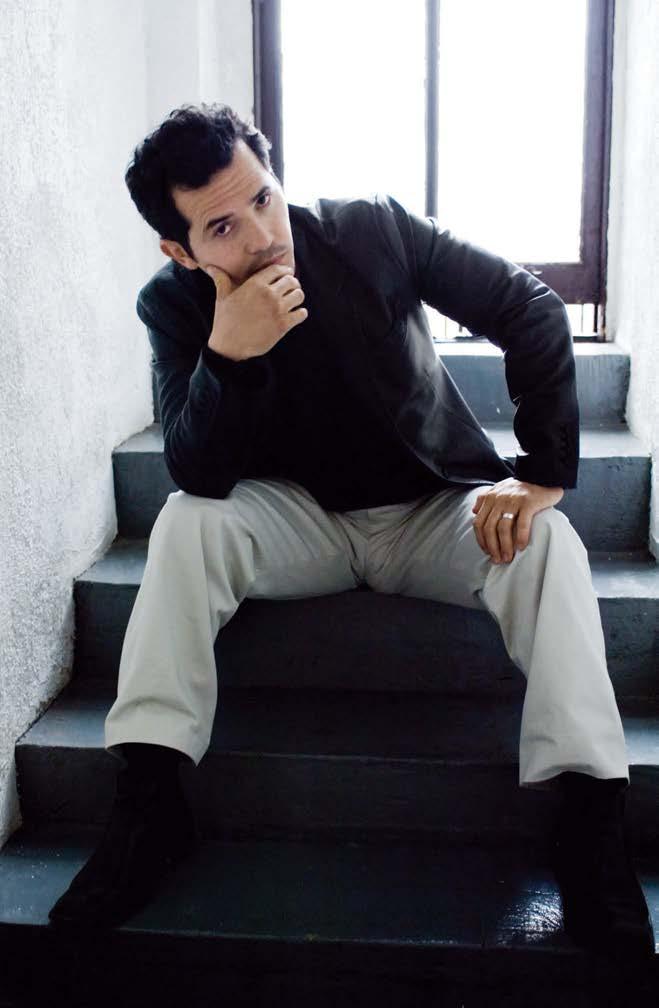
JOHN LEGUIZAMO’S FANTASTIC VOYAGE
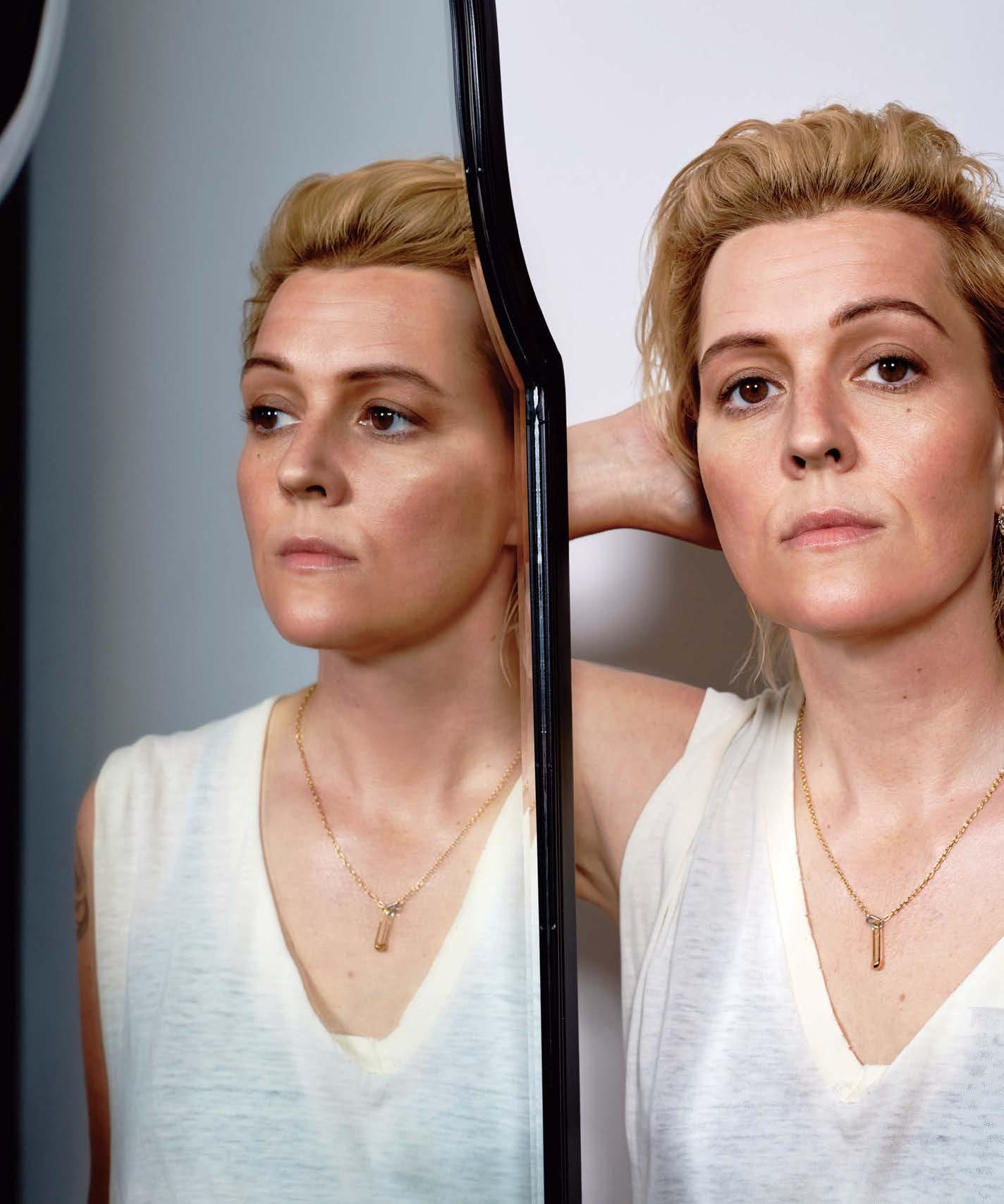
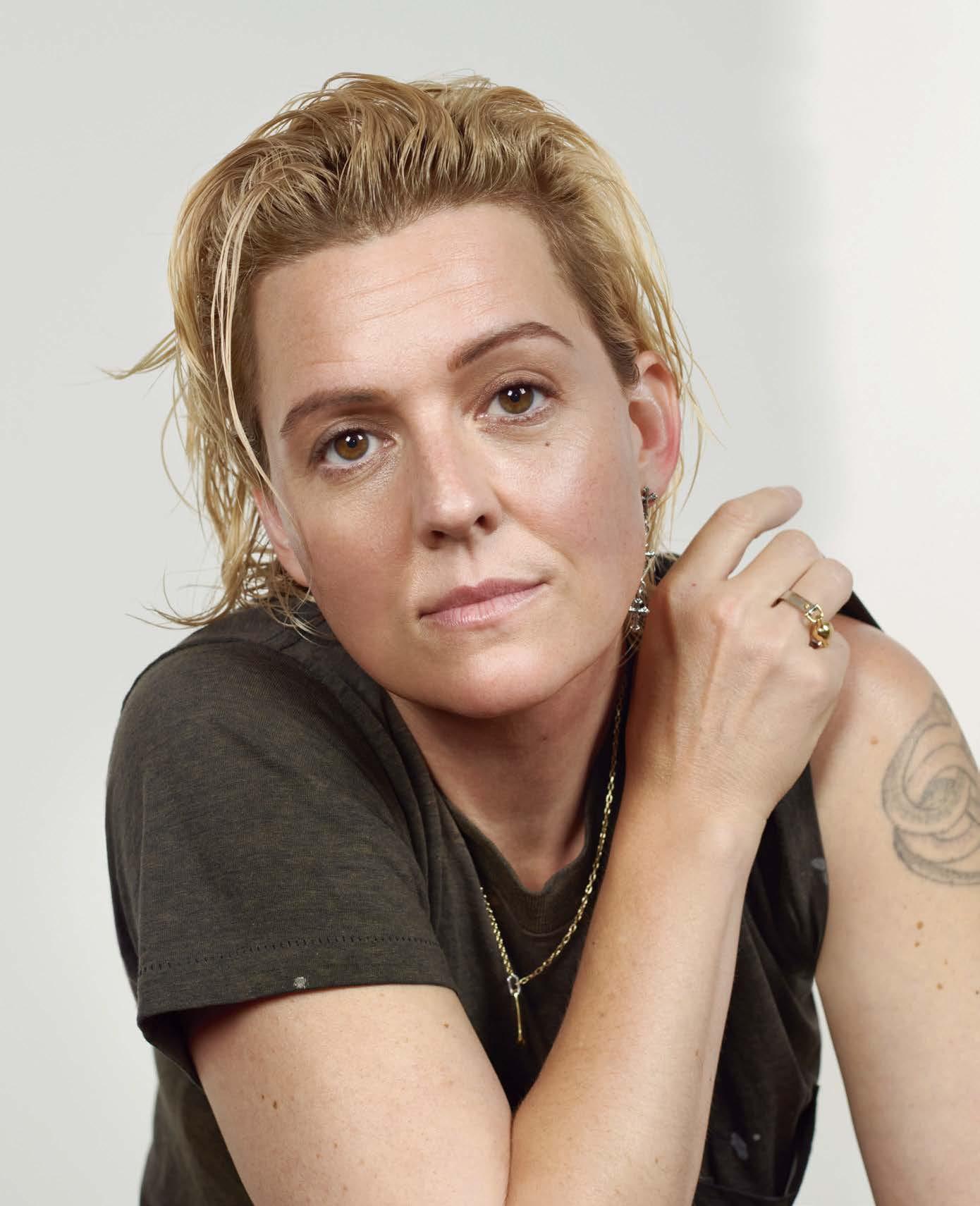
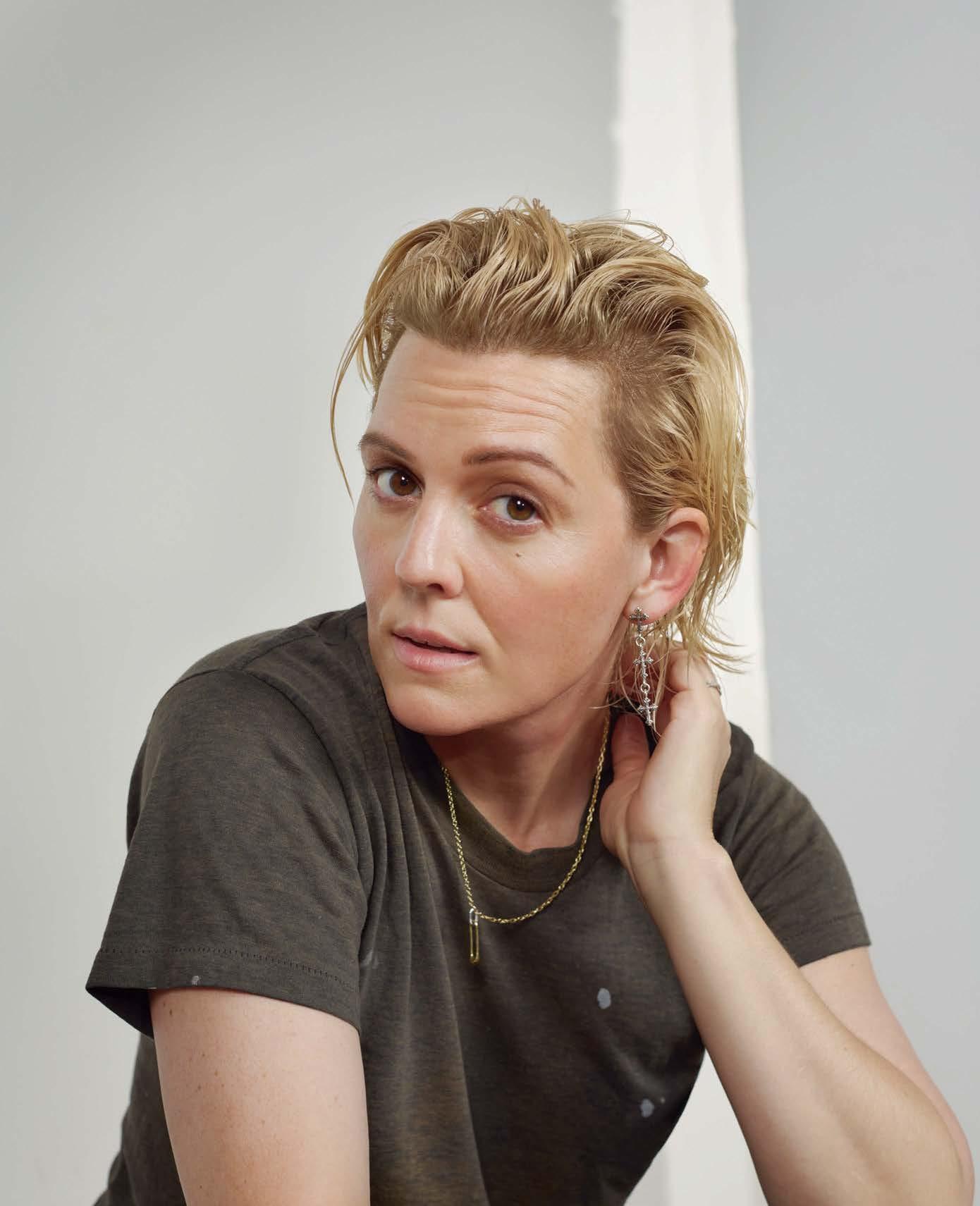
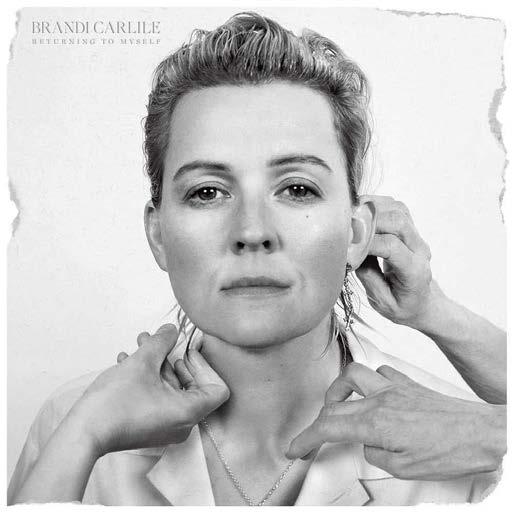
REFLECTIONS ON LIFE, LOVE AND MUSIC + HER MONTAUK CONCERT
THE PRIVATE REALM ABOVE THE ATLANTIC
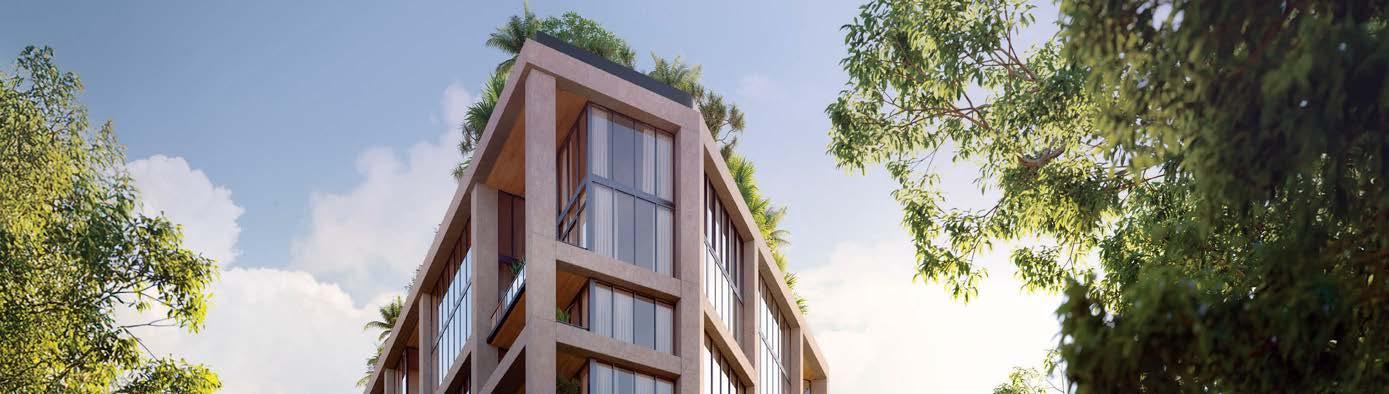
High above the pristine shoreline, the bespoke penthouse living at The Ritz-Carlton Residences, South Beach, invites you to experience a world curatedby design visionary Alessandro Munge and brought to life through the architectural artistry of Kobi Karp. A private rooftop—complete with infi nity poolsand wraparound glass terraces— blurs the boundaries between indoors and out, framing endless views of the ocean and the iconic cityscape. The extraordinary lifestyle is elevated by the seamless, legendary service of The Ritz-Carlton.
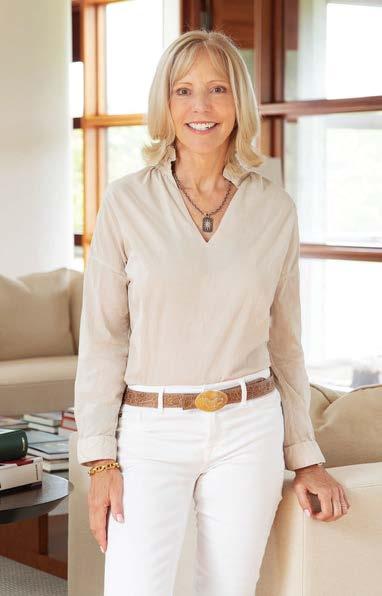
E DITOR ’ S L E TT E R PRESERVATION
I took this photo of Pulitzer Prize-winning author Edith Wharton’s typewriter at her turn-of-the-century home in Lenox, Massachusetts, just down the fern-riddled road from our restorative Purist retreat at Canyon Ranch Lenox. It was one of many typewriters Wharton used to create The House of Mirth, The Buccaneers and her most celebrated masterpiece, The Age of Innocence Seeing this relic reminded me of my lifelong romance with the written word. Born before word processors and computers, I vividly recall the mechanical manual typewriter I used in high school—my preferred medium for self-expression. I often miss the long, heavy throws of those type bars. Typing back then required deliberate thinking, deep focus and a tactile connection to the process. Because mistakes were so difficult to correct, I had to slow down and think carefully before striking a key.
Having a quiet moment inside the stone foundation of The Mount, Wharton’s Berkshire estate, I realized that this deliberate pacing is the ultimate key to well-being. Slowing down—thinking more carefully about what thoughts fill our minds, what words leave our mouths and what actions emanate from our bodies—is the figurative typing required to take care of ourselves. Just as Wharton designed her estate to rise robustly from a solid rock outcropping, optimal health requires building an equally intentional, grounded foundation, as well as protecting, maintaining and stabilizing it.
A body under chronic stress loses its binding strength. Stress directly obstructs the interconnected masonry of our anatomy. When we pause to strategize how to clean out and balance our bodies, we set a plan to strike at the nagging root of illness: stress. Stress acts as a massive bottleneck, obstructing our vital pathways. It jams the
central nervous system regulating the brain and spinal cord. It blocks the lymphatic system managing water and waste, and disrupts the digestive tract breaking down fuel. It stalls our metabolic engine, compromises our circulatory heart health, and dulls our muscular and subtle energy systems. Here at Purist, we look to both Western medicine philosophies and holistic and Eastern traditions like clearing chakras and meridians to systematically unblock these paths. All of these systems are designed to operate in perfect harmony through exercise, targeted nutrition, deep hydration and restorative sleep. And whether we are resting in the Berkshires or taking a swim in the beautiful Atlantic Ocean in our backyard here on the East End, managing our bodily systems allows us to properly care for both our internal and external landscapes.
By striking our keys more intentionally, we connect more deeply to our own nature and the natural world. The reward is that we can better care for all those we love—and ultimately radiate that healing energy out into the wider world beyond.
@cristinacuomo @thepurist
Edith Wharton’s home, The Mount, in the Berkshires
Mrs Momma Bear. Photography by Italia Grosso Photography
TABLE OF CONTENTS
FEATURES
80 LIFE IN HARMONY
Ahead of her Montauk Point Lighthouse benefit performance, Brandi Carlile speaks with Purist about music as a path home to oneself, and the enduring gifts of friendship, motherhood and community.
86 FRUIT FROM THE TREE
A conversation about family,
remembrance and the stories woven into Stephen Marley’s newest music, before his show at East Hampton’s Clubhouse.
88 WORLD PARTY
The Gipsy Kings gear up for an evening of their signature seductive flamenco and a fiesta in East Hampton.
89 STILL THE WARRIOR
Patty Smyth brings her
powerhouse voice to Guild Hall for an intimate evening with guitarist G.E. Smith, and her husband, John McEnroe.
90 FROM EPIC TO EARTH
Playing a vital role in Christopher Nolan’s The Odyssey, John Leguizamo stands among the greats. Off-screen, the Amagansett resident has been on his own fantastic voyage.
Tria Giovan
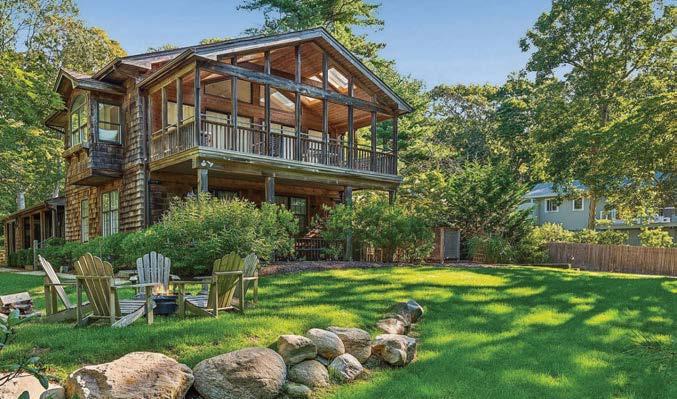
Barnes Coy Architect’s Woodland House
MINDFUL
18 ENERGY FORECAST
Rev. Jolene Star’s summer spiritual insights
20 VOCAL ADVOCATE
Next-gen emotional regulation with Thea, a voice-led app that guides users through their feelings, with breath and sound.
HEALTH
22 ASK THE DR. Mino co-founders share their perspectives on what’s proven, promising and still unknown about peptide therapy.
26 NATURAL PATH
Sylvie Beljanski carries forward her father Dr Mirko Beljanski’s research on environmental toxins, cancer prevention and integrative wellness.
28 IT’S NOT JUST LYME ANYMORE
Pediatric infectious diseases expert Dr. Andrew Handel on what East End residents need to know now about alphagal syndrome, emerging pathogens and staying safe
32 HEART OF SUMMER
Practical guidance for protecting heart health this season and year-round
34 BEYOND THE NEEDLE
Targeted support for hydration, immunity and skin health
36 FIGHTING SPIKE PROTEIN
Why some people continue to struggle long after COVID, and the emerging strategies aimed to help them heal.
SPACE
40 DESIGNING LONGEVITY
Chris Coy, founder of Barnes Coy Architects, on the future of indoor-outdoor living
46 SERENE SANCTUARY
The Southampton Arts Center’s gardens bloom with new life.
Natalia Grela
48 PURE PROPERTY
Not-to-be-missed Hamptons real estate
MINDFUL TRAVEL
52 LIGHT OVER THE BAY
Inside Duryea’s Sunset Cottages, a hilltop oasis designed for peace and privacy
54 TOP RESORTS AND RETREATS
Purist ’s guide to the best getaways for health and well-being—and spectacular nature immersions—across the globe
WEEKEND
60 FASHIONABLE RESIDENCY
Chanel brings its signature chic to East Hampton with an elegant new boutique.
62 PURE PICKS
Dianne Vavra, founder of vintage boutique Vavra New York, unveils her weekendready essentials.
64 EDITOR’S PICKS
Cristina Cuomo shares her favorites for a season of inner and outer glow.
66 PURE RADIANCE
The newest clean beauty pop-ups and nontoxic skin care sanctuaries elevate the East End wellness scene this summer.
67 COLOR MY WORLD
Nicole Gache celebrates a quarter-century of beautifying clients at Valery Joseph Salons In New York and the Hamptons.
VIBRANT
68 SUMMER HEALTH AND BEAUTY PRESCRIPTION
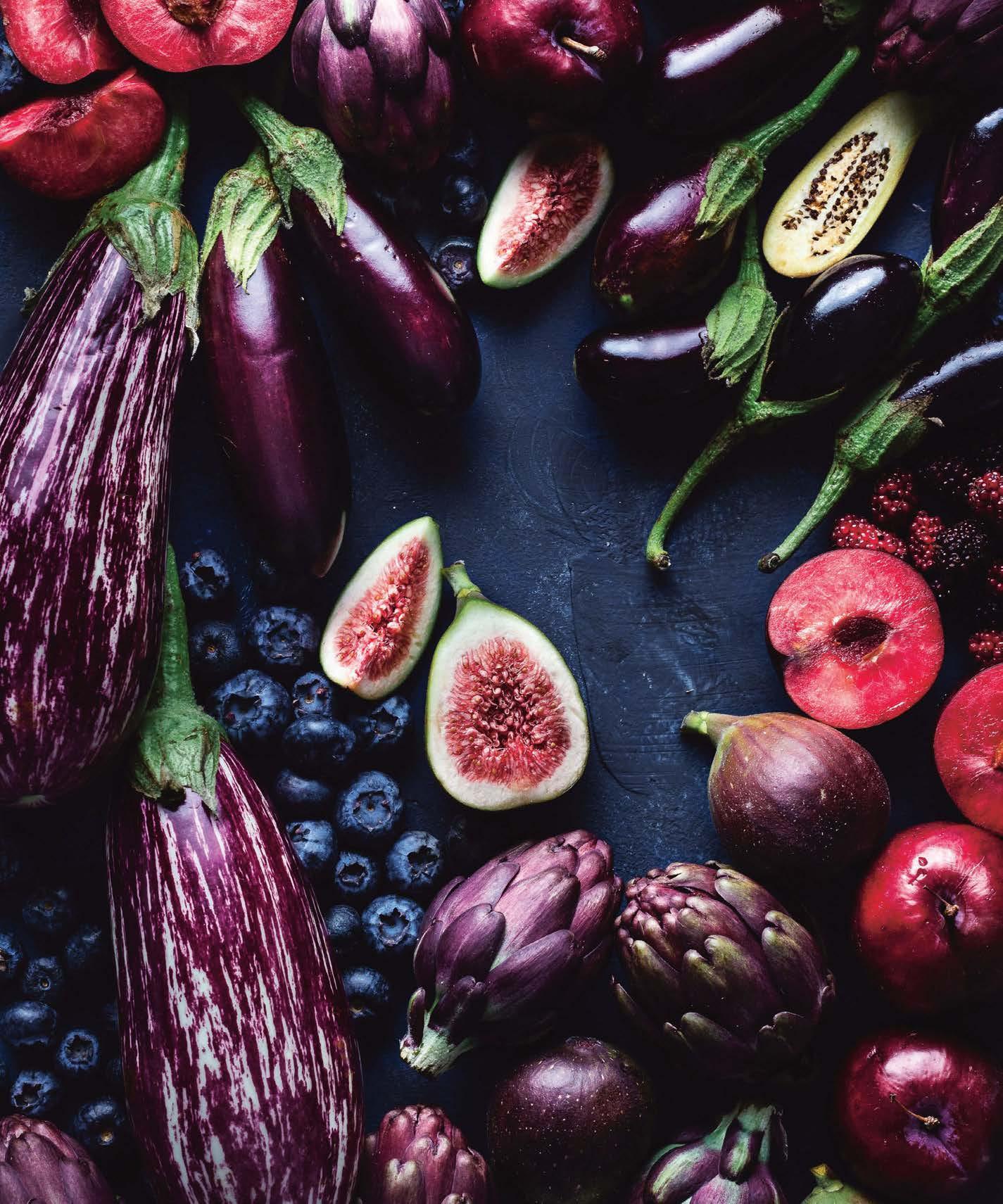
Dr. Stacie Stephenson on how best to take advantage of the nourishing, revitalizing and healing powers of fresh summer produce
FOOD IS MEDICINE
72 THE SUMMER TABLE
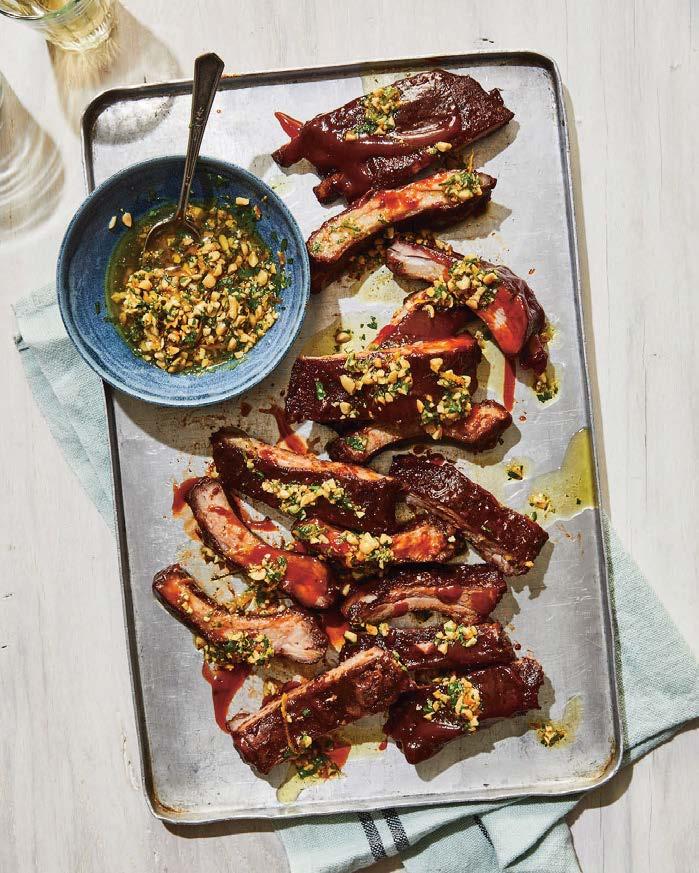
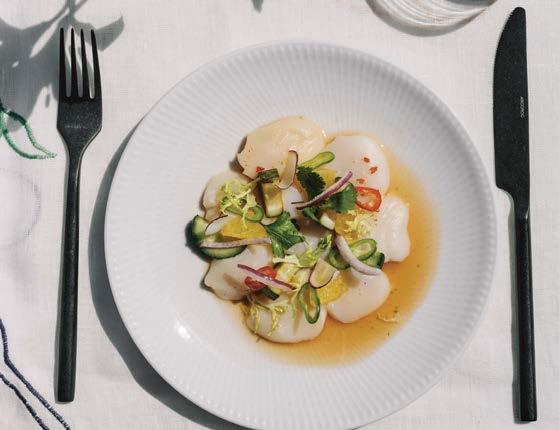
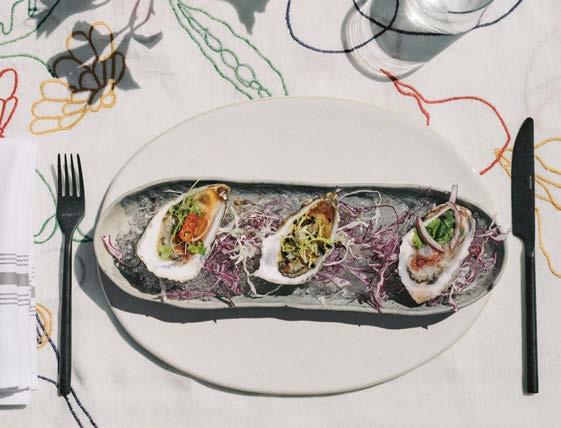
Peter Som shares three recipes inspired by the zesty flavors of his childhood, reimagined for an Asian-inspired backyard barbecue feast.
76 A SLICE OF ALSACE
Pierre Weber brings the French traditions, flavors and festivities of Bastille Day to his namesake restaurant in Bridgehampton.
77 FROM BALI WITH LOVE
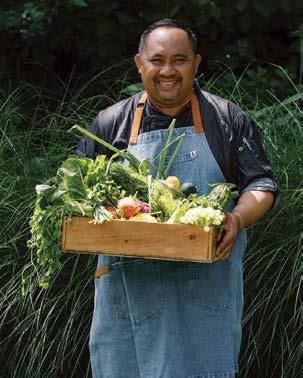
A delicious blend of Indonesian spices and the East End’s freshest seasonal ingredients awaits at Nourish.
PLAY
94 AT A GLANCE
Your guide to the most anticipated summer happenings throughout the Hamptons
96 NUMEROLOGY
A by-the-numbers look at Madonna, as the Queen of Pop prepares to co-headline the FIFA World Cup 2026 Final Halftime Show
Snorkel at Cuixmala, Mexico
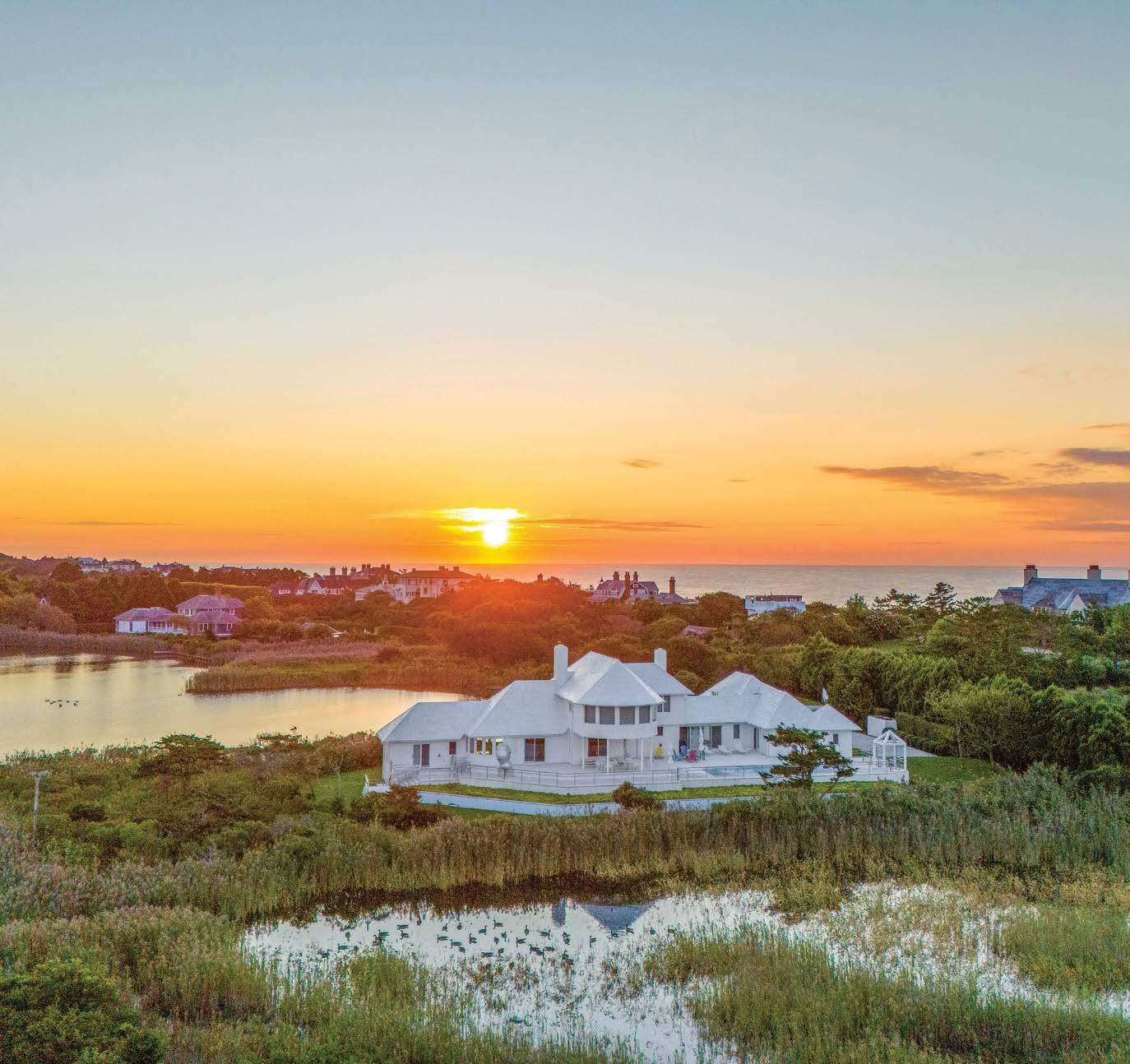
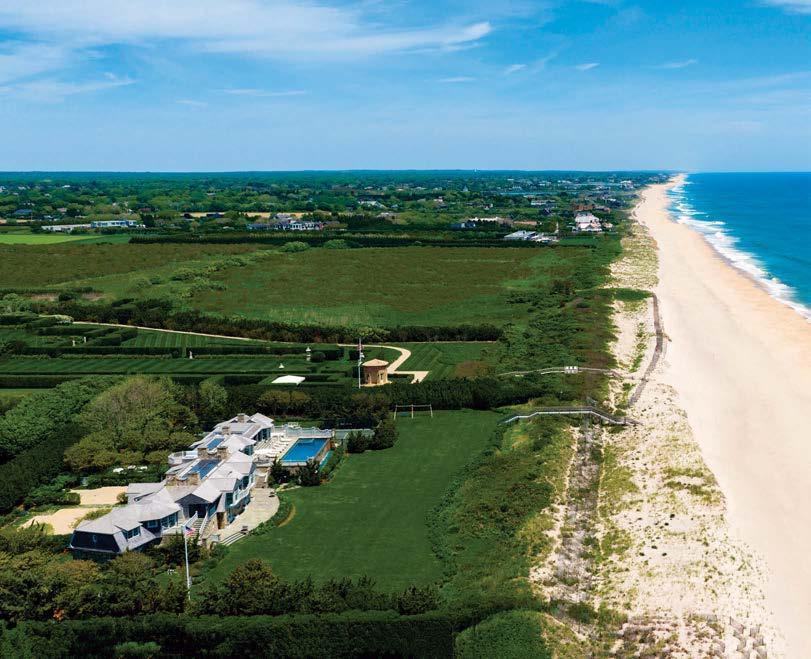
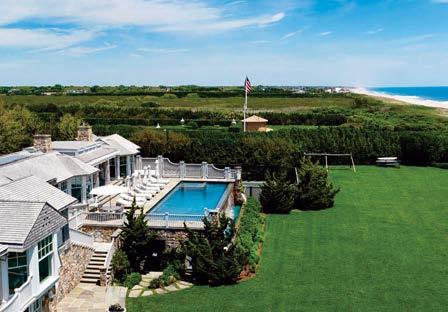
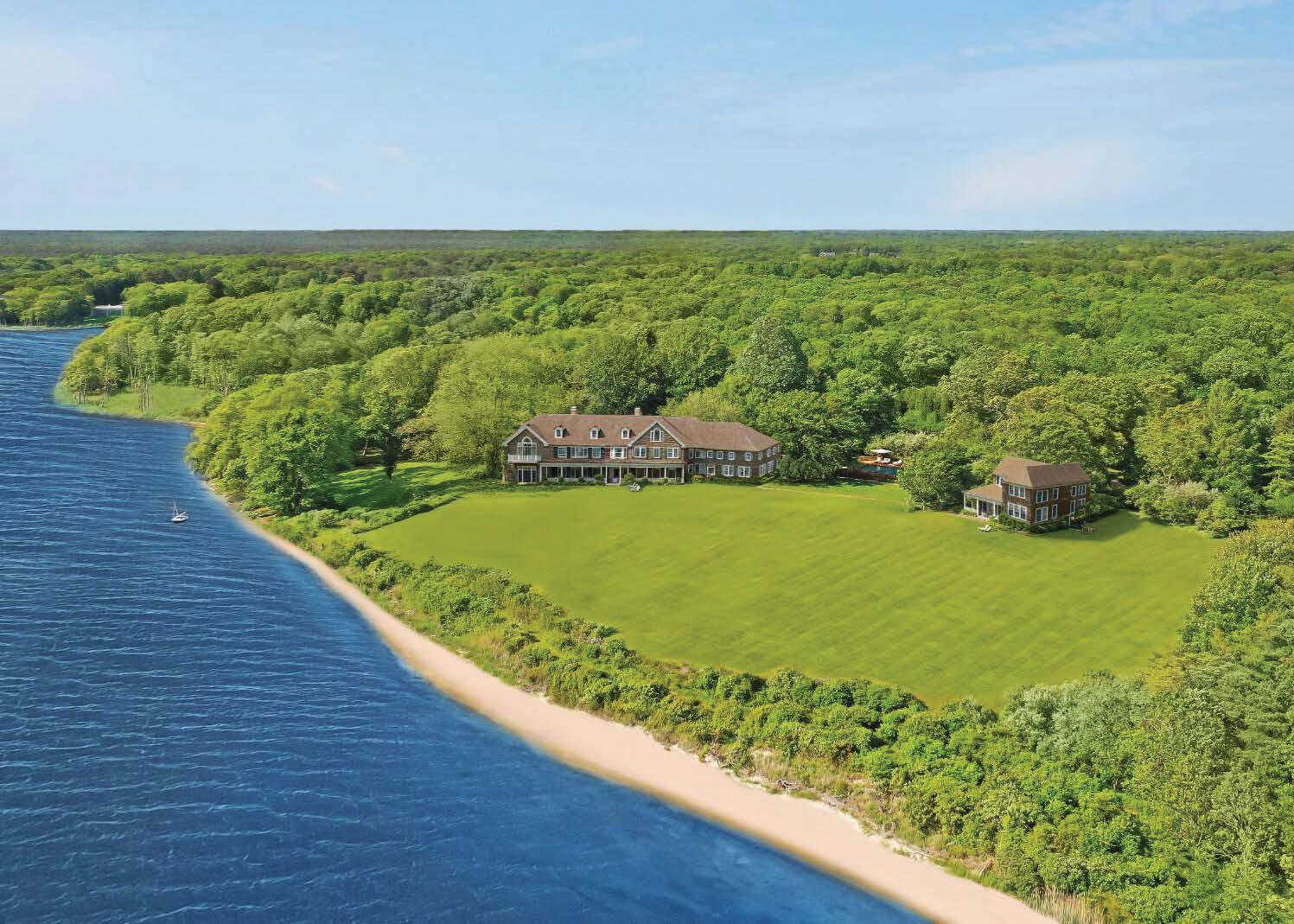
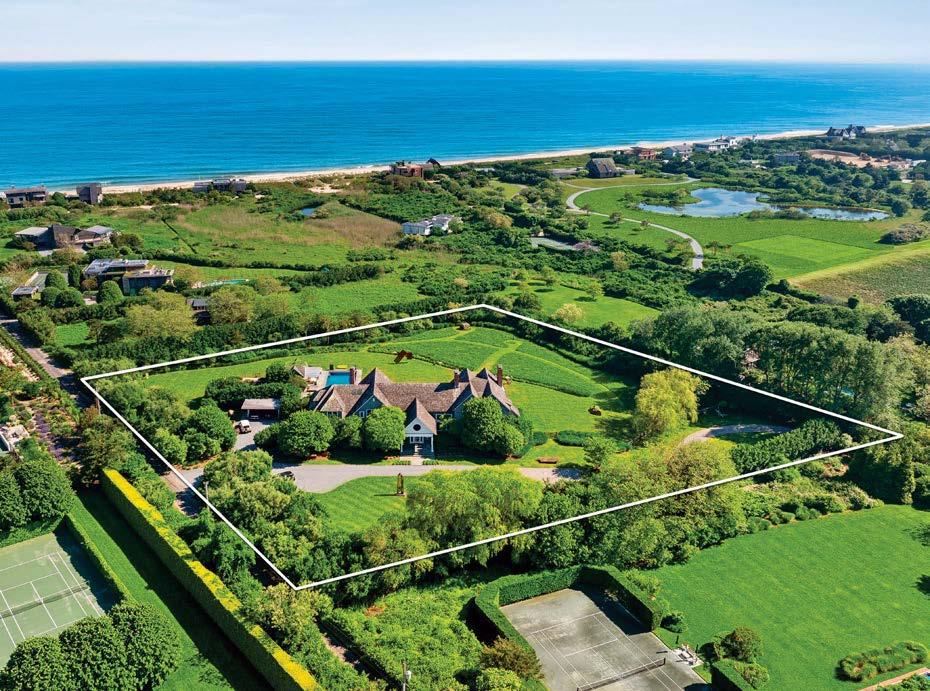
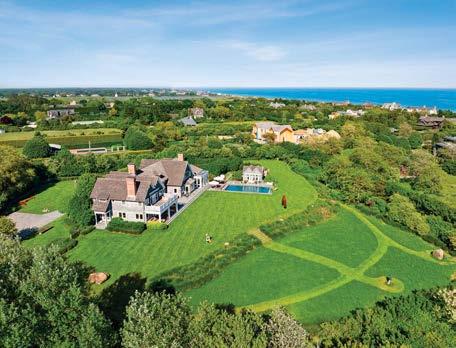
ntroducing 39 Fairfield Pond Lane, Sagaponack. An unrivaled 4 acre +/private ocean retreat, with 363 linear feet of ocean frontage, offering a once-in-a-generation opportunity to acquire a pedigree Sagaponack turnkey residence. Fairfield Pond Lane is often noted as the premier street in the Hamptons, a dead-end lane leading to the ocean, and 39 Fairfield Pond Lane is the premium lot on the street, based on its acreage, ocean frontage and location at the end of the lane abutting a 64 acre private residence, offering unparalleled privacy, natural beauty and security.
Terry Cohen, Listing Agent
EDITORIAL
Founder + Editor Cristina Cuomo
E xecutive Editor Ray Rogers
Feat ures Editor Jim Servin
As sociate Editor + Photo Editor Jenna Lebovits
Ed itorial + Marketing As sistant Lauren Willett
Se nior Wellness + Beauty Editor Amely Greeven
Bea uty + Fitness Editor Beth Landman
We llness Editor Fernanda Niven
Contributing Health Editors Dr. Jeffrey Morrison, The Morrison Center; Tapp Francke Ingolia, MS, CNS, Hamptons BioMed
Copy Editor Michèle Filon
Res earch Editor Jill Malter
Contributing Food Editor Peter Som
Spec ial Project Editors Jenny Landey, TR Pescod
Ed itorial Intern Jordan Posner
Co ntributing Writers Lauren Aiyana, Lakeisha Allen, Isaac Boots, Heidi Brod, Donna Bulseco
Camille Coy, Michaela Kennedy Cuomo, Dr. Gerry Curatola, Donna D’Cruz
Simon Doonan, Dimitri Ehrlich, Melissa Errico, Pamela Fiori, Marisa Fox, Steve Garbarino
Vivien Goldman, Linda Hayes, Dr. Terrie Hope, Nancy Kane, Dr. Frank Lipman
Dr. Lea Lis, Ali Margo, Kevin Menard, Roxanna Namavar, David Nichtern, Dr. Eunice Park, Dr. David Perlmutter, Annelise Peterson, Kelly Posner Gerstenhaber
Michele Promaulayko, Dr. Christina Rahm, Lisa Roberts, Erica Schwartzberg
Lavina Shamdasani, Biet Simkin, Jolene Star, Dr. Stacie J. Stephenson, Julia Szabo
Abby Tegnelia, Shivani Vora, Rebecca Wallwork, Erin Walsh, Tess Weaver, Regina Weinreich, Constance C.R. White, Sarah Wragge
DESIGN
Contributing Design Director Ben Margherita
Contributing Art Director Mikio Sakai
Contributing Designer Seton Rossini
Web M anagers Tarin Keith, Aubrée Mercure
Contributing Photographers Melanie Acevedo, David Bellemere, Justin Bettman, Cass Bird, Brian Bowen Smith
Bob and Dawn Davis, Gregg Delman, Victor Demarchelier, Mikey DeTemple
Sophie Elgor t, Francine Fleischer, Marili Forestieri, Diana Frank, Morgan Maassen
Roberto Matteo Marchese, Mary Ellen Matthews, Ryan Moore, Nino Muñoz
John Russo, Collier Schhorr, Claiborne Swanson Frank, Simon Upton, Cathrine White
ADVERTISING
Publisher Helen Cleland, helen@thePURISTonline.com
Ch ief Revenue Of ficer Andrea Greeven Douzet, andrea@thePURISTonline.com
He ad of Partnerships Nicole Levy, nicole@thePURISTonline.com
Lu xury Art And Travel Partnerships Lisa Rosenberg
As pen Publisher Alexandra Halperin
As pen Media Consultant Cheryl Foerster
MARKETING
Dir ector of Marketing Ilene Frankel
Aud ience Development Manager Celeste Hortet
Events Director Carolyn Heft-Levinbook
Events Manager Jen Brown
Event Photographer Kristin Gray
Ma rketing Intern Thea Sherman
OPERATIONS
Chief Financial Of ficer Caryn Whitman
Production Direction Digital Workflow Solutions
Purist is distributed in New York City, the Hamptons, Aspen, Miami, Palm Beach, Los Angeles, and now in Chicago and Scottsdale.
For advertising inquiries, please contact sales@thePURISTonline.com
For editorial inquiries, please contact wellness@thePURISTonline.com
For production inquiries, please contact production@thePURISTonline.com
Follow us on Instagram @thePurist and Facebook.com/puristonline www.thePURISTonline.com
Genny Dimitrakopoulou
ASPEN
M I N DF U L
ENERGY FORECAST
For the love of summer, don’t ignore the magic. BY REV. JOLENE STAR
Ready or not, here it comes! The summer of 2026 arrives with a momentum that can’t be ignored. The energy is on fire, and paving the way for something never seen before. This season feels alive, accelerated and undeniably transformative. Many will feel as though they’re standing between two worlds: one foot in the life they’ve known and one foot stepping boldly toward an entirely new timeline.
There’s a growing sense that something profound is shifting beneath the surface of the very ground we’ve invested our entire lives building, both personally and collectively. You may feel it in your body first: a heightened intuition, vivid dreams, emotional waves, bursts of creative inspiration, and then it moves into your auric field—an increasing sensitivity to people, places and the environments around you. Stay alert and aware; move with intention and care.
The frequency of awakening involves total embodiment, and it’s burning and yearning to be born. You are free to raise your vibration and live now like your life depends on it. Heart and head open, and in union. The energy is palpable, bright and right on time. Awe will guide us, charting new waters as soul stories and missions emerge that will defy rational logic and reason. Consciousness is rising like a tidal wave, and yet it hasn’t hit the floor, so keep riding; we have a bit further to go
There will also be a strong call toward authenticity, innovation, nervous system healing and heart-centered living. People are becoming more aware that true wellness is multidimensional, a blend of emotional, spiritual, energetic and physical, all at once. Not one is more important than another; all are necessary for the whole. Practices involving sound, vibration, color, water, movement, nature, and intentional rest and silence will feel especially restorative as the collective searches for deeper forms of balance and, most importantly, meaning.
At the same time, this season favors bold self-expression and courageous expansion. Many may suddenly feel inspired to create, collaborate or finally share gifts they have kept hidden away for years. This energy supports visibility, innovation, and trusting what feels current and true. What matters now is not perfection, but resonance. People are responding less to polished appearances and
more to genuine whole-heart frequency. Authenticity has become its own language, a signature that leaves a lasting impression in the busiest of rooms.
There is also an undeniable feeling that humanity is evolving faster than the mind can fully comprehend. Old systems, routines and identities may begin to feel too small for the soul that is emerging. Yet this is not about becoming someone else, but rather becoming more of who you truly are at the core. And perhaps the most fascinating part of all is this: Who we are becoming has never existed before. The version of yourself now emerging is not someone you have met yet either, so what does that look like?
Filled with both excitement and uncertainty, moments may feel exhilarating, while others may feel emotionally intense or strangely unfamiliar. Your nervous system may need extra care as the pace of life continues to quicken. Grounding becomes your sacred practice.
There is also a beautiful return to meaningful connection. People are craving experiences that feel real. Make time for shared meals, honest conversations, healing gatherings, music under the stars, hands in the soil, feet in the ocean and moments where the heart can finally exhale. The soul no longer wants performance; it wants presence, truth and roots.
New, yet nostalgic—we’re returning to connection. Eyes locked in, bodies of stars pulling people toward us, intertwined with our collective inspiration and dreaming dreams beyond the words and worlds of what has ever been dreamt before. The choices we make, the boundaries we honor and the visions we finally allow ourselves to pursue, will prove that trusting yourself and time is the greatest gift of all. Consider your inner compass and north star navigation activated. Just say yes!
The future is not arriving someday. It is here, introducing itself now. Do you see it?
Follow the frequency, not the fear and for the love of the cosmos…don’t ignore the magic! The summer of 2026 is coming to you live in surround sound!
Love is the message. theenchantedheart.com, @jolenestar_ or text 551.404.8022
Forget Feeling Older and Tired.
Climb Mount Everest.
Bungee Jump Off a Bridge.
Join the Rodeo.
Race Your Mid-Life Crisis Car.
Hike the Appalacian Trail.
Learn to Surf.
Beat your Boss at Pickleball.
You know. Live. Only More.
Cellitas™ works by increasing autophagy, your body’s natural cellular recycling process that boosts energy levels, and allows for faster cell repair and renewal.
Autophagy removes damaged cellular components and recycles them into building blocks that can be used for fuel or cell duplication, maintaining cellular integrity and function throughout life.
Live. Only More. | Discover more at Cellitas.com
VOCAL ADVOCATE
Rachelle Barrack, founder of Thea—a voice-led app that uses sound to regulate the nervous system—shares insights on the science of emotion, the voice as data, and why two minutes of the right music can change the rest of your day.
PURIST: The name Thea traces back to an ancient, dramatic origin story. What drew you to it?
RACHELLE BARRACK: It comes from Theia, a planet-sized body that is thought to have collided with early Earth around 4.5 billion years ago. The debris from that collision became our moon. I don’t think many of us have heard the moon’s origin told that way. The moon has symbolized our emotional lives from ancient traditions until today; the name felt aligned for something built to help people uncover and explore their emotions. Theia was also the mythological Greek Titan, who was the goddess of sight and clarity. That connection between science and soul is the north star of what we’re building, using technology to bring people closer to themselves.
What personal experience served as the catalyst for creating a voice-led regulation tool?
Honestly, it wasn’t burnout. It was quieter than that, and harder to name. When I was living in New York, working long hours without the time or money to really commit to therapy, I had one thing that reliably cleared my head: I’d put on my iPod and walk. My mind would settle with each step. It took me years to understand that those walks were the beginning of how I used music to regulate. I had been reaching, instinctively, for something in the moment that moved with me exactly when I needed it. That practice stayed with me, and the instinct is what became Thea.
Thea listens to the emotion beneath the voice. How does it hear what we can’t always hear in ourselves? Think about calling your mom, or a friend, and they ask how you are. You say, “Fine,” and before you’ve even finished the word, they say, “What’s wrong?” We’re attuned to the emotion in other people’s voices, and rarely as good at hearing our own. But voice and emotion are deeply connected. Emotion changes the voice in ways we can’t fully control, and the systems that produce the voice and the ones that regulate the nervous system are closely linked, the vagus nerve among them. Your voice carries something about your state often before your mind has caught up. Thea listens to those signals and reflects them back to you.
Sometimes all the body needs is a reminder to pause and take a deep breath. A few minutes can reset the day.
What has the research shown you about how quickly the right sound can change how someone feels?
There is so much happening in the functional sound and music space right now, and it still feels like the tip of the iceberg. Music reaches the emotional centers of the brain before the thinking part catches up, which is why a song can shift how you feel in your body almost immediately. Thea uses that. When you check in, we ask whether you want to sit with what you’re feeling or shift it, and the music is chosen by function, tempo and rhythm, created by artists with intention. It’s a powerful tool to carry in your back pocket.
How does Thea’s microsession approach allow someone to achieve emotional alignment during a chaotic workday?
Everyone is living full lives, and I think in the last season of wellness, the one that optimized every metric, every biomarker, a 15-step morning routine, left a lot of people feeling like they were failing at the practices that were supposed to help them. Thea doesn’t give you endless playlists or features. In a day already full of decisions, more choice doesn’t make you well. There’s one path: a few minutes to hear yourself clearly. You can do it walking, driving, with your coffee in the morning. I do it with mine. It’s meant to be a practice you reach for in real life, not one you have to clear your day to make room for.
What do you hope someone feels the first time Thea truly works for them?
I hope it feels like releasing the breath you didn’t realize you were holding. The moment when you stop bracing against the day before it begins. A lot of us know what the opposite looks like: You start the morning rushed, you spill your coffee, you snap at someone, the day feels like it’s happening to you. The first time Thea works for someone, there’s a quiet realization that those mornings don’t have to be the default anymore, a knowing that no matter what comes, you’lll always be able to find your way back. Thea is now available on the App Store. resetwiththea.com
Jan Tinneberg
H E A LT H
ASK THE DR.
The co-founders of Mino, a physician-led longevity platform, bring clinical rigor to the trending world of peptide therapy.
PURIST: Peptides have entered the mainstream wellness culture almost overnight. Why are they being called the next frontier of preventive medicine?
DR. BRANDON HOWARD, co-founder and chief medical officer of Mino, board-certified internal medicine specialist practicing at Holy Name Medical Center and Hackensack University Medical Center in New Jersey: Peptides are short chains of amino acids. Your body already uses thousands of them as signaling molecules, telling cells when to repair, rest or rebuild. We’re not introducing anything foreign; we’re amplifying biology that’s already running. What makes them feel like a frontier is precision. Traditional medicine waits for disease to show up. A well-designed peptide protocol lets us nudge specific systems—metabolic, regenerative, immune—earlier, while there’s still margin to influence the trajectory. That’s the shift: from reacting to a diagnosis to anticipating one.
podcasts. What makes that dangerous, and what does a physician-led infrastructure protect against?
BH: The vials being sold on websites and through podcast affiliate links are unregulated. You have no real way to know what’s inside—whether it’s sterile, or whether the label matches what’s in the bottle. We’ve seen contamination, mislabeling and outright counterfeits. At Mino, every compound is sourced from a 503A pharmacy we’ve personally vetted. A licensed physician reviews your labs and history before anything ships. That infrastructure isn’t bureaucracy; it’s the difference between therapy and a chemistry experiment on yourself.
There’s a real gap between marketing hype and scientific proof.
Health-conscious consumers are buying peptides directly from websites and hearing about them on
BH: Some peptides, the GLP-1 receptor agonist class, for example, have FDA approval, multiple Phase 3 trials and years of real-world safety data behind them. Others, like BPC-157 or TB-500, have compelling preclinical work and a lot of athlete enthusiasm, but the large human
Shifaaz Shamoon
Dr Howard Dr. Lewis
“Traditional medicine waits for disease to show up. A well-designed peptide protocol lets us nudge specific systems—metabolic, regenerative, immune— earlier, while there’s still margin to influence the trajectory.”
Peptides, which naturally occur in the body, signal cells to repair, rest or rebuild.
trials simply don’t exist yet. At Mino, every compound is graded by evidence tier, so patients understand whether they’re using a well-studied therapeutic or a more exploratory tool.
Longevity medicine is about optimizing health span, not just treating disease. How do peptide protocols help shift patient care from reactive to proactive?
BH: If fasting insulin is creeping up, if recovery from training is slipping, if sleep architecture is fragmenting, those are signals years before a diagnosis. Compounds like Mino’s GLP3-RT for metabolic resilience, paired with recovery-focused peptides for tissue repair, let us intervene at the slope rather than the cliff. Combined with labs, sleep, training and nutrition, the goal is more good years, not just more years.
People spend heavily on topical skin care, but peptides are increasingly being used systemically. How do internal protocols change the way we treat skin quality and aging at the cellular level?
DR. AMY B. LEWIS, co-founder, Mino, New York City boardcertified dermatologist: Topical skin care still plays an important role in maintaining hydration, barrier function, even tone/pigmentation, along with protection from UV rays and other environmental exposures. Systemic peptide protocols shift the focus from surface-level correction to cellular signaling. Skin aging is not solely a superficial cosmetic issue. Changes in inflammation, mitochondrial efficiency, collagen synthesis, vascular health, hormonal
signaling and tissue repair also contribute to this process. We’re moving toward a more integrative model, where skin quality reflects internal physiology, along with external skin care routines.
Many people treat peptides like advanced vitamins or biohacking tools they can self-manage. Why is physician oversight so critical for dosing, sequencing and long-term safety?
AL: One of the biggest misconceptions is that peptides are inherently low-risk simply because many are “natural” molecules. However, these compounds can influence endocrine pathways, inflammation, insulin signaling, immune activity, tissue growth and recovery processes. Dosing can be difficult to manage while minimizing side effects. A protocol that may be appropriate for one patient could be completely inappropriate for another, depending on metabolic health, cancer history, autoimmune disease, medications, baseline inflammation, or short- and long-term goals. Physicianguided treatment allows for proper monitoring, including blood work, dose adjustments and integration into a broader health strategy rather than isolated experimentation. This is why Mino has such a unique and exemplary platform. It allows not only for monitoring, but education to the patients and a source to ask questions and control any potential side effects. It also provides for the evolution of the peptide therapy to change with the various needs of the patient. mino.inc
NATURAL PATH
Overseeing The Beljanski Foundation, Sylvie Beljanski continues the revolutionary work of her pioneering scientist father, Dr. Mirko Beljanski, advancing research on plantderived compounds and integrative approaches to cancer care. BY JIM SERVIN
PURIST: The American Cancer Society projects that 1 in 3 people in the United States will get cancer in their lifetime, up from 1 in 10 in 1970. Given what you’ve learned from your father, the late biologist Dr Mirko Beljanski, what are the environmental dangers we currently face that increase the risk of cancer?
SYLVIE BELJANSKI: We are exposed daily to a growing toxic burden: pesticides, endocrine disrupters, plastics, air pollution, heavy metals, ultra-processed foods, chronic inflammation and chronic stress. Many of these compounds did not exist—or existed at far lower levels—a few generations ago. What concerns me most is not only the quantity of toxins, but the cumulative effect of lifelong exposure. We now live in an environment where the body is constantly under assault, while simultaneously becoming more depleted nutritionally, emotionally and energetically.
My father, Dr. Mirko Beljanski, believed that protecting health begins with reducing toxic exposure while strengthening the body’s natural capacity for resilience, repair and balance. That philosophy is at the heart of everything we do today, through The Beljanski Foundation and Maison Beljanski.
Based on Dr Beljanski’s research, which you’re continuing after his death, at what stage during the cancer journey is it best to consider alternative remedies?
The Beljanski approach has always been integrative, not oppositional. The goal is not to reject conventional medicine, but to support the body intelligently and holistically. Many patients explore natural approaches after exhausting conventional options, but ideally, integrative support should begin much earlier.
This summer, The Beljanski Foundation hosts Hamptons Sweat Fest, a fitness and wellness fundraiser in the Hamptons. How will this event further the mission of The Beljanski Foundation?
The Hamptons Sweat Fest & Fundraiser brings together movement, recovery, education, connection and purpose. It is dedicated to supporting ongoing cancer stem cell research funded by The Beljanski Foundation. Cancer stem cells are now believed to play a major role in recurrence, metastasis and treatment resistance, making them one
of the most important frontiers in modern oncology research. Every ticket purchased helps advance this mission. We want people to leave inspired—to take better care of themselves, and to actively support the future of cancer research and prevention.
In your impactful book, Winning the War on Cancer: The Epic Journey Towards a Natural Cure, you talk about how your father was strongly opposed in his home country, France. Has getting the word out about holistic cancer treatments gotten easier?
When my father first spoke about environmental toxins, DNA destabilization and selective natural compounds, many of these ideas were dismissed outright. Today, conversations about toxicity, microbiome health, integrative oncology and prevention have become far more mainstream. It is important to approach these conversations responsibly.
The Beljanski Foundation funds university-based research rather than anecdotal claims.
Tell us about the offerings at Maison Beljanski, your store on Manhattan’s Upper East Side.
We focus on clean, science-inspired wellness solutions designed to support vitality, resilience, detoxification, immune balance and healthy aging. Our offerings include carefully formulated botanical supplements, teas, skin care, and educational resources. Beljanskin, our skin care line, was developed with highly sensitive individuals in mind, including people navigating difficult health journeys who want gentler, cleaner products.
What are your current favorite wellness practices?
I try to minimize toxic exposure as much as possible, prioritize clean nutrition, stay physically active, protect my sleep, spend time outdoors and maintain emotional balance despite a very demanding schedule. I also believe strongly in preventive support rather than waiting for a health crisis to occur. Movement is also essential—not only physically, but mentally. Wellness is not only about longevity; it is about energy, clarity, resilience and joy.
The Beljanski Foundation Sweat Fest & Fundraiser, August 7-9, event HQ at Rejuvenation Health, 56 The Circle, East Hampton; beljanski.org/hamptons-sweatfest; beljanski.org
Bruna Branco, inset courtesy of The Beljanski Foundation
Sylvie Beljanski
Two Emergency Departments. One Standard
of Excellence.
When every second counts, critical care you can count on is nearby.
Stony Brook Southampton Hospital Emergency Department
240 Meeting House Lane, Southampton, NY
• Primary Stroke Center
• Level III Trauma Center
• State-of-the-art Cardiac Catheterization Lab
• Advanced Surgical and Robotic-Assisted Technology
Stony Brook East Hampton Emergency Department
400 Pantigo Place, East Hampton, NY
• The only off-campus, freestanding ED in Suffolk County
Expert emergency care — always close, always ready. Because when you need us most, we’re here.
IT’S NOT JUST LYME
Dr. Andrew Handel, pediatric infectious disease specialist at Stony Brook Children’s Hospital, breaks down the expanding world of tick-borne illness—from alpha-gal syndrome to the Bourbon virus—and explains why Long Island is at the center of it all.
BY CRISTINA CUOMO
PURIST: I’ve read that this is the biggest tick season in the last 10 years. What does that mean for you, as someone treating tick bites and Lyme disease?
DR. ANDREW HANDEL: I am a pediatric infectious disease doctor at Stony Brook, and so I do see children throughout the entire year, but certainly more so in the heavy tick seasons with tick-borne disease concerns and Lyme disease. So, I know the entomologists are reporting that in the field they’re seeing more ticks than they have in the past. The CDC also has a tick bite data tracker, and it’s showing that this year more people are presenting to the emergency departments for evaluation of tick bites than they have in past years. That said, every year on Long Island is a bad year for ticks. So, what that means for us is again, seeing more patients in our clinics, in our emergency departments, with concerns again of recent tick bites. Of course, following that, we start to see more diagnoses of tick-borne diseases.
I’ve been reading about the Bourbon virus, a rare and potentially lethal illness transmitted by the Lone Star tick. Are you seeing that on Long Island?
Yes. Bourbon virus is a tick-borne pathogen. It’s a virus that gets transmitted by the Lone Star tick. It’s been previously described in other parts of the country, but we had not yet found cases here on Long Island, though we have suspected that they’re occurring. The case that was recently published in the media involved a patient who was infected with it years ago, but the research sample that had been drawn was just tested for it and found to be positive. So, although it can be lethal, honestly, we don’t understand enough about the virus to know how often that happens. The patient who was infected with it fortunately survived.
How lethal is it?
There have been deaths as a result of it, but it’s not something that is readily testable. There are tests that we can order through the New York State Department of Health where they can do specialized testing to look for it, but unless you go out of your way to do that diagnostic test, it’s not something that’s orderable at most of the commercial laboratories. And so the thought is that these
cases likely are happening and many of them may not be diagnosed—either they’re not getting diagnosed, or they’re not all that severe. But the overarching idea is that we don’t know enough about the virus, which is one of the things that our symposium was focusing on: We need to learn more about these emerging pathogens.
How are you doing that research?
A study that I oversee collects blood samples and clinical information from children who have been recently bitten by a tick. We identify children who’ve been bitten by a tick within the past two weeks, and we collect a blood sample through a device sent directly to their home. Then we monitor their symptoms through electronic surveys over the next month, and then collect another sample a month later. What we’re able to do is to test and look to see if they develop antibodies against one of these emerging pathogens to show that they’ve been infected with it. Again, for many of these infections, they seem to be subclinical, where you don’t necessarily have severe overt symptoms. For our study we’re not looking at Bourbon virus yet, but once we have additional funding, that is part of the plan.
Has funding increased as Lyme disease gets more attention?
It’s a mixed picture. The NIH seems to be decreasing funding, and the Department of Defense has a line item for research in tick-borne diseases, but very few submitted proposals are actually funded. Overall it’s still very difficult to obtain funding from national research funders.
Let’s talk about alpha-gal syndrome. I had it, and I notice more people around me are getting it—then it seems to just disappear after a year or two without a treatment plan. How does it differ from Lyme, and why are we seeing such a spike?
First off, alpha-gal syndrome is an allergy to red meat. It’s always important to make a distinction between having an alpha-gal IGE and alpha-gal antibody and alpha-gal syndrome. So, many people we know have the antibody, but only a subset of them will actually have symptoms as a result of it. Some people are only positive in blood tests but
Annie Spratt
PERFECTION
IS IN THE DETAILS
actually don’t have any relevant symptoms as a result of it. But without question, Suffolk County is seeing a huge boom in the number of patients with alpha-gal syndrome. There’s a study from the CDC a few years ago that described the distribution of alpha-gal syndrome diagnoses across the United States, and 4 percent of the cases in the entire U.S. occurred in Suffolk County alone. So, we know that it is a massive problem here. The Lone Star tick was not all that common on Long Island 20 years ago, but since then it’s become by far the most common tick to get bitten by. They’re very different diseases. Lyme disease is an infection you get that’s transmitted by the tick, whereas alpha-gal syndrome is an allergy that you get not because you have an infection, but because you’re having an allergic reaction to something within the tick saliva that then causes you to also have an allergic reaction to red meat and other mammalian products.
Alpha-gal is a carbohydrate, right? And this is not Lyme disease.
Exactly, yes. But we don’t know exactly what it is in the tick saliva that’s causing it. We’re putting in a proposal through Stony Brook to study that. Lyme disease is an infection caused by the bacteria Borrelia burgdorferi, whereas alpha-gal syndrome is not an infection. It’s an allergic reaction to the tick saliva.
And it can fade over time?
It does, absolutely. Over time—it varies from person to person—but generally on the order of years people stop having allergic symptoms from red meat. For some people, it doesn’t fade. It really is quite variable, but for somebody who’s had it in the past, once they’re bitten by another Lone Star tick, the allergy can rev right back up.
What is Stony Brook’s treatment approach for Lyme disease?
We follow the IDSA—the Infectious Diseases Society of America—guidelines. It depends on the patient’s specific symptoms and the specifics of their case. For prevention, we talk to people about avoiding tick bites altogether—different insect repellents, the importance of doing tick checks, all those preventive measures. Then for people who meet certain criteria we recommend a single dose of doxycycline, which has shown to be about 90 percent effective at preventing Lyme disease. Then after that, it depends on the symptoms the patient is experiencing—generally patients will be treated with either a course of doxycycline or amoxicillin.
For chronic Lyme, do you employ a more holistic or integrative approach?
The term we tend to use is post-treatment Lyme disease syndrome, because the studies have demonstrated that
prolonged antibiotic courses are not effective at reducing those symptoms. For patients in those circumstances, we focus on symptom management. We’ve learned a lot about this from long COVID, which seems analogous to posttreatment Lyme disease syndrome—dealing with specific symptoms and having patients seen by specialists who may be experts in those symptoms is the most effective approach.
Where do things stand on a Lyme vaccine? Is it imminent?
There is one making its way through the research process, and it seems to be doing quite well. That’s the PfizerValneva Lyme disease vaccine. At Stony Brook Children’s Hospital, we were a clinical trial site for the pediatric study. Recently some of the preliminary results came out on their Phase 3 trial—the largest trial generally done before going before the FDA. They found the vaccine was about 73 percent effective at reducing Lyme disease. From the preliminary data, there were no unexpected side effects.
When could it be available to the public?
My understanding is the Phase 3 clinical trial is completed; they just haven’t published the actual data yet. They released some findings through a press release, but the peer-reviewed paper has not yet been released. We are curious to see how it really looks once we have the actual scientific paper, and then it goes before the FDA, which reviews all the data submitted by the pharmaceutical company and can make a decision about whether to license it for use within the United States.
Ticks breed and feed on rodents—mice especially. There’s a company called EcoTick developing lure boxes that treat rodents with an anti-tick solution to kill ticks at their source. Is that a promising approach?
I would have to defer that one to the entomology expert. On Fire Island, for example, they had deer posts—boxes with feed lined with rollers coated in tick repellent, so when deer came in to eat, they’d be coated with the repellent. Unfortunately that doesn’t seem to have been all that effective. The bigger point is we absolutely need better approaches to tick control. There’s a whole world of research into this, whether it’s vaccinating mice or other approaches, and we need to study which is most effective. As of now, the jury is still out.
How can readers with chronic Lyme get involved in clinical trials?
We’re looking for ways to get the word out, so we can find more patients, and understand what’s happening. We’re happy to pass that information along. southampton.stonybrookmedicine.edu
Annie Spratt
HEART OF SUMMER
Protecting the body’s hardest-working organ starts with smart seasonal habits. From the esteemed Stony Brook Southampton Hospital’s cardiology department, here are strategies for supporting heart health now and year-round. BY JENNA LEBOVITS
Each summer, a flock of New Yorkers heads east in search of the season’s best: clean, salty air, sandy dunes, delicious farm-fresh produce and a slower pace. The Hamptons, in its high summer glory, is total paradise—a time when everybody is spending more time outdoors, moving their bodies and soaking up the summer sun. But warmer temperatures can also mean more strain on the body’s most vital organ, the heart.
“I think people underestimate how much extra exertion they may be under as they get out, take advantage of the summer and the good weather, and enjoy themselves,” cautions Dr. John Patrick Reilly, FACC, MSCAI, chief of cardiology at Stony Brook Southampton Hospital, which provides the East End community with convenient, local access to expert cardiovascular care, 24/7.
In the summer months, proper hydration becomes even more important for protecting heart health. “If you get dehydrated, your heart has to increase its rate and output to compensate for that loss of volume,” says Reilly. Staying sufficiently hydrated (on average, about 15.5 cups of water daily for men and 11.5 for women) and consuming water-rich fruits and vegetables like cucumbers, watermelon, strawberries and bell peppers, can also help support the body’s innate cooling mechanisms. The cardiologist also advises being mindful of the time of day while exercising, and even recommends avoiding the peak heat hours of noon to 2PM on sweltering days. “Maybe get your exercise in the morning or evening when you’re not battling the heat,” he says.
When it comes to the best heart-healthy diet, there’s no single miracle supplement, but getting your fair share of whole foods and at least five servings of fruits and vegetables each day, in all four seasons, should do the trick. “I frankly think we’re meant to be vegetarian,” Reilly says. “There’s pretty solid evidence for that.” But he also notes the potential benefits of adopting a Mediterranean-style diet that’s rich in high-protein fish like mackerel, sardines, tuna and salmon, in a coastal environment like the Hamptons.
Beyond the usual basics, like making sure you’re eating well and moving enough (and at the right time), controlling key risk factors, including high blood pressure, cholesterol and blood sugar, is critical not just in the summertime, but year-round for long-term heart health. Known as “the silent killer,” high blood pressure usually develops unnoticed. “A lot of people don’t recognize they have it because it doesn’t cause symptoms,” says Reilly.
It’s also no surprise that chronic, unchecked stress levels— an unfortunate truth of modern, fast-paced life—are known to contribute to cardiovascular disease and increase the risk of cardiac events, but it’s not as hopeless as it may sound: “Meditation, focused breathing and yoga can be helpful in reducing hypertension,” he notes. Consistent movement matters, too, whether it’s a daily 20-minute stroll in the park with a friend, or your favorite sculpt class once the weather starts to cool. According to Reilly, it’s never too late to make meaningful shifts. “The important thing,” he says, “is showing up and doing something for your health.” heart.stonybrookmedicine.edu
inset
of Stony Brook Southampton Hospital
Dr John Patrick Reilly
BEYOND THE NEEDLE
Pouch founder Annie Kurnick turns high-end clinical infusions into a clean, minimalist daily hydration ritual. BY
RAY ROGERS
PURIST: How did your personal routine inspire you to rethink the intensive benefits of IV therapy into something that could support people more consistently in everyday life?
ANNIE KURNICK: Pouch came from my own life. I was building a career that demanded everything from me: early mornings, long days, frequent travel and a pace that left no room to slow down. IV therapy was something that I turned to, because it felt like a way to put back what life had been taking out. But the irony was that the moments I needed it most were also the moments I had the least time to sit still for an hour. I wanted something I could throw in my work bag, take to the gym or use between meetings. Something with the same intentionality of IV formulations, but cleaner, more affordable, and built for everyday life.
How did your philosophy influence the minimalist, clean formulation of Pouch, which completely avoids the sugar and artificial sweeteners common in standard functional drinks?
Clean should be the standard for functional drinks. What you put into your body during the day affects how you think, how you work, how you move and how you show up. Pouch was designed to feel light and seamless, more like reaching for water than a traditional sports or energy drink. No sugar, no artificial sweeteners, no unnecessary noise. Just targeted nutrients, clean hydration and a format easy enough to use every day.
How are modern consumers incorporating your targeted formulas into their demanding days, and what does that tell you about what people are really looking for in a daily wellness ritual?
Pouch fits into people’s lives in so many different ways. Athletes and gymgoers use Hydration+ and WellDrip+
around performance, endurance and recovery. Professionals keep it at their desks for an afternoon lift when caffeine feels too aggressive. Travelers pack it for long days.
SkinRevive+ has also sparked a larger conversation around what modern skin care actually looks like. Consumers are realizing a true beauty routine is no longer just what you put on your skin, but also how you support your body from within. People don’t want one generic wellness product. They need targeted nutrition that meets them where they are, with ingredients they can trust and a format that does not interrupt their life.
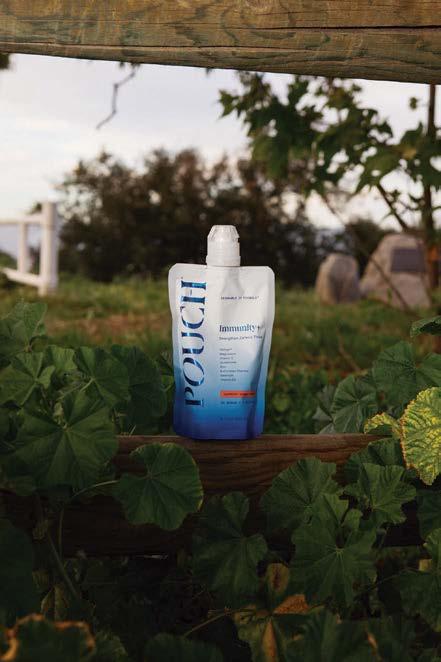
Your formulas introduce premium ingredients rarely seen in the beverage aisle, such as glutathione, hyaluronic acid and highly bioavailable Aquamin marine minerals. How difficult was it from a food-science perspective to make these complex, clinical-grade supplements stable and genuinely enjoyable to sip daily?
Incredibly difficult, and that’s part of what made me so committed to doing it right. The formulas were inspired by real IV therapy blends, so the function came first.
We started with the vitamins, minerals, antioxidants and specialty ingredients we wanted, then figured out how to make them stable, clean and enjoyable to drink.
You’ll be participating in Purist ’s Health Fair this July. In a wellness landscape that has become increasingly community-driven and experiential, what are you most looking forward to sharing firsthand with attendees?
I’m most excited to be with people in person. There’s something special about watching someone taste Pouch, ask questions, and realize that wellness can feel elevated without feeling complicated. I’m excited to bring it to people who may be looking for something that truly fits into their lives. drinkpouch.com
Pouch uses clinically studied ingredients, like glutathione, hyaluronic acid and Aquamin marine minerals.
FIGHTING SPIKE PROTEIN
Six years in, targeted treatments for this post-COVID
BY AMELY GREEVEN
culprit can’t come quickly enough.
Countless people are locked in a second COVID pandemic: a silent one caused by the after-effects of repeat or virulent infections, vaccines, or a combination of all. Unresolved spike protein—one of the protrusions around the SARSCo-V-2 virus that give it the crownlike appearance and that facilitates viral entry into the cells—can create havoc across a wide array of body systems. Whether named Long COVID or post-COVID or post-vaccine conditions, the havoc caused when the body can’t clear spike protein can be utterly debilitating. Persistent fatigue, brain fog, shortness of breath and difficulty exercising, endothelial (blood vessel) and cardiovascular issues, GI issues, sudden-onset or rare autoimmune issues, neurodegenerative issues, cancer and more—about 200 symptoms and conditions have been linked as possible signs of this disease.
One of the primary mechanisms at play is endothelial injury. Think of your capillaries as tiny irrigation channels running oxygen and nutrients to every cell in the body. Spike protein can lodge in them, and that’s when the trouble starts. The spike protein, now widely understood to have been modified by human intervention, appears to activate a unique type of clotting cascade at the capillary level that can reduce oxygen flow to cells, tissues and organs, driving fatigue, hypoxia and cognitive dysfunction. Along with high levels of oxidative stress from chronic inflammation, this contributes to dysfunction of the mitochondria, the source of energy in our bodies, while immune dysregulation (such as mast cell activation syndrome or MCAS), as well as nervous
system issues like POTS, heart palpitations and dizziness, can also run rampant, creating a storm of symptoms and illness.
“This virus does not behave like a normal virus,” said Dr Robin Rose, a gastroenterologist and founder of Terrain Health, who is at the front of the wave of precision postCOVID treatment. She described her treatment approach on the Optimization Academy podcast, explaining how the spike protein magnetizes to healthy cells and turns them senescent—into a kind of zombie cell, still metabolically active but now spewing inflammatory cytokines and toxins instead of doing its job. These compromised, permanently retired cells challenge epigenetics, age people faster and create diseases at much younger ages than before. Living with spike protein accumulating in the body can be a major problem—one that for many people, left to piece together treatments largely on their own, has been acutely lacking in solutions. With so many variables, including personal genetics, preexisting conditions and toxic load, and differing routes of exposure to the spike (COVID-19 or the COVID vaccine), the one thing that’s sure is that one-size-fits-all medicine does not suffice here.
While some find symptom relief on detox programs or enzyme protocols such as nattokinase and bromelain (likely because the enzymes help to break up the fibrous microclots, which resist conventional blood-clot treatment, plus help with inflammation), others do not. The enzymes can’t clear spike protein bound up in tissues, which is where most of it takes up residence. (Some experts are
Alex Shuper
The spike protein activates a clotting cascade that reduces oxygen flow to cells.
also concerned the enzymes might create fragments of spike that could contribute to more clotting factors.) Some neurological symptoms are improved by nicotine, in some people. Ivermectin has helped some to clear spike protein levels, but doesn’t seem to work for all. And strategic fasting plus supplement stacks that include NAC, especially a modified version called Augmented NAC produced in Europe, has helped other people make progress by promoting cellular autophagy, which clears damaged cells and proteins while also decreasing inflammation. (Fasting can also prove too aggressive for some, however, like those struggling with dysautonomia where regular nutrition is critical.)
Yet plenty more people live with persistent and life-altering issues, which are exacerbated by ignorance of spike protein pathology in the mainstream and the fact that one-stopshop diagnostic testing doesn’t exist. The spike protein antibody test, which is the most widely available test, can be a good first clue in detecting if the spike is present, as a factor in initiating certain autoimmune issues and illness or making them more severe. Comprehensive blood work looking at a range of factors is required to get the full picture. Fortunately, evolving strategies that center personalized medicine are being tested and shared, pushing progress
better. However, the editor of Purist, Cristina Cuomo, did two extensive rounds of this complete gut reset protocol only to find her spike protein levels hadn’t budged. Rose suggested the possibility of a reinfection of COVID that went undetected that could account for the flatlining spike protein numbers.
Morrison employs more advanced treatments like intravenous drips and sometimes newer blood-cleansing protocols like EBOO—extracorporeal blood oxygenation and ozonation—where blood is filtered of its toxins, inflammatory proteins and pathogens. These guidelines are carefully tailored so as not to overwhelm bodies that are in distress already. Some practitioners are also using peptide therapy to help to restore inflammatory balance or mitochondrial function. Ongoing maintenance of mitochondrial and immune health through wise lifestyle choices and precision supplements or therapeutics can help to maintain the benefits achieved.
At his clinics, Morrison is seeing promising improvements. And as more specialized testing becomes available— including some precise, research-based tests that Rose offers to anyone seeking an at-home spike protein test at ourwellnessjourney.us: Doctors will be able to detect what exactly is happening for each patient, detecting where the spike protein is causing issues in the body and where it
“Plenty more people live with persistent and life-altering issues, which are exacerbated by ignorance of spike protein pathology in the mainstream and the fact that one-stop-shop diagnostic testing doesn’t exist.”
along. Dr. Jeffrey Morrison, medical director of integrative clinics The Morrison Center and Hamptons BioMed, says that reducing spike protein and repairing the damage that causes symptoms and disease involves a “full-court press” approach, starting with blood work to find patterns unique to each person and then beginning treatment at the level of the gut. He credits Rose for illuminating how the virus hijacks bacteria in the gut microbiome—turning them, in effect, into double agents: Organisms that were once working for your health now producing toxin-like peptides, many of them neurotoxic, while ravaging the gut lining and even generating new spike protein. Clearing these bad players and restoring gut barrier health is the “ground zero” before moving on to systemic detoxification to treat the senescent cells that harbor spike protein. In this systemic phase, a mixture of medications including antibiotics and Vedicinals, advanced plant-based nutraceuticals, and senolytic supplements, or tissue-repairing vitamins designed to clear out those “zombie” cells, can be used for a consistent six-month protocol. In her interview, Rose offered a ray of hope: she said 80 percent of her patients get
came from, then shape treatment to match. The distinctions matter, because research suggests the vaccine spike protein effects are more enduring and harder to clear, due to higher binding affinity to cell receptors.
Yet precision treatments, as important as they are, are still in infancy stages, especially in combination with newonset diseases or issues never experienced before. And nobody can promise they will erase the spike protein, which is shockingly resilient and may be impossible to ever clear. The new normal is that many of us—if not all—are living with aftereffects of exposure. What’s needed is more awareness and conversation, more doctors sharing new strategies, and more basic tools of action. Says naturopath Dr. Linda Lancaster, who helps her patients manage spike proteinderived conditions with a gamut of natural protocols, including homeopathics and cleansing programs, “There isn’t an ‘over’ with COVID-19; we are still dealing with it. It’s wise for everyone to make regular detoxification part of their lifestyle, symptomatic or not, along with living as clean and natural as possible, because there is no making it fully go away.”
SPACE
Paul Domzal
DESIGNING LONGEVITY
Barnes Coy Architects has been shaping Hamptons modernism for 32 years. Now, founder Chris Coy, talking with his daughter, Camille, revisits his past houses to create the future of indoor-outdoor living. BY CAMILLE COY
Barnes Coy Architects has designed over 250 houses, many of them in the Hamptons. My father, Chris Coy, and his childhood friend, the late architect Robert Barnes, founded Barnes Coy Architects 32 years ago, and in many ways, Barnes Coy has helped to form the character of Hamptons modernism. Now, and for almost a decade, Barnes Coy has continued to create ambitious modern architecture with Chris Coy as the sole principal, leading a team of skilled architects. In recent years, in addition to designing new houses in St. Barts, Florida, Southern California and the East End of Long Island, BCA has been asked to revisit their previous houses, both by the original clients and new
owners. As a writer who spent her childhood touring his construction sites, seeing my father revisit these spaces has dominated our ongoing conversations about life and modern architecture, which I’m happy to continue here.
CAMILLE COY: We’ve spoken about how modern architecture looks to the future. What do you mean by that?
CHRIS COY: Modernism is an approach, but the intentions of modern architects shift over time to adapt to how people want to live. I meant that houses designed for the particular conditions of the site with modern building techniques and materials will be here, and be in conversation with new houses as they shape the area, or in conversa-
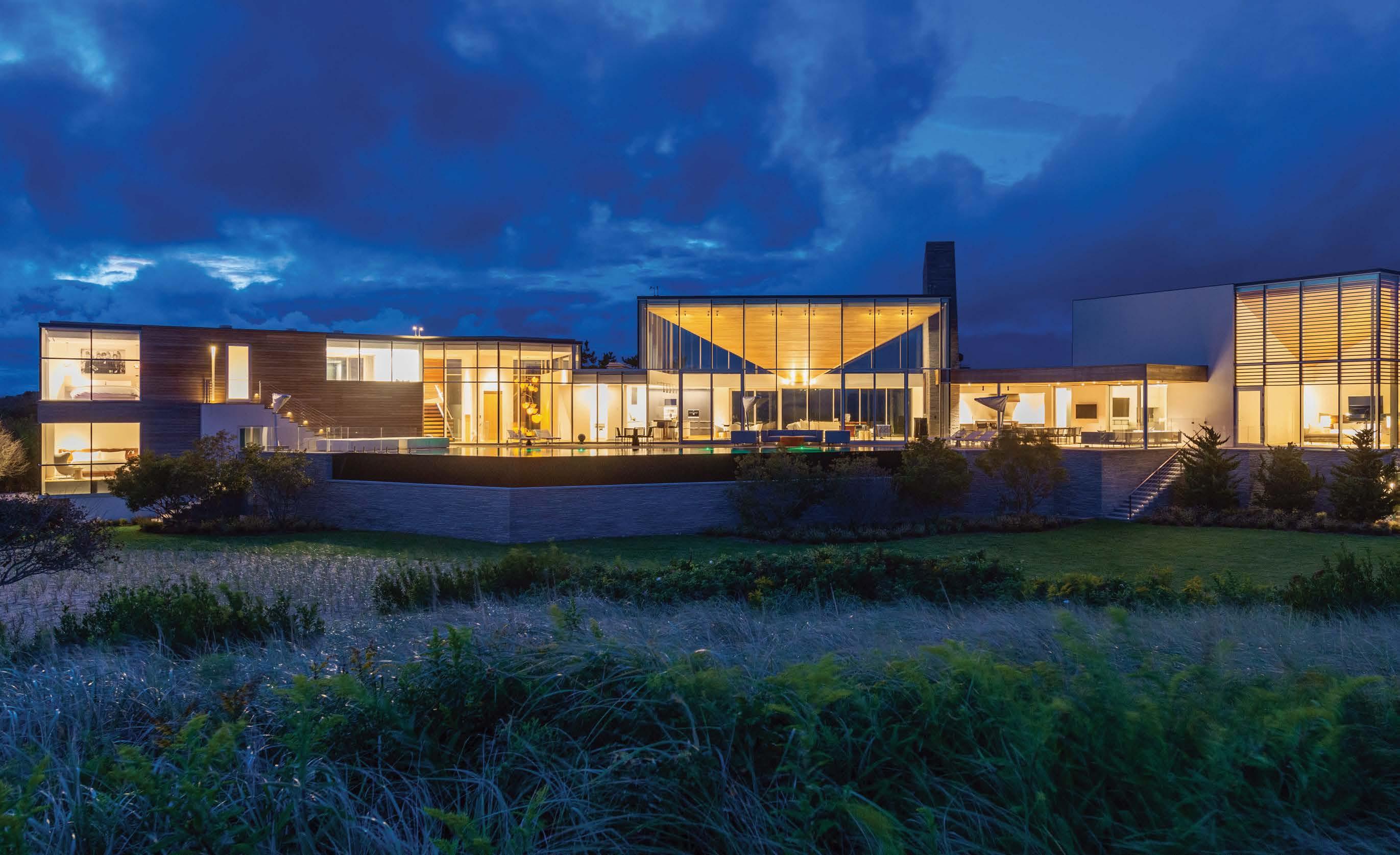
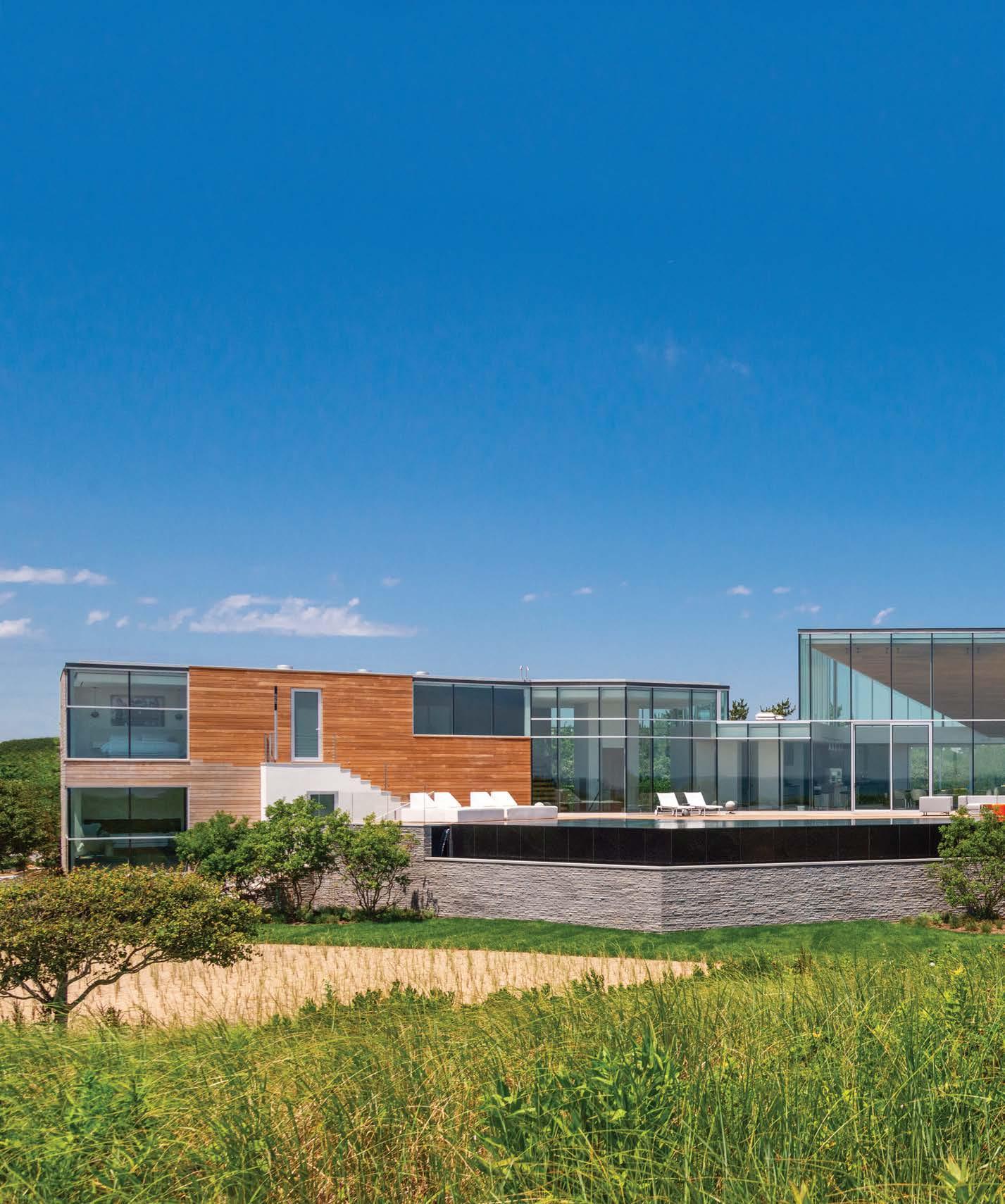
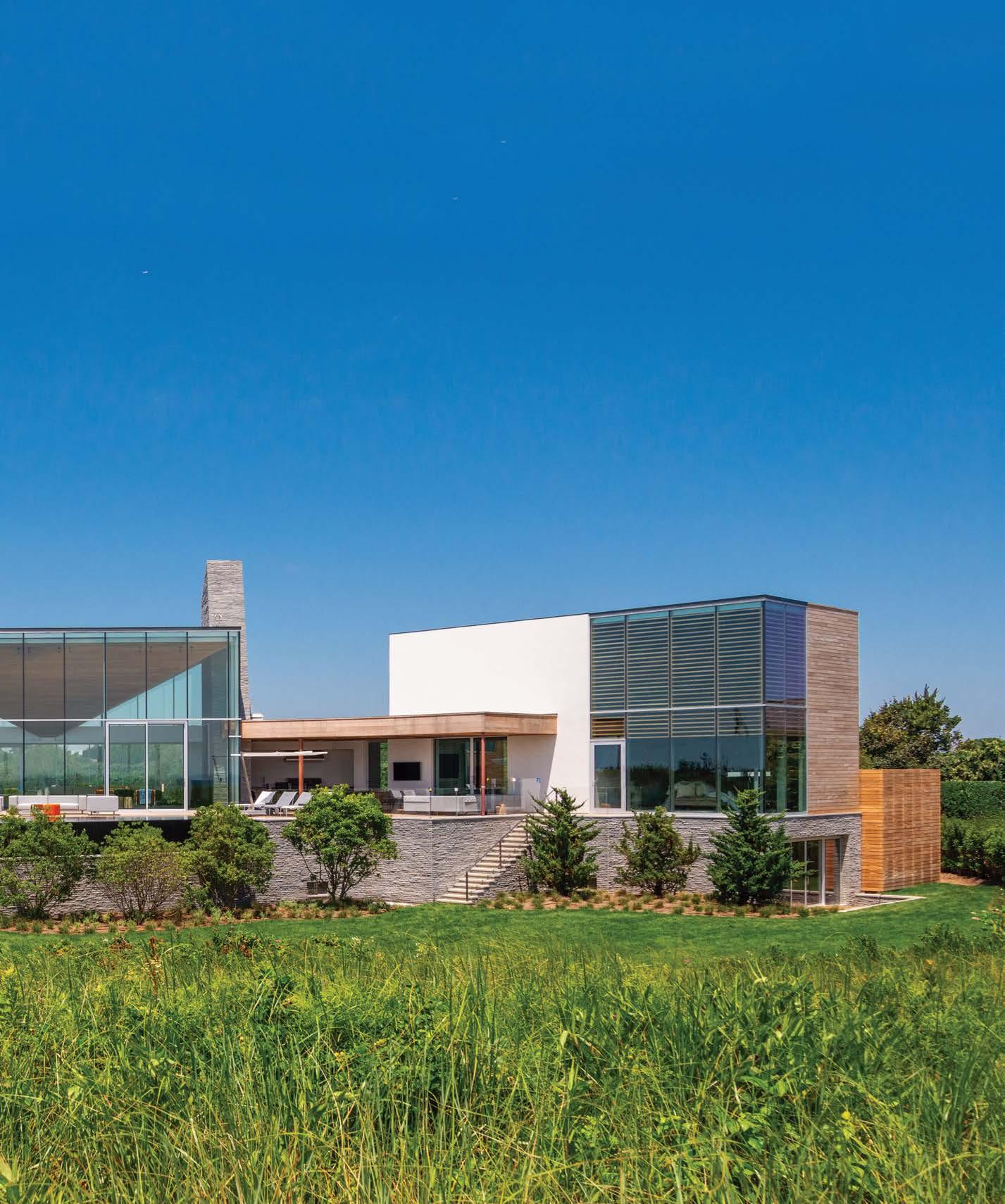
Inversion House, featured in HBO’s Succession, as seen from an ocean dune.
Landscape Architect: Oehme van Sweden
tion with future architects as they update them. In a way, they’ll be collaborating with Barnes Coy, which is always cool to think about. In my practice over the last 30 years, it has been important for us to choose durable materials and make design decisions that emphasize longevity and unfold within the context of our clients’ lives. This way, the house will be easy to live in, open to advances that can make it more sustainable and lower maintenance, and able to endure change and serve a family for generations.
You and your studio are currently working on four renovation projects or design updates, three of which are houses created by Barnes Coy between 10 and 20 years ago. Is modern architecture specifically suited to being updated?
Yes, I think it is. More than just a style, modern architecture is a way of working with material, and every year, there are advances in energy and building technology that make our houses more efficient and closer to how we initially envision
them. Modern houses often have rectilinear shapes with flat roofs, which is inherently simple to add to. In our current projects, including Woodland House and Inversion House, which are featured here, we’re mainly focusing on changes to transparencies, reimagining how spaces are used, and technological and material updates.
What are some of the most significant innovations in material and building technology that you’re excited to use in these Barnes Coy houses?
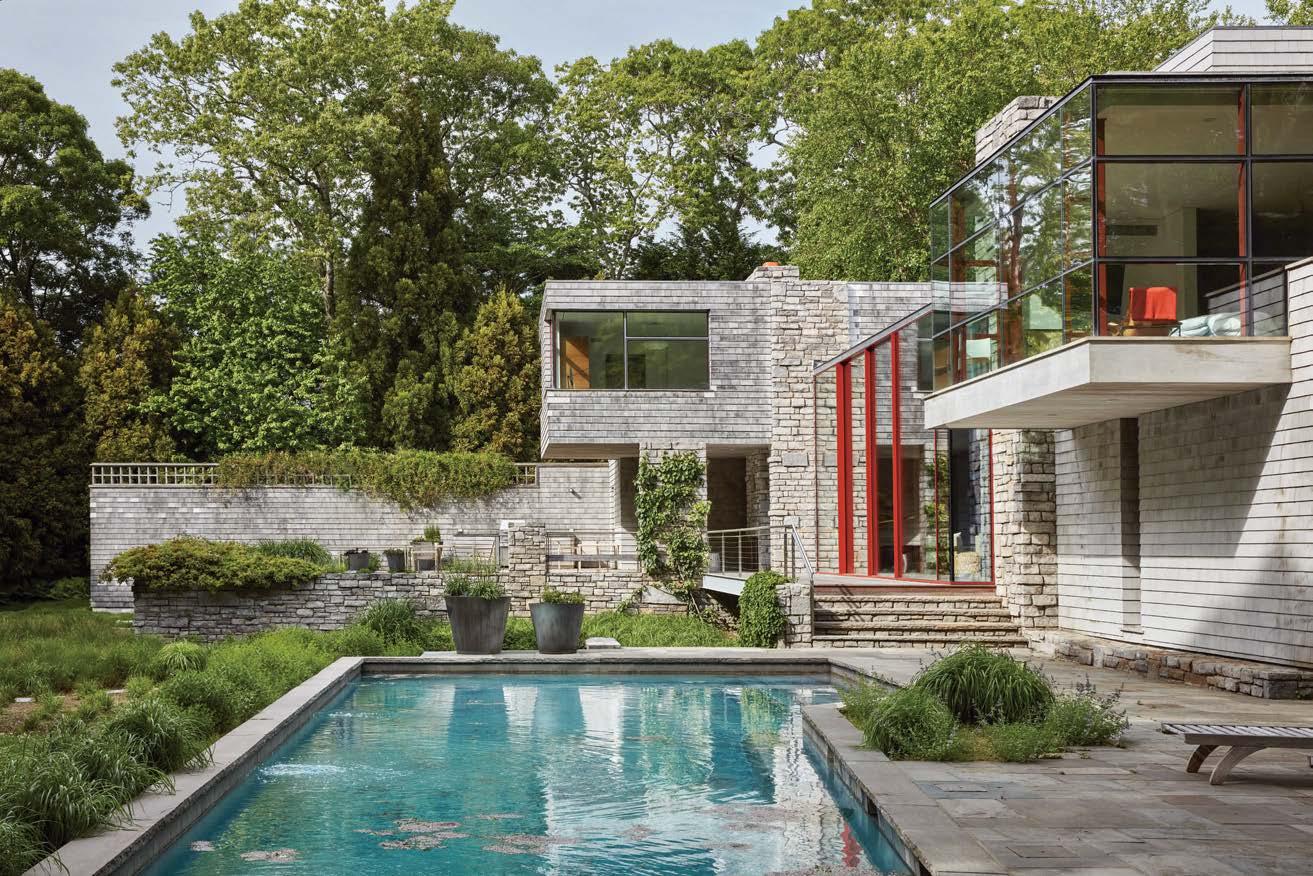
Natural light is an extremely important design element for me. In only the last five years, there have been significant advances in glass technology. The size of glass panels had always been a challenge in designing houses as I imagined them, as open as possible to natural light, and with living spaces that were directly responsive to the views and the environment. For Woodland House, our project from 18 years ago, which we recently updated and photographed for this story, the house is surrounded by the
The cantilevered east wing across the pool at Woodland House
1. Mercer Built | Bridgehampton South
$14.995M | New Construction
9,126± sf Over 3 Levels with Elevator
7 BR | 8 Full BA | 2 Half BA
Media Room | Wellness Room with Sauna 0.93± Acre | Oversized Gunite Pool
Cabana/Pool House | Outdoor Kitchen
Construction Well Underway 39ToppingsField.com
Christopher J. Burnside 516.521.6007 | cburnside@bhsusa.com
Aubri Peele 631.252.5434 | apeele@bhsusa.com
2. East Hampton Village Fringe
$1.975M | 3.7± Acres | 3 BR | 2.5 BA
Total 2,600± sf Including Finished Lower Level Expansive 775±sf Wraparound Deck
Heated Pool | Room to Expand 129BullPath.com
Cristina Matos
631.766.3378 | cmatos@bhsusa.com
3. Rare in Shelter Island
$1.950M | Two Distinct Residences
1,750± sf Main House | 3 BR | 2.5 BA 1,390± sf Guest Cottage | 1 BR | 2 BA
Private Association Beach | Community Tennis 5OspreyLane.com
$7.795M | 1.27± Acres | 5,500± sf 6 BR | 5 Full BA | 2 Half BA Theater Room | Professional Gym Saltwater Gunite Infinity Pool + Cabana Community Beach, Dock, and Tennis 1FoxCrossing.com
Korine M. Konzet 631.258.8577 | kkonzet@bhsusa.com
5. Commercial/Residential | Hampton Bays
$3.499M | 1,700± sf wet-use Commercial Space 8 Apartments Above Commercial Unit 4-Bedroom Home
HamptonsCommercialForSale.com
Anthony Cerio 516.456.2031 | tcerio@bhsusa.com
6. Sagaponack Charmer
$2.85M | 1.01± Acres | 2,700± sf 3 BR | 2 BA | New Heated Gunite Pool Minutes to Beaches & Villages
Michael Petersohn 917.750.3454 | mpetersohn@bhsusa.com
A view from the main sitting room of Woodland House, through the new full-height motorized glass walls
Below: The woods and pond, as seen from the primary suite
warm light and colors of the woods. Now, in the main living spaces, we were able to create completely glass walls, as originally intended. They’re motorized and allow my clients to read books, listen to music and entertain in spaces that are truly indoor and outdoor. It’s how I always imagined this house, and working with my same clients again is a privilege I don’t take for granted. It was great to see how they’ve lived with the house all this time.
We’ve lived most of my life in a house built in 1810, which we’ve updated over the years, and you say that this period of architecture has a simplicity and a spareness of detail that is more aligned with current modernism than the Victorian style that followed it. Residential architecture is culturally situated and aesthetics don’t progress in a linear way. What do the updates to your designs say about what people want in a modern house in the Hamptons today?
Now, people want more than just a gym; they want spaces designed for wellness, and to support and encourage the health of the mind and the body. In Woodland House and many other houses in recent years, we’ve designed meditation spaces and added saunas, both infrared and classic Swedish, steam rooms, cold plunges, and aromatherapy rooms to complement Pilates, yoga, spinning and other fitness spaces. Wellness at home has become such an important part of people’s lives, and I really consider the views and natural light experience of these spaces.
People are entertaining at home more, and the forms of modernism encourage flexible spaces and movement between indoors and outdoors. We have had to reimagine how to design outdoor spaces, like full kitchens, to function the same as interior ones, and new types of social and personal spaces. In Woodland House, we added a listening room, where my clients who love music can have communal and personal listening experiences. There’s no need to repeat the residential norms of the past, which may have formed around ways of life that are no longer relevant to the present. How would you describe the experience of going back into these houses that you know so intimately?
It’s like walking through a memory of the design process. I remember drawing the floor plan, imagining the rooms. I can see what worked well and what I could’ve done better had the technology been up to it, and in these cases, I had the opportunity to realize that. Many of our architects who worked on these houses are still with Barnes Coy, and so for all of us as a team to revisit these designs is a unique experience. barnescoy.com
At Amaden Gay, we’ve been insuring fine homes in the Hamptons, and across the U.S., for over 100 years. From homeowner and flood, to auto, valuable collections, and umbrella, our agency can customize a solution to protect your family. We deliver the highest level of expertise and personalized service – including an excellent claims team when you need it.
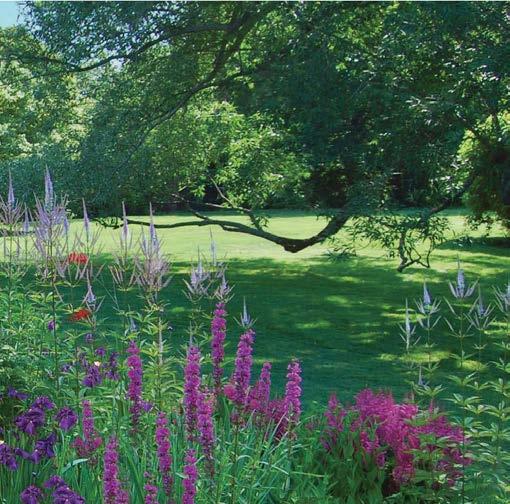
The cultural hub now has more than 50 newly planted trees, expanded deer-resistant gardens and redesigned pathways.
SERENE SANCTUARY
The newly revitalized Southampton Arts Center garden is a verdant oasis. BY
JIM SERVIN
Once beautiful, now enchanting, the garden at the Southampton Arts Center has undergone an inspired transformation, thanks to a $3.4 million gift from The Paulson Family Foundation. Last Labor Day, landscape architect Christopher LaGuardia, founder of LaGuardia Design Group, set to work preserving existing historic trees and imbuing the 2.7-acre space with greater order and elegance. Among the upgrades: expanded greenery, including Japanese forest grass, sedges and ferns. The proliferation of added flowering plants includes foxgloves, abelia and bleeding hearts, all deer-resistant; hydrangeas have been planted tall, above the deer browse line.
More than 50 new trees include dogwood, oak, linden, cherry and magnolia. Every square inch of the space has been thoughtfully refreshed, with thematically specific locations or “rooms” created by LaGuardia for contemplation, reading, picnics, recreation and performance (the outdoor stage has been moved to the northwest area). A 20-foot-wide fountain now graces the East Lawn. A children’s playground is bordered by protective landscaping, for a safer, more welcoming environment. Pathways have been rebuilt to enhance accessibility for all
visitors, including those with strollers or wheelchairs.
Simone Levinson, chairperson of the Southampton Arts Center, marvels at the speed at which these changes were accomplished: “Chris LaGuardia presented the plan the Friday before Labor Day, and then I walked the plan across the street to Town Hall to show it to the trustee,” she says. “Chris assembled the best team, who were infused with a sense of pride and joy that they had the opportunity to leave their mark on these historic grounds for their children and grandchildren.”
Levinson says she loves seeing the delight in the faces of locals as they rediscover their local park turned botanical oasis, now named the Paulson Family Gardens. “People are giddy,” she says. “It had once been a pass-through. Now, you’re going to want to stop, have your lunch at a bench under a tree, while you’re looking at a beautiful sculpture.”
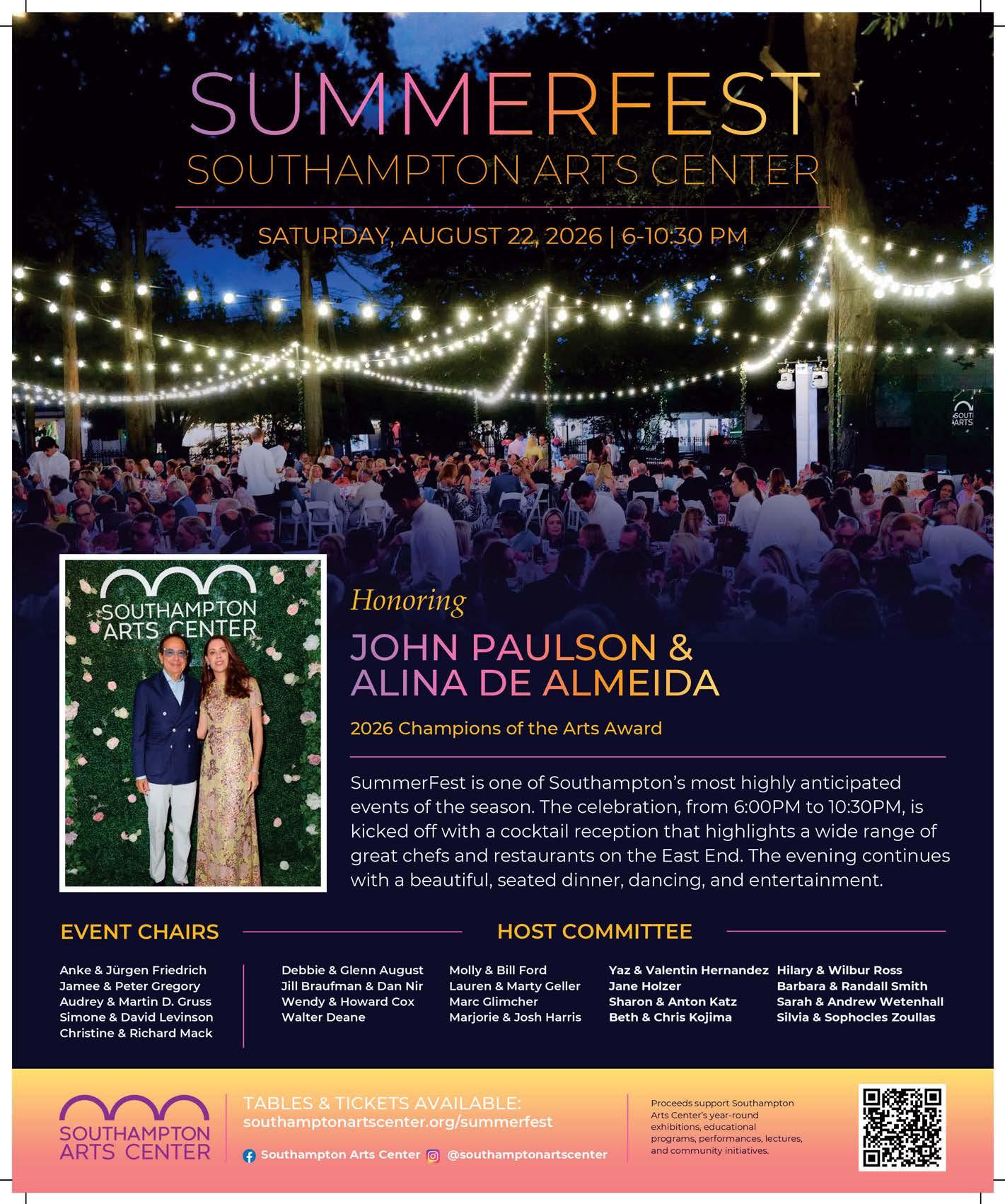
On August 22, toast the garden’s bountiful rebirth at the annual fundraising event for the Southampton Arts Center: “We are looking forward to thanking and honoring the Paulson family at our highly anticipated SummerFest gala,” says Levinson. “The community will come together in celebration.” southamptonartscenter.org
LaGuardia
JOIN US FOR OUR FIFTH ANNUAL
HealthFair
FRIDAY, JULY 10, 2026 11AM – 3PM
SOUTHAMPTON ARTS CENTER
25 JOBS LANE, SOUTHAMPTON, NY
WELLNESS BRANDS ONSITE INCLUDE:
MASSAGES BY ANGEL TOUCH
AROUND THE FIRE FRESHLY MADE PIZZAS
AESTON WEST SKINCARE
CRAZY MOUNTAIN
NONALCOHOLIC BEER
DOCUMENTING HOPE
ECO TICK
EXTENSION HEALTH
HAMPTON INSIGHT
HEALING PRACTICES WITH REV. JOLENE STAR
LUCE DIVINA CANDLES
META 180
MORPHEW
MY JULY SKIN
OMNI-BIOTIC
POUCH
PROGENABIOME
PROLEEVAMAX
REGENRX HEALTH INSTITUTE
SACRED SPACES KOLLECTIV
SMILE HOUSE BY DR. JONATHAN B. LEVINE
THE RITZ-CARLTON RESIDENCES SOUTH BEACH
SERAPHIM WITH SOBER IN CENTRAL PARK
SUM OF ALL THEA
THE LODGE AT WOODLOCH SPA
ZEN ESSENTIALS BY ALEXES HAZEN, MD
PURE PROPERTY
Two new-to-market coveted estates. BY NANCY KANE
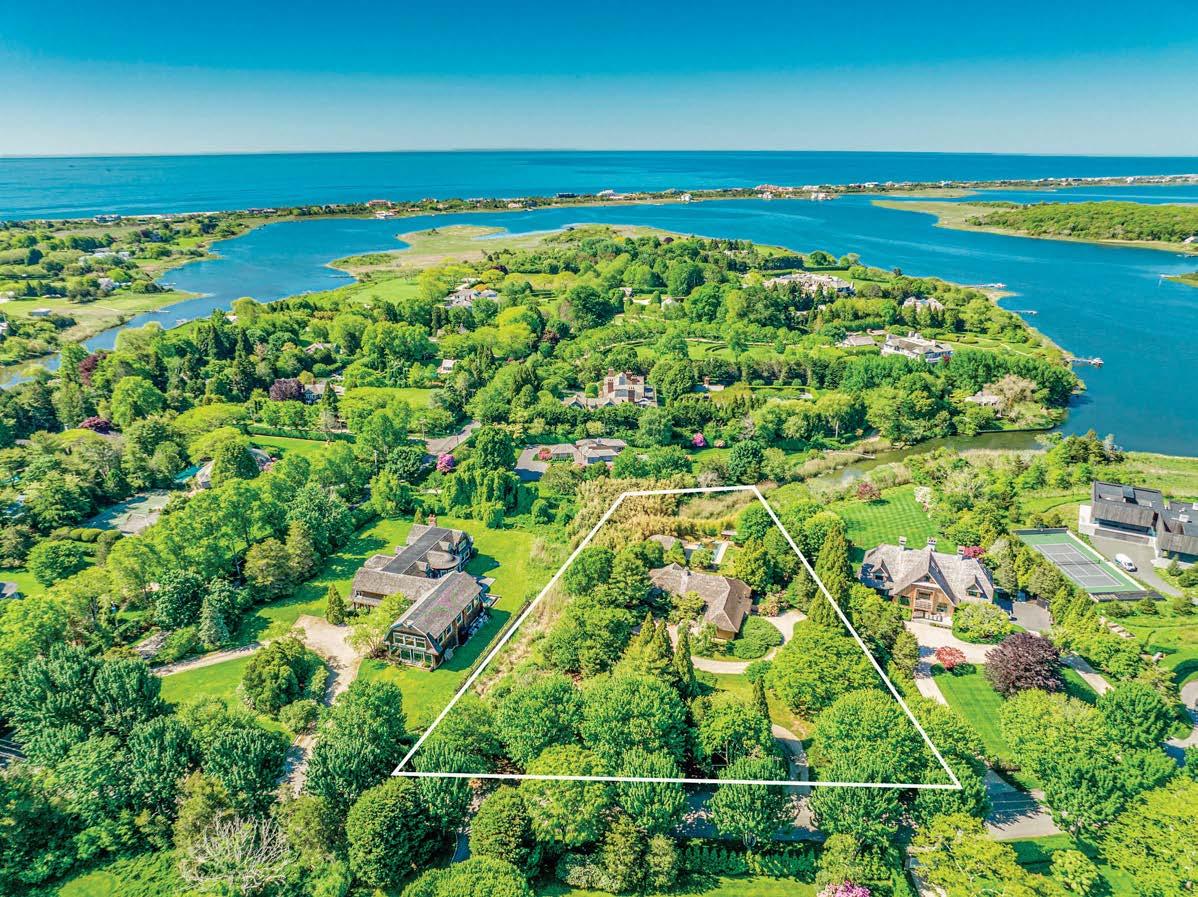
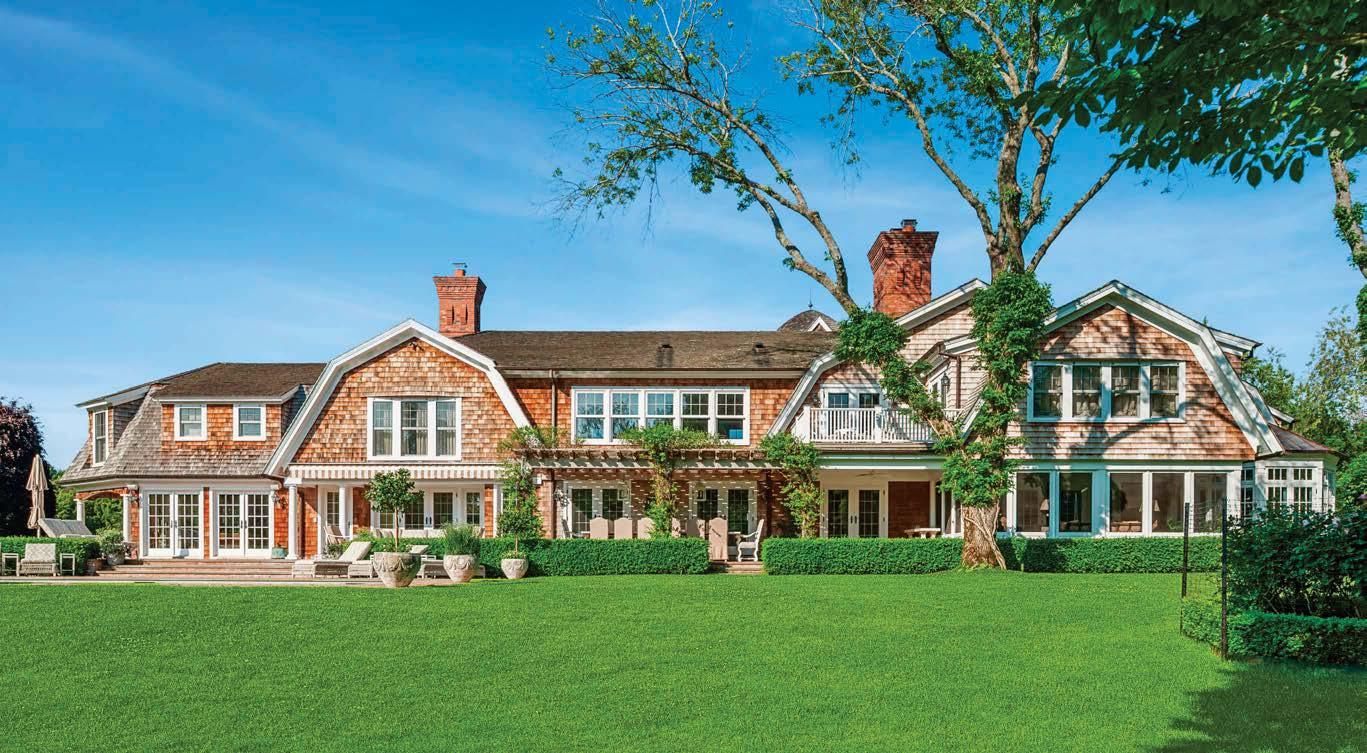
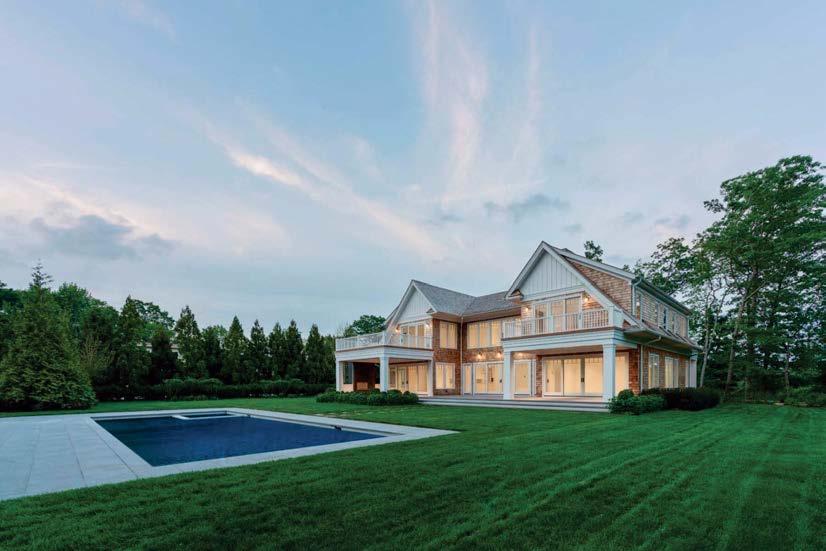
A striking Southampton estate, 59 Boyesen Road, designed by renowned architect John David Rose, has come to market for $19.995 million, represented by Michaela Keszler of Sotheby’s International Realty. Set on 2.8 meticulously landscaped acres, the gated estate offers 8 bedrooms, 8 full and 2 half-baths, blending timeless architecture with modern amenities. Three levels are enhanced by a doubleheight living room, formal dining room, paneled library, game room and 5 fireplaces. A custom chef’s kitchen and sunlit breakfast nook feature custom millwork throughout. Other amenities include a turreted office, a climatecontrolled wine cellar, a fitness room and a private lowerlevel guest suite with its own entrance. The resort-like grounds feature a heated gunite pool and a spa, a tennis court, a cobblestone motor court and mature gardens designed to provide year-round color and privacy. A detached 2-car garage includes a 1-bedroom, 1.5-bath guest apartment. All this, moments from Southampton Village.
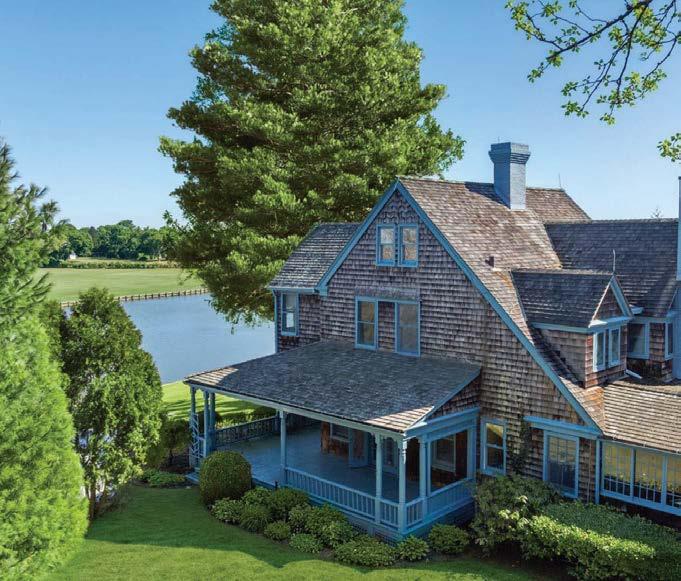
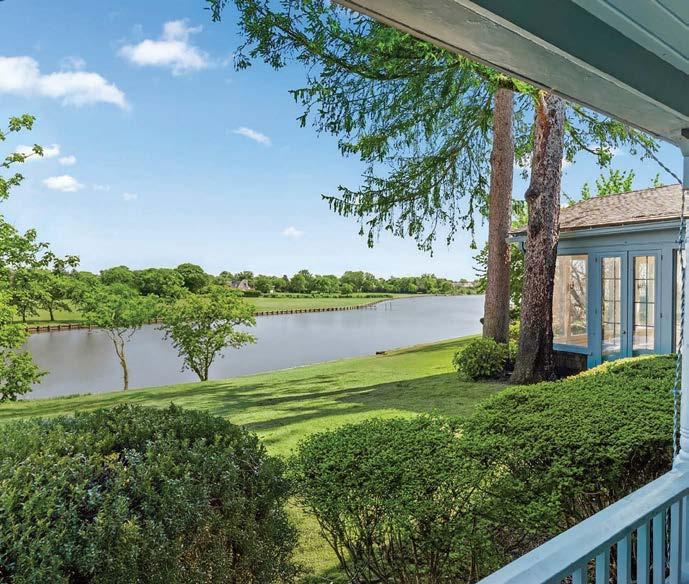
A classic estate in the coveted Georgica section of East Hampton, 30 Cove Hollow Farm Road is a 2.5-acre property with views over Georgica Cove and neighboring reserve land. Designed by noted architect Gregory Zwirko, with landscaping by landscape architect Edmund Hollander, this Queen Anne Revival-style home features 6 bedrooms and 5 full and 3 half-baths. The first floor includes a formal foyer with a sweeping staircase, library and screened-in porch
with a fireplace, and a chef’s kitchen equipped with Viking and Sub-Zero appliances. Upstairs, the primary suite offers a private balcony, a sitting room, a spa bath and a walkin closet, while 4 additional guest bedrooms and a media room complete the second level. The landscaped grounds center around a heated gunite pool with a waterfall, a sunken tennis court and pergola-covered terraces. There is also a pool house with a kitchenette and an attached 2-car garage. It’s one of the more significant offerings currently available in East Hampton Village, with Martha Gundersen and Paul Brennan of Douglas Elliman, asking $25,495,000.
From top: Courtesy of Douglas Elliman Real Estate, Gavin Zweigler
30 Cove Hollow Farm Road, East Hampton
59 Boyesen Road, Southampton
NEW ENGLAND'S #1 SPA RESORT by the
Michelin Guide
2025
This summer, find your rhythm. Paddleboard over calm waters, dine under the stars at our Great Lawn Supper Series, and gather in our outdoor spa sanctuaries for ritual and renewal.
MINDFUL TRAVEL
The Salt Mines of Maras—located in the heart of Peru’s Sacred Valley and less than an hour from Inkaterra Hacienda Urubamba—are among the country’s most striking preHispanic sites. Fed by a mineral-rich subterranean stream thats origin remains unknown, the mysterious pools cascade down the hillside, where salt has been harvested for centuries. inkaterra.com
LIGHT OVER THE BAY
Welcome to Duryea’s Sunset Cottages, a tranquil hilltop retreat. BY
LAUREN WILLETT
Perched above the calming water of Fort Pond Bay, Duryea’s Sunset Cottages are revealed as a quiet expression of luxury where the rhythm of Montauk softens and something much more restorative awaits. Designed to celebrate their surroundings, the cottages provide a delicate balance between privacy and presence— offering a vantage point where sky, water and light are never beyond reach. Floor-to-ceiling windows open up to wraparound patios, open-air dining spaces and private spas that invite a slower, more sensory way of living and enjoying.
The vision, shared by Steven Jauffrineau, the managing director of Alchemy Hospitality, which runs the cottages, was to create a place where guests can “immediately feel like they can exhale,” and that sensibility is felt in every detail here. “Understated luxury means nothing feels loud or forced. It is not about excess. It is about comfort, privacy, quality and a sense that everything has been thought through.”
A wellness getaway to the cottages means days that begin gently: a morning coffee on the deck with the bay stretching out below, or a short walk down Tuthill Road to the market for something freshly baked. Let the day naturally unfold with private yoga under open skies, a meditative pause between sea and sun, or an afternoon spent moving through Montauk’s daytime activities, from paddleboarding the bay to horseback riding along the shore.
As the day comes to a close, everything returns to the light. The sunsets over Fort Pond Bay anchor the experience as a slow, golden display of soft and expansive beauty, offering a natural return to the present before evening.
For those drawn to Montauk’s social energy, the nearby Lobster Deck offers a lively shift in pace, as do sunset cocktails up the road at the local favorite the Montauket, while the cottages remain a quiet retreat just beyond it all.
Purist’s guide to top global getaways for health and well-being.
AUSTRIA
Aqua Dome
This spa-focused hideaway has sound bowl sessions, thalassotherapy (therapeutic use of seawater), a kids sauna menu, anti-cellulite treatments and seven luxury saunas. It is also located near Sölden, a renowned winter sports area. aqua-dome.at/en
BRAZIL
Fasano Angra Dos Reis
After a trek up Pico do Frade or a cruise around the archipelago’s 300 islands, decompress with a guided meditation beneath a cascading waterfall, or
indulge with Costa Brazil products. fasano.com.br
DOMINICAN REPUBLIC
Casa de Campo
Enjoy gourmet dining, rejuvenate at the state-ofthe-art spa or unwind on pristine private beaches. It’s also home to the Caribbean’s No. 1-ranked golf course. casadecampo.com.do
Ocama
With just eight private ecovillas tucked into the lush hills of the Samaná Peninsula, Ocama offers a naturebased escape to one of the Caribbean’s last unspoiled
corners. Expect personalized concierge service, fresh Dominican cuisine and daily boat trips exploring hidden beaches or whale-watching in season. ocama.com
Punta Cana
Find your perfect moment of rest and relaxation at Punta Cana Resort, where lush living meets nature. Enjoy gorgeous beaches, world-class golf and five-star accommodations. puntacana.com
FIJI
Six Senses Fiji
Sleep on a Naturalmat organic bed in one of 24 villas located on Malolo
Island. There is a full-service marina, a surf school and 60 luxury residences. sixsenses.com
FINLAND
Arctic TreeHouse Hotel
Experience a traditional Finnish sauna and iceswimming in an Arctic Circle forest where you’ll hopefully catch a glimpse of the northern lights while staying in sustainably built housing. arctictreehousehotel.com
GREECE
Amanzoe
Relish in the agricultural beauty of Greece and witness the nearby
Inkaterra Cabo Blanco, Peru
harvesting of olives and pomegranates. Also, hop in the steam and cold- plunge pools before sipping cocktails inspired by the 12 Olympian gods. aman.com
INDONESIA
NIHI Sumba by Chris Burch
For a minimum of three nights, engage in philanthropic work with the Sumba Foundation, embark on a spa safari, go deepsea fishing and visit the
chocolate factory. nihi.com
ITALY
Palazzo Fiuggi
Perched on an ancient hilltop in its own private 8-hectare park, Palazzo Fiuggi offers unrivaled views over an exquisite landscape. At 700 meters above sea level, the Fiuggi water that originates within the region’s natural springs and mountains has been celebrated for its healing powers and has been scientifically proven
to cleanse and purify. This state-of-the-art medical clinic offers programs in longevity, wellness and movement. palazzofiuggi.com
Tenuta di Murlo
The historic family estate in Umbria spans thousands of acres of woodlands, olive groves and vineyards as far as the eye can see. Authentic Italian luxury is guaranteed with beautifully restored villas, nourishing, seasonal farm-to-table
dining and horseback rides. murlo.com
JAPAN
Aman Tokyo
Steps away from the Imperial Palace Gardens, Aman offers traditional Kampo herbal remedies, shiatsu and acupuncture treatments. aman.com
MALTA
Iniala Harbour House
A restorative wellness escape set along Valletta’s
Cuixmala, Mexico
Grand Harbour. Sundrenched suites, private plunge pools and sweeping views of the Three Cities await. Recharge at the tranquil spa or dine at the two-Michelin-starred ION Harbour. inialamalta.com
MEXICO
Cuixmala
An extraordinary visual feast, this exquisitely appointed eco-estate on Mexico’s west coast features a vast private nature reserve complete with majestic wild zebras and eland antelopes roaming free. cuixmala.com
Nizuc Resort & Spa
Spend your days snorkeling coral reefs, sailing around the waters near Cancún aboard a private yacht, or mastering the fine art of sushi-making, all before unwinding at the awardwinning spa. nizuc.com
PERU
Inkaterra
A pioneer in ecotourism
Italy’s Palazzo Fiuggi, the medical spa where Purist will be hosting its next retreat this fall. Email accounting@thepuristonline.com for more information.
and the world’s first climatepositive hotel brand, its eight properties span Machu Picchu’s cloud forest, Amazon lodges accessible only by river, Cuzco, the Sacred Valley and Cabo Blanco. Across each location, top-tier hospitality, organic cuisine and immersive cultural experiences unfold in harmony with Peru’s extraordinary landscapes. inkaterra.com
UNITED STATES
COLORADO
Aspen Meadows Resort
Located on 40 acres beside the Roaring Fork River, this secluded sanctuary is in Aspen’s historic West End. Enjoy an art walk at the Herbert Bayer-designed property. aspenmeadows.com
NEW YORK
Callisto
The working farm-inn spans 88 acres of walking trails, vegetable gardens and wildflower fields alongside
NATURE IMMERSIONS
COSTA RICA
Playa Cativo Lodge
Accessible only by boat, this remote sanctuary offers complete nature immersion deep within the rainforest. Discover a wild paradise that pumas, anteaters, scarlet macaws and dolphins call home. playacativo.com
JAPAN
Azuma Farm Koiwai
The newly opened 24villa retreat set within the 130-year-old Koiwai Farm offers private wood-fired saunas, farm-to-table dining and immersive experiences like horseback riding and mountainside cycling. azumafarms.com
MONTANA
The Ranch at Rock Creek
Experience ranch life by glamping on a 19thcentury homestead with the entire family. Find flyfishing, archery, shooting sports, forest bathing and
restored 19th-century barns. Slow down and connect with nature, savor the region’s culinary bounty and roam the regenerative retreat freely alongside a family of friendly goats. callistohudsonvalley.com
PENNSYLVANIA
The Lodge at Woodloch
cross-country skiing at Discovery Ski Area. theranchatrockcreek.com
The Resort at Paws Up Montana
Just a half-hour drive or so from Missoula International Airport, the premier luxury ranch resort is located on 37,000 acres in Greenough, Montana, offering guests an active, outdoor-driven escape. Stay in one of the upscale safari-style tents or historic homes, and partake in Western adventures like horseback riding, flyfishing and ATV tours. pawsup.com
SAUDI ARABIA
Banyan Tree Alula
A tranquil desert retreat nestled in the secluded Ashar Valley, the hotel is surrounded by sweeping desert sands, towering sandstone cliffs and sculptural rock formations. banyantree.com/saudi-arabia
Personal awakening is the order of every day at the Lodge at Woodloch, an adults-only spa resort nestled in the Poconos. thelodgeatwoodloch.com
TRAVEL ADVISER
Black Tomato
Specializing in bespoke itineraries focusing on personal growth and cultural immersion, Black Tomato helps travelers reconnect through slow-paced exploration, discovery and a commitment to sustainability. blacktomato.com
Courtesy of Palazzo Fiuggi
A new level of exclusivity for our guests, First Forbes Four-Star Spa in the Dominican Republic and still somehow, a well-kept secret.
W E E K | E ND
“I like the idea that fashion allows you to be whoever you want to be. It’s almost a sense of inventing your own superpowers. This is something Gabrielle Chanel knew very well.” —Matthieu Blazy
Fueled by the energy of a cosmopolitan city, Matthieu Blazy’s first Chanel Métiers d’art collection is rooted in the idea of eclectic personalities crossing paths. The extraordinary meets the everyday through new essentials combined with refined pieces: elevated knits, denims, floor-length gowns and hand-painted skirts.
Craig McDean
FASHIONABLE RESIDENCY
This summer, Chanel’s Ephemeral Boutique brings iconic style and exceptional services to East Hampton. BY
JULIA SZABO
Chanel’s Hamptons Ephemeral Boutique opened in East Hampton on May 22
The “Chanel & Moi” service repairs treasured Chanel pieces.
Seaside culture is as integral to the Chanel brand as those inimitable interlocking C’s: Early in her meteoric rise, a French couturiere by the name of Mademoiselle Gabrielle “Coco” Chanel opened shops in the chic French resort meccas of Deauville and Biarritz. And so, it’s perfectly fitting for the maison Coco built to have a presence on New York’s elegant East End. Open since May 22, the Chanel Hamptons Ephemeral Boutique brings to East Hampton a singular experience of immersive fashion.
Even beyond the luxuries of the collection itself—from Coco’s signature quilted pattern on 18K beige-gold earrings and cuffs, some taking the shape of her iconic numeral 5, to an ivory triangular handbag with quilted stitching and goldtone chain straps, to luxuriously loose denim trousers equally perfect with a red-and-blue tweedy tailored jacket or a white T-shirt, the boutique offers customers an opportunity to become collaborators in a legendary creative continuum. Chanel customers don’t just carry an iconic logo; they continue a tradition founded on Mademoiselle Coco’s core values of practicality, longevity and style that both sets and outlasts trends.
The boutique’s complete and unique range of services highlights “Chanel & Moi,” inviting customers to bring in treasured items from seasons past for an expert tuneup with, according to the brand, “a set of tailor-made services designed to repair, restore and bring back shine to Chanel
creations.” Voila: a valuable teaching lesson in how to take a heritage brand into its next century, and the one after that, with no unwanted signs of age—in short, how to make the ephemeral, eternal.
Top of mind for all Chanel personnel, from boutique fashion advisers to the house’s acclaimed artistic director, Matthieu Blazy, is the absolute belief that every item bearing the house’s label—from the little black dress to the littlest leather good—is a treasure well worth every effort to extend its wearability as part of the customer’s wardrobe in motion.
Shannah Stern of Sag Harbor is the proud owner of several pairs of Chanel heels, her favorite being an ivory/black slingback, its black toe cap topped with Coco’s ivory camellia flower. Like the Chanel team, Stern appreciates icons, authenticity and expert preservation. She heads the Bert Stern Trust, the archive of her late photographer husband, renowned for his portraits of Marilyn Monroe, arguably the world’s most famous fan of Chanel No. 5 parfum. Not wanting to chafe the lovely flower-topped shoes with too much wear, Stern has kept them safely boxed. Now, with the Hamptons arrival of “Chanel & Moi,” she feels confident taking her cherished shoes out on the town all summer long: “I’m so excited to wear my favorite Chanel heels again!”
Chanel Hamptons Ephemeral Boutique, 17 Newtown Lane, East Hampton; chanel.com
Courtesy of Chanel
PURE PICKS
Dianne Vavra, publicist and owner of vintage boutique Vavra New York, unveils her summer weekend-ready essentials.
“Nothing better than a chunky vintage statement cuff that goes from beach to barbecue with style and ease.”1980s cuff, $295, vavranewyork.com
“My go-to for glowing, dewy, hydrated summer skin.”
Biography Golden Ray Glow Oil, $112, vavranewyork.com
“I love this bag because it fits everything I need, while looking polished and intentional.” Vintage Gucci weekender, $1,800, vavranewyork.com
“These pieces work together to celebrate the art of getting ready.”
“A fabulous vintage bag is always the conversation piece that takes me from day to night.” 1930s bracelet bag, $695, vavranewyork.com
“A must-have gentle scrub cleanser that wipes away makeup and sunscreen after a day at the beach or boat.” Matter of Monday cleanser, $38, vavranewyork.com
“This is a vanity item I am never without. A vintage makeup compact is a glamorous way to check yourself, and I always bring extra for a wonderful hostess gift.” Rhinestone makeup compact, $175, vavranewyork.com
Portrait by Kristin Grey, John D’Angelo
EDITOR’S PICKS
Purist founder Cristina Cuomo shares her favorites for a season of simplicity, inner and outer glow, and strength. PHOTOGRAPHY BY DIANA FRANK
“This mouth rinse reduces bad breath-causing agents, because it’s made with ethically sourced ingredients like colloidal silver, zinc, hydrogen peroxide, baking soda, aloe, coconut oil and spirulina.” Twice oral wellness immunity rinse, smiletwice.com
A new, delicious, gluten-free, grain-free, protein-packed pancake mix that my kids love.” Luv & Yum protein pancake and waffle mix, luvandyum.com
“Summer
is about ease—from clean cotton to clean ingredients.”
“Peptides in a serum that visibly brightens for that sun-kissed glow I long for, without too much time spent in the sun.” Glow Clinical the gamechanger peptide powered brightening serum, glowclinical.com
“Chemicals in laundry detergent are one of those sneaky ways toxins get into the body. Scent 09’s luxurious new line is chemicalfree.” Lindry Lab scent 09 clothing & home duo, lindrylab.com
“Leonard Frisbie is my favorite East End clothing store for elegant simplicity all summer long.” Leonard Frisbie husband shirt and melissa short in sky, leonardfrisbie.com
Strong Together
THE 2026 PLANNED PARENTHOOD HUDSON PECONIC
SATURDAY, AUGUST 15, 2026 7:00 – 9:00 P.M.
The Bridgehampton Tennis and Surf Club
Join us for an evening in the Hamptons, with cocktails and hors d'oeuvres in the company of those who share a commitment to reproductive freedom.
HONORING
Edwina von Gal with the PPHP Impact Award with Abby Klausner Blum, Storyteller and Advocate
Art by Ross Bleckner.
PURE RADIANCE
The newest clean beauty pop-ups and nontoxic skin care salons elevate the East End wellness scene this summer. BY LAUREN
WILLETT
Tammy Fender at The Pridwin Shelter Island gets a dose of Palm Beach serenity this season, as holistic skin care pioneer Tammy Fender brings her celebrated treatments to The Pridwin Spa. Expect restorative facials, nutrient-rich botanical ingredients and a deeply nurturing approach that feels as focused on wellbeing as it is on beautiful skin. Enjoy the steam and sauna after. caperesorts.com/ pridwin/spa
La Prairie at Gurney’s For a glow that rivals the Atlantic itself, La Prairie returns to Gurney’s Montauk Resort & Seawater Spa this summer. This oceanfront experience has it all: sweeping Atlantic views and the Swiss skin care house’s most popular treatments, including the Out East Glow Personalized Facial and the White Caviar Phenomenal Glass
Skin Facial, both designed to leave the skin radiant and refreshed. For the first time, La Prairie will offer limitededition massages, including the Rejuvenating Body Massage, a personalized blend of pressure and aromatic luxury, featuring La Prairie’s new Cashmere Body Cream for radiant skin. The Refining Body Exfoliation starts with a full body scrub, followed by the revitalizing hydration of La Prairie’s Cashmere Body Cream. gurneysresorts.com/montauk
Iván Pol at Shou Sugi Ban House
The season’s most sculpted face may be just a spa appointment away. Celebrity facialist Iván Pol, creator of the cult-favorite Beauty Sandwich, takes up summer residence at Shou Sugi Ban House. His signature technology-driven treatments are carefully designed to sculpt cheekbones, define jawlines
and deliver an unmistakable glow. shousugibanhouse com/day-events/thebeauty-sandwich-at-shousugi-ban-house
Julien Farel Haircare & Restore Salon & Spa
The beauty experts of the East End are finally planting their roots in Southampton. Julien and Suelyn Farel’s new salon and spa offers everything from color and styling to facials, massages and nail services—it’s a one-stop shop for Hamptons locals and summer regulars. julienfarel.com
Lidav Beauty house-call beauty appointments in the Hamptons
For those who prefer their glam to be both convenient and beautiful, Lidav Beauty is booking house-call appointments throughout the Hamptons, bringing blowouts, styling and beauty services directly to your
doorstep. lidavbeauty.com
Montauk Yacht Club
Wellness Cabana With Elemis
A new chapter in coastal wellness arrives at Montauk Yacht Club this summer, as Elemis takes the lead at The Wellness Cabana. Guests can settle in for signature treatments focused on radiance, hydration and sculpted contours. montaukyachtclub.com/ the-spa
Beauty Longevity Atelier
Known for transformative facials and a loyal celebrity following, Georgia Louise is opening the doors to a seasonal Hamptons atelier. Available from June 17 through August 14, the residency offers East End clients access to treatments ranging from microcurrent and lymphatic drainage to bespoke skin care rituals. georgialouise.com
Haircare & Restore Salon & Spa, The Pridwin Hotel & Cottages
Julien Farel Haircare & Restore Salon & Spa, Southampton
Tammy Fender at The Pridwin Hotel & Cottages spa
COLOR MY WORLD
Celebrating 24 years of brightening the aura, and hair, of ladies in NYC and the Hamptons at the Valery Joseph salon with color director Nicole Gache. BY
CRISTINA CUOMO
PURIST: Looking back on your career with Valery Joseph, what has been the best part?
NICOLE GACHE: Building a family of clients in the place where I spend more time than anywhere else in the world. This salon is my element. The greatest privilege has been connecting with so many people and becoming part of their lives. How did your journey with the salon begin?
When I first met Revi [Valery Joseph’s late wife, co-founder of the salon], she had just given birth to her first son, and the salon was still under construction. I had other opportunities, but there was an immediate connection between us. Revi had such conviction that I was going to work with her that it simply became reality. The rest is history. Tell us about your background, and how you became a colorist in New York.
on color, and that decision ultimately shaped my career. What color trends are you seeing right now?
The biggest trend is a return to natural beauty. Clients still love highlights, but they’re looking for softer, more subtle results. People are embracing what makes them unique— strawberry blondes want to enhance their natural tones, chestnut brunettes want richness and shine. It’s all about balance and creating harmony between the hair, the face and the individual. Are there healthier alternatives to traditional hair color?
I began coloring and styling hair in France right after high school. The approach to color there is very different from New York. In France, color is often treated as an accessory—clients might go from brunette to red on a whim. In New York, color tends to be a natural extension of the person, enhancing rather than transforming. I first visited New York four years before meeting Revi and instantly fell in love with the city. I knew I wanted to live and work here. Revi encouraged me to focus exclusively
There are very few truly natural color options beyond henna, which we do not use. However, color technology has evolved tremendously. I work with an oil-based color that contains no ammonia and no PPD [paraphenylenediamine], making it much gentler on the hair while still delivering beautiful results. What keeps clients loyal for so many years?
I have clients from all over the world who have been with me for more than 15 years. I think they know they’ll leave feeling beautiful and confident. Color is about understanding balance and knowing how to enhance someone’s natural beauty. Trust is what creates lasting relationships.
NYC: 1044 Madison Ave., 212.517.2333; Bridgehampton: 2454 Montauk Hwy., 631.537.8997; Miami: 140 NE 39th St., 305.967.8352; valeryjoseph.com
Purist photographer
Diana Frank with Nicole Gache
VIBRANT
Dr. Stacie Stephenson
SUMMER HEALTH AND BEAUTY PRESCRIPTION
Optimum wellness is abundantly available in juicy seasonal produce, loaded with a jackpot of vitamins and minerals.
What is it about a cold slice of watermelon on a hot afternoon, or a ripe, juicy tomato freshly sliced, or bright, sweet green peas plucked straight from the pod? When you choose the vegetables and fruits that peak in the summer season, you are choosing something special. Summer produce isn’t just deliciously fresh and flavorful. It is practically custom-made for exactly what your body needs during those sunny, steamy July and August days. There is no easier, or more delectable, path to health and beauty this summer than loading your plate with summer’s bounty.
Summer Skin and Cell Protection
Summer means more sun exposure, more outdoor activity and more oxidative stress, which occurs when unstable molecules called free radicals accumulate faster than the body can neutralize them. Free radicals are unstable because they are missing an electron, so they roam about the body, doing damage by stealing electrons from other molecules. This can cause tissue damage and inflammation.
Guess what causes those free radicals? Among other things, UV exposure, excessive heat and increased physical activity (as well as a diet high in ultra-processed foods). Fortunately, just when you need them most, free-radicalneutralizing antioxidants and polyphenols can show up in your system if you are eating lots of fresh summer vegetables and fruits.
Antioxidants are molecules that donate an electron to those destructive free radicals, neutralizing the damage they would have caused. While your body produces some antioxidants, you get many more from the foods you choose
BY DR. STACIE STEPHENSON
to eat. The superstar antioxidants include vitamin C, vitamin E, carotenoids (which give orange, red and yellow produce their color), selenium and zinc. While we used to think antioxidant supplements were useful, we now know that wholefood sources of antioxidants are much more beneficial.
Cue those tomatoes, carrots and bell peppers. Watermelon and tomatoes are rich in lycopene, a powerful antioxidant that has been associated with skin protection against UV damage and cardiovascular health. Research has associated increased tomato consumption with better protection against UV damage (but also wear your sunblock!). Red, orange and yellow bell peppers are loaded with carotenoids and vitamin C, both of which support skin integrity and immune function.
Many polyphenols also function as antioxidants, but in addition to neutralizing free radicals, polyphenols help tamp down inflammation, boost the work of beneficial gut microbes, and protect against the kind of cellular damage associated with both aging and chronic disease. Great sources for polyphenols include blueberries, blackberries, cherries and strawberries, all concentrated sources known for protecting the brain and heart, as well as reducing inflammation. Grapes, especially red and purple varieties, deliver resveratrol, a polyphenol that research has shown to be associated with healthy aging and cardiovascular resilience.
As for beauty, polyphenol-rich foods have been associated with improved skin elasticity and reduced oxidative damage to skin cells, as well as making skin look clearer, less irritated and less wrinkled, thanks to the anti-inflammatory action. Polyphenols can improve the look of your skin from the inside out, making you look dewy, glowy and younger.
“Summer produce is so juicy that it can be a source of hydration, enhancing what you get from the water you drink regularly. Watermelon, tomatoes, zucchini and peaches can help you stay energetic, sharp and fresh.”
Here’s the takeaway: The more color on your plate, the broader the range of antioxidants and polyphenols you are getting. Summer makes this easy.
The Nutrients Summer Bodies Need
Beyond antioxidants and polyphenols, summer produce delivers a jackpot of vitamins and minerals that support everything from energy production to immune function to skin health.
Vitamin C deserves special mention. Yes, it is an antioxidant, but it is also essential for collagen synthesis, which is the structural component that keeps skin firm and resilient. You can’t store much vitamin C, so you need to eat vitamin C-rich foods every day, and there is no better time to get the sunshine vitamin than in summer. Find vitamin C in bell peppers, strawberries, kiwi and broccoli.
B vitamins, which are abundant in leafy greens like spinach, kale and chard, support energy metabolism and nervous system function. During these active summer months, you need that energy more than ever. A calmer nervous system doesn’t hurt either, especially on family vacations.
Dark leafy greens, as well as avocados and figs, also contain magnesium, a mineral that can get depleted in the heat through sweating. You’ll sleep better, your muscles will work better and you’ll feel less stressed-out with a steady source of magnesium.
Potassium is important for electrolyte balance, which can also be problematic when you’ve been sweating a lot and not drinking enough water. Find this mineral in watermelon, cantaloupe, avocados, tomatoes and peaches.
A Surprising Source of Hydration
Speaking of water, summer produce is so juicy that it can be a source of hydration, enhancing what you get from the water that you should be drinking regularly. You can get meaningful hydration from summer fruits and vegetables. For example, watermelon is about 92 percent water, along with a nice dose of vitamin C, potassium and lycopene,
and cucumbers are about 96 percent water, along with silica, which is a boon for both your skin and your joints. Other hydrating summer vegetables and fruits include strawberries, peaches, celery, zucchini and tomatoes.
Even mild dehydration has been associated with reduced energy, impaired concentration, headaches, and skin that looks dull and less plump. Prioritizing hydrating produce alongside adequate water intake can help you stay energetic, sharp and fresh.
Just don’t think juicy produce is a reason to skip the water—in fact, you should up your water intake when the temperature rises. Consider the hydration you get from summer produce to be a fringe benefit.
Keep It Moving
An underappreciated element of vegetables and fruits is fiber. It may not be as glamorous as vibrant colors or juicy sweetness, but fiber is essential for detoxification, a well-fed microbiome and staying regular.
Digestive issues are a common side effect of new routines and summer travel, so fiber is important at this time of year. The best sources of fiber in the summer are raspberries, blackberries, figs, pears, apples, plums, peaches and that summer celebrity, corn on the cob. You’ll get fiber right along with all the nutrients, polyphenols and antioxidant benefits of these foods.
A fiber-rich diet has also been consistently associated with better immune function, mood, skin health and reduced inflammation. It can help lower cholesterol, stabilize blood sugar and help with weight loss, if that is your goal. Fiber makes you feel full sooner, so you may naturally and effortlessly eat less.
So here’s my summer health and beauty prescription for you: Visit the farmers market, u-pick farms or roadside stands this summer, and eat as much seasonal food as you can. Swapping fresh produce for junk food will help you to feel healthy, more energetic and more vibrant, with every ripe and colorful bite. drstaciestephenson.com
Annie Spratt
FOOD IS MEDICINE
Eggs provide a significant protein boost, while black tea, nori and fresh herbs offer minerals and antioxidants.
THE SUMMER TABLE
Peter Som brings the zesty flavors of his childhood to the East End with an effortless, Asian-inspired backyard feast.
There is a particular magic to cooking in the Hamptons in summer—the windows thrown open, a salt-tinged breeze drifting in from the water, the kitchen counter piled high with farm stand produce and just-picked berries still warm from the sun. It’s the kind of cooking that asks nothing of you except that you show up hungry and a little unhurried.
For me, it’s also where my two great loves—the food I grew up eating and the abundance of the East End—
CRISPY DEVILED TEA EGGS
The wonderful world of deviled eggs is a treasure trove, and I’ve given them my own twist. Chinese tea eggs are eggs that have been boiled, then peeled (or the shell cracked) and marinated in a tea-based marinade, which imparts a complex, delicious salty spiced flavor. They’re traditionally eaten during the Lunar New Year, but there’s no need to enjoy them only on special occasions. The deviled part here—the yolk—is flavored with oyster sauce and nori, and finished with the crunch of panko. These are one-biters in my book.
MAKES 12 DEVILED EGGS
INGREDIENTS:
For the Marinade
2 tablespoons light soy sauce
2 tablespoons dark soy sauce
1 teaspoon Sichuan peppercorns
1 star anise
2 teaspoons sugar
3 black tea bags
For the Panko Topping
3 teaspoons olive oil cup panko
teaspoon smoked paprika ¼ cup finely chopped mix of dill and cilantro, plus more for garnish
Kosher salt and freshly ground black pepper, to taste
For Everything Else
6 large eggs
3 tablespoons Kewpie mayonnaise
½ teaspoon oyster sauce
½ teaspoon mustard powder
Kosher salt and freshly ground black pepper, to taste
1 sheet nori, finely chopped
1 tablespoon bonito flakes
Get farm-fresh eggs from:
Iacono Farm, East Hampton
Mecox Bay Dairy, Bridgehampton
Crowley’s Farmstand, Sagaponack
get to meet. These recipes from my cookbook, Family Style, are exactly that: deviled eggs reimagined through the lens of Lunar New Year tea eggs, but made for a summery afternoon spread, a sweet-sour rack of ribs that nods to the Chinese pork dishes of my childhood, and a berry snack cake that practically begs to be baked and eaten all throughout the day. With the best local ingredients like the Hamptons has, all you have to do is let them take center stage and enjoy.
INSTRUCTIONS:
1. Make the marinade: In a small pot over medium heat, add light soy sauce, dark soy sauce, Sichuan peppercorns, star anise, sugar, tea bags and 1 ½ cups of water. Simmer, covered, for 15 minutes. Remove from the heat and let cool completely, then remove the tea bags. Transfer to an airtight lidded container.
2. Rinse the pot and fill with water and bring to a boil. Gently lower eggs in and cook for 9 minutes. Transfer to a bowl with ice and fill with water to cool completely. Peel eggs and place them in the marinade. Cover the container and refrigerate for 30 hours, stirring the eggs a few times to ensure the marinade coats all the eggs.
3. Make the panko topping: Add the olive oil to a skillet over medium heat and heat until shimmering. Add the panko and toast, stirring frequently until golden brown, approximately 5 minutes. Stir in paprika and herbs, then transfer to a plate and spread out to let cool. Add salt and pepper to taste.
4. To assemble, cut eggs in half, wiping the blade clean between each cut, then remove yolks with a spoon and transfer to a small bowl. Add mayonnaise, oyster sauce and mustard powder, and whisk until smooth. Season with salt and pepper to taste. Use two spoons to spoon yolk mixture back into the egg whites.
5. To serve, spread half the panko on a serving plate, then top with deviled eggs. Sprinkle with the remaining panko and top with nori and bonito flakes. Garnish with dill and cilantro and serve.
Photography: Linda Xiao
Food styling: Sue Li
Prop styling: Sarah Smart
SWEET-AND-SOUR STICKY RIBS WITH CITRUS PEANUT GREMOLATA
It’s my ode to a favorite—Chinese pork ribs (pai gwat). Usually lightly burnished with a sweet, savory, sticky coating, I’ve decided to shake things up and give ’em the sweet-and-sour treatment. That rich, tangy sauce enrobing juicy fall-off-the-bone tender meat and then crowned with a refreshing herbaceous gremolata punctuated by the crunch of peanuts.
Get ribs from: Peconic Prime Meats, Southampton Red Horse Market, Southampton and East Hampton Citarella, Bridgehampton, East Hampton, Southampton and Westhampton
SERVES 6-8
INGREDIENTS:
For the Sweet-and-Sour Sauce
¼ cup ketchup
¼ cup rice wine vinegar
2-3 drops red food coloring (optional)
3 tablespoons soy sauce
1 tablespoon maple syrup
1 tablespoon sriracha
½ teaspoon kosher salt
2 teaspoons cornstarch
For the Dry Rub
1 tablespoon five spice powder
2 teaspoons smoked paprika
2 teaspoons onion powder
1 teaspoon garlic powder
½ teaspoon cayenne powder
2 teaspoons kosher salt
INSTRUCTIONS:
1. Preheat the oven to 275 F.
1 teaspoon ground black pepper
For the Ribs
1 rack baby back pork ribs (approximately 4 pounds)
1 tablespoon olive oil
¾ cup beer, apple cider or water
For the Gremolata
1 orange, zested
1 lemon, zested
1 lime, zested
½ cup minced flat-leaf parsley
¼ cup chopped roasted salted peanuts
1 tablespoon olive oil
2. Make the sweet-and-sour sauce: In a small saucepan over medium-low heat, add ketchup, rice wine vinegar, food coloring (if using), soy sauce, maple syrup, sriracha and salt, and stir to combine. In a small bowl, mix cornstarch with 1 tablespoon of water until completely combined, then pour mixture into the saucepan, stir, and simmer for 1 to 2 minutes until thickened. Remove from heat and set aside.
3. Make the dry rub: In a small bowl, add the five spice, paprika, onion powder, garlic powder, cayenne pepper, salt and pepper and mix to combine. Rub the rack of ribs with olive oil then coat completely with rub on all sides, patting with your hands to adhere.
4. Arrange prepared rack bone-side down on a foil-lined sheet pan or roasting pan (if your rack is large, cut it in half). Pour the beer into the pan, taking care not to pour it onto the rack. Cover tightly with foil and roast for 2 hours.
5. Remove foil; turn ribs bone-side up and brush generously with sauce. Raise the oven temp to 400 F and roast for another 20 minutes, flipping the ribs and slathering with more sauce every five minutes.
6. Meanwhile, make the gremolata: In a small bowl, combine orange zest, lemon zest, lime zest, flat-leaf parsley, peanuts and olive oil.
7. Brush more sauce on the top of the rack and broil on high for 2-3 minutes or until sauce is bubbling and starting to darken. Remove ribs from the oven and brush one final coat of sauce on top. Let rest for 15 minutes, then cut.
8. Sprinkle with gremolata and serve with more sweet-and-sour sauce alongside.
Tangy citrus fruits add brightness to this protein-rich dish.
Local, in-season berries are rich in antioxidants, fiber and vitamin C.
SUMMER BERRY SNACK CAKE
SERVES 6-8
Drink with: Wölffer Estate
Summer in a Bottle Long Island Sauvignon Blanc, 2025
If there was ever a no-brainer cake to make for no reason at all (which is sometimes the best reason) here it is. This is one of those cakes that can be whipped up on the fly and studded with practically any fruit you might have on hand. And you know, a slice in the morning with coffee is just as delightful as a slice after dinner with some whipped cream or ice cream— so have at it!
INSTRUCTIONS:
1. Preheat the oven to 350 F and position a rack in the lower third of the oven. Butter a 9-inch cake pan and line with parchment. Set aside.
2. In a medium bowl, add flour, baking powder, salt, cardamom and ginger; whisk to combine and set aside.
3. In a large bowl (or the bowl of a stand mixer with paddle attachment) add butter. Using the paddle attachment or a hand mixer on medium speed, beat until smooth, about 2 minutes. Add the sugar, lime zest, lemon zest and miso; continue to beat until pale green and fluffy, about 3 minutes, scraping down the sides of the bowl as needed. Add eggs one at a time, then add the vanilla and Greek yogurt.Turn mixer to low (or switch to a spatula), add
INGREDIENTS:
1 ¾ cups all-purpose flour
1 ¾ teaspoon baking powder
¾ teaspoon kosher salt
¼ teaspoon ground cardamom
¼ teaspoon ground ginger
1 cup unsalted butter, softened (2 sticks), plus more for the pan
1 ¼ cups granulated sugar
2 tablespoons lime zest
2 tablespoons lemon zest
2 tablespoons yellow miso
2 large eggs
1 teaspoon vanilla extract
½ cup Greek yogurt
1 pint raspberries
1 pint blackberries
2 tablespoons turbinado sugar
in the flour mixture and beat or stir until just combined. At this point the batter will look curdled and broken—don’t worry!
4. Fold in half the raspberries and half the blackberries, then transfer the batter to the prepared pan (the batter will be quite thick). Use a knife or offset spatula to level the top. Dot the batter with the remaining berries. Sprinkle with turbinado sugar.
5. Bake for 10 minutes (it will start to puff up), then reduce the temperature to 325 F and bake for another 45 to 50 minutes or until a toothpick inserted into the center comes out with only a few crumbs attached. Let cool for 20 minutes in the pan. then invert it onto a wire rack. Let it sit until fully cooled; slice and serve.
A SLICE OF ALSACE
Fifth-generation baker Pierre Weber brings the joyous, patriotic magic of a French village celebration to Bridgehampton for Bastille Day at Pierre’s. BY RAY ROGERS
Pierre Weber (bottom center, in blue), brings a taste of France to the Hamptons each year.
Bastille Day crackles through Pierre Weber’s earliest memories. Growing up in France with Alsatian parents, the holiday—known natively as Le 14 Juillet—meant an all-day village celebration. “The dancing in the evening is organized by the fire department, who are also in charge of the fireworks,” remembers the owner and founder of Pierre’s in Bridgehampton. It is this exact nostalgic magic that the fifth-generation baker brings to the East End every July.
On Bastille Day, Main Street, Bridgehampton, transforms into a joyful Parisian village. Staff and customers alike dress in patriotic bleu, blanc and rouge—and all are encouraged to arrive in their finest tricolor—spilling out of the bistro onto the streetside terrace. “We are all dressed up, dancing a farandole in the street,” Weber says. “We have to stop traffic!” Inside Pierre’s, the atmosphere is equally electric. At any moment, the French national anthem might take over the bistro. “We play ‘La Marseillaise’ over the sound system,” Weber says. “It is very spontaneous, and everybody just stands and sings along. It gives me goose bumps every time.”
The culinary experience acts as the ultimate bridge between Weber’s roots and his American home. His regulars at Pierre’s know it well—over the years, this devoted community has come to understand and anticipate the French traditions that make this celebration so distinctive. The true centerpiece of the summer festivities is the famous tarte flambée, an Alsatian flatbread specialty that perfectly embodies the spirit of his home region. To finish the meal, Weber honors his baking lineage by featuring the classic Napoleon, a staple of French pastry tradition.
If you catch the proprietor sitting at one of his coveted sidewalk tables toasting to liberté, égalité et fraternité, you will find him keeping it beautifully simple. Rather than a complex cocktail, his ultimate holiday drink is a cold Kronenbourg beer. “It comes from my village, Obernai, in Alsace,” he notes.
This year, the Hamptons community can experience the magic on Saturday, July 11. Stop by dressed in your bleu, blanc and rouge to celebrate, sing along and experience a lively Hamptons tradition with a distinctly French soul. 2648 Main St., Bridgehampton; pierresbh.com
Courtesy of Pierre’s
FROM BALI WITH LOVE
At Nourish, Indonesian culinary wisdom meets East End bounty.
BY SHIVANI VORA
Since its May 18 opening in Bridgehampton, Nourish, the restaurant associated with The Roundtree boutique hotel in Amagansett, has quickly become one of the East End’s most appealing new reservations. Here, peak-season local ingredients meet the bright, layered flavors of Indonesia in a way that feels both transportive and perfectly suited to summer.
Conceived by Sylvia Wong, founder of The Roundtree, Nourish is housed in the former Arthur & Sons space and reflects the hotel’s understated approach to luxury—rooted less in spectacle and more in atmosphere, thoughtful sourcing and a sense of ease. The dining room blends white interiors and warm woods with greenery and flowers, while large windows flood the space with natural light. A 20-seat bar and garden seating enhance the relaxed indoor-outdoor feel.
forward to chef Wijaya’s food and crave it,” Wong says. “I was determined to bring him to The Roundtree.”
At Nourish, Wijaya’s techniques translate naturally to the East End. He works with local farms, fishermen and purveyors, including Balsam Farms and Gosman’s.
“My food is about making the best local ingredients the star of a dish and making them taste even more delicious with my techniques, which are less about butter and more about respecting whatever I’m working with,” he says.
His food is light, bright and sings of the season. Dishes include chilled sweet corn soup with basil crisp and pine nuts, local oysters with spiced tamarind, and lobster feast salad with heirloom tomatoes and tahini-tamari dressing.
The story behind the restaurant began in Bali, where Wong stayed at Como Shambhala Estate while on vacation in early 2025. Here, she met executive chef Dewa Wijaya. Trained in classical French technique while deeply informed by his Balinese upbringing, Wijaya is celebrated for wellness-minded cuisine layered with flavor.
“I ended up working, and eating every meal at the hotel,” Wong says of her stay. “The first meal—a local bass grilled and infused with lemongrass, ginger and lime alongside stir-fried greens, squash, garlic sesame rice and local red rice—was light but distinctive. Unforgettable. I began to look
The beverage program is equally well considered, drawing heavily from the East End’s farms and orchards, featuring inventive zero-proof cocktails, French Bloom alcohol-free wine and Wijaya’s house-made kombuchas.
While Nourish will close for the season in October, Wijaya will continue to serve as The Roundtree’s chef year-round through custom meals, private dinners and special events for hotel guests. Chef Wijaya is also available to cook for dinner parties and other private occasions throughout the Hamptons and the greater New York and Connecticut area.
Few artists have reshaped popular music the way Lauryn Hill has. As a founding member of the Fugees, she was the gravitational center of one of the defining acts of the ’90s; their 1996 album The Score remains among the bestselling hip-hop records ever made. She followed it with The Miseducation of Lauryn Hill in 1998, fusing neo-soul, reggae, hip-hop and R&B into a single, coherent vision. Winning five Grammys including Album of the Year, Hill was the first woman to take that prize as a solo artist in the hip-hop era. She performs at The Clubhouse in East Hampton on July 25. 174 Daniels Hole Road; clubhousehamptons.com Plus: Brandi Carlile, Stephen Marley, Patty Smyth and the Gipsy Kings—all performing out East this summer.
“This life is a process of learning.”
Lauryn Hill
Brandi Carlile will headline the annual benefit concert for the Montauk Point Lighthouse on July 23.
LIFE in HARMONY
In advance of headlining the Montauk Point Lighthouse benefit this July, Grammy-winning singer-songwriter Brandi Carlile opens up about the reckoning of her 40s, what it really takes to keep a voice—and a life—in peak condition, and why authenticity in art, activism and love has always been her most powerful form of self-care.
BY CRISTINA C UOMO
Brandi Carlile has never been particularly interested in playing it safe. Over a career spanning two decades, the 11-time Grammy winner, two-time Emmy winner and New York Times bestselling author has built a devoted following not by chasing trends but by going deeper—into her own truth, her own contradictions, her own joy and grief—and inviting listeners to do the same. It’s a practice that has made her one of the most trusted voices in American music, and one of its most generous spirits.
This summer, that generosity brings her to Montauk, where she headlines the annual benefit concert for the Montauk Point Lighthouse, a cause that fits naturally alongside her long record of environmental and humanitarian advocacy. Her latest album, Returning to Myself, was written in the wake of her years collaborating with Joni Mitchell, and it shows: These are songs built from the inside out, lyrics first, music second, every word carrying the weight of hard-won self-knowledge. In a wide-ranging conversation with Purist founder Cristina Cuomo, Carlile talks about what it means to protect the places and people we love, the athletic discipline required to keep a voice in peak condition, and why the most powerful thing any of us can do—in art, in politics, in life—is simply refuse to be anyone other than who we are.
PURIST: Thank you so much for joining me, Brandi.
BRANDI CARLILE: Hi. It’s my pleasure.
I’m so grateful to you—for your beautiful music and for gracing our July issue.
Oh, thank you for having me on it. I’m excited.
You’re headlining the benefit for the Montauk Point Lighthouse in July. As someone who captains her own boat and has a deep connection to the water, did that personal relationship to marine life factor into your decision to support this particular cause?
Well, it made me intrigued. I understand the importance—both historically and practically—of lighthouses, so it’s really cool to be able to be a part of it. And I freaking love Montauk, so I just can’t wait to get there and be with everybody.
The concert benefits this ongoing preservation effort for this National Historic Landmark, and your new single, “Life on the Run,” is partnered with the National Park Foundation. Is there a through line in your thinking right now between protecting physical places and what they mean to us?
If you really want to find the heart and soul—the wholesome goodness that is still very much alive and kicking in this country—you don’t need to look much further than our state parks and our historical monuments. They tell the story of who we are, and give us something to shoot for, something to indicate where we’re going. I think those things really are unifying.
They give us a sense of purpose, too.
Absolutely. Knowing people that value and work on our historical landmarks and monuments and state parks is incredible, and they’re my kind of people. Nerds.
Returning to Myself grew out of a poem you wrote the morning after the final “Joni Jam” and you went into the studio without finished songs and just that vision. How different was that process from anything you made before, and what did it unlock?
It’s different from anything I’ve ever made before. Occasionally, in the past, I would write a song without music, but Joni changed that. After working with Joni for the last five or six years, I only write lyrics first now. The music has to be second to that poetry.
Is that her process?
I don’t think it’s her process. I think it’s just that being with a poet—one of the greatest all-time wordsmiths—and watching her relearn her lyrics after her aneurysm, put all the weight on lyrics for me. Printing them out for her, holding them in front of her—it put lyrics in my hands in a way that I don’t think many people will ever get to really experience. It was like she wrote them one time, and then she relearned them, and I got to watch that happen. It just made words very important to me.
Going to your personal journey, you were out from the very beginning at a time when the industry still heavily pressured artists to hide or soften their identities. When you look back now, how did that transparency protect your creative autonomy? Do you think authenticity is linked to longevity?
Yeah, authenticity is linked to longevity, because it’s exhausting being someone that you’re not. Not that I would know, because I only really can recall being out. I have been so involuntarily and lovably gay my entire life that it’s just been something that has been obvious about me for as long as I can remember. I’ve had no choice but to navigate life as a gay person—and I’ve met way more acceptance than rejection.
Purist is all about health and longevity—and not just physical health, but sustaining creativity and purpose over time. What does genuine self-care look like for you at this stage in your life and career?
It’s funny, I find the phrase “self-care” to be a little bit triggering, even though I shouldn’t. And even the concept of Returning to Myself as an album starts to veer quite radically into the concept of self-care. The truth is, I think you can do self-care with other people—you can ask other people to care for you and care with you, as you do the same with them generously. That increases longevity. We all know that studies show that we’re better together, and that people live longer when they have community and
A longtime conservation activist, Carlile believes America’s state parks and historical monuments are the “heart and soul” of our country.
Collier Schorr
love. I find all of my self-care in community with other people. Having said that, I do a lot physically in my midto-late 40s just to get myself onstage. I have to really partition off enough time for myself to do that.
What’s in that regimen?
It changes. Right now, I’m doing a lot of working out, like balance and stability stuff—isometric holds, those kinds of training techniques. I’m trying to work on my alignment, because of the misalignment that it almost requires to stand on stage and play guitar. And I have to work on my voice all the time. Everything I eat, drink
Time with my daughters is heaven. It’s just paramount—even if they’re fighting, even if I’m truck tired, even if I’m driving them to school, even if they’re sick. Sometimes, especially if they’re sick, to be honest. My oldest daughter was sick yesterday, and she stayed home from school and it was magical because she’s 12 and she doesn’t want to need me as much anymore. She really needed me yesterday. So, time with them is just heaven. I have one daughter who really likes to do what I like to do, and one who doesn’t. I find that really interesting,
“We all must return to ourselves. It’s a lonely thing to do, but it’s the only thing to do.”
and do has to do with preserving my voice nowadays. It’s such an athletic thing past a certain age—you won’t be able to preserve it if you drink alcohol, don’t stretch it, and don’t watch what you eat. You go to sleep after eating. There are so many factors involved in keeping an aerobic singer performing at the top of their ability. That is where I am at this point in my life, and I’m really proud of that, but it’s not been easy.
I’m going to share that with my daughter, who is a singer. She’s 23, so the habits are not stable yet.
No, but the worst part, and I think this is probably true for every part of your body—and the thing everyone tells you and you don’t listen—is that it’s not like, “Hey, when I get older I’m going to have to start caring about this.” You do the damage when you’re 23, and when you get older you’re having to take care of that damage. That’s been everything—for every muscle in my body to my voice. But what can you say to a 23-year-old, really?
You and your wife are raising two daughters in a world that feels increasingly fractured. What’s the value you find yourself coming back to most, either at home or in the music you’re making now?
because one is like my best girlfriend and meets me where I’m at, and one pulls me into new territory. They’re so different and they’re so magical.
How has making this album changed how you think about rest, recovery and what you actually need to keep going?
It’s hard to know whether it’s making this album or whether it’s just my age. I think this is the age that we come to a reckoning. It’s a great reckoning. Like, how long am I going to people-please? How long am I not going to be careful about what I put in and on my body? How long am I going to not prioritize making memories with my kids over obsessing over my career? These are the existential questions that come with your 40s, and making an album for me is just about authentically documenting a moment in an artist’s life. It’s innately selfish and that’s OK. Throughout my life I’ve made albums that document honestly exactly where I am, and that’s what Returning to Myself is right now, and I think also that’s why so many women are relating to it—because we all must return to ourselves and it’s a lonely thing to do, but it’s the only thing to do.
Carlile’s latest album was inspired by the years she spent collaborating with Joni Mitchell.
That’s beautiful. We do reach these milestones together. Your Looking Out Foundation centers on giving voice to the unseen. Where is your attention being pulled most right now, and how do you sustain that kind of advocacy without letting it consume you?
I like that you phrased it as where my attention is being pulled, because that is exactly the kind of activist I am—passion-based. Over time, my attention has been pulled in many different directions: need, politics, the environment, attention to natural disasters, conflict overseas. Right now, and for a few years, my attention has been pulled most consistently to the plight of displaced people—not just globally, but here at home. And by displaced people, I mean refugees and asylum seekers, immigrants, economic migrants—anyone who’s left their home because they had to. The way that we treat and receive those people in this country is a true test of our humanity, and how the United States will be remembered. I feel really passionate about the injustice of what ICE is doing and how we are treating and receiving economic migrants, immigrants and asylum seekers in this country. And not just that, but how we interact with them and how we show up for them globally, because it is a global issue.
After that benefit concert in Minneapolis where you brought out a local choir to perform “It’s Okay to Change Your Mind” as a protest against recent ICE actions, you told Rolling Stone that Trump voters had been scammed, but that it’s OK to change your mind. Do you think shame is the biggest obstacle to political healing right now, and how do you hold that kind of empathy when you’re also genuinely angry?
When I said the line that Trump voters had been scammed, it was part of a larger story. I was trying to show some understanding to people who were burnt out, stressed-out, down and out—people looking for someone to lift them out of a situation they didn’t feel they deserved. I have my own personal feelings about politics; I don’t even like naming Trump or his administration—I’ve tried to make it not my reality. But the concept was exactly that: Don’t let shame, or realizing that someone isn’t who you believed they were, make you double down on that decision. You can change your mind—and it doesn’t mean embracing the other side. It just means change your mind.
You’ve built your life around nature quite deliberately—90 acres in the Cascades, regular trips to the Olympic Peninsula, and now supporting a cultural landmark on the East End of Long Island, the Montauk Point Lighthouse. How does that deep connection to the natural world inform your creative life?
It’s a profound rocket launcher for my songs, my
aesthetic, my beliefs and the way I recreate. It’s all based on being in the great wide open, being on the ocean particularly. If I were only in urban spaces, I would only write one kind of song. But when I am in urban spaces I treat them more like people would treat the country, like a rarity. I’m there for work. One thing I love about cities is the people. I freaking love people, so being around people is amazing. But I need to recharge my batteries in the country, and I always will.
You’ve long championed female artists, most recently reflecting on Lilith Fair’s legacy. How do you see spaces like your Echoes Through the Canyon weekend actively changing the industry’s culture, not just celebrating it?
I see it actively changing the industry’s culture like so many women have done before: just by simply proving that we can sell tickets. For women and nonbinary artists to succeed in headline positions, men need to listen to women make music—and when they do, it’s really beautiful. I have a festival in Mexico every year called Girls Just Wanna Weekend, and it’s all women and nonbinary artists. Every year more and more guys are coming. They’ve become our guests of honor, because they’re doing the thing that will change inequality across industries, not just music. When men show up to that festival, they are disproportionately revered.
I love that.
We can’t do it without them, and I can’t lie: When I’m looking out in the audience and I see a bunch of dudes out there digging what I’m doing, it makes me feel very good and very cool—and really hopeful for my kids.
And speaking of men, you worked with two coproducers, Andrew Watt and Aaron Dessner, across two different studios and describe them as an unlikely pairing you had to broker. What did each bring to the record and how did that tension between Dessner’s sensitivity and Watt’s audacity serve an album that’s so deeply about you and your own voice?
The most important takeaway is that they were generous to understand that. They were in a it’s-not-aboutme position where they were able to just set themselves aside in service of what I was trying to communicate musically. Those are the rock stars—men who will actively support a woman, and maybe even subjugate themselves in one way or the other. It was an unlikely pairing, but they were cool to each other, cool to me, and we made really good music together.
You certainly did. It’s such a great album, and I cannot wait to hear you perform it live in Montauk.
Brandi Carlile performs at the annual benefit for the Montauk Point Lighthouse on July 23; montaukhistoricalsociety.org/montauk-point-lighthouse
FRUIT FROM THE TREE
Stephen Marley has spent a lifetime growing deeper into his roots—as a son, a father and a keeper of one of music’s greatest legacies. He brings it all to East Hampton’s Clubhouse on July 17.
BY RAY ROGERS
a
Graham Bishop
Marley has won
total of nine Grammy Awards, many for producing his siblings’ work.
Oh, the hills of St. Ann / Where the rivers run clear and strong / I lift my hands to Jah in thanks / For the land where my heart belongs
Stephen Marley’s lilting, meditative new single, “Hills of St. Ann,” carries the weight of a lifetime—ancestral and recent. “Other than my father being from St. Ann, that is where my son is laid to rest,” he says simply.
Joseph “Jo Mersa” Marley died on December 26, 2022, in Miami at 31, from acute asthma complications. The loss saturates every note of the single, which is as much elegy as celebration: St. Ann holds both his father’s origins and his son’s final resting place.
Speaking from his studio in Jamaica, Marley is deep into his next project: executive-producing a collection of songs celebrating the culture and roots of his homeland, with contributions from Damian Marley, Sean Paul, Shaggy, Protoje and others. “I want the listeners to feel my love for St. Ann and the history that is there with my family and myself.”
That expression has shaped not just his own recordings but those of his entire family. A multiple Grammy winner— nine at last count, many for producing his siblings’ work— Marley has served as one of the primary keepers of the family sound for decades. He’s modest about it. “It’s not a conscious effort. It’s just who Steve is to the family. No one imposed this on me or said you have to be this. That’s me.” And like any great producer, he knows a record is never truly finished. “At some point,” he says, “we just get it out.”
Reggae has always carried a frequency the rest of the world is only beginning to tune in to. Long before wellness culture discovered plant medicine, intentional living and the healing power of community, Rastafari was already there. It’s a shift Marley has watched unfold. “We talk about that a lot,” he says. “Even as simple as some of these plants that are now so important to others—we have always traditionally used them. Not just in reggae but in the islands. It’s a full circle thing, very much so.”
“Long before wellness culture discovered plant medicine, intentional living and the healing power of community, Rastafari was already there.”
It’s his first new music since Old Soul (2023), a strippeddown acoustic album born of pandemic-era isolation—just Marley, one guitarist and an engineer—and a deliberate departure from the produced sheen of earlier hits like “Hey Baby,” off his Grammy-winning 2008 debut album, Mind Control, and “Medication.” He’s philosophical about the contrast. “It always starts from a stripped-down element of just you writing a song on the guitar,” he says. “It always starts from a simple form. Just keep it simple and organic.”
That simplicity extended to some unexpected creative detours. Old Soul includes a cover of his father’s iconic “I Shot the Sheriff,” with guitar work from Eric Clapton, who had a hit of his own with the song in 1974. There’s also a sunny, reggae-laced take on Ray Charles’ “Georgia on My Mind”—which, he told NPR, originally featured Marley singing “Jamdung on my mind,” until the Ray Charles estate requested he restore the traditional lyrics.
Ask Stephen Marley how he defines his own musical identity—separate from, yet in honor of, the most powerful legacy in reggae history—and he won’t take the bait. “There’s no separating,” he says. “I am a fruit from that tree. You can’t separate the fruit from the tree.” He hasn’t spent his career trying to step out of his father’s shadow so much as growing deeper into his own roots. “I’m just a lover of music. I was born into a musical family, and that helped to highlight that aspect of me. It’s in my DNA. Music is a talent that God gave to me, and that’s how I express myself.”
Does he feel a greater sense of responsibility, then, in the music he releases and the stages he takes, at a moment when the world feels so fractured? “It’s always been that for us. Reggae bears that weight. It’s just a part of us, a part of that island and the music that we make.” But something about right now feels different, he says. “There are a lot more distractions today, so the necessity becomes greater to put this music out—to have a balance out there that one can go to and find positivity and hope and enlightenment.”
The Jamaica Tourism Board project currently occupying his studio hours is a love letter to the island in the form of a collaborative album featuring some of its greatest voices: Damian Marley, Tarrus Riley, Sean Paul, Mojo Morgan (of Morgan Heritage), Shaggy, Romain Virgo, Tessanne Chin, Protoje and more. “We are just highlighting our island and paying tribute to our island,” he says. Asked what he personally loves most about Jamaica, he takes a pause to consider. “It’s just this place with this natural vibe—I don’t know if I can explain it in words. Bob Marley came from Jamaica. Burning Spear comes from Jamaica. Toots Hibbert came from Jamaica. I would say it’s a land of heroes.”
He brings all of that to East Hampton’s Clubhouse on July 17, where he’s played before and clearly relishes returning. “East Hampton is one of those places I love singing,” he says. “There’s always a good vibe there.” For the audience, he has a simple wish: “I hope people will be enlightened, lifting one’s spirit and give them hope for humanity.”
WORLD PARTY
Sway to the seductive flamenco of the legendary Gipsy Kings, at The Clubhouse in East Hampton.
BY VIVIEN GOLDMAN
You can count on the Gipsy Kings to entrance audiences with their classic flamenco. Calibrated over centuries, the special sound of complex guitar polyrhythms has traveled through Africa, India and across Europe, to bloom anew in Spain and southern France. They bring the global party to East Hampton at The Clubhouse on August 23.
Group leader Tonino Baliardo took time out from a current world tour to explain the genesis of their new album, Historia: “Over the years of being a Gipsy King, I always had the idea of writing about my experiences of touring, family and life as a gypsy.”
Family is everything for the Gipsy Kings. The clan patriarch, José Reyes, caused such a sensation when he first performed in New York in the 1960s with his cousin Manitas de Plata, that fervent fans Salvador Dalí and Pablo Picasso were inspired artistically (Dalí painted while listening to de Plata, and Picasso engraved sketches on his guitar). But the family combo was to subdivide, amoebalike, into various bands over the decades to come. In the plangent vibrato of the Gipsy Kings today, all the power and pain of their heroic heritage still reverberate.
“Our culture is very family-oriented, and music and
dance play a very important part. The original group, Los Reyes, was made up of our fathers, uncles, cousins,” says Baliardo. “One of my greatest pleasures is having my two sons, Cosso and Mikaël, join me on the recording of Historia and onstage. Sadly, while recording Historia, my dear brother Paco, one of the original Gipsy Kings, passed. I wrote my favorite track on Historia, the instrumental track, ‘Cielo,’ in his memory.”
Baliardo was destined for music. As a child, he’d watch his uncle, guitar legend Manitas de Plata, play with the family around their caravans. “One day he said to me, you will be a great flamenco guitar player,” Baliardo says. “He was my inspiration and encouraged me to practice and adopt my own style.
“I view the world today as a very sad and dangerous place,” he continues. “There is no doubt that music has great healing powers, even more than books or films. All our shows are a fiesta. When we hit the stage, everyone is up dancing, clapping, and we are all one gypsy family. As the crowd leaves, I can always hear them singing our hits, like ‘Bamboleo’ and ‘Volare.’ That is our healing power, the joy of our Gipsy Kings fiesta.”
A vintage shot of Gipsy Kings members André Reyes, Jacques “Paco” Baliardo (who died in 2025), Tonino Baliardo and Nicolas Reyes
STILL A WARRIOR R
Patty Smyth brings
her
powerhouse voice to Guild Hall for an intimate evening with guitarist G.E. Smith—her husband, John McEnroe, in tow.
BY RAY ROGERS
In the ’80s, Patty Smyth was everywhere—“Goodbye to You,” “The Warrior,” a hit cover of Tom Waits’ “Downtown Train” all over FM radio and MTV, that singular voice, raw and gritty, cutting through everything around it. G.E. Smith, who was playing with Hall & Oates when her then-band, Scandal, opened some of those shows, would watch from the side of the stage. “Patty was great, both vocally and performance-wise,” he says. “A real rocker.” What he prizes in her singing hasn’t changed: “Power and feeling. You have to be born with that ability to convey real emotion in a vocal performance, and Patty just does it.”
On August 22, she joins Smith for his Portraits series at Guild Hall—stripped down, conversational, intimate in a way those arena-sized hits never had room for. Don’t expect the full-throttle versions you know by heart. You’ll get the bones of the songs, and the stories in them. Smyth plans to reach deeper into her catalog, too: “Maybe We Went Too Far,” from Scandal’s Warrior album, the one Eddie Van Halen loved enough to join her on the road—this from a man who once wanted her as his lead singer, an offer she declined. Smith has his own wish list: “Goodbye to You” and “Downtown Train.” He played on Waits’ original recording. “If they want to do it,” he says, “I’m ready.”
If you want to know who Smyth is beneath the anthems, her 2020 album, It’s About Time, makes a strong case. “Drive,” the record’s emotional center, began with a turned-over photograph—she and her sister, who were
estranged for a few years—and grew into the song that brought them back together. “I found a picture of us,” she says, describing the line that unlocked the song. “When she heard it, my mom was like, you’re talking about Queens, you’re talking about Whitestone.” She knew exactly which street, which moment, which version of her daughters. When Smyth sent it to her sister, it changed things between them. Queens never really leaves you. Smyth is nononsense, unguarded, allergic to the overwrought.
She and McEnroe have roots on the East End, with nearly two decades in Southampton before resettling further east. They split time between New York and Los Angeles, where Smyth spends every spare moment with her first grandchild, a 6-month-old girl. Her husband of 29 years will join her onstage for a few numbers. He’s put in the work, she says: “At first I was like, no, I don’t think so. And now, he’s really been working hard. He loves it so much, and I enjoy watching him enjoy it.” McEnroe has figured out what the stage gives him that the court never could. In tennis, every point is yours alone to carry. “That’s what’s great about playing in a band,” he says. “You do it together. Not everything depends on every move you make.”
Smith, who has spent decades sharing stages with his wife, singer-songwriter and Portraits producer Taylor Barton, knows something about that chemistry. “There can be, at certain lucky gigs, a sort of magic when people play together,” he says. “When it happens, it is special.”
Patty Smyth with husband John McEnroe
The award-winning creator and actor plays opposite his daughter, Allegra, in the upcoming indie film Bullet Catch
From EPIC to EARTH
Playing a vital role in Christopher Nolan’s star-studded The Odyssey, John Leguizamo stands among the greats. Off-screen, the actor has been on his own fantastic voyage—reclaiming Latin history, making peace with the past, and finding, in a garden in Amagansett, exactly where he belongs.
BY RAY ROGERS
John Leguizamo looms large on IMAX screens across the world this summer in Christopher Nolan’s blockbuster The Odyssey, but right now he’s got his hands firmly in the earth, tucking echinacea, lavender and climbing clematis into the full-sun garden beds around his family home in Amagansett. The Tony Award-winning creator of Latin History for Morons and Freak—and who portrayed Tybalt in Baz Luhrmann’s Romeo + Juliet, Toulouse-Lautrec in Moulin Rouge!, Benny Blanco in Carlito’s Way, and four decades’ worth of characters who lodged themselves permanently in the American imagination—Leguizamo brings the same kinetic energy and irascible wit, sharpened by decades of political satire, to everything he touches. It’s matched by an equally powerful instinct to nurture: gardens, history, community, his own daughter onscreen. Leguizamo has always moved between the monumental and the intimate, and today he has a $250 million epic in theaters and a small, intensely personal indie, Bullet Catch, on the horizon.
PURIST: The Odyssey is ultimately a story of a man stripped of everything trying to find his way back to himself. What did working inside that myth stir in you, separate from the scale and spectacle of the production?
JOHN LEGUIZAMO: Loyalty was the biggest thing that hit me. When Chris Nolan and I met for lunch, he told me that my character, Eumaeus, was the most loyal character in Western literature—and that influenced everything I did. The whole story is threaded with it. Telemachus is loyal to his father, while the suitors are not. Penelope is loyal to her husband, even with no proof he’ll return. Even the dog, Argos, is trying to stay alive long enough to see his master again. And Odysseus himself breaks free from Circe and Calypso because of his loyalty to family, to his wife, to his son, to his people.
Why did this feel like the right story for right now?
Because humanity goes through cycles and we have such short memories—periods of great war and destruction, and then hopefully we come out of them better. I loved all of Nolan’s choices. The casting, the language, the script—it feels modern, of the moment. And loyalty is such a complex force right now. It can be a positive thing, or it can be weaponized—mobsters extracting loyalty, certain people in office demanding it as payment for transactional ends.
You went directly from this massive production to a more intimate indie. What did that contrast reveal to you?
Even on The Odyssey, Nolan functioned like an independent auteur. He stands behind the camera—he doesn’t disappear to video village. That matters so much, because the monitors don’t tell the story of what we’re
“We can’t rely on corporate structures that have their own interests to protect,” says Leguizamo. “That, to me, is the real threat. Not AI. The hollowing out of institutions that hold power accountable— that’s what keeps me up at night.”
doing internally. If you stand behind the camera, you’ll see it in our eyes. An indie film is usually like that by necessity— there’s no time to check your phone, it’s a sprint and you have to be completely present. Theater and indie films are my soul food. They remind me of why I became an artist.
In Bullet Catch, you play a father trying to repair a fractured bond with his daughter—and you’re doing that opposite your real daughter, Allegra. How did that shape the experience?
I had seen Paper Moon, and it gave me confidence— what a vital piece of filmmaking that is. My daughter is in her 20s, and it was a beautiful thing to share this with her on camera. But the relationship in the film is fractured, it’s in conflict, and we had to say very unkind things to each other. I didn’t realize how much it would sting. I know we’re acting, but hearing my daughter say she never wanted to see me again—it just hurt. You could feel the crew on pins and needles. My daughter teared up. I was in tears. She is so talented and so real that it was almost overwhelming. I
loved the script. David Baram is a brilliant director. You’ve spoken about the weight of growing up in survival mode and the toll it takes across generations. What does your own path toward peace look like?
You have to find your pockets of it—your oasis, your moments. Kids who grow up in the inner city carry the kind of PTSD associated with combat veterans. So, you learn to self-soothe, to self-care. In this industry especially, you have to figure that out, or the unnatural highs and lows will destroy you. I meditate, and meditation is my way of praying without organized religion.
Shakti Gawain’s Creative Visualization changed my life—I read it in the ’90s, and it was my real introduction to meditation. I tried to pass it on to my children like it was a religion. And last year I went to Kyoto with my son, and we did a samurai retreat where they taught us to meditate with eyes semi-open. I’d always meditated with my eyes closed, so that was a revelation. Walking is another one— when I work out, I try to use it as meditation. You need time with your own thoughts.
You’ve spent years reclaiming Indigenous and Latin American history, from the origins of agriculture to the culinary staples the entire world takes for granted. Why is reframing that history so essential, and what does
is heartbreaking. And yet, we hit a milestone last year, contributing $4.4 trillion to the U.S. GDP. And what do we get back for it?
After everything—the one-man shows, the films, the advocacy—what still genuinely excites or unnerves you about what’s ahead?
What excites me is the possibility of working again with Chris Nolan and Mike Flanagan and David Baram. Working with a filmmaker a second time is such an opportunity— you have a shorthand now, you know what you love about each other and you can give more. The second time with Baz Luhrmann, Brian De Palma, Spike Lee—it was even more joyous every time. What I dread is the corporatizing of the studios and the media. The dismantling of 60 Minutes is a profound moment in American history; we can’t pretend otherwise. We have to seek out independent media. We can’t rely on corporate structures that have their own interests to protect. That, to me, is the real threat. Not AI. The hollowing out of institutions that hold power accountable—that’s what keeps me up at night.
What’s your life like in Amagansett when you’re there?
When I first moved to the Hamptons, I wasn’t sure about all that hoity-toity culture. But then I realized the majority of the people actually doing the work out there—the
“Loyalty is such a complex thing right now. It can be weaponized—certain people in office demanding it as payment for transactional ends.”
reconnecting with it give you personally?
You grow up as a Latin person in America deluged with white culture and white history, and it’s not a two-way street. You’re not learning your own history either. Johns Hopkins did a study finding that 87 percent of Latino contributions to the making of America are absent from history textbooks. That’s a profound disservice—not just to us, but to the country.
When I started doing the research, it was so powerful: You get your sense of self from knowing where you came from. Our Indigenous empires were larger than anything in Europe at the time and more civilized in many respects. What undid them were the 32 plagues that colonialism brought. And the colonial project is deliberate destruction—they burned 5,000 codices, destroyed universities, religion, language—because if you feel insignificant, you can be controlled. That legacy echoes into the present. What’s happening to Latino and Indigenous bodies in this country right now
building, the cooking, the cleaning—are Latino, from every different country. I found my community. We have Colombian restaurants, Ecuadoran restaurants, Mexican restaurants. I feel like I’m in a little Latin country. And then of course there’s the beach—jumping into that cold water every day is just so refreshing. And I garden obsessively. At my brownstone in Manhattan, it’s all shade, so I do hostas, astilbes, bleeding hearts, Japanese forest grass, hydrangeas. At the beach it’s full sun: echinacea, lavender, catmint, clematis, roses.
What does working in the earth do for you?
It connects me to the seasons and the weather. Even a rainy day becomes a gift—the plants are getting what they need, and tomorrow there’ll be fresh growth. They say there’s a hormonal change when you put your hands in soil, an endorphin release. I believe it, because you just want to keep doing it. You put bare roots into the dirt, and you nurture them and pat them down. There’s a give and take. They give me beauty, and I give them care.
P L AY
AT A GLANCE
Not-to-be-missed Hamptons events to add to your summer calendar. By Lauren Willett
JULY 8
Summer Sounds in the Garden
Canoe Place invites you to enjoy seasonal light bites, craft beverages and an exceptional blend of music—an outdoor series with live performances across a variety of genres. Canoe Place Inn & Cottages, 239 E. Montauk Hwy., Hampton Bays; canoeplace.com
JULY 10
Purist Health Fair
Join Purist for our fifth annual Health Fair, which will feature concierge integrative practitioners, Eastern and Western healing modalities, nutrition, clean beauty, sustainability, and health innovators, all under one tent. 25 Jobs Lane, Southampton; thepuristonline.com
JULY 18
Hamptons Artists for Haiti Benefit
The Bridgehampton Museum helps the children of Haiti shine in partnership with Wings Over Haiti, a Sag Harbor-based nonprofit. The evening, honoring Donna Karan for her years of service for Haiti, includes a silent auction of original paintings, photographs and sculptures by East End artists. Tickets $195 in advance, $225 at the door; children under 12 for free. Bridgehampton Museum, Tractor Barn, 2368 Montauk Hwy., Bridgehampton; wingsoverhaiti.net
2026 Parrish Art Museum
Midsummer Gala
Save the date for an enchanting inner and Afterglow party in honor of philanthropist Ellen Katz and artists Enoc Perez, Joan Semmel, Hiroshi Sugimoto and, in memoriam, Pat Steir. Parrish Art Museum, 279 Montauk Hwy.; parrishart.org
JULY 18 & 25
Polo Hamptons Match
Guests enjoy the thrill of the polo match and a cocktail party, which includes access to an open bar paired with delicious hors d’oeuvres by Elegant Affairs. Tickets from $261. 900 Lumber Lane, Bridgehampton; eventbrite.com
JULY 23
Brandi Carlile Montauk Benefit Concert
A special one-night-only concert at the Montauk Point Lighthouse, with proceeds benefiting the Montauk Historical Society. Tickets from $441. Montauk Point Lighthouse, 2000 Montauk Hwy.; eventim.us
JULY 24–26
Hamptons Jewelry Show
Immerse yourself in a wide selection of fine designer contemporary and estate-signed jewelry and luxury watches from over 100 jewelers and sponsors. Admission $30 per
person. Southampton Fairgrounds, 605 County Road 39, Southampton; hamptonsjewelryshow.com
JULY 25
Hetrick-Martin Institute “School’s Out”
Enjoy cocktails and dinner at a private home in Water Mill to support LGBTQIA+ youth. Round out the evening with partying and dancing with live performers Lion Babe and Jamie Hannah. Tickets from $500. hmi.org
JULY 26
The Watermill Center Summer Benefit
Featuring dynamic works by a roster of groundbreaking international artists, the evening supports The Watermill Center’s year-round programming. View a curated series of installations and performances across The Watermill Center’s expansive property. The Watermill Center, 39 Water Mill Towd Road, Water Mill; watermillcenter.org
AUGUST 1
Southampton Hospital Summer Party
The 68th annual celebration returns under a beautifully adorned tent for an unforgettable evening. Join your friends and neighbors for a beloved tradition that supports Stony Brook Southampton Hospital, East Hampton
Emergency Department, and the care our community depends on. 31 Wickapogue Road, Southampton; southamptonhospitalfoundation.org
AUGUST 7
Guild Hall Summer Gala
Join Guild Hall for a special evening that brings together patrons and artists to celebrate the opening of Ross Bleckner: Never the Less and Eric Freeman: The Volume of Color. Enjoy live entertainment and a festive atmosphere in the museum and gardens. Tickets from $2,060. 158 Main St., East Hampton; guildhall.org
AUGUST 7-9
Hamptons Sweat Fest & Fundraiser
This fitness and wellness fundraiser, presented by The Beljanski Foundation and Rejuvenation Health, is a multiday experience taking place across East Hampton, Sag Harbor, Bridgehampton and Montauk. The weekend brings together curated fitness classes, community wellness activities and recovery experiences hosted at
premier Hamptons destinations. with all proceeds benefiting integrative cancer research. Tickets $100, which includes two activations. VIP Sweat Pass is $250, which includes an invitation to the Beljanski Foundation cocktail event and book signing, and a complimentary gift bag. Space is limited. beljanski.org
AUGUST 8
Cocktails and Book Signing
Join Beljanski Foundation founder Sylvie Beljanski and board member, renowned biologic dentist Dr. Gerry Curatola, at his East Hampton wellness center, Rejuvenation Health, for an intimate cocktail reception and book signing. Rejuvenation Health, 56 The Circle; beljanski.org
One Ocean Gala
A quintessential evening where environmental advocacy meets highsociety glamour, this year’s Surfrider Foundation gala highlights how the Hamptons community is banding together to fund a massive coastal defense. From salt air mingles with
Champagne to conversations on preserving local surf breaks, enjoy an evening created to protect the East End’s wild beauty. The Crow’s Nest, 4 Old West Lake Drive, Montauk; surfrider.org
AUGUST 15
Planned Parenthood Hudson Peconic’s Hamptons Benefit Meet reproductive health advocates, get involved in important actions and support PPHP’s work. The Bridgehampton Tennis and Surf Club, 231 Midocean Drive, Bridgehampton; plannedparenthood.org
AUGUST 22
SummerFest at the Southampton Arts Center
Experience an evening of delicious dining and captivating music on the grounds of the Southampton Arts Center. John Paulson and Alina de Almeida will be honored with the 2026 Champions of the Arts Award for their contributions. Tickets from $1,250. 25 Jobs Lane, Southampton; southamptonartscenter.com
The summer season brings the best in art, sport and philanthropy—with Guild Hall exhibitions and annual benefits.
NUMEROLOGY
A by-the-numbers look at Madonna, as the Queen of Pop prepares to co-headline the first-ever FIFA World Cup 2026 Final Halftime Show.
229
Madonna has spent 229 weeks in the Top 10 of the U.K.’s Official Singles Chart, more than four cumulative years— an extraordinary testament to her enduring global appeal.
5
Madonna became the first woman to earn Billboard 200’s Top 10 albums through five consecutive decades: the ’80s, ’90s, ’00s, ’10s and ’20s.
101
Across her career, Madonna has recorded 101 singles, continually evolving her sound.
1
This July, coinciding with the release of Confessions II, her 15th studio album, Madonna is set to headline the first-ever FIFA World Cup 2026 Final Halftime Show, where she will bring her singular artistry to what is expected to be one of the largest global audiences in entertainment history.
400,000,000
According to Guinness World Records, Madonna has sold an estimated 400 million records worldwide, making her the bestselling female vocalist in music history.
“I stand
for freedom of expression,
doing what you believe in and going after your dreams.”
1.5 BILLION
Her 12 concert tours, spanning from 1985’s Virgin Tour to 202324’s Celebration Tour, have grossed over $1.5 billion, establishing Madonna as the highest-grossing solo touring artist of all time.
24
The age Madonna was when her debut single,“Everybody,” introduced the world to an artist who would go on to redefine pop culture for generations. What began as a dance floor anthem marked the first step in one of music’s most influential careers.
6
Madonna is the mother of six children, a role she has often described as one of the most meaningful and transformative in her life.
2006
Following a visit to Malawi, in 2006, Madonna founded Raising Malawi, a nonprofit dedicated to expanding access to healthcare, education and community support for vulnerable children and families in Africa.
40
Songs on her record-breaking Celebration Tour in 2023-24, which featured over 40 songs—spanning every era of her career, offering her fans a living retrospective of one of music’s most influential catalogs.
Gary R. DePersia
Licensed Associate Real Estate Broker m 516.380.0538 | gdp@corcoran.com
Oceanviews from 10,000 SF Estate on 3.5 Acres South of Daniels Lane
Sagaponack. Welcome to a rare opportunity in the heart of Sagaponack, south of Daniels Lane and moments from the ocean. Set on 3.5± lush acres with beach access and unobstructed ocean views, this recently reimagined 10,000± square-foot traditional estate captures the essence of refined Hamptons living. Originally built by Fountainhead Construction and extensively refurbished over the past two years, the home blends timeless elegance with modern comfort across three beautifully designed levels.A dramatic double-height living room, formal dining room, and country-style chef’s kitchen with premium Viking, Sub-Zero, and Bosch appliances create an ideal setting for entertaining and everyday living. The private primary suite features a fireplace, ocean-view terrace, sitting room, spa bath, and radiant heated floors, while 4 additional guest suites provide exceptional comfort and privacy. The lower level is dedicated to wellness and leisure with a full guest/staff living area, gym, massage room, sauna, kitchen and staff suite. Outside, a screened summer living room overlooks the heated 18’ x 48’ Gunite pool, pool house, and expansive stone patios surrounded by beautifully designed gardens and meadow-like grounds. There is also room for a future tennis or padel court. Complete with smart-home technology, generator, Sonos sound, and state-of-the-art security, this exceptional estate offers effortless luxury just moments from the beach, the Sagg Store, and the villages of Sag Harbor, Bridgehampton, and East Hampton.Exclusive. $34.95M WEB#931947