P T C


It’s been a while.
Port City Review is back, in new hands and changed for the better. As we’re transitioning, shedding our layers and coming back new, we asked contributors how they have done the same. We explored how time can transform us—how we can grow and develop yet still maintain our identity.
In this season of our lives, we’re all becoming some new version of ourselves, for better or for worse. As we move to different places and surround ourselves with different people, we begin to translate our being into new forms. Sometimes, our art is the only thing we have to hold onto.
How do we hold ourselves in times of change? What do we lose as we grow up, and is that loss a good thing? Can we make something beautiful out of change or transition or even grief?
We asked for pieces that keep record of who you were, are, and will become. For stories of change, of transition, of learning what you’ve lost or gained. For work that is significant to you and the culture around you.
We’re changing, and so are you. This is how.
By Caeli Wilkerson
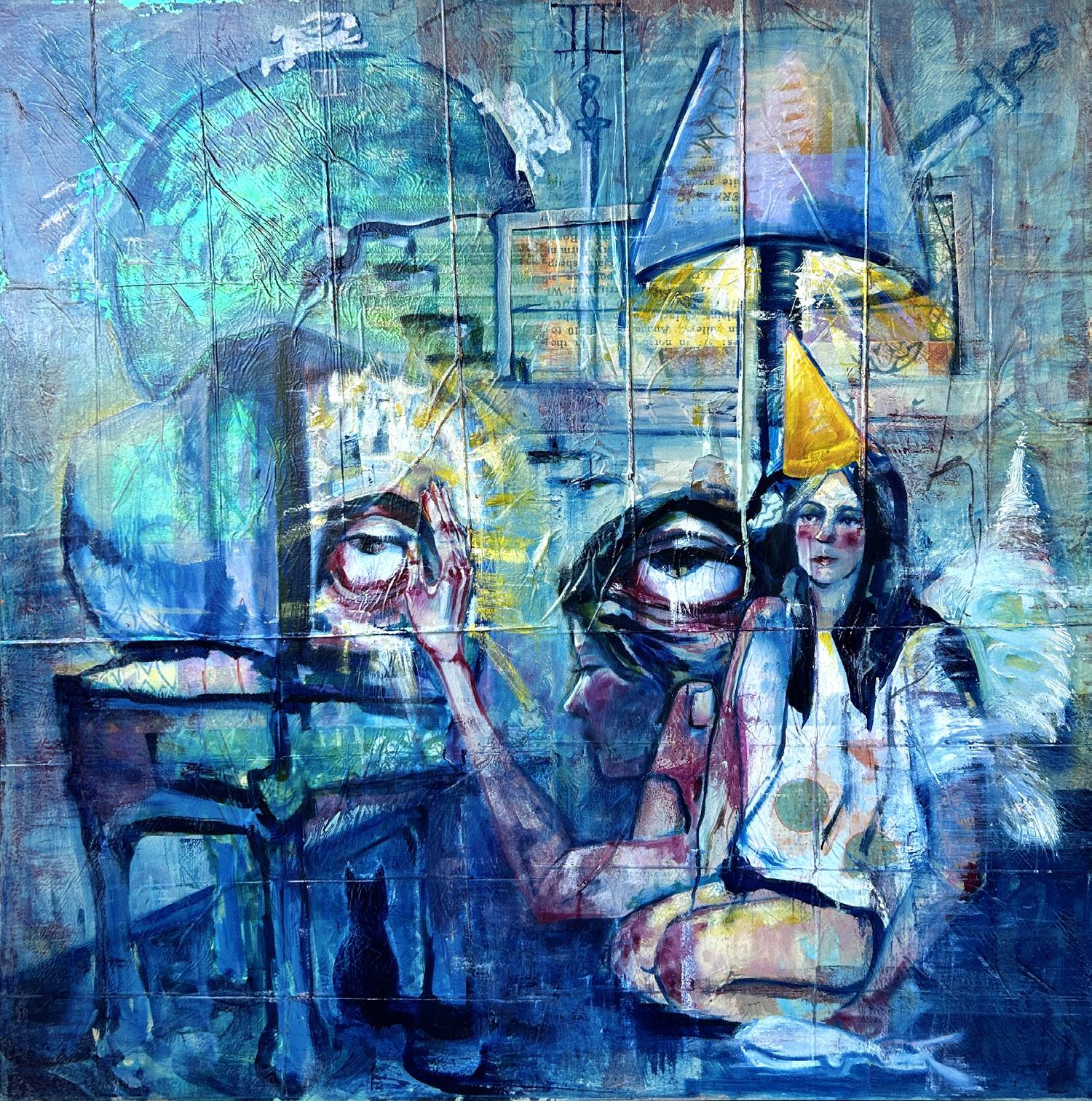
I can feel eyes on me.
It was an eerie feeling at first. Almost everywhere I went it felt like someone was watching me. Grocery shopping, out with friends, tossing and turning in the middle of the night; the eyes were always there. As time went on, the eyes became more and more intense. It felt like I couldn’t do anything without the eyes being somewhere off in a space just outside of my vision. I grew tired of the eyes. Every waking moment, unblinking.
It really started over the summer. I visited the beach my family went to every summer. I stood there, now 24, with my best friend. We dug for shells, as I once did at 4. I ran into the water in my clothes, as I once did at 9. I laid basking in the sun, as I once did at 14. As I sat on the embankment I realized I would, with any luck, sit on this embankment at 40, as I once did at 24. I turned and looked at my friend and I saw them the same as the day we met in high school. Looking closer made me realize they were different. We were different. The two kids sitting atthe lunch table became two adults sitting on the beach, just praying everything would work out.
That’s when I felt the eyes for the first time. They followed me on our family vacation, they followed me as we jumped on hotel beds and stayed up until 2 am eating ice cream. They grew more intense in the seemingly unremarkable moments, washing my dishes or doing homework. I was confused, as these are not things worth watching.
Everything is remarkable when you realize it’s something you once wanted
A month or so ago I found an old journal shoved in the back of a drawer. I couldn’t remember what was in it, but as I flipped through the pages I realized what I was looking at. In my darkest moments, almost 4 years ago now, I was told to make a list. To write down anything and everything I could possibly want, anything that felt missing from my life. As I ran my finger down the list of impossible wishes I came to a realization: I had it all.
My own bed, a kitchen for cooking dinner, to find the right school, a group of friends who cared. Those were my wishes. As I continued to read I suddenly felt the eyes, more intense than ever, watching me tick off every box. She was watching me. The girl curled up on the bathroom floor, the girl who begged the universe for a chance, the girl who almost gave up. She asked for a sign and there I was, folding my laundry.
Everything is remarkable when you realize it’s something you once wanted. She was peering through a telescope, wanting to catch a glimpse. And it wasn’t just her, it was all of me. The 4 year old playing in the sand and the 15 year old at the lunch table, they were all watching. Each achievement is to them a tiny miracle, a reason to keep going.
I can feel eyes on me, and I hope I make them proud.
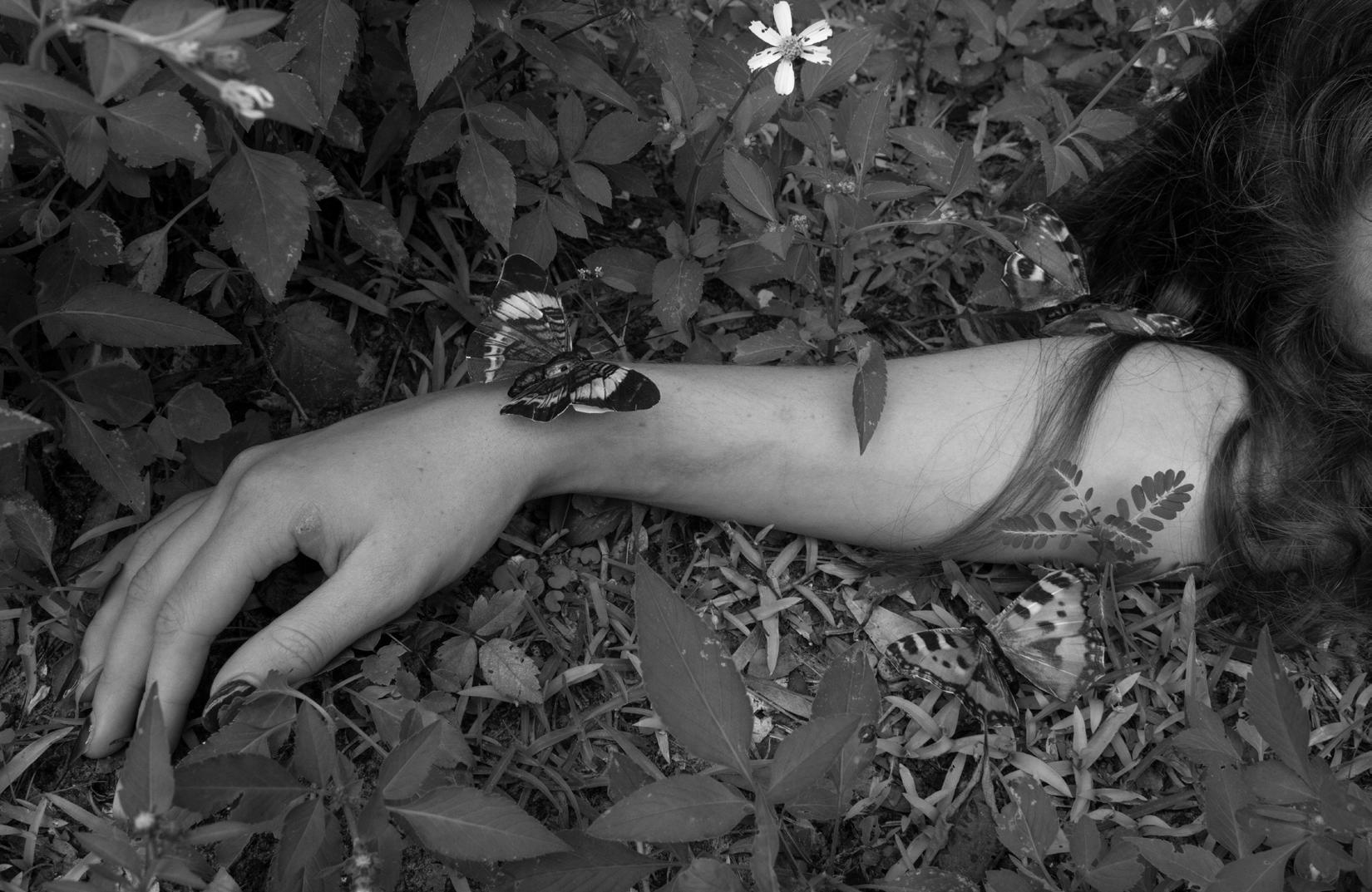
By Avery Melhado
References from Richard Siken’s “The Torn-Up Road”
I’m walking down familiar streets, the pavement cracked like spider-web. In the sticky place moving from present to past— in flight, mid-air, suspended.
It’s not syrupy like honey, not so sweet in the same sense. It’s indulgent, sure, or maybe trapping, a moment torn from timelines, now timeless.
I want to tell you this story without having to confess anything,
I’d like to pretend I self-actualized, playing out scenes where everything comprehends. In my words it’s something else entirely, made beautiful, then laid to rest.
If writing poetry is playing God, then my bedroom is a heaven all the same. But these stained sheets are from a blood oath, one I took willingly, in which I stayed.
I want to tell you this story without having to be in it:
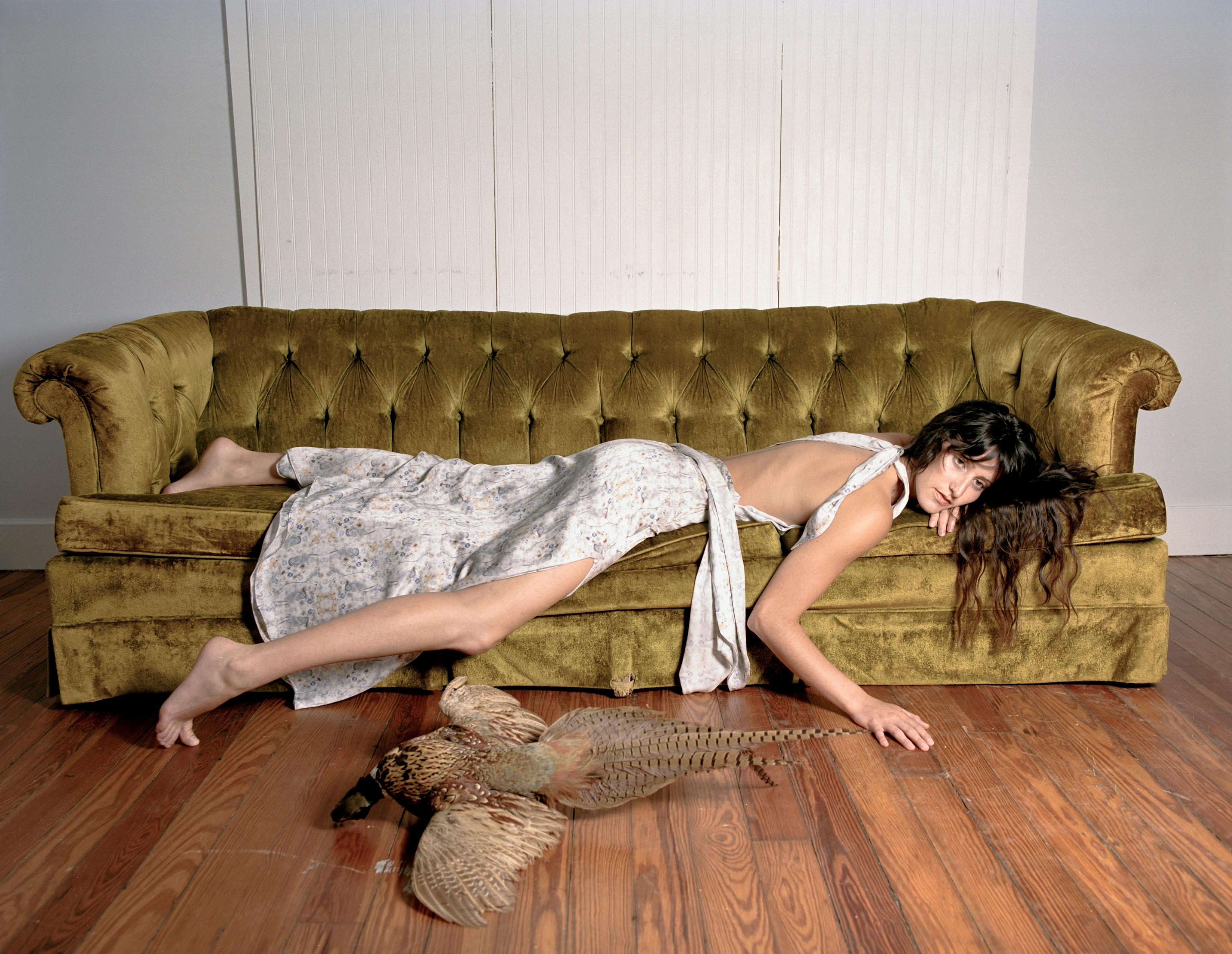
I passed a dead bird on the sidewalk. It was decayed, preyed upon, eaten, and just the wings were left— a metaphor for something I wouldn’t name.
It was almost an angel, laying there. Gossamer wings left to turn to grime. It felt like salvation, like the last thing touched could be what matters after all this time.
Tell me we’re dead and I’ll love you even more.
In a grave that’s not quite so, this peace is left to fester, and in its false pretention screams a voice barely a whisper.
Everything changes, yet nothing moves, each character losing their will. Feathers litter the bedroom floor— Can you see me there? Beneath you, still?
if writing poetry is playing god, then my bedroom is a heaven all the same.
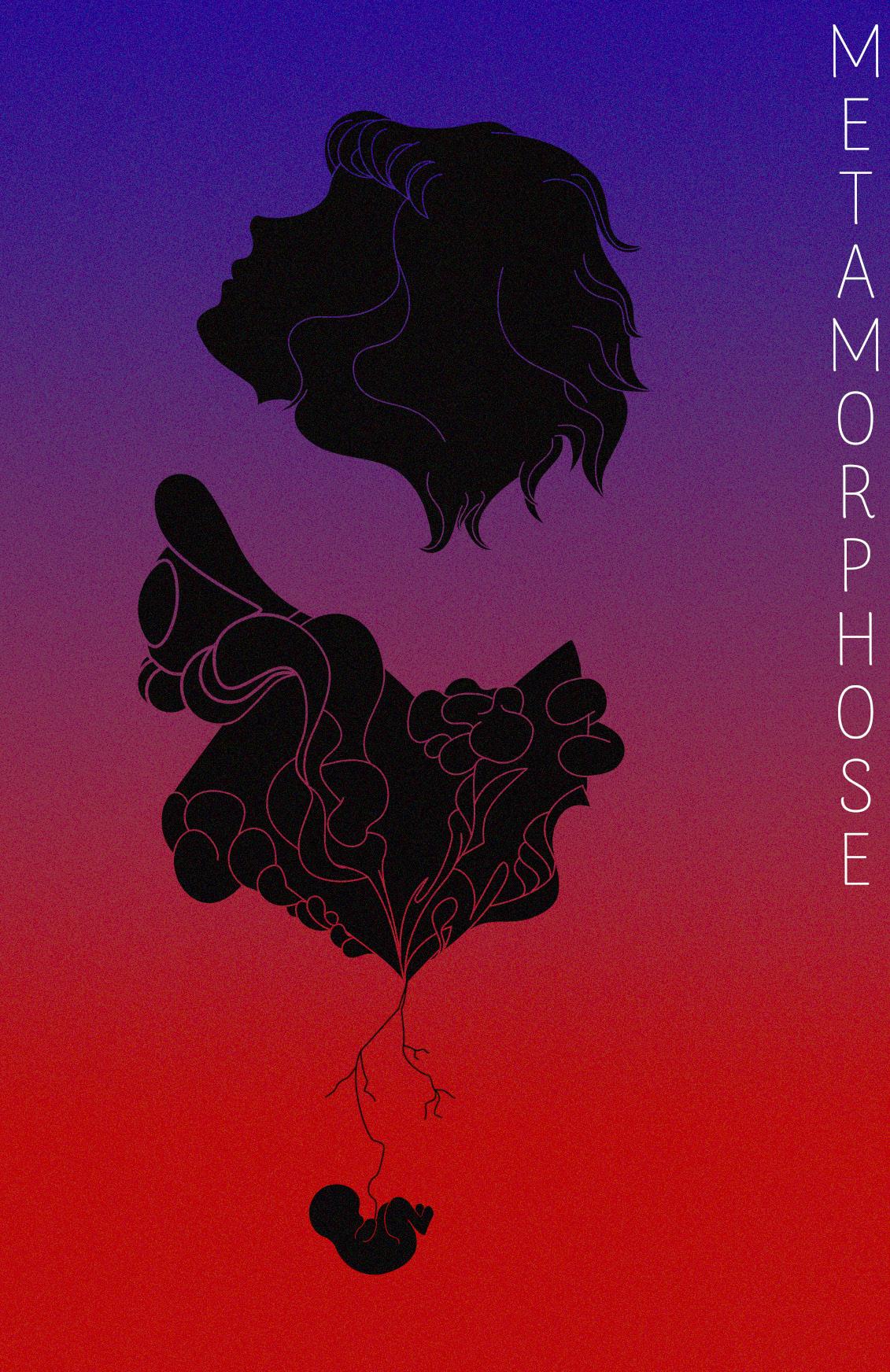
By Eva Olivares
When I was ten, I forgot my little sister on my way back from summer camp and I’ve been riding that bus home ever since. It was a similar school bus that ran over our family dog right in front of our childhood home about thirty minutes ago and now, standing a couple feet away from the crimped-out corpse of my once springy Shih-Tzu, I find I can’t put dirt on her. Almost beside me is that same sister, who has been angry at me for ten birthdays now, with an old, torn-up blanket pinched furiously between her knuckle and thumb. This is as far as my sister’s kindness extends; she’ll offer the blanket but won’t dig the hole.
“Do you do anything?”
My glasses slide further down the bridge of my nose with every strike of the shovel breaking the ground, grains of dirt slipping past the edges of the blade and finding their way into the bulb of the grave where we’ll lay our third sibling to rest. I don’t turn to see her reaction. Facing forward without looking at each other mimics a sort of confessional we haven’t attended since her First Communion, and I can talk to her better when I can’t see her lips curl in disgust at even the slightest breath I make. My sister has always had a way of making others feel like the nuisance that she actually is.
“I found her,” she says evenly. “That’s enough.”
We should be taking turns burying my dog the same way we took turns walking her, but then I remember she would only walk her to the end of the block where her dealer was waiting for her, and back. My sister walked past the family dog after coming home in much the same way she would walk past me in the halls at school: a slight glance out of the corner of her eye, a grimace, a turn of direction.
It should be her doing the brunt work, but I have the shovel. I always do when Mom’s not home and she’s never home. When she is, she locks herself in her room which is right across from mine. Work, she’ll say. My sister does the same and this is the only way that they’re similar.
Throwing a shovel is something my sister would have done to me, but it’s hurling straight at her right now. Her eyes must be red from holding back tears and not from her questionable extracurriculars because she dodges it at a speed I wouldn’t expect of her. I’m our mother’s sensitive boy, the victim of my sister’s venomous tongue and wayward fist, the guardian of the medicine cabinet; Mom would be so disappointed to know I’ve stooped so low as to act as my sister’s brother. I don’t want to associate with my sister but I could only pray that she would associate with me. Maybe then she would have been less angry.
“Enough?” I say in the same way she spits my name. This enrages her.
Her eyes drill into me in a way that forces me to look straight at her. How long has it been since I’ve last seen her? Who has she become other than what I’ve heard through the walls? Something forceful I decide as I watch her chest heave weightily with every breath. Strands of sweat-slicken hair stick to days-old makeup cured onto her face and the pieces that aren’t cemented dance with the ripple of her hatred. My sister isn’t stronger than me but she is angrier so I take a step back. Surprisingly enough, she doesn’t hit me. She doesn’t say anything at all.
She doesn’t say anything at all.
Instead, she bends down slowly, still trembling, and grabs the handle of the shovel. Her hands fall right where the sweat of my palms stained its wood and in another memory many Christmases ago, her smaller feet are mimicking my footprints in the snow. The warmth of her body as she steps beside me melts this recall and brings me back to Spring. Still, she copies me. I’m not quite sure why though, I was only born first.
The blade finds its way into the ground again, this time by my sister’s hand, and makes a puny sound. It barely breaks the surface. Her short frame teeters unevenly as she tries to gouge out the skimpy helping of dirt right along the cutting edge. She lifts from the arms, then the shoulders. It doesn’t budge. When she decides to lift from her knees, they buckle beneath her and she’s faced with the edge of the dirt just as she’s faced with the edge of the toilet bowl on Friday nights. I don’t want to help her up – showing kindness to a stranger is scary enough – but I can’t watch.
I drop to my knees beside her without looking at her, just in the way she likes to be left alone. A sandbox is to a child what the dirt was to our dog and my sister and I used to play all day. My hands sink into the slight impression I’ve already made and my eyes purposefully avoid the unmoving lump with a blanket – my sister’s blanket –draped carefully over. Rubble falls and sifts through the openings of my fingers. We’ve never played with shovels.
I begin to dig. I dig like my sister, I dig like our dog. I fling the excess behind me, grab handfuls, scoop and ladle, I kick up with my back legs. My sister doesn’t say anything (she doesn’t need to) when she leans forward and does the same. Dirt embeds itself under the bracket of my nails and I know it would happen to my sister too if she didn’t bite her nails to the quick. Some places that I latch onto dampen my palms and I’m not sure if it’s my tears or her snot but it doesn’t matter. All we want is a hole big enough for the three of us.
We dig until we risk burying ourselves. When we’re done and we’ve lowered the disfigured carcass of what once was our Good Girl into her bassinet, the sun is gone, the hole is covered, and my sister’s smoking something behind the garage.
But I won’t tell Mom this time; it’ll be between our little dog, my little sister, and I.
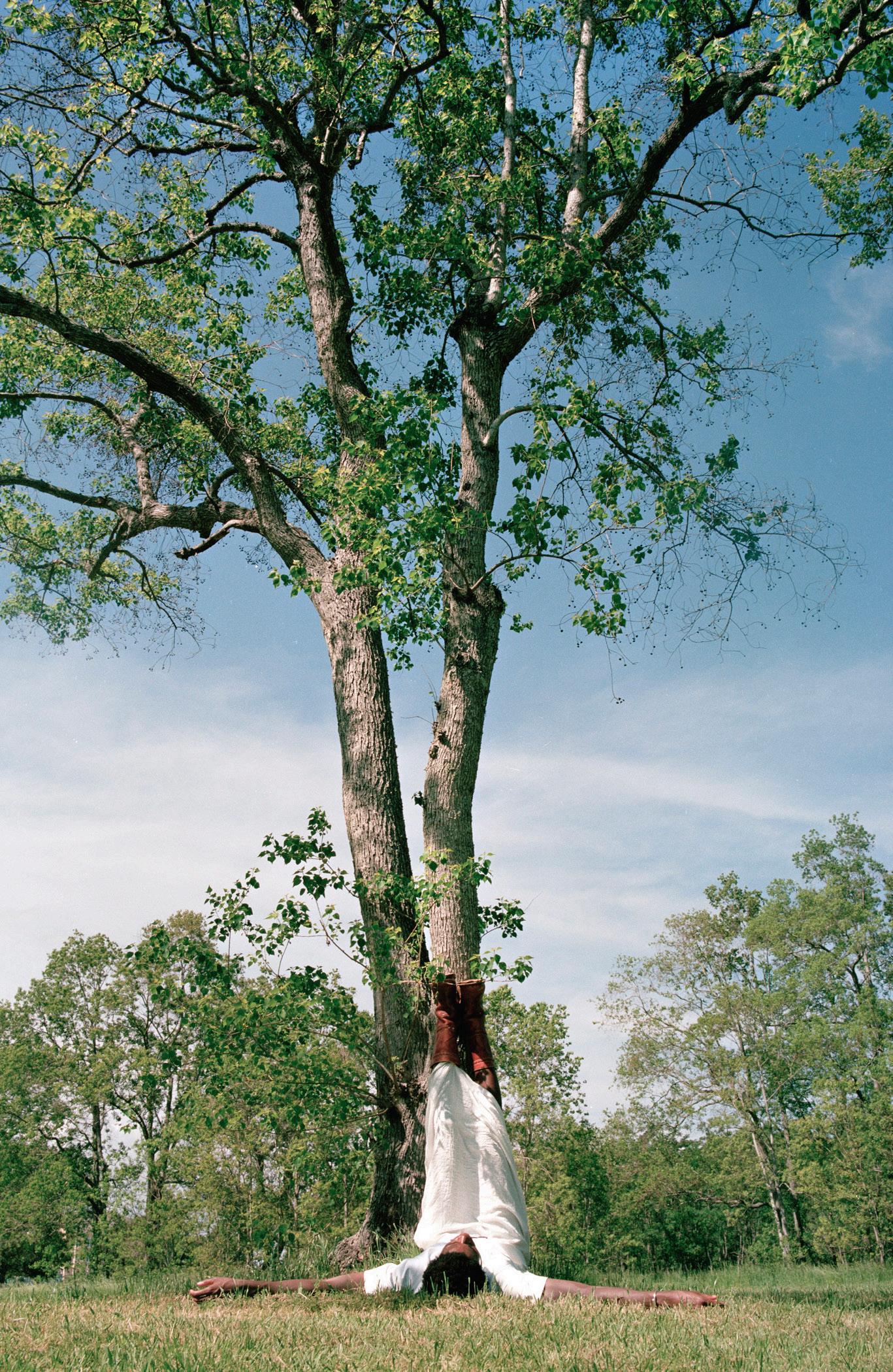
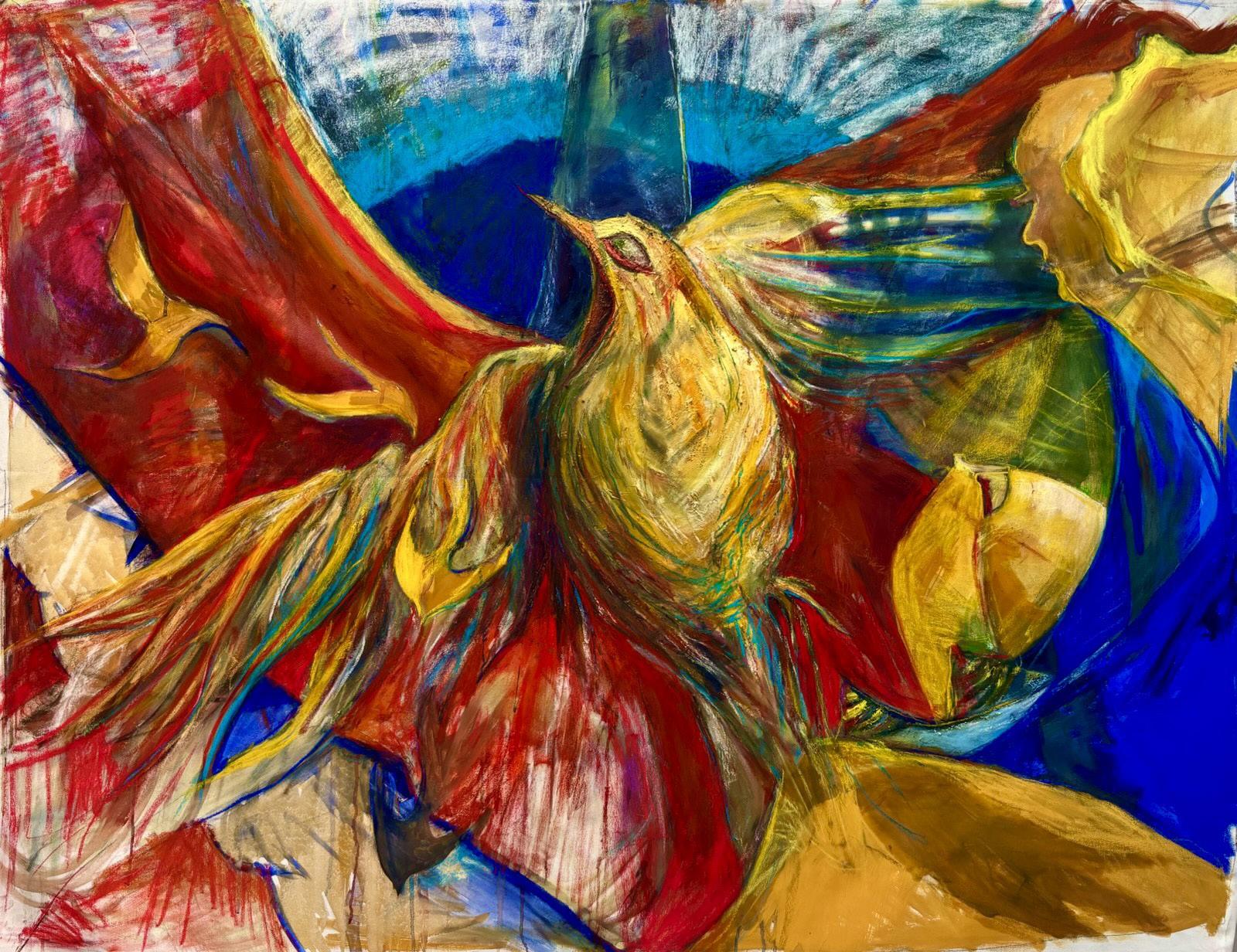
By Alexa LoSchiavo
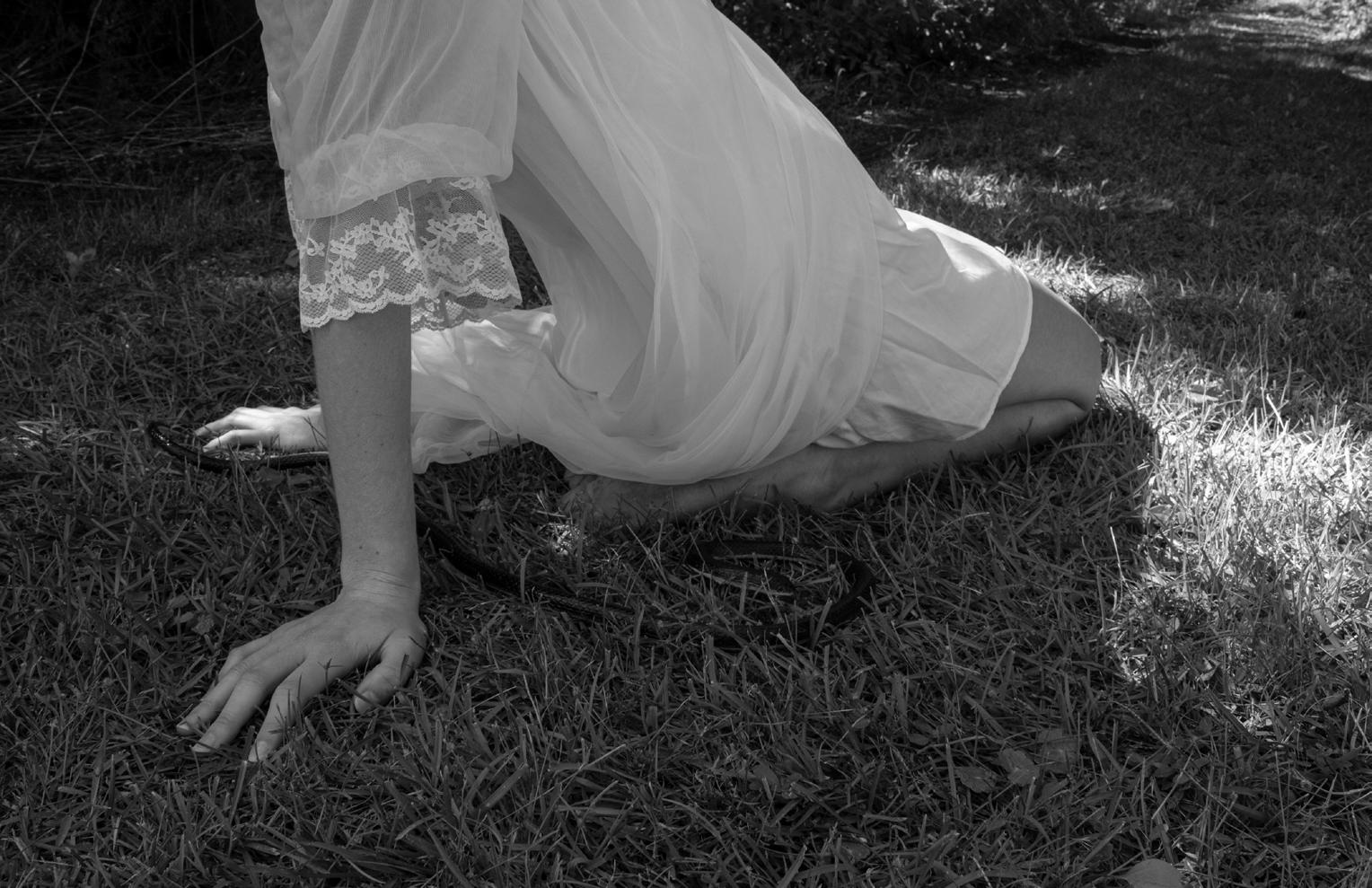
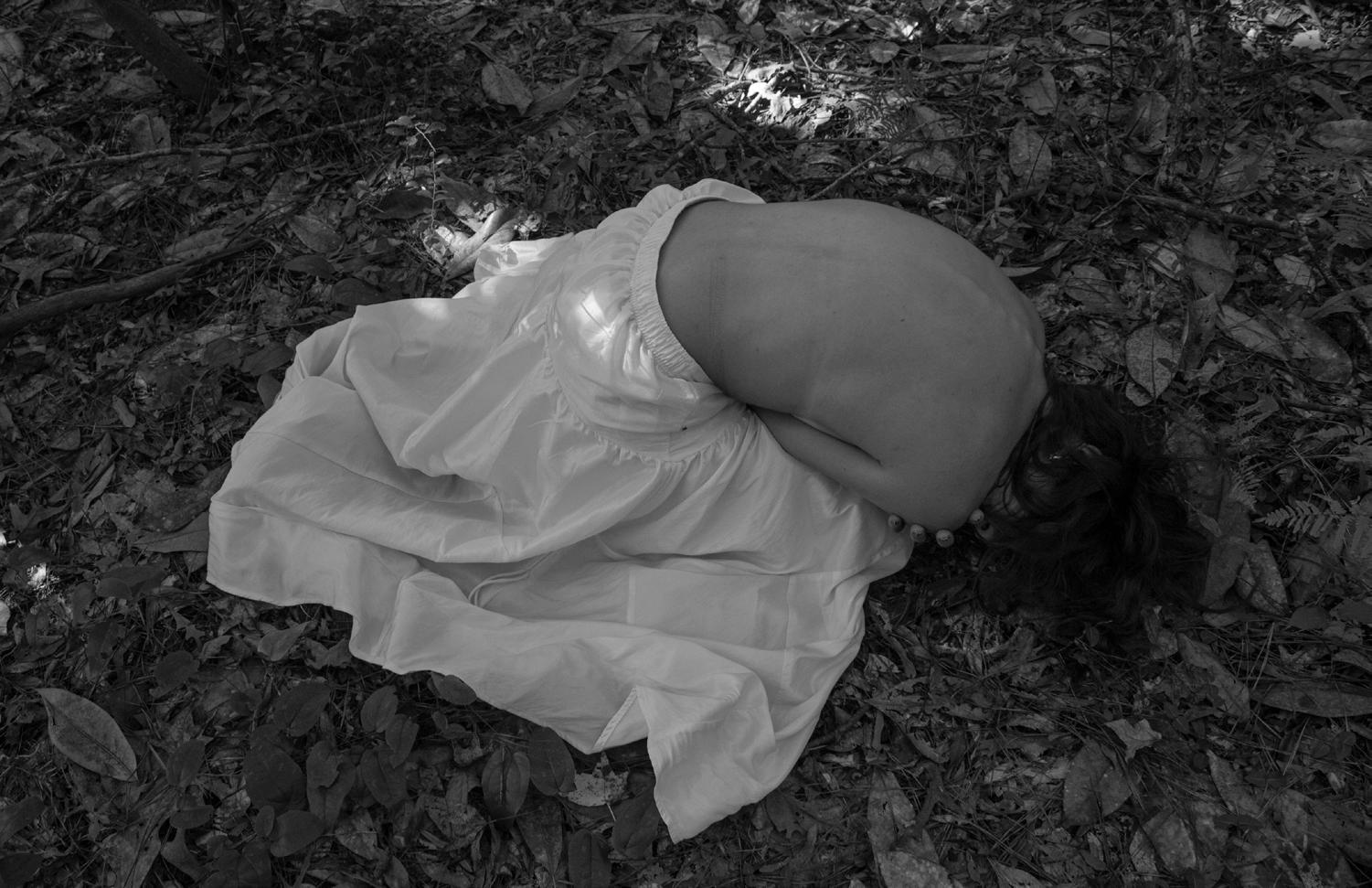
I climb a caged apple tree to release All that glistens (red, sweet, and pulpy) From its yearning.
I let my white slip dress tear I let the wind tangle my dark hair. And then, I let them take me away.
It’s crazy to care for something so inanimate, They say. I should’ve let those apples rot. (As they grab my wrists and strap me in)
I stare down at their red finger marks, Naked remnants of distaste on soft skin. In my dirt-torn dress, they take me away to the asylum.
I am intangible, confessional, nothing they want me to be. I run and run and run without going anywhere Miles and miles of caged trees and me.
In a dream, permanence is an illusion. I suppose in life it’s just the same I am still reaching, I am still changed.
By Kelsey Vickers
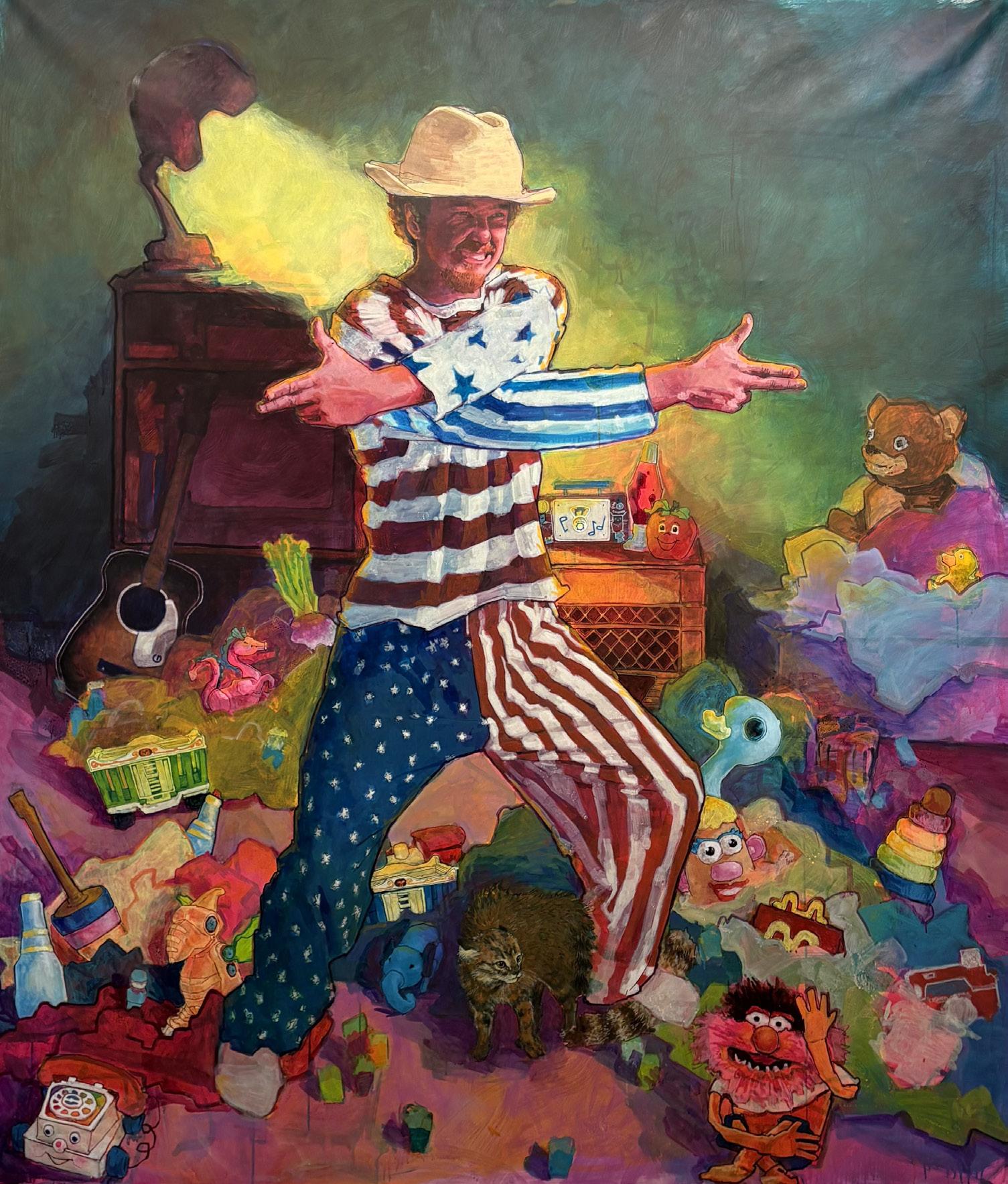
There are dozens of photos of me as young as two years old with all my toys in a row on the kitchen floor, organized by size and category, from Littlest Pet Shop to My Little Pony. By four, I became meticulous with the placement of my toys and the position of each object in my room. Once an item found Its Place, it cemented there. I expected everyone around me to share this sentiment, including my two-year-old sister. Playtime was not worth the price of destruction.
My name became synonymous with “Bossy” and “Bad Sharer.” I deemed everyone aside from myself incapable of taking care of my belongings. Broken, dirty, lost – the possibilities of what could happen when someone else had my things were endless. No one understood the severity of the situation. Parents disapproved of my territorial quality, thinking of me as spoiled, so I had to give a little leeway. I allowed sharing under strict surveillance. I must see you wash your hands before you touch my book. Before coloring, I will demonstrate how to snap the Sharpie cap shut properly. I couldn’t make the same mistake again, allowing another Sharpie to dry out at the hands of an untrustworthy individual. They were a gift for my tenth birthday, they required care.
My mother grew concerned as this issue became more pressing. Before
bed, she put a stuffed animal on the floor and tilted a picture frame, forbidding me from putting them in order. She wanted me to see that everything would be okay in the morning. Falling asleep that night was treacherous. Things were not okay; they weren’t in Their Places. As soon as I was granted permission to, I fixed everything. Nothing will ever be okay unless I make it.
My focus expanded to other endeavors that were promised to my control alone: chores, schoolwork, and skills. I started doing the dishes and my laundry at nine. I was rewarded with a hamster. This was both a privilege and the most defining test of my responsibility at that age. My sister, who was seven at the time, had to have one too. She didn’t understand the responsibility she was undertaking. Feeding them, watering them, and cleaning the hefty glass aquariums they inhabited were entirely our responsibilities. Briefly, her hamster became mine. She would rather not have a hamster than clean the aquarium, so I took care of him until she was ready to claim him as her own again. It was not a rare occurrence for her responsibilities to be forfeited to me. I often preferred it that way.
By thirteen, I voluntarily took on upstairs cleaning: scrubbing every inch of the bathroom and vacuuming each room. This routine occurred every Sunday without fail, I postponed hangouts with friends to ensure that I had time for chores.
My sister was the only interference to my arrangement. She was repelled by responsibility. No matter the age, whether it was toys, makeup, or clothes, they were scattered everywhere. Water could always be found all over the sink and dirty towels hoarded in her room. She always managed to wriggle her way out of chores. She had to learn and as her older sister, I believed it was my obligation. I asked, begged, scolded, cried, and attempted to ignore it, but it always ended in tattling. I pleaded with our mom to make her do chores and when she was old enough, force her to get a job. I needed her to be like me.
When the pandemic hit, my education was simple and wasn’t enough to occupy my time anymore. My health was added to the list of things no one could disturb. I followed a strict exercise regimen and took over grocery shopping and cooking family dinners. This extended time at home also meant more time with the messes. My control issues coupled with my sister’s turbulent age of thirteen led to an unprecedented level of conflict. I started to notice a pattern in our arguments. If I chose to put up a fight, I could count on one to three days of side eyes and jagged remarks. I could also count on nothing changing, other than the way she looked at me. She became dependent on her best friend’s sister for advice regarding school and bad teachers, something I had looked forward to sharing with her for years.
Still, her habits made me so angry because they were so wrong. Dry off the counter when you’re finished. Put the towels in the bin. Pick up your crumbs. Keep that picture frame at a 30-degree angle. Don’t let your toys get dirty. Don’t let your markers dry out. These are the rules I lived by. How could they not apply to her?
When I started my first job, my chores were transferred over to her. I felt my purpose dull. It was unfathomable that someone else could take over so easily. I felt a burning need to do these things, despite my lack of desire, because no one else did them the right way and it’s what I built my self-worth upon.
The home is not dependent on me, yet I carried that weight as if it were.
When I moved out for college, she took to cooking and grocery shopping like I had. In the blink of an eye, my importance in the home dissolved entirely. The home is not dependent on me, yet I carried that weight as if it were.
Sometimes, my sister returns to find her room cleaned and laundry put away by our mother. I get so jealous, wishing my family could still see that softness in me, someone to be taken care of. Yet, I prevented it. I prefer how I do things. I would be upset to find someone had touched my things while I was gone. Would something be missing, damaged, or God forbid, not in Their Place?
No one depended on me as the authority figure I assumed myself to be, and no one nurtured me as the daughter that I am. Grown up and independent, an unnecessary extension of the family.
This past summer, there was a shift. The orderliness of the home despite my absence was a forceful push into reality; everything will be okay even if I’m not the one to make it so. With the distance at college, I discovered a newfound sense
of independence. I have more homework, hobbies, friendships to foster, and a clear direction for myself that I never had. This space allowed me to exercise control over my life without misjudging that I can control others.
I still view myself as responsible for my sister, but now I embrace my role as a sibling and not a savior. I fantasized about who my hypothetical older sister might have been since I was young. She would give me the best advice and take me everywhere. I want to be her for my sister. So, I show her the best coffee spots, take her to get her ears pierced, make her handmade gifts, take her on spontaneous shopping trips, and let her use my Sharpies.
My knickknacks could all be in Their Places, the whole house clean, and the fridge could be stocked, but if I had pushed my sister out of my life, things would not be okay in the morning. Control is not worth the price of that destruction.
She is my oldest and favorite friend. We are the only ones who will bear witness to each other’s lives in their entirety. Unfortunately, that includes the parts of myself I prayed no one else could see. It also includes the parts I feared were lost to time, like my favorite animal being a flamingo as a girl. When I laugh with her, it feels like the first time. Her singing is my favorite sound. Her love is true blue.
I hope it’s the first thing people notice about me, they sense it. As if it’s as potent as the perfume I sprayed and as obvious as the color of my hair. Our eyes meet and they think, “She is an older sister.”
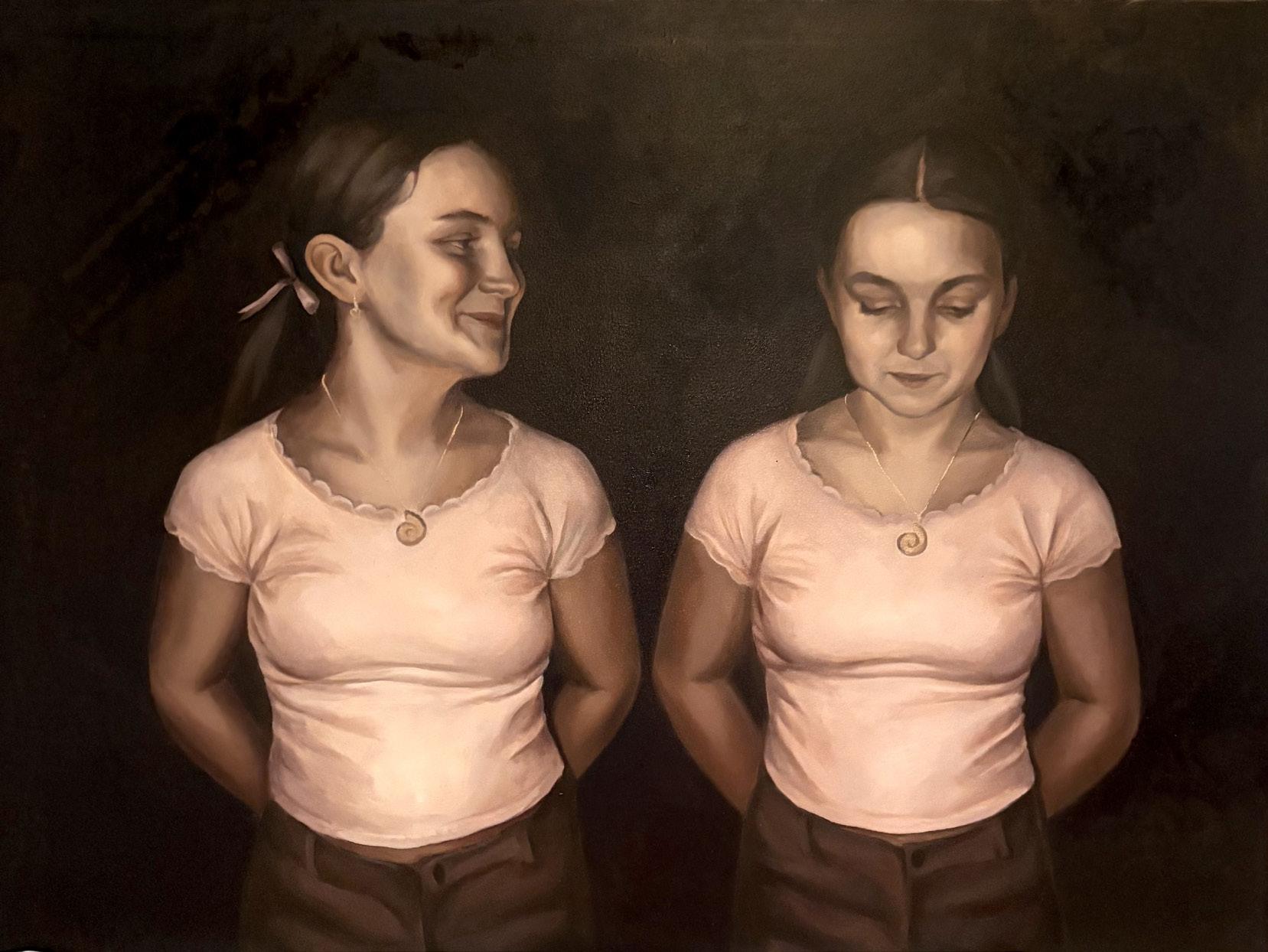
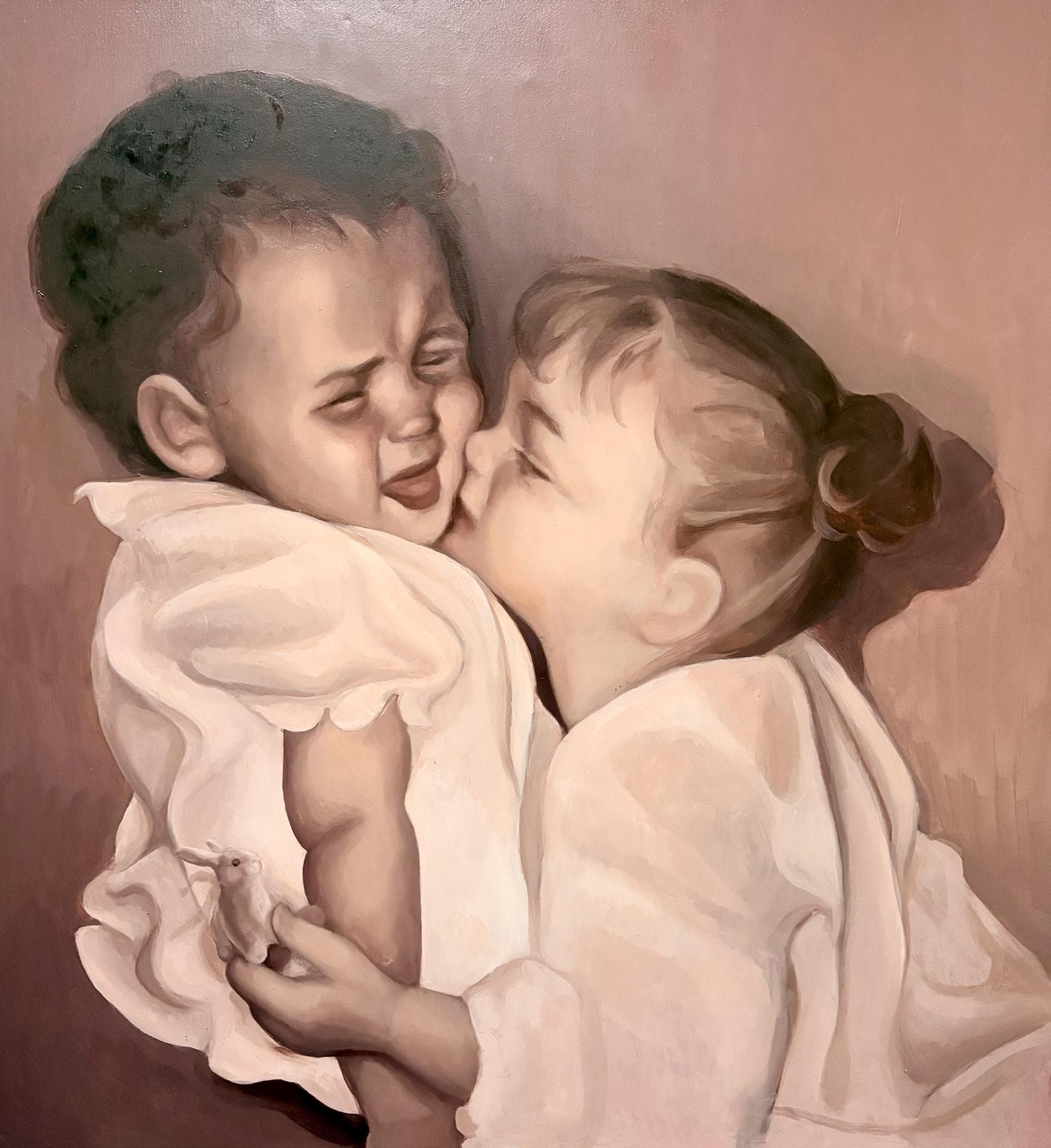
Our eyes meet and they think,
“She is an older sister.”
To Owe
By Ameill Brown
This is more than just a dedication. A myriad of words fill my mind
My being alone a testament to your love
Thousands of sacrifices you’ve made on my behalf I couldn’t dare ask you, “how much?”
Love is worth more than just dollar and dimes
Although, the burden crosses my mind all the time
There is no number for what you’ve done tor me. The endless ways you’ve believed in me–
This is more than just a dedication. Pen and ink, laced with poignant truth.
You could say, “I’ve asked too much”
You could say, “I don’t deserve it”
You could say, “I may not make it.”
And, you would be right.
But so long as you envelop me in your embrace, and stay by my side and guide me along, like you always have,
I’ll preach that this is more than just a dedication… and that I am who I am because of you.
Today wouldn’t be much different from any other day; it never was. Time had blurred so much that he could no longer tell what year it was. The weather had become so erratic that seasons no longer had any meaning. He got out of his bed with mechanical efficiency and checked his food stores. Today would be a grocery day. He needed a special suit the government had issued to protect against toxins to go outside. The government was long gone, and he didn’t know if the suit worked anymore. Perhaps the aches in his body were from age, or perhaps they were from a creeping poison.
He prepared himself a spare breakfast, just some canned sausage and a few slices of tomato from his garden. He mostly maintained the garden out of boredom. There were still plenty of canned vegetables at the local supermarkets, but if he didn’t have the garden to work on he’d just end up sitting around the house doing nothing. He’d moved into a nice, big apartment building after everything had collapsed that had a decent-sized courtyard that he grew things in. It didn’t
Perhaps
By Matthew Thompsen
yield him much food, and he could feel his motivation to maintain it slipping away.
He’d hoped the garden would keep his spirits up, but it just seemed to be the last thing to fall away. He had taken some efforts to keep his apartment clean when he’d first moved in, but he eventually figured that there wasn’t any point to it. No one left to impress. So, he’d just let the apartment get dirtier and dirtier. Whenever one room got too filthy he’d move to the next one. By now, however, he’d gone through all the rooms in the complex, so he just did his best to avoid it. He rarely took off his shoes because of how dirty the floors were.
He paused for a long moment in the middle of pulling his boots on, already a notable deviation from his routine, and he wondered why he bothered keeping himself alive. It was hard to say when the last time he had seen another person was, but it must have been years. For all he knew there wasn’t another person alive on the whole planet. It didn’t seem to matter much if he died today or ten years from now if he was the last
person alive. He didn’t much like this train of thought, so he shoved it into the back of his mind where it could be safely stored for a certain amount of time, hopefully forever.
Once he was all suited up, he unlocked the door to the mansion he’d made his home and stepped outside. The scene outside had at one point been a suburban neighborhood, but was now so overgrown with ashy gray plants that it’d be hard to make out the houses underneath. A blood red sky, clouded by smog, hung overhead. The corpses of two creatures that might have once been dogs lay in a nearby alleyway, their throats torn out.
He couldn’t say when it had begun to go to shit. It had started so long ago that he doubted he could have done anything. Perhaps it had started before he had been born. It was unlikely that anyone could have said where it began with any confidence, and he vehemently believed that anyone who would claim to was either deluded or a conman. Pollution, natural disasters, wars both civil and otherwise. A web of causes and effects so complex that there could have been entire fields dedicated to studying it, if there was anyone left to do the studying. He’d never paid much attention to the goings on of the world before it had ended and it didn’t seem like there was much point in learning now. It was funny. Back in the day, everyone had been worried about nuclear annihilation,
but the real apocalypse had been much slower and more insidious than a big bomb. It hadn’t come bursting in the room declaring its intentions for all to hear. It had been a patient predator, stalking them quietly for years, decades, centuries even until, by the time anyone realized it was there, it was already breathing down their necks. The world hadn’t ended so much as it had unraveled.
He didn’t enjoy going outside, didn’t like seeing the world’s dead husk, but he needed to eat. He had to make regular trips through the city to bring back extra food from the abandoned grocery stores. Most of it had rotted long ago, but the canned stuff was good practically forever. He was always shocked by how long a supermarket’s worth of food could last when it all went to feeding one person. Still, he’d been at it for a while and had emptied out quite a few of them. Only the marts on the far side of the city had anything left in them, and it now took him most of a day to make a round trip. He knew he’d have to make the move to the next city over sooner or later, but the effort of making it didn’t seem worth it. There was also the lingering thought that he might not like what he found. If he stayed hidden in his little corner of the world, he could maintain the illusion that there might be someone else out there. If he went out into the wider world and was unable to find anyone he didn’t know what he would do.
Back in the day, everyone had been worried about nuclear annihilation, but the real apocalypse had been much slower and more insidious than a big bomb.
As he shoveled cans of food into the bags he had brought, he found his mind wandering. He usually tried to avoid that. Thinking didn’t do him much good. But now his mind went to how the world had gotten this way. Could things have been different? Perhaps. Perhaps if the government had been more willing to take action. Perhaps if corporations were a bit more compassionate. Perhaps if society had been structured differently. Perhaps if people had cared more. Perhaps if he had cared more. Perhaps if he’d been born earlier. Perhaps if he’d bothered to learn anything about the problem before it had gotten this bad. Perhaps if he’d done anything to prevent this.
He stumbled out of the grocery store, the ache in his arms was somehow worse, the weight somehow heavier. Just as he was exiting the store, the plastic bags ripped, sending his stockpile of canned foods scattering across the parking lot. He stared at the food strewn across the pavement for a moment before tossing the bags aside and bending down to pick up the metal cans. As he crouched over, he noticed some broken glass by the side of the road. He picked it up and examined it. He was going to die sooner or later. Might as well be sooner. It’d be messy, but it would do.
Just as he put the glass shard up to his throat, a hummingbird flew down and landed on a broken-down car right next to him. “Hello,” he said. His voice was rough and scratchy from disuse.
It cocked its head at him. Its coat was shiny and pristine, full of vibrant color, as though it hadn’t spent what must have been its entire life in the hellhole the world had become. He wondered how it had
Perhaps it meant that there was still something out there in the world worth fighting for.
survived. Hummingbirds needed to feed almost constantly; he was sure he had heard that somewhere. By all rights hummingbirds should have been some of the first creatures to go. Yet here it was, pristine and perfect as if it had been pulled straight out of the past.
It fluttered its wings and flew off into the smog-clouded sky. He took a few steps after it, dropping the glass shard, before stopping. He wouldn’t have been able to keep up with it, and even if he could, he didn’t have time to go running around after it. He looked over at the groceries he’d left on the ground and started picking them back up.
He was still thinking about the hummingbird when he got back to the apartment. He set down his groceries and looked at his bed, still unmade from the morning. He set about making it. It was a sloppy job, but he couldn’t help but feel a kind of satisfaction at having done it. Once he had done that, he decided to sweep the floor. He cleaned as best he could without a vacuum and threw out most of his rugs, and then decided that he would make himself a proper meal out of the food he had brought back. He hadn’t cooked anything in years. At most he just heated up some canned food soup in an impromptu fireplace he’d made. The meal wasn’t fantastic; there was only so much he could do with canned ingredients, but compared to what he usually ate it tasted incredible. He’d never really had the energy or the motivation to cook anything, but now he felt a strange energy pulsing through him. It was the hummingbird, he knew, that gave him this revitalization, but as much as he pondered it, he couldn’t figure out why. Perhaps it was that it had been a reminder of his previous life. Perhaps it was because it was that such a fragile creature had managed to survive in such a harsh world. Perhaps it was that he had survived, just like it. Perhaps it meant that there was still something out there in the world worth fighting for. Perhaps it wasn’t as dead as he thought. Perhaps this wasn’t the end he had thought it was. Perhaps.
By Avery Melhado
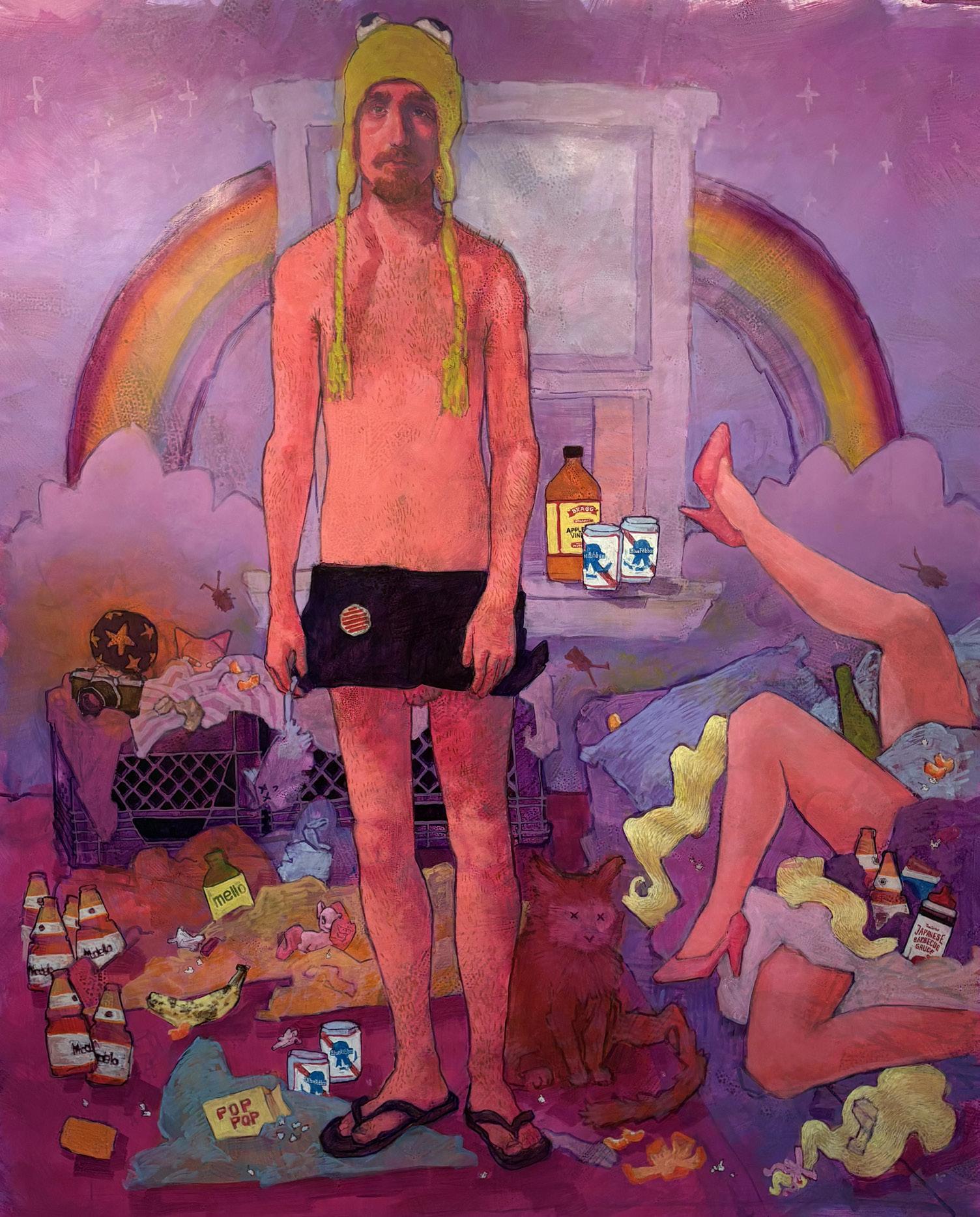
It was 932 square feet of pure freedom. I nearly cried when I opened that door. We spent the week eating dinner on box springs, watching movies we’d already seen. Tacking posters on walls and mounting frames with thumbtacks. We’re never getting that security deposit back. No regrets.
Summer was lonely and effortless and full. Our old friends came to visit more than we maybe deserved and it was beautiful. Full of 4am tarot readings and getting high on the balcony. Boxes of furniture carted up from the package room. We swam in the pool after dark, our new tattoos kept out of water. It was an eternal sleepover. It was July heat. It was God.
I fell in love on the couch, drank coffee at the kitchen island. Fall in the city— all hands on thighs and pasta dinners and cake with melted frosting. Polaroid pictures and homework parties. You drew every face that mattered on a sticky note. Slowly, we took them down, as the characters faded. Friends leaving as quickly as they arrived. Boys in and out of beds, the same for a while then different again.
Visual: Home is Where My Rooms Are by Tegan Daley
I’ll miss all of it. The way the washing machine bangs against the wall next to your bedroom. The mice that were really just ghosts. The broken building fire alarm and the smoke detector that goes off every time we open the oven. It’ll be a memory soon enough, a funny one at that. A coat of nostalgia over old annoyances, a reminder of a life once lived. We’ll move out and take the doormat with us.
But for now it’s one more night in this room of my own. The sound of footsteps from above slowly sings me to sleep, the familiarity of the shared apartment complex we’ve made our own. I’ll savor it while I can, knowing it won’t ever feel the same. 932 square feet of freedom. 932 square feet of home.
By Rhys Morrow
You will know when you’re getting close. The cracked highway, painted like a zebra with patchwork tar, will gently wake you with its perfectly worn tempo. Or maybe you’ll be jolted awake by your driver drifting onto the rumble strips. At one point they were gouged into the asphalt to alert those who fall victim to the calming and rhythmic pattern of pastures and woods and pastures and woods. Before you make the last left turn onto the double-ended rainbow-shaped driveway, you’ll see five young children walking the ditch line, and you should wonder who let them get so dangerously close.
We knew this roadside well. After being told to go pick up trash, we returned with grocery sacks of styrofoam, empty dip cans, broken beer bottles, and all the other foundational items of Taylor County. Cars passed by, and I can only imagine what they thought as five small sets of eyes met theirs in the sixty-mile-per-hour flash. This recurring chore was followed by one lucky older sibling, not quite yet old enough for a learners permit, driving the dented, spraypainted Ford S-10 truck. The remainder on foot closely tailed behind. From there, we gathered the fallen limbs of the pecan trees that were dotted about in the three main yards. They collected into a mountain, and we would periodically scale it, jump on its peak, and pack more in. Way up there, I scanned the yards hoping not to see dad cutting more and more down. Depending on the season, the rusty pecan picker uppers, as we called them, were taken from the truck bed, and then tediously rolled to gather every pecan with each squeaky rotation. When the ellipse-shaped wire cage was filled with the nuts, we pulled a section open, allowing for them to gather in an orange Home Depot bucket below. Finally, the grass was prepared to be cut, and each of us went our separate ways. I’m almost certain we all learned how to drive the farm’s fleet of mowers before a car.
After wrestling the pull cord of the push mower that was longer than my entire wingspan, I would be dragged along in its dust, carefully tracing the exterior of the ancient cracked and peeling pool. As my legs grew more neon green with the grass cuttings collecting at my ankles, so did my frustration. With every increasing second, my hands grew stiff around the metal bar and painfully hummed with the motor’s vibration. Each turn or unseen bump, yanked and twisted my narrow shoulders, the rest of my body always one step behind them. Despite how often I attempted to get out of these chores or wished that my parents would accidentally forget about them, I reluctantly succumbed to doing them. These chores, and the blisters, sunburns, or ant bites were the small price to pay for the childhood I adored.
To ease our hard-earned scratches and bruises, my siblings and I would reconvene at the 1970’s pool. The teal diamond patterned liner had faded and dry rotted, hidden with black rubber patches and sealant. Its aluminum border grew hot under the southern sun and bit at our clinging fingertips. But to us, it was nothing less than an oasis. On particularly fortunate days, we used its water to redneck refrigerate an entire watermelon. Floating on the surface, we took turns draping our bodies over its mass and attempted to hover in the heavy air for just a moment. In defiance of its buoyancy, we collectively pushed it to the pool’s floor and watched as it shot into the
open pale blue sky. On its descent, we broke into laughter and cheers. The watermelon was forgotten and drifted about as water gun fights, cannonball competitions, Marco Polo, and wave pool making were shortly underway. When finally admitting exhaustion, something not easily done for a child, we wrangled in the watermelon. Placed onto the black rotten wooden table, it was cut into huge wedges and paired with Morton table salt. Usually at this time, my two brothers’ absence was noticed. We felt Dad’s agitated call from the opposite side of the shop all around us as his voice bounced off the rusted tin roof and concrete floors.
In the green-tiled bathroom, seemingly frozen in time, I traded my swimsuit for hand-me-downs. Following the once shag-carpeted hall, I reentered the strange world that was this place. The kitchen fridge came up short on sweet tea-filled ice trays, so I left to see what the old carport fridge had to offer instead. Sometimes, my mom bought us sodas and put them out there, but most of the time there were only random items like a bottle of a mystery condiment, an empty pickle jar, Bud Lights, or Pepsi’s exclusively for Dad.
A window built into the original exterior brick wall connected the carport and the shop. Through this, I often listened to Dad bark demands and the inevitable outbursts that followed when my brothers didn’t perfectly meet them. I learned big grown-up words. Words that made me
question how such a large insult could fit through such a small opening and make its way to my ears. My younger brother Flynt especially, the one who looked the most like him, seemed to disappoint him the greatest. “Fuck me!” or “You can’t do anything right!” Dad would yell at him. But this one day in particular, he told him he wished he shot him and left him to die in the swamp. A remark that incomparably resulted when my brother accidentally hit a tree attempting to pull my Dad out from mud he got himself stuck in. My brother brushed this off, or at least he appeared to, as best as a preteen could. But I knew, when they were no longer in his sight, both Ryver and Flynt felt all of this. How they felt towards it, I can’t be certain, but nonetheless it’s impossible to not feel it. Later in life, I’ll learn that this, how you feel and respond, is one of the few things a man like Dad can’t control. I waited to see them turn the corner of the garage, eyes full of anger or tears, and hastily retreat into the house.
I imagined what my Dad’s father must have been like, the one he swore to never become. The one with a legacy of alcoholism and abuse that caused him to change his last name by high school. The same last name he still gave as middle names to both my brothers. I wondered if that physical resemblance to his own son Flynt is what irritated him so. Moreso, if carrying that endowed likeness is what also made Flynt, around the same age, change his last name to my mother’s maiden name. He
wouldn’t think of any of this. Because, now with a shop that was all his, full of tools only he could correctly wield to his standards, my dad sat there, and let the dust gather into a pile on his head.
I would jump on a four-wheeler, drive recklessly down the long red dirt road to the swamp. Sometimes I stopped to greet the neighbor’s cows, visit the abandoned school bus, or drink from the artesian well. But on the days my head was particularly restless and his words heavy on my heart, I drove all the way to the Flint River, sat on its burnt orange sand banks, and wished I could stay there forever. It was in this water I first learned to swim, the fear of what resided under its murky shallowness fueling my ambition. Dad told me I would be baptized in this river, but never was. My brothers were named after this river. But the Is replaced because my dad wished for us to all have Ys in our names; for us to be able to wonder “Y not me.” To question the obstacles before us and pursue life with unruly passion. I believe it was this same wildness that he found in playing rugby. It was during this sport that he broke his neck just before I was born. From this accident, and the loss of the ability to walk, is where I assume his bitterness grew subsequently filling the gaps and cracks of his spinal cord. He could no longer run from the shadows of his estranged father, and instead took them up as his own. It is this version of him that I have only ever known.
The river was not on our land. The neighbors never seemed to mind sharing though. When the sun began to fade, I would make my way back to our land. Passing our ponds, I think back to when I learned how to fish, my pink Disney princess rod now long forgotten. When I grew bored or dad grew agitated with knotted lines and the uncomfortable silence between us, I left the dock and found refuge staring at the shallow water along the sandy edge instead. The minnows I attempted to trap with an old water bottle must certainly be grateful this was a hobby that never caught on. The field that separated the ponds and the farmhouse glimmered with golden waves as I drove by. I peered through the sand being kicked up
in my face to see rivers of red sourgrass snaking their way across it and interrupting its warm dance.
My brother and I sometimes walked aimlessly through this field with our arms at our sides, aligned perfectly with the asparagus-like stocks of this weed. Most of them snapped with a brisk pull, but sometimes we would be jolted back and be left standing there with a whole root system still attached. This was of course hilarious to us, we eventually threw it back and we continued to chew on the lime stocks of the cleanly harvested ones. Once, he and I collected two arms worth of this grass and attempted to sell it to our own family members for a quarter a bushel. We set up shop right in the driveway and divided our product into flavor types of cotton candy, green apple, raspberry, and any other mismarketed taste. Despite its bitterness and the strange dry feeling of its flowers, we felt as if this was something everyone must try. We did the same with mason jars of muscadines and figs, but none of our other siblings wanted to be a paying customer, and rightly so.
But those who drove by our farm saw the pomegranate tree, or had heard about how great granddaddy stocked the ponds, and invited themselves to fill up their grocery sacks with the fruit, or buckets with fish. After feeling like they had helped themselves enough, Dad installed a heavy iron fence. He told us it was our Christmas present. But I couldn’t blame the thieves. I too would have stolen a plum. I would have discounted our sourgrass booth to free if in doing so also gifted them a part of this place.
Because now, it is too late. The best parts are locked up behind this gate and the tree line replaced with a looming fence we spent multiple summer days staining. The pool has been renovated, and the only ones to enjoy it are those who pay to rent it out. Chores are no longer a sufficient currency here. Instead, Dad now watches it all through an array of security cameras, to ensure the little he has left remains to be his. But no one will want a piece of this anymore. The pecan
trees have slowly grown dark with infection, the muscadine vine thinned out, the pond desolate, and the fig tree struck by lightning and torn out. Even if still at their prime, all of this would now leave a bitter taste.
So they will keep on driving, and watch as the once rivers of sourgrass have turned into an untouched ocean. Some will drive by and force themself to look straight ahead and pretend they don’t feel they are getting close. A few will rev their engines, and honk, and holler as they pass and mirror his absurdities. Others will avoid this highway altogether, and take the less direct backroads to get to where they are going instead. But after I drive over the river’s bridge, a mile off from my grandparent’s house, I will know that I am close. With my
head turned to the left, I will desperately wish to see the five children walking the ditch line again, or picking up limbs, or even, yes even, angrily cutting grass. But instead all there will be is the sight of Dad, his face growing increasingly unfamiliar. But he will be too busy placing roadblocks in my path and dodging accountability to notice that my window is down and I am not passing by very fast. Approaching the second end of the driveway, I will be forced to return my eyes to the road, and pity the man who now has everything to himself, but cannot hold any of it dearly as I wished he had.
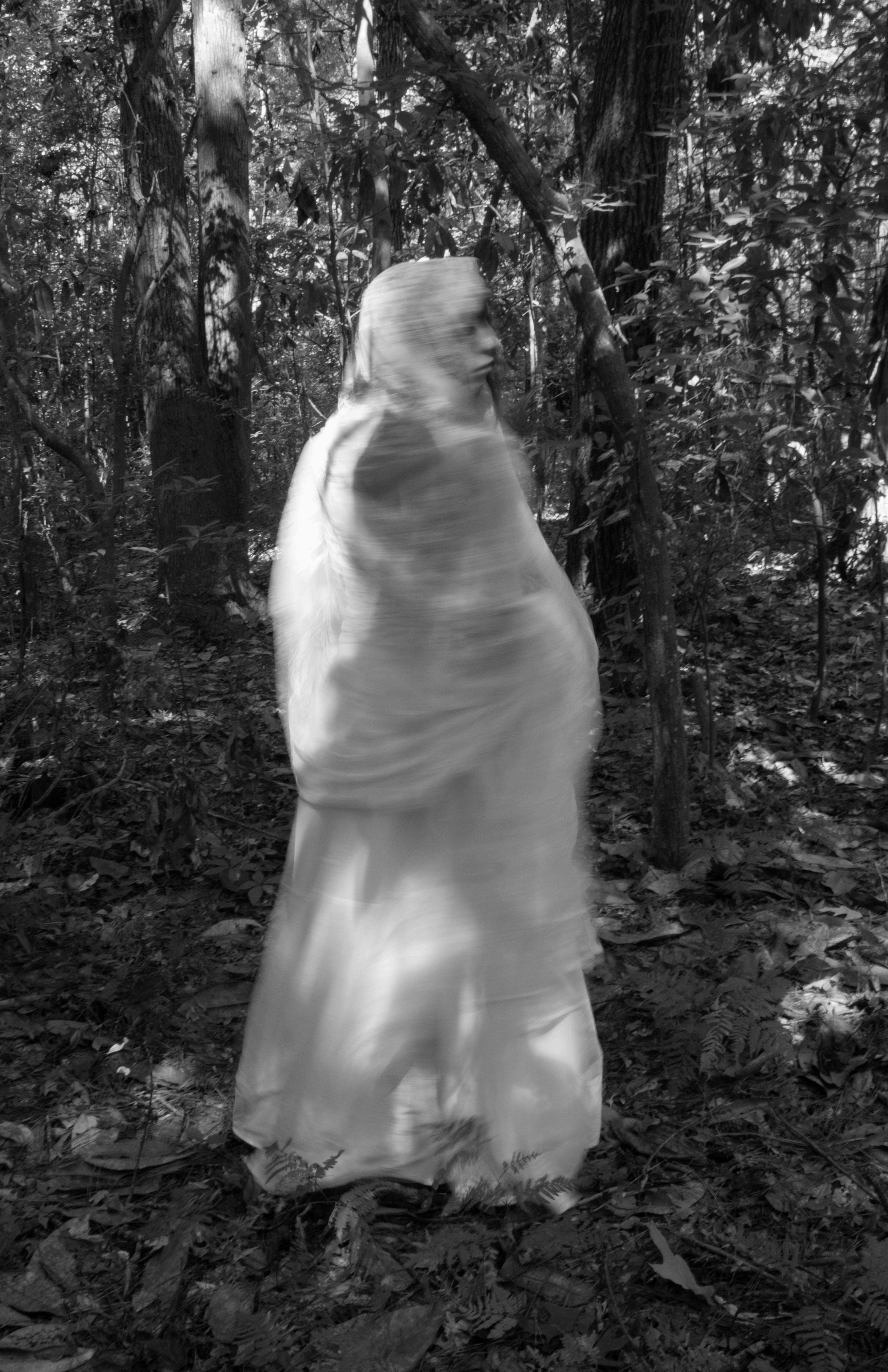
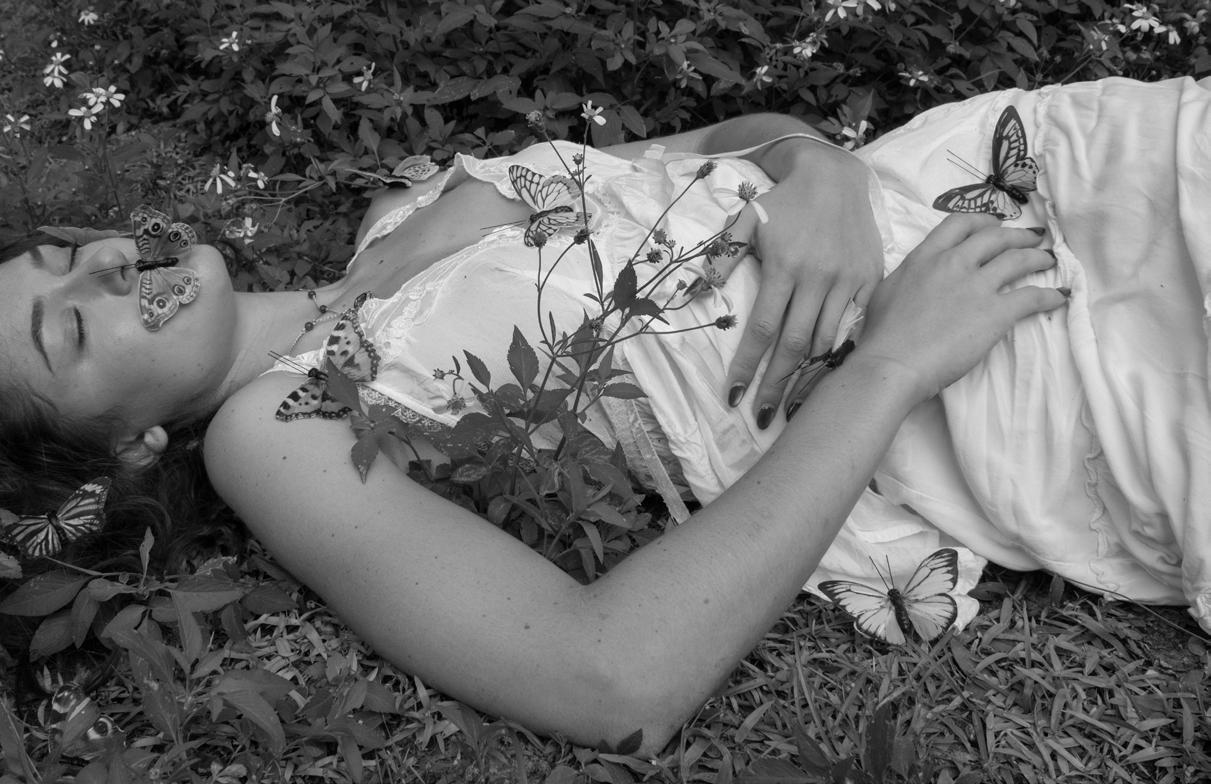
By Hailey Story
Big Mama’s Laundry Mat
Sun wet breeze sings into a cracked door
Panties and towels spin in suds
Crashing like waves against sand
My quarters roll under the vending machine
I crawl on hands and knees
Big Mama’s Laundry Mat
Where there’s still cardboard taped to the window
From summers ago
When rock shatter glass
The same summer Mr.Jimmy
Found out he had cancer
My field day shirt tumbles back in forth
In the dryer
His signature on the left shoulder
In blue sharpie.
Big Mama’s Laundry Mat
With the box tv with
Disney dvds playing in silence
Where the ice cream truck stops
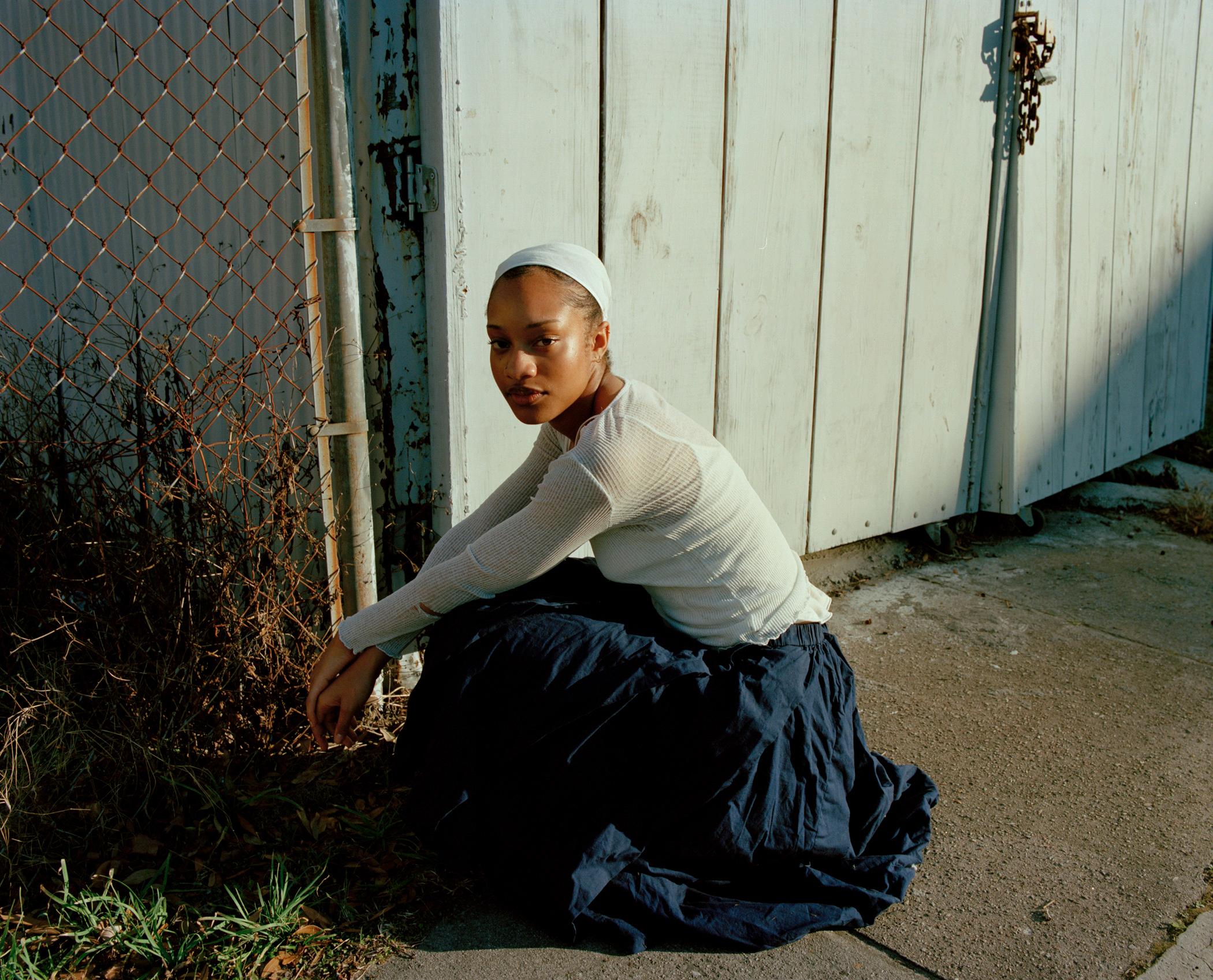
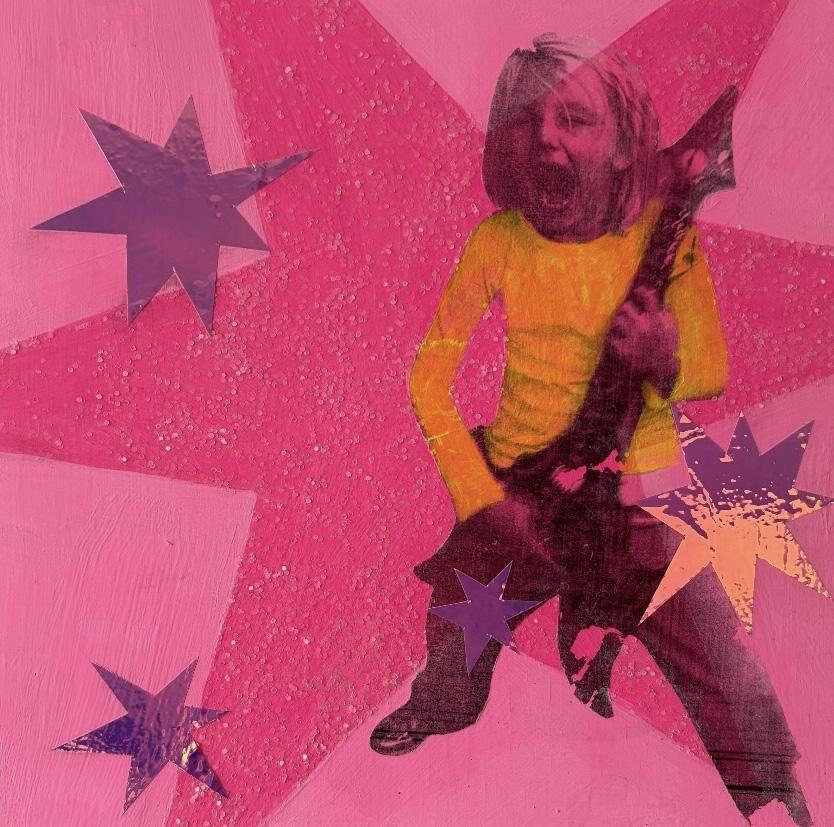
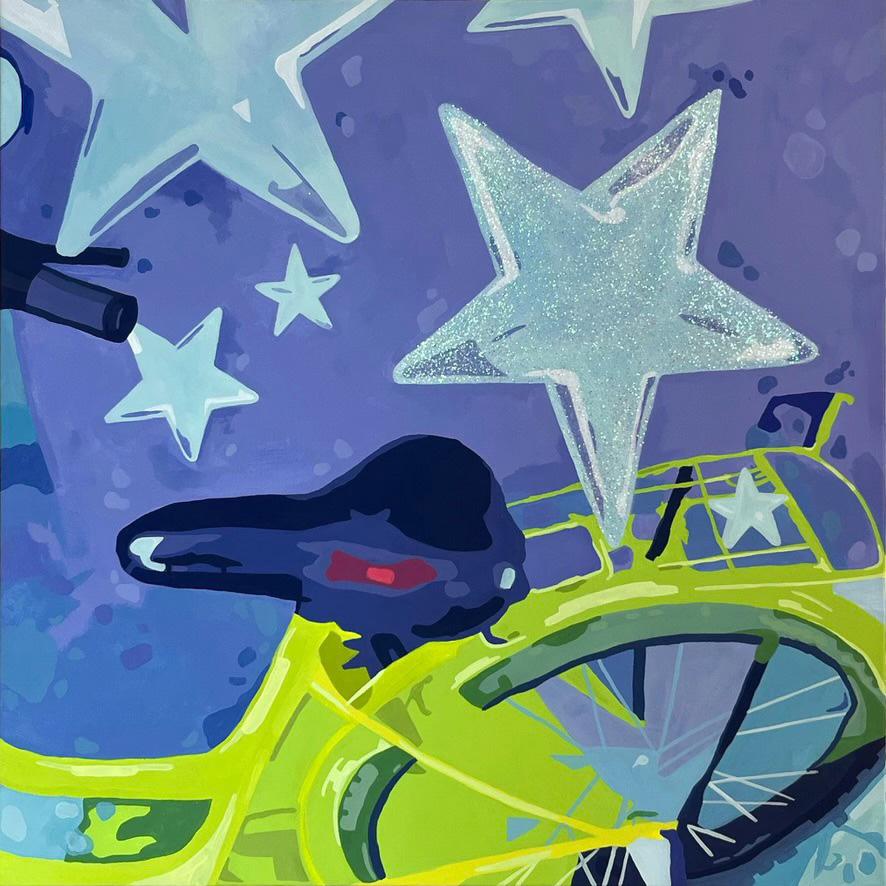
By Rosie Knudsen
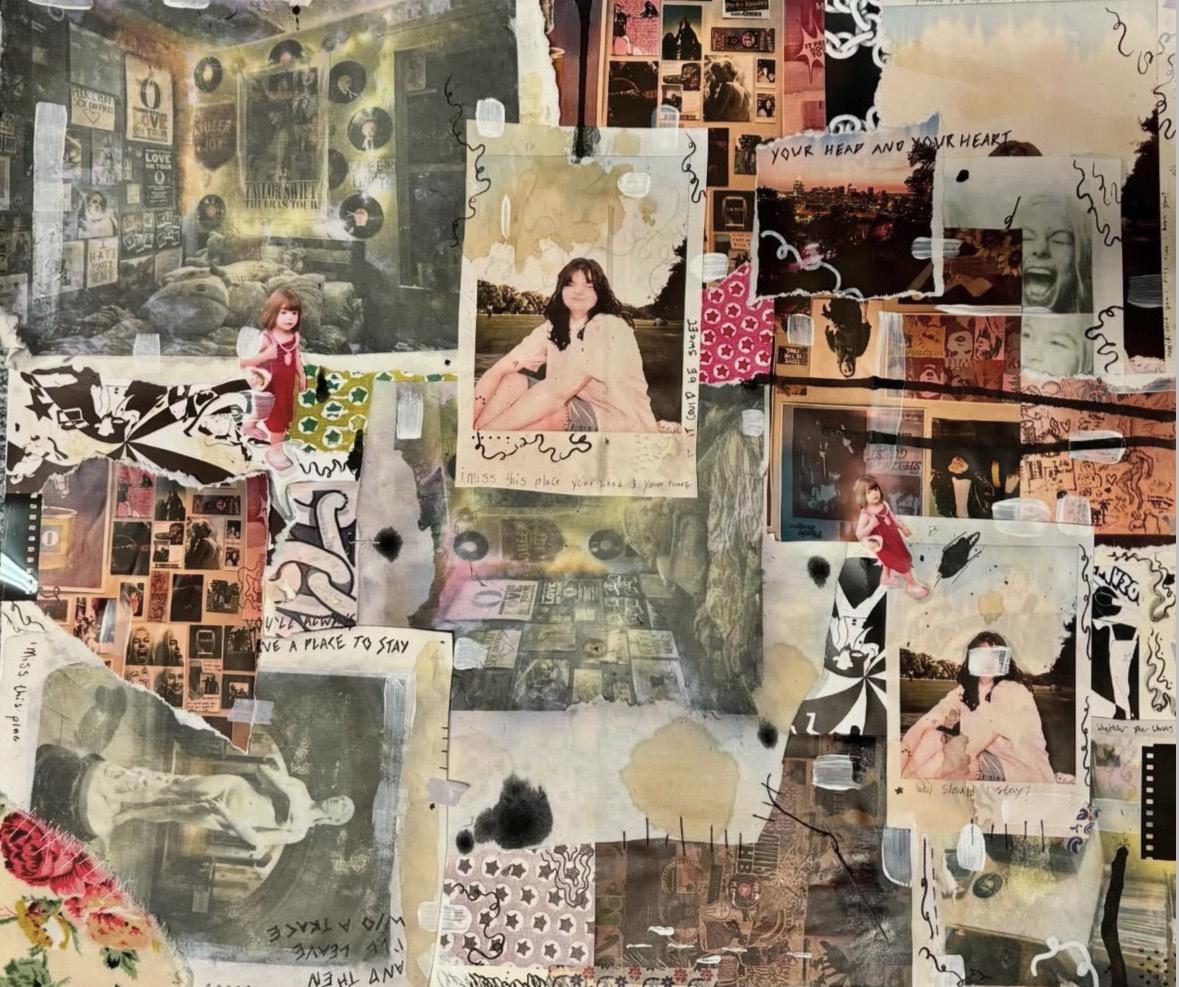
They say your nose remembers most. Mine holds the honeysuckle that grew between the panes of our window. It spread, making deltas on the ceiling. Sinking into the carpet flooring, I watched the flowers above me budding.
Me and my sister, we sucked the juice out of the stems, bittersweet nectar dripping. Liquid drying on our chins—all sticky.
I worry I’m losing memory. My nose now has trouble breathing. The fresh scent of spring brings me back to my dad depressed. Three-year-old me trying to fix him, became scared of greening. Little fingers pinched her father’s nostrils tightly–trying to stop his scent from numbing.
Now I’m loving someone new; But he’s on the same wheel of bipolar thinking. And it keeps spinning, and I keep giving love until he wants to be living.
I was told to “Turn the worry to love.” But worry is my intimacy. I know, I’m justifying unreasoning, stuffing my nose with pollen and plugs to feel nothing.
embracing
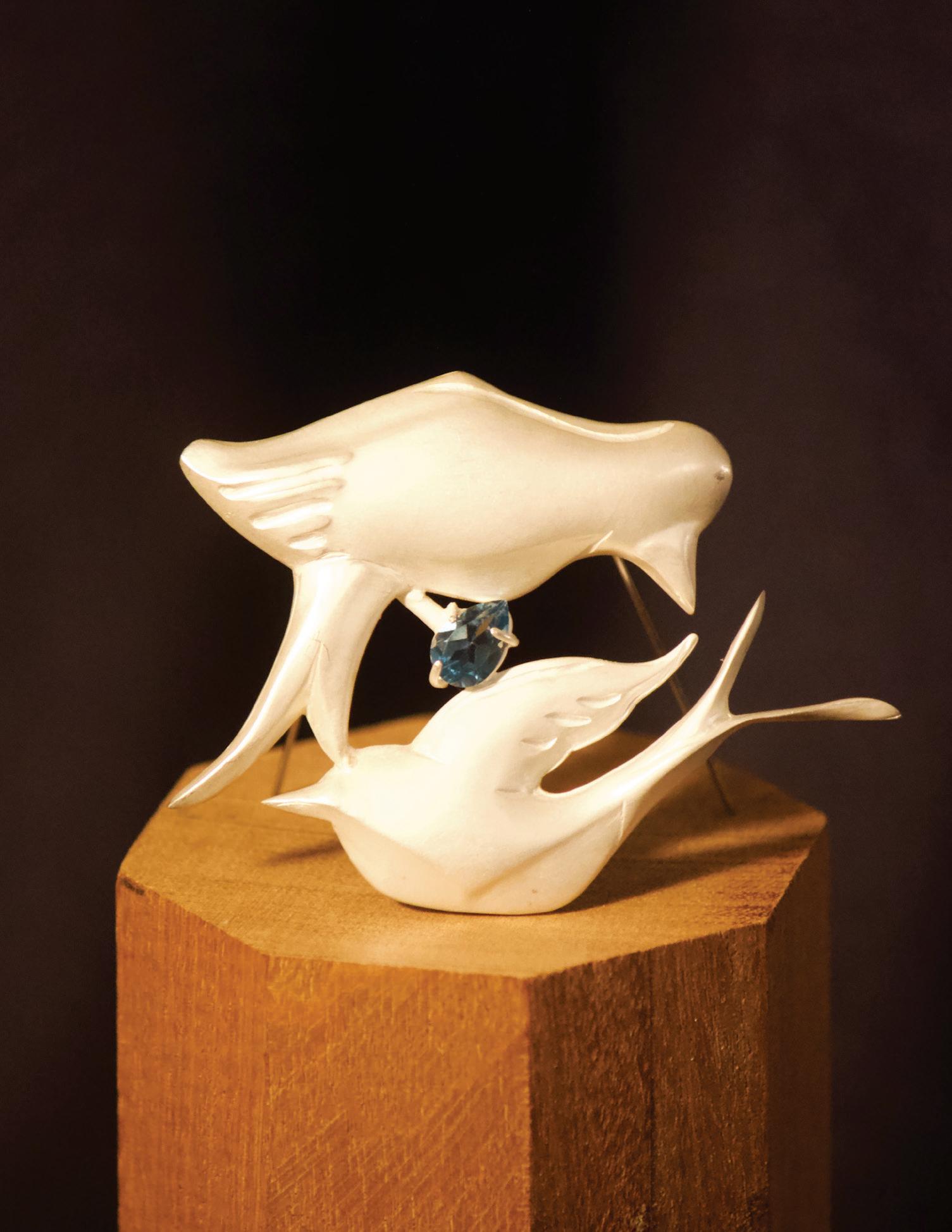
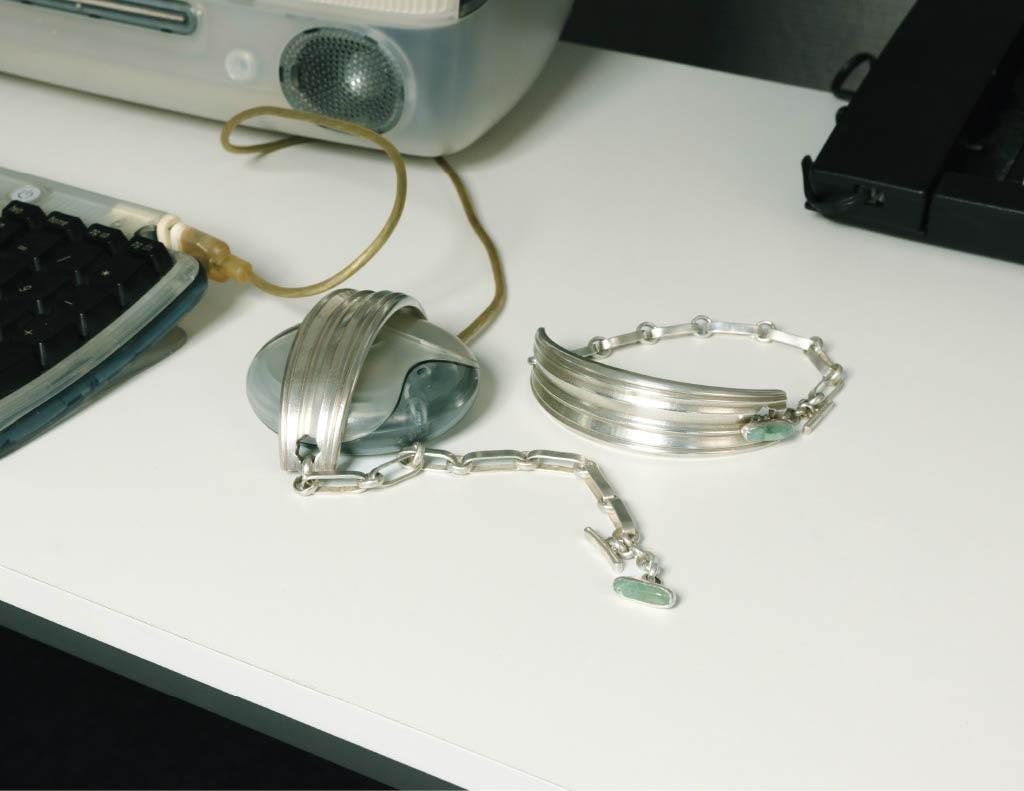
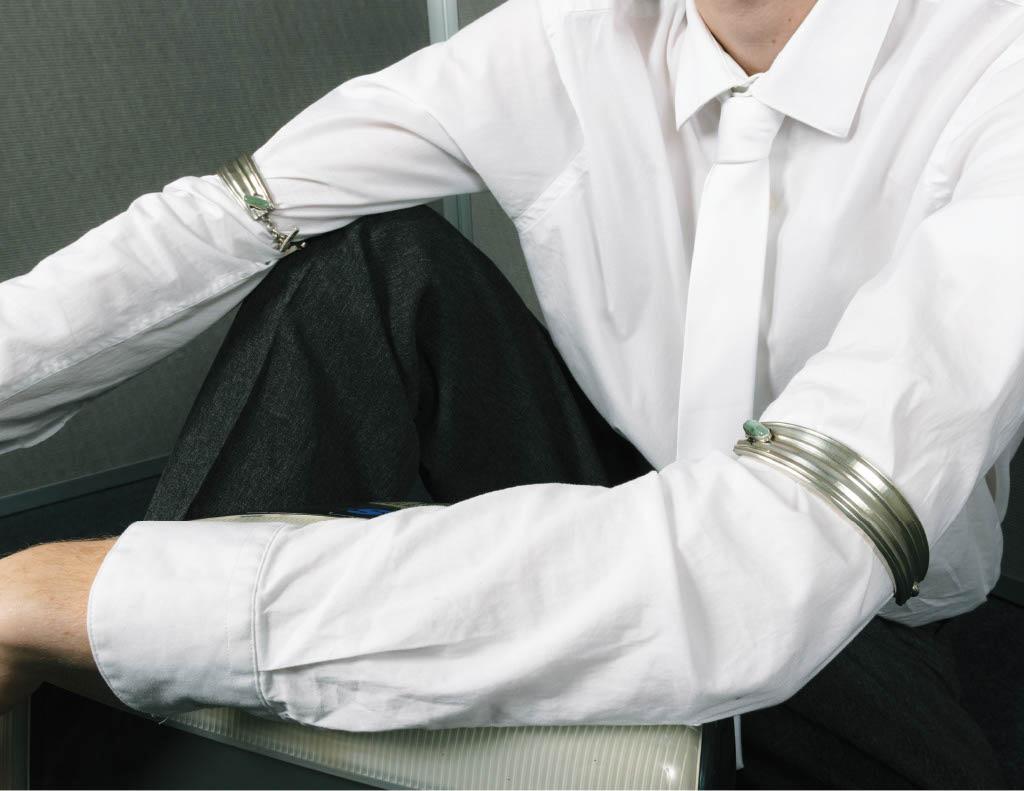
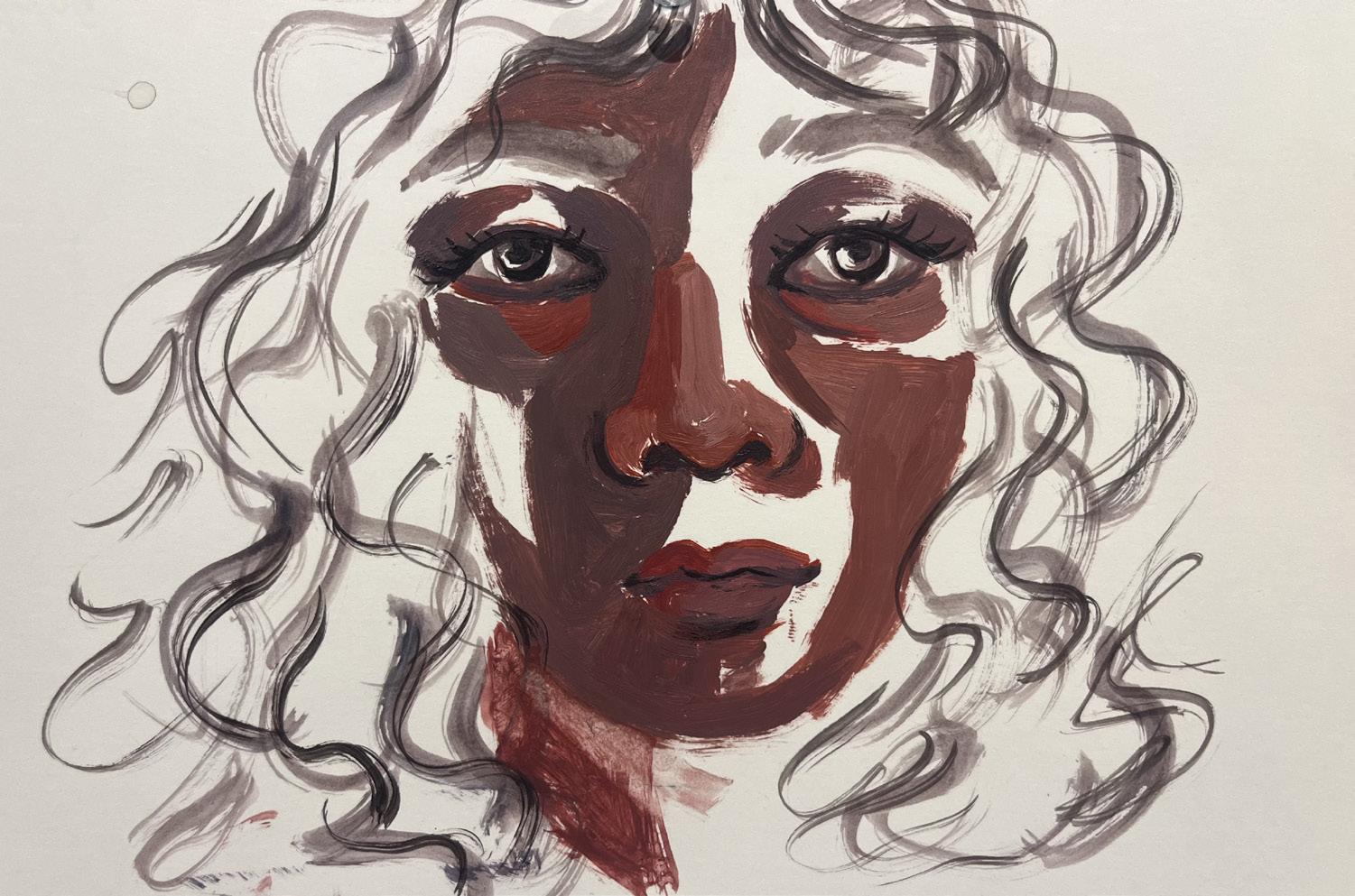
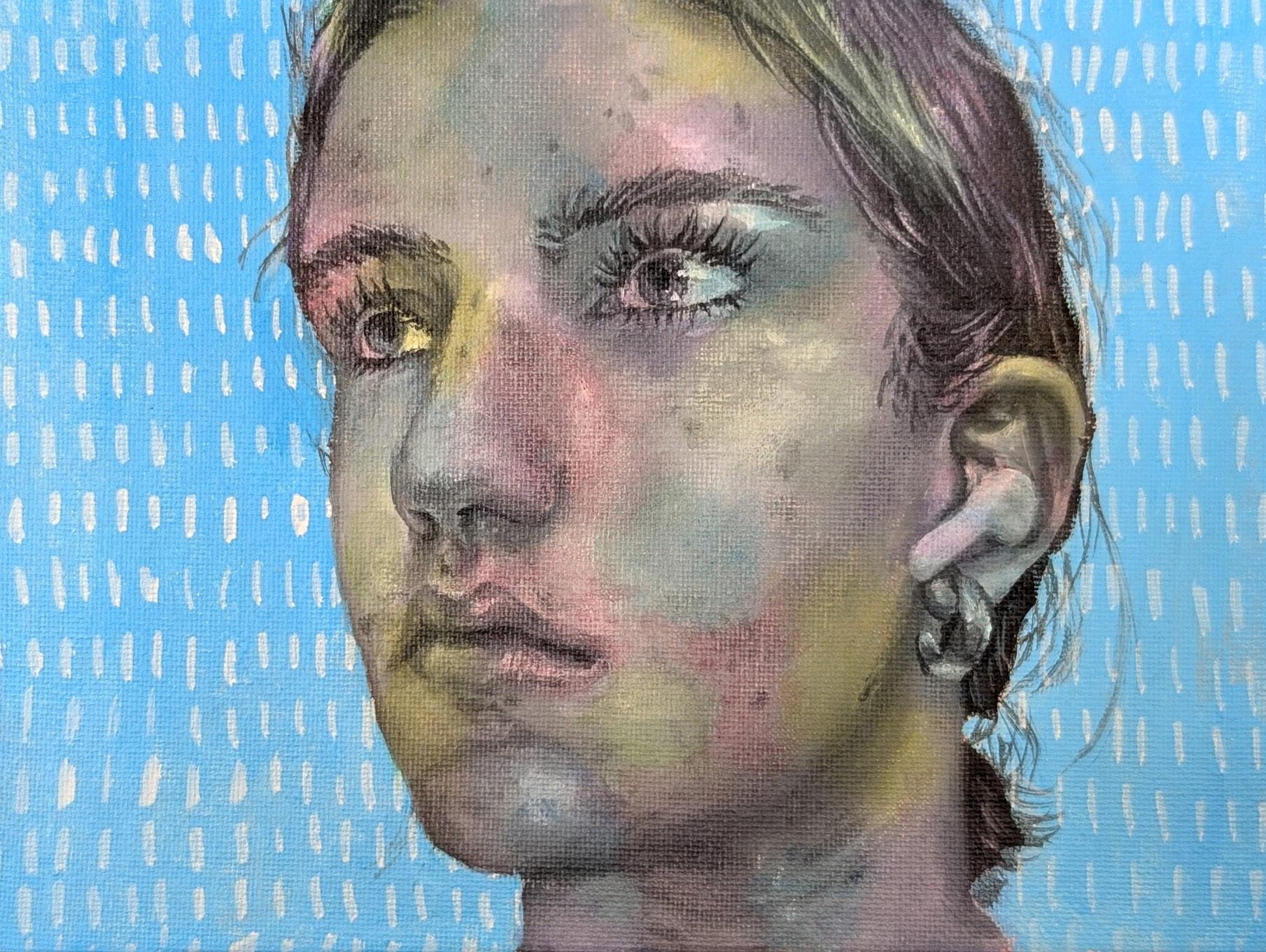
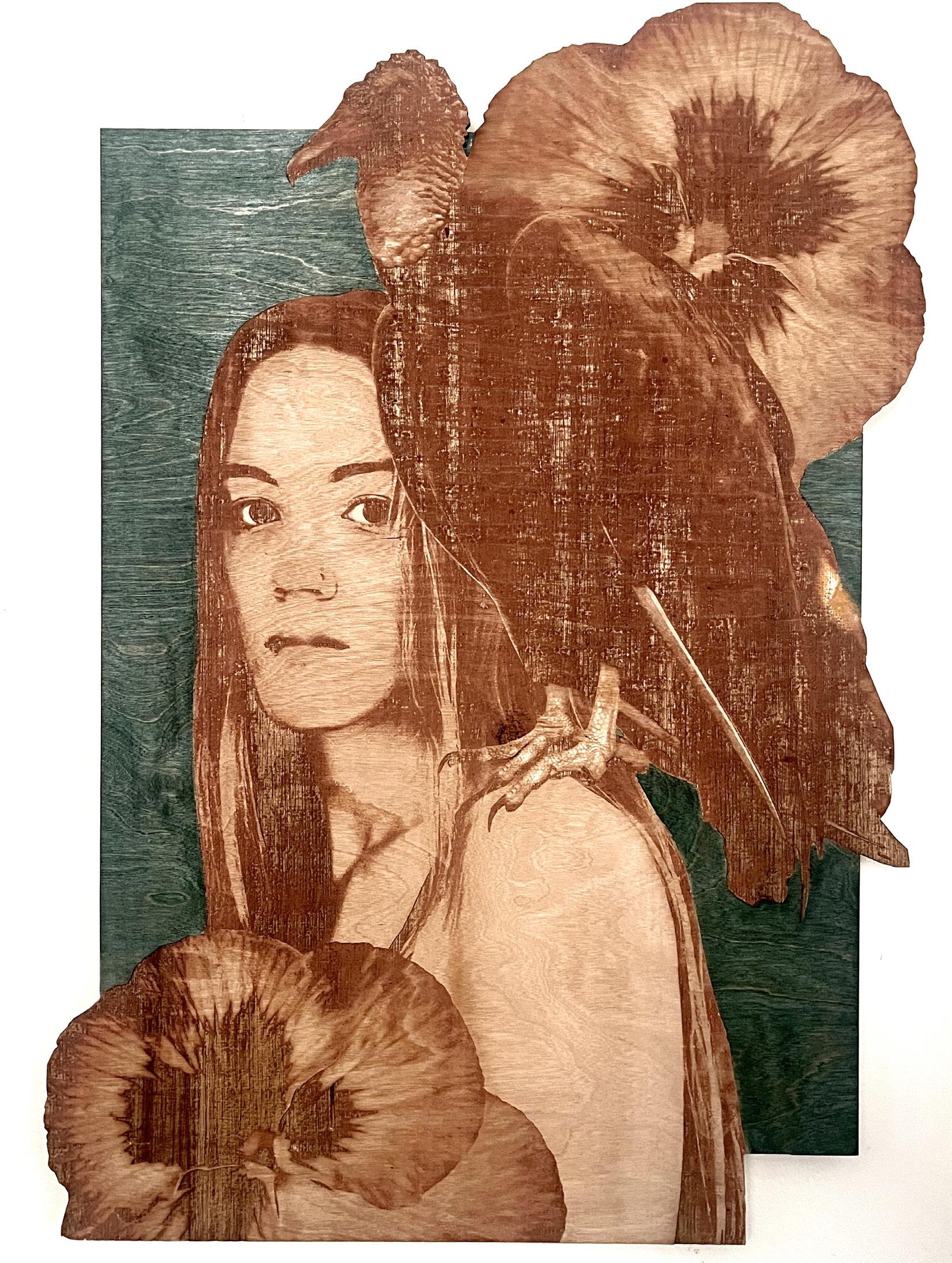
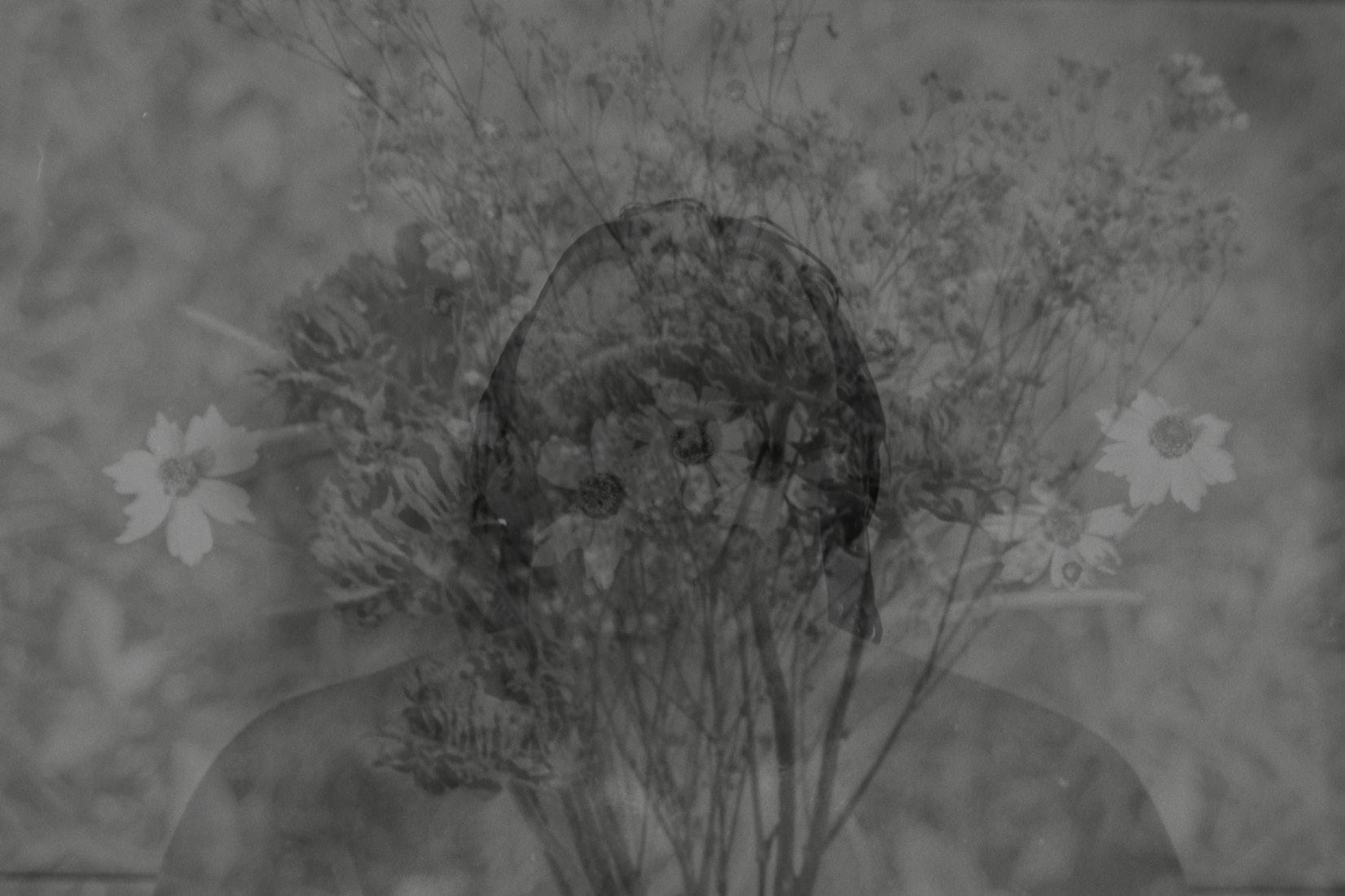
Top Visual: Collective Memory by Isabella Aponte
Left Bottom Visual: Kaleidoscopic by Abe Manfred
Right Visual: Companion by Lilah
By Riley Heath
I resented picking such a far away college when my family’s two eldest dogs got older. I felt a deep shame when I’d look at their faces and only see a timer counting down, like their wagging, boney tails were already molting and expired. They’d lick at my cheeks, and I’d find myself mourning the fact that their love would inevitably dry up. They’d conjure whatever play they had left in them to bring me a toy, and I’d mantra, “Remember this moment,” to myself, consciously aware that each time could easily be the last.
There was a staleness in the air when I came home for winter break during my sophomore university year. It was a whispering finality that I didn’t want to hear, actualized in the way Greta and Shelby’s joints popped when they’d try to sit. Their dog beds needed to be washed, but I couldn’t help thinking that maybe there was no point, and I think maybe my mother thought the same. “Any day now,” the voice in my head said, wafting up from the oily, fur marked spots on the dog bed fabric. I still wonder if my family could hear those voices, too.
Early one morning, I made my way down the stairs, looking over the unobstructed main room. The house is the kind of airy and open that carries sound and ripples it off the walls, amplifying it, but it was quiet aside from Greta’s typical pacing and my mom’s computer. She tapped at the keys, and occasionally the device would ding with an incoming email or text. Shelby snored on a dog bed somewhere near the TV . I stepped lightly, afraid to break the still with even a single floorboard creak.
Fergus, our younger labrador, heard me descending. He came high-tail running from a room across the house, toenails clicking ferociously as he raced towards me and crashed into my legs. Typical labrador behavior — they don’t know how to slow down.
Just recently, I was sitting with Fergus on a couch in that very room, working. He was snuggled up next to me while I typed, though, every time I lifted my hand off of him, he bucked his head back in search of attention I couldn’t give him. I have to write, Fergus, I thought to myself. He couldn’t understand. He made a throaty groaning noise, clearly dissatisfied with me.
I placed an elbow on top of his tummy, draping it in such a way that convinced him I was still petting him even when I reached back to click at my keyboard. Fergus wagged his tail and pushed his spine into me, but I noticed his ears perk at every passing noise. I wondered if he was even still there with me, or if he’d mentally already run off. I put a hand over his left ear as it raised to the sound of cutlery clinking in the kitchen, wondering if my touch would be enough to make him stay.
I find myself lingering in hugs with friends a little longer than I should, and overstaying my welcome in conversations after they’re already over. I grieve interactions before they’re completed, likely ushering them out the door faster. Fergus, for example, isn’t dying, he’s just living, but my brain can’t help but beat him — and everyone and everything — to the end that I know is coming.
I recognize it as a little voice in my head that whispers whenever I find something good. “This won’t last forever,” it says, again and again. Supposedly that’s my own personal white rabbit from Wonderland, but I think it’s more of a bully, pushing me out of interactions and circumstances so that I can’t presently appreciate them. But sometimes I think it’s my hand on the handle, not fate.
I could almost find it uncomfortable, that morning, the way Fergus was burrowed up next to me. His hair seeped its way into the tight-knit fabric of my clothing, so much so that I looked like a yellow lab myself. I was golden and hairy, warm and itchy. Pieces were neatly tucked between the letters on my keyboard — his head was practically lying flat on the keys anyway.
“Gosh, you’re just everywhere, aren’t you?” I said to Fergus sweetly, then sighed. He wagged his tail, then dove back down against my leg with his snout. I brushed at the hair collecting on my shirt, but then stopped. When I go back to school, I’ll find his hair in my suitcase. I often do — a lot of it. His hair will remain everywhere long after he’s gone, I reckon.
That morning during my sophomore winter break, a younger Fergus was bounding around me and hopped up to try and kiss my nose as if he hadn’t seen me just the day before. Greta stared at the wall like I didn’t exist — I still blame the deafness my mother always denied — and then a look of worry came over her Coonhound face. Up she got and off she went again, taking to the hallways in her search of my mother, who remained perched up on a barstool chair exactly where Greta had left her. She’d spend all of her remaining days on this trek, and only once she found my mom — or a lot of times, once my mother would come find her — could she rest easy.
Shelby woke to the fuss and sat up squinting, sleepy, and beaming at the sight of me. The name Great Dane is misleading, I decided, when looking at her fragile head.
They’re large dogs, yes, but precious. She let out a soft whine, sneezed, and began a rather perilous-looking attempt at standing that her hind end almost didn’t follow.
“She doesn’t really get up for anyone anymore,” my mom said from behind me.
It felt like a punch to the jaw.
I knelt down to Shelby’s eye level once she reached me, leaning forward to rub at the velvet area of fur behind her ear. She tried to kick her leg up and thump the air like most dogs do, but thought better of it, settling for tilting her head instead.
“That’s my baby girl,” I said softly.
I looked to my mom, who was smiling from her chair like she’d just witnessed a miracle. Greta concluded what had to be her 39th search of the morning, her nose making contact with my mom’s foot. She rejoiced in a celebration of tail wags and happy foot taps like it was the first big win of her life.
“That dog really loves you,” my mom said.
Shelby watched me with her soft eyes, blinking just as much as her body was trembling. I was suddenly overcome with a feeling of guilt for being the reason she got up, and again when she began shifting paws from holding her own weight. Her bones jutted out through her skin. It was only skin, and the muscle I’d known was gone.
“And Greta loves you,” I said. My mom looked down at the creature below her, shaking her head but smiling at a typical Greta who was pawing at my mom’s leg as she often used to. It was so easy to overlook these things; I know that for certain now — now that they’re gone.
That winter break was the last time I saw Greta and Shelby alive.
Fergus got up to greet me as I passed by, but the older two didn’t move. Shelby was curled up, so sleepy she didn’t even lift her head, and next to her, Greta found my eyes. They were grey and glossy, like pearls.
“Riley, come on. You’re going to miss your flight,” my mom said to me. It was a ripe 3:45 a.m., and she was holding my suitcase. I couldn’t get my legs to move. I was stuck, staring down at the large dog bed by the door.
I can’t say I was ready when I tore myself away. I got in the car thinking about it, how I just knew it was the last time. I rubbed my fingers together like it would implant their oils from my last given scratches into my DNA forever.
From our spot on the couch, Fergus and I both could hear a door open and close down the hall, and I instinctively threw an arm fully around him like he was about to fall off a cliff. I rubbed at his chest, watching his golden fluff fly, but he jolted and pushed at my grip, begging to be set free. It was my mother who had just arrived home that he wanted to greet, but I only felt how he wanted to leave me.
is
Self Portrait by Hannah Burchfield
At what point do I smack the white rabbit back down the hole in which he came? When do I send his ticking clock and all his warnings back to Wonderland, because is it really a loss if I loved so deeply? I can’t say I have the answer or that I’ve figured it out, because the voice is still there in every hug, every touch, every moment of my life.
I let him go, releasing my arm from around his body. Fergus bolted off the couch with fur in his wake. Aside from scraping toenails on the hardwood, there was a moment of calm again, until a laughing gasp came from the mudroom where, presumably, Fergus collided into my mom.
I turned back to my computer, smiling, shaking my head. I thought of Fergus’s furry snout, of my leg that still felt the phantom of his push at my side, and the warmth that was quickly fading from the spot next to me. My keyboard ticked, ticked, ticked, and my fingertips left traces of oil on the keys, and I wondered if anyone even thinks about these kinds of things.
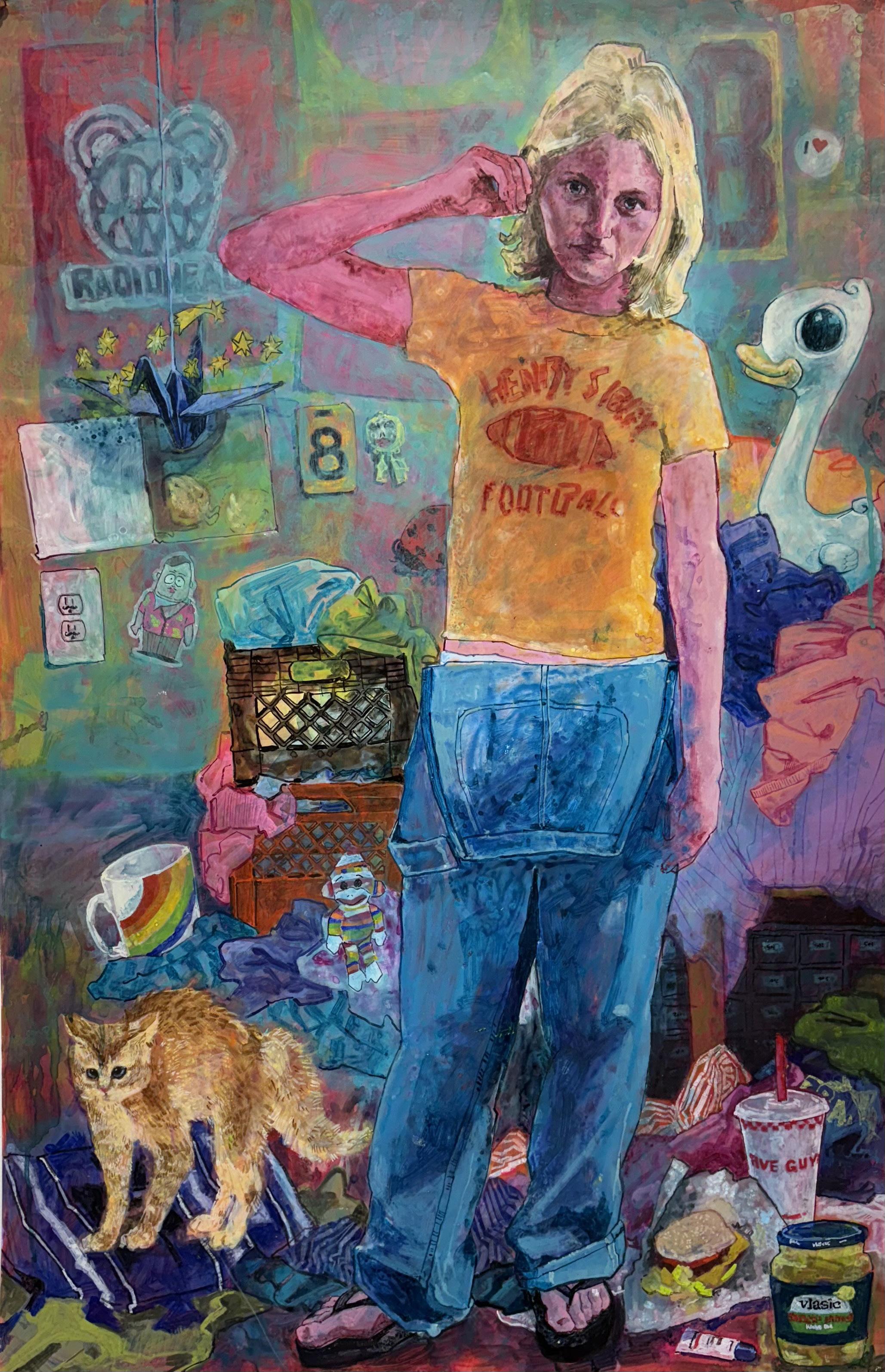
By Edith Manfred
The beautiful thing about running is that all bodies are runner bodies. Anyone can run and there is no physical requirement for entry into pounding the pavement. And yet, I’ve complicated it so deeply.
I used to feel that behind each of my athletic performance goals, sat a heightened version of myself. A woman who was stronger, better liked, easier to respect and more impressive. Without ever consciously making this decision, it was established in my brain that my loved ones’ care for me was dependent on me bridging the void between my past performance and present abilities. If I could just fit myself into this race finishing time, straining and squeezing, maybe I wouldn’t feel so guilty for taking up space. I’d make myself mean something. I’d be a part of that category of women who had also achieved that status and therefore equate my worth with theirs, which has to be more than my own.
You can’t hate your body if it’s doing what you tell it to, right?
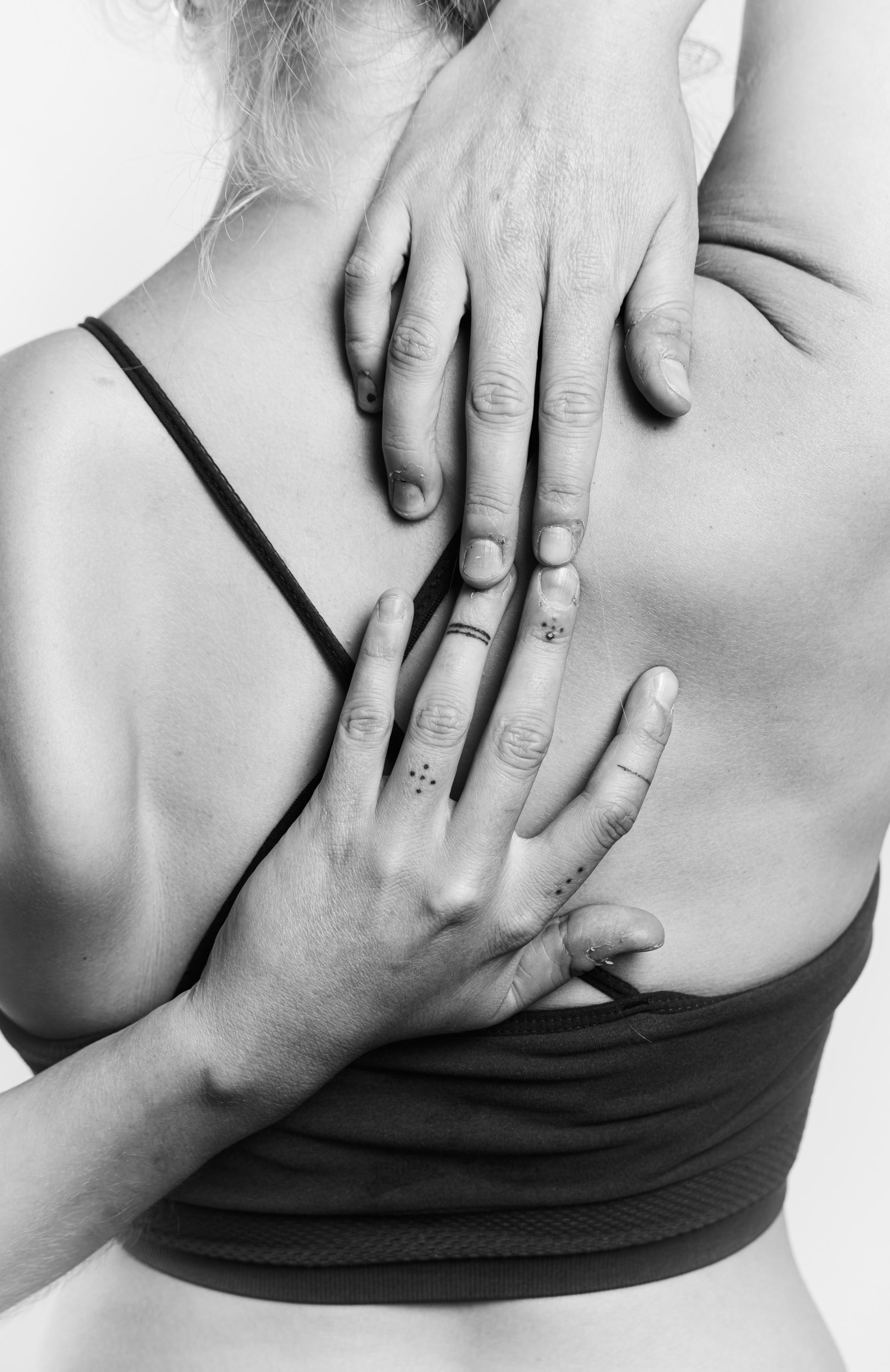
Visual: Reaching by Edith Manfred
My view on my body became another relationship that depended on performance. Much of it centered around justification. If I could just manage to have that number or ranking beside my name, maybe I would feel justified in not being as naturally slender as the other girls on the starting line. I wouldn’t question the width of my thighs or the cup size of my bra if it meant that I was capable of running faster than them. ‘See, look what it does for me!’ I so desperately wanted to yell at myself, and the world. You can’t hate your body if it’s doing what you tell it to, right?
As I’ve been picking apart my relationship with running, I’ve had to work through how I view not only the sport, but also myself as a member of it. Who do I want to be as a runner? How can that work in conjunction with who I want to be in the world? I reach out, and inwards, seeking these answers.
By Alexa LoSchiavo
The sun rose like a sluggish little boy, protesting waking up, covering his face with his hands, and I flew on a plane to Ohio.
My family is from Ohio, my dad’s side, at least. He grew up in a small town 30 minutes outside Columbus, which really means he grew up in the middle of nowhere with only one school that housed all grades. He grew up with cornfields and bikes that kicked up dust (because there were still dirt roads), and he grew up going to church every Sunday.
When I had to go to Ohio a year ago (because my grandma had moved out of her brick house she’d lived in for her entire life), I had just gone through a breakup that left me shattered in two, and I had just gone off my meds. I felt completely juxtaposed to the churchgoing, homophobic folks. I was trying to find some point to all of it. Some reason why I had to visit my grandma’s new house right on a golf course, or see family members who’d have some strong words to say about my breakup being with another woman.
The sun got brighter and brighter. An act of resistance against my rage. It grew and grew until everyone had to glare to see straight. The bright white of the sun was feverishly big, and my hate grew with its glare.
I felt hateful and hated. The landscape was so still compared to my insides that it made me angry. I wanted to go to a city where the smog covered half the ground. I wanted to hear the cars honking instead of my incessant thoughts.
My grandma’s new house was on a cul-de-sac, and there weren’t very many places I could go to be alone. I paced around the roundabout looking for a curb that felt safe for my tears. I settled for crying my eyes out on the bright-yellow seat of a John Deere lawnmower against the backdrop of the pristine golf-course and texting my friends
that the swans I’d seen when I was five were killed for biting a child, and I couldn’t see the full moon anymore, and all the things that reminded me of her — were gone.
The sun sank slow as a pebble, and a soft pink light offset all the angry yellow. It grew softer and softer til nothing was left but the fuzzy blue that happens right before night.
I didn’t know how to get better, but I was trying. I was searching for answers. Answers could be found, I was sure, even in the restless feeling that came from hate. I hated that we’d never said we loved each other. I hated that our relationship was only two months, and she kissed me on a hill and held my hand under my favorite tree. I hated the stillness of the cornfields because it felt the same as her leaving. Mainly, I hated that it all felt purposeful. I was supposed to feel this way. I could see the end, but I didn’t quite want to be there yet.
I saw swans the very next day, with my family at the zoo. They were caged, but they seemed happy enough. Graceful and flowing on the surface, even though their wings were clipped.
And instead of the moon, I saw fireflies at night. The night away from the city was so dark that once your eyes adjusted, it seemed almost blue, and I just saw flashes of light. There was beauty in that flash. A singular sign that change was coming. I was on the precipice. I wasn’t there yet, but soon I would be.
In the middle of the night, the darkness was nothing but stars and space. And I breathed deeply, knowing everything had meaning because I ascribed meaning to it, and everything would change when I was ready.
i didn’t know how to get better, but i was trying.