Contents.
AP Biology
Mutation Hotspots in Antifungal Resistance: A yEvoLab Study of Caspofungin
Adaptation 10
MAD1 Checkpoint Mutation Promotes Yeast Adaptation Under Caspofungin Antifungal Pressure 10
Analyzing yeast missense mutations in resistance to caspofungin: Knockout of the FKS1 Gene 11
Investigating Caspofungin Resistance Through GSC2 Mutations in an FKS1-Deletion Ancestral Yeast Strain 12
Caspofungin Resistance: How Mutations in Genes Involved in Lipid and Sphingolipid Metabolism Impact Resistance 12
Methods in Molecular Biology Research
Uncovering the Role of 4DIU 13
Functional Characterization of Protein 2QRU 13
Characterization of AlphaFold Protein AF_AFQ32HQ2F1_1 14
Protein 4Q7Q 14
3L1W Functional Characterization 15
Characterization of Protein AF_AFQ8ZL24F 15
Function Analysis of Protein A 16
Functional Characterization of Protein 2O14 16
How FKS1 Deletion Alters KRE6 and KRE9 Adaptation 17
Functional characterization of lin2722 gene product (PDB 3DS8) 17
IRT
MarketMind 18
Emotimate IRT 18
Accelerated Molecular Dynamics 19
Optimizing the Production of Artificial Collagen for Use as a Biomaterial 19
Bodega IRT: Maximizing Yield in Local Farm Produce to Help Address Food
Insecurity 20
SmartHeart 20
Extended Reality: Virtual Reality’s Role in Changing Climate Change 21
The Plastic Degrading Enzyme: PETase 21
VirF 22
Fluorescent Fish IRT 22
Contents.
Food Dye 23
Materials 23
Metagenomics 23
HIRT
Weaponizing Trust: The Ethics of Deception in the CIA’s Fake Vaccination Program 24
World Politics 24
The Ethics of AI in Warfare 25
Capturing Sound: How Technology Changed Music 25
Riot Grrrl HIRT 26
The Ethics of Physician-Assisted Death for Eligible Patients 26
The Science of Learning 26
Women, Witches, and the Wielding of Power 27
Tracing Our Evolutionary Legacy: A Biological Anthropology Exploration 27
Psychology 28
Housing Market and Neighborhood-Level Responses to Olympic Investment: Evidence from London 2012 28
Artificial Intelligence: The Investigation Into the Role AI Plays in Our Future 29
A Century Later: The Cycle of Inequality Redlining Created 29
Love, Money, and Power in Eighteenth- and Nineteenth-Century Literature 30
Historical Fiction 30
The Ethical Dilemma of Child Labor: Does it Help or Hurt Impoverished Communities? 31
The Ethical Dilemma of the Beauty Industry 31
Research Week Activities
Atomic Antics 32
Journal Club 32
Robotics 32
A Study of Hair Curling Irons 33
Bunt Battle: Softball Bat Performance Test 33
FYI Sci 33
Contents.
Independent Research
Deep Learning Framework for RNA 3D Structure Prediction from Cryo-EM Density Maps 34
The Impact of Release Position on Pitch Movement and Performance in Major League Baseball 34
The EleutherAI Summer of Open AI Research: A Traditional Approach to Symbolic Piano Continuation 35
Research on the O-Ring Theory of Economic Development 35
Computational Biology Website 35
Generalized ML-based Monthly Pluvial Flood Risk Mapping in the Northeast US 36
Student-Athlete Schedule Optimization Using Linear Programming 36
Biophilic Design in Architecture 37
Comparing the Human Muscle Anatomy and Architecture to the Cheetah 37
Searching For Erupting Novae In The Nearest Spiral Galaxy–M31 37
Quantifying Patient Narratives to Strengthen Longitudinal Assessment in Chronic Pain 38
Machine Learning Insights into Sociodemographic Factors for Electric Vehicle Owners 38
Rare Disease Patients: The Struggles of Navigating Healthcare 39
An Analysis of the Mathematics Behind Electromagnetism 39
Smarter or Faster? The Impact of AI-Assisted Studying on High School Learning 40

Editor’s Note.
Welcome to the 2026 Research Week edition of the Pingry Community Research (PCR) Journal. We are excited to showcase Pingry’s top scientific talent, both in terms of research skills and knowledge of scientific concepts and discoveries.
The PCR journal provides students the opportunity to publish novel research. Through a written medium, students demonstrate their in-depth understanding of complex, collegiate-level scientific topics, and their applications in research at Pingry.
This research week edition of PCR serves as a written complement to the in person poster presentations occurring throughout Research Week. Readers can preview abstracts, figures, and summaries reflecting the research conducted in advanced courses and extracurriculars, such as AP Biology, Independent Research Teams (IRT), and the Methods in Molecular Biology Research Class, among others.
Through the PCR journal, we hope to spark intellectual curiosity and promote scientific inquiry amongst the next generation of Pingry researchers.
Dive into the wonders of Pingry Research through this special edition of PCR: Pingry’s foremost journal of scientific research.
Ryan Hao (V), Editor-in-Chief
Suvid Bordia (IV), Editor-in-Chief
Christian Zhou-Zheng (VI), Former Editor-in-Chief
Editorial Staff.
Editors-in-Chief:
Ryan Hao (V), current
Suvid Bordia (IV), current Christian Zhou-Zheng (VI), former
Head Layout Editor: Aiden Suh (V)
Head Copy Editor: Amelia Liu (V)
Faculty Advisor: Mr. Maxwell
Copy Editors: Samaya Shah (V)
Sarah Yu (V)
Shanti Swadia (V)
Alan Huang (IV)
Anavi Sinha (IV)
Haeley Cole-Boksner (III)
Layout Editors: Samaya Shah (V)
Sarah Yu (V)
Shanti Swadia (V)
Jasmine Zhou (V)
Anna Ojo (V)
AP Biology
Mutation Hotspots in Antifungal Resistance: A yEvoLab Study of Caspofungin Adaptation
by Siena Casale (V), Alyssa Hammoud (V), Caroline Naulty (V), Mrs. Vignolini
Over one billion people worldwide are affected by fungal infections each year. Although researchers are making strides towards more effective drugs, progress has been slowed by the rapid evolution of fungal resistance. As fungi adapt to existing medications, these drugs have become less effective, leaving negative impacts on human health and treatment options. Understanding how yeast evolves to become resistant to antifungal drugs is vital for the future of drug development and reducing the global burden of fungal diseases. In this study, we analyzed data collected in the yEvoLab, working towards the goal of identifying the correlation between the location of mutation and evolving resistance to caspofungin, a medication used to treat fungal
infections. In the yEvoLab, the FKS1 knockout strain found in yeast was exposed to gradually increasing concentrations of caspofungin over multiple weeks, where survival of yeast indicated possible resistance. The mutation data that was collected from AP Biology class experiments was then analyzed to examine genetic changes. We focused on the GSC2, KREG, and ERG3 genes as they had the highest frequency of mutations, with 39 mutations across all classes and 10 observed in our sample set. These results indicate the presence of mutation clusters under the selective pressure of caspofungin and are important for explaining how molecular evolution allows microorganisms to adapt to antifungal drugs.
MAD1 Checkpoint Mutation Promotes Yeast Adaptation Under Caspofungin Antifungal Pressure
by Colin Blekicki (V), Ishaan Kumar (V), Aiden Suh (V), Ms. Vignolini
Antifungal drug resistance is an increasing global health problem because all living organisms on Earth are susceptible to fungal disease. Understanding the different ways fungi build resistance to antibiotics can help scientists develop more effective treatments for fungal diseases by targeting the specific genes that cause antifungal resistance. To understand the mechanism behind antifungal resistance, the scientific question eval-
uated was, “How could mutations in the MAD1 gene, which regulates the spindle fiber assembly during mitosis, contribute to yeast survival and adaptation under caspofungin conditions?” During the experiment, yeast populations were grown in increasing concentrations of the antifungal drug caspofungin, over multiple transfers to apply antifungal pressure. Fungal growth was monitored by observing culture cloudiness, while
also searching for an opaque white dot of fungi on the bottom of the tubes, to determine antifungal resistance to the respective concentration of caspofungin. The mutated resistant fungi populations were then sequenced to identify mutations that arose during culture growth, including mutations in the MAD1 gene. Sequencing revealed a missense mutation in MAD1 at the amino acid position 126, changing a serine to a glycine. Serine is a polar amino acid, while glycine is a nonpolar amino acid, changing the structure and function of the protein. This missense mutation resulted in a less active MAD1 protein, because amino acid 126 can no longer form hydrogen bonds or interact in the way the functional serine would. The presence of the MAD1 mutation suggests that the yeast gained antifungal resis-
tance through the new, less active MAD1 protein. The MAD1 protein is a checkpoint protein that checks whether the spindle fibers are attached to the chromosomes properly. If MAD1 loses function, it allows more mutations and genetic variety could cause antifungal resistance. Under these conditions, only those most fit for the antifungal environment would survive. Additionally, the results showed only 1 mutation of the MAD1 gene, which likely occurred because the mutation does not directly cause antifungal resistance, but it enables mutations that would cause resistance. The results suggest that yeast adaptation to antifungal pressure may not only involve changes in drug targets or cell wall pathways, but also alterations in cell cycle regulation, providing an alternative mechanism for more effective antifungal drugs.
Analyzing yeast missense mutations in resistance to caspofungin: Knockout of the FKS1 Gene
by Paulina Bremm (VI), Hannah Diao (VI), Mr. Maxwell, Mrs. Vignolini
Mutations arise spontaneously, and rare variants can confer a fitness advantage under selective pressure. Beneficial mutations may increase in frequency through natural selection, influencing organismal fitness, defined as the ability to survive and reproduce. A missense mutation is a genetic point mutation where a single nucleotide change results in a different amino acid being incorporated into a protein, and can affect protein function and contribute to adaptive traits such as drug resistance. The question is: how does caspofungin impact the emergence of missense mutations in FSK1 knockout yeast? The data to be analyzed include where these missense mutations are in different genes and how they confer resistance, as well as the frequency with which they occur. The question was investigated experimentally by examining the evolution of resistance to caspofungin, a clinically used antifungal drug. Because fungi can evolve resistance to antifungal agents,
as bacteria do to antibiotics, understanding this process may inform strategies to treat resistant infections. To experimentally examine resistance evolution, yeast cultures were exposed to gradually increasing concentrations of caspofungin over two months. The drug concentration was doubled at each transfer, and culture viability was confirmed by the presence of a visible cell pellet. A total of 13 transfers were completed, with yeast growth sustained at caspofungin concentrations up to 64 µg/mL. These results support the hypothesis that increasing drug concentration selects for resistant cells, allowing those with advantageous mutations to survive, reproduce, and accumulate further adaptive mutations. Analysis of the mutation data showed that missense mutations occurred most frequently in genes involved in cell wall biosynthesis, particularly GSC2, suggesting that alterations to cell wall pathways play a key role in the development of caspofungin resistance.
Investigating Caspofungin Resistance Through GSC2 Mutations in an FKS1-Deletion Ancestral Yeast Strain
by Sylvie Kurtzman (V), Lindsey Puleo (V), Cameron Tarpley (V), Mrs. Vignolini
Caspofungin is an antifungal drug that inhibits β-1,3-glucan synthesis, an essential component of the fungal cell wall. However, fungal populations can evolve resistance through genetic mutations that alter the drug’s target pathway. This project investigates the genetic basis of caspofungin resistance in a yeast strain lacking the FKS1 gene, focusing specifically on mutations that arise in the related gene GSC2. The primary research question asks why resistant mutations repeatedly appear in similar regions of GSC2 and how these mutations may contribute to survival under antifungal stress. To address this question, the study analyzed evolved yeast populations derived from an FKS1-deletion ancestral strain that were exposed to caspofungin. Genomic se-
quencing data and mutation mapping were evaluated to identify the locations and frequencies of mutations in GSC2. These mutations were then compared across multiple populations to determine whether resistance evolved through similar genetic changes. Preliminary analysis shows that mutations frequently cluster within specific regions of the GSC2 gene associated with β-glucan synthase activity. These recurring mutations suggest that certain sites within the protein may be critical for reducing drug susceptibility while maintaining enzyme function. Understanding these mutation patterns may help clarify how fungi adapt to antifungal drugs and may inform strategies to address emerging drug resistance.
Caspofungin Resistance: How Mutations in Genes Involved in Lipid and Sphingolipid Metabolism Impact Resistance
by Kayla Chin (V), Kaylie Gao (V), Angela Liang (V), Mr. Maxwell, Mrs. Vignolini
The antifungal drug caspofungin inhibits enzymes responsible for synthesizing beta-glucans in the fungal cell wall, but fungi can evolve resistance through genetic mutations. This study investigated whether mutations in genes involved in lipid and sphingolipid metabolism (ELO2, ELO3, SUR2, TSC10, and ERG3) contribute to caspofungin resistance in experimentally evolved yeast populations. Populations of S. cerevisiae with an FKS1 gene deletion were grown in media containing gradually increasing concentrations of caspofungin over multiple transfers, allowing natural selection to favor mutations that improved survival. After the evolution experiment, yeast samples were sequenced, and mutation data were analyzed using the yEvo
Mutation Browser to identify genetic changes associated with resistance. Mutations were identified across several lipid metabolism genes, with ELO2 showing the highest number of mutations, including both missense and nonsense mutations, while ERG3 also displayed multiple mutations clustered in the middle region of the protein. Fewer mutations were observed in ELO3 and TSC10, and SUR2 contained a single mutation. These results suggest that mutations affecting lipid and sphingolipid metabolism may alter plasma membrane composition and contribute to antifungal resistance, highlighting a potential mechanism of resistance beyond direct mutations in cell wall synthesis genes.
Methods in Molecular Biology Research
Uncovering the Role of 4DIU
by Jonathan Hernandez (V), Douglas McNaugher (V), Ms. Vignolini
4DIU is a protein with a known structure, but its function remains under-researched. This study explores how scientists are able to isolate a specific protein and decipher its molecular function. The objective was to learn how to both produce a target protein and run assays to gather data, determining the protein’s specific role. In the beginning, a plasmid carrying transcription factors for this protein was inserted into E. Coli bacterial cells. These bacterial cells (BL21) were then grown on antibiotic plates to ensure only the target cells survived, triggered protein production from our plasmid by exploiting the lac operon system, and the results were verified using gel electrophoresis. The bacterial cells were then lysed in order to break them open and use purification techniques on them in order to isolate 4DIU for future assays. Several programs were utilized to compare the protein’s 3D structure
with that of other known proteins to hypothesize its possible function, such as DALI, which identifies proteins with similar three-dimensional folds, allowing researchers to infer possible functional or evolutionary relationships. Other key programs include PyMOL, which allows close examination and comparison of protein structures in 3D to identify important structural features. CLEAN helps predict the protein’s possible function by comparing it to known protein patterns. Based on these programs, it was hypothesized that 4DIU is a thermostable carboxylesterase, a metabolic enzyme capable of withstanding high temperatures, within the bacterial species Geobacillus stearothermophilus. For future research, a p-nitrophenyl assay could be used to further test for carboxylesterase activity, where the development of a yellow color would indicate that the expected reaction is occurring.
Functional Characterization of Protein 2QRU
by Stella Reheman (VI), Max Ruffer (VI), Dr. D’Ausilio
Determining specific protein functions provides a better general understanding of enzymatic processes and ecological interactions. From 2000 to 2015, the Protein Structure Initiative determined the known or theorized three-dimensional structures of over 5,000 proteins, but many of these proteins’ functions, which could have practical application, remain unstudied. One such protein is 2QRU, an alpha/beta hydrolase superfamily protein from Enterococcus faecalis. We successfully transformed and expressed 2QRU, and have purified it using immobilized metal affinity chromatography (IMAC). Furthermore, we used predictive databases to find and visualize homologous proteins for 2QRU based on its characterized sequence and structure in the Protein Data Bank. These databases were also used to find conserved domains, catalytic residues, and predicted Enzyme Commission (EC) numbers for 2QRU. Given this information, we are planning to perform a p-Nitrophenyl Phosphate assay to test predicted hydrolase function.
Characterization of AlphaFold Protein AF_AFQ32HQ2F1_1
by Hannah Diao (VI), Ollie Lanao (VI), Ms. Patel
AlphaFold Protein AF_AFQ32HQ2F1_1 (Protein D) is located in the Protein Data Bank (PDB) with a high-confidence predicted ribbon structure and unknown function. This protein is being characterized using both computational analysis and laboratory work. Based on bioinformatic predictions, we hypothesize that Protein D functions as an aminoacylase RUTD. We aim to validate this hypothesis through laboratory work. Bacterial transformation introduced a plasmid carrying the gene of interest into bacteria, enabling them to produce the protein. Miniprep isolated and purified plasmid DNA from bacteria for verification or further experiments. Autoinduction triggered bacterial expression of the target protein during growth without manual induction. Cell lysis broke open bacterial cells to release their internal contents, including the expressed protein. Protein purification separated the target protein
from other cellular components, yielding a clean sample. Gel electrophoresis separated the proteins by size on a gel to confirm their presence and estimate purity. The next step is to conduct a colorimetric assay that detects putrescine and measures catalytic activity to validate function. The most significant experimental finding confirms that Protein D is 35 kDa, as listed on PDB. If the results confirm Protein D to be an aminoacylase RUTD, this work will contribute to the understanding of this enzyme class. This RutD plays a critical role in proteins by enhancing the rate of hydrolysis of 3-aminoacrylate, a toxic intermediate in the bacterial pyrimidine-degradation (rut) pathway. Characterizing Protein D could expand knowledge of bacterial degradation pathways and potentially support applications in environmental remediation, biocatalysis, and the development of diagnostic tools for bacterial presence.
Protein 4Q7Q
by Hannah Castiglione (VI), Angelina Gao (V), Kallie Stern (V), Ms. Vignolini
Many enzymes in the Protein Data Bank have known sequences but unknown functions. This study investigates the function of 4Q7Q, an enzyme with a known structure but unknown function, to discover its role in bacterium Chitinophaga pinensis. Protein 4Q7Q was first tested by transforming its DNA plasmid into BL21(DE3) E. coli cells and using autoinduction to express the protein. The success of transformation and autoinduction was assessed by running an SDS-PAGE gel. Cells were lysed using Bugbuster Protein Extract Reagent, and purification was performed to separate 4Q7Q from other cellular components using HisPur NiNTA columns. Utilizing 4Q7Q’s DNA Sequence and three-dimensional structure, com-
putational tools like DALI, PyMOL, and MUSCLE were then applied to predict the enzyme’s function. These tools compared the structure of 4Q7Q to proteins with known functions. Based on the comparisons between primary, secondary, and tertiary structure, the strongest evidence from DALI and MUSCLE suggests that 4Q7Q’s structure is highly similar to that of an acetylesterase’s and that 4Q7Q likely functions as an acetylesterase, an enzyme that catalyzes the cleavage of aceitic esters into aceitic acid and alcohol. Moving forward, a PNPA assay and an acetylesterase assay will be performed to elucidate 4Q7Q’s function as a hydrolase and an acetylesterase.
3L1W Functional Characterization
by Michael Cardona (VI), Rohan Goel (V), Ben Hewette Guyton (V), Leo Reeder (V), Ishaan Sinha (V), Dr. D’Ausilio, Ms. Vignolini
The functional characterization of proteins is extremely important in molecular biology, as many proteins have a known structure but an untested function, limiting our understanding of their biological significance. The protein 3L1W from Enterococcus faecalis V583 remains functionally uncharacterized despite originating from a clinically relevant organism associated with antibiotic resistance and DNA repair pathways. The objective was to determine the enzymatic function of 3L1W through sequence, structural, and active-site analyses. Computational analysis of 3L1W through BLAST, DALI, SPRITE, and PyMol analysis suggested that 3L1W acts as a deoxyribonuclease III or an AP endonuclease/exodeoxyribonuclease, which are proteins that cleave DNA strands during DNA repair and help maintain genomic stability. To experimentally validate this, bacterial transformation was performed on LB agar plates, and then protein expression was facilitated through auto-induction. Then, cell lysis was performed, and the protein was purified
through His-tag affinity purification using nickel resin. The formation of colonies on the ampicillin plates and not on the control plates indicated the success of the transformation. Further, the SDS-Page gel that was run to confirm protein expression showed a clear band at 3L1W’s molecular weight in the lane with the induced cells, confirming successful protein expression. The gel performed after purification showed reduced protein in the elution buffer and a clear band at the molecular weight of 3L1W, indicating the success of protein purification. In conclusion, experimental procedures successfully produced purified protein for functional testing. Future work will involve protein-specific enzymatic assays to confirm the predicted functions. To test its function as a deoxyribonuclease III, a DNA degradation assay can be used to visualize how much 3L1W degrades DNA. To test 3L1W’s function as an AP endonuclease/exodeoxyribonuclease, an in vitro nuclease assay can be performed to test whether DNA phosphodiester bonds are cleaved.
Characterization of Protein AF_AFQ8ZL24F
by Abigail Neu (VI), Dr. D’Ausilio
Protein AF_AFQ8ZL24F (Protein J) is a protein with a high-confidence predicted structure from AlphaFold. Based on computational analysis through various software, Protein J is likely to be a beta-glucosidase. To experimentally test this hypothesis, the protein was expressed in bacteria and purified using affinity chromatography. Finally, the enzymatic activity of Protein J will be evaluated using the Sigma-Aldrich beta-glucosidase enzyme assay kit. If Protein J is confirmed to
be a beta-glucosidase, this work will contribute to our understanding of this enzyme class. Beta-glucosidases play a critical role in both biological and industrial processes by hydrolyzing complex carbohydrates by removing non-reducing glucose residues. Characterizing Protein J could, therefore, expand knowledge of carbohydrate metabolism and potentially support biotechnological and bioindustrial applications.
Function Analysis of Protein A
by Cecilia Caligiuri (VI), Edward Huang (VI), Ms. Patel
Understanding protein function has numerous implications for both the development of medical treatments and the study of cellular processes. Our study aims to identify the function of Protein A (otherwise known as Q0PC18), which possesses a known structure and sequence. Plasmids were transformed into BL21(DE3) competent E. coli cells, which were then autoinduced. An SDS-PAGE confirmed successful protein expression at 19.96 kDa, the accurate molecular weight of Protein A. Computational analysis using software such as BLAST and Pymol identified Protein A as a predicted nicotinamidase hydrolase, with top homologs sharing an Asp-Asp-His catalytic triad in the active site associated with esterase, lipase, and perhydrolase activity. These findings suggest Protein A catalyzes the hydrolysis of nicotin-
amide and water into nicotinate and ammonia. For further analysis, we utilized wet-lab techniques including transformation, autoinduction, and SDS-PAGE gels. These methods were used to confirm Protein A’s length and expression of the induced bacteria strain. Cell lysis and purification were further used to isolate our protein, allowing us to test our hypothesis using an enzymatic assay. This assay was conducted following cell lysis and protein purification, with spectrophotometric measurements used to evaluate ammonia production as an indicator of catalytic activity. Because Protein A is derived from Campylobacter jejuni, a leading cause of bacterial gastroenteritis worldwide, uncovering its function could lead to highly effective novel campylobacteriosis treatments.
Functional Characterization of Protein 2O14
by Melia Ahn (V), Trisha Jetley (VI), Anya Nisar (VI), Noah Reichman (V), Julia Ronnen (VI), Sara Segal (V), Simrin Shah (VI), Dr. D’Ausilio, Ms. Patel, Ms. Vignolini
This study investigated the function of the protein 2O14 using its known structure. The first step was expressing the protein in BL21-DE3 E. coli cells by transforming the DNA plasmid with 2O14. Next, autoinduction was performed to multiply the 2O14 colonies. An SDS-PAGE analysis confirmed successful autoinduction as the resulting protein bands were 41.1 kDa, the correct size of 2O14. A thorough computational analysis was done to develop a hypothesis for the function of 2O14, using various databases and programs that analyzed its structure (primary and secondary) and compared it to similar characterized proteins. These programs include BLAST, InterPro, DALI, CLEAN, Promols3D, SPRITE, F-Pocket, and Pymol. DALI and CLEAN seemed to have the best matches for 2O14, and hypothesized it as
a rhamnogalacturonan acetylesterase with an EC number of 3.1.1.86. If this prediction is correct, then 2O14’s function is to remove acetyl groups from alpha-D-galacturonic acid in rhamnogalacturonan through hydrolysis. 2O14 could be used to degrade plant cell walls, target drug delivery, and serve as an analytical tool to study pectin. Once 2O14 was successfully expressed, cell lysis was performed to empty the cell contents and begin isolating the protein. To complete isolation, IMAC purification was used. SDS-PAGE was once again used to confirm the success of purification and concluded that 2O14 had been isolated. After successfully completing purification of 2O14, the next step is to conduct a pNP-acetate assay to confirm the general hydrolase activity of 2O14.
How FKS1 Deletion Alters KRE6 and KRE9 Adaptation
by Jack Abramson (V), Kiernan Harris (V), Neel Sappidi (V), Mr. Maxwell
We investigated how genetic background influences adaptation to caspofungin in yeast. Caspofungin inhibits β-1,3-glucan synthesis by targeting the fks1 subunit of glucan synthase, which is essential for maintaining cell wall integrity. During experimental evolution, we observed that mutations in the KRE6 gene appeared in the fks1Δ strain under caspofungin treatment but were not detected in the ancestral S288C strain. In contrast, mutations in KRE9 were found in both genetic backgrounds. Because KRE6 and KRE9 are involved in β-1,6-glucan biosynthesis, these
results suggest that compensatory remodeling of the cell wall may differ depending on the presence or absence of fks1. We hypothesize that deletion of fks1increases selective pressure on alternative glucan pathways, making KRE6 mutations specifically advantageous in that background, while KRE9 mutations may provide a broader adaptive benefit under antifungal stress. These findings highlight how the initial genotype can shape evolutionary trajectories under drug selection.
Functional characterization of lin2722 gene product (PDB 3DS8)
by
Paulina Bremm (VI), Alex DeLorenzo (V), Gabby DeLorenzo (VI), Jordyn Jefferson (VI), Eli Lash (VI), Jordan McDonald (VI), Dr. D’Ausilio, Mrs. Vignolini, Ms. Patel
Enzymes play an essential role in metabolism, enabling countless chemical reactions to sustain life. However, the functions of many of these enzymes remain uncharacterized. This research project aims to identify the structure and function of the product of the gene lin2722 (PDB | 3DS8), an uncharacterized enzyme found in the bacteria Listeria innocua, using the techniques of bacterial expression, purification, computational analysis, and biochemical assays. To begin, a plasmid encoding the gene of the target protein, 3DS8, was transformed into BL21(DE3) E.coli bacterial cells. Following transformation, protein expression was induced. Lysis and purification were then performed to break open bacterial cells and isolate 3DS8 for further study.
Based on predictive computational analysis, we hypothesize that 3DS8 is a triacylglycerol (TAG)
lipase (EC 3.1.1.3). All of the top structural homology predictions from DALI were TAG lipases. BLAST analysis of the Lipase Engineering Database, which catalogs both lipases and esterases, identified several potential homologues above 40% sequence identity. 3DS8 also maintains a consensus sequence around its active site serine that is highly conserved amongst TAG lipases. TAG lipases hydrolyse both triacylglycerol and diacylglycerol, cleaving one ester bond and freeing a fatty acid from the glycerol backbone.
In the coming months, assays will be designed and performed to test enzymatic activity based on computational predictions. Afterward, a larger-scale purification and assay will be performed, and finally, mutagenesis will be conducted on 3DS8 to confirm active site activity.
IRT
MarketMind
by Neil Amin (IV), Sid Paraskar (IV), Dr. Sudarsky
Traditional machine learning models often struggle to capture the complex relationships among market sectors because they treat each sector in isolation and fail to leverage cross-industry information. MarketMind investigates how machine learning and artificial intelligence can be used to identify and exploit these inter-sector relationships in order to improve financial forecasting. To address this problem, our team developed a stacking ensemble prediction model combining XGBoost, LightGBM, and CatBoost to predict short-term directional movement across market sectors. The model incorporates a diverse feature set including sector strength indicators, macro-
economic variables, and sector-specific metrics. Predictions are generated using a classification framework with customized bullish and bearish thresholds that allow the model to express varying levels of confidence in its sector forecasts. Preliminary backtesting results suggest that optimizing buy and sell thresholds may significantly improve strategy performance, with promising returns that may exceed those of the S&P 500. Future work will focus on incorporating sentiment analysis from financial news and social media to further enhance predictive performance, along with testing our model in the real world using paper trading.
Emotimate IRT
by
Matthew Gilsenan (V), Lucas Greenwald (V), Max Li (V), Rennick Mirliss (VI), Alessio Pasini (VI), Leila Qadri (IV), Victoria Xie (VI), Dr. Jolly
Social isolation is a growing issue among elderly people, often linked to cognitive decline and emotional distress. This project investigates how large language models (LLMs) interact with humans and how they could be used as companions to help alleviate elderly loneliness. Our objective is to develop a chatbot that can be deployed within senior living centers that can detect and observe a user’s emotions and respond appropriately. This chatbot is not designed to be a “therapist” but rather a companion. To achieve this, we are using multiple Application Programming Interfaces (APIs) to interact with AI models and to implement conversational functionality.
We have experimented with different personalities and voices, as well as different user interfaces. We have currently deployed the system in a web-based interface built by React (a JavaScript framework), allowing users to more easily access Emotimate. Unlike existing LLM-based conversational AI systems, Emotimate uses real-time facial expression cues to provide more emotionally intelligent responses. In the future, we plan to test with real users in senior living spaces and use the results to improve our system. Through this project, we ultimately seek to contribute to a deeper understanding of AI companionship and its role in human society.
by
Accelerated Molecular Dynamics
Charlotte Hao (IV), Ryan Hao (V), Alan Huang (IV), Aashi Kolli (IV), Katharine Luo (VI), Charlie Yang (IV), Christian Zhou-Zheng (VI), William Zhou-Zheng (V), Dr. Chu
While it is prohibitively difficult to modify each physical factor of a complex physical system in an experimental setting, the properties of such a system can be studied extensively using computer simulation. Our Accelerated Molecular Dynamics research team develops efficient GPU-based molecular dynamics simulation schemes in Python to study the properties of
multi-particle systems (Interacting Particles subgroup) and crystal lattices (Spring Network subgroup). The improvement in our simulation runtime, as well as the agreement between our simulations and the theoretical results, provides a solid foundation for our future studies on carbon nanotubes and quantum systems.
Optimizing the Production of Artificial Collagen for Use as a Biomaterial
by Melia Ahn
Collagen is the most abundant protein in the human body, where it plays an important structural and functional role in many physiological and pathogenic processes. At the molecular level, collagen is made up of three polypeptide chains that form a secondary triple helical structure, which then self-assembles in a lateral staggered association to create fibrils with a unique 67 nm gap-overlap repeat known as the D-period. The unique conformity and behavior of the collagen molecule arise from the repeating Glycine-X-Y pattern in its primary structure.
The current goal of our project is to maximize the yield of collagen mimetic peptides that model the physical and chemical properties of natural type I collagen. We are currently utilizing a pre-existing peptide V-F877, which is 222 amino acids long and has a V-domain, a trimerization domain found in bacteria that is known to optimize artificial collagen production. To better understand the role of the V-domain in improving the yield of collagen, we will compare the yield of the V-F877 sequence with and without the V-domain.
Currently, collagen is most commonly purified
from animals for use in the medical field. This process is expensive and often results in a high degree of variation. Generating collagen mimetic peptides that successfully replicate human collagen could provide a safer, pathogen-free, and cost-effective alternative. We plan to provide critical research on these foundational steps in order to deepen knowledge of collagen’s structure as well as determine the best methods of creating viable artificial collagen that can be used as a biomaterial.
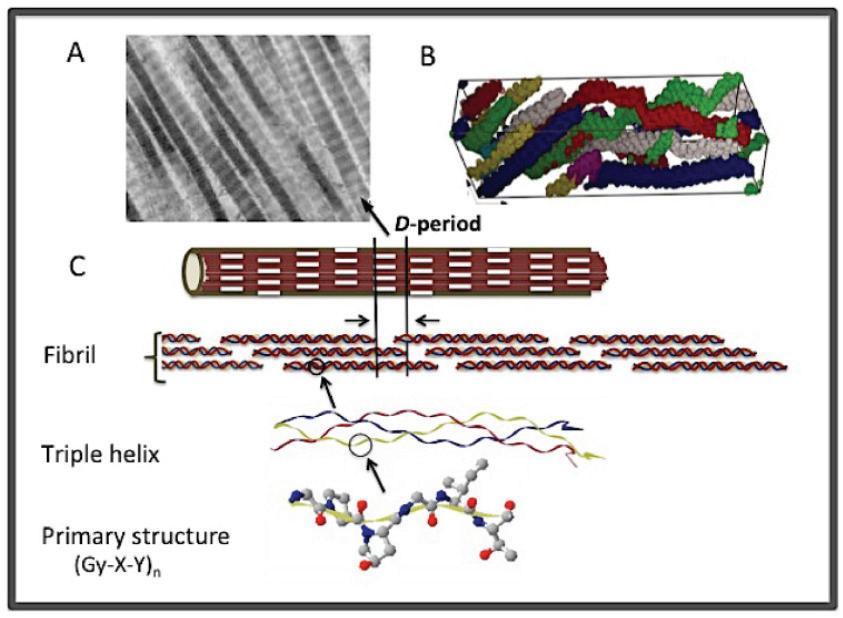
Figure 1. Hierarchical Organization of Collagen Structure (A. Collagen Fibrils under an Electron Microscope, B. Staggered and Intertwined arrangement of triple helices within a fibril, C. Different stages of Fibrillogenesis from the Primary Structure (Bottom))
(V), Rohan Goel (V), Daniel Hall (VI), Emma Kotlewski (IV), Sabrina Shields (IV), Max Ventura (VI), Julianna Zhang (V), Dr. Haven
Bodega IRT: Maximizing Yield in Local Farm Produce to Help Address Food Insecurity
by Jaxon Beal (V), Aryav Bhandari (IV), Sahasra Dalta (V), Kathryn Flanigan (VI), Arjun Kapur (VI), Ms. Tandon
The main goal of this project is to address food deserts in Newark, New Jersey, by developing a sustainable, community-centered supply chain and using the Pingry farm to provide fresh produce to local corner stores, or bodegas. As of now, Newark faces a 1.6% annual increase in demand for fresh food (twice the national average), yet affordable access remains limited (Rutgers Business School 2024). A key issue playing into the desert is that consumers and residents lack trust in larger, more expensive supermarkets. Residents often place more trust in local corner stores than in supermarket chains, prompting this initiative of transforming bodegas into reliable distributors of fresh, affordable produce. This year, our team has been focused on maximizing yields through different soil amendments. We conduct-
ed an experiment to test lettuce growth rates and true leaf development across five weeks using cow manure, chicken manure, and composted food waste. We conducted basic soil testing for the amount of pH, ammonia nitrogen, phosphorus, and potassium in the soil amendments, and we plan to conduct more advanced soil testing in the future. Our findings concluded that cow manure and the Pingry compost provide more efficient lettuce growth than chicken manure. With our findings, we can continue to increase the amount of produce we deliver to bodegas. Ultimately, the goal is to see how fresh produce in bodegas affects the community and to publish our findings in collaboration with Rutgers University, contributing to broader conversations about urban agriculture and equitable food access.
SmartHeart
Protein solubility, the ability of a protein to dissolve in a liquid solvent, is a major bottleneck in biologic drug development. For subcutaneous delivery, poor solubility causes precipitation, inflammation, and dosing limitations.
To address this, we adopt a two-step pipeline: (1) predicting intrinsic protein solubility directly from sequence and structure, and (2) modeling mutation-induced changes in solubility to guide rational protein engineering.
We address this gap through a two-part framework combining graph neural networks (GNNs) and transformer-based protein language models. For intrinsic solubility prediction, we construct AlphaFold-derived residue graphs from the eSOL dataset (3,174 proteins), incorporat-
ing aggregation features calculated using Aggrescan3D and spatial edge features. We benchmark GCN, GAT, and GINE architectures. Our best performing model, 5-layer GCN, achieves a test R² of 0.44, providing a competitive and computationally efficient structural baseline.
For mutation-induced solubility changes, we fine-tune ESM2 within a Siamese architecture on the 32,992-sample SoluProtMutDB dataset. By addressing dataset imbalance using weighted loss and threshold tuning, we improve informedness (Youden’s J) to 0.357. Together, our work advances scalable, structure-aware, and mutation-sensitive solubility modeling, bridging 1D sequence embeddings and 3D structural representations for rational protein engineering.
by Suvid Bordia (IV), Eric Chen (V), Derek Peng (V), Arjun Subramanian (VI), Albert Wu (VI), Dr. Jolly
by
Extended Reality: Virtual Reality’s Role in Changing Climate Change
Ethan Geppel (VI), Som Ghatak (V), Sophia Guild (VI), Sophie Hao (IV), Norah Jacob (VI), Aria Saksena (V), Sarah Yu (V), Dr. Mirliss
The Extended Reality Independent Research Team (XR IRT) explores the potential of different aspects of Extended Reality (XR) to influence people’s real-world behavior and environmental consciousness. Our research investigates how a virtual reality simulation affects users’ daily actions concerning oceanic pollution and marine life. Extended Reality is a field with increasing relevance; potential implementations of this powerful tool include assisting psychologists, conducting behavioral studies, and increasing environmental literacy. XR research has proven to be more effective at influencing long-term behavior than video or other traditional media,
which is why we are attempting to determine if XR is an effective tool to inspire sustainable habits. To construct our simulation, we are using Zoe Immersive software to develop the VR interactive space and Blender to create the custom assets. Our simulation will debut within the Pingry Community in the near future, as we hope to run a small pilot later this year. Through this immersive experience, we aim to underscore the significance of individual actions in contributing to a collective environmental impact, promoting more environmentally conscious behaviors within the Pingry community and beyond.
The Plastic Degrading Enzyme: PETase
by
Sari Berman (VI), Edward Huang (VI), Chloe Joujan (IV), Noah Reichman (V), Julia Ronnen (VI), Radhya Shah (IV), Ana Zervos (IV), Jasmine Zhou (V), Dr. D’Ausilio
Polyethylene terephthalate (PET) is one of the most widely used plastics in the U.S., but takes up to 450 years to degrade in landfills. As the severity of plastic-related damage to the environment grows, the scientific community searches for an efficient way to recycle PET. Our group aims to optimize PETase, an enzyme with a unique ability to break PET polymers into their monomers, terephthalic acid (TPA) and ethylene glycol (EG), which can be reassembled into strong plastic polymers for consumer use. This nuanced recycling method is termed “enzymatic recycling” and has gained attention for its minimal environmental impact. However, the mutation of PETase that is used has to be optimal for this process to be the most efficient. Originally, to determine the efficiency of the PETase enzyme in our lab, we performed a Polycaprolactone (PCL) plate-clearing assay, in which suspended PCL, a plastic nearly identical to PET, is plated in a solution with LB/agar. A colony of BL21-DE3 Escherichia
coli expressing the PETase enzyme is then incubated on the plate overnight, and the radius of a “clearing halo” surrounding the originally placed bacteria expressing PETase is observed. By using the diameter of the clearing halo, the enzyme’s efficiency at degrading PCL and similar plastics can be quantified. However, due to protocol and result setbacks, we recently shifted to another mutation of PETase, FAST-PETase. We plan to work with the purified FAST-PETase enzyme itself and quantify its degradation on plastic water bottles as the PET substrate. After incubation, we will use ultraviolet–visible spectroscopy and the subsequent absorbance levels to estimate the release of PET breakdown products. Using this assay, our group hopes to research and document the effects of different mutations on PETase’s efficacy, further advancing the scientific community’s knowledge of the enzyme and contributing to the global effort to recycle PET plastic efficiently.
VirF
by
Joe Cridge (IV), Hannah Diao (VI), Leah Holmes (V), Michelle Ooi (IV), Tingting Luo (VI), Riya Prabhu (V), Aanvi Trivedi (VI), Dr. D’Ausilio
Shigella, which represents a major cause of bacterial foodborne illness worldwide, relies on the transcription factor VirF, a member of the AraC superfamily, to regulate its virulence cascade. Despite its importance in Shigella pathogenicity, the three-dimensional structure of VirF remains unsolved, limiting scientists’ understanding of its regulatory mechanisms. Other AraC family proteins, such as ToxT from Vibrio cholerae, contain fatty-acid binding pockets that inhibit DNA binding and reduce virulence; therefore, we hypothesize that VirF may share similar structural
features and regulatory mechanisms. To investigate this, we have successfully expressed the VirF protein and are working to purify then crystallize it in order to determine its structure. In addition, biochemical assays can be used to evaluate whether fatty acids can inhibit VirF activity and reveal functional similarities to ToxT. Determining the structure and regulatory mechanisms of VirF may provide new insight into transcriptional regulation in Shigella dysenteriae and support the development of targeted therapies for Shigella infections.
Fluorescent Fish IRT
by
James Draper (VI), Katherine Jung (VI), Ishaan Kumar (V), Leo Reeder (V), Stella Reheman (VI), Ishaan Sinha (V), Nikhil Shah (IV), Dr. Fried
Understanding the molecular mechanisms underlying bioluminescence and fluorescence could hold significance across many fields of biology and medicine, ranging from furthering understanding of ecological interactions to finding new fluorescent tags. Since Roger Tsien received the 2008 Nobel Prize in Chemistry for the discovery and development of the green fluorescent protein (GFP), fluorescent proteins have become crucial tools in biological research. The Japanese fluorescent freshwater eel (Anguilla japonica) was identified as the first fluorescent vertebrate animal in 2013. Additionally, fluorescent marine organisms, such as scorpionfish, algae, and plankton, have been continually observed. Our current project centers on the expression, characterization, and mutation of UnaG, the fluorescent pro-
This year, we have successfully transformed E. coli cells with UnaG and achieved soluble protein expression and purification. The purified protein was obtained at approximately 0.25 mg/ mL. Since our protein requires a cofactor (bilirubin) to express, we are preparing to perform fluorometric assays with added bilirubin to test the protein’s activity in vitro. We are planning to perform large-scale expression and purification. Our future goals involve testing UnaG active site mutations and different cofactor molecules to investigate whether fluorescence intensity or color can be modified. These mutated UnaGs could be used to visualize cell structures, sense the presence or track the location of certain molecules, and track gene expression.
Food Dye
by Daniel Andrews (IV), Arthur Bouchacourt (V), Angelina Gao (V), Andrew Hefner (IV), Akiv Shah (IV), Mrs. Vignolini
Artificial food dyes have been linked to the exacerbation of hyperactivity in humans. This study aims to determine the impact of Red 40 food dye on the expression of DOP2R mRNA in Drosophila melanogaster, the common fruit fly. Procedures for feeding, anesthetizing, and sex determination of the flies have been developed. RNA has been successfully extracted from the flies, quantified
using NanoDrop, and visualized on an agarose gel. Moving forward, adult fruit flies will be exposed to controlled amounts of Red 40 in their normal food supply, starting at five days old, for a maximum of 15 days, from which mRNA will be extracted. Using Polymerase Chain Reaction (PCR), the expression of DOP2R mRNA in exposed fruit flies will be compared to that of non-exposed fruit flies.
Materials
by
Arnav Jain (VI), Jonah Park (VI), Dean Zervos (VI), Amelia Liu (V), Sarah Bonilla (V), Riya Reddy (IV), Aden Gao (IV), Dr. Keyer
Wood is a porous, three-dimensional material made up of cells that are connected by lignin. Lignin is a biopolymer that supports water transport and provides structural support to the wood. The Materials IRT group explores integrating reactive hydrothermal liquid-phase densification (rHLPD) with wood composites to develop sustainable, high-strength building materials. Delignified wood, wood that is stripped of lignin, forms a porous cellulose network that we use as a scaffold. These pores are then infused with rHLPD-derived composites, which undergo car-
bonation to solidify and bond chemically with the wood matrix. The resulting hybrid material has enhanced tensile strength and durability. Initial prototypes have demonstrated compatibility with construction applications such as load-bearing structures. Further optimization is focused on modifying composite viscosity and carbonation factors to maximize CO2 sequestration and mechanical performance. This approach bridges gaps between bio-based materials and low-carbon cement technologies, offering emission reductions and structural innovation.
Metagenomics
by Bora Akyamac (V), Albert Hong (IV), Douglas McNaugher (V), Aiden Suh (V), Julian Zassenhaus (VI), Matan Zelkowicz (VI), Ms. Patel
Metagenomics is the study of genetic material obtained directly from populations of organisms. To further investigate the microbial ecology of the Pingry composter, samples were collected from the middle and distal regions of the composting system and analyzed using 16S rRNA sequencing. DNA was extracted and purified from each sample before sequencing to identify the bacterial taxa present in different regions of the com-
poster. The resulting sequence data are currently being analyzed to characterize the microbial community structure and determine how microbial populations vary across stages of the composting process. These results will also be compared with sequencing data from previous years to evaluate changes in microbial composition over time and provide further insight into the biological processes that drive decomposition within the composter.
Weaponizing Trust: The Ethics of Deception in the CIA’s Fake Vaccination Program
by Joe Cridge (IV), Samaya Shah (V), Bridget Troy (V), Dr. Ward
In modern geopolitical conflict, governments increasingly justify unconventional tactics for national security, raising ethical questions about the boundaries of state power and the extent to which first-world nations engage in exploitative practices. The CIA’s fake vaccination campaign in Pakistan to identify Osama bin Laden was a strategy that blurred the line between public health and covert intelligence operations. This project asks: To what extent can deception be morally justified in the pursuit of national security? Are there ethical limits that should remain untouchable, even in the context of counterterrorism? To investigate these questions, this study analyzes the case through the lens of multiple ethical frameworks, including utilitarianism, deontology, and virtue ethics. While evaluating, we
drew on journalistic accounts, public health data, and scholarly discussions of bioethics and international law to collect information from varying perspectives and limit data bias. This project places a particular focus on the short and longterm consequences of the operation, including its modern impact on vaccination trust in global health initiatives such as the Red Cross. Preliminary findings suggest that while the operation may be defensible under a utilitarian framework due to its role in eliminating a high-profile threat, it constitutes a profound violation of medical neutrality and public trust. This case ultimately reveals the ethical danger of weaponizing humanitarian systems, suggesting that certain domains, such as medicine, may require stricter moral protections regardless of political objectives.
World Politics
By Alex Curtis (V), Sophie Davidkhanian (V), Briar Hackett (V), Sophie Schachter (V), Aashna Shah (V), Kate Weldon (V), Aaron Wu (V), Zach Zaslow (V), Dr. Maynard
The World Politics HIRT’s paper on democratic backsliding presents both domestic and external threats to democracy, as well as the potential future for democratic governments. There are multiple sections to the paper that cover specific instances or individual problems within democracy. However, the overall idea of the
paper is on the global view of the current and future state of world politics, with a specific focus on the slow failure of democracy and capitalism. We examine multiple sources written by experts on political trends to present an educated view on today’s political landscape.
The Ethics of AI in Warfare
by Mehar Arampulikan (III), Suvid Bordia (IV), Aryan Saksena (IV), Dr. Ward
As nations race to develop autonomous weapons systems, a pressing ethical question emerges: is it morally justifiable to delegate the act of killing to Artificial Intelligence? The United States, China, and Russia are already building machines that can select and engage targets without human oversight, steadily decreasing the utility of human soldiers in the landscape of war. This raises questions not only about how wars are fought, but about whether wars become easier to start when no one has to die fighting them.
Drawing on deontological ethics, just war theory, and consequentialist reasoning, this research investigates whether the absence of human sol-
diers on the battlefield also means the absence of impactful accountability and moral restraint. The project analyzes current military AI programs, recent conflicts involving AI-assisted targeting, and ongoing international policy debates over lethal autonomous weapons systems.
Preliminary findings suggest that reducing human sacrifice in war does not lead to peace. Instead, it risks producing a new kind of conflict where the political and moral barriers to war disappear alongside the soldiers themselves. Without tens of thousands of lives at stake, nations may find it easier to wage wars that are harder to justify, harder to control, and harder to end.
Capturing Sound: How Technology Changed Music
by Sahana Bhat (III), Kennedy Jackson (IV), Sophia Omi (III), Mr. Gold
Throughout the vast majority of human history, to listen to a piece of music required being within earshot of the performer — a real-time, never-to-be-repeated event. Over the last 150 years, that has all changed. The evolution in the way music is made has caused a shift in music consumption, from ephemeral experience to ownership to instant accessibility. We now live in a world where all the music that has ever been recorded is available to us whenever and wherever we like. In this HIRT, we examined how technology forever altered music for its creators, consumers, and performers through the lens of the innovations and inventions of the modern age. Essential questions were considered: How does technology change the way we listen to, create, and perform music? What does this technological evolution look like, and what are some of the more important or interesting technological in-
novations, inventions, or advancements that precipitated these changes? Using Mark Katz’s book, Capturing Sound: How Technology Has Changed Music, as our primary source, we used a shared “brain dump” to document what he has called the seven “phonograph effects,” or the distinct ways in which technology changed our relationship to music. Using knightlab.com, we then created a timeline of significant inventions and events to highlight our observations. What we learned is that, one, we are fortunate to be living in a time in which we have immediate access to and ownership of music, two, that our relationship to music has changed profoundly and will almost certainly continue to do so, and three, even with all of the technological advances, there is still no way to truly replicate or replace either the quality of live music, or the connection to others created by listening to live music together.
Riot Grrrl HIRT
by Sarah Clevenger (V), Amelia Liu (V), Dr. Murray
The Riot Grrrl Movement of the early 1990s was a part of third-wave feminism, a social phenomenon embracing individualism and sexual liberation. This movement empowered young women to express rage and frustration, especially in the male-dominated punk scene. It is spearheaded by the rise of several feminist bands, such as Bikini Kill and Bratmobile, and also encouraged
zine-making and radical politics to combat sexism and sexual violence. In the inaugural year of the Riot Grrrl HIRT, our primary focus is to examine how the movement originated, how it impacted society in the past, and how it has evolved since. We have engaged with foundational works by authors such as Sara Marcus and plan on exploring New York University’s Riot Grrrl Collection.
The Ethics of Physician-Assisted Death for Eligible Patients
by Anika Gupta (III), Cyra Sachan (III), Dr. Ward
40% of the American population has been diagnosed with incurable and ongoing chronic diseases, and more than 75% of all health care expenses are due to chronic conditions. Preventing citizens from requesting a medically assisted suicide is an infringement on the right to control the circumstances of their death. However, in the status quo where medical professionals are required to “do no harm”, hospital bills burden families, and guilt induction may affect the patient, the question of respecting a patient’s deci-
sion before all else becomes extremely complex. This research asks: Should physicians be allowed to provide physician-assisted suicide services to terminally ill patients who repeatedly request it? Numerous essential questions were identified on both sides of this medical debate. Then, research was conducted to address these questions and the ethical dilemmas each faces. Many online resources were evaluated, including PubMed, the Centers for Disease Control and Prevention (CDC), and the National Health Council.
The Science of Learning
by Shanti Swadia (V), Mrs. Johnston
The Science of Learning HIRT explored how narrative shapes the mind and examined the relationship between the brain, stories, and human thought. Our research connects work on inner monologue, the history of emotions, narrative and cognition, and cognitive load theory to understand how people process experiences, construct meaning, and retain information. We
investigated why stories are such powerful tools for learning and self-understanding, studying how internal speech influences reflection and how emotional expression has changed over time. Our research also included how cognitive load theory can explain which narratives simplify ideas or overwhelm the learner, acting as a bridge between the humanities and cognitive science.
Women, Witches, and the Wielding of Power
by Mia DiPasquale (IV), Lauren Glasofer (V), Maddie Hand (IV), Charlotte Hunzinger (IV), Sylvie Kurtzman (V), Evelyn Ouyang (III), Lily Pereira (V), Cyra Sachan (III), Annie Sherman (IV), Ms. Cattafi
Throughout history, witchcraft has been used as a weapon to degrade the authority of powerful women, subjecting them to subordinate roles, adding to the authority of men, and bringing fear to women. From 1692 to 1693 in colonial Massachusetts, the Salem Witch trials included a series of hearings and prosecutions. These trials resulted in over 200 accusations of witchcraft, where the consequences for those convicted included imprisonment and death. Accusations were fueled by religious extremism, hysteria, and community feuds, along with fear of the devil. This hysteria ended in early 1693, as spectral evidence was eliminated from consideration in the hearings. The main mission of our HIRT is to bring
awareness to the women who were unjustly persecuted for witchcraft, offering visual and engaging insight into their lives and the gender challenges that they faced. We recognize that women were often an easy scapegoat, and accusations were often not buttressed by concrete evidence. Over the course of study in our HIRT, we read the graphic novel More Weight: A Salem Story, written and illustrated by Ben Wickey. It follows the story of the Salem witch trials and focuses specifically on Giles Corey and his wife, Martha Corey. We crafted our own graphic novel inspired by the book, and chose to focus their stories on different women accused of witchcraft.
Tracing Our Evolutionary Legacy: A Biological Anthropology Exploration
by
Gisel Calulo (VI), Cecilia Caligiuri (VI), Giulia Caligiuri (IV), Joely Finkelstein (IV), Brooke Graham (IV), Dr. Haven
Biological anthropology investigates the fundamental question of what it means to be human by exploring the evolutionary story written in our bones and DNA. Recent genomic studies have identified that certain genetic segments on chromosome 3, introgressed from Neanderthals into the modern Homo sapiens gene pool, serve as significant risk factors for severe COVID-19 and other immune system disorders. This study aimed to identify and analyze genetic variance in specific genes, such as CCR1 and CCR5, to determine how these archaic remnants influence modern immune responses and disease susceptibility. To achieve this, the research team evaluated anthropological literature, constructed hominin phylogenetic trees, and consulted with university
experts to establish a foundation in human anatomy and evolutionary theory. The methodology included a DNA lab using PCR-based analysis to target specific alleles, such as the rs71327024 variant in CCR1, which is implicated in the regulation of pro-inflammatory responses. Preliminary findings indicate that these Neanderthal-derived variants are linked to hyperinflammatory states and exhibit significant global distribution patterns, with carrier frequencies reaching 63% in some South Asian populations while remaining virtually absent in Africa. These results highlight a tangible connection between our evolutionary past and modern health disparities, suggesting that certain “ancient” genetic code can disrupt modern immune defense mechanisms.
Psychology
by Constanza Ambrogio (IV), Precious Anyanwu (VI), Anaïs-Skye Clarke-Avignant (V), Leah Holmes (V), Jake Finegold (IV), Joely Finkelstein (IV), Brooke Gambello (IV), Caroline Naulty (V), Caroline Ouyang (III), Karla Pye (III), Sadie Salmon (IV), Sonya Seideman (V), Rowan Shapiro (V), Aanya Subbiah (VI), Ana Zervos (IV), Ms. Kelly
The study of human behavior requires a careful balance of analyzing existing literature and developing new, testable questions to fill gaps in current knowledge. A major challenge in psychology is understanding how complex social and internal factors influence individual outcomes across different environments. This research project utilized a multi-method approach to examine these influences, focusing on refined research questions and the extrapolation of data to test specific hypotheses. By evaluating peer-reviewed sources
and employing formal analysis, these studies investigated several distinct psychological areas.
Research questions focused on how cultural backgrounds shape the experience of hallucinations and how childhood trauma informs victim selection in violent crime. Additionally, other investigations examined the impact of microaggressions on LGBTQ+ adolescent identity, the role of social status in peer interactions, and the influence of social media on self-esteem.
Housing Market and Neighborhood-Level Responses to Olympic Investment: Evidence from London 2012
By Shaan
Barai (VI), Anderson Lee (VI), Aryan Saksena (IV), Akiv Shah (IV), Jack Sherman (VI), Rahul Vaidyanathan (III), Charlie Yang (IV), Mr. Webber, Francis Dillon
The economic effects of the Olympics remain heavily debated. While critics reference the billion-dollar “white elephant” infrastructure and the widespread displacement of residents, proponents allude to urban positive externalities and long-run growth. This study evaluates the effects of Olympic-related spending on real estate prices as a measure of living standards and desirability. We employ Event-Study and Differences-in-Differences (DiD) models to estimate how proximity to Olympic venues affects neighborhood-level housing prices with varying levels of geographic exposure. Our completed analysis focuses entirely on the 2012 London Olympics. We focus on the London Olympics because it is often widely cited as a rare Olympic “success story”. Neighborhoods are classified into high, medium, or low geograph-
ic “exposure” groups to Olympic venues. Using quarterly neighborhood census data from four years before and seven years after the 2005 London Olympic Games Bid Award, we construct a dataset of neighborhood-level median housing prices over time. We then apply our Event-Study and DiD model to this dataset to compare how the effects fluctuate across exposure levels over time. There were no differences in the pre-trend period (all p > 0.10), but there was significant post-2005 divergence between the exposure and comparison groups. High-exposure neighborhoods experience approximately a 9-10% higher post-award housing prices relative to low exposure areas (ß= 0.092, p < 0.01), with a smaller effect for High vs. Median (6.1%) and Medium vs. Low (3.1%), demonstrating that effects scale by proximity.
Artificial Intelligence: The Investigation Into the Role AI Plays in Our Future
by
Mehar Arampulikan (III), Rachael Bai (III), Weston Bersh (IV), Lucas Blumberg (IV), Francesco Canevari (IV), Owen Chow (IV), Sarah Diao (III), Ryan Dicks (IV), Tejas Kashyap (III), Nate Kosar (IV), Dr. Sudarsky
Artificial intelligence is rapidly transforming schools and daily life, often outpacing the development of policies, norms, and expectations needed to guide its use. The AI HIRT investigates the ethical, cognitive, and environmental challenges posed by artificial intelligence and evaluates its potential benefits when used responsibly. These essential questions guide our work: How should schools set rules that protect academic integrity without blocking innovation and creative thinking? How do differences between AI systems and human cognition shape trust, accountability, and decision-making? To address these questions, we have evaluated Pingry’s current AI policy and AI assessment scale, as well as the policies other independent schools across the country have. We have also performed two experiments with Pingry students to get a better understanding
of how AI is influencing their learning. Our research suggests that AI has a real environmental footprint, since training and running models can increase data-center energy use and cooling demand, making sustainability a meaningful ethical tradeoff alongside AI’s benefits. The group is also working to build a prototype to simulate real-world issues in high-stakes contexts, such as elections and politics, to promote social harmony and stability. The AI HIRT has determined that AI will serve a crucial role in our future, and it is essential for students to have experience using AI and learn how it can supplement their learning and problem-solving. AI is also creating new academic dishonesty challenges because unclear integration and fear of punishment can push students to hide or deny using it.
A Century Later: The Cycle of Inequality Redlining Created
by Annika Sood (IV), Ms. Cabrera
Food deserts, areas where people have limited access to a variety of healthy and affordable food, reflect inequality and discrimination established in historical redlining almost a century ago. In New Jersey, food deserts are still concentrated in these neighborhoods, confirming that past segregation continues to affect food access today. This project seeks to understand how the practice of redlining, abolished nearly sixty years ago, continues to shape where food deserts appear and why minorities are more affected. The
2025-26 Social Innovation HIRT analyzes maps of current food deserts, reads past redlining area descriptions of counties in New Jersey, and reviews census data highlighting demographic patterns in certain communities. Preliminary research indicates how residents in food deserts face difficulties that are directly correlated to past redlining, such as higher unemployment rates (60% higher in food deserts), lower levels of education, limited transportation options, and an inadequate amount of nutritious food available.
Love, Money, and Power in Eighteenth- and Nineteenth-Century Literature
by Ariella Allariez (V), Mia Gulati (V), Dr. Madere
What is the relationship between money, love, gender, and power in the eighteenth and nineteenth centuries? Wealth and power were often seen as opportunities for women during this time period to rise in social status and live comfortably, which was a point of contention by authors. This was shown through examples of literary narratives such as Madame Bovary, A Vindication of the Rights of Woman, and Pride and Prejudice. Madame Bovary, written by Gustave Flaubert, proved that there should be a balance in marriage between wealth and contentment in the relationship. Emma Bovary, the main character, failed to achieve satisfaction in her marriage and resorted to living an extravagant life while pursuing romantic affairs, which, as a result, led to her
downfall. Jane Austen’s novel Pride and Prejudice demonstrated that the balance of wealth, power, and love was possible through the marriages of Elizabeth and Jane. The two sisters were able to marry into a higher social status while having a genuine connection with their partners, proving that balance could be obtained in marriages. A Vindication of the Rights of Woman, written by Mary Wollstonecraft, explored the idea that women should not marry for money; instead, women should become independent and educated to have a valuable place in society. This study reveals that during the eighteenth and nineteenth centuries, money, love, gender, and power have heavily impacted each other, often manifesting in arranged marriages driven by social and financial gain.
Historical Fiction
by
Lulu Brennan (V), Sophie Cuiffo (V), Ryan Dicks (IV), Briar Hackett (V), Abigail Neu (VI), Ms.
How can writers tell fictional stories about the past without compromising the legitimate collective memory of actual historical events? Can fiction illuminate or amplify historical “truths,” and does historical truth exist independently of representation?
Through an investigation into various texts, Historical Fiction HIRT has been exploring the mechanisms by which fictional narratives can inform readers about the past without compromising historical narratives. The impact of erroneous story-
telling, perspective, and bias is often overlooked, as history is presented as purely factual. Historical fiction helps readers better understand a given time period by allowing them to experience history through emotion, bringing the subject to life.
In Historical Fiction HIRT, we have analyzed works of historical fiction, including The Adventures of Huckleberry Finn and Lincoln in the Bardo. Using various literary theories and analytical frameworks developed in previous years,
The Ethical Dilemma of Child Labor: Does it Help or Hurt Impoverished Communities?
by Zoya Abbasi (III), Sahana Bhat (III), Dr. Ward
Is it ethical for impoverished communities to utilize child labor? On one hand, wages earned by children contribute to a family’s well-being by paying for food, clothing, and shelter. Family income above the poverty level secures the well-being of current and future generations. By contrast, child labor can be viewed as exploitative and detrimental to the education of a child, limiting their ability to reach their full potential. Working from an early age shortens childhood
and exposes children to the demands of physical labor. However, if impoverished men, women, and children aren’t working through extremely dangerous conditions, they are unable to obtain the food or money needed for survival. This paper presents statistical data regarding child labor, economic data regarding poverty levels, and scientific data about child development to present a case for and against the use of child labor to benefit impoverished communities.
The Ethical Dilemma of the Beauty Industry
by Jordan McDonald (VI), Omoefe Obadiaru (VI), Lane Purcell (VI), Dr. Ward
The study of ethics and its supplemental frameworks equips individuals with moral reasoning to navigate complex situations while accounting for differing values. Frameworks such as virtue ethics (character), deontology (duties), and utilitarianism (consequences) help define morality and how that definition should be implemented in society. The 2025-26 Ethics Humanities Independent Research Team is a research group where students meet weekly to analyze ethical dilemmas and discuss ways to address them. Our group zooms in on the ethical dilemmas
that surround the beauty industry: child labor, animal testing, and false advertising that allow this industry to thrive, yet result in clear negative effects. Similar to fast fashion, “fast beauty” is a thing too, and this quick production can lead to global problems. Some of Sephora’s top-selling creams, powders, and mascaras bring up various ethical questions. In our project, we will further discuss these dilemmas using a diverse range of moral lenses, as well as provide alternative solutions to help approach these issues.
Research Week Events
Atomic Antics
by Amelia Liu (V), Jasmine Zhou (V), Dr. Keyer
Atomic Antics is devoted to teaching the Pingry community about consumer chemistry, with topics such as slime and cosmetics. Our mission is to provide a calm space to destress while educating students on the chemistry behind everyday products. In the past, we’ve experiment-
ed with Oobleck, soap, and bath bombs, and are planning to expand our outreach through programs such as Research Week. This year, our exhibit will feature activities such as “hot ice” crystals, bath bomb making, and more!
Journal Club
by Suvid Bordia (IV), Eric Chen (V), Sarah Clevenger (V), Angelina Gao (V), Aiden Suh (V), Julianna Zhang (V), Mr. Maxwell
Journal Club allows Pingry students to discover scientific research beyond foundational classroom learning. Each week, we host presentations on novel scientific research conducted in universities and industry, as well as students’ own research projects. Presenters choose a scientific paper of their interest from one or more of the following subjects: Biology, Chemistry, Physics, and Computer Science, with guidance from staff
members to deliver a presentation that makes complex research accessible to the Pingry community. Presentations are open to all and take place on Thursday mornings in the loud side of the library. Whether listening to a presentation, helping the club as a staff member, or signing up to present yourself, Journal Club offers everyone an accessible introduction into the world of research.
Robotics
by Zach Abrahams (IV), Neil Amin (IV), Aavyan Anand (III), Rachel Bai (III), Rian Chadha (IV), Joe Cridge (IV), Alex DeLorenzo (V), Som Ghatak (V), Sophia Guild (VI), Ryan Hao (V), Aashritha Kolli (IV), Rhys Llewellyn-Jones (IV), Rishi Mirchandani (IV), Tejas Kashyap (III), Christian ZhouZheng (VI), Mr. Corwin, Mr. Davison, Dr. Jolly
Do you like robots? Of course you do! Come see Pingry Robotics this week! At our research week exhibit, you will be able to drive some of our robots and mechanisms, see our robots that won championships, and ask questions to the brilliant team behind the bumpers. The Pingry Robotics team builds two robots to complete specific tasks in time-constrained competitions to score points. With team numbers 6069 and 2577,
we compete in FTC (FIRST Tech Challenge) and FRC (FIRST Robotics Competition) along with mentoring the middle school FTC/FLL team. This year’s FTC competition (DECODE) involved unloading a pattern of colored game spheres into an elevated goal. FRC 2026 season scaled up that competition, also a shooting game but at a much faster pace (around 20 balls per second), with complicated strategy involved.
A Study of Hair Curling Irons
by Campbell Clark-Schoeb (VI), Megan Soos (V), Mr. Maxwell
Hair curling irons are widely used, yet their effectiveness depends on price, heat control, and hair type. This study investigated whether higher-priced curling irons produce longer-lasting curls compared to lower-priced curling irons across different hair types. Identical sections of straight, wavy, and thick hair were curled under controlled conditions, and curl tightness and duration were measured over several hours. The temperature consistency of each iron was
also monitored to evaluate heat stability. Results show that the higher-priced curling iron produced consistent heat and longer-lasting curls, particularly for thicker hair types, while the lower-priced iron showed greater temperature variation and reduced curl longevity. These findings suggest that curling iron quality affects performance differently depending on hair type, which is important for consumers seeking effective and cost-efficient styling tools.
Bunt Battle: Softball Bat Performance Test
by Genevieve Provence (V), Zoe Snider (V), Mr. Maxwell
Softball strategy relies on more than power hitting; however, bat performance during bunting remains under-researched. Bunts that do not travel far are effective because they cause the defense to come together to a specific location on the field, leaving open spots. This convergence creates a scenario requiring immediate verbal communication among infielders. This study investigates the following question: Which bat, out of the two most popular brands in the U.S. for softball, Louisville and Ghost, will consistently place better bunts? Each bat was tested over 15 trials, measuring the total roll distance of each
ball from home plate in inches on a dirt field and recording whether it landed within an optimal bunt zone. Both bats feature the same drop weight. A controlled pitching machine was used to standardize speed, and a t-test was conducted to compare absorption performance between bats. The results showed measurable differences in average distance and consistency, indicating that bat construction may influence bunt control. These findings suggest that bat selection can impact strategy and should be considered along with power performance when choosing equipment.
FYI Sci
by Joe Cridge (IV), Amelia Liu (V), Avanti Hegde (IV), Sarah Diao (III), Anavi Sinha (III), Annika Jivrajani (III), Brynne Dragert (V), Carlyx Miller (IV), Maddy Rodriguez (III), Riya Reddy (IV), Caroline Ouyang (III), Ms. Mygas
FYI Sci is a student-run organization that communicates the wonders of science to the Pingry community. We have three departments: podcasts and visuals, blogs, and videos. There, members create slideshows, videos, posters, social media posts, articles, and more. We often hold large community events such as trivia games and STEM challenges, aiming to learn more about science, share our knowledge with the student body, and have lots of fun!
Deep Learning Framework for RNA 3D Structure Prediction from Cryo-EM Density Maps
by Derek Peng (V), Dr. Jolly
Determining RNA 3D structures is critical for understanding complex biological functions and developing targeted therapeutics. However, traditional experimental methods are notoriously difficult, leading to data scarcity that severely hinders RNA research. While cryogenic electron microscopy (Cryo-EM) has revolutionized structure determination by improving resolution, converting Cryo-EM maps into accurate RNA all-atom models is still a major computational bottleneck, often requiring manual tracing. We present a hybrid, automated pipeline that reconstructs RNA all-atom coordinates from cryo-EM maps in three stages: (i) voxel-wise segmentation, (ii) backbone construction, and (iii) all-atom completion/refinement. For segmentation, we design
a Swin U-Net Transformer with a multi-resolution (2–7 Å) input pyramid and ensemble learning to localize the three nucleotide components (phosphate group, ribose sugar, and nitrogenous base), achieving a macro F1 >0.85. For backbone construction, we find a Hamiltonian path of phosphorus atoms with predicted secondary structure constraints to enforce plausible chain connectivity, achieving 94% backbone accuracy. Finally, nucleotide completion and atom refinement yield chemically valid structures consistent with the density, reaching a mean all-atom RMSD of 4.27 Å. This hybrid pipeline enables accurate, fully automated reconstruction of RNA structures, helping accelerate RNA structure determination and structure-based drug discovery.
The Impact of Release Position on Pitch Movement and Performance in Major League Baseball
by Zach Zaslow (V), Mr. Poprik
Pitching mechanics play a key role in determining the movement and effectiveness of each pitch in baseball. Modern pitch-tracking systems provide detailed measurements of release position, spin, and pitch movement, enabling the analysis of how mechanical differences influence pitch outcomes. Understanding these relationships could help pitchers optimize their mechanics to improve performance. The objective of this study was to investigate the trends with respect to release height and position, which help approximate a pitcher’s arm angle, influence pitch movement, spin characteristics, and, in turn, pitch effectiveness. Pitch-level tracking data was collected from
the Statcast database with data points such as release position, pitch velocity, spin rate, spin axis, and horizontal and vertical movement. Statistical models were used to analyze relationships between release mechanics and pitch characteristics while controlling for pitch type and velocity. Predictive models were then developed to estimate how changes in arm angle may affect ball movement and performance outcomes. This research aimed to improve understanding of the mechanical factors that influence pitch quality and provided very interesting insight into how pitchers can adjust their mechanics to optimize pitch effectiveness.
The EleutherAI Summer of Open AI Research: A Traditional Approach to Symbolic Piano Continuation
by Christian Zhou-Zheng (VI), John Backsund, Dun Li Chan, Alex Coventry, Avid Eslami, Jyotin Goel, Xingwen Han, Danysh Soomro, Galen Wei
Are you interested in AI research? Last August, I helped organize the inaugural EleutherAI Summer of Open AI Research, matching students of all skill levels with a mentor to do a month of focused AI research. I will discuss the logistics of the event, as well as the paper my mentees wrote, which has the following sub-abstract:
We present a traditional approach to symbolic piano music continuation for the MIREX 2025 Symbolic Music Generation challenge.
While computational music generation has recently focused on developing large foundation models with sophisticated architectural modifications, we argue that simpler approaches remain more effective for constrained, single-instrument tasks. We thus return to a simple, unaugmented next-token-prediction objective on tokenized raw MIDI, aiming to outperform large foundation models by using better data and better fundamentals. We release the model weights and code at https://github.com/christianazinn/mirex2025.
Research on the O-Ring Theory of Economic Development
by Maanav Desai (III)
In 1986, the Challenger shuttle exploded because of a single failing O-ring, which acted as a circular rubber seal between the segments of the solid rocket boosters (SRBs). This disaster inspired Michael Kremer’s O-Ring Theory, which suggests that an economy, similar to a group project, is only as successful as its weakest member. My research addresses a central problem: why do small differences in skill lead to massive gaps in national wealth? I am investigating the multiplier effect, in which one person’s failure can reduce
the value of everyone else’s hard work to zero. By evaluating Kremer’s 1993 paper and modern case studies on “brain drain,” I examine how this theory forces high-skill workers to cluster in countries with higher GDP, leaving others behind. My preliminary findings suggest that poverty traps aren’t just caused by a lack of effort, but by bottlenecks that make high-quality work impossible. This research shows that to fix an economy, we have to stop looking at averages and start fixing the specific links that are breaking the chain.
Computational Biology Website
by Derek Peng (V)
The website consists of interactive tools and articles designed to make computational biology accessible to people of all experience levels. It can be used for those who want to learn something new and by those who simply want to explore the var-
ious tools, such as the 3D molecule viewer, RNA 2D viewer, cryo-EM data, and the Python sandbox. Overall, the site provides a way to explore how computer science can be integrated into biology.
Generalized ML-based Monthly Pluvial Flood Risk Mapping in the Northeast US
by Suvid Bordia (IV), Dr. Jolly
Floods have cost over $1.2 trillion and 200,000 deaths globally over the past 30 years, with Northeast US flooding increasing 150% since 2000. Pluvial flooding in particular is intensifying due to climate change, but monthly-to-annual prediction for mitigation planning remains limited. Most dynamic methods focus on shortterm detection, while static tools such as FEMA flood maps are updated infrequently and don’t reflect climate variability. This study develops a physics-guided ML framework for monthly flood forecasting in the Northeast US. A novel geospatial dataset was constructed by merging ERA5-Land climate and MERIT Hydro terrain features, and Global Flood Database flood labels. Lagged features, including unexplored predictors such as dewpoint temperature and solar radiation, captured pre-flood conditions. Flood risk was modeled using a two-stage framework.
Stage 1 performed binary classification, and Stage 2 regressed a novel Flood Magnitude Index (FMI) of duration, severity, and flooded area. A weighted ensemble of a physics-constrained neural network (SCS-CN hydrological encodings), LightGBM, and XGBoost achieved 71.3x PRAUC Lift and captured 74.3% of flood events in the top 1% risk. Stage 2 achieved R² = 0.93 and Spearman ρ = 0.84. At equal spatial coverage, performance exceeded FEMA zones by >10x in recall, precision, and lift. Combined FEMA-ML overlays demonstrated complementarity instead of mutually exclusive signals. Final predictions accounted for socioeconomically vulnerable areas to equitably inform government investment. Validation across data-scarce regions globally demonstrates that dynamic ML-based flood forecasting can meaningfully supplement static maps for adaptive disaster planning.
Student-Athlete Schedule Optimization Using Linear Programming
by Albert Hong (IV), Mr. Ciarrocca
Student-athletes often face the challenge of balancing academics, training, and games within a limited timeframe, leading to overwhelming schedules. The project aimed to develop an optimization model that plans out weekly schedules to maximize academic and athletic performance under certain time constraints. A linear programming model was created over seven days of the week, with decision variables and daily time budgets derived from the user’s constraints. The objective function is a weighted sum of the time allocated to academics, athletics, and other activities. The weights are set by the user according to the subject’s urgency and importance, as well as their sports practice profile. The constraints are
linear functions that specify fixed commitments, such as school and game schedules, and minimum requirements, such as sleep, study, and practice time. This optimization problem is solved using a linear programming solver provided by JavaScript. The results demonstrated that the optimizer successfully allocated study hours as test days approached, modified practice length based on sport profiles and academic workloads, and signaled when a user’s schedule was not possible. Future directions include controlled trials to test how using the model’s schedule affects metrics such as GPA, stress levels, sleep quality, and athletic performance, and the development of a mobile app that is widely accessible to all student-athletes.
Biophilic Design in Architecture
by Matias Stevenson (V), Ms. Boone
As depression rates increase and people spend increasingly high amounts of time at home, the need to have living environments that help counteract depression is now of paramount importance. As people invest more in augmenting their living conditions, a realization has surfaced: being close to nature can make a big difference in
lifting feelings of depression. As such, the skill of integrating natural elements into interior design is becoming valuable in promoting mental wellness. One approach, known as biophilic design, incorporates nature into homes in a balanced way, offering both physical and mental benefits.
Comparing the Human Muscle Anatomy and Architecture to the Cheetah
by Matias Stevenson (V), Ms. Torres
In movement, speed and explosive power rely heavily on fast-twitch muscle fibers. While humans possess these fibers, animals such as the cheetah demonstrate far superior speed, acceleration, and force generation. This project investigates the biological reasons behind the cheetah’s exceptional muscular performance and whether similar traits could theoretically enhance human fast-twitch muscles. By comparing muscle fiber
composition, protein function, neural control, energy systems, and skeletal support in both humans and cheetahs, this research identifies the key factors responsible for extreme speed. Although a multitude of limitations prevent humans from fully replicating cheetah-like abilities, understanding these mechanisms may help improve short-burst performance and advance knowledge in muscle science and bioengineering.
Searching For Erupting Novae In The Nearest Spiral Galaxy–M31
by Julia Ronnen (VI), Michael Shara
The Condor Array Telescope is a novel refracting system optimized for ultra-sensitive, wide-field imaging of faint transients. By combining multiple small-aperture refractors, it achieves the sensitivity of a larger telescope while maintaining excellent control over scattered light. Located in New Mexico, Condor enables high-resolution, low-systematics, time-domain observations.
A 90-night, high-cadence survey of the Andromeda Galaxy (M31) has produced ~300,000 one-min-
ute exposures, aiming to detect short-lived ultraviolet flashes from classical novae—events never directly observed due to their brief duration. Detecting these flashes would provide new insight into nova ignition and mass ejection processes.
Systematic vetting of the dataset is essential to remove compromised images and ensure reliable transient detection, with human review playing a critical role in maintaining data quality.
Quantifying Patient Narratives to Strengthen Longitudinal Assessment in Chronic Pain
by Ishaan Sinha (V), Arefeh Sherafati
Chronic pain assessment relies heavily on patients’ descriptions of their own symptoms, yet these narrative reports are difficult for clinicians to interpret consistently and are rarely incorporated into structured monitoring tools. The purpose of this research was to develop a computational system that translates patient narratives into quantitative indicators that can be tracked over time alongside standard symptom ratings. To do this, we designed a pipeline that uses natural language processing, specifically aspect-based sentiment analysis, to identify meaningful themes in patients’ written descriptions and classify them using the World Health Organization’s International Classification of Functioning (ICF). These sentiment-based measures were then combined with normalized 0–10 symptom scales to create a single Wellness Index ranging from 0 to 100. We evaluated the method using a synthetic dataset modeled on real fibromyalgia narratives and a six-month, 50-entry longitudinal case. The system accurately identified functional themes and emotional tone in narratives, showing strong alignment with human reviewers, and produced a stable index that reflected realistic patterns of symptom flare-ups and recovery. Overall, the study demonstrates that patient narratives contain reliable, measurable signals and that integrating them with symptom scales can improve how chronic pain is assessed over time. This approach offers a transparent, interpretable tool for both patients and clinicians.
Machine Learning Insights into Sociodemographic Factors for Electric Vehicle Owners
by Alan Huang (IV)
Automobiles represent the largest source of transportation related greenhouse gas emissions, so analyzing which organizations adopt zero-emission vehicles is significant for climate policy. California has mandated 100% of new zero-emission vehicle sales by 2035 and invested over $200 million in hydrogen infrastructure, yet fuel cell vehicles (FCV) remain under-researched. Battery Electric Vehicles (BEV) adopters are well studied, but we know far less about who chooses FCVs and why. Drawing on a 2019 UC Davis survey of 13,816 California clean-energy vehicle households (906 FCV; 12,910 BEV/PHEV), this study applied logistic regression and a random forest to model FCV adoption after cleaning the 27,022-entry dataset to 7,496 observations (345
FCV; 7,151 EV) and addressing class imbalance with undersampling. The logistic model (AUC = 0.691) suggests homeowners are less likely to adopt FCVs (OR = 0.53, p = 0.024), while longer commutes modestly increase the odds (OR = 1.02 per mile, p = 0.026). The random forest (AUC = 0.687) indicates travel demand as the strongest signal; longest trip, annual VMT, and commute distance are the top predictors. An ordinary least squares model confirms this: adjusting for sociodemographics, FCV owners drive about 961 more miles per year than EV owners (p = 0.0002). Overall, the results suggest that FCVs attract higher-mileage households and drivers with housing constraints on home charging, supporting hydrogen infrastructure’s real utility.
Rare Disease Patients: The Struggles of Navigating Healthcare
by Zoya Abbasi (III), Madeline Ahn (III), Brynne Dragert (V), Olivia Li (V), Anna Park (III), Iris Prahl (V), Karla Pye (III), Fiona Rovito (V), Jasmine Zhou (V), Ms. Torres
What problems must rare disease patients navigate while looking for proper treatment and care?
How do these differ from more common conditions? Though nearly 1 in 10 Americans are diagnosed with rare diseases, less than 10% of these diseases have FDA-approved treatment. Our research project analyzes and summarizes the main issues rare disease patients face in healthcare. Rare disease patients have an especially hard time navigating care, ranging from doctors having minimal knowledge to incredibly unaffordable costs. For research, we split into four groups, each focusing on a specific issue from the
following: access to specialists, communication, treatment access, and costs and insurance. To conduct our research, we examined policies, research journals, statistics, and rare disease advocacy websites. Overall, we found that rare disease patients have to settle for lower standards of care and less knowledgeable professionals, and many cannot depend on their doctors to help them navigate their condition. Our research highlights a few of the many issues that rare disease patients face in healthcare, and emphasizes the need for research and affordable care for these individuals.
An Analysis of the Mathematics Behind Electromagnetism
by Rahul Vaidyanathan (III), Mr. Bennett
Electromagnetism relies heavily on vector calculus, the advanced study of quantities with both magnitude and direction. However, this threshold of understanding can unfortunately make proofs of fundamental results difficult to follow. In particular, Green’s theorem, Stokes’ theorem, and the Divergence theorem allow for dual expressions of key physical laws in both integral and differential forms. By employing tools such as circulation or flux integrals in conjunction with Faraday’s law of electromagnetic induction and
Gauss’ law, this analytical paper presents deeper insight into the structure and behavior of electromagnetic fields. It discusses both the rigorous mathematical foundations and the underlying reasoning behind these results in an attempt to make the connection between vector calculus and electromagnetism as clear and simple as possible. Specifically, the paper places special interest on the Laplacian operator, which becomes the crucial mechanism for analysis, and also offers an experimental verification of Faraday’s law.
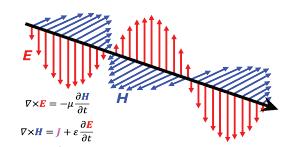
Smarter or Faster? The Impact of AI-Assisted Studying on High School Learning
by Mehar Arampulikan (III), Sarah Diao (III), Dr. Sudarsky
Abstract
The rise of artificial intelligence (AI) in education has introduced new ways for students to learn, study, and organize information. However, scholars remain divided on whether AI improves comprehension or undermines deep cognitive engagement. This study investigates how high school students who use AI-assisted study methods compare with those who employ traditional study approaches when learning a short, unfamiliar reading unit. Twenty-two underclassmen with high academic performance were randomly assigned to two groups: one that used traditional study techniques such as note-taking and hand summarization, and one that used ChatGPT for summarization, definitions, and quiz generation. Both groups studied the same article, titled “What is a Coral Reef?”—an informational text explaining the biology, ecological significance, and threats facing coral reefs. After twenty-five minutes of study, students completed a comprehension and recall assessment. Results revealed that the traditional study group outperformed the AI-assisted group, averaging 78.64%, compared to 66.82% for AI users. These findings support the hypothesis that traditional study methods promote deeper cognitive processing and stronger memory retention than AI-assisted approaches.
Introduction
AI tools like ChatGPT are increasingly used in education, with student usage rising from 79% to 84% in early 2025. These tools help summarize information and generate study materials, making learning more efficient and accessible. However, it remains unclear whether they truly improve understanding or simply create the illusion of learning without deep cognitive engagement.
Traditional study methods, such as note-taking and flashcards, promote active thinking and longterm memory, while AI-assisted methods may re-
duce cognitive effort. As students rely more on AI, it is important to understand its impact on learning. The goal of this study is to determine whether high school students using AI achieve different comprehension and retention outcomes than those using traditional strategies.
Literature Review
A recent study by Nataliya Kosmyna and her colleagues at the Massachusetts Institute of Technology Media Lab examined the effects of AI use in cognitive tasks. The researchers divided fifty-four participants into three groups: one using ChatGPT, one using Google Search, and one using no digital assistance (1). Using electroencephalography (EEG), they found that the ChatGPT group demonstrated reduced cognitive processing and “consistently underperformed at neural, linguistic, and behavioral levels” (3). These findings suggest that, although AI may appear efficient, it can diminish the mental effort essential for deep learning.
Kosmyna’s team labeled this phenomenon “cognitive debt,” describing it as the long-term intellectual cost of overreliance on AI tool (1). When learners repeatedly offload complex operations to an external system, they may preserve shortterm performance while weakening the internal skills those operations would otherwise strengthen (1). In this MIT study, ChatGPT reduced participants’ need to generate and refine ideas themselves, lowering neural markers of effort and the quality of their written output (1). Related research has also found that students using ChatGPT for academic tasks report lower mental effort and deep processing than peers working without AI. For adolescents still developing foundational academic skills and study habits, these consequences may be especially serious.
Research on secondary students’ use of gener-
ative AI offers a clearer picture of how adolescents are engaging with these tools. Survey data from organizations such as the College Board show that a majority of U.S. high school students now report using generative AI for schoolwork, most often to brainstorm ideas, revise essays, or get help with assignments (2). Many students describe AI as a convenient source of quick explanations and alternative phrasings, while also expressing concern that relying too heavily on AI could make them dependent or “less smart.” These patterns suggest that adolescents are already negotiating a trade-off between convenience and personal cognitive effort.
Studies of how students integrate AI into their study routines further underscore the importance of distinguishing between AI as a shortcut and AI as a scaffold. Students may use AI to generate finished products, such as essays or summaries, which is likely to encourage shallow processing. However, they may also use AI to support active strategies, such as generating practice questions, receiving feedback, or asking follow-up questions. Experimental work on ChatGPT-assisted retrieval practice has shown that students who used the tool to generate practice questions for self-testing scored significantly higher on exams than peers who relied on traditional study methods without AI.
Taken together, the existing literature indicates that the educational impact of AI depends on how these tools interact with students’ cognitive processes. Generative AI can reduce cognitive engagement and foster cognitive debt when it substitutes for the work of thinking and revising. However, it can also promote deeper learning when it is used to prompt retrieval, elaboration, and reflection. Few studies directly compare AI-assisted and traditional study strategies in terms of comprehension and recall for high school students. By investigating whether AI-assisted studying affects high school students’ understanding and memory of academic content, the present study aims to clarify when AI functions as a shortcut and when it acts as
a scaffold that supports deep, durable learning.
Methodology
This study included twenty-two high school freshmen, each maintaining an A average (90–97%) in both English and history. Participants were randomly assigned to one of two groups: the Traditional Study Group or the AI-Assisted Study Group. All participants studied the same article—a NASA publication titled “What is a Coral Reef?”—which described coral reef composition, ecological roles, and environmental threats such as bleaching, pollution, sedimentation, and eutrophication. The article was chosen because it presented complex, factual information unfamiliar to most students, providing a fair basis for comparing short-term comprehension and recall. The independent variable was the study method (traditional vs. AI-assisted), and the dependent variable was performance on the comprehension and recall assessment.
Students in the Traditional Study Group were provided with printed copies of the article, paper for notes, index cards, and a pencil. They were instructed to annotate the text, take notes, summarize information, and create flashcards by hand. The AI-Assisted Study Group received a digital PDF and was instructed to use ChatGPT to assist in their studying. They could input sections of the reading into ChatGPT to generate summaries, define key terms, and create practice quizzes. To limit variability in results, the proctors monitored the subjects’ computer screens to ensure ChatGPT was the only external aid they used. Both groups were given exactly twenty-five minutes to study. Afterward, all materials were collected, browser windows were closed, and participants completed the same fifteen-minute written test measuring factual recall and conceptual understanding. The assessment consisted of seven fill-in-the-blank questions (1 point each), seven multiple-choice questions (1 point each), and two short-answer questions (3 points each), for a total of 20 possible points. The completed assessments were graded using a predetermined answer key. Short-answer responses were evaluated accord-
ing to consistent criteria to ensure fairness, and all tests were reviewed to minimize grading errors. Finally, participants completed a post-study survey assessing their engagement, confidence, and perceived effectiveness of their method.
Results
The traditional group averaged 78.64% on the test, whereas the AI group averaged 66.82%, resulting in an 11.82 percentage-point difference in overall performance. Traditional learners outperformed the AI group in nearly all sections of the assessment, especially on fill-in-the-blank items, where the traditional group performed 23.5% higher, and on multiple-choice questions that required active recall rather than simple recognition, where the traditional group performed 13.5% higher. Short-answer responses were more similar across the groups, with only a 4.6% difference, suggesting that comprehension of the major ideas was somewhat similar.
Survey responses further reflected differences between the two groups. Students in the traditional group reported higher levels of engagement and focus while studying, whereas AI-assisted participants more frequently described their method as “easier” and “quicker.” When asked whether they felt prepared for the immediate test, 90.9% of students in the traditional group responded affirmatively, compared to 66.7% in the AI-assisted group. Additionally, 22.2% of AI-assisted participants reported feeling “not engaged at all,” while no students in the traditional group selected this response. A majority of AI-assisted students (55.6%) indicated that studying felt faster than usual, and 88.9% reported that they would choose to use AI-assisted studying again.
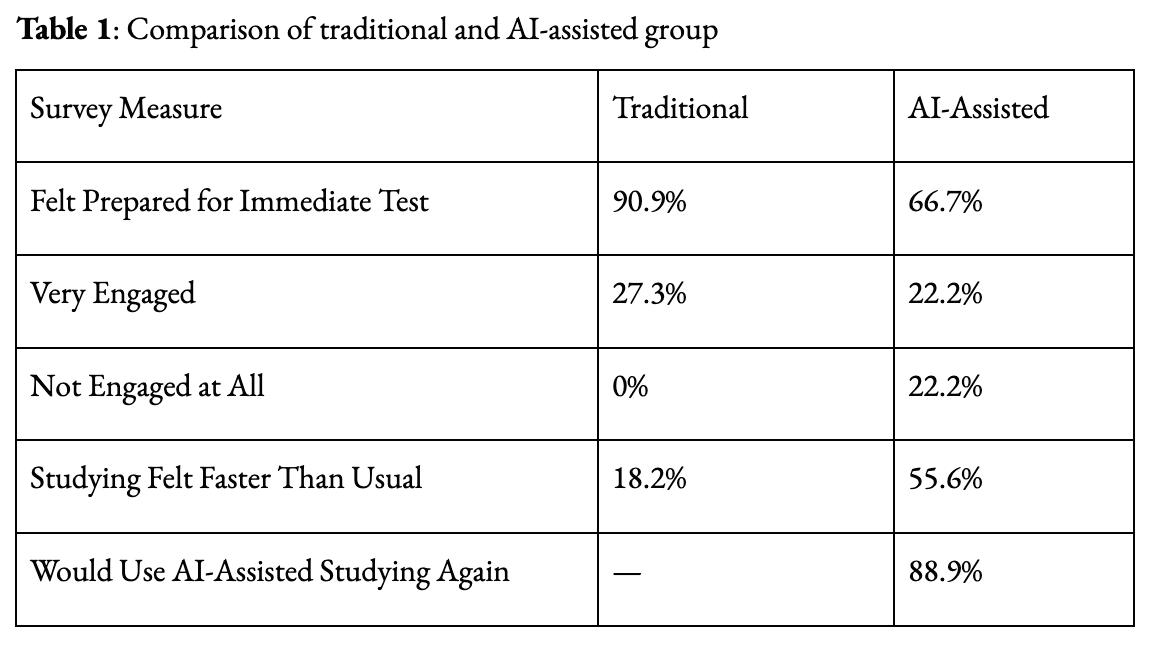
Discussion
The findings reinforce prior research suggesting that, although efficient, digital tools may reduce active cognitive engagement during learning tasks. Students in the Traditional Study Group scored 11.82 percentage points higher overall and appeared to have exerted greater mental effort by actively organizing, summarizing, and rehearsing information, which enhanced memory consolidation. Conversely, the AI-Assisted Group transferred much of this mental workload to the software, reducing opportunities for cognitive elaboration. These outcomes align closely with the MIT Media Lab study, which observed lower neural activation among participants who were dependent on ChatGPT. The results also reveal a discrepancy between perceived and actual learning. Many AI users expressed confidence in their understanding and reported that they would use AI to study again. However, their test scores indicated otherwise, reaffirming the cognitive illusion theory, which holds that externally simplified information can produce a false sense of mastery. While this study indicates stronger short-term retention among students using traditional learning methods, it does not argue that AI lacks potential educational value. Instead, it suggests that AI tools should be integrated thoughtfully: to support, rather than replace, human effort. Blended approaches, in which AI provides feedback or clarification while students retain control over processing and note-taking, may mitigate cognitive offloading. In the future, research should explore such hybrid strategies and examine longterm retention, creativity, and analytical reasoning across diverse student populations. We recognize that the size of this study is small; therefore, we hope to repeat it similarly with a larger number of students to draw stronger conclusions.
Conclusion
This study contributes to the growing body of evidence that traditional study methods promote deeper learning and stronger retention than AI-assisted studying, particularly among high school students. Those who studied “What
is a Coral Reef?” using traditional techniques demonstrated superior recall and comprehension compared to their AI-assisted peers. Although AI provides accessibility and speed, it risks diminishing the mental effort necessary for lasting knowledge formation. As artificial intelligence continues to reshape education, students and educators must learn to balance innovation with cognitive rigor. True learning arises not from ease or automation, but from sustained effort and the deliberate mental struggle of processing, organizing, and applying knowledge. Overreliance on AI may offer temporary convenience, but it undermines the very intellectual discipline that education aims to cultivate.
Acknowledgements
We would like to thank our mentor and advisor on this paper, Dr. Sandra Sudarsky. In addition, we would also like to thank the following Pingry students for their participation in this study: Annabella Agarwal, Zoya Abbasi, Isabel Berman, Sahana Bhat, Bobbi Bruno, Marley Edwards, Yulia Gavrylak, Basil Glacken, Mac Guest, Ana Hadjieleftheriou, Audrey Kim, Tess Mandelbaum, Taylor Murnick, Amelia Partridge, Karla Pye, Roshan Prasad, Dean Reeder, Olivia Xu, Caroline Ouyang, Aobin Wang, Sophia Wong, and Asha Valliappan.
Works Cited
1. Chow, Andrew. “ChatGPT May Be Eroding Critical Thinking Skills, According to a New MIT Study.” Time Magazine, 23 June 2025, time. com/7295195/ai-chatgpt-google-learning-school/. Accessed 14 Dec. 2025.
2. “U.S. High School Students’ Use of Generative Artificial Intelligence.” College Board, College Board Research, Oct. 2025, research.collegeboard.org/media/pdf/AI%20Research%20 Brief%201_vf_0.pdf. Accessed 14 Dec. 2025.
3. “Your Brain of ChatGPT: Accumulation of Cognitive Debt when Using an AI Assistant for Essay Writing Task.” MIT Media Lab, 10 June 2025, www.media.mit.edu/publications/your-brain-onchatgpt/. Accessed 14 Dec. 2025.

The Pingry School
Logo designed by Abigail Neu ‘26 and Stella Reheman ‘26. Cover design by Christian Zhou-Zheng ‘26.