
FROM CLAY AND GLASS TO PAINTING AND PHOTOGRAPHY, FIVE PINEHILLS ARTISTS SHOW HOW CREATIVITY IS NOT JUST A PRACTICE, BUT A WAY OF LIFE.
By Kelly Chase
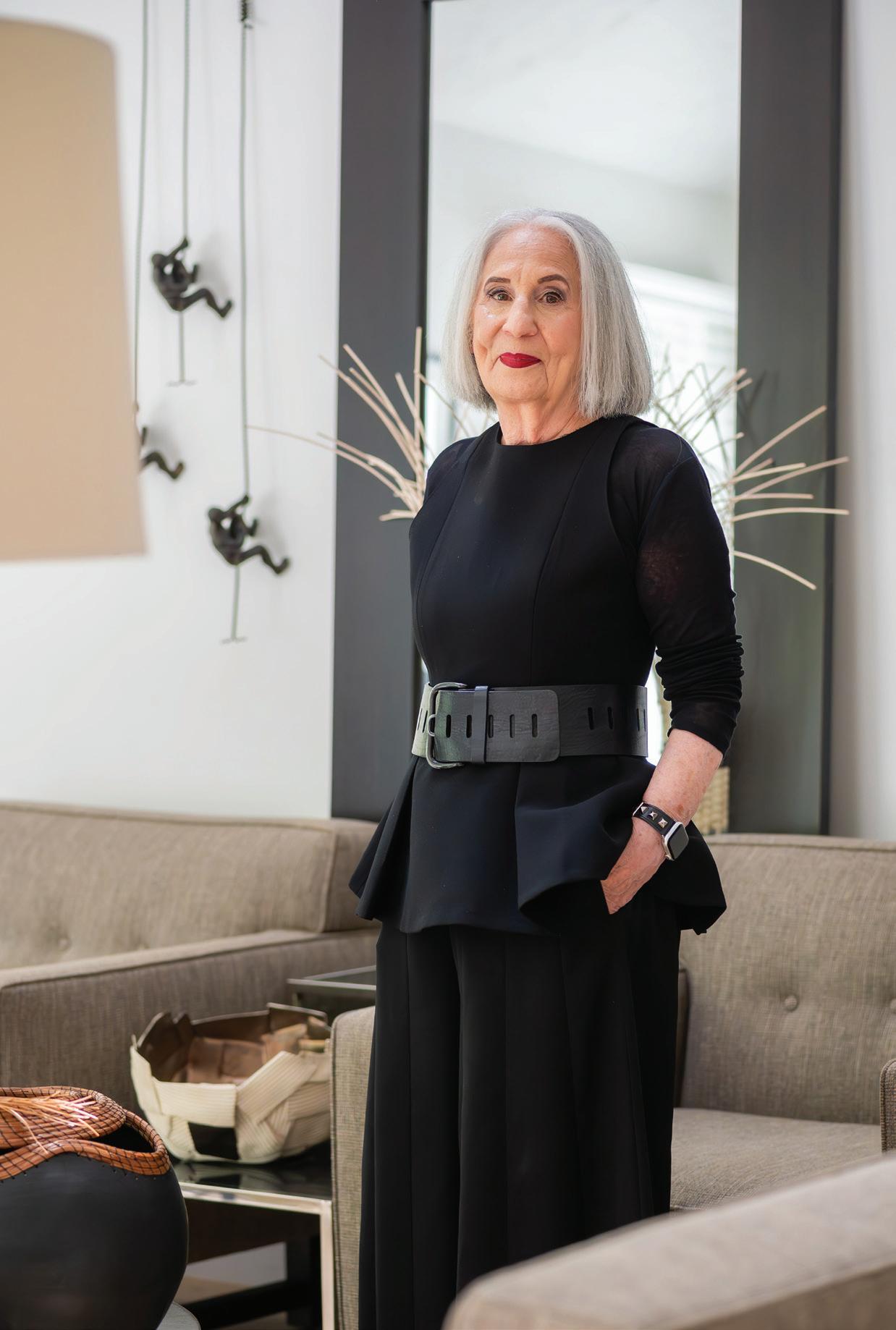
Penny Shuman spent most of her career as a commercial architect, a profession that is meticulous by nature. “In architecture, everything has to be so precise,” says Shuman. “You can’t get to the job site and have something be wrong, so it was really to the inch.”
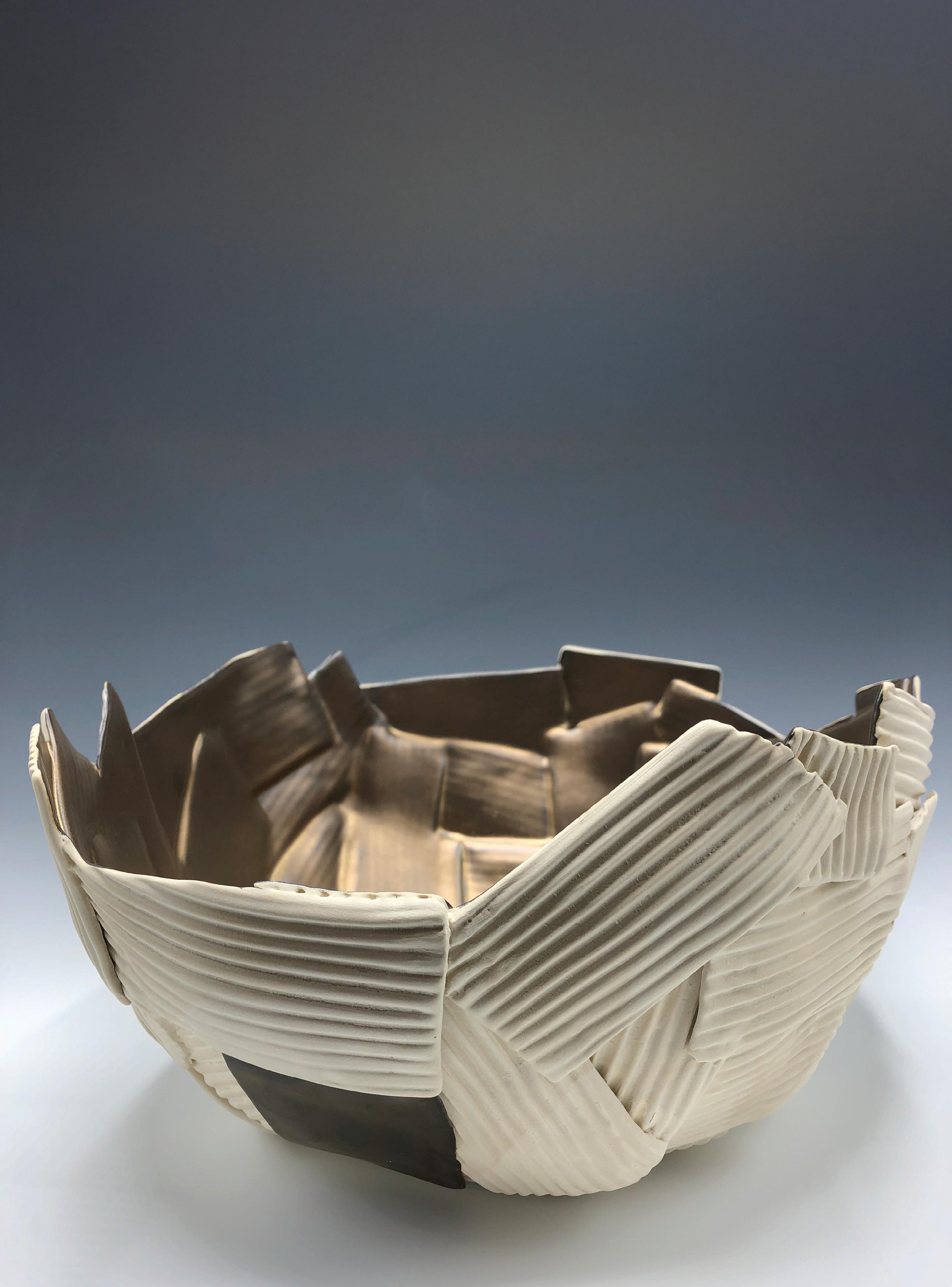
When she retired, Shuman sought something tactile, expressive, and less rigid. That is when her journey with clay began: a medium that helped her embrace imperfection. At first, she created pieces she could reproduce, like mugs, but eventually her work evolved to one-of-a-kind originals. Instead of using a pottery wheel, she hand-builds her art. “I tried the wheel, but I found it boring and wanted more freedom and creativity,” she says.
Shuman’s work is influenced by the Japanese philosophy of Wabi Sabi, a concept that embraces imperfection, impermanence, and simplicity. In clay this translates to visible tool marks or fingerprints or uneven shapes and forms. “I had to get used to seeing my fingerprints on things, which meant I had to relax; I had to Zen out,” she says. “And I learned to enjoy the process of making something and not necessarily the end result.”
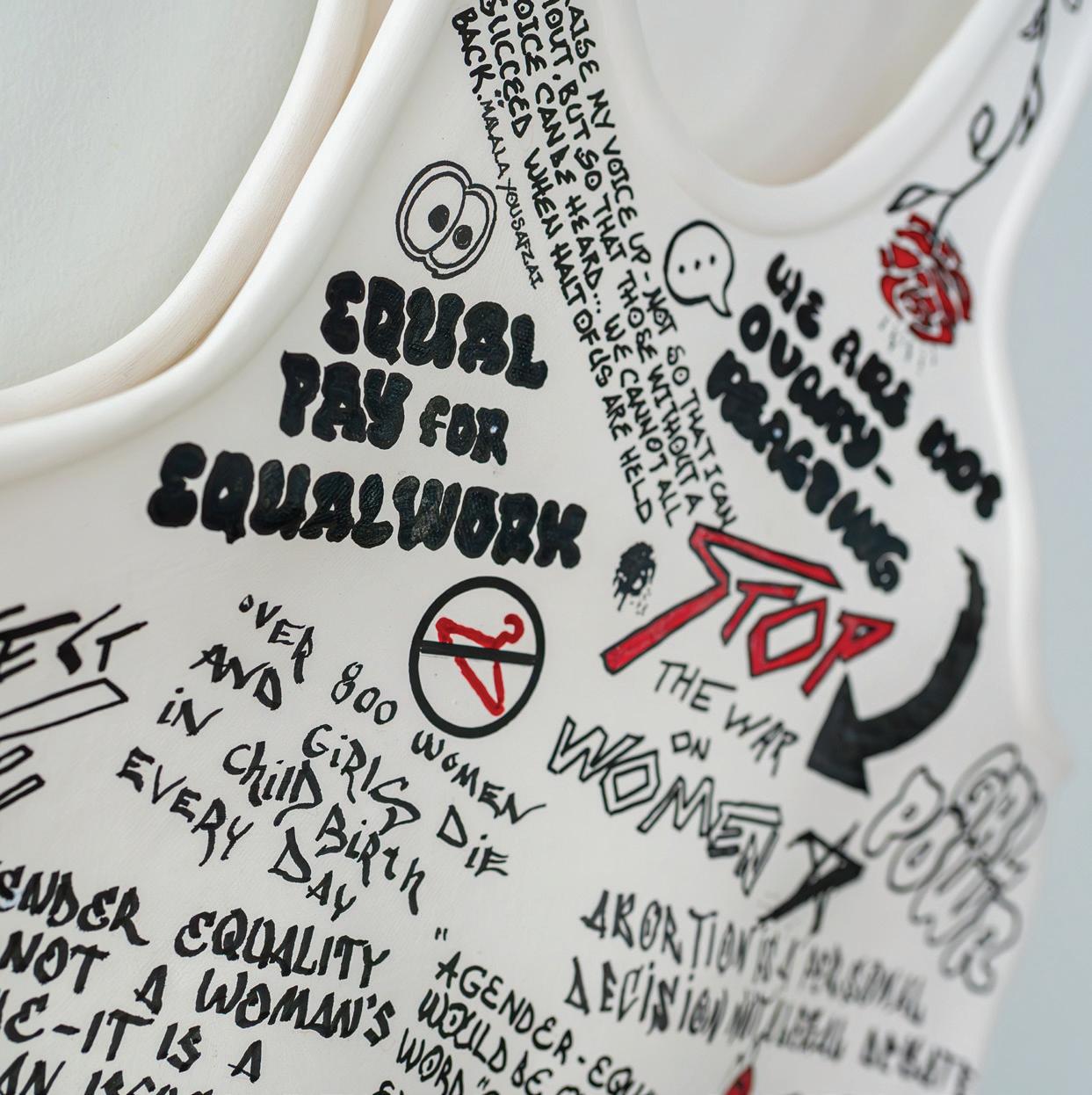
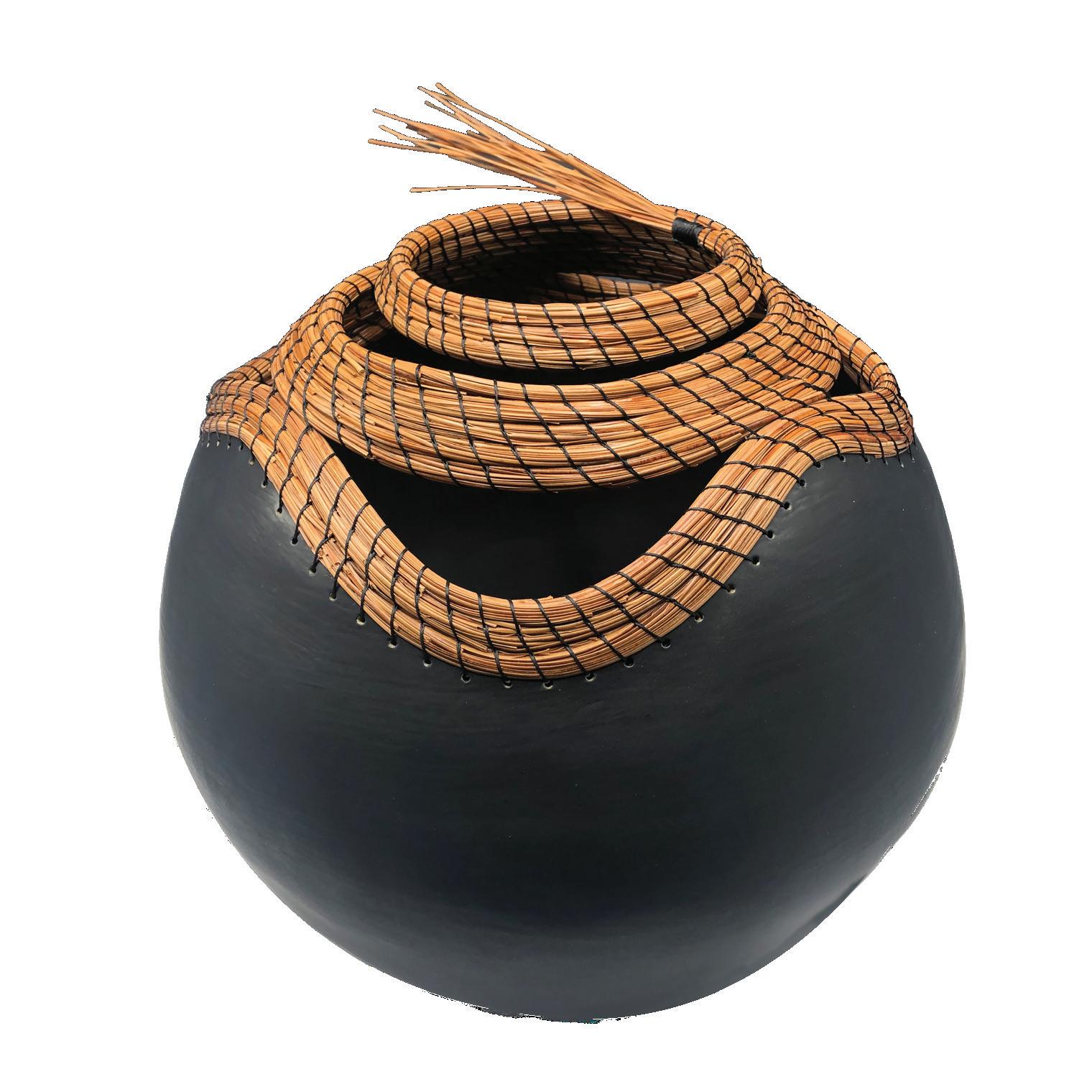
Today, Shuman works out of her home studio at The Pinehills. She uses her medium to challenge and raise awareness about current social and political issues. Much of her work is in black and white, and she has explored the use of natural fibers like pine needles to honor indigenous art and materials. Through installations like “Let Me Speak,” Shuman confronts systemic violence and gender inequality. She sculpted a sleeveless white tank top and covered it with graffiti. Within the writing, there are calls for equal pay, bodily autonomy, and an end to the objectification and silencing of women. “I still create for the sake of making art, but some pieces are more intentional,” says Shuman. “They’re a response to something deeper, something social that’s been bothering me.” “Masked” came about during the pandemic when her friend Lisa Zizzi wrote and shared a haiku each day. With Zizzi’s permission, Shuman molded 12 sculptures of masked faces, and on each mask she used words and phrases from the poems. “[Her haikus] expressed such an intimate view of her feelings, and, in doing so, helped me understand my own feelings about the time we were living in and how it would forever alter our lives,” says Shuman.
klabypenny.com
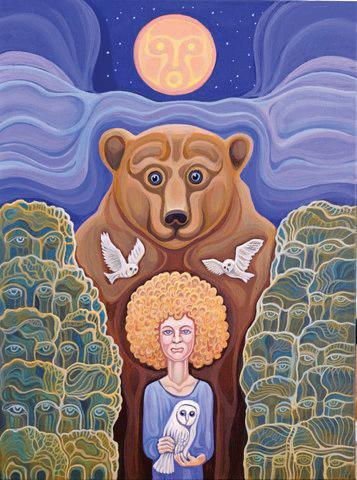
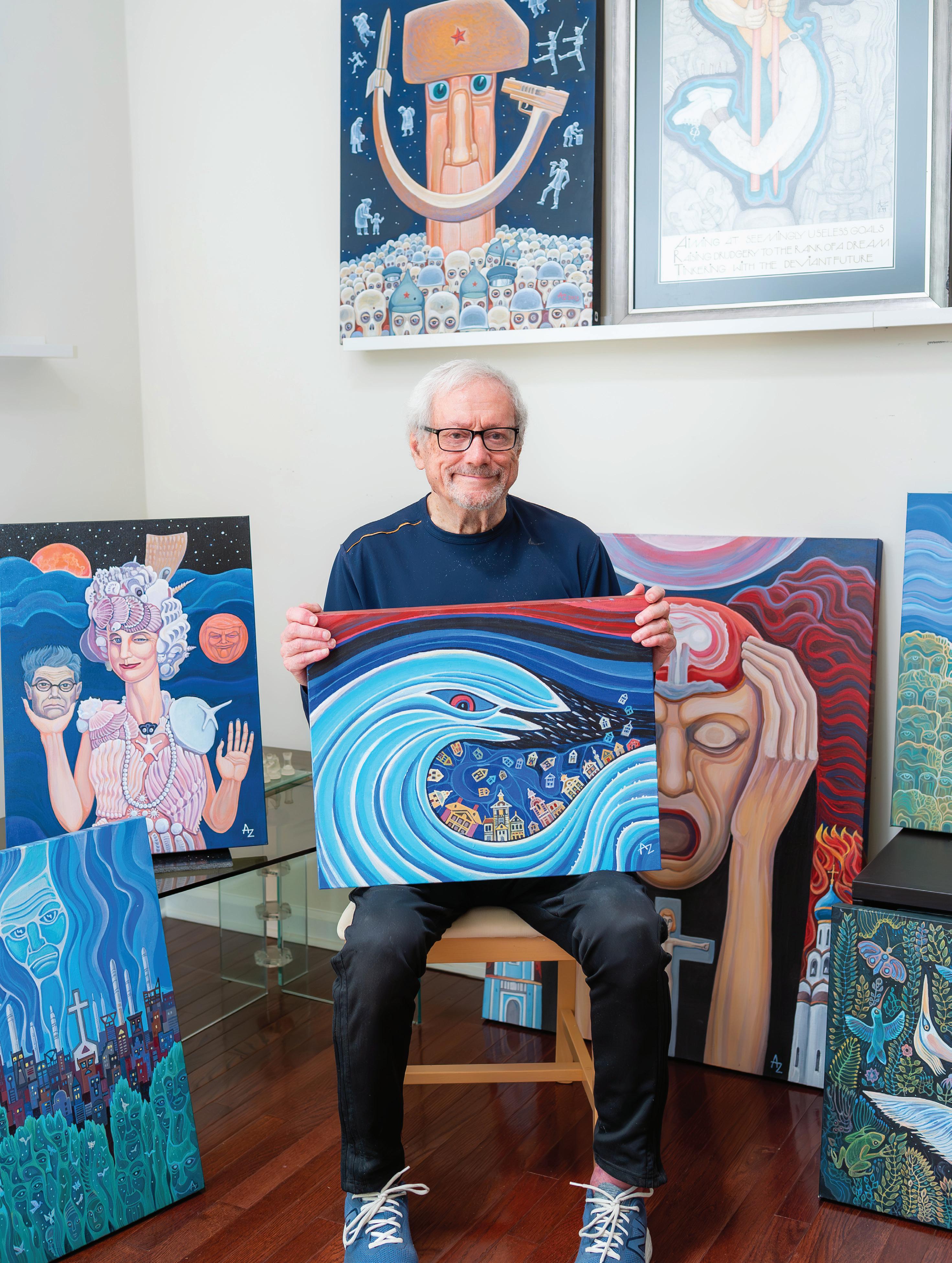
Anatol Zukerman was born in the Soviet Union and turned to art at a young age. In the local schools, he was taught to paint portraits, flowers, and sunsets, but he wanted his art to say more about his community and the world around him. He attended the Moscow Institute of Architecture and eventually headed west.
“I left the Soviet Union 53 years ago in search of democracy, prosperity, and racial equality,” he says. “On my way to America, I stayed in Italy and became familiar with the Western European style of life.” He arrived in the United States in 1973, “when this country was much different from what it has become recently.”
Zukerman spent his career as an architect, writer, artist, and lecturer. “Art, architecture, and literature are tightly intertwined and feed each other with common issues,” he says. “In my practice of art, I create images of human conditions; in architecture, I translate those conditions into concrete forms; in literature, I describe both in the most concise form.”
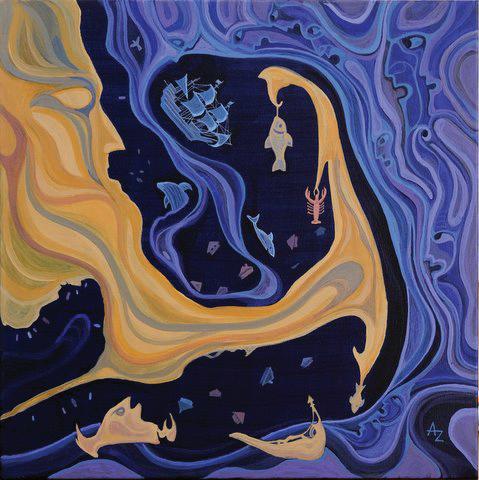
Today, Zukerman calls The Pinehills his home, and his artwork continues to address pressing issues such as climate change, democracy, and war. “Artists should be socially responsible,” he says. One piece, “Cape Cod,” depicts the well-known landmass as a man who is pulling fish from the sea as it rages around him. Zukerman says that he wanted to address the local issues of rising sea levels and overfishing. Other paintings and drawings depict current political figures. “My paintings and drawings aim at correcting the wrongs of our world, not at camouflaging them. I try to solve big problems that bother our everyday lives,” he says.
azukerman.com
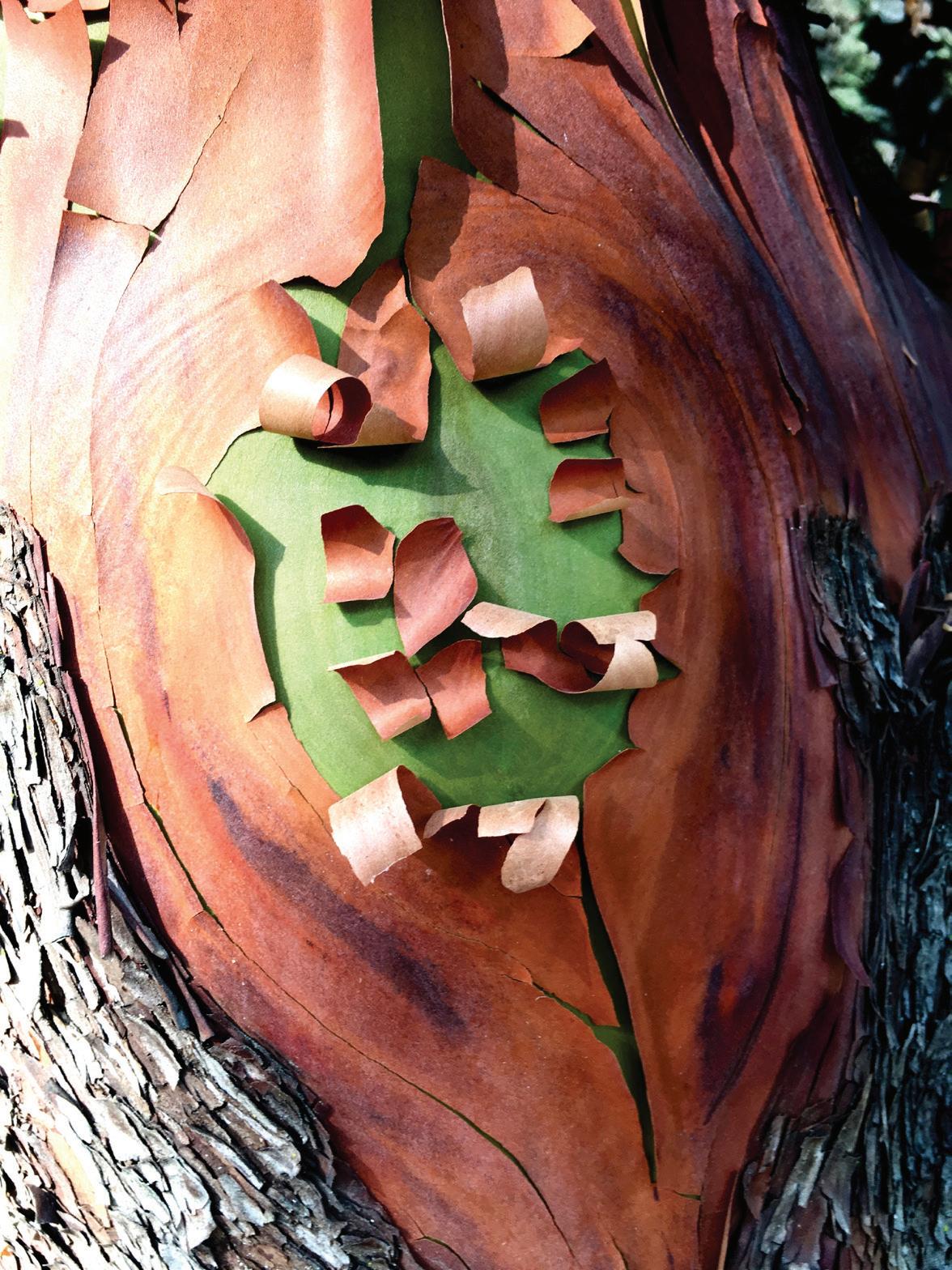
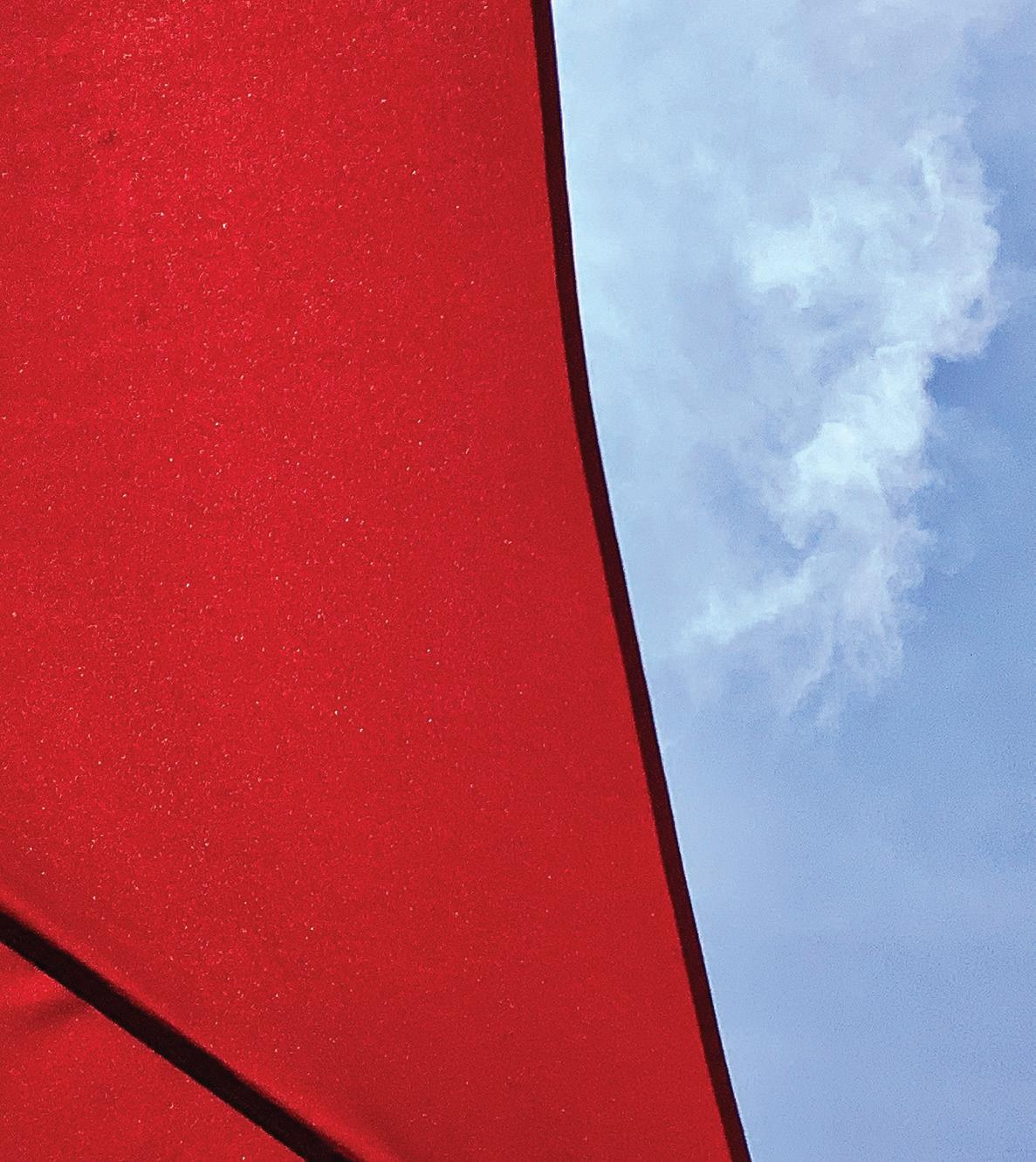
In his early days as a photographer, Steven Eichberg would often come home with nearly 400 images after a day of shooting. But then he found Miksang, a contemplative form of photography that encourages stillness, simplicity, and intention. He read, researched, and attended courses through the Miksang Institute in Boulder, Colorado.
“Learning about Miksang spoke to me, and it gave me a feeling that I was doing something more than just going out and taking a picture,” says Eichberg. “It really wasn’t about the camera; it was about what I was seeing.”
Rooted in Buddhist principles, Miksang encourages artists and viewers to slow down and examine what they deem worthy of notice. Eichberg’s images are unprocessed and unfiltered. He enjoys observing beauty in the overlooked: a smashed pencil at a car wash, the shadow of a bird, an exit sign. “This type of photography makes you feel good; it brings the outer world into the inner world,” he says. “It helps you slow down, really look at what’s in front of you, and ask yourself: Does this speak to me or not?”
The smashed pencil on the pavement of a car wash might not seem like art at first, but it begged Eichberg’s attention. He wondered about the back story: how it got there and how it broke. “I looked at it, and I thought about waste, and really, I thought about loss and grief,” he says. It’s this unexpected emotional response to the ordinary that is at the heart of Miksang. He doesn’t expect everyone to “get” his images. “Everybody looks at things differently, and that’s okay,” he says.
A Pinehills resident since 2013, Eichberg enjoys the artist community, and he finds inspiration all around him, particularly in winter: “Trees, when all the leaves are off, really do expose themselves,” he says. Though his walking is limited, especially in winter, his vision remains sharp. “You don’t need to look far,” he says. “Everything is right there. It’s just whether it says something to you or it doesn’t.”
flickr.com/photos/seichberg
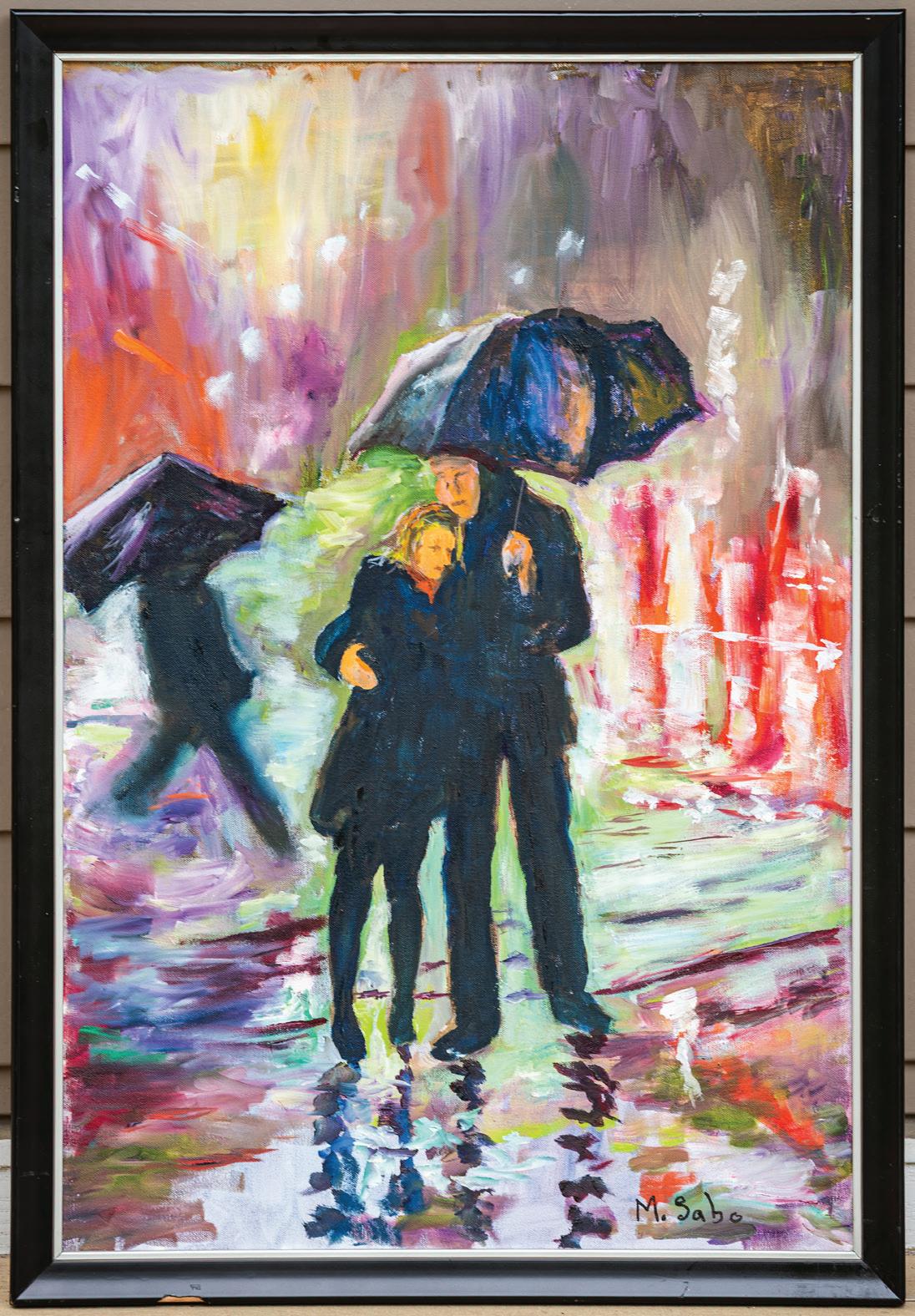
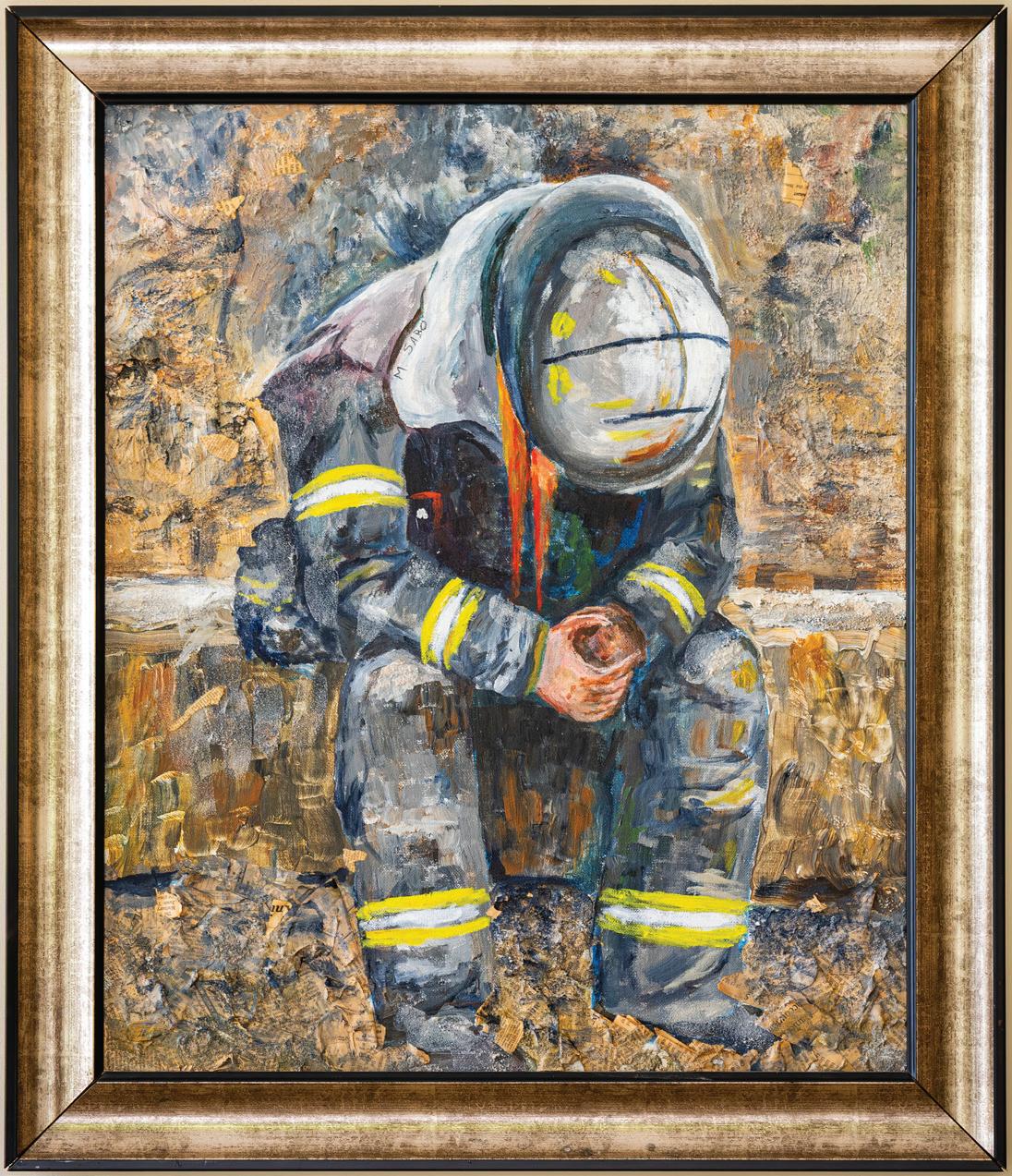
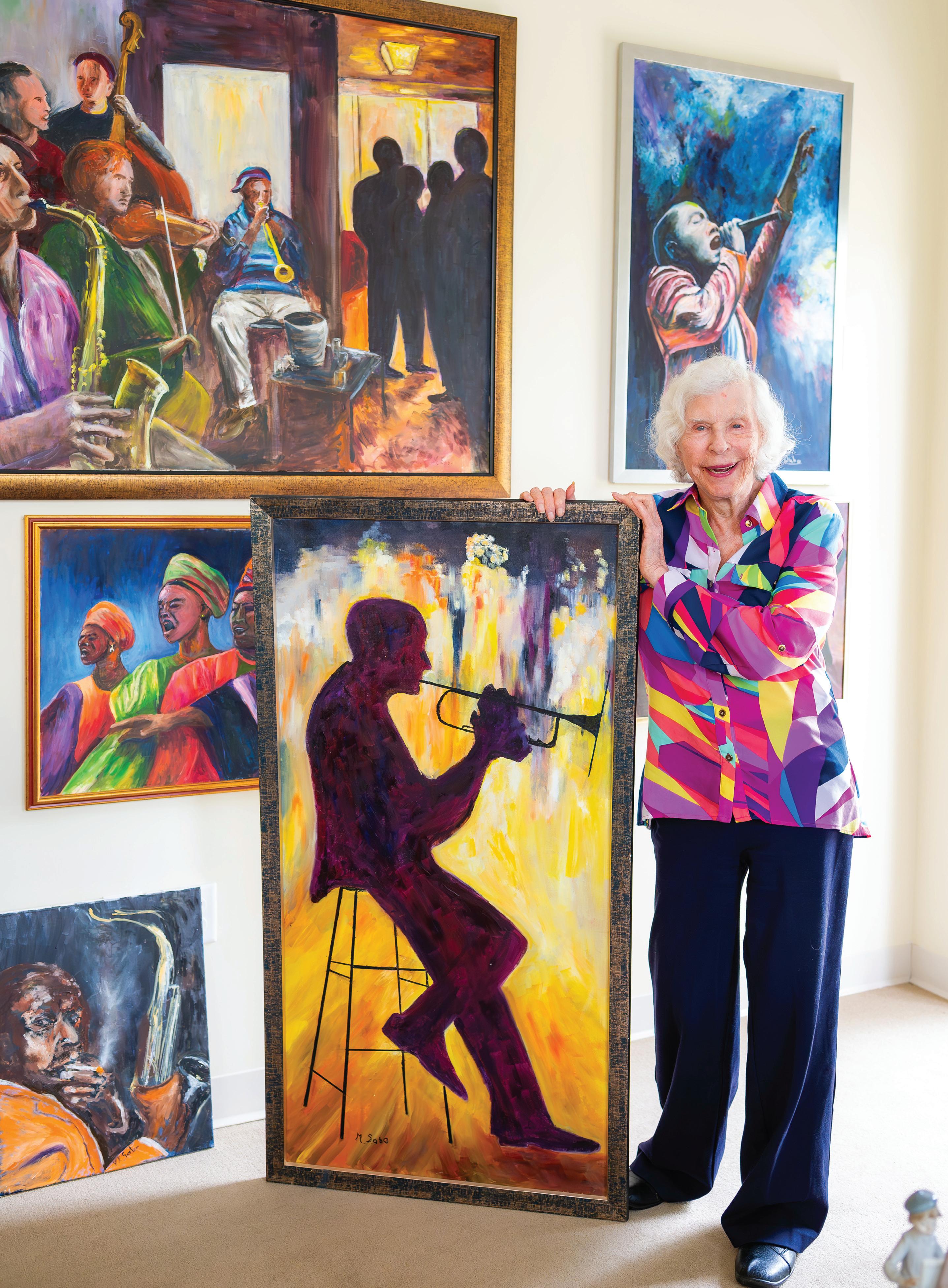
Painter Marcella Sabo can’t remember a time when she wasn’t creating art and when she wasn’t confident in those abilities. “When I was 5 years old, my mother took me to the Newark Museum. I entered a contest there and won two out of the three prizes,” she says. “With great modesty, I put my hands on my hips and said, ‘So where’s my third?’ Much to my mother’s embarrassment.”
Sabo went on to have a career as a therapist where she specialized in divorce and stepfamilies. “To me, family is the primary importance; everything else is secondary,” she says. And while her family and career came first, art was never far behind. “I have always had a paintbrush in my hand,” she says. “Painting, writing, music, these are passions; I never found them to be work.”
Since moving to The Pinehills, Sabo’s home is both her studio and gallery. Her daughter, Darcy Martin, also lives in The Pinehills. “Every inch of her apartment walls are covered,” says Martin. Sabo is generous and easygoing about her artwork; she lets her grandchildren borrow paintings. “I always say, if you get tired of those, bring them back and pick something else,” says Sabo. “It’s like a lending library, and you don’t have to pay if you’re late.”
A blank canvas doesn’t intimidate Sabo; she just paints what moves her. Throughout her artistic journey subjects have included lighthouses, musicians, portraits, firemen, and even scenes from 9/11. “I don’t have a regular schedule,” she says. “Whenever I feel like it, I go up and take all my junk with me and paint.” She often signs a painting after letting it sit a few days: “If I think it’s done, I sign it and say, ‘That’s it.’”
Color is her signature. “Color is exciting to me,” she says. “Without color, it’s dull, it’s gray, and it doesn’t reflect my personality.” To that, her daughter adds, “Color is my mother’s name. She dresses colorfully. She paints colorfully. Color, Color, Color.” For Sabo, art comes naturally and isn’t overcomplicated: “I just feel like painting what I want to paint, and how I want to paint it.”
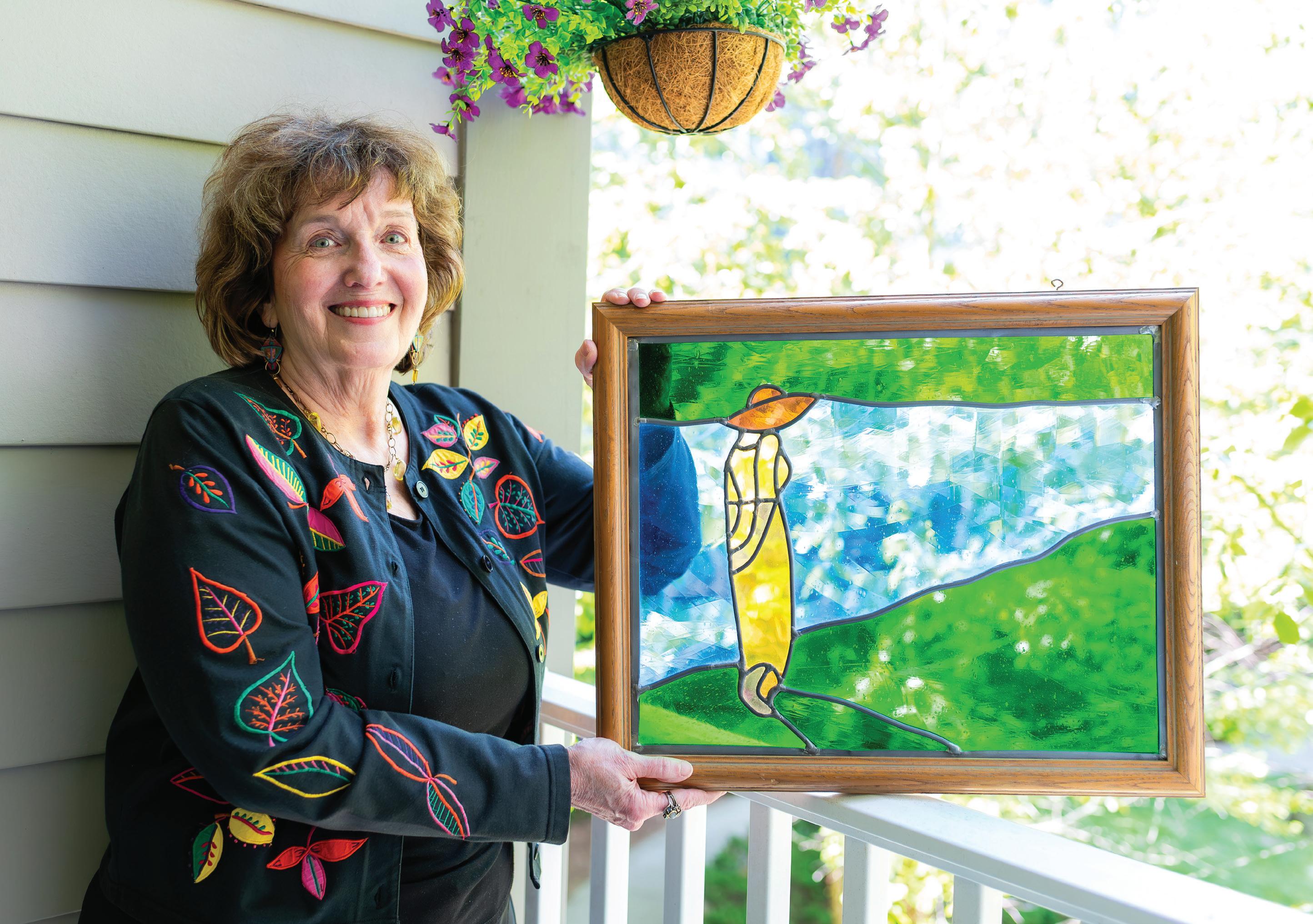
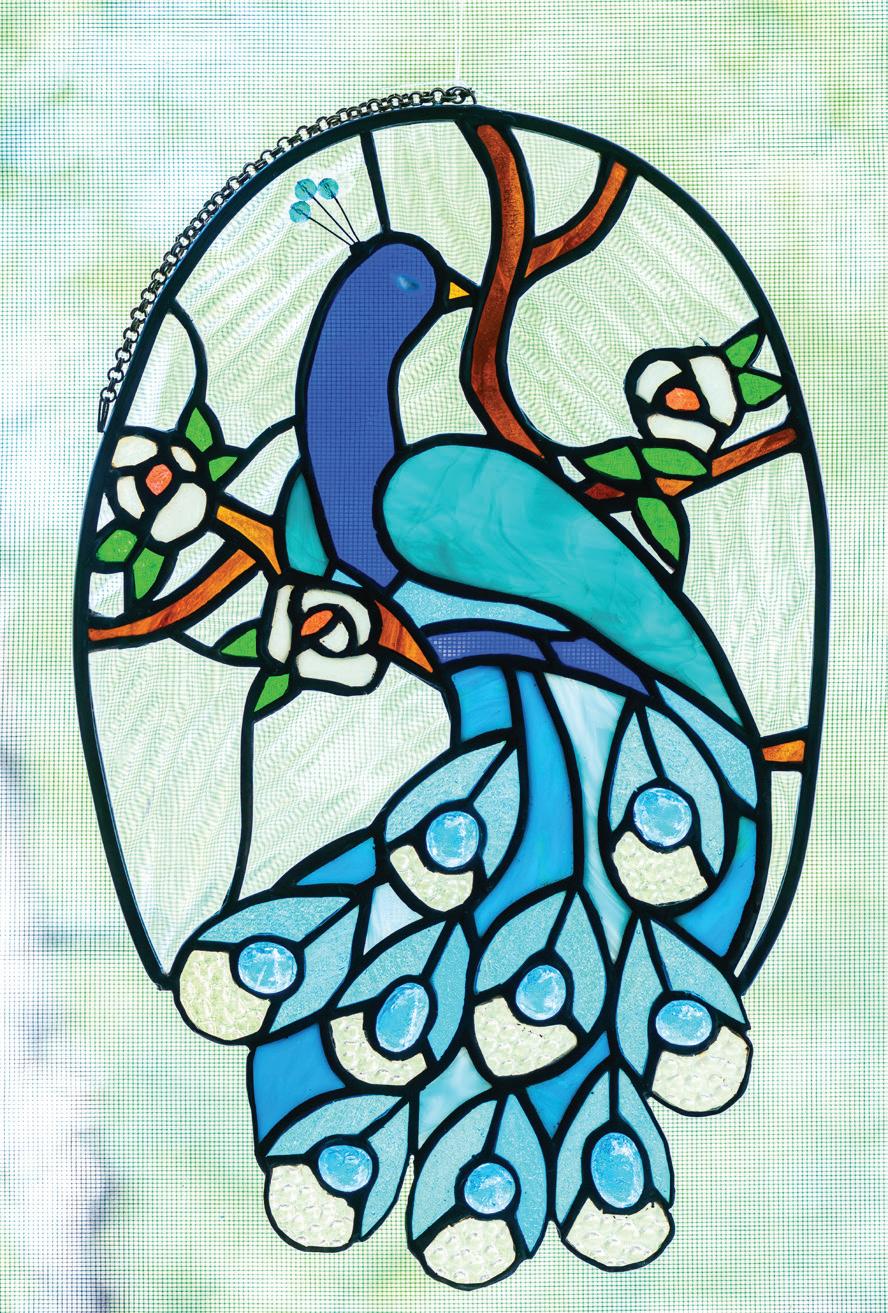
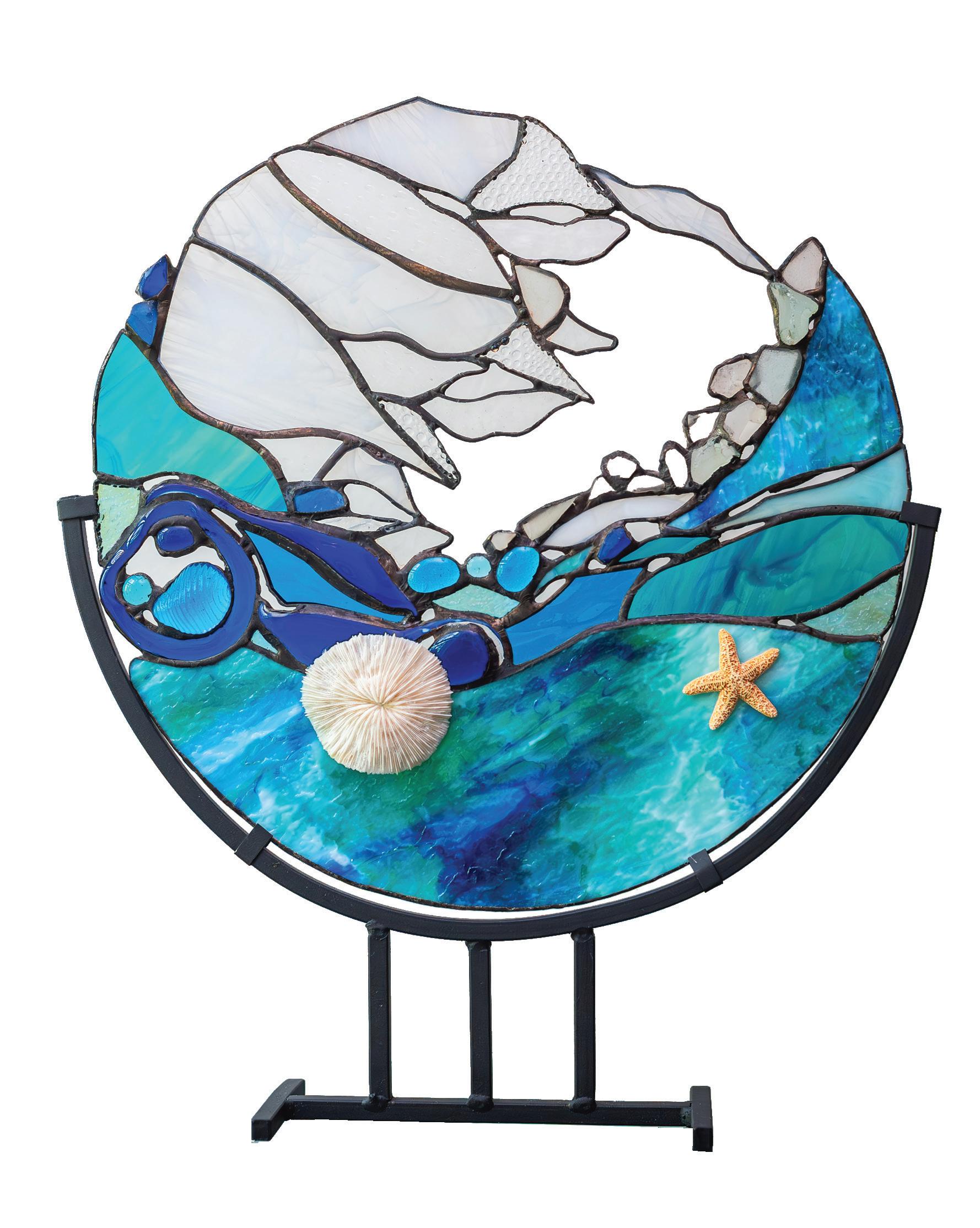
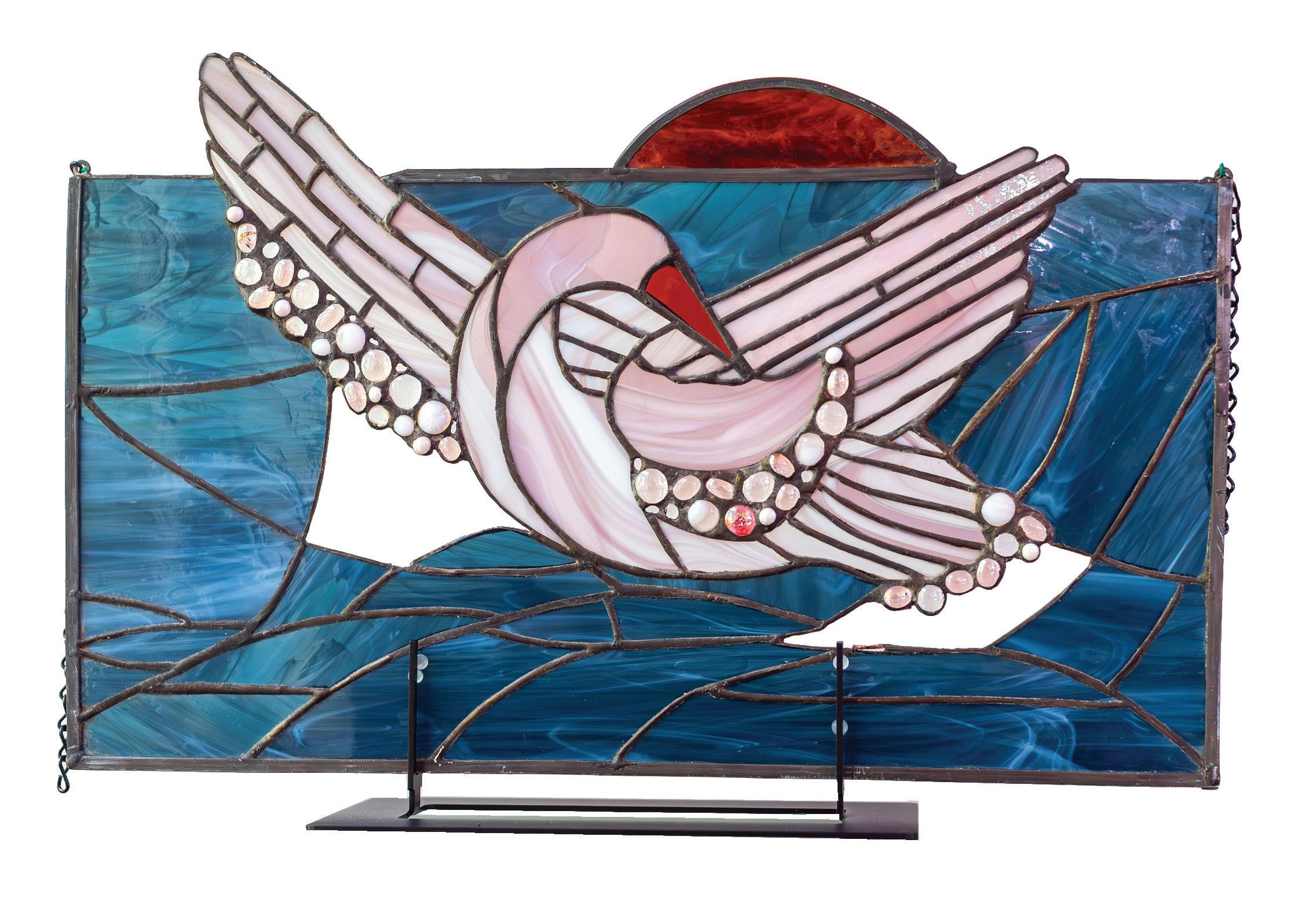
For Leigh Hometh, working with a medium as exacting as stained glass is challenging, and that’s precisely why she enjoys it. “It breaks. It can cut you. But then it surprises you and it emerges,” says Hometh. First drawn to the material in her twenties, Hometh loved the resulting conversation between light and color. “There’s something magical about how glass transforms when light hits it,” she says.
After a long detour into the corporate world and a move to The Pinehills after the pandemic, Hometh found her way back to stained glass through a class with master glass designer Neil Maciejewski. Inspired by his sculptural work, she saw how the medium had evolved, not just in terms of tools, but also in what was possible to do with the glass. “In my twenties, people were making traditional stained glass windows. I took this class and thought ‘wow, I can design dimensionally using found objects like driftwood.’ This concept excited me and made me want to do glass again,” says Hometh.
Hometh picks up objects that inspire her, like seashells from her walks, tumbled stones, driftwood, and even old window frames. She doesn’t always know when or where the item will fit, but that is just another part of the process she enjoys. “Sometimes I look around and wonder when I am going to use this or that,” she says. “But the things I find always make their way into my art, sometimes in surprising ways, and that’s really the fun part for me.”
Hometh often creates works inspired by the ocean, birds and plants. She has been selected for juried art shows, such as the Cotuit Center for the Arts, as well as member shows at the Plymouth Center for the Arts, Duxbury Center for the Arts, and the Pinehills Art Association. More recently, her work has become more personal. One sculpture–a lighthouse made of glass perched on a piece of found driftwood–is dedicated to her late father. “I brought it to his hospice room. I said, ‘Dad, this represents you because you’re a beacon of love’” she says. “Now it’s not just about the glass design—it’s about what it means to me or what I want it to say.”