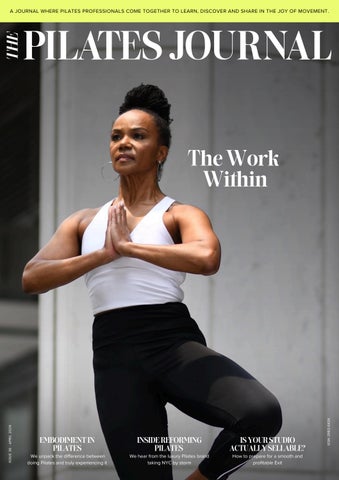
The Work Within


![]()


The Pilates Journal would like to acknowledge and pay respects to the Gadigal people of the EORA nation as the traditional custodians of the place we call homeSydney - where this journal is produced
The Pilates Journal pays respects to their elders, past, present and emerging, and acknowledges all Aboriginal and Torres Strait Islander peoples


by Tabatha Russell
In Pilates, we often talk about form, alignment, and precision Beneath all of that is something deeper: embodiment Embodiment is the difference between doing Pilates and truly experiencing it
While Joseph Pilates never used the modern term embodiment, he described it clearly through his method, Contrology, which he defined as “the complete coordination of body, mind, and spirit” From the beginning, Pilates was not meant to be mechanical It required presence, attention, and conscious participation
When movement is embodied, the body is not simply following instructions It is sensing, responding, and organizing itself from the inside out Breath informs effort Awareness guides range Intention shapes how movement unfolds As one client, Sharon, shared: “I’m not trying to get it ‘right’ anymore I can feel when my body is organized, and I adjust on my own The movement feels more natural and connected now ”
Joseph Pilates emphasized that movement must be governed by the mind, not habit or momentum He cautioned against careless repetition, reminding us that: “A few well-designed movements, properly performed in a balanced sequence, are worth hours of doing sloppy calisthenics ”

This is where embodiment differs from performance. Performing Pilates often looks like chasing shapes, memorizing choreography, or seeking external approval Embodied Pilates is responsive The practitioner listens, senses, and makes choices in real time Movement adapts to the body rather than the body being forced into movement
An embodied Pilates practice encourages practitioners to focus on the sensory experience of the movement, identifying the appropriate distribution of effort, the integrated action of the spine, breath, and limbs, and the body's continuous, moment-tomoment adaptations

Breath is central to this process Pilates called it essential to life and vitality: “Breathing is the first act of life and the last. ” In an embodied practice, breath is not an add-on; it supports pacing, effort, and control
Another client, Linda, described how this awareness now carries beyond the studio: “Pilates isn’t just something I do in class anymore I notice my breath and posture throughout the day, and my body feels more responsive and less tense overall. ”
In modern terms, embodiment allows the nervous system to fully participate in learning Awareness-driven movement improves coordination, reduces unnecessary tension, and supports adaptability This is why embodied Pilates supports resilience and longevity, not just strength or flexibility
For students, embodiment builds confidence, safety, and autonomy For instructors, it sharpens observation and improves cueing Teaching becomes less about fixing and more about facilitating learning
Joseph Pilates described his work as the “complete coordination of body, mind, and spirit ”
“Embodiment is how that coordination comes to life.”
For me, embodiment has changed over more than 30 years of practicing and teaching Pilates, not because I am an industry professional, but because I am a consistent practitioner As my life has shifted through grief, loss, success, and joy, how I embody the work has shifted too The practice has met me differently in different seasons because I have been different
Embodiment is not static, and it is not something to chase It is a relationship that evolves as we do In every session, the question becomes less about what the exercise looks like and more about how the body is experiencing it today
That is where real learning happens
Tabatha Russell is a Chicago-based Pilates teacher and educator with over 30 years of industry experience. A nationally certified Pilates teacher (NPCP) and principal educator with Balanced Body, she brings both movement expertise and academic depth through her B A in Dance and M.A. in Education. She is the founder of tabPILATES & Bodyworks Center, established in 2009, a studio and teachertraining hub grounded in authentic Pilates, mentorship, and community access Tabatha also serves on the Board of Directors for the National Pilates Certification Program, supporting the advancement of professional standards and public safety.

by CJ Zarb
A multimillion-dollar Pilates mega studio is set to open inside a vintage New York City townhouse this spring and it’s poised to become one of the largest Pilates studios in the United States
Located on West 17th Street in Manhattan’s Flatiron district, Reforming Pilates’ RP Townhouse will span three floors inside a restored carriage house, bringing together reformer studios, heated mat classes and private training spaces under one roof The opening marks a major milestone for Reforming Pilates, the Miami-founded boutique Pilates brand created by Genevieve Ross that has rapidly expanded across the United States
For Genevieve, however, the journey into Pilates began far more simply.
“My husband actually started it all After we moved from New York to Miami, I didn’t know many people, so he purchased a studio on our island (Bay Harbor) as a way for me to get involved and meet friends What started as something so personal has turned into a nationwide community of inspiring people I now get to call friends I’m so grateful he pushed me into this career pivot
What began as a personal introduction to the industry has quickly evolved into a fast-growing brand Reforming Pilates officially launched in July 2022, and its expansion has been driven by Genevieve’s clear vision of what the brand should represent.
“Taking risks and knowing our brand I knew how I wanted to brand Reforming Pilates from day one I have had that concrete vision and run with it since 2022 When you’re creating a business or a brand NEVER forget your WHY! Ours is community, customer service and luxury ”
That vision is perhaps most evident in the upcoming RP Townhouse opening in New York. While the city is widely recognised as the birthplace of Pilates, Genevieve saw an opportunity to reimagine what a modern Pilates studio could look like


“I’m constantly looking at what other brands are doing and how they are staying relevant... I...draw inspiration from all the places I visit.”

“While New York is the birthplace of pilates, the studios there do not match the greatest city in the world! A lot of them are on the third or fourth floors, small and outdated Daniel and I wanted to create the greatest studio in the greatest city It’s a multi-pronged approach We want the best teachers, best classes, best amenities and best service! We are excited to offer all of the above in Flatiron ”
The new location has been designed to feel more like a luxury hospitality experience than a traditional workout studio, something Genevieve believes is essential to delivering value for clients “It is extremely important Pilates is a very expensive workout You want to know your money is being spent wisely That includes the best classes, equipment (balance body) and studio spaces. ”
RP Townhouse will feature multiple studio concepts within the same building, allowing clients to move between different formats depending on how they feel that day. Alongside reformer classes, the space will offer heated mat sessions and private training
“We wanted to create a pilates hub that allows you to take a class depending on your mood. Some days I crave mat, others reformer! Now there is something for everyone ”
Travel has also played a significant role in shaping the Reforming Pilates experience. Genevieve draws inspiration from brands across hospitality, wellness and global fitness when designing her studios

“I’m constantly looking at what other brands are doing and how they are staying relevant I look to hotel groups, fitness studios and wellness platforms I’m constantly looking to create the best overall experience for our guests by drawing inspiration from all the places I visit ”
Despite the brand’s rapid growth, the philosophy behind Reforming Pilates remains grounded in creating welcoming environments for clients of all levels
“Inclusive, warm and friendly! This industry can be very intimidating and scary for newcomers but at Reforming Pilates no matter your level of fitness we want you to feel safe and at home This is something we drill into all our staff training ” Looking ahead, Genevieve has ambitious plans for the future of the brand
“National and international expansion!”
At the same time, she believes the broader Pilates industry is heading in an interesting direction, one where growth and intimacy must coexist
For studio owners watching the evolution of boutique fitness, Reforming Pilates offers a glimpse into where the industry may be heading: hospitality-level design paired with community-driven programming.
“While the bubble gets bigger people crave smaller communities I believe boutique fitness is going to thrive as people crave the need to be part of a community that knows who they are when they walk into the door How do we plan to do that in the biggest studio in the country? We are keeping all our class sizes very small to make sure we never lose that community feel ”
Genevieve Ross is the co-owner of Reforming Pilates, a luxury boutique Pilates brand she built with her husband Daniel after transitioning from a career in blogging and television production. Since launching in 2022, she has expanded the brand across South Florida and New York, with plans for continued national growth.


11–13 SEPTEMBER

IN JUST 14 MONTHS, HOUSED HAS BLENDED LARGESCALE RECREATION SPACES WITH REFORMER STUDIOS ATTRACTING NEARLY 13,000 MEMBERS.
by Emma Wood

In a fitness landscape crowded with boutique concepts and niche offerings, Housed is taking a different approach and clients are paying attention.
In just 14 months, the Australian-born brand has grown to nearly 13,000 members nationwide, opened multiple large-format recreation spaces, launched standalone reformer studios across Sydney, and set its sights on 40–50 locations by 2028
At the centre of that growth? Pilates
But Housed isn’t positioning Pilates as a standalone trend Instead, the brand is embedding reformer into a much broader ecosystem, one designed to bring recreation back into the mainstream.
“We wanted to build flagships, ” says Chad Ketting, Head of Business Growth, part of the leadership team behind the concept. “To make recreation spaces cool again and create somewhere that feels welcoming whether you’re a professional athlete or someone walking into a gym for the first time ”
A New Model for Modern Training
Housed’s flagship locations go beyond traditional gyms Their large-scale hubs bring together allied health services, expansive gym floors, Pilates mat and reformer studios, HYROX training zones, recovery facilities, fuel bars, cafés and even basketball courts, all under one roof
The aim is simple: create a space where every type of mover feels comfortable training.
And while the original concept centred on large-format venues like Macquarie Park and Penrith in NSW, the explosive demand for reformer Pilates quickly reshaped expansion plans.
“We saw reformer Pilates really kick off - classes were selling out, ” Chad explains “Where we couldn’t secure large sites, we created standalone reformer studios instead. ”
That pivot has led to successful studio openings in Bondi Junction, Chatswood and Five Dock, with Bondi already nearing full capacity More locations are already in development
One of Housed’s biggest challenges was ensuring Pilates classes inside a large gym environment still matched the experience of boutique studios
“When you offer a lot of services, things can get diluted, ” Chad admits. “We wanted our reformer classes to be just as good if not better than standalone studios Members get the same experience inside our bigger facilities ”
Programming is centrally guided, while instructors retain their individual teaching style Classes cater to beginner through advanced levels, ensuring newcomers and experienced movers train side by side without intimidation
“In our model we offer beginner, intermediate and advanced classes for our clients, each designed to focus on different areas of the body - so across three sessions a week, members achieve a complete full-body workout, ” said Chad.
The result is a product that feels premium without feeling exclusive
Central to Housed’s success has been its commitment to instructor development
Workshops are paid, programming is collaborative, and each location has a head trainer supporting instructor growth “We constantly upskill our trainers, ” Chad says
“Development is really important to us We want instructors to discover their true potential ”
The approach is working. Instructor turnover remains low, and interest in teaching at Housed continues to grow
“We now get flooded with enquiries from instructors wanting to join, ” he says
A defining philosophy behind Housed is accessibility Members aren’t boxed into a single training modality or locked into rigid contracts
Instead, the model encourages movement across offeringsstrength training, Pilates mat and Reformer, conditioning, recovery all within one ecosystem
“It’s a place for everyone, ” Chad explains “Whether you’re an athlete or someone just getting started, you should feel welcome ” This inclusive positioning is also attracting new demographics to Pilates, particularly men and performance-focused athletes
Housed now works with elite teams including the Parramatta Eels and GWS Giants in Australia, integrating reformer work to support mobility, core strength and injury prevention
Unlike many fast-growing fitness brands, Housed operates entirely company-owned locations For the team, controlling the experience is non-negotiable.
“It’s not just a logo, ” Chad says “It’s an end-to-end experiencethe environment, the culture, the service That’s hard to protect in a franchise model, so we own it. ”
With new locations already underway across Sydney and Brisbane, marking the brand’s first interstate expansion, the next 12 months will see rapid scaling continue.
The Bigger Picture
“Our members increasingly want flexibility in their workouts, variety and community, ” said Chad. “By embedding high-quality Pilates inside a larger recreation experience, we’ve positioned reformer as part of everyday training rather than a niche offering ”
With rapid expansion underway, Housed now represents one of several new models influencing how Pilates is being integrated into mainstream fitness across Australia


by Brad Crowell
Selling your Pilates studio isn’t just a business decision, it’s a personal one And for a lot of us, it’s not something we think about until we’re exhausted or ready to move on. By then? You might not have the energy to make it a clean, confident, and profitable handoff
In my work with studio owners, I’ve seen a lot of myths hold people back from preparing well Let’s bust a few of the big ones, so you can get clear on what actually matters if you ever want (or need) to sell
Myth #1: “If my revenue is high, I’ll get a great sale price. ” That one trips up so many people
Buyers don’t pay for your private session hustle They’re looking at what the studio earns consistently, especially from things like memberships that stick around after you’re gone.
So before you even think about selling:
Make sure your books are up to date
Know what it actually costs to run the place each month
Track what you (as the owner) are taking home
You don’t need a finance degree, but you do need to create clarity and have a credible story behind your books If your numbers are messy, get a bookkeeper to help clean up the past few years. It’ll save you stress and make you look more professional when someone’s ready to talk
Myth #2: “No one can run this studio like I do. ” If that’s true, then we’ve got a problem!
A buyer isn’t looking to be your clone They want to step into something that runs without needing you there 24/7. That means documenting your systems, sharing relationships with staff, and slowly stepping back from doing everything yourself
Start here: Make a list of the things only you do


Myth #3: “I’ll pull the info together once someone’s interested ” Honestly? By then it’s too late.
When someone’s serious about buying, they’re going to ask a lot of questions If you can’t answer them, or have to scramble to find paperwork, it can kill the deal before it gets going.
So even if you’re just thinking about selling someday, it’s time to get your basics in order: Lease agreement
Staff contracts (or offer letters)
Studio Agreement, Client waiver, and membership policies
Equipment list (what you own, what it’s worth)
Think of it like prepping your home before an open house
The more clean and organized it looks, the more confident people feel walking into it
Myth #4: “I’ll figure out how to hand things off once the deal closes. ”
Nope That’s like agreeing to sub for someone’s class and showing up with no idea what their vibe is
Buyers want to know what happens after the papers are signed Will you stick around to train them? Will you introduce them to your landlord or clients? Do you have systems they can learn? Are they written down?
Sketch out a basic transition plan:
What you’ll do to help in the first 30–60 days
What accounts or systems need to transfer Who needs a personal intro (like team, clients, vendors)
You don’t have to hand over your soul Just make sure they don’t feel like they’re walking into chaos
Myth #5: “I shouldn’t tell my staff until after the sale is done. ” I get it You don’t want to freak anyone out or risk losing your team
But here’s the thing: your staff are part of what you’re selling If they leave or feel blindsided, it affects the sale and the new owner’s success.
Here’s what I recommend most of the time: Keep it quiet during early talks
Maybe bring trusted key players in (the new owner may want to meet them)
Once the deal is signed, sit down with your full team and share the plan
Reassure them about what’s staying the same (schedule, pay, leadership, how long you’ll still be involved)
Remember, this is about transferring trust
Important note: If you’re in the UK, employment laws require you to inform and consult staff before a sale In Australia, it depends on your award, agreement, or contracts In the US, there’s no legal requirement, but either way, talk to a legal pro before you break the news
You don’t need to overexplain You just need to communicate clearly and with heart Your team will remember how you handled this
Final Thought: You Don’t Have to Be in ‘Sell Mode’ to Get Ready
You might not be ready to sell today But running your studio like you could sell it someday? That’s smart
It helps you: Stay organized Stop overworking yourself
Build a business that’s actually valuable
And if life throws you a curveball, or a dream opportunity, you’ll be ready.
So the next time you wonder about selling your studio, ask yourself this:
“Could someone else step into this tomorrow - and succeed?”
If not yet now you know where to start

ACTUALLY WORKS IN 2026
If you’ve felt equal parts curious and cautious about AI, you’re not alone.
Most Pilates studio owners I talk to describe the same tension:
“I built this business on relationships I don’t want robots replacing that ”
Here’s what no one’s talking about: AI, when used well, can actually protect your highly personalized studio
Not by replacing you
But by supporting you
In 2026, the smartest studios aren’t the ones automating everything They’re the ones automating the right things, so they have more time and energy for what matters most: instructing, connecting, and nurturing community
Let’s cut through the hype and talk about what actually works
First: What AI Is (and Isn’t) in a Pilates Studio
AI is not:
A replacement for your instructor’s education and expertise
A substitute for knowing (and caring for) your clients
A marketing shortcut that means you don’t have to do marketing
AI is:
A pattern recognizer
A prompt generator
A behind-the-scenes assistant that surfaces information you might otherwise miss


When used intentionally, AI becomes a quiet operational partner It helps you notice things faster and respond more consistently
What Actually Works in 2026
Here are three practical, proven applications that make sense for small, relationship-driven Pilates studios
1. 24/7 AI Support on your Website
In a boutique Pilates business, speed matters A prospective client who inquires about your services is often comparing multiple studios - and they’re doing it after hours.
An AI-powered support agent on your website can act as a 24/7 front desk assistant It doesn’t just pop up and say “How can I help?” It’s trained on your studio’s offerings, pricing structure, intro packages, policies, and schedule
AI-powered website chatbots can: Answer common questions about class types, equipment, pricing, and availability
Guide someone to the correct intro offer based on their experience level
Help book an intro session or private appointment in real time
Collect contact information and summarize the conversation for you
Escalate complex or sensitive questions to you or your team


Instead of waking up to a vague “Hi, I’m interested” message, you wake up to context:
This person is new to Pilates, interested in privates, available weekday mornings, and has mild back pain
That’s a very different starting point
The goal isn’t to replace you It’s to ensure no inquiry goes unanswered - especially when your studio is closed and you’re teaching, parenting, or simply off the clock
By the time you step in, the groundwork is already laid The prospective client feels supported, and you feel prepared And your studio never misses an opportunity to make a strong first impression
Pilates studios are uniquely complex You’re managing:
Equipment classes
Mat and or equipment classes
Privates and duets
Multiple pricing structures
Limited reformers
Multiple locations (in some instances)
AI-powered scheduling tools can now: Flag underperforming class times
Identify high-demand time slots with waitlists
Suggest optimal class mixes based on booking patterns
Surface instructor utilization data
Provide insights on pricing/packaging
This is especially valuable in a small studio with 3–5 instructors
You don’t need enterprise-level analytics, but you do need clarity Instead of guessing whether to add another reformer class on Tuesdays at 6 pm, you can see actual patterns: Who’s booking
How far in advance
Which memberships are being used
AI helps you make decisions rooted in data - without drowning in spreadsheets And ultimately, this data can help you grow revenue and understand patterns to expanding your footprint.
Ever worry that things are slipping through the cracks? In a small Pilates studio, it’s easy for follow-ups, reminders, and check-ins to depend entirely on your memory
You already personalize your sessions Smart automations allow you to personalize your communication with the same carewithout manually sending every message.
Modern studio management platforms can automatically trigger messages based on real client behavior, not just a static calendar.
For example:
A new client books their first Foundations class → they automatically receive a welcome sequence explaining what to wear, how to prepare, and what to expect
A client completes their intro package → they receive guidance on next membership options
A private client hasn’t booked in 14 days → a gentle, supportive check-in goes out
A credit card fails → an automatic (and tactful) update request is sent before it becomes an awkward conversation
These aren’t generic blasts They’re behavior-based automations tied directly to bookings, attendance, and purchase activity
To take these behavioral-based automations to the next level, AI can actually write content that is personalized to your member, further segment them into more personalized nurturing campaigns, and intelligently continue to follow up until a desired action is completed (like the client making a purchase or attending a class or referring a friend)
Instead of sending the same reminders manually every week - or worse, forgetting them entirely - your system handles the timing and consistency

Think of AI as your assistant, helping to do the grunt work, while: You guide it to use the right tone
You approve it’s draft messages
You still make sure your studio feels like a personalized experience, reflecting your culture
But the delivery becomes reliable
The real power here isn’t volume It’s consistency
Clients feel guided
They know what to do next
And small operational gaps that quietly hurt retention start to close.
AI doesn’t replace the relationship
It reinforces it - by making sure clients get what they need, when they need it.
What You Should NOT use AI for
If you automate the wrong things, you risk eroding the very thing that makes your studio special
Here’s what to protect
1. Your Studio Voice and Brand
Do not hand over your marketing entirely to AI without clarity on who you are
Before using AI to write: Define your tone
Clarify your values
Document what makes your client experience special
AI is only as good as the input it receives If you don’t know your brand, it will default to generic fitness language
Because your Pilates studio is anything but generic.
2. Community Moments
Don’t automate:
Deep client appreciation messages + in person welcomes Sensitive conversations about injuries, pricing, or policies
AI should never replace empathy
It can draft a starting point. It cannot replace your intuition.
3. Visual Authenticity
Avoid using AI-generated images to represent your studio space or instructors.
Your community wants to see you Your real equipment
Your real instructors. Your real clients (with permission)
Stock-style AI images dilute trust for in-person, high-touch service businesses.
4. Your Authority
AI does not know more about Pilates than you do
It can summarize research
It can draft educational captions
But it cannot replace your years of training, observation, and hands-on experience.
Use it as an assistant to expand on your unique insights - not a decision-maker
A Simple Starting Point (If You’re Feeling Overwhelmed)
New to AI, but see the potential for your Pilates business? Start small Try one of these AI-aided business tasks this month:
Audit your lead response experience.
Visit your website after hours Can a prospective client get their questions answered and book an intro session without waiting until morning? If not, explore adding 24/7 website support
Review your booking data monthly
Which classes are full? Which are under-attended? Where are clients dropping off after intro packages? Make one scheduling decision based on real patterns instead of guesswork A really simple way to get insights on your booking data is to pull a report, and feed it to ChatGPT with a prompt like “You are the owner of a Pilates studio Review this class data from last month and provide recommendations on how we can improve the business”
Use AI as a draft assistant for one newsletter or client sequence. Let it help you outline the structure - then refine the language in your voice. Or, put together a brain dump of ideas what you want to use in your next content piece (you can even talk to AI while you’re on a walk and just talk through all of your ideas), then ask it to create a newsletter or multi-step lead funnel sequence.
The age of AI is just beginning As you navigate this new landscape as a Pilates studio owner, stay rooted in what has always defined great Pilates instruction: intentional movement, deep observation, and a commitment to helping each client move better for life
At the same time, remain open to thoughtfully adopting technologies that help you run a more efficient studio and create a stronger, more supported community
Pilates studios are not high-volume, churn-and-burn businesses They are: Relationship-driven Instructor-led Experience-based Operationally nuanced

The right technology should support that - not flatten it. The studios that will thrive in 2026 and beyond are the ones quietly using intelligent tools to: Respond faster Notice patterns sooner Communicate more consistently Make data-informed decisions
So they can spend less time chasing administrative tasks and more time teaching, observing, and building real connection AI should live behind the scenes, powering your systems so you can stay fully present with your clients
And when used that way, it doesn’t replace personalization
It protects it

by Ashtyn Pharis
Most studios don’t fail because they lack passion They fail because passion isn’t supported by systems
In the boutique fitness space especially Pilates growth often comes at the expense of identity What starts as an intimate, hightouch experience becomes inconsistent, diluted, and reactive as the business expands At Pilates by Ashtyn, our growth has looked different not because we avoid expansion, but because we built systems that protect who we are
From a business standpoint, this culture is what allows Pilates by Ashtyn to grow without losing its identity. Strong systems reduce confusion, elevate teaching standards, and create consistency across all touchpoints from the front desk to the reformer Instructors feel supported and proud of where they work Clients feel confident investing their time and energy into our studio. Growth becomes intentional rather than reactive
But systems don’t mean rigidity They mean clarity
1. Strong Systems Start With Non-Negotiables
Before growth can happen, standards must be defined At Pilates by Ashtyn, we are clear on what must remain consistent no matter who is teaching or how full the room is
These non-negotiables include:
Classes starting and ending on time
Clear class structure with intentional progressions
Hands-on adjustments done with purpose
Consistent cueing language rooted in anatomy
Professionalism at every client touchpoint
This doesn’t limit instructors it liberates them When expectations are clear, instructors aren’t guessing They know what excellence looks like and can focus on delivering it

2. Elevating Teaching Standards Through Education, Not Ego
High teaching standards don’t come from micromanagement; they come from education One of the biggest mistakes studios make is assuming that once an instructor is certified, learning stops At Pilates by Ashtyn, education is ongoing
We elevate teaching standards by:
Training instructors to understand why an exercise exists, not just how to teach it
Emphasizing anatomy, biomechanics, and intentional sequencing
Encouraging repetition and mastery instead of constant novelty
Giving feedback that is specific, constructive, and rooted in client experience
This approach builds confident instructors who can adapt intelligently, rather than defaulting to flashy choreography. Clients feel this difference immediately classes feel purposeful, safe, and effective
3. Consistency Across All Touchpoints
Consistency doesn’t stop in the studio room It begins the moment a client interacts with the brand
At Pilates by Ashtyn, we intentionally align:
Front desk language and hospitality standards
Booking policies and expectations
Instructor communication before and after class
Visual branding and studio environment
Class pacing, tone, and energy
Clients know what to expect when they walk through the door and that sense of reliability builds trust When trust exists, clients commit They show up consistently, invest long-term, and refer others
Strong systems are often misunderstood as cold or impersonal In reality, they create space for deeper connection
Because our systems handle the basics scheduling, expectations, structure our instructors can focus on what truly matters:
Learning client names
Noticing movement patterns
Offering thoughtful adjustments
Building genuine relationships
Instructors feel supported rather than overwhelmed. They understand their role within the larger vision and feel proud to represent the brand


5 Growth Becomes Intentional, Not Reactive
When systems are weak, growth feels chaotic. Decisions are made quickly, problems are solved emotionally, and culture begins to fracture
When systems are strong: New instructors are onboarded smoothly
Clients receive a consistent experience regardless of teacher
Leadership can step back without fear of collapse
Expansion doesn’t require reinventing the wheel
This is how Pilates by Ashtyn continues to grow while maintaining the experience that made clients fall in love with the studio in the first place
Sustainable studio culture isn’t about doing more. It’s about doing fewer things exceptionally well and doing them consistently
Ask yourself:
What are my non-negotiables?
Where do clients experience inconsistency? Are my instructors guessing, or are they supported? Do my systems reflect my values or contradict them?
When culture is built intentionally, growth doesn’t dilute it Growth amplifies it
At Pilates by Ashtyn, our systems aren’t the opposite of soul they are what protect it

EACH MONTH WE WILL SUMMARISE THE BEST/MOST RECENT PUBLISHED ARTICLES IN THE INDUSTRY
In this randomized controlled trial, Franco and colleagues compared modified Pilates exercises to aerobic exercise in 98 women with fibromyalgia Participants were randomly assigned to either Pilates or aerobic exercise, with both groups receiving twice-weekly, 60-minute supervised sessions for eight weeks
The Pilates group performed mat and equipment exercises progressed through basic, intermediate, and advanced levels; while the aerobic group exercised on treadmills or stationary bikes at 57-76% of maximum heart rate (mild-to-moderate intensity) Both groups also received educational booklets about fibromyalgia, self-care strategies, and the importance of exercise
A blinded assessor evaluated outcomes at baseline, eight weeks, six months, and 12 months
The findings revealed that both interventions were similarly effective in reducing fibromyalgia impact with no significant difference between groups However, Pilates demonstrated superior pain relief compared to aerobic exercise Both groups showed improvements across secondary outcomes including kinesiophobia, disability, sleep quality, and functional capacity throughout the 12-month follow-up period
The cost-effectiveness analysis provided important economic insights. Pilates was not cost-effective compared to aerobic exercise when examining fibromyalgia impact alone However, when considering quality of life improvements measured through quality-adjusted life years (QALYs), Pilates appeared to be a costeffective intervention, though this depends on the willingness-topay thresholds used by healthcare decision-makers and insurance systems
The researchers concluded that modified Pilates represents a safe and effective alternative to aerobic exercise a highly recommended intervention for fibromyalgia treatment While both approaches produce similar improvements in overall fibromyalgia impact, Pilates offered superior pain relief and may provide better value when quality of life enhancement is prioritized This study expands evidence-based treatment options for fibromyalgia patients and gives healthcare providers another evidence-based option for managing this challenging condition.

Franco KFMF, Franco YRDS, Salvador EMES, Miyamoto GC, Cabral CMN Effectiveness and cost-effectiveness of the modified Pilates method versus aerobic exercise in the treatment of patients with fibromyalgia: a randomized controlled trial European Journal of Pain 2023;27(4):480-496
Samantha Wood, MPT, MBA, NPCT, RYT, is a licensed physical therapist, a National Pilates Certified Teacher (NPCT), and a Yoga Alliance–certified teacher. She created and teaches BASI’s Pilates for Injuries & Pathologies advanced education courses. Click here to view 2026 course dates and locations.
Her new book, Pilates For Rehabilitation, 2nd edition is available now from HumanKinetics com and Amazon com


PILATES PRO TAHLIA GROGAN SHARES TIPS ON GETTING YOUR FIRST PILATES JOB
by Tahlia Grogan
You’ve finished your teacher training, certificate in hand, bursting with excitement and maybe a bit of nervous energy But what now? The transition from student to teacher is one of the biggest leaps you'll make in your Pilates career Landing that first job can feel like a mystery: Where do you apply? What do studios look for? And once you’re in, how do you keep growing?
We spoke with Senior Pilates Educator and Pilates Program Director Tahlia Grogan from One Hot Yoga about what it really takes to secure your first teaching role and thrive in it
Step One: Understand What Studios Actually Want While your training might have focused on movement principles and cueing, studios are often looking for a bit more than textbook knowledge
Tahlia explained, “I look for instructors who are open to feedback, reliable, and happy to teach in our studio’s signature style while still bringing their own flare
“In busy studios, we’re looking for instructors who are team players, who help out with covers, keep the studio looking beautiful, and genuinely connect with our members
“A client will remember how you made them feel before they remember the exact sequence you taught ” Translation? Studio managers are hiring for personality and professionalism as much as your skill set
Step Two: Treat the Audition Like a Real Class
Most studios will ask you to do a demo or audition class often with real clients or fellow instructors It’s your time to shine, but also to show that you’re coachable.
“Auditions aren’t just about how you cue or structure a class I want to see your personality and how well you'd fit with our community, ” said Tahlia
“In the audition, I want to see that you can keep people safe, adapt to the group in front of you, and stay present in your teaching ”
Tip: “Do your homework beforehand, check out the studio’s website and socials, maybe take a class so you get a feel for the style It shows that you’re genuinely interested and prepared, ” said Tahlia.
Step Three: Show That You’re Invested New teachers sometimes make the mistake of treating their first few jobs as stepping stones. But studios notice when someone is genuinely engaged
“To be a good teacher, you have to keep being a good student I love when someone asks for feedback and actually wants to hear it Keep showing up, take other teachers’ classes, keep up your self-practice, and show that you're genuinely part of the community It makes such a difference, ” she said
Step Four: Stay Humble and Keep Learning
The real education begins after your course ends Teaching real people in real time is a whole new world and it takes time to find your rhythm.
“It’s okay to feel awkward in your first few weeks, ” says Tahlia “Teaching is something you grow into by doing it over and over again. If you feel uncomfortable, you're not alone, we've all been there Keep asking for feedback, take workshops, try different styles, and attend classes at other studios The more exposure and experience you get, the more confident and natural it will start to feel.
“Many studios value teachers who are eager to grow and open to mentoring Don’t be afraid to ask a more senior instructor to observe your class, or see if your studio offers in-house training sessions
“The learning never really ends, she said
Tip: Why not try journaling after each class to reflect on what worked and what didn’t? This is a great way to reflect and identify what you need to focus on most
Step Five: Protect Your Energy
Finally, it’s easy to fall into the trap of overbooking yourself just to “prove” your worth New teachers often say yes to everything but burnout is real.
“Find a rhythm that works for you and try not to say yes to everything in your first year Teaching offers a lot of flexibility, so figure out what suits your energy and lifestyle. You can’t teach from an empty cup, so make time for rest, your own practice, and things that fill you up outside the studio, ” said Tahlia
Your first job might not be your dream role and that’s okay What matters is getting your foot in the door, learning from every opportunity, and treating each class as a chance to refine your craft
“Mistakes are going to happen, and that’s completely ok! The beautiful thing about teaching is the human connection you have with your clients. Don’t take yourself too seriously. Have a little laugh, correct yourself, and keep moving Most of the time they’re so focused on surviving the exercise they won’t even notice There’s nothing a smile can’t fix, ” Talia said
“Just keep showing up, stay curious, and keep connecting with your ‘why’ ”
Because while training gives you the foundation, it’s real-world teaching that shapes who you’ll become
Tahlia has been instructing since 2012, originally gaining certification from STOTTS Pilates. Tahlia brings an outstanding capacity to clarify and communicate the principals and practice of Pilates She believes a strong understanding of Pilates repertoire integrated with modern science is key to becoming a confident and creative teacher. She has taught a truly staggering amount of classes, and has extensive experience teaching and mentoring teachers Tahlia is currently the Pilates Program Director at One Hot Yoga & Pilates and oversees their Pilates Teacher Training Programs.
THERE IS A DIFFERENCE
by Dracaena Scott
In every class and private session, I see two broad types of practitioners. Some arrive ready to “train” , to work hard, build strength, and chase a clear goal like core definition or improved flexibility Others come with a different intention: to understand movement itself They want to feel how their body responds, adapts, and reorganises They’re not simply training muscles; they’re training movement
Both approaches have value But in the Pilates world, the distinction between training to train and training for movement shapes your progress, your mindset, and ultimately your relationship with your body
Training to Train: The Goal-Driven Approach “Training to train” is what most people are familiar with It’s the mindset of traditional fitness culture: repetitions, metrics, visible progress, and measurable outcomes In Pilates, this might look like:
Wanting a six-pack
Wanting long, lean muscles
Improving strength or flexibility
Focusing on harder exercises or heavier springs
Measuring results by appearance or performance
The challenge is when the goal becomes the only focus Strength can improve without movement becoming smarter
Training for Movement: The Mindful Approach
Training for movement is different. Here, the goal isn’t just a stronger core; it’s a more intelligent one It’s not about harder exercises; it’s about better organisation

Movement-focused training means:
Noticing compensation patterns
Developing mobility with stability
Using breath as an active tool
Prioritising precision over force
Connecting the body as a system
This approach builds sustainable strength, longevity, and ease
Why the Difference Matters
Training only to train can lead to strength that’s disconnected from function You may have a six-pack but limited spinal mobility, or strong legs but poor pelvic stability.
Training for movement improves:
Body awareness
Coordination
Breath capacity
Balanced strength
Mobility
Adaptability
In the Studio: What This Looks Like
Shifting the mindset often involves small changes:
Slowing down
Letting breath initiate movement
Using lighter springs for more control
Choosing quality over quantity
Allowing curiosity instead of competition
Clients who embrace this tend to move better, progress faster, and experience more joy
A Different Kind of Goal
The issue isn’t having a goal, it’s having only an external one
Instead of “How do I get a six-pack?” ask, “How can I organise my core functionally?” The physical results often come anyway, but as a by-product of better movement
Training for Movement Is Training for Life
At Plexus Pilates, I encourage clients to train for movement because movement is the foundation of daily life Pilates becomes more than exercise; it becomes a way of living inside your body with ease
So ask yourself: Are you training to train, or training for how you want to move through your life?
Dracaena is a certified Pilates instructor and founder of Plexus Pilates in Australia. With a background in mindful movement and functional biomechanics, she helps clients build intelligent strength, restore balance, and move with ease. Her teaching blends precision, curiosity, and wholebody connection.

by Julie Driver
I recently read an article saying that Pilates was not effective in training riders (Yes, it was click bait and I clicked!)
On one hand I totally agree with the author that the best way to improve your riding is by riding or “bottom in the saddle time” as my childhood instructor used to say, because nothing replaces the feel, rhythm and control you develop in the saddle and the sheer unpredictability of a horse
Horse riding is no different to any sport, Surfers must surf, footballers must play football The sport itself is the real teacher
My husband told me about an old golf pro he met who would walk the driving range shaking his head at amateurs hitting ball after ball.
They’d beam with satisfaction, but the old pro would just shake his head “This isn’t golf, ” he’d mutter “Y’all just shadow boxing" .
He was right Hitting balls on the range isn’t golf, but it still matters Just as shadowboxing and bag time isn’t boxing, and skateboarding isn’t surfing, these practices build the foundation, stability and adaptability that transfer into real performance when it counts
At the top level, success is often about those elusive 1% gains. Specialised Pilates exercises don’t replace horse riding, football or golf, but like the driving range, they multiply the benefits of practice
The rider performs with more control, less fatigue, and greater clarity The horse feels the difference

“Horseback” is one of those Pilates exercises that appears throughout the system, yet not on the mat Teachers and clients often ask, “What does it have to do with riding a horse?”
At first glance, the “Horseback” seems to have little to do with riding a horse You’re not holding reins or feeling a living animal move beneath you, so how could it possibly help?
The truth is, it’s nothing like riding a horse, just as hitting golf balls at a driving range isn’t golf, or shadow boxing isn’t a real fight But all of these practices matter because they build the control, precision and awareness that transform how you perform your sport when it counts
Horseback trains the qualities every rider needs: lift through the spine, even connection through the seat bones and legs and stability that allows the upper body to stay relaxed while the lower body supports and directs
Each piece of apparatus offer a slightly different accent to the exercise
On the Barrel: There are no springs, and it’s perhaps the closest in shape to an actual horse. (I’ll admit, before I owned a saddle horse, I used to pop my saddle on the barrel!)
On the Reformer: Your hands hold the straps and as you reach your arms forwards, and the carriage moves it challenges your balance and control and upper body stability
On the Wunda Chair: (my personal favourite) your hands are placed directly on the pedal, with the springs in front and below you This creates a real balance challenge and incredible feedback through your body
Despite the differences in apparatus, the key themes remain consistent: lift, balance, control, and an even connection through your seat bones and leg at the same time as maintaining your spinal and upper body stability
So no, Horseback doesn’t look like riding, but it does strengthen the same skills and goals that can be transferable to riding
I agree, that to improve your riding, you must ride But to ride at your most effective, and to be the best rider you can be at that moment for you, your horse and your partnership you should also train your mind and body off the saddle That’s what Pilates offers: not imitation, but preparation
Julie Driver is a based in North London and has been teaching for over 26 years both in the UK and internationally. Julie coaches equestrians of all levels from the leisure rider to the elite athlete. Julie founded her own education company in 2016 and is a recognised training provider specialising in developing confident, knowledgeable Pilates teachers through in-depth, face-toface education. Julie is known for her strong focus on teaching skills, observation, and movement understanding, helping teachers build the depth of knowledge needed to work safely and effectively with a wide range of clients.

INSIDE A CONNECTICUT PILATES SPACE WHERE LUXURY IS DEFINED BY PRECISION, CONNECTION, AND DEEPLY PERSONALISED TEACHING.
by CJ Zarb
Before founding Core Luxe Pilates, Jennifer Nirenberg spent years working in the world of plastic surgery, an environment where transformation is often measured by what can be seen Today, as a STOTT Certified Instructor and studio owner, she is redefining that concept entirely
“My career in plastic surgery gave me a real understanding of how deeply our physical confidence is tied to how we move through the world, ” Jennifer explains “But I also learned that meaningful transformation isn’t only skin-deep, it comes from strength, alignment, and feeling at home in your body ”
That personal realisation became the catalyst for Core Luxe Pilates, a boutique studio in Connecticut, USA, designed to help clients experience change from the inside out Jennifer’s philosophy blends the precision and anatomical awareness she developed in medicine with an elevated, empowering movement experience that prioritises both detail and depth.
A Refined Definition of Luxury
Core Luxe describes itself as “Where Luxury Meets
Transformation. ” Yet for Jennifer, luxury is not about opulence, it is about intention
“But I also learned that meaningful transformation isn’t only skin-deep, it comes from strength, alignment, and feeling at home in your body.”
“Luxury, to me, is being deeply cared for, guided with expertise, and knowing every detail has been thoughtfully considered,”
At Core Luxe, personalisation is not positioned as a premium addon It is simply how the studio operates
“Each client brings a unique story into the studio, so I meet them with tailored programming, hands-on refinement, and cues that are specific to their body in that moment, ” Jennifer says “I pay attention to the subtleties, the breath pattern that needs redirecting, the shoulder that hikes when fatigue sets in, the breakthrough that comes from one precisely delivered cue I’m not here to lead a general exercise class I’m here to teach people ”
This attention to detail shapes not only physical outcomes, but also mindset Jennifer actively helps clients reframe their definition of progress
“Pilates shifted my understanding of transformation from how we look to how we live in our bodies I love celebrating the wins that can’t be captured in a mirror- better mobility, deeper breath, steadier balance, renewed energy When those moments become their markers of success, transformation becomes about empowerment ”
“Luxury, to me, is being deeply cared for, guided with expertise, and knowing every detail has been thoughtfully considered, ” she says “From curated class sizes and meticulously designed programming to the serene environment and personalised instruction, we create an experience where clients can focus fully on their transformation It’s a sanctuary where movement feels like a privilege, not a chore ”
This mindset is evident in every aspect of the studio’s design and delivery The environment is calm and considered Programming is structured yet responsive Teaching is precise yet warm Rather than chasing trends or volume, Core Luxe focuses on crafting an experience that feels elevated, intelligent, and deeply supportive
The Power of Staying Boutique
In an era where many Pilates brands are scaling rapidly, Jennifer has intentionally chosen to keep Core Luxe small and intimate
“I wanted Core Luxe to feel like a movement atelier, where Pilates is crafted, not copied, ” she explains. “When classes are small, clients receive hands-on guidance, thoughtful progression, and choreography that feels elevated and engaging rather than repetitive or rushed The intimacy is the luxe experience, and it’s something that can’t be replicated in a crowded room. True transformation requires attention, not assembly ”

The uniqueness of independent studios
Jennifer believes independent studios hold a unique place in the evolving wellness landscape.
“Authenticity and artistry, ” she says simply “At Core Luxe, clients aren’t just a spot in a class, they’re known, supported, and challenged thoughtfully. Independent studios bring personality, warmth, and specialised expertise that can’t be templated There’s soul here and people feel that ”
One early client interaction confirmed that she was on the right path
“A client told me she felt seen, not just corrected for the first time in years of doing Pilates. She said Core Luxe gave her her confidence back Fully booked classes and waitlists are wonderful milestones, but individual stories like that are what truly affirm the boutique approach ”
Today, clients often describe the Core Luxe experience in emotional as well as physical terms
“They tell me they feel stronger, calmer, and more confident when they leave the studio, ” Jennifer shares “My goal is that they carry that confidence with them, not just in their movement, but in how they show up in their day-to-day life ”
Looking to the future, Jennifer is clear that expansion will never come at the expense of quality
“Thoughtful growth is absolutely part of the future, ” she says “But the boutique experience will always remain the heart of Core Luxe ”
“Independent studios bring personality, warmth, and specialised expertise that can’t be templated. There’s soul here and people feel that.”


Tell us a little about yourself and your Pilates background?
My name is Selini Mellis, and I’m a Certified STOTT Pilates Instructor based in Atlanta, Georgia I hold a B A in Exercise Science and have been practicing Pilates for six years, with three years of teaching experience I currently teach at two studios, where I focus on thoughtful, intentional movement that supports both the body and the mind My friends would describe me as caring, intuitive, and deeply passionate about teaching, someone who truly values connection and guiding others through their movement journey
How did you discover Pilates?
I discovered Pilates during my postpartum period, initially as a way to rehabilitate and heal my pelvic floor. Through consistent practice, I experienced a profound shift, not only in my strength, but in my body awareness and confidence as well That journey of healing and reconnection with my body ultimately inspired me to pursue Pilates professionally and become an instructor
How do you keep learning? What inspires you in your work?
I keep learning by staying curious and open While continuing education is important to me, some of my greatest learning happens in the studio; listening to my clients, observing their movement, and responding to what their bodies need in that moment I’m inspired by a variety of movement practices and Pilates methods rather than one approach, and I’m especially drawn to work that prioritizes awareness, control, and long-term wellbeing At the core of my teaching is helping clients build a strong mind–body connection so movement feels supportive, functional, and sustainable Many clients share that this awareness carries into their daily lives, improving how they move, breathe, and feel overall I truly believe in helping people heal through movement.
The best advice you were ever given as a teacher
Trust the process and stay authentic The more grounded and honest I am in my teaching, the more meaningful the work becomes, for both my clients and myself

Is there something you try and instil in each of your clients?
I try to instil a strong understanding of the fundamentals of Pilates, while also helping clients learn how to truly connect with their bodies Beyond the exercises, I encourage awareness on how movement feels, how the breath supports it, and how to listen to what the body needs. My goal is for movement to feel supportive, functional, and sustainable, so clients leave feeling more confident, empowered, and trusting of their bodies both inside and outside the studio
The best Pilates course you ever did was…
Athletic Conditioning: Performance Enhancing Progressions and Sequences on the Reformer from STOTT Academy
What’s your favourite piece of equipment to use with clients in studio and why?
My favorite pieces of equipment are the Reformer and Tower Many of my clients are post injury or post-surgical, or managing conditions like scoliosis or spinal fusion These tools allow me to safely guide them through exercises that build strength, stability, and confidence, while staying connected to their bodies I love how the Reformer and Tower make movement feel supportive, intentional, and adaptable to each client’s needs
How do you stay motivated?
I stay motivated by continuing to learn and explore I take classes from other instructors and keep an open mind to different teaching styles I also pursue courses outside of Pilates, bringing new methods and perspectives back into my own teaching

Q. A. Q. A.

Q. A.
What makes you laugh the most?
I usually laugh the most with my clients, right after I hand them a tough exercise and they hit me with the funniest comeback
What’s your favourite way to spend a day off?
Going to my favorite coffee shop and reading a book.
How many pairs of grip socks do you own? Do you love or hate a stretch band?
I have more grip socks than I can count I love stretch bands too, they’re versatile and always come in handy for so many different exercises.
Does your family ‘really know’ what’s involved in your job?
Yes! My family really gets it and has always been so supportive and encouraging They cheer me on every step of the way
Sellini teaches at JCC ( Marcus Jewish Community Center of Atlanta) in Atlanta, Georgia


Are You Training to Train or Training for Movement?
