Transformative Justice

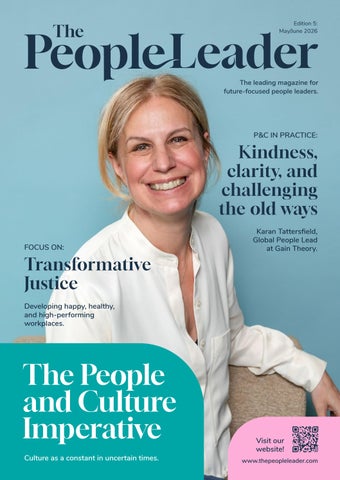
Welcome to the May/June edition of The People Leader. Since we launched last December, each issue has received rave reviews from people leaders across the world. That’s because the magazine is built on evidence and informed by the lived experience of people leaders working through complexity in real time.
This edition brings that into focus.
We are proud to be the media partner for International People and Culture Week 2026 (see page 7). Kicking off on the 1st May, it is a genuinely global event, bringing together leaders from across regions to explore how people, culture, and leadership are being shaped in different contexts. What stands out is the range of perspectives and insights drawn from practice across continents, sectors, and cultures.
That commitment to showcasing such a diversity of thinking runs through the magazine.
Karan Tattersfield offers a clear and grounded account of leadership in practice, shaped by her experience as Global People Lead at Gain Theory. Her focus on kindness, clarity, and respect brings leadership back to something simple, but not easy, particularly in moments of challenge and change. The question is not whether we value these qualities, but whether we consistently live them when it matters most.
From the University of the West of England (UWE), Professor Sir Steve West and Dan Wood reflect on the strategic partnership between vice-chancellor and chief people officer. Their contribution speaks to trust, alignment, and the discipline required to lead coherently at the top of an organisation.
Deb Dutta explores how learning and development underpins transformational cultures, with a clear emphasis on impact and application. Ritika Wadhwa challenges leaders to build cultural intelligence as a core capability, essential in a world defined by difference, pace, and global complexity. Increasingly, this is not optional, but fundamental to effective leadership.
On page 25, you can read about the launch of our first global People Leader Summit on 20th May, bringing together chief people officers and senior leaders from across the world. These quarterly summits are designed as a space for dialogue,

shared experience, and practical insight, and form part of a wider ambition to build a connected, global community of people leaders. Access is through subscription at www.thepeopleleader. com/subscribe/ - it's free to join and free to attend.
As the platform grows, we now offer an exciting portfolio of advertising and sponsorship opportunities. For more information, or to request a media pack, please contact Lynne.Porter@ thepeopleleader.com
If you are looking for a platform to communicate your people and culture activity, whether that is a single event or a broader programme, I would be very happy to explore how The People Leader can support you through strategic partnership and collaboration. You will see an example of this on page 17, where we are showcasing the work of the Business Culture Awards. It is a strong illustration of the kind of relationships we are building, working alongside organisations to amplify practice, share insight, and connect communities.
My latest book, People and Culture: A practical guide for HR and leaders (Kogan Page), explores many of these themes in more depth. In it, I share my People and Culture Operating Model and I hope it provides a useful companion to this work.
Thank you for reading and being part of The People Leader community.
David Liddle, CEO of The TCM Group, Editor in Chief of The People Leader Magazine
Email: editor@thepeopleleader.com
Connect on LinkedIn: liddledavid
A third of workplace sickness absence is due to stress, anxiety, depression, or other mental health problems, according to a recent YouGov survey commissioned by Acas.
Over 1,000 managers were asked to report the top three reasons staff give for being off sick.
Minor illnesses topped the list, with almost twothirds (62%) saying that workers report their absences as being due to coughs, colds, and the flu, while nearly a quarter (23%) said that the absences are due to headaches and migraines. One in three bosses, however, reported mental health problems as a key reason for staff absence.
The findings reflect previous, larger scale HSE research, which suggests that in Great Britain, 964,000 workers experienced work-related stress, depression, or anxiety in 2024/25, with 22.1 million working days lost as a result.
The poll was commissioned ahead of new changes to statutory sick pay, which came into effect on 6 April, as part of the Employment Rights Act 2025. The changes mean that workers will be eligible for statutory sick pay for their first day of illness rather than the fourth day. Employees will also no longer need to earn a minimum
Acas Head of Inclusivity, Julie Dennis, said: “Bosses need to ensure that their work environments are healthy places to work, as well as prepare for the new rules on sick pay. Workers should also look after their own health and wellbeing too. If they are experiencing stress, they should talk to their manager as soon as they can.”
The Acas research was released just ahead of Stress Awareness Month, which ran for the whole of April. This year’s theme, Be the Change, invited organisations to move beyond awareness and take meaningful action to create healthier, more sustainable ways of working.
SOURCE: https://www.acas.org.uk/a-thirdof-workplace-sickness-absence-is-due-tostress-anxiety-depression-or-other-mentalhealth
https://www.stress.org.uk/stressawareness-month-2026/
New global data from executive search agency Eton Bridge Partners has highlighted significant shifts in Chief People Officer hiring, with notable differences emerging between the UK, the United States, and other major markets.
The analysis, covering nearly 15,000 CPO appointments between 2023 and 2025, shows that while global appointment volumes have fallen sharply over the past three years, the United States continues to dominate activity. Half of all global CPO appointments during the period were made by US organisations, underscoring the region’s sustained investment in people leadership and its focus on workforce strategy, culture, and organisational transformation.
The UK also stands out, accounting for 11% of global CPO appointments. According to the report, this reflects the maturity of the UK’s HR leadership market, where the CPO role is firmly established as a strategic, board-level function, particularly in listed and private- equity-backed businesses.
Across all regions, female leaders continue to make up the majority of CPO appointments, consistent with the gender profile of the wider HR profession. However, the report notes growing regional variation, with some markets showing a gradual increase in male appointments. The average age of appointees has also risen slightly, suggesting continued demand for experience and leadership maturity.
One of the most marked global trends is the renewed rise in external hiring. After several years in which internal promotions dominated, external appointments now represent the clear majority of CPO hires. The report also identifies a growing number of first-time CPO appointments worldwide, indicating broader acceptance of potential alongside experience in hiring decisions.
SOURCE: https://etonbridgepartners.com/ cpo-pathways-report-2026-download/
Ethnic minority women face the highest levels of exclusion, discrimination, and stalled progression in UK workplaces, according to new research from non-profit People Like Us and Women in PR.
Nearly three in ten (29%) ethnic minority women say their ideas have been ignored, dismissed, or
rejected until repeated by someone else.
One in five report microaggressions (20%), discrimination (20%), and being overlooked for stretch opportunities (21%). Almost half (47%) say they feel behind where they expected to be in their careers.
Pay is a major part of that picture. Around 18% of ethnic minority women say they have been paid less than peers in similar roles, whilst a large proportion (58%) say they have discovered a colleague from a different ethnic background was being paid more for similar work.
Ethnic minority women are also more likely to report self-silencing, and unfair feedback, whilst (23%) say they carry the ‘representation tax’ - the mental load of representation at work - compared to 16% of white women.
The research campaign, ‘The Recognition Gap’, paints a stark picture of day-to-day workplace inequality. One in five report discrimination at work - more than double the rate reported by white women (9%) and white men (9%). A quarter (25%) say they have held back from raising concerns because they feared the consequences.
79% of ethnic minority women have experienced issues in the workplace within the last 12 months, compared to 63% of white women and 65% of white men.
SOURCE: https://www.womeninpr.org. uk/the-recognition-gap/
Read about cultural intelligence on page 21.

LEAD FEATURE:
In recent weeks, organisations across sectors and geographies have been operating under extraordinary pressure as the ramifications of the US-Iran crisis ripple through global systems.
Strategic planning cycles have been upended. Teams used to planning in quarterly cycles have been forced into hour-by-hour operational decisions. Thousands of flights have been cancelled, shipments rerouted, and supply chains disrupted, exposing fragilities that many leaders did not know existed. At the same time, employers have had to coordinate mass evacuations, close regional hubs or place them on high alert - all while maintaining continuity for customers, partners, and employees.
Even organisations with no direct Middle East exposure have felt the shock. Fuel shortages, price volatility, and supply chain instability have hit industries from food and manufacturing to finance and technology, forcing leaders to rethink operations overnight in an environment where the macro context shifts by the hour.
It is at moments like these that organisational culture comes to the fore. It is culture that determines whether organisations are able to act at speed, stay true to their values, and move forward decisively, taking their people with them. Under stress, culture becomes the real-world test of whether decision-making is agile and whether people trust leadership when the pressure mounts.
“What has quickly become clear is that the organisations navigating this crisis most effectively are not those with the most detailed plans, but those with cultures that enable fast, aligned, and trusted decision‑making when it matters most,” says TCM CEO David Liddle.
It may seem counter-intuitive, but in periods of instability it is cultural alignment, rather than risk frameworks and control mechanisms, that becomes the anchor leaders rely on most. These formal structures matter of course, but they cannot support the full weight of decision-making when events move faster than any predetermined plan.
When the situation is shifting hour by hour and strategy is overtaken by events, culture is what holds. It gives people a shared sense of how to respond when events are moving faster than the official guidance, creates behavioural consistency when rules are unclear, and provides a shared sense of identity when external conditions pull teams in different directions.
“Culture is an organisation’s DNA – encoded in every decision, every interaction, and every moment of practice,” says Marquisa S. Nash, founder of The HR Savant. “In volatile times, culture is what tells people how to behave when the playbook does not cover the situation.”
Julie Turney, CEO of HR@Heart Consulting, suggests that what this means in practice, is that in times of trouble or challenge, culture becomes the organisation’s operating system. “In fast‑ changing times, culture is not a backdrop to performance, it is the engine driving it. The organisations that outperform are those in which culture aligns people with purpose, decisions with strategy, and behaviour with results.”
“When leaders get culture right, they don’t just respond to instability, they convert it into momentum.”
Supporting systems
Culture is, however, only as strong as the systems that reinforce it. In his recent book ‘People and Culture: A practical guide for HR professionals and leaders’, David Liddle shares his People and Culture Operating Model, designed to help organisations navigate the challenges of the modern workplace.
Build around five interconnected dimensions – people, strategy, culture, justice, and value – the model offers a strategic beacon for the whole organisation. “Organisations are facing economic uncertainty, geopolitical tension and an unsettled employee relations landscape – and in this scenario, traditional HR models are showing their age,” says Liddle “The P&C operating model is the blueprint that can help leaders and people professionals balance these complex needs –nurturing belonging while driving performance, embedding ethics while enabling agility, and holding cultural coherence in a world of constant disruption.”
Research from organisational psychologist Michael Couch, together with colleagues from Denison Consulting, confirms the premise that an organisation’s culture makes a difference in how it adapts to a crisis. A study of 36 organisations from around the world, with over 15K respondents, showed a clear connection between culture and organisational resilience. “Combine this with the research that shows that culture is a leading indicator of organisational performance, and the guidance is clear,” he says, writing in Forbes. “If you want to make sure that your organisation is ready to effectively
and quickly adapt to a future crisis or disruption, make sure that your culture is clear and aligned. Organisations can build resilience by building their cultures.”
A critical role for leaders
Leaders have a critical role to play in amplifying culture in ambiguous and fast-moving situations. In times of uncertainty, employees don’t listen to what leaders say –they watch what they do. They will be picking up subtle signals from what leaders tolerate, how they behave under pressure, and what kind of actions and behaviours they reward.
Misalignment between stated values and what happens on the ground is one of the quickest ways to destroy trust in difficult times. In a recent HBR article, INSEAD professor Erin Meyer suggests that identifying the tough dilemmas your employees routinely face and clearly stating how they should resolve them is key to making culture come alive during critical moments. “When employees face situations with various credible responses, they can either make a choice based on personal preference or be guided by the culture of the company,” she says. Rather than describing values in abstract terms like integrity, respect, and trust, she suggests leaders should present critical decision-making dilemmas and “vigorously debate potential responses, and create value statements that will clearly guide employees’ actions.”
She adds that of course there will be times when the culture leaders have articulated should not, or cannot be, followed. “When you debate your organisational culture, also identify dilemmas in which your stated values do not apply,” she says. “Be bold and push the culture to the limit, but also define which situations are over the limit.”
Culture as advantage
In an uncertain market, culture can become a sustainable advantage. When conditions shift quickly, the organisations that stay ahead are those with cultures that make learning and adaptation part of everyday practice. A strong culture gives people the grounding to act with confidence and stay connected to one another, even when they are surrounded by chaos and uncertainty.
This creates a form of resilience that competitors will struggle to replicate. Systems can be copied and strategies are easy to duplicate, but the shared habits, norms, and ways of working that shape how an organisation responds under strain are far harder to imitate. Over time, that becomes a strategic edge - a source of momentum when others are slowing down.
“Staying relevant is no longer about having the right answers; it is about the speed of learning,” says Ignacia Bianchi, Director, P&C, at Kura Biotech. “By valuing the process and the challenge in itself over the ego of ‘being right’, leaders build a permanent strategic asset. This intentionality ensures that when markets shift, the organisation’s capacity to adapt remains faster than the disruption. It is this ability to out learn the competition that keeps a business at the forefront, leading the change rather than merely surviving it.”
Julie Turney, Marquisa S. Nash and Ignacia Bianchi are all speaking at International People and Culture Week, 1-7 May 2026.
For more details visit the People and Culture Institute at www.peopleprofessionals.org
Join members of the People and Culture Institute (PCI) for a series of global sessions, live-streamed via LinkedIn and YouTube to audiences worldwide.
This year’s event recognises that there is no single narrative of effective workplace culture – only experienced truths. A series of regional caucuses will convene leaders and practitioners across: North America | Latin America | Africa | Caribbean | India | Europe
MAY 1
MAY 2
MAY 3
MAY 4
HOSTED BY:


MAY 5
IPCW advert page
Opening Day: THE UK CONVERSATION
Navigating global uncertainty via culture
THE CARIBBEAN ISLANDS
Tackling talent migration via people-first leadership
INDIA
Scaling inclusion in fastgrowing workforce ecosystems
AFRICA
Unlocking the young, diverse workforce
NORTH AMERICA
Building trust across divided workplaces
MAY 6
MAY 7
EUROPE
Balancing geopolitics and human-centric cultures
SOUTH AMERICA
Performance amid economic and social inequality
Annual IPCW Keynote Lecture by David Liddle – Live on LinkedIn: The People and Culture Blueprint: An Operating Model for People Leaders
The IPCW26 Wrap
Celebrating PCI Members & Fellows
How to join our LIVE events:
LINKEDIN-IN
youtube
Live on LinkedIn: follow the PCI page
Live on YouTube: subscribe to the channel
For more information visit: www.peopleprofessionals.org/ipcw-2026/
SUPPORTED BY: SPONSORED BY:
Previously Chief People Officer, Grey London, currently Global People Lead at Gain Theory.
In an industry defined by bold ideas and fast turns, Karan Tattersfield brings a radically grounding philosophy to the practice of People and Culture.

* SOURCE: People and Culture: A practical guide for HR professionals and leaders.
In her previous role as Chief People Officer at Grey London, one of the world’s leading creative agencies, Karan's leadership was anchored in three deceptively simple words: kindness, clarity, and respect.
“Too much of business still treats people like problems to be fixed or resources to be managed,” Karan reflects. “But in our most difficult moments at work restructures, redundancies, conflict - we deserve to be treated with dignity.”
They were the design principles for the people strategy she led –principles that shaped how Grey London approached leadership, culture, and organisational change.
Karan’s story begins in the mountains. She was running ski chalets in Switzerland when the founder of the company, Andrew Dunn, offered her a role recruiting for their ski programme in the UK.
“I had no formal HR experience –just a love of people and the work,” she says. “Andrew gave me that first chance, paid for my CIPD... and taught me something I’ve never forgotten.”
One day, Karan introduced a new chalet staff member and said, “She’s working for us this season.” Without hesitation, Andrew gently corrected her: “No one works for us. They work with us.”
That moment, she recalls, “stuck with me”. It wasn’t just about language, it was about leadership. Andrew met every team member face to face, made time to listen, and built belonging through simple, human gestures. Karan has carried that ethos through every role since, and in her recent time at Grey, expressing it at scale as a CPO guiding one of the UK’s most celebrated creative teams.
At Grey, Karan was no stranger to difficult conversations. She led countless restructures and role exits - moments that could easily be reduced to process. But for her, the process is secondary to the person. “The outcome actually makes little difference to the whole proceeding in fact, it couldn’t be less important,” she explains. “What matters is how someone feels walking out of the room.”
Expanding on this point, she added, “It’s entirely possible to make someone’s role redundant and still have them walk away feeling respected and positive. The skill lies in how you build rapport.” What Karan highlights here is that kindness is a form of strength, and clarity is a form of care.
While at Grey, Karan worked closely with the CEO in what she describes as a ‘genuine strategic partnership’. There was challenge, fluidity, shared decision-making - and a deep respect for the cultural foundation beneath the creative output. “We challenged one another, bounced ideas around, solved problems in real time. That’s what strategic partnership should feel like.”
It was a relationship that worked because it wasn't rooted in hierarchy or complianceit was built on progress, openness, and the shared belief that culture is not the ‘nice bit’ that happens around the edges. It is the edge.
Her C-suite fluency doesn’t come from corporate distance - it comes from cultural alignment. And it’s increasingly clear that the business case for People and Culture is no longer a fringe idea. As Karan puts it: “You can’t grow a sustainable, high performing business without this work at the core.”
Karan encourages other people professionals to lead from instinct and empathy, not from ego or control. “Ask yourself: if I were the employee here, what’s the right thing to do for them?” she says. “Drop the ego. Listen. Don’t try to win the room try to understand it.”
For Karan, the true power of leadership lies in presenceespecially when the message is difficult. “You can lead someone out of the business and still have them trust you,” she said. “It’s how you show up.”
In creative environments like Grey, coaching was more than simply a development tool - it was a language. It allowed leaders to shift from solution-giving to spaceholding, from control to curiosity. That’s why Karan was so energised by the Pocket Coach GPT shared with her by TCM. “In creative environments, people don’t want scripts. They want to feel heard,” she said. “Coaching gives them that space.”
Accessible, non-judgemental, and embedded in daily practice, this kind of support helps managers hold complexity without losing themselves - or their people. It also aligns with the ethos she’s long lived: kindness doesn’t dilute performance. It strengthens it.
As the profession evolves, Karan remains focused on the basics that matter most: dignity, presence, care, and truth. “We’re human first. Even when we’re delivering hard messages, we can do it with grace.”
It’s a way of leading that feels radical only because so much of business has drifted from it. But at Grey London, when Karan was at the cultural helm, that human approach was not just surviving, it was setting the pace.
The world feels increasingly combustible. Geopolitical tensions are reverberating across the globe, economies are faltering amid the fall-out, and public discourse is more polarised than at any time in recent memory.
That volatility doesn’t stop at the office door. Inside organisations, everyday disagreements are escalating faster, trust is fracturing, and people are quicker to assume bad intent from the everyday conflicts, complaints, and concerns that characterise working life.
It’s an issue that has a direct impact on the bottom line. Employees spend nearly 2.8 hours per week dealing with workplace conflict, amounting to 385 million working days lost annually, and a cost to the UK economy of approximately £28.5 billion per year.
In this climate, the traditional machinery of workplace justice - investigations, hearings, sanctions - is no longer fit for purpose. Leaders are discovering that retributive processes don’t just fail to resolve conflict; they amplify the very divisions they’re meant to address. Forward-looking organisations are recognising that there is a better way – and are increasingly adopting the more people-centred, values-driven philosophy of transformative justice.
In his book ‘People and Culture: A practical guide for HR professionals and leaders’, David Liddle argues that for too long, we have mistaken justice in the workplace for simply applying policies and procedures.
“I’ve witnessed the real damage that happens when we rely on systems built not to genuinely
resolve problems, but merely to contain them,” he says. “Instead of empowering people, our disciplinary processes, grievance procedures, and performance management policies try to control them. Wrapped in legacy HR language, they are reductive, infantilising, and downright adversarial. They pit colleagues against each other, turn workplaces into arenas of fear, and become pipelines for trauma and lasting harm.”
Liddle adds that these traditional systems, rooted in punitive behaviours and retributive logic, often create more harm than they resolve. They erode trust, discourage honesty, and take vulnerable moments and twist them into blame and shame, leaving individuals isolated precisely when they most need support.
Organisations, he suggests, need to consider their conflict resolution processes in the light of this question: “Are you reinforcing blame or are you building belonging? The answer matters, perhaps now more than ever.”
Transformative Justice is an approach that reduces the opportunity for escalation, shifts the focus away from blame, and instead strengthens restoration, empathy, and genuine accountability. It recognises that conflicts, complaints, and concerns, when handled with skill and courage, can become catalysts for healing and growth.
The following model illustrates the evolution of Transformative Justice:
In the traditional justice model, procedural, distributive, and natural justice are stacked above a foundation of retributive justice – a punitive philosophy centred on blame and punishment. This model is transactional, rigid, and often legalistic, with resolution typically defined by sanctions rather than relational healing.
The elements of this model are explained below:
Procedural justice: Concerns itself with the fairness of the processes by which decisions are made. It asks whether decisions were reached through transparent means, applied consistently, and with opportunities for individuals to have their voices heard. In retributive environments, however, it can become ‘rules for rules sake’ – where process overshadows purpose, and participation becomes a performance rather than a genuine engagement.
Distributive justice: Focuses on outcomes. Who gets what, and why? It weighs fairness in terms of results – recognition, resources, roles, rewards. Depending on the ethical lens applied, distribution might be based on equality (everyone gets the same), equity (people get what they earn), or need (people get what they require). These decisions are never neutral, and can reinforce hierarchies and harden inequalities.
Natural justice: Brings the voice of moral fairness, and protects against arbitrariness and bias. It insists on the right to a fair hearing, the duty to act reasonably, and the obligation to avoid conflicts of interest. These are the ethical guard rails of decision-making, ensuring that justice is done and is seen to be done. Interpreted through a punitive frame, however, it becomes a mechanism for protecting the system rather than the person – reinforcing compliance rather than cultivating compassion.
Retributive justice: This is the justice of blame, accusation, and penalty. It seeks to identify a wrong, attribute fault, and impose a sanction. It may feel instinctively fair, but it often leaves wounds untended, relationships fractured, and cultures silenced. The result is often a system that protects the organisation’s interests but fails to uphold the humanity of its people.
Restorative justice: This replaces retributive justice in the Transformative Justice model. It is not concerned only with what rule was broken, but who was affected and what is needed to restore dignity, trust, and connection. By asking different questions, it invites those involved into conversation, acknowledging harm to understand rather than to shame, encouraging accountability, and turning conflict into a learning moment and a space for empathy and human encounter.
Within the Transformative Justice model, each form of justice is rebalanced. Procedural justice becomes participatory. Distributive justice becomes relational. Natural justice becomes moral and emotional. Retributive justice becomes a fair system for delivering sanctions. And restorative justice brings them together, weaving a fabric that holds individuals and organisations in a shared responsibility for healing, growth, and learning.
This is not a soft option. It is robust, legally compliant, and ethically sound. It protects people and the organisation. But it does so in a way that promotes insight rather than defensiveness, and connection rather than rupture.
This philosophy is being brought to life at accountancy and business services firm Shaw Gibbs, by Chief People Officer Angus MacGregor. Trained initially as a lawyer, Angus came to realise that while legal frameworks can analyse
disputes, they cannot resolve the human hurt beneath them. “We were solving the problem, but not healing the harm,” he says. His shift from retributive to restorative practices now underpins the firm’s approach to culture, resolution, and integration. Rather than impose cultural norms across newly acquired teams in Shaw Gibbs’ M&A-heavy environment, Angus facilitates structured dialogues that invite understanding, not conformity.
This mindset also underpins practice at The Open University, where the HR team inherited what Deputy Chief People Officer Julie Griggs describes as “a very policy driven HR function, where rigid adherence to rules and procedures often overshadowed the human experience.” The team dismantled outdated employee relations practices in favour of restorative dialogue, early intervention, and shared accountability.
“Policies don’t build thriving and innovative organisations. Trust and genuine human interactions do,” said Julie.
Says David Liddle: “Justice in itself is not an endpoint. It is a relational and cultural practice – lived, learned, and continually redefined through dialogue and care. In contrast to the retributive frame, which says ‘this is what you did, and this is what you deserve’, the transformative frame asks, ‘what happened, what matters now, and how can we move forward – together, responsibly, and with integrity?”
SOURCE: People and Culture: A practical guide for HR professionals and leaders.
Learn how to bring transformative justice to life on page 22.
Try the new Culture Doctor GPT!
www.culture.doctor
This month’s culture conundrum comes from a senior leader who asks:
"What is the best way to embed coaching into the culture of my organisation - so it moves beyond training programmes and becomes a natural part of how people lead and work together?”
Lily Driver-Thurston, Coaching Services Manager, The TCM Group:
The best way to embed coaching into the culture of your organisation is to treat it as a system, rather than a standalone intervention. Lasting culture change begins with leaders, expands through teams, and becomes embedded across the wider organisation through everyday behaviours, conversations, and ways of working.
The Engage Coaching System takes this integrated approach. It recognises that leadership coaching helps leaders build self-awareness, emotional intelligence, and the ability to lead in more people-centred, valuesled ways. Team coaching strengthens alignment, trust, and collective performance, helping teams work together more effectively and handle challenge more constructively. Organisational coaching builds on this by embedding coaching approaches, systems, and communities that support psychological safety, accountability, learning, and healthier cultural norms over time. One of the ways we do this is through our National Certificate in Coaching Skills, which helps organisations build the in-house capability and capacity to develop coaching-based leadership, strengthen management practice, and sustain cultural change from within.
This matters because culture is not shaped by strategy or policy alone. It is shaped by what people experience every day: how leaders communicate, how teams collaborate, how conflict is handled, and how learning is encouraged. Coaching helps shift organisations away from directive, compliancebased management towards more empowering and developmental ways of working.
When coaching is embedded at all three levels, it creates a reinforcing cycle: stronger leadership shapes stronger teams, stronger teams shape healthier culture, and healthier culture supports better leadership in return.
Felix Hebblethwaite, Partner and Chief People Officer at law firm Foot Anstey:
Coaching is a powerful tool and should be an integral part of any business strategy. It can help drive bold thinking, collaboration, and a pursuit of excellence to ensure teams fulfil their potential and help deliver on ambitious growth plans.
To embed a coaching culture, a coaching mindset must underpin day-to-day interactions between senior and junior colleagues as they work together to problem-solve. It is more than a developmental intervention; coaching is a catalyst for high performance and sustainable growth. In a firm like Foot Anstey, where ambition is woven into our culture, coaching empowers individuals to unlock their potential, build expertise, and make a meaningful impact. It creates space for reflection, challenge, and innovation – qualities essential for thriving in a rapidly changing legal landscape.
Our career paths are designed to be both aspirational and achievable. Coaching plays
a pivotal role throughout key career stages, supporting colleagues as they navigate transitions and seize new opportunities. One example of this is our Future Leaders Programme, which provides targeted coaching for those on the path to partnership, equipping them with the skills, confidence, and strategic mindset required to lead. Coaching is also key in supporting lateral partner hires, where it accelerates integration, helping newly recruited partners align with our values, build relationships, and contribute to the firm’s growth from day one.
One of the biggest mistakes I see is treating coaching like a programme instead of a way of operating. In my research and applied work, two factors consistently drive coaching effectiveness: identity clarity and authentic connection. Coaching can activate both - but it only sustains when it becomes part of how people see themselves at work.
From an identity-first perspective, peer coaching works when it shifts the internal narrative from “I give answers” to “I develop people.” Sometimes that’s a fundamental identity shift for leaders and teams - and it changes behaviour far more sustainably than skills training alone.
In practice, this means embedding coaching into organisational identity, not just workflow. Rather than adding processes, organisations must integrate coaching into moments where people are already interpreting, deciding, and responding.
The most effective teams build peer coaching into meetings, project launches, and decision points using simple prompts: What are you seeing? What’s the real challenge? What strength could you lean on here? These questions interrupt default patterns and reinforce a coaching-based identity in real time.
There is strong evidence that strengths-based, coaching-oriented cultures drive engagement, performance, and retention - but only when activated consistently in everyday interactions. And if coaching is really going to stick, organisations have to go deeper than capability. They have to shape identity.
Send your questions to: erika.lucas@thepeopleleader.com and the Culture Doctor will try to help.“

By Sarah Hamilton-Gill FCIPD
Many senior HR leaders already think like consultants, balancing commercial reality, organisational risk, and people strategy every day. But right now, with AI moving fast, regulation shifting, and uncertainty continuing, a few habits matter more than ever.
You don’t need to do everything. You do need to be clear on what matters most. Here are five shifts I’m seeing make the biggest difference:
1. From workstreams to decisions Real value often comes from helping leaders move through the decisions they’re avoiding, around capability, structure, investment, and risk.
2. From stakeholders to sponsors Progress is quicker, and calmer, when one senior person is truly accountable for the outcome, not just interested in the discussion.
3. From best practice to fit for your context The best answers right now are rarely copy-and-paste. They’re shaped by your culture, risk appetite, capacity, cost, and pace.
4. From delivery to evidence Confidence grows when you can point to what’s changing, time saved, risk reduced, capability strengthened, cost avoided, value created.
5. From HR expertise to a commercial narrative Your expertise matters. So does your ability to translate it into what leaders care about, priorities, trade-offs, and the cost of doing nothing.
When everything’s moving, the most valuable person in the room is the one who can simplify and steer.
Sarah Hamilton-Gill FCIPD is the founder of the Leap into HR Consulting® programmes and The HR Consultancy Academy® and has supported over 300 HR professionals to build successful consulting careers. Connect with Sarah on LinkedIn: https://www.linkedin.com/in/sarahhg/
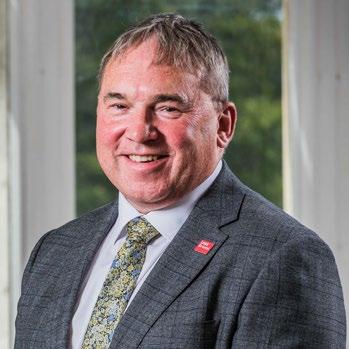
At UWE Bristol, we’ve always believed that how we lead matters just as much as what we lead. The relationship between the Vice-Chancellor and Chief People Officer is fundamental, and it has evolved to become deeply strategic.
In this reflection, Dan and I explore how we’ve developed a professional partnership built on clarity, trust, and coherence across our institution. It’s a relationship grounded in mutual values, honesty, and respect, which we believe are central to enhancing our individual and collective impact. Most importantly, it helps shape a climate where others can lead well and where a people and culture focus becomes and remains central to everything we do.
Our approach echoes the core principles of David Liddle’s Transformational Culture framework, placing values, dialogue, and trust at the heart of leadership. We’re proud of what we’re building at UWE and pleased to contribute to the broader conversation about what 21st-century people and culture leadership can and should look like.
Professor Sir Steve West, Vice-Chancellor, UWE Bristol.
Dan Wood, Chief People Officer, UWE Bristol.

the real and evolving needs of our university community. We work as equals, bringing different perspectives that inform how and when we act.
At UWE Bristol, we don’t treat people and culture as a bolt-on. They are the thread that runs through how we lead, how we decide, and how we create the climate in which others can do their best work. Our partnership has become an essential part of that foundation. It is built on shared intention, clarity, trust, mutual respect, and the ability to hold challenge without that creating rivalry or dysfunction.
Motivated to avoid a performative alliance, we created a working relationship forged in purpose and grounded in the belief that universities should be values-led by design, not just by declaration.
We’ve worked side by side on every aspect of institutional life: reshaping our operating model, embedding anti-racism and inclusion into leadership practice, and aligning people strategy to
Our strategic focus has been simple and significant:
• A people strategy underpinned by equity, justice, integrity, and performance.
• A leadership and management framework that builds maturity, not dependency.
• A restorative, resolution-first culture that builds trust over time.
• Human-centred policies that support wise judgement over default process.
• Investment in digital tools and data to enable better, more human decisions.
We’ve come to understand that culture is not what we say, but what we allow, enable, and reward. That’s why our AntiRacism Strategy, for example, begins not with communications, but with accountability, starting with us.
Naturally, we don’t get everything right. We’ve made difficult decisions with real consequences. We’ve led through complexity, ambiguity, and significant change. But we’ve done so with consistency, transparency, and crucially, with each other.
This partnership works because it creates space for others to lead. It aligns us with trust and clarity allowing our ambitions to take root and the UWE culture to grow and flourish.
We fully accept we only have a short tenure; after all, UWE Bristol will outlast us both. But while we are here, our responsibility is clear: to help ensure it becomes more coherent, more just, and more capable of fulfilling its promise to students, staff, and the world beyond its walls.
* SOURCE: People and Culture: A practical guide for HR professionals and leaders.
“Culture doesn’t shift because a new narrative is introduced. It shifts when systems change.”
BENJAMIN LAKER ET AL., HARVARD BUSINESS REVIEW (2025)
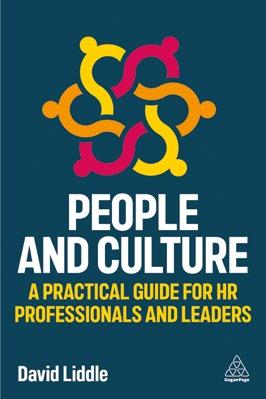
Written for HR professionals and business leaders, David Liddle’s latest book helps you unlock the full potential of a people centred, culture driven
Leadership that listens.
Leadership that learns.
Leadership that transforms.
Engage Leadership from The TCM Group enables executive, senior, middle and aspiring managers to think systemically, act with integrity, and lead through complexity.
Our programmes are grounded in real work, lived experience, and evidence-based practice.
We support leaders to build trust, navigate tension, and shape transformational cultures where people, performance, and profit co-exist in service of long-term value.
• Board level strategic development and leadership away days.
• 14 high impact and fully accredited leadership development modules.
• One to one coaching, team coaching and systemic coaching.
• Immersive leadership boot camps.
• Insightful leadership psychometrics.
• Engage 360™ (our innovative 360-degree review).




Q. What role does Learning & Development (L&D) play in building transformational cultures?
A: L&D plays a strategic role in building transformational cultures because culture only shifts when new thinking becomes new practice. In a VUCA world of constant change, learning must be continuous, not episodic. Development should move beyond organisational design to embedding human-centred systems that enable people and organisations to thrive. L&D helps organisations stay agile, shift from role-based to skills-based ways of working, and build the confidence to learn, unlearn and relearn. It also plays a vital role in challenging groupthink—especially in the age of AI, where technology can accelerate conformity as easily as insight. At its best, L&D builds the confidence, competence and adaptability people need to lead through uncertainty - at the heart of any transformational culture. It is important to maintain a balance across both 'learning' and 'development' by shifting focus to continuous growth, whilst improving long-term performance.
Q. You are an accredited practitioner of Will Thalheimer's Learning Transfer Evaluation Model (LTEM). How are you bringing this expertise into TCM’s L&D portfolio?
A: I’m bringing LTEM into TCM by helping us move from measuring activity to measuring impact. LTEM asks a simple but powerful question: what actually changes because people learned something? At TCM, we are embedding that thinking across learning needs analysis, content design, delivery, consultant partner onboarding, L&D audits, and project impact reviews. So whether we are working in leadership, coaching, mediation, investigations, culture diagnostics, or the Resolution Framework, we are becoming much clearer about what good looks like: better decisions, stronger task performance, stronger transfer into practice, and better outcomes over time. It is also shaping our internal Learning & Development Excellence work, so continuous improvement becomes part of how we design, deliver, and evolve the whole portfolio. What matters to me is that learning does not
TCM’s Head of Learning and Development Deb Dutta speaks to The People Leader about how L&D underpins the growth of transformational cultures.
just land well in the moment, but shows up in day-to-day behaviour and performance excellence.
Q. What makes for a strong partnership between organisations and their learning providers?
A: Strong partnerships are built when learning providers stop being order takers and become strategic partners in enabling meaningful transformation and growth. The best relationships are close enough to challenge assumptions, stretch thinking beyond one-off programmes, and co-create a clear narrative around impact. For me, that means agreeing upfront what good looks like, which KPIs matter, and how learning will support better decision quality, stronger task performance, and future readiness. LTEM is helpful here because it gives both sides a shared language for defining success and evidencing it credibly. When that partnership is strong, learning stops being a boxticking activity and becomes a driver of transformational culture, capability building, and sustained organisational performance.
By Cath Longfield, Co -Founder, Business Culture Awards

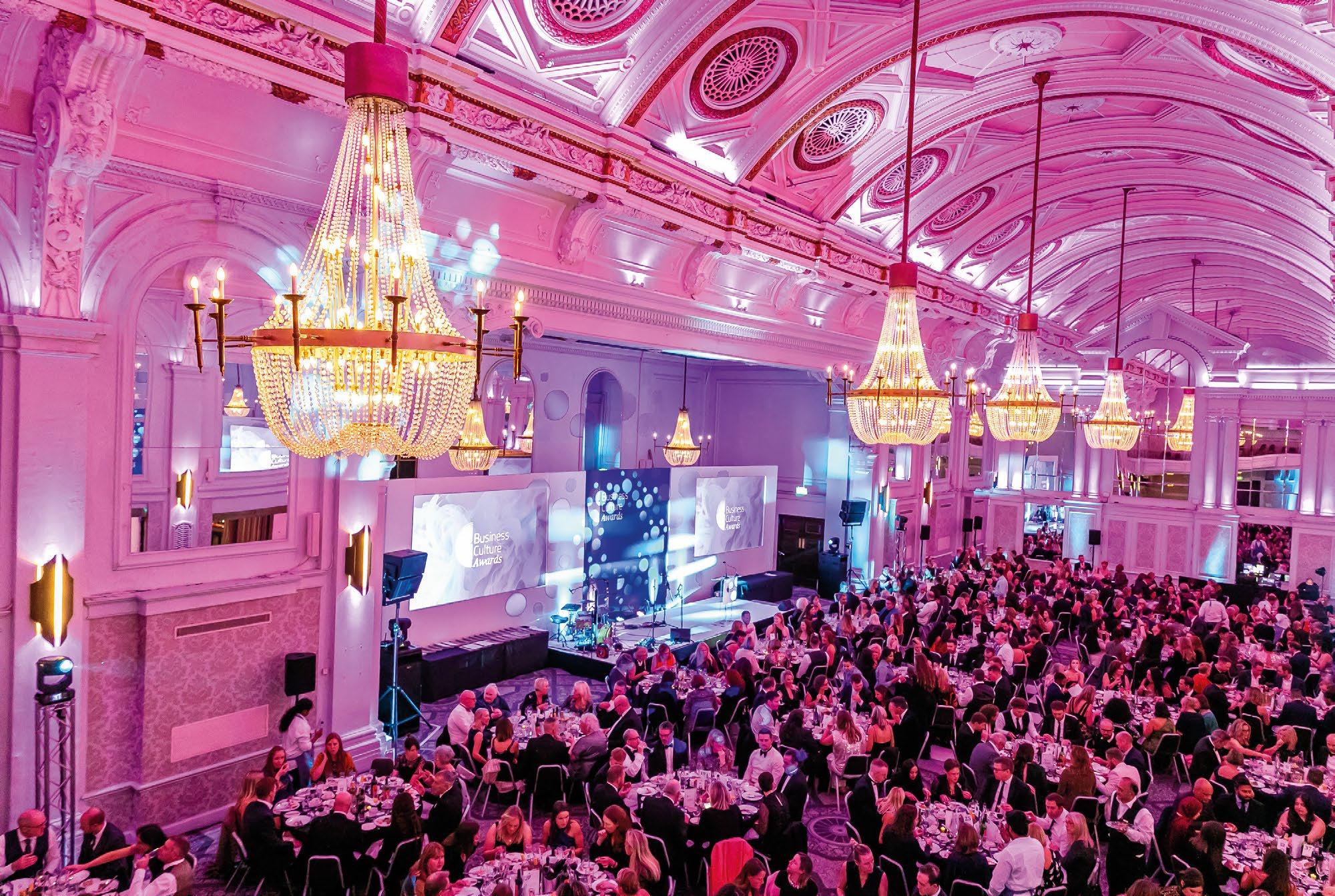
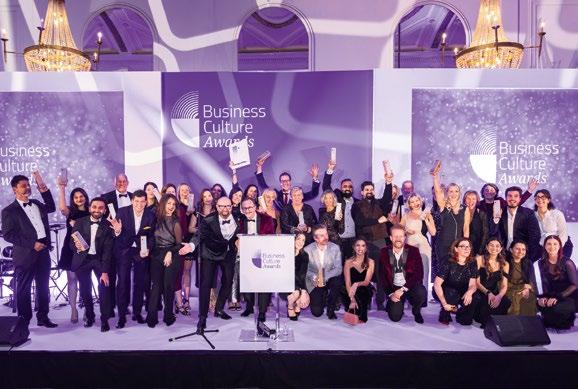
of stated values, but as a lived, strategic capability. From trust and inclusion to wellbeing, leadership, collaboration, and purpose, we look at how culture shows up in everyday decisions and behaviours, and how that translates into real
But recognition is only part of the story. What matters just as much is
Each year, insights from entrants,
culture leaders asking the same questions: what really works, what doesn’t, and why?
Through conferences, including our flagship event in September, alongside webinars, research, whitepapers and over 500 case studies, we create space for shared learning, reflection, and practical application.
Because culture isn’t about perfection. It’s about progress, alignment to your business strategy, and learning together –and that’s what ultimately drives impact and performance.

The Business Culture Awards gives forward-thinking organisations a way to celebrate work which sets their employees up to succeed; recognising how employee experience is fundamental to business performance.
If your team has taken strides to strengthen people and culture through learning, coaching, wellbeing, inclusion, purpose and more, and you're keen to celebrate your efforts, consider making a submission this year.
Choose the category or categories that best fit your work.
Answer the four entry questions - save your progress and return at any time. Upload up to three pieces of supporting evidence (optional).
Submit your entry.
AI may prove a double-edged sword for HR
HR leaders are being urged to take a more cautious, balanced approach to workplace AI, as new research from the University of Bath School of Management warns that overreliance on the technology could erode critical forms of human expertise.
The study finds that while AI can improve efficiency and streamline workflows, it may also undermine key elements of human capital if used without careful oversight. In particular, the research highlights that AI is most effective when applied to ‘encoded’ knowledge, such as policies, procedures, and datasets, and ‘embedded’ knowledge, including routine processes and workflows.
However, the authors warn that three other forms of knowledge - embodied, encultured, and embrainedare far less compatible with AI. These rely on handson experience, organisational context, and human judgment, and cannot be developed through AIgenerated outputs alone.
“AI is widely promoted as a tool that can support employees… but this should not be taken at face value,” said study author Professor Dirk Lindebaum. He cautioned that if employees begin outsourcing thinking and decision-making to AI, “these critical forms of knowledge wither over time”.
For HR practitioners, the findings point to the need to design roles and learning environments that preserve human interaction and experiential learning. Suggested approaches include mentoring, job shadowing, and team-based development, alongside a renewed focus on critical thinking and reflection.
The researchers also propose the creation of ‘learning vaults’ - protected spaces where employees can build foundational knowledge without overreliance on AI. Without such safeguards, the study warns, organisations risk creating a dependency on AI that could ultimately weaken capability and long-term performance.
https://www.bath.ac.uk/announcements/university-of-bath-studywarns-ai-could-erode-human-capital-thinking-and-expertise-inthe-workplace/
Senior decision-makers say their roles have become increasingly more complex over the past five years, according to recent research from Alliance Manchester Business School.
Of the 500 senior leaders surveyed, 31% cited AI and digital transformation projects as the top factor contributing to this trend. Other key factors were increased cybersecurity and data privacy risks, the performance of the UK economy, and new regulation and legislation.
Meanwhile, a quarter of the business leaders surveyed said that pressure on meeting expectations around diversity, equity and inclusion (DEI) had been a contributor to the greater complexity of their roles, together with the rise of remote working and employees’ pay demands.
The report ‘Navigating Unprecedented Change: How are UK business leaders responding to new and varied challenges?' also explored how this greater complexity in business leadership was impacting business outcomes.
Over half of respondents said that creating a longterm strategy for growth is now more challenging, with the same number citing the ability to achieve consistent growth. Attracting and retaining the best talent and maintaining a competitive advantage over business rivals were also considered more difficult to achieve.
When asked what their organisations were doing to counter this increased complexity, the most common action was improving collaboration and communication between teams and departments, followed by investing in new technology and automation. Other actions highlighted included
People and Culture Global supports HR to transform into a transformational, proactive, strategic and widely trusted people and culture function.
We design and deliver:
• Strategic people and culture transformation consultancy.
• The industry leading Culture Insights® culture audit.
• Values, behaviours and capabilities alignment.
• Organisation design, change management, conflict resolution and turnaround consultancy.
• Fully accredited training for people and culture teams including the new Diploma in People and Culture™
enhancing risk management training, a stronger focus on organisational culture, and targeted investment in high-value markets and products.
https://www.alliancembs.manchester.ac.uk/leadership-report/
Performance management tops HR priorities
Performance management has emerged as a top HR priority for 2026, cited by nearly half of respondents to the recent Freeths Employment Survey. This represents a significant shift: in 2025, only 16% identified it as a top-five priority. The data reflects a broader organisational focus on productivity, accountability, and capability building as employers navigate hybrid working and cultural change.
The annual survey by national law firm Freeths reveals how employer priorities are shifting against a backdrop of significant legislative change.
Key insights include:
Employment Rights Act 2025: While awareness of the Employment Rights Act is broad, depth of understanding remains limited, and sentiment is
largely pessimistic (61% believe that it will make the UK less attractive for investment). Employers anticipate the greatest impact from unfair dismissal reform and flexible working changes.
Workplace sexual harassment and prevention: Employers are moving towards compliance with the duty to prevent sexual harassment, with noticeable increases in policies, training, and reporting mechanisms. 10.5% reported a slight increase in sexual harassment complaints last year, with 1.5% reporting a significant increase.
Family leave and hybrid working: Most organisations feel operationally ready for day-one parental and paternity leave rights, but few (only 2%) intend to enhance pay. More broadly, hybrid working continues to present cultural rather than technical challenges.
HR technology & AI adoption: AI adoption within HR remains low and, in some areas, has slowed. While a small number of employers (12%) are experimenting with AI for recruitment screening, preparedness for governance, ethical standards, and regulatory compliance is minimal.
https://www.freeths.co.uk/
Your organisation is sending signals. The question is: are they the right ones?
The biggest cost in most organisations is not loud. It shows up quietly - in people doing just enough, stretching a little less, caring a little less.
And it often starts with something small: silence.
Appreciation does exist in many workplaces, but usually in pockets - annual awards, occasional shoutouts. It is there, but not consistent.. And that is where the problem begins.
That gap is what led Tsvetelina Hinova and Perry Timms to write
Appreciating Appreciation: The STAY Report.
At the heart of the report is a simple idea: appreciation is a system of signals.
Every day, your people notice what gets recognised, what gets ignored, or met with silence. Over time, those signals shape how they feel about their work and whether they see a future in the organisation.
This is why consistency matters more than grand gestures. Small, timely, and specific moments of appreciation build trust, strengthen connection, and create a sense of belonging.
We are already seeing this in practice. TCM Group recently introduced Thankbox to celebrate their employees and consultant of the month amongst other occasions. The impact has been powerful - not because recognition is bigger, but because it is more
THE QUESTION IS: ARE THEY THE RIGHT ONES?
When people feel genuinely appreciated at work, it shows; in retention,
in engagement, in the culture you’ve spent years trying to build.

“It helped us make appreciation a habit in our organisation”
— Leah, CEO, Appointedd
Thankbox for Business makes recognition part of everyday work: peer-to-peer appreciation, shared visibility across teams, and instant gifting. Set up in minutes, zero admin overhead.
Join hundreds of organisations already making appreciation visible.
Book a 30 minute demo with our founders
visible, shared, and meaningful.
The STAY framework brings this to life through four elements:
• Signals & Systems - what your organisation consistently notices, reinforces, and makes visible
• Trust & Support - the belief people build about whether the organisation has their back
• Attachment - the emotional connection that determines whether people stay or drift away
• Your Way - designing appreciation so it fits your culture, not a generic model
Together, they show how appreciation shifts from a moment to something far more powerfula reliable, everyday experience.
Every organisation is already sending signals. The question is whether they are the ones you intend.


Cultural Intelligence is not a nice-to-have anymore. It's not just another ‘soft’ skill. It's not optional – within the current context of complexity and change that leaders are navigating.
And yet, only 6% of organisations believe their leaders can effectively manage generational, global, and digital differences that define today's workplace. What does that result in? Teams that can't collaborate or innovate effectively because people can't work across the very differences that should be making them stronger.
Here's what we're facing: change is happening 183% faster than it was four years ago. Six generations are working side by side with fundamentally different expectations. Teams span continents and time zones. And most importantly, traditional leadership approaches aren't built for this.
Emotional Intelligence isn’t enough.
Daniel Goleman's work on EQ was revolutionary - his insight that understanding and managing emotions could transform workplaces changed everything. But EQ was built for a different era - when teams were largely homogenous, when ‘reading the room’ meant reading people who thought and communicated like you.
That smile during a difficult conversation? It might be masking discomfort, not signalling agreement. The silence from your younger team member? That could be thoughtful processing, not disengagement. Your colleague calling an idea ‘half-baked’? Depending on where they're from, that might be direct feedback about the work, not a personal attack.
EQ helps you recognise that someone is uncomfortable, which is extremely important to begin with. Cultural Intelligence helps you understand why they might be uncomfortable; it makes you question your assumptions and gives you a toolbox to do something about it.
By Ritika Wadhwa
I see this all the time - leaders correctly identify the emotion they see but completely misinterpret its meaning because they don't understand the cultural context. They assume their way of communicating is ‘normal’ and that their way is the only way.
Cultural Intelligence is about developing four capabilities that work together:
• CQ Drive keeps you motivated to work across differences, even when it's uncomfortable.
• CQ Knowledge helps you understand how cultures are similar and different.
• CQ Strategy trains you to plan before interactions, stay aware during them, and reflect afterward.
• CQ Action gives you the ability to adapt your behaviour without losing yourself. They're measurable capabilities that predict leadership success in diverse environments.
Why does this matter now?
By 2030, 80% of work will be carried out by multicultural teams. Your workforce spans six generations, each with different relationships to technology and how work gets done. AI and automation are reshaping roles faster than we can retrain for them. Your customers and partners don't all think, communicate, or make decisions the way you do.
The leaders who thrive will be those who can navigate complexity, bridge divides, and turn diversity into competitive advantage - especially as technology accelerates the pace of change.
Cultural Intelligence makes that possible - which is why this leadership skill is not optional.
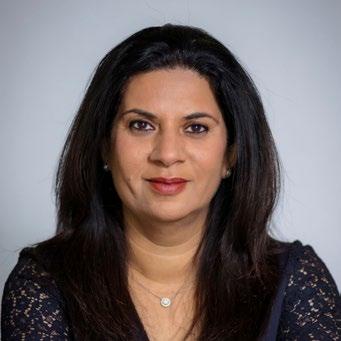
Ritika Wadhwa is the founder of Prabhaav Global and author of "NOT OPTIONAL: Applying Cultural Intelligence to Lead Through Complexity and Change" (October 2026).
In the first issue of The People Leader, we introduced the People & Culture Operating Model ™ which encompasses five domains – People, Culture, Strategy, Justice, and Value.
The model is accompanied by a people and culture skills matrix, which offers a clear, practical, capability framework across the five zones.
Over a series of articles in previous issues, we have been exploring the skills matrix in detail, to help you craft a personalised capability roadmap. This will help you develop your professional growth with intention and confidence. In the final article of the series, we look at the justice domain:
As a people professional, I’m sure you are all too familiar with the legacy justice systems: disciplinary processes, grievance procedures, whistleblowing policies, capability frameworks, and absence management policies.
As David Liddle points out in his latest book, 30 years’ experience of conflict resolution and cultural renewal has led him to believe that these systems don’t work, have never worked, and never will. At best, they offer a mirage of justice and illusion of fairness. At worst, they perpetuate harm, are intrinsically divisive, infantilise our workforces and destroy trust, the cornerstone of a healthy workplace.
Chief People Officer Angus MacGregor at accountancy firm Shaw Gibbs recognises that justice
does not centre around these things. Trained initially as a lawyer, MacGregor understands that while legal frameworks can analyse disputes, they cannot resolve the human hurt beneath them. “We were solving the problem,” he reflects, “but not healing the harm.”
They also deliver huge financial damage. According to an Acas report, formal procedures, including grievances, disciplinary cases, and disciplinary dismissals, cost businesses £12.8bn annually. But here’s the good news: there is a better way.
At the heart of the People and Culture operating model lies
the ‘justice domain’. This is a commitment to transformative justice, a philosophy that dials down blame and punishment and dials up dialogue and resolution.
It recognises that conflicts, concerns, and complaints, when handled with skill and courage, can deliver accountability and compliance while also generating insight, learning, healing, growth, and creativity.
Transformative justice is a blend of procedural and restorative justice, making it legally compliant and human-centred (yes, you can do both at the same time).
This approach also has strong business benefits. Faced with
grievance and disciplinary systems that had become formalistic and adversarial, Next PLC chose to implement a structured yet flexible framework which includes facilitated conversations, mediation, and coaching. Importantly it reserves formal disciplinary actions as a last resort. The results are powerful: disciplinary cases have dropped by 48%. This shift has also generated substantial financial savings –approximately £1,101 per avoided formal case.
Key elements of the justice domain:
This exciting new domain places justice at the centre of organisational life and it gives dialogue primacy as it:
Positions transformative justice as a foundation of fairness, inclusion, and high perf ormance.
Elevates restorative practices such as coaching, facilitation, and mediation as strategic assets.
Recognises that trust, when restored through transformative justice, becomes a multiplier of engagement , learning, and connection.
A legally compliant antidote to traditional disciplinary, grievance, bullying, harassment, conduct and whistleblowing procedures.
The multi-award-winning Resolution Framework™ is freely available for organisations committed to constructive, person-centred practice.
People professionals use an objective decisionmaking system like TCM’s ‘The Resolution Index’ to identify the most suitable route to resolution. They then apply restorative approaches to everyday issues, practising deep listening, dialogue, empathy, and early resolution.
Mid-level people professionals embed restorative practices into leadership and decision-making. They manage complex decisions and create ethical spaces where conflicting interests can be explored in good faith. Practically, they design policies and governance processes that are people-centred and values-aligned.
At senior level, CPOs act as the custodians of transformative justice. They become system shapers – designing and embedding integrated people policies which move the organisation beyond blame toward learning, accountability, and repair.
The justice domain reminds us that how we resolve conflict, concerns, and conduct at work shapes who we are as an organisation. When justice is fair, restorative and human, trust grows and performance soars. When it is not, cultures fracture and performance suffers.
Ask yourself: what does justice mean to you – and is that meaning truly felt by the people you serve?
* SOURCE: People and Culture: A practical guide for HR professionals and leaders.





Courtney Byrne moves from Ethos Capital to global sales training company RAIN Group, as Vice President of People and Culture.
Congratulations to Hélène Bouffard, who has joined tech company Circana as CPO, after a 17 year career at Amazon.
Jessica Sachs has been appointed CPO at Morgan Properties, moving from her previous role as VP of Talent Acquisition and Development.
Simon Cunniffe has been appointed a Trustee of Business Disability Forum. Simon is Director HR Services at Royal Mail.
Have you recently moved into a senior people role? Or maybe you’ve been promoted to the top people and culture job in your organisation?
If you’d like to highlight your achievements, send details of your role, together with some brief biographical information and a head and shoulders photo, to:
erika.lucas@ thepeopleleader.com

Neil Carberry to head CIPD
The CIPD has announced the appointment of Neil Carberry as its new Chief Executive, effective from 28 September 2026.
Neil joins the CIPD after leading the Recruitment and Employment Confederation as chief executive since 2018. Neil is also Chair of the CBI’s Trade Association Council and a member of the advisory board of the Fair Work Agency.
He spent a decade as a member of the council of Acas and two terms as member of the Low Pay Commission.
Having operated in the HR field for 27 years, Neil is recognised as one of the UK’s leading voices on business and employment matters and was appointed an OBE in 2025 for services to business and the economy.
His appointment follows the announcement of Peter Cheese’s retirement, after 14 years as CIPD chief executive.
On his new role, Neil Carberry says: “Resting on its proud history and professional specialism, the CIPD under my leadership will support people leaders to make visible differences to the organisations in which they work, demonstrating that effective people practice is at the heart of economic growth and opportunity.”

The People Leader virtual summits bring together a global community of HR professionals, executive leaders, managers, and cultureshapers who are committed to reimagining how people experience work.
• Global virtual gathering for people leaders.
• Insights from industry experts and practitioners.
• Deep exploration of people, culture, and leadership.
• Focus on fair, just, inclusive, and high-performing cultures – transformational cultures.
• An international learning community grounded in shared growth.
20-21 May 2026
1-5 June 2026






The big conversation on people, culture, and leadership
Putting people, purpose and values at the heart of the modern organisation.
Join senior leaders from across the world for the inaugural People Leader Global Summit - a live, virtual gathering designed to shape the future of workplace culture.
This first summit will explore the people and culture imperative, bringing together chief people officers, CEOs, and culture leaders to open a global conversation on
what needs to change - and where we go next.
Grounded in the five domains from People and Culture - people, culture, strategy, justice, and value - and underpinned by leadership as the golden thread, the session will focus on how we shift from intention to action.
Why attend?
• Connect with a global community of senior people leaders.
• Contribute to a growing movement for transformational workplace cultures.
• Gain practical insight to shape culture, leadership, and performance.
Date: 20 May 2026
Time: 12:30-14:00 (BST)
Format: Live virtual event
Register: via subscription only
https://www.thepeopleleader.com/ subscribe/
Share with colleagues and networks - there is no limit on attendance.
FREE to attend for The People Leader Subscribers
Simply subscribe to The People Leader at https://www.thepeopleleader.com/subscribe/
A fully accredited, practical and human-centred programme that strengthens confidence, curiosity and capability. Designed for leaders, managers and professionals who want to hold better conversations and create conditions where people thrive.
“Coaching is the gift that keeps on giving.”

Key webinars and events to support your professional growth.
10-11 June 2026
When conflict is ignored, avoided, or handled badly, it rarely disappears. It goes underground. What starts as tension between individuals can quickly become mistrust, poor communication, reduced performance, rising grievances, and lasting damage to culture.
This masterclass explores what happens when organisations lack the confidence, capability or systems to deal with conflict well. We’ll look at the warning signs leaders often miss, and the organisational cost of toxic silence.
https://thetcmgroup.zoom. us/webinar/register/WN_ DAc17AMNSBeWKGukcuU1fw
A two day event designed to help people professionals shape thriving, future ready organisations. The UK’s leading workplace event, with 200+ exhibitors and 150+ content sessions.
TCM’s David Liddle will be joining a panel to discuss aligning your people with business goals.
The panel will explore how organisations can connect individual contributions to broader business strategy, optimise productivity, and create a culture of continuous improvement.
Attendees will leave with practical insights, ensuring people strategies drive tangible results.
TICKETS FROM: https://www. festivalofwork.com/
The
Merged on Paper, Divided in Practice: why post merger cultures stall and what leaders need to do next.
The merger may be complete structurally, but cultural integration often lags behind. Legacy loyalties, different leadership styles, competing assumptions, and inconsistent approaches to decision-making and people management can continue long after the deal is done.
In this masterclass, we’ll explore why post-merger cultures so often remain fragmented, and what it takes to build greater alignment, trust, and cohesion.
https://thetcmgroup.zoom.us/webinar/ register/WN_lwt0YVB-S_eM7JiyaEuvQ
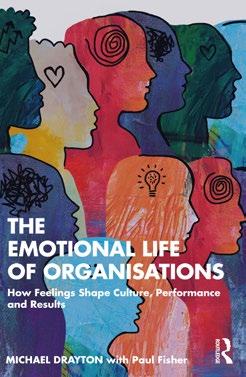
The Emotional Life of Organisations: How Feelings Shape Culture, Performance, and Results by
Michael Drayton
Who hasn’t felt, at least at one time, overlooked, overwhelmed, or overly self-critical at work? The Emotional Life of Organisations explores the oftenoverlooked emotional fabric that shapes organisational life.
Organisations grow, compete, and change based on the emotions that drive people's choices, politics, and goals. Emotions can either energise or
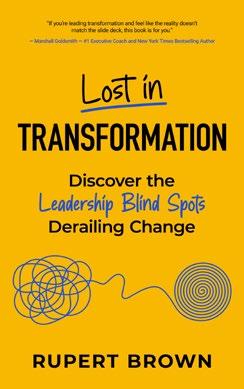
Lost in Transformation: Discover the Leadership Blind Spots Derailing Change by Rupert Brown
Lost in Transformation exposes the hidden leadership blind spots quietly derailing even the best-intentioned change efforts. Drawing on decades of experience leading organisational change across global companiesand interviews with CEOs, founders, and frontline leaders - Rupert Brown delivers a manifesto for doing transformation differently.
paralyse people. Most business books ignore this fundamental driver of organisational behaviour and almost exclusively focus on the logical and ‘cognitive’ aspects of work. This book helps people and businesses understand the important role emotions play in the workplace by using research, stories, useful tips, and writing assignments to explain how emotions motivate employees, and how we can manage the emotional impact of feedback. Other topics explored include remote working and helping teams navigate the rollercoaster of change.
The book explores:
• Why the knowing–doing gap persists, even among seasoned leaders
• How to navigate crisis without becoming addicted to it
• The overlooked power of emotions, timing, and trust
• What it means to transform without losing yourself (or your people).
The platform brings together four core elements: The People Leader Summits –virtual gatherings that

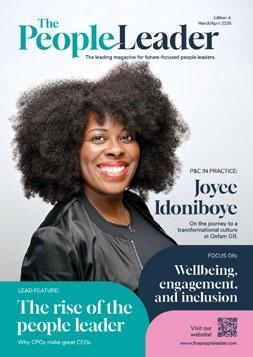
People Leader is a global platform dedicated to supporting modern People Leaders – whether they sit within HR, executive leadership, operational functions, or emerging people-focused roles.

The People Leader Roundtables – smaller, thematic gatherings that spark dialogue, shared learning, and experimentation.
convene leaders who are shaping inclusive, sustainable, values-led, and highperforming cultures.