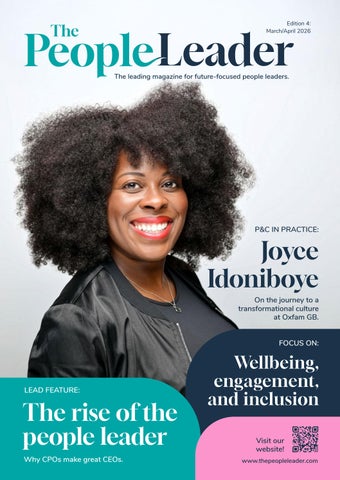

Editor’s letter
Welcome to the March/April 2026 edition of The People Leader Magazine. This is a rich and timely issue, reflecting the depth and pace of change across the areas of people, culture, leadership, and learning.
We feature powerful contributions from Carly Stanley, CPO at advertising giant JCDecaux and Joyce Idoniboye, CPO at Oxfam, both of whom set out a clear agenda for modern people leadership. Alongside this, you will find insights on aligning wellbeing and people integration to enhance employee experience, as well as details of global research relevant for all people leaders.
This edition also marks a step forward for The People Leader. We now have a full editorial team, and we are launching a new series of events, beginning with our monthly People Leader Summits. The first one being held on Wednesday 15th April 2026. Our annual People Leader conference will follow in November. We are also evolving our subscriber offer. For more details please visit our website.
As I write this, global tensions remain close to mind. As a mediator, I am watching events in the Middle East with hope that dialogue will prevail. The same principles that guide our work as people leaders, compassion, listening, and engagement, shape the conditions for progress in every context.
I hope you enjoy this edition. As always, your reflections and contributions are welcome.
David Liddle
David Liddle, CEO of The TCM Group, Editor in Chief of The People Leader Magazine

News in Brief 4 Feature: The Rise of the People Leader Why CPOs make great CEOs.
P&C in Practice
Leading with courage and compassion: an interview with Joyce Idoniboye, CPO at Oxfam GB.
8 Focus on: Wellbeing, Engagement & Inclusion
In Conversation
Carly Stanley: from boys' club to belonging at JCDecaux
News in brief
Latest news and updates from the world of people, culture, leadership, and learning.
What is workplace silence costing the UK economy?
Almost half (45%) of UK employees feel unable to speak up when they spot mistakes or risks at work, a silence that could be costing businesses dearly in lost productivity, workplace accidents, and preventable errors.
New research from MHFA England reveals the importance of psychological safety in the workplace. With almost 1 in 7 workers (15%) already making more mistakes due to stress and fear of speaking up, the research points to an untapped opportunity for businesses willing to address the problem.
The survey, among 2,000 UK employees, reveals the scale of the challenge:
• 49% don't feel comfortable expressing their needs at work.
• 35% don't feel safe asking for help.
• 15% have made preventable mistakes as a result of feeling unsafe at work.
To help organisations tackle the psychological safety gap, MHFA England has launched its free My Whole Self Day 2026 toolkit, providing practical, evidencebased resources for managers and simple, accessible activities for teams.
SOURCE: https://mentalhealthfirstaid.org/
People problems are impeding business agility
At least 80% of the top ten barriers that block agility in business are people related, according to research from business advisory and accountancy practice Menzies.
In its report ‘The Agile Advantage: Leading through Agility’, Mercer reveals the growing scale of the agility challenge facing mid-sized UK businesses.
Almost one in five leaders say their organisation has missed a major opportunity in the past year due to slow decisionmaking. Over a quarter (28%) cite issues such as short-termism, leadership misalignment, or poor communication as barriers to agility.
Other factors impeding agility include limited team expertise, lack of diversity of experience and viewpoints, and a culture of risk aversion.
Lack of an up-to-date strategy is also highlighted, with only 45% of mid-sized firms claiming they maintain a long-term strategy that is reviewed regularly, while 15% admit they operate entirely reactively, with no formal planning process in place. Even when a plan exists, team confusion or poor collaboration impede progress.
SOURCE: https://www.menzies.co.uk/ the-agile-advantage/
Sharp rise in neurodiversity cases at UK tribunals
The number of employment cases in the UK linked to neurodivergent conditions has almost doubled since 2020, according to new analysis of government data by national law firm Irwin Mitchell.
In 2020, HM Courts & Tribunals Service recorded 265 employment tribunal cases involving neurodivergent conditions. By 2025, the annual total had increased to 517 cases - a rise of around 95% over five years.
Analysis by Irwin Mitchell also highlights a sharp year on year increase of almost 19% between 2024 and 2025. Autism and ADHD are now the most common conditions in tribunal cases, with both reaching record levels in 2025.
Across the year, autism related cases rose to 121, while ADHD cases climbed to 118, continuing a strong upward trend seen throughout the period. Together, the two conditions now account for a substantial share of all neurodiversity related tribunal claims.
Dyslexia remains one of the most frequently cited conditions overall, peaking in 2023 and remaining high in 2025.
SOURCE: https://www.irwinmitchell.com/ news-and-insights/newsandmedia/2026/ feb/employment-tribunal-cases-linked-toneurodiversity-almost-double-in-five-years
The rise of the people leader
Why CPOs make great
CEOs
With culture and capability now sitting at the very heart of organisational success, it would seem obvious that Chief People Officers should be natural contenders for the CEO role.
Yet the data, and the on-theground experience of CPOs and executive search consultants, tells a different story. Despite their role in shaping strategy and leading complex change, CPOs still remain largely absent from CEO pipelines.
Why is this happening, and what needs to change for CPOs to be in the running for the top job?
A succession model stuck in the past
There are small signs that the landscape may be beginning to shift. Over the past five years, a small but notable group of CPOs have stepped into CEO roles, particularly in sectors where talent, culture, and transformation are central to value creation. Panasonic North America CEO Megan Myungwon Lee moved into the top job after serving as CHRO. In 2022, Leena Nair moved from CHRO at Unilever to Global CEO at Chanel. Dean E Carter, whose career has spanned HR leadership roles at Patagonia and Guild Education, was recently appointed CEO at Instill.ai.
In Europe, the pattern is more muted, but several CPOs have transitioned into COO roles - often a recognised stepping stone to CEO - or have taken on divisional CEO positions.
These examples are however, still the exception rather than the rule. CEO appointment trackers, such as Equilar, show that COO and CFO backgrounds continue to dominate CEO successions, with HR backgrounds remaining rare. The consensus among commentators is that the issue is not about HR’s ability to step up. The problem is that succession is built on ingrained assumptions about what ‘commercial leadership’ looks like. While CPOs possess many of the skills needed to lead commercially, the criteria boards use to judge CEO readiness have not kept pace.
Boards still prize a skill-set centred around strong financial judgement, broad operational experience, and the ability to reassure investors. In many organisations, the commercial impact of people leadership is not yet fully recognised, creating a gap between the value CPOs can bring and what boards are looking for.
This gap plays out across four distinct areas:
The exposure gap
There is a lack of structured opportunities for HR leaders to gain the experiences boards expect of future CEOs. CFOs and COOs are routinely rotated through commercial roles, gaining experience of P&L ownership and customer facing accountability. CPOs are not. As a result, even high potential HR leaders struggle to demonstrate the breadth boards expect.
“HR leaders bring deep expertise in talent, culture, and organisational design, but many have not been positioned to lead a business unit or operate with full commercial accountability,” says Marnie McBryde, Managing Partner at executive search agency Terri Eagle Group.“Without that operating experience, they are less often viewed as a viable CEO successor.”
Amy Speake, CEO of executive search company Holmes Noble, believes career pathways should be redesigned so that high potential HR leaders get exposure to these opportunities. “CPOs are hungry for this exposure, but have no structured pathway to get it,” she says.
The perception gap
The people function continues to be viewed through a narrow lens. Most boards still regard HR
as administrative, compliance driven, or 'soft' - a perception that fails to recognise the strategic and commercial nature of modern people leadership.
Mike Kohn, Chief People Officer at tech company Kevel, says the persistent stereotype that HR is a ‘touchy-feely’ profession is unjust.
“In a knowledge economy, people are both the greatest driver of revenue and the largest area of cost. Talent strategy, organisational design, performance management and culture aren’t soft levers, they are business drivers,” he says
“CPOs typically come with an organisational lens that understands how to navigate people-driven environments with empathy and an ability to effectively navigate change.”
The narrative gap CPOs often lead some of the most complex, high stakes work in the organisation - from cultural transformation through to workforce redesign and enterprise wide change. Yet these contributions are not always framed in the language boards use to assess CEO potential.
Holmes Noble’s Speake says that in 30 years working across sectors, she can count on one hand the number of times a CPO has made the CEO shortlist.
“The few CPOs who do make it are those who have visibly driven business outcomes,” she says.
“Until we start measuring HR impact in the language of what creates a competitive advantage, the pattern won’t shift.”
The emotional gap
Of course not all CPOs aspire to the top job. Kevel’s CPO Mike Kohn suggests that the intensity of people leadership, especially in periods of disruption, can reduce appetite among professionals to take on a broader remit.
Research published by Personio in 2025 shows that 52% of HR professionals have experienced burnout in the last five years, with 34% considering leaving the profession within the next year.
“There is significant burnout among many CPOs based on the emotional labour typically required for the role, and the idea of expanding that into an even larger role is likely not a palatable one,” says Kohn.
Fractional CPO Nebel Crowhurst says that those who do have the CEO role in their sights can’t put the onus on organisations to remove the barriers they will undoubtedly face. Speaking at the recent ‘People and Culture’ book launch, she pointed out that “… ultimately, the responsibility lies with the individual. If we want to be the COOs and CEOs of the future what do we need to do differently in terms of how we present ourselves in organisations?” she asked. “If that’s where you want to be, what are you going to do about it. It’s no-one else’s problem except our own.”
A shifting CEO profile
A gradual shift in the CEO profile, driven by increasing recognition of the importance of a peoplefirst culture, may eventually work in CPOs’ favour. The very capabilities CPOs excel inleading transformation, navigating complexity, shaping culture, and aligning people with strategy – are becoming central to performance, as organisations grapple with AI, workforce redesign, and cultural volatility.
“Ultimately, the narrative that CPOs lack commercial acumen is outdated,” says Christine Hayward, Executive Director at executive search firm IIC Partners. “CPOs now have a deep collection of case studies with financial metrics that
span organisation transformation, product and service development, and growth enablement. Across many selection committees, CPOs are now seen as highly competitive, future ready CEO candidates.”
How to accelerate the CPO to CEO pipeline
Redesign career pathways
Rotational roles, P&L ownership, and operational exposure need to become part of HR leadership development. This requires deliberate planning, not ad hoc opportunities.
Reframe people leadership as commercial leadership
CPOs and organisations alike need to articulate the financial and strategic impact of people driven transformation. Culture, capability, and organisational design are commercial levers, and the narrative needs to reflect that.
Increase visibility and sponsorship
Boards and CEOs can play a decisive role by giving CPOs access to strategic initiatives, investor conversations, and enterprise wide responsibilities. Sponsorship - not just mentoring - is essential.
The CPO to CEO readiness gap is a question of design rather than talent. As organisations face a future defined by transformation, complexity, and human centred leadership, the capabilities that CPOs bring are becoming more essential than ever. The challenge - and the opportunity - lies in building pathways that recognise this reality and prepare people leaders for the top job.
An interview with Joyce Idoniboye, CPO at Oxfam GB.
Leading with courage and compassion:
On the journey to a transformational culture at Oxfam GB.

Here, Idoniboye vividly illustrates the profound potential of visionary leadership to transform complexity into opportunity, making her a compelling advocate for peoplecentred organisational transformation.
Joyce Idoniboye’s journey exemplifies transformational leadership, adaptability, and courage within the people and culture domain. From her early career beginnings in hospitality, Joyce discovered her affinity for roles focused on human connection. Progressing through insurance, media, and publishing, she refined her expertise, embracing complexity, strategic clarity, and a dynamic approach to culture and leadership.
At Willis, a global insurance broker, Joyce encountered the sharp edges of corporate culture and learned to navigate power structures with precision and resolve. Her subsequent role at News International, including being HR Business Partner at
The Times and the Sunday Times, was transformative. Joyce faced ambiguity at times and significant restructuring, including managing sensitive employee relations, particularly during the closure of News of the World. Demonstrating resilience, and many of the transformational principles she would later come to rely on, she guided difficult conversations with empathy, compassion, and accountability – proudly avoiding litigation and preserving organisational integrity.
Reflecting on her experiences, Joyce emphasises: “Effective leadership is not about policing policies but partnering with people. It’s about listening deeply and continuously challenging ourselves to find better, more human-centred ways to operate.”
Building on her experiences at Harper Collins and CBRE, Joyce’s tenure as Chief People Officer, EMEA for a global advertising agency further honed her person-centred leadership approach, balancing creativity, inclusive leadership, and transformational leadership
principles. Her adaptability allowed her to thrive in creative environments, understanding the need for nuance, encouraging fluidity, innovation, and emotional intelligence without sacrificing operational effectiveness.
Joining Oxfam GB as Chief People Officer in late 2023 presented Joyce with her most complex challenge yet. What she walked into was more than a new role – it was a reckoning. The organisation was navigating its first ever industrial strike, the Chief Operating Officer had just departed, and the CEO was weeks away from leaving. Her 95-person HR team had no clear leadership structure. On day one, Joyce was asked to co-lead operations. “At the time the HR team comprised of around 95 people. And I had to say – If you want transformation, I need to focus. I can’t do this if I’m trying to lead operations too.”
Her first acts were decisive and symbolic: she uncoupled HR from operations, rebranded it as People and Culture, and began restoring its strategic credibility. The aim was clear – move from a policing
function to an enabling partner. The rebrand offered an opportunity for Oxfam GB to think about people, culture, and leadership differently.
Seeking a constructive and sustainable remedy to the pressing challenges arising from industrial action, Joyce engaged the conciliation service ACAS to support the negotiation process. While she participated in talks alongside the outgoing CEO and CFO, she was unequivocal about maintaining the integrity of organisational agreements to ensure that any outcomes remained independent of the concluded 2023 pay review and did not pre-empt the 2024 negotiation process. As she later reflected, the priority was to avoid solving a short-term crisis at the expense of long-term sustainability – especially amid leadership transition.
Her transparent boundary-setting and principled stance helped avert a protracted industrial dispute, stabilising the organisation at a critical juncture. As a lasting
outcome, Joyce hired into a newly created Head of Industrial Relations role – marking a strategic shift toward a more proactive, progressive, and collaborative social contract with union partners.
Joyce holds a deep conviction that the people function should never be reduced to the role of ‘policy police’. For her, the work of People and Culture, when done well, is a key organisational performance lever. Her approach is grounded in reshaping mindsets, reimagining processes, cultivating new behaviours, and developing the capabilities required for sustainable change.
Joyce states powerfully, “Leadership thrives when we empower teams to innovate and own their ideas. It’s about creating psychological safety, promoting creativity, and establishing clarity amidst complexity.”
With the benefit of Joyce's leadership, Oxfam GB is taking steps to shape a future workforce that reflects its mission, with an emphasis on building an inclusive
culture and long-term sustainability through operational effectiveness and enabling teams to focus on the work that delivers the greatest impact.
Central to her vision is the development of leadership that is consciously integrative. Joyce is cultivating the capability to shape and sustain a culture grounded in collaboration, ethics, and shared purpose. This is leadership beyond status – defined by as service, inclusion, and cultural stewardship. Joyce emphasises her vision for sustainable leadership and culture transformation: “It’s crucial to align people and culture strategies closely with organisational goals. By doing this, we create clarity, accountability, and motivation, ensuring we have a workforce ready for the future.”

* SOURCE: People and Culture: A practical guide for HR professionals and leaders.
Why we need to integrate wellbeing, engagement, and inclusion
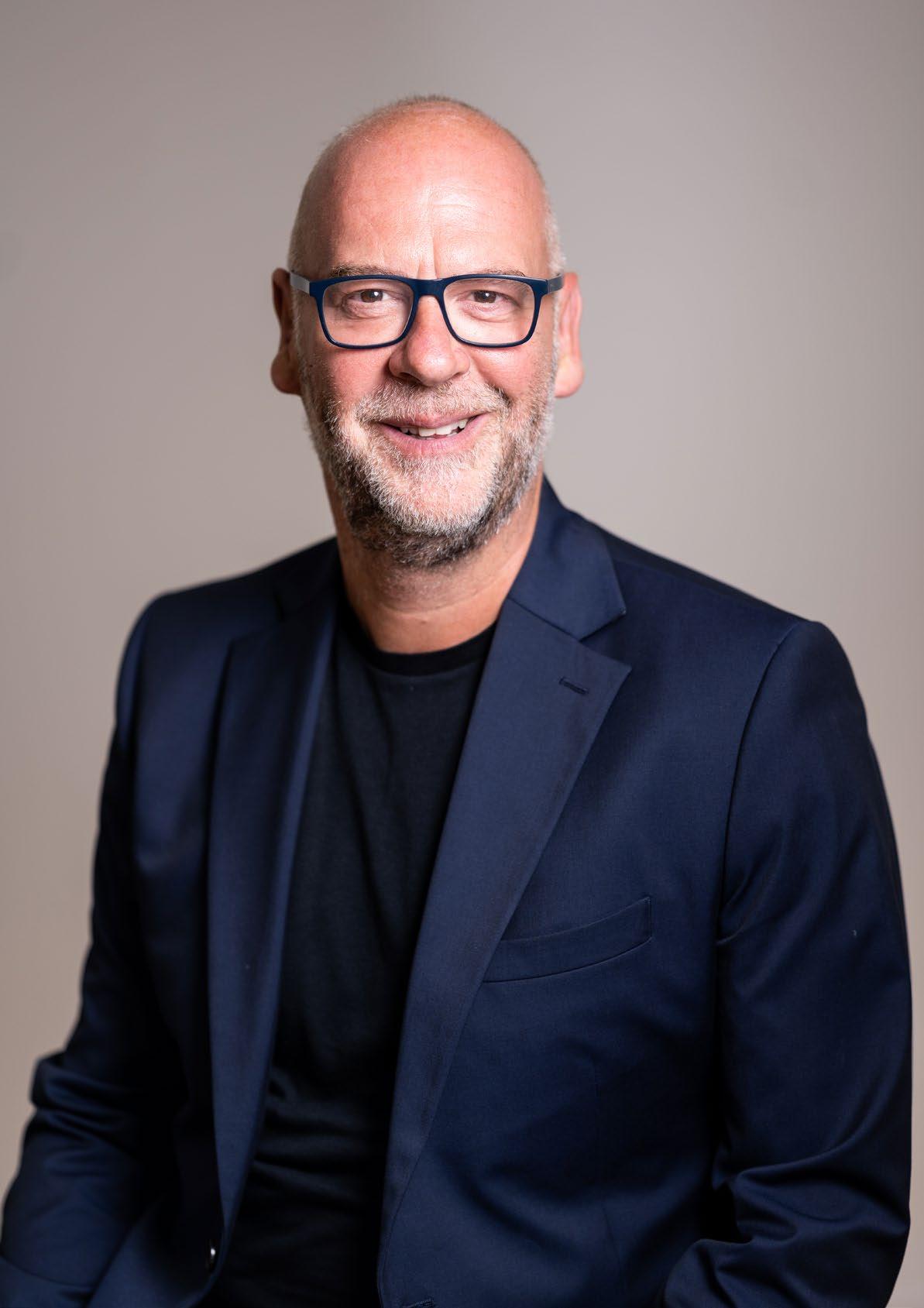
The conversation surrounding diversity, equity, and inclusion continues to evolve, with organisations reassessing their approaches amid shifting political narratives and changing stakeholder priorities. The debate has been divisive, and has caused much concern and uncertainty, but it has also been the catalyst for what many view as a welcome opportunity to pause and reflect on what is genuinely working from both an organisational and employee perspective.
In his new book ‘People and Culture: A Practical Guide for HR Professionals and Leaders’, David Liddle argues that a broader reframing is needed. Rather than viewing DEI as a standalone endeavour, he suggests that organisations will only achieve sustainable impact when wellbeing, inclusion, and engagement are treated as interconnected elements of a single cultural system. When these strands are aligned, they reinforce one another - creating the conditions for workplaces that are not only fair and inclusive, but also healthy, energised, and high performing.
A fragmented landscape
Walk into many organisations today, and you will find wellbeing, engagement, and inclusion operating in separate swim lanes. The wellbeing team are focusing on absence rates and the latest employee health initiative. Engagement teams are prioritising pulse surveys, sentiment analysis, and the NPS score. Meanwhile, the DEI lead is concentrating on representation, policy, and compliance.
Liddle says that in his experience, these teams are frequently working with positive intent, but limited connectivity. “The result is duplication at best, contradiction at worst,” he says.
“To be impactful and sustained, wellbeing can’t just be an occasional initiative, it’s a fundamental condition for doing good work. Engagement is a genuine living relationship between people and their organisations, rather than just another HR metric. Inclusion isn’t something you tick off a checklist, it’s a cultural practice rooted deeply in a sense of belonging. The potential of each discipline becomes far greater when they are approached as mutually reinforcing rather than separate.”
Liddle suggests that one of the underlying challenges is structural. Organisations are often designed in a way that gives functionality prevalence over connectivity and co-creation.
“Leaders often reinforce these silos unintentionally through the language they use. They talk about wellbeing as a benefit, engagement as a communication issue, and inclusion as a risk mitigation issue,” he says. “Each of these matter, but when we fail to join the dots, the employee experience is fragmented – people are not experiencing it as a single, coherent workplace agenda.”
Wellbeing expert Gethin Nadin also believes that the framing and the terminology needs to change. Speaking at the recent Health and Wellbeing at Work conference, he suggested that leaders should probably ditch the term wellbeing altogether. Leaders should move away from positioning wellbeing as an employee perk, he argued, reframing it instead as a core performance driver. “Make wellbeing a foundational organisational principle and start thinking about it as performance,” he is reported to have said.
Growing traction
This integrated mindset is gaining traction in progressive organisations, who are increasingly recognising the need for a peoplefirst agenda.
At fintech company Tillo, for example, DEI is not seen as a standalone initiative, but as part of the organisation’s cultural infrastructure. CPO Hanna Smith describes their approach as enabling growth, while protecting core values. “We all want to feel we belong,” she says. “Diversity only matters if people feel psychologically safe to show up fully.” Tillo, she says, has made the shift from "doing HR to people, to building something with them.”
The push for productivity Broader economic concerns, together with increased pressure from shareholders, are also forcing organisations to look more closely at what really drives productivity.
Recent ONS data shows that in the UK productivity growth remains weak, and against a backdrop of economic and political volatility, is predicted to deteriorate further. The promise that AI would dig us out of the productivity hole hasn’t come to fruition. A global NBER survey of nearly 6,000 executives found that 89% saw no productivity improvement from AI.
There is strong evidence, however, to show that happy and healthy workforces are a key driver of high performance. Research from Alex Edmans, based on more than two decades of data, shows that companies recognised as ‘Best Workplaces’ consistently delivered returns more than four times higher than the FTSE All-Share Index.
The power of transformational culture
Transformational organisations recognise this, and intentionally weave wellbeing, engagement, and inclusion into the daily fabric of their working environment. They go beyond traditional DEI initiatives, creating workplaces where people feel valued, are able to express dissent safely, and are able to bring their best and most productive selves to work.
This shift from initiative-led to culture-led thinking is clearly in evidence at Zurich Insurance, where a holistic approach to cultural transformation is delivering measurable gains. The organisation’s People Sustainability model has improved employee experience, while at the same time delivering competitive advantage.
Employee engagement has risen to above high-performance norms, gender balance has improved across leadership, voluntary turnover has fallen to 6.7%, while customer satisfaction has climbed by over 12 points globally.
“Integrating wellbeing, engagement, and inclusion into a unified strategic narrative isn’t just about good practice – it is foundational to sustained organisational health, resilience, and success,” says Liddle. “From my experience, it’s simply the smartest and most human way to build thriving workplaces.”
* SOURCE: People and Culture: A practical guide for HR professionals and leaders.
The Culture Doctor
This month’s culture conundrum comes from a mid-career HR practitioner who wants to get themselves noticed.
THE QUESTION:
What can I do to make my work more visible and raise my profile within the business?
Emma Maslen, executive coach and author of The Personal Board of You Inc:
“HR professionals can raise their profile by thinking more strategically about the relationships they cultivate along the way and intentionally building a ‘Personal Board’. A Personal Board, much like a corporate board, is a group of people you can turn to for advice on your career and development.
“These connections can help you think bigger about your role. They can provide advice on positioning ideas effectively, identifying skill gaps, navigating challenging conversations, or strengthening your voice at the table. Leaning into a sturdy and broad Personal Board gives insight into how others see you, which in turn can help you change how you show up and present yourself.
“Our networks are full of people who have walked the path before us, and most thrive on sharing their experiences to support others. Consider how you might tap into this network to grow in confidence and expand your influence within your organisation.”
Bharat Siyani, VP of People and Culture at Breathe HR:
“Sharing ‘deeper level’ impact data with leaders is key. Typically, when we report on actions and initiatives, we focus on their immediate impact.
“For example, we talk about how a new mental health benefit influenced employee wellbeing. This information is important, but leaders also want to know how it impacts the business’s bottom line. In this case, how it influenced overall productivity, performance, and retention and what this means in monetary terms. Speaking leaders’ language by consistently sharing this next layer of evidence will allow HR professionals to demonstrate their value to bosses and build their credibility across the entire organisation.
“Additionally, HR professionals shouldn’t underestimate the profile-raising power of their day-to-day conduct. People will take note if you consistently bring strong ideas to the table, deliver projects on time, and share solutions not problems. Word of mouth matters, and the respect and trust this builds amongst colleagues over time will help to cement your reputation within the business.”
Lisa Dupras, Elev8YouCoaching.com:
“Clarify your unique value: Identify what skills and abilities set you apart, and work to build your reputation. Your targeted unique value should be something you are passionate about and valuable to your organisation, such as a change management specialist or M&A process lead.
“Own your narrative: Always have a 30-second elevator pitch ready that describes your unique value and accomplishments in terms of quantified business value and impact. Use precise statistics like ‘reduced 90-day attrition by 9%.’
Sweden tops 2026 Glass Ceiling Index
Sweden remains the best place to be a working woman, while the United States has slipped down the rankings, according to The Economist’s 2026 Glass Ceiling Index.
The Glass Ceiling Index is an annual assessment of where women have the best and worst chances of equal treatment at work across the OECD, a group of mostly rich countries.
The median pay gap closed slightly this year, reaching 11% across the OECD. The gap is widest in South Korea (29%) and Japan (21%), where the ratios of board seats and managerial jobs held by women are also low.
“Increase your visibility: Get assigned to highimpact projects or enterprise initiatives. Volunteer for employee-facing events like leadership presentations, company events, or teaching. Position yourself as the goto resource related to your unique value.
“Build cross-functional relationships: Don't limit building your reputation to just co-workers, management, and client groups. Cultivate relationships with business leaders in finance, operations, and IT.”
High female labour-force participation rates, a large share of women in managerial positions, and generous safety-nets for mothers help Sweden top the index for the second year running. Finland and Norway overtook Iceland in second and third place, while France, Poland, and the Netherlands are among the biggest improvers from the 2025 index.
The United States has fallen in the rankings since last year. While most countries saw improvements across the index’s metrics, a widening gender pay gap and a decline in the share of women taking GMAT exams contributed to the US dropping in the rankings.
The 2026 index, which was released earlier this month to coincide with International Women’s Day, also revealed that on average, about two-thirds of women in OECD countries work, compared with four-fifths of men. But the rate varies widely across countries.
The amount of paid leave offered to mothers has fallen compared with last year, but paid leave for fathers has improved. For mothers, Estonia, Hungary, and Slovakia lead the group, offering more than a year. Japan and South Korea are the most generous to fathers.
This year marks the 14th year that The Economist has released its glass-ceiling index. When it was launched in 2013 there were five indicators and 26 countries; today it consists of ten indicators, including maternity and paternity leave, for 29 OECD countries.
To view the full interactive glassceiling index and view each country by indicator, please visit: https://www.economist.com/interactive/ graphic-detail/glass-ceiling-index
Have you got a culture conundrum?
Send your questions to: erika.lucas@thepeopleleader. com and the Culture Doctor will try to help.“
Although women graduate in higher numbers than men, they fare less well at climbing the career ladder. Overall, a third of managerial positions are held by women - up from just a fifth when The Economist’s index began. Countries beating that average include Britain, America and Sweden, all with scores over 40%.
IN CONVERSATION WITH ...
One CPO's story of cultural overhaul at a global advertising giant.
Carly Stanley
Chief People Officer at JCDecaux
When Carly Stanley joined JCDecaux UK, the out-of-home advertising giant was anything but progressive in its people practices. HR was perceived as a reactive, disconnected admin team, and a ‘boys in blue’ culture dominated – a legacy of hierarchy, privilege, and groupthink that felt increasingly out of step with the company’s commercial ambitions.
Eight years later, the picture could not be more different. As Chief People Officer, Carly has helped architect a transformational culture - one rooted in inclusive leadership, shared values, and radical transparency. “We didn’t set out just to rebrand what was already there,” Carly says. ”We set out to rebuild trust, redefine leadership, and put culture at the heart of how we grow.”
For Carly, the transformation began not with grand strategies but with building credibility. “We had to earn the right to lead change,” she reflects. By embedding herself in the business, listening deeply, and solving practical issues, Carly and her team shifted perceptions, slowly building the influence needed to drive deeper change.
This approach exemplified the foundational phase of a transformational culture: establishing relational trust and demonstrating how people strategy could solve real business issues.
A key turning point came with the complete restructure of the People team. Business partnering became the cornerstone - replacing complianceled support with trusted challenge and commercial alignment. This unlocked a shift in perception: from process enforcers to cultural architects.
The learning and development function was reimagined too, aligning capability building directly to business objectives and behavioural expectations. “We weren’t just delivering workshops,” Carly notes. “We were developing the culture through every conversation, every framework.”
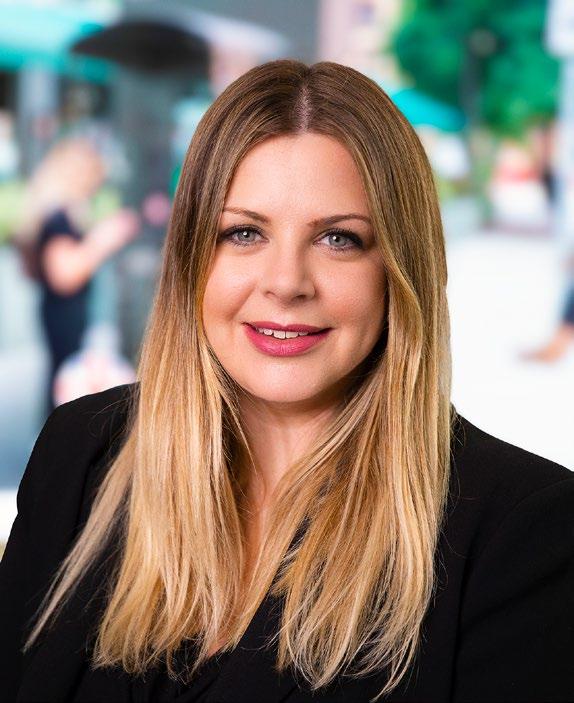
A defining moment came when the team tackled longstanding behavioural issues head-on. “We had to be clear about what we would no longer tolerate,” Carly explains. Workshops, listening groups, and values mapping followed - not as top-down initiatives, but co-created interventions grounded in lived experience.
Crucially, the business waited until cultural shifts were underway before formalising its values. “We didn’t want a shopping list of aspirations,” Carly says. “We wanted words that described who we were becoming.”
Values were paired with a behavioural matrix and integrated into performance frameworks, reinforcing that how things were done mattered as much as what was achieved. “You can’t stand on people to get to the top here anymore,” Carly adds. “That’s a thing of the past.”
The shift wasn’t just seen as cultural - it was structural and systemic. A hierarchical benefits system was replaced with a single, equitable package for all colleagues, from entry-level to executive. “We needed to show that every person here matters equally,” Carly explains. From free mortgage advice to full-family private healthcare, the benefits offer is now a living example of values in action - embedding belonging, wellbeing, and fairness at the system level.
As the business diversified - across demographics, backgrounds and industries - the leadership model needed to evolve. Carly championed inclusive
leadership as a core expectation and supported leaders to redefine relationships with long-serving teams.
“Transformational leadership is challenging when people have known you since you were a grad,” she observes. “But if we’re going to keep pace with the world around us, we have to lead differently – even if we’ve been here forever.”
The results speak for themselves: JCDecaux UK has seen a reputational uplift, is attracting stronger and more diverse talent, and has become a creative leader within the group globally. Creativity has flourished as fear has fallen – enabled by a psychologically safe environment and underpinned by a ‘test and learn’ mindset.
JCDecaux UK previously ran a yearly Belonging Survey, a chance for all colleagues to have their voice heard and drive improvements. Year on year they saw improvements and the final yearly survey saw a 5% bump in satisfaction. Now they have pivoted to a monthly pulse Belonging Survey, allowing for more agile responses to how colleagues are feeling.
Unlike many engagement strategies that remain theoretical, Carly’s approach is deeply embedded and continuously measured. “We talk about belonging, not just engagement,” Carly notes. “Because that’s what makes people stay and thrive.”
* SOURCE: People and Culture: A practical guide for HR professionals and leaders.
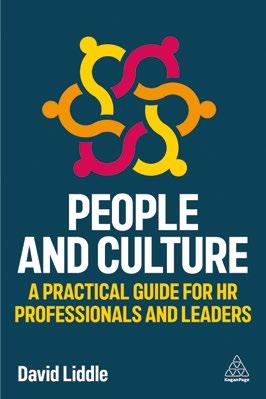
PEOPLE AND CULTURE: A PRACTICAL GUIDE
Liddle’s latest book helps you unlock the full potential of a people centred, culture driven organisation.
Leadership that listens. Leadership that learns. Leadership that transforms.
Engage Leadership from The TCM Group enables executive, senior, middle and aspiring managers to think systemically, act with integrity, and lead through complexity.
Our programmes are grounded in real work, lived experience, and evidence-based practice.
We support leaders to build trust, navigate tension, and shape transformational cultures where people, performance, and profit co-exist in service of long-term value.
• Board level strategic development and leadership away days.
• 14 high impact and fully accredited leadership development modules.
• One to one coaching, team coaching and systemic coaching.
• Immersive leadership boot camps.
• Insightful leadership psychometrics.
• Engage 360™ (our innovative 360-degree review).
BE THAT LEADER
Our partners:

Research round-up
C-Suite and HR split on what drives performance
Organisations that combine human and AI capabilities are best positioned to gain competitive advantage, according to Mercer’s Global Talent Trends 2026 report.
The annual survey of nearly 12,000 C-suite executives, HR leaders, investors, and employees worldwide, suggests depleted workforces and organisational misalignment are putting companies’ growth plans at risk.
The report points out that senior leaders are facing a talent paradox. On the one hand, with AI, organisations may need fewer people for the same work. On the other hand, there is not enough talent with the right skills for the future roles AI will demand.
Talent scarcity is a significant issue for the C-suite, with over half (54%) identifying it as the top force influencing their people plans. Meanwhile, 59% of HR leaders report difficulty attracting talent with vital digital skills as their top people challenge.
Solving the talent scarcity problem presents leaders with a catch-22. As AI replaces, augments, and transforms work, the skills required change dramatically, creating a need for reskilling and redeployment. If not managed well, this can deepen
INSEAD research shows we misjudge how often we collaborate
People consistently overestimate how often they interact with colleagues, according to recent INSEAD research.
A study conducted by Professor Nadav Klein highlights a consistent pattern in how people perceive their interactions with others at work. Published in Organizational Behavior and Human Decision Processes, the research shows that individuals frequently misjudge the frequency of their in-person interactions.
Across multiple experiments, participants were asked to estimate how often they interacted with specific people in their daily lives. These estimates were then compared with objective data, such as direct observation or digital records. In every case, people believed they interacted with others more often than they actually did.
The research found that this overestimation occurs even in close relationships and familiar environments. Participants overstated interactions
with friends, co -workers, and acquaintances alike. The pattern held across different methods of measurement and different types of relationships.
In workplace settings, the study showed that employees overestimated how frequently they collaborated with colleagues. This effect appeared regardless of team structure or the nature of the work. Even when participants were given incentives to be accurate, the overestimation persisted.
Klein’s findings suggest that people rely heavily on impressions rather than precise recall when judging how often they interact with others, and that they tend to assume their social worlds are smaller and more interconnected than they really are.
SOURCE: The small-world illusion: Overestimating the frequency of in-person interactions with acquaintances, Nadav Klein
https://www.sciencedirect.com/science/article/pii/ S0749597824000797?via%3Dihub
The future of HR is People & Culture
People and Culture Global supports HR to transform into a transformational, proactive, strategic and widely trusted people and culture function.
We design and deliver:
• Strategic people and culture transformation consultancy.
• The industry leading Culture Insights® culture audit.
• Values, behaviours and capabilities alignment.
• Organisation design, change management, conflict resolution and turnaround consultancy.
• Fully accredited training for people and culture teams including the new Diploma in People and Culture™
talent shortages and threaten workforce resilience and performance.
To address these challenges, 98% of executives are planning organisational design changes over the next two years, and 65% expect 11%-30% of their workforce to be redeployed or reskilled due to AI in that timeframe.
There is a clear misalignment between what the C suite and HR believe drives performance. While the C-Suite’s top people priority in terms of return-on-investment is to redesign work to incorporate AI and automation (63%), HR’s top priority is to enhance the employee experience to attract and retain top talent.
https://www.mercer.com/insights/peoplestrategy/future-of-work/global-talenttrends/
HR-Tech partnerships drive AI impact
Recent research from Atlassian shows that while organisations are seeing isolated AI-enabled productivity gains, these gains are not translating to significant improvements in company-wide efficiency, innovation, or work quality.
The’ AI Collaboration Index’ reports that daily AI usage has doubled in the past year, with workers saying AI makes them an average of 33% more productive. This growing use, however, is rarely resulting in significant transformation, with 96% of companies saying they have not seen significant productivity improvements.
Only 4% of organisations are successfully bridging the gap between individual productivity and company wide impact.
The research shows that these companies are doing three things differently:
• They are working in ways that build a connected, companywide knowledge base
• They are setting up the right systems to enable AI-powered co-ordination
• They are effectively making AI part of the team.
In these successful organisations, this work is being driven by strong CHRO and CTO partnerships, that are redefining how teams and technology work together. The report suggests that the key to success is for HR and technology professionals to jointly lead the necessary technology and behavioural shifts.
https://atlassianblog.wpengine.com/wpcontent/uploads/2025/09/atlassian-aicollaboration-report-2025.pdf
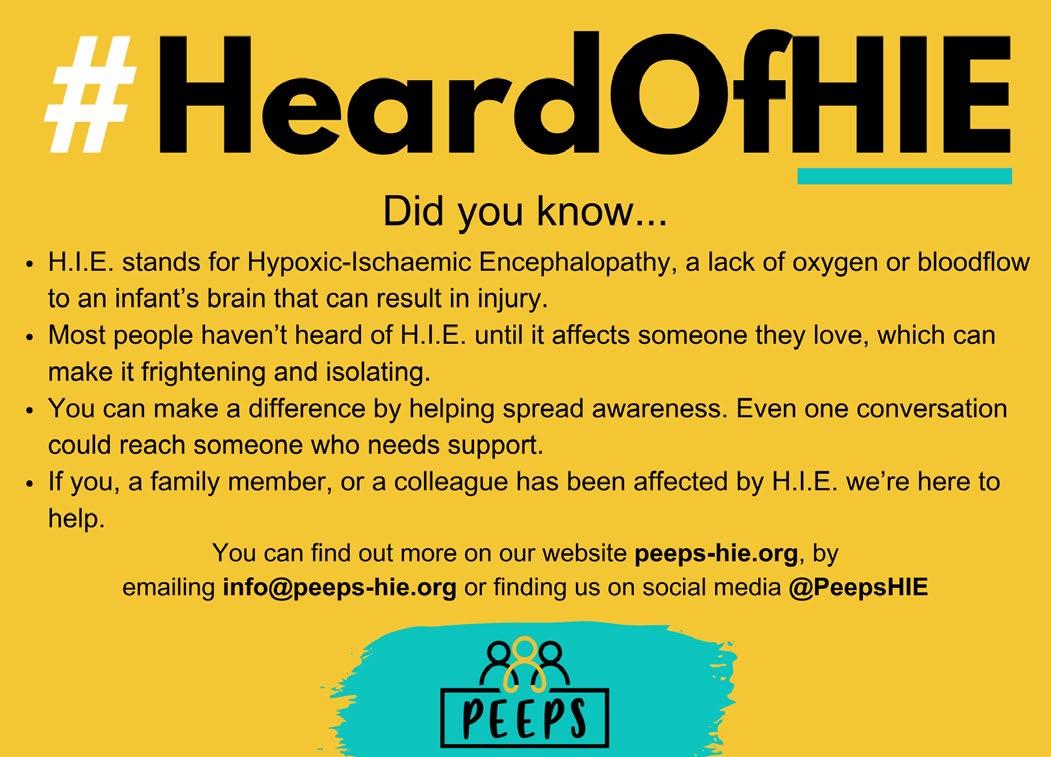
Raising awareness of HIE
By Sarah Land, CEO, www.peeps-hie.org
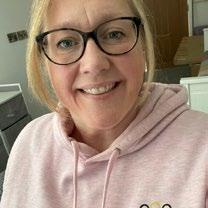
As an HR professional, I have supported many employees as they have navigated through difficult, childbirthrelated situations that have understandably impacted their work.
But it was not until my own daughter was left with a brain injury following an hypoxic-ischaemic encephalopathy (HIE) incident at birth, that I fully understood the level of support that parents need when their pregnancies don’t go to plan.
HIE is a lack of oxygen and blood flow to the brain, which can occur before, during, or after labour. It can result in lasting injury to the brain, with varying levels of severity, and affects approximately three or four in every 1,000 babies in the UK each year.
When an HIE incident occurs, parents are plunged into confusing, frightening and unknown territory. But having a child with complex medical needs doesn’t mean that parents are unable to work – they just need a little extra support to enable them to manage their working lives. Here’s how HR can help:
Ultimate flexibility: Access to formal and informal flexible working arrangements to cover medical appointments or emergency child care.
Short notice/emergency leave: The life of a parent with a child who has a brain injury, or indeed any other kind of disability, is rarely predictable, having a supportive manager is key.
Sensitivity to triggers: First birthdays, pregnant colleagues, baby visits to the office – all of these can be triggering for parents and empathy and compassion is needed.
Mental health awareness: An HIE incident can be a traumatising experience for a family. Last year, Peeps arranged and funded over 400 hours of counselling and trauma therapy for parents.
Peeps welcomes any enquiries from HR professionals or EAP providers who come across families they think might benefit from our support.
Why it’s time to shred those disciplinary and grievance procedures

By Louise Webb, Head of People and Transformation, The TCM Group
As HR professionals, we want workplaces to be safe and fair. Yet the default tools we reach for when things go wrong (I’m talking about the traditional disciplinary and grievance procedures), often do the opposite.
In the course of my HR career, I have rarely seen a grievance or disciplinary process restore trust or strengthen relationships. What I have seen is people retreating into positions, leaders becoming defensive, and organisations spending weeks managing a process rather than resolving a problem.
I remember my early days in HR, when dictation tapes and paper applications were still the norm. My induction was essentially: “Read the policies; they’ll tell you what to do.” It sounded reassuring. In practice, it taught me to treat conflict as a compliance exercise, not a human experience. The procedure sat between a manager and an employee like a referee in a boxing ring: focusing on rules, evidence, and outcomes, while the real needs, dignity, voice, understanding, and repair, were left unattended.
Once a grievance is raised, the first instruction is often: don’t speak to anyone; don’t speak to the person you’re upset with; let HR handle it. That silence is rarely neutral. It fuels anxiety, rumour, and sleepless nights. It turns a misunderstanding into a standoff. And by the time the investigation report arrives, the working relationship is frequently beyond repair.
It is also tough on HR. Administering an adversarial process positions the people function as judge and jury, when most of us came into the profession to support people to thrive. We become the lightning rod for frustration from all sides, while managers lose time, confidence, and credibility. Multiply that by the volume of cases and the hidden cost is enormous: lost productivity, stress-related absence, disengagement, and avoidable exits.
So, what needs to change?
The provocation is simple: stop treating formal procedures as the starting point and start building a resolution-first culture and operating model.
Start with the basics. Review your policies and language: do they invite dialogue, or trigger defence? Create a small Resolution Centre (or hub) to triage cases, support managers, and keep a grip on quality and consistency. Build a skills programme so managers know how to spot issues early, hold an early resolution meeting, and use facilitated conversations well. Give employees safe routes to speak up and be heard, without being pushed straight into a legalistic process.
Many of the clients we work with have turned to The TCM Group’s Resolution Framework™: a single, values-led approach for handling concerns, complaints, conduct, and conflict. Done well, it doesn’t remove accountability or due process. It reframes them. It starts with early resolution as the default, supported conversations, timely manager action, and clear options for employees while still providing robust formal routes where risk, safety, or serious misconduct require investigation.
Conflict will always exist; difference is part of work. The choice is how we respond. HR and people leaders can continue to run processes that harden positions, or we can lead a shift towards dialogue, repair, and fair accountability. If we want to be a profession that puts people first, this is where we start, right here, right now.
The P&C skills matrix
The Strategy Domain
In an earlier issue, we introduced the People and Culture Operating Model, built around five interconnected domains – people, culture, strategy, justice, and value.
Alongside the model sits the People and Culture Skills Matrix, a practical capability framework designed to support development across each of these five areas.
In this series for The People Leader, we are exploring the skills matrix in greater depth, helping you shape a personalised capability roadmap for your own development. The intention is to support your professional growth with greater clarity, focus and confidence.
In the third article in the series, we turn our attention to the strategy domain – the strategic conscience for the organisation:
Chief people officer Marika Stephenson and her team at the East of England Ambulance Service recognise a fundamental truth: business strategy isn’t separate from people – it is people.
“Our values, vision and strategy are now people-focused by design,” executive support manager Rachel Tremble, who works with Marika says. “That wouldn’t have happened without HR having a seat at the top table and a voice in every room.”
Over the past 25 years, a recurring theme can be seen in many organisations: legacy HR has often been positioned in a reactive
posture; more focused on reporting than shaping, and more attuned to risk than to possibility.
Rather than being a service centre – helpful when called upon but absent when strategy is being consolidated – the people and culture function needs to earn its place as a strategic force.
In case you need convincing, the data speaks volumes about what happens when HR is excluded from strategy. According to LSA Global, organisations at which strategy is aligned with people are 72% more profitable than those operating in misalignment. The cost of misalignment is significant, with organisations losing an estimated 5%-10% of annual revenue.
At the East of England Ambulance Service, the ‘Time to Lead’ programme went far beyond restructuring management tiers. It aligned leadership capability with the trust’s purpose and people data, helping Marika and her team establish HR as a strategic necessity.
In previous articles, we have explored the people and culture domains of the ‘People and Culture’ operating model. The third domain, strategy, recognises that purpose, performance, and people practice must move in rhythm, supported by structures that reflect shared values and integrated decisionmaking.
SOURCE: The People & Culture Operating ModelTM diagram from ‘People & Culture: A practical guide for HR professionals and leaders’ by David Liddle.
As Andrew Fox, CPO at Hampshire Trust Bank, reflects: “Everything we do or choose not to do has an impact. Culture isn’t just an HR issue; it’s a strategic one.”
Professionals within this strategy domain move beyond delivering legacy services to shaping future possibilities through five elements:
1 Positioning People and Culture as an enterprise-wide strategic function
2 Integrating business acumen, digital fluency, and systems thinking into leadership practice
At entry-level, people professionals learn how people practice influences business outcomes and align actions to wider goals. They gather and interpret basic people metrics, use data to support conversations and choices, track external trends, and contribute to discussions about change. They learn the art of upward influence and communicate with clarity.
At mid-level, there is a shift to using commercial insight to inform people strategies and drive value across teams and functions. Mid-level people managers use analytics to diagnose issues, measure outcomes and shape interventions, and they lead horizon scanning, scenario planning, and strategic adaptation.
At senior level, CPOs set and lead the strategic people agenda – connecting boardroom conversations to cultural vision, business risk, and organisational growth. They become advocates for transformation, building coalitions, shaping narrative, and positioning people and culture as an engine for change inside and outside the organisation.
Claire Cross, Chief People Officer at Gattaca, puts it simply: “HR isn’t a bottleneck – we’re a bridge.”
When leaders view people work as a bridge to purpose, culture becomes a strategic multiplier. After all, if strategy does not account for people, what is its optimising for?
* SOURCE: People and Culture: A practical guide for HR professionals and leaders.
3 Enabling proactive, agile responses to change, risk, and complexity
4 Framing people data as a moral and strategic asset, not just a measurement tool
Advertise with a global brand that people leaders trust
5 Reinforcing the principle that 'culture is strategy, and people are the strategy in motion'
What this looks like in practice
As with the other domains, capabilities in this area look different with experience. However, from early on in their career, it is possible for people professionals to help co-create and drive the strategic agenda.
The People Leader brings your brand into the inboxes of a global community shaping the future of work.
Its reach extends to approximately 300,000 readers across the c-suites of organisations worldwide, offering a platform where culture architects, executive leaders and strategic influencers come together.
Contact us to explore a range of advertising and sponsorship opportunities:
editor@thepeopleleader.com thepeopleleader.com/ sponsorship/
Movers & Shakers
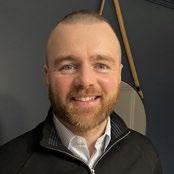



Congratulations to Oliver Hill, who has recently taken on the role of Head of HR at Message Direct.
Karan Tattersfield also moves from her previous position at Grey to the role of Global People Lead at Gain Theory.
Sharn Manku (Chartered FCIPD) has recently landed a role as "Senior Manager, Employee Success Business Partner (EMEA)" at Salesforce.
Congratulations also to Hannah Holmes, who has been appointed Head of People at Max Contact.
Have you recently moved into a senior people role? Or maybe you’ve been promoted to the top people and culture job in your organisation?
If you’d like to highlight your achievements, send details of your role, together with some brief biographical information and a head and shoulders photo, to:
erika.lucas@ thepeopleleader.com
Culture Quote
“We evolved from a ‘peoplefirst’ to a ‘people-andculture-first’ mindset – not to diminish the importance of individuals, but to strengthen a collective sense of purpose and cohesion.”
JESSICA BARLOW, CHIEF PEOPLE OFFICER, FOUNDRY

Virtual Summits
The People Leader Virtual Summits bring together a global community of HR professionals, executive leaders, managers, and cultureshapers who are committed to reimagining how people experience work.
• Global virtual gathering for people leaders.
• Insights from industry experts and practitioners.
• Deep exploration of people, culture, and leadership.
• Focus on fair, just, inclusive, and high-performing cultures – transformational cultures.
• An international learning community grounded in shared growth.
Upcoming training courses




HR budgets cut amid ROI questions
Budget cuts have become a harsh reality for many HR departments, with 67% of respondents to a recent Reward Gateway survey having experienced reductions in the past year. Almost half (45%) say the cut they have received has been greater than 10%.
The report ‘Bridging the ROI Gap: The HR Trends driving value in 2026’, suggests that for almost half of organisations, economic or financial pressures has been the key driver for the cuts, with
business restructuring also highlighted as a contributing factor.
However, 15% of HR managers questioned directly attributed the budget cuts they have been subjected to as being due to a lack of return on investment. The overwhelming majority of HR managers (90%) admit they struggle to measure the effectiveness of some or all of their initiatives.
Specifically, 41% said they struggled with measuring wellbeing programmes, 31% with employee engagement plans,


and a quarter with recognition initiatives. Even initiatives which would be expected to have relatively straightforward metrics of effectiveness were shown to be posing a challenge, with 23% struggling with incentive and reward schemes and 21% with the utilisation of discount schemes.
https://www.rewardgateway.com/uk/ resource/2026-bridging-the-roi-gapreport#2026-trends-report
The National Certificate in Coaching Skills™
A fully accredited, practical and human-centred programme that strengthens confidence, curiosity and capability. Designed for leaders, managers and professionals who want to hold better conversations and create conditions where people thrive.
“Coaching is the gift that keeps on giving.”

Dates for your diary
TCM Group webinar On the Front Line: Designing Cultural Systems That Hold Under Pressure
This webinar explores what business leaders can learn from frontline environments where culture is tested every day under extreme pressure, including the emergency services and the military. Drawing on real case studies, it will examine how strong cultural systems are built to create trust, clarity, accountability, and resilience when the stakes are high. It is designed for leaders and people professionals who want to build effective and human transformational workplace cultures.
https://us06web.zoom.us/meeting/ register/4AFs1VMyR1-XIEc1EgXhVA
International People and Culture Week
Join global people and culture professionals at a series of live events designed to reimagine how organisations build high performing and human centred workplaces.
New for this year! A series of eight regional caucuses.
To gain access, sign up as a PCI member here:
https://www.peopleprofessionals.org/ membership/#page-row-3 1-7
A two day event designed to help people professionals shape thriving, future ready organisations. The UK’s leading workplace event, with 200 + exhibitors and 150 + content sessions .
TCM’s David Liddle will be joining a panel to discuss aligning your people with business goals.
The panel will explore how organisations can connect individual contributions to broader business strategy, optimise productivity, and create a culture of continuous improvement.
Attendees will leave with practical insights, ensuring people strategies drive tangible results.
TICKETS FROM: https://www. festivalofwork.com/
Exhibition: Excel, London CIPD Festival of Work
International Virtual Events
May 2026
Bookshelf
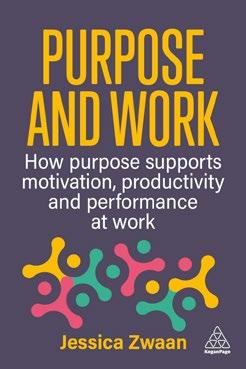
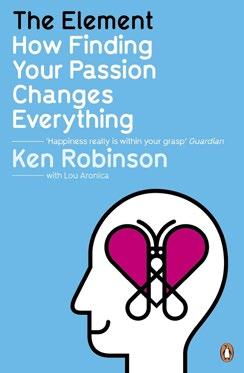
Purpose and Work: How purpose supports motivation, productivity and performance at work by Jessica Zwaan
Perks, benefits, and financial reward are not enough to develop a motivated, productive and high-performing workforce. For employees to work to their full potential, purpose and meaning at work is key.
Purpose and Work is a practical guide for senior business leaders and people professionals which shows them how to create purpose-driven teams and design
The Element: How finding your passion changes everything by Sir Ken Robinson and Lou Aronica
The Element is the point at which natural talent meets personal passion. In this hugely influential book, worldrenowned creativity expert Ken Robinson considers the child bored in class, the disillusioned employee and those of us who feel frustrated but can't quite explain why - and shows how we all need to reach our Element.
organisations where people want to work. It covers why meaning is so important for employees in today's working environment, how work has moved from a commodity to an experience, and why a clear sense of purpose is essential for individual and organisational success.
Packed with interviews and real-world examples, this book explains the employee, workforce, and business benefits of prioritising purpose at work and shows how to achieve them in any organisation.
Through the stories of people like Vidal Sassoon, Arianna Huffington and Matt Groening, who have recognized their unique talents and made a successful living doing what they love, Robinson explains how every one of us can find ourselves in our Element, and achieve everything we're capable of.
With a wry sense of humour, Ken Robinson shows the urgent need to enhance creativity and innovation by thinking differently about ourselves.
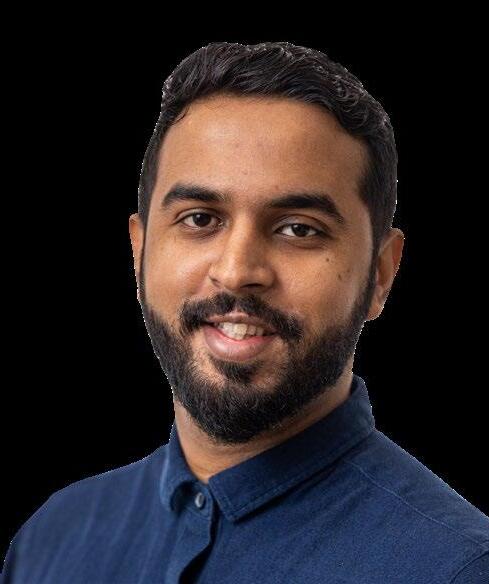
Jonathan Rodrigues, The People & Culture Institute Coordinator
The platform brings together four core elements:
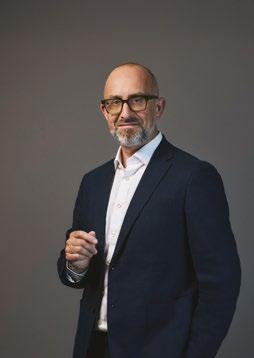
The People Leader is a global platform dedicated to supporting modern People Leaders – whether they sit within HR, executive leadership, operational functions, or emerging people-focused roles.

People Leader Live –a flagship annual event that