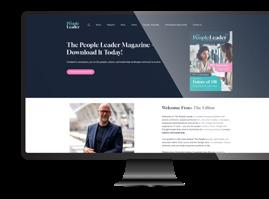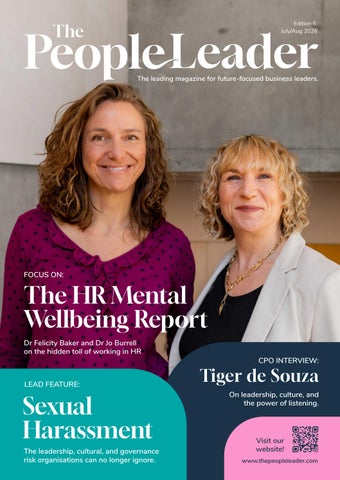
Editor’s letter
Welcome to the July-August edition of The People Leader.
A few weeks ago, I spent two busy and energising days at the CIPD Festival of Work. It was fantastic to catch up with so many colleagues, clients, partners, and friends. There was a real buzz throughout the event, with conversations spanning AI, leadership, wellbeing, culture, and the future of work.
I also had the pleasure of taking part in a thoughtprovoking panel discussion, chaired by David D'Souza, exploring how organisations can create stronger alignment between their people priorities and strategic objectives. It was a timely conversation and one that reflected many of the themes running through this edition of The People Leader.
What struck me most at the festival was quite intriguing. If you cut through the jargon and the fancy graphics, has anything really changed?
After 25 years in business, I still see people leaders wrestling with many of the same questions they were back in 2001. How do we create workplaces where people can thrive? How do we build trust? How do we develop leaders who bring out the best in others? How do we cultivate cultures that are both high performing and deeply human?
In many ways, those questions run through this entire edition.
In this edition, we explore issues ranging from workplace sexual harassment and HR wellbeing to leadership, culture, and the future of work. You'll also hear from inspiring leaders including Tiger de Souza and Darka Marquardt, whose experiences remind us that listening, trust, and courage, remain at the heart of effective leadership.
This edition feels particularly special because it coincides with an important milestone for The TCM Group. Twenty-five years ago, I set out with a clear sense of purpose: to build transformational cultures where people thrive, leaders grow, and organisations excel.
Since then, we've had the privilege of supporting thousands of organisations, helping leaders, teams, and cultures thrive. When I look back, I don't think first about the programmes, projects, or contracts. I think about the people. The difficult conversations that became turning points. The

relationships that were rebuilt. The leaders who found a new sense of confidence and purpose. The organisations that chose dialogue over division. Those are the stories that matter. They are also the reason The People Leader exists. This magazine exists to share ideas, challenge assumptions, and connect people who care deeply about the future of work.
That community continues to grow, and we're investing in an enhanced website, improved subscriber experience, and exclusive events. TPL subscribers can also access our upcoming People Leader Summit on the 15th July, where we'll explore the rise of cultural citizenship and what it means for organisations seeking to build more connected, purposeful, and inclusive cultures.
We're also delighted to be partnering with a growing number of organisations and events, including Working Futures and the National Mediation Awards. If you're looking for a media partner, sponsorship opportunities, or simply a platform to share your story, we'd love to hear from you.
Thank you for reading, thank you for subscribing, thank you for sharing and thank you for being part of this growing community.
I hope you enjoy reading this edition as much as we enjoyed creating it for you.
David Liddle
David Liddle, CEO of The TCM Group, Editor in Chief of The People Leader Magazine
Email: editor@thepeopleleader.com
Connect on LinkedIn: liddledavid
Half of UK employees do not trust their CEO
Trust in organisational leaders has fallen sharply over the past year, according to the IC Index 2026, published by the Institute of Internal Communication (IoIC) in partnership with Ipsos Karian & Box. The study, based on responses from 5,000 UK employees, paints a picture of declining confidence in senior leadership and widening gaps in organisational communication.
The survey found that trust in all levels of leadership has declined in the past year, with senior leadership teams taking the brunt. Only 58% of employees now trust their chief executive or senior leadership team - a nine point drop since last year’s Index.
The report points out that although the volume of organisational change is increasing, less than half of employees agree the reasons behind change are clearly communicated. Respondents said major organisational changes were often poorly explained or communicated too late, leading to reduced confidence in leadership decisionmaking. Even fewer respondents agree their organisation is good at helping them adapt to change.
Researchers also uncovered a growing disconnect in how change is communicated, with leaders consistently overestimating how well they communicate on critical topics -
from organisational strategy to wellbeing and workload. While senior leaders believe messages are landing, employees report confusion, inconsistency, and limited visibility of leadership intent.
Commenting on the findings, Alli Cary, Head of Internal and External Communication at Voyage Care says: "Whatever is happening within an organisation, you can’t overestimate the impact of leaders being visible, really listening to people, and demonstrating that they understand their challenges and points of view."
SOURCE: https://www.ioic.org.uk/insightpractice/ic-index.html
Fair Work Agency launches
The UK’s new Fair Work Agency (FWA) has formally opened its doors, marking the biggest overhaul of labour market enforcement in more than a decade. Launched on 7 April 2026 under the Employment Rights Act 2025, the agency brings together enforcement of the National Minimum Wage, agency worker protections, gangmaster licensing, and serious labour exploitation into a single system designed to simplify compliance and strengthen worker protections.
The government has appointed Matthew Taylor - author of the landmark Taylor Review - as Chair, with Lisa Pinney MBE confirmed as the Agency’s Chief Executive. Together, they are tasked with steering the FWA through what ministers describe as a “transitional year”, ahead of publication of a full strategy in 2027.
Early indications of the FWA’s priorities have prompted
debate. According to Taylor, the Department for Business and Trade has set five initial focus areas: thought leadership, reducing regulatory burdens, intelligence and data, public awareness, and stakeholder engagement. Some unions have criticised the emphasis on easing regulation, arguing that stronger inspection capacity and enforcement powers are urgently needed.
For HR leaders, the implications are significant. While the FWA does not introduce new legal obligations, it changes how existing rights will be monitored, investigated, and enforced, and reinforces the need for strong people practices.
Beyond compliance, the creation of the FWA signals a deeper shift in how organisations will be expected to think about culture, governance, and leadership accountability. Boards and executive teams should expect greater scrutiny of how decisions are made, how work is organised, and whether leadership behaviours reinforce or undermine fair work principles.
SOURCE: https://www.gov.uk/government/ organisations/fair-work-agency
How Gen Z are redefining leadership
A new report suggests that Gen Z are poised to reshape the leadership landscape - not just by stepping into management roles earlier than previous generations, but by redefining what 'good leadership' looks like altogether.
The Gen Z Leadership Blueprint, published by mthree, surveyed 1,000 business leaders and reveals a generation whose expectations of leadership diverge sharply from traditional models. Gen Z place the highest value on leaders who are empathetic, transparent, and invested in people’s growthqualities they believe are essential
in a world shaped by rapid technological change and rising workplace complexity.
According to the report, Gen Z respondents consistently prioritised leaders who 'listen first,' communicate openly, and create psychologically safe environments. They also expect leaders to demonstrate strong ethical judgement and to take visible responsibility for culture. Technical expertise and authority still matter, but they no longer define leadership credibility in the way they once did.
This shift in expectations is already influencing organisational dynamics. With Gen Z moving into management roles faster than anticipated, many organisations are now grappling with a widening gap between the leadership qualities Gen Z value and the behaviours they experience day to day. The report highlights that while 86% of Gen Z feel ready to lead, half struggle with decision making - a capability gap that employers will need to address through targeted development.
“In some cases, formal training has not kept pace with the demands placed on new leaders,” said Imran Akhtar, Head of Academy at mthree. “Employers must close that gap with consistent, accessible training to help confident managers grow into capable leaders.”
SOURCE: https://mthree.com/genzleadership-blueprint/
LEAD FEATURE:
Why sexual harassment is a leadership issue

The stream of newspaper reports on workplace sexual harassment shows no sign of abating. McDonald’s, the CBI, ITV, and the Metropolitan Police are just a few of the organisations that have found themselves under scrutiny in recent months.
The responses have ranged from internal investigations to policy overhauls, renewed safeguarding efforts and, in some cases, high profile dismissals. Yet the behaviours described in these cases rarely exist in isolation. They often sit within wider cultural and systemic conditions that allow inappropriate conduct to persist.
Many of the incidents that reach the headlines also reveal a culture of silence - environments where employees hesitate to speak up for fear of career consequences, and where colleagues witness inappropriate behaviour but feel unable to intervene.
The data suggests that what we see publicly represents only a fraction of the problem. Unite’s 2025 landmark study found that a quarter of women had been
sexually assaulted at work, while 60% had experienced some form of sexual harassment during their careers. Acas helpline data reflects this trend, showing a 40% rise in sexual harassment related enquiries in 2025.
In the US, the picture is similar. The Traliant State of Workplace Harassment Report (2026) found that harassment remains widespread and frequently goes unreported, with younger workers and those in customer facing roles at particular risk. WorldMetrics’ 2026 analysis indicates that 60% of companies fail to address harassment effectively, exposing themselves to reputational and organisational harm.
These levels of harassment send a clear cultural signal. When inappropriate behaviour is allowed to take root, it often sits alongside other issues such as bullying, poor management practice, or weak oversight. And in workplaces where people feel unable to raise concerns about harassment, they are unlikely to speak up about ethical or compliance issues that carry significant risk. Or indeed to share the innovative ideas and insights that will support corporate growth.
It's an issue that leaders cannot afford to ignore. So what can organisations do to create happy, healthy, high performing, and above all respectful and inclusive workplaces, where both the business and its employees can thrive?
A changing legal landscape
Recent legislative changes, introduced under the Worker Protection (Amendment of Equality Act 2010) Act 2023, have introduced a new preventative duty for employers. Organisations are now required to take reasonable steps to prevent harassment before it occurs, rather than simply responding after the event. Definitions of harassment have also been broadened, including greater clarity around third-party harassment.
At the same time, the threshold for demonstrating compliance has become more exacting. The Equality and Human Rights Commission (EHRC) can now investigate compliance with the preventative duty, issue enforcement notices, and impose uplifts of up to 25% on tribunal awards where employers fail to take reasonable steps.
The message that reactive approaches are no longer enough is loud and clear – and regulators, investors, and employees will be expecting organisations to show that they are actively shaping psychologically safe cultures where harassment cannot take root.
A modern approach to resolution
Leadership and culture consultant David Liddle believes that if organisations want to see real change, they need to address the rules that underpin the system, as well as the system itself.
A big part of the problem in organisations, he suggests, is that employees have no faith or trust in the traditional HR procedures used to tackle conflict, complaints, and concerns in the workplace.
The bullying and harassment and disciplinary and grievance policies still at play in many organisations are damaging, divisive - and far from resolving issues, often serve to make the situation worse.
They pit people against each other in unhelpful win-lose scenarios, damage relationships beyond repair, and fail to get to the root of the issue or resolve anything.
In cases of sexual harassment, they can serve to deepen distress, reduce trust, and discourage reporting. They can also create a false sense of resolution, addressing the incident, but not the underlying cultural conditions.
“These outdated policies provide an illusion of justice and a mirage of compassion and are simply not fit for purpose in the modern day workplace” says David. “What's needed is a focus on resolution, rather than retribution, when it comes to dealing with these cases and creating safe, respectful, and inclusive environments.”


The Resolution Framework
Leading organisations, including Burberry, Aviva, TSB, the BBC, and Nationwide, have recognised the need to move beyond adversarial processes and have adopted a Resolution Framework – an alternative approach which is centred around restorative justice.
The Resolution Framework replaces siloed and divisive processes with a single Integrated People Policy, which empowers people to resolve concerns through the lens of dialogue, insight, and engagement. Local resolution is the starting point of the process, supporting managers and colleagues to address concerns quickly and informally.
Where needed, cases are referred into a structured triage process, and then assessed against six carefully developed criteria, using the Resolution Index, a scoring tool that introduces objectivity into what are often emotionally charged situations.
This objective decision-making process seeks to remove bias and ensures proportionality and clarity. Cases are routed to the most appropriate method of resolution, which could range from facilitated
conversations and mediation – and for the most serious cases, could include formal action, leading to possible dismissal.
It is a highly successful, proven, and legally compliant approach, which is being embraced not just by boards and people and culture teams, but also by the employment lawyers that support them.
Says Laura Farnsworth of Lewis Silkin: “In the context of increasing Employment Tribunal claims and the significant delays, complexity and cost associated with litigation, organisations are increasingly recognising the value of addressing workplace issues at the earliest possible stage. Restorative and informal mediation processes can be particularly effective before positions become entrenched through formal grievance procedures. In many cases, restorative processes can help parties raise concerns safely, reduce polarisation, and resolve issues in a way that preserves working relationships and avoids more formal and costly legal escalation.”
The BBC is one organisation that has used this approach to reshape its approach to grievances and promote a more inclusive and harmonious work environment.
Heather Palmer, Senior HR Business Partner, BBC, speaking at the UK Mediation Conference said: “What we want to ensure is that we have the right frameworks in place to manage both those very, very serious allegations through formal processes and, importantly, to keep the culture right from day one for everyone and know the frameworks where people can find different types of avenues and support through coaching, mediation, and the Resolution Framework. It's absolutely the right thing to do: it's evidence based, and that's key,”
The future of HR is People & Culture
People and Culture Global supports HR to transform into a transformational, proactive, strategic and widely trusted people and culture function.
We design and deliver:
• Strategic people and culture transformation consultancy.
• The industry leading Culture Insights® culture audit.
• Values, behaviours and capabilities alignment.
• Organisation design, change management, conflict resolution and turnaround consultancy.
• Fully accredited training for people and culture teams including the new Diploma in People and Culture™
VISIT: peopleandculture.com
Of course a Resolution Framework on its own cannot eradicate the kind of ingrained behaviours and attitudes that have become normalised within some environments.
But a shift towards a more compassionate, collaborative, peoplecentred approach can act as a catalyst, helping organisations build psychologically safe environments where people feel able to speak up, safe in the knowledge their experiences will be taken seriously and dealt with fairly.
“Sexual harassment is a leadership, cultural, and governance risk,” says David. “The new legislation raises the bar, but the organisations that thrive will be those that treat building a people-centred, values-driven culture as a strategic priority. Ditching retribution and embracing restorative solutions is not just the right thing to do, it also makes sound business sense.”

A low-cost and high-quality subscription service which supports organisations to strengthen dialogue, prevent conflict, and embed a more human approach to resolution.
We deliver practical frameworks, expert facilitation and resolution pathways that create lasting impact.
www.ukresolution.com


An
interview with Jo Barette, Chief People Officer at Refeyn
Scale-up with substance:
Jo Barette’s human-centred growth journey at Refeyn

In 2021, Jo Barette joined Refeyn – a life sciences scale-up revolutionising molecular measurement –as its first Head of People. At the time, the company had 35 employees. Today, it employs over 180, with plans to stabilise at 240. But Jo’s impact has never been about numbers. It’s about building the people infrastructure for sustainable, values-led growth.
With a background in biology and a career shaped by both biotech startups and global pharmaceutical firms, Jo brought more than HR expertise – she also brought empathy, systems thinking, and a deep commitment to building a transformational culture from the inside out.
Refeyn’s culture began as a closeknit, tech-led community. “It was like a family,” Jo recalls. But as the company’s ambitions expanded
– from academic research to FDA-regulated drug discovery - the need for structure became clear. Jo’s first year focused on establishing operational HR foundations: recruitment systems, onboarding, and compliance.
The shift wasn’t without friction. Performance management and commercial prioritisation challenged some long-tenured employees. “We had to help people move from being brilliant scientists to also being accountable leaders,” she says.
This evolution marks a hallmark of transformational culture: moving from individual excellence to collective responsibility, with leaders as enablers.
To navigate this shift, Jo and her team invested in co-creating a new set of company values, alongside an employee representative group, to ensure engagement and alignment. They ran regular pulse surveys and took feedback seriously. “It wasn’t just about asking,” Jo explains. “It was about acting and being seen to act.”
Leadership commitment was key. With the support of a CEO who sees HR as a business partner, Jo embedded culture conversations into board-level dialogue. The result: clearer expectations, more transparent communication, and improved retention.
Recognising that technical brilliance doesn’t always equate to leadership readiness, Jo launched a six-month Leadership Academy focused on emotional intelligence, feedback, and compassionate yet bold decision-making. “Many of our leaders hadn’t had formal people training,” she notes.
“We needed to give them the tools to lead with both clarity and care.”
The programme forms part of a broader strategy to embed transformational leadership practices, where self-awareness, relational integrity, and cultural fluency are core to success.
* SOURCE: People and Culture: A practical guide for HR professionals and leaders.

HR mental wellbeing
New research exposes the scale of HR’s wellbeing crisis
The pressures facing HR teams have become impossible to ignore, with three years of evidence showing how the emotional, ethical, and organisational demands of the role are taking a sustained toll.
That is the central message of the HR Mental Wellbeing Report 2026, published by Ultimate Resilience in partnership with Everywhen.
Drawing on three years of data and input from nearly 3,000 HR professionals, the report offers the clearest picture yet of the emotional, psychological, and organisational pressures shaping the experience of people professionals today.
Across every measuredepression, anxiety, burnout, fatigue, workload, and supportthe findings point to a profession under sustained strain. While there are small signs of improvement in some areas, the overall picture is one of chronic pressure and insufficient support.
As the report’s authors Dr Jo Burrell and Dr Felicity Baker note, HR teams are often present at the most difficult moments in organisational life.
They hold the emotional weight of others, manage conflict, support employees in crisis, and navigate complex ethical and organisational tensions. Yet the psychological impact of this work has long been overlooked.
A profession under strain
The data shows a consistent pattern: high levels of psychological distress across all three years of the survey, suggesting that the pressures facing HR are structural, not temporary.
Depression and low mood remain widespread with 74% of HR professionals reporting symptoms
of depression, and 44% meeting the threshold for clinically significant depression.
Anxiety affects nearly three-quarters of the profession, with 73% reporting symptoms of anxiety, 40% of which are at clinically significant levels.
Burnout remains a defining feature of HR work, with 62% "very likely" experiencing burnout, and symptoms of mental exhaustion and emotional overreaction frequently reported.
“HR professionals are carrying a weight that was never designed to be carried for this long, or in this way. You can feel it in the conversations and see it in the eyes. The fatigue. The sense of holding everything together with little space to step back.”
David
Liddle, CEO of The TCM Group
Workload and organisational pressures are cited by 52% of respondents as the most common source of stress, followed by poor management and lack of support.
The report makes clear that these pressures are not to do with individual resilience. They reflect the expanding scope of HR roles, increasing organisational complexity, and the emotional labour embedded in people related work.

Read the full report here:
https://www.ultimateresilience.co.uk/ hr-mental-wellbeing-report
years of data revealing the hidden toll of working in HR
The HR Mental Wellbeing Report 2026
The support gap
One of the most striking findings is the disconnect between the support HR professionals need and the support they receive.
Only 13% feel “very supported” at work, and 87% say support is lacking to some degree. However, despite the high levels of distress, uptake of employee benefits is low, with only 24% having used them for their own mental wellbeing.
This raises questions about whether current support structures are fit for purpose - and whether HR professionals feel able to access them.
• 66% of unsupported HR professionals are considering leaving the profession, while only 7% of those who feel “very supported” are considering leaving.
Early signs of improvement
The 2026 data shows small but statistically significant improvements in burnout risk and wellbeing scores compared with 2025. Slightly fewer respondents fall into the low wellbeing range, although 74% still score below the UK population average
This suggests that while some aspects of wellbeing may be stabilising, the overall level of psychological distress remains high.
3. At professional level, the report identifies a need for systemic change across the HR profession, recommending:
• Establishing clear standards for mental health and wellbeing support.
• Increasing access to training in psychologically informed HR practice.
• Embedding career long support structures, including supervision.
The authors argue that just as HR has driven organisational wellbeing, the profession now requires the same level of attention and investment.
As Nebel Crowhurst, Chief People Officer, says:
“The uncomfortable reality is that the very people championing wellbeing across organisations are among the least likely to use the support themselves. When a profession experiencing high levels of low mood and depression does not access the support it promotes, it signals a deep failure.”
Recommendations:
A multi level approach to HR wellbeing
The report sets out recommendations across individual, organisational, and professional levels.
1. At individual level, the authors recommend:
• Increasing awareness of stress and psychological wellbeing.
• Creating regular opportunities for reflection and peer dialogue.
“Overall, the findings from three years of research point to a profession under persistent psychological strain,” says Dr Jo Burrell. “This data strongly indicates that the wellbeing challenges experienced by people professionals are not a temporary blip tied to the challenges of the Covid pandemic, but instead reflect the ongoing pressures associated with an increasingly complex role and working environment.”
Support makes a measurable difference
The report provides clear evidence that support is a critical protective factor, with those who feel well supported significantly less likely to experience burnout, anxiety, or depression.
Support also influences attendance and retention
• 35% of those who feel “not at all supported” have taken time off due to stress, while only 14% of those who feel “very supported” have done so.
• Providing access to professional and peer support.
2. At organisational level, the report calls for employers to:
• Acknowledge the emotional labour of HR roles.
• Facilitate help seeking and reduce stigma.
• Move beyond generic wellbeing initiatives to tailored support for HR teams.
The authors stress that HR cannot continue to act as the organisational 'shock absorber' without consequences.
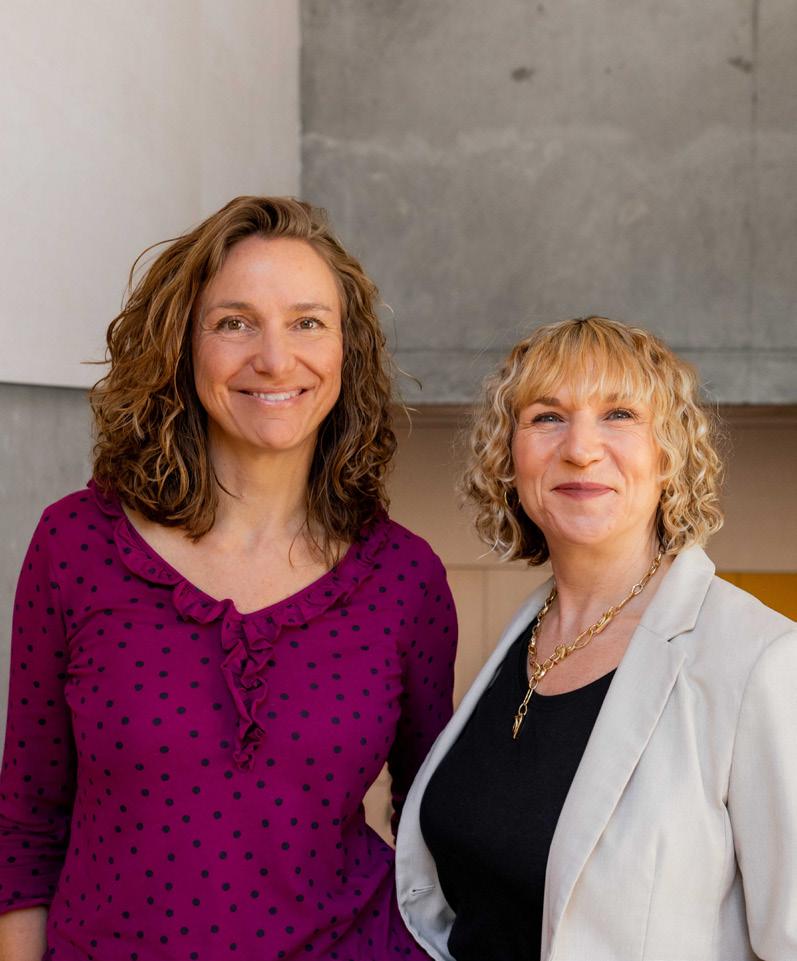
Dr Jo Burrell (left) and Dr Felicity Baker (right): authors of the HR Mental Wellbeing Report 2026.
The Culture Doctor
In this month's Culture Doctor column we ask:
THE QUESTION:
Try the new Culture Doctor GPT!
www.culture.doctor
"What leadership qualities will matter most in the next decade as organisations navigate AI, an increasingly volatile and uncertain operating environment, and shifting employee expectations?”
Emily Hoole, Leadership Solutions Partner at the Center for Creative Leadership:
Leadership qualities like judgement, adaptability, ethics, integrity, and trust will become increasingly critical. Leaders will need the ability and confidence to make sound decisions in fast-changing environments, whilst also balancing a transparent and humancentred approach in how those decisions are communicated and implemented.
Over the next decade, leadership will become less about authority and hierarchy and more about learning agility, emotional intelligence, and the ability to lead through ambiguity. Employees increasingly expect openness and meaningful communication from leaders, particularly during periods of technological and organisational change. Those who fail to bring people with them on this journey risk creating resistance, disengagement, and a breakdown in trust.
Investing in workforce consultation, redeployment, and upskilling will play an essential role in successful leadership as organisations balance technological progress with long-term workforce stability.
Adam Herbert, CEO & Co-founder, Go Live Data:
AI is becoming an incredibly powerful business tool, helping organisations move faster, process more information, and increase productivity. The leaders who create the most value from it will be those who understand when to rely on technology and when to rely on experience.
Many of today's business leaders spent years developing commercial instincts before AI entered the workplace. They learned through trial and error, built relationships, navigated uncertainty, and made difficult decisions with limited information. Those experiences remain hugely valuable.
Adaptability will be equally important. Markets evolve quickly, customer behaviour changes rapidly, and new opportunities emerge constantly. Leaders who stay curious, embrace learning, and respond decisively will put their organisations in the strongest position.
Alongside this, employees increasingly value transparency, purpose, and clear communication. The leaders who attract great people and build high-performing cultures will be those who combine technological confidence with genuine human connection.
Alicia Nagar, Head of People, Wellbeing and Equity, MHFA England:
What we need from our leaders is changing rapidly. Leaders who can adapt, listen, and truly bring their people with them are the ones who'll thrive in the next decade. Poor mental health is rising, particularly in younger generations, and it's already shaping how we work.
Leaders who model psychological safety will have a clear advantage. When leaders are open about their own challenges, and acknowledge that they don't have all the answers, they build a culture of trust where everyone can fulfil their potential. When people feel psychologically safe, they perform better, innovate more, and stay longer.
AI and technological advances are powerful tools. But in uncertain times, human connection is what holds organisations together. Leaders who understand this, and invest in their people's mental health and wellbeing, will have the edge.
Petra Wilton, Director of Policy and External Affairs, Chartered Management Institute:
Agility and adaptability will be one of the defining leadership qualities of the next decade. The pace of change is only accelerating, and leaders will need to be comfortable operating in environments where there is no clear roadmap and where continuous learning is essential.
CMI's latest research on AI adoption highlights a significant challenge: while organisations are investing in new technologies, many managers lack the confidence, training, and governance frameworks needed to implement AI effectively. This points to a broader leadership imperative. Success will depend not only on understanding emerging technologies, but also on helping people navigate change with confidence and purpose.
As AI increasingly automates routine tasks, the uniquely human aspects of leadership will become even more valuable. The most effective leaders will combine technological curiosity with a peoplecentred approach. They will be willing to challenge established ways of working, embrace innovation and foster cultures where experimentation and learning are encouraged. At the same time, they will recognise that successful organisational change depends on bringing people along with them.
Boundaries are not a luxury - they are a business strategy
By Sarah Hamilton-Gill FCIPD
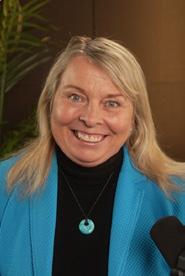
When you run your own consulting business, it is easy to fall into the trap of always being available. You want to impress clients. You want to be responsive. You want to prove your value. But without clear boundaries, your business can quickly become the very thing you left corporate life to escape.
Boundaries are not about being difficult or unavailable. They are about protecting your energy, your wellbeing, and the quality of the work you deliver.
As consultants, our clients often come to us with urgent, complex, and emotional issues. That does not mean every request requires an immediate response. Setting expectations around working hours, communication channels, turnaround times, and scope of work helps both you and your clients. It also sends an important message: you are a professional, not an on-demand resource.
Wellbeing in business is not just about taking time off. It is about designing a business that supports your life, rather than consumes it.
That might mean not checking emails late at night, building thinking time into your week, having proper breaks between client calls, or being clear about what is outside the agreed scope. It can also mean giving yourself permission to pause before saying yes. Not every opportunity is the right opportunity, and not every client is the right client.
The most successful consultants I know are not the ones who say yes to everything. They are the ones who know where their value sits, protect their time, and create sustainable ways of working.
Have you got a culture conundrum?
Send your questions to: erika.lucas@thepeopleleader.com and the Culture Doctor will try to help.“
Strong boundaries build stronger businesses - and healthier consultants.
Sarah Hamilton-Gill FCIPD is the founder of the Leap into HR Consulting® programmes and The HR Consultancy Academy® and has supported over 300 HR professionals to build successful consulting careers. Connect with Sarah on LinkedIn: https://www.linkedin.com/in/sarahhg/

“Every organisation has its complexities,” Darka explains. “But if there’s no authentic, very resilient, deep and trusting partnership between the C-suite and CPO / CHRO, then the potential for a truly transformational culture is limited from the start.”
While some businesses still treat people initiatives as cost centres, Darka believes HR’s full impact emerges only when it has direct access to the strategy lead in the company. “From what I have seen in previous roles, CEOs may enhance your plans and structural developments, but they rarely proactively drive cultural change themselves. For that, you need the full CXO level fully engaged – not just in budget, but in vision, voice, and visibility plus, equipped with
Darka Marquardt, a Chief People Officer
Leading with influence:
Redefining the CXO–CPO relationship for a transformational culture
For Darka Marquardt, leadership isn’t just about strategy or structure – it’s about 360° relationships. After more than two decades leading global HR functions across multiple industries, she’s come to a defining conclusion: the quality of the relationship between the Chief People Officer (CPO) and the rest of the executive leadership team is the single most critical factor in manifesting a successful people strategy.
the strength to go through all highs and lows on the way.”
This belief has been forged through experience. Over her career, Darka has reported to more than 11 different C-suite leaders – rarely visionary, mostly transactional. What’s become clear is that even the most progressive people strategies falter without a visible and strong sponsorship from the top.
“There’s a myth that CXOs automatically think holistically about people,” she notes. “Many still lack the empathy, time, or tools to champion people-centred leadership.”
In her current role, Darka is witnessing glimmers of hope: senior leaders showing genuine effort to contribute in the practice beyond lip service.
For Darka, this engagement is the foundation of what she calls a modern cultural leadership – a leadership stance that acknowledges HR not as a support function, but as a co-pilot of organisational transformation. It’s a mindset where people and culture aren’t side projects, but well-led strategic priorities interwoven into everything from investment decisions to product strategy.
Yet, this role isn’t always welcomed because it comes with a certain amount of discomfort. “HR leaders are exposed,” she says. “We reflect and carry out tough dialogues, deliver tough messages, represent diverse voices, and often stand in the fire. If you don’t have backbone in a CHRO role, you become a marionette – used when convenient, sidelined when challenging.”
To shift this dynamic, Darka suggests a new organisational role to support when necessary: a stable and embedded mediator between HR and the broader C-suite. “The CPO can’t be both a strong architect and the best diplomat all the time,” she reflects. “It is difficult to effectively advocate for a position when one frequently argues from a minority perspective and a single voice is pitted against several other decision-makers.”
“We need infrastructure that supports relational leadership, not just operational delivery. When matters become delicate for whatever reason, it can be very valuable to involve an external party who can translate the sometimes antagonistic perspectives in a way that ensures the other side understands the message clearly, quickly, and fully. Even when discussions at this level are grounded in competence, data, facts, and diplomacy, experience shows that it is often beneficial to have a neutral intermediary convey key messages - at least for part of the process. This can create the professional distance that is sometimes necessary and ultimately enable better, more balanced decisions in the interest of the greater good.”
While current executive teams often reflect outdated paradigms in terms of openness for a really open collaboration, Darka sees promise in the next generation. “Younger leaders are more emotionally literate, more open to inclusion and empathy,” she says. “But they could also use an additional support to pave their own ways from the start instead of inheriting broken systems.”
Her call is for systemic change – a reframing of and enriching the C-level relationships to enable HR to lead with courage and credibility at all times.
And for CEOs/CXOs? “They need to move beyond charm and slogans. If they want culture to thrive, they have to show up – consistently, visibly, and with real intent.”
Culture Quote
"Leadership is not about being in charge. Leadership is about taking care of those in your charge."
SIMON SINEK, TOGETHER IS BETTER: A LITTLE BOOK OF INSPIRATION
Leadership that listens. Leadership that learns. Leadership that transforms.
Engage Leadership from The TCM Group enables executive, senior, middle and aspiring managers to think systemically, act with integrity, and lead through complexity.
Our programmes are grounded in real work, lived experience, and evidence-based practice.
We support leaders to build trust, navigate tension, and shape transformational cultures where people, performance, and profit co-exist in service of long-term value.
• Board level strategic development and leadership away days.
• 14 high impact and fully accredited leadership development modules.
• One to one coaching, team coaching and systemic coaching.
• Immersive leadership boot camps.
• Insightful leadership psychometrics.
• Engage 360™ (our innovative 360-degree review).



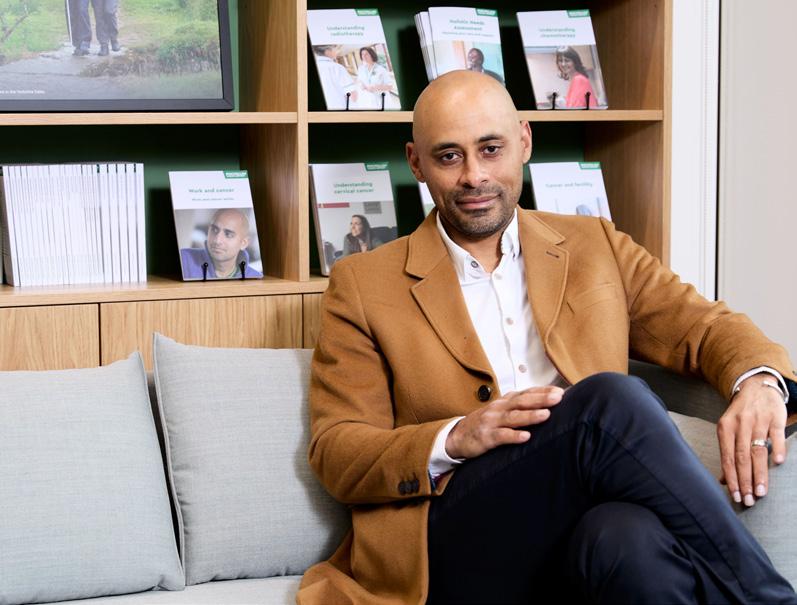
Tiger de Souza - on leadership, culture,
and
the power of listening.
David Liddle, Editor in Chief of The People Leader, speaks with Tiger de Souza as he transitions from Samaritans to his new role as Chief People and Culture Officer at Macmillan Cancer Support.
David Liddle: Tiger, you’ve spent a significant period shaping the people strategy at Samaritans. How would you describe your leadership philosophy?
Tiger de Souza: At its heart, my leadership is about creating the conditions for people to flourish. If you prioritise 'kind over nice cultures' you unlock extraordinary levels of contribution and impact. When people feel valued, supported, and able to bring their whole selves to work, everything else follows - productivity, innovation, and ultimately better outcomes for beneficiaries.
But kindness isn’t softness. One of the biggest challenges in the charity sector is that we often lean too far into nice, avoiding the constructive challenge that helps organisations grow. I believe deeply in compassionate candour - raising questions, being curious, and grounding decisions in evidence, while still leading with empathy.
DL: You’re one of the few CPOs who began your career in volunteering rather than traditional HR. How has that shaped your approach to people and culture?
TdS: Coming up through volunteering fundamentally shaped how I think about people. Volunteers have a very different psychological contract - they’re driven by passion, purpose, and deep emotional connection. You have to 'meet them where they’re at,' communicate precisely, and make every interaction count because you may only see them once a month.
That experience sharpened my instincts as a people leader. It taught me to listen more deeply, to understand motivations, and to be mindful of burnout - not because of workload, but because people care so much they give beyond their limits.
DL: You’ve spoken powerfully about the shift from “nice” to “kind” cultures. What does that look like in practice?
TdS: It starts with psychological safety. In any organisation - charity or corporate - problematic behaviours can take root when people are too polite to call them out. Over time, those behaviours become normalised.
A kind culture is one where people feel safe enough to speak up early, where leaders model curiosity, and where issues are addressed before they become toxic. What’s demonstrated and what’s tolerated from the top ultimately defines culture.
DL: As you step into your new role at Macmillan, what lessons from Samaritans will you carry with you?
TdS: The biggest one is the power of listening. At Samaritans, I learned to truly listen, to understand, to further interrogate before acting. That shift - from assuming to understanding - is transformative.
I’m also taking with me a much deeper appreciation of collaboration. When we tried to improve our staff engagement results, we realised we hadn’t meaningfully or sufficiently collaborated with our people, and the actions we took didn’t land. That was a humbling lesson. In my new role, I’ll be far more intentional about co-creating solutions, not designing them for people but with them.
And finally, I’m carrying forward a sharper awareness of the emotional landscape people operate in - especially in mission driven organisations. Passion runs high, burnout risks are real, and leaders have a responsibility to create cultures that are kind, boundaried and sustainable. Those insights will shape everything I do at Macmillan.
Join The People Leader Community
The world of work is changing. Leadership is evolving. Culture is becoming the strategic priority. AI is reshaping organisations. Employee expectations continue to rise.
More than a magazine, The People Leader is a growing community of chief people officers, CEOs, founders, and senior leaders shaping the future of work.
Subscribers
Every edition of The People Leader magazine
Exclusive subscriber-only articles, research, case studies, and bonus content
Access to The People Leader Summit series
Invitations to community events and networking opportunities
Exclusive discounts for The People Leader Live Conference 2027
Become one of our founding subscribers and receive your free digital founder badge.
For a limited period, you can secure a complimentary 12-month subscription. From 1 August, this will reduce to a 3-month free trial.

free today
www.thepeopleleader.com
Research round-up
How investing in happiness can increase business value
New economic analysis reveals that employee happiness is capable of increasing firm value by 20% and potentially injecting up to £334 billion into the UK economy annually.
The Happiness Dividend report from Reward Gateway/Edenred, in partnership with the London School of Economics, challenges the traditional C-suite view of employee engagement as a cost centre. The authors highlight and identify a direct correlation between emotional capital and the bottom line, repositioning happiness as a primary driver of productivity and market valuation.
Notably, organisations that score highly in employee happiness see a significant 12% uplift in productivity, which translates into a 20% increase in overall firm value. And it’s not just individual businesses that feel the benefit. Assuming productivity gains translate directly into Gross Value Added (GVA), widespread adoption of happiness-driven practices could theoretically add up to £334 billion to the UK economy every year.
However, despite the positive impact, happiness is still an underutilised metric for the majority of businesses, with only 30% of companies currently measuring sentiment directly. Statistics suggest that 51% of UK employees are frequently happy at work, highlighting an area where business performance and productivity is perhaps being overlooked.
“The takeaway for businesses is clear: those who continue to view happiness through the lens of perks and parties as opposed to a genuine metric are missing the strategic shift. To drive growth in a stagnant market, leaders must treat employee engagement as a high-yield investment," says Chris Britton, Director of People Experience at Reward Gateway| Edenred.
https://www.rewardgateway.com/uk/resource/the-happinessdividend
AI tops employers’ concerns as early career roles shift
More than half of employers (54%) say they are concerned about the impact of automation and AI on new hires - making it their top future concern, according to the Institute of Student Employers’ (ISE) Student Development Survey 2026.
The survey shows employers expect AI to reshape rather than replace early career roles. Eighty seven per cent anticipate some degree of redesign over the next three years: 58% foresee minor adjustments to tasks and responsibilities, while 29% expect significant change. Yet most believe the impact will be contained, with 72% predicting that no more than a quarter of roles will be reshaped.
Change is already underway. Forty three per cent of employers say roles have begun to adapt informally to AI, and skill requirements are shifting accordingly. Critical thinking, judgement, and digital capability are rising in importance, while routine administrative skills are declining. Employers are also almost twice as likely to develop digital and AI literacy skills internally as to recruit for them.
The findings may offer a note of reassurance following Alan Milburn’s recent government commissioned review, which warned of a potential “lost generation” of young people locked out of work. While the labour market outlook remains challenging, the ISE data suggests employers are preparing to evolve - not eliminate - entry level opportunities.
Concerns about candidate work readiness are, however, growing. Two-fifths of employers (42%) said they were concerned about the quality of future employees. Around a third report that new joiners fall below expectations when it comes to adapting to workplace demands.
https://ise.org.uk/knowledge/insights/565/5_top_trends_from_ ises_development_survey_2026
Six shifts to becoming a better leader
What does it mean to be a 'better leader?'
This is the key question explored in a new study from Hult Ashridge Executive Education.
Participants across industries, regions, and organisational levels, were asked what they meant when they said they wanted to be a better leader – and what they wanted their own managers to do more, less, or differently.
The findings showed that leaders and employees were asking for many of the same things. The challenge wasn't knowing what better looks like, it was putting it into practice.
Researchers identified six key shifts:
1. From control to trust. Micromanagement was identified as one of the biggest frustrations in organisational life. Better leadership means stepping back, delegating, and creating room for other people to grow.
Research Pulse
By Erika Lucas

2. From distance to relationship. Listening, empathy, and emotional intelligence came through strongly in the data. People want leaders who listen carefully, show greater self-awareness, and prioritise relationships.
3. From silence to communication. Participants wanted more clarity, more honesty, and more constructive feedback.
4. From busyness to strategy. Leaders know they need to think more long term, but many feel trapped by meetings, admin, and constant firefighting. Better leadership requires organisations to create the space for reflection and horizon scanning.
5. From overwork to well-being. Burnout, morale, and balance were identified as urgent concerns. People want leaders who understand the human cost of 'busyness'
6. From ego to authenticity. People want leaders who walk the talk, admit mistakes, and create trust through consistency rather than image.
https://www.hultashridge.com/en/insights/research/betterleadership-report/
BONUS CONTENT: visit thepeopleleader.com to read more of the latest research.
In our new Research Pulse column, Associate Editor Erika Lucas takes a birds-eye view of the latest people and culture-related research.
I could have filled the whole of this edition's Research Round-up with studies about the impact of AI in the workplace.
• Six in ten employees say their employer has no AI policy – or at least one they are aware of (Henley Business School)
• Three in four leaders think their workforce is AI-ready, but employees strongly disagree (Skillsoft)
• The majority of the UK public are worried about the economic impact of AI, with 57% believing it will eliminate more jobs than it creates (Kings College London). Recent press reports tell a similar story. The Times reported that Wall Street bank J.P. Morgan is planning
to make more AI specialist hires, while recruiting fewer bankers. Meanwhile, according to the FT, Meta has built an AI clone of its CEO Mark Zuckerberg, which will communicate with employees to help them feel more connected.
But as David Liddle points out in this article, https://www. thepeoplespace.com/insights/ practice/ai-centres-excellenceare-taking-shape-hr-room , AI is not a technology agenda - it's a people agenda. The real impact is unfolding in culture, workflows, leadership, and trust. This is where the people lens matters most, and where HR’s voice will shape whether AI becomes a catalyst for progress or a source of new fractures.
Helping people professionals, leaders, and managers to have quality conversations at work.
Built in partnership with ChatGPT.
Employers recognised for being 'Disability Smart'
Unilever, US-based engineering company Sutherland, and the BBC were among the winners recognised for improving workplace experience at the recent Disability Smart Impact awards.
Organised by Business Disability Forum (BDF) and hosted by HSBC, the annual awards recognise companies and individuals that are improving the life experiences of disabled employees and consumers by removing barriers to inclusion.
Consumer goods company Unilever won the Global Disability Inclusion category for their Global Accessibility Centre of Excellence (CoE), which has embedded accessibility into products, workplaces, and culture around the world.
Repositioning accessibility from a compliance obligation to a creative catalyst, the CoE has embedded accessibility directly into the core systems, programmes, and methodologies within the business, resulting in scalable, repeatable, and impactful innovations.
Disabled colleagues are actively involved in shaping CoE initiatives and feedback from employees with lived experience has directly informed the development of assistive technology solutions and training programmes.
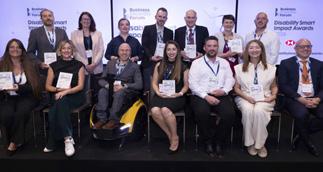
US-based digital engineering company, Sutherland, won the Workplace Experience (large organisation) category for creating a holistic and consistent approach throughout its global workplace to remove barriers so disabled employees can thrive.
Sutherland's Workplace Experience system functions across multiple countries and business lines, with consistency as its foundation. As soon as they enter the workplace, employees’ needs are anticipated, and they are offered tools that are already compatible with assistive technologies. They join a community of colleagues and leaders who understand the principles of disability confident culture.
The BBC won the Recruitment category for their Extend Programme, which has redesigned the broadcaster’s recruitment process through ringfenced roles, accessible processes, and inclusive hiring practices to improve representation, progression, and belonging for deaf, disabled, and neurodivergent talent.
Lyn Lee, DEI strategist, speaker, and author, won this year’s Lifetime Achievement Award.
GETHIN NADIN
Closing the gap between policy and practice: Ensuring Westminster
hears from those who run workplaces.
Over the past few years, I have been invited to speak on workplace issues in the Houses of Parliament and the House of Lords on multiple occasions. These conversations mattered because they help shape legislation, inform national priorities, and ultimately affect millions of workers.
But I left many of those sessions with the same concern: the employer voice was often underrepresented. Discussions were dominated by think tanks, policy bodies, and government stakeholders, with too little direct input from those responsible for designing and delivering work in practice. I wanted to change that.
That motivation led me to approach the secretariat teams supporting several All-Party Parliamentary Groups in Westminster, and together we co-founded the Policy Liaison Group on Workplace Wellbeing (PLG). The intention was simple: create a credible, structured forum where employers, HR leaders, and workplace experts could directly inform policymakers and ensure decisions are grounded in operational reality.
The timing could not have been more important. The PLG was established at a pivotal moment for the UK workforce. We are navigating significant developments, including additions to the Employment Rights Bill and the recommendations emerging from the Keep Britain Working review. These are not marginal adjustments, they represent a fundamental shift in how work is defined, protected, and experienced. In that context, ensuring that employer insight is present in policy formation is essential.
I firmly believe that the workplace is one of the most powerful levers we have to improve both the health
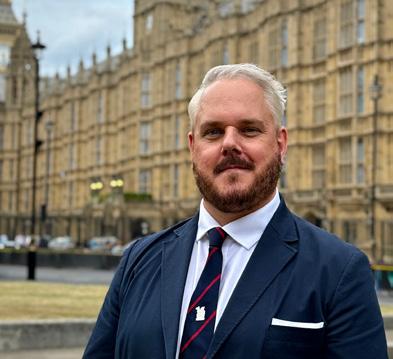
and economic prosperity of the UK. Good work is not just an organisational outcome; it’s a societal asset. Yet too often, employers and HR professionals are positioned as recipients of policy rather than contributors to it. I was no longer willing to sit on the sidelines advocating for change at a distance. The PLG is about going directly to where decisions are made and ensuring the profession has both a voice and influence.
In its first few years, the progress has been significant. Our roundtables have brought together some of the UK’s largest employers, MPs from across the political spectrum, peers, unions, charities, think tanks, and workplace providers. We have been joined by leading experts including Professor Dame Carol Black and Professor Sir Cary Cooper, whose involvement has reinforced the credibility and seriousness of the group. There is now a growing recognition in Westminster that the PLG represents a constructive and evidenceinformed voice for change.
That recognition is translating into tangible impact. We have secured a mandate from Sir Stephen Timms, Minister of State at the Department for Work and Pensions, and are now working closely with the DWP on the Keep Britain Working review. This marks an important step forward in embedding employer insight into national policy development.
The call to action for employers is clear. Engagement in policy is no longer optional. If we want a future of work that supports organisational performance, workforce wellbeing, and economic growth, we must actively participate in shaping it.
Gethin Nadin is a multi-award-winning psychologist, two-times bestselling HR Author, Chief Innovation Officer, Benifex and Zellis and Chair of the Policy Liaison Group on Workplace Wellbeing.
What top people leaders are really worried about in 2026
THE CONVERGENCE AGENDA
BY CHRISTIAN MILAM

A look across the challenges named by more than 100 CHROs, Chief People Officers and HR Directors heading into H2 of 2026 reveals a striking consensus - and one or two quiet shifts.
When you ask a hundred people leaders to name their three biggest business challenges, you might expect the answers to splinter by sector, size, and geography. They don't. Drawing on the self-reported priorities of delegates at two 2026 gatherings - one a UK-centred forum of HR and people directors, the other an international summit of
chief people officers spanning more than thirty countries - the data tells a story of remarkable convergence. From aviation to academia, logistics to luxury retail, banking to football, the same handful of anxieties surface again and again.
AI is no longer a side conversation.
Artificial intelligence and automation dominate. More than half the international CHRO cohort named AI explicitly among their top three challenges, and it features just as heavily in the UK group. But the framing has matured. Leaders are no longer asking whether to adopt AI; they are wrestling with what it does to skills, roles and the shape of work itself - roles ‘morphing and blending,’ workforce impacts, and how HR's own operating model has to change to keep up. The question has shifted from tooling to transformation.
Transformation is the connective tissue.
Which leads to the second dominant theme. ‘Transformation’ - cultural, digital, organisational - is named almost as often as AI, and the two are deeply entangled.
A large share of leaders point specifically to operating-model redesign: what to centralise, globalise, automate, or outsource, and how to build an organisation flexible enough to keep pace with shifting internal and external demands. This is HR positioned not as a support function but as an architect of how the whole enterprise is wired.
The perennials still hold.
Beneath the headline themes sit the familiar concerns. Talentattraction, retention, succession and the scramble for scarce skillsremains near-universal across both cohorts. Leadership development and culture follow close behind, and are frequently paired; culture change is repeatedly described as the thing that outpaces
challenges of bringing companies together feature prominently.
The backdrop has hardened. What has changed is the weather. Leaders increasingly frame these challenges against macro turbulence — a ‘new world order,’ shifting political climates, economic uncertainty, and tightening budgets. Several describe the same squeeze: transform faster, often with the same resources or fewer. The ambition is rising while the room to manoeuvre narrows.
A quieter signal.
One observation is worth flagging. While diversity, equity and inclusion still appears, it is named far less often as a stated top-three priority than AI or transformation - a notable change from recent
Whether that reflects genuine deprioritisation, a folding of inclusion into broader transformation work, or caution in a more contested climate is a question the profession should be asking itself.
These are senior, well-resourced voices: the international cohort skews overwhelmingly board-level, with many carrying people budgets above £10m. When a group like that converges this tightly, it reads less like a list of individual worries than a signal of where the profession is heading. The 2026 agenda, it seems, has already been written - by the people leaders living it.
The 2026 agenda, in one room.
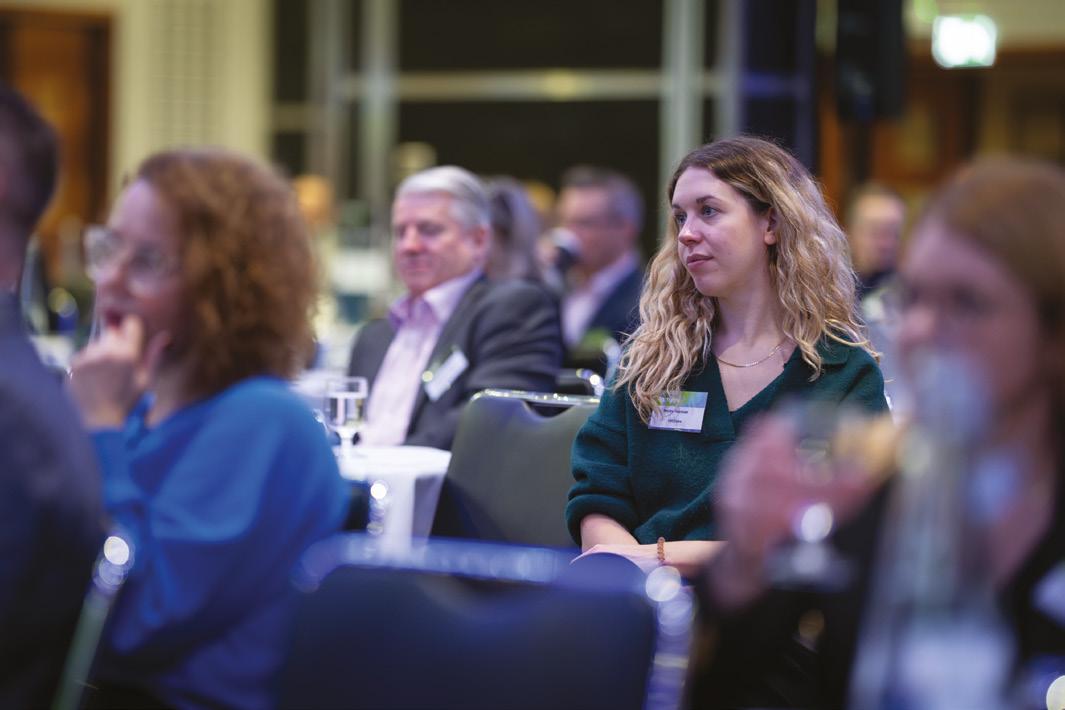
The largest gathering of CPOs, CHROs, and HRDs in the UK
David Liddle Keynote
Choose between 35 sessions and we will create a bespoke experience for each attending CPO.
Leonardo Hotel St Pauls 24th November 2026
8.30am-4.30pm
For your complimentary People Leaders passscan the QR code.
Movers & Shakers




Congratulations to Lisa Dodman, who joins Optima Health as Group Chief People Officer. In her new role, she will be a member of the Executive Management Board, responsible for defining and delivering group people strategy.
Joanne Hodge has been appointed Chief People Officer at Marshalls plc, moving from her previous role as Group People, Sustainability and Social Impact Director at Ibstock Plc.
Tiger de Souza leaves Samaritans at the end of June to take up the role of Chief People & Culture Officer Macmillan Cancer Support.
“I will be incredibly sad to leave Samaritans, especially at this time, but equally extremely excited about joining Macmillan,” he says. You can read our interview with Tiger on pages 16-17.
Employee engagement and HR technology company Reward Gateway has appointed Joe Walsh as Managing Director of its UK business.
Have you recently moved into a senior people or C-Suite role? Or maybe you’ve been promoted to the top people and culture job in your organisation?
If you'd like to highlight your achievements, send details of your role, together with some brief biographical information and a head and shoulders photo, to:
erika.lucas@thepeopleleader.com
Independent mediators supporting leaders, teams and organisations to rebuild trust and restore working relationships.
Upcoming training courses



The workplace engagement illusion
UK employees may be more positive about their jobs than many employers assume, but new research suggests that contentment and connection are two very different things.
The new study of 1,000+ UK workers by The Chameleon Agency found that 48% of employees report feeling connected to their role and aligned with their organisation's values and purpose. The rest, however, sit in a more complicated grey zone.
Almost a third (31%) fall into what researchers call ‘the hollow connected’: people who enjoy their work day-to-day but feel no real connection to their organisation's purpose, values. or mission.
A further 13% generally like their role and their colleagues but are not engaged with leadership, while 7% describe themselves as fully disengaged.
The report's authors argue that the 'hollow connected' represent a more significant risk than organisations typically recognise. These employees don't always appear in engagement scores as a problem, but they're often the first to leave when something more aligned with their values comes along.
The consequences are already appearing in retention figures. One in five workers (20%) say they are actively looking for a new role or plan to leave within the next 12 months. A further 13% say they would move now for a role that better reflects their values or interests, while one in 10 said they'd leave now if the economy/job market was better. The findings suggest seniority plays a significant role in how connected people feel, with leaders considerably more engaged than junior employees.
SOURCE: UK Employee Engagement Research 2026 | The Workplace Engagement Illusion. https://www.thechameleonagency.com/uk-employeeengagement-research-2026/
of transformation 25 years
Pioneers of mediation and restorative practice
Over the next decade, the TCM team and I immersed ourselves in mediation and restorative practice. We pioneered workplace mediation programmes, developed the National Certificate in Workplace Mediation™, and helped organisations embed mediation as both a process and a capability.
Twenty-five years ago, I set out on a mission to help organisations build cultures where people thrive, leaders grow, and organisations excel.
The barrier I saw was unresolved conflict, disagreement, and concern at work. That is why, in June 2001, I incorporated Total Conflict Management Ltd. Looking back, it was probably a branding nightmare. With hindsight, it was also exactly the right name.
Before founding TCM, I had spent years working in community relations, conflict resolution, anti-bullying initiatives, and restorative justice (RJ). I had seen what happened when conflict was addressed, dialogue encouraged, insight gained, and relationships strengthened. Trust was restored and divergence transformed into cohesion.
At the same time, whilst studying for my MBA, I became fascinated by two powerful ideas. One came from Total Quality Management, inspired by Japanese management systems. The other emerged from integrated conflict management systems. I could not shake the feeling that they belonged together.
The question that interested me was never how organisations dealt with conflict. It was how they could prevent unnecessary conflict from arising and create systems that enabled quality relationships, conversations, services, and outcomes.
That question has been central to my work for the past 25 years.
A few months after incorporating the business, the attacks on the Twin Towers shook communities across the globe. As I watched events unfold, my belief in dialogue, understanding, and non-violence became stronger than ever.
Yet the same issues kept reappearing. Different organisations. Different people. Similar patterns.
Eventually, I realised that most workplace conflict was not being created by difficult individuals or poor management. More often, it was generated by the systems, structures, incentives, and behaviours surrounding them.
The very policies designed to resolve conflict were often helping to create and sustain it. Grievance procedures, disciplinary processes, and adversarial performance systems frequently entrenched positions and damaged relationships.
I came to think of this as the HR Paradox.
Redefining Resolution
This was a moment of realisation which changed everything for me and for TCM.
In 2013, the Resolution Framework™ was born. What began as an alternative to traditional grievance and disciplinary procedures became a different way of thinking about justice, fairness, accountability, and resolution.
Through this work, I came to understand that justice sits at the heart of culture. Not justice built around blame and punishment (retributive justice), but transformative justice grounded in fairness, learning, accountability, and repair.
The deeper I went into this work, the more convinced I became that conflict resolution was not a destination. It was the doorway to a truly transformational culture.
The real challenge was culture.
Crafting transformational cultures.
That insight led to me developing the Transformational Culture Model™ and the wider TCM ecosystem. What began as a mediation and RJ consultancy evolved into a people, culture, leadership, coaching, resolution, and transformation business.
Today, we work across sectors, industries, and geographies. Different contexts. Different challenges. Yet the same questions remain. How do we build trust? Create belonging? Develop leaders who bring out the best in others? Build cultures where people can thrive?
AI, changing expectations, and growing complexity are reshaping work.
There can be no doubt, the challenges facing organisations have never been more complex. Yet the opportunity has never been greater.
This is a moment to rethink old assumptions, redesign outdated systems, and build organisations that can combine performance with humanity, technology with wisdom, and accountability with compassion.
Our journey. Our future.
The beginning.
TCM was founded with a vision to help organisations prevent and manage conflict.
Building foundations.
Pioneering mediation as a strategy and system.
Award winning. Game changing.
The Resolution Framework launches, transforming culture, transforming justice.
Sharing
our thought leadership.
Managing Conflict was published. Spreading ideas that change workplaces.
Growing our ecosystem.
The TCM ecosystem was created, more services, more people, more impact.
People and culture at the centre.
Rewiring HR to a proactive, transformational People & Culture function.
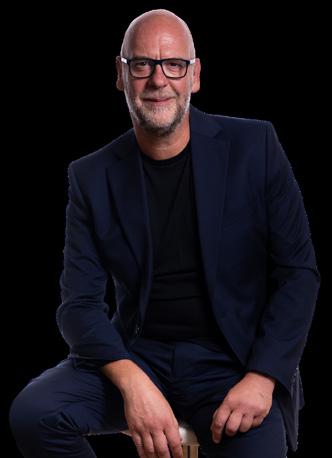
David Liddle
FIoL, FRSA, MBA - Chief executive at The TCM Group
If these ideas resonate, I invite you to continue the conversation. Explore the thinking through my books, connect with me on LinkedIn, join one of our events, or simply reach out. The future of work is still being written. Together, we have an opportunity to shape it in ways that help people, leaders, organisations, and communities thrive.


KIRSTY BAGGS-MORGAN:
“A question I genuinely want your opinion on. What's the one thing about how HR is talked about, either inside organisations or in the wider world that you think is most overdue for a proper challenge? An actual argument you'd be willing to make out loud. I'll start...
We are not responsible for everyone in the organisation's happiness, morale, or motivation. Everyone is.”
See the full conversation here: https://www.linkedin.com/feed/ update/urn:li:activity:7461679409213 882368/2x-TgLUSvBLWyoYCXKHU
Influencer of the month
Introducing our influencer spotlight column, where we highlight some of the topical debates taking place on social media.
“Being the cleanup crew for consequences we didn't cause is exactly where the friction lies. When HR is used as a shield to manage the fallout of poor leadership behaviour without the power to actually challenge, everyone loses.”
“That HR should somehow ‘own culture’ while having limited influence over the behaviour of senior leaders. HR can create frameworks, challenge, coach, support, facilitate, and influence. But culture is ultimately created by what leaders tolerate, reward, communicate, and model every single day.”
“Culture! We can guide/influence to an extent but if the culture isn't being demonstrated through leaders and staff, having a job titled People and Culture Partner isn't going to do much. Culture is what people actually experience at work, not what’s written in a strategy or job title.”
GLOBAL PEOPLE LEADER SUMMITS
The rise of cultural citizenship
The next Global People Leader Summit will focus on one of the most significant shifts emerging in the world of work: The rise of cultural citizenship.
As organisations continue to evolve towards more purpose-driven, values-based, and people-centred ways of working, expectations are changing. Employees increasingly seek more than employment. They want connection, meaning, contribution, belonging, and a genuine voice in shaping the cultures they are part of.
During this interactive session, we will explore:
• What cultural citizenship means and why it is emerging as a defining feature of transformational organisations.
Which posts on social media have captured your attention?
Share your suggestions on The People Leader LinkedIn page.
• How the role of the people function is evolving as employees
15th July
12:30 - 2PM BST
move from being viewed as resources, to users, to active cultural citizens.
• How employee expectations are changing within purpose-driven, values-based, and people-centred cultures.
• The implications of these shifts for both the psychological contract and the wider social contract at work.
• How leaders can create cultures that balance performance, belonging, accountability, and purpose.
These are questions that every people leader, HR professional, and organisational leader will need to grapple with in the years ahead.
FREE TO ATTEND
The summit will take place on Wednesday 15th July, 12:30–14:00 (BST) live on Zoom.
Access to the event is free. Subscribe to The People Leader to receive registration details: www.thepeopleleader.com/subscribe
The National Certificate in Coaching Skills™
A fully accredited, practical and human-centred programme that strengthens confidence, curiosity and capability. Designed for leaders, managers and professionals who want to hold better conversations and create conditions where people thrive.
“Coaching is the gift that keeps on giving.”

Dates for your diary
Key webinars and events to support your professional growth.
The UK's leading mediation conference – in person and virtual. Designed to equip delegates with practical skills and knowledge on issues from managing difficult conversations and preventing escalation, to handling sensitive disputes inclusively and effectively.
TCM CEO David Liddle will run a session on 'Busting the Silos: A systemic approach to mediation across teams and organisations.'
BOOK YOUR DELEGATE OR VIRTUAL PASS HERE: https://www. ukmediationconference.co.uk/
risk, improving resolution: a better way to handle workplace concerns
Most organisations want to resolve workplace concerns fairly and consistently, but traditional processes can be time-consuming, adversarial and damaging to relationships.
Join David Liddle and Louise Webb (TCM), legal experts from Lewis Silkin, and organisations already embracing a resolutionfocused approach, for a practical webinar exploring how to modernise workplace resolution and achieve better outcomes.
The People Leader Virtual Summit
The rise of cultural citizenship Our second People Leader virtual summit will bring together Chief People Officers, CEOs, and culture leaders to examine one of the most significant shifts emerging in the world of work – the rise of cultural citizenship. As employees increasingly approach work with consumer-style expectations, organisations are being challenged to rethink the workplace experience they create. Together, we will explore how organisations can meet those expectations while keeping the focus firmly on trust, belonging, wellbeing and performance.
RESERVE YOUR PLACE HERE: https:// thetcmgroup.zoom.us/webinar/ register/WN_FeuKAAxqSt2YrETx25XdQ#/registration
SUBSCRIBE FREE HERE TO REGISTER FOR THE SUMMIT: https:// www.thepeopleleader.com/events/
Live virtual gathering on Zoom
Bookshelf
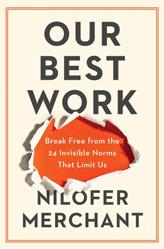
Our Best Work: Break Free from the 24 Invisible Norms That Limit Us by Nilofer Merchant
How can we fix what we can't see? The norms crushing innovation - and our joy - are finally made visible.
In Our Best Work, Nilofer Merchant names the 24 invisible norms -born of hierarchy, control, and a worn-out model of capitalism - that limit us all. Along the way, she dismantles some of management’s most beloved ideas:
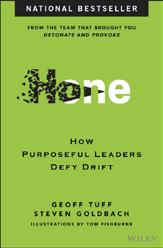
Hone: How Purposeful Leaders Defy Drift by Geoff Tuff
A clarion call to business leaders to recast their conception of leadership and strategy execution to meet the demands of the modern world.
Have a problem with your organisation's strategy in an era of accelerating, exponential change? Modern business orthodoxy has an easy answer: transform it. Hone: How Purposeful Leaders Defy Drift argues this thinking is itself in need of an overhaul.
• Servant Leadership
• Personal Branding
• Speaking Up
• Performance Reviews
• Move Fast and Break Things
These aren’t just ideas that fall shortthey are daily routines that trap us in the past. Merchant exposes how and why they fail us – and highlights the 24 leading indicators that will help us move forward.
Each chapter closes with ideas for practical actions.
Rather than devote time to expensive, long, and often unsuccessful transformations, leaders should instead focus on holistically designing and honing the management systems that are the nervous systems of their businesses.
Choosing and honing the set of management systems that promote an organisation’s desired outcomes is one of the most important things a business leader can do.
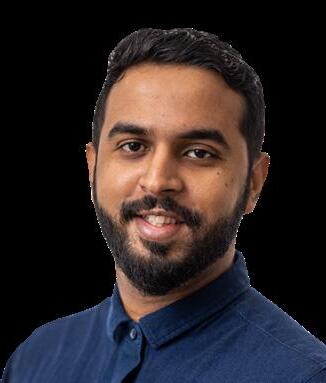
Jonathan Rodrigues, The People & Culture Institute Coordinator
is
global platform dedicated to supporting modern People Leaders – whether they sit within HR, executive leadership, operational functions, or emerging people-focused roles. The platform brings together four core elements: