FOCUS
Cultural transformation at the FT
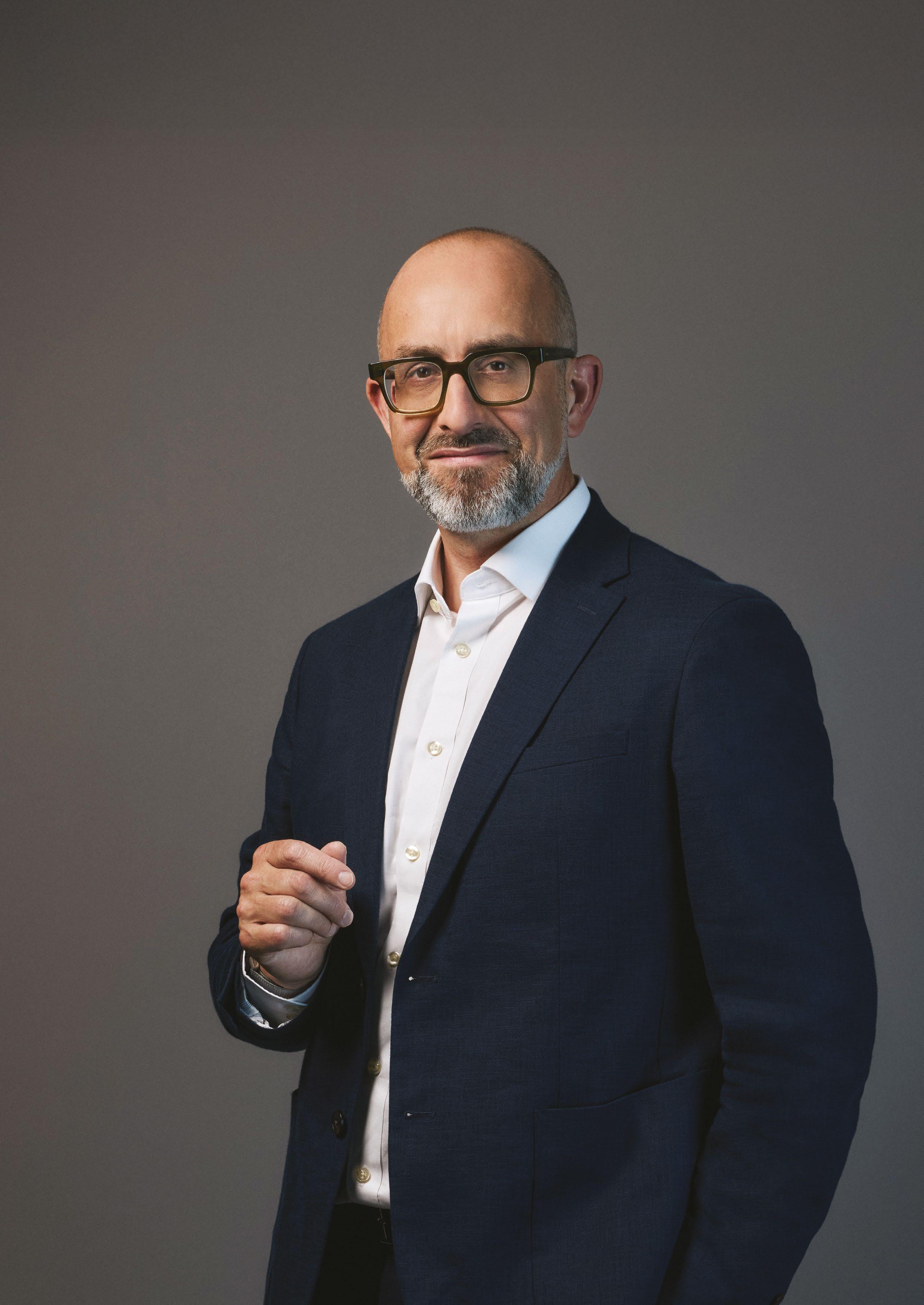
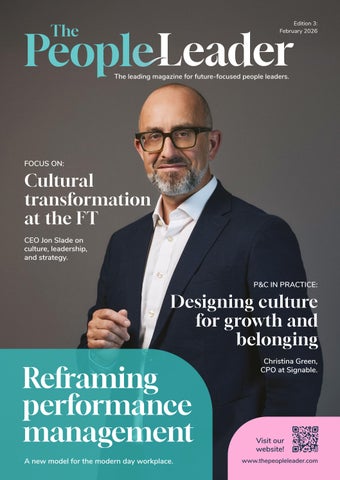
When I interviewed Jon Slade, Chief Executive of the Financial Times, for my latest book People and Culture, I was inspired by his commitment to building a truly transformational culture within the FT. That inspiration came alive again during our fireside chat at the book launch in January, and I am delighted to feature Jon in this edition.
Performance management regularly tops the list as one of the most challenging issues we face as people leaders. Offering a practical blueprint, my Transformational Performance System (TPS) is explored in depth on pages 4 and 5. In this edition, you will also hear from two inspiring CPOs - Christina Green from Signable and Abi Griffin from GEMBA Advantage - who talk about the power of the CEO/CPO partnership.
As you explore this packed edition, you will also gain practical guidance from The Culture Doctor, original research and analysis, reflections from Emma-Jayne Sherry, and undertake a deep dive into the People and Culture Skills Matrix (PCSM).
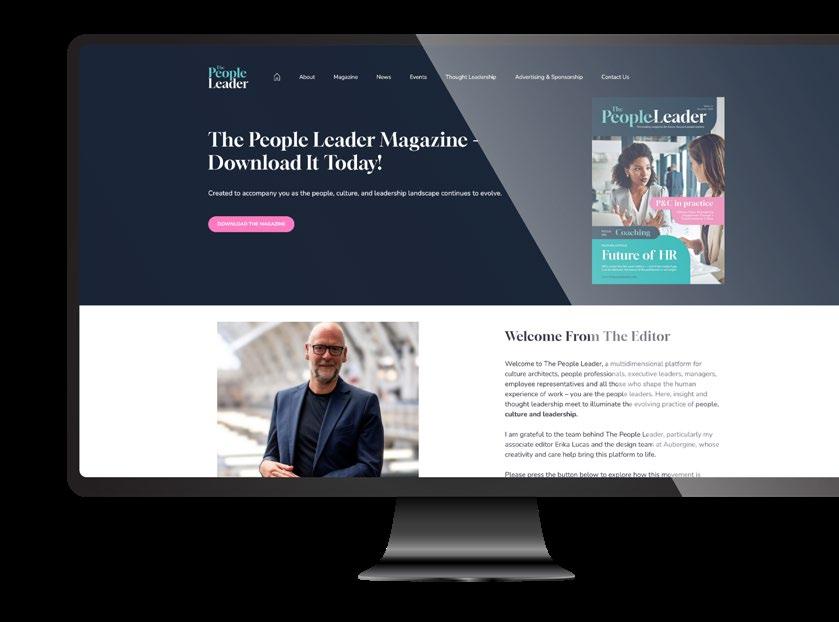
The People Leader magazine is a key element of a global platform comprising in-person round tables, virtual summits and international conferences. Head to www.thepeopleleader. com to learn more and to become a subscriber. Please follow us on LinkedIn and contribute to the big conversations about people, culture, and leadership. I hope you enjoy reading this edition as much as we enjoyed creating it. Please let me know what you think, my details are below.
David Liddle, CEO of The TCM Group, Editor in Chief of The People Leader Magazine

Latest news and updates from the world of people, culture, and leadership.
UK businesses are contending with a rising number of increasingly complex risks, according to YouGov research commissioned by global investigations firm Nardello & Co. Reputational damage was one of the top three concerns highlighted, with managers expressing particular concern about dealing with wrongful allegations from employees.
The data reveals that this concern is influencing behaviour, with 20% of leaders admitting to attempting to ameliorate reputational risk by making ‘safer decisions – and in some cases, decisions that were not necessarily in the best interests of their companies.
To avoid their remarks being taken out of context, for example, 57% of leaders are now more cautious when speaking and nearly 1 in 10 (7%) avoid meeting with junior colleagues due to the increasing fear of false allegations.
These fears are grounded in reality: 16% of businesses have faced false allegations in the past year (e.g. false claims of misconduct, harassment, or unethical behaviour).
SOURCE: https://nardelloandco.com/ news/uk-businesses-enter-2026-facingmyriad-global-risks-research-finds/
Negative attitudes towards return-to-office mandates may not be quite as widespread as media narratives suggest, according to new research from Boostworks. A survey of 5,600 employees, across all four generations currently in the workplace, suggests that employees aren’t rejecting the office outright. Instead, they’re asking for flexibility that reflects their life stage, clarity around expectations, and consistent recognition for the work they do.
Between 40-44% of survey respondents felt their commute to work was worth it, with only 17-25% expressing dissatisfaction with their office environment. Between 64-67% said their manager supported flexible working arrangements. When asked what would encourage more office attendance, practical perks such as extra holiday, bonuses and free food featured highly.
Generation Z employees, however, showed signs of needing extra support, with 20% feeling expectations around attendance weren’t clear, and 19% feeling disconnected from culture.
SOURCE: What Four Generations Want from Work: https://boostworks.co.uk/
Three in 10 UK employees are highly stressed at work and more than one third say employers fail to prioritise wellbeing, says a new Culture Amp study. The global study also reveals that women experience many key aspects of work less positively than men.
The stats, drawn from a data lake of questions answered by 3.3 million employees from 8,200 global companies, revealed that both these UK findings came in significantly above international levels.
Researchers found, for example, that 70% of workers globally believe that their company leaders regard employees’ wellbeing as important, while just 63% of UK employees said the same.
Asked if they feel their employer ensures a healthy work-life blend, 68% of men globally agreed but only 63% of women did. Fewer than six in 10 women (59%) feel safe to take risks at work but in contrast, more than two thirds (67%) of men do.
SOURCE: https://www.cultureamp.com/
What’s the first thing a manager should ask in a performance conversation?
Pose that question in a room full of managers and these are the answers you are likely to hear: “Have you hit your targets?”, “What results have you delivered in the last year?”, “What will you do differently next time?”
All of these are potentially valid questions, but according to people and culture expert David Liddle, none of them open the door in quite the right way. An alternative question, he suggests, might be this: “As your manager, how am I performing?”
This might sound counterintuitive, but it’s an inversion that can make a radical difference to the conversation that follows.“It reframes performance not as a one-way critique, but as a twoway conversation. It’s a chance to move beyond control and foster connection,” says David. “Critically, the way you as a manager respond to that feedback matters. Leaders must listen with presence, respond with curiosity (not defensiveness) and treat the feedback as a valuable contribution. Only then, after demonstrating that openness, is it time to offer feedback in return. At that moment, the balance shifts from a performance review to a performance relationship.”
Traditional performance management systems are broken
In his new book, People and Culture: A Practical Guide for HR Professionals and Leaders, Liddle argues that performance management as we know it, is increasingly misaligned with how people work and want to be supported in the modern day workplace.
That view is echoed by global consultancy McKinsey, in its report ‘In the Spotlight: Performance Management that Puts People First’. Many organisations, it suggests, are using systems that actively undermine performance rather than lifting it.
Liddle’s stance is also evidenced by what he has seen in practice. Performance-related issues account for around 90 per cent of the cases that TCM sees coming into its workplace mediation programmes. “Too often, performance processes are reactive, inconsistent, or disconnected from what people really need to succeed,” he says.
He cites as an example the widely used nine-box grid, which attempts to map people’s potential and performance onto a matrix of static categories.
“Human beings don’t fit neatly into boxes,” he says. “These frameworks often reinforce bias, create artificial hierarchies, and reduce people to
labels like ‘low potential’ or ‘needs improvement.’ The result is often demoralisation, disconnection, and a system that penalises difference rather than nurturing it.”
This is a view endorsed by Aashna Sinha, Chief People officer at Betches Media, one of the many CPOs featured in the People and Culture text. “We needed structures that felt authentic and empowering, not bureaucratic. Our focus has been on meaningful dialogue over compliance driven processes,” she says.
A new model
In ‘People and Culture’, Liddle outlines a new Transformational Performance System™ (TPS)designed to provide a practical, people-centred alternative to outdated performance models.
It offers a new philosophy, where performance management is no longer defined by backward looking evaluation or centred around driving output. Instead, the emphasis is on cultivating the conditions in which performance can emerge and thrive.
The model is built around four interlocking quadrants:
MAP: Mastery, Autonomy, Purpose reflecting the emotional drivers of high performance.
OKR: Objectives and Key Results providing clarity and alignment to organisational goals.
VBC: Values, Behaviours, Capabilities shaping the ethical and behavioural standards of the organisation.
PAC: Power, Authority, Control creating fair and transparent governance and compliance systems at work.
Together, these forces combine to create the conditions for optimum performance. They allow managers to lean into the tensions that inevitably arise around performance, enabling them to handle friction ethically and intelligently and create environments where performance genuinely thrives.
Upskilling managers for a transformational approach
Managers and people professionals are at the heart of this shift to transformational performance management.
To manage the four forces, which often operate in tension, they need the mindset, skillset, and
A legally compliant antidote to traditional disciplinary, grievance, bullying, harassment, conduct and whistleblowing procedures.
The multi-award-winning Resolution Framework™ is freely available for organisations committed to constructive, person-centred practice.
confidence to have quality conversations.
Hanna Smith, CPO at fintech company Tillo, recognised this when she began work on reshaping the organisation’s approach to performance, moving away from traditional appraisal cycles towards a culture of continuous feedback, goal clarity and open conversations. “Performance is not about policing, it’s about supporting people to do their best work, in a way that’s fair, clear, and constructive,” she said.
Here are five core competencies managers need to develop if they are to effectively implement transformational performance management:
1. Empathetic Listening. Understanding performance issues means being able to listen beyond the words. What’s really going on? What’s being felt but not said?
2. Constructive Feedback. Clear, compassionate feedback that focuses on behaviours and outcomes, rather than personality or assumptions.
3. Values-based Coaching. Great managers ask, not tell. They help individuals link their personal values and strengths to organisational goals.
4. Conflict Competency. Performance conversations often surface tension. Managers need to feel confident in navigating disagreement without resorting to blame or avoidance.
5. Goal Co-Creation. OKRs and performance objectives work best when co-designed. When individuals see how their work matters, motivation and engagement soar.
A transformational approach to performance is not about abandoning structure. It’s about aligning structure with trust, clarity, and humanity, placing the individual's growth at the heart of the organisation's success.

Building with trust: Christina Green on designing culture for growth and belonging.

“You can’t cherry-pick the parts of a peoplefirst culture that suit you, it has to be whole-hearted – from the top down, and across every policy and process.”
CHRISTINA GREEN, CHIEF PEOPLE OFFICER, SIGNABLE
An interview with Christina Green, Chief People Officer at Signable.
At Signable, trust isn’t earned, it’s offered. From day one, new employees are empowered to own their time, manage their work, and shape their environment.
Christina Green, Chief People Officer, has helped create this rare kind of workplace: one where policies are human-first, hierarchy is minimal, and transformational culture is woven through every layer of the business.
Signable is a UK-based company offering electronic signatures to help teams manage documents online. Their people strategy is grounded in the belief that culture must be intentional, inclusive and constantly evolving. “You can’t cherry-pick the parts of a peoplefirst culture that suit you,’ Christina explains. ‘It has to be wholehearted – from the top down, and across every policy and process.”
This ethos has been part of Signable from the start. When CEO Olly Culverhouse founded the company he built it on a peopleand-culture first model, not a traditional HR set-up. Rather than focusing on control or compliance, the focus has been on creating a structure that reflects Signable’s core values: transparency, flexibility and care.
Christina believes trust must be unconditional. At Signable,
employees receive unlimited holiday, remote working options, and full sick pay from day one. The expectation is not presenteeism, but personal accountability.
“It only works if you start with trust,” she says. “Once that’s broken, the relationship is hard to repair.”
Transparency plays a key role. From status updates on Slack, to calendar visibility for school runs or low-battery days, the team operates with radical honesty. This creates psychological safety and sets a tone for compassionate productivity.
As Signable continues to grow, Christina noticed a need for ‘over-communication’ – especially in a remote-first model. Slack became the company’s cultural glue, with dedicated channels for everything from wellbeing to workin-progress.”We don’t use email internally at all,” Christina notes. “It’s all about visibility, support, and staying human as we scale.”
The entire team plays an active role in setting the tone, sharing regular updates, celebrating wins, and being open about challenges. This openness helps everyone feel part of the bigger picture, whether they’re in the office or working remotely. Signable is creating a culture where people feel heard, valued and connected to the company’s goals.
Signable’s approach to policy is refreshingly humane. For example, rather than using absence management punitively, the business ensures full recovery before return. “It’s not just about what’s written,” Christina explains.“It’s the check-ins, the reassurance, the message that your health matters more than presenteeism.”
That care carries through into everyday flexibility.
At Signable, it’s not seen as a perk, it’s part of how things work. The company understands that life doesn’t pause for work. From school pick-ups to doctor’s appointments, the team is trusted to find a rhythm that fits. “No one’s working late. No weekend emails. And our leadership team role models that behaviour.”
One of Signable’s most vibrant innovations is its Culture Club – an umbrella for wellbeing, their DICE team (diversity, inclusion, cohesion, and equality), community and social groups. Employees lead events like Dungeons & Dragons, book and bake nights, and dinner clubs, with events designed to include both office-based and remote colleagues. “It’s not topdown,” Christina says. “We fund it, but they lead it. It gives people space to grow, connect, and even build leadership skills.” And for the company, it builds
a culture people genuinely want to be part of.
Christina is candid that the culture isn’t for everyone. During the ‘honeymoon period’ (Signable’s term for probation), some employees realise they prefer more structure or hierarchy. And that’s okay.
“Part of a transformational culture is recognising that it’s a two-way street,’ she says. “If someone outgrows us or we’re not the right fit – it’s still a success if they leave better than they came.” It’s about mutual respect, open conversations, and finding the right place to thrive, even if that’s somewhere else.
In a fast-moving scale-up, Christina sees culture as key to staying agile. Quarterly OKRs, regular people strategy sessions, and cross-functional projects help the team adapt without losing what makes Signable, Signable. “The only constant is change,” she says. “And our job is to help people thrive in it.”
* SOURCE: People and Culture: A practical guide for HR professionals and leaders.
Written for HR professionals and business leaders, this book shows how to adopt a people and culture approach in the organisation.
It features the innovative People and Culture Operating Model, which provides practitioners with the tools they need to create a purpose-driven, values-based, and people-centric approach to their company culture and their HR strategy.
“This book is genuinely inspiring, thoughtprovoking and full of real-life examples. It reinforces the purpose of putting people at the centre of organisations and demonstrates the value HR leaders bring.”
Margaret Ayers, Chief People Officer, Canterbury Christ Church University and Chair of Universities Human Resources
“A powerful and timely guide that places the human heartbeat at the centre of organisational life. Firmly grounded in reality, it offers clear frameworks linking culture, leadership, and business outcomes. A must-read for anyone shaping the future of work.”
Sara Andrews, Chief People Officer at Ecovyst Catalyst Technologies UK
“An incredibly compelling and well-thought-out book and framework. It is timely, necessary and a manifesto for HR leaders to embed culture at the centre of a bold organisational framework.”
Dan Pontefract, Leadership Strategist, Thinkers50 Radar, and author of The Future of Work Is Grey
Listening From the Edges:
Jon Slade, CEO, Financial Times
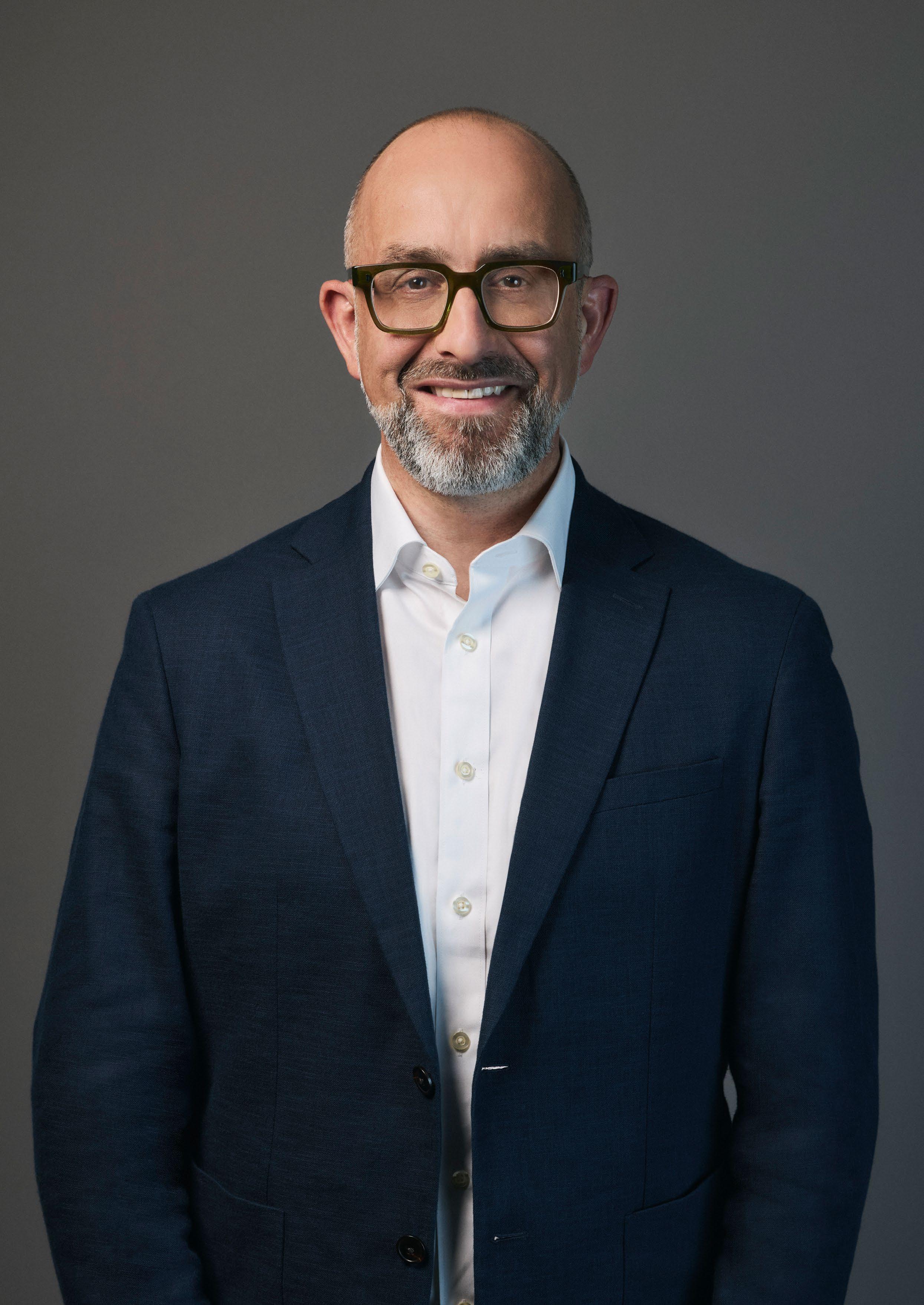
When the audience at a fireside chat with Financial Times CEO Jon Slade were asked what they had taken away from the evening, one delegate was quick to answer: “Always listen to the work experience student,” he said.
It was a line that drew laughter, but also captured something fundamental about Slade’s leadership philosophy. Because in the FT’s case, listening to a 15-year- old on work experience did more than generate a good story. It sparked a programme that has since reached tens of thousands of young people worldwide and generated millions in revenue.
And that, Slade told the room, is the point. Cultural transformation isn’t built through slogans or powerpoint presentations, but through behaviours - and in the FT’s case, through making the behaviour of listening central to its strategy.
Slade was speaking at the launch of ‘People and Culture: A Practical Guide for HR Professionals and Leaders’, in conversation with author David Liddle. He painted a vivid picture of how the intersection of culture, leadership, and strategy underpinned the complex shift to digitilisation at one of the world’s most respected news organisations.
From Print Legacy to Digital Powerhouse
Slade joined the FT in 2002, when the paper’s global paying audience stood at 450,000 and 80% of revenue came from print circulation and advertising. Today, the FT has more than 3.2 million paying readers, 80% of revenue is digital, and the organisation has just delivered its third consecutive record year of profitability.
Widespread adoption of new technology has of course been fundamental to the shift, but Slade was unequivocal about the fact that the real engine of transformation was cultural.
“You can’t do anything at scale if you don’t set the tone and stay consistent,” he said. “Culture isn’t an initiative. It’s how leaders behave.”
During the course of the conversation, three themes emerged as the cultural foundations of the FT’s renewal: genuine listening, aligning people to purpose, and building a collaborative, cross-functional organisation.
1.
Slade emphasised that leaders must learn to listen, and not in a tokenistic way. At the FT, this began with a deliberate effort to widen the field of vision. “We used to take our lessons from our peer group in the news and
media industry,” he said. “But if we were going to transition from a newspaper business to effectively an online retailer, we needed to learn from retail - payment flows, user experience, customer centricity, data analytics.”
Listening also meant hearing from customers directly. Every member of the senior management group is required to speak to at least two customers a year – a new experience for those in non- customer-facing roles, but one Slade insists is essential.
Listening sessions with staff were also key. When Slade was appointed CEO, he spent six months holding 20 small- group conversations across the organisation, always ‘skipping two levels’ to hear unfiltered perspectives. “You have to build a little bit of safety first,” he said, “but you can get through that fairly quickly.” Those sessions became the backbone of the strategy he later set.
The FT’s Next Generation Board, now in its sixth cohort, extends this principle further. Twelve mid-level employees spend a year working on board-level projects, paired with directors in a mentoring and reverse-mentoring dynamic.
And then, of course, there’s the story of the work experience student who told the FT it was “getting it all wrong” and needed to attract younger readers. His idea to secure the audience of the future became the FT Schools Programme, an initiative to make FT.com free to all pupils and aligned to the national curriculum, which now reaches more than 80,000 young people in over 120 countries.
“The best ideas often come from the edge,” Slade reflected. “But you’ve got to be listening.”
The second lesson Jon shared was around alignment - ensuring that people across the organisation understood the imperative for change and the journey they would need to go on to complete the shift to a digital business.
The pivotal moment was the creation of a clear North Star, dubbed the ‘March to a Million’ - a company-wide goal to reach one million paid subscribers. Crucially, this was framed as a shared mission that connected the newsroom, product, technology, and commercial teams.
“It felt like something that transcended the whole organisation,” Slade said. “It brought everyone into the transformation.”
Transparency was central to this alignment. Slade emphasised the importance of sharing data openly - even when the trends were worrying. This adult-to -adult dialogue, as Liddle described it, replaced the 'parent- child' dynamic that still lingers in many organisations. building trust, psychological safety, and a sense of shared responsibility.
The third lesson was collaboration - something Slade argues is non-negotiable in a digital business.
“If you’re producing a newspaper, it’s a fairly industrial process. You can sit in silos and the mechanics take over. But in a digital business, collaboration is fundamental.”
The FT reviews its cross-functional structures every two years, gathering input from across the organisation and experimenting with new ways of working.
Leading Cultural Transformation at the Financial Times continued...
Incentives and reward structures have been redesigned to reinforce collaborative behaviours.
Slade describes leadership as holding paradoxes - providing clarity while enabling autonomy. “You need a strategic spine,” he said, “but also the humility to step away.”
Through Culture
What emerged from the conversation was a portrait of a leader who sees culture as a strategic asset which plays a pivotal role in determining whether transformation sticks. Slade’s approach is grounded in humility, curiosity and the willingness to listen and trust people. Even the 15 year old boy on work experience.

The People Leader Virtual Summits bring together a global community of HR professionals, executive leaders, managers, and cultureshapers who are committed to reimagining how people experience work.
• Global virtual gathering for people leaders.
• Insights from industry experts and practitioners.
• Deep exploration of people, culture, and leadership.
• Focus on fair, just, inclusive, and high-performing cultures
– transformational cultures.
• An international learning community grounded in shared growth.
FIND OUT MORE: www.thepeopleleader.com
Advertise with a global brand that people leaders trust
The People Leader brings your brand into the inboxes of a global community shaping the future of work.
Its reach extends to approximately 300,000 readers across the c-suites of organisations worldwide, offering a platform where culture architects, executive leaders and strategic influencers come together.
Contact us to explore a range of advertising and sponsorship opportunities:
editor@thepeopleleader.com thepeopleleader.com/ sponsorship/

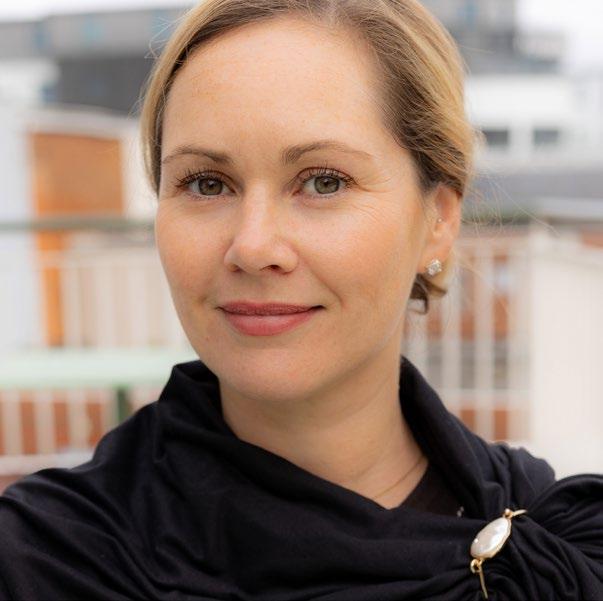
At GEMBA Advantage, culture isn’t a backdrop – it’s the engine. As Chief People Officer of the fast-scaling tech firm, Abi Griffin is co-architecting a transformational culture where values aren’t laminated, they’re lived.
From her unconventional start outside HR to guiding the company through a seamless acquisition, Abi’s approach is a lesson in embedding culture with integrity, pace and purpose.
Abi’s entry into the CPO role came not from the HR ranks but through delivery and account management in engineering teams. This gave her a systems mindset – rooted in agile thinking, fast feedback loops, and the human dynamics of high-
performance teams. “What always lit me up,” she says, “was watching engineers thrive – developing people, building collaboration, seeing them succeed.”
GEMBA’s North Star strategy revolves around one unshakeable principle: the employee experience is the business model. Four enduring values shape every decision, from hiring to strategy.
• Our people are our most important asset
• We succeed and fail as a team not as individuals
• We do the thing right and we do the right thing
• We maintain an overwhelming focus on the customers’ needs
The business applies a values-based interview process, a distinctive onboarding ‘Launch Pad’, and an internal framework of 13 guiding principles. These principles, paired with leadership development in areas like empathetic leadership, are designed to ensure that GEMBA’s culture isn’t just felt, but understood, scaled, and reinforced systemically.
Abi works in daily partnership with the CEO and COO, engaging directly in strategic planning and employee consultation. “It’s a partnership, not a cascade,’” she explains. Their planning encompasses everything from EDI to bench management, ensuring every growth lever supports culture.
This approach aligns with transformational culture principles – building trust, flattening hierarchies, and empowering employees to shape systems as cocreators.
GEMBA’s acquisition by Actica Group could have destabilised morale. Instead, employee engagement soared. “We were able to meet with them pre-deal, assess cultural alignment, and ensure the integration felt like a partnership,” Abi says. GEMBA’s highest
In conversation with Abi Griffin continued...
employee Net Promoter Scores came in the two quarters following the acquisition – a testament to transparency, shared values, and steady communication.
As GEMBA matured, Abi saw the limits of its earlystage model – particularly the people management system designed to support wellbeing and progression. Now, the company is evolving towards a clearer line management structure, integrating accountability without sacrificing care. “We’re not going back to command-andcontrol,” Abi insists. “It’s about building for scale –structures that reflect our values and make culture sustainable.”
GEMBA’s leadership approach blends servant and inclusive leadership with a strong developmental ethos. Leaders are chosen as much for trust and clarity as for delivery. “To lead here, you must prioritise others’ needs. Leadership here is about trust, humility, clarity – and courage. These are not buzzwords – it’s who we are.”
Attrition is low. Client feedback is exceptional. Culture is seen in the numbers and in the stories. A Culture Club, regular strategy days like the Great GEMBA Gathering, and experimental weeks like AI Week bring cross-functional collaboration to life. With robust listening tools, internal recognition (shout-outs), and CSR aligned to UN goals, GEMBA demonstrates how culture can be both joyful and strategic.
* SOURCE: People and Culture: A practical guide for HR professionals and leaders.
Watch this space in a future issue for an update on cultural integration following the acquisition.
When the stakes are high, our investigation exper tise provides four vital elements: We call this the Investigator FourSight!
Independent mediators supporting leaders, teams and organisations to rebuild trust and restore working relationships.
This month’s culture conundrum comes from a CEO keen to pursue rapid growth, while bringing their people along and not causing stress and burnout.
How do I scale the business while keeping work simple, clear and human?
Anya Grattidge, Head of People at Europlaz:
“Keep reviewing and adapting your processes and policies. Recognise what you did for a company of forty people is unlikely to work for a business experiencing strong growth and registering between 150 and 200 on the headcount.
Make sure you keep reviewing the ratio of managers with team sizes. It’s important for managers to have time to spend with employees and build meaningful relationships, ensuring regular one-to-one meetings take place and feedback can be delivered in a timely manner. This will also help to spot signs of burnout so it can be addressed early. Having one manager for forty people is not a good look!
Communication is also key and needs to come from the top, making sure different methods of communication are used so that all employees understand the company vision and what the future goals are.”
Andrew Bryant: self-leadership expert and author of ‘Potential-ize How Leaders Unlock Human Potential in the Age of AI’ (Wiley):
“The answer lies in what I call “strategic simplicity”. Rapid growth doesn’t require complexity, it requires
clarity. The key is resisting the temptation to add layers of process and bureaucracy as you scale. Instead, focus on three things: crystal-clear communication of where you’re going, empowering people with decision-making authority closest to the customer, and creating rituals that reinforce your culture.
Burnout happens when people feel powerless or purposeless, not because they’re working hard. When your team sees how their work contributes to something meaningful and they have autonomy to solve problems, they’ll run through walls for you. Scale the vision and values, not the complexity. Give people the framework to lead themselves, then get out of their way. That’s how you grow fast without breaking what matters most, your people.”
Natalie Mackenzie, thecognitivestrategist.com:
“Scaling fast fails when leaders try to solve complexity with more effort instead of better structure. The brain doesn’t respond well to constant urgency, stacked priorities, and endless decisions. The solution is simplifying how work is designed.
Start with three fundamentals. First, protect sleep and recovery as non-negotiables. Poor sleep quietly erodes judgement, emotional control, and strategic thinking long before performance visibly drops.
Second, reduce decision load. Fewer priorities, clearer ownership, and defined “what matters most this quarter” prevents burning energy on the wrong things.
Third, build recovery into the week … allow the brain to reset before fatigue accumulates.”
People and Culture Global supports HR to transform into a transformational, proactive, strategic and widely trusted people and culture function.
We design and deliver:
• Strategic people and culture transformation consultancy.
• The industry leading Culture Insights® culture audit.
• Values, behaviours and capabilities alignment.
• Organisation design, change management, conflict resolution and turnaround consultancy.
• Fully accredited training for people and culture teams including the new Diploma in People and Culture™
A new study commissioned by Investors in People reveals that one in four UK employees have considered leaving their job due to the relentless pace of change in the workplace.
The survey, conducted by Censuswide, found that nearly 20% of workers feel worn down by the volume of change, while over a third (35%) say they can cope, but it’s becoming increasingly exhausting.
The findings form part of Investors in People’s latest whitepaper, Finding the Frequency, which explores how British organisations can better manage change and foster resilience among their workforce.
When asked what worries them most during times of change, nearly half of UK employees (44%) pointed to rising workloads and mounting pressure. Other top concerns include fears that change will make their job harder (27%), poor or confusing communication (27%), and losing control over how they work (21%).
But there’s a disconnect. When Investors in People surveyed 500 HR leaders, the results revealed a gap in perception. While 65% of HR professionals recognised increased workload as a key employee concern, other worries were less accurately reflected, suggesting HR may be underestimating the emotional toll of change.
https://www.investorsinpeople.com/ knowledge/finding-the-frequency/
The relentless march of AI will pose significant challenges for Chief HR Officers in the US this year, according to the latest trends update from Gartner.
The report notes that some CEOs have been quick to reduce headcounts, based on predictions that their investments in AI will increase productivity and innovation. In reality, however, only one per cent of layoffs in the most recent quarter have been as a result of AI increasing efficiency. This places HR and leaders in an impossible position, being asked to make cuts to their teams on the basis of AI returns that have not yet been realised.
In response to the pressure to perform with lower head counts, there has been a noticeable trend towards organisations embracing aggressive ‘start-up’ style cultures, with long hours and minimimal flexibility, damaging engagement and leading to potential harm to the employer brand. Gartner advises that against this backdrop, CHROs need to take steps to preserve the resilience and safety of the workforce.
https://www.tandfonline.com/doi/full/10.1080/02678373.2025.2551489
Recent research reveals that failure to fix deeply rooted assumptions about women and leadership is leading to an exodus of female talent.
The in-depth study, commissioned by inclusion, mentoring and development consultancy Moving Ahead, explores the experiences of women in the executive committee pipeline. It focuses on the positive factors that help women advance in leadership roles (tailwinds) and those that have a detrimental impact (headwinds).
What are the organisational enablers required to embed and sustain an effective Equality, Diversity and Inclusion (EDI) programme? A recent case study of the approach to EDI at the British Council, published by the Institute for Employment Studies, suggests there are five key success factors:
• Taking a systems-wide view – including paying close attention to the interaction between internal and external factors.
• Leadership support – with senior leaders having a good understanding of how EDI benefits the organisation and taking accountability for the agenda.
• Access to high quality workforce data – combining existing HR data with ongoing evidence gathering to assess progress against goals.
• Dedicated infrastructure and processes – with a dedicated EDI unit co-ordinating activities and resources
• An organisational culture that has a D&I mindset, leading to collective commitment and responsibility for achieving goals.
Researchers found that many organisations still favour traditionally male characteristics and approaches to leadership, stifling growth and creating an environment where women feel they need to conform to fit in. Respondents were clear that this wasn’t just male gender bias, but an embedded culture – where women are often part of the narrative themselves - that needs to be addressed as whole.
Positive drivers including focusing on inclusion, providing coaching and mentoring tailored to the individual challenges women were facing, and more female role models.
For more information, contact:
You can download the full case study here:
EDI success factors https://www.moving-ahead.org
https://www.employment-studies.co.uk/wp-content/uploads/2025/10/BritishCouncil-DEI-case-study.pdf
Written by Carin Söderberg, Wellbeing & Workplace Culture Lead
The approach to corporate wellbeing is changing. From nice to have perks and well-meaning initiatives to strategic investment in performance, staff retention and creating an inclusive culture. But still, many organisations base their wellbeing offerings on trends, or intuition, rather than evidence. Data is the missing link.
Health metrics, absence rates, engagement levels as well as anonymous survey insights can reveal what really matters to your people. This could be burnout risks in managers, poor sleep quality among shift workers or financial and time pressures for new parents. When data is analysed properly, the insights allow leaders to move from reactive crisis management to sustainable strategy.
A data-informed approach means organisations can invest where it matters most, demonstrate real impact, and build a culture where wellbeing isn’t just a nice to have extra but a measurable driver of organisational health.
https://wellbeingpeople.com/
Can you spot early indicators of stress-related risks?
Do you understand how y needs evolve across life stages?
How do you measure whether initiatives have real impact? our people’s

Drive meaningful culture change through data-informed insight.
















By Snéha Khilay, Blue Tulip Consultancy
Over the past few years, there have been significant findings from the positive psychology arena about the value of managers giving praise or positive feedback to their staff.
The evidence emphasises the benefits of psychological, physical, and relationship benefits associated with praise. Receiving praise creates not only a feelgood factor; it also becomes an inspiration to do good.
There is a paradox in giving praise. At times, managers, often as a coping mechanism, unintentionally focus their attention on what is going wrong rather than on what is working well. Feedback about problems or shortcomings tend to linger. As neuroscientist Rick Hanson explains, negative feedback is like Velcro, it sticks. Positive feedback, by contrast, is like Teflon, sliding off the radar unless consciously reinforced.
There is an inherent tension in giving praise, as it can sometimes be received with distrust or even suspicion. Praise is often associated with perceptions of favouritism, where certain employees are recognised while others are overlooked.
At the same time, it can provoke jealousy, resentment, and unhealthy competitive dynamics within teams. An unspoken expectation to be grateful for the praise may also reinforce power imbalances and create a sense of obligation. Moreover, when praise is used for the wrong reasons, to placate, deflect criticism, or avoid accountability, it can sustain ineffective management practices, hinder meaningful career development, and mask toxic workplace cultures.
In these circumstances, praise becomes a distraction from deeper organisational dysfunctions, breeding cynicism rather than trust. It can also draw attention to the broader patterns of inequality. Research suggests that when praise is drawn only to the perceived progress toward equality, members of marginalised groups may be less likely to challenge unfair systems that remain, reinforcing silence rather than inclusion.
When managers give praise effectively, the impact extends beyond individual recognition to building and maintaining a culture of trust, belonging and psychological safety. Through this process, the contributions of
all employees are acknowledged, enabling people to feel genuinely seen, valued, and respected. Praise also serves a broader organisational purpose: it reinforces expected standards and behaviours, clearly signalling what the organisation values and how those values are portrayed in everyday professional interaction and effective practices.
Giving praise is a skill that, when done thoughtfully, can foster meaningful relationships grounded in trust, connection, and even a sense of intimacy. Conversely, praise delivered flippantly or superficially such as, “Good job!”, “Not bad,” “That might work,” or “Keep up the good work!” can leave recipients feeling selfconscious, awkward, or even irritated. One of my personal examples of ineffective praise came when a colleague remarked, “I appreciate you,” in response to me simply moving my bag to make room for her in a meeting. Such phrases are now sometimes described as 'social tics', polite expressions offered without real thought or intention.
Research highlights the importance of tailoring appreciation to what people value. A poll conducted by The Optimism Company of 13,790 respondents asked how they would most like to be acknowledged at work:
• 45% preferred a detailed, personalised thank you
• 28% preferred recognition in meetings, allowing peers to see and celebrate their contribution
• 22% preferred a gift or token of appreciation
This highlights that effective praise is intentional, personalised, and aligned with individual preferences, rather than an automatic performative gesture.
Inclusion has never mattered more, or been harder to navigate.
Today’s leaders face political pressure, economic strain, polarised debate, and fast-changing expectations.
The Inclusive Workplace Conference 2026 is different.
Backed by data, real-world insight, and practical action, you’ll discover what actually drives inclusion
A space for brave, honest conversations with senior people leaders. Challenge is welcomed. Nuance is valued. Your ticket also gets you
10–11 March, NEC Birmingham
Why
By Ursula Tavender and Madeleine Cole, co-founders of The Inclusive Workplace
We came to do inclusion work through lived professional and personal experience. In different careers and sectors, we both learned the same lesson the hard way: people do their best work when they feel seen, heard and genuinely valued. When they don’t, confidence drains away, talent quietly exits, and potential is lost long before anyone notices.
That shared belief brought us together and led us to co-found The Inclusive Workplace.
Right now, this work matters more than ever. Leaders are navigating a perfect storm: rapid technological change, AI uncertainties, skills shortages, an ageing and multigenerational workforce, rising health and wellbeing pressures, and growing scrutiny of workplace culture. For inclusion leaders in particular, the past year has been tough. Many are holding complexity, criticism and uncertainty, often while being asked to do more with less.
We believe this moment isn’t just challenging: it’s an opportunity.
That’s why we’ve designed the Inclusive Workplace Conference differently. It’s not an echo chamber. It’s a space for honest, sometimes uncomfortable
conversations. For peer learning, shared problem-solving and realworld case studies from leaders doing the work; learning what’s landing, what isn’t, and why. Inclusion here isn’t retrofitted or siloed; it’s explored as a strategic capability, embedded across every function and every touchpoint of the employee experience.
Magic happens when leaders find space to breathe, reflect and think together. That’s what we’re building, not just for today, but for the world of work our five extraordinary children will one day enter. Through our work we’re creating a world where everyone can belong, contribute and build a meaningful career, without barriers we’ve both had to navigate ourselves.
This isn’t just a conference. It’s a collective recalibration, and an invitation to move inclusion forward, together.
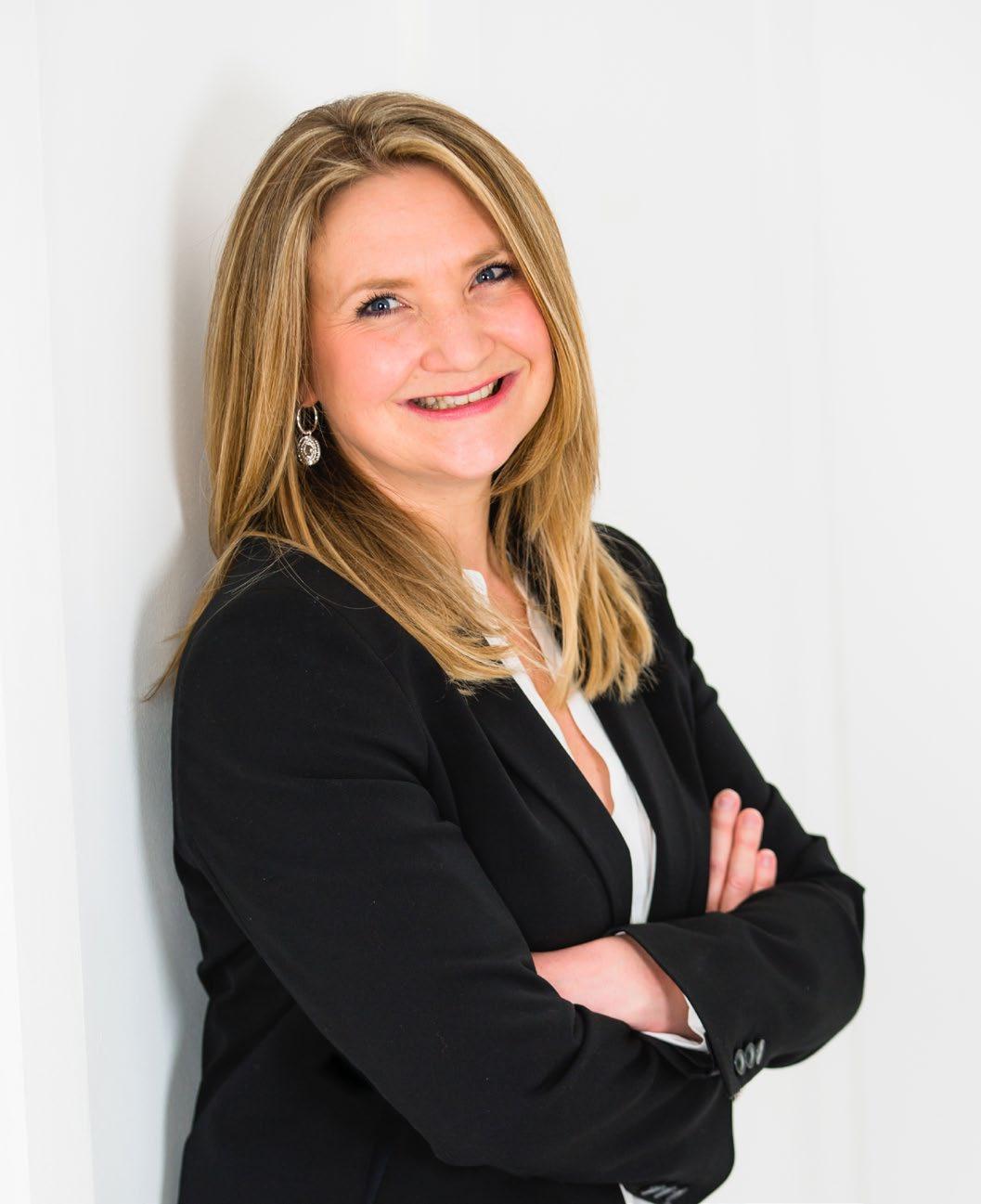
TCM’s new Head of Marketing and Communications, Emma-Jayne Sherry, speaks to The People Leader about the strategic role communications plays in building transformational and high performing cultures.
Q. How does internal communications help organisations articulate their strategic direction and build the kind of transformational culture they want to create?
A: Communications is central to how organisations define, express, and embed transformational cultures. The role of communications is to shape a clear narrative that connects purpose, values, strategic priorities, and the lived experience people should have inside the organisation. Four elements are key when it comes to creating a transformational culture: clarity about the required culture change, belief in the ambition, action and behaviour change, and momentum to sustain the change.
Communications sits at the heart of each of these. It helps people understand what the organisation is striving for, builds emotional connection to the values and behaviours that matter, clearly articulates the actions that need to be taken and provides the stories and everyday signals that show what the culture looks like in practice.
Q: What enables a strong, effective partnership between People & Culture teams and their communications colleagues?
A: Communications leaders must work alongside the Chief People Officer and the executive team as trusted advisors, bringing a deep understanding of workforce dynamics, organisational change, and cultural and reputational risk into strategic decision-making.
Insight is the common currency. Employee sentiment, engagement data, and feedback loops are actively interpreted by both functions to inform People & Culture strategy and the organisational narrative that drives alignment and behaviour. Communications plays a critical role in translating insight into clear, compelling direction that helps leaders mobilise people around the business strategy. There is also a powerful intersection with brand and reputation. The internal story and the external story are two sides of the same coin. When People & Culture, Communications
and Marketing intentionally shape these narratives together, organisations build credibility, trust and coherence across all their stakeholders.
Q: In your experience, are internal communicators typically involved early enough in the change process to shape it effectively?
A: Early involvement is essential. When communicators are part of the process from the outset, they can help leaders explore the broader context of the change. Leaders are usually clear on the outcomes they want to achieve. What benefits from deeper exploration is the ripple effect: how different groups will be impacted, where interdependencies sit, and what questions or concerns may arise.
Communications professionals look at the change through the eyes of diverse stakeholders and help leaders understand the practical and emotional impact across the organisation. This early insight shapes better decisions and creates the foundation for a communication strategy that is grounded in reality.
In our January issue, we introduced the People & Culture Operating Model™ which encompasses five domains - People, Culture, Strategy, Justice, and Value.
This model is accompanied by a people and culture skills matrix, which offers a clear, practical, capability framework across the five zones. Over a series of articles for The People Leader, we will explore the skills matrix in detail, to help you craft a personalised capability roadmap. This will help you develop your professional growth with intention and confidence.
In the second of the series, we look at the Culture Domain:
The Culture Domain positions People and Culture professionals as custodians of shared meaning and curators of the organisational narrative. Culture is no longer a by-product of policy or process – what I describe as ‘culture by chance’. With the right skills and capabilities, culture is curated through moments, rituals, design choices and everyday interactions. This domain invites active cocuration: a commitment to shaping culture not by chance, but by choice.
What does this look like in practice?
The reality of what this looks like will always be deeply personal and shaped by your experience and role. However, a few guiding ideas apply at every level which you can choose to focus on:
Ethical and cultural integrity, ensuring that culture is principled rather than perf ormative, and lived rather than merely asser ted.
Shaping and chairing a cross-functional culture hub, ensuring shared ownership. Culture diagnostics and insight , grounded in listening with curiosity, neutrality, and respect for lived experience.
Cultural storytelling and narrative creation, using stor y, ritual, and shared language to make culture visible and meaningful.
For entry-level people professionals, the priority is cultural awareness and listening. Gathering feedback with care, understanding how policies and processes affect wellbeing, engagement, and inclusion, and acting with integrity in everyday interactions all contribute to cultural coherence.
For mid-level people professionals, the focus widens. Leading culture diagnostics, facilitating honest conversations about cultural tensions and translating values into operational practice become central to the role.
Transformational change and organisation design, recognising that structures, systems, and roles shape relationships, power and belonging.
At senior level, people leaders are the cultural architects. They are custodians of systems which are fair, just, inclusive, and sustainable. Cultural intelligence is embedded into governance and strategy, organisational design choices are aligned with purpose and values, and leaders are held accountable for how culture is lived, not just how it is described.
Through these choices, as a People Partner you can shape not just how the organisation performs today, but how sustainably and ethically it will thrive in the future.
* SOURCE: People and Culture: A practical guide for HR professionals and leaders.
Leadership that listens. Leadership that learns. Leadership that transforms.
Engage Leadership from The TCM Group enables executive, senior, middle and aspiring managers to think systemically, act with integrity, and lead through complexity.
Rethink Leadership podcast with Jeremy Blain.
Conversations to inspire new thinking, transformation, and excellence for leaders.
Check out the latest episode featuring TCM’s David Liddle.
https://www.youtube.com/watch?v=4HqSrJ_cmss
Our programmes are grounded in real work, lived experience, and evidence-based practice.
We support leaders to build trust, navigate tension, and shape transformational cultures where people, performance, and profit co-exist in service of long-term value.
• Board level strategic development and leadership away days.
• 14 high impact and fully accredited leadership development modules.
• One to one coaching, team coaching and systemic coaching.
• Immersive leadership boot camps.
• Insightful leadership psychometrics.
• Engage 360™ (our innovative 360-degree review).
BE THAT LEADER engageleadership.com
Our partners:

KEVIN GREEN, Chief People Officer at First Bus, in conversation with Bruce Daisley on the Eat Sleep Work Repeat podcast.
“Culture is built on moments of truth. Every day a driver will be faced with 25 moments of truth that shape what customers think of the service. That’s 125 a week …. 500 every month …. 6000 moments of truth per driver per year. And we’ve got 14,000 drivers. That’s 80 million moments of truth every year.”
https://eatsleepworkrepeat.com/category/ podcast/

Have you recently moved into a new CPO role? Or maybe you’ve been promoted to the top people and culture job in your organisation?
If you’d like to highlight your achievements, send details of your role, together with some brief biographical information and a head and shoulders photo, to:
erika.lucas@ thepeopleleader.com
The 2026 Edelman Trust Barometer provides a fascinating insight into the global rise of insularity, and highlights the key role leaders have to play in brokering trust within their organisations.
Now in it’s 26th year, the barometer shines a light on how increasing insularity – driven by economic anxiety, geopolitical tension, and rapid technological change – is reshaping relationships at work and across society.
The findings, based on responses from nearly 34,000 people across 28 countries, suggest that individuals are increasingly retreating into smaller, familiar circles. Seven in 10 people worldwide, for example, are hesitant to trust someone who holds different values or perspectives, with that figure rising to 76% in the UK.
The report suggests that this narrowing of trust is slowing progress, weakening collaboration, and making it harder for institutions to lead through uncertainty. The majority of respondents agreed it was a significant or critical issue, which was harming the country.
Against this backdrop, the report identifies trust brokering, which is described as listening without judgement, engaging people where they are, and helping translate across differences, as a key capability for leaders. Employers emerge as the institution best placed to do this work, with employees expressing higher confidence in their organisation than in government or media.
Eight key findings from the Barometer are outlined below:
1. Insularity is undermining trust
Only a quarter of people in the UK are open to trusting across differences. The majority hesitate when faced with someone whose values, facts, or cultural background diverge from their own.
2. Optimism about the future is fading
Only 14% of people in the UK believe the next generation will be better off. This is significantly below the global average of 32%.
3. Personal networks are filling the leadership void
Trust in institutional leaders has declined, while trust in personal relationships has strengthened. In the UK, scientists, teachers, and neighbours are viewed as more trustworthy than CEOs, journalists, or government leaders.
4. Insularity is becoming a business issue
More than a third of UK employees would rather change jobs than work for a manager with very different values. Many say they would reduce effort on projects led by someone whose beliefs clash with their own.
5. Institutions are falling short on trust brokering
Employers are the only institution that a majority of UK employees believe is doing well at bridging divides. Effective actions cited by respondents include promoting shared identity, building diverse teams, and offering training in constructive dialogue.
6. Employers are well positioned to scale trust brokering
The expectation V performance gap is smallest for employers, giving organisations a unique opportunity to build trust through everyday interactions and team structures.
7. CEOs are expected to lead on trust building
Nearly seven in 10 people believe CEOs should help bridge divides, yet only 31% feel they are doing this well. Consulting diverse voices and engaging constructively with critics are seen as essential behaviours.
8. Trusted voices on social media can open doors
People who trust influencers say they may reconsider their view of a company if someone they already trust vouches for it, highlighting the growing role of peer- driven credibility.
You can read the full findings of the 2026 Edelman Trust Barometer here:
https://www.edelman.com/trust/2026/ trust-barometer#TrustBarometer
A low-cost and high-quality subscription service which supports organisations to strengthen dialogue, prevent conflict, and embed a more human approach to resolution.
We deliver practical frameworks, expert facilitation and resolution pathways that create lasting impact.
www.ukresolution.com


The People Leader Roundtables offer intimate, in-person gatherings designed to cultivate thoughtful dialogue and genuine connection among people leaders.
• Hosted in London and selected global cities.
• Safe, facilitated spaces for deep dialogue.
• Unique opportunities for shared learning and connection.
These gatherings invite honest exchange, shared problem-solving, and deep listening – fostering communities of practice that enrich insight and strengthen leadership capability.
As part of the wider People Leader initiative at TCM, the Roundtables contribute to a growing global movement committed to reshaping workplaces by putting people first.

By Sarah Hamilton-Gill FCIPD, Managing Director, Globus HR Consulting Ltd

For senior HR professionals, HR consulting can be the career move that gives you both impact and autonomy.
If you’ve spent years carrying the weight of complex employee relations, culture tensions, and leadership capability gaps, you’ll know this truth: the work is rarely “just HR”. It’s judgment, influence, and the ability to steady an organisation when pressure is high.
That’s exactly why consulting can be such a natural next step.
You get to bring your experience to the moments that matter most, without being trapped by internal politics or legacy ways of working. You can shape a portfolio around what you’re genuinely brilliant at - employee relations, mediation, culture change, leadership development, talent strategy, or HR tech - and choose the clients and projects that fit your values.
Consulting isn’t about having all the answers. It’s about asking better questions, building trust quickly, and helping leaders make decisions they’ll be proud of.
If you’re ready to be valued for your expertise, this might be your moment.
A new soundtrack to the workday, specifically designed for HR professionals, has hit the airwaves.
HR Radio has been launched in recognition of the fact that 74% of HR Professionals are a ‘team of one’ wearing multiple hats. Every morning, presenters will aim to keep their fingers on the pulse of the HR conversation, with a look at the latest trends, reports, and news.
On the menu for the afternoons, is a deeper dive on a specific subject around HR, mental health, compliance or talent. You can also expect music, from the 80s through to today, and can even request a shout out.
HR Radio can be heard via App, website and on Smart Speaker. https://hrradio.co.uk/


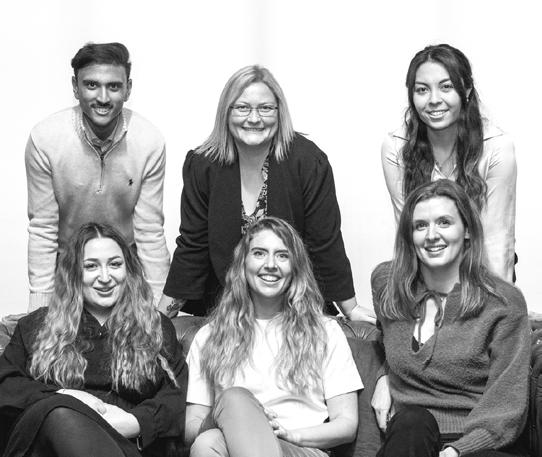




A fully accredited, practical and human-centred programme that strengthens confidence, curiosity and capability. Designed for leaders, managers and professionals who want to hold better conversations and create conditions where people thrive.
“Coaching is the gift that keeps on giving.”

Key webinars and events to support your professional growth.
19
The TCM Group webinar
Health and Wellbeing At Work, plus the Inclusive Workplace Conference, NEC Birmingham
The UK’s leading workplace health and wellbeing event. Eight conference streams across two days, and 150 plus exhibitors.
Catch David Liddle speaking at 9.10am on Tuesday 10th, on ‘understanding the importance and value of data’.
Plus a second chance to catch him at the Inclusive Workplace event at 1.30pm on the same day, speaking on ‘The rise of the consumer employee’.
https://healthwellbeingwork.co.uk/ register
https://inclusiveworkplaceconference. com/live/en/page/home
High-
High-performing teams don’t succeed by forcing people to fit the same mould. As part of Neurodiversity Celebration Week, this session explores what successful teams get right about neurodiversitymoving beyond awareness to the everyday behaviours that reduce friction, build trust, and unlock performance. Our panel will focus on how coachingled, emotionally intelligent managers help teams navigate difference with clarity and confidence, even under pressure.
https://us06web.zoom.us/meeting/ register/ 4sD6MNCiSGOedwQTUVgntg# /registration
19 March 2026, 9am-5pm
London event
The ELEVATE Event 2026
The Future of HR: Powered by Tech, Led by People’ is the theme of the 2026 ELEVATE event, being held in London on 19 March.
A day of learning, connection and inspiration, with speakers including:
Ray Law, co-founder MoneyAppi, Dr Ben Levy, magician and psychologist, Nic Elliott, employment lawyer, and David Liddle, CEO of The TCM Group.
https://www.tickettailor.com/events/ elevate4/1622670
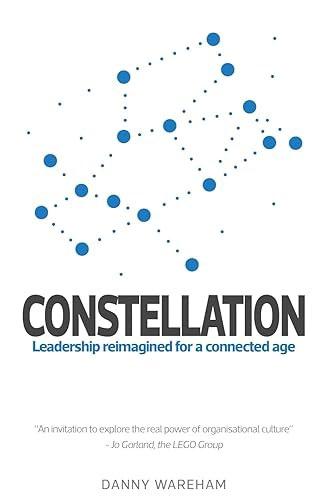
Constellation: Leadership Reimagined for a Connected Age. Danny Wareham, Firgun Publishing.
For decades, leadership studies have circled the same questions: how individuals influence, how authority is shared, how teams perform. But what if the most effective form of leadership lies not in individuals at all, but in the spaces between them?
Constellation presents the first research into a model of leaderless leadership - where purpose, culture, and context, rather than people at the top, become the guiding forces. This ground-breaking study draws on psychology, organisational science, and fresh empirical evidence to reveal a revolutionary approach to leadership for a world too complex for hierarchies to keep pace.
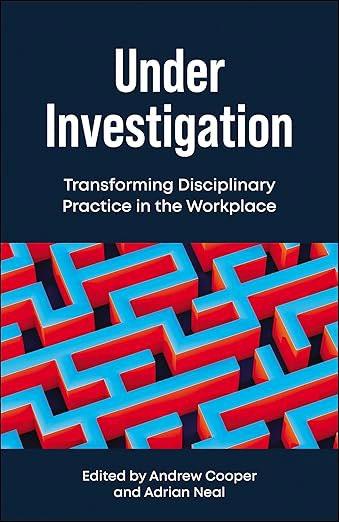
Adrian Neal, Bristol University Press
While employee relations investigations are an important part of managing workplace issues, there is growing evidence of the significant harm they can cause to individuals being taken through them. This harm can also spread further to those involved in their delivery, as well as impacting organisational culture and reputation, leading to financial and economic harm.
Under Investigation proposes a shift in mindset that prioritises employee wellbeing alongside the application of the process. Based on a programme of work and research within NHS Wales, it explores the wider impact of employee investigations, considers new approaches to applying disciplinary policy, and includes a call to the human resources profession for change.
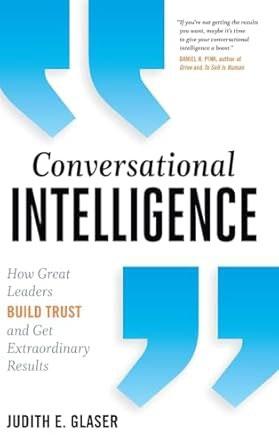
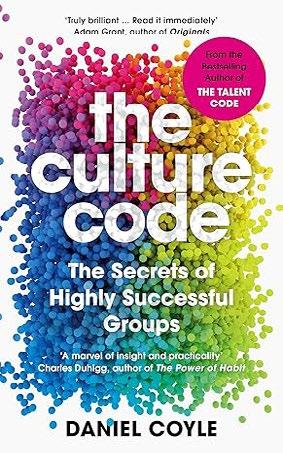
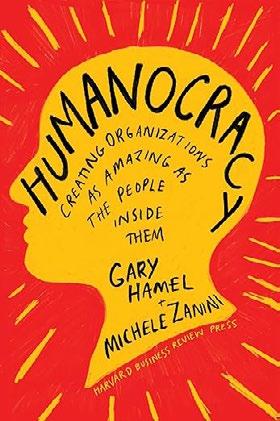

The platform brings together four core elements:


The People Leader is a new platform dedicated to supporting modern People Leaders – whether they sit within HR, executive leadership, operational functions, or emerging people-focused roles.

The People Leader Summits & Roundtables – smaller, thematic gatherings that spark dialogue, shared learning, and experimentation.
The People Leader Live – a flagship annual event that 2 The People Leader Magazine – a monthly publication exploring the practice of building transformational workplace cultures.
convenes leaders who are shaping inclusive, sustainable, values-led, and highperforming cultures.