
New Operating Model for
Editor’s letter
As 2026 gathers momentum, the need for a renewed focus on people, culture, and leadership has never been more pressing.
This second edition is a bumper issue. It offers a rich mix of stories, case studies, expert insight, and practical reflection drawn from across the global people and culture landscape. Together, they reflect both the complexity of the movement and the possibilities that lie ahead.
On 14 January, my new book, People and Culture – a practical guide for HR and leaders, was officially launched. More than 150 senior people leaders, executives, academics, lawyers, and practitioners came together for a thoughtful and challenging conversation, one that captured exactly why spaces like The People Leader matter.
Alongside the articles in this edition, you will find messages from organisations that support and sustain The People Leader platform, and engagement with them is warmly encouraged.
Contributions are welcomed for future editions, as are conversations about magazine advertising or sponsorship of upcoming roundtables, virtual summits, and our annual conference. Further updates, and magazine subscription details, can be found at www.thepeopleleader.com
For now, please sit back and enjoy the magazine. If you enjoy it, please feel free to share it with your colleagues and across your network.
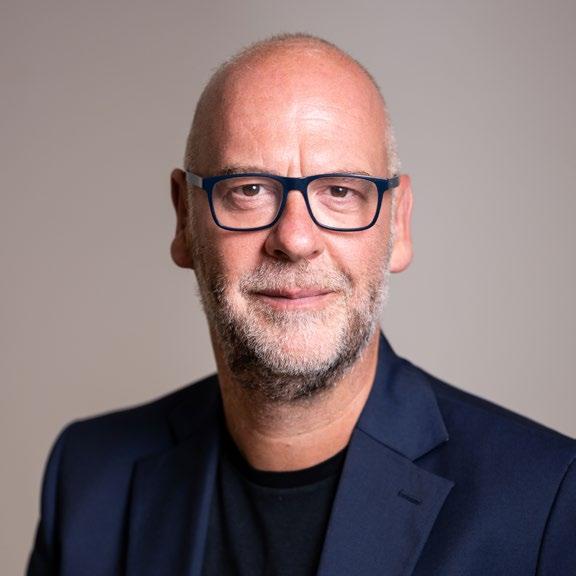
David Liddle
David Liddle, CEO of The TCM Group, Editor in Chief of The People Leader Magazine
Email: editor@thepeopleleader.com
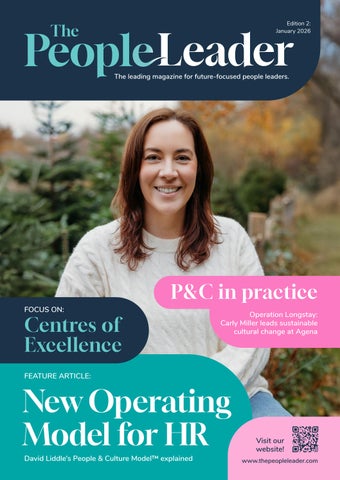
David Liddle’s People & Culture Model™ explained.
Operation Longstay: Carly Miller leads sustainable cultural change at Agena Group.
Angus MacGregor: a CPO’s reflections on people, culture and justice.
News in brief
Latest news and updates from the world of people, culture, and leadership.
Employees keeping AI use a secret
Almost a third of employees are keeping their AI-driven productivity a secret, according to a report from software company Avanti.
The 2025 Technology at Work report revealed that 42% of employees are using GenAI at work, a rise from 26% in the previous year.
Thirty-six per cent admitted to using discretion when using AI, because they perceived it gave them a ‘secret advantage’. The research highlighted rising anxiety levels around use of the technology, however, with 30% of the 7,000 plus respondents worried about the impact on their jobs, and 27% experiencing AI-fuelled imposter syndrome, saying they were concerned people would question their abilities.
“Ivanti’s research shows that employees continue to want greater autonomy over their work lives and AI solutions that help them do their best work,” said Brooke Johnson, Ivanti Chief Legal Counsel and SVP of HR and Security.
Who needs VUCA?
For years, VUCA (volatility, uncertainty, complexity, ambiguity) was the goto acronym for describing the unpredictable business landscape. But in its Megatrends 2025 series, consultancy EY suggests that this no longer captures today’s reality. Enter NAVI: non-linear, accelerated, volatile, interconnected. EY says the defining feature of NAVI is surprise, with 35% of leaders reporting they face unexpected shocks most or all of the time. These disruptions can stem from politics, climate change, or technology - often all at once - creating ripple effects across global economies and organisations.
EY argues that navigating these challenges calls for new approaches to transformation. Most CEOs seem to agree.
In the recent EY-Parthenon Outlook survey, seven in 10 CEOs agreed they needed to rethink their approach, although about two thirds had yet to make the changes.
https://www.ey.com/en_gl/megatrends/ what-if-disruption-is-not-the-challengebut-the-chance
What Gen Z really wants at work
Gen Z workers are coming up against entrenched workplace cultures that don’t match their expectations or strengths, according to a recent survey commissioned by workforce engagement platform Kahoot!.
More than 2000 office workers aged 21-25 were surveyed for the report, with nearly half reporting they had experienced criticism from older co-workers, based on stereotypes about their generation.
Forty-seven per cent said they were judged for being too outspoken and ‘passionate’, 46% for using informal language, slang or humour, and 44% for attempting to set healthy boundaries. At least 42% also reported experiencing disapproval for their clothing or appearance.
The survey also provided insights into what Gen Z did want to see in the workplace – with meaningful connections, regular feedback, opportunities for personal growth, and a genuine sense of purpose topping the list.
https://kahoot.com/business/gen-zreport-2025/ https://www.ivanti.com/en-gb/company/ press-releases/2025/nearly-a-third-ofemployees-are-keeping-their-ai-drivenproductivity-a-secret-finds-ivantiresearch
A new operating system for HR
Talk to any people leader and they will tell you that although they are stepping into the New Year with hope and resolve, they are also carrying more pressure than ever.
There is no doubt the year ahead will be challenging. Organisations are facing economic uncertainty, geopolitical tension, and thanks to the introduction of the Employement Rights Act, an unsettled employee relations landscape.
Productivity is a real concern, with the traditional drivers of performance simply not working like they used to. Employee engagement is falling, and according to Gallup, costing the world economy US$438 billion in lost productivity. Burnout is rising not just among employees, but among HR itself (in a recent Cezanne HR survey, 93% of HR professionals said they were exhausted by their roles).
Employees are restless – unsettled by the back-to-the-office shift, uneasy about the discourse around DEI, unsatisfied in their roles, but reluctant to jump ship due to a cooling job market.
In this scenario, traditional HR operating models are showing their age. Built for stability, hierarchy, and control, they are struggling to keep pace with a world defined by fluidity, interdependence and human complexity.
As one CPO recently said: “We’re trying to run 2026 organisations on a 1990s operating system.”
A new blueprint
In his new book ‘People and Culture: A practical guide for HR professionals and leaders’, David Liddle offers a new HR operating model, designed to help practitioners navigate the challenges of the modern-day workplace.
The model is a blueprint for a strategic reinvention of HR into a people function that is relational, ethical, and commercially grounded.
“It’s a new organising logic for the people function,” he says. “It offers a way to translate values into systems, purpose into practice, and complexity into coherence. And it reflects what many forward thinking CPOs are already doing: reshaping HR into a strategic, human-centred, justice-oriented function that drives performance through people.”
The five dimensions
The model is built around five interconnected dimensions: People, Culture, Strategy, Justice, and Value:
SOURCE: The People & Culture Operating ModelTM diagram from ‘People & Culture: A practical guide for HR professionals and leaders’ by David Liddle.
1. PEOPLE: Fostering personcentred practices, psychological safety, and inclusion.
In the first pillar of the People and Culture Operating Model, people shape the process, not the other way around. It’s about reframing the relationship between the organisation and those who bring it to life. People are no longer viewed as units of production or integers on a spreadsheet, but as co-creators of value, belonging, and meaning.
“Effective people leadership is not about policing policies. It’s about partnering with people,” says Joyce Idoniboye.
2. CULTURE: Co-creating shared values, behaviours, and lived experience.
Culture has long been treated as something leaders either declare from on high or leave to evolve on its own. Neither of these approaches work. The best leaders and people professionals understand that they need to co-create culture every day. It happens in conversations, in small decisions, and sometimes in the casual interactions we typically don’t give a second thought to. This is backed up by the CIPD’s 2023 evidence review, which shows that employee involvement and microcultures play a critical role in sustained performance improvements. Leaders featured in the book, like Gillian McKenna at Generation and Lyndsey Denning at Reconomy, have put this into practice through transparent communication, equitable systems, and leadership behaviours that match the organisation’s values: “‘Sometimes HR is seen as trying to keep everyone happy,’ says Gillian. ‘But that’s not the goal. The goal is to treat people with honesty and fairness. That’s the cornerstone of trust.”
3. STRATEGY: Aligning purpose, priorities, and practices across the enterprise.
Legacy HR has often been reactive – responding to issues, mitigating risk, and operating at the margins of decision-making.
But as David Liddle argues, this is a failure of design, rather than a capability gap. A people and culture focused strategy recognises that business strategy isn’t separate from people – it is people. Purpose, performance, and people practice need to operate in synch, supported by structures that reflect shared values and integrated decision-making. This is being brought to life at the East of England Ambulance Service, where the team moved from ‘doing change to people’ to co-creating change with them, embedding the people function into operational redesign, leadership frameworks, and policy reform.“Our values, vision, and strategy are now people-focused by design,” says Executive Support Manager Rachel Tremble.“That wouldn’t have happened without HR having a seat at the top table and a voice in every room.”
4. JUSTICE: Embedding fairness, restorative dialogue, and learning into policies and systems.
Traditional HR systems for conflict, conduct, and performance are often adversarial, compliancedriven, and rooted in retributive logic. They invoke fear and anxiety, damage trust, and create lasting harm. They take vulnerable moments and twist them into blame and shame, leaving individuals isolated precisely when they most need support. The People and Culture Operating Model offers a new approach – transformative justice. This approach is centred around agency, belonging, and compassion – the new ABC of people practice. It
integrates procedural, distributive, and natural justice with restorative principles that prioritise dialogue, accountability, and repair. Next plc is one of a growing number of organisations who have been rehumanising the employee experience by introducing a resolution framework, which replaces traditional grievance and disciplinary procedures with a compassionate, dialogue-driven approach. Since the introduction of Next Resolution, disciplinary cases have dropped by 48%, and grievances by 11%. This shift has also generated substantial financial savings of approximately £1,101 per avoided formal case.
5. VALUE: Delivering meaningful, measurable outcomes for people and business alike.
The final dimension of the model is value – not in the narrow sense of cost or efficiency, but in the broader sense of meaningful, measurable outcomes for people and the organisation. Today’s environment demands this broader, more holistic lens, which integrates social, strategic, stakeholder, and shareholder value. In this landscape, the People and Culture function moves beyond process delivery and becomes a catalyst for value creation –where profitability lives alongside wellbeing, integrity, adaptability, and trust as core measures of organisational success. People professionals are increasingly called upon to balance complex needs: nurturing belonging while driving performance, embedding ethics while enabling agility, and holding cultural coherence in a world of constant disruption.
A call to action
“The People and Culture Operating Model is not a theoretical exercise. It is a call to action – and a challenge to the profession,” says David Liddle.
P&C in practice
Operation Longstay: Leading sustainable cultural change at Agena Group.

“If we want to be true strategic partners to our businesses, we need to speak more than the language of HR. We need to speak the language of change.”
CARLY MILLER, CHIEF PEOPLE OFFICER, AGENA GROUP

An interview with Carly Miller, CPO at Agena Group.
Carly Miller’s journey is a remarkable example of integrative leadership, driven by deep empathy, courageous innovation, and a relentless commitment to human-centred practice.
Carly, currently the Chief People Officer at Agena Group, champions a vision of people leadership that moves beyond traditional HR policy, placing genuine human connection, evidence-based decision-making, and strategic agility at the core of organisational culture.
Carly’s pathway into HR was far from linear. After initially exploring teaching and business development, it was her formative experience with a workplace training session on goal-setting and personal development that ignited her passion for people development.
Her extensive HR career spans multiple sectors, including manufacturing, financial services, public sector roles, and private enterprises. Each role provided critical insights into the dynamics of organisational culture and the central role of effective leadership. Notably, her early frustration with bureaucratic systems within public sector organisations reinforced her determination to drive genuine cultural transformation rather than superficial policy compliance.
Carly describes her philosophy clearly:
“Policies too often prepare us for the few who behave poorly, rather than helping the many to thrive. The real work of a people team lies beyond policy – it lies in listening deeply, cutting through the noise, and acting with purpose.”
Joining Agena Group, Carly faced an immediate and pressing cultural and operational challenge: the exceptionally high turnover rate among parking wardens, which peaked at an alarming 158 per cent annually. Prior conventional interventions – salary increases, bonuses and engagement initiatives – had failed to produce lasting change. Recognising the limitations of top-down approaches, Carly spearheaded a radical shift: listening at ground level.
This approach culminated in the innovative initiative named Operation Longstay, a strategic partnership with consultancy Sprint Valley. The project involved senior executives, including Carly, stepping into the wardens’ shoes through job-shadowing and conducting immersive video diary studies to genuinely understand their experiences. Carly’s philosophy was clear: the frontline staff saw ‘100% of the issues’, making their voices indispensable to genuine transformation.
The outcomes of Operation Longstay were remarkable. In just four months, turnover rates halved from 158% to 88%, and the average tenure of wardens increased significantly from three months to eight months. Carly attributes this dramatic turnaround to shifting organisational focus from control to co-creation, from assumption-based decisions to evidence-based action.
Another key insight from Carly’s integrative leadership is the powerful cross-pollination of ideas from other disciplines. At Agena Group, Carly successfully incorporated agile methodologies from project management, persona mapping from marketing, and automation insights from technology, significantly enriching the HR function. These approaches facilitated rapid testing and refinement of initiatives, embedding flexibility and responsiveness into the organisational culture:
As we move forward, people teams should start borrowing more boldly from other disciplines. We need to keep ourselves relevant and equip our teams with the skills to lead cultural change in complex, fast-moving environments.
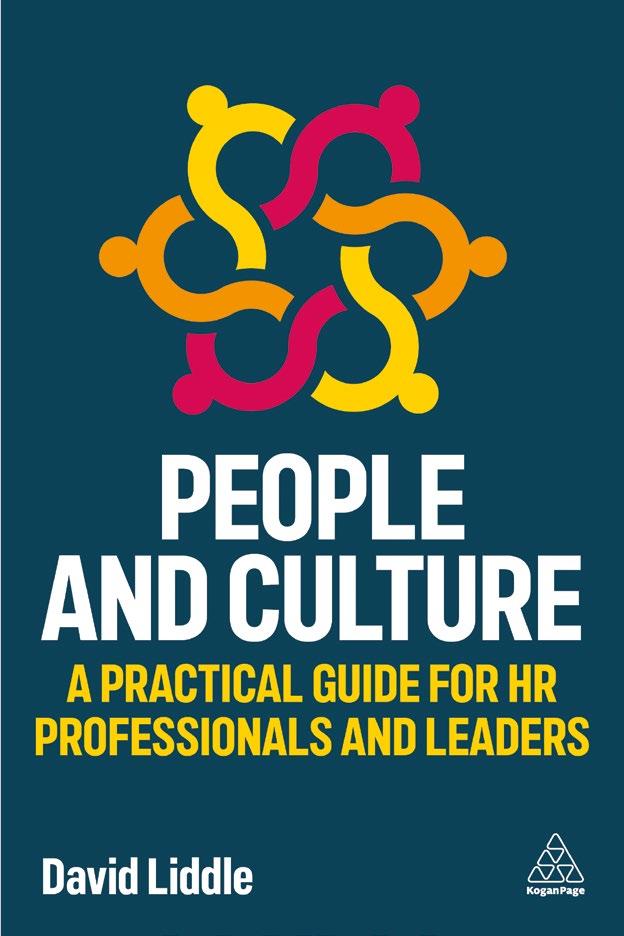
DAVID LIDDLE’S NEW BOOK!
Under Carly’s leadership, Agena Group also implemented initiatives such as the ‘Bright Stars’ mentoring programme, promoting long-term learning journeys that substantially boosted employee confidence and professional growth. These interventions, she told me, have been pivotal not only for employee retention but also for creating a positive and inclusive workplace culture.
Looking forward, Carly’s vision for the future of people and culture functions emphasises guiding principles over rigid policies, outcomes over hours worked, and excitement about emerging technologies rather than fear. Central to this vision is the necessity of emotionally intelligent and empathetic leadership –leaders who coach, support, and inspire.
I asked Carly to share some advice for others in the field. “Expand your toolkit,” she urged. “Make coaching, marketing, agile, and AI essential parts of your learning. Let’s make them core modules in our professional development. Because if we want to be true strategic partners to our businesses, we need to speak more than the language of HR. We need to speak the language of change.”
SOURCE: People and Culture: A practical guide for HR professionals and leaders.
Written for HR professionals and business leaders, this book shows how to adopt a people and culture approach in the organisation.
It features the innovative People and Culture Operating Model, which provides practitioners with the tools they need to create a purpose-driven, values-based, and people-centric approach to their company culture and their HR strategy.
“This book is genuinely inspiring, thoughtprovoking and full of real-life examples. It reinforces the purpose of putting people at the centre of organisations and demonstrates the value HR leaders bring.”
Margaret Ayers, Chief People Officer, Canterbury Christ Church University and Chair of Universities Human Resources
“A powerful and timely guide that places the human heartbeat at the centre of organisational life. Firmly grounded in reality, it offers clear frameworks linking culture, leadership, and business outcomes. A must-read for anyone shaping the future of work.”
Sara Andrews, Chief People Officer at Ecovyst Catalyst Technologies UK
“An incredibly compelling and well-thought-out book and framework. It is timely, necessary and a manifesto for HR leaders to embed culture at the centre of a bold organisational framework.”
Dan Pontefract, Leadership Strategist, Thinkers50 Radar, and author of The Future of Work Is Grey
The new centres of excellence - a practical guide
HR Centres of Excellence are not a new concept. When run well, the best ones have undoubtedly added value to the organisation – deepening knowledge and expertise, ensuring consistency, and helping to provide a sense of direction.
The problem, however, is that it’s all too easy for these centres to become mired in bureaucracy. Rigid procedures block common sense. Good ideas get lost in a sea of rules and policies. People become secondary to process. As a result, employees often feel that they are being ‘done to’ rather than ‘done with’. Centres that have been set up with enthusiasm lose their impact and before too long are seen as nothing more than yet another internal committee.
In his latest book, People and Culture: A practical guide for HR professionals and leaders’, David Liddle offers a new vision for HR Centres of Excellence – one that pictures them as less like a fortress, and more like a community centre or garden.
“These centres are not about holding expertise tightly; they’re about growing it, expanding it, sharing it, and perhaps more importantly, making it more human and connected. It’s about creating somewhere you would genuinely want to spend your time - a place that’s curious, alive, and maybe even a bit unpredictable at times,” he says.
Liddle describes a suite of 10 centres of excellence, designed to underpin his new People and Culture Operating Model (see story page 4). The centres are designed to help organisations make the shift towards a transformational culture. They align corporate and people strategy to shape a workplace where people genuinely thrive.
Below we set out the 10 core centres – together with practical guidance on how to maximise their impact:
The Culture Hub
The Culture Hub acts as a listening post and storytelling engine. It sits at the heart of your People and Culture ecosystem. Rather than acting as a static guardian of values or branding, it continuously gathers insights, fosters connection, and amplifies the diverse voices within the organisation. Led by the Chief People Officer, the Hub actively co-designs and co-delivers your people plan through dialogue, diagnostics, and co-creation.
Practical guidance:
• Regularly hold inclusive ‘culture cafes’ to amplify employee stories and insights.
• Use pulse-check diagnostics to surface hidden dynamics and rapidly respond.
AI Centre of Excellence (AiCE)
The AI Centre of Excellence is the hub for ethical stewardship and digital empowerment. It ensures AI is human-centred, ethical, and fully aligned to your organisational values. It supports your workforce in developing digital fluency, critically evaluates algorithmic tools for fairness and transparency, and maintains robust ethical governance.
Practical guidance:
• Run quarterly AI ethics forums to foster dialogue and transparency.
• Use AI literacy training to demystify and empower employees around technology.
Talent Acquisition Centre
The Talent Acquisition Hub moves beyond traditional recruitment to become the curator of your organisational story, actively building relationships with future talent. It prioritises candidate experience, inclusion, and the responsible use of AI, shifting the focus from transactional hiring towards strategic workforce
planning. The work of this Centre of Excellence focuses on building great relationships and securing exciting futures for talented people.
Practical guidance:
• Map candidate journeys to enhance experience at each recruitment stage.
• Train recruiters in storytelling and inclusive hiring practices, embedding organisational values into every interaction.
Wellbeing, Engagement, and Inclusion Centre.
The Wellbeing, Engagement, and Inclusion Centre is designed to cultivate happy, healthy, and harmonious workplaces for higher performance. It nurtures wellbeing, authentic engagement, and relational inclusion, addressing structural barriers and elevating voices to build genuinely just, thriving cultures. The centre aims to transform the workplace into a space of genuine belonging, emotional connection, and psychological safety.
Practical guidance:
• Create integrated wellbeing plans that address mental, emotional, and social health.
• Facilitate open ‘listening forums’ where all employees feel empowered to share experiences and propose change.
The Resolution Centre
The Resolution Centre transforms conflict resolution through an overarching Resolution Framework, giving access to restorative practices, mediation, and dialogue. It is about fostering transformative justice, dignity, early intervention, learning, and compassionate workplace relationships. By proactively addressing conflicts through mediation, coaching, facilitation, and – when necessary – formal resolution processes,
it builds conflict resilience, psychological safety, and organisational trust.
Practical guidance:
• Introduce TCM’s multi-award winning Resolution Framework (which is freely available) to help guide decision-making and the resolution of workplace issues.
• Offer proactive conflict training to build resilience and conversational courage across teams.
ESG Centre of Excellence
The ESG Centre of Excellence ensures that environmental stewardship, social responsibility, and ethical governance aren’t side initiatives – but central pillars of organisational identity and decision-making. It helps embed ESG principles into culture, strategy, and operations, guiding leaders to align values with impact and transparency with trust.
Practical guidance:
• Conduct ESG alignment labs to evaluate how environmental, social, and governance commitments show up across your culture, strategy, and employee experience.
• Appoint cross-functional ESG champions to drive collective ownership and ensure consistent, values-led practices at every level.
Learning and Development Centre
The Learning and Development Centre cultivates a lifelong learning environment that encourages curiosity, agility, reflection, and growth through experiential methods, dialogue, coaching, and co-creation. It takes learning and development beyond a discrete function, evolving it into a living ecosystem that fuels curiosity, nurtures critical thinking, and strengthens adaptability. At its best, the L&D Centre of Excellence awakens a collective sense of
consciousness in which curiosity and a love of learning are fully embedded across the organisation.
Practical guidance:
• Establish regular ‘growth labs’ where teams collaboratively explore new skills.
• Integrate reflective practices, such as ‘after-action reviews’, to embed continuous learning.
Organisation Design and Development Centre
The Organisation Design and Development Centre shapes collaborative, humane structures and agile systems, embedding behavioural insights and data informed dialogue to shape change thoughtfully alongside people. Its work ensures that changes in your workplace – such as team redesign, agile practices, or organizational shifts – are co-created, humancentred, and implemented with sensitivity.
Practical guidance:
• Facilitate ‘design dialogues’ involving diverse employees during major changes.
• Regularly assess team structures for alignment with your culture and strategic objectives.

Centre for People and Culture Policy and Governance
This centre ensures your policies actively embody your culture and values, balancing clarity and consistency with empathy and flexibility. Policies become tools for fairness, inclusion, and ethical decision-making – not barriers or bureaucratic burdens.
Practical guidance:
• Regularly review policies with diverse employee groups to ensure alignment with lived experiences.
• Develop clear but compassionate frameworks, ensuring policies are easily understandable and culturally reflective.
Centre for User Experience and People Analytics
The Centre for User Experience and People Analytics uses people data ethically and strategically
to uncover insights and enhance the employee experience. It prioritises transparency, intuition and usability, ensuring data serves employees’ needs rather than surveillance.
Practical guidance:
• Regularly share actionable insights with leaders to foster informed, compassionate decision-making.
• Conduct ‘experience audits’ to improve how employees interact with digital and physical systems.
Bringing it all together
These Centres of Excellence aren’t remote silos; they form an integrated ecosystem to help sustain a transformational culture. Together, they enable you to actively shape your organisational
culture rather than passively accepting it. They align your strategic ambitions with your cultural realities, embedding trust, inclusion, and human connection into every layer of the business.
In his book, David Liddle presents the centres as a toolkit to help leaders proactively nurture a culture that’s transformational, ethical, and deeply human.
“I imagine these centres as different instruments playing together,” he says. “When they connect, it’s not just noise or uniformity – it’s music. And sure, sometimes it goes a bit off-key, but that’s exactly the point. They’re built around conversations and relationships, not just rules and compliance. We’re taking what was good about the old way – its sense of excellence and professional depth – and making it bigger, bolder, and a lot more human.”c
* SOURCE: People and Culture: A practical guide for HR professionals and leaders.

Angus MacGregor
Human-centred leadership: A CPO’s reflections on people, culture, and justice.
Angus MacGregor is not a leader who shouts. His presence is quiet, grounded, and resolute –the kind of confidence that is earned, not imposed.
One of the most telling moments in our conversation came when Angus was asked how he would describe his role. He said: “I help create an environment where talents are engaged and able to thrive.”
A trained lawyer turned people leader, Angus MacGregor brings a rare blend of legal precision, emotional intelligence, and deep cultural empathy to his role. And at the heart of his philosophy is a simple truth: culture and justice are inseparable.
“My legal background gave me the tools to analyse disputes,’ he reflects, ‘but it didn’t give me the tools to solve them in human terms. That came later – through coaching, through mediation, and through experience.’”
It’s this shift – from transactional to transformational – that defines Angus’s journey. Early in his career, he witnessed the limitations of retributive justice within the workplace. Policies were followed,
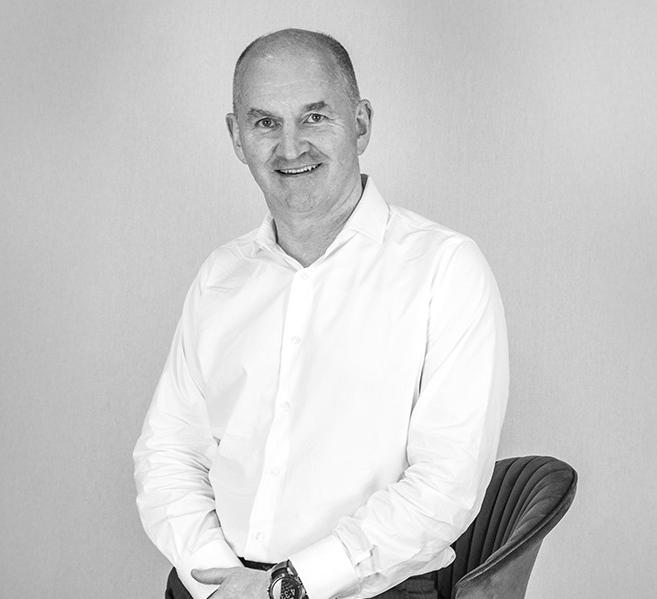
procedures were observed, but relationships broke down and trust eroded. ‘We were solving the problem, not healing the harm,’ he says. ‘And that’s not enough.’
Now at Shaw Gibbs, a fastgrowing accountancy and business services firm backed by private equity, Angus is putting these principles into practice. He has introduced mediation practices and early resolution pathways rooted in the ethos of transformative justice. “Mediation isn’t just a process,” he explains. “It’s a mindset – a belief that dialogue, compassion and accountability are more powerful than punishment.”
This belief sits at the very heart of a transformational culture and the Resolution Framework – and Angus brings it to life with clarity and conviction. Whether he’s resolving disputes, facilitating conversations, or shaping people policy, his focus is always on restoring dignity, preserving relationships, and cultivating fairness.
But Angus is also deeply pragmatic. Shaw Gibbs is operating in a high velocity M&A environment, acquiring several firms a year, each with its own culture, norms, and emotional terrain. Angus describes the
cultural integration process not as a checklist, but as a ‘sensitive unfolding’. He uses structured interviews, listening sessions, and cultural diagnostics to understand the emotional signature of each acquired firm.
“You can’t impose culture,” he says. “You can only invite people into it.”
One particularly vivid story Angus shared during our interview illustrates this: two teams from different business lines – tax and outsourcing – came together in a new office location. Their cultures clashed: one informal and agile, the other formal and process led. Rather than impose rules, Angus used facilitated dialogue to unearth shared values and unspoken expectations. “It was about holding space for the discomfort,” he shares. “Helping them hear each other – not fix each other.”
This approach draws directly from the principles of transformative justice. Angus works methodically through mindsets, behaviours, systems and language –integrating newly acquired teams not by assimilation but by alignment. He is constantly asking: “What does this group value? What language do they use? What makes them feel safe?”
In conversation with Angus MacGregor continued...
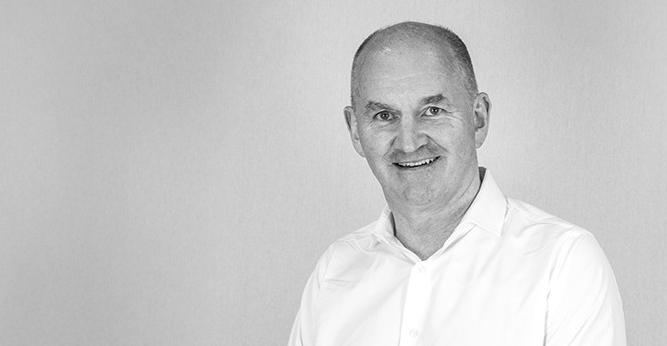
Angus’s use of AI also reflects his commitment to both insight and empathy. He’s experimenting with custom GPTs, leveraging their analytical capacity while insisting that emotional nuance remains central. “Technology can support the conversation,’” he says, “but it can’t replace it.”
When asked about the role of HR, Angus is refreshingly candid. “We still lack confidence as a profession,” he says. “Too often, we’re waiting to be invited. But the business needs us to lead – to show up with data, with insight, with courage.”
This observation aligns powerfully with one of the themes in ‘People and Culture: A practical guide for HR professionals and leaders’: that People and Culture leaders must reframe themselves not as service providers but as culture architects. Angus is already doing this – helping to codify the values of Shaw Gibbs (respect, collaboration, excellence) and translating them into performance frameworks, leadership expectations, and day-to-day language.
“You can’t talk about culture in the abstract,” he notes. “It has to show up in the behaviours you reward, the language you use, the way you respond when things go wrong.”
His leadership style is best described as quietly transformational. He doesn’t posture. He listens. He reflects. He asks brave questions. And he holds firm to a belief that fairness and growth are not in conflict – they are, in fact, partners.
A particularly revealing point in our conversation came when Angus was asked how he would describe his role to someone outside HR. He paused, then said: “I help people feel safe to do great work.” That single sentence encapsulates everything about transformationalism: people, justice, inclusion, leadership, and the soul of a transformational culture.
* SOURCE: People and Culture: A practical guide for HR professionals and leaders.
Quote of the month
“Companies need to change the way they manage and lead to match the way that modern humans actually work and live.”
BRIAN HALLIGAN, Board Member, HubSpot
Specialists in resolving complex and sensitive disputes with dignity, clarity and care.
Independent mediators supporting leaders, teams and organisations to rebuild trust and restore working relationships.
The Culture Doctor
THE CONUNDRUM:
We want to become a People and Culture function, but the organisation is wedded to the traditional HR policies and processes. How do we make the shift?
Karl Wood, HR strategist and Author:
“Transforming HR into People and Culture isn’t an overnight process. It requires commitment from leadership and buy-in from employees. Crucially, it needs HR to step up as champions of change.
We can’t just communicate the new culture; we need to build, model, and embed it in every part of the business. That means aligning policies, performance metrics, and leadership behaviours with the culture you want to see.
It’s about moving away from the top-down approach and creating space for employees to have a voice. It’s about making culture a lived experience rather than a corporate statement.
If you’re thinking about making the shift from HR to People and Culture, here are three things you can start doing today:
Integrate Culture into Everyday Practices: Don’t just talk about culture—embed it in policies, performance reviews, and leadership behaviours. Make it part of everyday conversations.
Support Leaders in Living the Culture: Equip managers with the skills they need to lead with
empathy and resilience. Run workshops, provide coaching, and hold them accountable for living the culture.
Measure What Matters: Track how people feel about their work, team, and organisation. Use employee feedback to shape your culture strategy continuously.”
Source: https://www.linkedin.com/pulse/why-peopleculture-new-hr-karl-wood-chartered-fcipd-mba-uydfe/.
David Liddle, CEO of The TCM Group:
“Every meaningful transformation encounters resistance – it’s natural and expected. The shift from traditional HR to People and Culture is no exception and is rarely frictionless.
In my experience, there are typically five sources of tension that pull organisations back towards the comfort of the familiar:
Resistance to Change
This is perhaps the most frequent barrier during organisational transformation. Open dialogue, participatory workshops, and a focus on psychological safety can help ‘unfreeze’ entrenched mindsets and prepare individuals to embrace and actively engage in change positively.
Legacy systems
Traditional processes (such as grievance procedures, disciplinary frameworks and performance appraisals), consistently obstruct cultural transformation, by eroding trust and suffocating opportunities for genuine collaboration and growth. Replacing punitive procedures with
The
Culture Doctor continued...
transformative justice and restorative methods, such as mediation and facilitated dialogue, can radically shift organisational dynamics.
Lack of alignment among leaders. Inconsistent leadership buy-in is a frequent obstacle. Leadership development programmes that are explicity aligned with new cultural expectations can help to embed consistent support and shared commitment.
Skill gaps within the HR function. Transitioning to a People and Culture model requires strategic thinking, systems leadership, coaching, mediation, emotional intelligence and cultural facilitation – skills often lacking in traditional HR teams. Prioritising targeted capability-building through tailored professional development and dedicated coaching rapidly equips HR practitioners with essential skills.
Short-term focus and a ‘quick-win’ mindset. Organisations frequently succumb to short-term performance pressures, undervaluing the sustained commitment essential for meaningful cultural transformation. As People and Culture leaders, we must consistently share compelling evidence and stories which highlight the tangible benefits of change.”
The People Leader brings your brand into the inboxes of a global community shaping the future of work.
Its reach extends to approximately 300,000 readers across the c-suites of organisations worldwide, offering a platform where culture architects, executive leaders and strategic influencers come together.
Contact us to explore a range of advertising and sponsorship opportunities:
editor@thepeopleleader.com thepeopleleader.com/ sponsorship/
Have you got a culture conundrum?
Send your questions to: erika.lucas@thepeopleleader.com and the Culture Doctor will try to help.“
A low-cost and high-quality subscription service which supports organisations to strengthen dialogue, prevent conflict, and embed a more human approach to resolution.
We deliver practical frameworks, expert facilitation and resolution pathways that create lasting impact.

Research round-up
New study shows deep impact of workplace bullying
Workplace bullying is often treated as a behavioural or cultural issue, but new research suggests its impact may reach far deeper. A longitudinal study by Dr Samuel Farley (University of Sheffield), Dr David Hughes (University of Manchester) and Professor Karen Niven (University of Sheffield)
tracked 2,469 employees over four years to examine whether bullying can alter core personality traits.
The researchers found that sustained bullying was associated with reduced extroversion and conscientiousness (in other words being dependable and organised).

Is working from home working?
A new House of Lords special inquiry, ‘Is Working From Home Working?’, brings together five years of evidence to help employers refine their hybrid working arrangements. The inquiry, led by Jane Parry, Associate Professor of Work and Employment, University of Southampton, highlights that there is no single model that works for every organisation. Instead, hybrid working should be assessed case by case, taking into account industry needs, job roles, and individual circumstances.
The report identifies clear benefits to hybrid working, highlighting raised employment rates - particularly for people who may struggle with full-time, site-based work, such as disabled employees and parents of young children. It also points to significant gains in recruitment and retention, suggesting potential savings to organisations of between £7–10 billion a year.
While many employers worry about reduced collaboration, the inquiry notes that well-managed hybrid models, including planned ‘anchor days’, can strengthen team relationships. It also highlights the need for better use of digital tools and more thoughtful office design, ensuring space genuinely supports collaborative work rather than hindering it.
https://committees.parliament.uk/committee/771/homebased-working-committee/ news/210300/working-from-home-could-get-people-back-into-work/
Being bullied was also found to increase neuroticism – affecting people’s levels of cheerfulness, sociability, dependability, and calmness. Longer exposure intensified the impact, suggesting bullying may erode traits that typically support strong performance and collaboration.
https://www.tandfonline.com/doi/full/10.10 80/02678373.2025.2551489
Rapid change outpaces leaders
The gap between the pace of organisational change and leader’s ability to respond is widening, according to new research from McLean & Company.
The HR Trends Report 2026, which draws on data from l,626 organisations, suggests leaders are struggling to manage simultaneous technology- driven and people- driven transformation. At the same time, employees are reporting increasing change fatigue.
The findings suggest that in this volatile environment, HR is emerging as the stabilising force.
Respondents ranked leadership development as their top priority for 2026, with innovation also high on the agenda. However, despite evidence that organisations with strong people-leadership capability are 2.3 times more likely to excel at innovation, only 35% of HR teams rate themselves as high performing in leadership development.
Other top priorities include employee experience, retention, recruitment, and cost control.
https://hr.mcleanco.com/research/ss/hrtrends-report-2026

Your people and culture career
What kind of people leader do you aspire to become –and how will you turn that vision into reality?
In our earlier article (page 4) we introduced the People & Culture Operating Model™ which encompasses five domains - People, Culture, Strategy, Justice, and Value.
This model is accompanied by a people and culture skills matrix, which offers a clear, practical, capability framework across the five zones.
Over a series of articles for The People Leader, we will explore the skills matrix in detail, to help you craft a personalised capability roadmap. This will help you develop your professional growth with intention and confidence, remembering that any skills gaps are not signs of failure, but powerful invitations to learn, evolve, and deepen your practice.
We start with the People Domain.
Human connection lies at the very heart of People and Culture. The People Domain centres on eight core capabilities that shape the emotional, operational, and relational fabric of a thriving organisation. Are you already seeing these roles and responsibilities evolving in your organisation?
These are not ‘soft skills’ – they are strategic, future-shaping capabilities that underpin inclusive, values-led cultures grounded in empathy, equity, and excellence:
Empathy and Compassion define the emotional baseline for people practice through active listening, emotional intelligence, and everyday interactions that demonstrate care, dignity, and respect.
Coaching and Facilitation is the practice of holding space for others to think, grow and act. ‘Advising’ becomes enabling reflection and growth – supporting managers through coaching-style conversations, facilitating problem-solving, and helping teams think rather than simply telling them what to do.
Inclusion and Belonging is no longer peripheral - it is a shared and strategic commitment. People Partners apply inclusive behaviours and support initiatives that challenge bias and promote dignity, building psychologically safe environments where difference is valued and voice is encouraged, not managed out.
Talent Development and Learning Agility: encompasses the ability to recognise potential and enable capability. It means supporting growth through development planning, learning pathways, and skills building, helping people adapt as roles and capabilities evolve.
Employee Experience and Wellbeing positions wellbeing not as an initiative, but as a cultural imperative. This means making wellbeing visible, accessible, and embedded in daily practice. People Partners play a vital role in shaping how work actually feels for the people living it day to day.
People Operations Mastery strengthens the scaffolding of people practice. Delivering with accuracy, care, confidentiality, and sound human judgement so that systems feel supportive rather than bureaucratic.
Legal and Regulatory Confidence: ensures ethical and compliant practice, by applying strong legal understanding with pragmatic, ethical decision-making.
Global Mindset and Intercultural Awareness recognises that people and culture are deeply shaped by context. 1 2 3 4 5 6 7 8
What does this look like in practice?
The reality of what this looks like will always be deeply personal and shaped by your experience and role. However, a few guiding ideas apply at every level which you can choose to focus on:
For entry-level people professionals, the priority is to build trust, credibility, and genuine human connection. Practice attentive listening in every interaction, taking time to understand the real issue before moving to advice or action.
• Use empathetic, respectful language in everyday conversations, emails, and case handling so that people feel heard, not processed.
• Begin to adopt simple coaching techniques, such as open questioning, reflection, and summarising, to help managers and colleagues think for themselves rather than simply comply with instructions or policy.
• Ensure that wellbeing support is clearly signposted and accessible, making it easy and safe for people to ask for help when they need it.
• Invest time in building a solid understanding of core employment law and applying it with balance, fairness, and humanity.
• Finally, reflect regularly on your own impact, actively seek feedback, and treat learning as an ongoing discipline.
For mid-level people professionals, the focus shifts to shaping culture through leadership, influence, and system design.
• Model a clear coaching style with managers, reducing dependency on HR while building their confidence and capability to lead people well.
• Rather than defaulting to formal escalation, try to facilitate difficult conversations early, helping teams address issues through dialogue, clarity, and accountability before they become formal disputes.
• Translate workforce data on engagement, wellbeing, and capability into practical, leaderready insight. Proactively redesign pain points in the employee experience using people-centred design, improving how work actually feels day to day.
• Strengthen the future of the function by mentoring junior practitioners and deliberately building internal talent pipelines, ensuring capability and confidence grow at every level.
At senior level, the role of the people leader is to architect culture, ethics, and long-term organisational capability.
• Make care, trust, and psychological safety explicit leadership expectations – not optional behaviours or personal preferences.
• Embed coaching as a cultural norm across the leadership population, not a developmental add-on.
• Fundamentally reframe employee relations at system level – moving from retribution and control towards resolution, learning, and restoration as the default.
• Ensure that people systems are designed around human experience, not just efficiency or compliance. Governance, reward, performance, and decision-making frameworks should have equity, inclusion, and belonging hard-wired into their design, rather than retrofitted after harm occurs.
• Fully integrate wellbeing into business strategy and the employee value proposition, making care a visible and credible commitment rather than a standalone initiative.
Through these choices, as a People Partner you can shape not just how the organisation performs today, but how sustainably and ethically it will thrive in the future.

Movers & Shakers
Have you recently moved into a new CPO role? Or maybe you’ve been promoted to the top people and culture job in your organisation?
If you’d like to highlight your achievements, send details of your role, together with some brief biographical information and a head and shoulders photo, to:
erika.lucas@ thepeopleleader.com
The first of a regular series of columns from thought leaders in the people and culture field.
Reimagining the role of HR
BY MEGAN REITZ
What does the term ‘HR’ mean in your organisation? Is it status or service? Influence or admin? When set beside finance, technology or commercial, does it carry authority – or is it sidelined?
And what of leadership? Is it delivered through power and control, or shared through empowerment and dialogue?
The way we construct status and authority defines what gets said, who gets heard, and what gets done. These conversational habits shape ethical conduct, innovation, inclusion, the employee experience, and ultimately performance.
In the years ahead, these same habits will shape how products and services affect the environment; how we decide whether AI replaces or augments human activity; whether we embrace diversity of thought; and whether we stay tethered to short-term targets or pause to consider wider intention, meaning, and purpose.
In your organisation, what role do your leaders play? And will HR have a seat at the table in these conversations?
This is not about competitive jostling for status – there is enough of that already. What is at stake is whether the human spirit is central or peripheral in our organisations.
Old identities of ‘HR’, associated with the administrative, often bureaucratic management of resources, leave a gaping hole where the capacity for human beings to flourish should be. Many HR leaders and executive teams are therefore turning their attention to the vital and complex world of people and culture.
This is not a superficial rebrand. It requires passionate, committed individuals to see what is at stake and persist in shaping wise decisions that hold the human spirit – and the health of the world around us – paramount.
Through my research, I have observed how many of us work in pathologically busy systems. Like moths drawn to light, we are entranced by the glow of metrics – chasing them with urgency,
seduced by their immediacy. Yet a team can achieve every target and still miss the point. In such places, voices fall silent, imagination withers, and small harms quietly accumulate.
HR has not escaped this drift; it too has been swept into the fixation. Activity is mistaken for progress. Momentum does not always serve what matters most. In the rush to measure and to manage, we can lose sight of meaning, blind ourselves to wider horizons, and suffocate the imagination we need to flourish.
With so much challenge and opportunity ahead, many may wish to reimagine the role of HR and its relationship with people, culture, and leadership. Yet it can feel overwhelming to know where to begin. Rather than seizing the next framework to throw at the problem, we must alter the way we perceive it. This requires nothing less than a paradigm shift.
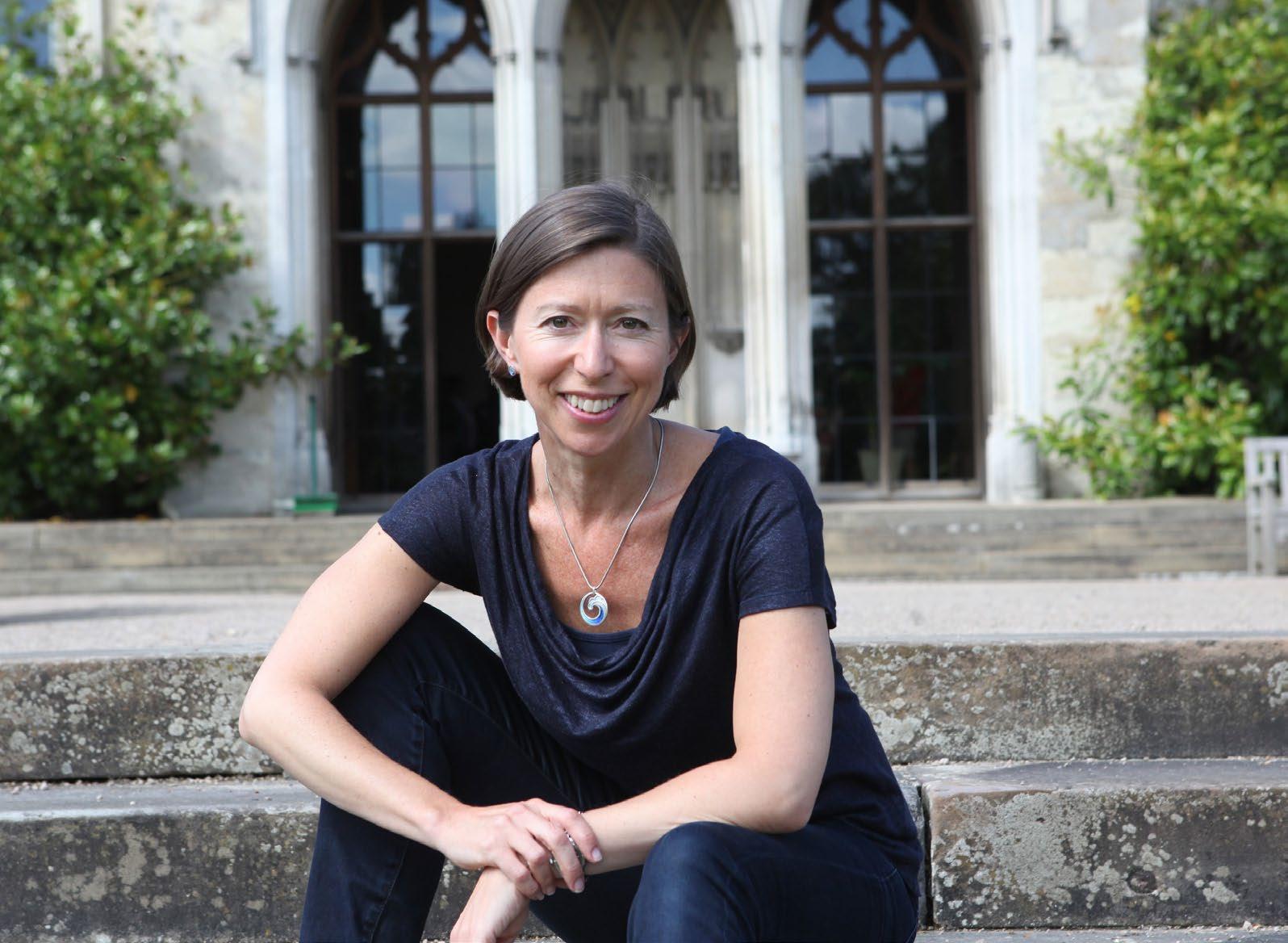
Megan Reitz is Founder of Reitz Consulting, Associate Fellow at Saïd Business School, University of Oxford, and Adjunct Professor of Leadership and Dialogue at Hult International Business School. She is listed on the Thinkers50 ranking of global management thinkers.
Would you like to contribute to our thought leader column? Send your article suggestions, together with some brief biographical information, to erika.lucas@thepeopleleader.com
Employment Rights Act update
What leaders need to know now.
The Employment Rights Act 2025 introduces the most significant overhaul of UK employment law in more than a decade, with major changes phased in from April 2026 onwards.
The reforms expand day- one rights, strengthen protections for workers, and increase employer obligations across dismissal, redundancy, working hours, and workplace safety.
A new Fair Work Agency will
launch in April 2026 with enhanced enforcement powers, increasing regulatory scrutiny and the likelihood of inspections.
From late 2026, restrictions on ‘fire and rehire’ will be introduced, alongside new duties to prevent sexual harassment, and expanded union access rights.
Further ahead, in 2027, organisations will face new requirements on guaranteed hours, shift notice, redundancy
consultation thresholds, and extended tribunal time limits.
How is your organisation preparing for the cultural and communication challenges this significant change in legislation will bring? What are your main concerns? Do you see the new act as a risk – or an opportunity?
Get in touch with us via erika. lucas@thepeopleleader.com and we will share some of your views in a future issue.






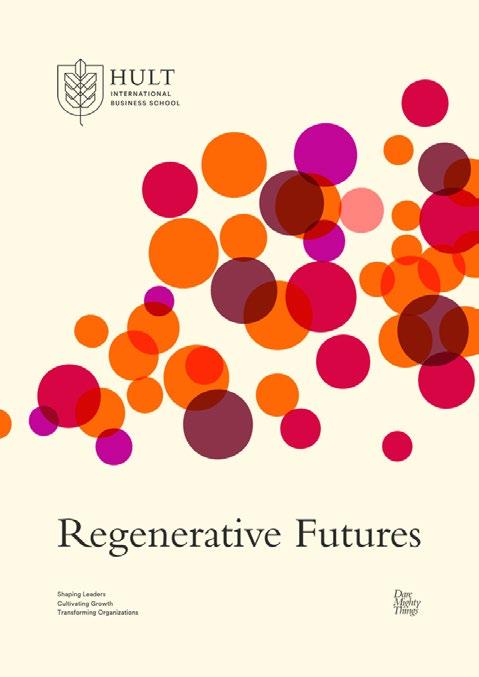
Regenerative leadership FREE resource!
How can we develop leaders and organisations that don’t just recover from challenges, but actively restore, renew and create conditions for sustained thriving?
How can regenerative thinking transform the way we lead, learn and innovate?
These are the questions explored in a new white paper ‘Regenerative Futures’, recently published by Hult International Business School.
This free resource includes a collection of 14 articles written by Hult Faculty, including:
• Why AI demands a shift from resilience to regenerative leadership
• How to rewire inclusion into leadership pipelines
• The power of circularity in building resilient entrepreneurial ecosystems
• Practical pathways for humancentric regeneration and cultural reconnection
• How regenerative organisations –from family businesses to higher education – can drive sustainable futures.
The combined perspectives offer a framework for leaders and organisations to co-create futures that are not only adaptive, but truly regenerative and transformative.
Independent, fair and trauma-informed workplace investigations delivered with accuracy, balance, and compassion.
When the stakes are high, our investigation expertise provides four vital elements: We call this the Investigator FourSight!
Consistency Compliance Clarity Confidence
TO LEARN MORE, VISIT theinvestigationcompany.com
Dates for your diary
Key webinars and events to support your professional growth.
4 February 2026
The TCM Group webinar
Neutral Evaluations
Explained: Fast, Fair, Independent Insight.
Join the webinar via Zoom
Join this webinar for a clear, practical introduction to Neutral Evaluations - what they are, when to use them, and the value they bring.
Featuring expert insight from TCM consultant partners Thoralf Kretzschmar and Laura May.
https://us06web.zoom. us/meeting/register/ k168b4gwR2aksL0xO5ezJQ#/ registration
12 February 2026
The TCM Group webinar Engage Leadership at the Top: Coaching & Learning for Strategic Impact
Join the webinar via Zoom Senior leaders and managers juggle power, politics, performance, and culture, often without a safe space to reflect. Join our Coaching Manager, Leadership Manager and guest consultant partner to see how tailored programmes plus integrated executive coaching build consistency, reduce escalation and develop confident, selfaware leaders.
https://us06web.zoom.us/meeting/ register/Jn16qeHcTaKxYc9FFR-jtA#/ registration
10-11 March 2026
Exhibition / Conference Health and Wellbeing At Work, plus the Inclusive Workplace Conference, NEC Birmingham
The UK’s leading workplace health and wellbeing event. Eight conference streams across two days, and 150 plus exhibitors.
Catch David Liddle speaking at 9.10am on Tuesday 10th, on ‘understanding the importance and value of data’.
Plus a second chance to catch him at the Inclusive Workplace event at 1.30pm on the same day, speaking on ‘The rise of the consumer employee’.
https://healthwellbeingwork.co.uk/ register
https://inclusiveworkplaceconference. com/live/en/page/home
Bookshelf
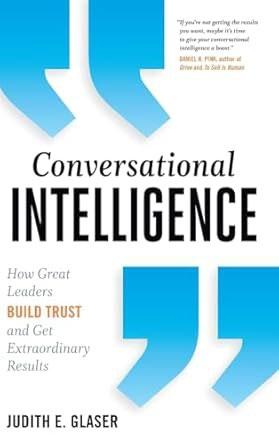
OUT NOW! People and Culture: A Practical Guide for HR Professionals and Leaders
Here author David Liddle talks about the inspiration for his latest book and gives us a glimpse into the contents:
PEOPLE AND CULTURE
Order here and get 30% off by quoting code LIDDLE30 (offer ends 15 Feb 2026)
“Over the past three decades, I have worked with organisations across sectors, countries, and sizes. I have observed how often People Leaders are constrained by systems, structures, and assumptions that no longer fit the reality of modern work. This book grew out of that growing sense of frustration and tension.
“Throughout the book, I draw on more than 30 in-depth interviews with chief people officers and chief executives. These conversations were candid, reflective, and at times deeply personal. They form one of the most extensive qualitative research bases I have undertaken, and they shape the book’s thinking at every level.
“The book introduces the People and Culture Operating Model, The Transformational Culture Model, and the 7Cs of Integrative Leadership as practical ways of optimising people, culture, leadership, strategy, and performance.”
Review by DAVID D’SOUZA Chartered FCIPD, FCPHR, Fellow CEBMa, Director of Profession, The CIPD:
“People and Culture manages to pull off the rare trick of being practical and provocative. A tightly written and accessible reflection on what we know about the present and future of work and what a joined up intelligent response to the challenges and opportunities facing us might be. Full of real-world examples and practical frameworks, it’s an invaluable guide to rich thinking in this space and a challenge to build better and more productive work for all.”
The platform brings together four core elements:

The People Leader is a new platform dedicated to supporting modern People Leaders – whether they sit within HR, executive leadership, operational functions, or emerging people-focused roles.

The People Leader Summits & Roundtables – smaller, thematic gatherings that spark dialogue, shared learning, and experimentation.
The People Leader Live – a flagship annual event that 2 The People Leader Magazine – a monthly publication exploring the practice of building transformational workplace cultures.
convenes leaders who are shaping inclusive, sustainable, values-led, and highperforming cultures.