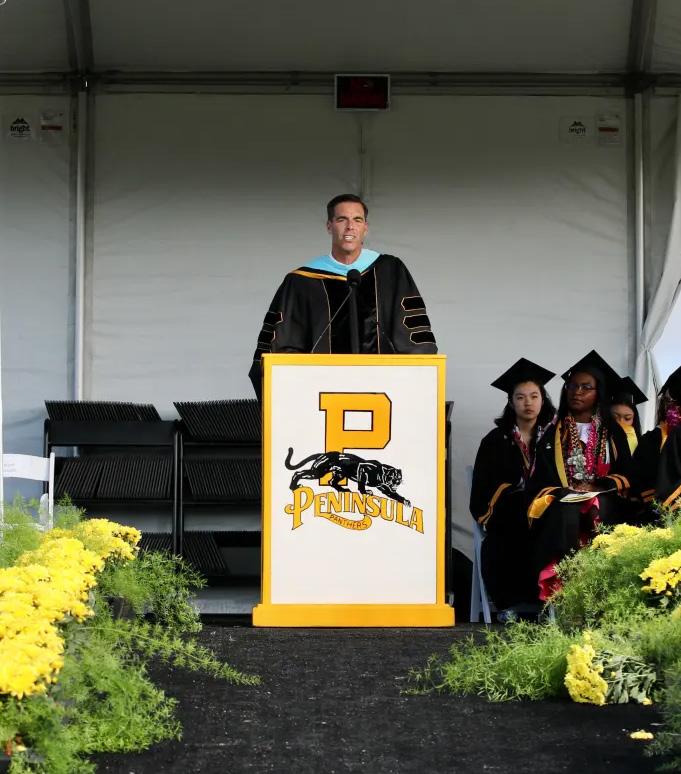
PHOTO COURTESY OF THE DAILY BREEZE
James Pan | 9
“ One small step for man, one giant leap for mankind.” These famous words were spoken by astronaut Neil Armstrong nearly six decades ago, as he became the first human to step on the moon. Armstrong’s statement demonstrates that space travel was once a symbol of human ingenuity and scientific progress. When missions were carried out by small crews of astronauts, they were seen as part of a broader endeavor by humans to conquer the unknown. Nowadays, space travel is the complete opposite. It is no longer conducted for the public good, but as the pet projects of tech billionaires and for-profit corporations. Formerly a symbol of courage and perseverance, it is now a new medium in which out-of-touch celebrities can virtue signal in pursuit of increasingly obscene levels of fame. Katy Perry’s Blue Origin flight is emblematic of this trend. It is tone-deaf, performative and lacks any semblance of authentic scientific value. It is demonstrative of the ironic predicament humanity now finds itself in: as the world burns, the ultra-wealthy responsible look to the stars, leaving the rest of the world to pick up their mess.
The flight in question occurred on April 14 and was hailed as a historic accomplishment due to the involvement of an all-female crew that included Lauren Sanchez, Gayle King, Aisha Bowe, Amanda Nguyen and Kerianne Flynn. Only four minutes of the 11-minute trip were spent in space, during which Perry sang Louis Armstrong’s “What a Wonderful World” as a celebration of humanity. Her performance seemed ironic to many as Perry chose to sing about the world’s wonders while floating in space, representing both literal and physical detachment from the planet she intended to celebrate. She held up a daisy in honor of her daughter, who is named after the flower. After the mission, Perry explained in a series of interviews that the purpose behind her involvement was to inspire other women to follow in her footsteps (New York Post).
If one only examines Perry’s own explanation of the motivation behind the trip, the Blue Origin mission appears to have been conducted for commendable reasons. However, it takes little more than examining the context surrounding it to understand why the overwhelming response from the public was critical. Reserving a seat via Blue Origin’s website requires a $150,000 deposit, but it is estimated that the actual cost for tickets goes well into the millions (Forbes). The other members of the crew are demonstrative of the flight’s exclusivity. One of the crewmembers, Lauren Sanchez, is engaged to Jeff Bezos, who is the owner and founder of Blue Origin. If the mission was meant to send the message that space ought to be accessible to everyone, delivering it aboard an exorbitantly-priced flight operated by a private corporation was certainly the wrong way to do so. The experience aboard this flight was only accessible to the ultra-wealthy who could pay to do so, which makes it difficult for millions of people throughout the world just scraping by to relate. If Blue Origin genuinely intended to make history by making women feel like they belong in space, the trip would have been better served by a crew chosen
based on merit. If they wanted to inspire young girls, choosing a scientist instead of someone in a relationship with an executive would have conveyed a more authentic message about making space accessible. On the contrary, they chose Lauren Sanchez, who is neither an astronaut nor a scientist with any expertise in space. The choice to select her shows where Blue Origin’s priorities lie – in orchestrating an exhilarating activity for the wealthy and powerful. For many, space – once a frontier for scientific inquiry and human ambition — has now become a playground for the one percent to have fun. It is no wonder that the public saw the flight as what it was: a fun activity for the wealthy and privileged under the guise of helping the marginalized.
“I am not sure whether [they] actually wanted to send a message,” sophomore Alex Wilner said. “It seemed like this trip was mainly for them to have fun, but choosing [to publicize it] and the n pretending [it is] to empower women [among] other reasons comes off as disingenuous.”
Perry’s message also comes off as incredibly tone-deaf, especially in the face of global crises such as climate change, rising inequality, and widespread violent conflict. For the many women who still lack basic access to necessities such as healthcare, proper nutrition and education, watching some of the most privileged people in the world floating around and singing does little to distract from the terrestrial struggles they have to face on a daily basis. Going to space for ten minutes does not magically wish away the systemic barriers women still face in the workplace or rampant misogyny. Perry’s trip to space is virtue signaling 101 — it assuages the wealthy’s need to feel like they’re giving back to the marginalized while not doing anything of substance to remedy any of the issues they actually face. It is important that the most influential members of society use their position to help those less privileged than themselves, but that should be done through supporting genuine advocacy and reform, not empty statements. Their extensive wealth, power and influence should be expended toward actually helping others, not pretending like they are.
“I am [unsure] what benefit people gained from [Perry’s] trip in space,” sophomore Aadi Bhagat remarks. “So many people across the world [do not] even have food to eat or water to drink. [Events] like this obviously [do not] do anything about the real issues a lot of people face and probably [detract from their causes].”
Blue Origin’s controversial spaceflight is not an inspiring tale for female empowerment, but another example of how increasingly disconnected the most wealthy and privileged members of society are from the rest. However, it is important to recognize that it is the masses who give celebrities like Perry their position of influence to speak out about the issues of their choice. By understanding this, individuals can act to keep their public figures accountable, which is the first step in many to actualizing genuine progress.
“Events like [the Blue Origin flight] are more common than ever,” freshman Nathan Li said. “Celebrities have lots of influence, and they should be using that to support real, lasting change.”
Edited by: Neekta Baghoolizadeh

EDITORS-IN-CHIEF
Josie Kwak
Alena Rhoades
COPY EDITOR
Andrew Lu
HEADS OF GRAPHICS
Veronica Chen
Abby Lee
EDITORS
Melina Ajami
Neekta Baghoolizadeh
Zahra Habib
Haylie Kim
Sivan Stoler
Angelina Wang
WRITERS
Isabella Attallah
Giana Geerdts
Selah Hartman
Sura Kiasatpour
Mason Kim
Soren Kim
Elyssa Lee
Gunnar Lee
Jewell Lluz
Shawn Lo
Adam Lu
Sydney Malicse
Kyra McGath
Jarrett Meza-Torne
James Pan
Alesha Paramasivum
Soha Shah
Elena Thomas
Elise Vu
Thanh Vuong
GRAPHICS
Kat Espedido
Makayla Glaneman
Zoe Hollingshead
Brian Hong
Angelina Jo
Ari Ortiz
BUSINESS
Marisa Tan (Manager)
Maryam Ali
Asher Brunski
Caide Jung
Sophia Meneshian
Emma Pusavat
WEBSITE
Kohta Kinoshita
PHOTOGRAPHY
Esperanza Engle-Tseng
Alena Rhoades & Andrew Lu | 12
In the latest foray on the Trump Administration’s war on education, President Trump froze over $2.2 billion in grants to Harvard University on April 15, threatening to revoke their tax exempt status should they not accede to his demands to eliminate affirmative action from the admissions process, reform programs that have allegedly encouraged antisemitism and discontinue Diversity, Equity and Inclusion (DEI) policies (Harvard University). This came after he pledged to dismantle the Department of Education, which manages extensive student loan portfolios, funds school meal programs and addresses civil rights complaints (AP News). Trump’s most recent move spells certain doom for Harvard and the United States’ top universities as a whole, as federal support is crucial for advancing medical research, maintaining America’s technological edge over its adversaries and encouraging faith in U.S. institutions for higher education. Harvard University has taken the brunt of Trump’s onslaught, as the main player in the resistance against his efforts to enforce intrusive policies.
President Trump cited Harvard’s failure to address antisemitism connected to pro-Palestinian protests that took place on campus, DEI initiatives and the overt “wokeness” of the courses and staff on campus as reasons to withhold federal funding and halt future grants (BBC). Although many have supported Harvard’s defunding given their deep coffers, their endowment is largely composed of restricted funds — money that can only be accessed following specific guidelines in contracts signed by donors (The Washington Post). To offset the freeze in federal funding put forth by the Trump Administration, Harvard is pulling $250 million of its own funds to continue research efforts taking place on campus, but it’s only a matter of
time before monumental research is nipped in the bud (AP News). In its April lawsuit against Trump, Harvard detailed some of the terminated grants, which included funds to research pediatric HIV, cancer treatments, infectious diseases and Parkinson’s disease (Reuters).
But more detrimental may be Trump’s revocation of Harvard’s 501(c)3 designation, which generally allows educational institutions, charities and religious organizations to claim tax exempt status (The Guardian). This also benefits donors, as their donations are tax-deductible. Recent estimations place Harvard’s tax benefits at around $465 million (The New York Times). Not only would this hamper the medical research mentioned above, but hinder efforts by the U.S. to develop AI technology on par with China’s. Since 2022, Peking University, China’s top institute for higher education, has remained first in AI research, beating its American competitors (South China Morning Post). While the U.S. in 2015 published over 15,000 more articles related to AI research than China, that lead narrowed to just 1400 in 2024 (South China Morning Post). If the U.S. has any chance of beating China in a tech race to demonstrate the superiority of capitalism over communism, the federal government should be backing private educational entities, whose existence exemplifies the capacity of free markets to foster innovation.
While antisemitism has been widely reported on college campuses across the country, the Trump Administration’s remedy has been less than adequate. Kenneth Stern, the lead drafter of the International Holocaust Remembrance Alliance’s working definition of antisemitism, found that the administration has done more harm to Jewish students, even if their efforts are well-intentioned (NPR). By broadening the definition of antisemitism on college campuses, the Trump Administration has sown division as claiming Jewish students’ safety as grounds to divest resources or silence
political speech on campus has engendered resentment towards those students, rather than working to promote the safe exchange of ideas and educational resources. In an open letter to President Trump written by over 200 Israeli academics, Trump’s actions were denounced as “[singling] out Jews as a homogenous group to be protected at the expense of other marginalized groups and minorities,” referring in part to the many international students who could be barred from U.S. universities in the near future (Haaretz).
More recently, Trump announced on May 22 that he would halt Harvard’s enrollment of international students, a decision that has thrown over 27% of their student body into frantic chaos (Forbes). In 1978, President Jimmy Carter, in an unexpected gesture of goodwill, offered to accept 100,000 Chinese students to study at American universities (CNN). This was an important step in normalizing relations between the two countries. President Trump’s move to isolate American universities from the global conversation would not only harm its relations with China, but also the 140 countries that currently send their top innovators and researchers to Harvard (NPR). Additionally, the administration has already canceled more than 1,500 visas at 222 schools nationwide, which could cause long-term ripple effects in cultural diversity and technological research on campus, as well as America’s economy as a whole. According to NAFSA, international students contributed $43.8 billion to the U.S. economy and supported more than 378,000 jobs during the 2023-2024 school year.
If the Trump Administration truly wants to protect education and prevent antisemitism, doing so should not come at the expense of Harvard’s reputation, as well as critical medical and AI research, whose defunding is another affront to America’s higher education system.
“[Charles Schwab] made two and a half billion today, [and Roger Penske] made 900 million!” A viral video of Donald Trump boasting about stock market gains made by his billionaire friends has fueled concern recently about insider trading in Congress (The Guardian). Along with the video, this gross case of market manipulation included a conveniently timed post on Trump’s social media platform “Truth Social” urging people to buy stocks, just hours before he announced that he would be pausing the tariffs placed on countries other than China for three months, causing the market to rebound (The Guardian).
Insider trading occurs when politicians use “material non-public information” to guide their investments – a hallmark of political corruption. Insider trading is rife within American politics, and are common to both political parties. It was especially prominent during the start of the COVID-19 pandemic, as seen by the trades made by Republican Sen. Richard Burr shortly before the market nosedived (CNN). He was investigated, but the case was dropped a few years later – a common theme with cases of insider trading. This is due to the difficult nature of proving the infractions as there is much room for the accused to simply deny the allegations.
“[Insider trading is] absolutely not okay,” junior Camron Farjami said. “It’s basically theft. Politicians should not be able to own private property, or any property at all. They are [servants] of the people.”
Not only is insider trading unethical and unfair, it also negatively impacts the economy by decreasing confidence among smaller investors. Small investors are less willing to participate and invest their money in a system they perceive to be a rapidly changing system. Insider trading erodes the fundamental trust between the people and
their government in a democratic society, with far-reaching implications (Council on Foreign Relations). A low-trust society undermines the effectiveness of governance, which can be clearly seen with how poorly America reacted to the COVID-19 pandemic compared to other countries.
Efforts to curb the practice have been made since the Great Depression, but their authority has been dubious. In 2012, the Stop Trading on Congressional Knowledge (STOCK) act was introduced, which demanded more transparency from Congressional traders and affirmed that securities laws applied to congressmen. Despite its bipartisan popularity, the act is almost never enforced, because it is difficult to prove that information obtained through work in Congress was instrumental in a politician’s trades. Even when it is enforced, the penalties are far outweighed by the profits reaped or money saved – its enforcement comprises a fine of just $200, not even a drop in the bucket for the vast quantities being traded (Investopedia).
“Insider trading could be better prevented [if] politicians [were] banned from trading [stocks],” sophomore Claire Shim said. “Proper financial disclosure and [stronger enforcement] could discourage [insider trading and maintain] public trust. Setting harsher consequences [would also] deter politicians from abusing their power.”
In the shoes of politicians like Richard Burr, it may seem excusable to try to salvage one’s investments after being alerted of an impending market-destroying event like the COVID-19 lockdown. However, that highlights a clear conflict of interest – they can’t serve the public to the best of their ability while also prioritizing their own financial interests because their actions have ramifications for the whole economy. Their actions still should not be tolerated because doing so would set a worrying precedent for future politician-investors.
“The people who are in charge of policy decisions which
affect 330 million people should not be tempted to take selfish actions,” junior Dalton Ngo said. “[Insider trading should] [be regulated through a] congressional review organization that audits congressional stock portfolios.”
Proponents of insider trading may argue that leveraging one’s access to information to get ahead is merely a fact of life – life is not fair, after all. That may be true for individuals in the private sector, but congressmen have a higher level of responsibility than most. They were democratically elected into power, and forfeiting the higher moral standards that come with that power breaks the contract between themselves and the people. It may not be pragmatic, but it is the right thing to do.
Donald Trump’s insider trading is an especially egregious case. Destabilizing the world economy with tariffs is one thing, but apparently exploiting that volatility to help his billionaire associates get richer – and bragging about it online – is the cherry on top. It is not a case of defensive insider trading like with Burr and Pelosi. Rather, it is a very proactive form of profit-seeking, and represents a strong conflict of interest at the highest level of the U.S. government. Moreover, his post encouraging individuals to invest in stocks on his own social media platform suggests that he is rewarding his followers for their loyalty and engagement. Because of this, New York’s attorney general, Letitia James, is aggressively pursuing inquiries into Trump’s inner circle in a hunt for signs of insider trading (Business Insider). Trump’s actions have presented a golden opportunity in the fight against insider trading: if attorneys can show that politicians at the highest level of command can be prosecuted for corrupt practices, it will set the standard for the future. Likewise, the case should be pursued to the furthest extent possible, to hopefully put an end to the crooked practice of congressional insider trading once and for all.
Gunnar Lee |10
Candies, cereals and chips. These classic United States household snacks and breakfasts, commonly associated with vibrant colors, will soon undergo massive change. In a press conference on April 22, Department of Health and Human Services (HHS) Secretary Robert F. Kennedy Jr. announced that they, along with the Food and Drug Administration (FDA), would be introducing measures to remove eight artificial food dyes from the U.S. food supply. Raising concerns about the dyes’ potentially harmful effects on children, officials have pledged to cooperate with food companies to replace them with natural dyes by 2026. The specific dyes listed are petroleum-based, meaning they are extracted from crude oil, which is formed over millions of years from decaying animals and plants under particular conditions. Two uncommonly used dyes, Citrus Red No. 2 and Orange B, will be banned outright while the FDA negotiates with food companies to have the other six gradually phased out by 2026. Three of these eight dyes, Red No. 40, Yellow No. 5 and Yellow No. 6, make up 90% of all US food dye consumption (MSNBC). Though this announcement may seem sudden, especially considering the major role of artificial dye in the U.S.
food supply, there have already been movements to ban artificial dyes at a state level. For instance, California became the first state to pass legislation blocking schools from distributing lunches using synthetic dyes in October, followed by Utah and Arizona (The Washington Post). Junior Yuhyun Kim emphasizes the need for adequate health standards in the food industry.
“I do not want to consume petroleum whenever I eat a bag of chips,” Kim said. “It is surprising how much of the U.S. food dye supply just three dyes make up. My [biggest concern] for the future is what [food companies] will replace the dyes with. If what they substitute the dyes with is worse for human health then there is no point in banning the dyes at all.”
In the final days of the Biden Administration in January, the FDA banned the use of Red Dye No. 3 after studies linked it to cancer in male lab rats. However, there is still debate within the scientific community over the danger the eight dyes pose to human or animal health (ABC News). Although some studies have suggested a link between artificial dyes and hyperactivity in children, potentially contributing to ADHD, many nutrition experts opposed to the studies claim that they were conducted unscientifically with intentionally biased methods of conducting the trials. Opponents of
the ban have also advocated in favor of artificial dyes on the account that it is easier to predict and determine the effect that artificial dyes have on people than it is for natural dyes, which have thousands of compounds as opposed to artificial dyes. Some have also questioned why the HHS and FDA are focusing on phasing out food dyes, which are relatively harmless to children compared to other food-related threats like trans fats or high-fructose corn syrup (The Washington Post). Sophomore Jaden Tarng acknowledges the soundness of the government’s decision.
“Although I think more research is required, I am not [opposed] to banning artificial food dyes,” Tarng said. “Based on the data [released] so far, it is difficult to [understand] the extent to which artificial coloring has [dire effects] on human health. Even if the [risks of the dyes] are relatively low [the U.S.] should not allow them to be circulated. The possibility of harming children is not worth keeping snacks and food colorful.”
The push to remove synthetic dyes from the US food supply is part of RFK Jr.’s pledge to “Make America Healthy Again”. Since his confirmation as Secretary in February, RFK’s policies have created debate in the medical community. He has expressed interest in reforming the FDA to make food standards stricter and launched a $20 million ad campaign encouraging
healthier habits (NBC News). His views on vaccines have drawn significant controversy; he publicly questioned the safety and effectiveness of vaccines during a measles outbreak in Texas, though he later rescinded his statement and urged the public to get vaccinated. RFK Jr.’s primary focus as HHS Secretary is on autism; he believes that people with autism cannot become fully-functioning members of society. He has repeatedly supported the belief that there is a link between vaccination and autism, ADHD and other neurodevelopmental conditions (The Washington Post). His decision to ban the eight synthetic dyes was partially informed by his aim to prevent the spread of the “epidemic of autism”. Junior Isaac Kim expounds his evaluation of RFK’s career thus far.
“RFK Jr. should not be trusted in general,” Kim said. “He has no expertise in the [medical] field [and] is one of the worst members of the new administration. His entertaining of conspiracy theories destroy any credibility he has. I am especially opposed to his suggestion that people with autism cannot function [as productive members of society]; announcing this in front of Congress is infantilizing at best and dehumanizing at most. [Although] I am not opposed to the banning of food dyes, I am opposed to RFK’s motivations for doing so.”
Andrew Lu |12
After17 days of interregnum and a notably short two-day conclave to elect the new Bishop of Rome, Cardinal Robert Francis Prevost was elected to the pontificate as Pope Leo XIV on May 8, marking the first time in history that an American has been pope (AP News). This comes shortly after the death of Pope Francis, the first pontiff from South America, who headed the Catholic Church from March 2013 to April 2025. His funeral Mass on April 26 was attended by more than 400,000 people (Catholic News Agency). Delegates from over 130 countries, including President Donald Trump of the United States, Prince William of the United Kingdom, Prime Minister Giorgia Meloni of Italy and United Nations Secretary General António Guterres, also paid their respects (The Guardian).
Pope Francis was born Jorge Mario Bergoglio on December 17, 1936, as the son of Italian immigrants, and grew up in Argentina (The Holy See). After finishing his studies to work as a chemical technician, Bergoglio was inspired to join the priesthood and became a novice in the Society of Jesus in 1958. From then until his creation as Cardinal in 2001 by Pope John Paul II, he served in various Church roles in his native Argentina, including as
a professor of theology, philosophy and literature, and as Archbishop, Primate of Argentina (The Holy See). After Pope John Paul II’s death in 2005 and Pope Benedict XVI’s historic resignation in 2013, Pope Francis was elected. Upon his inauguration, he became the first Jesuit and South American to assume the papacy, and the first pope to choose the regnal name Francis after Saint Francis of Assisi, signaling his desire to reach the poor (NPR). To laypeople, Pope Francis was known for his efforts to reach the marginalized, advance social justice and mitigate climate change. His major actions included reforming the Catechism of the Catholic Church to oppose the death penalty, instituting more stringent procedures to investigate clergy sex abuse scandals and calling for people to be vaccinated against COVID-19 as a “moral obligation” (The Holy See).
The conclave to elect Pope Leo XIV featured 133 cardinals hailing from across the globe, all of whom were below the 80 year age limit to vote (ABC News). The 22-member list of preferiti, or top contenders for the papacy included Cardinals Pietro Parolin, the Vatican’s Secretary of State; Luis Antonio Tagle, the former president of Caritas Internationalis, a Catholic charity organization, and former Archbishop of Manila; Peter Erdo, the Archbishop of Hungary and Matteo Zuppi,
the Archbishop of Bologna (The College of Cardinals Report). Despite much division among news media over which candidate was most “papabile,” white smoke billowed from the Sistine Chapel chimney after only two days, signalling that a decision had been reached.
Robert Francis Prevost was born on September 14, 1955 in Chicago, Illinois, to parents of French, Italian and Spanish descent. Having decided on the priesthood at an early age, he attended a variety of Catholic institutions, including Villanova University, the Catholic Theological Union, and Pontifical University of Saint Thomas Aquinas (Vatican News). In 1985, he began working at a mission in Peru while still maintaining positions in his native Chicago. In Peru, he held various roles, including judicial vicar, parish priest. and Professor of Canon Law, Patristics. and Theology. In 2015, he was appointed Bishop of Chiclayo, and in 2023, he was created cardinal.
While Catholic traditionalists often recoiled at the reformist tendencies of Pope Francis, which included blessing same sex unions and releasing the encyclical, Laudato Si’, which addressed climate change, Pope Leo XIV’s social and political beliefs remain shrouded in mystery (The College of Cardinals Report). However, certain clues may offer insight into what his papacy’s focus will
be. His regnal name Leo XIV is a nod to Pope Leo XIII, who is best known for publishing the encyclical “Rerum Novarum,” which examined workers’ rights and heavily influenced Catholic social teaching (Catholic News Agency). According to public voting records, Leo XIV voted in the 2024 general election (ABC News). He is known for his posts on X, formerly known as Twitter, with some of them being highly critical of President Trump’s immigration policies. According to the Associated Press, one of his reposts read, “Do you not see the suffering? Is your conscience not disturbed? How can you stay quiet?” Junior August Medrano shared his perspective on the new pope.
“It [will] be hard to [succeed] Pope Francis,” Medrano said. “Leo XIV’s going to continue [his legacy] any way he can. Is he going to be as progressive as Pope Francis? I don’t know. [But], the Pope stands for something more than [Catholicism]. We need to come together, believe in Jesus [and] believe in the togetherness of everyone.”
However, regardless of his political views, Leo XIV has made it clear that as an Augustinian, he wants to focus on unity — in 2023, he remarked that “Unity and communion is fundamental.” Only time will tell whether he is successful.
Edited by: Haylie Kim
Thanh Vuong | 11
President Donald Trump’s return to presidency has prompted an expansion of tariff policies reminiscent of those imposed during his first term in 2018: a 25% and 10% rate on all steel and aluminum suppliers, respectively. The Trump administration’s decision has provoked economic retaliation from key trading partners, evidenced by China’s tariff on $50 billion of United States’ imports. The administration expects these renewed initiatives to redress trade imbalances in addition to bolstering domestic production by discouraging foreign manufacturing (Reuters). The President’s emphasis on “a little tough love,” marks a significant shift in the United States’ trade policy to further stress self-reliance (AP News).
On Feb. 1, just a few weeks into his presidency, Trump signed three executive orders imposing a 10% tariff on Chinese imports and a 25% tariff on Mexican and Canadian imports (PBS News). Citing the importance of addressing trade deficits and augmenting job availability, Trump defended his tariff plan even in the face of market volatility and foreign retaliation (AP News). With 40% of all American imports originating from Canada and Mexico, the move could potentially prove detrimental to critical supply chains –fostering economic uncertainty as demonstrated by a 1.8% drop of the S&P 500, a stock market index of the top 500 largest publicly traded U.S. companies (New York Times).
and Canada who are still affected by the aforementioned 25% rate (PBS News). This move was justified under the International Emergency Powers Act, which authorizes the president to impose duties in response to a national emergency, or in this context, trade deficits. Furthermore, with the introduction of reciprocal tariffs, designed to address trade imbalances by matching the duties foreign countries impose on U.S. exports., some nations have experienced higher rates than others. For example, China now faces an additional 34% tariff rate (Politico).
Beyond political implications, however, the effects of tariffs can be felt economically – with the NASDAQ,
Canada’s cooperation to enhance border security shortly following their introduction (PBS News). Reflecting upon the implications of tariffs, junior Ean Zheng provides his observations on the price fluctuations of goods.
“When I went to the East Coast with my father, we [visited] many different restaurants [and] grocery stores,” Zheng said. “[In addition] to the [elevated] prices of gas, we noticed that the prices of food in general, like eggs, have gone up significantly.”
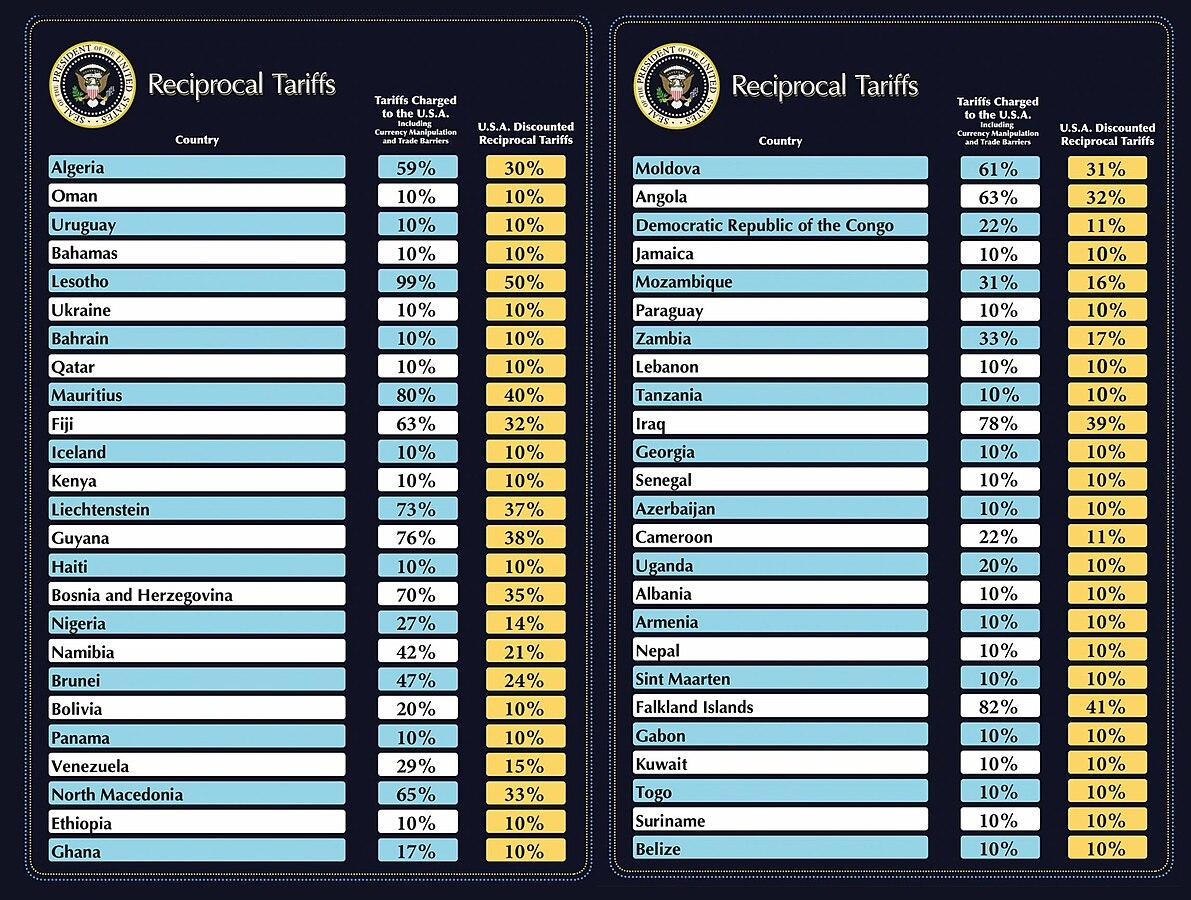
On April 9, following the economic turbulence under the new tariffs, the administration announced a 90-day suspension – a decisive move to facilitate international dialogue and stabilize volatile markets. Nevertheless, taxation on Chinese imports remained an exception to these policies, effectively laying the groundwork for a trade war between the two global powers (AP News). As such, President Trump had increased the tariff on Chinese imports to 125%, to which China had responded with an 84%tariffonAmerican goods. On April 11, however, developments between the two countries had resulted in a 145% tariff on Chinese products while American goods were taxed 125% (Reuters). With economic and political tension on the rise, junior Cadence Chuang offers insight into the potential effectoftariffsonin-
After drawing immediate criticism, however, the president temporarily softened his stance. Following negotiations with Canada and Mexico, during which both countries committed to aiding the U.S. in bolstering border security and mitigating drug traf- ficking, the Trump administration agreed to a 30-day suspension of these tariffs (PBS News). Nevertheless, trade tensions reignited on March 4, the expiration date of the suspension, with Canadian Prime Minister Justin Trudeau deeming the tariffs as an act with “no justifica- tion.” In response, Trudeau enacted a 25% retaliatory tariff on C$155 billion worth of U.S. products – rang- ing from beer, wine and clothing to household appli- ances (Reuters).
On March 12, Trump implement- ed a 25% tariff on all imports of steel and alumi- num, signaling further escalation of his tariff pol- icies. However, it was April 2, which marked the administration’s largest development. It was what Trump called, “Liberation Day,” in which the administration imposed a universal 10% tariff on all imports, with the exception of Mexico
an index of major tech companies, experiencing a 15% dip following the announcement (Business Insider). Harboring the potential to exacerbate inflation, increase cost of goods for consumers and undermine international trade, tariffs have been historically linked to economic turmoil (AP News). The Smoot-Hawley Tariff Act, originally endorsed by President Hoover to address the Stock Market Crash of 1929, had ultimately contributed to a sharp reduction in international trade –triggering a trade war marked by retaliatory tariffs between European nations and the U.S (Fordham Law).
Nevertheless, in response to growing concerns, President Trump had compared market volatility to medicine, stating “sometimes you have to take medicine to fix something” (CBS News). Demonstrating a bolder stance on tariff initiatives, the president expects additional taxation on imports to contribute towards government revenue (Fordham Law). This is a testament to the administration’s commitment towards reducing costs for taxpayers (CBS News). However, beyond encouraging domestic production alone, tariffs play a critical role in leveraging international negotiations, evident in Mexico and
PHOTOCOURTESYOFREUTERS ternational business. “My dad, who [imports] many Chinese manufactured products, has noticed an overall increase in price for supply,” Chuang said. “Overall, I believe it makes [the flow] of business more difficult as the cost of exporting and importing are elevated significantly.”
Playing an integral role in Trump’s agenda to “make [America] wealthy,” tariffs come with long term promisesofrevitalizingAmericanindustriesandprovidingnew economic opportunities (Roll Call). Nevertheless, the introduction of a universal tariff baseline coupled with reciprocal taxes has heightened political and economic tensions, evidenced by turbulent U.S.-China relations. With uncertainty surrounding the future of these policies, U.S. History and AP Psychology teacher Charles KimprovideshisstanceonthenatureofAmericantariffs.
“I think a [potential benefit of tariffs is] to provide American jobs and make American goods more accessible,” Kim said. “But at the same time, the trade off is [that] it’s going to take a long time for a lot of [foreign companies] to [domestically] produce these products. [Additionally], a lot of things that we [normally can] afford [will become] more expensive.”
Shawn
Lo | 12
For years, boba lovers at the Peninsula Center had just two go-to spots: Mochinut and Boba Time, but now there is a new shop in town. Nara, which means happiness in Arabic, was created with a mission to share the joy of bubble tea with everyone who walks through its doors. The owner, June Poling, started Nara to create a unique space where students could unwind over a tasty drink in a vibrant environment. But, like every small business, Nara’s journey was not without its challenges.
Before Nara could open, the team behind the brand had to go through a meticulous process of designing and organizing what the menu and store layout would look like. After the pandemic, Poling struggled to find contractors, especially since consumers were only just starting to return to in person shopping. Even after being able to secure a site, Poling still needed to obtain a sales license, train workers and create recipes for the boba shop to come into fruition. Nevertheless, Poling’s business succeeded in its first pre-opening and has attracted customers from across the hill. The store interior has a modern design that uses a light shade of green to symbolize the organic and natural essence of Nara’s taste, and the plentiful seating allows for a
social environment. Ann Nguyen, the manager of Nara, explained that the store’s logo, inscribed in circular wood panels, represents the fusion of bubble tea culture with a modern vision.
“Everyone knows bubble tea,” Nguyen said. “It’s popular and it [brings people together]. We wanted our [design] to reflect [that same energy]. Our design reflects the core values of our mission—freshness, relaxation, and an enjoyable experience with every drink.”
Though the store’s atmosphere is appealing on its own, Nara’s strength in attracting customers is its bountiful menu. Among the variety of drinks, the Four Seasons Mango and the Peach tea with foam stand out as the most refreshing fruit teas that the Peninsula Center has to offer. In contrast, other chains like Boba Time, which have a more artificial tasting flavor because of its excessive use of syrup, Nara’s menu has a more natural taste and uses actual fruit. It’s also worth noting that Nara specializes in both fruit teas, and matchas, with the store releasing its Coconut Clear Matcha and its Strawberry Matcha lattes. Junior Josh Hwang, a Peninsula student who works at Nara, describes how the menu has many intricate flavors.
“I would say Nara’s Favorite is [definitely] the most difficult drink to make,” Hwang said. “[It] is one of our most popular drinks but [it is] one
of the most complicated ones [because it combines] our traditional matcha latte with [a layer of] blueberry jam at the bottom and toppings like [crystal or traditional boba].
In the short period of time that Nara has been open, the store has already cemented itself as a unique addition to the Peninsula Center. Despite the store’s initial challenges, the team at Nara successfully created a vibrant business with a diverse menu of modern and traditional drinks. Although the store is only in its pre-opening phase, meaning that the menu is still developing, Nara has attracted many students at Peninsula who look forward to what it has to offer in the future. Junior Jordan Sligh, a regular customer, believes that the Nara has the poten tial to grow into an even more popular business.
“I love matcha in general, but Nara has a specifically rich taste that makes it stand out from the rest,” Sligh said “I also [love] their delicious ube cookies sold at the register. In the future, I would be excited for Nara to have more space for studying and possibly have a [larger variety] of hot drinks on their menu.”

Elise
Vu | 10
Asthe college application process has become more competitive, having jobs that provide fulfillment, especially as high school students, has proven more and more difficult. However, there are a select few here at Peninsula that turn their passions into work experience. These students shared their respective experiences working in jobs that they found educational and enjoyable.
In order to successfully pursue jobs, students must be willing to put themselves out there. One such student is Kaylin Gregerson, a sophomore who was recently offered an internship with Wolfgang Puck at Spago, his flagship restaurant in Beverly Hills. Wolfgang Puck is a celebrity chef who is credited with developing modern Californian cuisine by fusing aspects of French, American and Asian cuisines (Wolfgang Puck). Gregerson has been interested in the culinary arts from an early age and hopes to have a career in the industry. When she met Wolfgang Puck by chance at one of the locations of his chain restaurant, Spago, in Beverly Hills, she knew this was a once-in-a-lifetime opportunity to make her dreams a reality.
“I was shaking and a little terrified [while talking to Puck], but I kept on telling myself,”
Gregorson said. “‘You gotta do it. This is your one chance,’”
She eventually introduced herself, told him about her dream of pursuing cuisine and asked for advice on what to do to gain experience. He told her to work in a kitchen over the summer, and gave her the contact of the executive chef of one of his restaurants. Since then, Gregerson has been in contact with the executive chef.
Along with great opportunities, work experience pertaining to an interest can also help cultivate other broader skills. Sophomore Nathan Kwok used his skills in coding and computer science at his programming internship at PVNet, a non-profit organization dedicated to STEM-based education and volunteering. Kwok began working at PVNet as a volunteer during the summer of 2022 and after demonstrating his work ethic and leadership skills, was accepted as a course instructor and later for the PVNet Hackathon program for the 2023-24 season.
“My main motivation to pursue a job at PVNet was to find a position where I could apply my strengths in computer science while also increasing my experience in a leadership role,” Kwok said. “My time at PVNet really taught me how to effectively work under pressure and delegate tasks to other people. I can still apply the skills I learned in other fields.”
Kwok was able to find leadership in a field he was already gifted in. Students often undervalue the education that work experience can give them. Working in a field of interest can provide the base level of comfort to explore other skills, as Kwok has demonstrated here.
Sophomore Summer Kniffin has found volunteer work at the Cabrillo Marine Aquarium as a docent, allowing her to pursue her interest in marine life. The job requires its employees to be marine life experts, as docents need to speak to and educate kids on the different tanks in the aquarium. In addition to the skills she’s learned, Kniffin has also gained new community from working at the aquarium.
“I started working at the Cabrillo Marine Aquarium last summer, and I really enjoyed it,” Kniffin said. “This job has taught me so much about working with people and being comfortable public speaking. It was great meeting new kids who had the same interests.”
Connection is one of the many great gifts that a workplace can provide, especially one where common interest is a requirement. It is said that it is the people that make the place, and having a community of people makes work infinitely more enjoyable. Their mutual love and passion makes their work not a grueling task, but a place to grow and enjoy themselves.
Mason Kim | 11
InF. Scott Fitzgerald’s The Great Gatsby, Daisy Buchanan represents the American dream—a dream that is always within sight, but always out of reach. But for those who only dream of Boston-style, pan-dish pizza, they need not look further than the Promenade on the Peninsula.
Last July, Daisy Buchanan’s Pizza Bar opened for business, offering a simple (yet sufficient) menu of pizza, pastas and salad. Its owner, Jack Baker, (of no relation to Jordan Baker, another character in The Great Gatsby) worked as a bartender at the original Daisy Buchanan’s, a popular dive bar in Boston. According to Baker, while the original Daisy Buchanan’s did not serve any food, it was still frequented by members of the local sports teams like the Red Sox and Celtics. 11 years after the original closed in 2014, Baker opened his own restaurant under the Daisy Buchanan name, attempting to recreate the nostalgia of the old bar. However, when asked whether any of the restaurant’s decorations originated from the first Daisy Buchanan’s, Baker explained that all the two bars shared was the name.
“I have no connection to that bar other than that I worked there,” Baker said. “This is not Daisy Buchanan’s ‘Part Two’ or anything like that. I just want people to feel like I invited them over to my house to hang out, watch some games, play some board games and have drinks. [Since we have opened], that is already happening. People come in all the time: families, kids, sports teams– they all come in and play Uno or cards.”
rant for a fun game night. A wide variety of classic board games line a shelf, from Battleship to Jenga. Additionally, the restaurant offers a weekly trivia night for all ages. One could easily imagine Daisy Buchanan’s as an after-school hangout spot for Peninsula students looking to get a quick bite to eat while watching a hockey
charred edges—or as Baker calls it—laced edges. Baker also uses a different blend of cheese from normal, mozzarella-topped pizza, giving his cheese a sharp and distinct taste. When asked about the mysterious ingredients, Baker smiled, explaining it was a trade secret.

“If people like pizza, this is a different style,” Baker said. “It is not New York Pizza, it is not Detroit style. It is an old style of pizza that really is not known out here at all.”
As for how to order, the pizzas come on 10 inch platters, perfect for sharing multiple kinds at once or ordering alongside the pastas and salads. The bar’s vodka rigatoni uses a homemade sauce recipe accompanied by pancetta, giving it a spicy, creamy flavor. As for their “crowd pleaser” bolognese, wide pappardelle noodles complement a ground beef sauce that seems to melt in the mouth. Freshman Nathan Li described their order.
“My family ordered two pastas and a pizza and it was more than enough,” Li said. “I recommend splitting a couple of dishes. [For example] the chicken [parmesan] was pretty big and eating it alongside the rigatoni kept the flavors from getting old.”
But with Mod Pizza and Fat Tomato not only being closer to Peninsula, but offering a wider selection of toppings, why settle for Daisy Buchanan’s Pizza Bar? Upon entry, the restaurant appears like the typical sports bar—three flat screen TV’s play two games of hockey and one game of football, and sports memorabilia line the walls. The sports memorabilia comes from Baker’s personal collection, a product of his professional experience in and appreciation for hockey. But Daisy Buchanan’s is not just for avid sports fans, as many families flock to the restau-
game or playing cards. Senior Jeremy Kim described his past visits with friends.
“[Daisy Buchanan’s Pizza Bar] has a great atmosphere,” Kim said. “A lot of the other places at the [Peninsula Center] either get crowded really fast or do not feel like a fun place to spend time. [The restaurant] does seem like more of a night-time spot for dinner though.”
But what makes Daisy Buchanan’s truly special is its signature pizza. As Baker puts it, his restaurant is the only one on the West Coast to offer what is known as bar pizza—a style of pizza originating on the south shore of Boston, most often sold in small diver bars and restaurants. Bar pizza is made in a pan, giving it crisp,
For dessert, diners can order ice cream, with or without a brownie. Alternatively, their ice cream sandwich comes with two warm, chocolate-chip cookies instead of wafers, all served on an iron skillet. The cookies are crispy, gooey, and like the rest of the food, taste homemade. However, it may be worth ordering another scoop of ice cream on the side, as the cookies are fairly large and overpowers the flavor of the ice cream.
Baker achieved his goal of making the pizza bar feel like a home to spend time with friends and family. Just 0.4 miles from Peninsula, students can take a 10 minute walk to share an after-school pizza with each other before heading to the library for a study session. While the pricing is relatively high—with the pizzas nearing fifteen dollars and the pastas nearing twenty—the ingredients are high-quality, and the dishes are meant to be shared. All around, Daisy Buchanan’s Pizza Bar offers a slice of nostalgia from the East Coast, and a fresh, new addition to the Promenade.
Edited by: Angelina Wang
As the school year ends, so does Peninsula’s time with its beloved principal, Dr. Brent Kuykendall, as he moves on to a new career path, and after spending several years 25 in education. Kuykendall began his job in September 2017, making this his eighth and final year as the principal of Peninsula. Kuykendall was born and raised in Palos Verdes and has worked in education for the Palos Verdes Peninsula Unified School District (PVPUSD) for over 25 years. After graduating from Peninsula in 1997, he worked as a principal for Miraleste Intermediate School for two years, as a principal for Ridgecrest Intermediate School for three years and as an associate principal at Palos Verdes High School. Staff and students alike have known him for his enthusiastic, friendly and outgoing personality and his constant engagement with the school community. Kuykendall’s cheerfulness and determination to help students succeed has brought significant changes to Peninsula over the last few years and has made a difference in many students’ lives. Whether he is bringing on the school spirit at a football game or saying a friendly ‘good morning’ to students before class, his positive attitude has been a consistent presence on campus and has left a lasting impression on all those who have gotten to meet him. Sophomore Parisa Bahrami shares her opinion on how Kuykendall has inspired others.
“One thing I admire about [Kuykendall] is how much school spirit he has and how he always hypes us up and gives us our Panther pride,” Bahrami said. “Peninsula is definitely [stereotyped] as just quiet and academic, but Kuykendall [has challenged] us to step outside of our comfort zone, and his approachability and [enthusiasm have definitely helped] increase our interest in our [school community].”
Over the last few years, Kuykendall has formed many memories and connections with staff and students that inspired his love for the job. One of his favorite experiences was seeing growth in his students and through their different interests, whether that be in the school plays, the choir performances or sports games. Although his job had its fair share of challenges, it had even more reward-
ing outcomes. One difficulty he had to overcome during his third year as the principal was the COVID-19 lockdown. During 2020, Kuykendall had to navigate the ups and downs of leading a school through the uncertainties and obstacles of the unexpected pandemic. While online learning and social distancing were difficult challenges for both students and staff, Kuykendall was able to offer
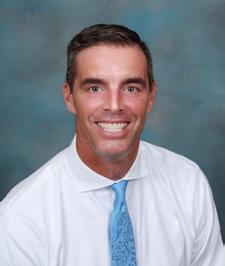
the support and motivation that they needed to adjust to the temporary school situation. After eight years full of experiences and challenges along the way, he will miss all of the connections and relationships that he built as a principal. Getting to know the people who make Peninsula an amazing community has been a very rewarding part of his job, and he hopes that the next principal will realize how fortunate they are to be a part of such a thriving community. AP English Language and English 2 Honors teacher Kristian Engle mentions how Kuykendall has made a difference and impacted the school environment.
As she watched orcas flip through the air at SeaWorld, eight-year-old Melody Numamoto discovered her fascination for marine life, one that would eventually lead her to pursue marine biology. Her love for marine animals deepened after watching “Free Willy,” a movie exploring the bond between an orphan and an orca. Now a sophomore, the impact from these early experiences continue to guide and shape her life. When she mentioned her interest in becoming a marine biologist, her parents were supportive and encouraged her to pursue this dream. Her dad, Nobuaki Numamoto, displayed this support through his everyday actions.
“Whether it was three in the morning or nine at night, [my wife and I] never hesitated to drive our daughter to her volunteer work because we saw how deeply she dreamed of becoming a marine biologist,” Numamoto said. “We were determined to support that passion every step of the way and display our unwavering support for her and her dreams.”
Throughout her years in elementary, middle and high school, Numamoto dedicated her time to volunteering with local aquariums and marine conservation organizations. She participated in beach cleanups with Cabrillo Marine Aquarium, sea turtle monitoring at the Bolsa Chica Ecological Reserve and tidepool education at the Laguna Ocean Foundation. Most recently, she joined the Ocean Animal Response and Research Alliance (OARRA), where she helps clean up beaches with deceased animals washed ashore and promotes ocean conservation efforts. Volunteering with these organizations expanded
“When I first met [Kuykendall], one of his initial goals was to make [Peninsula] a more energetic and less stressful environment,” Engle said. “He wanted to make Peninsula a place where people would look forward to coming to school and enjoy their time here as opposed to being filled with constant pressure all of the time.”
Kuykendall’s leadership has left a lasting impression on the Panther community. Students have appreciated how approachable and encouraging he was, and teachers have admired his ability to relate to students and to amplify the school spirit. His acknowledgement of all the people around him and how he made them feel included were ways he led by actions and fostered unity within the Peninsula community. While Peninsula is known for its academic excellence, Kuykendall has also worked towards building up its sense of pride and community, and the school dynamics have seen tremendous changes under his efforts. He was able to accomplish his goal of creating a school environment where students felt seen and heard, and he hopes that his legacy will be carried on by Peninsula’s future principal.
Kuykendall characterized his overall job experience as exciting, constantly changing and filled with connection and although the feeling is bittersweet, he will miss the community that he has been engaged in for so long. One of Kuykendall’s common catch phrases is “living the dream” or “another day in paradise,” which highlights his passion and dedication to education and Peninsula. As he begins his journey to a new career path, students and staff of the Peninsula community hope that he can continue to do just that. Kuykendall shares some parting advice with students.
“Make sure to create your own definition of success and to go out there and [pursue it],” Kuykendall said. “As someone who was born and raised in this community, I can say that there are many opportunities [for that], however, people tend to chase goals that someone else might have for them, so [my best advice] would be to find out what you are passionate about, work hard and get there.”
As Kuykendall moves on to his new career, Peninsula is getting ready to welcome the new principal, Dr. Kyle Garrity, into office starting July 1.
her knowledge about marine life and their habitats, especially through experiences like observing whale and dolphin necropsies, which are autopsies. With her expertise, she contributed to new research and took the role of student educator where she taught others the importance of ocean conservation. OARRA field leader and scientist, Kat Futch, describes Numamoto’s role in the organization and her essential contributions to marine life research.
“Melody is OARRA’s first-ever high school volunteer and she has quickly become one of our most consistent and dedicated team members,” Futch said. “Long days on the beach or in the lab are spent hands-on with marine wildlife, [such as] harvesting critical samples for testing and analysis, in order to investigate the circumstances of an animal’s death and contribute data to local and national research. When she is not on the beach wielding blubber hooks or scribing stranding science [taking notes on how animals are stranded], she is a key member of our education and outreach team at schools and science fairs. Her compassion for ocean life makes her an excellent and enthusiastic science communicator who understands the [importance] of environmental education in a changing world. We are lucky to have her as a curious and courageous young scientist on our team.”
While her volunteering provided invaluable experiences, Numamoto faced
Sydney Malicse | 9
o have the ability to cope with life’s stresses and problems takes a great deal of strength and stability that some are not yet capable of managing. For that reason, mental health is an incredibly important topic, yet is often overlooked because of social stigma. Over a decade ago, an “ice bucket” challenge was made to support the fight against Amyotrophic Lateral Sclerosis (ALS), and now the challenge has been revived for a different cause. The USC Ice Bucket Challenge was made by a student club organization at the University of South Carolina called USC MIND, specifically created to raise mental health awareness. The founder of the club, Wade Jefferson, adapted the original ALS Ice Bucket Challenge to raise awareness for people struggling with their mental health. The challenge was promoted through social media, specifically Instagram and TikTok, in which people dump buckets of ice water onto them with a caption that says #SpeakYourMIND. In videos, participants briefly share the importance of mental health and nominate several peers to par-

take in the challenge. This has allowed the trend to spread quickly. MIND stands for Mental Illness Needs Discussion. The slogan “speak your mind” also aims to inspire people to share their struggles and thoughts about their mental health in order to create new understandings and relationships. Participants in the challenge are encouraged by the USC club to donate to Active Minds, a nonprofit organization that promotes mental wellness for young adults. Many people who struggle with their mental health are ashamed or scared of being judged by their peers, which can prevent them from seeking help. With the USC Challenge, it is a goal to help everyone be more open to the idea of assistance when it comes to their health.
Not only do the videos help fundraise for Active Minds, but they also show people silently fighting mental health battles that their peers participating in the challenge are supportive of their journeys. Many people had begun to join in on the movement, and when it started becoming more than just a challenge to others, the USC MIND was thrilled that #SpeakYourMIND was expressing its true meaning. Senior Elizabeth Lau gives her take on what “speak your mind” means to her.
“Speaking your mind to me is being
unapologetically you,” Lau said. “[It is about] not caring about the opinions of others and being able to stand up for what is right no matter what. I participated in the challenge because I wanted to show my support for the people struggling.”
The creator of the challenge, Wade Jefferson, is in his junior year of college at the University of South Carolina and was inspired to start USC MIND in February, after he lost his best friend to suicide (The Daily Gamecock). The club launched the #SpeakYourMIND challenge, which introduced a positive way of spreading the sensitive discussion to more people. Some may think that dumping buckets of ice water onto themselves is not the best way to promote a serious cause, but for many, it is motivational and a more comfortable way to speak about mental health. The club members did not expect the challenge to reach such a large audience, so they were overjoyed when they found out how many people had participated. Freshman Kareena Mieko discusses her opinion on Jefferson and his idea of making the USC MIND challenge.
“I think his idea was so smart and has a very positive impact on society,” Mieko said. “It affects everyone in their own different way [and] is a great and positive way to spread awareness to a very personal subject.”
The initial goal when trying to raise money was about $500, and since the challenge spread all throughout social media in a matter of days, USC MIND has raised over $300,000 (The Daily Gamecock). People from around the world started to con-
tribute to the challenge, including influencers and celebrities. Jenna Bush Hager completed the challenge on NBC’s Today Show and nominated people like Jimmy Fallon, Blake Shelton and Olivia Munn. Actor Matt Bomer and influencer James Charles also joined in on the challenge. In addition to the traditional ice bucket videos, some participants that have struggled with their mental health also shared their own stories and experiences in their videos. Sophomore Hazel Smith shares what had influenced her to participate in the challenge.
“I know people who have struggled with mental health problems and as this challenge has made [mental health easier] to talk about, I wanted to participate and show my support for this organization they made,” Smith said. “I want people to know that it’s okay to feel like this and it’s not something you should be ashamed of at all.”
When people from around the world have had to deal with mental health problems and have struggled with the image of themselves for so long, it can make them think that they are alone in their battles and that they do not have anyone to lean on. The USC MIND club has made many realize that they now do have so many people to rely on. Thanks to the countless participants of the ice bucket challenge and Jefferson’s dedication to his mission, a new light has been shone on the discussion of mental health.
Edited by: Melina Ajami | 10
many doubtful moments, especially as the only high school volunteer. Balanc ing her commitment to volunteering with schoolwork proved challenging due to the time dedicated to these organizations. However, she learned how to manage her time effectively and her passion for marine life remained strong. These difficulties only deepened her love for the ocean, as its peaceful nature became her escape.
“Every time I am near the ocean, it [seems] like all my stress melts away and I feel at home in its vastness,” Numamoto said. “I remember my first visit to an aquarium [and how I stood] there in awe as I marveled at how creatures, both big and small, thrived in such unique, beautiful ways. While I love wildlife on land, the ocean calls to me in a way I can not quite explain. There is still so much we do not know about it, and I can not wait to be the one to uncover its mysteries.”
Despite the field being dominated by men, Numamoto remains com mitted to persevere and establish herself in marine biology. She not only is determined to succeed in her own career, but to also inspire other Asian American girls to pursue their dreams in science. Numamoto hopes to earn both a bachelor’s and master’s degree in marine biology and become a re

searcher focused on ocean conservation. She hopes to study the behaviors and anatomy of marine mammals to better understand their role in the ecosystem, and her dream is to become a lead researcher in marine mammal care, the field where her passion first began. She wants to start an organization that educates young children about environmental responsibility, empowering the next generation to take better care of the planet and protect the creatures that depend on it. Numamoto shares her outlook on the ocean’s importance and the need for greater environmental responsibility.
“I wish more people would take the time to appreciate the ocean, because if we do not act now, the damage we are doing may be irreversible,” Numamoto said. “To help restore the ocean to its former glory, we do not need to make grand gestures [to make an] impact. Participating in beach cleanups, using eco-friendly bags and switching to reusable water bottles might seem [like small actions,] but they are steps in the right direction. It is essential that we all come together to help restore what has been lost and rebuild the parts of the ocean we have broken. I hope that my journey will inspire high schoolers like myself to become global leaders and take action to protect the environment.”
Elena Thomas | 10
Years prior to its release in theaters on March 21, Disney’s “Snow White” already began receiving hate. Fans of the 1937 original, “Snow White and the Seven Dwarves,” first expressed their disappointment when actress Rachel Zegler was cast as the princess, one of the many problems audiences have found in this movie.EvencomparedtomanyoftheotherrecentDisney princess remakes, such as “Beauty and the Beast” or “The LittleMermaid,”whichhaveallfacedcriticismwhenthey were both well-done re-creations, the disapproval toward “Snow White” has been overwhelming. While the world couldhavedonewithoutanothersubparremake,muchof thehateisundeservedandmisplaced.
It seems that much of the aversion from viewers stems from Zegler being the one to take on the titular role. However, the criticism is not because she lacks the talent needed to play Snow White. She began her career playing one of the most iconic musical characters, Maria in “West Side Story” in 2021, and since then she has only found success, starring in “Hunger Games: The Ballad of Songbirds and Snakes” and in a recent Broadway production of “Romeo and Juliet.” However, her indisputable talent could not save her from the significantbacklashshereceived.Ininterviews, shecalledout the 1937 version of the movie for being “outdated” and promoted the new one as a
“A live action [remake] where...no one has any intention of maintaining its true essence was a bit [unnecessary It could have been executed much better. A remake should try to elevate the existing ilm with new layers, not change the best parts just to update it“
-Lia Bacon | 10
progressive story that focuses on Snow White’s growth and leadership, instead of her waiting on a prince to come to her rescue. Many viewed her claims as making a mockery of the original film and as a direct attack on viewers who wanted to enjoy a movie about romance and love. Nevertheless, these views are unwarranted as it is clear that Zegler was only recognizing the writers’ departure from the original's archaic depiction of love and damsel in distress trope. Political tensions between Zegler and her co-star Gal Gadot, who plays the Evil Queen, surrounding the Israel-Palestine conflict have also added to the controversy surrounding the
movie. Zegler, an open supporter of Palestine, and Gadot, who is Israeli, have both received their fair share of criticism for their political beliefs, among other negative comments on their work in the movie. For instance, the film’s controversies have brought many to question Gadot’s acting abilities, believing she is unfit to act in such big movies as she does. In the of this movie, where she delivers awkward lines and flat performances, these claims are valid. The main problem some audiences had with Zegler’s casting is her appearance, as they have taken Snow White’s skin being “white as snow” literally. A similar situation arose with the remake of “The Little Mermaid” where Halle Bailey, an African American actress, received lots of detestation for taking on the role of Ariel, a character primarily portrayed as a white woman with red hair. However many, like freshman

Summer Lin, believe these complaints are unfair
“Actors should not need to perfectly match the appearances [of the original characters]," Lin said. “All of this is obviously fictional, and the character should be about the personality and not so much the traditional looks. The same story can be conveyed through a different looking character and have the same meaning.”
Although Zegler is of Colombian descent, and therefore does not look like the cartoon appearance of Snow White, her portraying the character does not alter the message of the story. Complaints of her appearance and ethnicity are also very ironic considering that the moral of the film is that beauty does not come from the outside, but from within. Besides this, those who point out that Zegler’s skin tone does not match the paleness of the original character completely miss the meaning of the “white as snow” description, which does not characterize her actual skin, but represents her heart being as pure as snow. The undeniably problematic belief that Zegler’s appearance ruins the film and that a white actor is necessary to convey the message that Snow White is good, is completely invalid, a thought also shared by freshman Zachary Lin.
“One thing that absolutely irks me about the negative reviews of this movie is that they complain that Snow White isn’t [white enough],” Lin said. “That’s a stupid argument for why this movie might’ve been bad. The movie was bad because of its flaws in writing, presentation and delivery, not a racial issue in the slightest.”
Many place the blame of “Snow White” being an unsatisfactory remake on Zegler’s part, but in actuality, most of the true failings of this movie are the faults of director Marc Webb and the production team. The overall changes to the story, regarding the decreas efforts to create a more progressive story like changing its plot, this attempt pushed Disney a step backwards in representation and tarnished their public opinion. Furthermore, the overwhelming and obvious presence of CGI stripped the movie of the aesthetic that Snow White is known for and prompts the question of why a remake was necessary if it does not try to capture the feelings associated with the original, something that sophomore Lia Bacon wonders as well.
“Having a live action [remake] where it's clear that no one has any intention of maintaining its true essence was a bit [unnecessary],” Bacon said. “It could have been executed much better. A remake should try to elevate the existing film with new layers, not change the best parts just to ‘update’ it.”
If a movie re-creation cannot respect the original, it should not be made. While many Disney remakes have done this well, even superseding the original versions, “Snow White” failed. The controversy and animosity surrounding this movie and its incredible star can be exaggerated and unfair, since if it was not an adaptation, many would probably applaud Zegler and find meaning with its messages of empowerment. However in striving to be a modern and dynamic version of the admittedly archaic original story, “Snow White” lost all of its charm.
Soren Kim | 11
inecraft, a video game that was created as
a small indie venture by Swedish game developer Markus Persson (known by the pseudonym “Notch”), has grown into the highest-grossing video game in history, with 300 million copies sold and $3.5 billion dollars made in just game sales alone. In the 16 years since its release, Minecraft has become a cultural phenomenon, fueled by the success of YouTubers like MrBeast, Dream, DanTDM and CaptainSparklez. In June 2016, Minecraft announced it would be taking a crack at the big screen; however, the movie was pushed back multiple times until it was finally released on April 4.
In terms of the movie itself, “A Minecraft Movie” is not much to behold. It is a horrendously paced film with subpar writing and a trite storyline that, while honoring core aspects of the original game, often takes rather unconventional creative liberties when interpreting the universe. For example, the movie features the ability to craft tater tots, which is impossible in the game. The uninspired casting of celebrity actors such as Jack Black as Steve and Jason Mamoa as Garrett act as a crutch for the lazy plots, cementing the film as another lazy cash grab. Despite these uninspired castings, the film did succeed in its mission of gaining the studio major revenue, with the film grossing $816 million with a budget of $150 million.
On the other hand, some parts of “A Minecraft Movie” are incredibly charming with well-done comedic performances from the entire cast. Even with its flaws, the film brings avid Minecraft viewers back to when they first discovered the game, invoking that forgotten creativity and whimsy. No matter how cheesy
or untrue the storyline of “A Minecraft Movie” is, viewers won't leave the film feeling like they wasted nearly two hours — it’s practically the definition of being “so bad it’s actually good.”

Even with the subpar writing, each actor takes their lines and puts their own spin on them. From the big stars such as Jennifer Coolidge or Jack Black to lesser known actors like Sebastian Hansen and Emma Meyers, every performance evokes a smile, outdoing its mediocre writing.
However, the legacy of “A Minecraft Movie” has transcended the realm of traditional cinema, becoming an entire social media phenomenon, similar to what Minecraft did to the video game universe back in 2009. With the direction the studio decided to take, “A Minecraft Movie” was clearly built to be a silly blockbuster in nature, but when this was combined with the casting of celebrities like Jack Black it easily blew up on social media. As soon as the first trailer dropped, audiences were hooked. People loved Jack Black as Steve, the silly-looking villagers and the quick one-liners.
Most of all, though, people loved the “meme-ability” of the movie. Once the movie was accepted as part of Gen Z culture, the excitement surrounding the film may well have tripled. It soon became a trend for people to fill packed out theaters to shout and cheer at every oneliner, which eventually got insanely out of hand.
Moviegoers started to throw popcorn and drinks all over theaters, to the extent that staff members began to speak out about how horrible this trend was making their lives. One example of this being in Wasilla, Alaska, where fifteen kids were removed from a theater for being too disruptive. These events got so out of hand that the studio and theater had to come up with a solution of specific screenings specifically intended for viewers to cheer at.
Through this, the trends that have come out of “A Minecraft Movie” have sparked both criticism and genuine appreciation for how a small, Swedish video game from 2009 has managed to unite thousands of people once again sixteen years later. In this way, the small venture that Persson began in his home one random weekend continues to make its mark in pop culture, however silly or absurd this mark may be.
Edited by: Sivan Stoler

Jewell Lluz | 11
Peninsula’s track and field team has been on a roll, breaking three consecutive relay records this season. At the Arcadia Winter Championship this past April, the boys varsity relay teams broke two school records a third time, which they previously broke a month before: the 800 meter “Sprint Medley Relay” (SMR) ran by Andrew Alegre, Trevor Witkowski, Tyler Malinowski and Joshua Aviles, as well as the 4x400 meter relay ran by Trevor Witkowski, Sebastian Richardson, Tyler Malinowski and Joshua Aviles.
The 800 meter SMR is a race in which four athletes run increasing distances. The first athlete runs a distance of 200 meters, which increases until the final athlete runs 800 meters. The SMR record was first broken at the California Winter Championships in February where the boys earned the title of State Champions, and then a second time at the Redondo Nike Track Festival in March, where the team again won first place. The team broke the record one last time at the Arcadia Invitational in April, clocking in at 3 minutes and 18 seconds, winning second place in the entire nation.
The triumphant 800 SMR surprised the team, since prior to this race, they only won second place in the 4x400 meter, which was the event that they had more confidence in. Senior Josh Aviles, who ran the 800 meter
leg, comments on his performance.
“Breaking the SMR was one of my favorites [memories from this season],”Aviles said. “That was definitely hyped [up] because winning while [also] breaking the record was surprising and unexpected.”
Last season, the team broke the 4x400 meter record that was set 20 years ago by about 0.5 seconds. However, with their increased intensity in training and
We knew that we were going to break the 4x400. This year, everybody is considerably faster -we knew for a fact that we were going to [break the record].
-Tyler
significantly improved times this spring, it was obvious to the team that they had the ability to break the record once again. Junior Track captain Tyler Malinowki reflects on the team’s confidence and skills.
“We knew [that] we were going to break the 4x400,” Malinowski said. “This year, everybody is considerably faster — we knew for a fact that we were going to [break the record].”
The 4x400 meter record was first broken by an additional five seconds at Ayala High School in February, but every meet following that the time has dropped a few milliseconds. The relay team placed second in the Arcadia Invitational with a final time of 3 minutes and 18 seconds.
The Arcadia Winter Championship is the highest ranking meet that the track and field team participates in, where athletes compete at a national level. Despite the nerve-racking emotions that came with running against the top athletes in the nation, the team felt confident in their training and racing abilities, and knew that records and podium finishes were within their reach. Individual team members were also close to beating records, as Richardson and Aviles were both off the 400 meter record by 0.2 seconds. Additionally, Malinowski tied the high jump record at 6.33. With all the points combined, Peninsula ended up finishing second place overall at Arcadia.
“[We’re] not going to get competition like that anywhere else,” Aviles said. “So it was nerve-racking, but [our] confidence [was] definitely [higher]. [We] know what [we] can do with [our] abilities.”

Jarrett Meza-Torne | 11
Asthe 2024-25 wrestling season ends and the team shifts its focus to the next year, junior Leila Witzerman has already begun preparing to take her performance and her team to the next level. Wrestling in the 110 and 117-pound weight classes, Witzerman has made a name for herself as a leader in Peninsula’s growing girls wrestling program. A multi-sport athlete with nearly a decade of experience in mixed martial arts (MMA), jiu jitsu and judo, Witzerman trains at San Pedro Fight Club and commits up to three hours a day to her sport. Her training focuses not only on technique but also on strength and conditioning, which she believes are key elements that separate winners from the rest.
“My motivation comes from my family and my sister [who is] my coach and drill partner. She always pushes me past my limits and makes sure I'm on the right track during practice,” Witzerman said. “My dad is the one who motivated me through all my matches; whether I was winning by a lot or down by two, he was always there making sure I was still performing well and healthy.”
This season was one of Witzerman’s best yet. She took second at both the CIF Southern Section Girls Individuals
Central Division and the Ford Masters Meet, proving she can hang with the top competition in the state. Her 28-7 record includes 16 pins (where she ended matches by holding opponents’ shoulders down), five tech falls (wins by a 15 point lead), and three major decisions (wins by 8 to 14 points). As captain of the varsity squad, Witzerman leads by example, grinding through workouts with her teammates and always showing up to support them at meets. She’s been one of the most consistent and toughest competitors in her weight class all year. Witzerman’s journey in wrestling started with family. She was first introduced to the sport through her sister and aunt, both of whom wrestled in high school. Watching their success sparked her drive to pursue it herself.
“My sister and aunt inspired me the most to continue wrestling in high school, sincethey wrestled their high school years as well,” Witzerman said. “My sister is a senior at San Pedro High School and has broken a lot of records in their history of wrestling and it inspired me to be just as good.”
To qualify for the CIF State Championships, wrestlers must first place high at their section’s divisional meet and then advance through the ultra-competitive Masters Meet, where only the best from across the region earn
spots at state. Witzerman’s runner-up finishes at both the CIF Southern Section Girls Individuals Central Division and the Ford Masters Meet secured her place among California’s elite.
“My mindset going into state was very straightforward. I knew what I was capable of doing and knew I had the skill and technique to get it done,” Witzerman said. “I was mainly telling myself that not everyone at state is as ready as I was and didn't want it as bad as I did. The way I prepared for state was going to multiple different schools and training with their girls, like Northview, Marina, Mayfair and some days we stayed at Pen. It was a lot of hard practice building up to state and also a lot of stress due to everyone's nervousness from the week previously at Masters.”
Looking ahead, Witzerman hopes to compete at the collegiate level and possibly pursue a future career in MMA. For now, she’s focused on growing stronger, helping her teammates and returning to the next season even more prepared. Witzerman’s commitment is clear, and with her dedication to the sport, Peninsula’s wrestling program and overall community is continuing to grow stronger one practice, one match and one win at a time.
The rivalry between Peninsula and Palos Verdes has always been intense, with this spring being no exception. On April 1, the boys varsity tennis team lost to Palos Verdes, who edged out Peninsula by just three games, making the final score Peninsula 9 sets (70 games) to Palos Verdes 9 sets (73 games). However, the team didn’t let it happen again, and on April 21, the two rivals played once more, and this time, Peninsula beat them with a close score of 9 sets (78 games) to 9 sets (74 games). Sophomore Matt Iwamoto reflects on the stressful tie during the second faceoff against Palos Verdes.
“We were going to win, but we ended up losing the last set, so it went to a tie,” Iwamoto said. “I was frustrated that the second time we played [Palos Verdes] it went to 9-9 again, but I’m happy we won.”
Heading into the second match-up, Peninsula made some strategic lineup changes to try something new. On Apr. April 21, they played again, and once more it was a tight match; ultimately, both schools had won 9 sets each. The count of the games started again, but this time Palos Verdes fell short, leaving Peninsula the winner 9 games (78 sets) to Palos Verdes 9 games (74 sets). The whole team was excited by this win, not only because they beat their rivals, but because it would make them the supreme
Edited by: Zahra Habib
winner, as they had won the most amount of games. Coach Mike Hoeger believes the rivalry win made the team stronger mentally.
“We have a young team, [and] sometimes the team isn’t sure they can compete with the other teams' seniors,” Coach Hoeger said. “[Winning] did a lot for us — it gave us confidence [and] it gave us the rivalry win, but it also put us in a good position to do well in the team tournament.”
Beating Palos Verdes didn’t only settle a rivalry, but it also secured Peninsula the Bay League title by a single game and claimed their spot in CIF. The hardfought win also elevated their CIF ranking to fifth. Earning a spot in CIF means the Panthers will now face some of the top schools in high-stakes games, where each game could mark the end of their season. The team plans to carry their momentum forward by showing disciplined play and tight defense. Freshman and Varsity tennis player Aaron
Luo shared his thoughts about entering CIF with a mix of optimism and uncertainty.
“I don’t really know what to expect going into [CIF],” Luo said. “I would imagine it to be harder than the schools we've already played, but I think it’ll be pretty fun and I’m going to try my hardest.”