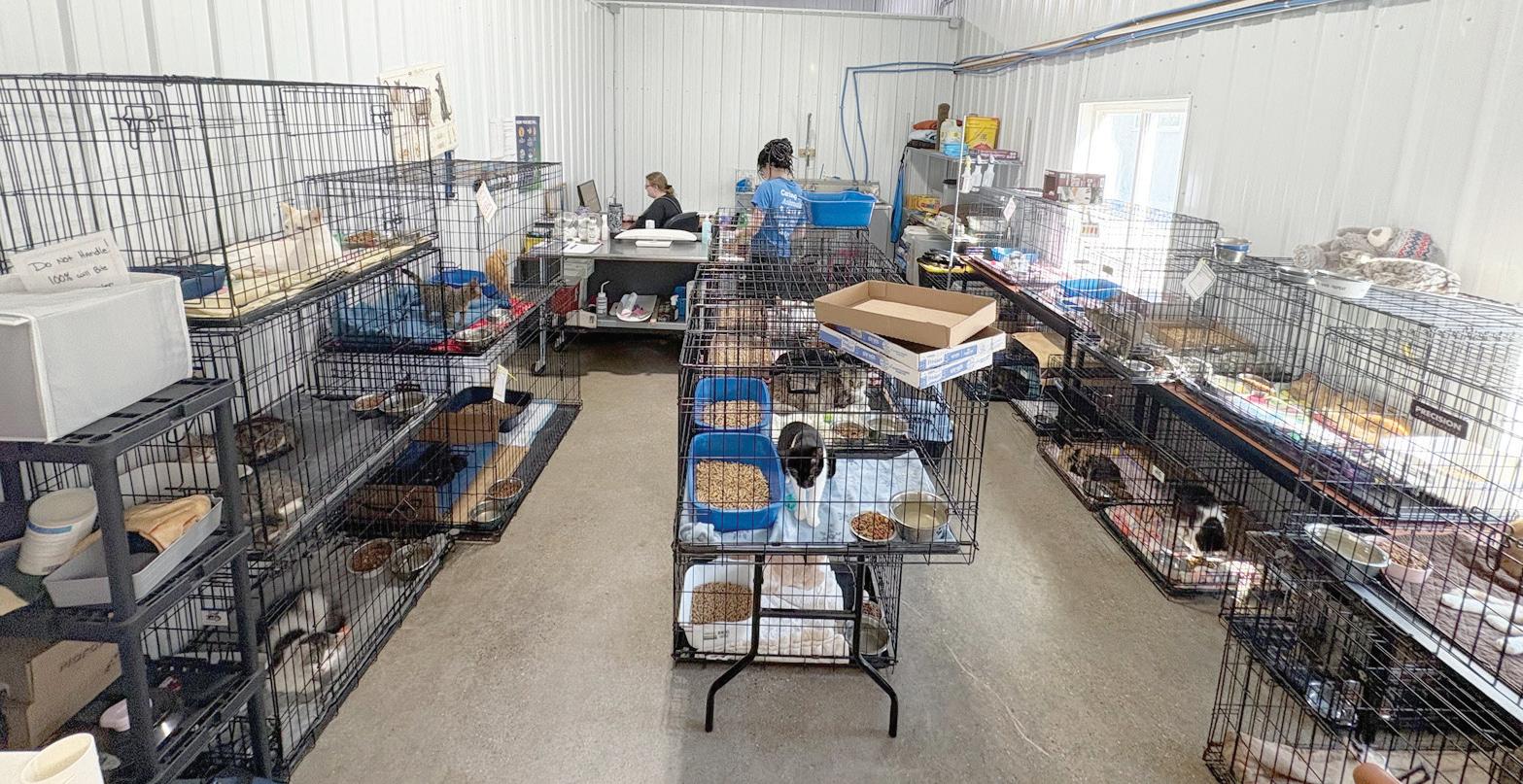
OVERLOADED The Animal Welfare League recently sent a call out after having to take in 37 cats and a dog due to a hoarding situation. The shelter was already overcapacity with animals when it needed to seize the additional animals.
Shown are the kennels where some of the cats are being housed until fosters can be found to care for them while the case works its way through the judicial process. Photo provided by Sydney Langhorn.
AWL ANSWERS THE CALL to protect animals in hoarding, abuse situations
By LAUREN ZEUGNER Staff Writer
We see them all the time — social media posts or televised news reports of how the local animal shelter has been called in to rescue a large number of animals due to hoarding or animal abuse These types of calls always seem to take place when the shelter is full to capacity
Tonya Blanchard, executive director of the Animal Welfare League of Kosciusko County, explained the shelter is called in to assist local law enforcement, code enforcement or the health department in such cases
In the case of animal abuse, the police with either bring the animal to the shelter or if there are too many, shelter staff will go out with a van stocked with carriers, catch poles and other equipment to capture the animals so they can be brought to the shelter
Once at the shelter, a state veterinarian is called in to evaluate each animal Usually what the state vet is looking for is the body mass of the animal and a general health check
“You can’t miss anything or they (the offender) can walk,” ex-
plained Jill Smith, a dog kennel technician at AWL
During the exam, the state vet will also look at the animal’s teeth to try and determine its age
After the state vet looks the animals over, local veterinarians will come in to assess each animal and come up with a treatment plan
“Pictures are invaluable in cases like this,” Smith said “They are photographed to death ”
Photos are taken at the scene and of the animals condition as evidence in the case
As the local vets do their assessments, staff take detailed notes on what they find and treatments are started
From the time the animal is pulled from an abuse situation until the case goes to trial can take upwards of a month During that time, the animal must remain in the custody of AWL Blanchard explained the shelter usually has fosters, who take these animals in and cares for them Often it becomes a foster fail situation where the animal is adopted once the case is resolved
Getting the animals rescued from these situations back to health also takes time Animals
that are underweight need more smaller meals to put the pounds back on
“Usually the smell of the place, the sight of the animals, you don’t forget,” Blanchard said “That’s hard on us ”
What tends to happen is the shelter is called in for a hoarding or abuse case when it’s at capacity When that happens, the shelter turns to the public for help That assistance can range from people coming in to adopt or foster animals already at the shelter to help make room to donating necessary supplies
AWL has been at capacity for a while, to the point it has offered sponsored adoptions for several months
AWL has about four to five hoarding cases a year, which could be anywhere from having six to eight dogs to something much more extreme Staff are working to educate the community about animal abuse and hoarding situations
“A big thing in animal welfare is capacity awareness,” Sydney Langhorn, director of the AWL’s cat house, said Another issue is people pick a particular dog or cat without re-
searching the breed and learning what behavior is “normal” for that breed
“You need to be an involved owner,” Langhorn stressed AWL staff wish people would have a plan when it comes to adding a pet to the family, rather than acting on impulse
The penalties for hoarding
depends on how many animals are involved and their physical condition when they were seized Smith said it’s usually a fine and community service hours
“I think there needs to be harsher penalties,” she said AWL staff would like to see animal abuse punished by actual jail time
DOCUMENTING HIS CONDITION
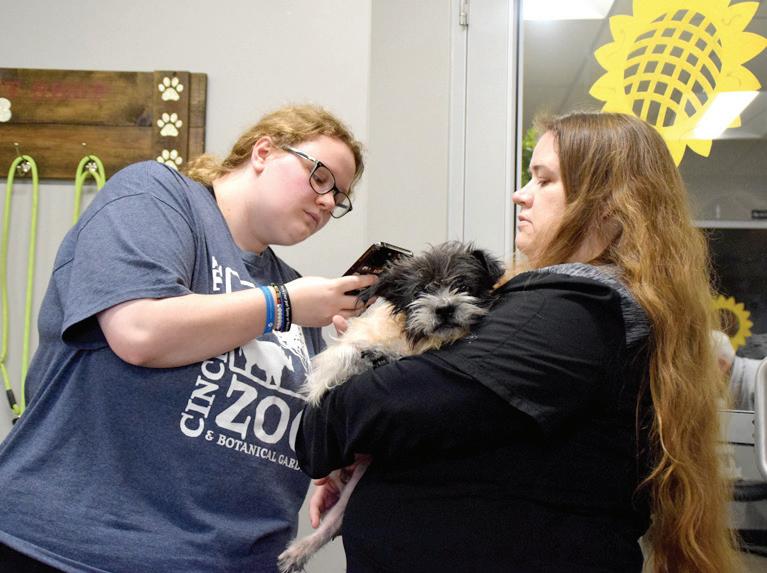
Brooklyn Lyon, takes photos of a pup named Ralph, while Ashley Vanderpool holds him. Ralph came into the AWL dirty, covered in fleas and with a skin condition which has caused large bald patches. Lyon is documenting his condition should his owner try to claim him later. Photo by Lauren Zeugner
Kaicee Bunch has best rated dog grooming business
By LAURIE LECHLITNER Staff Writer
“Since I was a little girl, I’ve been obsessed with dogs,” stated Kaicee Bunch of Nappanee. “I was trained to be a dog groomer by my employer at Pampered Pup in Wakarusa. The owner of the grooming salon was not only my boss, but my mentor. She knew that someday I wanted to start my own dog grooming business and trained me for it.”
Although KC’s Grooming Salon in Nappanee has only been open for a year and a half, it was voted best rated in the area by Google.
“Those of us who groom dogs need to have a creative, artistic flare,” Bunch explained. “We’re not only shaping the coat of a dog but creating a unique look. My favorite style to create on a dog is the schnauzer cut. I enjoy making a golden doodle’s curly coat into a style that fits the personality of the dog. Each breed has its own unique personality. Poodle cuts are fancy. We took a seminar on poodle styles. They get a special cut around the face and the feet.”
There are some hazards to the job, however.
“Yes, I have been bit before and that’s no fun. So, I’ve learned that we need a lot of
patience in this line of work. It gets pretty stressful at times. But I am not alone. I have a groomer and also a bather working for me,” she said.
Bunch has found that helping the dog feel safe and loved is the key to a good grooming session.
“When dogs are overly nervous, I’ll work with their owners on a strategy. We may need to have one session as a meet and greet. Often, I’ll sit on the floor with the dog and let it sniff around. Eventually, the dog comes over to be petted and knows I’m a friend,” Bunch said.
Dogs are sometimes fearful of the blow dryer, she said.
“Little dogs are often afraid of loud noises,” Bunch said. “I sometimes take more time drying them by putting the dryer on the lowest setting possible. The clippers also make noise and vibrate. Sometimes, I skip the full groom for a scissors cut, all the while offering doggy treats. My fellow groomer, Jaydan Keller, sometimes comes over to offer encouragement to the nervous dog and a helping hand to me. When she tells them they’re good dogs, their tails always wag. I’ll do the same for her when she’s grooming a difficult dog.”
Getting along with dogs is
only a portion of the job.
“We need good people skills to relate to the doggie parents. I always make it a point to tell the owners how the dog did in our grooming session. If there are any problems, we can work
Wellness & Wisdom
together to solve them,” she said.
When asked her favorite part of the job, Bunch remarked, “I love being able to spend my days with the dogs. It’s so much fun to see those that enjoy being groomed fly into the door and up the stairs for a bath. They know the ropes and are happy.”
Running her own business was challenging at first.
“Like anything else, it’s a learning process when it’s new. I’m learning quickly and enjoying the business side of the job,” she said.
She and her husband, Tanner, have a son, Walker, who’s 1 and ½ years old. They also have two dogs, Dakota and Indy.
Extension offering educational program on women’s reproductive health
Explore the menstrual cycle and gain a deeper understanding of its phases and hormonal changes. Learn how your body works, what changes to expect during each stage, and how these shifts can affect overall health and wellness. This program is designed to empower women of all ages with knowledge, promote confidence and encourage open conversations about reproductive health.
Attend this free educational program presented by Emily Christ, Purdue University Extension educator in health and human sciences in Elkhart County. This program is being offered at 5 p.m. Thursday, Oct. 16, at the Elkhart Public Library, Dunlap Branch, 58485 CR 13, Elkhart. The program will be about one hour long. Register by calling Jenn at (574) 533-0554 or email fink24@ purdue.edu.
If you are in need of accommodations, an interpreter or translator to attend a program, contact Christ at (574) 5330554 or ewitters@purdue.edu by Oct. 2.
THE GANGS ALL HERE Kaicee Bunch, owner of KC’s Grooming Salon in Nappanee, loves dogs of all shapes and sizes. And it looks like these four pooches are sporting great styles and are ready to paint the town red. Photo provided by Kaicee Bunch.
Kosciusko CASA names volunteer of year, welcomes new board members
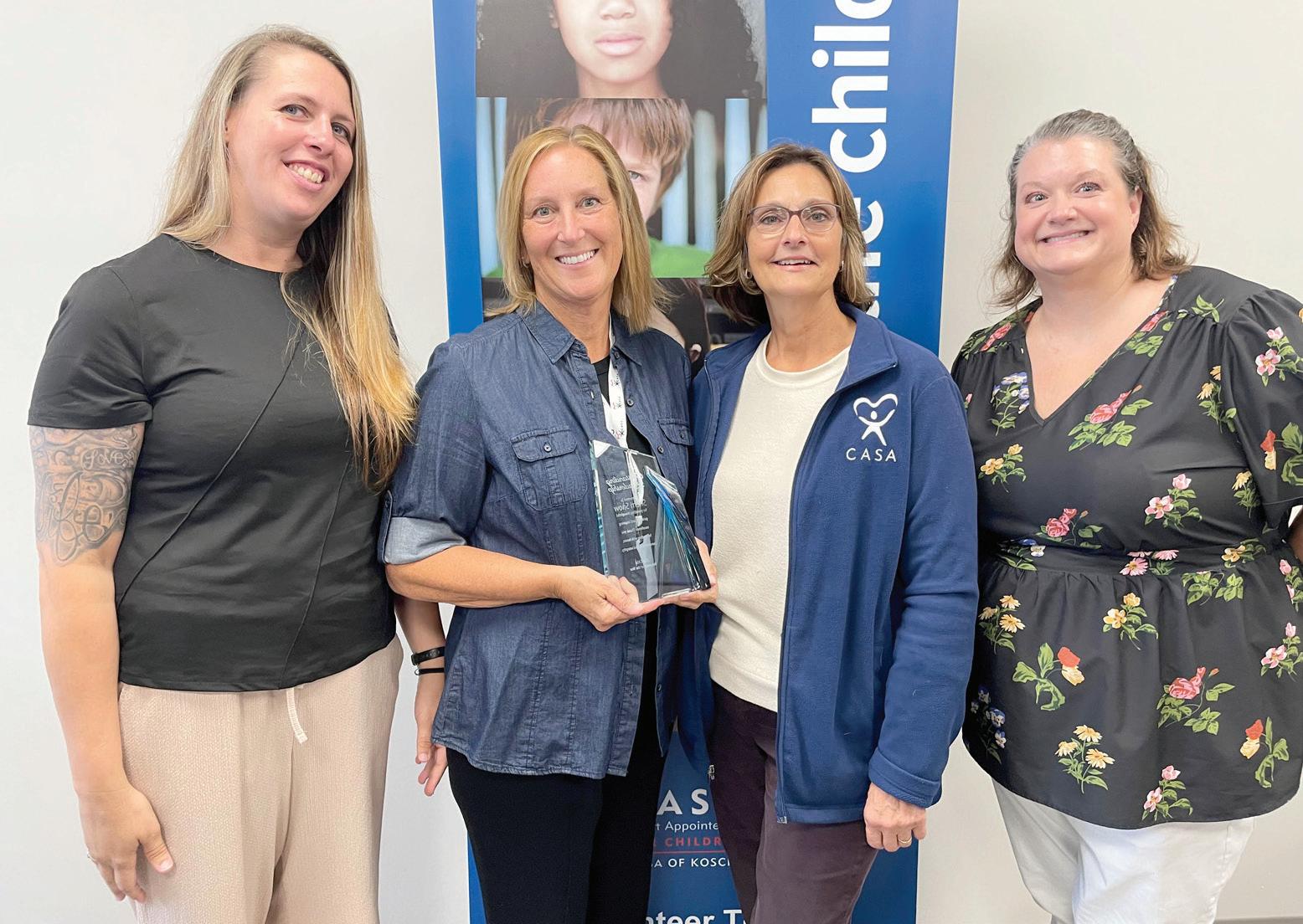
At CASA of Kosciusko County’s annual volunteer appreciation luncheon Aug. 29, the organization honored Sherri Snow with the Court Appointed Special Advocate Volunteer of the Year Award.
Although Snow was unable to attend in person, a video featuring Snow and CASA staff was shared at the event.
“I’m humbled and grateful that I get to come alongside vulnerable kids in our county. I truly love what I do,” Snow said in her recorded message.
During her three years as a CASA volunteer, Snow has advocated for five children, demonstrating “remarkable tenacity, persistence and an unwavering focus on each child’s best interests,” according to CASA. She has built strong relationships to better understand the children’s needs and has consistently fought to ensure those needs are met, the organization said.
The Volunteer of the Year Award is presented annually to a volunteer who exemplifies persistence, compassion and dedication, with special consideration given to the complexity of the cases served.
In addition, CASA announced the election of two new members to its board of directors, who both be-
Educational series: A ‘Matter of Balance’ starts Oct. 27
Many older adults experience concerns about falling and restrict their activities.
“A Matter of Balance” is an award-winning, evidence-based fall prevention program designed to manage falls and increase activity levels. Learn how to view falls as controllable, set goals for increasing activity levels, make changes to reduce fall risks at home, and exercise to increase strength and balance using chairbased exercise.
This educational series will be presented by Emily Christ, Purdue Extension Educator in Health and Human Sciences in Elkhart County. The series will be held Monday and Thursday mornings from 9:30-11:30 a.m. Monday, Oct. 27 through Thursday, Nov. 20, at the Purdue Extension Elkhart County office, located on the Elkhart County 4-H Fairgrounds in Goshen.
The fee is $25 per participant and payable at the door with cash or check. Each class will build upon the previous session, making it important to attend all classes.
For more information or to register, call Jenn at (574) 533-0554 or email fink24@purdue.edu. Registration is required by Oct. 17. Space is limited. If you are in need of accommodations to attend this program, contact Christ prior to the meeting at (574) 533-0554 or ewitters@purdue.edu by Oct. 13. If you need an interpreter or translator, contact Christ prior to the meeting by Oct. 6.
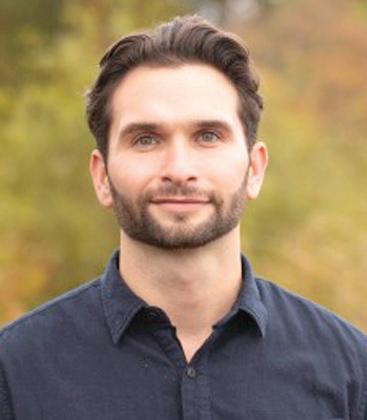
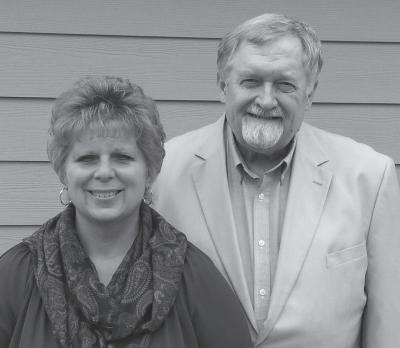
gan service in July: Andrew Wade and Chris Wiggins. Wade, a Warsaw native and business banker at 1st Source Bank, said: “I am passionate about contributing to an organization that makes a tangible difference in children’s lives and support their journey to a safe, permanent home.”
Wade previously served on the Warsaw Community Development board. He resides in Winona Lake with his wife and two children.
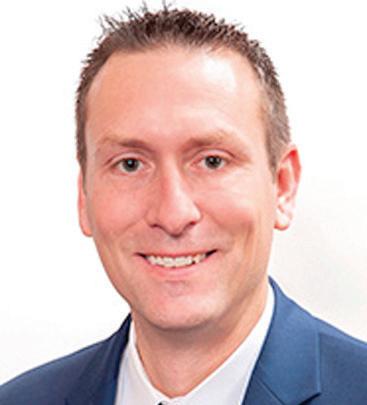
Wiggins, senior vice president of commercial banking and regional manager for the commercial
south region at Lake City Bank, is an active community leader. He currently serves on the boards of Baker Youth Club (treasurer), the Kosciusko Chamber of Commerce and Kosciusko Home Care and Hospice. Wiggins lives in Warsaw with his wife, Sarah, and their four children.
“We are thrilled to welcome Andrew and Chris to our board of directors,” said Angie Ritchey, president of the board. “Their professional expertise, combined with their deep commitment to children and families in Kosciusko County,
will make them invaluable partners in advancing CASA’s mission.”
CASA of Kosciusko County recruits, trains and supports volunteers who serve as court-appointed special advocates for children.
Volunteers provide a consistent, caring presence for children, who have experienced abuse or neglect, and ensure their voices are heard in court and across critical areas, such as education, medical care and mental health.
To learn more about becoming a volunteer, send an email to Erin Rowland Jones at casa@kosciusko. in.gov, call (574) 372-2401 or visit casachildren.com/volunteer.
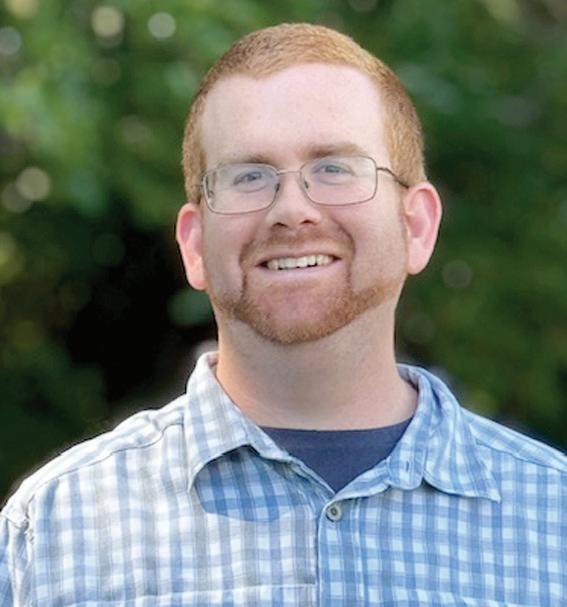
ANDREW WADE
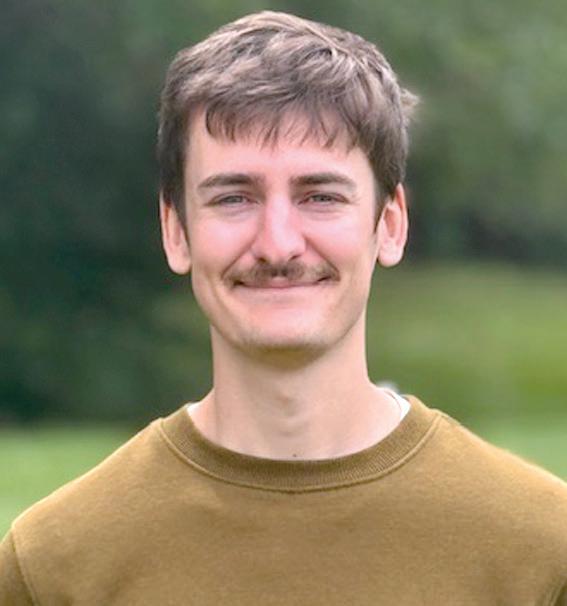
CHRIS WIGGINS
VOLUNTEER OF THE YEAR Pictured from left are Jerika Fair, CASA advocacy specialist; Sherri Snow, CASA of Kosciusko County’s Volunteer of the Year; Laurie Carlin, CASA advocacy specialist; and Erin Rowland Jones, CASA executive director. Photo provided by CASA of Kosciusko County.
“We
Lake Rx: A Prescription for Healthy Lakes
By DR. NATE BOSCH Creighton Brothers Endowed Director, Lilly Center for Lakes & Streams
Backed by 15 years of thorough research and numerous research studies, the Lilly Center for Lakes & Streams is thrilled to announce Lake RX, a prescription for healthy lakes.
Through Lake RX, the Lilly Center offers a compelling vision to make Kosciusko County’s lakes clean, healthy, safe, and beautiful through projects on land, in the water, and in the community.
Imagine a future where your family enjoys the lake without worrying about blue-green algae toxins. Toxic algae blooms are a thing of the past, and the water is clear and healthy.
EDITORIAL OFFICES, CIRCULATION, DISPLAY AND CLASSIFIED ADVERTISING
WARSAW OFFICE MILFORD OFFICE
SYRACUSE OFFICE
114 West Market St. 206 S. Main St. 102 East Main St. Warsaw, IN 46580 P.O. Box 188, Milford, IN 46542 Syracuse, IN 46567 Phone (574) 269-2932 Phone (574) 658-4111 Phone (574) 457-3666 Fax 888-371-2934 1-800-733-4111 Fax 800-886-3796
‘the PAPER’ reserves the right to refuse for publication any advertising that is considered offensive, misleading or detrimental to the public, the newspaper or another advertiser and to edit advertising at its discretion.
Publisher, Ron Baumgartner rbaumgartner@the-papers.com
Business Manager, Annette Weaver aweaver@the-papers.com
Editor-In-Chief, Deb Patterson dpatterson@the-papers.com
Editor, Phoebe Muthart pmuthart@the-papers.com
Warsaw Office Manager, Mary Beth Spalding warsaw@the-papers.com
Director Of Marketing, Kristin DeVittorio kdevittorio@the-papers.com
Advertising Representative, Carl Lauster clauster@the-papers.com
Advertising Representative, Susan Stump sstump@the-papers.com
Circulation Manager, Jerry Long jlong@the-papers.com
Commercial Printing Sales Representative
Rodger Salinas rsalinas@the-papers.com
Commercial Printing Customer Service
Katie Hurley khurley@the-papers.com
Rich Krygowski rkrygowski@the-papers.com
Grocery
Display
Display
Such a future is possible, but first we must understand the problem. The Lilly Center’s research shows that an overabundance of nutrients feeds harmful algae, encourages weed growth, and can even contribute to unsafe E. coli levels. These threats are serious, as shown by Grand Lake St. Mary’s in Ohio. If left unattended, these problems will have a negative impact on the economy, recreation, and human health.
Through partnerships with lake associations, watershed groups, government agencies, and other universities, the Lilly Center will activate wholistic and scientifically-sound solution that will move
Jefferson Elementary School recently received a $1,000 donation from Steven and Emily Bradican, owners of Applied Thermal Technologies. The gift will help expand hands-on science, technology, engineering and math opportunities for students and their families.
The donation comes after parent volunteer, Lindsay Blue, reached out to local businesses to support S.T.E.M. programming at Jefferson. Thanks to the Bradicans’ contribution, the school will be able to enhance its monthly S.T.E.M. Family Fun Nights — special events where students and parents explore science together.
“The donation provided by Applied Thermal Technologies allows Jefferson students to have access to cool
S.T.E.M. tech resources providing amazing S.T.E.M. experiences for all students as well as science lessons, including 21st century skills, at an early age,” said Derek Pike, Warsaw Community Schools
S.T.E.M. instructional coach.
Pike helps guide S.T.E.M. ini-
the needle in lake health. Solutions On Land
Agricultural land and wetlands are key components of land-based solutions. Most of the land draining into our lakes is used for agriculture.
The Lilly Center and other university partners are currently working to quantify the impact of specific agricultural management practices around our lakes. Practices with the best “bang for buck” will be identified and incentivized, keeping nutrients on farmland and out of the water.
Wetlands act as kidneys and sponges, filtering and absorbing water before it reaches the lake.
Revitalizing existing wetlands or constructing new wetlands serve several purposes. These wetlands can hold back sediment, reduce the nutrients available to algae, and even prevent flooding.
Solutions In The Water
Often over 90% of the algae in local lakes are blue-green algae. In other words, there is great potential for toxin production!
Zebra mussels, an invasive species, have unnaturally shifted algae populations toward blue-green algae. In partnership with the Indiana Department of Natural Resources, we can work to rebalance a lake’s ecosystem to reduce harmful algae populations.
Most lake residents view weeds as pests, making swimming and boating difficult. But what if weeds were our friends rather than part of
the problem?
Weeds, also known as aquatic macrophytes, incorporate nutrients into their plant tissue that could otherwise fuel blue-green algae blooms. Mechanical harvesters are like lawnmowers for a lake! Removing plant tissue from the lake makes swimming and boating easier, and harvesters remove nutrients at the same time.
Solutions In Our Community
Inspiring and equipping the next generation to steward our lakes well will ensure that our work today lasts for years to come. Through innovative educational programs, youngsters will dive into lake science from an early age.
This investment in the future of our lakes must be paired with actionable steps today. Everyone lives in a watershed, that is, the area of land that drains into a nearby body of water. Equipping our community with the tools they need to make a difference will have a direct impact on lake health. Best practices include planting native plants, optimizing fertilizer use, keeping yard waste out of the lake, and thoughtful boat use.
By following the steps in Lake RX, our lakes will be safe for everyone (including Fido!) to enjoy. We can end the need for algae toxin notifications, keep our public beaches free from E. coli, and enjoy peace of mind on the lake.
Sign up for the Lilly Center’s monthly e-newsletter for updates on Lake RX: lakes.grace.edu.
tiatives across the school and supports the programs made possible through donations like this one. Activities featured at Family Fun Nights include:
• 3-D printing demonstrations.
• Making liquid nitrogen ice cream.
• Learning coding through robotics.
• Other hands-on projects.
“We are incredibly grateful for Applied Thermal Technologies’ generous donation in support of our S.T.E.M. programs,” said Jefferson’s Principal Josh Wall. “Their investment helps us provide students with hands-on, real-world learning opportunities that inspire curiosity, creativity and problem-solving.”
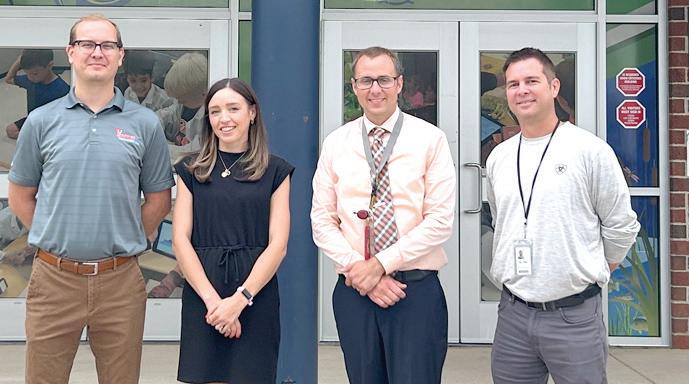
HANDS-ON LEARNING Pictured from left are Steven and Emily Bradican, owners of Applied Thermal Technologies; Josh Wall, principal of Jefferson Elementary School; and Derek Pike, Warsaw Community Schools’ S.T.E.M. instructional coach. The Bradicans recently made a $1,000 donation to Jefferson Elementary to support
learning. Photo provided by Warsaw Community Schools.
LAKES — Lilly Center for Lakes
Gift from Jean Northenor helps Magical Meadows reach milestone
The Magical Meadows reached a milestone when longtime supporter, Jean Northenor, surrounded by her family, presented a $100,000 contribution to the organization’s Growing with Heart Capital Campaign.
Northenor personally delivered the gift to founder, Tammy Stackhouse, and board chairman, Carl Adams, marking a powerful moment in the campaign’s progress. The contribution pushes The Magical Meadows past the $1.2 million mark, bringing the nonprofit closer to its $2 million campaign goal. The donation also helped the organization fulfill a $300,000 matching gift from an anonymous donor.
“This is more than a financial gift — it’s a gift of hope and encouragement for every rider and family who comes to The Magical Meadows seeking healing and peace,” said Michael Kuhn, executive director. “There are no words that can adequately express our sincere gratitude to Jean and her family for their continued belief in our mission and vision. Jean’s generosity is an inspiration to us. We hope it also inspires others to join us in building spaces that will allow our programs to grow and serve even more people in our community.”
The Growing with Heart Capital Campaign will enable the organization to build two, new indoor horseback riding arenas. The project will expand program capacity with more space, while also creating dedicated, yearround environments for individuals with disabilities, at-risk youth, veterans and first responders.
The $1.2 million secured so far represents the collective generosity of nearly 300 individual donors, corporate partners and local foundations, including a $400,000 grant from the K21 Health Foundation.
This is not the first time Northenor and her family have left their mark on The Magical Meadows. Together, with her late husband, Jim, she has supported the nonprofit for many years, including funding the construction of the hay barn named in their honor.
The Magical Meadows hopes to break ground on the expansion project by the end of September but must raise additional funds before moving forward.
To learn more about the campaign or to make a contribution, visit themagicalmeadows.org/ growingwithheart.
Magical Meadows was founded by Stackhouse in 2007 out of a love for horses and a belief that getting away from the noise and busyness of everyday life to con-
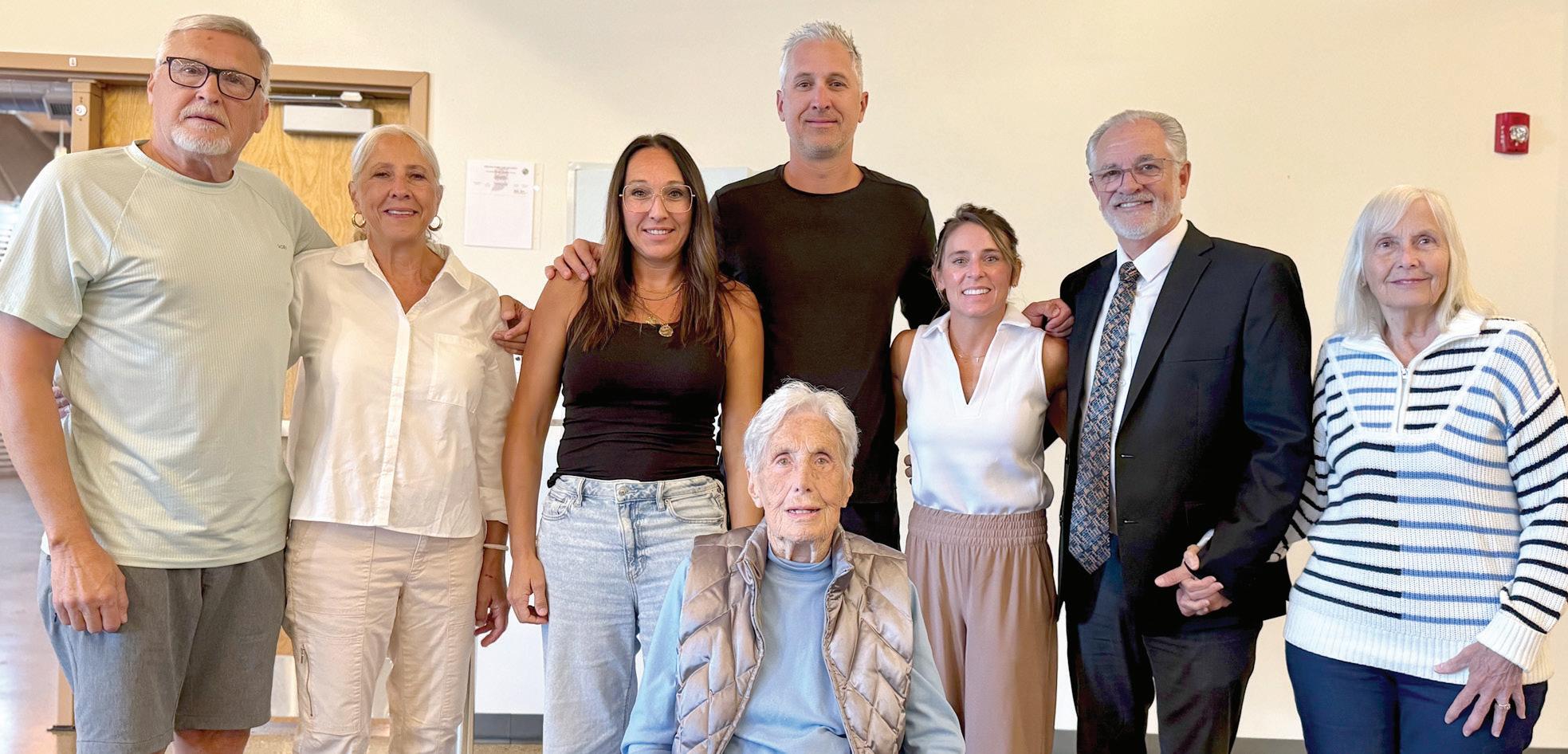
MAGICAL GIFT Jean Northenor, seated center, recently presented The Magical Meadows therapeutic horseback riding facility with a $100,000 donation to boost its Growing with Heart
nect with the natural world has the power to heal. The facility exists to provide a natural space for
those with physical, cognitive or emotional challenges, along with their families, to experience the healing power of horses. The Magical Meadows is located on the northeast side of
My name is Stan Walter and I’m from Wabash, Indiana. After I graduated from college and served with the U.S. Army in Korea, I became an expert in the gold, silver and coin industries. I’ve been active in my community serving as a city councilman, a member of the Rotary Club and as a Deacon at my church. I founded Precious Gems & Metals in 1979 and we’ve been serving customers throughout the United States for over 41 years. PGM currently services communities in the Northwest, Southwest, Midwest and South. When returning home, it’s always a pleasure to serve customers in Wabash and other surrounding cities who have supported PGM since 1979. Thanks for your patronage.
Can’t make it to our event? For customers with medical conditions, travel issues or for those folks who simply have too much product to bring to us, PGM will come to you. We offer ‘House Call’ service for customers. A PGM representative can sit with you, in the safety and comfort of your own home and perform an evaluation of your items with absolutely no obligation to you.
an
and 41 year history in
Capital Campaign.
Northenor is surrounded by her family in the picture, and the family is joined by Magical Meadows board chairman, Carl Adams, and his wife, Elizabeth, pictured at far right. Photo provided by The Magical Meadows.
Warsaw between Chapman and Tippecanoe lakes. Learn more at themagicalmeadows.org.
Milford Holiday Market now accepting vendor registrations
Registration is now open for the annual Milford Holiday Market, scheduled for 10 a.m. to 3 p.m. Saturday, Nov. 15. Due to construction at Milford School, this year’s market will be held at three locations in downtown Milford: the Milford First Brethren Church gymnasium, the Milford Community Building and the community building parking lot.
The Milford Holiday Mar-
ket provides an opportunity for small businesses, artists and crafters to showcase and sell their work in advance of the holiday season. Shoppers can expect a broad selection of handcrafted goods, specialty products and unique gifts created by members of the community.
Lunch will be available for purchase during the event, provided by the Milford Helping Hands 4-H Club.
Event organizers encourage registration soon as vendor space is expected to fill up. All indoor spaces for adult vendors have been sold out but outdoor space is still available. There are also a limited number of Kids’ Market spaces available. For additional information or to obtain a vendor registration form, visit meetmilford.org/ milfordholidaymarket or email meetmilfordindiana@gmail.com.
Kosciusko Freedom Fest to be at fairgrounds; website launched
The Kosciusko County Freedom Fest Committee recently announced the Kosciusko County Community Fair Board has agreed to provide the Kosciusko County Fairgrounds as the main venue for the 2026 Freedom Fest, which will celebrate America’s 250th birthday.
Festivities are set for June 5-7, 2026.
The partnership ensures that the fairgrounds will serve as the central hub for entertainment, community activities and patriotic celebration as the community honors “America 250.”
In addition, the Freedom Fest Committee announced that its website, kcfreedomfest.org, is now live. The site will serve as the primary source for festival information, event updates, event applications, vendor applications, parade registration, donations and sponsorships and volunteer opportunities.
The public can stay connected with the Freedom Fest Committee on Facebook at Kosciusko County Freedom Fest for behind-thescenes updates, announcements and opportunities.
FREEDOM FEST LOGO
CHRISTIAN ARTIST Christian artist Chris Renzema will perform at 7:30 p.m. Saturday, Oct. 4, during Grace College’s homecoming weekend. Photo provided by the college.
Grace College to host Chris Renzema
homecoming concert is a rare gift.”
The Kosciusko County Freedom Fest Committee has released a logo, launched a website and secured the county fairgrounds as the main venue for Freedom Fest next June to celebrate America’s 250th birthday. Graphic provided by the Kosciusko County Freedom Fest Committee.
Grace College will host an evening with Christian artist Chris Renzema at 7:30 p.m. Saturday, Oct. 4, during its 2025 homecoming weekend. The concert will take place at the Manahan Orthopedic Capital Center, 610 Wooster Road, Winona Lake.
Doors will open at 7 p.m.
The event is open to the public, and ticket prices range from $20 to $35. They can be purchased at events.humanitix. com/an-evening-with-chris-renzema.
“We’re excited to create an environment for worship with Chris Renzema’s musical talents,” said Alicia Meyer, director of student involvement at Grace. “His songwriting captures deep spiritual truth in earnest melodies that resonate with audiences of all ages and across multiple genres. The chance to welcome alumni and the general public during a
For Renzema, becoming an artist was a gradual yet inevitable process. Renzema was always drawn to writing and playing songs, but his hometown of Grand Rapids, Mich., didn’t have much of a music scene. After moving to Nashville in 2015 to pursue a career in music, he’s seen slow but steady success. Since then, the musician, songwriter and producer has released three albums: 2018’s “Be the Branches,” 2020’s “Let the Ground Rest” and 2021’s “Get Out of the Way of Your Own Heart.”
Renzema’s latest album, “Manna,” recorded in January at Nashville’s Sound Emporium, represents a culmination of everything he’s done so far. The album reflects on big questions while remaining both personal and accessible.
Renzema began touring regularly in 2019. He has since built a steady fan base, playing iconic venues such as Red Rocks and Nashville’s Ryman Auditorium. While Renzema has garnered numerous accolades, including being named on Pandora’s “Artist to Watch” list and earning a GMA Dove Award nomination for New Artist of the Year, it’s his dynamic live shows that have truly cemented him as a musician on the rise.
“Chris Renzema is one of my favorite artists, and getting the chance to see him at Grace is like the best thing ever,” said Brianna Wolfe, a second-year youth and family ministry major at Grace. “Homecoming is about to be so fire.”
Concert parking is available onsite free of charge, and ticket refunds are available up to 30 days before the event. To learn more about the concert, visit events.humanitix.com/an-evening-with-chris-renzema.
For additional tourism information, call the Kosciusko County Visitor Center at (800) 800-6090 or visit koscvb.org.
Manchester Symphony Orchestra salutes musical game changers Oct. 5
The Manchester Symphony Orchestra launches its 87th season Sunday, Oct. 5, with a celebration of daring musical game changers.
“The concert features three composers who boldly reshaped the evolution of music. Jean-Phillipe Rameau, Ludwig van Beethoven and Claude Debussy broke new musical ground as the most influential composers of their lifetimes,” said Debra Lynn, conductor and artistic director.
“While their works are now perceived as classics, they were certainly controversial when they first debuted. Rameau pioneered music theory as we know it today, Beethoven bridged the classical and romantic eras by exploring new forms of musical expression. Debussy broke tonal boundaries by introducing unfamiliar scales and modes,” Lynn said.
The Manchester Symphony Orchestra brings the public Rameau’s “Dardanus Suite,” Debussy’s “Petite Suite” and Beethoven’s “Symphony No. 7” at Manchester University’s Cordier Theater.
For tickets and information, visit manchestersymphonyorchestra.org. All concerts are at 3 p.m. Sundays.
Tim Reed, Manchester University professor of music and music department chair, will perform in the lobby before the concert.
The season includes collaborations with guest artists, area
choirs and a world premiere, showcasing familiar masterworks and more esoteric pieces.
“I am delighted to share our music with longtime followers and those who are interested in all forms of live music,” Lynn said. “I hope you’ll join us.”
The season continues Nov. 3 with the “Music of England and Wales” in Ford Theater at the Honeywell Center, featuring guest artist-in-residence, Andrew Nesler, performing William Mathias’s “Piano Concerto No. 2.”
The March 8, 2026, “Invocation” concert features choirs from Manchester University, Purdue University-Fort Wayne, local high school choirs, and the Manchester Symphony Chorus performing David Conte’s “Elegy for Matthew” and Marc-Antoine Charpentier’s “Te Deum.” It is back in Cordier Auditorium.
May 3, 2026, the orchestra soars with “Take Flight!” in Honeywell’s Eagles Theatre, featuring the world premiere of “The Flock: A Concerto for Warren & Flick with Orchestra.” The duo of Jacob Warren and Grant Flick, Honeywell Arts Academy alumni, crafts a sound that blends original composition and improvisation. Other works on the program include William Bolcom’s “Inventing Flight” and the Flying Theme from “E.T. the Extra-Terrestrial” by John Williams.
North Manchester is one of
the smallest communities in the nation with its own symphony orchestra. Residents of Wabash County and what was then Manchester College founded the symphony in 1939. That partnership continues today with a collaboration of professional and community musicians, as well as select-
Women of Today ‘Benefit at the Barn’ to support local youth education, programs
The Women of Today, a local nonprofit group dedicated to strengthening the community through youth programs, has announce its second annual fundraising event, “Benefit at the Barn,” from 6:30-10 p.m. Oct. 10, at The Herr Barn, Syracuse. This special evening will bring together neighbors, families and supporters with live entertainment by SoulShot featuring John Kirkwood.
The Women of Today meets monthly with a single mission in mind — to support youth, education and inclusivity in school activities and sports programs. The group is committed to helping children get what they need to thrive, while also providing resources to five local schools — Wawasee High School, Wawasee Middle School, Syracuse Elementary, Milford Elementary and North Webster Elementary. These funds allow schools, administrators and teachers to access supplemental support for classroom and program needs that often fall outside of traditional budgets. Through its outreach and fundraising, the organization provides scholarships for graduating seniors, assistance with field trip expenses, summer camp opportunities and sponsorships for youth sports and library programs, ensuring every child has
the chance to participate fully in the education and growth.
Additionally, the group helps support The Hanger at Wawasee High School, which provides snacks, clothing and hygiene items to students.
“When we invest in our kids, we invest in the future of the Wawasee community,” said Brooke Stahly, president.
There will be a cash bar, complimentary champagne and heavy hors d’ oeuvres. Cost is $50 per person. For tickets or more information, visit one.bidpal.net/ leaves or the Women of Today Facebook page.
The barn is located at 7813 E. CR 800N, Syracuse.
Garage
Walls Ceilings Window And Door Trim
Walls Ceilings Window And Door Trim
Walls Ceilings Window And Door Trim Stairways
Stairways
Stairways
Woodwork Staining
Woodwork Staining
Garage And Workshop Floors And Walls
Small Patch Repair
Woodwork Staining
Small Patch Repair
Garage And Workshop Floors And Walls
Great
Drywall Repair
Drywall Repair
Small Patch Repair
Great Service – Reasonable
Drywall Repair
References Available Upon Request. 574-304-5075
References Available Upon Request. 574-304-5075
Great Service – Reasonable Rates
References Available Upon Request. 574-304-5075
NEW SEASON North Manchester is one of the smallest communities in the nation with its own symphony orchestra. Residents of Wabash County and what was then known as Manchester College founded the symphony in 1939. Photo provided by the Manchester Symphony Orchestra.
LITTLE LEARNERS, BIG SUBJECT— Kindergartners at Madison Elementary School, Warsaw, are learning about community helpers and jobs. Recently, the children got to see a tractor from Greenmark in person as they learned about farming.
Pictured from left are Lilliana Cervantes, Walker Keough, Charlie Shaw, Hallie Waikel and Eleanor Thornburgh. Ross Pearson of Greenmark, standing in back, showed the kids a tractor as part of a learning series about jobs.
provided by Madison Elementary School.
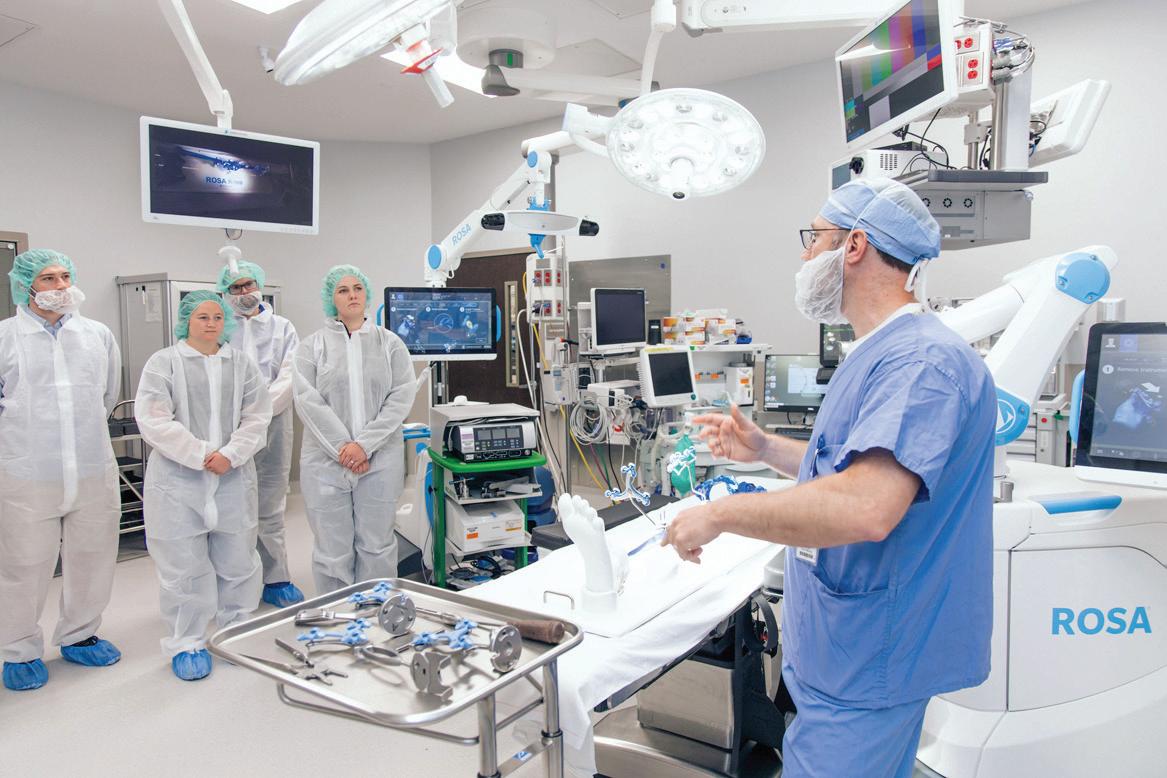
SCHOLARSHIP MATCH Grace College’s School of Business offers a $5,000 employer scholarship match for its orthopedic MBA program. Photo provided by Grace College.
Grace College offers $5,000 scholarship match for orthopedic MBA
The Grace College School of Business will offer a $5,000 employer scholarship match for students pursuing its new orthopedic MBA program. The scholarship match is available exclusively for individuals currently employed by an orthopedic company. If an employer offers an education financial assistance program, Grace will match the employer’s contribution dollar for dollar, up to $5,000.
“This is a huge opportunity for those who are currently working right here in the Orthopedic Capital of the World with a desire to pursue more specialized education offered at an incredible value,” said Dr. Thomas Pycraft, director of MBA programs at Grace. “Those who take advantage of this employer matching opportunity could cover up to almost half of the program’s total cost.”
The new orthopedic MBA program was launched in May 2025. The 39-credit-hour program includes nine general MBA courses online. The orthopedic-specific courses, “Orthopedic Foundations,” “Orthopedic Anatomy and Physiology,” “Global Medical Device Regulation” and the “Orthopedic Scholar Institutes,” will meet in person Fridays at the Grace College campus.
The institute courses will focus on professional development, including panel discussions with industry experts, plant and facility tours, as well as soft-skill development for orthopedic culture.
The orthopedic MBA program is currently accepting applicants for its May 2026 cohort. To learn more about the orthopedic MBA program and the requirements to apply, visit grace.edu.
Silver Lake awarded $500,000 grant for community center
The town of Silver Lake has been awarded a $500,000 grant from the Community Amenities Program to help bring its long-envisioned community center to life.
The $2.85 million project has now secured critical funding, including $750,000 from a recently announced Office of Community and Rural Affairs Community Development Block Grant.
The Community Amenities Program is a county-wide initiative. It is designed to enhance quality of life across Kosciusko County by investing in shared spaces and projects, which strengthen community connection. Backed by a portion of the Orthopedic Industry Retention Initiative’s
$30 million commitment from the state, CAP helps bring community visions to life by combining local, state and philanthropic resources.
The Silver Lake Community Center Project should provide a long-awaited hub for residents and businesses. It will feature a gymnasium, multipurpose room, kitchenette, computer lab, exercise room and office space. Designed to serve residents both inside and outside the town limits, the center will host programs and services fostering relationships, encouraging community involvement and supporting the physical and mental well-being of individuals across all ages and economic backgrounds, according to officials. For Silver Lake, this will be the first facility of its kind, bringing together resources, services and events under one roof.
“The town of Silver Lake and committee members are deeply grateful to receive this grant,” said Tonya Conley, Silver Lake’s clerk-treasurer. “The funding will allow us to serve our citizens better and will create a lasting positive change for our community. The grant is more than funding; it is an opportunity to bring resources, services and events to those who use it, enriching lives. Small communities are unable to do this alone without help from grantors who give us the opportunities to benefit our citizens and grow our community. OrthoWorx, through the OIRI funds, is helping us to provide more here in Silver Lake.”
The project has received support from local residents, businesses and Kosciusko County leaders, who see the community center as a transformative addition for Silver Lake.
“We’re excited to support the town of Silver Lake as they bring their vision of a community center to life,” said Ryan Christner, chief executive officer of OrthoWorx. “Their thoughtful planning and bold ambition make this a perfect launch project for the Community Amenities Program in Kosciusko County. This initiative is all about turning big dreams into real places where people can connect, grow and build lives within our community. Silver Lake’s new gathering space checks every box, and we couldn’t be happier for the community. When we invest in each other, great things happen, and this is just the beginning.”
With nearly half of the project’s funding now secured, the town is moving closer to construction.
The Community Amenities Program is guided by the CAP committee, a group of community leaders, who evaluate proposals and award grants based on their potential to make lasting, countywide impact. Administration of these grants is provided in partnership with the K21 Health Foundation, with the goal of ensuring each investment is managed with transparency, accountability and a focus on long-term community benefit.
Photo
Bowen Health celebrates new Warsaw clinic with ribbon-cutting ceremony
By LIZ ADKINS Staff Writer
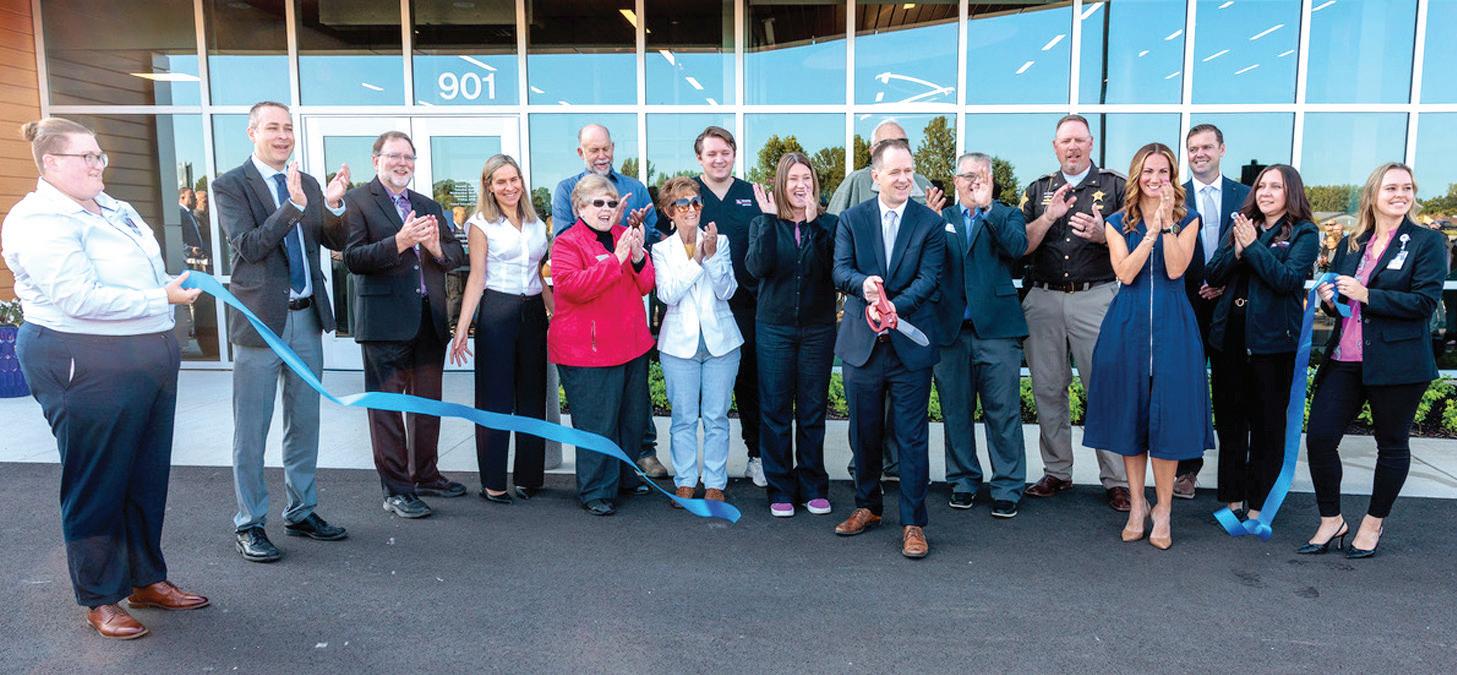
A ribbon-cutting ceremony celebrating Bowen Health’s new clinic building in Warsaw was held Monday, Sept. 8.
The clinic, formerly located at 850 N. Harrison St., is now operating out of the new building, 901 Anchorage Point Drive, Warsaw, with Bowen updating clinics in its five core counties, including Kosciusko.
Bowen offers primary and mental health care, addiction recovery treatment and lifeskills coaching services. Warsaw’s facility is also the first Bowen location to offer dental services.
“Today’s ribbon-cutting is the ending of one chapter and the start of another,” said Dr. Rob Ryan, Bowen Health CEO. “I’d argue that the previous chapter was a love story, the story of a community which opened Bowen’s doors in 1961, with a desire to make sure that people had a place to go if they had a serious mental illness or addiction that wasn’t the state hospital.”
According to Ryan, in the last 25 years, Bowen’s partnerships in Kosciusko County have helped keep patients out of the state hospital, saving Indiana and taxpayers $476 million.
“While we’re proud of those savings. I’m prouder of having the people who we work with stay in our communities,” said Ryan.
Ryan said Bowen built Warsaw’s new facility to “embody integrative care.”
“We want to do more than just work on mental health and addiction,” said Ryan. “We want to have people return to their marriages revitalized … return to their work with new strength, and we want to make sure that people with addictions don’t just have the addictions under power but help them and empower them to help other individuals. We’re the place to go if you have nowhere else to go.”
County Commissioner Cary Groninger congratulated Bowen Health on its new facility, saying the building will impact Kosciusko County.
“I was talking with (County Veterans Service Officer Darryl McDowell), and he’s super excited about the dental services and the things that are going to be provided here at this clinic for many of our veterans,” said Groninger. “Sometimes, they’re having to drive over 50 miles to get dental service in our community, so this facility will be a lifeline for those veterans.”
Groninger said the facility will “undoubtedly help Kosciusko County care for its residents.”
Warsaw Schools’ Superintendent Dr. David Hoffert said Bowen Health has been “a strong community partner and a leader in the field of mental health.”
“While buildings don’t define an organization, the capacity, comfort level for clients and services can be expanded with thoughtful planning,” said Hoffert. “With this new facility, desperate needs in areas such as dental services for underserved children will be provided.”
Kosciusko Chamber of Commerce President/CEO Rob Parker said the new facility is “welcoming, inviting, a flagship building to reach out to our community.”
“This building really states that we are doing things differently and better in Kosciusko County,” said Parker. “When Bowen steps
WARSAW RIBBON CUTTING — A ribbon cutting was held Sept. 8 for Bowen Health’s new clinic building in Warsaw. From left are Taylor Grehl, Bowen Health; Dr. David Hoffert, superintendent, Warsaw Community Schools; Jay Baumgartner, CFO, Bowen Health; Kelly Martinczak, Clinical Support Lead, Bowen Health; Cary Groninger, Kosciusko County Commissioner; Sue Ann Mitchell, Kosciusko County Commissioner; Mary Martin, regional director, Gov. Braun’s office; Dr. Colin Spencer, dentist, Bowen Health; Cindy Brady, elementary
up and helps make people feel better, be better, look better … it’s a better outcome for our county and all our people.”
Mary Martin, regional director for Gov. Mike Braun’s office, said Bowen Health’s new facility represents “an important investment in the health and well-being of Hoosiers.”
“The opening of this facility will not only provide essential services but also create opportunities for growth and connection to the Warsaw community and beyond,” said Martin.
Cindy Brady, Wawasee Community Schools’ elementary administrator and Bowen Health board member, said she walked into the facility prior to the ceremony and saw one of her students there with their parents.
“For me, that’s what’s it’s all about,” said Brady. “The excitement to be able to get students, families the care they need, especially when they’re young.
One unique aspect Bowen offers is dentistry, which will eventually be offered at Bowen’s other locations in Plymouth, Huntington, Columbia City and Wabash.
Dr. Colin Spencer, the facility’s dentist, said Bowen offers comprehensive dental care, including fillings, extractions, cleanings and basic root canals. In the future, Bowen will offer dentures.
“We can see patients and take care of them regardless of their ability to pay,” said Spencer. “We try to do as much in-house as possible, and we accept all patients.”
For more information, call (574) 385-3146 or visit its website.
administrator, Wawasee Community Schools and Bowen Health Board Member; Dan Woods, Bowen Health Board member; Dr. Rob Ryan, president/ CEO, Bowen Health; Rob Parker, President/ CEO, Kosciusko County Chamber of Commerce; Sheriff Jim Smith, Kosciusko County and Bowen Health Board Member; Shannon Hannon, COO, Bowen Health; Mark Groeller, executive director, Bowen Health; Elena De La Cruz Fearnow, practice administrator, Bowen Health, Warsaw; Jessica Mikesell, practice administrator, Bowen Health, Syracuse. Photo provided by Bowen Health.
Whitko 1980 grads invited to 45th reunion
WATER SOFTENER RENTALS
The Whitko High School Class of 1980 is planning its 45th class reunion.
Classmates are invited to gather Saturday, Sept. 27, at the Press Room Event Center, South Whitley.
There will be socializing, a cash bar and dinner of a roast pork sandwich and two sides available for $15 per plate from 6-7:30 p.m.
There will be a firetruck pic-
ture taken (same as 1980) and a photo booth from 7:30-8 p.m.
Beginning at 8 p.m., the group, He Said, She Said, will provide
music at the town park. Visit the Facebook page at facebook.com/Whitko1980 for more information.
Functional beverages provide health benefits
By EMILY CHRIST Health and Human Sciences Extension Educator Elkhart County Purdue Extension
Functional beverages are a category of drinks designed to provide specific health benefits beyond basic hydration.
Unlike traditional beverages, such as water, coffee or soda, which primarily serve to quench thirst or provide caffeine, functional beverages are formulated to deliver additional nutrients, vitamins, minerals, antioxidants, or other bioactive compounds supporting health and well-being.
These beverages often target specific health concerns or promote certain physiological functions, such as immune support, energy enhancement, mental clarity or digestive health.
Common ingredients found in functional beverages include probiotics for gut health, vitamins and minerals for overall wellness, herbal extracts known for their medicinal properties and amino acids for energy and muscle recovery.
For example, green tea-based beverages may be marketed for their antioxidant properties, while sports drinks may contain electrolytes to replenish those lost during physical activity. The appeal of functional beverages lies in their convenience and the perceived health benefits they offer, appealing to consumers looking to supplement their diets with nutrients in an easy-to-consume form. The global market for functional beverages has grown significantly as consumers increasingly prioritize health and wellness. Manufacturers continue to innovate, introducing new formulations catering to various dietary preferences and health goals; however, it’s important for consumers to critically evaluate these products, considering factors such as ingredient quality, added sugars and potential interactions with medications.
By understanding the specific benefits and potential drawbacks of functional beverages, individuals can make informed choices which align with their health needs and preferences.
Warsaw leader named Indiana school board member of the year
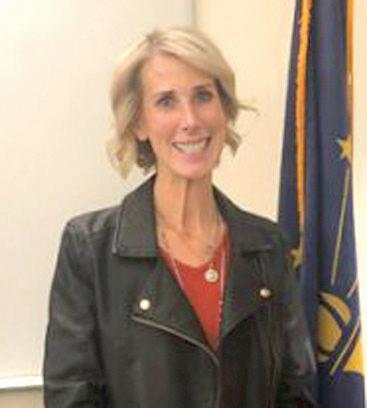
Heather Reichenbach, president of the Warsaw Community Schools Board of Trustees, has been named school board member of the year for 2025 by the Indiana School Boards Association.
A former teacher and lifelong advocate for education, she has served on the Warsaw school board since January 2015. Now in her ninth consecutive year as board president, she is commended for fostering a culture of collaboration, respect and open communication, while guiding the district as it adapts to changing demographics and needs. Reichenbach credits former board president Jennifer Tandy, her board colleagues, Warsaw Superintendent Dr. David Hoffert and her parents, for shaping her leadership style.
During her tenure, she has championed initiatives such as expanding professional development and tuition support for educators, helping launch and sustain the district’s dual-language immersion program, establishing an employee health clinic and efforts to ensure competitive salaries. She is most proud of the district’s broad academic and career opportunities for students, growth in S.T.E.M. education aligned with local industry, Tiger Ambassador program and partnerships with the community.
Reichenbach said receiving the statewide honor is both humbling and deeply meaningful.
“This award reflects the collective success of our district, the dedication of our staff, the commitment of my board colleagues and the unwavering support of my husband, Brian, and our children, Jonah and Claire,” she said. “I hope my school board service highlights the vital
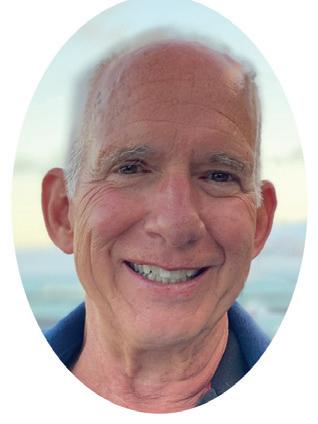
HEATHER REICHENBACH
role public schools play in building strong, vibrant communities.”
Her advice to future board members is to “be more curious” — to ask questions with an open mind, always assuming good intentions.
Looking ahead, her vision for the Warsaw Community Schools is every student and staff member feels a sense of belonging at school, where they can grow and thrive in a supportive learning environment.
The Indiana Outstanding Board Service Award is conferred annually by the Indiana School Boards Association to one school board member out of the 1,686 school board members in Indiana who exemplifies effective school board governance.
Chosen by fellow school board members, the winner is recognized during the annual fall conference of the Indiana School Boards Association and the Indiana Association of Public School Superintendents.
In addition to the statewide award, several school board members were recognized as Regional Outstanding Board Service Award winners for each of ISBA’s 10 geographical regions.
The Parkview Warsaw YMCA, 1305 Mariners Drive, will be offering free A1C and blood pressure screenings.
The screenings will be available from 11:45 a.m. to 1 p.m. Friday, Sept. 26. No fasting is needed.
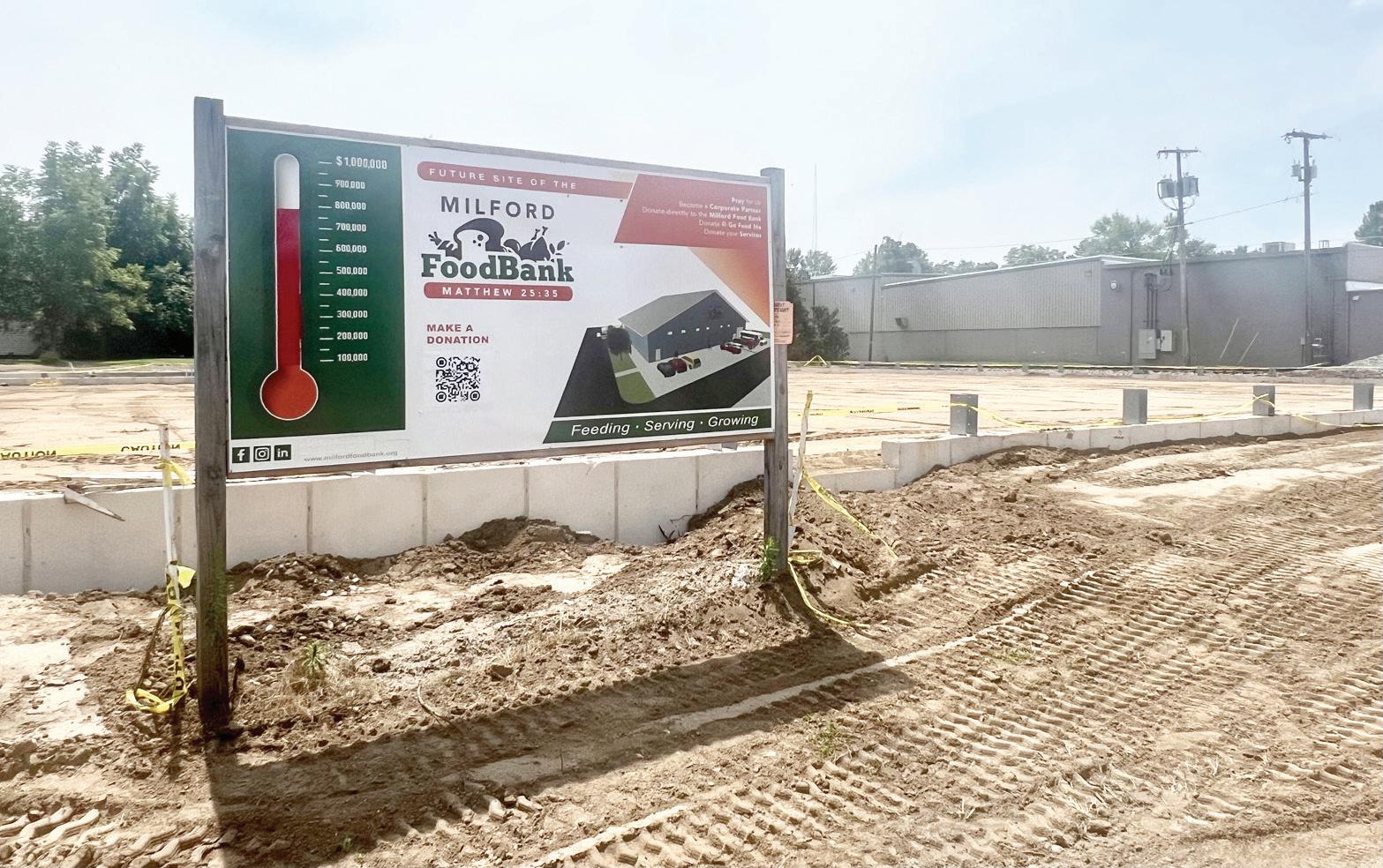
Milford Food Bank receives grant from Interra Cares Foundation
Milford Food Bank announces it has been awarded a $10,000 grant from the Interra Cares Foundation.
This gift will support the construction of Milford Food Bank’s new facility, designed to better serve its network of food pantries, community kitchens, shelters, and churches.
The Interra Cares Foundation is dedicated to empowering lives through financial inclusion, sup-
porting programs that help individuals reduce financial stress, make informed choices, and build secure futures.
“We are so grateful for the support of the Interra Cares Foundation,” said Angie Deak, Milford Food Bank development manager. “This grant is helping us take next steps in building a facility that will allow us to more effectively serve organizations working every day to fight hunger
You say you’d never put work before your kids.
in Michiana.”
The new facility is expected to be completed by spring 2026. It will expand Milford Food Bank’s ability to receive, package, store, and distribute food to its partners, ensuring that local families have access to food and essential needs.
For more information on Milford Food Bank or to learn how you can support their mission, visit milfordfoodbank.org.
You’d never let them leave the house looking like.... that.
Never make a separate meal for them.
Or never let them watch just one more episode before bedtime.
Registration is required. To register, visit the YMCA website at kcymca.org. Hover on healthy living at the top of the page; choose the tile that says free A1C and blood pressure screening; then click the register here button.
County Property Tax Assessment Board of Appeals Annual Session
The Kosciusko County Property Tax Assessment Board of Appeals will meet at 9 a.m. Mondays, Oct. 6, 13, 20 and 27, as needed. The meetings will be in the Old Courtroom on the third floor of the Kosciusko
County Courthouse.
All hearings will be live streamed starting Oct. 6.
Voting members include Brock Ostrom, Phyl Olinger and Mike Settles.
You also say you’d never take your eyes off them.
DONATIONS STILL COMING IN Milford Food Bank recently received a $10,000 grant from Interra Cares Foundation toward the construction of the new food bank facility. Photo provided by Milford Food Bank.
Warsaw mayor names new street superintendent
Warsaw Mayor Jeff Grose recently announced the appointment of Joe Vetor as the new street superintendent for the city of Warsaw. He will replace Dustin Dillon, who was recently appointed as the new director of public works.
Vetor has dedicated more than 17 years of service to the city of
Warsaw, beginning his career with the parks department in April 2008. Over the years, Vetor has held a variety of roles and currently serves as the assistant street superintendent, a position he has held for the past four years. In this role, he oversees daily operations and manages key city projects.
Prior to joining the city of Warsaw, Vetor developed a background in construction, specializing in concrete work. He has also further strengthened his technical expertise by completing professional training and certifications in asphalt and roadway management through the Local Technical Assistance Program at Purdue University and the Asphalt Pavement Association of Indiana.
“Mr. Joe Vetor brings a vast amount of knowledge, experience and leadership to the city,” said Grose.
Beyond his professional role, Vetor and his wife of 24 years have three children. Their oldest son will graduate from Western Michigan University in December; their daughter is beginning her second year at Manchester University; and their youngest son is a sophomore and soccer
C ounty R epo R t
Court News
Small Claims
The following small claims have been awarded in Kosciusko Superior Court III, Judge Chad Miner presiding:
Warsaw Health System LLC, d/b/a Kosciusko Community Hospital v. Broderick Cooper, $2,434.64; v. Keith Lang, $2,742.88; v. Joshua Nibert, $944.74; v. Julie Truex, $965.09
Aegis Dental Group Warsaw PC v. Andrew Lowe, $2,204.40
Client Services KL v. Norman L. McCord, $966.96; v. Rickey E. Osborne, $1,189.59
DNF Associates v. Nubia Moncion, $903.15
Operating a boat between sunset and sunrise, exceeding 10 mph — Luke M. Metzger, North Manchester, $164
Marriage Licenses
The following couples have applied for marriage licenses in the office of Kosciusko County Clerk of the Court
Melissa Boggs: Waikel-Busz
athlete at Wawasee High School. In his free time, he enjoys cooking, camping, spending time with family and training the family’s rescued German shepherd.
“I am honored to serve the residents of Warsaw, and I look forward to working with Dustin, Mayor Grose and the other department heads,” said Vetor. “My guiding principle will continue to be leaving Warsaw a better place than I found it.”
30, Nappanee
Gordon–Flores-Curiel
Julis J. Gordon, 23, Warsaw, and Yeneida Flores-Curiel, 20, Winona Lake
Bardsley-Heiman
Jeremiah Micah Bardsley, 39, Warsaw, and Laura Leigh Heiman, 38, Warsaw Dunn-Carlin
Amanda Jean Dunn, 38, Warsaw, and Joshua Tyler Carlin, 35, Warsaw Kelly-Raffield
Judith Hansen
Judith Hansen, 77, Milford, died Friday, Sept. 12, 2025, at Lutheran Kosciusko Hospital, Warsaw.
Arrangements are currently pending at Titus Funeral Home of Syracuse.
David House
Miriam Orten
David House, 78, Warsaw, Warsaw Meadows. Arrangements are currently pending at Titus Funeral Home of Warsaw.
Total Recovery Services Inc. v. Taylor Slocum, $2,654.90
Sherri Makinson v. Romio Vuittonet, $7,955
Miriam Orten, 80, Syracuse, died Wednesday, Sept. 17, 2025, at The Waters of Syracuse. Arrangements are currently pending at Titus Funeral Home of Syra-
Kosciusko's ONLY on-site Cremation center
Kevin and Vicky Canney v. Jim Waid, $8,021.50
Civil Collections
The following civil collections have been awarded in Kosciusko Superior Court IV, Judge Christopher D. Kehler presiding:
OneMain Financial Group LLC v. Rochelle R. Brettell, $1,156.52
Fifth Third Bank NA v. MJ Dohan, $9,602.10
Capital One NA, successor by merger to Discover Bank v. Laura L. McKinley, $14,857.85
Spring Oaks Capital SPV LLC v. Marlin Pearson, $2,658.96
Marine One Acceptance Corp. v. Aaron Peretti, Jessica Peretti, $6,540.78
Jefferson Capital Systems LLC v. Christopher Skaggs, $1,194.90
Evictions
Jason Anthony Waikel, 46, Warsaw, and Racheal Marie Busz, 40, Warsaw Rodriguez-Malagon Giron Edgard Rodriguez, 35, Celaya, Guanajuato, Mexico, and Cecilia Malagon Giron, 41, Warsaw Rautenberg-Shea
Ryan Paul Nicholas Rautenberg, 37, Warsaw, and Hannah Elaine Shea, 34, Warsaw Bettinger-Coffer
Ryan M. Bettinger, 43, Warsaw, and Addison Coffer, 23, Warsaw Hochstetler-Hochstetler
Matthew John Hochstetler, 32, Nappanee, and Maria Ann Hochstetler, 27, Nappanee Schwartz-Slabaugh
Luke Adam Schwartz, 23, Bremen, and Kara Beth Slabaugh, 23, Etna Green Bell-Ousley
Timothy Wayne Bell, 53, Warsaw, and Natalie Marie Ousley, 49, Warsaw Cean-Jeune
Brayanna Dawn Kelly, 23, Milford, and Cameron Porter Raffield, 23, Milford
Marriage Dissolutions
The following couples have filed for a marriage dissolution in Kosciusko Superior Courts I or IV:
Pollic — Lilly A. Pollic, Warsaw, and Kyle Pollic, Warsaw. They were married Nov. 14, 2015, and separated Sept. 12, 2025. Two minor children. Evans — Alicia Marie Evans, Pierceton, and Michael Layne Evans, Pierceton. They were married Aug. 2, 2014; no separation date given. Five minor children.
Earl — Kendra Earl, Etna Green, and Bruce Earl III, Nappanee. They were married in October of 2022 and separated July 9, 2025. Two minor children.
Ka’Maya Michele Janae Peters
At Titus Funeral Home & Cremation Services, our caring and knowledgeable staff is here to guide you in making the best choices for your family - decisions that honor your loved one while remaining in your budget.
Choosing Titus Funeral Home's Cremation Center for your loved ones cremation is ideal for many families. We own and operate our own crematory with licensed and certified staff.
At Titus Funeral Home & Cremation Services, our caring and knowledgeable staff is here to guide you in making the best choices for your family - decisions that honor your loved one while remaining in your budget.
The following eviction has been awarded in Kosciusko Superior Court III, Judge Chad Miner presiding: The 2525 Apartments v. Derra Blosser, $1,421.58
Mortgage Foreclosures
The following mortgage foreclosure has been awarded in Kosciusko Superior Court III, Judge Chad Miner presiding:
Rocket Mortgage LLC v. Steven G. Rourke, $83,694.01 Superior Court III
Louinet Cean, 32, Warsaw, and Celange C. Jeune, 34, Warsaw Steffensmeier-Flores Courtney Steffensmeier, 27, Warsaw, and Mario Flores, 27, Warsaw Tlahuetl-Reber
Ana Kristen Tlahuetl, 24, Warsaw, and Mason William Reber, 24, Warsaw Bohde-Wigent
Brock Paul Bohde, 25, Cromwell, and Natalie Kay Wigent, 25, Cromwell McBrier-Reece
Brianna Rose McBrier, 24, Mentone, and Cody Michael Reece, 22, Mentone Sponseller-Frank
A’Niya J. Johnson and James C. Peters Jr., Bristol, are the parents of a daughter, Ka’Maya Michele Janae, born at 5:27 p.m. Sept. 11, 2025, at Goshen Hospital. She weighed 7 pounds, 15.2 ounces, and was 20 inches long.
Savannah Grace Kramer
Gary and Marlene (Bontrager) Kramer, Bremen, are the parents of a daughter, Savannah Grace, born at 4:07 p.m. Sept. 12, 2025. She weighed 6 pounds, 8 ounces.
574-267-3104
Cory Benz Owner & Funeral Director 100% Local Ownership
Choosing Titus Funeral Home’s Cremation Center for your loved ones cremation is ideal for many families. We own and operate our own crematory with licensed and certified staff.
The following fines for infractions have been assessed in Kosciusko Superior Court III, Judge Chad Miner presiding:
Speeding — Cathleen L. Mullins, Warsaw, $164.50; Camdyn B. Bolton, Syracuse, $164.50; Drayvin R. Strycker, Winona Lake, $164.50; Jamaica L. Flora, Warsaw, $164.50; Andrew J. Chupp, Millersburg, $164.50
Failure of occupant to use a safety belt — Shane R. Checketts, Warsaw, $25; Shawn Michael Peddle, Warsaw, $25
Speeding, passing in a no-passing zone — Little Cub C Gibson, Claypool, $189.50
Littering — Harold J. Gunkel, Leesburg, $239
Child restraint system violation, failure of occupant to use a safety belt — Maria J. Ozenbaugh, North Manchester, $50
Operating with expired plates — Ashley K. Weaver, Winona Lake, $164
Improper display of license plate — Bruce E. Higham, Mentone, $164
Harrison Sponseller, 27, Claypool, and Emily Frank, 27, Angola Butler-Mavarez-De Benavides
Daniel Lee Butler, 44, Warsaw, and Carla C. Mavarez De Benavides, 53, Warsaw Borntreger-Miller
Benjamin P. Borntreger, 75, Millersburg, and Sarah Ann Miller, 70, Etna Green Cooper-Bechert
Nathan Allen Cooper, 39, Muncie, and Teri Elizabeth Bechert, 44, Pierceton Ross-Arbogast
Jason Ross, 49, Pierceton, and Angela Arbogast, 47, Pierceton Zimmerman-Bean
Mark Adrian Zimmerman, 51, Milford, and Dusty La-Dawn Bean, 53, Milford Kindle-Ormiston
Jill Kindle, 28, Warsaw, and Zachary Ormiston, 30, Warsaw Sizemore-Troyer
Faith Elizabeth Sizemore, 25, Kendallville, and Willard Dean Troyer,
Stanley S. Martin
Jesse and Sarah (Shirk) Martin, Goshen, are the parents of a son, Stanley S., born at 7:54 a.m. Sept. 14, 2025, at Blessed Beginnings Care Center, Nappanee. He weighed 8 pounds, 4 ounces, and was 21 inches long.
Stanley joins five siblings: Wendell, Matthew, Katie, Jerald and Nelson.
Sophia Willow Miller
Aaron and Geneva (Miller) Miller, Middlebury, are the parents of a daughter, Sophia Willow, born at 5:44 a.m. Sept. 15, 2025, at Blessed Beginnings Care Center, Nappanee. She weighed 8 pounds, 1 ounce, and was 20 1/2 inches long.
Rachel Jo Kuhns
Lyle and JoAnna Kuhns, Syracuse, are the parents of a daughter, Rachel Jo, born at 7:37 p.m. Sept. 15, 2025, at Blessed Beginnings Care Center, Nappanee. She weighed 8 pounds, 1 ounce, and was 21 inches long. Rachel joins a sibling, Kayla.
JOE VETOR
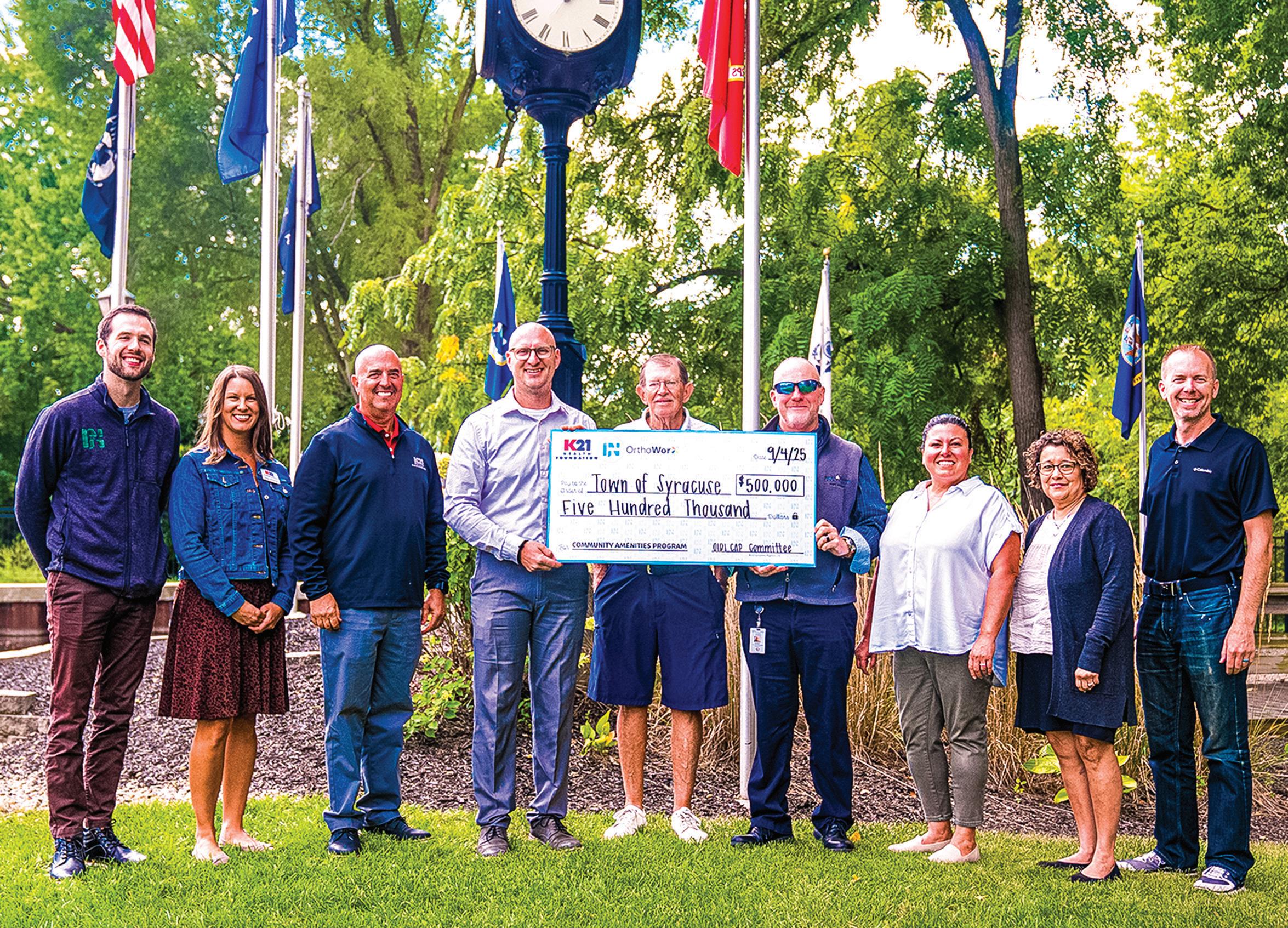
Syracuse awarded $500,000 grant for boardwalk project
Syracuse has been awarded a $500,000 grant from the Community Amenities Program to support construction of a new, multi-use pedestrian boardwalk, a $1.6 million project which will transform one of the town’s busiest corridors into a safer, more accessible hub for residents and visitors alike.
The project will create a pedestrian boardwalk along the east side of SR 13 from Chicago Street to Bowser Road, within the area locally known as “The Village.” The stretch contains much of Syracuse’s business community, including dining, shopping, grocery, fitness and other service businesses, but currently lacks safe sidewalks or bicycle-friendly routes. Portions of the new boardwalk will be elevated, ensuring accessibility, while navigating the topography of the Indiana Department of Transportation drainage area between SR 13 and its service roads.
By connecting key businesses, existing trails and school routes, the boardwalk will provide a safer avenue for walkers, runners, bicyclists and students traveling to Wawasee school buildings. It will also link the south end of Syracuse Lake to the north side of Lake Wawasee and tie into the Conklin Bay Trail, strengthening the region’s trail system.
“On behalf of the citizens, staff and elected officials of the town of Syracuse, I want to express our gratitude and appreciation to Rep. Snow for championing this funding,” said David Wilkinson, Syracuse town manager. “We are also very appreciative of the efforts of the members of the Community Amenities Program board for their consideration and acknowledgement of our vision. These funds will be extremely helpful in our boardwalk project and our continuing efforts to revitalize and grow our community.”
With preliminary engineering concepts already completed, Syracuse plans to hire an engineering firm in late 2025 to develop final designs and manage the project. Bidding for construction is anticipated in early 2026, with construction to follow later that year.
“We’re thrilled to bring this exciting amenity project to life for the town of Syracuse,” said Ryan Christner, chief executive officer of OrthoWorx. “The new boardwalk will elevate the community experience, connecting key parts of our retail village with existing trails and enhancing accessibility for both residents and visitors. This initiative not only promotes pedestrian travel but also significantly improves safety along one of the town’s most vital corridors.”
The boardwalk represents a major step forward in Syracuse’s efforts to improve livability and attract visitors, further strengthening its position as a trail-connected, destination community.
The Community Amenities Program is a county-wide initiative designed to enhance quality of life across Kosciusko County by investing in shared spaces and projects strengthening community connection.
Backed by a portion of the Orthopedic Industry Retention Initiative’s $30 million commitment from the state, CAP helps bring community visions to life by combining local, state and philanthropic resources.
To find out more visit allinkosciusko.com/initiatives/community-amenities.
PEDESTRIAN BOARDWALK Pictured from left are Lukas Rife, project manager for the Orthopedic Industry Retention Initiative; Angie Summers, K21 Health Foundation operations manager; Rich Haddad, K21 Health Foundation chief executive officer; Ryan Christner, OrthoWorx CEO; Bill Musser, Syracuse Town Council member; David Wilkinson, Syr-
acuse town manager; Virginia Cazier, Syracuse clerk-treasurer; Peggy Friday, CEO of Kosciusko Economic Development Corp.; and Nathan Scherer, president of the Syracuse Town Council. Photo provided by All IN Kosciusko.
ML Community Impact Alliance receives public charity designation
The ML Community Impact Alliance recently announced it has received recognition from the Internal Revenue Service as a 509(a)(2) public charity under section 501(c)(3) of the Internal Revenue Code.
The designation affirms the organization’s charitable mission and strengthens its ability to serve Kosciusko County and the surrounding region, according to a news release.
The ML Community Impact Alliance was founded to foster collaboration, strengthen local nonprofits and create events that bring the community together while driving positive economic and social impact, the organization said. With its new IRS designation, the alliance can now accept tax-deductible contributions, apply for grants and expand its partnerships with individuals, businesses and civic organizations.
“This recognition is a major milestone for our organization,” said Mike Loher, founder of the ML Community Impact Alliance. “It means that every dollar of support we receive goes even further in helping us create community-driven initiatives like Freedom Fest 2026, ‘A Country Christmas with Susie McEntire’ and other programs that directly benefit the people of Kosciusko County.”
As a 509(a)(2) organization, the alliance’s classification highlights its commitment to being supported by and for the community. Revenue streams such as event ticket sales, vendor participation, sponsorships and local donations will all play a role in sustaining its mission.
Upcoming Initiatives
The alliance is already partnering with the Kosciusko County Freedom Fest Committee for a three-day celebration scheduled for June 5–7, 2026, at the Kosciusko County Fairgrounds, marking America’s 250th birthday with concerts, family activities and community events.
About ML Community Impact Alliance
The ML Community Impact Alliance is a nonprofit organization dedicated to supporting community development, promoting local nonprofits and hosting events that celebrate “the values of faith, family and freedom,” according to the organization. Through partnerships, philanthropy and programming, the alliance seeks to strengthen the fabric of Kosciusko County and leave a lasting legacy for generations to come, it said.
For more information, contact mike@seven25events.com for details on upcoming programs, events and ways to get involved.
Hoosier Lakes Radio Club announces new venue for monthly meetings
The Hoosier Lakes Radio Club is excited to announce a new location for its monthly meetings. Beginning Thursday, Oct. 2, all meetings will be held at the Ivy Tech Community College Campus, 2545 Silveus Crossing, Warsaw.
Meetings will continue to take place on the first Thursday of every month at 6:30 p.m.
The new venue provides improved accessibility for both the public and individuals with disabilities, creating a more convenient and inclusive environment for all who wish to attend.
While monthly meetings will now take place at Ivy Tech, the Kosciusko County Justice Build-
ing will continue to serve as the home of the club’s emergency operations center and radio equipment.
Members and guests are encouraged to attend the monthly meetings for important updates, including details about access to the club room and the continued use of EOC facilities.
Stay connected by following the club on Facebook at Hoosier Lakes Radio Club.
Check in during Wednesday night nets at 7 p.m. on 146.985 MHz (–0.6 MHz offset, PL tone 141.3).
For more information, contact the Hoosier Lakes Radio Club or join the next meeting.
Online
Bidding open until 6 p.m. Thursday, Sept. 25. Property located at 5425 E. Washington Road, Pierceton. Four-bed, three-bath home, heated shop and storage buildings on five acres. Schrader Auction, schraderauction.com.
Real Estate Auction
6 p.m. Thursday, Sept. 25. Located at First Baptist Church, 208 W Market St., Pierceton. Property located at 6701 E. 750S, Pierceton. Country home and 46 acres recreational land in two tracts. Metzger Property Services, metzgerauction. com.
Banghart Estate Online Auction
Bidding open until 6 p.m. Thursday, Sept. 25. Pickup located at 938 S. 400W, Warsaw. Bid online at bid. kraftauction.com.
Blosser Auction
10 a.m. Friday, Sept. 26. Located at 21743 CR 30, Goshen. Parcel 1: Home, garage, shop buildings on three acres. Parcel 2: six acres. Tractors, skid loader, truck, trailers, shop equipment, farm primitives. Hahn Auctioneers, hahnrealtyandauction.com.
Dick Truex Estate Auction
9:30 a.m. Saturday, Sept. 27. Lo-
cated at 11749 Quarles Road, Wakarusa.
Building Auction
10 a.m. Saturday, Sept. 27. Open house from 5:30-6 p.m. Tuesday, Sept. 23. Located at 605 S. Linda Lane, North Webster. Multi-use building on double city lot. Metzger Property Services, metzgerauction. com.
Wayne And Ina Moore Farms Auction
6 p.m. Monday, Sept. 29. Located at 6019 W. 650N, Ligonier. Schrader Auction, schraderauction.com.
Online Real Estate Auction
Bidding open until 6 p.m. Monday, Sept. 29. Open house from 5:30-6 p.m. Friday, Sept. 26. Property located at 210 S. River Road, North Manchester. Four-bed, two-bath house with attached garage. Metzger Property Services, metzgerauction.com.
David and Suetta Beachy Auction
2:30 p.m. Tuesday, Sept. 30. Located three miles south of Middlebury on SR 13 to CR 24, then east 1 1/2 miles to 10952 CR 24, Middlebury.
Online Building Material And Industrial Supply Auction
Bidding open until 6 p.m. Thurs-
day, Oct. 2. Preview from 9 a.m. to 4 p.m. Wednesday, Oct. 1, located at 416 S. Huntington St., Syracuse. Bid online at bid. kraftauction.com.
Grosse Real Estate Auction
6 p.m. Thursday, Oct. 2. Located at 69735 CR 21, New Paris. Ranch house with shop on 1.2 acres. Hahn Auctioneers, hahnrealtyandauction.com.
Land Auction
6:30 p.m. Thursday, Oct. 2. Auction location: Claypool Lions Club, 201 W. Calhoun St., Claypool. Property location: west from SR 15 to 700S, turn northeast to 6753 S. Beaver Dam Road, Claypool; 75.5 acres tillable, woods and recreation, in three tracts. Metzger Property Services, metzgerauction. com.
Whitman Real Estate And Personal Property Auction
4 p.m. Tuesday, Oct. 7. Located at 13522 N. 400W, Milford. House on three acres. Vehicle, riding mower, air compressor, furniture and household items. Hahn Auctioneers, hahnrealtyandauction.com.
AGING SPARKS CREATIVITY,
•
•
•
•
•
•
Wednesday, September 24, 2025
SWCD STAFF & PARTNERS:
Tashina Lahr-Manifold — Soil Health Specialist
Brandon Olson — Education & Outreach Coordinator
Josiah Hartman — Conservation Program Technician
Dawn Armey — Executive Director
NATURAL RESOURCE
CONSERVATION SERVICE:
Chad Schotter — District Conservationist
Josiah Hartman joins team at Kosciusko County Soil and Water Conservation District
Hello, my name is Josiah Hartman. I have recently joined the team at Kosciusko County Soil and Water Conservation District as the conservation program field technician. It would be an understatement to say that I am excited for this opportunity.
I graduated from Grace College in 2016 with a B.S. in environmental science. Since then, I have gained a wide range of experience as a restoration field technician and an environmental health specialist across multiple jobs and volunteer opportunities.
I have collaborated with team members to abate environmental public health threats and implement numerous environmental restoration projects across multiple states. Conservation of our natural resources and educating people about good conservation practices have always been a passion of mine.
I spend most of my free time with friends and family exploring state and local parks or any other natural place. I love to fish, hike, kayak and camp any chance I get. My daughter and I are always looking
for new places to explore and adventures to embark on. I look forward to working with the community and all the new people I will meet. Feel free to stop by our office or give me a call to learn more about what I do.
Brandon Olson is new education and outreach coordinator
Hello, my name is Brandon Olson and I’m excited to introduce myself as the new education and outreach coordinator with the Kosciusko County Soil and Water Conservation District. I officially joined the team Aug. 21, and I’m grateful for the opportunity to contribute to the important conservation efforts happening here in our community.
A little about me: I graduated from Indiana University with a degree in environmental sustainability studies and worked for Bloomington Parks and Recreation as an educator for roughly four years. I often taught programs about insects or covered herpetology topics.
Outside of work, I enjoy volunteering in youth basketball programs or spending time outside hiking or birding.
I’m looking forward to learning from the wealth of knowledge already within the
community members.
SWCD Supervisors:
David Ransbottom — Chairman
Ryan Martin — Vice Chairman
Luke Mullet — Treasurer
Ben Schlipf — Supervisor
Roger Miller — Supervisor
What is a soil health principle?
By TASHINA LAHR-MANIFOLD SWCD Soil Health Specialist
The foundation of a quality soil health system can be traced back to four main principles: maximizing soil cover, maximizing continuous living root, maximizing diversity and minimizing physical and chemical disturbances. This article will discuss the first principle: maximizing soil cover.
In this first of four articles on soil health, the concept of “maximizing your soil cover” and the role it plays in building a functioning soil health system.
Enhanced Soil Structure
By minimizing physical disturbance, no-till allows soil aggregates — the clumps of soil particles held together by organic matter and microbial glues — to remain intact and strengthen over time.
Earthworms and plant roots also create stable macropores. This improved structure is crucial for air and water infiltration and gas exchange, preventing compaction and creating optimal conditions for root growth and microbial activity.
Thriving
Microbial Life
And Nutrient Cycling
As discussed above, the stable, undisturbed environment of no-till fosters a more diverse and abundant soil microbiome. Fungi, bacteria and other microorganisms are protected from physical disruption. They are also continuously fed by plant root exudates and decomposing residues. This robust microbial community drives efficient nutrient/matter cycling, making nutrients available to plants.
Improved Water Management
MAXIMIZING SOIL COVER An example of maximizing soil cover, corn, no-tilled with cereal rye residue.
a favorable habitat. This increased soil moisture retention makes the system more resilient to drought. It also minimizes water erosion, keeping precious topsoil in place.
Reduced Erosion
The combination of surface residues and improved soil structure (stable aggregates) provides a protective barrier against the erosive forces of wind and rain. The residues absorb the impact of raindrops, preventing soil particle detachment and slow-down water flow, allowing more time for infiltration. This significantly reduces soil loss, preserving the most fertile layer of your farm and preventing off-site impacts, like sediment runoff into waterways.
The undisturbed soil surface, often covered with crop residues, acts as a natural mulch or armor. This reduces direct sunlight exposure, significantly decreasing evaporation from the soil surface. Bare soil temperatures can exceed 100 Farenheit at a depth of 1-2 inches, which creates a hostile environment for soil microbes. Residue cover can keep soil temperatures 15-20 degrees cooler. This reduces evaporation while creating Continued on page 2
Increased Soil Organic Matter And Carbon Sequestration
Tillage exposes organic matter to oxygen, accelerating its decomposition and releasing carbon dioxide into the atmosphere. No-till reduces this oxidation. Crop residues decompose more slowly and are gradually incorporated into the soil by biological activity, contributing to the long-term build-up
JOSIAH HARTMAN
BRANDON OLSON
SWCD and connecting with our partners, landowners and
Local farmer honored with 2025 River Friendly Farmer Award at Indiana State Fair
Fifty-three Indiana farmers were recognized Aug. 6 at the Indiana State Fairgrounds for their exceptional commitment to conservation and land stewardship during the 2025 River Friendly Farmer Award Ceremony.
Held in the 4-H Exhibit Hall Auditorium, the ceremony honored farmers who have implemented proven conservation practices — such as cover crops, no-till farming and field borders — to reduce erosion, improve water quality and build healthy soils. These efforts not only protect Indiana’s rivers, streams and lakes, but also contribute to the health of waterways far beyond state lines.
Lt. Gov. Micah Beckwith addressed the honorees and their families, commending their dedication to preserving Indiana’s natural resources.
Local farmer Ed Boggs of Ed Boggs Farms was nominated by the Kosciusko County Soil and Water Conservation District. Ed’s farm lies in the Walnut Creek-Tippecanoe River Watershed. They produce corn, soybeans, wheat, hay and rotationally graze angus beef. They are 100% no-till and have been applying cover crops for 25 years.
They use aerial application of a multi-species mix (annual rye grass, crimson clover and turnips). They have also implemented filter strips, two WASCOBs, along with a couple blind inlets. By utilizing
all of these practices to slow and filter water runoff from the farm, they have decreased erosion on the property and helped protect Indiana’s waterways.
A shared theme among this year’s recipients was leaving the land better than they found it and Ed Boggs Farms is no exception. Ed works as a team with his three sons and wife to make the farm a success. Thank you Ed and family for your continued commitment to conservation.
The River Friendly Farmer Award is a program of the Indiana Association of Soil and Water Conservation Districts (IASWCD) and Indiana’s 92 soil and water conservation districts.
The 2025 River Friendly Farmer Award Ceremony is proudly sponsored by:
• Indiana Farm Bureau
• The Nature Conservancy
• Indiana Corn Marketing Council
• Indiana Soybean Alliance
• Indiana State Department of Agriculture
• Indiana Association of Soil and Water Conservation Districts
• Indiana’s 92 Soil and Water Conservation Districts
A full list of award recipients is available at www.iaswcd.orgMedia. Contact Tashina Lahr-Manifold, Kosciusko County SWCD, at (574) 267-7445, ext. 3, kosciuskoswcd@gmail.com.
What is a soil
Continued from page 1
of stable humus. This also allows roots to decay in place, further contributing to below-ground carbon. Higher soil organic matter levels improve soil fertility, water-holding capacity and nutrient retention.
At a minimum, the soil cover/residue should last until the new crop is fully canopied. How quickly this residue decomposes
depends on the carbon/nitrogen ratio of the residue. High carbon residue (e.g.: wheat straw at 80:1) decomposes much slower than low carbon residue (e.g.: pea at 29:1).
When we supply the soil surface with a diversity of residues from one year to the next, we can achieve the benefits of soil armor and still maintain a fully- functioning nutrient cycle.
RIVER FRIENDLY FARMER — Shown from left are Lt. Governor Micah Beckwith, Ed Boggs and Indiana Farm Bureau President Randy Kron.
WCHS places sixth at NCF Envirothon Competition
A team of five Warsaw Community High School students recently placed sixth overall at the NCF Envirothon which was held at Mount Royal University in Calgary, Alberta. The Envirothon is an international competition in environmental and natural resource conservation problem-solving in which students create solutions to local and global environmental issues.
Having won at the regional and state levels of the competition earlier in the year, the team of recent WCHS graduates Sydney Clark and Evan Hand, rising senior Titiksha Gorhe and rising juniors Kevin Gough and Sean Smith went on to represent Indiana against 51 teams from other states, Canadian provinces and China in the week-long competition. They participated in field trainings in the areas of aquatic ecology, forestry, soils and land use, wildlife and the current issue of “roots and resiliency,” followed by rigorous written and hands-on testing.
Preparation for the written testing started in December 2024, and the team is especially thankful for the many learning opportunities provided by the KSWCD. Coach Emily Gough attributes the impressive improvement in scores in large part to these hands-on learning opportunities with natural resource professionals. “Between joining in discussions at Breakfast with a Forester, participating in Soil Con and training in the classroom and out in the field, the students gained so much knowledge and skills that contributed to their success.”
In addition to the written tests, the team was tasked with creating a 20-minute presentation of a forest management plan entitled “Forestry for the Future,” which was accomplished in an intensive six-hour sequestration with no internet access or outside assistance. According to team member Titiksha Gorhe, “The most challenging part was creating the oral presentation while being sequestered for six hours. Our ability to stay focused as a team and play off each other’s strengths was really tested under the time crunch.”
As team captain Sydney Clark explained, creating a successful oral presentation “requires integrating everything you’ve learned from all the subject areas into one practical and complex plan.” At the end of the week, the Warsaw team’s preparation and team-building paid off, with their oral presentation securing the fourth best score of all teams. Consistent high scores in all five resource area tests and the oral presentation secured the first Top 10 finish for an Indiana team since the 1990s, and the program just continues to grow.
At the Northeast Indiana Regional competition in February, a team consisting of five
freshmen took second place just behind the winning WCHS team. With three team members returning from the award-winning team and many underclassmen ready to step in, the team hopes to continue to find success. In addition to the hard work of the competition, team members were able to experience the natural beauty of Banff National Park and get to know students from across North America and China.
The Canadian Rocky Mountains and their unique wildlife, including bighorn sheep, mule deer and jackrabbits, were a magnificent contrast to the landscape of Indiana, providing the students with a unique opportunity to explore more of the natural world. None of this would have been possible without the financial support from Kosciusko Soil and Water Conservation District and other community organizations.
With graduating Envirothon team members from the past few years going on to study climate science, ecology, agriculture and more, this program is helping to create our next generation of natural resource stewards.
A new soil health resource
A new program is taking root in Indiana’s farming community. Farm Advisors is a farmer-to-farmer initiative aimed at strengthening Indiana agriculture through shared experience and real-world knowledge. When farmers have a negative experience adopting a practice, they are highly unlikely to try that practice again. These farm advisors are trying to solve this problem by pairing you with another farmer, who has already spent decades implementing these same conservation and soil-health prac-
tices and changes on their own farms — helping you avoid mistakes and pitfalls so you can fast-track your own success, profitability and resiliency.
It was actually started by farmers: a five-person board of farmers consisting of three regional representatives (north, central and south), plus two at-large representatives. The board directs the overall program, including financial and governance decisions.
“Farmers that were interested in conserva-
tion and sharing how conservation has worked on their farm and so they’re looking for other peers, other people that want to learn about conservation and implementing that,” said Hannah Vorsilak, of Indiana Corn and Soy, who is promoting the program, which pairs seasoned growers with beginning or transitioning farmers, offering one-on-one guidance on everything from crop management to business planning.
For more information on how to get involved, visit farmadvisors.ag.
AWARDS CEREMONY Shown from left at the awards ceremony are Kevin Gough, Sydney Clark, Titiksha Gorhe, Sean Smith and Evan Hand.
4
www.the-papers.com — ‘the PAPER’ — Wednesday, September 24, 2025
Indiana AgriInstitute learns about Kosciusko conservation
Kosciusko County SWCD hosted the Indiana AgriInstitute in July to learn about the intersection between conservation, water quality and agriculture. The Indiana AgriInstitute prepares leaders in the agriculture industry to advance the industry and serve related communities.
Participants in the AgriInstitute’s “Indiana Agricultural Leadership Program” joined staff, district supervisors and partnering agencies for a morning of rafting on Grassy Creek and Lake Tippecanoe and wrapped up the day with several soil health demonstrations.
ALP participants learned about how conservation practices, such as filter strips, grassed waterways, cover crops and no-till, can improve water quality and soil health.
The SWCD also highlighted the impor-
tance of wetlands and the work soil and water conservation districts do for their communities.
“The rafting experience is well designed and very informative. Being on the water, seeing first hand the great work being done by Kosciusko County SWCD to protect our soil and water health, is powerful. The ALP members gain valuable information that helps them be better advocates for conservation practices,” the AgriInstitute Executive Director Beth Archer said during a follow-up conversation.
By educating leaders in the agriculture industry on soil health and how it affects our water quality, the district hopes to inspire the implementation of conservation around the state.
INFILTRATION Tashina Lahr-Manifold, SWCD soil health specialist, wrapped up the event by demonstrating infiltration in different management systems with the NRCS Soil Health Trailer.
Habitat Management Field Day highlights local conservation successes
A recent Habitat Management Field Day brought together eight property owners, along with representatives from the Natural Resources Conservation Service, Farm Service Agency from Kosciusko and Whitley counties, U.S. Fish and Wildlife Service, Indiana Department of Natural Resources and Pheasants Forever. The group spent three hours touring three local properties showcasing a variety of conservation projects — some dating back as far as 1971.
Property 1: Lessons From The Land
The first stop was the property of Scott Werstler, who shared his experiences and challenges with habitat restoration. Werstler spoke about the lessons learned from unsuccessful tree and shrub plantings and emphasized the importance of understanding soil types when selecting plant species.
His property also includes warm-season grass and wildflower plantings, which provided an opportunity for discussion about proper seed selection and long-term maintenance. He also discussed Triploid Grass Carp that he has added to his pond to help with the maintenance of vegetation. The carp are bred to not reproduce and they help control the vegetation in a pond.
Property 2: From Forest To Farm
The next stop featured the land of Sam St. Clair, where conservation efforts began over 50 years ago. St. Clair discussed a long history of tree planting, timber harvesting and replanting efforts. He also shared his strategies for invasive species removal and thinning dense stands of warm season grasses to promote plant diversity.
The group then visited the homestead
of Sam’s son, Cory St. Clair, who is currently practicing regenerative agriculture. Cory has installed a high tunnel to grow a wide variety of vegetables, which he shares with local families. His property also includes a newly planted fruit tree pasture with multiple native species, a chicken coop with laying hens and 22 beehives. Interestingly, the honey produced has two distinct flavors — one with a butterscotch-like taste due to naturally occurring goldenrod and another with a strong flavor attributed to buckwheat planted in a nearby horse paddock.
Property 3: Wetland Restoration And Management
The final stop was a property managed by Scott Fetters, where participants explored three constructed wetlands. Fetters demonstrated how water levels are managed using control structures and discussed strategies for controlling invasive species like cattails and goldenrod. He also shared observations from different seeding methods — broadcast versus drilled planting — and noted that while drilled fields appeared denser in the first year, all sites looked similar by year three. His ongoing work includes thinning dominant big bluestem grasses and introducing little bluestem to promote greater diversity of wildflowers.
A Day
Of
Learning And Sharing
The field day wrapped up with discussion among attendees, who asked questions and shared their own experiences with habitat management. The event highlighted the value of hands-on learning, community engagement and the importance of long-term planning and maintenance in conservation projects.
A MORNING OF RAFTING Shown are Instructor Dawn Armey, Matt Eldridge, Eric Pfeiffer, Mark Caskey, Jason Beck, Garrett Kelly and Instructor Jewel Wise.