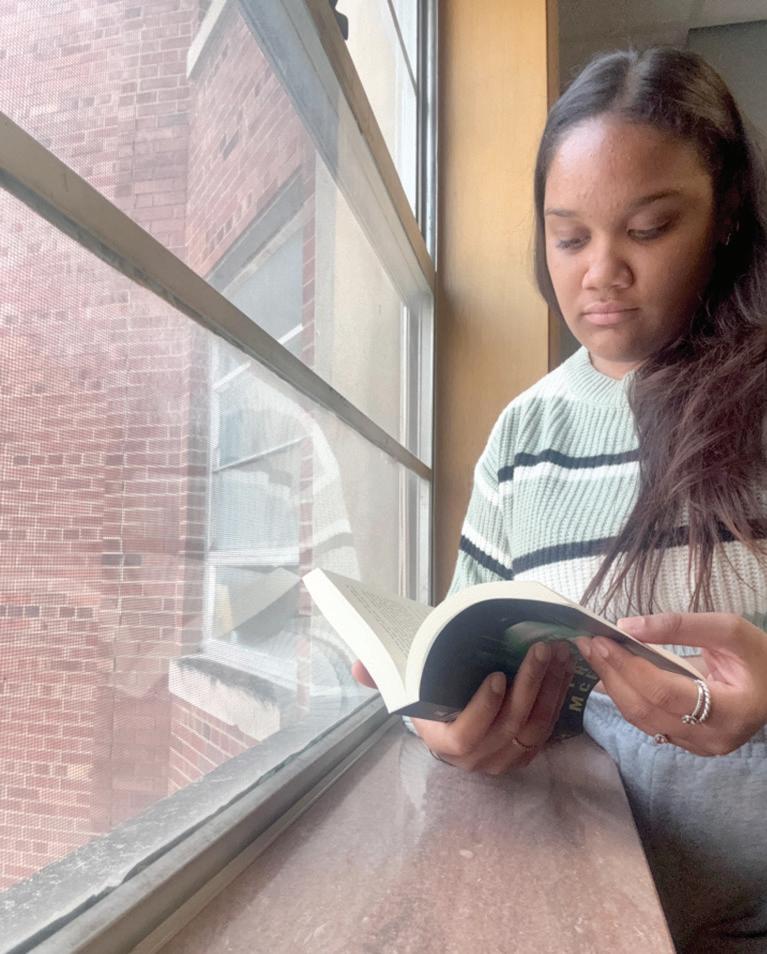
SOME LIGHT READING — Vanellyz Vazquez-Tex- idor reads by the sunlit window to increase her light exposure. “I love reading during the winter because it gives an emotional escape to places that I could be, and to adventures I could only imagine,” Vazquez-Texidor said. Photo provided by Vanellyz Vazquez-Texidor.
YO U ’RE N OT A L ON E Feeling S.A.D.?
By ABBY OLIVER Staff Writer
As snow piles up and cold settles over Kosciusko County, some residents face more than just winter chills - they may be experiencing seasonal affective disorder, a type of depression triggered by changing seasons.
Seasonal affective disorder, or S.A.D., is more serious than the “winter blues” and differs from the “holiday blues,” which usually stem from seasonal stress and anxiety.
Siquilla Liebetrau, vice president of clinical services at Bowen Health and a licensed clinical psychologist, explained the distinction between S.A.D. and the typical winter blues.
“I think we all get a little frustrated or sad when it’s just constantly cold and gray outside, but when you have seasonal affective disorder, you meet criteria for a depression diagnosis,” Liebetrau said. “We typically look for not just the symptoms themselves, but whether they impact your ability to function in day-to-day life.”
People affected by S.A.D. experience the same symptoms as those with depression, including feelings of hopelessness, sadness, anxiety, guilt and helplessness, along with additional signs such as oversleeping, overeating and social withdrawal. Individuals who already struggle with depression are more likely to develop S.A.D. than those without a history of depression.
There are two types of seasonal affective disorder: winter-pattern and summer-pattern. As their names suggest, winter-pattern S.A.D. occurs during the winter months, while summer-pattern S.A.D. can appear in the spring and summer.
The exact cause of winter-pattern S.A.D. is unknown, but it is believed to be linked to vitamin D deficiency.
“Vitamin D is typically generated by exposure to sunlight,” Liebetrau said. “When you don’t have that exposure, your vitamin D levels go down significantly.”
During winter, S.A.D. can be compounded by decreased social engagement. April White, director of counseling services at Manchester University, said this issue can be especially pronounced for college students.
“When you’re on a college campus, if you’re isolating, it’s not like you’re going home to your family and isolating there - you’re isolating in a dorm room,” White said. “Maybe you have a roommate who is present, but maybe you don’t.”
Several treatments are available for both types of S.A.D.. Psychotherapy and antidepressants are commonly used to treat depression.
For winter-pattern S.A.D., light therapy and vitamin D supplementation can be particularly helpful.
“People can also be intentional about opening their curtains and getting outside even on overcast days,” Liebetrau said. She recommended looking for 10,000-lux light therapy
lamps to provide consistent light exposure. Liebetrau also emphasized the importance of regular exercise, consistent sleep schedules and maintaining social engagement.
White added that any kind of social interaction - living, studying or working around others - can help cultivate a sense of normalcy during the winter months.
“Just being in a space with other people is uplifting,” she said. “Even if you’re working individually, getting together with friends in a shared space can be beneficial.”
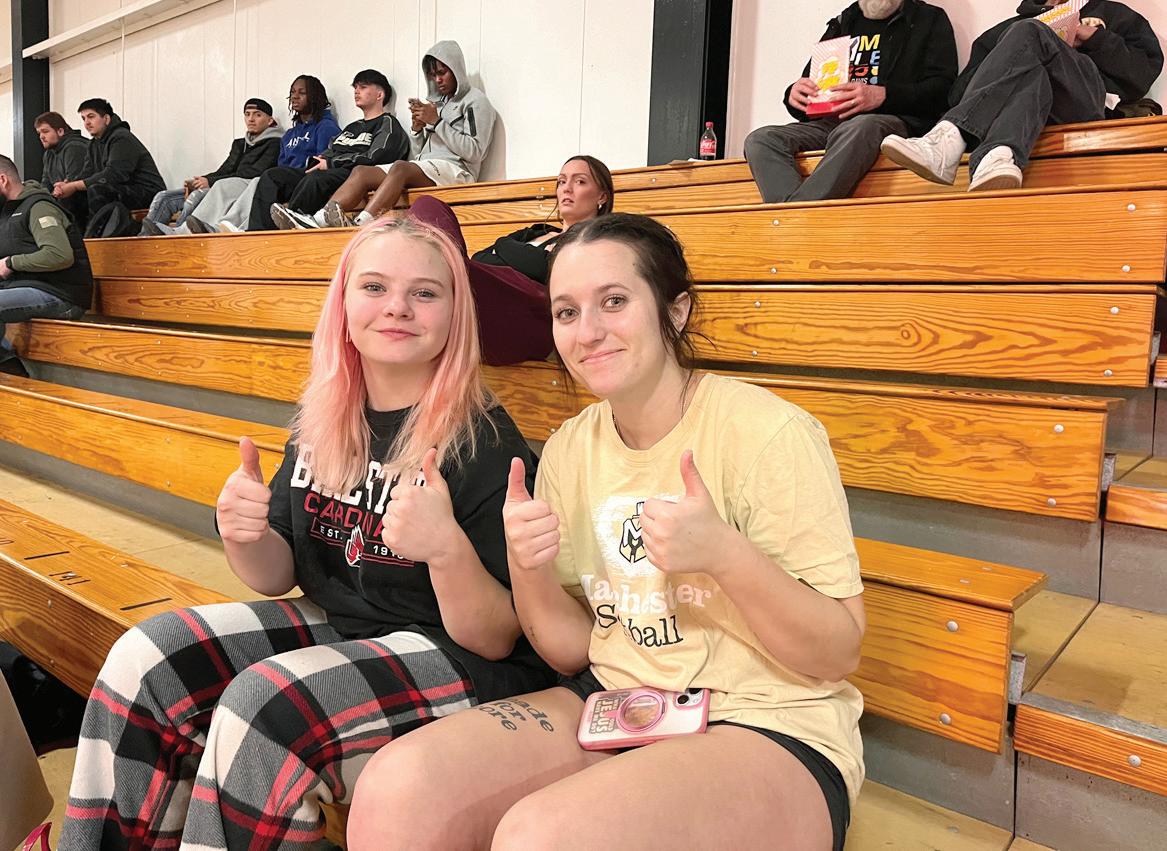
Residents can also take advantage of winter activities with friends and family, such as attending local sports games. If it’s too cold to go outside, simply reading next to a window can help increase sunlight exposure.
Local options include skating at the Miller Sunset Pavilion or sledding at Kelly Park. Indoor activities like bowling, roller skating and watching movies in theaters provide alternatives for staying active and engaged.
As winter continues, experts encourage residents to remain proactive about their mental health and seek support if symptoms interfere with daily life. Maintaining social connections, prioritizing light exposure and staying physically active can help combat the challenges of seasonal affective disorder.
For anyone struggling with depression or thoughts of self-harm, trained counselors are available 24/7 through the 988 Suicide & Crisis Lifeline by calling or texting 988.
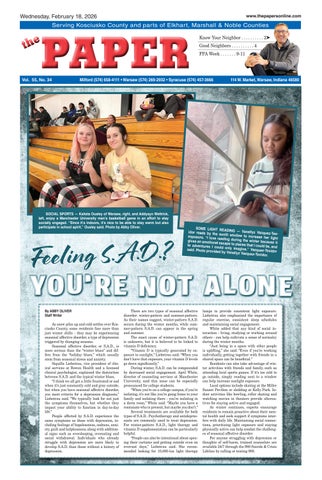
SOCIAL SPORTS — Kalista Ousley of Warsaw, right, and Addysyn Wettrick, left, enjoy a Manchester University men’s basketball game in an effort to stay socially engaged. “Since it’s indoors, it’s nice to be able to stay warm but also participate in school spirit,” Ousley said. Photo by Abby Oliver.
Bazzoni a mentor and mentee
By ABBY OLIVER Staff Writer
“Who’s your Steve?”
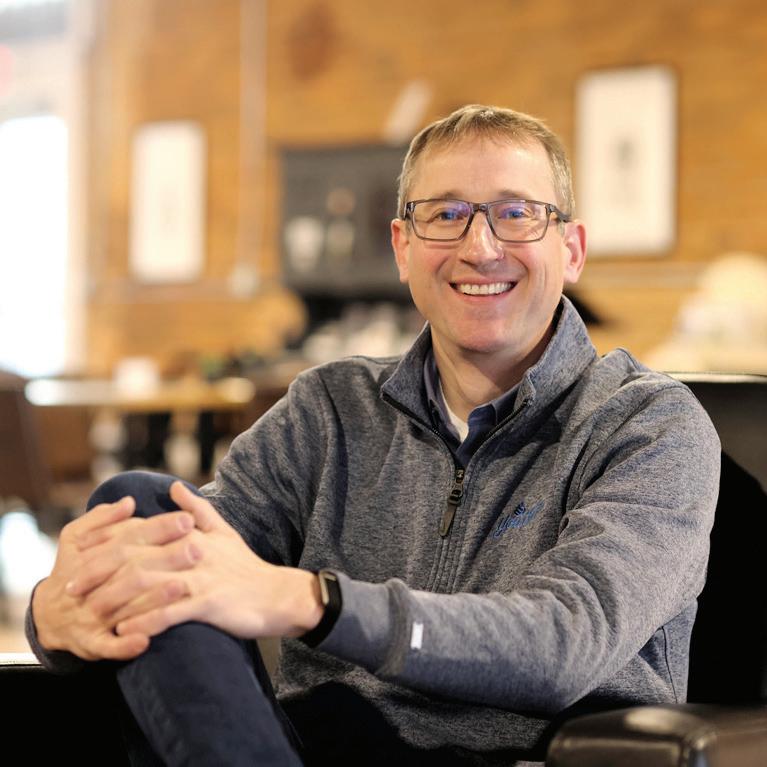
For David Bazzoni, that question defines his career and mission - a lesson he learned from his mentor, former Wildman CEO Stephen Bryant. Bryant’s guidance shaped Bazzoni’s approach to business, leadership and life, and his influence remains central even after his passing in 2023.
Raised in North Manchester by parents Leon and Sarah, Bazzoni is the youngest of four children. His family loved the outdoors and spent winters skiing and summers on Sechrist Lake, along the Barbee Chain of Lakes.
Bazzoni graduated from Manchester High School in 2001. He then attended the University of Nebraska to compete in pole vault and track and field before graduating in 2006.
After college, Bazzoni returned home to his family. He considered positions at major orthopedic and medical device companies but ultimately wanted to pave his own way.
“My dad has operated his own manufacturing business for over 50 years, and that influence certainly inspired me to pursue a more entrepreneurial approach
to my own career,” Bazzoni said.
After some consideration, he chose Wildman, a smaller business, in 2006, hoping to make a significant impact. It was there he met the mentor who would define his career.
By the end of his interview with Bryant, Bazzoni knew he wanted to work for him. Bryant became his mentor in business and leadership.
“I think about Steve every day, and I’m just so thankful for him. He shaped me into who I am professionally,” Bazzoni said.
Bazzoni later made a name for himself as a young entrepreneur when he founded YouTheFan. His persistent pitches to Bryant for the Sportula, a sports-themed spatula and bottle opener, paid off. Bryant provided funding and allowed another Wildman employee to assist him. By the end of the first year, the Sportula had gained traction and YouTheFan was born.
Now president of YouTheFan, Bazzoni oversees operations in North Manchester and Warsaw. The company designs, manufactures and distributes officially licensed NFL, MLB, NHL and collegiate products to major retailers, including Target, Amazon and Walmart.
Bazzoni values the relation-
ships he has built. One of the most important lessons he shares is the value of mentorship.
“Find a mentor in life,” Bazzoni said. “Who’s your Steve? Try to find your Steve, because you need that in life. And then, as you get older, you become Steve.”
Bryant’s guidance also shapes how Bazzoni approaches others’ ideas. He strives to give his full attention to the ideas he receives in weekly calls.
Once the mentee and now the mentor, Bazzoni has shared his story at the University of Notre Dame and Grace College many times.
“I hope to inspire them to do what they love and work tirelessly to make their dreams a reality,” Bazzoni said. “Anything is possible if you believe enough in something and simply refuse to quit.”
Bazzoni’s love of outdoor recreation continues. One of his newer hobbies is mountain biking. His interest began when his wife, Whitney, wanted bicycles for their two children, ages 10 and 6. Soon after, Bazzoni purchased a bike of his own.
What started as a way to spend time with his children became a favorite pastime. One bicycle turned into two, then three, then four - plus an indoor
DAVID BAZZONI
training bike. Bazzoni enjoys learning about types of bikes and their functions, particularly electric bikes.
“Not having an e-bike is like going down the slopes, taking your skis off, and putting them on your shoulder and walking up the hill - versus getting on the lift,” Bazzoni said with a laugh.
For Bazzoni, mountain biking
is more than a hobby.
“It’s such a fun family thing. The whole point of me buying it to begin with was to ride with the family,” he said.
Whether on a trail with his kids or in the boardroom, Bazzoni carries the lessons of Steve Bryant with him - encouraging others, taking risks and becoming the mentor he once sought.
Pancake breakfast to support Amos family
An all-you-can-eat pancake breakfast will be held at the Mentone Fire Station to support Jake Amos’ family.
The breakfast will run from 7–10 a.m. Saturday, Feb. 21. It will include pancakes, sausage, coffee and juice.
Amos, a paramedic with Lutheran EMS, died Wednesday, Jan. 7, 2026. All proceeds will go directly toward the family’s unforeseen financial needs. The breakfast is open to the public for a freewill donation.
Amos was a dedicated member of his community known for his selflessness, loyalty and commitment to serving others.
He worked as a paramedic for more than 16 years, including 10 years with Lutheran EMS, serving Kosciusko, Fulton and Marshall counties. Colleagues said he approached both routine calls and life-threatening emergencies with calm professionalism and compassion.
Earlier in his career, he also served with Knox County EMS, SEALS EMS, Cares EMS, Life Med EMS and Fulton County EMS. He was known among coworkers and patients for his reliability, leadership and willingness to help others.
In addition to his EMS career, Amos served for many years as a volunteer firefighter with the Burket Fire Department, contributing his time and service to the community.
He is survived by his wife and three children, as well as his parents, siblings, grandparents and in-laws.
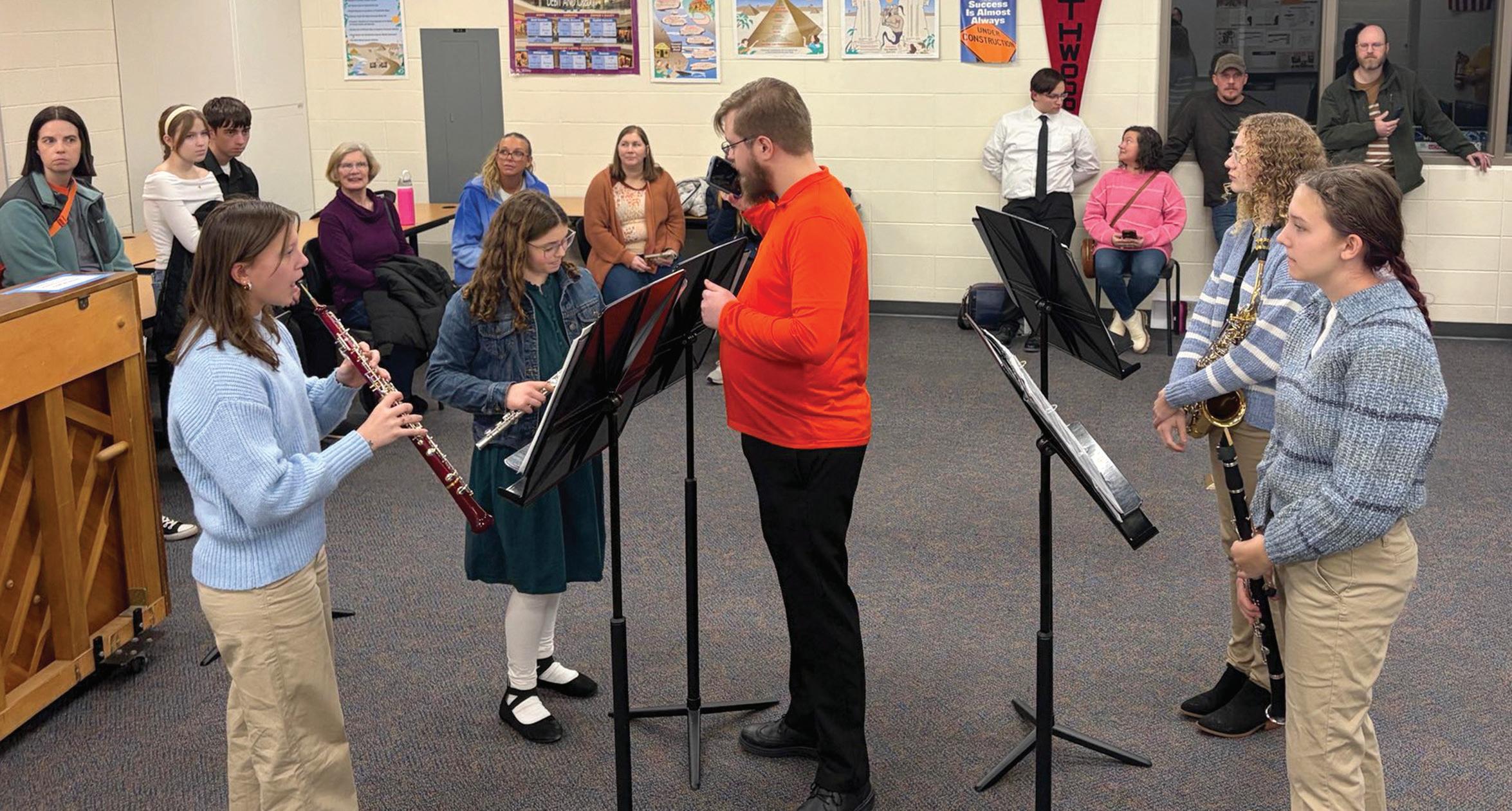
by Warsaw Community Schools.
Warsaw band students shine at ISSMA District Solo and Ensemble
Student musicians from across Warsaw Community Schools earned top honors at the Indiana State School Music Association District Solo and Ensemble Contest Friday, Jan. 31, hosted at NorthWood High School.
This marks the second consecutive year that all middle school participants earned gold ratings.
Thirty-five Warsaw Community High School students performed in 31 events, earning 27 gold ratings and four silver ratings. Six-
teen students and groups qualified to advance to State Solo and Ensemble, which will be held in Indianapolis on Saturday, Feb. 28.
Middle level musicians from Edgewood Middle School and Lakeview Middle School also had
an exceptional showing. Thirty-four students performed in 32 events, and every performance earned a gold rating. Their day included 27 solos and five ensembles, with seven students performing in both a solo and an ensemble,
and two students performing two solos on different instruments.
Students across all grade levels went above and beyond in preparing their music, with many scheduling additional help and rehearsals outside of regular band class.
25th annual Warsaw Chess Tournament draws 142 players
A total of 142 student and adult chess players gathered at Madison Elementary School on Saturday, Jan. 31, for the 25th annual Warsaw Chess Tournament, celebrating a milestone year.
Hosted by the Warsaw Chess Club, the tournament combined friendly competition with a purpose. For the 13th consecutive year, the club partnered with A.C.T.S. for the “Checkmate Hunger” initiative. All proceeds from the event will help provide meals for families in need in Haiti and Colombia.
Warsaw Education Foundation sponsored all the tournament awards, and American Table Restaurant has given continued donations and support to chess clubs across local schools. Every participant was recognized with either a trophy or medallion.
“This tournament is about more than chess,” said Jay Bolduc, War-
Free FAFSA filing event Feb. 22
Financial aid experts will be available at 34 sites across Indiana Sunday, Feb. 22 to offer Hoosier families free, in-person assistance completing the Free Application for Federal Student Aid.
For more than 37 years, College Goal Sunday has helped students file the most important form required to access free money for college. Born in Indiana and now a national model, the event has helped tens of thousands of Hoosier families successfully submit the FAFSA.
Filing the FAFSA is required for Indiana state aid and federal financial aid. The Wednesday, April 15 priority deadline guarantees eligible students access to state funding. Filing after the deadline is still possible but aid is not guaranteed, and families risk missing out on significant financial support.
To learn more visit usa.gov/ fafsa.
saw Community Schools chess sponsor and coach. “It brings students together from across our community while teaching critical thinking and patience. At the same time, it helps make a difference for families around the world.” Tournament Results
Fifth (tie) - Landon Quiroz (Jefferson), Caleb Zingale (Washington), Nathan Gallo (Washington), Canaan Howe (Washington), Henry Siebeneck (Washington)
Fourth Grade
First - Cooper Stephens (Claypool)
Second - Azra Anwar (Washington)
Third - Cedar Watson (Leesburg)
Fourth - Keren Kolembe (Jefferson)
Fifth - Santiago Rodriguez (Lincoln)
Fifth Grade
First - Andrew Bausch (Lincoln)
Second - Asher Reneker (Madison)
Third - Truman Gough (Lincoln)
Fourth - Josiah Burden (Lincoln)
Fifth - Bennett Biltz (Madison)
Sixth Grade
First - Sidanth Umesh Kumar
(Madison)
Second - Isaac Burnworth (Washington)
Third - Devin Harris (Indian Springs)
Fourth - Finley Owens (Washington)
Middle School
First - Maryam Anwar (Edgewood)
Second - Fareed Sultan Mohammed (Edgewood)
Third - Gavin Devanathan (Lakeview)
High school
First - Carson Devanathan (WCHS)
Second - Caleb Compson (Eastbrook)
Third - Simon Hankins (WCHS)
Adult Division
First - Jim Spalding
Second - David Teel
Third - Jared Mellentine
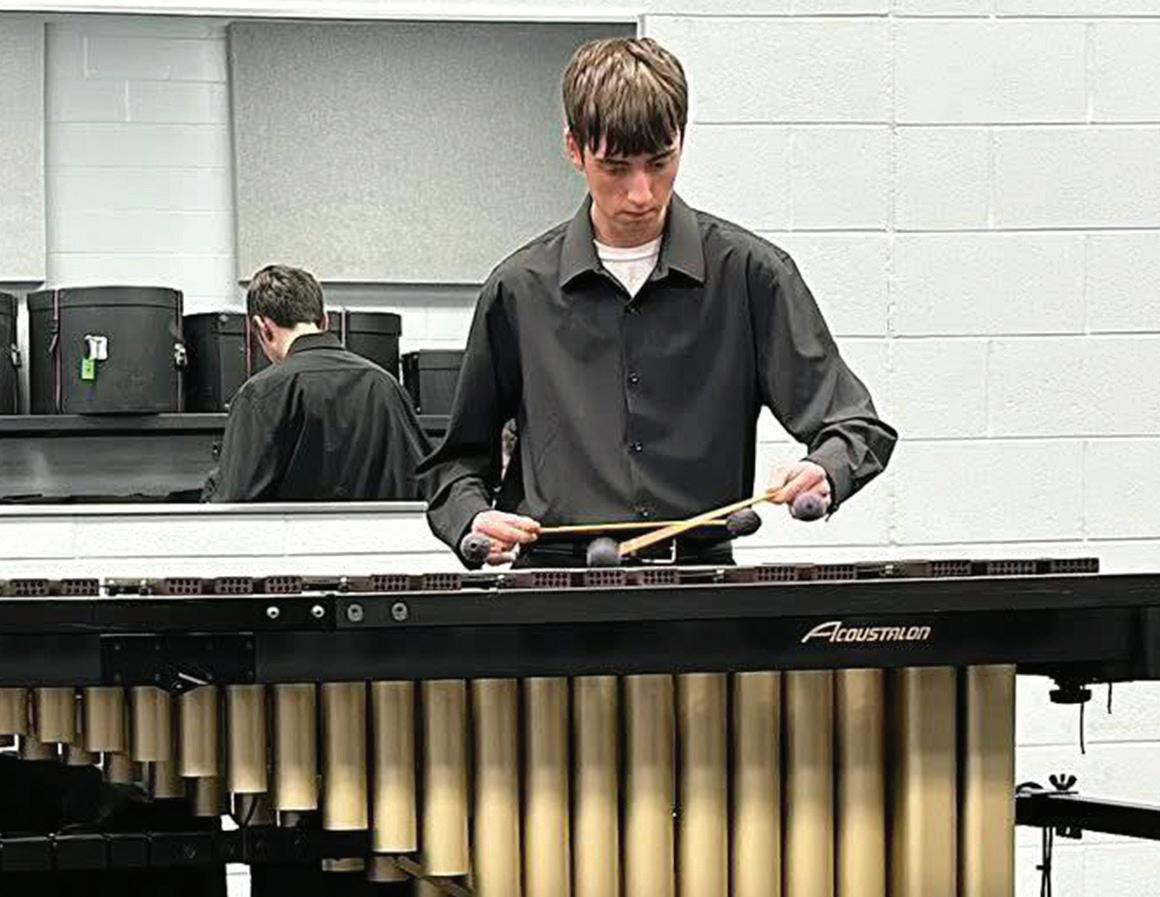
COMPETING Lincoln Carter, Warsaw Community High School sophomore, is shown competing at the ISSMA District Solo and Ensemble Contest. Photo provided by Warsaw Community Schools.
STUDENTS PREPARE David Knouse, assistant band director, works with students as they prepare for their solo and ensemble performances. Photo provided
EDITORIAL OFFICES, CIRCULATION, DISPLAY AND CLASSIFIED ADVERTISING
WARSAW OFFICE MILFORD OFFICE SYRACUSE OFFICE
114 West Market St. 206 S. Main St. 102 East Main St. Warsaw, IN 46580 P.O. Box 188, Milford, IN 46542 Syracuse, IN 46567 Phone (574) 269-2932 Phone (574) 658-4111 Phone (574) 457-3666 Fax 888-371-2934 1-800-733-4111 Fax 800-886-3796
‘the PAPER’ reserves the right to refuse for publication any advertising that is considered offensive, misleading or detrimental to the public, the newspaper or another advertiser and to edit advertising at its discretion.
Publisher, Ron Baumgartner rbaumgartner@the-papers.com
Business Manager, Annette Weaver aweaver@the-papers.com
Editor-In-Chief, Deb Patterson dpatterson@the-papers.com
Editor, Phoebe Muthart pmuthart@the-papers.com
Warsaw Office Manager, Mary Beth Spalding warsaw@the-papers.com
Director Of Marketing, Kristin DeVittorio kdevittorio@the-papers.com
Advertising Representative, Carl Lauster clauster@the-papers.com
Advertising Representative, Susan Stump sstump@the-papers.com
Circulation Manager, Jerry Long jlong@the-papers.com
Commercial Printing Sales Representative
Rodger Salinas rsalinas@the-papers.com
Commercial Printing Customer Service
Katie Hurley khurley@the-papers.com
Rich Krygowski rkrygowski@the-papers.com
Good Neighbors is a column in which readers share friendly advice. To ask or answer questions, write the ‘the PAPER’, Good Neighbors, P.O. Box 188, Milford, IN 46542; fax 800-886-3796; or e-mail abias@the-papers.com. Please no phone calls.
Editor’s Note: The Good Neighbors column is for people looking for hard-to-find or old items or for people seeking advice, not for items you can find in a local store or sell through the help of a classified ad. This column now runs every other week.
Bird trap
Good neighbors: We live on a farm and have too many house sparrows around. I’ve been looking for a trap and would come pick up yours. Call (574) 546-1199.
New questions
Elliptical — Does anyone have a leg exerciser (elliptical) they don’t need? Call (260) 215-1504.
Almanac’s/newspapers — Looking for old almanac’s and any yellow or green grocery stamps. Also looking for old newspapers, any condition, and
older grocery packages with instructions or advertisements. Call (574) 306-8527.
Home helper — Looking for someone to be a home helper to help organize and box items and some light cleaning. Call (574) 306-8527.
Magazines — Does anyone have Stewards Journal, Homesteading, Wholesome Gardening, Grit or MaryJanesFarm magazines they no longer need or want in the Milford, Nappanee or Warsaw area? Call and leave a message at (574) 646-2022.
Barn siding/barn beams — I am looking for some old barn siding and barn beams. Does anybody have any they want to get rid of? Call (574) 2482557 and leave a message.
Washing machine — Looking for a used washing machine, spin cycle must work. Reply through this column. — A reader
Community invited to annual Barn & Business Breakfast
The Kosciusko Chamber of Commerce, in partnership with the Kosciusko County Community Foundation, is inviting community members to attend the annual Barn & Business Breakfast, a morning event focused on celebrating agriculture and its vital role in Kosciusko County.
The breakfast will take place from 7-9 a.m. Tuesday, March 10, with doors opening at 6:30 a.m., at Rodehaver Auditorium, located at 901 Park Ave. in Winona Lake.
The cost to attend is $10, and net proceeds from the event will benefit local FFA programs, helping support the next generation of agricultural leaders in the community.
This year’s program will feature a panel discussion on the future of agriculture in Kosciusko County, moderated by Rob Parker, president and chief executive officer of the Kosciusko Chamber of Commerce. Panelists will share insights, trends and perspectives on how agriculture continues to evolve
and impact the local economy.
The Barn & Business Breakfast is made possible through the support of event sponsors Kosciusko County Farm Bureau, Creighton Bros., Maple Leaf Farms and Grace College.
The event brings together farmers, business leaders, educators and community members for conversation, connection and support of local agriculture.
Advance registration is encouraged. Community members can register on the Chamber’s website at https://tinyurl.com/5n7p76sv.
For more information, contact the Kosciusko Chamber at (574)267-6311 or events@kchamber.com.
Wiesehan announces county commissioner candidacy
Donald K. Wiesehan Jr., a lifelong resident of Kosciusko County, announced his candidacy today, Tuesday, Feb. 10, for county commissioner, southern district.
Don Wiesehan Jr. announced his candidacy for county commissioner, southern district. Photo provided.
Wiesehan will be facing incumbent Bob Conley in the primary in May.
According to a release prepared by Wiesehan, he is a 1986 graduate of Tippecanoe Valley High School. Following his high school graduation, he served in the U.S.
Army Reserve from 1987 to 1992, after which he honorably discharged his reserve contract and began his career as a police officer with the Winona Lake Police Department.
In 1995, Wiesehan joined the Kosciusko County Sheriff’s Office, where he served until his retirement in 2019, completing 25 years of service. During his tenure, he held the position of lieutenant in the patrol division and served as jail commander from 2012 to 2017. His responsibilities included managing operating budgets and preparing
DONALD K. WIESEHAN JR.
reports for the county council, county commissioners and judges. Following his retirement from the KCSO, he accepted a position with the Parkview Health Police Department in Fort Wayne. As a deputy chief, Wiesehan oversees and manages security operations across multiple hospital facilities.
Throughout his community involvement, Wiesehan has contributed in various capacities, including coaching football and track at Tippecanoe Valley High School; serving as a Little League Baseball coach in Mentone; and a Pee Wee Football League coach in
Warsaw. He also volunteered as a firefighter with the Winona Lake Fire Department. He is a lifetime member of the National Rifle Association and actively participates in organizations such as the Masonic Lodge, Mizpah Shrine Club, and the Kosciusko County Fair Board. Wiesehan and his wife, Ann reside outside Mentone. They have been married for 35 years and are the proud parents of two adult children and grandparents to two grandchildren. They are members of Redeemer Lutheran Church, Warsaw.
Cardinal Services announces new members elected to board
Cardinal Services has announced that Jennifer Finley and John Warren have joined the Cardinal board of directors.
Warren’s appointment was effective in September 2025, while Finley’s became effective in January 2026.
Warren has a long history with Cardinal Services. His parents, Bill and Molly Warren, are among
Casino Night March 7 at NWCC
Get ready to try your luck for a great cause. The North Webster Community Center is inviting those 18 years and older to Casino Night Saturday, March 7. The night will be filled with games, prizes, food, and fun in support of the programs and services that continue to make the center a unique hub for the entire community.
Guests will enjoy an evening that transforms the NWCC into a lively casino atmosphere featuring classic game favorites like blackjack, left right center, Ship Captain Crew, pull tabs, gun raffle, and a silent auction. New this year is a horse racing game. No experience is needed. Friendly dealers will be on hand to teach the games and keep the energy high all night long.
Casino Night is designed to bring people together for an unforgettable evening while raising funds to support the center’s operations.
As a nonprofit facility that operates with zero tax dollars, the center relies on events like this to continue offering over 50,000 square feet of opportunities for residents, summer visitors and guests of all ages.
In addition to gaming, attendees can look forward to prize drawings, DJ Scotty Rocker, and a chance to connect with friends and neighbors.
“This event is about more than just fun,” said NWCC Executive Director Emily Shipley. “It’s a chance for our community to directly support an active facility that serves everyone year-round. Whether you’re a seasoned card shark or just looking for a unique night out, Casino Night promises entertainment for all while supporting a meaningful local cause.”
Doors open at 5:30 p.m. with a Las Vegas- style buffet catered by Chubbies Pub and Grub. There will be a cash bar. Tickets are available online at nwcommunitycenter.org/events.
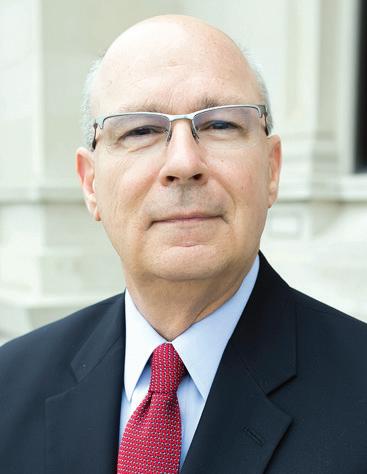
the founders of the organization dating back to the 1950s, and his brother, Mark, is a participant in Cardinal programs. Warren is senior vice president of Crossroads Bank in Warsaw and is active in several local organizations including Kosciusko Economic Development Corp., Kosciusko Chamber of Commerce and the Kosciusko County Cancer Care Fund. He previously served on the Cardinal board of directors from 2004 through 2009.
“As a board member, I’m proud to support an organization that empowers individuals of all abilities to live full, meaningful lives and remind us all what inclusion truly looks like,” Warren said.
Finley has a long history of working in the disability field in several positions, including as a case manager in Medicaid waiver services. With her background, she brings a keen and valuable understanding of disability issues to her role as a Cardinal board member.
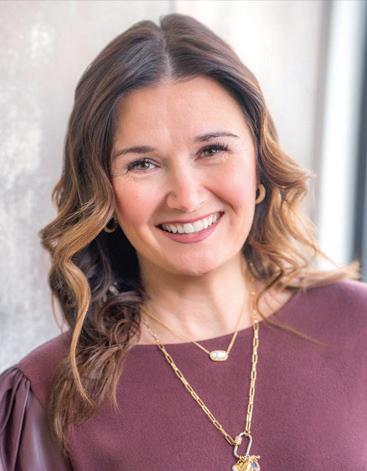
Finley also serves on the board of the Warsaw Education Foundation, is a member of Tri Kappa and is the owner of Finley & Co Boutique in downtown Warsaw.
“My husband, Nick, and I have always had a love for giving back to our community in ways that use our strengths to serve others,” Finley said. “When we serve with love and give back with purpose, we help people; and we build a stronger, more connected community. Cardinal Services has been an integral presence and now staple part of northern Indiana for many years. I’m honored to serve on their board of directors.”
Stepping off the Cardinal board after completing their terms of service are local attorney Adam Turner and Allison Simpson, marketing and admissions director for Miller’s Merry Manor.
In addition to Finley and Warren, Cardinal’s 2026 board includes officers Mitchell Hall,
JENNIFER FINLEY JOHN WARREN
chair; Max Maile, vice chair; Tyler Ostrom, treasurer; and Monica Kendrick, secretary; and members Vicki Carvey-Morton, Tony
Garza, Jennifer Kingston, Jennifer Lancaster, Nelson Lojo, Julia Moore, Michelle Smith-Hansen and Lukas Rife.
Authorized Dealer
Grace College, area churches partner for Supermarket Sweep
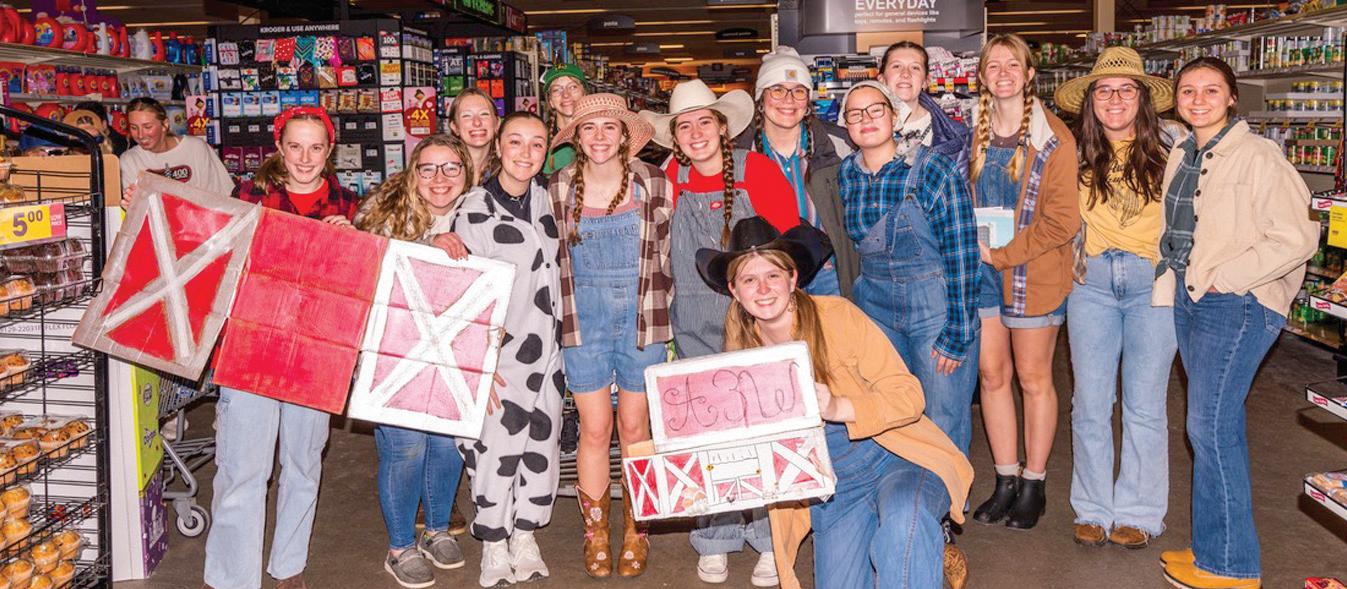
Grace College is partnering with five local churches to host the 15th annual Supermarket Sweep on Wednesday, Feb. 18, at Kroger, 2211 E. Center St., Warsaw.
Between 9 a.m. and 9 p.m., Grace College, Mission Point Community Church, First United Methodist Church, Trinity United Methodist Church, Valley Springs Fellowship and Warsaw Community Church invite all community members to shop for nonperishable food items and baby products. Once purchased, these items will be donated to the Salvation Army, Combined Community Services, Warsaw Community Schools and Heartline Pregnancy Center.
“This is hands-down my favorite Grace College tradition,” said Drew Flamm, president of Grace College. “Every year, I look forward to watching our students rally together with the community to serve our neighbors in need. It’s a great snapshot of two of our institutional core values: serving humbly and engaging our community.”
In 2025, Supermarket Sweep brought in $41,094.96 - an alltime high. Grace students alone spent $24,737.33, more than $2,600 above last year’s total, and they purchased more than 7,000 items for community partners.
The day of shopping culminates with a game-show-inspired competition among teams of Grace College students, faculty and staff. Beginning at 9:30 p.m., groups “sweep” the store, shopping for items on their list and competing to earn additional gift cards to spend. At the end of the night, teams are awarded prizes for winning the most money spent altogether and the most money spent per shopper.
After the items are purchased, volunteers from Grace College sort and pack the donations for the local food banks to pick up.
Leading up to the event, Grace College will provide weekly educational materials for students during growth groups to explore
the depth and breadth of food insecurity in the local community.
“Supermarket Sweep is such a special tradition for both students and staff, getting in on the fun,” said Madilyn McCune, co-
756 S. Main St.,
(574) 834-4297
ordinator of the Grace College & Action team. “Bringing together friendly competition and service has created a fun-filled event for both Grace College and the community. We hope that students
see the impact of serving others and what it looks like to actively live out Christ’s love.”
To give to Supermarket Sweep online, visit missionpoint. churchcenter.com/giving/to/su -
permarket-sweep. For more information about Mission Point Community Church, go to missionpoint.net, and to learn more about Grace College, visit www.grace.edu.
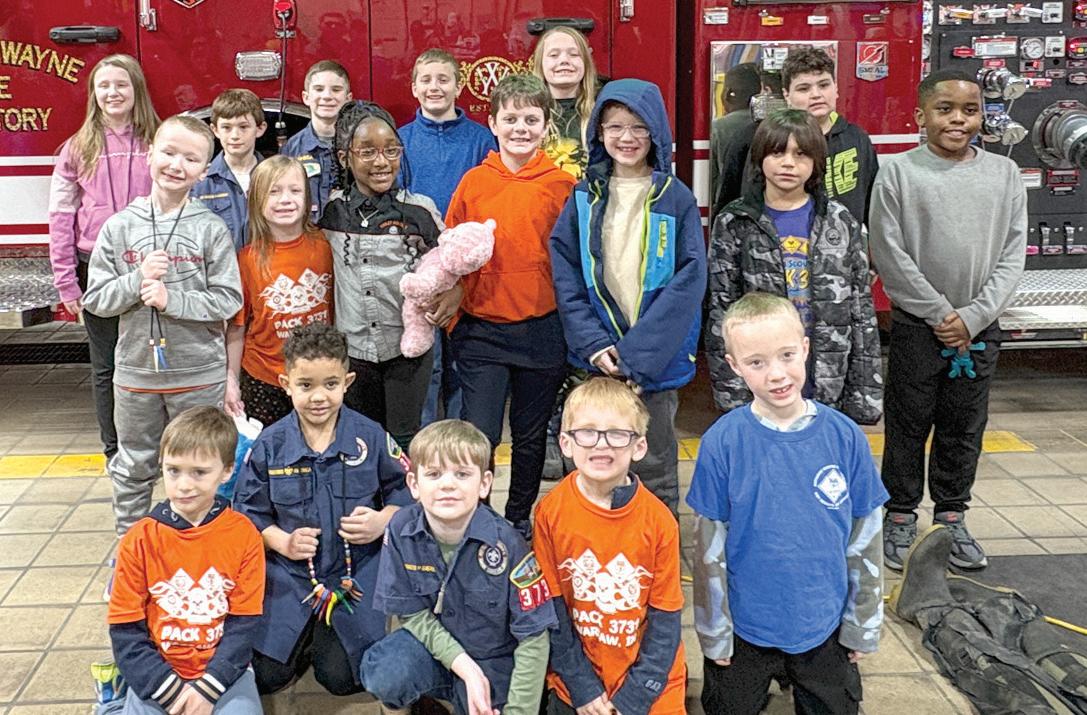
Cub Scout Pack 3731 visits Warsaw fire station
Cub Scout Pack 3731, of Warsaw, visited a Warsaw fire station on Monday, Feb. 9, to learn about fire safety.
Firefighter Justin Miller first talked about the three things that everyone should have in place in their homes for proper fire safety: 1. smoke alarms; 2. two exits; and 3. a family meeting place.
When asked why is it important to be able to interact with youth organizations, Miller said: “When you teach kids, you prevent a potential emergency.”
He then took the Cub Scouts on a tour of the building. The first stop on the tour was the kitchen. Inside the kitchen, he discussed potential appliances that could be hot that could catch on fire.
The second stop was the firefighters’ bedroom. Inside the
VanDuyne, Roman Deaton and Messiah Anderson. In back are Eva Leverett, Micah Bougie, Derek Penninger, Isaac Esterline, Jensen Sellers and Abel Nunez. Photo provided by Connie Penninger.
bedroom, the Scouts looked for the three things everyone needs in their home. They successfully found multiple smoke alarms and three exits. Miller explained
where the firefighters meet outside.
The last stop on the tour was the garage area, where the Cub Scouts learned that the firefighters work out and play basketball when they have down time. They also were able to walk through one of the firetrucks. Lastly, they saw the
brand-new ladder firetruck. Anyone interested in joining Cub Scout Pack 3731 is welcome to reach out to Cub master Connie Penninger at WarsawPack3731@gmail.com. The pack meets from 6:30-7:30 p.m. on Monday evenings at the First United Methodist Church in Warsaw.
Pierceton Chamber reschedules pancake/ sausage breakfast to Feb. 28
The Pierceton Chamber of Commerce will try once again to host an all-you-can-eat pancake/sausage breakfast.
The breakfast will take place from 8-11 a.m. Saturday, Feb. 28, at Harvest Community
Church, Pierceton. The event is rescheduled from the original Jan. 24 date.
A free-will donation will be accepted. All proceeds will go to the scholarship fund.
GRACE COLLEGE TRADITION Grace College students gather for a photo at Kroger during Supermarket Sweep 2025. Photo provided by Grace College.
LEARNING FIRE SAFETY Members of Warsaw Cub Scout Pack 3731 are shown in front of a brand-new ladder firetruck. In front from left are Wilder Bougie, Mario Gardner, Ben Trieschman, Wells Bougie and Jace Tackett. In the second row are Micah Leverett, Genevieve Sellers, A’miyah Anderson, Sam Trieschman, Sam
Winning photos in 2025 Picture Your Watershed contest
Sunrises and sunsets, misty mornings and moon-lit nights, hungry herons, lake-loving littles and furry friends - these are just a few of the images captured by participants in The Watershed Foundation’s 2025 Picture Your Watershed photo contest.
Participants celebrated the land, lakes and communities of the Upper Tippecanoe River Watershed.
The 2025 contest received 133 photo submissions from across the watershed. TWF is grateful to everyone who shared images highlighting what makes this region so special.
The contest ran from July 1 through Dec. 31, 2025, with public voting held in January 2026.
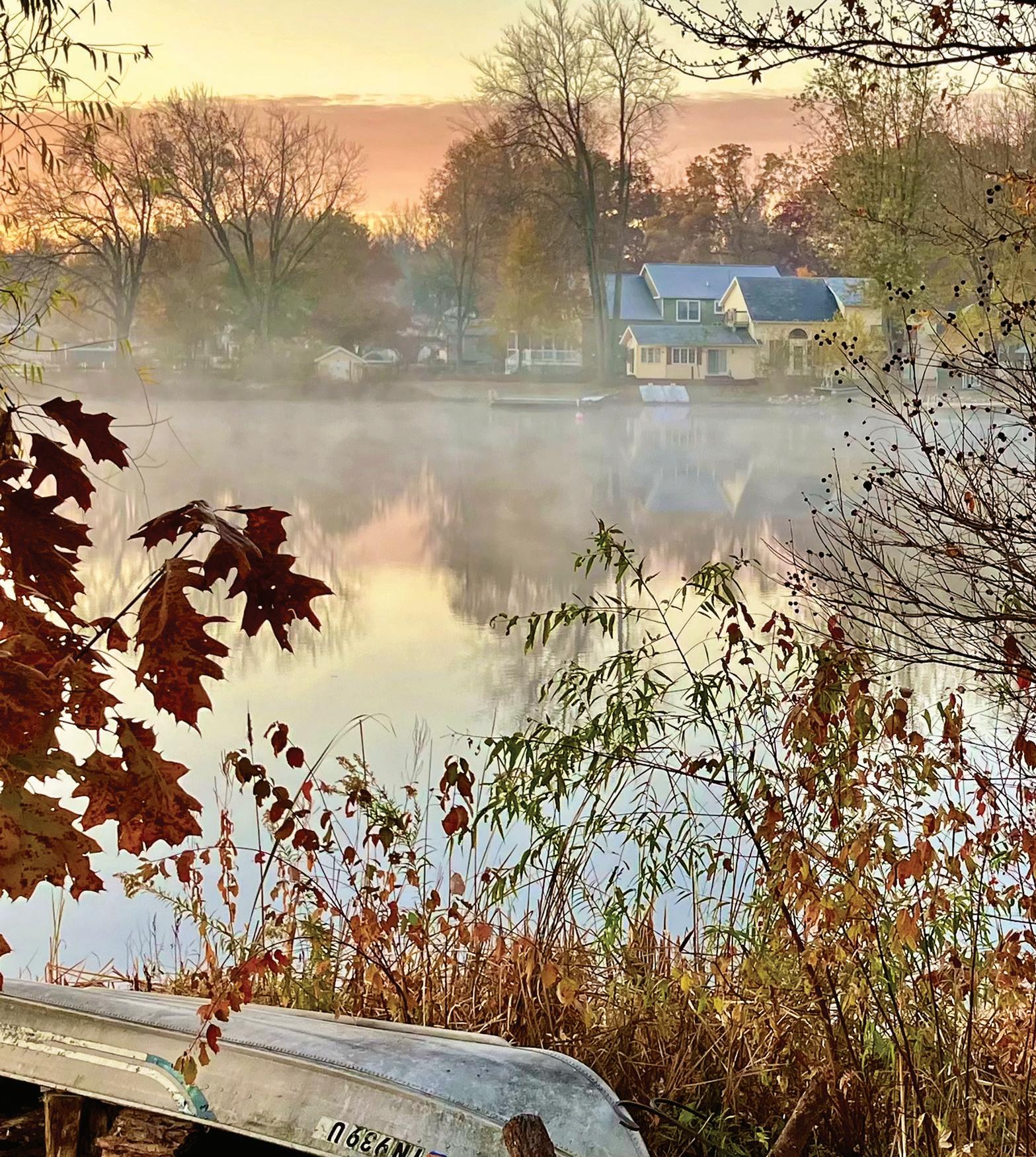
Tom Zahm of Loon Lake earned the People’s Choice Award with 88 votes for his photo, “Morning mist lifts the curtain as autumn rehearses its composition.”
Zahm’s winning image captures the peaceful magic of Loon Lake.
Category Winners
Category winners are:
Nature’s Studio - Chip Winnebald, taken on Lake Tippecanoe.
Lovin’ the Lakes - Justin Arnold, taken on Lake Tippecanoe.
Pollution Solutions - Paige Hubner’s photo taken at the North Webster Community Public Library.
Memories of the Lakes - Janua Riley, a photo from Lake Tippecanoe.
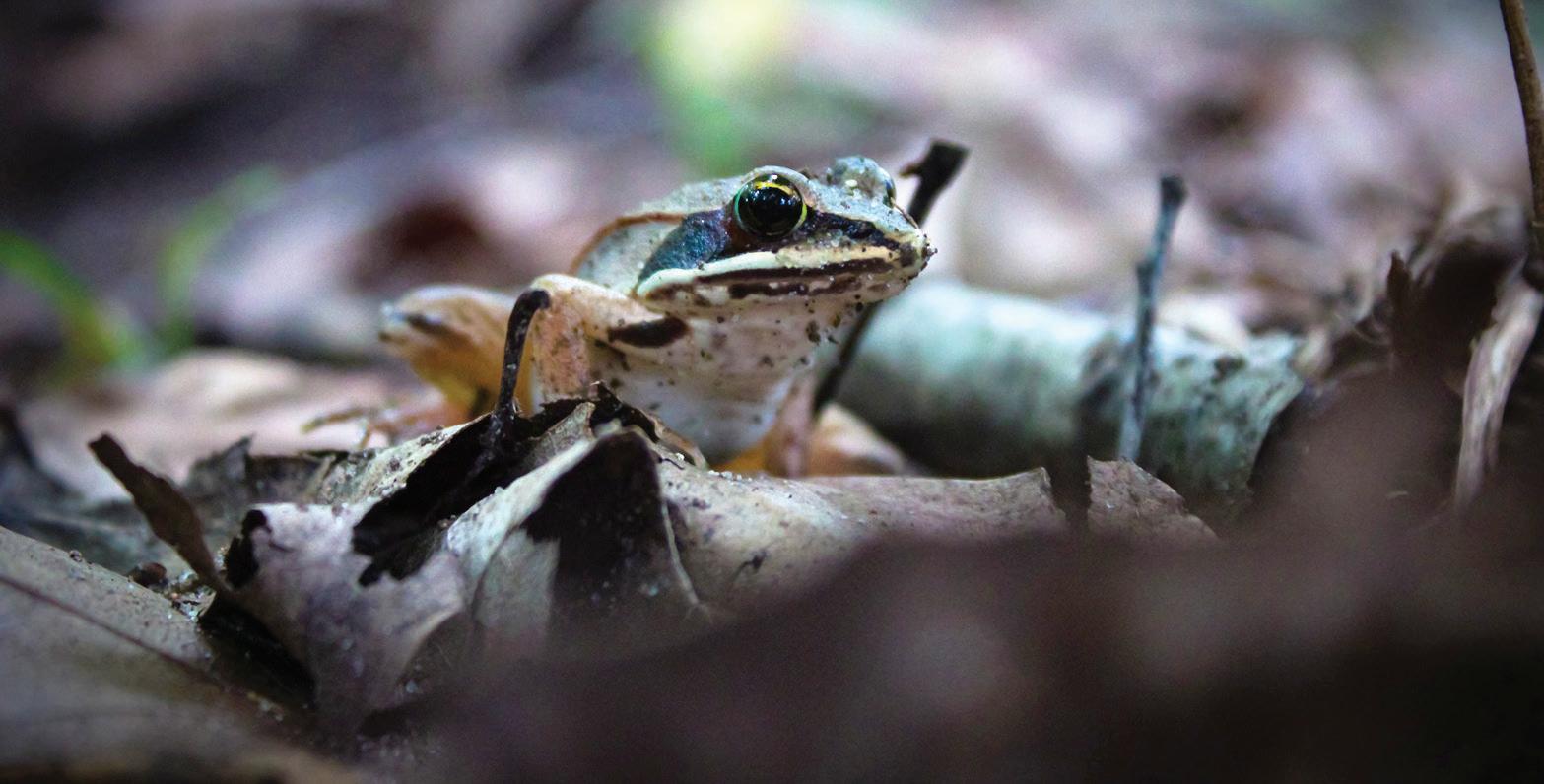
Wet ‘n’ Wildlife - Evan Smith, taken at Pisgah Marsh.
TWF is appreciative to everyone who submitted photos or participated in voting and congratulates all contest winners.
More information about the contest and results can be found at watershedfoundation.org/ events/photo-contest/.
TWF encourages community members to watch for details about the Picture Your Watershed 2026 contest, which opens in July.
Bob Ross paint class
March 14
The city of Warsaw Parks and Recreation Department is welcoming back Laura from Secret Studio in the Wild Woods for a Bob Ross paint class Saturday, March 14.
This instructor-led Bob Ross paint class provides all the materials, paint, and canvasses. Participants just need to bring their talents. Go home with a Bob Ross look-alike painting.
As Ross himself said, “We don’t make mistakes, just happy little accidents.”
The class will be held from 1-4 p.m. at the Firemen’s Building, 1013 E. Arthur St., Warsaw. It is $50 per participant and open to everyone ages 14 and over.
Registration is required and is open through Friday, March 6, unless filled. The class is limited to 20 participants and is expected to be a three-hour paint class with a 16” by 20” canvas.
These classes tend to sell out quickly. Register at https://warsaw.in.gov/817/Paid-Programs.
WINNER TAKEN AT NORTH WEBSTER COMMUNITY PUBLIC LIBRARY.
NATURE’S STUDIO WINNER TAKEN ON LAKE TIPPECANOE.
WET ‘N’ WILDLIFE WINNER TAKEN AT PISGAH MARSH.
MEMORIES OF THE LAKES WINNER
LOVIN’ THE LAKES WINNER TAKEN ON LAKE TIPPECANOE.
PEOPLE’S CHOICE WINNER TAKEN AT LOON LAKE
Ali Moren promoted at Interra Credit Union
Shawna Koontz, HR operations and benefits manager, is pleased to announce the promotion of Ali Moren to assistant vice president, human resources business partner, at Interra Credit Union. In her expanded role, Moren will continue supporting organizational growth by partnering with leaders and employees to create a positive, safe and successful workplace. Her promotion reflects Interra’s commitment to recognizing dedication, innovation and employee-focused leadership.
Moren joined Interra in 2021 and has played a key role in advancing several impactful human resources initiatives. Among her contributions, she helped design and implement the Bilingual Pay Program and led the rollout of HR Help, a centralized system that has improved coordination and responsiveness to employee HR needs. She has also partnered closely with retail leadership to introduce a stay survey program for new employees, providing valuable insights into employee experiences and opportunities for continuous improvement.
Before returning to Interra in 2024, Moren built a diverse human resources career spanning more than a decade. She began her HR career in 2013 in California, where she earned multiple promotions at Navien, a tankless water heater company. She later worked as an HR analyst for RED Digital Cinema in Los Angeles
before relocating to Indiana and serving as an HR representative for Nisco in Bremen. After additional experience with a remote organization and a family-owned business, Moren returned to Interra, where she says she is grateful to continue growing alongside a team she deeply values.
Moren holds a degree in hospitality management from Purdue University. She is currently preparing to earn her SHRM Certified Professional credential and plans to complete the certification in 2026, further strengthening her expertise in human resources strategy and compliance.
In her current role, Moren serves as the primary HR liaison for Interra’s retail group. She has spent significant time in branches building relationships with team members and managers, gaining firsthand insight into operational needs. Moren is passionate about reshaping perceptions of human resources by being a true partner to employees and leaders alike.
“My goal is to help create an environment where employees feel supported, heard and set up for success,” she said.
She looks forward to continuing her career at Interra and credits the organization’s culture and leadership for her professional growth. “Our HR team is the strongest team I’ve worked with,” Moren shared. “I’m thankful to be learning every day and to be part of a group that values creativity, forward thinking and people first.”
Outside of work, Moren enjoys buying and selling trading cards and operates a successful eBay store. On weekends, she can often be found at local card shops and trading card shows.
NOMINATED
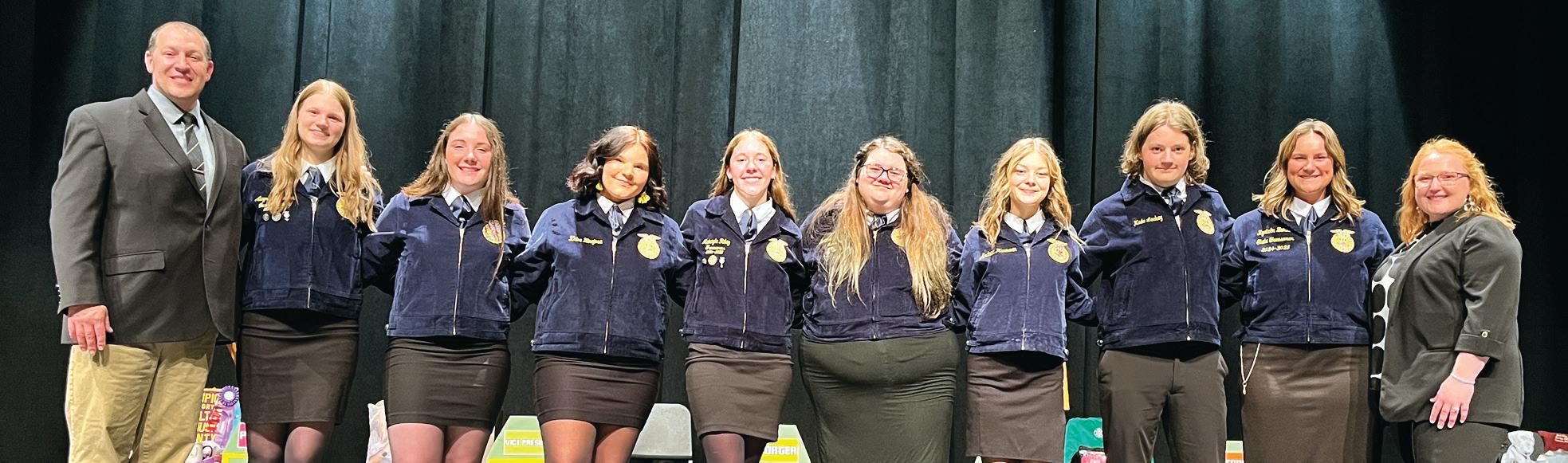
Riley, Ariana Bustamante, Natalie Hohman, Kade Lackey, 2024–25 Indiana FFA State Treasurer Ky Baker and Madelyn Kelsheimer. Photo provided by Warsaw Community Schools.
Warsaw FFA advisers nominated for 2026 Indiana FFA Golden Owl Award
Warsaw FFA advisers Madelyn Kelsheimer and Jacob Riley have been nominated for the prestigious 2026 Indiana FFA Golden Owl Award.
The Golden Owl Award recognizes outstanding agricultural educators in the state of Indiana. Students, fellow teachers and other supporters had the opportunity to nominate their favorite agricultural teacher and summarize what makes them the best in Indiana. Kelsheimer and Riley were nominated for the award because of their passion for agriculture, FFA and helping students find their career paths.
Presented by Nationwide, Indiana FFA and Farm Credit Mid-America, the Golden Owl Award recognizes agricultural educators across Indiana for their contributions to preparing the next generation of agricultural leaders. Nominees have the opportunity to win the title of Indiana Agricultural Educator of the Year, along with cash prizes.
During National FFA Week, Indiana FFA will announce the
top eight honorees for 2026. Each of the eight honorees will receive a $500 check and an engraved plaque. This summer, during the 96th Indiana FFA State Convention, the 2026 Golden Owl Award winner will be announced. The Golden Owl Award winner will receive a $3,000 check and the coveted Golden Owl Award trophy.
FFA aims to make a positive difference in the lives of students
by developing their potential for leadership, personal growth and career success through agricultural education.
Today, more than 1,042,245 student members ages 12-21, in more than 9,407 chapters nationwide, are engaged in a wide range of agricultural education activities. Students join FFA to explore a variety of careers in the food, fiber and natural resources industry.
Area students performing with Trine University Wind Ensemble
The Trine University Wind Ensemble’s first concert of the spring 2026 semester will celebrate the 250th anniversary of the Declaration of Independence, also known as the semiquincentennial of the United States.
“Happy Birthday, America!” will begin at 3 p.m. Sunday, Feb. 22, in Ryan Concert Hall inside the T. Furth Center for Performing Arts.
The following area students
will perform with the Wind Ensemble:
• Jamie Wallace of Mentone, performing on trumpet. Wallace is majoring in math education at Trine.
• Shannon Ridley of Warsaw, performing on trombone. Ridley is majoring in mechanical engineering at Trine.
Parking and admission are free, and audience members are encouraged to wear patriotic attire.
session titled “LifeWise 101” will take place Thursday, Feb. 19.
60-minute session about LifeWise Academy is for families and community members and will take place at 6:30 p.m. at the Warsaw Church of Christ, 1902 E. Main St., Warsaw.
Questions may be directed to Nicole Bowers, program director, at (574) 529-1951 or nicolebowers@lifewise.org. The program is not sponsored by Warsaw Community Schools.
Participants will visit a LifeWise classroom, learn how LifeWise serves local students and hear stories about the Warsaw program. The session is free, and no donations will be requested. Snacks will be provided. Registration for the session is optional but can be done online at https://forms.gle/t81BZeV6ExEvXkSP6.
ALI MOREN
ADVISERS
Warsaw FFA Chapter members are shown with advisers Jacob Riley and Madelyn Kelsheimer at the 2024–25 Warsaw FFA Awards Banquet. From left are Jacob Riley, Alayna Alexander, Abigail Gordon, Khloe Hinojosa, Makayla
Joe’s Kids, Baker Youth Club partner for tutoring program
Joe’s Kids, a nonprofit pediatric therapy clinic dedicated to helping children reach their full potential, has announced a new partnership with Baker Youth Club to provide tutoring services to children who are BYC members.
Through this partnership, Joe’s Kids delivers tutoring services onsite at Baker Youth Club, offering
families greater access to consistent, high-quality academic support. Children meet with Joe’s Kids tutors twice per week, strengthening reading and learning skills in a familiar and supportive environment.
“We are grateful to Baker Youth Club for this opportunity to partner,” said Nikki Porter, director of
dyslexia therapy and tutoring at Joe’s Kids. “Collaborations like this allow us to remove barriers for families and ensure children receive the services they need to succeed.”
Baker Youth Club provides dedicated space for Joe’s Kids tutors to meet with students, making it easier for families to integrate tutoring into their children’s schedules.
“Baker Youth Club is happy to partner with Joe’s Kids by providing space for providers to meet with clients who are also BYC members,” said Tracy Furnival, executive director of Baker Youth Club. “Joe’s Kids meets with children twice per week, and this partnership has been a meaningful benefit to both the families and the children we serve.”
Both organizations share a commitment to supporting children’s growth, confidence and long-term success. This partnership reflects a shared belief that access to education and therapeutic services plays a critical role in building stronger futures for children and families in the community.
Valley FFA has a will to win
By LILLI DWYER Staff Writer
Tippecanoe Valley High School’s 73 FFA members participated in a wide variety of competitions in 2025. FFA Advisors Michael Jones and Jenna Burton are in charge of guiding them through it all.
Throughout 2025, members competed in livestock skil-
lathon, horticulture, soils, chapter meeting (also known as parliamentary procedure), welding, entomology, floriculture, nursery landscape, ag business management, dairy, poultry and district leadership contests.
Jones points to forestry as an area where the chapter truly shines.
“Last year we won the state (in forestry), and both 4-H and FFA went and competed in the national contest,” he said.
Fairfield FFA looking forward to sharpening skills, bonding as chapter
By LILLI DWYER Staff Writer
Fairfield FFA is about more than just placing in competitions. According to FFA advisor and agricultural educator Karrin Koontz, feeling like a family and serving the local community are just as important.
“We have hosted many chapter fun nights where our members get together and simply bond as family,” said Koontz. “Those nights have included a pizza-making contest, pumpkin carving and Friendsgiving. We also completed a few community service activities this fall by feeding local farmers.”
There are 120 kids in ag classes at Fairfield, with 72 active FFA members. Recently, the chapter has competed in livestock skillathon, soils judging, entomology and chapter meeting contests. Future plans include competing in meats judging, livestock judging and leadership contests.
In 2026, the chapter will also be holding the annual worker experience auction 6 p.m. Monday, March 9, in the Fairfield Jr./Sr. High cafeteria; participating in the Pay Dirt Conference with Elkhart County Soil and Water; and tending to the New Paris Test Plot.
Members have also completed “many Proficiency and Hoosier Degree applications” over the past year and are working on more in the lead-up to National FFA Week.
Through Agricultural Proficiency Awards and Hoosier Degrees, FFA members are honored for the work they do through their supervised agricultural experience projects.
On the competition side, members are sharpening their meats judging skills.
“We are still in the rebuilding stages of our chapter activities, but I think our strongest area is meats judging,” said Koontz.
She explained there have been several years of turnover in Fairfield’s FFA leadership, so the program is going through a process of rejuvenation. A priority for her is creating a “family-first environment” within the chapter, encouraging members to bond with one another.
“We create the family-first environment beginning with our chapter fun nights,” she said. “We encourage all of our members to spend time together throughout all chapter activities and try to make sure all feel welcome. Then we build upon those relationships as we attend other events and contests throughout the year.”
A fun-filled National FFA Week is planned at Fairfield, including the annual petting zoo for students in kindergarten through second grade. Fairfield FFA will also be honoring Greenhand members on Monday, Feb. 23; hosting a staff lunch and a school-wide ice cream social on Tuesday, Feb. 24; and holding its annual community breakfast from 6-7:45 a.m. Wednesday, Feb. 25. The annual tractor drive-in is Friday, Feb. 27.
Jones points to a competitive drive as Valley’s defining feature.
“We are very, very competitive in our career development events. ... We hope that every kid can find something they like or want to try and be very successful at it,” he explained.
The chapter were also state runners up in welding and ag business management , and reached the top four in the state for chapter meeting contests. Members have taken trips to national livestock judging in three of the last four years.
However, winning is not all that matters - the skills students learn through FFA are the real reward.
“Teamwork, critical thinking - they’re learning directly what they may need in the future. If they raise livestock, livestock judging is going to help them be better in their actual job that they have,” said Jones. “Number one is that they enjoy themselves and that they learn something new. We hope that many of our kids, especially if they’re not necessarily from an ag background, they find some interest in the agriculture world. That may spark an interest for a career someday.”
Right now, the chapter is getting ready to practice for livestock judging and district leadership contests, where about 25 kids will be competing.
In the upcoming year, Valley hopes to increase membership and participate in more community service. During FFA Week, the chapter raises money for a local food bank.
“We’re going to help one of local people in your community. She needs a bunch of trees cut down, so once it gets nice out, we’re going to help her do that - get all of her trees down for her,” said Jones. “Maybe we’ll try to add a new contest.”
Valley always has an activity-packed FFA Week. It kicks off on Sunday, Feb. 22 when members dress in their Sunday best and attend a service at a different church each year, followed by lunch and a fun activity.
On Monday, Feb. 23, the chapter hosts a cornhole tournament and pasta dinner open to the entire school.
On Tuesday, Feb. 24, some of the older members give ag presentations to second graders.
On Wednesday, Feb. 25 Valley hosts its annual FFA community supper and worker auction at the high school.
Thursday, Feb. 26 is a family fun night, typically held at the high school pool. The morning of Friday, Feb. 27 is a chapter breakfast and the annual tractor drive-in.
Wawasee FFA Chapter ready for National FFA Week
By LAUREN ZEUGNER Staff Writer
Members of Wawasee High School’s FFA chapter have been busy planning for National FFA Week, Feb. 21-28.
Planned activities include a day of service on Monday, Feb. 23, where chapter members will use Warrior Time to write letters to nursing home residents. Tuesday, Feb. 24, the chapter will go bowling at Wawasee Bowl.
The chapter will host a teacher appreciation breakfast Wednesday, Feb. 25. The menu will feature eggs, pancakes, hash browns, bacon, pastries, fruit and more. A chapter lunch is planned for Thursday, Feb. 26, while Friday, Feb.
27, will be tractor day.
During tractor day, chapter members will host first graders from Milford, North Webster and Syracuse elementary schools. The first graders will visit for an Ag Day, where they will go through several learning stations, including one where they have an opportunity to go outside and check out chapter members’ tractors.
This year the chapter has 28 members. Any student taking an agriculture class is automatically enrolled in FFA. Students join to develop leadership opportunities and create relationships.
Wawasee’s FFA chapter has been busy this school year. It provided meals for 300 area farmers for its Feed
the Farmers event. Several members attended the National FFA Convention, which was held in Indianapolis.
Several members had career development experiences in horticulture, soils and welding, all of which advanced to the state convention.
Taylor Warner, FFA adviser, said the chapter’s strongest areas are soils and horticulture, while welding is new to the chapter. Several members are interested in learning more about welding.
Four members received their Hoosier degrees, which document that a member has achieved success at a high level in a Supervised Agricultural Experience program, Continued on page 11
Warsaw FFA celebrates growth, achievement and community impact
By PHOEBE MUTHART Editor
The Warsaw Community High School FFA chapter continues to grow and thrive, with 65 members actively involved in competitions, leadership development and community outreach. Advisors Jacob Riley and Madelyn Kelsheimer said the chapter’s success comes from strong member participation and meaningful connections within the community.
“For FFA Week this year, we have a lot of events planned for our members,” said Riley.
To kick off National FFA Week, the chapter will hold its annual staff appreciation breakfast Friday, Feb. 20. FFA members will deliver donuts to all WCHS staff members as a way to show gratitude.
“The staff always looks forward to this event,” Riley said. “We will have several fun activities throughout the week, both in the classroom and in our community.”
Throughout the week, members will enjoy bowling, a movie and game night, and a meeting filled with food and activities. The celebration will conclude with the annual officer rewards trip - an exclusive outing to a Komets hockey game for members who have demonstrated dedication and involvement. Students will also participate in themed dressup days.
Beyond FFA Week, members have been busy all year competing in career development events and leadership development events. Students competed in Livestock Skill-AThon, crops judging, forestry judging and entomology judging CDEs, as well as the chapter meeting LDE.
The chapter meeting team placed sixth at district competition.
At the area crops, entomology and forestry contests, more than 30 members participated. In forestry, Warsaw Team No. 1 placed fourth, Team No. 2 placed eighth and Team No. 3 placed 17th. A junior individual placed 30th. In crops, the senior team placed 11th and the junior team placed seventh, with a senior individual placing 47th. In entomology, Team No. 1 placed third, Team No. 2 fifth, Team No. 3 seventh and the junior team second.
At the state level, senior entomology Team No. 1 placed 16th and Team No. 2 placed 26th, while junior entomology Team No. 1 placed 15th. Forestry team No. 1 placed eighth at state. In the Livestock Skill-A-Thon State Contest, Team No. 1 placed 24th and Team No. 2 placed 129th.
The horticulture team placed 15th out of 69 teams at the state contest Sept. 20. Team members were: Makayla Riley, Paige Baker, Kade Lackey and Ariana Bustamante.
At state convention, Alayna A., Kaitlyn S., Natalie H. and Kaymen D. placed seventh in the agribusiness CDE. The chapter scrapbook also placed seventh at state.
In addition to competitions, the chapter has hosted successful fundraisers, including the FFA Community Appreciation Supper and Worker Experience Auction, along with its fruit, cheese, jam and salsa sales. During the supper, members donated four hours of community service to the highest bidder.
“Our chapter is unique in the strong connection we have with our local community,” Riley said.
Members work the Young McDonald’s Barn during the Kosciusko County Fair, caring for animals and educating the public about agriculture. They also assist Echoes of the Past during wheat binding season and its fall festival, volunteer at the Barn and Business Breakfast, and teach fourth graders
during Kosciusko County Agriculture Awareness Days.
Through these efforts, members live out the FFA motto: “Learning to Do, Doing to Learn, Earning to Live, Living to Serve.”
“We are proud of the personal growth shown by our members,” Riley said. “Students have gained confidence,
strengthened communication skills and stepped into leadership roles within the chapter.”
Officers are: President Alayna Alexander; Vice President Arianna Bustamante; Secretary Makayla Riley; Treasurer Abigail Gordon; Reporter Khloe Hinojosa, Sentinel Natalie Hohman, and Student Advisor Kade Lackey.
Whitko FFA is learning to do, doing to learn
By MAKSYM HART Staff Writer
The Whitko High School Future Farmers of America are entering a rebuilding year with a renewed focus on hands-on learning, student involvement and community engagement.
“This year the Whitko FFA is really embracing the ‘learning to do, doing to learn’ FFA motto,” said advisor Alysia Hammel, who joined the program last year. “We have harnessed new opportunities, making the most of our agriculture program here at the Whitko Career Academy.”
After a quieter year of transition, the chapter is work-
ing to expand its reach and membership. The program currently has 15 members and is aiming to grow, Hammel said.
“Whitko FFA didn’t do too much last year, as I was new to the program,” she said. “This year, students want to do more. This is the year of rebuilding, with a new teacher.”
As part of that effort, the chapter plans to continue hosting its annual sheep and goat shows in both the spring and fall, while adding more activities at the school’s agricultural barn.
The events are designed to give students practical experience while drawing community members into Continued on page 11
Triton FFA sees growth in membership, participation
By PHOEBE MUTHART Editor
The Triton High School FFA chapter has more than 50 members this year - an increase of approximately 15 to 20 students from last year. Increased outreach and awareness efforts helped grow the chapter’s membership.
“We reached out and advertised more and were able to get a lot more kids involved,” said April Leeper, Triton’s agriculture educator and FFA advisor. “FFA is all about helping students develop their full potential through various activities.”
Triton will celebrate FFA Week from Feb. 16-22.
“We are celebrating a week early so we can end our week with our annual Marshall County FFA Toy Show,” Leeper said.
The Marshall County FFA Toy Show will be held from 9:30 a.m. to 2:30 p.m. Sunday, Feb. 22, at LaVille High School, with a live auction beginning at 2:30 p.m.
Activities planned for FFA Week include dress-up days and games for students. A farmers breakfast will be held from 6:30 to 8:30 a.m. Wednesday, Feb. 18, in the high school’s ag shop.
Throughout the year, the chapter has participated in numerous judging contests, including soil judging, crops, forestry, entomology, welding, small engines and livestock judging.
Triton FFA’s Consignment Auction will take place April 11-15 and will be held online only at https://bit.ly/ffa26auction.
Ag Day for elementary students is planned for the week of May 11, weather permitting.
“We invite all the elementary students to the high school
to experience hands-on agriculture with live animals and interactive activities,” Leeper said.
The District Leadership Contest will be held Friday, March 13, at Tippecanoe Valley High School. Students will showcase their leadership skills while competing against other FFA members in the district.
The FFA banquet is scheduled for Sunday, May 3.
“This is where we get to recognize member success throughout the year and introduce our new officer team,” Leeper said.
According to Leeper, the chapter has several strong areas this year.
“Our strong areas this year have been soil judging, crops and forestry,” she said. “We are kind of a young chapter, so we are still growing and learning to compete in various activities.”
The Triton FFA chapter also stands out for expanding opportunities to younger students.
“We have started including fifth- and sixth-graders in activities, which is super exciting,” Leeper said.
The chapter has earned several achievements this school year, advancing to state contests in soils, crops and forestry.
“We have been very successful so far this year and hope to keep being successful,” Leeper said. “I also feel that we have been successful just by increasing our membership and participation in activities. Being a growing chapter, it’s awesome seeing so many kids trying new events.”
This year’s officers are President Sierra Hawley; Vice President Brooke Kitch; Secretary Savannah Hawley; Reporters Brayden Nifong and McKenna Emenacker; Treasurer Clayton Andrews; Sentinel Julianna Firestone; and Historians Addy Lemler and Annie Creighbaum.
In
NorthWood FFA cultivates success
By MAKSYM HART Staff Writer
National FFA Week is approaching, and for NorthWood High School’s FFA Chapter, the time is a chance to showcase leadership, service and the close-knit culture that defines their program.
The chapter currently has 56 members, according to student leaders Olivia Lentz and Ella Hasely.
“A majority of people perceive FFA as agriculture- and
Whitko FFA
Continued from page 10
the program.
The chapter will also celebrate National FFA Week in 2026 with a mix of in-school and out-of-school activities aimed at highlighting agricultural education and leadership development.
Planned events include themed dress-up days such as Farmers Day Off and Western Wednesday.
During lunch periods, students will be able to participate in games like guessing how many kernels of corn are in a jar, with prizes awarded to winners.
Teachers and staff are also being encouraged to join the festivities, including a lighthearted contest in which
and
Libby Haab received her American degree, which is similar to the Hoosier degree, with the member having been in college for a year.
Katy Eppert will be going to a state competition in proficiency.
Wawasee’s chapter is working on several upcoming events, including the District Leaders Contest, which
farming-based things,” Hasely said. “But for me, I’ve seen a lot of career development and leadership development. You’re able to gain tactical skills that will be very useful to you in the workforce or if you choose to go on to college.”
Hasely serves as the NorthWood chapter’s vice president and as secretary for District 2, which includes 26 chapters across northern Indiana. She said FFA has helped her grow as a leader and develop confidence in public speaking.
Lentz, the chapter’s treasurer, echoed that sentiment.
National FFA Week, observed later this month, will fea-
students will vote for a teacher or staff member to kiss a pig.
FFA Week will conclude with a pork burger supper open to the public. Tickets will be available for presale at $10.
According to the chapter, the weeklong celebration is intended to promote the importance of agriculture, showcase the FFA’s role in leadership and career development, and strengthen ties between the school and the community.
Hammel said the overall goal for the year is simple: give students more opportunities to learn by doing, while laying a stronger foundation for the future of the Whitko FFA chapter.
hosted by Tippecanoe Valley High School’s FFA chapter; a members auction on March 24, where members will auction off hours of their service; the annual banquet, which will be held April 23; and the annual plant sale, which will be held the week before Mother’s Day.
The plant sale is held over three days, with more than 500 plants being sold. The chapter sells vegetable and flowering plants, as well as hanging baskets.
ture several major events for the NorthWood chapter.
On Thursday, Feb. 26, the chapter will host its “Roots of Excellence” dinner 6-8 p.m. at the Claywood Event Center, 13920 N. CR 1100 W., Nappanee.
The evening will include a catered dinner, silent auction, worker auction and alumni officer induction.
From 7-10 a.m. Saturday, Feb. 28, the chapter will hold its third annual all-you-can-eat pancake and sausage breakfast in the NorthWood High School cafeteria.
Tickets are $10 in advance or $12 at the door, with children 5 and younger admitted free.
The fundraisers help cover travel costs, hotel stays and other expenses tied to competitions and conferences throughout the year, the students said.
Beyond FFA Week, the chapter maintains a busy calendar of contests, service projects and leadership events.
Members participate in career and leadership development contests ranging from public speaking to mechanical skills.
The chapter also focuses on mentorship. Older members and officers guide freshmen and newer students, especially in beginner-only contests. Hasely said experienced members often share strategies and help younger students prepare for competitions.
“There definitely is that culture of encouragement,” Lentz said. “We go in and talk to them and help them understand what it is and what they can do and kind of take them under our wing.”
One of the chapter’s most visible traditions takes place during FFA Week, when members drive tractors and other farm equipment from a local grocery store to the high school, lining them up along SR 19.
“Everyone in our chapter loves it,” Lentz said. “It’s a great way for us to be a family.”
For both students, the lessons extend well beyond agriculture.
Teamwork, leadership and the ability to communicate with confidence are skills they say will stay with them long after graduation - and ones they hope more students will discover by giving FFA a chance.
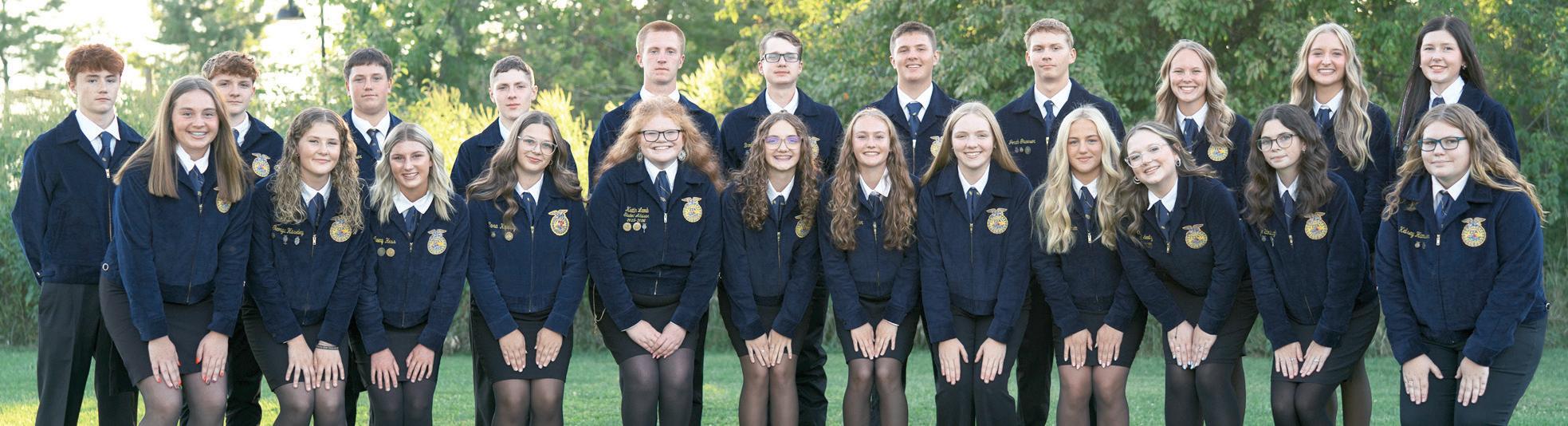
PLANTING THE SEEDS OF SUCCESS Beyond agriculture, NorthWood High School’s FFA chapter helps prepare students learn public speaking, leadership and teamwork.
front, from left to right, are Lainie Yoder, Georgia Haseley, Avery Hess, Cora Kniesly, Kaitlin Lamb, Nola Penrose, Mattie Miller, Brynlee Penrose, Abby Kauffman, Olivia Lentz, Kar-
lie Umbaugh, Kelsey Hamsher. In back are Connor Munsell, Jack Mitschelen, Cole Flickinger, Eli Hertsel, Henry Pfeiffer, Brody Minne, Silas Fervida, Jonah Grueser, Gretchen Fervida, Presley Zehring, Ella Haseley. Photo provided by Brandi Henderson, NorthWood High School.
James Wm. Fulwider Certified Arborist
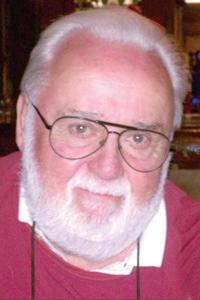
James Wm. “Fooey” Fulwider, 87, Leesburg, died at 3:08 p.m. Wednesday, Feb. 11, 2026, at his home.
He was born Oct. 15, 1938, in Wabash, to Russell and Allegra “Babe” (Elliott) Fulwider.
Jim lived a full and deeply connected life, marked by his love for his family, dedication to his work, loyalty to his friends and a lifelong love for his communities. A 1956 graduate of Wabash High School, he went on to earn his Bachelor of Science in business from Indiana University in 1960, later expanding his expertise as a certified arborist, a credential earned from the International Society of Agriculture in 1995. On Jan. 5, 1985, he married Patricia A. Jewell Armie in Oswego, a partnership that became one of the great joys of his life.
Jim’s professional journey was long and varied. He began his career with General Tire and Rubber Company, advancing from government sales to assistant manager in personnel from 1960 to 1964. He then spent nearly three decades with Bertsch Food Service, from district manager to executive vice president. In 1992, he embarked on a new chapter as co-owner and president of Signature Tree Company Inc., leading the business until his retirement in 2022.
He was an active member of many organizations, including the Tippecanoe Lake Country Club, the Elks, the Honeywell House board of directors, Wabash Presbyterian Church, Wabash Country Club, Beta Theta Pi and the Indiana University Alumni Association, where he was a lifetime member.
Jim embraced life with enthusiasm. He loved fishing trips with his buddies in the ‘60s and ‘70s, cheering on IU basketball and football, and gathering for Breakfast Club and Friday Night Dinners. He treasured traveling with Patty, more than 40 years of golf trips with cherished lifelong friends, reunions with his 1956 classmates, and time spent with his IU Beta brothers. His life was rich with friendship, tradition and adventure, a testament to the relationships he built and the joy he brought to others.
He is survived by his wife, Patricia A. Fulwider of Leesburg; four children, Max E. Fulwider of Nashville, Tenn., Chris E. (Kelli) Armie of Milford, Jill E. (Richard) Chagnon of Alpine, Calif., and Phillip M. Armie of Warsaw; grandchildren, Nola G. Fulwider of Nashville, Tenn., Roger (Amy) Chagnon of San Diego, Calif., Elizabeth (Marjorie Cook) Chagnon of Richmond, Va., Peter Chagnon of Alpine, Calif., Luke M. Armie Joyce of Syracuse, Amanda Armie and Anthony Wooten, both of Tempe, Ariz., Whitney Jordan of Larwill, Amber (Josh) Bellamy of Syracuse, and Kayleigh Daily of Indianapolis; six great-grandchildren; in-laws, Rita J. Richardson of Phoenix, Ariz., Marsha J. Weinberg of Germantown, Md., Phillip W. Norris of Punta Gorda, Fla., Steve Henderson of Wabash, and David (Debbie) Henderson of Atlanta, Ga.; former wife, Linda L. Fulwider of Nashville, Tenn.; and many nieces, nephews and friends.
He was preceded in death by his parents; son, Samuel P. Fulwider; brother, Robert E. Fulwider; sisters-in-law, Ruby Jewell Hendrix Norris, Betty Lane Fulwider and Sue Henderson; and mothers-in-law, Mary E. Jewell Henderson and Blanche L. Lindemuth.
A special thank you to Ramona Keller, RN and Kaela Locke, Aide, as well as other caregivers of Heart to Heart Hospice for their devoted care.
Per Jim’s wish, there will be no services. Arrangements by Grandstaff-Hentgen Funeral Service, Wabash.
Fooey’s gift to family and friends: “Have a little fun every day … and sometimes a whole lot.”
Preferred memorials are Indiana University Loyal Alumni Fund, P.O. Box 500, Bloomington, IN 47402; Kosciusko Community Foundation, 102 E. Market St., Warsaw, IN 46580; Wabash County Museum, 36 E. Market St., Wabash, IN 46992; or Tunnels to Towers Foundation, 2361 Hylan Blvd., Staten Island, NY 10306.
The memorial guest book for Jim may be signed at www.grandstaff-hentgen.com.
Ruth Ann Stork Former The Papers Employee
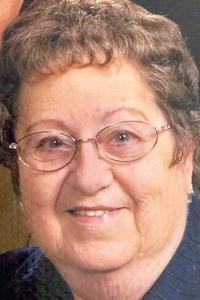
Ruth Ann Stork, 89, Milford, went to see Jesus on Sunday, Feb. 8, 2026. She passed at home with her family by her side.
Ruth was born Dec. 20, 1936, in Coleman, Mich. She was preceded in death by her parents, Alton and Alice Carpenter, who adopted her. She graduated from Coleman Michigan High School in 1955.
RUTH ANN STORK
On June 20, 1957, she married the love of her life, James Stork. They had one son, Michael James Stork, who lives in Fredericksburg, Texas, with his wife Sherry. His first wife, Suzy, gave him two children, Michael James “Jimmy” Stork, who lives in Fort Wayne with his wife Ashley and their two children, Natalie and Iver; and a daughter, Christina, who married Dan Hoffman. They live in Maderville, La., and have two boys, Cameron and Chase.
She worked at Augsburger’s Grocery Store and The Paper in Milford. She also worked at Tranters Graphics and Serenade Foods. She was an avid baker. She would make cinnamon rolls and bread for the church auction. Pastors and the congregation waited for her baked goods to come up for bid.
They lived on Waubee Lake for over 50 years, and she loved to fly fish. Taking pontoon rides around the lake was a daily pleasure when the weather would cooperate. The peace of the lake was a great pleasure for them and all who went on rides.
She was very active in her local church, United Methodist Church in Milford. Serving on many boards, she loved Jesus with all her heart.
At the end of her life, she was cared for by Elara Hospice. They were loving and helped in giving her a chance to pass at home. A Life Celebration visitation and service will be held from 1-2 p.m. Thursday, Feb. 19, at Titus Funeral Home & Cremation Services, 1001 S. Huntington St., Syracuse. The service will follow at 2 p.m.
Titus Funeral Home has been entrusted with Ruth’s care. To send a written condolence, visit Ruth’s obituary page at TitusFuneralHome.com.
Chrystal Amburgy
Chrystal Amburgy, 68, Warsaw, died Friday, Feb. 6, 2026.
Arrangements are currently pending at Titus Funeral Home of Warsaw.
Glenna Jackson Glenna Jackson, 75, Warsaw, died Monday, Feb. 9, 2026, at Parkview Regional Medical Center.
Arrangements are currently pending at Titus Funeral Home of Warsaw.
Heidi Joy Borkholder
Myron and Lorraine (Stutzman) Borkholder, Nappanee, are the parents of a daughter, Heidi Joy, born at 1:52 p.m. Monday, Feb. 9, 2026, at Blessed Beginnings Care Center, Nappanee. She weighed 8 pounds and was 19 inches long.
Rosaline Marie Ratliff
Alyssah Sigsbee and Cody Ratliff, Wawaka, are the parents of a daughter, Rosaline Marie, born at 12:42 p.m. Tuesday, Feb. 10, 2026, at Goshen Hospital. She weighed 6 pounds, 11.9 ounces, and was 20 1/2 inches long.
Maternal grandmother is Ollievia Sigsbee, Syracuse; maternal great-grandmother is Deb Patterson, Milford; and maternal greatgreat-grandmother is Mary Louise Fox, Goshen. Paternal grandparents are Joey and Shaman Ratliff, Wawaka.
Eleanor Kate Lehman Devon and Maria Lehman, Goshen, are the parents of a daughter, Eleanor Kate, born at 12:05 a.m. Thursday, Feb. 12, 2026, at Blessed Beginnings Care Center, Nappanee. She weighed 5 pounds, 14 ounces, and was 18 inches long.
Leno’s
Garage previews Slate electric trucks made in Warsaw
A new electric truck prototype developed in Warsaw, known as the Slate Truck, was recently highlighted in an episode of Jay
HATTON-SADLER FUNERAL CHAPELS
“Our families serving your family with professionalism, compassion and care.”
Leno’s Garage, an automotive review program hosted by Jay Leno, featuring discussion with company leaders about design, production and consumer customization.
Created by industry veterans involved in the early years of Tesla, the project seeks to deliver a customizable electric truck priced below $30,000, far lower than the roughly $50,000 average cost of a new vehicle.
Engineers designed the truck around a modular manufacturing approach that produces identical base vehicles on a single assembly line before owners personalize them. Flat-pack conversion kits allow the pickup to be reconfigured into sport utility or openair formats through do-it-yourself installation.
The company also promotes an open repair philosophy that
enables customers to complete warranty work independently or through a network of thousands of non-dealer repair shops. Manufacturing innovations include eliminating a traditional paint facility by using pre-colored materials and wrap-ready surfaces.
Two battery options are planned, offering estimated ranges of about 150 miles and 230 miles with liquid-cooled systems and compatibility with North American fast-charging infrastructure. Despite a minimalist design, prototypes are being engineered to meet five-star crash safety standards.
More than 150,000 reservations have been reported as the company positions the truck as a potential catalyst for broader electric vehicle adoption in middle America.
JAMES WM. FULWIDER
ELECTRIC TRUCK Slate Automotive representatives and former talk show host Jay Leno preview a Slate electric truck. Screenshot from YouTube.
C ounty R epo R t
Court News
Small Claims
The following small claims have been awarded in Kosciusko Superior Court III, Judge Chad Miner presiding:
Money Matters Professional Collections LLC v. Tiffany N. Angiano-Smith, $529.74; v. Austin Atkins, Tashiana Atkins, $425.57; v. Ashley Back, $556.33; v. Donald Bowles, $476.91; v. Charity and Jeremy Brock, $360.65; v. Charity Brock, $278.74
Amber Bromley, $405.89; v. Samuel B. Driver, $2,097.99; v. Makayla A. Fruit, $1,222.66; v. Tabitha Kellogg, $3,371.59; v. Peyton R. Lackey, $2,863.84; v. Lourdes B. Mencias, $2,282.59; v. Joyce Moist, $429.74; v. Destiny R. Oberg, $399.06; v. Brittney Routson, $2,902.79; v. Kayla Tinkey, $441.63; v. Richard Todd, $864.36 Sherri Makinson v. Billie Baldridge, $1,665
T-N-T of Warsaw LLC v. Michael Brookins, $4,504
Aegis Dental Group Warsaw PC v. Haley Ellis, $752.50
Snow & Sauerteig LLP v. Javier Martinez, $4,080.33; v. Johnny I. Tignor, $1,732.57; v. Cassandra Wadkins, $4,328.24
Civil Collections
The following civil collections have been awarded in Kosciusko Superior Court IV, Judge Christopher D. Kehler presiding: NCB Management Services Inc. v. Lacey Bolinger, $3,701.57; v. Russell Harsh, $8,657.65
Portfolio Recovery Associates LLC v. Dakota Bouse, $1,254; v. Huntter Van Ness, $1,499.45; v. Saundra E. Shelton, $3,975.54
Credit Acceptance Corp. v. Austin Bucher, $10,444.75; v. Kristen N. Chavez, $11,064.44; v. Delmar Mongosa, $12,708.15
Velocity Investments LLC v. Dennis Cripe, $3,973.64
LVNV Funding LLC as successor in interest to Credit One Bank NA v. Makayla Crist, $659.17
The Waters of Wakarusa SNF v. Randall Croy, $105,719.50
U.S. Bank National Association, d/b/a Elan Financial Services v. Jon Heckman, $14,023.17
LVNV Funding LLC v. Donna Hooks, $2,091.25; v. Elizabeth Neibert, $2,636.29; v. Jayme Nuno, $1,168.91; v. Ashley Ramirez, $1,248.58; v. Derek Sweazy, $39,679.07; v. Helen Woodcox, $48,046.52
Velocity Investments LLC v. Tim Housman, $21,460.88; v. Robert E.
Maynard, $12,552.39; v. Carl Selders, $2,912.23
First Portfolio Ventures I LLC v. Faron Hurd, $8,201.15
Interra Credit Union v. Vickie S. Kain, $2,015.55
Crown Asset Management LLC v. Virginia Mahaska, $2,016.85
United Federal Credit Union v. Andrea and David Muir, $5,706.57
Capital One NA v. Andrea I. Muir, $2,110.10; v. Felipe Villa, $2,311.31
Jefferson Capital Systems LLC v. Jerri S. Pruitt, $2,123.04; v. Brittney N. Routson, $2,392.14; v. Michael Stover, $945.32; v. Armando Vuittonet, $1,817.64
Midland Credit Management Inc. v. Waylin Quier, $1,369.69; v. Michelle Tennant, $1,537.39
Kitch Acceptance Corp. v. Matthew Scott Stephens, $11,699.38
Mortgage Foreclosures
The following mortgage foreclosure has been awarded in Kosciusko Superior Court III, Judge Chad Miner presiding:
First Federal Savings Bank v. Samantha B. Sweeny, Tyler D. Sweeny, $66,773.20
Evictions
The following evictions have been awarded in Kosciusko Superior Court III, Judge Chad Miner presiding:
Grace College to host senior art design portfolio exhibits
Grace College will showcase the thesis portfolios of 19 art majors in a set of exhibitions titled “Perspective” on campus this winter.
The first exhibition will take place until Feb. 24.
The second exhibition will take place Feb. 25 to March 27 with a public reception from 7-9 p.m. Friday, Feb. 27. Both exhibits and receptions will be held at Grace College Mount Memorial Art Gallery, 808 Kings Highway, Winona Lake. These events are free and open to the public.
“Throughout their visual art and design program, the students have demonstrated not only exceptional aesthetic skills but the integration of faith in their creative art forms,” said Dr. Kim M. Reiff, chair of the Department of Visual and Performing Arts and dean of the School of Arts and Humanities. “Opportunities for internships and portfolio critiques by industry professionals have contributed to preparing them for future success.”
The exhibits showcase the work of students: Aubrey Byers, Grace Lidgett, Lindsey Mount, Cara Cummins, Brooklyn Apted, Taylor Caskey, Ethan Pinkleton, Rylee Burns, Rolando Rodriguez, Leah Starcher, Raigan King, Valerie Bockman, Brandon Rader, Abby Kiehn, Jacob Parker, Ellie Bergstrand, Megan Bockman, John Leeka and Eli Hemmerly. Hemmerly, Fairfield, Ohio, is showcasing his thesis portfolio in the first round of the exhibitions. He is a visual communication design major with a concentration in illustration and a minor in creative writing.
“One of the most meaningful parts of my experience was being part of a community where creativity is constantly flowing,” said Hemmerly. “Surrounded by classmates with diverse perspectives, stories and passions for art, I learned how creativity becomes an outlet for sharing both beauty and personal story.”
ART EXHIBIT Eli Hemmerly showcases his thesis portfolio in the Mount Memorial Art Gallery at Grace College. Photo provided by Grace College.
Megan Bockman Fishers, exhibiting in the second show, agreed.
“The people here have made a huge impact on my time at Grace,” she said. “Going through most of my design classes with the same people has been a gift; it’s been so cool to see how far everyone has come. I’m incredibly proud of my classmates. I’m grateful that we’ve been able to learn, make mistakes and encourage each other to be the best we can be.”
Bockman is a VCD major with a design concentration and a minor in intercultural studies.
Although she was initially intimidated by Adobe and computers in general, through the program she developed her skills and came to genuinely appreciate graphic design.
“We had the opportunity to hear from professionals across different disciplines; it showed me how much shared experience exists within creative work, even across varied paths,” she said. “Design has the power to tell stories, communicate meaning and shape how people experience information. I’ve learned that design is not just about aesthetics, but about clarity, intention and connection.”
The “Senior Art/Design Portfolio” course is the culmination of an art student’s experience in the program. In addition to the exhibition, students will participate in mock interviews. This will allow them to practice sharing their portfolio, representing themselves as artists.
The Mount Memorial Art Gallery is open from 10:30 a.m. to 5 p.m. Monday through Friday.
The department’s goal is to equip graduates with the ability to communicate visually, possess professional skills and be able to analyze works from historical and contemporary cultural perspectives. Students learn to demonstrate excellence in creative work, ultimately serving their calling as artists, Christians and professionals.
CALL FOR PROPOSALS
Community Partners, a family service program of Geminus, requests grant proposals for child abuse and neglect prevention services. The call for proposals supports the Geminus partnership with the Indiana Department of Child Services to provide community-based social services to families and children in St. Joseph, Elkhart, Marshall and Kosciusko counties. Grant awards cover services between July 1, 2026, to June 30, 2027. Applicant Criteria: Nonprofits in St. Joseph, Elkhart, Marshall and Kosciusko counties w/prevention services supporting families in aforementioned counties. Submission Criteria: Applications are due by May 8, 2026, at 3:00 p.m. Submit to Community Partners, Geminus, 8400 Louisiana St., Merrillville, IN 46410. New applicants are strongly encouraged to attend the bidder’s symposium on April 7, 2026, at 1:00 p.m. ET at Gillespie Conference Center, 53995 State Hwy. 933, South Bend, IN. All current grantees are required to attend. Geminus staff will be on hand to discuss the process and answer any questions. The symposium is limited to two people per agency. To register, please visit: sholink.to/GCPgrants2026C. For more information, contact Elizabeth Pustelnik at elizabeth.pustelnik@geminus.care or (219) 757-1813.
NPM Real Estate LLC v. Jamie Ledbetter, James McElroy, $7,940
Sherri Makinson v. Krystal Smith, $10,000
John Cape v. Baylee Snyder, $2,206 Fr Syracuse v. Christopher Anthony Tuffelmire, $1,513.25
Superior Court III
The following fines and costs for infractions have been assessed in Kosciusko Superior Court III, Judge Chad Miner presiding: Speeding - Tyler A. Nelson, Argos, $164.50; Dylan G. Long, Warsaw, $164.50; Misty D. Shambaugh, Silver Lake, $164.50; Christian J. Davies, Warsaw, $164.50; Gary R. Horton III, Claypool, $164.50; Aliyah J. Turpen, Warsaw, $164.50; Jonathon S. Metz, Warsaw; David N. Kiser, Pierceton, $164.50; Lily S. Daquioag, Warsaw, $164.50; Alexis R. Smith, Syracuse, $164.50; Diego I. Martinez, Warsaw, $164.50; Trevor M. Carty, Syracuse, $164.50; Orlando J. Carbajal Rodas, Warsaw, $164.50; Jessica R. Boylan, Warsaw, $164.50; Wendy M. Reese, Silver Lake, $164.50; Danielle M. Hurtle, Leesburg, $164.50;Connor A. McCann, Warsaw, $164.50; Krystle A. Barton, Warsaw, $164.50
Driving while suspended - Geneva Marshall, Warsaw, $189.50; Liberty B. Marsillet, Warsaw, $189.50; Benigno L. Perez, Warsaw, $189.50; Jose J. Perez, Warsaw, $189.50; Daniel R. Espinoza, Warsaw, $189.50
Motor vehicle lights/reflectors violation - Luis Gonzalez, Warsaw, $164.50
No operator’s license in possession - Spencer R. Mcoscar, Warsaw, $164.50; Natalie Lynn-Marie Davis, Warsaw, $164.50
Operating a motor vehicle without financial responsibility - Taden A. Dove, Warsaw, $189.50
Driving left of center - Erica J. Brumbaugh, Syracuse, $164.50
Operating an off-road vehicle on public highway, street or right of way - Michael L. Evans, Pierceton, $164.50
Failure of occupant to use a safety belt - Kara M. Dawson, Warsaw, $25; John W. Guernsey, Warsaw, $25; Egunn B. Stewart, Cromwell, $25; Sam E. Crace, Claypool,$25; Kenneth D. Noll, Warsaw, $25; Kenneth R. Cooke, Warsaw, $25; Daniel L. Holland, Warsaw, $25; Michael Evan Hoyer, Wayland, Mich., $25; Brian D. Krizan, Warsaw, $25; Tyler A. Richter, Warsaw, $25; Makayla A. Roberts, Warsaw, $25
Holding or using a telecommunications device while operating a moving motor vehicle - Teresa A. Saldivar, Warsaw, $164.50; Tana M. Bruner, Mentone, $164.50; Tara E.
STATE OF INDIANA COUNTY OF KOSCIUSKO SS: IN THE KOSCIUSKO SUPERIOR COURT 1 2026 TERM CAUSE NO. 43D01-2510-AD-26
IN RE: THE ADOPTION OF JESLYN SUE ANN BOYD A minor child, DANA RINER AND RANDEL RINER Petitioners.
NOTICE OF PUBLICATION
NICHOLAS BOYD is hereby notified that on the 23rd day of October, 2025, Dana Riner and Randel Riner filed in the Office of the Clerk of the Kosciusko Superior Court I of Kosciusko County, State of Indiana, a Petition for Adoption. On December 11, 2025, the Petitioners also filed its Praecipe for Summons along with supporting affidavit showing that diligent search has been made and that Nicholas Boyd cannot be found.
NICHOLAS BOYD is further notified that unless he responds within thirty (30) days after the last publication of notice of this action, said Petition will be heard and determined by the Court in their absence.
Melissa Boggs, Clerk Kosciusko Superior Court I Alexander L. Hoover, #30679-50 Attorney for Petitioners 315 West Jefferson Street Plymouth, Indiana 46563
Mitchell, Warsaw, $164.50
Operating a motor vehicle without financial responsibility, no valid driver’s license – Humberto Gonzalez Martinez, Warsaw, $214.50
Hunting wild animals, fishing or trapping without license - Steven G. Rourke, Leesburg, $164
Leaky or altered muffler - Donna Marie Hartz, Argos, $164.50
Marriage Licenses
The following couples have applied for marriage licenses in the office of Kosciusko County Clerk of the Court Melissa Boggs: Brown-Yentes
Allison Elizabeth Kay Brown, 22, Kendallville, and Ethan Aaron Yentes, 24, Warsaw
Gingerich-Jessen
Marlin C. Gingerich, 65, Nappanee, and Judy E. Jessen, 66, Plymouth Roman-Ousley
Faith Elizabeth Roman, 20, Columbia City, and Zachary Dwight Ousley, 26, Warsaw
Dobbins-Malagon
Payton Dobbins, 20, Warsaw, and Christian Malagon, 21, Warsaw
Marriage Dissolutions
The following couples have filed for a marriage dissolution in Kosciusko Superior Courts I or IV: Delgadillo - Reca Delgadillo, Warsaw, and John Delgadillo, Warsaw. They were married April 20, 2013; separated Feb. 6, 2026. No minor child(ren).
Hawkins-Utter - Casey L. Hawkins, Akron, and Robert J. Utter Jr., Akron. They were married June 8, 2024; no separation date given. No minor child(ren).
Warren - Jill Warren, Winona Lake, and Benjamin Warren, Warsaw. They were married Dec. 29, 2001; separated Oct. 1, 2025. No minor child(ren).
Lundy - Angela Lundy, Warsaw, and Kevin Lundy, Warsaw. They were married in 2018; separated in 2024. No minor child(ren).
Guiff - James Guiff, Warsaw, and Jane Guiff, Warsaw. They were married June 26, 2008; separated Feb. 8, 2026. No minor child(ren). Hernandez - Sandra Evette Hernandez, Warsaw, and Adriennie Hernandez, Warsaw. They were married May 23, 2018; no separation date given. No minor child(ren).
STATE OF INDIANA COUNTY OF KOSCIUSKO SS: IN THE KOSCIUSKO SUPERIOR COURT 1 2026 TERM
CAUSE NO. 43D01-2510-AD-25
IN RE: THE ADOPTION OF BRYER ALLEN J. COOK A minor child, DANA RINER AND RANDEL RINER Petitioners.
NOTICE OF PUBLICATION
DANNY RAY COOK JR. is hereby notified that on the 23rd day of October, 2025, Dana Riner and Randel Riner filed in the Office of the Clerk of the Kosciusko Superior Court I of Kosciusko County, State of Indiana, a Petition for Adoption. On December 11, 2025, the Petitioners also filed its Praecipe for Summons along with supporting affidavit showing that diligent search has been made and that Danny Ray Cook Jr. cannot be found. DANNY RAY COOK JR. is further notified that unless he responds within thirty (30) days after the last publication of notice of this action, said Petition will be heard and determined by the Court in their absence.
Melissa Boggs, Clerk Kosciusko Superior Court I Alexander L. Hoover, #30679-50 Attorney for Petitioners 315 West Jefferson Street Plymouth, Indiana 46563
Local poet releases sophomore poetry collection in Goshen
Shanti Arts Publishing and local author Jenna Wysong Filbrun announce the release of Filbrun’s second full-length collection of poems, “Running Toward Water.”
A public open house is planned in conjunction with the release of the book and will be from 2-4 p.m. Saturday, Feb. 21, at East Goshen Mennonite Church, 2019 E. Lincoln Ave., Goshen. All are welcome to attend. Proceeds from the sale of signed copies of the book at the event will benefit The Nature Conservancy.
The collection centers around the mystery of prayer as an experience of transformation in Divine Love. Individual poems explore themes of climate grief, mortality, loneliness, chronic pain, surrender, and belonging, always
through the lens of the natural world. As the speaker falls into deeper layers of seeing, she finds hope in acts of love offered and received, more than outcomes, and warmth in the sacred Oneness of all being.
Award-winning poet Nicholas Trandahl reflects, “Jenna Wysong Filbrun is one of those special poets that’s found that secret nexus of wilderness and sacredness.
Like Mary Oliver, she urges us to look around, dig our fingers into loam, and follow wild water to the undomesticated revelation that we may already be in paradise.”
“Running Toward Water” is also available anywhere books are sold online, as well as through the publisher’s website at shantiarts. com.
Wysong Filbrun lives in New Paris with her husband, Mike, and their dogs, Oliver and Lewis. She is a graduate of Goshen College and Fairfield High School. Her poems have been nominated for The Pushcart Prize and Best of the Net and have appeared in a variety of literary magazines and journals. She is also the author of “Away” (Finishing Line Press, 2023).
Shanti Arts is an independent publishing company located in Brunswick, Maine, and its work is grounded in nature, art, and spirit.
P ublic
ESTATE SALES Want To Buy P110
To Buy S100
Online Only Public Auction
Bidding open until 6 p.m.
Thursday, Feb. 19. Pickup at 2552 N. 325E, Warsaw. Bid online at bid.kraftauctions.com.
Online Industrial Supply And Tool Auction
Bidding open until 6 p.m. Thursday, Feb. 19. Pickup at 1711 Dewey St., Bremen. Bid online at bid.kraftauctions.com.
Online Vehicle Auction
Bidding open until 5:30 p.m. Saturday, Feb. 21. Pickup at 2653 E. US 30, Warsaw. Bid online at bidmetzger.com.
Online Farm Toy
And Advertising Auction
Bidding open until 6 p.m. Saturday, Feb. 21. Pickup at 1582 W. SR 114, North Manchester. Bid online at bidmetzger.com.
Online Silver And Coin Auction
Bidding open until 7 p.m. Sunday, Feb. 22. Pickup at 1582 W. SR 114, North Manchester. Bid online at bidmetzger.com.
Online Firearm Auction
Bidding open until 6 p.m. Wednesday, Feb. 25. Pickup of firearms at Union Center Store, 25510 CR 50, Nappanee. Pickup of ammunition and decoys at Hahn Auction Facility, 401 S. Oakland Ave., Nappanee. Bid online at hahnrealtyandauction.com.
Online Only
Real Estate Auction
Bidding open until 6 p.m. Wednesday, March 11. Property located at 1116 S. Harkless Drive, Syracuse. Tract 1: Tavern and special events vessel, 250 ft. Lake Wawasee frontage. Tract 2: .89-acre gravel lot. Metzger Property Service, metzgerauction.com.
Elkhart County Extension Homemakers offering Heritage Skills classes
In an effort to teach heirloom and family heritage skills, the Elkhart County Extension Homemakers are hosting their annual Heritage Skills Classes on Saturday, March 7, at Maple Hall, the former Home and Family Arts Building on the Elkhart County 4-H Fairgrounds. The fairgrounds are located at 17746 CR 34 in Goshen.
Prepaid registration is required. Registration requires a check, but it is held until the class is completed. If the minimum participant requirement is not met, your check will be returned.
A light lunch will be served from 11:30 a.m. to 12:30 p.m.
Full Day Classes —
9 a.m. to 3 p.m.
Basket Tote — $60, taught by Lisa Hernley
Morning Classes — 9:00 a.m. to noon
Acrylic Painting — Cherry
Blossoms - $30, Taught by Linda Pieri
Australian Binding Book — $30, taught by Jamie Pontius-Anthony
Card Making 102 — $30, taught by Sherry Weaver
Old Fashioned Animated Dog
Toy — $30, taught by Andy Langdon Paper Bead Making — $30, taught by Kay Stewart
Sourdough Bread 101 — $35, taught by Shari Graber
Afternoon Classesnoon to 3 p.m.
Card Making 201 —- $30, taught by Sherry Weaver
Cookie Decorating — $45, taught by Danielle Neese
Mosaic Stone Painting — $30, taught by Linda Pieri
Paper Bead Making — $30, taught Kay Stewart
Sourdough Bread 101—- $35, taught by Shari Graber
Registration forms with class details and sample photos are available at https://bit.ly/elkhartcountyeh or by visiting the Extension Office. If you have any questions, contact Jenny Huffman at (574) 370-0699. Classes are limited, so early registration is encouraged. If you are in need of accommodations to attend this program, have special dietary needs, need an interpreter or translator, contact Jenn Fink prior to the meeting at (574) 533-0554 or fink24@ purdue.edu by Feb. 21.
COLLECTION OF POEMS Local author Jenna Wysong Filbrun has released her second, full-length collection of poems, “Running Toward Water.” A public open house is planned in conjunction with the release of the book and will be from 2-4 p.m. Saturday, Feb. 21, in Goshen. Photo provided.
The Magical Meadows therapeutic horseback riding facility is celebrating continued momentum in its Growing with Heart Capital Campaign and Expansion Project with the announcement of a $131,000 contribution from Dr. Gregory Haase and Melody Barker-Haase.
As construction activity accelerates on the organization’s campus, strides have been made on the west indoor riding arena in recent weeks. The building is now fully standing with a completed roof in place, and construction crews are working toward finishing the siding, windows and doors by the end of this week. This visible progress marks a milestone in the expansion and reflects the steady pace at which the project is moving forward.
The physical progress is matched by the campaign’s strong fundraising. The Magical Meadows is grateful for the $131,000 commitment from Dr. Haase and Melody Barker-Haase, whose donation advances the organization’s ability to expand access to therapeutic services. Their support brings the organization closer to completing construction of the east indoor riding arena dedicated to veterans and first responders. With their gift, less than $375,000 remains to fully fund construction of this facility, which will serve as the permanent home of The Magical Meadows’ Warriors Mount Up program.
“We believe deeply in the mission and vision of The Magical Meadows,” said Melody Bark-
er-Haase and Gregory Haase. “Our hearts are so full when we think about all of the good that is already happening, and all that is still to come. Seeing the children during our visit was incredibly moving, and witnessing the impact on veterans and first responders was just as powerful. What a meaningful way to honor those who are served here. Greg and I feel truly blessed to be a part of this wonderful project.”
“Dr. Haase and Melody’s generosity is a true reflection of their heart for this community and for the individuals and families we serve,” said Michael Kuhn, executive director of The Magical Meadows. “Their investment is helping us move rapidly toward expanding spaces where people of all ages and backgrounds can experience healing, connection and renewed purpose through our programs. We are incredibly thankful for their leadership and belief in this mission.”
Their contribution joins a growing list of community champions who are helping drive extraordinary progress toward the campaign’s $2.1 million construction budget. As construction continues to advance, The Magical Meadows asking the community to help close the remaining funding gap for the east arena, ensuring the facility can open as soon as possible.
Construction is expected to continue through the winter months, with the organization aiming to have the west building completed this spring. Meanwhile, construction on the east building is planned to begin in March and
projected to be finished this summer. To learn more about The Mag-
ical Meadows and the Growing with Heart Capital Campaign, visit themagicalmeadows.org/
growingwithheart or contact Michael Kuhn at michael@themagicalmeadows.org.
‘IF:One Night’ free event for
women Feb. 27 in Warsaw
Women of northern Indiana are invited to “IF:One Night,” a simulcast live from Dallas on Friday, Feb. 27.
IF:One Night will be four hours of worship, teaching and connection with area women. It will take place from 7-11 p.m. at the Warsaw Performing Arts Center, 1 Tiger Lane, Warsaw. The multigenerational event is free and
open to any woman 14 years and older. Doors will open at 6:30 p.m. Simulcast sessions will include worship, led by artists such as Lauren Chandler and Davy Flowers, and teaching from speakers like Francis Chan, Jennie Allen, Matt Chandler, Christine Caine and more.
IF:One Night, an abridged version of previous annual women’s events, is provided by the Dallas-based ministry organization called IF:Gathering. “IF:Gathering exists to equip women with gospel-centered resources, events and community so that they may learn about who God is and disciple other women right where they are,” according to the news release. Th local event is being hosted by Gather Warsaw, a group of area Christ-followers who seek “to provide unifying, encouraging
and engaging opportunities in the area.” Warsaw Orthodontics and private donors have made the free event possible in collaboration with Gather Warsaw. While this event is “one night,” Gather Warsaw encourages any churches or groups that attend the corporate gathering on Feb. 27 to find a time like a carry-in brunch, coffee night or an organic gathering “to discuss and celebrate what was gleaned from the time in smaller, relational contexts.”
Registration is not required; however, women may register in advance to receive event updates. Any individual, church or organization interested may learn more by following Gather Warsaw on Instagram (@gatherwarsaw) or by visiting: https://sites.google. com/view/gather-warsaw/home.
Walls Ceilings Window And Door Trim
Walls Ceilings Window And Door Trim
Walls Ceilings
Stairways
Stairways
Window And Door Trim
Woodwork Staining
Stairways
Woodwork Staining
Garage And Workshop Floors And Walls
Garage And Workshop Floors And Walls
Small Patch Repair
Woodwork Staining
Small Patch Repair
Drywall Repair
Garage And Workshop Floors And Walls
Drywall Repair
Small Patch Repair
Great Service – Reasonable Rates
Great Service – Reasonable Rates
Drywall Repair
References Available Upon Request. 574-304-5075
References Available Upon Request. 574-304-5075
Great Service – Reasonable Rates
References Available Upon Request. 574-304-5075
NEW INDOOR ARENA The new west indoor riding arena at The Magical Meadows therapeutic horseback riding facility near Warsaw is now fully standing and should be finished soon. Photo provided by The Magical Meadows.