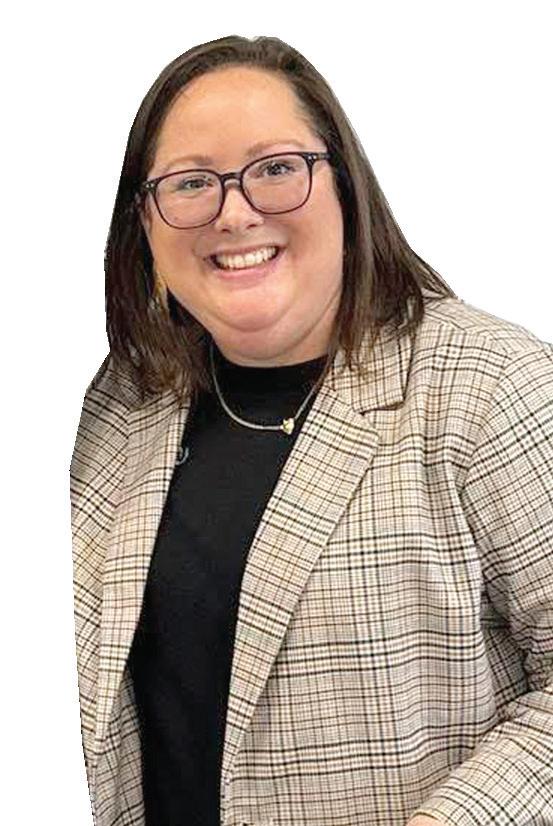


By LILLI DWYER Staff Writer
With a high Amish population in northern Indiana, it’s not uncommon for motorists to find themselves behind a horse-drawn buggy It’s also not uncommon for accidents to happen - for example, in June 2025, Nappanee residents Aden and Mary Chupp were killed when a vehicle collided with the back of their buggy
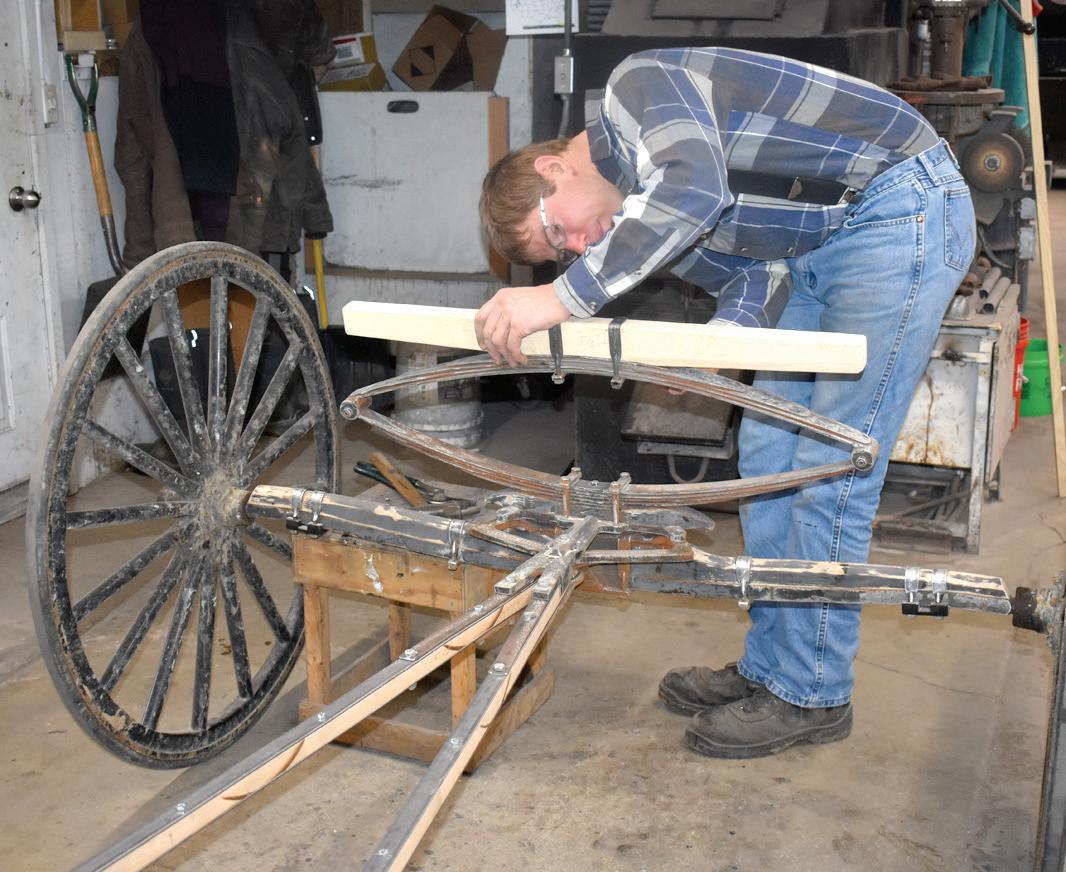
“As far as driving in a horse and buggy, the biggest concern is the traffic behind you,” said Austin Martin of Martin’s Buggy Shop, Nappanee “The majority of the accidents that do happen around here, it’s mostly rear-end, as far as the motorists not seeing the buggy ”
The Martins, a Mennonite family, have been building and repairing buggies for over 40 years Austin Martin stressed the importance of responsible driving for everyone on the road
“As a buggy shop, we try to promote good lighting, safe driving On the buggy driver’s part, it’s important,” he said “As far as motorists go, it’s being alert and watching the road, especially in areas where they know they will encounter horses and buggies or bicycles ”
How can these accidents be prevented? All the regular rules
of safe driving apply: never drive drunk, minimize distractions and stay alert - especially at night
Most buggies are traveling at 5 to 10 mph, so it’s vital to follow them at a slow speed and give them plenty of space until it is safe to pass
“When you do pass, don’t honk,” said Martin Loud noises risk spooking the horses
But what else can be done, and how much space is enough?
The American Trauma Society, a nonprofit dedicated to preventing accidental injuries and deaths, recommends the following safety measures:
• Only pass a buggy when it is safe to do so Before pulling back into the right lane, leave at least 20 feet of space in front of the horse - that’s about two car lengths
• Watch out for hills A rise can easily conceal a buggy or bicyclist, so don’t take hills too fast or there may not be time to stop
• Don’t follow too closely, especially when approaching a stop sign Buggies may roll back a few feet when stopping
Amish and Mennonites are experienced horse drivers Martin said he started out with a pony at age 5 and began driving a buggy when he turned 15, around the same time others start driver’s ed Driving horses are trained
from a young age and exposed to stimuli, such as rattles and crinkling plastic bags, to get them accustomed to noises
Still, they are living animals and can get spooked Martin suggested keeping a level head and going slow but steady to avoid startling a horse on the road, especially in the winter
“In the cold weather, a horse just has a lot more energy,” Martin said “If I approach an intersection and there’s a car coming, sometimes I see my horse acting like it doesn’t want to wait ”
In those cases, he actually recommends motorists continue driving, instead of coming to a stop in front of the horse
“Sometimes, I see people slow down because, naturally, they’re not sure what the horse is going to do But most times it’s better to keep on going If they slow down, the horse has to wait all the longer,” he explained “Most times, the horses are more spooked if a vehicle does slow down or stop ” With ice and snow on the road, caution is even more important
Horses with metal shoes have traction in slippery conditions, Martin said A car, however, takes longer to slow down or stop on a slick road In winter weather, motorists should leave extra distance between themselves and any vehicle in front of them
With twice the weight and a
hard metal body, an out-of-control car poses a significant threat to a buggy and its occupants
Safety measures have improved since the early days of the shop, Martin added Many buggies are now made of fiberglass and come with hydraulic brakes, which can stop a buggy even if a horse tries to charge forward or back up unexpectedly
Turn signals are also a standard feature on newer buggies, but many older models do not have them; in those cases, drivers may rely on hand signals
By keeping an eye out for buggies, motorists can help keep roads safer and prevent future accidents
By LAURIE LECHLITNER Staff Writer
“I grew up in Mansfield, Ohio, and moved to Winona Lake to pursue my degree at Grace College,” stated Jessica Hauck.
“When I finished my degree in 2004, I fell in love with the area and have been here ever since. I love my job reaching out to corporations and people who are new or who have lived here all their lives. Kosciusko County offers a quality place for people to live, work and bring their families.”
Hauck is the talent and housing manager at Kosciusko Economic Development Corporation. She’s been in the role since the fall of 2022.
“After finishing my bachelor’s degree at Grace College, I started working for the college. Then I branched out into consulting work within college enrollment and retention. I eventually moved to a marketing role in higher education and healthcare. With that background, I stepped into economic development at KEDCO.”
Hauck’s job has many facets.
“One of my favorite areas is
connecting with new employees in the area and their families. We want people to feel like this can be their home. I take them on amenity tours, showing them what the community has to offer - what life looks like here.”
These tours are customized to the needs of each individual or family.
“I recently gave a tour to a family of six. He was working in an orthopedic company. I learned the four kids would attend three different schools. They were an active family and looking for seasonal activities. We not only toured the schools but visited the ice rink and YMCA. I also gave them a rundown on doctors and pediatricians in the area.
Our services are free, an extension of an organization’s human resource department.”
Of course, meeting with these families is often not just a onetime deal.
“I make myself available for any follow-ups. Sometimes we get a call a few years later about something the family needs clarification about.”
She also works on the housing initiative in Kosciusko County.
“We look for places for people
to live, quality housing for an affordable price. Also, with access to the parks, recreation centers, lakes and trails in the area.”
Hauck is also an employment matchmaker.
“Corporations contact us and ask for our help to fill a particular position. We match good, qualified people for the position.”
She also works with corporate human resource professionals.
“One of the wonderful things we have in the area is our Wagon Wheel Theatre. Recently, we discussed how to plug companies into the organization and possibilities to connect back to their employees.”
KEDCO is not only for newcomers.
“We also show those who live here how to make our community greater. Things are always changing. It’s a learning process for all of us.”
She and her husband, Nick, live in Winona Lake, have two daughters: a freshman at Warsaw High School, and a third grader at Jefferson Elementary. Hauck is very involved in her community and church.
“Kosciusko County has many


wonderful communities within it,” she concluded. “I enjoy visiting people in each area -
Tippecanoe Valley School Corporation held a special recognition ceremony honoring Gene Hughes for 50 years of service to the corporation’s athletic programs on Jan. 31 prior to the 5 p.m. girls varsity basketball game against Wawasee.
Hughes has provided decades of support, care and encouragement to student-athletes. He began his career as an athletic trainer, serving in that role for 18 years while supporting students on the sidelines and contributing to their health and safety. After leaving athletic training, Hughes continued supporting students by driving an athletics bus for another 18 years.
Hughes also impacted students as both a head and assistant track coach. For many years, he operated the track program’s scoreboard and became known for his attention to detail. When the junior varsity boys basketball coach required surgery, Hughes stepped in as interim head coach to keep the team moving forward.
Following his retirement, Hughes continued giving back to the community by serving for six years as an instructional aide and athletic director at Akron Elemen-
tary School, further demonstrating his lifelong commitment to students.
Hughes has also been a guiding force for Special Olympics at Tippecanoe Valley School Corporation, organizing events for more than 20 years and creating opportunities for athletes of all abilities.
In addition to his work in education, Hughes served as an emergency medical technician, a role that proved critical during a wrestling match. After recognizing a student had suffered a serious neck injury, Hughes responded using his training and ensured the athlete received immediate medical attention.
When asked what he has enjoyed most about his time with Tippecanoe Valley School Corporation, Hughes said, “Being with the kids and trying to encourage them to do the best they could.”
Hughes continues to attend Tippecanoe Valley sporting events, often alongside his daughter, Teri. Tippecanoe Valley School Corporation, along with members of the community, recognized Hughes for his lasting contributions and lifelong friendship to Tippecanoe Valley athletics during the ceremony.








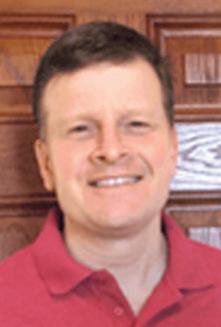

The Kosciusko Board of Realtors inducted its 2026 boards of directors for the Kosciusko Board of Realtors and the Mul-
The Fairfield FFA Alumni Chapter recently announced applications for the 2026 scholarships are now available. The alumni offer two scholarship opportunities for qualifying students:
Agricultural Studies Scholarship: Awarded to students majoring in an agricultural field.
Renewable grants are available for up to three additional years based on academic achievement.
Ashley Leer Austin Agriculture Education Scholarship: Awarded to students majoring in Agriculture Education.
$1,000 per year for four years. Scholarships are available to Fairfield High School seniors and/ or FFA members who are enrolled in school-based agricultural education or veterinary technology.
Initial scholarship applications: March 20.
Continuing grant applications (second, third, & fourth years): July 1.
For more information or to request an application, contact Karrin Koontz, ag. teacher, at kkoontz@fairfield.k12.in.us or fairfieldffaalumni@gmail.com.
tiple Listing Service during its general business meeting held Wednesday, Jan. 21, at The Owl’s Nest in North Webster.
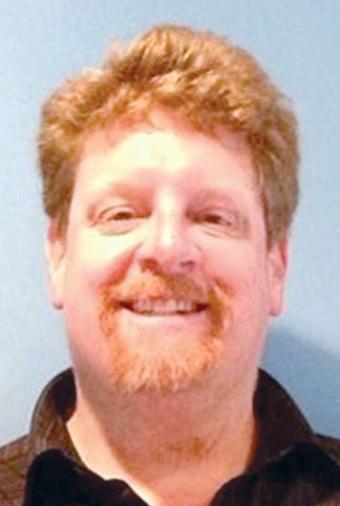
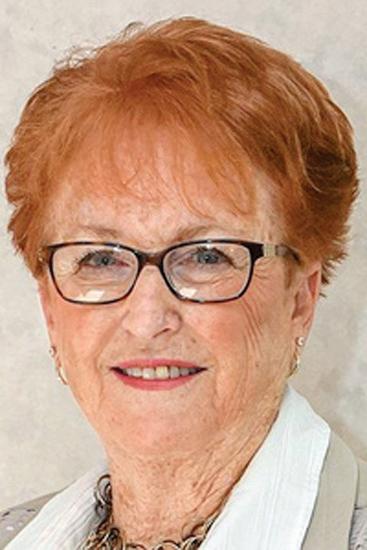
Mindy Scaggs of Legacy Group Real Estate will serve as president of the Kosciusko Board of Directors, with Kerri Patrick of Making Moves Real Estate as vice president. Scott Gingerich of The Gingerich Group will serve as president of the Multiple Listing Service.
Additional members of the board of directors include Carolyn Cooks, Linda Goshert, Greg Harden, Fabiola Holsclaw, Danyelle Hubbs, Phil Kuhn, Rod Nissley, Tamera Smith, Chris Wagoner and Kay Young.
The Kosciusko Board of Realtors was granted its charter
We welcome readers’ letters.
in 1948 by the National Association of Realtors and was originally established as the Warsaw Board of Realtors with just eight members. Today, it has grown to 192 members and is part of a larger network of 21,911 Indiana Realtors, with more than 1.5 million members nationwide. The National Association of Realtors is the largest trade association in the United States.
Members of the Kosciusko Board of Realtors assist potential homeowners with facets of real estate transactions and give back to their communities through charitable and outreach initiatives.
Our requirements are as follows: Letters must be written to the editor, not the public. They must be signed with full name in ink. Signatures will be printed on all letters. Letters must include an address and phone number, which will be used for verification, but will not be published. Letters may be emailed to dpatterson@the-papers.com. Again, letters must include an address and phone number. We ask that letters be limited to 400 words. Letters longer than 400 words may be edited for brevity. Writers may be limited to one published letter per month. Readers with lengthy comments should contact an editor about possible guest columns.
Send letters to: ‘the PAPER,’ 114 W. Market St., Warsaw, IN 46580.
Dear Editor,
The Tippecanoe Valley School Corp. honored its 12th class of Tippecanoe Valley Distinguished Alumni on Jan. 29 and 30 by inducting seven new members into the Class of 2026.
Thank you to Lake City Bank and Creighton Bros. for serving as the corporate sponsors for the Distinguished Alumni activities.
Thank you to Pike Lumber Co. for providing the wood for the commemorative plaques and to Kirk Robinson for his work in making them beautiful.
Thank you to the Rochester Telephone Co. for recording the individual Induction Day interviews that will be made available for the public to enjoy.
The Class of 2026 features outstanding graduates of Tippecanoe Valley High School, Mentone High School and Akron High School who have gone on to lead successful lives while making substantial contributions to their chosen field of work or have provided outstanding service to their community, state or country.
The Tippecanoe Valley community can be very proud of the quality education it provides for its youth. The Class of 2026 is a vivid example of what can be accomplished by Tippecanoe Valley graduates.
These two very special days were made possible by the efforts of many, including the members of the Distinguished Alumni Committee who planned and conducted the Distinguished Alumni Dinner and Induction Day activities. Student members of the TVHS Honor Society served the formal dinner while Student Council members served as liaisons to the inductees during Induction Day. TVHS students Efrain Arroyo and Kaitlyn Eastgate shared their musical talents by performing during the dinner. Table linens, cloth napkins and aprons provided by Wildman Uniform and Linen added a special touch to the formal dinner. Following the dinner, interviews conducted by local radio personality Rita Price allowed the guests to meet and learn more about the individual inductees as well as the Valley K-12 educator identified by each as having made a significant impact on their life. The staff of Tippecanoe Valley High School and Principal Brandon Kresca are to be thanked for hosting the dinner and the Induction Day activities.
Sincerely, Brett Boggs Chair Distinguished Alumni Committee
















EDITORIAL OFFICES, CIRCULATION, DISPLAY AND CLASSIFIED ADVERTISING
WARSAW OFFICE MILFORD OFFICE SYRACUSE OFFICE
114 West Market St. 206 S. Main St. 102 East Main St. Warsaw, IN 46580 P.O. Box 188, Milford, IN 46542 Syracuse, IN 46567 Phone (574) 269-2932 Phone (574) 658-4111 Phone (574) 457-3666 Fax 888-371-2934 1-800-733-4111 Fax 800-886-3796
Out-Of-County: Phone 1-800-733-4111
OFFICE HOURS: 8:00-5:00 Monday Thru Friday www.thepapersonline.com
‘the PAPER’ reserves the right to refuse for publication any advertising that is considered offensive, misleading or detrimental to the public, the newspaper or another advertiser and to edit advertising at its discretion.
Publisher, Ron Baumgartner rbaumgartner@the-papers.com
Business Manager, Annette Weaver aweaver@the-papers.com
Editor-In-Chief, Deb Patterson dpatterson@the-papers.com
Editor, Phoebe Muthart pmuthart@the-papers.com
Warsaw Office Manager, Mary Beth Spalding warsaw@the-papers.com
Director Of Marketing, Kristin DeVittorio kdevittorio@the-papers.com
Advertising Representative, Carl Lauster clauster@the-papers.com
Advertising Representative, Susan Stump sstump@the-papers.com
Circulation Manager, Jerry Long jlong@the-papers.com
Commercial Printing Sales Representative
Rodger Salinas rsalinas@the-papers.com
Commercial Printing Customer Service
Katie Hurley khurley@the-papers.com
Rich Krygowski rkrygowski@the-papers.com
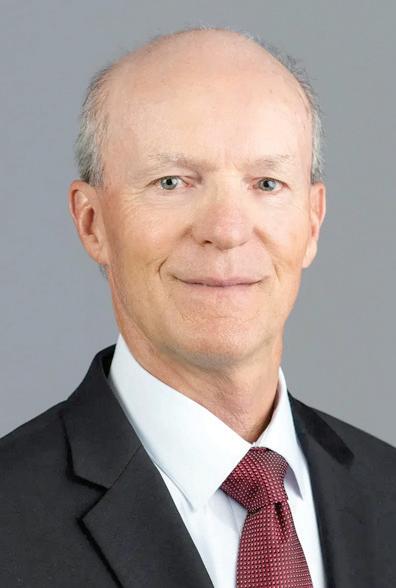
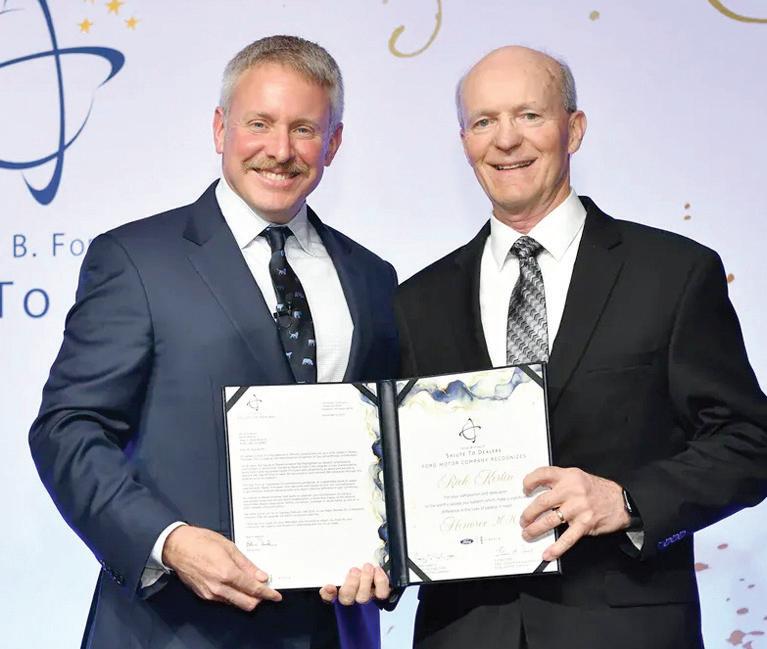
Rick Kerlin, co-owner of Kerlin Motor Company, Silver Lake, and a 2026 Ford Salute to Dealers honoree, is one of eight dealers globally to be inducted into the “Salute to Dealers” circle of honorees.
Henry Ford III recognized the Ford Motor Company 2026 Salute to Dealers honorees at a reception on Feb. 3 in Las Vegas. For the past 26 years, Salute to Dealers, has recognized dealer principals who have made an extraordinary commitment to helping their communities through their support of countless charitable and philanthropic causes.
He was selected from 127 nominees worldwide for the honor.
Kerlin has made multiple contributions to his community. His most recent personal family donation - more than 3.5 acres of land to support a new community center in Silver Lake - was recognized by Ford’s global leadership and featured in a Ford From the Road article.
“Once the project is complete, the time and dollars involved to make the project happen are forgotten,” Kerlin said. “The joy it brings to other people’s lives remains forever.”
Kerlin, since 1999, has led an annual coat drive that has collected more than 25,000 coats and raised $250,000 for local charities. He supports food security through the Boomerang Backpacks program, which provides weekend meals for students, and health initiatives like Racquets for Riley, which supports children’s hospital research.
During a brief interview with Ford officials, Kerlin stated his earliest memories of feeling the impact of helping someone was when he was around 12 years old. “A local family had a house fire and lost everything. They had several children, so we donated clothing and other items to help them recover.”

He noted it is rewarding seeing his employees feel the joy and satisfaction of helping others. He also encourages young people to join a club or group that focuses on giving back.





Andy Marshall, chief operating officer and executive vice president at Interra Credit Union announces the promotion of Shawna Koontz and Brian Rook.
Koontz has been promoted to vice president, human resources operations and benefits manager; and Koontz, a highly respected member of the Interra team, has more than 20 years of experience in human resources across diverse industries.
Koontz Promoted
In her new role, Koontz will lead the human resources operations and benefits team and collaborate closely with key organizational leaders to identify and implement human resources strategies that support Interra’s continued growth and success.
Previously, she served as assistant vice president, human resources operations and benefits manager and senior human resources consultant lead, where she played an instrumental role in advancing Interra’s HR initiatives and strengthening employee services.
“I am honored for the opportunity to build on Interra’s strong culture and further position the organization to be an employer of choice across the region,” Koontz
said. “By partnering closely with our leaders and listening to our employees, we can implement innovative HR strategies that attract top talent, support our teams and drive Interra’s longterm success.”
Koontz began her career in the healthcare industry, later transitioning into human resources management roles in agriculture, engineering and construction. Her experience also includes serving as a manager at a long-term care facility, where she managed all aspects of human resources for 200 employees. This hands-on role taught her the importance of efficient processes to ensure the accuracy and timeliness of human resources functions.
Koontz’s approach to building strong, trusting relationships with staff on all shifts was a defining factor in her success, demonstrating her commitment to valuing and supporting employees.
At Interra, Koontz has made significant contributions, including leading efforts to enhance the UKG system, Interra’s human resources integration platform. Her work on projects such as Document Manager and People Assist/HR Help has been
instrumental in automating processes, streamlining operations and improving efficiency across the organization.
Koontz holds a Bachelor of Business Administration in human resources from Western Michigan University and is certified as a SHRM-CP (Society for Human Resource Management - Certified Professional).
Outside of work, Koontz resides in Sturgis, Mich., with her husband, Jay, and two adult daughters, Olivia and Sophia. She enjoys attending live music events, following sports and spending time at the lake with family and friends during the summer.
Rook Promoted
Rook has been promoted to director and head of people strategy.
Rook, in his new role, will focus on shaping and advancing Interra’s long-term people strategy, ensuring talent, culture and organizational development initiatives align with Interra Credit Union’s vision for the future. He remains committed to supporting and developing talent at every level of the credit union.
“Culture is carved and shaped by the people, and having the opportunity to harness that to-
Lucky 7 Car Store announces the success of its Honor Flight campaign, raising $18,250 to support Honor Flight of Northeast Indiana.
The dealership hosted a special presentation ceremony Monday, Feb. 9, at its dealership, 4763 SR 15, Warsaw, where the donation check was officially presented to representatives from Honor Flight of Northeast Indiana.
“Giving back to our community is a core part of who we are,” said Travis Dice, owner of Lucky 7 Car Store. “This was a great way for us to team up with Honor Flight to make sure additional veterans could take part in this amazing opportunity to visit Washington, D.C.”
The initiative brought together customers, staff and community members to raise awareness and
funds for local veterans throughout the campaign, Lucky 7 Car Store pledged $250 for every vehicle sold to the cause.
Honor Flight of Northeast Indiana provides assistance to veterans and families to provide them a chance to visit Washington, D.C.
All attendees had the opportunity to meet the team and learn more about future community outreach events.
The 47th annual Home & Outdoor Show is coming to Warsaw on Friday, March 6, and Saturday, March 7.
This year’s show promises to be bigger and better than before, with two days of activities for the whole family.
The event once again will be held at the TRAC facility at Warsaw Community High School, which provides 40,000 square feet of space for local exhibitors to display their innovative and trending products. A variety of vendors will be on hand in the Tiger Recreational Activity Center, including builders, contractors, different service providers like HVAC and security firms, plumbers, furniture retailers and specialists in flooring, countertops and window replacement.
Attendees will be able to speak with more than 60 experts and experienced consultants in a variety of industries - all under one roof. There will be seminars and demonstrations on both Friday and Saturday, plus Saturday will be a Family Fun Day with lots of games and activities for kids, along with build-it projects and a bounce house.
Friday and Saturday will also
feature plenty of food options, including Polski barbecue, Igloo ice cream, Creighton’s Crazy Egg coffees and pastries, Ben’s Pretzels and Pucker and Pop soft drinks.
You’ll be able to register to win many prizes and giveaways and take advantage of special pricing and other show incentives offered by many exhibitors. For those interested in being an exhibitor, there is still time to participate by calling the Builders Association of North Central Indiana at
(574) 267-6125.
Bin There Dump That of Michiana is the premier sponsor for the 2026 Home and Outdoor Show, and Cottage Watchman Security Systems is the gold sponsor. Admission and parking for the show is free. The show runs from 2-7 p.m. Friday, March 6, and from 9 a.m. to 6 p.m. Saturday, March 7.
For the latest information and to learn of any changes to the show, visit buildnci.com.


ward serving our members and community is the highlight of my day,” Rook said. “As we look ahead, I am excited about what we will continue to bring to our neighbors and our teams.”
Throughout his career, Rook has accomplished numerous milestones that demonstrate his dedication to cultivating talent and enhancing organizational performance. He has been a featured speaker at respected industry events, including the Association for Talent Development, the Human Capital Institute, “Training” magazine and the Global Followership Conference. He has also contributed articles to “Training” magazine, focusing on topics related to talent and leadership development.
Rook holds a Ph.D. in adult and occupational education from North Dakota State University.

In addition, Rook has earned the Certified Professional in Training Management certification and the SHRM-CP certification for human resources.
Beyond his work at Interra, Rook is deeply involved in his community. He volunteers annually with the YMCA Potawatomi Camp, providing leadership courses to young people. Additionally, Rook serves with the Dana Causey Foundation in Fort Wayne, where he helps provide leadership development opportunities for youth.
Rook lives in Fort Wayne with his wife Margery; daughter, Molly, 7; and their dog, Tilly. In his free time, he enjoys playing music and woodworking. He is passionate about supporting professional growth, particularly for those who are underserved in their communities.

Walls
Walls Ceilings
Walls Ceilings Window And Door Trim
Woodwork
Stairways
Small
Woodwork Staining
Small
Drywall
Garage And Workshop Floors And Walls
Drywall
Small Patch Repair
Drywall Repair
Great Service – Reasonable Rates
References Available Upon Request. 574-304-5075
By LAUREN ZEUGNER Staff Writer
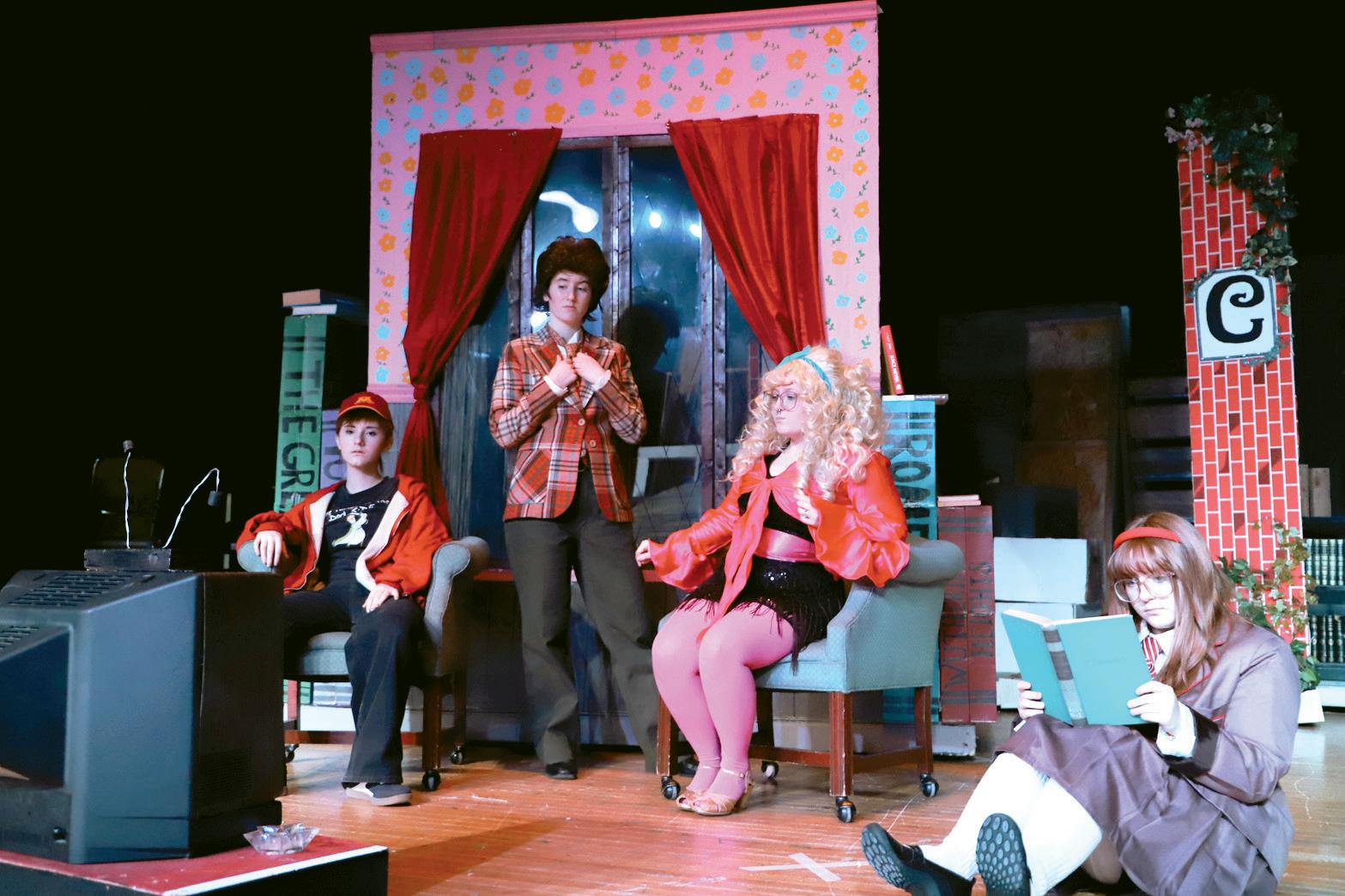
Do you have a bad case of cabin fever after the weeks of intense cold? West Noble High School students have just the answer. Come see their spring musical “Matilda.”
“Matilda” is based on the 1988 novel by Roald Dahl about Matilda Wormwood, a precocious five-year-old girl with the gift of telekinesis, who loves reading, overcomes obstacles caused by her family and school, and helps her teacher to reclaim her life.
Auditions were held in mid-November over two days, with a day each focused on acting and singing. “So we could spend a proper amount of time on warm up,” explained Isaac Porter who is directing the play with Nick Weimer. The cast of 20 features students from the middle and elementary schools as well as the high school. “It’s been an experience,” Porter said.
Matty Armstrong, a junior at West Noble, has the lead in Matilda. She’s been in two other West Noble High School musicals and said this one is challenging. “I keep losing my voice,” she said.
The first musical Armstrong was in was “The Adams Family” were she was part of the ensemble. “It ws my first ever experience in theater so it has a place in my heart,” she said. Armstrong credits her sister for getting her involved in musical theater. Prior to “The Adams Family” she worked behind the scenes until she decided she wanted to be on stage.
Armstrong is involved in West Noble’s Impact program where she has the opportunity to work on boats. This is the only Impact program that allows her to leave the building and be on the water.
Armstrong explained the musical has the same plot as the

book, but the songs are different.She said her favorite song from the musical is “Being Quiet.”
In addition to being the lead, Armstrong finds herself in the challenging position of being a role model for the younger actors. She said she’s concerned about them copying her should she make a mistake on stage.
“The British accent is tough,” she said.
“Madelyn has done an amazing job to get the dancing down,” Weimer said. Both Weimer and Porter praised the tech crew has they have hammered things out during rehearsals.
Rehearsals have been held
Monday through Friday, when Mother Nature wasn’t causing school cancellations. The students worked on Act I on Mondays, Act II on Tuesdays, and then spent the rest of the week and Saturday working on
the sets. Like many area high schools, West Noble’s stage is also the works space for the sets.
Performances will be 7 p.m. Friday and Saturday night, Feb. 6-7 and 2 p.m. Sunday, Feb. 8.
Tickets are $10 for adults and
$7 for students. The musical will be held in the high school cafeteria.
Porter noted “Matilda” is a passion project for a lot of the kids involved. “Come see a labor of love,” he said.
The Miller Sunset Pavilion, 705 Park Ave., will be the place to be for Galentine’s Day and Valentine’s Day celebrations.
Enjoy Galentine’s Day on the ice from 5-9 p.m. Friday, Feb. 13, with “Skating through the Eras.” This fun, friendship focused evening invites guests to lace up their skates and glide along with Taylor Swift hits spun by DJ Jellyman.
Perfect for a night out with friends, the event will feature a themed photo backdrop so guests can capture memories with their besties. Shawnanigan’s will be serving up hot food and beverages all evening.
Admission is $9 for adults
and $7 for juniors, with $5 ice skate rental.
Whether you’re a longtime Swiftie or just looking for a unique way to celebrate Galentine’s Day, “Skating Through the Eras” promises a memorable night of music, skating and friendship.
Galentine’s Day is an unofficial holiday marked on Feb. 13 to celebrate female friendships and platonic love.
Valentine’s Day on Saturday, Feb. 14, will be special as well at Miller Sunset Pavilion.
Enjoy a full day of shopping, skating and winter fun with your pal or sweetheart. The final Farmers Market at Winona
– Winter Edition of the season will take place from noon to 3 p.m., featuring local vendors offering sweet treats, fresh food and unique gifts for your sweetheart.
To make the day even sweeter, the pavilion is offering a special buy one, get one 50% off ice skate admission throughout the day. The ice rink will be open from noon to 9 p.m.







Tickets will go on sale soon for the Kosciusko County Republican Women’s Club Purse Bingo.
The event is set for Friday, March 13, at The Roost at Creighton’s, West Old Road 30, Warsaw. Doors will open at 5:30 p.m., and bingo will start at 6:30.
Designer Purse Bingo includes a 50/50 cash drawing, luxury raffle prizes and a food buffet. A portion of proceeds will be donated to Joe’s Kids. Proceeds in general help the club support local nonprofits throughout the year that serve women and children.
Sponsorship opportunities are available.
Students in Macy Miller’s firstgrade classroom and Pam Vosler’s Life Skills classroom at Warsaw’s Jefferson Elementary School worked together on a hands-on assistive technology project that blends empathy, innovation and real-world problem solving.
What began as first-graders designing simple 3-D-printed assistive devices (such as custom Uno card holders and classroom tools) quickly grew into something even bigger. As sixth-grade STEM ambassadors learned more about the specific needs of their peers, the project expanded beyond small supports to a larger mobility solution.
“This project is about so much more than 3-D printing,” the Jefferson teachers said. “It’s about students learning to see the world through someone else’s eyes, recognizing challenges and working together to design solutions that truly matter.”
The project reached a milestone last week as Jefferson students successfully designed and produced a fully 3-D-printed mobility chair.
Following multiple strength and safety trials to ensure the chair could support weight and safely hold a student, a test fitting was completed in the Life Skills classroom.
The custom mobility chair will allow the student to more fully participate in circle time and morning activities alongside peers, increas-
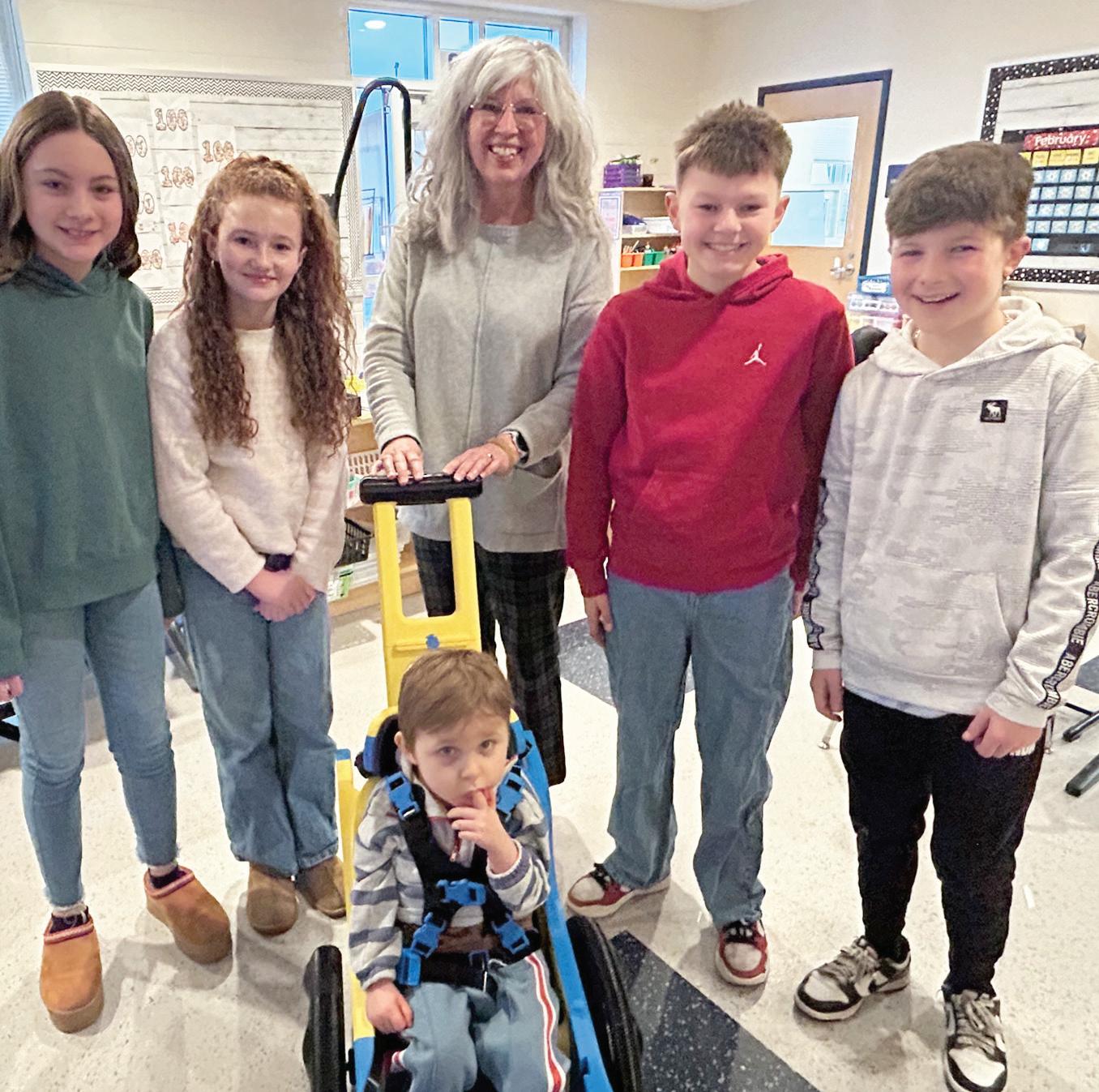
ing both access and inclusion within the classroom environment.
The next phase of the project will continue to focus on designing and creating assistive technology tools using the school’s 3-D printers. Students will work collaboratively to identify needs and develop practical 3-D-printed objects that
support daily tasks, empowering Life Skills students while reinforcing design thinking, creativity and teamwork.
Funding support was provided through a Keys Grant, along with donations of 3-D printers and filament from Atomic Filament and Legrand.
The Warsaw Education Foundation has announced the upcoming 2026 Community Quiz Bowl, a one-of-a-kind team-building event that promises an evening of knowledge, fun and friendly competition.
The annual fundraiser is set to take place from 7-9 p.m. Tuesday, March 10, at Warsaw Community High School’s Tiger Recreational Activity Center.
This year’s Quiz Bowl theme is asking participants to get a little “N.E.R.D.Y,” as teams from local businesses, organizations and educators come together to compete
in answering questions based on the theme. Participants are encouraged to dress up.
Space is limited, and the Quiz Bowl can accommodate the first 70 teams to register. Teams of five can secure their spot by registering online at https://warsawedfoundation.org/quizbowl.
Snacks are provided by Lake City Bank and water is provided by Culligan Water.
For those who may not want to enter a team but still wish to support the Warsaw Education Foundation, there’s an opportunity to sponsor a team. During
the online registration process, participants can choose the “Sponsor a team of educators” option to support a team of Warsaw educators.
The Warsaw Education Foundation plays a crucial role in supporting grants to educators for projects in the classroom that enrich academic excellence within Warsaw Community Schools.
Additionally, the foundation supports various initiatives, including the annual chess tournaments, the N.E.W. Opportunities Workshop for Women and the Honor an Educator program.
Jason Dewart, vice president and manager of treasury services at Interra Credit Union, announces the appointment of Shaylyn Garza as assistant vice president and treasury management sales officer, serving the St. Joseph and Marshall County markets.
Garza brings diverse financial services experience and a strong passion for financial literacy, community engagement and member-focused service. In her new role, she will work closely with local businesses to deliver secure, effective treasury solutions while strengthening Interra’s presence across the region.
Garza’s professional background includes roles at Centier Bank, Worldpay and the Coca-Cola Bottling Company in Plymouth. Her experience ranges from community financial education to supporting commercial clients with payment and processing needs.
While at Centier Bank, she taught financial literacy courses throughout the South Bend, Plymouth and East Chicago areas, helping individuals understand the
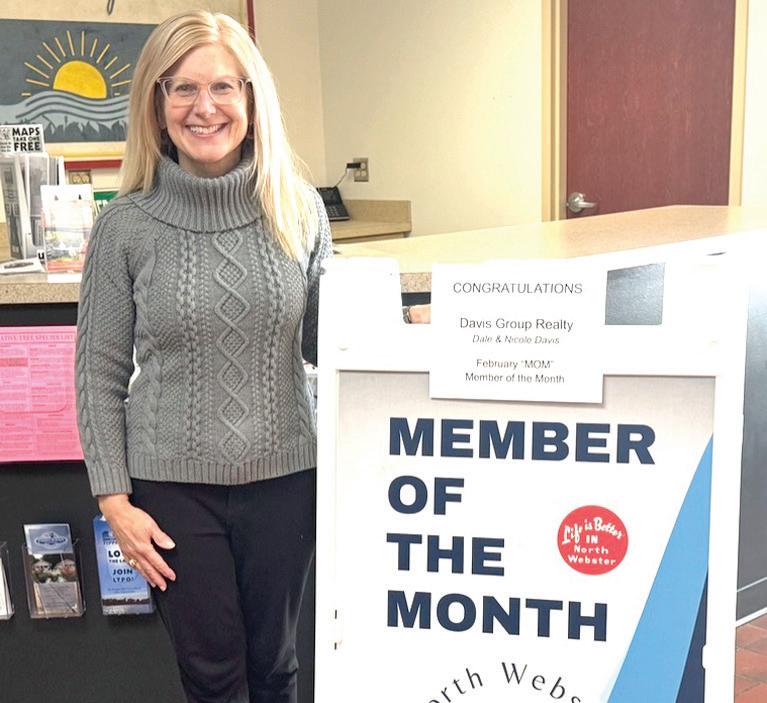
The North Webster–Tippecanoe Township Chamber of Commerce recognized Dale and Niki Davis of The Davis Group as its Member of the Month for January 2026, honoring the business for its commitment to the local community, dedication to clients and active involvement in the North Webster area.
The Davises relocated to North Webster in fall 2020 and have embraced the small-town atmosphere, the beauty of Webster Lake and the surrounding community. Over the past two years, The Davis Group has focused on real estate full time, building strong relationships and a reputation for compassionate, client-centered service.
While lake properties are a favorite, The Davis Group finds the greatest fulfillment in helping first-time homebuyers and
clients navigating unexpected life changes - such as job relocations or unforeseen circumstances. By offering guidance, support and expertise, the team helps clients sell their property or find the right home so they can move forward with confidence and a brighter perspective.
The chamber’s Member of the Month program honors businesses that demonstrate leadership, community involvement and a commitment to strengthening the local economy. The Davis Group’s recognition reflects its passion for service and positive impact within the North Webster–Tippecanoe Township area.
The chamber congratulates The Davis Group on being named January 2026 Member of the Month and thanks the business for its continued contributions to the community.
Gardening can be a great way to enjoy nature, get some light exercise and de-stress.
Those who want to learn gardening basics, plus a little more, are invited to attend Gardening 101 from 6-7:30 p.m. Wednesday, Feb. 25, at Cancer Services War-
saw, 2190 N. Pointe Drive, Warsaw.
The class is presented by Cancer Services of Northeast Indiana and is facilitated by master gardener Alan Clayton. Call (260) 484-9560 to register.

SHAYLYN GARZA
fundamentals of personal finance and empowering them to pursue financial freedom. Garza said those teaching opportunities remain among the most meaningful accomplishments of her career.
A graduate of Culver Community High School, Garza also completed three years of coursework at Ivy Tech Community College. She plans to continue advancing her professional development and has aspires to pursue recognition such as the 40 Under 40 Award.
Garza’s path into the financial industry was influenced early in life. She recalled a high school business math class in which a local bank manager introduced students to topics such as writing checks, calculating loan interest and understanding the basics of financial responsibility.
“That class opened my eyes to the world of banking,” Garza said. “When it came time for a career change, I jumped in with both feet, and I have loved it more every day since.”
In her role at Interra, Garza is excited to contribute to the credit union’s ongoing growth while building relationships with businesses in her service area. Her goals include expanding her professional network and helping companies implement treasury solutions that support stability and long-term success.
“I am thrilled to be part of the incredible growth happening at Interra,” she shared. “I look forward to making a meaningful impact in the community.”
Garza resides with her husband, Vito, and enjoys spending time with her three adult stepchildren. Outside of work, she is an avid concertgoer, camper, traveler and self-proclaimed foodie. She hopes to explore opportunities to join community or professional organizations in the near future to further contribute to local engagement and outreach.

Flora Lea Carrillo Milford Resident
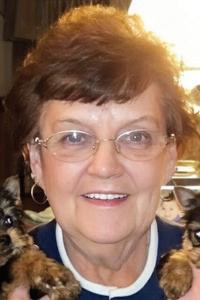
Flora Lea Carrillo, 79, passed away peacefully on Sunday morning, Jan. 25, 2026, at her son’s home in Fort Wayne. Having trusted in Jesus Christ as her Lord and Savior, she has now entered into His presence and the promise of eternal life.
Flora was born Dec. 30, 1946, in Warsaw to Offie (Williams) and Johnie Johnson and attended Warsaw schools.
On Nov. 22, 1970, in Warsaw, Flora married Jose Angel Carrillo. Together, they built a life rooted in love, faith and family. Jose lovingly embraced her two sons as his own, and together they welcomed three more children. Their 55 years of marriage were marked by commitment, perseverance and devotion to one another and their family.
Throughout her life, Flora was known as a hardworking and caring woman who held a variety of positions over the years. Among her later employment, she worked at Switches in Elkhart, Lakeland Loving Care Center in Milford and CTB Inc.
Flora had a deep love for animals, and after her children were grown, her dogs and cats became her cherished companions whom she spoiled generously. She found great joy in watching her family grow and in attending the many activities of her grandchildren. Her life reflected a heart of love, sacrifice and care for others.
Flora is survived by her loving husband of 55 years, Jose Carrillo; her children, Ralph Prater, Syracuse, Gregory Prater, North Webster, Jeffrey Carrillo, Bolingbrook, Ill., Jose “Joey” Carrillo, Fort Wayne, and Ramona Carrillo, Milford; six grandchildren, Kasey, Kamron, Kendra, Lance, Trey and Kara; five great-grandchildren; her brother, Roger Johnson, California; and her half sister, Judy Fontaine (Johnson), Michigan.
She was preceded in death by her parents; her sister, Darlene Johnson; her half brother, Robert Johnson; and her half sister, Brenda Johnson.
Visitation will be held from 5-7 p.m. Friday, Feb. 13, at McHatton-Sadler Funeral Chapels, 2290 Provident Court, Warsaw. Funeral services will be held at 11 a.m. Saturday, Feb. 14, at McHatton-Sadler Funeral Chapels, with Pastor Glenn Hall officiating. Visitation will resume one hour prior to the service. Burial will follow at Lakeview Cemetery, Silver Lake.



Dale Callahan
Dale Callahan, 66, Syracuse, died peacefully at home Tuesday, Feb. 3, 2026.
He was born Jan. 8, 1960, in Michigan City.
Dale retired from Smoker Craft Inc. earlier this year.
He is survived by his wife, Lorraine, of 46 years; daughters, Traci Callahan (Tracy Coates) of North Webster and Tara Callahan-Carrillo (Jason Wylie) of Syracuse; grandchildren, Tessla Stephen, Jose Carrillo (Kaylin Rogers) and Alissa Wylie; and five great-grandchildren.
A Celebration of Life will be held from 4-6 p.m. Friday, Feb. 13, at Brookpoint Inn in Syracuse.
Rowdy Donald Bontrager
Camden Bontrager and Bailey Showalter, Goshen, are the parents of a son, Rowdy Donald, born at 10:51 a.m. Feb. 1, 2026, at Goshen Hospital. He weighed 7 pounds, 2.8 ounces, and was 19 3/4 inches long.
Melanie Sue Chupp John and Doris (Chupp) Chupp, Etna Green, are the parents of a daughter, Melanie Sue, born at 6:57 p.m. Feb. 1, 2026, at Blessed Beginnings Care Center, Nappanee. She weighed 9 pounds, 9.2 ounces, and was 21 inches long.
Coen Judah Nimtz
Timon and Allison (Zylstra) Nimtz, Goshen, are the parents of a son, Coen Judah, born at 6:07 p.m. Feb. 4, 2026, at Blessed Beginnings Care Center, Nappanee. He weighed 8 pounds, 11 ounces, and was 20 1/2 inches long.
Grace College inducted 32 juniors and seniors into the Alpha Chi Honor Society on Saturday, Jan. 31. These high-achieving students have earned the top 10% of GPAs across all disciplines at Grace. Every year, Alpha Chi inducts nearly 11,000 students from across the country.
Established in 1922, Alpha Chi aims to nurture academic excellence and character elements, making scholarship effective for good among college and university students of every discipline. The national honor society celebrates more than a century of rich history marked by scholarship and service. Alpha Chi has been affiliated with the Association of College Honor Societies since 1955, making it the second-oldest and second-largest general honor society in the United States.
“As faculty, we look forward to this event every year, as these are students who have really distinguished themselves in academics throughout their time at Grace,” said Dr. Lauren Rich, Alpha Chi faculty sponsor and professor of English in the Department of English, Literature, and Languages. “Member-
Attorney General Todd Rokita is advising Hoosiers to take measures to avoid falling victim to the schemes robocallers.
“Scammers frequently use robocalling in their efforts to steal Hoosiers’ identity and take your hardearned money,” Rokita said. “We constantly work to catch and hold accountable criminal perpetrators, but at the same time, we want to help Hoosiers take their own actions to avoid becoming victims.”
ship in Alpha Chi is an honor signifying students’ hard work, dedication to learning and strong character.”
Grace College paid the membership fee for all eligible students who wished to join. This was made possible by the generous support of Grace’s administration, particularly Dr. Kevin Roberts, Grace’s provost, as well as Doug Baumgardner, vice president of financial affairs, who joined Alpha Chi when he was a student at Grace.
After inductees were introduced by a faculty member from their school and presented with a certificate and pin, Dr. Patrick Loebs, professor of communication at Grace, delivered a keynote address. Rachel Macy, a 2024 Alpha Chi inductee and student body president, delivered the benediction.
The 2026 Grace College Alpha Chi Honor Society local inductees are:
• Ethan Huber of Pierceton, studying health science
• Ellison Miller of Milford, studying exercise science
The Grace College Alpha Chi chapter is sponsored by the Office of Faith, Learning & Scholarship.
Here are several tips Hoosiers can take to protect themselves:
• Don’t answer calls from numbers you don’t recognize.
• If you do answer and realize the caller is unknown to you, do not engage. Instead, hang up immediately. Do not press buttons or speak to the operator, as this confirms your number is active, leading to more calls.
• Register your number on the Do Not Call List at DoNotCall.
gov. If your cell phone number is registered on the Do Not Call list, then a telemarketer must refrain from sending solicitations by text as well as calling. (If you’d like to verify your number is already on the Do Not Call list, visit the webpage at indonotcall.org/phone_ numbers.)
• Spot scams, such as prerecorded calls supposedly from government agencies (IRS, SSA) or requests for payment via gift cards or cryptocurrency.
At Titus Funeral Home & Cremation Services, our caring and knowledgeable staff is here to guide you in making the best choices for your family - decisions that honor your loved one while remaining in your budget.
Choosing Titus Funeral Home's Cremation Center for your loved ones cremation is ideal for many families. We own and operate our own crematory with licensed and certified staff.
At Titus Funeral Home & Cremation Services, our caring and knowledgeable staff is here to guide you in making the best choices for your family - decisions that honor your loved one while remaining in your budget.
574-267-3104
Cory Benz Owner & Funeral Director 100% Local Ownership
Choosing Titus Funeral Home’s Cremation Center for your loved ones cremation is ideal for many families. We own and operate our own crematory with licensed and certified staff.



A total of 15,388 students enrolled during fall semester 2025 at The University of Alabama were named to the dean’s list with an academic record of 3.5 (or above) or the president’s list with an academic record of 4.0
(all A’s). These driven students are making waves across UA’s more than 70 undergraduate programs and 12 colleges and schools. Payton Jones of North Manchester was named to the president’s list.
• Check provider options. Contact your telephone service provider to inquire about advanced call-filtering or blocking services, which can stop many robocalls and robotexts before they ever reach your phones.
• File complaints about robocalls (or “live” violators of the Do Not Call List) with the Indiana attorney general’s office at its website, by calling 1-888-834-9969 or by email at donotcall@atg.in.gov.


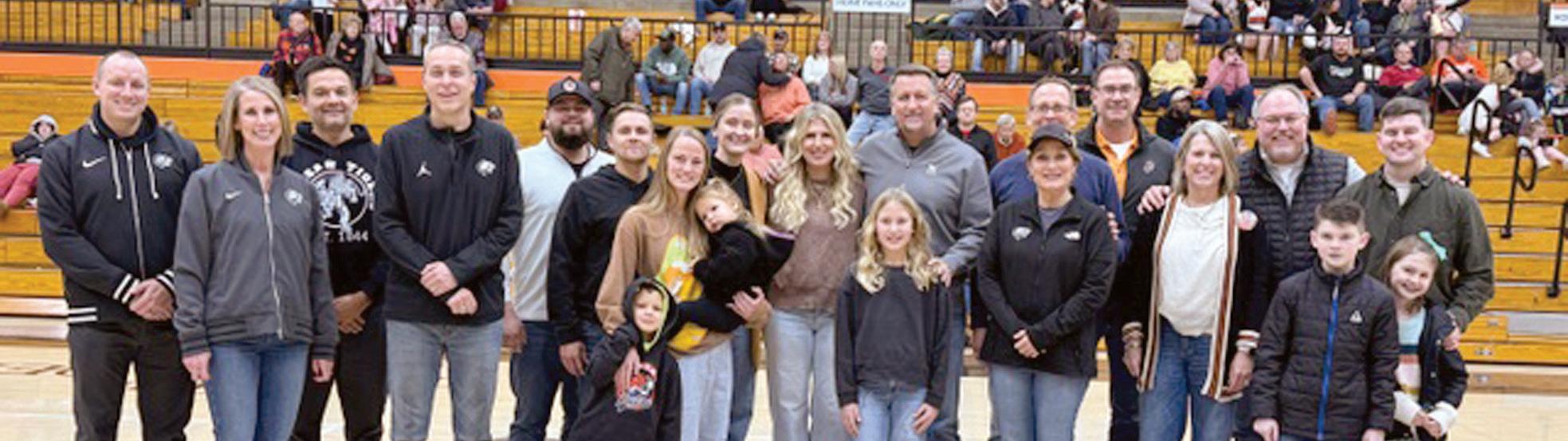
CENTER COURT Warsaw Community Schools administrators, board members and SYM Financial team members and its families gathered at center court Jan. 31 to recognize
Warsaw Community Schools celebrated its fourth year of partnership with SYM Financial Advisors during the Warsaw boys varsity basketball game Saturday afternoon, Jan. 31, against Elkhart High School.
During halftime, Superintendent Dr. David Hoffert, WCS administrators and school board members, along with SYM Financial team members and their families, gathered at center court to recognize SYM’s continued commitment to supporting students and building school spirit at Warsaw Community High School.
“Warsaw Community Schools is grateful to SYM Financial for their ongoing support,” said Hoffert. “Their yearly donation has provided sponsorship for high school students to at-
tend all sporting events free of charge. This gift has provided school spirit and safe activities for our students. We are grateful for this investment in our students, schools and community.”
Thanks to SYM Financial,
every WCHS student in grades nine through 12 continues to receive an all-sport pass, giving them the opportunity to support their classmates at athletic events throughout the year. Their sponsorship also helped establish the student cheer sec-
tion known as the “SYM Zone,” which has become a key part of the game-day atmosphere and Tiger pride.
“SYM is proud to continue its support of Warsaw Tiger students,” said Steve Yeager, principal and senior financial advis-
er at SYM Financial. “Students have the power to amplify an athletic event. When they show up to support fellow classmates and friends, it enriches both spectator and competitor. We’re covering entry for high school students so cost isn’t a barrier.”
Ready to roll up your sleeves and dive into building sustainable communities? If so, the Kosciusko Green Infrastructure Workshop: Creating Sustainable Communities could be for you.
The workshop starts at 9:30 a.m. Thursday, Feb. 26, and will be held at the Zimmer Biomet Center Lake Pavilion near downtown Warsaw.
The two-hour event will in-
The following small claims have been awarded in Kosciusko Superior Court III, Judge Chad Miner presiding: Aegis Dental Group Warsaw PC v. Cheryl Alcalan, $715; Brandon Delp, $960.35
Lindsay Frazier, $2,351.49; Kapri Gardner, $1,019.20; Jordan Gavin, $811; Neil Harris, $1,077.50; Jeffrey Konkle, $5,235.89; Peyton Lackey, $915; Crystal Lewallen, $1,049.36; Joshua Moody, $1,277.86; Mary Rico, $2,348.30; Angelica Vaca, $1,100; Lisa Zartman, $2,088.02 Glenbrook Credit Acceptance Corp. v. Walter A. Barnes, $8,782.89; v. Antonio D. Dunlap Sr., $4,529.11 Warsaw Health System LLC, d/b/a Kosciusko Community Hospital v. Felecia Bedwell, $6,913.73; William Miller, $6,025.32; v. Luis Pacheco Perez, $5,437.09; v. John Sommers, $1,601.41 Professional Roofing Solutions & Construction LLC v. Maria Castillo de Hernandez, $9,479.74
Snow & Sauerteig LLP v. Cheyenne Culpepper, $4,305.69; v. Amy Meade, $6,788.09; v. Melanie Moody, $9,104.43
One Advantage LLC v. Heather Owens Dausman, $1,716.14
The 2525 LP v. Karagen E. Simpson, $2,216.71
The following civil collections have been awarded in Kosciusko Superior Court IV, Judge Christopher D. Kehler presiding: Midland Credit Management Inc. v. Richard Alexander, $3,620.25; v. Luis Duenas, $3,032.17; v. Scott Framer, $1,210.24; v. Cindi Robison, $7,852.88
Capital One NA, successor by
merger to Discover Bank v. Sharon E. Berner, $4,033.33 Credit Acceptance Corp. v. Kyle Campbell, $18,836.59; v. Kimberly McCord, $8,737.21
Portfolio Recovery Associates LLC v. Beth Cox, $1,180.41; v. Daniel Jorgensen, $982.79
LVNV Funding LLC v. Travis Davidson, $3,491.18; v. Brian Neher, $1,018.12; v. Chad M. Ouimet, $1,485.08
Citibank NA v. Brittni Elrod, $2,074.38
Capital One NA v. Crystal L. Guthrie, $854.79; v. Jaime Herrera Rodriguez, $5,136.69; v. John P. Schmidt, $7,918.61; v. Ashley Starkweather, $1,654.50
Interra Credit Union v. Brent Judy, Santana A. Judy, $9,835.66 Jefferson Capital Systems LLC v. Ashley Locke, $623.54
Cavalry SPV I LLC v. Rachael A. Luu, $5,919.46
Velocity Investments LLC v. Chad Rothgeb, $3,229.41
Finwise Bank v. Roderick Sizemore, $2,958.91
Credit Corp. Solutions Inc. v. Jeffrey Smith, $2,060.30
Bank of America NA v. Mark Stackhouse, $7,601.60
Crown Asset Management LLC v. Collin A. Studer, $27,801.61
CommunityWide Federal Credit Union v. Cinda S. Varney, $9,059.39 Mortgage Foreclosures
The following mortgage foreclosure has been awarded in Kosciusko Superior Court III, Judge Chad Miner presiding: Freedom Mortgage Corp. v. Bradley E. Barnes, $87,055.71; v. Jason William Thomas, $368,377.59 Evictions
The following evictions have been awarded in Kosciusko Superior Court III, Judge Chad Miner presiding:
clude presentations by Christopher B. Burke Engineering LLC and will explore smart, green ways to improve neighborhoods and make a positive impact.
Whether you’re a community leader, an enthusiast or just curious, this workshop is a chance to learn, share and get inspired.
The workshop will be a learning opportunity for homeown-
er’s associations, landscapers, developers, urban planners, commercial and industrial facility owners, property managers and anyone who owns a property that was developed under a construction stormwater general permit.
The workshop is provided through the partnership of the city of Warsaw, Warsaw Stormwater Utility, The Watershed Foundation and the Kosciusko
Soil and Water Conservation District.
The city requests that anyone planning to attend the workshop register by using Eventbrite. The link to the workshop on Eventbrite is https://www.eventbrite.com/e/ kosciusko-green-infrastructure-workshop-creating-sustainable-communities-tickets-1980383313802?aff=oddtdtcreator.
Shafer Rentals LLC v. Macy E. Click, Josh Hairell, Crystal Klaer, $5,253.10; v. Melinda Crisp, Larry Smith, $8,112
Jacob Garcia v. Jennifer Ibarra, $8,180
Ron Cernauskas v. Autumn Mitchell, $6,110
The following plenary has been awarded in Kosciusko Superior Court I, Judge Karin McGrath presiding: Wawasee Spink Storage Condominium Owners’ Association v. Larry B. Cruse, $5,200
Superior Court III
The following fines and costs for infractions have been assessed in Kosciusko Superior Court III, Judge Chad Miner presiding: Speeding - Manuel A. Rodriguez, Winona Lake, $164.50; Adam M. Hyde, Silver Lake, $164.50; Francisco J. Ramirez, Warsaw, $164.50; Miguel A. Cardoso, Warsaw, $164.50; Joshua A. Guillemette, Warsaw, $164.50; Pamela S. Mast, Syracuse, $164.50; Joseph A. Olivares, Mentone, $164.50
Driving while suspendedZachary J. Wiesehan, Mentone, $140.50; Derek A. Timmons, Syracuse, $189.50; Carl B. Fairfax, Syracuse, $189.50
Operating a motor vehicle with a false plate; plate belongs to another vehicle - Davey Prater, Claypool, $164
Operating with expired plates - Cole F. Roybal, Warsaw, $164
Operating a motor vehicle without financial responsibility - Isabel E. Barajas, Warsaw, $189.50; Alejandro C. Cruz, Warsaw, $189.50; Anjelica S. Wolfe, Warsaw, $189.50
Speeding, failure to register - Austin J. Newsome, Mentone, $189.50
Driving while suspended, operating a motor vehicle without
financial responsibility - Luis A. Perez, Warsaw, $239.50
Unlawful possession of tobacco product - Brennon W. Smith, Warsaw, $164; Thadeus M. Lewis, Claypool, $164; Bryson L. Baldridge, Syracuse, $164
Failure of occupant to use a safety belt - Garrett M. Titus, Warsaw, $25; Gene H. Denz, Warsaw, $25; Talan R. Stouder, Silver Lake, $25
No valid driver’s license - Martha J. Hernandez, Warsaw, $164.50; Mycaela A. Colpetzer, Bremen, $164.50; Erica C. Hernandez, Winona Lake, $164.50
Failure to register, operating a motor vehicle with a false plate; plate belongs to another vehicle
- Levi J. Hayward, Warsaw, $189.50
Hunting wild animals, fishing or trapping without licenseKaden R. Templeton, Warsaw, $164
Operating a motor vehicle without financial responsibility, speeding - Osbaldo S. Sanchez Patino, Warsaw, $214.50
Improper or no tail or plate light - Aron B. Howe, Warsaw, $164
Failure to register, failure of occupant to use a safety beltShelby G. O’Keefe, Warsaw, $189.50
Speeding, open alcoholic beverage container during operation of a motor vehicle - David J. Knapp, Warsaw, $189.50
The following couples have applied for marriage licenses in the office of Kosciusko County Clerk of the Court
Melissa Boggs: Graff-Vazquez
Ashley Graff, 26, North Webster, and Eleazar Vazquez, 22, North Webster
Johnson-Hicks
Jessica Christine Johnson, 30, Warsaw, and Shawn Allen Hicks, 29, Warsaw Losee-Stuckman
Izabelle Losee, 20, Syracuse, and Garrett Stuckman, 23, North Webster Severs-Straka
Kenneth Charles Severs, 44, Syracuse, and Wanda Bernadette Straka, 50, Syracuse
Fletcher-Sparks
Polly Lorell Fletcher, 40, Warsaw, and Toby Darriel Sparks, 46, Warsaw Cardoso-Ibarra
Miguel Angel Cardoso Jr., 31, Warsaw, and Latasha Sue Ibarra, 33, Warsaw
Ellender-Ellender
Marcia Carter Ellender, 76, Warsaw, and Robert Anthony Ellender, 73, Warsaw
The following couples have filed for a marriage dissolution in Kosciusko Superior Courts I or IV: Hix - Margaret Hix, Warsaw, and Elijah Hix, Warsaw. No minor child(ren). No other information was available.
Schutzman - Kandy Schutzman, Warsaw, and Edward Schutzman, Warsaw. They were married Jan. 31, 2022; separated Feb. 28, 2025. No minor child(ren).
Fugate - Carissa Fugate, Etna Green, and Dalton Fugate, Etna Green. They were married Dec. 25, 2025; separated Jan. 16, 2026. No minor child(ren).
Stacy - Teresa R. Stacy, Syracuse, and James D. Stacy, Syracuse. They were married June 6, 2022; separated Feb. 4, 2026. No minor child(ren).
respondingtoadsareadvisedtocontact theBetterBusinessBureauinyourareaor theIndianaSecretaryofState’sFraud Hotlinebeforesendinganymoney. 1-800-223-8791
Check out all of our publications online: inkfreenews.com thepapersonline.com themailjournal.com shoppingguidenews.com autorv.com themunicipal.com glo-mag.com lakelifemagazine.com homelivingplacesandspaces.com seniorlifenewspapers.com
Free Free A030
DonateYourCartoVeteransToday!Help andSupportourVeterans.Fast-FREE pickup.100%taxdeductible.Call 800-245-0398


This is an exceptional estate sale with unique primitives, antiques and vintage!
Over 60 years of curating this diverse collection. THERE IS SO MUCH!!
Trash Removal. Residential, commercial and industrial. Bobcat, dumpsters and burn barrels available also. (574)
Replaceyourroofw/thebestlooking& longestlastingmaterialsteelfromErie MetalRoofs!3styles/multiplecolors available.Guaranteedtolastalifetime! Limitedtimeofferupto50%offinstall+ additional10%offinstallmilitary,health& 1stresponders.833-370-1234
C140 FIND GREAT DEALS IN THE CLASSIFIEDS

ConsumerCellular-samereliable,nationwidecoverageaslargecarriers.Nolongtermcontractorhiddenfees,freeactivation.Allplansunlimitedtalk&textstarting atjust$20/mo.877-751-0866
Peaceofmind&earlydetection-Now morethanever,it’simportanttoget screenedforStroke&CardiovascularDiseaserisk.LifeLineScreeningissimple& painless.833-970-4172
Nomorecleaninggutters.Guaranteed! LeafFilterbackedbyno-clogguarantee& lifetimewarranty.Call1-833-610-1936to scheduleFREEinspection/estimate.Get 15%offyourentireorder.Military&Seniorsgetadditional10%off.Limitedtime. Restrictionsapply,seerepfordetails.
Reachmillionsofhomesnationwidewith oneeasy,affordablebuyintheADSNetwork!Formoreinformationwww. communitypublishers.com/category/allproducts Business Opportunities H010
PortableoxygenconcentratormaybecoveredbyMedicare!Reclaimindependence &mobilityw/thecompactdesign&longlastingbattery.InogenOnefreeinfokit! 877-305-1535








LUMBERJACKJIMTREESERVICEProfessionaltreetrimmingandremoval. Stormdamagecleanup.Safeandreliable. Fullyinsured.Locallyowned.Call 574-371-6536.
Amazing antique furniture: beautiful birdseye maple, walnut, cherry, oak and mahogany pieces. Many nice antique books, Bibles. WWI, WWII & earlier memorabilia. Antique/ vintage jewelry, dolls, paintings, pictures, advertising, local maps. Pyrex, Fire King Delphite Blue Bowls, Kitchen Craft pots/pans, lots of other kitchen, linens, vintage clothing, Maytag Dryer, Speed Queen Washer, Refrigerator, treadmill, exercise bike, Lululemon Mirror workout set. Many Framing supplies, Corona Vacuum Mounting Press, Fletcher Wall Mount Cutter, Keeton Cutter, Keeton Heavy Duty Mat Guide, and other Mat/ framing tools, matting board, frame halves, etc. Craftsman 10” radial saw, vise, tools, antique push scooter. Too much to list. This is definitely a sale you don’t want to miss! Pictures and details on estatesales.net
SALE …is conducting an: Saturday, February 14 9 am-4
TONY’STREESERVICE.Treeremoval, treetrimming,brushhaulingandland clearing.24/7emergencystormcleanup. Stumpgrinding.Fullyinsured. 574-265-1230
TREETRIMMING,treeandstumpremovalservice,stormdamagecleanup, treeclimbingorbucketlift,Freeestimates. DanTheTreeMan.574-831-4381,New Paris.
TOPDOLLARPAIDforoldvintageguitars!Gibson,Fender,Martin,Grecsch, Rickenbacker,Epiphone,Etc.1930’sto 1980’s.Call866-433-8277






Trine University Theatre has announced the cast for its upcoming production of “Midsummer/Jersey.”
“Midsummer/Jersey” is a hilarious high-octane re-telling of Shakespeare’s “Midsummer Night’s Dream” set on the boardwalk of a seaside town in modern-day New Jersey.
The story revolves around the
impending marriage of the Governor of New Jersey, the love affairs of four beach-bound high school crushes, a lively crew of fairies and the staff of the local beauty salon (run by Patti Quince and Stylist Nikki Bottom).
The night takes a magical turn when Oberon and the impish Puck arrive on the scene armed with a
powerful love potion and a desire for mischief-making. With several weddings and the acting careers of six beauticians hanging in the balance, the lovers take to the boardwalk, backed by pop music and an iPhone-obsessed wood sprite.
Trine Theatre will perform the play at 7 p.m. March 26 and 27, and 2 p.m. March 28.
Tickets are $10 each for the general public, $5 for students ages 5-17 and free for Trine students and employees. They are available at trine.edu/furthtickets or at the door.
‘Midsummer’ Cast
A local cast member is Macy Bonifield, an elementary education major from Warsaw, as Titania.
Lou Ann Homan, Trine lecturer, is serving as director, with assistance from Lydia Roop, the university’s assistant director of student engagement, leadership and service.
The Trine Theatre program is part of the university’s Department of Humanities and Communication.
The Warsaw Education Foundation has announced the upcoming 2026 Community Quiz Bowl, a one-of-a-kind team-building event, will be an evening of knowledge, fun and friendly competition.
The annual fundraiser is from 7-9 p.m. Tuesday, March 10, at Warsaw Community High
School’s Tiger Recreational Activity Center.
This year’s Quiz Bowl theme is asking participants to get a little “N.E.R.D.Y,” as teams from local businesses, organizations and educators come together to compete in answering questions based on the theme. Participants are encouraged to dress up.
Space is limited. The Quiz Bowl can accommodate the first 70 teams to register. Teams of five can secure their spot by registering online at warsawedfoundation.org/quizbowl.
Snacks are provided by Lake City Bank and water is provided by Culligan Water.
For those who may not want
to enter a team but still wish to support the Warsaw Education Foundation, there’s an opportunity to sponsor a team. During the online registration process, participants can choose the “Sponsor a team of educators” option to support a team of Warsaw educators.
WEF plays a crucial role in sup-
porting grants to educators for projects in the classroom which enrich academic excellence within Warsaw Community Schools. Additionally, the foundation supports various initiatives, including the annual chess tournaments, the N.E.W. Opportunities Workshop for Women and the Honor an Educator program.
The USDA has designated 28 Indiana Counties as natural disaster areas due to a drought. Five Ohio counties are eligible as contiguous counties. This secretarial natural disas-
The seventh annual Michiana Master Gardeners Association’s Garden Expo will be held from 9 a.m. to 3 p.m. Saturday, March 7, at the Faith United Church located at 22045 CR 18, on the corner of CR 17, in Elkhart.
The theme is “Think Spring” and the event is open to the community featuring popular keynote speaker Kevin Wiener.
Multiple speakers and educational workshops will accompany the vendor area, door prizes, silent auction, and of course
wonderful food will be available. Some vendors will be cash-only so plan ahead. Advance-sale tickets are $10 per person and may also be obtained at the door day of event. Online tickets may be purchased at the MMGA website for $10 at www.michianamastergardeners. com in advance.
Kevin Wiener is a nationally known social media personality, speaker, writer, insect guru and web host at www.AllBugsGoToKevin.com which his Facebook
Online Building Material And Industrial Supply Auction
Bidding open until 6 p.m.
Thursday, Feb. 12. Pickup at 416 S. Huntington St., Syracuse. Bid online at bid.kraftauctions.com.
Phone Bid
Real Estate Auction
Bidding open until 4 p.m.
Monday, Feb. 16. Property located 2 miles south of Middlebury on SR 13 to CR 26, west 3.2 miles to 15533 CR 28, Goshen. For bidding and bidding updates, call (574) 642-0444.
Phone Bid Business Auction
Bidding open until 4 p.m.
Tuesday, Feb. 17. Property located 3 miles west of Shipshewana on 250N to 1100W, then north 1/4 mile to 2700 N. 1100W, Shipshewana. For bidding and bidding updates, call (574) 6420444.
Online Only Public Auction
Bidding open until 6 p.m.
Thursday, Feb. 19. Pickup at 2552 N. 325E, Warsaw. Bid online at bid.kraftauctions.com.
Online Industrial Supply And Tool Auction
Bidding open until 6 p.m.
Thursday, Feb. 19. Pickup at 1711 Dewey St., Bremen. Bid online at bid.kraftauctions.com.
Online Vehicle Auction
Bidding open until 5:30 p.m. Saturday, Feb. 21. Pickup at 2653 E. US 30, Warsaw. Bid online at bidmetzger.com.
Online Farm Toy And Advertising Auction
Bidding open until 6 p.m. Saturday, Feb. 21. Pickup at 1582 W. SR 114, North Manchester. Bid online at bidmetzger.com.
Online Silver And Coin Auction
Bidding open until 7 p.m. Sunday, Feb. 22. Pickup at 1582 W. SR 114, North Manchester. Bid online at bidmetzger.com.

group has more than 372,000 members.
The MMGA hopes to see you at the upcoming Garden Expo!
This event is affiliated with the Purdue Extension Master Gardener Program. If you are in need of accommodations to attend this program, contact Brandy Cavanagh prior to the event at (574) 533-0554 or bcavanagh@purdue. edu by Monday, Feb. 23.
ter designation allows the United States Department of Agriculture Farm Service Agency to extend much-needed emergency credit to producers recovering from natural disasters through emergency loans.
Emergency loans can be used to meet various recovery needs.
These include the replacement of essential items such as equipment or livestock, reorganization of a farming operation, or to refinance certain debts. The FSA will review the loans based on the extent of losses, security available, and repayment ability.
Impacted areas are Indiana and Ohio.
The application deadline is Monday, Aug. 31.
Contiguous counties also eligible in Indiana are: Clinton, Dekalb, Fulton, Grant, Hamilton, Henry, Huntington, Kosciusko, Madison, Noble, Pulaski, Tippecanoe, Wayne, White, and Whitley.
The Disaster Assistance Discovery Tool, Disaster Assistanceat-a-Glance fact sheet, and Loan Assistance Tool are on farmers. gov and can help determine program or loan options.
To file a notice of loss or to ask questions about available programs, contact the local USDA Service Center.
Primary counties eligible in Indiana are: Adams, Allen, Blackford, Carroll, Cass, Delaware, Howard, Jay, Miami, Randolph, Tipton, Wabash, and Wells.

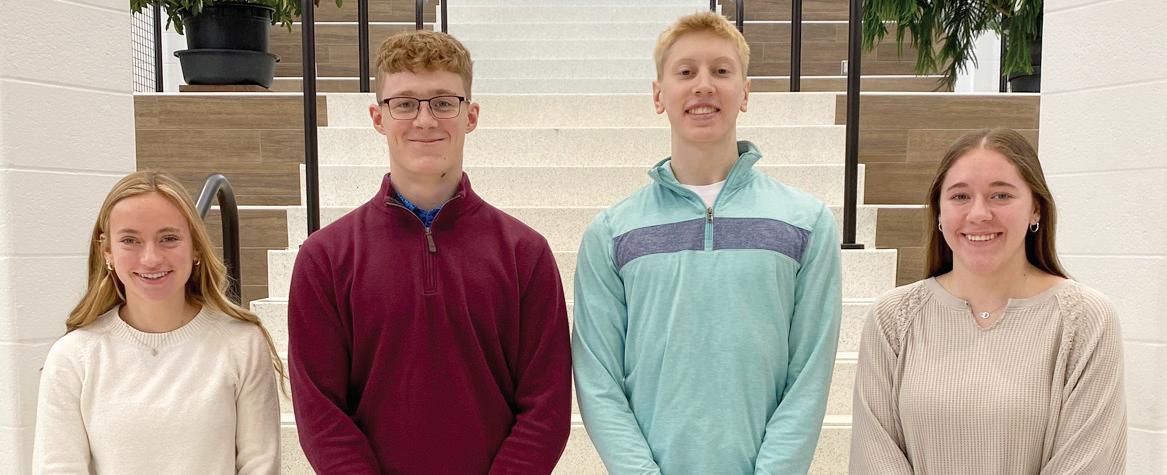
Four juniors from Warsaw Community High School have been selected as Rising Stars of Indiana, a statewide honor recognizing students who demonstrate exceptional academic achievement, leadership and community involvement.
This year’s WCHS Rising Stars are Savannah Purdy, Sean Smith, Grayson Waldo and Makayla Riley.
The Rising Stars of Indiana program is coordinated by the Indiana Association of School Principals. Each Indiana high school may nominate up to four juniors for this noncompetitive recognition. The program
provides an early spotlight on high-achieving students, helping increase their visibility for future college admission and scholarship opportunities while celebrating their academic dedication and leadership potential.
“These students represent some of the very best of Warsaw Community High School, ” Principal Troy Akers said. “Their dedication in the classroom, involvement in activities and positive impact on others make them truly deserving of this recognition. We are proud of the example they set for their peers.”
By BRIANNA WHITE Staff Writer
The Kosciusko County Cattleman’s Association made a $3,000 donation to the Milford Food Bank with funds raised during an auction at the KCCA annual dinner Tuesday, Feb. 3.
The annual dinner was held in the Shrine Building at the Kosciusko County Fairgrounds. It concluded with a “not so silent” auction that included a variety of items, from cattle feed to a Valentine’s basket with goat milk lotion and
a bottle of wine. The donation would not have been possible without the generosity of attendees during this auction.
Angie Deak, development manager for the Milford Food Bank, said the organization is grateful for the donation and plans to use the money to purchase a pallet scale for its new facility.
The KCCA was founded by cattlemen Leon Tucker, Everett Tom, Ernie Rhoades, and Purdue Extension educator Don Frantz. This is its 53rd year in operation. The organi-
zation has supported numerous organizations over the year, including the Red Cross and 4-H.
The Milford Food Bank is a nonprofit organization that provides bulk food to organizations in Indiana and Michigan serving people facing food insecurity. In June 2025, it broke ground on their new building, and construction is ongoing. The food bank relies on the support from individuals, donors and organizations. More information is available at milfordfoodbank.org.

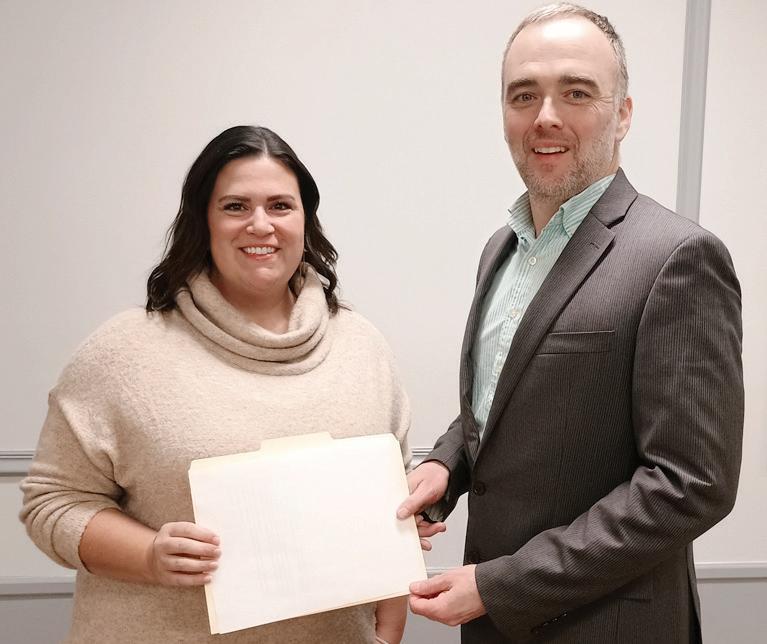
U.S. Rep. Rudy Yakym, Republican representing Indiana’s 2nd Congressional District, will be holding mobile staff office hours in Warsaw.
Staff will be available from 9-10:30 a.m. Wednesday, Feb. 25, in the basement conference room of the Justice Building, 121 N. Lake St., Warsaw. Mobile office hours are designed to be one-on-one conversations with the congressman’s team, primarily for federal casework assistance. They are not town halls.