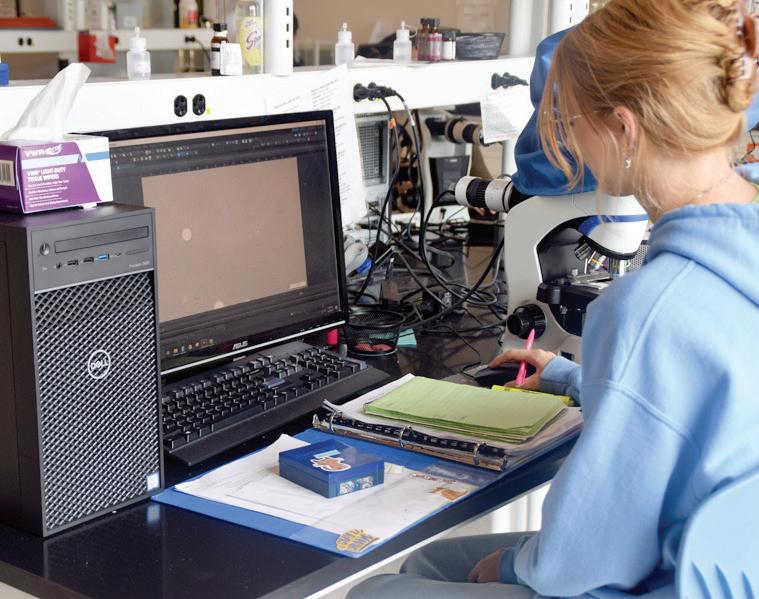
COUNTING ALGAE — Hallie Arnold, team lead of the research lab for Lilly Center for Lakes and Streams, counts algae and bacteria on a slide. The lab receives samples from 16 lakes and several public beaches. The algae specimens are preserved so a count can done.
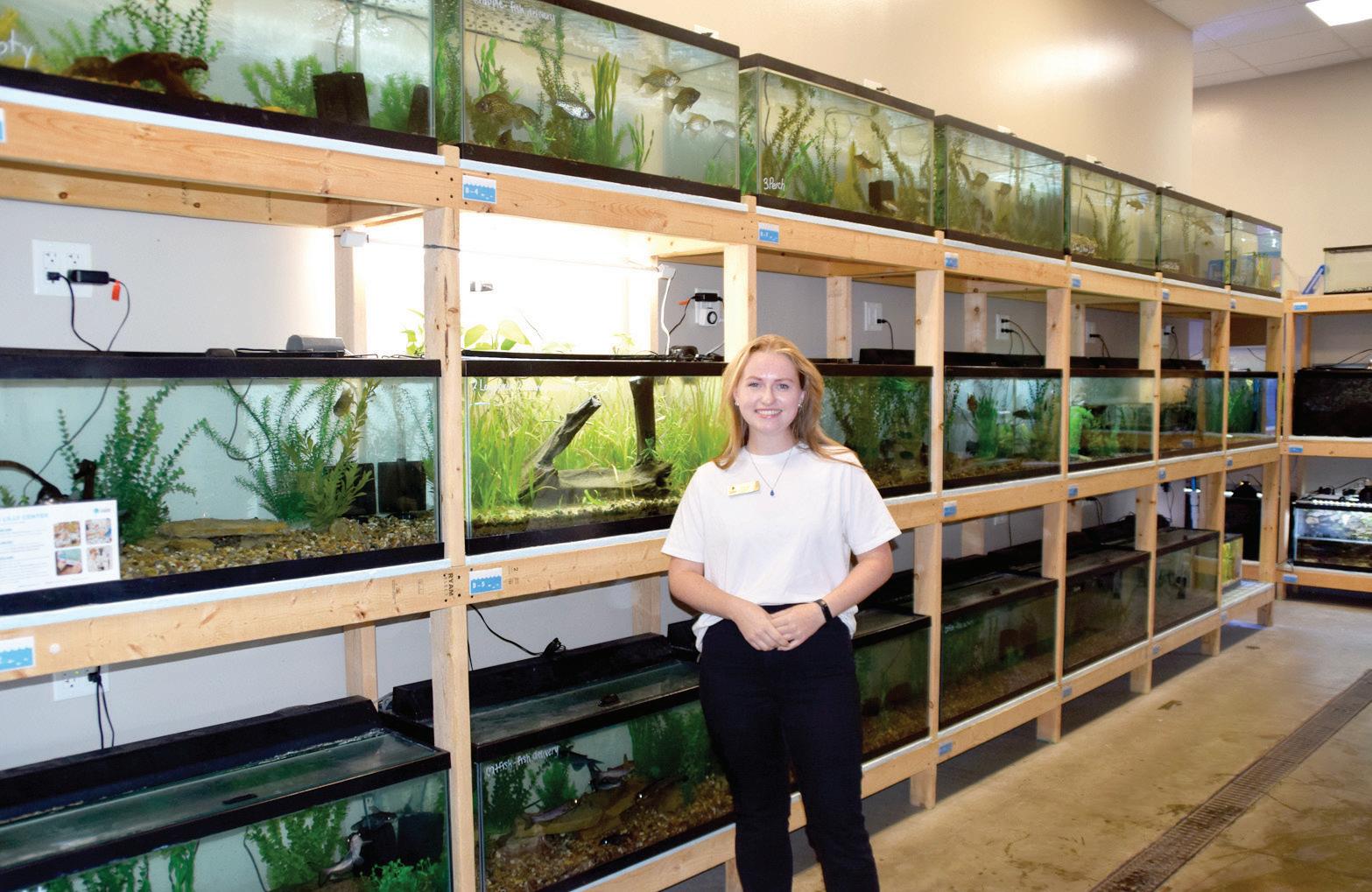
BRINGING THE LAKES TO LIBRARIES AND CLASSROOMS Emily Anderson, education coordinator for The Lilly Center for Lakes and Streams, shows off several, 40 gallon- aquariums that will soon be returned to school libraries and classrooms. The aquariums have fish and fauna found in lakes around Kosciusko County.
will be hard to tell until the end of summer whether algae was an issue on the 16 lakes the center looks at.
Algae gets more noticeable when the weather is warmer and the water more stagnant. Bosch explained algae levels tend to go up during the summer reaching a peak in July and August.
However, this year the area has had a drier spring, with April and May having half the precipitation than last year.
The lakes have also had cooler water temperatures, as much as 8 degrees cooler than last year. This means with less rainfall, less nutrients are flowing into the lakes; however, by the Fourth of July, the algae levels began to look more typical.
Bosch said there is still education and implementation work still to be done regarding nutrients flowing into the lake. The culprit is too much phosphorus, which makes algae and weeds grow in the lakes.
In order to implement solutions, the Lilly Center for Lakes and Streams is working on where the nutrients are coming from, such as lakes and agricultural properties. Bosch explained the center is working on educating the public on the problem and how to put solutions into practice.
For example, lakefront owners are being encouraged to plant native species along
vent phosphorus from getting into the lake is to keep yard waste out of the lake and storm sewers.
Those with commercial property in the watershed, such as golf courses, can also implement these practices.
Bosch said he is seeing more interest in native plants being used in landscaping.
“You can have beautiful wildflowers,” he said.
Agriculture can use similar concepts when it comes to fertilizing fields. Agriculture has become much more technology based. By doing soil testing and using GPS, farmers can apply exactly the fertilizer the soil needs rather than adding too much.
Farmers are also turning to using cover crops in the late fall through the spring to hold soil and nutrients during a field’s dormant period.
“Then we don’t get the same amount of nutrients in the lakes,” Bosch said.
Cover crops also help maintain moisture and keep the soil from becoming compacted.
Bosch is seeing more of these practices being put in place, but there is still more work to be done.
Another concern this summer has been Escherichia coli levels, which shut down several public beaches this summer.
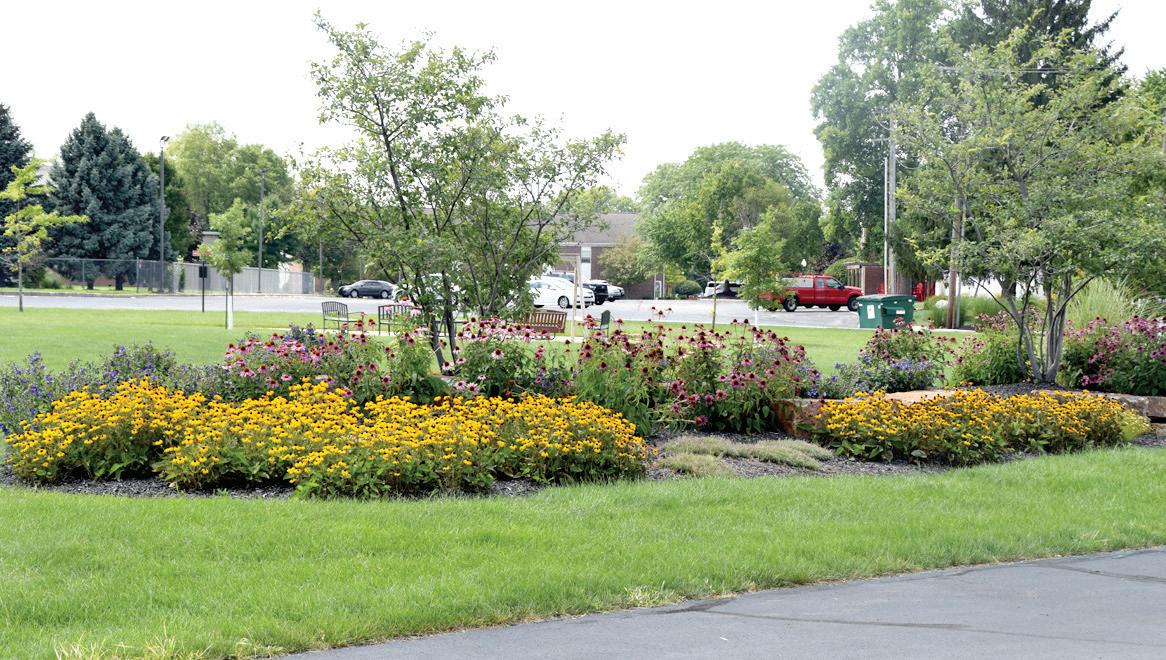
LANDSCAPING —
and
The Lilly Center for Lakes and Streams has a lab that is certified by the State Board of Health for E. coli testing.
Bosch explained processing a sample of E. coli can take some time, so a test one day may show the numbers are very high.
If you have warm stagnant water, E. coli can persist. But if there is wind, it can dis-
sipate E. coli while at the same time cooling the water, which E. coli doesn’t like. E. coli data is published on the center’s website along with an explanation as to what safe levels are.
“We work hard to make our research accessible,” Bosch said.
Continued on page 3
NATIVE
The building that is home to the Lilly Center for Lakes
Streams is surrounded by landscaping done in native plantings. The ideas is to highlight how beautiful native plants are.
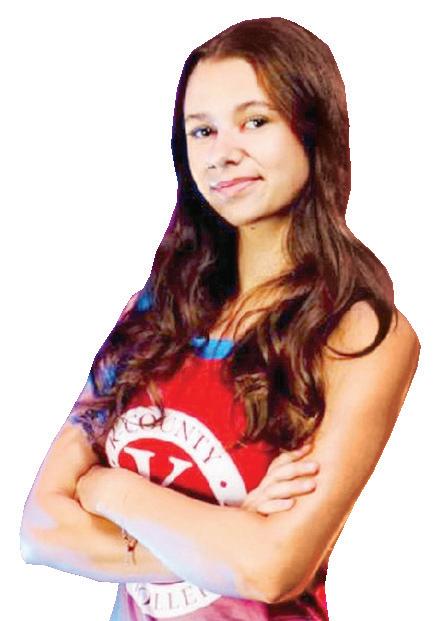
Catrina Newell has fond memories of roller derby days
By LAURIE LECHLITNER Staff Writer
“My dad, Brian Newell, taught me to skate at Eastlake Skating Center in Warsaw,” stated Catrina Newell, Silver Lake. “One of the coaches of K-County Junior Roller Derby spotted me and asked me to be on the team. I went to a couple practices, and I was hooked.”
That was 10 years ago. Newell has aged out of the junior league. But she’s still active in the mixers. “I would love to be on an adult team, but my work schedule gets in the way.”
A 2024 graduate, Newell was a cheerleader in her junior and senior years at Manchester High School. “I’ve always enjoyed being physically active.”
One of the things Newell enjoyed best about the roller derby is the lasting friendships she made. “We worked well together. Teamwork is especially important in the sport.” Now she keeps in shape by running and going to the gym periodically.
Newell is a CNA. She took her training at Heartland Career Center in Wabash. “I started out working at Warsaw Meadows. But now I am at Timbercrest in North Manchester. That’s a special place for me because I took my on-the-job training there.”
Sticking to a tight routine is
part of her job. “I start by getting the residents up for breakfast. I might do someone’s hair or help them get ready to meet their day. Sometimes we have activities during the day for the seniors. I make sure they are ready for lunch and supper.”
One of the things Newell enjoys is being there for the seniors. “Some of our residents look on those of us who are staff as family members. I want to make sure I’m available for them. Senior citizens need one on one time. They need to know someone is there for the long haul. I love hearing them tell me I’m doing a great job.”
Getting so close to the seniors can have an emotional toll, though. “My biggest challenge is when they start going downhill. I get so attached to them. But I remind myself that I have other residents to take care of, too. I need to be strong.”
Newell’s mom, Teresa Enyeart, was a CNA for a couple years. “I guess caring for others is a family trait.”
Reminiscing with residents is also very interesting. “We have people who have made their mark in the world. Some of the residents I’ve served are teachers and one was a lawyer. I like to hear their stories.”
Eventually, Newell wants to take some more training to be-
come a CNA medical assistant. “I might want to work in a hospital sometime. This way I can dispense meds and give shots.”
The Newell family enjoys camping together. “I have one older sister, Ashley Woodward. We grew up camping as a family.”
She also spends time with her boyfriend Braxton Lechlitner. “He graduated this year, and we attended his prom. He was a wrestler at Northridge and I loved attending his meets.”
But before she looks at marriage with any young man, she wants to have the down payment for a house. “It’s important to look ahead.”
Newell encourages young people to try roller derby. “However, I want to warn them that it’s hard work. I’ve been knocked over and hit the floor. But you gotta get up and keep going.”
TEAMWORK — Catrina Newell has fond memories of her days on the K-County Junior Roller Derby team. She’s made lifelong friends and has learned that teamwork is everything. Photo provided by Catrina Newell.
Shown
Five Lakes Coffee hosts ribbon cutting at Syracuse franchise
By LAUREN ZEUGNER Staff Writer
Five Lakes Coffee, 404 S. Huntington St., Syracuse, was crowded Thursday morning, July 31, as family and staff of gathered for a ribbon cutting. The Syracuse location is only the second franchise-owned location for Five Lakes Coffee, which was founded in Sturgis, Mich., in 2002.
Allen and Katie Gross along
Research
with Russ and Allyse Yoder, who own a Five Lakes Coffee franchise in Shipshewana, teamed up to open the Syracuse location
July 4.
The store’s remodel was managed by Landmark Builders, Shipshewana.
Five Lakes Coffee offers a wide variety of coffee-based drinks along with different teas, smoothies and refreshers such as the yuzu blue lemonade as well as
Continued from page 1 ing and inspire a stewardship ethic,” Bosch said. “I think our programs do a really good job of that.”
The center is also working to educate the younger generation in what it can do to keep area lakes healthy. Through the Lakes and Libraries and Lakes and Classroom programs, area school libraries and classrooms receive a 40- gallon aquarium with native fish and fauna in it. Educators from the center then come in to teach students about the lakes in their community.
“What’s amazing about this is students are encouraged to read and learn about these organisms. It also gives the library some sense and focus,” Bosch said.
The programs are based on business and organization sponsorships. Those interested in being involved should contact Judy Fisher at (574) 372-5280.
The center also has a virtual aquarium, which has proven to be a hit with students.
The students can color a fish and the virtual aquarium will take a photo of the drawing and then “put” the fish into the lake, showing where at what water level it lives at.
“We love doing things that are engaging, encourage critical think-
The center offers programming for those pre-kindergarten through post college.
“They grow up to be water-literate citizens. We’re inspiring a better future,” said Bosch.
cinnamon rolls, muffins, scones, cookies, bagels and breakfast bagel sandwiches.
The store is open from 6 a.m. to 7 p.m. Monday through Friday; 7 a.m. to 7 p.m. Saturday; and 8 a.m. to 3 p.m. Sunday
The Syracuse store has about 20 employees and the coffee is roasted on site.
Gross said he was excited to be a part of the Syracuse community.
“To have so many people coming for the first time because they are visiting the area,” Gross said.
Gross added he’s excited about “providing an opportunity for our staff to grow into becoming great at hospitality and intentional in their customer service by making someone’s day with Five Lakes Coffee.”
Five Lakes Coffee has locations in Kalamazoo, Mich.; Sturgis, Mich.; Shipshewana; Angola; Kendallville; Auburn; Fort Wayne;
Columbia City; and Syracuse. Gross said the Syracuse store, is the farthest franchise-owned store in the Five Lakes Chain.
Future plans for Five Lakes Coffee is to open locations in
Elkhart and Middlebury by the end of 2026.
Gross and his family live in Constantine, Mich., which is about a 40-minute commute to Syracuse.
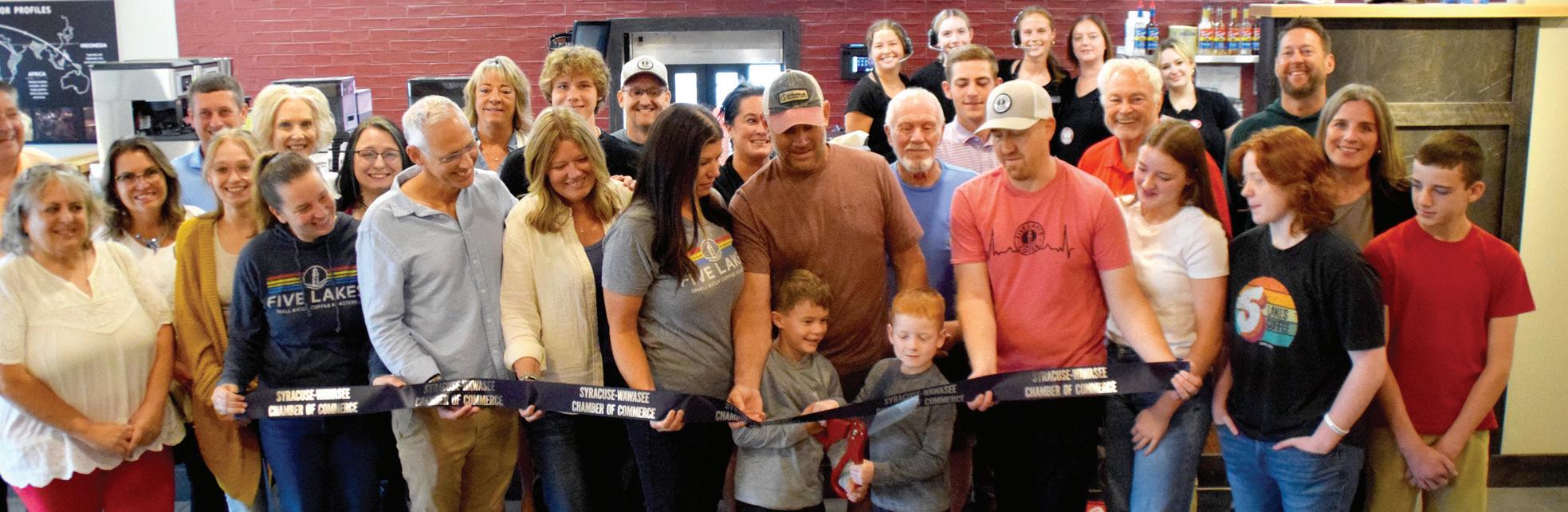
FAMILY AFFAIR — Five Lakes Coffee hosted a ribbon-cutting ceremony Thursday morning, July 31. The Michigan-based coffee shop chain opened its second franchise in Syracuse July 4.
in the front from left are Kaeli Gilmore, shift leader, Sturgis, Mich. store; Pam Antes, district manager for Five Lakes Coffee; Abigayle Blosser, manager at Sturgis store;
Paul and Jennifer Smith, president of Five Lakes Coffee; Allyse and Russ Yoder, franchise owners of the Shipshewana and Syracuse Five Lakes store; Baron Yoder and Zane Gross; and Allen, Lainey, Gabby, Katie and Jake Gross, partners and owners of Syracuse Five Lakes store franchise. Photo by Lauren Zeugner.
Annual AWL Birthday Bash fun for everyone
Text and Photos
EDITORIAL OFFICES, CIRCULATION, DISPLAY AND CLASSIFIED ADVERTISING
WARSAW OFFICE MILFORD OFFICE
SYRACUSE OFFICE
114 West Market St. 206 S. Main St. 102 East Main St. Warsaw, IN 46580 P.O. Box 188, Milford, IN 46542 Syracuse, IN 46567 Phone (574) 269-2932 Phone (574) 658-4111 Phone (574) 457-3666 Fax 888-371-2934 1-800-733-4111 Fax 800-886-3796
‘the PAPER’ reserves the right to refuse for publication any advertising that is considered offensive, misleading or detrimental to the public, the newspaper or another advertiser and to edit advertising at its discretion.
Publisher, Ron Baumgartner rbaumgartner@the-papers.com
Business Manager, Annette Weaver aweaver@the-papers.com
Editor-In-Chief, Deb Patterson dpatterson@the-papers.com
Editor, Phoebe Muthart pmuthart@the-papers.com
Warsaw Office Manager, Mary Beth Spalding warsaw@the-papers.com
Director Of Marketing, Kristin DeVittorio kdevittorio@the-papers.com
Advertising Representative, Carl Lauster clauster@the-papers.com
Advertising Representative, Susan Stump sstump@the-papers.com
Circulation Manager, Jerry Long jlong@the-papers.com
Commercial Printing Sales Representative
Rodger Salinas rsalinas@the-papers.com
Commercial Printing Customer Service
Katie Hurley khurley@the-papers.com
Rich Krygowski rkrygowski@the-papers.com
By DEB PATTERSON Editor-In-Chief
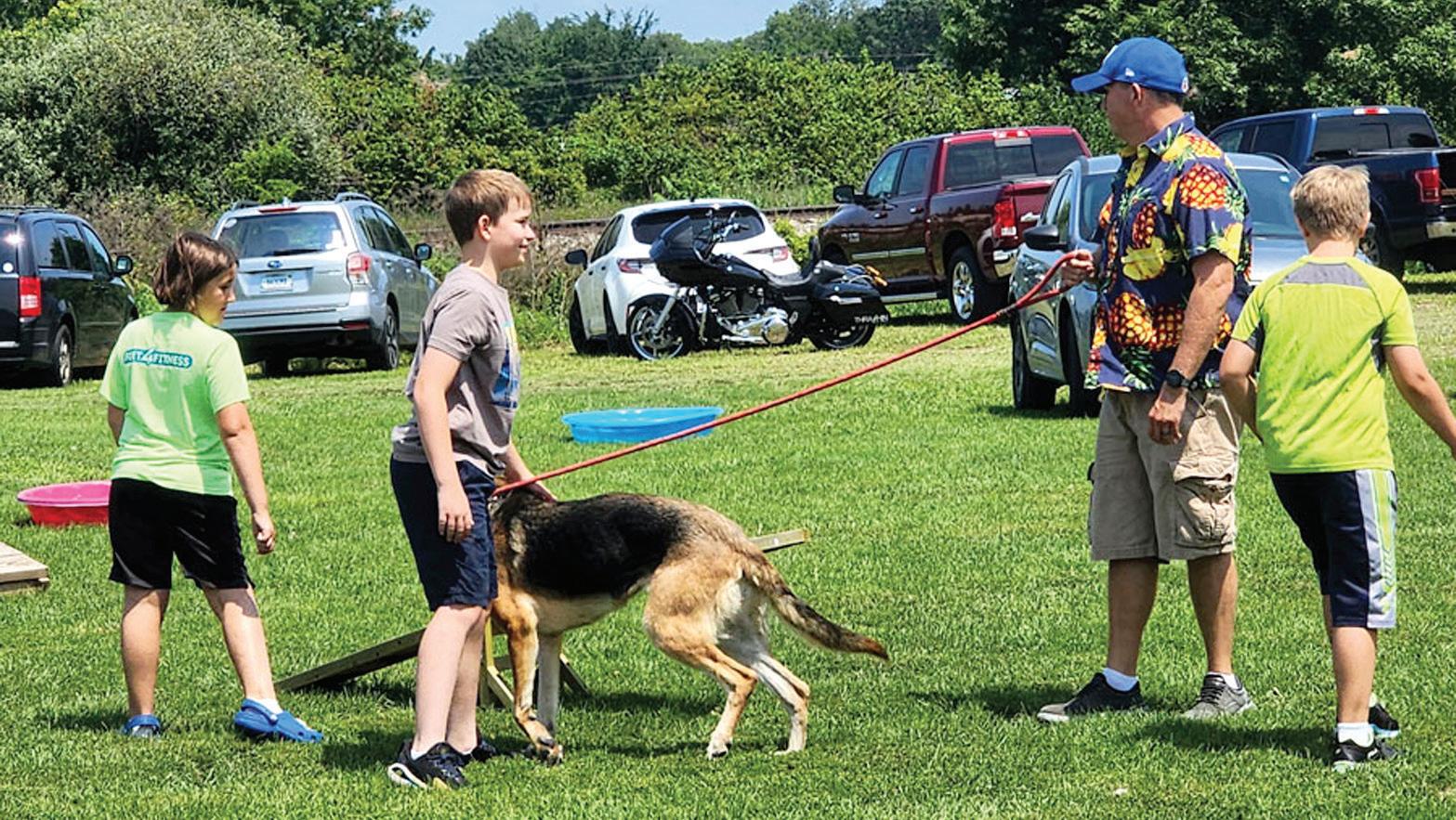
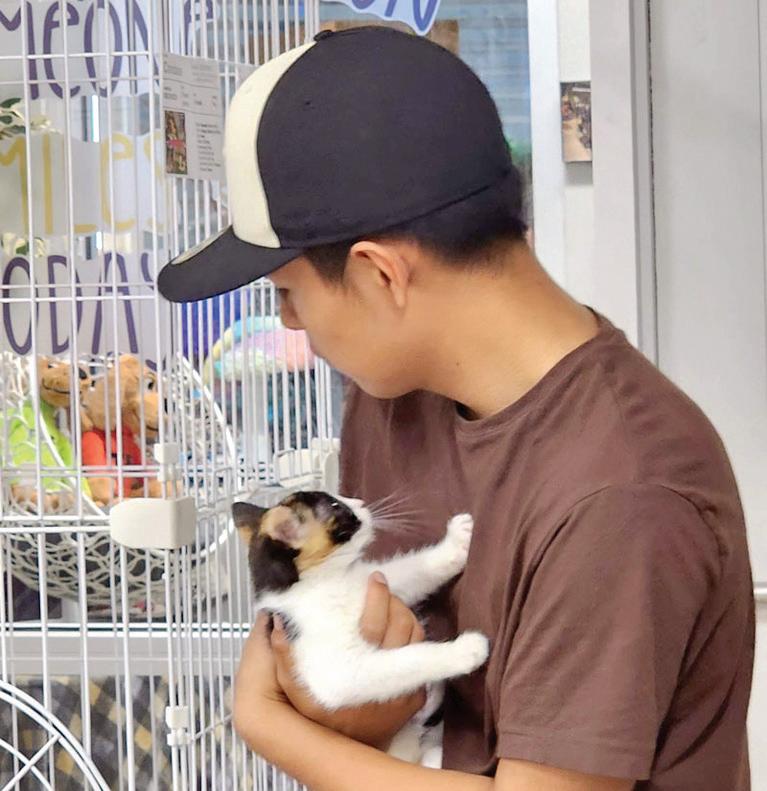
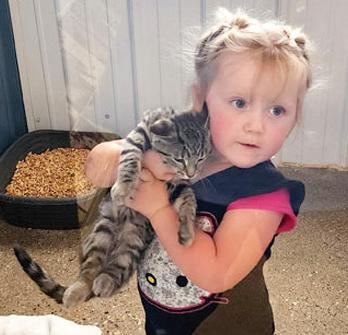
Families came out in force to the Animal Welfare League’s third annual Birthday Bash Saturday, Aug. 2. The event was held in honor of “Dogust,” the universal birthday for shelter and rescue dogs, but the felines were celebrated and remembered as well.
Guests not only enjoyed the birthday cake, ice cream and face painting, they also enjoyed playing with the kittens, cats and dogs. But that wasn’t all. There were local vendors displaying items for animals and adults, various craft items, a bake sale,
a food truck and a bounce house.
A number of the shelter animals found their forever homes that day.
The evening before was the an-
nual AWL fundraiser dinner and auction at Noa, Noa. John Lantz, AWL board president, reported both events turned out well or the organization.
Learn how a Mediterranean diet could boost your health
Karen Richey, health and human sciences educator with Purdue Extension Marshall County, will present “Mediterranean Diet Session 3: Eat More Vegetables and Fruits” Wednesday, Aug. 27.
The free educational program
is open to the public and will begin at noon in the Home and Family Arts Building at the Kosciusko County Fairgrounds, 1400 E. Smith St., Warsaw.
Eating more fruits and vegetables is a key component of nearly all evidence-based dietary pat-
Bode Grimes awarded degree from Miami University
Bode Grimes, Syracuse, was among nearly 4,800 students from Miami University who received degrees during the spring com-
mencement May 17.
Grimes graduated with a Bachelor of Science in engineering, majoring in mechanical engineering.
terns and is widely supported by nutrition experts and medical professionals alike. Research continues to show that diets rich in fruits and vegetables can lead to improved health outcomes and help prevent chronic disease. This session will explore simple, practical ways to incorporate more produce into daily meals.
If you are in need of accommodations to attend the program, need an interpreter or translator, or have special dietary needs, contact Richey at (574) 935-8545 or krichey@purdue. edu by Wednesday, Aug. 20.
Warsaw youth baseball player needs your vote
BY NATHAN PACE Staff Writer
Owen Fawley is a Warsaw youth baseball player with dreams. Fawley was entered into a national contest to be “Youth Athlete of the Year.”
His father, Jared Fawley, helps coach his son at travel team playing out of Boggs Park.
“Everybody gets one free vote a day. You can buy votes too,” Jared Fawley said. “Everyday, the community can get on there every 24 hours and they can vote one time free.”
The contest will have multiple rounds before it ends in the first week of October. Currently, Owen Fawley is in the first round and is aiming to move on to the round of the top 20.
Owen Fawley plays recreational baseball and also in the Attack Travel Baseball League, based out of Boggs
Park. He is currently a third grader at Lincoln Elementary School.
Jared Fawley said he was sent an email about the contest and signed his son up to get him qualified.
Owen Fawley has received the second most votes in the contest for the first round.
“Everybody in the league has been supportive. The community has been supportive. They have treated him great,” Jared Fawley said.
The winner of the Youth Athlete of the Year will receive $25,000 and be in an advertisement for “Sports Illustrated.”
The winner will also appear in an advertisement for 3BRAND, a company started by National Football League quarterback, Russell Wilson.
People can vote for Owen at athleteoftheyear.org/2025/owen-9d8c.
Warsaw class of 1970 to hold 55th reunion
Warsaw High School Class of 1970 will celebrate its 55th class reunion Oct. 10-11.
Events take place from 3-9 p.m. Friday, Oct. 10, at the Leesburg Lions Club building, 114 W. School St., Leesburg. The evening will include a social time with chili, Jambalaya and snacks.
The group will gather again from 6-9 p.m. Saturday, Oct. 11, at The Downtown, 205 W. Center St., Warsaw. A cocktail hour with a cash bar and appetizers will begin at 6 p.m. followed by dinner at 7 p.m.
Registration is now open for the event, with registration for Saturday evening being required in advance as no payments will be accepted that evening. Registration is due by Saturday, Sept. 27.
To register, send your name, address, email, phone number and the number attending. The cost is $40 per person or $80 per customers.
Information and a check, payable to Karen Snyder Class of 1970 Warsaw, should be mailed to Karen Snyder, 6935 Thamesford Drive, Fort Wayne, IN 46835 or Venmo payments can be made
Nappanee
Legion hosting steak dinner
The Nappanee American Legion is hosting a steak dinner from 5-7 p.m. Friday, Aug. 15, until sold out.
The dinner costs $20 per person and includes a ribeye steak, mushrooms, choice of potato, salad and dessert. It is open to the public.
The Legion is located at 201 W. Lincoln St., Nappanee.
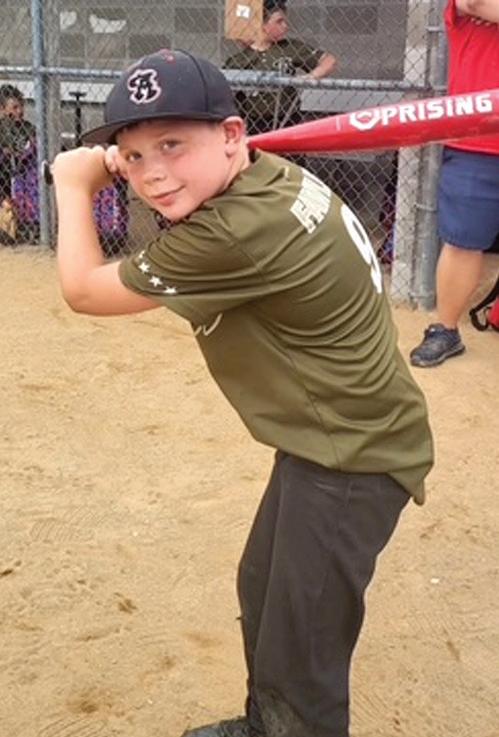
IN THE MIX — Owen Fawley, seen at Boggs Park in Warsaw, is in the running for “Youth Athlete of the Year.” Photo provided by Jared Fawley.
M ilestones
Bonnie (Hurd) Harman will be celebrating her 85th birthday Sunday, Aug. 24, and a card shower is being held in her honor.
She was born Aug. 24, 1940, in Lancer, Ky., to Edgar and Fanny (England) Hurd. She has lived most of her life in the Warsaw area.
She graduated from Atwood High School in 1959, with a class of 28, which was the largest graduating class from Atwood High School.
She worked at First National Bank for 10 years as a teller and later at Little Crow Foods for 12 years as a billing clerk.
She was married to Ted Harman, son of Floyd and Hazel (Creighton) Harman, for 55 years. He passed away April 5, 2017.
Her hobbies are Christian ra-
BONNIE HARMAN
dio and music, word-find puzzles, shopping and cooking for family and friends. She is an active member of Harvest Community Church, Pierceton.
Birthday cards may be sent to Bonnie Harman, 1425 N. CR 525W, Warsaw, IN 46580, her residence of 62 years.
Fire department holding bingo fundraiser
to @Karen-Snyder-69. Be sure to include your name and number of people being registered in the notes/payment description.
Milford Volunteer Fire Department will hold a bingo fundraiser night Saturday, Aug. 23. Doors open at 5 p.m. with bingo starting at 6:30 p.m. The event will be hosted by the Syracuse Knights of Columbus, license no. 148267, at 414 S. Sycamore St., Syracuse. A minimum $22 donation gets folks in the door to play.
Bring canned goods or old shoes to be eligible for door prizes.
It’s recommended to arrive early as seats are first-come,
first served. Players must be 18 years or older.
For more information, call the Milford Volunteer Fire Department at (574) 658-4141.
Amy Sink named one of Indiana’s most influential leaders
Interra Credit Union announced its chief executive officer, Amy Sink, has been named one of Indiana’s most influential and impactful business and community leaders by IBJ Media through its Indiana 250 award. This prestigious list recognizes the most influential leaders across the state who are making a profound impact on Indiana’s economy and advancing the well-being of Hoosier communities.
“It’s an incredible honor to be included among such a diverse and inspiring group of Indiana leaders,” said Sink. “At Interra, we believe in the power of community and collaboration. I’m proud to share this recognition with our entire team and the members we serve.”
Since stepping into the role of CEO at Interra Credit Union in 2013, Sink has led the company through more than a decade of strong growth and strategic ex-
pansion. Under her leadership, Interra now serves nearly 90,000 members across 24 counties in northern Indiana, has accumulated over $1.9 billion in assets and lends approximately $700 million annually right back into its communities.
“Amy is a visionary leader whose work consistently reflects a balance of business and governmental acumen, plus genuine care for the people of Indiana,” said Tim Yoder, board chairman. “This recognition from IBJ Media is a testament to her impact both inside and outside of Interra.”
Beyond her leadership at Interra, Sink is deeply involved in statewide advocacy and collaboration. She serves as the 2025 chair of the Indiana Credit Union League Board and holds the position of treasurer on the Velera Board of Directors, contributing her expertise at both the state and national levels.
Sink’s journey is rooted in hu-
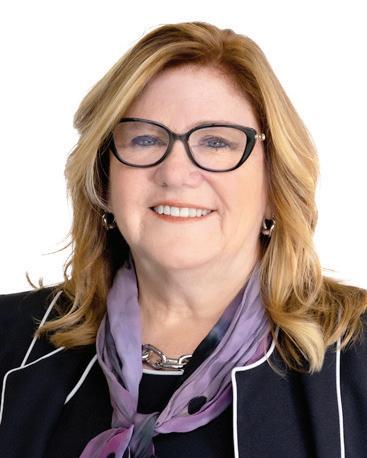
AMY SINK mility and hard work.
“My first job was at Arby’s at age 16,” she recalled. “My mom told me working there would keep me interested in furthering my education. She was right.” To-
day, that early lesson continues to shape her leadership philosophy — focused on growth, education and service.
When she’s not guiding the future of credit unions, Sink enjoys
life on the lake with her family, where she finds joy in cooking and relaxing by the water. She appreciates when her “granddog,” Bonnie, a 5-year-old mini goldendoodle, comes to visit.
Atwood church group visits Michigan attraction
Atwood Otterbein Church Sisterhood in Faith hosted its annual one-day getaway Wednesday, Aug. 6, with a bus trip to Grand Rapids, Mich.
Members of the congregation and their friends visited the 158acre Frederik Meijer Gardens and Sculpture Park and enjoyed lunch at the Balk Café under the glass ceiling by renowned artist,
Dale Chihuly.
Afterward, the tour headed to Boynton’s Landing, where the group relaxed on a sightseeing cruise on the Grand River aboard the Grand Lady paddle wheel. The tour was chartered by S&S Travel Inc., Kendallville. Jill Yeager, Bremen, again served as tour escort for the group’s second bus venture.
Kosciusko County Public Defender Agency hosting logo contest
The Kosciusko County Public Defender Agency has opened its doors in the Kosciusko County Justice Building. Due to the fact the agency is new, a logo contest has been launched. The contest is open to any current Kosciusko County high school student.
The goal is to have an agency logo created by a member of the community that represents Kosciusko County and the mission of its public defender agency. The mission of the agency is to provide experienced legal representation to indigent clients ensuring they have access to justice and protection of their rights. The agency defends their clients’ liberty, dignity and rights throughout the legal process.
The logo will be used on letterheads, business cards, signage on the agency office and other
miscellaneous items.
The contest will launched Monday, Aug. 11, with a submission deadline of Friday, Aug. 29. The winner will be chosen Thursday, Sept. 4, and announced Friday, Sept. 5.
The logo design must be no more than two colors (not including black and white), must include the words Kosciusko County Public Defender Agency and may be original art or computer-generated graphics.
Entries can be submitted via email to publicdefender@kosciusko.in.gov in an .svg format in RGB color mode with the artist’s full name, school and contact information, including current phone number. All work must be original.
All non-selected submissions will remain the property of the
creator. The winning submission becomes the intellectual property of the agency. Contestants may submit more than one entry.
available to bid on from hundreds of donors across northeast Indiana. At 7:30 p.m., the live auction begins, with 16 items and bundles. Winners will be announced before the end of the night, and items can be taken home that evening or will be delivered the following week. Finally, the evening ends with a fireworks display outdoors at 9:30 p.m.
World-renowned performance painter, David Garibaldi, is back again as the guest entertainer of the night, delivering a live performance. Creating three paintings live for the audience, he will then donate 100% of the proceeds to Big Brothers Big Sisters when his paintings are auctioned off. Individual tickets are $100 and corporate tables of 10 are $1,000. For tickets, sponsorships and other inquiries, contact Randi Bebout at (260) 203-3330 or randi. bebout@bbbsnei.org.
JACK BIRCH
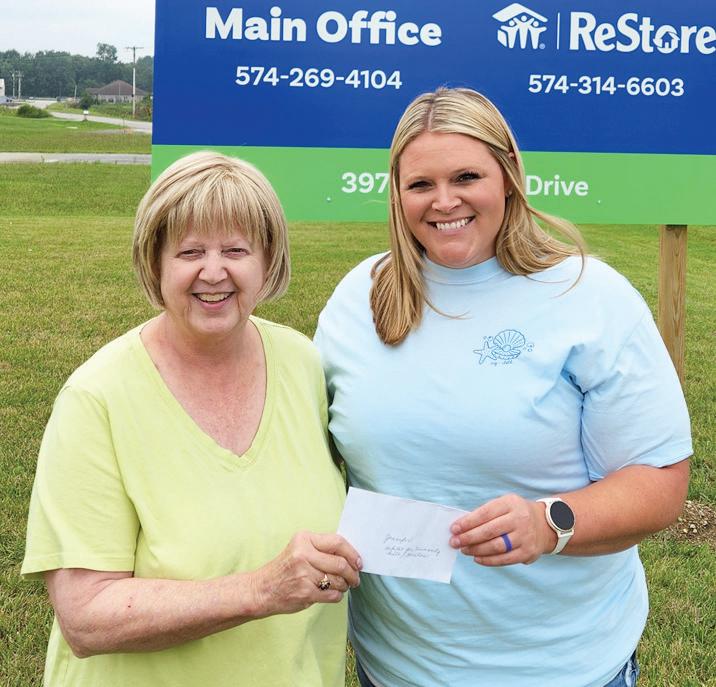
BUILDING TOGETHER Jennifer Simpson, left, a member of the Beta Zeta chapter of Delta Theta Tau sorority, recently presented a $750 donation for the Women’s Build to Betsy Grant, operations manager for Habitat for Humanity. Photo provided by Beta Zeta chapter of Delta Theta Tau sorority.
Sorority donates $750 for Habitat Women’s Build
Habitat for Humanity’s Women’s Build recently received a donation of $750 from the Beta Zeta chapter of Delta Theta Tau sorority.
The donation was made possible as a result of the sorority’s
spring geranium sale and fall ButterBraid sale fundraisers.
Sorority member, Jennifer Simpson, recently presented the donation to Betsy Grant, operations manager for Habitat for Humanity.
AHEPA donates $2,000 to support
Operation Read’s literacy programs
The local chapter and foundation of the American Hellenic Educational Progressive Association has donated a total of $2,000 to support Operation Read’s mission of advancing literacy in Kosciusko County and beyond.
AHEPA’s ongoing support will help provide books, tutoring, and critical literacy resources for children and adults in financial need.
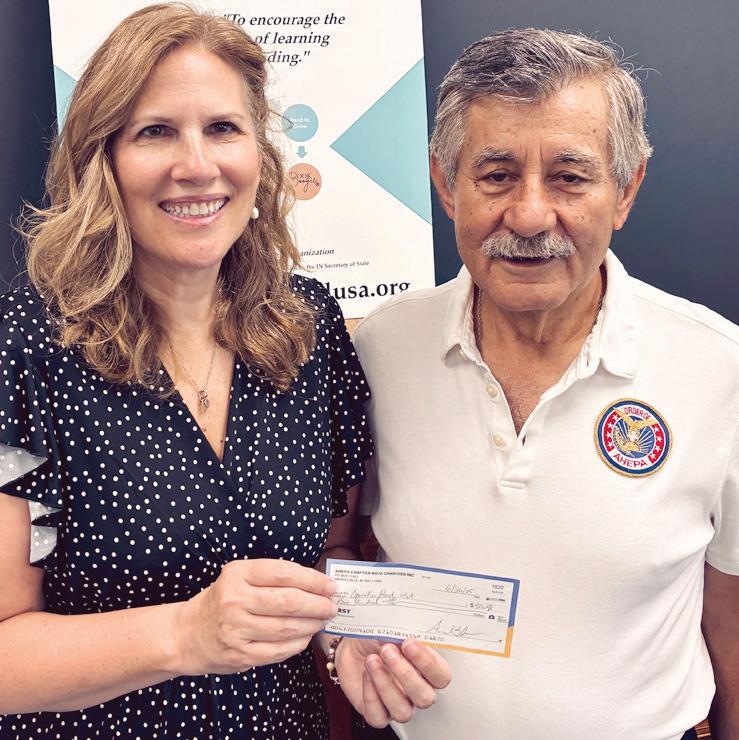
Operation Read Executive Director DeeAnna Muraski accepted the most recent gift from AHEPA member Panos Niarchos, thanking the organization for its commitment to education, philanthropy, and civic responsibility.
“We are deeply grateful to AHEPA for believing in the power of literacy to change lives,” said Muraski. “Their continued support helps us reach more families with the resources they need to read, grow, and succeed. Literacy is a critical and basic need.”
AHEPA, founded in 1922, promotes the ideals of education, philanthropy, civic responsibility, family, and individual excellence through community service and volunteerism.
Operation Read accomplishes
Director
Operation Read’s literacy
their mission through free book distribution, literacy-focused events, reading challenges, school partnerships, and family engagement programs that make reading fun, accessible, and meaningful. For more information on Operation Read, visit operationreadusa.org or email the director at deeanna@operationreadusa. org.
FOR KBOR’S CHILDREN’S CHARITIES
Annual KBOR car show Aug. 15
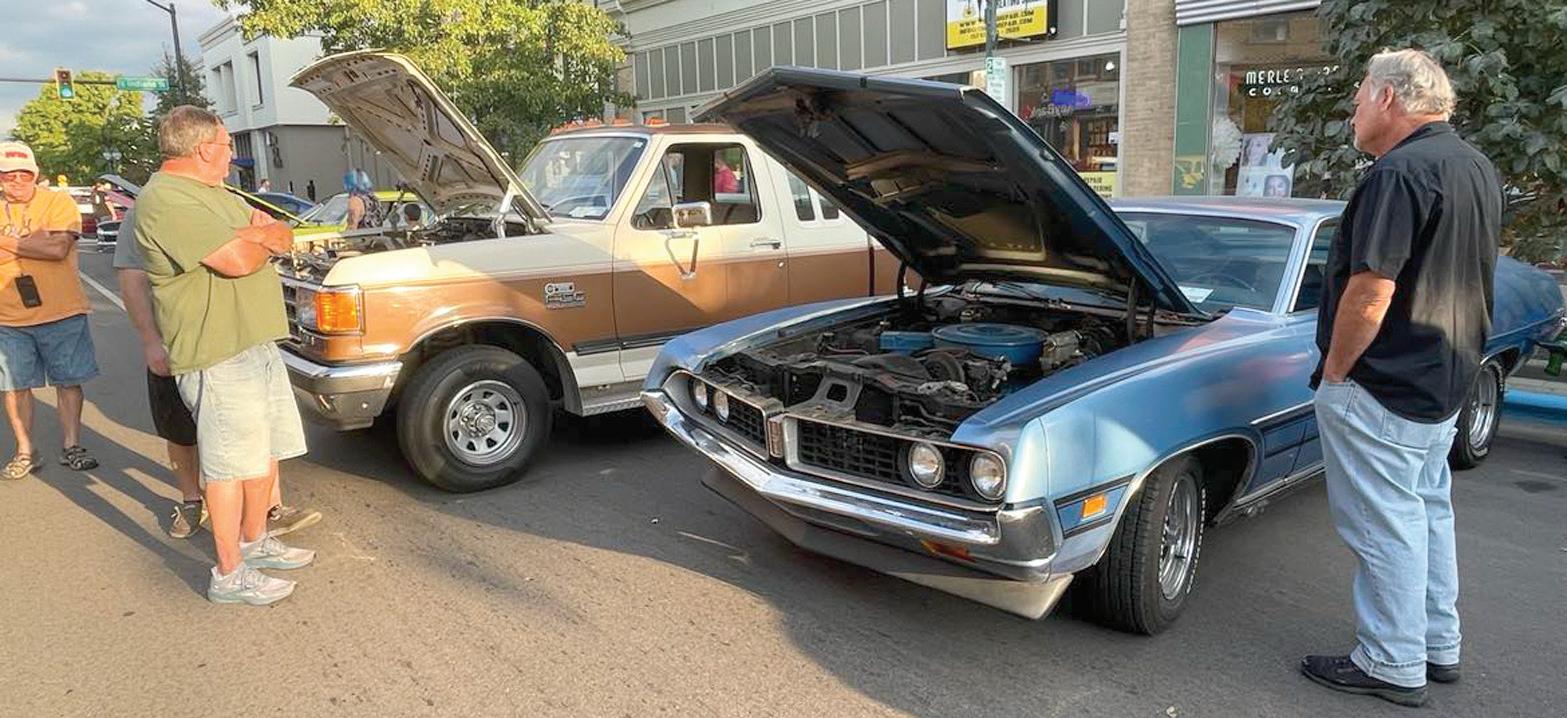
The fifth annual Kosciusko Board of Realtors Car Show is Friday, Aug. 15, in downtown Warsaw. It will be held from 5-8 p.m. at the corner of Indiana and Center streets.
This year it will be a cruise-in as part of Main Street Warsaw’s August Third Friday. Admire a stunning collection of classic and custom cars, enjoy food and live music, all while supporting a worthy cause.
This event is donation-based with 100% of proceeds benefiting children’s charities.
Vehicles may start lining up at 4:15 p.m. It’s free entry, with no registration required.
There are a number of factors, such as weather, which will encourage car buffs to bring out their cool rides for the event. All vehicles are welcome.
There will be a vote for the public, where $1 equals a vote. Prizes will be awarded for People’s Choice. The Kosciusko Chamber of Commerce and KBOR will award trophies.
Funds raised from the car show go to KBOR’s Children’s Charities, which in-
cludes back-to-school backpacks, an event through which KBOR partners with Combined Community Services to provide local children with backpacks loaded with school supplies. KBOR has provided filled backpacks for as many as 38 Kosciusko County students.
Boots for Scholars is a program where KBOR partners with Big Brothers Big Sisters of Northeast Indiana to provide local children with boots and shoes for the winter months. The Big Brothers Big Sisters’ mission falls right in line with KBOR’s belief that children and families are made stronger when the community works together as partners to assist and support families in need. Funds from the car show also help fund six, $1,000 scholarships.
Those attending the car show and others, who would like to make a donation or be a sponsor, are encouraged to call (574) 2696706.
The rain date is Friday, Sept. 19.
CAR SHOW — The fifth annual KBOR car show is Friday, Aug. 15, in down
DONATION TO OPERATION READ
Operation Read Executive
DeeAnna Muraski, left, accepts a donation from AHEPA member, Panos Niarchos, right. To date, AHEPA has donated $2,000 to support
programs. Photo provided by Operation Read.
C O unty r ep O rt
Court News
Small Claims
The following small claims have been awarded in Kosciusko Superior Court III, Judge Chad Miner presiding: Warsaw Health System LLC, d/b/a Kosciusko Community Hospital v. Tammy Grant, $3,133.62; v. Michael Loper, $2,391.83; v. Michael Yoder, $3,061.06
Hunsche CPA Group Inc. v. Cori C. Hoffhien, Eric N. Hoffhien, $3,072.32
Snow & Sauerteig LLP v. Kiley Martin, $2,031.37
Client Services KL v. Jacob S. Mikel, $897.76
Civil Collections
The following civil collections have been awarded in Kosciusko Superior Court IV, Judge Christopher D. Kehler presiding:
Credit Acceptance Corp. v. Jeff G. Bartman, $16,964.27
Bank of America NA v. Tracey L. Bridgewater, $4,700.53; v. Austin J. Murray, $16,162.14
Goshen Hospital Association Inc. v. Keegan Burris, $2,288
Finwise Bank v. Racheal Busz, $2,540.05; v. Thomas Harris, $2,564.87
Channel Partners Capital LLC v. Darwin Call, Ranger Materials Corp., $130,783.35
Midland Credit Management Inc.
O B ituary
Rae Kausal
Rae Kausal, 90, Elkhart, died Saturday, Aug. 2, 2025, at Hubbard Hill-Living Wisdom Community. Arrangements are currently pending at Titus Funeral Home of Warsaw.
v. Chasity R. Carpenter, $2,730.55; v. Jeffery Darnell, $1,309.67; v. Anthony Helman, $1,408.21; v. Emily Nusbaum, $2,434.51; v. Rob Spencer, $1,933.18 LVNV Funding LLC v. Alecia Ceballos, $1,001.84; v. Bonnie L. Horton, $949.02; v. Matthew Kreft, $779.13; v. Terry Robertson, $1,857.88; v. Michelle Tennant, a/k/a Michelle Hand, $832.95 Portfolio Recovery Associates LLC v. John Colgrove, $2,537.08; v. Dustin A. Coquillard, $1,875.21; v. Zackery Courson, $1,995.10; v. Daniel Jorgensen, $1,909.52
SAC Finance Inc. v. Kyler J. Francis, $14,650.66; v. Dustin R. Heileman, Elma K. Heileman, $20,444.97; v. Travis R. Richardson, $10,364.54
Credit Corp. Solutions Inc. v. Jason Gibbs, $1,179.73; v. Hugo Diaz Martinez, $2,233.50
Citibank NA v. Michael M. Hay, $12,086.65
CommunityWide Federal Credit Union v. Jacob D. Jensen, $15,326.49; v. Heather Menchaca, $38,677.83; v. Monaye L. Southern, $16,175.16
Synchrony Bank v. Bruce Jones, $7,035.10; v. Carol Lowe, a/k/a Carol Lynn Lowe, $4,646.04
Southwest Allen County Fire Protection v. Alexandria E. Lampton, $928.34
Jefferson Capital Systems LLC v. Scott Landis, $694.92
Capital One NA v. Hope Lehman, $8,976.62; v. Jay Vader, $12,040.45; v. Sarah Wadkins, $3,424.51; v. Roxanne Wildman, $12,425.61
CKS Prime Investments LLC v. Richard S. Martin, $1,024.41
Westlake Services LLC, d/b/a
Westlake Financial Services v. Aubrey Sexton, a/k/a Aubrey Naomi Sexton, $8,105.95; v. Rebecca Smith, $12,535.93
American Express National Bank v. Mary Lou Shepherd, $5,471.89; v.
Kosciusko's ONLY on-site Cremation center
Cynthia S. Shoemaker, a/k/a Cynthia Shoemaker, $1,940.51
Goshen Hospital Association Inc. v. Ollievia Sigsbee, $4,969.39
Showbarker LLC v. Robert Tate, $2,322.61
Turkey Creek Fire Territory v. Lisa Withers, $1,140 Evictions
The following evictions have been awarded in Kosciusko Superior Court III, Judge Chad Miner presiding: Little Crow Lofts LLC v. Jasmine Fitzpatrick, $4,025.42
Orchard Ridge Apartments v. Shawn O’Bryant, $3,101.04; v. Carol Vela, $3,254.90
Superior Court III
The following fines for infractions have been assessed in Kosciusko Superior Court III, Judge Chad Miner presiding:
Speeding — David G. Rodriguez, Warsaw, $164.50; Anthony J. Fletcher, Albion, $164.50; Jessica R. Brito, Milford, $164.50; David J. Stump, Leesburg, $164.50; Victoria Carlos, Warsaw, $164.50; Marc G. Vil, Warsaw, $164.50
Failure to register — Cory S. Klug, Leesburg, $164.50
Failure of occupant to use a safety belt — Michael A. Mast, Nappanee, $25; Adam S. Stromatt, Pierceton, $25
No valid driver’s license — Kaydance D. Montileaux, Milford, $164.50; George M. Vires, Claypool, $164.50; Antony D. Santos, Elkhart, $164.50
Speeding, failure to register — Jakaar D. Daniels, Warsaw, $189.50
Fishing without a license — Sarah L. Davis, Etna Green, $164
Failure to dim headlights — Pamela S. Schuler, North Webster, $164.50
Marriage Licenses
The following couples have applied for marriage licenses in the
Brandon Earl Schwartz
office of Kosciusko County Clerk of the Court Melissa Boggs: Wilson-Nusbaum
Jacob Riley Wilson, 24, Warsaw, and Lydia Ryan Nusbaum, 22, Warsaw Johnson-Watson
Sarah Lousie Johnson, 38, Warsaw, and Roberto Nathian Watson, 35, Warsaw Rodriguez-Mejia
Quintin Mitchell Whitaker, 19, Warsaw, and Aloia Rae Davis, 19, White Lake Township, Mich. Smith-Grubbs
Audrey Lee Smith, 24, Warsaw, and Tristin Lee Grubbs, 23, Warsaw Lliorca-Townsend
Valor Athanasius Lliorca, 20, Wabash, and Ivy Grace Townsend, 19, Pierceton Sudlow-Contreras
Carson Sudlow, 20, Warsaw, and Naomi Contreras, 21, Warsaw
Zink-Cabrera–Stenstrom
Michelle Elizabeth Zink-Cabrera, 43, Warsaw, and Andrew August Stenstrom, 40, Etna Green Schackmann-Osburn
Christopher A. Schackmann, 49, Warsaw, and Lisa Osburn, 59, Warsaw Shirk-Matthews
Jamelyn Shirk, 27, Warsaw, and Derrick Matthews, 23, Warsaw Bambenek-Wallen
Ariel R. Bambenek, 34, Warsaw, and Shane Wallen, 39, Warsaw
Eash-Nuchpaniad
Timothy Lee Eash, 59, Syracuse, and Nusara Lee Nuchpaniad, 42, Syracuse
Macias-Nino–Craft
Jose Consepcion Macias-Nino, 20, Pierceton, and Mikayla Oriel Craft, 18, Warsaw
Montague-Long
Tyson James Montague, 34, Warsaw, and Amanda Lee Long, 43, Warsaw
Marriage Dissolutions
The following couples have filed for a marriage dissolution in Kosciusko Superior Courts I or IV: Chaffins — Christa Chaffins, Warsaw, and Druid Chaffins, Warsaw. They were married June 2, 2022, and separated May 30, 2025. No minor child(ren).
Fannin — Alyssa Fannin, Claypool, and Jonathon Fannin, Claypool. They were married Sept. 4, 2021, and separated Aug. 1, 2025. One minor child.
Collins — Joseph Collins, Pierceton, and Abigail Collins, Pierceton. They were married June 12, 2010, and separated Jan. 1, 2025. Two minor children.
Gray — Emily Ann Gray, Warsaw, and Justin Tyler Gray, Warsaw. They were married Oct. 5, 2019, and separated Aug. 5, 2025. One minor child.
Herendeen — Ashlynn Herendeen, Warsaw, and Brady Herendeen, Warsaw. They were married July 22, 2017, and separated July 22, 2025. Four minor children.
Harman — Lisa F. Harman, Claypool, and Ron S. Harman, Claypool. They were married Aug. 5, 1995, and separated July 28, 2025. No minor child(ren).
Collins — Charles Collins, Claypool, and Victoria Collins, Pierceton. They were married March 18, 2008, and separated April 1, 2025. No minor child(ren).
At Titus Funeral Home & Cremation Services, our caring and knowledgeable staff is here to guide you in making the best choices for your family - decisions that honor your loved one while remaining in your budget.
Choosing Titus Funeral Home's Cremation Center for your loved ones cremation is ideal for many families. We own and operate our own crematory with licensed and certified staff.
At Titus Funeral Home & Cremation Services, our caring and knowledgeable staff is here to guide you in making the best choices for your family - decisions that honor your loved one while remaining in your budget.
Justin and Lorraine (Bontrager) Schwartz, Nappanee, are the parents of a son, Brandon Earl, born at 1:37 a.m. July 31, 2025, at Blessed Beginnings Care Center, Nappanee. He weighed 8 pounds and was 19 3/4 inches long.
Brandon joins two siblings: Nicole and Alivia.
Nolan Jacob Miller
Brian and Savannah Miller, Nappanee, are the parents of a son, Nolan Jacob, born at 3:14 p.m. Aug. 2, 2025, at Blessed Beginnings Care Center, Nappanee. He weighed 9 pounds, 14 ounces, and was 21 1/2 inches long.
weighed 6 pounds, 3 ounces, and was 18 1/2 inches long.
Maternal grandparents are Steve and Penny Thomas, Warsaw. Paternal grandparents are Jeff and Angie Goralczyk, Syracuse.
Marcella joins three siblings: Alison Anglin, Benjamin Anglin and Jasper Goralczyk.
Carter Rowan Thomas Weaver
Sidney and Michael Weaver, Syracuse, are the parents of a son, Carter Rowan Thomas, born at 8:53 a.m. Aug. 4, 2025, at Goshen Hospital. He weighed 8 pounds, 11.5 ounces, and was 21 inches long.
Eden Joy Miller
7 pounds, 2 ounces, and was 19 1/2 inches long.
Maternal grandmother is Clara Schwartz, Etna Green. Paternal grandparents are Lavern and Alma Miller, Hillsboro, Wis.
Felicity Saige Martin
Matthew and Emily (Martin) Martin, Goshen, are the parents of a daughter, Felicity Saige, born at 7:51 a.m. Aug. 5, 2025, at Blessed Beginnings Care Center, Nappanee. She weighed 6 pounds, 10 ounces, and was 19 1/2 inches long.
Benson C. Hershberger
574-267-3104
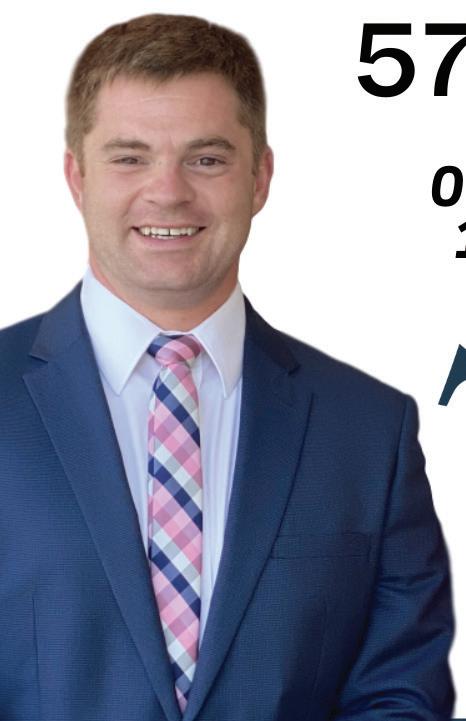
Cory Benz Owner & Funeral Director 100% Local Ownership
Choosing Titus Funeral Home’s Cremation Center for your loved ones cremation is ideal for many families. We own and operate our own crematory with licensed and certified staff.
Marcella MaLaina Goralczyk
Nick and Carrie Goralczyk, Warsaw, are the parents of a daughter, Marcella MaLaina, born Aug. 4, 2025, at Lutheran Kosciusko Hospital. She
Joe and Elizabeth (Schwartz) Miller, Nappanee, are the parents of a daughter, Eden Joy, born at 8:16 p.m. Aug. 4, 2025, at Blessed Beginnings Care Center, Nappanee. She weighed
Earl and Kaylene Hershberger are the parents of a son, Benson C. Hershberger, born at 4:26 p.m. July 30, 2025, at Blessed Beginnings Care Center, Nappanee. He weighed 7 pounds, 6 ounces, and was 19 and 3/4 inches long.
Text and Photos
By DEB PATTERSON
Editor-In-Chief
Clear skies, temperatures in the mid-70s and a light breeze made it a perfect day for Pierceton Day.
South First Street, or SR 13, was lined with chairs several hours before the parade with residents and out-of-town guests filling up those seats and more arriving as the 4 p.m. parade time drew nearer. Many opted to sit in the shade along the street, but just as many enjoyed the sunshine. Kids with plastic bags, buckets and other means to hold candy, anxiously awaited the parade.
Prior to the parade, many ventured into downtown shops, visited the Brower Park where numerous vendors set up their wares, offered games and food trucks lined East Market Street offering fair-type foods.
Earlier in the day, a pancake breakfast was offered at the Pierceton Fire and Police de-
partments, followed by a cornhole tournament, watermelon eating contest, sack races,
water balloon toss and threelegged race.
The parade kicked off follow-
Stichter honored for service to KCCF
Kosciusko County Community Foundation recently presented Dan Stichter with an award for excellent service to its finance and investment committee at a recent meeting.
“Dan brings not only financial expertise but also a spirit of service, consistently going above and beyond to support the community foundation with integrity and generosity. His thoughtful leadership, genuine kindness, and unwavering dedication make him a truly deserving recipient of this year’s award,” said Stephanie Overbey, CEO of KCCF.
Stichter has over 15 years of experience in finance, operations, and entrepreneurship within the orthopedic industry, and is currently president of OrthoLazer.
He is a member of the community foundation’s board of directors
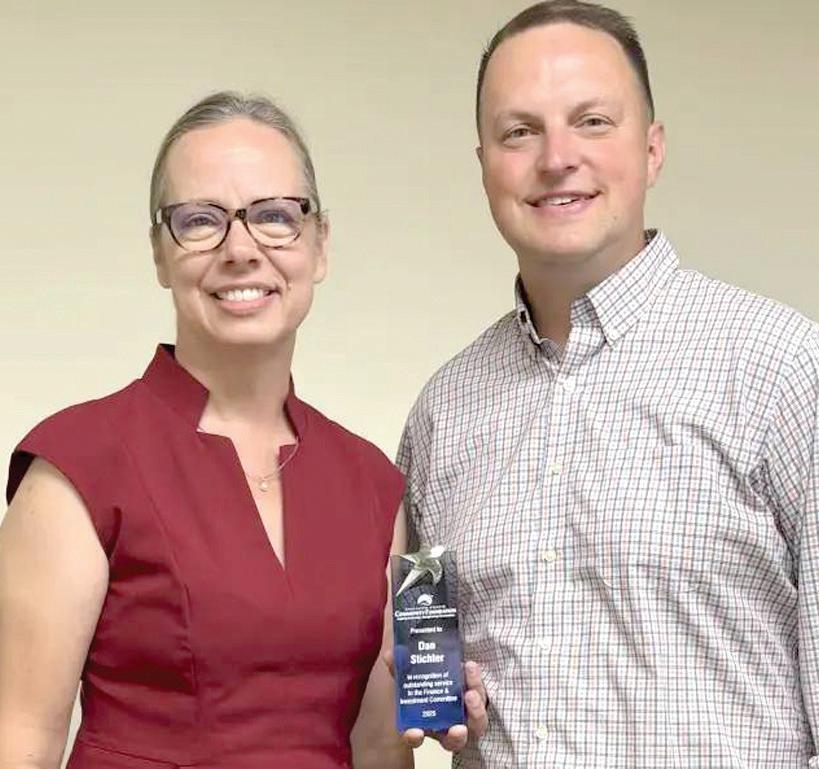
EXCELLENT SERVICE Shown is Stephanie Overbey, left, Kosciusko County Community Foundation CEO, and Dan Stichter, board treasurer, with his award. Photo provided by Kosciusko County Community Foundation.
and serves as board treasurer.
“For all the ways he lends his time, talent, and treasure to the finance committee and to the community foundation as
a whole, we are proud to recognize Dan Stichter as the 2025 Outstanding Finance and Investment Committee Member,” said Overbey.
ing the raising of a large American flag over First Street with the use of two wreckers from Reichert and Knepp Inc.
The color guard from the Menzie-Reece American Legion Post 258 led the parade, stopping at the judges stand for the singing of the national anthem. Emergency vehicles from Pierceton, Warsaw, Kosciusko County Sheriff’s Office, Pierceton Fire Department and Sidney Fire Department followed.
Following the parade, entries for the festival’s car and truck show took over First Street, capturing the attention of many festival goers.
The day concluded with music at Brower Park from Big Meow at the park and River’s End taking the stage at The Post and fireworks at 10 p.m.
Awards were presented to parade and car show entrants.
The parade consisted of close to 20 entries of floats, walking units, and three marching bands — Whitko, Warsaw and Wawasee.
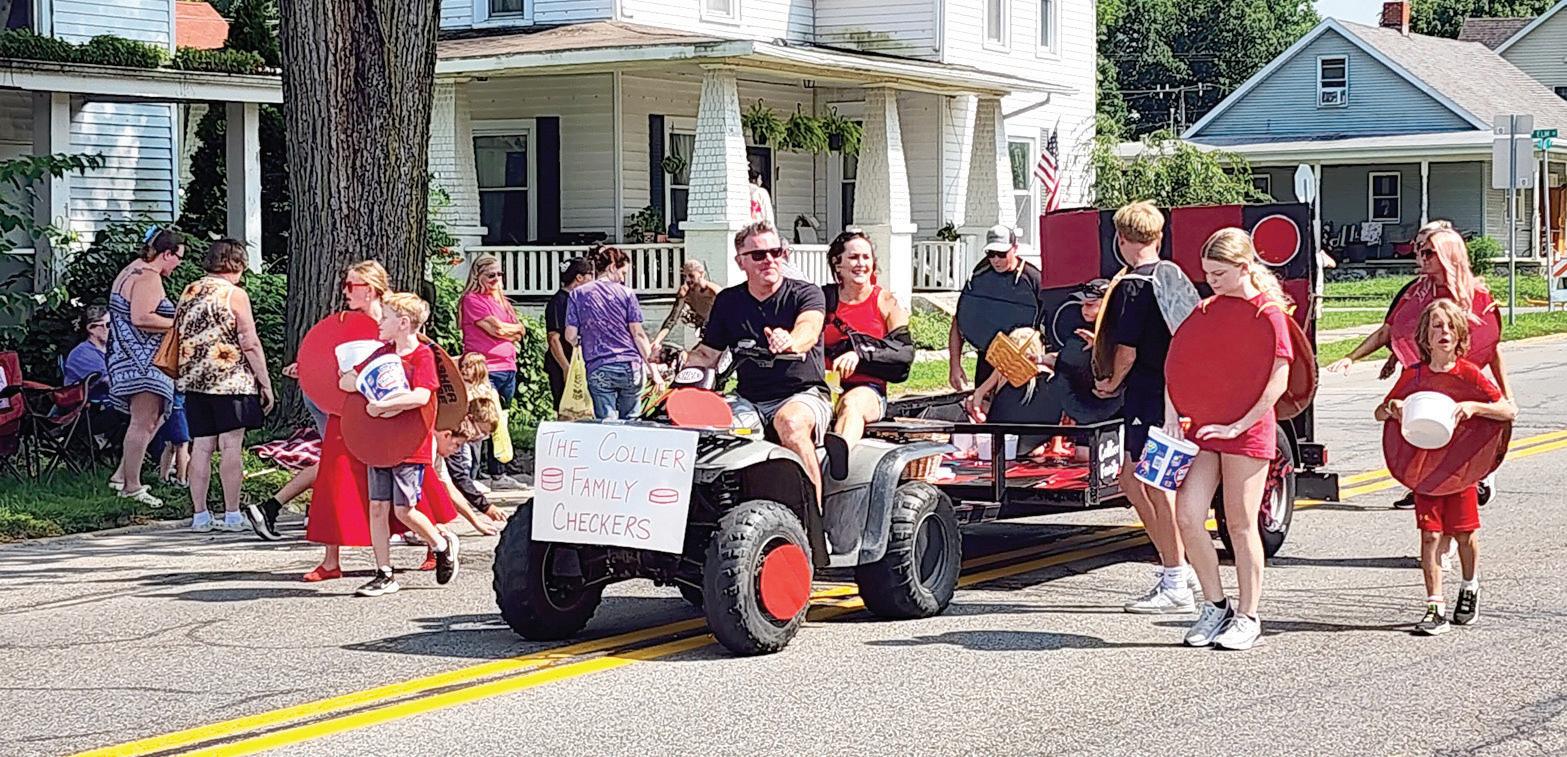
A FAMILY ENTRY The Collier family’s parade entry focused on checkers, including some checker pieces walking alongside the float.
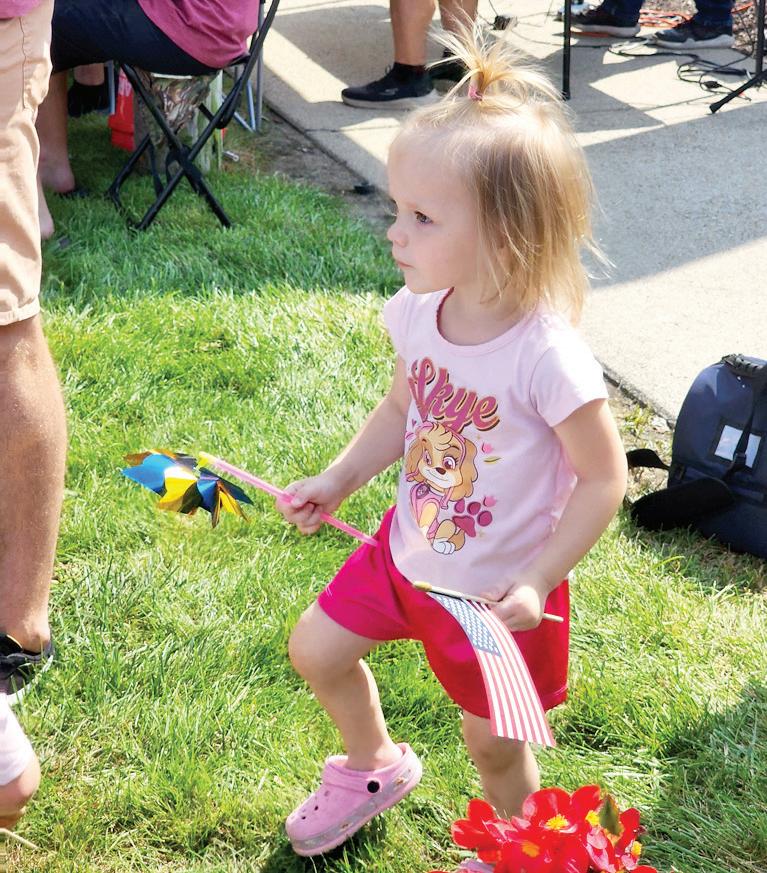
GREAT SOUVENIRS Ellie Price is shown with her pinwheel and American flag she received during the parade.
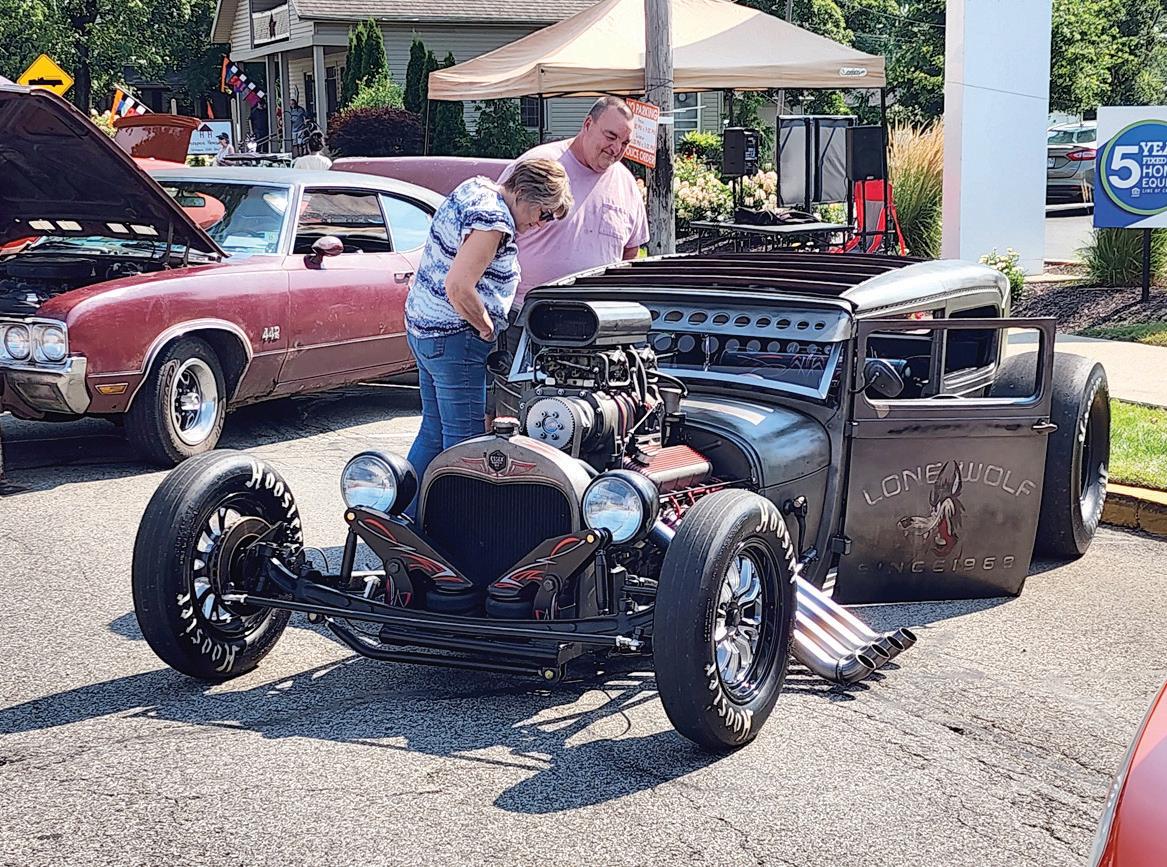
A UNIQUE ENTRY Myra and Kevin Mast check out the 1929 Hudson Super Six, named Lone Wolf, during the Pierceton Day car show. The show was held immediately following the parade Saturday.
Please take the time to make sure your classified ad is correct. The Papers Incorporated will not be responsible for errors in ads after the first publication. Ad position other than classification is not guaranteed. • ALL CLASSIFIED ADS
8 am - 5 pm Oak china hutch, washer & dryer, ceiling fans/lights, set of wicker chairs, Rainbow sweeper w/attachments, garage door opener, drywall tools, 3-wide double hung Marvin windows, more miscellaneous items. John Hochstetler 11095 N. 500 W., Milford
This is a full time position covering city, town and county meetings and events as we bring the broadest and most complete
Candidate should be naturally curious, adept at asking probing
or
Kosciusko
and must have a degree or on-the-job experience in writing, journalism, mass communications or a similar field.
This is a full time position with competitive wage and benefit package.
Position is based out of Warsaw.
If you have the skills, we have a home for you.
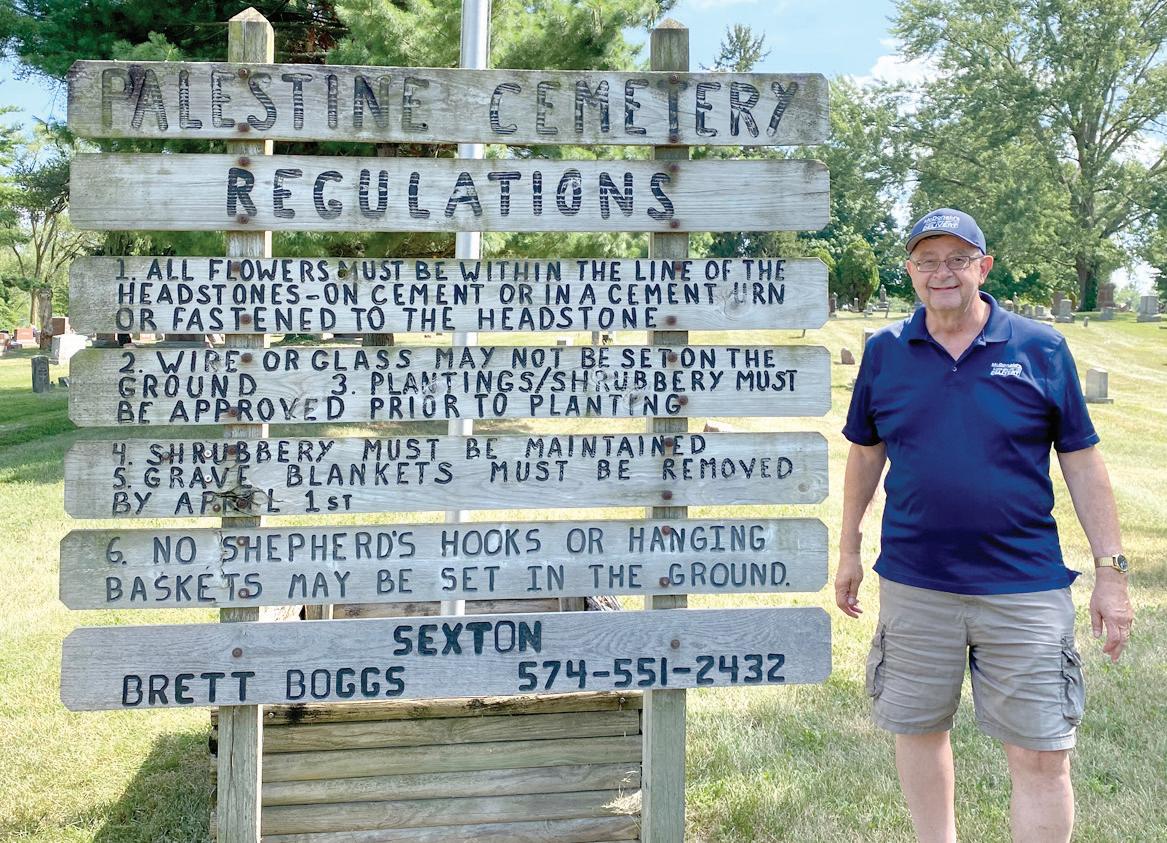
Consider Palestine Cemetery a place to be buried
By LEAH SANDER Staff Writer
Those who are planning for their end-of-life needs should consider burial at the Palestine Cemetery, said Brett Boggs.
People may buy space for either regular burial or to put an urn in,
Local students named to dean’s list
The following local students were named to the dean’s list of their respective colleges/universities:
Lawrence Technological University
Bailie Stephens, Warsaw Biola University
Benjamin Dedrick, Wakarusa
said Boggs, who serves as the cemetery’s sexton.
“If they already have somebody who’s buried here, (we allow them) to put (an) urn on that same grave, too,” he said.
Lots at the cemetery at 3226 S. CR 550W, Mentone, are 30-feet long, with each burial space 40 inches by 7 feet. People may buy the lots, which fit eight burials, for $3,600 each, or purchase a single grave site for $450.
Each time a person is buried, the cemetery also charges a $250 endowment fee, which funeral homes will include in its costs, said Boggs.
He said the cemetery was run by Palestine Bible Church until 1951, when it became separate and overseen by a board of directors.
Boggs serves on the current board along with Neil Bammerlin, Jeff Boggs, Duane Burkhart, Ben Scripture and Thomas Walters.
Boggs said the board members “are all local people” who put effort into keeping the cemetery maintained.
“We have a couple of cleanups every year,” he said.
P ublic A uctions
Online Real Estate Auction
Bidding open until 6 p.m. Thursday, Aug. 14. Property located at 1935 N. Vicky Lane, Warsaw. Three-bed ranch with full basement. Metzger Property Services, metzgerauction.com.
Online Overstock Auction
Bidding open until 6 p.m. Thursday, Aug. 14. Pickup located in Silver Lake. Beds, couches, box springs and more. Metzger Property Services, metzgerauction.com.
Online School Bus Auction
Bidding open until 6:30 p.m.
Thursday, Aug. 14. Pickup located at Hahn Auction Facility, 401 S. Oakland Ave., Nappanee. Passenger school buses, mini bus. Hahn Auctioneers, hahnrealtyandauction.com.
Equipment And Vehicle Auction
9 a.m. Saturday, Aug. 16. Located at 1582 W. SR 114, North Manchester. Tractors, semis, farm, hay, and livestock equipment, vehicles, fleet liquidations, trailers, lawn and garden equipment, tools, boats, ATVs. Metzger Prop-
erty Services, metzgerauction. com.
Miller Auction
4 p.m. Monday, Aug. 18. Located 5 miles south of Nappanee on SR 19, at 9834 N. SR 19, Nappanee.
Country Public Auction
6 p.m. Monday, Aug. 18. Open house 4-6 p.m. Wednesday, Aug. 6. Located at 18597 CR 48, New Paris. Three-bed house and barn on 3 acres. Hahn Auctioneers, hahnrealtyandauction.com.
Middlebury Phone Bid
Real Estate Auction
Bidding open until 4:30 p..
Thursday, Aug. 21. Property located 2¾ miles northwest of Middlebury on CR 8 to CR 35, north to first property on west side at 53765 CR 35, Middlebury. Inspections by appointment. For bidding and bidding updates, call (260) 499-0216 or (260) 499-0093. Online Only Public Auction
Bidding open until 6 p.m. Thursday, Aug. 21. Pickup located at 1711 Dewey St., Bremen. Bid online at bid.kraftauctions.com. Bi-Annual Fall Equipment Auction
9 a.m. Saturday, Aug. 23. Located at Topeka Livestock Auction, 601 E. Lake St., Topeka. Shipshewana Phone Bid
Real Estate Auction
Bidding open until 4 p.m. Monday, Aug. 25. Property located ¼ mile north of Shipshewana on SR 5 at 510 N. Van Buren St., Shipshewana. Inspections 4-6 p.m. Wednesdays or by appointment. For bidding and bidding updates, call (260) 499-0216 or (260) 4990093.
Dutoi Auction
11 a.m. Tuesday, Aug. 26. Located at 64723 Miami Highway, Bremen. Grain truck, combines, tractors, machinery, gas pumps, fishing lures, toys, primitives, advertising. Hahn Auctioneers, hahnrealtyandauction.com.
Real Estate Auction
6 p.m. Wednesday, Aug. 27. Properties located at 2198 W. Union St., Claypool; 407 High St., Warsaw; EMS C27B1 Lane, Warsaw. Total 151 acres offered in 11 tracts. Schrader Auction, schraderauction.com.
CONSIDER BURIAL Palestine Cemetery Sexton Brett Boggs, shown, said people should consider the cemetery as their final resting place. Photo by Leah Sander.
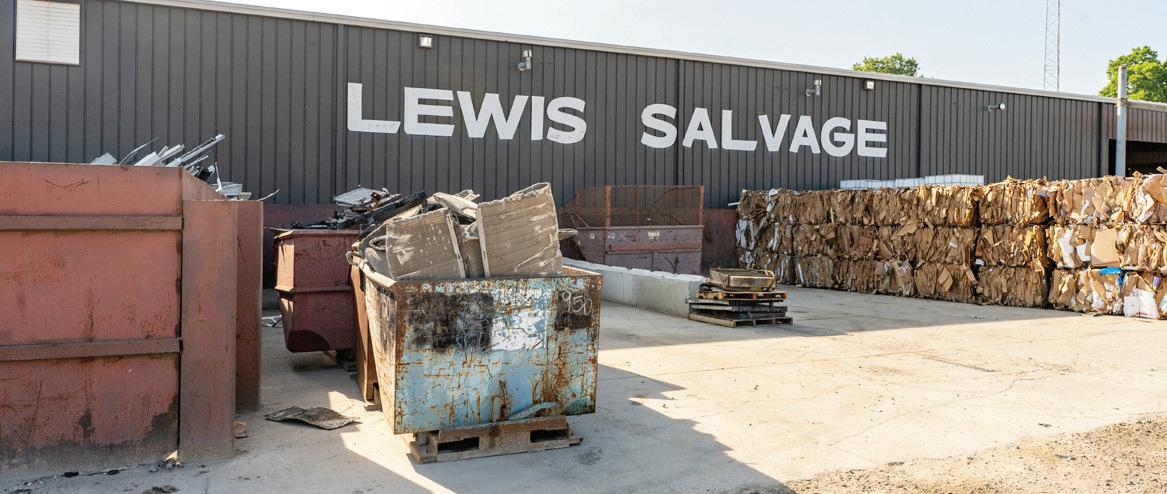
Lewis Salvage expands Footprint with Rochester Iron and Metal
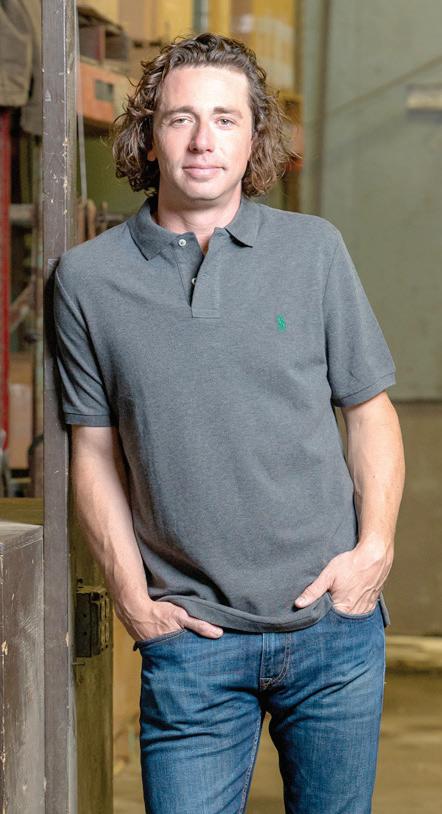
In what CEO Cary Lewis calls “the largest expansion I could’ve ever dreamed of,” Lewis Salvage has officially acquired Rochester Iron and Metal, one of the company’s largest competitors. The site located at 1552 E. Lucas St., will operate as Lewis Salvage Shred Services, supercharging the company’s growth, sustainability goals, and ability to serve both residential and commercial customers across Northern Indiana.
“This is more than just a business move, it’s about having every tool in the recycler’s toolkit,” said Lewis. “With this new location, we’re going to be able to recycle more material, more efficiently, and with greater environmental benefit than ever before.”
A Machine That Can Shred 60 Cars An Hour
At the heart of the expansion is a powerful auto shredder capable of processing up to 60 gross tons, or in more interesting terms, around 45 to 60 cars per hour. This allows Lewis Salvage to break down vehicles and other large materials more quickly
and cleanly, creating high-quality steel products for domestic use while minimizing environmental impact.
“Technology has changed the way we recycle. Instead of cutting and baling everything, this shredder lets us create a cleaner, more consistent steel product,” said Lewis. “And we can do it with fewer emissions and better recovery of valuable materials like copper and aluminum.”
Keeping The Team, Doubling The Dumpsters, And Upping The Impact
As part of the deal, Lewis Salvage plans to keep most of the Rochester Iron and Metal team, about 90 employees, and grow the services offered at the site.
One big change? More dumpsters. A lot more. The roll-off fleet of Lewis Salvage will be jumping from 300 to over 700, ready for everything from backyard cleanouts to ongoing scrap collection from area manufacturers.
The Rochester location is also open to the public, welcoming drop of everything metal from a bag of cans to truckloads of steel. (see
website for recycling restrictions).
Altogether, the new site is expected to help Lewis Salvage recycle an extra 10 to 12 million pounds of material per month, from old appliances and farm equipment to scrap from the RV and manufacturing industries.
Advanced Sorting That Goes Beyond The Shred
The shredder is only part of the story. The Rochester site also has a downstream plant that sorts through what recyclers call “fluff” which is the leftover stuff from inside cars like seat foam, fabric, and insulation.
Turns out, there’s still valuable metal, like copper, aluminum, and stainless steel, hiding in there!
“Instead of sending all that to the landfill, we make sure to pull out the good stuff,” said Lewis. “Not only is it better for business
but it’s also a smarter move for the environment.”
Continuing A Legacy Of Innovation
Known for its leadership in orthopedic recycling and non-ferrous scrap, Lewis Salvage has long been a forward-thinking player in the recycling industry.
This acquisition continues that momentum, offering even more capability, service, and innovation to the region.
“This is vertical integration at its best,” said Lewis. “We’re combining our history with cutting-edge technology to build something great that serves our customers, our team, and our planet.”
For more information about Lewis Salvage Shred Services or to schedule a dumpster drop-off call (574) 267-6781 or visit lewis-salvage.com.
CAREY LEWIS, CEO OF LEWIS SALVAGE
LARGE EXPANSION Lewis Salvage has acquired Rochester Iron and Metal, 1552 E. Lucas St., Rochester, and will operate as Lewis Salvage Shred Services. Photos provided by LeAnne Lavender.