By LAUREN ZEUGNER Staff Writer
Kosciusko Water and Woodland Invasive Partnership is a relatively new nonprofit with the goal of educating the public about invasive plants, both terrestrial and aquatic. The organization started in 2019 and received its 501(c)3 status in 2020.
KWWIP was started by Erica Luchick, who quickly partnered with other conservation groups in Kosciusko County, such as the Lilly Center for Lakes and Streams, Soil and Water Conservation Districts, The Watershed Foundation as well as volunteers
and philanthropists.
The federal definition of an invasive plant is one that is non-native or alien to the ecosystem whose introduction causes or likely to cause economic or environmental harm or harm to human health.
“The goal is to try and get community members involved and educated about native and invasive species,” said Shannon Williams, a KWWIP volunteer and master naturalist.
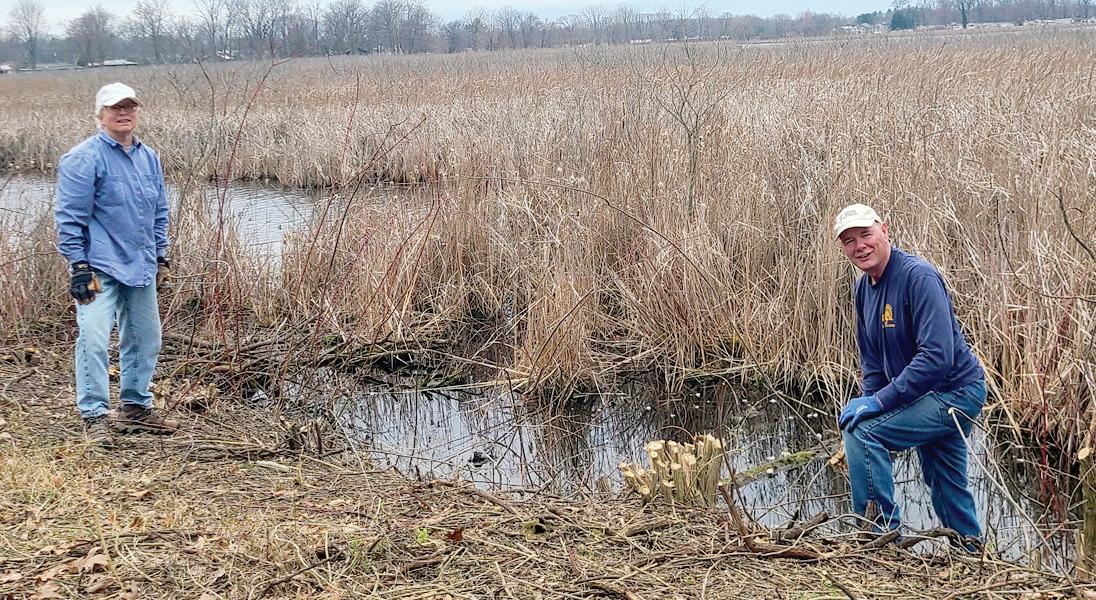
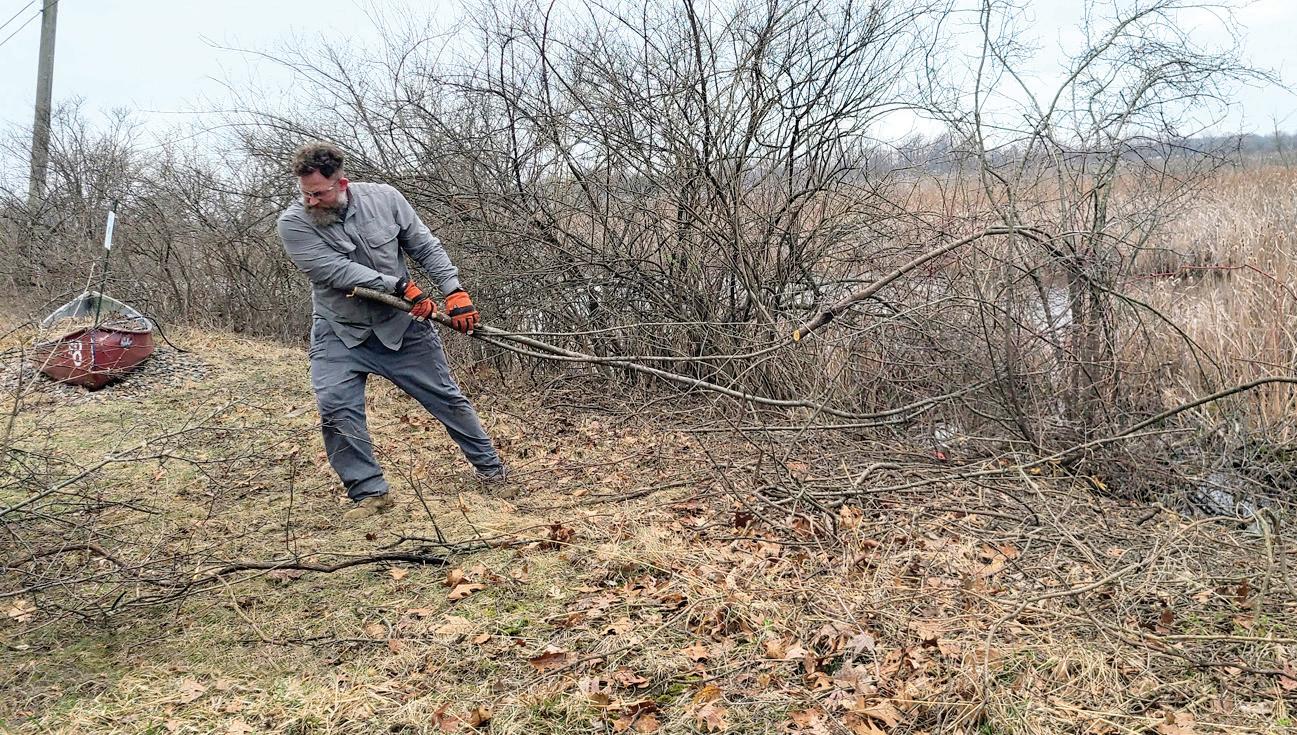
To educate the public, KWWIP hosts a number of Weed Wrangle events where community volunteers are educated on invasive species and the proper way to re-
move them.
“Then we eradicate it. It’s fun,” said Dugan Julian, northeast regional specialist at Southern Indiana Cooperative Invasives Management.
Dugan explained Weed Wrangle is an organization based out of Tennessee. Weed Wrangle Indiana is a project KWWIP participates in.
“Indiana has more Weed Wrangle events than any other in the country,” Julian said, “and very few Weed Wrangles deal with aquatic invasives as well as terrestrial.”
Julian explained billions are spent on eradicating invasive
species, which damage both ecosystems and infrastructure. An example is Kudzu, which is from the 1930-1950s the Soil Conservation Service promoted as a great tool against soil erosion.
Used abundantly in the south, Kudzu quickly grows out of control spreading through runners, rhizomes and vines that can grow a foot a day. The vine has been known to over take trees, abandoned homes and telephone poles.
To make matters worse, the plant has moved northward with plants being found in the northeast, midwest and even Oregon. Kudzo has been found in Elkhart County and is contained in quarantine.
Along with damaging infrastructure, some invasives are dangerous to pollinators, mammals and humans. For example, a garlic mustard plant is poisonous to pollinators while poison hemlock is poisonous to both humans and animals. Wild parsnip has a chemical that reacts to sunlight, which can cause chemical burns on human skin.
Another problem with invasives is they tend to be beautiful, such as honeysuckle and Callery pear trees. William noted there are beautiful natives, such as red bud to replace Callery pear.
One advantage to invasive speContinued on page 4
By PHOEBE MUTHART Staff Writer
If you think your job is busy, just ask Dan Graney how busy his career is.
Graney, a Warsaw resident, is a very active educator in the Warsaw School system. He is an academic coach, teacher and administrator for Warsaw Community Schools. He is also a science, technology, engineering and math instructional coach.
He grew up in the area in Fort Wayne and went to Purdue University Fort Wayne and Indiana State University. His first job was at WCS in 1989 and he’s never left. Since then he has embarked on an educational journey at different schools.
He spent time teaching sixth grade at Atwood Elementary School, then at Harrison Elementary where he taught fifth and
sixth graders.
He is currently the S.T.E.M. coach for Jefferson, Claypool, Harrison and Lincoln elementary schools.
“I wear a lot of hats,” he said. “I love the students and getting to interact with them.”
He has been a S.T.E.M. instructional coach for the past several years and is S.T.E.M. Certified by Indiana Department of Education and is a S.T.E.M. Integration Specialist.
Graney said, “At Jefferson and Claypool, we use S.T.E.A.M. which is like S.T.E.M., except we use art, too.”
Currently, the students are learning about pinball machines. The Pinball Project-Based Learning Initiative is a new unit, which engages students in the design and construction of functional pinball machine prototypes, blending physics, engineering

and creativity.
Graney emphasized the importance of making learning meaningful and relevant.
“The challenge for educators today is to come up with highly-engaging content that aligns with state standards. When we can tap into a community resource and have students experience something they might not have experienced before, that is a winwin for everyone,” he said.
At Lincoln school, students are doing 3D printing and at Harrison, he will be working with fifth graders with model rockets.
“They will be talking with a NASA engineer,” Graney said. “The coolest part is there’s unlimited possibilities.”
He is also an academic instructional coach. In addition, Graney is Warsaw Inquiry Learning Lab bus S.T.E.M. coach and instructor. The bus is a state-of-the-art mobile lab, which serves as an interactive mobile S.T.E.M. laboratory for students.
He is WCS’ summer school program administrator for children in pre-K through fifth grade. He is also president of the Warsaw Community Education Association.
Graney is married to wife, Rhonda, a school counselor at Warsaw Community High School, and they have been married 34 years. They have two children, a son and a daughter, Will and Tessa.
His hobbies are golfing, music, water sports, volleyball and computers.
He is really excited about using artificial intelligence to help teachers and feels it will help the educators in the future.
“It will be a benefit for educators,” he said. “It (AI) needs people and I think it can save hours. It’s a game changer.”
For Graney, his lifelong love of educating students is one he thoroughly loves doing.
“Every day is an adventure. I like being involved as much as I can,” Graney said.
Reduces Disease Risk Factors by
Interra Credit Union was recently recognized for its marketing efforts by winning a Diamond Award at this year’s America’s Credit Unions’ annual Marketing and Business Development Council conference held in Austin, Texas.
The Diamond Award represents the highest honor in credit union marketing and business development, recognizing excellence among credit unions nationwide. Competing against 1,400 entries from across the country, Interra was


Reducing Oxidative Stress in 12 weeks
Proven to be completely Safe with Zero Toxicity
Increases Endurance
awarded in the Ongoing Event category for its record-breaking 30th anniversary of Hometown Giving.
“The 30th year of Interra’s Hometown Giving is a testament to the vision and generosity of those who started this special outreach three decades ago. Today, it takes more than 35 volunteers to help coordinate each year’s fundraising,” stated Meegan Siegwarth, vice president, senior marketing manager. “In just the last five years, we’ve been able to raise and donate over $200,000 alone, supporting more than 50 nonprofit charities that strengthen our communities.”
Redox Gel Increases Blood Flow by 49% when applied to an area in just 15 minutes
Increases speed of Recovery
Increase Burn of Fat Fuels up to 33%
Boosts Antioxidant E ciency by 500% to 800% in just 72 hours
Siegwarth added, “It’s truly the great hearts of Interra’s staff, our members and the community that make this incredible impact possible year after year. Interra’s marketing team takes great pride in crafting campaigns that not only engage our staff but also strengthens our connection with the communities we serve.”
Redox Gel Reduces Muscle Discomfort
Redox Gel Improves skin Wrinkle
Depth, Smoothness, Elasticity & Texture Healthy Cells = Healthy Body!





Warsaw Community High
School senior Makia Lucas was named Outstanding Senior for all JAG Indiana programs after earning first place at the state-level Jobs for America’s Graduates Career Development Conference Friday, March 14, at Ivy Tech, Indianapolis.
Lucas competed against 12 other top candidates from JAG
regional programs across Indiana. As part of the competition, she was required to write a two-page essay on how JAG graduates made a difference in her life, outline her future plans and explain the steps she has taken toward her goals. She also applied to five colleges and was accepted to at least one, submitted a formal application
and interviewed before a panel of judges.
Lucas has dedicated her time to visiting schools and sharing her story about the impact JAG has had on her during her time at Warsaw. She serves as a role model to other students and will continue to lead in this capacity as the president of the JAG Career Association for the
Grace College and Cardinal Services are partnering to provide pre-employment transition services to help area students with disabilities prepare for life after high school this summer. Students will work on various projects over the summer with Grace’s Physical Plant as well as an on-site coach from Cardinal.
“This program aims to enhance the students’ hard and soft skills, allow them to explore employment and educational options and provide on-the-job training,” said Jen Hallstrom, supervisor of pre-ETS at Cardinal Services. “This is an opportunity to ensure these students have access to meaningful career planning to help with a seamless movement — from high school to employment or post-secondary training.”
The program will take place through June and July and will host up to four students three days a week. To be eligible for pre-ETS, students must have an IEP, or 504 plan, and attend a partnering school in Cass, Carroll, Elkhart, Fulton, Marshall, Pulaski, Starke, White and Kosciusko counties.
Pre-ETS’s core services include job exploration counseling, work-based learning experiences, workplace readiness training, post-secondary opportunity counseling and self-advocacy instruction.
“At Grace, we want to foster strong relationships with or-

ganizations, like Cardinal Services, within our surrounding community,” said Bill Wash, director of operations at Grace.
“We value living God’s word, serving humbly and engaging our community. With programs
and partnerships like this one, where we share services and amenities with others, we are able to live out several of our core values at once.”
To learn more, contact Bill Wash at washwr@grace.edu.

state of Indiana during the upcoming school year.
Next, Lucas will participate in the National JAG Conference in Indianapolis April 25. She
will host a leadership workshop and serve as a delegate, where she will help select the JAG national student leadership for 2025–2026.













EDITORIAL OFFICES, CIRCULATION, DISPLAY AND CLASSIFIED ADVERTISING
WARSAW OFFICE MILFORD OFFICE
SYRACUSE OFFICE
114 West Market St. 206 S. Main St. 102 East Main St. Warsaw, IN 46580 P.O. Box 188, Milford, IN 46542 Syracuse, IN 46567 Phone (574) 269-2932 Phone (574) 658-4111 Phone (574) 457-3666 Fax 888-371-2934 1-800-733-4111 Fax 800-886-3796
Out-Of-County: Phone 1-800-733-4111
OFFICE HOURS: 8:00-5:00 Monday Thru Friday www.thepapersonline.com
‘the PAPER’ reserves the right to refuse for publication any advertising that is considered offensive, misleading or detrimental to the public, the newspaper or another advertiser and to edit advertising at its discretion.
Publisher, Ron Baumgartner rbaumgartner@the-papers.com
Business Manager, Annette Weaver aweaver@the-papers.com
Editor-In-Chief, Deb Patterson dpatterson@the-papers.com
Editor, Phoebe Muthart pmuthart@the-papers.com
Warsaw Office Manager, Mary Beth Spalding warsaw@the-papers.com
Director Of Marketing, Kristin DeVittorio kdevittorio@the-papers.com
Advertising Representative, Carl Lauster clauster@the-papers.com
Advertising Representative, Susan Stump sstump@the-papers.com
Circulation Manager, Jerry Long jlong@the-papers.com
Commercial Printing Sales Representative
Rodger Salinas rsalinas@the-papers.com
Commercial Printing Customer Service
Katie Hurley khurley@the-papers.com
Rich Krygowski rkrygowski@the-papers.com
Grocery
Good Neighbors is a column in which readers share friendly advice. To ask or answer questions, write the Shopping Guide News, Good Neighbors, P.O. Box 188, Milford, IN 46542; fax 800-886-3796; or e-mail abias@the-papers.com. Please no phone calls.

Editor’s Note: The Good Neighbors column is for people looking for hard-to-find or old items or for people seeking advice, not for items you can find in a local store or sell through the help of a classified ad. This column will now run every other week.
Baby food jars
Good neighbors: I have lots of baby food jars free for picking them up. Nice for crafts. Leave a message at (574) 773-2795. I will get back with you. — A good neighbor
Edger/Stewards Journal magazines — Does any good neighbor have an edger or Stewards Journal magazines they no longer want? Call (574) 646-2022.
Electric sewing machine — Looking for an electric sewing machine in good condition. Preferably in the Nappanee or surrounding area. Call (574) 646-1021.
Serger machine — Does any good neighbor have a Serger machine they no longer want? Call (574) 253-8602. Prefer in the Nappanee or surrounding area.
Landscaping blocks — Does anyone have landscaping blocks or bricks and cement blocks they want to get rid of? I would be happy to have them. Call (574) 248-0257.
The
area organizations, including
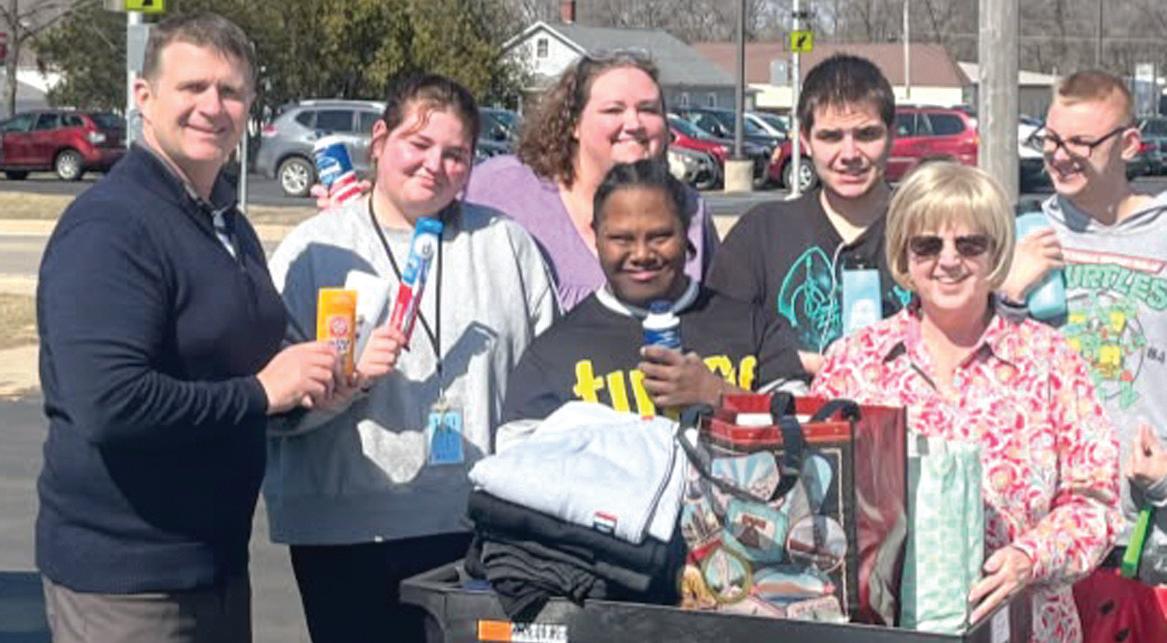
Warsaw’s Beta Zeta Chapter of Delta Theta Tau Sorority is currently holding its annual spring geranium sale fundraiser. In the fall, the sorority holds its annual butter braid sale.
Money raised from the two fundraisers is distributed philanthropically back into the community.
The sorority sisters recently presented $200 worth of KABS bus passes to Fellowship Missions;
Continued from page 1
cies is they start to grow earlier and their growth season runs longer than natives, making them easier to identify.
Why is removing invasives so important? Native plants host pollinators and other insects that provide baby birds and other animals with food. A native oak or hickory tree may be home to 400 different species of insect, while an invasive may provide a home to only 40-60 different species. Julian was quick to point out there is a huge difference between a non-native exotic plant and an invasive plant. The non-native exotic cannot tolerate this area’s change of seasons, so it tends to die before it can spread its seeds. Many invasive plants come from Europe or Asia, which has a climate similar to this area’s so they can take root and spread.
When it comes to removing invasives, Julian said care must be taken.
“If you don’t know what you’re dealing with, call KWWIP. If you’re not in the county, see if your county has a State of Indiana Cooperative Invasive Management (team member) or check with the soil and water conservation district or extension office,” he advised.
Using the wrong method to remove an invasive could backfire and make the situation worse.
Julian explained there is no proven method to total eradication of an invasive. What property owners should shoot for is control. That can be achieved by using both chemicals and non-chemical means, such as mowing or using goat herds, which will eat the invasives.
It takes time and patience, but
$200 worth of personal hygiene products to the Blazer Boutique of Leesburg Elementary School; and $300 worth of personal care items, socks and sweatpants to Gateway Education Center.
invasives can be brought under control to a point where the native plants can come back and be dominant.
Addressing aquatic invasives is new to KWWIP. The organization is working with The Watershed Foundation and Lilly Center for Lakes and Streams as well as Aquatic Weed Control on presentations regarding identifying invasive aquatic plants and the threat they pose for the lakes.
KWWIP is working on some control events for later this year.
“We have some fun things planned,” Dugan said.
A Weed Wrangle event is planned for 9 a.m. to noon Saturday, April 19, at Oppenhelm Woods, 7060-7096 N. Kalorama Road, Leesburg. The event is family friendly so help pull some garlic mustard and small honeysuckle.
“Dance at Tippy” is from 6:3011 p.m. Saturday, July 26. It’s the can’t-miss event of the season and a night full of nostalgic fun. Enjoy good food and drinks as you dance under the stars to incredible live music at historic Tippy Dance Hall.
All proceeds support The Watershed Foundation’s mission to protect and improve water quality in area lakes.
Enjoy good food, drinks, and a live band, all set in a one-of-a-kind
venue on the shores of Lake Tippecanoe.
This year, is an epic night of great music and good vibes featuring powerhouse band, Whoa, Man! From iconic anthems to modern hits, they’ll have you on your feet dancing, singing, and rocking out all night long.
For tickets, visit watershedfoundation.org/events/dance-at-tippy or call TWF at (574) 834-3242.
Tippy Dance Hall is located at 293 EMS T25 Lane, Leesburg.
Many older adults are concerned about falling, which can lead to restricting daily activities and limiting their independence. To address these concerns, Purdue University Extension in Kosciusko and Elkhart counties is offering the award-winning, evidence-based fall prevention program, “A Matter of Balance.” This program is designed to help participants manage the risk of falls and increase their activity levels with practical strategies.
The program will teach participants how to:
• View falls as controllable.
• Set goals to increase activity.
• Make changes in the home environment to reduce fall risks.
• Perform exercises to increase strength and balance.
This program is ideal for:
• Anyone concerned about falls.
• Individuals looking to improve balance, flexibility, and strength.
• Those who have fallen in the past.
• Those who have restricted activities due to fall concerns.
The program will be held at the North Webster Community Library, 110 E. North St., North Webster. Sessions will begin April 28, and run through May 21. Classes will be held from 10:30 a.m. to 12:30 p.m. Mondays and Wednesdays.
The program is limited to 12 participants; there is a $25 registration fee. To register, visit cvent.me/3YQNa3. If assistance with registration is needed, contact the Purdue Extension Kosciusko County office at (574) 3722340. The registration deadline is April 21.
The Nappanee Rotary Club and Nappanee Parks Department is hosting a community Easter egg hunt at 9 a.m.
Saturday, April 19, at the Callander Sportsplex, 1655 Thompson Drive, Nappanee, for ages 0-9.
Explore the menstrual cycle and gain a deeper understanding of its phases and hormonal changes. Learn about the overall impact on physical and emotional health, common misconceptions, symptoms, and ways to support menstrual health through nutrition, lifestyle, and self-care practices. Whether you’re looking to better understand your own cycle or support others, this program will provide valuable insights and practical takeaways.
Attend a free educational program, presented by Emily Christ, Purdue University Extension Educator in Health and Human Sciences in Elkhart County. This program is being offered at 3 p.m. Thursday, May 8, at the Elkhart County Family Resource Center, 612 E. Bristol St., Elkhart.
If you would like to attend the program, register by calling Jenn at (574) 533-0554 or email fink24@purdue.edu.
If you are in need of accommodations, an interpreter or transla-


The annual dinner meeting for the Purdue Alumni Club of Elkhart County, which includes Lagrange County, will be Wednesday, April 23, at the Meadow Valley Golf Club, 57600 SR 13, Middlebury.
Elliot Bloom, director of Purdue Men’s Basketball Operations and Administration, will be this year’s speaker. He is responsible for the non-conference games and the summer camps scheduling along with organizing the team’s travels.
Bloom will also include in his speech and answer questions about the new Big 10 alignment, the transfer portal, NIL and Purdue’s basketball recruiting.
Join fellow Boilermakers and Purdue friends for the club’s annual “Boiler Bucks,” silent auction and raffles. All proceeds go into the scholarship fund, which continues to benefit local students attending a Purdue school.
joining, visit events.blackthorn. io/en/3ktO526/g/1DDqcB2naP/ purdue-alumni-of-elkhart-county-annual-meeting-and-dinner2025-4a9GNs3e5l/overview.
The final day reservations will be accepted is Saturday, April 19. For questions, contact Cinda Taylor at cinda.taylor50@icloud.com or call (574) 238-7137.

tor to attend a program, contact Christ at (574) 533-0554 or ewitters@purdue.edu by April 17.
Social hour and silent auction will begin at 5 p.m., dinner and cash bar at 6 p.m., and program at 7 p.m. The cost is $40 per person.If interested in

Syracuse-Wawasee Chamber of Commerce Executive Director Brent Randall announces Emily Logsdon as the guest speaker for the 2025 annual dinner. The dinner will be May 22 at Oakwood Resort, Syracuse.
Logsdon serves as a senior industry advisor with Purdue MEP, where she builds strong client relationships and leads high-impact projects across northern Indiana. Leveraging the full suite of Purdue MEP services, she delivers high-value, cost-effective solutions, which help organizations improve operations, streamline processes, foster growth and enhance overall competitiveness.
A respected leader in her field, Logsdon holds multiple professional certifications, including certified quality engineer, certified six sigma black belt, certified medical device au-

EMILY LOGSDON
ditor, and certified quality auditor through the American Society for Quality. She also holds a Regulatory Affairs Certification for medical devices, highlighting her in-depth knowledge of industry standards and regulatory compliance. Her expertise spans a wide range of technical and strategic
An Easter egg hunt will be at 9 a.m. Saturday, April 19, at New Paris Elementary School. There will be an Easter egg basket and bike giveaway.
The egg hunt is for toddlers to sixth graders. There will




be 4,000 eggs. The egg hunt is hosted by the New Paris Lions Club. Check its Facebook page for the latest updates or cancellations.
The school is located at 18665 CR 46, New Paris.






areas, including project management, product development life cycle, measurement system analysis, complaint device investigations, process validation, software validation, accelerated aging validation and regulatory submissions. She brings valuable experience in navigating complex regulatory frameworks, such as EU MDD, 510(k), and Q-submissions with precision and insight.
She holds a Bachelor of Science in mechanical engineering from the University of Louisville.
Tickets for the dinner are available at swchamber.com.
The Nappanee Parks Department is hosting bingo-style, music trivia games, a costume contest, and challenging break games. There will be a beer and wine cash bar from Shortstop Inn. Pre-order a 16-inch Panther Pizza (serves 3-4) for your group or buy a slice along with some candy at the concession stand.
The event will begin at 6 p.m. Saturday, May 17 and will be at West Park Pavilion.
Cost is $15 per player. Doors open at 5:30 p.m. This is a 21 and older event.
Costume contest theme is “Rhyme Without Reason” (example: Rapper and Napper, Post Malone and Traffic Cone). Secret judges will be selecting first, second and third place winners. Costumes should be PG-13.
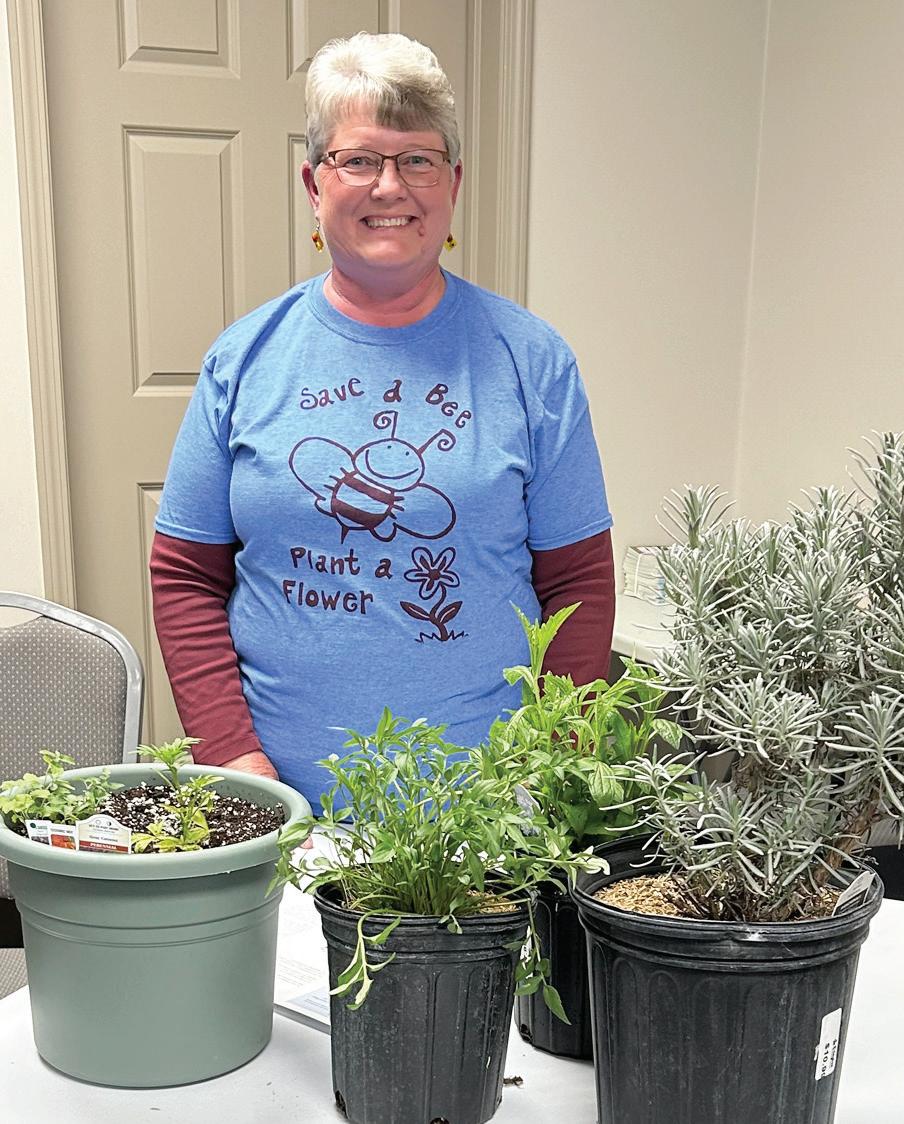
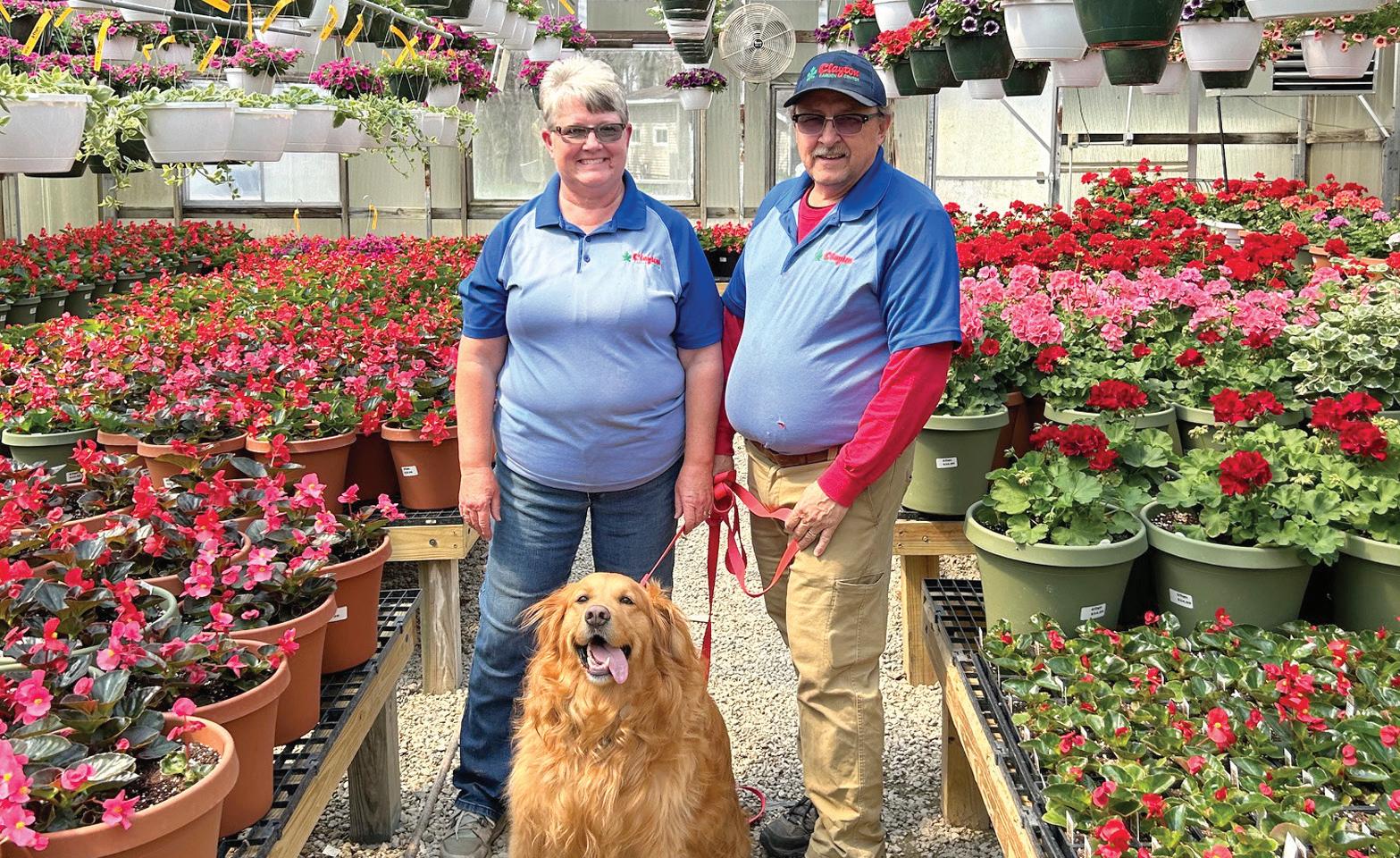
The Syracuse-Wawasee Garden Club met April 1, at the Syracuse Community Center. The meeting was called to order by Vice President Toby Oswald following a program about pocket pollinator pots given by Judy Clayton from Clayton Garden Center. She provided a demonstration of how to plant a pot to attract pollinators as an alternative to planting a large garden or when space is limited.
Updates were given regarding the Ward Park bed remodel, which is scheduled to happen in the fall of 2025 with plans to include a flagpole and lighting, according to the parks department. The club made plans about planting the flower beds by the Syracuse community beach and Ward Park.
Melanie

Pre-registration is encouraged. Walk-ins welcome based on availability. Reserve a spot buy visiting nappanee.in.gov/government/ departments/parks-and-recreation. Call (574) 773-8585 for more information.
Melanie
Melanie can brighten up the Interior of your home.
Thirteen members answered roll call and recited the Collect and Conservation Pledge. In committee reports, Pam Schumm reported Wawasee Area Conservancy Foundation will gladly accept more tree donations for Arbor Day. The trees will be planted at WACF.

In old business, details and ideas about the Garden Club’s booth at the upcoming WACF Earth Day Festival Saturday, May 3, were discussed. The club has a fun activity planned for children to plant seeds to take home and grow.
Other business included the upcoming state convention in Indianapolis, which will be attended by Toby Oswald, vice president, and Pam Schumm, secretary, who will also be accepting new roles at the state level during the convention.
In new business, an inquiry about the possibility of the club providing two scholarships instead of the one it currently gives was discussed. The committee will consider this once the number of applicants have been received.
Walls
Walls
Ceilings
Walls
Ceilings Window And Door Trim
Ceilings Window And Door Trim Stairways
Window And Door Trim
Stairways
Woodwork Staining
Stairways
Woodwork Staining
Garage And Workshop Floors And Walls
Woodwork Staining
Small Patch Repair
Drywall Repair
Garage And Workshop Floors And Walls
Drywall Repair
Small Patch Repair
Great Service – Reasonable
Drywall Repair
Great Service – Reasonable Rates References Available Upon Request. 574-304-5075
Great Service – Reasonable Rates
References Available Upon Request. 574-304-5075







It’s that time of year again when the Syracuse-Wawasee Garden Club holds their annual Geranium Sale. Flats of 18 red geraniums can be purchased for $50. Flowers must be ordered and paid for on or before April 25.
Pick-up will be from 4-5:30 p.m. Friday, May 9, at the Syracuse Community Center. For more information or questions, contact Toby Oswald at tobydoswald@ gmail.com.
The next meeting will be at 6:30 p.m. Tuesday, May 6, at WACF. A fun project of making garden labels on wooden spoons is planned.
The Garden Club welcomes new members: contact pam@ wacf.com if you would like to attend one of the meetings.
Fairmont Homes, a Cavco Industries company and a builder of high-quality, affordable manufactured and modular homes, is now operating as Cavco-Nappanee, effective April 1. Cavco-Nappanee is among 31 Cavco-owned manufacturers coast to coast who are officially and legally adopting the company’s national brand name, Cavco.
As a leader in the manufactured housing industry, Cavco has built high-quality homes throughout the United States and parts of Canada since 1965.
After decades of growth and acquisitions, Cavco remains committed to developing innovative products in climate-controlled environments to help solve the affordable housing crisis.
Under the new name, the Nappanee facility remains the same trusted home- building operation it has been since its inception. The team continues to design and build innovative, affordable homes bringing home ownership within reach for families across Indiana and the region.
Customers will work with the same dedicated teams at the same facilities, backed by Cavco’s trusted reputation and name recognition as a leader in the manufactured home industry.
Cavco is also streamlining its product segmentation to make it easier for homebuyers, dealers, communities and developers to find the right Cavco-built affordable homes across all states.
Cavco-Nappanee supports continuing employee training as well as community growth in and around Nappanee. It is invested in providing job opportunities for the local economy. Cavco is committed to making a positive impact where they work and do business to improve the quality of life for all.
As demand for Cavco homes grows, Cavco-Nappanee plans to create more jobs in the area to expand opportunities for families to achieve home ownership.
Cavco employees also engage in impactful volunteering efforts within Nappanee, strengthening the community.
Cavco-Nappanee employs around 260 in the local community, while Cavco Industries supports approximately 450 across Indiana. For 60 years, Cavco has taken great pride in building exceptional affordable homes and being an active part of the communities they call home.
For Cavco’s president and CEO, Bill Boor,the name unification across Cavco’s 31 manufacturing facilities was driven by a desire to make home buying easier for customers.
“With Cavco’s growth and our focus on the customer experience, the time is right to rethink how we can improve the customer’s ability to quickly focus their home search,” said Boor. “This realignment to a single brand that focuses on product characteristics will transform how we go to market across our national
manufacturing operation, leveraging our investment in digital marketing and opening new national marketing opportunities.
It’s a big win for Cavco, our retail partners and most importantly, our home buyers.”
For more information, visit CavcoNappanee.com or contact Steve Maisonneuve at (574) 773-7941 or smaisonneuve@fairmonthomes.com.
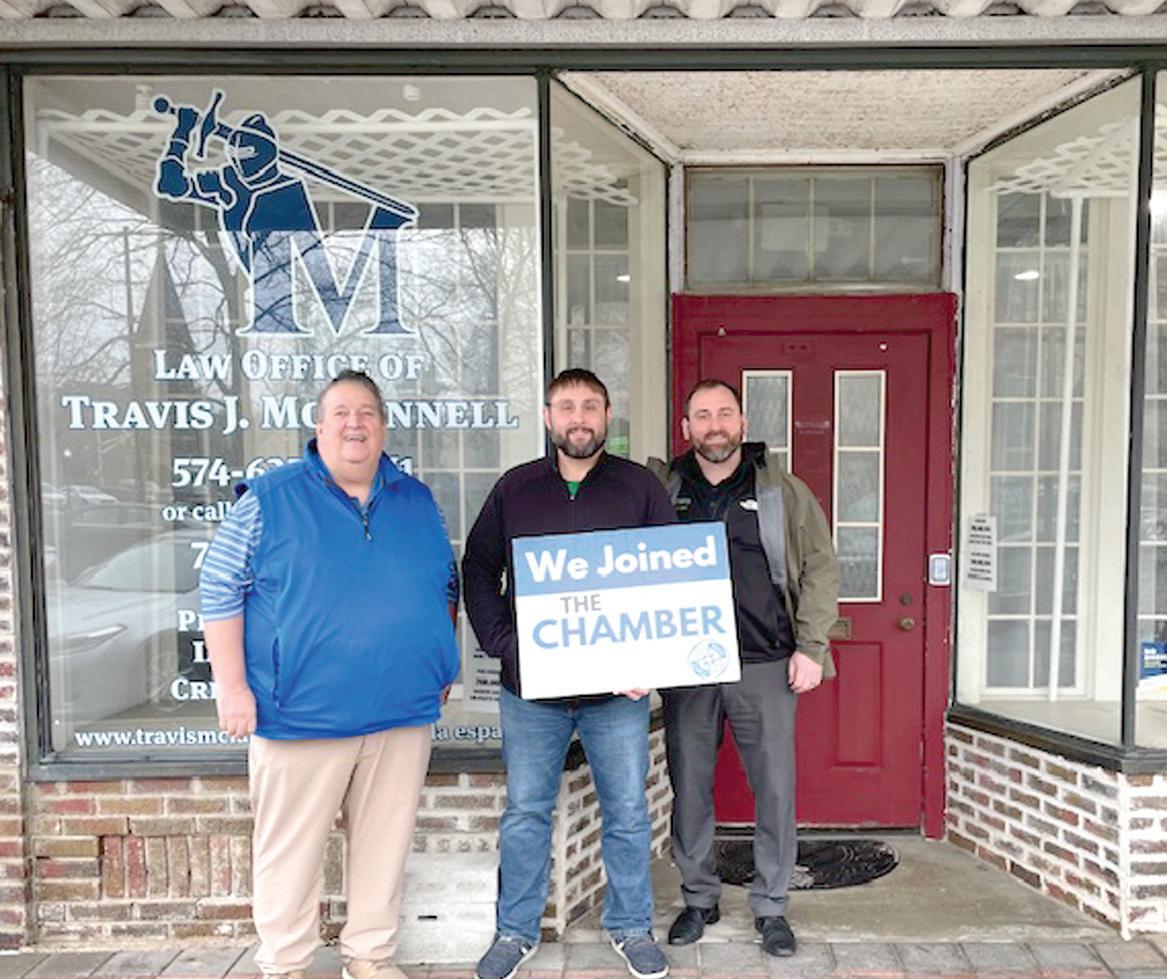
TRAVIS MCCONNELL JOINS CHAMBER The law office of Travis McConnell, 116 N. Buffalo St., Warsaw, has joined the Syracuse-Wawasee Chamber of Commerce. The firm specializes in personal injury and immigration law. From left are Brent Randall, executive director, Syracuse-Wawasee Chamber of Commerce; and Travis McConnell and Jason Dewart, chamber board and Interra Credit Union. Photo provided by the Syracuse-Wawasee Chamber of Commerce.
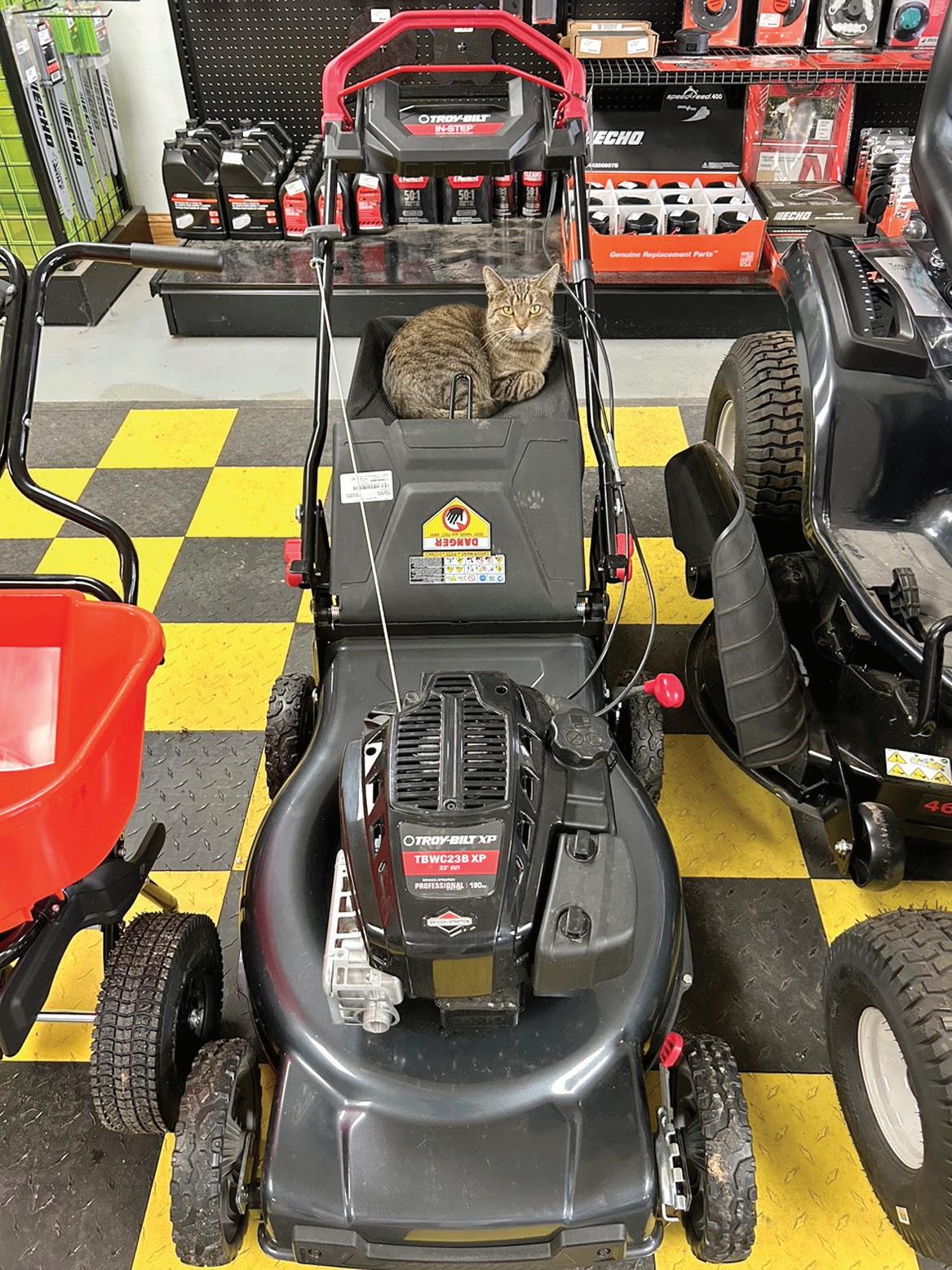
HANDLING ALL YOUR BAT-
TERY NEEDS Battery Tech in Millersburg definitely has what you need when it comes to batteries. If you need a special battery, Battery Tech will get it, if it isn’t already in stock.
Battery Tech is now carrying brand-new golf carts in many colors, totally street legal with lights and turn signals. Stop in and get your toys going again at 503 Carriage Lane, Millersburg. Photo provided by Battery Tech.





(Family Features) If cooler weather has you longing for sunny days out doors, take heart. Once spring rolls around, you can prepare your yard for months of warm-weather enjoyment with these tips.
1. Clear the yard — Remove any leaves, rocks or sticks that may have accumulated then cut the grass as short as you can.
2. Dethatch — Use a thatching rake to remove dead roots and grass.
3. Treat weeds — Apply herbicide to treat weed-infested areas. Allow the weed killer to work for about a week then rake to remove dead weeds.
4. Add seed and fertilizer —
Depending on your lawn’s needs, overseed or spot seed to fill in thin spots. Use a grass variety that matches your climate for best results. Select and apply fertilizer consistent with your grass type then water thoroughly.
5. Clear garden beds of debris — Remove leaves and other matter that piled up in your garden during the cooler months. Gently turn the soil and work in fresh fertilizer.
6. Start planting — Early spring is the time to divide perennials and plant hardier vegetables, such as onions and potatoes. You can also start indoor seeds, if necessary, and move plants outdoors when the weather permits.
Getting some of your lawn and garden care underway now can make those warmer, sunny days feel closer in no time.
Find more seasonal tips for prepping your yard at eLivingtoday.com.

(Family Features) A firepit can serve as a warm and inviting backyard retreat, perfect for roasting marshmallows for s’mores or stargazing while wrapped in cozy blankets. Before you can share time around the firepit with loved ones, however, consider these tips to elevate your outdoor space.
Choosing The Right Design
When it comes to building a DIY firepit, the design you choose can significantly impact the aesthetics and functionality. From classic stone pits to modern metal designs, the options are nearly endless. Think about the size and shape as well. Circular designs are traditional and encourage conversation while square or rectangular pits offer a more contemporary look.
Gathering Materials And Tools
Essential materials include bricks, stones or metal parts for the structure, as well as gravel or sand for the base. Fireproof
materials are a must to ensure safety and longevity. You’ll also need tools such as a shovel for digging the base, a level to ensure even construction and adhesive or mortar for binding materials together. Depending on your design, you may require a metal fire ring, grill grate or mesh cover. Keeping Safety In Mind
Safety should be your top priority when building and using a backyard firepit. Always place your firepit at least 10 feet away from any structures, trees or flammable materials. Make sure the area is clear of dry leaves and other debris that could catch fire. Consider installing a spark screen to prevent embers from escaping and always keep a bucket of water or fire extinguisher nearby.
Enhancing Ambiance With Seating And Lighting Creating a cozy atmosphere around your firepit involves more than just the fire itself. Comfortable seating is essential
(Family Features) While almost all bird seed may look pretty much the same to you, it doesn’t to the birds you’re feeding. Knowing what kinds of seeds different birds like can help you attract a variety of fine feathered friends to your feeders.
Consider these popular seed types and the common backyard birds they attract:
Sunflower — Black sunflower seeds attract blue jays, goldfinches, woodpeckers, purple finches, chickadees, titmice and nuthatches. Striped sunflower seeds appeal to chickadees, doves, grosbeaks, northern cardinals, nuthatches, titmice and woodpeckers. Sunflower hearts (also known as “hulled sunflower” and “sunflower chips”) attract chickadees, common redpolls, juncos, doves, finches, goldfinches, grosbeaks, nuthatches, pine siskins, titmice and woodpeckers.
Nyjer — These lightweight, tiny seeds are a favorite of goldfinches. Put nyjer seeds in a hanging feeder with tiny holes so the small seeds won’t get blown away. Nyjer also attracts redpolls, juncos, doves, indigo bunting and pine siskin.
Safflower — These white seeds
are slightly smaller than black sunflower seeds. Because they are bitter, grackles, blue jays, starlings — and squirrels — don’t like them. However, they do attract doves, purple finches, chickadees, titmice and downy woodpeckers.
White millet — Good for scattering on the ground, white millet attracts ground feeders such as juncos, sparrows, indigo buntings, towhees and mourning doves.
Cracked corn — Popular with ground feeders, cracked corn appeals to doves, crows, jays, sparrows, juncos and towhees. Avoid getting finely cracked corn as it’s vulnerable to rot and can quickly turn to mush.
When choosing a bird seed mix, pay attention to the ingredients list on the package. Bird seed is required by law to list ingredients in order of content. Some cheaper mixes have filler seeds such as wheat, red milo, red millet or “assorted grain products.” Most backyard birds won’t eat those, and your seed mix could end up wasted on the ground.
Learn more about making your backyard an oasis for birds of all kinds at eLivingtoday.com.
for making your outdoor space inviting. Choose weather-resistant chairs, benches or DIY log stools arranged in a circle to foster conversation. Ambient lighting from string lights, lanterns or solar-powered path lights can elevate the mood and extend the usability of your firepit into the evening. Consider adding citronella candles or torches to keep insects at bay while enhancing the ambiance.
Visit eLivingtoday.com to find more ideas to enhance your living spaces.










(StatePoint) When planning your yard or garden, you likely focus on the what and the where. After all, a beautiful plant in a prime location enhances curb appeal and even bragging rights. You may pay less attention though to understanding how your location, or plant hardiness zone, impacts your garden’s success. To help ensure your plants don’t just survive, but thrive, the experts at lawn care equipment manufacturer Exmark are sharing the following insights about plant hardiness:
What Is Plant Hardiness?
Plant hardiness is the secret sauce of any healthy outdoor space. Plant hardiness is the ability of a plant to survive adverse growing conditions such as drought, flooding, heat and cold. Have you ever watched with frustration as a late-season temperature dip leaves your beautiful buds with a serious case of frostbite? Plant hardiness zones were developed to help landscapers, gardeners and lawn care enthusiasts avoid this heartache.
American farming contributes billions of dollars to the gross national product annually, which is one reason why the USDA has long monitored weather data. If determining when the average final frost may occur for every region in the country is worth billions, what could that same knowledge mean for your garden?
Well, choosing plants with hardiness levels appropriate to specific planting zones gives you the best chance of cultivating healthy, beautiful plants.
What Is My Growing Zone?
The United States is divided into 13 zones. Zones 1-6 being the coldest and 7-13 the warmest. Zone 1 averages -60 degrees F while zone 13 never drops below 70 degrees F. A general guideline is to plant anything designated for your zone or lower, but never higher. Know what zone you live in and make a point of checking the tag on the back of the plant or seed pack before planting.
Perennials Versus Annuals
There’s a reason you see palm trees in Sarasota, Fla., not Saginaw, Mich. When it comes to perennials, it’s not about when the first frost is, but how cold it gets and whether that plant can survive and thrive through winter. Plant hardiness zones are less important however when it comes to annuals. Because these plants are only meant to last one growing season; waiting until after the average first frost date will save you from having to re-plant. Know that even if your plant survives the frost, it may never match the photo you saw advertised at the nursery.
Planting Zone Rule Of Thumb Plant hardiness zone maps are,
Continued on page 11

Millersburg Feeds is an animal feed store in Millersburg and has been in business since 2007. It specializes in supplying customers with a wide and varied selection of products. It offers farm supplies, animal feed, grills and more.
Millersburg Feeds’ owners started this business to provide the community with a retail store. It is looking forward to partnering with Elkhart, Kosciusko, LaGrange and Noble counties’ consumers to continue to offer a premier shopping experience.
Millersburg Feeds would like to personally invite you to stop by and see its impressive selection today. Millersburg Feeds is located at 66094 SR 13, Millersburg. Photo by Susan Stump.
(Family Features) Whether you’re a new homeowner ready to tackle the landscaping for the first time or a seasoned gardener looking to do some updating, when it comes to gardening, you simply need the right tools to do the job well.
Consider these tips when purchasing essentials for your tool shed.
Shovel — A shovel with a pointed blade is a good allaround choice for digging, mixing and moving soil. Conversely, a flat-bladed shovel should be used for “cutting” tasks such as straight-side trenches and edging. Check fittings such as bolts and screws to ensure the blade and handle are strongly connected and can withstand reasonable pressure. Finally, spend a few minutes testing out the tool to ensure it fits well in your hand.
Rake — A basic fan-shaped rake with metal fingers is a universally accepted, long-lasting option. Select a model with plenty of give in the fingers if you’ll be raking large areas and don’t want to damage the ground below.
Hoe — Whether flat or pointed, a hoe is essential for a weed-free garden. Flat versions can also be useful for breaking up clumps and hard spots on the surface while pointed hoes make quick work of rows and mounds to protect and irrigate your plantings.
Continued from page 10
well, all over the map. Consider the number assigned to your zip code as a starting point. You may live right at the break between one zone and the other. When in doubt, guess too low, rather than too high. In the south, the heat stress a plant not made for the conditions. Your particular geography can also affect your hardi-
ness zone, like if you live on a hill or in a valley. For more insights, check out the USDA Plant Hardiness Zone Map and watch “Find Your Plant Hardiness Zone,” an episode of “Backyard Smart,” an original series from lawn care equipment manufacturer, Exmark. To watch the video, visit Backyard Life, which is part of a unique multimedia


Shears — A variety of shears are available to accomplish a wide range of garden tasks. Larger shears are ideal for big jobs such as shaping hedges, while smaller pruning shears are meant for snips and sprucing. Be sure to choose a model with a safety latch to lock blades when not in use. Find more gardening tips and advice at eLivingtoday.com.
destination with a focus on helping homeowners improve their outdoor living spaces. There you can also download additional tips and view other Exmark Original Series videos.
Understanding what plants will thrive in your climate is essential to a healthy landscape. Fortunately, free resources abound to help you plant successfully.





John R. Hanna
John “Pigpen” R. Hanna, 72, Leesburg, died Monday, April 7, 2025, at Lutheran Hospital of Indiana.
Arrangements are currently pending at Titus Funeral Home of Warsaw.
Robert Likens
Robert Likens, 89, died Thursday, April 10, 2025.
Arrangements are currently pending at McHatton-Sadler Funeral Chapels, Warsaw.
JoAnn She Brandenberger
Cletus and Maribeth (Schwartz) Brandenberger, Shipshewana, are the parents of a daughter, JoAnn She, born at 8:50 p.m. April 4, 2025, at Blessed Beginnings Care Center, Nappanee. She weighed 6 pounds, 5 ounces, and was 18 1/2 inches long.
Kiara Breann Yoder
Kevin and Cheryl (Miller) Yoder, Millersburg, are the parents of a daughter, Kiara Breann, born April 5, 2025, at Blessed Beginnings Care Center, Nappanee.
Patrick McMahan
Patrick McMahan, 70, Syracuse, died Wednesday, April 9, 2025, at Goshen Hospital. Arrangements are currently pending at Eastlund Funeral Home, Syracuse.

Job Wilson Otto Norman and Wanda (Fry) Otto, Topeka, are the parents of a son, Job Wilson, born at 5:16 a.m. April 7, 2025, at Blessed Beginnings Care Center, Nappanee. He weighed 7 pounds, 4 ounces, and was 20 3/4 inches long.
Jakoby Marc Lehman
Brian and Mary (Schwartz) Lehman, Nappanee, are the parents of a son, Jakoby Marc, born at 1:23 a.m. April 8, 2025, at Blessed Beginnings Care Center, Nappanee. He weighed 8 pounds, 7 ounces, and was 20 inches long.
FFW Corporation and Crossroads Bank announced the appointment of Andy Bain to its board of directors.
Cindy Riemersma, chairman of the board, commented, “We are thrilled to welcome Andy to the board and look forward to his valuable contributions and insights as we navigate challenges and embrace new opportunities ahead.”
Bain, a Wabash native, is an engineering and operations professional with extensive experience in the foundry, metallurgy and manufacturing industries. With a wealth of technical expertise and a proven track record in leadership, he has driven operational excellence, process improvements and strategic innovation in large-scale production environments.
Currently serving as foundry manager at The Ford Meter Box Co. Inc., Bain oversees operations for the company’s captive green sand foundry, leading key technical initiatives in metallurgy, regulatory compliance and intellectual property.
Prior to his current role, he held leadership positions, such as technical director, quality manager and supplier metallurgical engineer at
prominent companies, including Pratt and Whitney and Firth Rixson (now Howmet Aerospace). Throughout his career, he has specialized in product development, quality assurance, regulatory coordination and process optimization, making significant contributions to manufacturing efficiency, cost reduction and new product innovation.
Bain holds a Master of Science from the University of Wisconsin-Milwaukee and a Bachelor of Science from the University of Notre Dame. He resides in Wabash with his wife, Brittany, and their two sons.
Roger Cromer, president and chief executive officer, stated, “I look forward to working with Andy, along with our entire board. His extensive leadership experience and expertise in innovation align seamlessly with the board’s diverse skill set. His strong commitment to community service makes him a valuable addition to our team.”
Committed to strengthening the community, Bain looks forward to serving on the board of directors at Crossroads Bank, where he aims to support the bank’s mission and contribute to its continued growth.
The following small claims have been awarded in Kosciusko Superior Court III, Judge Chad Miner presiding: Snow & Sauerteig LLP v. Jamie Allen, $6,208.04; v. Carrie Goralczyk, $9,400
The Allergy & Asthma Center v. Carleigh Freeman, Micah Freeman, $91.46; v. Amanda Price, $395.12 Civil Collections
The following civil collections have been awarded in Kosciusko Superior Court IV, Judge Christopher D. Kehler presiding:
Snyder Morgan & Kuchmay LLP v. Ahmad Abdeljawad, Jawad Property Management LLC, Jawad Real Estate LLC, $9,923.36
Midland Credit Management Inc. v. Brittany Barber, $740.91; v. Karlee Bumgardner, $1,174.52; v. Alecia Ceballos, $1,967.47; v. Holly Keaffaber, $1,364.76; v. Logan Keen, $1,034.67; v. Ashley Marchlewicz, $878.03; v. Michael Mench, $2,000.30
Shannon Murphy, $1,042.65; v. Jamie Phillips, $9,675.08; v. Keaton Schopf, $2,929.71; v. Kayla Welker, $1,059.83
Capital One NA v. Melinda S. Catron, $3,277.38
HS Financial Group LLC, a/a/o assignee of Navy Federal Credit Union v. Druid Chaffins, $21,953.15
Crown Asset Management LLC v. Shane Wesley Hallstrom, $1,435.20
Kitch Acceptance Corp. v. Josie Lee Jensen, $3,246.68
Professional Financial Services of Indiana LLC v. Jamie N. Kauffman, $5,446.22
Mariner Finance LLC v. Serritha Peterson, $2,450.82
Velocity Investments LLC v. Cheryl Ritter, $2,968.26
Warsaw Health System LLC v. Carl Saint, $71,147.07
SAC Finance Inc. v. Alexander B. Salyer, $14,399.46
Jantzen International Ltd. v. TJM Wheels LLC, Topline Wheels Inc., $112,323.50
Cavalry SPV I LLC v. Lorene Yates, $1,192.81
Resolve Corp., assignee of Ikio LED Lighting LLC v. Znergy Inc., $1,601.759.40
The following evictions have been awarded in Kosciusko Superior Court III, Judge Chad Miner presiding:
Jhonathan Seitner v. Aaron Bailey, Cady Heller, $1,287.50
Lakes Estates LLC v. Beth Crone, $2,256.69
Webster Estates LLC v. Jeff Evett, $2,209.73
Culver Development Corp. v. Brenda Wilson, $3,676.94
The following plenaries have been awarded in Kosciusko Superior Court I, Judge Karin McGrath presiding:
Indiana Farm Bureau Insurance, a/s/o Trujillo and Villagran v. Brittany S. Bills, $9,780.04
Indiana Farm Bureau Insurance, a/s/o Wellman v. Jose Medina-Cervantes, $4,542.07
Superior Court III
The following fines for infractions have been assessed in Kosciusko Superior Court III, Judge Chad Miner presiding: Speeding — Nicholas M. Meadows, Pierceton, $164.50; Robert L. Brown, Warsaw, $164.50; Gary L. Black, Warsaw, $164.50; Leighton J. Cantu, Leesburg, $164.50; ; Cora G. Warstler, Warsaw, $164.50; Alia Najera, Ligonier, $164.50; Anthony J. Miller, Milford, $164.50
Operating a motor vehicle without financial responsibility — James L. Boggs, Mentone, $189.50; Ninfa M. Hernandez Parra, Milford, $189.50
Throwing a lighted cigarette, cigar or match from a moving motor vehicle — Sara R. Halsey, Syracuse, $239.50
Failure of occupant to use a safety belt — Nathyus L. Robinson, Akron, $25
Open alcoholic beverage container during operation of a motor vehicle — Barbara J. Lockhart, North Webster, $164
Improper or no tail or plate light — Samuel A. King, Winona Lake, $164
No valid driver’s license
Daniel Angel Alonso, Warsaw, $164.50
The following couples have applied for marriage licenses in the office of Kosciusko County Clerk of the Court Melissa Boggs: Bailey-Hostetler
Juliana R. Bailey, 21, Syracuse, and Bailey D. Hostetler, 24, Syracuse Gross-Hicks
Jordan Elizabeth Gross, 23, Warsaw, and Joshua Kaige Hicks, 26, Syracuse Timmreck-VanHouten
Aubrie Lanea Timmreck, 21, Osceola, and Colt Wildman VanHouten, 19, Warsaw Arter-Elder
Stephanie Marie Arter, 34, Syracuse, and Tye Lee Elder, 34, Syracuse Collette-Park
Darryl Collette, 30, Milford, and Lindsey Rebecca Park, 36, Milford Valencia-Carlos
Katie Valencia, 19, Warsaw, and

Jeremiah Carlos, 22, Warsaw Gonzales-Walls
Chasity Nicole Gonzales, 23, Pierceton, and Travis Brody-Kane Walls, 24, Pierceton Fouts-Coffin
Kevin Jacob Fouts, 22, Warsaw, and Haley Jo Coffin, 21, Fishers DeRolf-Schmidt
Eugene Edwin DeRolf, 83, North Webster, and Cecelia Pauline Schmidt, 80, North Webster Yoder-Hochstetler
Lyndon Jay Yoder, 33, Nappanee, and Eva Leann Hochstetler, 20, Nappanee Kaufman-Yoder
Eric Allen Kaufman, 20, Bremen, and Neva Dawn Yoder, 19, Etna Green Chhina-Vashyani
Jageer Chhina, 32, Warsaw, and Anubhuti Vashyani, 33, Solan, India Garcia-Ross
Juan Camilo Garcia, 23, Winona Lake, and Jadyn Grace Ross, 21, Winona Lake Reyes-Turnpaugh
Melissa Natalie Reyes, 18, Ligonier, and Douglas Clark Turnpaugh, 19, Warsaw Clark-Brath
Mayzie Jaymes Clark, 21, Warsaw, and Graydon Luke Brath, 21, Warsaw
The following couples have filed for a marriage dissolution in Kosciusko Superior Courts I or IV: Overmyer — Brett Overmyer, Warsaw, and Jenelle Overmyer, Warsaw. They were married June 11, 2005, and separated Feb. 9, 2025. One minor child.
Taylor — Krista Taylor, Milford, and Jeremy Taylor, Hot Springs, S.D. Minor child(ren). No other information was available.
Hook — Amy M. Hook, South Whitley, and John D. Hook Jr., Fort Wayne. They were married Nov. 20, 2010, and separated March 14, 2025. No minor child(ren).
Wright-Foreman — Roy R. Wright Jr., Milford, and Jordan E. Foreman, Warsaw. They were married Oct. 29, 2022, and separated Feb. 5, 2025. No minor child(ren).
Wallace — Ellen Wallace, Claypool, and Richard Wallace, Claypool. They were married March 29, 1995, and separated April 1, 2025. No minor child(ren).
Cano-Sanchez — Liset Cano, Warsaw, and Enrique Reyna Sanchez, Warsaw. No minor child(ren). No other information was available.
Ball — Tyra Ball, Warsaw, and Alexander Ball, Elkhart. No minor child(ren). No other information was available.
An all-kids camp will be from 9 a.m. to noon June 9-13 and July 7-11 in Nappanee. Choose one week or both.
This is an all-inclusive camp for children in pre-K to fifth grade. The camp consists of story time, craft time, movement activities (both inside and outside) and a snack. The cost is $40 per child per week. Registration is required. To register, visit nappaneeparks.recdesk.com or call (574) 773-8585. Once registration is complete, parents will be notified of the location.
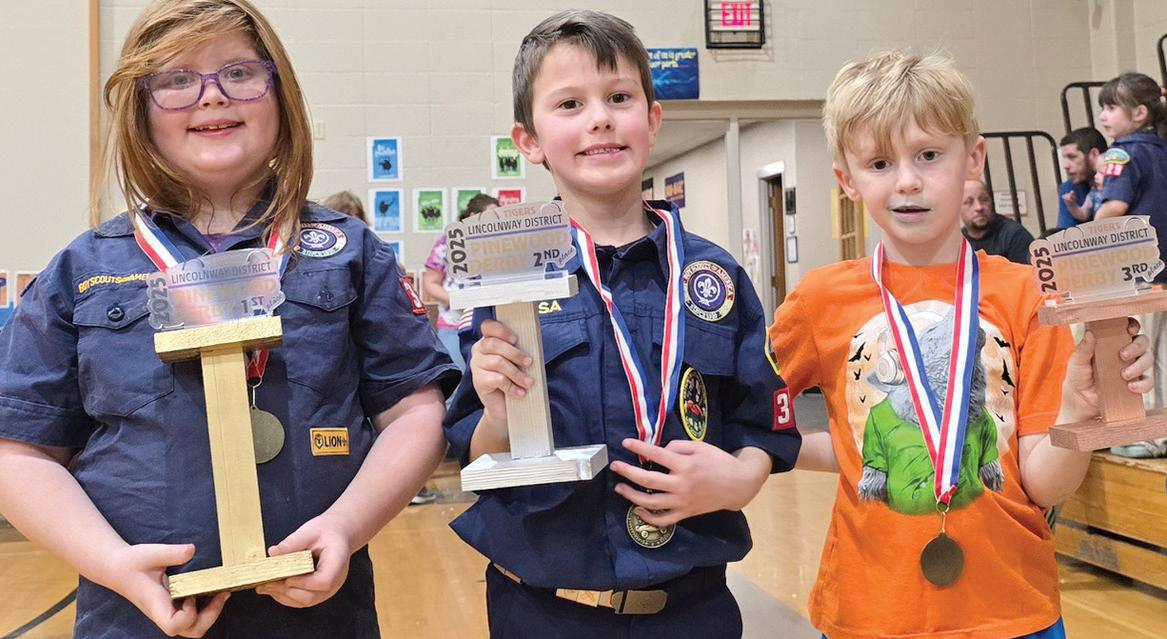
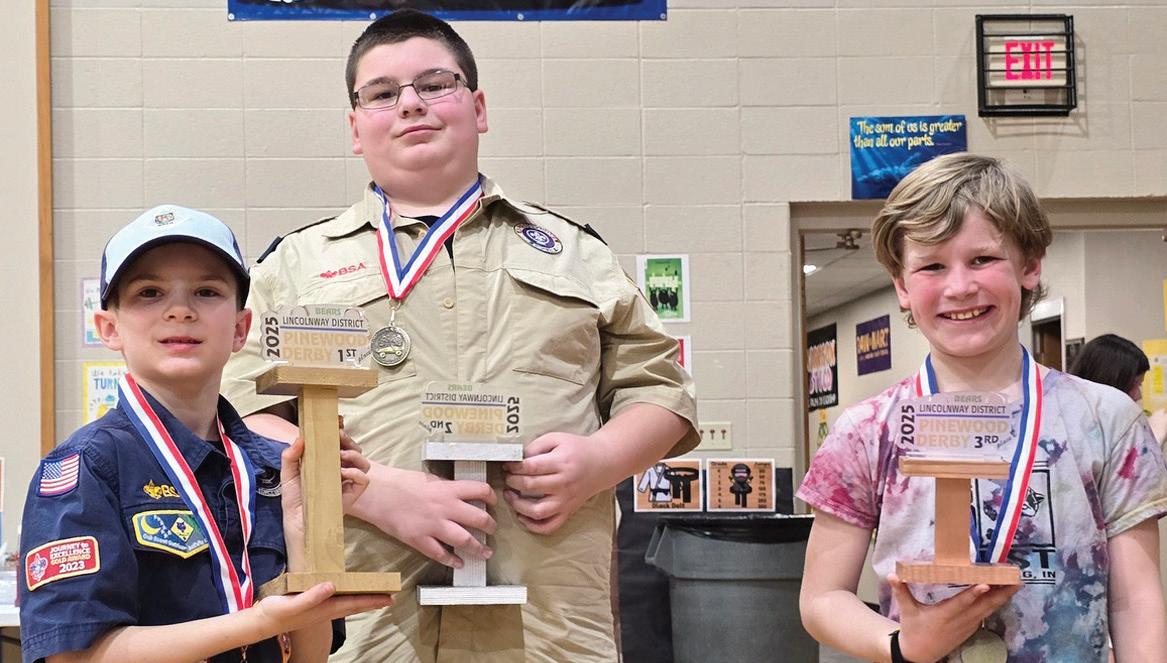
Area Cub Scouts in the Lincolnway District met for Pinewood Derby racing Friday, March 14, at Harrison Elementary School, Warsaw.
Pinewood Derby racing includes regulation Scout cars and “outlaw” cars (with expanded rules), using blocks of pine that are shaped into unique creations each year. Individual Cub Scout packs hold its own races, and then districts and councils hold additional races including any pack that wants to participate.
The Lincolnway District is comprised of units in Kosciusko, Whitley and southwestern Allen counties (Aboite Township). More than 30 Scout and outlaw racers from Packs 3082, 3726, 3729, 3731 and 3828 filled the gym at Harrison for an hour of racing. At least one Scout from every pack earned a trophy.
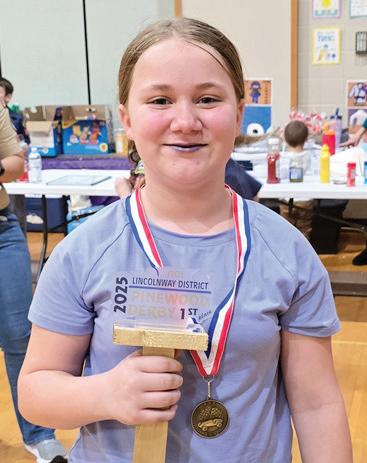
The following are Lincolnway District Pinewood Derby winners for 2025. Only first names were provided by the district.
• Grand champion (overall fastest) — Shay Tackitt, Pack 3828.
• Kindergarten (Lion Den) — first, Khloe Schneider, Pack 3729; second, Jacob Railsback, Pack 3828; third, Rose NaBee, Pack 3729.
• First grade (Tiger Den) — first, Scarlett Krider, Pack 3082; second, Nolan Danner, Pack 3726; third, Lucien Mericle, Pack 3729.
• Second grade (Wolf Den) — first, Micah Bougle, Pack 3731; second, Lincoln Schneider, Pack 3729; third, Grey Hammer, Pack, 3731.
• Third grade (Bear Den) — first, Derek Penninger, Pack 3731; second, Joseph Burns, Pack 3729; third, Tristan Butler, Pack, 3729.
• Fourth grade (Webelos Den) — first, Jase Tackitt, Pack 3828; second, Colin Johnson, Pack 3731; third, Aaron Brost, Pack 3731.
• Fifth grade (Arrow of Light
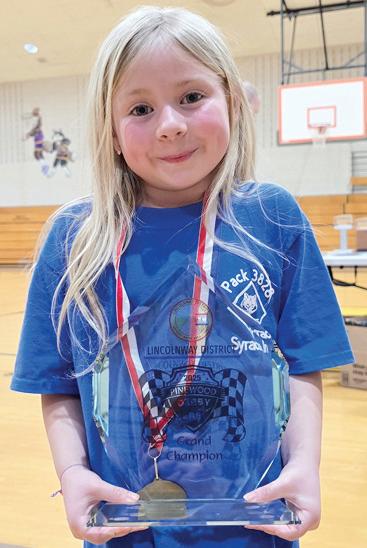
GRAND CHAMPION
Den) — first, Adalyn McConnell, Pack 3729.
Follow the Lincolnway District at facebook.com/LWDistBSA to see all the activities hosted through the year.
The Trine University Wind Ensemble will present its spring concert, titled “That’s Not Baroque,” beginning at 3 p.m. Sunday, April 27, in the Ryan Concert Hall of the T. Furth Center for Performing Arts, Angola.
The following local students will perform with the wind ensemble:
• Ryan Hoak, Warsaw, performing on trumpet and organ, majoring in civil engineering.
• Shannon Ridley, Warsaw, performing on trombone, majoring in mechanical engineering.
The concert is free and open to the public.
Join Purdue Extension for an insightful presentation by Emily Kresca, Purdue Extension, Kosciusko Agricultural and Natural Resources educator. The focus will be on small space and container gardening, perfect for urban dwellers and those with limited outdoor areas.
This program will be at noon Wednesday, April 23, at the Home and Family Arts building at the Kosciusko Fairgrounds, 1400 E. Smith St., Warsaw.
It covers the principles of maximizing limited space, including selecting the right containers, choosing suitable plants, and employing vertical gardening techniques. Discover tips for soil
health, watering strategies, and seasonal planting to ensure a small garden flourishes. Whether you have a balcony, patio, or tiny yard, this session will empower you to create a lush and productive garden oasis, no matter the size.
Register for this program by calling the extension office at (574) 372-2340 by Wednesday, April 16.
If you are in need of accommodations to attend this program, contact Kresca prior to the meeting at (574) 372-2340 or eluc@ purdue.edu by April 16. If you need an interpreter or translator, contact Kresca prior to the meeting by April 16.

is Shay Tackitt of Cub Scout Pack 3828, who is the grand champion (overall fastest) of the 2025 Lincolnway District Pinewood Derby. She is in first grade, or the Tiger Den. Photo provided by the Lincolnway District.
For more information on a local Cub Scout pack (kindergarten through fifth grade) or Scout BSA Troop (sixth through 12th grade), enter your ZIP code at beascout.org, select the program you are interested in and view the meeting and contact details for a unit close to you.


JacuzziBathRemodelcaninstallanew, custombathorshowerinaslittleasone day.Foralimitedtime,wavingallinstallationcosts!(Additionaltermsapply.Subject tochangeandvarybydealer.Offerends 6/30/25.)1-844-501-3208 Home Services
AGINGROOF?NEWHOMEOWNER? STORMDAMAGE?Youneedalocal expertproviderthatproudlystandsbehind theirwork.Fast,freeestimate.Financing available.Call1-888-878-9091Havezip codeofpropertyreadywhencalling!
Replaceyourroofw/thebestlooking& longestlastingmaterialsteelfromErie MetalRoofs!3styles&multiplecolors available.Guaranteedtolastalifetime! LimitedTimeOfferupto50%offinstall+ Additional10%offinstall(military,health& 1stresponders.)1-833-370-1234

TREETRIMMING,treeandstumpremovalservice,stormdamagecleanup, treeclimbingorbucketlift,Freeestimates. DanTheTreeMan.574-831-4381,New Paris. LUMBERJACKJIMTREESERVICEProfessionaltreetrimmingandremoval. Stormdamagecleanup.Safeandreliable. Fullyinsured.Locallyowned.Call 574-371-6536.

TV Satellite C180
DIRECTVStream-Carriesthemostlocal MLBGames!ChoicePackage$89.99/mo for12mosStreamon20devicesatonce. HBOMaxincludedfor3mos(w/Choice Packageorhigher.)Nocontractorhidden fees!Somerestrictionsapply.CallIVS 1-866-859-0405

Bath&showerupdatesinaslittleas1 day!Affordableprices-Nopaymentsfor 18months!Lifetimewarranty&professionalinstalls.Senior&militarydiscountsavailable.1-877-543-9189
ConsumerCellular-samereliable,nationwidecoverageasthelargestcarriers.No long-termcontract,nohiddenfeesfree activation.Allplansfeatureunlimitedtalk& text,startingatjust$20/mo.Call 1-877-751-0866
Don’tletthestairslimityourmobility! Discovertheidealsolutionforanyonewho strugglesonthestairs,isconcernedabout afallorwantstoregainaccesstotheir entirehome.CallAmeriGlidetoday! 1-833-399-3595
Inflationisat40yearhighs.Interestrates arewayup.Creditcards.Medicalbills.Car loans.Doyouhave$10kormoreindebt? CallNationalDebtReliefandfindouthow topayoffyourdebtforsignificantlyless thanwhatyouowe!Freequote:Call 1-844-955-4930
Waterdamagecleanup&restoration:A smallamountofwatercanleadtomajor damageinyourhome.Ourtrusted professionalsdocompleterepairstoprotectyourfamilyandyourhome’svalue! Call24/7:1-888-872-2809.Havezipcode ofservicelocationreadywhenyoucall!


AFFORDABLEHOUSEKEEPING,honest, reliable.Wawasee/Warsawareas. 574-377-2923
Health Aids P060
MobileHelpAmerica’spremiermobile medicalalertsystem.Whetheryou’re homeoraway.Forsafety&peaceofmind. Nolongtermcontracts!Freebrochure! Call1-888-489-3936
PortableOxygenConcentratorMayBe CoveredbyMedicare!Reclaimindependenceandmobilitywiththecompactdesignandlong-lastingbatteryofInogen One.Freeinformationkit!Call 877-305-1535
Health/Fitness P070
DentalinsurancefromPhysiciansMutual InsuranceCompany.Coveragefor400+ procedures.Realdentalinsurance-not justadiscountplan.GetyourfreeInformationKitwithdetails!1-855-526-1060www. dental50plus.com/ads#6258 VIAGRAandCIALISUSERS!50Generic PillsSPECIAL$119.00!Shippeddiscreetly toyourhome.100%guaranteed.24/7 CALLNOW!800-709-3080
Eliminateguttercleaningforever!LeafFilter,themostadvanceddebris-blocking gutterprotection.SchedulefreeLeafFilter estimatetoday.20%offEntirePurchase. 10%Senior&MilitaryDiscounts.Call 1-833-610-1936
Prepareforpoweroutagestodaywitha GeneracHomeStandbyGenerator.Act nowtoreceiveafree5-Yearwarrantywith qualifyingpurchase*Call1-855-948-6176 todaytoscheduleafreequote.It’snotjust agenerator.It’sapowermove.
Musical Merchandise P100 BE WISE — ADVERTISE
!!OLDGUITARSWANTED!!GIBSON, FENDER,MARTIN,Etc.1930’sto1980’s. TOPDOLLARPAID.CALLTOLLFREE 1-866-433-8277



WesleyFinancialGroup,LLCTimeshare CancellationExpertsOver$50,000,000in timesharedebt&feescancelledin2019. Getfreeinfopackage&learnhowtoget ridofyourtimeshare!Freeconsultations. Over450positivereviews.833-308-1971
Webuyhousesforcashasis!Norepairs. Nofuss.Anycondition.Easythreestep process:Call,getcashoffer&getpaid. GetyourfaircashoffertodaybycallingLiz BuysHouses:1-844-877-5833
andSupportourVeterans.Fast-FREE
miles. ISB 230 Cummins diesel engine, Allison auto trans., hydraulic brakes, engine block heater. New Knapheide 10 foot








33rd Annual
Standardbred Auction
9 a.m. Saturday, April 19. Located at Michiana Event Center, 455 E. Farver St., Shipshewana.
Online Jewelry And Silver Auction
Bidding open until 7 p.m, April 20. Pickup located at 1582 W. SR 114, North Manchester. Gold and silver jewelry, diamonds, gemstones, turquoise, sterling collectibles, watches, WWII pins. Metzger Property Services, metzgerauction.com.
Smalley Family Farm Auction
6 p.m. Monday, April 21. Lo-
cated at 8900 S. 775W, Claypool. 28.82 acres in one parcel. Hahn Auctioneers, hahnrealtyandauction.com.
Toy Auction
3 p.m. Wednesday, April 23. Located at Chupp Auction Center, 890 S. Van Buren St., Shipshewana.
Online Only Auction
Bidding open until 6 p.m. Wednesday, April 23. Pickup located in Milford. Vehicles, construction equipment and supplies, RV and auto parts, solar panel, horse vet care manuals, grill accessories, CB radi-
os. Metzger Property Services, metzgerauction.com.
Dewayne And Juanita Chupp Benefit Auction
5 p.m. Thursday, April 24. Located at Shipshewana Antique Auction Building, 345 S. Van Buren St., Shipshewana.
Online Industrial Supply Auction
Bidding open until 6 p.m. Thursday, April 24. Pickup located at 1420 W. Bike St., Bremen. Bid online at bid.kraftauctions.com.
Spring Farm And Contractor Auction
9 a.m. Saturday, April 26. Lo-
By EMILY CHRIST Health and Human Sciences
Extension Educator
Purdue Extension Elkhart County
Sleep is often referred to as “the best medicine” due to its profound impact on physical health, mental well-being, and overall quality of life. Numerous studies underscore the importance of adequate sleep in maintaining optimal health and functioning across various domains.

First, sleep plays a crucial role in supporting cognitive function and emotional regulation. During sleep, the brain consolidates memories and processes information acquired throughout the day. Adequate sleep enhances learning, problem-solving abilities, and decision-making skills. Furthermore, insufficient sleep has been linked to impairments in attention, concentration, and emotional stability, increasing the risk of mood disorders, such as anxiety and depression.
mance by promoting muscle recovery, reducing fatigue and optimizing physical endurance.
In conclusion, sleep is rightfully considered “the best medicine” due to its multifaceted benefits for physical health,


cognitive function, emotional well-being, and athletic performance. Prioritizing adequate and quality sleep is crucial for maintaining overall health and resilience against various health challenges.



cated at 1582 W. SR 14, North Manchester. Cars, vans, trucks, semis, semi trailers, campers, man lifts, construction equipment, power and hand tools. Metzger Property Services, metzgerauction.com.
Dogwood Hills Spring Tree Auction
9 a.m. Saturday, April 26. Located at 53889 CR 39, Middlebury. Real Estate & Public Auction
Saturday, April 26. Public auction at 9 a.m. Real estate auction at noon. Located at 71218 CR 33, Syracuse.
Spring Spectacular Auction
10 a.m. Saturday, April 26. Preview 9 a.m. to 5 p.m. Friday, April 25. Located at Kraft Auction Service, 416 S. Huntington
St., Syracuse. Tillable Farmland Auction
6 p.m. Tuesday, April 29. Auction located at Atwood Community Building, 213 E. Hovey St, Warsaw. Property located at W. 400N, Etna Green. 80 acres of mostly tillable farmland. Schrader Auction, schraderauction.com.
Soda Sign And Thermometer Auction
4 p.m. Wednesday, April 30. Located at Chupp Auction Center, 890 S. Van Buren St., Shipshewana. Third Annual Flower And Power Tool Auction
5 p.m. Wednesday, April 30. Located at Claywood Event Center, 13942 N. 1100W, Nappanee.








Secondly, sleep is vital for physical health and immune function. During sleep, the body repairs tissues, synthesizes proteins, and releases growth hormones necessary for muscle growth and repair. Chronic sleep deprivation is associated with an increased risk of obesity, cardiovascular diseases, diabetes and weakened immune responses.


Also, sleep plays a critical role in regulating metabolism and appetite. Sleep deprivation disrupts the balance of hunger hormones, leptin and ghrelin, leading to increased appetite and cravings for high-calorie foods. This dysregulation contributes to weight gain and obesity, further underscoring the importance of adequate sleep for maintaining a healthy weight and metabolic function.
Additionally, sleep is essential for optimal performance and recovery in athletes. Research has shown that sleep deprivation impairs physical performance, reaction times, and motor coordination, compromising athletic training and competitive outcomes. Conversely, sufficient sleep enhances athletic perfor-



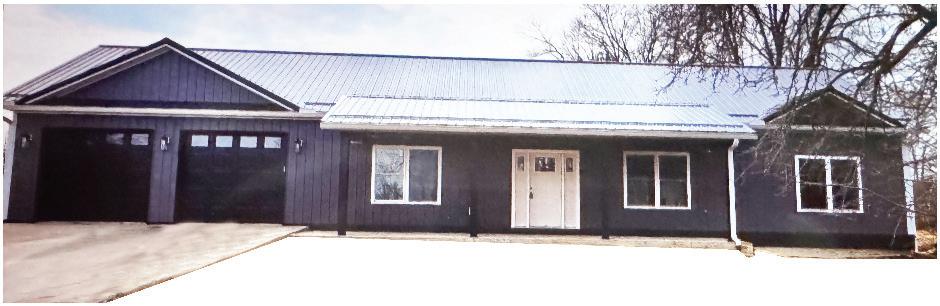
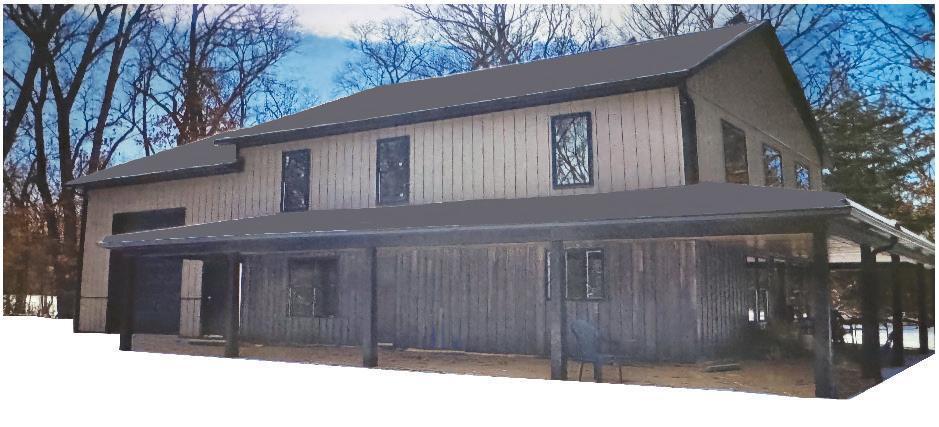
Bowen Health broke ground on its new Transitional Living campus Wednesday, April 2, in Warsaw. This short-term treatment program is designed to provide patients in need of intensive treatment with safe living accommodations and connections to behavioral and physical health services.
The campus will offer various levels of group homes and individual living units, enhancing community integration and employment opportunities. The goal for all patients is to develop the skills necessary to live independent lives.
Dr. Ryan, Bowen Health president/ CEO, said that the campus concept, in the works for more than two years, came about due to the passion of three Bowen executives: Tess Ottenweller, VP of intensive services; Marci Wicks, director of Transitional Living; and Rich Hoffman, director of facilities.
“It’s to build a centralized campus focused on assisting severely mentally ill people in Huntington, Kosciusko, Marshall, Wabash, and Whitley to live independently in their communities,” said Ryan.
“We’re calling this project our Transitional Living Campus. We
picked the word campus because, unlike traditional group homes, the focus of these homes built on this property will be on building independence. This building is the first of three planned phases of construction. Each part will focus on graduating a resident from basic to intermediate to ready-tolaunch skills.”
“When completed, we will have invested over $12 million in the care of our transitional living programs,” said CFO Jay Baumgartner. “Thanks go to our legislators, Indiana Division of Mental Health and Addictions, and Indiana Council of Community
Join us for lunch and explore our Neighborhood Homes and Manor Apartments, with maintenance-free living your way. Join us on Thursday, May 1st, 11:00 AM – 2:00 PM
l Tour our beautiful 117-acre campus
l Experience a welcoming, engaged community
l Enjoy a light lunch
l Learn about pricing and options for Independent Living
l Explore Timbercrest’s other care services: Assisted Living, Therapy, Long Term Care, and Memory Care.
Affordable independent living your way. Call 260-982-2118 today to RSVP so we can hold your Open

2201 East Street • North Manchester, IN 46962 260-982-2118 • www.Timbercrest.org
Mental Health Centers, who are providing the seed money to help get this program going. Without their assistance, we would not have been able to move forward with this.”
Currently, Bowen Health operates four separate facilities in Kosciusko and Marshall counties. This new project will combine some of these facilities into one campus-style setting, offering a high level of care in an enhanced therapeutic living environment for patients, including shared outdoor and garden space.
“Our program focuses on equipping residents with practical skills that are needed to live independently and thrive in the community,” said Ottenweller.
“These skills include daily living activities, managing mental health, and engaging in community environment.
Each resident has regular appointments with mental health and psychiatric professionals and primary care providers to address their overall health needs. We work closely with family members and caregivers, external community partners, and other natural supports to ensure a resident’s specific needs are met.”
“These individuals are valued members of this community with hopes and dreams, like many of us,” said Eddie Gomez, VP of facilities. “I can assure you that their new home has been designed with great care, with their comfort and healing in mind.”
“This is an opportunity for residents to grow and learn while receiving the support and services to help them flourish,” said board member Cindy Brady. “Our residents have so much to offer our community.”
“In this space, patients will have the opportunity to heal, physically, emotionally, and mentally,” said Marci Wicks, director of Transitional Living. “This space will provide the care, support, and resources they need to recover and rebuild their lives. It represents growth, progress, and the promise of new opportunities. Within these walls, patients will find more than just treatment. They will find hope, healing, and the opportunity to transform their lives.”
Wicks introduced Evan, a current resident of The Harbors, one of Bowen’s current transitional living facilities. Struggling for more than a decade with his mental health, due to a long battle with Lyme Disease, he began to receive treatment at Bowen in late 2024. He was battling thoughts of suicide and was unable to continue living with his family due to his illness. Then, he had a conversation with Wicks. “Marci informed me that I was a good candidate for transitional living and that she was willing to help,” Evan said. “When she said this, I was relieved. I finally had hope in the darkest place imaginable. When I arrived, the staff members treated me with the utmost respect. I was unaware a place like this existed. The Harbors saved my life.”
“We recognize the need for a continuum of mental health care that goes beyond intensive hospitalization and outpatient care,” said COO Shannon Hannon.
“Because of this, you’ve seen Bowen Health double down by investing in additional therapy and psychiatric services, adding primary care and crisis receiving and stabilization services,” Hannon continued.