

PUBLIC SAFETY










18 Public Safety: Applied research project introduces patrol planning tool to the Pensacola Police Department
20 Public Safety: NobleACT helps connect community with local resources partners
24 Public Safety: Corpus Christi provides free cancer screenings to its firefighters
26 Public Safety: Des Moines, Iowa’s, blood transfusion pilot program is the first in the state
30 Public Safety: Charlotte Fire builds new all-electric firehouse
36 Building & Construction: Fayetteville launches program to streamline housing development
38 Streets, Highways & Bridges: Tejon Street revitalization creates safer, more walkable destination
42 Building & Construction: Pocono Township: Building a public safety center from the inside out
44 Parks & Environmental Services: Greenville begins landscape restoration following tornado



publisher RON BAUMGARTNER rbaumgartner@the-papers.com

editor-in-chief DEB PATTERSON dpatterson@the-papers.com
editor SARAH WRIGHT swright@the-papers.com

publication manager CHRIS SMITH chris@themunicipal.com
graphic designer MARY LESTER mlester@the-papers.com
business manager ANNETTE WEAVER aweaver@the-papers.com
mail manager KHOEUN KHOEUTH kkhoeuth@the-papers.com



director of sales and marketing
KRISTIN DEVITTORIO kdevittorio@the-papers.com
marketing assistant REAGAN NICHOLS rnichols@the-papers.com
editorial assistant JODI MARLIN jodimarlin1241@gmail.com
Contributing Writers
Jennifer Barton, Beth Anne Brink-Cox, Lauren Caggiano, Nicholette Carlson, Denise Fedorow, Danielle Lund, Janet G. Patterson, Julie Young
PO Box 188 • 206 S. Main St., Milford, IN 46542
866-580-1138/Fax 800–886–3796
Editorial Ext. 2307; Advertising Ext. 2505, 2408






Vigilance in uncertain times

Sarah Wright | Editor
We live in a new age with new challenges for public safety agencies. Artificial intelligence opens the way to efficient ways to keep communities safer. In previous issues of The Municipal, we’ve highlighted ways cities are using AI to increase response times, improve street safety and better handle 911 calls. However, with every new technology, there are headaches and growing pains. AI opens the way to deepfakes and false alarms. I hadn’t even considered AI being used to fake a mass shooting event to cause panic until a city mentioned it as part of its preparations for its solar eclipse event. Have your leadership and public safety professionals considered this for events and festivals? If not, now is the time to start asking questions and broadening out emergency plans. Cities are going to have to adapt to these curveballs.
As I write this editor’s note, many cities are stepping up security and encouraging vigilance following U.S. and Israeli strikes on Iran. In modern warfare, drones play major roles and have shown to be quite effective on the battlefield. Ukraine’s “Operation Spider’s Web” seemed to turn the page on a new era of warfare, using what has been dubbed “Trojan trucks” to launch 117-plus drones. Everyone across the globe would be foolish not to take notes. Like with AI, public safety agencies need to factor drone attacks into their plans and training. Hopefully, we will never see such attacks, but it never hurts to remain vigilant.
While there are so many current concerns that require attention, public safety agencies can’t lose sight of their communities and their individual needs. In many cities, agencies are stepping up to the plate, as we’ll highlight in this issue of The Municipal.
The Pensacola, Fla., Police Department, for instance, partnered with the University of West Florida to conduct an applied research project, which aimed to enhance the efficiency of police patrols and bolster community safety. Writer Julie Young shares some insights from this research project and its potential future uses.
Then, in Noblesville, Ind., the police department has launched the NobleACT program, which focuses on strengthening community-based responses to mental health crises. Through this program, the department has assisted more than 500 individuals with housing, mental health crisis and addiction issues. Writer Nicholette Carlson relays the positive impact NobleACT has had on the Noblesville community.
Another impressive feat is rolling out in Des Moines, Iowa, where EMS providers are overseeing the state’s first pre-hospital blood transfusion pilot program. This program stands to save the lives of many community members. Writer Denise Fedorow notes that within hours of its launch, the pilot program improved the condition of a patient before reaching the hospital.
Finally, we’ll highlight Corpus Christi, Texas’, program to provide voluntary cancer screenings for the Corpus Christi Fire Department members, and Charlotte, N.C.’s, innovative all-electric fire station.
These efforts truly make a difference in communities. They can feel buried by controversial headlines, but the impact on individual residents means everything.
Mueller® provides solutions for quality drinking water
By NICHOLETTE CARLSON | The Municipal
Mueller’s portfolio of brands provides extensive solutions to help cities provide safe drinking water and, when used together, help increase water quality. These products help cities and utilities better prepare for the future and be proactive instead of reactive, and increase efficiency and potentially save money.
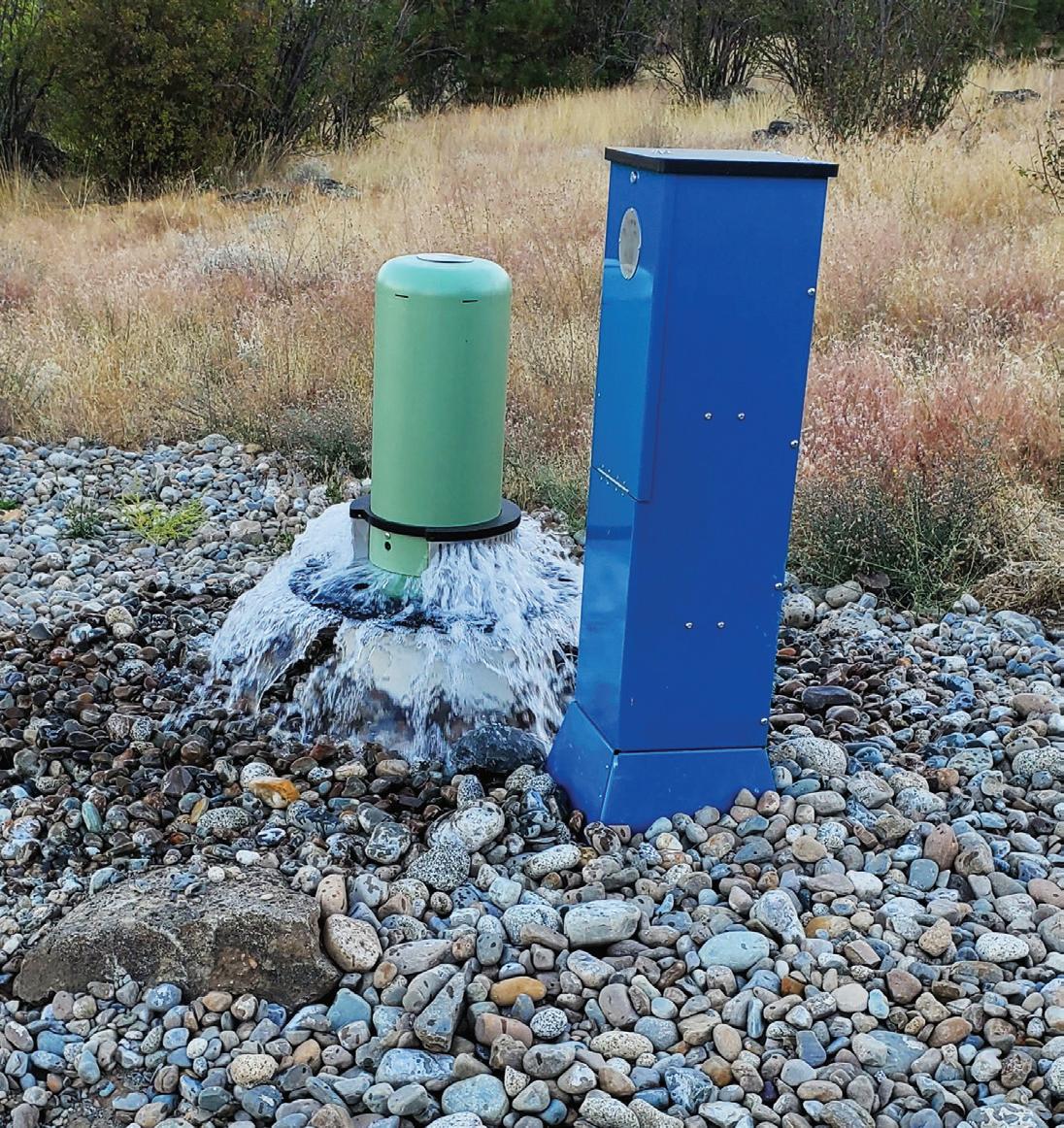
The Hydro-Guard® connected flushing system helps move water through a distribution network when there is not enough demand to turn the water over, preventing it from aging in the line. At the dead end of a line, water can stagnate if there is not enough movement. On larger lines, there are often not enough homes or businesses to move fresh disinfected water to the dead-end points. An automatic flusher can be used to address these situations where standard demand is insufficient for maintaining a consistent water turnover rate. The flusher can be programmed to flush water lines once a week, daily, for a few minutes a day or for an hour a day.
Turning the water over helps manage disinfectant byproduct levels in the lines. Bringing better, disinfected water to customers helps increase water quality and provides safer drinking water. One such case is Liberty Lake in Washington state that used the Hydro-Guard 100 series to address a resident’s E.coli discovery in its waterline before Thanksgiving. Water operators discovered the contamination was from three dead-end lines that were not adequately flushed during daily use, and due to fall sprinkler blowouts, E. coli entered part of the water supply.
Three custom Hydro-Guard automatic flushing systems with water quality sampling stations were installed by Mueller in just one day. Operators programmed automatic flushing of the deadend lines weekly, and the sampling stations were positioned within 18 inches of the flushing systems to ensure an accurate sample was collected. This allowed Liberty Lake residents to get the “all clear” for clean water the day before Thanksgiving.
Hydro-Guard has different flushing solutions for different environmental conditions. For warmer climates, the system can discharge flushed water to the ground, or it can be discharged directly to a storm pond, sewer, swale or other discharge point. For cold climates, there are models that can discharge flushed water to the ground, or the discharge can be directed to a dedicated point, such as a pond or storm sewer.
Mueller’s FC300 is one option for cold climates. The only part of this flushing unit above ground is a manhole cover; all flushing is below ground. This system is constructed using the Mueller Thermal-Coil® meter box with an integrated meter yoke in addition to the flushing system. This design allows it to be lowered below
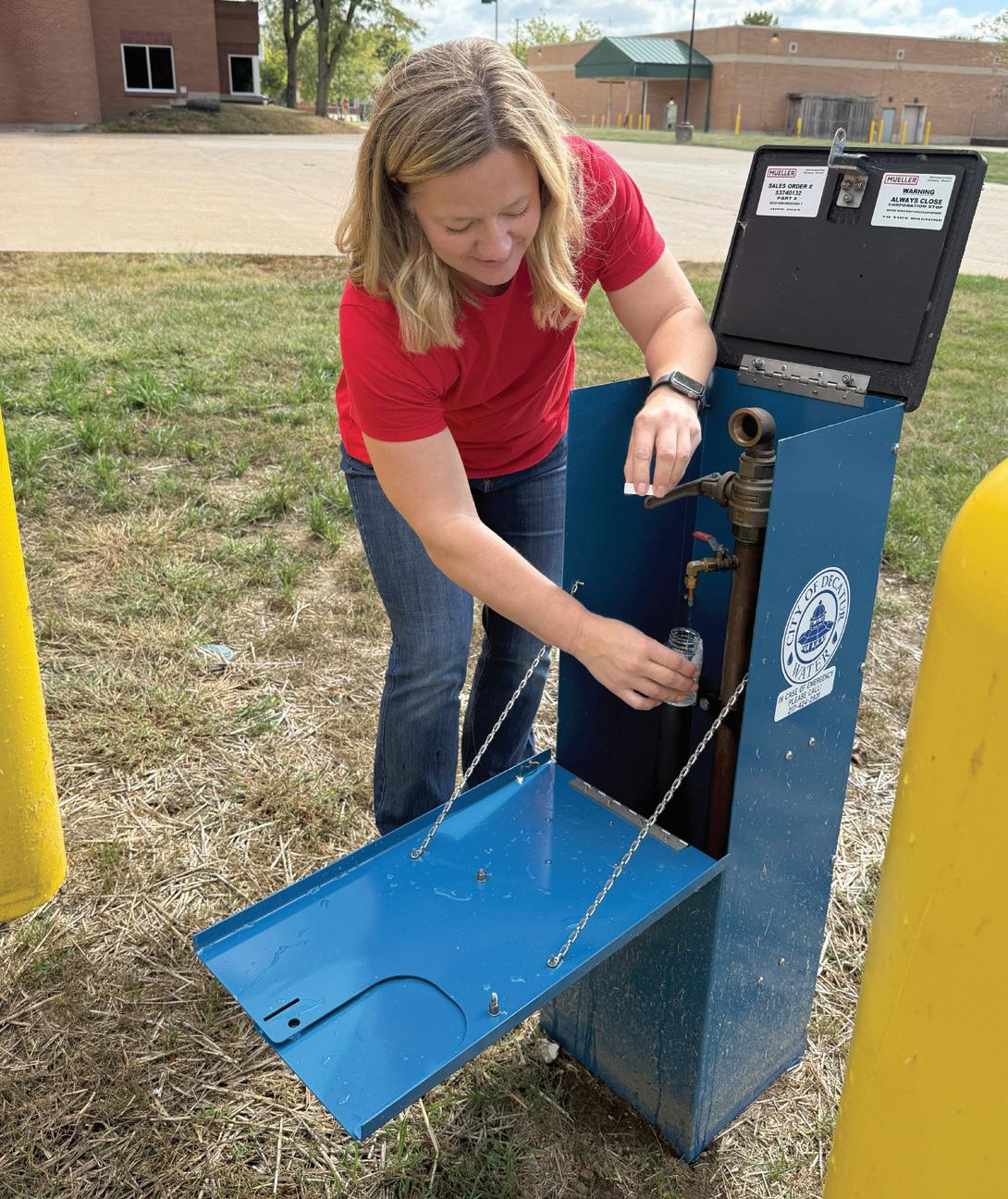
Taking a water sample in Decatur, Ill., from the Hydro-Gaurd sampling station. (Photos provided Meuller Water Products)
the frost depth to protect it from freezing and also be worked on above ground when necessary. The most common bury depth for areas with cooler temperatures is between 36 and 84 inches deep. Another water quality device from Hydro-Guard is the sampling station. The Connected Sample Stations also allow water utilities to monitor water pressure and temperature from the sample location. The valve opens and a water sample is collected, and a
digital record is created when each sample is taken. If something in the water tests positive, public works employees can go back and see when the sample was taken and check the corresponding water temperature and pressure to determine what is causing the condition.
“Unique to Mueller is the design in connectivity between the flushing system and the sampling station,” Harold Mosley, Mueller territory sales manager, described. “Not all flushers have it, but they all have the ability to have it. The sampling station integrates a pressure logger that monitors the distribution of water temperature and pressure. When it comes to water quality, water temperature is a factor. High temperatures have a significant effect on chlorine in the line.”
A logger in a flushing system consistently measures temperature. With remote access, an employee can log in and program flushing during a specific timeframe to bring cooler water through the lines. This is important in regions with warm temperatures and shallow water lines.
Recently, Decatur, Ill., installed 19 Hydro-Guard blow-off sampling stations at critical points throughout the utility’s distribution network. The move helped eliminate the need to coordinate access to buildings and saved approximately five minutes of flushing per sampling location. Now the city collects samples at optimal times without scheduling conflicts because of a connection right at the water main.
During installation, Decatur also added 13 Mueller pressure loggers at the extremities of the system, in high-demand areas and at pressure zone boundaries. The system gives information to operators in real time so they can troubleshoot pressure issues and monitor freezing conditions. Over the next several years, the city plans to install an additional 60 sampling stations as well as integrate pressure loggers into the sampling stations.
Pressure monitoring and management systems maintain adequate pressure throughout the distribution system. Thresholds can be set and the system can send an alert if it goes too high or too low. This allows operators to see trends and determine the cause of pressure fluctuations. It can also alert staff to a significant pressure drop, indicating a break in the system, so personnel can quickly be dispatched to fix the issue.
A control valve is often set and then forgotten for years.
“But demand is not static; it is always changing,” Mosley explained.
Using an advanced pilot valve that can learn the peak and offpeak operational times of a distribution network, reduces the risk of over pressurizing a water line, which can lead to leaks or line breaks. By optimization pressure in the system, utilities can also reduce operational costs related to pumping.
The advanced pilot valve dials the pressure back during off-peak hours and dials the pressure up when necessary. It relies on the pressure monitoring system to actuate it and understand what the system needs and when it needs it. This lowers energy costs by not over-pumping. It also gives health reports on the control valve. If the pressure bounces around on the trend map, the control valve may need some work.
The Echologics® leak detection system helps find leaks with constant monitoring. If a leak is detected that information is relayed
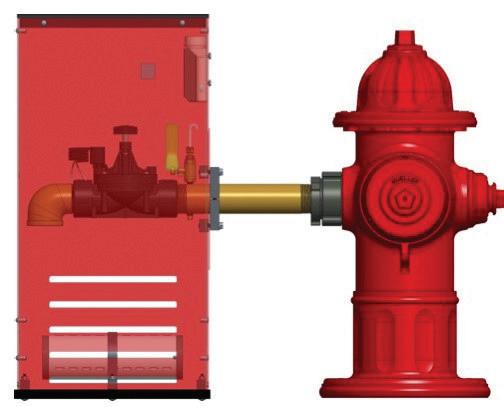
to the utility. This leak detection system can find very small leaks, helping utilities prioritize repairs and avoid major breaks and disruptions.
“The real value in Mueller’s approach is that we have a diverse portfolio, and it all plays well together,” Mosley stressed.
Learn more about Mueller solutions at www.muellerwaterproducts.com.
Flushing in progress with the Hyrdo-Guard FC 100 Series for cold climates in Liberty Lake, Wash.
The Hydro-Guard FW 600 Series is a portable flushing unit.
Lucille Ball’s birthplace in Jamestown, N.Y. Looking for ‘Lucy’:
By JULIE YOUNG | The Municipal
When “I Love Lucy” premiered on Oct. 15, 1951, it was a game changer. In addition to showcasing the first interracial marriage on television, it also folded its lead’s pregnancy into the script, gave birth to a rerun and perfected a three-camera technique that is still used today. On top of all that, it was widely enjoyed for its hilarity. Whether she was working a shift at Kramer’s Kandy Kitchen, stomping on grapes in Italy or trying to break into her husband’s nightclub act, Lucille Ball left behind a legacy of laughter that is still celebrated in Jamestown, N.Y.
America’s favorite redhead
Born in Jamestown on Aug. 6, 1911, Ball knew she was destined to be in show business. At the age of 15, she made her way to New York City, N.Y., where she studied drama and worked as a fashion model before heading off to Hollywood, Calif. She appeared in over 100 films before landing a starring role on the CBS radio sitcom “My Favorite Husband” in 1948.
At that point, she was already married to Cuban bandleader Desi Arnaz, whom Ball had met during the filming of “Too Many Girls” in
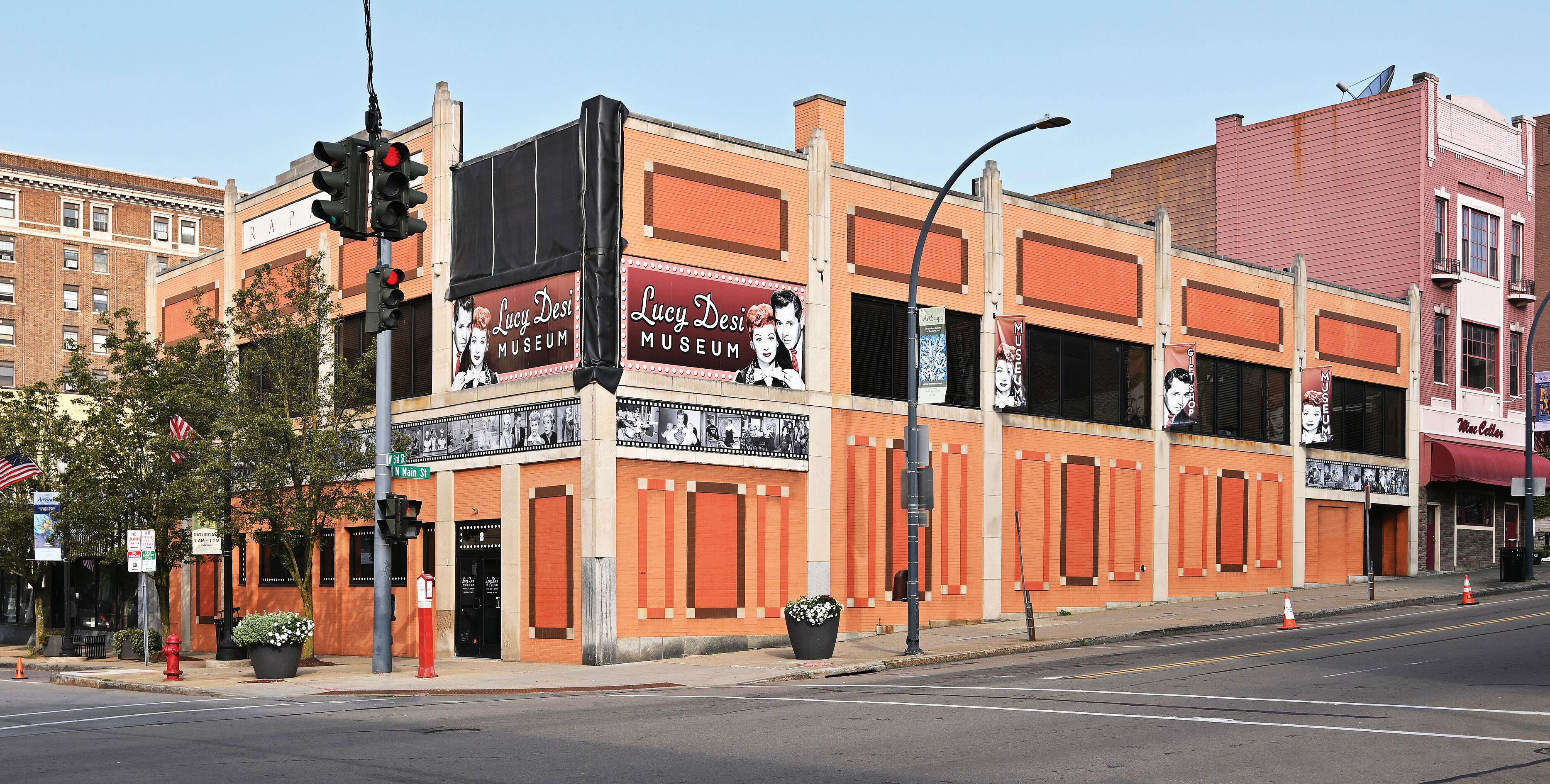
ABOVE: Operated by the National Comedy Center, the Lucille Ball Desi Arnaz Museum in Jamestown, N.Y., is a loving tribute to the first couple of television with costumes, props, photos, letters, scripts and more provided by their children Luci Arnaz and Desi Arnaz Jr. (Lorax via Wikimedia Commons; https://creativecommons.org/ licenses/by-sa/4.0/)
1940. When CBS suggested adapting her popular radio show for the new medium of television, Ball readily agreed provided that her real-life husband could play opposite her.
The network initially balked at the idea. Arnaz was not as well-known as Ball, and there were concerns that the viewers at home might have trouble accepting the intercultural couple. However, thanks to a tremendous writing staff, the talents of Vivian Vance and William Frawley and Ball’s willingness to do anything for a laugh, “I Love Lucy” became
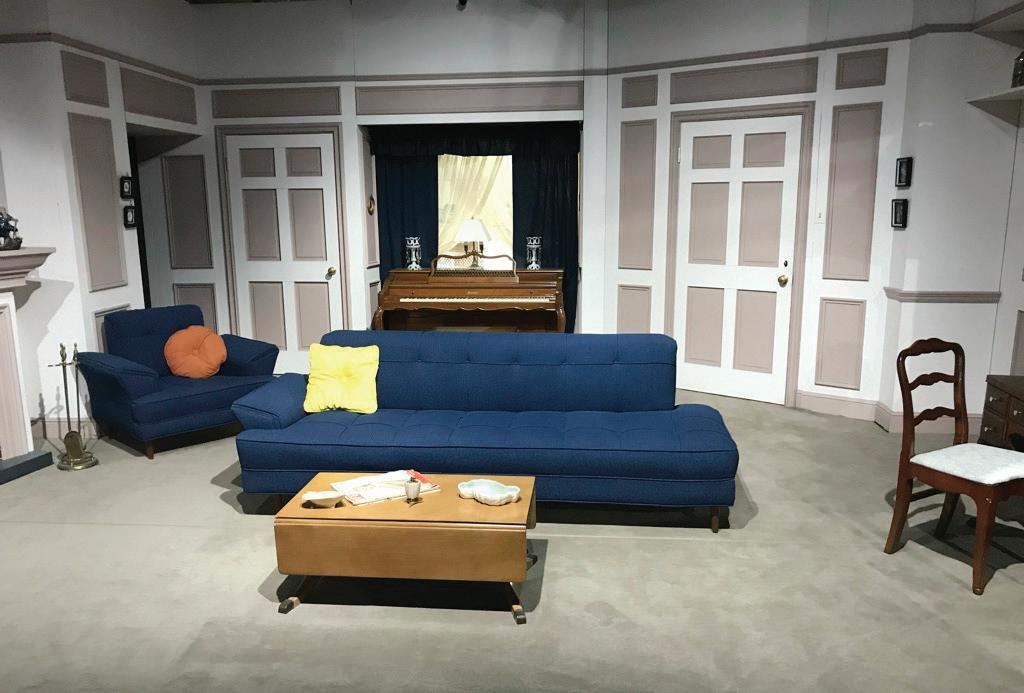
The Ricardo’s New York Living Room set has been faithfully recreated for the Lucille Ball Desi Arnaz Museum in Jamestown. Guests can upgrade their tickets to take a photo inside the iconic set where Lucy carried out several capers while plotting to get in on Ricky’s nightclub act. (Dr. Blazer via Wikimedia Commons; https:// creativecommons.org/licenses/by-sa/4.0/)
one of the most beloved series in television history and has never gone off the air.
Thanks to the generosity of Lucie Arnaz and Desi Arnaz Jr., the Lucille Ball Desi Arnaz Museum in Jamestown at 2 West Third St. includes a significant collection of costumes, gowns, photographs, letters, scripts and other artifacts celebrating the lives and careers of the first couple of comedy. Operated by the National Comedy Center, guests can see a recreation of the Ricardo’s New York City living room and kitchen as well as their Hollywood Hotel suite. Visitors can not only see how the show was made but can film their own “Vitameatavegamin” commercial and insert themselves into the famous chocolate factory scene. They can even upgrade their experience and take a photo on the iconic apartment set.
“I love Lucille Ball and Desi Arnaz, and to see everything from their lives and careers was amazing!” Madi Zabawa of Churchville, N.Y., said in a Facebook review.
Seeing the sites
In addition to the Lucille Ball Desi Arnaz Museum, Jamestown has several other “Lucy” related destinations that are a must-see for diehard fans. There is also the annual Lucille Ball Comedy Festival that attracts thousands of visitors per year. The 1,800-square-foot “California Here We Come” Mural at 33 Forest Ave., commemorating episode 110, was created by Gary Peters Sr. and his son, Gary Peters Jr. The piece was unveiled on Oct. 15, 2012, and includes two hidden messages within it. Other area murals include the Ball and Arnez postage stamp mural at 300 E. Third St., the job-switching mural at 18 E. Third St. and the Vitameatavegamin mural/Ball and Arnaz mural at 115 E. Third St.
There are a number of local buildings that are associated with the famous comedienne, including Ball’s birth home at 69 Stewart Ave. as well as the Hunt family home — Ball’s maternal grandparents — at 59 Lucy Lane. While these are private residences, there are other public spaces in which fans can pay their respects to their favorite redhead,
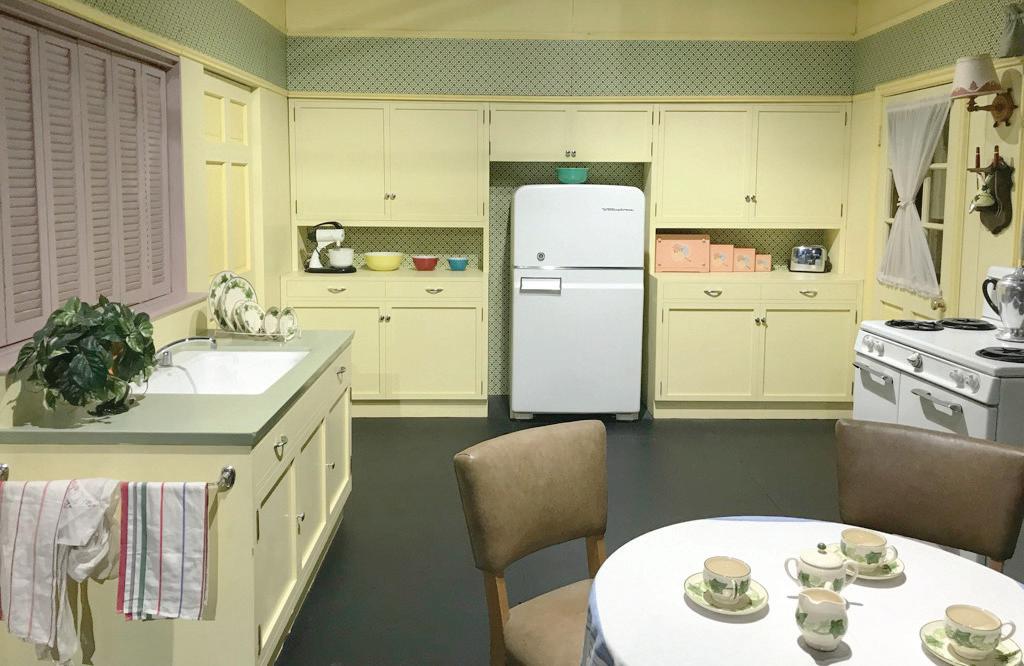
The Ricardo’s New York eat-in kitchen set on display at the Lucille Ball Desi Arnaz Museum in Jamestown features classic 1950s fixtures and appliances. (Dr. Blazer via Wikimedia Commons; https:// creativecommons.org/licenses/by-sa/4.0/)

The National Comedy Center in Jamestown, N.Y., operates the Lucille Ball Desi Arnaz Museum and hosts the annual Lucille Ball Comedy festival that serves as a showcase for a number of stand up comics looking to hone their craft. (Lorax via Wikimedia Commons; https://creativecommons.org/licenses/by/4.0/)
such as the Hotel Jamestown, where Ball and Arnaz stayed during a visit in 1956. The visit was tied to the world premiere of their MGM feature film “Forever Darling,” which occurred at the Palace Theater at 116 E. Third St. The theater was built in 1923 but underwent a major renovation in 1990, when it was renamed the Reg Lenna Center for the Arts.
Fans can also stop by the Lucille Ball Little Theater at 18 E. Second St.
Once an ornate 2,000-seat vaudeville palace where Ball used to watch W.C. Fields, Gypsy Rose Lee and John Philip Sousa perform, the actress appeared on the venue’s stage in 1946 to promote the sale of war bonds and wax poetically about her hometown.
“They’ll tell you that California is God’s but God’s country is right here in Jamestown,” she said. “Think of the change of seasons, the gardens, lilacs blooming in the spring it’s a wonderful, wonderful place.”
No doubt about it, Lucille Ball loved Jamestown: and, like the rest of the world, Jamestown loves “Lucy.”



IMPLEMENTS TO FIT YOUR LIFESTYLE
Whether you are sourcing reliable products to maintain the city commons, or buying quality implements to seed the sports fields, Land Pride offers a complete line of labor-saving tractor-mounted implements to tackle your chores and to fit your lifestyle.








400 members have agreed to participate in Corpus Christi, Texas, Fire Department’s voluntary free cancer screenings program.
Learn more about this program on page 24.
2%
Only 2% of EMS nationwide can initiate blood transfusions before reaching the hospital. Des Moines recently joined this percentage, becoming the first in Iowa.
Read about Des Moines’ blood transfusion pilot program on page 26.

8,400
Noblesville, Ind.’s, NobleACT team has had 8,400 calls for service. The team focuses on police and emergency calls revolving around individuals who may struggle with mental health, addiction, homelessness and other challenges.
Learn about the NobleACT team on page 20.
Zion, Ill., building and fire officials announced in February that they had worked with the city council to adopt the 2021 International Building, Fire and Residential Codes — bringing the number of Illinois jurisdictions that have home fire sprinkler requirements to more than 120. 120+

Source: https://www.iml.org/page.cfm?category=5695 page 4.
Public Safety
$16.39 million
Charlotte, N.C.’s, first all-electric fire station was funded through the city’s capital investment plan and cost $16.39 million.



15-30 feet
Usual distance that a doorbell camera’s infrared vision will reach. That’s a good thing for night-sky communities, but it complicates police investigations in cases like the disappearance of Nancy Guthrie in the Catalina foothills of Tucson, Ariz., in January.
Details available at https://www.usatodaycom/story/entertainment/celebrities/ /02/05/how-nancy-guthrie-kidnapper-avoided-surveillance-cameras-catalina -foothills-security/88535596007/?utm_source=taboola&utm_medium=deeperdive&utm_ campaign=oc.
$45,885
Community West Foundation, in partnership with Cleveland Clinic Fairview Hospital, awarded $45,885 to the Avon Lake Fire Department in Ohio on Feb. 3 to support the purchase of two LUCAS Mechanical CPR Devices. The grant money was raised at a charity event.
More details available at https://www.ems1.com/ems-grant-center/ ohio-fd-gets-nearly-46k-grant-for-mechanical-cpr-devices.
Read about this innovative project on page 30..
Applied research project introduces patrol planning tool to the Pensacola Police Department
By JULIE YOUNG | The Municipal
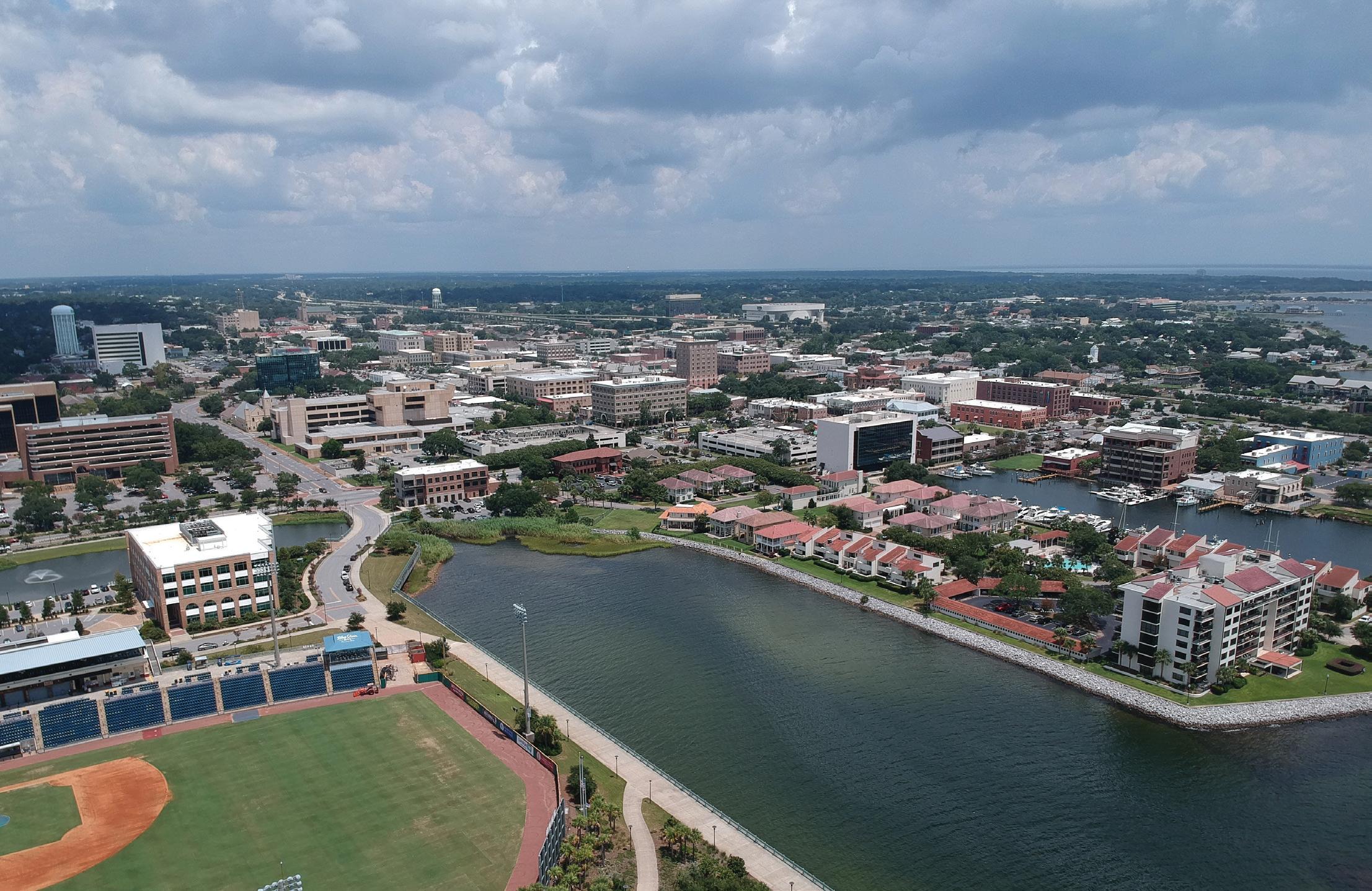
Enhancing the efficiency of police patrols while bolstering community safety is important for any department. That’s why the Pensacola, Fla., Police Department partnered with Dr. Nicholas Hasan Buker, Criminology, Criminal Justice and Legal Studies department chair at the University of West Florida, to create an evidence-based approach to designing police patrol beat borders.
Unlike conventional models, the study introduced the Need for Patrol Presence Scores (NPPS), which utilizes computer-assisted dispatch data to incorporate key factors such as call types, call urgency and high-risk locations. Implementing NPPS can improve response times, offer a more balanced distribution of officer workload and help ensure patrol resources are allocated where they are needed most.
An emerging project
According to Dr. Buker, the study emerged as the second phase of an ongoing research partnership between his team and the Pensacola Police Department. In an earlier project, they analyzed the department’s
patrol division staffing model and developed an analytical framework to estimate optimal staffing levels.
“During that work, we identified that the structure of patrol beats itself could significantly affect how efficiently available patrol resources were used,” he said. “That insight led to the next step: a collaborative effort to examine their existing beat design and explore whether a data-driven redesign could improve operational efficiency.”
The project began in early 2023 with data collection, analysis and interviews taking approximately one year. Buker’s team learned that patrol officers could not spend sufficient time in their assigned beats due to an unbalanced demand. Some beats experienced
sufficiently higher call volumes, which required officers from other areas to assist, reducing beat ownership and continuity.
Buker said this undermined modern preventive policing strategies, such as community-oriented policing, problem orienting policing and hot-spots policing. These approaches require officers to become familiar with their beats understanding patterns, demographics, risky locations and recurring issues.
“The department hoped a redesigned beat structure would balance workload and strengthen proactive policing efforts,” he said.
Confirming concerns
The active study phase lasted about one year, during which the team cleaned and analyzed two years of dispatch data, conducted interviews and developed the analytical model. Buker said that cleaning the CAD data was a significant challenge because the dataset included many call types that did not reflect routine patrol demand. Another challenge involved integrating theory with operational
reality, particularly when incorporating location-based risk factors using geographic information system (GIS) data.
“We also had to consider emerging developments, such as a major hospital relocation, which were not yet reflected in historical data,” he said.
When the study was completed, the findings largely confirmed what officers and supervisors already suspected about their workload imbalance as well as the need for patrol presence that is highly dynamic, varying across locations, days, and times of day. The resulting model recommended the maintenance of beat ownership while incorporating flexibility through two floating beats to address fluctuating demand. While the model has not been implemented due to leadership changes, Buker is confident in its theoretical and methodological foundation.
“The model is fully developed and ready for operationalization when the department determines the appropriate timing,” he said.
Although no other department has formally implemented Buker’s model, several agencies have reached out to use the analytical framework. He said the code for estimating the NPPS has been made publicly available using R, an open-source platform that does not require additional purchases. The final beat boundaries must be customized to each community’s geography and social dynamics.
“This project is a powerful example of how collaborative, applied research can directly inform and improve public safety,” Buker said. “Working alongside the Pensacola Police Department and involving our students in every step gave us the opportunity to develop a practical, data-driven solution while providing students with valuable hands-on experience in real-world criminal justice challenges.”
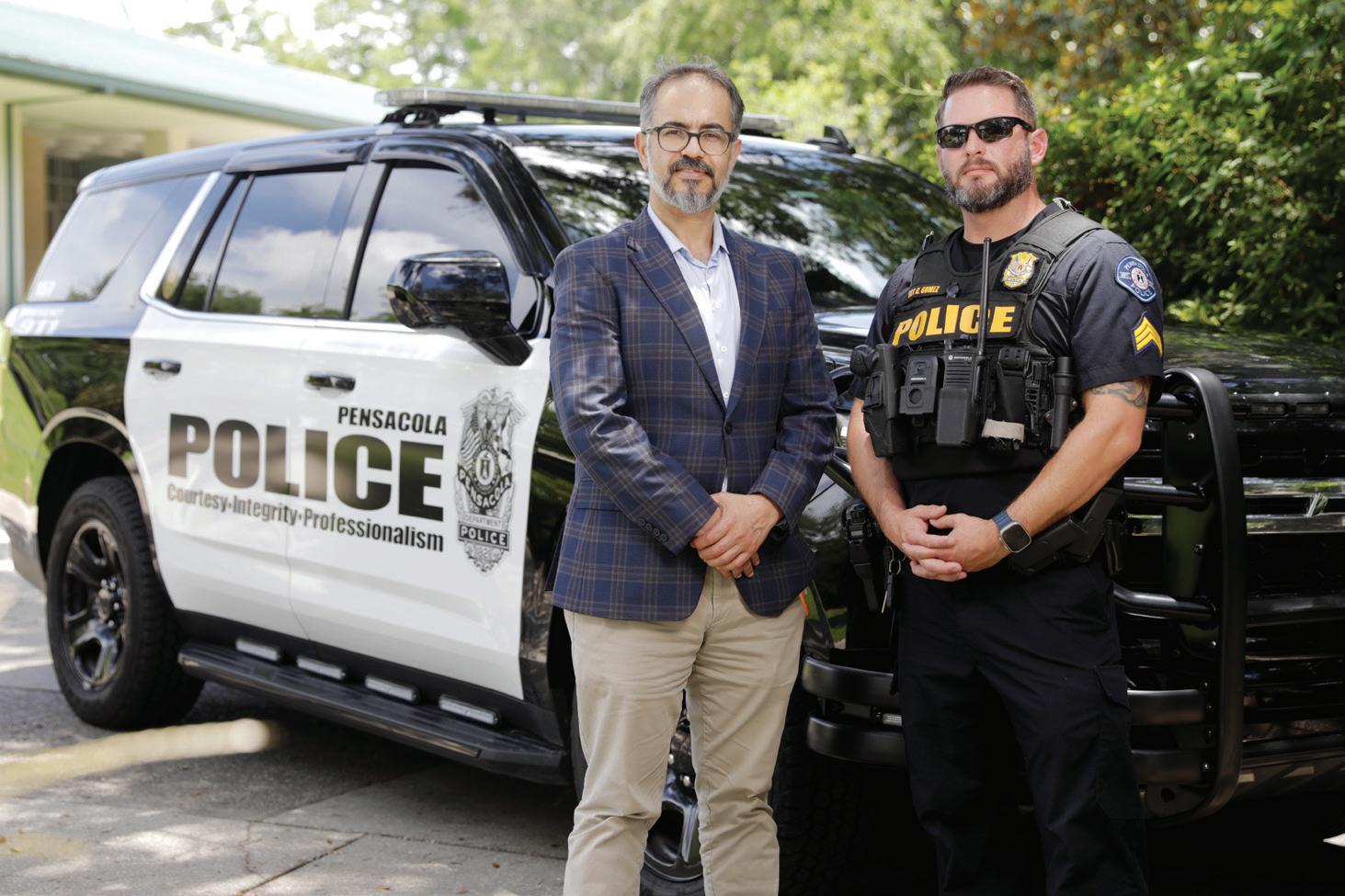
Dr. Nicholas Hasan Buker, chair and professor in the Department of Criminology, Criminal Justice and Legal Studies at the University of West Florida, worked with the Pensacola Police Department to create an evidence-based approach to designing police patrol beat borders. (Photo provided)
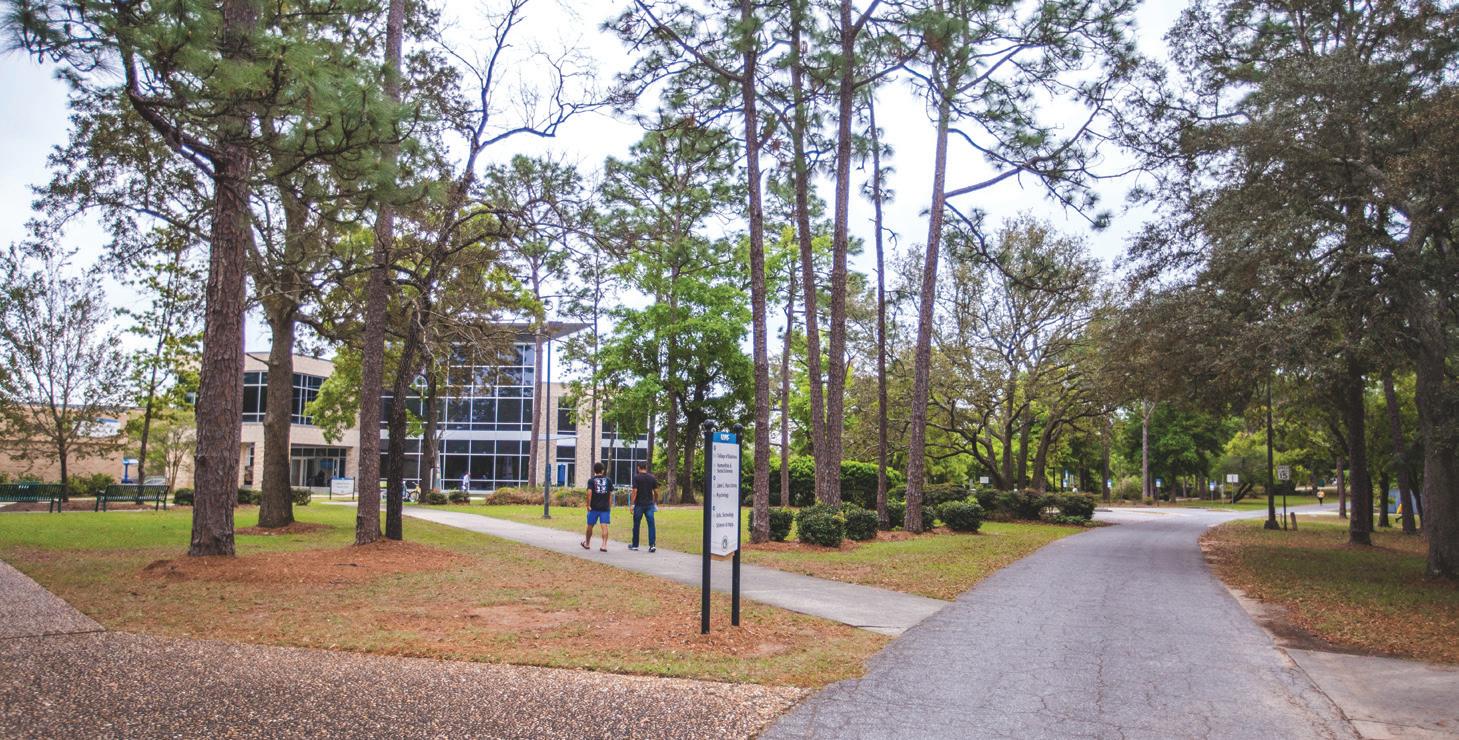
Pathway among the trees to the business building at the University of West Florida campus. (Shutterstock.com)
Peer-reviewed and published
The paper outlining the study “Optimizing police patrol beats: A practical framework for enhanced efficiency in determining the patrol beat borders using the ‘need for patrol presence score’” was published in “The Police Journal: Theory, Practice, and Principals,” a peer-reviewed journal that highlights how theory, research and practice work in concert to advance knowledge in different areas and diverse aspects of policing. Former UWF students Ihsan Buker and Jasmine Oswalt were co-authors on the paper and said the experience was extremely valuable to their future careers.
“I found the computational aspects of the project especially engaging, and I appreciated the opportunity to accompany Dr. Buker during his presentations to the focus group at the Pensacola Police Department,” Ihsan Buker said. “I was able to see firsthand how receiving direct feedback during those sessions helped us refine the scoring system and adjust the clustering algorithm to better reflect the needs of our community partners.”

NobleACT helps connect community with local resources partners
By NICHOLETTE CARLSON | The Municipal
NobleACT is a program started by Noblesville, Ind., in 2020, that focuses on police and emergency calls revolving around individuals who may be struggling with mental health, addiction, homelessness and more. The program became a focus of Mayor Chris Jensen’s campaign. Once elected, he began to empower the police and fire chiefs to focus on those in the city dealing with mental health challenges before these individuals enter the health or legal systems so that they can get back on their feet and become active members of the community.
Sergeant Benjamin Luger was a school resource officer at the time and had already begun research into programs focusing on mental health, addiction and crisis intervention. As an SRO, he partnered with counselors and social workers to work with students and get various points of view when students acted out with poor behavior. These points of view helped to get to the root cause of the behavior and, once that root cause was addressed, the
schools saw a decrease in that poor behavior. With this passion, Luger wanted to take what he had learned to implement in the schools and bring it out to the city streets.
“How can we help our community in a more holistic way?” Luger asked. “We need to connect people to resources. As public safety, we tend to respond to the same people over and over again, but we never had a way to address the root cause of the behavior. For
ABOVE: As a large focus in his campaign, once elected, Mayor Chris Jensen began to empower police and fire chiefs to put a focus on the city’s mental health challenges and attempt to reach individuals before they enter the legal system. Recognizing these challenges and helping provide residents with the proper local resources helps people become active members of the community once more. (Photo provided by the Noblesville, Ind., Police Department)
example, someone struggling with a family dynamic and yelling, then it escalates and becomes a safety concern, and the police get called. We started looking at what’s causing that behavior. Is it mental health? Financial stress? Addiction? We have tons of resources in Hamilton County to help address those root causes and behaviors. If you get to the root cause, you start to see a decrease in the calls with those people.”
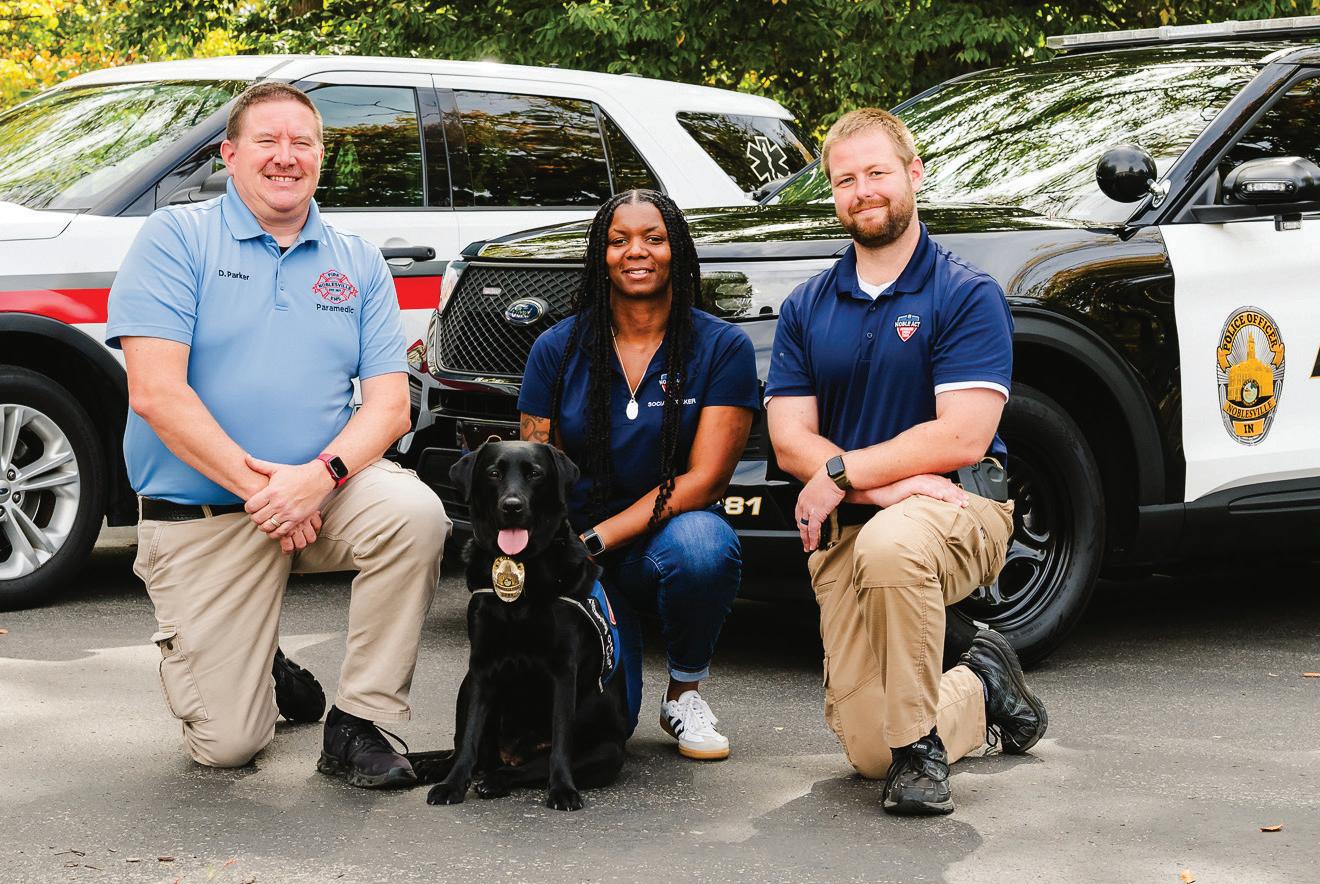
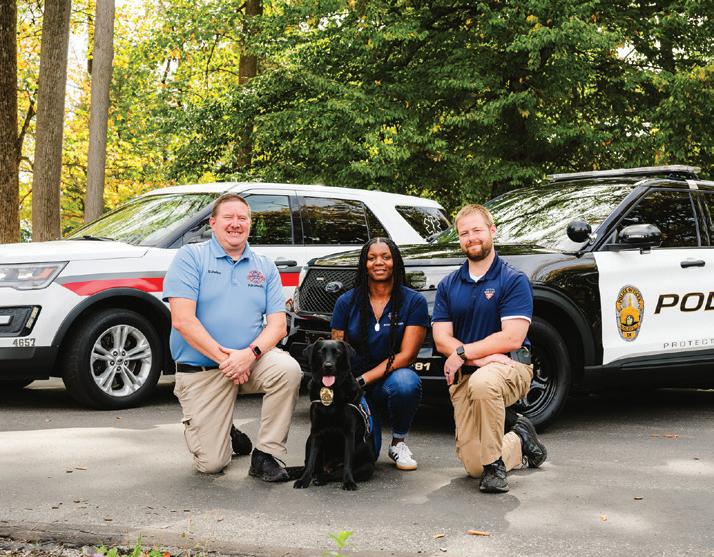
The city’s program, NobleACT, gets called in if a need is recognized during a 911 call or by a frontline officer or if a call comes in to the direct line. Sgt. Benjamin Luger along with a paramedic, social worker and Luna, a trained dog, are able to to spend more time with the individuals and help get to the root cause of the problem.
(Photo provided by the Noblesville, Ind., Police Department)
The NobleACT team is called in if the need is recognized during a 911 call or officers on scene recognize a need. Luger can then take over for the frontline officers. The team goes out on calls that come in to the program’s direct line as well. However, the most important part of the program is the follow-up. After initial contact, the team can determine the client’s unmet needs and connect them with the resources available in the county. The team then works to build a safety plan with the client so the process does not become too overwhelming. There are also periodic home visits to build trust and rapport with the client so they are more likely to reach out to the resources and the team if issues arise again. In five years, the team has had 8,400 calls for service.
Luger realized dogs are used for apprehensions, searches and drugs. What if the department had dogs to help deescalate situations and help people feel more comfortable talking about private, personal feelings? That brought Luna, the therapy dog, to join Luger as part of the NobleACT team. Luna responds to active 911 calls with Luger and helps people to open up and bring up issues they may not feel comfortable discussing when talking to simply a person. Luna will also ride in the car with an individual when taking them to a helpful resource to assist with their mental health. There is now also an inhouse therapy dog specifically for officers and their families to ensure officers are receiving the mental health assistance they need. The fire department also has a fire dog to assist with teaching fire safety training and peer support.
Through data retention, it was quickly noticed that the number of calls for mental health issues is rising, and it is typically the same clients repeatedly calling in. The earlier NobleACT can get involved with these clients, the earlier the clients can get connected with community resources and prevent future needs for service. With Luna and the program, Luger has seen people begin to notice their red flags and call and request Luna to come out to deescalate behavior. It has become a safer and more efficient way to prevent emergency incidents from happening. The greatest struggle with the program is waiting on the
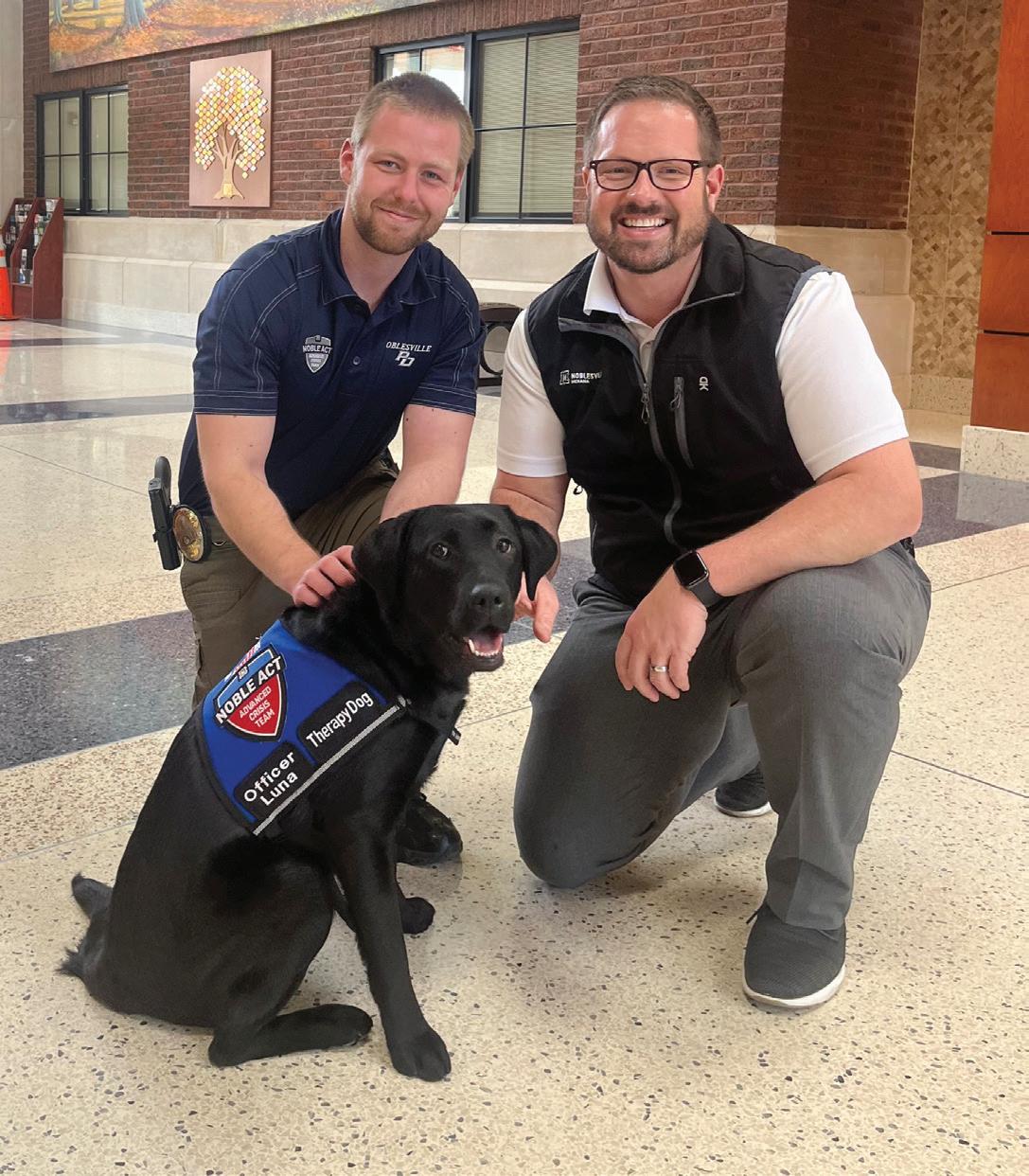
NobleACT partners with multiple community organizations to help get residents the resources and help they need. The most important aspect of the program is then follow up and checking in with these individuals during good and bad times to ensure they are utilizing their resources and reach out for support. (Photo provided by the Noblesville, Ind., Police Department)
general healthcare systems. While follow-up is the most important aspect of the program, clients may not be able to get appointments for a week or two.
The NobleACT program has helped to bridge departments since a paramedic and a social worker have now joined Luger on staff. This also helps to support cross-training with crisis intervention and therapy dogs.
“We’re seeing a melding of public safety to ensure the right people are there at the right time for the client and getting as many perspectives as possible to help support them,” Luger shared.
Since the training and resources are available to all officers, many patrol officers will recognize a crisis and call in Luger while also starting a conversation and helping to resolve an issue before Luger arrives. It has also helped to build connections within the community. Organizations, such as libraries and churches, are trained on how to recognize signs of crisis and refer them to NobleACT. The Good Samaritan network helps with programs on homelessness and hygiene. There are multiple food banks throughout the county. City departments, such as streets and utilities, will report on clients or areas of struggle. The township trustee’s office can assist with financial issues and needs. Behavioral Health Aspire is the primary partnership with multiple services and follow-up for clients.
“We are so grateful for our community partners,” Luger stressed. “Without them, it wouldn’t be the success it is, and we rely heavily on them. It wouldn’t have the impact it does without them. It is truly a joint venture between both aspects of public safety. Both departments coming together to serve one mission and using their expertise for that client.”
Noblesville has already begun to share its story and program with multiple agencies throughout the state.
Mayor Jensen recommended, “Pull data. See what 911 calls are looking like in your community. Look at the staffing challenges you have and what partners you have in your community that would come along with you. Runs you’re already doing now might actually be reclassified into these types of calls and can help reduce recidivism rates.”
If cities are considering a similar program in their community, Luger suggested reaching out to the community. Pitch ideas, send out surveys and see if a similar program would help.
“What does the community want?” Luger asked. “Tackle it small. What is the main concern in your community? Find the social services for that concern. Focus on that first and then build out from there. Build out those resources and partnerships. You need someone on the ground level with an officer and paramedic as well as higher ups to support the program. You need someone who is passionate about the program. Don’t get hung up on data points because it’s hard to show what you prevented from happening.”


Since dogs can be used for apprehension, drugs and searches, the thought was dogs could also be used as a way to deescalate a situation and provide comfort. Luna the therapy dog goes out on all calls with Luger and helps individuals discuss personal topics they might be unwilling to discuss otherwise. (Photo provided by the Noblesville, Ind., Police Department)




• Extend the life of cylinder seals
• Protects cylinders from the elements • Prevent pitting due to chemical washers
• Reduce particle contamination of hydraulic systems • Minimize dings and dents associated with falling





Corpus Christi provides free cancer screenings to its firefighters
By JANET G. PATTERSON | The Municipal
The Corpus Christi, Texas, Fire Department has joined fire companies across the country in offering its firefighters free cancer screenings.
“The new initiative was spurred by upcoming state legislation passed in 2025 that will require cities and political subdivisions to provide no-cost, confidential, periodic occupational cancer screenings for firefighters,” said Corpus Christi Deputy Fire Chief Daniel Valdez.
The law, known as the Wade Cannon Act, becomes effective in Texas on June 1, 2026. The screening tests, which cover several cancers, will start in a member’s fifth year of employment and continue every three years for a firefighter.
ABOVE: Corpus Christi, a city of more than 315,000 people, that sits on the southeast coast of Texas, has implemented cancer screenings for its fire department members. (Photo provided by Corpus Christi, Texas)
Valdez explained that the decision to provide testing resulted from a collaboration between the Corpus Christi Professional Firefighters Association Local #936 and the city of Corpus Christi through collective bargaining negotiations. The city
committed money to fund the entire project and split the cost of initial screenings over two budget years.
“Future costs will be budgeted, and we are always seeking and inquiring about potential grants,” he added.
The department is also offering screenings to spouses of department members and two nearby emergency service departments at the individual’s own expense.
The hundreds of 9/11-related cancer deaths sparked public awareness about occupational cancers among firefighters and emergency services. In 2021, the American Cancer Society and the International Association of Fire Fighters launched a long-term collaboration to aid firefighters and emergency medical services personnel with the detection, treatment and prevention of cancer.
Firefighters exhibit a documented increased risk for a range of cancers, encompassing lung, certain forms of leukemia and brain cancers, as well as abdominal, prostate, thyroid, colon and melanoma, a highly dangerous skin cancer.
According to the ACS, occupational cancer has surpassed cardiac events as the leading cause of death for firefighters. Numerous studies have shown that cancer rates are significantly higher for firefighters than for the general population and that firefighters in the United States and Canada are developing job-related cancers at a significantly higher rate than ever before.
According to IAFF data, firefighters’ cancer risk is predominantly linked to the toxic chemicals and carcinogens released in fires, rather than the fires themselves.
“Cancer is now one of the biggest fights we face in the fire service, but we are determined to do all we can to end this deadly scourge,” said IAFF General President Edward Kelly.
The firefighters’ image can also impede their health and safety. The National Fire Protection Association notes that not wearing adequate protective gear and soiled personal protective equipment have been a mark of toughness and bravery among firefighters. But not cleaning PPE after returning from a fire has been linked to several types of cancer, including lung cancer. Furthermore, firefighters’ private vehicles and homes can also contain contamination remnants.
Valdez said Corpus Christi is counted in the cancer statistics because of several occupational cancer diagnoses among members of its department.
He said the program of cancer screenings began in 2025 with two opportunities available to personnel, one in July and another in November. The cost to the city, Valdez said, has been divided over the 2025 and 2026 fiscal year budgets. Screenings were held at the Professional Firefighters Association Union Hall, but he expects future testing will take place at a newly constructed wellness center.
“Screenings are voluntary, and the results are sent directly to the department member and are confidential,” he said.
So far, about 400 members have agreed to participate. “Most members were very appreciative,” Valdez added
When the leadership of the department decided to make the screenings available, they formed a Health and Wellness Committee to introduce the plan to the department’s members. “One of the things we did was provide a presentation to all our members to
discuss all the details. We also were available for questions … This was helpful in getting the consistent message to our members.”
The test selected for the screenings is the Galleri Test by GRAIL Inc., an American biotechnology company based in Menlo Park, Calif. Valdez said the company provided flyers and other materials to help explain the process and the test.
Fire departments and individuals with an increased cancer risk across the country use this test. According to GRAIL, the Galleri test detects DNA fragments circulating in the blood and determines whether those DNA fragments originate from healthy cells or cancer cells. If the test shows a Cancer Signal Detected result, it can predict the most likely origin of the cancer. This is an early detection tool that can identify DNA shed by cancer cells while the patient is still asymptomatic, and when it may be more easily treated and potentially curable.
Valdez advises other fire departments that the screening is “a great tool for awareness and the health and safety of your department. When it comes to cancer diagnosis and treatment, the best results come from early detection.”
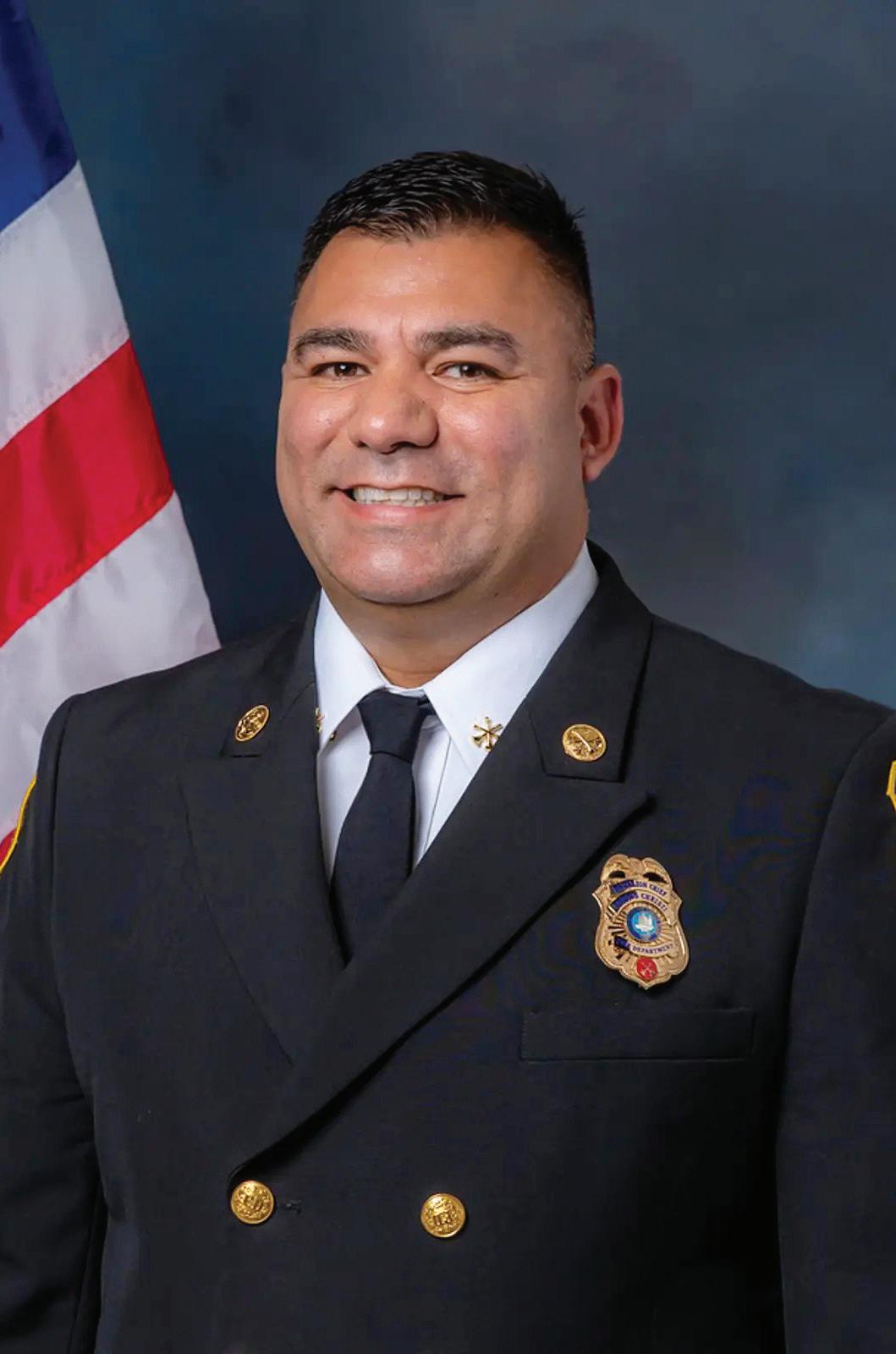
Corpus Christi Deputy Fire Chief Daniel Valdez
Des Moines, Iowa’s, blood transfusion pilot program is the first in the state
By DENISE FEDOROW | The Municipal
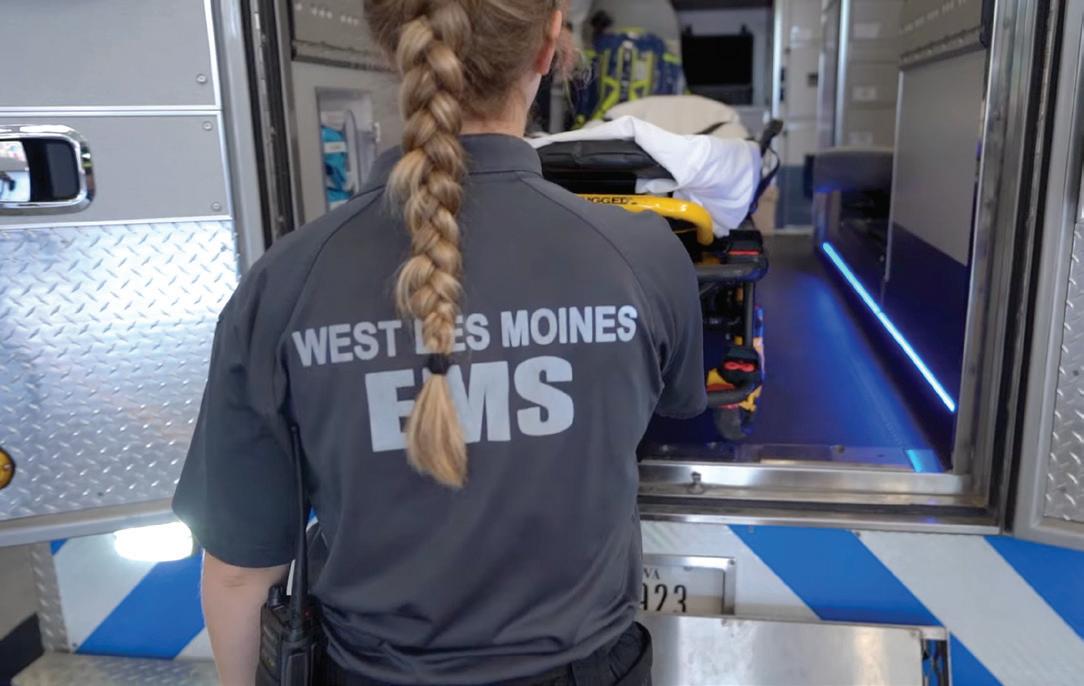
Lt. Dan Davis heads up the blood transfusion pilot program at the Des Moines Fire & EMS Department, which is operated in collaboration with West Des Moines EMS. Davis said they started exploring the possibility in October 2024 about carrying the blood program; the discussion was initiated by a now-retired assistant chief. Davis went to Las Vegas, Nev., where he connected with people from New Orleans, La. They spent a lot of time with him going over the equipment needed, costs, proper protocols and who to reach out to.
Then in November 2024, Des Moines Fire & EMS teamed up with West Des Moines EMS, and Deputy Chief Brian Rayhons of West Des Moines and Davis said, “It took a good
year and a couple of months to get it up and running.”
Des Moines Fire Chief Jonathan Lund explained he only recently became chief
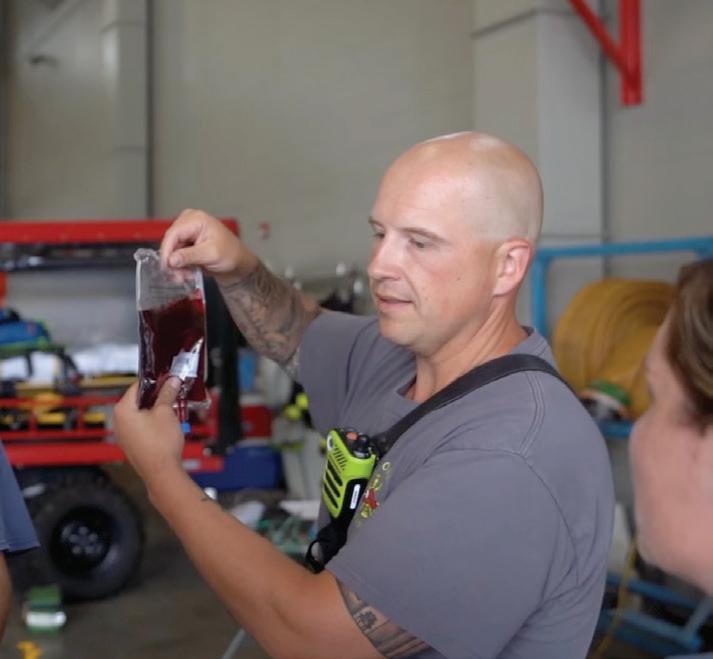
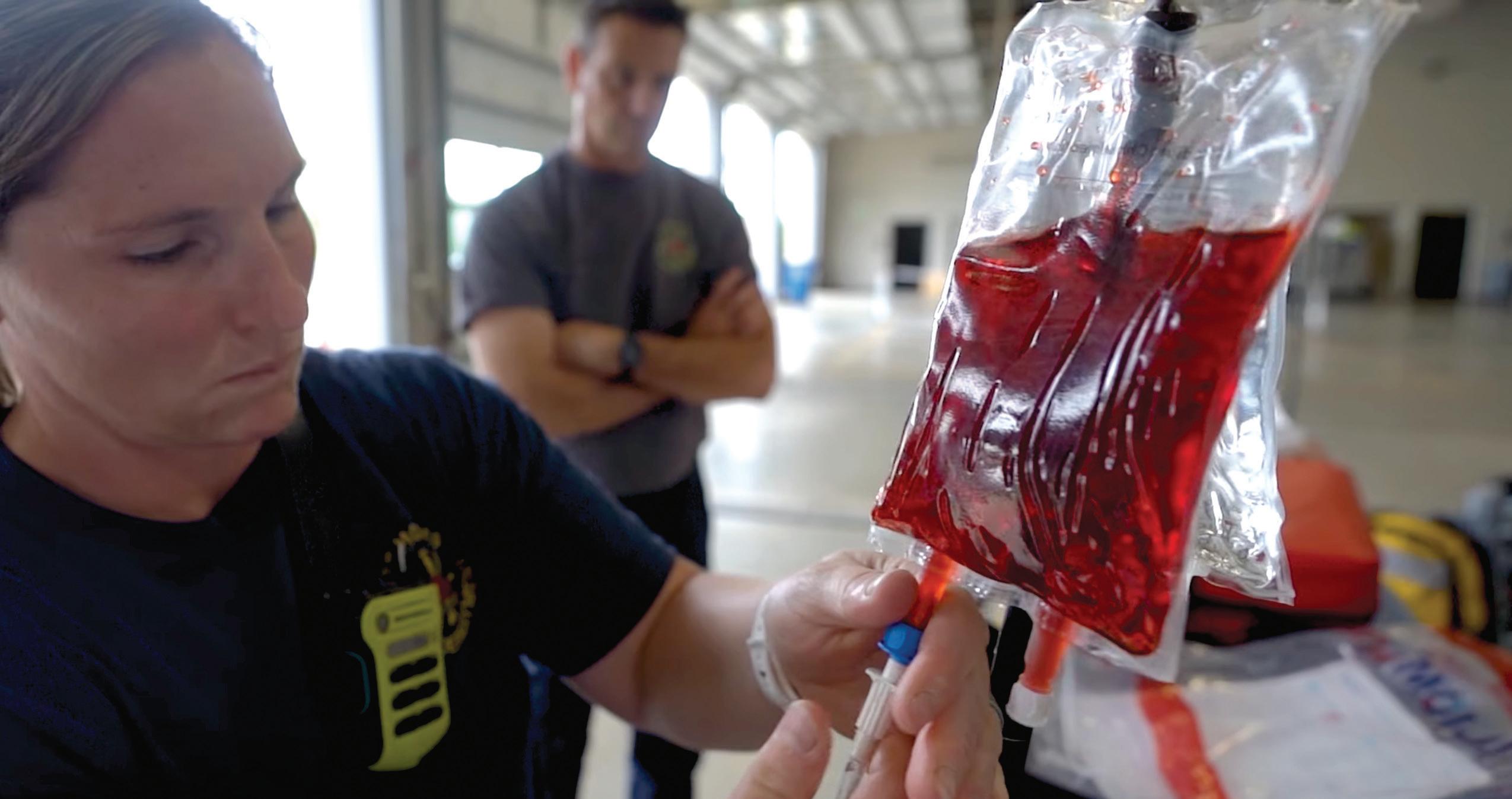
ABOVE: This EMS medic is practicing attaching the cords to the blood packets at a training held prior to the launch of Des Moines’ pilot blood transfusion program. (Photo provided by Des Moines, Iowa)
because both assistant chiefs and chiefs retired.
“There’s been a complete change in the department’s leadership in the last six t0 eight months; many people were in different positions when the project started,” he said.
The blood transfusion program was not within the state of Iowa’s scope of practice, so Davis and Rayhons applied for a waiver to give blood to patients, and the state awarded that ability for the pilot project. It’ll be up to
the departments to develop the framework and the skill practices, “so other services will have the framework to do it,” Davis said.
Davis explained that besides the two EMS departments, there was a sizable group involved in making the pilot program happen. Lifeserve Blood Center is the blood supplier, and it donates to several distribution centers, which supply the blood to MercyOne and UnityPoint Health.
“UnityPoint is the blood supplier for West Des Moines EMS, and MercyOne is the blood supplier for us we’re like outside contractors,” he said and explained that EMS departments can’t bill for blood. “So, by joining with them, we’re able to have them bill for the blood. It’s worked out really well as far as the blood supply goes.”
The other partner is Simulation in Motion, which is affiliated with the University of Iowa. This partner does simulation training with its high-fidelity mannequins. Davis said, “They were a major part of helping train our personnel to administer the blood.”
When asked if the EMS departments carried units of each blood type, he responded, “There’s no way to type blood out in the field, so we carry the universal donor type O positive.”
The departments carry O positive packed red blood cells and some O positive whole blood, but mostly packed red blood cells and generally two units. There are a couple of trucks carrying blood units, and they use a self-contained autonomous thermal refrigerated unit to keep the blood chilled. These trucks also have blood warmers. The
trucks go to all the pre-programmed calls like major traffic accidents, especially where extrication is necessary, gunshot wounds, stabbings and trauma calls. Dispatchers or medics decide whether a blood transfusion is necessary in other calls.
Davis said the departments also have RapidSOS, where the dispatcher can see how much blood is on the scene and if there’s significant blood loss from a GI bleed or post-surgical bleed.
As for the frequency of field blood transfusions, Davis said the pilot program went live on Nov. 17, 2025, and nine hours later they gave a blood transfusion. Davis said they’d done two by mid-February this year, “and others were close but didn’t quite meet the criteria, but I’m sure we’ll have plenty of opportunities.”
Success story
Davis shared a success story where a patient had a gastrointestinal bleed. “When the medics got there, they found her in the bathtub. She had lost a lot of blood; she couldn’t answer their questions. The medic gave her a unit of blood, and by the time they got to the hospital, she was talking to them. So, they got to see how it really works when needed.”
Davis added, “You never know what will happen, but it definitely gave them more time at the hospital to get her stabilized. We delivered her in a better condition than we found her. The key to that is blood carries oxygen, so if you die in a car accident due to
blood loss, it’s because your brain got suffocated. So, we save a lot of brain tissue.”
Trauma centers praise program
During a press conference Rick Sidwell, MD, trauma surgeon at UnityPoint Health, said, “The idea of the project is to bring lifesaving blood transfusions to the scene to enable the medics to administer lifesaving blood before they get to the hospital or trauma room.”
Sidwell said only 2% of EMS nationwide can initiate blood transfusions before the hospital, and this is the first in Iowa. “There are a lot of areas in the state where they are a long way from a trauma center, so being able to give lifesaving blood is going to help so many people in the state. Getting blood before the hospital is potentially the biggest life-saving change we can make over the past several decades. This has enormous impact in how we care for people.”
Joseph Losh, DO, trauma surgeon at MercyOne, said, “This project allows for the time period to extend, capitalizing on that brief window of opportunity and a chance to save a patient who in the past, we wouldn’t have been able to save. That’s really what this is all about. This program can be the difference in whether a patient survives trauma or not.”
Losh added, “The power of it is remarkable and I’m proud that pilot is happening in our community.”
Rayhons said, “Our community members and visitors are going to have a better chance to survive because they will be getting the best care possible on the scene and en route to the hospital.”
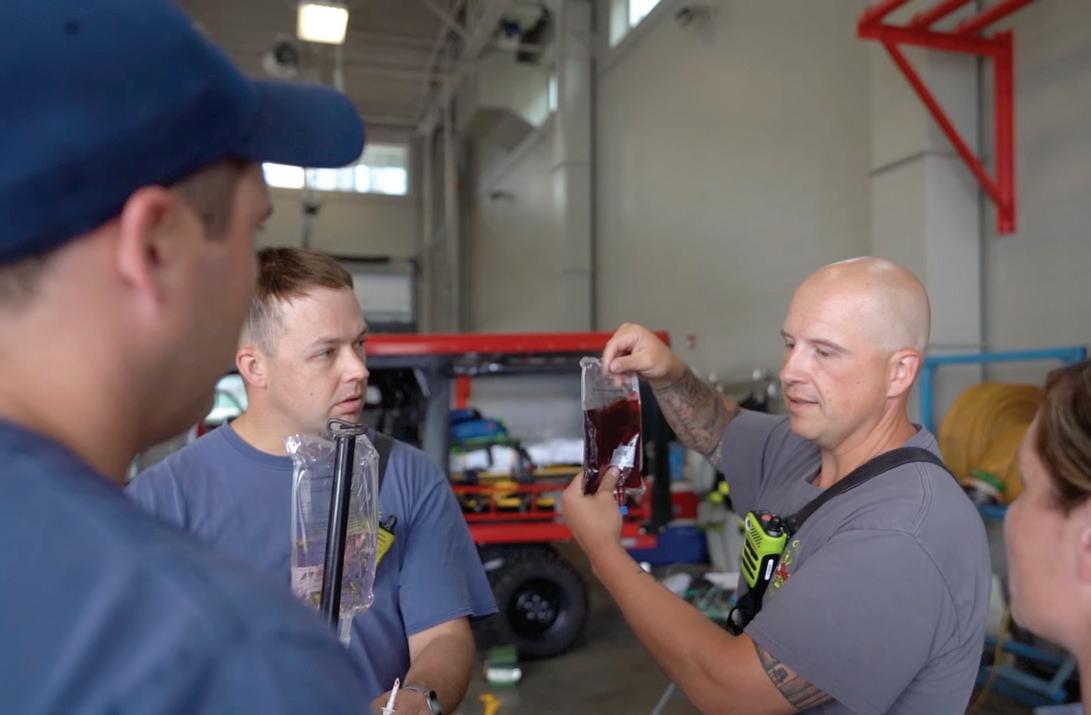
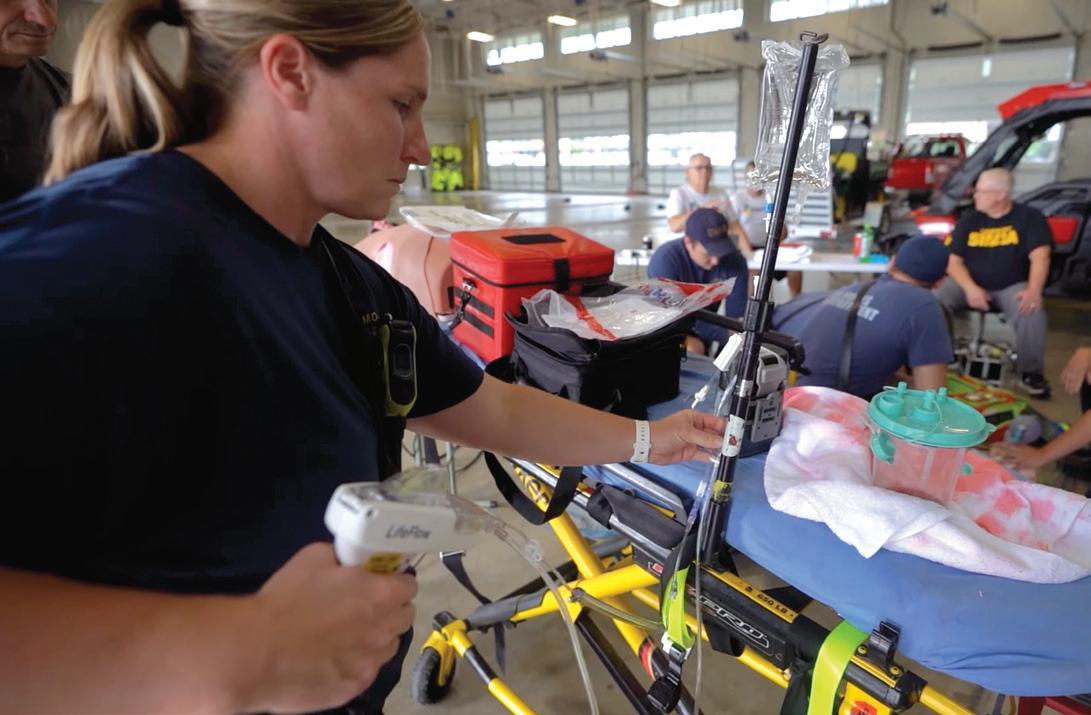
The city of Des Moines EMS personnel are being trained on the pilot blood transfusion program. The program is the first in the state and will create the framework for other cities to follow. (Photos provided by Des Moines, Iowa)
Learning curve
As for the learning curve for medics, Davis said, “Administering the blood, setting up the hand pump system was the easy part. The paperwork is different from what the medics were used to, so it’s taken some time.”
But he said every station had the instructions and job aids.
Chief Lund said Lt. Davis was being humble. “We’ve had really good training with the simulation lab and EMS staff. We’re not opposed to new technology, and we provide cutting-edge medical care here, and adding blood in the field has been relatively seamless for our medics.”
Lund agreed that the challenge was always the paperwork and the documentation aspects. “There’s a lot more tracking of the blood and the temperature of the blood to ensure it’s still valid,” he said.
Lund noted that the medics and personnel are always open to new techniques that will improve patient outcomes. Referring to the case Davis mentioned where the medic could see the difference it made in the patient to receive the transfusion right away, he said, “When you see that start to work, all the effort, training and paperwork is worth it because it improved the patient’s outcome, and at the end of the day, that’s what we should be measured on, and that’s what changes the lives of people.”
As for the blood temperature, Davis said West Des Moines EMS has the same cooling units as Des Moines, and they’re all connected to a cellular network, enabling medics to check temperatures with their phones. This is vital since to qualify for the pilot program, the departments had to prove they could handle keeping the blood at the right temperature.
“We’ve not wasted any blood because of temperature,” he said.
The fire officials spoke about the agreements with nearby departments, saying they’re not only serving the city of Des Moines and West Des Moines, but they’re able to cross city limits as long as their paramedics are doing the administration.
“It’s not only helping us, but it’s available to the whole metro location,” Davis said.
Cost and advice
When asked about the cost, Chief Lund said there were some startup costs for a few pieces of equipment, such as for the coolers and warmers, and the fire department and the city covered those costs. He didn’t have an exact amount but thought it was approximately $50,000.
Davis said the departments had disposable costs, too, for the administration sets and blood warmer packs. It costs about $500 each time medics use them because they leave them attached to the patient in the emergency room.
Chief Lund said the two departments can recoup some of those costs through the billing process. “To me, it’s a small investment for the potential impact on a life.”
Lt. Davis shared, “The biggest thing we realized is to start working on the contracts early because the blood supply contract took us the longest to do.”
He said they realize not everyone can do it because of all the back work; it takes a full-time operation. He, however, mentioned
that there were some other big cities in Iowa that could have the program, and then they could serve their surrounding areas.
“It may only be 2% now, but I think it’ll catch on,” he said.
Chief Lund further advised initiating early communication with the state medical director to determine if the service is allowed within the scope. “That’s a hurdle we had; some states are easier than others.”
Chief Lund concluded, “Looking at the fire department, especially in Des Moines where we have combined fire and EMS, it’s an insurance policy for the entire community. We’re here to improve outcomes whether that’s fire or hazardous materials or medical to have a fire department of our caliber and the people that can provide the advanced level skills; our residents have a really good insurance policy. Yes, there’s some costs, but we look at outcomes. With our blood administration program, our focus is on improving outcomes.”
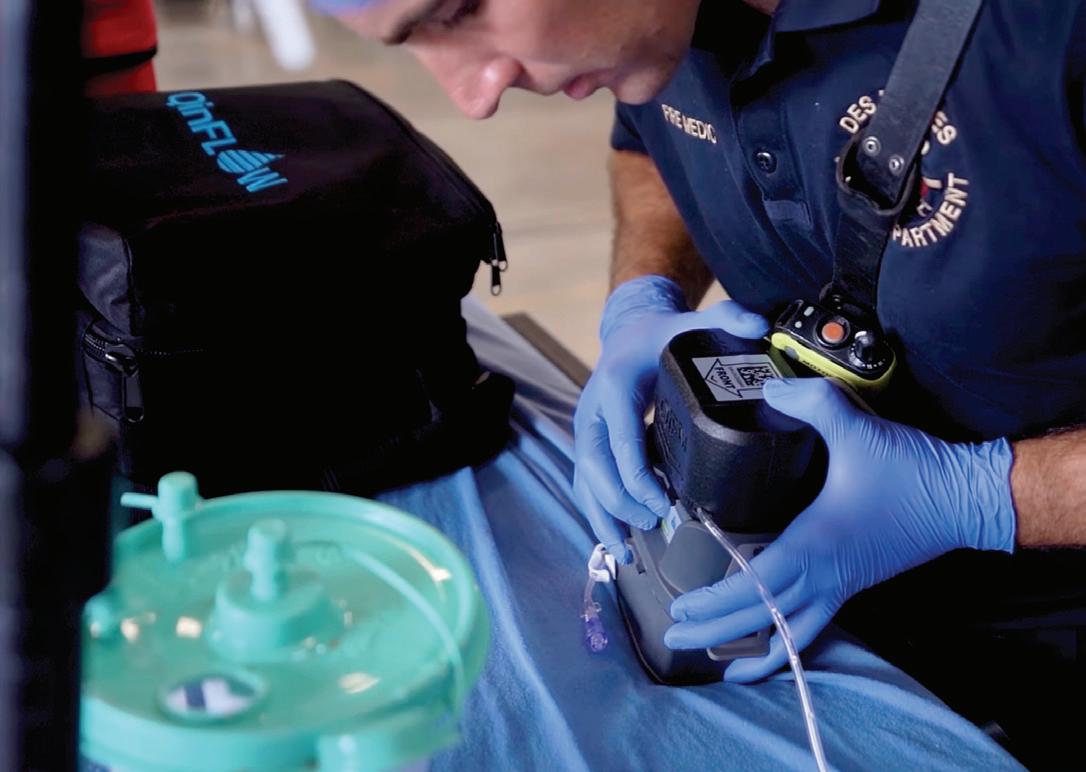
A medic with the Des Moines Fire & EMS Department practices with equipment needed to provide blood transfusions in the field.
(Photo provided by Des Moines, Iowa)
An EMS medic with West Des Moines EMS a separate EMS service took part in training for the pilot blood transfusion program. (Photo provided by West Des Moines, Iowa)


• The 2001, 2001M, and 2001MB barricades are MASH Tested as a Longitudinal Channelizing Device (LCD).
• Accessorize with Lights and Fence Panels.

• Transform unstable ground into stable and weatherproof surfaces for easy transport and staging of heavy equipment.
• Protect Turf & Grass During Events and Projects.
• Create Accessible Walkways for Pedestrians or Crew.
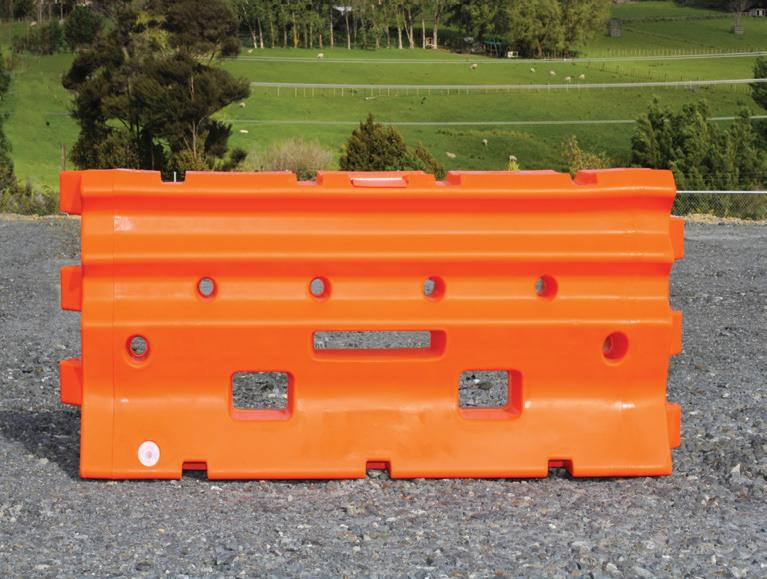
• Portable, High-Performance, interlocking water filled Barrier sections.
• MASH TL-2 Tested for Redirective Applications.











Charlotte Fire builds new all-electric firehouse
By NICHOLETTE CARLSON | The Municipal
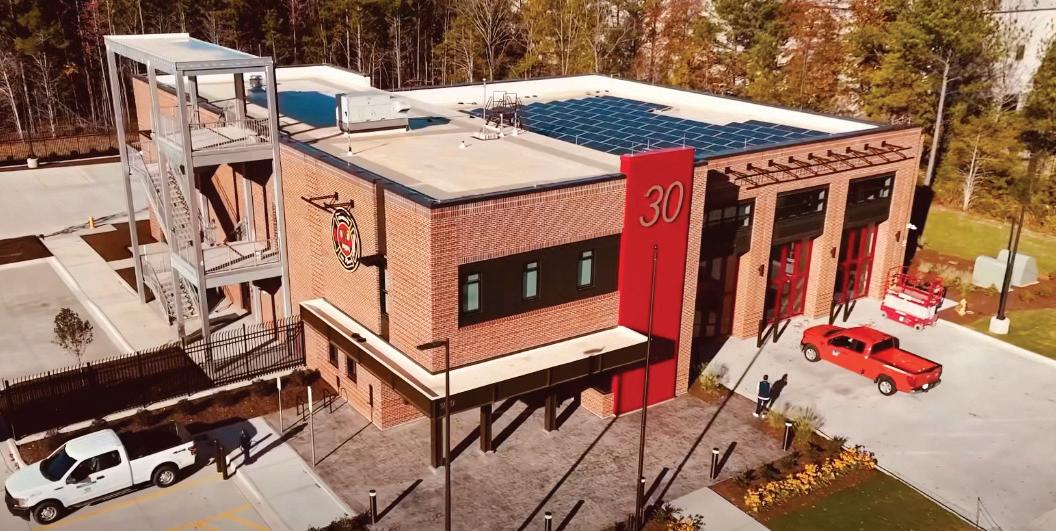
Recently completed at the beginning of this year, Firehouse 30 in Charlotte, N.C., is now fully operational and replaces the old, temporary station on Belle-Oaks Drive near the Charlotte-Douglas International Airport. It is located on Beam Road across from the Police and Fire Training Academy. This new firehouse is particularly unique since it is the city’s first all-electric fire station. The firehouse will also be home to the city’s first all-electric fire engine.
The previous firehouse was not meant to be a long-term solution. “Charlotte Fire’s former Firehouse 30 presented several operational and structural challenges due to its age and size,” Kevin Campbell, Charlotte Fire Department’s public information and community engagement senior public information specialist, explained. “The approximately 900-squarefoot structure, along with a separate apparatus shed, lacked adequate space for firefighters, did not meet ADA (Americans with Disabilities
Act) standards, had insufficient bathroom and locker facilities, and created operational inefficiencies due to time loss reaching apparatus and limited access to primary roadways.”
One of the first steps in the construction of a new firehouse was finding the appropriate site on which to build. The land search spanned several years and began under a previous administration. However, once the proper site was found, the planning, design and construction phases took just over three
ABOVE: Firehouse 30 was built after the old, temporary structure presented increasing structural and operational challenges due to its age and smaller size. The new firehouse is 14,600 square feet and went back to a traditional two-story design with fire poles. (Photo provided by the Charlotte, N.C, Fire Department)
years. Typically, the fire department plans for the design, development and bidding process to take approximately 18 months, with the construction phase requiring an additional 18 months.
“While Firehouse 30 utilizes a similar base design to Firehouse 45, the project required additional design revisions after the decision was made to transition the facility to an allelectric model,” Campbell described.
Project funding was through the city’s capital investment plan budget and cost $16.39 million.
The site for the new firehouse was chosen based primarily on modeling for response times and the distribution of resources. This helped to meet the International Organization for Standardization benchmarks and the National Fire Protection Association standards.
“The department’s planning staff and geographic information system analysis played a critical role in evaluating coverage needs, travel times and resource concentration, while also considering land availability and development feasibility,” Campbell shared. “Construction progressed smoothly through coordinated efforts between the city’s project management team, the architect and the contractor. The firehouse is now complete and fully operational.”
As the city’s first all-electric fire station, Firehouse 30 utilizes geothermal technology for HVAC and heating in the apparatus bay as opposed to natural gas. The 14,600-squarefoot firehouse also has on-site photovoltaic panels that help to offset the consumption of energy.
“The firehouse is LEED certified and reflects the city’s sustainability initiatives under the strategic energy action plan,” Campbell stated. “The transition to an all-electric design required significant redesign of mechanical, electrical and plumbing systems.
“Operationally, the department returned to a two-story firehouse design with fire poles to improve turnout times, which is the interval between dispatch and apparatus movement,” he continued. “The facility also provides equitable and modern locker and bathroom accommodations, expanded fitness space and room for future resource allocation as the surrounding community continues to grow.”
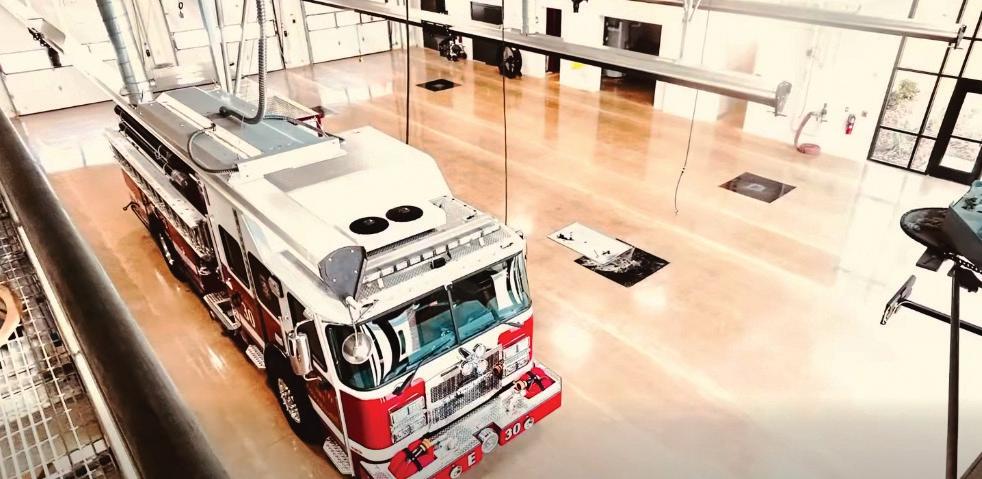
The firehouse will also be home to Charlotte’s first all-electric fire engine. “This apparatus allows the department to evaluate strategic benefits such as improved acceleration and maneuverability, reduced on-scene emissions, lower noise pollution and alignment with broader climate and sustainability goals.”
RIGHT: While Firehouse 30 is Charlotte’s first all-electric firehouse, it will also be home to the city’s first all-electric fire engine. This engine will reduce emissions and noise pollution while increasing acceleration and maneuverability. (Photo provided by the Charlotte, N.C, Fire Department)
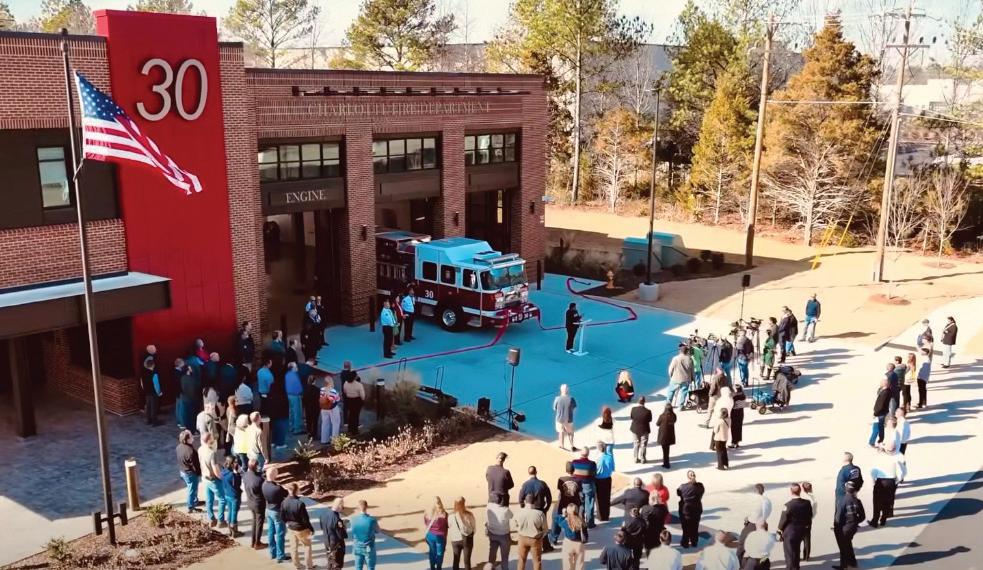
The first and longest step of the process was finding a good site to build the new firehouse. Design, development and bidding took approximately 18 months, with revisions needed due to the decision for it to be an all-electric firehouse. Construction then took another 18 months.(Photo provided by the Charlotte, N.C, Fire Department)
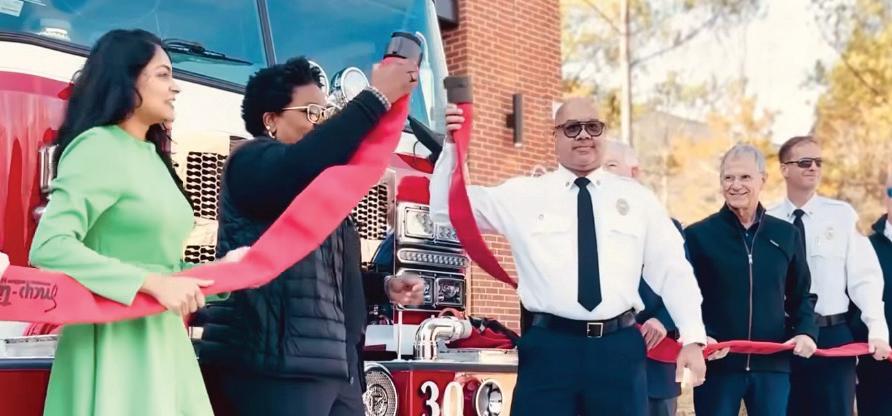
Firehouse 30 is LEED certified with geothermal technology and photovoltaic panels. Due to its all-electric design, the mechanical, electrical and plumbing systems all had to undergo a great deal of redesign as well. (Photo provided by the Charlotte, N.C, Fire Department)
Parent E3 Series: Master officer develops initiative to decrease violent youth-involved incidents
By BETH ANNE BRINK-COX | The Municipal
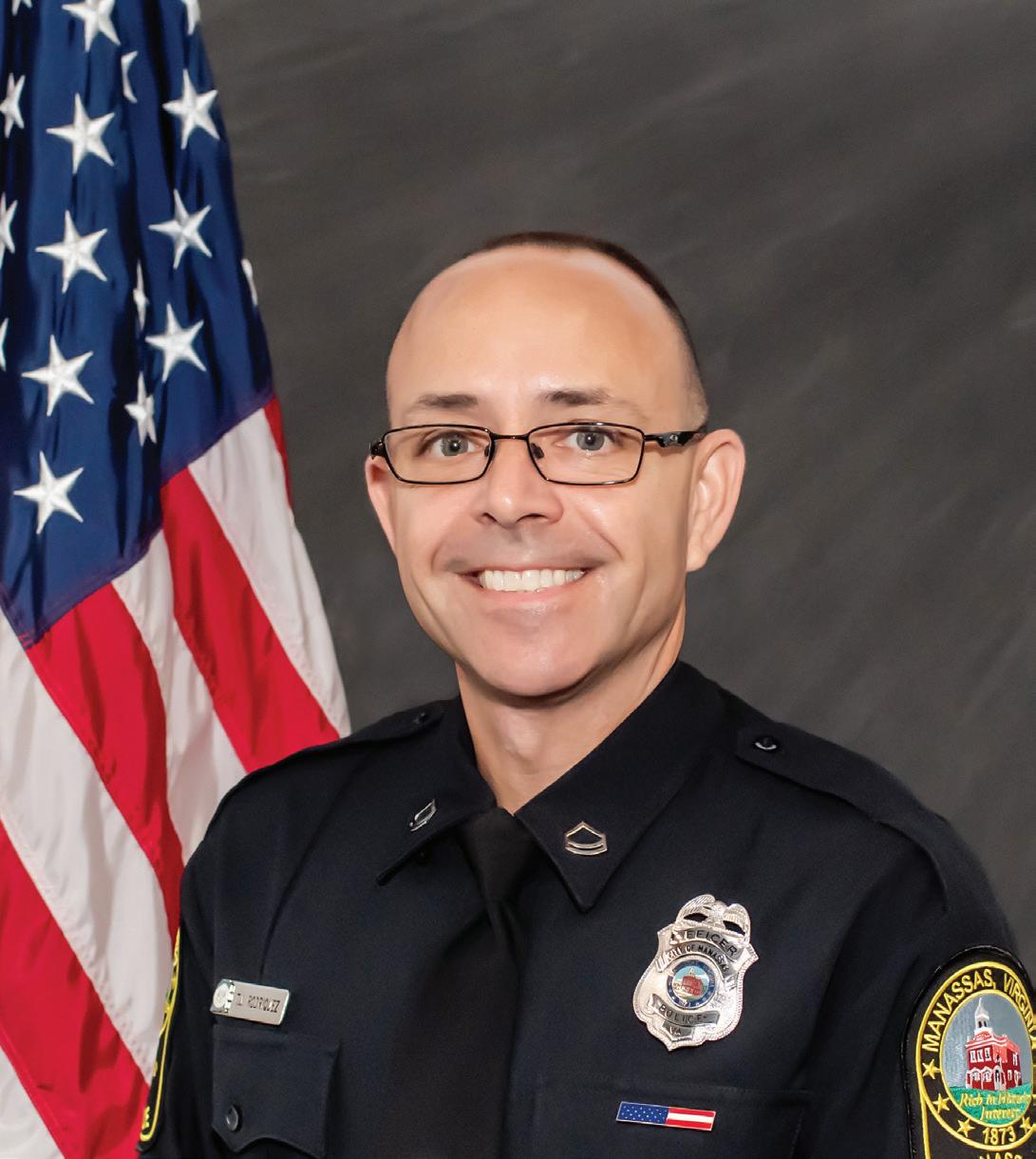
Master Police Officer Thomas Rodriquez, of the Manassas, Va., city police department is a veteran of 27 years’ service. Prior to police work he served as a Marine, joining when he was just 17 because “I was just so eager to get out and do something!”
Rodriquez is not someone who watches life scroll by. He grabs it and wrestles it into the kind of opportunity that takes him where he wants to go, making things happen along the way.
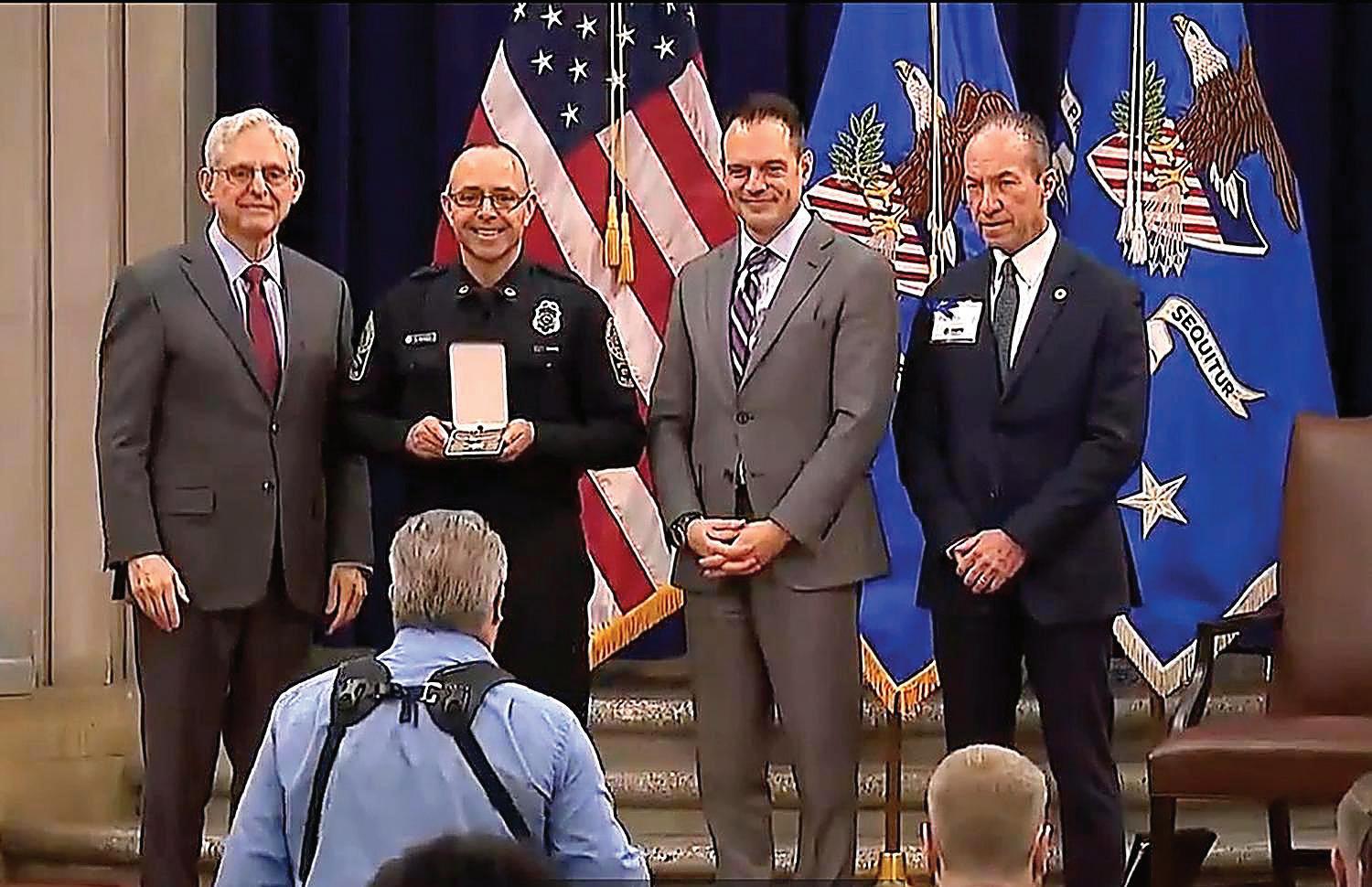
The veteran law enforcement officer was recently recognized by the U.S. Department of Justice for Innovations in Community Policing. Rodriquez created the Parent E3 Series which stands for Engage, Educate, and Empower for caregivers, helping them address at-risk behaviors.
“The concept for the Parent E3 Series originated from the innovative vision of our department during the development of our application for the Community Oriented Policing Services Office Hiring Grant in 2019, which was successfully awarded in October 2020. This grant focused on enhancing community policing efforts by establishing the Community Vitality Officer Program an initiative designed to strengthen community relationships, reduce youth-involved violent incidents and build trust through intentional engagement, education and empowerment.”
Guided by a project management approach and a guardian mindset — one centered on service, empathy and accountability — the department structured the initiative around three core objectives, Rodriquez said.
• Engage: Build meaningful relationships and open communication with the community.
• Educate: Provide practical, expert-led training and workshops to increase awareness and prevention strategies.
• Empower: Support resilience and self-sufficiency through community resources, mentorship and family-focused outreach. The department laid out a plan for implementation as well. To support the goals, it created a framework of six strategic pillars:
1. Youth outreach programs.
2. Parental education outreach.
3. Community engagement and enrichment.
4. Education and career fulfillment initiatives.
5. Multidisciplinary and interagency partnerships.
6. Data collection, evaluation and reporting.
Officially launched in January 2022, the series was initially delivered in a six-week workshop model covering multiple topics everything from internet safety and substance abuse awareness to human trafficking awareness and mental health and wellness. The sessions were designed to equip parents and caregivers with knowledge, tools and strategies to better support and protect their children while building stronger family relationships, according to Rodriquez.
The program grew steadily right from the beginning. Following the inaugural series, the department formed a strategic partnership with Manassas City Public Schools a collaboration that arose naturally due to preexisting relationships with the School Resource Officer program and the school division’s newly launched Family Liaison Program.
As the series progressed, so did the scope of topics and partnerships. In response to growing concerns about school absenteeism, the 2022–23 series introduced Every Student, Every Day, inspired
Master Police Officer Thomas Rodriquez
by the AttendanceWorks.com model. This effort addressed the rising trend of chronic absenteeism both locally and nationally. In 2023–24, the program partnered with George Mason University’s Center for Evidence-Based Crime Policy for intergenerational engagement and dialogue.
In 2024–25, the Parent E3 Series adopted a hybrid delivery model, maintaining school-based sessions while expanding into community settings. A new workshop, “Understanding Teen Dating and Healthy Relationships”, was introduced: This event alone drew over 100 parents and youth.
Rodriquez is justifiably proud of the work and its far-reaching benefits. Another consideration is that was much needed and is much welcomed in the Spanish-speaking community. “All events offer real-time Spanish interpretation, addressing the needs of a community where over 40% of residents and nearly 70% of students identify as Hispanic.” With the Parent E3 Series in place, students can thrive while their parents help them much more easily.
While the program has grown significantly, it has not been without challenges. Participant engagement was a hurdle early on, particularly in the post-COVID-19 environment. Even four years post-pandemic, there is concern that students are struggling to catch up. The challenge was addressed by partnering with schools and trusted community leaders to improve outreach and create more welcoming spaces.
Another challenge has been coordinating resources and schedules among community partners. The forum-style model, while impactful, depends on the availability of multiple partners for each topic. Conflicts with competing community events and resource limitations remain an ongoing logistical consideration.
Despite these obstacles, the program’s flexibility, strong partnerships and localized delivery have enabled it to adapt and thrive over the past three years.
For agencies looking to replicate the success of the Parent E3 Series, Rodriquez offered the following recommendations:
1. Start with a clear vision rooted in community engagement.
Successful programs are built on trust, not enforcement. Anchor the initiative in the principles of 21st Century Policing and a guardian who prioritizes empathy, service and partnership.
2. Use a strategic framework.
Identify clear objectives and build around them. Manassas’ success was guided by a six-pillar framework that included youth outreach, parental education, interagency partnerships and outcome tracking.
3. Build strong partnerships early.
Collaboration with school systems, community leaders and nonprofits ensures access, credibility and sustainability. These relationships are essential for outreach, topic selection and hosting events in accessible, trusted spaces.
4. Be flexible and community-informed.
Use participant feedback, data and emerging trends to guide programming. Stay responsive to what families are actually experiencing not just what the agency perceives as issues.
5. Prioritize cultural and language accessibility.
Ensure materials, presenters and workshops are inclusive. Offering real-time interpretation, as the Manassas police department did
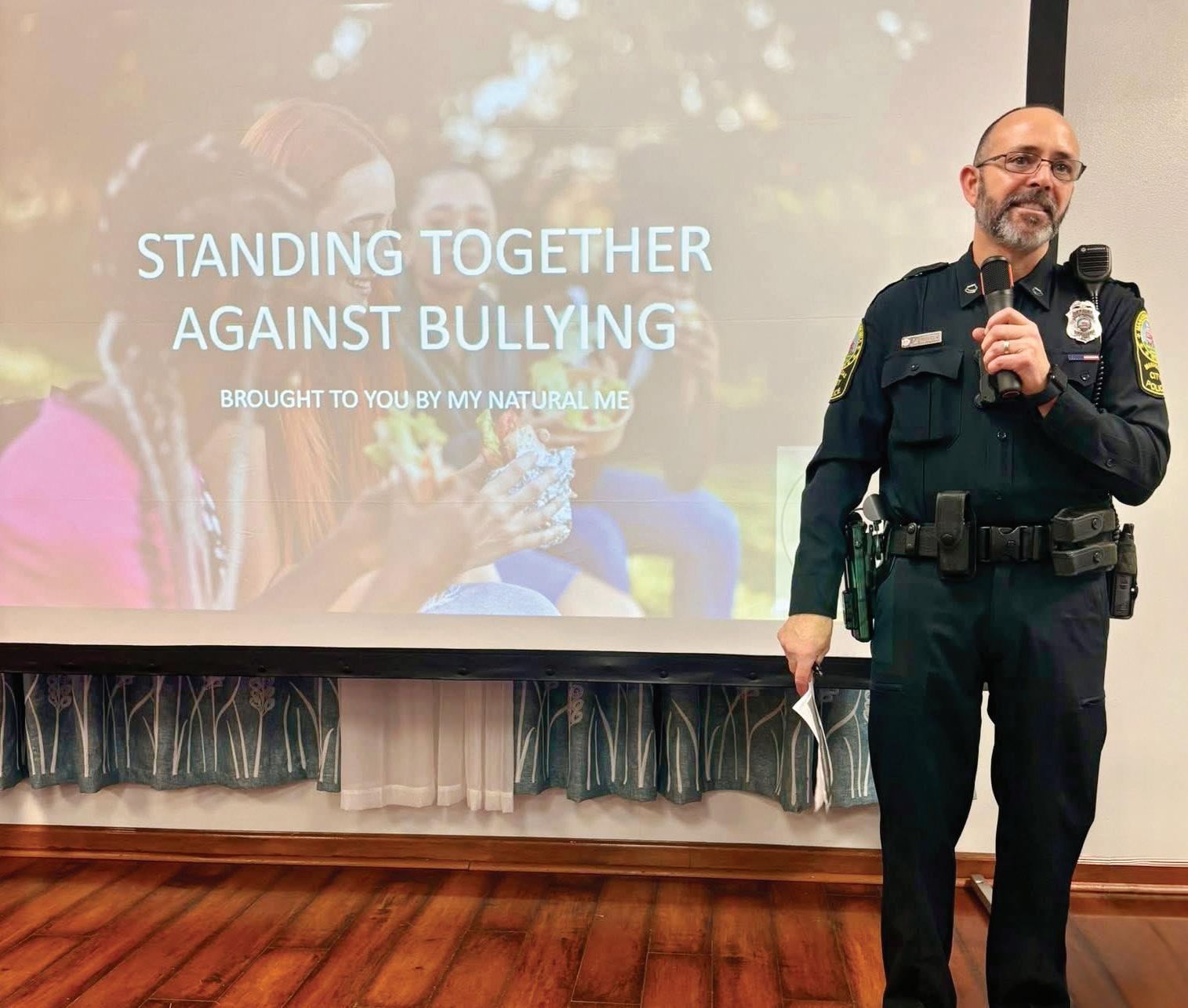
The topic of bullying is treated with all care and honed management skills by the Manassas police department through the Parent E3 Series program, helping students and their parents as well. (Photo provided by Manassas, Va., city police department)
for its large Hispanic population, dramatically increased participation and trust.
Even with the success of the Parent E3 Series, Rodriquez is always thinking about how to do the work better.
“This started out as what I called the Cattleman’s Club old men from all sorts of different backgrounds who get together and complain about all sorts of things. My passion came from working as a school resource officer for 6 years. There were a lot of learning curves and teaching the mindset that if you break the law, here are consequences.
“I ask, ‘What’s affecting you not to behave in school?’ Maybe the kid is hungry or sleep deprived, or there is stress at home.
Master Police Officer Thomas Rodriquez receives an award for his innovative ideas and work. (Photo provided by Manassas, Va., city police department)
These are learning opportunities. Otherwise, I’m just playing whack-a-mole,” Rodriquez chuckled.
“Like with the protests: Do they understand there could be consequences to these actions? Why are they doing this? What do they hope to achieve? Have they spoken to local or state reps about what could be done? That gives them a place to work from.”
Rodriquez said that the public hears a lot about 21st century models of policing. “But what does that mean? I want all the vested parties to be at the table or at least have a voice. Because any opportunity for teachable moments in our community is impactful. It changes the course when we collectively work together in the right direction. You don’t want to bottleneck into law enforcement; you can’t arrest your way out of a lot of the problems.
“I understand the importance of a warrior mindset. I like to look at it more as good, better, best model, more like a guardian mindset. We always try to give what is excellent, but yes sometimes we fail.”
They succeed, too, in a big way.
“The results are measurable. From 1,939 surveys, 98.9% were favorable. We’ve seen significant growth from 2022 to 2023. And we want the program to be purposeful, sustainable, not one-and-done or a Band-Aid. We want to be embedded. When I’m working with young people, I understand that perceived perception is reality. I want them to trust trust but verify.”
Rodriquez and his wife, Mandy, have been married for 29 years and are proud parents to their daughter, Amy. He is quick to say that he owes a lot of his success to his wife and daughter’s support and understanding; it’s not an easy life for them, and they’ve given him remarkable patience and grace.
Rodriquez’s work in family-focused prevention reflects both his professional commitment and lived experience. Outside of policing, he remains deeply engaged in community service, youth membership and Rotary leadership; he is an active member of the Rotary Club of Manassas’ Impact Initiative.

A flyer highlights sessions for parents that will address six issues that trouble and often endanger students and families. Evening sessions make it easier for working parents to attend. (Photo provided by Manassas, Va., city police department)



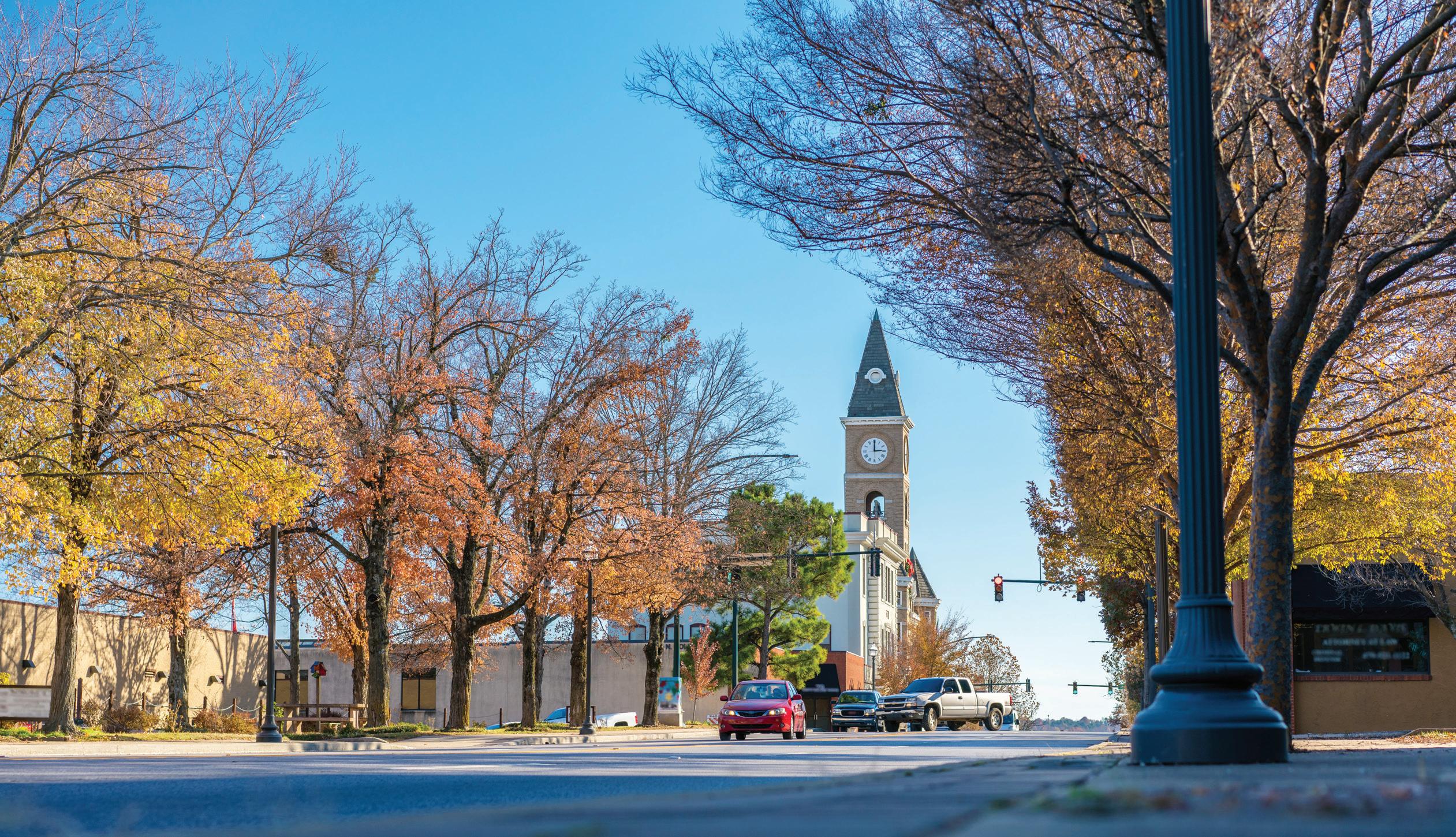
Fayetteville, Ark., downtown Washington County court house. (Shutterstock.com)
Fayetteville launches program to streamline housing development
By LAUREN CAGGIANO | The Municipal
The city of Fayetteville, Ark., has introduced a three-year pilot program to meet local housing needs. The Permit-Ready Building Design Program offers pre-approved building plans to residents, builders and developers. The idea is to simplify the construction process while encouraging architectural diversity in local neighborhoods.
According to Long Range Planning and Special Projects Manager Britin Bostick, the program provides a catalog of building plans that have already undergone city review for building code and zoning compliance. By using these designs, property owners can bypass much of the traditional design-and-review timeline, resulting in a faster path to breaking ground.
“The goal of the Permit-Ready Building Design Program is to lower the barrier to entry for building small-scale infill housing in Fayetteville,” said Bostick, who has a background in architecture and construction. “By providing these pre-approved plans, we’re essentially
handing developers a head start. It takes a significant amount of the guesswork and upfront cost out of the equation.”
The pilot applies to the downtown and Walker Park neighborhoods because both areas already had infrastructure in place to support new housing. One of the primary objectives of the program is to promote “missing middle” housing. The term refers to housing types that sit somewhere between detached single-family homes and large apartment complexes — such as duplexes; triplexes; and accessory dwelling units, or ADUs. These types of homes were once common but have become increasingly
Long Range Planning and Special Projects Manager
Britin Bostick
rare in modern development, despite being crucial for walkable, diverse neighborhoods.
By offering high-quality, pre-vetted designs for these specific housing types, the city hopes to see more variety in local housing stock.
“We know that our community needs more diverse housing options,” Bostick said. “These plans are designed to fit seamlessly into existing neighborhoods while providing the density we need. We want to make it easier for a property owner to say ‘yes’ to building an accessory dwelling unit or a small cottage court because the path to approval is so clearly defined.”
The financial and logistical benefits for participants who sign on to permit-ready design can be substantial. Under normal circumstances, a property owner would need to hire an architect to create custom plans, which can be expensive and time consuming. Once submitted, the plans go through a rigorous city review process that can take weeks or months, depending on the project’s complexity.
With the permit-ready designs, however, the initial architectural fees are significantly reduced or eliminated, as the city has already commissioned the designs. Furthermore, because the plans are pre-approved, the permitting phase is much shorter.
“Time is money in construction,” Bostick said. “When we can reduce the review time, we’re directly impacting the bottom line of a project. We’ve done the heavy lifting on the regulatory side so that builders can focus on what they do best: building quality homes for our residents.”
The designs aren’t just utilitarian. Per Bostick, they’ve been selected to ensure they contribute positively to Fayetteville’s aesthetic character. The program includes various architectural styles intended to complement the city’s historic and evolving neighborhoods. Residents may choose from 30 designs, including a variety of single-family homes, townhomes, duplexes and what the city calls “backyard cottages.”
As Fayetteville continues to grow, strategies that balance development speed with quality design become increasingly important. In Bostick’s estimation, this program represents a proactive approach to city planning, moving beyond simple regulation to active facilitation of desired development.
“Ultimately, this is about partnership,” said Bostick. “We’re partnering with our residents to build a city that accommodates everyone. Whether you’re a homeowner looking to add a rental unit for extra income or a small-scale developer wanting to build a duplex, this program is designed to be a tool for your success.”
In the larger context, Fayetteville joins a small but growing group of cities around the country experimenting with permit-ready design programs to spur affordable housing and infill. According to Bostick, Fayetteville learned from others outside the market and adapted best practices to fit local needs. In this way, the city is positioning itself as a leader in practical, people-centered housing policies.
Community members, including neighborhood associations and advocacy groups, also played a role in shaping the types of designs featured in the catalog. This involvement was to ensure they represent the diversity of Fayetteville’s architecture and the integrity of its neighborhoods.
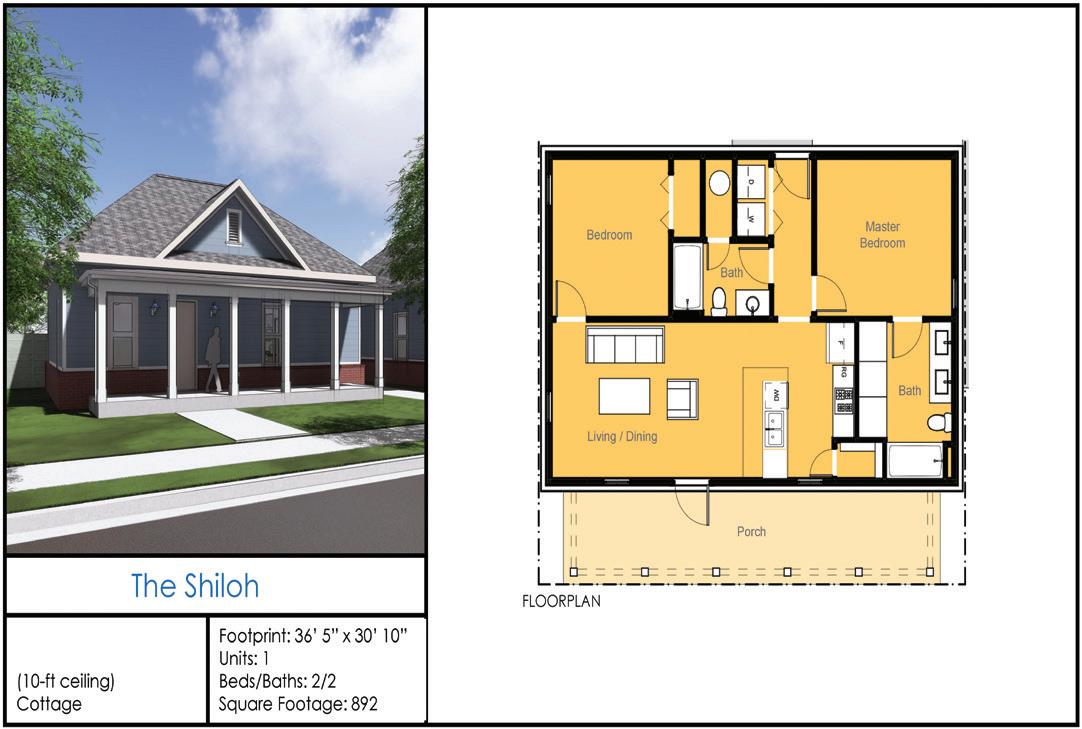
The Shiloh represents one of several pre-approved “backyard cottage” designs available to builders through Fayetteville, Ark.’s, time and money-saving Permit-Ready Building Design Program. (Rendering provided by Fayetteville, Ark.)
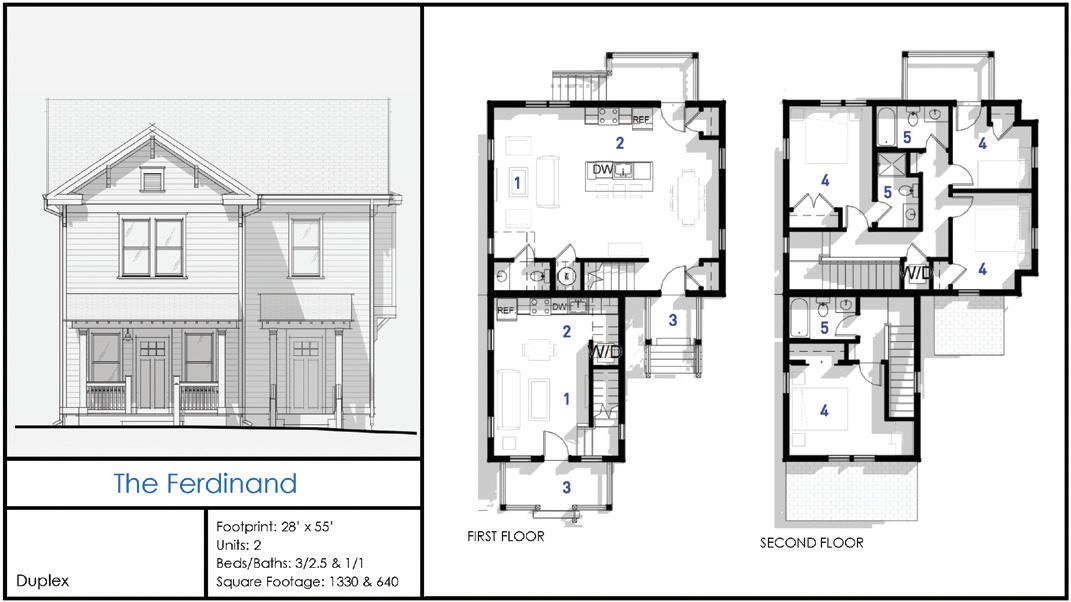
The Ferdinand is a duplex structure. If initial program efforts are successful, the city may consider expanding the program to additional areas. (Rendering provided by Fayetteville, Ark.)

Designs like The Laurel are based on community feedback, data gathered from a careful analysis of existing lot sizes and housing in the project study area, and building codes. (Rendering provided by Fayetteville, Ark.)
M Streets, Highways & Bridges
Tejon Street revitalization creates safer, more walkable destination
By NICHOLETTE CARLSON | The Municipal
For quite some time, Colorado Springs, Colo., has been looking to revitalize its downtown area and make it more accessible, safer and walkable, in order to create a destination location.
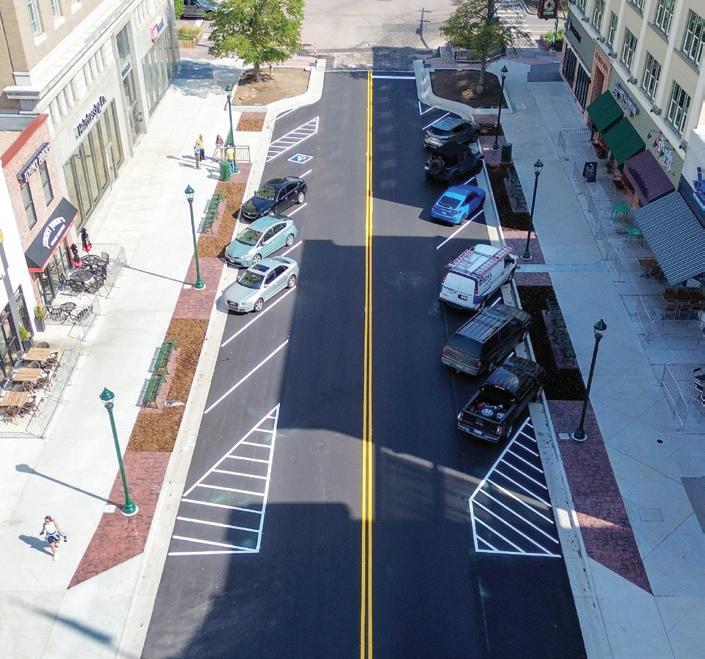
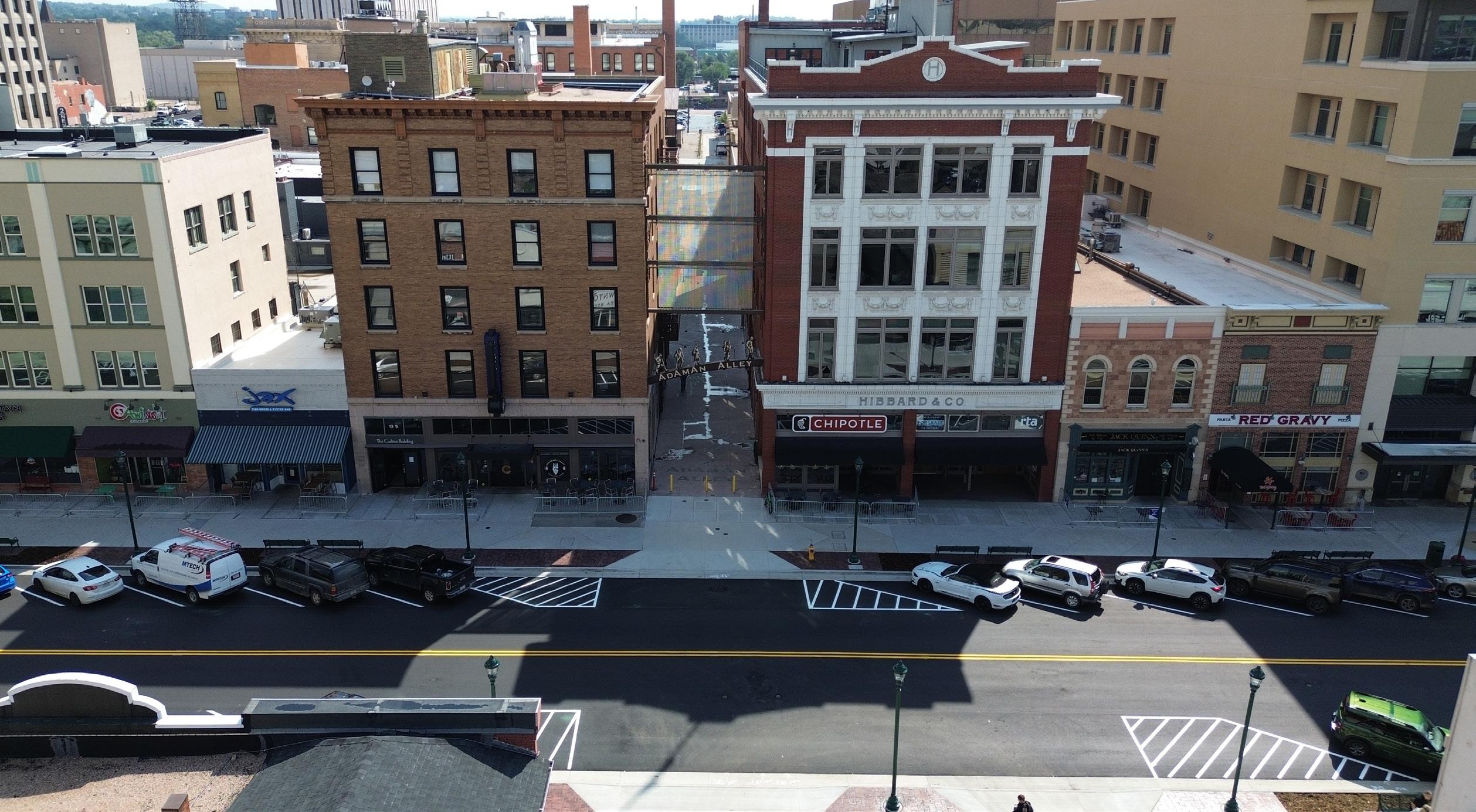
Tejon Street is the main historic street through downtown Colorado Springs and is the main corridor for traffic passing through the city. The Tejon Street Revitalization project covers two blocks of that downtown area and is nearly complete.
The project started with a vision between six and eight years ago, for changes the city wanted to make to the downtown streets. At that time, there was very little space for outdoor dining or restaurants. Sidewalks were narrow and only 4 to 5 feet wide, which limited accessibility for those with wheelchairs or strollers.
There was also on-street parking and only two lanes and a center lane for loading and
unloading. The center loading zone made it very dangerous, since people making deliveries had to carry packages or wheel dollies across a lane of traffic. The goal of the city’s downtown vision was to create a dedicated additional space for outdoor dining, widen the sidewalks and create a buffer area between parking and pedestrians, while maintaining on-street parking.
Two to three years ago, the city and local stakeholders were able to apply for and receive a grant from the Colorado Department of Transportation to improve mobility and multimodal options in the city. Money from Parking Enterprise, which collects
ABOVE: The first phase went along Tejon Street from Colorado Avenue to Pike’s Peak Avenue. The second phase went from Pike’s Peak Avenue to Kiowa Street. Both phases are nearly complete with only the paving and decorative pavers needing to be placed on the busy corner at Pike’s Peak Avenue. This will be completed as soon as the weather warms up enough to make it possible. (Photo provided by the city of Colorado Springs, Colo.)
revenue from parking meters and downtown parking, was also used for the project.
“Parking is necessary, and it also helps to generate revenue to go back and help the businesses revitalize the street,” Richard Mulledy, Colorado Springs public works director, said. Combined, city funds and the grant were able to fund the majority of the $8.6 million street project.
The project’s design phase took about a year to complete because it was a difficult

The city made sure to limit the impact to local businesses along the street as much as possible. Parking vouchers were given out to businesses to share with patrons, and demolition was completed after business hours. (Photo provided by the city of Colorado Springs, Colo.)
project, and all involved wanted to create the least amount of impact possible on businesses.
There were two phases for the project. Phase one was Colorado Avenue to Pike’s Peak Avenue. Phase two was Pike’s Peak Avenue to Kiowa Street.
“It would’ve been easier to do it all in one go,” Mulledy admitted. “But we poured 6- to 8-feet-sections at different times. It made the project take a little longer, but it kept the businesses open.”
Demolition in front of businesses was done after business hours. Concrete was poured in front of businesses before the business opened for the day, and the city was diligent about construction and construction noise during operating hours, especially during dinner hours for restaurants. The main goal was to ensure all businesses remained accessible during their operating hours.
Incentives were also provided if part of the street construction would impact a business particularly the lack of on-street parking. The city worked with businesses and helped provide promotions, signage, media posts and advertisements during the process, and if parking was inaccessible for a few months, businesses were provided with vouchers to give their clients and visitors free parking in a city garage only a short walk away. This way, the street revitalization created as little negative impact as possible.
Since the roads had been built 150 years ago, the city did face its fair share of challenges. There were plenty of old utilities and other lines that the city was unaware of until they were dug up.
One unique challenge was that the public right of way and public property is supposed to extend from one property face to the next property face. However, there were basements of multiple properties that extended into the public property space. Demolition would begin on a sidewalk and the crew would hit concrete and realize it was the basement top of an adjacent building. This meant the construction crew had to locate the extent of each basement individually and jackhammer by hand the area above the basement. The tops of the basement ceilings also had to be reformed and the work coordinated with the new sidewalks. This all had to be done in real time, on a case-by-case basis.
Another unique challenge was a buried underground chamber for heating oil. When crews ran into it during construction, no one knew what it was at first.
In preparation for the project, the city did some forward thinking and made a unique decision. Two years prior to the project’s start, it purchased mature trees between 15 and 20 years old from a few states away. This gave the trees time to acclimate to the weather in Colorado Springs. The city realized if they planted 2-inch-tall trees, it would be another 25 years

The previous sidewalks along Tejon Street were only 4 to 5 feet wide, which limited accessibility. Now the city has 9-foot-wide sidewalks with a dedicated 6-foot buffer zone of trees and benches. (Photo provided by the city of Colorado Springs, Colo.)
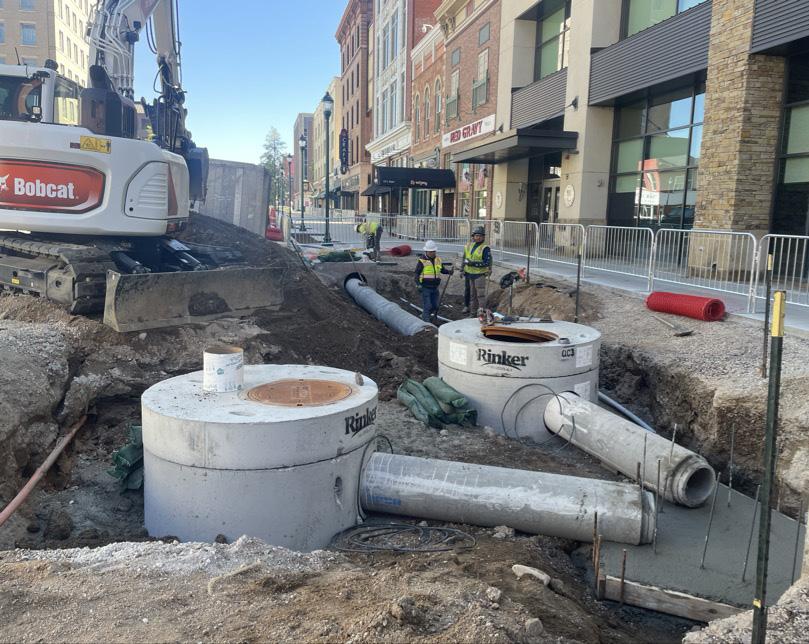
Previously the city had a center lane for loading and unloading. However, this could be dangerous having to cross traffic with packages or dollies. This revitalization project removed the center lane to wide the sidewalks and made designated loading and unloading zones. (Photo provided by the city of Colorado Springs, Colo.)
before they had a proper tree canopy. This way, residents and visitors could enjoy a mature tree canopy when construction is complete.
The two blocks along Tejon Street now have a dedicated 10-foot area in front of businesses with decorative fencing, in order to create an experience for visitors. There is a 9-foot sidewalk on each side of the road to provide
more space for pedestrians. There is also a dedicated 6-foot buffer area with trees and benches next to the sidewalk. Overall, these created more than 20 feet of walkable space on each side of the street.
In order to make the space possible, the center lane designated for loading and unloading was removed. There are instead designated loading and unloading zones. Diagonal parking was kept along the street.
The concrete, curb and structural work is complete and street trees and furniture installed. The only work left, due to weather restrictions, is the busy Pike’s Peak corner. The corner needs paving to be finished, as well as decorative pavers. Those will be completed as soon as the weather warms up enough to make it possible.
When plans for the revitalization project were first brought up, businesses were a bit hesitant. However, since the majority of the work has been completed, many love the result of the downtown atmosphere.
The city wants to continue the downtown vision. Businesses that are next up in the project are eagerly anticipating their turn to be revitalized.
“Businesses really do want the experience of the downtown area. Downtown is a big destination for tourists with many hotels,” Mulledy said. “It has really grown up, with over $2 billion invested in our downtown over the past few years.”
Visitors to Colorado Springs want to experience the outdoors. The city is working to ensure its downtown helps residents and tourists do just that.
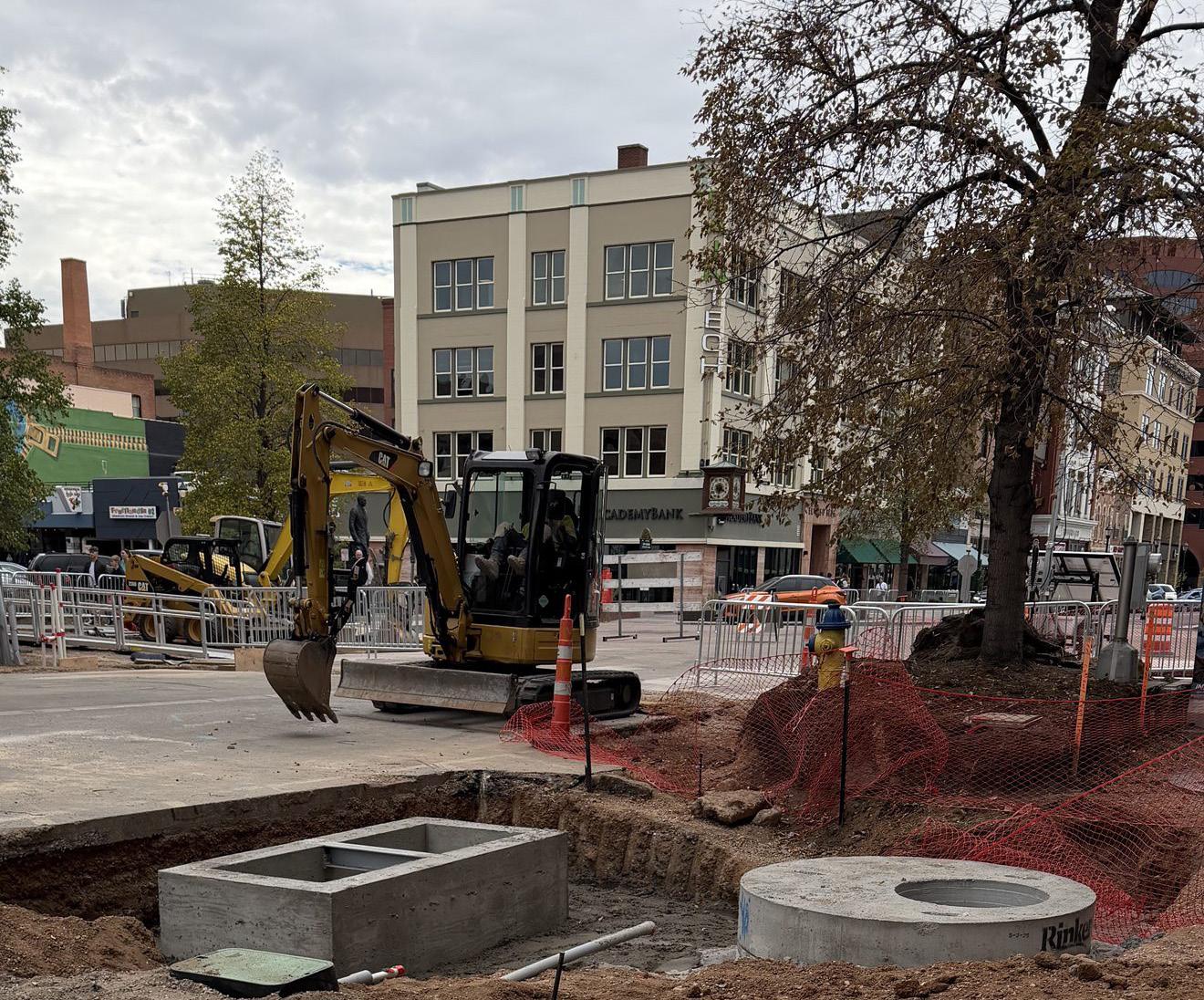
Two years before the project started, the city ordered mature trees that were 15 to 20 years old. This gave the trees time to acclimate to the Colorado weather before being planted along the street and made it so the downtown area would not have to wait an additional 25 years for a mature tree canopy. (Photo provided by the city of Colorado Springs, Colo.)
26_000578_The_Municipal_APR Mod: January 19, 2026 2:55 PM Print: 02/20/26 page 1 v2.5 ORDER BY 6 PM FOR SAME DAY SHIPPING



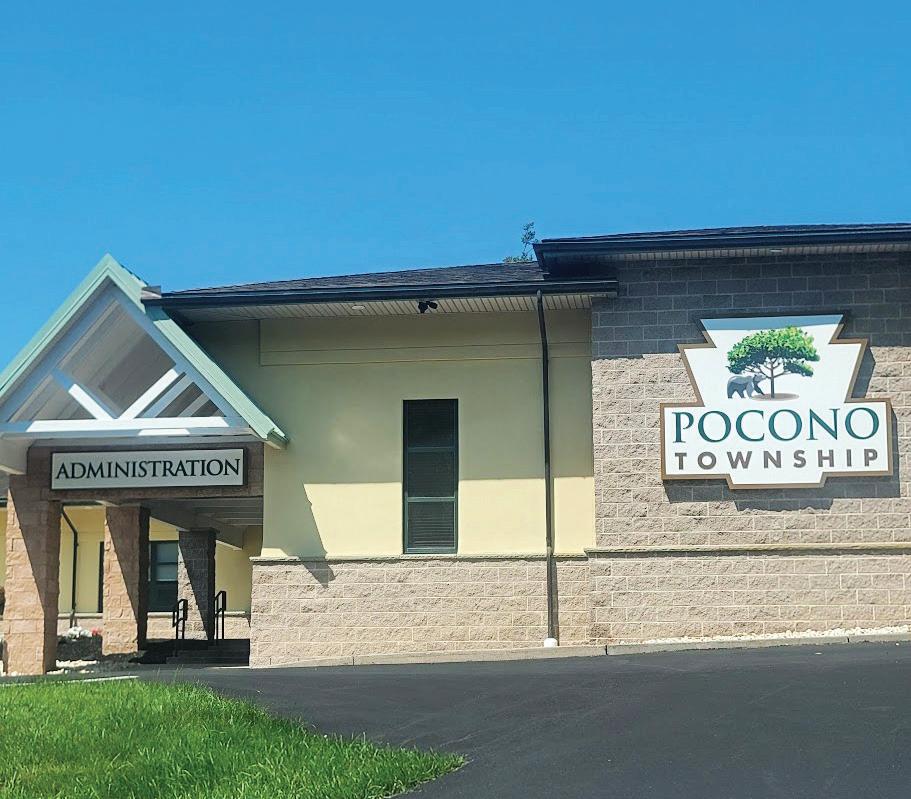
Pocono Township: Building a public safety center from the inside out
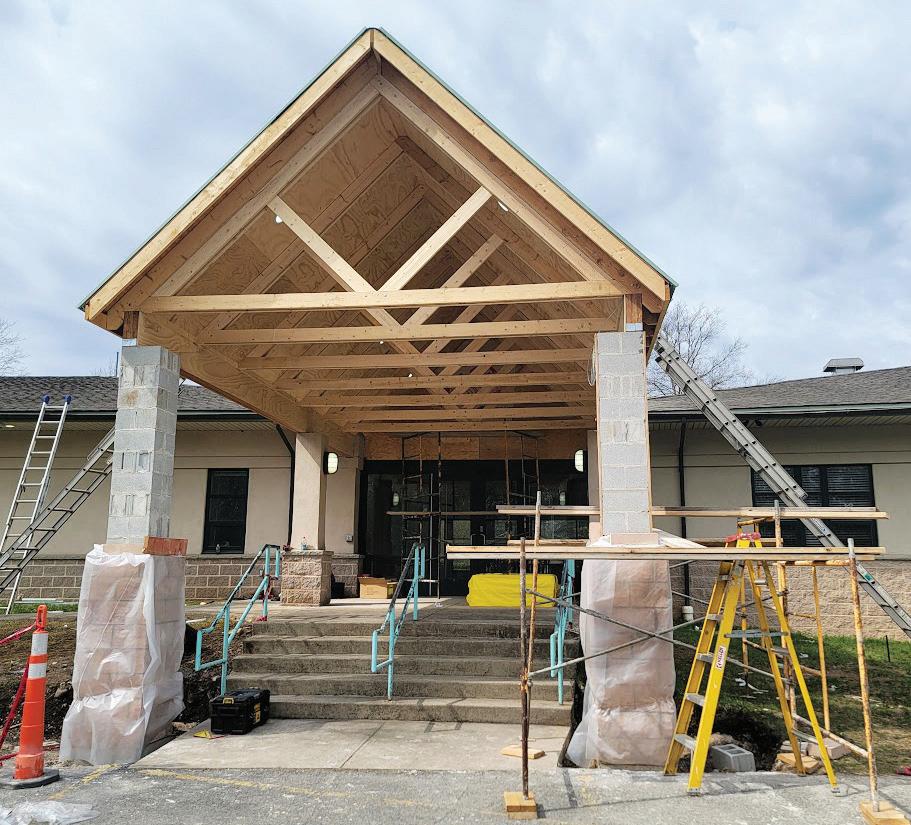
By DANIELLE LUND | The Municipal
The space had last been refurbished in 1985, when the township employed just three police officers and three administrative staff members. Nearly four decades later, that same building was supporting a much larger operation in a rapidly growing community, and law enforcement and township officials realized a new space was needed.
Located in Monroe County, Pocono Township, Pa., serves a permanent population of about 10,000 residents. That number swells to roughly 60,000 during peak tourism seasons. Known as the “Honeymoon Capital of the U.S.,” the township sees heavy seasonal traffic that places additional demands on public safety and municipal services.
“We knew we were growing faster than our long-term planning,” said Jerrod Belvin, township administrator. “Whatever we did, we would have to do it right the first time. What we build now, we’re committing to for the next 30 years.”
In 2017, township officials began an extensive property search. Renovating the old building was considered, but the costs of adding an elevator, meeting Americans with Disabilities Act requirements and expanding the space made it an inefficient long-term solution. “How do you possibly upsize everything in a building like that?” Belvin asked. “We knew it wouldn’t last us.”
One potential new property kept resurfacing in conversation: a 36,000-square-foot former Northampton Community College building that had been vacant since 2014. Township officials had reviewed it multiple times over the years, but it wasn’t until May 2024 that the opportunity aligned with the township’s need and budget.
“You can’t pay more than appraisal value,” Belvin explained. “So, we were able to get the building at a good price, and it gave us the space we needed to think long-term.”
Construction began in August 2024. In June, 2025, the Administration Building officially opened, which was an accelerated timeline for a municipal project of its size. Additionally, the left side of the facility is still under construction and will become the new police department.
“We flipped the entire administration wing for about $1.2 million,” Belvin said. “That same project was projected to cost anywhere from $9 million to $13 million under a traditional architect-based model.”
LEFT ABOVE: The finished Pocono Township, Pa.’s, new Administration Building welcomes staff and residents alike. The new facility is designed for shared use, and part of the building is being rented to the district magistrate, creating an additional revenue stream. (Photo provided by Pocono Township, Pa.)
LEFT BELOW: Pocono Township secured the purchase of a former Northampton Community College building, which it began converting into the new Administration Building in August 2024. (Photo provided by Pocono Township, Pa.)
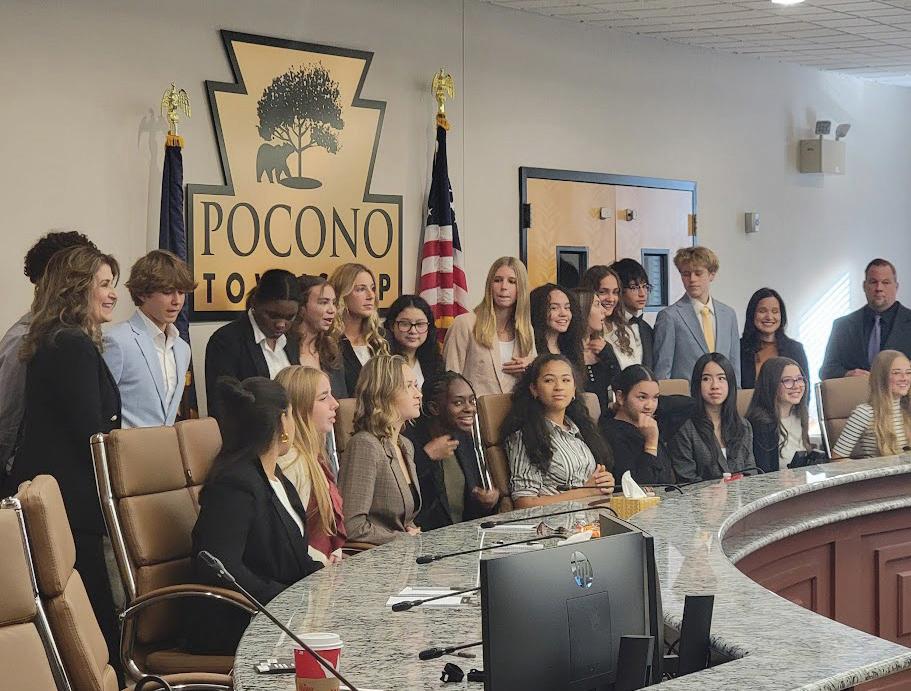


Public Works Director Patrick Briegel oversaw the project, with the public works crew completing approximately 80% of the construction work themselves. Pictured are some work-inprogress photos. (Photo provided by Pocono Township, Pa.)


Rather than outsourcing the project’s management, Pocono Township relied on internal leadership and staff expertise. Belvin and Public Works Director Patrick Briegel oversaw the project from start to finish, with the public works crew completing approximately 80% of the construction work themselves.
“This was a labor of love,” Belvin said. “Public works is more than just paving roads or plowing snow. We have workers who are incredibly skilled and take real pride in their work.”
The township utilized Pennsylvania’s COSTARS voluntary cooperative purchasing program and Sourcewell-approved vendors, allowing officials to bypass lengthy bidding processes while remaining compliant with procurement regulations. Local vendors were used whenever possible, and overtime was strategically deployed to keep the project moving.
“We found some flexibility in the system, but we did everything by the book,” Belvin said. “Using COSTARS vendors meant no drawn-out bidding, no delays, and a lot of local businesses benefiting from the work.”
Outside contractors were brought in only twice for this project: once for a new façade and once for ADA-compliant bathrooms. Even items typically outsourced were completed internally. When the township received a $110,000 quote for a dais, public works staff opted to build it themselves.
“I almost fell out of my chair when that quote came back,” Belvin said. “We built the entire thing, marble countertops and all, for about $30,000.”
Beyond construction, Belvin personally handled all technology installations, including networking, Wi-Fi, access control, cameras and the phone system. Much of the work was completed on Belvin’s personal time.
“That was volunteerism for me,” he said. “It was about commitment to the community and making sure everything was done right.”
By eliminating external project management and maximizing inhouse labor and technical expertise, township officials estimate they
saved between $2.9 million and $3.2 million overall. Just as importantly, the project was completed without taking on any additional debt.
“We were very aware of what we needed to do,” Belvin said. “Proper planning is everything.”
While the Administration Building is now fully operational, construction continues on the police department wing. Once complete, it will support a department that has gradually grown over the years and will include a 60-by-60-foot sally port, upgraded facilities and a gym to support accreditation efforts.
“Our police department is pursuing accreditation, so we built the space to support that from the start,” Belvin said.
The township plans to use the same in-house approach for this phase, with public works staff handling walls, electrical work and other core construction once mechanical, electrical and plumbing drawings are finalized.
The new facility is also designed for shared use. Part of the building is being rented to the district magistrate, creating an additional revenue stream and making better use of the space.
“It’s about making people’s tax money last in multiple directions,” Belvin said. “We’re the only municipality left in Monroe County with our own police force, and we take that responsibility seriously.”
Meanwhile, the former municipal building will not be left behind. Plans are underway to convert it into a senior community center, which is another project that township officials expect will rely heavily on township public works employees to complete.
“We shouldn’t have to contract that out, either,” Belvin said. “Our crew will handle a lot of that work.”
For Pocono Township, the Administration Building is more than a new facility. It’s a reflection of trust in municipal employees, careful stewardship of public funds and a commitment to public safety.
“We knew what we needed, and we knew we had the people to do it,” Belvin said. “This project proves that when you empower your staff, you can do incredible things.”
The Pocono Township Board of Commissioners enjoys its new chambers located within the Administration Building. (Photo provided by Pocono Township, Pa.)
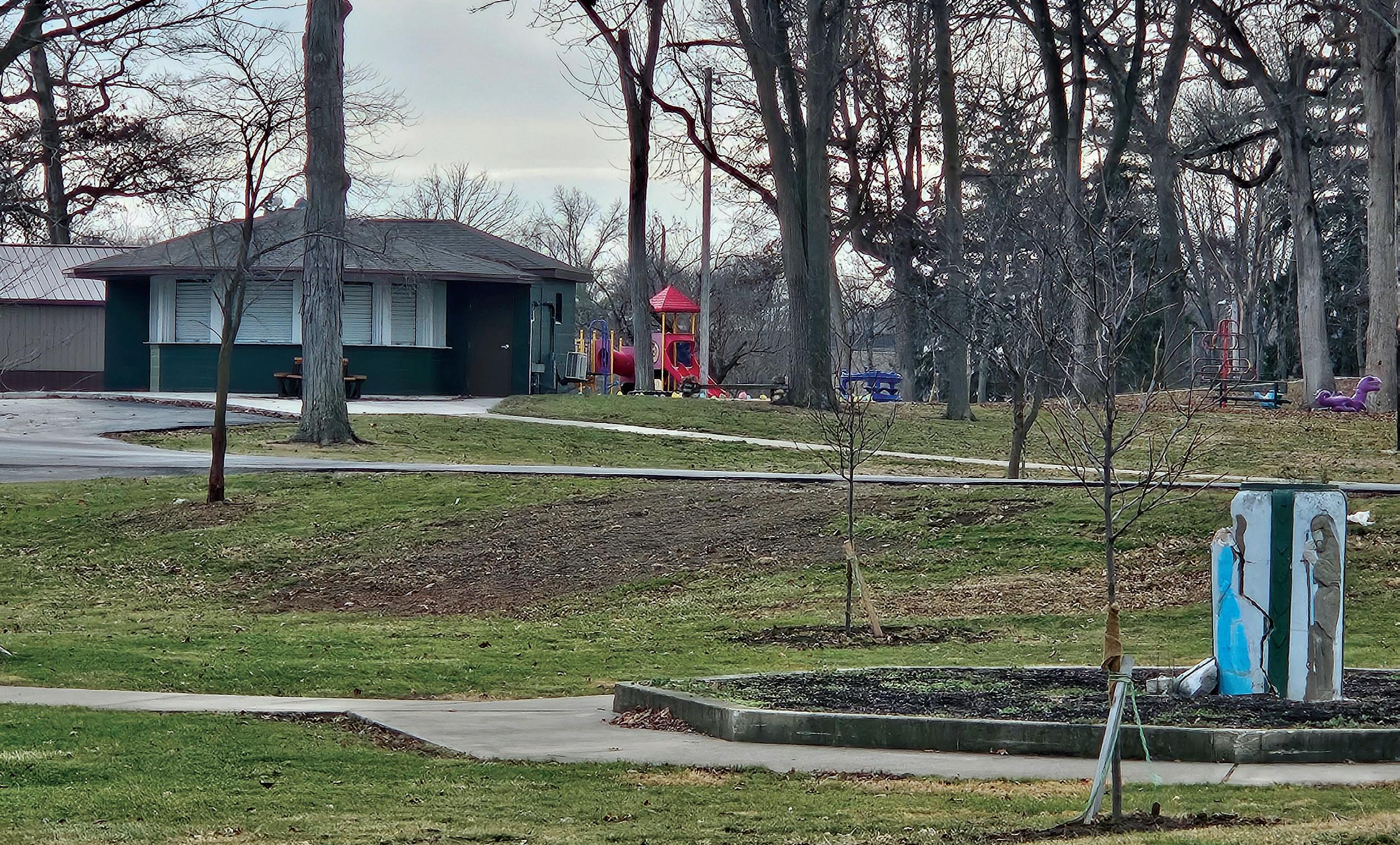
Greenville begins landscape restoration following tornado
By NICHOLETTE CARLSON | The Municipal
After a tornado swept through Greenville, Ohio, in 2024, the city had to begin to repair and replace what was damaged.
One of the hardest-hit areas during the disaster was Greenville City Park. While there were no fatalities or injuries at the park, there was considerable damage to buildings and structures. The most devastating loss was multiple trees, so the city began focusing on replanting.
Immediately after the May 7 EF-1 tornado, the city began a communitywide effort to replace the approximately 180 trees that were damaged or destroyed. Community members Greg Zechar and Hallie Foureman from the local Zechar-Bailey Funeral Home began an “Adopt a Tree” program to begin replacement of the trees and teamed up with the nonprofit YOLO Inc. of Darke County to start the process of receiving tax-deductible donations. These donations from individuals and businesses allowed the city the necessary funding to begin moving
forward with a comprehensive landscaping plan to restore the park.
Over several months, more than $130,000 was raised due to the generosity of nearly 350 individuals and organizations. The money allowed the city to begin working with Wendi Van Buren, an urban forester with the Ohio Department of Natural Resources.
“After a lot of planning and study, it was determined that the types of trees to be replanted are all Ohio species, including autumn gold ginkgo, white oak, bald cypress, sugar maple, imperial locust, Ohio buckeye, shellbark hickory, beech black gum, willow and more,” Greenville Mayor Jeff Whitaker shared. The variety of native tree species will ensure a healthy, diverse tree canopy.
The first round of trees has been planted, and the city has created a five-year plan to plant 30 to 40 more trees each year. In
ABOVE: An EF-1 tornado swept through the city of Greenville, Ohio, in May 2024. It caused damage to a museum, the county governmental complex, cemetery, school football stadium and the city park. Since then, the city has been working through repairs to the structures and landscaping. (Photo provided by the city of Greenville, Ohio)
the first round of replanting, 40 trees were planted around the city swimming pool and bandshell area, home to Sunday evening concerts in the park by Greenville’s municipal orchestra. Those trees included autumn gold ginkgo, white oak, bald cypress, sugar maple and imperial locust.
“This project represents our community’s resilience and commitment to preserving our city park,” Whitaker emphasized. “We are grateful for the generosity of those who helped make this restoration possible.”
A donor recognition memorial is in the works. It will be a granite monument approximately 7 feet tall with the names of those who helped contribute to the replanting
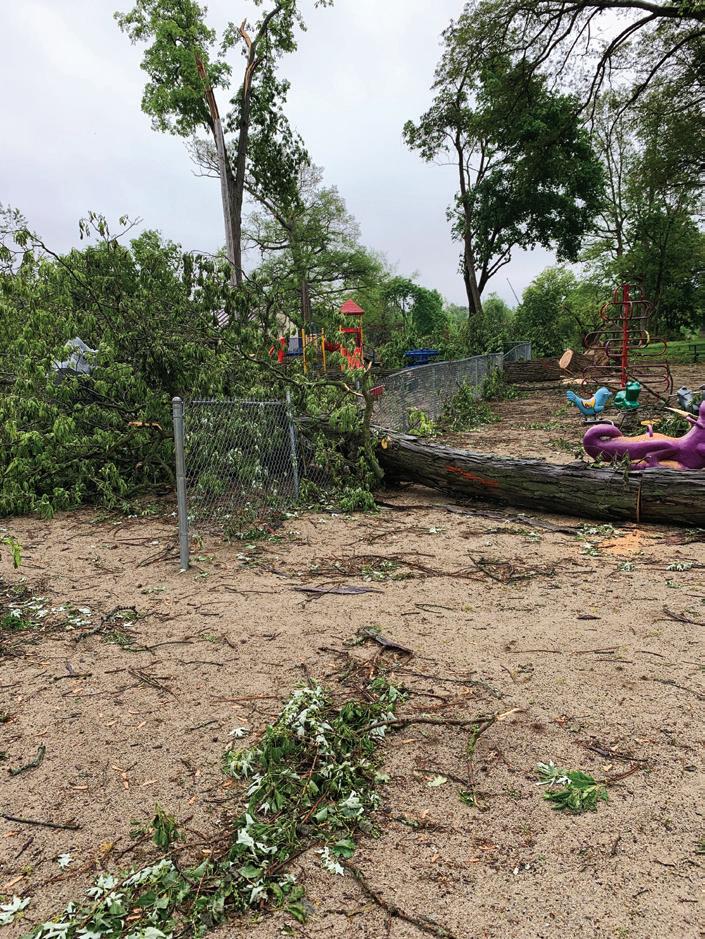
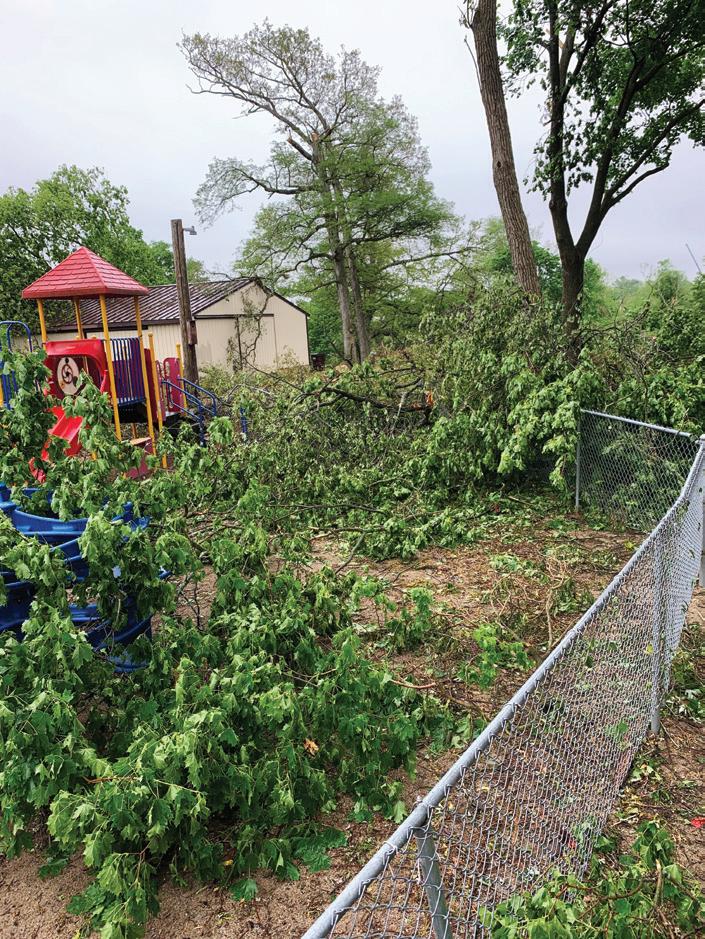
Community members began an adopt-a-tree program to help replace the nearly 180 trees damaged or destroyed in the tornado. Donations allowed the city to draw up a landscaping plan to replant trees and restore the park. (Photos provided by the city of Greenville, Ohio)
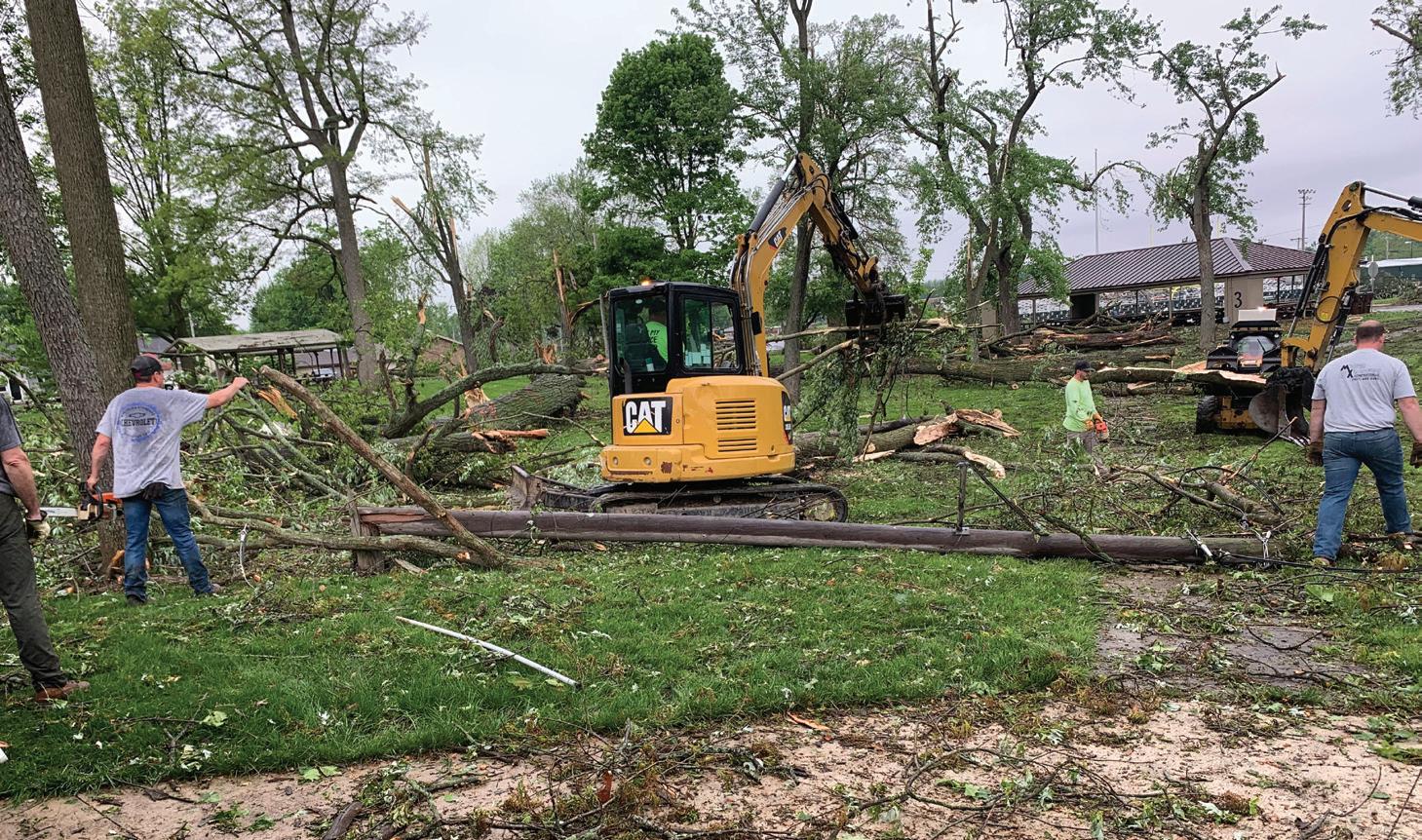
Neighboring cities and towns turned out to assist Greenville with cleanup efforts, including Versailles, Sidney, Bradford and New Madison. The cleanup efforts were also helped by local residents and organizations and led by the city’s safety and service director and the streets department. (Photo provided by the city of Greenville, Ohio)
effort listed along three sides. The monument will be installed in the park this spring. Besides damage to the park, the Garst Museum suffered damage when a tree fell onto the Americana wing of the museum. The Darke County government complex also suffered damage from trees, in addition to vehicle damage. Greenville Union Cemetery had a great deal of damage too.
Portions of the city were without power for days. The city school’s football stadium was extensively damaged as well. Prior to the beginning of the 2024 season, the school had replaced the field, installed new lights and built a temporary press box: In 2025, a new, permanent press box was built and bleachers were replaced. Dugouts at the junior high

A donor recognition monument approximately seven feet tall will be installed in the park this spring. It will list the names of all those that helped in the replanting effort along three sides. (Photo provided by the city of Greenville, Ohio)
softball and baseball diamonds were also damaged and have since been repaired.
The city’s safety and service director, Ryan Delk, and the Greenville street department worked together to coordinate a massive cleanup effort following the tornado. Neighboring cities and towns came to assist Greenville, including Versailles, Sidney, Bradford and New Madison.
“We are blessed to have so many residents and various organizations willing to work so hard in helping their neighbors and community in cleaning up individual properties, our city park and our cemetery, as well as providing food for all those doing so,” Whitaker acknowledged.




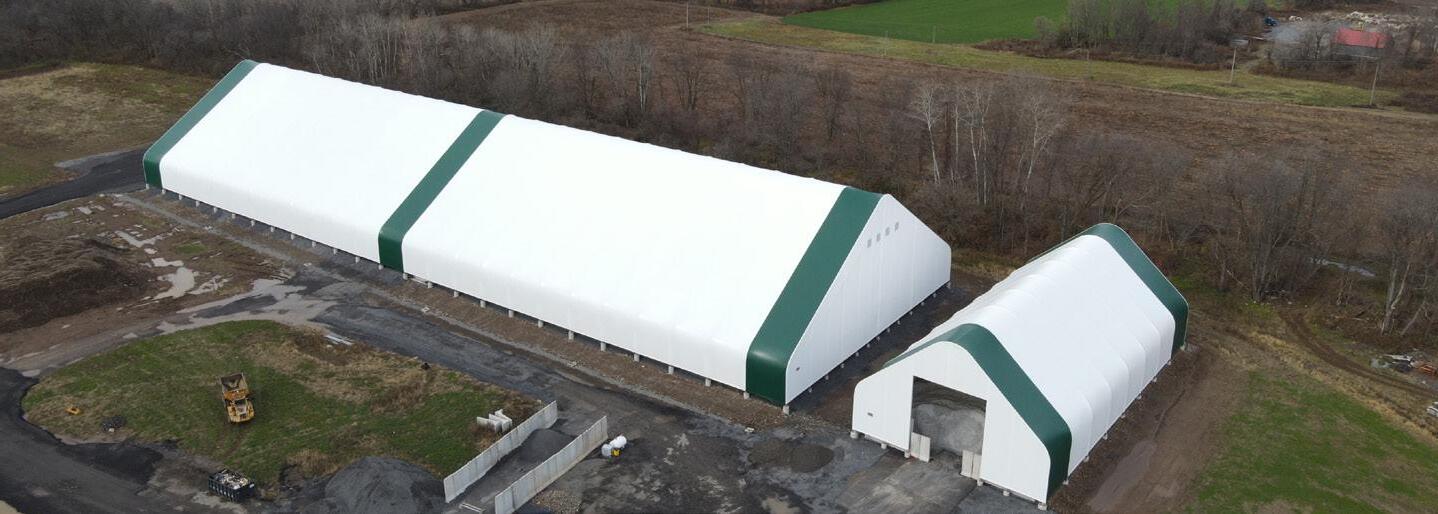






things you must know BEFORE buying a STREET SWEEPER
APRIL
April 1-3 IRWA Spring Conference
The Riverside Hotel, Boise, Idaho
https://www.idahoruralwater. com/
April 9-11 NDEMSA 50th Annual Conference & Tradeshow Bismarck, N.D.
https://www.ndemsa.org/
April 12-15 AASHTO Spring Meeting
Savannah, Ga.
https://transportation.org/ meetings/events/
April 13-15 Design-Build Water/Wastewater Conference
Gaylord Texan Resort & Convention Center, Grapevine, Texas
https://dbia.org/designbuild-for-water-wastewaterconference/
April 13-15 NAFA 2026 Institute & Expo Cleveland, Ohio
https://www.nafainstitute.org/
April 14-15 NCRC Just Economy Conference 2026
Washington Hilton, Washington, D.C.
https://ncrc.org/conference/
April 14-16 South Dakota
Joint Chiefs & Sheriffs Spring Conference
Deadwood, S.D.
https://www. southdakotasheriffs.org/ conferences/upcoming.html
April 15-17 Colorado City & County Management Association Annual Conference
Hotel Colorado, Glenwood Springs, Colo. https://coloradoccma.org
April 15-17 Design-Build Transportation Aviation Conference
Gaylord Texan Resort & Convention Center, Grapevine, Texas
https://dbia.org/design-buildfor-transportation-aviationconference/
April 19-21 Fire Department Training Network Live-Fire Training Camp Indianapolis, Ind. https://fdtraining.com/training/ courses
April 20-24 Midwest Leadership Spring 2026 Seminar
NIU Naperville Campus, Naperville, Ill. https:// midwestleadershipinstitute. org/
April 20-25 FDIC International Indiana Convention Center & Lucas Oil Stadium, Indianapolis, Ind.
https://events.jems.com/
April 21-23 WASWD 2026 Spring Conference
Three Rivers Convention Center, Kennewick, Wash. https://www.waswd.org/ midconference
April 21-24 Navigator 2026
Las Vegas, Nev. https://navigator. emergencydispatch.org/home
April 22-24 League of California Cities 2026 City Leaders Summit SAFE Credit Union Convention Center, Sacramento, Calif. https://my.calcities.org/Events/ Calendar-of-Events
April 22-24 ORWA Annual Conference Embassy Suites Hotel & Conference Center, Norman, Okla. https://orwa.org
April 24 & 25 SWANA Florida Chapter Road-E-0 Crowne Plaza Ft. Myers Gulf Coast, Fort Myer, Fla. https://swanafl.org/upcomingevents/

April 26-29 APWA North American Snow Conference
Huntington Convention Center of Cleveland, Cleveland, Ohio. https://www.apwa.org/ events/north-american-snowconference/
April 26-29 AWW & WEA 95th Annual Conference
Hot Springs, Ark. https://www. arkansaswaterconference.com/ conference/
April 26-29 Florida Water Resources Conference
Daytona Beach Ocean Center, Daytona Beach, Fla. https://www.fwrc.org/
April 27-29 TPTA Conference & Trade Show
San Antonio Hyatt, San Antonio, Texas
https://login.parking-mobility. org/events/2026-tpta-annualconference-and-trade-show-
April 28-30 AZ Water 99th Annual Conference & Exhibition
Phoenix Convention Center, Phoenix, Ariz. https://www.azwater.org/ events/event_list.asp
April 28-30 MSAWWA & MWEA 2026 Joint Conference
Copper King Hotel & Convention Center, Butte, Mont. https://www.montanawater. org/joint-conference/2026joint-conference/
Product Spotlight









NAFA announces 2026-2027 board of directors
EDISON, N.J. NAFA Fleet Management Association, the vehicle fleet industry’s largest membership association, is pleased to announce its elected 2026-2027 board of directors. This year’s board continues to be led by a dynamic group of fleet professionals from a range of industries, including corporate, government, public safety, education, technology, FMCs and more.
“I’m excited to continue to lead this talented group of industry professionals as we strengthen our ongoing strategic initiatives,” said Maria Neve, NAFA board president, VP eFMC Strategy, Inspiration Fleet. “Our Board is dedicated to advancing NAFA’s strategic priorities with a dedicated focus on creating efficient, sustainable, and safe fleets for public and corporate fleets. Collectively, we will continue to drive NAFA’s mission forward, ensuring our members remain at the forefront of the evolving fleet and mobility sectors.”
NAFA is driven by a strategic plan centered on three core pillars: thought leadership, member value and engagement, and advocacy. This plan provides the organization’s forward momentum, focusing on key initiatives to elevate the fleet profession. These initiatives include delivering high-quality educational content, cultivating a more diverse and inclusive membership base, and executing strong advocacy efforts at the state and local levels. Through these actions, NAFA ensures it remains central to the industry’s growth and innovation.
The following individuals will serve on NAFA’s 13-member 2026-2027 board of directors:
• President: Maria Neve, VP eFMC Strategy, Inspiration Fleet.
• Senior Vice President: David Hayward, CAFM, Director of Fleet Management, ABM Industries.
• Vice President: Beth Cooley, CAFM, Director, Commonwealth of Virginia Office of Fleet Management.
• Secretary/Treasurer: William McCarty, CFO, Illinois Board of Higher Education.
• Immediate Past President: Mike Camnetar, CAFM, Fleet Services Manager, General Mills Inc.
• Danielle Allsbrook, CAFM, Member, Senior Manager, Fleet & Delivery Strategy, SiteOne Landscape Supply.
• Sara Burnam, CAFM, Member, Fleet Success Ambassador, RTA: The Fleet Success Company.
• Levi Clark, CAFM, CM, Member, Manager, Fleet and Transportation, Port of Seattle.
• Al Curtis, Member, Fleet Director, Cobb County, Ga., Fleet Management.
• Bob Gonke, Member, Vice President, Client Management, Wheels, Inc.
• Amy McAdams, CAFM, Member, Fleet Manager, Diebold Nixdorf Inc.
• Bradley Northup, CAFM, Member, Public Works Superintendent, city of Carlsbad, Calif.
• Alexis Reece, CAFM, Member, Fleet Manager, Ferguson Enterprises
The ongoing dedication of these esteemed professionals to advancing fleet management and promoting the best practices in the industry ensures NAFA remains a leader in shaping the future of fleet and mobility management.
For more information on NAFA, visit: www.nafa.org .
New NAFA Garage delivers hands-on innovations at Institute & Expo 2026
EDISON, N.J. NAFA Fleet Management Association, the vehicle fleet industry’s largest membership association, is excited to announce the addition of NAFA Garage at the NAFA’s 2026 Institute & Expo (I&E), which will take place April 13-15, 2026, in Cleveland, Ohio, at the Huntington Convention Center of Cleveland.
The NAFA Garage is a hands-on exhibit floor experience where attendees can watch live demonstrations of EV technology, products, and services, explore technician-focused products, and engage with the latest tools and technologies. This specialized area in the I&E Exhibit Hall also showcases student-built vehicles, highlighting emerging talent and the future of fleet maintenance. The NAFA Garage is sponsored by Whelen.
Professionals from EVPros+, Electrathon and Garage Gurus will be on-site to provide the latest information on new technologies and techniques.
“We created NAFA Garage to connect fleet professionals with the know-how and the tools they need to succeed,” said Bill Schankel, CAE, CEO of NAFA. “As fleet management undergoes rapid technological shifts, this year’s Institute & Expo is designed to move beyond theory, providing attendees with results-oriented framework for modern fleet leadership. The NAFA Garage is a perfect example of that.”
On the whole, I&E 2026 will feature more than 60 educational sessions covering a wide range of topics, including fleet operations, sustainability, emerging technologies and the latest vehicle models. I&E attendees will enjoy access to all educational sessions, the industry’s largest Expo Hall, and numerous networking opportunities with peers and industry leaders. News releases regarding personnel changes, other non-product-related company changes, association news and awards are printed as space allows. Priority will be given to advertisers and affiliates. Releases not printed in the magazine can be found online at www.themunicipal.com. Call (800) 733–4111, ext. 2307, or email swright@the-papers.com

Where retirees live longer — and better
The question of where to retire is pressing among older Americans. According to AARP, more than 75% of older adults say they plan to age in place, valuing familiarity and community ties over relocation to retirement enclaves.
However, among those looking for a retiree-friendly change of scenery, the website storagecafe.com says that the Southeast remains popular — particularly the Florida cities of Cape Coral, Fort Myers and Naples, as well as Immokalee, Marco Island, North Port and Sarasota-Bradenton. Retirees’ affection for the Northeast is growing, too: The site says that New York City, N.Y., has a high concentration of healthcare providers, world-class medical facilities and a strong life expectancy.
Storagecafe.com analysts researched more than 100 cities to find out which are best prepared for the coming wave of retirees — “those ready to blend affordability, comfort, and care in equal measure.”

They looked at factors ranging from self-storage costs, dedicated housing and healthcare facilities to the weather and age demographics to see which metropolitan areas might be best prepared to handle the more than 4 million Americans who will turn 65 in 2026 alone.
The cities where affordability best meets access are:
CrossCommand RRFB
author | Radarsign
H1: Proving Performance at the Crossing
Across municipalities of every size, pedestrian safety is no longer viewed as a single installation or a one-time improvement. It is an ongoing responsibility shaped by public expectations, budget oversight and increasing scrutiny around measurable impact.
City managers and public works leaders are being asked to do more than install infrastructure. They must demonstrate progress, justify expenditures and support long-term planning decisions with defensible data. In many communities, traffic engineers are evaluating not only where safety devices are placed, but how effectively they are influencing driver behavior.
When Activation Is No Longer Enough
Rectangular Rapid Flashing Beacons, commonly known as RRFBs, have become a widely adopted solution at uncontrolled crosswalks. Their high-intensity flashing patterns are designed to increase driver awareness and yield compliance. For years, activation has been the primary indicator of success.
However, as municipal safety programs evolve, so do expectations. Traditional RRFB systems provide visibility, but they offer limited insight into results. They do not quantify changes in vehicle speed, capture traffic volume trends or generate location-specific performance data that supports future planning discussions. In an environment where capital investments must be defended and safety strategies are increasingly evidencebased, the absence of crosswalk-level data becomes a limitation.
Data Where Risk Is Highest
Municipal leaders operate within constrained budgets and competing infrastructure priorities. When presenting to councils or allocating funds across departments, the ability to demonstrate measurable improvement at the crossing itself strengthens confidence in decision making. Performance insight can support grant applications, policy development and continued program expansion. Without data captured at the point of pedestrian exposure, validating a crossing investment can be difficult.

The CrossCommand™ RRFB Crosswalk brings visibility, guidance, and performance measurement together at the crossing, supporting accountability in pedestrian safety investments. (Photo submitted by Radarsign)
This emphasis on data-driven traffic management is reshaping how pedestrian crossings are evaluated. Rather than functioning solely as warning devices, crossings are beginning to serve as data collection points within a larger safety framework. The question is no longer simply whether a device activates, but whether it improves conditions at the precise location where pedestrian risk is greatest.
Measuring Performance at the Crossing
Recognizing this shift, Radarsign introduced the CrossCommand™ RRFB Crosswalk with Radar-Based Traffic Data Collection. The system integrates radar-based traffic data and a pedestrian countdown display into a coordinated solution. By collecting vehicle speed and traffic volume data directly at the crosswalk, municipalities gain location-specific performance insight before and after implementation. This distinction defines the difference between activation and validation. Measuring conditions at the crossing allows agencies to evaluate effectiveness with greater accuracy, refine future deployments and strengthen justification for continued investment. Instead of

Integrated radar-based traffic data collection transforms the RRFB from a warning device into a measurable safety asset at the precise point of pedestrian exposure. (Photo submitted by Radarsign)
relying on assumptions, municipalities can reference performance data captured at the exact point of pedestrian exposure.
The addition of a pedestrian countdown display enhances communication, providing clear visual information to both pedestrians and approaching motorists. Together, these features move crosswalk infrastructure beyond activation and toward accountability.
Supporting Smarter Infrastructure Planning
For procurement officials and public works directors, crosswalk-level data supports more strategic infrastructure planning. Understanding how speeds and volumes shift at the crossing location helps agencies prioritize high-risk areas, allocate limited resources and present defensible, evidence-based recommendations to leadership.
CrossCommand™ is fully compliant with BABA and the MUTCD 11th Edition, ensuring that enhanced functionality aligns with established federal guidance. As communities modernize their traffic safety programs, compliance, visibility and validated performance must work together.
Radarsign views this system as a foundational step in building a broader road safety ecosystem centered on connected, measurable and coordinated infrastructure. As expectations continue to rise, pedestrian crossings must do more than activate. They must demonstrate impact.
To learn more about CrossCommand™ RRFB Crosswalk with Radar-Based Traffic Data Collection, visit radarsign.com.