‘ ’
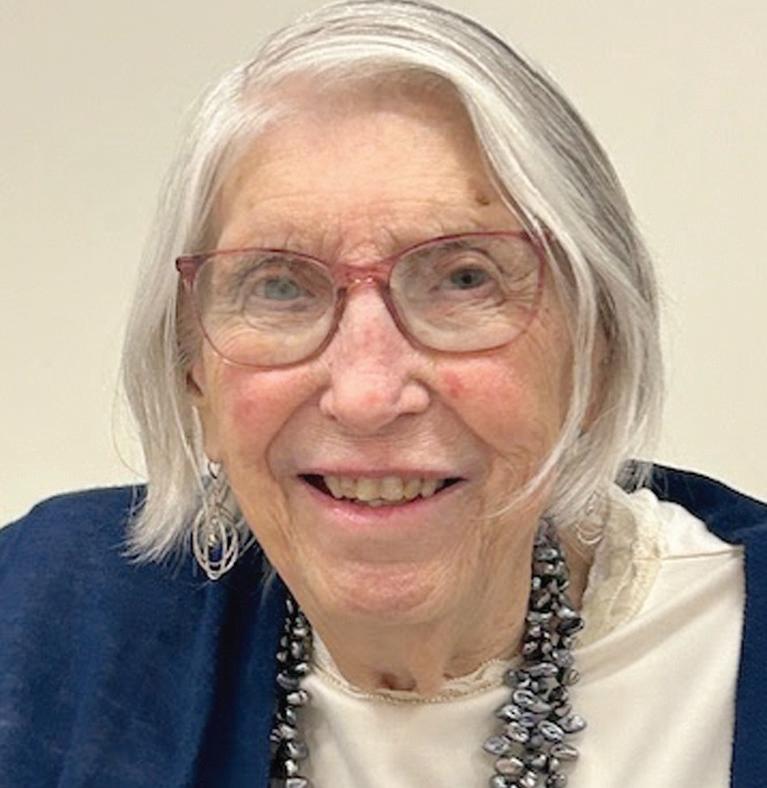 By CATHY SHOUSE Feature Writer


hard to get in without them getting into the house.”

Patrice said the queens lead the hive and create the environment for how all the bees in a swarm behave. Fortunately, the couple has not had mean bees since that first year.
“We presently have seven hives,” she said. “We really only want four, but nature has its way of changing things. Our first hive came about four years ago. We mainly give a lot of our honey to relatives and friends. We do sell a little at a coffee shop. This year, we had 159 pints plus three gallons that we gave to our nephew so he could make some mead. It turned out amazing.”
Reidenbach explained that mead is “a honey wine. The Vikings would drink mead. It’s talked about in history,” she said.
The number of members is a few hundred. Meetings are held monthly. There are also sessions to learn various aspects of beekeeping.
“Our membership is about the same, and there has been more interest but some get frustrated and give it up,” LaSalle said. “I have 19 hives at this time. Our biggest challenge is the varroa mite that needs to be treated.”
They do a process called fumigating, even during the winter months, to try to keep mites from attacking and possibly causing the bees to die.
Once, when the couple was working with the bees, a swarm of them ended up getting
“When they’re swarming, they’re not aggres-
They don’t always have to buy a hive of bees to keep up their supply. Other swarms become
“There is a time commitment but it’s not severe,” LaSalle said. “If someone has two hives, then maybe it’s an hour a week. Usually it’s sporadic work, such as in the harvest of the honey.”
The changing temperatures can be a problem for the bees, because they will think summer is here and begin moving. In winter, they don’t move around as much.
Kim Ward’s been in the real estate industry for decades. You could say Ward’s real estate career has “developed” over years. Now managing broker of North Eastern Group Realty, her responsibilities include working with agents and in the real estate development end, too.
“I started working for Joe Zehr at North Eastern Development as the director of marketing for his communities,” Ward said. “In that role, I was responsible for marketing home sites to builders and individuals, recommending the target market, aesthetics of the community, and specific lot prices.”
The economy played a role in the trajectory of her career path.
“When the housing recession hit in 2006, I took real estate classes which ultimately led to Joe deciding to open a real estate company in 2008,” Ward said. “We started the company in partnership with
The Stinson Team — Phil, Judi, Brad and eventually Lori. Their reputation in real estate was as strong as Joe’s in the development community so it was a perfect partnership. We currently have 84 realtors and are the third largest firm in Allen County with sales of over $400 million in real estate in 2023.”
No two work days are the same.
“There is no typical day, but unless I have appointments I am in the office at 9 a.m. and leave a bit after 5 p.m.,” she said. “We have an office in Auburn so I go meet with those folks at least one day a month. We have a sales meeting from 1-2 p.m. on the third Tuesday of every month, with lunch prior to encourage camaraderie.”
She covers a lot of ground, literally, and manages some tasks while on vacation.
“I meet with agents for coaching and accountability and answer questions regarding transactions or legal issues either in person, via email or on the phone,” she said. “I have
meetings with builders to presell or sell upcoming communities and ensure that our lot sizes meet their requirements and then schedule and attend closings.”
Ward’s family has grown over the years along with her career. She has been married for 35 years, has four children and 10 grandchildren. The entire clan of 20 gets together for holidays and family vacations.
“We are blessed that the kids, their spouses, and the grandkids love being together,” Ward said.
Keeping aware of the real estate industry as a whole is a priority with her. She has actively participated and contributed to associations for years. Since 2020, Ward has served at the Indiana Association of Realtors among other groups.
“I believe that it is my obligation to give back to the industry and to stay informed about the issues affecting our business,” she said. The demands on her time are worth it.
“I get way more in return through interacting with the
DELEGATION DAY
Kim Ward is shown at Delegation Day, a day the National Association of Realtors holds annually to manage various aspects of business. Photo provided by Kim Ward.

people I encounter in every aspect of my career than I give,” she said.
As managing broker, she was instrumental in developing the North Eastern Realty Group’s
mission statement: to create an environment where agents can flourish personally and professionally.
Ward said, “That is my job and I love it.”

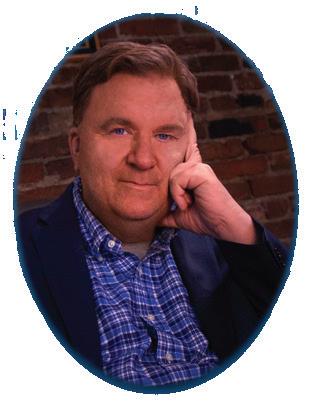
50 years ago Blast To The Past —
“Sunshine on my shoulders makes me happy.
“Sunshine in my eyes can make me cry.
“Sunshine on the water looks so lovely.

“Sunshine almost always makes me high.”
“I had written the song in a fit of melancholy one dismal late-winter/early-spring day in Minnesota — the kind of day that makes every Minnesotan think about going down to Mexico,” John Denver recalled. “The snow was melting, and it was too cold to go outside and have fun. I was ready for spring. You want to get outdoors again, and you’re waiting for the sun to shine, and you remember how sometimes just the sun itself can make you feel good.”
To Denver, his visualization of a perfect day, one warm
Conversation tops the list of the favorite activities of their senior clients, according to a survey of more than 5,000 professional caregivers by Home Instead Senior Care.
More than three-quarters (76%) of professional caregivers reported that seniors enjoy this activity most.
While watching television was a close second with 71%, it seems that sharing memories, talking about current events and history, and discussions of family are more enjoyable to seniors than are reading, crossword puzzles, church functions or bingo. Mature Life Features Copyright 2024

and satisfying and wonderful, brought him feelings of contentment — pure joy, actually — that he wanted to share with the world.
The message of his gentle acoustic-guitar tune focused on the virtues of the love of nature and the love of life itself.
Denver had struggled for years before finding international success. His first three RCA Records albums— “Rhymes and Reasons,” “Take Me to Tomorrow” and “Whose Garden Was This?” — had failed to catch fire. Then came “Poems, Prayers and Promises.” Folk-music lovers became fans, cash registers “ka-chinged” and he rode a rocket to stardom. As time went by in the early 1970s, he found celebrity with an ever-growing audience who appreciated his heartwarming tunes that often dealt with
finding pleasure in the simplest things.
The original 1971 version of “Sunshine on My Shoulders” was a long album track — it ran over five minutes — on “Poems, Prayers and Promises.” Denver’s ever-growing fan base had focused on the LP’s breakout hit single of “Take Me Home, Country Roads” and seemingly paid little attention to what would become John’s first Number One single two years later.
In late 1973, he and RCA Records decided that “Sunshine on My Shoulders” from his first hit album could make a great 45 if redone right. With RCA’s approval, John shaved off two minutes of running time on his re-recording, and added strings and woodwinds made it more “commercial.”
The changes made paid off,
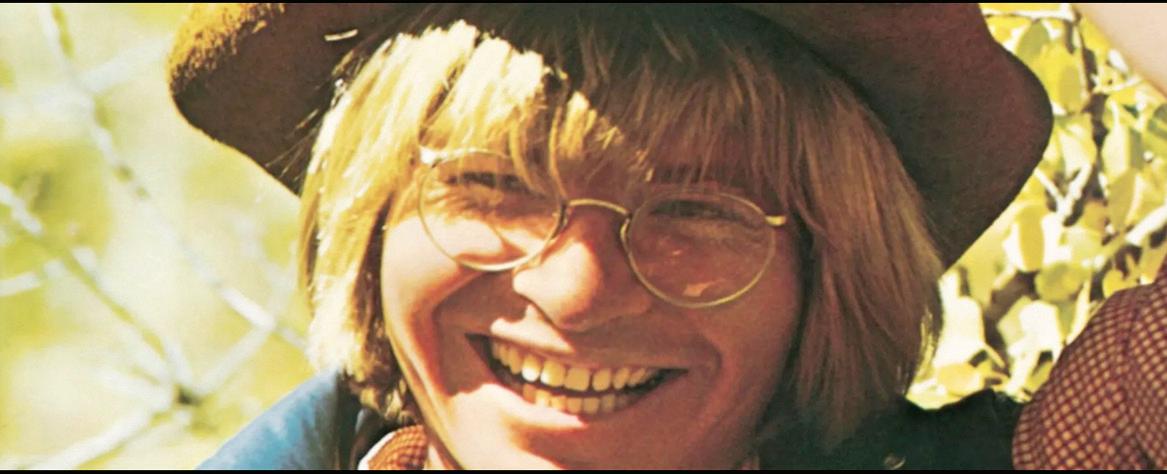
as that release became the first of four Number One John Denver singles released during the 1970s.
The song received a boost when it was used in a 1973 made-for-TV movie called “Sunshine.” John explained, “It was the true story of Lyn Helton, a courageous lady who chose to live her short life to the fullest even though she knew she would die of a rare bone cancer in a matter of
months. It seems that in the last year of her life, she found some happiness in my music. I was most honored to have my song used as part of that television show.”
“If I had a day that I could give you
“I’d give to you a day just like today
“If I had a song that I could sing you
“I’d sing a song to make you feel this way.”

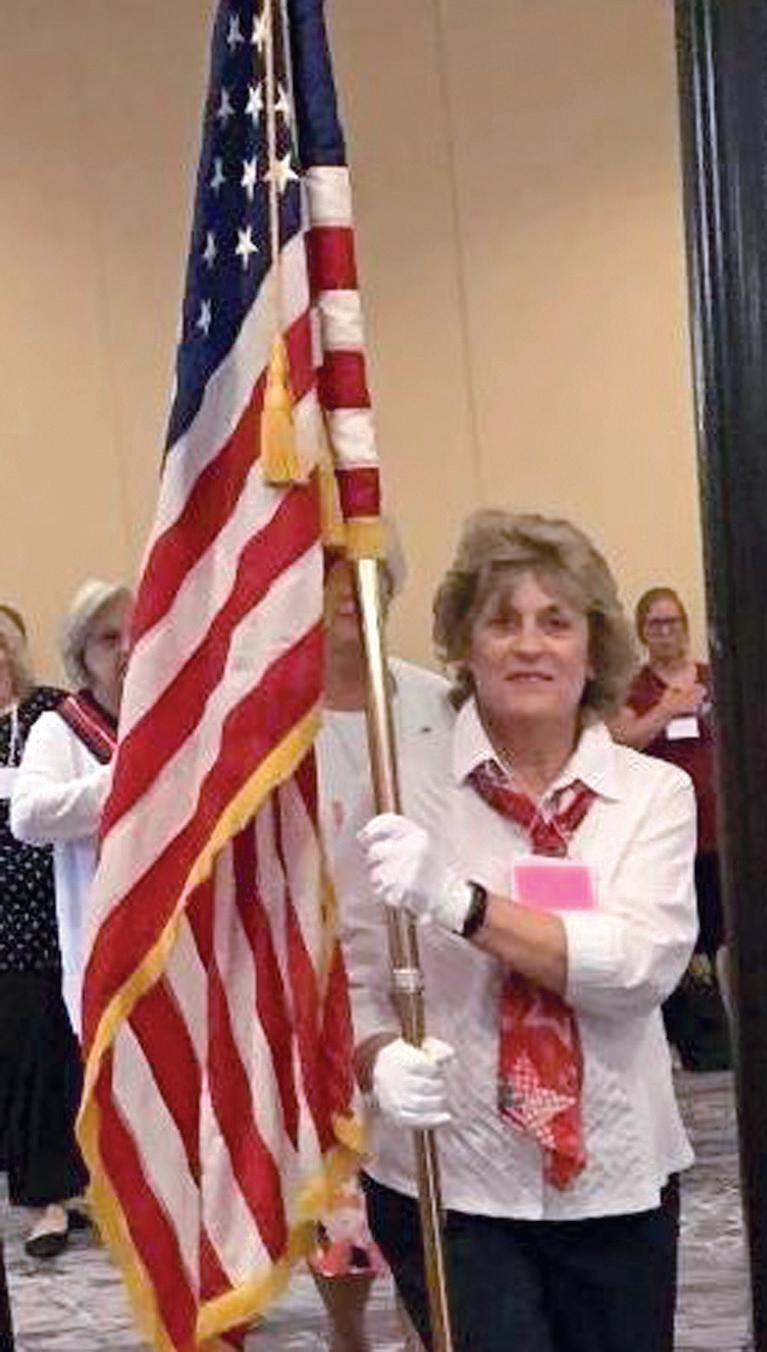
Diane West is very proud to serve in the American Legion Auxiliary Unit 241. She has served in many capacities. She has been sergeant at arms, chaplain, vice president and president.
“Really everything but historian,” she said. “We have our own charter. I was a

member as a child in Huntington. My dad was a World War II veteran. I moved here when my son was a baby and he’s 52 now, so it’s been awhile.”
What does the auxiliary mean? West explained.
“The only way we can qualify is if our husband, father, grandfather, or brother was in a war. This goes back to 1941. Now, men can join if


STAFF
their spouses served, so it’s not totally the women’s auxiliary any more. There isn’t that many, but they can join. Our unit is connected to Unit 241,” she said.
It’s a proud family tradition, as it so often is with military service families.
“My husband belongs; he was in the Navy. My brother was wounded in Vietnam (Marine) and three grandsons (one Marine, two in the Army) and the ladies belong too,” she said.
West said its vision statement is: “To support the American Legion while becoming the premier organization and foundation of every community providing support for our veterans, our military and their families, by shaping a positive future in an atmosphere of fellowship, patriotism, peace and security.”
Then she shared its mission statement, “Auxiliary in the spirit of service, not self. The mission of the American Legion Auxiliary is to support the American Legion and honor the sacrifice of those who served by enhancing the lives of our veterans, military and their families, both at home and abroad, for God and country.”
She added, “We advocate for veterans, educate our citizens, mentor youth and promote patriotism, good citizenship, peace and security.”


Ron Baumgartner, Publisher rbaumgartner@the-papers com
Annette Weaver, Business Manager aweaver@the-papers com
Steve Meadows, Director Of Marketing smeadows@the-papers com
Account Executive
Betty Foster slallen@the-papers com • 1-866-580-1138 Ext 2403
Commercial Printing Sales Representative
Rodger Salinas rsalinas@the-papers com
Commercial Printing Customer Service
Tina Kaplan tkaplan@the-papers com
Rich Krygowski rkrygowski@the-papers com
Deb Patterson, Editor-In-Chief dpatterson@the-papers com
Phoebe Muthart, Editor pmuthart@the-papers com
Jerry Long, Circulation Manager jlong@the-papers com
Mailed subscriptions are available, prepaid with order at $37 for one year; and $64 for two years (Select one edition ) Your cancelled check will
For advertising deadlines call your sales representative The existence of advertising in Senior Life is not meant as an endorsement of any product, services or individuals by anyone except the advertisers Signed letters or columns are the opinion of the writers, and not necessarily the opinion of the publishers To advertise contact Betty Foster at 260-494-9321
“We all work together. We can’t do it alone, everyone pitches in and does what they do best,” West explained. “It’s volunteer work and if there’s a fundraiser we always join in. There’s the holiday bazaar in November, and the flea market in June. Those are two of the big money-making things. Men carry the tables out; we can’t always do that. We’re all dedicated and we take turns working in the kitchen. And then what we do is donate our money to the VA. At the end of the year, we donate all we have collected except for what we

have to have for operational expenses. A lot is to do with our veterans.”
Have you seen the VA Memorial Shrine?
She added, “Two of the girls had that for their project. There’s a museum and statues of Korean War veterans. That is especially meaningful, as M.A.S.H notwithstanding, the Korean War is often called the forgotten war.” West, who is retired, said she takes her brother to the VA for his appointments.
“He is able to do some stuff, but can’t hear very well. I’m kinda like his ears. I make sure every day he’s okay, because his kids are in Arizona. He goes to the Legion too,” she said.
She goes to the YMCA and does water aerobics, and she visits her sister in a nursing home.
“I guess you could say my husband and I putter around town, and we’re retired, so we have time to do volunteer work now,” West said.
“Six years ago, a couple golf buddies and I were having lunch and made an executive decision to expand the group, meet every Tuesday, eat and then head to the links for nine holes. They both deferred to me to get the whole thing organized. Okay, I’ll pick a place for next Tuesday at 1 p.m. for lunch and text you the name and directions. Any arguments and the job is yours,” said Dick Gannon.
He e-mailed the “Old Geezers,” the name he picked for the group, and they first met at Rack and Helens in New Haven April 24, 2018. It started with just three and now there are nine who participate regularly.
“Our only strict requirement is that the restaurant serve beer. I’ve been arranging lunch dates at restaurants and bars throughout the area ever since. I’ve only had to cancel one reservation. I put together a list of nearly 30 places. I like to find new bars we’ve never been to. Over the years, we’ve settled on some we frequent more often than others,” Gannon said.
During the summer, he tries to find places with comfortable outside seating. Topping the list is the Clyde Clubroom.
“We also like Black Canyon, Hoppy Gnome, Nawa, Baker
Street, Hall’s Deck, 1802 Bar and Grill, Steady Eddy’s in Leo and Rack and Helen’s, who last year closed off a street by their building for outside dining,” he said.
As far as golf goes, Gannon said, “We do a different course every week. We range from Eel River Golf Course off of U.S. 33 near Churubusco on the west, to Pond-of-River near Woodburn on the east. In fact, it’s actually on the Indiana and Ohio line. The back nine is particularly fun, frustrating because it follows a stream that winds through a gully with trees on each side. Only the 10th, 17th and 18th holes are out in the open. Fun, but a great place to lose balls.”
Gannon said, as the Old Geezers name indicates, they’re senior citizens. A couple are in their mid-80s, while most are in their 70s.
“We’re satisfied with playing just nine holes at one outing. We particularly like the city park courses and Canterbury Golf Course because it’s an ‘executive’ course. Not because we’re executives, but because it’s shorter, has wide-open fairways and is a lot easier. In other words, no par fives,” Gannon said.
Gannon, who said he doesn’t consider himself to be a particularly organized person, may have picked up some skills in making arrangements from his first job
Dick Gannon is cleaning off last year’s dirt and grime from his clubs in readiness for the coming golf season. He’s also the designated arranger for the “Old Geezers” golf gang and makes weekly lunch reservations at area restaurants and tee times at local golf courses for the group. Photo provided by Dick Gannon.





The following Fort Wayne Parks and Recreation events and programs are happening this month and April.
Literacy Expo at Promenade will be from 11:30 a.m. to 3 p.m.
Saturday, March 2, at Park Foundation Pavilion, Promenade Park, 202 W. Superior St.
Celebrate all forms of literacy and learn about reading assistance programs in Fort Wayne at the second annual Riverfront Literacy Expo. All family members can delight in free activities, such as the Human Library, a calligraphy station and a local author meet and greet. Book donations will also be accepted. If you see a book you’d like to read, you can trade a book for it. This free community event is a great way to engage and learn through others’ perceptions, struggles and growth by sharing experiences and various forms of literature.
Botanical Speedway is until April 7, and hours are from 10 a.m. to 5 p.m. Tuesday to Saturday; 10 a.m. to 8 p.m. Thursday; and noon to 4 p.m. Sunday, at Foellinger-Freimann Botanical Conservatory, 1100 S. Calhoun St.
Racers ready; rev your engines in the Botanical Conservatory’s latest winter exhibit. Kids will pedal along and burn some rubber on a tropical racetrack as part of this family outing, which will have you strolling down victory lane. Imagine accelerating toward the finish line on this
fast, not furious, super speedway. Helmets are available.
A Sweetheart Orchid Display will be until Sunday, March 3, during public hours, at Foellinger-Freimann Botanical Conservatory. Be allured by the colorful mystique of orchids on display in the Botanical Conservatory’s Tropical House. Experience



 By RANDAL C. HILL
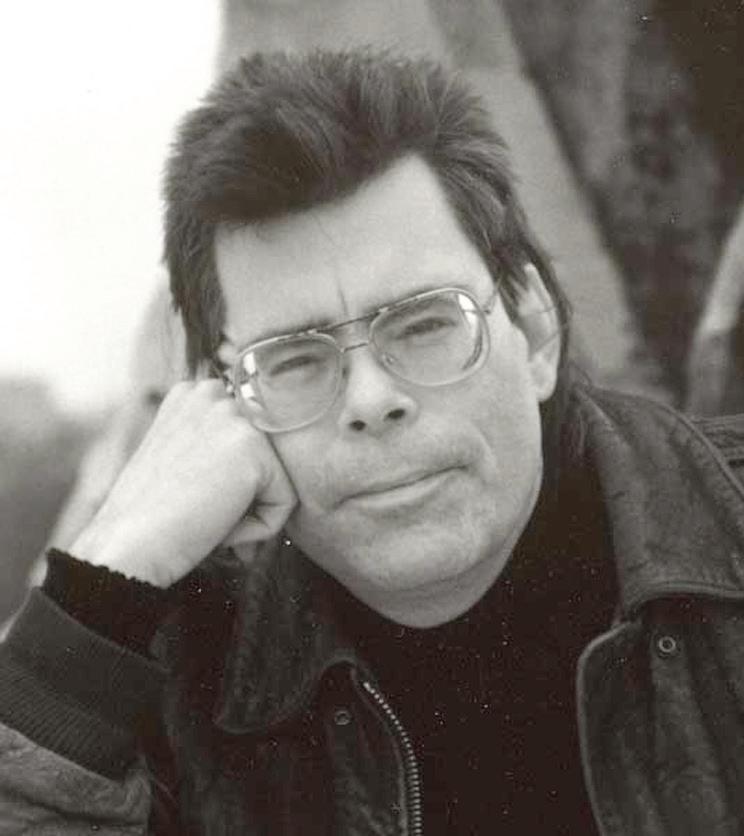
It was the early 1970s, and times were tough for Stephen and Tabitha King. They had married young soon after graduating from the University of Maine and produced two children in as many years. Stephen taught English at a private high school near Bangor, and Tabitha worked second shift at a Dunkin’ Donuts shop downtown.
Stephen had always wanted to be a writer, and Tabitha had set up a makeshift desk in the laundry room of their rented double-wide trailer they called home outside of town. To supplement his teacher’s pay, King wrote short stories for men’s magazines. Occasionally a small check would appear in their mailbox, and the Kings were once more saved from a possible trip to the welfare office.
Stephen came up with a book
idea about a girl named Carrie White, a lonely social outcast being raised by an unbalanced religious fanatic mother. King based his character on a pair of ostracized girls that he remembered from his own school days.
In his tale, Carrie White is afraid she’s bleeding to death when she experiences her first period while showering after gym class, and her unsympathetic classmates cruelly tease and taunt her. But Carrie eventually discovers that she can use telekinesis (the supposed ability to move objects just by thinking about them) to enact revenge on those who have made her school life a living hell.
Three pages into “Carrie,” though, King decided his idea simply wasn’t working out. He wadded up what he had typed and tossed the single-spaced sheets into his wastebasket. The next day, while cleaning Stephen’s writing area, Tabitha found and read the discarded balls of paper. When Stephen came home from school, Tabitha said, “You’ve got something here.”
With his wife’s encourage-
ment and guidance, Stephen spent the next nine months bringing “Carrie” to fruition. After 30 publishers rejected his creation, Doubleday Publishing Company finally offered a $2,500 advance for the hardcover release of Stephen’s book. It wasn’t enough to let him quit teaching, but it was the most money he had ever earned from a single writing project. The Kings moved into a cramped and rundown Bangor apartment.
“Carrie” sold just 13,000 copies, not enough to let Stephen write full time. But a Sunday phone call changed everything when King learned that Signet Books wanted to buy the paperback rights to “Carrie” for a mind-blowing $400,000, of which, due to various publishing contracts he had signed, Stephen would receive half that amount. Still, it was like winning the literary lottery.
The phone had rung on Mother’s Day afternoon of 1974. Tabitha had taken both children to their grandmother’s house and was on her way home. Stephen decided to surprise his wife with a gift
— something unusual, extravagant and expensive! He walked to downtown Bangor, where the only place open was a hometown drug store. When Tabitha
returned home, Stephen couldn’t wait to show her his unwrapped gift.
It became the first hair dryer that Tabitha had ever owned.
Q.
Q. Once Waiver services move to PathWays for Aging, can I keep my Area Agency service provider and case manager?
A. Advance Care Planning (ACP) is the process by which you determine your wishes in regard to medical care and treatment. This process is a series of conversations you have with your loved ones about those wishes so that someone can speak for you when you cannot speak for yourself.
A. Yes, but you will need to ask as it will not be automatic.
Under the current Medicaid Waiver system, Aging & In-Home Services has been responsible for needs assessment, care plan development and coordination of the home and community-based services. Under PathWays, our agency’s case managers will now be known as Service Coordinators.
It is important that during your ACP conversations, you appoint someone you trust to speak on your behalf and that person is called a Health Care Representative.
The three health plans selected by the state are the following managed care entities (MCEs): Anthem Blue Cross and Blue Shield, Humana Healthy Horizons and United Healthcare. The MCE staff will be called Care Coordinators. Once you select a plan through the Enrollment Broker, your selected MCE will assign a Care Coordinator to contact you to create a personalized care plan.
There are no “rules” or eligibility requirements regarding age or health status to begin your own Advance Care Planning. ACP is always evolving, both personally and legislatively. It is encouraged to update your wishes as your personal and health situations change. For example, if your marital status changes or if your health declines or improves you may want to adjust accordingly.
A Service Coordinator, currently known as a case manager, will then be assigned by the MCE’s Care Coordinator to contact you to create a personalized Service Plan.
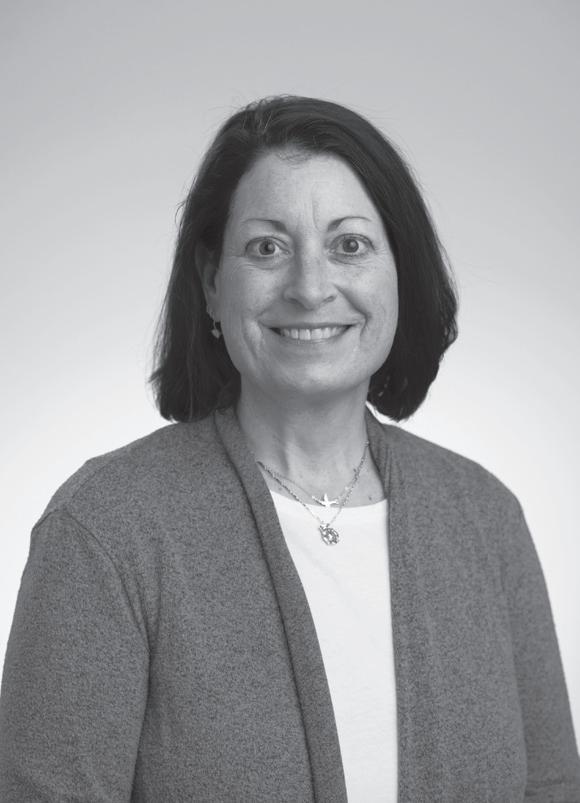
Tina Boneff
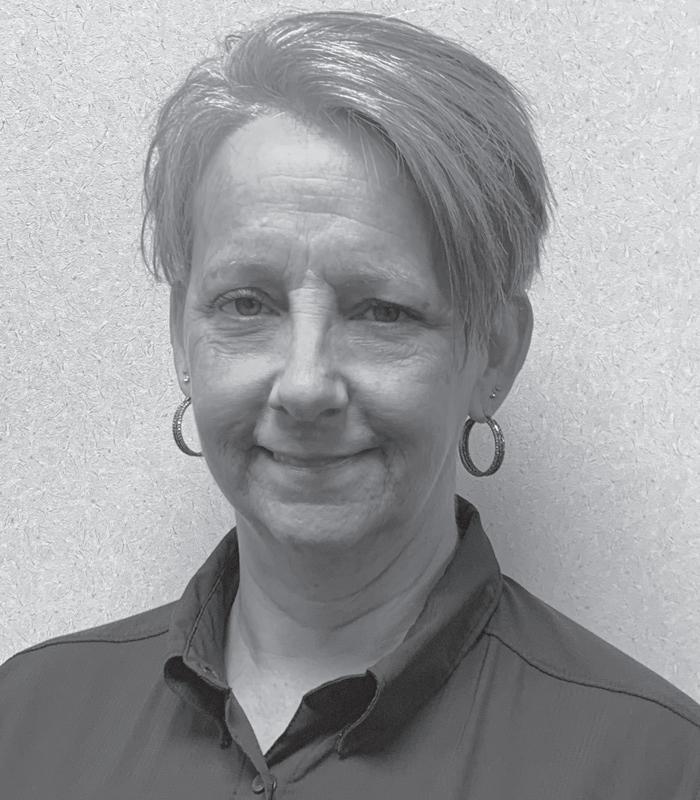
Katie Hougham Vice President, PACE Operations 260-745-1200 Ext. 450
VP, Long Term Services & Supports Aging & In-Home Services of NEIN
Regardless of the MCE plan you select, you have the right to choose your Service Coordinator agency, such as Aging & In-Home Services.
At AIHS we incorporate ACP into all of our programs. We have resources available to help you walk through this conversation with your loved ones. We also have trained staff available to help facilitate these conversations.
If you need assistance at any time during this process, please reach out to your current Aging & In-Home Service’s Case Manager.
We know these conversations aren’t always easy to have, but they are essential for maintaining the integrity of your wishes. Just Call Us if you need help starting your own ACP conversation.
For more detailed information about Indiana PathWays for Aging you can visit: www.in.gov/PathWays or call 87-PathWay-4 (877-284-9294).
8101 W. Jefferson Blvd. Fort Wayne, IN 46804
www.agingihs.org | 260.745.1200
A. Original Medicare does cover colonoscopies – provided that they are deemed “medically necessary”. However, Original Medicare does not cover “preventive” services so if you have a colonoscopy that is approved, you would be responsible for the Part B portion of the provider’s fees. Medicare Supplement plans will generally pick up the bulk of those expenses, but that depends upon which Med Supp you have.
Medicare Advantage plans also cover colonoscopies as well as other “preventive” services – and often at no cost-share for the insured individual. To be covered at no cost-share, the claim would need to be submitted with the applicable coding so that the Medicare Advantage carrier knows that is “preventive” and should be covered at no cost-share. Keep in mind that some colonoscopies end up being

diagnostic in nature due to additional procedures that the doctor may need to perform. This can include: polyp removal, biopsy, etc.
Have questions? Give our office a call at (260) 484-7010 to learn more about what your Medicare Advantage plan includes.
Fort Wayne’s Medicare Enrollment and Education Center
3609 Lake Avenue
Fort Wayne, IN 46805
(260) 484-7010
www.buyhealthinsurancehere.com
Q. Is there a service to help me with my downsizing move?
A. Wanting to downsize from your home to a retirement community can be an overwhelming experience. Many times people want to move, but end up not doing so because of the many things that must be done.
A few comments that I have heard over the years include:
1) I have to spend money to fix up my home before I sell it.
2) My attic and basement are full of stuff; I will have to have a garage sale.
3) I have to pack and move all of my belongings.
Looking at this list of concerns would cause anyone to just say “Forget It!”
This is where we can help!
Our services include selling your home


Tim McCulloch, Owner
as-is in 30 days for your price, selling your unwanted items for fair market value, selling your antiques & collectible items, knowledgeable antique & real estate appraisal services, professional packing & moving services, climate controlled storage & more.
Our firm is highly recommended by many of the leading retirement communities in the Allen County area due to client satisfaction.
If you are thinking about making the transition to retirement living, call me at (260) 441-8636. My free analysis will give you the information you will need to make a better decision for yourself!
Sincerely,
Timothy McCulloch
4420



A. A Transfer on Death Deed is a document that is recorded at your local county recorder’s office prior to your passing. This deed automatically transfers property ownership to the named beneficiaries when the owner of the property dies. The beneficiary listed on the deed can be one individual, multiple people, or a charity.
The main objective of this type of deed is to avoid probate. After the property owner passes away, an additional document is filed with the local county recorder’s office to transfer ownership in the county records to the beneficiaries. While this is a great way to avoid probate, it may not be the best process for your family. For example, you have five children and only two of them live near you. When you pass away, all five children will be the equal owners of the property. They will need to agree on how to proceed with the property together. Will they sell it? If so, when and for how much? How will utilities, maintenance and repairs be handled and paid for?

These questions can bring out family issues and put extra strain on the family. In addition, the distance between your children can create obstacles. Sometimes, it is better to go through the probate process and designate one personal representative to make these decisions for the family.
A Transfer on Death Deed may be a great way to pass your property onto your family, but you should consider more than just ease of administration when deciding whether or not to do one.

46802 Telephone (260) 426-9706
Q. I’ve heard that your organization provides home-delivered meals. Can you tell me more?
A. Advance Care Planning (ACP) is the process by which you determine your wishes in regard to medical care and treatment. This process is a series of conversations you have with your loved ones about those wishes so that someone can speak for you when you cannot speak for yourself.
A. AIHS is the Title III provider for home-delivered meals, also known as Meals on Wheels, for northeast Indiana. Our Meals on Wheels program delivers meals weekly to homebound older adults in need of nutritional support.
It is important that during your ACP conversations, you appoint someone you trust to speak on your behalf and that person is called a Health Care Representative.
In addition to Meals on Wheels, AIHS offers a variety of nutrition services to meet the unique needs of older adults throughout northeast Indiana. These additional services include Congregate Dining and Restaurant Vouchers.
There are no “rules” or eligibility requirements regarding age or health status to begin your own Advance Care Planning. ACP is always evolving, both personally and legislatively. It is encouraged to update your wishes as your personal and health situations change. For example, if your marital status changes or if your health declines or improves you may want to adjust accordingly.
Congregate Dining provides nutritional support to individuals in a communitybased setting. This service provides both a daily hot meal over the lunch hour and socialization amongst peers. Restaurant Vouchers provide nutritional support to individuals who are community-dwelling and able to safely get to and from specific restaurants throughout the 9-county service area.
Katie Hougham Vice President, PACE Operations 260-745-1200 Ext. 450
At AIHS we incorporate ACP into all of our programs. We have resources available to help you walk through this conversation with your loved ones. We also have trained staff available to help facilitate these conversations.
We know these conversations aren’t always easy to have, but they are essential for maintaining the integrity of your wishes. Just Call Us if you need help starting your own ACP conversation.
All meals provided by AIHS’s Nutrition Program meet federal regulations and are monitored by a Registered Dietitian to ensure each meal provides 33 1/3 of the daily recommended allowance for nutrients for older adults. Additionally, AIHS offers meals that meet dietary requirements such as diabetic-friendly and low-sodium. Each service has its own set of eligibility requirements, Just Call Us to learn more!
8101 W. Jefferson Blvd. Fort Wayne, IN 46804
www.agingihs.org | 260.745.1200
A. According to audit statistics, 80% of our readers are under the age of 75. 65% of our readers have a household income of over $50,000 per year. Nearly 40% of these readers earn more than $75,000 per year. Are households with an income larger than $50,000 your target market? If so, consider advertising in Senior Life! Call or send me an e-mail today!


A
Editor’s Note: Send listings of events, for nonprofit organizations only, to Senior Life, P.O. Box 188, Milford, IN 46542 or email Editor Phoebe Muthart by the 20th of each month to pmuthart@the-papers.com. With the listing, include the contact person, area code and phone number.
—o—
Woodlands Senior Activity Center
The center is located at 710 N. Opportunity Drive, Columbia City. For more information, call (260) 248-8944 or visit whitleycountycouncilonaging. org/woodlands-activity-center.
9-10 a.m. Monday, Wednesday and Friday, line dancing
9-10 a.m. Tuesday and Friday, euchre
9-10 a.m. Tuesdays, Bible Study with Cheryl
9:30-10:30 a.m. Wednesday, March 6 and March 20, pixie bingo
10-11 a.m. Wednesday, chair exercise
12-2 p.m. Tuesday, dominoes
1-2 p.m. Tuesday, Bible study with Bob
1-2 p.m. Wednesday, Movin’ and Groovin’ with Nate
8:30 a.m. to 3 p.m. Thursday, free tax preparation by AARP tax aides
10-11 a.m. Friday, A Matter of Balance
—o—
The Community Center
The center is located at 233 W. Main St., Fort Wayne. For information, visit fortwayneparks.org or call (260) 427-6000.
Scrabble, 1-4 p.m. Monday Bingo, 1 p.m. Friday, March 8 and March 22
Senior yoga, noon to 1 p.m. March 19 to May 14 and March 21 to May 9. Registration deadline is Tuesday, March 12.
Senior tap dance, advanced, 2:45-3:30 p.m. March 21 to May


Call
Or visit us on the web at tazianproperties.com
The best in Rental Living!



9 or beginner, 3:30-4:15 p.m.
March 21 to May 9.
—o—
Free tax help is available at select Allen County Public Library branches through April 15. Assistance is provided by AARP Tax Aide volunteers on an appointment basis. Use the event calendar on its website to see dates and times, acpl.lib. in.us/tax-assistance or call any branch to make an appointment.
—o—
Fort Wayne Animal Care and Control’s fundraiser, “Barks and Mews Gala,” begins at 6 p.m. Saturday, May 18, at The Hangar at Kruse Plaza in Auburn.
The fundraiser supports The Angel Fund, which helps provide crucial life-saving medical care to shelter animals.
Tickets are available at fwacc.org under the events tab “Barks and Mews Gala.”
Single tickets are $75, $130 per couple, and $550 for a table of eight; donations are welcome. If anyone is interested in becoming a sponsor for the event, email nicole.king@cityoffortwayne.org.
—o—
The ladies of Emmanuel Lutheran Church (Soest), 9909 Wayne Trace, Fort Wayne, will host a rummage and bake sale from 8 a.m to 4 p.m. Thursday, April 18 and 8 a.m. to noon Friday, April 19. Friday is a bag sale. The church is located southeast of the I-469/Wayne Trace overpass at the corner of Wayne Trace and Emmanuel Road.
—o—
“Making Waves,” a themed exhibition featuring over 30 artists, will be March 1-30, at The Orchard Gallery of Fine Arts. A reception with the artists is from 10 a.m. to 4 p.m. Saturday, March 2. Over 30 artists have
created unique work for this event, inspired by the world’s bodies of water, aquatic plants and animals, plus colors and shapes associated with water. The gallery is open from 10 a.m. to 6 p.m. Monday through Friday and 10 a.m. to 4 p.m. Saturday. The Orchard Gallery of Fine Arts is located at 6312-A Covington Road, Fort Wayne.
—o— Purdue Extension’s Allen County Garden Symposium will be from 9 a.m. to 3 p.m. March 23, at the Purdue Fort Wayne Walb Student Union. Substantiality will be the focus of the program, with five speakers who will discuss how to become more sustainable in homes, lawns and gardens. Registration is $40 and closes Friday, March 15. It includes breakfast, lunch and snacks. For more information, visit puext.in/allen or call (260) 481-6826. To register, visit https://bit.ly/3uSycWG.






FSeriously, can it get any easier than putting dinner on a sheet pan and waiting 40 minutes for it to cook? I love, love, love roasted vegetables, so this is my kind of meal.
Keeping in mind that a weekly goal is to have 200 different healthy foods for a variety of phytonutrients, this is a terrific way of consuming a nutrient dense meal. The variations are endless so let’s get going.
Line a large sheet pan with parchment paper and basically, you can add any vegetable to the pan. It’s a good plan to cut the vegetables into approximately the same size so they cook evenly. If you have larger pieces, put them on the outside edges of the pan rather than in the middle. Preheat the oven to 400 degrees.
Tips & Options:
Toss vegetables in a bowl with a little olive oil, dressing or marinade.
It’s optional to cover the vegetables with foil for at least the first half of the cooking time. They tend to steam more than
Traveling with or moving in and out of a crowd may make you feel safe, but packs of people also hide the cunning who can make off with your wallet or purse.
Oddly enough, Vatican City is reportedly a most dangerous place for visitors as pickpockets mingle freely amidst the 6 million pilgrims that visit each year.
In any crowd, women should carry their purse in front of them and men keep their wallet in a side or front trouser pocket.
Being aware of your surroundings is step number one to protect yourself from these vultures. Don’t look lost or bewildered and don’t stop passersby to ask for directions. Step into a building — a store, restaurant or museum — and ask a staff member for the information you seek.
Stay on the edges of the crowd as you tour the Prado or leave the Louvre. Thieves are more likely to work the muddled middle of the mob.
Mature Life Features Copyright 2024
broil, but it keeps them from charring.
May be served alone, or over quinoa or farro.
Dress with a herby-yogurt before serving. Add canned chick peas to any vegetable combination for extra fiber and protein.
You can make it ultra-simple with just:
• Zucchini.
• Potatoes.
• Whole garlic.
Or, seasonal winter vegetables of:
• Brussel sprouts.
• Butternut squash.
• Cauliflower.
• Carrots.
• Broccoli.
Root vegetables are grown underground. They include potatoes, carrots, onions, sweet potatoes, turnips, beets, garlic,
Iradishes and fennel. I could see using hearty and healthy root vegetables on a sheet pan drizzled with balsamic for a complete dinner.
In the sheet pan meal I made last week I used cauliflower, red onion, mushrooms, zucchini, poblano peppers, red potatoes and acorn squash. The squash was cooked upside down to keep it moist. Vegetable seasoning was added before roasting. You can shop for ingredients, or, as I did — look in the refrigerator and when you see lots of vegetables, say — time for a sheet pan dinner!
To your health.
Cat Wilson lives in South Bend and transitioned from a vegetarian diet to eating a plant-based diet over two years ago. She may be contacted at cwilson@the-papers.com.



It’s easy! Simply find the shamrock hat on another page in this edition. Go online to www.SeniorLifeNewspapers. com and enter your information, the edition, date and page number you found it on. This will enter you for a chance to win a gift of $25.

Brought To You By



(Online Entries Only) Entries Must Be In By Monday, March 11, 2024.

206 S. Main St. Milford, Indiana 46542
Managed by Gardant Management Solutions








The winner of the I Spy Contest for February is Michelle DiDomenico of Middlebury. The doggy was located on page 14 in Senior Life Allen; page 19 in Senior Life Northwest; page 22 in Senior Life Elko and page 1 in Senior Life St. Joseph.


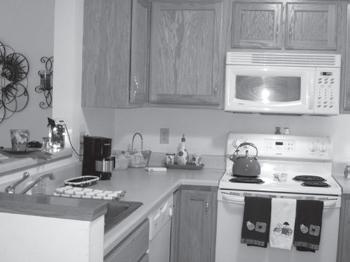
• Private apartment with full, private bathroom
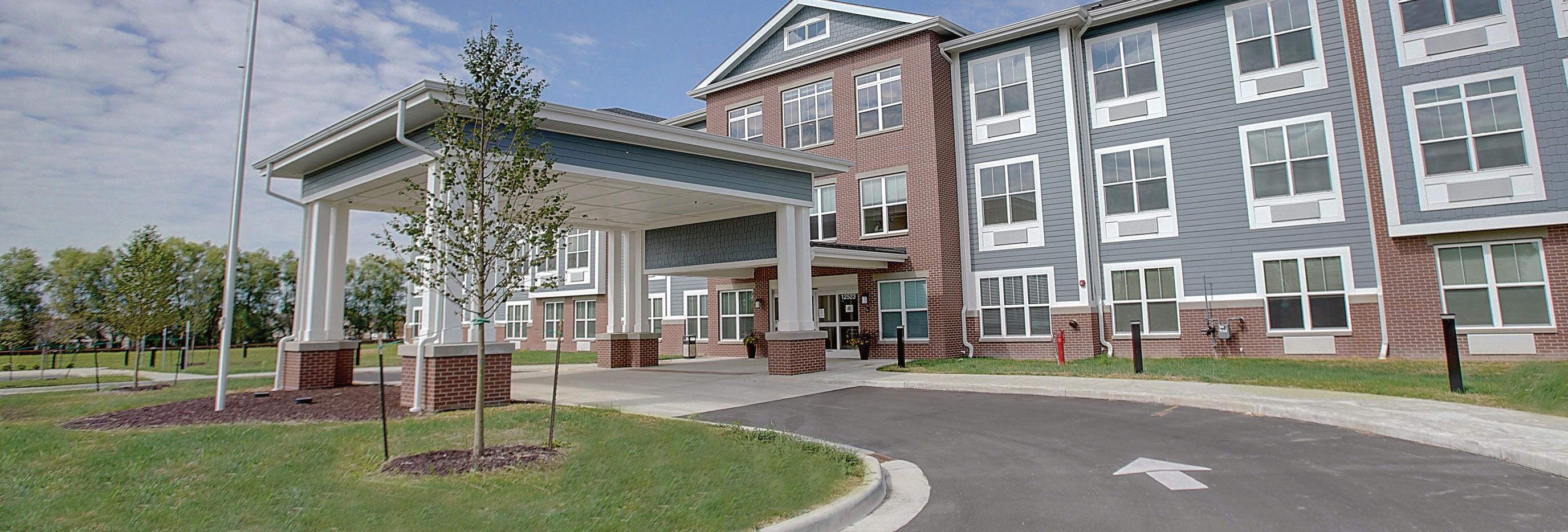
• Kitchenette with sink, refrigerator and microwave
• Individually controlled heating and air conditioning
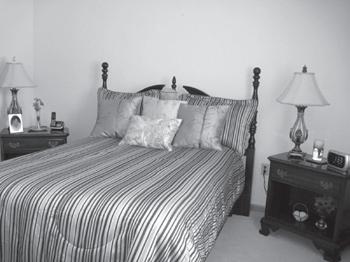
• Carpet in living and sleeping areas
• Linoleum in kitchen and ceramic tile in bathroom
• Emergency call devices in bathroom and bedroom
• Mini-blinds provided
An Affordable Assisted Living Community for the Older Adult Call 260-637-2830 today to schedule a tour of our beautiful
12523 Auburn Road Fort Wayne, IN evergreenvillage-fortwayne.com

• Ongoing health monitoring and nursing assessments
• Assistance with activities for daily living: bathing, dressing, walking, personal grooming and hygiene
• Medication administration
• Three restaurant-style meals daily plus snacks
• 24-hour staffing and reception desk
• Range of interesting and varied programs and events
• Medicaid Waiver accepted


If you ask Sue Cox how long she’s attended Mount Calvary Lutheran Church in Fort Wayne, she laughs.
“My parents moved to Fort Wayne in 1945. I’m the only one left out of the family, so the church family means more to me than ever,” Cox said.
In every church, pastors come and go.
“Well, Reverend Backs was there for a long time; in fact, he spent his whole ministry at Mount Calvary. It was the love that was going through the church, and knowing people especially. Some of the pastors were so lovable. You know, the pastor does bring in a lot of people, and they hold them,” she said.
Anyone who knows church elders knows how busy they are with all that keeps the
Cox stated. She taught Sunday school for quite a while.
“I took time off when I had my boys, and when the younger was 2, I went back to teaching Sunday school. I had eight years teaching in the portables,” Cox noted.
Lucky in love twice, Cox married Vern in 1964. He was from White Hall, Md.
“He had a friend here he came to visit, and we got together and what can I say?” Cox recalled.
They were together until he passed away in 1992. They had two sons, Edwin and Clifton. Then she married Jim in 1996.
Retired now, and using a walker, as her husband, Jim, does, she is still as busy as her body allows.
“I do afghans, and I bake every once in a while. I used to bake quite a bit. For the
got two orders right now for upside down cakes but I don’t know if I can do it, because I’ll have surgery right quick for my back. I can’t be on my feet for too long. I don’t have help. I do it all myself and the house is a mess because I can’t keep it the way I want to.”
The couple used to do ballroom dancing.
“I wasn’t that good of a dancer but it was more or less getting out and meeting other people, and I raised a large garden, especially flowers and sold them to the flower shops. See, we belonged to a co-op,” Cox continued. “I’ve been in and out of Altar Guild. They worked around my schedule
so I could be part of it. COVID stopped it, then as soon as I was allowed to be out again, I started back with it. I’m out now because of my back, but I’ll be right back to it when I’m recovered.”
Defining her faith, Cox said, “You’ve got to have faith but the one thing that I always taught my children was that Jesus loves me and he loves you. That’s the most important thing; that he died for you. I taught the Great Commission (Matthew 28:16) and they liked that.”
Cox is definitely one you think of when you read the verse beginning, “Well done, thou good and faithful servant….”(Matthew 25:21).


them can be prevented by eating foods that support eye health, having our annual vision exams, and controlling medical conditions, which can often lead to vision loss if left unattended —diabetes and retinal deterioration as an example.
whereas your medical insurance will cover expenses related to ophthalmology.
What’s the difference?

Over the years, as an insurance agent, many clients have neglected to maintain routine eye health exams because they did not have vision insurance. Many do not know that vision insurance is designed to mitigate the cost involved with frames, lenses, and/or contact lenses and not addressing diseases of the eye.
Vision insurance generally will reimburse expenses incurred by an optometrist,
Ophthalmologists treat diseases of the eyes and have a medical degree. Optometrists generally focus on (no pun intended) correcting vision through the use of eyeglasses and such. That doesn’t mean that some optometrists do not make recommendations related to diseases of the eyes, but their services may not be covered by your original Medicare Part B or Medicare Supplement plan because it would not be categorized as a “medical” claim.
For more information, contact your doctor or give us a call at (260) 484-7010.


What
◆
◆ 2BR, 2BA with a 2
 By CECIL SCAGLIONE Mature Life Features
Legroom — the distance from the point of one seat to the same point on the seat in front of it — has become a common currency among flyers seeking the most comfort in the crowded cabin in the sky.
from 17 to 18 inches, is also a
Widebodied aircraft that are squeezing in more rows of seats are most likely to have
narrowest economy class seating.


While window seats offer a bit more privacy than an aisle seat and more comfort than a middle seat, it may not have a window at all because not all seating rows line up with the aircraft’s windows.
Mayor Tom Henry announced a significant milestone in enhancing community involvement. The city of Fort Wayne is proud to introduce Engage Fort Wayne, an innovative online platform that encourages active citizen engagement in city projects and programs.
Engage Fort Wayne provides residents with a one-stop location to access information about ongoing initiatives and actively
contribute their perspectives to the city’s plans and implementation. The site currently features several community development, parks and recreation, and public works projects. However, Engage Fort Wayne plans to broaden its reach by including projects from other city departments and divisions in the upcoming months.
The new website, Engage Fort Wayne, changes how
people interact with their local government by using a digital platform instead of traditional methods. It aims to make participation easier and more inclusive by combining online and in-person activities. Feedback collected through Engage Fort Wayne will be openly shared after each engagement activity.
Henry emphasized the importance of Engage Fort Wayne in empowering residents.
“Fort Wayne’s success relies on its residents being actively involved. Engage Fort Wayne shows our commitment to inclusivity and collaboration, especially among neighborhoods, by giving everyone a platform to be heard and valued,” he said.
Engage Fort Wayne goes beyond ADA requirements by offering multilingual translation (Spanish, French, Tagalog,
Chinese, Burmese, Vietnamese, Ukrainian, and more) and ensuring access from any device with its responsive design.
Fort Wayne is setting a new standard for community engagement with the launch of Engage Fort Wayne to encourage participation and civic involvement.
Residents are invited to visit the new website at engage. cityoffortwayne.org.
Mary Ellen and I went out to see a movie last week with our friends, Bob and Cathy.
“Are you going to get popcorn again, Mary Ellen?”
 NUTSHELL
By DICK WOLFSIE
NUTSHELL
By DICK WOLFSIE
“I have to. It’s been a movie tradition for me since high school.”
“So was necking in the balcony, but you cut that out completely after we got married.”
Once we reach the theater, the tension rises.
To a senior community in a quiet northeast residential setting
”Dick, I’ll find seats for the four of us. You wait in line for the popcorn.”
“Why do I have to wait in line? I don’t even like popcorn. And when I come into the movie theater, you’ll forget to look around for me. Then I walk aimlessly up and down the aisles while people stare at me. Everyone assumes I’m all alone and have no one to sit with. Or I’ll wave my cell phone flashlight to get your attention and all three of you slump down in your seats while you laugh hysterically. At the Tom Cruise movie, I never found where you guys were sitting, but I did get my 10,000 steps in searching for you.” Of course, I do wait in line
and buy the popcorn as directed. It drives me crazy that you pay about six bucks for a bucket of air. What a rip off. And I don’t let my wife forget it…
“Did you know, Mary Ellen, that when I was a kid, popcorn in the theater was only a quarter?”
“Yes, and here’s another update: the actors in films are talking now.”
And then there’s eating the popcorn. Mary Ellen takes one piece from the top of the box with two fingers, then bites off half at a time. Yes, two bites per kernel. She claims that this helps her rhythm and draws her into the movie.
Out of the corner of my eye, I watch my wife’s arm go down
to the box, up to her mouth. Up and down. Up and down. Up and down. For two hours. AHHHHHH!
She pretty much follows a similar routine at home. After we have searched for a good flick or series on Netflix, Mary Ellen is at the stove to make popcorn the old-fashioned way — just oil and popcorn in a pot. Which she meticulously jiggles at the right speed so every kernel is popped. The movie starts and the routine begins. One piece at a time, every 10 seconds for the entire show. About 500 times. If she preferred M&Ms, she’d weigh 400 pounds. Here’s the right way to eat popcorn in a movie: Dig way
down into the container, which spews the popcorn all over the person in the seat next to you. Take an entire handful, shake the kernels up in your fist like a pair of dice and throw several into your mouth at one time. Then while still chewing, reload and prepare to fire again. This is how Orville Redenbacher wanted you to do it. You could look it up. Heaven knows why there aren’t instructions on the popcorn box.
The next day her fitness trainer, Justin, asked her if she had been doing her upper body exercises.
“Yes, I did them for three hours last night,” she said. “When we went to see ‘Oppenheimer’ at the movies.”
• Long Term Care and Memory Care suites with bathrooms and showers ensuring privacy
Care e and d M Memory suites and showers ensuring privacy
• 5-star quality care, staff provide 24 hour services
• 5-star care, staff 24 hour services
3136 Goeglein Road, Fort Wayne, IN 46815 (260) 749-6725 • www.goldenyearshome.org
260-749-9655
www.goldenyearshome.org
Like us on Facebook!
Heritage Park
Assisted Living, Rehabilitation Unit, Alzheimer’s Unit, Skilled Licensed Nursing, Semi-Skilled Nursing Or Intermediate Care, Therapies: Speech-Occupational-Respiratory-Physical, Long Term Care, Temporary Care, Private/Semi-Private Rooms, Pet Visitation Allowed, Hospice Care, Medicare and/or Medicaid

2001 Hobson Road, Fort Wayne, IN 46805 (260) 484-9557 • www.ASCCare.com
Assisted Living, Rehabilitation Unit, Alzheimer’s Unit, Skilled Licensed Nursing, Semi-Skilled Nursing Or Intermediate Care, Therapies: Speech-Occupational-Respiratory-Physical, Long Term Care, Temporary Care, Private/Semi-Private Rooms, Pet Visitation Allowed, Hospice Care, Medicare and/or Medicaid
Swiss Village
1649 Spy Run Avenue, Fort Wayne, IN 46805 (260) 422-8520 • www.lcca.com
Rehabilitation Unit, Alzheimer’s Unit, Skilled-Licensed Nursing Or Intermediate Care, Therapies: Speech-Occupational-Physical, Long Term Care, Respite Care, Wound Care, Outpatient Therapy, Medical Transportation, Medicare/Medicaid, Pet Visitation Allowed
1350 West Main Street, Berne, IN 46711 (260) 589-3173 • www.swissvillage.org
Assisted Living, Rehabilitation Unit, Alzheimer’s Unit, Skilled Licensed Nursing, Semi-Skilled Nursing Or Intermediate Care, Therapies: Speech-Occupational-Respiratory-Physical, Long Term Care, Temporary Care, Private/Semi-Private Rooms, Pet Visitation Allowed, Hospice Care, Medicare and/or Medicaid

14409 Sunrise Court, Leo, IN 46765 (260) 627-2191 • www.thecedarsrc.com
Assisted Living, Skilled Licensed Nursing, Semi-Skilled Nursing Or Intermediate Care, Therapies: Speech-Occupational-RespiratoryPhysical, Long Term Care, Temporary Care, Private/Semi-Private Rooms, Pet Visitation Allowed, Hospice Care, Medicare and/or Medicaid

Assisted Living, Rehab Unit, Alzheimer’s Unit, Skilled Licensed Nursing, Intermediate Care, Therapies: Speech, Occupational, Respiratory, Physical, Long Term Care, Temporary Care, Private/Semi-Private Rooms, Pet Visitation Allowed, Hospice Care, Medicare and/or Medicaid, Outpatient Therapy of Fort Wayne
There were a number of automobiles that made a substantial impact upon the American public during the 20th century.
While some were short-lived, most auto lovers and collectors of today know well these attempts at automotive legend. For the most part there were two outstanding goals: power and luxury.
One of the earliest American racing and luxury automobiles was produced by the Duesenberg Motor Co. The firm was founded in 1913 by brothers August and Frederick Duesenberg in St. Paul, MN, where they began building engines and racing cars.
The brothers moved their operations to Elizabeth, NJ, to manufacture truck engines during World War I. After the war, they moved the company to Indianapolis, home of the Indianapolis Motor Speedway and established the Duesenberg Automobile & Motor Company.
Duesenberg cars were considered some of the best built and fastest of that era. They won the Indianapolis 500 in 1922, 1924, 1925, and 1927.
Although the Duesenberg brothers were world class, selftaught engineers, they weren’t
good businessmen. They were unable to sell all the units of their first passenger car, the “Model A.” It was an extremely advanced and expensive automobile selling at $6,500, which is well over $100,000 in today’s dollars. It offered features such as an overhead camshaft, four-valve cylinder heads, and the first fourwheel hydraulic brakes on a passenger car. Among the celebrities who purchased this model were Hollywood movie stars Tom Mix and Rudolph Valentino.
Model A Duesenberg dealership deliveries did not start until December 1921. Sales lagged and the goal of hand-building 100 cars each month proved impossible. The company struggled to turn out one per day. In 1922, no more than 150 cars were manufactured and, over a period of six years, only 650 Model A units were built and sold. But each of the handmade cars were classic — a few still exist in museums or with private collectors.
In 1925, after the company was taken over by luxury car builder and businessman Errett Lobban Cord, the new combined company was renamed Duesenberg, Inc.
By the time the Great Depression hit in October 1929, the company had built about 200 cars. An additional 100 orders were filled

in 1930.
Two of the newer Model J series reached the whopping price of $25,000, at a time when the average corporate executive earned less than $5,000 a year. A series of minor modifications were carried out, but most of the Model J design remained the same until Cord closed the factory in 1937.
Unlike most other American manufacturers, Duesenberg did not switch to a fully synchronized gearbox in the mid-1930s, which made the Model J difficult to drive and outdated. Still, the Model J quickly became one of
A COMPLETE RETIREMENT COMMUNITY


the most popular luxury cars, as well as a status symbol, in the U.S. and Europe.
By 1929, many New Yorkers rich with stock market money could afford the Model J but, as the Depression deepened, it was the wealthy stars of Hollywood that kept the car’s label alive through much of the 1930s.
The market for expensive cars was severely hampered by the Great Depression, forcing Duesenberg manufacturing to close down by 1937.
But, as the saying goes, while they were with us, “Those auto-

Art Wellness Pavilion, And Intergenerational Programming

www.asccare.com

THE CEDARS
14409 Sunrise Court
Leo, IN 46765
Phone: (260) 627-2191
www.thecedarsrc.com
Complete Retirement Amenities: Skilled & Intermediate Long Term Nursing Care, Assisted & Residential Apartments, Total Rehab Unit, Villa Of The Cedars With Condominium Homes - “Come To The Country”
mobiles were Real Doozies!”
While Duesenberg ceased official production in 1937 after Cord’s financial empire collapsed, the last two true Duesenbergs made were assembled from leftover parts between 1938 and 1940.
Duesenbergs became far less popular during World War II, by the end of which a few Model Js were advertised for a mere $300 to $400, with some ultimately selling as low as $100.
Business rebounded in the 1950s, when classic and vintage cars became popular among collectors. Several Model Js were advertised in the New York Times in the fall of 1950 at prices as low as $500. By 1959 a decent example could be bought for about $4,000 and a few could reach a selling price of $10,000.
By 1969, the remaining Model Js were selling between $15,000 and $50,000. In April 1974, the first Duesenberg to break six figures was selling for $205,000. The first to sell for more than $1 million was in 1985.
Today, an authentic Model J will sell for anywhere from mid-six figures to well into seven figures. Since the turn of the 21st century, a least one sold for $10 million.
WAYNE
1649 Spy Run Avenue
Fort Wayne, IN 46805
Phone: (260) 422-8520
www.lifecarecenteroffortwaynein.com
Newly remodeled facility, top-of-the-line service for rehab patients. Rapid rehab program, separate wing with 30 rehab suites — private single bed for short-term patients. Medicare, Medicaid & insurances accepted.

CARTER HEARING CLINICS
1335 Getz Road, Fort Wayne, IN 46804
NORTHEAST:
3136 Goeglein Rd., Suite A
Calling all machine embroidery fans: wannabes or professionals. The Fort Wayne Chapter of the American Sewing Guild will host a special event featuring the HoopSisters from 2-4 p.m. Friday, March 22 in the Administration Building at the Van Wert County Fairgrounds on US 127 in Van Wert,
Ohio. The program will feature a trunk show and talk by the nationally-known HoopSisters with their award-winning designs, sought after products, and cutting edge machine embroidery techniques. The event is open to the public. There is a $5 cash charge at the door. Participants will have an op-
portunity to purchase HoopSisters products after the trunk show.
HoopSisters makes perfectly quilted, pieced, embroidered, and decoratively stitched quilt blocks all in the hoop of an embroidery machine with the HoopSisters technique.
For more information visit
hoopsisters.com. For questions about the event, email the chapter at asgftwayne3@gmail.com.
American Sewing Guild is a national organization made up of 130 chapters and over 1,000 neighborhood groups, creating a network of sewing friends with all levels of sewing experience.
While there are still folks who do not have a computer in their household, everyone has access to a computer, either through their grandchildren, friends or a local library or
community center.
That being said, there’s an array of sources for help if you have a legal questions or problems.
Keep in mind, however, that information gathered this way should not be taken as gospel, but only as preliminary

OAK STREET HEALTH
436 E. Washington Blvd.
Fort Wayne, IN 46802
Phone: (260) 209-7117
cheyenne.taylor@oakstreethealth.com
Oak Street Health specializes in primary care designed to help older adults live healthier lives.
Schedule a visit today.

BRIGHTSTAR
333 E. Washington Blvd.
Fort Wayne, IN 46802
Phone: (260) 918-0933
www.brightstarcare.com/fort-wayne
Enthusiastic, kind personal level client care connection, 24/7 support enables clients to check on loved ones. Rigorous caregiver screen/background check ensures optimal security & family peace of mind.

research and a guide to get you to ask the right questions when you finally get yourself an attorney. And beware of the online sites that urge you to hire one of their lawyers.
Nolo, a major publisher of law books, offers through their website answers to questions

on a wide range of topics, from consumer protection to criminal law to civil suits and Social Security to elder law and estate planning. As you become more comfortable searching the Web, you’ll probably find other sites on your own that offer legal aid.

COMFORT KEEPERS
3182 Mallard Cove Lane
Fort Wayne, IN 46804
Phone: (260) 484-5858
MollyTritch@comfortkeepers.com
Comfort Keepers provides award winning in-home care for seniors and other adults in need of assistance with daily activities.

The Fort Wayne Chapter boasts several neighborhood groups each with a different focus, including quilting, garment sewing/fitting, machine embroidery, community service and more. It serves Northeast Indiana and the Van Wert, Ohio area. To find out more, visit asg. org or asgfortwayne.org.
If you have a question about or quarrel with a local, state or federal government agency, you can usually get to the source of your quandary by typing the locale and name of the agency into your search engine.

HOOSIER PHYSICAL THERAPY
Michael F. Barile, D.C., P.T. 3030 Lake Avenue
Fort Wayne, IN 46805
Phone: (260) 420-4400
www.hoosierpt.com
Medicare Assignment Accepted “Personalized Care”


you’re hearing.
Why not drop around on Sunday, Riccardo suggested, “We’ll have a few artichokes.”
The retired Alitalia pilot and his wife, Mariolina, were our landlords when we arrived in this medieval central Italy castle town. They were friends when we left.
This fortress overlooks Lake Trasemino, the peninsula’s fourth largest lake, to the north; the manicured Tuscan countryside to the west, and the rolling Umbrian hills to the south and east.
They opted out of big city living in Rome several years ago and occupied our spacious apartment while they built a picture book home in a hillclinging olive grove just below the town’s centuries-old walls.
“I bought this apartment because when I look out that (living room) window, that’s Umbria,” he said.
The Umbria you see is the reddish-yellow brick-and-rock front of the Church of St. Michael the Archangel, leaning on a restaurant by an archway that frames the main piazza with its 500-year-old fountain and bars, hair salons, tourist office, stationery and gift shops, grocery stores, butcher shop, and small groups of standing and sitting locals solving the various problems of the day.
As every hiker knows, you walk a hill at your own pace. That’s why no one hurries. Everything here is uphill. It was about a 25-minute trek to


Riccardo’s. We knew we were in for something special as we approached the lane sloping into their farmyard. It was like breaking into an opera.
About three dozen people wearing the full array of bright yellows, reds, greens — pick a color — were milling about chittering, chattering, and
chanting in that Italian singsong from which arias emerged. The accompaniment was provided by Riccardo’s tractor as it hauled dead olive branches to a pile resembling a titanic tumbleweed.
We became a member of the cast immediately because everyone was hauled in to contribute.
“You don’t work, you don’t eat,” was Mariolina’s mandate.
Our immediate chore was to
gather mint leaves off the plant stems and chop the stocks off the artichokes — shopping cart-sized mounds of them. Then the mint leaves were minced with garlic and olive oil. The artichoke stocks were boiled with lemons and the heads are given a good slam on the ground to soften them so the centers could be opened up and crammed with the mint leaf/garlic oil mixture.
Through all this, you had to balance wine — almost everybody brings their own to determine whose is best for bragging rights — with oil-drenched bread, cheese, fresh fava beans, and more wine before the fire is ready.
The giant pile of shrubbery is burned and the ashes raked into a flat lava-like bed of coals.
Then you have to tuck your artichoke into the coals to cook. Mariolina’s rule reigned: you only get to eat the one you cooked.
MAY
Again, the operatic metaphor arose as each person displayed a distinctive dance pirouetting around the blistering mound. It takes about 45 minutes for the artichokes to cook in this manner, which gave everyone time

JULY
to sample more wine with the sausages and pork barbecued on a fire fed with larger chunks of trimmed olive wood.
Then flowed the desserts, all of them homemade.
On our earlier visit, we made it a point to get to the nearby cities and towns that dot our imaginations and the Italian landscape — Assisi, Siena, Orvieto, Cortona, Spello, Perugia, all within an hour’s drive of here — and Rome, Florence and Pisa, each a couple of hours away.
This time, we still got to some new nearby towns — Montepulciano, Torgiano and Narni to cite a few.
Mature Life Features Copyright 2024
The good life has been defined as “having health, a financial safety net and the time to do what is important,” according to results of a study conducted by the MetLife Mature Market Institute.
Interviews with 1,000 people between the ages of 45 and 74 revealed that, while having enough money to be comfortable — a different standard for everyone — remains important, it’s not the only focus for many.
Living the ‘good life’ for middle-aged and older Americans, the study reports, is equated with having a sense of purpose about their lives.
Mature Life Features Copyright 2024
Here’s another reason to cut back on bread, crackers and pasta and not obsess so much on the calories in that yummy osso buco you ate for dinner.
It turns out that a low-carbohydrate diet does much more to burn up excess liver fat than its low-calorie counterparts, according to researchers at the University of Texas Southwestern Medical Center.
People on low-carbohydrate diets are more dependent on the oxidation of fat in their liver for energy than those on a low-calorie diet, researchers said.
The findings could have implications for treating obesity and related diseases such as diabetes, insulin resistance, and non-alcoholic fatty liver disease. Instead of looking at drugs to
Older folks bedevilled by heartburn may have to forego their favorite antacids to spare their bones.
Even short-term use of popular acid-reducing heartburn drugs may raise the risk of hip fractures, according to a Kaiser Permanente study.
Increased risks of bone breaks appeared two years after patients started taking such medications as Prevacid, Zantac and Tagamet. Some popular brands of these drugs include Nerium, Prilosec, Protonix and Aciphex.
The increased risk with short-term use of such acidsuppressing drugs suggests it may be associated with increased risk of hip fractures.
People at risk of osteoporosis should talk to their doctor about other treatment options.
Data analyzed on nearly 40,000 patients taking acidreducing drugs compared with more than 130,000 patients not taking the drugs revealed that people aged 50 to 59 who had been on acid-reducing medication for more than two years had the biggest increase in fracture risk.
A Canadian study revealed that long-term use of acid-reducing medications quadrupled the risk of hip fractures.
Some investigators have speculated that the association between these drugs and osteoporosis may result from poor absorption of calcium through the stomach.
Since certain forms of calcium do not dissolve easily in the stomach, and since acidic conditions can enhance the dissolution of calcium, it has been suggested that the reduction in stomach acid caused by these drugs may result in poor calcium absorption.
combat obesity and the diseases that stem from it, maybe optimizing diet can not only manage and treat these diseases but also prevent them.
Although the study was not designed to determine which diet was more effective for losing weight, the average weight loss for the low-calorie dieters was about five pounds after two weeks, while the low-carbohydrate dieters lost an average 9 1/2 pounds.
Glucose, a form of sugar, and fat are both sources of energy that are metabolized in the liver and used as energy in the body. Glucose can be formed from lactate, amino acids or glycerol.
Researchers found that participants on a low-carbohydrate diet produced more glucose from lactate or amino acids than those on a low-calorie diet.
The different diets produced other differences in glucose metabolism. For example, people on a low-calorie diet got
about 40% of their glucose from glycogen, which comes from ingested carbohydrates and is stored in the liver until the body needs it.
The low-carbohydrate dieters, however, got only 20% of their glucose from glycogen.
Instead of dipping into their reserve of glycogen, these subjects burned liver fat for energy.
The findings are significant because the accumulation of excess fat in the liver — primarily a form of fat called triglycerides — can result in nonalcoholic fatty liver disease, or NAFLD. The condition is the most common form of liver disease in Western countries, and its incidence is growing. NAFLD may affect as many as one-third of U.S. adults.
The disease is associated with metabolic disorders such as insulin resistance, diabetes and obesity, and it can lead to liver inflammation, cirrhosis and liver cancer.
Mature Life Features Copyright 2024




Now is the perfect time to protect yourself from scams that can damage your finances and reputation. We can work together to keep your personal information safe!
Stay informed of the latest scam trends
Fraudsters continue to change their tactics. Make sure you understand the latest scam trends at ssa.gov/scam. Stay informed by:
• Following reliable news sources.
• Subscribing to scam alert newsletters.
• Staying connected with your local law enforcement agencies.
The more you know, the better prepared you’ll be to identify and avoid scams. Think carefully before sharing personal information
Phishing is one of the main ways that scammers attempt to trick people into providing personal information. Pay close
attention to emails or messages asking for your username, password, or other personal information.
Scammers pretend to be from familiar organizations to gain your trust. Stay alert when receiving calls that you did not request claiming to be from banks, government agencies, or other well-known companies. When in doubt, contact the organization directly through official channels to verify that the request is real before sharing any personal information or making payment.
Use strong passwords
Create strong, unique passwords like a phrase with upper and lowercase letters, numbers, and special characters. Don’t use passwords that are easy to guess like birthdays or names.
Consider using a password manager to generate unique passwords and securely store them for each of your online accounts.
Be savvy with QR codes
QR codes are increasing in popularity. They’re in restaurants, on parking meters, in
emails, and on social media.
Scammers have noticed! They are physically placing fake QR codes on top of official ones or creating fake QR codes on social media advertisements to get access to your personal information.
Never scan random QR codes. If the QR code looks odd or altered, do not scan it. Protect your social media profiles
Take a moment to review the privacy settings on your social media platforms and limit the amount of personal information you share publicly.
Fraudsters may use your social media posts to personalize scams or get access to your accounts without your permission. Regularly check your friends list and remove any unfamiliar or suspicious accounts.
This month, let’s make protecting ourselves against scams a top priority. We can significantly reduce the risk of being scammed by staying informed, being alert and careful, and safeguarding our accounts.

We invite you to watch our video at youtube.com/ watch?v=cyaUWTFLw3c to learn how to identify the red
flags. Please share this information with those who may need it — and post it on social media.
Our team approach centers on our core values and at the same time has been invalu-
able in helping us provide both the highest level of service and communication with our clients.
Specially-trained team members work with the client and often extended family to develop a customized plan of

action. We have found that having this personalized roadmap greatly reduces the stress of downsizing as it keeps everyone involved on the same page regarding both the specific steps along the way, as well as how each step contributes to
accomplishing the overarching goals.
“We are big enough to handle large jobs but small enough to care about the individuals and their goals,” stated Steve Ness, co-owner. “We can provide as little or as much service as needed.”

At Guardian Care, we know that no one takes care of family like family. Employ someone who truly knows and cares about your family member to take care of their physical, emotional and social needs.
At Guardian Care, we know that no one takes care of family like family. Employ someone who truly knows and cares about your family member to take care of their physical, emotional and social needs.
Both Steve and myself each have more than 45 years of real estate and auctioneering experience. All team members strive to make the transition as easy and stress-free as possible. Our own variety of life experiences have made us more empathetic to the needs of our clientele. It’s all about our family helping yours.
Our family has personally experienced many different scenarios including downsizing, moving parents closer to their children, unexpected changes to health and situations that force loved ones to make the hard decision to move in order to be provided a higher level of care.
These experiences led us to provide additional services such as the Senior Relocation Program, a division of our company that focuses on helping families navigate these unfamiliar transitions.
Our family is here to help you. Call our Fort Wayne office at (260) 459-3911 or our Huntington office at (260) 356-3911.

Get paid to take care of a loved one, relative or friend - no certification required!
Get paid to take care of a loved one, relative or friend - no certification required! Our caregivers earn an average of
Our caregivers earn an average of
$2,000 - $4,500 a month!
$2,000 - $4,500 a month!
We will advocate on your behalf to get you approved and started in as little as 1 week!
We will advocate on your behalf to get you approved and started in as little as 1 week!

President & Founder