
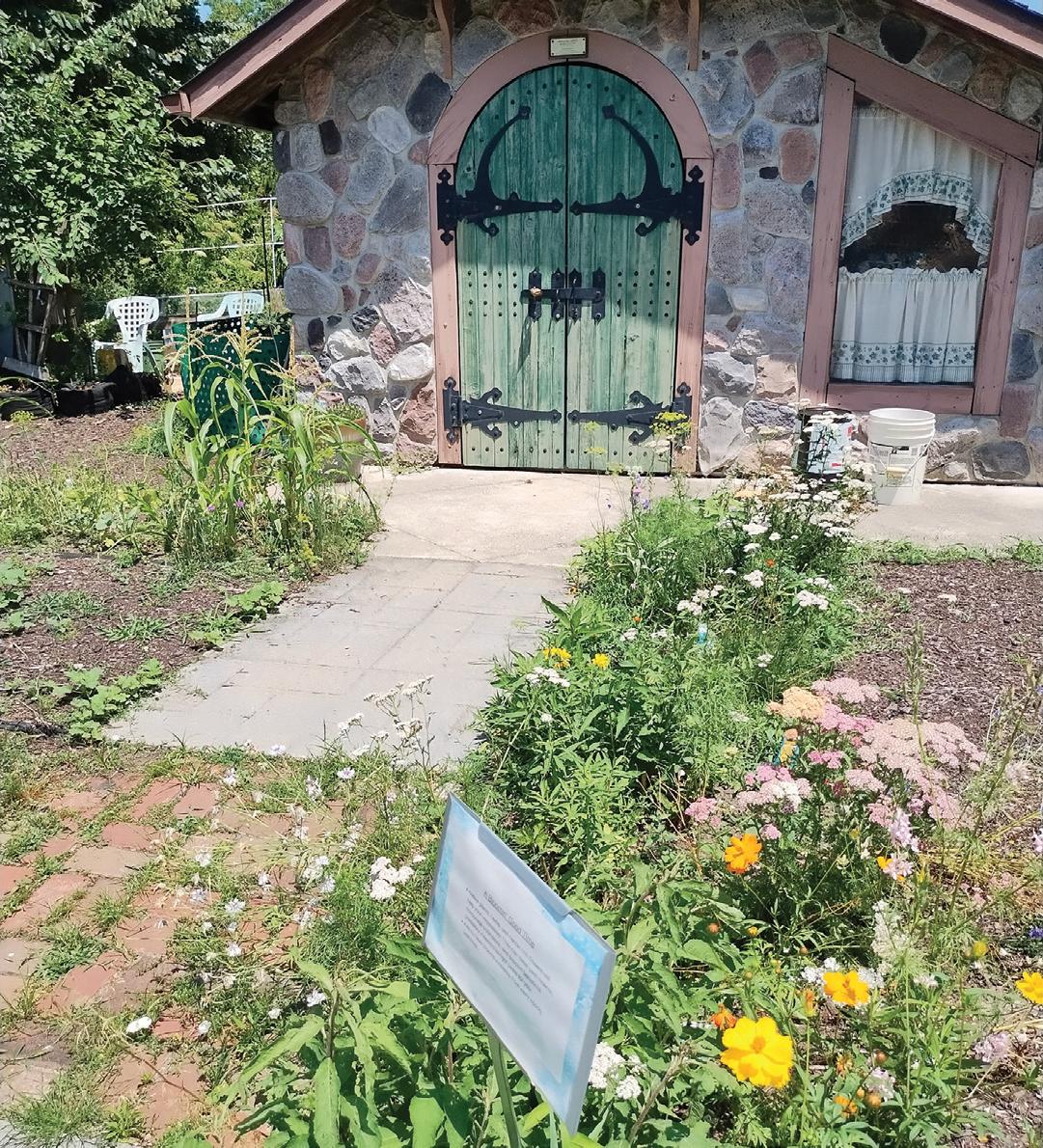
POTTING
SHED This quaint little cottage is actually a potting shed.


SHED This quaint little cottage is actually a potting shed.
Text and Photos

“I always enjoyed gardening as a way to get out into nature and cultivate
new to town. It was a way of getting to know people who shared some of the same values — care for the earth, respect for the
Purdy inherited a love of gardening from her mother. Roses were her mother’s favorite, and she still has a rosebush she removed from her mother’s garden after she died 20 years ago.
The master gardener program originated in theteers were recruited and
states, and in Indiana, associated with Purdue University.
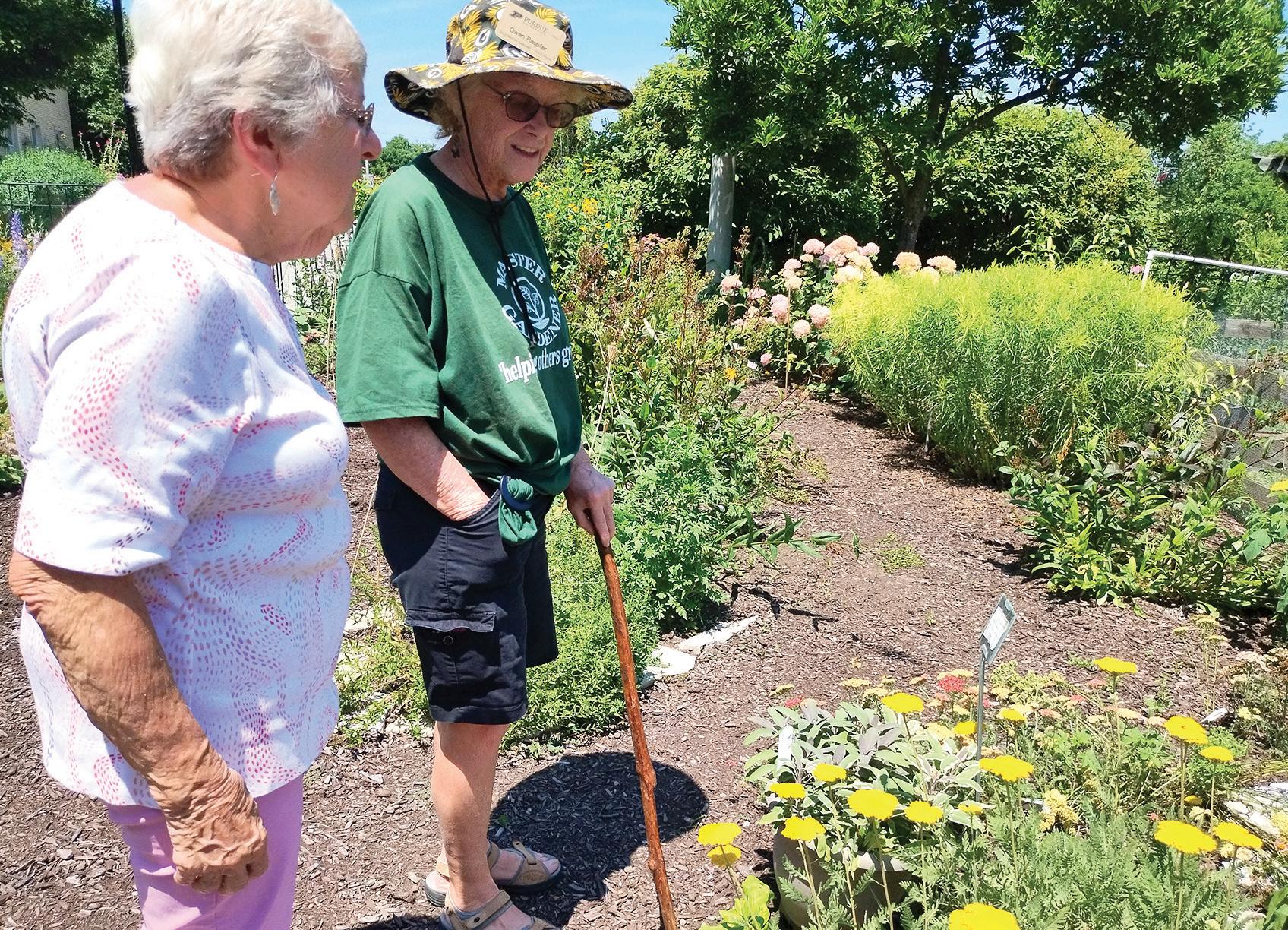
The local display garden, really a series of connected gardens, wraps around the extension’s freestanding offices on the edge of the Purdue Fort Wayne campus. It has expanded enormously over the years, Alberding said.
“The display garden is beautiful and it’s a great teaching tool,” said Cora Hill, the extension service’s urban agriculture and horticulture educator.
Some of the gardens are devoted to flowering and decorative plants. The
shows off the kinds of native plants that would have greeted settlers on the western side of Indiana, where the great prairie begins.
A vegetable garden produces hundreds of pounds of vegetables every year for the Purdue student food pantry. Three beehives produce honey for the pantry.
The display garden is open to the public 24/7.
Among other things, master gardeners also grow plants at the Lawton Park greenhouse to be used in public parks across Fort Wayne, including the Botanical Conservatory downtown.
Three days a week — Monday, Wednesday, and Friday — volunteers operate the master gardener

hotline, answering gardening questions, researching callers’ issues and providing advice.
The first step to qualify as a master gardener is to take a 13-week course offered through the extension service twice a year.
Classes are held once a week, for three hours on Monday afternoons. The next course begins Monday, Aug.18.
After the classwork, participants must pass a test. It covers a lot of ground but it’s administered in an open-book fashion.
“We don’t want to task people to memorize information. What we care about is their ability to find information,” Hill said.
Aging and In-Home Services of Northeast Indiana announced the appointment of Elizabeth J. Evans as president and CEO. She will be succeeding Connie Benton Wolfe, who has served in this position for 15 years.
The announcement was made by Kristi Harkenrider, chairperson of the AIHS board. Harkenrider noted: “The board felt fortunate to be able to look internally and see the talent that we believed was needed for this next era of growth for our organization.”
Former Board Chairperson Keith Huffman noted, “Board leadership wanted someone with a deep understanding of our mission and a true commitment to both the
region that we serve and the populations that count on us.
Evans demonstrated that to us and her passion for service will take us boldly into our next era.”
Evans joined AIHS in 2013. She has worked in AIHS’s key departments and program initiatives in increasingly responsible positions, most recently as chief administrative officer and executive director.
She holds a master’s degree in health care administration from the University of Saint Francis and a bachelor’s in social work.
Accepting the position, Evans responded: “I am so looking forward to a bright future of service to older adults, individuals with disabilities
and their family caregivers. AIHS has built its reputation locally and nationally as a leader committed to both excellence and innovation. I will carry that tradition forward.”
AIHS is celebrating its 50th anniversary in service to the community throughout 2025. Copies of the 50th Anniversary Yearbook are available by request by emailing sbostater@agingihs.org.
Aging and In-Home Services of Northeast Indiana is the state and federally-designated Area Agency on Aging and Aging and Disability Resource Center for nine counties in northeast Indiana and a partner in PACE of Northeast Indiana. Visit agingihs.org for more information.
By CECIL SCAGLIONE
Mature Life Features
As hackers break through firewalls protecting our nation’s facilities, the rest of us are reeling and wondering how to protect our assets from internet thieves. Crooks roam cyberspace


and pounce on bank and credit card accounts to fatten their finances. So passwords become increasingly important in the armor protecting our possessions.
Making your passwords — and, yes, you need more than one — as complex as possible has become important.
There are several methods and places to shelter them. Included are the cloud, software programs, and password manager or protection service.
These usually involve a fee. Or you can store them in a simple-to-keep thumb drive.
A prime rule to call to mind when thinking password: having a password that’s easy for you to remember — an old address or your father’s birthdate — makes it easier for password-hacker hounds to sniff out and attack your data.
And using the same password for everything you work at in cyberspace makes it simpler for these same hackers to scramble through all your secured sites.
You can keep your system simple, but your passwords should be complex and different for every site. So the doorway to your email should be different than that of your bank account, which should be different than that of your medical data which should be different than … you get the idea.
So what happens if you lose your thumb drive? First of all you should store your passwords on two or three such drives. Keep them in a safe and secure place, such as a safety deposit box.
As difficult as you think all your passwords are to figure out, you should add an extra
shield by placing them all in a single file that’s given a mind-boggling password.
You can have fun with this one.
Internet security experts suggest you begin with a Shakespeare quote or a song lyric or a phrase you make up yourself.
An example is “Water, water everywhere and not a drop to drink.” Write down the first letter of each word. Keep the punctuation and use capital letters for stressed words and you get W,WeaNaDtD.
You might add the date you first visited the ocean (which made you think of this quote).
You can split it up with half in front and half at the end.
If it was July 4, 1954 — 7,4,1954 — you can wind up with 741W,WeaNaDtD954.
Looks complicated doesn’t
it, but you know what it means. It also meets the rule offered by password pros — use a combination of upper-case and lower-case letters, numbers and symbols. And the longer the phrase you pick, the longer the password and the more difficult it is for hackers to crack. Remember that these computer crooks have developed the savvy and technology to crack the most complicated codes. Password security experts also suggest adding a short string of letters — such as jkjkjk — to strengthen your password against assaults by hackers.
If you make the process fun, you’re more likely to remember the formidable password you’ve developed to protect yourself out in the cyberspace world
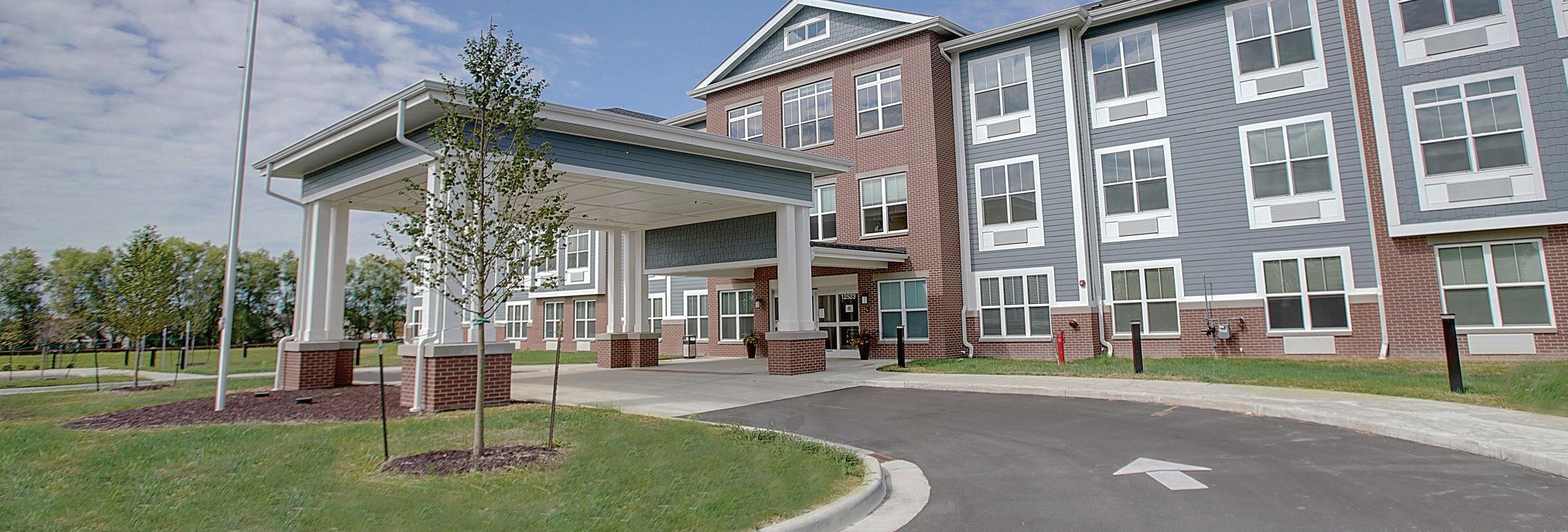
Auburn Road Fort Wayne, IN evergreenvillage-fortwayne.com

• Ongoing health monitoring and nursing assessments
• Assistance with activities for daily living: bathing, dressing, walking, personal grooming and hygiene
• Medication administration
• Three restaurant-style meals daily plus snacks
• 24-hour staffing and reception desk
• Range of interesting and varied programs and events
• Medicaid Waiver accepted


Mary Ellen and I were relaxing on our backyard deck
one evening. After swatting a few mosquitoes, I said, “you know, sweetheart, we should look into screening the porch.”

By DICK WOLFSIE
“Yes, Dick, you’ve been saying that every year for the past five years.”
A few minutes later, I mentioned how quickly the summer passes once the July 4th weekend is over.
“I know, you say that every year around this time.”
I also remarked that the neighbors don’t grill out as often as we do. Apparently, I had made this observation before. Several times.
Suddenly, I felt this great pressure. After 45 years, I didn’t have a single new thought to offer. I take great pride in my creativity, but clearly, I was no longer snappy with the repartee. Several moments of uneasy silence followed. Mary Ellen finally spoke.
“When it gets this hot, I
think about cutting my hair shorter.”
“Where have I heard that before?” I asked.
“Like every time we sit outside.”
At that moment, we both realized we needed a way to jazz up our conversations. Mary Ellen had an idea: “I read this article in the doctor’s office…”
I’ve seen some of those covers of Cosmopolitan, and I was just praying that was where she saw it. Phooey, it was from Good Housekeeping. Mary Ellen said the writer recommended that longtime married couples should pretend they are going out on a first date. That would make for an exciting and potentially romantic evening.
It was an old idea, but I agreed it was worth a try. So, on Friday night I asked Mary Ellen out on a date. She was annoyed because I waited until the last minute, assuming she didn’t already have Saturday night plans. To be really suave, I went outside the house Saturday night and rang the doorbell, like it was a real date.
I thought that would make a big impression on her, but she’s no dummy and realized I had simply forgotten my keys. We drove off in the car.
“What shall we talk about tonight, Dick?”
“If this were a first date, we’d probably chat about movies we have seen.”
“Okay, great idea. I just saw the new ‘Mission: Impossible’ movie.”
“I saw that, too.”
“I know, Dick, we saw it together. We were sitting right next to each other in the theater.”
“Gone to any good restaurants lately, Mary Ellen?”
“No, my husband likes to go to the same places all the time.”
“Mary Ellen, you are not supposed to have a husband. This is a first date. What kind of a jerk do you think I am, going out with a married woman? Let’s try travel. Have you ever been to Iceland?”
“We went last year. How could you forget?”
“I didn’t forget. I’m making conversation. That was the whole point of this.”
“Well, it’s getting too weird for me. I feel like I’m dating a man who’s lost his memory.”
We tried everything that people would chat about when getting to know each other: music, religion and politics. Honestly, we didn’t hit it off, but there must have been something brewing on some level because despite a dismal first date, we both ended up back at my place.

Continued from page 1
After that, participants are required to put in 40 hours of volunteer service over two years. They can do it all in a few weeks or stretch it out.
The master gardener program is open to anyone of any age, but tends to attract more women than men. The last course offered had five men among the 19 students.
Not everyone becomes a loyal volunteer upon completing the requirements. Some people want the title for work purposes; others have personal goals. They
get their certificates and they’re gone.
Fortunately, many do stick around, and their schedules can be adjusted to reflect changes in jobs and home life over the years.
“We appreciate anything they can give,” Hill said. “It’s really about helping the community. It’s really about spreading horticulture knowledge that helps the community.”
For information on the master gardener classes, or to register for the upcoming course, contact Hill at hill272@purdue.edu.
Whether you're recovering or need ongoing support, we’re here to ease your worries. We provide private rooms, ensuring comfort and privacy, no matter how you’re paying for care. Call today to learn about our rehabilitation and long-term care.

By ROD KING Feature Writer
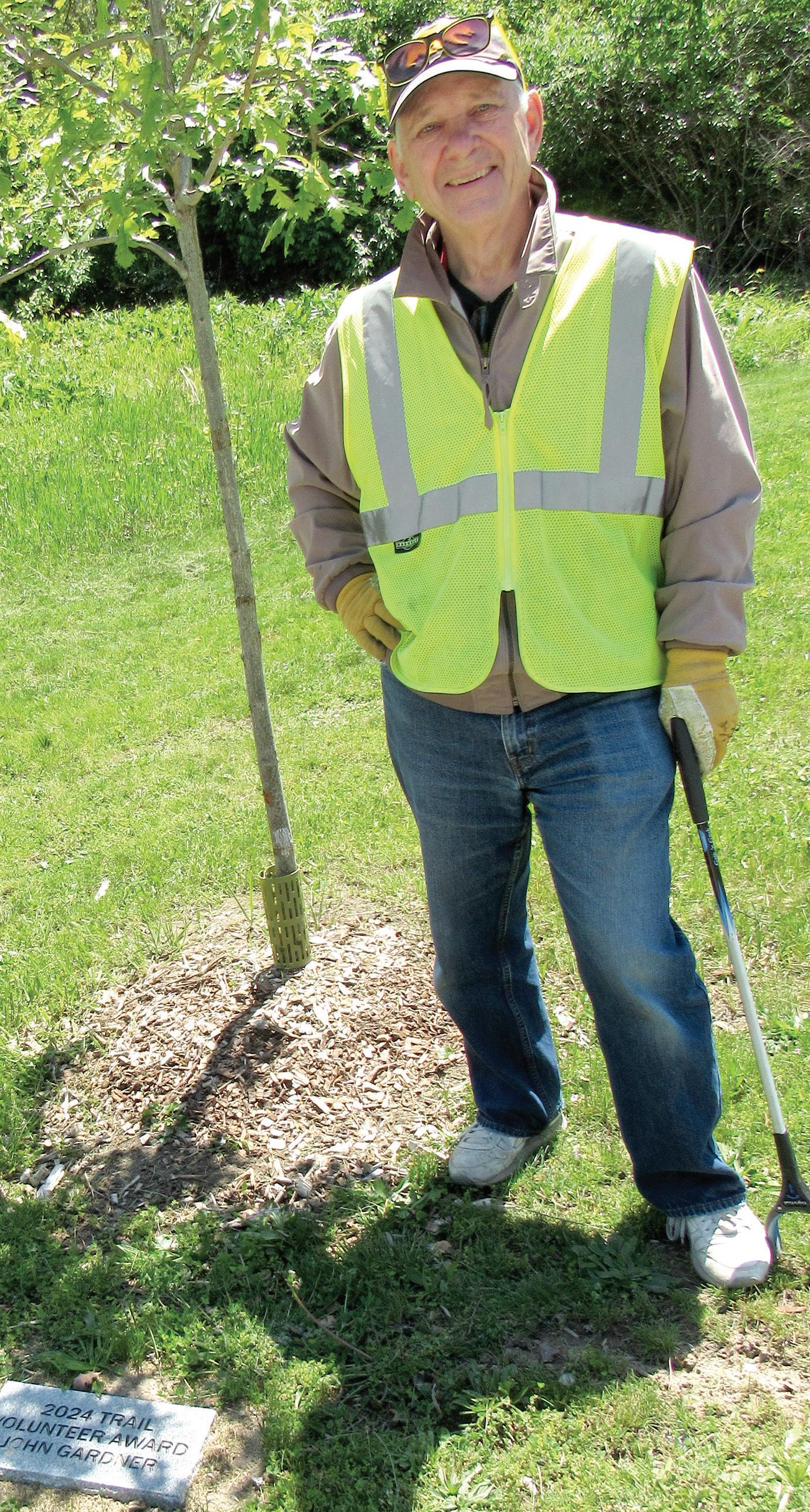
John P. Gardner can be seen at least once a week carrying a 5-gallon bucket and a reacher pick-up stick on the trail between the Martin Luther King Bridge and West State Boulevard. After

completing the one-mile round trip, he submits a report to the City Public Works Division that all is well or there’s work to be done. He’s been doing it since 2018 as a ranger on the Pufferbelly Trail.
For his efforts, he was recommended to be the 2024 Volunteer


of the Year.
“I didn’t self-promote myself, I was shocked to learn of the award but I’m proud to have been chosen,” Gardner said. It includes a plaque in the ground in front of a burr oak tree, which was planted in his honor.
“I even got to pick the species of tree. In the future, it will be providing shade over the trail in place of the huge shingle oak that blew down during a big storm last year,” he said.
Gardner said he takes pride in keeping his section of the trail debris-free and looking attractive for the hundreds of walkers, joggers and bike riders who utilize the trail.
“I’m on the lookout for damage to River Greenway structures, unsightly graffiti and trash. Mostly, I find lots and lots of cigarette butts, plastic bottles and bags, fallen tree limbs and glass. When scooters were the big thing in downtown a few years ago, I would occasionally find one stashed in the bushes or lodged in Spy Run Creek,” he said.
His part of the trail consists partially of cement sidewalk and asphalt track.
“When I find something that needs to be attended to, I text what I’ve found to Rick Zolman, who is my supervisor at the city, and he gets the appropriate workers out to take care of the problem,” Gardner said.
CORPORATE OFFICE

There’s an underpass that goes beneath Clinton Street that gets full of mud and a lot of other trash after a big storm making it impassable.

The Papers Incorporated, 206 S. Main St., P.O. Box 188, Milford, IN 46542, 574-658-4111 STAFF
Ron Baumgartner, Publisher rbaumgartner@the-papers.com
Annette Weaver, Business Manager aweaver@the-papers.com
Kristin DeVittorio, Director Of Marketing kdevittorio@the-papers.com
Deb Patterson, Editor-In-Chief dpatterson@the-papers.com
Phoebe Muthart, Editor pmuthart@the-papers.com
Account Executive Betty Foster slallen@the-papers.com • 260-494-9321
Jerry Long, Circulation Manager jlong@the-papers.com
Elkhart/Kosciusko Edition
Joseph
EDITORIAL DEADLINES
SUBSCRIPTIONS
Mailed subscriptions are available, prepaid with order at $37 for one year; and $64 for two years. (Select one edition.) Your cancelled check will serve as your receipt. To order a subscription, call 574-658-4111.
ADVERTISING
For advertising deadlines call your sales representative. The existence of advertising in Senior Life is not meant as an endorsement of any product, services or individuals by anyone except the advertisers. Signed letters or columns are the opinion of the writers, and not necessarily the opinion of the publishers. To advertise contact Betty Foster at 260-494-9321 or slallen@the-papers.com.
PRODUCTION
Senior Life is digitally composed on Macintosh Computers using Digital Technology’s Newspaper Publishing Suite software and
or
“There are more than 100 of us patrolling the 100 miles of trails throughout the city and county. I record my time on the trail with Volunteer Fort Wayne,” he said.
Becoming a trail ranger turned out to be a rather intense ordeal. He was required to undergo a criminal background check, pass a drug test and provide the city with three character references.
“People see my yellow ranger vest and often wave and say ‘thank you for your service’ but to most of them I’m practically invisible,” he said.
One time, a 7- or 8-yearold boy heading to Science Central on his bike passed him by, stopped, came back and offered him a dollar.
“I was so stunned I didn’t know what to say, and I didn’t have the heart to reject his kindness, so I kept the bill,” Gardner said.
Keeping the River Greenway clean and attractive is a job he takes seriously, but he hardly ever tells anyone that he is a trail ranger.
“We rangers meet each spring for an orientation session to find out what is new in trail management and pick up plastic trash bags, new gloves and pickers,” Gardner said.
By MICHELLE M. WALTERS RSSA, PHR, CHRS, CCWS, CSIS Executive Vice President Health Insurance Shop
Most of us associate prescription drugs with a prescription drug plan that we use when we go to the pharmacy to pick up our medications. And, for the most part, that is how the majority of our prescriptions are covered. But some medications can and are covered differently. Medicare describes drugs that would be covered by Part B as “drugs you wouldn’t typically give to yourself.” Some examples given are: drugs used with durable medical equipment, like an insulin pump, some antigen tests and treatments (allergy shots), HIV drugs, immuno-suppressive drugs, oral and intravenous cancer drugs, and many others. When covered under Medicare Part B, you would only be responsible for 20% of the
Medicare rate for your drug after the part B deductible has been satisfied. Your out-ofpocket may be lower, depending upon what coverage you have in addition to original Medicare. Recently, however, many outpatient facilities have stopped participating in what is called the “buy and bill” program (where they obtain the drug, and after administering, bill original Medicare or your Medicare Advantage plan). Instead, it runs the drug through your prescription drug plan, which ultimately ends up increasing your out-ofpocket for these medications that should be covered under Medicare Part B. Doesn’t seem right, but I understand why it’s happening.
If you have a drug that should be covered under Part B and it’s not, call our office to learn about an alternate option that may work for you, Monday to Friday, at (260) 484-7010.
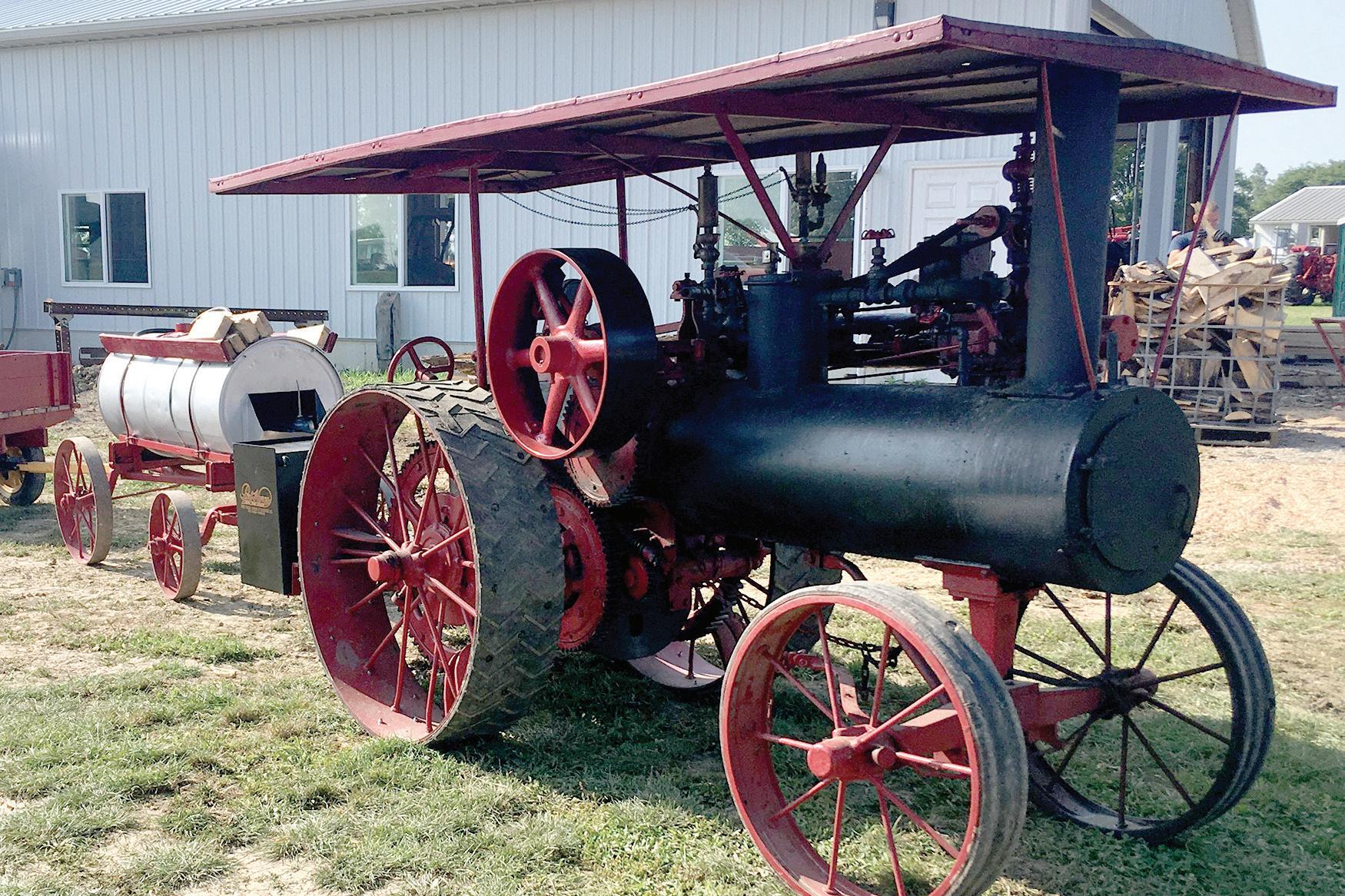
The 48th Annual Maumee Valley Antique Steam and Gas Engine Show will be held Aug. 14-17, at Jefferson Township Park, 1720 S. Webster Road, New Haven, at the corner of Webster and Dawkins roads.
It’s a fun show for the whole family. The daily admission charge of $5 a day or $10 for all four days includes entertainment and parking. Children 12 and under are free. Memberships are available at the office. Golf carts are permitted with proof of insurance for $10. Over-sized vehicles are $30.
The show opens at 9 a.m. and closes at dusk. Featured are B.F. Avery, Minneapolis-Moline tractors, Moline Universal tractors, gas engines and garden tractors. Other makes of tractors are also welcome. Classic cars and trucks are invited to a cruise-in from 9 a.m. to dusk Friday and Saturday; and until 3 p.m. Sunday. All exhibitors are free but must register at the office to receive a button and plaque.
See the 125 HP, 15-ton Buckeye Oil Engine that came from the elevator in Grabill, one of two in existence, and a stationary Chuse steam engine in operation. Visit the trading post, contact (260) 337-5136; flea market and camping, contact (260) 341-4805; a quilt show, contact (260) 5805285; and blacksmith shop.
Plowing, sawing lumber and threshing wheat with trac-
tors and steam engines will be demonstrated. Children will enjoy a sandbox, train rides and tractor-driving lessons. On Saturday, there is face painting, a Kiddie Tractor Pull at 2 p.m., an exotic animal show at 3 p.m. and a magic show at 4 p.m. Parades will be at 4 p.m. Friday and 5 p.m. Saturday.
A show favorite, steamed sweet corn, will be sold Friday, Saturday and Sunday, until sold out. Fish and chicken dinners will be served Friday and chicken dinners on Saturday. Other food vendors and ice cream are available.
DeKalb County Horsemen will give free hayrides Friday and Saturday with horses and mules. Tractor pulls will be held at 5 p.m. Friday and beginning at 9 a.m. Saturday, all day until dark. Friday evening entertainment will be country music at 7:30 p.m. and Saturday, Apple Jack Kloggers will perform at 11 a.m. and 1 p.m. and a square dance begins at 6 p.m. A spark show (steam engine fireworks) will be after the entertainment at dusk. Sunday admission is a freewill donation at the gate. On Sunday, a church service will be held at 9 a.m. and a new event, a garden tractor pull, will be at 11 a.m.
For more information, visit maumeevalley.org. or call President Tony Herman, (260) 414-9489.
Aging and In-Home Services of Northeast Indiana, Inc. has been selected by Centers for Medicare and Medicaid Services as one of only 400 organizations nationwide to offer the Guiding an Improved Dementia Experience Model of Care, a program of integrated clinical and social care covered by Medicare Parts A and B for individuals living alone with mild to severe dementia or living with their caregivers.
Clinic offices are located at 3003 Lake Ave., Fort Wayne. To make a referral or check eligibility, visit agingihs.org or call (260) 999-4106.
G.U.I.D.E. participants receive ongoing clinical and social supports focused on improving the quality of life for both the participant and their caregiver(s). The benefits of G.U.I.D.E. participation include access to long-term care resources, improved health outcomes and reduced caregiver burden. The clinical staff will provide an annual assessment, dementia symptom management and collaboration with the primary care provider and specialist.
Certified care navigators will provide care coordination, person-centered care planning and caregiver education and support.
“G.U.I.D.E.’s integration of clinical and social care allows us to tailor our services at the highest level of clinical standards and with the compassion that is a hallmark of community-based care,” said Kelly Zolman, adult gerontology nurse practitioner
By CECIL SCAGLIONE Mature Life Features
The thought of having anyone poke, prod or cut into your eyeball probably makes you shudder.
Yet thousands of people, most of them elderly, have learned that saving their sight has become as easy, if not easier, than a visit to the dentist.
Cataracts begin diminishing
for the G.U.I.D.E. program. Eligible participants must exhibit cognitive impairment or have a dementia diagnosis. They must also be enrolled in traditional Medicare (parts A and B). Referrals to the program can be made by a healthcare provider, community-based organization or the individual. The program is not available to those enrolled in Medicare Part C (Medicare Advantage), P.A.C.E., or those receiving hospice.

most people’s vision in their 50s. Replacing the clouded lens in your eye has become a simple remedy.
Glaucoma damages the optic nerve and, if caught early, can be treated with prescription eye drops or a laser procedure. The leading cause of vision loss once you turn 50 is macular degeneration, which is a progressive deterioration of the part of




• Daily Plowing
Threshing & Sawing with Tractors & Steam Engines
• Spark Show After Dark
• Baker Fan • Shingle Mill
• Steam Engines
• Antique Tractors
• Gas Engines
• Antique Cars & Trucks
• Model Airplane Show
• Stationary Steam Engines
• 125 hp Buckeye Oil Engine (one of two running)
• Tractor Pulls Fri. & Sat.
the eye the focuses on central vision.
Treatment ranges from lifestyles changes, such as quitting smoking and eating a healthy diet, to having medication injected painlessly directly into the eyeball.
Regular vision checks should be atop everyone’s medical checklist.
Mature Life Features Copyright 2025


• Working Blacksmith Shop • Horse & Mule Demonstrations & Hay Rides Fri. & Sat. • Steamed Sweet Corn
Quilt Show
Trading Post
Flea Market

Variety of Food Vendors
• Fish and Chicken Dinners Thurs. thru Sat. in the Pavilion
• Exhibitors are FREE
• Church Service Sunday 9:00 AM FOR THE CHILDREN:
• Kiddie Pull • Daily Train Rides
• Animal & Magic Show Sat. Afternoon
• Sandbox • Tractor Driving Lessons President: 260-414-9489 Flea Market: 260-341-4805 Trading Post: 260-460-0569 Exhibitors: 260-580-5416 Camping: 260-341-6152
Handmade Goods: 260-305-0527
Show: 260-579-7303 Quilt Show: 260-580-5285 Garden Tractors & Gas Engines 419-769-9635 or 260-705-8226
other exhibitors are welcome. A fun show for the whole family. Free Parking Cruze-In of Vintage Cars and Trucks Friday and Saturday Tractor Pull Fri. Features 1:00 PM, Non-Features 5:00 PM and Sat. 9:00 AM (260-715-2520) • Garden Tractor Pull Sun. 10:00 AM
Text and Photos
By LINDA LIPP Feature Writer
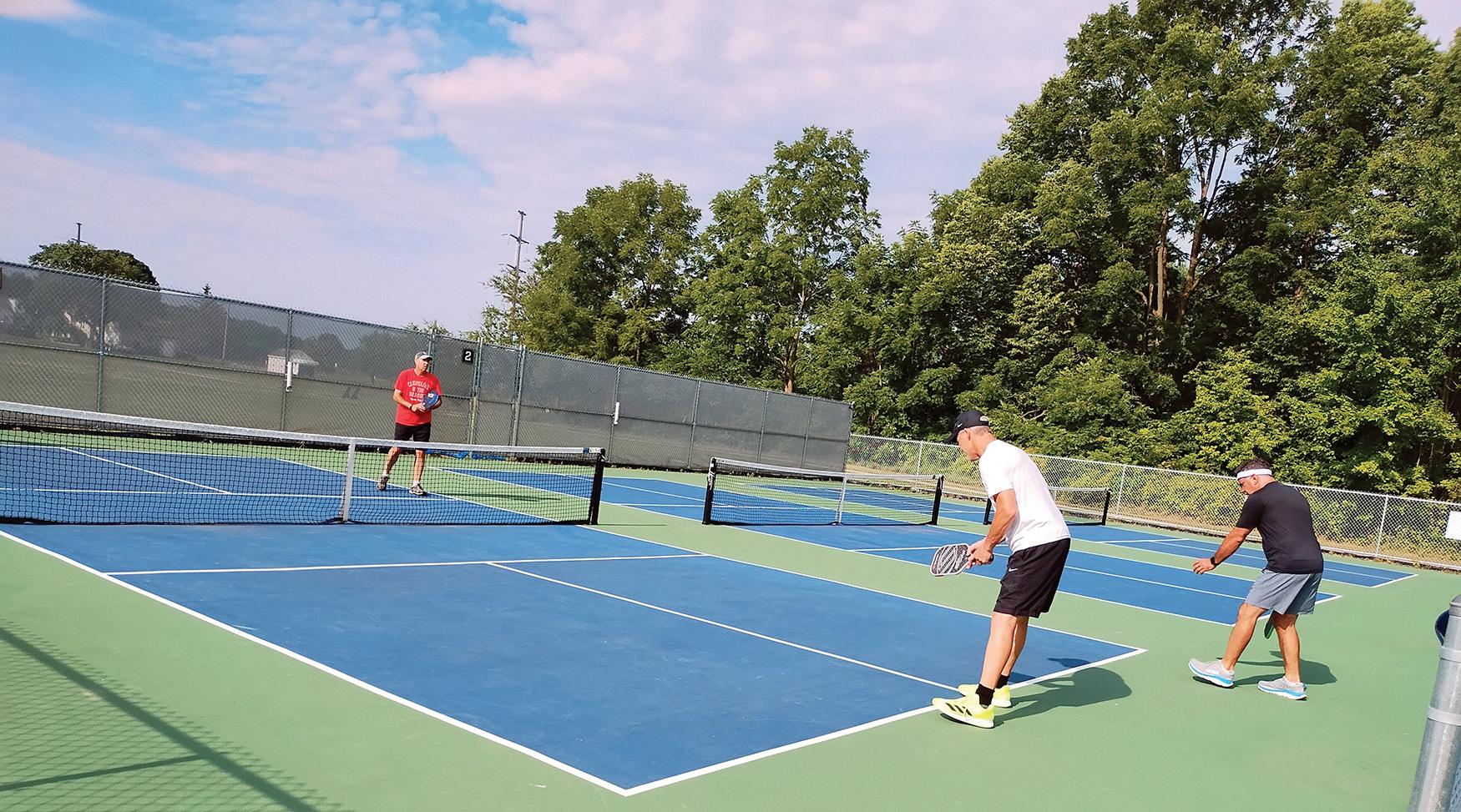
Two years after Huntertown’s outdoor pickleball courts opened, the pastime is more popular there than ever.
Just about any morning, except during the depths of winter, the pop pop pop of paddle against ball echoes through the Huntertown Family Park. And although the sport attracts kids and younger adults, it’s more mature adults that have embraced it as their own.
It takes speed rather than muscle to play, and ultimately “it’s all about placement,” said pickleball aficionado Mike Myers.
The six-court complex was built with more than $300,000 in donations raised by a group

Sherry Karst. It’s been 11 years since Karst became interested in what was then not a widely- known sport.
Lifehouse Church in Huntertown installed two indoor courts. Karst was the sport’s most energetic promoter.
“One day, Sherry showed up with a box of stuff and said, ‘were going to play pickleball’,” Myers said.
Because of the level of interest, the players decided what they really needed were outdoor courts.
It took some time, but the nonprofit board that governs the park eventually agreed to provide the space for the courts as long as the volunteer organizers raised money to build and maintain them.
Donations, big and small, came rolling in. Money was also raised through events, including
a tournament and a Valentine Day’s concert by a philharmonic orchestra string quartet.



How can you worry less about scams and fraud?
You want information you can trust.

That’s why AARP created the Fraud Watch Network, a free resource for all who are interested in or have been personally affected by scams and fraud. With AARP Indiana as your partner, you’ll learn how to proactively spot scams, use our scamtracking map - a tool that shows scams happening in your area - and sign up for Watchdog Alerts. You can also speak to a fraud specialist for guidance if you’ve been targeted.
Learn more about the Fraud Watch Network at aarp.org /fraudwatchnetwork
The group brings in an instructor to give lessons now and
“But just playing is a lesson, too,” Myers added.
During the winter, players have to move back indoors. The nets, which are costly to replace or repair, are taken down and
The group chose concrete, rather than asphalt, for the courts’ surface. Although more expensive initially, concrete is more durable and requires less maintenance, Karst said.
There is no fee for players to use the courts, and there are
no formal schedules. The most important rule comes down to “be courteous.” Players are encouraged to play their game and then let someone else take a turn.
COVID also affected the use pattern, Karst said. Rather than

rotating in and out with others there at the same time, people organized their own small groups and played within that group.
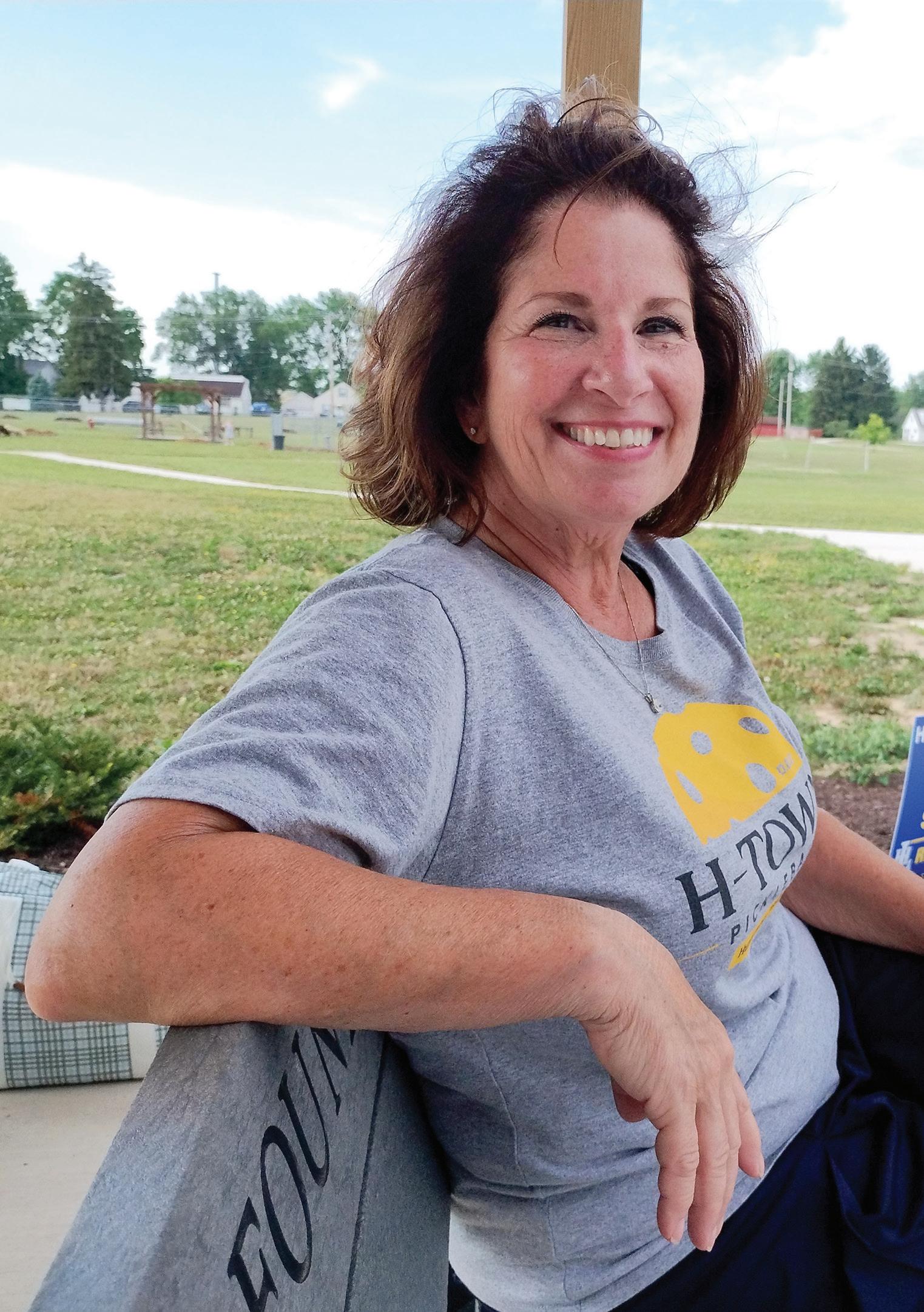
In addition to getting fresh air and exercise, players also get a chance to socialize. That’s important for older adults who don’t get out much.
Mornings, when it isn’t as hot, are prime time for older players. Young people usually play in the afternoons, Myers said.

Q. Do I have to renew my Medicare Advantage Plan every year?
A. The technical answer is “No”, but the better guided answer is “Yes”.
As the Centers for Medicare and Medicaid Services (CMS) continues to make changes to the provisions that entail “Medicare”, it should be expected that changes will occur within the Medicare Advantage (MA/MAPD) AND Prescription Drug Plans (PDP). Whether new services are added, deductibles are increased, or things are no longer allowed to be included, we can be certain that each and every year your Medicare Advantage plan will have some sort of change.
For 2025, most of us are now aware that CMS established a maximum out-of-pocket for prescription drugs of $2,000. For many Medicare Beneficiary’s, this was a good thing. But behind the scenes, the insurance carriers are now paying more for the cost of prescriptions and as a result – we can expect

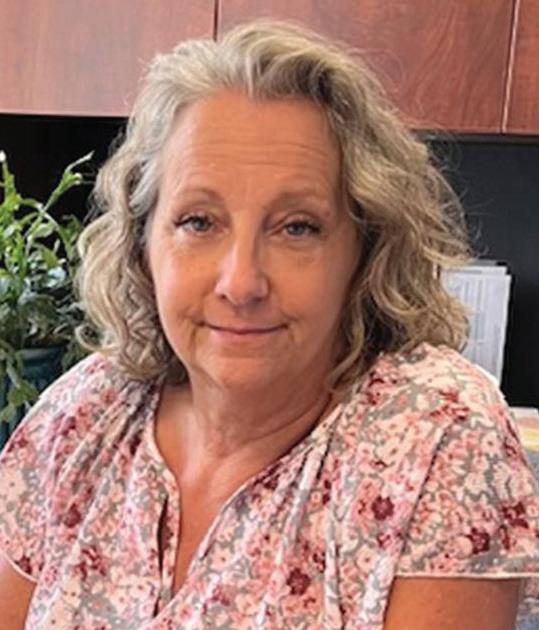
Michelle Walters Executive Vice President
that the plans will start pulling back on the plan provisions to try to recoup some of those added expenses.
Stay tuned for the 2026 plans, as agents and brokers can begin discussing those changes on October 1st. But no earlier!
Got questions? Give us a call at (260) 484-7010.
and payable-on-death designations?
A. This is a question elder law attorneys often get because these terms are frequently used at financial institutions and sometimes used interchangeably. A payable-on-death (POD) or transfer-on-death (TOD) designation to an account allows the funds in that account to be passed to the named beneficiary or beneficiaries when the account holder dies.
A POD designation is typically added to a bank account, such as a checking account, savings account, certificate of deposit (CD), and money market account. While a TOD applies to an investment account, such as an individual retirement account, 401(k), brokerage account, and other accounts holding securities.
POD and TOD accounts are outside your estate so if you update your Will or Trust, there could be inconsistencies in the overall estate plan. The funds in them are not available to pay for funeral arrangements, settle claims or debts of the estate, pay for ongoing expenses of estate assets such as a home or pay for taxes and attorney fees. Additionally, a POD or TOD account cannot provide the same protections for a minor or disabled child. POD and TOD accounts are a way bypass probate. These designations are fast, easy, and do not involve an appointment with your attorney. However, they do not provide the full range of benefits that a traditional Last Will and Testament or Revocable Trust does and often has unintended consequences. A POD or TOD account may be a great way to pass your property onto your family, but

Q. What are “Senior Relocation” services?
A. Several years ago, some friends whom had moved from their home to a local retirement community had an interesting conversation with me regarding their experiences in making their transition. One of the things that stood out in my mind was the fact that very little of the things they needed done was completed on a schedule that fit their needs. Also, coordinating all of the things that they needed to do was a bit overwhelming. And then it struck me that nearly everything that they needed accomplished were exactly what I was doing or had training in.
Having many years of experience in moving furniture in my younger years, a successful career in real estate, and a successful career in auctioneering and appraising, it didn’t take me long to see that all of my abilities were just what the doctor ordered for my friends. Hence the term “Senior Relocation” was born.

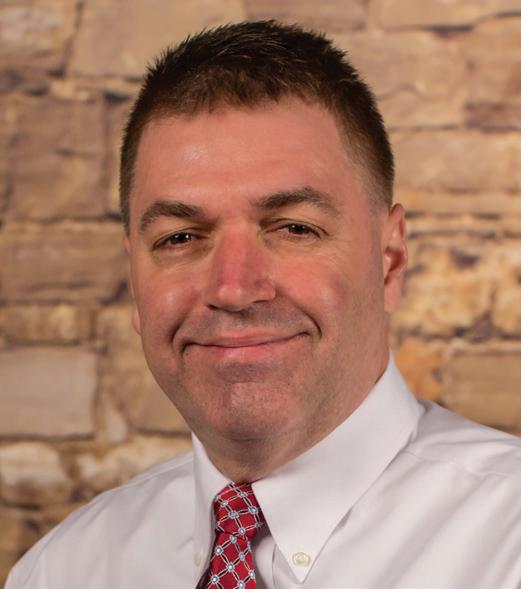
Tim McCulloch, Owner
Our systems include professional and courteous moving services, real estate brokerage, real estate and antique appraisals, auctioneering services, floor planning assistance and climate controlled storage. These services are all geared to assist the mature adult market in helping make the transition to retirement living much easier.
Whether you need all of our services or just a few, you can feel free to call us for a free analysis. We can show you how to sell your home in 30 days for your price, coordinate a professional and courteous move, along with any other services you may need to help your transition be as simple and as worry free as possible. Call (260) 441-8636 for a free consultation. Tim McCulloch, Owner

Q. I just turned 65 and I don’t know a thing about Medicare. What should I do?
A. Understanding Medicare, Medicaid and other government programs can be overwhelming. That’s where the Aging & Disability Resource Center (ADRC) comes in. Our team is just a phone call away to help you explore your options and find the best solutions for your needs.
When you call, you’ll work with a State Health Insurance Assistance Program (SHIP) trained Options Counselor who will provide unbiased, reliable one-on-one guidance to help you understand your Medicare coverage and make informed decisions.
How It Works:

• Connect with an Options Counselor.
• Answer a few simple questions.
• Receive unbiased advice, information and assistance tailored to you.

scams including urinary catheter fraud, Medicare card scams, telehealth fraud and more.
Call the ADRC today at 260-469-3036 and let us help you navigate Medicare with confidence.
Editor’s note: Send listings of events, for nonprofit organizations only, to Senior Life, P.O. Box 188, Milford, IN 46542, or email Editor Phoebe Muthart by the 20th of every month at pmuthart@the-papers.com or call (574) 658-4111 ext. 2318. With the listing, include the contact person, area code and phone number.
—o—
Fort Wayne Dragon Boat Races, 5-10 p.m. Friday, Aug. 1, and 9:30 a.m. to 3:30 p.m. Saturday, Aug. 2. Awards ceremony at 3:30 p.m. Aug. 2, Promenade Park, 202 W. Superior St., Fort Wayne.
—o—
1964: The Tribute, 7:30 p.m. Friday, Aug. 1, Foellinger Theatre, 3411 Sherman Blvd., Fort Wayne. Since the early 1980s, 1964: The Tribute has been thrilling audiences all over the globe with what Rolling Stone Magazine has called the “Best
Beatles Tribute on Earth.” Tickets start at $19 and available online at FoellingerTheatre.org or in person at the Parks and Recreation Department, 705 E. State Blvd., Fort Wayne.
—o—
Concert in the Woods: The High Freqs, 4-6 p.m. Sunday, Aug. 3, Lindenwood Nature Preserve, 600 Lindenwood Ave. Fort Wayne. Enjoy free snacks, drinks and live acoustic music in the woods. The band will perform in the campfire circle under the shade of tall oak and hickory trees. Picnic table seating is limited, so bring a lawn chair or blanket. Admission is free; all ages welcome. The Lindenwood parking lot is small; carpooling is recommended.
—o—
Salomon Farmers Market, 4-7 p.m. Wednesdays and continuing each Wednesday, until Sept. 3, Salomon Farm Park, 817 W.
Dupont Road, Fort Wayne. Find fresh produce, baked goods, honey and artisan crafts at this mid-week market. Stop by and say hello to the newest members of the herd — Lucky and London, the Valais Blacknose Sheep — or Mickie and Frankie, the Highland Coos, as well as the goats, and miniature horse and more.
—o—
The Huntington County Community High School Class of 1967 is having its second annual luncheon from noon to 4 p.m. Saturday, Sept. 27, at the American Legion Post 85, 1410 S. Jefferson St., Huntington. Reservations: $15 per person. Send to: Diana West, 4124 Westbury Drive, Fort Wayne, or email her at dkfrance2002@ yahoo.com.
Woodlands Senior Activity Center
For more information, call
(260) 248-8944 or visit whitleycountycouncilonaging.org. The center is located at 710 Opportunity Drive, Columbia City.
9 a.m. Wednesday, pixie bingo.
9-10 a.m. Monday, Wednesday and Friday, line dancing.
9 a.m. Tuesday and Friday, 12:30 p.m. Thursday, euchre.
9 a.m. Tuesday, Bible study with Cheryl.
9 a.m. Thursday, craft and chat
10-11 a.m. Monday, Wednesday and Friday, chair exercise.
Noon Tuesday, dominoes. 12:30 p.m. Wednesday, hand and foot card game.
1 p.m. Tuesday, Bible study.
—o—
McMillen Park Community Center
For information, visit
fortwayneparks.org or call (260) 427-6000. The center is located at 3901 Abbott St., Fort Wayne.
Pickleball, 9 a.m. to 2 p.m. Monday to Friday.
Open gym, 9 a.m. to 2 p.m. Monday through Friday.
Adult open gym, 6-8 p.m. Monday through Thursday.
Adult yoga, 6-7 p.m. Tuesday and noon to 1 p.m. Wednesday.
Volleyball, 6-8 p.m. Monday.
Badminton, 6-8 p.m. Tuesday.
CardioFit, 6:30-7:30 p.m. Monday and Thursday.
Essential steps, 5:30-6:30 p.m. Monday and 6-8 p.m. Wednesday.
Yoga for seniors, noon to 1 p.m. Wednesday. Yoga for adults, 6-7 p.m. Tuesday.
Men’s basketball league, 6-9 p.m. Thursday.
By BONNIE POMERANTZ AARP
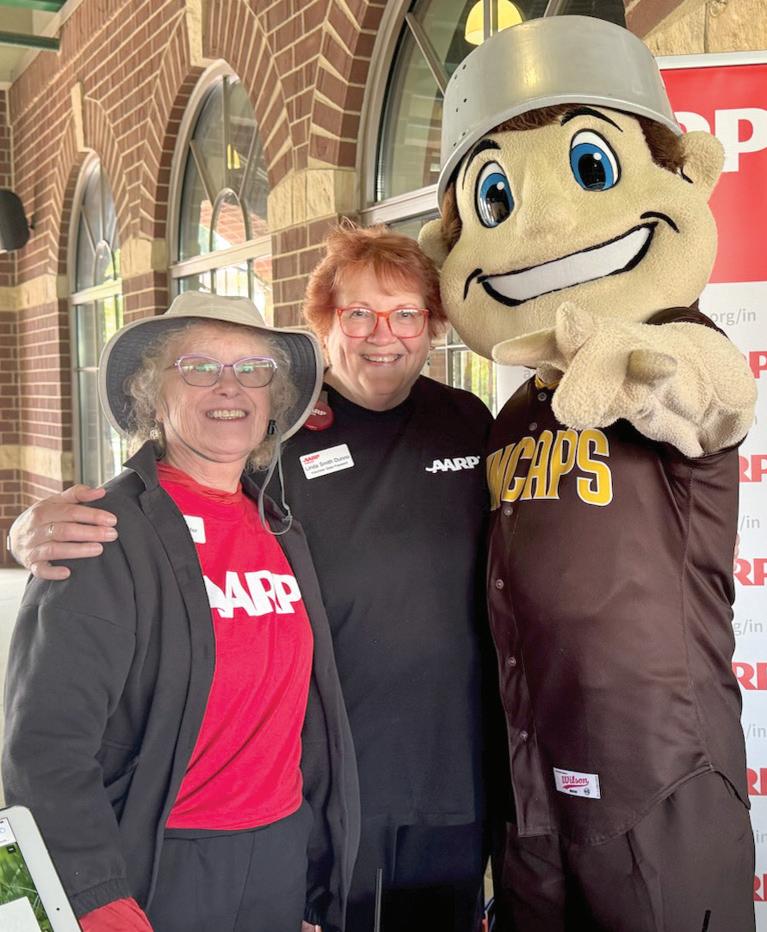
AARP Fort Wayne volunteers are taking action to protect our community.
Fraud is on the rise, and older adults are often the primary targets. That’s why the AARP Fort Wayne Volunteer Team is stepping up — educating, engaging and empowering residents to protect themselves from scams.
This spring, our team was proud to bring fraud prevention resources directly to the
community through local events. At the Fort Wayne TinCaps game in May, volunteers distributed AARP Fraud Watch Network materials to fans and talked with attendees about common scams targeting older adults, from fake sweepstakes to tech support fraud. We also invited folks to sign up for free fraud alerts and learn how to spot red flags before becoming a victim. We also had the opportunity to share our message through the Life Ahead series, a 30-minute segment aired

on Fort Wayne’s PBS 39. The program spotlighted our work in the community and featured insights from local AARP volunteers on how scams affect older adults in northeast Indiana.
We highlighted real stories, practical prevention tips, and encouraged viewers to talk to their loved ones about fraud before it happens. The broadcast helped us reach a wider audience and reinforce the importance of staying alert and informed.
AARP’s Fraud Watch Net-


work is a free resource for all, whether you’re an AARP member or not. It offers up-to-date scam alerts, tools to protect your identity, and a helpline where trained fraud specialists offer guidance and support.
The Fort Wayne volunteer team is committed to helping older Hoosiers stay safe and aware. Want to learn more or get involved? Visit aarp.org/ fraudwatchnetwork or connect with us through AARP Indiana. Together, we can stop fraud in its tracks.


By CECIL SCAGLIONE Mature Life Features
As airline companies intensify their hunt for profits, it’s become important to make sure you know you’re getting what you’re paying for.
An up-front example is that bargain-priced once-in-a-lifetime low fare being offered to a destination. You soon learn that’s before airport fees, taxes and a few other charges
are added that far exceed the advertised price. Some airlines charge you for reserving a seat, which can be important if you and your spouse want to sit together. Another charge can be added even if you don’t fly. Most airlines claim you can get a refund for your ticket if you decide to cancel within 24 hours of booking. Before relying on this, find out if there’s a service fee for processing the refund. Mature

MOVING ON UP The Senior Saints in the first row from left are Bonnie Kammeyer, Shirley Yoder, Judy Gehring, Miriam Doetsch, Maureen Kennerk, Arlene Morris, Lora Strong, Kathie Wilcox, and Gary Shefelt.
In the second row are Marsha Wright, Naomi Johnson, Diane Ream, Jan Logan, Marilyn Steiner, Jackie Dispenza, Kay Carranza, Mary Ann Steiner, Sharon Blum, Zelda Zimmerman, Kathy Martin, Pauline Holsopple, and Marvina Liechty.
In third row are Kay Steiner, Marti Habegger, Jan Hartman, Terez Zorger, Sherrie
Liechty, Char Blum, Jill Smith, Arlene Motter, Karen Parkison, Gayle Griffin, Sharon Hull, JoAnn Swisher and Marlise Stieglitz.
In the fourth row are Dick Armstrong, Richard Steiner, Omer Liechty, Richard Worman, John Motter, Bill Hull, Jim McDowell, Jay Yoder, Phil Logan, and Sam Steiner.
The Senior Saints are an energetic group of senior adults from the greater Fort Wayne area representing 26 churches.
This year, the 70 singers and instrumentalists will present
The History Center is presenting Miami Indian Heritage Days at the Chief Richardville House, 5705 Bluffton Road, Fort Wayne. Learn about the lasting heritage of the Miami and other regional Native American groups.
Local artists, performers and presenters will be featured the first Saturday of the month, until November, from 1-4 p.m.
Dani Tippmann will offer a presentation on “Miami Harvest: Edible and Usable Plants and Materials” Saturday, Aug. 2. The Chief Richardville
House, or akima pinšiwa awiiki, is recognized as the oldest Native American structure in the Midwest.
Admission to Miami Indian Heritage Days includes a guided tour of this National Historic Landmark.
Admission for each Saturday event is $9 for adults and $7 for youth and seniors. History Center members and children age 2 and under are free. The rest of the 2025 Miami Indian Heritage Days schedule includes:
• Saturday, Sept. 6 — Lacrosse and other Miami games
with Doug Peconge.
• Saturday, Oct. 4 — Wiikiaami Cattail Matting with Miami Indian Alliance of Miami Indians.
Traders Days Shop for traditional crafts, goods and wares, and also enjoy hands-on demonstrations and interactive educational programs. Free to the public. Hours: 10 a.m. to 5 p.m. Saturday, Nov. 1; and noon to 4 p.m. Sunday, Nov. 2. For more information, contact the History Center at (260) 426-2882, or visit fwhistorycenter.org.
an entertaining and uplifting program of music entitled “Moving’ On Up!” featuring the “good old songs” enjoyed in the past, plus hymns and gospel songs.
Written and directed by Marsha Wright, the program is about the Senior Saints’ experiences in life starting in the 1970s and moving “up” in life. It includes songs, narration, and amusing and heartwarming personal experiences.
Songs in the program include: “Where is Love?” “Love Me Tender,” “Blue Moon,” and “As Long as He Needs Me.” Songs of faith and the walk with Jesus include: “The Bible
Tells Me So,” “Close to Thee,” “I Will Serve Thee,” “Day By Day,” and “I Know Who Holds Tomorrow.”
Accompaniment is provided by piano, woodwinds and brass instruments.
This month’s performances are:
• 2:30 p.m. Saturday, Aug. 2, at Headwaters Church, 2000 N. Wells St., Fort Wayne.
• 6 p.m. Sunday, Aug. 10, at Woodburn Missionary Church, 5108 Bull Rapids Road, Woodburn.
• 6:30 p.m. Sunday, Aug. 17, at Leo Apostolic Church, 11714 Grabill Road, Leo.
In fifth row are Jim Blum, Sam Hadley, Don Oss, Stan Meyer, Tom Milentis, Joe Schlabach, Ken Liechty, Allen Schlatter, and Steve Wright. Photo provided by Senior Saints. Free genealogy workshop
A free genealogy workshop will be presented Wednesday, Aug. 20, in the Genealogy Center of the Allen County Public Library in downtown Fort Wayne.
The 90-minute workshop will begin at 1:30 p.m. and will cover researching one’s ancestors both onsite and using the Internet. The presentation will also discuss how to note the sources for the information found and how to organize one’s research. The workshop is free and open to beginners through those well experienced. No registration is required.

Free and open to the public Sunday, August 10 • 6:00 p.m. • Woodburn Missionary













By LINDA LIPP Feature Writer
Hundreds of genealogists will meet in Fort Wayne in August for an international conference on Jewish genealogy.
The gathering was organized by the Northeast Indiana Jewish Genealogy Association and takes advantage of the world-renowned resources at the Genealogy Center at the Allen County Public Library. The library’s Genealogy Center is among the largest family history research centers in the world and has resources of interest to Jewish researchers including temple and synagogue histories.
The northeast Indiana chapter, founded in 2018, is one of more than 90 chapters under the umbrella of the International Association of Jewish Genealogical Societies.
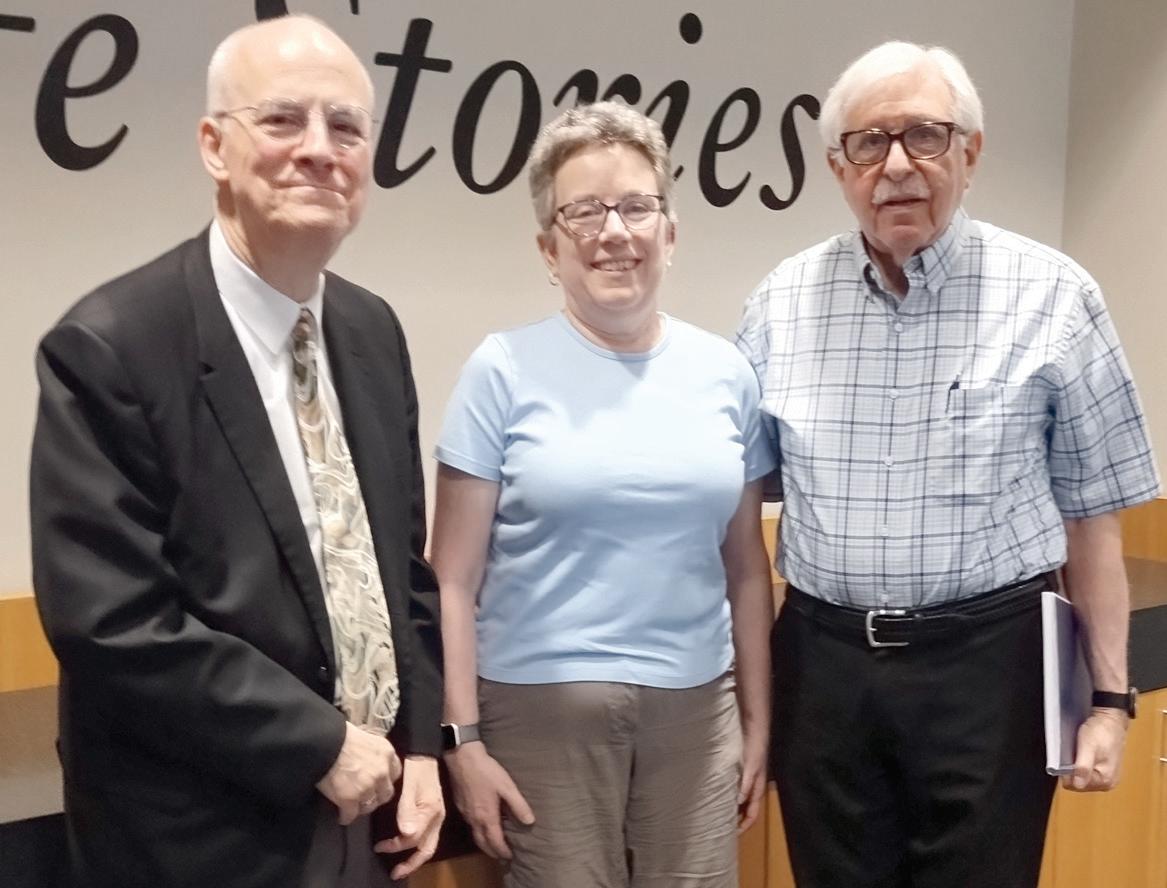
Genealogy is a lot more than a hobby, like coin or stamp collecting, said Curt Witcher, director of the library’s genealogy center.
“Finding your story is a lifetime adventure,” he said.
Context is also important, said Irv Adler, former president and co-founder of the local genealogy group.
“You can’t do genealogical analysis without history,” Adler said.
“Your family didn’t just exist in the middle of nowhere. Why were they there? Who were their neighbors? Where did they worship?” Witcher said.
A lot of the techniques used in Jewish genealogy are the same as those used in other genealogical searches, said Betsy

Thal Gephard, a violinist with the Fort Wayne Philharmonic and one of the founders of the local group.
But records of Jewish residents in the United States doesn’t go back as far because most Jewish immigrants arrived in the late 1800s and early 1900s. Records in the countries they came from tend not to be as extensive as those in the US.
There’s also a huge Holocaust component.
“There are a lot of people out there, like myself, who are trying to trace someone killed in the Holocaust, and commemorate them and remember them,” Gephard said. “Sometimes, that’s what gets people started. From generation to generation, it’s very much a Jewish thing that comes up. The concept of family and family history is built into the religion I grew up with.”
That spirit comes through at Jewish genealogy conferences, Witcher said.
“It’s more like a family reunion than other conferences,” he said.
Adler got started with a search for family members, who did not survive the Holocaust. He’s found a dozen, so far, who have been commemorated by stones on the Walk of Remembrance in Vienna, Austria.
“They are essentially grave markers, because they didn’t have graves,” Adler said.
Adler wrote a book about his quest, and Gephard is working on one, too.
Gephard’s father was Jewish. Her mother was not. She found that information about




her maternal relatives was much easier to come by.
“I wanted to know more about my dad’s family, my grandfather, and the traditions passed on through them,” Gephard said.
One of the newer tools in the field is genetic genealogy. CeCe Moore, the keynote speaker at
the conference, is famous for using the technique to help solve cold cases for a number of law enforcement agencies.
DNA analysis is also used in Jewish genealogy, but there are some challenges.
Most of the Jewish residents in the old countries lived in small, somewhat isolated
villages, Gephard noted. There were a lot of intermarriages among a small population, which makes unraveling the DNA much harder.
The conference is Aug. 10-14. For more information on the Jewish genealogy conference, visit neindianajgs.org or contact info@iajgs2025.org.
With the hot temperatures, Fort Wayne Animal Care and Control wants to remind pet owners to pay extra attention to their pets. Animals cannot regulate their body temperature like humans and the excessive heat can cause them to become ill very quickly. In some cases, exposure to high temperatures, high humidity and inadequate ventilation can cause death.
City ordinance requires animals to be brought into a temperature-controlled structure when temperatures are above 85 degrees or when a heat advisory has been issued by a local, state or national authority.
It’s important to understand that when it’s 70 degrees and comfortable outside, it only takes 10 minutes for the temperature inside a car to reach 90 degrees. Animal Control Officer, Jodi Baird, took a reading from
a vehicle in the parking lot at 10 a.m., and with outside temperatures at 73 degrees. The vehicle was parked for less than an hour and the window was left slightly open; the reading was at 94 degrees.
FWACC wants to remind everyone if you see something, say something; call the department right away if you see an animal in distress outdoors or inside a car, and stay on the scene until help arrives. Your actions could save a life.
Remember these tips to further protect your pets during the summer months:
When possible, bring pets into an air-conditioned area of your home; fans are helpful where air-conditioning is unavailable.
For animals outside, provide a sheltered place in the shade to rest and always have plenty of fresh water in containers that
The Audio Reading Service is for individuals of any age with visual, physical, learning, or language challenges to reading printed materials. This is a free service of the Allen County Public Library.
CONTACT US: AUDIOREADER@ACPL.INFO (260)




cannot be tipped and spilled. Change drinking water often. Dirty water breeds bacteria and attracts flies and mosquitoes. The larvae from mosquitoes can cause heartworm in dogs and cats.
Take measures to prevent fly bites, fleas, and ticks.
Schedule walks with your dog during the early morning or late evening, taking special care with older dogs, young puppies, and dogs with short noses. When temperatures are above 77 degrees, the asphalt can be hot enough to cause serious injuries to your pet’s paws in minutes.
Parents are urged not to allow children to exercise a dog while the child is riding a bicycle or skating. The dog may get overheated and children won’t know when to stop.
If an animal is panting excessively, vomiting, or having difficulty walking in extreme heat, it may be suffering from heat stroke. If you suspect an animal is in trouble, move the animal to a cool place out of the direct sun and use cool water to lower its body temperature. Contact a veterinarian right away.
Report animals in distress to Animal Care and Control immediately by calling (260) 427-1244. Any animal that is found by the shelter to be left in conditions that pose an immediate health hazard to the animal will be taken directly to Animal Care and Control for its safety. For more information and tips to keep pets safe, visit fwacc.org.
Janis Ian
At 74, Janis Ian has built a career on just two hit songs whose inspirations had come about under the most ordinary of circumstances.
Born

A Boomer Blast To The Past
By RANDAL C. HILL
Janis Eddy Fink in New Jersey, Ian mastered the acoustic guitar as a young girl and began pursuing dreams of becoming a folk singer. At age 12, she composed her first tune, the haunting “Hair of Spun Gold.”
A short time later, while riding her middle-school bus, Ian noticed a young interracial couple. The result of that
observation led to the creation of her debut recording of the controversial “Society’s Child (Baby I’ve Been Thinking).”
The 1960s was bringing numerous changes to American society, and Ian’s 1967 tune about an interracial teen romance caused an upheaval in certain circles. She received hate mail and death threats, as did some disc jockeys who dared to spin her hit Verve Records disc on their turntables.
Ian’s heady days of success proved short-lived, though. The next several years saw her battling depression, substance abuse, and a manager who ran off with all her earnings. But along the way she continued to release quality works of brutal honesty, soldiering on before appreciative but dwindling concert audiences. Discouraged at times, she briefly contemplated becoming a veterinarian.
By the mid-1970s, Ian was living with her mother and writing a song a day, all to no avail. It was then that another ordinary-seeming moment changed her life.
“One day, I was sitting at the dining table, reading the New York Times magazine,” Ian recalled later. “There was an article about a woman who had thought her life would change and be perfect when she had her debutante ball. The first line was ‘I learned the truth at 18.’ ”
There it was — the idea for her next composition, and one that would resuscitate her faltering career.
During high school, she may have been the hip artist heard on Top 40 radio, but as a student she never experienced a homecoming or a prom or a party or even a date to the movies.

Ian spent three months writing “At Seventeen.” (The phrase flowed better than “At Eighteen.”)
“I learned the truth at 17
“That love was meant for beauty queens
“And high-school girls with clear-skinned smiles
“Who married young and then retired
“The Valentines I never knew
“The Friday night charades of youth
“Were spent on one more beautiful
“At 17 I learned the truth
“It was long and far away
“The world was younger than today
“When dreams were all they
Continued on page 12
Adams Heritage

12011 Whittern Road, Monroeville, IN 46773 (260) 623-6440 • www.adamsheritage.org
Rehabilitation Unit, Skilled Licensed Nursing, Semi-Skilled Nursing Intermediate Care, Therapies: Speech, Occupational, Physical, Respiratory, Outpatient Therapy, Long Term Care, Temporary Care, Private/Semi-Private Rooms, Pet Visitation Allowed, Hospice Care. Medicare and/or Medicaid.
Adams Woodcrest

1300 Mercer Avenue, Decatur, IN 46733 (260) 724-3311 • www.adamswoodcrest.org
Assisted Living, Rehabilitation Unit, Alzheimer’s Unit, Skilled Licensed Nursing, Semi-Skilled Nursing, Intermediate Care, Therapies: Speech, Occupational, Physical, Respiratory, Long Term Care, Temporary Care, Private/Semi-Private Rooms, Pet Visitation Allowed, Hospice Care, Medicare and/or Medicaid.

300 East Washington Blvd., Fort Wayne, IN 46802 (260) 422-5511 • jmull@tgmsi.com
Assisted Living; 50+ Community; Pets Allowed; Medicaid Waiver; Private Rooms; Weekly Events; RCAP Program; Conveniently Located; 24/7 Nursing Staff; On-site Therapy; Downtown Lifestyle; Concierge Service; Smoking Area; Restaurant Style Dining

1649 Spy Run Avenue, Fort Wayne, IN 46805 (260) 422-8520 • www.lcca.com
Rehabilitation Unit, Alzheimer’s Unit, Skilled-Licensed Nursing Or Intermediate Care, Therapies: Speech-Occupational-Physical, Long Term Care, Respite Care, Wound Care, Outpatient Therapy, Medical Transportation, Medicare/Medicaid, Pet Visitation Allowed


702 Sawyer Rd., Kendallville, IN 46755 (260) 347-3333 • www.orchardpointehc.com
Offering Memory Care, Assisted & Independent Living Apartments and Skilled Services. We’ll meet you with the appropriate level of care wherever you are — whether you’re fully independent or looking for additional assistance. Call us.

14409 Sunrise Court, Leo, IN 46765 (260) 627-2191 • www.thecedarsrc.com
Assisted Living, Skilled Licensed Nursing, Semi-Skilled Nursing Or Intermediate Care, Therapies: Speech-Occupational-RespiratoryPhysical, Long Term Care, Temporary Care, Private/Semi-Private Rooms, Pet Visitation Allowed, Hospice Care, Medicare and/or Medicaid
The Village at Anthony Boulevard

6701 S. Anthony Blvd., Fort Wayne, IN 46816 (260) 447-1591 • www.ABetterWayofLiving.org
Assisted Living, Rehab Unit, Alzheimer’s Unit, Skilled Licensed Nursing, Intermediate Care, Therapies: Speech, Occupational, Respiratory, Physical, Long Term Care, Temporary Care, Private/Semi-Private Rooms, Pet Visitation Allowed, Hospice Care, Medicare and/or Medicaid, Outpatient Therapy of Fort Wayne
Deficiency Free Surveys
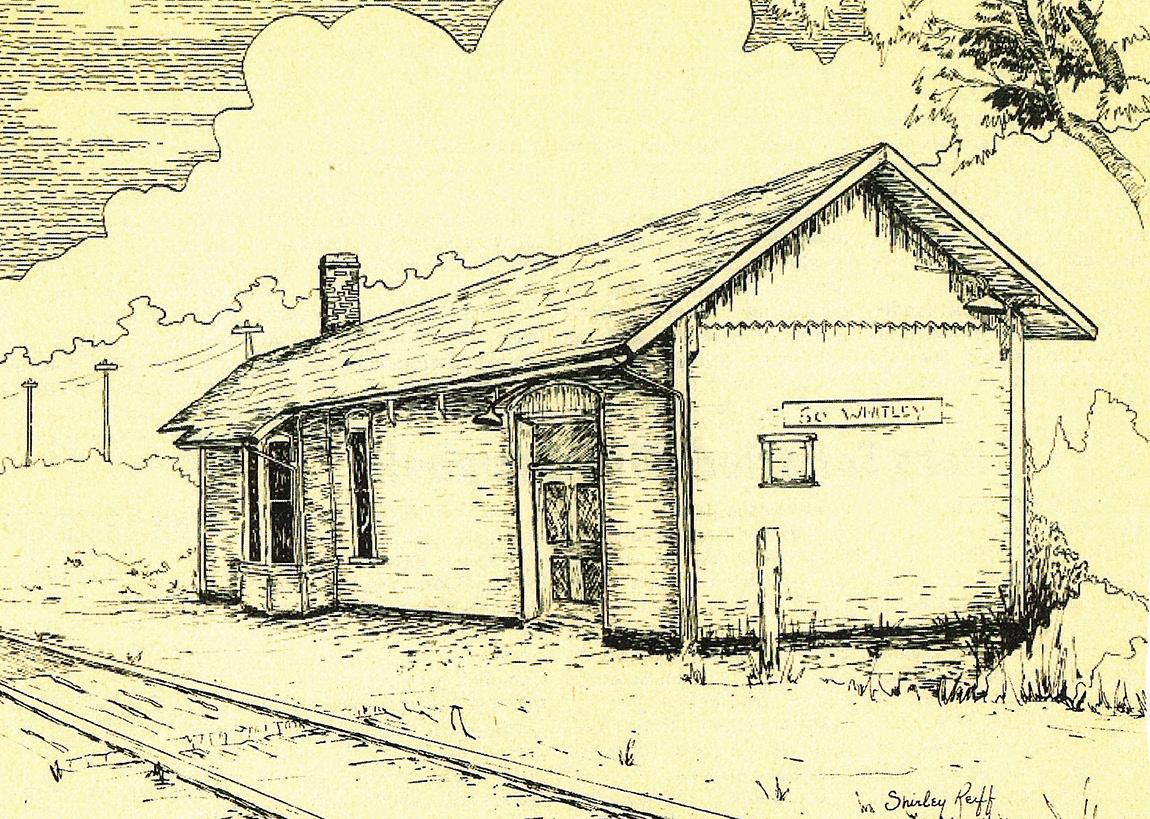
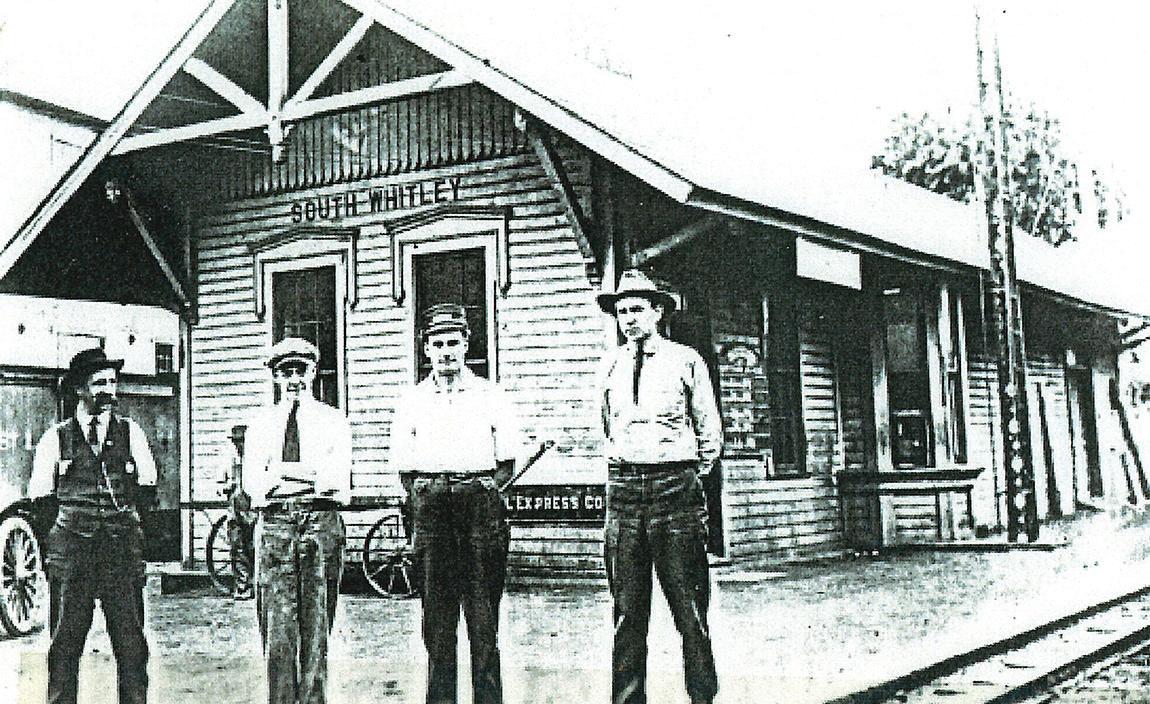
A wooden train depot once nestled between Calhoun and State streets marked South Whitley’s connection to the wider world in the late 19th century. When the New York, Chicago and St. Louis Railway Company, commonly known as the Nickel Plate Road, announced plans in 1881 to construct an east-west rail line through the town, it signaled a new era for residents.
The line, stretching from New York to Missouri, brought the promise of economic growth and
NICKEL PLATE DEPOT ON PAPER A sketch of the depot created by Shirley Reiff that was included in a calendar.
new opportunities, providing a link for both passengers and freight across the mid-central United States.
In South Whitley, the modest depot featured a passenger waiting area, ticket office, administrative space and a freight room. Though simple in design, the building became a community hub.
Residents boarded trains for shopping trips to Fort Wayne or Chicago. Businessmen traveled to St. Louis and beyond. Fam-

ADAMS WOODCREST
1300 Mercer Avenue
Decatur, IN 46733
Phone: (260) 724-3311
www.adamswoodcrest.org
Independent Living, Cottages, Villas, Apartments, Residential & Assisted Living, Short Term Rehab, Healthcare & Dementia Care, Skilled & Intermediate, Long Term Nursing Care, Life Enrichment Activities, Fitness Center Membership

14409 Sunrise Court Leo, IN 46765
Phone: (260) 422-8520
www.lifecarecenteroffortwaynein.com
Newly remodeled facility, top-of-the-line service for rehab patients. Rapid rehab program, separate wing with 30 rehab suites — private single bed for short-term patients. Medicare, Medicaid & insurances accepted.
SOUTH WHITLEY’S OLD STATION From left are Ed Einsley, Lloyd Walpole, George Talbert and Walter McConnell standing outside the depot in 1916. Photos from South Whitley Public Library.
ilies used the rail line to visit distant relatives or pursue new beginnings. The depot was also a backdrop for emotional farewells and reunions, as young men and women departed for military service and later returned home.
Passenger service at the South Whitley depot ended in 1963. The rail line, now operated by Norfolk Southern, continued to support freight traffic, with trains rumbling past the silent station that had once served generations of travelers.
In 1996, Norfolk Southern demolished the depot, leaving behind only memories of the era when iron rails brought the world to South Whitley’s doorstep.

CARTER HEARING CLINICS 1335 Getz Road, Fort Wayne, IN 46804 NORTHEAST: 3136 Goeglein Rd., Suite A Phone: (260) 436-6400 or (877) 436-6401
www.carterhearingclinics.com
• Creating A Higher Standard of Care
gave for free
Continued from page 11 on the first “Saturday Night Live.”
“To ugly duckling girls like me.”
In time, her Columbia Records single became a million-seller, as did the album from which it came: “Between the Lines.” Later in 1975, Janis performed her anthem of angst
• Board certified audiologists by the American Board of Audiology serving Fort Wayne since 1967.
• Offices located in Fort Wayne, Auburn and Angola. PROVIDING
• Hearing Evaluations, Hearing Aids, Assistive Listening Devices and Auditory Training
• FREE TRIAL HEARING
Eventually, she received a Grammy award for Best Female Pop Vocal Performance for her iconic offering.
Thought: One must consider the idea that ugly ducklings become beautiful swans, so there is potentially hope for all of us.

GOLDEN YEARS HOMESTEAD
3136 Goeglein Road
Fort Wayne, IN 46815
Phone: (260) 749-9655
Greencroft.org/GoldenYears
Golden Years provides a full continuum of care — assisted living, rehabilitation, long-term care and memory care with all private rooms.

INTEGRITY HOME CARE, LLC
Fort Wayne, IN
Phone: (260) 452-9691
ajones@integrityhhc.com
“Stay Home With Integrity.” Providing assistance to those in need in the comfort of their own home.

HOMEBOUND MEALS PO Box 10179
Fort Wayne, IN 46850
Phone: (260) 422-3296
www.homeboundmealsfw.org
Homebound Meals, Inc. volunteers deliver nutritious, medically tailored meals to seniors and homebound individuals in Fort Wayne and surrounding areas.

BRIGHTSTAR 333 E. Washington Blvd.
Fort Wayne, IN 46802
Phone: (260) 918-0933
www.brightstarcare.com/fort-wayne
Enthusiastic, kind personal level client care connection, 24/7 support enables clients to check on loved ones. Rigorous caregiver screen/background check ensures optimal security & family peace of mind.
The year was 1971.
By RANDAL C. HILL
The setting was 12900 Mulholland Drive in Beverly Hills. Inside the spacious abode lived actor Marlon Brando and his secretary/assistant Alice Marchak.
At the time, Brando was deep in debt, overweight, addicted to Valium, looking at his third divorce, and determined never to act again.
No matter. Nobody in Tinseltown was looking to hire him anyway. At one time the well-respected darling of stage and screen, Brando had earned an Oscar for his performance in
1954’s “On the Waterfront.” But the Omaha-born actor hadn’t been in a hit movie since the late 50s, and over the years he had become anathema to Hollywood’s moguls because of his tyrannical and unreliable behavior.
In 1969, crime writer Mario Puzo had published the best-selling Mafia-themed book “The Godfather.” Now, two years later, Paramount Pictures announced its production as a feature film.
Puzo told Paramount that he had only Marlon Brando in mind as Vito Corleone, the bigger-than-life don of a powerful Mafia clan. Paramount’s honchos harrumphed that there was no way they would consider using the washed-up pariah, leaning instead toward either Ernest Borgnine or Charles Bronson.
Puzo penned a note to the iconic actor, which read, “Dear Mr. Brando. I wrote a book called “The Godfather,” which has had some success, and I think you’re the only actor who can play the Godfather with that quiet force and irony the part requires.”
When the note arrived, Marchak put it on Marlon’s bedside table without comment. Brando soon phoned Puzo to thank him but expressed no interest in the role.
Marchak knew it would be a struggle to get Brando back in the game — or if anybody would even want him if he did. She subscribed to the Hollywood Reporter to track potential roles for her boss. Rather than express gratitude, though, the touchy thespian flew into a rage and roared, “This is my house, and I will not have any-
Continued on page 14

HUMANE FORT WAYNE IN-HOME SERVICES
901 Leesburg Road
Fort Wayne, IN 46808
Phone: (260) 744-0454
www.humanefortwayne.org
This FREE program helps seniors care for their pets. Services include grooming, walking, waste clean-up, wellness checks, transportation and more.

AT HOME HEALERS HOMECARE LLC
7230 Engle Road, Suite 205
Fort Wayne, IN 46804
Phone: (260) 702-0897
care@athomehealershc.com
www.athomehealershc.com
Personalized centered care: post surgery, Alzheimers & Dementia specialized support, Veteran & personal assistance (bathing, dressing, grooming), light housekeeping, daily/weekly meal prep, appointment transportation. No minimum hourly contract, 24/HR care, two nurse owned & operated, FREE in-home assessment!


COMFORT KEEPERS
3182 Mallard Cove Lane
Fort Wayne, IN 46804
Phone: (260) 484-5858
MollyTritch@comfortkeepers.com
Comfort Keepers provides award winning in-home care for seniors and other adults in need of assistance with daily activities.

LIFTING HEARTS HOME CARE
Fort Wayne, IN 46819 (260) 705-4115
www.liftinghearts.live
Our mission is simple: to provide compassionate, personalized care that enables seniors and individuals to live independently at home. Through a patient-centered approach and tailored services, we ensure the unique needs of each client are met with dignity and respect.

Accepted “Personalized Care”

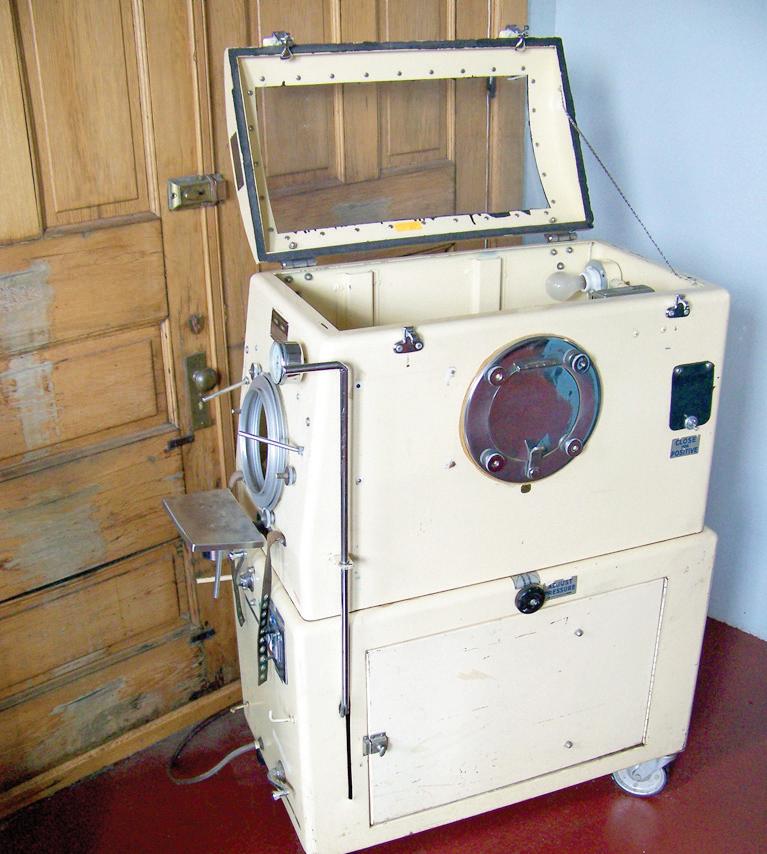
CLINICAL CHEMICAL LAB Busiest of the four labs in the building was the Clinical Chemical Laboratory, where blood samples from newly-admitted patients were examined and analyzed. The room contains a hand-cranked centrifuge.
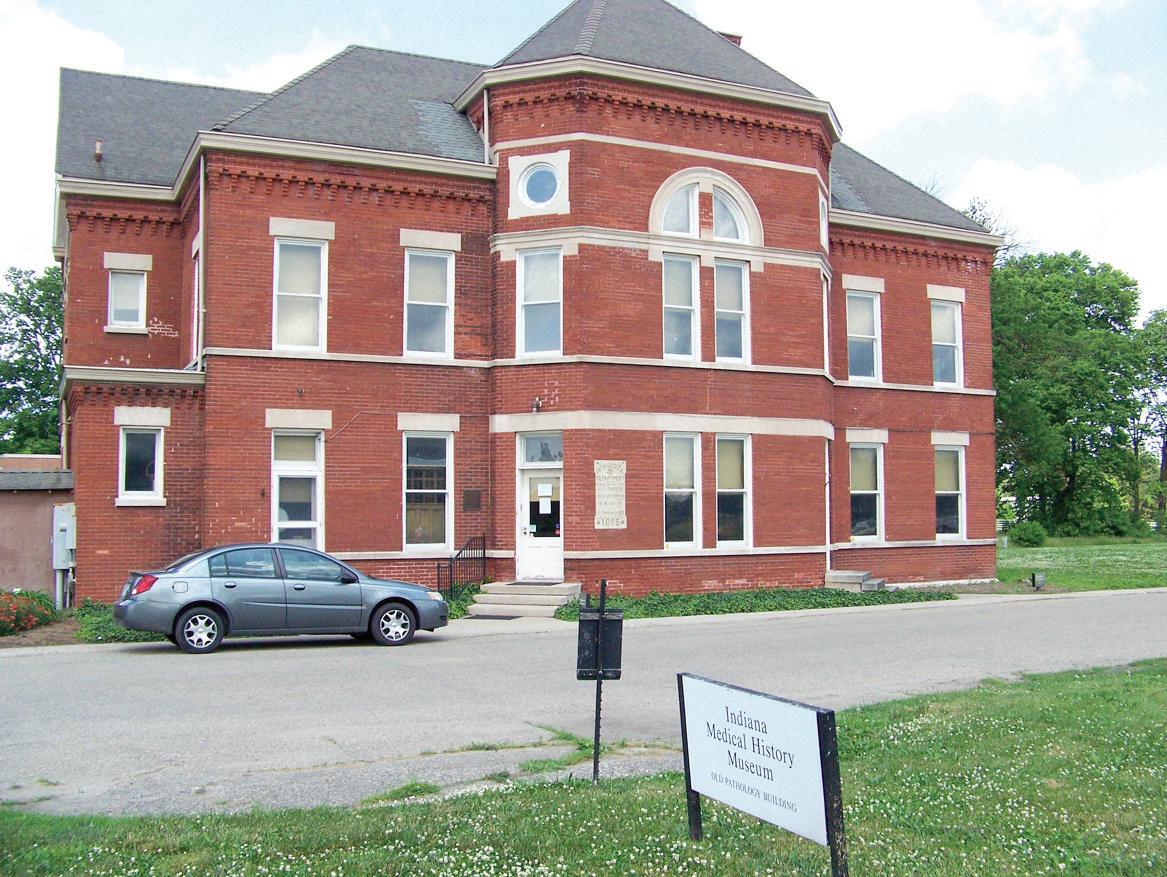
PATHOLOGY LABORATORY Original plans for the lab building called for a four-room, single-story structure. The completed structure is this Victorian-style building with 19 rooms. It is listed on the National Register of Historic Places.
Text and Photos
By ROD KING
In order to fully experience the growth of modern medicine over the past century, you have to take a step back in time to the late 1800s and visit the Indiana Medical History Museum in Indianapolis. It’s located in the old 19-room Pathology Building, which was constructed in 1896 GREAT ESCAPES
Motorcoach Tours
1404 E. Lake Bluff Dr. Kendallville, IN 46755
SEPT 2-13: SOUTHWEST
CANYONLANDS Utah & Arizona: Zion, Bryce, Grand Canyons, Arches, Monument Valley Jeep Tour, Colorado River Light Show Cruise, Capitol Reef Nat. Park, Lake Powell Cruise, Indian Pueblo Culture Center, National Cowboy Museum & More
SEPT 24-25: TWO DAY MYSTERY ??
SEPT. 29-OCT 2: AGAWA CANYON TRAIN, Canada Passport Required. Soo Locks Boat Ride, A Day Exploring Sault Ste Marie, Full Day Train Adventure w/Picnic Lunch in the Canyon. Very Popular.
OCT 5-12: NEW ENGLAND FALL ADVENTURE in Vermont & New Hampshire Hildene-Lincoln Home, Lake Winnipesaukee Boat Cruise, Castle in the Clouds, Conway Scenic Notch Train Ride, VT Statehouse, Morse Sugar Farm, Morgan Horse Farm, Ben & Jerry Factory Tour, VT Country Store, Yankee Candle & Much More
Details: www.s-stravel.com Tour Calendar: Call 888-262-4423
on the grounds of Central State Hospital for the Insane.
The Victorian-style structure is the oldest free-standing pathology facility in the country
and is listed on the National Register of Historic Places. It contains three clinical laboratories and a photography laboratory to support study and
research on physical causes of mental disease.
Perhaps the most striking feature of the building is its 100-seat amphitheater. It

TEACHING AMHPITHEATER The steeply-banked teaching amphitheater in the Pathology Building is where medical students and physicians learned about mental and nervous system disorders, witnessed autopsies and viewed behavior of patients from Central State Hospital for the Insane.

Bill Walls and Michelle Chapman are pleased to announce Nomadic Excursions, a Motorcoach group travel company.
Moving moments to Memories disrupting the aging process with shared experiences of group travel.
Come see us at:
Senior Information Fair on Sept. 18
Huntington Travel Show on Sept. 24
Christmas Themed Trips
• Branson, MO – November 3-8
• Myrtle Beach, SC - November 9-15
• Pigeon Forge, TN - December 9-11
Details available on our website www.nomadicbustrips.com
Bill4BusTravel@gmail.com (260) 573-0201
BUCKET LIST TOURS
Huntington Travel Show September 24th 10:30 AM

Huntington Historical Museum
315 Court Street (next to Pizza Junction) Pam Crone, Host Bucket List Tours ~Featured Guests ~ Nomadic Excursions
Bill Walls, Michelle Chapman Introducing 2026 Motorcoach Tours
Mayflower Cruises & Tours
Becky from Mayflower Introducing Cruises & Tours Opportunities
To Receive Flyers And Trip Information Email or Call Bucket List Tours: pamkaycrone@aol.com, 260-224-2339
Nomadic Excursions Bill4BusTravel@gmail.com 260-385-4833 or 260-431-7491
hosted medical students and physicians over the decades for lectures on mental and nervous disorders. Visitors can experience what it was like to be a medical student a century ago and observe cadavers that were presented as part of autopsy instruction.
Until the construction of this facility, there was no dedicated Continued on page 15
Continued from page 13 Alice never
one bringing movie magazines into it!”
Marchak drew a deep breath and persevered in silence. Puzo mailed Brando a copy of “The Godfather,” hoping to convince Brando to take the role. The response: “I’m not a Mafia godfather. I’m not going to glorify the Mafia.” But when Marchak read the book, she later recalled, “I just knew this was for Marlon.”
Marchak’s breakthrough arrived when she told Brando that Paramount was now considering Laurence Olivier to portray Vito. Brando’s reaction was immediate: “He can’t play a Mafia don!” Suddenly, for whatever reason, Brando found inspiration in the burly Corleone character.
Brando darkened his blonde locks with shoe polish, added a mustache with the same polish, and stuffed tissues in his cheeks before assuming a speaking voice of mumbled gravel.
When Coppola insisted that Brando deserved the film’s plum role, Paramount folks reluctantly signed Brando for a relatively low salary.
“The Godfather” became one of the biggest movie hits ever, and Marlon Brando won his second Best Actor Academy Award (which, always the maverick, he refused).
Congratulations to Alice Marchak!
Continued from page 14
laboratory for pathologists. They worked in one or two rooms in one of the hospital’s wards. In fact, there was only one hospital in the country with a dedicated lab situated in a stand-alone building — Bellevue Hospital in New York City.
With the advent of germ theory in the 1860s and other scientific discoveries, the medical profession urged mental hospitals to build laboratories in which to study causes of mental illness.
Dr. George Edenharter, superintendent of the hospital, dreamed of a building specifically for laboratory sciences and medical education. The original four-room, one-story plan grew into the structure that was finally built for a cost of $15,000. It included electric lighting, telephone, hot and cold running water and a library with more than 500 volumes. Amazingly, he was able to get it built without receiving any state money. He used money from the 1895/96 operating and maintenance funds.
Despite the fact that it was hailed as the best state-of-theart laboratory in the country, getting maintenance funds from the Indiana Legislature was a continuing battle.
In the autopsy room, visitors learn that the legislature passed a law that all wards of the state were to be autopsied,
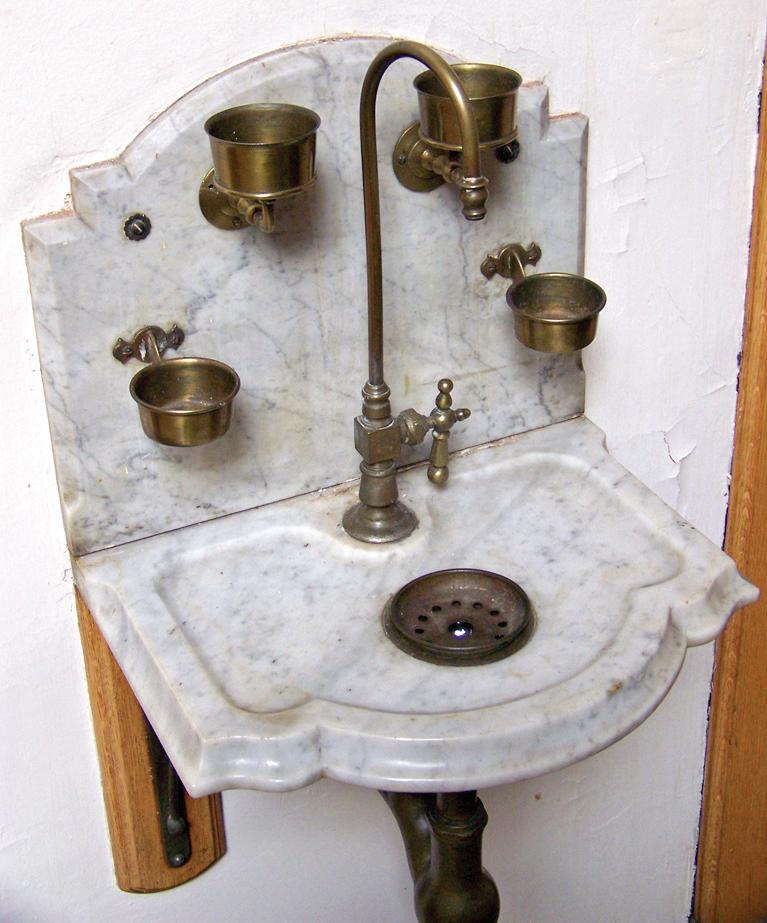
DRINKING FOUNTAIN The state-of-the-art Pathology Laboratory had electric lights, hot and cold running water and a library of 500 volumes. The building cost $15,000 and was built in 1896 without receiving any money from the Indiana State Legislature.
mainly for teaching purposes. Autopsies were done then much as they are today. Recording of the procedure was done through a listening tube in a room upstairs. Blood and body fluids drained directly into a sewer and into the White River. Autopsies for the purpose of
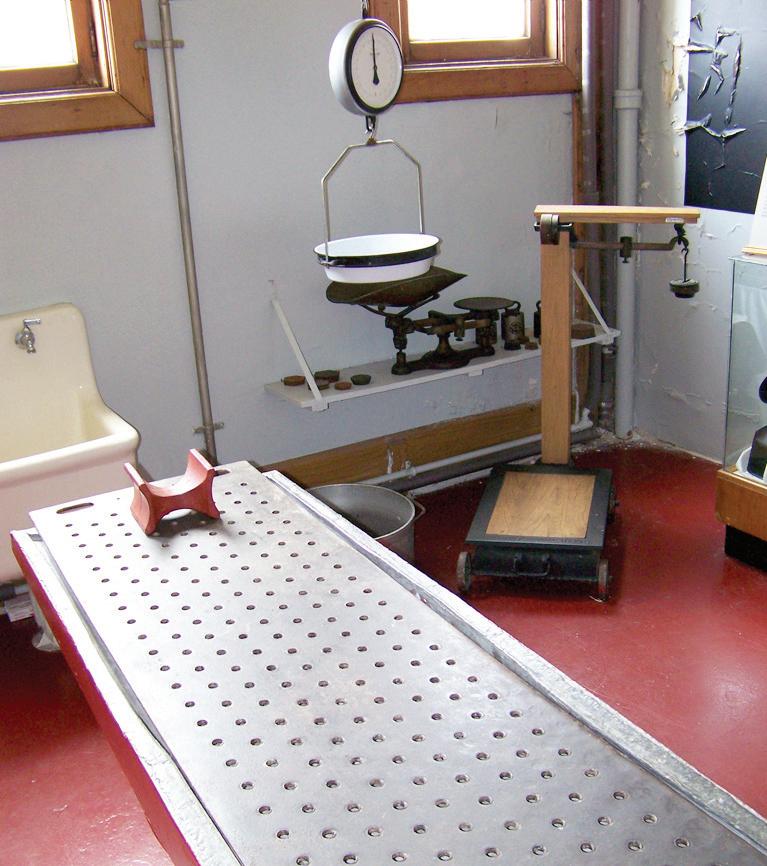
AUTOPSY TABLE — Autopsies were done at the turn of the century much as they are today. Recording of the procedure was done through a listening tube in a room upstairs. In order to get patient’s families to allow an autopsy, Central State Hospital offered free funerals. Blood and body fluids drained directly into a sewer and into the White River.
research were discontinued in 1947.
Probably the busiest room in the building was the clinical chemical lab. When a patient was admitted to the hospital, this is where all samples were examined. The room includes a mechanical centrifuge, which
had to be hand cranked. An electrically-operated version was added in 1931.
Visitors who step back in time at the Indiana Medical History Museum, located at 3270 Kirkbride Way, tour in comfort because air conditioning was added in 1989. The laboratories closed in 1969 and Central State Hospital closed in 1994.
For more information, visit imhm.org. Admission is $10 for adults, $9 for seniors and $5 for youths under 18. Hours are from 10 a.m. to 4 p.m. Wednesday through Saturday.
By CECIL SCAGLIONE
Mature Life Features
You may feel complimented if someone asks you to become the executor of their estate. The fact that a family member or friend has that much trust in you may make your chest swell somewhat.
But before you accept, be aware that what ensues can give you a lot of headaches and heart aches.
Being an executor is a job. It requires attention to financial detail and tactful diplomacy in dealing with heirs and wannabe heirs.
Not too long ago, a family member took it upon themselves to guide a relative through the final days of their lives and agreed to sign on as executor and distribute the dying persons assets after calling in an attorney to get everything down in writing.
It wasn’t a massive estate and it was divided equally among three beneficiaries. However, one of them thought they should have received more and had been cheated out of their inheritance by the executor. They hauled in an attorney of their own and made life miserable for the executor while attorneys’ fees chipped away at the remainder of the estate.
Should you be asked or if you see it as your responsibility to
become an executor, discuss the situation with all the members of your family. Go over the challenges — selling or not selling the family home, conducting the burial services according to the dying’s wishes, going through all the “stuff” left by the deceased, keeping track of all income accounts and paying all debts and a slew of other duties.
Should you decide to accept the responsibility, pull an attorney into the picture. Have your “clients” draw up a will and any other estate plans

that will expedite and simplify matters when they pass away, leaving you in charge of their earthly goods. You can also begin working with an estate planner, tax preparer and accountant if you perceive such needs as you delve deeper into the person’s finances.
Draw up an inventory of all assets and keep track of bank, portfolio, pension and credit-card accounts, tax returns, and insurance policies. You have to treat his or her property as if it were your own and make

sure all debts, mortgages and premiums are paid up.
When they die, make sure you get several copies of death certificates from the funeral home. File one copy and a will at the county probate court to get a letter recognizing you legally as the executor of the dead person’s estate.
As you distribute all the dead person’s finances, assets, goods and family mementos, get a signed and dated release from each recipient describing exactly what they received. This will help protect you from any arguments, litigation or lawsuits that may be in the works.
Mature Life Features Copyright 2025
March 3-9, 2026 New Orleans, “The Big Easy”
March 24-26, 2026 Come Sail Away A Cruise On Land!
April 7-11, 2026 Rock ‘N Roll Branson
April 29-May 6, 2026 ................................. Southern Charm Savannah & Charleston
June 8-13, 2026 .............. Patriots, Plantations & Presidents Monticello, Williamsburg, Jamestown, Yorktown
June 22-25, 2026 ..................... Mississippi Riverboat Cruise
July 15-16, 2026 ....... Celebrate America ... Proud To Be An American ... 2 Shows and Other Attractions
August 4-7 2026 Michigan is for Lighthouse Lovers Steve and Sheila Magsamen, Tour Managers Decatur & Fort Wayne Departures 260-432-8488 www.memoriesinmotion.net
By MONA HARTER District Manager, South Bend Social Security Office
Social Security imposter scams continue to be widespread across the United States. Scammers use tactics to deceive you into providing sensitive information or money. If you receive a suspicious letter, text, email, or call, do not respond.
We will never:
• Text or email images of an employee’s official government identification.
• Suspend your Social Security number.
Threaten you with arrest or other legal action unless you immediately pay a fine or fee.
• Require payment by retail
gift card, wire transfer, internet currency, or cash by mail.
Promise a benefit increase or other assistance in exchange for payment.
Mail or email “official” letters or reports containing your personal information.
We only send text messages in limited situations, including:
• When you have subscribed to receive updates and notifications by text.
• As part of our enhanced security when accessing your personal my Social Security account.
If you owe money to us, we will mail you a letter with payment options and appeal rights. Social Security employees do contact the public by telephone for business purposes. Ordi-
narily, the agency calls people who have recently applied for a Social Security benefit, are already receiving payments and require an update to their record or have requested a phone call from the agency.
If there is a problem with a person’s Social Security number or record, Social Security will typically mail a letter.
We encourage you to report suspected Social Security imposter scams — and other Social Security fraud — to the OIG’s website at oig.ssa. gov/report. You can find more information about scams at ssa.gov/scam. Please share this information with your friends, family, and colleagues to help spread awareness about Social Security imposter scams.
By KURT NESS Broker/Co-Owner, Auctioneer Ness Bros. Realtors and Auctioneers
We worked with a woman, Betty, who suffered from the mental health disorder called hoarding. The situation had become so extreme the home was inaccessible, to the point that there was a wall of trash piled up so high that the front door could not be completely opened.

Her children helped her relocate to a senior community but didn’t know how to handle the family home in its current condition and they hadn’t been able to access their childhood bedrooms for over 20 years since moving out. The process was too emotional for her to be onsite during the clearing process, so we got a list of items with their last known location and were able to rediscover sen-
timental and valuable items. We kept Betty and her children informed and updated throughout the entire process, including sending before and after pictures after each shift to help ease the anxiety. By the end of the process, 11, 20 cubic yard dumpsters of trash were taken out of the home. Our client was very happy, and the children were amazed when they came back to visit the home. We were able to remove all the trash, sort through the items of value for the family to review, donate what the family didn’t want, and sell the real estate for the client.







SOCIAL SECURITY SCAM AWARENESS Social Security advises if you receive a suspicious letter, text, email or call, do not respond. To learn more about scams visit ssa.gov/scam.
By CECIL SCAGLIONE Mature Life Features
Caregiving means more than doing the laundry, picking up groceries, changing dressings, and a multiplicity of other physical chores facing folks in need.
It also calls for quiet and understanding emotional support that few of us are even aware is needed. Yelling at someone who’s fallen because they didn’t wait for you to help them to the bathroom only makes matters worse.
A good starting point to avoid these deeply psychological errors is to ask yourself how you might be like to be treated if you were the other person.
Contact our Senior Relocation team to get help and answers to your questions on right-sizing; we’re here to help you through the difficult family situations.
Reach out to our relocation specialists at (260) 459-3911 in Fort Wayne or (260) 3563911 in Huntington. You can also contact us on our website, NessBros.com, or stop in one of our offices, located at 3344 Mallard Cove Lane, Fort Wayne, or 519 N. Jefferson St., Huntington.
In the incident cited above, the individual probably thought they could get to the bathroom without bothering you. It’s up to you to explain that they aren’t as able and capable as they once were and to let you help them out. And to let you know if there are any problems or concerns they haven’t told you about.
Then listen. Don’t tell them how they should act or feel. In many cases, all the person wants is to be listened to.
Sometimes they have the answer. A physically handicapped person may complain about sit-
ting in the house all the time and wishes they could get out for a walk or a ride or a shopping trip. You can offer any all of these and work with them on when and where they would like to go.
An elderly person might feel isolated and lonely and miss seeing old friends or the grandchildren. You can arrange visits with the folks they’d like to see. Sometimes it helps to offer a choice: “Would you like to visit them or have them come and see you?”
As a caregiver, you’ll probably do a lot of checking in by phone. These contacts should not be treated the same as person-to-person talks. A silence at the other end can mean the person isn’t comfortable being unable to talk to you face-to-face. Today’s mobile phones help but they aren’t the same as being in touching distance.
Arguing with them or agreeing with them isn’t the answer. Being supportive — being there when they’d like to talk to someone — covers so much of their emotionally troubled ground.
You can’t solve their problems for them. You can help them solve their own problems themselves by being available and by listening.
Mature Life Features Copyright 2025
By JIM CARPENTER Guest Writer
I chanced upon an old, old memory. And gave it some research in my mind. It was a bit of a surprise to me. It seems it had aged like fine wine. Not all memories are still “sippable” After the passage of so many years. And of course, it’s hard to get over, events that might have ended in tears. But I guess this memory stood the test.
I brushed it off so it would shine. And added it to the others. From those days of roses and wine. Events are real in the present. I suppose memories are real forever. But one is in touch and one is in thought. We must have one to have the other. I think at the least I feel content. With the very real touches I’ve had. When my season is over and I move on, I don’t think it should be sad.