In decades past, dancing was an important social activity. According to the Library of Congress, a dance was an opportunity not only for people to show off their moves, but to demonstrate how well-versed they were in fashion and etiquette. Manuals were published with both dance instructions and rules for proper behavior at these events where waltzes and quadrilles were in style. In the post-World War I era, people fox trotted or Lindy-hopped in nightclubs and school gyms rather than ballrooms.
love of dance itself. The learning process often takes place in a dedicated school.
Establishments, like Debra Collier’s School of Dance in Warsaw, usually focus on performance dance, such as ballet, tap, jazz, hip hop and modern dance. Classes range all the way from toddler to adult.
Collier, who has been teaching dance since 1977, said students often come to lessons for “creative expression, joy, camaraderie, fun, making new friends, acceptance — many of our students refer to the dance school as their second home — and connection.”
At Lee Anne Stewart’s Dance School in Syracuse, a dance production takes place every June, though the students aren’t required to participate.
“Some really like to perform, some just like to learn,” Stewart said.
“From my point of view, most of the dancers that come here are not going to be professional dancers, but they’re all going to have to be in front of a group sometime. ... They get use to being in front of people.”
Stewart noted some styles have changed over the years since she has been teaching dance.
“Tap has even changed some. It used to be the Sammy Davis Jr. style and that sort of thing, now there’s more of a street style of tap dancing. And
just been created when Stewart began teaching in 1973.
While ballet is still considered an important style and a foundational technique for learning more, there is a greater emphasis now on modern dance and lyrical dance, which is set to music with words.
“The children like that better than they do the strict ballet; most children do,” Stewart said.
Outside the performance sphere, social dancing is still alive in some forms.
Matt Smith has been ballroom dancing for about 20 years and now gives lessons out of Art of Dance, Warsaw.
“Competition is fun ... but I also find most people don’t really want to spend the money on it or put that much time and work into it. I think we’re missing a big part of the art when we’ve taken social dance out of our culture,” Smith said.
Smith focuses on ballroom, Latin and swing styles, which are typically partner dances, but teaches group line dances as well.
He describes social dancing as the ability to “go anywhere and dance.” Weddings are a prime example of when one might need to dance with others.
“That’s what we focus on; being able to go out and feel comfortable and not feel secluded at my table because I don’t know how to do anything. But enjoying each other through that expression is really what social (dancing) is about,” he explained.
One of Smith’s goals is to organize balls for those, who want to dance in a more formal setting.
“We don’t really do it anymore, but I think people really enjoy it,” he said of the practice.
It can be intimidating for new dancers to get started, particularly adults who feel they have started too late or they simply “can’t dance.”
“Many people just lack con-
fidence,” Collier said in response. “My advice is simple: take the fist step.”
“People think they can’t because no one’s showed them that they could,” Smith remarked. “It’s a very personal thing to step through that door for the first time. It shows strength.”
TWO TO TANGO — Cindy Kinsey and Brandon Miller cross the floor in a tango dance at Art of Dance in Warsaw. Photo by Lilli Dwyer.
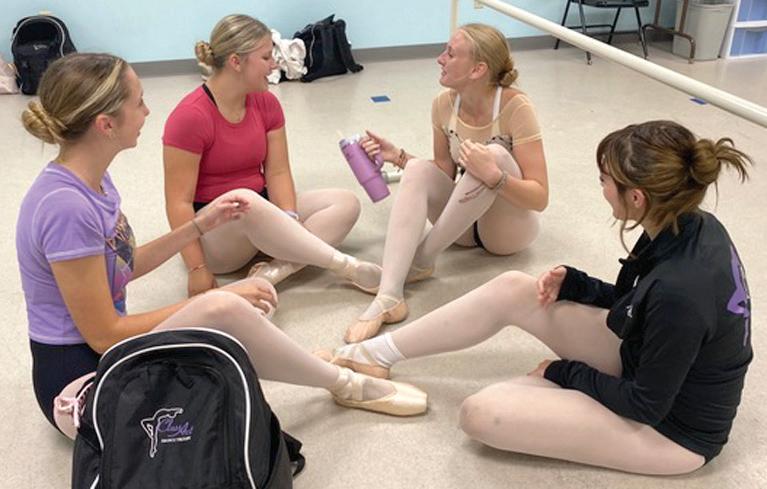
CIRCLE OF FRIENDS — From left are Mya Heaton, Makenna Miller, Alexis Reece and Annabel Clark chatting during a ballet class at Debra Collier’s School of Dance. Photo provided by Debra Collier.
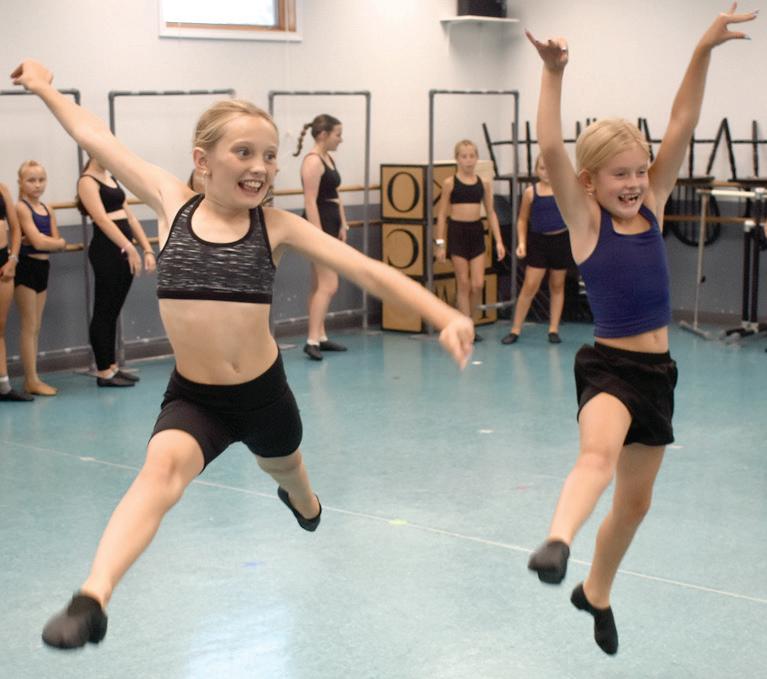
TAKE THE LEAP — Lily Schumacher, left, and Elle Wood practice their chassé moves at Lee Anne Stewart’s Dance
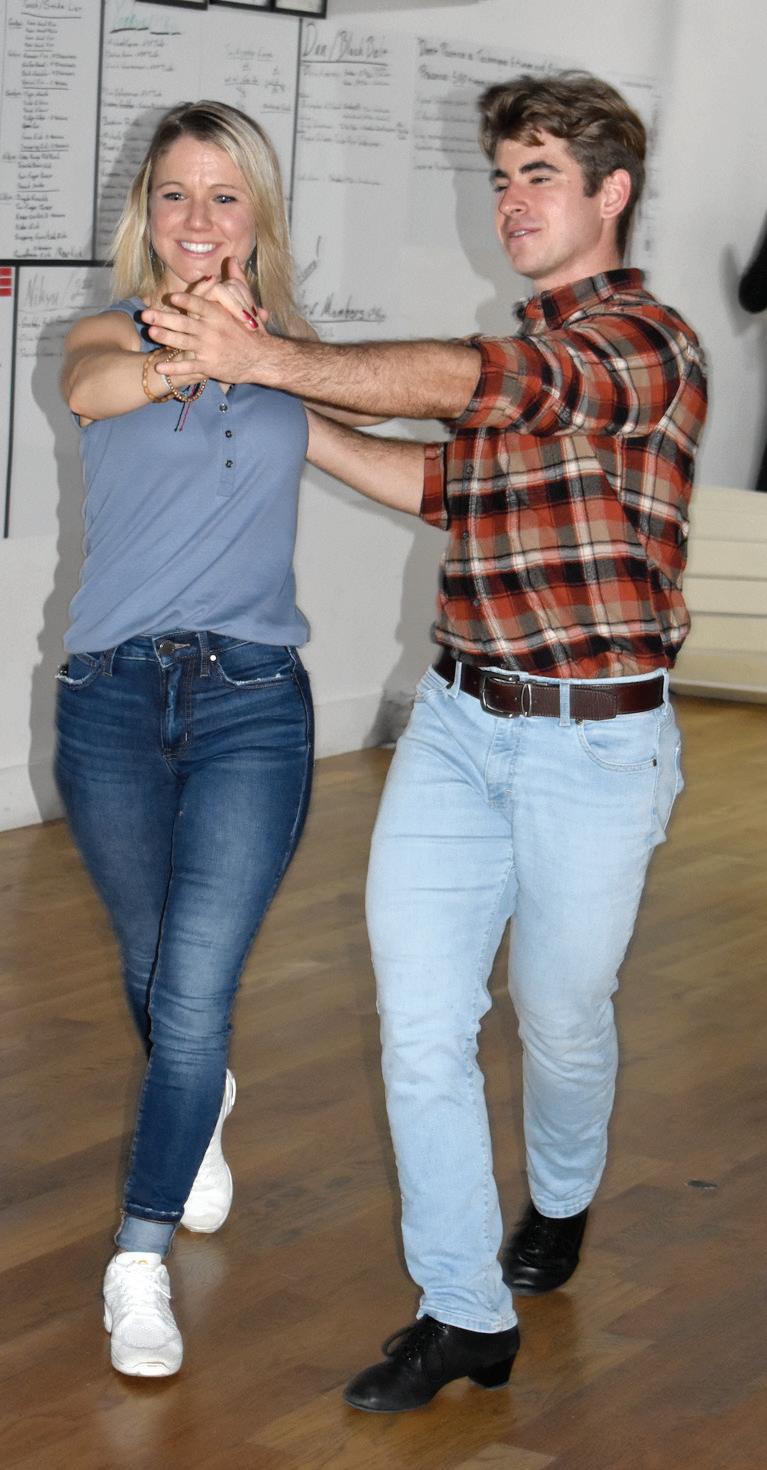
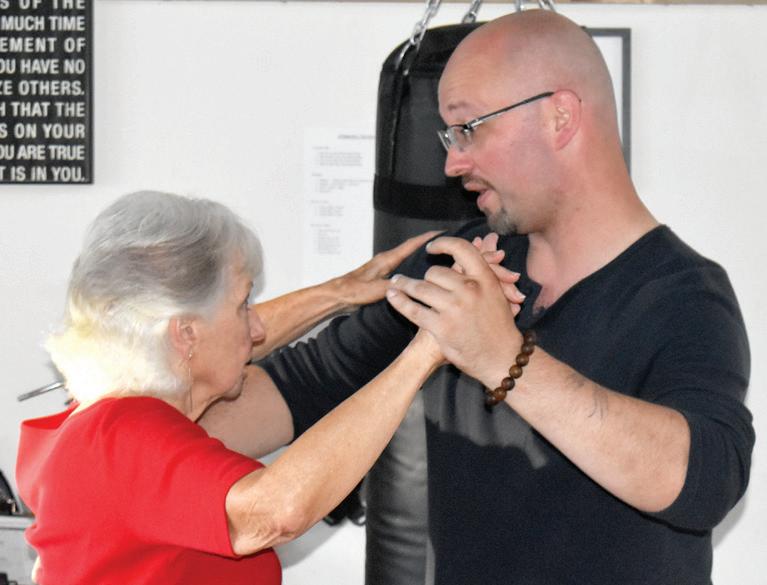
STEP IN TIME — Matt Smith helps Alice Metzger through a series of dance steps. Photo by Lilli Dwyer.
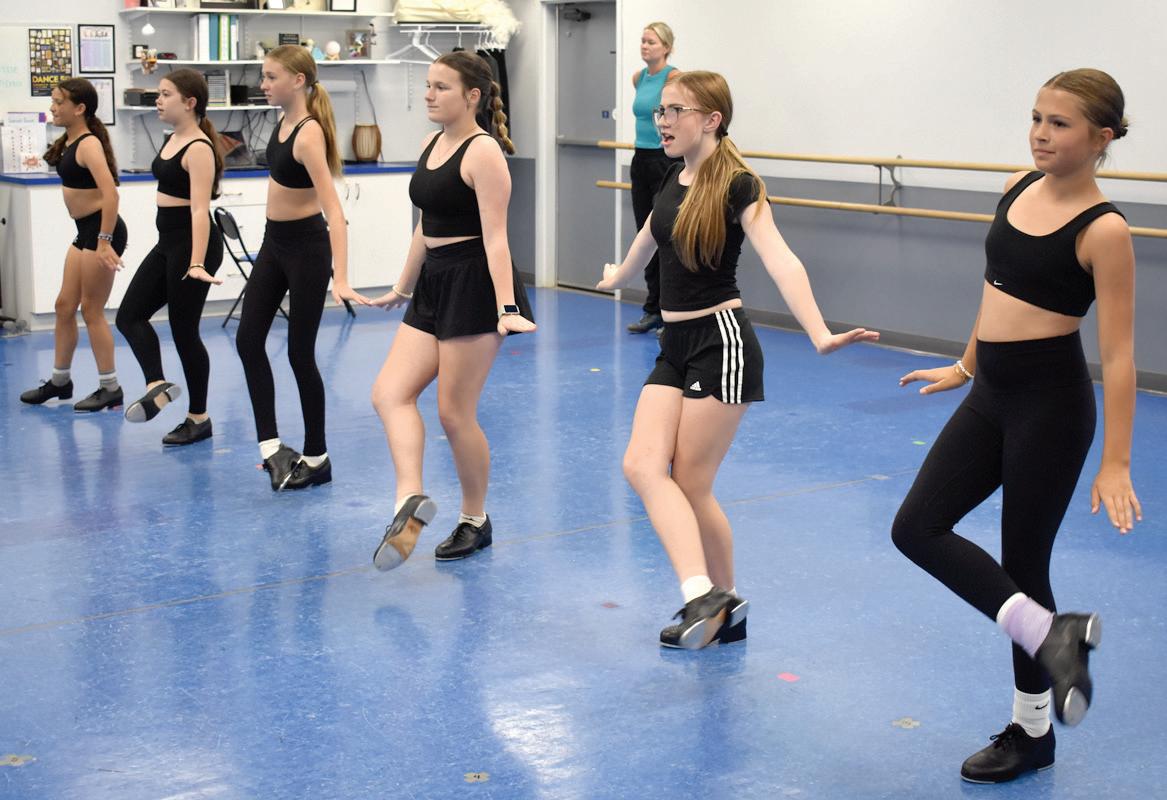
FIVE, SIX , SEVEN, EIGHT Shown from left are Kobie Rodriguez, Elora Chainey, Chanel Bradford, Marlie Wolcott, Aspen Geyer, and Lyndi Tenney practicing their tap routines at Lee Anne Stewart’s Dance School. Photo by Lilli Dwyer.
Roberts finds joy helping others
By MARISSA SWEATLAND Staff Writer
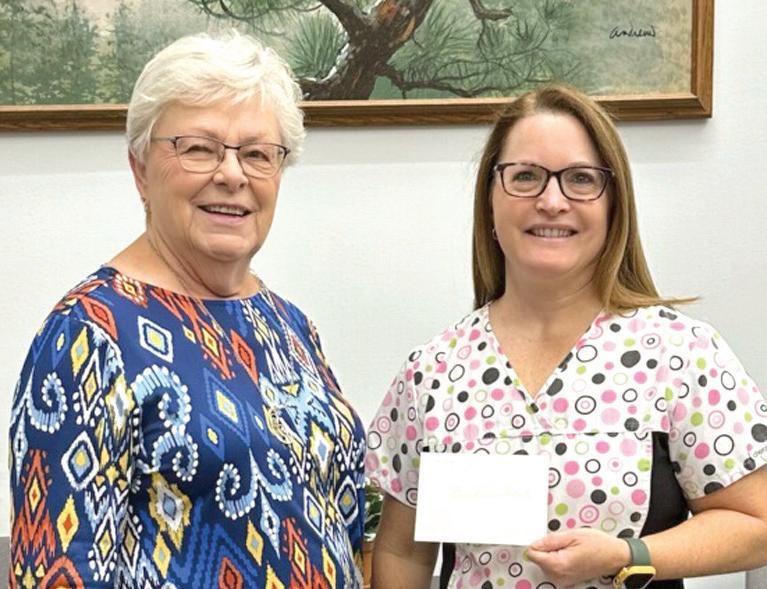
“I feel the amount of families needing help is far more than I had been aware of,” Karen Roberts, volunteer at Combined Community Services, said. “Let people know they do not have to be ashamed to ask for help.”
Roberts, of the Warsaw area, has been a pillar of CCS since May of 2023. Roberts began her volunteer journey because she had unfortunately just lost her husband of 43 years, Terry.
“I need something useful to help fill the void,” Roberts explained. “My daughter, Tammy, had worked at CCS for many years so I was familiar with what they do here.”
Roberts is no stranger to
helping others. She originally moved to the area from Minnesota as soon as she graduated high school so she could help her sister with her two young children. Helping her sister sparked a light within Roberts to open her own in-home daycare. She retired from daycare in 2015.
No two days are the same for Roberts at CCS, but there is always something for her to do.
“I jump in wherever I am needed,” Roberts explained. “Whether that is filling boxes, bagging animal food, fruit, veggies or other donations. I also stock shelves and put away donations of food and personal hygiene.”
She had also worked in the clothing closet before it was closed.
“I know a lot of families
depend on CCS for help short term or long term,” Roberts said. “Most are very thankful and appreciative. Volunteering is fun and rewarding. The volunteers here is a great group of people to work with.”
The nonprofit is always looking for donations. Immediate needs include: food donations, including pet food, pantry basics, non-perishables and kid-friendly options; personal hygiene items; diapers and wipes; and laundry soap. For a list of immediate needs, visit ccsgives.com/immediateneeds.
Donations can be brought to Combined Community Services, 1195 Mariners Drive, Warsaw, during office hours, 9 a.m. to 4 p.m. Monday, Tuesday and Thursday. Monetary donations are always welcome and can be made online at combinedcommunityservicesinc-bloom.kindful. com.
“It makes my heart happy when I push a cart of food out but find someone dropping off a donation instead,” Roberts said. “No donation is too small.”
When Roberts is not volunteering at CCS, she fills her time with her nose in a good book, dealing a hand or two of cards, challenging Scrabble words, watching sports on the television and enjoying spending pre-
cious time with her family. Roberts is a grandmother of three grandsons and a great-grandmother to a grandson, with one
more on the way.
“I’ve truly enjoyed my work,” Roberts reminisced. “And I love this community.”
Community partners to host wellness fair Sept. 28
Community partners will be hosting the Kosciusko Community Wellness Fair from 8 a.m. to 1 p.m. Saturday, Sept. 28, at the Parkview Warsaw YMCA, 1305 Mariners Drive, Warsaw.
The wellness fair will feature a variety of free health screenings/ assessments for those 18 and older including: A1C to test for pre-diabetes, blood pressure, body mass index, bone density heel scan, depression assessment, heart risk assessment, hernia screening, hip/ knee assessment, menopause assessment, oral health assessment, sleep apnea assessment, skin cancer screening, stroke assessment and vision assessment. Flu shots will also be available.
No registration is required for these free services. In addition, a limited number of 3D screening
mammograms will be offered. Many insurance plans will be accepted and funding is available to cover expenses for women who do not have sufficient financial resources. Those interested in mammograms must pre-register, be 35 years of age or older, have a primary care provider and have not had a mammogram in the past 12 months. Pre-register for mammograms only by calling (574) 372-0084.
The wellness fair will also feature local community resources, a kids activity area, car seat check and more.
Dr. Eric Waldo, Kosciusko County health officer, emphasized the importance of collaboration, stating, “The Kosciusko Community Wellness Fair is a result of three major health systems — Goshen Health, Lutheran Kosciusko Hospital and
Parkview Health — coming together to provide essential screenings, which wouldn’t otherwise be available. This collaboration is truly for the greater good of our community.”
It will also recognize the vital contributions of Bowen Health Center, Health First Kosciusko, Kosciusko Chamber of Commerce, Live Well Kosciusko and Parkview Warsaw YMCA, which is once again hosting the event.
The event is supported by K21 Health Foundation. Additional funding to support this event has been provided by: Bowen Health, Fort Wayne Recovery, Health First Kosciusko and Parkview Warsaw YMCA.
For more information, visit bit. ly/kosciuskocommunitywellnessfair or contact Tracy Frick at tfrick@kcymca.org.
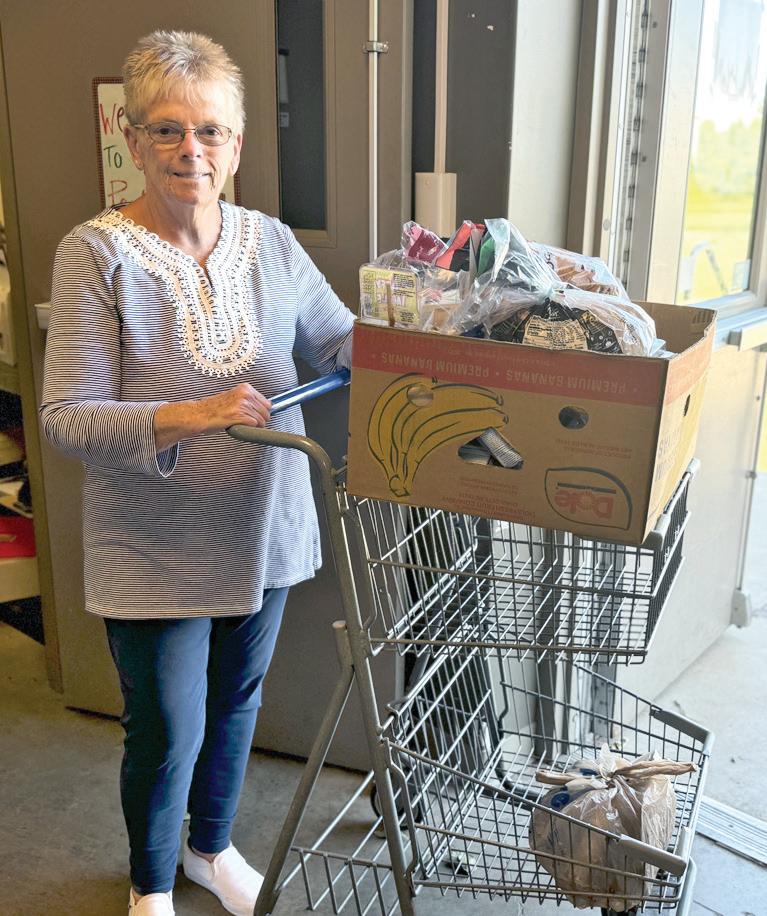
CARTS OF DONATION Karen Roberts works on filling shopping carts with donations. Roberts has been volunteering at Combined Community Services since May 2023. Photo by Marissa Sweatland.
Bad weather threw a wrench in last month’s Third Friday celebration and the Kosciusko Board of Realtors annual car show. Both will be back Friday, Sept. 20. This month’s Third Friday will feature the Taste of Kosciusko.
Meanwhile, KBOR is changing things up a bit for its fourth annual Children’s Charities Car Show. This year it will be a cruise-in.
For the second year in a row, the event will be held in downtown Warsaw. The first two years, the car show was held at Tippy Creek Winery in Leesburg.
The cruise-in will be held from 5-8 p.m. at the corner of Indiana and Center streets. Vehicles can start lining up at 4:15 p.m. It’s free entry, with no registration required.
“If we get between 50 to 75 cars, we’ll be happy,” said Michelle Cabrera, MLS coordinator for KBOR. She noted there are a number of factors, such as weather, which will encourage car buffs to bring out their rides for the event.
There will be a vote for the public, where $1 equals a vote. Prizes will be awarded for People’s Choice. The Kosciusko Chamber of Commerce and KBOR will also award trophies.
Along with some great vehicles on display, there will be food trucks, live music and a live remote from a local radio station.
Funds raised from the car show go to KBOR’s Children’s Charities, which includes back-to-school backpacks, an event through which KBOR partners with Combined Community Services to provide local children with backpacks loaded with school supplies.
KBOR has provided filled backpacks for as many as 38 Kosciusko County students.
Boots for Scholars is a program where KBOR partners with Big Brothers Big Sisters of Northeast Indiana to provide local children with boots and shoes for the winter months. The Big Brothers Big Sisters’ mission falls right in line with KBOR’s belief that children and families are made stronger when the community works together as partners to assist and support families in need. Funds from the car show also help fund six, $1,000 scholarships.
“The more money we raise, the more kids we’re able to help,” Cabrera said.
Those attending the car show
and others who would like to make a donation are encouraged to call (574) 269-6706.
Fall Antique Outboard Motor Show
The Antique Outboard Motor Club will hold its Fall Antique Outboard Motor Show and Swap Meet Saturday, Sept. 21, at North Webster’s Community Park (Dixie tour boat dock) on the west shore of Webster Lake. Several hundred antique outboard motor restorers, historians, collectors and enthusiasts from across the Midwest and Canada will gather in the park for a day of activities related to their hobby.
The public is invited and encouraged to attend.There is no admission charge. The events include an exhibition of their recent restoration projects, serious swapping of parts and literature, plus running these old-time boat motors on the lake.
Club members invite area owners of old outboard motors to attend the meet for a free evaluation of their old motors. Many motors are bought, sold and evaluated throughout the day. The swapping area includes all types of parts, literature, related accessories and many antique motors.
The national Antique Out-
board Motor Club, with over 3,000 members, classifies an antique outboard motor as being manufactured before 1950 and a classic outboard motor over 30 years old.
The North Webster meet starts at approximately 10 a.m. and usually runs to mid afternoon. Many participants stay late in the day if the weather is nice and they are able to run
their antique motors on the lake. For more information, contact local meet chairman Dave Tranter at (260) 213-1945 or jdtranter@kcaccess.com.
The committee for the Free Community Dinner in Pierceton will be offering the next free meal for residents of Pierceton and the surrounding area on Thursday, Sept. 19.
The menu includes baked spaghetti, dinner roll, vegetable, fruit and cookies.
Dinners will be available in a drive-thru format beginning at 5 p.m. at the St. Francis Xavier Catholic Parish Hall, 408 W. Catholic St., Pierceton. The meal is absolutely free, but
are accepted. More
are
free every other month.
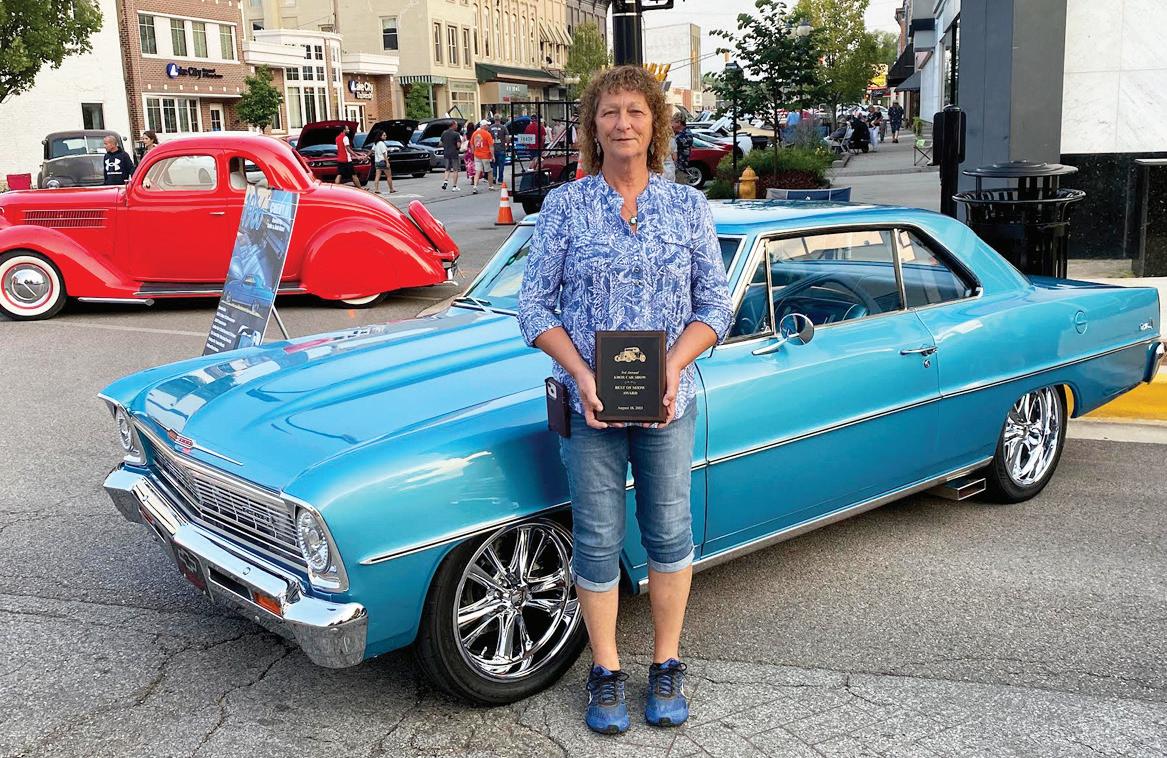
BEST IN SHOW — Julie Rans of Plymouth won Best of Show with her 1966 Chevy II Nova in last year’s Kosciusko Board of Realtors’ Children’s Charities car show. This year’s show is on Friday, Sept. 20, in downtown Warsaw after it ws postponed last month due to weather. File photo.
Good Neighbors is a column in which readers share friendly advice. To ask or answer questions, write the Shopping Guide News, Good Neighbors, P.O. Box 188, Milford, IN 46542; fax 800-886-3796; or e-mail abias@the-papers.com. Please no phone calls.
Editor’s Note: The Good Neighbors column is for people
or
people seeking advice, not for items you can find in a local store or sell through the help of a classified ad. This column will now run every other week.
New questions
Kid’s pedal tractor — I am looking for a kid’s John Deere pedal tractor or any other brand. Please text a picture to my cell number or call me at (574) 377-4513.
Dog sitter — I am looking for a dog sitter in the area of Macy, Rochester, Akron or surrounding area. Call (260) 437-9994.
Seeking information — Looking for the daughter of Walter Riley. He was in Greencroft, Middlebury. After he passed away, I purchased the rest of his railroad collection. You can come to watch your Dad’s train run. Call (574) 536-7204.
Old sewing baskets — We are looking for sewing baskets, full or empty. Also, old wooden spools, thread or anything sewing related. No material for now, please. Drop off at The Thread Shed, 4663 Filbert Trail, Bremen, or call Ruby at (574) 546-2271.
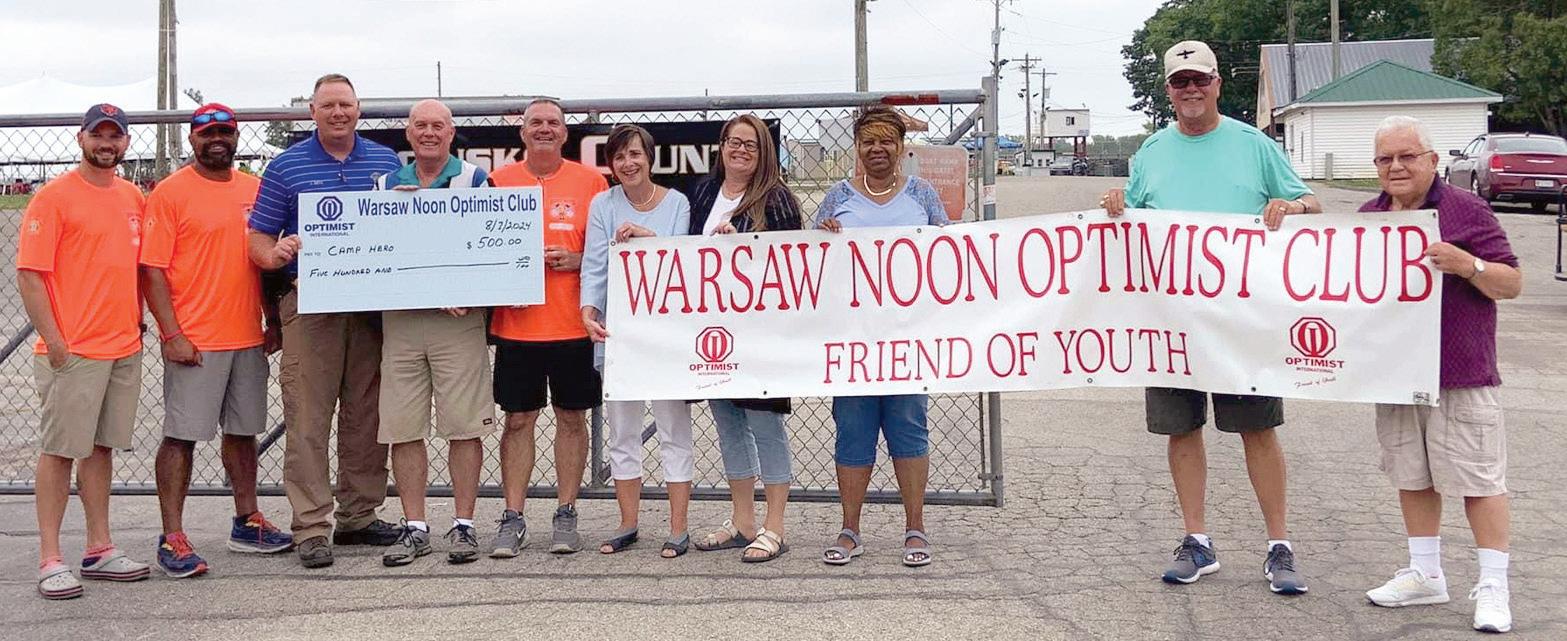
OPTIMIST DONATE TO CAMP HERO Warsaw Noon Optimist recently donated $500 toward the Kosciusko County Sheriff’s Office Camp HERO. Shown from left are Sgt Justin Smith, camp doordinator; Deputy Shaun Mudd; Sheriff Jim Smith; Eric Coburn, Noon Optimist Club; Sgt. Doug Light; Kathy Hamman, Amber Gelbaugh, Yvonne Southall, Jan VanZant, and Gaylord Johnston, Noon Optimist Club members. Photo provided by the Warsaw Noon Optimist Club.
EDITORIAL OFFICES, CIRCULATION, DISPLAY AND CLASSIFIED ADVERTISING
WARSAW OFFICE MILFORD OFFICE SYRACUSE OFFICE
114 West Market St. 206 S. Main St. 102 East Main St. Warsaw, IN 46580 P.O. Box 188, Milford, IN 46542 Syracuse, IN 46567 Phone (574) 269-2932 Phone (574) 658-4111 Phone (574) 457-3666 Fax 888-371-2934 1-800-733-4111 Fax 800-886-3796
‘the PAPER’ reserves the right to refuse for publication any advertising that is considered offensive, misleading or detrimental to the public, the newspaper or another advertiser and to edit advertising at its discretion.
Publisher, Ron Baumgartner rbaumgartner@the-papers.com
Business Manager, Annette Weaver aweaver@the-papers.com
Editor-In-Chief, Deb Patterson dpatterson@the-papers.com
Editor, Lauren Zeugner lzeugner@the-papers.com
Warsaw Office Manager, Mary Beth Spalding warsaw@the-papers.com
Director Of Marketing, Kristin DeVittorio kdevittorio@the-papers.com
Advertising Representative, Carl Lauster clauster@the-papers.com
Advertising Representative, Susan Stump sstump@the-papers.com
Circulation Manager, Jerry Long jlong@the-papers.com
Commercial Printing Sales Representative
Rodger Salinas rsalinas@the-papers.com
Commercial Printing Customer Service
Tina Kaplan tkaplan@the-papers.com
Rich Krygowski rkrygowski@the-papers.com
Camp HERO receives donation from Warsaw Noon Optimists
The Warsaw Noon Optimist Club recently donated $500 to Camp HERO. Camp HERO is a program offered through the Kosciusko County Sheriff’s Office for children ages 8-13 where children learn
many aspects of public safety. The club is honored to be able to help local youth through this program.
The mission of the Noon Optimist Club is to help local
youth through programs offered throughout the community.
The club meetings from noon to 1 p.m. Mondays at Papa Vino’s restaurant and new members are welcome. For more information about upcoming meetings, contact Kathy Hamman at (574) 551-9492.
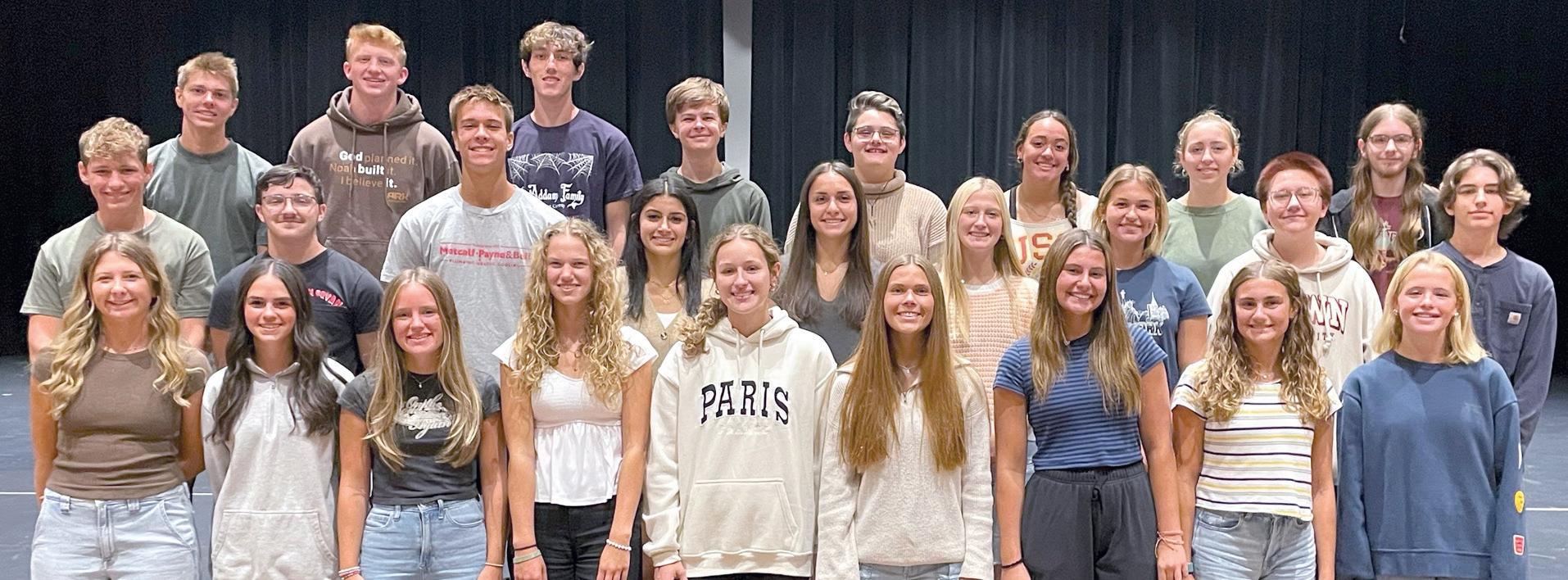
BRIGHT FUTURES — Numer-
ous NorthWood High School students earned academic honors through the College Board National Recognition Program. Pictured in the front row, from left, are Sophie Richmond, Joey Slone, Sophie Yoder, Ellie Holden, Hannah Yoder, Ava Martin, Jillian Sweazy, Maggie Steiner and Ava Zercher.
Second row: Kayson Carter, Jonah Miller, Isaac Bell, Ana Baltazar Prado, Iriel Avedician, Kaitlyn Bell, Ellissa Horner, Savannah Burns and Samuel Geldner.
Third row: Jace Davies, Mason Pearson, Braxton Parvu-Timmer, Brenner Schlipf, Leigha Mantor, Lupe Hunter, Lydia Schmucker and Noah Sheaffer.
Not pictured are Jackson Birch, Tessa Branham, Drew Davis, Titus
son, Courtney Seaver, Bode
Trevor
and
Students awarded academic honors from College Board National Recognition Program
Students at NorthWood High School earned academic honors from the College Board First Generation, Hispanic, Indigenous, and Rural and Small Town national recognition programs. The programs celebrate the hard work of thousands of high school students nationwide to help them showcase their strong academic performance.
For the first time, the academic honors recognize first-generation students, in addition to rural and small town, Black, indigenous, and Hispanic/Latino students. The program opens college access for more students because many institutions
use the awards for their recruitment efforts.
A total of 43 students from NWHS were recognized with these awards.
Twelve students earned First Generation honors, two students earned Hispanic honors, two students earned indigenous honors, and 36 were recognized for the Rural and Small Town award.
“We’re thrilled to celebrate our students and recognize them for the great work they’ve been doing. We’re proud of their strong academic performance in the classroom and on College Board assessments like the PSAT/NMSQT, PSAT 10, and AP ex-
‘MOTTTS’ returns to the Wakarusa Missionary Church
Wakarusa Missionary Church has announced the restart of Mothers of Tots to Teens or more commonly known as MOTTTS.
The group’s mission is to create a supportive environment where moms can come together, share their experiences and study the Bible together.
They will be working through the book “Get Out of Your Head”
by Jennie Allen. The Thursday mornings begin at 9:15 a.m. and end at 10:45 a.m.. Childcare is available upon registration. You can register by downloading the church’s app or by visiting its Facebook page. The church is located at 202 W. Waterford St, Wakarusa. For more information, call (574) 862-2102 or email wakymc@wakymc.org.
Pet supply drive in Wakarusa
Three businesses in Wakarusa are accepting donations for a pet supply drive benefiting the Humane Society of Elkhart County. Drop off donations at New To You Consignment Store 109 E. Waterford St.; Shortstop Inn, 112 E. Waterford St; or The Garage Coffee Shop, 104 W. Waterford St. Items will be accepted at all three locations throughout the month of September.
Stop by and support a pet. You may even get something in return. For more information about the Humane Society of Elkhart County, including pictures and information about pets awaiting adoption, visit elkharthumanesociety.org. You can also call (574) 475-4732, email info@elkharthumanesociety.org or stop by the Humane Society, located at 54687 CR 19, Bristol.
ams,” said Jade Sipic, dean of secondary education. “There’s so much that makes our students unique, and this honor reinforces their individuality and achievements as assets for their future.”
Eligible students must meet the following criteria to qualify:
• Earn a GPA of B+ (equal to at
least 3.3 or 87%-89%) or higher.
• PSAT/NMSQT or PSAT 10 assessment scores that are within the top 10% of assessment takers in each state for each award program, or earned a score of 3 or higher on two or more AP Exams by the end of 10th grade.
• Attend school in a rural area or small town, or identify as African American/Black, Hispanic American/ Latino, indigenous/Native American, or a first-generation college student. The program expanded this year to include a fifth award. Over 35,000 students nationwide received the inaugural National First-Generation Recognition Program Award.
State corn husking competition in Nappanee
The board members of the Indiana Corn Husking Association have been busy promoting and preparing Indiana huskers and spectators for the 2024 Indiana State Hand Corn Husking competition in Nappanee. Each year this event grows in size and membership. It will be held at Reed Farms once again this year, as the family will be the host for the event Saturday, Oct. 5. The farm is located at 27615 CR 48, Nappanee. Registration will remain open from 9 a.m. to 3 p.m., and the contest ends when the final participant has completed husking.
Off-road parking will be available, weather permitting. Organizers prefer a cool light breeze and a fall-like day with plenty of sun, but regardless of what Mother Nature dishes out, the contest will not be canceled for rain, sleet or snow.
The Indiana Corn Husking Association is a nonprofit organization dedicated to education and historical preservation of the early methods of corn harvest and hand corn husking. Every year, families and neighbors work together to harvest the corn by hand as efficiently as possible with the use of horse drawn wagons. The competitive nature of American citizens inspired competition between farmers to determine the best corn husker.
These competitions grew from local and state, and quickly expanded to the National Corn Husking Competition. As of today, these nine states (Ohio, Indiana, Illinois, Missouri, South Dakota, Nebraska, Kansas, Minnesota and Iowa) host their own individual state competition to determine the top three of each class. The top three individuals have the opportunity to advance to represent their state and compete in the National Corn Husking Contest in Hastings, Iowa, Oct. 19-20.
The Indiana corn husking event is open to all Indiana residents. It will also allow out-of-state huskers the experience to take a hand at harvesting corn by hand, while competing against other huskers in their respective classes, or by joining one another in a team competition.
There will be 14 classes ranging from 14 and under for boys and girls to men and women ages 65 and older. Huskers can participate in both an individual class and as a team of four contestants. There’s no cost for parking or for those wishing to remain on the sidelines as
a spectator to watch and cheer on their friends. For those who wish to participate and husk corn in a family-friendly oriented event, the husking dues range between $10 to $20.
They will have an educational area to teach the proper technique used to gain the best results when competing in the contest. Husking tools can be used to assist in the contest but are not required. There will be a vendor for food, refreshments and ice cream, which will be for sale throughout the day. ICA apparel also will be available for purchase.
A designated area will be cordoned off for kids activities, as well as a corn pit. Husking wagons will be pulled by horses or tractor, a sheller will be shelling the harvested corn throughout the day and there will also be a display of antique tractors and corn items, so feel free to share antique items. Check out the Indiana Corn Husking Association’s Facebook page or call President Clay Geyer at (574) 952-7197, or Ted Richard at (574) 223–2747 for more information.
Bryce Weaver. Photo provided by NorthWood High School.
Moving away from the all-white kitchen
(StatePoint) With the all-white kitchen design trend on the decline, you may be wondering how to make updates that appeal to today’s sensibilities. The key is infusing color and depth into your space.
Here’s how:
Consider Earthy Wood Tones
Earthy wood tones easily transform a predominantly white space and there are many ways to incorporate this look in your kitchen. Options can be as involved as refinishing your kitchen island with a wooden countertop or swapping in wood cabinet finishes, to as simple as introducing a rolling bar cart into the space. Displaying a few wooden kitchen elements, such as cooking utensils, cutting boards and a napkin holder, can round out the look.
Embrace Matte Black
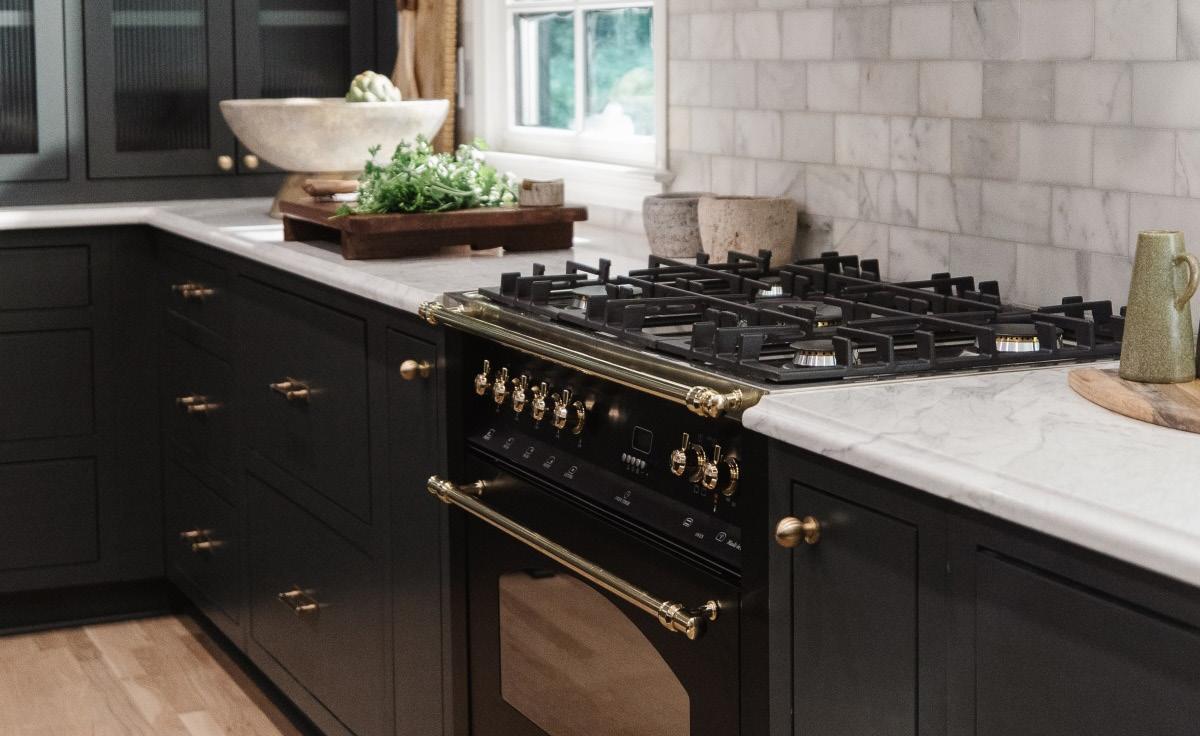
Matte black appliances are gaining in popularity for good reason — they can elevate your kitchen into a glamorous foodie oasis, and a place where cooking, eating, and gathering with loved ones brings you joy. It’s helpful if those appliances pair form with functionality. When it comes to cooking ranges, check out Verona, which offers professional-style Italian-made appliances that combine artistry with the latest cooking technology innovations. The brand’s Ultima Midnight 36-inch Range is fully matte black from cooktop to legs for a sleek look and is available in dual fuel or induction.
Alternatively, the Maestro collection from another Italian brand, Lofra, boasts strong versatile design and the highest technical performance. Both brands are ex-
clusively imported by EuroChef USA. For more information, visit eurochefusa.com.
Incorporate Brass Accents
Brass accents can provide dynamism and depth. Consider adding brass hardware to your fridge and updating your faucet and sink basin in a gold or bronze tone. For your cooking range, get inspired by the models available in Lofra’s Dolcevita Collection, which can be customized with brass trim, and gold knobs, providing pops of color in unexpected places, and with 30-60-inch models available, can
accommodate kitchens of all sizes.
Beyond the trim of your appliances, you can mix these metals into your space by swapping in new cabinetry hardware and by adding in an eye-catching brass pedant above your dining area or prep space. Displaying your brass cookware on hooks or a rack can offer a rustic and homey feel to an otherwise austere space.
If you spend a lot of time in your kitchen, as many individuals and families do, consider updates that add color, depth and comfort to the space.
Porch and patio pick-me-up ideas
(StatePoint) If your concrete porch and patio surfaces are plain, ugly or in disrepair, you may assume the only solution is to hire a contractor for a complete overhaul. The truth is that you can resurface these spaces with minimal DIY experience in just a few days. Here’s how: Make Repairs First As with any project, the key to success is preparation. First, pressure wash your surface, allowing it to thoroughly dry. Then use a durable repair product, such as Rock Patch, to fill in cracks, pits and holes. Impact-, moisture-, salt- and mold-resistant, this odorless, hard stone compound can patch flaws or function as a smooth new base. Because it doesn’t dry quickly like concrete, you can take your time and apply the product slowly. While the normal cure time is 24 hours, you’ll want to increase your dry time when applying the product in damp, cool
conditions, or if applying a very thick coat.
Choose A New Surface
Give your space a huge upgrade by applying a new surface with a DIY product. The real stone surfaces available from Daich Coatings, for example, will improve the look of your porch or patio while enhancing the functionality of the space, and there are many options to choose from, depending on the amount of skill you have and the time you want to invest.
The brand’s Terrazzo Decorative Granite Resurfacer has a unique formula offering a seamless overlay that is both attractive and functional, whereas its RollerRock’s self-priming formula means one less step, for instant color and beauty and an attractive textured finish.
Want to get creative? Consider the all-in-one SpreadStone kit, which includes a pre-mixed
Continued on page 7
KITCHEN REMODEL As the white kitchen trend seems to decline, consider utilizing these tips in your kitchen remodel to keep your kitchen in fashion. Photo provided by StatePoint.
Survey finds renters turn to DIY décor to give their spaces style
(StatePoint) While it’s normal to feel nervous about moving into your first apartment, it’s also an exciting time to create your own personal haven. Most rentals have lease limitations on what tenants can and can’t do when it comes to painting and decorating, but there are still ways to infuse your own unique aesthetic into a space.
A new survey from Duck brand asked current and former renters about how they made their temporary spots feel like home.
The survey found that 70% of renters say it’s important for their living space to reflect their personal style and preferences. Although most residents say they are satisfied with the aesthetic of their rentals, respondents still expressed frustration with neutral paint colors and the inability to use nails and screws on the walls. Additionally, 86% of renters have damaged walls trying to use hooks to hang décor, and 62% have made two to three attempts at hanging décor before getting it right.
“We found that personalizing rental spaces, even if they are temporary, is a top priority for most people, but can feel challenging when you’re on a budget and trying not to cause any damage to walls or surfaces,” says Ashley Luke, senior product manager of Home Solutions at Duck brand. “Luckily, there are a variety of affordable, temporary solutions to try that make it easy for tenants to refresh their nest.”
A popular renter-friendly DIY project to invite color and pat-
Porch
Continued from page 6
primer, base coat, accent coat, clear sealer, stone texture roller and grout line stencil tape. While this process takes a little time, it’s easy to do and will allow you to design a stunning decorative stone surface that will stand up to extreme weather.
Finally, the SpreadRock Granite Stone Coating is easily applied in a thin uniform layer using a scraper, trowel or flooring squeegee for dependable durability and a visual effect that is timeless and stunning.
Complete Your Project
Finalize your porch or patio pick-me-up in one step by applying a sealer with anti-slip benefits. TracSafe Anti-Slip Sealer from Daich Coatings is not only a high performance clear coat that will strengthen and protect your new surface, it will help keep family members and visitors safe from falls and mishaps. In fact, its commercial-grade anti-slip ratings are up to twice the OSHA standard and its high-performance, odorless water-based technology bonds firmly to all types of flooring materials.
With just a little effort and minimal expense, you can resurface your porch and patio for a total transformation of your outdoor spaces.
tern into white or neutral areas is using removable adhesives, like the Duck brand Adhesive Shelf Liner, to create a backsplash in the kitchen. In fact, 60% of renters say they have used removable décor, like shelf liner and wallpaper, to infuse personal style into their space.
Additionally, adding accent pieces around the room, such as a mirror, picture or painting, will make it feel more vibrant. To hang them, choose a tool such as clear, double-sided Duck Max Strength Nano-Grab Gel Tape, which can be used on a variety of surfaces to mount décor. It works in both temporary indoor and outdoor spaces and is removable and reusable.
With some smart strategies, DIY décor can affordably make a space feel like home, without breaching the terms of your lease.
Elevate your Lifestyle
• The ADVENT 4L ADVANCED EV Golf Package is ready to Hit the Course
• LED Drive Package for Neighborhood Use
• Built in 2-Inch Lift
• 4-Passenger with Rear Facing Second Row
• Flip Seat Kit for Flat Bed Use
• 6-Inch Lift with All-Terrain Tires and Brush Guard
Family owned and operated since 2007
and
DIY DÉCOR Adding DIY décor to your rental home is a great way to temporarily add your style to the space. Photo provided by StatePoint.
Change in our obituary policies
Effective Monday, Oct. 7, there will be a charge for obituary notices published in ‘the PAPER.’
‘the PAPER’ will offer two options to have an obituary published of a loved one.
The first option is a standard one- column obituary, which will cost $20 for up to 250 words and $10 for each additional 100 words.
The second option is a two-column format, which will cost $45 for up to 250 words and $25 for each additional 100 words. This option will be highlighted.
For both options, the obitu-
Arleen Alejado
Arleen Alejado, 73, Winona Lake, died Sept. 11, 2024.
Arrangements are currently pending at Titus Funeral Home of Warsaw.
Donald W. Blodgett
Donald W. Blodgett, 83, Warsaw, died Sept. 4, 2024.
He was born Nov. 18, 1940. In 1969, he married Connie Elliott, who preceded him in death in 1985. On April 21, 1991, he married Jennie Linville; she survives.
He is also survived by a daughter, Rebecca Keyser, Middlebury; a stepson, Rick Linville, Milford; a stepdaughter, Jodie Wallace, Warsaw; seven grandchildren; nine great-grandchildren; and brothers, Devon Blodgett, Plymouth, and Doug Blodgett, Illinois.
Services were held Sept. 9 at Mishler Funeral Home and Cremation Center, Milford. Burial was in Milford Cemetery.
Nathan Richard Brundage
Nathan Richard Brundage, 44, Winona Lake, died Sept. 8, 2024.
He was born March 30, 1980.
He is survived by his mother, Susan Brundage, Winona Lake; sister, Noelle Daley, Warsaw; two nieces; and many aunts, uncles and cousins.
Services were held Sept. 13 at Redpath-Fruth Funeral Home, Warsaw. Burial was in Oakwood Cemetery, Warsaw.
Tiburcia Cabrera
Tiburcia Cabrera, 97, Warsaw, died Sept. 11, 2024.
Arrangements are currently pending at Titus Funeral Home of Warsaw.
Robert Dew
Robert Dew, 71, Warsaw, died Sept. 8, 2024.
Arrangements are currently pending at Titus Funeral Home of Warsaw.
Terri Lee Garrard
Terri Lee Garrard, 59, Peru, formerly of Warsaw, died Sept. 8, 2024.
She was born Aug. 27, 1965.
Surviving are her extended family, Joyce, Stacy, Tim, Jerry, Adrena and her cat, Precious.
ary will include a photo printed in full color.
For the one-column option, the obituary will include:
Full name, age, town of residence, time, day, date and place of death.
Date of birth, date of marriage, to whom and if the spouse survives or is deceased.
Survivors — list names of parents, sons, daughters, stepchildren, brothers and sisters, including names of spouses and town of residence. It will list as numbers grandchildren, stepgrandchildren, great-grandchildren, nieces and nephews.
Preceded in death by names.
Services were held Sept. 16 at Redpath-Fruth Funeral Home, Warsaw. Burial was in Oakwood Cemetery, Warsaw.
Sandra Graham
Sandra “Sandy” Graham, 76, Warsaw, died Sept. 5, 2024.
She was born July 5, 1948. She married Henry Donald Graham, who preceded her in death.
Surviving are sons, William “Bill” Nolan, Columbia, Miss., and James Nolan, Claypool; two grandchildren; her mother, Vivian Davis; stepchildren, Donnie Graham, Sherrie Breeden and Sabrina Casey; and several bonus grandchildren and great-grandchildren.
A memorial service was held Sept. 9 at Warsaw Community Church. Titus Funeral Home of Warsaw was in charge of arrangements.
Tina M. Hall
Tina M. Hall, 60, Claypool, died at 4:24 p.m. Sept. 6, 2024.
She was born March 28, 1964.
She is survived by a brother, Kenneth A. Hall, Warsaw; sister, Barb Hall, Huntertown; a niece; a nephew; “son,” Aaron Keffer, Quincy; great-nieces and nephew; and aunts, an uncle and cousins.
Services were held Sept. 11 at McHatton-Sadler Funeral Chapels, Warsaw, followed by military honors.
Rickey Hicks Sr.
Rickey Hicks Sr., 75, South Whitley, formerly of Big Springs, Knott County, Ky., died Sept. 6, 2024.
He was born Aug. 22, 1949.
He is survived by his wife, Kathleen Hicks; daughter, Linda Hackworth; sons, Rickey Hicks Jr. and Jeremy Hicks; stepsons, Greg and John Henderson; sister, Johanna Maiden; and several grandchildren and great-grandchildren.
Services were held Sept. 14 at McKee Mortuary, North Manchester. Burial was in New Haven IOOF Cemetery.
Gary Himes
Gary Himes, 68, Winona Lake, died Sept. 9, 2024.
He was born Aug. 18, 1956. Surviving are sons, Dru Himes, Nick Himes and Derek Himes; daughter,
Visitation — Time, date and location.
Funeral service — When, where, time and who is officiating.
Burial — Cemetery name, when and time.
Memorial contributions and name of funeral home.
Online condolence information.
The two-column obituary will include the above noted information plus any additional information the family wishes to be included.
All obituaries provided by private individuals must be paid in advance of publication.
Abi Himes; brothers, Terry Himes and Tony Himes; 11 grandchildren; nine great-grandchildren; and numerous nieces and nephews.
Visitation was held Sept. 15 at McHatton-Sadler Funeral Chapels, Warsaw. Burial was private in Oakwood Cemetery, Warsaw, where he was placed on his parents’ grave.
Herbert Kissell
Herbert “Herb” Kissell, 79, Warsaw, died Sept. 10, 2024.
He was born July 25, 1945. In 1975, he married Dottie; she survives.
Also surviving are his children, Debra Hensler, Rebecca DeVliegher, Trisha Jackson, Jon Kissell, Angela Sobiek, Paul Kissell and Andrew Kissell; 18 grandchildren; numerous great-grandchildren; and a sister-in-law, Jean Kissell.
Visitation will be from 10-11 a.m. Friday, Sept. 20, at Sacred Heart Catholic Church, 125 N. Harrison St., Warsaw. A funeral mass will take place at 11 a.m. Titus Funeral Home of Warsaw is in charge of arrangements.
Sally Lou Lamirand
Sally Lou Lamirand, 80, Warsaw, died Sept. 11, 2024.
She was born June 12, 1944. On Nov. 5, 1977, she married Robert Dale Lamirand; he survives.
She is also survived by a niece; a nephew; a cousin; and her very close friend, Diane O’Brien.
Burial was in Leesburg Cemetery. Redpath-Fruth Funeral Home, Warsaw, was in charge of arrangements.
Dr. Wilson B. Lutz
Dr. Wilson B. Lutz, 97, died Sept. 3, 2024.
He was born May 12, 1927. On June 11, 1950, he married Mary Adine Eley; she survives.
Also surviving are his children, Paul Lutz, Bloomington, and Marilyn Lutz, Joshua Tree, Calif.; brother, Ron Lutz, Harleysville, Pa.; three grandchildren; and one great-grandchild.
A celebration of life will be held at 1:30 p.m. Saturday, Oct. 5, at Timbercrest Chapel, 2201 East St., North Manchester. The family will receive friends following the service. McKee Mortuary, North Manchester, is in charge of arrangements.
Rosemary Mullet
Rosemary Mullet, 78, Leesburg, died Sept. 12, 2024.
She was born Sept. 29, 1945. On May 25, 1972, she married Paul S. Mullet; he survives.
Also surviving are sons, Mark Mullet, Glenn Mullet, Lynn Mullet and Luke Mullet, all of Leesburg; daughter, Corinne Bender, Goshen; seven grandchildren; two stepgrandchildren; four stepgreat-grandchildren; and brothers, LeRoy Hochstetler, Three Rivers, Mich., and Melvin Hochstetler, Centerville, Mich.
Services were held Sept. 15 at the family residence in Leesburg. Burial was in Graber Cemetery, Nappanee. Thompson-Lengacher & Yoder Funeral Home, Nappanee, was in charge of arrangements.
Franklin H. Pfeiffer
Franklin H. Pfeiffer, 80, Warsaw, died Sept. 10, 2024.
He was born June 1, 1944.
He is survived by his wife, Becky Pfeiffer; sons, Casey and Tracey Pfeiffer; and four grandchildren.
Services were held Sept. 17 at Titus Funeral Home of Warsaw. Burial was in Stoney Point Cemetery.
Rachael Polston
Rachael Polston, 67, Warsaw, died Sept. 9, 2024.
She was born June 4, 1957. On July 29, 1978, she married Randy William Polston; he survives.
She is also survived by a son, Nathan William Polston, Warsaw; daughter, Tiffany Leigh Smith, Carmel; four grandchildren; her mother, Lorraine Moser McInerney, Cocoa Village, Fla.; brother, Ted Moser, Oakland, Calif., and Randy Moser, Orlando, Fla.; and her sister, Wendy Ellis, Cocoa Village, Fla.
Services were held Sept. 13 at Warsaw Community Church. Burial was in Oakwood Cemetery, Warsaw. Redpath-Fruth Funeral Home, Warsaw, was in charge of arrangements.
Claire Noelle Rowe
Claire Noelle Rowe, 17, Bourbon, died Sept. 4, 2024.
She was born Nov. 25, 2006.
She is survived by her mother, Jenn Anderson, Bourbon; father, Scott Rowe, LaPorte; siblings, Sophi Rowe, Kinley Rowe and Kohen Anderson, all of Bourbon; bonus siblings, Alex Barnett and Jaxson Barnett, both of LaPorte; grandparents, Dan and Deb Harman, Tracy Rowe and Bret and Rhonda Sobecki; and several aunts, uncles and cousins.
Visitation will be held from 3-6 p.m. Wednesday, Sept. 18, at Lakeville Community Center, 214 W. Patterson St., Lakeville. Services will start at 7 p.m. Wednesday at the community center. Deaton-Clemens Funeral Home, Bourbon, is in charge of arrangements.
Mary E. Schmucker
Mary E. Schmucker, 53, Bremen, died Sept. 6, 2024.
Malachi Jace Burkholder
Jeremy and Christen Burkholder, Bourbon, are the parents of a son, Malachi Jace, born at 6:35 a.m. Sept. 5, 2024, at Blessed Beginnings Care Center, Nappanee. He weighed 9 pounds, 3 ounces, and was 21 inches long.
Ezekiel Jude Yoder
Nathan and Delores (Nissley) Yoder, Nappanee, are the parents of a son, Ezekiel Jude, born at 3:16 a.m. Sept. 6, 2024, at Blessed Beginnings Care Center, Nappanee. He weighed 8 pounds, 1 ounce, and was 19 3/4 inches long.
Titus David Yoder
Kevin and Maria (Borkholder) Yoder, Bremen, are the parents of a son,
She was born July 4, 1971. On July 26, 2001, she married Eugene Schmucker; he survives.
Also surviving are her parents, Eli and Clara Borkholder, Bremen; children, Eli Jon Schmucker, Katie Fern Schmucker and Marvin Eugene Schmucker, all of Bremen, Marianne E. Schmucker, Syracuse, and Neva Faye Schmucker, Shipshewana; one grandson; siblings, Steve Borkholder, Glenn Borkholder, Everett Borkholder, and Paul Borkholder, all of Nappanee, Sharon E. Miller, Margaret Borkholder, Marvin Borkholder, Lyle Borkholder, Nelson Borkholder, Nora Borkholder and Regina Bontrager, all of Bremen; and brother-in-law, Todd Beachy, Bremen.
Services were held Sept. 9 at the Jerry Kuhns residence in Nappanee. Burial was in Weldy Cemetery.
James Dale Shinall
James Dale Shinall, 68, Warsaw, died Sept. 10, 2024.
He was born Aug. 26, 1956. No services are to be held.
Arrangements are with Palmer Funeral Homes, South Bend.
RoseAnn Showalter
RoseAnn Showalter, 90, Goshen, died Sept. 6, 2024.
She was born Dec. 23, 1933. On March 21, 1952, she married Glen Showalter. He preceded her in death Oct. 12, 2021.
Surviving are sons, Mike K. Showalter, Syracuse, Bruce A. Showalter, Millersburg, and Steve G. Showalter, Goshen; six grandchildren; nine great-grandchildren; and a great-greatgrandchild.
Honoring her wishes, she will be cremated. A private graveside service will take place at a later date. Yoder-Culp Funeral Home, Goshen, was in charge of arrangements.
Kevin R. Wilfong
Kevin R. Wilfong, 55, Goshen, died Sept. 9, 2024.
He was born April 1, 1969.
He is survived by his mother and stepfather, Linda (Reith) and Dennis Kimpel; his father and stepmother, Harold and Charlene Wilfong; brother, Keith Wilfong, Howe; stepsiblings, Kim, Lori and Brad Kimpel, all of Goshen, Misty Hale, Ohio, Lisa Hale, Goshen, Christy Adams, North Webster, Larry Keck, New Paris, Kimberly Davis, Shipshewana, and Sara Wade, North Carolina; and many nieces, nephews, great-nieces and great-nephews.
Services were held Sept. 13 at Yoder-Culp Funeral Home, Goshen. A private burial will take place at Violett Cemetery, Goshen, at a later date.
Titus David, born at 5:02 a.m. Sept. 8, 2024, at Blessed Beginnings Care Center, Nappanee. He weighed 8 pounds, 5 ounces, and was 20 inches long.
Maternal grandparents are Chris and Carolyn Borkholder. Paternal grandparents are Stanley and Anita Yoder.
Titus joins two siblings, Lila Joan and Karalynn.
Jackson Tyler Miller
Eric and Marijane (Miller) Miller, Shipshewana, are the parents of a son, Jackson Tyler, born at 12:03 p.m. Sept. 10, 2024, at Blessed Beginnings Care Center, Nappanee. He weighed 8 pounds, 2 ounces, and was 19 1/2 inches long.
Garrett Jace Borkholder Vernon and Mary Jane (Miller) Borkholder, LaGrange, are the parents of a son, Garrett Jace, born at 4:12 p.m. Sept. 10, 2024, at Blessed Beginnings Care Center, Nappanee. He weighed 7 pounds, 3.4 ounces, and was 18 1/2 inches long.
Asher Alexander Martin
Morris and Nicole Martin, Nappanee, are the parents of a son, Asher Alexander, born at 12:43 a.m. Sept. 11, 2024, at Goshen Hospital. He weighed 7 pounds, 8.5 ounces, and was 21 inches long.
C ounty R epo R t
Court News
Small Claims
The following small claims have been awarded in Kosciusko Superior Court III, Judge Chad Miner presiding: CommunityWide Federal Credit Union v. Cristian Garcia Morado, $4,413.01; v. Bennie A. Keyes, $6,926.99
Warsaw Health System LLC d/b/a Kosciusko Community Hospital v. Michele Heath, $3,204.41; v. Teresa Helm, $2,127.50; v. Steven Labrash, $787.75; v. April Miller, $930.45; v. Jasmine Moriaz, $3,509.85
Indiana Physical Therapy v. Melissa Strickler, $391.87 Civil Collections
Jefferson Capital Systems LLC v. Scott Landis, $1,129.51; v. Alyn Pettigrew, $595.21; v. Gina Tellez, $1,228.12
Lake City Bank v. Matthew D. Payne, $2,265.03
Capital One NA v. Alexandra M. Rager, $4,322.06; Abigail R. Roberts, $1,740.66; v. Nelson J. Solis, $5,364.62
Citibank NA v. Daniel Riffle Jr., $3,001.21
Interra Credit Union v. Debi K. Ruhe, Stephen Ruhe, $26,542.45
Crown Asset Management LLC v. Lela M. Ryan, $1,815.05
Eagle Finance Co. v. Roderick Sizemore, $3,296.11
Discover Bank v. Angela A. Vickery, $3,042.72
Bureaus Investment Group Portfolio No. 15 LLC v. Angela Banghart, $1,890.43
Midland Credit Management Inc. v. Brian D. Boyer, $5,434.08; v. Debra Cosgrove, $1,575.60; v. Darian L. Green, $1,270.20; v. Michael Hively, $449.60; v. Jacob Longacre, $1,018.66; v. Gabriela Monroy, $770.09; v. Meghan Stier, $817.53
Opportunity Financial LLC v. Edward Lapato, $2,133.60
Capital One NA v. Roger L. Long, $6,020.78; Roger L. Long, $9,313.82
PNC Bank, National Association v. Ana Soto Rivera, $16,637.56
United Federal Credit Union v. Cody Stuckman, $11,151.02
OneMain Financial Group LLC v. Cody R. Stuckman, $4,610.92 Civil Torts
The following civil tort has been awarded in Kosciusko Superior Court IV, Judge Christopher D. Kehler presiding: Northern Indiana Public Service Co. v. Millennium Concrete Products & Sales LLC, $42,272 Plenaries
The following plenary has been awarded in Kosciusko Superior Court I, Judge Karin McGrath presiding: Interra Credit Union v. Richard C. Gamber, $10,057.78 Evictions
The following evictions have been awarded in Kosciusko Superior Court III, Judge Chad Miner presiding: Neighbors of Timber Creek Estates LLC v. Mark Hamman, $4,038.74 Sherri Makinson v. Vaughn Walter, $6,778
The following mortgage foreclosure has been awarded in Kosciusko Superior Court III, Judge Chad Miner presiding: Freedom Mortgage Corp. v. Benjamin B. Sherrill, $131,661.29 Superior Court III
The following fines for infractions have been assessed in Kosciusko Superior Court III, Judge Chad Miner presiding: Speeding — Richard R. Dunnuck, Warsaw, $164.50; Rachel M. Wallen, Claypool, $164.50; Eric D. Carnes, Warsaw, $164.50; Kenna M. Neher, Warsaw, $164.50; Lexington A. Westafer, Bourbon, $164.50; Kate
G. Badelja, Bourbon, $164.50; Mitchell E. Yoder, Mentone, $164.50; Haley R. Erklin, Warsaw, $164.50; Sharon A. Hochstetler, Bremen, $164.50; Lucas S. Reed, Winona Lake, $164.50; Logan H. Poe, North Manchester, $164.50
Providing false information to deer check station — Micah Benjamin Goss, Mentone, $164
Failure to register — Tabitha L. Mikel, Akron, $164.50; Kaleb B. Keen Castaneda, Warsaw, $164.50
Improper display of license plate — Chad L. Henson, Warsaw, $164; Chevy B. Rogers, Akron, $164
Over gross weight — Kurt J. Kralis, Pierceton, $164.50
Failure of occupant to use a safety belt — Richard L. Martin, Burket, $25
Driving while suspended — Aaron P. Polsean, Syracuse, $189.50; Rosa M. Garcia, Warsaw, $189.50; Emily Velazquez, Warsaw, $189.50; Joseph M. Hurley, Nappanee, $189.50
Suzann R. Bassel, 66, Silver Lake, and Vernon D. Whitmill, 68, Silver Lake Price-White
Riley Price, 30, Warsaw, and Kayla White, 25, Milford Ross-Woodcock
Riley Mikal Ross, 23, Pierceton, and Brittney M. Woodcock, 21, Pierceton Waldenville-Hart
Corey F. Waldenville, 53, North Webster, and Marla J. Heart, 49, North Webster
Marriage
Dissolutions
The following couples have filed for marriage dissolutions in Kosciusko Superior Courts I and IV:
Curtis — Laura Curtis, Leesburg, and Justin Curtis, Silver Lake. No minor children.
Bontrager — Heather Bontrager, North Webster, and Marc Bontrager, North Webster. No minor children.
Huffer — Kristina M. Huffer, Milford, and Todd Huffer, Cromwell. No minor children.
Auer-Riley — Kayla Auer, Syracuse, and Jane Riley, Warsaw. No minor children.
Roatcap — Christy Roatcap, Etna Green, and Jacob Roatcap, Warsaw. Minor child(ren).
Moralas — Hannah Morales, Warsaw, and David Morales. Minor child(ren).
Antonucci-Robison — Ricki Antonucci, Leesburg, and Chad Robison, Syracuse. No minor children.
Inzer — Samantha Inzer, Etna Green, and Kyle Inzer, Avilla. No minor children.
McAllister — Kayla Renae McAllister, Warsaw, and Michael Alan McAllister, Warsaw. No minor children.
Crossroads Bank welcomes branch banking officer
Karen Flanhardt became the branch banking officer at Crossroads Bank’s Syracuse branch in March 2024. Bringing over 20 years of banking experience, Flanhardt possesses extensive expertise in compliance, client relationship management and various aspects of banking. Flanhardt has jumped right into the Syracuse branch family and embraced the “Crossroads Community.”
After spending nearly eight years exploring and living in Spain, Flanhardt was thrilled to return to her hometown of Syracuse.
Flanhardt has always been dedicated to helping the youth within her community and has been an instructor for Junior Achievement for over 25 years. She is now serving on the Kosciusko County Junior Achievement Board of Directors.
“Joining Crossroads Bank has been a wonderful way to come back home. Throughout my career, I’ve had the opportunity to
grow both personally and professionally by connecting with the diverse cultures that shape our communities. I am excited to bring my experiences to Crossroads Bank and support our neighbors who call Syracuse their home,” said Flanhardt.
‘Staying Scam Safe’ program offered at
Milford Public Library
Purdue Extension Kosciusko County will be offering a program on how to protect yourself from being the victim of a scam.
The free, educational program “Staying Scam Safe” will be presented from 6:30-7:30 p.m. Thursday, Sept. 19, at the Milford Public Library.
Shannon Shepherd, extension educator in health and human sciences in Kosciusko County, will discuss common types of scams and the proactive steps
you can take to protect yourself and your information. She also will share where you can go to report scams or frauds that have taken place.
Those interested in attending are asked to register by calling the Milford Public Library at (574) 658-4312 or sending an email to Shepherd at shephe52@ purdue.edu.
All programs of the Purdue University Extension Service are open to everyone.
Warsaw’s Beta Zeta Chapter of Delta Theta Tau Sorority recently provided financial assistance for school nurses.
Donations were made to Warsaw Community Schools nurses at the high school, Lakeview and Edgewood middle schools, Gateway School and Madison, Lincoln, Harrison, Jefferson, Washington, Eisenhower, Claypool and Leesburg elementaries.
The donations were made possible by the sorority’s fall butter braid and spring geranium sale fundraisers.
Misc. Service C200 Attentionoxygentherapyusers!Discover oxygentherapythatmoveswithyouwith InogenPortableOxygenConcentrators. Freeinformationkit.1-866-477-9045
OFFERING AID Pictured are sorority President Marcia Randolph, left, presenting a donation to Eisenhower Elementary school nurse Lisa Secrist. Photo provided.
By EMILY CHRIST Health & Human Sciences Extension Educator Purdue Extension Elkhart County
Budgeting is a fundamental financial tool that empowers you to take control of your money, reach your financial goals, and secure your financial future. Breaking down your budget into manageable categories is a crucial step in managing your finances effectively.
Let’s explore some steps to create a detailed budget and help you on the path to financial success.
The first step in creating a budget is to determine your total monthly income. This includes your salary, wages, rental income or any other sources of money that come in each month. Start by listing your fixed expenses, which are regular, predictable costs that remain consistent each month. These typically include housing, utilities, transportation,
insurance, debt and subscriptions.
The next step is to look at variable expenses. Variable expenses are costs that can fluctuate from month to month. Common variable expenses include groceries, dining out, entertainment, personal care and celebration habits. The last step is to evaluate your budgeting for the future and how to allocate the portions of your income to savings and retirement.
Breaking down your budget into these categories helps you take a structured approach to your finances. It enables you to plan for your essential expenses, save for the future and allocate funds for personal and financial goals. Budgeting is not about restricting yourself but about gaining control over your finances and working toward a more secure financial future. By mastering your budget, you can make informed financial decisions, reduce stress, and build a stronger financial foundation.
Pennsylvania Deitsch Society of Northern Indiana to meet Oct. 3
The Pennsylvania Deitsch Society of Northern Indiana will hold its annual meeting Thursday, Oct. 3, at First Mennonite Church, 203 E. Lawrence St., Middlebury. Doors open at 7 p.m. Coffee and selections of pie will be served. All conversation, entertainment and singing will be in Pennsylvania Deitsch, the German dialect spoken by many who learned it from having spoken Deitsch in their homes.
The society’s annual event provides a fun evening for those who grew up speaking Deitsch, but may seldom have the opportunity to use it.
Reservations may be made by contacting Lester Chupp at (574) 361-8678 or lchupp7@maplenet. net. The deadline for reservations is Sept. 27. The $10 fee may be paid at the door.
‘Night at the Museum: Along Came Nappanee’ happening on Oct. 5
Nappanee History comes to life when the lights go out. From 6-8 p.m. Saturday, Oct. 5, The Nappanee Public Library and the ELC Heritage Collection will present the 13th annual “Night at the Museum: Along Came Nappanee.”
This production is a lights-out, after hours tour of the ELC Heritage Collection at the Nappanee Center, located at 302 W. Market St. Nappanee. During the tour, guides will take you on an interactive flashlight adventure through the museum, with live actors portraying the parts of
Nappanee citizens. Participants will learn more about the town of Nappanee and how it came to be. The script for Along Came Nappanee, written by Martha Owen, Heritage Collection manager at the Nappanee Public Library, focuses on the feud between Nappanee and Locke and the creation of our beloved small town, 150 years ago. Don’t wait in line! Reserve you time online at nappaneelibrary. org, call (574) 773-7919 or visit the library, 157 N. Main St., Nappanee, between Oct. 1-5 to reserve your tour time and receive a fast pass.
De Witt named manager retail branch at Interra
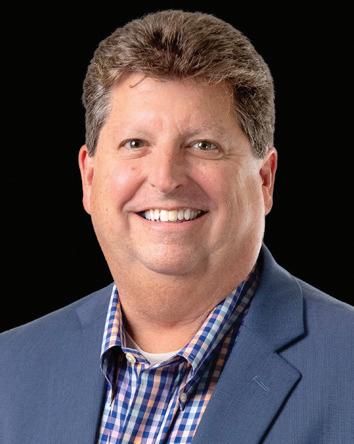
Liz Borntrager, vice president, senior manager retail delivery, announced that Darren De Witt has been named assistant vice president, manager retail branch Interra’s main office. De Witt will provide daily operations, support and coaching for the retail team. He will also focus on membership growth and community engagement.
De Witt has more than two decades of managerial leadership in the financial services industry. Not only is he excited to create relationships with its members, but he also brings his skills as a leader to help shape a positive environment.
He enjoys taking part in mission work, whether it’s locally, regionally or internationally. He has been out of the country five times helping build communities. De Witt serves as the co-chair of Summer of Service Michiana, a weekend conference for students to make a difference in the community.
In his spare time, De Witt en-
Pjoys watching the Chicago Bears and spending time outdoors with his family and three dogs. He is also very involved in his church as a youth minister for the past 16 years.
He currently resides in Osceola with his wife, Kimberly. They have three sons and two granddaughters.
ublic A uctions
Wise Real Estate and Personal Property Auction
Thursday, Sept. 19. Located at 72493 SR 15, Milford. Personal property sells 1 p.m. Motor home, autos, tractors, shop items, household items and more. Real estate sells 6 p.m. 1,970 sq. ft. ranch, two-bed, 2 1/2-bath, 48 foot-by-64 foot by 16-foot pole barn on three acres. Hahn Auctioneers, hahnrealtyandauction.com.
Online Real Estate Auction
Bidding open until 6 pm. Thursday, Sept. 19. Open house from 5:30-6 p.m. Monday, Sept. 16. Property located at 11739 N. SR 13, Syracuse. Country home and outbuildings on two acres near Lake Wawasee. Bid online at metzgerauction.com. Metzger Property Services.
Online Antique Business Liquidation Auction
Bidding open until 6:30 p.m. Thursday, Sept. 19. Pickup located in Syracuse, exact details in winning invoice. Antique furniture, light fixtures, shades, display cases, glass front hutches and curios, glassware, sterling pieces, brass, figurines, rugs, décor. Bid online at metzgerauction.com. Metzger Property Services.
Lake Wawasee Channel Front Property Auction
10 a.m. Saturday, Sept. 21. Located at 11721 N. Elm Grove Drive, Syracuse. Channel front home, 1,492 sq. ft on 44 footby-143 foot lot, large deck overlooking channel, walk-out basement. Hahn Auctioneers, hahnrealtyandauction.com.
Airplane Auction
11 a.m. Saturday, Sept. 21. Located two miles east of Bourbon on U.S. 30 at 12740 Beech Road, Bourbon.
Online Real Estate Auction
Bidding open until 6 p.m. Thursday, Sept. 26. Property located at 6870 N. Kalorama Road,
Culver’s ‘Share Nights’ raise money for nonprofit groups
Culver’s, through its community involvement with nonprofit organizations, has been making a positive impact with its “Share Night” programs across the country.
Leesburg. Open house 5:30-6 p.m. Thursday, Sept. 19. Two-story home with Tippecanoe Lake access. Bid online at metzgerauction.com. Metzger Property Services.
Standard-bred Auction
9 a.m. Saturday, Sept. 28. Located at Shipshewana Auction Barn, 345 S. Van Buren St., Shipshewana.
Public Auction
3:30 p.m. Monday, Sept. 30. Located 0.6 mile east of Shipshewana on CR 250N to CR 735W, north ¼ mile to 2745 N. CR 735W, Shipshewana.
Stutzman Real Estate And Personal Property Auction
4 p.m. Tuesday, Oct. 1. Located at 15242 CR 40, Goshen. Threebed, 1 1/2- bath house and 48 footby-32 foot shop. Scaffolding plus plank and castors, shop items, fishing poles, rods and reels, fishing equipment, lawn and garden items. Hahn Auctioneers, hahnrealtyandauction.com.
Public Auction
3 p.m. Tuesday, Oct. 1. Located 1½ miles east of Middlebury on CR 16 to CR 43, north two miles to 54038 CR 43, Middlebury.
Real Estate Auction
6 p.m. Tuesday, Oct. 1. Located at 695 W. Perry Road, Ligonier.
Online Property Auction
Bidding open until 6:30 p.m. Wednesday, Oct. 2. Property located at 8211 E. CR 1290N, Syracuse. Storage barn and 48-storage unit building. Bid online at metzgerauction.com. Metzger Property Services.
Country Home
And Acreage Auction
10 a.m. Saturday, Oct. 5. Located at 2207 E. CR 550S, Warsaw. Country farmstead, quality cropland and woods. Personal property, including farm equipment, vehicles, tools and household goods. Metzger Property Services, metzgerauction.com.
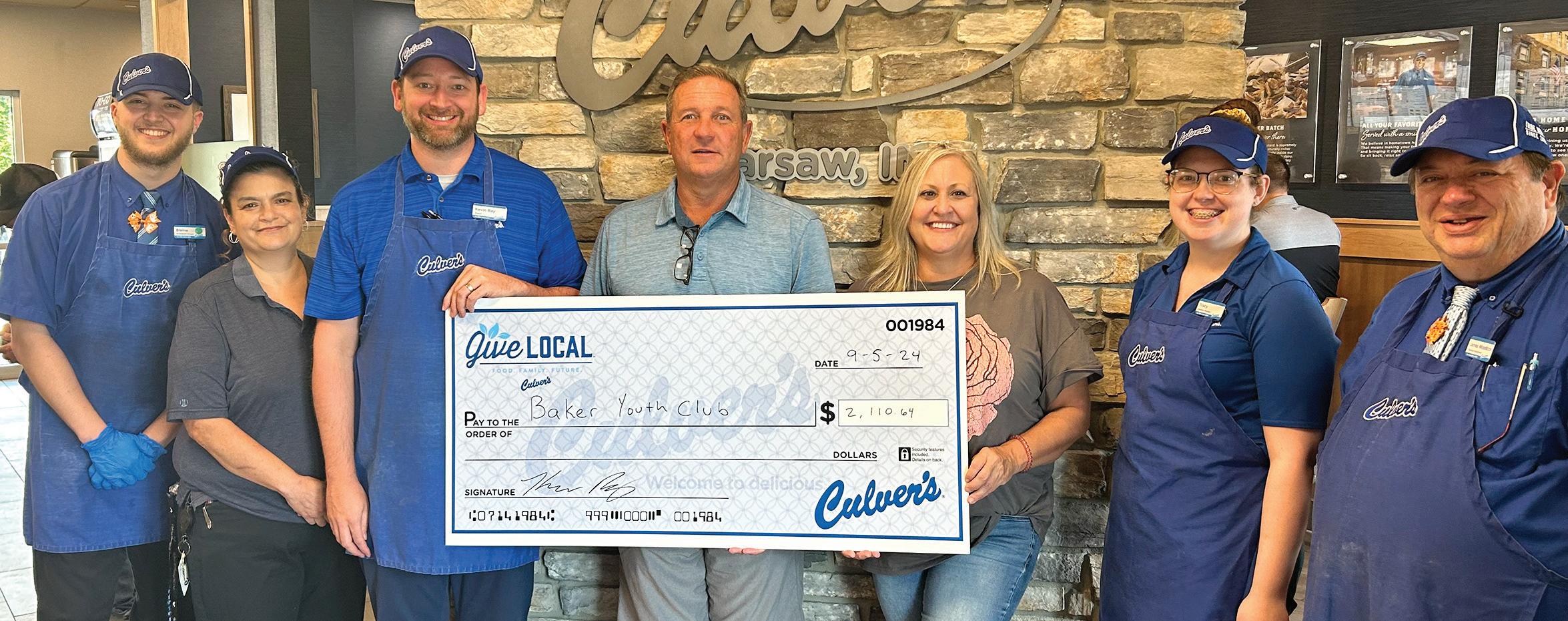
Recently, Culver’s of Warsaw held a “Share Night” to raise money for Baker Youth Club, Warsaw. As a result of that effort, the restaurant was able to present Baker Youth Club with a check for $2,110.64.
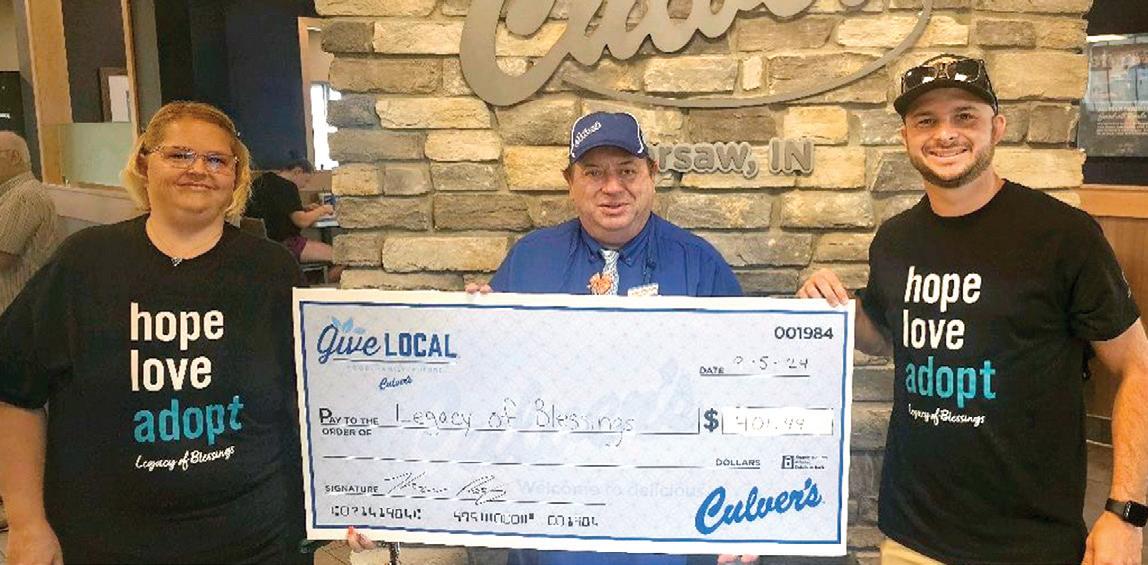
Another “Share Night” also was recently held at Culver’s to raise money for an adoption organization called Legacy of Blessings. That effort raised $401.44 for the group.
Organizations interested in hosting a “Share Night” at Cul-
ver’s can contact either Culver’s location in Warsaw. For the Parker Street Culver’s, call Jessica at
(574) 306-2581, or for the Jalynn Street location, call James at (574) 306-2107.
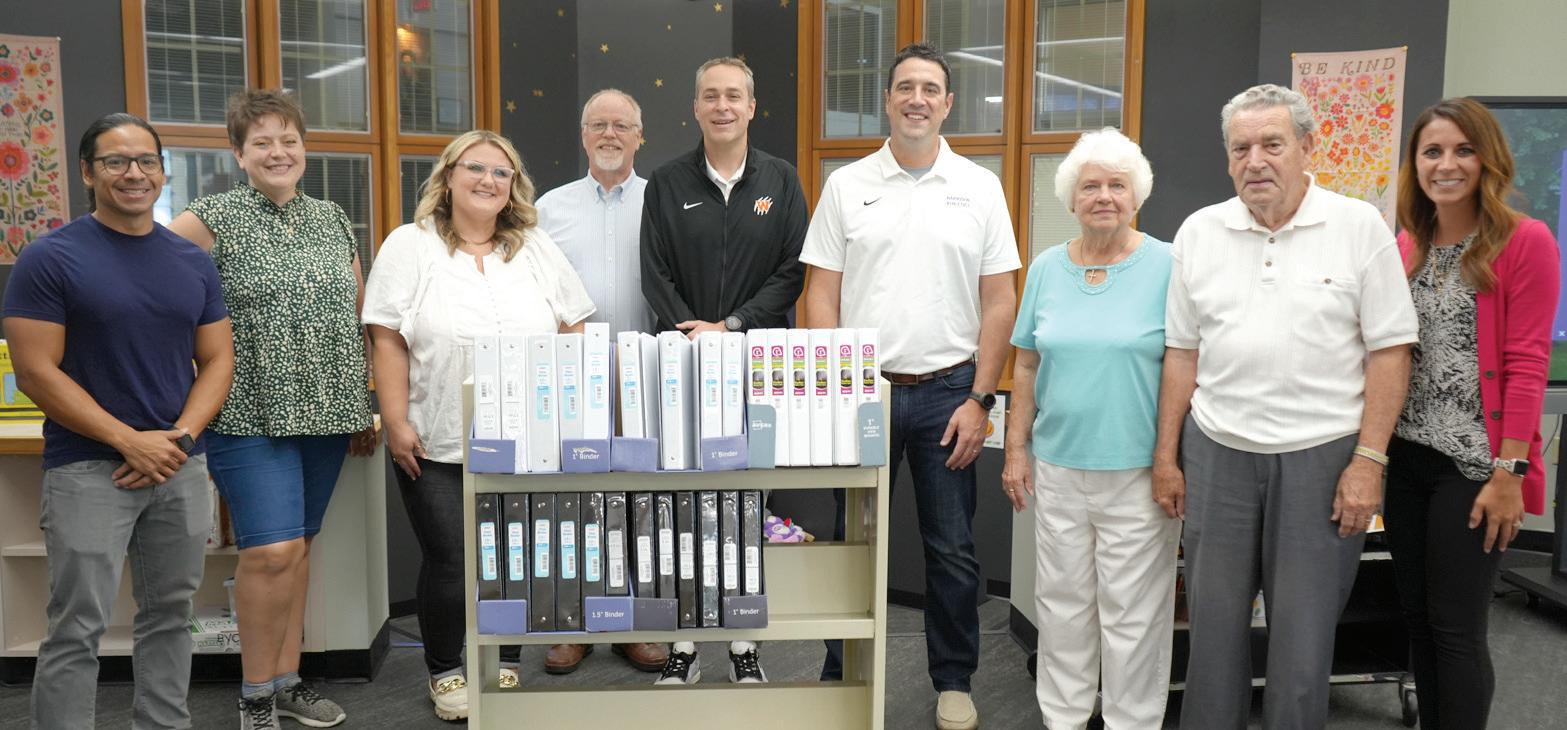
SUPPORTING FUTURE LEADERS Area churches has stepped up to provide funding for a leadership program at Harrison Elementary in Warsaw. Pictured from left are Daniel Colleo Villacis, Branches Vineyard Church; Brittany Stump, representing for Greg Demopoulus, Warsaw Community Church; Ashley Starkweather, administrative assistant at Harrison Elementary; Ken Chupp, Warsaw Missionary Church; David Hoffert, superintendent of Warsaw Community Schools; Matt Deeds, principal of Harrison Elementary School; Betty Ratliff and Hobert Ratliff, Warsaw Family Worship Center; and Krista Polston, director of communications for Warsaw Community Schools.
Not pictured are representatives from First Baptist Church, Valley Springs Fellowship, Fellowship Church Warsaw, Kearstin Criswell of Mission Point Community Church and an anonymous donor. Photo provided.
Church initiative and donor support Harrison Elementary leadership program
A group of area churches and an anonymous donor recently stepped up to support a leadership program at Harrison Elementary School in Warsaw.
The churches, through a joint initiative called LovEd, and the donor provided the resources for Harrison school to purchase leadership portfolio binders for students. Each student will have their own binder to track progress, set goals and reflect on their growth in leadership and academic skills through a program known as “Leader in Me.”
“Leader in Me” is based on Stephen Covey’s book, “The 7 Habits of Highly Effective People” and is designed to transform the culture
of schools by teaching students to be proactive, take responsibility for their actions and work collaboratively with others, according to a news release from the school.
The program aims to empower students with leadership and life skills and encourages them to discover their potential, set and achieve personal goals and develop a sense of accountability and self-discipline. “Leader in Me” is implemented through a wholeschool approach, where leadership principles are integrated into the curriculum, classroom activities and school environment, according to the news release.
The school’s mission statement, which is said every day on morn-
ing announcements, is: “Harrison Elementary is developing leaders who communicate, problem-solve and positively contribute to our community.”
LovEd is an initiative started by one local church with the purpose of encouraging staff and providing for tangible needs of students and families. LovEd is a collaboration of several local churches who work together to meet a variety of needs. The initiative is currently in Leesburg, Lincoln, Harrison and Milford schools, and organizers hope to expand it to all Kosciusko County schools. For more information, send an email to loved@missionpoint.net.
DARREN DE WITT
BOOST FOR BAKER YOUTH Pictured from left are Blain Smith, Jessica Rocha and Kevin Ray, all of Culver’s; Tracy Furnivall and Tamara Drake of Baker Youth Club; and Tracy Biege and James Woodcox of Culver’s. Photo provided.
FUNDS FOR LEGACY OF BLESSINGS Pictured from left are Deb Burson of Legacy of Blessings, James Woodcox of Culver’s, and Phil Kuhn of Legacy of Blessings. Photo provided.