Warsaw’s Old Jail Museum, 121 N. Indiana St., has opened its latest exhibit installation and it pays tribute to a colorful, theatrical piece of Indiana history: the circus. The museum exhibit walls are lined with posters, ticket stubs and banners. Indiana has nearly 150 years of circus history. The exhibit will remain on display until the museum closes in mid-December.
In 1882, Civil War veteran Ben Wallace cemented Indiana into circus history when he started a small traveling show near Peru. This small traveling show eventually became known as The Great Wallace Circus.
“The Great Wallace Circus started out as an overland circus, that is, it traveled by wagon from town to town,” Greg Steffe, co-director at the Old Jail Museum, explained. “Within just a couple short years, the show grew and prospered to the point that it was converted into a railroad operation.”
The Great Wallace Circus continued to prosper and grow. In 1907, Wallace purchased the Carl Hagenbeck Wild Animal Circus. This purchase added 13 elephants and doubled the amount of wagons and train cars to his circus.
“He combined the two to form the Hagenbeck Wallace Circus, one of the most revered names in circus history,” Steffe said. “Wallace prospered and became quite wealthy. He was one of just a handful of individuals to become rich directly as a result of his activity in the American circus industry.”
Nearly a decade later, in 1918, Wallace sold the Hagenbeck Wallace Circus to three Peru-area circus businessmen, Jerry Mugivan, Bert Bowers and Ed Ballard. The trio were the owners of Sells Floto Circus, John Robinson Circus, Sparks Circus, AI G. Barnes, Yankee Robinson and Buffalo Bill’s Real Wild West.
“Together, these men would form the American Circus Corporation; which, at the height of its’ power, was the most powerful entity in the history of the American circus,” Steffe mentioned. “At one time, they owned title to virtually every major circus in America with the exception of Ringling Bros. Barnum & Bailey.”
In 1929, the American Circus Corporation was sold to John Ringling for $1.7 million. Less than a month after the sale, the stock market would crash and kick off The Great Depression.
“Starting in 1930, the great shows of the American circus would begin falling by the wayside,” Steffe explained. “By 1934, Hagenbeck Wallace remained the only subsidiary still left on the road.”
Peru is not the only town with deep circus roots. Other circus towns include West Baden, Rochester, Muncie and Bloomington.
Although The Great Depression severely dampened
Warsaw exhibit highlights INDIANA’S CIRCUS HISTORY
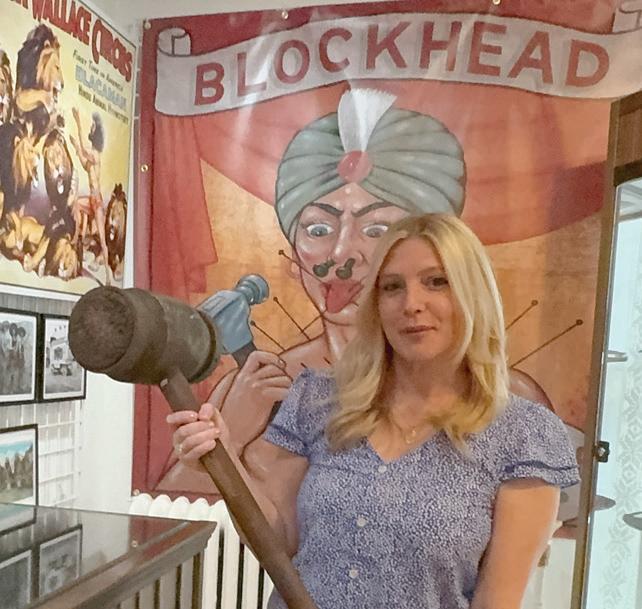
RINGING BROS. MAUL — While giving a tour of the recently unveiled circus exhibit at the Old Jail Museum in Warsaw, Sheila Strickland, co-director of the museum, picked up a stake driving maul that was used by the Ringling Bros. Barnum & Bailey Circus. The maul dates back to the 1800’s.
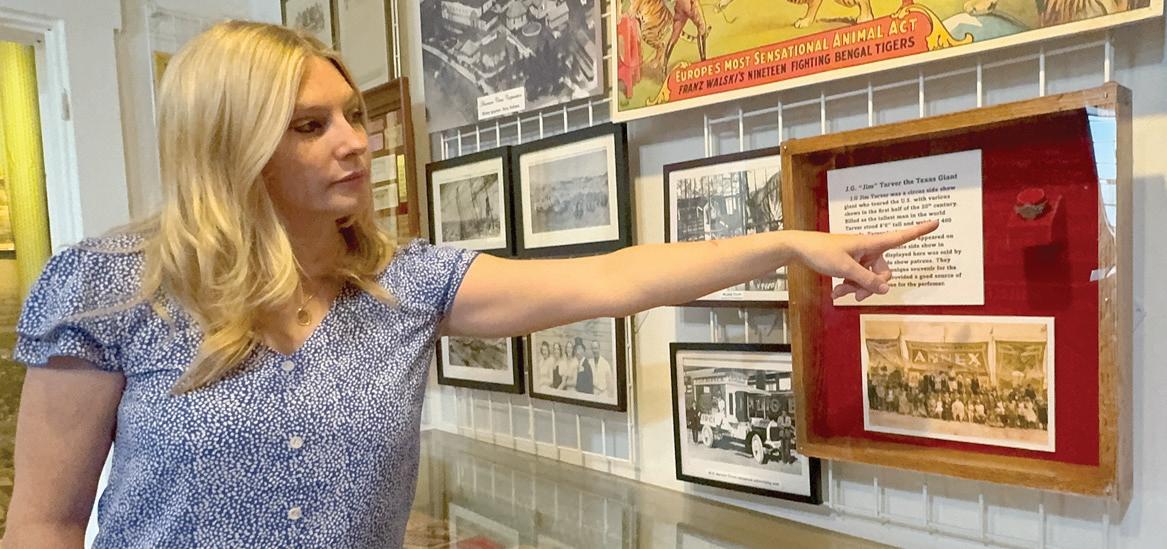
RING OF SIDESHOW GIANT
— Among the items displayed is the ring of famous sideshow giant, J.G. “Jim” Tarver the Texas Giant. Tarver was a circus sideshow giant who toured the United States with various companies in the first half of the 20th century. Tarver appeared in the Hagenbeck Wallace sideshow in 1926. Tarver was a whopping 8’6” tall and weighed 460 pounds.
circus’ popularity, circus’ are still ingrained into local Hoosier culture. Every year, local third graders attend the Fort Wayne Mizpah Shine Circus. This is a decades-long tradition as Warsaw elementary schools have attended for over 30 years and Wawasee schools started attending in the 1960’s. “Circus history is important because, like all other history, it shows who we were and how we become who we are today. In the days before the internet, television and mass media, the circus provided a wholesome form of entertainment to the masses,” Steffe explained. “In many cases, the traveling menageries that were carried on these shows pro-
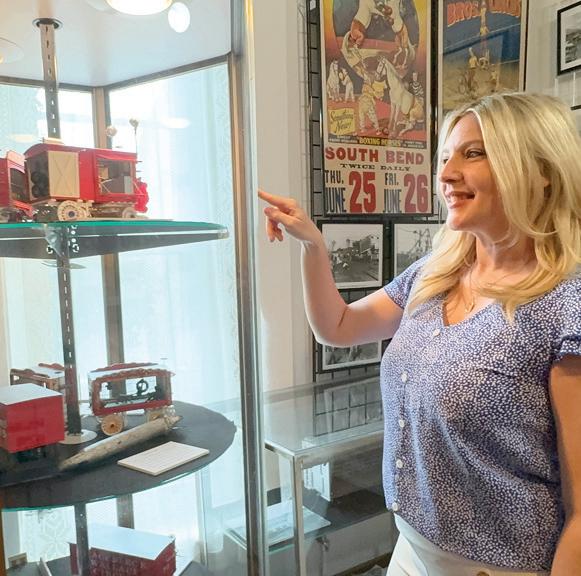
a model of one of the railroad cars.
vided the only opportunity many rural residents ever had to see rare and exotic species up close. Circus day was like a holiday in many communities and is a treasured part of our American history.”
The Old Jail Museum is open 10 a.m. to 4 p.m. Wednesday through Friday and 10 a.m. to 2 p.m. Saturdays. The museum is consistently looking for volunteers to assist in the genealogy research library, give tours and front desk help. For more information about the museum or its volunteer opportunities, call The Old Jail Museum at (574) 2691078. Know Your Neighbor
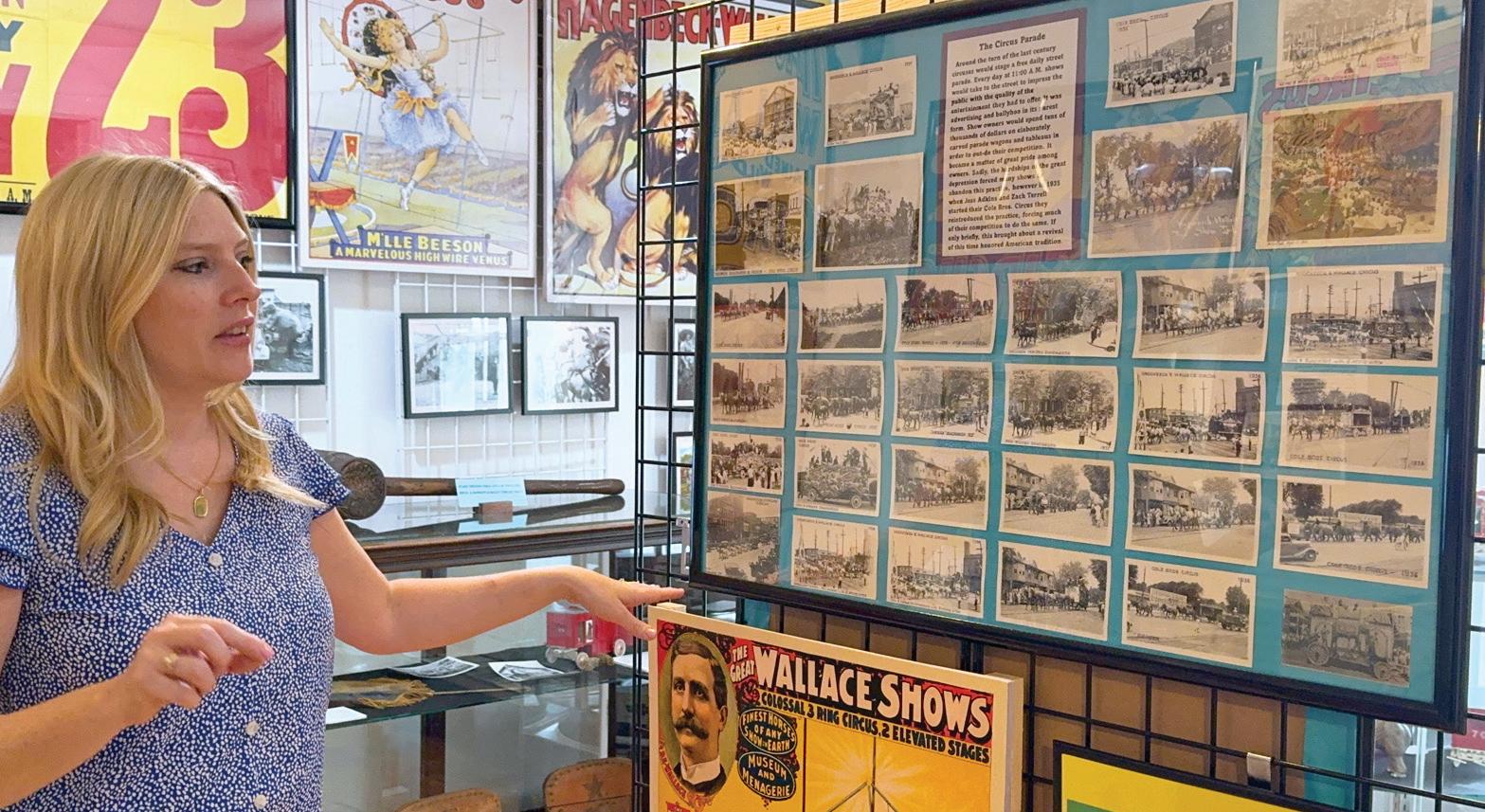
CIRCUS PARADE Sheila Strickland points out the pictures that show the Circus Parade. Every day, starting at 11 a.m., circus shows would parade the street to woo and awe the public with entertainment.
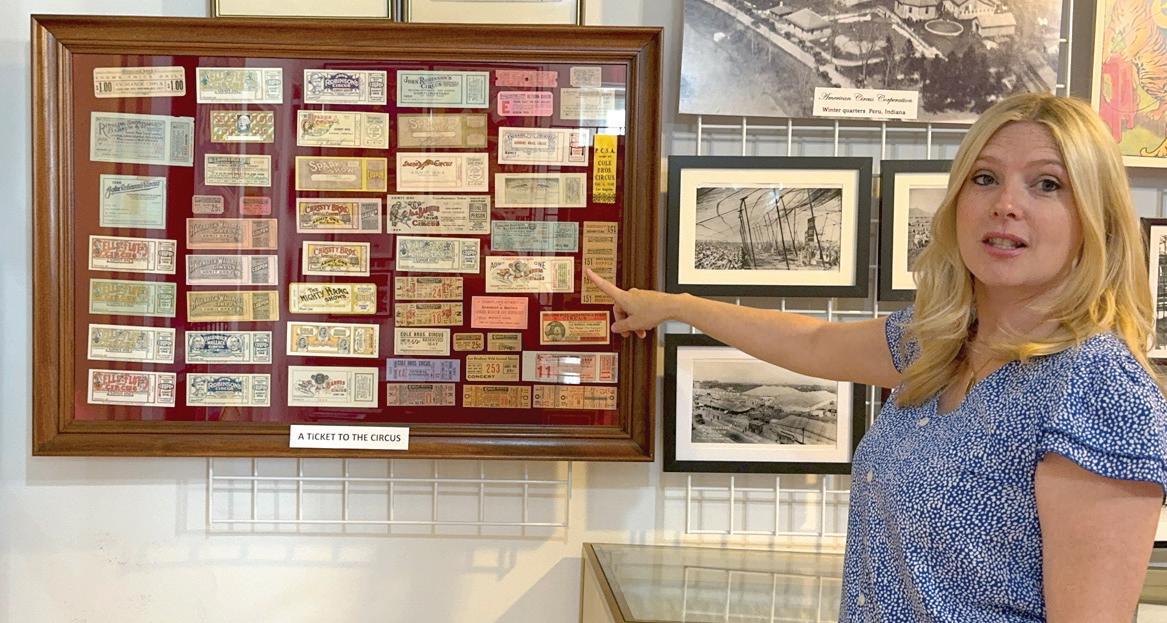
TICKETS TO THE CIRCUS — Shelia Strickland points out a shadow box that houses over 50 circus tickets. The tickets are from a range of different shows, including Hagenbeck Wallace Circus, John Robinson’s Circus and Cole Bros. Circus.
WAGON TO RAILROAD Ben Wallace started a small, traveling show that traveled by wagon from town to town. After the booming success of The Great Wallace Circus, Wallace converted the show into a railroad operation. Strickland points to
K now Y our n eighbor
Area groomer creates styles that fit the pet’s personality
By LAURIE LECHLITNER Staff Writer
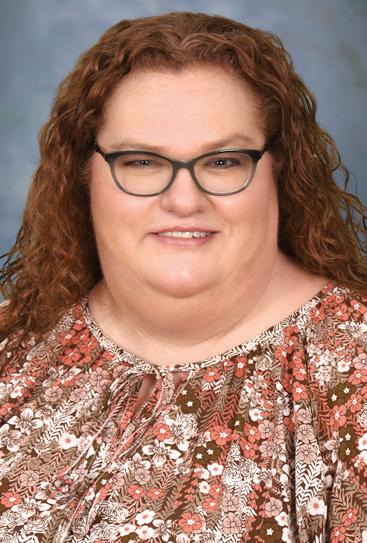
“I was the one in the family who was always bringing stray animals home that were wandering around our neighborhood in Hartford City, Indiana,” stated Amanda Twibell. “Since we had cats at home, it was awkward introducing my stray husky Gallery to the family. I also volunteered at the rescue facilities, whether that entailed cleaning up or walking and playing with the animals.
“Since I’ve always been an animal lover. My job as a groomer at Urban Paw Boutique in Warsaw is really no surprise to those who know me best. I love the privilege of being creative when I groom a dog. Whether I’m giving a mohawk to a golden doodle or dying a shih-tzu’s tail pink, I’m in my happy place.”
Staff members do regular cuts for those who are a bit more conservative.
“Actually, I went to school to become an art educator originally. But when COVID hit, I had some time to reconsider. I began grooming pets for family and friends. After my husband Chase and I moved to Leesburg, I went to work at Urban Paw. This is my fifth year working as a professional groomer.”
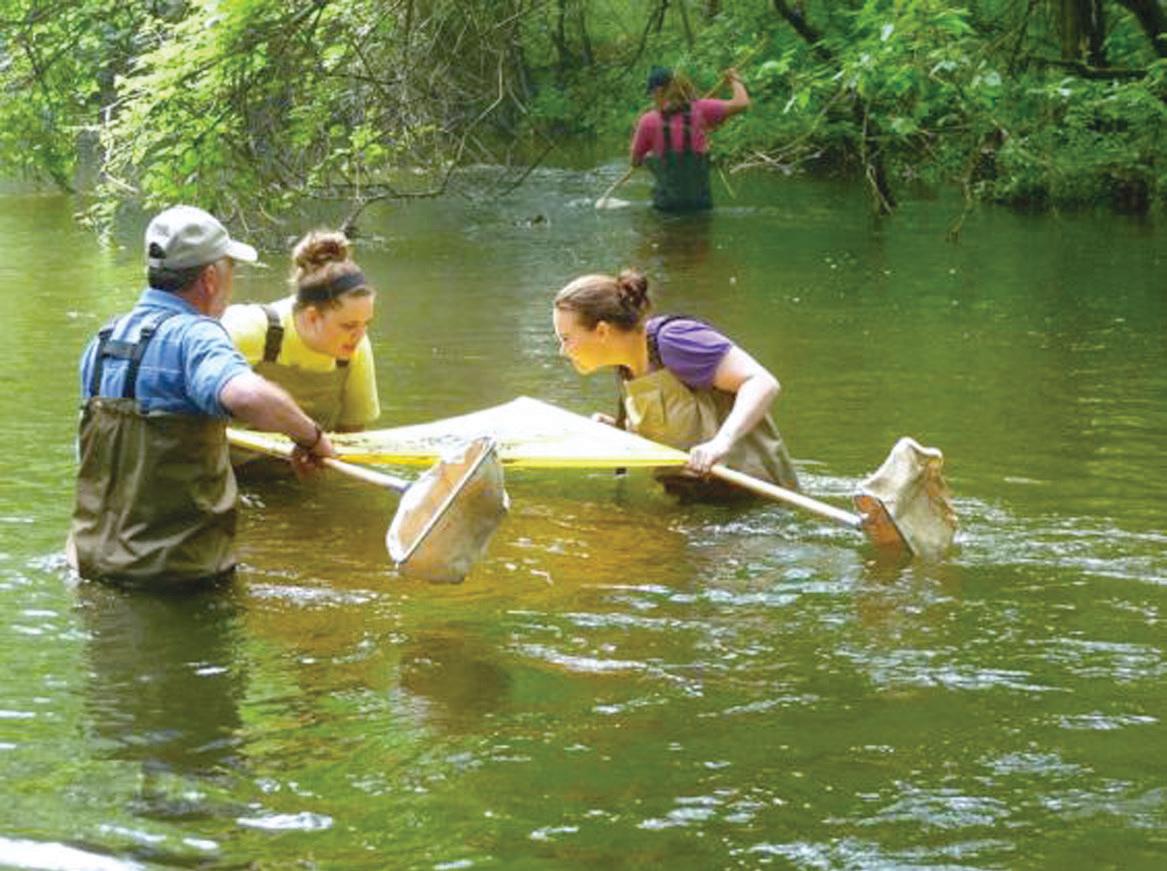
Clean, abundant water is a valuable resource. Hoosier Riverwatch, an Indiana Department of Environmental Management education program, hosts workshops around the state to train people to monitor local streams,
Isaiah is her trainer and coworker. “I’ve always been interested in studying the personality and body language of various breeds of dogs. I took the extra steps to attend seminars online and earn a certification. I’m still learning. Things are constantly changing about canine behavior theories and hygiene facts. It’s a constant learning process.”
A typical day for Twibell starts at 8 a.m. in the morning. “After I have my coffee, I’m ready for all those puppies and their endless supply of energy. I try to do eight to ten dogs a day. It helps that I have an assistant who gives them their baths.”
One of the reasons Twibell wanted to be an educator is to help people. “Now I’ve got the best of both worlds. I can educate people on what’s best for their pets and have the joy and companionship of dogs all day. It’s funny, many times I’ll recognize the face of the pet even before the owner. I treat those dogs as though they are my own.”
When asked if she’s ever been bitten in a grooming session, she smiled. “That’s one of the pitfalls of being a groomer. That’s why it’s important to know about dog breeds, personalities and body language. For example, when a dog wags its tail on the groom-
rivers and lakes.
The next volunteer river monitoring workshop is at the North Webster Community Center, from 8:30 a.m. to 4:30 p.m. Wednesday, July 17. The training is presented by the Kosciusko County Soil and Water Conservation District and The Watershed Foundation. A reservation is required to attend and the event is completely free of charge.
“By learning the basics of stream monitoring, participants can launch a lifelong passion that not only benefits the environment, but also can be personally fulfilling,” said Lyn Crighton, TWF Executive Director. “If we’re to protect this crucial natural resource into the future, we need to
Indiana
Her favorite dog to groom is a golden doodle. “I’ve got one at home we call Nash. I’ve also got a golden retriever named Gunner.”
When the Twibells first moved to Leesburg it was a tough transition for Amanda. “It was during the COVID pandemic, and I was isolated in a lake cottage during the cold winter. Those two dogs are what got me through. They are very much a part of our family.”
Twibell has not given up her artwork. “Now I draw portraits of dogs. Some of my clients want to remember a dog that has passed. Or they may just want a picture of their pet to hang on their wall.”
She loves gardening. “I’ve created a memorial garden for my father who passed away. I also enjoy taking the pontoon out on the lake.”
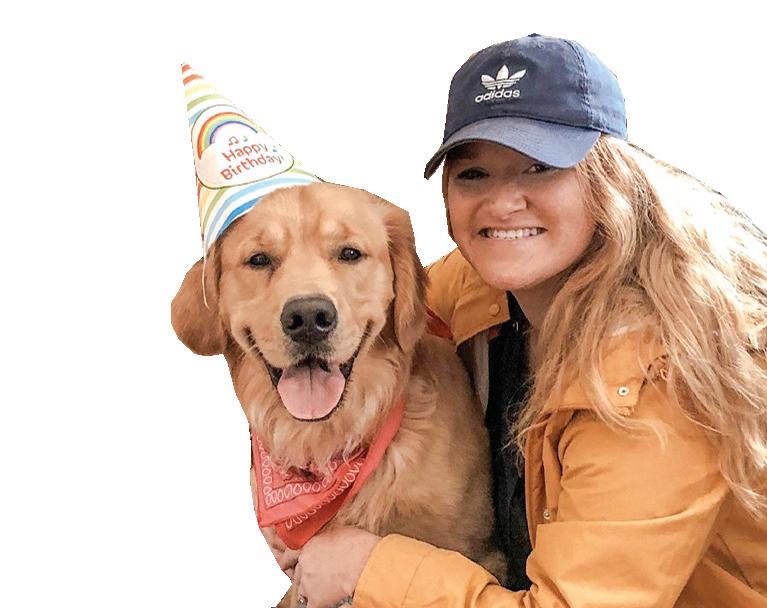
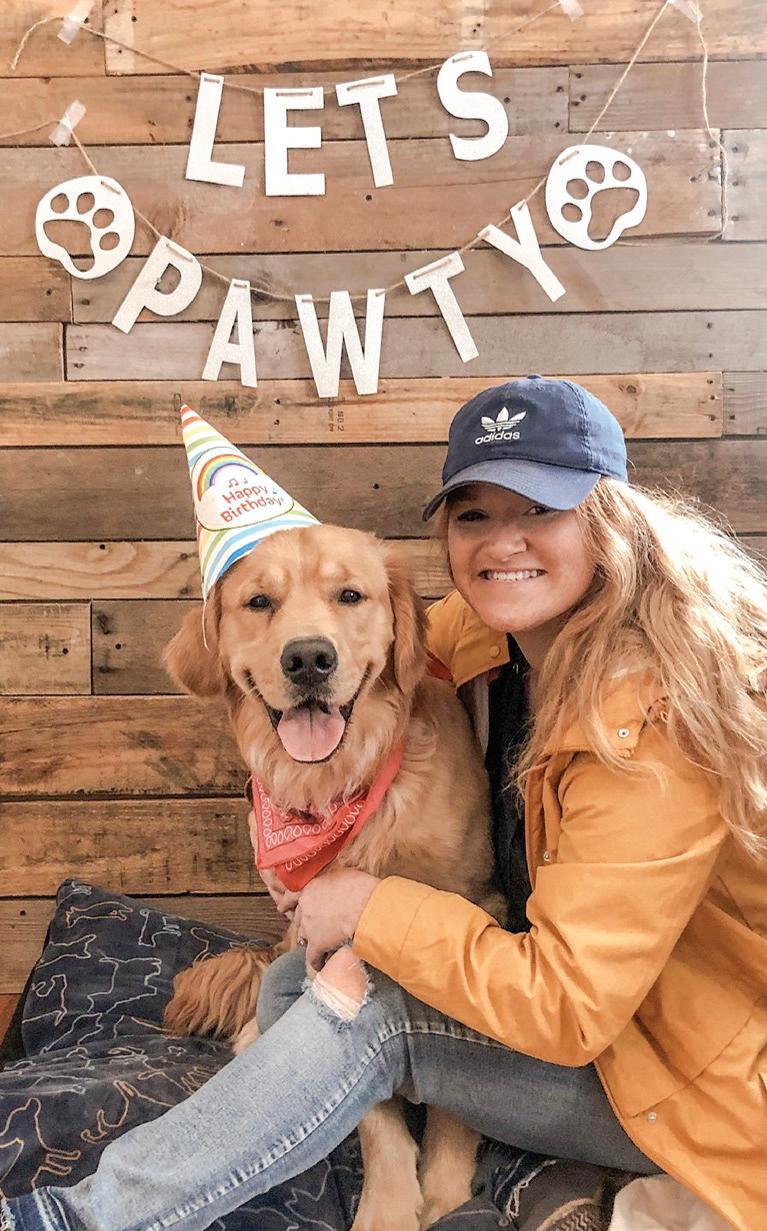
CANINE BIRTHDAY PARTY
Birthday parties are not just for humans. Amanda Twibell hangs out with her golden retriever Gunner. And why not? It’s his birthday. This is her fifth year working as a professional groomer. She loves greeting owners as they drop off their canines at Urban Paw Boutique, Warsaw. Photo provided by Amanda Twibell. ing table, that doesn’t always mean it is happy.”
foster an understanding and appreciation for conservation that will sustain us for generations to come.”
Volunteers take a look at microinvertibrae and other creatures found in a stream during a past monitoring of a local stream to help determine the water-quality.
The workshop will provide general education in water-quality issues and hands-on training in monitoring the health of rivers and streams through physical, chemical and biological testing.
After the training, volunteers can perform stream testing for
a wide variety of possible pollutants. They then submit their data to a statewide volunteer monitoring database that makes the information available to anyone.
“The training is for anyone interested in learning about water quality and gaining hands-on experience in monitoring rivers and streams,” said Amanda Heltzel, Kosciusko SWCD Education Coordinator. “People interested in the environment, especially educators, are invited to attend.”
Hoosier Riverwatch, sponsored by the Indiana Department of
Environmental Management, is an education program that focuses on local river and stream stewardship. More than 6,000 people have participated statewide. Check out HoosierRiverwatch. com to find water-quality data collected by these citizen scientists and to discover where monitoring has taken place.
For reservations, specific location and directions, contact Paige Hubner at The Watershed Foundation at admin@watershedfoundation or (574) 834-3242. To learn more about Riverwatch, visit in.gov/idem/riverwatch/
By DEEANNA MURASKI, and DARLA MCCAMMON Guest Writers
We would be remiss if we didn’t revisit the quintessential American artist for our Art in America series for Fourth of July. No artist has been able to capture the American spirit so aptly. The artist is Norman Rockwell.
Born in New York City in 1894, he died in 1978. Rockwell was able to capture the human emotions of grief, resilience, hope, young love, tragedy, strength and the embodiment of Americans.
Rockwell did it wryly, subtly and sometimes boldly. We could relate to his picture of the grieving stoic parents holding the perfectly-folded triangular red, white and blue American flag, representing their deceased child, in their hands.
We could wish to be the saucy grandfather in his three-piece suit playing baseball with his blissfully happy grandchild as a cloud of dust kicks around their bodies.
In 1942, he depicted Abraham Lincoln presenting the Gettysburg Address, with the flag shielding Lincoln’s face from the hot sun. In 1943, Rockwell painted his famous “Freedom” series.
“Freedom of Speech” shows a
Pierceton free community
dinner marks 11 years; next meal July 18
The committee for the free community dinners in Pierceton is marking the 11th anniversary of serving the meal to the people of Pierceton and the surrounding area, according to a news release.
The meal has grown from “low key” to serving more than 200 meals every other month.
The next free community dinner will start at 5 p.m. Thursday, July 18, at the parish hall at St. Francis Xavier Catholic church, 408 W. Catholic St., Pierceton.
On the menu for a picnic theme will be grilled hamburgers, vegetable, chips, fruit and cookies.
The dinner will continue to be a drive-thru format.
Donations are accepted to help with expenses, but the meal is always free.
young common man courageously standing up to speak amongst a room of businessmen.
“Freedom From Fear” invites us into the bedroom of two young boys tucked into bed by mom and dad, while dad loosely holds onto a newspaper with an alarming headline.
“Freedom to Worship” reflects faces in reverent prayer with hands clasped, showing one man who chooses not to pray but allows others to worship.
“Freedom from Want” is painted with the irony of a very simple meal of water, turkey, celery stalks, possibly potatoes and gravy and cranberry sauce.
However, it’s not the abundance of food of which there is not much for such a large gathering, but rather the presence of family and laughter in the closeness of the home that satiates the need.
“Rosie the Riveter,” painted in 1943, displays a woman with head slightly upturned cradling a heavy unwieldy riveting machine in her lap with a backdrop of the American flag gently waving.
During the war, women picked up where they needed to in order to provide for their families and help with the war effort. This painting was iconic for its recognition and celebration of this necessity.
Rockwell frequently painted military, all branches, sometimes even together as the importance of their service to our country was forefront of his patrons and most Americans at the time. Since Rockwell served in the war, he had a first row seat to military life.
Additionally, because he was considered a light-weight at 140 pounds and 6 feet tall, he had to fight to be allowed to enlist.
During World War II, Rock-
well created an immediately endearing and relatable fictional every-man character: Willie Gillis. Rockwell followed this young private throughout his military career, which infused the viewers with a sense of patriotism and buoyancy to face what may come.
Rockwell was endearing because he showcased everyone: the family man, the lineman, the loner, etc. Anyone could be in the spotlight with the curtain pulled back to help us relate to their viewpoint. Rockwell was also an ardent believer freedom and liberty were our most valuable possessions.
Rockwell’s painting content speaks to our hearts but his painting abilities are what help us see his vision. The movement Rockwell creates are extremely thought out and lovingly imagined.
Rockwell was a genius at taking a blank canvas and creating stories without words.
Events
• Rockwell’s “Imagining Freedom Virtual Exhibition” can be watched on a computer, mobile device, or VR headset. Initial cost is $5 but can be accessed anytime, anywhere as many times as you like. Visit www.nrm.org/2024/02/ virtual-exhibit.
• Norman Rockwell Museum, 9 Glendale Road, Route 183, Stockbridge, Mass. Children and active military, free; adults, $25; seniors/ retired military, $23. For an additional fee, get a guided tour. Open 10 a.m. to 5 p.m. Monday through Sunday (except Wednesdays). Visit www.nrm.org/visit.
• Current artist Jackie Meier’s vibrant and colorful landscapes and animals. Warsaw City Hall, 102 S. Buffalo St., Warsaw. Hours: 8:30 a.m. – 4 p.m. Monday through Friday, except holidays.
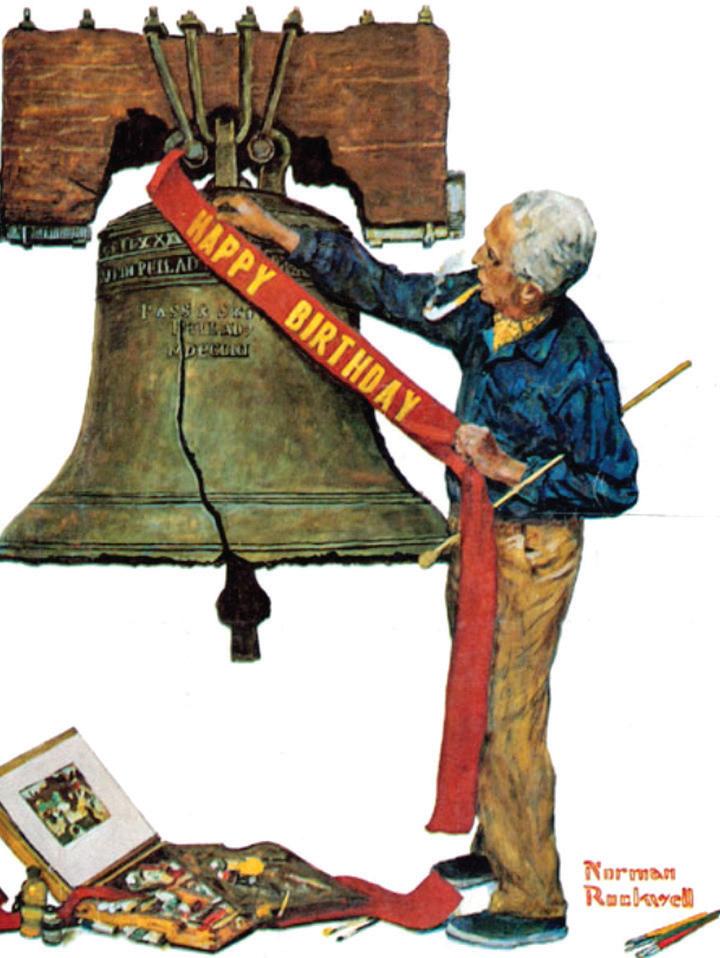
With a bit of wry humor, Rockwell created a painting of a seasoned artist who is commissioned to paint a simple “Happy Birthday” banner for the liberty bell. The artist with his expensive paint and brushes at this feet, aptly completes his simplistic post.
Look at Rockwell’s expert use of perspective, shading, light, and texturizing. The subject is equally creative. Photo provided by DeeAnna Muraski.
NORMAN ROCKWELL HAPPY BIRTHDAY TO THE USA In 1976, Norman Rockwell was requested to create a painting celebrating the 200th Birthday of the United States of America. He was 82 years old at the time; however, you could never guess it by looking at what he painted.
EDITORIAL OFFICES, CIRCULATION, DISPLAY AND CLASSIFIED ADVERTISING
WARSAW OFFICE MILFORD OFFICE
SYRACUSE OFFICE
114 West Market St. 206 S. Main St. 102 East Main St. Warsaw, IN 46580 P.O. Box 188, Milford, IN 46542 Syracuse, IN 46567 Phone (574) 269-2932 Phone (574) 658-4111 Phone (574) 457-3666 Fax 888-371-2934 1-800-733-4111 Fax 800-886-3796
‘the PAPER’ reserves the right to refuse for publication any advertising that is considered
offensive, misleading or detrimental to the public, the newspaper or another advertiser and to edit advertising at its discretion.
Publisher, Ron Baumgartner rbaumgartner@the-papers.com
Business Manager, Annette Weaver aweaver@the-papers.com
Editor-In-Chief, Deb Patterson dpatterson@the-papers.com
Editor, Lauren Zeugner lzeugner@the-papers.com
Warsaw Office Manager, Mary Beth Spalding warsaw@the-papers.com
Director Of Marketing, Steve Meadows smeadows@the-papers.com
Advertising Representative, Carl Lauster clauster@the-papers.com
Advertising Representative, Susan Stump sstump@the-papers.com
Circulation Manager, Jerry Long jlong@the-papers.com
Commercial Printing Sales Representative
Rodger Salinas rsalinas@the-papers.com
Commercial Printing Customer Service
Tina Kaplan tkaplan@the-papers.com
Rich Krygowski rkrygowski@the-papers.com
Good Neighbors is a column in which readers share friendly advice. To ask or answer questions, write the Shopping Guide News, Good Neighbors, P.O. Box 188, Milford, IN 46542; fax 800-886-3796; or e-mail abias@the-papers.com. Please no phone calls.
Editor’s Note: The Good Neighbors column is for people looking for hard-to-find or old items or for people seeking advice, not for items you can find in a local store or sell through the help of a classified ad. This column will now run every other week.
Railroad ties
Good neighbors: Free old railroad ties for landscaping or firewood. Call (614) 323-7129. Canning jars
Good neighbors: I have three cases of Ball canning jars (12 jars in each case). If interested, call (260) 215-1504.
New questions
LEGO sets — Does anyone have any LEGO sets they no longer want or need? Call and leave a message at (574) 747-7017.
The Story Bible Series — Would any good neighbor have The Story Bible Series from Guideposts for children? There are 52 books. The author is Penny
Frank and each book is about a person in the Bible. Call (574) 773-4890.
Chicken coop — Would any good neighbor have a chicken coop they no longer need for a reasonable price? Could also be a small garden shed. Call (574) 773-4890.
Trampoline net — Would any good neighbor have a trampoline net they no longer need? Call (574) 773-4890.
Girls bike — Does anyone have a good, used girls bike they no longer need? We would like one for our lower- grade daughter to bike to school. Carriers would be a plus. Prefer in the Nappanee/Etna Green area. Call (574) 227-0052.
Griddle lid/peony starts — Is there anyone who has an old Princess House double-burner griddle lid they no longer want? Also, any color and amount of peony starts. Call (574) 646-2323.
Three-wheeled bicycle/camper — Looking for an adult three-wheeled bicycle and a camper equipped with utilities. Call (574) 253-1626 or (574) 253-1410.
APC gives favorable recommendation for 12-lot subdivision near James Lake
By PHOEBE MUTHART Staff Writer
The Kosciusko County Area Plan Commission gave a favorable recommendation for a 12-lot residential subdivision near James Lake at its Wednesday, July 3, meeting.
Wacky 2 Premier’s petition is for preliminary plat approval for a residential development on a tract of ground.
The property is located on the west side of EMS T52 Lane, north of EMS T52C Lane in Tippecanoe Township. it was once the home of a Baptist camp.
The plans were met with some skepticism from the board, mainly flood issues, curbs and gutters in the new development, a group pier, DNR inspections and common areas.
The county’s technical committee said a number of issues needed to be addressed first.
Attorney Steve Snyder represented the developer. Most of these issues, said Snyder, “we can take care of.” He said he is fairly certain the DNR will approve the pier plans and inspections have been done and are completed.
“This is complicated,” he said, but doable. The plans, he said are “well done.”
The proposed subdivision has
significant lake frontage and meets the subdivision control ordinance. It also will have a channel with access to the lake.
There is a proposed grassy area for water run off and a place to put snow when it is plowed.
One of the issues was the curbs and gutters, which most of the board was not in favor of.
“It is a flood hazard area; we know that,” said Snyder. He said the flooding issues can be dealt with correctly during the development phase.
Citing another subdivision in the county, which has had water run-off issues, Snyder stressed this new subdivision would be different.
Snyder said “a properly constructed subdivision won’t be like that.”
Curbs and gutters, noted Snyder, will do nothing for the water run-off issue, noting the water will go into James Lake. Plus, he said, curbs and gutters would an additional expense.
“We propose to re-pave (the road) without curbs and gutters,” said Snyder. Most board members said they were not in favor, however, of having curbs and gutters but instead recommended side ditches.
A recommendation will need to come from the county highway superintendent, Steve Moriarty,
as a condition of the case moving onto the next phase. He is in favor of curbs and gutters, APC Director Matt Sandy said.
The decision by APC, to favorably recommend the petition with stipulations, will now go before county commissioners at 9 a.m. Tuesday, July 16, for its final decision.
Robert and Loretta Stutzman’s petition to rezone 11.17 acres from an agricultural district to an agricultural II district was approved.
The property is located on the north side of CR 1100 North and 2200 feet west of SR 19 in Scott Township, south of Nappanee.
The Stutzman’s case will go before the county commissioners at 9:15 a.m. July 16.
Darrell Carr’s petition for preliminary plat approval for the replat of a residential development on a tract of ground was denied.
The property is located on the north side of Acorn Drive, west of Levi Lee Road in Plain Township at 510 Acorn Drive.
One final plat was approved for Tippecanoe Heights, located near Stanton Lake, a residential subdivision on one lot. This is phase one of the property, which is located in Leesburg.
The next meeting is at 1 p.m. Wednesday, Aug. 7.
E nt E rtainm E nt
Famous Hoosiers Series —
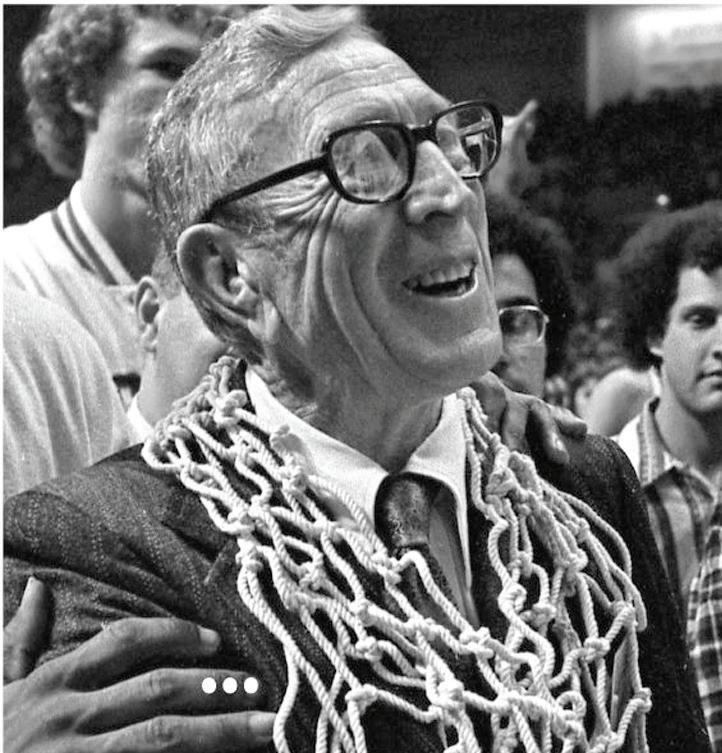
John Wooden, the greatest coach in history
It is remarkable how little many Hoosiers know about the history of the state and the amazing people it has spawned.
Some of the greatest athletes, composers, entertainers, entrepreneurs, innovators, leaders, musicians, philanthropists, politicians, preachers, public servants, scientists, teachers and writers in U.S. history were nurtured by this soil.
Chautauqua-Wawasee has embarked on an annual series to highlight Hoosiers who have impacted America.
John Wooden will lead off this series with a presentation by Dr. Richard Gunderman, author of the book “Hoosier Beacons.” The book provides a sketch of 30 notable people with Hoosier connections.
When you hear Gunderman’s presentation, you will be amazed at the nature and accomplish-
ments of the man discussed and you will want to be a better person by simply hearing about Wooden’s long and successful life.
The John Wooden presentation will be July 13, beginning with light refreshments and a cash bar at 4:30 p.m. followed by the presentation from 5-6 p.m.. The program will be at the Oakwood Resort Inn in Syracuse, and is free to attend.
About The Presenter Gunderman is chancellor’s professor in the schools of medicine, liberal arts and philanthropy at Indiana University.
A native of Indianapolis, he grew up on the city’s east side and attended Indianapolis public schools from kindergarten through grade 12. He subsequently graduated from Wabash College and the University of Chicago.
Since 1997 he has practiced
medicine at Riley Hospital for Children. He is a dedicated community and professional servant, and in 2012 was elected to the Indianapolis Public School’s Hall of Fame.
A passionate educator, he has received numerous teaching awards. In addition, he is a prolific writer, having published more than 600 scholarly articles and 10 books.
FAMOUS HOOSIERS SERIES
Dr. Richard Dunderman will present John Wooden, the man some say was the greatest coach in the history of American Sports, in Chautauqua-Wawasee’s first annual series highlighting famous Hoosiers. The free program will be from 4:30-6 p.m. Saturday, July 13, at Oakwood Resort, Syracuse.
Photo provided by ChautauquaWawasee.
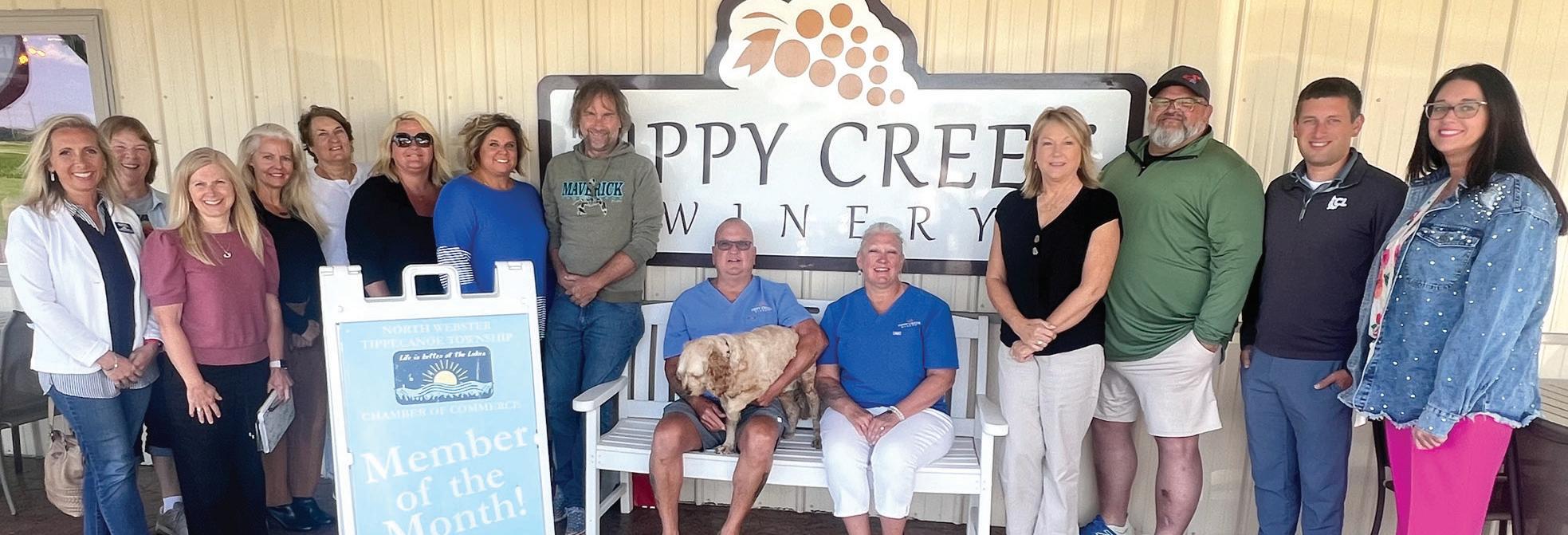
Chamber recognizes Tippy
Tippy Creek Winery is the June Member of the Month for the North Webster-Tippecanoe Township Chamber of Commerce. Tippy Creek Winery has been a unique point of interest in the community since 2016. Regular events such as cruiseins, comedy nights, painting classes and hot air balloon glows are paired nicely with craft-made wines.
Daniel and Lori Richcreek describe Kosciusko’s first farm winery as “an outdoor-oriented company and enjoy aligning wine with active, outdoor lifestyles.”
Tippy Creek Winery has six stainless steel tanks that can hold over 10,000 gallons of wine a year. There are 20 different wines available with names that give a nod to lo-
Creek Winery as Member of the Month
cal lakes and experiences. The vast selection is available in multiple locations throughout Kosciusko County.
NWTTCC recognizes Tippy Creek as Member of the Month for their commitment to bring the community together through events and their generosity in giving back to the community. Richcreek com-
Report your observations of wild turkey hens and their young
You can help the Indiana Department of Natural Resources learn more about the state’s wild turkey populations by reporting observations of hens with and without poults (chicks) through Aug. 31.
Anybody who observes wild turkey hens with poults or hens without poults is encouraged to report their observations online at DNR’s turkey brood reporting web page, on.IN.gov/turkeybrood.
Observations take only a few minutes to report, and no log-in
is required. The survey will be open from July 1 through Aug. 31, with a goal of receiving 3,000 observations across the state during that time.
DNR uses the reported observations to monitor wild turkey reproduction and calculate the state’s poult-to-hen ratio, or production Index. The information gathered from the survey will be made available to the public in the annual Wild Turkey Brood Report.
“Statewide turkey populations appear to be stable in Indiana, and monitoring hens and poults gives DNR a better understanding of population trends across the state,” said DNR furbearer and turkey research biologist Andy Byers. “Observations reported by the public are an important part of helping DNR manage wild turkeys.”
For more information on how to identify turkey broods, as well as look at past survey reports, visit on.IN.gov/turkeybrood.
mented, “Tippy Creek Winery loves being a part of our community and giving back whenever we can.” Information can be found on
their website tippycreekwinery. com, on their facebook page or by visiting them at 5920 N. 200E, Leesburg.
MEMBER OF THE MONTH Seated are Daniel and Lori Richcreek, owners of Tippy Creek Winery. Standing, from left, are Emily Shipley, chamber president, NWCC; Paula Miller, Paula Miller Farm; Nicole Davis, The Davis Group-Snyder Strategy Realty; Elise Guy, chamber director, Guy’s Lawn Care and Dock of the Bay Cabin Rental; Linda Land, chamber director, Lake-Land Cottages; Lori Bull, chamber director, Easy Organizing Solutions; Karen
White, chamber secretary, Caliber Designs; Chris Trowbridge, chamber director, Maverick Promotions; Susan Stump, chamber director, The Papers Inc.; Ryan Coverstone, chamber director, Socks Marina; Tyler Huffer, chamber director, Titus Funeral Home; and Gwen Fuchs, chamber director, Northwest Bank. Photo provided by the North Webster-Tippecanoe Township Chamber of Commerce.
Wa-Nee transportation department a top national program
Six school districts from across North America have won the second-annual Top Transportation Teams award, including one school district, which took home the prize last year. In addition, a bus contractor has received the first honorable mention.
Winners are located in five states, literally from coast to coast, including Wa-Nee Community School Corporation, which was recognized in the “Under 100” category.
Like last year, the winners were divided into two categories, teams with 100 or more members and teams with fewer than 100 members. Three winners in each category were recognized.
In addition to Wa-Nee, a fellow Hoosier school district, Franklin Township Community School Corporation, was honored in the larger
category and was the lone repeat winner from last year.
More companies enrolled in the Top Transportation Teams, now in its second year, and the number of survey responses per team was also up nearly three times compared with the previous year. The number of enrollees with more than 100 staff members tripled from last year, too.
“The Top Transportation Teams awards program has truly become a much sought-after award now,” said Antonio Civitella, president and CEO of Transfinder, the industry’s leading transportation logistics software and hardware company which oversees the program.
“We heard so many stories about districts being celebrated by their local communities as well as by state transportation associations.
Districts used the award to recruit
The Center to hold ‘Hacienda Gives Back’ fundraiser
Who doesn’t love Mexican food?
The Center Nappanee, formerly Family Christian Development Center, has announced a delicious fundraiser at Hacienda Mexican Restaurant in Goshen from 11 a.m. to 10 p.m. Monday, July 15.
You must have a digital or printed copy of the token with you. No tokens can be distributed on their property during the event and 20% of eligible sales will be donated back to The Center, Nappanee.
Gift card purchases also are in-
cluded in the promotion. Tokens can be presented at the restaurant to purchase a gift card, or you can contact Mark Mikel at (574) 7732149 ahead of time if you want to support The Center but can’t make it to Hacienda that day. Additionally, Mikel will be stepping into the role of celebrity server at some point during the event. You might even spot other staff and board members joining in the fun. Mark your calendars, invite your friends and get ready for a fiesta you won’t want to miss.
NorthWood wrestling alumni reunion July 11
A gathering of the NorthWood High School alums, who helped begin the successful program, will be held at 6:30 p.m. Thursday, July 11, at Hunter’s Hideaway in Nappanee. Former wrestlers who participated in the program from 1969-79 are invited to attend.
new team members and build strong relationships within their department. Not surprisingly, the competition was even tougher this year. We were pleased to see such great involvement from the teams. The feedback each participant received will help them get even better than they already are.”
‘Visit
Winners were determined solely by anonymous survey results. Team members answered questions related to their department, such as leadership, career development, resources and incentives.
Each winner receives one free scholarship to the STN EXPO WEST in Reno, Nev., courtesy of School Transportation News. In addition, Transfinder is covering travel and hotel costs for the leader of each winning team. While at STN EXPO WEST, leaders from each of the winning teams will participate in a panel discussion on what it takes to build a Top Transportation Team.
Nappanee’ needs volunteers
The next “Visit Nappanee” event is right around the corner. The June Friday Fest event will take place Friday, July 12, and event staff volunteers are needed.
“We are extremely appreciative of all our volunteers’ efforts and value all the time they dedicate to our organization,” said Denny Miller, volunteer coordinator and Visit Nappanee board member. “Your help will be greatly appreciated and will make a contribution to our organization and community. Thank you for considering a volunteer opportunity with us.”
Volunteers are needed July 12 for:
• Set up, noon to 3 p.m.
• Vendor registration, 2-5 p.m.
• Hospitality and information, 2:30-6 p.m.
• Car show guides, 3:30-6:30 p.m.
• Cleanup duties, 5-9 p.m.
• Runners to help in a multitude of areas, 5-9 p.m.
• Cleanup team, 9-10:30 p.m.
Anyone willing to volunteer their time should contact Miller at Denny.Miller@KountryCabinets.com, or go to signupgenius. com/go/2024FridayFest#/ and click on the “July” tab.
‘Mermaid Swim’ at Nappanee pool
Join the Nappanee Parks Department and the beautiful mermaids for swimming and games at 2 p.m. Saturday, July 13, at the Nappanee’s city pool.
Enjoy a special cookie and make your very own mermaid craft. Participants are invited to wear their own tail.
The event is intended for children ages 5 and older, but is open to anyone who loves mermaids. The cost is $10 per person. Preregistration is appreciated but not required. Call Tiffany Salyer, director of programming, at (574) 773-2112 to register or for further information.
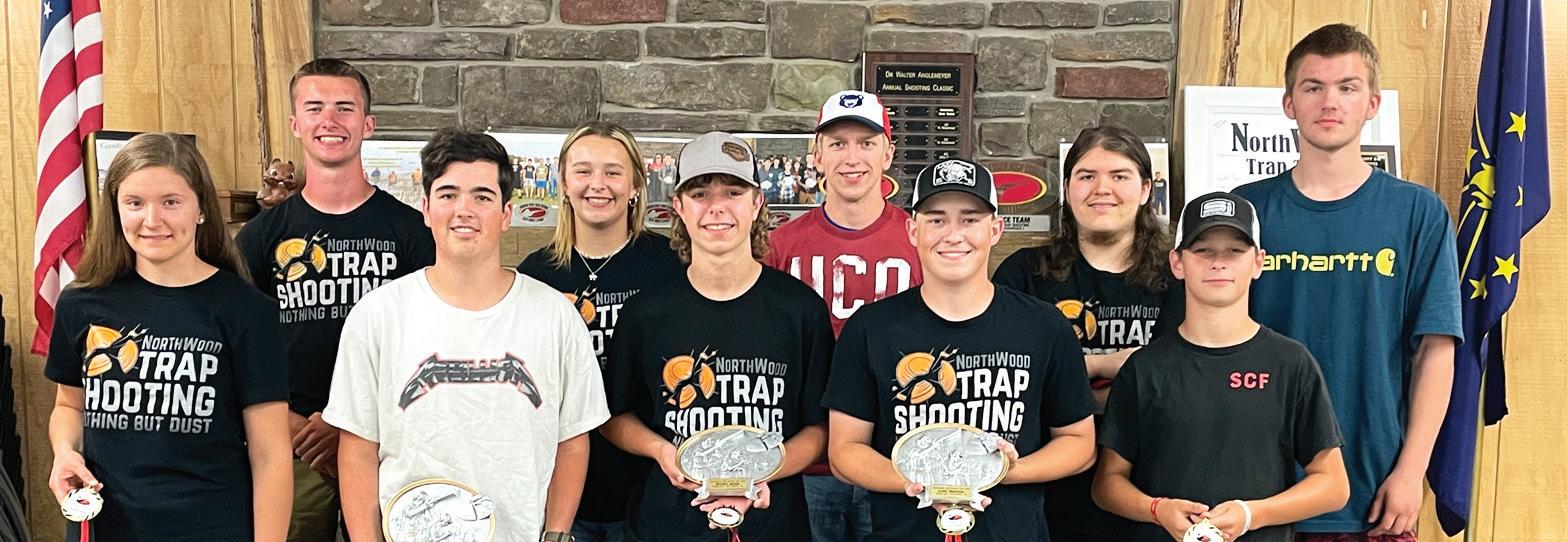
GROWING SPORT Members of the NorthWood High School Trap Team recently completed a successful spring season.
Pictured in the front row from left are team members Kharece Barden, Matthew Nettrouer (Most Improved), Brenden Jacobs (High Score 25), Austin Newcomer (High Score 50), and Daniel Stutzman.
In back row are Mark Renner, Brianna Lechlitner, Trevor Witmer, Isaac Simmons and Bradley Cripe.
Not pictured: Jesse McHargue, Connor Feiler, Avery Runge, Sam Yoder and Sawyer Yoder. Photo provided by Dan Hummel.
NorthWood Trap Club competes in state league
If you would like to attend or want more information, contact Bigler at (252) 304-0016.
Organizer Jerry Bigler, one of the original members of the program, has been organizing the event from his home in Texas. He said around 50 former Panther athletes have already RSVP’d to the dinner.
The NorthWood High School trap team placed fourth out of 17 high school teams and 181 studentathlete competitors in the Indiana State High School Clay Target League, held Saturday, June 22, at the Indiana Gun Club in Fishers.
During the 2024 spring season, the team finished in fourth place in their conference, the Indiana State
High School Clay Target League. There were 39 high schools and 620 student-athletes participating. The NWHS Trap Club consists of 12 males and three females.
The NWHS Trap Club started in the 2019 spring season. There are two seasons, one in the fall and one in the spring, each school year. At the start of the 2022 spring
season, the NWHS administration made the trap team a varsity sport, which means trap team members can earn chevrons toward a varsity letter.
Any NorthWood parent or student who would like further information about the trap team should contact coach Dan Hummel at dlhummel51@gmail.com.
Green Alert, carryout cocktails and more now in effect
By LILLI DWYER Staff Writer
With the conclusion of the 2024 legislative session, the Indiana General Assembly passed 172 new laws. According to a release from Senator Ryan Mishler, over 90% received bipartisan support on Senate final passage and over 50% received unanimous support on Senate final passage. Many of these new laws went into effect Monday, July 1. Under one new law, Indiana
bars and restaurants are now able to have happy hours and offer carryout cocktails. House Enrolled Act 1086 allows these business to prepare, sell and deliver alcoholic beverages for carryout to a customer on the licensed premises in certain qualified containers. These containers must also be sealed.
Indiana first responders can now be recognized for exceptional service with the Hoosier First Responder Medal of Honor. According to House Enrolled Act 1142,
the Department of Homeland Security can award this medal to any first responder who “distinguishes themselves conspicuously by gallantry and intrepidity at the risk of the Indiana first responder’s life above and beyond the call of duty while engaged in an act of public service.”
A new Green Alert Program for Hoosier veterans has been established under House Enrolled Act 1021. Like Amber and Silver alerts, the Green Alert Program is designed to help locate and as-
Mike Metcalf joins Interra Investments at Interra Credit Union
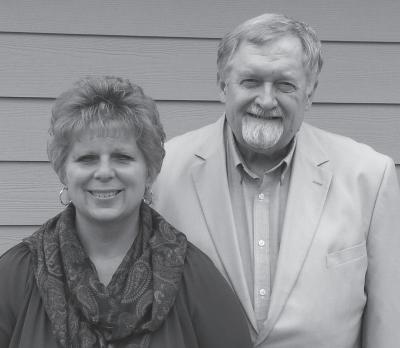
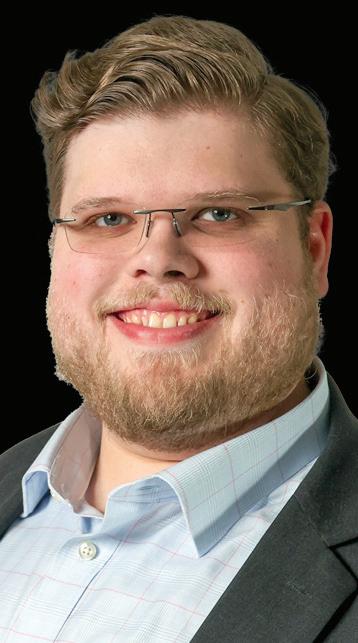
Interra Credit Union has announced that Mike Metcalf has joined Interra Investments as a financial advisor. With over five years of experience in the financial industry, Metcalf brings a wealth of knowledge and expertise to Interra Investments.
His strategic approach to financial planning and investment management has earned him a reputation for delivering tailored solutions, which align with clients’ unique goals and objectives.
“I look forward to leveraging Interra Investment’s resources and collaborative approach to deliver comprehensive wealth management solutions that help clients pursue their financial goals,” stated Metcalf.
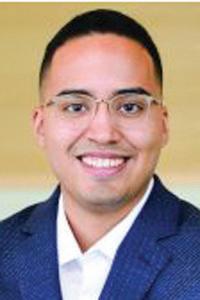
Originally from Fort Wayne, Metcalf graduated from Eastside High School and earned a bachelor’s degree in business from Purdue University.
Metcalf lives in Mishawaka, and he enjoys golfing and live music in his spare time.
State Sen. Ryan Mishler to vice chair Medicaid oversight committee
State Sen. Ryan Mishler (RMishawaka) will serve as vice chair of the Medicaid Oversight Committee and as co-chair of the Funding Indiana’s Roads for a Stronger Safer Tomorrow Task Force in preparation for the 2025 legislative session.
Mishler’s other assignments include the state budget committee and the State and Local Tax Review Task Force.
“Interim study committees allow legislators to review and discuss topics in-depth, which helps us be better prepared for session,” Mishler said. “The committees I serve on will be taking
a look at many important public policy areas with regard to our state’s budgetary needs, and will serve as an important step as we prepare to write our state’s next two-year budget in the 2025 legislative session.”
Legislators will meet over the summer and fall months to discuss topics approved by the bipartisan Legislative Council, which is comprised of 16 voting members — eight from the Senate and eight from the House of Representatives. To view study committee agendas and stream hearings online, visit iga.in.gov.
Goshen College announces 182 graduates in 2024
Goshen College recently recognized 182 graduates as a part of the class of 2024 during its commencement ceremony April 28. This was the 126th Goshen College Commencement Ceremony and the message was delivered by Glen Guyton, executive director of Mennonite Church USA.
Local graduates are: Millersburg — Emma Elizabeth Thomas, undergraduate Nappanee — Anastasia G. Murguia, undergraduate New Paris — Aliah Hannel Campbell, undergraduate
sist at-risk missing veterans. An “at-risk veteran” is defined as a veteran whose disappearance is the result of a physical or mental health condition related to their service.
House Enrolled Act 1183 aims to protect Indiana farm land from foreign threats. This law stipulates that prohibited persons may not buy or lease land if it is located in Indiana and located within a 10 mile radius of a military installation, though there are certain exceptions. Prohibited persons are also barred from buying or leasing agricultural land, as well as mineral rights or water rights on agricultural land.
Other new laws include Senate Enrolled Act 181, which strengthens Indiana’s ban on “sanctuary cities,” municipalities that limit cooperation with the national gov-
ernment in enforcing immigration law. For example, they may not report an individual’s immigration status unless a serious crime has been committed. Under this law, the attorney general can compel a city government or a university to comply with federal immigration officials, if probable cause is determined.
Similarly, “sister cities,” or two communities in different countries who enter a formal agreement to partner up, are also affected by a new law. House Enrolled Act 1120 prohibits local governments in Indiana from entering into sister city agreements with cities located in a country the U.S. government considers a foreign adversary.
A full list of laws passed in the 2024 legislative session can be found at ga.in.gov/legislative/2024/bills.
with our
lifestyle providing opportunities for you to explore and enjoy life! Looking to relax? Our 117 acres of woods and meadows is just the place for a tranquil, leisurely stroll. Ready for good-times activities with friendly neighbors? We’ve got everything from a
A selection of homes and floorplans plus meals, wellness programming, and recreation available on campus let you make the most of warm, sunny days! All levels of care options are available—including Assisted Living, LongTerm Care, and Memory Care. How will you spend your Timbercrest summer?
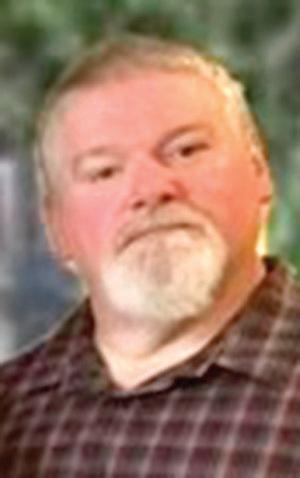
MIKE METCALF
O B ituaries
Arden B. Cook
Lifetime Area Resident
Arden B. Cook, a lifetime resident of Kosciusko County, died on Sunday, June 30, 2024, at the age of 91.
He was born on Aug. 23, 1932, to Virgil R. and Mable L. (Franks) Cook.
Arden graduated from Warsaw High School in 1951, and then served in the U.S. Army from 1953 until his honorable discharge in 1954. He married Doris A. Blosser on Dec. 31, 1964, and they had a son, Timothy A. Cook, and a daughter, Susan G. Eyster.
Arden completed factory work before becoming a drywaller for Cook & Wildman Drywall. He retired in 1992. He had two sisters, Donna M. Bower and Betty A. Thornton.
Titus Funeral Home of Warsaw is entrusted with Arden’s care. He was buried on Monday, July 8, at Oakwood Cemetery in Warsaw.
To leave a condolence, visit TitusFuneralHome.com.
Jay King
Machinist
Jay King, 59, Pierceton, passed away on Wednesday, March 13, 2024, in a vehicle accident.
Jay was born on Feb. 25, 1965, in Columbia City, the son of Allen and Buthean Kay (Penn) King. He was united in marriage to Yvonna Shepherd on June 12, 1999, in Pierceton.
JAY KING
He worked as a machinist making hoses for Flexaust for 20 years. Jay was a John Wayne fan and enjoyed collecting guns, knives, coins and old Hot Wheel cars. He loved being with his family and cooking for them, especially meats. He was a handyman and found joy in helping others.
Jay will be lovingly remembered by his wife, Yvonna King of Pierceton; children, Shiloh King, Cody King, Dillon King, Katie King, Alex (Michael) Marra and Mallorie VanHouten; three sisters, Debra (Dean) McFadden of East Moline, Ill., Kathy (Gary) Wedlake of Huntington and Anna (Don) Conwell of Pierceton; and seven grandchildren Atticus, Matthew, Caytlin, Jayson, Ian, Jake and David.
He was preceded in passing by his parents and grandparents.
A celebration of life with family and friends will be from noon to 3 p.m. Friday, July 12, at McHatton-Sadler Funeral Chapels, 105 First St., Pierceton. Funeral services in celebration of Jay’s life will begin at 3 p.m. Friday, July 12, at the funeral home with Rev. Dean McFadden officiating. Interment will follow in Mock Cemetery, North Webster.
To sign the guestbook or send a condolence to the family, please visit mchattonsadlerfuneralchapels.com.
Jack R. Hartman Jr
Jail officer, home builder, drywaller
Jack R. Hartman Jr., 54, Elkhart, passed away at 11:15 p.m. Sunday, June 23, in his home.
Jack was born Sept. 22, 1969 in Goshen. He joined his sister Lisa. Jack graduated from Elkhart Baptist Christian School. Right after graduation, Jack went to work for the Elkhart County Sheriff’s Department as a jail officer for several years. He also worked helping a friend build houses for several years. He also did drywall work as a side job.
Jack was the precious son of Jack R. Hartman Sr and Sandra Gaff Hartman. On Oct. 24, 1998, he married Diane Robbins.
Surviving Jack is his wife Diane, a son Zachary, and a daughter, Mandee. Also surviving Jack are his mother Sandra Graff Hartman and his dear sister, Lisa Anne Hartman.
Preceding Jack in death was his dear dad Jack R. Hartman Sr. Jack was also preceded in death by his paternal grandparents, Herbert V. Hartman and Rachel Mae Hartman and maternal grandparents W. Julian Gaff and Julie Anne Geiger Gaff.
Finally Jack also leaves behind his very dearest and best friend Eugene Stankovich.
Ralph Berkey Sr.
Ralph Berkey Sr., 76, Goshen, died June 29, 2024.
He was born Feb. 14, 1948.
Surviving are his children, Carrie Guantonio and Ralph Berkey Jr., both of Elkhart; a granddaughter; a great-granddaughter; and siblings, Belva Belcher and Ruby Miller, both of Goshen, Deloris “Dede” Beemer, Heiskell, Tenn., Vada Berkey, Middlebury, and Jeff Berkey, New Paris.
A celebration of life was held July 7 at Yoder-Culp Funeral Home, Goshen. A private burial took place at Rock Run Cemetery.
Cynthia Ann Bollenbacher
Cynthia Ann Bollenbacher, 86, North Webster, formerly of Stevensville, Mich., and Fort Smith, Ark., died June 26, 2024.
Sharon Ann Brommer
Sharon Ann Brommer, 86, Warsaw, died at 6:58 p.m. June 29, 2024.
She was born March 12, 1938.
She is survived by a sister, Linda L. Walko, Clifton Park, N.Y.
A mass of Christian burial was held July 9 at St. Catherine of Alexandria’s Catholic Church, Columbia City. Burial was in St. Catherine’s Cemetery.
Phillip C. Brown
Phillip C. Brown, 82, Warsaw, died July 3, 2024.
Arrangement are currently pending at McHatton-Sadler Funeral Chapel, Warsaw.
Eldon Ray Chupp
Eldon Ray Chupp, 76, Milford, died July 2, 2024.
He was born April 15, 1948. On Nov. 8, 1975, he married Janet Sue Haab. She preceded him in death Oct. 16, 1986.
He is survived by his daughter, Andrea Byrket, Ligonier; four grandchildren; sisters, Carol Westerman, Fannie Miller, Ina Bontrager, Wilma Hively, Erma Stevens, Katherine Miller and Treva Chupp; a brother, Joseph Chupp; and numerous nieces, nephews, cousins and friends.
Services were held July 8 at Mishler Funeral Home & Cremation Center, Milford. Burial followed at Milford Cemetery.
Carl Click
Carl Click, 84, Warsaw, died June 29, 2024.
He was born May 12, 1940. On Feb. 14, 1961, he married Frankie Frasure, who preceded him in death.
Surviving are his children, Sharon Click Plank and Michael Click; four grandchildren; two great-grandchildren; and sister, Dixie Miles.
Graveside services were held July 6 at Oakwood Cemetery, Warsaw, with military honors. McHattonSadler Funeral Chapels, Warsaw, was in charge of arrangements.
Joseph Luis Criswell
Joseph “Joey” Luis Criswell, 44, Milford, died June 29, 2024.
He was born April 11, 1980. On Sept. 30, 2016, he married Kimberly Flickinger; she survives.
Also surviving are his children, Jose Criswell, Izaiah Criswell, Jesus Criswell, Katalaya Criswell, Amariana Criswell, Yandilee Criswell and Liam Criswell; bonus children, Haley Chapman, Zoey Chapman, Cohen Chapman and Brantley Stewart; his mother, Deborah Criswell, Milford; his father, Jose Cervantes, Warsaw; twin brothers, Armando Cervantes and Andres Cervantes, both of Warsaw, and his twin brother, Tony Criswell, Syracuse; a sister, Margarita Criswell, Milford; and numerous aunts, uncles, nieces, nephews, cousins and friends.
Arrangements are currently pending at Mishler Funeral Home, Milford.
Harold C. Davis
Harold C. Davis, 73, died June 30, 2024.
He was born Dec. 1, 1950.
McIntyre; brothers, Richards Streby, Ronald Streby and James Streby; 13 grandchildren; 20 great-grandchildren; and one great-great-grandson. At this time, there will be no public services. Burial will take place at Sparta Cemetery, Kimmell. Sheets & Childs Funeral Home was in charge of arrangements.
Damien William Flannery
Damien William Flannery, 38, Silver Lake, died June 30, 2024.
He was born Oct. 9, 1985.
He is survived by a daughter, Amiyah Raine Flannery, Fort Wayne; mother, Melisa Jane Weisser, Milford; father, Lawrance Flannery, Silver Lake; brother, Kenton Secor, Westville; grandmothers, Shirley Mullins, Silver Lake, and Annette Kline, North Manchester; and several aunts, uncles and cousins.
Services were held July 6 at Redpath-Fruth Funeral Home, Warsaw. Burial was in Oakwood Cemetery, Warsaw.
Trent R. Furnivall
Trent R. Furnivall, 35, Elkhart, formerly of Etna Green, died June 27, 2024.
He was born July 22, 1988.
Surviving are his parents, Brenda Blacklaw, Bourbon, and Troy and Kim Furnivall, Warsaw; son, Kai David Furnivall, Elkhart; sisters, Danielle Blacklaw, Plymouth, Haley Morten, South Bend, Alexis Jones, Elkhart, Heather Blacklaw, Lakeville, Katie Furnivall, Oak Creek, Colo., and Sara Carter, Memphis, Tenn.; brother, Gabe Furnivall, Steamboat Springs, Colo.; two nephews; a niece; maternal grandfather, Donald Neher, North Manchester; grandmother, Dee Vanderpool, Warsaw; paternal grandparents, Dave and Linda Furnivall, Warsaw; and many aunts, uncles and cousins.
A celebration of life will be held from 10 a.m. to 12:30 p.m. Saturday, July 20, at Baker Youth Club, 1401 E. Smith St., Warsaw. A service will begin at 12:30 p.m. Heritage Funeral and Cremation Services, Warsaw, is in charge of arrangements.
Kenneth A. Gall
Kenneth A. Gall, 62, Goshen, died at 11:31 p.m. June 28, 2024.
He was born Oct. 16, 1961. On Aug. 23, 2019, he married Peggy Alexander; she survives.
Also surviving are brothers, Ivan Gall, Nappanee and Gene Gall, Howe; four nieces and nephews; and eight great-nieces and great-nephews.
Services were held July 5 at Rieth Rohrer Ehret Funeral Home, Goshen. Burial was in Oakridge Cemetery.
Leland H. Hartle
Leland H. “Lee” Hartle, 88, Warsaw, died June 29, 2024.
He was born Oct. 31, 1935. On June 7, 1958, he married Mary J. Miner; she survives.
He is also survived by a son, Shane Hartle, Warsaw; daughter-in-law, Nancy Hartle, Warsaw; four grandchildren; two great-grandchildren; sisters, Rose Osborne and Joan Lowell; brother, Richard Hartle; and numerous nieces and nephews.
Services were held July 8 at McHatton-Sadler Funeral Chapels, Warsaw. Burial will be at a later date in Oakwood Cemetery, Warsaw.
Jan E. Mayer
Jan E. Mayer, 70, Claypool, died June 28, 2024.
She was born March 31, 1954. On July 28, 1973, she married James “Jim” Gregory Mayer; he survives.
She is also survived by a son, Travis Mayer, Roanoke; three grandchildren; several nieces and nephews; her twin brother, Jim Copeland, Waco, Texas; and sister, Deloris Copeland, Bourbon.
Her life will be celebrated privately by her family. Redpath-Fruth Funeral Home, Warsaw, was in charge of arrangements.
Janet Marie Miller
Janet Marie Miller, 83, LaGrange, died June 28, 2024.
She was born Sept. 17, 1940. On Oct. 5, 1958, she married Phillip Miller. He preceded her in death Jan. 9, 2017.
Surviving are her children, Pamela M. Miller, Syracuse, and Michael Miller, Goshen; four grandchildren; and four great-grandchildren.
Services were held July 6 at YoderCulp Funeral Home, Goshen. Burial was in Brown Cemetery, Millersburg.
Loretta Miner
Loretta Miner, 77, Kokomo, formerly of Warsaw, died June 28, 2024. She was born June 6, 1947. On Oct. 9, 2010, she married Tim Miner, who preceded her in death in 2023.
Surviving are her children, Judy Carmona and Brandi Opperman, both of Texas, Lawney Francis, Kokomo, and William Marshall, Warsaw; stepchildren, Gavin Miner and Darren Miner; eight grandchildren; four stepgrandchildren; and 17 greatgrandchildren.
Services were held July 3 at Titus Funeral Home of Warsaw. Burial was in Oakwood Cemetery, Warsaw.
Barbara Sue Naab
Barbara Sue Naab, 93, Syracuse, died at 9:34 p.m. April 21, 2024. She was born July 7, 1930. On June 30, 1957, she married John A.
Continued on page 9
She was born Aug. 10, 1937. On June 1, 1957, she married Roger Lee Bollenbacher. He preceded her in death Dec. 9, 2007.
Surviving are her children, Donna Crotty, Muskogee, Okla., David Bollenbacher, Brasilia, Brazil, and Daniel Bollenbacher, North Webster; seven grandchildren; six great-grandchildren; sister, Nancy Corbin, North Webster; sistersin-law, Grace Bollenbacher, Fort Wayne, and Elaine Bondy Estero, Florida; and nieces, nephews and cousins.
Visitation was held July 5 at Edwards Funeral Home, Fort Smith, Ark. Final interment will be in The Fort Smith National Cemetery. A celebration of life will be held at a later date in North Webster. Titus Funeral Home of North Webster was in charge of local arrangements.
He is survived by a son, Joshua Davis, Bluffton; daughters, Katie Davidson, Anderson, Elisa Davis and Amanda Baker, both of Fort Wayne, Carrie Lowe, Grabill, and Molly Tyler, Claypool; sisters, Linda Garringer and Rita Melcher, both of New Haven, and Alice Zimmerle, Elkhart; 22 grandchildren; four great-grandchildren; and countless friends.
Family and friends may call from 11 a.m. to 1 p.m. Friday, July 12, at McKee Mortuary, 1401 SR 114 West, North Manchester. Funeral services will begin at the conclusion of calling. Burial will be held at Pleasant Grove Cemetery, North Manchester.
Marilyn Jean Dressler
Marilyn Jean Dressler, 80, a native of Winona Lake, died June 28, 2024.
She was born Oct. 16, 1943. Surviving are her children, Laurie Hyndman, Debra Nieto and Kurt
Zachary Charles Kuhns
Mervin and Tillie (Miller) Kuhns, Nappanee, are the parents of a son, Zachary Charles, born at 1:42 p.m. June 26, 2024. He weighed 7 pounds, 14 ounces.
Maverick Thomas Hatfield
Ashlynn Hatfield, Cromwell, is the parent of a son, Maverick Thomas, born at 1:27 a.m. June 29, 2024, at Goshen Hospital. He weighed 7 pounds, 15.4 ounces, and was 20 inches long.
Jamin Elias Yoder
Steven and Janna (Miller) Yoder, Nappanee, are the parents of a son, Jamin Elias, born at 7:20 a.m. June 29, 2024. He weighed 7 pounds, 14 ounces.
Hudson Anthony Yoder
Mark and Lindsey (Martin) Yoder, Syracuse, are the parents of a son, Hudson Anthony, born at 4:22 a.m. June 30, 2024, at Blessed Beginnings Care Center, Nappanee. He weighed 8 pounds, 6.6 ounces, and was 20 inches long.
Greyson Cole Yoder
Jacob Paul Schwartz
Richard and Diane Schwartz, Bourbon, are the parents of a son, Jacob Paul, born at 7:08 p.m. July 1, 2024, at Blessed Beginnings Care Center, Nappanee. He weighed 7 pounds, 13 ounces, and was 20 inches long.
Elliana Delphia Lou Vuittonet
Nicole and Martin Vuittonet, Wakarusa, are the parents of a daughter, Elliana Delphia Lou, born at 2:41 p.m. July 2, 2024, at Goshen Hospital. She weighed 7 pounds, 5.7 ounces, and was 20 3/4 inches long.
Darius Jacob Borkholder Ruben and Emily (Schmucker) Borkholder, Wakarusa, are the parents of a son, Darius Jacob, born at 5:05 p.m. July 3, 2024, at Blessed Beginnings Care Center, Nappanee. He weighed 7 pounds, 12 ounces, and was 20 1/4 inches long.
Maternal grandparents are Glen and Rebecca Schmucker, Nappanee. Paternal grandparents are Joe and Ruby Borkholder, Wakarusa.
Ryan and Emily (Lambright) Yoder, Bremen, are the parents of a son, Greyson Cole, born at 5:09 p.m. June 30, 2024. He weighed 8 pounds, 3 ounces.
Continued from page 8
Naab, who preceded her in death.
She is survived by her son, John W. Naab, Erie, Colo.; daughter, Susan R. Donahoe, Goshen; four grandchildren; a great-granddaughter; and several nieces and nephews.
A memorial service was held July 6 at Walker & Glancy Funeral Home, Montpelier. Interment followed in Hartford City Cemetery.
Alice Nelson
Alice Nelson, 90, Munster, died July 3, 2024.
She was born March 2, 1934.
She is survived by her daughter, Carla Rayner.
There will be a private burial at Syracuse Cemetery at a later date.
Phyllis Lee Niswender
Phyllis Lee Niswender, 90, Winona Lake, died July 1, 2024.
She was born Oct. 4, 1933. On June 2, 1956, she married Ivan Niswender; he survives.
Also surviving are several nieces and nephews.
Services were held July 6 at Grace Village Chapel, Winona Lake. Interment will be at a later date. McHatton-Sadler Funeral Chapels, Warsaw, was in charge of arrangements.
Lonnie R. Orr
Lonnie R. Orr, 75, died June 30, 2024.
He was born Dec. 4, 1948. On Sept. 11, 1967, he married Phyllis M. Coffelt, who preceded him in death.
Surviving are daughters, Tammy Bradley and Desaray Rockey, both of North Manchester; two great-grandsons; son, Lonnie Orr Jr.; stepdaughter, Vickie Beasley, Columbia City; and siblings, Faye, Kurt, Billy, Barb and Diane.
Private services will be held. McHatton-Sadler Funeral Chapels, Warsaw, was in charge of arrangements.
Larry L. Plummer Sr.
Larry L. Plummer Sr., 88, died June 28, 2024.
He was born Feb. 26, 1936. On Sept. 18, 1954, he married Dorothy Jane Stephens; she survives.
Also surviving are his children, Larry Plummer, Lora Shelton, Pam Miller and Shelly Hurd; 21 grandchildren; 48 great-grandchildren; and 11 great-great-grandchildren.
Graveside services were held July 9 at Oakwood Cemetery, Warsaw. McHatton-Sadler Funeral Chapels, Warsaw, was in charge of arrangements.
Abel Dominguez Salazar
Abel Dominguez Salazar, 50, Ligonier, died June 27, 2024.
He was born July 2, 1973. On July 17, 2007, he married Rosalba Beltran; she survives.
He is also survived by his mother, Ofelia Salazar, Mexico.
Funeral mass was held July 2 at St. John the Evangelist Catholic Church. Burial was in Violett Cemetery, Goshen. Yoder-Culp Funeral Home, Goshen, was in charge of arrangements.
Rocky Casen Lee Shepherd
Rocky Casen Lee Shepherd, 16, North Manchester, died June 27, 2024.
He was born Aug. 17, 2007.
He is survived by his mother and stepfather, Valarie (Shepherd) and Ryan Robison, North Manchester; stepmother, Patrisha “Trisha” Cornett, Urbana; paternal grandfather, Rodney Gahl; maternal grandmother, Diana (Hackworth) Shepherd; stepgrandparents, Bob and Jo Lynn Robison; brothers, Kaileb Gahl, Sebastian Hawk and Dominick Cripe; sisters, Destiny Shepherd, Jaci Gahl and Ashton Gahl; stepbrother, Carter Robison; stepsister, Misha Robison; and numerous aunts and uncles.
A celebration of life will be held from 2-4 p.m. Saturday, July 13, at The Firehouse, 108 W. Main St., North Manchester. A memorial service will begin at 4 p.m. McKee Mor-
tuary, North Manchester, is in charge of arrangements.
Lester Howard Smith
Lester Howard Smith, 83, Texas, formerly of Warsaw, died July 2, 2024. Arrangements are currently pending at Redpath-Fruth Funeral Home, Warsaw.
Roland Richard Swanson
Roland Richard Swanson died June 28, 2024.
He was born Jan. 17, 1934. He married Ollene Dagmar Olsen Swanson, who preceded him in death.
He is survived in death by his sister, Dorothy Swanson Melander; his brother, Edward Swanson; his children, Eric Swanson and Kristen Swanson Smith; his companion of 18 years, Susan Sharp; six grandchildren; four great-grandchildren; and Susan’s children, Michael and Erik Sharp.
Funeral services were held July 8 at Palmer Funeral HomeWelsheimer North Chapel. Follow-
ing the service, burial took place at St. Joseph Valley Memorial Park with military honors.
Patsy J. VanVactor
Patsy J. VanVactor, 81, Plymouth, formerly of Etna Green, died at 6:10 p.m. May 12, 2024.
She was born Aug. 2, 1942. She married Bill VanVactor, who preceded her in death.
She is survived by a son, Billy Joe, Argos; daughters, Brenda Chilton and Barbara Wagoner, both of Etna Green, and Sandy Stockberger, Arizona City, Ariz.; stepchildren, Bill “Butch” VanVactor, Plymouth, Barbara Redding, Yuma, Ariz., Becky Turley, Golden Valley, Ariz., and Ronda Guin, Martinsburg, W.Va.; seven grandchildren; and many great-grandchildren.
A graveside service will be held 11 a.m. Thursday, July 11, at Walnut Church of the Brethren Cemetery, Argos. King Memorial Home, Mentone, is in charge of arrangements.
Cheryl Walker
Cheryl Walker, 59, Milford, died July 3, 2024.
C ounty R epo R t
Court News Small Claims
The following small claims have been awarded in Kosciusko Superior Court III, Judge Chad Miner presiding:
Aegis Dental Group Warsaw PC v. Ashley L. Bartman, $70.20; v. Donna C. Cadenhead, $2,336.89; v. Sheila R. Helton, $3,301.84; v. Adrienne L. Kamphues, $914.75; v. Wanda I. Mercado Santiago, $521.80; v. Deanna L. Miller, $1,781; v. Matthew J. Staulcup, $3,580.97; v. Laura L. Teegardin, $758.41
Vanderpool Law Firm PC v. Victoria Frohn, $450 Civil Collections
The following civil collections have been awarded in Kosciusko Superior Court IV, Judge Christopher D. Kehler presiding: Interra Credit Union v. Danielle Bridges, Jacob Bridges, $29,488.55 Portfolio Recovery Associates LLC v. Hedyeh Curtis, $2,657.04; v. Katie Fleshood, $1,877.09; v. Mike Lopez, $1,721.06; v. Tanya Shields, $2,519.21
LVNV Funding LLC v. Chad Fiorentino, $2,479.18; v. Andrew Halfacre, $629.49; v. Joseph Littlejohn, $848.77; v. Adam Reel, $7,449.29 Cavalry SPV I LLC v. Javier Gonzalez, $2,642.42; v. Stephen Turpen, $1,136.94
OneMain Financial Group v. David W. Hardacre, $13,019.16
Discover Bank v. Elizabeth Leher, $4,370.91
Galaxy International Purchasing LLC v. David Masterson, $2,096.26
Midland Credit Management Inc. v. Katherine G. Peters, $1,312.62 Glenbrook Credit Acceptance Corp. v. Shandessa Simmons, $10,153.05
United Federal Credit Union v. Skylar L. Smith, $21,114.57
SAC Finance Inc. v. Cortnie D. Tuttle, $14,952.33
U.S. Bank National Association v. Gary C. Yoder, $2,554.50 Civil Torts
The following civil torts have been awarded in Kosciusko Superior Court IV, Judge Christopher D. Kehler presiding:
Progressive Southeastern Insurance Co. v. Anastacia N. Brito, $11,000.12; v. Dustin L. Johnson, $32,434.47
Progressive Paloverde Insurance Co. v. Nyoka J. Sexton, $16,152.22 Evictions
The following evictions have been awarded in Kosciusko Superior Court III, Judge Chad Miner presiding: Millwood Acres MHP LLC v. Brent Hyde, $3,100
547 Clinic LLC v. Dan Slone, $4,252.32
Mortgage Foreclosures
The following mortgage foreclosure has been awarded in Kosciusko Superior Court III, Judge Chad Miner presiding:
She was born in June 1965. On Aug. 22, 1987, she married Kevin Walker; he survives. Also surviving are daughters, Megan Granger, Syracuse, and Amy Walker, Bradenton, Fla.; four grandchildren; her mother, Nancy Arnold, Goshen; her twin sister, Carol Tuggle, Lafayette; her brother, Douglas Walker, Middletown; six nieces; a nephew; five great-nieces; and a great-nephew.
Visitation will be held from 2-5 p.m. Saturday, July 13, at Eastlund Funeral Home, Syracuse, with a celebration of life beginning at 5 p.m.
Merl Junior Wilson
Merl Junior Wilson, 87, North Manchester, died June 29, 2024.
He was born Dec. 16, 1936. On April 7, 1962, he married Karen Sue Krichbaum; she survives.
He is also survived by a daughter, Tammy Henson, North Manchester; son, David Wilson, Pierceton; five grandchildren; and seven greatgrandchildren.
Services were held July 6 at McKee Mortuary, North Manchester. Burial was in Fairview Cemetery, Servia.
Carrington Mortgage Services LLC v. Katherine G. Peters, $101,372.48 Superior Court III
The following fines for infractions have been assessed in Kosciusko Superior Court III, Judge Chad Miner presiding:
Speeding — Jason M. Hall, Fort Wayne, $164.50; Hannah M. Miller, Bremen, $164.50; Karina M. Ferrer, Plymouth, $164.50; Michael D. Hatfield, Rochester, $164.50; Mitchell J. Lucas, Channahon, Ill., $164.50; Kenneth J. Graff, Milford, $164.50; Manuel R. Carrasquillo, Goshen, $164.50; Denaryl K. Mojet, Fort Wayne, $164.50; Jeffrey G. Brugh, Syracuse, $164.50; Blayke J. Kaufman, Warsaw, $164.50; Lavonte C. Paige, Fort Wayne, $164.50; Ahtrayiah W. Young, Gary, $164.50; Jobber Moises Rodriguez Rodriguez, Trenton, N.J., $164.50
No headlights, failure to register — Kyle J. Cuban, Winona Lake, $185.50
Disregarding lighted signal Sarabjit Singh, Antioch, Calif., $164.50; Dmytro Zaiets, Schiller Park, Ill., $164.50
Operating with expired plates Jonathan A. Morris, Larwill, $164; Zachary M. Pletcher, Elkhart, $164
Disregarding an official traffic control device — James R. Frederick, Wolcottville, $164.50; Jonathan Rodon Hervas, Jacksonville, Fla., $164.50; Junior T. Oriazowanlan, Tul-
Sharon Rose Yoder
Sharon Rose Yoder, 49, Nappanee, died at 4:35 a.m. July 4, 2024.
She was born April 8, 1975. On May 28, 1994, she married Larry “Toby” Yoder; he survives.
Also surviving are daughters, Katie Sheets, Nappanee, Jackie Waddell, Goshen, and Lexi Yoder, Nappanee; three grandchildren; mother, Judy Pfeiffer, Nappanee; brother, Alan Pfeiffer, Tippecanoe; sisters, Sue Carlisle and Diane Hill, both of New Paris; mother-in-law, Irene Yoder, Nappanee; and sister-in-law, Lesa Yoder, Nappanee.
Services were held July 10 at Nappanee Missionary Church Worship Center. Burial followed in Union Center East Cemetery. ThompsonLengacher & Yoder Funeral Home, Nappanee, was in charge of arrangements.
Ty Allen Zeigler
Ty Allen Zeigler, 61, died July 1, 2024.
Arrangements are currently pending at McHatton-Sadler Funeral Chapels, Warsaw.
sa, Okla., $164.50
Distracted driving — Robert M. Kelley Jr., Southwick, Mass., $164.50; Jason D. Hostetler, Claypool, $164.50; Colton A. Honeycutt, Plymouth, $164.50; Karen A. Gingerich, Warsaw, $164.50; Willy J. Brownlee II, Walkerton, $164.50
Failure to register — Jeffrey R. Watson, Goshen, $164.50; Shelden L. Rolston, Bourbon, $164.50
Operating a motor vehicle with a false plate/plate belonging to another vehicle — Ashley E. Strand, Bourbon, $164
Distracted driving, minimum speed violation/driving too slow so as to impede or block normal flow of traffic — Randle C. ChavisHarrison, Milwaukee, $164.50
No valid driver’s license — Ashley L. Williamson, South Whitley, $164.50; Katrina S. O’Brien, Warsaw, $164.50
Truck in restricted lane/lane use restrictions violation — Rajko Marinkovic, Park Ridge, Ill., $164.50
Truck in restricted lane/lane use restrictions violation, disregarding lighted signal — Sarmad S. Asraeel, Macomb, Mich., $189.50
Disregarding an official traffic control device, no valid driver’s license — Pedro M. Ialenti-Angelucci, Warsaw, $189.50
Failure of occupant to use safety belt — Marvin J. Whitehead, North Manchester, $25; William D. Sellers, Warsaw, $25
Elkhart Extension offering ‘Cooking Small’ program
Many of us live alone or in a smaller household. Coming up with meal ideas and finding recipes can be a chore in itself. Learn
how to master a few basic cooking skills, stock up on essential ingredients, and get creative in making meals that work specifi-
cally for you. Join Elkhart County Extension for this free educational program presented by Emily Christ, Pur-
Tapia graduates from ECSU
More than 800 Eastern Connecticut State University students graduated in the 2023-24 academic year, which culminated with two commencement ceremonies in May
at the conclusion of the spring 2023 semester.
Juan Baltazar Tapia of Nappanee graduated with a bachelor of science in mathematics.
The university’s undergraduate ceremony occurred May 14 at the XL Center in Hartford, Conn., and the graduate-level ceremony occurred May 11 on Eastern’s campus.
Christina Eiler named to dean’s list at UNE
Christina Eiler of Wakarusa has been named to the dean’s list for the 2024 spring semester at the University of New England. Dean’s list students have at-
tained a grade point average of 3.3 or better out of a possible 4.0 at the end of the semester.
Local students named to college deans’ lists
The following local students were recently named to the dean’s list of their respec-
tive colleges/universities: Carthage College Leesburg — Devon Kuhn
Albion College Warsaw — Sydney McGurn
due University Extension educator in health and human sciences in Elkhart County. This program is being offered at 6 p.m. Tuesday, Aug. 6, at the Elkhart Public Library — Dunlap Branch, 58485 CR 13, Elkhart. The program will last approximately 1 hour.
To attend the program, preregister by calling Jenn at (574) 533-0554 or email fink24@purdue.edu. This program and all programs of the Purdue University Extension Service are open to everyone. If you need a reasonable accommodation to participate in this program, call Emily at (574) 533-0554 by Tuesday, July 23.
There are a pair of free disc golf options courses available in Kosciusko County for the entire family to enjoy.
The Lodge has been and will continue to be excited to host disc golfers on its property in northeast Syracuse.
Located on the old SmithWalbridge property adjacent to Maxwelton Golf Club and within eyesight of Boner and Syracuse lakes, the Lodge is home to a quaint yet challenging disc golf experience.
The 18-hole course is free to play and expands across the Lodge property to the south and east. Hole No. 1 starts near
the parking lot and works its way down toward the pond and around the buildings.
Disc golfers are to bring their own supplies as the Lodge does not rent or provide any discs or bags.
There is a portable restroom on site for disc golfers to use.
The Lodge, which is overseen by Grace Community Church, will host kids camps in the summer. In those weeks, the course will be red-flagged and unavailable. Otherwise, the course is open and good to go year-round.
Course status can be viewed on the The Lodges’s Facebook page.
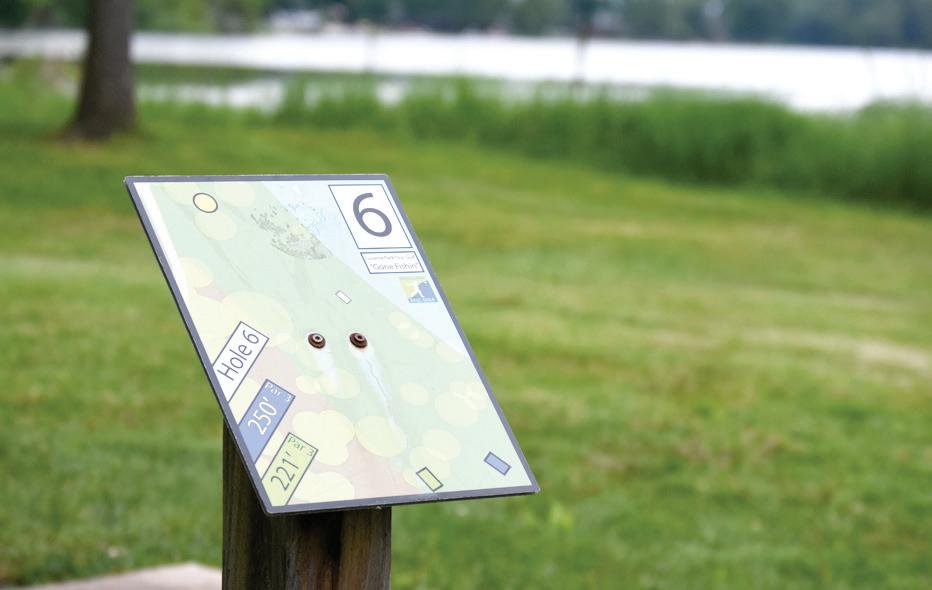
Lucerne Park, located on Pike Lake in Warsaw has a free ninehole disc golf course. The trees provide ample shade from the sun. Like the Lodge, Lucerne Park does not provide discs or bags. The Warsaw Parks Department website at warsaw. in.gov/192/parks-recreation has scorecards and course layouts for use.
Another young disc-golf course is at Grace College. Grace Disc Golf is open to the public and free to play. The first hole is located on the lawn in front of Indiana Hall (the corner of Wooster Road and King’s Highway) on campus in Winona Lake.
Summer reading underway at Milford Public Library
“Adventure begins at your Library” is the theme for the summer reading program at the Milford Public Library and the adventure has begun. The summer reading program runs
through July 20 and is for ages from infant to 12th grade.
Everyone can participate as children and teens are asked to keep track of every 20 minutes that they read on their time
sheet. You can turn in a maximum of five hours per week for elementary ages and five hours a day for teenagers. The more your read the more you win, with prizes vary from food coupons, free
Sales and Marketing Director
We are looking for an accomplished Sales and Marketing Director with a solid background in the publishing industry and extensive sales experience. The ideal candidate will be marketing-savvy, well-versed in both print and digital marketing strategies, and possess a comprehensive understanding of advertising, print media, email campaigns, website analytics, digital marketing, SEO, and current digital marketing trends. This role manages over 40 marketing professionals, including a local sales team and a remote team that covers three states.
Key Responsibilities:
• Develop and execute effective sales and marketing strategies to drive revenue growth for both print and digital platforms.
• Lead and manage a team of over 40 marketing professionals, including a local sales team and a remote team across three states, to achieve and exceed sales targets.
• Analyze market trends and competitor activities to identify new opportunities and improve existing strategies.
• Oversee digital marketing efforts, including the development of digital platforms, email campaigning, SEO marketing, and website analytics to optimize online presence.
• Collaborate with editorial and production teams to ensure alignment of sales and marketing initiatives with content strategies.
• Build and maintain strong relationships with clients, partners, and stakeholders.
• Monitor and report on team sales and profit performance.
Qualifications:
• Proven experience in the publishing industry, with a strong track record in sales and marketing.
• Extensive sales experience with a demonstrated ability to achieve and exceed targets.
• In-depth knowledge of print and digital marketing, including email campaigns, website analytics, and SEO.
• Strong understanding of current advertising and digital marketing trends, and best practices.
• Excellent leadership and team management skills, with experience managing a large team.
• Strong analytical and problem-solving abilities.
• Exceptional communication and interpersonal skills.
• Ability to work on-site at our Milford, Indiana corporate office.
Why Join Us:
• Be part of a family-owned company with a rich history and a strong presence in the publishing industry.
• Work in a dynamic and collaborative environment.
• Lead a talented team and make a significant impact on our growth and success.
• Competitive salary and benefits package.
Send email and send resume to: rbaumgartner@the-papers.com
books, gift cards and sweet treats.
Family story time is back at 10:30 a.m. on Fridays. A family can earn up to seven free books just by attending each of the summer story times.
Other main events include:
A cupcake decorating adventure is set for Wednesday, July 10th at 2 p.m.
The summer reading program grand finale at noon Wednesday, July 17, is the Pizza-O-Rama event. Foam and bubbles from Foamzilla is at 1 p.m.
The free lunch program is back with a few changes. Lunch will be served weekdays through July 31 from 11-11:30 a.m. Lunch will not be served the week of July 1-5. Lunch will be outside, weather permitting, and is for ages 18 and younger.
For more information, visit the Milford Public Library website at Milford.lib.in.us.
Cloud Public Auction
2 p.m. Thursday, July 11. Located at 64210 CR 9, Goshen. John Deere lawn tractor, 1967 Chevelle, trailers, ATV, boat, antiques and collectibles. Hahn Auctioneers, hahnrealtyandauction.com.
Public Antique Auction
9 a.m. Friday, July 12. Located at Chupp Auction Center, 890 S. Van Buren St., Shipshewana.
Syracuse Lake Waterfront Auction
10 a.m. Saturday, July 13. Located at 12967 N. Eastshore Drive, Syracuse. Open house 9-11 a.m. Saturday, July 6 or by appointment. 3,450 sq. ft. house on 90’ x 220’ lot, 90’ of waterfront. Hahn Auctioneers, hahnrealtyandauction.com.
Online Only Coin, Currency & Marble Auction Bidding open until 7 p.m. Sunday, July 14. Pickup located at 1582 SR 114, North Manchester. Silver dollars, coins, currency including state notes, red and blue seal, coin books, marbles, proof sets, foreign currency. Bid online at metzgerauction.com. Metzger Property Services.
Online Only Art Auction Bidding open until 7:30 p.m. Monday, July 15. Pickup located at 1582 SR 114, North Manchester. Oil paintings, photographs, cross stitch, advertisements, Victorian girls, Terry Redlin,
hunting scenes and more. Bid online at metzgerauction.com. Metzger Property Services. Public Auction
3 p.m. Wednesday, July 17. Located 1 mile south of Nappanee on SR 19 to 1350N, east 5¼ miles to 2742 W. 1350N, Milford.
Community Health Clinic Benefit Auction
4:30 p.m. Friday, July 19. Located at Claywood Event Center, 13924 N. 1100W, Nappanee. Farm Real Estate Auction
10 a.m. Saturday, July 20. Located at 7801 N. 600W, Roann. Open house 5:30-6 p.m. Monday, July 15. Country home, barns, pond, river frontage. Metzger Property Services, metzgerauction.com.
Real Estate Auction
6 p.m. Tuesday, July 23. Located at 3208 N. 150E, Warsaw. Tract 1: Country home, 3-bed, 2-bath with two-car attached garage and pond on 12 acres. Tract 2: Additional cropland acreage potential building site. Metzger Property Services, metzgerauction.com.
Online Real Estate Auction
Bidding open until 6:30 p.m. Tuesday, July 23. Property located at 96 EMS T7B Ln., Leesburg. Open house 5:30-6 p.m. Tuesday, July 16. 4,270 sq. ft. home, 5-bed, 4 1/2 bath with Lake James frontage. Bid online at metzgerauction.com. Metzger Property Services.
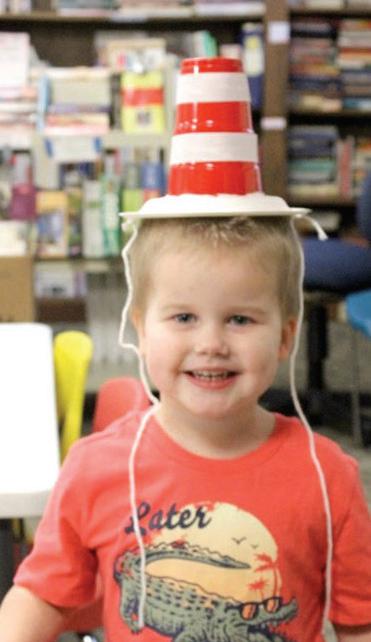
CAT IN THE HAT — Issac Miller shows off his finished Cat in the Hat hat. Photo provided by the Milford Public Library.
LAKEVIEW DISC GOLF — Hole 6 at Lucerne Park in Warsaw offers a view of Pike Lake from the tee. Photo by Nathan Pace.
RE/MAX Results agent ranks No. 14 Latino Agent in the USA
RE/MAX
Results recently announced
Berto Barrera has been ranked as the No. 14 Latino agent in the United States by The National Association of Hispanic Real Estate Professionals for 2024.
This award is based on Barrera’s production in 2023, which consisted of 118 transactions and nearly $29 million in sales volume.
Barrera stated, “It’s an honor to bring this recognition to our local community. This achieve-
ment truly reflects that anything is possible if you set your heart and mind to it.
I want to extend my heartfelt thanks to all of my clients, my friends, my wife, my family, my team and my amazing assistant, Giovanna, for helping propel this business to the next level. Your support means the world to me.”
He added, “I am dedicated to revolutionizing the real estate process and redefining what it means to buy a house. My goal has never been just to be the best, but to provide my clients with an unmatched buying and selling experience. I promise to keep getting better and better.”
Todd Stock, owner of RE/MAX Results, spoke highly of Barrera, stating, “Berto’s achievements since starting his real es-
Warsaw DAR members hear about city police department
The Agnes Pryun Chapman Chapter of Daughters of the American Revolution met at noon, Tuesday, June 25, at Pizza Hut in Warsaw. Seven members and one guest were present.
The speaker was Chris Francis, the public information officer for the Warsaw City Police Department. There are 43 officers on the Warsaw City Police Department. Francis has been with the department for two years. Prior to that, he was with the Kosciusko County Sheriff’s Department for 18 years.
He spoke about drug issues in the county. Fentanyl is now probably the worst drug problem, coming into the country through the southern border and the northern border through the Great Lakes. The drug may be mixed with other drugs and causes overdoses be-
cause users don’t know what is in the drug. Officers routinely carry Narcan to administer for overdoses.
After lunch, club members held a short business meeting.
Susan Creamer read the secretary’s report, and Janice Cox gave the treasurer’s report.
Paulene Holderman opened discussion about donating to Mobile Meals. Cox made a motion to donate $200, and Linda Stroup seconded the motion. It passed unanimously.
Stroup reported that she had taken awards and scholarships to all the schools in the county for their Awards Day programs.
Alice Adams reported about a Liberty Tree, which was planted at Plymouth by their local DAR chapter. Members discussed whether that would be possible in Warsaw.
The meeting was adjourned.
The next meeting will be at noon Tuesday, July 25, at Pizza Hut. The program will be about Joe’s Kids.
Daughters of the American Revolution is open to any woman who can prove her ancestry to an American Revolutionary War patriot.
More information is available on the DAR national public website at dar.org.
Pianist in Concert
Saturday, July 20, 2024
2:00 pm-4:00 pm
(Ice Cream & Cookie Break Around 3:00 pm)
Cromwell United Methodist Church
116 West Orange Street, Cromwell, IN
Sam Lane, born blind, began playing the piano at age of three (3) after listening to his mother play the piano in church. His first concert was in nursery school, and he began formal training at the age of seven (7). Sam attended a school for the blind where he learned to read braille music which expanded his piano skills. Sam obtained his degree in Piano Performance from the Oberlin Conservatory in Ohio.
He currently resides in Bradenton, FL with his wife Anita, where he is serving as the Music Director for two churches, pianist for a senior adult choir, and performs nationwide sharing his musical gift that God has given him. COME AND ENJOY THE MUSIC!
Sam will play any type of music by requestGospel, Secular or Classical. Cost: Donations accepted at the door.
tate career are astounding. We are proud to have him be a part of our team at RE/MAX Results.
His passion for the real estate industry and drive to succeed serve his clients very well. We look forward to watching Berto continue to succeed in his business.”
Ways to combat insomnia
By EMILY CHRIST Health and Human Sciences Extension Educator Purdue Extension-Elkhart County
Few things are more frustrating than lying in bed, unable to sleep, as the minutes on the clock tick away. Insomnia, a common sleep disorder, can disrupt your life leaving you feeling tired, irritable, and less able to function at your best.
Insomnia is characterized by difficulty falling asleep, staying asleep or experiencing non-refreshing sleep. It can be caused by a variety of factors, including stress, medical conditions, lifestyle habits and mental health issues. Addressing the underlying causes is crucial for effective treatment.
Start by establishing a regular sleep-wake schedule by going to bed and waking up at the same time every day, even on weekends. This helps regulate your body’s internal clock and improves the quality of your sleep. Ensure your bedroom is conducive to sleep. This means keeping it dark, cool, and quiet. Invest in a comfortable mattress and pillows and consider blackout curtains to block out external light. The blue light emitted by smartphones, tablets, and computers can interfere with your sleep by suppressing the production of melatonin (a hormone that regulates sleep). Avoid screens for at least an hour before bedtime.
If your insomnia persists after trying these habits, consider seeking professional help. A health care provider can evaluate any underlying medical conditions and recommend treatment options, such as medication or therapy.
Combating insomnia requires patience and a commitment to
improving your sleep hygiene and lifestyle. Remember sleep is essential for your overall wellbeing and addressing insomnia is a crucial step in maintaining
good health. By implementing these strategies, you can increase your chances of enjoying the restful, restorative sleep you deserve.
Miller named customer service representative for Brock Grain Systems
BELINDA MILLER
Belinda Miller has been named customer service representative for Brock Grain Systems, according to Steve Homme, business support group manager for the CTB Inc. business unit.
In her new role, Miller will focus her attention on supporting Brock’s northeastern United States dealer network by provid-
ing customer service, processing orders and ensuring a complete and accurate billing process.
Prior to joining CTB, Miller gained six years of experience at a crop insurance agency in Warsaw, where she held the title of agent support representative. In this role, she assisted clients with the filing of paperwork in order to meet government compliance requirements.
Miller earned a Bachelor of Science degree in business administration from Grace College, Winona Lake.
A native of Warsaw, she currently resides there.
Yakym sets 2nd District mobile office hours for July
Republican U.S. Rep. Rudy Yakym, representing Indiana’s 2nd Congressional District, has announced the schedule of mobile staff office hours in July throughout the district. Mobile office hours allow Yakym’s staff to assist constituents with questions. Elkhart County
• 10-11:30 a.m. Wednesday, July 10, Nappanee City Hall, 300 W. Lincoln St., Nappanee. Kosciusko County
• 11:30 a.m. to 12:30 p.m. Mon-
day, July 22, Etna Green Town Hall, 106 S. Walnut St., Etna Green.
• 1:30-3 p.m. Tuesday, July 23, Warsaw City Hall, 102 S. Buffalo St., Warsaw.
Marshall County • 1-2 p.m. Monday, July 22, Bremen Town Hall, 111 S. Center St., Bremen.
Wabash County
• 10-11 a.m. Friday, July 12, North Manchester Public Library, 405 N. Market St., North Manchester.
Forbes names 1st Source Bank one of America’s Best Employers for new grads
1st Source Bank was ranked among America’s Best Employers for New Grads in Forbes’ recent list. After a Statista survey of more than 100,000 young professionals, who worked for companies in the U.S. with at least 1,000 employees, Forbes listed the 400 organizations, which scored highest among respondent ratings. 1st Source ranked 312 overall. The survey
participants were asked to rate employers in areas of compensation, benefits, advancement opportunities, working conditions, flexibility, company image and inclusion. They were also asked if they would recommend the organization to others.
“This award speaks volumes about the culture here at 1st Source Bank,” said Dan Lifferth,
chief human resources officer at 1st Source Bank. “We firmly believe in investing in early career talent as the future of our organization. With core values, like integrity, teamwork and community leadership, our organization is a place where people are proud to work every day. We encourage our colleagues to give back to the communities where they live and work.”
In 2023, 1st Source employees logged approximately 14,300 volunteer hours, he said.
According to the Forbes article on the rankings, young professionals are looking for “employment that offers purpose, flexibility, competitive pay and benefits.” More adept at communicating their needs, younger employees are asking organizations to improve their communities and create positive experiences as they progress in their careers.
To learn more about how the list was compiled, visit Forbes 2024 America’s Best Employers For New Grads Ranked List at forbes. com/lists/best-employers-for-newgrads.