Uncooperative winter weather puts a on winter sports


If you are a winter sports enthusiast, this year has likely been quite the disappointment. Kosciusko County has historically been a top destination for individuals who relish the thrill of revving their snowmobiles or catching fish from the icy depths of its numerous lakes. Sadly, those opportunities seem to be occurring less frequently, to much of the community’s dismay.
While the winter season typically brings heavy snowfall and cold temperatures to northern Indiana, recent years have seen a decline in snowfall, warmer temperatures and milder winters.
The lack of snow in northern Indiana can be attributed to a variety of factors, including climate change, changing weather patterns and shifts in atmospheric pressure systems. These factors have led to drier conditions, with less moisture in the atmosphere, which in turn has reduced the amount of snowfall.


The impact of this lack of snow has been felt across the region. For one, it has had economic consequences, as the winter tourism industry, including snowmobiling and ice fishing, has suffered.
Zach Pascale, a resident of North Webster, enjoys snowmobiling but, for him, this year has been a letdown. Over the years he’s attended the winter festivals around Syracuse, but this year many events have been cancelled.
“There were maybe two days where it was possible to ride around here.” said Pascale.

His coworker Patrick Higgins, owner of Higgins Power Sports in Syracuse, said that over the past few years, especially since the pandemic, the snowmobile industry in Indiana has dwindled


since the ‘80s.

“Most of the people who spend money on snowmobiles in Indiana go up to Michigan. That’s the reason why the market is so poor in Indiana, because of the lack of snow,” said Higgins.


Ice fishing enthusiasts in northern Indiana have faced a difficult season this year due to the lack of snow and fluctuating temperatures. With milder winter conditions, the thickness of the ice has been unpredictable, making it challenging for anglers to safely access the water, if at all.


Dan Hurd is a semi-retired pro fisherman and a native of North Webster. He runs Ice Predators Outdoors, where he is a certified ice fishing guide.
“My phone was getting blown off the hook and once we got the ice, I was getting ready to start scheduling and it was gone,” said Hurd, who was only able to get out on the ice once this year.
Joe Mast is a resident of Lagrange County and an avid ice fisherman.
In the past he often ventured out on the frozen waters of Syracuse Lake and Lake Wawasee, but much like many snowmobilers, he has migrated north to the state of Michigan for his ice fishing excursions.
for local businesses that depend on the winter tourism industry.





Milford resident Joe Denton owns Ye Olde Tackle Box, a bait and tackle store in North Webster.

“There were only maybe seven days of ice fishing last year. It’s been horrible this year.”

Moreover, the lack of snow can also have ecological consequences. It can affect wildlife, particularly those relying on snow cover for insulation and as a source of water.
Overall, the lack of snow in northern Indiana has raised concerns and impacted various aspects of life in the region.


According to Purdue University’s Indiana Climate Change Impacts Assessment, average annual precipitation has increased 5.6 inches since 1895, and the rate of changes have been increasing in recent decades.

One of the key findings points to winters and springs being much wetter than previous years.
ana and other will to these changing weather patterns
As climate change continues to be a major issue, it remains to be seen how northern Indiana and other regions will adapt to these n waters of Lake and Lake asee, but much many e north to the state of gan for his ice excursions
In all my years, let me tell you, year has been hese conditions n


“In all my years, let me tell you, this year has been the worst,” said Mast. These co have led to a reduction in the number of ice fishing expeditions, and have had economic consequences


s, have had mic consequences


Wednesday, March 1, 2023 Serving Kosciusko County and parts of Elkhart, Marshall & Noble Counties 114 W. Market, Warsaw, Indiana 46580 www.thepapersonline.com Vol. 52, No. 36 Milford (574) 658-4111 • Warsaw (574) 269-2932 • Syracuse (574) 457-3666
Know Your Neighbor . . . . 2➤ e s
K NOW Y OUR N EIGHBOR


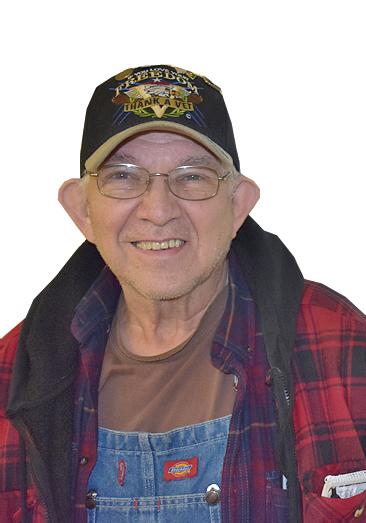
Jerry Wringer: Capturing life, smiles and tributes with colored pencils
made a vow to his wife when she entered a nursing home in February 2018.
“I told her I would make her at least one drawing a day.”
That was nearly 3,000 draw-





ings ago, and the 74-year-old Nappanee resident who grew up in Plymouth shows no sign of flagging.

He still exhibits considerable enthusiasm for artistically recreating “a little bit of everything: trains, landscape, birds, flowers, people. I just love expressing myself on paper in drawings.”
All the drawings in his repertoire are dated, creating somewhat of an autobiographical “sketch” (pun intended) of the man.
A couple years ago Wringer switched to colored pencils as his medium of choice. “I rough in the drawings with graphite,” he said, which he erases after he applies the colored pencil images.
He has been a devotee of the art form “pretty much all my life,” he said. “I started as a kid, inspired by Norman Rockwell and by (Nappanee cartoonist)
Max Gwin, who in the 1920s drew ‘Slim and Spud,’ singlepanel cartoons about a farmer and his hired hand.”
Wringer took some high school art classes and thought about becoming a commercial artist. “But the military interrupted,” he said. Wringer served in the U.S. Army from 1969-72 and then joined the Reserves and the National Guard, fulfilling eight years of service to this country.
He moved to Nappanee 45 years ago and the following year joined American Legion Post 154, where he has been a member since.
He plies his hobby nearly every morning “for a couple hours” at the Main Street Roasters coffeehouse in downtown Nappanee. Over the years, he had set up his impromptu studio in the town’s McDonald’s and then Burger King franchises.


Though he occasionally sells a drawing here and there, he derives the most satisfaction from the reactions of the recipients of his artwork.

“I did two drawings of whitetail deer for our pastor for Pastor Appreciation Month. He hunted white-tail deer and said the drawings were better than any card he could have received.”
He also recalled brightening the day for his 4-year-old neighbor boy, Liam. “Liam came by at the coffeehouse and said, ‘It would be neat if you drew a tractor.’ So I drew a colored picture of a 1966 John Deere from a clipping and gave it to him. He liked it so much he showed it to everybody in the coffeehouse. His parents framed it and hung it on his bedroom wall.”
Wringer was also gratified by the smile of a girl less than a year old when she saw her portrait and recognized herself.
He has made drawings of Kathy Lee Gifford, Betty
White, Carol Burnett, John Wayne “and other actors and actresses.”

But perhaps the most consequential drawing for him right now is the colored pencil sketch of the late Jackie Walorski that he drew in 2019.
“I took (the likeness) from one of her campaign photos shortly after the midterms,” he said. “I met her at Coppes Commons and she got to see the drawing.”
For Wringer, the art project was a labor of love. “I am a veteran and she meant a lot to me because of all she did a lot for us vets.”
He has three copies of Walorski’s portrait. He keeps one at home, recently hung up a copy on the wall of the Nappanee American Legion post and is saving the third framed copy for Mayor Phil Jenkins to present to Walorski’s widower at a reception now being planned.

For more information, or to commission Wringer for a drawing, call him at (574) 202-7352.





Megan Hochstetler participates in Western IHSA Horse Show
Megan Hochstetler, Millersburg, recently participated in a Western IHSA Horse Show at the University of Findlay’s Dale Wilkinson Arena.
The January two-day show included competitors from Bowling Green State University, Kent State University, Lake


Erie College, Thiel College and Tiffin University.
UF’s team achieved Highpoint Team at this show and every show this season. The Western Intercollegiate Horse Shows Association Regional Show will be held March 11 at UF’s Western Farm.
2www.thepapersonline.com — the PAPER — Wednesday, March 1, 2023
Lifelong pencil drawing enthusiast and unshakably devoted husband Jerry Wringer
Located In Coppes Commons 401 E. Market St., Suite 6, Nappanee, IN 46550 574-773-0214 culinarymill.com Monday - Friday 8:30 am - 5:30 pm Saturday 8:30 am - 4:00 pm NO FEES FOR USING VISA, MASTERCARD OR DISCOVER - NOT RESPONSIBLE FOR PRINTING ERRORSSPECIALS OF THE WEEK Prices Good March 1-7, 2023 Walnut Creek Forest Ham Guggisberg Swiss Cheese #10 Can Cheese Sauce Walnut Creek Meltz Cheesy Splits & Shells Pretzels Sprouted Grain Pretzels Raised Donut Mix Unique Snacks $9.99 Ea. $5.59 Ea. $2.59 Ea. $3.69 Ea. $4.39 Lb. $5.39 Lb. $1.69 Lb. CHECK OUT OUR LINE OF #10 CANS W $ 32 Oz. COUPON PLU #1099 Senior Saving Day for our friends over 60! Thursday, March 2, 2023 Senior Citizens Receive 5% Discount With This Coupon Syracuse - North Webster Locations Does not include beer, wine, cigarettes, gift cards or lottery. PL Does your radiator have you steaming? Specializing In Rebuilding Old Tractor & Auto Radiators GasTank Coating - Repair & Cleaning • PlasticAluminum Radiators • Automotive Heaters 4th St., Tiosa 574-223-3508 T-Bone Steaks $4.99/lb. Seven Sister’s Cookbook $19.99/ea. Toasted Oats $3.39 5/2.2 oz. Case Only Homemade Peanut Butter $2.49/lb. Bouthans Eggrolls Pork • Chicken $7.49/lb. Daily Bread Homemade Noodles Fine • Medium • Wide $3.99/lb. BAKERY DELI MEAT FRESH PRODUCE CHEESE While Supplies Last! 4133 E. County Line Rd. Bremen, IN 46506 574-773-0303 Mon.-Fri.: 8 a.m.-5:30 p.m. Sat.: 8 a.m.-3 p.m. Fresh Produce • Deli Meats & Cheeses Frozen Foods • Bulk Foods In-store Bakery Weekly Specials Feb. 27-Mar. 4, 2023 Colby Longhorn $2.79/lb. $1.00 off per lb. All Deli Meat Mandarin Oranges $7.99/1/2 pk. No Bake Cookies $4.99/1 doz. NAME BRAND Ice Cream Shop Open 8 a.m.-5:30 p.m. 574-377-9961 • Garages • Pole Barns • Steel Siding LIFETIME WARRANTY LIFETIMELETWARRANTY US INSTALL LIFETIME WARRANTY METAL Lavon Shirk SPECIALIZING IN METAL ROOFING Visit laroof.us Roofing LLC FREE ESTIMATES INTEREST FINANCING AVAILABLE! *Based on Credit Score
Demonstrators, performers sought for third annual Nappanee Civil War Days
Over the course of our lifetimes, we learn a great deal about American history, wheth-
er through textbooks, lectures or visuals. And while we cannot go back
in time and witness those integral events firsthand, there is a local organization whose mis-
Wagner named MIAA Athlete of the Week
Sidney Wagner of the Trine University women’s basketball team has been named Michigan Intercollegiate Athletic Association Athlete of the Week.
Wagner was pivotal in the team’s two recent victories. The No. 18 Thunder defeated Kalamazoo College at home 82-45 Wednesday and traveled to No. 17 Calvin University Saturday, where Trine came away with a 59-54 win to remain in the chase for the conference championship.
The sophomore from Warsaw was one of three players in double figures with 15 points against the Hornets and led with five assists and four steals in the game. She shot 5-for-6 from the field, made her only three-point attempt and was 4-for-4 from
the charity stripe.


In the team’s win in Grand Rapids, Wagner netted 24 points, the second-highest total of her career. She brought down five rebounds, dished out two assists and recorded two steals to add to her resume. Wagner was turnover free in the win
over Calvin.
This season, Wagner is in the top five in the conference in multiple statistical categories. She is second in steals (1.9 per game), third in scoring (14.2 points per game), fifth in field goal percentage (50.4%) and third in threepoint percentage (41.2%).
Catholic Church to host Lent activities
St. Francis Xavier Catholic Church, 408 W. Catholic St., Pierceton, will be hosting Soup and Stations of the Cross Wednesdays in March for Lent.
Soup is at 6 p.m. with stations

in the church at 7 p.m. All are invited to bring a soup to share.
St. Francis Xavier Catholic Church will host a reconciliation night at 6:30 p.m. Thursday, March 16.
Elkhart County 4-H Fair to celebrate 150th anniversary
The Elkhart County 4-H Fair, one of the most anticipated annual events in the state of Indiana, is celebrating its 150th anniversary this year.
The fair, which has become a staple of the community, has come a long way since its inception in 1851. Over the years, it has grown in size, scope and reputation, becoming a tradition that brings families, friends and neighbors together to celebrate the best of Elkhart County.
This year, the fair is celebrating a long and cherished history of promoting agricultural education, youth development and community engagement. The fair has been an essential part of Elkhart County’s culture and traditions, attracting visitors from all over the state and beyond.
The 2023 Elkhart County 4-H Fair will run from July 21-29. Visitors can expect to enjoy traditional fair activities such as animal shows, carnival rides, food vendors and live music performances.
In addition to the main attractions, the fair will feature special exhibits celebrating its history, showcasing memorabilia and artifacts from past fairs in the Fair History Museum and highlighting
the achievements of 4-H members over the years.
Since the first fair in 1851, there have been 22 times when the annual event did not take place. The Civil War disrupted the fair in 1862 and 1864. The largest time without a fair was from 1868-
1873 and from 1894-1907. Despite these challenges, the fair has persevered and continued to grow. For more information on the 150th Elkhart County 4-H Fair, including a schedule of events and ticket information, visit 4hfair.org.
sion is to enlighten and educate about a chapter of our nation’s evolution that remains compelling more than 150 years after its conclusion.
The 7th Indiana Light Artillery, a group of historians committed to the portrayal and recreation of imagery from the Civil War, volunteer their time assuming the roles of soldiers. They wear authentic uniforms and embrace the primitive lifestyles of the era.
Several times a year, they travel to various reenactments throughout the region and demonstrate pivotal Civil War battles, including campsites and weaponry. The 7th Indiana Light Artillery was formed in 1998, with this year marking its 25th anniversary.
This summer, the company host its third annual Nappanee Civil War Days June 10-11 at the showgrounds of Power from the Past, just north of The Barns at Nappanee, 1600 W. Market St. The public is invited to attend and participate.
This year, the soldiers have chosen to recreate the Battle of Shiloh, which took place in Tennessee April 6-7, 1862. The current schedule of events for Civil War Days includes a skirmish at 11 a.m., followed by a battle at 3 p.m. Saturday, June 10.
There will also be a battle at 1 p.m. Sunday. The 7th Indiana Light Artillery is welcoming fellow enthusiasts from infantry to artillery to cavalry. They are also seeking demonstrators and performers.
Hotel accommodations are all within close proximity to the showgrounds, including The Amish Inn, CountrySide Inn and Shamrock Motel, all in Nappanee.

For those who desire a more primitive campsite, Pla-Mor Campgrounds is located 5 miles west of The Barns on US 6.
Patrons can become immersed in the culture of the Civil War era through music, food, arts and crafts, games and the illustrations of expertise through craftsmen. There will be a Saturday evening dinner for the reenactors, a Sunday morning worship service, fireworks, hayrides and many other attractions.
The Nappanee Civil War Days is being made possible through the sponsorship of several local businesses.
To learn more about how to become involved as a participant, or to simply learn more details about the event itself, contact David Kollar at (574) 993-2421 or dakollar@gmail. com.
3 Wednesday, March 1, 2023 — the PAPER — www.thepapersonline.com
BELTS Lawn, Garden, Farm & Industrial HYDRAULIC HOSE Couplings & Adapters Your Job Site Or In Our Shop INDUSTRIAL HOSE LP HOSE SHEAVES & PULLEYS SERVICE ELECTRIC 310 E. Market Street Warsaw, IN 46580 574-267-7522 www.beltpalace.com GO KART BELTS $2.49 Lb. $9.99 5 Lb. Bag DELI MEAT & CHEESE Muenster Cheese Deli Ham Saltine Crackers Creamy Broccoli Soup Colby w/Salami Cheese Mich. Russet Potatoes Uncooked - Breaded Chicken Tenderloin Fritters Frosted Berry O’s Cereal $2.39 Lb. $2.29 Lb. $2.09 Lb. $2.99 Ea. $1.79 Lb. $2.29 Ea. DISCOUNTED ITEMS BAKERY DEPARTMENT $3.99 89¢ 15 Oz. $1.19 Ea. 12.2 Oz. $2.39 Little Debbie Cookies Frosted Flakes Sourdough Bread 1530 3rd Road, Bremen, IN 574-546-9010 * ALL ITEMS WHILE SUPPLIES LAST * SALE GOOD FEB. 27-MAR. 4, 2023 RENTOWN COUNTRY STORES RENTOWN COUNTRY STORES RENTOWN COUNTRY STORES RENTOWN COUNTRY STORES RENTOWN COUNTRY STORES RENTOWN COUNTRY STORES RENTOWN COUNTRY STORESSALE GOOD FEB. 27-MAR. 4, 2023 HOURS: MONDAY-SATURDAY 8:00 A.M.-5:00 P.M. • CLOSED SUNDAY FROZEN DEPARTMENT 16 Oz. Box 10 Lb. Bags Reg. $2.79 Made Fresh at Rentown Morton Softener Salt Yellow 40# $5.89 Ea. Green 40# $6.89 Ea. Limit 1 Pallet - 63 Bags Breakfast Served All Day • Tues.-Sat. 7 a.m.-2 p.m. BANQUET ROOM AVAILABLE FREE MEAL WINNER: KEITH BELLMAN 1535 3rd Rd., Bremen, IN • 574-546-2192 Meatloaf w/Cheesy Potatoes Chicken Pot Pie or Beef Manhattan 10:30 a.m.-till sold out Beef or Chicken & Noodles w/Mashed Potatoes 10:30 a.m.-till sold out Breakfast Buffet Served All Day 99¢ Coffee TUESDAY SPECIAL WEDNESDAY SPECIAL THURSDAY SPECIAL FRIDAY SPECIAL SATURDAY SPECIAL
North Webster American Legion

SPORTSMAN’S NIGHT
Saturday,

March 4


6 p.m. to 9 p.m. North Webster American Legion Post 253

Tickets $40 each
Tickets Include A Light Dinner & Drawings For Outdoor Sporting Equipment & Gift Certificates From Local Businesses
Sponsored Tables Available For $800 Per Table
SPONSORS WILL HAVE A CHANCE TO WIN A BROWNING 12G O/U AND OTHER PRIZES


Contact The Legion 574-834-4297 #2 Canteen For Additional Information
TICKETS AVAILABLE AT: YE OLDE TACKLE BOX, LOOSE MOOSE
MOTORSPORTS, ALBERTSONS AND BORKHOLDER ARCHERY


PRIZES INCLUDE BUT NOT LIMITED TO Mossberg Model 500 410G Smith & Wesson EZ Slide 9mm
Mossberg Model 500 20G Anderson AM10 308 Caliber
Mossberg Model 500 12G Gun Safe
Must present ticket to enter. Must be 21 to be awarded firearms if won. Need not be present to win. One winner per ticket. All tickets will be returned to hopper for FINAL GRAND PRIZE DRAWING
LICENSE NUMBER 00237

Warsaw High School orchestra, band do well at ISSMA contests
The Warsaw Community High School orchestra and band students achieved outstanding results at the Indiana State School Music Association District Solo and Ensemble Contest Saturday, Feb. 4, at NorthWood High School in Nappanee.
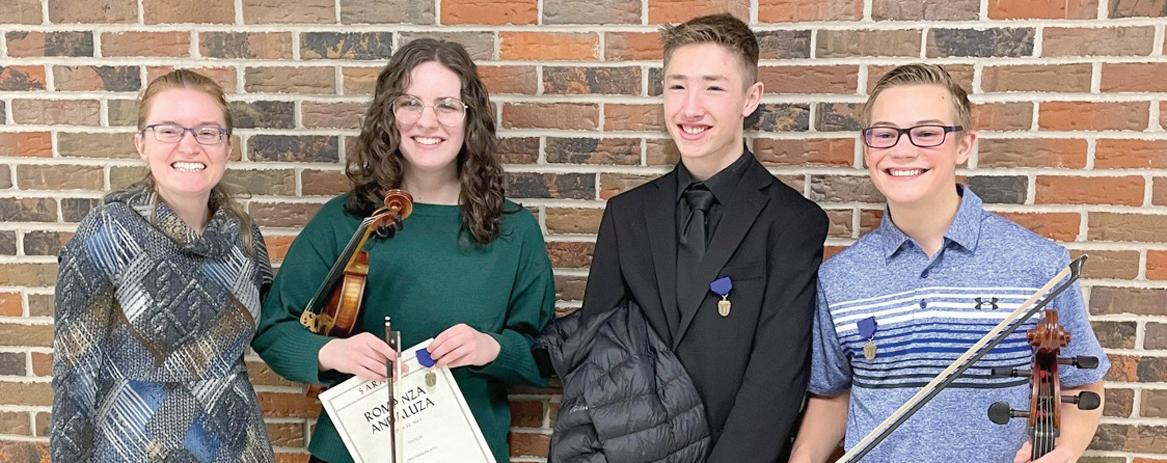

The Tigers’ Pride had 14 solos and five ensembles entered in the competition, along with four WCHS orchestra students.
All four orchestra solos were awarded a gold rating; the WCHS band had 11 solos and two ensembles awarded a gold rating. Eleven of the solos and two of the ensembles qualified for the State Solo and Ensemble Contest held Feb. 25 in Indianapolis.

Soloists earning gold ratings and qualifying for state are Karissa Brath, Mattix Garrett, Mariana Conde, Olivia Bloemendaal, Hallie Hertzler, Doondee Patnala, Melanie Hertzler, Margaret Burkholder, Cate Harris, Annalisa Hertzler and Madison Kohler.
Ensembles earning gold ratings and qualifying for state contest

‘the PAPER’ reserves the right to refuse for publication any advertising that is considered offensive, misleading or detrimental to the public, the newspaper or another advertiser and to edit advertising at its discretion.


Publisher, Ron Baumgartner rbaumgartner@the-papers.com

Business Manager, Annette Weaver .................aweaver@the-papers.com


Editor-In-Chief, Deb Patterson dpatterson@the-papers.com
Editor, Lauren Zeugner ...........................lzeugner@the-papers.com
Warsaw Office Manager, Stasia Hudak ...............warsaw@the-papers.com
Director Of Marketing, Steve Meadows smeadows@the-papers.com


Advertising Manager, Bill Hays .......................bhays@the-papers.com
Advertising Representative, Carl Lauster clauster@the-papers.com


Advertising Representative, Susan Stump sstump@the-papers.com

Manager, Jerry Long jlong@the-papers.com
tcarson@the-papers.com


include the mallet trio and trumpet quartet. A gold rating was also earned by Grace Ganser, Ian Parrott, Jonah Zimmerman and Brighan Hudson.
Silver ratings were earned by Violet Watson, Elijah Banes, Gracie


Luce, the brass trio, the flute trio and the brass quintet.
WCS is very proud of these students’ accomplishments and musical growth. Their attention to musical techniques earned outstanding results.
4www.thepapersonline.com — the PAPER — Wednesday, March 1, 2023
EDITORIAL OFFICES, CIRCULATION, DISPLAY AND CLASSIFIED ADVERTISING WARSAW OFFICE MILFORD OFFICE SYRACUSE OFFICE 114 West Market St. 206 S. Main St. 102 East Main St. Warsaw, IN 46580 P.O. Box 188, Milford, IN 46542 Syracuse, IN 46567 Phone (574) 269-2932 Phone (574) 658-4111 Phone (574) 457-3666 Fax 888-371-2934 1-800-733-4111 Fax
Out-Of-County:
1-800-733-4111 OFFICE
Monday
800-886-3796
Phone
HOURS: 8:00-5:00
Thru Friday www.thepapersonline.com
Circulation
Commercial Printing Sales Representative Rodger Salinas .............................rsalinas@the-papers.com Commercial Printing Customer Service Tina Carson
Rich Krygowski ...........................rkrygowski@the-papers.com DEADLINES Grocery Advertising & Ads Requiring Proofs Thursday 4:00 Display Advertising ..........................................Friday 2:00 Classified Advertising & Cancellations ...........................Friday 2:00 Display Ad Copy Changes And Cancellations .....................Friday 2:00 PRODUCTION ‘the PAPER’ is digitally composed on Macintosh Computers using Digital Technology’s Newspaper Publishing Suite Software and Photoshop software. Ads and ASCII (generic) text may be submitted on Jaz, Zip or floppy disks or can be PDF’d and e-mailed to adcomp@thepapers.com. If you have any questions give us a call and we’ll walk you through it. Current Kosciusko Edition Circulation 24,650 Serving Kosciusko County, Indiana The Largest Circulation Publication In Kosciusko County TM Animal Welfare League Of Kosciusko County 3489 East 100 South, Pierceton, IN 46562 — (574) 267-3008 To See Additional Pets Not Shown In Ad Go To http://www.awlwarsaw.org AD SPONSORED BY SUGAR PLUM, Female, Domestic Short Hair, Adult Small Cat BROWNIE, Male, American Staffordshire Terrier/Mix, Adult Medium Dog SPY, Male, American Staffordshire Terrier, Adult Large Dog RICO - REDUCED FEE Male, American Staffordshire Terrier, Adult Large Dog STAR, Female, Alaskan Husky, Adult Medium Dog ROSCOE, Male, American Staffordshire Terrier/Mix, Senior Large Dog PESKY-SR5, Male, Domestic Short Hair, Adult Large Cat MANGO, Male, Domestic Medium Hair, Kitten Medium Cat ADONIS, Male, Husky/Mix, Adult Medium Dog SUGAR, Female, Jack Russell Terrier/Mix, Senior Medium Dog SCOUT, Male, American Staffordshire Terrier/Labrador Retriever, Puppy/Medium Dog BAMBINO, Male, Collie/Labrador Retriever, Adult Large Dog POPPY (EMERALD) Female, American Staffordshire Terrier/Mix, Adult Large Dog JOKER, Male, American Staffordshire Terrier, Senior Medium Dog NINO, Male, Boxer/American Staffordshire Terrier, Adult Medium Dog HUNTRESS, Female, Doberman Pinscher/Mix, Adult Medium Dog MOLLY - REDUCED FEE Female, Belgian Shepherd Malinois/German Shepherd, Adult Medium Dog CLYDE - REDUCED FEE Male, American Staffordshire
Terrier/American Bulldog, Senior Large Dog
Midwest Museum of American Art
pages of American Art History.
In the heart of downtown Elkhart in a renovated neoclassical style bank building, is the Midwest Museum of American Art.
The building was constructed in 1922 as St. Joseph Valley Bank. In 1978, Dr. Richard and Jane Burns created a public trust for their collection of 100-plus works of art and secured the building as a museum with donations from the community.
The original bank vault was incorporated into the museum space and is fascinating to view. The museum is a showcase of 19th through 21st century American art and houses the largest collection in the United States of hand-signed lithographs and collotypes by the famous American illustrator Norman Rockwell.

In all, the permanent collection numbers over 6,000 works with 900 on display at any time during the year within the 25,000 square feet of space. The collection features the work of historical Indiana artists, and significant artists from the
Some years ago, I read about the Elkhart Juried Regional Exhibition hosted by the museum and decided to view the work of artists from 20 Indiana counties and four southern Michigan counties.
The exhibition is a major survey of current trends and is an opportunity for artists to show their work and compete for cash prizes.
Awards presented to artists each year exceed $25,000 in cash. The competition is held in September and the selected artworks are on display from the beginning of October through the last week of December.
As I entered the beautifully restored building housing the museum to view the exhibition of the work of local artists, I found myself walking through an exhibit that gave me a fresh view of art in a variety of mediums. I strolled through the exhibit, focusing on each piece, and felt as if the artworks were speaking directly to me.
I discovered new techniques that inspired me to experiment and found myself itching to get back to my own art studio to create a new
work of art. One beautiful painting of a forest floor covered with sprouting mushrooms reminded me of childhood spring vacations in Parke County when my parents took my sisters and me mushroom hunting.
In an instant, I was a young girl again, running joyfully through the forest excitedly looking for mushrooms. Do you find yourself reacting emotionally to artworks? You will be amazed at the emotions and memories that flood your mind when you are viewing artwork if you open your mind to the experience.
The museum, located at 429 S. Main St., Elkhart, is open 10 a.m. to 4 p.m. Tuesday through Saturday and 1-4 p.m. Sunday. Admission is $10 for adults, with discounts for children and students. For more information, visit midwestmuseum. org or call (574) 293-6660.
Events


• Lakeland Art Center & Gallery: The gallery will open March 1 with exhibiting artists Samara Dulik and Kim Marcadis. Dulik has created her own brand of painting, highlighting color through the
Merrill receives Commitment Award
Lake City Bank presented Chris Merrill, vice president, technology services manager, with its 2022 Commitment Award at the bank’s quarterly officer meeting earlier this month.

“The Commitment Award recognizes individuals who have gone above and beyond in representing the bank, both internally and externally,” said David M. Findlay, president and chief executive officer. “Chris embodies the spirit of the award, so it’s no surprise that his colleagues within the bank nominated him.”
Merrill joined Lake City Bank in 2006 and has served as vice president, technology services manager since 2017. In this role, he is responsible for the daily operations of the technology services department, which supports the bank’s network and technology users.
He also plays a key role in developing and implementing strategic initiatives for the bank. Merrill is president of the Warsaw Community Public Library board of trustees.
Merrill’s teammates, who nominated him for the award, noted that he managed through key transitions on the technology services and information security teams and helped ensure a smooth transition for team mem-
bers, leadership and the bank as a whole.
At the same time, Merrill led the bank through two key examinations in which the bank maintained the highest rating possible for all technology-related areas.
As the leader of a group that provides service to each and every part of the bank, Merrill sets the tone and a high standard for service delivery. He is known for listening, troubleshooting and


sharing ideas.
“Chris’s role is a critical one to everyone in the bank, and his commitment to ensuring our technology systems are both functional and innovative is recognized throughout the Lake City Bank team,” Findlay said. “His selfless, team-driven leadership is a true testament to the outstanding partner that Chris is and exemplifies the culture of Lake City Bank.”
HATTON-SADLER FUNERAL CHAPELS
introduction of graffitism, using acrylics, spray paints, inks, Posca pens and at times, finger painting.
Marcadis creates functional pottery with lots of color and texture using many different processes, techniques and materials. The work of both artists will be on display through March 26 at the gallery located at 302 E. Winona Ave., Warsaw. Gallery hours are 11:30 a.m. to 4 p.m. Wednesday through Saturday. For more information call (574) 267-5568 or (574) 4576085 or email lakelandartassociation@gmail.com.
• Grace College Senior Art Exhibit: The annual senior art show at Grace College will be held through Thursday, March 2, at the Grace College Mount Memorial Art Gallery. The show will highlight the portfolios of 16 student art majors and their ambitious bodies
of work. The gallery is open 10:30 a.m. to 5 p.m. Monday through Friday, on the Grace College campus, 808 King’s Highway, Winona Lake. For more information, call (866) 237-4640.
• Warsaw City Hall Art Gallery: Local artist Deana Harvey will be displaying her artwork through the end of March. If you have already been to her exhibit, make sure to stop by again, as she has switched out her artwork to provide a fresh showing.
To exhibit at Warsaw City Hall Art Gallery, contact Darla McCammon, Curator, at (574) 527-4044 (leave a message) or mcdar7@ gmail.com.
If you would like to offer someone a free email subscription to this weekly column, please send a request including the email address to mcdar7@gmail.com.


5 Wednesday, March 1, 2023 — the PAPER — www.thepapersonline.com Art in Action —
“Our families serving your family with professionalism, compassion and care.”
Pierceton and Warsaw
- Store HoursMonday-Friday 8:30AM to 4:30PM Saturday 8:30AM to 3:00 PM Cold Cooler with Cheese, Meats, Milk, Eggs & Butter Cereals, Canned Goods, Juices, Paper Products, Pet Foods & More! Constantly changing inventory with new items arriving daily! Unbelievable low prices. Complete Bulk Food aisle for your shopping convenience. Madison Country Store Discount Groceries Bulk Foods & More We Accept Credit Cards 67506 Beech Road • Wakarusa • 574-633-4143 Ext. 1 PierceCR 40 US 6 ✸ Wakarusa Nappanee Bremen SR 331 Beech Rd. SR 19
Michael and Tracy Wilson
Altrusa’s spring bazaar to feature 70 vendors


Altrusa Club of Warsaw members will host their sixth annual spring bazaar Saturday, March 4, at First United Methodist Church Connection Campus, 1692 W. Lake St., or Old US 30 West across from TimeOut Inn.

The bazaar will feature crafts, direct sales and collectibles from 70 vendors.


The sale runs from 9 a.m. to 3
KLA cadets organize first Savor Kosciusko event
Since 1982, the Kosciusko Leadership Academy has invested in the emerging leaders of Kosciusko County, people who possess a passion to serve and the courage to lead others.
The KLA experience culminates with a white paper project. KLA Cadets form teams and research relevant community issues and needs.
Cadets from this year’s class are organizing the first Savor
Kosciusko event. Team members include Josh Silveus, Silveus Insurance Group; Lauren Klusman, Kosciusko Chamber of Commerce; Bennett Hollar, Hollar Dental Group; and Brian Runkel, Instrumental Machine and Development.
Savor Kosciusko will be a weeklong event featuring Kosciusko County restaurants. The event will allow diners to take advantage of specially priced featured menus at
participating restaurants during the week of Saturday, March 25, through Saturday, April 1.
Local restaurants are encouraged to reach out to Lauren Klusman at lklusman@kchamber.com by Friday, March 3, for more information.

Participating restaurants and their Savor Kosciusko menus will be released in the coming weeks on the Savor Kosciusko Facebook page.
p.m. A light meal and bake sale will be available.
There is no admission fee.
More information about the bazaar is available at AltrusaWarsaw IN on Facebook, at altrusaclubwarsaw@yahoo.com or by texting or calling Julie at (574) 268-7645.
All proceeds will support the Altrusa Club’s community service projects.
Power from the Past receives old NorthWood bleachers
The Nappanee showgrounds of the organization known as Power from the Past may be fairly idled during these winter months. Even so, the membership has been quite busy, making plans and preparations to accommodate guests to their spacious arena when the warmer season arrives.

And through a perfectly timed opportunity from the NorthWood High School athletic department, Power from the Past is poised to welcome even more supporters and spectators.
In recent months, the broad expanse of land directly east of the high school has been bustling with
activity, with a new multi-diamond sports complex being built for the boys baseball and girls softball teams.
The older seating and sets of bleachers at the former ball diamonds were recently auctioned off, and in the process, Power from the Past was able to bid on and subsequently take ownership of the aluminum bench style seating.
Thanks in part to an unusually mild January, several of the Power from the Past volunteers were able to complete the transfer of the bleachers to their main show grounds and maneuver them into their proper galleries.
The impressive task of bringing the bleachers from the eastern edge of Nappanee to the western fringe was achieved in one day, with the seats being loaded onto two flatbed semitrailers and carefully transported to their new placements, ready for service and a packed schedule for 2023.
The Power from the Past showgrounds are situated on the northeast corner of US 6 and CR 3 (Arnott Street), just north of The Barns at Nappanee. Members of this agriculture appreciation and preservation organization are stewards of several historically significant structures, a pond, and a 400-foot tractor and truck pulling track, sprawled out across 40 acres of land.
To stay apprised of the upcoming events being held by Power from the Past, visit its Facebook page at Nappanee Power from the Past.

6www.thepapersonline.com — the PAPER — Wednesday, March 1, 2023 E NTERTAINMENT
Petunia’s Antiques & Treasures 10-75% Off New Items! New Discounts!
TWF’s photo contest captures the beauty of the watershed

There’s no question some of the most beautiful scenery is in the Tippecanoe River watershed, which spans more than 60 lakes and streams that offer captivating images all year long.
The Watershed Foundation’s 11th annual photo contest, “Picture Your Watershed,” aimed to capture a glimpse of that beauty through the collective lens of the area’s photographers.
“Over the course of a year, local residents see so much beauty on and in our local waters. Sometimes, in even a matter of minutes, the landscape changes and the majority of us miss moments just a few of us might capture photographically.

“Through our photo contest, we are able to see some of what makes our community so exceptional,” explained Jennifer Zartman Romano, communications coordinator for The Watershed Foundation.

The annual competition is open to all pictures taken in the Upper Tippecanoe River watershed and surrounding land, an area spanning from Crooked Lake in Whitley County through portions of Noble County and continuing into Kosciusko County and Warsaw.
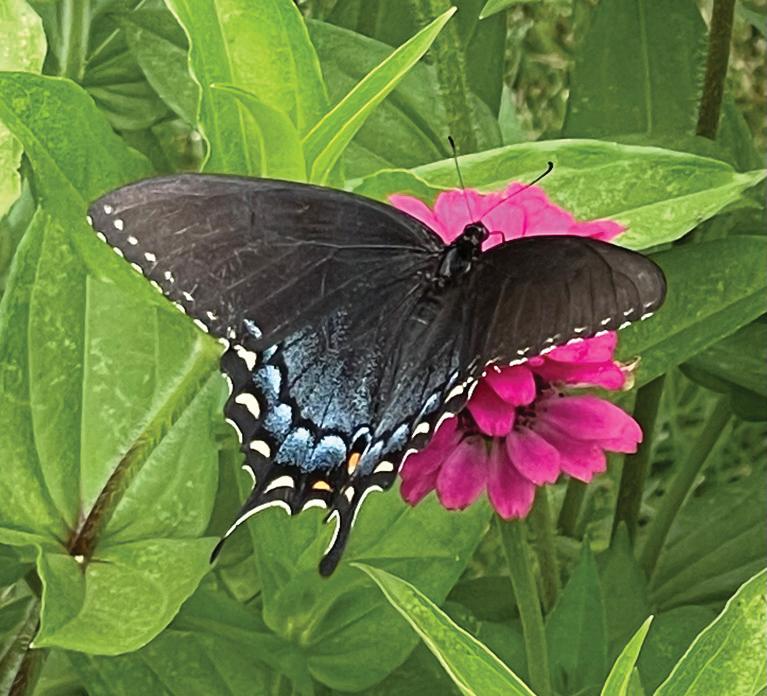
Pictures were accepted until Dec. 31, and then open voting for the “People’s Choice” award began. A panel of judges from TWF evaluated the rest of the entries for additional awards.
Winners included:
• People’s Choice: Rucel “Rusty” Martinez, “Winona Lake.”
• Wet ‘n’ Wildlife Award: Jerry C. Johnson, “Webster Lake.”
• Pollution Solutions Award: Michael O’Connor, “Lake Tippecanoe.”
• Nature’s Studio Award: Mark Baumgartner, “Irish Lake.”
• Lovin’ Our Lakes Award: Patrick Pfefferkorn, “Lake Tippecanoe.”

“Thank you to all the photographers, amateur and professional, who participated this year,” Romano added. “We were able to see some incredible photography representing a large portion of our watershed, showing countless beautiful moments which highlight why TWF’s
work to protect the quality of our local lakes and streams is so important.”
Local technology expert offering cybersecurity awareness seminar
Ryan Gable, owner of 9GBTech LLC, will present a cybersecurity seminar at 10:30 a.m. Monday, April 17, at the Peabody Public Library, 1160 IN 205, Columbia City.
Business owners and residents in the community will be able to learn about the basics of cybersecurity, phishing and other scams and how they can protect themselves and their assets.
To register, visit 9gbtech. com/cyber23.
Gable has been active in the computer and electronics industry since 2009. “The intent of this seminar is to educate
people, not frighten them,” he said.
“Cybersecurity is a real threat and most do not realize how serious this can be. A cyberattack occurs every 39 seconds and over 40% of cyberattacks target small business. This is a real and dangerous threat that can be addressed by understanding the risks and how to mitigate them.”
Gable is a resident of Columbia City and started his business after receiving an applied science associate degree in information technology and cloud computing. He also has obtained multiple industry cer-
tifications, including CompTIA.
Prior to receiving his degree, Gable spent over 10 years troubleshooting computer problems while expanding his knowledge of the industry.
9GBTech LLC is a client of the Northeast Indiana Small Business Development Center and has received business startup guidance and marketing-related assistance.
For more information on 9GBTech, contact Gable at ryan@9gbtech.com or (260) 209-4798. To learn more about the services of the NEI-SBDC, visit isbdc.org or call (260) 4810500.
7 Wednesday, March 1, 2023 — the PAPER — www.thepapersonline.com
Prizes for each category were donated by Bart’s Watersports in North Webster.
OBITUARIES

Larry D. Arven
Larry D. Arven, 83, rural Rochester, died at 4:25 a.m. Feb. 19, 2023.
He was born March 22, 1939. On March 26, 1961, he married Mary Craft; she survives.
Also surviving are his children, Brent Arven, Rochester, and Virginia Clampitt, Atwood; five grandchildren; and three great-grandchildren.
Following his wishes, no services will be held. Hartzler Funeral Home, Akron, was in charge of arrangements.
Carolyn F. Blosser

Carolyn F. Blosser, 88, Jones, Mich., died Feb. 21, 2023.
She was born Dec. 30, 1934. On Oct. 9, 1954, she married Virgil E. Blosser. He preceded her in death Aug. 18, 2012.
She is survived by a son, Jeffrey Blosser, Union, Mich.; four grandchildren; six great-grandchildren; daughter-in-law, Karen Blosser, Elkhart; sister, Linda Rider, Elkhart; and brothers, Roger J. Eby, Goshen, Rolland Eby, Elkhart, and Rex Eby, Millersburg.
Services were held Feb. 25 at Rieth Rohrer Ehret Lienhart Funeral Home, Wakarusa. Burial was in Olive (West) Cemetery.

Rebecca Bogeman
Rebecca Bogeman, 88, Milford, died Feb. 22, 2023.
Arrangements are currently pending at Titus Funeral Home & Cremation Services, Warsaw.

Nathan R. Collier
Nathan R. Collier, 38, Fort Wayne, formerly of Pierceton, died Feb. 22, 2023.

He was born May 1, 1984. On Aug. 11, 2012, he married Sherina Miller; she survives.
Also surviving are his children, Varian, Abbott and Silas, all of Fort Wayne; parents, Timothy and Deborah Collier, Pierceton; sisters, Leslie Basinger, Churubusco, and Lindsay Runkel, Syracuse; brother, TeJay Collier, Pierceton; mother-in-law, CeCe Miller, Fort Wayne; his beloved dogs, Maude and Phoebee; and several nieces and nephews.
Visitation was held Feb. 25 at Pres-
byterian Church, Pierceton. No formal services were held. Titus Funeral Home & Cremation Services, Warsaw, was in charge of arrangements.

Doris E. Cripe
Doris E. Cripe, 90, Wakarusa, died Feb. 19, 2023.
She was born Feb. 24, 1932. She married Neil Cripe, who preceded her in death in 2016.
She is survived by a daughter, Kay Kelley, Syracuse; a son, Scott Cripe, Bremen; six grandchildren; son-inlaw, Brent Lineberry, Bremen; sisterin-law, Aileen Clindaniel, Bremen; eight great-grandchildren.
Services were held Feb. 23 at Mishler Funeral Home, Bremen. Burial was in Bremen Cemetery.
Jack Darr
Jack Darr, 89, died Feb. 18, 2023.
Arrangements are currently pending at Eastlund Funeral Home, Syracuse.
Richard Leon Eckerley
Richard Leon Eckerley, 82, rural Peru, died at 11 p.m. Feb. 16, 2023.
He was born Dec. 23, 1940. On Feb. 16, 1962, he married Suzanne Pennycoff; she survives.
Also surviving are his children, Brent Eckerley, Warsaw, Bryan Eckerley and Brad Eckerley, both of Peru, and Beth Eckerley, Indianapolis; seven grandchildren; six great-grandchildren; and siblings, Julia Wolfrum, Wabash, Gene Eckerley, Mishawaka, Larry Eckerley, Fort Wayne, Patricia Raker, Harrisburg, Pa., and Sharon Hill, Wabash.
Services were held Feb. 22 at Grandstaff-Hentgen Funeral Service, Wabash. Burial was in Roann Community Cemetery.
Eugenia N. Fulkerson
Eugenia N. “Genie” Fulkerson, 78, Warsaw, died Feb. 11, 2023.
She was born Jan. 27, 1945.
She is survived by a son, Daniel Fulkerson, Mishawaka; daughter, Josephine “Jodi” Ramirez, Zionsville; six grandchildren; brother, Don Nixon, Florida; and her companion, Mary Geyer, Warsaw.
A memorial celebration was held Feb. 25 at McHatton-Sadler Funeral Chapels, Warsaw. Burial was in Oakwood Cemetery, Warsaw.
Anna Glover
Anna Glover, 96, Syracuse, died Feb. 22, 2023.
Arrangements are currently pending at Eastlund Funeral Home, Syracuse.
Danny Hawkes

Danny Hawkes, 41, Winona Lake, died at 2 p.m. Feb. 17, 2023.

He was born Feb. 11, 1982.
He is survived by his longtime significant other, Jeanette Kells, Winona Lake; daughter, Emily Hawkes and expected daughter, Olivia; mother, Sherri Cordes, Lakeville; and brothers, Donovan Hawkes, North Liberty, and Dennis Hawkes, Lakeville.
Cremation will take place and a celebration of life will be held at a later date. Thompson-Lengacher & Yoder Funeral Home, Nappanee, was in charge of arrangements.

Sandra Holdeman
Sandra “Sandi” Holdeman, 66, Warsaw, died Feb. 22, 2023.
She was born Sept. 19, 1956.
She is survived by a son, Jim Rose; daughter, Ashley Holdeman; six grandchildren; sisters, Lois Shatzer and Penny VanHoozen; and boyfriend, Jim Fribley. Visitation will be held from 4 p.m. until the 6 p.m. memorial service Friday, March 3, at Titus Funeral Home & Cremation Services, 2000 Sheridan St., Warsaw. Please dress comfortably and cheerfully.
Christopher Hurd
Christopher Hurd, 55, Warsaw, died Feb. 20, 2023.
He was born Nov. 18, 1967. On Sept. 26, 2009, he married Geri Schuh; she survives.
Also surviving are sons, Jared Hurd, Silver Lake, and Mike Farner, Nappanee; daughters, Rebecca Roose, Syracuse, Kaitlyn Hurd, Warsaw, and Kiley Helblig, Warsaw; sisters, Samantha Bradford, Silver Lake, and Velia Grosch, Rochester; brother, Faron Hurd, Warsaw; and numerous grandchildren.
The family wishes to have a celebration of life at a later date. McHatton-Sadler Funeral Chapels, Warsaw, is in charge of arrangements.
Kurt Kauffman

Kurt Kauffman, 68, Silver Lake and a longtime resident of the Kokomo area, died Feb. 16, 2023.
He was born May 23, 1954.
He is survived by his partner of 43 years, Rex Boxell, Silver Lake; his partner of 16 years, Michael Mattingly; brother, Fritz Kauffman, Carmel; sister, Gretchen Kramer, Tennessee; and his close friend, Mike Kyler, who was like a brother.
No public services are planned. His family is grieving privately. Titus Funeral Home & Cremation Services, Warsaw, was in charge of arrangements.
Mary A. Kendrick
Mary A. Kendrick, 84, Claypool, died Feb. 17, 2023.
She was born May 28, 1938. On Dec. 15, 1969, she married Carl Kendrick; he survives.
Also surviving are her children, James Pennington, Wayne Penning-

ton and Millard Pennington, all of Prestonsburg, Ky., Maudie Elliott and Carl Kendrick, both of Claypool, and Greg Pennington, Warsaw; siblings, Frank Hall, Palestine, and Noama Wagner, Pierceton; 12 grandchildren; 17 great-grandchildren; and three great-great-grandchildren.
A life celebration was held Feb. 23 at Titus Funeral Home & Cremation Services, Warsaw. Burial was in Graceland Cemetery, Claypool.
Rita M. Kolb
Rita M. Kolb, 65, Syracuse, died Feb. 5, 2023.
She was born June 30, 1957.
She is survived by her son, Lance Kolb; and siblings, Ronald Thornburg, Stony Thornburg, Jerry Thornburg, Jim Thornburg, JoAnne Drake and John Thornburg.
A graveside service was held Feb. 28 at Oak Park Cemetery in Ligonier. Titus Funeral Home & Cremation Services, Warsaw, was in charge of arrangements.
Phyllis Jeanne Landis
Phyllis Jeanne (Knepper) Landis, 97, Warsaw, died Feb. 23, 2023.
She was born Jan. 29, 1926. On June 26, 1949, she married Joe Keaton Landis, who preceded her in death in 2002.
Surviving are her children, Vern Landis, Dee Loftin, Joe Landis and Laura Tatooles; brother, Robert Knepper; eight grandchildren; and 10 great-grandchildren.
A memorial service will be held at 11:30 a.m. Thursday, March 2, at Titus Funeral Home & Cremation Services, 2000 Sheridan St., Warsaw. Visitation will be prior to the service from 10-11:30 a.m.
Daniel C. Levernier
Daniel C. Levernier, 99, Milford, died at 8:44 p.m. Feb. 20, 2023.


He was born March 24, 1923. On Feb. 12, 1944, he married Mary Helene “Chippy” Thomas. She preceded him in death May 18, 2014.
He is survived by his children, Dana Miller, Debra Mann, Warsaw, Thomas Levernier, Milford, and Timothy Levernier, Milford; 26 greatgrandchildren; and 15 great-greatgrandchildren.
Services were held Feb. 24 at Mishler Funeral Home & Cremation Center, Milford. A private family burial took place at Milford Cemetery.
Linda Kae Hall Long
Linda Kae Hall Long, a native of Warsaw, died Feb. 14, 2023. She was born Sept. 30, 1942. She married Roger Phillip Rice, who preceded her in death. She then married Robert Lynne Long, who also preceded her in death.
Surviving are daughters, Kristel Houin and Kellen Ambrose, both of Plymouth; two grandchildren; and her Fox Terrier fur babies, Tizzy and Dotz.

The family is planning a celebration of life at a later date. Deaton-Clemens Van Gilder Funeral Home, was in charge of arrangements.
Mike Miller
Mike Miller, 49, Claypool and a longtime resident of the North Web-
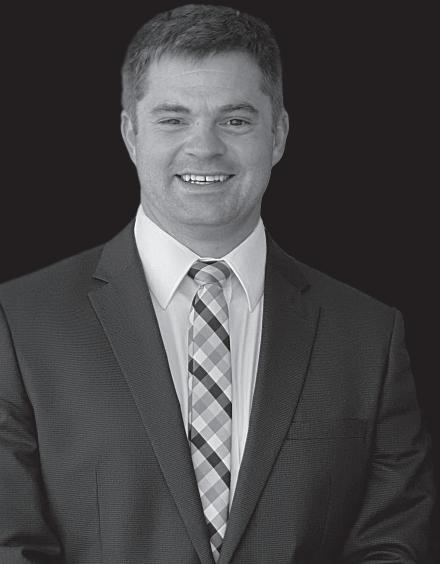
ster and Syracuse areas, died Feb. 16, 2023.
He was born Nov. 27, 1973.
Surviving are daughters, Kaylen Miller, Warsaw, Amaya Miller, Indianapolis, Sandra Miller and Tonya Miller, both of Sturgis, Mich.; mother, Janet Doescher, Huntington; father, Michael Miller, Bluffton; brothers, James and John Miller; and two grandchildren.
Services were held Feb. 21 at Titus Funeral Home & Cremation Services, Warsaw.
Eleanor O. Moffett
Eleanor O. Moffett, 87, Warsaw, died Feb. 17, 2023.
She was born July 8, 1935. On Aug. 12, 1961, she married Donald H. Moffett, who preceded her in death in 2019. Surviving are her children, Karen Moffett, Karl Moffett and Donna Corp, all of Warsaw; two grandchildren; and two great-grandchildren.
A celebration of life was held Feb. 24 at Fellowship Baptist Church, Warsaw. Interment was private in Oakwood Cemetery, Warsaw. McHatton-Sadler Funeral Chapels, Warsaw, was in charge of arrangements.
Carla Sue Oplinger
Carla Sue Oplinger, 59, died Feb. 18, 2023.
She was born March 11, 1963. She married Don Oplinger, who survives.
She is also survived by a son, Matthew Oplinger, Warsaw; a daughter, Rachel Hartman, Winterville, Ga.; sisters, Lynn Smith, Beverly Hills, Fla., Cindy Woods, Elkhart, and Connie Jacober, Genoa, Ill.; and four grandchildren.
A celebration of life ceremony was held Feb. 25 at Sugar Grove Church, Goshen. Burial was in Violett Cemetery, Goshen. Yoder-Culp Funeral Home, Goshen, was in charge of arrangements.
Emily L. Renner
Emily L. Renner, 86, San Antonio, Texas, died Feb. 20, 2023.
Arrangements are currently pending at Titus Funeral Home of Syracuse.
Susan Rossell
Susan Rossell, 69, Syracuse, died Feb. 18, 2023.
She was born June 28, 1953. On Dec. 21, 1974, she married Tom Rossell; he survives.
She is also survived by a sister, Cynthia Strickland; brother, Rick Sexon; and a niece.
Visitation was held Feb. 28 at Eastlund Funeral Home, Syracuse.
Tony Schmucker
Tony “Bud” Schmucker, 94, Nappanee, died at 4:10 a.m. Feb. 17, 2023.

He was born Aug. 30, 1928. On Dec. 20, 1946, he married Eleanor Stout. She preceded him in death Oct. 6, 2017.
Surviving are his children, Alan Schmucker and Tod Schmucker, both of Nappanee, and Connie McLaughlin, Indianapolis; seven grandchildren; seven great-grandchildren; two great-great-grandchildren; and a sister, Arlene Dinehart, Mishawaka.
Services were held Feb. 22 at Thompson-Lengacher & Yoder Funeral Home, Nappanee. Burial was in South Union Cemetery, Nappanee.
Larry
J. Staton Sr.
Larry J. Staton Sr., 79, Kimmell, died at 10:15 a.m. Feb. 20, 2023.
He was born June 16, 1943. On Nov. 23, 1973, he married Pamela Ice; she survives.
Also surviving are his children, Larry Staton Jr., Cromwell, Lisa Butler, Goshen, Penny Klett, Middlebury, Kim Walker, Jeffrey Ice, New Mexico, Theresa Williams, Goshen, and Andrew Staton, Osceola; 18 grandchildren; 23 great-grandchildren; brothers, James Staton Jr., Ligonier, and Dan Staton, Goshen; and several nieces and nephews. Services were held Feb. 24 at Yeager Funeral Home, Ligonier. Burial was in Sparta Cemetery, Kimmell.
Continued on page 9
8www.thepapersonline.com — the PAPER — Wednesday, March 1, 2023
Darrell L. Herschberger • 9783 E. 350 S. • Akron, IN 46910 574-382-0162 Specializing in Interior & Exterior Concrete Pole Barns Additions Metal Roofing Remodeling Specializing in Metal Restoration • EPDM • TPO • Foam • Ply dlhconcreteconstruction.com
Continued from page 8
Leon Jay Ulrich
Leon Jay Ulrich, 71, formerly of Wakarusa, died at 6:41 p.m. Feb. 21, 2023.
He was born June 7, 1951.
He is survived by a daughter, Kimberly Robinson, Dunlap; four grandchildren; six great-grandchildren; sisters, Connie Hamilton, Westville, Lou Ann Moore, Bremen, and Kathy “Jo” Kurman, Wakarusa; and a brother,
BIRTHS
Joshua Abram Yoder
Lynn and Geneva (Yoder) Yoder, Bremen, are the parents of a son, Joshua Abram, born at 8:53 p.m. Feb. 15, 2023. He weighed 7 pounds, 10 ounces.
Kaspar Elijah Dietz
Lucas and Dorinda (Brito) Dietz, Goshen, are the parents of a son, Kaspar Elijah, born at 9:52 p.m. Feb. 15, 2023, at Blessed Beginnings Care Center, Nappanee. He weighed 8 pounds, 5 ounces, and was 21 inches long.
Stephanie Kate Petersheim
Matt and Renae (Yoder) Pe-
C OUNTY R EPORT
Ronald Ulrich, Elletsville. Visitation will be held from 10-11 a.m. Saturday, March 4, at Thompson-Lengacher & Yoder Funeral Home, Wakarusa, with a memorial service following at 11 a.m. Burial will take place in Bremen Cemetery.
Julia Villarreal
Julia Villarreal, Milford, died Feb. 18, 2023.
Arrangements are currently pending at Eastlund Funeral Home, Syracuse.
Court News
Small Claims
Kosciusko County
The following small claims have been awarded in Kosciusko Superior Court III, Judge Chad Miner presiding: Lake City Animal Wellness v. Lesley T. Crawford, $899.05
Civil Collections
Kosciusko County
The following civil collections have been awarded in Kosciusko Superior Court IV, Judge Chris Kehler presiding:
Improper headlights — Logan D. Keen, Pierceton, $160
Disregarding an official traffic control device — Denielle N. Nicholson, Pierceton, $160.50
Driving while suspended — Jennifer Miranda, Warsaw, $185.50; Kier Z. Lightfoot, Warsaw, $185.50
Unlawful possession of tobacco, speeding — Caleb R. Wilson, Etna Green, $185.50
Speeding — Michaela Baldwin, Bourbon, $165.50; Kimberly A. Kelley, North Webster, $160.50; Gavin
C. Hunziker, Bremen, $160.50
Operating with expired plates
Ronda L. Arroyo, Akron, $160; Matthew R. Barth, Warsaw, $160
Buckowing-Sobecki
Cory T. Buckowing, 30, Pierceton, and Erica L. Sobecki, 25, Pierceton
Minnix-Fields
David J. Fields, 24, Ligonier, and Ashley N. Minnix, 25, Milford Soto-Boyle
Juan Soto Jr., 37, Winona Lake, and Britney N. Boyle, 36, Winona Lake
Taylor-Hunter
Kevin Taylor, 52, Syracuse, and Tiffany N. Hunter, 32, Warsaw Welch-Collier
Jeffery D. Welch, 31, Warsaw, and Kristina A. Collier, 29, Warsaw Grogg-Pharis
tersheim, Millersburg, are the parents of a daughter, Stephanie Kate, born at 10:24 a.m. Feb. 17, 2023, at Blessed Beginnings Care Center, Nappanee. She weighed 7 pounds, 0.5 ounces, and was 20 inches long.
Adrianna Joy Yoder
Marcus and Ruby Yoder, Nappanee, are the parents of a daughter, Adrianna Joy, born at 12:27 a.m. Feb. 21, 2023, at Goshen Hospital. She weighed 6 pounds, 14 ounces, and was 18 inches long.
Nappanee Legion hosting Friday dinners for public
American Legion Post 154, 201 W. Lincoln St., Nappanee, hosts dine-in and carry-out dinners for the public at a reasonable cost (usually $7 to $9) from 5 to 7 p.m. (or until sold out) every Friday. All dinners include sides, coffee and dessert.
The entrees for March are:
• March 3, Swiss steak. Sponsored by Sons of the American Legion.
• March 10, brisket. Sponsored by the American Legion.
• March 17, tater tot casserole.
Sponsored by American Legion Riders.
• March 24, pork burgers. Sponsored by American Legion Auxiliary.
• March 31, meatloaf. Sponsored by the American Legion.
Proceeds from the dinners go to the various American Legion organizations for charitable work in the community and support for veterans.
For more information, call (574) 773-7686.
2023 Lake Tippecanoe Flotilla honors first responders
The 2023 Lake Tippecanoe Flotilla will be honoring first responders at this year’s Fourth of July event, according to Dan Drook, Flotilla chairman. The Flotilla will be at 1 p.m. Saturday, July 1.
First responders can be seen in all aspects of our life: medical; military; firefighters; local police/ sheriff/state police/department of natural resources; neighbors; and relatives. As an example, within a family there may be a special person who looked after someone. Their heroism makes them a fist responder.
The 2023 Flotilla is an opportunity to show appreciation. Lake Tippecanoe Property Owners goal is to not only have individuals participate, but organizations can participate as a group.
This LTPO event is free. To participate no affiliation to LTPO is required. Pre-registration is necessary to receive cash rewards. Pre-registration is from 9-11 a.m. Saturday, July 1, at the Patona Bay Snack Shop.
So set sail, decorate your boat and join in the parade beginning lake side at the Patona Bay Snack Shop at 1 p.m. Saturday, July 1.
For safety purposes launching or throwing from shore or water any items is strictly prohibited. The lake patrol will be monitoring
the parade route and safety. The parade will conclude at approximately 2:30 p.m. in front of Patona Bay Snack Shop where prizes will be awarded
For additional flotilla information log on to ltpo.org
American Express National Bank v. Ray Hathaway aka Ray W. Hathaway, $20,820.49
LVNV Funding LLC v. Melissa Baker aka Melissa V. Baker, $912.13; v. Deborah McClelland, $1,093.66 Midland Credit Management Inc. v. Raven Donovan, $4,096.80; v. Catherine Love, $1,178.91 Goldman Sachs Bank USA v. Ray W. Hathaway, $21,326.07; v. Jeff Prater, $14,230.35
Gateway Financial Solutions v. Ashley Holt and Lori Meyers, $9,540.36; v. Gilberto Rodriguez, $5,777.52
U.S. Bank National Association d/b/a AGC Card Services v. Lee A. LaFountain, $6,717.89 Mariner Finance LLC v. Lorrie M. Sanders, $2,724 Evictions
Elkhart County
Principled Property Management v. Federico Ramirez, Syracuse, $1,744.83
Mortgage Foreclosures
The following mortgage foreclosure has been awarded in Kosciusko Superior Court III, Judge Chad Miner presiding: LoanCare LLC d/b/a Shellpoint Mortgage Servicing v. John R. Hanna and Ellen C. Shoemaker, $122,946.05
Click N’ Close Inc. v. Rafael Benjamin Hernandez Sr., $215,590.76 PNC Mortgage, a division of PNC Bank, N.A. v. Darrell K. James, $51,654.80
First Federal Savings Bank v. Roy Lee Mullins, $71,770.64
Plenaries
The following plenaries have been awarded in Kosciusko Superior Court One, Judge Karin McGrath presiding: The General Insurance v. Juan Santos Diaz, $57,668.91
21st Mortgage Corporation v. Jasmin Carina Maldonado-Mendoza, $25,530
Superior Court III
The following infractions have been filed in Kosciusko Superior Court III, Judge Chad Miner presiding:
Owner allows dog to stray beyond owners premises — Kayla
M. Hunsberger, Etna Green, $25; Jeremy J. Rush, Akron, $25; Teresa
L. Lambert, Silver Lake, $25
Unlawful possession of tobacco — Josephine Pegan, North Webster, $160
Child restraint system violation — Susie D. Siebeneck, Warsaw, $25
Driving the wrong way on posted one way — Ruth A. Wylie, Atwood, $160.50
Failure to use headlights between sunset and sunrise, no valid driver’s license — Keliah V. Cuazitl, Winona Lake, $185.50
Learner’s permit violation — Jacob W. Elmore, Warsaw, $160.50
Failure to provide vehicle registration certificate — Deadrian D. King, Warsaw, $160
Refusal to submit to breath or chemical test — Marco A. Cisneros, Warsaw, $160
Operating a motor vehicle without financial responsibility
Erick M. Baez-Nazario, Warsaw, $185.50
Disregard lighted signal, driving while suspended — Rosa Moyotl, Warsaw, $210.50
Marriage Licenses
Kosciusko County
The following couples have applied for marriage licenses in the office of Kosciusko County Clerk of the Court Ann Torpy:
Oglesbee-Strasser
John E. Oglesbee, 59, Syracuse, and Susan E. Strasser, 68, Syracuse
Grider-Smalley
Austin M. Grider, 26, Pierceton, and Sky A. Smalley, 22, Pierceton
Randall-Peterson
Philip M. Randall, 65, Pierceton, and Susan K. Peterson, 66, Syracuse
Fingerle-Miller
Carson D. Fingerle, 21, Claypool, and Alayna R. Miller, 19, Silver Lake
David G. Grogg, 60, Warsaw, and Kathy L. Pharis, 64, Warsaw
Marriage
Dissolutions
Kosciusko County
The following couples have filed for marriage dissolutions in the Kosciusko Superior and Circuit Courts: Wooldridge — Christopher Wooldridge Jr., Warsaw, and Cara Wooldridge, Warsaw. Married: April 24, 2021. Separated: Feb. 3, 2023. There are two minor children.
Gross — Abisha Gross, no location listed, and Jacob J. Gross, Warsaw.
Married: Oct. 31, 2015. Separated: Feb. 4, 2023. There are no minor children.
York — Nathan York, Warsaw, and Renea York, Warsaw. Married: Sept. 16, 2017. Separated: Jan. 24, 2023. There are two minor children. Collins — Carla Collins, Syracuse, and Christopher Collins, Syracuse. Married: March 22, 2008. Separated: May 2021. There is one minor child. Naxi-Niebba — Monica Naxi, Pierceton, and Fernando Niebbia, Warsaw. Married: June 5, 2020. Separated: Jan. 6, 2023. There is one minor child.
Shaw — Cassie Shaw, Winona Lake, and Jeremy Shaw, Claypool. Married: Aug. 14, 2021. Separated: Feb. 10 2023. There are no minor children.
Osomo-Sanchez — Irma Leal Osomo, Syracuse, and Carlos Sanchez, Leon, Mexico. Married: Dec. 22, 1984. Separated: 2010. There are no minor children.
Wiese — Gregory Scott Wiese, Warsaw, and Cynthia Dawn Wiese, Warsaw. Married: Feb. 12, 1994. Separated: no date listed. There are no minor children.
Dove - Medina Quiroga — Diamond Dove, North Webster, and Leonardo D. Medina Quiroga, Indianapolis. Married: Nov. 19, 2017. Separated: Sept. 2018. There are no minor children.
Hoosier Girl Coalition hires inaugural executive director
The Hoosier Girl Coalition has announced the appointment of Mackenzie Pickerrell to serve as its inaugural executive director.

In this role, Pickerrell will lead the Hoosier Girl Coalition to reach and serve girls across Indiana in bold new ways.
As announced last fall, in an unprecedented collaboration, six independent Girl Scout councils that serve the state of Indiana have come together to form the Hoosier Girl Coalition to meet the emerging needs of Indiana girls.
The vision of the coalition is to enable every Hoosier girl to live her best life physically, academically, socially and emotionally.
Pickerrell and her team at the coalition will collaborate with all six councils to invite key stakeholders in communities from across the state to rally around what girls say they need.
“Girl Scouts knows what it
takes to change the lives of girls,” said Sharon Pohly, CEO of Girl Scouts of Northern Indiana-Michiana. “For almost 111 years, our organization has provided leadership development opportunities to millions of girls. However, we realize not all girls have had equal access to participate. We look forward to partnering with the coalition to change that.”
In its first year, the coalition will partner directly with girls, their families and the community to understand the unique challenges girls face today, including releasing a State of the Hoosier Girl report in May 2023. This report will serve as a rally cry for adults in Indiana to ensure girls are well equipped for a lifetime of success.
“As youth continue to recover from the impacts of the COVID-19 pandemic, research shows our state is approaching a men-
tal health crisis,” Pickerrell said. “This research can often overshadow the important differences between how girls and boys experience mental or emotional distress, often to the detriment of girls who experience undiagnosed depression, anxiety or other serious conditions.”
Pohly added, “With Mackenzie’s leadership and the power of the historic Girl Scout organization, the Hoosier Girl Coalition will lead the state of Indiana to create pathways for girls to thrive.”
9 Wednesday, March 1, 2023 — the PAPER — www.thepapersonline.com
O
BITUARIES
BUSINESS SERVICES


BUYER BEWARE The Papers Incorporated cannot screen all advertisements to eliminate possibilities of fraud or misleading information. If it sounds too good to be true, it usually is. Persons responding to ads are advised to contact the Better Business Bureau in your area or the Indiana Secretary of State’s Fraud Hotline before sending any money. 1-800-223-8791
Auction


Sales A010


Free Free
A040


Free high speed internet if qualified. Govt. pgm for recipients of select pgms incl. Medicaid, SNAP, Housing Assistance, WIC, Veterans Pension, Survivor Benefits, Lifeline, Tribal. 15 GB internet. Android tablet free w/one-time $20 copay. Free shipping. Call Maxsip Telecom! 1-833-758-3892
Reaching Customers Is In The Bag
Construction C100
PAUL EICHER BUILDERS. We build pole barns & garages and do re-roofs. 260-255-7463
HOCHSTETLER CONSTRUCTION for all your building needs. Pole barns, horse barns, garages, new home construction, additions, all types of metal and asphalt roofing, windows and siding. Superior Service... Quality Workmanship. Licensed and insured. Free estimates. Call Kermit 574-549-3473.

Insurance C200
Dental insurance - Physicians Mutual Insurance Company. Covers 350 procedures. Real insurance - not a discount plan. Get your free dental info kit! 1-855-526-1060 www.dental50plus.com/ads #6258
Siding C360



HughesNet - Finally, super-fast internet no matter where you live. 25 Mbps just $59.99/mo! Unlimited Data is Here. Stream Video. Bundle TV & Internet. Free Installation. Call 866-499-0141
BATH & SHOWER UPDATES in as little as ONE DAY! Affordable pricesNo payments for 18 months! Lifetime warranty & professional installs. Senior & Military Discounts available. Call: 855-761-1725
Wesley Financial Group, LLC


Timeshare Cancellation Experts Over $50,000,000 in timeshare debt & fees cancelled in 2019. Get free info package & learn how to get rid of your timeshare! Free consultations. Over 450 positive reviews. 833-308-1971
Inflation is at 40 year highs. Interest rates are way up. Credit Cards. Medical Bills, Car Loans. Do you have $10k or more in debt? Call National Debt Relief to find out how to pay off your debt for significantly less than what you owe! Free quote: 1-877-592-3616
Family Advisors help take the guesswork out of senior care for your family. Free, no-obligation consult: 1-855-759-1407
Tree Service C390
LUMBERJACK JIM TREE SERVICEProfessional tree trimming and removal. Storm damage clean up. Safe and reliable. Fully insured. Locally owned. Call 574-371-6536.
Become a published author. We want to read your book! Dorrance Publishing trusted since 1920. Consultation, production, promotion & distribution. Call for free author’s guide 1-877-729-4998 or visit dorranceinfo.com/ads
Personal Notices A090
LOOKING TO BUY HUNTING
PROPERTY - Anything from woods to swamp. Call or text Greg, 574-727-0329.



Handyman C157
GINGERICH HANDYMAN SERVICE LLC. Free estimates. 30 years experience painting. 4 years experience handyman. 574-248-2764

TREE TRIMMING, tree and stump removal service, storm damage clean up, tree climbing or bucket lift, Free estimates. Dan The Tree Man. 574-831-4381, New Paris.
TV Satellite C400
DISH TV $64.99 For 190 Channels + $14.95 High Speed Internet. Free Installation, Smart HD DVR Included, Free Voice Remote. Some restrictions apply. Promo Expires 1/31/24. 1-866-479-1516
Misc. Service C430
DIRECTV Stream - Carries the most local MLB Games! Choice Package $89.99/mo for 12 mos Stream on 20 devices at once. HBO Max included for 3 mos (w/Choice Package or

10www.thepapersonline.com — the PAPER — Wednesday, March 1, 2023 C LASSIFIED A DVERTISING CLASSIFIED AD DEADLINES Kosciusko Co. Edition 2 P.M. Friday DISPLAY AD DEADLINES Kosciusko Co. Edition 2 P.M. Friday $925 ONLY *15Word Maximum ONE COLUMN BOXED ADS Please take the time to make sure your classified ad is correct. The Papers Incorporated will not be responsible for errors in ads after the first publication. Ad position other than classification is not guaranteed. • ALL CLASSIFIED ADS MUST BE PRE-PAID. $12.20 per column inch for one to three insertions. $9.75 per column inch for four or more insertions of the same copy. r or more insertions of the sam MILFORD 574-658-4111 • FAX 800-886-3796 WARSAW 574-269-2932 • FAX 888-371-2934 SYRACUSE 574-457-3666 ANNOUNCEMENTS Hauling C160 Misc. Service C430 CLEAN UP AND TRASH REMOVAL Willis Trash Removal. Residential, commercial and industrial. Bobcat, dumpsters and burn barrels available also. (574) 293-2937 Caring for an aging loved one? Wondering about options like senior-living communities and in-home care? Caring.com’s
Any Format Satisfaction Guaranteed Lighthouse Photo And Video Old Bag Factory • Goshen • 574-202-5502 TRANSFER FILM Or Old VHS To DVD anteed D
higher.) No contract or hidden fees! Some restrictions apply. Call IVS 1-866-859-0405
STEEL SIDING & ROOFING, TRIM & ACCESSORIES 20 Colors Available 40 Year Warranty Contractors & Public Welcome Zimmer Metals Goshen, IN 574-862-1800 ZimmerMetalSales.com Miscellaneous A085 Switch and save up to $250/yr on talk, text & data. No contract or hidden fees. Unlimited talk & text with flexible data plans. Premium nationwide coverage. 100% U.S. based customer service. Limited time get $50 off any new account.
GIFT50
Use code
1-855-903-3048
ELIMINATE GUTTER CLEANING! All It Takes Is ONE Phone Call! Seamless Aluminum Gutters Leaf Protection Products Serving Marshall, Kosciusko, Elkhart Counties & Surrounding Areas 574-907-4234 prompt and professional service MINATE G S S ESTIMATES
Relax And Enjoy Some Time With Our Great Advertisers
YOU WON’T BREAK THE BANK WITH THESE GREAT DEALS
General Employment E030
NOW HIRING!
Do you want a new career and work outside?
Join Our Fun & Ambitious Team!
Also, position available for retired or semi-retired individual with ¾ ton truck.
Dan The Tree Man 574-831-4381
Skilled Employment E070
MANUFACTURING SENIOR ENGI-


NEER I
(Warsaw, IN): Responsible for providing manufacturing engineering services to support efficient manufacturing processes; create, maintain and improve controlled technical documents such as prints, procedures, bill of materials and routers; support a wide variety of processing applications such as machining, finishing, forging, casting, cleaning, heat treating, bonding, and molding. Requires a Bachelor’s degree in Engineering or related field and 3 years of experience in manufacturing engineering or related position. Apply via website: http://www.zimmer.com/careers.html.
No calls. Reference Job #: GS20923
MANUFACTURING SENIOR ENGINEER I
(Warsaw, IN): Responsible for providing manufacturing engineering services to support efficient manufacturing processes; create, maintain and improve controlled technical documents such as prints, procedures, bill of materials and routers; support a wide variety of processing applications such as machining, finishing, forging, casting, cleaning, heat treating, bonding, and molding. Requires a Bachelor’s degree in Engineering or related field and 3 years of experience in manufacturing engineering or related position. Apply via website: http://www.zimmer.com/careers.html. No calls. Reference Job #: GS20923
Work Wanted E080
HONEY DO HANDYMAN & RENO. We do it all - remodels, repairs, scrap removal, lawn care and all your general home needs. Give Brad or Jessica a call at 574-253-5462, we would love to be able to help.
MERCHANDISE
Health Aids
P140
Attention oxygen therapy users! Inogen
One G4 is capable of full 24/7 oxygen delivery. Only 2.8 pounds. Free info kit. Call 877-929-9587
Health/Fitness P150
VIAGRA and CIALIS USERS! 50
Generic Pills SPECIAL $99.00. 100% guaranteed. 24/7 CALL NOW!
888-445-5928 Hablamos Español
Misc. Merchandise P200
Prepare for power outages today with a GENERAC home standby generator $0
Down + Low Monthly Pmt Request a free Quote. Call before the next power outage: 1-855-948-6176
MobileHelp, America’s premier mobile medical alert system. Whether you’re home or away. For safety & peace of mind. No long term contracts! Free brochure! 1-888-489-3936
Safe Step. North America’s #1 Walk-in tub. Comprehensive lifetime warranty. Top-of-the-line installation and service. Now featuring our free shower package & $1600 off - limited time! Financing available. 1-855-417-1306
The Generac PWRcell solar plus battery storage system. Save money, reduce reliance on grid, prepare for outages & power your home. Full installation services. $0 down financing option. Request free no obligation quote. 1-877-539-0299
Meal delivery services
door to an already cooked meal delivered from surrounding restaurants.
Amid the COVID-19 pandemic, meal delivery services became more and more popular, solely due to convenience and lack of supplies in everyday grocery stores.
Meal delivery services can range from getting ingredients to cook a meal delivered to your
For meal delivery kits, individuals can go through their options each week on a website and pick what they would like to make. This is beneficial for individuals wanting to try new recipes but needing the guidance and materials in front of them.
One benefit of a meal delivery service is you can adjust
Sleep on it: Why sleep matters
Why is healthy sleep important? It promotes physical health and mental wellbeing. It also boosts performance and reduces safety risks.
Yet millions of Americans are failing to get the sleep their body needs. Adults typically need about seven to nine hours of regular sleep, but the CDC reports 28 percent of adults get six hours or less.
What can you do to sleep well and be well? Learn about healthy sleep basics. Then, make healthy sleep one of your top priorities. Join Purdue Extension for this free educational program presented by Emily Christ,
Eliminate gutter cleaning forever! LeafFilter, the most advanced debris-blocking gutter protection. Schedule free LeafFilter estimate today. 20% off Entire Purchase. 10% Senior & Military Discounts. Call 1-833-610-1936
Musical Merchandise P210
TO RECEIVE A COPY of a Connie Stephens CD, mail $15 to Rose Publishing, 901 2nd Street Ext., North Manchester, IN 46962.
Want To Buy P280 Handyman Service
Do you have an odd job that you just don’t have energy or time to complete? Remodeling, New Flooring, Drywall, Painting, Etc. Call LT Consultants, LLC Today 574-538-1492
HELPING YOU ACHIEVE YOUR COMMERCIAL AND RESIDENTIAL MAINTENANCE GOALS
Purdue University Extension educator in Health & Human Sciences in Elkhart County. This program is being offered at 1 p.m. Tuesday, March 7, inperson at the Purdue Extension Elkhart County office and again at 6 p.m. virtually via Zoom.
If you would like to join us for the program, pre-register by calling the Extension Office at (574) 533-0554 or emailing fink24@purdue.edu. This program and all programs of the Purdue University Extension Service are open to everyone.
If you need a reasonable accommodation to participate in this program, call (574) 5330554.
NOW BUYING
LH Investment Group, LLC is now buying real estate, whole estates, gun collections, toy collections. Do you have a family member with lots of “Treasures” and need someone to help get rid of them?
Call LH Investment Group, LLC 574-538-1492
TRANSPORTATION
the meal kits to your likes and needs. For example, if someone has allergies or preferences, the kit can be adjusted accordingly.
The main purpose of the meal kit is to help people follow a healthy diet with whole ingredients and provide convenience to those who may not have access to a well-equipped grocery store. These could be individuals who live in rural areas or those who aren’t able to get around easily.
Meal delivery kits can range in price and variety. There are over 60 meal delivery services to pick from across the U.S. They include popular ones such
as Home Chef, Blue Apron, Green Chef, etc.
With so many options to choose from, it is easy to find one to fit your personal needs and financial means. They range anywhere from $4.99 to $19.99 in delivery fees.

Almost all meal delivery services will deliver to any state in the U.S. (the two states they usually won’t deliver to are Alaska and Hawaii). Most offer a trial period to see if it is a right fit for you.
If you want to try meal delivery kits, do your research to see what kit is best for you. The options are endless.
P UBLIC A UCTIONS
Online Auction
6 p.m. Wednesday, March 1, 2036 Pheasant Ridge Drive, Warsaw; 3,000-square-foot home with five bedrooms and 3.5 bathrooms. Finished basement includes home theater room, family room, two bedrooms and bath. Bid at metzgerauction.com.
Richard Bau Auction
9 a.m. Thursday, March 2, at the Hahn Auction Building, 1 mile east of downtown Nappanee on US 6 (Market St.) to Oakland Ave. (CR 7), then south four blocks at 401 S. Oakland Ave.
Farmland Auction
6 p.m. Thursday, March 2, at Atwood Community Center. Farm located north of US 30 on CR 500W to CR 400N, then east; 50 acres offered in two tracts. Cropland with woods and building sites. metzgerauction.com.

Nancy Bickel Estate
Online Auction
Bidding closes March 3-4. Flow Blue, Fenton Glass, Lladro, Lalique, Waterford, coins, Greentown Glass, St. Clair, jewelry, furniture, over 200 paintings, prints and etchings, bronze sculptures. Thousands of pictures
online at bidmetzger.com. (260) 9820238.
Dr. Walter C. Anglemeyer Living Trust
9 a.m. Saturday, March 4, at the Hahn Auction Building, 401 S. Oakland Ave., Hahn Auctioneers. Restaurant And Commercial Real Estate Auction
6:30 p.m. Tuesday, March 7, at 139-141 E. Main St., North Manchester. Turnkey restaurant with family room and bar area. Liquor license and equipment included with seating capacity of 120 people. Inspections by appointment by calling (260) 9820238. Bid at metzgerauction.com.
McCann Estate Auction
4 p.m. Thursday, March 9, at Hahn Auction Building, 1 mile east of downtown Nappanee on US 6 (Market St.) to Oakland Ave. (CR 7), then south four blocks at 401 S. Oakland Ave. Land Auction
6 p.m. Thursday, March 9, at bidmetzger.com. Twelve acres offered in two tracts, includes recreational land, walnut grove and building sites at intersection of CR 200S and Whitley Road in Richland Township, Whitley County. (260) 982-0238.
Misc. Auto W100
Donate Your Car to Veterans Today! Help and Support our Veterans. FastFREE pick up. 100% tax deductible. Call 1-800-245-0398
Office Manager
Position Available
We have an immediate opening in our Rochester office:
• Pleasant telephone etiquette.
• Customer service oriented.
• Must be computer literate. Macintosh helpful.
• Good with detail and accuracy.
• Some local news writing required.
• Knowledge of or willing to learn point and shoot digital photography.
• 8 a.m.-5 p.m. Monday; 8 a.m.-4 p.m. Tuesday-Friday
• Benefit package available. Send Resume To:
11 Wednesday, March 1, 2023 — the PAPER — www.thepapersonline.com
dpatterson@the-papers.com 206 S. Main St. - P.O. Box 188, Milford, IN 46542
A Division of The Papers Incorporated
Vans & Buses W090 2001 CHEVROLET EXPRESS VAN, Series 2500. 5.0 engine, white, 395,000 miles. Rebuilt Jasper engine at 342,000 miles, rebuilt transmission 390,000 miles, complete brake system replaced, transferable tire warranty, includes ladder rack. $1,500 asking price. Call 630-292-8552. MOTOR ROUTE REQUIREMENTS: MUST HAVE VALID DRIVER’S LICENSE AND USE A RELIABLE AUTOMOBILE Bremen • Milford Nappanee √ MOTOR ROUTES ADVANTAGES OF ‘the PAPER’ DELIVERY ✓ No Collections Are Involved ✓ Deliver Only One Day A Week ✓ Deliveries Will Be Close To Your Home ✓ Good Pay Scale ✓ Excellent Opportunity For Retiree Attention: Jerry Long | E-mail: jlong@the-papers.com 574-658-4111, Ext. 2336 206 S. Main St. | P.O. Box 188 | Milford, IN 46542 CARRIERS NEEDED We Have Immediate Openings For Carriers To Deliver ‘the PAPER’ One Day A Week Wishing you had some extra money? We can help! EMPLOYMENT Misc. Merchandise P200 Want To Buy P280 Feast Your Eyes On These Great Savings
Workshop on soil health held for farmers, general public
Soil health, residue management, planting clinic, rainfall simulator and a local perspective of conservation topics were packed into a breakfast workshop for farmers and the general public Thursday, Feb. 16.


The event, which brought together approximately 70 people, was held at the Clunette Elevator.


Barry Fisher, Fisher Soil Health LLC, Greencastle; Chad Schotter, Natural Resource Conservation Services District Conservationist; and Russell Anderson, Anderson Farms, Syracuse, were speakers.
Fisher, the 2022 Certified Crop Advisor Conservationist of the Year Award recipient, is founder of Fisher Soil Health and former Central Region Leader for the NRCS National Soil Health Division. He has 40-plus years of crop advising experience.
His topic was unlocking the secrets in the soil, highlighting four soil health management principles; providing continuous living roots, minimizing disturbance, maximizing soil cover and maximizing biodiversity.
He talked about different strategies and goal planning and emphasized every seed needed to be at the same depth and in the same environment to avoid a 10% loss. “We should be able to get almost a perfect picket fence stand, no matter what we plant.
That’s the beauty of today’s technology,” he stated, adding delaying planting could result in 8.9 bushels lost every day planting is delayed. “Later planting gets you less. You plant as early as you can, but missing by a week will not affect the yield.”
He challenged farmers, asking if every seed is planted in the exact same environment. He spoke of ground temperatures and planting in no-till fields ver-
sus conventional. Additionalyl, he noted the need for taking the time and capitalizing the capabilities with priority on equipment. He spoke of various notill options, noting he preferred leaving stalks standing. “They act like a wick in the spring,” he noted, adding the different means of leaving crop residue on the field.
Residue management was highlighted during his presentation and he answered questions from those present. The group then moved to a visual display of planting equipment and the use of the various types of pieces available and which ones are the best.
Schotter set up a rainfall simulator he created, providing visual lessons on various types of crop cover as well as asphalt. The simulator showed the amount of runoff from each of the five examples, along with the amount of infiltration and back splatter. The results were simulated from a 2-inch rainfall.
The closing of the event was Anderson’s firsthand perspective of the conservation efforts on his farm fields in Noble, Kosciusko and Elkhart counties. Anderson shared his experiences in working with clay fields and the mistakes he made and learned from. He shared his experience using cover crops and feeding the soil with microbes. Anderson state, “There is no substitute in having this group in the soil. I think God made this a beautiful thing to be a part of it.”
He learned cover crops provided better crops, healthier soil and better water infiltration. Additionally he noted having to learn new things while “trying
not to fall on my face,” adding “I’m taking it slow.”
Anderson stated he uses a 24 acre field for testing new ideas before increasing any practice onto other acreage. “I’m trying not to trip and fall. You can’t try it on every acre out of pure risk.”
He stated with the practices he has used, he has noticed more of a yield, although he admitted to not keeping track of how his practices have financially been beneficial. “My highest yield was last year with no till and (using as a cover crop) cereal rye. He also compared conventional farming to no-till management as being more intensive. “It’s like sliding over
and letting mother nature get behind the wheel.”
Admitting he is not an overly trusting person, he is learning to trust the system.
The event was sponsored by Crossroads Bank and Ferguson Farms. Hosts for the morning included The Watershed Foundation, Kosciusko County Soil and Water Conservation District, Conservation Cropping Systems Initiative, Clunette Elevator and Wawasee Area Conservancy Foundation.

‘Spring Into Art’ coming to Bremen
Plan now to attend the “Spring Into Art” show from 2-5 p.m. Sunday, March 26, at the Bremen Community and Performing Arts Center, 214 E. South St. Admission is free.
Many local artisans will be displaying and selling their various arts and crafts. Light refreshments will be served. Come enjoy live music while browsing the unique displays. Bremen’s Theta Delta chapter of Psi Iota Xi has planned and will be hosting this free event.
12www.thepapersonline.com — the PAPER — Wednesday, March 1, 2023
UNION CENTER STORE 25510 CR 50 • Nappanee, IN • 574-773-3222 TERIYAKI PORK LOINS $2.25 Lb. FULLY COOKED BONE-IN HAMS $8.25 TRAY PACK CHICKEN THIGHS $1.00 Lb. BACON $2.60 Lb. APPLES RED DELICIOUS $12.75 Bushel HONEYCRISP $34.25 Bushel CHICKEN LEG QUARTERS 75¢ Lb. BABY BACK RIBS $2.00 Lb. KEYLIME NOOSA YOGURT $2.50 6 - 4.5 OZ. PEACH KOMBUCHA 25¢ Ea. LUNCHABLES 5/$1.00 TRAY PACK BONELESS/SKINLESS CHICKEN BREASTS $2.00 Lb. SMOKY LINKS $5.75 Pk. $2.30 Lb. TRAY PACK BONELESS/SKINLESS CHICKEN THIGHS $1.75 Lb. HOURS: Mon.-Fri. 9:00-5:00 Saturday 9:00-2:00 Sunday Closed SHREDDED MOZZARELLA $12.00 5 Lbs. TAPIOCA PUDDING 48 - 4 OZ. $3.00 STRING CHEESE 12 OZ. $2.20 GROUND BEEF 73/27 $3.00 Lb.


Good Luck Warriors! SPORTS WINGS BURGERS PIZZA & MORE! Kitchen is Open 7 Days a Week 1201 S. Huntington St. Syracuse 574-457-3855 2023 State Finals @ Gainbridge Life Fieldhouse March 25 March 18Semi-State Michigan City, Elkhart, Logansport or Lafayette Jefferson March 11Regionals March 18Semi-State New Castle, Southport, Seymour or Washington March 11Regionals Class 1AClass 1A Class 2A Triton Regional Frankfort Regional North Judson-San Pierre Regional South Bend Washington Regional Michigan City Regional Lapel Regional New Castle Regional Logansport Regional Class 3A Class 4A Class 2A Class 3A Class 4A VS. 10:30 A.M. VS. 6:00 P.M. VS. 12:45 P.M. VS. 8:15 P.M. Martinsville Regional Loogootee Regional Greenfield Central Regional Lebanon Regional Southport Regional Southridge Regional Washington Regional Seymour Regional


2www.thepapersonline.com — the PAPER — Wednesday, March 1, 2023 WARSAW • 574-267-7101 GO VIKINGS! 5158 N. 825 East • Mentone 574-353-7912 • 800-863-6584 Craig Welding & Manufacturing, Inc. (574) 269-1804 2500 E. Durbin WARSAW Niff-Tone Dist. Inc. 10274 W. 600 South Mentone, IN (574) 353-7701 GOOD LUCK VIKINGS! Good Luck Team! King Memorial Home Mentone • Hartzler Funeral Home Akron • GOOD LUCK VIKINGS! GAGNON MOTORS SR 14 West, Akron, IN (574) 893-4313 Or (800) 870-2541 KERLIN FAMILY OF BUSINESSES SINCE 1927 9944 South, IN-15, Silver Lake, IN 46982 260-352-2162



3 Wednesday, March 1, 2023 — the PAPER — www.thepapersonline.com Jeff Virgil Owner 24 Hour Emergency Service Good Luck Trojans! Quality Restoration Water and Fire Damage Restoration and Home Repair 8479 W. 200 N. Etna Green, IN 46524 Phone: 574-858-0848 866-200-0500 Fax: 574-858-0942 GOOD LUCK Pre-Need Funeral Planning Monument Sales Deaton-Clemens Funeral Home 115 South Main St., Bourbon, IN (574) 342-5395 Terry L. Clemens, Owner Fore-Thought Insurance


4www.thepapersonline.com — the PAPER — Wednesday, March 1, 2023 904 South Union Street, Warsaw, IN 46580 574-267-8466 • www.HollarDentalGroup.com STEVEN C. HOLLAR, D.D.S. ANDREA M. HUTTON, D.D.S. MATT S. CARMIEN, D.D.S. BENNETT HOLLAR, D.D.S. BETHANY SCHWENN, D.D.S. N. Detroit St. St. Rd. 15 North Warsaw (574) 267-6995 GO TIGERS! 2105 N. Biomet Dr., WARSAW, IN 46582 “RANKED 7TH NATIONWIDE IN VOLUME SALES!” We “R” Where You Auto “B” 3 LOCATIONS: WARSAW • COLUMBIA CITY • SOUTH BEND 574•372•DEAL www.rbcarcompany.com 618 N. Detroit St. Warsaw, IN (574) 267-2800 279 E. CR 250 N., Warsaw • (574) 269-3339 www.crousebodyshop.com 24 HOUR TOWING We Proudly Support All Local Sports! GOOD LUCK TIGERS! the Spectacle Shoppe, Inc. 2314 DuBois, Warsaw, IN (574) 269-5258 WARSAW • 574-267-7101 3333 E. Center St., Ext. Warsaw, IN • Across from Comfort Inn (574) 269-4070 Good Luck To All Teams! Rockhill Pinnick LLP Attorneys At Law 105 E. Main St., WARSAW, IN (574) 267-6116 WESTRICK FAMILY INSURANCE CHECK OUT OUR LOW AUTO RATES Allstate Insurance Company 107 E. Center St. Warsaw, IN 46580 Bus: (574) 267-3587 Toll Free: 877-267-3587 medtronic.com WARSAW AMERICAN LEGION POST 49 “We Change Lives.” Corner of Buffalo & Ft. Wayne Streets TWO WARSAW LOCATIONS EAST U.S. 30 East • 574-267-3651 DOWNTOWN 108 S. Lake St. • 574-267-8281 WARSAW • SYRACUSE •NORTH WEBSTER 574-267-3104 SYRACUSENORTH WEBSTE




5 Wednesday, March 1, 2023 — the PAPER — www.thepapersonline.com 574-268-0680 • www.touloukiansupply.com 265 E. Bell Drive, Warsaw 2101 E. Center St. Warsaw (574) 267-6800 Hoffman Outdoor Power Equipment, Inc. Etna Green (574) 858-9322 NO JOB TOO BIG OR SMALL YOU NOW HAVE A FRIEND IN THE TRASH BUSINESS! 904 E. Pound Drive North, Warsaw • (574) 269-2492 State Road 15 North, Warsaw (574) 267-8164 H & L MOTORS 977 N. Lake, Warsaw 574-267-3791 DISCOVER the Service. DISCOVER the Selection. DISCOVER the Deals. DECORATIVE BEGINNINGS 975 N. Lake, Warsaw (574) 267-2550 CARPET • VINYL • LAMINATE


6www.thepapersonline.com — the PAPER — Wednesday, March 1, 2023 Warsaw & Surrounding Areas 2511 E. Center St. Warsaw (574) 269-3200 papajohns.com U.S. 30 E., Warsaw, IN • (574) 594-3000 225 ARGONNE ROAD | WARSAW, IN 46580 574-268-0225 www.redpathfruthfuneralhome.com Serving the Lake Communities 225 ARGONN 116 S. Buffalo Street, Warsaw • (574) 269-4373 • Candies • Coffees • Gourmet Foods • Greeting Cards • Office Supplies • New And Used Books “Our families serving your family with professionalism, compassion and care.” Pierceton and Warsaw - Michael and Tracy Wilson | 574-267-7123 ATTON-SADLER FUNERAL CHAPELS F U N





7 Wednesday, March 1, 2023 — the PAPER — www.thepapersonline.com Good Luck! from 2174 N. Pointe Drive, Warsaw, Indiana | 574.267.4300


8www.thepapersonline.com — the PAPER — Wednesday, March 1, 2023 Nappanee 574-773-9700 Elkhart 574-848-7487 Middlebury 574-825-1252 www.drtopping.com Brian R. Topping, DDS, FICOI, PC Jeffrey A. Swihart, DDS Craig Yoder, DDS 401 E. MARKET STREET, NAPPANEE, IN 574.773.0002 INFO@COPPESCOMMONS.COM Mon.-Fri. 8:30-5:30 | Sat. 8:30-4:00 401 E. Market St., Suite 6 | Nappanee, IN 46550 574-773-0214 574.268.8462 Serving the Nappanee Community Since 1969 (574) 773-7012 “BUILDING LASTING SOLUTIONS” PC81042542 OTHER OFFICES: Elkhart — Goshen 157 S. Main St., Nappanee, IN (574) 773-4611 LOUCKS & WEAVER CPA accounting & financial services LOUCKS & WEAVER CPA certified public accountants 24120-2 CR 142 Goshen, IN 574-831-2378 HooverLumber.com General Contracting Construction Management Design - Build + + +


9 Wednesday, March 1, 2023 — the PAPER — www.thepapersonline.com Good Luck Falcons! MILLERSBURG LUMBER COMPANY, INC. Where You’ll Find All Your Building Supplies 215 S. Jackson St. • Millersburg, IN 574-642-3158 PROUD SUPPORTER OF FAIRFIELD AND AREA SPORTS! 19152 CR 46 New Paris, IN 46553 574-831-4160 OLD TIME PIZZA AN O


10www.thepapersonline.com — the PAPER — Wednesday, March 1, 2023 Good Luck! from 2174 N. Pointe Drive, Warsaw, Indiana 574.267.4300 QUALITY WORK, BACKED BY INTEGRITY MILFORD, IN • 574-658-9556 • LEE PRICE, OWNER Price Auto Repair LLC Towing & Snow Removal GO WARRIORS! RUCH SERVICE, INC. MILFORD, IN 46542 (574) 658-4313 GOOD LUCK WARRIORS! Roger’s Auto Center (574) 834-2774 Rd. 500N NORTH WEBSTER Team Tuttle Mortgage, L.L.C. “Your Independent Mortgage Planners!” Holly & Tom Tuttle Broker/Owners NMLS ID #162617, 162618 574-457-3775 Conventional • Jumbo FHA/VA • USDA • Refinance Apply online: teamtuttlemortgage.com NMLS ID #137734 34 WARSAW • SYRACUSE •NORTH WEBSTER 574-457-4002 SYRACUSENORTH WEBSTE


11 Wednesday, March 1, 2023 — the PAPER — www.thepapersonline.com Wawasee Bowl SR 13 South Syracuse (574) 457-3855 THEARROWELECTRIC.COM 1101-1 South Huntington Street • Syracuse, IN 46567 Steve Williams Sr., PRESIDENT 574-527-2403 thearrowelectric@gmail.com 3rd generation. Family-owned. Residential & Commercial Good Luck at Sectionals! NORTH WEBSTER Hardware 574-265-4766 www.mohawkpierandlift.com 10584 N. St. Rd. 13 SYRACUSE, IN 46567 Phone 574-457-8400 Fax 574-457-8406 1150 Lincolnway S. LIGONIER, IN 46767 Phone 260-894-3931 Fax 260-894-3966 Good Luck Warriors We’re Backing You All Season! SYRACUSE Hardware 2 Locations In Syracuse 574.457.4200 www.mainchannel.com PARTNERS Syracuse Lake Fun Starts Here 574-457-4495 | www.realtypartners.net Auto • Home • Life • Business • Annuities • Farm Jeffrey Atwood, Agent 1108 S. Huntington St. | P.O. Box 506 Syracuse, IN 46567-0506 0: (574) 457-4491, ext. 3401 C: (574) 528-0581 F: (866) 772-2749 Jeffrey.Atwood@infarmbureau.com


12www.thepapersonline.com — the PAPER — Wednesday, March 1, 2023 Westville Trinity Greenlawn Oregon-Davis Marquette Catholic Culver Community Triton Argos Class 1A Sectional 50 @ Triton Bremen John Glenn TIPPECANOE VALLEY Knox Culver Academies Class 3A Sectional 18 @ Knox Concord Northridge Goshen Class 4A Sectional 4 @ Elkhart Penn Elkhart Warsaw Elkhart Christian Bethany Christian Hamilton Lakeland Christian Lakewood Park Christian Class 1A Sectional 51 @ Hamilton Lakeland West Noble NorthWood Fairfield Wawasee Class 3A Sectional 20 @ NorthWood GOOD LUCK TO ALL LOCAL TEAMS AT SECTIONALS! 574-457-4807 1101 S. Huntington St., Suite 2, Syracuse, IN 46567 AUTO HOME BUSINESS PROPERTY LIFE HEALTH Hursh Insurance Agency 106 E. Main St. Syracuse, IN 46567 Office: 574-457-5300 Cell: 574-312-1732 Aaron J Apple, Agent AaronA@RMHAgency.com R | M | H Insurance Group Your Local Independent Agency www.rmhinsurancegroup.com
