O XFORD S TUDENT
The University of Oxford’s Student Newspaper, est. 1991
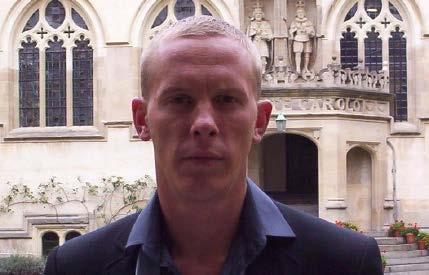

Two sources at the Oxford Union have independently confirmed to The Oxford Student that Laurence Fox, a British actor, rightwing activist, and leader of the ‘Reclaim Party’, has been invited to debate alongside Tommy Robinson in the week five debate: “This House believes the West is right to be suspicious of Islam.” His name has also been greenlit in a ‘debate planning’ spreadsheet seen by The Oxford Student, which shows him approved to be invited to speak in favour of the motion.
In April 2024, Fox appeared on Robinson’s podcast “SILENCED” to discuss his shift to “anti-woke” activism. The Reclaim Party was set up by Fox in 2020, in order to combat “woke orthodoxy” and promote “freedom of speech.” It has been heavily associated with the so-called ‘culture wars.’ In the 2024 General Election, the party promised to donate £5,000 to any candidate who agreed to reform the Equality Act to eliminate the prohibition of sex and race-based discrimination, among other pledges. Fox ran
for Mayor of London in 2021, placing sixth with 47,634 votes (1.9%). After failing to fill out the proper paperwork to run again in 2024, Fox unsuccessfully ran for the London Assembly.
The invitation to Fox comes amidst turmoil at the Union.
Following The Oxford Student’s exclusive reporting on the decision to invite Tommy Robinson, the society has faced condemnation from external and internal groups.
Continued on page 3
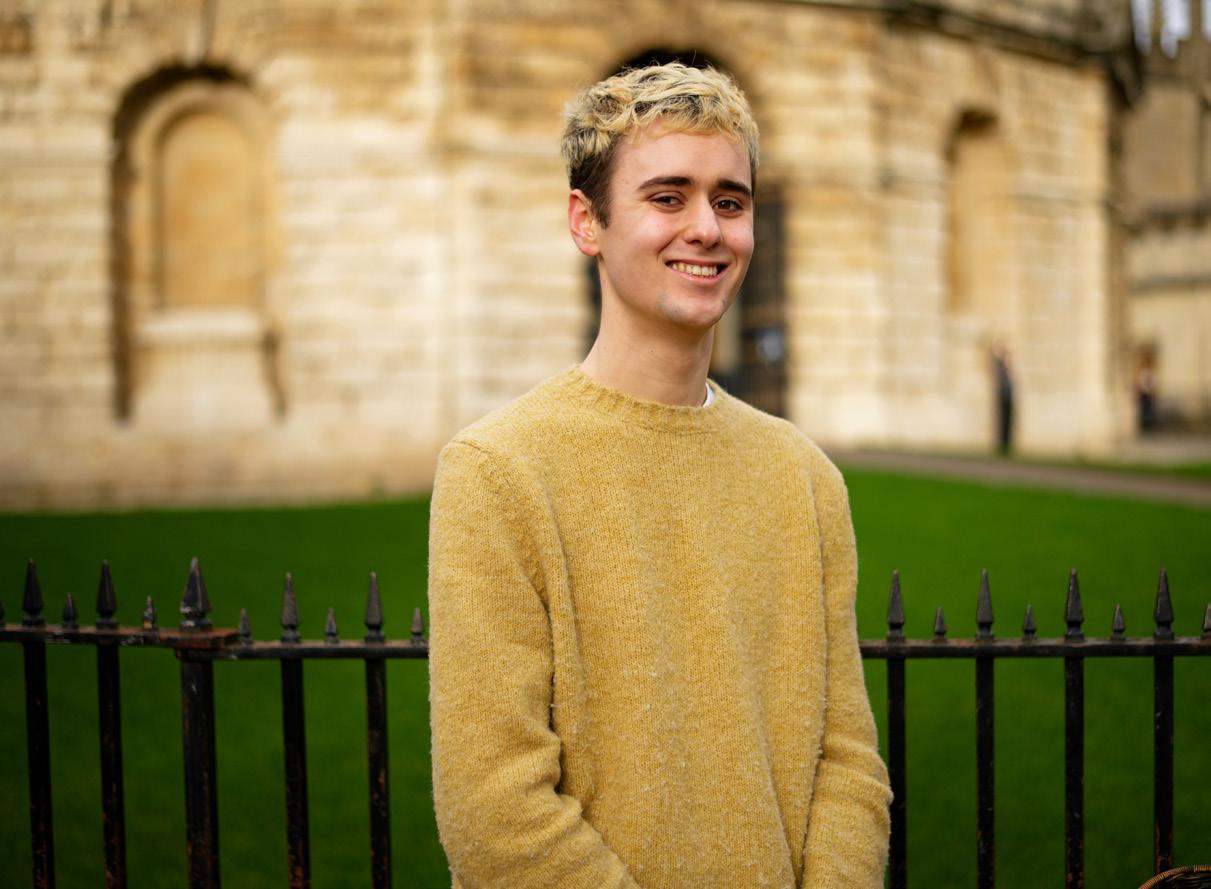
The Oxford Student sat down for an exclusive interview with Alfie Davis, the newly elected Green Councillor for Holywell ward. Davis won their election with 808 votes, a stomping majority when compared to the runner-up’s (Labour) 186 votes.
Davis told The Oxford Student that the top priority is “making renting less awful [...] we want to move towards a situation as the Green Party where renting is not required of someone,” although Davis recognises that this is a long-term goal. As part of this objective, the Oxford Greens promise to work to-
wards implementing rent caps and building affordable housing stock.
Holywell contains 16 colleges and is home to the majority of the Oxford student population. In relation to housing and rent, Davis sees it as a problem that affects all of Oxford, but students in particular “have no leverage in rent negotiations – [JCR/MCR] negotiations are effectively a box-ticking exercise.” Davis plans to draw on their own experience in campaigning on this issue to create a rent-strike network in order to build “people power.”
Continued on page 3
The left must ensure it’s on the right side of history in the struggle for trans liberation
Since the 2024 election, times have been hard for the British left. The Labour government is attempting to court socially conservative voters, adopting hostile policies towards immigration and trans healthcare while arming Israel’s genocide in Gaza. While the Green Party has risen from a single-issue group at the fringes of politics to a genuine challenger for office, this development has itself faced criticism. With right-wing parties ahead in the polls, some com-
mentators argue that our concern for the rights of minorities is a luxury the left can ill afford. So, at this desperate moment, why should we bother?
For one thing, it makes practical sense. As the current government so kindly demonstrates on a regular basis, even a majority will only get you so far. In the 2024 election, Labour achieved the lowest vote share of any governing party in history, losing out to the Greens, the Liberal Democrats and Reform. Continued on page 4

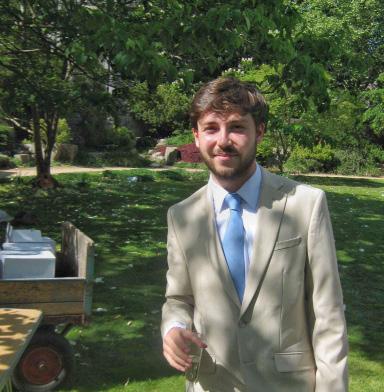
It has been an exciting few weeks at The OxStu! I promised in our first print that we’d be on the ground bringing you the stories that matter, and we have delivered. I was extremely proud to see our News team hard at work to break the story on Tommy Robinson’s invite, which then went national. It showed what serious, unbiased, and well thought out news stories look like. We also covered the local council elections in our Town Hall event, with candidates in student wards from Labour, the LibDems, Greens, and Reform represented. It was important to give students the opportunity to question those who stood for election, and in this way the event was a small



How are we in week 3 already? For me (and most of Oxford’s politicos) the local elections have turned the last week into a blur. One featuring the OxStu’s successful Town Hall
Editorial Board
Guilherme Lopes and Marcus Swinerd (Editors-in-Chief)
Luke Erly and Gabriella Bedford (Associate Editors)
Lila Robinson (Managing Director)
News and Opinion
Ellie Apostolidi (News Deputy Editor) Saba Ahmadzadeh
Noughani (Opinion Deputy Editor)
Laila Nasher, Arisu Babkhani, Dhiraj Grantham, Samuel Govier, Ellie Pemberton, Honcques Laus, Sambhodi Jindal, Christine Savino (Section Editors)
celebration of democracy itself, with respectful debate and a shared love of Oxford at its core. Thank you to all those who attended.
It was also a pleasure to meet so many ex-editors in London at Frontline Club last Friday. The paper has definitely changed and modernised, but some things have stayed the same: late night lay-ins (I’m writing this at 1am) and print socials were definitely shared memories. Talking to the first ever editor of The OxStu, I was reminded of what this paper was created to represent: an independent voice for Oxford students that provides alternative views on the issues in our community. On that note, I hope you enjoy this print, and engage with what it contains. I am particularly proud of our exclusive interview with Councillor Davis, a new Union scoop, and this term’s first investigation. Thank you, reader!
event with candidates; many students standing and campaigning for their respective parties; and a very late night at the election count frantically texting the results through to the OxStu team.
Local elections were not the only thing keeping Oxford’s politics scene going, with the Oxford Union descending into chaos over Tommy Robinson and a re-poll for the Presidency. Whether you’re a union hack or flinch at the mention of the place, there’s been more than enough to keep the polit-
Investigations
Vincent W. Chang (Deputy Editor)
Arisu Babkhani, Michelle Ma, Laila Nasher (Section Editors)
Features
Niyanthri Arun (Deputy Editor)
Anna Little, James Stratmann, James McInerney, Honcques Laus, Ellie Pemberton, David Percival, Dhiraaj Grantham, Samuel Govier (Section Editors)
Business and Finance
Leila Hoffpauir (Deputy Editor)
Akheel Kale, Alexandra Agcaoili, Michella Ma (Section Editors)

Wishing all readers a very happy week 3!
During this not-soTrinifree term, this role has been all-consuming in the best way possible. Causing me to lose sleep, not to mention keeping me awake into the early hours of my birthday (on May Day of all days!) and relentlessly battling InDesign during lay ins, I’ve loved taking over this role and leading such a brilliant paper. I am very proud to release our week 3 print, amidst the chaos of exams and ball-season, our fantastic team has been very hard at work. In this print, expect articles that reveal the true dysfunctional state within the Union, shine a light onto unspoken
ically inclined in Oxford occupied and out of trouble.
But Trinity term is not all about political fun (sadly), after a couple of weeks of fun, the work is piling in, both at the OxStu and in Oxford more broadly.
Our podcast, The OxStu Supplement, made its triumphant return to the airwaves (well your Spotify accounts) asking questions of sport to OUBC
President Tobias Bernard and Oxford law student Han Wilhoft-King who turned down a Man City contract to study
Culture
Elliott Wang (Deputy Editor)
Jasmine Joyan (Poetry Deputy Editor)
Nora Mackay, Malachy King, Esther Bird, Natalie Perera, Flora Molnar, Anna Little, Katrina Roach, Isaac , Grace Butler (Section Editors)
Sofia Sutton, Sophia Yvonne Hall, Oliver Weston, (Poetry Section Editors)
Identity
Tamar Okunhon (Deputy Editor)
Sambodhi Jindal, James Stratmann, Shikha Dahiya, Katrina Roach, Elliott Wang, Nguyen Thi Ngoc Mai, Ella Kelly (Section Editors)
issues of mental health in Oxford and investigate the amount that students receive in hardship from college funding.
So far this term at the OxStu, we broke the news that both Tommy Robinson and Laurence Fox were invited to the Union and hosted a town-hall event at my very own college, Keble. It was a pleasure to attend the alumni event hosted in Frontline Club, where past and present OxStu Editors in Chief celebrated the 35th anniversary of the paper!
I’m also proud to have released two episodes of our podcast (the part of the paper which I undoubtedly spend the most time obsessing over).
This week’s episode was particularly exciting, as we gained an insider’s perspective on All Souls, a college we can all agree is mysteriously looked upon from the outside looking in. Enjoy reading this week’s print and see you in the next one!
Marcus Swinerd Keble College
here (crazy work), while also discussing our experience of creating the first print.
Speaking of print, the identity article concerning mental health in this week’s print hit close to home, epitomising my experiences of Trinity term so far and the supposed shame of finding Oxford life a challenge, so I implore you to read this article and reflect on the people in your own life, enjoy the print!
Profiles
Martha Kiyan (Deputy Editor)
Himasweeta Sarma, Elliott Wang, Ella Kelly (Section Editors)
Sport
Charles Prestwich (Deputy Editor)
James McInerney, William Alexander (Section Editors)
OxYou
Holly Mackinnon (Deputy Editor)
James McInerney, Shikha Dahiya (Section Editors)
Creative Imogen Graus, Katie Hinckes (Social Media Team Members)
Catherine Wang (Podcast Editor)
Naomi Flexman (Cartoonist)
Continued from Front Page
Institutionally, Davis and the Greens pledged in their manifesto to enact an ‘Oxford Living Rent’. The argument and implementation behind this policy is similar to that of the Oxford Living Wage, a minimum hourly pay rate that acts as a suggestion for employers that sign-up to the guideline. A Living Rent
“ A
personal ambition for Davis is to build “links with student activists”
would work with individual landlords and colleges across Oxford to determine what “a benchmark for what a fair and affordable rent is.” Local governments in England do not have the power to set rent caps (a ceiling on how much landlords are legally allowed to charge renters), but Davis
sees this scheme as a “starting point for ethical rent,” although in their opinion, “there is no ethical rent.”
A personal ambition for Davis is to build “links with student activists” to prevent movements from dying out when individual organisers leave the city, assisting in the aim of taking “some of those fights to the City Council.”
When asked about potential problems that the council may encounter whilst working with Oxford University, attempting to enact certain climate policies, such as commitment to renewable energy and setting up development guidelines, particularly when so much land and property is owned by the University. Recalling their time as the Chair of Class Act, a campaign that sits within Oxford University’s Student Union, they stated that “trying to get the most basic changes to accommodation policy [...] for estranged students” was difficult, and anticipated that they “don’t think it’s gonna [sic] be
easy.” They wish to find a “fair compromise that works for everyone in the city”, and asserted that “protecting shared spaces” is a priority for them.
Pledged in the Oxford Green Party’s manifesto, we discussed the possibility of establishing a safe space for drug consumption in the city centre. Davis admitted that “it’s a hard argument to make, but it’s the right argument to make, and such counter-arguments to this policy mirror how the Labour Party has “attempted to demonise our national drugs policy”. The decriminalisation of drugs is “absolutely needed to save lives,” and, whether the University likes it or not, “a lot of students take drugs”. Drug use can go bad quickly, and Davis asserted that if there existed “places were people were properly supported” in an environment where drug education and harm-reduction were priorities, “human risk” would be far lower. They “don’t think the University will like it [...] initially, but
there is an argument to be made that hopefully they will see sense to.” Davis acknowledges that “what is of benefit to the University is not always of benefit to the students”, but have said that they will “have the interests of everyone in mind” and that it hopefully “will not come to taking them on.”
When asked about the areas with the lowest turnout, such as Blackbird Leys (29.7%) or Northfield Brook (27.4%),
Davis told us that these are the areas that they have seen hit with the highest levels of food poverty, as they have observed in their work in Oxford food banks. When prompted to consider how people in these areas would have their voices heard, they expressed that “you need to show the benefit of local government for them to be interested in it,” and “show to them rather than demand that they have interest in you”.
Continued from Front Page
Mr Shermar Pryce, the former ‘Chief Advisor to the President,’ shared his 4th May resignation letter with The Oxford Student. Writing on the decision to invite Robinson, Mr Pryce stated he thought the decision was “callous” and based on “malformed conceptions of free speech.” He also questioned the decision not to rethink the invite at the time of his resignation.
Recent developments in the Union have been met with condemnation from various
student societies and groups.
Oxford Students Against Discrimination, Stand Up To Racism UK, and Oxford Arab Society issued a joint statement on the 3rd May, urging “Union President Arwa Elrayess to rescind the invitation” made to Tommy Robinson.
An Ex-President of the Oxford Union, commenting on the invitation made to Tommy Robinson, has told The Oxford Student that “this is not a free speech issue. Free speech
is a right not to be censored, criminalised, or persecuted for one’s views. It is not a right to a black-tie dinner, a place at high table, professional photographs, and a ceremonial welcome into the Oxford Union chamber.”
The Oxford Union and Laurence Fox have been approached for comment.
On 30th March, lawmakers in Israel passed a ‘Death Penalty for Terrorists Law’, introducing the death penalty, that mandates the hanging of Palestinians convicted of killing or attacking settlers. The bill does not apply to Israelis convicted of killing or attacking Palestinians.
Subsequently, commentators were quick to point out that Israel is the first state, since Nazi Germany, to criminalise certain acts, or prosecute them differently, depending on who has committed them.
Israel’s dual-track law means that Palestinians living in the occupied territories must be tried in Israeli military courts where the death penalty has been legalised. Israeli settlers on the other hand, are tried in civilian courts, where the death penalty is non-existent.
Israeli Human Rights group B’tselem reports that the military courts where Palestinians are prosecuted in have a high conviction rate of 96%, and an overwhelming majority of these cases are built upon forced confessions from
coerced interrogations.
Currently, more than a third of the 9,500 Palestinians detained in Israeli prisons (as of 11th March) are being held under administrative detention without being tried. Reports from Israeli Human rights group B’tselem describe these Israeli prisons that Palestinians are detained in as a “network of torture camps” with widespread physical violence, sexual violence, humiliation and lack of medical care resulting in Palestinian deaths. They also report that systematic abuse, starvation, and overcrowding are the norm.

The death penalty law further removes discretion, and makes death the default penalty. All executions must be carried out within 90 days of the final ruling. The law also removes the right to clemency and limits opportunities for appeal.
“ All executions must be carried out within 90 days of the final ruling.
The Palestinian Authority pointed out that the bill breaches the Fourth Geneva Convention, “particularly the protections it guarantees for individuals and the safeguards for fair trials”.
The UN High Commissioner for Human Rights has called it “a particularly egregious violation of international
law”, and affirmed that its discriminatory application would constitute a war crime.
UN experts have also warned that under international law, including the International Covenant on Civil and Political Rights, mandatory death sentences are prohibited because they are inherently arbitrary. Read more online at www.oxfordstudent.com
The government, therefore, has repeatedly found itself vulnerable to the weight of public opinion, on matters from welfare spending to diplomatic appointments. Alienating the queer community, particularly for a leftwing party, would be a major misstep. It is true that trans issues have been divisive in the past. No major newspaper, not even the ostensibly liberal Guardian, can be relied upon for consistent support. But politicians are not – or at least do not have to be – simply vehicles for what their constituents want in the short term. Given the generally right-wing leanings of our current media landscape, changing people’s minds on any issue it is ab-
“ Agitating for vulnerable groups is also a foundational aspect of left-wing action.
solutely essential for any group that actually wants to see social change. Perhaps the best statement of this position comes from Ian Dunt, a journalist for the i – by no means a left-winger himself. In his words: “If you can’t convince voters of your ideas you’ve no business in party politics and should really fuck off out of it.”
Agitating for vulnerable groups is also a foundational aspect of leftwing action. From the first socialists in the nineteenth century, all the way through to modern intersectional feminists and postcolonial theorists, the entire purpose of mass politics has been to stand up for exactly those sections of society that face the greatest barriers. Even the old one-issue environmentalist movement had these values at its core: the climate crisis, after all, will hit the people and countries with the lowest incomes harder than anyone else. Far from being a betrayal of leftist principles, defending the trans community is perfectly in line with what these parties have his-
torically stood for.
When the historian Eric Hobsbawm was asked why so many Jews followed his example and became communists in interwar Europe, he explained that ‘it was only in a world fit for all human beings that Jews… would be allowed to be human beings’. The parallel with today is stark. The only coherent ideology that respects the existence of trans
people comes from the left. And in the present moment, when trans people face such dire circumstances, it is morally imperative that we stand firm on this. Yes, we will have to make some concessions to public opinion. Parliamentary politics requires moderacy. But not here, and not now. Let us not compromise with people’s very lives.

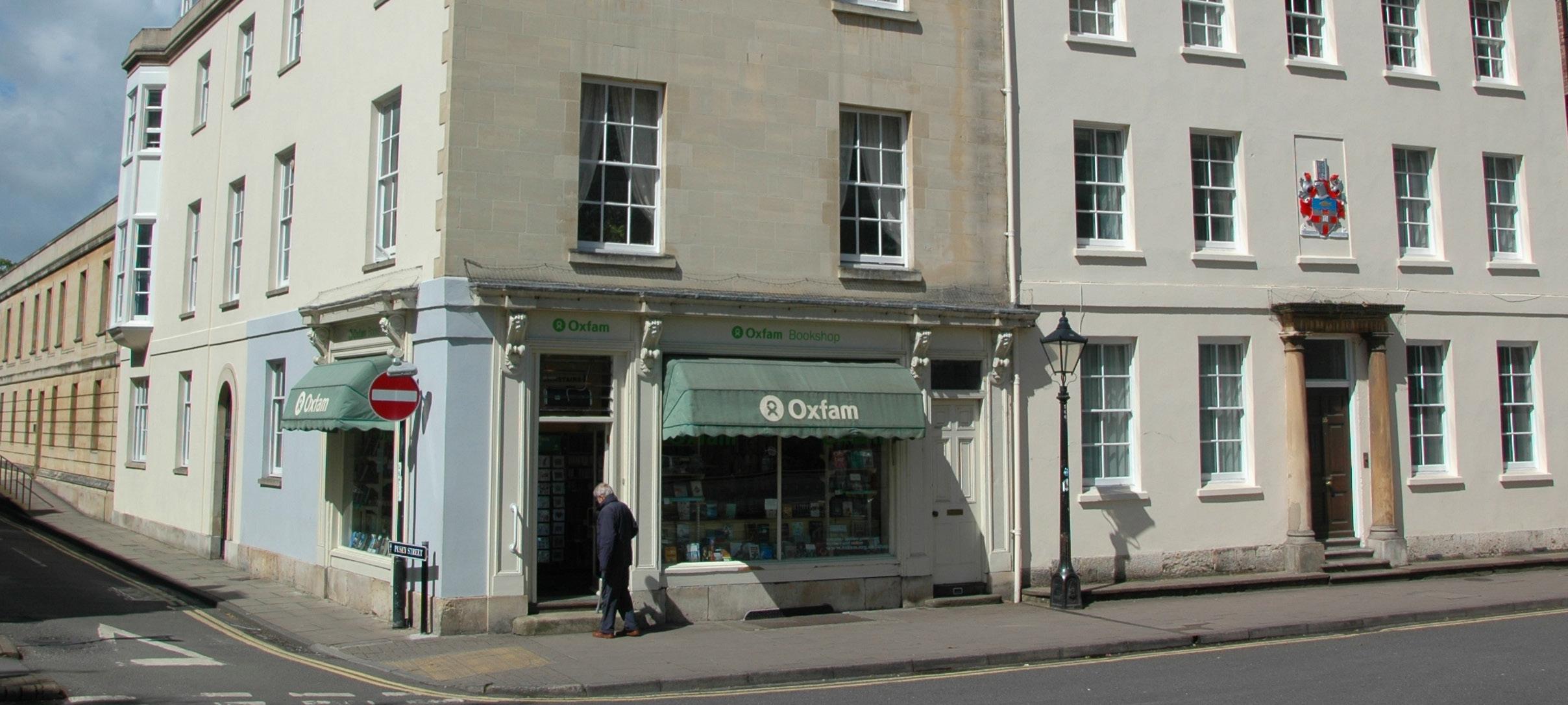
As I sat and read T. M.
Barry’s article defending the decision of Regent’s Park College to close the Oxfam Bookshop in pursuit of a new MCR, I couldn’t help but wonder how much thought had gone into the piece, or indeed the opinion. Now, this isn’t to say that Regent’s Park is a power-hungry college, determined to undermine community spirit in the city to provide their graduate students with a little more room to chat. Rather, the college’s decision was symptomatic of the larger problem which exists with the ambitious development plans of our university’s constituent colleges and the disregard which appears to be given to local residents.
Before I become too critical, there were some good points raised, which I would like to echo. Firstly, by all accounts, the MCR at Regent’s simply isn’t fit for purpose. Concerns have been raised around the accessibility, size, lighting, and pretty much every other aspect of the space. Regent’s Park is not as fortunate as other colleges in the space they’ve acquired, and undoubtedly a new MCR would greatly benefit the experience of the students studying there.
The issue instead lies in the way that the college has gone about these expansion plans. Barry points out that: “Regent’s was simply not giving Oxfam… the chance to renew
their lease” and that “Regent’s is not evicting Oxfam.” Ignoring the pedantic terms of property law, refusing Oxfam the opportunity to renew their lease is tantamount to their eviction – the shop would ultimately be forced to close or move elsewhere. Quite how one can argue that there is any difference in the long-term outcome of these two processes is beyond me and is more than a little indicative, at least in my view, of some of the legal manoeuvring which Regent’s supporters seem to capitalise on.
“ By all accounts the MCR at Regent’s simply isn’t fit for purpose
The loss of the Oxfam books hop would unquestionably be a disaster for the local community. As the Charities Officer at St John’s JCR Euan Warner – responsible for raising a formal objection to the plans – put it to me: “This is a place which the public can interact with, of which there are diminishing and diminishing examples in the city. When you change this into a university space, the doors are immediately shut in people’s
faces.” He continued: “The point is that it is a service for the community to use, which would otherwise be taken away from them.”
This seems especially pertinent in a city with a university which appears to be perpetually responsible for the loss of public spaces. Jesus College did similar to Regent’s Park in central Oxford a few years ago when their persistent raising of rent resulted in the loss of a Burger King – though admittedly, the extent to which this could be called a community hub is questionable. Nonetheless, it was still a valuable local commodity for anyone partial to the occasional Whopper. Similarly, the developments in Wellington Square to make way for University Admissions Offices can feasibly be argued to have detracted from the city given they monopolised space which could otherwise have been given over for retail in accordance with the council’s “Local Plan.”.
While I completely agree that Councillor Pressel’s suggestion that Regent’s Park should instead make use of some of St John’s space is preposterous at best, Barry’s decision to pursue St John’s for their property developments in the city seems equally baffling. When there are many valid criticisms which could be levelled against the decision by the council and the unfair criticism directed by Council-
lor Prussel at Regent’s Park, I simply cannot fathom why St John’s should receive the most flack. To level this sort of criticism at the college is, in my view, at the very least misguided. That’s without even mentioning the conflating of the JCR with the senior leadership who make development decisions – the JCR go to lengths to remind us that their views do not necessarily represent those of the college. Though, in this case, I’m sure they would support the sustainable way in which the college has chosen to fund development in North Oxford. The aforementioned development provides the perfect example of how expansion should be done – it provided much-needed research space for the university, but also provided over 400 new homes for local residents and over 2000 jobs. None of which, I must add, came at the expense of any retail or leisure space utilised by residents of the city. Indeed, local retail outlets such as Taylor’s were given space from which to trade. Moreover, to use Barry’s own example of St
“ The loss of the Oxfam bookshop would unquestionably be a disaster
John’s’ Pusey street housing project, which in their opinion represents a similar issue to Regent’s plans, the new college buildings are actually tucked away down a secluded side street. Here there is little retail potential, and the space was previously occupied by a row of unused garages. These developments show that it is very possible to expand without harming local interests.
Read more online at www. oxfordstudent.com
Gareth Lim Yefeng has been elected Oxford Union President for Michaelmas Term 2026 in a re-poll election held on Monday. With 646 total ballots cast, Lim won with 299 first preferences, overcoming Liza Barkova who placed second with 219 votes. Hamza Hussain and Victor Andrés Marroquín placed third and fourth, with 66 and 61 votes respectively. Monday’s re-poll comes after the validity of the Michaelmas Term 2026 presidential election results were called into question. Catherine Xu, who was originally elected as President-Elect in the Michaelmas Term 2026, was removed from her post on May 5th after being found guilty of election fraud. This election was in many ways a re-run of the contest last term, with Lim, Barkova, and Hussain all being repeat candidates.
In comments to The Oxford Student, Gareth Lim said that “I want to thank every single person who came out to vote for me, whether we’ve met or not. I also want to thank my friends and the competitive debaters of the union who put in so much effort into this campaign.”
He added that “this result gives me hope that the Union can change for the better. That it can unite around a message to rise beyond politics and to restore a sense of trust and competence to the institution.”
Iwrite this late at night, as
I try to cram passages of Old English into my head, wondering when my degree turned from an opportunity to question and delve into new and exciting interests to a test of how many quotes I can memorise in the weeks leading up to my exams. Whilst I’m not sure when this happened, I know that this is not what education, especially not an Oxford one, should be. I am a finalist, and thus logically at the stage where I am questioning everything that has led me to this point. Recently, I have been stuck on how the Oxford tutorial system does not effectively prepare you for exams, and how those three hours sat in Exam Schools, in sweaty sub fusc and reeking of pollen from your carnations, actually con-
tradict the very thing you are sold when applying to the University.
Oxford promises tutorials to be a place to “try out new ideas” and “develop confidence”, and fair enough, I have found this to be the case. Where the contrast appears, personally, is that we are expected to create new tutorial-level content in less than an hour with no notes or texts in front of us. For me, this does the opposite of creating “confidence”; it kills it. I no longer feel confident in the potential of what I am revising, for I know that it is nearly impossible to develop tutorial essays into new ideas under timed conditions. I am confident that I know the topics well, yes, but not that I can turn pre-existing ideas into new ones in such a short amount of time.
As my exams approach, the best that I can hope for is the
Join the conversation on our Instagram @theoxstu!
space to regurgitate past tutorial essays and force them to fit whatever questions sit in front of me. Yet, when I sit in Exam Schools, open the paper, and start typing away into Inspera, I know that I will be hit with the overwhelming sense that I should be doing more than this. This is the source of my anger at Oxford’s system of learning.
It is easy to see how this system is set up for certain people to succeed and others to fall through the cracks. From
GCSEs to A-Levels, I have always just been told to accept what is put in front of me by teachers. I was not educated in a way that encouraged critical thinking, but rather, I had instilled in me a duty of strategic and homogeneous preparation. Taught in classes of 30+ students with little time for 1-1 discussion or moments where my thoughts could be fully actualised, Oxford was a huge culture shock. Read more online at www. oxfordstudent.com
“You’ve never had it so good”: the modern world in perspective

To say the least, life seems hard. I think you would find very few people who would tell you the world is all sunshine and rainbows and getting better every day. Instead, most would tell you the opposite: 2026 has been a year from hell, with the impending doom of right-wing parties winning elections, a country with skyrocketing costs of living, and an electorate more divided than ever. A Prime Minister with a historically low approval rating is running a govern-
ment floundering in problems, both international and domestic. Even here in Oxford, the world seems to be infecting our little bubble of intellectual optimism as Tommy Robinson brings added attention and the possibility of violence.
And yet, I’m here to convince you that this isn’t the case. Instead, as Harold Macmillan said in 1957, you’ve “never had it so good”. This may be slightly hyperbolic, but 2026 does not face unique challenges, and lacks a great deal of the disaster and destruction
Britain and the rest of the world has faced in the past.
Firstly, I want to highlight what we should be so very thankful 2026 lacks.
Harold Macmillan himself, who provided us with this wonderful campaign slogan, is a fantastic example. After winning a scholarship to Oxford, he started his degree at Balliol before immediately volunteering in the First World War. He fought twice on the front lines in France, was wounded three times (including at Somme, where he lay wounded in a shell hole for 12 hours), and spent two years in a hospital as a result of his injuries (from which he never fully recovered).
Of those on scholarship in his year, only Macmillan and one other student survived the war.
As a result, he refused to return to Oxford, saying it “would never be the same”. Neither our generation, nor our parents’, or possibly not even our grandparents’, experienced anything like this. We are not numb to the destruction of war - a great gift, and one that very few generations in the history
Sir David Attenborough celebrates his 100th birthday
Sir David Attenborough was born on 8th May, 1926, and celebrated his 100th birthday this week. He is considered one of the world’s most celebrated natural history broadcasters. A key advocate for conservation, he has spent over 70 years educating the public on Earth’s wonders, fostering environmental awareness, and inspiring generations to protect the planet. Narrator of Life on Earth, The Blue Planet, and Planet Earth, Attenborough has increasingly warned of the dire threats facing the planet including climate change and biodiversity loss.

of mankind can truly say they enjoy. At the same time, we do not fully understand what wartime Britain would be like - the troubles we face in Britain are not particularly comparable to what it would be like under war. It may seem like we are at war (in Iran, Ukraine, or Palestine) and that these conflicts are horrible and atrocious enough, but do not let this lull you into not appreciating the long stint of relative peace Britain has enjoyed in the past few generations.
While peace is, in my opinion, by far the most important quality of life factor in the past 80 years, cost of living and inflation is another aspect us university students love to complain about. Do not get me wrong, the cost of living has never been higher in our lifetime. The job market (apart from the fallout from 2008) is similarly shocking. However, many of us students do not understand how close we are living to something much, much worse.
Read more online at www.oxfordstudent.com

Vincent W. Chang
Oxford’s colleges reported £9,263.894bn in funds carried forward at 31st July 2025. This figure, drawn from the aggregated Statement of Financial Activities published alongside the 2024/25 college accounts, comprised £1,789.146m in unrestricted funds, £304.771m in restricted funds, and £7,169.978m in endowed funds. The same aggregated statement recorded £741.433m in total income, £680.111m in total expenditure, and £447.962m in net gains on investments.
We should not mistake this idea, however, for cash lying ready for discretionary use. Much of it is endowed, restricted, designated, tied to specific charitable purposes, or embedded in the longterm architecture of college finance.
Upon review of these 36 individual records, however, one question repeatedly comes to mind: how much of this institutional capacity reaches those in financial hardship?
The University’s college statements page notes that the financial statements of 36 Oxford colleges for the year ended 31 July 2025 are available as PDFs, together with aggregated college accounts. It also states that colleges are “independent, self-governing and financially autonomous”, and that their accounts are published under the Charity SORP convention.
The mainline finding from a review of these accounts is not that colleges hide their wealth: the funds, endowments, income streams, investment gains, expenditure headings, and charitable activities are all recorded at length. The problem is more specific: the
accounts make it easier to see what colleges hold than what colleges deliver; in other words, it is easier to identify broad “grants and awards” than to isolate need-based undergraduate support.
Careful distinction between grants matters because “student support” is not a single accounting object. In the accounts, it may appear as bursaries, hardship awards, financial assistance, scholarships, prizes, graduate studentships, fee waivers, Oxford Bursary contributions, or grants to other institutions. Yet, a hardship payment to an undergraduate struggling with rent is not the same thing as an academic prize, a graduate scholarship, or a grant to an institution, even if they sit within the same broad note.
At St John’s, total funds carried forward at 31 July 2025 were £891.197m, including £779.833m in endowed funds. Its grants and awards note records £278k in unrestricted bursaries and hardship awards and £189k in restricted bursaries and hardship awards. The same note records graduate studentships and other scholarships, prizes and grants separately, and states that the figure includes the cost to the college of the Oxford Bursary scheme; students of the college received £327k through that scheme. That is relatively legible. It gives the reader a bursaries-and-hardship line, distinguishes other scholarships and prizes, and states the Oxford Bursary figure received by students. Even then, the reader is left managing two different concepts: the college’s own accounting cost and the amount received by students under a wider bur-

sary scheme. In the Magdalen report, this legibility problem sharpens. The college reported £847.299m in total funds carried forward, including £765.752m in endowed funds. Its grants and awards note records £16k in unrestricted bursaries and hardship awards and £235k in restricted bursaries and hardship awards. However, the same note states that the grants and awards figures include the Graduate Scholarship programme and the cost to the college of the Oxford Bursary scheme. It also states that students of the college received £424,830 from the Oxford Bursary scheme, and that grants to other institutions included £271,633 to Magdalen College School as a contribution towards choristers’ education. Notably, this is not evidence that Magdalen does or does not support students sufficiently. Rather, this suggests that the accounts combine several different species of educational spending in one note. The category is too capacious to answer the public-interest question cleanly. It tells the reader that money
is moved through charitable educational purposes; it does not produce, without further interpretation, a clean measure of hardship support.
At Pembroke, total funds carried forward were £175.557m.
Its grants and awards note records £98k in unrestricted bursaries and hardship awards and £22k in restricted bursaries and hardship awards. The note also states that the figure represents the college’s cost of the Oxford Bursary scheme, while students of the college received £342k from that scheme and some also received fee waivers amounting to £3k.
The repeated pattern is important. These two accounts often provide both a bursary or hardship line and an Oxford Bursary statement, but they do not always make clear, in a standardised student-facing format, how these figures should be added, separated, or compared. The result is a system in which the formal data exists, but the practical answer remains unstable and unaccountable.
At St Anne’s, the grants and awards note records £91k in unrestricted bursaries and
hardship awards and £78k in restricted bursaries and hardship awards. It also states that students of the college received £416k from the Oxford Bursary scheme, with fee waivers of £0k.
At St Catherine’s, the note records no unrestricted bursaries and hardship awards, £10k in restricted bursaries and hardship awards, £43k in unrestricted graduate studentships, and £162k in restricted graduate studentships. It separately states that students received £92k from the Oxford Bursary scheme and £27k in fee waivers.
A simple comparison between St Anne’s and St Catherine’s would therefore be misleading unless the categories were first standardised.
One account shows substantial bursary-and-hardship lines alongside Oxford Bursary receipts; another shows a much smaller bursary-and-hardship line but also records Oxford Bursary receipts and fee waivers: the accounts do not force colleges to answer the same student-facing question in the same way. Read more online at www. oxfordstudent.com
You must write a poem. The worse, the better. This may seem like a superfluous request, especially as a poetry writer and section editor of this publication, but the reality is that poetry has also never come easily to me. To the surprise of many, my writing process has no sudden flow of inspiration. If anything, it is an endless trickle of grit and stubbornness to produce a single (deeply imperfect) piece. And yet, I persist. It is in the gruelling and difficult that poetry becomes one of the most important means for defending creativity in the age of AI. With AI now heavily integrated into our lives, researchers are already beginning to assess the impacts of using AI on our cognitive capacity. Recent studies suggest that AI use can

cause cognitive atrophy and stifle creativity. And at times, the trade-off appears worthwhile with AI’s efficiency and precision of output. Yet while more of what I consume is uncannily smooth, polished, and optimised, it is a mere repackaging of similar ideas and an increasing homogenisation of our writing. Writing has become mechanical, built with data sets that reproduce formulaic expressions and responses. The end result has become watered-down creativity in favour of polish and sheen that are all impossibly on demand.
The poet Gerard Manley Hopkins knew that beauty lies in what is “counter, original, spare, strange”. Perhaps AI does not. AI sands off the edge of human work; friction is lost in favour of polish. And yet, that friction is where poetry lives. Some poets are embracing AI’s integration. Others have tried to prove through
Sophia Yvonne Hall
Oh, dark, silent street: strangers, shoulders pressed, small beneath the stupendous stone spire.
We gather;
statistical significance – when has poetry ever cared for statistical significance? – that AI poetry is indiscernible from human work, and often preferred by human critics. I am not convinced. I have no interest in 1,000 perfect poems that are formally and stylistically immaculate but stolen off the backs of poets, and utterly identical in soul(lessness). You may ask: why poetry? Of all the creative forms, why ought one write a poem? While all forms of creativity are worthy instruments against such a challenge, poetry is particularly worth defending, as it is irreducibly and messily human. Its meaning is inseparable from its form. It is not reduced to its output. It must be lived. It does not exist only to persuade or entertain; it may do both or neither. It does not ask of its writer finearts expertise or an index of accolades. It does not even ask to be good, as Mary Oli-
As the restless and tired always have, for something older than us— for the rising light, steadfast and certain, still catching us unawares.
As song settles like incense over skin, May unspools.
Wild and rested.
Blossoms tangle her hair, as she finds rhythm in the drum, dissolves the solemn shadows with amber air.
Read the full poem at www.oxfordstudent.com

ver reminds us. While AI lives in the centre, the statistically probable, poetry lives on the edge and finds comfort in the uncertain and in what resists resolution. This is why I ask of you: write poetry. Be a poet, for anyone who writes a poem is a poet. Write badly. Write slowly. Write dirty. Sit in discomfort. As poet Rainer Maria Rilke urges, we must “live the questions” rather than resolve them too quickly. Write for fun, not just for marks. Contradict yourself. It is quite fun; it is entirely awful; do it anyway.
Reject convention and syntax? Break the line and glue it back together, never the same as before, always changed. Use an em-dash — mean it. Write from the margins, from which AI was never trained, and was never meant to see. Find the friction, make it your home too. It is within the mess and anarchy of poetry that innovation and creativity flourish. For AI may reproduce the outline of a line, but never its heartbeat, its shaky breath, and unsteady tremor. Read more online at www. oxfordstudent.com
Christina Robinson
On the nineteenth my words became a sermon. Washing over the masses of pub regulars, that merry company
A mass ablution of ethanol and glucose.
I had stood atop a table
Voice a trumpet hailing
The words of God et al.
It cradled my ego and I thought:
Here’s how it feels: sticking to teeth
In the back of your throats, then the belly of the beast
Haloed in thrill.
Liquid halo in my cup
It bears me up
On the back of a night ending up at St Cross.
I found you crucified in the parking lot
Purgatory on the pavement
Palms nailed through by nightclub stamps, That essence of true romance
Patterning the air
Read the full poem at www.oxfordstudent.com
Perfect Show for Rachel
Performed in the Oxford Playhouse from 13-16 May.
William Street Performed in the Burton Taylor Studio from 19-23 May.
Ulster American Performed in the Burton Taylor Studio from 19-23 May.
Jerusalem Performed in the President’s Garden at Magdalen College from 19-23 May.
Guys and Dolls Performed in the Queen’s College from 20-23 May.
Our House Performed in the Oxford Playhouse from 20-24 May.
Obsession
This horror film is showing in cinemas now.
The Christophers
This black comedy is showing in cinemas now.
Michael
This music biopic is showing in cinemas now.
Sophia Verai talks out the possibilities of Wide Eye Productions’ original play.
Milo Ghiandai’s debut play is a lot of things and straightforward is not one of them. Its strength lies in its sheer potential scope, adroitly insinuated and set into motion over one short hour. The official focus is what you hear in the title: dependence.
“I think everyone is dependent on something. I see it all around me,” Milo shared with me after the show. Despite working within the frame of absurdist theatre, the second-year writer and director told me that he wanted to present his audience with a clearer focus for contemplation than the genre typically offers. That focus is addiction in its myriad forms. Alcoholism is the first kind to be evoked, in an atmospheric opening where the cast’s figures lay slumped, asleep and sculptural in a
wash of blue and dissonant synth, followed by a downright Keatsian ode to a wine bottle.
‘Need’ is the core to which the writing returns, and in this sense the two-act show amounts to a circuitous acceptance of the fact of dependence. For me, the appeal lies in how much else the play manages to intimate in the meantime, within the narrative bounds of three people mysteriously trapped in a room. Finn (Manthie Good) and Mick (Xander Lewis) begin circling around an assortment of philosophical chestnuts, invoking them in their imprisoned state for the sake of hope, distraction, or a more luxuriant despair. Meanwhile, Jo strives to discourage their leaps of imagination, for the sake of keeping the status quo. We run through just about everything from Platonic idealism to Descartian solipsism, though nothing carries weight for long.
Accompanying this restless-
ness is Xander and Manthie’s tendency towards ambiguous line delivery that can sound like both melodrama and self-ironisation – tonally, the dialogue is difficult to place at times. The characters are transparent to the point of archetypal: in Jungian terms we have a Ruler in the order-obsessed Mick, an Artist in the frustrated writer Finn, and a Caregiver in the maternal Jo (Amber Meeson). Yet what is being done with these figures and their words seems to fluc-
tuate throughout. This does not dilute the writing; given the (literal) confines of the plot it helpfully expands it. Likewise, the locked room that Finn, Mick and Jo occupy appears self-consciously flexible. At various moments I was equally convinced that their entrapment was creative stagnation, theological doubt, global scepticism, depressive dissociation – the script permits all of the above and more. Read more online at www. oxfordstudent.com
Official cover image. Credit: Wide Eye Productions

Isaac Hole reviews this comedic SciFi film starring Ryan Gosling.
It’s been a little over a month since the release of Project Hail Mary, the film adaptation of Andy Weir’s novel of the same name. It’s also been over three years since I was given the book as a Christmas present only for it to gather dust on my shelf ever since. As such, I confess that the first emotion that I felt going into the cinema was a guilty suspicion that I would leave a great many books untouched at the time of my death…
This gloomy prognosis was never far from my mind while watching Project Hail Mary, because the film itself begins with what appears to be an
unremitting fixation on the motif of vanitas - the inevitability of death.
The opening sequence, following a science fiction tradition most notably adhered to in Alien and The Matrix, is highly reminiscent of birth: Ryan Gosling’s charming scientist Ryland Grace emerges from a watery sac in the bowels of the Hail Mary spaceship far from Earth. Almost immediately he is confronted with the prospect of death: his fellow crewmates, none of whom he can initially remember, did not survive the journey. The beginning of life, and its end, are juxtaposed from the very start. The first segment of the film takes place in a series of flashback sequences explaining how we got to this point.
“ the frivolity of one infects the sobriety of the other, and vice versa.
previously noted for an abortive academic career in which he claimed that life could develop in oxygen-free environments.
Because of this very research, he is approached by a team with an essential mission: to save life on earth from the imminent cooling of the sun brought about by an extraterrestrial microbe
known as an ‘astrophage’. It transpires that one star is seemingly unaffected by the astrophage threat: it is the job of the crew of the Hail Mary to go there, and find out why. From this beginning, the film would sound like a sombre one. It isn’t. The unnerving opening sequence and the subsequent promise of death are frequently undercut by Grace’s goofball persona and the arrival of the alien Rocky.
This is perhaps the single greatest bathetic moment in the whole film. Rocky’s ship is extremely unnerving, dwarfing the Hail Mary and constructed in a manner visibly unlike any human engineering.
Read more online at www. oxfordstudent.com
“It is the power that you hate”:
‘Oleanna’
Katrina Roach reviews this controversial play which includes imagery of violence, assault, and sexual harassment.
Boulevard Productions’ rendition of David Mamet’s Oleanna is an uncomfortable watch from start to finish – but that is the point. From the moment you hear the harsh, authoritative footsteps of the professor as he enters the stage to the sharp silence at the beginning of the last intense scene of unflinching violence, you are unsure who to empathise with and who to resent. After that, it becomes painstakingly clear. Set on an American college campus, Oleanna explores the tensions that arise after a struggling student makes sexual misconduct allegations against her professor. Elitism, sexism and gender politics run rife through a play that British playwright Harold Pinter called “tough and unflinching”, themes that Oxford students are all too familiar with. Such volatile power dynamics are embodied by the changing demeanours of Laura Boyd’s insecure and easily influenced Carol and Alec Greene’s callous and status-oriented John. Boyd’s increase in her character’s confidence ties seamlessly into Greene’s depiction of John’s mounting loss of control, leaving the room on edge for the whole performance as the audience watches the scales of power tip.
I was intrigued by the play’s setting choice being the Long Room in New College. Used to student productions at the Keble O’Reilly or the Oxford Playhouse, I found the cramped, attic-style Long Room with just forty seats unusual, but it soon became clear why this was the case. The old, cobbled barn-style room with little natural lighting created an immediate atmosphere of unease. I felt as if I was walking in on something, intruding.
The staging was really well thought out: a desk smothered by classical literature and the professor’s own book, a sturdy and impressive chair with a velvet cushion on his side and a rickety one on the student’s. From simply looking at the set, it was obvious the imbalance of power they were looking to create and that the professor thought of himself as superior, of deserving of more than his student.
misunderstanding of each other, or the inaccessibility of the professor’s language – but at times it also made for a confusing watch.
As the play progressed, John’s careless condescension was a cause of the building resentment I found myself feeling towards him. While I understood his frustration at the allegations he believed to be false, his attitude towards Carol showed no attempt to understand why she had made them nor to apologise for putting her in that situation. The constant interruption of the ringing telephone grew increasingly exasperating and came at the height of tension, highlighting John’s loss of control over his personal life and desperate attempts to regain control elsewhere, doing so by fixating on Carol’s insecurity.
regular visits to his office. Even this suggestion sounds alarm bells, and his unnerving tendency to move unnecessarily close to her, occasionally touching her shoulders, intensifies this.
Marcus Swinerd
“ It represents the culmination of gendered power struggles “ I felt as if I was walking in on something, intruding.
The performance doesn’t ever leave John’s office, suffocating the room with disquietude. The structure of the setting was immediately reflected by the body language of both characters. Carol’s anxious demeanour, shaking leg and cowering posture contrasted clearly with John’s laid-back energy and how he sat, relaxed and taking up space. My favourite thing about the performance was its symmetry. Where John stood and spoke in the first act was mirrored by Carol’s monologues in the third: standing over the other one seated, speaking in long, pointed speeches about right and wrong and things the other couldn’t possibly understand. Carol adopts John’s patronising repetition of “Don’t you see?” and the transference of this linguistic motif reflects the shifting power dynamics. One thing I did struggle with was the fact that neither seemed to finish their sentences very often, especially in the first act. Intentional or not, this for me did serve as a lexical reminder of the pair’s miscommunication and deep
Carol herself is an intricate character. As a woman who has felt time and time again like I have to make up for that in male-dominated spaces, I immediately felt solidarity with her. I understood her struggles in a university setting: understanding her professor’s language, feeling academically capable, believing she belonged there. From a staunchly feminist perspective, Carol’s arc to the one who holds the control is powerful and vindicating. In an empathetic plight to an ignorant John in a complicated and nuanced situation, his confusion is, in some ways, understandable. He speaks of the difference between intention and reception, and begins to justify his actions. Carol’s allegations come after her need to pass his class is met with a lack of understanding and some amusement by the professor, who suggests that she retake his class and receive an ‘A’ grade provided she makes
Watching this unfold filled me with a foreboding sense of anxiety for Carol, having heard of these instances far too often. Whilst I understand that John does not believe these actions to be ill-intended, regardless of such intentions, it is difficult to watch Carol’s experience and not understand her perception of a sexual undertone. Even if there was no explicitly intentional, black and white sexual harassment, John undeniably abuses his power as her teacher. Her character is in my opinion one of strength who embodies far too many women and their experiences, and no amount of empathy for John’s honest failure to consider the way his actions could have been received should take away from that.
Following Austria’s win last year with the operatic ‘Wasted Love’ by JJ, the Eurovision Song Contest 2026 is live from Vienna!
This year, 35 countries are competing to bid to win the biggest music competition on the planet!
During Tuesday and Thursday’s semifinals, countries battled it out to reach the Grand Final, which is expected to be watched by 250 million viewers from across the world.
This year’s favourites to win include Finland with their entry ‘Liekinheitin’, Greece with ‘Ferto' and Denmark with ‘Før vi går hjem. It goes without saying, good luck to UK act, LOOK MUM NO COMPUTER!
Scan the QR code below the tune in to our live coverage of the Eurovision Song Contest finale on 16th May:



Watching Cross Keys’ Macbeth left me with a slight sense of confusion. This is not to say that the production was a bad one – Cross Keys did an admirable job with this play – but it is not, either, an unequivocal success.
I am not always a fan of Shakespeare produced in a modern setting, but when I saw that this particular version was swapping the (rather unimaginative) soldier’s attire for a mafia-style suit, I was excited. Unfortunately, it seems that this intriguing take on the famous tale of soaring ambition and hierarchical overturning has become its downfall. The opening scene – the three witches locked in a poker game – showcased the vision well, but from then on, the

Malachy King on Raye’s ‘This Music May Contain Hope’.
‘Godfather-vibe’ fell away as the ‘Shakespeare’ of it all overwhelmed the performance.
I spent the first twenty minutes or so wondering why I was so taken aback when the characters kissed each other on the cheek, only to realise that it was the unlucky effect of actions characteristically associated with the mafia being shoehorned into acting that was otherwise firmly Elizabethan. Certain scenes stood out for their commitment to the theme: the funeral of Duncan and the Glamis’ earlier reception of the King are most prominent, but overall, there appeared little commitment to keeping things ‘on brand’.
This is not a criticism of the directing – I have since come to realise that perhaps a mafia setting is simply in-
Raye’s newest album combines cinematic orchestration, jazzstyle melodies, and lyric poetry to create a story-telling masterpiece evoking deep pathos. Though her subject matter is not necessarily groundbreaking, covering romantic sadnesses and chronicling periods of mental lows, her medium is excitingly rare. The album begins with a spoken narrative of ‘Girl Under The Grey Cloud’. Behind Raye’s narration, a bleak tale of loneliness and oppression, an orchestra rises and falls in slow melancholy, before fading away to set the stage for the first full-length song.
‘I Will Overcome’ moves like a dance, pensive and restlessly moving. The backup singing lends it a sense of drama, not unlike that of a Bond piece such as ‘Skyfall’.
compatible with Macbeth; there is obviously a reason that so many adaptations set the Scottish Play amongst the broils of war, and not the quietly malicious, honour-bound world of the ‘families’. Declarations of guilt, epic moral struggle, and the battle of the noble against the evil that threatens to overturn their glorious country are not concepts easily executable in the soft, smoke-hazed, murmured setting of the urban underworld.
One positive result of this theme is the soundscape. The perpetual, ominous organ score by student composer Peter Hardisty is brilliantly performed by Seb Murray and only intensifies the atmosphere. Its presence was a major help in connecting audience with theme, excellently reflecting the
In fact, it is easy to draw similarities between this piano ballad and those of Adele. Both singers are powerhouses of strength and sadness, but Raye’s music seems to refuse a distinct genre; ‘I Will Overcome’ is an entire story, a tale, more than anything else, of a specific moment in time, an internal monologue characterised by a rising emotion broken by moments of determined self-affirmation. It is not quite jazz, nor spoken word, or epic ballad. As the emotion builds, so too does the orchestration. By the end of the piece Raye’s voice is caught up in a swell of brass, percussion, and strings that is unlike much of the mainstream music released in the last few decades.
It would be, perhaps, overselling this album to compare it to the epics of Queen,
underworld setting in a way reminiscent of Elfman’s Penguin theme in the old Batman films. The lighting was also well-produced, coming into its own as dusk fell and darkness shrank the scenes, the red-and-purple bath allowing a more sinister feel to come to the fore.
The acting was overall of a high standard – the show certainly suffered from some over-acting, but this did not majorly break the flow of the production, especially because of a few standout performances. These include Zee Obeng’s Malcolm, who was particularly well-characterised and executed, and well-matched the theme and setting; and Mary Stillman’s First Witch, a sinister and eye-catching presence upon the stage, whose Shakespeare was rhythmic and (in my humble opinion)
or the trailblazing Beatles’ non-conformity. Perhaps, even, overstating its significance to introduce these cultural behemoths into this review at all. However, This Music May Contain Hope is certainly great in its scope and musical ingenuity. Raye sets herself apart from the pop stars of our day – Gracie Abrams, Taylor Swift, Ed Sheeran – not only through the power of her voice, which needs no explanation, but also the complexity of her narrative, and the deftness of her musical approach. There is a shade of ‘Bohemian Rhapsody’ in her work, the experience of one person, one human being, experiencing life, for better or worse, and laying that experience bare in its purest, musical, form. In the closing belts of ‘Nightingale Lane’ and ‘I Know You’re Hurting’
correctly emphasised to allow meaning and emotion to shine forth. The star performance, though, was given by Amber Meeson. Her Lady Macbeth absolutely commanded the stage, delivering powerful emotion and an impressive depiction of the queen’s ruthlessness and eventual descent into madness. It was truly awesome to watch, and I would recommend this play for her involvement alone.
Despite its imperfections, I enjoyed my experience watching Macbeth, and its negative qualities are certainly outstripped by its positive.
I was impressed by their vision, which, despite its slightly underwhelming execution, speaks to a creative depth and imaginative breadth from its directors. I am excited to see what they
are an echo of ‘The Great Gig in the Sky’, a scream to the heavens commiserating “the greatest heartbreak I have ever known”. Raye rightly alludes to Amy Winehouse in this album, because she has created, as Amy did, a work of great personal depth. Not only this, but she expresses this depth with enormous breadth: breadth of style, tone, instrumentation, and emotion, creating music that would not be out of place in cinema.
Nowhere is this more apparent than in ‘Click Clack Symphony’. Raye’s collaboration with Hans Zimmer perfectly combines her story-telling style and personal lyricism with the storied orchestral setting of Zimmer.
Read more online at www. oxfordstudent.com

It was a warm, sunny day. Birds were chirping outside. Naturally, I decided to log on to Canvas to check my tutorial timings for the next few weeks. As though some psychic link had been established, in that same moment, I received messages from friends asking me to check whether it was down for me too. The desperation was palpable as they reckoned with this horribly ill-timed event coinciding with exam season.
On 8th May, Canvas services were temporarily suspended for all users due to a breach of Instructure, Canvas’ third-party supplier, by a group of cyberattackers. Following notice of this breach, the University quickly acted to prevent access to the platform entirely to avoid further interference. While these actions were clearly necessary for cybersecurity reasons, in doing so, another weakness was unveiled: how dependent much of academic life currently is on online platforms.
For how strictly the University adheres to tradi -
tional ways of doing things, it has, for obvious reasons, kept in line with technological advancements when it comes to delivering instruction. Though classes, seminars, and tutorials are often strictly in person, most lectures and talks with larger audiences are streamed and posted online, usually on Panopto (hosted on Canvas) for lectures. For many subjects, not only are streamed materials exclusively available on Panopto, everything from reading lists to tutorial sign-ups are hosted on Canvas. Some subjects were more significantly impacted than others. A Christ Church Master’s student on the cusp of exams stated, “when I saw that message on Canvas, I was genuinely worried about how I was supposed to approach revision: all of my reading lists were on there, and I hadn’t downloaded them ahead of time since I never expected them to become inaccessible on such short notice.” On the other hand, as a first-year Law student, the incident just reminded me that sometimes I do, in fact, have to attend lectures in person.
Oxford Reading Lists Online (ORLO) was quickly presented as a viable solution for reading lists, and tutors have been able to improvise solutions to the issue of sign-ups and other administrative problems posed by the suspension. Nevertheless, this incident clearly showcases the risks of outsourcing the brunt of the University’s academic and organisational respon -
ries with it a separate risk – falling behind the technological curve. Though Canvas was, in this case, made non-functional by this unexpected, temporary suspension, the extent to which it integrates a variety of educational features is notable for its ease of use and utility. Further, while an institution like Oxford might have the resources to carry out this type of independent development, many others will not be able to do so, making this a rather inequitable approach to a problem
“ The desperation was palpable as they reckoned with this horribly ill-timed event coinciding wioth exam season. “ It is impossible to to fully control the extent to which data is protected by external companies.
sibilities to a platform run by a tech company in Utah, which is difficult if not nearly impossible to monitor directly. Although the University of Oxford was not alone in this venture (Canvas is one of the most popular educational platforms in the world) it was also not alone in being impacted by the cy -
berattack at a time of particular need for its students. This is not a criticism of the University outsourcing to an online platform. In the digital age, any modern university worth its salt would do the same for the sake of efficiency and accessibility. That being said, the recent revelation of the University having paid the private security firm Horus Ltd. to monitor student protestors between 2022 and 2025, and this data breach (though no student data is said to have been vulnerable in this case), have cast doubts on the reliability of outsourcing digital work to third parties in the long term. It is easy to forget, when using learning management systems (LMS) like Canvas that, at their core, there is still a great interest in the kinds of material and work that happens on these platforms for bad-faith actors, given how important they clearly are to highly visible public institutions like universities, and the frequently thin cybersecurity coverage on educational platforms. After all, this breach is not the first time that educational platforms have been targeted: a breach of PowerSchool, commonly used in schools across North America, exposed the data of nearly 72 million students and teachers. Whether institutions use third parties to outsource surveillance of students, or use them for the sake of instruction, the same problem emerges: it is impossible to fully control the extent to which data is protected by external companies, especially given that they are often based in jurisdictions with different data protection rules and regulations and far away from direct oversight by universities themselves.
Some point to the potential solution of institutions developing their own platforms, however, this car-
that may only become more common in the future.
While universities continue to reckon with this somewhat novel concern, the sun is (not really) out, but much like Canvas, a comeback is expected. The reading lists are back up, lecture recordings are available for the watching, and exam season grinds on for most. But the brief glimpse of life without the platforms we take for granted serves as a rather sobering reminder that we are far more dependent on servers halfway across the world than we would care to think about. If there are any lessons to be learnt from this experience (other than the sage wisdom from my tutors to print out reading lists at the start of term), it is that these breaches serve as a warning that where there is such a strong link between third-party providers and educational instruction, there is also a real risk of it being severed at a mo -
You would think it would be prestigious performing arts institutions emphasising using your surroundings as a stage, but it seems that Oxford must try to take centre stage. Trying to mould oneself to the ‘Oxford aesthetic’ takes a certain investment of time, energy, and a not so light helping of study influencer pages to curate the optimal avatar. Everyone is somewhat guilty of trying to fit into the city of dreaming spires, but at what point does this become a laughable exercise in delusional romanticisation?
It appears to be the case that the onset of a sunny Trinity and the beginning of the ball season has only added kindling to the fire. In a discussion with a friend over a pre-dinner Lamb and Flag trip, she made the bold claim that being at Oxford in the first place is performative. Though it seemed absurd in the moment, I later thought to myself: is this really such an overexaggerated statement? From the clunking of ice crashing against the plastic of a matcha to the pervasive scent of old books in the Radcliffe Camera to the (comfortable) yet deeply intimidating feel of the seating in your tutor’s office, this aesthetic is truly a multisensory experience. Quickly, it becomes clear that doing Oxford by halves
is not a viable option. You simply will either be subject to, or a contributing player in, the cultivation of a quintessential Harry Potter lifestyle.
In thinking about this, I attempted to brainstorm the essential components of this image and came to a few conclusions. The first being that I didn’t have to move very far in any direc-
“ Doing Oxford by halves is not a viable option.
tion to find social media meeting reality. My own college, Jesus, sits just metres from the Rad Cam, a constant reminder of how there is a certain truth to the touristic vision of the city. On the one hand, you have the tourists getting their ideal shot leaning against the black gate, but equally, students don’t overlook this opportunity either. It was just recently that the space was overrun by a rainbow of ball dresses interspersed with slightly underwhelming black suits in preparation for ‘Jexeter’. There was no shortage of pictures taken to create a perfectly augmented start of term Instagram post. This invites the question: is this performative?
Well, yes, but this should not be seen as
shameful. Nor is it out of the ordinary for other universities. I recall several friends’ Christmas formals across the country, but the difference is Oxford comes with its own expectations. I had someone tell me recently that they ‘couldn’t think of anything worse’ than being here – that it is just so inconceivable that being at Oxford may be enjoyable. Conversely, you hear the exact opposite, Oxford is the place to be – the old buildings, sub fusc, punting. That leaves two options – either prove the doubters wrong, or pop the balloon of the Oxford hype. The former are the people which get labelled as performative, and in this sense it is a fair label. This performance is particularly fascinating. Study influencers, a broad and winding term, have to be my favourite demonstration of this. An Oxford aesthetic which exists a cut above the rest in ‘reel’ format: In this world, you can uncover the scenic green carpets of quad grass, including the recent addition in Regent’s Park of a makeshift matcha stand. This is not to forget the typical ‘day in the life’ angles we see documented in the form of library crawls and late night essay crises in the Schwarzman. Daily updates are, by their very nature, a style of performance, but this doesn’t make them
any more “performative” than the rest of us giving an end of term summary. The latter still gives your friend at home or your over enthusiastic relative the idea that expensive balls and formal dinners are everyday life. Both build expectations in one way or another.
Though such accounts are easily criticised for overselling a dream or contributing to a toxic work environment, the performance they put on does speak to a reality. Would we seriously rather students not take a role in explaining uni life to fearful pupils battling against the threat of A-Levels? Or is it better to just accept that displays of our daily lives might always look performative?
As the quads become filled with students, you see this struggle. They are the easiest places to catch the sun and partake in some mindfulness without ever leaving college grounds. However, once you take out your reading list and plug in your wired earphones, people will tell you that you’re trying too hard, similar to those who choose to sit on the outside of the Rad Cam: convenience gets conflated with costume. It is an unavoidable symptom of life here. Read more online at www. oxfordstudent.com

Luke Erly and Ellie Pemberton are the Food Columnists at The Oxford Student.
With its modern atmosphere and traditional flavours, Dishoom Permit Room is better than sex. We had been recommended Dishoom as an expensive but worthwhile stop on the Oxford food scene. With the trendy interior and aptly named “ChaiFi”, we walked in with high expectations. But, with the possibly excessive, dim lighting and lingering sound of American accents, did it live up to the hype?
The restaurant’s packed tables and close-quarter layout could make waiting tables a difficult job, but the service we received was stellar, consistent, and personable. Our starter, Chilli Cheesy Garlic Naan Bites, arrived quickly, a theme followed throughout the meal.
The large portion of naan bites lived up to their name: very spicy, very cheesy, and a generally fantastic start to the evening. The main course came quickly after, and what a show it was! The Chicken Ruby was sweet and tender without being overpowering. While the serving of chicken could have been better, this was a must-order item. We enjoyed this paired with the Lamb Chettinad: spicy and tangy, but possibly not as full of flavour as the Chicken Ruby. We paired this with a (massive) serving of fresh, cold, densely-herbed Raita, some simple but suitable Garlic Naan, and some rice. The spread was more than enough for both of us, providing a hype-worthy culinary experience.
While the service was top-notch, you most definitely pay for such a premium. Our main reservation would be the general incompatibility of this restaurant with a student budget. For transparency’s sake, we spent £66.26 on the whole affair. We must say, the quality of the meal and the service lived up to the price. If your bursary just came in, make the trip over! If not, we recommend this for when your parents come to visit (just make sure to remind them about how much they miss you). Read more online at www.oxfordstudent.com

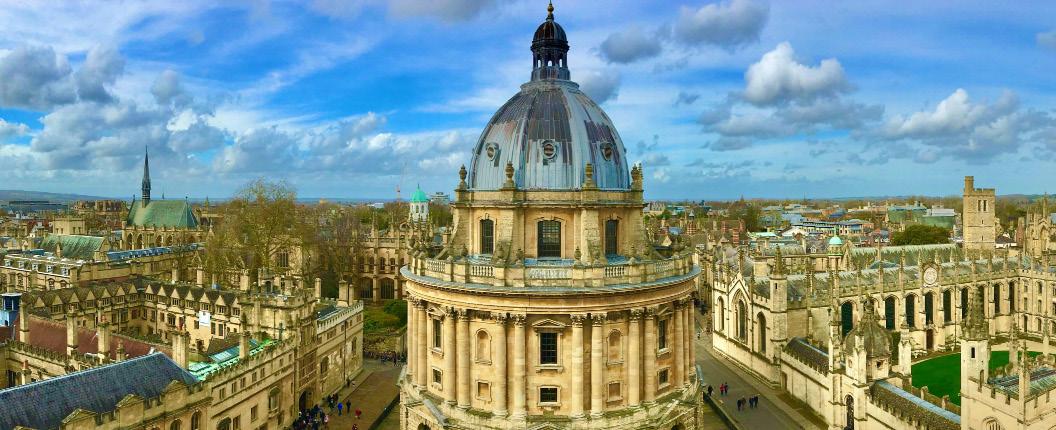
Credit: Ben Seymour, Unsplash
There are huge financial disparities between the 39 colleges of Oxford, and the divergence in college wealth has led to prolonged debates. One of the most affluent colleges, St John’s has an endowment figure of approximately £779 million as of 31 July 2025. Certainly, comments on a college’s financial status can contribute to amusing inter-college banter among the student community. However, is such variation in endowment truly fair for a student’s education?
The Oxford college experi-
ence makes up a significant part of student life. It’s where students learn and where many live. College wealth has a substantial impact on both areas. Difference in endowment figures leads to variations in both academic support and tutorial provision for students.
Wealthier colleges are consistently recognised with stronger academic performance.
“ [the] college experience makes up a significant part of student life

ail’s has rapidly become a staple of urban life in the UK, with more than 120 stores in London alone. As you all probably know, you can find Oxford’s very own location on Little Clarendon Street.
Founded in 2005, its expansion has been impressive, and in September 2021 the chain was acquired by Bain Capital, a US private equity firm. A private equity firm is effectively an investment manager that pools capital from wealthy investors and buys up promising businesses. But why are finance bros interested in serving you coffee and croissants?
The first thing to know about private equity is the ‘lever-
Although the University has discontinued the ‘Norrington Table’ ranking final exam performance of the colleges in 2021, data gathered from the freedom of information request on academic results and internal discussions suggests that unequal college resources lead to unequal education quality. The most recent publicly available academic and financial figures for 2023-2024 reveal that the richest Oxford colleges – St John’s, Magdalen, New and Merton – were also among the top five colleges that educated the highest number of first-class students. For example, wealthier colleges are also more generous with academic grants. Accord-
aged buyout’, or LBO. An LBO is the process of securing capital for investment through taking out loans on the target company’s assets. Effectively, it is a PE firm buying a company without the money to do it. These loans are then moved onto the acquisition’s balance sheet, creating an immense pressure to make profits fast. What follows is aggressive expansion with the aim of pricing out competition and securing almost total control of a local market.
Described as the marker of ‘gentrification’, Gail’s has been the target of backlash from local communities. One example was in Walthamstow, where a 2024 petition against a new opening garnered almost 2,000 signatures. Given their financial backing and economies of scale, PEbacked firms can expand rapidly into emerging ‘up-mar-
ing to current members of the College, every St John’s student is eligible for up to £559 each year to cover academic spending. Christ Church and Magdalen are also known for being generous with student subsidies. This enables them to afford more academic resources and activities that can boost exam performance and, ultimately, job outcomes.
College wealth can also determine cost-of-living pressures The University specifies a large variation in student expenditure, predicting the 2026-2027 costs to range from £1405 to £2105 per month depending on which college you are allocated.
According to Cherwell, rich-
ket’ areas, where people can afford a £4.10 flat white. The brand image and sleek design means local chains, who face steeper costs, are pushed out of the market.
In the Gail’s example, its centralised production facility in Hendon (or, as Gail’s calls it, their ‘central craft bakery’) means costs are significantly lower, creating ‘tasty’ margins that translate into £278 million revenue in 2024. This is then invested into further expansion. Gail’s wants to be seen as a ‘neighbourhood bakery,’ but its hundreds of branches suggest it is nothing of the sort. In fact, their practices actively hurt local communities by driving up rents for small businesses. Gail’s and other chain firms (such as Leon and Itsu) can afford long-term rent contracts that make the property market unaffordable for small, fami-
er colleges have lower average rent costs and higher value for money rating, whilst the opposite was true for the poorer colleges. In an attempt to resolve the wealth inequality between colleges, the University has stepped in via the College Contributions Scheme, which redistributes wealth and acknowledges the disparity. Of course, it is not a hard and fast rule that the richer the college, the better the grades but the experience undeniably differs. The college system is a defining feature of Oxford, but it may be time to re-evaluate whether the University’s organisation of this system delivers a uniform and fair education to their students.
ly-run affairs.
The crisis of private equity is that the places that were once there to genuinely serve the customer are eradicated, and instead multinational chains gobble up all market power. And this isn’t just about your morning coffee - more than 70% of our water industry is owned by private equity or foreign institutional investors. Even Manchester United was acquired through an LBO. Private equity has entered every sphere of our lives, and when combined with rising inequality and a crushing cost of living, you get the recipe for disaster. Therefore, when our local businesses are struggling, our high streets are shutting down, and our communities feel empty, dear reader, you may, at least in part, blame private equity.

Akheel Kale on how semiconductors became the hidden infrastructure of modern life, global supply chains and geopolitical power.
On 19th March 2021, a small electrical fire broke out in a factory in the sleepy town of Naka, more than 100 kilometres from Tokyo. The fire was brief, and no casualties were reported. Renesas, the factory owner, expected to resume operations within weeks.
But when markets opened on 22nd March, more than $10 billion in value was wiped out in a single day. That same factory, producing unglamorous microcontrollers –cheap, mass-produced chips designed to carry out basic electrical functions – led to the crippling of several automobile giants’ supply chains. Within days, Toyota, Honda,
GM and Ford saw their assembly lines stall abruptly – with dealership forecourts running empty.
A single fire, in a factory that employed fewer than several hundred people, had brought a trillion-dollar industry to a halt. Naka encapsulates a wider narrative.
Semiconductors are integral to the global economy. Their components are vital to almost every piece of mass-produced consumer technology. The average modern vehicle contains more than 1,700 semiconductor chips, and 15 to 20 percent of a phone’s material cost comes from semiconductors.
Today, semiconductor pro-
techniques to challenge the West’s dominance of the industry. National champions such as NEC, Toshiba and Hitachi displaced American developers by choosing to specialise in the production of increasingly specific components such as dynamic random-access memory (DRAM) and NAND flash.
By concentrating on specialised production, these companies were able to harness a speed of operations that larger American giants were too lumbering to respond to.
Such developments truly materialised through the founding of TSMC (Taiwan Semiconductor Manufacturing Company), and its use of the “independent foundry” model. TSMC provided a basic deal: companies could specialise in the granular work of designing individual components, while TSMC would provide the organisational capacity needed to produce chips at cost-efficient scale. TSMC’s model succeeded. It now controls more than 71 percent of the pure-play foundry market and enjoys profit margins of more than 56 percent.

duction represents a landscape rapidly shaped by fast-moving geopolitical and economic currents, with producers unable to rely on predictable supply or demand. The industry was not always like this. In earlier decades, companies often handled chip design, manufacturing and the technologies that used them in-house. IBM, Texas Instruments and Motorola were the giants that made up most production and consumption of chips.
Challengers from Japan and later Taiwan, South Korea and Singapore harnessed rapidly growing skilled labour, ambitious government financing and aggressive cost-cutting
production and distribution of consumer goods. This makes a constant downstream movement of cheap, cutting-edge semiconductors invaluable for further economic development and competitive advantage.
At the same time, semiconductors are also integral parts of defence systems globally. Advances in computing power support increasingly sophisticated digital systems, such as the Israeli Iron Dome’s “Battle Management and Weapon Control” software, or the American F-35.
The Biden administration tightened export controls on Chinese access to advanced chips and chipmaking tools from Taiwan and US allies. The Creating Helpful Incentives to Produce Semiconductors (CHIPS) Act, and to a more limited extent the Inflation Reduction Act, supported investment in domestic factories, with more than $6.6 billion of funding having been awarded from the former.
The consequences of this have been profound. TSMC pushed the industry further into an increasingly rapid cycle of competition marked by overleveraged firms, massive development investments and a constant hum of innovation.
Firms are now forced to throw immense resources into research, development and scaling to keep up with the industry’s pace of development.
Extreme ultraviolet lithography (EUV), the most prominent innovation in recent times, was the result of more than €6 billion in investment across two decades.
This acceleration has come with ballooning costs. The US semiconductor industry saw R&D and capital expenditure rising from $28 billion in 2001 to $119.5 billion in 2024 – alongside this, TSMC averaged an annual capital expenditure of $33.6 billion within the last five years.
Part of the scale of this development is also underpinned by the wider strategic importance of semiconductors for nations. Semiconductors carry immense importance in the
Through this, semiconductor development often has consequences extending to wider geopolitics. Taiwan is perhaps the most famous example of this. TSMC contributes more than a fifth of Taiwan’s GDP, and has become integral in shaping the island’s international relations. The US has committed $6.6 billion for the development of a TSMC plant in Arizona. More importantly, however, is the US commitment to the island’s defence – with a sales backlog of $32 billion.
Commentators have branded this Taiwan’s best security guarantee against invasion from China – dubbed the “silicon shield”.
The Chinese response has intensified the race. The state is pushing through immense and consistent stimulus packages to further develop cutting-edge technologies to offset America’s current geopolitical strengths.
The future of the industry, therefore, remains unclear. What is clear is that the decisions made now, on investment, trade, and where chips are made and by whom, will have consequences that extend beyond semiconductors themselves.

Lucy Hewitt, a first-year lawyer with French Law at New College, writes about embodying the identity of being at an Oxford college.
It is a shameful admission when asked ‘Which college did you apply to?’ that I did in fact apply to Oriel before I was pooled. By the end of Freshers week, I had learnt to add a very important caveat to that confession - ‘but I didn’t know about… the reputation’ - in order to avoid the scepticism and scorn of my potential peers.
It felt like an unfair cross to bear; I had naively followed the advice that it doesn’t matter which college you apply to - for it (at least theoretically) does not bear at all on your chances of admission. So, my decision was entirely random, picking between essentially all the colleges that were central and had picturesque quads
(apologies to Hugh’s and Catz). Consequently, I unwittingly walked into some pretty hefty connotations I must now perpetually dispel.
This sentiment can only be worse for the many students who followed a similarly unsophisticated decision-mak-
“ I would never betray the loyalty to my college. I’m very patriotic to it in that way.
ing process (or even made an open application) but actually
Merton might well serve as useful indicators to find likeminded people. But, for the rest, college identities could likely be a burden. Take, for example, some (hypothetical) callous and cruel soul who is now destined to spend their days haunting the halls of Brasenose, unable to find community among their famously friendly peers. For a university where, for the vast majority of people, friends are formed in college rather than subjects or societies, ending up displaced as such might entail a very isolating college experience.
However, for the remainder of colleges, whose public perceptions relate less to the values of its student bodies and more to the quality of their formals, extent of their JCR budgets, or tribulations with RAAC, there is certainly a charm to a college heritage. Take Jesus’ borderline obsession with the colour green, or New College’s idol-style worship of William of Wykeham; for me, these quirks are what really push our colleges beyond glorified halls of residence.
reotypes usually are, by word of mouth among biased individuals.
As soon as someone plants such a seed in your mind – establishing a ‘common enemy’ in order to ramp up allegiance to your own college – it is far too late for students at the sharp end of these rumours to raise their own defences. Oxfess and Oxscenes similarly propagate this ‘them vs us’ sentiment. Although their posts might be the source of many stifled laughs in the library, they spread opinions even more scathing than those in the culturalzeitgeist and encourage the rest of us to give certain colleges such a wide berth that their protestations and testaments of innocence will never be heard.
Nevertheless, having been (aside from my pre-pooling incident) part of the majority of students who have come to know, love, and become fiercely attached to their col-
ended up at their chosen reputation-ridden college. Given that colleges seem ubiquitously consistent with their reputations, I imagine it’s a matter of ‘If you can’t beat them, join them’. You take the hit to your own personal brand if it doesn’t align with your college’s. An occasional side-eye or critical assumption is the price you simply must pay to fit in at your college, practically part of your battels.
This raises another concern for incoming students arriving at colleges with such clearcut traits: how do you integrate into your cohort? Perhaps for some the homogenous epithets that can be applied to colleges like Wadham and
These seemingly trivial matters are easily shared and bonded over in the first weeks of university, in order to create the building blocks of a community - before you’ve been here long enough to have been fully indoctrinated into your college rowing team, or any other intercollegiate cuppers teams.
It is difficult to strike a balance between the pros and cons of a collegiate university - our college peers might vastly outnumber the number of close friends you might expect to make in halls, but pale in comparison to the pool of potential friends you encounter amongst your coursemates. And, as much as we all might enjoy the whimsy that quaint college life brings, perhaps more could be said for a stronger university culture - ‘united we stand’, and all. Furthermore, the sufferings of students at famous (or infamous) colleges are not entirely self-inflicted. Their stereotypes are spread as ste-
“ Despite some envy I may have over the gardens and rumoured free MacBooks at other colleges, I’m sure I’m not alone in finding that I have at some point subconsciously formed a loyalty.
lege, I would probably have to lean in favour of college sentiment overall.
Whatever the identity of your college might be, it is ultimately your home for at least three years, so you are bound to become fond of it. I can’t truly speak for students at ‘type-cast colleges’, but I am impressed by their ability to feel the same for their colleges. Read more online at www. oxfordstudent.com
By Oliver Murray
Oliver focuses on the difficulties of dealing with mental health difficulties at Oxford, whilst finding mutual confidance in trusted friends at university.
Somewhere between silence and oversharing, we’ve lost the ability to have healthy conversations about trauma.
Being a student at Oxford, mental health is often treated as either a joke, a competition, or simply ‘part of the experience’. We make light of academic burnout and normalise suffering until it begins to disrupt our work and relationships, or we lose track of who we are. Poor mental health is not another Oxford tradition that we should romanticise. I say all this because it is my experience with poor mental health last term that has shaped my views of Oxford’s culture. I had an emotional breakdown during a philosophy tutorial to the point where I had to leave and redo the tutorial another day. Afterwards, my tutor invited me back and asked what was going on. I couldn’t really explain it. At that point, I was more worried about what this meant for my future at Oxford than about the breakdown itself.
I was worried about the stability of the life that I was still building, how much I would have to reveal about my childhood that I didn’t want to revisit. But my tutor calmly pointed out something that not enough of us realise at this prestigious university: our tutors are not just there to teach us, but to support us holistically. If we are struggling to cope with the difficult events that we are going through, this will inevitably affect our essays, our contributions, and ultimately our passion for the subjects that we are pursuing. They realise that our studies are not the be-all and end-all of our lives.
They would much rather us try again next year, than not make it to the end of this one.
We are extraordinarily lucky at Oxford to have the direct support of a number of tutors (academic and pastoral) who have the time and capacity to get to know us more than a lecturer may. We also have access to college nurses and staff, professional psychia-
“ Too often, the conversations that we have about mental health become competitions in suffering rather than attempts at support.
trists, therapists, and counsellors, and many colleges have access to funds set aside for us to benefit our mental and emotional health. So, what is getting in the way of us reaching out? We might not know who to go to; we are scared of the consequences; we have never had to deal with these issues without our parents or carers. But I think the main issue here is the consistent trauma-dumping. Online — and student — culture has contributed to us becoming so desensitised to serious mental health issues that they have become either a funny meme or a ‘waste of time’ to talk about. This has meant that not everyone is prepared mentally or emotionally to hear about people’s
trauma and understand how to help and not everyone is willing to open up about their issues.
Too often, the conversations that we have about mental health become competitions in suffering rather than attempts at support. This is not a healthy way to have these conversations. Being at Oxford encourages comparison in almost every area of student life from tutorials to societies. Trauma should not become one of them. Suffering is not a competition, and nobody benefits from treating it like one. We all struggle, and we all deserve help sometimes. As speakers, it is vital that we continue to talk to our friends when we are struggling, allowing us to build trusting and open relationships. The problem has never been emotional honesty. The problem is the new expectation on our part that our unprepared friends can carry emotional burdens that they are not equipped to manage. Talking is important, venting is healthy, but expect-
ing your problems to subside after one conversation is bound to prolong poor mental health.
As listeners, we must learn that we won’t always have the
“ We all struggle, and we all deserve help sometimes.
answers to solve a problem so intertwined in someone else’s personal life. We need to talk and be open, but we cannot expect our friends (or we, ourselves) to become professionally-licensed therapists who will offer life-changing advice that clears the fog.
Friends are there in your low moments: when you are struggling with thoughts or getting out of bed. They’re not a bad friend if they don’t understand the struggles of depression or anxiety or the childhood traumas that we have experienced.
Mine sure don’t, and they never truly will because they didn’t live through it, just as I haven’t lived through their trauma. At the same time, we have to have friends who can make us laugh in our lowest moments. It’s a medicine that eases the pain for a while, allowing us to pick ourselves up, take ourselves to the doctor, and get some professional help. when it’s clear that we are not okay. If your friend is struggling, continue to be there for them. As much as they may push you away or say that they are ‘fine’, as a friend you have the special ability to sense, somewhat naturally, that something is wrong. Talk to them about it, give them space to open up. At the same time, allow them to have fun, allow them to go out without constantly talking about their struggles. There’s a balance between trauma-dumping and trauma-informing; it can be useful to also open up about things that you have been through in your life. Read more online at www.oxfordstudent.com
Students play croquet in Corpus Christi. Credit: Wikimedia Commons.



Himasweeta Sarma spoke to Ali about his love for Tahmid’s and of course, the city of dreaming spires.
Every time I cook, I try to find a piece of home in it: my grandmother’s recipe for fried potatoes, my father’s skill in making omelettes, and my mother’s innate sense of measurement. The food I cook reminds me that I am nothing but a combination of the people, culture, and country that I call “home”. This search for a place or people who feel like home only grows stronger when you move away, especially as an international student. You squeal with excitement when you hear someone speaking your native language; you light up when you see a restaurant serving your regional cuisine. I remember stepping into Tah -
mid’s, soaking in the smell of spices, and spotting a packet of Lay’s India’s Magic Masala and I knew I was home.
I walked down in between the clean and long aisles stacked with products that screamed home to me,
“ I chose Oxford for my children. [It is] the best university in the world.
looking for Ali. Mr Ali Farhan, or lovingly addressed as Ali by his colleagues, has been the assistant general
ground, reminiscing about his days in his motherland before moving to the United Kingdom. Born in Sargodha, a city in the Pakistani province of Punjab known for its luscious-green orange plantations, Ali went down the memory lane of him as a farmer. Engaged in farming as a part of his family business, Ali became nostalgic while talking about the green fields he worked on, the streets he walked in Sargodha and most importantly, the sacrifice of being away from his mother.
a few acquaintances and friends over the years! The South Asian community has grown significantly large in Oxford now with [predominantly] students like you from Oxford and Oxford Brookes.”
manager of Tahmid’s since 2021. Tahmid Stores, popularly called, ‘Tahmid’s’ is a grocery shop specialising in South Asian ingredients located at 53, Cowley Road. I find Ali by the sweets’ aisle, filled with rows of dried dates and tangy fruit leathers; inspecting a pack of dried mango leather. Finding him deeply engrossed in his work, I approached him with a ‘namaste’ and he looked up to greet me with a warm and welcoming smile. Dressed in a striking deep blue salwar kameez with a brown-textured zip-up cardigan, “I’m from Pakistan,” he said in response to my question about his back-
“What made you come to the UK?” I asked him as my eyes gleamed with hope and a tinge of curiosity. “I came here with the dream of opening a start-up with my partners,” he said, “however, life had other plans for me.” When one of his partners moved out of their business venture, Ali found himself in the city of Oxford in search for a place that would recognise the worth of a farmer’s hardworking hands. After a short yet sweet interview with the owner, Ali was given the job of assistant manager at Tahmid Stores five years ago, and he still regards it as one of the best days in his life.
“Why Oxford, in particular?” I quizzed him again; my heart finding its comfort in slice-of-life stories, the small pieces of existence that makes us who we are. “I chose Oxford for my children. [It is] the best university in the world. I see my children studying there someday.” His dreams for his children took me back to my own upbringing. Oxford was a dream almost too big to name, yet my parents made me believe in it anyway. I see the same relentless aspiration in Ali’s eyes.
“What does Tahmid mean to you?” I asked as I saw a slow smile curling up on his face. “[Tahmid] gave me a community that makes [Oxford] a home away from home. We have both regular and new customers every day, [and] I made quite
As with all things in life, in the five years Ali spent as an assistant manager at one of Oxford’s busiest South Asian grocery stores; the store had changed as well. “To meet the demand of an increasing number of customers, we added new sections; the prominent are the Indian food section [featuring] specific Indian snacks, masalas (spices), among others and Turkish sweets with baklava being the most popular,” Ali remarked.
As I offered my gratitude to Ali for his time, patience, and generosity, I couldn’t help but think about his
“ [Tahmid’s] makes [Oxford] a home away from home.
mother, who saw her son move countries, change professions and dream for his children just like she did for him. Talking to Ali and seeing him speak so happily about his life and friends here made me realise that the meaning of home goes beyond materialistic items like a packet of crisps. Instead, home is what you build with people around you, with ingredients both known and unknown.
I still miss home, but thinking about leaving Oxford makes me teary. The city has become home to me: the streets I can now navigate without Google maps, the buildings I can name without a guide pamphlet, and most importantly, the people who made these streets and buildings feel like home.
Read more online at www. oxfordstudent.com

The Oxford Union has rescinded its entire termcard for Trinity Term of 2026, citing concerns from partner organisations in a statement from the President posted on their new Truth Social account.
The President, who has final authority over the speakers invited to the Oxford Union, made the decision to omit them all from the termcard. They stated that “we strongly condemn racism, misogyny, and all other forms of discrimination, and are dedicated to harbouring an inclusive and welcoming atmosphere with transparent governance and open decision-making.” The Union have been outspoken in asserting their commitment to free speech, which may involve platforming controversial figures such as Abby Lee Miller.
All of the events stated on the termcard posted at the beginning of week 1 have subsequently been cancelled. Additionally, the Union has been forced to cancel many planned events that were yet to be announced. This includes the first ever panel to be conducted via ouija board, with guest speakers Adolf Hitler, Jeffrey Epstein
and Ted Bundy. Scheduled for week 5 was a members-only debate on the motion “This House Believes That Racism Isn’t That Bad, Honestly”. The Union had also planned a second occupation of the Radcliffe Camera in partnership with Oxford Action For Palestine, however the protest group pulled out an hour before the announcement after learning of Benjamin Netanyahu’s invitation for a speaker event in week 6. These events, which were leaked to The Oxford Student by a Union insider, have attracted criticism and public outcry from organisations across Oxford. A joint statement issued on Tuesday by a coalition of student societies, including Oxford Feminist Society, Oxford Jewish Society, Oxford Arab Society, Oxford Students for Israel, Oxford Action For Palestine (OA4P), Oxford University Conservative Association, Oxford University Labour Club, Oxford University Liberal Association, Oxford University Toast Society, and the anonymous Instagram account Overheard at Oxford, reads: “What the fuck?”
Reform UK has been approached for comment but had no reply at the time of publication.
We asked you, our beloved readers, to send in your worst clubbing experiences in Oxford via our Instagram, and you had a lot to say. Like wow, looks like you guys have gone through some serious stuff... We thought we had heard everything here, we thought wrong, but we certainly have
now! Some of the more extremes ones have been excluded from this column because, well, quite frankly, we didn’t want to think about them too much. Thanks for scarring us and keep an eye on our Instagram for your next opportunity to get involved! Now, where can I get my eyes bleached?
“Watched a guy finish making out with a girl, say goodbye, turn around, and immediately start chatting up another girl, to then make out with her 5 minutes later.”
Well, everything in Oxford requires a tight turnaround, right? What’s the difference between going essay to essay or girl to girl? Both seem impossible to this guy, so might as well move on quickly. Top tip: get some help.
“Plush in general”
What’s not to love about sticky walls, the smell of poppers, banging your head on the ceiling, and making out in toilets that have not been cleaned since Jacob Elordi was in there whilst filming Saltburn? To the reader who last week claimed that Oxford needed a brothel, this club is the answer! If they gave out awards for the straightest gay club, Plush would win unanimously.
“Sports team social pantsing each other in atik and rubbing their faces on crotches”
This is nothing. There is no group more homoerotic than a men’s sports team, especially rugby. Just be grateful that you weren’t there to witness what happened at the afters...
“When atik closed, period.” RIP Atik, you are forever missed. It was still shit though.
“first time getting groped at plush back when i was a crisp 17 year old ”
Yikes. Unfortunately, this is an Oxford rite of passage. Also, how were you in Plush at 17? I’ve been through airports that do less rigorous checks.
“indie fridays. unspeakable amounts of pushing, one guy who had clearly never heard of the deodorant aisle in tesco deciding to crowd surf and booting my friend in the head. also watched some poor bloke who was never going to reach the toilets vomit all over the floor. 10/10 would go again.”
Who has time for deodorant anyway? Plus, the walk to Cowley means that by the time you arrive, it’s worn off! I’ve heard that if you wear deodorant to Indie Fridays, they take you out back and waterboard you with whatever is left in the drip trays. As for the poor bloke, we’ve all been there... don’t try and pretend otherwise.
By Charles Prestwich
th May 1954, Iffley Road, Oxford. Roger Bannister had just run a sub-4 minute mile, the first in history. Those lucky enough to witness it live roared with approval. It was a summit that many at the time doubted was even possible for a human to reach. Now, seventy-two years on, Bannister’s legacy continues to be celebrated at Oxford’s Iffley Road with the Bannister Miles.
Organised by the Oxford University Cross-Country Club and supported by the British Milers’ Club, the Bannister Miles track meet has been running for a number of years now, but this year saw probably the biggest name yet
to feature at the event – Laura Muir, an Olympic and World medallist as well as the UK mile record-holder.
A number of races were organised across the afternoon for athletes of all ages, split into graded races. In one of the earlier events of the afternoon, Dean Richardson ran 4.26.97 to break the British mile record in the V50 age category, showing the younger athletes how it’s done! The races were quicker and quicker as the afternoon went on, proving a fitting build-up to the elite races that would round off the action. The women’s elite mile, known as the Millicent Fawcett Mile, was dominated by Muir, who
won in what was her first race of the season (time of 4.34.05). Oxford’s Charlotte Buckley came through for a hugely impressive 3rd place, running 4.43.85.
In the men’s elite race, the pace was quick from the start, and with each passing lap it became clear that the sub-4 was going to be a very closerun thing. On that famous day in 1954, Bannister spoke about seeing the flag, which was flying above the church across the road, drop as the wind settled for his final push to the line. In 2026, if anything the wind began to pick up slightly as the race unfolded, but conditions were nonetheless close to perfect. In

the end, the winning time of 4.00.8 was just shy of the sub4 mark, but seeing as the race had been won by a 17-yearold, Freddie Rowe, this was still a phenomenal run. Oxford’s Alex Gruen came home in 4th just a couple of seconds outside the sub-4 mark. And
By Sophia Yvonne Hall
Inever realised how bizarre tennis is until I was tasked with teaching a friend, who had never picked up a racket, last summer. As I reviewed the terminology and rules, I discovered that I didn’t understand the rationale behind them, despite the vocabulary rolling easily off my tongue. Love, 15, 30, 40, deuce, advantage, point, game, set, match. I had used these terms my entire life, but could not explain them. So here is my attempt to make sense of it for you. Hope-
fully, more effectively than I did to my friend, who promptly quit the sport for a simpler pursuit: computational drug discovery and development. Though I must warn you that by the end of this explanation, you may find yourself with more questions than answers.
A tennis match starts with a simple score: love-all. Love refers to zero. All refers to both players having the same score. Already, we have a problem. Why love? Why not zero? Experts and linguists aren’t ac-
tually entirely sure how love came to stand for zero. One of the leading theories is the egg (l’œuf in French, phonetically similar to ‘love’) theory. A zero on a scoreboard resembles an egg: hence, the egg theory. It’s not a ridiculous idea: we call a zero score in cricket a “duck egg”, and many American sports use the term ‘goose egg’. But for tennis, most experts have deemed this theory a folk theory, arguing that although it has gained widespread attention, it lacks evidence. It is
all that is without mentioning the Bannister Community Miles which took place in the morning, with over 1,300 participants running through the centre of Oxford.
Read more online at www.oxfordstudent.com
Credit: Trinity Trees.
more likely that the term love comes from the belief that tennis should be ‘play[ed] for love,’ representing the ethos of sportsmanship. Ultimately, we aren’t sure where this term came from, but it certainly makes for good TV and film misunderstandings, as anyone who has seen Diary of a Wimpy Kid 3: Dog Days will know. If one player wins a point, the score becomes fifteen-love. If the other player wins the next point, we are tied, and the score becomes
15-all. This system continues with the values 30 and 40. I am not a mathematician, but even I can see a flaw in this system. The jump from 15 to 30 represents a difference of 15. One would expect the next value to represent the same change, making the next value in the sequence 45. And yet, we are left with 40. How may we make sense of that?
Read more online at www.oxfordstudent.com