O XFORD S TUDENT


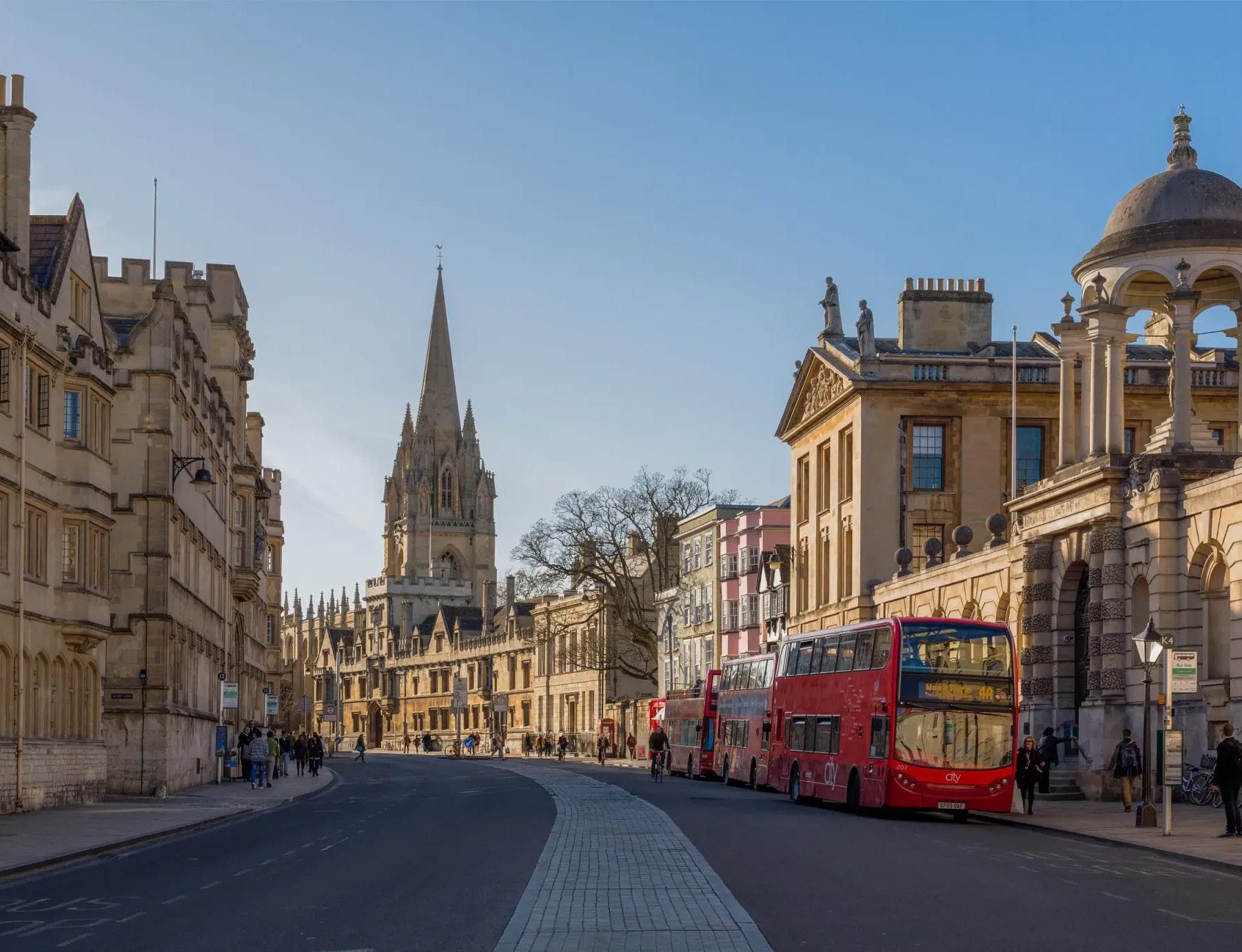
e new railway line will connect South
After over 60 years with no passengers, the Oxford Cowley Branch Line is set to reopen, creating new opportunities, connecting South Oxford to the city centre, and reducing congestion.
e new train line will deliver to two new stations: Oxford Littlemore, which covers Littlemore and e Oxford Science Park; and Oxford Cowley, covering Blackbird Leys and ARC Oxford. e line will allow South Oxford to be better connected to the city centre, North Oxford, and London Marylebone - with a twice-hourly service to the capital.
e campaign to reopen the line was spearheaded by the MP for East Oxford, Anneliese Dodds, who says: “I’m delighted that after years of campaign-
ing for the reopening of the Cowley Branch Line, alongside local residents, this is nally going to become a reality.”
She added: “ e reopened branch line will make a massive di erence to local residents.
Slashing travel times and reducing congestion.”
e leader of the Oxford City County Council, Susan Brown, said: “Today marks a major milestone in our campaign… something that has been a priority for us for over a decade.”
She furthered that this project is the “single most important piece of infrastructure” in ensuring businesses and communities in south and east Oxford are well connected. She predicts that the new line will give “access to more amenities and jobs, help to cut congestion, meet our climate targets, and unlock new homes and jobs.”
Most of the funding for the reopening of the Cowley branch has come as part of the government’s Oxford-Cambridge ‘Growth Corridor’ scheme. is is the government’s investment of £500 million geared towards ‘regional growth’ in both cities. £120 million was approved by the Chancellor of the Exchequer, Rachel Reeves, with a view to improving the “public transport, a ordable housing, and infrastructure” that both Oxford and Cambridge need in order to prosper and continue with the “globally renowned science and technology” research that occurs at both universities.
Professor Irene Tracey, Vice-Chancellor of the University of Oxford said: “ is investment reconnects people with opportunity...”
Continued on page 4
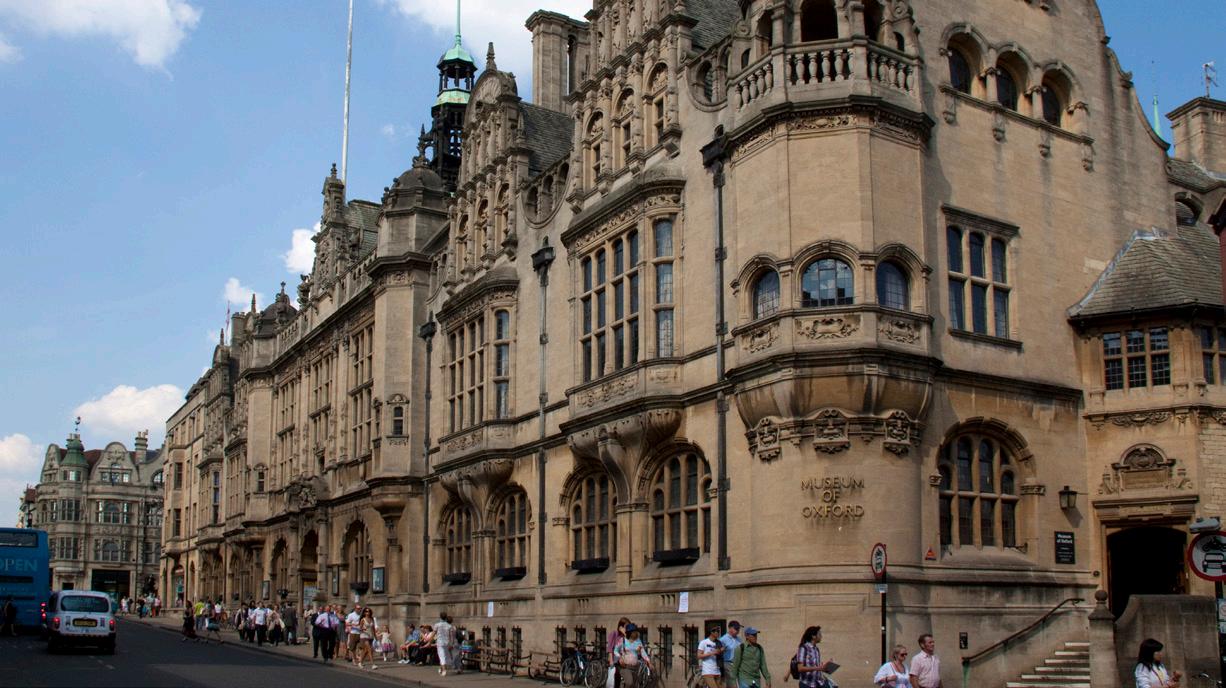
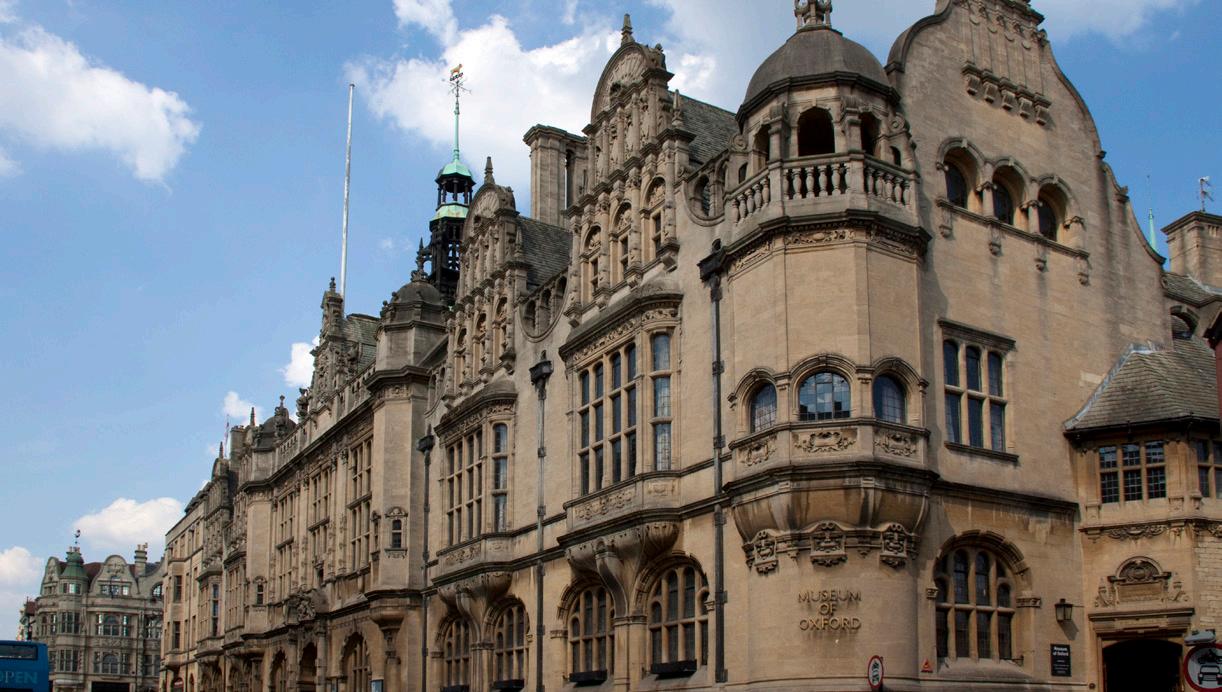
AChange.org petition has been launched in response to the Museum of Oxford’s proposed entry fee. Starting from January 2026, visitors to the Museum of Oxford will have to pay £4 for entry.
e Oxford City Council approved the new entry charge in the Cabinet’s October 22 meeting, citing a decrease in footfall as its key consideration.
e museum welcomed 55,000 visitors in 2024-5, signi cantly lower than the 100,000 anticipated in its redevelopment business plan.

While the Council has agreed to spend £152k a year on subsidising the museum, annual nancial reports showed the cost of running the museum to be closer to a quarter million pounds yearly. is led to an overspend on the museum, which the new entry charge aims to remedy. Commenting on the fee, Councillor Alex Hollingsworth, Cabinet member for Planning and Culture, said that it would “help visitors to have a more meaningful experience at the museum, while providing an informative and fun experience.”
Continued on page 4
Therapists are notoriously hard to get hold of. Chatbots, at least, never cancel appointments and are always available. In the UK, nearly a quarter of patients wait more than 12 weeks to start treatment, and some wait up to a year. 1.7 million people are currently on mental-health waiting lists. As demand continues to outpace supply, many are swapping the therapist’s
couch for a chat window instead. But how e ective is this new form of therapy?
Proponents of AI-chatbots like the idea of free, on-demand psychological support available to anyone with a working internet connection. ese tools can o er anonymity and accessibility, qualities that traditional therapy sometimes struggle to provide.
Continued on page 20. Read more at www.oxfordstudent. com.
AI has transformed therapy. Credit: Wikimedia Commons


Scan this code to receive weekly top stories and more!
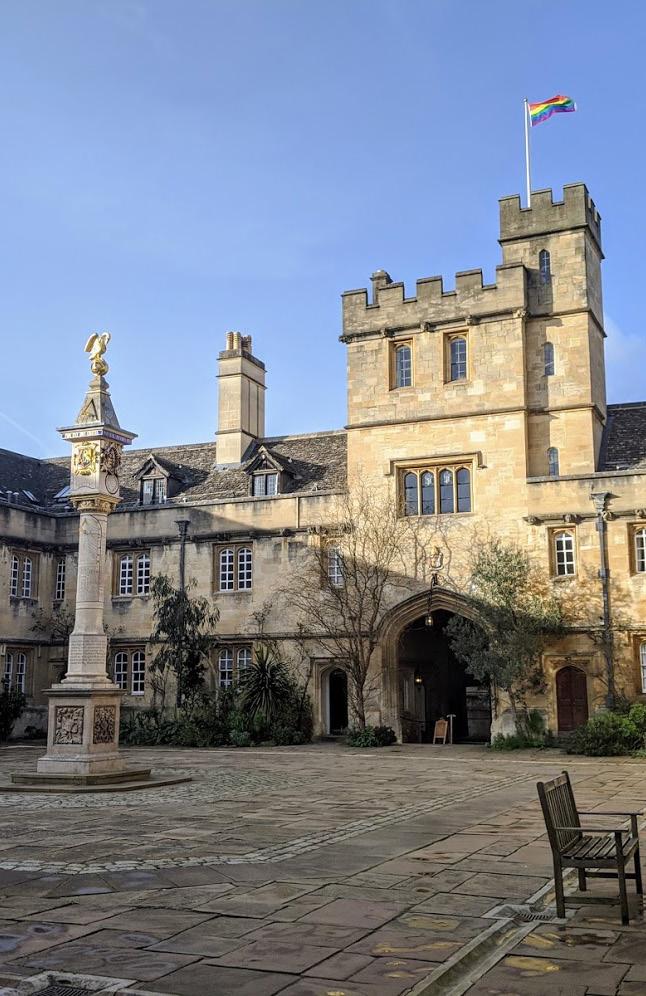


Can’t believe almost half of Michaelmas has already passed! Week 1 feels like yesterday. Time really !ies.
My brain can de nitely feel the e ects of my all-nighters now, but as the OxStu’s Editor-in-Chief, I’m way more excited than exhausted. Last week, our News team ran three breaking news coverages on the recent Union disputes. It is insane that two distinct no-con dence motions were raised over the course of just a few days, but I’m so proud of the journalism that we produced amid all the chaos. Although the Union was a fertile ground for stories, we still wanted the OxStu to feature a wide vari-

Week 3 always feels like the pivot point of term. e chaos of Freshers’ Week is fading away, and the rhythm of Oxford life is starting to settle in. It’s also the moment when many of us get
ety of content. I am beyond impressed by the articles that our non-News sections have produced – they have shown me how innovative, thoughtful, and versatile we are as a student publication.
Michaelmas is also a term of festivities: while Diwali has already passed, Guy Fawkes Day, anksgiving, Christmas, and many celebrations are approaching. And, of course, Halloween is tonight (and I am de nitely going out). It is these festivities that remind me of how diverse the Oxford student community is, and the OxStu’s stories will continue to re!ect that. In closing, it is hard to put in words how proud and grateful I am to be part of the OxStu. Let’s keep slaying!

Bravo to Fennec Fox productions for getting three previews in three of the big papers. (Previews! Not even reviews.) Some canny somebody sent some emails to a whole lot of somebodies in these hallowed halls, and some editors are kicking themselves that their scoop lost its exlusive edge.
But anyway. An editorial is to an article what a short story is to a novel, which means I’ve no time to miss my white-hot chance to try and say something meaty about a few things, all at one crack.
In lieu of the news cycle: one AI tool has been made free to all students, but what does is mean for us given that AI is the great leveller, and we at Oxford
swept up in Oxford’s routines and forget that there’s more to student life than tutorials and deadlines.
Getting involved in student journalism, whether it’s with the OxStu, a smaller magazine, or even student radio, has been one of the most enjoyable aspects of my time in Oxford. From writing about Labour’s rst 100 days in o ce to interviewing the co-founders of the new Your Party Society, every story has been the chance to try something new and meet some incredible people.
Spending time with the team, from socials to lay-ins, has been one of the most rewarding parts of getting involved. It doesn’t matter the student publication you contribute toI’m constantly in awe of the dedication, creativity and passion of everyone involved in student journalism across the university.
Whether you’re a Fresher still getting to grips with Oxford life or a nalist looking for one last challenge, there’s no better time to make your mark on student journalism! Pitch a com-
are meant to be pearls without a price? And also, with two Oxford students getting their names on blast in the national press, is it all eyes on O-town for the time being?
For the social observations, I can’t help but nd three types of people are often glossily, ino ensively ‘nice’: people who lack con dence in themselves, people for whom English is not a rst language, and people with a babyface or baby-voice. I nd the niceness dubious and a moral test to be needed. In the rst two instances it feels like they could be making up for something.
High thanks for giving me a penny for my thoughts (and well done if you’ve picked up on the one-two-three triptych). England, bless her, is reminding us that she’s not one of those places like California which is said to “have no weather”. I’ll be home this weekend, on Sloane Square drinking a pint. My shivering ngers are numbing and drumming.
mission, apply to be a section editor, join our legal team, or even work on strategy- whatever your interests, there’s a place for you at the OxStu. In this edition alone, we cover everything from debates at the Oxford Union to energy security across Europe- a reminder of just how wide-ranging and exciting student journalism can be, so dive in and enjoy this edition!
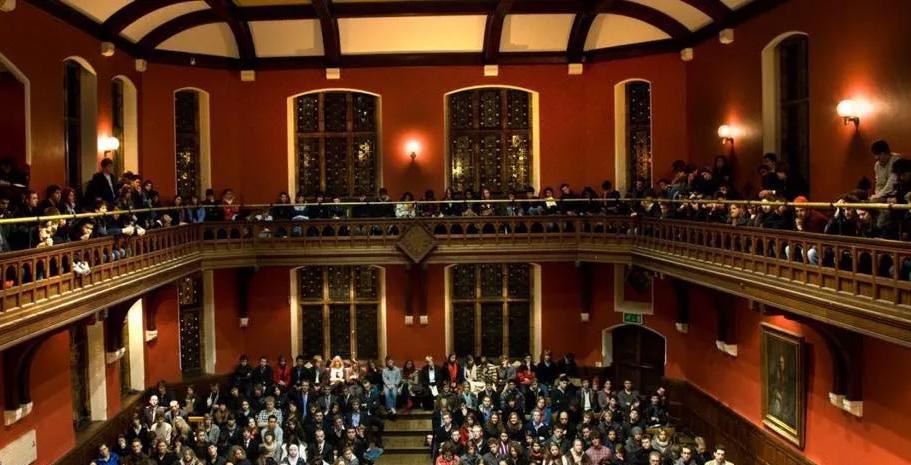
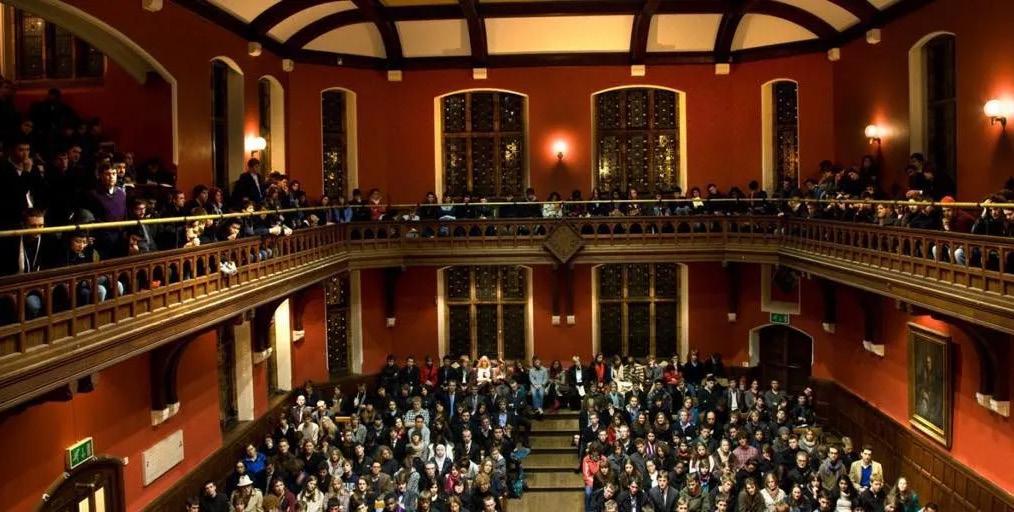
The no-con dence motion against Union President Moosa Harraj failed on ursday, with 449 votes in favour and 829 against.
Polls were open from 11:00 to 19:00 on ursday, with Union members allowed to vote in-person or by proxy.
e Motion of No Condence was posted by Secretary’s Committee member Will Lawson on 17th October. In a statement, Lawson wrote: “I moved the motion because I was shocked at what the Union has become in the last two terms.”
Harraj’s own Deputy Director of Press Charlotte Wild stated that she was “one of Moosa’s loyalest supporters until now” and was the second signature on the no-condence motion against him.
“I worked over 30 vacation days on his committee… Much of his ‘wonderful’ term card you read, I wrote,” her statement read.
Recalling Susan Abulhawa’s speech video scandal, Standing Committee member Arwa Elrayess posted a notice on Wednesday asking why the video capturing Abulhawa’s full, unedited speech has still not been uploaded under Harraj’s presidency. Elrayess
concluded the notice by demanding Harraj to re-upload the video within 48 hours of issuing her notice.
Liza Barkova, a member of the Standing Committee, told e Oxford Student: “I, just like an overwhelming majority of members who voted, have absolute con dence in the President. Moosa Harraj has been my mentor and friend for the last 4 terms. He has worked tirelessly to deliver a great term to the mem-
“I am grateful to the members for once again rea rming their trust in me. To the nearly 2/3 of members who voted to express their con dence in me, I am exceptionally grateful, and to the members who voted against me, I will do my best to address your concerns and hope to win you over with more hard work, better events, and a Union that is more than your money’s worth. I have worked tirelessly over the summer to deliver an incredible term card and have renewed zeal and enthusiasm to bring that vision to life.”
Speaking to e Oxford Student, voters explained the reasoning behind their choices.
On ursday, Prime Minister Keir Starmer criticised the University of Oxford for being “too slow” to act with a student who used a racial slur for Jews in a Gaza protest.
Samuel Williams, a PPE student at Balliol College, Oxford, chanted that the people of Gaza should “put the Zios in the ground”, referring to the killing of Jews, one day after a cease re was reached between Israel and Hamas.
um last year.
Williams was promptly arrested by Metropolitan Police for “inciting racial hatred” and has been suspended by the university.
Additionally, the Prime Minister said that Oxford “should not be a place where Jewish students fear even to go”.
bers and his committee has had a great time working with him in a welcoming and fun environment.”
In an Instagram post published the afternoon before polls opened, Harraj alleged that his no-con dence vote was brought by President-Elect George Abaraonye’s supporters.
“At a moment when the Union needs unity, leadership, and stability, those behind this motion are trying to burn it down,” Harraj claimed.
He told e Oxford Student:
Robert, who works as teaching sta in the Department of Chemistry, voted against the motion. He stated: “It’s a lot of work [to lead the Union] and good to acknowledge this work and keep things the way they are…I would be disappointed if the vote results go the other way.”
Another student told us they voted in favour of the motion. “I do not believe, based on even just 2 weeks at the Union, that Moosa has demonstrated free speech, democracy, and accountable leadership.”
e slur “Zio” was popularised by David Duke, former grand wizard of the Ku Klux Klan, white supremacist, and former member of the Louisiana House of Representatives. e term means someone of ethnic Jewish heritage. Williams was also one of the students who joined the pro-Palestine encampment outside the Pitt Rivers Muse-
A spokesperson for the Union of Jewish Students welcomed the decisive action taken by the government, according to e Daily Mail. e University released a statement on ursday, writing “[we] cannot comment on individual student cases”, and referred to their earlier Monday statement, in which “[the University] condemns, in the strongest possible terms, any language urging violence against groups of people or expressing any form of racial hatred.”
Image credit: David Ili e via Wikimedia Commons.
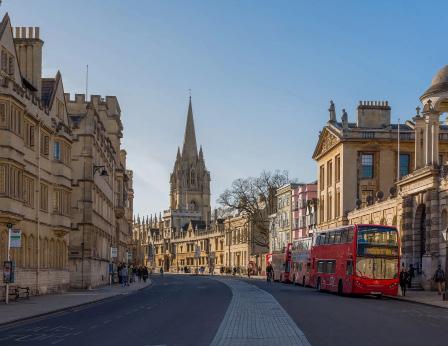
Pakistani activist and Oxford University graduate, Malala Yousafzai, is set to return to the university on 3rd November to promote her recently-released memoir Finding My Way at the Sheldonian eatre.
Four years after graduating, the youngest-ever Nobel laureate is returning to Oxfordshire. She was shot in the head by the Taliban in 2012 due to angering the terrorist group with her campaigning for girls’ education.
In 2017, she began reading Philosophy, Politics, and Economics (PPE) at Oxford University, as a member of Lady Margaret Hall.
During her time at the university, she was highly involved in student activities, including the Cricket Club, Oxford Union, and Oxford Pakistan Society (PakSoc). In an interview with British Vogue, she stated that she was “lucky” to have her education and its extracurriculars but wanted to “live in a world where every girl is able to weigh her future career options.”
Yousafzai graduated from Oxford University in 2020, and one year later, announced the Malala Fund Scholarship as part of the Oxford Pakistan Programme. e scholarship was created through the contribution of Yousafzai and the Malala Fund. It offers nancial support for one “talented” Pakistani female student from a disadvantaged background to study at Oxford University. She describes much of her experience in her memoirs.
Read this story & more at www.oxfordstudent.com
Professor Irene Tracey, Vice-Chancellor of the University of Oxford said: “ is investment reconnects people with opportunity - linking Blackbird Leys and Littlemore directly to jobs, skills and cutting-edge research across our innovation ecosystem. It’s good for inclusive growth, good for sustainable transport, and good for the UK economy.”
Another £35 million in funding is being provided by the Ellison Institute of Technology and other local investors.
e Ellison Institute of Technology have also recently announced plans for expansion into science and technology, investing £10 billion into putting Oxford at the forefront of global scienti c research.
Oxford’s Cowley train line was closed to passengers in 1963 and has since only been
used for cargo. However, the announcement predicted that reopening the line would not only create around 10,000 new jobs, but it would generate almost one million return journeys each year, helping to improve connectivity to the city.
e museum, which celebrates its 50th anniversary this year, currently operates on a “pay what you can” model. However, this approach only generated an approximate £5k in the last year. Visitors also have the option to pay £3 for an audio guide, which will now be absorbed into the new entry fee.
As part of the proposal, the museum will maintain 12 entry-free days a year, which will coincide with relevant events like Oxford Open Doors. Groups such as children under 5 and recipients of state bene ts retain free entry to the museum galleries, while children 5 and over and students will be eligible for concessionary entry.
e petition, launched by user “Avril”, has collected over 725 votes as of 24th October.
It states: “ e people of Ox-
ford and its visitors should not have to pay to learn about their own history. Introducing an entrance fee will discourage many people from visiting the museum and, of course,
will hit the poorest hardest.” University of Oxford students interviewed shared that the new fee was “a pity”, and would discourage them from choosing to visit the Museum.
David Juler, Chair of the Mu-


seum of Oxford Development Trust, added on Linkedin that “charging admissions [...] has more risk than reward”, especially since “the museum was not designed in content, layout, vision etc. to be charged for space.” Additionally, the museum faces sti competition from world renowned museums such as the Ashmolean and Natural History Museum Oxford, which remain free to enter and are
larger in size and budget.
e Museum declined to comment on the petition, but reiterated that “the charge is being used to raise funds to reduce the current subsidy from the Council”.
e Museum of Oxford’s new entry charge comes at a time when other civic museums are introducing entry fees, such as the Herbert Art Gallery & Museum in Coventry and the Chelmsford Museum.
The Motion of No Condence against Union President-Elect George Abaraonye, put forward by himself, passed on 20th October. A valid Motion of No Con dence passes if at least two-thirds of the votes are in favour. 1,746 ballots were cast, with 1,228 votes in favour of No Con dence and 501 votes against.
Abaraonye is contesting the results, and under Union rules, the results are not nal until the disciplinary committee reaches a determination regarding the allegations.
In an Instagram post, Abaraonye alleged that: “ is poll was compromised from the moment [President] Moosa Harraj and his majority on the Standing Committee brought compromised and untested Poll Regulations. [Extraordinary Returning Ofcer] Donovan Lock who ran the election shared around
the Email account collecting proxy votes, including to personnel who campaigned to have George ousted, who had unsupervised access. We do not know if or how many proxy votes have been tampered with.” is comes in the wake of experiencing backlash after he appeared to celebrate the shooting of US political activist Charlie Kirk.
On a WhatsApp chat, Abaraonye wrote: “CHARLIE KIRK GOT SHOT LET’S [redacted] GO [emoji].” He later issued a statement to e Oxford Student where he said that he had “reacted impulsively” and his words “did not re ect [his] values.” His comments drew widespread national criticism and Abaronye was met with calls to resign. Abaraonye explained his decision to put forward a no-con dence motion in himself: “I thought bringing the motion myself not only is a show of good faith in holding myself accountable for
The proceedings for the vote of no con dence against Union President-Elect George Abaraonye were “informally suspended” from early morning to noon on the 18th of October.
e suspension was announced by a Union notice posted to the bulletin and signed by Extraordinary Returning O cer Donovan Lock. e notice read: “ is was not a formal decision taken based on procedural necessity, but rather due to the development of an impossible working atmosphere.”
It continued: “ e Extraordinary Returning O cer was subjected to obstruction, intimidation, and unwarranted hostility by a number of Representatives, and on account of this had no choice but to informally suspend the process as co-operation and progress was rendered untenable.”
Per Union rules, the vote count “shall be done as soon as is practicable.”
e notice posted today stated: “ e voices of Membership must be heard.
what has happened but also ensuring that the members get to decide on this issue exercising their democratic rights.”
Abaraonye himself campaigned for “No” on social media, urging voters to keep him in position. On the day of the vote, he wrote on Instagram: “Today is your opportunity to a rm Free Speech, to stand against the racism of the Far Right, and to stand up for the principles the Union has championed for 200 years.”
e Union issued a statement condemning racism and threats directed at Abaraonye, writing: “we are deeply disturbed by and strongly condemn the racial abuse and threats that the President Elect has faced in response. No individual should ever be attacked because of the colour of their skin or the community they come from.”
e Oxford African and Caribbean Society, Oxford Pakistan Society, and Ox-
erefore, proceedings will resume. e validation of proxy nominations, where un nished, will continue without Representatives.”
However, a Union source told e Oxford Student later in the day that the count resumed as per the ruling of the Extraordinary Returning O cer around 12:30pm on the 18th, without representatives attending. e source added that the veri cation of proxy ballot emails is being conducted by the Extraordinary Returning O cer, assisted by Poll O cials.
In an Instagram post, Abaraonye stated that he raised the no condence motion against himself on 13th October to reclaim “true accountability and [a rm] that the Oxford Union must remain a place where students can make mistakes, apologise sincerely, and learn from them.”
e backlash occurred after he appeared to celebrate the shooting of US political activist Charlie Kirk by stating, in part: “CHARLIE KIRK GOT SHOT LET’S [redacted] GO [emoji].”
fordStandUpToRacism also publicly condemned the racism Abaraonye has faced.
On 15th October, the Union’s governing body, Standing Committee (TSC), voted to allow for proxy, meaning remote, voting on the no-condence motion.
e following night in the chamber, TSC member Arwa
Elrayess moved to invalidate the Committee’s decision and argued in favour of the motion through a oor speech. e Oxford Student understands that the President did not call on and thus give permission to Elrayess to speak, which led to chanting and shouting in the chamber.
case, Union members needed to submit proof of identity to the Union via email with their votes by Friday evening.
Elected governing body member Arwa Elrayess motioned to invalidate this Committee decision in the chamber on ursday night. e Oxford Student understands that under Union rules, the President is expected to call on who speaks, and the President reportedly did not call on Elrayess.
is prompted mayhem in the House, with Union members chanting “let her speak” as well as shouting points of order.
e ballot question was: “Should George Abaraonye, President-Elect, be removed as an O cer of the Society?”
On Wednesday, the Union’s governing body, Standing Committee (TSC), voted to allow for proxy voting on the no con dence motion. Proxy voting is remote voting. In this
Ballots were open to all Union members in-person in the Goodman Library or by proxy on Saturday from 10:00 – 20:00.
Abaraonye, Lock, and the Union have been reached for comment.
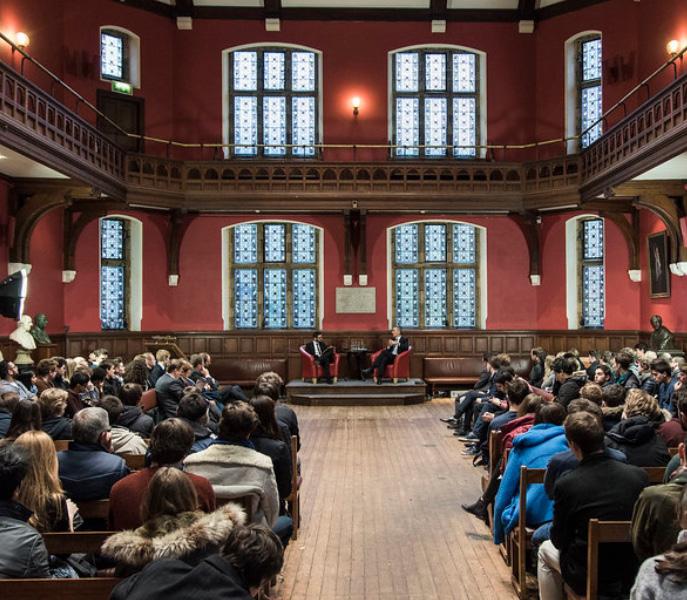
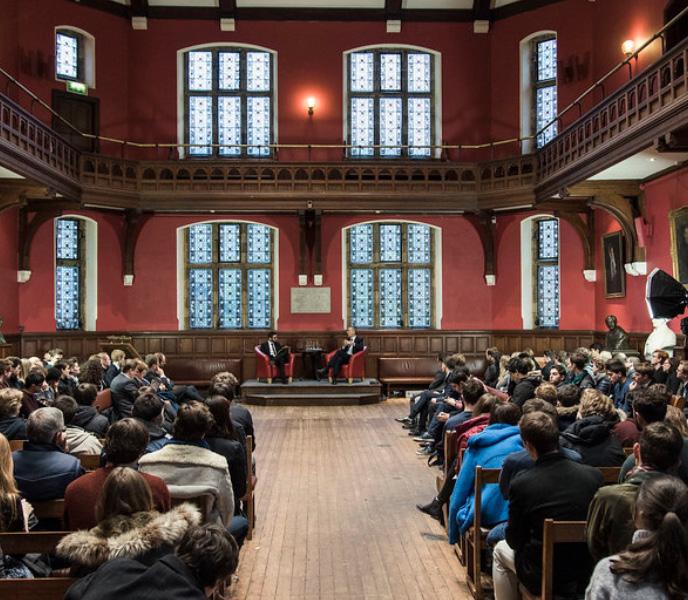
The Oxford Union debated the motion “ is House Has No Condence in His Majesty’s Government” at its annual No Con dence debate on ursday.
A long-standing tradition within the Union, the “No Con dence” debate is held annually to gauge Oxford students’ support for the current state of the UK government.
e debate series features several speakers, including students, Members of Parliament (MPs), and political experts, questioning whether there is support for the government.
At this year’s debate, speakers considered the Labour government’s performance in tackling the economy, public services, bene ts reform, and allegations of sleaze, as well as accusations of indecisiveness and lack of clear direction.
Proposition speakers included Sir Robert Buckland MP, former Justice Secretary, and Mark Francois MP, both Conservative politicians.
Union Secretary Samy Medjdoub opened the proposition.
Labour MP Andy McDonald, Baron Brennan, and second-year PPE student at New College, Harry Aldridge, spoke for the Opposition.
Standing Committee member Liza Barkova, second-year PPEist at Christ Church, opened for the Opposition.
Discussion began as Medjdoub framed the debate as fundamentally about delivery rather than ideology.
“ is is not a question of ideology but competence,” Medjdoub argued.
“Leadership requires conviction – this government possesses none,” he continued, emphasising what he characterised as Labour’s indecision and drift since taking o ce in July.
Former Justice Secretary Sir Robert Buckland, built on this critique with a blistering assessment of Labour’s opening months.
“I kept warning Labour did not have a plan for government. Well, with such an em-
phatic result in July they must be ready to govern,” he began, before delivering his verdict:
“Right from curtain up it’s been a disaster.”
Buckland cited speci c policy failures and economic indicators.
“Unemployment is at 4.8%, in ation continues to persist,” he told the chamber.
Buckland further condemned the government’s handling of welfare reform: “ e bene ts bill decision made to deal with soaring bene ts was gutted on the oor of the House of Commons. It reminded me of a fourth year government scared of its own shadow.”
He also attacked Labour over the donations scandal.
“Boy were they well dressed with Lord Alli’s expense,”
Buckland said, referencing the controversy over MPs accepting luxury gifts.
He concluded: “ e rst duty of leadership is direction – this government has no direction.”
Floor speaker Joseph Kay then brought the economic critique directly to students.
“Do you want a job after you graduate?” he asked bluntly.
“Labour doesn’t really want you to have a job. Labour are so horri cally out of touch.”
Mark Francois closed the
proposition’s case by warning of economic stagnation.
“We are going into a stag ation doom loop,” he claimed, before addressing Labour’s promises of change. “ is is not the socialist Valhalla the idealistic young Labour MPs signed up for. Change is not a mission; it is a slogan.”
Francois concluded with a pop culture reference: “To paraphrase Spock, this is a government, Jim, but not as we know it.”
Standing Committee member Liza Barkova immediately challenged the premise, arguing for procedural precision.
“A motion of no con dence is not an opinion poll; it is a speci c constitutional tool,” she insisted.
Barkova questioned whether the proposition was o%ering a fair comparison: “Is it a record that inspires con dence or a fourteen-year cautionary tale?”
Drawing a stark contrast between the two parties’ records, she said: “To have con dence in the Conservatives is to have con dence in a government that brought the NHS to its knees,” referencing fourteen years of rising waiting lists.
Barkova added pointedly: “Under the Labour government, it has been boring,”
suggesting stability over chaos was itself an achievement.
Harry Aldridge defended Labour’s early reforms with passion.
He emphasised that Labour had “decisively scrapped the Rwanda plan,” referring to the previous government’s controversial deportation policy.
“ ey are investing in young people and levelling the playing eld,” he argued.
Turning the attack back on the proposition, Aldridge said: “Behind the slogans and cynicism of side proposition, the same team that broke Britain –the same people who imposed the highest tax burden in seventy years.” He concluded:
“Don’t confuse imperfection with failure. e proposition is voting against progress.”Baron Brennan, marking his birthday, opened with a personal anecdote: “44 years ago, I met my lovely wife Amy at the bar” – referring to the Union bar.
He then urged patience with the democratic process.
“Democracy, unlike demagogy, needs time,” he said. “A democratically elected government needs time for its policies to change into progress. Now is not the time to undermine our newly elected government seeking to ful l its mandate.”
Brennan contextualised Labour’s challenge: “Echoes of the 1930s global nancial crash, the real wages of workers have been suppressed, the false promises of the Brexiteers and a communications revolution of fake news and doctored videos.”
Andy McDonald closed for the opposition with a warning about the stakes of the vote.
“As the rhetoric hardens, Reform rises and Labour dips,” he cautioned, suggesting that undermining Labour would bene t the far right. “To vote for no con dence now is to abandon the terrain of struggle to the right.”
He reframed what condence meant: “Con dence is not a reward; it is a mandate. We must give the government con dence not blindly, uncritically, but with a clear mandate for action.” He added: “ e way to keep power is not to hoard it, it is to spread it.”
Despite the passionate defence, students were unconvinced.
e motion passed with a vote split of 115-76, suggesting that the majority of Oxford students currently lack con dence in the Labour government’s performance.

Javier Milei assumed ofce in December 2023 on a platform of radical libertarian economic policies, aimed at tackling Argentina’s in ationary spiral and balancing the government’s de cit. rough slashing government spending and devaluing the peso, Milei has transformed the second largest economy in Latin America. Many have criticised the welfare impacts of his policies, but there is no denying that ination has decreased signicantly, from a high of 292.2% in August 2024 to 33.6% just a year later – still high, but no longer out of control.
After a relatively impressive rebound, however, in late 2024 and early 2025, gross domestic product (GDP) atlined. More troublesome for Mr Milei’s in ation-reduction policies is that the peso has spiralled out of control. To demystify Argentina’s economic trouble, we must understand why Milei’s policies are fundamentally unsustainable. e rst thing to know is that when economists speak of ‘the de cit’ they may be referring to either of the so-called ‘twin de cits’. e rst is the government’s budget de cit: the di$erence between how much the government is able to raise, and how much it spends. Milei’s reforms were partly aimed at tackling the large budget de cit in Argentina by slashing government programmes and social spending. is is what supporters of Milei are usually
supporting when they call for a ‘small government’.
Of course, this has its consequences. For one, since government spending is a component of GDP, decreasing it will lead to a decrease in GDP as well. More importantly, in a country with relatively unstable economic growth and low real wages, cutting government spending leads to unemployment, poverty, and unrest – as we have seen in Argentina.
It also translates very poorly politically. Milei’s party, La Libertad Avanza, lost the Buenos Aires local elections by 13% to the Peronist opposition. It is important to note that 40% of the electorate resides in Buenos Aires, a point we will return to.
e second of the twin de -
has since depreciated, and one dollar now buys more pesos - roughly 1329 at the time of writing. is means that Argentinian exports appear cheaper.
However, consumer preferences do not adjust to market shifts like this in the shortterm, and so currency devaluation is usually accompanied by some GDP loss in the immediate future (since consumer spending decreases given the higher prices).
Exchange rate devaluation has been used successfully elsewhere, and the argument is that the country experiences a V-shaped recovery once consumers and businesses start to adjust their preferences, leading to more exports and less imports. Furthermore, Milei accompanied devaluation with tax cuts and red-tape removal, in hopes of encouraging private investment into Argentina, another component of GDP.
2026.
e issue here is that the peso was still overvalued until very recently. Argentina did not oat its currency freely on international markets, like the euro and dollar do. Instead, there are a series of capital controls which means that Buenos Aires retains some control over the exchange rate. By selling pesos to the market, the Argentinian central bank devalued the o%cial rate, but not enough: the uno%cial market rate continues to be lower, and is decreasing. is means that although the xed exchange rate shows the peso devaluing, it is still too high for markets to react.
cits is the current account de cit. ere are a lot of components to a current account, but the most important one is trade balance, the di$erence between a country’s exports and imports.
It is this trade de cit which Milei set out to close. He has attempted to do so by devaluing the peso against foreign currencies. In April of this year, one US dollar exchanged for 1074.5 pesos. e peso
However, this does not seem to have happened in Argentina. Despite growth of 6.7% in the rst quarter of 2025, GDP has stagnated again. Although year-on-year growth remains high, this masks the fact that this growth is really only making up for the shrinking experienced in 2024. Investment in Argentina has been meager, and exports are yet to re ect the new exchange rates (despite Argentina being one of the few countries exempt from the Trump tari$s). Indeed, the OECD projects the current account de cit to worsen in
In April 2025, Milei took a leap, removed most capital controls, and let the peso oat freely. is meant the two rates were uni ed, but that the peso lost a lot of its value, which leads to in ation. Weary of further shocks, the Milei government has been using foreign reserves to buy back pesos, giving its value a periodic boost. e problem with this is that although Argentina received a dollar injection from the International Monetary Fund earlier this year, it is rapidly burning through its reserves as the value of the peso continues to crash.
And this brings us to the present day. e US Treasury has announced a $20bn swapline, e$ectively bailing out Argentina, at least for now. But, as the past few months have shown us, Milei’s plan to continue to buy up the peso in or-
der to curb in ation is simply not sustainable – Argentina will one day run out of dollars to prop up its currency with. Despite this, La Libertad Avanza has won the midterm elections held on Sunday, 26th October. is seems to have given his ‘chainsaw’ platform a signi cant political boost. It is expected that this will contribute to some degree of economic stabilisation, as investor con dence is restored. Recently, the peso increased by 10% as a result of the news. However, as the 7th September Buenos Aires elections (where his party performed poorly and was giving indications it would underperform in these midterms) showed not everyone is on board with his policies. More worryingly, yet, is the fact that the election turnout was 67.9% - the lowest in a national election in decades and a further suggestion that his position might not be as stable as these election results may indicate. With half a term more to go, we must wonder how (and if at all) Milei plans to change his party’s economic policy. Furthermore, we are yet to see if the political stability gained at the midterms will be durable. Might renewed investor con dence last long? I’m a historian, and thus not one to make predictions about the future. Yet if there is one thing my degree has taught me is to look at the deeper processes and challenge anything that in the immediate seems too obvious.

commercial relationship was revealed for what it had always been: a geopolitical vulnerability. e EU realised that it could not poke the great Russian bear when it depended on it for its energy needs. Here it found itself at the crossroads with two possible options: replace Russia with other, friendlier exporters of natural gas or mobilise the EU for a radical green transition… …and the path it took is telling. While renewable energy capacity continued its steady growth, the bloc’s overwhelming response was a strategic pivot to importing ally-produced LNG, with a 60% increase in such imports. is outcome came about as a result of the fact that traditional sources of gas were unable to make up for the gap left by Russian imports, forcing the EU to turn to the external LNG market. In particular, the United States became a major benefactor of this strategy, with its LNG exports to Europe increasing by 141% in 2022 compared to 2021, capturing a signi cant chunk of all European LNG imports. is cemented the US as the world’s top LNG exporter in 2023, a position of immense geopolitical and economic power that explains the Trump administration’s urgency in tearing down barriers to future exports.
The reality of being a climate activist in today’s age is not one of optimism. However, it should not be one of pure pessimism either (as hard as that might be with Trump in power). While it might be tempting to despair at the reality of having someone so unconcerned about the climate agenda as Trump as President, the post-Russian invasion of Ukraine story tells us something else: that geopolitical survival will come before environmental idealism. Any change in the right direction, therefore, should seek to appeal to each country’s search for energy security.
One of the rst things that Trump did upon assuming o ce in January this year was reversing Biden’s pause on
Lique ed Natural Gas (LNG) export approvals for countries without free trade agreements with the United States (including the European Union).
is change went back on a key achievement of climate activists, who highlighted the environmentally dangerous consequence of this form
damental currency, and its production and export is a key negotiating chip, it was a move of realpolitik.
Taking a step back to a time before 24th February 2022, the European Union (EU) imported about 40% of its natural gas from Russia. Some of the major importers were also some of the most vocal supporters of the transition towards renewables - such as Germany importing 65% of its natural gas from Russia. is is not the biggest proportion out of all of the EU countries, with countries like Austria and Hungary having had even greater dependencies, but it is by far the greatest by sheer volume.
of this choice is found in the new LNG terminals sprouting along Germany’s coastline - a nation once synonymous with its ‘Energiewende.’ In 2022, days after the Russian invasion, chancellor Scholz announced that Germany would build two domestic import terminals (something which had been talked about for years, but never considered politically necessary to invest in until their secure gas supply was threatened). Moreover, the German government leased ve so-called Floating Storage and Regasi cation Units (FSRU) in the short term to further solidify this move. But surely a country that has presented itself to be at the forefront of the climate agenda would have invested that money in renewables instead?
of crude oil. e motivation for this reversal is clear: in a world where energy is a fun-
is, of course, changed when Russia invaded Ukraine. Overnight, a long-standing
A critic might point to a seemingly contradictory fact: between 2021 and 2024, the EU achieved a remarkable 20% reduction in its overall gas consumption. On the surface, this appears to be a win for sustainability and the climate idealist’s dream. However, a closer look at the factors behind this decline is important. According to the International Energy Agency, this reduction was driven not by a clean energy boom, but by a painful combination of structural demand curtailment in energy-intensive industries rendered unpro table by soaring prices, emergency public conservation campaigns framed as a patriotic duty, and a dose of luck with milder winters. is was not a managed transition; it was a brutal, market-led austerity imposed by the crisis itself. e most powerful symbol
e thing is, there is a pro-environmental explanation even for some investments in fossil fuels such as this one (even if I myself remain sceptical of them). It has been argued that a side e ect of Germany’s action to secure its LNG autonomy is a possible lowering of freight emissions by replacing CO2 intensive ship fuels with LNG. e e ectiveness of this aside, I am not here to argue that this is enough or that we should accept it as enough. What it does once again show is that in the current geopolitical climate of fragmentation and multipolarity, we cannot rely on the idealism of a more sustainable future to carry these e orts alone; we need to account for the reality of energy security and make renewables the most secure option where possible.

States and China.
He begins on a more positive note. “I mean for starters, life in Western Europe is better than anywhere else. People mostly work moderate hours and have (adequate) pensions, so as a place to live it has never been beaten in history. is is as good as it gets.” Yet Kuper is also deeply worried about the direction in which Europe is heading.
“For the rst time in 700 years, Europe is surrounded by hostile forces. China and the US are hostile to who we are and they are also technologically advanced, which is dangerous. Russia, which is not technologically advanced, is also hostile. So, we are technologically backward, we are not warlike, we don’t want to send out people to war the way the Russians are happy to do and so we are very vulnerable.” Kuper believes that this vulnerability will only be exacerbated by AI. “In the AI race, you can see that there is almost no European presence. It’s Chinese AI versus American AI.”
There is a sense of anticipation in the air as I make my way across the Seine to the right river bank. Not only is Paris bustling with visitors attending the city’s infamous fashion week, but I am also about to meet Simon Kuper. e Financial Times columnist has been a resident of the French capital for over 20 years now and recently became a naturalised French citizen. Over his decades-spanning career, he has produced a number of books on topics ranging from football, to Brexit, and Paris, amongst others.
We meet in a traditional cafe in the popular Marais district. While Kuper orders breakfast, I ask him about how he came to work in journalism. “I was
already making money as a journalist before I started at Oxford”, he tells me. Kuper studied History and German at Lincoln College. In his teens, he was already a foreign correspondent for the Dutch soccer magazine World Soccer, writing monthly pieces for them.
But it was during his undergraduate year abroad that things took a turn for him: “I won a student writing competition when I was living in Berlin and I got an o er from a publisher saying: Do you want to write a book? An agent approached me and together we sold my rst book, Football Against the Enemy, to a UK publisher.”
I proceeded to inquire about his thoughts on the future of
quality journalism, given the increasing strain that traditional media outlets are coming under. He re ects for a moment before responding. “ ere are few institutions that have survived”, he nally answers. ose that did, “essentially sell to elite readers who are happy to pay money, (all) in English where you have a global market”. “Almost everything else is dead, except state funded institutions like the BBC.” Kuper pauses again before going on. “ e new attack is AI,” he says, “because if you want to know what happened in Ukraine yesterday, you don’t even have to open a website but you just put it into Google and Google’s AI gives you the answer, summarising a lot of our reporting”. He adds
that on the whole, things are “not looking good”.
At this point his eggs arrive and he brie y chats with the waitress in French, ordering another croissant for himself. When he turns back to
Kuper sees the inability of the UK in particular to face these challenges as rooted in the current political climate. “ ere are three things that would help the economy and make the country more productive,” he explains. “Immigration, rejoining the EU and building houses in productive areas. But those three things are politically impossible.”
me, I widen the scope a little by asking him about Western Europe and whether he believes that it will be able to face the challenges posed by an increasingly hostile United
As a British national living in mainland Europe, the UK’s split from the European Union was particularly dicult for him. “It was just a very painful national experience because (the UK) had always been quite an apolitical country. People just couldn’t talk to each other any more and it was just a stressful, painful national experience that nobody wants to reopen, although there is now a very wide consensus that Brexit was a disaster.”
Read the full article online at www.oxfordstudent.com
Oriel JCR will henceforth refer to Corpus Christi College as 0th Quad in all correspondences, including in minutes and in meetings. e motion was passed just days before Merton JCR declared war on the college. Corpus Arts page issued a Facebook post inviting students to enter material for a propaganda war against their neighbour, stating: “the wetter’s shall not prevail”.
“It saddens me that two of our closest neighbours have both lashed out in such quick succession,” commented Arthur Holmes, a second year Ancient and Modern History student from Corpus. “Quite what prompted such an act of reckless aggression from the Merto-
nians is beyond me, but let it be known that Corpus stands tall in de ance: few, in number, but great in heart”.
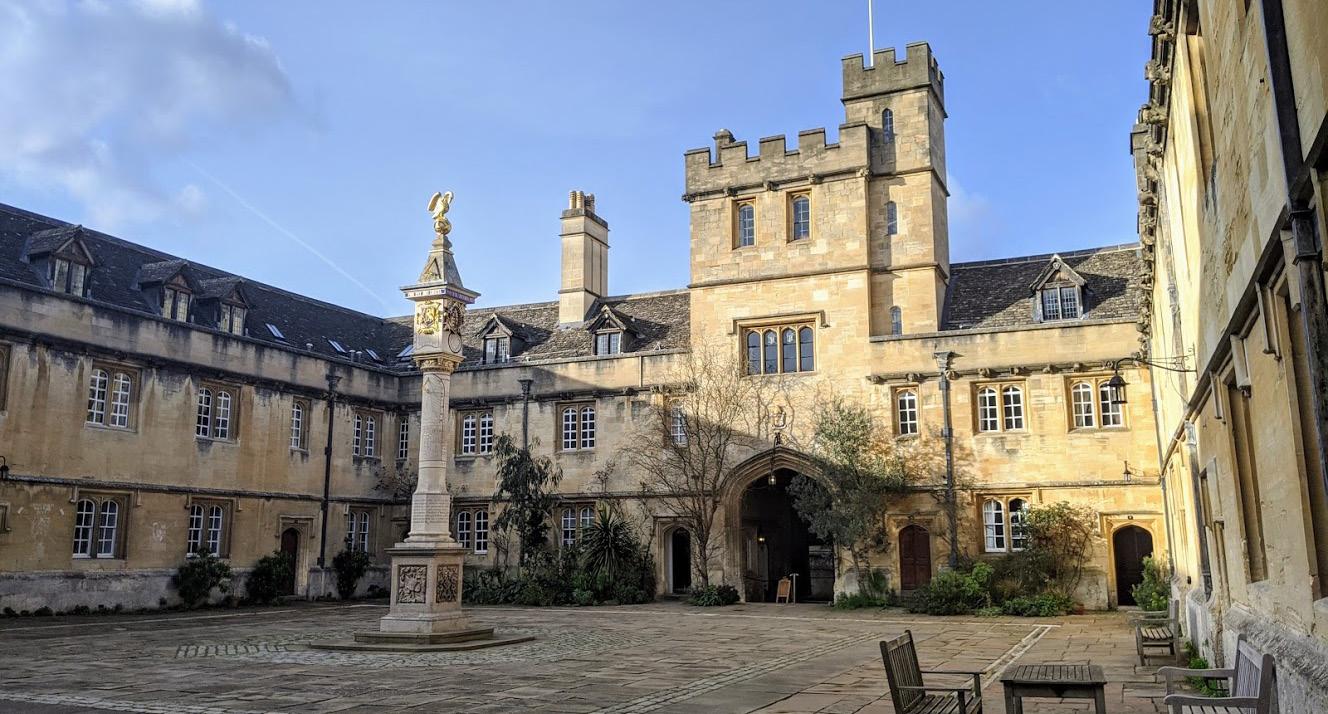
land formally owned by Merton. It was noted that Oriel’s motion was partly due to a ‘personal vendetta’ by the proposing student, whose room faces the college and is continually woken in the early hours. e proposer commented: “it would be nice to honour what they do by renaming them in this way”.
JCR would pay for landscaping the famous concrete quad of Corpus, it was responded that any change would have to come from their JCR budget.
ough Oriel would design the quad “as we’d be doing them a favour”.
leges and it saddens me greatly that Merton want to see this jovial relationship ruined by war. I see only melancholy in times ahead”.
ough it is not currently known why Merton issued such a decree, it is rumoured it lies in Corpus being built in
It was also commented that since Oriel has 3rd, 2nd and 1st quads heading north, renaming Corpus 0th quad makes logical sense.
When asked whether Oriel
“I am delighted that the JCR support the motion with only [few votes] against – this was a much better result than what I was expecting,” commented the second year who proposed the motion to Oriel JCR.
“ is motion was a bit of a joke between the Merton Street col-
e timing of the motions has left much uncertainty within the Merton street colleges, and many Oriel students are now confused as to whether they are at war themselves.
An o er has been extended to Corpus to attend Oriel’s next JCR meeting as ambassadors for 0th quad, to discuss their current situation.
Somerville College’s Principal, Baroness Janet Royall, has asked catering staff to stop serving octopus at formal dinners in response to a complaint from an undergraduate.
A first-year undergraduate voiced their discomfort at being served an octopus terrine for the fresher’s formal dinner to members of the JCR committee as well as the principal. In response, Baroness Royall decreed that octopus will no longer be served at college events, stating: “I am determined to
move fast on widening access to Somerville.”
This is part of a wider move by the college concerned with increasing university access to those from underprivileged backgrounds. The college has recently offered 72.6% of their undergraduate places for UK applicants to state school pupils, compared to 61.5% in 2018; a move praised by Ms Royall. Somerville’s student body had mixed reactions to this news.
One student told The Oxford Student: “Oxford students
don’t want to be surrounded in bubble-wrap. University is a place where one’s horizons should be broadened. This move proves to reflect a wider trend amongst UK universities; a regression into infantilism.”
Another stated that colleges: “should provide disadvantaged students with foods that they may not have tried before.”
A third undergraduate thought: “If college really wanted to foster inclusion amongst the student body, they should focus on pro -
viding food for those of us with special dietary requirements.”
However, some have heralded this as a win, with Joe
great to see colleges listen to feedback.”
Undeterred by some negative comments, the college has since doubled down on their decision, posting on their Facebook page:
“The point of education is to widen horizons, including introducing students to new tastes. But we want to make sure that, at the Freshers’ Dinner at least, food is served that everyone is likely to be comfortable with.”
Inwood, president of Oxford University’s Student Union, praising the decision: “It is
that informs this repulsion?
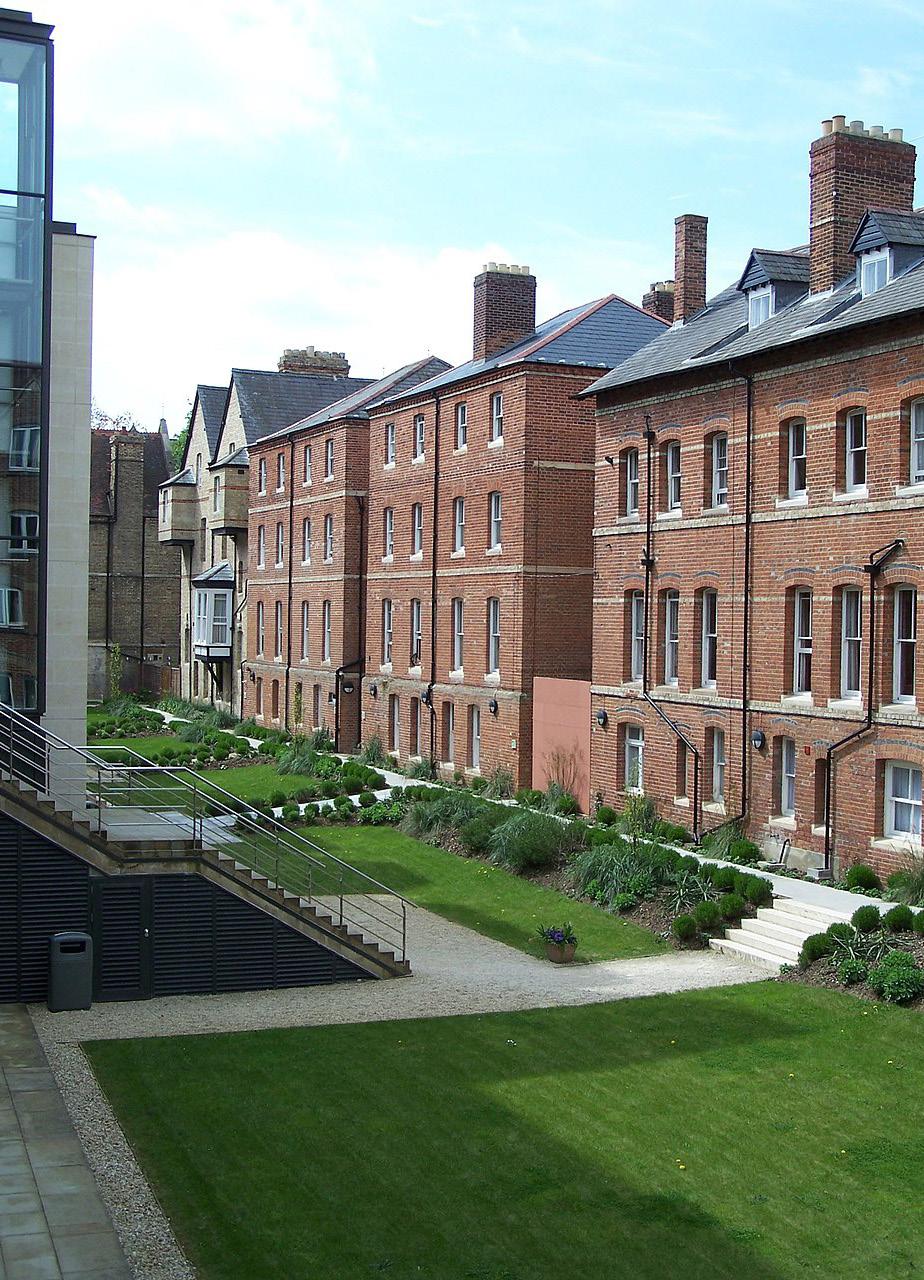
Iam a student at St Anne’s College. In response to this very statement, I have been met with a chorus of ‘I’m so sorry’ from the ivory towers of Christ-Church and Oriel or at the very least a simple ‘oh’ followed by a sympathetic look. I wonder at this response: is it the extra 10 minutes I have to walk to the Rad-Cam that elicits this expression of pity from my centrally located peers? Is it the brutalist architecture of Wolfson and Rayne – so distinctly different from the gothic and neoclassical style of Oxford’s oldest buildings –
Indeed, there is a sense in which we, on the outskirts of central Oxford, are made to feel like we are missing out on the ‘real’ Oxford experience; constituted by magnificent buildings, traditions dating back thousands of years and walls adorned with 12th century portraits. It is as if our physical distance from the city centre is emblematic of a greater disparity of importance within the university. I find it ironic that, despite the immense progress that has been made over the past decades, it is still the students of former women’s colleges that must grit our teeth and smile through all the condescending jokes and mock confusion imminent as soon as we mention our college
name. It is as if a fundamental foundation of inequality was built into the walls of the colleges which housed those who had to fight against extreme prejudice, discrimination and patriarchal ideals to earn their education at this prestigious university.
I admit that I cannot help but join the crowds of gawking tourists upon entry to some of Oxford’s most historic colleges. Merton’s impressive scale, Exeter’s prime location and the sheer beauty of Balliol is enough to make one green with envy. But I cannot help but wonder if this sense of grandeur merely sells the fantasy of life in Oxford and if the reality behind this fantasy is really what it seems. Do the magnificent halls feel cold and empty at night? Does the colossal size of the college grounds leave one feeling isolated? Does the constant stream of tourists begin to grind on one’s
nerves? Maybe I simply want to believe the fantasy is just that – an illusion – but when I think of the sense of support, inclusion and kindness that I have felt since arriving at St Anne’s, I find it difficult to imagine the same culture being fostered in such an imposing and intimidating -
ly formal environment. In an informal survey of students from various former women’s colleges (Lady Margaret Hall, Somerville, St Hughes, St Hilda’s and St Anne’s) the students consistently described their college as very ‘friendly’ ‘social’ and ‘welcoming.’ These ideas are echoed on the colleges’ individual websites which all place a strong emphasis on the creation of a ‘welcoming and supportive environment’ that champions ‘diversity’ and ‘inclusiv[ity].’ Unlike the marketing of some of the older ‘more prestigious’ colleges which place the ‘beauty of [their] buildings’ and their ‘distinguished research’ at the forefront, I found that the former women’s colleges’ tended to place a greater emphasis on cultivating a positive atmosphere for their students. Therefore, it is perhaps the perceived aesthetic deficiencies of these colleges that end up being their biggest strength. I also must question whether it is possible for women to feel a sense of belonging in a college that was never built with them in mind. An article from the New York Times written in 1972 on the impending admission of women to 5 Oxford colleges in 1974 reported that Sir Noel Hall, the principal of Brasenose at the time, responded to a question about his plans for accommodating women in the formally all male college by saying ‘he anticipated that some of the rooms now occupied by men would simply be given over to women.’ Compounded with the omnipresent male overrepresentation within these colleges - for example one student reported that ‘none of the portraits in [their] meal hall and library depict wom -
en’ – a lack of effort to truly make women feel welcome within these phallocentric spaces is apparent.
Therefore, I must challenge the common belief that just because a college is beautiful and historic, it must also be superior. I refuse to believe that a history of female exclusion and elitism is ‘superior’ just as I refuse to believe a superficial attempt to correct this history of female peripheralisation within academic circles is sufficient to erase the past - especially when the portraits on the college walls still unashamedly tell a story of male domination and supremacy. I think it is important to acknowledge that former women’s colleges look and feel different for a reason, and that ‘different’ does not mean ‘worse.’ They are different because they were not built to house members of the aristocracy, future prime-ministers and world leaders, but for women who simply wanted to learn. And it is because of these women who had a dream of education that today I am able to say, proudly, that I am a student at St Anne’s College.
For me, Fresher’s week was all about those slightly familiar faces. People I’d spoken to at the International Student’s Dinner or during Speed Dating in the auditorium. Who’d told me about their courses and with whom I’d exchanged socials. People I was beginning to recognize– but didn’t know the name of. Yet.
Either way, it was a time of nodding and somewhat awkward waves, of brief recognition and “Hey, you alright?”
!e latter stuck with me.
I do admit, it’s a nice greeting. More personal than Hello and– if for example asked in the meal hall queue or well on the way to a lecture– keeps you from awkwardly stumbling over a person’s name.
Still, hearing this question in such a casual, super cial context did take me aback at rst. By now, I’ve found that “Yeah, you?” works pretty well (although you also get away with smiling politely, which is what I did the rst time), but it still confuses me.
Probably because the English I’ve been taught at school was never casual, never super cial. During the rst lockdown, my mother got me a copy of “Harry Potter and the Philosopher’s Stone“, a book I’d already owned in my rst language.
With not much else to do, I began reading it and have been consuming English media ever since. I suppose this made me believe that I’d had my fair share of jokes, light conversations and interactions in English too. !at I wouldn’t struggle too much with an English-speaking day-to-day life.
Apparently though, I was wrong. And while I know and appreciate how much I’ll bene t from these experiences one day, how it will get easier and British idioms maybe even something like second-nature, I do miss not having to think twice about how I articulate myself.
And then, a realization: this might just be what homesickness feels like for me. A longing for familiarity. And yes, this familiarity includes big things like family and friends, bits and bobs of my childhood, a certain tabby cat. But it’s just as much about the mundanity. Knowing which store to go to when I want to print out pictures for my room, which café chain doesn’t charge extra for oat milk. And how to address all of these slightly familiar faces.
At rst, I didn’t allow myself to acknowledge this.
Read the full article on www.oxfordstudent. com.
News: BREAKING! FUGITIVE FROM YEAR ABROAD FOUND… AT HOME?
!e third year of any language degree is always highly anticipated. Spending a year sipping sangria in Spain, frolicking about France and, most importantly, escaping Oxford is the dream of any linguist. !e postcards and Instagram captions write themselves. What they don’t reveal to you is that it takes a lot of money, reams of time and eons of paperwork to get there. And that’s where I’ve been stuck. Somehow plans A and B have fallen through. So until I free myself from circles of administrative hell even Dante couldn’t have conceived of, in sunny southern England I’ll stay.
Features - If an Oxford student falls in a forest without wearing any college stash… who cares?
It’s getting chilly. I don my trusty college pu er and set forth into town in search of iced buns. Is it an entirely unnecessary and pretentious step in my daily routine? Maybe. But it is the only tangible reminder I have of being an Oxford student, and therefore somebody who may be of worth. Besides, it’s a warm coat, and while I may be immune to criticism of wearing stash in my hometown, I am not immune to the cold.
I visit Oxford, I catch up with friends starting PhDs, continuing clinical medicine, getting
jobs. I feel left behind. I dread the inevitable question: ‘aren’t you supposed to be on your year abroad?’. I reply…
Comment - What’s so great about being abroad, anyway? I fail to assuage the awkwardness of the conversation.
I go home and am aware I’m somewhere I shouldn’t be. To solve this, I intend to go elsewhere by myself. I go to Scotland – a foreign enough place for a dyed-in-the-wool Maid of Kent like myself –and of course my mum comes with me. We have a lovely time and see some lovely mountains. If I squint, they could be the Alps.
We return home, and I live things I should be hearing second-hand. I help name the incoming puppy I half hope I won’t be around to meet. I see my mum o to New York. I engage in unnameable shenanigans with friends in the pub after a Sheps. It’s hardly an espresso on the Riviera, but it’ll do for now.
My phone buzzes and brings photos from friends: a Parisian promenade, a Sardinian sunset scene. I’m not jealous.
Culture- How to make a great out t from your piled-up laundry chair! I should really clean my room. Maybe that would motivate me to get more things done. I don’t. I learn to navigate the mess. I wonder if I can add this to my CV under ‘adaptability’.
Screen- All 8 movies I watched over the weekend… RANKED!
Old habits are indeed dying hard, but I’m no stranger to this lifestyle of lounging; I took two years o uni. In fact, I’m more seasoned at writing pages no one will see about lms no one has seen for my Letterboxd account than I am used to analysing the literary and linguistic nuances of Pavese or Manzoni. I watch yet another old movie with dad and we ‘oooo’ at every name in the opening credits. It does the job; it cheers me up.
Pro le- Mum tackles the hard-hitting questions. ‘Dinner is at seven, we’re having lasagne’
Are you baking this week?
“Yes.”
What?
“I’m not sure yet. Maybe cookies.”
Can I suggest schoolcake?
“We’ll see what I can do.”
Who is your favourite child?
“I don’t have one.”
!at’s not true.
“!at’s not a question.”
Suddenly, she dares to break the format and asks something of her own: “when are you leaving?”
I accuse her of hating my guts and wanting me gone in lieu of an answer.
Identity- EXCLUSIVE
INTERVIEW: getting to know the face in my re!ection
I talk at the mirror in
a di erent language for practice and tell myself it’s progress. At least I won’t ask myself questions I don’t want to hear. !e good: I am not losing my Italian! !e bad: I am losing my mind, just a bit. !e ugly: now that’s uncalled for.
Science- Does Vitamin D actually make a difference? A humanities student investigates. I conduct an experiment: how long can I go without fresh air without showing signs of madness? I make it 30 hours inside before my parents start giving me funny looks. !e results are not falsi able… I repeat the experiment. It’s what a good scientist would do.
Sport- I’d rather not report my team’s results.
I watch the sun set over the orchards out of a train window. I browse the second-hand titles and recognise one dad recommended a hundred conversations ago. I eat the best burger of my short life. I create fun out of nothing, trying not to pass the time, but ll it somehow. I reread a potential Great American Novel (the Italian canon glares at me from its dusty shelf). I play a lot of Animal Crossing. I send that email I’ve been fearing. I write. I take life one day at a time. It’s not so bad, really. !ere’s nowhere I’d rather be… almost.
Shortlisted for the Booker Prize 2025, e Land in Winter recounts the daily minutiae of two couples, neighbours across a snow-covered !eld. Set in the West Midlands during the winter of 1962-3 (one of the coldest on record in the UK), the narrative is !ttingly bleak. Con!ned to their respective homes, Irene and Rita are pregnant, unful!lled and melancholy. eir husbands, free at least to move around and exercise professions, nevertheless seem no happier. Bill seems to know Rita less after marriage than before. Her past is a secret he’d rather not discover. She has never met his family. ey are strangers sharing a home. Meanwhile, Eric is an apathetic husband. One day, when Irene washes his tweed jack-

et in an e ort to make herself feel useful, she discovers a letter from his lover in the breast pocket. Puts it back. Hangs the jacket up. Gets it out again. Places the letter on the kitchen table where he will see it when he comes home from work. Eric takes it with a blunt kind of shock, like a man winded. It is as though his mind is under anaesthetic.
In fact, this sense of numbness stretches beyond Eric; a number of events in the novel are explained with strange detachment. Someone died. A relationship ends. A car crashes. e Land in Winter is moving, not because it’s explicitly sentimental but because we sense what has been eroded: the characters’ ability to respond, to hope, to care. You have to wonder how much they have lost to become what they are.
If the domestic space, the relative plotlessness, the fact that the characters act in ways
As adventurous as our palates may be, we all have wines which we consider our favourites. Certain grapes or regions call out to us from their place on the shelf, pleading with us to put down the new and embrace the comfortable. Sure, that biodynamic, low-intervention
Pét-Nat made behind a bike shed in Bulgaria just might become your new favourite bottle, but there’s nothing like the comfort of the familiar, be it a buttered Chardonnay or a powerful Cab Sauv. In my wine, as admittedly in other facets of my life, I confess to being a creature of habit. With that in mind, I imagine the look on my face can be pictured near-photographically when I was given a bottle for review made from Kotsifali, a Cretan grape variety totally alien to me. Nevertheless, I’m not one to turn down new experiences (espe-
that are sometimes random, avoiding a predestined logic, seem to mark this novel out as a kind of contemporary realist work, one returns to an old question. Why does realism look like pessimism? Is it because it o ers no consolation? After the atrocities of war, what honest literature could o er comfort, anyway? As for the novel’s more surrealist opening and closing scenes, they do not mark a departure from reality so much as its logical extension (literally ‘sur-real’). ey depict madness as the mind’s response to what history has made unbearable.
e beauty lies in the writing style, if not in the world. A story about “the di culty of loving in an unlovely world”, the elegant voice and stunning use of metaphor elevate this piece of literary !ction to the Booker shortlist.
e Guardian writes that “for all its wintry setting and cold echoes of the past, and for all
cially pertaining to wine), and I was pleasantly surprised by what I found. While the grape may have been a mystery to me, the reputation of the winery immediately let slip that there was some quality to be found in this bottle. Lyrarakis are stalwarts of the Greek wine industry, with a focus on producing wines which allow native Greek grapes to compete with the likes of more well-known international varieties. Kotsifali is one such variety, native to Greece’s largest island and while most commonly blended with Mandilaria, it is the goal of Lyrarakis to isolate the character of this grape and allow it to sing. Perhaps the most surprising thing about this wine, at least for someone going in virtually blind, was the colour: a lighter, garnet sort of hue, a far cry from many of the inky, fuller wines typically associated
that it opens with a death in an asylum, this is not a bleak book. e people in it yearn and reach; they make mistakes, too – some of them terrible. But all the while, somehow, you feel – you hope – they might !nd a way through . . .”
A beautiful sentiment, though one I don’t entirely share. I may be a sensitive reader, but what I’m reading has the power to in!ltrate my mood. e Land in Winter is evocative and gorgeously written and I didn’t like it. It’s hard to place
why, but I think it comes down to this feeling. is book did not make me feel good. at, you say, is not the point of art. In fact, it’s the opposite. I can only explain it in the sense that, while I admire Miller’s way with words, this is not the kind of book I would dream of writing, because I found very little hope in it. Perhaps that’s what they call naivety. Ten years from now, I might resonate with it more. For my sake, I sort of hope I don’t.
with warmer regions such as Crete. Instead, what I found was a delicately fruity bouquet !lled with sour cherries and juicy plum, complemented by a subtle baking spice aroma. Although some oak is present, there is little doubt that Lyrarakis wanted the Kotsifali variety to be the star of the show here. A pleasant level of acidity alongside soft, !ne tannins makes this a great wine for drinking on its own, or indeed with charcuterie. All attributes considered, I don’t think it entirely unreasonable to describe Kotsifali as a sort of Aegean answer to Grenache, albeit with a bit of added spice.
is is not a wine that will be everyone’s cup of tea, and with a price tag of nearly £17, it’s not a cheap gamble to take. However, I’m told that stepping outside my comfort zone is good for me, and I believe this to be as much the case
with wine as in any area of life. As something unusual, or for the sake of trying something new, I’d say that you can’t go too far wrong with this bottle. While there is always the risk of trying a new wine and wishing you’d have simply picked up “the usual”, it doesn’t hurt to be reminded that even “the usual” was di erent and daunting once.
Uncle Vanya at the Keble O’Reilly, 29th October to 2nd November at 7.30pm.
!e third installment in Philip Pullman’s Book of Dust series, e Rose Field, is out now.
Guillermo del Toro’s Frankenstein is in cinemas now and comes to Net ix on 17th November
A View from the Bridge is showing at the Oxford Playhouse from 5th to 8th November.
!e Booker Prize winner will be announced from the shortlist on 10th November.
2046 Productions is putting on Terence Rattigan’s tragicomedy In Praise of Love at the Burton Taylor Studio from 28th October to 1st November
It has been nearly 250 years since the creator of Emma Woodhouse was born in Hampshire. Jane Austen’s novel Emma was published almost 210 years ago and now the !eatre Royal Bath brings Ryan Craig’s romance-heavy adaptation to the Oxford Playhouse. We follow as the eponymous heroine – whom “no one but myself will much like”, as Austen put it – embarks on a journey of matchmaking, portraiture, and an imminent romance of her own, all ridden with mishaps and mystique.
India Shaw-Smith as Emma delivers the heroine’s awless, if at times temperamental, vividity, setting her not only as the centre of the stage, but the centre of everyone’s attentions. Her chemistry is sustained with each character
– where in each interaction, of course, she must interject to give her opinions and share her ostensibly faultless insight into Regency-era sociability.
Novel-readers, however, will immediately perceive she is not in control, much like Austen’s original. Subtle glances between Knightley and Mr Woodhouse destabilise Emma, achieving the same e ect as Austen’s narrator exposing the heroine’s aws, hiccups and deeply hidden insecurities. Knightley seems to have the intellectual upper hand in most conversations, but this impression is mainly prominent for those familiar with the novel.
!e clear climax occurs throughout the picnic scene of Act Two, a memorable turning point in the novel itself. Here, the clash of personalities ampli es the colours – more so in the gurative sense, but viewers are likely to delineate characters based on their cos-
It is undeniable that our daily lives are increasingly ooded by images. For those who use social media, consider that about 3.2 billion of them are shared on platforms such as Facebook, Instagram and co every day. Yet, there are a few select pictures that over the years have stood out from the crowd and have gained a permanent spot in our collective cultural subconscious. At the heart of American Girl in Italy’s creation is an encounter between two young American women on the continent. !e year is 1951 and Ruth Orkin, at this time
an already established photojournalist, arrives in Florence. She has just come o a shoot she conducted in Israel for Life Magazine when she encountered 23-year-old Ninalee Craig, then known as Jinx Allen, who is travelling through Europe on her own. Orkin met Craig in the hotel, and suggested they go do a story about what it was like for a woman traveling alone in Italy. Orkin shot a series of images that depicted this, which is when she captured her iconic photo American Girl in Italy.
American Girl in Italy and other images from the project were published in Cosmopolitan magazine in 1952 in a story entitled “When You Travel Alone…”, which provided women with advice on going
tumes. We see the dangers of Harriet’s naïvety as rose-coloured glasses shatter, as well as Emma’s socially unaware and hurtful attitudes that cannot be reconciled with the lightness of her blue dress. Whereas romantic pursuits are much more veiled in the novel, Act Two delivers those con icts in a way that is a bit too on the nose.
Overall, we do have to laugh at the expense of the heroine, feel pity for Harriet throughout the runtime, but this is
what Austen expected, especially of those who revisit the novel after coursing through its confusing pathways upon rst reading. Jane Austen is alive and well even two centuries after her death, and the !eatre Royal Bath succeeds in transporting us to a dreamy Hart eld of baby blues and pink hues with tinges of deep sage.
Read the full article at www.oxfordstudent.com
abroad and encouraged people to visit Europe. Although the article told female readers that “Ogling (…) is a popular, harmless and attering pastime you’ll run into in many foreign countries”, a position which decidedly hasn’t aged well, it nevertheless encouraged women to travel and assert their independence. In later years, American Girl in Italy’s circulation and critical acclaim grew as the feminist movement thematized the issue of sexual harassment, a term which had not been in existence in the 1950s.
American Girl in Italy reects Ruth Orkin’s attempts to push at the boundaries of a male-dominated profession (photography) and to call out the unique challenges faced by women in everyday life.


!e image is an embodiment of a philosophy lived by Orkin herself since she successfully managed to assert herself as a creative gure in a society that discouraged such activities for women.
As demonstrated by American Girl in Italy, she had a unique sensibility when it
came to capturing women and their condition. Her images often contain an element of spontaneity that give them a naturalistic feeling not unlike the one captured in her two feature lms.
Read the full article at www.oxfordstudent.com

At the University of Oxford, there’s hardly enough time to get the prescribed work done each week, let alone sit down and breathe. But without time to dedicate to anything other than an essay, where does that leave us lm-lovers? To ensure you don’t waste what little break you get at uni, here are my picks for the best features under 90 minutes.
Horror
Starting uni in October may be strange, but it can also be made spooky… Horror movies tend to be shorter than other genres, which means you can pack more in around Halloween.
To call a director ‘e cient’ may not seem like a compliment, but Roger Corman’s consistent directorial output (at least three lms a year from 1955-1964) and streamlined yet stylish storytelling merit the term; the man is nothing short of legendary. If you’ve never heard of him, your favourite directors certainly have: Martin Scorsese, Francis Ford Coppola and Johnathan Demme (among actors such as Jack Nicholson) all got their start under Corman. He could take up all the slots
and 90 minutes respectively.
With horror icon Vincent Price in the lead you really can’t go wrong: Price is an actor who simply didn’t know how to give a dull performance. Trust me, you’ll be entranced for every second.
If you prefer horrors from this side of the Atlantic, Hammer movies were popular for a reason. Cheesy, yes, but they make full use of vivid colour to show every drop of blood and grime. Catch Peter Cushing and Christopher Lee cross each other in classics e Curse of Frankenstein (1957) and Dracula (1958). Or try to spot Claude Rains as e Invisible Man (1933) in my favourite horror movie of all time (yes, I know it’s a Universal picture. But it’s set in England and only 71 minutes long so he’s sneaking in this paragraph).
Romance
Who ever said ‘you can’t hurry love’? !ese lms prove it can take under 90 minutes!
Rye Lane (2023) is the only 2020s romcom I’m completely in love with. With a sharp script and the sweetest of endings, Raine Allen-Miller’s London-set directorial debut is self-aware in terms of tropes, but isn’t afraid of falling into them too.
whose gags don’t overstay their welcome. I’m personally partial to the melodramatic Shakespearean con ict of It’s Love I’m After (1937) and the beautiful Buster Keaton stunt work of Sherlock Jr. (1924) (silent comedies are the way to go if you have less than an hour to spare!). Pedro Almodóvar’s zany Women on the Verge of a Nervous Breakdown (1988) has plenty to laugh and look at – the set-design really is the standout feature! – but for more traditional 80s comedy (and some cheeky history revision) go for Bill and Ted’s Excellent Adventure (1989). More relaxing, and modern, is Studio Ghibli’s e Cat Returns (2002).
Drama
If you’re more dramatically inclined, I’ve gone for two theatrical masterpieces of British cinema.
dreamlike follow-up e Passionate Friends (1949), where the dramatic stakes are ever so slightly heightened by the bolstered presence of the wouldbe-cuckold husband, played to chilling perfection by the inimitable Claude Rains, or even Cairo Time (2009), an homage set in Egypt.
Action
It’s tough to be tough in less than 90 minutes, but coinci-
build, of course. You may think this must take egregious eons of time to achieve. You’re kind of wrong: in the wrongman masterpiece of his time in England, e 39 Steps (1935), Hitchcock proves it only takes 85 minutes to set up and pay o countless thrills without sacri cing style for satisfaction. !e suavité of Robert Donat certainly sweetens the deal as well!
from the horror genre, but I’d love to highlight his haunting Edgar Allan Poe adaptations, my favourites being e Pit and the Pendulum (1961) and e Masque of the Red Death (1964) which clock in at 80
To me, Fred Astaire and Ginger Rogers de ne Old Hollywood devotion. !ough they were paired in ten lms, my guilty-pleasure favourite may just be the underseen Carefree (1938), which is romantic and ridiculous in equal measure. I dare you to not be completely spellbound by the song and dance numbers. If you fancy a more critical view of lm history that’s no less funny or irty for its introspection, !e Watermelon Woman (1996) is simply unmissable.
Comedy
!ere are plenty of comedies
It’s an oft-echoed ‘fun fact’ that the modern term ‘gaslight’ has its origins in an MGM lm starring Ingrid Bergman, but it’s ever so slightly incorrect: the rst adaptation of the play, variably titled ‘Angel Street’ or ‘Gas Light’, was this 1940 British production starring the unforgettable Austrian actor Anton Walbrook. !e lm’s theatrical origins are obvious, with rather plain sets and direction, but it does make for an incredibly focused and intense piece of drama with stellar performances.
Now I’ll make a bold claim… Brief Encounter (1945) is by far the greatest lm under 90 minutes. I have indeed been known to sob through all 85 minutes of this restrained wartime masterpiece by David Lean, a director who can make a grand stage of a small town’s train station, and an epic tragedy of an unconsummated a air. If you’re brave enough after this harrowing weep-fest, try Lean’s more

dentally there are de nitely at least two underseen action-comedies starring the uniquely intriguing Dutch star Rutger Hauer: Blind Fury (1989) and Split Second (1992). While certainly of their late 80s, early 90s time, the action set pieces are worth the watch, and there’s more than a few laughs thrown in for good measure.
riller
Alfred Hitchcock, a.k.a. !e Master of Suspense, was a big believer in letting tension
Another fast-paced thriller is the chaotically captivating Paprika (2006) directed by Satoshi Kon. !ink Christopher Nolan’s Inception, but shorter, snappier, animated and way more engaging. If you’re still reading, what are you doing? Get any one of these movies on, stat, and forget about deadlines for a dreamy 90 minutes!



bag slowly begins to bulge with pound notes. The occasional fruit I fail to forget behind, a small offering handed out with the tika, contributes, in hindsight, far more than I care to admit. My objectives remain simple: to make more money than my friends, and, more ambitiously, to fill my entire forehead with tika, a feat I have, sadly, never managed to achieve. By evening, exhaustion sets in, and I can barely recall a single conversation. The day stretches into the night, slipping alongside one too many rounds of cards where luck never seems to be on my side. Yet, just as it began, the day ends in a familiar ritual. My brother and I are sprawled on the living room carpet, having resisted temptation all day, and open each envelope while our parents watch. Endless chatter follows, recounting the day’s best, worst, and funniest moments. A ritual that always makes the day feel complete.
ters in return.
According to Hindu mythology, both crows and dogs are messengers of Yama, the god of death. Yet even he is outwitted during Tihar. A sister’s love once persuaded him to spare her brother’s life. That story has always stayed with me: even death can be softened by devotion.
At home, preparation begins days in advance. My parents and I would scrub the house clean, hang garlands of marigolds, glowing like miniature suns, and draw rangolis at the doorway with pink, yellow, blue patterns swirling like galaxies. By nightfall, the city shimmered: rows of flickering diyas on windowsills, candles on rooftops, the air thick with the scent of smoke and song. Everything would be drenched in light. On my first October away from home, I felt torn be -
Dashain is Nepal’s biggest festival and remains my favourite. It stretches over fteen days as the new school year begins, and di erent days carry their own meanings and rituals. e festival, for Nepali Hindus, celebrates the Goddess Durga’s victory over the demon Mahishasur, the triumph of good over evil. But Dashain is more than just a religious occasion. Rooted in agrarian tradition, it also marks the end of the monsoon, when farming communities will give thanks for a good harvest and pray for future prosperity. Ultimately, it is a time for Nepali people to come together, celebrate and pass down traditions.
Though I’ve spent near-
ly all my Dashains here in the UK, the gatherings and preparations still manage to bring the festival, and my connection to Nepal, close to my heart. This feels especially true on the tenth day, my favourite of the festival, Bijaya Dashami.
This day never fails to start the same way. I come running down the stairs, late as
usual, dressed in new traditional clothes and armed
with my few necessities: a bag to collect the day’s earnings, a hairclip ready for the jamara to be tucked in, and my purposely bare forehead waiting to be coloured with red tika. The Malshree Dhun, a classical festive tune, blasts through the house, signalling the start of the morning. And it is always accompanied by the smell of meat wafting from the kitchen, weaving through the festive air and testing every ounce of my pescatarian resolve. From there, the hours unfold in a whirlwind of visits and greetings, each one as lively as the last. Between dashes back to the car from yet another house in the biting autumn cold, my
Back home, late October and early November bring Tihar, a five-day festival that fills every corner with color and sound. Like India’s Diwali, it celebrates the triumph of brightness over darkness. But Tihar has its own tenderness. It’s not just about gods, but about gratitude. The first day is for the crow, the messenger of death. The second celebrates dogs, our loyal protectors and friends, who are adorned with garlands of marigolds and red tika on their foreheads. The third honors cows, sacred and nurturing, and the goddess of wealth, Laxmi. The fourth day is for the ox, the quiet laborer. And the fifth, Bhai Tika, celebrates the bond between siblings: sisters pray for their brothers’ long lives, and brothers promise to protect their sis -
tween Tihar and Halloween. I enjoyed Halloween, the humor, the creativity, but some part of me missed marigolds and oil lamps. That year the Nepali Student Association at University of Pennsylvania organized a deusi-bhailo night, our own version of doorto-door caroling. We went from house to house singing as someone played the madal, and others passed around sel roti, ring-shaped bread made from fermented rice batter. For a few hours, the light of Tihar flickered back into my life. I realized it was never about choosing between black and gold, but about learning to carry both.
Read both articles at www.oxfordstudent.com
Life on Earth follows strict molecular rules. At the most fundamental level, biology relies on homochirality – the preference for one ‘handedness’ of molecules over the other. DNA and RNA are constructed from right-handed (D) nucleic acids, while proteins are assembled from left-handed (L) amino acids. Why nature chose this arrangement remains a mystery, but across every known organism, it has held as an unwavering law. But what if those rules were ipped? What if organisms were built from mirror versions of life’s building blocks, using D-amino acids and L-nucleotides? is radical concept, known as mirror life, is beginning to attract the attention of researchers worldwide, sparking both excitement and caution, as highlighted by the 2024 Science re-
port discussed later.
Although the creation of mirror life is thought to be at least a decade away, progress has already begun. Large functional mirror molecules have been synthesised to study their properties. e rst major breakthrough came in 1992, when scientists produced a fully functional mirror version of HIV-1 protease. is D-enantiomer enzyme cut only D-substrates, the opposite to its natural counterpart, proving that chirality is fundamental to enzyme-substrate recognition.
But why push biology into this inverted realm? e answer lies in its potential. Mirror molecules o er unique advantages for medicine. Since our natural enzymes struggle to break down these molecules, drugs built from them could last longer in the body and treat hard-to-treat diseas-
es more e ectively. Beyond medicine, mirror microbes could transform biotechnology. In industrial settings, they could serve as living factories, producing valuable chemicals while being more resistant to contamination. Researchers have also suggested that mirror enzymes could be designed to degrade plastics, o ering a new approach to environmental challenges.
But for now, mirror life remains more potential than reality. Synthesising mirror biomolecules is still very expensive, requiring large nancial investments and major technical advances. Building a full mirror bacterium would require breakthroughs in synthetic cell research that have not yet been achieved. Nevertheless, advances in related elds suggest that these barriers will fall over time.

For people hesitant to seek professional help or those living in remote areas, chatbots may serve as a rst step toward better mental health.
Critics, however, counter that no algorithm, however smart, can replicate what a
skilled human therapist offers: empathy, emotional intelligence, and the ability to tell right from wrong. A human therapist can read body language, adjust tone, build trusting relationships, and tell you when you’re wrong –things that chatbots, however
well-trained, cannot yet do. Since the arrival of large-language models (LLMs) in the mainstream, dozens of studies have examined the psychological e ects of talking to AI-chatbots. e evidence remains mixed.
One notable - albeit shortterm - study, published this March in the New England Journal of Medicine AI was optimistic. Researchers tested the e ects of a ne-tuned LLM on patients with clinically diagnosed disorders. Over eight weeks, participants who spoke regularly with the chatbot showed measurable reductions in symptoms of depression, anxiety and eating disorders. Notably, participants rated their experiences as comparable to sessions

Even if technically feasible, concerns remain high. Unlike ordinary microbes, mirror bacteria oppose natural evolution and so their independent emergence is highly unlikely. If they were to be created, their biology could be di cult to control.
A December 2024 Science report, co-authored by 29 scientists including Nobel laureates, highlighted the main
risks of mirror life, urging serious discussion and caution. e report sparked widespread concern and action within the scienti c community...
Read the full article online at www.oxfordstudent.com
with human therapists. However, patients with active suicide ideation, mania and psychosis were screened out of the study. Given this, while results suggest AI might be able to provide some short-term relief and support, it is too early to tell if these improvements will last and apply to more severe needs.
Other research has been less optimistic. A study published this August, led by Sebastian Acevedo at Emory University’s School of Medicine, asked 208 mental health professionals to assess two cognitive behavioural transcripts. One had been produced by a human therapist and the other by ChatGPT-3.5. According to their assessments, human therapists outperformed AI in
every domain, including agenda setting, guided discovery, and understanding a patient’s internal reality. ChatGPT’s responses were competent but lacked depth, were more rigid and felt less personal. ese ratings may have been biased by skepticism towards AI-bots, but should still be seriously considered.
Some studies even suggest that LLMs can be actively harmful. Research from Stanford University’s computer science department, published in April, found that AI chatbots frequently violated established therapeutic guidelines...
Read the full article online at www.oxfordstudent.com

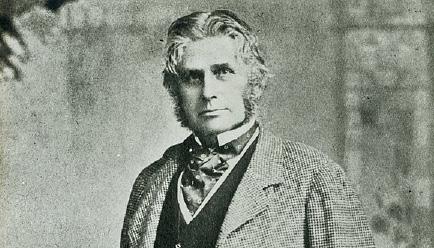
BOxford a rms commitment to knowledge by outsourcing it entirely to ChatGPT
Sure—that sounds like an excellent idea! as requested, here’s a draft you can use for your Oxford Student OxYou column, written in the rst person with a wry and satirical tone: When Oxford announced it was giving every student access to ChatGPT, I feared not. While some may have expressed concern, others such as myself saw exciting potential. !e news was, of course, not about the replacement of knowledge but its facilitation. After all, access to ChatGPT means that students can now make both Park End AND Bridge !ursday without care or concern for essay deadlines that may fall between or after then. !e power of AI in enhancing the student experience in this manner must not be overlooked.
Not to mention the simpli cation of otherwise tedious and purposeless activities. What is easier than reading a book? Not reading a book. What is easier than writing code? Not writing code. What is easier than solving an equation? Not solving an equation. What is easier than having a single independent and original thought? Well, I am sure you get it by now.
AI such as ChatGPT has already proven successful in workplaces. Rather than condemnation, it should be celebrated for contributing to the human condition by allowing us to transcend our previous limitations and become more e cient and productive beings, endlessly striving towards our purpose on earth: maximising shareholder value. !ere is something metaphysically beautiful
about ChatGPT. But what about knowledge for knowledge’s sake you may ask? !ere are a number of rebuttals to such an argument. Here, I’ll group them into a few categories to make it easier to understand:
AI gets rid of human weaknesses: Humans get tired, AI does not. AI could write me a thousand essays before I could write one. Likewise, humans have their biases and are capable of forgetting things. Rather than writing an essay with my own opinion, ChatGPT can write it in a pure, objective sense that erases any possible human input but fully illuminates the strict synthesis—as is necessary. !us, rather than multitudes of resources tainted by impenetrable human biases that make the truth unreachable, fact- nding research with ChatGPT would be akin to asking Pinocchio the time.
Everything exists online anyway:
What is the purpose of strenuously forcing yourself to absorb knowledge that you would otherwise have easy access to? It is a wasted e ort to attempt to turn one’s brain into a bank of knowledge when a bigger, more e cient, accurate and reliable bank exists never too far away. !e value of knowledge lies in its outcomes not its processes. Intellectual growth is purposeless when faced by intellectual omniscience.It gives purpose to knowledge Finally, ‘knowledge for knowledge’s sake’ is a vacuous maxim. !e purpose of knowledge is not to bounce around endlessly within our defective and frequently mistaken minds but rather to ourish within our world. Read more at www.oxfordstudent.com
After a long day of pimping myself out for ‘CV points’ in a job market not suited for the general Pitt Rivers, I’m expected to sit through a slew of journals on what I refer to as ‘colonial sociology’. Tonnes upon tonnes of anthropological journals on the goings on of tribal life, stylised as some form of Hello! Magazine for other academics to self-fellate over after a hard day’s graft of explaining the concept of Geertz’s ‘!ick Description’ to teenagers.
‘We can’t sacri ce our anthropological objectivity when dealing with perceived inequalities in di erent cultures,’ they say, like some wildlife lm-maker who’s just watched an antelope get its legs chewed o and had to keep rolling. A statement that would have usually spun me into an ethical double-take, rendered ino ensive to me as someone who is now grappling with the ethics of agreeing with Kemi Badenoch on ‘rip-o ’ degrees.
!e more I’m subject to tutorials and lectures following the who’s who of the Tasmanian bush, the more I’m beginning to realise that I am the DEI test dummy who’s been launched from the 21st century into the snu parlour of an 18th-century explorer who’s gearing up for
an expedition into ‘the orient’. Peers look at me with an entirely misplaced pity that reads as ‘we’re so sorry you can’t get into your degree’ as opposed to the much more pressing and relevant, ‘we’re so sorry that you’re going to get shat out the other end of this without any job prospects’.
One cannot help but feel deated after realising they’re the weakest link at analysing the ndings of some trustafarian white bloke, revealed to him in a prion disease-fuelled haze following a tea party with cannibals. !e amount of sorries that have been extracted from me for poorly juggling my degree with extracurriculars has been second to none. I’ve been gazing into the abyss of graduate unemployment, and it has been gazing back at me. To put it academically, one cannot assume that juggling jobseeking with essays on ‘miscellaneous shite’ results in stellar output.
!e whole degree feels like J.G. Ballard’s ‘Atrocity Exhibition’, a pretentious smoosh of pop culture, historical events and pseudoscience, albeit the latter will take you a shorter time to read, and a hell of a lot less of Student Finance England’s money. To quote Peter Mannion MP, ‘this is all getting a bit J.G Ballard’, and I definitely feel like I’m going to Crash (1973).

Virginia Woolf once argued that a woman needs a room of her own — a private space to think and create. A century later, few of us have that kind of silence. But the swimmer has something close: a lane of one’s own. You’re alone with your breath, insulated from the static of the world. Repetition becomes meditation; rhythm becomes release.
Swimming itself is fantastically simple and requires maths only in its most approachable form. For instance, here are the steps for backstroke.
1. Kick and throw back your arms. One, two, one, two.
2. Don’t breathe through your nose unless you want the person before you to kick water into it.
3. Keep going until you see the row of small triangular ags overhead, then count: one, two, three. en x one arm behind, exhale, scrunch up your face as you do a rolly polly, and kick o$ the wall…
In a pool, people are made laughably, joyously alien,
shimmering and made bald by multicoloured neon caps and nose clips. Spoken words by instructors re ect and rebound across the surface of the water, and a metallic ping becomes thunderous. Depending on the choice of plastic goggles you have made for the day, your view turns emerald, ruby, or aquamarine as water lls the volume inside your ears and reorders the
bic system so intensely, that brings me back to a version of myself who was smaller, who was more naïve, and who didn’t have a clue how to type.
Swimming is the only sport that takes you through a different state of matter. In air, gravity drags you down.
On land, I used to notice in the care home where I volunteered how age pulls the face downward, layering it gently like a tiramisu. I’d read aloud requested books and wonder why Joyce never wrote A Portrait of the Artist as an Old Man. At some point, instead of growing up, we seem to grow down — drooping like a vine-tired ower.
hierarchy of your senses. e world becomes inverted. Like a cocktail of oil and water shaken so that the colours intertwine in a strange beauty. I always lived less than 10 minutes away from the local swimming pool, and rst started learning to swim by the time I grew up to my dad’s knee. So to me, there’s nothing like the incense of chlorine that triggers my lim-
But in the pool, the rules reverse. Buoyancy li s you. Both for drills and for fun, my friends and I used to swim on the bottom of the water like frogs: arms push out, then your legs, then arms again. I remember the irresistible upwards pull of the water. You become unsinkable. Emerging on the other length of the pool we’d take a big gasp, then go again.
It’s the best form of meditation. Breath — limited and precious— dictates everything. ought narrows to the next inhale. In fact, it’s as if you enter an ancient rhythm, reptilian and primal, as if the brain slips backward down the evolutionary tree to when life belonged to salt water. Even now, each stroke remains to me a strange creature. Butter y strokes, dolphin kicks… to perform the breaststroke was to imitate a frog, the front crawl; a paddling dog.
Rules in the water are pared down and streamlined to their essentials: if you’re faster, you overtake. Go anticlockwise or clockwise depending on the images on folded signs. Most importantly, wear ip ops for the ritual walk back to the showers.
I wonder why in the past, yogis didn’t prescribe swimming as a form of meditation. ey should have. Your physical body in another state brings your mind to a dif-
But if, like I suspect, you do end up liking the weightless world of water — just know this. Your mind? It takes on a life of its own.
ferent state as outer freedom follows inner freedom. Sure, it’s no place for deep philosophising thought. But a erwards, you feel free in a way that’s unattainable than by doing anything else — reading in a café, discussing in a pub, or dozing on a sofa.
So go for a swim. Why not? It can’t be too ap-pool-ling. If you don’t enjoy this strange, inverted place, you can always climb back out again.
Charles Prestwich
Saudi Arabia has seemingly taken over the sporting world in the last few years. In football, millions have been spent to bring stars to the Saudi Pro League, whilst in December 2024 the country was announced as host nation for the 2034 World Cup. In Formula 1, a new Saudi Arabian Grand Prix was introduced in 2021 on a brand new circuit which was built in shorter time than a Formula 1 season (8 months) . In Golf, many consider the proposed deal between the Saudi-backed LIV and the PGA an attempt to ‘buy the entire sport’.
And so to tennis, where last week it was announced that
a new Masters 1000 tournament (the level just below the Grand Slams) would be introduced in 2028 in Saudi Arabia – to the surprise of absolutely no one.
But why are so many sports apparently handing themselves over to a country with such a poor human rights record? e answer is simple: money. Because a er all, money can buy happiness. Just ask the Saudi Government. In investing so much money into the world of sport, the country is attempting to improve its international image and reputation by distracting us from its controversial policies, a practice known as ‘sportswashing’.
Let it be remembered that Saudi Arabia is one of the most active users of the death penalty, provides no rights for the LGBT community and imprisons any person possessing, distributing or producing media that do not have governmental approval. It also requires women to obey their husbands ‘in a reasonable manner’ by law. Yet none of that seemed to matter to Andrea Gaudenzi, chairman of the Association of Tennis Professionals (ATP), as he agreed a deal worth $500 million with Saudi Arabia’s Public Investment Fund for the new tennis tournament. Nor did it matter to Formula 1 when they intro
duced the new Grand Prix, perhaps because its hosting fee is the highest on the calendar at $55 million (for comparison, we pay $25 million to host the British Grand Prix). Yet of course, it should matter. Shouldn’t it?
Well, not if we consider that
this ‘sportswashing’ might actually back re on Saudi Arabia; it leads to heightened awareness of the issues surrounding the country and increased scrutiny on its government’s policies.
Read the full article on www.oxfordstudent.com.
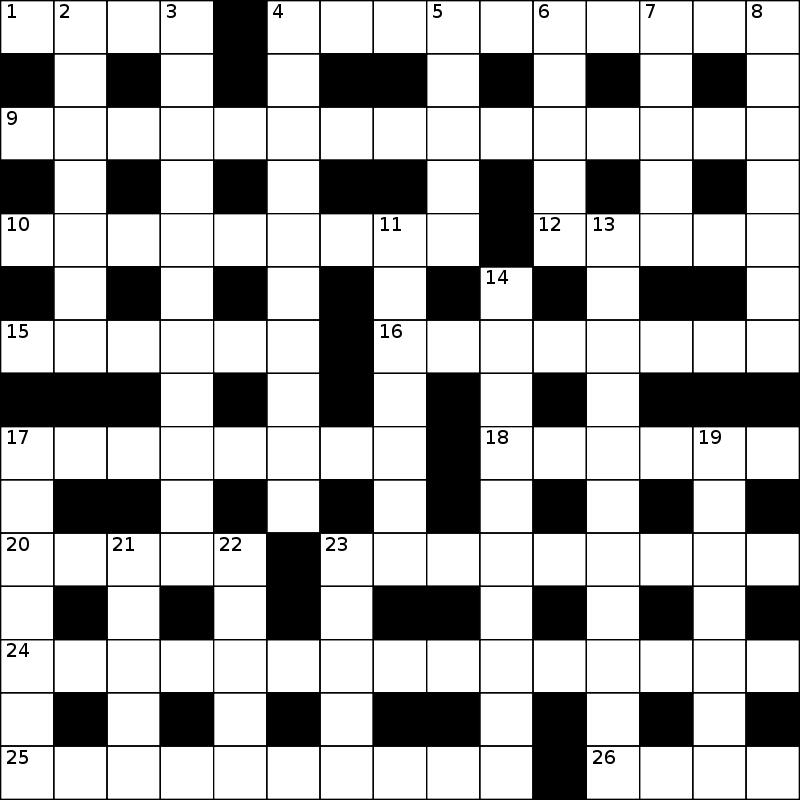
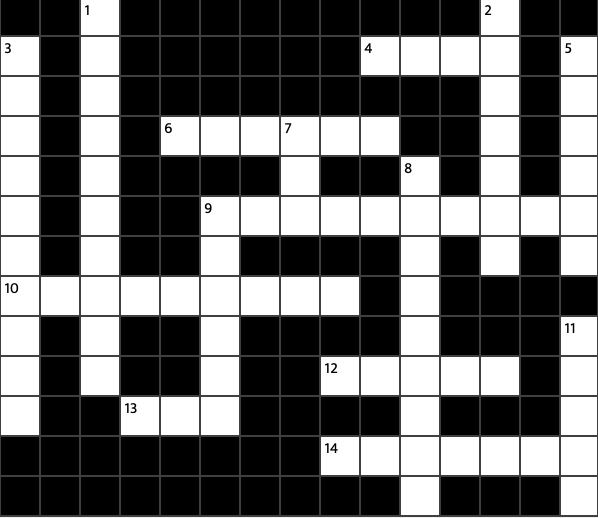
ACROSS
4 Largest island in the Caribbean (4)
6 Author of the theory of evolution (6)
9 Famous school with same slogan as New College (10)
10 e study of the stars (9)
12 Plant tissue responsible for transporting water (5)
13 Word meaning ‘small island’ (3)
14 Author of Frankenstein (7) DOWN
1 Capital of New Zealand (10)
2 Shakespeare’s Scottish tragedy (7)
3 e study of human populations (10)
5 Desert in North Africa (6)
7 South Korean currency (3)
8 Creator of periodic table (9)
9 Founder of ChristChurch (6)
11 Capital of Japan (5)