O XFORD S TUDENT
The University of Oxford’s Student Newspaper, est. 1991

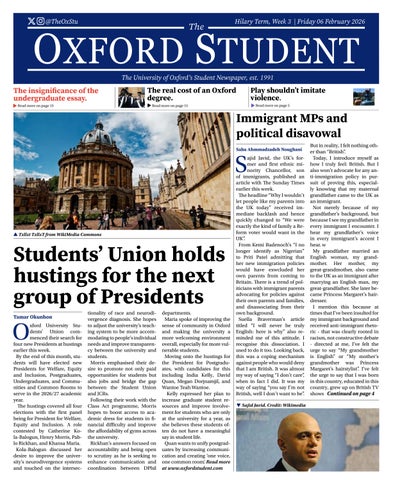
Oxford University Students’ Union commenced their search for four new Presidents at hustings earlier this week.
By the end of this month, students will have elected new Presidents for Welfare, Equity and Inclusion, Postgraduates, Undergraduates, and Communities and Common Rooms to serve in the 2026/27 academic year.
The hustings covered all four elections with the first panel being for President for Welfare, Equity and Inclusion. A role contested by Catherine Kola-Balogun, Henry Morris, Pablo Rickhan, and Khansa Maria. Kola-Balogun discussed her desire to improve the university’s neurodivergence systems and touched on the intersec-
tionality of race and neurodivergence diagnosis. She hopes to adjust the university’s teaching system to be more accommodating to people’s individual needs and improve transparency between the university and students.
Morris emphasised their desire to promote not only paid opportunities for students but also jobs and bridge the gap between the Student Union and JCRs.
Following their work with the Class Act programme, Morris hopes to boost access to academic dress for students in financial difficulty and improve the affordability of gyms across the university.
Rickhan’s answers focused on accountability and being open to scrutiny as he is seeking to enhance communication and coordination between DPhil
departments.
Maria spoke of improving the sense of community in Oxford and making the university a more welcoming environment overall, especially for more vulnerable students.
Moving onto the hustings for the President for Postgraduates, with candidates for this including India Kelly, David Quan, Megan Dorjnamjil, and Wantoe Teah Wantoe.
Kelly expressed her plan to increase graduate student resources and improve involvement for students who are only at the university for a year, as she believes these students often do not have a meaningful say in student life.
Quan wants to unify postgraduates by increasing communication and creating ‘one voice, one common room’. Read more at www.oxfordstudent.com
Sajid Javid, the UK’s former and first ethnic minority Chancellor, son of immigrants, published an article with The Sunday Times earlier this week.
The headline “Why I wouldn’t let people like my parents into the UK today” received immediate backlash and hence quickly changed to “We were exactly the kind of family a Reform voter would want in the UK”.
From Kemi Badenoch’s “I no longer identify as Nigerian” to Priti Patel admitting that her new immigration policies would have exwcluded her own parents from coming to Britain. There is a trend of politicians with immigrant parents advocating for policies against their own parents and families, and disassociating from their own background.
Suella Braverman’s article titled “I will never be truly English: here is why” also reminded me of this attitude. I recognise this dissociation. I used to do it too. Looking back, this was a coping mechanism against people who would deny that I am British. It was almost my way of saying “I don’t care”, when in fact I did. It was my way of saying “you say I’m not British, well I don’t want to be”.
Sajid Javid. Credit: Wikimedia

But in reality, I felt nothing other than “British”.
Today, I introduce myself as how I truly feel: British. But I also won’t advocate for any anti-immigration policy in pursuit of proving this, especially knowing that my maternal grandfather came to the UK as an immigrant.
Not merely because of my grandfather’s background, but because I see my grandfather in every immigrant I encounter. I hear my grandfather’s voice in every immigrant’s accent I hear. w
My grandfather married an English woman, my grandmother. Her mother, my great-grandmother, also came to the UK as an immigrant after marrying an English man, my great-grandfather. She later became Princess Margaret’s hairdresser.
I mention this because at times that I’ve been insulted for my immigrant background and received anti-immigrant rhetoric - that was clearly rooted in racism, not constructive debate - directed at me, I’ve felt the urge to say “My grandmother is English” or “My mother’s grandmother was Princess Margaret’s hairstylist”. I’ve felt the urge to say that I was born in this country, educated in this country, grew up on British TV shows Continued on page 4


Newsletter
Scan this code to receive weekly top stories and more!
Business
The real cost of an Oxford degree

Iup early to seize the day, stop by your college JCR to pick up our 3rd week copy of The OxStu.
Hannah Stewart Keble College

like revisiting nineteenth-century emotional repression. If it feels eclectic, that’s because it is. So is life here. It is, as someone once said, the best of times for Oxstu, certainly: new sections finding their feet, writers taking risks, editors refusing to settle for “good enough”.
Business 15
Opinion
The church is only as feminist as its worst feminist 04
A white woman’s “Wuthering Heights”
can’t believe it’s week 3 already. It’s been an exciting week so far, despite the technical issues left behind by last term. With our podcast fully in swing and fully active, we’re hoping to expand into a new era of multimedia endeavours. This print edition will hopefully be a testament to experimentation, honouring the students who want to build a varied portfolio. It’s hard to keep your chin up in a graduate job market like this, and I’m dedicated to helping everyone better their odds through working in student journalism.
So, whether you’ve dragged yourself out of bed at 1pm only convinced by a promise of coffee, or you’ve woken

Greetings once again!
I’m Tamar, one of two associate editors for Oxstu this term. I love being political, paying attention to detail, and most of all discussing and writing. For this
Editorial Board
Ava Doherty and Hannah Stewart (Editors-in-Chief)
Lila Robinson and Tamar
Okunhon (Associate Editors)
Will Lawrence (Director of Business Strategy)
Opinion and News
Gabriella Bedford (News Editor)
Audrey Miu, Christine Savino, Lydia Willmott Day, Nayel Huda, Marcus Swinerd, Olivia Miller (News Section Editors)
Marcus Swinerd (Opinion
Editor)
Sehr Laiba, Arun Lewis, Guilherme Lopes, Saara Lunawaat,
week at Oxstu, I plan on not only maximising the paper’s efficiency but also mastering my good old friend InDesign. Besides this, however, I am beyond excited to see Oxstu be taken to the next level this week, courtesy of the new sections and out-of-the-box ideas brought to you by the fantastic editors in chief this term: Hannah and Ava. I plan to work alongside the amazing team this term to make Oxstu the best version of itself it possibly could be. Enjoy the fascinating and thrilling topics we
Audrey Miu, Saba Ahmadzadeh Noughani, Tiffany You (Opinion Section Editors)
Investigations
Jason Manning (Deputy Editor)
Daniela Braw Smith, Sam Drury, Baybars Charkas, Ananya Bhatia, Bianca Orphelia Molinet, Stefano Bates (Section Editors)
Culture
Ivett Berenyi (Deputy Editor)
Elliot Wang, Flora Molnar, Elizabeth Gammaidoni, Isaac Hole, Nora Jessie Mackay (Section Editors)
Jasmine Joyan (Poetry Editor)
Week three is when things get interesting. The novelty has worn off, the caffeine dependency has settled in, and everyone has just enough confidence to be dangerous. Oxstu, naturally, has chosen this moment to stretch its limbs, sharpen its teeth, and decide it has Opinions.
This week’s edition is unapologetically wide-ranging,. We’re talking Test matches, a sport that lasts five days and still somehow feels less drawn out than some degree programmes, SU hustings, where democracy performs its annual interpretive dance, and Wuthering Heights, because nothing says “healthy coping mechanisms”
have for this week’s edition.
Tamar Okunhon University College
The worst of times for the graduate job market, which currently resembles a Victorian orphanage with a LinkedIn login. If nothing else, we document the decline with style.What makes this week work isn’t just the range of topics, but the willingness to treat them seriously without taking ourselves too seriously. Sport, politics, literature, all hcan move from parliamentary procedure to cricket statistics to doomed romance without blinking.This feels like a turning point, the moment where Oxstu stops warming up and starts saying what it actually thinks.
Ava Doherty Brasenose College
Features
Luke Erly (Deputy Editor)
Ansu Bhattarai, Aamina Thava, Izzy Goldberg, Honcques Laus, Emily McPhee (Section Editors)
Business and Finance
Guilherme Lopes (Deputy Editor)
Gabriella Austin, Faris Firoozye, Leila Hoffpauir, William Lawrence (Section Editors)
Identity Emily Cunnington (Deputy Editor)
Celine Leung, Becca Bushee, Frieda Fahrenholt, Neha Ganvir, Maryam Bhatti (Section Editors)
Profile
Vincent Chang (Deputy Editor)
Himasweeta Sarma, Hannah Ison, David Binns (Section Editors)
OxYou
Kit Renshaw-Hammond(Deputy Editor)
Tea Sand, Ivaana Mitra (Section Editors)
Sport
Charles Prestwich (Deputy Editor)
Tod Manners, James McInerney (Section Editors)
comment@oxfordstudent.com | Deputy Editor: Marcus Swinerd
Section Editors: Sehr Laiba, Arun Lewis, Guilherme Lopes, Saara Lunawat, Audrey Miu, Saba Ahmadzadeh Noughani, Tiffany You

The cost of university is often an issue which is hitting the headlines, being discussed in JCRs across Oxford (and beyond), but often entirely misunderstood and misrepresented by politicians. Some decry the student loans system for its unfairness, others think that students have it too easy - but for the students who will be paying for their degree for the next forty years, it is a financial burden they have to grapple with.
Now, I could write you a piece on student loans at any time of the year, it is something I often talk about, but in the past few weeks, a change from Rachel Reeves’ last budget has reared its ugly head - freezing the repayment thresholds for Plan 2 student loans.
Just so we are on the same page, here’s a quick explainer of the two most relevant student loan ‘plans’: most current students (those who started university before 2023) are on Plan 5. This means that they repay nine percent of all earnings above £25,000 from the April after graduation for 40 years, unless the debt is cleared quicker, and interest is charged at Retail prices index (RPI) inflation.
This differs slightly from Plan 2 student loans - those which
have caused controversy - as currently, students with those loans (people who started university between 2012-2023) repay nine percent of all earnings above £28,470 from the April after graduation for 30 years, unless the debt is cleared quicker, and interest is charged at RPI inflation plus three percent.
Now, students who are on Plan 5 student loans (most of you reading this) have worse
“ For the students who will be paying for their degree for the next forty years, it is a financial burden they have to grapple with.
repayment terms than our Plan 2 predecessors. On the Plan 2 system, all but the top 20-35% of graduate earners on Plan 2 will repay for the whole 30 years until the loan is wiped (IFS), whereas on Plan 5, that is projected to be around 45%.
Therefore, those on Plan 5 loans pay more of their student loan off, but the current
Lincoln Unites, a group which examines and celebrates the college’s inclusivity, diversity, and community, have hosted a week of events including an LGBTQ quiz, BSL event, and a feedback event on inclusvity at Lincoln.
controversy surrounds the Plan 2 loans. However, I contend that the changes to Plan 2 loans have a consequential impact on those with Plan 5 loans and how the government may perceive the student loans system.
In the Budget, Rachel Reeves announced that the repayment thresholds would be frozen for Plan 2 loans, this means that people repay more of their loan than they did previously, due to the fact that incomes are rising so more people are earning above the threshold which increases repayments (and those who are already repaying will repay more if their incomes rise).
This is akin to fiscal drag, one of a chancellor’s favourite tools, where they freeze the thresholds for a tax (in this case student loans) so that when incomes rise they raise more revenue, it is a stealth tax hike.
Now this trick has been played by countless chancellors on income tax and national insurance, the income tax threshold has not been raised since 2021, and is set to be frozen until 2030.
However, as annoying as fiscal drag on tax is, it does not have the same level of unfairness Read more online at www.oxfordstudent.com
The Sheldonian Series continued this week (4th February) for its first event in Hilary term with a panel on ‘The Power of Activism’. The panel sought to establish how our world has been shaped by activism and role should activism lay in contemporary society. Speakers included Shermar Pryce, Dr Munira Mirza, Dominique Palmer, and Professor Federica Genovese.
The Schwarzman Centre for the Humanities has achieved Passivhaus certification, becoming the first concert hall and largest university building in Europe to do so. The Passivhaus standard recognises low-energy construction and buildings which have exceptional level of performance across insulation, energy, glazing,ventilation, and heating and cooling.
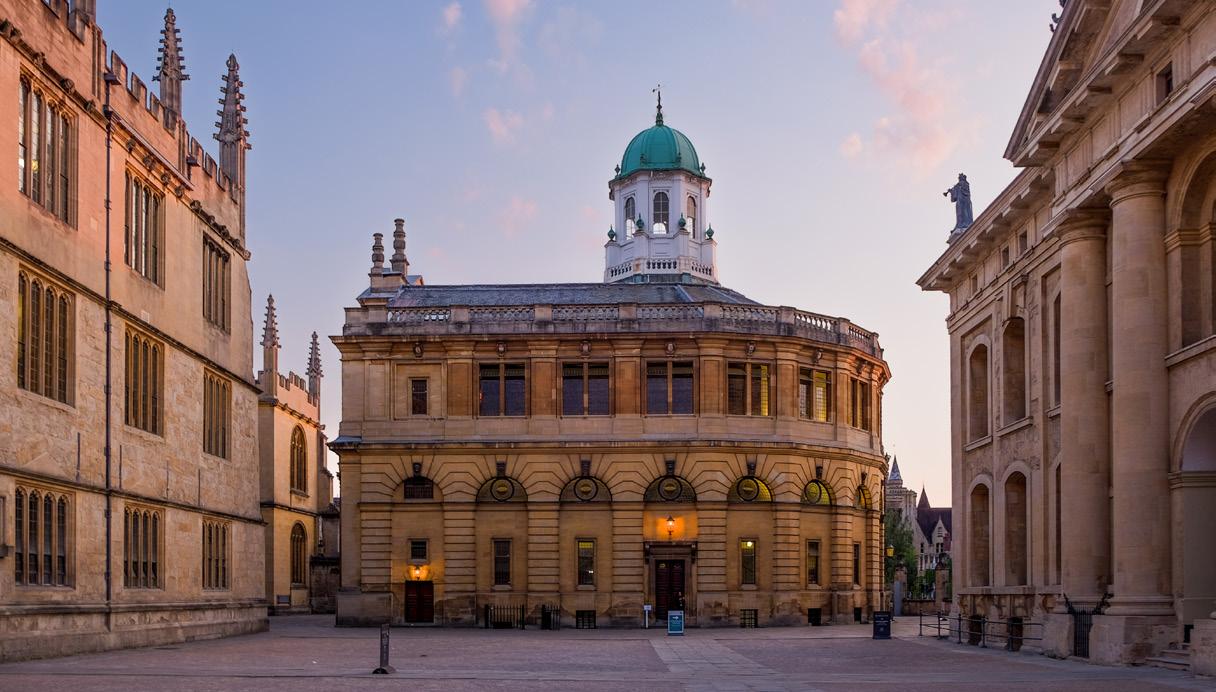
Oxford University Liberal Association announces a trip to Dublin including a visit to the Dàil Éireann in Week 10.
Oxford Labour Club volunteered at Oxford Winter Night Shelter to help those facing homelessness in Oxford.
Oxford Student Greens held a day of action on Sunday (1st February) to encourage wider membership of the society in different colleges.
Oxford University Conservative Association have hosted many speaker events this term - including Sir Michael Fabricant, Connie Shaw, and Alex Burghart MP.
Oxford Reform society have got their first term underway, with weekly drinking socials and a first speaker event with Reform UK Councillor Cameron Anderson.
Oxford Left Society has kicked off its term by hosting weekly debates and engaging with the Oxford Your Party.
Oxford October Club is hosting a book club with Cuntry Living later this term, to add to their further reading events.
Saba Ahmadzadeh Noughani
And so on. I no longer cling to these meaningless things, it does not prove my “Britishness” any more than if they were not the case.
So when Kemi Badenoch says that she no longer identifies as Nigerian, I recognise where this stems from. Such rhetoric, at least for many, is rooted in insecurity, self hatred and rejecting oneself. Beneath all of this is a coping mechanism for all the hate we have had directed at one part of our identity. To desperately proclaim: “no, I am not like those immigrants that I look like, I am actually like you”. I’ve learnt, however, that even disowning
myself would never be enough. It didn’t make me any more “British” to those hellbent on saying I wasn’t; and it didn’t spare me from any racism and Islamophobia either. The truth is, nothing will.
I’ve realised how much of this attitude is rooted in a lack of self respect and insecurity. How much I was excusing other people’s mistreatment of me. How much I was fooling myself to give others the benefit of the doubt. How embarrassing, disrespectful and degrading the statements of others who thought like this were.
For instance, Sir Trevor Phillips, a former politician of Guyanese descent, argued that British
schools should have a 50 per cent cap on Muslim and other minority pupils. He also proposed this for council housing, to avoid them becoming what he called “Ghetto villages”.
My first thought was to tell Sir Phillips that he too was an “other minority pupil”. That he is describing those like himself when he refers to council housing with ethnic minorities as “Ghetto villages”.
So when Sajid Javid claims that he wouldn’t let his parents in the UK today, my first thought was that Nothing is worth this. Nothing is worth degrading your own parents.
When an MP’s policies exclude their own
parents, they are not showing love or respect to our country, they are disowning themselves and disrespecting the people that built Britain. My grandfather built the Britain I live in today. Too often, MPs from immigrant backgrounds parade themselves as the black or brown face that spews racist and anti-immigrant politics, aimed squarely at people like their own families.
To Sajid Javid: nothing is worth saying you would keep your parents out. You are not separate from them. None of us are. I am no more superior than my immigrant grandfather nor your immigrant parents Read more online at www.oxfordstudent.com
On 28th January 2026, Bishop Sarah Mullally was confirmed the 106th Archbishop of Canterbury, becoming the first woman to take up this position in the Church of England’s (CofE) 409year history. Before this appointment, Mullally was the first female Bishop of London in 2018 after her career switch from nursing to full-time priesthood in 2004. Whilst for many, this is a long overdue milestone appointment, others within the religious community were quick to voice their opinions online. The Global Fellowship of Confessing Anglicans, whose website claims to have been set up in response to overzealous Biblical interpre-
tation regarding samesex blessings, revealed its thoughts shortly after the future archbishop was announced in October 2025. They wrote, “it is with sorrow that Gafcon receives the announcement today of the appointment”, since she is sure to “further divide an already split Communion.”
But if the Anglican community can be divided so easily, I don’t think it was ever strong to begin with. Not all religious organisations and leaders have taken the same cynical approach. The Archbishop of York, Stephen Cottrell, praised Mallally, stating that her “wisdom, her integrity, her courage, and her great faithfulness are just what we need to bring stability
and hope to the Church and to the world.” But this begs the question: is the Church and the world even set up for women to succeed in these positions?
Criticism directed at Mullally is not rooted in any perceived or experienced incompetence, but rather in scriptural interpretation and how, as a member of Christian Action, Research, and
Education has stated, “it remains a source of real regret that the Church of England allows women Bishops and Priests.” Personally, irrespective of scripture and religious perspectives, Mullally, is not the feminist icon that she is being depicted as. Upon being appointed Bishop of London, she vowed to remain Read more online at www.oxfordstudent.com

Walk into any toy shop and you’ll see shelves filled with plastic weapons marketed as fun. Play centres on imitation, repetition, and reward, therefore, when we hand our children pretend weapons and toy guns, we blur the lines between what is truly harmless fun and what is essentially normalising violence.
A few weeks ago, I was playing with my 3-year-old cousin, when she shaped her hand into a pretend gun and pretended to shoot me. I pretended to die. At that moment, I suddenly thought of all the gun-related deaths that have occurred in the United States in the past year alone, 38,762 to be exact.
Firearms remain the leading cause of death for children and teenagers in the United States, yet toy guns, even very realistic ones, remain popular. After playing with my cousin, I was left thinking of victims of gun violence and their families, contemplating how they would feel if they witnessed my cousin and I playing around and pretending to shoot each other.
On school grounds, gunfire has caused 53 deaths and 148 injuries in the past year alone. As of mid-January this year, the Gun Violence Archive in the United States has already recorded 510
deaths and 981 injuries, with this figure increasing as days go by.
We condemn such violence, and yet simultaneously sell it in the toy aisle.
While the UK has restrictions on gun ownership, we see a different form of violence unfolding on our streets- Knife crime. 2019 saw our bloodiest year. I was attending secondary school at the time, and my classmates and I were routinely body searched in the mornings and even mid-lesson to detect if anyone was carrying a knife. That was also the year that I saw the most amount of police officers coming into my school. Speaking to others who also attended inner-city London secondary schools, it seems that this and similar were the experience of school for the majority of London pupils.
Knife crime has decreased since then, but the threat remains. From June 2024 to June 2025, the UK recorded 51,527 knife-enabled crimes and nearly 60,000 knives were removed from streets in England and Wales. There’s also the threat of acid. Not so long ago, parents at my cousin’s secondary school were emailed about ensuring that children went straight home after school, after receiving information that students from


another local school were planning an acid attack near the school.
Being visibly Muslim myself, I have felt, and still feel, the threat of acid every time I leave my home. Muslim women like myself have had hot drinks and alcohol poured on us, but in recent times, for many visibly Muslim women, this has escalated to acid attacks.
Therefore, taking all this into account, it would seem rather sadistic to pretend to stab or throw acid on a toddler when playing with them- or teach them to do the same and call it harmless play and fun.
I’ve only ever seen plastic knives in toy kitchen sets intended to be used for pretend cooking. Many times my younger cousins have warned me “it’s dangerous”. Even when handing me scissors, they’ll innocently say “it’s dangerous” or “be careful it’s sharp”.
Guns however, are exclusively weapons. They connote killing and violence before play. If I say the word “Gun”, the next word that may pop up in our minds is less likely to be one of peace or fun. Pretend versions, realistic or not, shouldn’t be used as toys.
This being said, in the same light, I must admit that games like ‘Cowboys and Indians’ and ‘Cops and Robbers’ are perhaps some of the most popular children’s games. These games focus on role-playing, storytelling, problem-solving and
Oxford University was named the top university in the world for medicine and computer science in the 2026 Times Higher Education World University Rankings by Subject.
imagination. They develop children’s cognitive and creative skills and teach them power dynamics, the idea of good versus evil, and how to manage their emotions. We can also make the case that toy guns facilitate these games.
However, if we follow the research, merely seeing a weapon, realistic or not, triggers higher levels of aggressive behavior, a phenomenon known as the “weapons effect”. Research additionally suggests that realistic toy guns encourage imitative play and teach children to mimic violence, rather than mere imaginative play.
There remain many behavioral and social concerns in handing children toy guns. At its core, they desensitise young children to the gravity of death and violence, and when it comes to games like ‘Cops and Robbers’ or ‘Cowboys and Indians’, they encourage children to solve conflicts through intimidation and violence rather than calm negotiation. Therefore, the same way that we never give children pretend sharp knives to play pretend stabbings, or pretend throwing acid, because we can grasp the real life seriousness of such violence, we should also stop handing our children toy guns. We shouldn’t find violence playful or entertaining and we shouldn’t teach children to have a laugh over pretending Read more online at www.oxfordstudent.com
Oxford University’s medicine programme was ranked first for the 15th consecutive year, while computer science placed first for the eighth straight year.
Oxford University also placed second in social sciences and engineering.
The subject rankings assessed institutions across 11 disciplines using 18 indicators designed to reflect the core functions of research-intensive universities, including teaching, research environment, research quality, international outlook, and industry engagement.
Head of Oxford’s Medical Sciences Division Professor Gavin Screaton stated, “the research and teaching within the division have a global outlook and we aim to continue being the world leaders in global health. The division has consistently set the standards for excellence and is committed to continue working with the same zest moving forward.”
Head of Oxford’s Computer Science Department Professor Ivan Martinovic remarked, “being ranked number one for the eighth year in a row affirms the exceptional calibre of our faculty, students, research culture, and particularly our teaching, with an outstanding score of 99.9/100. This ranking reflects our sustained commitment to excellence and global impact.”
In late 2025, Oxford University also retained its position at the top of overall 2026 Times Higher Education World University Rankings, marking a tenth consecutive year at number one and the longest any educational institution has held the position since the rankings were created in 2004.
In the overall top ten, the Massachusetts Institute of Technology placed second, with Princeton University and Cambridge University tied for third.
news@oxfordstudent.com | Deputy Editor: Gabriella Bedford
Section Editors: Audrey Miu, Christine Savino, Lydia Willmott-Day, Nayel Huda Marcus Swinerd, Olivia Miller
American prohibition in the 1920s and the war on drugs are two notable examples of well-intentioned state initiatives to combat pressing societal issues which failed to fix the initial issue. For policy-makers, bans are the first resort when seeking a quick and easy fix. They make leaders look decisive and citizens feel that something is being done. However, as history has shown us, bans fail to adequately tackle harmful behaviour. Instead, they remove control, regulation, and access to help for users.
Australia’s Online Safety Amendment Act 2024, which places a ban on social media for under 16s, threatens to fall into the same category as these previous initiatives did. It is easily circumvented, shifts responsibility away from social media companies, and fails to combat the root causes of youth social media addiction. It is yet another case study into how prohibition is rarely ever an effective policy, and an example of how governmental overreach can do more harm than good.
History has demonstrated that bans fail to stop the demand of harmful products and merely result in their supply becoming inventive and even more widespread. By the end of prohibition in the 1920s, alcohol consumption rebounded to 60-70 percent of its initial value before the ban and did not change following the repeal of the prohibition.
This proves that counterintuitively, bans encourage the very behaviour they purport to prevent – and arguably this is exactly what is happening in Australia. Although there is limited data on the age of users, it is extremely easy for children to lie about their ages and bypass age restrictions. One year 6 teacher stated that none of their class has successfully been banned from platforms, reillustrating that young people are still able to access social media despite the ban.
Consequently, in replacing the (while often inadequate) visible protective measures of
“ Prohibition is rarely ever an effective policy, and an example of how governmental overreach can do more harm than good.
tinues to permeate online regulations.
By attempting to shield youth from the dangers that social media poses, Australia’s government risks driving young people into extreme corners of the internet, a breeding ground for radicalisation.
As part of the act, platforms have been requested to take undefined “reasonable steps” to verify users’ ages and prevent young people from using their sites. They will otherwise face over $30 million in fines. What the government should be doing however, is forcing social media companies to take content moderation seriously; not just for the sake of young people, but for everyone.
Thousands of women and underage girls are being targeted and abused by Grok AI’s deepfake image production capacity. In early 2024 more than a third of surveyed consumers had witnessed false news about politics, including suspicious or false COVID-19 news.

corporations with the invisible “safety net” of a ban, the government loses oversight over content that appears on the sites. Children will no longer be as closely regulated as perhaps previously, because there arises the assumption that they are not using social media. Therefore, there is potential for far more harmful material to be accessed by young people. Conversations around online safety and grooming may cease to be a priority for decision makers, while the exploitation of young people con-
Moreover, the Australian federal government is estimated to spend more than $50 million of taxpayer’s money enforcing the ban, when in reality, such burden should instead fall on these tech giants who allow corrupting content to thrive on their systems, and flourish from addiction capitalism - the design of tech products and platforms to be as habit-forming and dopamine-inducing as possible to boost profits.
A recently published 235page brief from a current lawsuit against Meta and Google articulates this; Meta researchers described themselves as “drug pushers for Instagram”, an internal TikTok report noted how “minors do not have executive mental function to control their screen time,” and Snapchat executives boasted of how


“snap dominates the life” of young people.
These companies display a blatant disregard for the wellbeing of their users. Surely it is them that should be held to account, and fund the efforts to make social media a safer place for everyone - rather than the onus being pushed upon the user to keep themselves safe in an increasingly unsafe and polarizing digital world.
The final main issue with the ban is its complete lack of nuance. Of course, social media is full of harms that need to be reduced. But social media also brings benefits to young people’s lives; especially margin-
“ Bans fail to adequately tackle harmful behaviour. Instead, they remove control, regulation, and access to help for users.
alised young people that may feel disconnected or different to their peers. Social media provides adolescents with the chance to form and sustain meaningful connections
with other people, learn new skills, educate themselves, and broaden their horizons. Studies have shown that a significant majority of children (some stating as much as 60%) acknowledge the role that social media plays in enhancing their understanding of different cultures and people’s lives.
It would be easy if governments could wave a magic wand and eradicate social media entirely. But policy-makers cannot bury their heads in the sand and try to undo years of technological progress in an attempt to mirror their own childhoods. The current digital age has irrevocably altered the experience of childhood. The only way to ensure that this change is positive is to work with it. This means implementing realistic yet firm safeguards to promote a healthy balance between physical and online spheres, not preaching restriction. Schools should encourage more participation in sports, the arts and volunteering opportunities.
Governments can easily allocate more funding to youth clubs and programmes like Youth Parliament or NCS. Such activities allow young people to spend less time online and instead engage with others to better contribute to their community.
Read more online at www. oxfordstudent.com
investigations@oxfordstudent.com | Deputy Editor: Jason Manning
Section Editors: Daniela Braw Smith, Sam Drury, Baybars Charkas, Ananya Bhatia, Bianca Orphelia Molinet, Stefano Bates |
Ava Doherty
TWe have heard about many kinds of files this week. Epstein files. Bureaucratic files. Nail files. The kind that get leaked to journalists at 3am and ruin careers by breakfast.
Today, however, I present to you a new category: the Introspection Files. The great, heavily redacted documents in which an investigation is launched into the journey of the self. After days of leaks, speculation, and grim-faced commentators explaining that “this changes everything,” it became clear that one crucial set of documents had been ignored. Not classified, not encrypted, not even password protected. Merely avoided. These are the files concerning me.
Now, before you ask: yes, this investigation is serious. We have had revelations this week often compared to the Huawei leaks, and I know what you are thinking. Is this going to be as big as Watergate? I am afraid to tell you that it will be bigger than that. Because this investigation concerns what happened to me on the night of February the 3rd.
I know you are probably thinking that this was when we might finally get answers to who killed JFK. I regret to inform you that this is much more serious. We are talking about a scandal that reaches the highest levels of my own incompetence, implicating multiple past versions of myself who should have known better but simply did not care. The investigation, codenamed “The Narcissist’s Nitpicked,” has uncovered a number of deeply troubling findings. Chief among them: a shocking one-third of solo travelling holidays I have booked are horrendously over budget. We are not talking minor overspending; we are talking catastrophic fiscal irresponsibility that would make
Liz Truss’s economic strategy look measured and restrained.
In a revelation that has rocked the establishment, I can confirm that I have taken out a shady loan from none other than the Bank of Mum and Dad. This is a tragedy. Frankly, it is blasphemous. I cannot believe I have let down my country, my party, and my paper in such a manner. The terms of this loan remain undisclosed, though sources close to the situation suggest they include “sorting my life out” and “getting a proper job” as repayment conditions.
“ The investigation, codenamed “The Narcissist’s Nitpicked,” has uncovered a number of deeply troubling findings
I have since appeared before the Sainsbury’s Selection Committee, where I underwent rigorous scrutiny at the self-checkout. This included repeated warnings to “please put the item in the bagging area,” as well as a silent moral judgement for purchasing own-brand pasta and a bottle of wine I definitely could not justify. The unexpected item in the bagging area was my dignity, which I left somewhere between the reduced section and the meal deal aisle.
Further findings show that while I have not technically shoplifted, I have avoided paying taxes on my emotional baggage, instead attempting to carry it with me indefinitely rather than dumping it onto someone else like a normal person. This act of psychological tax evasion remains under investigation by several therapists I have ghosted.
Finding number two confirms that yes, I have not paid taxes. Not because I am a master of offshore finance, but because I am, in fact, an unemployed bum. I do not have an offshore account in the Cayman Islands. I do not even have an onshore account worth speaking of. I am simply broke, and my financial strategy can be summarized as “hoping something good happens.”
Included in the leaked documents are a series of scandalous emails exchanged between myself and my bank manager, obtained through entirely legitimate means, specifically logging into my own account and feeling sick.
From: Bank Manager
Subject: Your Current Balance
Dear Customer,
We are writing to inform you that your account has entered an unauthorised overdraft. Please confirm whether this is intentional behaviour or an administrative oversight.
From: Me
Subject: Re: Your Current Balance
Hi, I wouldn’t say intentional. I’d say optimistic.
Best, [Name]
From: Bank Manager
Subject: Follow-up
Dear Customer,
You have not responded to our previous query regarding your financial strategy. We note that several direct debits have failed. Please advise.
From: Me
Subject: Re: Follow-up
Hi, My strategy is hoping something good happens.
Kind regards, [Name]
From: Bank Manager
Subject: Urgent Action Re-
quired
Dear Customer,
This is your final warning before we escalate this matter.
From: Me
Subject: Re: Urgent Action Required
Understood. I am also escalating this matter by ignoring it more intensely.
Warm regards, [Name]
The most problematic findings uncovered by the files concern statements I have made that may, under certain legal frameworks, constitute a personality. These include but are not limited to:
Referring to an incident involving a French person and a baguette as friendly fire.
Claiming that the Treaty of Versailles was “a bit harsh” in a room full of historians who took this personally.
Being metaphorically snatched away by an albatross, both financially and spiritually.
Attempting to sell my own version of green juice, which consisted entirely of shredded lecture notes in a bottle dyed
Credit: Ava Doherty
national scandal. What they reveal instead is a deeply average individual struggling with adulthood, money, and self-awareness. Much like everyone else, just with more documentation and a pathological need to turn personal failure into content.
The investigation remains ongoing. More files may yet surface, including several concerning my Spotify Wrapped statistics and what they say about my mental state. Until then, the subject has declined to comment publicly and will be paying back her loan in monthly instalments, assuming she remembers to set up the direct debit.
Which she will not.
If you have information relevant to this investigation, the hotline is open. Just don’t expect a response. I am currently unavailable, refreshing my bank account and waiting for a miracle that will never come. This article is in lieu of an investigation - quite understandably. If your interest has been piqued, you can read the full, unabridged satire online at www.oxfordstudent.com.
Crazy Child Productions is bringing The Glass Menagerie to the O’Reilly Theatre in Keble College between Wednesday 4th and Sunday 8th of February.
Riptide Studio is staging Red in the Pilch between Tuesday 3rd and Saturday 7th of Febuary
The BT Studio will be home to My Dead Mum’s AI Boyfriend by Interrobang Productions in the BT Studio between Tuesday 3rd and Saturday 7th of February.
Full Moon Theatre’s Le Voix Humaine is brought to BT Studio between Tuesday 10th and Saturday 14th of February
At the BT Studio, you will also have a chance to see Silent Tape Productions’ You Got Me between Tuesday 10th and Saturday 14th of February
At the Pilch, Piezoelectric Productions is staging Tick, Tick... Boom! between Wednesday 11th and Saturday 14th of February.
For award season, Section Editor Nora Mackay has the following film recommendations:
Marty Supreme (2025) dir. Josh Safdie
Sinners (2025) dir. Ryan Coogler
It Was Just An Accident (2025) dir. Jafar Panahi Bugonia (2025) dir. Yorgos Lanthimos
No Other Choice (2025) dir. Park Chan-wook
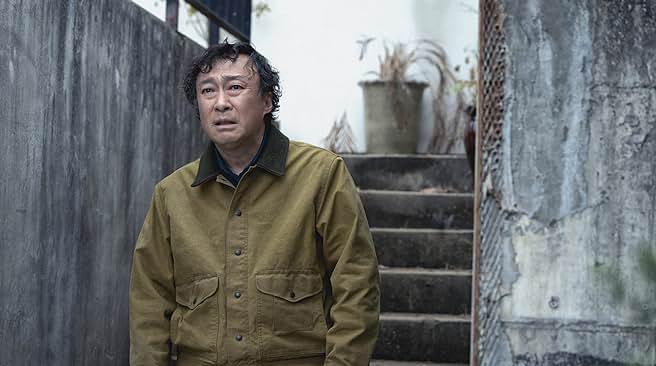
Elliott Wang, Culture Section Editor, reviews Park Chanwook’s newest film.
In No Other Choice, Yoo Man-su is an award-winning papermaking veteran with a gorgeous house and a happy family. “I’ve got it all”, he says as he hugs his wife and two kids in the yard, the family’s two pet retrievers nestling beneath the shade of the family’s “one-minute” embrace. Moments later, our family man is fired and left to chant repeatedly in a corporate therapy circle, “Losing my job is not my choice! I’ll be born again! In three months I’ll be hired!”
My beloved and talented auteur, the director Park Chanwook, is known for breaking old styles and habits of filmmaking. Unfortunately, in No Other Choice he seems to have made a reversal from the beatific minimalism and nuance of Decision to Leave,
his 2022 neo-noir thriller romance. That film was criticised by some for being too convoluted, “artsy”, and slowpaced. So, in his most recent film, Park has “no other choice” but to layer a dramatic irony so thick that it could be used to bash someone’s head in – and they would suffer a concussion so serious, all they can say is, “It’s a satire of capitalism.”
Despite this, I found myself really enjoying other aspects of the film. Park’s direction is as slick as always. This time it is being geared towards emphasising slapstick comedy, and the film is frequently funny. The lingering and voyeuristic camera in Decision to Leave is swapped for one that focuses on the characters’ exaggerated faces, magnifying the absurd consequences of their poor decisions. In my opinion, Park’s superb direction elevates the film’s comedy above any of its aforemen-
tioned peers. It is his funniest film yet. Besides being a “satire on capitalism”, the film is much more effective as a commentary on masculinity. Man-su is no “macho man” like his Vietnam-war-fighting, pig-butchering father. He is a plant lover who cultivates nature in his greenhouse, as much as cultivates the flourishing of his family. But when financial circumstances force the family to give away the two dogs, Man-su’s patriarchal pride
Credit:
IMDb
kicks in to protect the family. Man-su, like his war-fighting father, is a veteran. He has been an award-winning papermaker for more than twenty years, and he refuses to find a better job in a different industry. He decides to pick up the North Korean gun that his war-fighting father wrestled away from his double in the Vietnam War, and he uses it to become a butcher like his father.
Read the full article at www.oxfordstudent.com
Sophia Verai talks to Crazy Child Productions, based in Keble College.
When I step into the rehearsal room the air is raw with a brewing fight. By the time I sit down I’m watching a full-blown shouting match, as relentless as any of Williams’ breaking-point dialogues. Within moments Tom (Oliver Spooner) has given way to his anguish, as his mother Amanda (Lyndsey Mugford) looks on in horror or incomprehension or both. Welcome to the domestic drama, reimagined. Naturally my curiosity was piqued, and naturally I was not given many spoilers regarding stagecraft – that’ll be for the review in early February. Magdalena Lacey-Hughes, co-di-
rector and producer, does note that “there’s a lot about flow. Because the O’Reilly Theatre is such a big space, it’s really important for us to keep in mind to use every corner of the stage.” The theatre is in the round: audience seating surrounds the stage and actors are visible from all sides, making this a particularly stimulating environment for the performance to develop in. Should audiences expect a modern take on a modern classic? Not exactly, says George. “There’s a trend of reimagining plays in terms of Tennessee Williams, but it’s set nowadays, and everyone’s wearing modern day costume, and listening to Charlie XCX. It is really cool to modernise things, but it’s also fun to leave all of that alone. Keep
“ Williams’ reality lies in the symbol and not the specifics.
the same ideas and the same messaging, but think of new ways of saying it. You’re not trying to rework Williams’ ideas on what the play is about – I mean, we are doing that to a certain extent, but how we get there is different.”
Part of the production’s novelty lies in its approach to female characterisation. While acknowledging that the play is highly sympathetic in other respects, Lyndsey explains how the character of Amanda has too often been function-
alised in previous stagings as a badgering, annoying, restrictive mother, or even as comic relief. “I do think there is some truth in those portrayals. But something we’ve discussed a lot which I am trying to bring out in my portrayal is how she can be all of those things and still be deeply hurt, and deeply committed to the people that she loves. She is a flawed person you can sympathise for, and who is almost tragic. It is a real privilege and a challenge to be able to take on that role.” Williams’ reality lies in the symbol and not the specifics. “It’s almost more powerful when you don’t quite know. I think it keeps the focus where it needs to be.”
Read the full article at www.oxfordstudent.com
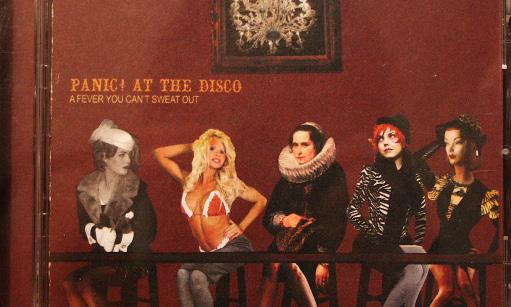
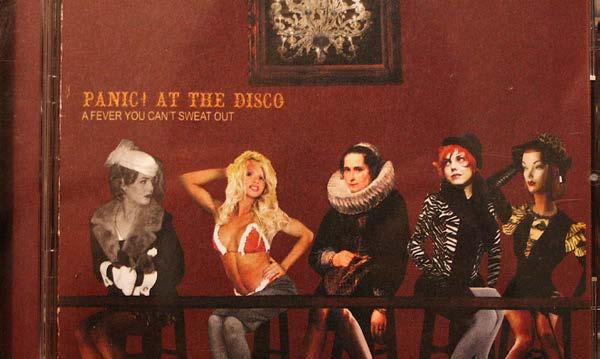
For some reason, recently, Panic! At The Disco’s debut album, A Fever You Can’t Sweat Out, has been following me around like some sort of musical omen. Whether it’s the fact that the band played a 20th Anniversary set for the album at When We Were Young Fest late last year, or the fact that numerous people, including friends and my partner, have brought it up in conversation recently, I figured I’d give the album a re-listen. To me, the album is emblematic of hanging out with the other awkward miscreants and misfits in early secondary school, at the height of the ‘Yeemo’ revival fad. The nostalgia factor of this album was particularly strong in deciding whether to give it a good re-listen. For 11-yearold me, A Fever You Can’t Sweat Out was my album of choice. Perfect for someone interested in the ‘alternative side of things’, but didn’t quite know where to start.
The album reeks of teenage naivety, and that is its greatest attribute. With the overt, yet awkwardly whimsical and direct sexuality of some of the tracks, most prominently, ‘Lying is the best fun a girl can have without taking her clothes off’, a track in which the lyrics would be right at home in the scribblings of a personal notebook. Just like the album’s nostalgia factor, the lyricism is sickly-sweet. It’s no doubt the reason that this album gels together so resoundingly well in the conscience of people my age, and the most awkward moments of their teenage years. A Fever You Can’t Sweat Out is chock-full of pubescent uncertainties and aspirations. It’s a debut album that has the air of an art rock group that’s yet to find its feet, and a whiff
of promise, which, judging by the current state of Panic! At The Disco, sadly never materialised.
“ the album is a fun but middling listen, with glimmers of star power throughout.
Upon relistening, it was glaringly obvious that Panic! At The Disco’s status as a ‘Singles band’ had evaded me. The singles from the record are iconic standouts, deserving of the notoriety they have as cornerstones of the 2000s pop-punk scene. Many of the album tracks, however, are dated, reminiscent of The Killers’ Hot Fuss at its worst. The album is accessible to a tee, with the voice of frontman Brendon Urie bringing a pop flair and lessening the blow
of some of the more self-indulgent lyricism on the piece. The willingness to play around with sounds often foreign to the simpler, DIY sounds of their pop-punk contemporaries is admirable, setting Panic! At The Disco apart from other bands. The same bands that, quite frankly, died on the hill trying to imitate what Blink-182 was doing. While sometimes dated and a bit too juvenile for the likes of most, the album is refreshing in comparison to the activities of their counterparts at the time. Some have conflated the album with the Baroque Pop movement. A not too tenuous, but slightly displaced characterisation, seeing as the album is a far cry away from the Pet Sounds and ‘I can’t let Maggie Go’s of the world. The band’s flirtation with Baroque Pop is more of a sonic brush past the shoulder of the genre than a full commitment. The record’s experimentation with classical instrumentation is more
of a delightful addition that strays away from the grain of what pop-punk usually sounded like at the time, rather than a strict allegiance to a particular musical aesthetic.
A Fever You Can’t Sweat Out’s dedication to the cabaret aesthetic, on stage and on screen, is a testament to the group’s visual storytelling acumen. A demonstration of what putting significant backing behind a band’s theatrical vision looks like. It’s encouraging to look back on a time when a band got the go-ahead to actualise a cabaret scene in a more robust context. Panic! Did what pop does best when it comes to catching a ‘vibe’, which is, namely, bring it into the spotlight in a more refined, ready for MTV and Kerrang! Way. While certainly not the forebearers of cabaret-inspired pop rock, the band brought cabaret motifs to the mainstream in a much
more grandiose and consistent way. In comparison with their predecessors in that visual niche, such as Emily Autumn, the group offered a more high-production spin on a classic alternative hallmark.
Overall, the album is a fun but middling listen, with glimmers of star power throughout. The mark it made will always be irrefutable, and it spring-launched the career of one of the most significant emo juggernauts of the late 2000s. Inseparable from years of teenage whimsy for many, you’d be hard-pressed to find someone who doesn’t look back fondly on ‘I Write Sins not Tragedies’. On a re-listen, the album is nowhere near as impressive as the rose-tinted goggles would suggest, yet worthy of a rather charming place in the hearts of many. Read the full article at www.oxfordstudent.com
culture@oxfordstudent.com | Deputy Editor: Ivett Berenyi
Section Editors:
Ivett Berenyi is the Deputy Editor and has some thoughts about Heathcliff.
Few other 2026 film releases are as anticipated as Emerald Fennell’s adaptation of Wuthering Heights. It is based on Emily Brontë’s original novel, published in 1847, during a time of great social upheaval with revolutions, famines, and political movements sweeping across Europe and the British Empire. Regarding both social and psychological aspects, Brontë’s Wuthering Heights is rich, varied, and controversial source text. Twenty-first century directors are faced with a wealth of material they may magnify in their interpretive adaptations. However, when some aspects are magnified, others are cast under the radar.
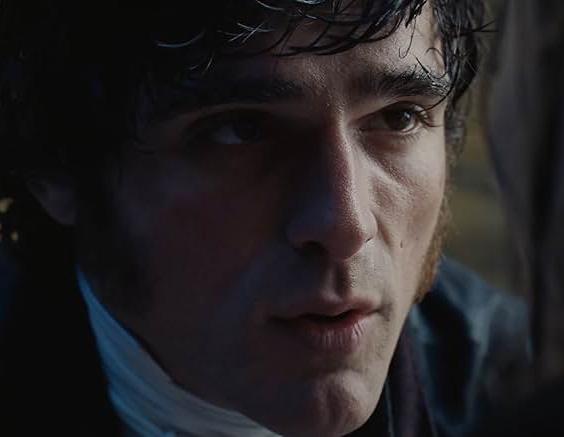
As we all know, Jacob Elordi is a white Australian man. What we also know is that in

Chapter 4 Mr Earnshaw brings home a “a dirty, ragged, blackhaired child,” from the “the streets of Liverpool where he picked it up and inquired for its owner.” I wonder what illustrator associated Liverpool, the pronoun “it” and the notion of the child having an “owner” with a white lad. Mrs Earnshaw certainly had a different thought process upon witnessing the child, calling him a “gipsy brat.” Unfortunately, Heathcliff could not speak for himself, even though he tried. Nelly, the chapter’s narrator and the family’s nurse, says that the little boy “repeated over and over again some gibberish that nobody could understand.” In imperial-speak, “gibberish” stands for absolutely anything that’s not English, or a European language.
Liverpool is a crucial context of Heathcliff’s introduction. Wuthering Heights is set approximately fifty years
Alexandra Lyon
A man was carved of melody, bones made of the celestial, with music that could make the most brutal of beasts sweet again.
before its publication. Anyone familiar with England’s involvement with the transatlantic slave trade will remember that over the eighteenth and early nineteenth century “ships from Liverpool carried about 1.5 million Africans across the Atlantic in conditions of great cruelty.” It is by no means a stretch to suggest that Heathcliff, a boy with a potential “owner” speaking a “gibberish” language could have been one of those 1.5 million Black people.
Furthermore, as literary critic Susan Meyer points out in her 1996 monograph, Imperialism at Home, several other derogatory terms affirm that Heathcliff is not a white child. In Chapter 6, Mr Linton calls Heathcliff a “a little Lascar, or an American or Spanish castaway.” She explains that “lascar” referred to children of Indian seamen, trafficked by the East India Company at that time. Being a “castaway”
He cupped the sun – her radiance –reflected a glimpse of heaven, refracted colour. Oh, he could have basked in that glow eternally, but the same nimble tips of the lyre cannot hold light without streaks falling through.
Calliope created him in the image of the moon but the sun and moon, if they meet, are doomed to part.
When the sun went down, dripping with venom a darkness descended that no glints of crescent could make into daylight again. For blindness had claimed him, gazing down at heaven.
from the Americas or Spain (including the Caribbean, of course) hardly aligns with illustrations of a white boy.
Fennell’s interpretive angle centres around the following motivation: “I wanted to make something that was the book that I experienced when I was 14.” In the same interview, she admits that this may be “both good and bad,” but I am inclined to argue that she does not quite understand, or seem to grasp, just how bad this approach may be. sure seems very irresponsible to me.
Fennell would have had a
Martha
Winter
Kiyan
great opportunity to cast an actor of colour and hire consultants who may illuminate a West African, Caribbean, or Roma perspective. Since Wuthering Heights involves a great deal of discursive topics – gender roles, class conflict, the Victorian Gothic – the film was never strictly bound to discussions around race and imperialism. However, it is by no means necessary to whitewash the male lead to engage with the discursive topics listed above.
Read the full article at www. oxfordstudent.com
She loves to tuck her children in with covers of crisp snow, so underneath they are safe and sound, away from icy claws. It is her duty to preserve the remnants of the land, and though her kindness is exacting, she cannot fend for self.
While nature rests and tolerates the coldness of these days, the folk of forest calmly wait until the sun returns with rays. The rivers flow with graceful tact, indifferent to our needs, as time itself moves quietly, untroubled by our pleas.
The tops of maple trees bow low beneath a gathered weight; the squirrels, robbed of cheek, lie hidden deep to keep their warmth.
Untamed she may appear to prey and enemy alike, yet careful and considerate to all who serve her realm.
What does not move is not yet lost—it waits, because it must.
Her reign is not of ending, but of keeping what is just.
10| Culture
Crazy Child Productions is bringing The Glass Menagerie to the O’Reilly Theatre in Keble College between Wednesday 4th and Sunday 8th of February.
Riptide Studio is staging Red in the Pilch between Tuesday 3rd and Saturday 7th of Febuary
The BT Studio will be home to My Dead Mum’s AI Boyfriend by Interrobang Productions in the BT Studio between Tuesday 3rd and Saturday 7th of February.
Full Moon Theatre’s Le Voix Humaine is brought to BT Studio between Tuesday 10th and Saturday 14th of February
At the BT Studio, you will also have a chance to see Silent Tape Productions’ You Got Me between Tuesday 10th and Saturday 14th of February
At the Pilch, Piezoelectric Productions is staging Tick, Tick... Boom! between Wednesday 11th and Saturday 14th of February
For award season, Section Editor Nora Mackay has the following film recommendations:
Marty Supreme (2025) dir. Josh Safdie Sinners (2025) dir. Ryan Coogler
It Was Just An Accident (2025) dir. Jafar Panahi Bugonia (2025) dir. Yorgos Lanthimos No Other Choice (2025) dir. Park Chan-wook
In No Other Choice, Yoo Man-su is an award-winning papermaking veteran with a gorgeous house and a happy family. “I’ve got it all”, he says as he hugs his wife and two kids in the yard, the family’s two pet retrievers nestling beneath the shade of the family’s “one-minute” embrace. Moments later, our family man is fired and left to chant repeatedly in a corporate therapy circle, “Losing my job is not my choice! I’ll be born again! In three months I’ll be hired!”
My beloved and talented auteur, the director Park Chanwook, is known for breaking old styles and habits of filmmaking. Unfortunately, in No Other Choice he seems to have made a reversal from the beatific minimalism and nuance of Decision to Leave,
his 2022 neo-noir thriller romance. That film was criticised by some for being too convoluted, “artsy”, and slowpaced. So, in his most recent film, Park has “no other choice” but to layer a dramatic irony so thick that it could be used to bash someone’s head in – and they would suffer a concussion so serious, all they can say is, “It’s a satire of capitalism.”
Despite this, I found myself really enjoying other aspects of the film. Park’s direction is as slick as always. This time it is being geared towards emphasising slapstick comedy, and the film is frequently funny. The lingering and voyeuristic camera in Decision to Leave is swapped for one that focuses on the characters’ exaggerated faces, magnifying the absurd consequences of their poor decisions. In my opinion, Park’s superb direction elevates the film’s comedy above any of its aforemen-
tioned peers. It is his funniest film yet.
Besides being a “satire on capitalism”, the film is much more effective as a commentary on masculinity. Man-su is no “macho man” like his Vietnam-war-fighting, pig-butchering father. He is a plant lover who cultivates nature in his greenhouse, as much as cultivates the flourishing of his family. But when financial circumstances force the family to give away the two dogs, Man-su’s patriarchal pride
kicks in to protect the family. Man-su, like his war-fighting father, is a veteran. He has been an award-winning papermaker for more than twenty years, and he refuses to find a better job in a different industry. He decides to pick up the North Korean gun that his war-fighting father wrestled away from his double in the Vietnam War, and he uses it to become a butcher like his father.
Read the full article at www.oxfordstudent.com

When I step into the rehearsal room the air is raw with a brewing fight. By the time I sit down I’m watching a full-blown shouting match, as relentless as any of Williams’ breaking-point dialogues.
Within moments Tom (Oliver Spooner) has given way to his anguish, as his mother Amanda (Lyndsey Mugford) looks on in horror or incomprehension or both. Welcome to the domestic drama, reimagined. Naturally my curiosity was piqued, and naturally I was not given many spoilers regarding stagecraft – that’ll be for the review in early February. Magdalena Lacey-Hughes, co-di-
rector and producer, does note that “there’s a lot about flow. Because the O’Reilly Theatre is such a big space, it’s really important for us to keep in mind to use every corner of the stage.” The theatre is in the round: audience seating surrounds the stage and actors are visible from all sides, making this a particularly stimulating environment for the performance to develop in. Should audiences expect a modern take on a modern classic? Not exactly, says George. “There’s a trend of reimagining plays in terms of Tennessee Williams, but it’s set nowadays, and everyone’s wearing modern day costume, and listening to Charlie XCX. It is really cool to modernise things, but it’s also fun to leave all of that alone. Keep
“ Williams’ reality lies in the symbol and not the specifics.
the same ideas and the same messaging, but think of new ways of saying it. You’re not trying to rework Williams’ ideas on what the play is about – I mean, we are doing that to a certain extent, but how we get there is different.”
Part of the production’s novelty lies in its approach to female characterisation. While acknowledging that the play is highly sympathetic in other respects, Lyndsey explains how the character of Amanda has too often been function-
For some reason, recently, Panic! At The Disco’s debut album, A Fever You Can’t Sweat Out, has been following me around like some sort of musical omen.
of promise, which, judging by the current state of Panic! At The Disco, sadly never materialised.
alised in previous stagings as a badgering, annoying, restrictive mother, or even as comic relief. “I do think there is some truth in those portrayals. But something we’ve discussed a lot which I am trying to bring out in my portrayal is how she can be all of those things and still be deeply hurt, and deeply committed to the people that she loves. She is a flawed person you can sympathise for, and who is almost tragic. It is a real privilege and a challenge to be able to take on that role.”
Williams’ reality lies in the symbol and not the specifics. “It’s almost more powerful when you don’t quite know. I think it keeps the focus where it needs to be.”
Read the full article at www.oxfordstudent.com
Whether it’s the fact that the band played a 20th Anniversary set for the album at When We Were Young Fest late last year, or the fact that numerous people, including friends and my partner, have brought it up in conversation recently, I figured I’d give the album a re-listen. To me, the album is emblematic of hanging out with the other awkward miscreants and misfits in early secondary school, at the height of the ‘Yeemo’ revival fad. The nostalgia factor of this album was particularly strong in deciding whether to give it a good re-listen. For 11-yearold me, A Fever You Can’t Sweat Out was my album of choice. Perfect for someone interested in the ‘alternative side of things’, but didn’t quite know where to start. The album reeks of teenage naivety, and that is its greatest attribute. With the overt, yet awkwardly whimsical and direct sexuality of some of the tracks, most prominently, ‘Lying is the best fun a girl can have without taking her clothes off’, a track in which the lyrics would be right at home in the scribblings of a personal notebook. Just like the album’s nostalgia factor, the lyricism is sickly-sweet. It’s no doubt the reason that this album gels together so resoundingly well in the conscience of people my age, and the most awkward moments of their teenage years.
A Fever You Can’t Sweat Out is chock-full of pubescent uncertainties and aspirations. It’s a debut album that has the air of an art rock group that’s yet to find its feet, and a whiff
“ the album is a fun but middling listen, with glimmers of star power throughout.
Upon relistening, it was glaringly obvious that Panic! At The Disco’s status as a ‘Singles band’ had evaded me. The singles from the record are iconic standouts, deserving of the notoriety they have as cornerstones of the 2000s pop-punk scene. Many of the album tracks, however, are dated, reminiscent of The Killers’ Hot Fuss at its worst. The album is accessible to a tee, with the voice of frontman Brendon Urie bringing a pop flair and lessening the blow
of some of the more self-indulgent lyricism on the piece. The willingness to play around with sounds often foreign to the simpler, DIY sounds of their pop-punk contemporaries is admirable, setting Panic! At The Disco apart from other bands. The same bands that, quite frankly, died on the hill trying to imitate what Blink-182 was doing. While sometimes dated and a bit too juvenile for the likes of most, the album is refreshing in comparison to the activities of their counterparts at the time. Some have conflated the album with the Baroque Pop movement. A not too tenuous, but slightly displaced characterisation, seeing as the album is a far cry away from the Pet Sounds and ‘I can’t let Maggie Go’s of the world. The band’s flirtation with Baroque Pop is more of a sonic brush past the shoulder of the genre than a full commitment. The record’s experimentation with classical instrumentation is more
of a delightful addition that strays away from the grain of what pop-punk usually sounded like at the time, rather than a strict allegiance to a particular musical aesthetic.
A Fever You Can’t Sweat Out’s dedication to the cabaret aesthetic, on stage and on screen, is a testament to the group’s visual storytelling acumen. A demonstration of what putting significant backing behind a band’s theatrical vision looks like. It’s encouraging to look back on a time when a band got the go-ahead to actualise a cabaret scene in a more robust context. Panic! Did what pop does best when it comes to catching a ‘vibe’, which is, namely, bring it into the spotlight in a more refined, ready for MTV and Kerrang! Way. While certainly not the forebearers of cabaret-inspired pop rock, the band brought cabaret motifs to the mainstream in a much
more grandiose and consistent way. In comparison with their predecessors in that visual niche, such as Emily Autumn, the group offered a more high-production spin on a classic alternative hallmark.
Overall, the album is a fun but middling listen, with glimmers of star power throughout. The mark it made will always be irrefutable, and it spring-launched the career of one of the most significant emo juggernauts of the late 2000s. Inseparable from years of teenage whimsy for many, you’d be hard-pressed to find someone who doesn’t look back fondly on ‘I Write Sins not Tragedies’. On a re-listen, the album is nowhere near as impressive as the rose-tinted goggles would suggest, yet worthy of a rather charming place in the hearts of many. Read the full article at www.oxfordstudent.com
Luke Erly looks back at the career of Kanye West, and traces where genius descended into madness and mental health difficulties.
Just a few days ago, Ye (Kanye West) bought an ad in the Wall Street Journal, once again, to apologise. He is a man with inner demons like few others, and a genius that captures the world. And so, as he enters the media once again, I augmented this piece, incredibly pertinent to the moment, to fit into the context of Kanye’s next apology. This article was going to be released on February 10th, the 22nd anniversary of the release of an album that has changed my life. It was made by a young, insecure man who carried a backpack in a world of handguns, and wore pink Polos when others rocked gold chains. He rapped about family, religion, and high school awkwardness instead of guns, drugs, and women. After being pigeonholed into being a producer, he bullied RocA-Fella Records into giving him a chance at rapping for himself, and almost died in the middle of recording. In his own words, he “spit his soul through the wire”, taking inspiration from his hospital stay and finishing the 2004 Grammy for Best Rap Album against all expectations, setbacks, and doubters.
“ battered by the trials and tribulations of a life of genius.
The College Dropout should be the start of any story about Kanye West. It’s the start of a tragic tale that brought him to the heights of the music world, inspiring countless “many many Kanye’s” of the 2010s and 2020s. And yet, it is something to signpost, to look back at when one sees 2026 Ye: a man beaten, broken, and battered by the trials and tribulations of a life of genius.
With genius comes fame, and with fame comes responsibility. Even I, the most committed of Kanye defenders, must concede that the man I admired so much has failed in handling that responsibility. The Kanye of The College Dropout, hopeful and witty, insightful and passionate, is gone. He has been gone – and that is a tragedy.
“ He bended the genre, turning away from the world of 50 Cent, Biggie, and Tupac.
After the album’s rollout to critical acclaim, Kanye didn’t change. He was still the slightly awkward young man he had always been. The preppy outfits didn’t change, and neither did his commitment to rapping about the life he knew, the life true to him. Late Registration and Graduation finished the immortal trilogy by September 2007. He bended the genre, turning away from the world of 50 Cent, Biggie, and Tupac towards the new, sample-heavy music of Kid Cudi, Chance the Rapper, and Tyler, The Creator. A kid from the south side of Chicago was at the top of his game, at barely 30 years of age, and looked to have decades of domination left in the chamber.
Then, disaster struck. On November 10th, 2007, just 2 months after releasing Graduation, Kanye’s mother, Donda West, died. A young, reckless, and ambitious Kanye learned to adore his mother, referencing her on each album he produced. She had died of injuries sustained from plastic surgery, an operation the Fulbright Scholar academic and English professor would never have gone under
if her son had not achieved a life of fame. To say this death hurt Kanye, an only child without a father, is a gross understatement. Like Julius Caesar hearing the soothsayer or the warning of the three ghosts of Macbeth, this event heeded the great tragedy of Kanye’s future. He never fully forgave himself for his mother’s death. Without any family to lean back on, the young rapper ventured into his newfound life of fame.
808s and Heartbreaks was released as a result, another work that has had an immense impact on the future of the hip-hop and rap genres. It was a sentimental album, one that looked inwards towards Kanye’s own psyche rather than outwards onto the world around him. Yet, once again, 2009 saw one of his worst outbursts to date. In a now iconic moment, an uninvited Kanye jumped up onto the stage of the MTV Video Music Awards and stole the mic from the 17 year old Taylor Swift. “But Beyonce had one of the best videos of all time” would echo along the rest of Kanye’s career. Labeled a “jackass” by President Obama and denounced across the nation, he would once again be forced to retreat and reckon with the dark side of fame that he struggled to deal with. Kanye never lived down that moment. It is safe to say that it was a sign that he was not a healthy man. His bipolar disorder consumed him, affecting his dramatic relationship with Kim Kardashian and forming the man he is today. Ironically, but not unpredictably, Kanye’s musical genius still shined through. My Beautiful Dark Twisted Fantasy, Yeezus, and The Life of Pablo were all smash hits. Kanye’s crazy personal life led to some of his best music. The Life of Pablo in particular consciously highlighted his bipolar nature, flipping between a sad, mentally drained
Kanye and a celebratory, dramatic version. “Name one genius that ain’t crazy” Kanye would say, with the title of the record alluding to his internal struggle. Was he Pablo Picasso or Pablo Escobar? Was he a generational, genre-defining artist or a party-crazed, self-destructive maniac? Or, was he both at once?
Kanye knows he is a changed man, fundamentally unstable and divorced from the young man who wore collared shirts and ugly sweaters. And yet, he can’t go back. No matter how much he may want to be the younger, starry-eyed version of himself, he can’t.
This is what makes Kanye a heartbreaking character, one whose story fits the mold of a Shakespearian tragic. It is his greatness, his one-in-a-billion musical talent, that made him successful and famous. Yet, nothing could have been worse for Kanye – the man, the husband, the father –than his life of fame. The last few years have reflected this descent into madness. A man broken from the trials of his own mind, who had gained cultural authority through a visionary sense of artistic ability, flooded the zone with his darkest thoughts, concepts, and conspiracies. Between running for President (under the “Birthday Party”
Name one genius that ain’t crazy”, Kanye would
platform), setting up religious Beverly Hills private schools, and sharing his anti-semetic worldviews, Kanye is treated more like an annoying child or a drug-addict refusing recovery, than a man of true creativity and artist of some of the greatest music ever written. And for good reason.
“ Is he Hamlet or King Lear, Lady Macbeth or Othello?
His apology is a step in the right direction. However, true fans, the ones who want him to heal, know how little this could mean. Kanye’s life has moved in cycles, each time resulting in disaster, a period of directionless sulking, then a spiritual revival full of false hope before everything repeats itself. It is with deep regret that I write this obituary of the man I used to hold in such high regard. Is he Hamlet or King Lear, Lady Macbeth or Othello? Or, is he a more modern character, unknown to the Elizabethan world of Shakespeare, only appearing in the hyper-dramatised, terminally-online land of the present? I’m not so sure, but I do know one thing:
I miss the old Kanye.
Read the full article at www.oxfordstudent.com


First things first: that undergraduate qualification is not as shiny as it seems. As an undergraduate studying English Language and Literature, I consider myself a woman of words. I care more about what words mean to me, but postgraduate admissions care about the entry requirements, usually 60 percent or above.
With that in mind, I have been desperately hung up on that illustrious, elusive, nonchalant-and-mysterious number: the 70. For those blissfully unaware, 70 percent marks the lower boundary of a first-class essay. It applies to written examinations as well as lengthy course-work pieces. As a young woman in her twenties, I am no stranger to yearning. The hope of a firstclass degree was perhaps the first thing I managed to let go of. Why? Because undergraduate essays do not matter. I have become painfully aware of the paradoxical insignificance of the undergraduate essay. The assertion that undergraduate work does not hold significance is a rather obvious grab for your attention but does illuminate a paradox which is very difficult to
face. Like many others, I am a very passionate student. On my better days I can retreat to a happy place where passion meets profession. Alternatively, when academic pressure feels a bit heavier, I catch myself shedding a tear or two (or very many) into the abyss of callous expectations. For a degree as subjective as English, we must navigate an abstract and barely comprehensible criteria in lieu of a mark scheme with clearly delineated formulas. Our essays are incredibly important to us, they contain our blood, sweat and tears, and not achieving the grades we yearn for is a real kick in the (metaphorical?) balls.
Here is where the paradox comes into play. We attribute huge importance to our work, and rightfully so. Studying here requires commitment, dedication, and a healthy dose of privilege. Few of us wish to waste the money, time, and effort invested into our degree. However, I wonder if any of you can recall the last time when a tutor instructed you to read an undergraduate coursework or dissertation for your research. Were any of the articles or books on your reading list produced by wide-eyed and youthful undergraduates?
or subpar; all the literary critics on my reading list had to have been undergraduates at some point. The trials and tribulations that seem all-encompassing for us are for them either glimpses of a past, or indeed the foundation of their current professional academic work.
The idea of a foundation is exactly what I am trying to get at. I am beginning to see that these three years have to consist of me literally finding a path I can walk on for the foreseeable future. When given the range of junctions, roads, pathways, and hidden alleys as extensive as those offered by the English course at Oxford, we must find the one where we may walk with joy and pride.
and cultural background, but those limitations do not consume the entirety of my work here, or my potential career in the future. At the end of the day, only examiners will see my final work; nothing that I do here will harm Shakespearean studies in any way. Then, if I manage to pursue a career in academia later on, any published article of mine may be targeted and torn apart by zealous undergraduates five, ten, twenty years later. Essays are neither strictly sacrilegious nor sacred.
Personally, I cannot recall any. I am not arguing that undergraduate work is useless
“ I wonder if any of you can recall the last time when a tutor instructed you to read an undergraduate coursework or dissertation for your research.
My Shakespeare paper, for instance, feels like a hill made of sand, stone, and water all at once. For me, it is a notoriously difficult assignment to navigate, one crumbling beneath my feet anytime I find footing. Naturally, I say I’m in love with my degree for a reason. I thoroughly enjoy my dissertation work, for instance. I usually refer to the extended essay I wrote on Irish folklore as my baby. Where one path ends (looking at you, Renaissance writers), another opens, taking me across the globe, and deep into the Otherworld. Ultimately, fear of failure should not intimidate me, or any of you, to an extent where a perceived inadequacy scares you away from the subject. I am aware of disadvantages I face due to my linguistic
I suppose it is this awareness of the future that allows me to ease the pressure in my final year. I am doing my best to build a foundation – or a portal to the Otherworld, who’s to tell – but my work here is by no means the last, or indeed, the best writing I will ever put out. In that way, my undergraduate work is really fucking insignificant in the big picture. But I need all those brushstrokes to create something bigger, something that reaches beyond what I consider excellence and importance in my early twenties.
My favourite podcaster in the whole wide world, Blindboy Boatclub, speaks much about the importance of failing in a creative process. English essays require a great deal of creativity, and we must remember not to feel belittled by our perceived incompetence and mediocrity. We have to let ourselves play with ideas before we produce a fleshedout piece, something that breathes in our eyes.
Izzy Goldberg
The recurring image of this past summer involves late nights at bars on the outskirts of Newcastle bleeding into early mornings at one of the many clubs which line the streets of the city centre. Coming down to Oxford in October, I was under no illusions about the state of the nightlife. My friends in older years spoke of ATIK like a recently deceased relative, and, quite frankly, I don’t think anyone applies here for the prospect of a good night out. Still, I was optimistic. There were college bar crawls to look forward to, and at least there were some clubs. Plus, no matter how bad things got, it was certainly not going to be as bad as Cambridge.
Things, unfortunately, would become quite bad. The state of the college bar certainly didn’t help get anyone in the mood for a night on the town. Before applying to Oxford, I’d done only very limited research on the pros and cons of different colleges, and this research hadn’t included the pros and cons of each of the colleges’ bars. It would very quickly become apparent that not all college bars are created equal. The price of the drinks meant it turned out it was cheaper to go to Spoons and the bar manager had made the curious stylistic choice to keep the overhead lights on at all times. It was almost always empty, or thereabouts. Evacuating to Balliol across the road seemed to be the solution, but our contacts in the college weren’t always around, so even this wasn’t a long-term solution.
Our first night out - Plush in Freshers’ week - wasn’t much better. It was impossible to move, which also meant it was
impossible to dodge the condensed sweat dripping from the ceiling. It was certainly a welcome to Oxford nightlife, but I haven’t returned since, which I suspect tells you all you need to know.
Similar issues abounded elsewhere. Once you’re in many of these venues, it’s nigh-on impossible to get hold of a cheap drink. So, you’re faced with the choice as to whether to stomach the financial hit and skimp on essentials the next day, or to club sober, which isn’t fun at the best of times, never mind when the club isn’t good in the first instance. The ABBA night at Bridge was short on ABBA and heavy on repeating songs they’d already played an hour before. At the Bullingdon Halloween event, I watched my friend fall over and another told me the next morning that she’d had her shoe pulled off and had to spend half an hour looking for it on the over-crowded dancefloor.
All of this, whilst certainly annoying considering the price of club tickets here, isn’t particularly upsetting (although, of course, the over-crowding in Bully could have gone very wrong, very quickly). Even if the clubs aren’t rocking anyone’s world, there are still historic institutions like The Lamb & Flag, or bops and other events in different colleges which are (mostly) open to students across the university. But there is something more sinister at play here, too. I can’t remember the last time I went to Bridge and didn’t receive unwanted male attention. There’s a concerning amount of waist grabbing and other unwanted contact which might be passed off as accidental, but from the care
my male friends take to avoid these incidents, I suspect it is not. I remember being, whilst very obviously drunk, asked by a student (not at Oxford) to dance. I consented, but it immediately became clear his intentions were not platonic as his hands flew straight to my waist. In a whirlwind of fear and discomfort, I ran off to find my friends who were elsewhere in the club.
To some degree, this is a product of clubbing culture in general, but I never had this problem at home. Maybe it’s because I was out with bigger groups with larger proportions of men who were very good at both looking out for unwanted attention as well as looking appropriately menacing if anyone tried to approach. That’s not to say that sexual violence is exclusively an Oxford, or university, problem: having attended a former all-boys school, I’m certainly no stranger to a culture in which harassment is normalised, supported by an institution which prioritised reputation over victims. But
these instances were concentrated in school and private spheres, and were generally perpetrated by people well known to the victim. This is obviously still a major issue which needs addressing, but a very different one to the anonymised and callous violence which occurs in Oxford clubs.
At home, even my friends who went out as girl groups didn’t seem to experience harassment with the same consistency as women do in Oxford. Returning home at the vacation, whilst I know friends of friends who experienced sexual harassment at clubs, this was treated as shocking and completely unacceptable to the point that people left venues as soon as it became apparent there was a risk of something happening. I can’t say the same of how this problem is treated here.
Perhaps it’s an extension of the entitlement problem at Oxford, regardless of gender.
Perhaps there’s a lack of coverage in this sort of thing in university-wide training, or if
there is, there is a surplus of people who either don’t complete it at all, or complete it half-heartedly because they don’t think it affects them. Perhaps it’s that for many students, having been focused so much on their academics, this is the first time they’ve experienced clubbing culture and they’re not quite sure how to act.
Whatever the reasons may be – and I think there is very limited utility in trying to analyse them as though this might create a solution – the problem exists. A bad night out because you were too sober and the music was bad is one thing, and I can absolutely sympathise how frustrating this is. But a bad night out because you were sexually harassed or assaulted in an environment in which this has become normalised is entirely different. When we think about what exactly has gone ‘wrong’ with Oxford’s nightlife, this is the problem which should be the priority to resolve, even if that means the music remains a bit shit.


When it comes to university costs, all Oxford students know we must spend much more money alongside the baseline tuition fee. In late 2025, the UK Chancellor, Rachel Reeves, defended freezing the student-loan repayment threshold, insisting that graduates should only pay back “when they can afford to”. The reassurance, however, sits uneasily alongside a repayment system many graduates already struggle to escape, and many critics worry this will push repayments onto salaries barely above the national living wage.
For Oxford students, the financial reality of a world-class education is more prosaic than the dream of a Radcliffe Camera-backed future. As expenses stack up, it is important to unpack where the money goes, keeping in mind the costs students face after graduating.
For UK undergraduates, the government cap on tuition stands at £9,535 per year, for the 2026–27 academic year. Most students cover this with a loan from Student Finance. Paid directly to the University, you do not see that charge in your bank statement; but it becomes debt the moment you enrol. Under the mainstream ‘Plan 2’ regime (for students
who began courses between 2012 and 2023), interest is linked to inflation, charged at Retail Price Index (RPI) plus up to 3%, meaning rates can exceed 7% in high-inflation years; often running higher than many graduate pay rises. As such, this may stand as a system where your debt grows faster than you pay it down, with some analysts finding graduates need to earn at least £66,000 a year just to clear more than the interest on their loans. Many graduates will never hit that threshold early in their careers, mean-
“
Tse Noodles on Ship Street have had to raise prices by about £2
ing the loan balance can stay flat or even grow over years of repayment before any remainder is finally written off decades later.
The usual defence of this model is that higher education delivers higher pay. Oxford’s own Graduate Outcomes Survey shows that 15 months after graduating, alumni in paid employment report an average annual salary of £41,600, with a median of £35,700. While comfortably above national graduate averages, it is far from the six-figure paychecks sometimes quoted by pundits; particularly once student-loan repayments, Oxford
rents, and rising living costs are factored in.
Indeed, from earnings to outgoings, the arithmetic quickly becomes less flattering. Accommodation battels are often the largest termly bill an Oxford student faces. While potentially less expensive than the bills that students at other universities are facing, Oxford terms are significantly shorter, and most students are not able to stay in their rooms over the vac periods. The University publishes weighted averages of college rents for 175 days (roughly the full academic residence period), showing most rents between about £4,500 and £6,000 per year, with variation by college and room type.
To illustrate that spread in real terms, Brasenose College lists a mid-tier room’s termly rent as £1,966.64, whilst St Edmund Hall tends toward £1,788 per term for on-site accommodation. On the lower end of the spectrum, Queen’s College, if you are not living in a set, charges £1669 for its college and off-site rooms.
Living expenses, beyond halls and tutorials, compound the pressure. Based on the University’s own living-cost guidance, total monthly living costs for an Oxford student typically fall between £1,425 and £2,035, depending on lifestyle and spending patterns. Those figures cover food, utilities, personal items, and social activities; but not extras,
like the currently incoming cost of college balls. Eating out remains a staple of Oxford student life (especially when taking out longer lunch breaks to cook is a luxury many high-pressured students cannot indulge in), particularly along the city centre’s main streets. Student favourites like Tse Noodles on Ship Street have had to raise prices by about £2 across the menu to keep up with inflation, and Rozana, a popular Lebanese spot in the Covered Market, reportedly increased prices by just under 10% at the end
“
Montly living costs for an Oxford student typically fall between £1,425 and £2,035
of last academic year. College hall meals average around £5 for a main and a side; a relative bargain in comparison. Athletic facilities add another expense. Unless you are at one of the few colleges with an on-site gym, Oxford’s sport provision tends to be harder to access. The University’s Iffley Road sports centre is free for students, yet often criticised for its facilities and crowding. Many opt to pay for private gym memberships instead. The two most popular choices, PureGym and Buzz Gym, both charge about £26.99 per
month for memberships, adding another recurring cost to termly budgets.
It is easy to assume that Oxford’s vast endowments would translate into generous student subsidies. According to the University of Oxford’s consolidated college accounts from 2024, Oxford colleges collectively hold endowment assets worth approximately £6.8 billion, the vast majority of which is permanently restricted and cannot be freely spent on reducing current student costs. Many colleges also follow conservative spending policies, withdrawing only a percentage of endowment value each year. This constrained spending model means that much of the wealth on paper is not easily deployed to lower battels or other costs facing students.
An Oxford degree still opens doors. But the real cost is a complex equation of shortterm budgets and long-term repayments. It is important to actively and realistically budget at the start of every term, and if necessary to use the available support, such as hardship funds and bursaries, offered by colleges and central university services. With rising rents, squeezed living budgets and a loan system that can feel paradoxical, students are increasingly asking not just whether an Oxford degree is worth it, but who gets to afford it in the first place.
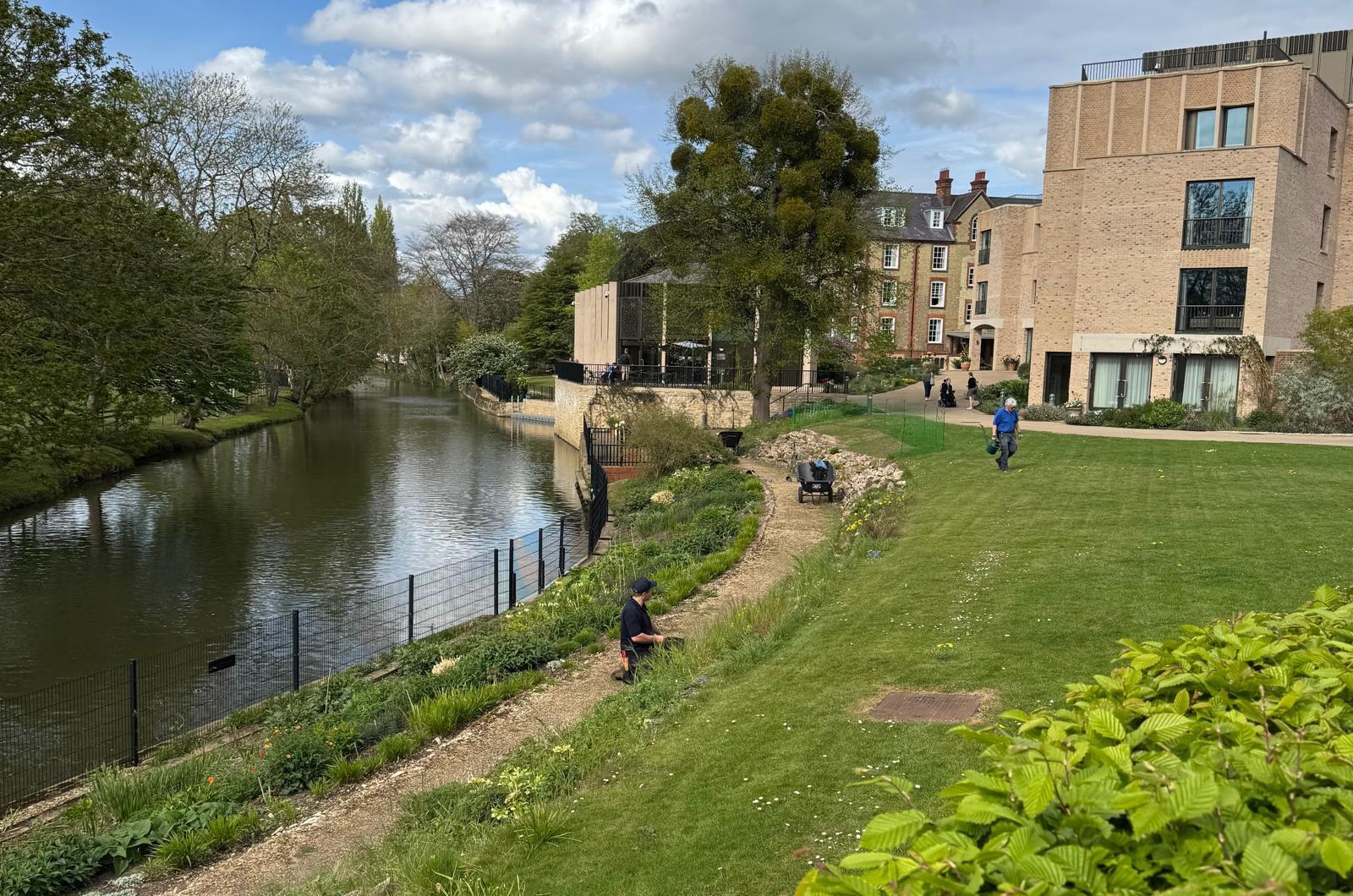
A room of one’s
Leila Hoffpauir reflects on how the college system shapes Oxford’s cost of living.
As rents in the UK and Oxford continue to soar and private housing becomes harder to secure, college accommodation has become one of the most important, and unevenly distributed, forms of support available to students.
According to the Office of National Statistics, average UK private rental prices rose by four percent in the 12 months preceding December 2025, bringing the average monthly rent nationwide to £1,368.
In Oxford, rent can be even higher. The average monthly private rent reached £1,913 in December 2025. That’s among some of the highest prices in the UK outside of London and a nearly
seven percent rise from 2024.
A lack of availability further exacerbates the issue. A 2021 census conducted by Oxford City Council found that of the more than 36,000 full-time students in Oxford, just over half lived in student residence halls. The remainder lived in private accommodation near the University either alone, with other students and non-students, or with family members. That places more than 18,000 students in the city’s private rental market.
That market, while sizeable, is tightly contested. Oxford has an estimated 30,500 privately rented homes, including more than 4,400 Houses in Multiple Occupation (HMOs), according to city council data. With tens of thou-
sity-owned properties, despite having more than 1,300 students in total.
College accommodation is also significantly cheaper than private housing. According to University-published statistics, the average college rental payment for undergraduates is £948, nearly £1,000 below the private rental average.
This brings into focus the question: how much, if any, accommodation support do colleges owe their students?
Recently, St Hilda’s College announced that it would only offer eight college-owned housing places to continuing graduate students. The college communicated the change in week one of Hilary term with continuing graduate students expected to indicate their wish to apply for one of those eight spots by the 31st January. The focus, according to the college, is to ensure St Hilda’s can provide guaranteed housing for all incoming first year graduate students in order to help alleviate the struggle students face when moving to Oxford to study. The Oxford Student reached out to St. Hilda’s College for comment but did not receive a response.

sands of students competing alongside non-student residents for a finite pool of housing, availability, not just price, has become one of the defining pressures of living and studying in the city.
For many students, the best-value option is accommodation provided by their college. However, not all colleges are created equal, and for many students, guaranteed affordable housing remains out of reach. St John’s College, which boasts some of the most affordable accommodation in the University, guarantees rooms for undergraduates and all firstyear postgraduates. Meanwhile Kellogg College offers just 85 rooms for full-time graduate students, with 71 additional rooms available to students in Univer-
should not be happening. If we are all Oxford students and if we all came here on merit then this should be a uniform experience.”
As Oxford’s student body continues to expand and diversify socioeconomically, access to affordable housing is becoming an increasingly central part of the student experience. While colleges vary widely in their capacity to house students, the consequences of those differences are felt acutely in a city where private rents are among the highest in the country.
The University does offer resources to students struggling to find accommodation, though these are unevenly distributed. Graduate students who are unable to secure housing through their own college may access the Collegiate Accommodation Support Service (CASS), which helps link them with available rooms in other colleges.
In a statement, St Hilda’s MCR President, Valentine Sender, wrote, “the college judged it fairer to give priority to incoming students, as continuing students have the possibility to look for accommodation while already living in Oxford, [...] The MCR was asked to give a consultative opinion, and decided to support this policy change.”
Some students aren’t convinced and point to an antiquated system that prioritizes formal dinners, balls and other large events over basic necessities.
Jack Manly, a St Hilda’s student pursuing an MPhil in History of War and affected by the policy change, described the decision as “ridiculous,” saying he could “understand a desire to prioritise new graduate students,” but that reserving only eight places for returning students was “such a ridiculously (and arbitrarily) low number.”
However, the issue extends beyond a single college. A graduate student at Kellogg College told The Oxford Student that disparities in accommodation costs had made her feel “not wanted,” arguing that “just because I come from a certain college this
However, this service is limited to graduates, and there is no equivalent university-wide housing placement scheme for undergraduates, not all of whom are guaranteed accommodation for the duration of their course. While the Oxford Student Union Advice Service and college welfare teams can provide guidance, advocacy, and, in some cases, financial hardship support, these services offer advice rather than guaranteed housing and do not address underlying disparities in access to affordable accommodation.
As the cost of living in Oxford, and many other parts of the world, continues to rise, questions about the role colleges should play in supporting their students are likely to grow more pressing. Is it the college’s responsibility to ensure it takes on only the students it can house? Whether colleges should limit admissions based on housing capacity, or expand their accommodation provision, remains unresolved. However, for many students, the answer may determine not just where they live, but whether they can remain in Oxford at all.

identity@oxfordstudent.com | Deputy Editor: Emily Cunnington | Section Editors: Celine Leung, Frieda Fahrenholt, Hayden Bhatti, Neha Ganvir, Rebecca Bushee, Lila Robinson | Columnists: Sharon Chau, Will McCaffery
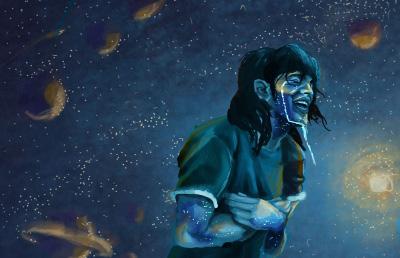
You’re saying, “Last night I dreamed,” soft like a whisper, “that you took me down to the cliffs. We sat there until the sky turned dark, watching the waves crash against the shore in strange patterns.
You said that gods lived here, tucked inside the rocks, and under the rolling tides. Suddenly, I heard them singing.” He’s quiet. Then he tells you that he dreamed you wore a pretty dress, and danced across the room with preternatural grace. That you both collected rocks by the water for some ineffable purpose. He was in your dreams for a time. You never told him that you’d missed the bus before you reached
the cliffs. But darkness fell and he vanished into a new scene, endless ocean melting away into the horizon.
Sometimes I dream of rivers and gullies. Serpentine streams and fathomless
caves. Sometimes I sit in a room and count flowers, placing them in interlocking circles. I’ve played catch in the sky, and swam through the air (thick and soupy, vis-
outfit. Sometimes I stand in a place and know that I’ve seen it before. Outside Lincoln accommodations in the near dark, amongst a group so strange and familiar, I had most definitely dreamed of it before.
believe I think and what I really think don’t always elide. Indeed, the emotions I feel while asleep often bleed into waking. It is as if they have been unlocked, and dreaming is the sole key to the cedar chest in which they sleep.
cous like fog). I’ve felt ancient magic and mundane panic. People drift in and out of these scenes. Sometimes familiar, sometimes not – often enough nothing more than the impression of a gentle hand, a sweet caress. Eyes, russet or honey or aquamarine watching from an indistinguishable array of features. Always above me, gazing down. My teeth move around in my mouth when I am anxious. I am chased by some unknowable thing through haunted halls and under creaking floorboards at least five times a decade. Her arm, which had broken in my dream wearing that pink shirt, broke not four days later in the very same
My dreams are surreal. They are inconsistent and at times deeply terrifying. Sometimes they reoccur, like the nightmare I’ve had since childhood, or some variation on a genre, like dreams about my teeth. They have predicted the future on occasion, or else instilled me with a deeply unsettling sense of having been somewhere already. Sometimes I remember them, other times I do not. I always remember my dreams when I wake in the middle of one, but only if I choose to fall back asleep. Those dreams are sharp, accented and lingering. Sometimes I’m jolted from one so vivid that I have to wait a while for the feelings to fade. There’s also a pattern to what seems to feature in them. I do not dream of things which are at the top of my mind. No, the people and places which appear are topics from the past week, or even month, of thought. Feelings which have been simmering just below the surface of my conscious mind, people who’ve become important recently, but not at the forefront of my thoughts. It is always things which are relevant but not always immediately salient. The first week after someone new has entered my life, I do not dream. By the seventh day, almost without fail, they make their first appearance.
I wholeheartedly believe that dreaming is some innate expression of my fears and anxieties, joys and sorrows. It is also something sublime – supernatural and ineffable. I’ve had premonitions and moments of deja vu so intense that they have never been easily explained. Processing my dreams helps me to sort out what is truly on my mind, just underneath consciousness. What I
“I dreamed we climbed a mountain, collector of souls, clutching our pilgrim’s prayer: ‘crumble to nothing, fade to dust, but last and last and last and last,’” they can’t hear the panic in your voice, the shaking, tearstained terror which drew you from your bed. But you continue, “I can hardly remember the cadence of it – but when you unraveled (unspooling like thread) and lobelias sprung from under your skin, I knelt on the rock and cried.” It had been the insects: some callous racket to gather our souls for the mountain. The next morning, those desperate scrawlings on your notes app seemed inadequate.
“
Dreaming is some inanimate expression of my fears
The dirt on your fingertips, the breathy sigh of your last prayer, but most of all that existential feeling of ceasing to exist, it all lingered long past sunrise.
Read more online at www.oxford student.com
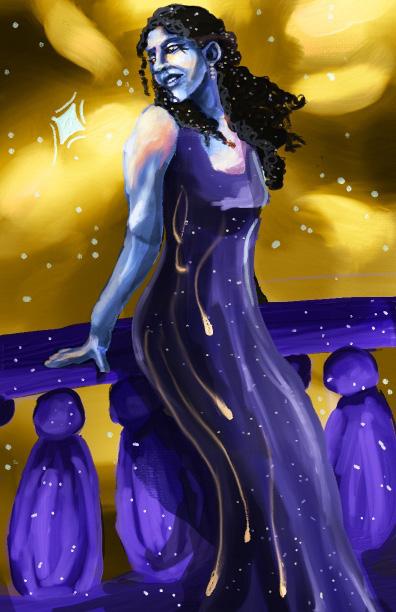
Rebecca Bushee
What makes a space sacred? Can a space’s presence be felt? These places are often constructed, but sometimes they are selected because of an inherent divine presence. When I think of someplace sacred, temples or churches often come to mind. Less often, I think of natural spaces, but they can be all the more powerful. A holy space should inspire some sort of feeling, whether it is grand and decorated, or austere. Cathedrals are meant to evoke awe; with their soaring ceilings and elegant finery, it is easy to feel a sense of the divine. Yet these places have always had a sense of detached sacred-
“ Cathedrals are meant to evoke awe... a sense of the divine.
ness to me. I couldn’t connect what I was supposed to feel with what I actually felt. I had never been moved by a space in such a way until this summer. In Belize, while on excavation, we took a trip to one of the most well known cave systems in the region and the journey was transformative. Sometimes these caves appear in my dreams, even months later. I am forever changed because of them. Caves are important in Maya cosmology as the entrance to the underworld, the gaping maw of the earth. I had read about them before, but it doesn’t quite register just how important they are until you set foot inside one. Immediately the air feels different, and the rocks cast strangely human shadows. The earth quite literally swallows you up. These caves were made: shaped by erosion, by blood
and by water. My descent into the underworld inspired a feeling of awe and terror so acute that sacred was the only word for it.
Our guide told us of the name Actun Tunichil Muknal, “Cave of the Stony Sepulcher.” The first geomorphologists who mapped it came across the vaulted ceilings and strewn about bodies and mistook it for a place of burial. In reality, these caves were a holy site, imbued with the horrible power of Xibalba. They were transgressive spaces, only navigated for ritual: the bodies, likely sacrificial victims. Chahk, the rain god, supposedly dwelt in such underground caverns. He lived beneath the trunk of the ceiba tree, deep within the roots of the nine-layered underworld. The pool outside of the cave was a brilliant blue. So turquoise and iridescent, it seemed to glitter in the morning sunlight. Climbing down the slippery rocks, we waded into the deep, cold water. The sun faded behind us as we turned on our lamps and made our own descent into Xibalba. Scrabbling across rocky surfaces in the fathomless water, we moved through endless caverns. If on Monday I had been beholden to the great open sky, the thirteen levels of heaven, this was the antithesis to that. So dark and full were the caves.
“ So turquoise and iridescent, it seemed to glitter in the... sunlight.
Primordial waters lapped at my toes. Flowstone shone along the walls as we passed. Great ribbed stalactites hung from the ceiling, calcified forms glittering in the near black. “Roots of the ceiba
tree,” our guide explained. “Or perhaps teeth of a centipede,” he said. The latter felt less appealing. Though the columns of accumulated rock appeared like slavering jaws and the sharp stalagmites protruded from the floor like fangs. For a moment, we stopped in a pool that shimmered on the walls. Our guide told us to turn out our lights, to see the space as it might have been when all the torches were extinguished. One by one we turned off our headlamps. And suddenly, we were plunged into such a darkness as I had never seen before. Eyes closed or open, it made no difference. It was an oppressive black: one that pushed into your skull and pressed at your temples. All too quickly we turned our lights on. It was enough to make anyone afraid of the dark. Afraid of those things that creep and crawl in the gloom.
We followed the current for a while longer, wading through chest-deep water. Almost a half mile into the cave we reached the last place where the Maya had been. We began ascending there: climbing carefully up an eroded columnar structure. Limestone formations cast flickering shadows beneath our guide’s light, illuminating profiles of gods. Ix Chel, or perhaps Itzam Kokaaj seemed to speak out to us, jowls hanging low from slackened jaws. Perhaps Maya shamans had seen them too, murmuring in the torchlight as whatever hallucinogenics they used brought them to life. To either side of us, remarkably preserved ceramics were strewn about, likely in a purposeful pattern. They had been destroyed intentionally, with cracked rims or kill holes drilled into the sides. Offerings for the gods: of maize, atole, or cacao. The ceramics grew more dense as we ascended. Prayers for rain, calcifying
slowly into the sandy stone. People were coming here, becoming desperate. Unceremoniously sticking from the rocky ground, a skull glowered up at us. Missing his teeth from a haphazard incident with a tourist, he would have had them filed in the shape of the wind glyph (Ik’). His head was oblique, evidence of cranial modification. This man was a sacrificial victim. When the rains
“ Sometimes these caves appear in my dreams, even months later.
wouldn’t come, and the spilling of blood and offering of food failed to lure Chahk from his hidden place, they turned to their own. He had been bludgeoned, and the rest of his bones had been washed away by the cave’s waters. We passed more bodies, the mark of their increasing, desperate need for storm.
An infant’s bones lay scattered across the ground. I could almost hear his screams as the torchlight receded, left to cry tears like rain. I pictured that oppressive dark, pressing against my temples, and the utter terror he must have felt. More victims lay scattered about, too many children. And finally, splayed in the deepest part of the cave, a body tumbled into the rock. Calcite glittered on his bones, creeping up his pelvis and embalming him in stone: the final victim of Actun Tunichil Muknal. The space felt suffused with a presence. Many had died here. And yet the rains never came. Chahk had turned a blind eye to their desperate offerings. Collapse grew ever near. In the deepest part of the caves, we sat for a moment in quiet reflection. If ever there had
been a place that I could call sacred, it would be this austere chamber in the heart of unforgiving rock, floating above abyssal waters. It was a place that was made in every sense of the word. Thousands of years of careless erosion, carving the limestone into a gaping portal to the underworld. Decades of sacrifice, centuries of blood spilled upon those same smooth stones. The ancestors walked with the gods here. We sat in that place feeling a solemn sort of purpose. Soon, we turned from that dancing boy, frozen forever beneath calcified rock. Reverent, almost. Chahk’s breath glanced along my shoulder, as we climbed back down that ledge and sloshed through those whispering waters. Our journey out of the cave felt quicker. As if we had been released from some sort of divine presence—dismissed. We swam towards the sunlight like we’d been deprived of it, escaping the clutches of Xibalba. With all the noise and clatter of the summertime rains, we emerged. I drank in the colorful rocks, and the verdant greenery as it draped all around us, but I had been changed. The blue-green waters felt warm.
Credit: Alexandra Koch, via Pixabay
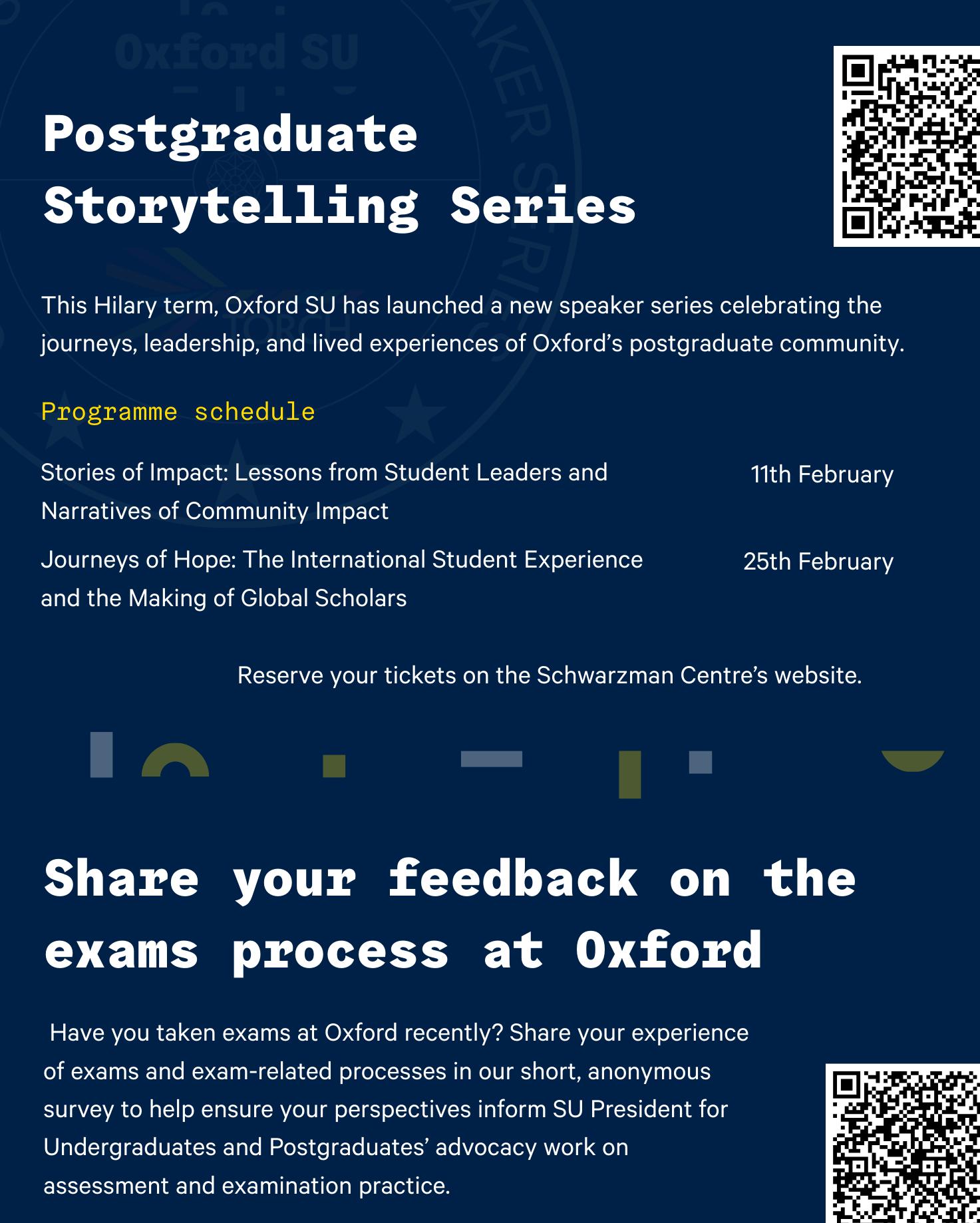
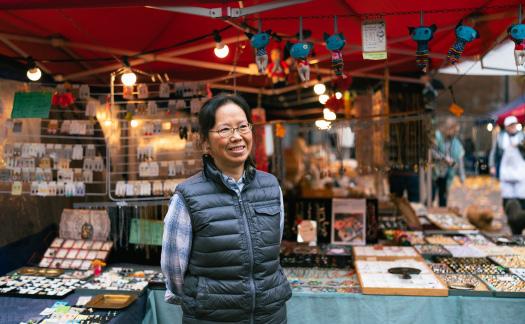
by Meira Lee
In the heart of Gloucester Green stands a charming jewellery stall, loved by locals and visitors alike. Necklaces and pendants dangle from hooks; earrings and bracelets of all shapes and sizes are displayed in a dizzying array of colours, covering every inch of the tables. Phing, who makes each piece by hand, is busy attending to customers with a cheerful smile, both wrists adorned with dozens of silver bracelets.
“ Because I studied fashion design, the way I think is different...
Born and raised in Zhejiang, China, Phing studied art and design in a vocational school, which introduced her to foundational ideas in colour theory and art history. After a
period of employment, she entered university to study fashion design. “Because I studied fashion design, the way I think is different from people who trained in metalwork (for jewellery).” “As for this pair,” Phing says, pointing to a pair of black earrings, “I simply cut two semicircular shapes from an old piece of leather. They’re not perfect, but… this world already has too many perfect things.” She laughs gently. “When something isn’t perfect – when it’s handmade – it will have a certain roughness to it, and a certain feeling of warmth.”
In the early 2000s, she moved to Japan to study computer graphic design. “At the time, using digital software to create designs was regarded as a new and especially valuable skill to have.” She continued to work in Tokyo as a graphic designer, ultimately spending a decade there. It was her time in Japan
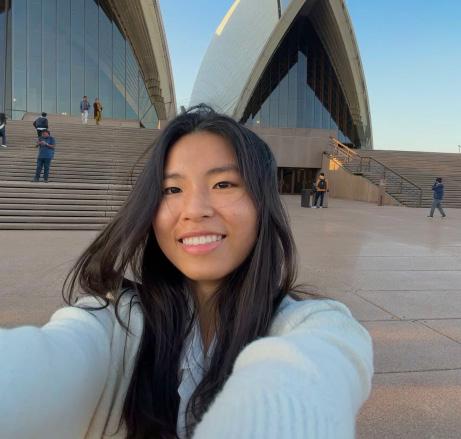
that inspired her to pick up crafts as a hobby: “The atmosphere surrounding handiwork in Japan is especially good. They have lots of books on handiwork and crafts, of which I bought many. After work, I wouldn’t have anything on! Life was very simple then. So, I decided to make some crafts.” She gestures to a few cloth dolls on display, and tells me that she started by using traditional Japanese fabrics to make stuffed toys and rag dolls. Gradually, she began to experiment with copper and steel wires, which led her into the realm of jewellery-making. When she wasn’t at her day job, she’d be selling her crafts on Etsy. “We were even named a ‘star seller’ on the website,” she beams. She pulls out her phone and shows me her now-defunct Etsy store. When we chance upon a picture of her cloth dolls on Pinterest,
profiles@oxfordstudent.com | Deputy Editor: Vincent Chang
Section Editors: Darcey Harris, Isla Jenman, Himasweeta Sarma, Audrey Miu, David Binns
she mutters, “Who put this on Pinterest? It wasn’t me!”
Since starting her business, she has participated in craft markets across Japan, Hong Kong, Macau and mainland China. In 2023, Phing moved to Oxford and set up shop in Gloucester Green, selling her handmade jewellery from Wednesdays to Saturdays.
Recounting her time in Japan, she describes the locals as “self-disciplined”, polite people who were careful not to burden or trouble others. At times, though, this orderly, courteous culture was almost stifling. She also acknowledges that being an employee in Japan came with a lot of stress. Nonetheless, she remembers the country fondly, and laughs as she tells me that she speaks better Japanese than she does English. The materials she uses come from a variety of places – some were
“ When something isn’t perfectwhen it’s handmade - it will have a certain roughness to it...
gifts from friends, some were items she acquired while she was still in China. One of the main sources of her materials, though, are vintage beads that she finds and repurposes. “I try to make special, unique pieces, so I often use vintage or antique materials that I find in the UK. Regardless if they’re broken or imperfect, as long as I like them, I’d deconstruct them and create something new.” That’s why so many of her pieces are one-of-akind. “Take a look at this,” she says, bringing my attention to a pair of dangly blue-and-white porcelain
earrings. “These are from China – hand-painted porcelain beads from the 80s. The beads were originally from an old necklace, which I cut open and repurposed. There were many such products during those years; some beads with more traditional hand-painted flower-motifs, and some with less traditional patterns.”
She shows me another pair of earrings, this time made from a deconstructed bracelet of seashells. “These shells had been polished and buffed, so they were of very good quality. I used some stainless steel to put them all together.” Her pieces are “not things you can just find anywhere”, and certainly “not something you could find at Westgate”. “Sometimes when customers return wearing earrings they bought two years ago, I’m still able to recognise the fact that I made them. And sometimes when I’m browsing Vinted, I come across items that were made by me! Once, someone was selling [my work] for a higher price than I did; I sold it for five pounds and they sold it for eight,” she laughs.
A pair of earrings made by Phing typically costs three to six pounds. She tells me that she tries to keep prices affordable because “most customers are students or tourists who are not so keen to purchase expensive products”. “You can sell your products at a higher price, but they will sell slower. Selling them at a slightly lower price, allows you to sell them faster, guaranteeing you a steadier source of income.”
Read Rordon Gamsay’s
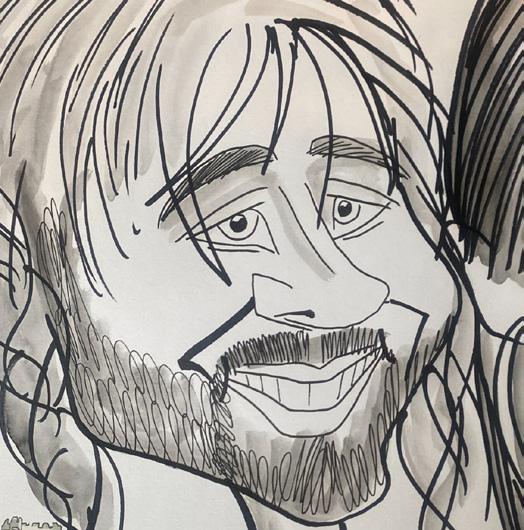
Rory Sutherland comes to Oxford with Marketing Society, everyone knows what he’s going to say, and they turn up anyway. Today, a lot of people seem to be interested in how marketing works. Sometimes, when I see Rory Sutherland on my feed telling me that marketing isn’t strategy but ‘alchemy’, I can’t help but feel like he’s selling me his own job. In 1928 Edward Bernays, the founder of modern Public Relations and the nephew of Sigmund Freud,wrote that in a democratic society it was a fait accompli that there would be a ‘conscious and intelligent manipulation of the organized habits and opinions of the masses’. In the late 80s, the armchair conspiracy theorist’s answer to ‘What if the bodysnatchers tried to sell us things’ They Live centers around a pair of sunglasses that reveal the real messages of the various billboards in New York trying to sell french fries or a twenty-six inch waist. Frank puts them on, and plain white billboards saying ‘Marry and Reproduce’, ‘Buy and Consume’,
or just ‘Obey’ flash up as the hidden meaning behind the painfully 80s billboards that look to an audience used to the several layers of camouflage that Hollywood product placement wears about as subtly as an uppercut. In the 1990s, the woolly jumper student socialists sitting in Labour Club who would point to this in Bernays’ Propaganda and say that capitalism was ‘totally messed up’ and have Nada’s ‘You ain’t the first son of a bitch to wake up out of their dream’ from They Live quoted at them would probably say that anyone who had an apolitical interest in marketing in the same way that they might watch a documentary about the national grid was either clinically autistic or a bona fide sociopath. People who are interested in the marketing industry, and people who want to market things better. Are people I recognise; they wear grey blazers to the pub and can coherently explain to me what the difference between venture capital and investment banking is. Read more at www.oxfordstudent.com

Rordon Gamsay replies to your ethical dilemnas in the OxStu newsletter, sign up on our website

When I was younger, my mother used to tell me stories about getting a cold in India. Whenever she felt a chill, there would be mutton soup simmering on the stove, the smell of pepper and bone filling the house, and the comforting command to “go to bed.” Illness was treated almost like a performance — the body taking its cue, and the family tending to the scene.
The modern equivalent, for me, would be buying a Victorian fainting couch. Of course, I have no space in my room for one. It would be utterly bizarre to order it, and yet I can’t shake the feeling that we’ve forgotten the essence of being ill.
We no longer perform illness. We are always tired, perpetually burnt out, so when we fall sick, it’s no longer something marvellous or strange, no longer an interruption worthy of poetry. It’s simply another checkbox in the long list of capitalist inconveniences.
And I don’t mean illness in the serious sense, not chronic pain or disability, but the kind of colds that used to be written about so beautifully in Victorian literature. The genteel sniffle, the elegant convalescence, the frailty of genius. Once upon a
time, the pale student, hallucinating gently in a frosty Oxford room, would have been romanticised as a creature of brilliance and suffering. Illness gave one permission to be dramatic, poetic, even interesting.
Now, a cold is merely “unproductive.” You can’t even take a day off for it. The “oh dear God, I’ve got a head cold” moment has lost all ceremony. Gone are the days of socks and bed and lamentations to one’s mother; gone is the childlike wonder of being tenderly fussed over for a fever. You can no longer sigh dramatically under blankets, insisting the world continue without you, because the world now expects you to log on to Teams with your camera off.
When I had a particularly bad cold three years ago, just before a trip to Belgium, I spent two feverish weeks in my room, half-delirious and convinced I was dying of something suitably Victorian. I remember lying there, wrapped in a duvet like a consumptive Brontë heroine, listening to the rain against the window and imagining I was expiring beautifully of artistic melancholy.
v
Read more online at www.oxfordstudent.com






By Charles Prestwich
Step 1: Sign a new manager. Step 2: Let him spend in excess of £200 million on the players he wants. Step 3: When results are poor, declare faith in the manager. Step 4: Decide he is not the right man after all. Step 5: Sack the manager and pay him £10 million in compensation. Step 6: Ponder over who to bring in next. Step 7: See Step 1. Football is a cyclical game and nowhere is it more so than at Manchester United. Moyes, van Gaal, Mourinho, Solskjaer, Ten Hag, Amorim. All six have hopped onto the United merry-go-round (nothing ‘merry’ about it) since Ferguson’s retirement in 2013,
as well as a further four who have served as interim managers: Giggs, Carrick (on two separate occasions!), Ragnick and Van Nistelrooy. Just like that merry-go-round, United are going round haplessly in circles, with no sense of leadership or direction.
But it is not just managers who have had a tough time of it at the club. United has been described by pundits, including club legend Gary Neville, as a “graveyard” for players who come with big promise and whose level plummets inexplicably. Romelu Lukaku, Alexis Sanchez, Donny van de Beek, Jadon Sancho and Rasmus Hojlund are just a selection of players who arrived at
the club, be it as world class superstars (Lukaku, Sanchez, Sancho) or as exciting talents (van de Beek, Hojlund), only to regress dramatically over their time at the club.
But why do these good players seem doomed at United? The cycle of managers certainly doesn’t help. There is no stability for the players –no sooner have they settled into one style of playing than there is a change at the helm and they have to adapt to a new system. The most recent example of players suffering from this is Alejandro Garnacho, losing his place in the team and eventually being sold when Amorim arrived with his 3-4-3 formation.

Yet United will get out of this slump. You only have to look back through history to know that. The club won the English First Division in 1965 and 1967, before winning the European Cup in 1968. Yet it was twenty-six years (suddenly, the current sixteen year
drought doesn’t seem such a long wait) until they next won the title in England, the first of the thirteen they would win in the space of twenty years ... For the full version of the article, head to: www.oxfordstudent.com
“Match drawn”. The phrase that haunted a thousand summers. For County Championship watchers it recalls months of boredom and disappointment as, week after week, they check their county’s score and try to figure out how many batting or bowling points they’ve accrued – only for Surrey to end up winning the league anyway. The sorry state of the English county game, with a points system that incentivises endless draws, is merely fuel for the “cricket is boring” fire. A fire which is threatening to burn the average fan, as arguments against such an accusation levelled at our county game are often unconvincing and, in truth, amount to little more than, “well, you just don’t understand it.”. In a viewing economy that prioritises results and excitement, shorter-format competitions such as The Hundred and The T20 Blast attract the majority of investment and attention from broadcasters. But excitement
can be found in the most unexpected of places… Though the County Championship – with its four-day timeframe, strange points system and constant battle against the weatherman – is a poor advert for our beloved redball game, test matches are not. Fear not, cricket fans. This is not another Bazball brownnosing, but rather a championing of the good old-fashioned test match draw. Much as test match cricket itself now exists in the liminal space between has-been and relevant, the test match draw operates in the liminal space between sweet victory and bitter defeat. In the age of the short format, one which demands a result, a draw seems the drab inevitability of a ‘boring’ test match, rather than an exciting prospect. But in the test match arena, a draw can be as thrilling as a win, if not more so. Who can forget that famous, last-wicket stand between Sir James Anderson and Monty Panesar against Australia at
Cardiff in 2009? Their heroics saw them survive the last sixty-nine deliveries to scrape through to a draw. Far from being boring, the draw lit up the series and helped them win 2-1. The five-match series is what gives a test match draw its vitality – it has the potential to really mean something; the potential to be of exciting consequence; the potential to push a team to eventual victory, or to defeat. This is a fact often forgotten in a test match environment which, particularly in England, has seemingly cast aside the carefully wrought tension and excitement of a draw, in favour of the more ‘exciting’, smash-it philosophy of the white ball game.
England’s last two test series highlight this need for patience in the modern game. In the fifth test of the ’25 Home Series against India, England lost in comical fashion: trying to race to victory with a day and a half to spare, they slumped to defeat by six runs,
James McInerney
and in consequence failed to win a series that they had dominated. Similarly, in the ‘25/26 Ashes, England lost the third test in a farcical show of Bazball on the last day, with the ‘smash-it’ mentality of players such as Jamie Smith polluting what would have otherwise been a hard-fought, and well-earned, test match draw. A draw would have kept the series alive, and their victory in the fourth test might have meant something; a draw would have given some glimmer of hope and happiness for the thousands of fans who had travelled across the world to see them. Instead, they opted for the results-based approach and lost the series there and then. Would Monty and Sir Jimmy have let the fans go into the fourth test bereft of that steely English hope? Perhaps not.
For the uninitiated, think of a test match draw as the epitome of delayed gratification. Four days of tension. Four days of anticipation. Four
days of sporting flirting and foreplay, until the push-andpull of fortune delivers the climax of a stalemate. This game of ours is a long one, but the best things in life are worth waiting for, and the thinking man’s baseball welcomes all who care to exercise that ancient virtue of patience. This is cricket, and a draw can be beautiful.