
O XFORD S TUDENT
The University of Oxford’s Student Newspaper, est. 1991
University accused of paying an intelligence firm to spy on students
The University of Oxford allegedly paid a private intelligence firm to monitor student protest activity, according to an investigation by Al Jazeera English and Liberty Investigates.
The report names Oxford as one of twelve British universities that paid Horus Security Consultancy Limited to “spy” and gather intelligence on campus activism between January 2022 to March 2025. The investigation does not detail which Oxford students, if any, were specifically monitored. According to Al Jazeera and
Liberty Investigates, the firm, run by former military intelligence officials, scanned students’ public social media posts, compiled detailed reports on individuals who have expressed support for Palestine, and conducted counter-terror threat assessments on potential academic speakers. Horus was paid a combined total of £440,939 by the twelve universities.
In March 2025, Liberty Investigates submitted a Freedom of Information request to the University. In its response, the University confirmed it had used Horus Ltd, and, argued that this
was “risk assessments for university events”. The University refused to disclose how much it had spent on Horus, citing commercial sensitivity exemption.
Liberty Investigates then requested copies of all Horus briefings and email correspondence held by the University. The University confirmed it does hold such documents, but refused to release them, stating that disclosure would “prejudice the commercial interests of Horus Ltd” and damage “its relationship with a key supplier.” Continued on page 2
Shadows on the Wall: Generative AI in the Ioannou and Beyond
Samuel Berthon
In 9th week the staircase leading to the mezzanine at the rear of the Classics faculty was redecorated. Thirty colourful posters now adorn its walls, the winners of an outreach competition for secondary-school children. The submissions were judged by Production Designer Arthur Max and Graphic Designer Rhiannon Fraser, who both have impressive filmographies ranging from Gladiator, via Game of Thrones and Paddington. Two of the winning posters may strike you as you ascend from the ground floor. They were clearly created entirely with generative AI, given away by their inability to depict complex objects in detail – hands, a globe, a wall of text. One has
the tell-tale gold-black AI-art colour scheme.
Whether this is even a story, or a negative story, is up for debate. ‘Enterprising Youngsters Use New Technology to Win University Competition’. Or how about – ‘Labour of Love of Aspiring Classicists Replaced by Typing Text into a Box’. I reached out to the Classics Outreach team to ask whether AI was mentioned in the parameters of the competition. They replied that, in order to keep the competition as open as possible, no rules around the use of AI were set out. That the AI posters were chosen as winners to be displayed on the walls was down to the selection of the judges. Continued on page 3
When the City Council Oversteps: In Defense of Regent’s Park
As Hilary term was drawing to a close, Regent’s Park College announced its plans to convert a piece of property, including the Oxfam near the end of Pusey Lane into a new, improved MCR.
The current MCR, tucked away in a basement near the storage closet, was fit for a smattering of ministerial and DPhil students present at Regent’s 20 years ago. Since then, the MCR population has grown by five times while the dark, sorry room that counts as their “MCR” has re-
mained the same. The winding stairs are the only route down, facing a massive accessibility issue. Thus, Regent’s is trying to address the problem with a massive investment, instead of simply deeming it an unfortunate historical reality. An uncontroversial project using the college’s funds designed for student benefit, right? Wrong. Local resident backlash ensued, defending the Oxfam location which currently stands on the property. Continued on page 3
Saba Ahmadzadeh Noughani and Laila Nasher
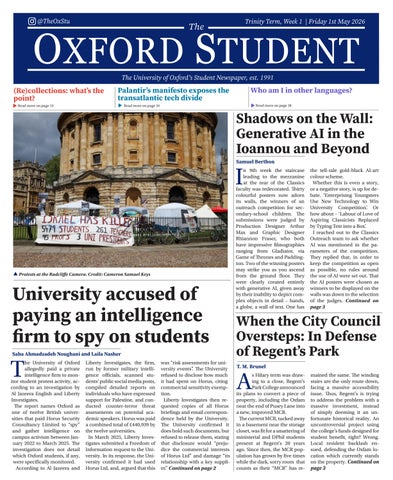
Protests at the Radcliffe Camera. Credit: Cameron Samuel Keys
T. M. Brunel

With Trinity term underway, I couldn’t be more excited for what the OxStu has in store.
Taking on the Editor in Chief role will be challenging, but I’m looking forward to working with the genuinely fantastic team we have assembled. Our News reporters will be on the ground bringing you impactful journalism. Our Opinion section will seek to shed light on the biggest debates, with fresh takes on the pressing issues around us. My baby, the Business and Finance section, will continue to spearhead this area of student journalism. Across all sections, we will explore what it means to be an Oxford student in this crazy world, pursue the stories



Hello and welcome to our first print of Trinity. It’s great to have you here! In the business of the vac, it was easy to forget that we had something to look forward to: pulling off the first
Editorial Team
Editorial Board
Guilherme Lopes and Marcus Swinerd (Editors-in-Chief)
Luke Erly and Gabriella Bedford (Associate Editors)
Lila Robinson (Managing Director)
News and Opinion
Ellie Apostolidi (News Deputy Editor) Saba Ahmadzadeh
Noughani (Opinion Deputy Editor)
Laila Nasher, Arisu Babkhani, Dhiraj Grantham, Samuel Govier, Ellie Pemberton, Honcques Laus, Sambhodi Jindal, Christine Savino (Section Editors)
that matter, and really seek to make a difference through our writing. If you’re a talented writer, we’re keen to platform you, and we’re bringing individual voices out more through our many columns.
Many in Oxford claim to be the last bastions of free speech. I will not enter such grandiose territory, but our promise is simple and clear: to defend journalism in a world that increasingly leaves it behind. This paper is nothing without its readers. After all, we are named after you! So this term, whether you are writing, pitching, commenting on our Instagram, or simply sitting back and enjoying our stories, we welcome and celebrate you. Here’s to a fantastic Trinity.

IGuilherme Lopes St John’s College
print edition of the term. After many hours of going through application forms, holding interviews, and adding so many numbers to WhatsApp that your phone thinks that you must be a robot, it’s a relief to have a full team together. And what a great team it is! With old and new faces, I’m confident that we are set up for a productive and fun term, and I can’t wait to see what we get up to. I am particularly looking forward to our town hall event on May 5th, where we have invited all of the candi-
Investigations
Vincent W. Chang (Deputy Editor)
Arisu Babkhani, Michelle Ma, Laila Nasher (Section Editors)
Features
Niyanthri Arun (Deputy Editor)
Anna Little, James Stratmann, James McInerney, Honcques Laus, Ellie Pemberton, David Percival, Dhiraaj Grantham, Samuel Govier (Section Editors)
Business and Finance
Leila Hoffpauir (Deputy Editor)
Akheel Kale, Alexandra Agcaoili, Michella Ma (Section Editors)
n a flash, and it’s gone. That’s how this year has felt. Somehow, we’re now in the first week of Trinity, and I’m scrambling to make the most of this term before embarking on my year abroad in September. Over the past two terms, I’ve enjoyed progressing within the OxStu. I’ve been able to see all sides of the OxStu, from the excitement of on-the-ground news reporting, to laying in longer-form pieces for our Opinion section. Last term, as the host of our new podcast, The OxStu Supplement, I loved interviewing a wide range of fascinating guests. Discussing topics from Oxford’s drama scene, student journalism and student finance, I’m excited
dates who are standing for elections in the Holywell and Carfax & Jericho wards. This is a first for student journalism in Oxford, and I’m excited that students and the public both have an opportunity to hear from those who are competing to represent them. So do come along, it promises to be an exciting night! In this edition, we have music and food reviews, what it means to live according to Oxford Standard Time, and how our university is accused of spying on its own students. So sit back with
Culture
Elliott Wang (Deputy Editor)
Jasmine Joyan (Poetry Deputy Editor)
Nora Mackay, Malachy King, Esther Bird, Natalie Perera, Flora Molnar, Anna Little, Katrina Roach, Isaac Hole, Grace Butler (Section Editors)
Sofia Sutton, Sophia Yvonne Hall, Oliver Weston, (Poetry Section Editors)
Identity
Tamar Okunhon (Deputy Editor)
Sambodhi Jindal, James Stratmann, Shikha Dahiya, Katrina Roach, Elliott Wang, Nguyen Thi Ngoc Mai, Ella Kelly (Section Editors)
to see the expansion of this project over the course of this term! Amidst recording podcast episodes last term, I was also the Deputy Editor of our newly branded Opinion section. I am proud to have published so many well-received articles that give our students to share their views on topics that matter to them. By building a more prevalent social media presence, expanding into different multi-media forms of journalism and introducing student-facing columns, Gui and I are excited to push the OxStu to its full potential! I’m very proud to release our week 1 print, and I hope you enjoy reading through the pages that our amazing writers and editors have been able to produce.
a drink of your choice and enjoy what we have prepared for you. And best of luck to those of you with exams this term. I hope that your revision goes smoothly and the sun continues to shine. Bye!
Profiles
Martha Kiyan (Deputy Editor)
Himasweeta Sarma, Elliott Wang, Ella Kelly (Section Editors)
Sport
Charles Prestwich (Deputy Editor)
James McInerney, William Alexander (Section Editors)
OxYou
Holly Mackinnon (Deputy Editor)
James McInerney, Shikha Dahiya (Section Editors)
Creative Imogen Graus, Katie Hinckes (Social Media Team Members)
Catherine Wang (Podcast Editor)
Naomi Flexman (Cartoonist)
Marcus Swinerd Keble College
Lila Robinson University College
News & Opinion
The University releases annual welfare report
Ellie Apostolidi and Guilherme Lopes
The University of Oxford has released its annual welfare report for 2024/5, covering the University’s offerings of counseling support, peer support, disability services (DAS), and sexual violence and harassment support (SHVSS).
The most significant uptake in the University’s Welfare Services have been reported within SHVSS: 201 referrals in 2024/2025 compared to 179 in 2023/2024. Of those referrals, about 57 percent involved sexual harassment/misconduct/assault or rape, with a fifth accounting for cases of rape - proportions which remained consistent with data from 2023/2024. 42 percent of total incidents took place in a non-Oxford context (a fall from 49 percent in 2023/2024) compared to 22 percent in college be- tween students (an increase from 14 in the previous year).
There have been positive changes to the number of students the SHVSS reached, and the time taken to respond to referrals, although the overall reach of the service remains small. The report shows that average waiting times for an initial appointment fell to 6.3 days, compared with 8.5 days the previous year and that training provision for the ‘Healthy Relationships and Consent Workshops’ more than doubled to 486 staff relative to the pre-
vious year. However, only 15 colleges hosted consent workshops, an increase from 8 in 2023/4, but reaching only 1,301 students - less than 5 percent of the student body.
A significant trend noted by the report is “low student confidence in formal reporting processes, reflected in increasing use of precautionary or informal measures and declining engagement with police and criminal justice pathways.” This trend is consistent with the University’s identification of “sustained case complexity and ongoing risk”, with around a third of cases requiring multiple contacts. It is also noted that higher case complexity has not been matched by additional resourcing. This pressure is further reflected in the pattern of ISVA use: on the one hand new referrals
“ ...reaching only 1,301 students - less than 5 percent of the student body.
have declined, yet the number of ongoing cases has increased significantly - indicating that a smaller cohort of students is requiring more intensive, long-term specialist support. The
University links this to extended criminal justice timelines, with delays to charging decisions and trial dates prolonging survivors’ engagement with support services.
SHVSS states that embedding student voices, strengthening continuity and support, and investing in training are the key priorities for 2025/6. SHVSS also works closely with OURSPACE, a study into sexual violence and assault at Oxford. In the project’s initial findings paper in 2021, OURSPACE reported that “20.5% of respondents experienced at least one act of attempted or forced sexual touching or rape, and 52.7% of respondents experienced
at least one act of sexual harassment (SH).”
Looking through the rest of the Welfare Services reports, the number of students accessing counselling services and DAS has remained roughly consistent with previous years, with demand for the former being reported at 2,850 students or 8.7 percent in 2024/25, consistent with demand at 9 percent in 2023/2024. Similarly, the report shows that in 2024/2025, the DAS held records for 7,700 students, approximately 24 percent of the student population - a minimal increase from 7,610 students in 2023/2024. Read more online at www.oxfordstudent.com
Oxford University accused of paying a private intelligence firm to spy on students
Liberty Investigates challenged this refusal through an internal review request in June 2025. Under the FOI Act, public authorities are expected to respond to internal review requests within 20 working days. As of March 2026, the University had not responded, nearly a year after the request was submitted.
Documents obtained from three institutions, The University of Bristol,
London School of Economics, and Manchester Metropolitan University, provided the clearest picture of how Horus monitored student activism. At Bristol, internal emails revealed that the university had paid for an alert service covering all protest activity across the city, and had provided Horus with a list of student groups it wished to monitor. At the LSE, a PhD student discovered through
the investigation that a social media post she had written during the university’s 2024 encampment was one of thousands of posts compiled into a daily “encampments updates” briefing. At Manchester Metropolitan, a Palestinian-American academic invited to give a public lecture was subjected to a secret threat assessment, drawing on allegations against her that had already been
dismissed by American courts.
According to its website, Horus was founded in 2006 by former Lieutenant-Colonel Jonathan Whiteley, following a security project he ran for the University of Oxford. The global private security firm is headquartered in Oxford. The site also list’s Colonel Tim Collins, who has publicly called for non-British protest-
ers who “misbehaved” to be deported from the UK, as a shareholder. Its parent company, Horus Global, lists Collins as a director. The revelations come against the backdrop of sustained pro-Palestine activism at Oxford, which saw some of the most significant student protest activity in the University’s recent history. In May 2024, Oxford Action for Palestine
established an encampment outside the Pitt Rivers Museum. When protesters occupied the Vice-Chancellor’s office on Wellington Square on 23 May, Vice-Chancellor Irene Tracey signed a statement sent to all students and staff describing the action as “not a peaceful sit-in, but a violent action.” Read more online at www.oxfordstudent. com
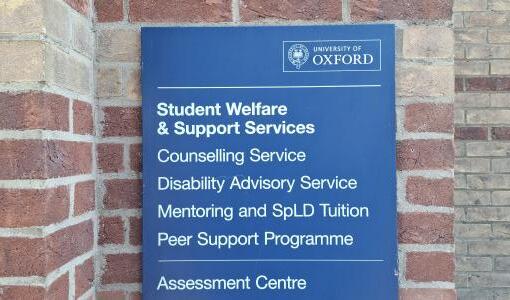
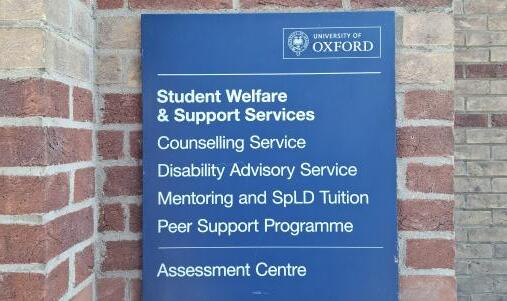
Student Welfare & Support Building. Credit: The Oxford Student
Continued from the front page.
Shadows on the wall: generative AI in the Ioannou and beyond
Continued from the front page.
Now is it not a shame to venerate these lazily made pieces alongside genuinely impressive designs by budding Classicists?
Our faculty studies and celebrates not only the intricate weavings of Virgil, the baroque agonies of Hellenistic sculpture, but also the little traces of human creativity and agency, the identifiable individual scribes of Linear B tablets, the careful concentric circles of Early Iron Age pottery. Yet here organic creation has been sidelined in favour of dull, clumsy imitations of originality.
AI certainly has its uses. In the field of the Classics alone it is currently being used to dig into a carbonised library from Herculaneum’s Villa of the Papyri, under the ‘Vesuvius Challenge’. This effort is undoubtedly impressive (even if the library will only yield a mound of Epicurean philosophy). AI translation tools can also be very helpful when accessing foreign scholarship. But there are negatives, there are reasons why it was such a shock to see these lifeless
posters in the faculty.
In the abstract I believe that GenAI stifles the processes which define what it is to be human. People use it as an omniscient encyclopaedia, which it very much is not. They converse with it, and use it to navigate human conversation. Most pertinently and most publicly it is used to make art, and so to replace requisite dedication and passion with the ability to type up a prompt. And the results are so drab, soulless, and obvious. There is no interest in witnessing an image or song or video which has been printed out of a machine. Yet every day the chance of seeing these aberrations grows.
“ There are reasons why it was such a shock to see lifeless posters in the faculty.

A
Besides ‘spiritual’ or aesthetic qualms, the environmental demands of GenAI warn against sanctioning this technology without careful consideration. The training of GenAI is an extremely resource-intensive process, which encompasses 80-90% of total AI computing output. A growing quantity of resources are being pushed towards this process, with 580 billion dollars
spent on the building of data centres in 2025; a UN estimate placed the cost to end world hunger at 93 billion dollars a year.
Renewable sources, natural gas, and nuclear power are all being tapped to support the ensuing rise in energy demand. Read more online at www. oxfordstudent.com
When the City Council oversteps: in defense of
Regent’s Park
Continued from the front page.
Regent’s was simply not giving Oxfam (or any other company for that matter) the chance to renew their lease. Fast forward to last week, the Oxford City Council rejected the plan, stating it didn’t work within the regulations of the Local Plan. This “Local Plan” maintains that, “in the City Centre all ground floor units should wherever possible contain such things as retail, art, culture or leisure.” On these grounds, the city rejected Regent’s plan.
This decision, from the opinion of a humble observer, seems quite unfair. Regent’s is not evicting Oxfam, nor is it asking to do this in the middle of the lease. Instead, they are merely attempting to invest money in their student population and utilize the scarce resources allocated to the PPH operating within a world of multi hundred million pound endowments. If they are not allowed to use their own property, their own resources, to better the student experience, the people they have a duty towards, it begs the ques-
tion: how else do you want them to?
It is a decision that borders on denying one’s right to property. The “Local Plan” isn’t obeyed by nearly every college in the city centre. Not to mention, Regent’s plan for turning the building into an MCR has a very valid argument to provide all three of art, culture, and leisure to the student community, the
“ I urge city residents to simply walk past St. John’s massive front facade.
most populous community in the city center, who contribute so much to the city. I do not deny that the concerns of locals must be acknowledged, but the closing of an Oxfam branch is simply not the issue that it has been made out to be. I would have understood the fear of closing down a charity bookstore like Oxfam, if it was the only branch in
the city. However, I urge city residents to simply walk past St. John’s massive front facade (all on the ground level, might I add), turn onto Broad Street, and find yourself the original Oxfam. Or, if you’re really craving and Oxfam bookshop, just turn just a bit later onto Turl Street, and voila! The exact same store again! Oxford is overrun with bookshops. This is a beautiful thing, and a massive perk of the city home to so many students. However, bookstores are not a com-
modity in need of protection in this city. Oxfam, an international charity with multiple Oxford locations, could relocate to one of the empty High Street properties. The current location is not a uniquely historic one either, having been a burger joint named “and deciding not to let them renew a lease is not evil , it’s simply their right. If the city would like to buy Regent’s out of the property at fair market value and turn it into whatever they like. Read more online at oxfordstudent.com
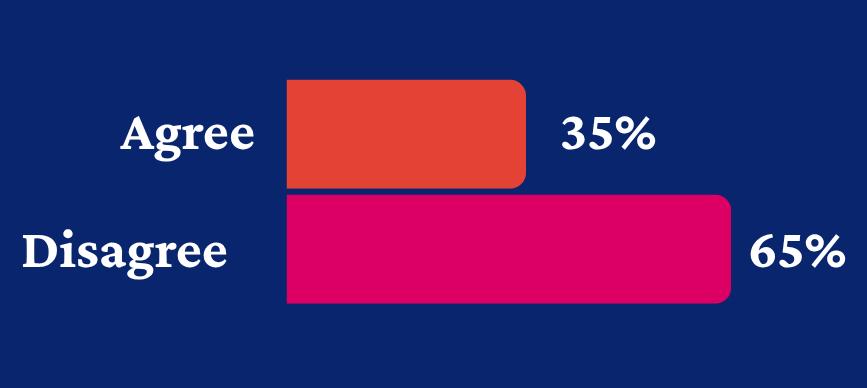
What our readers thought. Join the conversation on our Instagram @theoxstu!
symbolic representation of AI. Credit: DALL-E 3
Honfitársaim: A victory of the people in Hungary’s 2026 election
Honfitársaim.
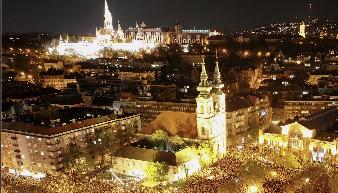
So began Péter Magyar’s victory speech; he addressed the tens of thousands of Hungarians who gathered on the bank of the River Danube and Parliament the night of Hungary’s 2026 election. The Guardian translates it as “My fellow Hungarians” – this is accurate, but loses that agglutinative concision of the original. My offer of a more literal dissection: home (hon) - man/son (fi) - partner/fellow (társ) - my (the possessive plural suffix -aim). My home-man-partners.
This is obviously not a formal translation (“my fellow Hungarians” or “countrymen” are the closest we can get in official English) but I would like to make the case for ‘home-manpartner’ in terms of what it represents for this election. For, on the 12th April 2026, Magyar and his opposition TISZA party ended the previous Prime Minister Viktor Orbán’s far-right rule – sixteen years of it. Whether or not you have been keeping up with Hungarian politics, this should tell
you enough: a single man in power since 2010 does not scream democracy. So much so that in 2022, the European Parliament explicitly ruled that Hungary “can no longer be considered a full democracy”. As you can imagine, this did not make me proud to be Hungarian; the last thing I wanted to be thought of during these years is a ‘partner’ in such a regime.
“ The last thing I wanted to be thought of is a ‘partner’ in such a regime
Partly due to the length of rule, it is very difficult to summarise a list of Orbán’s crimes (and crimes they are, the Hungarian word bűn also used multiple times by Magyar in his speech). In short, he monopolised the country and what it means to be a Hungarian. Under his gaze, the only true Hungarian is a Fidesz (his party) supporter. And what this means is far from what their orig-
increased by 93% since 2018, according to the Financial Times. Many individual sectors are also particularly struggling, with the quality of health and education notoriously decreasing due to a shortage of doctors and underpaid teachers.
inal name and source of the acronym, ‘Alliance
of Young Democrats’ (Fiatal Demokraták Szövetsége) would imply. Today, the definition is rooted in rigid nationalism and Catholicism, but always in a way that signals an opposition group: anti-EU, anti-immigrant, anti-LGBTQ+, pro-Russia, pro-Trump, and so on. It’s a rhetoric of difference; difference that must equate to hate, fear and blame in their eyes.
Along with this metaphorical monopoly on national identity came economic monopolisation too. Notably, over 80% of Hungarian media came under state-control, including national TV channels such as the BBC-1equivalent M1, where instead of objective news an endless course of Fidesz propaganda graced the public’s screens. This cost them millions. This is where the money was going, while Hungary became the poorest country in the EU by some measures. It has become impossible not to notice a different quality of life: prices of necessities such as food have
And so Hungary won another title under Orbán’s regime: most corrupt country in the EU, for the fourth consecutive year as of 2025. It is essentially an open secret that he gave all economic opportunities to those in his close circle – hard to hide when you suddenly source ten zebras for your sprawling estate, as L rinc Mészáros did. With a net-worth of over $3 billion, Mészáros is Hungary’s richest man, and Orbán’s childhood best friend. These two facts, seeing as his livelihood is otherwise gas-fitting, are very much related. In the lead up to this election, zebras thus became a symbol of opposition, from plushes to posters on the street, as an encapsulation of the absurdity of the Fidesz system’s wealth. If this just scratches the surface of how deep corruption and absolute power ran, it makes complete sense that a leader for opposition should emerge from within the system, where corruption is inescapable. Magyar had been a member of Fidesz since 2002, but after a presidential pardon scandal in 2024 resigned from the party and started expressing his criticism of the government. He joined the TISZA party shortly afterwards to run in the 2024 Europe-
an Parliament election, where he came second with almost 30% of the vote – the most successful challenge to Fidesz at the time. From then on, he became the face of TISZA with full force, leading a huge election campaign which included travelling across the country to even the smallest villages which are, generally, Fidesz loyalists. The way Fidesz tried to reach these was with an AI-generated video showing a Hungarian soldier executed as a result of the Ukraine-Russia war, to communicate that apparently not voting for them would result in the war spreading to Hungary. As well as lies about Magyar’s personal life. Disturbing does not begin to cover it. The TISZA name, too, is an abbreviation, this time a portmanteau of Tisztelet and Szabadság, or ‘Respect’ and ‘Freedom’ respectively. However, it is also a nod to the river Tisza, which is Hungary’s second-largest river in length (perhaps first in patriotic value, as a major motif in literature and history). Our national poet, Sándor Pet fi’s poem A Tisza comes to my mind, which I read after a walk along the Tiszabank in a summer at my grandparents’. A popular, and my personal favourite, chant for Magyar and his party thus became Árad a Tisza! –“the Tisza is flooding!”. As people quite literally flooded into the capital city on election night, it could not have been more fitting.
Read more online at www.oxfordstudent. com
Najar’s awarded 1-star rating
Najar’s Place, a popular Oxford falafel kiosk located on St Giles, has been dealt a food hygiene rating of one. The inspectors reported that ‘major improvement’ was needed, which caused the one star rating to be awarded to Najar’s for the second time.
Najar’s Place is popular with students and long queues can often be seen owing to the fact that Najar’s offers popular falafel wraps and halloumi at prices often cheaper than other establishments.
The major issue that was identified was the management of food safety, deeming that the processes in place to produce food at Najar’s is safe to eat and the knowledge of staff concerning food safety requires ‘major improvement’.
However, the inspectors noted that the cleanliness of the premises, condition of equipment, and hygienic food handling was ‘generally satisfactory’.
In 2017, Najar’s received another one star food hygiene rating, deeming the establishment as ‘major improvement necessary’.
Najar’s was criticised for having a curtain as a toilet door, and ‘thick accumulation of dirt and debris’.
If no improvement is made, Najar’s may have to wrap up operations or change their practices.

Election Night in Hungary, Credit: Flóra Molnár
Flóra Molnár
Gabriella Bedford
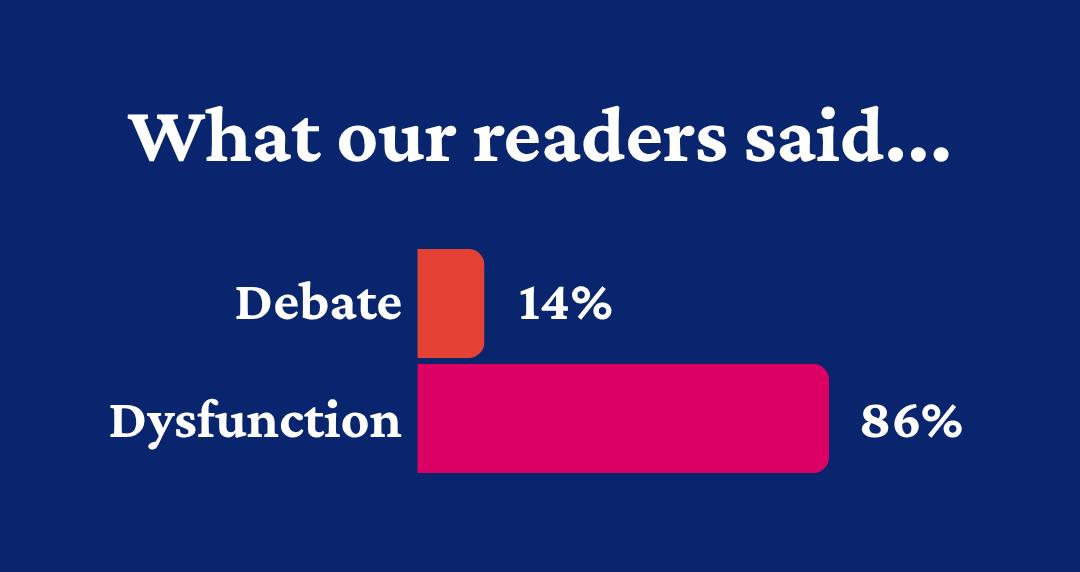
The Oxford Union: debate or dysfunction?
Afew weeks ago, I was asked to take a picture by the entrance to the Oxford Union. Two new members who had just collected their membership cards posed in front of the foyer banner, holding their cards up proudly. I found their excitement slightly odd. The Union’s reputation is increasingly tainted by scandal and a culture which rewards bad behaviour; to be openly proud of being a Union member now feels more unusual than ever. Even I hesitate to wear Union stash outside its buildings.
Yet that small burst of enthusiasm made a larger point to me. For all the noise that surrounds the Union, it is easy to forget what it remains capable of being: not a greasy pole for the coldly ambitious to climb, but a platform for students to
‘Everyone
amplify their voices and develop confidence. I know this from my own experience. As an immigrant to this country, I grew up struggling to speak English confidently in public spaces. I saw in the Union an opportunity to develop skills I never had. Week after week, the Union allowed me to stand up in a room of hundreds and speak alongside some of the most inspiring and influential people in the world. Some speeches went well - others not so much - but it was that very process of doing it again and again which allowed me to push my boundaries.
The Union’s value lies not only in what it does for the individual speaker. It also lies in the unusual power it gives students to shape what Oxford discusses, and to decide which issues deserve the attention of such a grand platform. Despite being barred from trav-
elling abroad by the Iranian authorities, Nobel Laureate Narges Mohammadi still appeared at the Union online last Trinity, giving a platform to a movement which had otherwise been silenced. At its best, that is one of the Union’s most distinctive virtues. It is also what makes its drift from those ideals so dispiriting.
Members note that private business prolongs the start of debates; headlines about the Union are dominated by scandal rather than the substance
of its events; more of committee time is devoted to internal politicking than delivering on the unique platform which the Union has to offer. As Librarian, I am not removed from these dynamics, and I do not pretend to be writing from a position of detachment. In all of this chaos, it is hard to see how the ordinary member would see the Union for anything more than a miniature political drama.
Read more online at oxfordstudent.com
should travel’, but can they?

When I was experiencing visa issues for my year abroad in Tajikistan, and was telling someone from Iran about this, they jokingly pointed out that, on the other hand, Tajikistan is one of the few places that they, as an Iranian national, are able to travel without a visa. They joked “How does it feel now that you, a British citizen, can’t travel to Tajikistan while I can?” Taken aback, it felt as though someone was saying “so
now you of all people know how it feels to be denied entry to travel?”
Admittedly, I’m not used to this, but having to wait 4 months for my Tajikistan visa, consequently missing a full term of lessons in my second year, and now reapplying for the visa, has led me to reflect on how while this is frustrating to me, it’s the norm for so many other people every time they seek to travel. Passport holders from Singapore, Japan, South Korea, Denmark, Luxembourg and Spain, can enter 186-192 countries without a visa. Con-
versely, those in Afghanistan, Syria and Iraq can enter fewer than 30. Even applying for a visa doesn’t guarantee entry, and with that there’s still the application fee, not to mention the time spent applying and waiting. Currency power also plays a huge part. For those with weaker currencies, each trip is costlier. While for us, especially if like me you live in London and depending on where you’re traveling to, most trips would be cheaper. Recently someone told me that a full table of food for two people in Tajikistan cost them £4. In London, that would barely get you a coffee. Earlier this year, Jordon Cox, a British national, pointed out that flying 2,000 miles to Turkey solely for a grocery shop was £20 cheaper than grocery shopping in the UK. This was the case even while including the cost of his flights. Of course, this was before the 2026 US-Iran war which spiked airline and fuel costs per flight, increasing prices. As a result, many frequent flyers I know decided to stay in the UK this year, during times they wouldhave otherwise traveled. When I heard
On this day...
Today marks a 500-yearold tradition. May Day (May 1st) is an ancient spring festival celebrating fertility, growth, and the return of summer, rooted in Roman (Floralia) and Celtic (Beltane) traditions. In Medieval times, villages celebrated with bonfires, dancing, and decorating homes with blossoms.
Roman Floralia is held from late April to early May to honor Flora, the goddess of flowers and spring. Roman Celtic Beltane is a fire festival marking the beginning of summer and the opening of pastures for grazing.
Key traditions on this day include dancing around a decorated maypole, crowning a May Queen, gathering wildflowers, and, in modern times, honouring labour movements. Historically, May Day was considered a pagan, immoral celebration and was banned in England in the 1640s, but later restored under King Charles II.
some of them complain, I felt it was almost out of touch for them to consider their circumstances- lack of travel and a summer spent in the UK- to be abnormal or strange. On the contrary, it is in fact traveling, especially frequently and internationally, that is anything but normal. 80% of the world’s population has never boarded a plane, and only 3-4% travel internationally annually. The average gap year costs an estimated £32,175. This is while 3.5 billion people in the world live on less than $6.85 or £5.10 a day.
One in five young people in the UK who do travel, do so by depending on their parents to fund their gap years and study abroad costs. However, even if we eliminate the financial costs that come with traveling, there’s still the freedom from commitments, and time off from work, that’s needed to allow one to travel. Even if you have a strong passport,affordable currency, and a visa booked in advance if required, not everyone can put a pause on their responsibilities and commitments. Read more online at oxfordstudent. com
Palm Beach Airport. Credit: Don Ramey Logan.
Join the conversation on our Instagram @theoxstu!
Prajwal Pandey
Saba Ahmadzadeh Noughani
By Saba Ahmadzadeh Noughani











Culture
Shakespearean comedy in reverse
Flóra Molnár reviews the 2025-2026 production of ‘A Midsummer Night’s Dream’.
Think of a Shakespearean comedy. Are you thinking of A Midsummer Night’s Dream? This is the play we all grew up with – probably what your school took you to watch in Year 7 –and lives on in our memories full of magic, vines and adorable donkey ears. And yet, as Oxford’s own Emma Smith, brilliant Shakespeare scholar, reflects in her book This Is Shakespeare, if we come back to the text today, naked from nostalgia, we find that “our schoolroom version of A Midsummer Night’s Dream has neutered a much darker, sexier play”. This is the sentiment behind Headlong and Shakespeare’s Globe 2025-6 production: to take these buried depths and not only uncover them but bring them to the forefront.

Jasmine Joyan Poetry Deputy
Editor
In fact, they commit to this with such vigour as to create, what emerged to me, A Midsummer Night’s Dream in reverse – a theory which can be applied to almost any detail of the play, but most obviously the decision to set it in mid-winter.
If the snow-swept fir trees on all the posters were not enough of a clue of cold, when characters turn up in fur coats and confetti-snow falls midway, we are firmly in a winter wonderland. The wonder here, though, has much more of a gothic, cynical quality –they may have gone with the frosty time of The Nutcracker, but it is a malicious, blackswan energy that characterises this fairy world.
Such balletic references are not incidental – tutus are how the production distinguishes the mortal Athenian characters from the supernatural ones of the forest, given that the same actors double across
Wisteria
Sophia Yvonne Hall
Suddenly, and all at once: Purple.
Was I not paying attention?
Oxford in the Spring startles — unexpected, as a door left ajar in December.
Purple, pouring down college walls, that kept, all winter, their own grey counsel.
both parts, as is common in Dream productions. Titania’s fairies wear black tulle skirts and enter in a contemporary, jagged ballet ensemble. Titania herself (Hedydd Dylan) flaunts an ebony corset and long, flowing skirt. Oberon (Michael Marcus), by contrast, wears white tights on the bottom, just like his fairy-aide Puck, who also gets a white tutu and various black accessories. At first, this is a singular black glove, with which he mimics a flapping crow, and later, a black tail coat, where he embodies more of a sullen servant.
Played by Sergo Vares, Puck becomes one of the most memorable characters, and clearly one of the production’s favourites in terms of how many aspects were altered for him – the whole opening prologue by himself is a Headlong invention. This is a dramatic beginning that sets the tone for his later appearances: he
Elegy
Oliver Weston
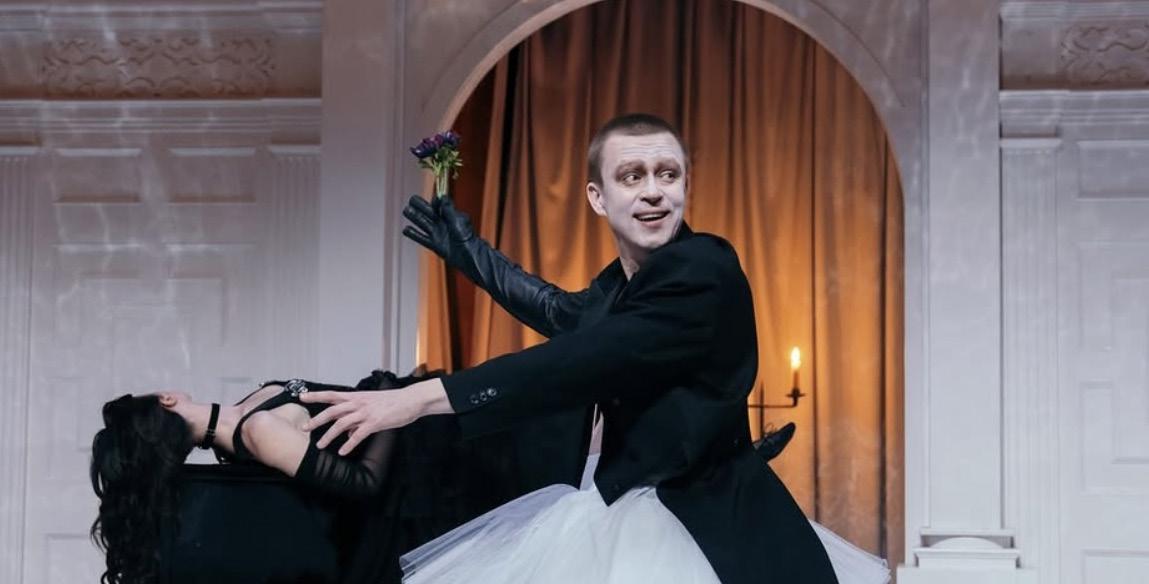
pops up randomly in scene changes just to walk across the stage, and at one point even within the audience as he starts laughing from behind – an eerie moment indeed. When he gets to his famous line “Lord, what fools these mortals be!”, he looks directly out at the audience with a glint in his eyes. His metaphorical puppeteering becomes literal when he shepherds all the lovers together on stage and plucks their breaths one by one to resolve the confusion of who loves whom. If his is a character that
I never quite knew what lay under there:
The murky world in the Quaker’s pond, It was as deep as England, Hughes had said.
I loved running past in the summer haze…
demands change to create more darkness and absurdity, his match and foil can be found in Bottom, played by Danny Kirrane, who instead becomes the much-needed comic relief of the show. His part is also modified heavily, stealing others’ lines like “the course of true love never did run smooth”, and he is the only one to be given the modern linguistic capabilities of exclaiming “is he fucking laughing at me?” in his Yorkshire accent.
Read more online at www. oxfordstudent.com
The gauze of bluebottle and dragonfly, hot now, Far from the wailful choir that small gnats mourn, The stinking, the sweltering heave of the pond’s sweat and willow’s tears.
I liked it in the winter,
The creme-brûlée dusting of frost
Sealing in the hyperborean world, A tomb, an incubation ‘til spring.
Until Spring arrives, as it always has. Suffusing stone in shades of lilac and bruised silk.
Most of all I miss walking past with you, In our own little world, Before the lights dimmed and the curtains came in And that little bit of time floats down now, Sealed beneath the weeping willow –By frogspawn, by years, in memory’s ice.
Read the full poems at www.oxfordstudent.com
Sergo Vares as Puck. Credit: Helen Murray
What’s On?
Project Hail Mary
This comedic space adventure is still in cinemas.
Rose of Nevada
This SciFi drama is showing in cinemas now.
Lavender Ashes
Performed in the Burton Taylor Studio from 5th9th May.
The Beekeeper of Aleppo
Performed in the Oxford Playhouse from 5th-9th May.
The Devil Wears
Prada 2
This anticipated sequel is showing in cinemas now.
The Birthday Party
Performed in the Burton Taylor Studio from 5th9th May.
The Stars of the Manosphere: Post-Historical class warriors
Joe Yarde-Buller reviews the documentary ‘Louis Theroux: Inside the Manosphere’.
Louis Theroux is probably the best-known documentarian in Britain after David Attenborough, so you may have heard of Inside the Manosphere, which was released on Netflix last week and has remained firmly in its Top 10 ever since. Theroux spends ninety minutes covering five male influencers, from the laddish streamers HSTikkyTokky and Ed Matthews to the more established Myron Gaines, Justin Waller, and Sneako. A few years ago, he tells us, he “noticed that parts of the internet were being taken over” by these men and their extreme content. What’s behind it all? We’re not left in suspense for very long: it’s money. Some of the manfluencers freely admit that they’re in it for the cash. Theroux notes the
“symbiotic relationship” they have with the OnlyFans girls they both promote and claim to despise. It’s no big secret for HSTikkyTokky: “Do I agree with it? No. Would I profit off it? Yeah.” In another life, he says, he might have worked in the city, and you can’t help but agree that a man who manages to make money from sharing consistently bad trading advice – Theroux loses almost everything he invests in the stocks HS recommends – would do well in that line of work.
Justin Waller is desperate to tell us he’s not so shallow. The first thing he does after stepping out of his white Lamborghini to greet Theroux is to gesture back towards the vehicle and announce: “Let me be very clear brother. That car is not success. I do wanna say that. That car… fuck that car.” Deep – but difficult to square with his core mantra, explained by a fan, that men are “born without value, we have
to build that value throughout time.” You don’t get much of a sense of the “value” the one-sided polygamist Justin brings to the table beyond bankrolling a luxurious lifestyle for his partner and children. To be fair to him, though, they really do want for nothing. You can tell just how much he cares about his little girl when we see that she even has her own supercar, a toddler-sized replica of her daddy’s favourite ride.For all of these men, the point of making all this
money is to accumulate “generational wealth” to pass down to their children. They say they have achieved this against the odds, having broken free from an amorphous “matrix” – run by “the Jews,” or at least originating with the Rothschilds –that aims to prevent them from unlocking their full potential by trapping them in routine jobs and deploying legions of feminists and gays to spread wokeism among the populace. Read more online at www. oxfordstudent.com

‘The Drama’ (2026) reviewed
Freddie Lewis-Hedley reviews Kristoffer Borgli’s romantic black-comedy.
Kristoffer Borgli’s The Drama is supposed to be a drama structured around ‘drama’in the colloquial sense. But in fact the film asks an age-old question which is more intimate than dramatic: if and how one can truly know another person.
The central paradox in response seems solid enough: mere days before their idyllic middle-class Manhattan wedding, Charlie (Robert Pattinson) acquires knowledge of a dark secret in Emma’s (Zendaya) past. Rather than causing a fruitful crisis in their relationship which deepens their bond, this estranges bride and bridegroom from each other. Emma works as a publishing clerk, English Charlie (though with a conspicuously transatlantic accent) at ‘The Cambridge
Museum of Art’.
Borgli wants us to enjoy the shattering of their shallow social world; the darkening of their cavernous, tastefully decorated apartment. In short, a general malaise around a rich and angst-wracked American society. We know and expect these themes going in; the poster, a candid photo of the vulnerable-looking couple, looks as if plucked from the frantic image-traffic of Instagram. But, unfortunately, Borgli doesn’t manage to put an intriguing spin on these ideas, and his film ends up loud and unsatisfying.
I think Borgli fails because of a shallowness of focus and style. His main method of characterising Emma and Charlie is a heavy focalisation of the narrative through each one’s anxious gaze. In the first-scene meet-cute (made much of in the trailer for its appealing tender awkwardness), miscommunication occurs due to Charlie’s jaunty self-consciousness and
“ Borgli wants us to enjoy the shattering of their shallow social world.
Emma’s deafness in one ear. This is all conveyed by a cluster of close-ups, anxious PoV shots and abrasive background noise.
The couple are presented as quivering creatures of affect, and this changes little over the course of the film. After Emma’s catalysing confession, all sorts of angst, doubt and scruples ensue, and with them a whirr of jumpcuts and claustrophobic audio.
This emphasis on the couple’s subjectivity becomes rather suffocating, although its nervous aesthetic remains a nice juxtaposition to their oc-
cupation both as educated elites and committed wedding-planners. But this treatment of the couple comes at the expense of much depth of character, , as typically conveyed through conversation. I felt therefore that I didn’t know Emma and Charlie well enough, nor they each other, for the former’s secret to even bear much dramatic import. Early on, Emma is all smiles and rom-com jokes, before the crisis triggers flash-backs and frantic daydreams about what could go wrong in the future. When Charlie abruptly references Freud or comments “so performative!”, he refers only to the ‘drama’ at hand, voicing the audience’s thoughts and associations without introducing new information to nuance our view of things. With so much emotional noise but little character substance, he dark event in Emma’s past comes to seem almost banal. Read more online at www.oxfordstudent.com
Headlocked from the official poster. Credit: Netflix
We don’t know its face: Borges and the Desert of the Real
Isaac Hole analyses Argentine author Jorge
Luis Borges’ blurring of ‘reality’ and ‘unreality’ in his ‘fiction’ and ‘non-fiction’.
Since he was a child, Jorge Luis Borges had experienced a fear of mirrors. According to his own writing, it became an almost neurotic aversion: he prayed regularly not to see them in his dreams and even began to contemplate with dread the prospect that the world behind the mirror might not quite match up to our own.
This fascination never truly abated. For Borges, a mirror both duplicates and distorts; in both functions it is sinister.
The phrase “mirrors and fatherhood are hateful” appears identically in two entirely separate short stories – ‘El tintorero enmascarado Hákim de Merv’ and ‘Tlön, Uqbar, Orbis Tertius’ – both times justified on the basis that they multiply a world that is fundamentally in error. Similarly, in the poem ‘Los Espejos’ (literally ‘the mirrors’) they “prolong this vague, illusory world in their dizzying web”. The problem with a mirror is that we see ourselves reflected back.
Equally, however, mirrors distort. A central fear expressed by the young Borges was that the world behind the mirror would begin to exhibit discrepancies; and in one semi-autobiographical story, Los Espejos Velados, he describes a young woman who begins to see Borges’s face reflected in every mirror instead of her own. The mirror both reproduces the world and lies about it.
Fiction can play much the same role. Borges opens ‘Tlön, Uqbar, Orbis Tertius’ with a meditation on a mirror that proves to be a mise-enabyme of the story as a whole. The mirror’s sin is to multiply a world that, according to a gnostic heresiarch cited in the story, is illusory; the central tragedy of the story is that
the fictional world of ‘Tlön’ is found so much more interesting than reality that it too is multiplied, encroaching on the physical world by taking over the sphere of discourse. By the end, this illusion is so complete that artefacts from Tlön are found in the real world, and the behaviour of reality is altered: things which are not held in the mind go missing, and objects appear where there were none be-
“ there is no sense in perpetually pursuing the ever more exact simulacrum of reality
fore. Artifice becomes so convincing that it alters the way we perceive reality. The same effect can be found in ‘La Lotería en Babilonia’. In the story, a society obsessed with the lottery gradually expands the role that artificial luck plays in their lives, with it eventually becoming mandatory to play, and with ‘rewards’ ranging from sudden financial success to death; all arranged by a secret caste of priests behind the scenes. However, as the complexity, scope and secrecy of the lottery increase, it becomes indistinguishable from mere fate without interference. The reality that used to underpin the lottery in its early stages has been superseded by its artificial counterpart. There are suggestions that the lottery has in fact ceased to take place, and the randomness observed in the world is simply natural, but these are considered heretical notions. It might not even matter whether the observed
fortune is actually ‘real’ or just a simulacrum of reality. Borges’s conception of how reality relates to its simulacra is perhaps best expressed, however, in one of his shorter works, the brief parable ‘Del Rigor en la Ciencia’. In the story, an empire, obsessed with cartography, constructs a map on a one-to-one scale with the empire itself. Later generations soon abandon it, having lost the fervour for mapmaking that led their ancestors to embark upon such a project. The remaining fragments of the map are left to decay in deserts of the west, a testament to the folly of the ‘perfect’ model. The moral is clear: there is no sense in perpetually pursuing the ever more exact simulacrum of reality.
Jean Baudrillard begins his 1981 masterpiece Simulacra and Simulation by discussing this single-paragraph text: to him, however, this parable is no longer appropriate for the modern day. Whilst in Borges’s telling, the map and reality remain strictly separated, in postmodern society the opposite is true. There is no longer any degree of separation between the real and the sign: it is this desert, the “desert of the real”, that we inhabit. Whilst the map in Borges is laid to waste and superseded by reality, Baudrillard argues that, on the contrary, there is no longer any reality underpinning the map at all.
Baudrillard makes this point as a way of illustrating his idea of simulacra, and it is one that Borges would have understood very well. His story ‘El Simulacro’, which is itself ambiguous as to its veracity, discusses a mock funeral held for an effigy of Eva Perón by a man dressed as her mourning husband. The nearby villagers all attend and pay their
respects, but why? Clearly, the cardboard doll is not the real Eva, nor the mourner the real Juan Perón; but neither, argues Borges, are the presidential couple themselves ‘real’. The cult of personality that has sprung up around the Perón name has meant that ‘Juan Perón’ and ‘Eva Perón’ no longer refer to real people, but rather a mythologised image “whose true face we do not know”. Thus, Borges too writes of the desert of the real. Del Rigor en la Ciencia itself demonstrates this: the text presents itself not as a story invented by Borges, but as a partially complete quotation from another text entirely, written by a non-existent author called “Suárez Miranda”. This technique of literary forgery is something that Borges utilises repeatedly: Un Téologo en la Muerte is purportedly by the Swedish polymath Emanuel Swedenbourg; whilst El Espejo de Tinta is allegedly taken from the
“ what Borges says is ‘true’ or not doesn’t matter to them at all
real text The Lake Regions of Equatorial Africa by R. F. Burton. The falsity of these stories is thereby exaggerated: they are not even permitted to be
real fiction, but have to masquerade as texts from the real world.
This is Borges’s most brilliant technique: the blurring of the lines between image and reality is not confined to the content of his stories but is also manifested in our ‘reality’ through the way these stories are presented. The way in which the academic world in ‘Tlön, Uqbar, Orbis Tertius’ take to the study of Tlön’s false reality with such enthusiasm seems far-fetched until the reader realises that, throughout the story, Borges has been citing completely non-existent works in the footnotes. Intermingled with Russell’s The Analysis of Mind and Schopenhauer’s Parerga and Paralipomena are the likes of ‘A General History of Labyrinths’ by ‘Silas Haslam’ (which, brilliantly, has a fake Goodreads page dedicated to it).
This is taken to the extreme in ‘Tres versiones de Judas’, which presents itself as an overview of the work of a theologian called ‘Nils Runeberg’. In the course of examining his fictional work on Judas, Borges cites and quotes a large number of people, ranging from the real (Thomas De Quincey; Antônio Conselheiro) to the completely fictional (Jaromir Hladík; and, of course, Runeberg himself).
Read more online at www. oxfordstudent.com
Photograph of Borges in 1971. Credit: Eduardo Comesaña


“
Live from London and it’s Saturday night!”
With these seven words, delivered in typical loud, brash American style, SNL UK launched British popular culture into a new era. First broadcast in 1975, SNL is a cultural institution in the United States, where it is transmitted weekly to around 8 million viewers, and marks arguably the first time that a program with such stature across the pond has been adapted for the British market. The arrival of such blatantly American comedy onto the UK scene marks a dangerous new low for British pop culture, already suffering from years of underappreciation, threatening British cultural identity to its core.

Holywell
Elliott Wang on Ground Zero’s ‘Revolutionary Pekinese Opera Ver. 1.28’.
For what it’s worth, the premiere didn’t quite land on its feet; while it tried its hardest to play to British humour, it fell flat in many places –not helped by the very first canned laughs of the cold open following the supposedly amusing phrase “Oh golly!”. Perhaps funny in Pittsburgh, but in Plymouth or Preston, where viewers have grown up with those words as a standard part of the vocabulary, it doesn’t quite carry the same comedic weight. This is where my real gripe with SNL UK starts. The point of this article is not to slate the program – in fact, when they remembered which country they were in and which audience they were actually trying to make laugh, it was actually quite entertaining. A particular highlight was Paddy Young’s helium
In the 1990s, a spectre darkened the Land of the Rising Sun. In the aftermath of Japan’s conspicuous consumption and fervent lending in the 1980s, decades of economic stagnation followed (Surfin’ USA!). Sony, a shining symbol of Japan’s innovation, had, for the first time, to fend off competition.
Former CEO Nobuyuki Idei idealised the notion of ‘convergence’. To deliver the best for the consumer, Sony planned to funnel media consumables through the wind tunnels of the internet, collapsing everything in a single hand. The company first broke into the US market with microelectronics, portable transistor radios, and bomb parts used in the Vietnam War. In 2005, Sony announced Welsh-born American Howard Stringer
Thank you America, but SNL UK is too far Samuel Govier reviews the new series
joke in the Weekend Update segment – reminiscent of a similar sketch in the Channel 4 classic The Day Today. Rather, it represents the pinnacle of the repeated American infringement upon our popular culture.
The cultural encroachment SNL UK represents is nothing new, with the first American influences in the UK emerging generations ago with the appearance of Hollywood films in British cinemas in the 1920s. From then on, American influence remained steady –one only has to glance at some of the most popular songs of the late 1990s and early 2000s to be confronted with lists of predominantly American artists. Even British artists began to drift steadily towards a more US-friendly sound – a listener to any song by Busted, who sold over 5 million singles in just 3 years, would be
as its new CEO, and so we have Raimi’s Spider-Man. Indeed, Sony is no longer Japan, though perhaps it never was
The two fundamental human questions are ‘why am I here?’ and ‘how should I live?’. For a long time, I have not found a grounding answer to these questions.
Like Sony, I am a point of convergence through which an overload of conflicting ideas and media consumables toss and knead. Admittedly my agnosticism makes these questions a tad bit more difficult. It makes me an easy victim and site for the ‘mix’. Ground Zero’s 1996 album Revolutionary Pekinese Opera Ver. 1.28 tells us that these fundamental human questions are impossible to answer.
Ground Zero was a Japanese noise rock band
forgiven for guessing based on their accents that they were from San Diego (a more accurate guess would be Southend). The strength of American media in sales metrics is understandable – US culture is deeply intertwined with capitalism, especially after the Cold War, with heavy reliance on advertising, appealing to reward centres in consumers’ brains. This is very different to the traditional approach of British media, which focused far more on entertainment value than marketability, aided by the inability of the BBC – for many years the country’s go-to broadcaster – to advertise.
However, in recent years, driven by the desire to replicate the virtues of capitalism in the USA, the rise of competing outlets and increased consumerism in the UK has produced a shift to-
formed in 1990 by turntablist Otome Yoshihide. The band utilises extensive sampling to explore issues of copyright and consumerism. In Revolutionary Pekinese Opera Ver. 1.28, the chaotic convergence of eroding samples – Chinese opera, Japanese newscasters, Hong Kong films, American advertisements –produces an overwhelming, nightmarish wind tunnel of musical absurdity.
To me, the album reads as a spit in the face at rampant consumerism, ideological hypocrisy, and a requiem for harmony amidst chaotic globalisation. The album is a musical jawbreaker, layered with so much meaning that it becomes nearly inaccessible as a consumable; halfway through, you consider spitting it out and wonder why you bought it
wards much more commercially-attractive programming, with more concern over what can be advertised than what will entertain. It is therefore only natural that British mass-media would begin to much more closely resemble its cross-Atlantic counterpart.
British culture does, of course, also occasionally move the other way – the Beatles and then New Wave bands led the 1st and 2nd ‘British invasions’ of the 1960s and 1980s respectively. The American remake of The Office produced one of the most-loved American shows of the 2000s. The difference is that these influences tend to be transient – ultimately, British culture just is not made to appeal to the masses.
Read more online at www. oxfordstudent.com
in the first place. The album contains so many samples that it feels almost impossible to get to the bubble-gum core (‘why am I here?’ and ‘how should I live?’).
The album opens aptly with ‘Opening - Flying Across the J.P. Yen’, sampling the track ‘Peking-Oper’ by the Frankfurt musical duo Goebbels and Harth, which itself samples a 1970 recording of the Chinese revolutionary opera Shajiabang. Slow and ominous, the track complements the unnerving monochromatic album cover.
Read more online at www. oxfordstudent.com
Lorne Michaels. Credit: Anders Krusberg
Features
(Re)collections What’s the point?

Luke Erly
So, you’ve failed your collection. Now what?
As Week 1 begins, students from all around Oxford rejoice in saying : “collections are over!” It is one of the odd-
“ Collections force you to revise, even if it’s just a little, and give a helping hand to point you in the right direction of revision.
est things to explain about academic life at Oxford to your naive friends and family. “I’m sitting an exam called a ‘collection’, mom. No, it doesn’t
really count, but my tutors told me to study 4 of the 5 weeks of the vac for it!” Why are we studying for these “exams”? Why does the university bother making us waste 3-6 hours of our Week 0 sitting in silence, writing three essays on papers we did the previous term? I’m not exactly sure how it started, but we simply have to deal with the consequences.
No matter how it went, how much you studied, or how unlucky you got on the past paper selection (“it was the 2022 one, damnit, not the 2025 one”), you must understand the most important aspect about this lovely tradition of the Oxford academic calendar: they don’t matter. Don’t just rejoice in the fact collections are done, but rejoice in the fact that they never mattered in the first place.
However, I’m not entirely sure that’s the point of collections. They aren’t some
and cons to anyeach system, but I’d argue Oxford manages it quite well.
This fear that is in every Oxford student, the type that makes you prepare for tutorials, write a coherent essay, and maintain your own academic honor throughout your degree, makes most students study at least some amount before collections. And you, my dear reader, most likely engaged in this as well. It doesn’t particularly matter what mark you receive once your tutor gets around to grading your collection. Instead, it matters that you put in some amount of preparation beforehand, more than you would have without the collection being there.
Like all mock exams, collections can also serve as a wakeup call, a useful benchmark that tells you, “I’m on the right track”, or, possibly even more usefully, “I need to lock in”.
let free practice go down the drain. You’ve done it, no matter how it went, and you’re all the better for it. That being said, give yourself some grace. These exams won’t be the finished product, and they aren’t meant to be. Let them guide
“
Exams are as much a test of your knowledge as they are a test of your ability to work under pressure, stay focused, and keep calm.
sly form of torture the Oxford dons up at the high table place upon us. They aren’t even an activity to make sure you get back into Oxford before the start of Week 1. Instead, they are a much more subtle, even tactful strategy. Collections force you to revise, even if it’s just a little, and give a helping hand to point you in the right direction of revision.
At the end of the day, collections run on fear. Fear of facing your tutor with a bad essay. Fear of having to tell your friends and coursemates about that horrible collection mark. Fear of embarrassing yourself and losing that all-important academic validation. Is this the right way to make students revise? While it is definitely up for debate, Oxford has to strike the right balance between consistent, stressful exams to make you continue to revise versus a single, final exam at the end of your degree. There are pros
Sitting in a big room with other stressed students is an experience we have all gone through. But doing it at Oxford, with some of the hardest exams of your life in front of you, is new to most of us. Using every opportunity available to you to put your mind and body through that experience is an essential piece of practice for when it really counts. Exams are as much a test of your knowledge as they are a test of your ability to work under pressure, stay focused, and keep calm. Replicating this is no easy feat, but collections are as close as you will come in Oxford to the real deal. Treating these practice runs seriously is simply giving yourself another opportunity to get better, another chance to get used to the stressful conditions of an Oxford exam. Spending three hours writing three straight essays, while very much possible to do on your own, is rarely something students spend their vac doing. Thinking and writing for that kind of time period is a skill, a muscle that needs to be practiced. While it isn’t necessary to get into your sub fusc or stress yourself into oblivion over a collection, don’t
you, put you in the right direction, and instill a healthy level of stress and fear in you if they happen to go horribly wrong. The same goes for any mark or essay comments you get back: take the advice on board, but understand it has a massive caveat upon it. I don’t recommend agonizing over every piece of critique and criticism your tutor gives you in a collection. However, I also don’t suggest stuffing the marked essay into a random drawer in your room. Collections are all about mediating your response, utilising the new information and guidance the act of taking the exam gives you, and reacting accordingly.
As you prepare to attack Prelims or Finals in the future, I urge you to try and learn from this very odd Oxford requirement. Understand it means nothing, but also understand the possible opportunities it provides. It doesn’t mean you have to like collections. Actually, keep repeating, “why do I have to do these” every Week 0. But know why they’re there, and know how they can help prepare you for the future trials and tribulations of Oxford academic life.
A desk in a library. Credit: Lila Robinson.
A GalOXy far, far away
Hannah Ison muses on the phenomenon of Oxford Standard Time
Returning to the mothership over the Vac to help with an offer holder day, I warned a friend that when they next saw me, I would not be the same. I was about to fall victim to Oxford Relative Time Dilation (Einstein’s lesser-known theory). It goes like this: one minute at home and one minute back in College do not pass at the same rate. I knew I would make it back to London later that day flush in the midst of a mid-life crisis, or miss my four o’clock train, and return with grandkids, having found a sudden admiration for the pension triple lock.
In the city of dreaming spires and caffeinated students, time stretches to hold the endless list of ‘most urgent, most important’ tasks we all cram in. We press snooze on our sleep, not our alarms. The GLINK zombies, the rowing robots, the servicemen and women who do us all proud, marching on to their 9ams are only the tip of the iceberg. All of our body clocks are set to Oxford Mean(ingless) Time. Counting in weeks rather than dates like inmates tallying a sentence, declaring anything past Schwarzman ‘far out,’ preparing ourselves to confront the midnight rush at the library.
Admittedly, I’m ahead of the game. I own a sunrise alarm
clock, a tiny sphere of light that I can command to blaze into action whenever I wish, waking me from the deepest of slumbers.
I’ve found that by programming my sunrise to moments before my first commitment, I can actually defeat the passing of time. Morning starts when I say it starts, be it 4pm or otherwise. (This can even be adapted for the vacation! Leaving a blind up at night allows one to simulate the sunrise alarm clock with the sky. Pro tip.)
For those who chuck-

late to services. Maybe he should have traded his pocket watch in for a sunrise alarm clock…
On the bright side, once the first few days of adjustment either
“ In the city of dreaming spires and caffeinated students, time stretches to hold the endless list of ‘most urgent, most important’ tasks we all cram in.
le fondly and stroke their beards, saying “you young’uns never change,” I would remind you, third years, that this is not an adolescent phenomenon. It is an Oxford phenomenon. Lewis Caroll’s White Rabbit, after all, that archetypal victim of time, is widely thought to modelled on Henry Liddell, former dean of Christ Church and father to the Alice that inspired Wonderland. Head of the college and the cathedral, he was known for constantly running
side are over it gets easier. But those first few days are torture. On the Oxford side of the time border, there’s exhaustion and disorientation. I remember calling my mum – “sorry, how are you, it’s been ages” –only for her to inform me she was still on the same train to work as she’d been on in my last call. On the home side there’s isolation and at the worst despondency, stewing without the shadow of constant deadlines. This structure can
Food Fight

ODhiraaj
Grantham is the Food Columnist at The Oxford Student.
ne of the great philosophical questions that arises from spending more than one night in Oxford is, which kebab van is best? Although undoubtedly a question that sparks fierce debate, I wish to contribute to this by engaging with one overwhelming point of consensus, that the humble chip from Best Kebab van is Oxford’s best.
make interaction with those outside of the Oxford bubble comically difficult. It’s a hair-raising gamble, slipping away for even a day or two during term. You can never be sure how many all-nighters a single afternoon away seeing a friend will cost you. Trying to schedule a fifteen-minute phone call can take weeks. You’d get a secretary and an Oxford jargon translator to secure a coffee catch up, if only finding the help didn’t take up too much time. Long term solutions to Oxford Relative Time Dilation are, I’m afraid, apocryphal. Periods away only worsen the return; extra sleep puts you out of sync with the city; time travel would be the best bet, if it wasn’t the crux of the problem. When I made it back to London after the offer holder day, my friend suggested bringing a sign with my name on to meet me: for how were we to recognise each other after so long apart? Read more online at www.oxfordstudent. com
To test this, I needed a scientific list of criteria, which I split into five categories. These were as follows: the chip’s structural integrity; crispness; greasiness; potato content within the chip; and the chip’s ability to absorb salt. For this test to work, it was also necessary to avoid using any sauces or cheese to not impart any unique flavors on the chips; however, I did allow myself salt because I am not a monster. I came prepared with my list of criteria and what was left of my maintenance loan and set out to undergo this frankly crucial but perilous task.
Coming from Hilda’s, I spent the £3 required and began this chip-related pilgrimage. Best’s chips certainly excelled in the first three categories, with the chip maintaining its structural integrity, whilst also being delicate enough to break if thrown around in the box. They had little to no grease and were incredibly crisp, to the degree that they made an audible crunch. The potato content was nothing to complain about, although there were a few small gaps between the skin and the chip meat (I am coining this as a new term). The quality of the potato content did make up for this shortcoming, as it was perfectly white and fluffy. The issue for me was salt absorption: because the chips were relatively dry on the outside, the salt settled to the bottom rather than sticking to the chips themselves. This did bring down the score slightly; however, this can easily be remedied with a bit of vinegar or sauce.
Overall, Best Kebab Van delivered a very solid chip, but not the life-altering experience promised. 8/10

Chips from Best Kebab Van. Credit: Lauren Hardcastle
Pocket Watch. Credit: Majvdl
The Skoll World Forum returns to Oxford
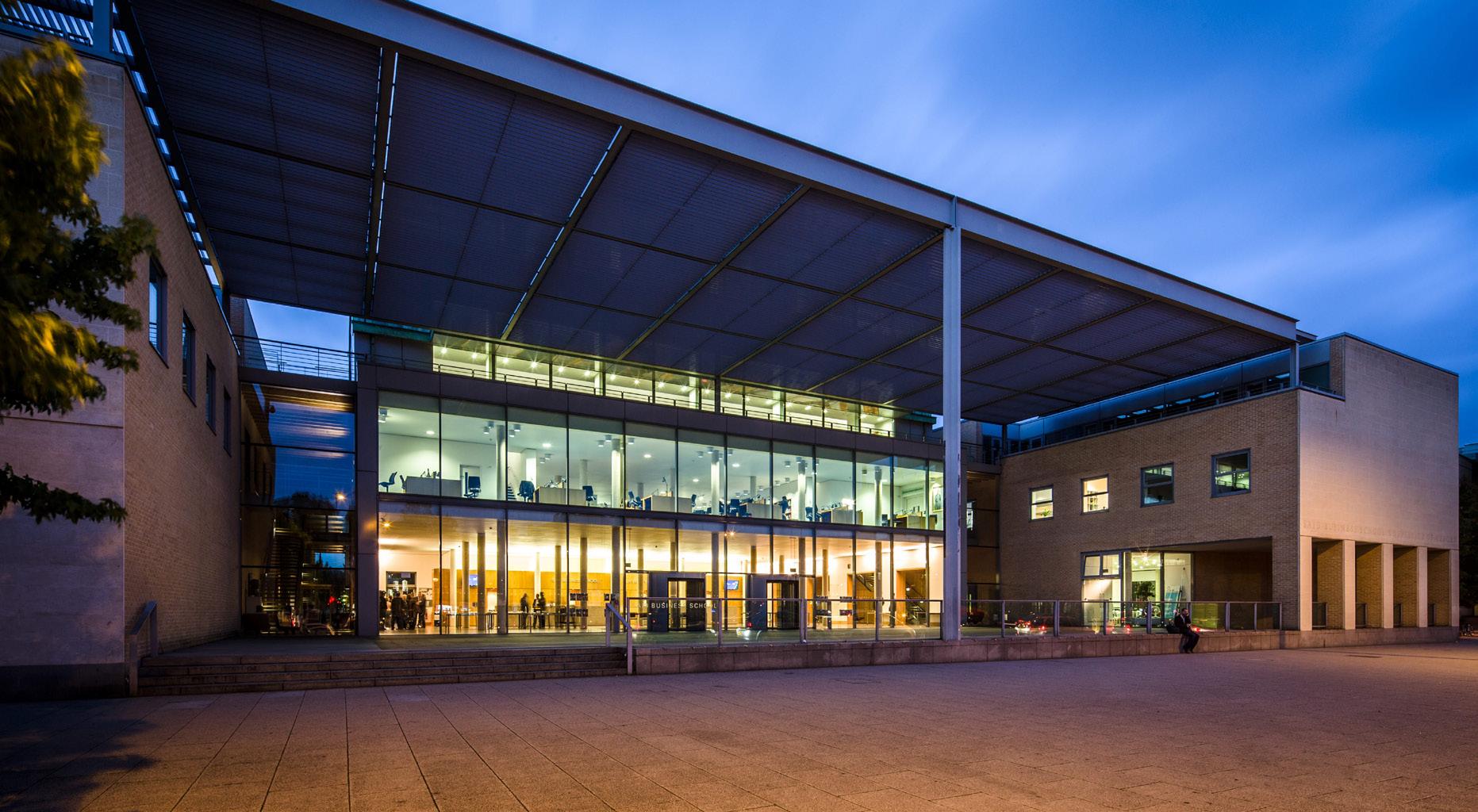
Last week, Oxford once again played host to one of the world’s largest gatherings of social innovators. At the Skoll World Forum, thousands of changemakers travel from all over the world to gather at Oxford to discuss the world’s most pressing challenges. The Forum was established by Jeff Skoll, a Canadian philanthropist and founder of the Skoll Foundation, in 2004, and has been held in and around Oxford’s Saïd Business School every year since.
Numbers Game

Lopes on the rise and risk of prediction markets.
The Skoll World Forum is a nexus for those interested in the business of social change. Each year, the event attracts high-level leadership in social enterprise, philanthropy, impact investment, policy, ac-
“ This year’s program offers clues on where the impact sector is headed
ademia, and other key stake-
$4,523 billion - the total trading volume on Polymarket in March 2026.
Prediction markets have recently experienced a surge in the value of trades executed, and big names like Polymarket and Kalshi have burst onto popular financial discourse and social media. With a generation of young people facing poor economic prospects, these platforms seemingly offer a path to riches. You can bet on almost anything - from relatively trivial markets such as guessing the temperature in different cities, to inhumane ‘events contracts’ on war outcomes and Iranian missile attacks.
holders dedicated to largescale social change. Previous speakers have included Malala Yousafzai, Muhammad Yunus, Jacinda Ardern, and Al Gore. According to the Skoll Foundation, this year’s Forum is “inspired by the cycles of regeneration found in the natural world”. Across four days, delegates attended plenaries and workshops on a wide range of topics. The program included a fireside chat between Trevor Noah and Wawira Njiru on unlocking opportunities for young people in Africa held at Oxford’s New Theatre.
This year’s program offers clues on where the impact
I’m not a fan. Ethical and legal questions aside, what makes me most skeptical about prediction markets is their claims of being ‘truth machines’.
Speaking to 60 Minutes earlier this year, Polymarket CEO Shaun Coplan said that Polymarket is “the most accurate” predictive mechanism “humanity has right now”, better than opinion polls or experts, because they rely on the “wisdom of the crowd”. It’s efficient market theory, that prices in a free market fully reflect all available information, applied to every single area of our societies. Insider trading is a big problem for prediction markets. When asked about insider information, Coplan stated that
sector is headed as it grapples with disruption on multiple fronts. Talks throughout the week wrestled with how organizations can adapt their business and funding models in an era of increasingly restricted aid and discussed how to adapt to changing political tides. Cutting across the whole program was an emphasis on partnership, ecosystem-building, and genuine connection.
“Skoll Week,” as many participants call it, goes well beyond the official Skoll World Forum. While attendance at the main Forum is by invitation only, anyone can watch the talks virtually. But par-
“people having an edge on the market is a good thing.” These markets price the probability of an event, so they incentivise people with high convictions (i.e. someone who may know an event’s outcome for certain) to place large bets, thereby moving the market and making them more accurate. This contradiction means that many markets are hedged against the very consumer that these firms claim to want to empower. Indeed, a recent BBC report has drawn a link between large spikes in trading volume on online prediction platforms and announcements by President Trump on American intervention against Venezuela and Iran. Several accounts were created in the lead-up to these
ticipation isn’t limited to just watching a livestream, the scarcity of physical access to the main Forum has led to a vibrant fringe scene across the city. The Marmalade Festival, run by the Old Fire Station, and The Sidebar, have grown into events in their own right. Both are independent, participant-led, and meant to create spaces to connect and share ideas including a combination of workshops, talks, and activities geared towards community-building.
For Oxford students, Skoll Week is a rare glimpse into the complex work of making the world a better place.
events, going on to place significant bets just days or hours before the announcements. Prediction market platforms are successful because they give people the illusion that they are serious traders on the biggest questions of our time. By positioning themselves in this manner, they also skirt around anti-gambling regulation. However, 84% of wallets lose money, in a space that claims to be a way out of financial frustration. You’re not trading. You’re not conducting intelligence analysis, or ‘monitoring the situation’. You’re betting, in most cases blindly, and against people who either know a lot more than you or have the capacity to price you out.
Skoll World Forum at Saïd Business School. Credit: Said Business School
Alex Agcaoili is a Section Editor at The Oxford Student.
Guilherme

Palantir’s 22-point manifesto exposes tech divide
Leila Hoffpauir explores Palantir’s call for tech to defend the state and what it means for Europe’s national security
In a 22-point manifesto published last week, U.S.based data and technology firm Palantir urged Silicon Valley to increase its participation in U.S. national security interests. Some of the more provocative points suggest the U.S. government reinstate the draft and undo “the postwar neutering of Germany and Japan”. However, the main crux of the argument centred around CEO Alex Karp’s belief that U.S. technology companies owe a debt to the government and can repay that debt by supporting the government’s national security interests. Yet, across Europe, the most energetic tech debates have been moving in the oppo-
site direction. Regulators and consumer advocates are less interested in drafting software companies into national service and instead are discouraging them from creating products that appear to be helpful while making daily life worse. The Norwegian Consumer Council’s “enshittification” campaign, based on ideas from author Cory Doctorow, argues that digital products and services are deteriorating, but we can reverse the trend through stronger consumer, competition, and public-interest interventions. That contrast reveals a widening transatlantic divide in the intersection of politics and tech. In the U.S., companies
tracts with Palantir. The firm has more than £500 million in government contracts including with the NHS and Ministry of Defence. Now, MPs and campaigners are questioning whether Palantir can suitably maintain these sensitive public deals.
Palantir’s post is, in part, a summary of Karp’s book, The Technological Republic: Hard Power, Soft Belief, and the Future of the West, which he co-wrote with Palantir lawyer Nicholas Zamiska.
under rules designed to protect citizens from exactly that kind of concentrated technological power. Palantir helps its clients in Europe comply with the EU and UK’s General Data Protection Regulation (GDPR). Will Palantir’s manifesto bring into question the firm’s trustworthiness around complying with these regulations and protecting consumer data?

such as Palantir are increasingly presenting themselves as strategic partners in national power. However, in Europe, the dominant political instinct is more suspect, and manifestos from firms like Palantir can have far-reaching consequences. A company that tells American engineers to embrace the machinery of state power can appear, from a global perspective, less like a patriotic supplier and more like a politically motivated firm seeking deeper access to sensitive public infrastructure. Amid the backlash, The Guardian reports more than 200,000 people in the UK have signed a petition urging the government to break its con-
In the U.S., Palantir’s posture fits a broader political and institutional tradition. American national security has long depended on private contractors, from aerospace and weapons manufacturers to cybersecurity firms and cloud providers. The military-industrial complex is not an aberration in U.S. politics. What is changing is the type of company entering that system. The old defence contractors, such as Lockheed Martin, Northrop Grumman and Boeing, primarily built hardware. All three firms have a significant presence in the EU and UK as well. However, the new defence-tech firm builds the software layer through which governments analyse information, coordinate operations and increasingly make decisions.
In Washington, the idea that Silicon Valley should contribute more to national defence is not out of the question.
Palantir already powers the U.S. Army Intelligence data platform, works closely with U.S. Immigration and Customs Enforcement (ICE), and last year, the U.S. government was reportedly planning to use the firm to compile data on Americans.
In Europe, recent tech politics have been shaped less by the romance of innovation and more by the experience of dependency and deterioration. The dominant question has not been how to mobilise technology firms for state power, but how to stop them from using scale, opacity and lock-in against the public. That suspicion becomes sharper when the company in question is not merely selling software, but helping governments manage sensitive data
The UK and EU cannot simply keep firms like Palantir at arm’s length. The continent’s security environment has changed. Global conflicts, cyberattacks, infrastructure sabotage, disinformation and pressure to increase defence spending have all made technological capacity a strategic necessity. According to the Stockholm International Peace Research Institute, Europe’s push to beef up its own defences drove global military spending to a record $2.9 trillion. The continent increased its spending by 14% last year to more than $850 billion. European governments need better software, stronger capabilities, AI tools, increased cloud infrastructure, and data systems. But can the continent build or procure those tools without importing the political culture of American defence tech?
Palantir’s manifesto has revealed two competing visions of what technology companies are for. In the U.S., Palantir wants to be seen as a patriotic partner in national defence. In Europe, the more urgent demand is that technology companies become accountable subjects of democratic rules. Democracies will need private technology companies in order to ensure national security, but the terms and conditions of that relationship matter. States should be able to buy software, AI systems and data tools without buying the worldview of the companies that make them.
Naomi Flexman
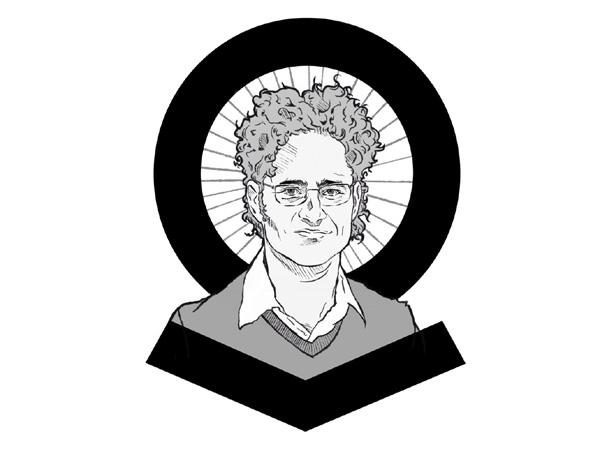
Credit: Salvador Rios, Unsplash
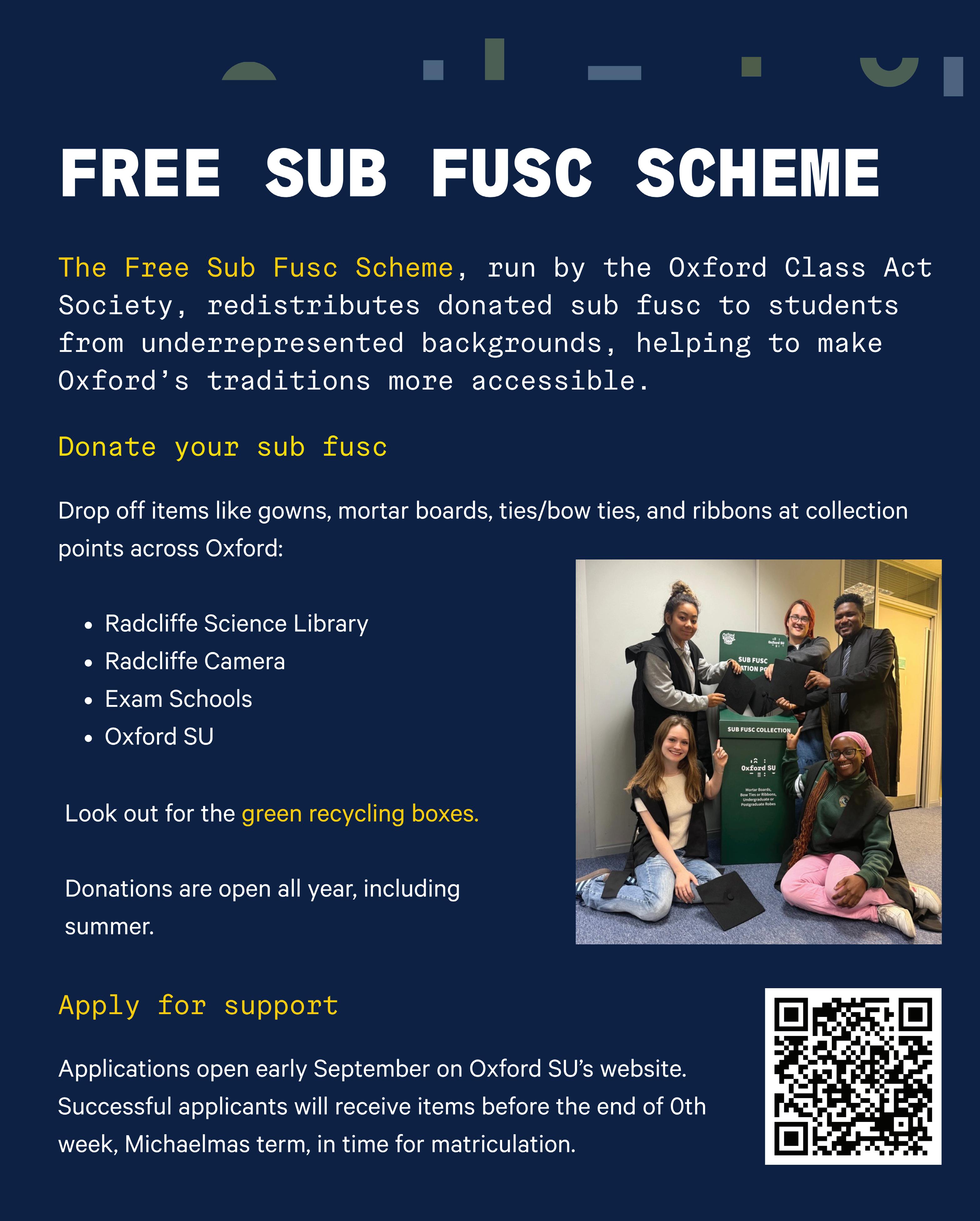
Identity

The challenges of linguists, Credit: Naomi Flexman
Who am I in other languages?
Jessie Jukes discusses the challenge of expressing yourself in a foreign language
Us Oxford linguists have all been there – when your tutor makes a joke in Italian or Spanish or Russian and you smile or you agree, or worse, you stare blankly and don’t say anything out of confusion.
In my case, it is a combination of all three – I smile and agree (“sì, sì”), and stare as I attempt to translate what they said in my head. Now, this may come as a shock for those who don’t have the thrill of studying languages, but, I do not consider myself fluent in either of the languages that I study. This is certainly not the case for Italian, which I began to study ab initio at Oxford, and not even for French, despite having taken it for A-Level and beginning it years before that.
At Oxford, this trepidation around speaking the languages themselves is made even worse by the relentless emphasis on learning literature from the respective language’s countries. Do I enjoy it? Yes. But does it help me learn how to speak French or Italian? No.
“ I cannot ever seem to entirely express myself in my other languages
So, while beginning to prepare for my year abroad, I have recently come to the conclusion that, as a result of this lack of fluency,
A-level students at Prelims. A year has passed since then, with countless grammar and prose and speaking classes, but I still feel behind my coursemates when it comes to speaking. I imagine this is the case for many other former ab initio students.
We are consistently told not to worry, that the year abroad will help our language proficiency, and that we will be speaking fluently in no time. But, as a languages student about to go into Trinity term of her second year, I can’t help but wonder if this fluency is not necessary before embarking on the year abroad: do I speak Italian well enough to spend eight months in Italy? As much as I love studying Manzoni and Verga and Ginzburg, they haven’t been very helpful in giving me the day-to-day vocabulary that I’ll need to use there.
Lots of the finalists returning to Oxford from a year spent at university abroad have told me the same story: the city was great, the university was great, but the other students didn’t want to make friends with the visiting students.
I have absolutely no personality when I speak other languages. And, as a result of this, I have been plagued by the fear that I will be unable to have any sort of meaningful conversations and thus be unable to make any friends abroad.
Whether I am stuck on the conjugation of a verb or trying to remember vocabulary, I cannot ever seem to entirely express myself in my other languages, often having to say things that I don’t actually mean for the sake of simplicity, or avoiding voicing my opinion due to fears of incorrect grammar.
I, like many others, picked up Italian ab initio at Oxford. I was learning an entirely new language, and yet was posted against the post
friends with us at these universities abroad.
Who wants to be friends with someone that has to translate what they are saying before they can say it (and who remains silent in the meantime)? And who has to have the joke explained to them? And who speaks only in the most simplistic way to avoid mistakes?
For me, studying an ab initio language has presented a more exacerbated version of this worry. I am not just worried that I am not speaking fast enough, or that I have a strong English accent, pronouncing things wrong. Instead, I worry about even knowing enough words to hold a conversation.
Even two years into studying Italian I find that I have to say things that I don’t exactly mean just to give an answer, or use a similar
It seems that the international students at these universities abroad – and particularly other Oxford students in the area – instead seem to seek out each other, and thus end up only speaking in English while they are there.
It’s not exactly what they had hoped for, I imagine, when planning their year abroad: they probably wanted, as I do now, to spend enough time speaking to Italian, or French, or German students that they would be completely fluent in a month’s time.
I have to wonder if other languages students feel the same lack of identity in other languages as I do, and if the inability we have to entirely express ourselves is what causes the reluctance of these students to make
“ Who wants to be friends with someone that has to translate what they are saying before they can say it?
word in place of what I actually mean.
That is why I think that I have no identity in other languages – it is not that who I am changes, I have realised, just that I can’t really show it.
But – and this is the conclusion I have come to after nurturing this worry for a few months – of course I won’t have any personality in another language if I am too scared to speak it. It doesn’t really matter if I make a small grammatical error, use an anglicism, or even say the complete opposite of what I mean Read more online at www.oxfordstudent.com
Time to stop hiding Oxford’s flaws?
Gabriella Bedford
As Oxford students, there is an unwritten rule - to be unrelentingly proud of where you study. It is just not the done thing to answer the question ‘how’s Oxford’ with anything other than praise, maybe a comment about the workload at a push, but in that lack of admitting fault with our experiences at Oxford, it is in that in which we preserve the status quo.
The problem with this ‘status quo’ was made apparent to me while running an outreach eevnt - a time at which the Oxford sales pitch is at its peak, where the flaws of Oxford are very much shoved under the carpet.
I come from a part of the country which produces few Oxbridge students, my school hadn’t had an Oxford offer in over 20 years and I’ve met three people here from my county. However, at an outreach event, I hit the jackpot - a student doing my course from the same county, from a school I visited during my application process for an Oxbridge event.
But in this ‘reunion’ of fellow countryside folk, their discussion of their fears about potentially being an Oxford student and what it might be like to study here hit very close to home.
Questions like ‘what’s it like when there are people from schools with tens of offer holders?’ (compared with less than 5 for our entire county), ‘how can I be confident in tutorials when others have had a better education than me?’, and saying ‘I feel like an imposter’ is basically my Oxford experience in a nutshell.
Following that event I dedicated a lot of energy to questioning my place at Oxford, whether outreach events are as beneficial as they may seem (an issue deserving of its own article) and whether this university is set up for the masses. The first point regarding a lack of people from your
school at Oxford is an interesting one, as having spoken to people from schools with a strong Oxbridge track record it seems that this system not only provides a pre-existing friend group, but a sense of confidence often associated with private schools.
I believe this comes about because of two reasons (both of which may be wrong, they are just the inferences of myself and the potential future student which inspired this).
Firstly, students who attend schools with high numbers of Oxford offer holders (and students) are likely to have good teachers which helps with preparation for Oxford (interviews, admissions tests, even just being taught A-Level content well), and having fellow students to have academic-related discussions with, something I gained going from a rural state school to a marginally better grammar school. And secondly, perhaps more interestingly, the experience of receiving an offer is different. For me, as the only Oxford offer holder in my school, there was a great fanfare around receiving the offer, in fact, I distinctly remember telling one of my school friends that I feared rejection
“ I feared rejection from Oxford [...] for the disappointment I would be.
from Oxford not for my sake, but for the disappointment I would be (or feel to be) for my sixth form who had tried hard to support me with my application.
I suspect this may be different if I had attended a school which gets many students into Oxford, of course there would still be pressure surrounding that day, but proba-
bly a different sort of pressure. One to live up to expectations still, but one more centred in a higher level of expectation that you would receive the offer, and to follow in the footsteps of others (of course, safe in the knowledge that there are people there for you when you get there).
Their concern about tutorials is also something which shaped my Michaelmas term. For most, tutorials are one of the main attractions of Oxford, the chance to discuss your ideas about serious topics with leading academics is what some people’s dreams are made of. Unfortunately, I found them to be one of the many aspects of Oxford that brought me nightmares.
To go from a class of around 30 students, where there was a definitively right and wrong answer and nobody paid any attention to what you said anyway, to such an intense academic environment is something no state school education can really prepare you for. Many cite school debating as great preparation, and although that is something I partook in, I would consider debate competitions to be an infrequent, staged performance rather than day-to-day normality.
Whereas, as far as I understand it, those who have had a better education (probably the privately educated) are far more adept at expressing their opinions, and are used to, perhaps even encouraged to do so in small settings, the perfect preparation for an Oxford education one might say. With that said, it is of little shock that there was a serious sense of imposter syndrome for me after receiving my offer, a sentiment I have previously summarised as ‘wondering why you, out of all the qualified applicants were offered a place’ was a very real feeling, and one echoed by many I have spoken to. I may be wrong, but I would imagine those feelings of imposter
syndrome are lessened for those from schools with 10+ students getting into Oxford, it isn’t quite as extraordinary for them.
And then when you get here, having people who have come from the same place as you to turn to for advice, maybe even give you a helping hand in a society election or in navigating the nuances and oddities of Oxbridge life probably also helps with the imposter syndrome when you have the reassurance of someone having done it all before.
These things combined have made my Oxford experience difficult, and not what I expected, to the point that I spend a concerning portion of my time here trying to or wanting to leave it. But, like I would imagine most in my position, I felt it was just me.
Maybe I wasn’t cut out for Oxford, maybe I’m just taking longer to adapt than others, or maybe the whole system is flawed and broken.
Having heard from someone in my position exactly a year ago, I am leaning towards the last option. Because although I could tell them that they will survive Oxford, and it gets (a bit) easier, I can’t say that won’t be their experience, that they won’t feel out of place for suffering through their time at Oxford, or that it is easy being the one of a handful from an entire county.
And as a result, I think Oxford is in need of a serious rethink,
both from the perspective of students and the university as a whole.
Whenever I have expressed a level of dislike for our venerable institution, it is met with shock, confusion, even outrage - how could someone possibly dislike one of the best universities in the world, not least when they have dedicated so much effort to trying to get into it?
And I think that last point is where the issue lies, so many students from across the world dedicate themselves to sitting admissions tests and attending interviews to get into Oxford but fail to make the cut, so for us, the lucky few that get selected, there is perhaps an obligation to display unbridled gratitude for the opportunity we have and never complain.
But maybe we should turn that on its head, people slave away for years based on an idealised, Harry Potter version of Oxford which is presented on TV, on social media, and by the university itself, with no real knowledge of what it’s actually like, of the trials and tribulations of an Oxford student that nobody else (except maybe the people of Cambridge) can relate to.
So, I implore you dear readers, can we be a bit more honest about life at Oxford... Read more online at www.oxfordstudent.com
Credit: Gabriella Bedford for the Oxford Student



























Profiles

The story of a journey
Martha Kiyan speaks to Laura Rival, Professor of Anthropology of Development and Fellow of Linacre College, about the alignment of one’s calling and one’s path in light of the upcoming series of seminars and talks on a systemic global crisis.
Some paths appear immediately; others emerge quietly like a quite shift in gravity. For Professor Laura Rival, serendipity determined everything. She began studying linguistics in Paris, but fate had other plans for her in Vancouver, where a chance led her to an elective on the ethnography of the Northwest Coast. It completely changed the trajectory of her thinking. What Professor Rival encountered there was not simply a new subject but a different way of being in the world. Half the class, she recalls, was composed of First Nations students preparing to return to their communities as teachers and lawyers on their tribal councils. Their presence, and the intellectual
inheritance carried by teachers such as Martine Reid and the retired Professor Kenelm Burridge from the University of Oxford, made anthropology feel less like a discipline and more like a field of vision opening: “I felt so
“ One of my priorities has always been to ensure that we keep [the University of Oxford] as a safe place.
stimulated by this course,”
ISCA (the Institute of Social and Cultural Anthropology), under Peter Rivière and Robert Barnes, offered a real home for her passionate fascination with indigenous cosmologies and native Amazonia. Later, when she returned to Oxford to teach full - time, the Department of International Development supported her conviction that the study of “small, coherent societies still secure in and proud of their own ways of life” must be central in researching processes of economic, social, and political development.
she says, “I decided to change my major.” This new inspiring, intellectually illuminated direction paved a way to the deeper problems that would shape her research: the conditions of human existence at the threshold between social life and the natural worlda zone of coexistence that lies at the heart of anthropology.
Her doctoral work took her to the London School of Economics, and her first arrival in Oxford came through a Post- Doctoral Research Fellowship at Mansfield College. She remembers those early years for their natural cross - disciplinarity: “something I have cherished ever since.”
Professor Rival says, “As a global university, Oxford allows for magical serendipitous encounters” to occur – the kind that change how people think. Other the years, she has watched students and scholars who would never otherwise meet find ways to step outside their “normal” lives to listen to one another and communicate with each other with respect: “One of my priorities has always been to ensure that we keep the university as a safe place where people can listen to each other, change their minds, or agree to disagree.” She remembers an upper- class Peruvian student from Lima debating with a native Amazonian student from the province of Loreto about what it means to be Peruvian; and, more recently, Professor of Astrophysics, Subir Sarkar, in conversation with Yanomami shaman and leader Davi Kopenawa about the nature of the universe.
“
To those who try to control them, they simply say: deja vivir - let us live.
Her current research, inspired by the Waorani tribe’s defence of their forest home and by community struggles across the Americas, seeks to document emerging post- growth, self - sustaining, plural models of life, “Having worked over the last twenty years with a wide range of rural communities and social movements, I have seen over and again how the ‘logic of sufficiency’ (to use Thomas Princen’s felicitous expression) works in practice. It works in the shadows, but it works for real. And it enables people all over the world to repair, maintain, care, and revitalise.
Read the full article at www.oxfordstudent.com
Professor Rival’s early years in the Amazon continue to shape her daily life. She says that forest has a way of rearranging one’s sense of what matters. Indigenous people of the Amazon, rooted in forest life and the present momentare wise, friendly, and possess an “unbeatable sense of humour.” Their favourite word, huaponi - “full of happiness” - is bestowed freely on one another and on friendly outsiders. To those who try to control them, they simply say: deja vivir - let us live. From such intimate moments, greater questions of nature, value, and development began to take on urgency. “What does a society choose to preserve? What does it allow to change?”Professor Rival had first asked these questions as an undergraduate at UBC, inspired by the ways her Indigenous classmates spoke about social change and modernisation. “Every society comprises a set of alternative models of sociality,” she says, “grounded in the proclivities of the human mind and the ambiguities of social existence.” Today’s dominant discourse, she argues, fuses “nature,” “development” and “society” into a “claustrophobic, self - contradicting” narrative of “doom” and “powerlessness”.
Photo courtesy of Professor Laura Rival.
“I opted out of my college’s hardship levvy so I could afford LinkedIn premium.” - Anonymous OxYou Reader
Check out our instagram to send in your OxTakes.
The OxYou
Gown & Dirty: Bizarre Oxford nightlife honestly reviewed
makes up for in affordability. Whilst I can’t quite stomach the £1.50 Worthingtons (it literally tastes like piss), I will always say yes to a cocktail pitcher for a tenner.
Having quenched your thirst, the obvious next stop is the club.

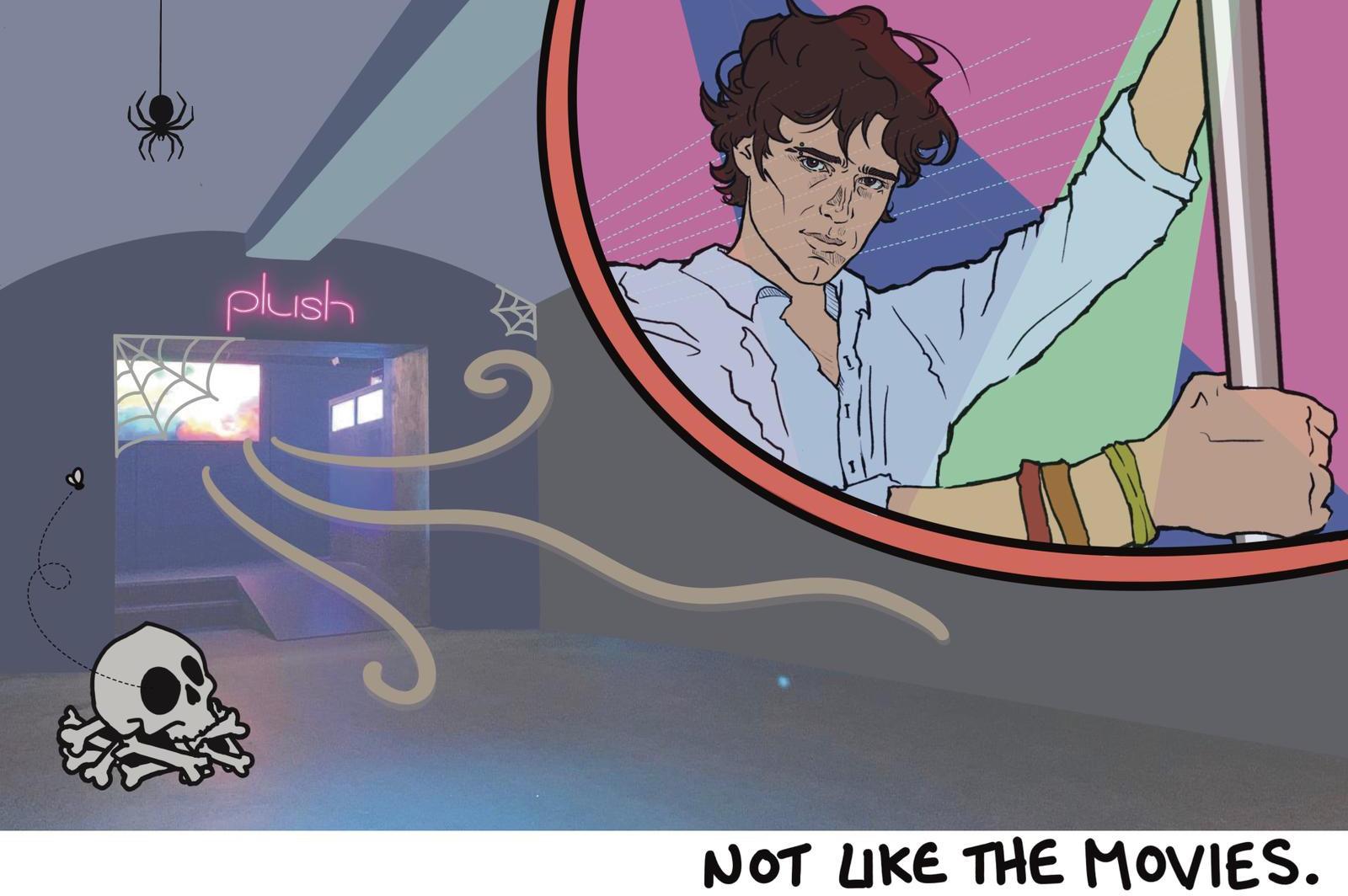
When I tell people I go to Oxford, the first thing they ask me is if the nightlife is any good. Those that don’t study here seem to believe that Oxford students can’t have fun (back to Durham with you). I beg to differ. Awaiting the 2% of us that choose life instead of a first is a ‘vibrant’ clubbing scene.
What really sets a night out in Oxford apart from that of other unis is the people, which in my opinion make it all the more… special. Where else can you see a Christ Church Union hack in his gimpy little robe throwing it back onto an Eton boy, who, after generations of inbreeding, possesses a total lack of coordination on the dancefloor?
Having spent the last two terms diligently attending the shit assortment of Oxford clubs in preparation for this article (to the severe detriment of my degree), I finally feel informed enough to review the Oxford nightlife and determine whether or not it is as bad as people say.
I’ll begin where all nights do; the grossly overstimulating Four Candles. Maybe it was naïve optimism or a misplaced idea that Oxford is classy, but for some reason I thought that the local Spoons would be nicer than the one back home
in Reading (a low bar for sure).
Sadly, I was mistaken about Fandles. For readers unfamiliar with this edgy slang used by many of our peers, it’s a way of referring to the Four Candles. I can only assume they use all the time they save by saying this peeling their chinos off the sticky spoons seating. Fandles, like every other Spoons, boasts the classic carling stained carpet and smellscape of vomit and cheap ale that assaults the nose as soon as one walks in. The upstairs seating area, with its chic glass banister, lets you peer down into the pool of people below like goldfish in a bowl. That is, if the goldfish were overcoat-wearing Old Wykemists attempting to explain Winchester football to some poor girl (I’ve heard the explanation four times and I’m still confused).
Amongst the goldfish swim sharks, i.e. classic Spoons-dwellers (creepy middle-aged men with about four teeth) or horny third years desperately searching for an unsuspecting Fresher to usher to a dimly lit corner of OXO. Fortunately for them, Past 11pm the upstairs section is closed, forcing the freshers into their open arms and resulting in the downstairs section resembling a savannah watering hole. That said, what Fandles lacks in class, comfort and hygiene it
Starting with the jewel of Oxford’s clubbing crown: Bridge. TNB was the place to be until the end of Freshers week, at which point everyone got tired of hearing the same shit Katy Perry remixes and stopped going. It’s slightly painful to see the Park End tickets I once paid £15 for being touted on a ticket selling group chat for a fiver. Not that I’d ever buy one again - I’ve vowed never to return because the Bridge photographer is either shit at his job or fucking hates me the way my photos turn out.
And I’m not done complaining. The club layout must have been designed by someone who is spatially challenged because tell me why I have to go through, not over or under, the dance floor like I’m going on a bear hunt. Except the bears are 100 kilo rugby blues who physically cannot
be passed, or girls who get offended if you brush them on your way through the crowd and communicate this offence via a sharp elbow to the stomach. Thinking about it, it is a good strategy by the club owners to keep you trapped inside and spend more money on overpriced jagerbombs. Maybe I’m just bitter because I don’t play uni sports, so I don’t get access to the luxurious and fabled Tiki bar (it’s a small room with fake bamboo on the walls where everyone just gets with each other). I’m seriously considering joining a pretend sport like larping or golf (sorry Divots) so that I can gain coveted access to this mysterious room. I wonder how the rowing first boat feels about their blue having the same access level as the Quidditch team’s. Slumming it on the main dancefloor with all of the plebs now doesn’t seem so bad. My preferred alternative for clubbing is Plush. Its subterranean musk envelopes you as you descend into the black walled backrooms... Read more online at www.oxfordstudent.com
OxTakes
We asked you, our beloved readers, to send in your Oxford hot takes via our Instagram, and you had a lot to say. It seems many of you have a surplus of pent up emotions that you need to let out. We may need to set up a support hotline for our editors who had to sort through some of the freakier submissions – seriously guys,
we’re people too. Safe to say some of your comments did not make the cut (we don’t want to get sued for libel, or causing extreme offence). All jokes aside, we really appreciate everyone who wrote in and can’t wait to hear what you have to say next. Keep an eye on our Instagram so you don’t miss out.
“People who say their tutor is the problem are arrogant”
One of our readers is clearly desperate to get into their tutor’s good graces. Hop off it, pal, they aren’t going to give you a first.
“Oxford is really in need of a proper brothel”
The Oxford dating scene may have its flaws, but surely it can’t have got this bad. Someone’s clearly been scrolling (unsuccessfully) on Hinge for way too long.
“Get STEM students out of the radcam! I have in library only books and a deadline”
We completely agree with you. Why should future doctors, physicists and mathematicians researching the cure for cancer take a seat from a fine artist making an ideas board for their interpretive dance performance. Just kidding, humanities matter (kind of).
Holly Mackinnon
Illustration credit: Naomi Flexman.

McIlroy reigns supreme in Augusta How he won a second consecutive Masters title.
By James McInerney
Rory McIlroy claimed his second Masters victory recently, becoming only the fourth man to win back-to-back Green Jackets.
After ending a fourteen-year wait for his first Masters victory in 2025, he wasted little time in adding a second to his collection, and can now rank himself alongside greats such as Jack Nicklaus (1965 & 1966), Sir Nick Faldo (1989 & 1990), and Tiger Woods (2001 & 2002) who have also won consecutive Masters tournaments.
The first day was a strong one for McIlroy, as he began his title defence with an impressive five-under; a score only matched by the Amer-
ican Sam Burns. A tightly congested leaderboard saw a large pack of contenders grow behind the leaders, with big names such as Scottie Scheffler, the World No.1, and Justin Rose, last year’s runner-up, on -2. Bryson DeChambeau’s latest “Break 50” challenge didn’t quite go to plan, as he finished on 4 over the course’s par of 72, which the 2024 US Open winner and now famous youtuber had previously said ought to be 67.
A similarly disappointing second round followed for Bryson, whose overall score of +6 saw him miss the cut and ultimately not progress to the final two days of the tournament. Likewise Bob McIntyre
The Duel
and Cam Smith failed to progress, both finishing the second round on overall scores of +7. Rory’s day, on the other hand, could not have gone much better, and his score of -7 on the day saw him top the leaderboard at -12, 6 shots ahead of chasers Sam Burns and Patrick Reed. Excellent rounds from Ryder Cup teammates Tommy Fleetwood, Justin Rose, and Shane Lowry saw them all tied in third with overall scores of -5. Scheffler meanwhile, had an unusually poor day and finished on +2, though his overall score of even par comfortably made the cut.
The third round proved the most interesting. A relatively
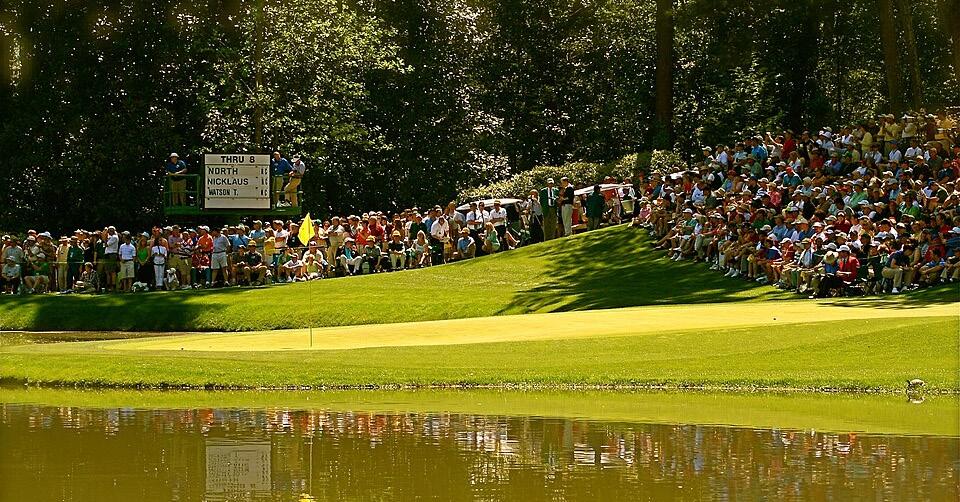
poor performance from Rory saw him shoot 73, taking his overall score down to -11, and his lead atop the leaderboard was also diminished by some truly brilliant performances elsewhere. Cam Young shot an excellent 65 to put him level with McIlroy on -11, and
Why sport is nothing without 1v1 rivalries.
By Charles Prestwich
The duel has existed since before the medieval ages. In fact, judicial duels (trial by combat) took place as early as the 8th and 9th centuries AD in Germanic Kingdoms. Today, whilst the concept of two individuals brandishing swords in a fight against each other to restore honour or to settle legal disputes is foreign to us, sporting rivalries help to preserve the essential aspects of the duel in modern civilisations – namely the isolating 1v1 fac-
tor, the thrill of two individuals pitched against each other and left to find their own solutions. There has to be a loser. Only one can win. Individual sports are perhaps the closest we come to Roman gladiator battles. The last gladiator fights were held at The Colosseum in the 5th century AD, before it closed for good a century later. But fear not, for great sporting head-to-heads perpetuate the legacy of those fabled Roman combats. Take tennis and the remarkable emergence of the
Alcaraz-Sinner rivalry. They may not be covered in heavy metal armour, and blood may not be shed, but these are modern-day gladiators. They trade heavy blows, grunting and dripping with sweat as they do so; thousands of people fill the arena in which they battle; they brandish their racket with the goal of outmanoeuvring the opponent, in order to deliver the killer shot. Perhaps what is most inspiring about sporting duels of this nature is the fact that they
chasers Burns, Lowry, and Rose all went under par to close the gap on the leader, heading into the final round with total scores of 10 under, 9 under, and 8 under respectively.
Read more online at www. oxfordstudent.com

push the best athletes on the planet to explore their limits. But in reality, there is only one criterion for a duel, and you don’t need to be a linguist to realise that it’s in the name.
A duel cannot exist without two rivals. Each competitor drives the other. Think Lauda and Hunt in Formula 1 – each driver was the motivation of the other. The frisson and intrigue lies in the number two; because after all, it takes two to tango. Such is the paradox in modern-day sport: there
is glory to be found in losing the duel. That is because we are no longer in the 5th century AD, where of two gladiators fronting up to each other, only one would survive. In modern-day sport, losing the duel does not mean that you don’t walk out alive. Quite the opposite. The greatest sports people have all lost duels, but walked away from them more motivated, more galvanised and more alive than ever before. Read more online at www.oxfordstudent.com
The Augusta National Golf Club. Credit: pocketwiley.
Credit: Jacques Callot.