

Oxford University has withheld information regarding sexual harassment allegations against former New College professor Miles Hewstone, putting women’s safety at risk.
The university has been accused of failing to share information about a central investigation concerning Hewstone with New College or other academic bodies, which led to students being left at risk in their dealings with the now-retired professor.
Hewstone resigned from his full-time teaching post in April 2019 while under investigation for alleged harassment, however, his 18-year teaching tenure allowed him to become an emeritus professor, which allowed him to continue to use
university facilities despite the allegations.
In November 2025, Hewstone also relinquished his position as an emeritus professor, following media reporting of allegations pertaining to abuse of power, inappropriate sexual advances, and favoritism.
The Times reported the experiences of various women who interacted with Hewstone which spanned three decades; and included claims that the professor dropped his trousers in front of them, with another claiming that he joked about his penis “still working” despite his age.
Former female students of Hewstone’s told The Times of emails from the professor saying that he was “besotted” by them, and describing students as “my fondest”.
Despite the severity of these
accusations, little information was shared with Hewstone’s academic colleagues at New College and within the university as a whole, with leaders at New being surprised by the professor’s resignation in 2019.
This silence from the university continued when the British Academy, European Association of Social Psychology, and the Society of Australian Social Psychologists wrote to Oxford asking if it was safe to invite Hewstone to their events, only to be told that the case was a “confidential matter” and if there were any concerns then people should “raise these directly with Professor Hewstone”.
An Oxford professor told The Times that there was a “very tight wall of silence around the whole affair”. Read more online at www.oxfordstudent.com
Every year, eight elite private schools consistently send more students to Oxbridge than nearly 3,000 state schools combined. This year, 10% of Oxbridge offers came from just 14 schools.
Despite this, Trinity Hall, Cambridge, has announced that it will target the recruitment of students from a small group of elite private schools to improve the “quality” of their students, also stating that “reverse discrimination” was a concern.
The targeted schools are already among those with the highest proportions of students that are sent to Oxbridge, including Eton, Winchester, Westminster, and St Paul’s Girls’ School.
Trinity Hall’s Director of Admissions, Marcus Tomalin, stated that “the best students from such schools arrive at Cambridge with expertise and interests that align well with the intellectual demands”.
Tomalin added that these applicants “have been encouraged to engage critically and independently with their subjects” in comparison to their state educated counterparts.
The 50 independent schools that Trinity Hall has approached charge average fees of £40,000- £60,000, while the UK minimum wage stands at £23,809.
Trinity Hall encouraged these students to apply for languages, music and classics, while these subjects are underfunded in state schools.
Being state school educated myself, I can attest that I went through hell and back to drag myself to Oxford - a university, alongside Cambridge, that has had a longstanding reputation for admitting students from a narrow pool of elite schools.
Yet, students like myself arrive at these institutions, despite all odds and expectations, only for our achievements to be looked at with suspicion and to be treated as second-class and ‘lower quality’ students. I say this taking into account that while 7% of the UK population attend private school, this pool of students make up roughly 30% of students in elite universities. They are therefore not victims of the “reverse discrimination” that Tomlain is worried about.
One in seven UK primary schools do not even have a library. Continued on page 4
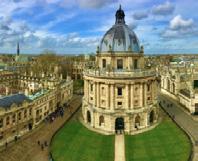
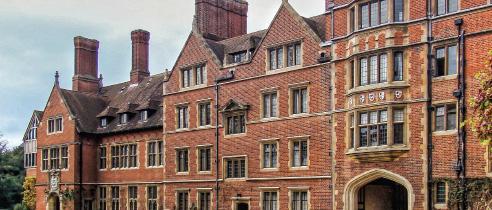
Trinity Hall College, Cambridge Credit: Wikimedia Commons

ceive
ries
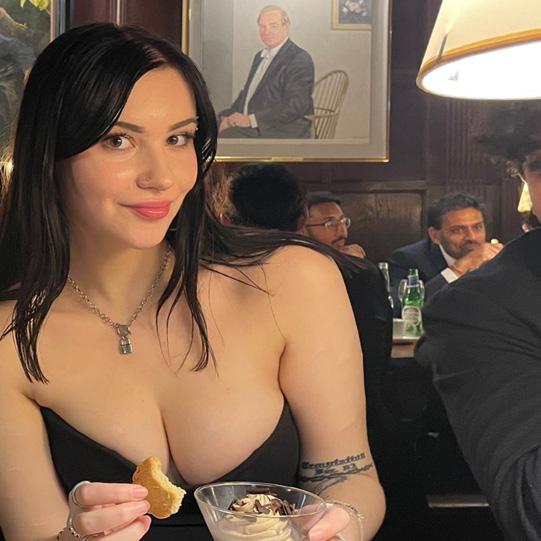
Well, we’re back, and I’m certainly feeling a lot better about being back in Oxford than I was expecting to. It’s been a hectic vacation of admin, strategy, and decision-making. There are lots of surprises in store for the OxStu this term, and I’m happy to work on bringing them to fruition over the course of the next few weeks.
After chopping and changing a few things, I’m proud to unveil our new Business and Finance section as part of a new initiative to put the reader’s interests first. With a strong team on our side, I’m hoping to usher in a new era for the OxStu. While being the head of a paper is tough work

I’m Lila, one of your associate editors for the term ahead. This is my second term at the OxStu, after being the deputy editor for investigations in Michaelmas. I am super excited about the
Editorial Board
Ava Doherty and Hannah Stewart (Editors-in-Chief)
Lila Robinson and Tamar
Okunhon (Associate Editors)
Will Lawrence (Director of Business Strategy)
Opinion and News
Gabriella Bedford (News Editor)
Audrey Miu, Christine Savino, Lydia Willmott Day, Nayel Huda, Marcus Swinerd, Olivia Miller (News Section Editors)
Marcus Swinerd (Opinion
Editor)
Sehr Laiba, Arun Lewis, Guilherme Lopes, Saara Lunawaat,
at the best of times, I’m no soft touch, and I’m willing to go above and beyond this term to ensure its quality this term. While I’m sure the road ahead will be bumpy in some places, being the Editor of one of Oxford’s most iconic papers is a unique privilege. Cheers to a new OxStu!

Life has a habit of coming at you sideways, and I learned that lesson fairly quickly at the start of this term. Yet, in occupying this new role, I’ve realised that very little about me, or the things I write about, has fundamentally changed. I still swear far too much and continue to terrify grannies in the street, whose last confirmed sighting of a “proper young woman” was probably sometime around 1959.
means losing the rest. For my writing and, I hope, for that of my editors, this shouldn’t be true. Like many writers today, I’m pulled in multiple directions at once. Inspiration should be everywhere, and we shouldn’t be afraid to seize it, nor paralysed by what others might think.
The best journalists aren’t those who simply complete the assignment and move on. They’re the ones who dig deeper, look further, and interrogate the narratives handed to them, not just by institutions or sources, but by themselves. The Oxford Student aims to be that kind of publication, and to champion that kind of change.
Hannah Stewart Keble College
changes the OxStu is undergoing, and can’t wait to see what the rest of the team gets up to. From new departments being formed and old departments merging, this is a fresh start for the paper, so if you have been thinking about it, get involved!
My favourite thing about this publication is the variety of voices you get to hear and the different ways they shine through. As a final year student, I feel the rush of the term beginning, as deadlines loom and the graduate job market beckons me with each doom
Audrey Miu, Saba Ahmadzadeh Noughani, Tiffany You (Opinion Section Editors)
Investigations
Jason Manning (Deputy Editor)
Daniela Braw Smith, Sam Drury, Baybars Charkas, Ananya Bhatia, Bianca Orphelia Molinet, Stefano Bates (Section Editors)
Culture
Ivett Berenyi (Deputy Editor)
Elliot Wang, Flora Molnar, Elizabeth Gammaidoni, Isaac Hole, Nora Jessie Mackay (Section Editors)
Jasmine Joyan (Poetry Editor)
More importantly, I’ve rem ained loyal to the kind of writing I actually want to produce. I often return to Sylvia Plath’s image of the fig tree, where each fig represents a different life choice, ripening just out of reach, and choosing one
scroll on LinkedIn, I am determined to remain intentional and in the moment: week to week, issue to issue. So, in that spirit, enjoy the contents of this issue slowly, reflect on all that our writers have given you, and good luck for the term.
Features
Luke Erly (Deputy Editor)
Ansu Bhattarai, Aamina Thava, Izzy Goldberg, Honcques Laus, Emily McPhee (Section Editors)
Business and Finance
Guilherme Lopes (Deputy Editor)
Gabriella Austin, Faris Firoozye, Leila Hoffpauir, William Lawrence (Section Editors)
Identity Emily Cunnington (Deputy Editor)
Celine Leung, Becca Bushee, Frieda Fahrenholt, Neha Ganvir, Maryam Bhatti (Section Editors)
Profile
Vincent Chang (Deputy Editor)
Himasweeta Sarma, Hannah Ison, David Binns (Section Editors)
OxYou
Kit Renshaw-Hammond(Deputy Editor)
Tea Sand, Ivaana Mitra (Section Editors)
Sport
Charles Prestwich (Deputy Editor)
Tod Manners, James McInerney (Section Editors)
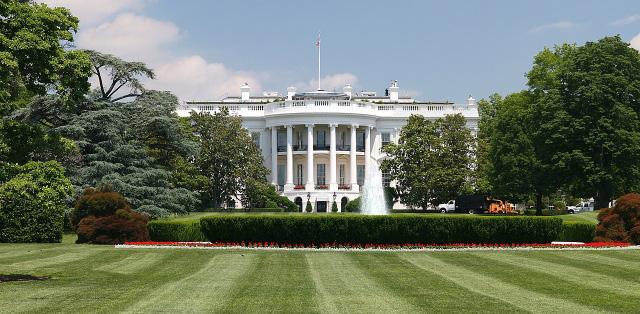
On 7th January 2026, Renee Nicole Good, an unarmed legal observer, was killed by United States Immigration and Customs Enforcement (ICE) agent, Jonathon Ross, in Minneapolis. Leading up to the fatal wound, Good was stopped sideways and began to drive away to de-escalate the situation as Ross approached her vehicle. It was at this point that he shot her three times, fatally wounding her as she attempted to drive away.
The last thing she said was “I’m not mad at you,” and the first words from Ross after killing her were “Fucking bitch”. This is not just state violence, but an act deeply entrenched in misogyny.
The fallout was immediate as video footage of the shooting began to circulate online and protestors gathered at the site of the shooting.
As Good’s children and wife began to mourn the loss of a loved one, far-right extremists flocked to X to ask the controversial AI chatbot Grok to “put this woman in a bikini” and to applaud the shooting simply because she was a queer woman with the all-feared pronouns in her social media bio. Grok has made headlines recently, after users began to
abuse its capabilities to make indecent images of real people, mostly women and children. Even in death, women are not safe from trends that objectify and violate them.
The death of Renee Good was an act of political violence, and it was not an isolated incident. Every time ICE detains someone – whether from their own home, their place of work, or the grocery store – they send a clear message that violence
“ The death of Renee Good was an act of political violence.
is their tactic in enforcing the politics of the White House. Why is it that this act of political violence was the final straw in triggering mass protests in Minneapolis and across the country?
Was it because this was a woman that many watching through screens may have related to, one who may have been seen as safe from political violence?
A woman with privilege, using it for good? Was it a wakeup call to say that nobody, not even a white woman recording from a distance, is safe in Don-
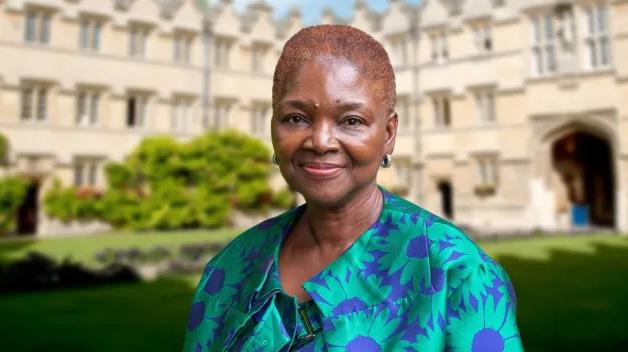
The Master of University College, Valerie Amos, will step down on 31 July 2027, which has led to a commencement of a search for a new master.
ald Trump’s America?
Trump has, of course, not refrained from voicing his opinion, even going as far as threatening to invoke the centuries-old Insurrection Act.
The Insurrection Act of 1807 allows the President to send the Armed Forces and National Guard units to a state under specific circumstances, such as in cases of unmanageable civil disobedience.
Donald Trump has commented on the unrest in Minneapolis over the past week on his own platform, Truth Social, and has praised the ICE agents, “who are only trying to do their job,” and threatened to “institute the INSURRECTION ACT”.
Tensions are still running high in Minneapolis, over a week after Good’s murder. State violence and cruelty is thriving; officers kicked away objects placed at Good’s memorial, ICE continues to kick in the doors of homes in Minneapolis and detain families, and chemical weapons and rubber bullets have been used on crowds of peaceful protestors.
How much more state violence is it going to take for people to realise that more needs to be done to stop it? Read more online at www.oxfordstudent.com
Amos is a Labour Party politician and diplomat who has previously served as a UN Under-Secretary General. Before her appointment to the UN, she served as British High Commissioner to Australia. Amos has been the Master of Univ since 2020 and candidates who wish to apply to the position have until Monday 23rd February. The College says they are “incredibly fortunate to have enjoyed the leadership that Valerie has provided to us since she took up her post in 2020, and she will be a very hard act to follow.”
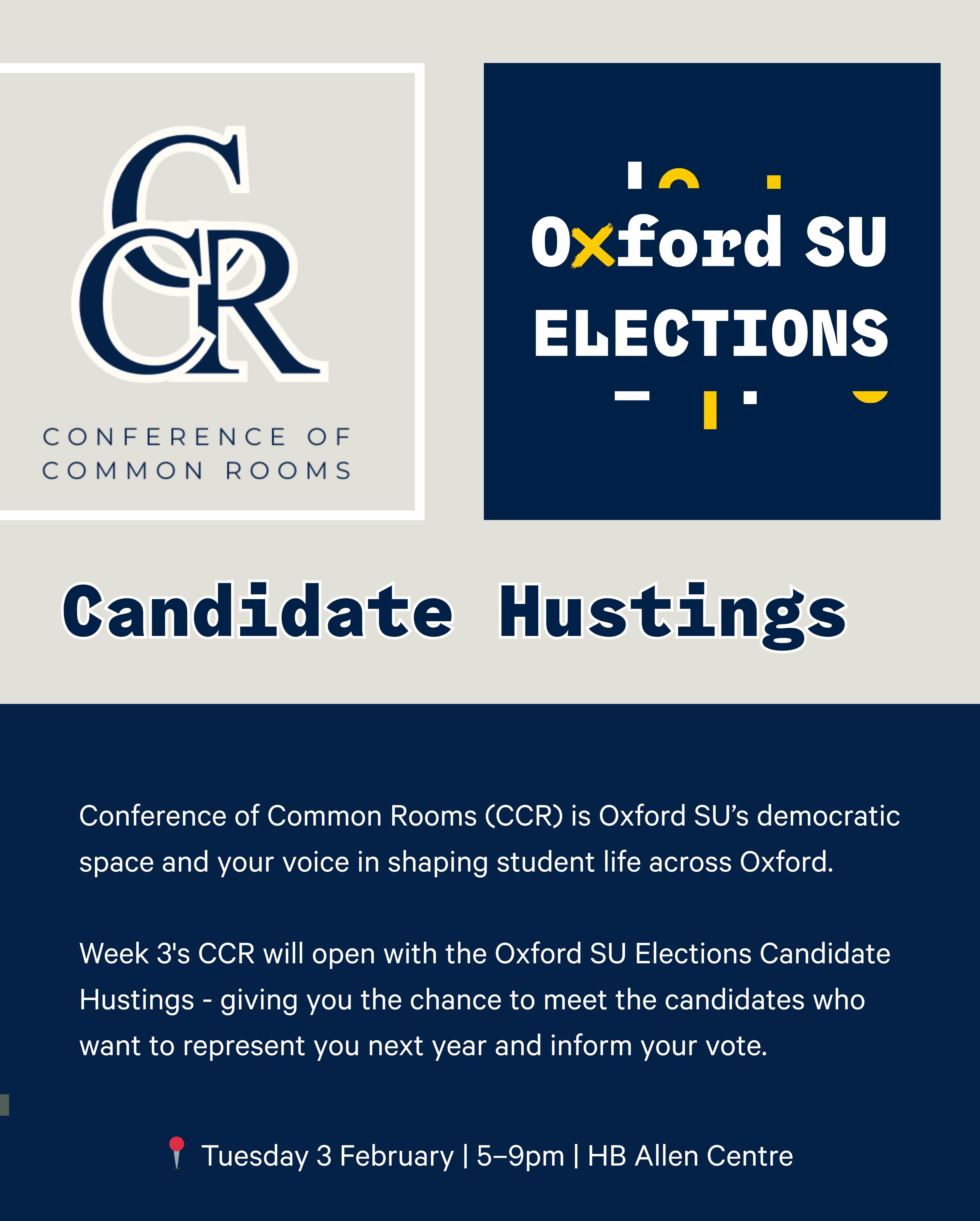
The Oxford University Student Union has opened the search for new committee. members, including a new President. This year, Shemar Pryce was the President of the SU, following in the footsteps of Oxford East MP Anneliese Dodds.
The nomination period opened earlier this week and closes on Friday 30th January. Following the close of nominations, a campaigning period from February 2nd to February 6th will follow, which includes hustings on February 3rd.
Once campaigning is complete, the voting period will run from February 9th to February 12th.
The SU is comprised of four elected full-time sabbatical officers and an additional set of part-time officers, all of which will be elected this term.
The Oxford University Conservative Association are holding Port and Policy at the Macmillan Room in the Oxford Union this term for the first time in two years, under the Presidency of Maya Kapila. This term, the committee features Karl Eichholz as Treasurer, Anish Kumar as the Secretary, and Anna Matthews as the Political Officer.
Oxford Labour Club begins the new term with Dame Anneliese Dodds speaking at OLC’s welcome drinks with Harry Aldridge and Freya Cushman as CoChairs. This term, the committee features Ned Remington as Secretary, Gabriella Bedford as Treasurer, and Tom Haydon as the Social Secretary.
This term, Liquor and Liberalism has changed from a Wednesday to a Tuesday. This term, the Oxford Students Liberal Association is led by Harry Morgan; with Rob Turner as Secretary, Oliver Davis as Treasurer, and Antonio Reis as Social Secretary.
Oxford Reform launches their first termcard, including a speaker event with Reform’s London mayoral candiate. The President is Lincoln Hewitt; with Laurence Dauti as Secretary, Olivia KnightCatalinete as Treasurer, and Philip Sivyer as Minister.
Oxford Left Society, chaired by Alex Evans, is continuing the Lager & Leftism debates on Wednesdays.
Oxford Speaks is hosting Husam Zomlot, Palestinian Ambassador to the United Kingdom, on February 5th 2026. Hussain Heddy is the President, and Aidan Powley is the Vice-President.
State schools have a class size average of 22-30 pupils, while the average private school has just 8-15. Students from state schools are more likely to come from lower socio-economic backgrounds and live in more deprived areas. They are more likely to have a part-time job during the years that they sit their GCSEs and A-Levels, to have shorter school days, and are also less likely to have extra tuition classes outside of school hours.
A quarter of state school students are on FSM (free school meals) and in 2024, only 29% of students of FSM progressed to university.
Last year, when talking to a group of classmates,
Mone said to me that the cost of his tuition classes he received outside of school hours was £60 an hour, another stated that hers was £120. Then, both looked at me, expecting an answer.
When I replied that I didn’t have any extra tuition classes, they looked shocked, even though this is the case for the vast majority of state school students.
I learnt that in addition to this, many of my privately educated peers had received extra classes and workshops provided by their schools in year 12, teaching them how to tackle Oxford’s additional admissions tests.
Many had multiple mock interviews and
editors aided them with their personal statements. Many of their teachers were Oxbridge graduates themselves and their school term names were identical to that of Oxford and Cam-
“ I realise how much harder we have to work to reach the same universities
bridge’s - Michaelmas, Hilary, and Trinity or Lent.
I realise just how little support state-educated students receive, and how much harder we have to work to reach the same universities.
Trinity Hall has pointed to a residential trip that it has in place targeting students from underrepresented backgrounds, yet to me, such schemes are meaningless if those same students are made to feel undeserving upon arrival.
The college has also argued that a “significant minority of students at leading independent schools are on full bursaries”. However, a recent survey of 200 affluent independent schools has found that only 6% of fee income was spent on means-tested bursaries. St Paul’s School offers part-bursaries to families with a combined income of just below £144,000. Read more online at www.oxfordstudent.com
y grandfather used to drag me through the countryside, patching up my knees while lecturing me about political honour. His favourite topic: resignations. Specifically, how politicians used to fall on their swords over their principles, not because they got caught sneaking out the back door like a teenager at a house party their parents have just crashed. He loved talking about Tory infighting and how it had undermined Margaret Thatcher. That infighting, he said, was always their weakness, a shame, really, because they were a talented bunch, love them or loathe them. Thatcher was a real winner who might have clung on longer if not for Geoffrey Howe’s resigna-
tion, which my grandfather viewed as a mistake.
Even then, neither he nor I doubted Howe’s morality or motives. Whether self-interested or not, you could tell he acted for what he believed was the good of the Conservative Party, even if it arguably hastened its vulnerability to Tony Blair in 1997.
Look, I’m not romanticising the past. Politicians have always been self-serving bastards. But at least they used to have style. Geoffrey Howe didn’t text his resignation on a burner phone and hoped nobody noticed. While defection and resignation aren’t identical, both aim to provoke consequences for the Prime Minister. And, defections were more idealistic.
The Gang of Four - Roy Jenkins, Shirley Williams, David Owen, and Bill Rodgers - left Labour to form the Social Democratic Party (SDP) because they actually believed in something other than their own careers. Imagine that!
They didn’t secretly update their LinkedIn to “exploring new opportunities” and hope nobody screenshotted it. Their
Image
leap into the unknown was ideological, not a calculated pivot for personal advancement. Similarly, Robin Cook and Clare Short resigned over the Iraq War clearly on principle, not to position themselves for leadership contests. Their acts reflected a time when loyalty to ideas and party actually mattered. Read more online at www.oxfordstudent.com
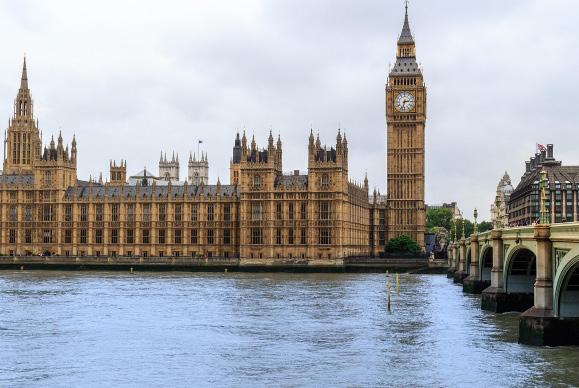
MTV, the legendary American music channel that was once a backbone of the music industry, axed 5 of its music channels from British television services following a merger with Paramount and Skydance Media.
The five channels culled by MTV on the 31st of December 2025 were confirmed to be MTV Music, MTV 80s, MTV 90s, Club MTV, and Live HD.
The main MTV channel, which airs predominantly reality TV content such as Geordie Shore and Teen Mom UK, remains untouched.
With sources lamenting the decision as ‘a dark day for the music industry,’ the decision stands as an underwhelming conclusion to a
former industry juggernaut that launched the musical careers of many and broadcast numerous iconic videos across the decades.
Following increased pressure from streaming services, the cull takes place as part of a wider initiative to cut costs globally.
Ironically reminiscent of the decision to launch the channel with The Buggles’ hit track “Video Killed The Radio Star” in 1981, a song based on anxieties surrounding technological developments and their effects on the arts, MTV drew their channels to a close with the track.
Punctuating yet another watershed moment in music history, MTV’s music channels closed, ending their 40-year reign over the music video industry. With a source claiming that the station had been seeing a

drop in viewership due to the presence of streaming services such as Spotify and YouTube’s monopoly on Music videos, the change seems to be influenced by shifting tides in the music landscape.

The decision seems like a particularly sour cherry on top of a tumultuous year between streaming gi-

Political advertising and campaigning used to promote and spread awareness of particular points or evidence of political persuasion on the one hand, it serves as an engaging avenue for people to learn more about politics. Fake news and polarisation are some of the drastic consequences that could ensue in a political climate which
ants and the music industry. Controversial decisions made by former Spotify CEO Daniel Ek to invest in Helsing, an AI-powered weapons manufacturer, prompted boycotts from artists such as Massive Attack and Deerhoof.
In the wake of competition from streaming services, which are constantly at war with the artistic community at large, kissing goodbye to the musical monolith that aired iconic music videos Read more online at www. oxfordstudent.com
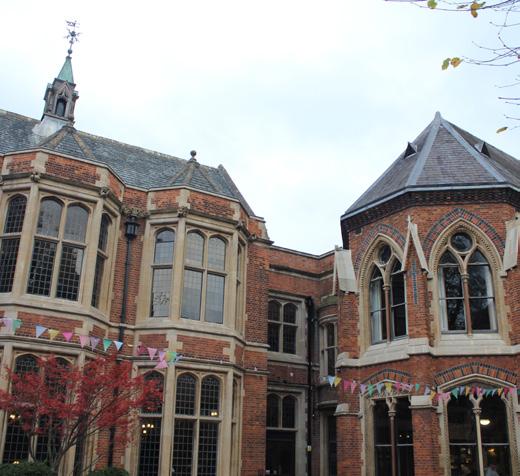
The Oxford Union announced its 2026 Hilary termcard on 21st January, unveiling a programme of political figures, cultural icons, and business leaders. The scheduled speakers include Steven Crowder, Tawakkol Karman, and Matt Clifford, with more to be revealed throughout the Hilary term. The debates for this term include: “This House Believes That Churchill was a Hero,” “This House Believes the English Flag Has Become a Symbol of Division” “This House Would Create a Unified European Army,” “This House Hopes that Hell Exists,” and an “America Special Debate” promising a “special surprise guest speaker” scheduled for 3rd March.
Steven Crowder
regularly uses social media as a medium for political information and a basis for electoral decisions.
We cannot forget that social media does not undergo checking for incorrect statistics or information. This can lead to the prevalence of fake news, which in recent times has been known to spread six times faster than the truth. Information which is fake often augments the authentic statistics, exagger-
ating the current situation at hand. When influencing something as important as political decisions, fake news can distort reality, often leading to people voting a particular way when they otherwise would not have. Furthermore, with an increase in technological tools such as AI, which seem to be following the inevitable trend of technologically advancing far quicker than human detection can keep up with, the probability of these methods being used by politicians from all sides to further their agenda and dampen the reputation of their opposition only increases. This means that political advertising and campaigning on social media perhaps should be banned as it damages the integrity of politics. Equipped with the tools to harm political opposition, there is no certain
way to manage just how far this could go. However, we must take into account how social media is one of the most significant means of spreading information and awareness. Oftentimes, newspapers and certain article subscriptions cost money, which can alienate certain demographics from information. Social media overcomes this issue as it is free and therefore more accessible for all audiences. News outlets and newspapers, just like social media, can also have political agendas, so perhaps there is no way to single out social media as the only source of information which can have biases or skewed data. Blaming social media alone only fuels widespread distrust, even among the electorate. Read more online at www. oxfordstudent.com
Crowder is a Canadian-American conservative political commentator, comedian, and media personality best known for his online show Louder with Crowder. Born in 1987, Crowder began his career as a stand-up comedian and voice actor, working with Fox and on the Arthur television series, before transitioning into political commentary. He gained prominence through appearances on Fox News in the early 2010s, before being dropped from the network in 2013. Crowder subsequently built a large independent audience through digital platforms, notably YouTube and Rumble. Crowder’s content is characterised by confrontational debate, satirical sketches, and viral segments such as Change My Mind, in which he engages passers-by in public debates on controversial political and social issues. Tawakkol Karman
Karman is a Yemeni journalist, Nobel Peace Prize Laureate, and human rights advocate. Karman emerged as a leading human rights voice in the early 2000s through her work as a journalist and co-founder of Women Journalists without Chains, an organisation dedicated to the freedom of expression across the Middle East. Read more online at www.oxfordstudent.com.
news@oxfordstudent.com | Deputy Editor: Gabriella Bedford
The first weeks of 2026 have been filled with political headlines: Maduro kidnapped by US forces, Venezuelan oil ship seized, the Immigration and Customs Enforcement (ICE) shooting an American mother, and, more recently, serious protests in Iran and spouts over Greenland. In the whirlwind that has been the first few weeks of 2026, you may have missed the story from Syria. Since Tuesday 6th January, Syrian state forces and Kurdish militias have been engaged in armed combat in the northern city of Aleppo, which killed dozens and displaced thousands. On 17th January the situation escalated, with the Syrian state launching an invasion of the Democratic Autonomous Administration of North and East Syria (DAANES, commonly known as Rojava). As of 21st January the situation remains highly volatile. Whilst the Syrian State has seized large swathes of land, Kurdish forces continue to resist. Though a ceasefire was declared yesterday, whether it remains in force or is broken like the preceding ones remains to be seen. Why is the Syrian state invading Rojava? What is Rojava? What has the Western response been? I seek to answer these questions below.
On Tuesday 6th January, Syrian state forces began fighting and shelling two Kurdish majority neighbourhoods –Sheikh Maqsound and Ashrafieh – in Aleppo, northern Syria. The fighting in Aleppo killed dozens and displaced thousands. Though a ceasefire was declared and Kurdish fighters evacuated, the fighting has now erupted in greater intensity in what can only be described as a full invasion of Rojava. Serious clashes within the territory have displaced
many more thousands. Syrian state forces have, allegedly, freed potentially thousands of ISIS prisoners from DAANES prisons which housed them, though sourcing at this time is difficult. The Syrian state has seized large swathes of land in northern Syria, with fighting now occurring within the territory of Rojava, according to Rojava’s military, the Syrian Democratic Forces (SDF). Kurds from surrounding countries have launched protests against the invasion, with international groups having made “calls to action” to pressure their governments to help Rojava. These developments
“ The fighting has now erupted in greater intensity in what can only be described as a partial invasion of Rojava.
come after a year of tenuous peace following the fall of the Assad regime and the seizure of the Syrian state by the Hay’at Tahrir al-Sham (HTS), a Turkish backed militia with Jihadist/Al-Qaeda connections and its leader Ahmed al-Sharaa, a former member of Al-Queda.
On Thursday 8th January, Turkey threatened military intervention over the Aleppo skirmishes, sparking fears of a renewed conflict in a country traumatised by over a decade of war. A ceasefire came into effect on Sunday 11th January, with the last of the Kurdish forces leaving the city the same day. Clashes have
since renewed east of Aleppo with fighting spreading to the banks of the Euphrates river. Fighting is, as of this writing, taking place across Rojava, including the historic city of Kobanê. Rojava has declared a general mobilisation to defend the region, stating that Syrian state and ISIS forces are hellbent on the destruction of the region.To understand the Syrian invasion of Rojava, it is important to lay out, briefly, the history of the Syrian Civil War and the pro-Kurdish Rojava revolution that it ignited. The Syrian Civil War started in March 2011, following the Arab Spring and violent repression of protesters by Bashar al-Assad’s regime. In 2012, the Democratic Autonomous Administration of North and East Syria declared its independence. The DAANES has since acted as a de-facto stateless autonomy. The region is ethnically mixed, containing large Arab and Assyrian populations alongside the Kurds. The region is organised on the principles of “Democratic Confederalism”, the political ideology of Abdullah Öcolan, who has been in Turkish prison since 1999. Rojava has remained de-facto independent since 2012, fighting off ISIS in 2015, with the Siege of Kobanê marking the turning point against the Islamic State’s advance in Syria. In 2019, the region was invaded by Turkey and Turkey-linked factions (including HTS), with US permission. It should be noted that the US continues to maintain military bases in Rojava as part of its own military and economic interest in the region. The Civil War was extremely complicated, with dozens of factions fighting over control of the country. To paint a broad picture that contextualises Al-Sharaa’s most recent escalation, it is only important to understand that Turkey, along with the US and

HTS, has been vying for control of the territory controlled by Rojava for nearly a decade.
When the Turkey-backed HTS seized control of Damascus, and de-facto control of the Syrian State, effectively “ending” the civil war in December 2024, the prospect for peace in the region was closer than ever, but not guaranteed.
The leader of HTS, Ahmed al-Sharaa, has stated his intention for peace and a Democratic transition for Syrian society, part of his peace plan involving negotiations with the DAANES. To that end, the Syrian State and Rojava signed an agreement in March 2025 that set out a roadmap for the
“ The full scale invasion of the DAANES has seemingly killed any prospects of peace in the immediate future.
reintegration of the region, diplomatic normalisations, and eventual demilitarisation.
The Syrian state’s attacks in Aleppo threatened this peace, and the full scale invasion of
the DAANES has seemingly killed any prospects of peace in the immediate future. In Rojava’s statement on 18th January 2026, it was stated that: “despite all efforts to find peaceful solutions and the declaration of good faith to withdraw from certain areas, Damascus is insisting on war and the military option”. Though multiple ceasefires have been announced, including yesterday, the Syrian state has broken them all. It is worth noting that Al-Sharaa’s invasion is not simply an internal conflict. As mentioned above, the US and Turkey have both attempted to exert their own influence in the area. You may remember that last February there was great fear of a Turkish invasion of Rojava. Skirmishes arose over control of Tishreen dam, the main source of electricity in the DAANES. Though Turkey backed down, last year’s threat only reminded us all of Turkish President Erdoğan’s imperial ambitions in the region. As previously mentioned, the Turkish government has already threatened invasion of the region, should the Syrian state request it. It is hard, for me at least, not to interpret this offer as Turkish opportunism to gain control of a strategic and resource-rich region. At the same time, however, I remain cautiously optimistic against the likelihood of any such intervention. Read more at www.oxfordstudent.com.
investigations@oxfordstudent.com | Deputy Editor: Jason Manning
Section
Lila Robinson
Access work has become a priority for the university and its colleges, which have taken steps to promote Oxford to a wider range of students from more diverse backgrounds. We have all had some degree of interaction with college access and admissions departments – attending study days, open days, offer holder days, accepting our offer; they are vital in ensuring people conceive of applying here. One role of access and admissions departments is to recruit and manage a team of student ambassadors, who are tasked with promoting study at Oxford University. Therefore, it only seems fair that students are compensated for their work, and this compensation should be in the form of a bank transfer. After all, what use is a cookie if you can’t afford your rent?
However, such a discussion must be nuanced. If students who work as ambassadors are more likely to have benefitted from access work in the past, it is not a stretch to presume that a majority of them may have been from more disadvantaged backgrounds. Thus, we must consider that if all colleges offer payment via bank transfer, some students could find their income pushed over a threshold, which could mean they lose entitlement to other forms of income, such as benefits. Whilst worthwhile, outreach work is not a predictable form of income. Despite its wavering availability, access work remains essential, so should colleges not compensate it fairly? This investigation utilises
data obtained from Freedom of Information requests; some colleges did not reply to our requests, so we have no data on how their ambassadors are paid.
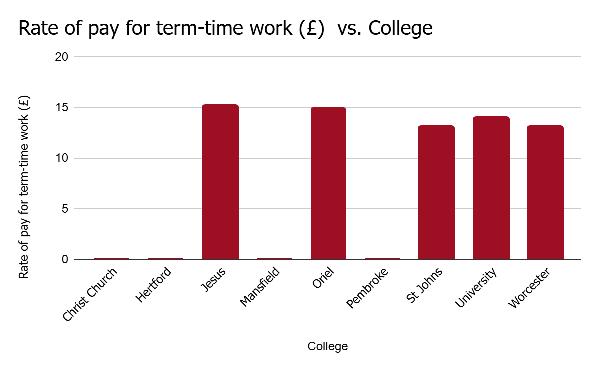
Christ Church currently employs 63 ambassadors. During term time, they work under “volunteer status” and are compensated with lunch credits to the value of £6.66 for every 30 minutes they work. Outside of term time, they are paid for open days and other activities in line with the university’s casual scale, Grade 3, Point 4 (£14.51 per hour). For such out-of-term commitments, ambassadors are
“ What use is a cookie if you can’t afford your rent?
provided with free accommodation, reimbursed travel, and free food.
Hertford has 102 ambassadors on their payroll. They are not paid for any work within term time, but are compensated with Ben’s Cookies and provided with lunch if they are helping with an academic taster day. For work outside of term, they are paid the Oxford living wage (£13.16 per hour). For their most “engaged” ambassadors, they provide book vouchers as a reward for sustained commitment. For events such as open days, they reimburse travel
costs and provide free accommodation.
Jesus currently has 40 student ambassadors on a fixed-term contract until September 2026, but they also have ‘UG helpers’ and distinguish between the two. They are paid at £15.29 per hour with 17.1 percent holiday pay for work within the term, in-
per hour, but this change only took place in January 2024. If they are accompanying a school group, they can receive a free lunch. Travel costs are reimbursed for their residential. They receive free accommodation and food whilst working.
Pembroke told us that they currently have no ambassadors
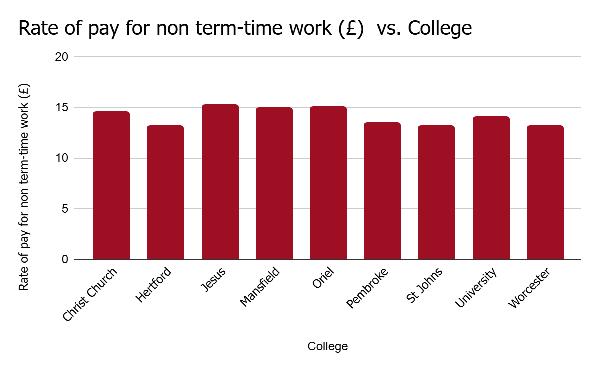
cluding, but not limited to, supporting school visits, content filming, and webinars. Outside of term time, they can expect to be paid for open days, but not for offer holder days. However, students are provided with a free lunch for these events. The College reimburses travel costs up to the value of £50, unless otherwise approved by the access team in advance. For those travelling “substantial distances”, some accommodation can be provided based on availability. Additionally, students working during the College’s August residential have all of their meals provided and accommodation for the whole period.
Mansfield has 69 student ambassadors who are not paid for term-time work, but are paid for work they do outside of term, such as open and offer holder days, at £14.98 per hour. For open days, the College reimburses travel costs, provides free accommodation, and offers free food whilst ambassadors are working. Annually, they host a formal dinner for their ambassadors.
Oriel had 23 ambassadors at the time of their reply and an additional 18 in the process of joining. They are paid for work during term time and the vacation periods at a rate of £15.01
vided with free accommodation and food.
on their payroll, as they were at the start of the recruitment cycle. They only pay their ambassadors for admissions support in weeks nine and ten, as well as for open days, both at a rate of £13.45 per hour plus statutory holiday pay. For open days, they provide accommodation, travel reimbursement, and food.
University have approximately 90 ambassadors, but the number of “active” ones is far lower, at just 25. They are paid for work during and outside of term, and open and offer holder days are open to all who wish to work at them. They are paid at the Oxford living wage, which is set to increase to £14.06 per hour in April 2026. They began to be paid under the newest access officer in early 2024. Ambassadors are entitled to a free meal whilst on duty when doing school visits. For offer holder days, the College offers reimbursement of travel costs, free food, and free accommodation. Worcester were at the start of the recruitment process at the time of their reply, but they were re-contracting 26 and preparing to do more in January. All work over one hour is paid, whereas all work under that is compensated with a free lunch. Ambassadors are paid at the Oxford living wage (£13.16 per hour). All colleges require student ambassadors but do not appear
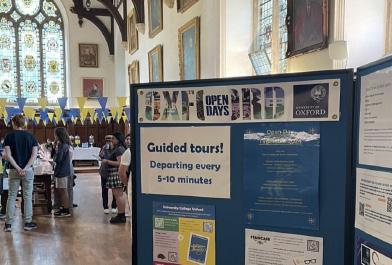
St John’s employs 68 ambassadors. They pay for work at a rate of £13.16 per hour, and this has been the case since 2016. Depending on the timing of events, they receive free meals. For open days, they can claim back travel costs for a second-class return ticket or mileage at 45p per mile (both up to a maximum of £100), and they are pro-
to appreciate them to the same extent. At one end of the spectrum, there is Jesus, who pay £15.29 per hour throughout the year to their ambassadors, but Pembroke, contrastingly, only pay ambassadors for two weeks of the year, at a point when many students would rather recover from the previous term or start vacation work.
culture@oxfordstudent.com | Deputy Editor: Ivett Berenyi
Section Editors:
The year 2025 was not an easy one for the film industry.
However, one of the positive side effects of the film industry’s soul-searching and the lack of blockbuster material was an increased focus on smaller releases that under other circumstances would not have gained the attention they deserve. Films like Ryan Coogler’s Sinners come to mind, or perhaps Paul Thomas Anderson’s One Battle After Another. Both will undoubtedly play a major role at this year’s Oscars. But one particular film caught my attention that I believe might give the latter two a run for their money during this year’s award season.
Chloé Zhao is no strang-
er to major awards campaigns. In 2021 her film Nomadland was awarded three Oscars, including best picture, best actress and best achievement in directing which made Zhao the first Asian woman ever to receive or even be nominated for the prestigious award. Her new project Hamnet, adapted from
“ The real standout is undoubtedly Jessie Buckley
Maggie O’Farrell’s novel, is cut from much the same cloth. It follows Agnes, a young woman who falls in love with an unknown William Shakespeare, engaged in tutoring her half-brothers in Latin in order to pay off his father’s debts.
Hamnet takes a different approach that gives the subject of Shakespeare a new and refreshing spin and saves it from the issues associated with traditional biopics. Rather than taking a historical and objective approach, the film imagines the complex dynamic between a woman devoted to her husband and children and a man who is so obsessed with his creative endeavours that he chooses them over his family. Zhao accomplishes this through a vast array of carefully crafted shots that like to linger and draw the viewer into the slightly mystical world that seems to lie half way between reality and the theatrical. In it, Shakespeare becomes a supporting character rather than the main protagonist. This being said, Paul Mes-
Christina Robinson
In the light of your eye
This is us in our fledgeling stage
Legs dangle over the back of the catamaran
Reflections ripple beneath us, swirling Salt sprays giggling at our whispers
And if I dip my toes in, I sense to tug of tomorrow
The sea peeling away beneath my feet
So as the night curtained the day,
Setting up a new stage,
Behind the cover of the stars
And our phony tales of fate, I drew the line from your eye to mine.
And we became a constellation.
And for a second I wished
That I could live inside the highlight of your eye
Become the gathering on your retina
The reflection of my gaze into yours
Borrowing sparks from the setting day
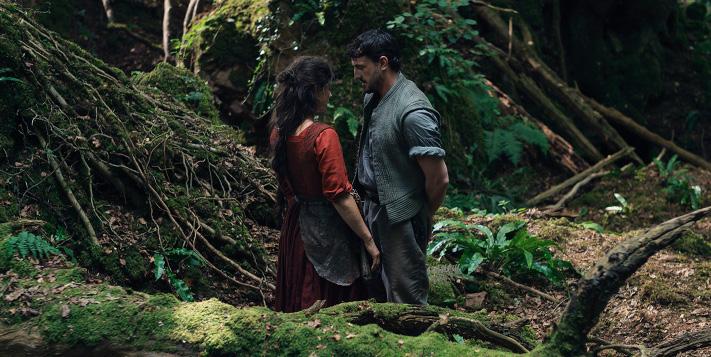
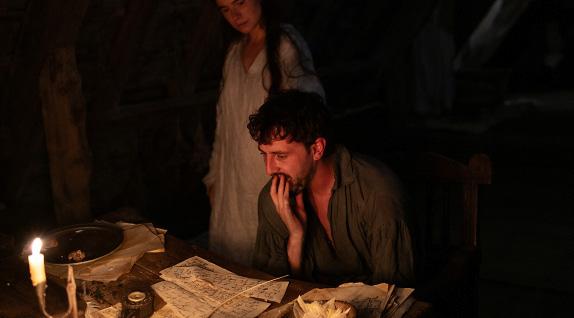
cal delivers an excellent performance as the Bard. Yet the real standout is undoubtedly Jessie Buckley, who delivers an Oscar worthy performance that requires her to exhibit a wide variety of emotions from infatuation to hatred, grief and finally forgiveness. Her acting carries the film for the majority of its runtime and provides it with its emotional anchor. Her portrayal of Agnes is rounded off by a number of excellent child perfor-
Christina Robinson
mances, above all that of Jacobi Jupe as Agnes’s and William’s son Hamnet. I have no doubt that given its overwhelmingly positive press coverage, Hamnet will be able to cement Zhao’s position as a prestige filmmaker in Hollywood and encourage studios to invest in the kind of highly skilled cinema that Hamnet represents.
Read full article at www. oxfordstudent.com.
On Thursday night we stayed in school too late,
And when we emerged to find day leaking into night along the horizon
The light caressed the tip of your nose but kept clear of your lips,
And the edges of each space and object seemed to melt and twist
Colours converging like our art class prints, yellow, magenta, cyan,
And I noticed the sun slipping out of your cheeks, Leaching into my fingertips, rosy and raw.
Me, with my fondness for feeling the tilt of the earth under my skin,
I turned to you, flaming, hair charred into an artificial curl,
Girlhood, pooling at your feet, evaporating into the shade,
You reach out unbitten nails and call my name.
But I won’t join you.
I’ll retreat, retread.
Khalid Abdalla’s anti-biography, Nowhere, is coming to Oxford Playhouse between Thursday 22 and Saturday 24 January.
Sam Steiner’s play Lemons Lemons Lemons Lemons Lemons is running in the Burton Taylor Studio between Tuesday 27 and Saturday 31 January
Stephen Sondheim’s musical comedy, Company, is running in the Oxford Playhouse between Wednesday 28 and Saturday 31 January.
Also at the Oxford Playhouse is also hosting Laura Wade’s adaptation of The Constant Wife between Monday 2 and Saturday 7 February
At New Theatre Oxford, you may attend Sunny Afternoon between Tuesday 10 and Saturday 14 February.
Greyjoy will be running in Michael Pilch Studio between Wednesday 28 and Saturday 31 January
This week has seen exciting new book releases:
Half His Age by Jennette McCurdy
My Husband’s Wife by Alice Feeny
A Box Full of Darkness by Simone St James Crux by Gabriel Tallent
The Future Saints by Ashley Winstead
Some anticipated film releases in the UK include Return to Silent Hill
Shelter
The Moment
Reckless The Incomer
“Strange, touched, peculiar, and perhaps mad”
Deputy
My trip back to O’Farrell’s sixteenthcentury Stratford resulted in a new-found appreciation of Agnes’s powers. It is difficult to pin down what kind of power she possesses, but that does not keep her from gaining a “certain notoriety” in the town.
After all this is what happens when someone wanders “unaccompanied, collecting plants to make dubious potions” – it is only one small logical leap to accuse her of killing babies “with a single glance” and putting hexes on whomsoever she wishes.
Hearing the rumours about “the girl from the Hewlands,” even Agnes’s future
sister-in-law forms an initial malicious image of her: “she is fierce and savage
“
O’Farell’s literary universe is structured by the empathetic, restorative, and liberating porosity of bodies.
[…] puts curses on people […] can cure anything but also cause anything.”
The initial air of ambiguity surrounding her miraculous touch is dispelled as soon as she encounters her husband-to-be. First, we gain his perspective as Agnes “takes hold of the
skin and muscle between his thumb and forefinger” with a grip that aches and delights at the very same instant. Agnes, of course, feels something beyond whatever the man at that stage could have imagined – she is “trying to decipher something, to work something out.”
Much of Agnes’s characterisation follows twenty-first century sensibilities, but the breaking down of boundaries between
Credit: Universal Studios
bodies is a peculiarly early modern notion.
While the exchange of fluids was feared in the early modern period, it becomes the source of Hamnet’s heroism. O’Farrell’s literary universe is structured by the empathetic, restorative, and liberating porosity of bodies, natural or supernatural, or somewhere in-between.
Read full article at www. oxfordstudent.com.
Frieda Farenholt explores the furious tumult of dreams, money and gender.
Everybody wants to rule the world” chimes the eighties aspiration-anthem at the end credits of Marty Supreme. Josh Safdie’s direction brings this motto to life in his depiction of 1950s America. America is energised with World War Two victory, and from this sparks Marty Mauser, played by the nimble as ever Timothee Chalamet. A Jewish kid who grew up on New York’s Lower East side, Marty works in a shoe shop to fund his single dream: to win the Ping-Pong (excuse me, Table Tennis) Japanese Open. His belief
that his sporting brilliance is enough for success rages against the American reality which rewards money over talent.
Luckily, Marty is as quick-witted as he is quick-footed. What ensues is a fast-paced rally with capitalism, as Marty grasps for the necessary funding to fulfil his dream. Marty’s quest is so far-reaching that it teeters on absurdist comedy. What do you get when you combine a dog, a psychopath and a bathtub? You get cinema so bloody good that you become almost as foulmouthed as the film’s unvarnished script. One of the major climaxes
(there are a few, of varying types) takes place between Marty and business tycoon
“
What do you get when you combine a dog, a psychopath and a bathtub?
Milton Rockwell (Sharktank billionaire Kevin O’leary).
Milton is as repugnant and greedy as capitalism’s big bad men go, with an almost sadistic desire to publicly humiliate Marty in varous ways. Their dynamic is further defined by the antisemitism ingrained in the
socioeconomic structures of post-war America. This is a highly important theme which is also explored effectively by Géza Röhrig’s character, Bela Kletzky, Marty’s friend and fellow table tennis player.
Like Marty, who is often conflicted between cheap performance and genuine talent, Chalamet has undergone his own public humiliations in the name of passion. It’s brutality balanced with charm. Marty Supreme shows raw talent and drive; embodied by Marty just as much by Chalamet and Safdie.
Read full article at www. oxfordstudent.com.
Luis Buñuel is the uncontested father of Surrealist cinema, and his 1962 film El ángel exterminador has all the quality ingredients to show for it. Borrowing heavily from Freudian theory and psychotherapy, it stages a battle between the collective superego of high society and the id that asserts itself even in these refined circles – if given the right conditions. We see characters’ rational sides give way for better or worse; we share their inexplicable visions; we watch how they begin to fester, along with their surroundings. We also find that only they can save
“ The scope of this work exceeds its genre and any lens applied to it
themselves, and that their salvation proves inevitably temporary.
First, the facts of the case. A lush soirée aiming to please an array of gossipy socialites begins to go imperceptibly wrong when nobody seems able – or willing – to leave. After breaching etiquette by staying overnight, panic begins to rise among the guests as they find themselves physically incapable of stepping over the drawing room threshold. The situation quickly becomes dire as the entire household is trapped in one room, including the only manservant; all of the other staff have mysteriously
fled the house the previous evening, just before the party. Food runs out and the water they manage to obtain by bursting a pipe is limited. No one from outside is able to step into the villa’s grounds and bring aid: they are confronted by the same intangible barrier. From here we witness a gradual, almost luxuriating descent into different kinds of madness, as the members of this now lawless and suffering micro-world attempt to cope with the starvation, the lethargy and the stench. Greed, wrath, selfish lust and a taste for violence – all of our worst traits air themselves at liberty in such an anti-society. The character of the Doctor holds out best as the voice of reason in crucial moments, but ultimately it is the hostess who has the revelation of recreating the moment of entrapment –of reliving the trauma, but making different choices. Everyone sits where they sat the first evening, the pianist plays the same melody, the hostess speaks the same words. Finally, instead of choosing to remain in the drawing room for the night, she announces her intention to leave it, and succeeds in doing so. The others follow. The next morning we see the guests at mass, and watch with dismay as the priest realises he is not able – or willing – to leave the cathedral. There are many ways to conceptually frame this film: an inquiry into the limits of human free will, a Marxist social com-
mentary, a claustrophobic psychological horror. Wikipedia contributors have decided to term it a black comedy, for which I now have yet another bone to pick with them. I find it necessary to emphasise that the scope of this work exceeds its genre and any lens applied to it: it is about too many things, much like a Dalí canvas. Yet a few lines of thought do seem like particularly fruitful ways into Buñuel’s vision. The obvious point to make concerns the film’s dramatisation of ‘true’ human nature as something intrinsically base, requiring constant restraint in the form of agreed social, moral and religious principles. Remove the immediate repercussions of violating these principles, or place ethics in the way of survival, and the whole structure looks dangerously arbitrary and irrelevant – irrelevant to you, at least. The easiest mode of functioning is at the level of the self. The second easiest is at the level of the mob.
The friend who watched El ángel exterminador with me had a pleasingly allegorical take, and one which I would argue trumps both the Freudian and Marxist interpretations in its explanatory power: a myriad of details slot into place when thinking about the film in this way. They noticed just how much the plot visualises theargument of Erich Fromm’s 1941 Escape from Freedom. In a sentence, this is the idea that we fear freedom and
its associated burden of responsibility, and actively impose restrictions on ourselves so as to make our lives easier and minimise our accountability.
It is reasonable to say that the barrier the characters face is on some level self-imposed – certainly we see and hear all the guests ‘choose’ to remain. When it is clear everyone will be staying the night, the host cheerily remarks that he is “pleased to see the old spirit of improvisation is alive and well” – the scenario is perfectly ad hoc, a joyful exercise in free will. Once the entrapment is evident, the Doctor, a level-headed, conscientious figure we are encouraged to put stock in, declares that “we’re not under some spell. This isn’t some sorcerer’s castle.” Overall, the impression is that the guests are in some way responsible for their current state.
“
Death is the path to true liberation from the body
Why do I say this is a better explanation? Mainly because it provides a reason
Credit: IMDb
why the guests are trapped in the first place. If we only see the film as social commentary, we don’t get a clear idea of what it is that is keeping the socialites trapped. It isn’t something like decorum or social expectations, since those are the first to go when the restraint is imposed. The barrier is reduced to a dodgy supernatural plot device to create an artificial setting in which to expose the worst in the supposed best. This doesn’t satisfy. Instead, if festering in the room is indeed a self-inflicted condition, we gain two interpretive facts. Firstly, the remedy lies within their own agency and secondly, the risk of becoming trapped is something that will stay with them; it is part of them. The ending confirms both of these conclusions.
If the room is an allegory of life, inherently restrictive and full of suffering, then the only barrier to escape is the fear of death. Yet death is the path to true liberation from the body, and it is the lovers who are brave enough to choose it.
Read full article at www. oxfordstudent.com.
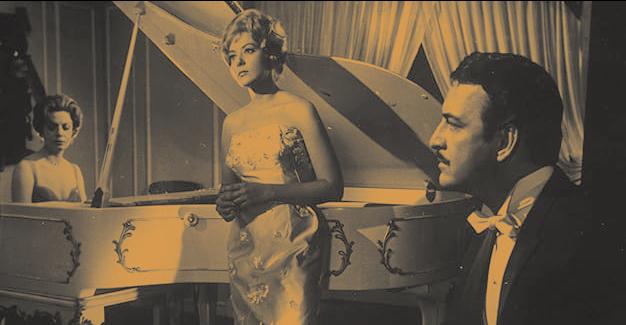
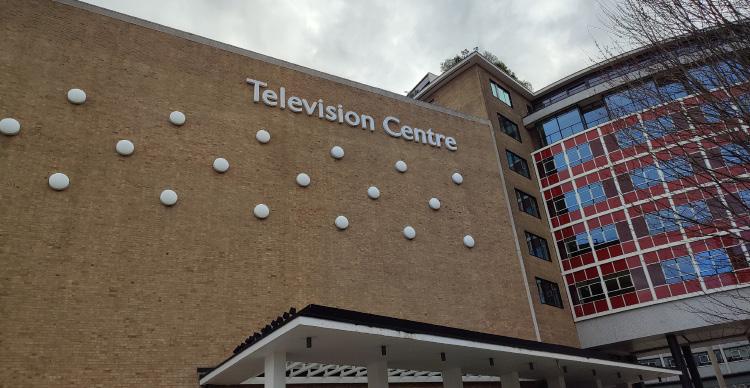
Terrestrial channels have relied too much on familiar favourites in recent years: as time goes on, the lack of originality and experimentation in their schedules is becoming more apparent. The BBC’s programming, for example, has relied heavily upon flagship shows, but these staples of television screens have been airing year in, year out, for two decades. In the noughties, the BBC assembled a strong, diverse range of iconic content, such as Top Gear, Strictly Come Dancing, The Apprentice, and the modern version of Doctor Who.
Whilst not all of these shows were new ideas – Strictly’s predecessor Come Dancing had showcased ballroom dancing in a more serious manner for many decades – but they were fresh takes on old ideas. They were mould-breaking and unique.
Success wasn’t limited to the BBC: ITV won audiences with the arrival of I’m a Celebrity in 2002, along with talent shows like The X Factor and Britain’s Got Talent as the decade went on. This was essentially the start of TV’s new great age of popular entertainment. A mix of talent shows, irreverent escapades, and family drama were making their splash: many of these new staples attracted large audiences, especially the Saturday night talent shows, which would often exceed ten million viewers. These formats were lucrative for the terrestrial broadcasters. The resurgence of Doctor Who led
to an enormous amount of merchandise, books, and home media – returning huge profits to the BBC. The show’s 50th anniversary special was broadcast in over 100 territories worldwide. Top Gear enjoyed a similar trajectory, becoming, alongside Doctor Who, one of the corporation’s most valuable assets. Meanwhile, the Strictly format was exported to many countries worldwide, cementing the BBC’s position not only as a purveyor of great media at home, but also abroad. The revenue from these formats and programmes was a major boon to the BBC, bringing millions to its coffers, thereby supplementing licence fee income and financing new content for British audiences.
“ Drama had its revolution: the BBC ushered in a new age of bold storytelling.
In the 2010s, the innovation continued. Drama had its revolution: the BBC ushered in a new age of bold storytelling, the greatest example being Sherlock, with its unique, modern spin on Holmes and Watson, freeing them from Victorian trappings The aesthetic was bold and new and the characters gained unprecedented depth.
Police procedural dramas were also on the rise, such as Jed Mercurio’s Line of
Duty, which went from stride to stride, despite its humble beginnings on BBC Two. The spirit of risk-taking and experimentation remained at the centre of terrestrial television, keeping viewers hooked on new staples – favourites that no-one could have predicted. And the risk-taking wasn’t limited to dramas: The Great British Bake Off breathed new life into the competitive reality format, offering a gentle, subdued take to the format.
Added into a mixing bowl with established favourites like Strictly, I’m a Celebrity, and Doctor Who, these shows kept television fresh: they kept viewers on their toes, surprised, and hooked.
The picture is not so positive now, however. In an age of declining licence fee income for the BBC and a shortfall of advertising revenue for the commercial channels, terrestrial television is in poor shape. More than ever, there is a climate of playing it safe: if broadcasters have less money, and the streaming networks become more easily marketable (hello to the comics of Last One Laughing!), they are hardly likely to give up what they deem to be popular. But that’s the issue: the old favourites have hung around for too long. Whilst Top Gear and The X Factor (yes, that iconic pairing) may have bitten the dust, Strictly remains in prime position on a Saturday night, whilst I’m a Celebrity maintains its position
as ITV’s go-to Autumn fun fest. The Apprentice bumbles along, Call the Midwife predominates on a Sunday night, and Line of Duty is set to return in the next year too. But these are hardly shows to be excited about (with the exception of Line of Duty and its notorious ‘H’ perhaps) because they’ve been done before, and they keep being done; they’ve become too comfortable, too safe. These shows don’t enjoy the kinds of viewing figures they used to; audiences are getting bored and looking for alternatives.
“ The old favourites have hung around for too long.
This, of course, would mean taking risks, and in an era of shrinking budgets and questions about the longevity of terrestrial television, things are hardly likely to change, and viewing audiences will continue to dwindle in the face of familiarity and ennui. That being said, the BBC has enjoyed great success with The Traitors. Initially a
Credit: Jason Manning
small show, launched amidst the fanfare of the 2022 World Cup, it became Britain’s latest reality obsession. Old stalwarts like Strictly and I’m Celebrity have lost their thrones to The Traitors, which has seen its audience grow year on year. However, we are already seeing an interesting trend: although The Celebrity Traitors enjoyed an audience of over 15 million in November (according to BARB data), the January run of the ordinary show can’t quite match its success. Time will tell, but this is perhaps a sign that the show has peaked. The Traitors’ rise is reminiscent of Bake Off in the 2010s – a quaint show which started small and grew to an astronomical audience in 2015 and 2016, before settling into more moderate territory when it moved to Channel 4. It would be a shame to see viewers bore of The Traitors too quickly – especially as its success has demonstrated viewers’ willingness to watch terrestrial television. The telly may still be a magnet if the channels get it right.
Read full article at www. oxfordstudent.com.
Radcliffe
Ava Doherty explores Oxford Brainrot: the jargon, shooeys and strange bubble that makes sense only from inside it
The first time I came home from Oxford, my parents thought I’d had a head transplant.
I’ve always said things they consider odd—”sorry to bother” when I can’t find the pickles at Tesco, “why don’t you come with?” without finishing the sentence. But apparently, I reached a whole new level of peculiarity when I cheerfully explained why my formerly sparkling black heels were muddied and smelled faintly of Merlot: I’d done a shooey at formal.
My mother stared at me like I’d joined a cult. Which, to be fair, isn’t entirely inaccurate.
Since then, I’ve gone in -
creasingly off the deep end, saying things my fifteenyear-old self would have found insufferable. Pidges and plodges and other plosive words that feel delightfully tantalising on the
Frieda Fahrenholt, Hayden Bhatti, Neha Ganvir, Rebecca Bushee,| Columnists: Sharon Chau, Will McCaffery
and downward capitalisation. Indeed, it’s rather justified. But the problem isn’t that it’s justified; it’s that qualifier: ‘student’. Student journalism. Student politics. Student everything.
Of course, there’s room for professionalism in student life. I wouldn’t be running a paper very well if I were to advocate entirely against it.
But some of the best satire from Oxford stems from the fact that we take ourselves far too seriously. We are not Parliament. I am not Katharine Viner, no matter how many times I cosplay as the Editor-in-Chief of the Guardian behind closed doors. Sorry, Katharine. The luxury of being at Oxford is that we all buy into the mutual silliness. The statements we can’t quite believe we’ve said out loud. Like: of course, solo travelling around Europe is a mental-health expense. Of course, you can justify it; it’s technically cheaper than therapy. It should, naturally, be state-subsidised. I mean, think about it. Isn’t travel essentially preventative healthcare? Like contraception, freely available from the college nurse?
Not outing an entire college here.
“Brainrot,” according to the internet, refers to mental deterioration from overconsumption of low-quality content, the TikTok scrolling, the algorithm-fed nonsense, the digital junk food rotting your synapses.
Oxford brainrot is different. It doesn’t rot your brain. It just makes you incomprehensible, and occasionally insufferable, to everyone outside the M25. We become fluent in a language nobody else speaks, embedded in customs nobody else recognises, convinced our small dramas matter on a national scale.
Which is why, when reality eventually hits, we need to
“ My mum stared at me like I’d joined a cult “ The luxury of being at Oxford is that we all buy into the mutual silliness
tongue. I’ve started unironically using “sub fusc” in conversation. I’ve debated the merits of different college staircases with the seriousness most people reserve for geopolitics.
But when I go home, it’s a welcome reminder that Oxford jargon should stay at university. There will come a time in the real world when someone will rightly tell you that “colly cocks”, instead of sounding charmingly archaic, like a lovable eighteenth-century detective, actually sounds like a nonce from the seventies that your Uncle Dave invited round for the bants.
I intersect between the worlds of student journalism and student politics, which means it’s not only permissible but actively encouraged to say twattish things about constitutional amendments, standing orders, lay-ins, print copies,
Or the fake rivalries we pretend matter. Brasenose versus Lincoln. Am I supposed to genuinely dislike a Lincolnite? I mean, it’s easy to, I don’t really need a reason, but unjustified prejudice these days needs heavy backing, or it might count as an Oxford version of a hate crime. Meanwhile, we have college pets. People take naming airbeds seriously. We’re so unemployed that we have time to ponder the smallest inconveniences of life, which can be both a blessing and a curse.
remember how to relate to actual humans. Not popping off to Pidge. Just popping off to Tesco.
Still might do a cheeky shooey though. Old habits die hard.
Credit: Cecile via Unsplash
The Oxford bubble warps your sense of normal. You start thinking everyone lives in buildings with quads, formal halls, and porters who know your name. You forget that most people don’t check their “pidge” or wear gowns to dinner or debate the semantics of “subfusc” versus “substandard attire.” You forget that real life doesn’t operate on eight-week terms with generous vacation allowances for existential crises in European capitals.
Ava Doherty
Perhaps this is a meta-narrative. A long, aimless ocean of promised nothings I can’t quite recalibrate. When I was younger, I wanted to be Irish or Indian. Not this awkward hyphen of “almosts” I was forced to tick on NHS forms, half this, half that, never whole anywhere. I grew up in a world that demanded you explain yourself every two minutes, and I couldn’t. Speaking only English, my mother’s inheritance, her insistence that I out-British the British so I could land every job, every opportunity. She thought an English accent would save me. I think she underes timated my stubbornness.
I did truly want to belong properly “
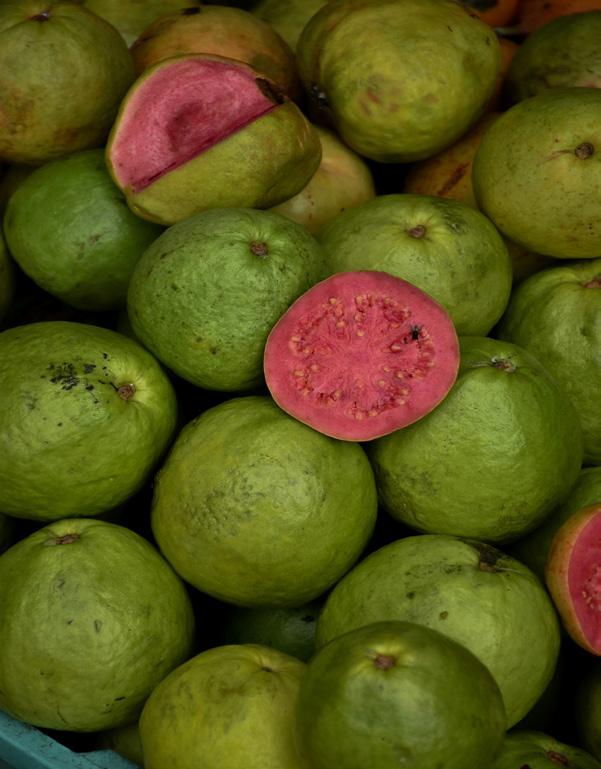
There’s a truth here about the world that hasn’t moved on, not really. Former colonies still revere their colonisers. I benefit from it and despise it in equal measure. A twisted web, indeed. But something happened in India recently. I was eating guava by a roadside, watching the sunset, rickshaws rattling like percussive chaos, and existential dread seeped in. And yet, I could have lain there forever. Felt warm. Felt cared for. Felt appreciated. And no one would have judged me for it, except maybe the guava juice running down my wrists and pooling in the cracks of the pavement.
Like Charli XCX, I never had a space to fit into, a neat set of cultural norms that made life simple. But both of us had supportive parents who nudged us to explore the liminal space between ego and identity,
a contested term these days, mostly because people like to fight over everything on Twitter. She went to raves to find herself, to be cool. I went to write about absurdity, about British satire, which somehow spoke better than I ever could. Somehow articulated the twisting, gnawing displacement I felt. Somehow I was told that it was okay to be chaotic, because the world is chaotic, and anyway, what is “okay” but another construct designed to make people like me feel wrong?
As I grew, I added psychoanalysis into the mix, a messy, overthinking necessity. It taught me to exist in the almost, without justification or reason. That day in India, sticky palms full of guava juice, scraped knees from dodging potholes, I realised I was an absurdity to my mother’s neighbours. They expected a neat, half-Indian child with braided hair and good posture. What they got was me: scruffy, nerdy, argumentative, quoting Gavin & Stacey’s inappropriate moments, and somehow surviving. Misalignment is an understatement.
And yet despite my displacement from Irish and Indian identities, one tether remains: Catholicism. Not particularly devout, more
“ One tether remains: Catholicism
guilt-ridden than godly. But guilt, it turns out, is its own form of belonging. The Irish have Catholic guilt. The Indians (at least the Goan ones) do Catholic guilt. I inherited both strains; dou -
bled and compounded. If I can’t claim full ownership of either culture, at least I can claim the neurosis. That counts for something.
Teenage and now twenty-something angst finds a home in self-cut hair disasters, in essays about displacement, in existential scrolling at 2 AM. Writing is exposure, vulnerability, humiliation, and somehow liberation. Hundreds of vacant eyes judge you while you type. And yet, it is the one thing that allows me to assert my identity. To say: here I am, messy, confusing, contradictory, but mine. My dual heritage left me uncertain, but from that uncertainty I can carve a narrative entirely my own. A narrative that says: I define myself. I might not fully belong anywhere, and that’s fine. I’m a citizen of nowhere, trying on identities like ill-fitting coats, seeing what fits, seeing what makes me want to leave the room entirely, and sometimes, miraculously, finding something that almost sticks. In an era of globalisation, this is acceptable. In an era of Instagram and TikTok, it’s also recommended.
I have imagined what it would be like to have stronger ties to my heritage, to feel fully Indian, fully Irish. But those ties are fragile. My Gaelic is nonexistent. My Hindi is worse. I am, at best, an enthusiast. At worst, a fraud. And yet, in this liminality, in this place of “not enough,” there is possibility. There is room for creation.
So I fill the gaps with what I can: the friend who texts me Gavin & Stacey quotes at 3 AM, the stranger in Mumbai who showed me which guavas were ripest, the psy choanalyst who taught me that displacement doesn’t need resolution. Not shared
blood, but shared absurdity. Not inherited culture, but chosen connection.
I absorb fragments, Irish guilt, Indian sunsets, British sarcasm, Catholic neurosis
The luxury of being at Oxford is that we all buy into the mutual silliness “
and let them settle how ever they want
There is a particular loneliness to childhood television when you don’t quite understand the language but watch it anyway. I grew up watching Chhota Bheem and other Hindi programmes at relatives’ houses, the volume too loud, the colours too bright, everyone laughing a second before I realised something funny had happened. I memorised rhythm instead of meaning. Catchphrases without comprehension. Cultural literacy without fluency. I nodded along, smiled when others smiled, stored scenes in my head without ever fully unlocking them. It felt important to watch, like proximity might one day become understanding.
The same thing happened at family gatherings. Conversations sped past me in Hindi or Konkani, punctuated by glances in my direction, followed by English summaries that arrived too late and too simplified. I learned early how to be present without participating, how to hover politely at the edge of my own heritage. No one was cruel about it. That almost made it worse. There was no rupture to point to, no single moment of exclusion, just a slow accumulation of small omissions.
I compensated in other ways. I learned devoured panel shows, internalised the exact cadence of jokes from Peep Show, anything that let me speak confidently somewhere, anywhere. If I couldn’t belong there, I would belong here. I became articulate in the wrong places and silent in the ones that were supposed to be mine. Even in India, surrounded by people who looked like me, I was clocked immediately. The way I stood. The way I argued. The way I reached for words that never arrived in the right language. Watching Hindi TV as a child hadn’t made me Indian; it had made me adjacent to Indianness. Close enough to recognise it, too far to claim it.
That adjacency became a pattern. Not inside. Not outside. Just watching, absorbing, assembling myself from whatever was available.
My mother wanted an Engish accent to save me. What saved me instead was learning that belonging isn’t about neat categories or whole identities. It’s about sticky palms and scraped knees and being exactly this kind of wrong. It’s about the hyphen, not despite it. I still don’t fit on the NHS forms. I’ve stopped trying to.
Credit: Alexander Mils

Ava Doherty on meeting a jack-of-alltrades from British television.
We’re both faintly surprised by how quickly the galleries fill up around us with tourists and school groups; the usual Thursday afternoon swell of British cultural obligation.
He has that unmistakable actor’s presence, not intimidating, but focused. Emphatic hand gestures. A dry, warm wit that feels finely tuned to British tastes. When he talks, he gravitates toward stories of transformation, doubt, confidence, and belief, all woven through a career that began far from the footlights but, in retrospect, seemed to be heading there all along.
“Day one,” he says, when I ask if he always wanted to act. “I know that sounds daft, but
I remember being at nursery school, maybe three or four years old. We were asked to act out our morning routine, which includes getting up, packing our bags, and going to school. And I just inhabit-
“ It was in my bones from arrival.
ed it. I enjoyed it so much, the whole re-performance of what we’d done that morning. That was my first enjoyment of performing and playing.”
Later, when television finally arrived in his house, a
profiles@oxfordstudent.com | Deputy Editor: Vincent Chang Section Editors: Himasweeta Sarma, Hannah Ison, David Binns
Macqueen’s CV reads like a sequence of deliberate detours. He studied English Literature, completed a Master’s in International Relations at Cambridge, trained as a barrister, did pupillage, and practised for a year. Law was solid, respectable, decent — the kind of career that satisfies logic, the taxman, and parents.
And then he saw Orlando Bloom at the theatre.
“We’d done Julius Caesar together years earlier at the National Youth Theatre,” he explains. “Suddenly, there he was on a massive film poster — someone I actually knew. Movie stardom stopped feeling abstract. It became tangible.”
It’s a characteristically British turning point. Not a grand declaration of destiny, but a recalibration of what seemed possible. The ambition arrives cautiously, supported by evidence.
“If it doesn’t work out, you can return to law,” he remembers thinking. “But I had to try.”

Christmas treat in a household that didn’t usually have it, he watched Carry On films and struggled to believe that grown-ups were being paid real money simply to enjoy themselves so thoroughly.
“That’s what made me want to do it. I wanted to be a TV and film actor because it’s socialising for a living, and that’s what I wanted to do with my life.”
He built a model theatre as a child. Went to Saturday morning drama classes. “It was in my bones from my arrival,” he says, “as opposed to ‘I don’t mind being a barrister – what else could I do?’”
Which is funny, because he did become a barrister. Just not for long. The Barrister Who Saw Orlando Bloom.
fully controlling it. “There’s a wonderful phrase by Michael Crawford,” Macqueen tells me. “He said all comedy is the difference between a person’s ambition and their achievement. Julius is a perfect example. His ambition is vast. His achievement is very much something else.”
Then there’s Kevin Sutherland, Neil’s father in The Inbetweeners. A small role — five days over five years — but one that lingers disproportionately. “At the time, no one had any idea it would be particularly successful or popular,” Macqueen says. The character’s presence expands through constant references, even when he’s not in the room.
The now-immortal “Oh, Neil!” came from Macqueen’s own memory: a long-ago holiday with school friends, a mildly cruel remark, and a grandmother’s deeply affronted response. Filed away, then deployed years later largely to
“
So he did. He left the bar, trained as an actor, and entered an industry defined less by certainty than endurance.
The Art of Occupying the Margins
If you’ve watched British television in the last fifteen years, you’ve seen Alex Macqueen. You may not know his name, but you know the type: the earnest official, the overconfident professional, the man speaking with total assurance just moments before being proved wrong.
He’s best known for playing Julius Nicholson in The Thick of It — the “blue-skies thinker” whose unwavering belief in his own importance is both his engine and his undoing.
“He genuinely believes he’s a crucial cog in the system,” Macqueen says, “when in reality he’s very much a catastrophic berk.”
The character wasn’t drawn from a single source but from a recognisable political ecosystem — advisers who orbit power closely enough to absorb its language without ever
A lot of success comes from being very certain.
make Blake Harrison laugh. Playing Certainty You Don’t Have
Many of Macqueen’s characters share a defining feature: absolute confidence, frequently misplaced. The officious speed bump in Outnumbered. The librarian in Miranda. Julius Nicholson insists on £4 biscuits from a vending machine — a figure Macqueen invented midscene simply because he couldn’t think of a realistic price.
I ask how he feels about that kind of certainty.
“I wish I had that certainty,” he says. “A lot of success for people comes from being very certain about where they are and their ability. They make great progress as a result. But it’s often that certainty that causes their failure at the final hurdle. So it’s a delicate balance.”
Deputy Editor: Kit Renshaw-Hammond Section Editors: Tea Sand, Ivaana Mitra

2years ago, if you told me that I’d be the Editor-In-Chief of The Oxford Student, I would have probably given you a hackey look. Not ‘hacky’ in that sense, as I’d managed to protect myself from that side of Oxford in my first year. But ‘Hackey look’ as it’s described in the Urban Dictionary, as a ‘look of dislike or disgust that is usually directed at someone when annoying them’. (Thanks, hotdogboy).
If you told me that I’d have to be the bad cop and have balls for when shit hits the fan, I’d have probably done something worse.
Over the last two terms, it’s a fair shout to say that I have developed some balls. ‘Balls’ in that very pitbull-esque manner that a lot of stressed people have, and a good few short people have. Like most, getting balls is usually marred by a few pubescent blips. As a burgeoning EiC, these blips began last term. Going a bit over the top when asking
people to get in line was usually the most prominent rookie error.
Cortisol levels were high, and the amount of ‘no bro, I’m an empath’ and other such things that empaths totally don’t say were higher.
While I’ll spare you the rest of the gory admin details, a luxury which those without balls (colloquially known as women) are rarely afforded in the journalism industry, I can assure you that finding some backbone was pretty rough. Backbone is essential, and it’s safe to say that in this particular Industry, you’ve either got bottle, or you’ve bottled it completely.
But alas, I still have to navigate this term as the wayward EiC of Oxford’s most precariously independent paper. Whether or not I’m ballin’ or bawling, I am yet to discover. If I were you, I’d check in a few weeks down the line and see if I still have hair.
Ididn’t mean to care aboutsocks. No one ever does. That’s how they get you.
Socks enter your life quietly, unthreateningly, usually in a multipack, and then one day you are standing in front of a mirror thinking: Do these say “thoughtful intellectual” or “man who has opinions about oat milk”? This is not a small question. This is politics.
Socks are where performance lives now. Gender used to be done with boots, big boots, little boots, boots that said don’t talk to me, boots that said please talk to me, I’m fragile. But boots have lost their power. Socks have taken over. Socks are intimate but public, hidden but also not really. They’re the whisper you hope someone notices.
The rise of the Expensive Sock is crucial here. Brands like Happy Socks don’t sell warmth; they sell permission.
Permission to be whimsical while remaining solvent. A patterned sock beneath a tailored trouser is the modern equivalent of saying, “I went to art school emotionally, but business school financially.”
It’s rebellion with a receipt. It’s saying I have a personality, but only from the ankle down, because God forbid we risk anything higher. Politicians know this. Of course they do. A man in government wearing novelty socks is not making a joke, he is managing intimacy. He wants you to feel close to him, but not close enough that you feel entitled to look deeper.. The sock says, I’m fun, while the suit says, I will still ruin your life. This is a delicate balance. There’s also the first sock moment. Mine came via my father, who bought me my first pair of ludicrously overpriced socks with art on them. Art. On socks. A clear message: you are now the kind of person who owns opinions. From then on, I was no longer wearing socks. I was performing. Loudly. Socklessness, meanwhile, is a cry. People who go sockless demand that you acknowledge they are free. Or Mediterranean. Or deeply unwell. An unsocked foot in a formal shoe is a small act of violence. It says, rules are for other people, or worse, I forgot. v
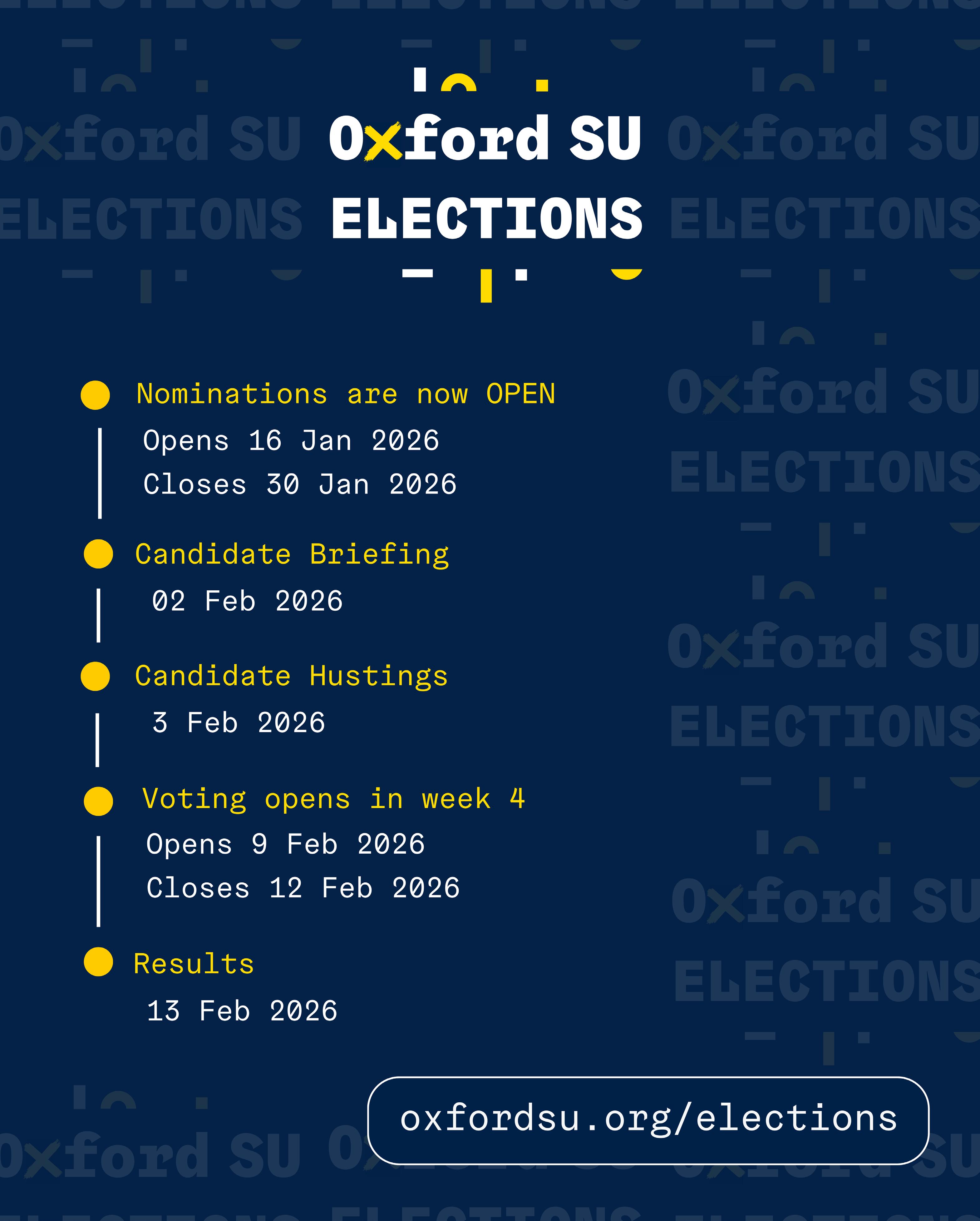
Much has been made about the players and the teams competing in this year’s FIFA World Cup. Will Messi and Argentina retain the trophy? Will there be one last dance for Ronaldo? Will England, led by a German, finally lift a trophy, sixty years after their last? Who knows – football is unpredictable. One thing that is predictable, however, is that FIFA are going to make an awful lot of money. The amount FIFA will rake in from selling the broadcasting and marketing rights will reach billions (broadcast revenue alone from Qatar 2022 hit almost $3 billion). Nonetheless, perhaps the global governing body of Association Football feels these billions will not be enough, as it has found another way to bring in the cash.
This avenue? The fans.The ticketing system for the 2026 World Cup, which will be held across the USA, Mexico and Canada, has received a shakeup this year by FIFA. Tickets will be operated on a dynamic pricing model, meaning the more in-demand tickets will be priced higher than those less so; a model similar to Uber’s, and to the dismay of many an indie music fan, the Oasis Live ’25 Tour. This will inevitably affect the larger nations’ games and the more ‘attractive’ fixtures, that is to say, those between the bigger and supposedly better footballing nations, which would potentially price fans out of these games. Moreover, the face value of tickets this year is astronomical. To take England as an example, the cheapest tickets for their
group games are selling for $265 (v. Croatia) and $220 (v. Ghana and Panama). Should England get to the final, the cheapest official match ticket for a fan would be $4185 (the full table of prices can be found here). Add to this the cost of flights and accommodation, and the total cost for an England fan to follow their team from the group stages to the final would reach not just a few thousand dollars, but many tens of thousands. And that is if this England fan is lucky enough to claim tickets through the official ballot. If not, they will have to turn to FIFA’s new ticket resale system. As the laws around ticket resale are less stringent in the USA and Canada, the official FIFA marketplace allows fans who have received tickets through the ballot to
resell them without a cap on price. Perhaps unsurprisingly, people are exploiting this system, and tickets originally bought for hundreds of dollars are selling on the marketplace for thousands. Not only is this resale process being exploited by people who have clearly bought tickets solely to sell them on at extortionate prices, but FIFA are taking a staggering thirty percent cut of all tickets resold on the marketplace. Tickets for the final in Category 1 (the highest level of hospitality) sold at face value for $8,680, are now being resold for over $80,000. Of course, $24,000 of that sum will be pocketed by FIFA. The pricing scandal – from the face value of tickets to the dynamic pricing structure and the creation of an exploitative resale market – is extremely
controversial, and many see it as a betrayal to the millions of football fans around the world for whom the cost is too great. Is this really what Gianni Infantino, the president of FIFA, meant when he said that FIFA’s mission is to “serve football [and] all its fans”? So much for the most inclusive World Cup ever!
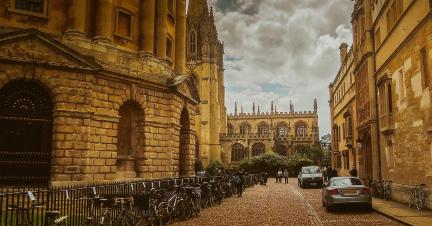
Oxford’s term structure is perfectly designed for yearning. Having only arrived this year to study at postgraduate level, the lengthy vacation that just passed makes me almost glad to have never been an undergraduate here. I can see the picture too clearly of 18-yearold me developing a crush during Michaelmas, being too shy to act on it, and then spending the never-ending weeks before Hilary with deep regret swirling in his chest.
At my undergraduate university in Ireland, campus life wasn’t very connected, with a ‘laissez-faire’ approach to socialising meaning opportunities to meet others outside your course were few and far between (outside of drunken club nights). With my course being predominantly male, along with the fact I rarely went out, all I accumulated on the romance front were some inconsequential eye-contact crushes.
In contrast, Oxford has ample opportunity for meeting a wide variety of people. Formals, society mixers, sports training, college bops, crew dates — the
list of events is endless, and these are things a younger version of me could only have dreamed of. Socialising is built into university life, meaning relationships can spark from all sorts of avenues.
As the weeks go by and you settle into everything, there’s likely a friend group you’ve become part of. More notably, there’s perhaps one person you always find yourself wanting to bump into between classes, to sit next to in the dining hall, to be at the same social event.
The term is short though, so even if you’ve been around them many times in a group setting, and often find yourself catching their eye during such gatherings, there’s a high likelihood you haven’t yet suggested doing something together, oneon-one.
Perhaps you figured it was best to leave this until the final college bop of the term, to lay your cards on the table then. Inevitably though, you end up drinking too much wine in order to work up the courage to do so, and instead of ending your night skipping along Oxford’s charming cobblestone streets arm-in-arm
of a kebab! Disaster.
The next morning, your parents arrive to drive you home for the vacation period, and you find yourself painfully hungover, packing boxes into their car. On the journey home, it begins to sink in how you’ve potentially missed your opportunity with this person, seeing as the next time you see them is almost two months away. This will gnaw at you the entire break, you’re sure of it. The songs reverberating from the radio can’t drown out the noise in your head, the unease in your chest. The seemingly infinite list of questions your mother has regarding your first term at Oxford certainly aren’t helping either.
with your crush as was envisioned earlier that evening,
You’re feeling anxious to return to Oxford and see your friends again, particularly the person whose laugh has been stuck in you head like a pop song. “
you’re getting carried back to your room by your mates, without even the pleasure
As predicted, the weeks at home are coloured by the regret you’re feeling. Every moment spent in their presence gets replayed endlessly. One encounter stands out particularly; a late Tuesday afternoon when you passed them by the front quad and stopped for a light-hearted chat, and just as you began heading your separate ways — them to their tutorial, you to your lecture — there was a half-second pause where you thought they might have wanted you to say something, to suggest doing something together sometime. But you never did.
After what feels like an eternity, Hilary looms close. You’re feeling anxious to return to Oxford and see
your friends again, particularly the person whose laugh has been stuck in your head like a pop song. You make a vow to yourself then, a promise that the first time you see them, you’ll say something. You’re not sure what exactly, but something.
Just as you unpack the last of your things, your mother calls to tell you she has arrived home safely, that she’ll call again in a couple weeks, and to enjoy the start of term. Your bed is made and room back in order, with everything looking exactly the same as it was one month previous. You push aside the oddity of having to move out each term, and head down to the dining hall with a spring in your step, a quiet feeling of excitement for the weeks ahead.
Reaching the bottom of the staircase, a familiar figure steps through the old stone doorway, catching you by surprise. “Oh hey, so lovely to see you!”, they say, with that dangerously endearing smile. You immediately feel the certainty with which you made last week’s promise crumble to pieces, now that they’re physically here in front of you. Saying how you feel may result in embarrassment, it may result in awkwardness.
But it may also just be the most valuable thing you ever do.
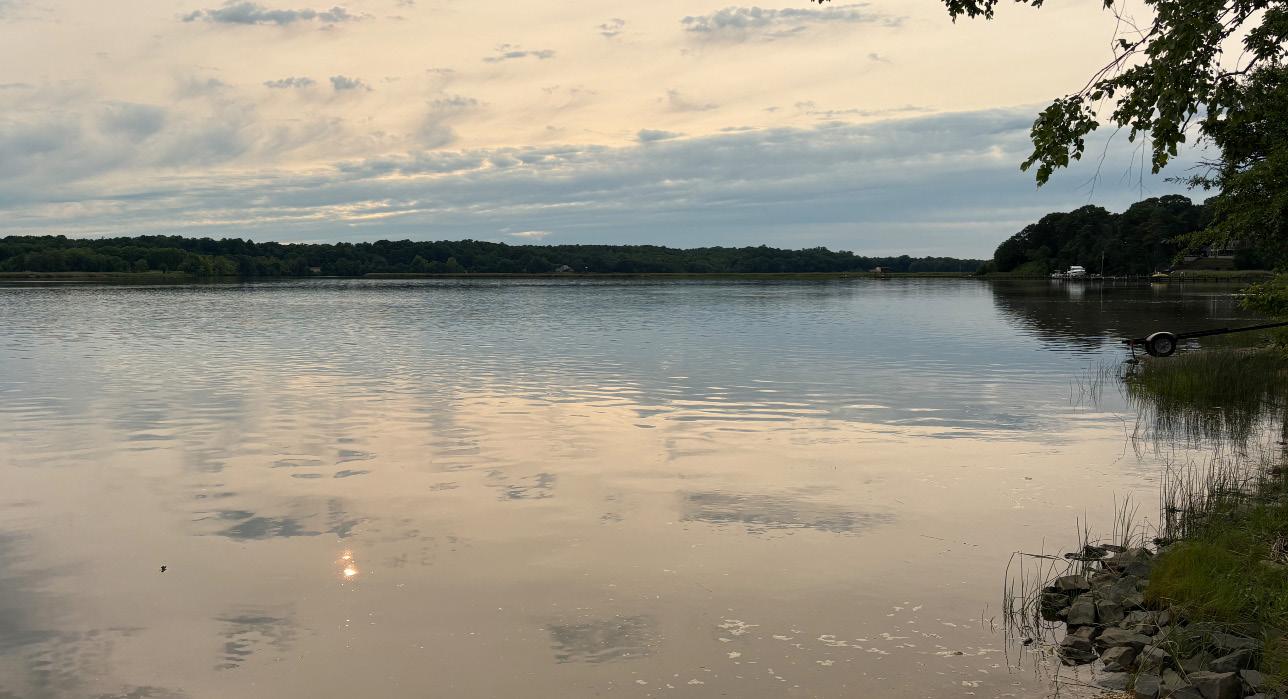
When introducing myself during Fresher’s Week, I would always answer the ever-important, “Where are you from?” question with a description quite unhelpful to British people: “Southern Maryland”. Safe to say, apart from knowing that Maryland is on the East Coast, most of the people I’ve met in Oxford know little about the small, rural, and honestly drab place I call home. It doesn’t feel right to claim “Washington, DC”, with any true DMV native seeing right through my poor disguise. Neither can I simply say “Maryland” without accidentally (and quite unfortunately) associating myself with the scary suburban corridor between Annapolis and Baltimore. So, I’m forced to explain what the hell is going on in Southern Maryland. The reality is: not much. But it’s where
I’m from, and, just like everyone’s hometown, it occupies a special compartment of my heart.
As I prepared myself for the 16 hour travel day back to the US, I couldn’t help but think about how 8 weeks in Oxford has changed my relationship with what I call home. I’ve traded abandoned tobacco barns for 13th century chapels, tractor-crippled roads that haven’t been fixed in years for quads maintained by a full-time gardening crew. In almost every important metric, Oxford and its dreaming spires is more interesting, beautiful, and dynamic than the somewhat backwards farm town nestled between the Chesapeake and the Patuxent. I’ve loved my first term here, full of new beginnings, promises of future adventures, and the allure of Hilary term’s troubles awaiting me. But Calvert County was

calling, and I couldn’t wait to get back!
Is there something to those random fields of corn, the shotty scarecrows, and the quite embarrassing “beach” we lay claim to? I think there is, and the 9 weeks I’ve spent in Oxford have only highlighted that fact. When you’ve lived somewhere your whole life, it is only natural that you take its advantages for granted. 18 years in the same environment is what pushed me to travel nearly 6,000 kilometers to Oxford. Even in the short space of Michaelmas, that distance has changed me. But when I flew back into BWI, I knew everything would be just as I left it. That sense of certainty in a period of my life filled with so much change is more valuable than I can express. Mama Lucia’s, the local Italian restaurant manned by a burly white-moustached man named Sal, will still be serving slightly below average food, I’ll still get stuck behind a slow-moving piece of farm equipment driven by a 13 year old, and it will still be a 15 minute drive to get anywhere. But this time, I came to enjoy it in a new way.
Spending the holidays without anything to do but read a few books on 18th century Britain, I made sure to enjoy the bits of Southern Maryland that I had originally ignored. Late night walks along the decrepit “boardwalk” that could have easily been defined as abandoned to enjoying the actually quite good Mexican restaurant near my grandmother’s house filled my days. I enjoyed the slow parts of my hometown. The dangerously conservative old men whose health is that of the stereotypical American went from being quite annoying to somewhat endearing. The bits of American life and culture that I tried to escape
were now a refreshing break from the quite self-important, over-dramatised world of Oxford. I used to think that no one cared enough in Calvert County, that it was a lack of ambition and drive that made people stay in such a slow, uninteresting, and uneventful world. But now I’ve started to understand it.
“
I’ve traded abandoned tobacco barns for 13th century chapels, tractor-crippled roads that haven’t been fixed in years for quads maintained by a full-time gardening crew.
It’s not that they can’t leave, but they don’t want to. Live moves at a different speed, one that’s good for sitting down for a full slate of NFL Football or going to your child’s rec soccer game. They aren’t “just” content with their life, as I thought. “Contentess” is not a negative term, but a positive one. It means their life is full of the “small” things. They wake up each morning knowing what to expect, enjoy their day, and settle back into bed without the stress or fear of the unknown.
Still, part of me worried about leaving Oxford at the end of Michaelmas. And that part of me was always there. I wasn’t exactly homesick, and I couldn’t wait to get back to college bars (shoutout to Balliol and Regent’s), late night sidequests, and the many trials of academic sanity. Unlike
my home, Oxford is always moving, always shifting and morphing in new ways. Michaelmas just flew by, and I was worried about what I might miss in the time I’m stuck 5 hours behind, just waking up while the sun sets over England. My appreciation of home hasn’t diminished the sense of awe I feel for Oxford. I don’t think that will ever fully go away. With 8 more terms ahead of me, I have no idea what shenanigans I’ll get up to and if I’ll decide to stay in this crazy country when it’s all over.
The period of reflection that my 3:00am layover in Iceland provides me hit quite differently this time. Annoyed that I was unable to sleep on the first leg, I stepped down into the darkness of the ridiculously cold runway with a jumble of thoughts in my head. There’s a bit of me that hopes Oxford will be the same, but I know it won’t. That thought scares me, but I know I will have to face the music soon enough. Speeding my life back up to match the pace of Oxford life may take some adjustment and I hope I can survive the ensuing whiplash. At least I’ll have Calvert County to go back to, and that will never get old.
That oddly large peninsula will always be my home, and always be my answer when someone says, “I can hear your American, but where in the US are you from?” Not “DC”, not “Maryland”, but the unnecessarily specific reference to the land of Old Bay and crab feasts, Route 4 and Solomons Island: “Southern Maryland”. I came to Oxford to escape it, but this city, built around a culture of learning, has taught me how to love it again.
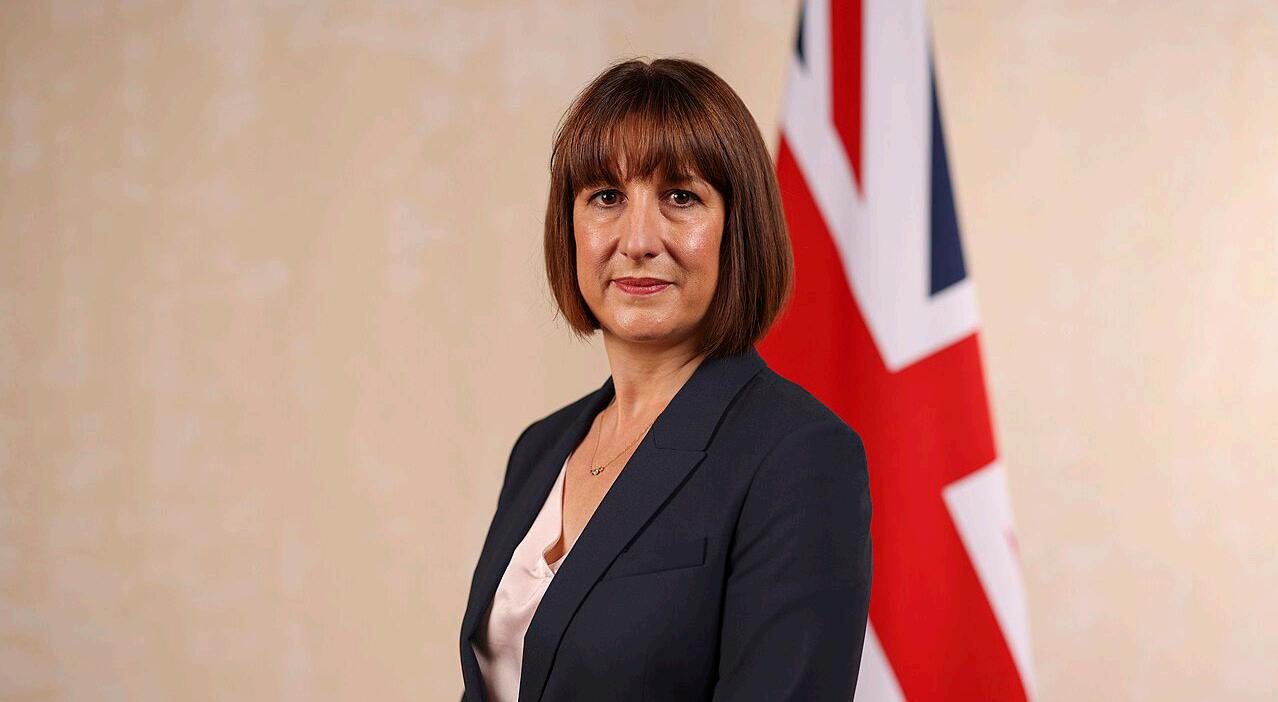
On 26 November, the Chancellor of the Exchequer Rachel Reeves stood in the House of Commons to deliver the annual Autumn Budget speech. The budget sets out how the government plans to fund its spending through the next year. In short, it details changes to spending and taxation. It is worth asking how this will affect us as students and young graduates.
This year’s budget was highly anticipated. Amidst rising global tensions, market instability and inflationary pressures were certainly the cause of many headaches for the Chancellor. Furthermore, the fact that interest rates remain relatively high means that the government’s increasing public debt (83.1% of GDP this year) becomes more of a financial burden each year. Underpinning these short-term issues is the fact that productivity has practically flat-lined since the financial crisis of 2008, which has consequently stagnated the United Kingdom’s economy in recent years. Whilst the Chancellor has apparently managed to survive what some thought could be quite a disastrous budget, her measures do not address this central challenge head on - a product of the more immediately pressing fiscal objectives this government has set for itself in order to ensure stability.
This is not the article for an indepth look at the current economic challenges facing the country. However, it is worth mentioning some of the key points Rachel Reeves set out to achieve with this budget, as they may not affect us as students, but rather as interested taxpayers. One big question for Reeves was whether she would be able to increase the fiscal headroom. This is the buffer the government has against its promise to fund day-to-day spending (excluding investment) entirely with tax revenue by the end of this parliament. It stood at £9bn prior to
“ The tax burden is set to rise in this budget
the announcement. Under this budget’s forecast, it will grow to £22bn - a significant increase, although it is still below the 201022 average of £31bn.
The tax burden is set to rise in this budget, forecasted to hit an all-time high of over 38% of GDP by 2030-31. This comes as a result of several key police announcements. Those most relevant to students relate to income tax and pension contributions. The headline of this budget was that personal income tax bands (how much you pay above a certain level of income) will be frozen until April 2031. Normally, tax bands are changed to reflect wage growth. The freeze is in-
tended to raise tax revenue by dragging more people into higher bands as their income increases. Two noteworthy changes to pension contributions were included in this budget. Firstly, salary sacrifice pension contributions will be capped at £2000 before national insurance applies. Salary sacrifice contributions are a mechanism through which workers can give up some salary in order to pay into a private pension fund. With a higher burden on national insurance, fruit of an ageing population, this measure aims to ‘balance the books’ by raising £4.7bn in 202930.
Secondly, cash ISA allowance has been decreased from £20,000 to £12,000 for those under 65, effective as of April 2027. Cash ISA refers to a savings account on which you can earn interest tax-free. By reducing the cap on how much one can invest into a cash ISA, the government seeks to raise significant tax revenue, predominantly from high earners who can afford to contribute to one in the first place. Attending university is a statistically sound way of increasing your expected income. These changes mean that you will have to pay more of that as tax or as a contribution to national insurance.
The two other big changes of this budget are the ‘mansion tax’, a surcharge levied on homes worth over £2mn, and the scrapping of the two-child benefit cap, a longstanding point of political contention. However, these are unlikely to affect any of us in the
near future.
The cost of living crisis is a top priority for students, and several budget announcements will directly impact student finances.
The minimum wage will rise to £8/hour for under-18s and apprentices, with over-21s seeing a 50p increase to £12.71/hour.
This could provide some relief to the many students working alongside their studies, although it is unlikely to reduce the hours needed to meet increasing living costs, especially in urban centres. The National Union of Students (NUS), in a statement reacting to the budget, has ex-
“ The government announced better maintenance grant support for low-income families
pressed that it “welcomes the increase in the minimum wage [...] but age-based wage discrimination remains”.
Related to this concern is the 2% hike in property income tax (how much landlords pay on income from rental properties).
Although this is not a foregone conclusion, landlords may pass on these costs to renters, which include a significant student population.
Another pressure on student finances are student loans. Per-
haps the most notable item on the budget is that the trend to increase fees will continue, rising to £10,050 in 2027-28. Whilst the government argues this will support financially struggling universities, the model of private funding may not be doing enough, and indeed can even serve as a disincentive for students when considering entering higher education. On a more positive note, the government announced better maintenance grant support for low-income families, which the NUS called “a victory for every single student and students’ union” in the aforementioned statement.
However, the Chancellor has also chosen to keep student loan repayments at ‘Plan 2’ for three years, starting in April 2027. This means that students earning over £28,470 per annum will face a 9% repayment each year. This poses the same issue as the freeze in income tax bands: as incomes grow, more students will be pushed into higher repayment plans. Plan 2 is particularly troubling as under it students face a higher interest rate on their loan (up to 6.2%).
The international student population makes up over one third of total students at the University of Oxford. Since Brexit, they have faced significantly higher fees (especially those coming from the European Union), and this budget does not ameliorate the situation.
Read in full online.
Luke Erly reflects on why you can’t go to shows anymore.
As the 2026 World Cup gears up to be the largest sporting event of all time, FIFA rolled out its ticket pricing model into a wave of fierce backlash. It included the tournament’s first use of dynamic ticket pricing. With a minimum ticket price of $4,185 for the Final, they have reignited the major debate over dynamic event pricing, which has spun into controversy in recent years. From the recent Ticketmaster/Oasis debacle to Taylor Swift’s “Eras” Tour, this new tool for companies to take advantage of real-time swings in market conditions has prompted larger conversations about the role of corporations in wider society. How should a company react when the laws of free mar-
ket economics set prices that are simply unaffordable? Do these events have a duty to protect fans from “unfair” prices?
Following FIFA’s announcement, supporters groups from across the world have been quick to condemn the organisation.
“Football Supporters Europe” released a statement describing the prices as “extortionate” before going on to deem it a “monumental betrayal of the tradition of the World Cup.” One of the main complaints is that matches don’t have fixed prices, but instead shift at FIFA’s whim with respect to the “perceived attractiveness” of the fixture. Up to 8% of the available tickets for each game have been designated to FA’s to be allocated to members of their
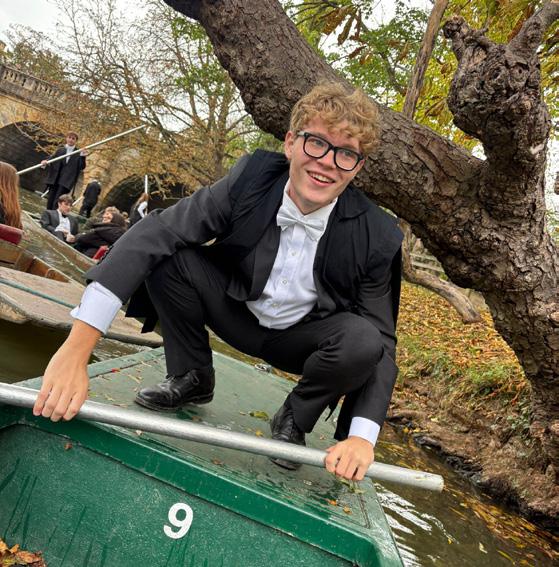
participant member association (PMA), but the price of these tickets has been left up to the FAs themselves. This has led some federations, such as those of Scotland and Germany, to enact dynamic pricing. For example, the cheapest PMA ticket for Scotland’s first group stage match in Boston against Haiti will cost you $180, while the team’s last match against Brazil in Miami comes in at a minimum of $265. FIFA has responded to this backlash by providing some “Supporter Entry Tier” tickets at a $60 price point, though the supply of these seats per match is likely to be in the hundreds, not thousands.
Compared to the pricing model of previous World Cups, this is a major break from tradition.
At the 2022 World Cup hosted by Qatar, the price for a group stage ticket was as low as 69$, though the 2010, 2014, and 2018 editions were priced at $80, $90, and $105, respectively. In 1994, the last time the US hosted a World Cup, prices got as low as $25 ($54 in real terms) and $180 ($391) for the final. Still, these do not come close to the prices expected in 2026. Neither will these prices be protected from scalping and 2nd market reselling, where the cheapest ticket to the 2026 Final in MetLife Stadium is expected to cost upwards of $11,000. Dynamic ticket pricing is not a new phenomenon. At the theory level, economists have been trying to find a way to match prices to the highest possible point each individual consumer is willing to pay for centuries. The goal of the producer is to get each person to pay the highest price, even when it changes from consumer to consumer. In the real marketplace, this is very hard to do. When a vintage clothes shop owner in the Covered Market prices a cashmere scarf at a conservative price of $40, they would not do so if they knew a rich Spanish tourist in dire need of a warm and stylish scarf was walking in the next day. But the owner is working with incomplete information and thus sacrifices some profits. The introduction of computers, online shopping, and consumer data has allowed companies to adapt their prices to the consumer, decreasing the consumer surplus in the process. The technical term for this is ‘price discrimination’. If this truly is a discriminatory practice, should it be regulated? Airlines started this revolution in the 1980s, adjusting seat prices on the fly due to fluctuations in time and demand. E-commerce sites like Amazon moved next, changing the price of the same good multiple times a day. Now, rideshare apps such as Uber and Lyft are at the forefront of dynamic pricing. They use the vast amount of data they’ve gathered to predict the prices each individual is willing to pay depending on the time of day, location, supply of drivers, and local realities (such as the presence of sporting events). Even Wendy’s experimented with surge pricing (changing prices between peak and off-peak hours, such as traditional meal times), though it quickly dropped the idea due to backlash. Live events such
as concerts and sporting events have received a large share of complaints after the MLB club San Francisco Giants pioneered dynamic pricing in 2009. American sports are now almost all fully integrated into this model, with the sports-going public largely accepting the changes. Meanwhile, European sports have been scared to make a similar change, with the relationships to community-based clubs such as football teams discouraging price hikes.
The pricing at some Premier League stadiums has prompted similar conversations in Britain. Recent years have seen the English 1st division spike in popularity, particularly among international fans. This has led to a larger share of the ground being filled with visitors making pilgrimages from other continents to see the team they’ve been watching for years on TV. As a result, ticket prices have risen dramatically. A Liverpool supporter who paid £36 for his first season ticket in 1983 now forks out over £735. However, this is extremely cheap in comparison to the demand for these tickets (and unbelievably cheap compared to American prices, where a Kansas City Chiefs season ticket can run you $5,000 for less than half the games). Tourists coming to see their team for the first time have no issue forking over 500 pounds per seat. Is Liverpool responsible for keeping ticket prices extraordinarily low for loyal supporters, even when the market is willing to accommodate spiked prices? Should tourists willing to pay those prices for a, to them, once-in-a-lifetime experience be locked out due to their cultural background?
The constraints of live events face a major supply-side issue that is rarely talked about. While the fanbase (and, thus, the demand) of artists such as Taylor Swift or football clubs such as Manchester United grow exponentially, the venues they perform in stay the same size. FIFA received 5 million ticket requests in the first 24 hours for 3rd phase ticket sales for the upcoming World Cup. Meanwhile, the Estadio Azteca will still hold the same 83,000 fans it had in 1986. If FIFA cannot feasibly increase supply to match the drastic demand surges of recent years, prices simply must rise.
Read in full online.