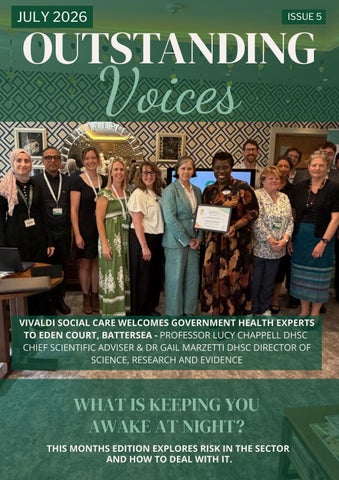
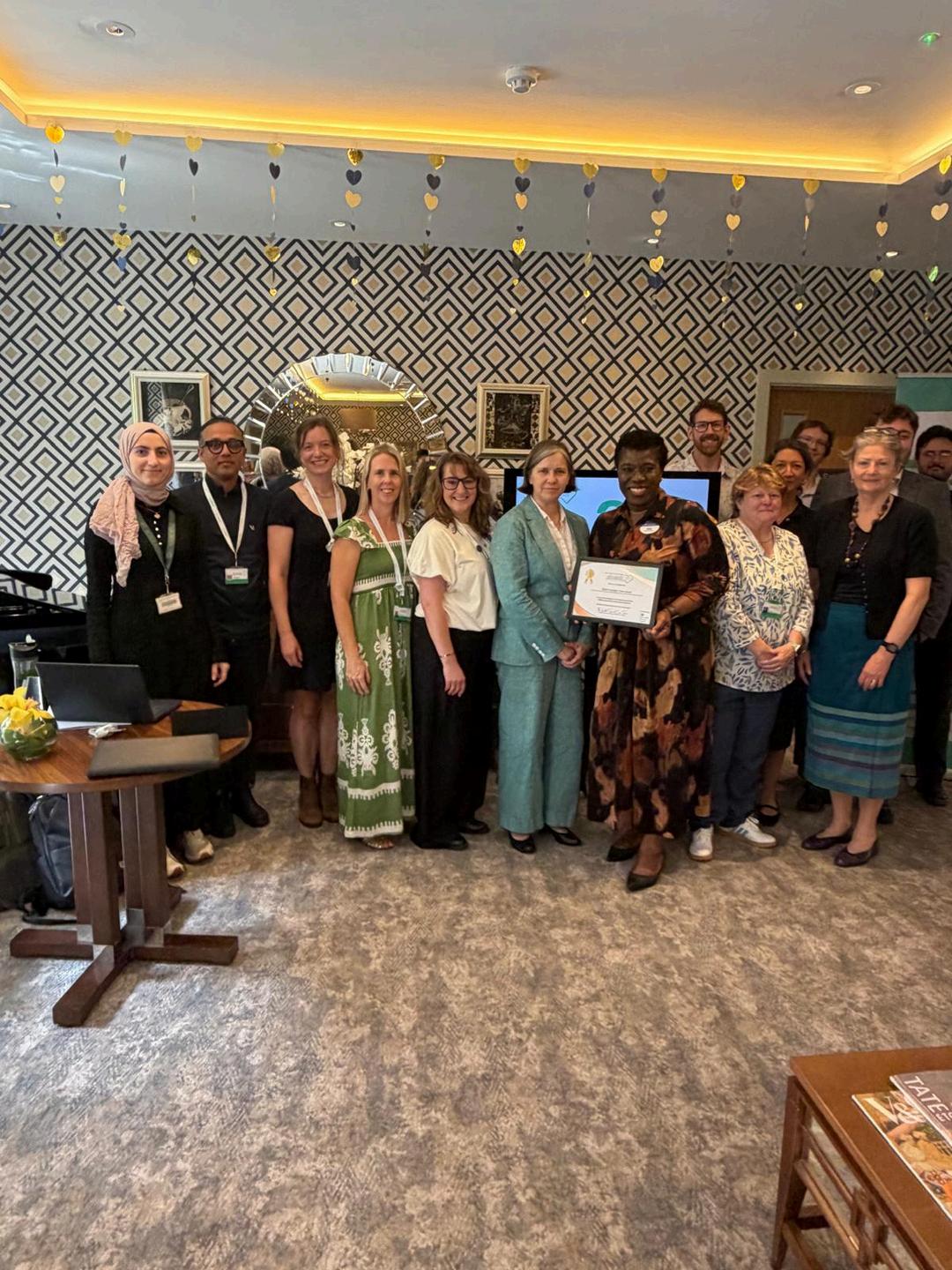
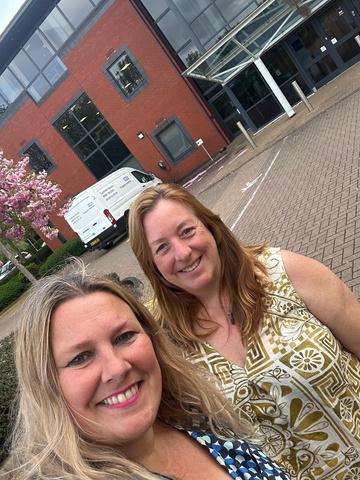
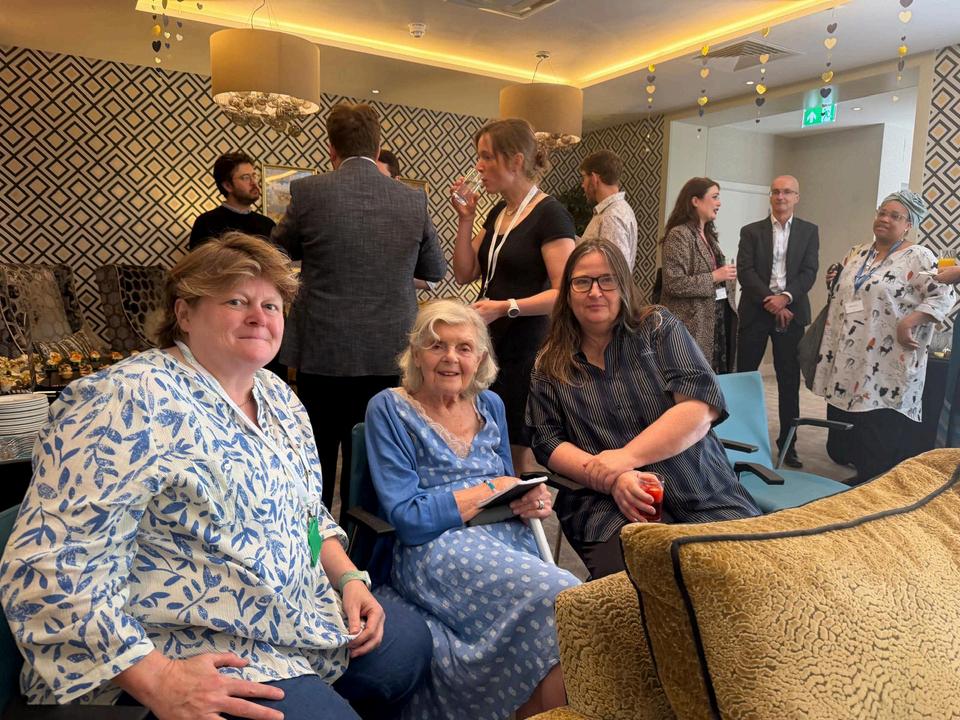
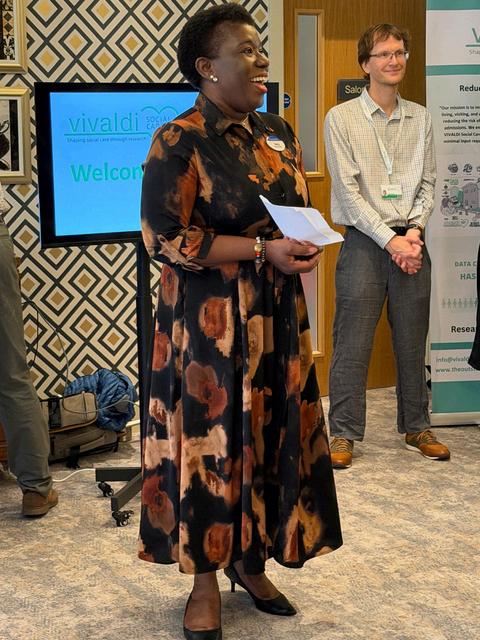
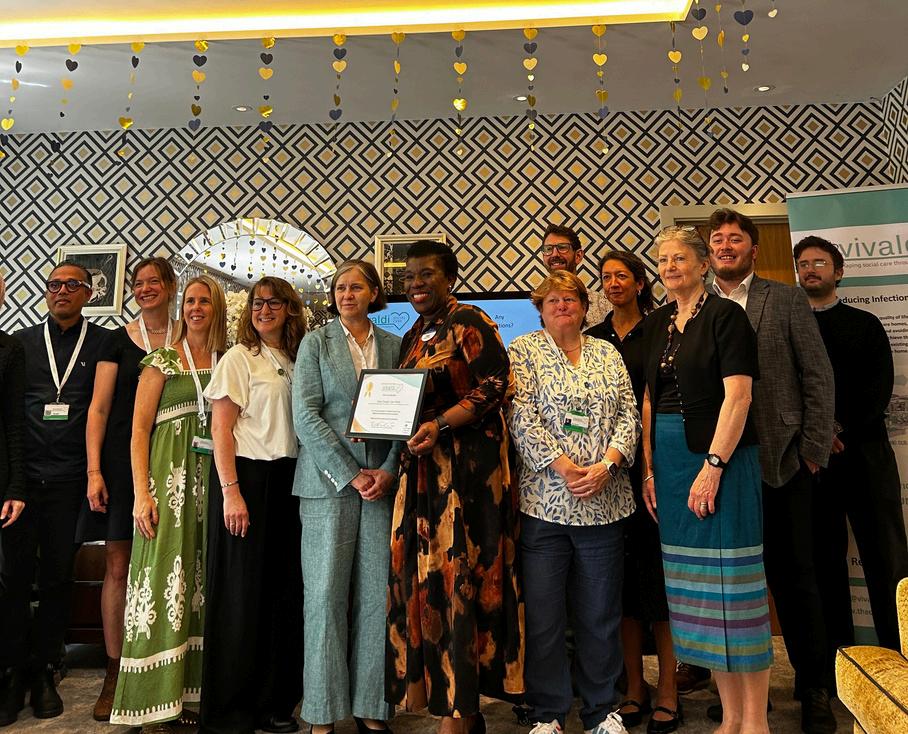
VIVALDI SOCIAL CARE WELCOMES GOVERNMENT HEALTH EXPERTS TO EDEN COURT, BATTERSEA - PROFESSOR LUCY CHAPPELL DHSC CHIEF SCIENTIFIC ADVISER & DR GAIL MARZETTI DHSC DIRECTOR OF SCIENCE, RESEARCH AND EVIDENCE
WHAT IS KEEPING YOU AWAKE AT NIGHT?
THIS MONTHS EDITION EXPLORES RISK IN THE SECTOR AND HOW TO DEAL WITH IT.
The Outstanding Society
DIRECTORS
Zoë Fry OBE
Executive Director of Nursing
James Rycroft
Executive Director of Specialist Dementia Services
Ruth French
Director of Policy & Regulation
TEAM
Alan Fry
Head of Operations
Sonia Pritchard
Executive Administrator
Lucy Knight
Vivaldi Social Care Lead
Samantha Crawley
Director of Leadership & Wellbeing
Mike Slator
Project Specialist
Sanjay Gasiorski-Dhrona
Director of Diversity, Equality & Inclusion
Caroline Cosh
Director of Homecare
Lara Bywater
Director of Learning Disability, Autism & Mental Health Care
There’s a question that has surfaced repeatedly in conversations over the past few months, whether in boardrooms, leadership meetings, networking events (Care Show London), or quiet one-to-one discussions:
What’s keeping you up at night? - The answers are rarely simple
For some, it’s the uncertainty of economic conditions. For others, it’s talent shortages, technological disruption, cyber threats, regulation, succession planning, or simply the challenge of making the right decision when the future feels increasingly difficult to predict
Risk has always been part of leadership. Yet today, the nature of risk feels different It moves faster It arrives from unexpected directions. And often, it is interconnected in ways we are only beginning to understand
What strikes me most is that while we often think of risk as something to avoid, the most successful leaders understand that risk is also where opportunity lives Every breakthrough, innovation, investment, and transformation begins with a decision to step into uncertainty
The challenge is not eliminating risk it is learning how to navigate it intelligently.
As you read this edition, I encourage you to reflect on your own answer to the question.
What is keeping you up at night?
And perhaps more importantly:
What are you doing about it?
Thank you to all of our contributors
As always, Outstanding Voices exists because of the remarkable people within our community who continue to challenge & inspire conventional thinking
I hope this issue sparks new conversations, fresh perspectives, and perhaps even a little reassurance that none of us are navigating uncertainty alone
AlanFry
Editor and Head of Operations comms@theoutstandingsociety co uk
05
Understanding the Risks Facing Care Workers and the People They Support
Jade Dewey - Marketing and Events Officer at the Care Workers’ Charity considers the risks facing Care Workers.
12
Outstanding Spotlight
The first in a new feature where we celebrate recently annouced ‘Outstanding’ ratings.
22 What the latest CQC assessments are telling us
Rob Hargreaves, Central Engagement Lead at Skills for Care, explores how CQC’s recent assessments are shaping its approach to understanding and managing risk.
42
Vivaldi welcomes Government health experts to Eden Court
Find out more about the recent visit by the Vivaldi Social Care team and government health experts to Eden Court, where they saw firsthand how the research programme is being implemented in practice.
46 Event Listing
The OS is proud to support events that bring people together to share, celebrate and learn from best practice across adult social care.
49 Resource Library
Explore our growing collection of free resources to help your service learn, improve and thrive.
Understanding the Risks Facing Care Workers and the People They Support
The care sector has always carried risk Not the kind that makes headlines, but the quieter, structural kind that builds steadily beneath the surface until it can no longer be ignored For those working alongside care workers every day, the pattern is familiar: a workforce stretched too thin, paid too little, and left without adequate support when things go wrong
A Workforce Under Pressure
England's social care workforce numbers around 1.59 million people, yet the sector's vacancy rate sits at around 8.3%. Those figures have improved marginally since the peak pressures of 2022, but they remain structurally high and concentrated in particular roles and regions.
The root causes are well understood Care work is physically and emotionally demanding, yet average hourly pay remains close to the National Living Wage, with little progression and few financial incentives to stay A care worker with five years of experience often earns little more than someone who started last month, with no meaningful reflection of the skills, knowledge, and trusted relationships they have built over time.
This creates a retention problem that feeds back into itself. High turnover means constant recruitment costs, disrupted relationships between care workers and people drawing on care, and a loss of institutional knowledge that no induction process can quickly replace. For the people drawing on care, continuity matters enormously. Familiar faces, understood routines, trusted relationships: these are not small comforts but fundamental to quality and safety.
International recruitment has provided some relief, particularly in the years following the pandemic, but it brings its own risks. Care workers recruited from overseas are sometimes left vulnerable, with limited knowledge of their rights, dependency on employertied visas, and in the worst cases, exploitation. The Care Workers' Charity has supported workers in exactly these situations, people who came to the UK to contribute to the care system and found themselves isolated and in crisis.
Mental health sits at the heart of the workforce picture too. The charity's research consistently shows that care workers experience high rates of anxiety, depression, and burnout, carrying the weight of their work without adequate emotional support structures Any honest account of risk in this sector must include the risk to care workers themselves, not only the risk to the people they support.
The Financial Fragility of the System
The financial architecture of adult social care in England is, by most assessments, not fit for purpose. Local authorities are the primary commissioners of publicly funded care, but years of real-terms funding pressure have left many councils unable to pay fees that reflect the actual cost of delivering care. That gap does not disappear. It is transferred quietly onto providers, who in turn transfer it onto their workforce.
For the charity, the financial risks of the sector manifest directly When care workers lose their jobs, face cuts to hours, or find their wages stagnant while the cost of living rises, demand for emergency support increases The grants data makes this visible in real time: applications spike following any deterioration in sector conditions, whether through provider closures, changes to visa rules, or cost-ofliving shocks
The workforce and financial challenges are not separate problems They are two expressions of the same systemic failure. Underinvestment in fees leads to underinvestment in staff, higher turnover, rising costs, and reduced quality Reduced quality undermines public confidence, and public confidence shapes the political will that ultimately determines funding Breaking that cycle requires honest recognition that care is a public good, not simply a market, and that it needs to be resourced accordingly.
The Financial Fragility of the System
The financial architecture of adult social care in England is, by most assessments, not fit for purpose
Local authorities are the primary commissioners of publicly funded care, but years of real-terms funding pressure have left many councils unable to pay fees that reflect the actual cost of delivering care That gap does not disappear. It is transferred quietly onto providers, who in turn transfer it onto their workforce
For the charity, the financial risks of the sector manifest directly When care workers lose their jobs, face cuts to hours, or find their wages stagnant while
the cost of living rises, demand for emergency support increases The grants data makes this visible in real time: applications spike following any deterioration in sector conditions, whether through provider closures, changes to visa rules, or cost-ofliving shocks
The workforce and financial challenges are not separate problems They are two expressions of the same systemic failure. Underinvestment in fees leads to underinvestment in staff, higher turnover, rising costs, and reduced quality Reduced quality undermines public confidence, and public confidence shapes the political will that ultimately determines funding Breaking that cycle requires honest recognition that care is a public good, not simply a market, and that it needs to be resourced accordingly.
What Needs to Change
The Fair Pay Agreement for social care workers, currently under development, represents a meaningful opportunity to establish fairer baseline pay, terms, and conditions across the sector Done well, it could begin to address the retention crisis by making care work a sustainable career. But it must be matched by the funding to make it viable, otherwise the cost simply lands elsewhere in an already fragile system.
Multi-year funding settlements for local authorities would allow commissioners to set fee rates that reflect real costs rather than being shaped by annual negotiations that consistently land just below the line of viability Providers cannot plan, invest in their workforce, or improve quality when their income remains uncertain year to year.
And care workers need to be treated as the skilled professionals they are That means proper supervision, access to training and development, mental health support, and employment protections that are consistently applied The charity's grants and wellbeing programmes exist to fill gaps that should not exist at the scale they do. The support provided is something to be proud of, but the level of need should not be this high
The Human Reality Behind the Risk
At the centre of all of this are people The workforce risk is about individuals who trained for a vocation they believe in, only to find that vocation cannot sustain them financially The financial risk is about providers trying to do the right thing in a system that makes that very difficult. And the people drawing on care feel the pressure of both, first and most acutely, in less continuity, less time, and a sense that care has become transactional rather than relational
The Care Workers' Charity believes that a sector that looks after its workers is better placed to look after the people in its care. That is not a soft argument. It is a practical one, grounded in evidence and in the lived experience of thousands of people the charity works with every year.
The risks facing the care sector are not inevitable They are the result of choices made over decades, and they can be addressed with the clarity, honesty, and political will to act.
Support the Work
If this resonates, the charity welcomes support in any form: a donation, a partnership, or simply amplifying the voices of care workers who deserve to be heard.
To find out more or to get involved, visit www.thecareworkerscharity.org.uk
About The Care Workers' Charity
The Care Workers' Charity exists to support the financial wellbeing, resilience, and recognition of care workers across the UK. Through emergency grants, mental health and wellbeing programmes, and sustained advocacy, it stands alongside a workforce that holds the care system together, often at significant personal cost
Since 2020, the charity has distributed £6.9 million to over 14,000 care workers who found themselves in crisis, whether through unexpected illness, bereavement, debt, or the slow accumulation of low pay and inadequate working conditions Sitting at the intersection of policy and people, the charity occupies a vantage point from which the human reality behind the statistics becomes impossible to overlook. Behind every data point about vacancies or pay, there is a person working hard, often without the recognition or security their work deserves
Proud to support care workers
Their vision is simple but powerful: to advance the financial, professional, and well-being of care workers across the UK. This support is especially vital when it comes to mental health, an area where the pressures of care work can take a real toll
The work the CWC does
Our partnership helps fund life changing support stories like these:
Samuel’s recovery: After major heart surgery, Samuel struggled with severe anxiety and couldn’t leave the house. Through the CWC’s Mental Wellbeing and Health Support programme, he received ten sessions with a qualified therapist, helping him rebuild confidence, manage anxiety and return to work.
Pete’s journey back: When Pete reached breaking point after a panic attack at work, the CWC connected him with a counsellor who helped him regain stability, develop coping strategies and return to his role with renewed support from his employer
How we continue to support the CWC
We’re pleased to share two important updates with you:
1 Our new donation initiative: For every new care home insurance policy written, Howden will donate a proportion of the fee directly to The Care Workers’ Charity, helping more care workers access the support they need.
2.
3 Our latest contribution: As part of our ongoing partnership, we are proud to have already donated almost £3,500 to help fund the charity’s vital services so far in 2026
Care workers play a crucial role in our communities. They deserve to be supported, protected and valued We are honoured to stand alongside the CWC in championing their wellbeing
Read more stories about the support the CWC provides
Donate to the Care Workers' Charity
Find out more about Howden
The latest Outstanding Society webinar brought together over 400 care sector professionals to explore the significant changes currently taking place within the Care Quality Commission (CQC) and what they mean for providers across adult social care
Hosted by Sanjay Dhrona and led by Ruth French, the session provided a valuable update on the future of inspections, emerging regulatory priorities, inspector portfolios, digital care records, artificial intelligence, and real-life inspection experiences from an outstanding-rated service
If you missed the live session, you can now access both the recording and presentation slides below
Watch the Webinar Recording
CQC Are Evolving – Are You Keeping Up?
View Here
Stay connected with the latest CQC updates, inspection insights, sector best practice, and expertled discussions by subscribing to our YouTube channel @theoutstandingsociety
Download the Slides
Download Here
Key Updates from CQC
A New Assessment Framework is Taking Shape
One of the most significant updates shared during the webinar was the ongoing development of CQC’s new assessment framework
Following extensive consultation and feedback from providers, CQC is moving away from the single assessment framework and returning to four sectorspecific frameworks. This is expected to provide greater relevance and clarity for providers.
Other anticipated changes include:
a reduction in the number of quality statements. a return to Key Lines of Enquiry (KLOEs), which will replace the Quality Statements. the introduction of clearer operational guidance to help providers understand what different ratings look like in practice
piloting of the new framework later this year before wider implementation the direction of travel suggests a more focused and practical approach that many providers have been calling for.
Understanding “Return to Good” Inspections
Services currently rated Good across all five key questions may soon experience a different type of inspection
HeadlinePartner
The new “Return to Good” approach is designed for services that:
are rated Good in all five areas. have a registered manager in place have ratings that are six years old or older show no significant risk indicators. have no ongoing enforcement activity.
These inspections focus on a reduced set of quality statements and result in shorter reports.
However, providers should note that if inspectors identify evidence suggesting an Outstanding or Requires Improvement/Inadequate rating, the inspection can be expanded into a full assessment
The message from Ruth was clear: even under a shortened inspection model, providers should continue showcasing the full breadth of their achievements and evidence.
The Return of Named Inspector Portfolios
Another welcome development is the return of named inspector portfolios.
Many providers have expressed frustration at not knowing who to contact within CQC, and the regulator has listened
The portfolio model is currently being rolled out, beginning in London, and aims to provide: greater continuity. improved communication. stronger relationships between providers and inspectors clearer routes for raising questions and concerns.
Providers will begin receiving communications identifying their portfolio inspector as the programme expands nationally.
Digital Care Records and Remote Access
One of the most discussed topics during the webinar was CQC’s pilot around remote access to digital care records
The regulator is exploring ways inspectors may safely and lawfully access digital systems both onsite and remotely.
While participation remains voluntary during the pilot phase, providers were encouraged to start thinking about their own organisational policies around digital access.
Samantha Crawley shared practical insights from her organisation’s experience, explaining why inspectors are always accompanied by someone who understands how their digital systems are configured.
Her advice was simple:
“It’s not about restricting access. It’s about helping inspectors find the information they need safely, accurately and efficiently.”
As digital inspections continue to evolve, providers should consider reviewing their policies, staff guidance and governance arrangements now.
Artificial Intelligence: What Providers Need to Know
CQC has also published a new position statement on Artificial Intelligence (AI)
The regulator is already piloting AI tools to support inspection planning and report drafting This allows inspectors to analyse larger volumes of information, identify emerging risks and target inspection activity more effectively
For providers, the key considerations include: human oversight and accountability data protection and information governance. staff training and confidence. transparency around how AI is used involving people who use services in decisions about AI-enabled processes.
The consensus from the session was that AI can support efficiency, but it should never replace professional judgement, compassion or human decision-making.
Outstanding in Practice: Learning from Grove Court
One of the highlights of the webinar was hearing directly from Michelle Francis, Head of Nursing at Elizabeth Finn Homes.
Michelle shared the experience of Grove Court in Woodbridge, which recently achieved:
Outstanding in Caring Outstanding in Responsive. Outstanding in Well-led.
The inspection demonstrated several important lessons:
Stay Inspection Ready
The inspection was unannounced, and the Registered Manager was on annual leave.
Despite this, the team remained calm, confident and prepared because inspection readiness was embedded in daily practice rather than something activated only when CQC arrived
Be Responsive
Inspectors identified several areas where immediate improvements could be made.
Rather than becoming defensive, the team acted quickly, implemented changes and demonstrated responsiveness. Some issues raised during inspection did not ultimately appear in the final report because the provider addressed them effectively and to the inspector’s satisfaction.
Organise Evidence in Advance
Michelle shared how Elizabeth Finn Homes had created digital evidence folders aligned to each key question and quality statement, making it easy to access documentation quickly when requested
Challenge Where Appropriate
The organisation successfully challenged part of the draft report through the factual accuracy process, resulting in an improved Well-led rating.
This serves as an important reminder that providers should not be afraid to respectfully challenge decisions when they have evidence to support their position
Confidence, Not Fear
A recurring theme throughout the webinar was confidence
Whether discussing inspections, staffing, digital systems or governance, speakers emphasised that providers who understand their service, know their evidence and involve their teams have little to fear from inspection
As Samantha Crawley reminded attendees:
“If your teams are confident in their competence and understand why things are done the way they are, there’s nothing to hide.”
Looking Ahead
The pace of change within CQC remains significant, but there are encouraging signs that the regulator is listening to providers and refining its approach
The Outstanding Society will continue to attend key stakeholder meetings, engage directly with CQC and share the latest developments with members and the wider sector.
Our next webinar will explore: “What Keeps You Awake at Night?”
Click Here to Register for your Free place
Outstanding Spotlight
Service Name Registered Manager Report Published
Haydock Lodge
Radfield Home Care Leicester East, Groby & Oadby
Rutland Road Care Home
Cherish UK Ltd Supported Living
Brenda Fairclough 08/05/2026
Sona Bharkhada 07/05/2026
Brenda Queeley 07/05/2026
Keeleigh Porter 07/05/2026
Birch Hill Care Centre Jennifer Mackie 05/05/2026
Beechmore Court
The Old Red Lion
Loxley Park Assisted Living Residency
Jacqueline Byrne 01/05/2026
Kimberley Little 01/05/2026
Naomi Roberts 01/05/2026 Congratulations!
Behind every Outstanding rating is a team with a story worth sharing. If your service has recently achieved an Overall Outstanding rating, we’d love to hear from you.
Whether you’re a Registered Manager, provider, nurse, care worker or another member of the team, we invite you to work with The Outstanding Society to showcase the approaches, innovations and everyday practices that have contributed to your success.
Get in touch with us at comms@theoutstandingsociety.co.uk – together, we can share and celebrate best practice for the benefit of everyone.
What's really keeping you awake at night?
For many of the people we support, the hours of darkness can be the most vulnerable of the day.
Night is when staffing is thinnest, when disorientation can be at its highest, and when a routine trip from the bed can end in a fall.
Often, the risk we worry about most is a simple one: someone in our care getting up in the night and having a fall
That worry is worth taking seriously- because how we handle it says a lot about how we handle risk across the board
Beyond a culture of fear
When risk feels overwhelming, it's tempting to tighten everything up: more policies, more sign-offs, more caution. But fear-led risk management often makes people less safe, not more It narrows lives, removes choice, and leaves teams afraid to use their judgment.
Effective risk management isn't simply about avoiding incidents. It's about enabling confident
decision-making- giving teams the knowledge, tools and permission to act well Done properly, it empowers teams, improves outcomes and helps create services where people can thrive. It moves an organisation from reacting to incidents after they happen towards proactive, person-centred leadership that designs them out before they do.
large part, about moments exactly like this one. Address the moment, and you address a meaningful share of the worry.
The thinking behind our checklist
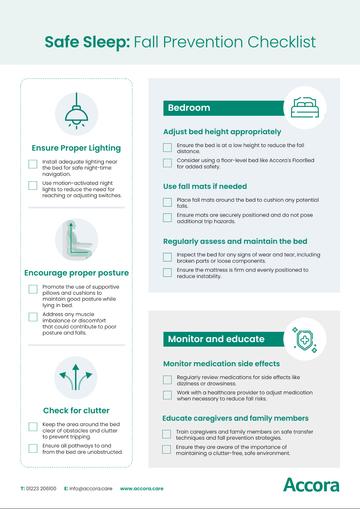
This is what shaped our Fall Prevention Checklist. It started from a simple observation: a fall is almost never caused by one thing, so it can't be prevented by one thing either.
"Be more proactive" is easy to say and hard to put into practice.
So let's make it concrete- with one of the risks that quietly sits behind so much of that nighttime worry.
Why falls, and why the night
Picture the circumstances: a person wakes, perhaps disoriented, in the dark They need to move There may be no one immediately nearby. They get up too quickly, misjudge the height of the bed, can't see an obstacle on the floor, and fall
Almost every element of that scenario is something we can change The bed can be lowered The lighting can be improved The floor can be cleared and cushioned. Medication that contributes to dizziness or drowsiness can be reviewed.
The most vulnerable moment of the day can become one of the most carefully managed. This is where proactive risk management stops being an abstraction and becomes a set of specific, repeatable, checkable actions.
It's also where the worry and the work meet The leader lying awake about incidents, inspections and the safety of the people in their care is worrying, in
Lower the bed but leave the room dark, and the risk remains Improve the lighting but leave a cluttered pathway, and the risk remains. Real prevention has to address the whole picture at once- and that's exactly what the checklist is designed to do
Its strength is the way it connects four things that are too often managed in isolation: the equipment, the environment, the person, and the people around them.
It begins with the bed, where so much night-time risk is concentrated. The principle is to reduce both the chance of a fall and the harm if one happens: a low bed height, or a floor-level option such as Accora's FloorBed, shrinks the distance a person can fall, while routine checks and a firm, evenly positioned mattress keep the set-up stable over time The bed becomes an active part of someone's safety, not just a piece of furniture.
From there it moves to the environment- lighting and clutter. Good lighting near the bed, including motion-activated night lights that remove the need to reach for a switch, and clear, unobstructed pathways turn a hazardous moment into a manageable one.
It then turns to the person, with prompts around posture and comfort- supportive positioning, and attention to the discomfort or muscle imbalance that can quietly undermine stability This stops the checklist being purely about hardware; the person in the bed is part of the equation, not just the setting around them
Finally it widens out to the team and family: reviewing medication for side effects like dizziness and drowsiness alongside a healthcare professional, and training caregivers and family members in safe transfer techniques and the value of keeping the environment clear and safe This is what turns a oneoff room set-up into shared, sustained practice- and reaches beyond the professional team into the home, where so much care actually happens
Taken together, those layers make it more than a list. It's a way of thinking about night-time safety that moves a service from hoping nothing goes wrong to knowing it has done the right things, in the right order, for the right reasons
Why a simple tool matters
None of the actions on the checklist is complicatedand that's precisely its strength. Proactive risk management rarely depends on doing dramatic things; it depends on doing simple things reliably, together, and in a way that can be evidenced. A shared checklist turns individual vigilance into a habit: something a new starter can learn on their first shift, a family member can follow at home, and an inspector can see in practice rather than take on trust
It also quietly does the work that good risk management is supposed to do. It shows the organisation has anticipated a known risk and built a proportionate, person-centred response It gives front-line teams the confidence to act rather than wait for permission And it keeps the focus where it belongs- on helping people sleep, move and live as safely and freely as possible, rather than restricting them in the name of safety.
That same logic scales to every risk we face. Workforce pressure, safeguarding, regulation, digital risk, medication, higher acuity- none of these is solved by fear They're managed by clear systems, shared knowledge, confident teams and a culture that treats risk as something to understand and shape rather than something to dread
The services that thrive won't be the ones that worry hardest They'll be the ones that have turned their worries into routines, their routines into evidence, and their evidence into confidence.
So the next time the question comes up- what's keeping you awake at night? -turn it around. Start with the people who are, quite literally, asleep in your care tonight Make their night safer, and you take a meaningful step toward sleeping a little easier yourself.
Make tonight safer
You don't need a new strategy to start- just a starting point your whole team can use today That's what the Safe Sleep: Fall Prevention Checklist is: a single, free, ready-to-use reference that brings the bed, the environment, the person and the wider team together on one page Print it for the nursing station, share it with families, work through it room by room, or use it as the backbone of your nighttime falls policy Whatever your setting, it turns a worry you've been carrying into a routine your team can own.
Download your free copy of the Safe Sleep: Fall Prevention Checklist, and put proactive, personcentred fall prevention into practice across your service tonight.
The Changing Face of Complex Care
Today’s care providers are navigating an increasingly complex environment, with the number of residents living with conditions like dementia and Parkinson’s on the rise.
We know, for instance, that dementia is expected to increase by 42% over the next 15 years, while Parkinson’s is projected to double by 2050 – and care providers are having to evolve to meet these growing needs.
In this article, CareHomeLife highlights some of the steps care providers are taking to honour our loved ones with dignity and ensure their homes are ready and able to meet the complex care challenges of tomorrow.
Demystifying Dementia Care
Dementia is a neurodegenerative condition that affects memory, problem-solving, language, and behaviour Although there are over 100 types of dementia, each with its own set of symptoms, they all share one characteristic: the profound impact they have on the lives of those diagnosed – and the people who care for them
So, what does the most recent data tell us about the dementia landscape of tomorrow?
Around 982,000 people are currently living with dementia in the UK¹, including approximately 70,800 people with young-onset dementia²
said than done, however Care providers should consider how they plan to sustain this, be that through innovations or simple additions that empower residents in meaningful ways
Supportive spaces can make a significant difference. According to NHS England, this includes everything from straightforward flooring designs to signage and sensory areas that promote calm and reduce overstimulation
But with more people living with complex care conditions for longer, the number of people with dementia is expected to soar to 1.4 million by 2040. This upward trend places additional pressure on care homes, both in terms of beds needed and staff required.
We know from experience that social care is already hard at work delivering thoughtful, person- centred dementia care at scale and pace. For residents to feel safe, secure and fully understood, a warm, welcoming environment – staffed with skilled, compassionate practitioners – is half the battle. But what does dementia care best practice actually look like, now and for the future?
Designing for Dementia
Even at the best of times, dementia care can be demanding It asks a lot of carers, especially those supporting people in the later stages of their condition. Recognising this, the care community prioritises routine and consistency, and with good reason. Consistency is key to reducing resident distress. However, carers also need the flexibility to respond sensitively to an individual's changing needs Each person's experience is unique, and it's this uniqueness that makes personalised care essential rather than optional.
Delivering personalised care to an increasing number of residents living with dementia is easier
Choosing the right furniture is also key. For instance, dementia-friendly environments that are easier to navigate are widely recognised as helping to reduce resident distress. In practice, this means creating flexible, uncluttered spaces with furniture that stands out clearly from its surroundings to support exploration and wandering
There are communal benefits too. The right furnishings give care teams the opportunity to shape how and where residents interact, enabling them to build connections as part of their daily routines. With thoughtful design, these communal areas can support resident independence and encourage spontaneous interaction, turning a care home environment into something that feels a little more lived-in
Colour coding can also help residents to differentiate fixtures and fittings more easily from their surroundings, not only in utilities and furniture but also in plates, bowls and utensils. For instance, CareHomeLife’s colour-coded ORNAMIN range, which features unobtrusive aids that enable residents with dementia to dine independently and with dignity, is specially designed to empower people with dementia
Similarly, Nilaqua – a waterless personal care and hygiene solution – offers residents who may find traditional bathing challenging the opportunity to manage their own personal care comfortably and with privacy. If independent traditional bathing is still an option for a person, simply placing a visual reminder of the bathing sequence in the shower can be a big help.
Often, it’s tho adaptations lik wellbeing of considering wh fully and comfo
The Untold Be It’s worth rem aspect of the co 2025 study pub (BMJ), global ca reach 25 millio the number of fastest-growing today The stee living for longe biggest risk susceptibility, a has also been li
Like dementia, of the nervous presents a ran including chall memory, and independence practical steps the growing Parkinson's?
One proven approach is regular exercise, which offers significant physical and mental benefits. Both Parkinson’s and some forms of dementia are linked to reduced dopamine, a hormone essential for movement, memory, and motivation. Exercise can help stimulate dopamine production in people with Parkinson’s and is widely recommended in care settings. It can also support those living with dementia by easing physical symptoms and helping maintain cognitive function
Research shows that just 2.5 hours of exercise per week can help people with Parkinson’s manage their symptoms more effectively⁴. Activities such as walking, yoga and tailored exercise programmes can all support mobility, flexibility, balance, strength and overall wellbeing
Despite these benefits, activity levels in England are declining and remain lowest among older adults⁵
Muscle mass is another piece of the complex care puzzle Strength is one of the most important neurological safeguards we have And yet, as we age, muscle mass is naturally lost, impacting balance, reaction times and fall risk.
We do less physically, often at the insistence of wellintentioned loved ones, but this mindset can have a profoundly negative effect on our health and wellbeing Without regular use, muscles atrophy –making basic movement all the more difficult.
References
Given that one in three people with Parkinson's will go on to develop dementia exercise has the potential to improve quality of life, both now and in the future, as individual care needs evolve Simply put, when residents are supported to exercise, everybody wins 6
Futureproofing Complex Care
Clearly, the complex care landscape is evolving, and we have only just begun to understand what lies ahead This makes 2026 the perfect time for CareHomeLife to expand its support to care homes to help them deliver the same level of compassionate, person-centred care to a growing number of residents with complex care needs.
Whether it’s through long-term care strategies or thoughtful choices in care-enhancing products that support resident independence and dignity, the conversations we’re having today will ensure the residents of tomorrow have access to the quality care they deserve.
Now, more than ever, we need to build resilience into our care provision. But building resilience doesn't have to mean prohibitive costs – it's about making smart, sustainable choices that honour residents and care workers alike
1 Prevalence and incidence of dementia’, Alzheimer’s Research UK (May 2024)
2 Subtypes of dementia’, Alzheimer’s Research UK (May 2022)
3 Global cases of Parkinson’s predicted to rise to 25 million by 2050’, Parkinson’s UK (May 2022)
4 Physical activity and exercise’, Parkinson’s UK
5 Healthy Ageing: physical activity in an ageing society’, UK Parliament (August 2025)
6 Parkinson's disease dementia’, Parkinson’s UK
To find out how CareHomeLife partners with the care community and learn more about our innovative complex care products, including the ORNAMIN and Nilaqua ranges, or our new Bodhi Furniture Collection, visit carehomelife co uk/
Pie in the Skynet Thinking
You know what’s keeping us up at Nourish?
AI. Not in the late night, bedside video scrolling till the wee hours sense. Though, yes, also that.
AI is everywhere. Heck, at this point saying ‘AI is everywhere’ is everywhere!
Lorcán Murray Nourish Content Marketing Manager
AI is an incredible force, that at times feels like a new form of electricity People are trying to put it in everything to see how it can transform processes, drive efficiencies and support improved outcomes.
That’s as true in social care as it is in social media
That much potential naturally spurs a wealth of experimentation. Which is very exciting. But also naturally spurs concerns about the inevitable development shocks
That’s why it was a notable relief when the CQC released their recent statement on their role, expectations and plans for AI in social care. The core principles of their guidance, transparency, accountability, security and good governance resonate with our approach to AI as outlined by our Director of AI and Data Sudha Regmi last Spring.
Foundationally we agree, AI must always aim to augment care providers, without automating the person-centred soul of our sector. An idea that has guided our development of technology since our inception One we have applied to AI dating back to when it first entered general discourse back in 2023, following public launches and widespread adoption of AI models like ChatGPT, Claude and Gemini
These principles continue to guide our development of technology Especially in regards to our commitment to responsible AI and how we effectively harness this electric opportunity for our communities
If you’d like to read a more in-depth examination of these design processes, check out our recent article: https://nourishcare.com/articles/governance-andguardrails-for-ai-in-care/
There is indeed a huge range of opportunities for application of AI in social care. Informed by our approach to responsible AI, earlier this year we launched Nourish Confidence, our AI platform built exclusively for, and inclusively with care providers. Product Lead Mark Gray spoke about the development of the platform, as well as it’s functionality. Building on what we already understood about the power of data in social care technology and utilising insights from across our communities to apply this functionality to governance challenges in a responsible way.
This is why responsible AI is an important design principle, and why we are so encouraged by the CQC’s statement last month. Established, resilient guardrails are essential for sound sleep at technology suppliers these days. Right after a few more animal videos.
Find out more about Nourish Confidence: https://nourishcare.com/product/confidence/
Managing risk: What the latest CQC assessments are telling us
Moving beyond protection to enablement
Recent CQC assessments show a clear shift in how risk is understood in adult social care. Managing risk is no longer about eliminating harm through restriction but about enabling people to live meaningful lives while staying safe. Services that perform well recognise that risk is part of everyday life and work alongside people to understand what matters to them, what could go wrong, and how to manage it proportionately.
At the heart of this is a balance between safety and independence. Strong services avoid defaulting to “just in case” restrictions and instead support positive risk-taking This includes ensuring that restrictive practices are used only when necessary and for the shortest possible time, with a clear focus on rights, choice and wellbeing
The importance of knowing the person
A consistent theme in stronger services is the depth of understanding staff have about the people they support. Risk is not static, and it is rarely communicated in obvious ways. Changes in behaviour, mood or physical health often signal emerging concerns before they escalate.
Services rated Good or Outstanding demonstrate how staff notice and act on these early warning signs
Rob Hargreaves Central Engagement Lead
They know individuals well enough to recognise when something is not right and feel confident to respond or escalate concerns quickly. In contrast, weaker services often miss these subtle indicators, allowing risks to become normalised or more serious over time.
Turning
information into action
Another key learning from CQC assessments is that recording risks is not enough. What matters is whether information clearly guides day-to-day practice. High-performing services ensure risk assessments are specific, proportionate and practical, setting out exactly what staff need to do to keep people safe
Where services struggle, documentation is often outdated, overly complex or disconnected from practice. Staff may rely on memory rather than current information, or risk controls may not be followed consistently This gap between what is written and what actually happens is a recurring feature in Requires Improvement and Inadequate ratings.
Involving people and building shared understanding
CQC evidence highlights the importance of involving people, families and those close to them in risk management. When people understand their risks and are supported to make informed choices, concerns are more likely to be raised early and addressed collaboratively.
Strong services create a culture where people feel listened to and able to speak up They draw on family insight to identify triggers and early warning signs, and they ensure decisions are made with people, not for them In contrast, where involvement is limited, risk decisions can become overly cautious or disconnected from what matters most to the individual
Learning, leadership and culture
Finally, the latest assessments underline the role of leadership and culture in managing risk well
Effective services treat incidents and near misses as opportunities for learning, not blame. They reflect on what contributed to risk and use this insight to strengthen future care.
Leaders also play a key role in ensuring staff have the skills, confidence and support they need This includes providing relevant training, encouraging professional judgement, and fostering an environment where raising concerns is expected and valued
Where leadership is weaker, common issues include poor oversight of emerging risks, inconsistent communication, and unaddressed training gaps
These factors limit a service’s ability to respond proactively and can lead to repeated or avoidable harm
7th July 2026 10:30 to 12:00
9th July 2026 10:30 to 12:00
14th July 2026 10:00 to 12:00
A more dynamic approach to risk
Good risk management is driven by everyday behaviours, conversations and decisions It depends on staff being attentive, informed and empowered, and on organisations creating the conditions where openness, learning and shared responsibility can thrive
Skills for Care produces a range of resources to ensure adult social care providers are ready for CQC assessment, including some key resources developed in partnership with The Outstanding Society.
View the full range here.
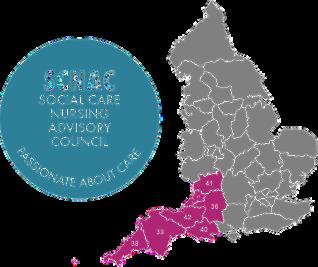
(SCNAC) Southwest Regional Event
Sets the Foundation for Collaborative Prevention Projects
The Social Care Nursing Advisory Council (SCNAC) Southwest recently welcomed an exceptional turnout for its inaugural regional face-to-face event at Southwest House, Blackbrook Park Avenue, Taunton, hosted by SCNAC Southwest Co-Chairs Cheryl Angco and Cindy Willcocks
Bringing together professionals from health, social care, education, community organisations, businesses and national organisations, the event demonstrated the growing momentum behind SCNAC's ambition to strengthen the voice of social care nursing through collaboration, innovation and leadership. More than simply a networking event, the day became a catalyst for meaningful conversations about prevention, workforce sustainability and developing practical solutions that can improve outcomes for people and communities across the Southwest and beyond
A Truly Cross-Sector Partnership
The event attracted senior leaders, registered nurses, educators, researchers, students, community partners, representatives from the Nursing and Midwifery Council (NMC), businesses and colleagues working across integrated care systems from both within and outside the Southwest region
This breadth of representation reflected SCNAC's commitment to working beyond traditional organisational boundaries. Delegates shared a common ambition to strengthen partnership
working and recognise that the future of health and social care depends upon collaboration between professionals, educators, innovators, businesses and communities.
One of the event's distinguished guests was Bernadette Edwards, Deputy Director of Nursing, whose attendance demonstrated her longstanding commitment to supporting the social care nursing agenda throughout the region
Bernadette has consistently championed the vital role that social care nursing plays within integrated health and care systems, recognising that the sector is fundamental to delivering person-centred, preventative and community-based care
Throughout her leadership, she has promoted closer collaboration between health and social care organisations, helping to strengthen professional relationships and raise the profile of the social care nursing workforce.
During the event, Bernadette reflected on the quality and diversity of the presentations and acknowledged the passion, innovation and commitment demonstrated by every speaker and delegate Her continued support for the work of SCNAC Southwest, alongside the leadership of Cheryl Angco and Cindy Willcocks, represents an important partnership that is helping shape regional priorities, strengthen workforce development and influence integrated approaches to prevention
Together, this partnership between NHS England Southwest and SCNAC Southwest provides a strong platform for ensuring that social care nursing remains central to discussions about future health and care delivery across the region.
Building a Blueprint for Prevention
Perhaps the most significant outcome of the event was the agreement that the SCNAC Southwest regional gathering will now become a twice-yearly face-to-face event, creating regular opportunities to build relationships, share innovation and develop collaborative projects.
Delegates also committed to creating a practical Blueprint for Prevention a framework designed to develop projects locally before scaling successful initiatives across the region and, ultimately, nationally
The first two prevention priorities have already been identified:
Dementia Prevention and Support, promoting awareness, earlier intervention, preventative approaches where possible, and improved support for people living with dementia together with their families and carers
Suicide Prevention, bringing organisations together to strengthen awareness, improve early identification, encourage compassionate intervention and build stronger partnerships across health, social care, education and local communities
These projects reflect SCNAC's belief that prevention requires collaboration across every sector and that sustainable improvements are achieved when organisations work together rather than independently.
Leadership that Places Love at the Centre
One of the highlights of the day was an inspiring keynote presentation by Cindy Willcocks, introducing delegates to the L O V E Leadership Model
The presentation explored how compassionate, values-based leadership can transform organisations by creating cultures built upon kindness, trust, accountability and meaningful relationships.
Drawing upon examples from education, healthcare,
social care, community development and business, Cindy demonstrated that leadership founded upon Compassion not only improves well-being but also creates environments where innovation flourishes and people feel valued
The session encouraged delegates to reflect upon their own leadership journeys and how creating cultures of belonging ultimately improves outcomes for colleagues, organisations and the people they serve.
Innovation Across Every Sector Innovation featured strongly throughout the programme
John Powell, founder of My Care Bubble, shared how digital innovation can strengthen communication, reduce isolation and improve support for individuals and families navigating health and social care services.
Nikki Taylor, Head of Integrated Health and Social Care Innovation and Partnerships at Health Innovation Southwest, explored how collaborative innovation is helping transform integrated care systems, demonstrating how partnerships between organisations can accelerate improvements and support better outcomes for communities
Delegates also heard from Shelley James and Lally Widelska from Age of Light Innovations, who presented compelling evidence demonstrating how light and environmental design influence health, wellbeing, cognitive function and recovery.
Their presentation encouraged delegates to think differently about the environments in which care is delivered and how relatively simple changes can significantly improve wellbeing
Chesca Douglas delivered an inspiring presentation on Championing Social Care, highlighting the importance of celebrating the social care workforce, promoting professional identity and ensuring that social care nursing continues to have a strong voice within integrated health systems
July 2026
Together, the presentations reflected the diversity of expertise present across the room and reinforced the importance of learning from different sectors when tackling complex health and care challenges.
Sustainability and Creating a Workforce for the Future
An important theme emerging throughout the day was sustainability
Delegates recognised that sustainability extends beyond environmental responsibility and includes creating a resilient, healthy and supported workforce capable of meeting the changing needs of communities for many years to come
SCNAC Southwest is committed to exploring innovative approaches to workforce sustainability by encouraging healthier workplaces, compassionate leadership, wellbeing initiatives and preventative approaches that support those delivering care.
The unique geography of the Southwest also presents significant opportunities. Discussions explored how the region's exceptional blue spaces its coastline, rivers and waterways and green spaces, including parks, woodlands and countryside, can play a greater role in promoting physical, emotional and mental wellbeing for both the workforce and the communities they serve
Evidence increasingly demonstrates that connecting with nature can reduce stress, improve resilience, support recovery and enhance overall wellbeing. Delegates discussed how these natural assets could become integral to future prevention programmes, staff wellbeing initiatives and community-based health interventions.
Developing a sustainable workforce means investing not only in education and professional development but also in creating environments where people feel valued, supported and inspired throughout their careers.
Supporting Wellbeing
The event itself reflected these values
Every delegate received a thoughtfully curated goody bag, generously supported by the event's partners and sponsors.
Each bag included a complimentary copy of Cindy Willcocks' book, Draw A Heart Around It, together with a selection of Temple Spa wellbeing products.
These gifts were more than a token of appreciation; they reflected one of the day's central messages that those who dedicate their lives to caring for others must also invest in their own health and wellbeing
Delegates were encouraged to prioritise self-care, recognising that resilient leaders and healthy teams are fundamental to delivering compassionate, highquality care.
Collaboration Makes the Difference
The event was made possible through the generous support of organisations that share SCNAC's vision for healthier communities, including Ashfield Services, Arterne Group Businesses, Maja Dethloff –Sound Feelings, The College of Auricular Acupuncture and Temple Spa
Their involvement demonstrated that improving health outcomes is not solely the responsibility of healthcare organisations Businesses, educators, innovators and community partners all have an important role to play in creating healthier, more connected communities
Throughout the day, there was a genuine sense of shared purpose Conversations extended beyond presentations into networking sessions where delegates exchanged ideas, identified opportunities for collaboration and began planning future initiatives together
Looking Ahead
Planning is already underway for the next SCNAC Southwest Regional Event in Autumn 2026.
The event will provide an opportunity to review progress on the dementia and suicide prevention
The event will provide an opportunity to review progress on the dementia and suicide prevention programmes, showcase emerging projects, strengthen existing partnerships and welcome new members into the growing SCNAC Southwest network
As the regional blueprint develops, SCNAC hopes to create prevention models that can be adapted and implemented across the country, demonstrating how local innovation can influence national practice.
Join the Movement
The success of this inaugural regional gathering demonstrated the power of bringing together professionals, educators, innovators, businesses, national organisations and community partners with a shared ambition to improve lives through prevention, partnership and compassionate leadership
SCNAC Southwest is more than a regional network; it is a growing movement committed to raising the profile of social care nursing, strengthening integrated working and creating lasting improvements for the workforce and the people they support.
Whether you work in health, social care, education, research, the voluntary sector, business or community services, there is a place for you within the SCNAC community. The twice-yearly regional events offer an opportunity to share ideas, learn from others, build meaningful partnerships and contribute to projects that have the potential to shape the future of social care nursing
If you would like to learn more about the work of SCNAC, become involved in one of the prevention workstreams, or attend the Autumn 2026 Southwest Regional Event, we warmly encourage you to connect with the SCNAC Southwest leadership team.
Together, we can build a healthier, more sustainable future one founded on collaboration, innovation, compassion and prevention.
Celebrating Culture, Care and Community
South West SCNAC Joins Forces with Filipinos in Care
by Cheryl Angco, Co-Chair SW SCNAC
Not even gale-force winds and torrential rain could dampen the spirit of the Filipino community at the recent Bournemouth Barrio Fiesta. Against a backdrop of music, colour, food and dancing, the event became a joyful celebration of resilience, culture and connection.
Since first meeting Filipinos in Care CIC in April, SW SCNAC has been delighted to begin building a meaningful collaboration with this inspiring organisation
We are especially pleased to introduce SW SCNAC member Xyza (Xam) MacutayMalloch BEM, a passionate social care leader, British Empire Medal awardee and advocate for dignity in care
Xam brings warmth, experience and a powerful commitment to raising the profile of Filipino nurses, carers and social care professionals across the UK.
Through her work with Filipinos in Care CIC, she champions representation, professional development and the importance of recognising the vital contribution of Filipino colleagues within health and social care
A Fiesta Filled with Purpose
At the Bournemouth Barrio Fiesta, Kier and I had the pleasure of hosting a stand and meeting key individuals from the Filipino community, including nurses, carers and leaders who are making a real difference in local services
The day offered more than a chance to celebrate Filipino culture; it created space for conversation, connection and shared ambition.
Despite the challenging weather, the energy of the community shone through. Dancing continued, conversations flowed, and the sense of pride was unmistakable It was a reminder that culture and care are deeply connected: both are rooted in compassion, belonging and the desire to support one another
Looking Ahead to Cornwall
We now look forward to continuing this important engagement at Piyesta sa Cornwall on 8 August, where SW SCNAC with Filipinos in Care will host a stand and take part in a speaking opportunity. We hope for brighter skies, but whatever the weather, we carry with us the same spirit seen in Bournemouth: pride, partnership and a shared commitment to celebrating the people who bring skill, compassion and dignity to care every day
As this collaboration grows, so too does the opportunity to amplify voices, strengthen networks and recognise the extraordinary contribution of Filipino care professionals across the South West and beyond
Managing patients who have a long lie
Professor Fiona Sampson PhD, MSc, BA
Researchers from the University of Sheffield would like to invite you to take part in a survey that will help them understand the scale, impact and care trajectory for patients who have had a long lie after a fall.
We expect this will take you no more than 10 minutes, and you can come back to the survey at any time. You will not be asked to give any personal information, and your responses will be anonymous
Please access the survey here: https://shef qualtrics com/jfe/form/SV 8BS MaqJunK9ySpg
If you would like a paper copy of the survey, please contact longlies@sheffield ac uk or telephone 0114 222 0812
Who can take part?
We are inviting residential homes, nursing homes, sheltered housing, homecare workers and other social care providers who manage people who may have had a long lie after a fall.
Who is carrying out the survey?
The study is being conducted by the University of Sheffield, Yorkshire Ambulance Service NHS Trust and MidYorkshire Teaching Hospitals NHS Trust and led by Dr Fiona Sampson. This research has been funded by the National Institute of Health Research (NIHR) Health Services and Delivery Research Programme (project NIHR 158676).
Professor Fiona Sampson Professor of Health Services Research
All the responses will be stored at the University of Sheffield and remain confidential.
Contact for queries:
If you have any further questions please contact either:
Dr Fiona Sampson, Senior Research Fellow in Health Services Research, ScHARR, University of Sheffield Tel no: 0114 2220687, email: f.c.sampson@sheffield.ac.uk
At the end of the survey you will be given the option to enter a prize draw for one of four £50 Love2Shop vouchers.
Gold & Silver Success for North Central London
at National Adult Social Care Nursing Conference by Louise
Keane,
Co-Chair London SCNAC
North Central London (NCL) Adult Social Care Nursing was proudly represented at the recent Adult Social Care Nursing: Leading Through Innovation conference at Salford University, showcasing innovative practice, groundbreaking research and workforce development initiatives that are improving outcomes for people receiving care
The event brought together nurses, care home leaders, educators and researchers from across England to share learning, celebrate excellence and explore the future of adult social care nursing. NCL colleagues made a significant impact, not only through their presentations but also through national recognition for two outstanding leaders within the sector
National Recognition for Adult Social Care Leaders
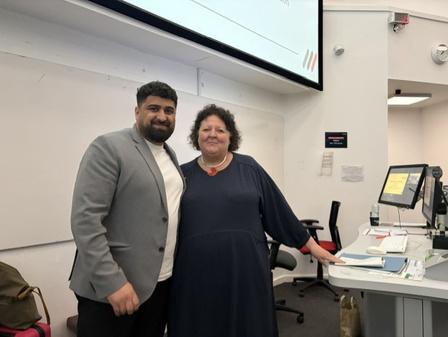
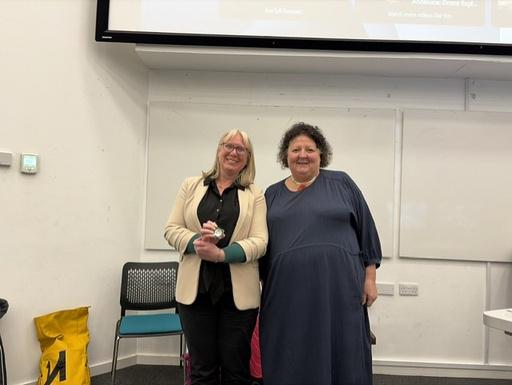
A highlight of the conference was the presentation of Chief Nurse for Adult Social Care Awards by Deborah Sturdy CBE, recognising exceptional contributions to the sector
Chief Nurse for Adult Social Care Silver Award –Alin-Valentin Cojocaru
Alin-Valentin Cojocaru, Nurse and Business Manager at Azalea Court Care Home in Enfield, was presented with a Silver Award in recognition of his exceptional leadership, commitment to person-centred care and significant contribution to adult social care across London
As an influential member of the London Social Care Nursing Advisory Council (SCNAC), Alin has played a pivotal role in advancing the London IV Therapy workstream.
Through collaborative leadership, professional credibility and an ability to inspire others, he has strengthened engagement with providers across the capital and accelerated progress in improving care delivery for people receiving services within their local communities.
Alin is also a passionate champion of diversity, inclusion and equality, ensuring a wide range of voices are represented in decision-making and creating environments where people feel respected, supported and able to thrive.
The Silver Award is a fitting recognition of Alin's passion, leadership and unwavering commitment to adult social care. Through his work locally, regionally and nationally, he continues to champion highquality, person-centred care and inspire others to innovate and improve services for those they support.
Chief
Pam Hodge
Pam Hodge from Middlesex University was presented with a prestigious Gold Award in recognition of her outstanding contribution to adult social care nursing education, workforce development and leadership.
As a founding member of the London Social Care Nursing Advisory Council, Pam has been instrumental in engaging student nurses and creating opportunities for them to experience careers within adult social care Through her leadership and advocacy, several student nurses have secured their first registered nursing roles within the sector, helping to strengthen and grow the future workforce.
Pam has long championed adult social care as a rich and valuable learning environment and has worked tirelessly to improve the quality and profile of student placements across the sector. Her commitment to developing future generations of nurses, alongside her unwavering support for the adult social care workforce, has made a significant impact both regionally and nationally
The Gold Award is a fitting recognition of Pam's dedication, influence and continued contribution to strengthening adult social care nursing
Showcasing Innovation Across North Central London
Alongside celebrating these achievements, colleagues from North Central London shared a range of innovative projects demonstrating the impact adult social care nursing is having on
Bringing Advanced Clinical Care Closer to Home Alin-Valentin Cojocaru presented work being undertaken through the London Social Care Nursing Advisory Council to develop an intravenous (IV) therapy pathway for nursing homes across London.
This innovative programme has the potential to transform care for residents living in nursing homes by enabling treatment to be delivered safely within their own home, reducing the need for hospital attendance and avoiding unnecessary disruption for residents and families. It also provides opportunities for nurses and student nurses to develop and utilise advanced clinical skills within social care settings
The work aligns closely with the Government's 10Year Health Plan for England: Fit for the Future, particularly the ambition to shift care from hospital to community, enabling care homes to meet residents' health needs earlier and more effectively while reducing avoidable hospital admissions The presentation generated considerable interest from delegates across England, with many keen to learn more and explore how the model could be adopted in their own areas.
Improving Diabetes Care Through Person-Centred Practice
Shilpa Chidi and Prashansa Rana from Priscilla Wakefield Nursing Home in Haringey shared their long-standing work to improve outcomes for residents living with diabetes.
Their approach places the individual at the centre of care, ensuring staff are equipped with the knowledge and skills needed to recognise concerns early and intervene appropriately They also highlighted the importance of involving the entire care home team, including chefs, to support residents to continue enjoying their favourite foods while managing their condition safely
This innovative work has helped reduce diabetic crises, support residents to remain in their own home and improve quality of life It also
demonstrated the importance of multidisciplinary working in achieving positive outcomes
The project aligns strongly with the Government's Fit for the Future vision, particularly the shifts from sickness to prevention and hospital to community By supporting early intervention and proactive management, the team is helping to prevent avoidable deterioration and reduce the need for hospital admission.
Supporting the Health and Wellbeing of the Adult Social Care Workforce
Louise Keane, Co-Chair of the London Social Care Nursing Advisory Council, presented the innovative Health and Wellbeing Bus programme in North Central London.
The programme was developed in response to unmet health needs identified within the adult social care workforce and has successfully brought healthcare services directly to people's places of work By providing access to GPs and other healthcare professionals, the initiative has helped to reduce health inequalities, improve access to care and encourage staff to take positive steps towards improving their own health and wellbeing.
The programme reflects the Fit for the Future ambition to move from sickness to prevention, supporting individuals to access advice, health checks and interventions before health concerns become more serious
Researching Suicidality in Older Adults Receiving Social Care
Pam Hodge from Middlesex University and Scarlet McDonald, Co-Chair of the East of England Social Care Nursing Advisory Council, shared the development of an important research project that originated in North Central London.
The EXPRESS Study (Experiences and Prevalence of Suicidality in Older People in Adult Social Care) has now secured funding from the National Institute for Health and Care Research (NIHR)
The study aims to generate evidence-based recommendations to improve suicide prevention in adult social care and better understand how social care staff respond when older adults disclose suicidal thoughts or behaviours
The project's central research question asks:
"What is the prevalence, experience and cost of suicidal ideation and behaviour among older adults in receipt of social care in England?"
The presentation generated significant interest from delegates, with many keen to contribute to and support this important area of research
A Proud Moment for North Central London
The conference highlighted the innovation, leadership, research and dedication that exists across North Central London's adult social care sector
From advancing clinical practice and reducing avoidable hospital admissions, to supporting workforce wellbeing and leading nationally recognised research, colleagues demonstrated the vital contribution adult social care nursing makes to the health and care system
A huge congratulations to everyone involved. Through their commitment, passion and innovation, they represented North Central London with distinction and demonstrated the significant impact adult social care nursing continues to have on people, communities and the wider health and care system.
North Central London should be incredibly proud of the achievements showcased at Salford and of the talented individuals who continue to lead the way for adult social care nursing locally, regionally and nationally
The Social Care Nursing Advisory Councils (SCNAC) are open to nurses at every stage of their career, from those just beginning their journey in adult social care to experienced leaders shaping services across the sector
Joining your local council is an opportunity to have your voice heard, connect with peers, influence national and regional priorities, and help strengthen the future of social care nursing.
Nurses working in adult social care bring extraordinary professionalism, knowledge and focus to their roles every day. They combine clinical expertise with compassion, leadership, advocacy and deep person-centred understanding, often supporting people with complex needs in environments where independence, dignity and quality of life are central
Co-Chair Vacancies
We currently have Co-Chair vacancies in the Midlands & the East of England regions, we also have a program of succession planning, if you are interested in this exciting opportunity, please contact: admin.scnac@theoutstandingsociety.co.uk
Visit:www theoutstandingsociety co uk/scnac/
Confidence:
The Characteristic I See Most Often in Outstanding Services
By Angela Jones - Head of Business Developement
Over the years, I've had the privilege of working with care providers of all shapes and sizes. Some are on improvement journeys, some are experiencing rapid growth, and some consistently deliver exceptional care.
When I reflect on the services that stand out, one characteristic appears time and time again. Confidence.
Not confidence in the sense of having all the answers, but confidence in their people, their systems and the decisions they make every day.
The best services don't spend their time worrying about what might happen if an inspector arrives tomorrow. They focus on creating an environment where residents receive excellent care every day, and the evidence naturally follows
That confidence doesn't happen by accident.
It's built through strong leadership, clear communication and a culture where people are encouraged to learn, develop and speak up when something doesn't feel right
The most successful partnerships are not built around deliveries or prescriptions They are built around shared goals. We work alongside providers who want to make life easier for their teams, improve resident experiences and continuously raise standards
Sometimes that means helping resolve a medication query quickly Sometimes it means supporting a manager who is juggling a dozen competing priorities. Sometimes it's simply being available when advice is needed
What strikes me most about the care sector is the dedication of the people within it
Angela Jones Head of Business Development
One of the areas where this is particularly evident is medication management
Medication is woven into daily life in every care service Residents depend on teams to manage medicines safely and effectively, often alongside multiple health conditions and changing clinical needs
When things run smoothly, medication can become almost invisible. But behind the scenes, it requires significant organisation, communication and teamwork.
The strongest services don't view medication as a task They see it as part of the wider picture of delivering great care.
They invest time in supporting their teams They encourage questions.
They review processes regularly
Most importantly, they recognise that small improvements made consistently can have a significant impact over time
At Care Quality Pharmacy, we see this every day.
Despite the pressures services face, there remains an unwavering commitment to residents and to doing the right thing.
Perhaps that's why confidence matters so much
When staff feel supported, they perform at their best
When leaders trust their systems, they have more time to focus on people.
And when residents and families see consistency, they gain confidence, too.
Outstanding services are rarely defined by a single initiative or project.
More often, they are the result of hundreds of small decisions made well, every single day.
That commitment to getting the basics right, supporting people and continually looking for ways to improve is what truly sets exceptional services apart
And it is something our sector should be incredibly proud of.
What’s Keeping Us Awake at Night?
Delegation, Accountability and the Future of Care
by Natalie Sherlock, Creative Guru - Ashfield Services
If you work in adult social care, chances are Delegated Healthcare Activities (DHAs) are featuring prominently in your thoughts right now
Across the sector, providers are preparing for significant changes that have the potential to transform how care is delivered The ambition behind DHAs is clear: supporting people to receive timely, person-centred care from those who know them best Yet for many organisations the journey from policy to practice raises as many questions as it answers.
Who can safely undertake delegated activities? How do we evidence competence? Where does accountability sit when healthcare activities are delegated? What are the implications for governance, liability and insurance?
How will regulators view implementation? What support do registered managers need? And perhaps most importantly, how do we ensure that the focus remains firmly on improving outcomes for the people we support?
These are not theoretical questions. They are the real conversations taking place in boardrooms and care settings across the country
At Ashfield Services, we're hearing the same themes time and again. There is genuine enthusiasm for the opportunities DHAs may create, but there is also understandable uncertainty around interpretation, implementation and accountability.
Providers want clarity. They want to understand not only what can be delegated, but how accountability is maintained, how risks are managed, and what good governance looks like in practice.
Many organisations are ready to move forward They simply want to ensure they are doing so safely, consistently and with the right support.
So, what's keeping us awake at night? It's not the change itself Social care has always adapted, evolved and risen to new challenges.
What keeps us awake at night is the possibility of organisations feeling they have to navigate these changes alone. Without shared understanding, there is a risk of variation in practice, uncertainty around accountability and inconsistent approaches across the sector.
But perhaps what should help us all sleep a little better at night is knowing that we don't have to find the answers in isolation.
The solution lies in collaboration. That's why Ashfield Services, in partnership with Howden, is bringing together key voices from across health and social care for a series of roundtable discussions focused on Delegated Healthcare Activities and accountability.
Our upcoming events on 8 July and 3 September will bring together representatives from the Care Quality Commission (CQC), Royal College of Nursing (RCN), Skills for Care, The Outstanding Society, SCNACs, Howden, Bevan Brittan and care providers from across the sector.
The inclusion of Bevan Brittan's legal experts will provide valuable insight into some of the sector's most pressing questions around accountability, governance and legal responsibilities Alongside this, Howden's expertise in risk and insurance will help providers better understand the practical implications of implementing DHAs within their organisations
The aim is simple: to create an open forum where organisations can share concerns, ask questions, explore emerging guidance and work collectively towards practical solutions.
No single organisation has all the answers. However, by bringing together regulators, professional bodies, legal experts, insurers, sector leaders and providers, we can build the shared understanding and confidence that the sector needs.
For many of us, the questions surrounding delegation, accountability and mplementation may still be keeping us awake at night. But through open dialogue, collaboration and a collective commitment to getting this right for the people we support, we can move from uncertainty to confidence.
And perhaps sleep a little better as a result
Join the Conversation
As we shape these discussions, we want to hear from you.
What questions are keeping you awake at night? What concerns, challenges or uncertainties would you like answered?
Please get in touch with the Ashfield Services team and we'll do our best to ensure these topics are explored during the roundtable discussions
Landmark Supreme Court ruling on deprivation of liberty law
The Supreme Court has unanimously overturned the P v Cheshire West and Chester Council [2014] UKSC 19 decision and removed the single “acid test” to determine whether or not someone is deprived of their liberty.
Previously, an individual was deemed to be deprived of their liberty if they were subject to continuous supervision and control and not free to leave This was known as the Cheshire West “acid test” It was also based on the view that, for the purposes of the subjective element, a person who lacked capacity under the Mental Capacity Act 2005 could not give valid consent
Now, the Supreme Court has determined that the “acid test” for identifying the objective element of deprivation of liberty was wrong. Instead, a multifactorial assessment must be undertaken and grounded in an individual’s specific circumstances to determine if they are deprived of their liberty
The multifactorial assessment takes into account a range of factors including: the type, duration, effects and manner of implementation of the measures in question.
The Court also held that valid consent for the purposes of the subjective element of the Article 5 ECHR (right to liberty) test is not the same as legal capacity under the Mental Capacity Act 2005 It is now a much lower test based on a person demonstrating a basic level of awareness of their circumstances and communicating acceptance of their care arrangements
Paragraph 53(ii) of the judgment explains why valid consent is a powerful factor in the assessment stating that, “ The fact that an individual lacks legal capacity to decide on their living and care arrangements does not necessarily mean that they are unable to understand and consent to those arrangements in a manner that prevents those arrangements from becoming a deprivation of liberty ” Conversely, “if such a person manifests a view that they do not accept that situation, that opinion should also be respected and will usually lead to the conclusion (if the objective circumstances indicate that they are detained) that they are subject to a deprivation of liberty” as stated in paragraph 151 of the judgment.
Although the ruling takes effect immediately, there is likely to be a period of uncertainty while public bodies consider the judgment’s practical implications and develop guidance
What does the Supreme Court ruling mean for providers?
The legal test for deprivation of liberty is now broader and less formulaic, marking a significant shift in the legal landscape
There will be many individuals who are currently subject to Deprivation of Liberty Safeguards (“DoLS”) authorisations or deprivation of liberty court orders who are not in fact being deprived of their liberty These people will need their cases reviewed as soon as possible by the courts, local authorities and NHS bodies
Part 8 reviews under DoLS are the formal mechanism for reassessing whether a person’s care arrangements and restrictions still meet the legal criteria for detention Given the number of DoLS authorisations which will need to be reviewed, this will likely lead to a significant increase in the number of Part 8 reviews requested by care providers from Best Interests Assessors (“BIAs”)
Mental capacity assessments in respect of deprivation of liberty will need to apply the Supreme Court’s revised approach to determine whether an individual is deprived of their liberty This will take time given the high volume of people who are currently deprived of their liberty
Providers do not need to rush into making major changes to care plans or policies before official guidance is available However, in the interim, they may wish to review how they identify potential deprivation of liberty cases and how they record a person’s wishes and feelings Care records should clearly document how a person presents, what they say or communicate about their care, and whether there is any indication of objection, distress, coercion or restraint
Conclusion
The Supreme Court decision is likely to narrow the scope of what amounts to a deprivation of liberty in some community and care settings, which may in turn reduce the number of cases requiring formal authorisation Providers should, however, be cautious about treating this as a straightforward administrative exercise Where restrictions remain significant, the person is objecting, or the factual picture is complex, careful legal and clinical analysis will still be essential
The risk now is not over-authorising but failing to identify cases that still require appropriate authorisation
RWK Goodman
The Health & Social Care team at RWK Goodman is a recognised market leader, with in-depth knowledge and experience in the social care sector Based across London, Thames Valley and the South West, our team of lawyers are fully immersed in social care, which enables us to cut to the heart of urgent matters quickly, and help you plan for what may lie ahead
Click here to download a guide on practical considerations for care providers to consider post AGNI
Anna Fee Senior Associate
Research in Action: Making a Difference Together
At EQ Care, we believe that great care comes from never standing still.
Whilst compassion, kindness and relationships sit at the heart of everything we do, we also know that providing exceptional care means continually learning, listening and looking for ways to do things even better.
That is why we are proud to be involved in research programmes such as the Vivaldi Study and to work alongside organisations such as The Outstanding Society These opportunities help us learn from others, share our own experiences and contribute to improving care across the sector.
The impact of this approach can be seen throughout our CQC inspection reports
At The Oaks, rated Outstanding overall, with Outstanding in Effective, Caring and Well-led, inspectors highlighted that learning and innovation were key drivers of improvement. They recognised that leaders were "very motivated to improve and develop healthcare provision both inside The Oaks and in the wider community."
One example was our involvement in the national Vivaldi research programme. Through this work, our teams strengthened their knowledge of infection prevention and outbreak management, helping us keep people safe whilst maintaining what mattered most connection with family and friends.
Samantha Crawey CEO EQ Care Group
CQC noted how learning from Vivaldi helped shape practical improvements, including the introduction of Outbreak Boxes within each household, providing immediate access to equipment and guidance should it ever be needed The result was not simply improved processes; it meant people could continue enjoying visits from loved ones and remain connected to those who matter most to them
At The Rowans, inspectors recognised that involvement in research projects, including the Vivaldi Study, gave leaders valuable insight into issues affecting older people and created opportunities to help shape the future of social care.
Similarly, at The Maples, CQC highlighted our commitment to working with external partners and participating in studies that improve people's health and wellbeing outcomes
Across all three services, a common thread emerges. The strongest improvements happen when organisations are willing to learn, share and remain curious.
Our involvement with The Outstanding Society has also played an important role. CQC recognised how these networks provide opportunities for knowledge sharing, peer support and collaborative problemsolving. In practice, this means our teams are able to learn from outstanding services across the country, bring back new ideas and adapt them in ways that make a meaningful difference for people living in our homes
Research can sometimes sound like something that happens in universities or laboratories. In reality, some of the most important research starts with a simple question:
"Could we do this better?"
Every team member has a role to play. Whether it is noticing a trend, suggesting an improvement, sharing an idea or taking part in a study, each contribution helps build a culture where learning never stops.
For the people who live in our homes, this means care that continues to evolve, improve and respond to what matters most to them
For families, it provides reassurance that decisions are informed by evidence as well as experience.
For our teams, it creates opportunities to grow, develop and contribute to something bigger than ourselves
And for the wider sector, it helps ensure that social care continues to influence the future of health and care provision across the country
At EQ Care, research is not about paperwork or projects
It is about people.
It is about asking questions, learning together and using that learning to make life better for those we support every day.
Vivaldi welcomes Government health experts to Eden Court
Leading health experts and Government officials visited a Battersea care home for a special event showcasing the importance of data and research in infection prevention.
Eden Court, part of Cinnamon Care Collection, hosted the event on Wednesday, 17 June. The Vivaldi social care team talked about their vital work in reducing common infections and preventing avoidable hospital admissions for older adults th
Spurred by the critical data gaps exposed during the COVID-19 pandemic, the pioneering project establishes a network of hundreds of participating care homes.
Limited data from digital care record systems used in these homes are automatically and securely transmitted daily to NHS England, where they are deidentified and linked to national healthcare databases. This provides accurate information on residents hospital admissions, emergency care records and primary care prescriptions.
The resulting dataset is then shared with University College London for academic research, while care home-level data feeds a tracking dashboard run by the UK Health Security Agency Ultimately, the project demonstrates the feasibility of cross-sector data sharing between private providers, digital vendors and national health systems to better
understand and protect a highly vulnerable population, without adding administrative burdens to care home staff
Yetty Adepegba, Village Manager at Eden Court, said:
“We were absolutely delighted to host the Vivaldi Social Care team at Eden Court, along with so many distinguished organisations. It is incredibly rewarding to see our home at the forefront of such vital national research, which directly contributes to enhancing the health, safety and well-being of our residents and the wider care community.”
Yetty Adepegba Eden Court Village Manager
Following the presentation, attendees were given the unique opportunity to hear reflections on the Vivaldi initiative from prominent national health leaders.
Professor Lucy Chappell, Chief Scientific Adviser for the Department of Health and Social Care and Dr Gail Marzetti, Director of Science, Research and Evidence at the Department of Health and Social Care, shared their insights on the project's national significance before a Q&A allowed guests to delve deeper into the practical applications of the research.
Professor Laura Shallcross MBE, Professor of Public Health & Translational Data Science Institute of Health Informatics, UCL
“The Vivaldi Social Care programme shows what can be achieved when the care sector partners with universities and policy organisations to design and deliver research that directly addresses residents needs”
Zoe Fry OBE, Director of Nursing at The Outstanding Society, said:
“What makes the Vivaldi Social Care programme so important is that it has been built with the care sector, not simply for it. By working in genuine partnership with care providers, residents, researchers and policymakers, the programme demonstrates the power of co-production in creating evidence that is both meaningful and practical. As a nurse, I have seen first-hand the difference that better information and shared learning can make to people's lives. Initiatives like Vivaldi help ensure that the experiences of those living and working in care homes are reflected in research, shaping improvements that support better outcomes, reduce inequalities and strengthen care for the future.”
DHSC Chief Scientific Adviser – Professor Lucy Chappell
“The Vivaldi programme highlights how the system can work together to improve outcomes for care home residents by linking data across sectors to support prevention, earlier intervention and more joined-up care closer to home.”
For further information please visit Vivaldi Social Care
Shaping a More Connected Future for Care
The challenges facing care providers aren’t getting any easier Rising expectations, increasing complexity, and the need for greater visibility across services mean many organisations are considering not only how they operate today, but how they will adapt for the future
At Camascope, we've always believed technology should help care teams work more safely, efficiently, and confidently The future is not about adding more systems - it is about connecting the right information so care teams can spot risks sooner, make informed decisions, and maintain confidence in the care they deliver. That's why we're excited to share that Camascope has joined Person Centred Software PCS), bringing together two organisations with a shared commitment to helping care providers manage complexity, improve visibility and deliver better outcomes
This focus on visibility and informed decision-making was further reinforced at a Vivaldi Social Care event on 15th June, attended by the Camascope team at Eden Court in London. Held ahead of the study’s rollout across Cinnamon Care Collection homes, the session introduced residents, relatives, care teams and managers to the research programme, highlighting how data, insight and lived experience can help address increasingly complex care needs. For us, it was a powerful reminder that better outcomes depend not only on technology but on combining research, evidence and real-world experience
While Camascope’s focus on safer medication management remains unchanged, we're excited about what a more connected future could mean for care providers, their teams, and the people they
support – because regardless of how the sector evolves, delivering safe, person-centred care will always depend on having the right tools, information and support in place.
Find out more about Camascope joining PCS
New ASC‑WDS feature: Simplifying pay updates for providers
Catriona Wilson PR & Content Officer
Skills for Care’s workforce intelligence data plays an essential role in shaping conversations about adult social care at local, regional and national levels
Created using information submitted by providers through the Adult Social Care Workforce Data Set (ASC WDS), the data is widely used by government, commissioners and sector leaders to inform decision making.
A new feature is now live inside the service which allows users to update pay information for multiple staff. Users can apply pay changes across multiple staff records quickly and consistently and even fasttrack pay updates by job role It is particularly useful after annual pay reviews, minimum or living wage increases, or organisation wide pay adjustments. By reducing administration time, it supports providers to keep data accurate all year round
At a national level, when collated with other data shared anonymously by other providers, the information is used to inform and influence policy making. Answering a parliamentary question in April 2026, Minister Stephen Kinnock highlighted that “current projections from Skills for Care suggest that adult social care would require workforce growth of approximately 2% to 3% per year to broadly keep pace with demand”
He also cited Skills for Care data showing a 3.2% increase in filled posts in domiciliary care and a 1 4% increase in residential care between March 2025 and February 2026. Understanding workforce growth projections makes it more likely that resources can be effectively allocated to the right parts of the social care system.
At regional and local levels, Skills for Care’s workforce intelligence reports help local authorities and providers benchmark workforce supply, pay, turnover and skills These are available on the Skills for Care workforce intelligence website, including ‘The state of the adult social care sector and workforce in England’ report, regional summaries and interactive dashboards
Login or signup to ASC-WDS
Over the following pages are upcoming events that reflect our commitment to sharing and celebrating best practice across Adult Social Care. If you would like your event to be considered for the next issue, please contact us at
comms@theoutstandingsociety.co.uk
for a thought-provoking
Event Directory
6th July 2026 14:00 to 15:00
‘Team Houston’
Join Agnes Houston MBE, who lives with dementia, alongside her daughter Donna and her support worker Mandy as they describe Agnes’ experiences of living with dementia and her passion for highlighting the sensory challenges that accompany dementia for many people ONLINE
CLICK HERE
7th July 2026
10:30 to 12:00
How new employment rights will impact adult social care
This Skills for Care webinar outlines the Employment Rights Act 2025 and its impact on adult social care.
CLICK HERE TO REGISTER
9th July 2026 10:30 to 12:00
This webinar focuses on supporting people who access care during periods of hot weather, with practical guidance on maintaining health, hydration and safety.
CLICK HERE TO REGISTER
Event Directory
14th July 2026
10:00 to 12:00
14:00 to 15:00
Barring and Legal Duty to Refer
This workshop focuses on the Disclosure and Barring Service (DBS) and the legal responsibilities of employers in adult social care to make referrals where appropriate.
Join us as the OUT Standing Diversity Forum takes to Brighton Pride 2026. Stand alongside a united Social Care community championing inclusion, visibility, and belonging We are now oversubscribed but are maintaining a waiting list Please use the link below to be added to list.
RE WAITING LIST
Thames Moonlight 10 Walk
Take in London’s skyline, riverside views, and historic landmarks under the glow of the evening sky Starting and finishing at The Oval Cricket Ground, this looped walking event showcases the capital at its best.
Resource Library
Featured Resources
This guide is designed to help leaders train, support, and empower teams with a printable reference that supports confident, respectful communication -both about those we support, and with each other It can be used in supervisions, inductions, group training, and everyday practice.
DOWNLOAD
Future-ready health and care: Aligning with NHS Net Zero and Green Plans
Practical guidance for independent healthcare providers, care home operators and private hospital groups navigating NHS sustainability expectations, Carbon Reduction Plans and long-term operational resilience
The First Output: The OSDF Language Guide
Resources
Join the nursing community
Stay informed and up to date with the latest news and developments in the nursing field by subscribing to our nursing newsletter
Learn about new research, trends, and best practices to enhance your nursing career.
CLICK TO FIND OUT MORE
Howden - Fortune Favours The Brave
A regular podcast for business leaders exploring how businesses can harness risks and use them to their advantage. In each episode Howden Insurance Brokers will discuss a topical challenge or issue and what business leaders can do to overcome it.
CLICK TO FIND OUT MORE
Championing leadership development opportunities for student and early career nurses and midwives around the world
The Nursing Now Challenge works with health employers as well as universities, colleges and individuals around the world to create leadership development opportunities for student and early-career nurses and midwives
CLICK TO FIND OUT MORE
Resources
Do you want to understand more about local population needs and what services your local authority wants to commission?
Get Adult Social Care Data (GASCD) is a new, free digital service for CQC-registered care providers. Developed with input from providers, it gives you instant access to data and trends for your area, region and across England.
CLICK TO FIND OUT MORE
Join Natalie Carter, a dementia advocate, as she explores the ups and downs, fears and frustrations of living with dementia
Listeners are invited to join heartfelt interviews with caregivers and researchers who share their stories and insights, alongside charities that offer support and make a difference in the lives of those affected by dementia
CLICK TO FIND OUT MORE
Supporting vulnerable people before and during hot weather: social care managers
This page advises social care managers on how to reduce the risks of hot weather to the health of people they provide care for.
CLICK TO FIND OUT MORE
Adverse Weather and Health Plan
The Adverse Weather and Health Plan aims to protect individuals and communities from the health effects of adverse weather and to build community resilience
CLICK TO FIND OUT MORE
Free online toolkit for adult social care providers
Calling all social care providers!
Are you 'complaints confident'? Take our free self-assessment quiz to benchmark your complaints approach against best practice
https://www.lgo.org.uk/
CLICK
TO FIND OUT MORE
Cost of risk: Reducing insurance premiums by improving care quality
The report explains how insurers assess risk in adult social care and why strong operational controls can materially reduce the premiums that care providers pay It also explores the commercial impact of delays in the CQC inspection cycle; with many providers still carrying ageing ratings, insurers may be assessing risk on historic judgements.