Voices OUTSTANDING

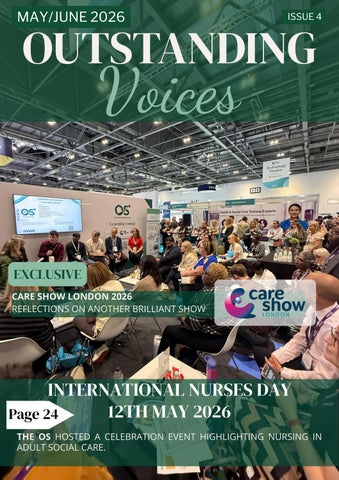
CARE SHOW LONDON 2026 REFLECTIONS ON ANOTHER BRILLIANT SHOW EXCLUSIVE

INTERNATIONAL NURSES DAY
Page 24
12TH MAY 2026
THE OS HOSTED A CELEBRATION EVENT HIGHLIGHTING NURSING IN ADULT SOCIAL CARE.
CARE SHOW LONDON 2026 REFLECTIONS ON ANOTHER BRILLIANT SHOW EXCLUSIVE
INTERNATIONAL NURSES DAY
Page 24
12TH MAY 2026
THE OS HOSTED A CELEBRATION EVENT HIGHLIGHTING NURSING IN ADULT SOCIAL CARE.
Zoë Fry OBE
Executive Director Nursing & Residential Care
James Rycroft
Executive Director Specialist Dementia Services
Ruth French
Director of Policy & Regulation
TEAM
Alan Fry
Head of Operations
Sonia Pritchard
Executive Administrator
Lucy Knight
VIVALDI Social Care Lead
Samantha Crawley
Director of Leadership & Wellbeing
Mike Slator
Project Specialist
Sanjay Gasiorski-Dhrona
Director of Diversity, Equality & Inclusion
Caroline Cosh
Director of Homecare
Lara Bywater
Director of Learning Disability, Autism & Mental Health Care
George Rycroft
Digital Content Creator

Welcome to this double edition (May/June) of Outstanding Voices. This edition is arriving a little later than usual, as we wanted to take the opportunity to share reflections from The Care Show London and the OS Learning Lounge, as well as celebrate International Nurses Day this month.
Both events brought so many positive stories and inspiring conversations a real reminder of the professionalism, passion, compassion, and diversity that make Adult Social Care such a remarkable sector.
For me, one of the standout moments from The Care Show was welcoming Abi and Cameron, both people with lived experience, onto our panels. Their contributions were truly exceptional, and they absolutely stole the show
On a personal note, I was incredibly honoured to receive the Gold Chief Nurse Award from Deborah Sturdy at what was her final Care Show as Chief Nurse.
Deborah has been instrumental in championing Adult Social Care Nursing at a national level and has worked tirelessly to ensure Social Care Nursing has “a seat at the table” alongside other parts of the health and care system. Through her leadership, advocacy, and unwavering commitment to the profession, she has helped elevate the visibility, credibility, and influence of nurses working across Adult Social Care.
Her impact has been felt across countless initiatives that have strengthened not only the profile of Nursing within Adult Social Care, but also recognition of the sector as a whole Her legacy will undoubtedly continue to inspire and shape the future of Social Care Nursing for years to come.
Editor and Head of Operations
05
Howden - Care Show London Reflections
Jonathan Taylor, Divisional Director, Head of Corporate Risks, Health & Care shares his reflections of another brilliant Care Show.
10
Care Show London
Warm Weather Planning
Skills for Care & UKHSA follow up on their Care Show panel discussion, with guidance and resources to help you plan.
14
Chief Nurse for Adult Social Care Awards
Deborah Sturdy CBE, attended the Care Show London and used the opportunity to present four Gold Awards.
18
Vivaldi Social Care - Spotlight on Abi Smith
This month Lucy Knight shines a light on how how lived experience can shape and strengthen meaningful change.
24 International Nurses Day Celebration
The Social Care Nursing Advisory Council (SCNAC) celebrated International Nurses Day through a series of heartfelt video messages
33
If You Think Menopause Doesn’t Affect You, Think Again
Menopause, the natural stage when menstrual periods permanently stop, is still too often misunderstood or surrounded by misconceptions.
As I sit on yet another delayed train to London, I find myself reflecting on a successful Care Show in London.
Howden Health and Care take great pride in working with The Outstanding Society (OS) and the Care Show gives us a great opportunity to show case our expertise in the sector and support providers
The OS enjoy a large learning lounge at the Care Show, many high-quality panel discussions on the most pertinent risks in the sector
Howden Health and Care position ourselves next to the learning lounge in order to observe and support OS members as best we can
Day one, Howden collaborated with the OS and our friends at Grant Thornton to host the keynote session, a live hack!
The purpose of the session was to educate healthcare providers on the risks that they face through their digital footprint.
A very informed update and panel discussion, we ran out of time and could still be there now with questions!
Interestingly the three take aways from me were, you are 14 times more likely to have a cyber attack than a fire at one of your properties, yet everyone has a great plan for fire, many have limited expertise in cyber security.
It was interesting that many providers in the room openly admitted their plans for cyber attacks was limited, simple things like how would the leadership team communicate without your IT, how can you even view your cyber BCP?

There were a few lightbulb moments
Finally, it is always fun to discuss the debate of paying the ransom or not Nearly everyone in the room said they wouldn’t, yet the reality is very different.
Cyber insurers have a naughty and nice list of cyber criminals that tend to give your data back…..at a cost!
This year we had the most footfall I have seen at a Care Show. What did people want to discuss I hear you ask, clearly, we scared everyone to death in our keynote session and cyber was the most popular topic I discussed.
As well as the usual questions around the pricing for care providers, it is a soft market fyi, which means prices have come down, we had many debates around the most emerging risk of delegated healthcare tasks. Many care providers are now delivering treatment/care that was historically provided by the NHS A topic Howden are very close to and offering as much support as we can.
Final thoughts the Howden jelly beans are in fact veggie friendly but not vegan (not sure why I know this) and remain the most popular gift we give at conferences, we had repeat visitors from the previous event asking if we had any! It seems the healthcare sector has a sweet tooth.

by Lara Bywater, OS Director of Learning Disability, Autism & Mental Health
If I could offer one lesson to my younger self, it would be this: trust your instincts. Listen to that quiet sense of unease, and don’t be afraid to act on it
These days, I don’t hesitate to ask the awkward questions or challenge something that doesn’t feel right But earlier in my career, I would agonise over tiny details that felt off in a care setting wondering if it was really my place to speak up or if I was overthinking
One experience in 2008 changed that forever.
I was carrying out an assessment when an uneasy feeling began to surface. At first, it seemed trivial: the support workers were all wearing slippers. It didn’t feel professional Boundaries seemed blurred, and instinctively it felt disrespectful to the people living there.
In the kitchen, I noticed cupboards and jars labelled with staff names. Much of the food belonged to them. On the surface, it might’ve seemed practical, but it jarred me It felt like an invasion of the occupants’ personal space. I remember thinking: would I want my kitchen filled with food that wasn’t mine?
The balance of power felt wrong. The workplace had quietly become a second home for staff, suffocating the individuals they were there to support
That night, I hardly slept, debating whether to raise it or let it go. I worried I might be overreacting. In fact, the social worker had similar concerns. A full investigation followed, uncovering not just blurred boundaries, but significant, long-term financial abuse and falsified records.
That experience taught me the value of pulling the thread.
Since then, I’ve learned to stay attuned to small clues others might dismiss. Is the television on a channel no one enjoys?
Is there a subtle turn of phrase that doesn’t sound quite right?
Why are activities being cancelled?
Why has someone declined an event they would usually enjoy?
I always want to understand the “why”. Why is that choice being made? Is this language respectful? Is this behaviour typical?
Individually, these details might seem insignificant Together, they can signal that something is drifting away from expected standards both personally and organisationally
I don’t always get it right. But I would far rather be curious and wrong than blind to an early warning sign that allows a bigger issue to grow
Being humble enough to admit when you’re wrong matters But so does trusting your own judgement That quiet sense that something isn’t right is often worth listening to.
Sometimes, change begins with noticing the smallest things and having the courage to ask why they matter

We’re incredibly grateful to have been part of such an inspiring Care Show, which brought together leaders, innovators and dedicated professionals from across the care sector
Throughout, there was a real sense of collaboration, shared purpose and meaningful discussion around the future of care and the challenges services continue to navigate every day
Events like this create valuable opportunities to connect with others across the care community, exchange ideas and explore practical ways we can continue supporting safer, more dignified care environments together
It was wonderful to meet so many attendees at our stand and have thoughtful conversations about the realities facing care providers, as well as the innovations helping to make a difference.
Thank you to everyone who stopped by to see us- we truly enjoyed being part of such a special event and look forward to continuing the conversation
We understand that care environments need equipment that is clinically effective, practical, attractive and adaptable to individual needs.
Explore our full product range here: https://accora care/customers/care-homes
Care Show London 2026 was a brilliant opportunity for the Camascope team to connect with care providers, valued partners, and care teams from across the sector to discuss the future of medication management
Across both days, one theme stood out: whether supporting an independent home or managing multiple services, care teams are looking for practical ways to reduce admin, improve oversight, and keep people in care safe

That is why Care Show London felt like the perfect moment to introduce Camascope ONE. Launched during the same week as the show, Camascope ONE gives care organisations one connected layer of control, supporting stronger access management, clearer visibility, and improved oversight
With features including Single Sign-On, Active Directory Sync, IP Whitelisting, and Data API, Camascope ONE helps providers manage who can access the eMAR system, from where, with the right permissions in place. To see how this works in practice watch our Camascope ONE animation for a quick overview
The show was also a special moment to celebrate Camascope supporting over 100,000 people in care across the UK – a milestone that reflects the care teams and service users at the heart of why we do what we do
Thank you to everyone who visited our stand, shared their experiences, and joined the conversation

We’ll be continuing the discussion in our upcoming webinar on 27th May, exploring what safer, more connected medication management can look like for care organisations
Click here to Register
Skills for Care joined The Outstanding Society’s Learning Lounge at the April 2026 Care Show to share advice around warm weather planning. What became apparent from audience feedback was that very few providers had plans in place already

As the days start to warm up, this is the right time to pause and ask a simple but important question: are our teams, the people we support, and their families ready to flex when temperatures rise?
Warm weather brings a distinct set of risks, and experience shows that challenges often build quietly. Buildings can feel stifling well before a weather alert is issued, people may struggle long before they say they are uncomfortable. Routines that work well in cooler conditions can suddenly increase risk.
When problems emerge, they tend to follow familiar patterns: heat risks are spotted too late, Services rely too heavily on alerts rather than lived experience
Daily routines are not adjusted enough to reflect changed conditions
Leading well when temperatures rise Strong leadership makes the difference in how services experience warm weather
Well-led services do not wait until discomfort or risk becomes obvious
They plan ahead, review arrangements regularly and make sure everyone understands what matters before pressure builds
Leaders encourage teams to think early about individual heat risks, to trust their professional judgement when people show signs of discomfort, and to act rather than waiting for permission or thresholds to be met

Overheating is treated as a safety issue, not just an environmental or building problem.
This approach relies on shared responsibility Clear roles, decision-making authority and escalation routes are understood across the team, with deputising arrangements in place so action does not stall if someone is unavailable
Preparation is not about having a perfect plan on a shelf, but about confident, coordinated action when conditions change.
Long before hot weather arrives, staff talk with people about how heat affects them personally
They explore what signs individuals notice, what drinks they enjoy, how they like their space managed, and what changes feel supportive rather than restrictive.
These details are recorded clearly in support plans so that good care does not depend on memory or familiarity
Protecting people, supporting staff and learning forward
When temperatures rise, services that cope well have already agreed who monitors weather and health alerts, who can approve changes such as adjusted routines or staffing, and who leads communication as pressure increases.
These details are recorded clearly in support plans so that good care does not depend on memory or familiarity.
Protecting people, supporting staff and learning forward
When temperatures rise, services that cope well have already agreed who monitors weather and health alerts, who can approve changes such as adjusted routines or staffing, and who leads communication as pressure increases
Supporting staff is an essential part of this picture Duty of care extends equally to the workforce, and regulators increasingly recognise that staff wellbeing is inseparable from safe, effective care.
Heatwaves bring higher risks of fatigue, dehydration, sickness absence and error.
Planning needs to reflect the realities staff face, whether that is driving around the community in cars with broken air conditioning, wearing heavy uniforms, or working in hot laundry and ironing areas.
Small, practical adjustments made early can significantly reduce risk
After periods of extreme heat, strong leaders take time to reflect They listen to staff, people and families about what helped and what caused difficulty, and they use that learning to strengthen future arrangements rather than moving on once temperatures fall
Where services do not yet have warm weather arrangements in place, now is the time to prioritise this work and set clear expectations before conditions change. For those that do have plans, the focus should shift to ensuring teams, people and families understand what will happen, what may change, and how decisions will be made as temperatures rise
Resources to support
Supporting vulnerable people before and during hot weather: social care managers
Adverse Weather and Health Plan

To support stakeholders with their hot weather communications this year, we have updated our communications toolkit for 2026.
The material in this toolkit is intended to provide basic health information that can be communicated during hot spells so that the right messages reach the right people at the right time.
This year we have included some new messaging on staying safe from direct sun.
The toolkit supports UKHSA’s Adverse Weather and Health Plan (AWHP) and Weather-Health Alerting (WHA) system, which issues Heat-Health Alerts (HHA)
The core alerting season for HHAs starts on Monday 1 June.
Individuals and organisations that wish to receive the impact based HHA must register to receive the alerts where users will be able to specify which regions they wish to receive alerts for The alert status is also publicly available on the UKHSA Data Dashboard
If you are unable to access the toolkit via the link provided, please email us and we can send across a hard copy Please do not publish the toolkit anywhere online to prevent old, outdated versions of the toolkit circulating. externalaffairs@ukhsa.gov.uk

Adverse Weather and Health Plan and related guidance (UKHSA):
Weather-Health Alerting System
AWHP: heat advice
AWHP: cold weather advice
Flooding: health guidance and advice
Public health impact of drought: advice for the public
Local Authority Risk and Adaptation Toolkit: Heat
Edition - GOV.UK
Prepare Campaign (Cabinet Office):
Be informed about hazards - Prepare
Cold weather, snow and ice - Prepare
Hot weather and heatwaves - Prepare
Storms - Prepare
Flooding - Prepare
Droughts - Prepare
WeatherReady Campaign (Met Office)
NHS England Adverse weather
Please find below the links to the Summer Preparedness Webinar pre‐recording, PowerPoint slides and agenda for the UK Health Security Agency (UKHSA) Summer Preparedness Stakeholder webinar, that took place online on Thursday 23 April 2026, 10:00–11:00:
Pre-recording –Click Here
PowerPoint Slides – Click Here
Agenda - Click Here
Live Q&A session- Click Here

Prof. Deborah Sturdy CBE Chief Nurse for Adult Social Care

The Chief Nurse Adult Social Care Awards have been set up to recognise the outstanding contributions of the many talented and amazing people working in adult social care.
Over the last 2 years we have shone a light on individual excellence as a way of saying thank you for delivering the highest standards of care and inspiring others to do the same.
Our profession thrives on collaboration too. As these awards enter their third year, we have added a new ‘team’ category to celebrate group achievements up and down the country. This will recognise the enormous range of skills, expertise and compassion modern adult social care delivers every day of the year.
We want to keep the momentum going, so we would like every award winner to nominate 2 other exceptional people or teams within 12 months of receiving their award. If you are a recipient of an award, we highly encourage you to support us by nominating another colleague.
Professor Deborah Sturdy, Chief Nurse for Adult Social Care presented four Gold awards at Care Show London.
Samantha Crawley
CEO EQ Care Group
Suyi Osawe
Majesticare Care Homes
Zoe Spears
Maypole Grove (Exemplar Health Care)
Alan Fry
The Outstanding Society
Nomination information

Take in London’s skyline, riverside views, and historic landmarks under the glow of the evening sky. Starting and finishing at The Oval Cricket Ground, this looped walking event showcases the capital at its best, from St Paul’s Cathedral to Westminster Abbey, Tower Bridge to the London Eye, all as daylight fades into night.
Whether you choose the 10km route for a brisk evening stroll or the 10mile challenge for a bigger adventure, you’ll be part of a vibrant crowd, supported at every step. Snacks along the route, a commemorative medal, and a celebratory finish with hot food and drink await you at the end.
Start & Finish – The Oval, Kennington
Distance Options – 10km & 10 miles
Evening Start Times – 10km: 18:00–19:00 | 10 miles: 16:30–17:30
Includes:
– Fully signed route & support
– Snacks along the walk
– Event T-shirt and souvenir medal
– Hot food & drink at the finish
– Event App with all route and event details
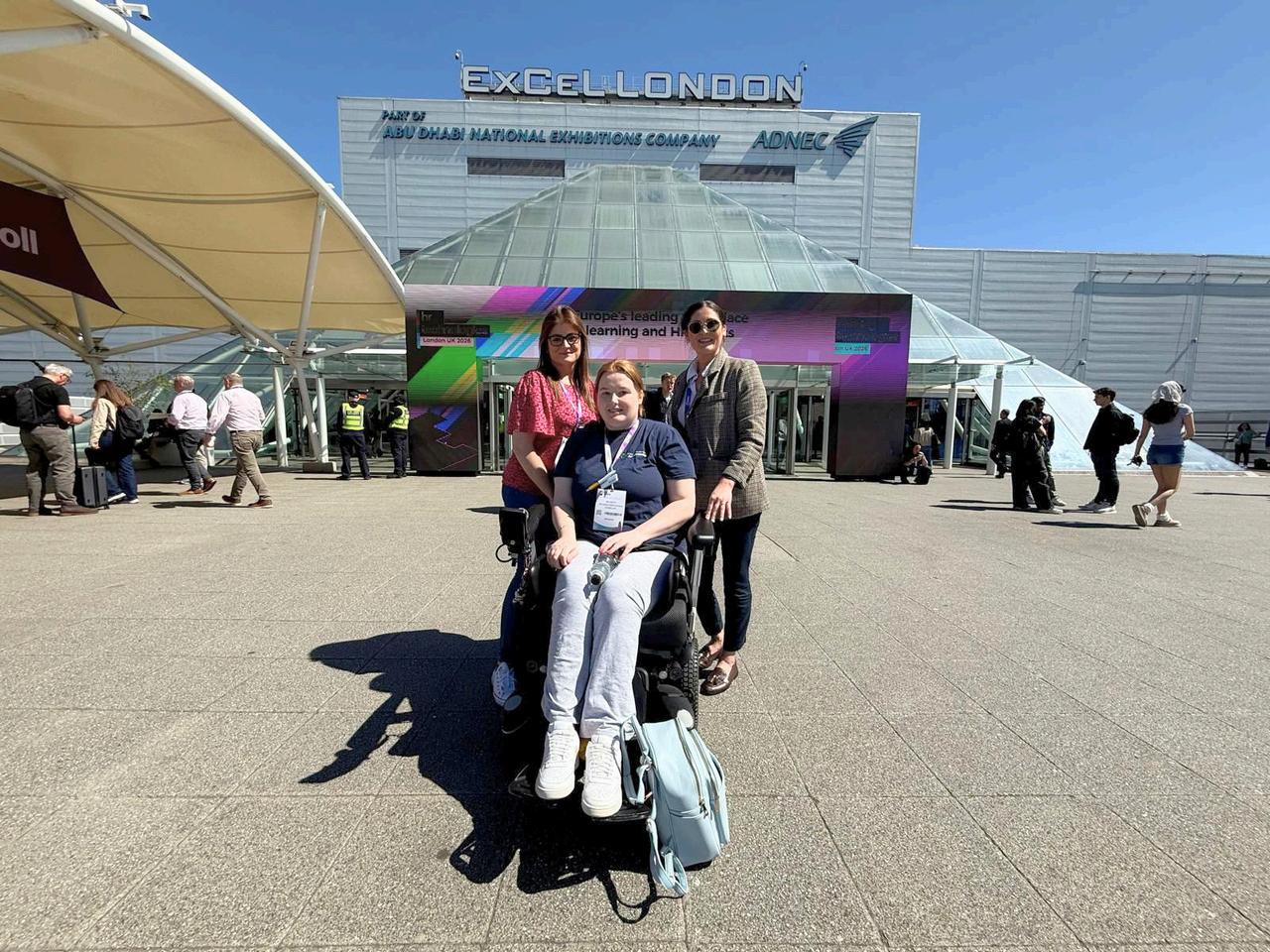
Abi, Maypole Grove’s Service User Ambassador, is a powerful example of how lived experience can shape and strengthen meaningful change
As someone who brings both personal insight and a strong commitment to improving services, Abi has played an active role in supporting Vivaldi’s work, ensuring that the voices of people with lived experience remain central
Her involvement goes far beyond the home itself, including attending a parliamentary reception where she helped represent and advocate for the importance of person-centred care as well as attending Care Show London and taking part in panel discussions on the OS Learning Lounge
Through her continued engagement, Abi demonstrates how lived experience is not only valuable, but essential in driving improvements across health and social care
Find out more about the Adult Social Care Engagement Collective
Having recently become a wheelchair user, I found travelling in general a very daunting prospect – especially as heading into ‘The Big City’ was going to be my first experience.
Arriving at Birmingham New Street I was extremely nervous, but this soon subsided when I met the first assistance team.
Approaching London, the nerves started to kick in again, but I really didn’t need to worry The TfL assistance team were of great support, offering help and advice & answering any questions we may have had.
Nothing was of too much trouble for them.
I think I will still have anxiety about travelling using public transport, but this will decrease the more journeys that I make especially when using the TfL services!
We recently used Transport for London services while travelling with Abi who has a disability, and overall, the experience has been very positive.
Accessible public transport is important for disabled people It provides independence, confidence, and the opportunity to participate more fully in the community.
Abi has now used several TfL services, and, with each trip, she has felt increasingly comfortable and safe. The staff were attentive, polite, patient, and kind especially when assisting with boarding.
Overall, it has been a smooth, supportive, and confidence-building experience. TfL deserves recognition for continuing to make London’s transport network more inclusive and accessible for disabled travellers
Zoe Shears, Home Manager, Exemplar Health Care
It is so important that disabled people feel safe and supported being able to travel safely and seamlessly to contribute towards confidence and wellbeing
Supporting Abi on two journeys from New Street to Euston has been instrumental in building her confidence and being able to share the same opportunities as people who are more able bodied.
We are so proud of Abi and want to compliment the kindness and friendliness of the TfL team for such a positive experience They will never know the huge impact and difference this would make to someone's day and confidence to make that journey
Lianne Ford, Head of Nursing, Exemplar Health Care
by
co ar pe
To co us
pe sty fingerprint, no two should ever look the same.
In the session on compassionate and clear care plans, we explored fundamental questions: who are these plans really for? What purpose do they serve? At their best, care plans are practical tools that guide consistent, person-centred support. They should empower both the individual and those supporting them, enabling dignity, choice, and independence
We also shared practical ideas keeping plans accessible, using clear and meaningful language, and
ensuring they are regularly reviewed with the person at the centre.
Abi’s words were a reminder that outstanding care goes beyond compliance. It lives in the detail, the humanity, and the commitment to truly see each person as an individual
That idea that a care plan is as unique as a fingerprint is one I’ll carry forward in every conversation about care.
by Ruth French, OS Director of Policy & Regulation
Recent workshops led by the Care Quality Commission (CQC) to develop and refine its assessment frameworks have sparked important conversations across the adult social care sector Against this backdrop, the publication of the CQCcommissioned report What Makes Care Outstanding? by The King’s Fund offers both timely insight and practical guidance for providers striving to deliver exceptional care.
The report, supported by contributions from sector leaders and experts, explores the qualities and approaches that underpin truly outstanding services.
Zoe Fry and I were pleased to contribute to the review process during the report’s development and welcomed the inclusion of many of their recommendations in the final publication
At the heart of the report are five core principles that define outstanding care While not revolutionary in themselves, these principles resonate strongly with providers and professionals across the sector because of their clarity and relevance to everyday practice.
The five principles are:
1 Delivering truly person-centred care
2.Embedding a culture of compassionate and inclusive leadership
3.Prioritising equity and inclusion
4 Continuously integrating learning into practice to drive improvement and innovation
5 Taking a purposeful approach to making a positive difference for people who use services
Together, these principles reflect a growing recognition that outstanding care is not achieved through isolated initiatives or short-term improvements, but through cultures and systems that consistently place people at the centre of decision-making
One of the key themes emerging from both the report and wider sector discussions is the importance of consistency. High-quality care must not only be delivered, but also evidenced through embedded practice, measurable outcomes, and sustainable organisational culture.
For providers preparing for future CQC assessments, the ability to demonstrate this consistency across all areas of service delivery is likely to become increasingly significant.
As the adult social care sector continues to evolve, reports such as What Makes Care Outstanding? provide valuable opportunities for reflection, learning, and shared ambition reinforcing the idea that outstanding care is built on compassion, inclusion, continuous improvement, and a steadfast commitment to positive outcomes for those who rely on services every day.


We are excited to announce that applications are now open for Cohort 2 of the Researcher Development Programme for Social Care Nurses.
This year long funded programme supports registered social care nurses to develop research skills, lead practice-based initiatives, and help build a strong research culture within their organisations.
Participants receive protected time (1 day per week), with funding provided to your employer, alongside mentorship, coaching and access to a national network of peers.
Cohort 2 Applications are now Open!


Applications close: 14 June 2026
Programme starts: 1 October 2026
More information and application details are available HERE
Do you provide nursing care and support to men? If so, this event is for you.
UK-Wide virtual event Promoting positive men’s health
10 June 2026 13:00-16:00
Book Here
Our expert speakers include:


Prince MBE Blue Ribbon Foundation

Jo Cakmak, Education & Comms Lead, The OLLIE Foundation

Nastri Head of The OLLIE Foundation
Professor Micheal Kirby Prostate Cancer UK
th
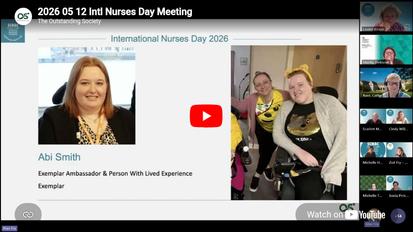
As part of International Nurses Day 2026, we were proud to celebrate the remarkable contribution of nurses working across adult social care.
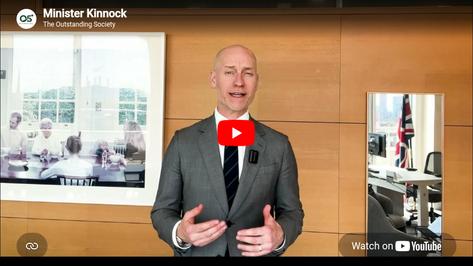
Through a series of heartfelt video messages and short clips, colleagues, leaders, partners, and communities came together to share one simple but powerful message: thank you
This special event was a celebration of the compassion, expertise, leadership, and dedication shown every day by nurses across the social care sector.
It provided an opportunity to recognise the vital role adult social care nursing played in supporting people, families, and communities, while also looking ahead to the future of the profession.
The event featured an engaging panel discussion chaired by The Outstanding Society, alongside Professor Deborah Sturdy, Chief Nurse for Adult Social Care
Together, speakers explored what outstanding adult social care nursing looks like today, the strengths within the profession, and the opportunities to continue building a confident and skilled workforce for the future
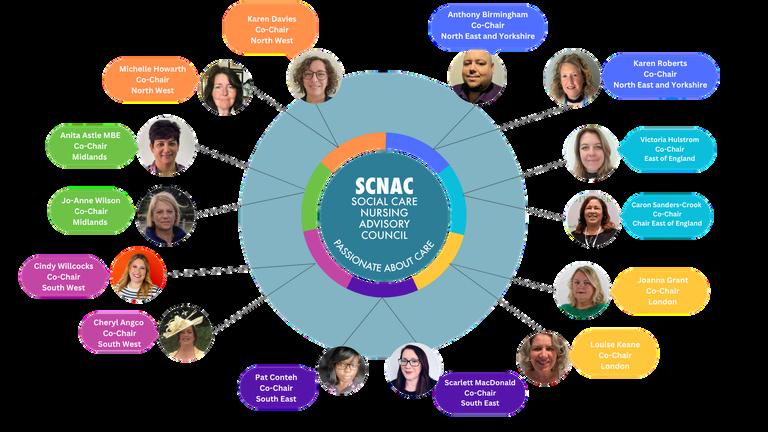
Attendees also heard from the Co-Chairs of SCNAC, who shared insights into their current work, priorities, and ambitions for advancing adult social care nursing.
Throughout the event, we celebrated innovation, highlighted best practice, and recognised the incredible people driving positive change across the sector.
Most importantly, it was an opportunity to honour nurses for the exceptional care, leadership, and support they provided every single day.
This was more than a celebration it was a moment to connect, reflect, and champion the future of adult social care nursing together.
To watch all of the videos recorded for this event please visit our YouTube Channel and watch the Intl Nurses Day 2026.
Louise Keane reflects on the inspiring London Nursing Associate 2026 Conference, celebrating the growing impact of nursing associates across health and social care.
On Wednesday 13th May 2026, the Social Care Nursing Advisory Council (SCNAC) Co-Chairs for London had the privilege of attending the London Nursing Associate 2026 Conference at the University of East London campus.
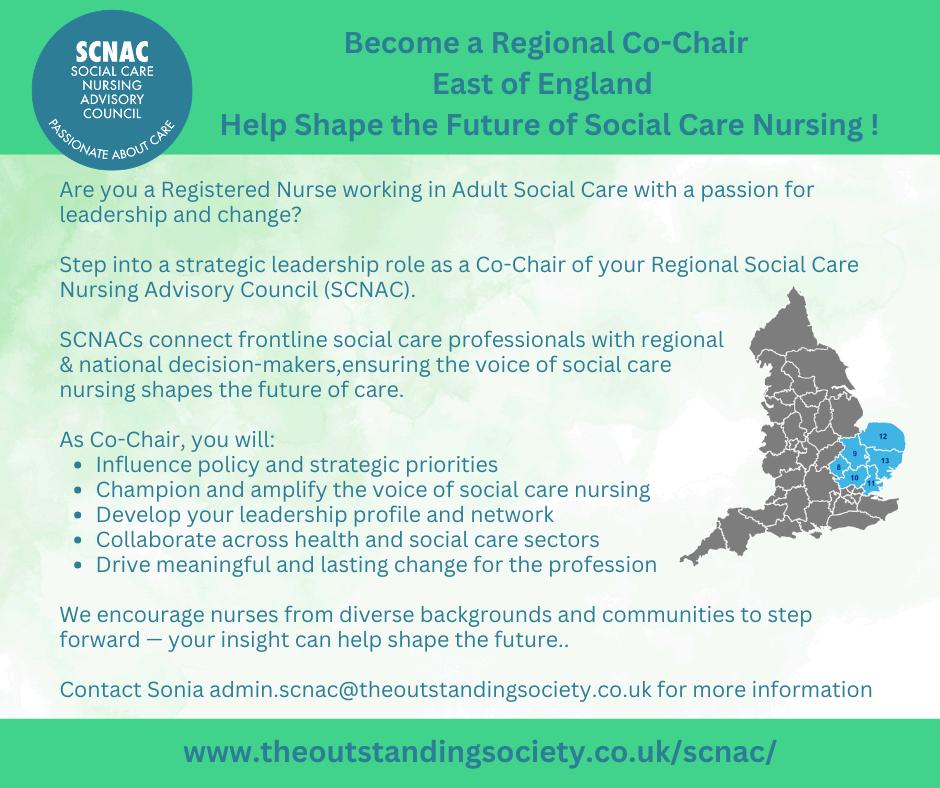
The Social Care Nursing Advisory Councils (SCNAC) operate across England, bringing together nurses working within adult social care to ensure the sector has a strong professional voice at both regional and national level
As the London SCNAC Co-Chairs, Joanna and I are passionate about championing adult social care nursing, supporting professional development, influencing workforce priorities, and ensuring that the expertise of social care nurses is recognised across the wider health and care system
We are also actively looking for more nurses working within adult social care across London to join the council and help shape the future of nursing within our sector
https://theoutstandingsocietyco uk/scnac/
We were delighted to receive the invitation from Michele Matandabari, whose role within NHS England (London) focuses on supporting workforce transformation and development across London. Michele has been a passionate advocate for ensuring that adult social care is represented within the wider
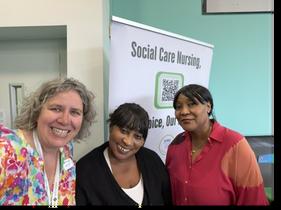
healthcare workforce agenda. Together, we have worked hard to ensure that the voice of adult social care nurses was not only represented in the room but also showcased through presentations at the event
I was blown away to learn that there are now 3,000 nursing associates across London, all focused on providing the best possible care to the people they support.
Hearing about the wide range of clinical areas these nurses work in highlighted just how diverse their roles are. However, one message came across loud and clear: if you embed a nursing associate within your workforce, you will not regret it.
The conference celebrated the impact nursing associates are having across health and social care and demonstrated how these roles continue to strengthen compassionate, person-centred care within services across London
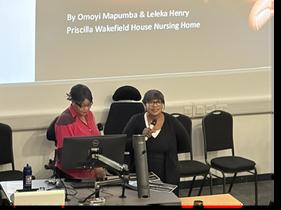
I was especially delighted to see Leleka Henry presenting at the conference alongside Omoyi Mapumba Together, they gave the audience a valuable perspective on the role of nursing associates within adult social care settings.
Leleka eloquently shared how she entered the care profession, her passion for supporting older people, and how the nursing associate programme has allowed her to grow professionally while remaining close to direct care doing what she truly loves.
Omoyi spoke about how Priscilla Wakefield House supports nursing associates throughout their
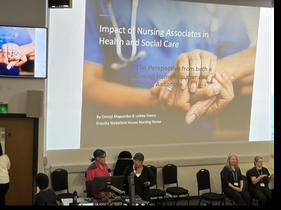
journey, and the positive impact they bring both to the people living in the home and to the wider workforce.
Together, they were inspiring and a fantastic example of what can be achieved when organisations invest in developing their workforce and supporting career progression within adult social care
Well done to you both!
North East & Yorkshire
North West
Midlands East of England
London
South East
South West

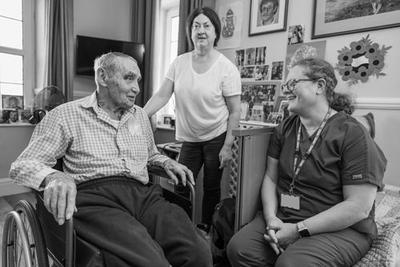
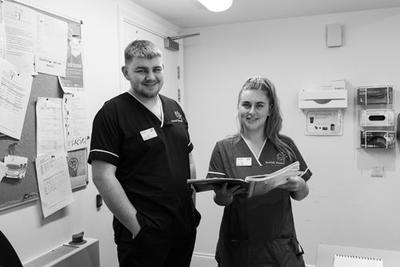
Skills for Care is sharing new resources to help raise awareness of regulated professions in adult social care and encourage those working in the sector to explore a career in occupational therapy, social work, or nursing
These regulated specialist roles often work within multi-disciplinary teams to support people with complex or changing needs, help prevent avoidable hospital admissions, and enable individuals to live more independently in their homes and communities
Qualifying to work as an occupational therapist, social worker, or nurse typically involves additional academic study alongside ongoing professional development but offers a rewarding and respected long-term career


The resources outline entry routes and progression opportunities for each role, supported by stories and videos that highlight real career journeys from frontline care work to regulated professional, showing how the skills and values gained through working in social care provides a strong foundation for progression into any of these professions.
Explore the pathways, discover employer supported routes such as apprenticeships, and be inspired to take your next step toward becoming a regulated professional in adult social care.
For more information visit the Skills for Care website
Following a decades long campaign by the families affected by the Hillsborough disaster, the Public Office (Accountability) Bill (‘the Bill’), or ‘the Hillsborough Law’, has been introduced to Parliament.
The Bill aims to address historic institutional failures to act openly and honestly during inquests, inquiries and investigations involving the state, but how does the proposed legislation affect adult social care providers in England and Wales who are already subject to statutory duties of candour?
For providers, the Bill raises important questions about how regulatory, coronial and public law obligations intersect and how decisions taken at an early stage may later be scrutinised in multiple forums.
What will the Bill introduce?
In its current form, the Bill proposes to create a statutory duty of candour and assistance which will require public authorities and public officials to act with honesty, transparency and frankness when engaging with inquests, inquiries and other formal investigations.
The Bill goes further than the existing regulatory duties by allowing criminal sanctions for serious breaches of the proposed statutory duty, including where a public authority or official deliberately misleads the public or fails to comply with the duty of candour and assistance.
The Bill also seeks to reform the offence of misconduct in public office and introduces ‘parity of arms’ at inquests, ensuring bereaved families have access to publicly funded legal representation where public bodies are represented.
What is the difference from current duties of candour?
Crucially, the Bill does not repeal or amend the existing statutory or professional duties of candour; it would sit alongside them
The existing duties in both England and Wales are


Keara Bowgen-Nicholas Senior Associate
Breaches may result in enforcement action by the regulator, including warnings, conditions or, in serious cases, prosecution.
By contrast, the Bill focuses on conduct during public accountability processes, such as:
Coroners’ inquests (including Article 2 inquests); Statutory and nonstatutory public inquiries; Other formal investigations into deaths or serious failures
The proposed duty of candour and assistance in the Bill is concerned with proactively supporting the investigative process and ensuring that relevant information is identified and disclosed, not just being honest when asked The introduction of potential criminal liability marks a significant escalation in the legal consequences of serious failures in this context.
In practice, providers may find themselves managing overlapping duties to regulators, coroners and commissioners, often under significant pressure Decisions about disclosure can now have public law and criminal implications, not just regulatory ones.
Will the proposals in the Bill apply to adult social care providers?
Whilst the Bill clearly directly applies to public authorities and public offices (including local authorities and NHS bodies in England and Wales), the position is more nuanced when it comes to adult social care providers
The Bill is drafted broadly and is intended to apply not only to public authorities, but also to bodies and individuals exercising functions of a public nature In practice, this means that providers delivering publicly commissioned care may find themselves drawn into the scope of the duty, particularly where they are closely involved in circumstances that lead to an inquest or inquiry alongside a local authority or health body Even where the statutory duty does not apply directly, expectations around transparency and cooperation are likely to increase.
To read the full article, please click here
The move towards delegated healthcare tasks in the adult care sector is gaining pace. However, it’s impossible to embrace this change without considering the insurance implications.
Many care providers are unaware of a key gap in the market: some insurers only offer treatment only cover. While this may appear adequate, treatment only policies provide a far narrower level of protection and may not respond to the full range of delegated healthcare tasks your teams are now expected to perform
Medical malpractice insurance offers a far more comprehensive safeguard. It is specifically designed to cover clinical level duties, providing reassurance that your organisation is protected as care delivery becomes more complex.
As a longstanding partner of The Outstanding Society, Howden has supported our members for many years with specialist insurance designed specifically for the realities of social care. They have exclusive facilities that include full medical malpractice cover as standard, ensuring providers are properly protected as their teams take on more complex delegated tasks If you’d like to understand how Howden’s insurance solutions can support, you then please complete the form linked below and one of their team will be in touch.
I want to know more about Howden’s insurance solutions
To help you navigate the risks related to the increase of healthcare tasks, we’re also sharing Howden’s recent podcast with you.
In this episode they explain what they are and why they only make sense when they benefit the person receiving care. This episode is a must listen for anyone that works in social care leadership, risk or compliance.

All too often, the impacts of menopause – the natural stage at which menstrual periods stop permanently – are mischaracterised or misunderstood And yet, menopause is everyone’s concern.
Whether directly or indirectly, menopause affects almost every one of us: at home, in the workplace and yes, within every care home. In a sector where 78% of the workforce is female, the impact on employee wellbeing and workplace retention is significant. These are the women who care for our loved ones with compassion, who empower residents and work tirelessly to preserve their dignity What is being done to support their needs with warmth, positivity and understanding?
At CareHomeLife, we’re committed to understanding how care providers can introduce menopause support to foster healthier working environments that actively encourage employees to speak candidly about their experiences and their own individual needs And while a nurturing, supportive working environment is its own reward, there are a raft of performance and financial incentives for employers too. Simply put, menopause support is in everyone’s best interest, but where should employers begin?
Every
Menopause differs significantly from person to person There is no uniform experience, which means there’s no one-size-fits-all approach for employers. How can there be? There are around 13 million perimenopausal or menopausal women in
the UK today, equivalent to one-third of the entire female population. Instead, the focus should be encouraging a positive, empathetic workplace culture, especially in a sector as physically and emotionally demanding as care
We often use the term ‘menopause’ quite broadly, but it’s actually a three-stage process consisting of perimenopause, menopause and postmenopause. Perimenopause – the transitional stage, in which hormones fluctuate and cycles become more irregular – can be especially difficult, and this transition can last up to eight years. But even in postmenopause, there are challenges: symptoms may ease, but health risks like osteoporosis actually increase. Which is to say, menopause is a long-term consideration, and organisations should be prepared to support their employees throughout
But what exactly should employers be preparing for?
Many women experience a range of physical and mental symptoms, from migraines, muscle aches and joint pain to anxiety, irritability and depression. Collectively, these symptoms can significantly impact the health and wellbeing of your workforce But a positive, proactive employer will go the extra mile to ensure the working lives of those affected are as manageable as possible Aside from objectively being the right approach to take, research shows that a happy workforce is up to 13% more productive than an unhappy one2 Taking care of your workforce ensures not only their wellbeing, but l th llb i f id t d

early menopause Being mindful of employee needs is essential, and this often requires setting aside preconceptions and remaining as open-minded as possible.
Awareness remains one of the biggest issues facing menopause support today But while recent years have seen wider recognition of menopause and its impacts, this has yet to translate into real-world best practice.
According to the Fawcett Society, one of the UK's leading campaigners for gender equality and women's rights, “one in ten women who have been employed during the menopause have left work due to menopause symptoms”³. Mapped onto the UK population, this represents an estimated 333,000 women leaving their jobs due to menopause, taking with them their valuable skills, knowledge and experience. In a sector as specialist as care, where residents rely on relationships and consistent friendly faces, many of these departures leave an indelible mark. But this is often preventable, and it’s what makes workplace culture all the more important
During the menopause process, many women lose confidence in their abilities They might need time away from work to manage their symptoms, but without a supportive workplace culture, they may feel unable to explain what they're experiencing And with eight out of ten women reporting that their employer has yet to share information, train staff or introduce a menopause absence policy³, it’s clear that employees need structure as well as support For employers, this means providing a framework built on the core fundamentals of empathy, awareness and education With the right systems, resources and training in place, awareness and understanding will follow.
This could mean appointing a dedicated workplace champion, sharing training resources with your teams, introducing comfort days or scheduling confidential, one-to-one catch-ups on a regular basis. But it could also mean something as simple as taking time out of your day to ask how someone is feeling Men should be included in the conversation too, particularly if your organisation is serious about improving workplace culture We know from experience that many men feel unsure how best to broach the subject of menopause with women. But awareness is everything – and the more men know, the better they can support their friends, colleagues and loved ones.
Care providers can also take practical steps to support their staff. As any practitioner knows, care homes can be high-pressure, high-stress environments The work is physically and emotionally demanding – requiring caregivers to move residents and operate specialist equipment, for example. Against this backdrop, menopause symptoms can place additional pressure on caregivers, making their working lives that little bit more challenging. Recognising this, forward-thinking care providers are beginning to adopt comfortable, menopause-friendly fabrics and flexible uniforms, specially designed to help regulate body temperature. Innovations like these, which prioritise the wearer without compromising on performance, can markedly improve the day-to-day experiences of people going through menopause.
The Way Forward
Caregivers are one of the sector's greatest assets, and care providers have a responsibility to support all workers, including those experiencing menopause But the conversation is ongoing, and there’s still much to be done before care homes can truly be considered menopause-friendly environments.
For anyone seeking support outside of their organisation, external resources are available, however Take Care England, for example, which recently launched a five-part menopause awareness webinar series featuring Diane Danzebrink, founder of Menopause Support Additionally, the charity continues to offer free one-to-one support to caregivers nationwide, meaning help is always onhand.
Ultimately, menopause support benefits everyone Creating an inclusive culture where women feel able to discuss their experiences openly is essential to building trust, boosting productivity and improving employee retention – but it also delivers better outcomes: for those experiencing menopause, the organisations they work for and the residents in their care.

“Far too many experienced and capable women are forced out of employment through no fault of their own, hurting their earnings
and our nation’s economy.
Together we can create a more supportive and happier workplace where everyone can succeed.”
Mariella Frostrup Menopause Employment Ambassador
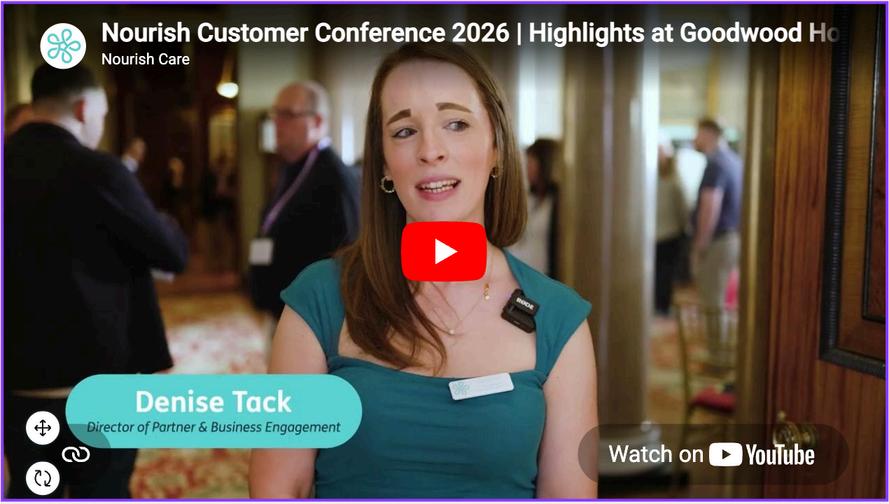
Community and collaboration are central to our approach to care technology and Nourish We depend upon the insight and experience of our users to shape our future. That is at the core of a true digital partnership in social care, co-production At this year’s Nourish Customer Conference, hosted in the gorgeous Goodwood House, we came together with care professionals, partners and the wider Nourish community for a day centred around collaboration, innovation and shared purpose.
Our recap video captures the atmosphere, ambition and energy of the event Highlighting the insightful presentations and product discussions. As well as the moments of connection that happen in between sessions
The conference was an opportunity to reflect on how technology, partnership and co-production continue to shape the future of social care. Throughout the day, attendees explored new ideas, shared
experiences from across the sector and discussed the challenges and opportunities facing care providers today.
If you’d like to learn more about a digital partnership with Nourish, that can wrap around your unique service, contact Nourish directly today! hello@nourishcare.com www.nourishcare.com

Over the following pages are upcoming events that reflect our commitment to sharing and celebrating best practice across Adult Social Care. If you would like your event to be considered for the next issue, please contact us at
comms@theoutstandingsociety.co.uk
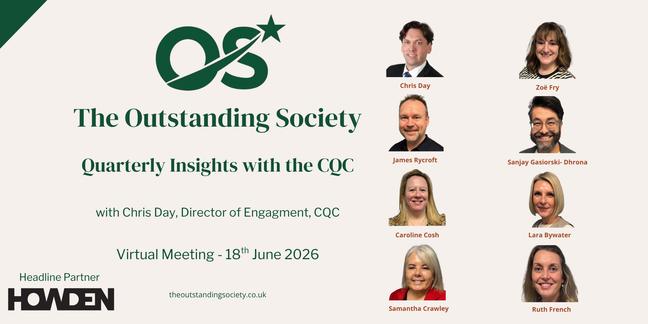
Sports fans never lose their love of sport & this webinar will showcase how a person with dementia can remain engaged with sporting passions
A 45 minute demo of the Camascope eMAR system, with time for questions
Learn about distressed behaviour in dementia, what it is communicating, common triggers and simple ways to respond early to deescalate

The University of Salford is proud to support nurses working in Adult Social Care- join us at this free event for a day of discussion, innovation, networking and celebration!
This event is for adult social care nurses, student nurses, aspiring social care nurses, interested organisations, social care researchers, and more
Ahead of Men's Health Week 2026, this RCN event will explore how distress and suicide risk often show up in men, how we can support men to be healthier and how we can help men navigate their prostate cancer journey if they're diagnosed
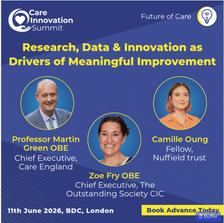
Bringing together 500 senior leaders, owners and policy makers shaping the future of adult social care. This year’s programme focuses on practical strategies to strengthen organisations, improve outcomes and drive sustainable growth
Discover the health and wellbeing benefits of the arts for people with dementia from a creative team who will bring this topic to life

This webinar, aimed at front line managers, focuses on strengthening recruitment and retention in adult social care through evidence-based strategies and practical action.
2nd July 2026
13:00 to 14:00
7th July 2026
10:30 to 12:00
This webinar introduces the Care Workforce Pathway support programme, helping providers adopt a structured career framework
CLICK HERE TO REGISTER
This Skills for Care webinar outlines the Employment Rights Act 2025 and its impact on adult social care.
CLICK HERE TO REGISTER

1 August 2026
Join us as the OUT Standing Diversity Forum takes to Brighton Pride 2026 Stand alongside a united Social Care community championing inclusion, visibility, and belonging. Register your interest today and be part of a powerful movement showing that everyone deserves to live and work with pride.
11 Sept 2026 th
Take in London’s skyline, riverside views, and historic landmarks under the glow of the evening sky Starting and finishing at The Oval Cricket Ground, this looped walking event showcases the capital at its best.
CLICK HERE TO REGISTER
Over the following pages are resources that reflect our commitment to sharing and celebrating best practice across Adult Social Care.
If you would like your resource to be considered for the next issue, please contact us at
comms@theoutstandingsociety.co.uk

Cost of risk: Reducing insurance premiums by improving care quality
The report explains how insurers assess risk in adult social care and why strong operational controls can materially reduce the premiums that care providers pay. It also explores the commercial impact of delays in the CQC inspection cycle; with many providers still carrying ageing ratings, insurers may be assessing risk on historic judgements.
Read the full report
Join the nursing community
Stay informed and up to date with the latest news and developments in the nursing field by subscribing to our nursing newsletter
Learn about new research, trends, and best practices to enhance your nursing career.
CLICK TO FIND OUT MORE
A regular podcast for business leaders exploring how businesses can harness risks and use them to their advantage In each episode Howden Insurance Brokers will discuss a topical challenge or issue and what business leaders can do to overcome it.
CLICK TO FIND OUT MORE

Championing leadership development opportunities for student and early career nurses and midwives around the world
The Nursing Now Challenge works with health employers as well as universities, colleges and individuals around the world to create leadership development opportunities for student and early-career nurses and midwives.
CLICK TO FIND OUT MORE
Do you want to understand more about local population needs and what services your local authority wants to commission?
Get Adult Social Care Data (GASCD) is a new, free digital service for CQC-registered care providers. Developed with input from providers, it gives you instant access to data and trends for your area, region and across England
CLICK TO FIND OUT MORE
Join Natalie Carter, a dementia advocate, as she explores the ups and downs, fears and frustrations of living with dementia.
Listeners are invited to join heartfelt interviews with caregivers and researchers who share their stories and insights, alongside charities that offer support and make a difference in the lives of those affected by dementia.
CLICK TO FIND OUT MORE
Supporting vulnerable people before and during hot weather: social care managers
This page advises social care managers on how to reduce the risks of hot weather to the health of people they provide care for
CLICK TO FIND OUT MORE
The Adverse Weather and Health Plan aims to protect individuals and communities from the health effects of adverse weather and to build community resilience.
CLICK TO FIND OUT MORE

Are you 'complaints confident'? Take our free self-assessment quiz to benchmark your complaints approach against best practice https://www.lgo.org.uk/