TheSummerOpiate 2023, Vol. 34

Your literary dose.

Your literary dose.
© The Opiate 2023
Cover art: “The Cave of the Storm Nymphs” by Edward Poynter, 1902
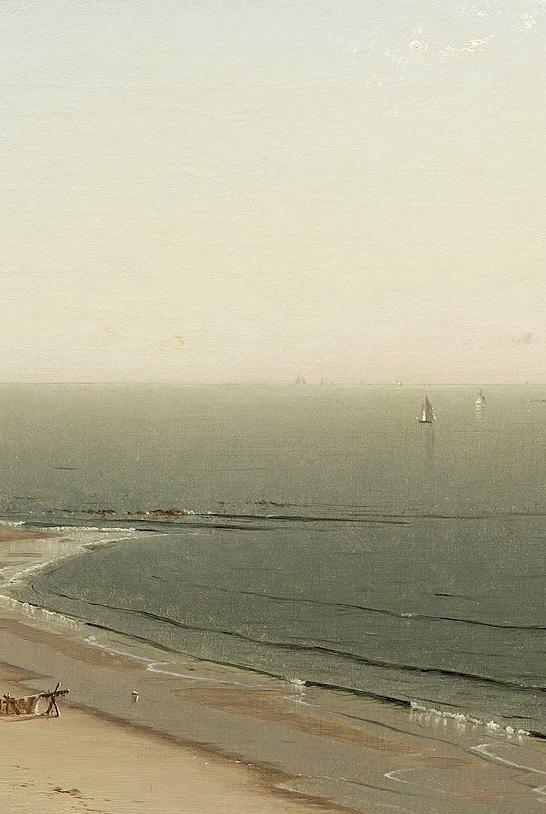
Back cover: “A Quiet Day Near Manchester” by Alfred Thompson Bricher, 1873 This magazine, or parts thereof, may not be reproduced without permission. Contact theopiatemagazine@gmail.com for queries.
“And the young Fisherman said to himself ‘Of what use is my Soul to me? I cannot see it. I may not touch it. I do not know it. Surely I will send it away from me, and much gladness shall be mine... But how shall I send my Soul from me?’ cried the young Fisherman. ‘Tell me how I may do it, and lo! it shall be done.’ ‘Alas! I know not,’ said the little Mermaid: ‘the Sea-folk have no souls.’”
-Oscar Wilde, “The Fisherman and His Soul”
Poetry:
David Estringel, “Boy With a Box Full of Wasps,” “Frozen Charlotte” & “Cough Syrup” 101-105
Dale Champlin, “Guilt Shot,” “After the Stroke” & “Découpage” 106-108
Alessio Zanelli, “Émigrés” 109
Ron L. Dowell, “The New Eschecagou Black Codes,” “Philly Cheese Stakes,” “T-45 Contagion” & “IAB and A Sheriff Deputy’s Case of Mistaken Identity Report” 110-114
Kashiana Singh, “The Road That Winds Up” & “Poem on the Birthing Table” 116-119
Frank Freeman, “At Night,” “But Then” & “Grolier’s Bookstore” 120-123
Ron Kolm, “Philip Roth” 124
Gerard Sarnat, “Song and Dance Man Across the Alley” 125
Criticism:
Genna Rivieccio, “In Emma Cline’s The Guest, The Hamptons Is Purgatory, Not Paradise” 127
At a time in humanity’s history when we’ve become accustomed to the overall rise of soullessness in everything from art to business practices, it seems clear that the very definition and value of humanity itself is being called into question. Whether it’s the animalizing horrors that result from low-budget air travel (all of which turns out to be low-budget no matter how much you pay) or the “perkcession” at workplaces rolling back erstwhile alluring “carrots” (e.g. subsidized public transporation and gym memberships) to help cushion the sadness of being a corporate employee, there’s never been a scarier era to be human. (And those aforementioned examples are just some of the more privilege-drenched ones for middle-class, probably white folk, so you can imagine how much worse they are for those who don’t fall into that category). Mainly because it feels so much like a transition into “post-humanity.” Most recently, artificial intelligence has been the number one harbinger of that unwanted reality.
And so, in lieu of an author like Philip K. Dick, one can’t help but think of Oscar Wilde and his indelible short story, “The Fisherman and His Soul.” A decidedly “Wildean” take on the classic Hans Christian Andersen fairy tale, “The Little Mermaid” (known in its original language as “Den lille havfrue”), “The Fisherman and His Soul” paints a bleak portrait of a human being without their soul to morally guide them through this cold, merciless world. The one that so easily corrupts with its vapid, venal values. And yet, the protagonist of the story is absolutely convinced he has no need of something so useless. So utterly disposable.
The irony here is that the priest who the eponymous Fisherman consults for advice on how to ditch his soul (so he can be with the little mermaid he loves) tells him, “The love of the body is vile.” And that “...the Soul is the noblest part of man, and was given to us by God that we should nobly use it. There is no thing more precious than a human Soul, nor any earthly thing that can be weighed with it. It is worth all the gold that is in the world, and is more precious than the rubies of the kings.”
If that remains the case, then a fundamentally soulless world (with only “the heart wants what it wants” “logic” driving behind the wheel) centered on the use of AI (which also seems to think the body is vile) for just about everything is likely the worst fate for humankind that the priest and his creator (Wilde, not God) could have possibly imagined. As the Fisherman is beguiled first by the mermaid’s appearance and then her charming voice (something AI can present, too), she seizes on her chance to leverage his obsessive attraction into what amounts to a Faustian pact, offering the none too subtle suggestion, “Thou hast a human soul... If only thou wouldst send away thy soul, then could I love thee.” Talk about conditional love.
In a modern parallel, this is essentially what corporations and society itself is “tacitly” asking of humans: just be “flexible” and have no soul. Not only does that render the non-artificially intelligent as a competitve force against AI, but it also makes it so much easier when “workers” (for that’s the word that really sums up what humans are to those who are “gracious” enough to employ them) are asked (a.k.a. required) to do unseemly things as part of their job description. Things, more often than not, that aren’t ever expressly mentioned in said job description. Thus, the usual fine print about how you should also anticipate “wearing many hats” in addition to what’s already written in the main rundown of what you’ll be expected to do.
Alas, what humans (or what’s left of them) still never seem to expect, even after being burned so many times, is that they could ever be viewed as “throwaway.” As expendable as the Fisherman viewed his own soul. So when the inevitable “downsizing” or “this just isn’t working out anymore” missives arrive, they’re somehow surprised at the extent of cruelty operating at the most powerful levels of our world (that is to say, big government and the companies that influence them).
And when such entities are the ones in charge, it seems they are akin to how the priest delineates “the Sea-folk” to the Fisherman when he cautions him, “And as for the Sea-folk, they are lost, and they who would traffic with them are lost also. They are as the
The Opiate, Summer Vol. 34 beasts of the field that know not good from evil...” Something about that line reeks of the old biblical chestnut, “Father forgive them; for they know not what they do.”
Except that, in the instance of First and Second Estate humans (#FrenchRevolutionReferencesForever) with actual power to effect change for the better, they merely choose to ignore that what they do has vastly negative consequences for most of the rest of the population. But, as MARINA so poetically phrases it in song form on “Pink Convertible,” the perspective coming from the soulless rich is: “Leave me alone with my luck and money/And I don’t wanna know that it’s a time bomb, honey/Let me enjoy my lack of trouble/And nothing’s gonna burst my money bubble.” That includes continuing to ride this fossil fuel wave until the Earth and its oceans (surely to become uninhabitable for the Sea-folk in “The Fisherman and His Soul”) are so dirty and defiled that the rich will finally make good on the deal they cut with the aliens to descend (still more) openly onto Earth and come pick them up while the rest of the Earthlings suffer from a bum deal like the one the Fisherman got. And yet, like the Fisherman, we’ve all willingly conceded to the terms of the deal. Because we want what we want when we want it.
What does it matter to the soul detached from its carapace or the carapace detached from its soul? As MARINA also said, “Let them eat cake and keep our engines running/Not even Marie Antoinette could see the end was coming/We party harder when there’s no tomorrow.” Oh but if only people would read harder to help prevent no tomorrow instead.
Your editor-in-chief who still thinks she might have a soul to sell or jettison at the sight of a hot mythical creature,
Genna RivieccioNoone ever really intends to end it all. I mean, sure, people flirt with death. People entertain the possibility if they’re feeling shitty. Maybe they imagine their own life without someone, people’s reactions, their deep regrets or total indifference.
I’d thought about all of these things of course. Anyone who uses does.
It doesn’t matter how you do it. If you pop a pill or five to get through the day; if you need Oxys or Ambien to chill the fuck out afterwards; if you fall into a k-hole with friends on the weekend, staring at the beauty all around you as you tap and chew ASMR-style; if you keep a syringe of Fentanyl in your Uggs for the perfect moment, that thick blue vein running over the fleshy part of your foot, just before your toes—a delicious thrill running through you as you contemplate the ideal instant.
The problem is one drug necessitates another. But after you beat the odds a certain number of times, you start feeling superhuman. Built for relaxation and destruction. That’s what I believed on
the day it happened. I was at this guy Craig’s house, sitting on his lap then collapsing into his blue beanbag chair. There was laughter and talking around me, some hip hop playing, and it all melted into the background. I closed my eyes and heard that song that my older sister played when I was little, the one where the guy sings, “I am for reeeeeeeeal” and that I insisted was “I am for eels” just to drive Ali nuts. I heard Outkast, and I thought of her and I opened my eyes and I tried to get up but I couldn’t. My nails looked blue, just like Ali’s used to when she painted them navy to piss our mom off. I tried to tell someone, but no words came out. I was suddenly cold and tired, and my last thought was about being lucky that this was now, not like when it happened to Al and there were no drugs to bring you back. I wondered if I’d see her again soon and then: nothing.
My eyes popped open—to my surprise, there was none of the usual fluttering or glued-together eyelash extensions from sleeping with my makeup on. My face and hair felt smooth, my body got up and moved easily. There was no one around me, and the apartment was quiet and eerily dark. I let myself out and walked out into the hallway and, when I got into the elevator, a short woman in a baby blue twinset and fitted khakis smiled at me. Her dark hair was back in some kind of fancy chignon. I looked down at my bare knees, popping out of the ripped holes in my jeans. I probably seemed like a dirtbag standing next to her.
“You must be Jamie.”
The cloudy-headed, cotton candy-mouthed feeling from earlier in the night had faded. It was easier to talk.
“Sorry, have we met before?”
She laughed. “No. I’m Shelly. I’ll be your guide, at least for the next little while.”
“My…?”
“You’ll see.”
I felt my heart pounding. As we got out of the elevator, she handed me something. A folded-over note written on a tiny scrap of lined paper, like a half a page in those little notebooks Ali used to have. Inside was her unmistakably messy writing. Hi Jamie, it read, hope you’re behaving and keeping an open mind. On the back, in her tiny scrawl, she wrote, I love you.
I swallowed hard and stared ahead of me. The lobby was looking less like Craig’s and more like the lobby of my grandparents’
The Opiate, Summer Vol. 34
old apartment building. I half-expected it to smell like cholent or herring, or to be full of the old Orthodox Jews who used the Shabbat elevator every day of the week. It wasn’t.
Shelly steered me by the elbow past a front desk with two attendants.
“We don’t have to sign you in, yet, I’m just going to give you a tour.”
She pointed things out—the gym, the pool—and I want to slow down, look at the groups of people, ask who they are. But instead she led me to another elevator. This one was round and made of blue glass.
“I was going to show you where people live, if they choose to live here...although there are other options. It’s just...there was a special request from someone here to see you, and I thought we could do that first.”
Heart racing, I asked, “My sister?”
She shook her head. “No, I’m sorry, Jamie. That’s not scheduled to happen just yet.”
“Then who? My grandfather?”
She shook her head again, her shiny, dark brown bob bouncing from side to side.
“We understand that you’re a writer.”
“No one ever really intends to end it all. I mean, sure, people flirt with death. People entertain the possibility if they’re feeling shitty. Maybe they imagine their own life without someone, people’s reactions, their deep regrets or total indifference.”
I snorted. “If by ‘a writer,’ you mean the worst creative writing student in my program, sure. My professor grabbed one of my poems off my desk, read the first few lines out loud, slammed it down and said, ‘This is shit.’ But yeah, sure, I’m a writer.” I took a breath. “You know I took this year off because school has been fucking impossible? I don’t have a Plan B. It’s not like I could still go to medical school if this writing thing doesn’t pan out.”
“Jamie,” she said gently, “this happens to a lot of people. The person who wants to meet you had no formal writing training, but she became one of the most famous writers in history.”
I looked at her incredulously. “And she wants to meet me? Why?”
She gave me a tight smile. “She’s very critical of her own work too. She had a feeling you’d have certain things in common. We were, of course, happy to oblige.”
“Who is she?”
“She prefers that I not tell you. She’ll introduce herself when you get there.”
I followed her out of the elevator and into a bright, wide hallway. Soon enough, we were outside a heavy white door.
“She lives in the penthouse,” Shelly explained, as we walked into the unnamed writer’s foyer.
Her living room was full of floor-to-ceiling books, like the library in Beauty and the Beast.
She was sitting on a blue leather couch, reading, sinking into the cushions, when she looked up and noticed us. She had intense brown eyes, full brows and delicate features. Her hair was wavy and gray. Her cheeks were lightly dusted with blush.
I looked down at my ratty jeans and navy blue hoodie, wishing for the second time since I had arrived that I could change.
She got up and gestured to another room. “Let’s talk in my office.”
“I’m really sorry, I don’t recognize you,” I started to say.
She smiled like an alligator eyeing a small fish.
“Annalies,” she replied, extending a veiny, crêpe papery hand.
“Jamie,” I answered, remaining unsure, realizing that I still had no idea who she was.
A Charlotte Saloman painting with the words, “Leben? Oder Theater?” (“Life? Or Theater?”) stared back at me from the opposite wall. Behind me was what looked like a Matisse.
She sat down at her desk and motioned to a chair in the corner of her office. “Bring it closer,” she urged. Then she added, “You most likely know me as Anne.”
“Anne…?”
“Frank, dear.”
I exhaled sharply.
In one of my last assignments for school, we were asked to critically analyze a work of creative nonfiction we found highly overrated. I’d chosen her diary. It was one of the books they made us read in school, that everyone thought I’d love because I was Jewish, but it was boring and, in many ways, Anne was unexceptional. I’d compared it unflatteringly to Elie Wiesel’s Night.
I started to sweat.
“It might interest you to know that I quite liked your essay,” Anne remarked.
“You what?”
“I agree with you. After all, it wasn’t my idea to publish it. Imagine the only piece of writing you’ve ever published being something you never wanted anyone to read. I was so humiliated when I found out. Can you imagine? I was in my twenties, and after everything I’d seen and felt and experienced, to hear how interested people were in my naïve, girlish statements about a crush on a boy and the goodness of humanity? It was too much. And it only got more popular, translated into more languages, people mourning over the loss of my life like they knew me.”
“Weren’t you being yourself in your diary? Or was it like Instagram, where you only curate your best thoughts?”
She leaned in. “I’ll tell you something. Once you write something down, you’re automatically shaping it, and changing it. It becomes a story, and stories always contain inaccuracies and fictions. And don’t forget, trauma and tragedy change us.”
“Change us how?”
“You can’t unsee hunger and mass deaths. You can’t unsee lice and disease and your sister dying.” She paused. “But then, you know something about that.”
I nodded.
“From what I understand, you can’t unsee the things you saw in the throes of your addiction either.”
I shrugged. Everything I’d lived when I was high had felt unreal and dreamlike.
Anne assured, “It’s fine. It’s all material. The more you’ve lived, the more insight you have...well, hopefully anyway. What I’ve written
here is ten times better than anything I ever wrote on Earth, believe me.”
“Can I read something?”
“Of course, of course,” she said, gesturing to a shelf of her books, and a pile of papers on her desk.
“You don’t want to be a writer who is adored for being young and precocious and pure. You want to be admired for being complex and unpredictable. If I could go down to Earth, you know what I’d do? Aside from visiting my father’s grave, I’d go visit all those statues of me. You know, where they make me look like Joan of Arc. Or I’d visit that famous museum they built in my honor, and I’d tell anyone who would listen that I was just a person. A person who could have done a lot of things, good and bad. A person who never had a chance to get into real trouble in their world, but maybe I would have.”
“You seem to have a good life here,” I ventured, glancing around.
“I do. You know, my mother is here. And my sister. I was married three times, can you imagine? I had two kids. Some people here, all they want is to be eternally seventeen, or twenty-five. My sister doesn’t look a day over forty. Maybe you’ll meet her still. But I couldn’t remain stagnant. I wanted to grow and change. And I think I have.”
She leaned in closely. “A lot of survivors couldn’t stay in this world either. It was too bright, full of too much opportunity. My father was one of them. They wanted darkness. They wanted to rest. They would have done anything to make their thoughts disappear.”
She reached for my arm and grabbed it. I felt her nails dig into my arm as she urged, “Don’t be like that. Try to embrace every opportunity. Write about every strange thing that I never got to experience. Write about your sister.”
I felt her nails pressing deep into my veins. I closed my eyes. My shoulders shook. I felt myself breathing heavily, while she stood over me.
When I opened my eyes, I was lying down. My arm was hooked up to an IV. It took a few minutes to register that I was in a hospital.
My mom stood beside my bed, pacing and sniffling. I tried to smile at her.
My cousin, Lila, stood beside her, holding some books. “In case you feel well enough to read something,” she offered. At the bottom of the pile was The Diary of Anne Frank.
They both looked startled when I started laughing.
1. The dog doesn’t need to be walked because the dog is dead.
2. The kids are away at school so don’t need to be fed.
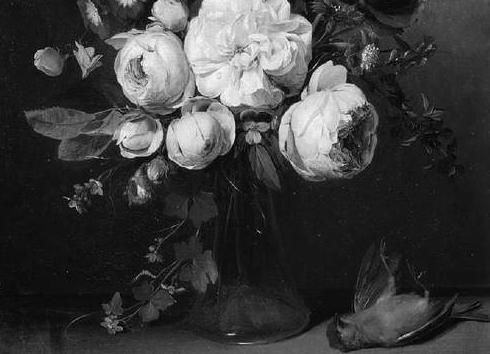
3. The husband is with his trainer, who is happy to take his bread. They are training or flirting or he is possibly giving her head. Every so often, I see an errant text with a smile or a pair of lips and a request that she join him at Miznon, the Israeli bar on 72nd Street, and I suspect something is up but I don’t say anything because I don’t know anything except that she is twenty years younger than he is and on the hunt for a man who wants children and he doesn’t want any more kids. He’s a client and I suspect she’d rather preserve the steady lucrative client/trainer relationship than jeopardize it with some extramarital romance that is unlikely to end in her favor. Still, as Husband says authoritatively, “We don’t know what we don’t know.”
4. The trainer’s name is Yael and she has a tiny waist. This is what I get for teaching three nights a week. Husband needs more attention than I can pay him, craves a lover who asks, “How did you sleep
and how are you feeling and do you want to drop everything, right now, and go do it?” What is it about middle-aged men? They want to discuss themselves, then enlist you to join the discussion. After training with Yael this morning, Husband flew to Hartford and is gone until tonight. Fortunately, the flowers need to be tended.
5. I grab the sunflowers from the side table where the kids’ photos are, a marble slab perched on an octagonal-shaped piece of light wood that gives the apartment a Moroccan flare. You can’t kill sun-
flowers unless you forget to water them. Despite or because of my obsession with the lilies on the kitchen table, I have forgotten to water the sunflowers. They droop in a tall, cut crystal vase. I snip off the bottoms of the sunflowers’ green stalks, on an angle. It is more like a sawing motion because the stalks are so thick. I refill the vase with water. The sunflowers will continue to live three more days. I bought them last Monday, and now it is Wednesday, the day after Election Day.
6. The lilies are a different story. Gorgeous, pink, blooming, they were taking over the kitchen table yesterday; their petals were stretching towards the sun, which shines over the river, which we can no longer see because of the building filled with Russian oligarchs that has gone up across the street on Amsterdam Avenue. The sun fills the apartment with light every afternoon and makes the marble table glow late in the day. The light that lands on the table is Daddy waving hello to us, from his plot across the river, where he lies buried under flowers
“Our table is small and the flowers have no one but us and each other for company. Husband moved the lilies to the coffee table near the velvet couch. I was sad to see them go, my little pink children.”
Flowering - Laura Zinn Fromm
The Opiate, Summer Vol. 34
on the perimeter of the cemetery. These magnificent lilies, with their huge, happy petals, smell sweet. But they are also ten days old, and this morning some of their heads started to droop as if they were anticipating their imminent death. Still, there are some buds waiting to blossom.
7. Last night, Husband smelled the lilies, and complained the petals had spread their fairy dust onto his dinner and the keyboard of his laptop. Our table is small and the flowers have no one but us and each other for company. Husband moved the lilies to the coffee table near the velvet couch. I was sad to see them go, my little pink children.
8. I go to Trader Joe’s for flowers now. The florists in Silverside knew me too well; at Trader Joe’s they don’t know me at all. The flowers are down the escalator, right near the milk, eggs, butter and yogurt. They are grouped and identified like children, waiting to be adopted. In our apartment the walls are bare, so flowers brighten things up. The flowers do not want to be alone in their vases. They want to be together, although not all of them want to be together in the apartment. What I’m saying is the hydrangeas die quickly. They practically kill themselves the minute I bring them home and put them in water.
9. We splurged on the chairs that surround our kitchen table, knowing how much time we would spend eating, typing and talking here. The chairs have arms, because I read that if you want people to stay and talk after they eat, the chairs must have arms. This is the space where Husband and I are at our best (we are not bad in bed, but I suspect Yael is better, probably more nimble and eager).
10. Though we can’t see the river (rows of gray buildings which look like East Berlin hide the Hudson flowing behind them), flowers love it here. At Trader Joe’s, they beg to come home with me. I have learned what thrives here and what does not. A woman I met in the elevator last week, who saw me carrying a bunch of purple hydrangeas, and was on her way to visit a grandchild (she had a rolling bag and seemed to be jumping out of her skin with excitement, staring at the elevator buttons as if hurrying them to move more quickly to the floor above ours), said that her daughter-in-law said something in the building was killing her hydrangeas. “Could be killing us too,” the woman added.
11. Something strange and magical happened a few weeks ago. I began seeing texts Husband was sending and receiving but only on my iPad. There were the usual work texts, plus some to Yael. I noticed a pattern—Husband worked out with Yael in the morning and then texted her about getting together that night. She invariably declined. Deep in my heart, I don’t think she has a single profound feeling for
him. I want to shout at Husband: “You idiot! Of course she’s not going to get together with you if she’s not on the clock!” Instead, I pretend not to see the texts.
12. This morning, I walk to bar class at Breath on West 57th Street with Mindy, my best friend from sleepaway camp. Mindy went to Barnard and has lived in New York her whole adult life. She and
her husband raised their daughters in a triplex on Central Park South. Both daughters attend the same, impossible-to-get-into Ivy League school; older daughter was accepted easy-peasy; younger daughter was waitlisted and accepted only after Mindy and her Husband entered negotiations with the development office, which Mindy’s Husband nicknamed Guantanamo Bay. Mindy’s Husband described the experience as similar to waterboarding: The development office defers Less Deserving Child in December, waitlists them in April, ignores emails and calls until May, at which point you sign a confession admitting you are guilty of not giving enough money and offer a gut renovation of a library wing. Mindy belongs to that subset of women I call “the Diss.” They glide through life in a glass bubble. “Diss” is an acronym: Donate, invest, sit on boards, shop. There is nothing wrong with Mindy or her life except that her parents are ailing on East 71st
“When I am with Mindy, I feel like a rusty steak knife in a drawer full of silver butter knives. Unlike most people I know, Mindy has the grace not to congratulate herself on her good fortune. Sometimes I wonder aloud why I share my quotidian life with someone whose life is so easy. Husband points out that many people might ask him the same question.”
Street and, really, if that’s the worst thing that happens to you, I’m not going to hand you a tissue. Mindy has everything and wants more. Still, I am grateful for our friendship. Whenever she says something that suggests her life is inexcusably cushy, she shrugs,“La di da.”
13. We finish class and walk through Central Park. I tell Mindy about Yael. “Remember when we said that we wanted to marry nerds because we thought they were kind?” Mindy asks. “Yes,” I say. “We thought nerds wouldn’t cheat on their wives.” Mindy searches her pockets for a tissue. “They do,” Mindy confirms. “After they’ve launched their hedge funds and hired their stylists.” Once Mindy discovered that Dan was cheating on her with the woman in their building who lived one floor away but used a different elevator bank, Dan bought the woman’s one-bedroom apartment at fifty percent above-market, helped her secure financing on a place downtown, then transferred the triplex, their purple hydrangea-covered estate in Montauk and the ski house in Park City to Mindy’s name. Mindy took the proceeds from the sale of the woman’s apartment and bought herself some Alex Katz lithographs. One of them was titled “Alex at Cheat Lake.”
14. The air is cold, the sky clear. The needles on the fragrant pine trees are starting to brown, but the sun is shining and the water on the pond sparkles as the ducks mill about. Mindy points to a single yellow chrysanthemum growing in a stone urn. She plucks the flower, hands it to me and brushes her lips on my cheek. If we were not born during the Johnson administration and wedded to our husbands, I might be in love with her, though we are both soft around the middle.
15. Mindy and I discuss Josh missing Sweet Sixteen parties now that he is at boarding school. “Those parties are toxic drug fests where the boys go home counting how many blow jobs they’ve scored and the girls pop Xanax; he’s not missing anything,” Mindy insists. I say Josh might disagree. We discuss Peter graduating college (not an Ivy League) and applying to med school (ditto). “Mazel tov, Mamala; he’ll always be able to make a living,” Mindy cackles in her best Brooklynby-way-of-Eastern-European-shtetl tone. This is how our Borough Park grandmothers kvelled about our fathers, who went to Stuyvesant (mine) and Bronx Science (hers). Unlike our own fathers (hers a pediatrician, mine an ENT), Mindy and I grew up with the luxury of patriarchs who could pay for things and married men who would do the same.
16. I tell Mindy I’m heading to Trader Joe’s.“What do you like there?” Mindy asks. She is mystified by my decision to shop at a place where not everything is organic. “I like the fruit and the vegetables and when I carry my bags home I rationalize it’s the equivalent of lifting weights for twenty minutes.” I don’t mention that the flowers there are
my children. “Bye love,” Mindy trills, then waves as her doorman bows and opens the door for her. She blows me a kiss. I catch it and blow back. La di da
17. When I am with Mindy, I feel like a rusty steak knife in a drawer full of silver butter knives. Unlike most people I know, Mindy has the good grace not to congratulate herself on her good fortune. Sometimes I wonder aloud why I share my quotidian life with someone whose life is so easy. Husband points out that many people might ask him the same question.
18. I take the escalator down to the flower department of Trader Joe’s. There are yellow lilies for four-ninety-nine a bunch. The lilies remind me of Grandma. Her house was filled with sunshine—yellow and white everywhere. But Husband has been complaining about lilies. I choose red tulips. I am assigned Cashier Number Eighteen and my bill comes to eighty-one dollars. The total is eighty dollars and eleven cents, and there is eighty-nine cents tax. Chai and reverse chai!
19. The elevator in our building is not working. There are three maintenance men on walkie-talkies, trying to figure out what to do. Our building is huge and there are several banks of elevators, and today floors twenty-one through thirty-five don’t have working ones. We’re on the twenty-seventh floor. Because I’ve got eggs and flowers and yogurt, I take the elevator to the twenty-first floor and carry the groceries up six flights of stairs. In the stairwell, I run into Caesar, our super, and complain that my flowers have been without water for so long, they might die. “Sorry, Mama,” he offers. This is what I love about New York. Grown men call me “Mama.”
20. We only have two glass vases and they are filled with lilies and sunflowers. I try to figure out how I am going to jam two bouquets of tulips in with the lilies, plus the freesia that came with the tulips.
21. I take the lilies and the tulips, put them all in the sink, cut off the tips of their stems and jam them all back in the lilies’ vase. The arrangement looks horrendous, angry and defiant. I am going to have to separate them and use the tall silver coffee mugs from Husband’s office. The lids leak; when you try to drink out of them, coffee dribbles down your chin. I take one and fill it with water and put the tulips in there. The mug tips over and water spills everywhere.
22. I start looking for another silver coffee mug and hoist myself up onto the counter in the kitchen in my bare feet. In walks our housekeeper, Fernanda. “Watch your bones!” she yells. Fernanda knows everything about us; when we have sex, when we don’t. She spotted the red pillowcase I slipped under the mattress last week to promote passion. Wednesday is the day she changes the sheets. I tell
The Opiate, Summer Vol. 34
her not to bother.
23. In the sink, the lilies cling to the tulips. They don’t look right or happy with the tulips but they want to be with them anyway. I put the lilies back in the glass vase, and separate the tulips between two silver mugs.
24. After that kerfuffle, I collapse onto the sofa. Tonight I am
doing a Q&A for Nina, a student who had her first book published, a novel she worked on for years, a novel which I edited back when she was still telling the truth and calling it a memoir. Nina gave it to another woman to edit and that woman decided the story worked better as a novel. Even though there’s really not much tension. Or action. The Q&A is at a bookstore in New Jersey, in a town filled with earnest writers who drive Subarus, wear “upcycled” clothes, don’t straighten their hair, practice yoga in their sunrooms and feel guilty if they hire help on Thanksgiving. To prepare for the Q&A, I have to reread Nina’s book. The story is about a family who builds a big house. Nothing bad happens except the couple runs out of money and the protagonist has
“Mindy belongs to that subset of women I call ‘the Diss.’ They glide through life in a glass bubble. ‘Diss’ is an acronym: Donate, invest, sit on boards, shop. There is nothing wrong with Mindy or her life except that her parents are ailing on East 71st Street and, really, if that’s the worst thing that happens to you, I’m not going to hand you a tissue.”
to search for change in her couch so she can buy her kids pizza. The last time I read the book was three years ago. I can’t remember major details, like how it ends.
25. The tulips don’t look right. Their heads are drooping and their necks are bent over, as if someone had insulted them. In the chaos of the lilies and the mugs, I forgot to replenish their water!
26. I am deep into Nina’s book when a text arrives from the bookstore; Nina is sick; the Q&A cancelled. Meanwhile, the lilies are dying. Their heads are drooping. I inhale their scent, the scent of kindness, which reminds me of Josh when he was asleep as a baby, but there is no denying they are almost dead. There is one stem with a closed bud on it. I take the other lilies, inhale them once more, and drop them in the garbage.
27. I peel the eggs I boiled for breakfast. The warm weight of them reminds me of Husband’s throbbing balls. I bite into one.
28. One of the sunflowers has fallen over, its neck broken. I drop it into the garbage.
29. I failed to mention: I have a raging yeast infection. The part of my body that has historically been an accommodating ally has become a furious enemy. Husband wanted to make love before he left for Hartford. “I woke this morning and you weren’t wearing pants,” he said. “I thought you wanted to make love.” I shook my head. “I was airing my vagina out,” I explained. Husband cast his head down, like a drooping flower, and went to pee and (probably) masturbate.
30. I text Dr. Miller, the gynecologist who delivered my babies. I am allergic to antifungals and suspect there is nothing she can do.“Come over,” she texts back.
31. On the bus, I Google homeopathic remedies for yeast infections:
• Thread a string through a head of garlic and place it between your thighs.
• Put a few drops of oil of oregano between your legs, which will make you smell like Grandma’s bottled Italian salad dressing.
• Stop eating sugar. Yeast infections like sugar, and one should not drink a glass of sugary wine alone every night but, like flowers, glasses of wine are my friends.
• Shower frequently. Yeast loves sweat, so don’t sit around in sweaty running clothes all day.
32. Dr. Miller sees nothing under the microscope, not even yeast. She Googles what to prescribe and says:
• You should see an allergist to see what you can take, but meanwhile you can use a combination of A&D ointment and hydrocortisone .5% or 1%, both over the counter, which you can get at the drugstore on 89th and
Madison.
• How are the kids?
Dr. Miller brought Peter and Josh into the world twenty-one and sixteen years ago; she expects a full report. I sit there in the paper gown, spread my legs and let the air flow through. Dr. Miller is truly interested in my boys, or at least does a good impression of being interested. I tell her Peter is in college and Josh is at boarding school. Dr. Miller raises her eyebrows and, in a rush, I tell her I wanted to move to Manhattan before Josh graduated high school, so off Josh went to a sweet little school in New Hampshire that takes kids junior year, and now they are both coming home for Thanksgiving and we sold our house and it’s just me and Husband living in a small apartment and the place is going to be crowded when my real children, in addition to my flowery ones, take up residence. I add: “Husband wants to have sex every morning and night. I want to have sex twice a week.” Dr. Miller’s smile remains steady. “Do you have any suggestions?” I ask.“Other than additional yeast infections?” She smiles and kisses me on the head. “How do you want this story to end?”
33. Tonight, Husband will want to know how I’m feeling, code for: “Can we?” I will demonstrate for him the application of the diaper ointment.
34. The sunflowers are dead when I get home, their necks broken. The tulips, despite that I almost killed them by depriving them of water, have sprouted up. They bloom red and lavish on the coffee table; colorful, elegant, lustful.
35. In college, men sent me roses. My mother used to say that sending roses was the kiss of death for any relationship I was in because if a man sent me roses, I dumped him. Soon after I met Husband, Mindy and I went on a rafting trip to the Middle Fork of the Salmon River. Husband had a dozen red roses delivered to our hotel in Idaho. I wrapped Husband’s roses in wet paper towels and took them home on the plane.
36. My mother’s second husband, Jimmy, sent flowers after I had a miscarriage. I was lying on the couch in the living room in Silverside when the doorbell rang and the florist arrived, carrying an arrangement of pink hydrangeas, roses and lilies. Jimmy was raised Catholic; he didn’t realize that Jews don’t enlist flowers to mitigate grief. I sat on the couch, stared out the bay window and ate bags of Jelly Belly jellybeans from the local pharmacy. Jimmy’s pink flowers were magnificent. For a week, I watched them bloom and wither and ate so many jellybeans I drilled holes in my teeth.
37. We have not hung paintings in this apartment, not even a mirror. I wanted no traces from our old life here, just photos of our kids. For a while, aside from the pink orchid plant that my mother gave to Fernanda to give to us, there was nothing alive in the apartment except us. Our dog, Maxie, died two months after we moved in. City life did not agree with her. Peeing on concrete sidewalks, rushing to Central Park to do her business—she was too old for those excretion gymnastics. She collapsed on the sidewalk one Sunday afternoon on our way to Trader Joe’s and died the next night.
38. In the warmer months in Silverside, Maxie would lie down on our driveway in the sun. I would lie down next to her and she would settle her warm, soft head on my lap, and together we would look at the flowers.
39. Yellow daffodils grew on one side of the driveway in April and May, pink peonies blossomed in June, orange tiger lilies bloomed in July and purple hydrangeas bloomed nearly all summer. If flowers are like children, are you allowed to have favorites? The peonies were mine.
40. I run to Trader Joe’s. The tulips are gone, but there are bouquets of red and pink roses, blue hydrangeas, yellow mums and white daisies. I toss a bouquet into my cart. Daisies die so quickly in our apartment, I feel foolish bringing them home. They will last two days, maybe three. Still, I want them. There are white and pink lilies, and I pick up the white lilies and put them in the basket. White lilies represent death. The flower stands at Jimmy’s funeral were covered with red carnations and white lilies.
41. I grab a bunch of pink lilies to soften the meaning of the white ones.
42. Back home, I cram the new lilies into the vase with the old lily and add fresh water. They look happy and eager. I divide the bouquet into two, grab more coffee mugs and line them up next to the tulip-filled ones on the kitchen table. I gaze at my flowers. They wave at me.
43. Mindy texts and asks if I want to go to an art gallery. I taxi back over to the East Side—with no Q&A to preside over tonight, I have all kinds of time. Mindy greets me at the gallery door and ushers me in. It is just the three of us in the gallery. Maria, the gallery owner, is an elegant, tall woman with blue glasses who says she has owned galleries all over the city. She tells us about this most recent exhibit of botanical drawings done by a German woman whose father was a botanical gardener and landscaper. Maria has three sisters; she and her mother and sisters are artists. The drawings in the gallery are gorgeous.
Huge daffodils, their white petals surrounding the yellow stamen, sit proudly atop green stems. Maria says that daffodils represent purity, but also a desire to move away from vanity and selfishness. “Not that vanity and selfishness are necessarily bad things,” she laughs. “We must take care of our desires, no?” One of the paintings depicts a turquoise butterfly resting on the daffodil’s stem. The flowers are painted against a velvety black background that looks like the night sky. Mindy nudges me. “I want it,” she says. “I can’t come here and not buy anything.” After Mindy went to see the Alex Katz exhibit at the Guggenheim, she told her husband she wanted to buy “Blue Umbrella 1” (1972). A blue wool scarf is wrapped around Maria’s neck. She wears black combo boots and thick red socks. In her ears, there are little gold hoops, and on her right hand, a gold wedding band.
44. Mindy and I walk home across the park, chatting about the painting. She bought the one with the butterfly. The wind is cold but the sun is out and everyone in the park is bundled up. We say goodbye for the second time today. “This time for real!” we yell and bump fists, like we are still back at Camp La Di Da. I arrive home and the yellow mums are fading. I decide to go back to Trader Joe’s a third time—a lot, even for me—and am rewarded: there are dozens of tulips, in red and yellow. I grab a bunch of each, and also get some new sunflowers because we are going to pick up Josh tomorrow and Peter is coming home. Suns for my sons. I buy more pink lilies; the buds are closed on some and open on others and their green leaves are perfectly shaped. Where will I put all these flowers, I don’t know. Perhaps I will turn the sink in the kitchen into a communal swimming pool for flowers.
45. At home, I divide the tulips again between the silver coffee mugs and snip off the bottoms of the stems of the new lilies. I find more silver coffee mugs, hiding in the pantry, and put some flowers in there and still others in the glass vase, then cut off the bottoms of the stalks of the sunflowers.
46. The lilies were five-ninety-nine a bunch. The sunflowers were four-ninety-nine a bunch. The tulips were nine-nintey-nine a bunch. The ratio of flowers to people in the apartment is one hundred to one.
47. Husband arrives home. “The apartment smells so sweet,” he remarks. “Like flowers.” He looks at me with something resembling love. “How are you?” he asks. To hell with the yeast, the ointments are working. “Better,” I say.
48. In the bedroom, I glance at the iPad: no texts to Yael. The sky is darkening. I look again at the iPad. There is that rush of pulsating dots and then, a text from Josh. “A kid I know was found unresponsive
in his room,” he writes. “Me and this kid lived in the same dorm this summer.” The school is small, the kids and faculty all know each other; the new kids went early in August to get to know the campus and each other. My brain lunges to the worst possible outcome. I don’t want to share with Husband what my gut is telling me: this boy has overdosed, the boy has tried to kill himself, this boy has had an allergic reaction to something, this boy is dead. “Collins is likely to die tonight,” Josh types. I try to conjure what is going on at the school—ambulances gathering
around the dorm on the hill, on this freezing cold November night. Children standing around terrified. Teachers and faculty not knowing what to do. I show iPad to Husband. “Let’s call him,” Husband says. Husband and I trade my iPad back and forth. “We love you,” Husband types. “Do you want to talk?” Josh texts. “He died. School says it was suicide.”
49. Husband tells Josh he can call us anytime tonight. I toss and turn and wake up at four a.m. Collins is dead, that beautiful boy. I have only a vague image of him—good-looking, dark hair, a skier— and only because Josh described him as such.
50. I try to imagine what Collins’ mother is going through. I imagine her shrieking, clasping her hands over her mouth, shouting, “No, no, no, my baby,” her husband sobbing and wrapping his arms
“You plant perennials, nurture them, prune them when necessary, watch them wither and wait for them to blossom again next year. ...‘You’ve been talking a lot about cut flowers,’ she replies. ‘What about the ones that grow in the garden?’”
around her. What kinds of parents send their children to boarding school in freezing cold New Hampshire and expect them to be okay?
51. We wake at six a.m. and drive four hours without stopping. I drive while Husband texts. The sun is sparkling on the New Hampshire snow as we rush past the lake. We are driving through beauty towards terror. We were here in October for Family Weekend. The hills and mountains were green then, the campus lush. Now the pine trees are covered with icicles. We make our way through the icy parking lot to Josh’s dorm.
52. We find Josh in his room, surrounded by his laundry. “I’m so sorry,” Husband says. Josh’s roommate, Doug, is already gone; his parents came to get him at seven a.m. “I love you so much, monkey,” I say and bury my face in Josh’s neck. Husband holds a bag of bagels from Zabar’s; he picked them up yesterday, on his way home from the airport. Husband and Josh take the bagels to the kitchen. Husband returns. “I wrote a note on the bagel bag that said, ‘Help yourself’ and Josh crossed out the word ‘yourself,’” Husband says.
53. I wander down the hall to the student lounge, which is filled with empty pizza boxes and smells like old sneakers. Josh comes in and says he wants to buy cigarettes. “Can you buy them for me, Mom?” He knows I started smoking at sleepaway camp and only stopped five years later because Mindy’s father described what I was doing to my lungs.
54. “There’s a 7-Eleven half a mile away,” Josh mentions. “We can walk.” We tell Husband we are getting coffee, grab our coats and walk down the street. The snowy landscape is bare and the sun is pushing through the empty branches of the trees. Piles of snow glitter. It looks like a quiet, magical winterland. Collins’ sobbing presence is everywhere, this boy I have never met. I take Josh’s hand as we enter the 7-Eleven. The store is brightly lit. Josh wonders how much a vape is. “I’m not buying you a Juul!” I screech. Josh reminds me that Mindy’s husband works for Juul and used the money he made there to buy their triplex. We walk up to the cashier together. My wallet is in the car. I don’t have ID. Josh points at the cartons behind the counter and says, “Marlboro Lights for her.” I hand the cashier my credit card. The cashier puts the cigarettes in a paper bag. Josh hands me a lighter. “This, too.” The cashier rings it up and presents the bag to me. I raise the bag above my head, as if I am about to throw it, then walk out the door and give it to Josh.
55. On the way home, I let Josh sit in front while Husband drives. On my phone, an email appears from the headmaster, Ruben Givener:
Dear Parents and Guardians, I want to start by telling you that your kids are truly extraordinary human beings and give you some details about Collins’ death that I am sharing now with
permission from Collins’ parents. I hope we can use this information to prevent other students from experiencing a similar tragedy.
Last week, students reached out to tell us that Collins had been talking about different ways to get high without using drugs and alcohol. He mentioned asphyxiating (basically choking) himself to the point of getting high. When we originally found Collins, it appeared that he was using asphyxiation with a belt to kill himself. The police and medical examiner put this in their initial report. When we learned the new information, I notified the chief of police and Collins’ family. The chief of police notified the family and me that after their investigation, they had amended their report to indicate that they believed the death was accidental. I want to thank the courageous students for coming forward to share this information. When I heard about the amended report I felt some relief. Then I was overwhelmed again with the tragedy of this new scenario. I felt it was important to be as transparent with you as possible. We want to find more ways to support people who are struggling and seeking an escape through any kind of risky behavior.
56. I hand my phone to Josh. He scans the email, then hits the back of his head on the headrest. “Jesus,” he says. He reads the email out loud to Husband.
57. Husband doesn’t say: “Give the phone back to your mother.”
58. Josh doesn’t say: “Why did you send me to this place, Mom?”
59. Husband doesn’t say: “Mom couldn’t hack it in the suburbs so we had to sell the house. Mom hated small-town life.”
60. Josh doesn’t say,“But I loved it and because Mom hated it, you sold the house I grew up in and made me leave the high school where I knew everyone and sent me to this school in Bumfuck, New Hampshire.”
61. Husband doesn’t say, “I had to make your mother happy.”
62. I don’t say, “Josh, I had to choose between your temporary unhappiness and my mounting depression and I chose your unhappiness.” No one says any of this because it has already been said. Or thought.
63. At home, the sky darkens. Josh throws himself on the couch and pulls the blanket over his head. I sip white wine and lose myself in emailing students, try to answer one’s questions about whether her work is science fiction (maybe). I reread the piece I will be teaching tomorrow, Ice Cube Moon by Lindsey Crittenden, and watch a flock of pigeons flutter off the roof of the building with the Russian oligarchs.
64. Josh snores lightly in his sleep. I stare at the miracle of him. The rain is coming down and the lilies are blooming on the kitchen table and their scent fills the apartment. I wonder if Josh smells them
The Opiate, Summer Vol. 34
in his sleep. The roses and hydrangeas are blooming, and the tulips are growing wildly, their long stems stretched out over the silver coffee cups, their heads tipped over and almost touching the table, as if bent in prayer.
65. Husband reads the NYT on his phone. I make us strong cups of coffee and steam almond milk and tell Husband it’s raining out. He thanks me for the coffee, says he knows it’s raining.
66. We settle down on the couch in our flower-filled apartment, no one screeching to get out of the suburbs, no one desperate to cease being “in community,” no one frantic to escape a town of active conformists, no one texting Dr. Knows Everything (a.k.a. our marriage therapist) that the suburbs are hell, no one begging to move to a place where there is culture and anonymity, no one slamming doors and running into the night, while Maxie yelps with fear.
67. Last June, Husband and I went to his business school reunion where one of his friends said, “Sooner of later, we all sit down to a banquet of consequences.”
68. I head back to Trader Joe’s, buy red berries and white hydrangeas.
69. Yesterday, I stopped by Morton Williams, near Dr. Miller’s office, and saw roses that were fourteen dollars. At Trader Joe’s, they are seven dollars. I snap a picture of the red berry and load it onto my “Picture This” plant identifier app: “The only attractive part of the plant is its fruit. The fruit holds the appearance of a small red ball of fire and it also hangs on the branch like grapes. As it continues to hang onto its branch for a long time until winter, it’s called common winterberry.”
70. Back home, Josh is missing. Husband says he probably went up to the building rooftop, where he is probably smoking, which is against the rules, but unless Caesar wanders up there, he should be okay. The flowers blooming on the tables and the sound of the dishwasher doing its work keep us company.
71. One of the hydrangeas that had been standing in the silver coffee mug is dead. It fell over, its head flopped. I think the winterberries killed it.
72. The hydrangeas that are in the vase with the red roses are sitting proudly, though their petals are starting to wither. The roses, too, look as if they have peaked. Either the roses and hydrangeas can’t be in the same vase together, or both flowers don’t do well in this apartment. I should know better with the hydrangeas. The “Picture This” app says that hydrangea petals and stems are toxic. I suspect they are robbing the roses of what they need. The lilies look fabulous with the red winterberries, all of them reaching up towards the sun.
73. I call Dr. Here-We-Go-Again. I tell her about Collins, say I worry about bringing Yael up with Husband, say I thought the city would solve our problems and now look. Dr. Just-Trying-To-Help advises me to listen closely to Josh as he goes through this mourning time, then references my “flare-ups,” those simmering rages that flare up when I feel under siege. Dr. Let’s-Be-Reasonable points out that Husband only wants to be loving and for me to be loving back and periodically needs more attention than I can provide. I say he wants sex too much. Dr. Let-Me-Speak says, “Really, we are not talking about him, we are talking about you.” She points out that writing is like marriage—you don’t solve plot twists right away; you take a walk, get fresh air, gain new insight. Marriage, Dr. Smarty Pants says, is like tending to a vase of flowers. You can’t toss the whole arrangement in the garbage just because some petals are starting to brown. You plant perennials, nurture them, prune them when necessary, watch them wither and wait for them to blossom again next year. I ask her again what to do about Yael. “You’ve been talking a lot about cut flowers,” she replies. “What about the ones that grow in the garden?”
74. Peter lets himself in, slams the door. I kiss him hello, inform him of the news. “Dude, that’s rough.Where’s Josh?” I motion toward the ceiling and say, “Up on the roof, smoking.” Peter snorts. Short and sweet, this one—same curly hair as his younger brother, but with brown eyes and dark skin, like me. Peter has shed most of his bad habits—ketamine one terrible summer, weed every day one horrible fall—but now he just wants to sip hot coffee and study for his MCATs. Peter looks around at the flowers in the apartment and points out that my mother, his grandmother, routinely asks him to admire her orchids. I tell him about my lilies, how I care for them, cut off their stems every morning, give them new water, tell them how beautiful they are.
75. Peter stares at me, (likely) wondering, Should I be worried here? I look at my boy, with his broad shoulders, fine mind. Why do I care so much about flowers, not even flowers I have grown, but flowers that I have bought from Trader Joe’s, flowers that blossom and fade, flowers that get thrown in the trash, flowers that don’t return to this Earth? I don’t say that I am happy to obsess about the flowers, and get irritated when Husband cuts his finger on his AirPods case and cries for a BandAid so that he won’t bleed all over his new shirt.
76. It takes me forever to realize that my grandmother’s first name was Lily, even though everyone called her Lee.
77. “Mom,” Peter says. “I’m going to send you a playlist.”
78. Husband returns and says he is going to meet Yael at the gym.
79. Five months after my father died, we held a break fast for Yom Kippur. My parents were long divorced; my mother had been with Jimmy for ten years. Jimmy watched while I took out platters from the sideboard to put on the dining room table. “Don’t you know I’m in love with you?” Jimmy asked. Jimmy was a silver-haired, handsome man. I thought he adored my mother; he had left his wife of fifty years for her. He was seventy-one when they married, my mother fifty-four. “Let’s go out to lunch and discuss your mother,” Jimmy said. Husband was showering; my mother was in the basement with the kids. I ignored Jimmy’s
overtures for thirteen years. Every time he walked in the door, I braced myself. Even in the nursing home, he hit on me.
80. At his memorial, my mother and I sat in the front row, far from Jimmy’s children and close to the flowers. Jimmy’s death felt belated; by the time he died, he was ninety-two. Afterwards, my mother called to ask if I wanted the flowers. I had just asked Husband if he wanted to make love. “Honey, do you want the flowers from Jimmy’s service?” my mother asked. She sounded oddly cheerful and efficient for someone who had just buried a husband. I responded by asking her if she wanted the flowers. “No,” she said. “But you might.” The funeral director (a woman) called and asked where the flowers should be delivered. “Do I really want them?” I asked. “Well,” the woman said, “your mother said you might.”
“Why do I care so much about flowers, not even flowers I have grown, but flowers that I have bought from Trader Joe’s, flowers that blossom and fade, flowers that get thrown in the trash, flowers that don’t return to this Earth?”
81. The flowers arrived in a minivan. Red carnations, white Asiatic lilies and football mums were attached to two large black metal stands. The flowers were drooping. Jimmy was dead. Who would flirt with me now at Passover, Thanksgiving, Mother’s Day and Yom Kippur? I carried the stands of flowers down to the bottom of the driveway for garbage pickup, near the hydrangeas, and dropped them there.
82. It took me years to tell my children the story of Jimmy. I wanted them to have fond feelings for their grandpa.
83. Josh and Peter head out to the diner. Husband says he has to meet Yael at five o’clock. I suggest we make love before he goes. We’ll be quick, I promise. In bed, Husband says,“I love being inside of you. It’s my favorite place to be.” He tries to please me. Tries and fails. Tries again. “Just go see Yael, go go!” I cry and push the covers off. Husband looks sad. “I knew this wasn’t a good idea.” he says. “You’re never good under stress.”
84. I remove some Trader Joe’s coconut oil from the night table and take care of myself. Making love with Husband takes eighteen minutes (Apple Watch collects the data); making love to myself takes three.
85. I am my own hydrangea.
86. The doorbell rings; a delivery man carries a bouquet of pale peach roses. I rip the cellophane off too quickly, and the green leaves fall off. I glance at the card; the flowers are from Husband. The stems look bare and thorny without the leaves, but the roses are in tight buds and one is beginning to bloom. I put the flowers in water, lace up my running sneakers and head into Central Park. I run to the reservoir. The sky is dark and the moon shines over the water. I click on the playlist of songs Peter sent me: Allen Toussaint’s “Yes We Can Can” and The Waterboys’ “The Whole of the Moon.” The running track is wet and clumpy, the lamplights illuminate it. I press my AirPods into my ears and sprint past the trees towards the Guggenheim. I run and I run and I run, past the tennis courts, back to the 86th Street entrance. Ducks glide along the water, far from a Mylar balloon that’s settled on the shore. I think about Husband. “Come closer,” I say.
whip-crack the air. Driving cellos pulse underneath. And it comes to me: Stravinsky’s ballet—The Rite of Spring. It’s about renewing the Earth by choosing a sacrificial virgin who dances herself to death. Not the happiest rebirth, but mind-blowing music. I’m sucked into the sounds. Big Sergeant Gio, with scratches on his face, yells, “Paddy, you little shit, where you going?”

As I reach the arena’s edge, look down, and see the dancers and musicians, I can’t believe how lucky I am. We’re on leave in Athens, Greece, on top of the Acropolis, at an ancient, open-air Roman theater. The brochure said most of the buildings up here were built two thousand, five hundred years ago. The past is present and in my face. Rhythmic dissonance pounds the warm night air and murmurs in my ear: “Ignore everything and get the hell in here.” I’m compelled, so I ignore Gio.
Camila, Gio’s wife, slides cat-like in front of me, dots of perspiration on her neck. Her lustrous hair gleams in the moonlight. I wonder if she feels how I feel. She probably doesn’t even think about me. God, I love her. She and Gio were arguing on the walk up here.
Our company clerk, Specialist Delaney, nicknamed Delay be-
cause of how slow he is at his paperwork, brings up the rear. “Freakin’ ballet, no way,” he says. “I wanna get stoned.”
“Don’t be stupid.” I shake my head. “We’ll never see this again. I’m not leaving.”
Camila turns to Gio. “I’m staying with Paddy.”
Gio snorts. “It’s all about you, isn’t it, Cam? Fine, stay here then. Let’s go, Delay.”
And then I’m alone with this stunning woman and the ballet. Nothing like this ever happens to me. We spot some empty seats and sit without talking as the performance washes over us. At a break in the music, Camila says, “I’m divorcing Gio.” My skin crawls. Why is she telling me this? How am I supposed to respond? The music starts throbbing again.
Later, during the virgin’s sacrificial dance, Camila takes my hand and squeezes as the music pushes the dancer in red to her death. Men in wolves’ costumes surround her as she collapses, then pick her up and offer her to God now that she’s dead. It’s Judgment Day.
“That man is beautiful,” Camila sighs, pointing to the tallest, bearded wolf on the stage.
I know Camila and Gio have marriage problems, but I didn’t think they were imploding.
Then I think: She’ll be free. Will she want me?
My mind blows apart. I can barely comprehend being here and watching Stravinsky at the Acropolis, and now these thoughts. Gio and Camila were the perfect couple. Happy, popular, enjoyed the same movies and liked the same bands. They doted on their three-year-old, Georgie.
When the performance ends I say, “Is it because of Georgie?”
“Of course it is. My heart’s been ripped out of my chest. Gio keeps saying I only had one job to do. I’m haunted every day by what happened, but I never left that gate unlatched. Georgie was always safe in the front yard. Sergeant Gio Lantini never takes the blame for anything.”
She makes him sound like a son of a bitch. “Why now?”
“My world’s gone upside down since Gio turned on me. He grieved at first, like I did, and then he stopped.” She sounds far away. “The C.O. pitied him. Gio wanted to prove he could man up. He said he was ashamed—he couldn’t even protect a three-year-old.” She shakes her head. “The nightmare got worse. His mother showed up to ‘help out.’ We started arguing. She presumed Georgie’s death was my fault. Now I feel like a prisoner in my own house.”
All I feel is her hand burning in mine. Then I remember. Gio
The Opiate, Summer Vol. 34
has a black belt in judo. I look behind me. Thank God, he’s gone. “Why’d you go on vacation if you’re divorcing?”
“This vacation was supposed to heal us, his mother said. Like a second honeymoon.”
The crowd is flowing out of the arena. “We have to leave soon.”
“Can we go back to your room?” she asks. I catch my breath; this is not happening.
My mind won’t work. Thoughts come in fast, fly through my brain, and disappear. I try to reach a decision. “Look, Delay and I share a room. If he sees us there, he’ll tell Gio in a heartbeat. Gio will rip me apart. If you and I both disappear, he’ll know we’re together. Then, of course, there’s the plain fact that I shouldn’t be alone with you, even if I am in love with you.”
“He won’t sleep with me, he won’t touch me. I can’t go on like this. I can’t sleep alone another night. I’ve already lost my baby. Please.”
It’s been three months since Georgie was run over. His funeral was gut-wrenching. When a child dies, everyone dies a little. I’d played Lincoln Logs with him when I’d had dinner at their house. He’d called me Uncle Paddy. He fantasized about building the tiny log cabin, having dinner inside. “I can’t. It’s too dangerous.”
“More dangerous than this?” She pulls up her thin blouse. I think she’s going to show me her breasts. Instead, I see the bright-red welts on her ribcage.
I’m staring. “People are watching,” I say and turn my head.
“I don’t care, I need help. Maybe those wolves will help me.” She points to the stage.
She’d told me once that her Portuguese name meant “priest’s helper.” I hope she doesn’t mean a sacrificial death. I want nothing more than to hold her in my arms, but it’d be the last thing I did if Gio found out—he’s huge. She’s never talked to me like this. I wonder if she’s been drinking. She was pretty out of it at the funeral.
“We have to go, the place is closing down.” I look into her eyes. Something’s lost back there. ***
Everyone slowly shuffles forward. The worn steps leading down the hill have been traveled for millennia. The air smells of brick dust and hot pavement. The people around us have their own odors of sweat and onions and garlic as they discuss the performance.
Camila looks sideways into my eyes and makes me wonder
what she sees out of her own. Perhaps I’m a disappointment to her. I’ve already turned her down after she’s made it clear she needs help. I don’t want to lose her friendship. I’m so tired of being lonely.
As we move farther down, the crowd from the ballet thins out. “You’re so quiet,” she says. She seems to have calmed somewhat.
“Just tell me what you want me to do.”
“I need to get out of Europe. I’m scared and I need to get away from Gio. I can divorce him when I get to the States. I just need to escape, now.”
Christ, you never know what another person thinks of you. She thinks I can be the hero who solves her problem. Never would I have thought Gio would hit her.
Thirty minutes later we’re in downtown Athens, walking by the National Gardens, a completely alternate late-night world. It’s mostly people our age—in their twenties and thirties—mobs of them everywhere. A dozen languages: Greek, French, English, Spanish. Athens is the party capital of the Mediterranean. I feel like I’m in New Orleans, another young people’s nightly blowout.
“Camila looks sideways into my eyes and makes me wonder what she sees out of her own. Perhaps I’m a disappointment to her. I’ve already turned her down after she’s made it clear she needs help. I don’t want to lose her friendship. I’m so tired of being lonely.”
Camila’s request is scary: feeling the only way to fix everything is to blow up their marriage. Those thoughts can’t be good for her.
Neither of us has spoken in a while, and she seems to be looking for someone—Gio, I presume. Her eyes catch the lamplight, and I wonder if she thinks I’m just a scared little boy. Also afraid of her husband.
“If you divorce Gio, I…I’d like to marry you.”
“I don’t want another husband. I just need a friend.” Her low voice matches her dark hair, like a femme fatale in the movies. Her perfume melds with the roses from the Gardens.
“I’ll take you any way you want me,” I say. She throws me a lopsided smile.
As we walk into Syntagma Square, I hear someone call, “Paddy!”
The voice is Gio’s. Camila flips him off. Then she turns around and runs away, her skirt flying. Delay perches on the handlebars of the tiny Vespa Gio is driving. Gio executes a U-turn and comes back to where I’m standing, yelling at me to get on the back of the Vespa. Gio’s a tiger and I’m not. If I run after Camila, he’ll know I’m betraying him and he’ll hunt me down. When I spot Camila half a block away, I see she’s hopping into a taxi going away from us. I point to her so Gio can assess the situation.
He shrugs. “I don’t give a shit.”
Their lives have totally unraveled. How do couples arrive at a place like this? If it was me, I’d do anything to keep Camila instead of throwing her over to purge my grief. She’s everything I ever dreamed of. Instead, I get two stoned GIs on a Vespa. Gio asks if I want to drop some acid. I say hell no and get on the back of the scooter, hoping it can handle all three of us.
Gio pulls out into traffic. I count seven traffic lanes in the street. But there’s at least nine lanes of cars and scooters and buses and cabs, none of them caring what lane they’re in. They’re all swerving and honking, trying to get where they’re going faster than everyone else. It’s gotta be midnight and yet Athens is warm and packed, like a hot summer night in Times Square. Why are all these people still awake? Gio immediately zooms in between two huge buses. I wonder if Delay, on the handlebars, is blocking his vision.
The Vespa has no foot pegs for me on the back. My legs flail, trying to stabilize the scooter and get out of the way of the bus tires on either side. As the buses slowly merge into the same lane, it’s obvious we’re going to die.
“Stop,” I yell into Gio’s ear. Fortunately, he does. The left bus smashes the right bus’ rearview
mirror.
“What the fuck?” I shout. I’m lucky I still have both feet.
Gio maneuvers around the bus closest to the sidewalk. Then he pops us up on the curb, almost running into a dodging couple, and slams on the brakes. Delay hops off the handlebars as I jump off the backseat.
Gio huffily demands, “What’re you doing?”
“I’ll meet you at the hotel,” I snap back. We’re only a block away from the Hotel Electra. I’m never getting back on that Vespa. But Delay hops on. Gio guns the Vespa through the square. Time is relentless, I know we’re all gonna die, but why is Gio trying to do it tonight?
I feel so much older than twenty-one—like I’ve lived too many years already—when the truth is, I haven’t lived enough. I still don’t know how to avoid trouble. Even when I can clearly see it barreling toward me.
Jesus Christ, how am I ever gonna confront crew cut, muscled Gio while knowing Camila is leaving him?
When I get to the hotel, Camila is just stepping out of her taxi. “Camila!” I shout.
She looks up at me. “Why the hell did you get on Gio’s scooter?”
“You ran the other way.”
“I told you, I’m divorcing him, I’m through.” God, she is determined.
“You’re divorcing him tonight? Nonsense, you still have to sleep somewhere.”
“I’ll sleep on the beach before I sleep with him again.”
That’s not gonna happen. “No way, I’ll stay with you, I’ll keep you safe.”
Then the ballet troupe unloads from their tour bus and walks past us into the hotel lobby. Camila can’t take her eyes off Wolfman, the lead male. He’s really built, all intensity and sinew and jaw and hair and strut. Pretty much everything I’m not. This is bad. She ignores me and follows him. I’ve no choice but to tag along.
As I follow Camila and Wolfman into the lobby, I see Gio, with his back to me, talking to Delay. Delay points to Camila walking into the bright light of the hotel lobby. I walk past her and get between them. Camila’s hair lies in strands against her face, her eyes blazing and her face red. Gio turns toward her.
The Opiate, Summer Vol. 34
She tells him, “You can fuck off and mind your own business, Gio, because I’m no one’s property.” Gio stares at her, slack-jawed. “I don’t have to live on an Army base in Germany and bow down to some fuckin’ sergeant and his mother.” She hesitates for a moment and adds,. “And I’m tired of saying I’m sorry. It’s not my fault the gate wasn’t latched.”
She turns and walks toward the elevator, giving Wolfman “the look.”
All the dancers move to the elevator with Camila.
Greek music filters in from across the lobby—a sad melody with a violin, a singer and a guitarist. Athens has such a sense of history, of philosophy, music, architecture…and drama.
I can’t see any way forward but trouble if I help Camila leave. Since her outburst Gio must have a pretty good sense of his dismal future. He’ll probably explode. My gut tells me to protect her from whatever Gio is going to do.
I’m out of my depth here. They’re older than me by a couple years, been married for at least four. I have neither the knowledge nor the moral compass to know what to do. And no matter what I do, I’m sure it’s gonna be wrong.
I’m getting out of the Army in a month. I’d gone in with a
“I feel so much older than twenty-one—like I’ve lived too many years already—when the truth is, I haven’t lived enough. I still don’t know how to avoid trouble. Even when I can clearly see it barreling toward me.”
strict game plan: avoid Vietnam, finish the three years to earn my GI Bill, go to college and then find a girl. Now my priorities seem to be changing. I need to make sure I’m choosing the right moves.
As Gio and I watch, Wolfman presses the up arrow on the elevator. They all enter, the doors close. The floor dial above shows the car going to the fourth floor, stopping and then coming back down to the lobby. When the door opens, it’s empty.
Delay says, “She got off with that bearded guy.” Gio looks at me, one eye cocked.
“He’s one of the dancers from the ballet.”
“What? Are they friends or something?” Gio says.
“I don’t know anything.” There I go, lying again. I shrug. Gio’s eyes are very wide and black. He’s flying on drugs.
Gio heads toward the elevator. “I’m going in,” he says, like it’s a firefight.
Delay and I both move at the same time and get on the elevator with Gio. At the fourth floor we get off and see no one in the hallway. “Let’s split up,” Gio commands—the sergeant in charge. “Delay, you take that end.” He points to the right. “Paddy, you take the left. Listen for a man and a woman talking.”
“Gio, there’s probably a man and a woman in every room,” I remind.
“Knock on every door, just say sorry if it’s not Camila. I’m gonna start here.” And he knocks on the door right next to the elevator.
“But you can’t hear anyone talking.” I point to the room, number 412.
Gio speaks real slow and real hard. “Just do it, Paddy, that’s an order.”
We’re on leave. Technically, he can’t give orders here. But if I say that, I’m liable to get punched, and I haven’t even slept with his wife. So I just walk to the end of the left hallway and try listening at each door. Nothing at the first two doors, but then I hear some talking at the third. It’s definitely a man and a woman. I can hear Delay apologizing at the other end of the hallway to someone who is neither Camila nor Wolfman. Gio is knocking pretty loud at whatever door he’s at. I knock at the door in front of me, number 403.
It pops open instantly and the Wolfman dancer is looking at me. “Champagne?” he says and opens his arms as if to say, Where is it?
It’s the moment of truth. Do I yell for Gio or…? Camila comes around from inside.
“Paddy, what’re you doing here?”
“Gio ordered us to search for you.”
“Fuck Gio,” she declares, and steps out into the hallway. I don’t want to be here.
“Gio, you and your goddamn dogs can piss off out of here!”
Gio’s not small, but neither is Wolfman, and he’s got plenty of muscles from picking up dead virgins every night in the ballet. However, Gio has that judo black belt. No way am I getting in between them. Gio comes running down the hallway toward us. I step out of the way as Wolfman pushes Camila back into his room and closes the door behind her. Then he shifts his focus back to Gio.
Gio doesn’t even slow down; he moves in and grabs Wolfman by his shirt front. “That’s my wife you got in there, pal.”
“Yes, she is in my room and I am out here. I did not know she was married.” His English is heavily accented but very understandable. He appears to be trying to diffuse the situation.
Gio doesn’t seem to know what to do. “Open the door. Let me in.”
“You will not hurt her?”
“No.” Gio is shaking.
Wolfman hesitates, unlocks the door and Gio goes in. He comes right back out, holding Camila’s arm in a death grip as she squirms, resisting. Wolfman steps in to try and help her.
“Get your hands off my wife.” Gio pushes Wolfman back. Camila yells at Gio, “Let me go, you’re hurting me. Help. Help!”
This gets the whole floor going. Doors open up and down the hallway. Members of the troupe spill out of their rooms, bellowing, protesting the noise. Gio is obviously hurting Camila. I don’t know what the hell to do. If I fight him, I’m guilty of attacking my superior, and I could end up in the stockade.
The dancers yell at Gio to let her go. Wolfman tries to pry Gio’s hand off Camila’s arm. Gio punches Wolfman in the face; his nose explodes with blood. Three other guys jump in to help him. They’re all buff. I’m guessing they’re the other wolves. They grab Gio’s shirt and arms from behind as Wolfman succeeds in separating Gio and Camila.
She runs back into the room and slams the door.
Gio starts doing judo moves, grabbing one wolf and flipping him onto the floor. Another guy jumps on Gio’s back and is flung into the wall. Wolfman looks stunned with all the blood and the fighting.
“Paddy, help us out, for Christ’s sake,” Gio yells. Delay tackles one of the wolves. I do nothing.
The elevator opens and two security guards come running down the hallway toward the scuffle. They have large, metal flashlights.
The female dancers point and yell at them in Greek. I can’t tell what’s being said. But the guards start smacking Delay and Gio on their heads with their flashlights. Pretty soon they’re both subdued, and the guards and wolves take them back down to the lobby.
“You’re gonna pay for this, Paddy.” It’s the last I hear from Gio before the elevator doors close. Screwed again. Can’t do anything right.
By the time I get down to the lobby, the Greek police have arrived and they handcuff Gio and Delay. Gio screams that he’s a sergeant in the U.S. Army. The police look less than impressed. They walk Gio and Delay out the front door and into a waiting squad car.
When I get back up to Wolfman’s hotel room, he’s standing in the hallway with a bloody handkerchief to his nose, talking to the other wolves. Camila’s eyes flit back and forth, trying to figure out what’s being said. Wolfman looks at me. “Can you help her, please?”
I look at Camila and tell her what happened down in the lobby. Then I say, “You’ll probably be fine if you just go back to your room. I can’t imagine Gio’s getting bailed out tonight.” I have no clue how Greek courts work.
“I’m not sleeping alone.” She frowns.
“But what if Delay shows up? Or he brings Gio back to my room?”
She says nothing.
“Fine, then you can sleep in my room. I’ll sleep in the chair.” She glares at me. “What?” I say. “You’re still married.”
Christ, that sounds like the lamest thing I’ve ever said. But I’ll be murdered if they walk in and find me in bed with her.
“Then I’m staying with Stavros.” She points to Wolfman. He looks at me. I look in her eyes, and she turns her head, ignoring me. I look back at Wolfman—now Stavros—and hold my hands up.
He promises, “I will take care of her.” I’m sure he will. Camila walks back into his room as I take the elevator to mine.
I lose again. My mind floats free and wanders on its own. Somebody might as well stick a knife in my heart.
It takes forever to get to sleep as I wonder if I’ll ever be the hero. Loneliness covers me like a blanket.
At five-thirty a.m., Camila knocks on my door. She’s packed and ready to go. She’s leaving? She’s come to say goodbye? “There’s
an eight a.m. flight to New York. I don’t have any money.”
She can’t unsay what she said last night. And she can’t undo what she’s already done. What’s left for me? I’ll always be in the shadow of Stavros or Gio. I’m so tired.
I can’t believe I’m faced with another decision. My whole life has been like this. Nothing but trouble. But if I turn her down again, I’ll have no chance with her. At least now I can be the hero and make up for not doing anything yesterday.
“I’ll help you.” Only then do I think it through. When Gio gets back he’ll blame me for everything: Camila staying at the ballet and being attracted to Stavros, me not helping in the fight last night, Camila flying home. No matter how it plays out, I’m toast. I need to leave also.
At the airport, I buy her a ticket using money I’d saved for college. At our teary farewell Camila says she can’t wait to see me again, but doesn’t say a word about what happened last night with Stavros. She hands me her parents’ address in Monticello, New York, already written out on a card. She pronounces it “mon-tah-sell-oh” and kisses me goodbye. I wonder if any of this is real. I see her maiden name is Soares.
Then I buy my own ticket and fly back to Germany.
When I get to my apartment, my roommate and bandmate, Dave, tells me Gio has already called and told the company first sergeant that I went AWOL with Camila. Gio’s lying. He has no idea where I am. I decide to go see the C.O. and tell him what happened.
The first sergeant tells me I can’t see the C.O., he’s working on a list of short-timers who are eligible for early outs. Then he smirks and says, “Since you’re less than a month from your discharge, you’re on the list. I’ll be glad to see the last of your ass.” As we’re talking, the C.O., Captain Snyder, walks in and does a double take when he sees me there.
“Flaherty... I was just on the phone talking to Sergeant Lantini about you.”
“Yes, sir, that’s why I’m here. And the first sarge said I was on your short-timers list.”
“Well, that too. But now Sergeant Lantini is charging you with being AWOL.”
I show him my leave slip signed by Gio. He looks at the slip, then at me. “This says you’re on leave from last Friday through today, Monday. How can you be AWOL?”
“I’m not, sir. Sergeant Gio’s wife left him and went back to the
States. She showed me some bruises where he hit her and said she was divorcing him. I knew he would blame me because I took her to the airport, so I left Athens early and came straight back here. Apparently, Sergeant Gio threatened to kill me.”
“You know, Flaherty, I’ll be damn glad when you’re not taking up any more of my time with your personal problems. You aren’t cut out for the military. First Sergeant, process Flaherty’s early discharge.
Let’s get him the hell out of here before Sergeant Lantini gets back. So long, Flaherty, good luck.” He leaves.
I’m breathless; the Army’s finally over. But I have no time to celebrate.
I bust my ass that night selling my car, my drums and giving away every other extraneous thing I’m not taking with me. In between, I sign the endless Army paperwork. Next morning, I’m on a bus to Frankfurt and freedom.
After two days in Frankfurt, we fly to New York and bus over to Fort Dix, New Jersey for out-processing. Another three days of
“Who was I kidding? No way was I the man of her dreams. Hell, I’m not even the man of my dreams. She probably just did what she had to: create a new life out of the ashes of her child’s death.”
paperwork and temporary barracks. Finally I’m paid off and through. I keep only my combat boots, backpack, sleeping bag, field jacket and civvies. Everything else—dress uniform, fatigues, green underwear, socks, dress shoes—I leave on the bathroom floor in the base’s PX. I want the fewest reminders possible of my horrible time in the Army.
The Greyhound bus crawls to New York, then to Monticello. I can’t wait to see Camila. It’s only been six days since I last saw her, but it feels like forever. My stomach churns getting out of the cab in front of her parents’ two-story clapboard. It’s noon and my leg shakes as I pace up the walkway and ring the bell. An older woman with graying hair answers the door.
She stares at me like I’m missing body parts. “Can I help you?” I thought I was expected.
“Hi, are you Camila’s mom?” My clothes look like they’re Army Navy surplus: not good.
She shakes her head. “No. No one named Camila lives here. What do you want?”
“I’m Paddy, Camila Soares’ and Gio Lantini’s friend. He and I were in the Army together. She gave me this address and asked me to look her up when I was discharged.”
“I’ve never heard of any Soares or Lantini families in this neighborhood. I don’t know of any Italians around here. And we’ve lived here for decades.”
Sonofabitch. My world blows apart—again. This happens on such a regular basis that I shouldn’t be surprised anymore. Some lives seem full to bursting; mine’s mostly empty spaces.
I can’t believe Camila lied. I feel ripped off, ruined, but I can’t cry. What the hell, was she just protecting herself? Staring out at the perfectly manicured lawn, I wonder who’s gonna lie to me next.
The older woman looks past me down the driveway. “How did you get here?” she asks.
“I…I took a taxi from the bus depot.”
“Well, I’ll call a taxi to take you back.” And she does.
On the bus back to New York, I review my limited choices. I can’t go home; there’s no home to return to. Chicago and the orphanage are not an option. Calling Gio is not an option. I think about what I want to do with my life. Everything was pegged to Camila, and now that future is out the window. My fallback plan of college, the GI Bill and gigging in a band moves back into Plan A (for Anything). Ben’s name pops into my
head. Ben Molson, the rhythm guitar player from our band in Germany. He lives in San Diego now. I’ll visit him and attempt to recreate the magic we made before. There’s gotta be a music college somewhere in San Diego.
I find a drive-away car service company on a billboard advertisement in the New York bus depot and call them, asking if they have any wheels I can take to San Diego. They offer me a VW bug. A cab across town gets me to their office. They review my discharge papers and take a small deposit from me. America, here I come.
Five days later, I can barely keep my eyes open after driving for hours on I-10 across the Arizona desert. At a rest stop I pull off. There’s no motel and the VW back seat isn’t even remotely wide enough to sleep in. So I decide to spend the night on the car roof in my sleeping bag.
As I drift asleep to a whispering night breeze, a million stars rise above the desert. Gio and Camila are both alone now, and I’m floating like one of those stars. Who was I kidding? No way was I the man of her dreams. Hell, I’m not even the man of my dreams. She probably just did what she had to: create a new life out of the ashes of her child’s death.
When I wake up, the blood-red sky outlines the mountains in the distance. A coyote howls at me from twenty feet away.
In a semi, parked behind me, a trucker yells from his open window, “Don’t worry, I was watching him. I was gonna blow my air horn and scare him away if he tried anything. You’re not dying this morning.”
No, I think, I died last week when I found out Camila lied. Was she just scared?
I head to San Diego, trying to accept and forgive. Looking for my own rebirth in a new land.
’m by the buffet with a man, a new acquaintance. We’re tasting the fondue and somehow start talking about pie.
I“Apple is good,” I tell him. “But peach is the best.”
“We had an apple tree in our backyard when I was a boy,” he says.
“I once fell out of an apple tree.” I hitch up the skirt of my blue dress to show him the pale scar on my knee. Seven stitches—one for each year of my life at the time.
My companion is tall and thin and dressed in preacher clothes: plain gray slacks and a long-sleeved white shirt, with a t-shirt underneath, despite the heat of the afternoon.
“How about you?” I ask. “Any scars?”
“No. No scars, no marks,” he notes with a shade of regret, as if he hates to disappoint me.
I picture myself laying my palm on his chest, right over the spot where his heart is beating. I might even be on the verge of lifting my hand when I feel a touch on my shoulder. I turn and see a woman with glossy black hair and the impassive face of a sixteenth-century saint.

Even before she speaks, I know our host has sent her to summon me.
“Don’t go away,” I say to the preacher, who has a spot of fondue on his lower lip.
I find our host in his office, sitting behind the vast desk, digging the tip of a gold pen into the page of a legal pad, making me think of the clenched teeth of his signature on the check he handed me last week.
Behind him is a window with a view of trees, elegant limbs like dancers, posing. From here, the clipped lawn could be a golf course. In the distance is his vineyard—tidy vines with their arms stretched and tied to trellises.
My fingers pluck at the patch pocket on my summer dress. Is this the same man I dined with just last week? The one who held a dark pink rosebud by its stem and brushed my cheek with its closed petals?
“Heather,” he says now, his voice a growl wrapped in silk. “I hear you’ve been making a new friend.” He grips my gaze with his eyes, and I’m hypnotized, prepared to plead guilty to any number of crimes. He takes a set of keys from a drawer and tosses them on the desk. “Unfortunately, the gentleman has to leave and needs a chauffeur. Take the Mercedes. I won’t need it until later.”
To reach the keys, I’ll have to lean over his desk. I remember his fingers as they were the other night, unbuttoning my blouse. I clench my teeth now, bitter as a cat with one paw caught in a mousetrap.
“I’ve got my own car here,” I snap. A mistake, but so what?
“Who is he?”
Our host looks at me, or at the person I’ve been pretending to be. I told him my name was Heather when we met. Heather of the clinging dress and amenable flesh. “That’s not your concern,” he says now, then unexpectedly adds, “He’s my brother.” He tears off the sheet from the legal pad and thrusts it toward me. “The directions to his apartment. I’ll send you a check for your time.”
Dismissed.
I return to the party, to the piano and the laughter, sounds that now collide like clashing cymbals. I imagine this is how it is for newborns, the cacophony of strange smiles and voices under hot lights. Why hadn’t I noticed before that all the men here (all but the preacher, that is) have knife-sharp creases ironed down the front of their chinos and that the women’s dresses are a hothouse bouquet of spotless shifts?
In the white dining room, the preacher isn’t where I left him. I go outside. A cluster of guests have gathered on the back lawn, where the string quartet is playing, but he isn’t among them. Walking around to the front, I find him perched on the porch railing. He sees me and
smiles as my fingers tighten around the paper with the directions to his place.
“Hello again,” the preacher calls, rising. How can a face be so open? Like a window that lets in everything, from the lilting fragrance of sonata lilies to the rip and roar of leaf blowers.
“Can I talk to you?” My voice is stiff and high.
“Alright,” he says, the open face suddenly shuttered.
I start to walk without looking to see if he’s following me across the lawn to the gravel parking lot. Puffs of dust rise and settle on my sandals and bare toes, giving them a grayish tone.
“I take it we’re going somewhere?”
I look over my shoulder. “Do you mind?” I try flashing a smile and feel like a witch luring a child into my candy house.
“No.” His pale eyes harden (brothers).
The heat inside my small car is a presence, a smothering beast.
“Nice day for a drive,” he says with an arrow of spite that gores the thick air. I turn the key in the ignition and steal a glance at the crumpled directions on my lap. I can’t make out all of the host’s writing, but it looks like I’m supposed to turn right by a large photinia bush. Whatever that is.
According to the directions, he lives in a brick fourplex on a culde-sac called Cranberry Court, which sounds homey—neighbors raking leaves in October and dodging soft, powdery snowballs in December. Summertime: potlucks, potato salad, a round of horse shoes or a bean bag toss.
We drive past a field of cows with their mouths deep in the grass.
“So you work for my brother. I didn’t guess. Although, now that I think about it, maybe you are the type.”
I take a curve faster than I should, and have the satisfaction of imagining his toes grip the insoles of his loafers.
“Will it be a terrible blow to you if I mention your predecessors?” he asks.
I tighten my hands on the hot steering wheel to keep myself from retorting, I suppose you bonded with them over the fondue pot, too?
“I’ve heard,” he continues, “that my brother assigned them an interesting array of tasks. Would you like to tell me about your... responsibilities?”
I keep my eyes straight ahead.
“Don’t be bashful.”
“You don’t know...” I start to say with a sizzle of spit on my lips just as a tan blur flashes in front of the car. I slam on the brakes and swerve to miss the doe, stopping just short of a red-tipped bush with
full, arching branches growing beside the road (photinia?). The seatbelt clenches around my lap and keeps me from flying forward, but the preacher isn’t wearing one and hits his forehead on something; I’m not sure what. There’s not much blood. Just a trickle dammed by his left eyebrow.
Fumbling through my purse for some kind of bandage, I find an old tissue that disintegrates into tiny snowflakes as soon as I touch it. I wish I was the sort of person who always carries a clean white handkerchief, ironed and folded, initials neatly embroidered in a corner. At home I have a long scarf printed with shimmering fireflies. A gift from our host, in fact. After he gave it to me, I wore it for three days in a row, then stuffed it in a drawer. If I had it with me now I could wrap it around the preacher’s head. Instead, I grasp the pocket of my cotton dress and with a sharp yank, tear it off.
“
Don’t,” the preacher says, his hand shooting up to shield himself from my touch.
“You need a hospital,” I say, my voice now striking a strident note, a continent away from the ivory tone I’ve been using since high school.
“Those weren’t your instructions.” He leans back in his seat, and his eyelids shut, like a doll’s when you lay it down.
“‘Are you hungry?’ I ask him again, once he’s all patched up. ‘You must be. All we had at the party was the fondue.’ The word ‘fondue’ hangs in the air by my lips, big and gaudy as a disco ball. I blush, as if I’ve just announced that the preacher and I had been licking melted fontina off each other’s teeth.”
“No, they weren’t.” I clutch the pocket from my dress as I watch a tiny bead of blood roll down his brow. “My roommate is a nurse. I could take you to our place. She’ll know what to do.”
He turns his head toward the window. I hesitate, then set the torn pocket with its loose threads trailing over the gray gabardine of his slacks before I inch the car away from the shrubbery and creep forward with the cautiousness of a student driver. He fingers the pocket, closes his eyes and presses it to his head.
“I wonder if I should keep you awake,” I say, thinking of concussions, comas.
No response. We’re both silent for the rest of the drive. When I park the car, though, his eyes open. “I was invited, you know,” he says. “This is what he does.”
I wish we’d met somewhere else. At a picnic maybe. We’d be sitting under a tree on cool, shady grass. “I’ll get my roommate,” I tell him.
I run up the front steps and find J in the living room, reading the newspaper.
“My friend. He’s hurt,” I gabble, and she springs up. Together we lead the preacher inside and over to the couch.
“Can I get you something to drink?” I ask him while J goes for her first aid kit.
He answers with a terse shake of his head.
“Or something to eat? I think we have some yogurt. Or strawberries? Do you like strawberries?” Another shake, then he presses his forearm across his eyes, smearing a little blood on his shirt cuff.
Efficient J comes back with scissors and gauze and a brown plastic bottle. I wince at the thought of her touching his cut with antiseptic, but he barely moves as she cleans his forehead. Leaning close to him, she asks him his name. When he tells her, she squints and carefully pulls something off the wound. Something borrowed, something blue. A thread from the pocket of my dress.
Later, I wonder how it happened. Who spoke first? When did the alchemy of their romance begin to foam beneath the dullness of that hot afternoon?
“Are you hungry?” I ask him again, once he’s all patched up. “You must be. All we had at the party was the fondue.”
The word “fondue” hangs in the air by my lips, big and gaudy as a disco ball. I blush, as if I’ve just announced that the preacher and I had been licking melted fontina off each other’s teeth. I risk a glance at him and see he’s gently touching the neat bandage on his head like he’s reading Braille.
“I’m afraid there’s no time for food just now,” J counters, looking sturdy and brown in her t-shirt and running shorts. Her Saturday routine: up at seven, run, stretch, shower, groceries, community garden, read, cook, clean, evening stroll, sleep. “We should get you checked by a doctor.”
He won’t go, I think.
“Alright,” he agrees, slowly rising.
I want to change my dress before we leave. The one I’m wearing has a hole in it where I tore off the pocket, but J says we’ve got to go, and she takes the preacher’s arm and leads him down the stairs to the street. As I follow them, I wonder if the shame I feel comes from the ragged dress or my uselessness. ***
After that day, after his cut is stitched and his prescription for antibiotics has been filled and we’ve helped him into his dim box of an apartment, which smells faintly of dried cumin and dust (a combination I find inexplicably charming), I tell myself, That’s that. And then, surprise, several weeks later he’s at our door, a smiling bouquet of yellow and orange dahlias in his hand, a thin pink line on his forehead—the wound from our accident already fading.
He’s coming to thank us, I think. But no, he and J have made dinner plans. When? And here she is—another surprise—not in her usual sporty garb, but in a sundress of lilac linen and a pair of sandals with slender, silver straps.
“I’m not sure when I’ll be back,” she says.
I don’t think of it as love, even when the preacher keeps calling for her each week, even when they find their own place and he helps her pack. But then I move out, too, and nearly two years later the wedding invitation arrives, although I never sent J the address for the house where I’m renting a basement room.
I’ve just started serving at a new restaurant and can’t attend the wedding, but I send a jar of homemade peach jam with my regrets. A cook at my last job (a cozy woman who smelled like my grandmother’s butterscotch pudding and talked with a deliciously foul mouth) taught me how to make it here, in the kitchen upstairs, when the owners of the house (a doctor and a high school principal) were away at their beach condo with their young daughter. Now, after many tries, the jam tastes like one of the best things on Earth: the buzz of bees, fragrant creamy blossoms and the flutter of honey-colored wings.
Just two weeks after the wedding, I receive a small white card
embossed with a gold butterfly. The note itself, in J’s kindergarten teacher handwriting, is brief in its seamless cordiality: “Many thanks for your thoughtfulness. We are sure to enjoy the peach jam on our morning pancakes.”
With the card is a black and white photo of the two of them, smiling in their pristine wedding clothes. His hair is brushed from his forehead, but even when I hold the picture up to a ray of sun to study it, I can’t see if there’s a scar.
I wonder if the preacher’s brother came to the ceremony wearing a boutonniere and a scowl. Maybe with a date clutching his arm. Someone even younger and more compliant than I was. I hope, at the very least, she doesn’t reveal her real name to him.
My grandmother probably would have come to the wedding if she’d been alive. Gigi (my name for her, since she said “Grandma” smacked of faded lavender and last week’s soup) wouldn’t have approved of J. She was suspicious of females who were wild for whole grains and long hikes. But in the years I’d lived with Gigi, she was always campaigning for me to seek female companionship, which made me all the more determined to consort with males who whispered nice things as they touched my hair and traced the constellation of freckles on my shoulders with their fingertips.
“Our host looks at me, or at the person I’ve been pretending to be. I told him my name was Heath- er when we met. Heather of the clinging dress and amenable flesh.”
I set J’s card and photo on my cheap pine dresser, next to the empty vase sitting there. In the next moment, the vase is in my hands, and I’m hurling it to the floor. The laminated wood boards now sparkle with shards of glass in the stripes of sunlight that shine through the vertical blinds. I’d bought the vase at a garage sale for fifty cents because its pear shape felt good in my palms, but breaking it brings me the satisfaction of a thundershower.
Upstairs, I hear a knock on the front door upstairs, then, just over my head, the sound of slender, pounding feet—my landlords’ little girl—running. No doubt this means another in an endless parade of play dates and sleepovers. If I stand on my bed and turn my head just so, I can see part of the lush backyard and the blue tent that the doctor and the principal set up there for her and her friends.
“This is where the fairies sleep, Naomi,” the girl, dancing in front of her tent, called to me one day as I rode up on my battered bike, which has a chain I’ve become adept at fixing since it slips off at least once a week.
I was surprised at how pleased I was that the girl knew my name, but I still can’t return the favor. I can never remember what it is, and it seems odd to ask now after three months of sharing a house (even if one of us has been confined to the basement). Anyway, since she’s into fairies, I think it would be fun to make a wand for her out of some cardboard and a kebab skewer. Gigi used to make things for me out of pipe cleaners and newspapers and egg cartons. Do kids today with doctors and principals for parents still go for that sort of thing? And what is the girl’s name? I’ve heard the muffled voices of her parents calling to her, and I’m thinking it starts with an M. Ma-something?
Manya.
That’s it. What does it mean? Two days after I was born, my teen mother named me Naomi, which means “pleasant”—not that she knew that. Apparently it reminded her of the name of a boy (not my father) she met at a church social: Nathan. Which doesn’t sound much like Naomi to me, but who am I to judge?
As I kneel to pick up the pieces of the broken vase, I can hear the girl—Manya—whoop as she runs across the room, her hand outstretched, ready to swing open the door.
Three giggly, flat-chested girls trembling on the edge of womanhood sit together in the theater. Old Elvis movies flicker on the tattered screen. A swamp cooler puffs moisture-laden air into the dark. Elvis thrusts his famous pelvis.
The theater, once a velvet-curtained vaudevillian venue, had entertained thousands of roughnecks during the oil boom. Derelict for years, it’s been resurrected from its tawdry past by a new generation of wealth-seeking men.
Calvinist-hardened, war-weary and resolute, they set about subduing what was left of the Earth. Its minerals, locked behind ironclad contracts, its artesian wells contaminated by oil-floating salt brine, its prairies destroyed by the plow, the true God of these once fecund lands is rain. Without it crops, trees and towns wither. With it come tornados.
The weatherman, God’s prophet, is a veteran of these ever-increasing clashes with Nature. He reads the clouds like an ancient druid. He, alone, can activate the sirens that send the townspeople scurrying to their subterranean sanctuaries.
The girls, drowsily picking old maids from the last of their pop-
corn, jerk into alertness at the first blast of the throaty alarm. The owner of the theater climbs onto the stage. The house lights come up, interrupting Elvis mid-thrust.
“Tornado,” he announces. “The sheriff says we have to go to the basement. Now.”
The girls shuffle to the aisle. Two couples, the only other people in the theater, emerge reluctantly, blinking like cave dwellers grudgingly forced into the light.
“Margaret!” the owner calls to his wife. Margaret’s clattering feet echo through the auditorium, halting briefly when the lights flicker and fade to black then returning to speed in staccato flight. The owner, now a reluctant shepherd, swings the beam of his flashlight, until they are all gathered in front of a narrow door that leads under the stage. The door gives way with a piercing protest as the manager muscles it open. The erstwhile flock shuffles in and waits as the door is wedged shut with a split lath.
“I don’t know who the sherriff thinks he is, telling us what to do,” the manager mutters as he nudges his way through them, pushing past old theater props crumbling with dry rot. No one responds. The dampened armpits of his shirt recant his bravery as bravado.
Their shuffling retreat abruptly ends where two crude concrete
Forecast - Evelyn Fletcher Symes
“The ambient light from the torch reveals garish props, evidence of the town’s squalid past during its first, short- lived attempt to reap greedy fortune from the rape of the land. The muffled roar of the storm surges.”
The Opiate, Summer Vol. 34
walls abut. Embedded with green glittering shards of broken bottles and cheap pea gravel, they act as a dubious foundation. The reluctant shepherd turns and pulls his wife roughly to his side.
“We’re safe now,” he says, shame-faced and chagrined by his own docile compliance with the sheriff’s orders. His reassurance drops lifelessly to the floor.
The girls wait patiently, hold hands. They are proficient at survival. Withdrawal to earthen wombs echoes their own vital function: to withdraw in anticipation of future victory.
Men are different. They challenge storms with fist-shaking fury as tornados tear away roofs, upend trees and toss cars like toys into crumpled heaps. To retreat to earthen sanctuaries is to concede defeat.
The ambient light from the torch reveals garish props, evidence of the town’s squalid past during its first, short-lived attempt to reap greedy fortune from the rape of the land. The muffled roar of the storm surges. The building protests with deep groans.
One of the couples shuffles away from the torches’ weak beam to a dark corner. Their intent, soon clear, leaves the adolescent girls wide-eyed with outrage at their impropriety, yet unwilling to miss a single gasp of the woman’s fulfillment.
The theater grows quiet. Lights come on. The owner clicks off his torch, shoves his way to the door, looking down to avoid the detritus of the past that clutters the floor. The rutting couple pushes ahead and runs, laughing through the theater into the strangely bright afternoon.
The girls, smiling shyly, overly solicitous to one another, walk with restrained etiquette, reestablishing their innate sense of well-being. The phone in the projection room sounds a shrill alarm. It startles them. They laugh.
The sheriff meets them in the lobby. One of the girl’s mother’s, hysterical with terror, has called him. When the weatherman sounds the all-clear, the sheriff loads the girls into the back of his car and drives them home.
The owner of the theater, his arm possessively around his wife, waves and locks the door. By fall, his wife leaves him and moves away.
He starts the rumor. The whole sorry debacle instigated by an illicit affair the sheriff had with one of the girl’s mothers. Others, equally shaken by the helplessness and fear they’d felt, nod sagely, spreading the tale in barbershops and church vestibules. As they flex the destructive power of their tongues, they once again feel confident of their place in the world. The theater closes never to be reopened. The sheriff, weary of the small cruelties of frightened people, resigns, leaving the deputy, a cowardly, vicious-tongued man, to protect the town. The girls, safe
in earthen wombs from Nature’s rages, dream of assignations in dark basement corners and wait serenely to emerge. The weatherman watches the clouds.
“Mymother is making me come here,” I told the new sexual assault counselor that Thursday. “I already told Sandy, but I don’t know if it’s in my file.”

I was sitting across the metal folding table from her. The room smelled faintly of coffee and cigarette smoke: someone who’d come before me was probably a smoker that broke the rules, and they let her because she was a victim and they were trying to make her feel comfortable.
The Bright Path Community Center in Costa Mesa was part of a church, but the pastor let the sexual assault volunteers borrow some of the rooms. The room I was in had a vinyl wood floor and wood paneling on the walls, greasy with Endust. A cross adorned the wall with the window, which looked out over a weedy lot.
The new counselor said her name was Finley. She was thin, with straight black hair and glasses. She wasn’t as old as Sandy, whose body was mother-lumpy, who would have considered it a triumph if I’d allowed her to hug me. Finley did not look like someone who hugged. She studied her clipboard.
“Eleanor Melman?”
I nodded.
“Eleanor, Sandy says you don’t want to talk about what happened. She says you mainly listen to her talk. It says in her notes she told you one of her daughters was assaulted at a college party, and that’s why she decided to volunteer. She said you seemed interested in that.” She looked up from her clipboard. “What would you like to talk about with me?”
Then there was silence as choking as smoke, us looking at each other, waiting each other out.
“How old are you?” I finally asked.
“Twenty-one.”
Only six years older. “Why are you doing this?”
“It’s complicated.”
I liked that she didn’t say more. ***
I thought a lot about Sandy’s daughter. Her name was Tina, and she’d been a freshman at Pitzer when she got drunk at a party, and some boy raped her on the bed with all the other kids’ coats. “She thought he was her friend,” Sandy quavered, her eyes wet. “But he gave her all those tequila shots on purpose.”
She pulled out her wallet and made me look at a picture. “Isn’t she darling? This was taken just last year. Now she’s finished law school and has a nice boyfriend. They’re even talking about getting married!” Then she leaned across the table and held my hand in hers. “So there’s hope,” she assured me.
Sandy’s daughter had straight, blonde hair and wore silver hoop earrings that peeked out. “How did she get away?” I asked.
“She was there with her best friends, and they got suspicious,” Sandy said. “They looked for her everywhere, and when they found out that one door in the hall was locked, they started pounding on it. Then they heard her crying and got another boy to jimmy the lock. And then they found her.” Her eyes welled up. “I’m still not over it. I’ll never get over it as long as I live.”
I wondered if Sandy was supposed to say things like that to me.
“Does Tina like to play computer games?”
She dabbed at her eyes with a tissue. “I don’t think so. She’s studying for the bar. And even before, when she was your age, she was always at the barn with her horse.”
We wouldn’t have been friends, then. It had been nice to think
The Opiate, Summer Vol. 34
that maybe, if we’d ever met, we’d have had something in common besides being raped. ***
Finley looked like the kind of girl who played computer games, but the next time we met, I asked her and she said, “Not really.”
The only reason I had any interest in going to counseling was so I could think about someone else’s life for a change. I’d liked thinking about Tina, but now that Sandy had quit volunteering because one of her other daughters had a new baby, I was back to thinking about the games I liked, the level I was on, how to move up.
“My boyfriend likes to play,” Finley said.
“What games?”
“I don’t remember. Do you want me to ask? I can text him.”
I watched her fingers skitter over her phone. I thought it was too bad she didn’t play. She had really fast fingers, which can be a useful skill.
“He says Monster Hunters: Generations. Do you play that one?”
“I’ve played it before.” I shrugged. Just a lot of hunting and killing, what everybody liked.
“Sometimes I went to the library and sat in the stacks reading Of Human Bondage, trying to feel lucky compared to someone with a clubfoot. When I finished it, I started reading again from the be- ginning. So far this year, I’d read it four times.”
“What’s your favorite?”
No one had ever asked me that before. I didn’t want to say. It was private.
“Why are you asking?”
“Just to get to know you a little.”
“Tell me something you like first,” I said.
“Road trips to strange, out-of-the-way places. Howling at the moon. Reading poetry. Sometimes I memorize poems I like.” She paused before reciting:
The desperate toys of children their imagination equilibrium and rocks which are to be found everywhere and games to drag
the other down blindfold to make use of a swinging weight with which at random to bash in the heads about them...
I was silent for a moment. “Did a kid write that?”
“No. A man. About a hundred years ago.”
I wondered how long she’d known that poem, if she’d memorized it to impress me or get me to tell her something. I felt walls rise around me, knew the safeness of being surrounded by them.
The Opiate, Summer Vol. 34
“Sounds about right,” was all I offered in reply.
“How do you like the new counselor?” Mom asked at dinner. I chewed and nodded. “She’s okay.”
“Do you think you’re going to be able to talk to her? That other one, she was useless, just going on and on about herself.”
It was dangerous to tell my mother anything.
I felt protective of Sandy, who didn’t know what else to do except talk about herself, what with me refusing to talk about anything at all. “This one likes poetry.”
She rolled her eyes. “It’s a good thing this is free.” She buttered her crescent roll heavily. “So who did you sit with at lunch today?”
“Simone.”
“That’s a pretty name. Is this a new friend or someone you’ve known for a while?”
There was no Simone. I made up names: Carolina, Blake, Ariadne, Gwyneth. So many over the years. I’d lost track. She never seemed to notice, never asked, “What happened to that Lorelei?”
“Now, honey,” she said, leaning toward me, putting her hand out on the table, her fingers smeary with butter. Forgetting she’d asked me a question. “She doesn’t know what happened to you, does she? Because it’s none of her business. I don’t care how close you two are. Just keep it to yourself. You don’t want this kind of thing getting out.”
“Okay.”
“Just put it behind you,” she said, taking a huge bite of her roll. Then, looking at me uncertainly, “Try to blend in.” ***
Sometimes I hurried out onto the main road through town, pretending to check my phone, like I was meeting someone and they were wondering where I was. If I was lucky, a local bus might be at the stop, disgorging cleaning ladies and old people who weren’t allowed to drive anymore. I would get on the bus, hoping to be seen, looking as though I had somewhere to go.
Sometimes I went to the library and sat in the stacks reading Of Human Bondage, trying to feel lucky compared to someone with a clubfoot. When I finished it, I started reading again from the beginning. So far this year, I’d read it four times.
There was a huge blue planter behind the gym that the groundskeepers hadn’t refilled. Forgotten, probably. I was sure I could fit into it, but I was afraid I might not be able to get out without tipping
it over, adults and kids crowding around after the loud crash, me bleeding from all the jagged porcelain shards.
The thing was to go unnoticed.
Sometimes the janitor forgot to lock the utility closet outside the girls’ bathroom on the second floor.
There was a small storage shed near the pool, full of skimmers and jugs of chlorine. It used to be good, but not anymore.
Sometimes I walked to Safeway and bought groceries. “For my mother. She works and doesn’t have time to shop,” I told Carlos, the checkout guy, who didn’t care one way or the other. After I finished shopping, I would walk back to school, leaving what I bought on bus stop benches or by the curb, in case anyone homeless walked by.
I thought a lot about that blue planter. I’d need some sort of stepladder to get over the rim, but once inside—dirty from soil it once held—I could imagine it fitting itself to me like a cradle, like an egg, like arms.
Sometimes I went to the cemetery out behind the Catholic church. I read the gravestones and made up stories about the dead people. If a nun ever came out and asked why I wasn’t at school, I planned to tell her that Benjamin Miles (1940-2015) was my grandfather on my father’s side, that he once owned a hat shop in Hollywood and had sold a fedora to Kirk Douglas, that he was born Jewish but changed his name from “Melman” and decided to convert because he liked all the Catholic rules. I would tell her we had been close, that I liked to check on him and make sure he was all right.
No nuns ever came out. It was good to have a plan, though.
There were lots of places to go at lunch so no one would see you eating alone. You just had to look.
Finley texted me before our next meeting: Bring a laptop. When I got to the counseling center, I saw she had one too. “What should we play?” she asked.
“The game I play is just for one person,” I said.
“Do you want to play a different one?”
“Not really.”
She blushed, embarrassed at being rebuffed.
“You can watch me.” My fingertips were jittery for the touch of the keys. “I can show you.”
She sat next to me as I opened my computer and pulled up the game.
“It’s called The Witcher: Wild Hunt. I’m Geralt of Rivia. I’m a monster killer for hire. A hit man.” I laughed, and Finley jumped. I have a loud laugh. Mom says I should laugh like a lady. “Also, I’m looking for my adopted daughter Ciri, who is on the run from the Wild
The Opiate, Summer Vol. 34 Hunt.”
“What’s the Wild Hunt?”
“A procession of ghosts and dead souls. The leader of the Hunt wants Ciri’s powers to save his home world from the White Frost.”
Finley was silent, watching as my fingers flew. “What do you like about this game?”
A lot of things. But I only told her one. “It’s a beautiful world.”
“You mean the graphics?”
I nodded, barely hearing her. Astride my horse, surveying the low, thickly-treed hills at dawn, golden sunlight beginning to warm the land, a rare break between storms. I saw small houses in the distance and thought of those inside waking to the light, rising, building a fire, beginning their days. I knew Ciri was out there, hiding and afraid, awaiting rescue.
I played for the rest of the hour. Finley watched respectfully. Sometimes she asked a question, but I didn’t think she was really interested in learning the game. ***
All three of them were on the swim team. Each one had a girlfriend: girls who could have had anybody, but picked them. The girls were giggly and outgoing around other people—hugging
“And then I thought of some- thing else, something terrible I knew you weren’t supposed to say or even think. Was it bet- ter to be raped by someone who really wanted to have sex with you than someone who thought you were ugly, disgust- ing, a piece of garbage?”
friends they hadn’t seen since the day before, admiring one another’s outfits, whispering shopworn secrets—but when they were with their boyfriends, they glared sullenly and didn’t meet anybody else’s eyes, like models strutting on a runway, knowing how good they looked.
Once, nestled in the second-floor utility closet that smelled like ammonia and moldy brooms, I heard them in the hallway outside the bathroom, talking about swim team orgies in the hotel after away meets. One of them said, “He wants to watch me get spit-roasted.” “Are you going to do it?” another one asked, but I didn’t hear the answer.
I had to look it up.
In the halls, the boys were always together, unless they were with their girlfriends. I could tell that other boys were afraid of them, and afraid of being afraid. Some of the women teachers flirted with them a little, pretend-sighing and then smiling in an encouraging way when one of them didn’t turn in homework. The men teachers horsed around with them after class, grateful to be included in their midst, let in on the joke.
Nothing had ever happened to them. It wasn’t really rape, the principal said. Then he added, “I’ll give them a stern talking-to.” ***
I found myself looking forward to Thursdays. I liked showing Finley how to do things on The Witcher: adding crowns, deactivating night vision, teleporting to Novigrad. She didn’t startle anymore when I laughed; I realized her muteness was really serenity, not her judging me for being loud or twirling my hair.
We were getting to know each other.
One day, packing up my laptop, I asked again, “Why are you doing this?”
She pushed her glasses up her nose, taking a while to answer. “My father used to cheat on my mom a lot. He would sleep with neighbors, even her friends, like he wanted her to find out. They had terrible fights.
“One time he slept with my older sister’s high school English teacher. Mrs. McAuliffe. She had him arrested for rape. She told the police he cornered her in her classroom while she was grading papers. Pulled the blinds and locked the door. Gagged her so no one would hear her screaming.”
I felt my breathing quicken, blood race through my body.
“My mother told my father she would say he was sick at home when the whole thing happened, but only if he promised to quit cheating on her. He said okay.”
I laughed, the way I did. “And she believed him?”
“She’s kind of an idiot. Also terrified not to be married. She swore up and down he was home. Eventually Mrs. McAuliffe dropped the charges and moved away.”
No one had ever told me something so private before. “You don’t live with them, do you?”
“No. I visit them once in a while. He’s got diabetes now. His feet hurt all the time. Mainly he just sits around, watching TV.” She stopped talking as someone walked past the open door, then added, “He seems to have stopped cheating. Maybe he’s just too sick.”
Neither of us said anything for a while. I thought about my father—whoever he was—leaving before I was born. A relief, maybe, instead of the reason for everything being the way it was.
Finally Finley roused herself. “Anyway. That’s why I come here. Because he did what he did and she...” She pushed her glasses up tight on the bridge of her nose again. “She’s guilty too. I figured someone in my stupid family had to do something to help.”
I twirled a hank of hair around my finger. “Families are stupid.
Finley cocked an eyebrow. “Yours too?”
She thought she was closing in. I felt afraid. “Not everyone’s. Sandy’s daughters are her best friends. Whenever anything bad happens to one of them, Sandy hugs her and makes her sit on her lap.”
“How old are her daughters?”
“Twenty-four, nineteen and seventeen.” Then I said, “I think,” because maybe it sounded weird that I remembered.
“Her twenty-four-year-old sits on her lap? I don’t think that’s normal.”
I laughed again. “I don’t know what normal is.”
Walking to Safeway the next day, I tried to imagine what it was like for Finley, knowing her father had raped someone. Was she afraid of him? She didn’t seem like the kind of girl who was easily frightened. I could see her telling him what an asshole he was, to keep his dick to himself. Maybe he listened to her.
Maybe it was easier to tell a rapist to go fuck himself when he hadn’t actually raped you.
And then I thought of something else, something terrible I knew you weren’t supposed to say or even think. Was it better to be raped by someone who really wanted to have sex with you than someone who thought you were ugly, disgusting, a piece of garbage?
The minute I thought this, I started to worry I might believe it
was true, if it ever happened.
The days were getting longer. It was already hot, and the jacarandas were blooming. I thought about summer coming, the drawn-curtain darkness of my room, not having to think of places to go. Everyone would be at the pool.
Back at Bright Path, I had already pulled my laptop out of my backpack when I noticed someone had tacked a poster on the wall, next to the cross: a picture of a handsome, laughing teenage boy over the caption, Learn How to Be An Effective Bystander for Your Friends. There were bullet points:
• Watch Out for Others When They’ve Had Too Much to Drink.
• Educate Yourself and Others about Inequality and Sexual Violence.
• Listen Without Judgment to Someone Who Has Experienced Unwanted Sexual Attention.
Rage burned through my veins. I pulled the poster from the wall and began ripping it apart. I decided the boy’s name was Carlton—he looked like a Carlton—as I tore his face in two.
When the poster was in shreds, I realized Finley was standing in the doorway. “Put your laptop away,” she said. “We’re going on a field trip.”
Finley’s Toyota was old, and the windows wouldn’t go up because of a blown fuse she couldn’t afford to fix. “This isn’t a road trip, is it?” I yelled over the wind. “My mom wouldn’t want me staying anywhere overnight.”
She shook her head. “You can tell her you’ll be home by eight.”
I texted her, knowing she would be beside herself. When my phone buzzed, I didn’t even look.
We drove north to Riverside, then east on the 10, into high desert. A treeless ridge in the near distance looked like a jumble of boulders in a heap. The air smelled of clean heat and absence; the sky overhead was empty except for the occasional fighter jet from the base in Moreno Valley.
We got to Cabazon around six, driving past the huge dinosaur statues. “I remember those!” I said, amazed, thinking I’d never been
The Opiate, Summer Vol. 34
there before. Finley explained that they used to be out in front of a local restaurant, but someone had sold them to the owners of a Creationist museum. I laughed and felt the wind carry the sound away.
Eventually, she turned off the freeway. We drove for another fifteen minutes until she parked by the side of a dusty, unpaved road. “Look,” she said, pointing, and I saw the pink moon peeking over the crest of the ridge.
Finley tilted her head back, her white neck catching the waning light, vibrating with her animal wail. I felt eyes on us, though I could see no life. Ghosts and dead souls. She was telling them about her prick of a father, and also that this was where she was—her small, staked-out square of scrubby land and cloudless sky—and no one should come too close.
When she finished, she pushed her glasses up her nose and looked at me.
What emerged from me was more of a scream: a shriek of horror, a long-held outrage jagged at the edges, tearing at my throat. I did not feel I was telling anybody anything. I felt as though I was spitting blood.
On the drive home, in the dark, I told Finley how they’d found
“What emerged from me was more of a scream: a shriek of horror, a long-held outrage jagged at the edg- es, tearing at my throat. I did not feel I was telling anybody anything. I felt as though I was spitting blood.”
me in the storage shed by the pool, how they’d locked the door, pulled my pants down, held my arms and legs. How they argued about who would fuck me: “I’m not putting my dick in that!” one of them said. How they used the handle of one of the pool skimmers. How the doctor at the hospital said I should be grateful I didn’t die.
How in the car, on the way home, my mother sighed and said, “Thank God we don’t have to worry about you being pregnant.”
I didn’t mention wanting to tell Sandy how lucky Tina was, her friends noticing she was gone, looking for her. Tina knowing she’d be missed.
Finley watched the road. She didn’t reach out to touch my arm, didn’t say, “I’m so sorry.” When I was finished, she nodded. “Do it again,” she said. Her eyes were wet.
I stuck my head out the window, looked up at the sky—where the moon was like a rip, letting through a distant light—and screamed into the rushing wind.
 Marco Etheridge
Porter walked the pristine streets of New City, alone and unafraid. Streetlights gleamed as a summer’s evening turned to night. Under the gathering shadows, Chance walked without looking over his shoulder, a thing that would have been suicide two years before. Chance smiled to himself. Welcome to New City.
Not long ago, Chance wouldn’t have made it halfway across Founder’s Square before he was knocked down or stabbed. Crackheads and gangbangers would be battling for scavenger rights while Chance bled out on the filthy cobblestones.
What a momentous change. And Chance had been a part of it, was still a part of it. It was young tech workers who made the difference. Their strong voices and votes brought down the political dinosaurs who were surrendering the city to the lowlifes, the homeless and the panhandlers.
The New Council had no patience for blue tarp settlements and armies of beggars. The city was for professionals, those who created, those who brought in revenue. There were big plans in the works, plans that needed big money to grow. And the big money came from
Initially, the roundups were peaceful. The police force became the City Guards. Guards dismantled homeless encampments and moved the dirty inhabitants to council-sanctioned camps outside the city. Then came the sweeps against drug users and gangs. When the thugs turned violent, the Guard strike teams used targeting drones and missiles. It was over in two weeks, and the criminals were gone.
Once the New Council controlled the city, change came quickly. Engineers built the ring fence, a steel loop running in a semi-circle more than fifty miles long. The flanks of the city were protected by the fence, and the waterfront protected the rest.
The Council members knew that one fence wasn’t enough. These were people who read history and learned from the past. On the far side of the ring fence, engineers bulldozed the buffer zone. The zone was a mile wide from the ring fence to the zone fence. Ring fence, buffer zone and zone fence—three layers of defense.
Everyone living in the zone was required to relocate. Workers were shipped to camps outside the city. New Tech professionals moved inside the ring fence. The buffer zone was declared a kill zone, and the New Council deployed the drones.
Chance was not completely comfortable with all the Council’s actions. Making the buffer an automatic kill zone seemed harsh. It was heart-wrenching when the drones killed all the stray dogs that had been left behind. Still, it was probably for the best. Change is hard, and big change is harder. The dogs would not have survived, and the workers were better off in camps.
The results, harsh or not, were difficult to argue with. Buildings were scrubbed clean of graffiti, city benches weren’t full of pisssmelling drunks and panhandlers didn’t block the sidewalks. New City was clean and safe.
The workers were ferried from the camps to New City, delivered to their workplaces in white buses with grated windows. When their shifts done, the same buses whisked the workers back to the camps.
Chance walked the peaceful streets without worry or fear, heading to a rooftop party. He smiled to himself, anticipating good company, tasty nosh and many drinks. Cassie, his friend and host, had promised a guest list that included some very attractive friends. Chance appreciated her matchmaking efforts, but his heart was already set on one woman. There was zero chance the girl of his dreams would be at this party.
Arriving at the apartment door, Chance found it unlocked. Another miracle of New City: an unlocked door. The party was in full
The Opiate, Summer Vol. 34
swing. He shed his jacket and crossed the expansive open living room. Pretty people smiled and greeted him. He kissed cheeks and was kissed in return.
Sliding up to the bar, Chance ordered a stiff scotch. He sipped his drink and looked past his reflection in the floor-to-ceiling plate glass windows. The lights of the city stretched out below and beyond, right out to the curve of the ring fence. Beyond that was darkness.
Chance heard music carrying from somewhere off the living room. Someone playing guitar, an old tune Chance recognized, one of those acoustic standards banned in any good guitar shop. Something nagged his musician’s ear, an eerie sense that he was listening to a recording, but at the same time hearing a live performance.
He followed the musical trail down a wide hallway and into a lavish sitting room. A circle of listeners surrounded the guitar player. Before Chance recognized the player, an awkward voice began singing. There was no mistaking that voice. The singer was Chance’s old friend, Mercer Grimes.
Here was the source of the eeriness that nibbled away at Chance’s ears. The contrast between the strained vocals and the notefor-note perfect guitar was jarring. Mercer never could sing a lick, but when did he become a virtuoso guitar player? His old friend was never that good of a guitarist, let alone a great one. They had played together not six months ago, and Mercer had displayed his usual clumsy fretwork.
Chance moved into the circle of admirers just as Mercer was wrapping up. Smiling to acknowledge the applause, Mercer looked up and made eye contact with Chance. He stopped just outside the clutch while Mercer begged off an encore. Setting his guitar aside, Mercer nodded toward a balcony that jutted out into the night sky. Chance turned away from the group and walked outside. The night air was cool and clean. A few moments later, Mercer joined him at the railing.
“What’s up, Chance? I was hoping you’d show your ugly face.”
“Hey, Mercer. You were knocking them dead in there.”
Chance saw a flash of embarrassment steal across his friend’s face. Mercer shook a cigarette out of his pack and offered one to Chance. The two friends lit up and smoked, leaning against the sculpted railing. Mercer didn’t explain, so Chance asked the blunt question.
“What’s the deal with your new guitar chops? Have you been taking crash courses or what? You had that tune spot-on. Thought I was listening to a recording.”
Mercer blew out a stream of smoke and turned to face Chance. His dark skin almost blended with the night. He was a very handsome man, even when he looked sheepish. When the two friends cruised
any club, it was Mercer who attracted women. Chance, the skinny white guy, settled for girls that Mercer passed up.
“Yeah, about that... You heard of some guys called Neu-Skills?”
Chance shook his head.
“Who are they, another startup?”
“No, they’re way more than just another startup. They got Council backing, fully approved.”
“Yeah? What’s that got to do with your newfound licks?”
Mercer watched his smoke trail away over the city. Then he laid it out.
“Neu-Skills is just what the name says. You go there, you get yourself some new skills. You buy them. That’s what I did with the guitar thing. I was sick of struggling and practicing, never getting any better. I’m not lucky enough to have your natural ability, Mister Talented. So, I bought myself some.”
“Let me get this straight. You go to this outfit, and you come out sounding like a session man?”
Mercer rocked his head back and forth.
“Not exactly. Neu-Skills develops neurological maps that reprogram the human brain. In the case of the guitar, think of it as an embedded map of the fretboard. The new brain map alters the way your brain communicates with your fingers and puts an automatic metronome in your skull. Your fingers hit the perfect notes at the perfect time.”
“Okay, but what about the singing? Not to chap your ass, but you still aren’t a songbird.”
“Right, because the technology has limits. For example, you can’t go in and say, ‘Make me a superhero.’ Neu-Skills doesn’t have a brain map that teaches you to fly. New, learnable talents yes, superpowers no. Singing is a true gift, or so they tell me... So that’s out.”
“Hold on. You go in, they wire you up, bingo zap, and suddenly you can play the guitar or type code at a hundred words a minute?”
“Pretty much. They stick electrodes all over your neck and face and put this weird halo thing over your skull. Then the cubicle goes dark, and they pipe in the sound of waves on the shore and rain falling on leaves. All that stuff that’s supposed to be soothing. You sit there for an hour while the magic happens.”
“Okay, I’ll bite. What does a set of guitar skills cost?”
“One year of memories.”
“Say what?”
“One year of your memories, but they only accept ages four to eighteen. You choose which year you can live without, and it gets erased.”
Chance stared at his friend, disbelief written across his face.
Seeing his incredulity, Mercer continued, “Yeah, I know it’s weird, but that’s the deal. It’s a research program backed by the Council. They’re using the collected memories for an AI project, building artificial neural pathways.”
“That’s some crazy shit, man. How did you feel afterward? Any side effects?”
“Not really. Although there is one thing. The Neu-Skills tech warned me not to think about stuff from the memories I gave up. I paid my bill with year six. Later, I tried to recall my sixth birthday party. Not a good idea. I got one hell of a migraine. Never tried it again.”
“So why year six?”
Mercer snorted and waved as if shooing a fly. “I was six when my parents split. Shitty year, nothing worth remembering.”
The friends leaned against the railing, staring out at the city below. Chance tried to ignore the question nagging at his brain, but failed.
“These Neu-Skills guys, they offer other improvements, right? What about public speaking, like for presentations and whatnot?”
Mercer gave Chance a sidelong glance and a big grin. “Chance, my friend, you think you’re sly. That’s one of your troubles. Because you ain’t sly, not even a little. An open book is what you are, at least to your old pal Mercer.”
Chance gave his best innocent shrug, but Mercer wasn’t buying. “You can save that ‘who me?’ shit. I believe what you’re really asking is: does Neu-Skills offer help for a certain white man who gets all tongue-tied around the ladies? Some program that makes him slick and charming. Am I close?”
“Okay, a little help with the repartee might come in handy, but not so I can be a dog like you.”
This time, Mercer laughed out loud. “Oh my, another page in the open book of Chance. You’re stuck on some cute thing, ain’t you? Come on, tell Doctor Mercer everything. Who is this lucky girl?”
Chance shook his head. “I may have been born at night, but not last night. If I tell you who she is, you’ll be after her in a heartbeat. You can’t help yourself. It’s in your nature, like that story with the frog and the scorpion.”
“So now I’m a scorpion? Nice. As if I would do you dirt. You found the girl, so she’s your girl. But you’re lacking the clever lines to tell her she’s the one. I say go for it. Neu-Skills will tune you right up. What’s a few birthday memories compared to the perfect girl, right?”
Chance said nothing. He stared out into the darkness of the night until Mercer slapped his shoulder.
“C’mon, my mopey-assed Romeo, we need drinks.”
***
Bars and nightclubs were locking up as Chance made his unsteady way across Founder’s Square. He squinted into the glow of
the streetlights, staring at three transport buses idling beside the square. Bartenders and waitresses were queued up to ride back to the camps. The white buses glowed silver under the streetlights. Against this backdrop, the City Guards in their black uniforms bore eerie silhouettes.
The scene blurred and Chance stumbled on the raised edge of a cobblestone. He righted himself with a few wobbly steps, then giggled at his clumsiness. Where were the taxis? Hey, he could take a bus. The wheels on the bus go round and round. No, buses are only for workers. No bus for you, Bucko.
Then he saw her face in his head. Tracy, smiling from behind the counter, the teasing way she would hand Chance his cappuccino and croissant. Gotta keep her secret. Can’t tell Mercer, because he’s a hound dog. Big secret, that’s what Tracy is, his special secret. Just need the magic words, the right words to break the ice. Easy-peasy, talk smooth like good old Mercer.
Chance shook his head, tried to get the cobblestones back into
“The Neu-Skills tech warned me not to think about stuff from the memories I gave up. I paid my bill with year six. Later, I tried to recall my sixth birthday party. Not a good idea. I got one hell of a migraine. Never tried it again.”
The Opiate, Summer Vol. 34
focus. There, to the left of the square, a taxi stand. He took a bearing on the lead cab and wobbled toward it.
Sunday arrived hard and late and packed a suitcase full of hangover. It took two cups of coffee and more than two aspirin to bring Chance some semblance of awareness. When he could finally string two thoughts together, he remembered drinks with Mercer. Many drinks, and some crazy talk about buying skills with memories.
Chance filled his mug a third time. He slouched over to the kitchen bar, slumped onto a stool, and stared into his coffee. The more he thought about it, the more it sounded like bullshit. Mercer talked about Neu-Skills as if it were a game, no big deal, trade in a few arcade tokens for the stuffed animal of your choice. Maybe Mercer’s memories weren’t worth much, but Chance didn’t need that crap.
The whole Neu-Skills idea was stupid, and so was keeping Tracy a secret. He didn’t need to buy skills or artificial brain maps. He just needed to tell Tracy how he felt about her. Do it the old-fashioned way. You’re crazy in love with her. Tell the girl how you feel and see what happens. Simple as that. It was Chance’s “simple” idea that led to Monday’s disaster.
New City came alive to another workday morning. Chance was in his cubicle long before any of the others arrived. He banged out development schedules and answered emails, tapping and clicking until he had freed up his slated tasks for the morning. Then he logged in his status and headed for his rendezvous at Brew-4-U.
Chance slipped through the plate glass doors of the coffee bar. Tracy was working the counter, right where she was supposed to be. The overhead lighting dropped a soft spotlight on her as if she were onstage. His heart pounded at the sight of her, the same as always. That was how he knew. It had to be her.
Right, she’s gorgeous, but stick to the plan. Instead of walking up to the counter, Chance held back. He leaned against a wooden bar that ran the length of the front windows. His mouth was dry, but he made himself wait until there were no other customers around to interrupt him.
Then he was standing at the counter and Tracy was smiling at him, the special smile that cut straight through his heart. Chance ordered his usual cappuccino and croissant. Tracy rewarded him with another smile, then stepped away to fill his order. One minute, tops, then Tracy would reappear with his cappuccino in a ceramic cup, just the way he liked it. He always said it tasted better that way, and Tracy
always agreed with him.
But now he had to remember what he wanted to say. He would pay, then Tracy would slide his coffee toward him, just as she always did. That would be the right moment. He checked over his shoulder, just a glance to make sure no one was behind him. Then she was standing in front of him, a white coffee cup and a pastry plate on the granite countertop. He touched his unit card to the scanner. The scanner flashed green. Tracy pushed his cappuccino across the granite.
Now, you idiot, you have to say something.
“Thanks, Tracy. Ummm...you look really nice today.”
“Thank you. That’s a sweet thing to say.”
Chance dug his fingernails into the flesh of his palm. Don’t walk away, Chance. Keep talking. Say the words.
“Listen, I was wondering... Is there someplace we could talk, you know, away from here? When you get off work, I mean. I don’t know, maybe we could go for a walk, or sit in the park across the street.”
Tracy’s face changed in a weird way, almost as if she was afraid. She straightened up from the counter. When she spoke, her voice was louder than usual.
“Thank you, sir. Enjoy your coffee. Have a great day.”
Chance thought maybe she hadn’t heard him.
“Sure, thanks Tracy, but what about a walk or whatever works for you? It doesn’t have to be today. Any day you want. I could meet you before your shift if that’s better. Or...”
Before he could say another word, she leaned in close. Her words came in a harsh whisper, fast and frightened.
“Are you trying to get me in trouble? I thought you were a decent guy. Is this some sort of test?”
Tracy’s tone shocked him. Her words stabbed his heart. He heard himself babbling.
“No, I thought, maybe... Test, what are you talking about? I just wanted, you know, maybe you and I could...”
The look in her eyes stopped him. He saw her expression of fear change into the look of a wild animal caught in a trap.
“You don’t get it, do you? I’m a camp girl. I ride a bus here every morning. Camp girls and city guys don’t go for walks. The goons would be on me before we took two steps. They’d drag me to lockup. You must know that. Please, I’m begging you, take your order and go.”
As she looked over his shoulder, Tracy’s nervous smile became a rictus. She pushed him away once more, rotely reciting the cheerful lines, “Thank you, sir. I hope you enjoy your coffee. Have a great morning.”
Shame and hurt broke Chance to pieces. His special oasis, the
The Opiate, Summer Vol. 34
bubble of the coffee bar, his sweet Tracy—everything crashed down around him. Her fearful words broke him apart. That horrible fake smile burned a hole through his chest.
Chance scuttled away, his face burning with humiliation. He retreated to an empty table in the farthest corner. He tried to drink the cappuccino, spilled half of it into the saucer and then down his shirtfront. He took a bite of the croissant, but it tasted of ashes.
Even huddled in the back corner, Chance felt exposed and naked. There was nowhere to hide. Tracy herself was hiding somewhere, staring at him. He had to get out of there. Chance jolted up from the spattered table, knocking his chair to the floor. He fled the coffee shop with his head down, desperate to avoid any eye contact with the beautiful woman behind the counter.
Chance scurried along the sidewalk, trying to outpace the shame that stalked behind him. He was mortified by his ignorance. No, not ignorance, stupidity. Tracy was right, he never understood, not until now. Her words echoed in his head, her voice hissing and harsh. He wished there was an erase button for his memory. He could go to Neu-Skills, tell them they could have all of today’s memories for free, just please wipe the slate clean.
He passed under the façades of Old Town, ignoring the trendy boutiques and cafés. Walking south, Chance wandered into the empty
“From their vantage point on the corner, Chance and Mercer saw it all: the senseless drunk, the café patrons and the golden stream of urine that had meandered around and under their well-shod feet. The stream slowed under the tables, curling into oxbows under Italian loafers and ankle strap pumps. Two worlds collided, one above and one below, with only this pair to witness the divergence between both.”
streets that surrounded the stadiums, streets that only came to life when crowds surged due to a sporting event or concert.
Heart pounding in his chest, Chance stopped to catch his breath. He stood on a deserted corner, trying to remember why it felt so familiar. The sidewalk sloped back to Old Town. Just around the corner was a posh bar, shuttered now. Tables and chairs were stacked under furled awnings. Then a memory popped up in Chance’s head, a vision that filled the emptiness around him.
It was three years ago, maybe more. He and Mercer stood on this very spot, on their way to the stadium. They’d walked down from Old Town; the exact same sidewalks Chance had just used as his escape route.
The game day crowd flowed toward the stadium. The café scene was in full swing, with fancy umbrellas shading tables strung the length of the sidewalk. Well-heeled diners filled the chairs, wine glasses sparkling in front of them. And just around the uphill corner, out of sight of the café, an enormous drunk was passed out on the sidewalk.
The drunken bastard had rolled across the sidewalk, wedging his great bulk facedown against the junction where building met pavement. He was the biggest wino Chance had ever seen, a mountain of stinking overcoats. And from beneath the senseless drunk flowed a flood of piss that would have shamed a draft horse. It was a Mississippi River of rancid piss; and like all good rivers, this one ran downhill.
From their vantage point on the corner, Chance and Mercer saw it all: the senseless drunk, the café patrons and the golden stream of urine that had meandered around and under their well-shod feet. The stream slowed under the tables, curling into oxbows under Italian loafers and ankle strap pumps. Two worlds collided, one above and one below, with only this pair to witness the divergence between both.
They laughed until it hurt. Café denizens raised their faces from oysters and pâté to stare at these two laughing fools, wondering what was so damn funny. Then, clutching onto each other for support, the two friends staggered off. Funny as hell...then. Not so funny now.
Chance blinked at the empty sidewalk, at the piled-up tables and chairs. The pavement was so clean. There were no piss stains, no broken bottles, no discarded syringes. Things had changed.
But you haven’t changed, have you Chance? You’re still afraid, still a coward. You’re head over heels for Tracy, but then you’re so scared, you blow it. Okay, so how are you going to make it right? Tracy is a camp girl. She works in a coffee bar. Okay, so there’s gotta be exceptions, mitigating circumstances, tha kind of thing. But nothing happens if you don’t make it happen. It’s up to you.
You can talk to the Council. No, you don’t know anyone on the Council. But
The Opiate, Summer Vol. 34
what about the City Guards? Their door is open to the public, anytime. That’s their motto. The Guards can tell you what to do, maybe how Tracy can get a pass to stay in New City, at least for a weekend. There has to be something.
Chance walked away, done with daydreams and memories. He had a direction now, some way to take action, a means to fix his stupid mistake.
Thirty minutes later, Chance sat in the lobby of the City Guards, thinking everything was going to be okay. When Chance explained why he was there, the guard behind the plexiglass screen had been polite and professional. He scanned Chance’s bio-chip, nodded at what his computer screen showed, then tapped at a keyboard. The guard told Chance to have a seat. A senior officer would be out directly.
It was not long before a tall man in a black uniform appeared from an unmarked doorway. Chance glanced up as the man crossed the lobby, seeing a face that looked as though it were chiseled from stone. Chance expected the man to roar like a lion, but when the guard spoke, his voice was an icy purr.
“Mr. Porter, would you come with me, please?”
The officer ushered Chance across the lobby and through the same doorway from which he had entered. He led Chance down a narrow hall. The guard stopped before a steel door marked “Interview 7-A.”
The heavy door opened onto a bare room lined with acoustic tiles. The center of the room was filled with one steel table and two steel chairs, all bolted to the concrete floor.
The guard motioned for Chance to enter and then followed him inside. He then touched a console switch just inside the door. In an instant, the room filled with a low humming sound.
“Discretion blocking. No microphones, no two-way mirror, totally private. Have a seat, Mr. Porter.”
Chance sat on the edge of one of the steel chairs. The guard rounded the table and stood leaning forward, his big hands wrapped over the chairback. Chance had the sudden image of a bird of prey, talons wrapped over a perch.
“This won’t take long, Chance. May I call you Chance?”
He nodded his head.
“Good. Let me tell you something, son. You’re diving into a pile of shit so deep, you will never find the bottom of it. My job is to help good young men like yourself avoid making stupid decisions.”
Chance started to speak, but the guard stopped him with a mere look and one raised hand.
“Better if you just listen, son. I checked your file before I came
down. Good grades in school, a solid university degree, a great job with a good future. In short, a clean record. Just the thing we like to see. And now, for some insane reason, you want to throw all that away over some piece of camp trash.”
The guard shook his head, rounded the steel chair, and took a seat. He leaned forward on the table and gave Chance a hard look.
“Do you remember the sweeps, how savage those animals were? I know men who died during the sweeps, good men who were shot down clearing the zone, men who laid down their lives so the rest of us could enjoy our new safety and freedom. Do you understand that, Chance? Do you?”
“I do, Sir, but meaning no disrespect...”
The guard’s hand slapped the table so hard Chance thought it would crumple under the blow. The man let out a growl that hit Chance like a punch.
“Disrespect? You let some camp whore turn your privileged little head, then you come in here looking for special treatment? And you have the balls to mention respect?”
The shouting stopped. For two heartbeats, the guard stared at Chance. Pure hatred glittered in his cold eyes. When he spoke again, his words dripped with malice.
“You sorry idiot. Here’s what happens. First, your whore gets picked up. That’s number one. Then you get to meet some other members of our team, the guys who ask the hard questions. You won’t enjoy knowing them. No one does. Or you listen to what I’m about to tell you. Are you listening, Chance?”
Ice water surged in Chance’s guts, and he desperately needed a bathroom. He nodded his head, wanting this to be over, wanting to run fast and far.
“Look, I know how it is. I was young and randy once. A guy meets a cute bit of tail, he wants to get some of that. Fair enough. But you stop this shit right now. You find yourself a nice city girl. Take her out to do nice city things. You forget you ever saw this whore from the camps. Because that’s what she is, Chance. She’s a dirty bitch, an animal like the rest of them. Now get the fuck out of here. If I ever see you again, you will regret it, guaranteed.”
Chance looked at the door, then back across the table, not entirely believing he could leave.
“It isn’t locked. I can lock it if you’d rather, or you can disappear. Right now. Your choice.”
Chance jumped out of the chair like a scalded dog, making a beeline through the door and down the hallway. He burst into the lobby
The Opiate, Summer Vol. 34
and kept moving. The young guard behind the plexiglass screen didn’t waste so much as a glance on him.
The first drink went down fast. The burning whiskey thawed the ice in his guts. Chance waited until his hands stopped trembling. Then he contacted his employer so he could get out of the rest of the workday. Family emergency, really sorry, he’d be in tomorrow. Chance
thumbed his device dead and signaled the bartender for another round of courage.
Some hours later, Chance emerged from the bar. He stood on the sidewalk, unsteady and alone. The sun was westering over New City. He looked to the left, then right, trying to get his bearings. North to home, sun on the left, Bucko. After a pause, Chance started walking, each step careful and measured.
The sidewalk bustled with workers and shoppers. Chance bumped shoulders with a well-dressed tech guy, staggered sideways and almost went down. The stranger did not try to help as Chance wobbled, then righted himself. He stared at Chance as if seeing a primitive tribesman for the first time. Chance mumbled an apology and hurried away, feeling sick and scared.
“The New Council had no pa- tience for blue tarp settlements and armies of beggars. The city was for professionals, those who created, those who brought in revenue. There were big plans in the works, plans that needed big money to grow. And the big money came from New Tech.”
Chance turned right at the next corner, then left, zigzagging the streets and avenues. He blundered on until he came to a small park. Wait, he knew this place. Maples shaded the green space and there were benches under the trees. And across the street was the sign for his coffeehouse, Brew-4-U. He sank onto one of the benches, unable to take another step.
He had the park to himself. Traffic rolled by. Pedestrians scurried up and down the sidewalk. Across the street, the park was reflected in the plate glass windows of Brew-4-U. Chance saw his miniature double staring back at him. Then a dirty white transport bus rumbled to the curb, blocking his view.
Chance watched six City Guards emerge from the bus. They fanned out to take up their stations. One of them blew a whistle. Workers clambered down, the bartenders and waitresses, cooks and janitors, walking off to begin their evening shifts. The day shift workers reversed the process, queuing up to board the bus that would carry them back to the camps.
Then Chance saw Tracy standing in the middle of the line. Eyes bleary, he watched her shuffle forward in the queue, another worker waiting her turn to climb aboard. Chance almost cried out to her. He willed himself to stand and shout her name, but he did not move. He sat frozen on the bench. Then Tracy turned and looked at him. He saw her smile. It was only a moment, a single heartbeat, but she had smiled at him before she turned away.
The line of workers moved, and she moved with it. She boarded the bus. The last guard stepped aboard, and the doors closed. The driver revved the engine. Then the bus lurched away from the curb and was gone.
Chance watched the bus roll up the street until it vanished from around a corner. Tracy was being carried away. Chance felt a surge of rage wash over him, a flood of anger filling the void of Tracy’s absence.
The New City Council, the City Guards, those memory-sucking ghouls at Neu-Skills, they were all bastards. They’d ruined everything. Tracy was the only woman Chance cared about, and those monsters had split them apart, keeping her prisoner on the wrong side of fences, buffer zones and checkpoints. The whole system was rotten.
Then another voice cut through his ravings: his own. And it was hardened with blame. Sure, and who set up the system? Who rounded up all the bums and addicts, who corralled all the workers? Who built the zone and the ring fence and the camps? It was you, and all the others who went along with it. Now you can’t have what you want and you’re suffering. Poor little Chance, you ignorant fool. If you hate it that much, why don’t you do something to change it?
Chance knew it was true and the truth was bitter. He could follow Mercer’s example and barter his way out of this mess. He needed a whole new set of skills. How to be a destroyer of worlds, how to be a firebrand. He’d give Neu-Skills a decade’s worth of memories and they would reforge him as a paragon of New City.
The haze of whiskey faded to nothing. Chance felt cold and empty. Okay, so maybe he was a pathetic fool. Even a fool can make a difference. Let that be his disguise. Who would suspect someone so pathetic? There had to be others. He would find them, find a way to change things. If people built a bad system, people could unbuild it.
Chance Porter forced himself from the bench. He walked away from the park, into the pristine streets, alone and very much afraid. As he walked, Chance peered back over his shoulder. His eyes searched the gathering shadows. Welcome to New City.
 Rich McFarlin
Joey Becker sat, long-faced, amidst a pile of partially opened Christmas presents. It had been, so far anyway, a real beat Christmas. Joey, like most boys his age, considered any gift-giving (or receiving) occasion beat if what they got for those occasions consisted mainly of articles of clothing that included the likes of underwear, socks, flannel shirts, corduroy pants, etc., etc., etc., ad infinitum. The occasion became really, really beat when that was all you got, like on his fourteenth birthday two years ago. Joey had walked away from that little gathering with enough underwear and colored socks to sink a battleship. Fourteen ranked as one of the all-time worst life changes ever for Joey.
And when he had casually asked his mom about the slingshot he was hoping to get, and about the abundance of clothing, she had responded simply with, “Those are things you need, Joseph” (she always called him Joseph when she was peeved at him. When she was furious, she called him by his full name. Then the house would ring with the sound of “Joseph Anthony Becker” or, if Mitch was in for it, it was “Mitchell Stephen Becker.” When Ma used your full name, you may as well kiss your ever-loving ass goodbye). “And a slingshot,” she continued,
saying it like it was a dirty word, “is definitely not something you need.”
He had dropped it, but that slingshot became the first brick he laid in his current wall of defiance. Several weeks later, his mom found a slingshot tucked away in his jeans drawer...the exact model he had asked for. When she confronted him with it, he claimed it was a friend’s, and that he was only holding it for him because his mom wouldn’t let him have one either. Joey’s mom obviously didn’t believe him, but his demeanor was such that she had backed down, telling him only that he needed to return it to his friend and let him deal with keeping it. Joey had mumbled something about doing it right away, and then proceeded to find a better hiding place for his slingshot. From that point on, Joey began to test his boundaries more and more, seeing just how far his mom and dad would bend before breaking.
For the next two years, he made their lives a living hell, constantly flexing his muscle in a variety of ways, stressing his parents’ hold on him until it stood now right at the breaking point. And, surprisingly enough, Joey found that his parents were the ones who were losing the battle. Not to say that he didn’t expect that to happen; he just didn’t expect it to happen that fast.
It started with little things, like the slingshot, but progressed rapidly into other, more vital, areas of life, like how late Joey stayed out, and who Joey hung out with, and what Joey got away with. Soon enough, Joey was pretty much in charge of how his life went, and his mom and dad were stuck footing the bills.
He told his mom what clothes he would and would not wear, who he would hang out with, how late his curfew would be, what TV shows he’d watch and, most of all, what kind of music he’d listen to. That was where the real battle had been; where his parents had stood their ground the longest. When it came to the music he listened to, his mom and dad had almost seemingly snapped out of their comatic parenting and reverted back to what they had been before the slingshot: dyed-in-the-wool, steel-backboned parents. For a few moments there, they had Joey running scared.
It started with his first Scorpions album. Joey had purchased it with money taken from his mom’s purse over a period of two weeks and a few days. Hell, she left it sittin’ right inside the dining room, wide open, the wads of cash just brimming out the top. What’s a guy to do, ignore a golden opportunity? It wasn’t his fault that she couldn’t keep track of her cash. And she never missed it, not the way he stole it.
“Ma, I need two bucks for lunch!” he’d yell, while she was downstairs throwing a load of clothes into the washing machine.
“It’s in my purse honey...and get some out for Mitch too, ‘kay?”
she’d yell back. And two bucks would turn into six: two for him, two for Mitch and another two for him.
“Ma, can I have a couple bucks for sodas and a candy bar? Me and Phil are going to play ball at the schoolyard and hit Hank’s after with some of the guys,” he’d shout while she was upstairs making the beds, or cleaning the tub, or whatever it was she did up there half the day long.
And she’d say, “As long as you don’t ruin your supper with all that crap. Try to get something good for you, ‘kay?” And three dollars would turn into six dollars, or the ten-dollar bill would find its way into his pocket and he’d put back four dollars so she’d think she just spent six and had gotten change. He was ever so careful, never getting caught...until Mitch. Little Mitchey almost blew the whole wad for him, and almost got killed for his trouble. ***
Most of the time, it was small con jobs that got him money, but sometimes, like in this instance, it was outright thievery. Mom had gone to the bank, then to the grocery store, stopping at the butcher and the bakery on her way home from Grand Union. Now was a perfect opportunity to cop a few bucks since she probably had no idea how much cash was left in her wallet. Joey seized the moment while his mom was hanging some clothes on the line.
He walked right into the dining room and picked her purse up from the chair it spent most of its time on, unsnapping the small clasp that held it closed and removing her brown calfskin wallet, the one his dad had given her last year for Christmas, as if it were his own. Joey riffled through the contents slowly, sorting out in his mind how much it was safe to take. He debated silently for a few moments, finally settling on a five and two ones (with two dollars in change thrown in for good measure), which would be just enough for the new Zingers album, Houses of the Hellbent. He pocketed the cash, putting back the wallet and purse exactly where it was before, and then turned to go upstairs to his room. Mitch was framed in the doorway, wide-eyed, mouth hanging open like he was the grand prize winner of the fly-catching contest at the fair.
Had Joey been a little smarter, he probably could have talked his way out of the small jam that his baby brother’s presence had created for him. But Joey wasn’t smart; he had developed his arms instead of his brain, and let his biceps do the thinking for him. So Joey reacted with his best asset—brute force—and twelve-year-old Mitch
found himself being dragged up into Joey’s bedroom, one large, heavilymuscled arm locked around his head and mouth. Joey was oblivious to the small gasping noises emanating from Mitch as he lumbered his way up the staircase and into his bedroom at the end of the hall. The noises signifying that Mitch was doing his damndest to breathe. Joey was instead trying to control the surge of red-hot rage that threatened to wash over him, obliterating all else and causing him to beat Mitch into a bloody pulp.
He reached his bedroom, slamming open the door and
throwing Mitch inside. Mitch fell to the ground and rolled, banging his head against the stereo stand. He lay there gasping and making a strange whooping noise that, for a moment, almost made Joey stop and reconsider what he was doing. Unfortunately for Mitch, Joey’s survival instinct had become too well-honed, and his love for his kid brother had been buried too deep. Joey kicked the door shut behind him.
He walked over to Mitch and rolled him over. Mitch was starting to breathe easier, but his eyes held that wild, scared look of a wounded animal; cornered, outnumbered, outmatched. Nowhere left to run, no place left to turn.
“Whatever you think you saw, you’re about to forget you saw. You understand, shithead?” Joey growled. He rolled Mitch to the side and slammed his fist into his lower bicep three times in rapid succession.
“No, I don’t understand. But that’s no big deal because you don’t want me to understand, you just want me to obey. Isn’t that right, Daddy dear? Well, here’s a news flash for you Pops; I don’t give a rat’s asshole what you want or don’t want so just get the hell out of my room and leave me alone.”
Mitch let out a howl that was immediately smothered by the pillow from Joey’s bed. For the second time in less than ten minutes, Mitch found himself unable to breathe.
Joey pulled the pillow away from his brother’s head. Mitch was gasping for air, sucking in great gulps, trying desperately to catch his breath as it flitted away like so many shadows caught in a wave of dizzying sunshine. Joey stood over him like a Grecian statue, pillow poised, waiting for Mitch to act. Mitch stared at his older brother with the growing realization that Joey was just a little bit—no, more than a little bit...he was a lot crazy. Mitch also understood that if he didn’t play his cards just right, Joey would kill him; not noogie his head like he would if Mitch wanted to tag along down to the schoolyard, or give him an Indian burn like he sometimes did for messing around in his room. Oh no, dear friends and loved ones, Joey would K-I-double hockey sticks old Mitchey boy one hundred percent dead, and that thought gripped twelve-year-old Mitch’s heart with a terror he’d never before even known existed.
“Joey, Joey...hey. Joe man, oh man, huuuhh, Joey, heyyyy,” Mitch heaved, frantically searching for words to soothe his big brother.
“Joey, man, hey, I didn’t see nothin’ man, nothin’ at all, Joey. Honest Injun, I swear. I mean, like, so what? A couple bucks from Ma’s purse. Like she’s really gonna miss it, huh? Hey man, I swear, I don’t know nothin’. Please Joey, please...” Mitch started to cry quietly, sure in his heart that Joey was about to send him to an early grave. Instead, he felt a hand grab his shoulder and shake.
“Hey, oh hey, man, Mitchey. Don’t start cryin’. Hey, c’mon now. I didn’t mean it. Hey, I’m sorry.” Joey pulled Mitch to his feet.
“Now go on, get outta here. I’m sorry, really.” Joey patted his brother on the back softly as Mitch headed for the hall. Just as Mitch was about to go out the door, Joey yanked him hard by the shirt, pulling him right up to his face. Mitch felt Joey’s breath in his ear, heard his own heart hammering away with terror.
“You just remember, Mitchey: if Ma happens to find a couple bucks missing from her purse, you took it. You got it, shithead? ‘Cause you just remember what happened here today and know there’s plenty more where that came from, capisc’?”
With that, Joey shoved Mitch out of his doorway and into the hall. Mitch sprawled over his own feet and hit the linen closet door with a thud. Joey slammed his bedroom door behind him.
“Mitch! What was that banging noise?”
“Nothin’ Ma! I tripped, that’s all.” Mitch limped back to his room, a much wiser young man than he had been fifteen minutes before. For one thing, he knew that Joey was crazy, almost to the point of madness. For another, he knew that he would, at all costs, stay out of Joey’s way. And last, but certainly not least, dear friends, he knew he was soaking wet from where he had pissed himself. Mitch took off his clothes, stuffing them deep in the hamper, then went to shower. He hesitated, then locked the bathroom door behind him.
With the end of that little escapade, The Zingers’ latest album sat on Joey’s new Garand turntable (which he had bought hot from Sammy Waster at school), cranked to the max. Padge was right in the middle of a wicked cool guitar break (with Joey accompanying on air guitar in front of his dresser mirror) when the fireworks began. First came the banging on the wall at the bottom of the stairs, which Joey ignored. Then, more banging along with muffled shouts of, “Turn that shit down,” which Joey also ignored. When Joey heard the stomping of his dad’s shoes on the stairs, he smiled and braced himself for another battle. Joey closed his eyes and wailed along with Johnny. The door flew open, slamming against the wall.
“Turn that shit down, and turn it down right NOW!” his father screamed as he stood in the doorway. Joey opened his eyes and smiled at his dad.
“What?!” he yelled. “I can’t HEAR you!”
Herb Becker had had enough. That was all. It was enough; it was more than enough; it was too much already. He stomped across the room and yanked the needle off of Ronald Playder and Company.
“Hey!” Joey protested. “I was listening to that!”
“So was everyone else in the neighborhood! Judas H. Priest in a sidecar Joe, that shit was so loud you couldn’t hear yourself think.” Herb Becker stood, hands on hips, facing his son, who he loved, but suddenly realized he no longer knew. That swiftly fleeting thought left his heart with a slight ache that he would later attribute to indigestion, but which, right now, burned far far worse. His attitude toward his firstborn then softened, and that spelled his downfall.
Joey looked at his dad, and saw what he perceived as weakness, but what was, in reality, love. Nevertheless, he struck.
“I wasn’t trying to think, Dad. I was trying not to think. To feel, to get in touch with my feelings through the pulse of the music.”
“Well get in touch with something else. Lemme see that album,” he demanded. “What is this crap anyway?” Herb Becker picked up The Zingers’ album with naked children scaling the steps of an office
building equipped with an altar of some sort on top.
“What the hell have you kids got your hands on? Joey, I do not want you listening to this kind of drivel. No, you will not listen to this in my house. Is that understood?” Herb Becker stared at the cover wondering just where the hell this generation was going. Had he asked his son, he would have been surprised to hear the answer: they were going wherever the hell they wanted.
Joey Becker was slightly taken aback. His dad had put his foot down, something he hadn’t done in more than a year. Joey hadn’t heard the patented Herb Becker pronouncement of “Is that understood?” spoken in his direction for quite some time, and it shook him. But only for a moment, dear friends and neighbors.
“No, I don’t understand. But that’s no big deal, because you don’t want me to understand. You just want me to obey. Isn’t that right, Daddy dear? Well here’s a news flash for you, Pops: I don’t give a rat’s asshole what you want or don’t want. So just get the hell out of my room and leave me alone.” As Joey said this, he moved slowly in front of his dad, dropping his voice to just above a whisper. Their eyes met, and held for what seemed like an eternity. Worlds ended and began in the space of that stare; generations changed and shifted while that look was exchanged between father and son. The gods played and the muses danced and angels gathered on the heads of pins scattered across the universe while a silent battle roared in Joey Becker’s bedroom. And then it was over.
“Well at least turn it down so the rest of us can think, huh?” Herb Becker said as he turned his eyes to the floor. He then slunk out of the room of his firstborn, giving him over to whatever gods watch over little boys and fools, consoling himself with the thought that at least he still had Mitch to care for...even if Joey was gone to him now. All of which brought Joey Becker to this really beat Christmas morning, where, so far, all that had come out of the stack of wrapped boxes was clothes. What Joey was waiting for—and they’d best be somewhere in that stack if his parents knew what was good for them— was a new double diamond-tipped needle for his turntable and the latest Annihilator album, In the Demon’s Lair. There was a really boss song on the album that all the really boss radio stations were playing called “All Parents Must Die!” Joey couldn’t wait to crank that puppy up!
Mitch was busy opening a radio-controlled purple dune buggy when Joey finally saw what he had waited all morning for: a small box wrapped together with a square, flat box. The needle and the album! He exclaimed, “Awright!” and tore off the wrapping. “Yes! Oh, so cool!
Ma, Dad, really thanks!” Joey held the album out and inspected the cover while his parents exchanged worried glances...as if to say, “What have we done?” But it was already much too late for that. Much, much too late.
The album cover was uniquely designed to give a threedimensional appearance to the viewer. It was a picture of a stone slab buried in the earth, with a large iron ring fastened to the outside to allow you to open the slab...if you dared. It was so lifelike in appearance that there were dirt and leaves strewn across the slate gray slab that seemed to move as though stirred by a slight breeze. Joey had to blink several times to assure himself that the leaves weren’t actually moving. The slab was obviously the entrance to the demon’s lair. When you opened the album cover, inside was a picture of a deep hole dug in the earth with an iron rung ladder attached to one side leading down into the heart of the lair. A gray, cold mist seemed to waft from the hole, inviting the listener to come down the ladder’s rungs, to come In the Demon’s Lair and see what might await you there.
The song titles and the rest of the pertinent information you find on albums was stuck in one small section of smoke at the bottom right corner so as not to interfere with the graphics of the cover. The back of the album was just a shot of the band standing in an ancient graveyard next to a stone slab that was very much like the one drawn on the front cover; except this slab was partially lifted and a claw-like hand was reaching out, about to grab hold of the lead singer’s ankle. Joey shuddered when he thought about being the guy that had to get inside that crypt to stick his hand out there for the picture.
“Uhh uhh, not me baby. No way Jose,” Joey whispered.
“What honey?” his mom said.
“Uhh, nothing, Ma. I’m gonna go upstairs and listen to my album with my new needle, okay? And I promise I’ll use the headphones so I won’t disturb you guys down here.”
“Fine Joe, that’s fine...” Herb Becker said quietly, not wanting to look at his son, not wanting to ruin this day for his wife and his other son. Joey gathered his things, thanked everyone and went to his room.
Ten minutes later, the new needle in place, Joey Becker lit up a big, fat joint, taking care to blow the smoke out the bedroom window. Then he slipped his headphones on, and put his new album on the turntable, cueing up the first song. Soon Joey was sitting next to his bed, very stoned, and examining his new album like it was the last piece of
art on the planet. The cover, Joey decided, was sooo coool. Probably the coolest thing he had ever seen.
Twice he had to shake himself while looking at the cover because he was sure he had seen those leaves move in some nonexistent breeze, had in fact smelled some type of rot oozing from the sides of that solemn gray slab. Joey wasn’t sure if it was really good pot, or if it was just the coolest album cover he’d ever seen, but he would have sworn he saw what he saw. And the music! The music was absolutely
Most of the album was unbelievably bizarre, but the best song on the whole thing was, without a doubt, the last track. It was called “He’s Coming, And He’s Hungry.” It was quieter than the other songs; a much slower, mellower tempo altogether, but with good reason. It was meant to be a hauntingly spooky refrain all about the coming of the demon out of its lair to feast on human flesh. In the last part of the song, after having described the demon in the most grotesque fashion imaginable (and his gruesome eating habits), the band sang the chorus over and over and over while demonic voices whispered little incantations in the background, so low that you had to really pay attention to hear what they were saying. The first time through, Joey yanked the speakers off his head and looked wildly around the room, convinced that Mitch was hiding inside somewhere trying to freak him
Head Music - Rich McFarlin
“Herb Becker stood, hands on hips, facing his son, who he loved, but suddenly realized he no longer knew. That swiftly fleeting thought left his heart with a slight ache that he would later attribute to indigestion, but which, right now, burned far far worse. His attitude toward his firstborn then softened, and that spelled his downfall.”
out. Only after he took the headphones on and off several times and finally comprehended where the voices were coming from did his heart stop beating like a bass drum in his chest. Then he became intrigued with what those voices were chanting, playing the song over and over, straining to hear.
What he heard behind the chorus sounded like the ravings and squealings of a group of lunatics.
“I’m going, coming here I eat up...hungr...hungry...mmmm,” one said.
“Invite me invite...come up...through...hsss hee hee hee,” another cackled.
“Ashtor...god of chil...kill me...eat...awful hungry hungry hungry... Ashtoreth him...hahahahahahahahah...” Then evil little peals of laughter, like children damned for all time, then screams and what Joey thought sounded a lot like chewing...and that was really cool.
The album was right next to Joey’s feet, turned so that the stone slab was facing toward him. Joey was staring at it, listening to the insane cackling behind the chorus, when he saw something that made him jump.
The slab top shifted. He was sure of it. It had shifted, and now it was slightly off-center, whereas before, it sat dead-center in the hole. Joey shook his head. He was sure, but not really sure. Truth was, he was too stoned to truly remember if it had been straight, or if it was offset all along. Joey relaxed; he was just stoned, that’s all. Just stoned off his ass. That’s all. He leaned back against his bed, closing his eyes and letting the mellowness of the chorus take him.
Just relax, he thought to himself when the voices began, cackling madness and lunacy, evil and terror. It’s just a fuckin’ album.
“It’s just an album, just a friggin’ album...and the pot. That sonofabitchin’ MacIntyre sold me some wild ass kickin’ pot, that’s all, that’s all. I’m just really stoned; really, really blown out of the everlovin’ water stoned,” he chanted to himself, over and over, like some ancient mantra made up to ward off the evils of the night. But still those smells assaulted his nostrils, making him gag with their intensity, forcing themselves down the back of his throat. Scrape went the stone; creak went the slab, opening wider and wider. Now the hand pushing that primitive stone up and over, squishing and swishing like something that had been submerged in the wetness of a swamp until it bloated. Pushing, with that wet, slime-covered hand, festered with sores oozing pus and blood, long nails with ragged pieces of flesh hanging, remnants of the last little boy that dared to enter The Lair, dared to sit as night fell with his eyes closed and no one who cared nearby to protect him,
dared to alienate himself from family and friends. So he sat alone, easy prey for whatever may choose to emerge from under that cold, stone slab to feast. And mad, cackling mutterings—dry and paperthin—found their way into Joey Becker’s ears, tickling the sanity of his mind until he thought he would surely go crazy right here in his stinkin’ bedroom with his posters of James Dean and Roger Staubach watching it all happen. Yes siree, friends and neighbors, step right up to The Joey Becker Goes Mad Show, brought to you live from Dunwoodie Drive, special guest appearance by The Wolfman, who will shave himself to reveal he is, in reality, Dick Clark. (“It’s really groovy and I can really dance to it. I give it an eighty-five, Dick”). Joey laughed, then he laughed harder, then went into absolute hysterics...until the claw closed around his ankle. Then Joey Becker stopped laughing forever.
“Joey...hey Joey, dinner’s ready. Joey...?” Mitch Becker slowly opened his big brother’s door, not wanting to go in for fear of incurring Joey’s wrath and earning himself a noogie, or a nose tweakie, or some other form of sibling torture. But he went in anyway, because his ma had told him to go and get Joey for Christmas dinner.
“Leave the boy. Let’s eat this meal in peace for once,” his father had pleaded. But his mom was not to be deterred. She had planned this meal for four people and, dammit to hell, four people would eat this meal.
So up the stairs Mitch had gone. Down the hall and through the door, to Grandmother’s house we go. But Joey wasn’t in his room. Mitch walked in farther, just knowing that Joey would jump out of his closet, or out from under his bed trying to scare the piss outta little Mitchey. What he didn’t realize was that all he had to do to accomplish that was walk into the same room. But Joey didn’t jump out from hiding with a shout; in fact, Joey was nowhere to be found.
Mitch walked all the way into the middle of the room. That stupid album was still on the turntable, going round and round, Joey’s new diamond needle slicing the sounds from the vinyl like a surgeon extracting a cancerous tumor from the soft part of the brain. Mitch heard the music, sounding from far away, like it was in a tunnel. He looked closer through the dim black light seeping from Joey’s lamp and saw the headphones on the floor next to Joey’s bed. Music was pouring out from them like water through a crack in a dam. Mitch leaned closer to the set. There was some kind of smell, like rotten damp clothes, coming from near the bed.
Mitch looked and saw that the floor was wet, and there were small pieces of rotted crap poking out not from under the covers, Mitch realized wildly, but from under some kind of moss, strewn across Joey’s throw rug; moss and dirt that seemed to make a trail towards the bed. Or away from the bed, Mitch thought with some uneasiness. His gaze followed the path of the wetness until it fell on Joey’s new album near the stereo stand. There seemed to be some kind of light coming from under the cover—no, the slab on the cover. Mitch started to back away from that album, as the last song played over and over on the stereo; its bizarre music seeping from the headphones like slime seeps from a crack in your basement floor during rainy season.
And then he heard the laughter. Dry rasping, cackling insanity bubbling out from under that cold, gray stone slab, and those mad voices chuckling and muttering something about coming and eating and still being very, very hungry. His heart grew heavy in his chest and his throat closed up tight as you please. Terror froze him to the spot on the floor, froze him solid as he watched that stone slab begin to shift and move. Froze him stiff as coarse, yellow light came dripping out from under that slab, getting brighter and brighter as it opened more and more. Froze him like a statue as he saw that dripping, slimy clawlike thing pushing its way from God only knows where, trying to get into this world to eat little Mitchey, eat him right up. Fear gripped him and held him tight until he heard that sound, that sound that pushed him over the edge, that sound that threw him into action; the sound of chewing, chewing flesh and bones. Joey’s flesh and bones.
“Noooooooooooooo!” Mitch screamed, throwing himself on top of the album, feeling the coldness of the slab on his chest as it slammed shut beneath his weight. Mitch could feel whatever it was pushing against the slab, fighting to get out so it could eat and feed. Mitch grabbed for anything—anything at all—and his hand landed on the Bic lighter Joey used to light his joints with.
“Nooooooooooooooo!” Mitch shouted again, flicking the wheel of the bright blue Bic until a jet of fire shot from its nose.
“Nooooooooooooooo!” He placed the flame at the corner of the album cover-turned-gate of hell. The tongue of fire licked up the record like an old lover, taking the bedspread and the throw rug with it
for good measure. Mitch’s shirt caught briefly, but it went out with a hiss as he rolled off the cold slab of the album cover and into the wetness on the floor. With another scream, he ran from the room, slamming Joey’s door behind him.
The fire department put the blaze out in a little less than two hours. Just long enough for the whole house to burn to the ground. When the fire ran, it ran like madness, taking rooms and walls like soldiers storming a fortress, devouring everything it could lay its hands on until there was nothing left to devour. The fire chief said it was the most stubborn fire he’d ever fought.
“Seemed determined to take the house with it,” he was overheard commenting to a friend. His friend readily agreed since the chief was buying the beers.
Joey Becker’s body was found the next morning in what remained of his room, lying next to his stereo, holding an album to his chest. The cause of the fire was determined to be an accident. Joey getting too stoned to realize he had lit the rug on fire was the general consensus.
“Damndest thing about it,” the fire chief said to his friend after six tall ones down at McGee’s, “was that he was, well...at least to the medical examiner, it seemed like something...well, like something had half-eaten him, some wild thing...like a dog, or a wolf, or something.”
His friend stopped drinking, looked into the chief’s eyes and saw fear. He didn’t say what he was about to say. He didn’t say that that was impossible, like he knew. Because he wasn’t there when the chief pulled the boy’s body from the ashes. He wasn’t there when the kid’s arm tore off, not from the burning, but from the teeth marks at the shoulder. He wasn’t there when the chief bent down to see what was still smoking to find that album cover, charred and black, emitting a thin trail of smoke. He wasn’t there when the chief heard that laughter, and those strange bubbling noises coming from that album...
Sweet nothings, whispered under breath, melt ears like sonnets scribbled on paper ripped from hornets’ nests hanging from the trees. Kisses blown in the wind— cold paralysis riding the breeze— land their marks, hard, to sticking places (and jugulars) like dark spells or opiate darts. How dubious this love, like wildflowers in December or a box full of wasps, tied with ribbon—pink and satin— like lips that sting, drunk on wine from slices of green plum, fermenting in the noon sun. Ghosts in the garden are we, haunting the thorns of rose bushes and this poisoned well, where wishes wither and perish at the touch of cold, liquid skin.
I love you?
I love you not?
Who’s the scare?
Who’s the crow?
The Opiate, Summer Vol. 34
Poppies at the foot of the gate blush, fiery, at conundrums and the sticky-sweet of roseblood on fingertips and minds, waiting for the next turn of the screw.
*originally published in Beir Bua Journal

Skin, blue, like mistletoe berries under her midnight sun, she sways and hums to the tune of fireflies in flight and whispers upon the wind through bare branches. Night’s chill rests, warm, upon bare shoulders in want of cover, but the anima and blood are numb to Winter’s sting. So, she dances, the wreath of Spring, long fallen away, beyond crystalline grasps of icy fingertips (or loving hands). Falling silent and still— a night heron frozen, midflight— she turns, slowly, to me
and the offending glow of yellow lamplight on bedroom walls (reflected in my eyes), until thoughts pull her away
in cold procession back into the taciturn embrace of Night’s song and that baleful moon. And so, she dances,
the wreath of Spring, long fallen away, beyond crystalline grasps of icy fingertips (or loving hands). Falling silent and still— a night heron frozen, midflight— she turns, slowly, to me and the offending glow of yellow lamplight on bedroom walls (reflected in my eyes), until thoughts pull her away in cold procession back into the taciturn embrace of Night’s song and that baleful moon. And so, she dances, still, unknowing (uncaring) that she’ll be alone for the next thaw. *originally published in Cajun Mutt Press

Bad medicine going down, doled out in loving spoonfuls, still leaves burns your sugar can’t temper. What cruel apothecary—this chemical romance— that blisters wanting lips and scalds the tongue, makes flush the palest cheek—red hot— with a heat, synthetic and caustic, making me hollow—this playground for echoes—and smoke-choked. What to do with this melted skin that blurs the line between you and me, this addictive crash of candied pain that boils and bubbles like black tar heroin in a dirty spoon, leaving nothing but pitch in its witchery’s wake, except wait… …for that next opiate kiss.
*originally published in Fugitives & Futurists
“I used to be Snow White, but I drifted.”
When I was young, I was white as my grandmother’s soap white as my grandfather’s mustache.
I fell hard. When I think of despair, I realize how far I’ve come.
Come again? A dusting of powder, a flurry of cabbage moths— how my sisters and I foraged,
sensuous as white linens, potato soup, wild wind, glitter encrusted whirligigs.

I fell hard as an avalanche of snow— hard as buckshot ice.
Don’t let this chalk-white outline on the sidewalk fool you. I got up and left.
How did they trace me? I refused to be still— left guilt behind.
—Mae West
The only thing dead is my right arm— limp as a stunned mackerel washed up by the surf. I can see the fish is still attached to my shoulder. How weird is that? I can’t grasp the word for stroke.
Nothing makes sense. I forget about breakfast, forget I should be hungry but don’t forget to apply lipstick and sunblock. I’m not close to dead. Not even dying. In the ambulance, hospital bound,
EMTs stick electrodes here and there. I think about a nameless poet—a piercing through the septum of her nose, rhinestone studs dotting her face— I name her Death, nothing gentle about her,
except the fragrance of dead roses and her mothering me over every pothole. I recall the time I was doing crafts in the basement and my puffy leopard slippers snarled up in a paper bag filled with trash, I couldn’t
brace myself for the fall and my face landed smack on the concrete. When I went to look at myself in the bathroom, my bottom lip was wedged between my teeth. I yanked it free. For days my mouth had the pouty look of a Hollywood starlet.
Death isn’t a hall pass—someday Death will come to take me, a permission slip tucked into her skinny jeans. She’ll tell me, You have a week’s worth of detention, then all bets are off.
The Opiate, Summer Vol. 34
In my dream—or am I awake? I look down over the mortician’s right shoulder. My cadaver lies naked under a thin white sheet. Laid-low.
In spite of the still life surrounding me, I appreciate the care he’s taken— his little snips, tucks—the arrangement.
As a collagist, I’m filled with a moment of joy! He clips the tendons on the undersides of my fingers cups the gentled hands one over the other.
That’s better. My decomposition begins to manifest. I breathe myself in— just look at my marmoreal skin.
Has the undertaker forgotten my makeup bag? There I lie, flat out on the stainless—spineless as a gutted fish—newly dead, motionless.
The DaVinci of cosmeticians applies foundation then blush. Who wouldn’t want to kiss my blooming cheek? What skill. What artistry.
My effigy no longer a waxwork bereft of beauty reclines alluring and lusty, my own memento mori. What ghost-self wouldn’t shimmer?
I, the dreamer, sweep—supple as linen on a line. When I spiral off, my dark star orbits from my past life—a new soul in the cosmic wind.

No chance to fight, not even to strive, now that the bodies twist in the slush, and pangs are all that keep them alive.
We sold them lies, induced them to rush, the time had come for them to just thrive, they’d stop to creep, to run, and to crush.
They swarm the border woods like a hive, within barbed wire, commanded to hush, are told they’re through but never arrive.
Police and thieves turn our blood into rivers, There’s no tolerance here for that. Lead in water; concrete makes the Southside hotter, And liquor stores that sell us junk food, Two-Buck Chuck and tender nuggets.
Kia Boys, shootings and jackings
There’s no immunity to that, There’s no hiding here for that. Dissing, abusing and robbing elders, No matter if you’re hood family, fraternity, Sorority, or choir member, There’s no sufferance here for that.
There’s no hiding here for that. What about rape and misuse? There’s no siding here for that.
Is this all we have to show For the kicks, cuts and burns?
There’s a poison antidote here for that. We travel with lanterns at night. Through sorrows, our songs ring true.
Bucket crabs jacking for bootstraps, Call me a snitch or Judas.
New Black Code violators abetting Supremacy to fatten police budgets. Terror surrogates for white mobs
Hungry for cheek meat, tongue and tender brains.
This poem is Tinder for the Fire.
I battle traitors stuck in Fox News holes. Dancers surround flames of stupid. Inside out, we fight on many fronts.
Ron L. Dowell
The Gayborhood woman shakes her bowed head, NO To sidewalk melodies and voices for no one else but her;
Coltrane, Gillespie, Billie Holiday, Bessie, Bill Haley, Blue Magic, Clara Ward, Chubby
Checker, Clifford Brown, Dick Clark, Eddie Fisher, Eve, Ethel Waters, Fabian, The Blue Notes, Jill Scott,
Jim Croce, Jimmy Smith, Joan Jett, Gamble & Huff, Patti LaBelle, Lisa Left-Eye, Marian Anderson,
Marion Williams, McCoy Tyner, Meek Mill, Michael Brecker, Nelson Eddy, Nina Simone,
Paul Roberson, Pearl Bailey, Pat Martino, Phyllis Hyman, Pink, Sister Rosetta Tharpe,
Stan Getz, Stanley Clarke, Taylor Swift, Tammi Terrell, Pendergrass, The Delfonics, The Roots, The Stylistics,
The Trammps, Todd Rundgren, Leon Redbone Hall & Oates, James Darren, Freeway
Or the Three Sounds trio on Blue Note.
Philly’s muraled walls all keep vigil
Over city founders whose ghosts roam
George and Martha Washington Square home. Social distance, the unhoused man
Like a deep dark pothole. His blanket shivers on the park bench,
Hardwood straining his middle back. My, how he keeps his rug clean
His skin, blue-black like Buddy the Cat And he can’t eat through his N95 mask.
Exhaust and tire burnouts emit particulates. PM pollution triggers heart and asthma attacks.
On what horse and where do you wanna ride? Spring Gardens, Bach Place, or South Broad Street?
Behind what face are you gonna hide? Ona Judge, Lenape, Quakers, Fishtown.
Remember always who you are, people, Pray and consider the will of the Creator, And let your voices burst into chronic roulades.
A new reality, my poet’s community departs Karprelian Hall, displaced home, sweet home logs-on Lenovo/Apple/HP/Dell laptops, Zoom. My comfort regarding familiar screen faces voices, support, a vaccine, & fortress we’ve built against the Trumprona-45 virus. COVID-19 pneumonia kills like shit stinks a spawning virus, fluid-filled lungs inflame
bleed, drown—when Liberty can’t breathe U.S.N.S. Comfort sails N.Y.C. subways. Trumprona-45 contagion smothers reason mines fear’s depth, we backstroke toxic swamps of lies
Donald J. Trump’s hiss hollows me his virulence, like swindlers, sidle up to travelers armchair quarterbacks. Dreading deadly colds, flu, I shudder, afraid
like when first I cringed 13 Ghosts, horrified & later, The Exorcist. I blocked Trump’s Twitter social-distanced his bloody hands. T-45 infects white supremacist
& retrograde zombies—infest red-hat toad-eaters who worship cracked mirror images will leap cliffs, strap on parachutes at Trumprona-45’s guiltless command
when he butchers thousands trudging Fifth Avenue, their jury exonerates him. Freedom and democracy are under siege. I wash my hands, write lines, stay, spray & pray.
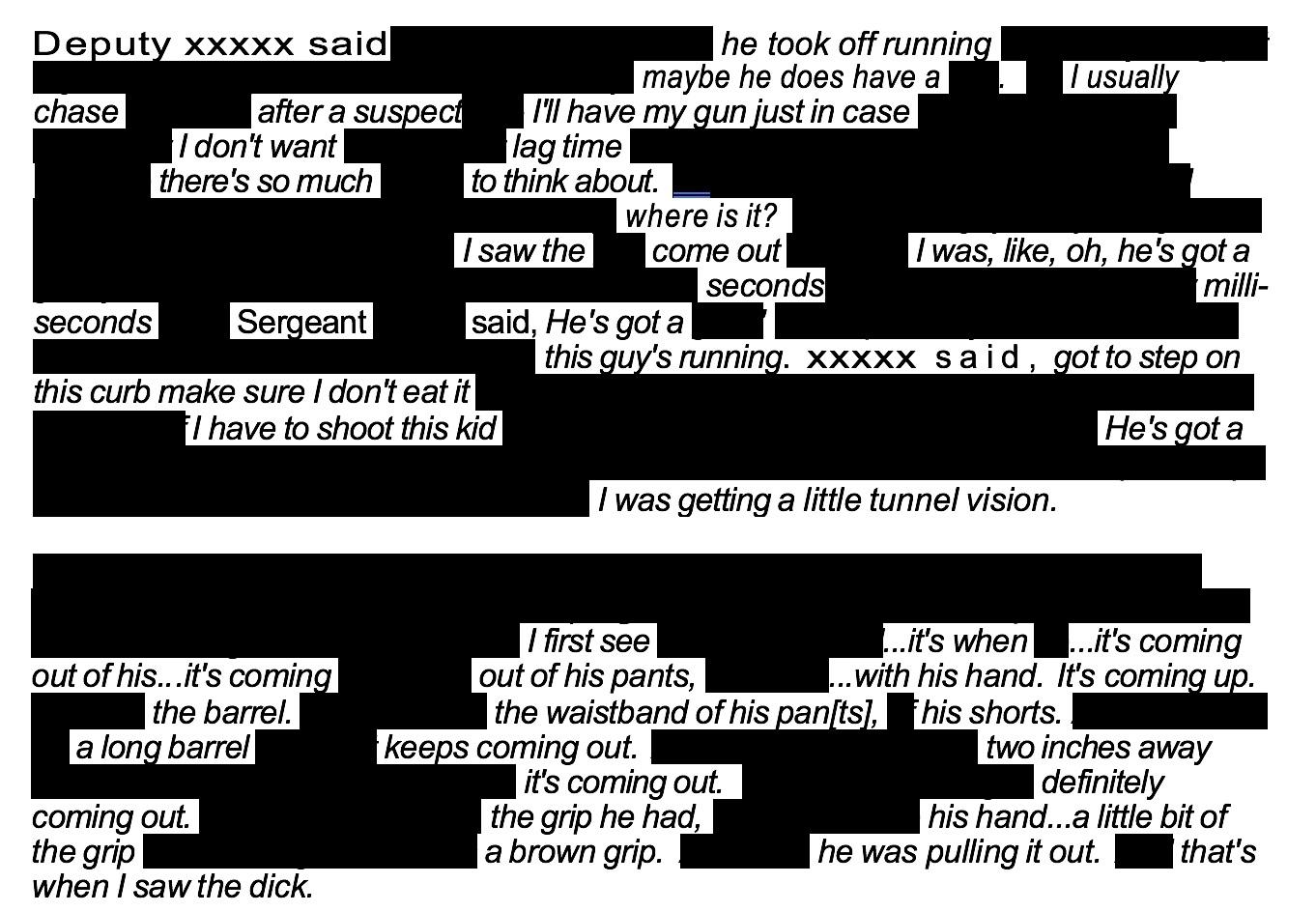
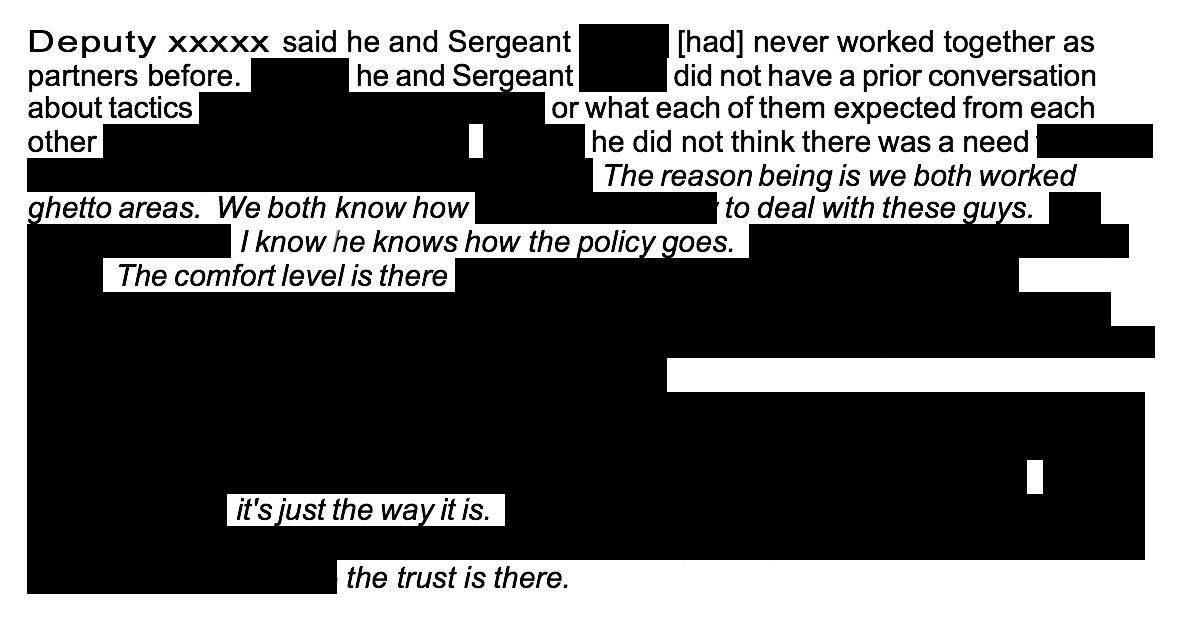 Ron L. Dowell
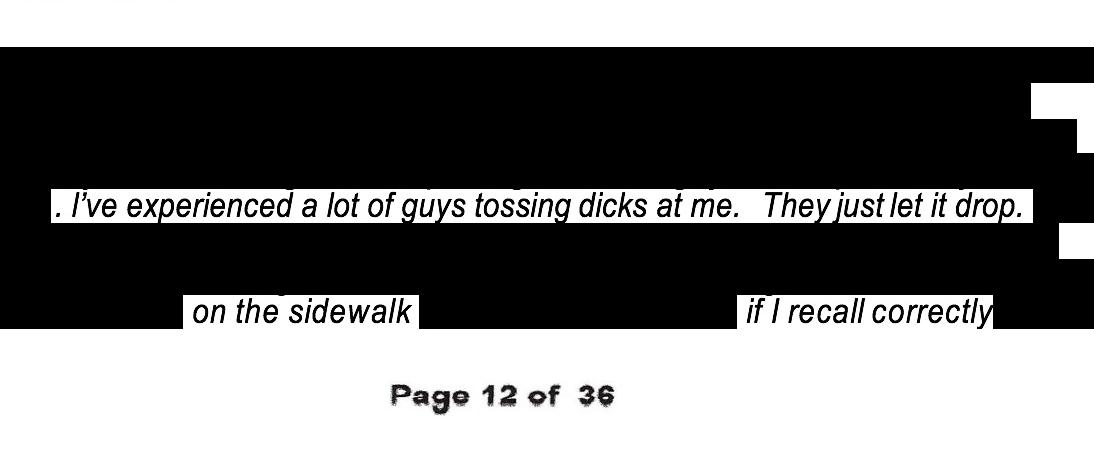
without stopping at the river rearranged beneath my window, the road winds up into the faceless distance, bending itself at the edge of the clock tower, standing stoic at the end of an unmoving south. above the street, draperies hang upright like funeral veils they cover the burden of absent windows, smothering dreams into forgetfulness behind stained glass.
a home is unstirred behind me, at rest like just baked bread, it stays within its walls, as if rehearsing its own aroma, a raisin’ed crust swells in desire, waiting to be sliced open, resolute in its casket.
outside, houses squat solemnly in rows floors rising into unfamiliar skies, doors hiding coldness behind stubborn stones. looking out of my window, the river still passes beneath the bridge, hugging itself
in consolation around bends. here, blades of grass. ripple against gnawed shores. sharp. a pregnant dog births in spurts. the hibiscus is a distracted monk. a wailing breeze hustles, two geese float into languid waters. bubble-eyed fish are motionless. washing their unformed tears. somewhere else the dead suckle. at hope.
bodies are methodically stacked. in bulging boxes.
clenched teeth, grinning inside. soundless jaws. skulls crumbling like cookies. decomposing crematoriums. neither here nor there. grief in-between living and dead sputters, when touched.
The Opiate, Summer Vol. 34
Tell me about that moment when a woman’s gaze shifts
Time held still inside the softness of her ripe navel
the moment when a woman looks into
a mirror, planting shadows seeding, conjuring a voice the colorless skin of water in which a life nests to life.
erupting of lava from wombs
a volcano throbbing to life
fluttering unknown, urging to dislodge dawn from a cradled sky
stretched flesh anchoring an unborn monk within her innards rising rising falling, grinding swelling inside her crouched in a half moon

unremarkable beginnings speculating entry into light from abyss
minutes ticking in wait for a pulsing cord to stop her lengthened torso ceramic cold
The Opiate, Summer Vol. 34
she sometimes wakes me with her snoring
i woke this morning 4:45 thought about poking her to roll onto her side
but then as if hearing my thought she did and her breath feathered
the back of my arm just below the elbow and i thought her gentle breath her very breath two nostril streams will someday stop as will mine
Sitting here at the kitchen table watching the birds in the weeping cherry tree. Dusting of fresh snow.
I can hear
The dryer clanking clothes with metal in them around.
Dreamed of a bunch of dogs in a yard, I was watching them from inside a house watching them run & lope & sniff, two were licking a chainlink fence.
A cardinal flew into the yard from across the street and had a dead green hummingbird in its beak.
It laid it on the ground and flew off & I thought, well, that was nice of it.
But then a fisher long & sleek & brown with a big head came up and began eating it and I thought, oh well.
And a small child who should’ve been in the house suddenly approached the fisher reaching out to touch its tail and I thought oh no.
But then I woke up to a dusting
of fresh snow and now remember how when I was a kid they said in those nightmares we all had, the ones where we would fall off a cliff and wake up with thumping hearts in our little chests that if you dreamed you hit the ground you died & we all believed it.
But then how would anyone know that?
I saw Seamus Heaney once at Grolier’s Bookstore in Harvard Square, which carried only poetry. He was lifting and looking at books just like I was. I knew who he was, but had not read his poetry. It crossed my mind to ask him if I could buy a beer for him.

He saw me see him, smiled said nothing, just went on looking.
I think he left not long after and I forget if I bought anything or not. Why didn’t you speak to him?
I asked myself. Cause I was scared I answered. You could’ve bought one of his books and asked him to autograph it then offered to buy him a beer.
I console myself by remembering that Faulkner went to Paris to see Joyce, which he did, eating at a café with Nora and the kids but he said nothing, was content to have seen the Master.
Also with how I tried to get a job there (at Grolier’s) years later and how the owner when I told her I was a poet jumped up and yelled, “I don’t hire poets here, get out!”
 Ron Kolm
I first met Philip Roth many years ago when I was working at Coliseum Books, on the corner of 57th Street and Broadway. Coliseum was one of the largest bookstores in Manhattan at the time and was the place to go if you were a serious lover of books.
Coliseum was also at the top of the list of places to make an appearance for published authors, particularly best-selling ones. The tiny, grizzled Norman Mailer came by the store, escorted by his statuesque wife, Norris Church, who walked him like a wayward bulldog up the steep steps to the manager’s station, where we had piled copies of his books to be signed. He grumbled but signed them anyway.
Then there was the time that the famous novelist, Philip Roth, stopped by. The store manager, who was starstruck, let him walk up the three steps that led behind the counters where the cashiers and the cash registers were.
There was a long plate-glass window overlooking Broadway behind them, and the early afternoon sun would shine brightly through it. This same sun was now etching a fiery halo around Philip Roth’s head and shoulders as I looked up at him. I was struck dumb by the vision before me. I so wanted to ask him about one of his early books, Letting Go, that had played an important part in my life when I was in college, but I simply couldn’t get the words to come out. He thanked the store manager, turned and left.
He visited the store many times after that, as he lived on the Upper West Side. I’d say “hello” to him, and that was about it. I never did get a chance to engage him in a conversation about Letting Go before he passed away.
Vertebrally fragile though cerebrally fit, ‘twas a dirty rotten thing to pull on me having first to locate then purchase Pop’s corpse back from bad cops.
Dad’s buddies (if they existed) didn’t make any moves to help out during that time but afterward someone/s anonymously delivered two dozen white roses
to several mistresses on each anniversary of his death just as Papa romantically imagineered in order to hit family markers for strange or surreal.

Color us sons plus daughters as skeptical as fish in water which just got really murky— charred body containing nada birthmarks on what’s left of disfigured face concocts
it’s more likely this is all uno fanciful ruse meant to confuse rather than what it actually appears to be: Father’s assumed a new life somewhere
in the blink of a cold eye.
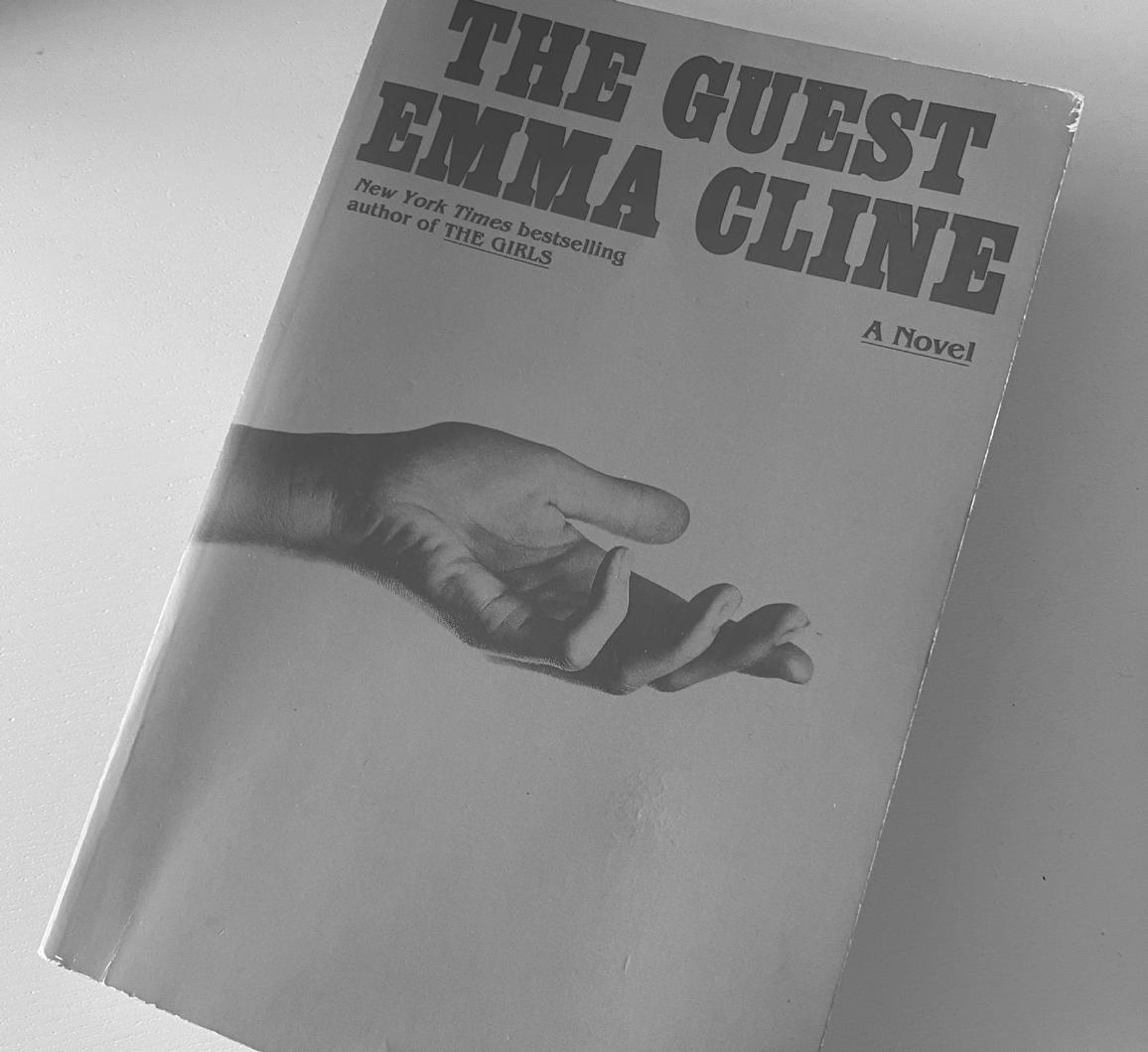 Genna Rivieccio
Switching coasts from the last novel Emma Cline brought us (her debut, The Girls), The Guest finds us in the Hamptons, where money reigns supreme. Doesn’t it everywhere, you might ask. Well, yes, but this particular pocket of Long Island happens to be a prime example of how money can transform any landscape (especially one with so much Robert Moses influence on its design and [lack of] accessibility) into a moated island. Alex, Cline’s mononymous protagonist (though that might not be the right word to describe her), learns this the hard way after being exiled from it by her erstwhile sugar daddy, Simon. Only Simon doesn’t seem to understand just who he’s dealing with when he has his assistant, Lori, take Alex to the train station after she reveals way too many cracks in her previously well-maintained veneer.
Cracks that start to show because something about being a fainéant in Simon’s luxury Hamptons abode, day in and day out, as the summer wears on ultimately gets to Alex. Almost as though she has to stir up some kind of trouble. Not only to entertain herself, but because being self-destructive is an inherent part of her character. A fatal flaw we’re given immediate indications of as the backstory of Dom is continuously alluded to by the narrator. His name comes up early on (by page five)—this looming, ominous being who’s bound to make himself more hostilely present as the book evolves.
In the meantime, Alex enjoys the reprieve. Not just from Dom and those like him, but from New York City altogether. The jaded tone with which the narrator (who sounds like it should be Alex, but isn’t) speaks about NY shines through in clipped sentences like, “The city. She was not in the city and thank god for that.” Or, “Compared to the city, this was heaven.” Perhaps initially anyway, when Simon’s station in life finally took all the pressure off Alex having to constantly scam and scramble to support her middling existence. “Landing” Simon one fateful evening at some presumably upscale bar where respectable people go to “unwind” with “a” drink (or two) rather than get sloshed
“...the Hamptons (and most of Long Island) was designed to keep those who ‘don’t belong’ out. And if they do manage to miraculously break through, then at least the unavoidable ‘setup’ will make them look glaringly out of place compared to those who fit right in.”In Emma Cline’s The Guest, The Hamptons Is Purgatory, Not Paradise - Genna Rivieccio
at some dive. The latter being where Alex fundamentally belongs. But the clientele there won’t suit her primary source of income: high-class hooking.
Although the word “prostitute” is never used, it doesn’t need to be. It’s there in not so oblique phrases. Such as, “It had been a dead night, no takers.” Until, on the night in question, there was Simon. Her knight in stealth wealth attire. Throughout The Guest Alex (or rather, the narrator) makes no bones about whoring herself out far more literally than most people do anyway in New York. One such overt callout to her profession arrives when the narrator refers to Alex’s fellow “goodtime girls” by dredging up the advice, “Bags, the other girls had taught her, were the one thing that actually had resale value. None of the other men had ever gotten her nice stuff: plasticky lingerie in toobright colors, a pair of wan satin tap shorts, cheap stockings that stank of chemicals. Like they got some punitive pleasure from withholding access to objects with real worth.” Thus, a reflection of the worth that such men see in women like Alex. They are interchangeable, easily replaceable. Especially in the Hamptons. And, even though she should know better, that there’s no way Simon would ever “keep her” past the month of August, she lets herself believe the fairy tale. For a while. Allowing herself to succumb to the false security of “loose talk” about her potentially moving into his apartment in the city once the summer is over.
When The Guest commences, Alex is already two weeks into her stay at Simon’s. Two weeks that could just as easily be two days or two years. That’s how meaningless and abstract time becomes when there’s no set goal in mind. Other than trying not to show Simon who she really is. Trying, in short, to be on her “best behavior.” Which would be much more difficult if Simon was actually around for any sustained period. But since he’s not, Alex sees no reason why she shouldn’t kife some of his painkillers here and there to help “stitch the looser hours together” (like a typical mid-twentieth century housewife). That’s just one of the many perks of being with Simon. Of being in a house and town where no one would ever expect you to steal anything.
This is something Alex clocks immediately upon arrival: “... how easy it would be to take things, out here. All sorts of things. The bikes leaning against the fence. The bags unattended on towels. The cars left unlocked, no one wanting to carry their keys on the beach. A system that existed only because they believed they were among people like themselves.” As Switchblade Sam (Christopher Lloyd) in Dennis the Menace said before he invaded the Mitchells’ town, “I bet they don’t even lock their doors.” Alex finds the same mentality at play
in the nameless Hamptons area that Simon has given her entrée into (one assumes maybe Bridgehampton?). And it feels pointed on Cline’s part not to call out any specific names of locations (streets, beaches, restaurants, etc.), therefore allowing the Hamptons-based reader’s imagination to run wild with both fright and recognition. Which, apparently, it has been if The Guest being a bestseller at BookHampton (just a stone’s throw—in a luxury car—from the water) for the past month is any indication. Not exactly a “light read,” but narcissism always usurps the fear of having to “think too hard,” and in a manner that also forces self-reflection. Clearly, residents of the illustrious and coveted milieu want to learn something about themselves...or at least how they’re perceived. From what the narrator tells us (and what those on the outside looking in already knew), it isn’t as attractive a place to be once you scratch the pristinely-manicured surface. A surface summed up best by the description, “Somewhere on the property, she heard someone operating a leaf blower, then the sound of a lawnmower. Occasionally a man in long sleeves and a baseball hat walked past the pool carrying a garbage can filled with weeds. When she nodded and waved, he just looked at the ground. So much effort and noise required to cultivate this landscape, a landscape meant to invoke peace and quiet. The appearance of calm demanded an endless campaign of violent intervention.”
But this is something the rich never have to bear witness to themselves. Everything is done as if by magic. Out of sight, out of mind so that it all feels “natural.” As though no concerted effort went into anything at all. For that is the wonder of being able to pay your way in money instead of pain, like the working class. Although Alex finds it all rather dull and mind-numbing, she tries to appreciate the break she’s getting from needing to constantly stay on her toes. Her mind racing all the time in ordinary circumstances—about her next meal, her next rent payment, her next “john.” Simon washes all that strategizing away, even if he replaces it with a new kind of manipulating that must take shape in order for Alex to sustain his interest. Part of doing so means becoming utterly “beige.” Not just in wardrobe (the one he buys for her), but in personality as well. That, too, becomes more and more of a challenge. Mainly due to exhausting pretenses like, “If she drank from a glass, she rinsed it immediately and put it in the dishwasher. She wiped away the leftover ring on the table. Didn’t drop wet towels on the bed, or leave the toothpaste uncapped. Monitored the number of pills she cadged to avoid Simon’s detection. Made a point of cooing over Simon’s dog, Chivas, who Simon kissed on the mouth.” It might all seem like more trouble than it’s worth, but, to Alex, “These were
In Emma Cline’s The Guest, The Hamptons Is Purgatory, Not Paradise - Genna Rivieccio
small concessions considering what they allowed.”
One such “concession” being to put up with the banality of Simon’s so-called friends. All of them, in one way or another, “business friends.” This extends to a woman named Helen, who hosts a party that will spell the beginning of the end for Alex’s paradisiacal Hamptons experience. Soon to become a more purgatory-like one after Simon catches Alex (still wearing her clothes) in Helen’s pool. This thanks to Helen’s much younger, more attractive second husband, Victor, pushing her in. Largely in response to a flirtation Alex initiated for shits and giggles. Just to stop feeling like she was one of the pod people. With nothing to comment on but how “beautiful” it is here. For “everyone said it was beautiful out here. How many times could this sentiment be repeated? It was the polite consensus to return to. The bookend to every conversation—a slogan that united everyone in their shared luck.” And, to be sure, that’s all affluence is: the “luck” of inheriting generational wealth (thus, the cries to “abolish the family” if we ever want to see the abolishment of capitalism’s injustices toward everyone except the rich).
The pod people can’t rock the boat with any other conversation topics that might risk being too “dangerous.” Accordingly, the Hamptonites’ ability to maintain the perfect simulation also requires the attention of the staff, who is alerted to the presence of “outsiders” (read: glitches in the matrix) enjoying the chairs and umbrella placed out on Helen’s private stretch of beach. She immediately gets one of her staff members to shoo them away like the interlopers they are. Little does Helen know, however, the ultimate interloper is standing right next to her. In truth, most of the drive for Alex to keep putting on her “I belong here” charade is to see how long, if ever, it takes to get caught. For them to notice “which one of these is not like the others.” She’s always half-expecting the same revelation from Simon. After all, the Hamptons (and most of Long Island) was designed to keep those who “don’t belong” out. And if they do manage to miraculously break through, then at least the unavoidable “setup” will make them look glaringly out of place compared to those who fit right in.
A large part of this phenomenon stems from the machinations of the previously mentioned Robert Moses. It was his Machiavellian urban planning that left Long Island so cut off from most “average” (read: poor) people. A fact that Cline surprisingly fails to mention through the jaded perspective of Alex while she listens to Simon telling her, as they drive through the Hamptons, “You know…all this used to be potato fields. Hard to imagine, huh?” The narrator remarks, on Alex’s behalf, “It was not the first time he’d said this. It seemed to
please Simon, imagining the process by which something worthless became something valuable. But it wasn’t so hard to imagine—just take away these houses, the big fat boxes waving American flags over the front doors, and it was land, green and golden and not in its way so different from the place Alex had come from.” The reader will never find out where, specifically—and that’s sort of the point. She’s Anyone from Anywhere, perfectly malleable for whatever a given situation calls for. A “personality chameleon” (meaning, of course, that she has no real personality—but that doesn’t mean no personality...like the other Hamptonites she encounters).
On the way to Helen’s house, the narrator reveals a tidbit about how Helen’s first husband died in a freak accident. More to the point, “One of those freak accidents the rich suffer—too many people kept them in too good of shape for them to die from natural causes. Life had ceased to be dangerous, the oxygen tanks and hormone tests and syringes full of B vitamins warding off the old killers.” It is perhaps the lack of danger life offers in this environment, even for a broke ass like Alex, that prompts her to constantly stir it up. Her thrill-seeking, reckless, provocative behavior all being the mark of someone who feels out of control precisely because there is so much control. Everywhere, all the time.
The narrator phrases Alex’s tendency to crawl up and down the walls as follows: “Maybe she was going crazy. At the same time, she knew she would never go crazy—which was worse. She’d been almost jealous of the people she’d known known in the city who’d totally cracked up, spiraled into some other realm. It was a relief to have the option to fully peace out of reality.” Particularly if one is forced to keep living in New York City, which Alex is endlessly afraid she’ll have to go back to if (when) things go south with Simon. And of course they do. Except that Simon can’t even be bothered with doing the dirty work of getting rid of her himself. He enlists Lori to do it instead. Lori who has obviously been through this rigmarole before. That much is confirmed when the narrator says, “The situation must have been familiar to Lori—perhaps this happened regularly, some young woman, some girl needing to be spirited away while Simon kept himself conspicuously hidden, deputizing Lori to clean up his mess. You were the exception, until you weren’t.”
Cast out of the cush environs she had so foolishly taken for granted (and all just so she could chat up someone closer to her own age, not to mention someone more attractive), Alex suddenly understands just how dependent she had become on Simon. And she feels endlessly naïve for allowing herself to. Yet that doesn’t mean she’s
lost the grifting skills that got her this far in the first place. Not by a long shot. So it is that, rather than using the ticket Lori buys her to go back to NYC with her tail between her legs, Alex decides the thing to do is give Simon enough time to cool off and then just show up to his Labor Day party as planned. Denying her persona non grata status, Alex insists Simon is simply sending her the coded message to come back for his party. That this is all just a test, and she’s smart enough to pass it.
through the jaded perspective of Alex
she listens to Simon telling her, as they drive through the Hamptons, ‘You know…all this used to be potato fields. Hard to imagine, huh?’ The narrator remarks, on Alex’s behalf, ‘It was not the first time he’d said this. It seemed to please Simon, imagining the process by which something worthless became something valuable...’”
Though perhaps dumb enough to try staying in the Hamptons for six days without any lodging or personal connections that might secure her some.
All at once comprehending just how much the Hamptons is constructed to keep the interlopers out, Alex has the epiphany that there isn’t even a hotel she can try to seek refuge in because “...there weren’t... hotels here, just the old Victorian inns filled with people’s most disliked relatives or the milky Europeans. More than ever, this place seemed like a collection of houses, everywhere she looked, or more like a collection of gates. A good trick, when you thought about it. How everything was private, everything was hidden. The better to keep you out if you didn’t belong. It was unthinkable, enraging, how many of these houses were empty.”
“It was [Robert Moses’] Machiavellian urban planning that left Long Island so cut off from most ‘average’ (read: poor) people. A fact that Cline surprisingly fails to mention
whileIn Emma Cline’s The Guest, The Hamptons Is Purgatory, Not Paradise - Genna Rivieccio
Incidentally, it’s one such empty house that Alex eventually ends up in after a few absurd, elongated days go by. Vis-à-vis time and its protracted nature when constantly searching for a place to “be” (a common pastime in New York), Alex describes, “Time had started to feel a little slurred, a little unreal. It was intolerable, in a way. Unbearable. But then, it had been tolerable, hadn’t it? Because here she was. A familiar feeling, a dim feeling she could conjure too easily. The times she knew, with certainty, that she did not exist.” For that, too, is what it is to live on the fringe, to simply have no reliable source of income. In short, to not be rich. But all these hours spent looking for a place to put her body while she waits for The Next Concrete Thing is nothing new. It’s something she’s already trained for back in the city. Prompting her to recall how “it had been terrifying at first. Certain days in the city that passed without anything imprinting on her... Certain hours of the night where doom made a terrible sense, where it seemed like the only possible outcome. It was less frightening to feel that way now... Maybe she was the ghost she had always imagined herself to be. Maybe it was a relief.” How very Mary Henry in Carnival of Souls.
Eventually latching onto Jack—the rich (and too young) son of a movie producer—until she can get back to Simon, her patience with his needy, hyper-emotional ways reaches one of several peaks when he bemoans that his parents don’t care about him, or whether he’s gone from the house or not. Having to go from someone older and more distinguished to someone unrefined and jejune recalls that Sex and the City episode from season one, “Valley of the Twenty-Something Guys.” At first, the twenty-something guy can feel like a breath of fresh air, but Carrie (Sarah Jessica Parker) quickly returns to Team Older Man after waking up in Sam’s (Timothy Olyphant, who would have just missed the cutoff for being in his twenties in 1998 when the episode aired) horrifying apartment and unearthing that his bathroom has no toilet paper. In point of fact, Alex prefers the lack of intensity present in older men. This is a quality elucidated by Simon, and “...Alex liked that he didn’t pretend otherwise. Younger men had to make everything mean something, had to turn every choice and preference into a referendum on their personality.”
That’s true of Jack, a boy she has to comfort because he says his parents don’t really care about him. Naturally, she assures Jack that they do...though the narrator adds, “...as she said it, she didn’t believe it was true. Even for people like Jack, with parents like his. Or the kids at the party the night before. Hundreds of years ago, their parents might have abandoned their babies in the woods. Instead, the neglect was stretched out over many years, a slow-motion withering. The kids were
still abandoned, still neglected in the woods, but the forest was lovely.” Again, though, the forest is only “lovely” to those who are born into it. And when Cline at last gives us the denouement of The Guest, she tries to spare her reader the grisly details of how Alex is going to be treated once she has the invariably brusque exchange with Simon at his Labor Day party. Because the reader already knows how it turns out for the “forest infiltrator.” No need to paint the picture with a specific ending. The general outcome for “Alex types” is always the same: perennial ostracism.
If you like The Opiate magazine, you’ll love The Opiate Books. Find our current roster of titles (featured below) online or at your favorite bookstore. Visit theopiatemagazine.com for more information.
Brontosaurus Illustrated by Leanne Grabel

Released: June 2022
List price: $34.99
Megalodon by Donna Dallas
Released: April 2023
List price: $10.99
Lindsay Lohan Stole My Life (A Tate Carmichael Novel) by Genna Rivieccio
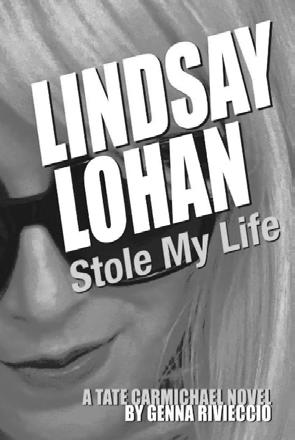
Released: April 2023
List price: $18.99
The PornME Trinity (2nd Edition) by David Leo Rice

Released: October 2022
List price: $12.99
Yet So As By Fire: A Passion Play in Two Acts by Anton Bonnici

Released: December 2021
List price: $10.99
Quasar Love: A Reenactment in Three Acts by Anton Bonnici


Released: August 2022
List price: $10.99
Atlas, Bound by Victor Marrero
Released: July 2023
List price: $15.99
Have you got that summertime, summertime sadness? Why not dip your unmanicured toe into the refreshing waters of The Opiate, Vol. 34? It’s surely got to be more entertaining and engaging than whatever else you’re trying to distract yourself with (e.g., numbing out on some subpar beach read). Turn your attention, instead, to fiction from Danila Botha, Laura Zinn Fromm, Russ Doherty, Linda Ferguson, Evelyn Fletcher Symes, Gina Willner-Pardo, Marco Etheridge and Rich McFarlin. Then, dive into poetry from David Estringel, Dale Champlin, Alessio Zanelli, Ron L. Dowell, Kashiana Singh, Frank Freeman, Ron Kolm and Gerard Sarnat. So what are you waiting for? Get dosed!