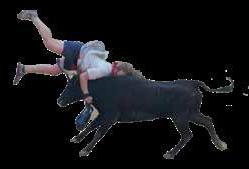
First bullrun death of 2026 sparks debate about Spain’s festivals
See page 6 & 7


Spain’s football doctor gets his team World Cup
First bullrun death of 2026 sparks debate about Spain’s festivals
See page 6 & 7
Spain’s football doctor gets his team World Cup
HE had fallen in love with Spain when an overnight stay in 1970 led to a year living in a classic white village.
But when Austra lian architect Robert Mar shall, 80, de cided to retire here half a century later, things took a distinct turn for the worse.
Indeed, his move to idyllic Jimena de la Frontera, in Andalucia has
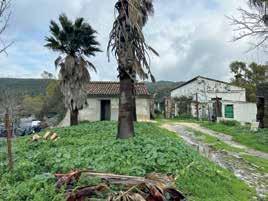

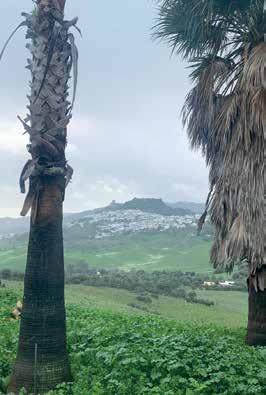
turned into a ‘three-year nightmare’ after a squatter took control of his home, forcing him to hire a bodyguard. It came after a local goatherd agreed to pay him €20,000 a year to farm a third of his stunning 64-acre estate, El Polvorin (left).
Bought for €1 million in 2022, Marshall, from Melbourne, had initially got on well with Juan Ruiz, 38, who
set up a milking operation for his goats in a shed attached to the farmhouse.
But soon the charismatic Spaniard took con-
EXCLUSIVE: Architect’s €1 million retirement farm seized by goatherd squatter in a threeyear ‘legal nightmare’

trol of the estate and a year later claimed the property as his own and padlocked all the doors and gates.
By Maeve Gorman & Karissa Key

After legal action a court ordered Ruiz to remove the locks, but the intimidation did not stop there.
“He filmed me wherever I went and spat at me whenever I approached,” Marshall, who was also a councillor for 20 years, told the Olive Press
“Next he ransacked my belongings, stole my car and filed police complaints against anyone who came near the farm,” he continued.
Things got so heated, the expat was forced to buy a small home in the nearby village and even ‘hired a bodyguard to protect’ himself.

When Marshall removed some video cameras overlooking his patio and bedroom, he was accused of theft and eventually found guilty in court.
Incredibly, while a different judge eventually ordered the Guardia Civil to disconnect the squatter’s electricity, he immediately reconnected it.
Under Spanish squatter laws, until he’s been evicted Marshall must continue paying his electricity bill so he can continue his goat milk business. “That is around €400 a month, on top of the hundreds I pay for water,”
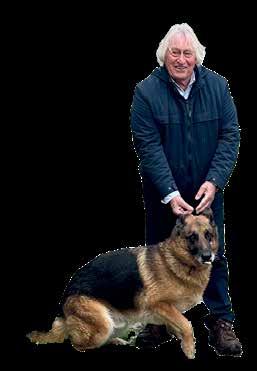
Marshall added. “I have not had a single cent from him and have spent over €25,000 in legal fees to get him out.”
It is little wonder the architectwho designed dozens of schools and churches - spent six days recently in hospital for stress and is taking anxiety medication.
While Marshall has finally won a court case against Ruiz he must wait another six months before getting an order to have him evicted. “I have no idea when this nightmare is going to end,” he said.








Spain sidelined from Europe’s new post-US security architecture
Spain squatting: Mass evictions after tenant protections scrapped
Body of missing British tourist, 79, discovered on the Costa del Sol after week-long search
A REMOVAL man who vanished with €25,000 of furniture from an expat couple moving to Spain has been termed a ‘controlling’ man.
The former partner of Jonathan Perry (right) - who we revealed had stolen the possessions of Caroline and Brendan Bennettsays he was always ‘secretive’ and ‘coercive’. Emma Williams, who lived with Perry on the Costa del Sol before splitting up and returning to the UK, said she was ‘devastated’ for the Bennetts.
However, she said she was ‘not surprised’ Perry stole their things and charged them €5000 in advance to deliver them to Malaga.
Williams is currently involved in a legal battle with Perry, whose Facebook page states he still works in removals for a firm called ‘b-moved’.
The ex-partner of six years, who shares a daughter with Perry, said she knew he had stolen furniture from ‘at least’ one
Removal man accused of stealing €25,000 worth of furniture was ‘coercive and secretive’
By Rachel Gore

other couple and had left Benalmadena ‘in a hurry’ last year.
Thames Valley police who are investigating told the Bennetts they believe Perry is ‘living in Harlow’.
A police spokesman confirmed enquiries ‘are ongoing’ this week with no arrests yet made.


Struck off dodgy dentist strikes again in Spain leaving expat in ‘excruciating pain’

A BRITISH expat has been left in agony after visiting a dodgy dentist who was TWICE struck off in the UK.
Rachel Byrne has reported Rajkumar Rao to the police and dental council after he left her with a ‘very deep’ hole in the side of her gum and unable to eat.
Rao has been practicing at Alhaurin Dental Care, near Malaga, for nearly two decades, despite the Olive Press revealing in 2010 he had been struck off in England in 1998 and 2004 for ‘serious professional misconduct’. He moved to Alhaurin, near Malaga, after an ITV documentary Dentists From Hell exposed how he had badly treated six patients, including a 72-year-old given 22 crowns when she only needed seven. Yet extraordinarily he was able to set up in Spain and got a licence to practice, due to a paperwork error.
And when we reported this to Malaga’s College of Dentistry it still refused to withdraw it despite being presented with a series of new victims.
Today there is one more victim to add to the list, with Byrne, 63, from Plymouth, refusing to drop her complaint about Rao, who she first visited in August last year.
Describing it as the ‘most traumatic experience of her life’ the former sales boss at the Western Morning News, in Devon, told the Olive Press she was left unable to eat and left with a ‘very, very deep hole’ in the side of her gum.

“I was left unable to eat and with a hole the size of a coin in my gum, plus a white patch on my cheek,” continued the mother-ofthree. “But when I returned to his clinic a few days later in pain he simply gave me five painkillers saying it was merely a ‘traumatic ulcer’.”
She has since filled out a seven page complaint form with the dentistry college, but she is yet to hear back on its progress. This week the college confirmed they had received it, but said there was ‘no resolution’.

Told she needed a root canal, the dentist ‘immediately began drilling’ in preparation for the treatment but ultimately told his patient that she would have to return in a month’s time.
‘I went back on September 3 and I’m not joking, it was the most traumatic experience of my life’, added Byrne, who has lived in Spain with her UK pilot husband for a decade.
After a ‘horrendous’ experience, it was decided that an implant would be necessary but ‘nothing could be done’ for a number of weeks.
Meanwhile, other victims have taken to our website over the last year to comment about their experiences of Dr Raj.
‘I have just experienced this man and believe me I am not impressed at all’, wrote one, while another reported she had visited ‘a year ago’ adding: “I’ve been having treatment ever since.”
When the Olive Press contacted the clinic this week, a receptionist said Dr Rao was ‘not available’.
When asked why an address on Google said the clinic was ‘temporarily closed’ she refused to be drawn. “I really can’t answer these questions,” adding: “Please try another day.”
We did on two more occasions, while a series of emails sent to the mobile phone and a separate email were not answered.

WITH an estimated wealth of €3.5 billion and more than 40 official titles, she was the world’s most noble aristocrat and one of Spain’s wealthiest.
The Duquesa de Alba’s vast holdings included over 40 estates, palaces, and castles, notably Palacio de Las Dueñas in Sevilla and Liria Palace in Madrid.
So wealthy was her family, it was said she could travel the length and breadth of Spain without leaving her properties. And she was a huge Anglophile having dined with Winston Churchill and partied with Princess Margaret. In an exclusive interview with the Olive Press in 2011 - one of the few she ever gave in English - she revealed she was ‘not a fan of bike lanes’ and Pi casso had want ed to paint her ‘in the nude’. Now a new exhibition is celebrating the extraordinary life of Cay-
A NETFLIX documentary has exposed the dark side of social media influencers in Spain and America.
In the film by British journalist Louis Theroux the hypocrisy and dangers of online influencing on teenagers is explored. Inside the Manosphere particular-
ly looks at the promotion of hypermasculinity and misogyny, starting in Marbella with English TikTok star Harrison Sullivan. Sullivan - known as HS (@hstikkytokky) - is filmed living at a luxury
villa and working out at the Real Club Padel gym in Puerto Banus. Meanwhile, at the villa he is running the ‘House of Heat’ - a content mansion for OnlyFans creators. Despite claiming he would ‘disown’ a daughter on OnlyFans, Sullivan profits from adult content while promoting the misog-
ynistic ‘red pill’ and ‘alpha male’ movement inspired by Andrew Tate.
The shocking behaviour of Sullivan and his related influencers sees them get into a filmed punch up in Puerto Banus, as well as ‘expose’ an alleged child molester, who is beaten up.
But not in the nude, as Picasso had once wanted to paint her. Maeve Gorman on a new exhibition into the weird and wonderful life of the Duchess of Alba
etana Fitz-James Stuart at her former palace home in Sevilla.
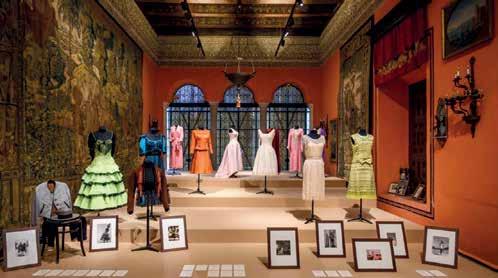
Marking the centenary of her birth, the Palacio de Las Dueñas show features 200 artworks and other person-


Curated by her daughter, it highlights her influence as a cultural icon and art collector.
The Duchess spent much of her childhood in London while her father served as Spain’s ambassador to Britain, telling us in 2011 she was a ‘big

By Maeve Gorman
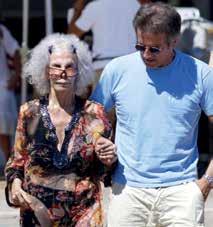
fan’ of Marks & Spen cer and Selfridges. Throughout her life, her personal rela tionships captivated the nation. At 21, she married fellow aristocrat Luis Martinez de Irujo with whom she had six children. Following his death, she surprised Spain by marrying a Catholic priest, before a later marriage to PR man Alfonso Diez (above right) drew the disapproval of the monarchy. She resolved family objec-
A VALUABLE ‘lost’ painting has been found hanging in the private home of one of Spain’s most powerful aristocratic families.
Joaquin Sorolla’s La Chata, a portrait of Isabel de Borbon, has been located in Madrid’s Liria Palace, the
HE’S been an unpredictable showman from Day One.
But miserable Morrissey went even one step further when he refused to play a concert in Valencia after the noisy Fallas celebrations ruined his sleep.
The ex-Smiths frontman let the light go out on his first-ever gig at the city’s prestigious Palau de les Arts venue. He claimed he had been put through an ‘indescribable hell’ while staying at the five-star hotel MYR in Plaza de Manises.
He added it would take him ‘a year
home of the Duke of Alba. National Police seized the painting along with two others after a tip off. It comes five decades after the 1908 oil painting disappeared, with police confirming it belongs to the Spanish state.

tions by dividing her fortune among her six children before marrying Diez in 2011, when she was 85 and he was 61.
A passionate aficionado of bullfighting and a devoted patron of Spanish culture, the Duchess often took the seat of honour at the ring in Sevilla. She died in 2014 at the Palacio de las Dueñas. The exhibition is a fitting tribute to the larger-thanlife Duchess and runs until August 31.
Visit our website for the full 2011 interview
Morrissey cancels gig due to ‘hellish’ late night fireworks

By Alex Trelinski
to recover’.
Close to 1,500 tickets with prices starting at €100 were sold out within minutes of going on sale last November. Full refunds will be offered.
A statement on his official website
claimed it came after he arrived in Valencia after travelling from Milan for two days by car.
“He couldn't sleep or rest during the night due to the noise of the festival, the loud techno voices and the announcements over the public address system,” it said.
“This experience left Morrissey in a catatonic state." it concluded.
Earlier this year he cancelled six concerts on the American leg of his tour due to 'illness', while last November he scrapped gigs in Latin America, citing 'extreme exhaustion'.



PEDRO Sanchez has insisted there is no sleaze in his government.
The Spanish president told UK podcast The Rest Is Politics that corruption has been stamped out since his socialist party came to power.
When asked whether Spain suffered from sleaze and backhanders, he replied emphatically: “No, no, no, no, no. We had it in the previous administration, unfortunately.”
He was referring to former PP leader Mariano Rajoy, who was removed from office after being implicated in the Gurtel scandal in 2018.
It came after Sanchez tabled a vote of no confidence after Rajoy was accused of receiving illegal payments in exchange for public contracts, as well as running a black money slush fund.
And both my wife and brother are innocent, Pedro Sanchez insists in popular UK podcast
Often dubbed ‘Spain’s Watergate,’ the Gurtel probe led to the arrest of PP treasurer Luis Barcenas, who was sentenced to 33 years in prison.
Sanchez admitted however, that ‘corruption-free politics doesn’t exist,’, but insisted his administration has a ‘zero tolerance’ policy for it.
This meant him sacking ex-Transport Minister Jose Luis Abalos for allegedly taking kickbacks in a COVID-19 mask procure-
VALENCIA'S highest court will not try ex-president Carlos Mazon for negligence over the flood disaster.
The five judges on the Supreme Court (TSJ) rejected a recommendation that Mazon (right) should be prosecuted for his handling of the Oc-
Court rejects bid to try Valencia leader over deluge that killed 230 people
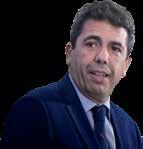
tober 2024 deluge that killed 230 people.
They said there is no 'solid or objective grounds' to charge Mazon who has immu-

Extract from complaint currently being dealt with by Bærum Conciliation Board, case No.: Sak nr. F2025-021078
Complainan: Bank Norwegian, En Filial Av Noba Bank Group Ab (Publ) Nuf, Postboks 110, 1325 Lysaker, Org. Nr. 00916573154
Defendant: Asle Heldal. Sist kjente adresse: Calle Rio Sen10 Villa, 29066 Nueva Andalucia, Spain
The Complainant has filed a complaint against the Defendant with Bærum Conciliation Board with a demand for payment of NOK 78 807,65 with the addition of interest at the legal rate and legal costs.
The Defendant is ordered to reply to the Conciliation Board in writing by 13.04.2026 stating whether or not the Defendant acknowledges and accepts the Complainant’s claim. If a reply has not been delivered prior to the expiry of the stated time limit, judgement by default can be pronounced on the basis of the Complainant’s representation of the facts of the case.
As the Defendant has no known address, service will be executed with authority in the Courts Act Section 181. The complaint and order to reply will be deemed to have been legally served when it has been posted at the legal venue for four weeks.
The documents pertaining to the case can be collected from the Conciliation Board’s office at Kjørboveien 33, 1337 Sandvika, Norway. The documents can be sent to a new address supplied by the Defendant if the Defendant so requests.



By Maeve Gorman
ment scam. Both he and advisor Koldo Garcia face trial next month for bribery and money laundering.
Sanchez also addressed accusations involving his wife, Begona Gomez, and his brother, David Sanchez, insisting they were innocent and ‘truth will prevail’.
“When it comes to my family, of course I will defend the innocence of my brother

and my wife…this is the price you have to pay nowadays in politics.”
Brother David faces trial this year for influence peddling, following allegations PSOEled Badajoz council created a position for him. Meanwhile, Gomez is under investigation for allegedly using her influence to benefit business interests and for embezzlement of public funds.
By Alex Trelinski

nity as a deputy in the regional parliament.
The TSJ said the law did not provide any specific role for a president in an emergency situation and so he could not be criminally liable.
They added their job was not to analyse Mazon's behaviour from a 'political or moral' perspective but only from a legal standpoint.
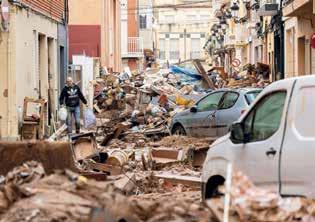
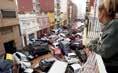
spent several hours having an extended lunch with a female TV journalist while his administration delayed sending mobile emergency alerts to warn residents.

Mazon resigned last November after a year of intense scrutiny over his whereabouts on the fateful day. It has since emerged he

There is still some time unaccounted for. Investigating judge Nuria Ruiz believes there is evidence that Mazon showed 'total negligence in the coordination and management' of the floods. She sent a report to the
A BROKEN track has been confirmed as the cause of the Adamuz train crash that left 45 dead.
It comes as a Guardia Civil probe discovered documents about welding of the line may have been tampered with. Neither of the two trains involved were found to have issues with their safety system leading the investigation to state the accident was due to an anomaly on the tracks.
This welding has come under judicial scrutiny after ‘unwarranted signatures’ were discovered by the Commission for the Investigation of Railway Accidents (CIAF).
Investigations now continue with a focus on ‘inconsistencies’ while Spain’s state-
TSJ on February 24, stating that Mazon's decision to 'retreat to a private dining room when faced with an extremely serious situation' was 'a decisive factor in the deadly human toll'.
Ruiz added there was a 'causal link' with the deaths of people due to a lack of an emergency alert warning. Families of flood victims have repeatedly blamed Mazon for the scale of the death toll and have held monthly protests calling for his prosecution.
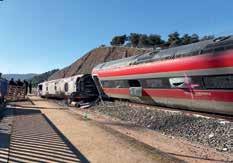
owned railway operator Adif has denied it manipulated any of the documents. According to data from Eurostat, Spain only spends 45,5 million euros per 1,000km of track, which is a 27% drop in maintenance costs over the last decade. In terms of overall spending on infrastructure this puts Spain only in front of Croatia and Slovakia.
SPAIN’S top tourist resort has reached a deal to stave off bankruptcy over a €350 million land compensation payment.
The town hall has agreed to pay €60 million from council coffers with land on top to the Murcia Puchades family.
It comes after Valencia Supreme Court ordered the payment in 2024 after the family lost the rights to build on three giant plots in the protected Serra Gelada Natural Park. They had been handed planning permission to build in 2003.
The agreement will mean no cuts to services or increases in local taxes, as €55 million of the total will come from the state’s Economic Impulse Fund.
THE surge of the far-right has stalled in Castilla y Leon, where Vox failed to get the votes the party was predicted to get in regional elections.
The PP took control of Spain’s largest region securing 33 seats in the 82-member regional parliamenttwo more than before. Vox gained just 18.9% of the vote, while the PP snared 35.5%, beating the PSOE party who got 30% of the vote and grabbed 30 seats, up two on the last election. However the combined support of the PP and Vox now exceeds 54% of the vote, reflecting the continued strength of right-wing politics in the region.

A campaigning, community newspaper, the Olive Press represents the huge expatriate community in Spain with an estimated readership, including the websites and social media of more than ten million people a month.
ROBERT Marshall’s squatter ordeal is anything but an isolated case. Too many people have found their Spanish dreams shattered by the harsh reality of squatting.
Figures from the General Council of the Judiciary (CGPJ) show an incredible 1,400 lawsuits were filed over squatting incidents last year.
Andalucia with 282 cases, Catalunya with 266 and Valencia with 158. The law simply offers too little recourse for owners like Robert. This leaves him - and many others - vulnerable to harassment from those who refuse to leave. Or worse, regretting that they’ve moved here in the first place.
While the issue of squatters is a complicated one, it holds heavy consequences to those it impacts.
Expats like Marshall should not have to fear losing their homes after spending a lifetime saving for a peaceful retirement.
WITH his wife under investigation for corruption, his brother set to stand trial over influence peddling and a former minister facing a corruption scandal, Pedro Sanchez has not had an easy ride as President.
But now, despite it all, a poll has revealed the ‘handsome one’ is twice as popular as his rivals.
Yes, that’s right, Spain’s PSOE socialists are firmly ahead in the opinion polls.
Currently 10% ahead of their main rivals, the PP, and 14 points in front of Vox.
Sanchez’s recent spat with Donald Trump and refusing to support America’s ongoing strikes on Iran, can have only have helped him more.
While Trump has called him a ‘loser’ and threatened to cut off trade, his firm ‘no to war’ stance has raised his standing globally and more likely makes him a winner.

PUBLISHER / EDITOR JON CLARKE, jon@theolivepress.es


WALTER FINCH walter@theolivepress.es
BEN PAWLOWSKI ben@theolivepress.es
FIONA GOVAN fiona@theolivepress.es
ALESSIO GHIRLANDA alessio@theolivepress.es
SALES MANAGER Sam Adams (+34) 951 154 841 sam@theolivepress.es
ALEX TRELINSKI alex@theolivepress.es
JOSHUA PARFITT josh@theolivepress.es
RACHEL GORE rachel@theolivepress.es
MAEVE GORMAN maeve@theolivepress.es
OFFICE MANAGER Keith Franks (+34) 658 750 424 accounts@theolivepress.es
NEWSDESK: 0034 951 154 841 For all sales and advertising enquiries please contact +34 951 15 48 41 Deposito Legal MA: 834-2017


DISTRIBUTION (+34) 951 154 841 distribution@ theolivepress.es
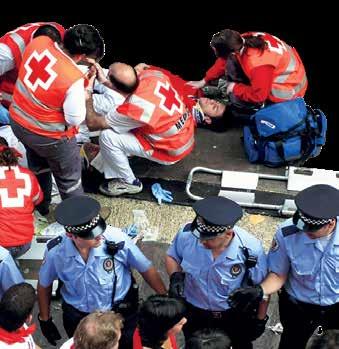
IT was the first night of this year’s Carnaval del Toro festival in Ciudad Rodrigo when a bull charged at Eustaquio Martin, piercing the upper part of his ribcage. The 71-year-old suffered ‘uncontrollable and catastrophic’ bleeding and ‘died less than a minute’ after ‘he entered the infirmary in agony’, revealed local doctor Enrique Crespo.
This Valentine’s Day death prompted the town hall to announce with some appar ent pride that ‘nobody had died’ at the town’s carni val since 1986. While this may be the case at the Salamanca province town, hundreds of victims have died at bull-cen tred events around Spain since then.
Spain’s first bull-related death of 2026 raises fresh questions over safety, with up to 23 people dying per year from the popular spectacles all around the country
By Rachel Gore
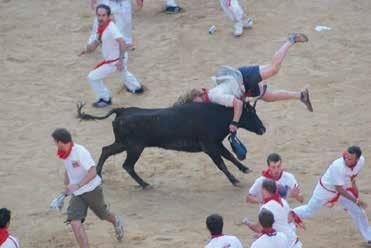
Indeed, some 23 people died in 2022 alone with the gorings spread equally around the country.
YOU must admire Pedro Sánchez for having the cojones to stand up to Donald Trump over his crazy war in Iran rather than sitting on the fence like his European counterparts, and especially the UK’s Keir Starmer. Global politics isn’t really my thing but if it was, I think I’d do a bit more due diligence before I pushed the button on a war that will impact every country on the planet and kill thousands of innocent people.
There’s clearly something not right about a world leader who, after ac-
And in 2023 another 28 people lost their lives at bull-centred celebrations. The oldest death being an 80-year-old man while the youngest was just 18.
And in the last five years alone there have been over 1000 people seriously injured, including a 12-year-old seriously hurt in Soneja, in Valen -
The tide however, may be turning, as after the bloodiest year on recent record (2022) insurers, perhaps understandably, began withdrawing cover of the festivals.
The backlash continued after 1000 people were injured and two died during Valencia’s controversial ‘bous
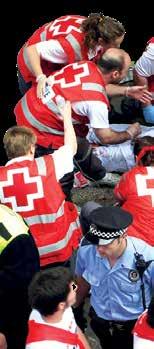

al carrer’ festivities in 2023.
The authorities got together to modify the regulations governing bullfighting events and strengthen security. But even then, these measures were not enough as in 2024 an alarming 458 people were injured, and yet another person died.
While deaths are seemingly on the decline, bull events are still leaving many with devastating injuries and heartbreaking losses.
Oddly, it is not at the globally famous festival, Running of the Bulls (San Fermin), in Pamplona, where the bedlam mounts up.
Most of these deaths and injuries occur in smaller towns organised with fewer resources.
The majority of Valencia’s ‘bous al carrer’ celebrations take place in villages involving bulls circling a fenced
cepting the ridiculous FIFA Peace Prize, changed the US Dept of Defence to the Dept of War, and then bombed the hell out of Iran.
And yet Trump’s supporters in the US, senior Republican politicians, military leaders, and major media organisations are still cheering him on.
European leaders are hard-



ly any better, trying their best not to tell Emperor Trump the naked truth that he’s out of control and shouldn’t be slaughtering innocent civilians with his buddy Bibi (aka PM Benjamin Netanyahu of Israel). So, Senor Sánchez has gone up massively in my estimation for shouting out loud what everyone is thinking. While I’m not a huge fan of his politics, per se, I tip my hat to his bravery. Stay strong Pedro and keep Spain’s air bases out of Trump’s war… and in any case who needs F-35s when European manufactured fighter jets are better and cheaper. The bottom line is the way wars like this hit everyone in the pocket. (Did I say everyone? I mean most people, as those who have stock in munitions companies are likely more than happy). Anyway, fuel prices have gone
off square for up to 30 minutes at a time. And the longer the duration the less vigilant the security is.
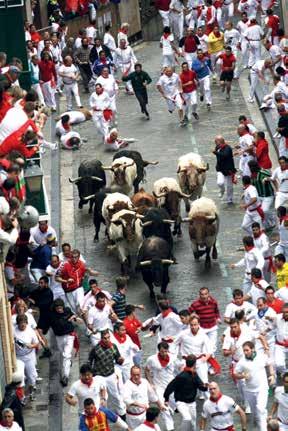
The history of bullrunning dates back to the 1500s at the famous San Fermin festival. Moving the bulls early in the morning was the most efficient way to get the animals into the town centre for bullfights later in the day. Herdsmen ran alongside the bulls and then later young men started running in front of them to display courage.
“ “ There have been just 16 deaths since San Fermin records began
Over time, what began as a practical necessity became a ritual with the run garnering increased attention after American writer Ernest Hemingway described the festival in his 1926 book, The Sun Also Rises.
Today, a century on from its publication the festival attracts nearly 1.5 million visitors annually, transforming Pamplona into one of Spain’s busiest festivals.
Hotels are fully booked months in advance, local businesses thrive with the number of visitors and international TV networks broadcast the run.
Unbelievably, perhaps given the number of visitors and runners (up to 4,000 a day), there have only been 16 deaths since records began in 1910. It should be noted however that up to 50 people are rushed to hospital by ambulance

Taking a stand against Donald Trump’s illegal war makes me proud to call Spain my home, insists Charlie Mullins
ballistic at the local pumps I use around Marbella, and it’s going to get worse.
At the beginning of the month it was about €1.55 a litre and this morning it was around the €1.80 mark, and that spells a whole lot of everything will be going up in price very soon.
It’s times like this that plenty of unscrupulous retailers use a war as an excuse to fleece their punters for a whole load more than just passing on their increased costs, and the rest gets trousered. Profiteering, price gouging… call it what you will, it’s not on and anyone caught taking the piss needs exposing, a stiff fine and maybe for repeat offenders a little time behind bars. So please Pedro, while you’re in a combative mood can you please make it very clear that making huge profits in troubled times is not on! Do that and I might even consider the PSOE come election time.
In the month of International Women’s Day, an attack on the 13 Roses memorial reveals worrying schisms in Spanish society
By Karissa Key

A WOMAN’S name and the letters ‘RIP’ were scrawled across a historic Spanish monument last month – vandalism that many argue was anything but random.
The monument is a tribute to 13 women executed by a fascist firing squad at the end of the Spanish Civil War, while the name was Sarah Santaolalla (below), a Spanish journalist, who has become a target of intimidation aimed at silencing women who challenge farright narratives.
The defacing of Madrid’s 13 Roses memorial, at the Almudena cemetery, has sparked a widespread debate due to the heavy symbolism it invokes.
Santaolalla is no stranger to hostile attacks. Former Podemos leader Pablo Iglesias recently highlighted a remark made by a conservative PP party deputy, who dismissed the journalist with the comment: “Para simples, tus fotos mostrando los cocos con el escote,” –a crude insinuation that she relies on displaying her cleavage to get listened to.
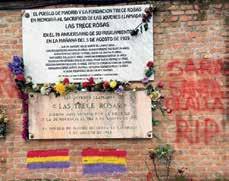
cruelty and the political courage of women who refused to submit to authoritarian rule.
For decades, the 13 Roses - whose tragic deaths were turned into an award-winning film - have stood as a stark reminder of Spain’s struggle with historical memory.
To supporters, they represent resistance, democratic values and women’s right to political participation. To critics of Spain’s memory laws, they continue to provoke anger more than 80 years later.
That symbolism hit hard when thugs explicitly daubed the name of Santaolalla, a journalist known for reporting on far-right movements, on the monument.
Santaolalla responded insisting it was ‘no coincidence’ that women murdered for standing up to fascism were invoked in an attempt to intimidate a woman doing the same today.
each year, many with life threatening injuries.
The number of deaths and injuries at the bull events in general highlights the tension between tradition, tragedy and safety.
With the celebrations deeply rooted in Spanish history and culture, many argue that their preservation and continuation is vital.
For these supporters, the festivals are vital to regional identity and the local economies.
So, as summer approaches and the peak season draws near, a pressing question lingers: should tradition ever truly outweigh the dangers involved?
Only the Spanish as a whole can answer that question.
March to April: Spring festivals across Valencia and Andalucia often include bull-related events alongside formal bullfights
May to October: Hundreds of local runs take place during town patron saint festivals
July 6th to 14th: Spain’s stand out bull run at Pamplona’s Fiesta de San Fermin
Why would a media commentator and political analyst be targeted with such overt hostility and threat? The answer reveals much about Spain’s past – and these unresolved tensions today.
Researchers who study gender-based political violence argue that such acts are rarely isolated incidents. Instead, they function as warnings: attempts to force women out of public debate through fear, humiliation, and intimidation - tactics increasingly docu mented both online and offline.
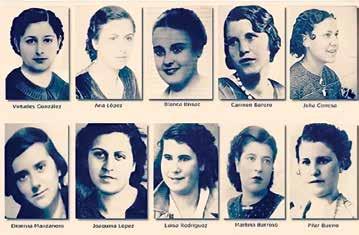
The memorial itself commemorates Las Trece Rosas, the 13 young women who were executed by firing squad in August 1939, just months after the Spanish Civil War ended.
Aged between 18 and 29, the women were accused of sup porting left-wing resistance groups and became victims of Franco’s brutal post-war re pression. Their deaths came to symbolise both the regime’s
Prime Minister Pedro Sanchez, who has long supported women’s rights - expressed his solidarity with Santaolalla, denouncing the use of threats to undermine democratic debate. Several regional politicians also echoed that stance, while others stressed the importance of protecting sites of historical memory, arguing that democracy cannot be defended through intimidation or hatred.

Support has also been poured in from civil society and the media. The hashtag #YouAreNotAloneSarah has been trending across social media, accompanied by statements from journalists and Spain currently ranks among the higher-performing countries on the global Press Freedom Index, coming 23rd out of 180 countries. However, press watchdogs caution that harassment campaigns, particularly those targeting female journalists, risk normalising intimidation
and pushing critical voices out of public life if left unchecked. The desecration of the 13 Roses memorial is therefore more than about vandalism. It is a reminder that Spain’s unresolved relationship with its past continues to shape its present - and that the fight for press freedom, historical memory and a woman’s place in public debate remains far from settled.
MADRID residents live longer than those of any other region in Europe, new research has shown.
The average lifespan in Madrid hit an astonishing 85.7 years in 2024, according to a Eurostat study.
This is a year higher than Spain’s average of 84 years, and four years ahead of the EU’s 81.5.
Across the peninsula, the same study shows residents of Catalunya and the north of Spain clock in past 84. At the other end of the scale, Andalucia records the shortest lifespan at 82.88 – almost a year behind neighbours Extremadura, Murcia and Valencia.
Spain came second in the rankings, beaten only by Switzerland, where people live till 84.2 years. Sweden sits at 83.8 and Italy 83.7.
The UK sits at 81.5 years, while America sits at 78.4 years.
Spain has seen a remarkable 11% rise since 1980, when the average life expectancy was 75.5.
See HEALTH, page 37
By Alessio Ghirlanda
IN the snapshot David Curry received, the 1996 Range Rover gleamed in a glossy sand-coloured finish.
But the promise of its delivery has sparked a transatlantic row between the American collector and a Spanish dealership, Garage Belle Epoque, which has allegedly kept the car worth €18,000.
“It feels like a hostage situation,” Curry, an estate agent from New York told the Olive Press, adding he has now involved Spanish police.
The legal row follows a year of acrimony with the garage owners, who have now launched a libel claim and lodged the money with an Alicante court.
A SCANDINAVIAN expat accused of snatching a fiveyear-old at a busy market has been released on bail.
The Finnish man, 45, was ‘rugby tackled’ outside the busy market in Fuengirola and held until police arrived to arrest him. Relatives allegedly spotted the man trying to lead away the girl, whose father is a stallholder. He was provisionally released from Fuengirola Court while an investigation continues.
He has been ordered to stay out of Fuengirola and nearby Mijas, as well as within 500 metres of the alleged victim’s home.


“It’s like someone breaks into your house, you call him a bad name, and then he gets upset,” Curry insisted this week. He bought the car in October 2024, paying €14,000 with another €4,000 for a custom paint job in March 2025.
The agreement was to pick it up in Barcelona in April, for a month-long road trip through France, before exporting it home. But a day before departure, the realtor was told the vehicle could not ‘legally enter’ Barcelona due to EU environmental regulations. After reluctantly renting another vehicle, it was agreed the car would be

shipped to the US the following month. However, Curry claims delays continued to pile up, and communication became increasingly sporadic with ‘no updates on progress’.
Tempers finally snapped and garage owner Jose Pombo told Curry he no longer wished to do business with him. The garage drew up a cancellation agreement in June, committing to a full refund within 15 days. But the money never arrived and Curry was eventually told the refund would come once the vehicle was sold to another buyer, to avoid the garage ‘having to pay
TOURISTS were left in shock when the wall of a 15th-century castle suddenly collapsed near Toledo. Many ran away as part of Escalona Castle unexpectedly gave way last Sunday morning.
The collapse left a cloud of dust and debris in the air, while nearby cars were damaged by rocks.
The castle, acquired by Escalona Council in 2024, has sat in a strategic position overlooking the Alberche river between Avila and Toledo for 500 years.
Built by Don Alvaro de Luna, it was only opened to the public for the first time in April last year.
VAT twice’. Eventually, after a series of heated exchanges, seen by us, Pombo said the €18,000 would be deposited with an Alicante courthouse – and Curry would only receive it ‘after due process was completed’.
The garage claimed Curry was ‘an impossible client, rude and antagonistic’, stressing it takes ‘a long time’ to restore a classic car and prepare it for transatlantic shipment.
Scam
Pombo said a lawsuit was filed against Curry in Alicante’s Court No. 4 based on a now-deleted Reddit post which tarnished the firm’s reputation, describing it as a ‘scam’. “This wasn’t fraud,” Pombo told the Olive Press. “This was just a client being impossibly difficult.”
While we have been unable to get copies of the legal claims, we have discovered the garage was in litigation with another US-based group, although the firm insisted both a complaint and an appeal have been shelved by a judge.
AN increasing number of tourists are switching their Easter holidays to Spain due to the war in Iran. Flight disruption across the Middle East has led travellers to seek ‘reassuring’ destinations, according to travel firms.
A spokesman at TUI, Neil Swanson, revealed holidaymakers are switching holidays to ‘familiar, easyto-reach’ destinations like Spain, Portugal and Greece. Reservations to the Balearic Islands are up by 40% over the last fortnight, according to Thomas Cook. Portugal has seen a 42% rise.
The Manchester Airport Group expects numbers will be up by between 10% to 20% compared with last year with Spain’s Alicante being one of the top five destinations.
See SACRED SPECTACLE on page 27
A TOURIST has died after falling more than ten metres over a cliff while trying to retrieve a dropped pair of glasses.
The accident happened in Orihuela Costa as he strolled along the coastline with his partner.
The victim, a Colombian, living in Murcia City, slipped next to Mil Palmeras beach.

FOR many expatriates, moving to Spain represents a pursuit of balance and a better quality of life.
However, living abroad often brings practical considerations that are easy to overlook until they arise.
When family lives in another country and local systems feel unfamiliar, maintaining absolute control over one’s finances becomes essential to preserving autonomy and, above all, peace of mind.
A common fear among those moving capital across borders is the safety of their hardearned savings.
Yet, many are unaware of the protection provided by the European Union, a safety shield designed to ensure that your financial future remains secure, regardless of which EU country you choose to call home.
THE POWER OF THE
€100,000 GUARANTEE
The pillar of European banking security is the EU Deposit Guarantee Schemes
Directive
Under this law, every member state is required to have a national fund, known as the Deposit Guarantee Scheme (DGS), that protects up to €100,000 per person and per bank
This means that whether your savings are held in an institution in Germany, Belgium, or the Netherlands, they are backed by a regulated national fund.
This protection applies regardless of your country of residence, ensuring that your capital is safeguarded by the same high standards across the entire Union.
For the strategic saver, this isn’t just a rule; it is a tool for total transparency and risk management.
DIVERSIFICATION: THE KEY TO STRATEGIC SECURITY
While the €100,000 limit is robust, it also presents a challenge, specifically regarding what happens to the surplus.
A frequent mistake is exceeding this limit within a single


bank, which leaves any additional funds legally unprotected in the event of a banking crisis.
This is where Raisin becomes an indispensable ally for the security-conscious resident. Instead of navigating the complexity of opening multiple accounts in different languages and jurisdictions, Raisin allows you to split your wealth across several regulated European banks through a single registration By distributing your savings across various institutions, you can effectively insure millions of euros.
Each portion of your capital remains fully backed by a different national Deposit Guarantee Scheme (DGS), all while you maintain a clear and centralized overview of your total balance.
TIME-LIMITED
OPPORTUNITY: THE CUENTA BIENVENIDA
As Marta Pinedo, Country Manager for Raisin in Spain, emphasizes, the real value for international customers often lies in clarity. Knowing exactly where you stand, by having one single platform to manage

diverse European deposits, removes the friction and fragmentation that usually plague cross-border finances.
To support those new to the platform, Raisin offers the Cuenta Bienvenida, a commission-free account that currently provides a return of 3.33% AER for a three-month duration.
However, it is crucial to note that this specific promotion is set to conclude on April 6, 2026
This gives savers a narrow but vital window to organize their capital under the most competitive conditions available.
Acting before this deadline allows you to lock in this attractive return while ensuring your funds are distributed safely
across the European banking landscape.
PREPARING FOR A CONFIDENT FUTURE
Living abroad should be about enjoying the present, not worrying about the “what ifs” of banking stability. By understanding the Deposit Guarantee Scheme (DGS) framework and utilizing a platform like Raisin to manage it, you ensure that your financial foundation is as solid as your new life in Spain.
With the April 6 deadline fast approaching, now is the strategic moment to organize your savings with total clarity, maximum protection, and the freedom to enjoy your retirement with absolute confidence.


20 years, 20 achievements for nature
Reasons to be cheerful on 20th anniversary of WWF's Earth Hour on March 28
IT was a climate change awareness campaign that began in Sydney and sparked a symbolic social movement to turn off city lights for one hour.
What was originally a simple gesture is now the largest movement for climate and nature.
The climate crisis affects the entire planet, and Spain is particularly vulnerable. From the recent lethal floods to terrible forest fires, prolonged droughts have become a fact of life in the Iberian Peninsula. But fortunately there have been some environmental successes over the last two decades.
One of the best was the Paris Agreement, with 195 countries committing to limiting global temperature rise. This followed onto the 2030 Agenda and the European Green Deal.
As fossil fuels are the main cause of the climate crisis, a 70% reduction in coal use in Europe since 2010 was also positive, as was the growth of wind and solar power.
Technological innovation - including electric mobility and smart buildings - accompanied by a 50% reduction in emissions in some European sectors since 2005, shows that accelerating decarbonization is possible.
Significant reductions in air pollutants have also been achieved, while more than 100 countries have limited single-use plastic bags.
In terms of nature restoration, the ozone layer is expected to be fully recovered between 2040 and 2060, and ecological restoration is gaining momentum in global policy, restoring degraded forests, rivers, wetlands, and oceans. Now, at least 30% of the planet should be protected by 2030.
Antarctica, so important for maintaining the planet's temperature, also maintains its status as a reserve dedicated to science and peace.
In terms of endangered species, the fightback of the Iberian lynx stands out: going up in number from 100 to 2,400 in just 20 years.
Another example of success is the recovery of large fisheries such as bluefin tuna, thanks to better management and the fight against illegal fishing. So come March 28 there will be reasons to celebrate Earth Hour after all.
troll mayor for stalling the demolition of disgraceful macro-hotel built on virgin beach two decades ago
By Jon Clarke

THE mayor of a coastal town in Almeria has received a birthday cake shaped like the 411-room Algarrobico hotel built illegally on a virgin beach two decades ago.
Salvador Hernandez of Carboneras is accused by Greenpeace of stalling the demolition of the monstrosity that sits 100 metres from the shoreline in the Cabo de Gata Natural Park.
The stunt marked 20 years since a court halted its construction. Judges ruled it had been built inside a protected coastal zone
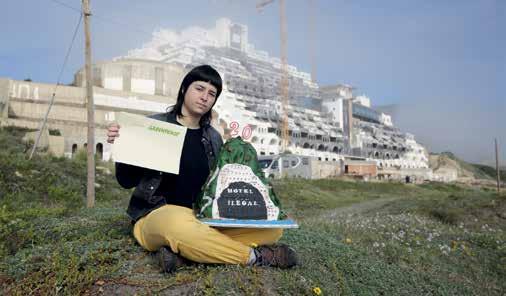
OUTSIZE: The enormous 411-room Algarrobico hotel sits on a beach inside the Cabo de Gata nature reserve
on land classed as stateowned and strictly off-limits for development.
Both the town hall and the developer have been slammed for the illegal construction that was ordered to be demolished by the Supreme Court and finally central government last year.
Madrid has recently offered just €16,500 in compensation to developer
SPAIN has gone almost four years without a single record-breaking cold day.
New data from the weather agency Aemet shows heat records are being made around 30 times more often than cold ones.
Azata del Sol, who had initially filed for €45 million a decade ago.
The company had apparently conspired with pen pushers at Carboneras town hall and the Junta to fudge boundaries and make the area available to develop.
Greenpeace described it as a ‘bittersweet anniversary’. “Sweet, celebrating 20 years of this monstrous symbol of coastal destruc-
The last time a cold temperature record was broken was in April 2022, while 100 heat records have been recorded since then.
Over a ten-year period meanwhile, Aemet recorded 220 heat records compared to just seven for cold, meaning heat extremes are outpacing cold ones by a ratio of more than 30 to 1.
tion and bitter, because we’ve spent 20 years trying to bring it down,” said a spokesman.
The green group has sent a letter to Andalucia’s High Court to probe the mayor for contempt of court for allowing a court order to expire without revoking the hotel’s building permit - delaying demolition.
“Many people ask how it’s possible for a town hall to ignore a Supreme Court ruling for four years. Carboneras has been dragging its feet over simple steps that could be completed in less than 15 days.”
The Olive Press has worked closely with Greenpeace for two decades to see the hotel knocked down.
8.30pm 28nd March



Our popular Rest is Spain podcast is taking on the Costa del Crime in its latest episode.
The four-part special is looking at how hundreds of global mafia gangs took over Spain.
Tracing its roots from the 1970s to the rise of the Balkan and Mocro-Mafia gangs, our team, Jon Clarke, Walter Finch and Caroline Lips discuss why Spain became such a hotspot for criminals.
With their incisive input from the key nerve centres of La Linea, Marbella, Barcelona and Valencia, this is one podcast not to miss.
Sponsored by Staysure, it can be found on Spotify, YouTube and Apple.
THE march on the capital and its important regional rival Barcelona has begun.
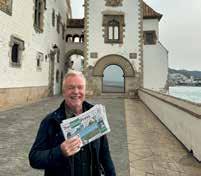
Copies of the Olive Press’ new na tional newspaper are start to get picked up in Spain’s two key cities. In the Catalan cap ital over 20 dis tribution points will now be reg ularly stocking the paper, from upmarket five star hotels to the historic polo, golf and tennis clubs. Places to pick

up the paper range from Hotel Neri and Soho House to A Taste of Home food shop, as well as the newsagents Sabata, where boss Toni (pictured right) can save you a copy. It will also be available at the British consulate, six international schools and
leading estate agents, including Lucas Fox and Engels & Volkers. In Madrid, you will find it at popular bars such as James Joyce , on Calle Alcala, as well as hotels, including 7 Islas, cafes like Hola Coffee in Barrio Salamanca, and


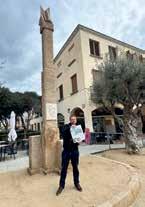
BASES: Available in
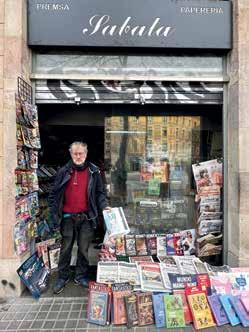
Vilassar, Toni’s papeleria in Eixample and even Sitges
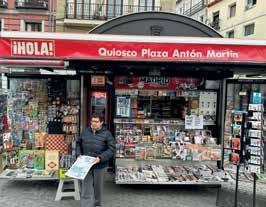
restaurants like Los Galayos, on Plaza Mayor. Best of all though, it will be available at various kiosks alongside the Financial Times and Spain’s national newspapers. Ask Lola (left) at the kiosk at Plaza don Martin, or Carmen at Calle Atocha, 80 to start with.
Across
1 Handbills (6)
4 Dodge (5)
9 Postage redirected for feared police force (7)
10 Ragged ---, plant of the pink family (5)
11 Irish bandit, once (4)
12 Steppes (8)
14 Kind of book, usually large (6,5)
18 Is there more to the story? (4,4)
20 Battle wound (4)
22 Slanted, like a ship’s mast (5)
23 Cracker contents (7)
24 Possessed (5)
25 Right out of the box (6)
1 Scraps (6)
2 A binary question about Rye, soon (3-2-2)
3 Wander (4)
5 17th century spinet (8)
6 Most populous city in the United Arab Emirates (5)
7 One year (4,7)
8 Acute anxiety (5)
13 Reluctant assent (2,4,2)
15 Places (7)
16 Unusually small (5)
17 Badly worn (6)
19 Out of kilter (5)
21 Common river name, which means “river” (4)
READ ALL ABOUT IT: New national paper makes it into the cities of Madrid and Barcelona Scan the QR code to
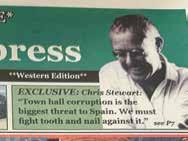
IT was March 2007 when celebrated expat writer and ex-Genesis drummer Chris Stewart gave the Olive Press his first interview.
The author of half a dozen books on Spain - including seminal tome Driving Over Lemons - told us he was standing for the Green Party in that year’s Spring elections.
Inviting us to his home near Granada he waxed lyrical about the issues of corruption and over-building on the costas. It is a subject he has returned to many times for us over the last two decades.
A long-time supporter of the Olive Press, Stewart officially opened our first Costa del Sol office in 2014.
In March the following year we revealed how British expat Rob Barclay had been gored at one of the typical local bullrunning festivals that year (See Tradition or Tragedy, p6)

The Se
villa-based entrepreneur, from the Barclays bank family, had been taking photos of the 500kg bull at the event in Andalucia when it suddenly turned and gored him, breaking various ribs and leaving him badly bruised.
“I now realize what these guys risk in the ring,” he told us. “Running the bulls like this is an opportunity for the bull to get his own back. He certainly did with me.”
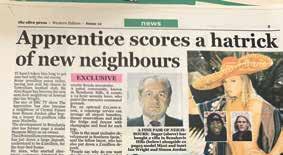
In one of our best showbiz exclusives we revealed in March 2009 how Lord Alan Sugar, of The Apprentice fame, had bought a villa in the hills above Marbella. We reported how the former Tottenham Hotspur owner bought alongside two other famous buyers, Crystal Palace boss Simon Jordan and former Page 3 model Suzanne Mizzi (see left).
More recently in March 2015 we revealed how Algeciras has been inexplicably labelled a ‘Taifa’, an Arabic word not used since the middle ages on Google. Our exclusive came as extremist Muslim group Isis announced its desire to reclaim Al Andalus, ‘the land of our forefathers’.


LOOKING FOR MORE CULTURE STORIES?
THE Supreme Court has ordered the relatives of former dictator Franco (right) to hand over his Galicia summer residence to the State.
CULTURA 13 March 2026
SPANISH singer Rosalia made more history as she became the first Spanish music artist to ever win a prestigious BRIT award.
The Catalan-born songstress had already etched her name into the record books after becoming the first Spaniard to receive a nomination for a prestigious BRIT since Julio Iglesias in 1983.
But she broke new ground at a glitzy ceremony in Manchester, fighting off nine rivals including last year’s winner Chappell Roan to be crowned International Artist of the Year.
The prize also means Rosalia is the first musician who primarily performs in a language other than English to pick up an award at the BRITs, the highest-profile annual music ceremony in the UK. Addressing the crowd in English, the 33-year-old said: “Oh my God! I was so grateful just to be here tonight, just to perform, so this is insane.”
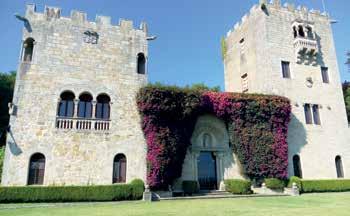
The ruling from Spain's highest court ends an eight-year legal battle over the future of Pazo de Meiras in A Coruña.
Franco's heirs put up the property for sale for €8 million in 2018 with the government stepping in to take it over.
The Supreme Court dismissed all appeals insisting the building must be returned to the State.
The Pazo de Meiras was built by the writer Emilia Pardo between 1893 and
Franco’s relatives lose battle over summer palace
By Alex Trelinski
1907.

It was later acquired and handed to Franco as a 'gift' from A Coruña.

The Justice Ministry said that locals had been forced to contribute to the public payment, and that Franco’s eventual purchase of the manor in 1941 was fraudulent. A Galicia judge in 2020 ruled that it was illegal to grounds and finally furnish the palace to the standards the dictator wanted.


SPANISH actor Javier Bardem has spoken out against the Iran war at the Oscars.
Introducing the winner for the Best International film category he told the audience: ‘no to war, and free Palestine’.
He also wore a large badge reading ‘No a la guerra’ (‘no to war’) in red lettering. He explained it was the ‘same one’ he had worn 23 years earlier for the Iraq war. He handed the award to the team behind Norway’s Sentimental Value, which pipped Spain’s entry, Sirat, by Pedro Almodovar. have put the property in his name.
Coruña's council essentially obliged locals to hand over a portion of their income to buy it, then expand its
"There was nothing voluntary about the donations," says Carlos Babio, co-author of a historical study of the building. "Money was taken from workers' wages, and we're talking about practically the entire population of A Coruña in 1938," he said. After Franco's death in 1975, his family continued to use the property.

PERFECTLY preserved and completely encircled by stone ramparts, Avila feels like a city carved from honey-coloured rock and suspended in time.
A Unesco World Heritage Site just 100 km northwest of Madrid, it’s close enough to the capital for a day trip but staying overnight lets you experience its quieter, more atmospheric side.
Here’s how to spend 36 unforgettable hours in Avila.
If you come by train (around 1.5 hours from Madrid) then you’ll arrive at the more modern part of town. Keep walking west along the main road until you are stopped in your tracks by the site of an imposing fortification - the Medieval walls that surround and contain the oldest part of Avila.
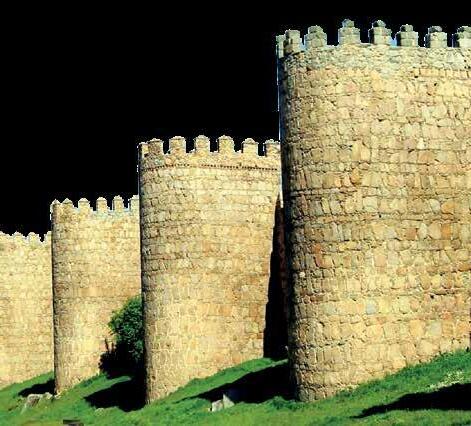
These impressive battlements rise 12 metres and will dominate your visit as you’ll want to walk around them, on them and within them. By day you’ll want to watch the vultures as they swirl above them, and gaze out across the vista of snow-dusted peaks of the Gredos mountains beyond them. At night, you can trace constellations in the sky above them and if you’re lucky, you’ll hear the deep sonorous hoot of an eagle owl resonate off them. In short, this city is all about the walls.
Forming a perimeter of 2.5km around the casco antiguo and punctuated by 82 towers and nine gates, these walls and the city they contain have been designated a Unesco heri-
By Fiona Govan

sive Puerta de San Vicente, the main entrance to the oldest part of Avila, if you turn right and follow the walls you’ll come to the Tourist Office and here you can climb up onto the wall itself and walk along the battlements.
The views are dramatic. You can walk around two-thirds of the perimeter, getting a birdseye view of the tiled rooftops of dwellings within the historic centre as well as the towering spires of the Cathedral, whose apse forms a part of the defensive wall.
Seek out Roman esque splendour just outside the walls at the magnificent Basílica de San Vicente. Dedicated to the siblings Vicente, Sabina and Cristeta, who were mar tyred during the reign of the Roman Emperor, Diocletian, this Romanesque church is one of Spain’s architectural trea
nity buried their dead until the Catholic Reconquista of the 15th century. Or past the Real Monasterio de Santo Tomas, once the headquarters of the notorious gran Inquisitor Torquemada who was buried within the grounds until a mob ransacked his tomb and burned his remains somewhere outside the city walls.


chance to really see the city relax into
Most visitors only pass through Avila on a day trip meaning they miss the theatricality.
Make your way to Plaza del Mercado Chico, the medieval heart of Ávila. Arcaded buildings frame the square and if it’s warm, the plaza will be buzzing with outdoor tables which make a perfect spot for an aperitvo.
Then take an evening stroll along the Paseo del Rastro as the walls deepen in hue with the setting sun. There’s fine dining to be found in Avi
The night gets lively in the bars found on Avenida San Segundo, where recruits at the Spain’s National Police academy blow of steam.
Morning: Follow in the Footsteps of Saint Teresa of Avila Ávila is inseparable from its most fa mous daughter, Saint Teresa, a mystic, reform er and Doctor of the Church who founded the descalced
hand!
From here, you can follow sections of the Camino Teresiano, marked through the city in tribute to the convents she founded across Spain.
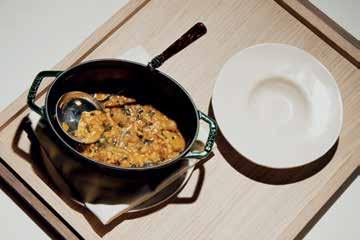
Mid-morning is a good time to seek out one of the city’s bakeries for a coffee and a nibble on some Yemas de Santa Teresa, the
Then head to the imposing Cathedral de Avila. With parts that date back to the 11th century, you’ll see it blends Romanesque foundations with Gothic grandeur. Soaring vaults and lofty stained glass windows create an atmosphere designed to humble visitors

associated with their patron saint beginning at the Iglesia-Convento de Santa Teresa, built on the site of her birth home. Inside, you’ll find the Chapel of Birth and relics associated with the saint: the sole of one of her ellation and a finger from her right
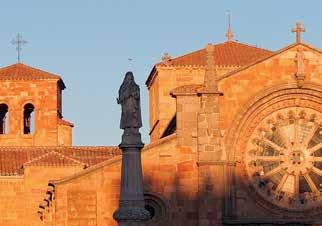
GET FINGERED: Look out for St.Teresa’s self-flagellation kit and cord, plus, yes, one of her fingers
For lunch, try the traditional local fare, Chuleton de Avila — a thick cut, hunk of T-bone steak from the cattle you’ll see grazing the pastures beyond the walls. Served so rare, it’s almost mooing, it’s offered in inns throughout the oldest part of town. We chose Casa de La Bruja, an old posada just off the Paseo del Rastro outside the city walls but with a fine view of them.
Afternoon: Celtic Echoes & Panoramic Farewell
Before leaving the walls, look for the ancient Verraco, a 2,500-year-old Celtic stone bull that predates Roman Ávila.Head out of the western gate past the old tanneries on the river bank and find your way over the Roman bridge to the Mirador de los Cuatro Postes. The structure of four granite pillars marks a panoramic viewpoint that is hard to beat. Pause a moment to contemplate the city before heading home.
For a really special stay choose La Casa del Presidente, the city’s only luxury boutique hotel within the city walls. In the shadow of the ramparts, this former home of Adolfo Suarez, the prime minister who navigated Spain’s transition to democracy after the dictatorship of Gen Francisco Franco offers a country house stay that is teeming with history.
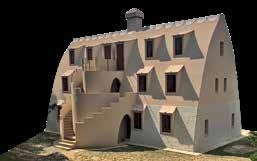
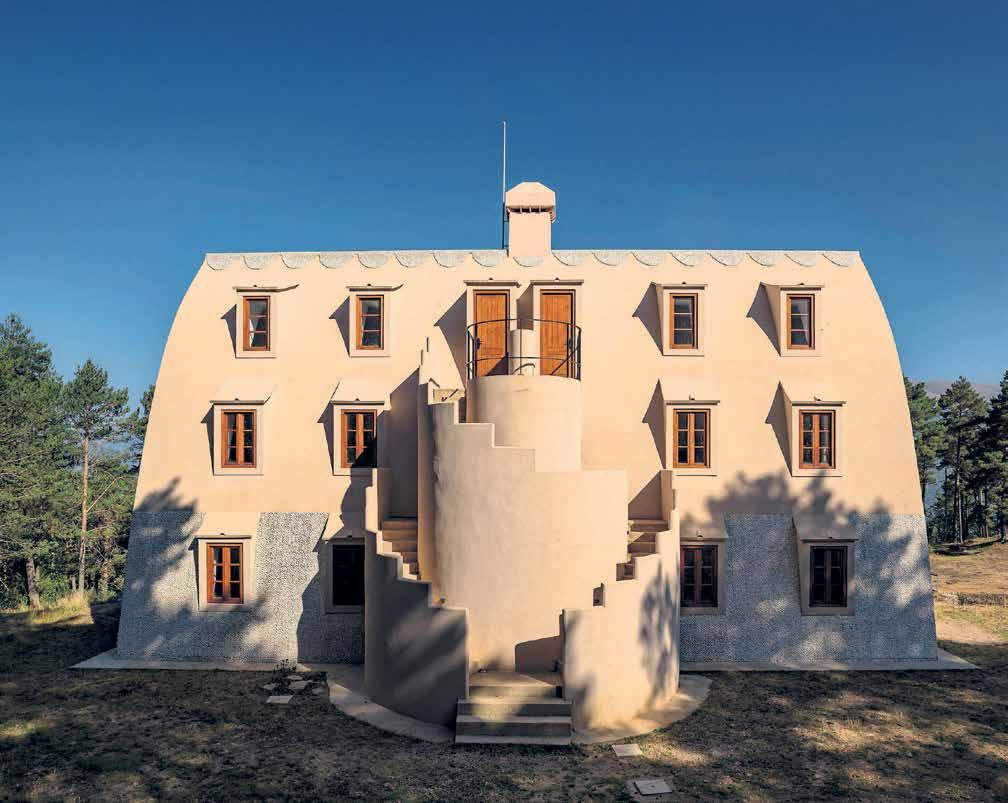
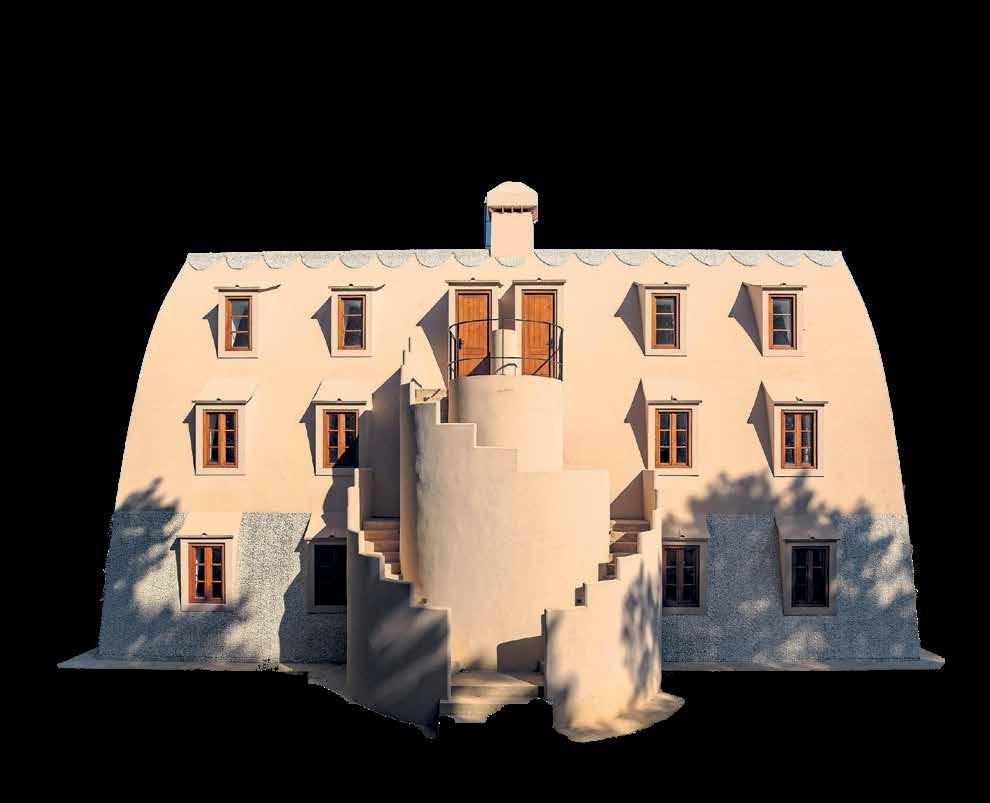
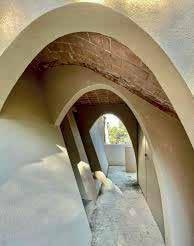
Aactly a century since his death. Spanish authorities have officially confirmed that Barcelona’s em blematic architect was behind the Xalet del Catllaras (right).
The remote forest retreat in the Bergueda region, 125km north of the city, was built between 1901 and 1908. The three-storey mod ernist property housed engineers, many of them British, working at a cement factory owned by Gaudí’s longtime patron, Eusebi Guell.
Gaudi was long suspected to be be hind the project, but even scholars had doubts.
At the turn of the 20th century he was at the height of his career, overseeing Park Guell (1900–1914), Casa Batllo (1904–1906) and Casa Mila (1906–1912), raising questions over whether he could also have worked in such a remote location.
However, a team of Gaudi specialists launched an investigation in 2023 to fi
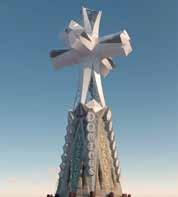
THE Sagrada Familia has finally reached its peak height after workers laid the final piece of its central tower in place.
The upper arm of the 17-metre-tall cross that sits atop the tower has taken the building to a final height of 172.5 metres. This comes 144 years since construction first began and a century on from the death of its master architect, Antoni Gaudi.


UNIQUE: The extraodinary Xalet de Catllaras has finally been confirmed as being designed by Gaudi
PROPERTY buyers broke records in a dozen Spanish cities last year. A deluge of buyers acquired more homes in 12 cities than at the height of the 2006 market peak, according to the Ministry of Housing.
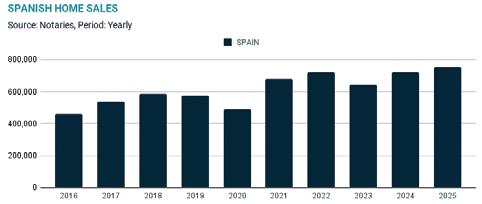
It came as Spain saw the highest sale figures for 18 years, with a giant 752,098 properties sold in 2025.
And 12 cities, including Bilbao, San Sebastian, Segovia and Granada, have never seen more properties sold in a single year.
Last year’s sales showed a 5% jump on 2024, a figure only beaten in the run-up to the infamous
2006 real estate bubble, which wrecked markets and triggered a devastating economic crisis when it burst in 2007. Today’s surge doesn’t however signal another bubble despite prices rocketing, insist experts.
By Alessio Ghirlanda

“Homes are selling like hot cakes simply because they are seen as a safe investment,” agent Raul Garcia Molina, of Ysabika Inmobiliaria, told the Olive Press.
“Buyers can easily purchase prop-
erty and rent it out at a profit. This pushes prices higher – and the more they rise, the more attractive the business becomes for potential investors.
“The solution? Building more homes,” Garcia added.
According to the official notary figures, the biggest surges were in Granada, which had 1,406 more sales than in 2006, and Bilbao, where 1,215 more homes were
sold. In Spain’s largest cities the picture is different, as sales fell well short of levels seen two decades ago, with Madrid seeing 9,000 fewer, while Malaga and Barcelona saw 3,500 less. Valencia had nearly 2,500 fewer sales. Experts say this reflects different demographics in big cities, where property prices have surged far faster than elsewhere across the peninsula.
“There may be a slowdown soon,” Garcia warned. “And Spain’s biggest cities may just be the canary in the mine.”
SPAIN’S housing market had a remarkably strong year in 2025, with sales reaching their highest level since the boom years before the financial crisis. Prices also moved above their previous peak in nominal terms, though once inflation is taken into account the market still has some way to go before matching the highs of the last cycle.
According to the latest figures from the Notaries Association, there were 752,661 home sales in Spain in 2025, an increase of around 4% compared with the previous year. That makes it the strongest year for transactions
since 2007, when the last property boom was at its peak.
Demand was robust across much of the country, particularly in regions popular with foreign buyers. Catalunya and Murcia both recorded sales growth of around 7%, while Andalucia followed with a 6% increase. The Valencian region saw more modest growth of about 1%, and activity slipped slightly in a few markets, including Madrid and the Canary Islands.
The headline numbers inevitably invite comparisons with the property bubble of the mid-2000s, when Spain was building and selling
homes at a dizzying pace. Yet the structure of demand today is very different from the market that existed before the crash.
Prices also continued to climb last year. The national average reached €1,902 per square metre, up 7.5% compared with 2024. On paper, that means prices have now surpassed the previous peak of €1,790
per square metre reached in 2007. However, inflation over the intervening years changes the picture considerably. Adjusted for inflation, today’s average price is equivalent to roughly €1,430 in 2007 euros, which still leaves the market about 20% below the real peak
reached during the housing bubble. Price growth varied widely across the country. Murcia recorded the strongest increase, with prices rising by more than 14%, while Madrid and the Canary Islands also saw double-digit growth. Taken together, the figures paint a picture of a market in robust health.
“
Sales are at their highest level in almost two decades and prices continue to rise steadily. Demand is being supported by several structural factors. Spain’s population is growing rapidly thanks to immigration, echoing one of the drivers of the previous housing boom. Foreign demand has also remained strong, while domestic buyers have returned to the market in large numbers.










Mortgage lending is another important difference compared with the mid-2000s. Although borrowing costs are higher than the ultra-low rates seen in the previous decade,


“ The market is about 20% below the peak reached in the bubble
the average 12-month Euribor rate was still only about 2.2% in 2025. At the same time, lending standards are far stricter than during the bubble years, meaning today’s expansion is not being fuelled by reckless credit. Another factor pushing people towards home ownership is the shortage of rental housing in many cities. Rent controls and other government interventions have reduced supply in the formal rental market, leaving many households with little choice but to buy if they can possibly afford it. Looking ahead to 2026, the most likely scenario is a moderation rather than a downturn. Preliminary figures from the Land Registrars suggest home sales fell by around 7% year-on-year in January, hinting that the market may be losing some momentum. Even so, with limited new construction and strong underlying demand, there are few signs of the kind of imbalance that preceded the last crash.













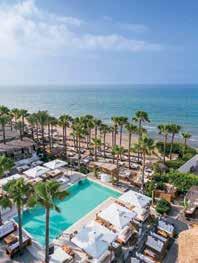
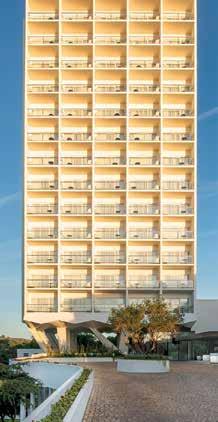
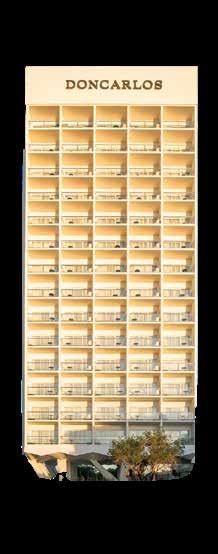
WHEN it opened in 1969 it stood out for its luxurious grounds and height which didn’t appeal to Spain’s dictator of the time, General Franco. So upset was he with the five star Don Carlos hotel’s 14 stories that he ordered an immediate stop to any more tall buildings in Marbella.
Franco believed the skyscraper ‘scarred’ the skyline and compared it to the rapid,


THE number of new mortgages granted in Spain last year was 501,073 - the highest figure for 15 years.
Figures from the National Institute of Statistics (INE) recorded a 17.8% increase on 2024's total.
Larger numbers were clocked up during the real estate boom between 2004 and 2010, with the one million mark broken annually from 2004 to 2007.
An average of 41,756 mortgages were signed per month in 2025, outstripping the 35,460 average in 2024.
52,198 mortgages were approved in October - the highest for an individual month since September 2010 which was marginally higher at 53,127.
Broken down into regions, Andalucia had 98,052 mortgages granted, followed by Catalunya (87,011) and Madrid (73,663).
The three regions combined accounted for over half of the country's new mortgages last year.

high-density development that had ‘ruined’ nearby Torremolinos and Benalmádena. However, it is likely he would have approved of the 308 room refit that’s finally complete with the addition of a tennis centre run by tennis star Rafa Nadal… the

second in Spain outside his base in Mallorca.
The stylish refit by Jaime Beriestain has seen it swapping its heavier, dated style for bright-
er interiors, natural textures and a lighter Mediterranean feel. It has warmer colours and a much cleaner coastal feel, as these new photos show.


SPAIN could face a wave of evictions after parliament again rejected the extension of a key housing protection introduced during the pandemic.
The moratorium was designed to protect vulnerable families during Covid if they found themselves unable to pay the rent or meet their mortgage.
The measure allowed judges to temporarily pause eviction proceedings while social services attempted to find solutions for vulnerable tenants.
The agreement struck in March 2020 saw Madrid vote to freeze evictions in an already ‘high-tension’ market, where ‘many were vulnerable’.
But lawmakers in Congress voted this month against ex-
tending the eviction moratorium.
The PP was joined by Vox and Junts per Catalunya voted against the decree saying it risked encouraging illegal occupation of properties, a politically sensitive issue in Spain.
Miriam Nogueras of Junts per Catalunya defended her party’s decision in rejecting the decree: ‘Social safety net, yes; squatting, no.’
A recent report estimates that 40% of tenents in Spain are at
SPAIN'S new sovereign wealth fund will help to pay for the building of up to 15,000 affordable rental homes per year.
España Crece (Spain Grows) aims to create a pot of up to €120 billion in public and private funds.
Of that amount, €23 billion will be allocated to constructing new rental properties.
“We want to roll out the red carpet for private investors to build housing,” explained Prime Minister, Pedro Sanchez.
“This is our commitment: the largest volume of public and private financing under favour-
able conditions,” he added.
Housing will be one of the main pillars of the fund, alongside business competitiveness, energy transition and digitalization.
Property costs remain a major concern for people in Spain and a recent poll by the CIS public opinion institute saw 43% of respondents listing housing as the country’s top problem.
Data from Eurostat shows house prices in Spain rose 12.8% year-on-year in the third quarter of 2025 -- among the biggest hikes in the European Union and well above the zone's average annual increase of 5.5%.
By Karissa Key

risk of poverty, social exclusion, or both. Activists warn the ruling could leave 60,000 to 70,000 vulnerable households at risk of eviction in the coming months.
“The message is clear: housing is a business, not a right,” argued the Tenants’ Union.
Data compiled by the European Anti-Poverty Network Spain shows the moratorium and related protections helped prevent around 1.5 million people from falling into poverty during recent years.
Financial hardship in Spain is largely due to rising rental costs.
Nearly 18% of tenants struggle to afford basic necessities.
The General Council of the Judiciary reported that 27,564 evictions were carried out in 2024, an increase of 3.4% compared with the previous year.
Catalunya accounted for 26% of all cases with 5,539 linked to rental disputes. Andalucia followed with 4,027 evictions, while Valencia recorded 3,610 and Madrid 2,375.
A BARCELONA bid to scapegoat non-EU homebuyers as a key cause of the housing crisis has been met with a barrage of criticism. It comes after mayor Jaume Collboni targeted international buyers, claiming he plans to ‘ban them’ from snapping up homes in the Catalan capital.
But official data reveals however, that the group in the mayor's crosshairs makes up just 2% of Barcelona’s property market.
According to Spanish notary figures for 2025, Barcelona recorded a total of 17,133 home sales.
While foreign buyers accounted for 32% of these transactions, the vast majority are either existing residents or EU citizens – specifically not the group Collboni is looking to blame.
Non-EU foreigners accounted for a maximum of just 660 purchases last year – and industry experts suggest the true figure is likely even lower, sitting closer to 280 transactions.
“So why target such a tiny group?” asks Mark Stucklin of Spanish Property Insight. “The answer is familiar in Spanish housing politics.
“Foreign buyers who do not live in the city and do not vote make a convenient scapegoat.
“Blaming them for the housing crisis is politically easy, even when the evidence suggests they play no significant role in driving the market.” Instead, the move seems to belong to a long populist tradition of blaming foreigners for domestic woes.
Barcelona's severe housing shortage is widely attributed to limited new supply, strict planning constraints and regulatory policies that actively discourage development –all issues that fall within the remit of the town hall.
THE idea is to encourage punters to take a journey to a less explored, less populated part of the country.
Everything from World Heritage sites to famous Michelin-starred eateries are tucked away in the impressive list updated each year by the Most Beautiful Village in Spain Association.
Launched 15 years ago to reward the villages who best preserve their culture and heritage, there are now over 100 stunning places to visit, with four new ones added this year.
While great places to visit for a weekend, some people may look for a home to buy.
So the Olive Press has located a property in each of the new villages.
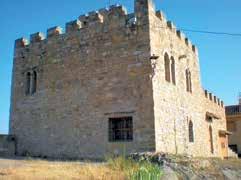
If it’s a place in Alpuente that you’re after then you must check out this three-story castle-esque home. While its five bedrooms and three bathrooms are impressive, it’s the home’s exterior and stunning mountain views that standout.
Built in 1978, the stone walls blend in with the natural surroundings and the roof top terrace offers the chance to look over across the village. It is currently on sale for €360,000.



By Fiona Govan and Rachel Gore
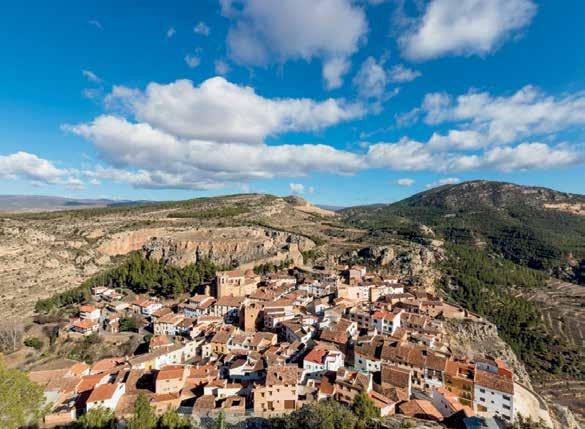
Far from the bustle of the Costa Blanca, you’ll find this hidden gem high in the Los Serranos mountains, just an hour from Valencia.
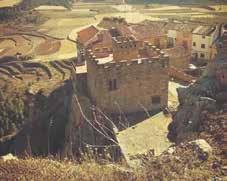
The first ever village to be chosen in Valencia province, Alpuente rises atop a large rock at an altitude of 1,000 metres and guarded by the imposing ruins of its medieval castle.
The fortress, which dates to Arab rule in the 10th century, now stands in ruins as to the crumbling walls that once encircled the town beneath it. Below it the terracotta rooftops cluster around the Medieval Church of Santa Maria and the Town Hall which is housed in the old Mezquita.
The area is rich in archaeological sites and prehistoric finds which are showcased in Alpuente’s Paleontological Museum. Here you’ll find dinosaur footprints and fossil remains.
While the landscape offers wooded

By P OO LVILLAS


hillsides and deep gorges, making it ideal for hiking and mountain biking. Although there are no hotels in the town, visitors can stay in a selection of Casa Rurals or make a day trip from the coast.
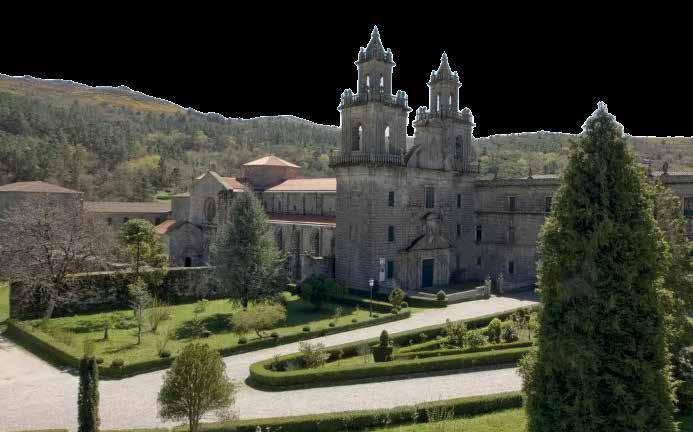
Around 40km north of Ourense, Oseira is dominated by the Monastery of Santa María, built between the
to a small community of Trappist monks, is dubbed the ‘El Escorial of Galicia’ because the grandeur of its Romanesque architecture rivals that of Philip II’s capital outside Madrid.
The setting too, is what makes this place special. Located in the green hills of the Serra de Martiñá, the town lies on the Via de la Plata part of the Camino de Santiago.

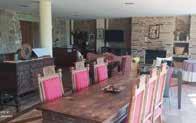
On the Camino de Santiago in Oseira sits this 6 bedroom property that features a stunning fireplace and beautiful garden.
Each bedroom has its own ensuite bathroom and the home’s living and dining area features rustic stone walls.
On sale for €325,000, this property provides the opportunity to live amid nature in an area filled with history.
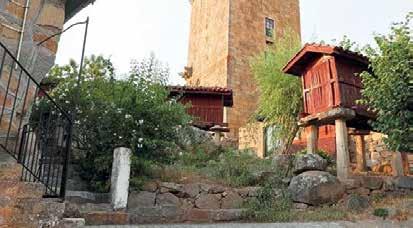
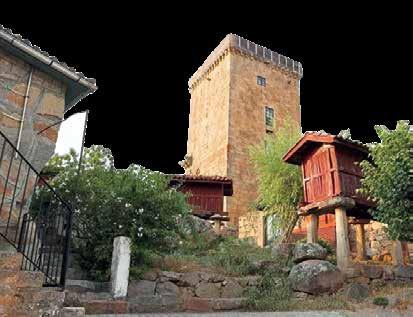
Torra Da Homenaxe, a defensive tower once part of a huge 1000-year-old castle.
“It is a destination where history and spirituality merge in a stunning natural setting,” explains
Pilgrims are able to stay in the monastery but have to phone ahead and other visitors can enter for a guided tour, except on Sundays when Mass is held.
The writer Graham Greene was a regular visitor.
Also in the province of Ourense is Vilanova dos Infantes, described as ‘small in size but enormous in character’.
Full of stone houses on narrow cobbled lanes it centres on the
WHAT
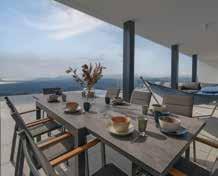
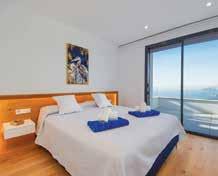
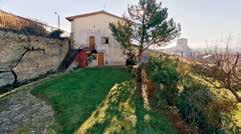
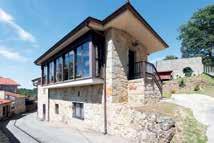
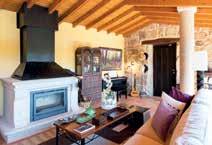
Near to Vilanova is a stunning corner stone villa with mountain views, high ceilings and a terrace.
Its first stones were
“Its stone streets, harmonious houses, and traditions linked to the Virxe do Cristal (Virgin of the Crystal) make this historic village a living portrait of the most authentic Galicia,” states the association.
As its name suggests the town is linked to the legend of El Cid, the Medieval Knight, a hero in Spain for his military prowess against the Muslim invaders of the 11th Century.
WHAT
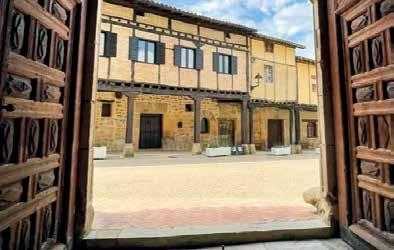
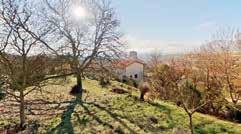
This hill-top property in Santa Gadea del Cid has its own balcony, terrace and garden. Costing €170,122, it has five bedrooms and five bathrooms, a large garage and stunning exterior wooden doors. Overlooking the town, this home is perfect for those who appreciate a stunning view and outdoor space.
The village, near the Basque region, still re - fied church, the remains of a castle and walls and well preserved palaces within them.
tains Medieval charm with an impressive Romanesque forti
placed in the early 1900s but its 2008 renovation means that it is modern and ready to live in.
With an outside area that includes a barbecue and a floor plan that occupies 550 metres squared, the villa would make a marvellous family home.
The five bedroom and four bathroom property is up for sale for €660,000.
“Defensive remains, houses adorned with coats of arms, and a tranquil atmosphere define this enclave in Burgos province, a place of significant heritage value,” explains the association.

FOR years, Spanish banks quietly siphoned money from unsuspecting homeowners using a single line buried deep in their mortgage contracts. A clause so discreet, so poorly explained, that millions never realised they were paying far more than they should.
It was called the ‘floor clause’ - and it became one of the biggest scandals in Spain’s banking history.
The trap no one saw coming Mortgages were sold as variable-rate bargains, promising repayments would fall as interest rates dropped. But when rates across Europe plunged after the financial crisis, many Spanish borrowers were left behind. Their monthly payments stayed stubbornly high.
Hidden in the small print was a ‘floor’ that prevented interest rates from ever falling below a fixed level - typically between 3% and 3.5%.
There were no clear warnings, no proper ex planation. Just inflated repayments, month after month.


The hidden trap door clause that cost families millions and how FAIRWAY LAWYERS fought back
Expat buyers caught in the crossfire
Thousands of owners who bought homes between 2002 and 2012 were hit particularly hard. Many trusted local banks, signed contracts in a foreign language, and only discovered years later that they had been locked into an unfair deal.
One of them was John Taylor, from Belfast.
“I bought a holiday apartment in Fuengirola in 2006 and took out a €156,000 mortgage with Solbank, thinking I’d made a smart investment,” he recalls. “It was sold as a variable-rate mortgage. I was told my payments would go down if interest rates fell.”

They never did.
“Between 2010 and 2021, I was paying 3.8% interest when I should have been paying around 1.5%. My monthly payment stayed at €875 for 11 years - it should have been closer to €640. I always felt something wasn’t right.”


If you want to claim for a mis-sold
It was only after being approached by lawyer Diego Echavarría of Fairway that he understood what had happened.
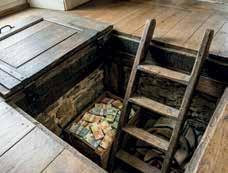
“I couldn’t believe it. After a two-year legal battle, I recovered €22,456 plus €6,000 in interest. In the end, it was worth it.”
How to claim your money back
Not everyone can automatically claim a refund. Legal experts say three key conditions must be met:
Mortgage taken out between 2002 and 2012
A floor clause included in the contract
Lack of transparency and proven overpayment
If these criteria are satisfied, borrowers can demand repayment of all overpaid amounts — even if the property has already been sold.
Affected lenders include Solbank, Banco Sabadell, Banco Popular, Unicaja, El Monte, Cajaduero, Caja España and Cajasur. The lawyer taking on the banks
While banks insisted customers had signed what they were given, one Spanish lawyer began challenging the practice case by case. Diego, a specialist in consumer law, has helped recover more than €3 million for 150 British clients alone. “Many repossessions during the financial crisis between 2010 and 2016 could have been avoided if banks had charged the
correct amounts,” he says. “Instead, clients were made to feel it was their fault when they fell into arrears.”
He believes thousands more expat homeowners, particularly in Malaga, Alicante and Catalunya, could still be eligible to claim.
Banks count the cost
The scandal has taken a significant financial toll. Spanish banks have set aside around €200 million to cover claims, underlining the scale of the issue. But the reputational damage may be even greater. Trust in the banking system has been badly shaken.
Europe blows the whistle
The turning point came in 2016, when the European Court of Justice ruled that banks must refund all money unfairly charged under non-transparent floor clauses - not just a portion.
The decision sent shockwaves through Spain’s financial sector and forced lenders to repay billions. What had long been defended as standard practice was formally declared unfair.
Money returned — but trust broken
Although many victims have now been compensated, critics say the damage goes far beyond money. Years of financial strain, anxiety and lost opportunities cannot simply be reimbursed.
For British homeowners in Spain, the floor clause scandal remains a cautionary taleproof that the biggest risks can be hidden in the smallest print.
As John Taylor puts it: “I struggled for years to keep up with the mortgage. In the end, I felt forced to sell the property in 2022 and walk away from my Spanish home.”

The links to Jewish history can be found in dozens of cascos historicos and in many key sites around Spain
By Joshua Parfitt
Iremember being amazed writing a story for the Olive Press back in 2019.
It was about how Spain’s government passed a law allowing descendants of Sephardic Jews to apply for citizenship. By the time the deadline closed, 127,000 people had applied. Were there really that many Jews in Spain? I thought to myself.
I’d recently moved to Spain from North London, where I used to pass through the Stamford Hill Jewish community daily. My landlord was Jewish. I had British-Jewish classmates at university.
But I’d been in Spain nine months and hadn’t seen a trace of Jewish culture.
The story was one of those eye-opening moments.
You start spotting threads you’d missed before. Like recent research suggesting Christopher Columbus wasn’t an Italian sail or, but a Sephardic Jew from

Valencia. Or how a dish as comfortingly “traditional” as cocido – eaten every Sunday in winter at my Spanish in-laws’ house – is Jewish in origin.
Then, I wrote a long feature piece about Thomas of Torquemada and his ruthless drive to torture, burn, and expel all Jews from Spain back in the 15th century. Bit by bit, you look a little closer, and Spain’s enormous Jewish history starts to come alive.
Someone more than aware is Asaf Peled, the founder of Shin Tours – one of the world’s leading private operators for Jewish heritage trips.
Asaf’s story has an unlikely connection to Spain: He had an epiphany here while travelling in his early 20s. One Friday evening in Toledo, he heard faint singing

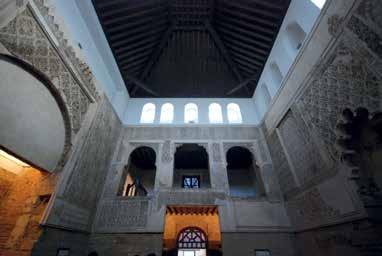
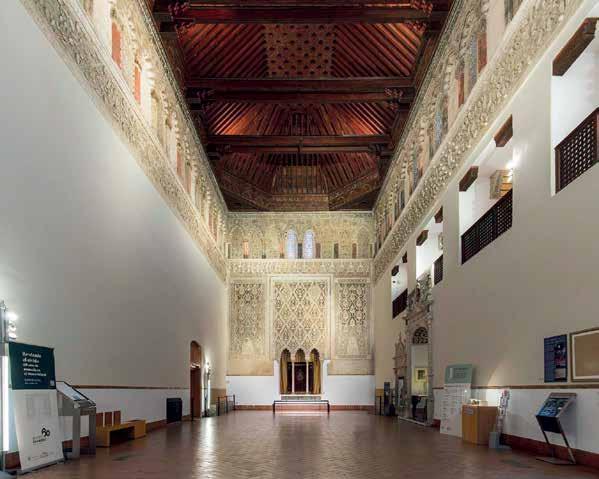
He followed it and found himself outside a small synagogue, where fewer than ten people were gathered singing Lecha Dodi. It’s a hymn sung on Friday nights to welcome the Sabbath.
“
“I broke down, and felt this strong connection to my own Judaism in a way I hadn’t felt in years,” he told the Olive Press.
“It made me want

site is the Museo Sefardí, which is housed inside the Sinagoga del Tránsito.
“ Maimonides was a physician and philosopher born in 1138
that was personal and meaningful. From that came the decision to set up my own private tour company and give these same experiences to Jewish and mixed-families from across
Here are his top 10 mustsee Jewish quarters, museums and buildings –the same landmarks and neighbourhoods he prioritises when designing a Jewish tour
Mu
Toledo is the obvious starting point for a Jewish tour in Spain. The single best ‘gateway’
The building itself is a 14th-century synagogue commissioned by Samuel ha-Leví (treasurer to King Pedro I) and famous for its dramatic prayer hall and ornate decoration. Inside, the museum gives you a clear narrative of Jewish life in Spain, from early presence and the medieval ‘golden age’ through 1492 and the Sephardic diaspora.
After the big headline sites in Toledo, head somewhere more intimate. The Casa del Judío, tucked right in the heart of the old Judería (Jewish quarter), is exactly that.
The property is an ancient mansion which has a possible mikveh or ‘ritual bath’ dating back to the 14th century in its basement. The property has recent history too, as it was restored following the death of its last owner – a French Jewish businessman called Elie Nahmias who was an Auschwitz survivor and later in life fell in love with Toledo.
Asaf calls Córdoba ‘a city where Jewish Spain doesn’t feel like a footnote’ as it’s still very visible
in the Jewish quarter (Judería). At the heart of this neighbourhood is the Córdoba Synagogue. It’s the only medieval synagogue preserved in Córdoba and one of the best-preserved in the whole of Spain.
What makes it so striking is its scale and detail. Inscriptions inside the building place its construction between 1314 and 1315, and today you can still see the refined Mudéjar plasterwork, traces of Hebrew inscriptions, and the intimate layout that suggests a space designed for a close-knit community rather than grand spectacle.
Asaf then recommends treating Córdoba as a walking chapter of the story – because there’s so much to see.
The Judería is part of the city’s historic centre (a UNESCO World Heritage area), and its narrow lanes make history feel close. Within that walk, he recommends travellers make at least two meaningful stops.
First, visit the statue of Maimonides (Rabbi Moshe ben Maimon). Born in 1138, he was an influential 12th-century Sephardic Jewish philosopher and physician, who authored a comprehensive code of Jewish law that remains a primary source for legal rulings.
Then visit the Casa de Sefarad, which is a small museum space dedicated to Sephardic culture that brings Jewish history to life
Continues
From page 21
with everyday objects and artefacts.
Girona’s El Call neighbourhood is one of the most impressive Jewish quarters in Spain.
The Jewish presence in Girona dates back to 890 CE, and the quarter flourished until the 1492 expulsion of the Jews and Moors. Today, Girona’s Call remains one of the best-preserved Jewish quarters in Europe.
The Museum of Jewish History, located at the heart of the old quarter, offers visitors an incredible collection of artefacts and ex-
hibitions – from medieval manuscripts to architectural remnants.
Just outside Girona, Asaf points travellers to Besalú for one of the most distinctive Jewish heritage stops in Spain: its medieval mikveh (ritual bath).
Set below street level and reached by stone steps, it’s a rare,
tangible link to everyday Jewish life. It’s considered ‘one of only a handful of medieval mikva’ot in Europe’
Barcelona is a top destination on any trip
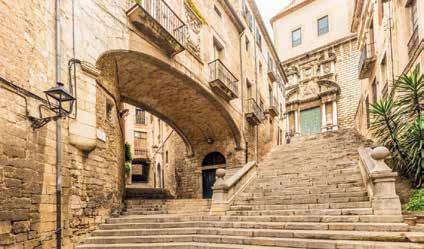
to Spain, and many travellers on a Jewish tour understandably want time for Gaudí’s masterpieces too. The great news is that you can pair that headline Barcelona experience with something far older: a walk through El Call, the city’s historic Jewish quarter.
Asaf recommends stops at the Sinagoga Major and MUHBA’s El Call interpretation space, which helps you place the quarter’s story in context as you explore. He also builds in flavour too and tells me there’s a “discreet café” he brings every group to, where you can try Jewish delicacies and sweets inspired by recipes passed down through generations.

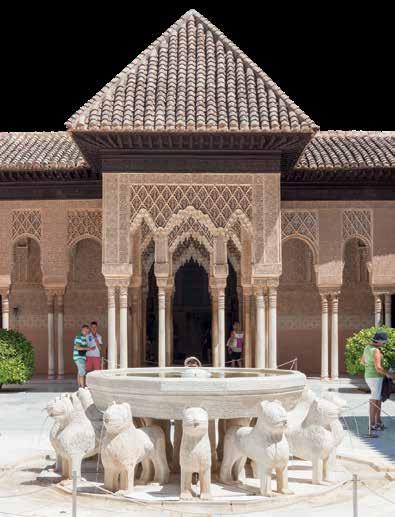
CAPTIVATING: it was in the Alhambra that the Catholic monarchs issued an edict expelling the Jews from Spain in 1492
because travellers naturally want to see the Alhambra. But not many know it has Jewish history too.
Historians believe the twelve stone lions supporting the fountain in the Court of the Lions were originally built for the 11th-century palace of Yusuf ibn Naghrila, a Jewish vizier to the Berber king of Granada.
As a tragic twist, in 1492, the Catholic Monarchs Isabella and Ferdinand signed the Edict of Expulsion (Alhambra Decree) at the palace, which ordered the expulsion of all Jews from the Spanish kingdoms.
Granada is one of those ‘mustdo’ stops on any Spain trip
Asaf likes to combine a trip to see the Alhambra’s hidden Jewish history with a visit to Granada’s medieval Jewish neighbourhood (Realejo).
Realejo was known in the Arab period as Garnata al-Yahud (‘Granada of the Jews’).
Unlike some quarters that are eas-
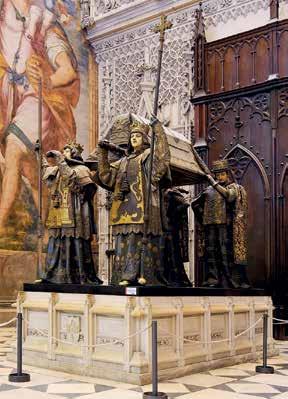
ier to read as a single preserved street plan, Realejo still feels like a lived neighbourhood. It’s a mesmerising labyrinth of lanes where you’re essentially walking through a community that once sat close to the city’s power centre.
As Madrid is often a logistical city due to its international airport, Asaf likes finishing (or beginning) in Madrid with something that makes Jewish heritage feel present tense: the Sinagoga Beth Yaacov. It’s not a particularly old or wellknown building – it was only inaugurated in 2007, and visits must be pre-booked. But inside there is a carefully curated collection of photographs, documents and materials that trace the modern return and rebuilding of Jewish life in Spain from Jewish descendents were returned after nearly five centuries of exile.
Seville is hugely popular for its headline sights: the Cathedral, the Royal Alcázar and the Archivo de Indias (a UNESCO-listed trio). The Cathedral in particular is all the more intriguing right now as it’s the resting place of Christopher Columbus, who is now considered to have been of Jewish heritage. The good news is that Seville’s most tourist-friendly area, Barrio Santa Cruz, is also the city’s historic Jewish quarter. It’s a fascinating maze of lanes and small plazas where you can build an easy walking loop. As part of that walk, add at least one ‘memory marker’ site, such as Church of Santa María la Blanca – a former synagogue site later converted into a church.
DRUG trafficking, gang shootouts and gun possession galore. Spain - unfortunately - is home to a string of barrios where crime is part of daily life.
Certain districts of Catalunya and Andalucia are regularly flagged by police, and rank among the country’s most dangerous.
Although Spain remains one of Europe’s safer countries, pockets of serious deprivation persist in most cities. Many of these districts began as social housing projects - but decades of neglect and underinvestment have allowed organised networks to embed themselves.
Experts argue that without sustained policing alongside long-term education and employment strategies, the cycle is difficult to break. Regeneration can take years, plus needs strong political will.
“
By Karissa Key
apartments used for drug distribution, while residents complain of ongoing violent street crime.
A combination of overcrowding, tourism and poverty creates a volatile mix in one of the city’s most densely populated districts… although the opening of a new local police station is helping to remedy the situation.
“ Overcrowding, tourism and poverty have led to a volatile mix
Catalunya is home to four separate neighbourhoods of concern, with El Raval - often described as the epicentre of Barcelona’s narco-flat crisis - in second place.
The area has long struggled with gang tensions and alleged theft.
Police have repeatedly raided
Other bad barrios in Catalunya include 1960s-built Sant Cosme - dubbed a ‘drug supermarket’ by locals - as well as La Florida, one of Europe’s most densely populated neighbourhoods in L'Hospitalet.
A ranking from social media platform Constitucion Espanola de 1978 put Madrid’s Canada Real as

the third most dangerous neighbourhood in Spain. Discussions online call this area ‘truly unsafe,’ with one Reddit user claiming that if you are ‘looking to buy drugs or get robbed, this is the shady place you are looking for.’ A lack of basic services and infrastructure, along with marginalisation, drastically impact the district.
Valencia is home to La Malvarrosa, a neighbourhood with an area of pink buildings called ‘Las Casitas Rosas.’ Despite the charming name, it’s a well-known hub for drug trafficking.
Andalucia has also long grappled with some of the country’s most entrenched problem areas.
Sevilla’s Tres Mil Viviendas is often considered Spain’s most dangerous place and comes top in the poll. Around 40,000 people live there, a

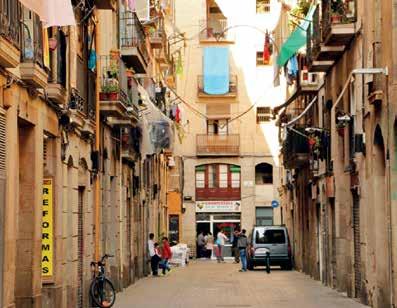
large percentage unemployed, in a district shaped by poverty and powerful drug clans.
Granada’s Almanjayar is home to 22,000 residents, and struggles with widespread poverty and electricity theft linked to illegal marijuana plantations.
Almeria has the El Puche neighbourhood, which was originally built to house flood victims, while in Cordoba, extreme poverty defines the neighbourhood of Las Palmeras.
The Malaga neighbourhood of
Palma Palmilla has long been associated with marginalisation and crime, while Lo Campano in Murcia has also faced recurring issues with criminality.
Official crime data shows that Spain recorded 2,474,156 offences in 2025 (www.datoscrimen.es). Barcelona recorded 6,317 offences per 100,00 residents - the second-highest rate nationwide. Surprisingly, the Balearics come top. Malaga is shown as fourth with 5,820 crimes, and Madrid as sixth with 5,495 crimes.

GLOBAL conflicts can feel far removed from the beaches of Marbella or the white villages of the Costa Brava –but history shows they can surprisingly impact the local property market.
The latest tensions involving Iran have already pushed oil prices sharply higher, sparking economic uncertainty worldwide. When oil prices rise, currencies shift, which can quickly affect the spending power of international buyers looking at property in southern Spain.
Take Norway as an example. The Norwegian krone (NOK) is closely tied to global energy markets because Norway is a major oil exporter.
The NOK has strengthened almost 6% against the Euro since Jan 1, meaning homes on the costas become cheaper for Norwegian buyers. A typical €500,000 property purchase now effectively costs a Norwegian buyer €30,000 less than it did at the beginning of the year.
The same principle applies to other key buyer markets.
The Swedish krona and the British pound have both seen volatility in recent years. If either currency strengthens against the euro, buyers from those countries suddenly gain extra purchasing power when looking at
Iran How Middle East tensions and rising oil prices could boost Spanish property demand, writes Chris Fogelberg
Spanish property.

Foreign buyers are already a driving force in Malaga’s property market, particularly in areas like Marbella, Estepona and Benalmádena, where international purchasers make up a significant share of transactions. Global instability can also change where buyers come from. Following Russia’s invasion of Ukraine in 2022, estate agents across the Costa del Sol reported a surge in buyers from countries close to the conflict, particularly Poland, the Czech Republic and Slovakia. Many were looking to diversify investments or secure a property in a stable and attractive part of Europe.
A similar pattern could emerge again if geopolitical tensions continue to unsettle markets. For international investors, property in lifestyle destinations like the Costa del Sol is often seen as a relatively safe long-term asset.
So while the conflict may be unfolding thousands of kilometres away, the ripple effects – from oil prices to currency shifts –could quietly influence who the next wave of buyers on the Costa del Sol will be.

TECH-mogul Elon Musk recently chimed in on the ‘Empty Spain’ debate, as he does on most things. And he’s right, the issue of rural depopulation has left vast parts of the country’s rural interior scarcely populated. Indeed, it’s almost completely vacant, with around 90% of the population now living in just 20% of Spain’s territory. While charming for many to get out into the hills in almost blissful peace away from the crowds, the problems this evacuation is causing are many.
Take the Toledo village of Illan de Vacas. It has only one resident - living in an abandoned pueblo with no neighbours, no public services, shops or schools.
It’s a familiar tale - around 3000 Spanish pueblos have been abandoned in recent decades as young people migrate to the cities or coastal resorts to find work. Musk’s solution? Not to invest in these regions to try and encourage inward in-
How thousands of expats and a series of grants are helping to revitalise rural inland Spain, writes Maeve Gorman
vestment. No. To sacrifice and transform rural Spain into a solar energy powerhouse capable of powering Europe.
Speaking at the World Economic Forum, he insisted these low population density areas offer both the land and sunlight needed for large-scale solar projects. While outsiders pitch big ideas, what are the homegrown solutions to Spain’s rural depopulation crisis. Galera, in Granada, has successfully appealed to expats to solve the problem, with a third of its 1,139 inhabitants now coming from 32 nationalities.
It started from a clever campaign called ‘Move to Galera’ which promoted the village’s affordable housing,

tranquil lifestyle and proximity to nature. It also stresses the open minded attitude to immigrants in the town. Other similar schemes have been designed to combat the effects of rural depopulation.
Notably, the Holapueblo campaign is a national initiative to connect foreign entrepreneurs to pueblos desperate for new residents.
Some 11 regions are involved, including Extremadura and Castilla, and investors must first fill out a detailed application on the official Holapueblo website, outlining their plans to launch a business inland. Led by AlmaNatura and

LOOKING FOR MORE PROPERTY STORIES?
Scan to visit our website
backed by Ikea, between 2021 and 2023 alone some €788 million was invested in 262 rural destinations, much of it with help from the EU’s post-pandemic Next Generation fund, which is expected to close at the end of this year.
There are now hundreds of examples with pueblos including Paymogo, La Bobadilla and Coripe having a range of new businesses arriving from bakeries and bodegas to hotels and e-bike businesses. Many examples have seen young families (around 50% of the total) relocating from the other side of the world, many of them even paid to relocate. Most of the new businesses are run by women (58%), while 67% are between 35 and 50 years old.
In Castilla-La Mancha’s Almadrones, where the population had plunged to just 50 people, the authorities launched a scheme offering jobs with salaries up to €1,600 per month and al-
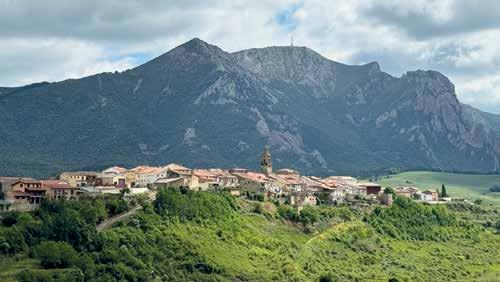
ISOLATED: And Aguilar de Codes in Navarra is almost empty with just 75 residents
legedly free housing, garnering headlines nationally. While there have been claims that the offer was heavily exaggerated, it appears to be working with the latest census showing 67 people live there. Financial aid to move inland in Spain was offered by the government since 2022 with €10,800 for individuals under the age of 35 who purchase a property in a town of under 10,000 residents. And to avoid fraud, the property must serve as the buyer's main residence
for a minimum of five years. Once a participant is matched with a village, the project often provides guidance and local contacts to help with the property search.
Some success stories include an Argentinian family who settled in the village of Pradena, in Segovia, where the husband launched a much-needed carpentry business and the wife is now teaching music. Meanwhile a couple moved to Villa del Rey in Caceres to run the village bar and
shop, a decision motivated by seeking a better quality of life for their young son. And in Aguilar de Codes, in Navarra, a village with just 75 residents, a Spanish couple from Valencia who run its petrol station. Then there are entrepreneurs like American Jason Lee Beckwith who bought Salto de Castro, on the Portuguese border for €310,000. The CEO of Rocking Hospitality plans to transform the village into a luxury tourist destination and create 35 local jobs.
DEMAND to buy a property in Spain is still high and nicely spread out among many nationalities, according to the mortgage experts at the Finance Bureau.
“January was a record month for us and 2025 was a record year, jumping up 35% on the year before,” reveals boss Tancrede de Pola, adding his average loan amount is €527,000.
The mortgage expert, now in his 23rd year helping expats buy homes in Spain, helped ‘several hundred’ buyers get finance last year and he’s not expecting this year to slow down.
“It’s been a hell of a start to the year, even though a lot of the cases we brought to completion in January started negotiating in October or November,” explains de Pola, who now employs six people at his Costa del Sol office.
“We are right at the translation end of the statistics and we are seeing more and more foreigners coming in to buy.”
The team at the Finance Bureau keep seeing more and more expats applying for mortgages… and this year doesn’t look like changing
In particular he says the demand is very high among Dutch clients, Poles and the Swedish, while the British are still top and Americans numbered ‘over 30’ last year.
“We are also getting Germans, French, Middle Eastern and even a few Aussie buyers, although it is tricky as most banks don’t recognise the Australian dollar.”
But this is precisely why certain nation alities like antipode ans, as well as Balkan buyers, from Bulgaria or Hungary,

come to a business like the Finance Bureau.
Because Tancrede and his team have ‘always’ got agreements with one or two lenders for every nationality.

“Countries like Bahrain and Kuwait or Romanians and Hungarians have more problems getting their currencies recognised,” he explains. “But luckily we have got a couple of banks in Spain that will lend to each of these na-
In general though, his company, based in Marbella, uses around
OUTRAGE has erupted after the wealthy son of a politician snapped up one of Alicante’s few ‘affordable homes’ reserved for low-income families.
Entrepreneur Alejandro Lillo, son of PP councillor Mercedes Torregrosa, got the sixth-floor apartment at the protected-housing complex Les Naus.
This is despite the 140 homes being protected as ‘VPO properties’ normally reserved for residents earning under €55,000 a year.
Lillo and his wife Carmen Banon earn far more than that.
While he owns three consulting firms, she is the boss of renowned cosmetic clinic Enea.
It emerges that several homes were allocated to relatives of local politicians – including planning leader Rocio Gomez, who has now stepped down over the scandal.
The revelations emerged in an exclusive investigation by newspaper Informacion.
The probe revealed that Lillo and Banon even en-
Probe launched after politicians snare protected low income homes in Alicante
By Alex Trelinski
listed an architect, Antonio Rabadan, to design and oversee additional work. The pair have regularly flaunted their lavish lifestyle on social media – including trips to the Maldives, Japan and Sri Lanka. Police have now begun to probe the claims and have reportedly conducted doorto-door checks at Les Naus this month in an effort to establish who is actually living there.
One family is said to have bagged five separate homes, with three siblings and two cousins – all aged between 18 and 34 – each securing their own apartment.
The five relatives were allegedly ‘placed ahead of many other families.’

DECADES OF EXPERIENCE: And these days the average loan for The Finance Bureau clients is €5 27,000 euros
half a dozen banks, with a couple of ‘exotic’ ones, as he calls them.
And around half of his clients are buying properties in Catalunya, Valencia and the Balearics.
“A lot of these are the really expensive ones and we have had more million-plus mortgages over the last year than ever before.
“The biggest purchases are generally being made by Americans, Swedish and Polish buyers, and the Ukraine conflict
is bringing a steady stream of Balkan and Polish buyers,” he continues.
Breaking down his client numbers in more detail, he explains that 80% of his clients are between 45 and 55 years old and most get a 25-year mortgage. He even had a client in his late 70s last year and insists he has one specific bank who has lent money to a client over 80 years old. “And he’s already paid off 10 years of that,” quips Tancrede.
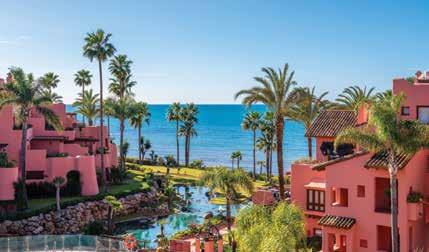
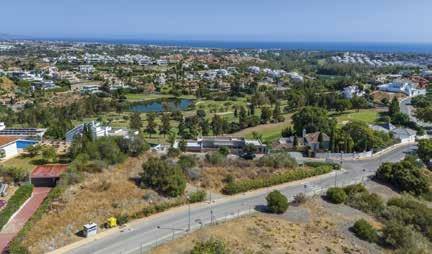

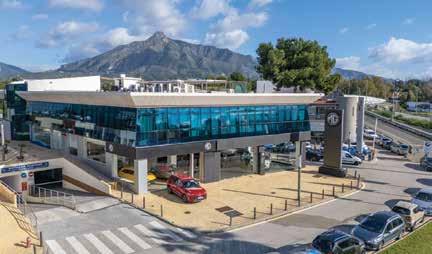
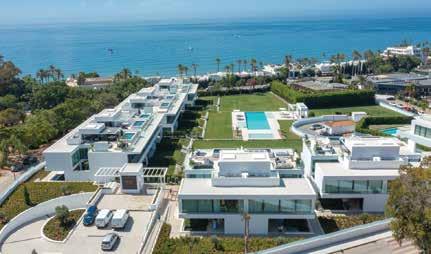

AQUIET street suddenly fills with the sounds of drums and trumpets and the overwhelming smell of incense. Candles flicker as a line of people emerge and move slowly through the night. Often they are in disguise and wearing pointy hats, not dissimilar to a far right grouping. Frequently they are totally silent. Sometimes they are barefoot. If you’ve recently arrived in Spain, Semana Santa may catch you off guard.
For many expats and visitors, it becomes one of the most memorable cultural experiences the country has to offer.
Rather than colourful Easter egg
hunts and chocolate treats, Spain’s Holy Week is a sacred commemoration of the death and resurrection of Jesus Christ.
Across the country, streets transform into marching routes as religious brotherhoods gather for a centuries-old tradition: the Semana Santa processions.
Members of religious guilds, known as cofradias or hermandades, spend months preparing elaborate floats that depict scenes from the final days of Christ.
Sculptures adorned with flowers, candles and embroidered fabrics are slowly carried through historic streets. That is if it doesn’t rain, as it almost always does at

Semana Santa transforms Spain’s streets into living processions to highlight its most religious traditions
By Karissa Key
One of the most shocking sights during these parades are the men donned in white robes and tall, pointed hoods - no, not those kinds. Known as Nazarenos, they are members of the Catholic brotherhood who walk in silence to repent their sins.
Behind them come marching bands to liven up the mood, with drums and bass echoing through city centres late into the night.
Yet Semana Santa is more than just a spectacle. It’s an honorary religious celebration, filled with both ceremony and excitement.
ai177322028713_DFA_OLIVE PRESS_256x170mm_MUSICA+GASTRO+INFO - trazado.pdf 1 11/03/2026 10:11:27
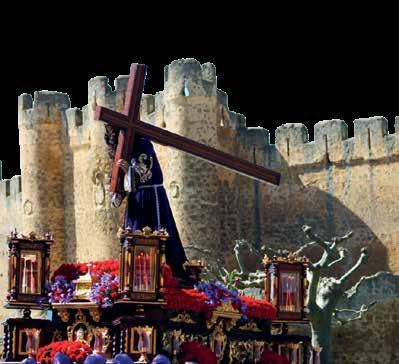
Every region of Spain marks it in its own way. Some celebrations stretch across the entire week rather than just Easter Sunday.
Visitors and expats get a rare glimpse into Spain’s religious traditions during the springtime holiday - not staged for tourists, but carried forward with unwavering devotion year after year by communities and the Catholic brotherhoods.
For the best places to see the Easter parade around Spain, in Madrid, Barcelona, Andalucia and Catalunya take a visit to our website.
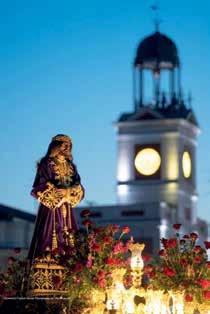



pdougherty@bissan.es www.financial-planning-in-spain.com
FEW words in Spain can ruin a perfectly good café con leche faster than this one: Hacienda.
Why Choose AnyTech365?

A LEADING expat-run tech business is behind an exciting new global scam-busting initiative. AnyTech365 has teamed up with a host of international cybersecurity firms to take on fraudsters, who steal around 400 billion euros a year. The Marbella-based company has teamed up with OpenAI to launch the platform Scam.org, which is spearheading the fightback against the online conmen. With victim support in over 50 languages, the initiative is being launched under the umbrella of the Global Anti-Scam Alliance (GASA), whose members include AnyTech365, as well as Amazon and Microsoft.
Using high-tech AI, the free site offers education, prevention, detection, reporting, and victim support to ‘over 97% of the world's internet users’.
Until now, victims have faced a maze of unconnected websites to report fraud, each with its own support hotlines and background help. GASA hopes to unify
By Alessio Ghirlanda
these efforts into one global hub.
“It’s something we have been passionate about for years,” explained AnyTech365 COO Georgi Medzhidiliev.
“Fraudsters are the scourge of society and we have long been battling them,” added
SPAIN’S richest man has held his spot in the world’s top ten, but only just. Amancio Ortega scrapes into tenth place with a €136 billion fortune in the annual Forbes list.
The owner of In

ditex - the firm behind Zara, Massimo Dutti and more - is far off matching the wealth of Elon Musk, who is worth €772 billion (or $839 billion), and on his way to being the world’s first trillionaire.
See full story online
the Bulgarian, who has lived in Malaga for over a decade. “This website will be the No1 anti-fraud site online and is going
to help millions of users around the world.”
Scam.org is powered by partnerships with OpenAI and alongside similar cybersecurity organizations such as Netcraft and Cube3.
The launch comes in the same week as the United Nation’s annual Fraud Summit in Vienna.
A recent study of 1,000 Spaniards by GASA reveals nearly two thirds have encountered a scam, with an average of one every three days, or 117 scam encounters on average per person per year in Spain.
“Our anti-fraud tools alone have stopped 1.5 million attempts on our members' devices in Spain,” added Medzhidiliev.
He continued that Scam.org is creating a ‘collaborative defense system’ where reported scam data strengthens protection for users globally. “We hope to better protect people from the bad guys,” he continued.
used to Spanish bureaucracy and may be unsure how official communication works.
Comprehensive Cybersecurity Their services include cybersecurity, device maintenance and performance optimization, and malware removal, enhanced by AI for faster and accurate solutions.
Personalized User Experience
Your phone buzzes. You glance down. There it is. Suddenly your toast tastes like cardboard, and your heart is doing flamenco. Before assuming the worst, take a breath. There’s a strong chance the message is not from the authorities at all, but from a scammer.
AnyTech365 adapt its product and technical support solutions to individual needs, offering a safe online experience to any user.
The Agencia Tributaria, which is Spain’s official tax agency, handles income tax, non-resident tax and other fiscal matters. If you live here full-time or spend long periods in Spain, you may have genuine dealings with them. Scammers know this. They also know many residents from a foreign country are still getting
Let’s be honest: navigating Spanish bureaucracy can sometimes feel like assembling IKEA furniture without the instructions… in another language. And scammers absolutely love that confusion.

Has Hacienda Texted You? Don’t Panic, It’s Probably a Scam
AnyTech365
World
AnyTech365 IntelliGuard
The ‘Tax Refund’ Trap
AnyTech365 AI powered unique software can pinpoint the root cause of a problem providing real-time protection and immediate response to suspicious activity. This proactive approach significantly reduces the risk of cyberattacks.
The most common Hacienda scam arrives wrapped in the digital equivalent of a winning lottery ticket. It may look official at first glance: logos, reference numbers, serious-looking text, but it’s about as genuine as a
AnyTech365 TotalCare
AnyTech365 Security World class, cross-platform security platform with advanced scanning techniques to identify potential threats from files, programs and neutralization of viruses, malware, and phishing attempts.
AnyTech365 TotalCare
designer handbag from a beach vendor.
A text or email claims you’re due a tax refund and urges you to click a link. It often comes dressed up with an official-looking reference number and formal language: the digital equivalent of a suit and tie to make it feel authentic. There is usually urgency: claim
within 24 or 48 hours. This pressure is deliberate. The link leads to a fake website designed to resemble the Agencia Tributaria portal. Once there, you are asked for personal details, bank information or ID documents. Provide them, and criminals can access your account quickly. If unexpected money appears out of nowhere, caution is your best friend.
The More Frightening Version
A comprehensive security suite, combining all AnyTech365 premium products together with quick issue resolution by certified technicians without onsite visits anytime, day or night, with AnyTech365’s around-the-clock support services, all offered in more than 15 native languages.
Other messages take a harsher tone, claiming you owe tax and must pay immediately to avoid fines. For expatriates unfamiliar with Spanish procedures, this can be deeply unsettling. The idea of legal trouble in another country is enough to make anyone act fast. And that’s the trick. Scammers don’t hack your computer first: they hack your emotions. Panic is their favourite password.

In reality, the Agencia Tributaria does not demand urgent payment via text message or request sensitive banking details through random links. Official notifications are normally delivered through secure channels or your authorised online tax account.
Why Britons Are Often Targeted
British expats are prime targets, not because they’re careless, but because they’re navigating a system that isn’t the one they grew up with. Even messages written in English can sound convincing. Since Brexit, many people are extra cautious about residency and tax compliance, which scammers cleverly use to their advantage. And criminals know that if they send ten thousand messages, they only need a handful of worried
clicks to make it worth their while.
Sadly, it only takes one click. Imagine this: you’re sitting on your terrace in
Alicante, convinced you’ve just secured a tidy €486 refund. Ten minutes later, your bank account is the one asking for financial assistance. That “refund” suddenly feels rather expensive.
The rule is simple: never click links in unsolicited tax messages. If you receive one, ignore the link and visit the official Agencia Tributaria website by typing the address directly into your browser. Never share banking details, passwords or security codes via text or email. If you’re unsure, pause. Speak to your accountant, your gestor, or a trusted IT professional. Better yet, let experts like AnyTech365 take a look before you click: they deal with these digital pickpockets every single day.

AT 6.19pm, as the sun begins to set in Bilbao, German Guevara is erasing a whiteboard.
In less than an hour he’ll be back in front of it - but this time his audience won’t be clients. He’ll log into a conference call, headset on and slides queued up, and explain to a group of professionals preparing to take the European Financial Planner (EFP) exam how to value an inflation-indexed bond.
The afternoon was spent reviewing the financial objectives of a family; the evening will be spent fielding questions about the factors affecting an indexed bond’s price to voices chiming in over the line.
For him, the transition isn’t a shift in roles so much as a continuation of the same work - making financial concepts understandable. German doesn’t teach finance professionals for the title. He teaches because it improves his work as a financial planner. If he can’t explain how inflation impacts a client’s portfolio to someone hearing it for the first time, he knows he hasn’t mastered it himself.
He teaches because finance confuses some people and intimidates others, and German believes it shouldn’t. And he teaches for the moment when the conference call goes quiet, then someone says, “Oh, I get it now!”
That spark - the instant complexity turns into clarity - is reason enough.
That German is both Partner/ Chief Financial Planner at BISSAN Wealth Management as well as EFP Program Director at Fikai School of Finance in Bilbao isn’t surprising at BISSAN.
In fact, three other colleagues of mine also teach part-time: Rafael Faus (Senior Lecturer, Financial Management Department at IESE Business School), Jordi Huguet (Associate Professor, Department of Finance at Universitat Internacional de Catalunya) and Jose Suarez-Lledo (Instruc-
PETER DOUGHERTY
● MBA in finance
●
●
●
●
● Author of two financial planning books
tor, IESE Business School and Adjunct Professor, Universidad Pompeu Fabra).
What is surprising is that four members of our ten-person BISSAN team give finance lectures to students, trading client meetings for classrooms without missing a beat. Four out of 10 is a very high ratio.
For Rafael Faus, teaching at IESI Business School is only the start of his list. He also gives classes at Barcelona Finance School and San Telmo Business School.
In his words: “I like to stay actively involved while also teaching. In the case of families, to give them tools and knowledge they can apply at home, taking into account what is actually being done with clients; and in the case of professionals, to encourage them to adopt the financial planning ap-



TEAMWORK: Peter, Rafael, Jordi and Jose
proach.”
According to Jordi Huguet, his motivation for teaching is: “I want to help equip students to make better decisions. I believe my role as a teacher is to give them the important financial tools to do so.”
Jose Suarez-Lledo also has compelling reasons for maintaining a role in academia. As he says: “I continue teaching in order to help educate the new generations and because that interaction with students generates interesting ideas for professional practice.”
In my opinion, teaching doesn’t pull my colleagues away from their work. Instead, I think it strengthens it. Preparing a lecture forces them to revisit first
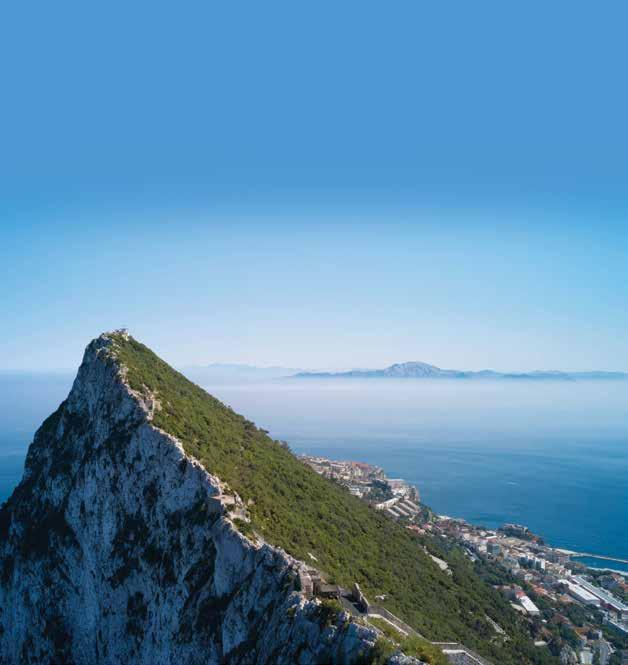


principles, pressure-test their assumptions, and explain complex ideas without hiding behind jargon.
Students ask the kinds of questions that demand clarity, not shortcuts. And students question norms. They’re less conditioned by ‘this is how we’ve always done it.’
The result is sharper thinking, cleaner communication, and a discipline that carries directly into every client conversation.
Teaching doesn’t dilute BISSAN’s focus - it deepens our expertise and sharpens how we serve clients.



The Olive Press interviewed a number of pros for our social media platforms, including Miguel Angel Jimenez who told us how he had grown up just half an hour away up the coast in Churriana.
He revealed how he had left school at 15 and used to walk two hours each way a day to Torrequebrada golf course where he caddied alongside his brother, who was a pro at the club.
“I caddied as much as I could and began to fall in love with the game, the walking, the health side. I learnt what my brother did for a living and started to compete.
“But just as I was about to become professional I had to go to the army for 15 months and had no golf at all. It was a waste of time although the discipline was something important.
“In fact the way young people behave nowadays I would put them back again in military service. It is a great thing to do things for a local community to make you aware that you are part of the world.”

Alfie Haaland:
is getting the golf bug too
The former Norway and Premier League star told the Olive Press how his son Erling was finally starting to get good at golf.
“I managed to get him interested and over the last year he has become very eager. He started the same age I did when I began in the mid 20s when I came to England.
“It is a great second sport when you are a footballer, it is all individual completely different to football.”
Haaland senior has had a house in Marbella and been a member of Aloha golf since 2012.
Sun shone as Jamie Donaldson pipped fellow Ryder Cup legends
Thomas Bjorn and Miguel Angel Jimenez to win the Staysure Marbella Legends tournament
By Jon Clarke

AFTER two months of rain, Jamie Donaldson took advantage of perfect conditions to snare the first tournament of the 2026 Legends tour in Spain.
The celebrated pro dramatically birdied the final hole to win the Staysure Marbella Legends after a scintillating final-round 64 at Aloha Golf Club.
A back-nine of just 30 shots saw the 2014 Ryder Cup player edge out another member of Paul McGinley’s victorious European team, Stephen Gallacher, by a single shot after the Scot’s superb 65.
“Overnight leaders, Thomas Bjørn and home favourite Miguel Ángel Jiménez, finished third and fourth, respectively, after being unable to keep up with the leading duo. It was on the 18th fairway tied at 12 under with Gallacher that Donaldson produced his shot of the tournament. The 5-iron from 205 yards landing just three feet from the cup. “I’m absolutely delighted,” said Donaldson, who has made an impressive start to his Staysure Legends career. “I played great and I had to, given that Stevie shot an amazing round as well. The shot on 18th was a tricky one - you've got to take a club that’s only just going to make it to the hole if you hit it perfectly, which luckily I did.”

ed with his play and praised the immaculate conditions of the Aloha golf course.
After the bad weather the course and greens were fantastic
““The course has been amazing, to be honest. The greens are phenomenal. With the bad weather we’ve had, the course is fantastic,” he said. The tournament was played over four days in front of huge crowds over the weekend – all waiting for a glimpse of their heroes including Colin Montgomery, Michael Campbell and Spanish star José María Olazábal. In the end, it was another Spaniard who gave the home fans something to cheer about.
Playing the par-three 8th hole, Miguel Angel Martin saw his 5-hybrid drop for an unlikely ace from 197 yards… to set the tone for a memorable day of low scoring.
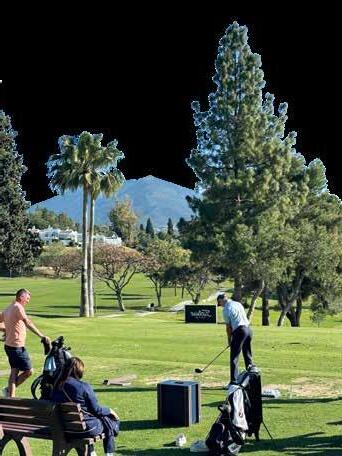
Gallagher was also delight-
The tournament was the first event of a global schedule for the Staysure Legends Tour in 2026, with 18 tournaments (and more to be announced), three Majors and more than €20million prize money to play for.
The tournament featured a host of big names also including Ryder Cup captain Thomas Bjørn and Major champion Paul Lawrie.
The Staysure Legends Tour moves on to the Caribbean for the Barbados Legends hosted by Ian Woosnam from April 25.

It takes place at two more stops in Spain this year at
in September and La Manga, in Murcia, in November.
Called the ‘Legends Experience’, for just €8,000 you can rub shoulders with the pros, pick up tips, and get treated as a professional with access to all the training facilities and exclusive functions. Play the game of your life and you might make the cut and, who knows, you could make the podium at the prize-giving ceremony at the end of the tournament.
Alternatively you can pay €2000 and join a pro-am team, which still offers a chance to play with some of the pros.
And if you are really into it and have some time to kill you could join the Legends Club and play all 8 tournaments, including Barbados, Scotland and Greece, where the Legends Experience is taking place. That includes 5-star hotels, private Q&As with the legends and even special clinics.
The Legends Tour has been going since the Mid 1980s and was previously the Seniors Tour. For more information visit www.legendstour.com

FORGET the French Riviera or Rome. Travelers across Europe are choosing Spain as their favourite destination.
New figures show Europe recorded 3.1 billion tourist stays in 2025, a 2.2% increase on 2024.
Spain claimed the top spot with a record 514 million overnight stays, ahead of Italy (477 million) and France (472 million).
The main draw is the country’s variety with holidaymakers flocking year round to sunny spots like the Canary Islands, while others head to the culture centres of Madrid and Sevilla.
Northern Spain has been gaining increased popularity thanks to its landscape, history and traditional charm.
Experts say Spain’s extensive high-speed rail network and competitive flight prices have also helped fuel the surge in tourists.
SPAIN and Portugal have confirmed plans for a series of high-speed rail links between their cities over the next decade.
The new line between Madrid and Lis-
bon is hoped to be ready for 2034 cutting the journey time to just three hours from around eight hours today.

Another key project is the Porto to Vigo link to be completed by 2033, while a high-speed connection between Faro, Huelva and Sevilla is also considered as a priority.
IT was in 2020 that a new beer became a staple in British pubs.
Between Guinness and Peroni, Madri blew up overnight and quickly became one of the nation’s most beloved pints.
Madri’s rollout was record-breaking: it achieved the highest-value sales of any alcohol brand in its debut year,
By Maeve Gorman
pulling in €120 million.
But 2025 marked an even more stunning year as the beer broke the £1billion (€1.15b) ceiling selling 750 million pints in just five years.
Under the slogan El Alma de Madrid (The Soul of Madrid),
CHANGING beer habits could spell last orders for the iconic caña glass size. Many bars are taking the caña off their menus and instead offering the larger copas, dobles or tercios.
This is, in part, due to a drop in beer consumption, which is 52 litres per person in Spain per year.
But mostly, it is because bar bosses - and waiters - dislike the drinks because they need more continuous service and require more work to serve.

the beer brought a taste of the Spanish dream to Brits stuck in the UK during Covid lockdowns.
With a few sips punters were transported from a gloomy beer garden to Plaza Mayorexcept it wasn’t really Spanish at all, and no one in Madrid had ever even heard of it.
Madri is, in fact, brewed in Tadcaster in Yorkshire and is
One restaurant owner Miguel Garcia, at La Montana, in Madrid, says the small glass is disappearing in the same way the legs of ham are vanishing from behind bars.
“In bars there was almost always a leg and a person cutting it,” says Garcia. Now this has changed because it was not the most efficient method.
“Getting rid of cañas allows our waiters to provide a more efficient service.”
The ‘Spanish’ beer making a billion last year conceived in America and brewed in Yorkshire
owned by the American company behind Coors Light and Carling.
While rumours claim it is simply Coors light with extra hop extract, it does actually have a connection to Spain through its relationship with La Sagra Brewery, owned by Coors and based in Toledo. It burst onto the scene as other beer giants were launching their ‘continental’ brands. Heineken was having success with Birra Moretti and Carlsberg’s San Miguel was raking in profits.
“Celebrating our fifth birthday with £1bn in annual sales in the UK is something we’re incredibly proud of,” said Hannah Norbury, Molson Coors Marketing Director.

SPAIN is one of the best countries for a hearty brew - and four spots are ranked among the globe’s best. Nomad Frutas Selectas, located in Poblenou in Barcelona is ranked 16th in the prestigious ‘World’s 100 Best Coffee Shops’ award. Rated as ‘more than just a cafe’ praise is dished out for its ‘strong focus on quality and traceability’. Next is Hola Coffee Lagasca (above), located in upmarket Salamanca in Madrid. Coming in 19th it is praised for its ‘minimalist but colourful design’ and has a strong educational focus.
Based in an Antoni Gaudi designed building D-Origen Coffee Roasters in Barcelona, is ranked at 83rd, while Kima Coffee in Malaga ranks at 93.
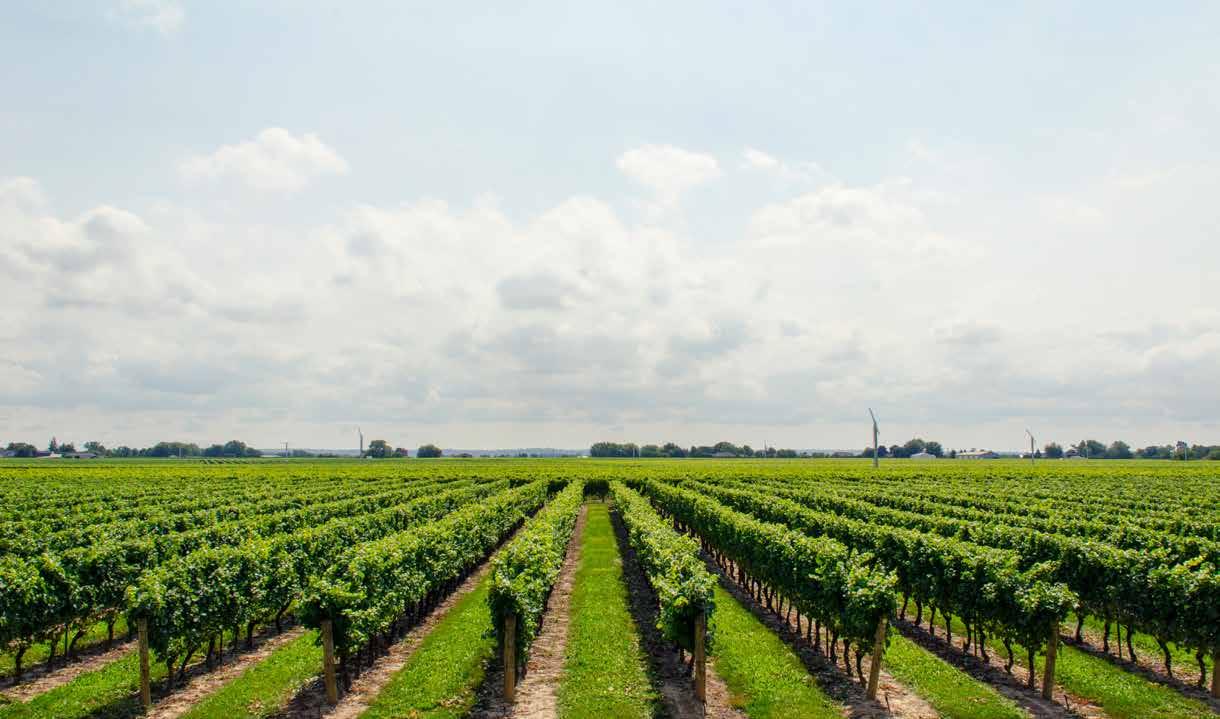


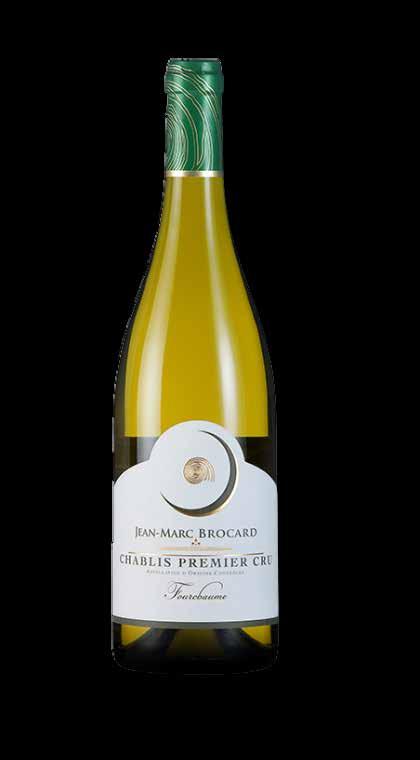


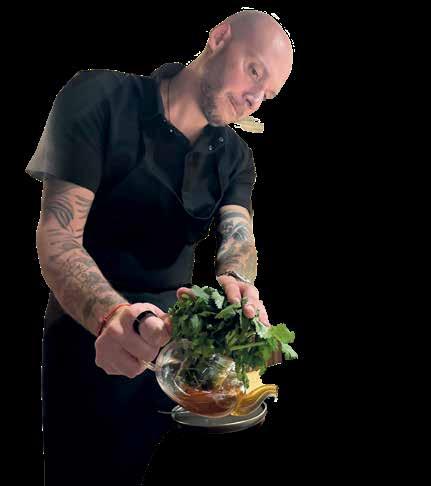
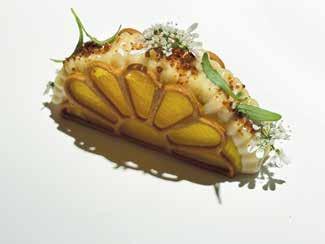
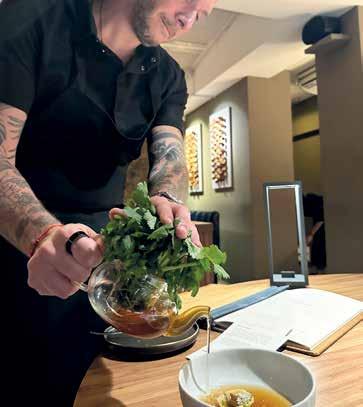

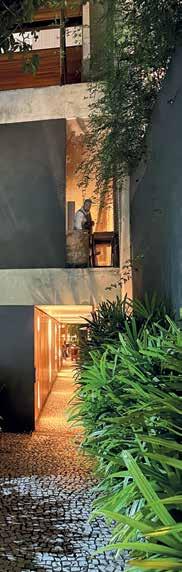

S Luiz Filipe explained his pairing of chicken broth with eel tartlets, he spoke like a classically trained French chef fresh from a three-Michelin-star kitchen in northern Spain.
In fact, the owner of São Paulo’s leading restaurant Evvai is almost entirely self-taught, rebelling against his engineer father and teacher mother to master the stove instead.
After a short stint with his mentor at destination restaurant Reale in Italy, he knew it: he would be a culinary star back home.
His story mirrors a clutch of chefs turning this unfairly maligned city into one of 2026’s hottest food destinations. With a third star tipped for Evvai – and possibly for equally brilliant Tuju – when the seventh Michelin Brazil guide lands in May, go now before prices rocket.
“It’s easily in the five best global cities to eat,” insists Tuju boss Ivan Ralston, who spent seven formative years at Spain’s El Celler de Can Roca and Mugaritz, once at the vanguard of global dining.
He arrived during a golden era, when Spain was redefining what a restaurant could be: part laboratory, part theatre, part philosophy seminar. “It was an extraordinary time,” he tells me after service, the embers of an amazing 9-course tasting menu still glowing in the open kitchen.
Originally, however, he had different ambitions. Ralston studied music at Berklee College of Music in the United States, intent on becoming a professional musician.
So what does a double bass teach a chef?

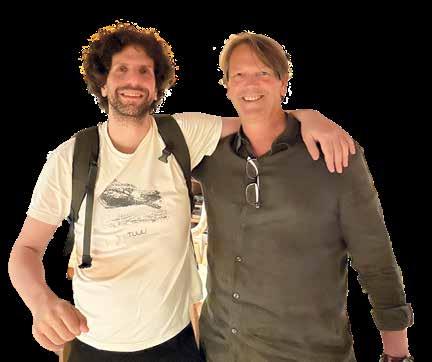
“Music is structure, mathematics, rhythm,” he explains. “It trains you to think in patterns. That helps creativity enormously.” He pauses. “Business is another matter.”
’s early years were brutal. São Paulo rents are unforgiving, diners demanding and investors impatient. For a time, survival seemed more urgent than stardom. Yet perseverance paid off. Today, Ralston has bought out his partner and presides over a striking three-sto-
Spanish flair, global ambition and South America’s hottest dining scene - so why does São Paulo still have no three-star restaurant?
Jon Clarke believes this is soon to change
By Jon Clarke
rey space where diners are guided through a whimsical, almost narrative-driven journey inspired loosely by Alice in Wonderland but with the flavours unmistakably Brazilian.
When Michelin first arrived in Brazil in 2017, launching simultaneously in São Paulo and Rio de Janeiro, many wondered whether the inspectors would truly grasp the country’s culinary complexity.
Nearly a decade later, the numbers tell their own story. São Paulo has surged ahead, now boasting 17 starred restaurants and more than 30 Bib Gourmands.
“

Bristol before returning to São Paulo with sharpened technique and broadened horizons.
“I love Granada,” she tells me. “The way chefs there work with local produce is inspiring. Spain’s regional diversity is incredible - though Brazil might rival it.”
She has a point. Brazil possesses more biodiversity than any country on Earth.
“ Brazilian chefs learnt alot from the vanguard in Spain in 2000s
Rio trails, while Buenos Aires and Mexico City remain competitive but distinctly behind. As for Lima, long hailed as South America’s gastronomic capital, Michelin has yet to formally arrive. Politics, too, has played its part in shaping the mood. Since the jailing of former president Jair Bolsonaro, optimism has crept back into certain sectors of Brazilian society. Whether directly linked or not, there is a renewed sense of confidence among chefs: a belief that Bra zilian identity, ingredients and technique can finally step out from Europe’s shadow.
Over a week-long culinary tour, a pattern becomes clear.
Many of the city’s brightest talents are prodigal sons and daughters who left to train abroad - many in Spain - before returning home. The parallels with Spain’s own revo lution in the 1990s and early 2000s
are striking. Then, too, ambitious young cooks ventured to France, the US and the UK, only to come back and reinterpret their own terroir.
“We learned so much from Spain,” says Vivi ane Gonçalves, the dy namic force behind the restaurant at the Hotel Emiliano. Gonçalves spent four years cook ing in China and two in

From Amazonian river fish to unusual fruits and coastal shellfish, the pantry is staggeringly rich. For decades, however, much of it was underutilised in fine dining, overshadowed by European imports and techniques.
Now, that is changing.
Like New York, London or Barcelona, São Paulo offers virtually every global cuisine imaginable. Italian and Japanese influences are particularly strong, reflecting waves of immigration that have shaped the city’s identity. But what distinguishes São Paulo is how confidently these traditions are being fused with Brazilian produce.
Why such diversity? Gonçalves laughs. “We are a city of 22 million people. We work constantly. We don’t have beaches or mountains here. Our escape is food.


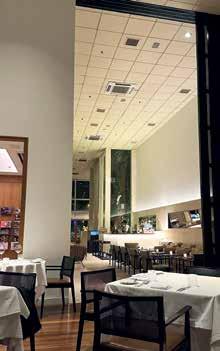


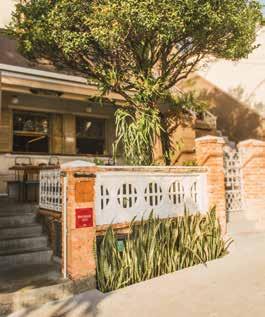

Restaurants are our living rooms.”
Another noticeable trait is the intellectual calibre of the chefs. Many have previous degrees or entirely different careers behind them.
At Cais, Italian-born Adriano de Laurentiis and Brazilian co-chef Catarina Ferraz left advertising and architecture respectively in search of something more tangible.
“I was bored and frustrated,” admits de Laurentiis. “Cooking gave me purpose.”
After staging at Tuju, he travelled further afield, including a formative spell at Maaemo in Oslo, absorbing Nordic precision before returning to Brazil. The result at Cais is thoughtful, produce-driven cooking that feels both
AFTER a few days in one of the two vibrant metropolises of Rio de Janeiro and São Paulo, most visitors to Brazil will be seeking a beach. Thankfully over recent years the travel landscape has changed dramatically and a number of cool, low key resorts have sprung up along the coast, which combine culture, music, and sport.
One of the real winners is the state of Bahia, where you’ll find the hip surfer’s hangout of Itacare, inside a national park and full of picturesque sandy beaches, swaying coconut palms, and warm, clear blue water.
A hangout for those-in-the-know, even better it has one of Brazil’s most stylish boutique hotels, the

ning his hip spot Cais
worldly and rooted.
A similar story unfolds at Metzi, where Eduardo Nava and Luana Sabino met in New York after studying music and medicine. Inspired by time spent in Mexican kitchens, they returned home to craft a Brazilian-Mexican dialogue that is vibrant, generous and unpretentious. It is, quite simply, joyous food.
Then there is Kotori, a Japanese-leaning spot run by 25-yearold Guillerme Braganholi. After training locally, he spent a year in Napa Valley absorbing Californian polish before returning to São Paulo.
“Brazil is still catching up with Europe in some ways,” he says. “But we are learning fast. More importantly, we support each other.”
That camaraderie may be São Pau-
Scan
lo’s secret ingredient. Unlike older, more hierarchical din ing cultures, there is little sense of guarded rivalry here. Chefs dine in each other’s restaurants, share suppliers, trade tech niques. The rising tide, it seems, really is lifting all boats. Above all, there is warmth. In France, fine dining can still feel ceremo nial, even austere. In São Paulo, even at the highest level, there is an unmistak able informality. You are not merely a customer; you are a guest in each chef’s ‘home’.

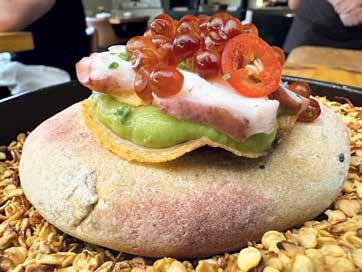
As my week ends, it is tempting to reduce the city’s ascent to Michelin mathematics or politi cal mood swings. But that would miss the point. What is happening in São Paulo is deeper: a generation reclaiming its ingredients, its confidence and its voice. And if the rest of the world has not quite caught up yet, it will soon. Book that table now. The three Michelin stars are beckoning in May.




The authentic Brazilian boutique hideaway created out of an Abba producer’s dream
Barracuda Hotel & Villas.
Set up by a group of Swedish friends linked to Abba (and even a princess from there) it is spectacularly situated on a palm-fringed cliff, with a dramatic infinity pool on a wooden terrace overlooking the sea and enveloped in jungle.
A charming blend of Bahian charm and Scandinavian minimalism spreads over 17 spacious suites with clean lines, polished

and bar flow seamlessly onto the pool terrace. Here, you can enjoy freshly caught fish and potent caipirinhas.
But the ethos of the hotel is health and activity and most guests don’t want to laze around and get the team to arrange surf safaris, jungle walks, or canoe trips. Or start the concrete floors, wood-paneled ceilings, and furniture by local artisans. The detached villas have the genuine wow factor and offer even more space, plus a kitchen and private infinity pools.
The restaurant
day with a yoga session on the picturesque deck of the wellness area, surrounded by greenery. And even better, 10% of the profits go to Instituto Yandê, an organization dedicated to local, social, and sustainable projects.
In particular funding a canoeing initiative that has even seen the locals making the Brazilian Olympics team.
For more info visit: www.thebarracuda.com.br/
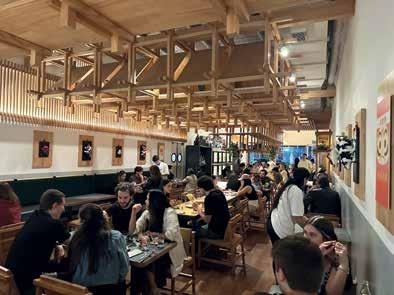


Leading Europe to Brazil airline Tap Air flies daily to Fortaleza from Lisbon, with connecting flights coming in from all over Europe and daily flights to Barcelona, Madrid, Malaga and 10 other Spanish cities.
The airline flies to 14 different destinations in Brazil and continues to expand its Brazilian network, recently adding cities like Curitiba and Flori-
anópolis to its extensive service from Lisbon and Porto. www.flytap.com for more information.
Jon Clarke stayed at Sao Paolo’s stylish five-star Pulso hotel and the hip Emiliano hotel (www.pulsohotel.com and www.emiliano.com.br). He also stayed at stunning Barracuda in Itacare (www.thebarracuda.com.br)
March 2026
‘WOW, I’m eating at a campsite.’ Yes, really. But this is no campfire-and-folding-chairs affair. It’s a full-blown, formal sit-down restaurant… and it’s open all day. Set in Granada’s hinterland, well off the tourist trail, it’s the sort of place you’ll only find if someone tips you off. And it’s well worth seeking out - particularly if you’re heading up for a ski in the Sierra Nevada.
By 4pm on a Thursday the place is humming, nudging close to 100 diners. There’s a genuine sense of occasion. Within two minutes of sitting down I’m presented with a bowl of local olives in a lightly curried dressing, a hefty hunk of bread and two bowls of fresh picual olive oil. An unexpected amuse-bouche - foie served in a tiny cup - follows swiftly. Service is brisk and tightly choreographed. There’s a clear pecking order: managers in black, chefs in grey, apart from one in what can only be described as a near-clownish outfit (see right). He turns out to be one of the partners. The asador has been around for
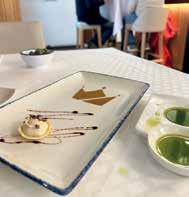
over a century, but three years ago it was taken over by a local family and two partners, including that flamboyantly dressed chef. They’ve struck a careful balancepreserving original floors and charming old window grilles - while creating a slick, modern operation. The menu is reassuringly traditional without being overwhelming. Grilled meats are the headline act, naturally - this is an asador after allincluding a 1.2kg Galician Wagyu chuletón for the seriously hungry.
Starters range from pheasant pâté and courgette carpaccio with parmesan to three soups (I ignored the advice to choose onion and went for pumpkin with curry). There are hearty hot options too:
CHIRU is a refreshing change from the commercial chains and expensive cafes that line the nearby thoroughfares of Madrid’s Castellana and Gran Vía.

Only opening last summer, it sits in a little pocket of streets on the way up to Chueca… but shooting distance from all the main galleries and Plaza del Sol.
Japanese in concept, it’s a fusion-spot really (Chinese owned, of course) with a bit of
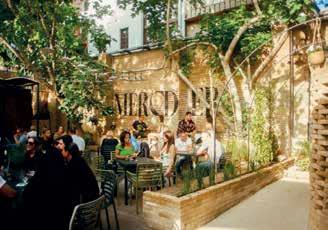

mushrooms, spinach with dried fruits, stuffed piquillo peppers with cod and prawn, and a pastela de la Reina - effectively a very good tuna empanada
The pumpkin soup arrives looking magnificent - swirls of cream, crisp croutons - and tastes even better. Rich, warming and perfect for a winter’s day, lifted by good olive oil and a subtle hint of orange.
My solomillo is beautifully cooked in the restaurant’s ancient woodfired oven.
But the real showstopper? The wine list. It lands on the table with a thud, reminiscent of the old This Is Your Life red book. Nearly 700 bottles are listed. It’s theatrical (perhaps unnecessarily weighty) but the message is clear.
“It’s the second-best wine list in Granada province,” explains sommelier Miguel Pérez. “The best is at our sister restau rant, Taberna La Tana, in the city, with over 2,000 references there.”
New Madrid joint has attractive mix of tables and an excellent €14.95 menú del día
everything, so either dive into the menu, or better, go for the great value menu del dia at just €14,95. The staff are friendly and attentive, speaking both English and Spanish.
Part of the menu includes two temakis (hand rolls), one spicy salmon mayon-
Based on a campsite, the ‘Queen of Granada’ doesn’t exactly scream grand arrival. But don’t be fooled, Jon Clarke
I’ve eaten at La Tana. It may boast more bottles, but this feels the more complete dining experience. Here, you’ll find obscure Spanish regions such as Valdejalón in Aragón alongside an extraordinary French selection. The list follows the classic French format: producer first, then village, then cuvée and vintage. And while it sounds lofty, most bottles sit comfortably between €50 and €77 - impressive value for top-tier French wine. Though if you’re tempted by the Morey-Saint-Denis 2021 from Lignier, be prepared to part with €110. In the end, it was all academic for me. With a three-hour drive back to the coast, I stuck firmly to water. Next time? I might just book a pitch at the campsite.

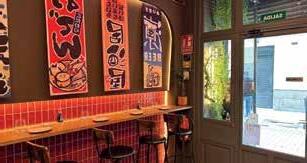
naise which was great and one with tuna and truffle (left).
Then you get a choice of four mains, including Hong Kong noodles with vegeta-
bles with prawns and Yakisoba sauce …You can also have salmon or scallop Nigiris or Karaage. I finished off with a bowl of delicious ice cream, all within the price.
THIS gastronomic market is located in one of the most distinctive enclaves of Valencia.
A space where gastronomy, architecture and social life coexist naturally, Mercader serves as the natural gateway to the hip Cabanyal barrio. This old fishing area has gone through a strong cultural identity change and Mercador has played a key role in it as the main gastronomic meeting point.
Once a cooperage, where wine barrels
Trio of terraces and range of gourmet styles key to this hip Valencia hotspot
were made, you immediately feel the sense of history from elements of its past left over, as well as its high ceilings and industrial machines. And when it comes to cuisine it is a wonderful mix, but above all it focuses on quality products and respect for


LOOKING for a nice day out from Barca or a good spot near the airport? Che Che in Castelldefels takes some beating.
Close to the sea, but not quite, it is a light open-plan space with a show kitchen and six spaces to sit overlooking the chefs at work. While it’s 100 metres from the beach, don’t bring your flip flops as you’ll find a nicely dressed Catalan crowd as well as a handsome menu - high on fish - and best of all with a special (almost) half ration option (65% the price) for many dishes.
Crack on with the typical pan de coca with tomato and good olive oil served up with a creamy caldo on the house.
Our picks; the mini brioche with beef tartare and a yolk on top costing just 12 euros for two, the scallop salad, which is fresh and perky, and the gnocchi with creamed potato and truffle shavings.
Also amazing are the peas from the Maresme with carbonara sauce and pancetta from Joselito, while a deconstructed tortilla with ‘sobresada’ sausage and a local ‘tou dels Til-lers’ blue cheese is no oil painting, but delicious. Still hungry? Get the roast suckling pig and divide it, or go for the 65% option.
www.checherestaurant.es
how to cook them.
Among the most notable offerings are Lujuria Marina, which focuses on seafood and a contemporary interpretation of maritime cuisine; Tonyina Barra, where the ingredients are prepared with precision, expertise and a highly recognisable aesthetic; and Taller de Carnes, the market’s own restaurant, which focuses on meat and grilled dishes.
One of Mercader’s greatest attractions are its three outdoor terraces, from which you can enjoy the Mediterranean climate for much of the year.
Perfect for a relaxed lunch, an informal dinner or a drink at sunset, Mercader works for all kinds of occasions and levels.
For
www.mercadercabanyal.com
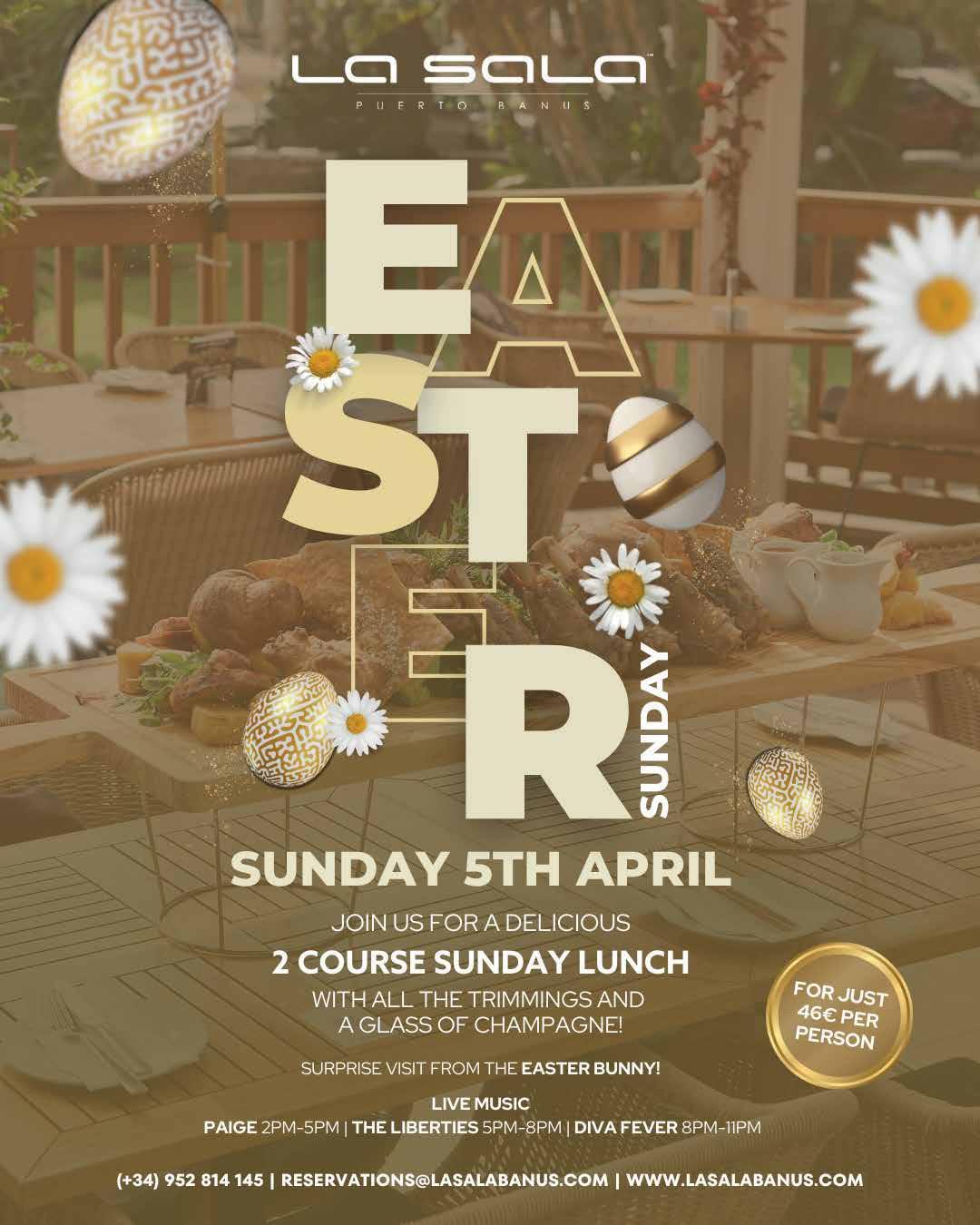
After holidaying in Manilva for a decade, Eimear Kempener takes readers on her favourite walk up the coast for the famous ‘espeto’ sardines
SPREAD out along eight kilometres of prime Mediterranean coastline, Manilva effortlessly blends sea and hills.
Historic vineyards meanwhile stretch up into the hills, while a series of hiking trails connect the town to nearby inland mountain villages.
Home to over 90 nationalities, Manilva has a genuinely mixed cultural atmosphere.
Along the coast, dolphins and whales are occasionally spotted offshore, while birds circle above the limestone formations of the breathtaking Sierra de la Utrera.
During the summer months, the population can triple, rising to more than 50,000 visitors drawn by excellent
By Eimear Kempeneer

beaches and good value tapas and bars.
Unlike its nearby flashier neighbours, Manilva maintains an authentic pace of life, much lower key, more authentic and down to earth.
And that’s its residents too, who are 100% different to those who live just half an hour up the road in Marbella. Indeed, they will always stop to talk to you, which I rarely find in Marbella.
Nowhere is this clearer than in Manilva Pueblo, the

Jingo - Thurs
K araoke - Fri
Live Music - Sat
Fresh Tapas and home cooked meals SERVED DAILY
tel: 666 73 54 01
Calle Duquesa de Arcos, Manilva
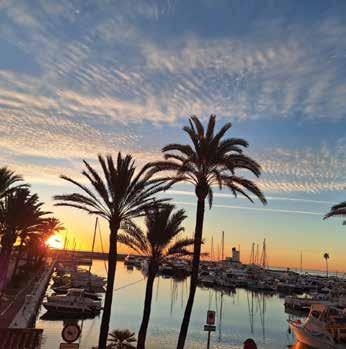

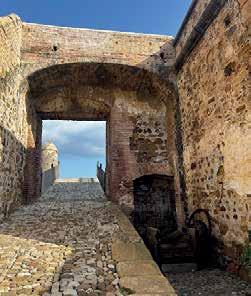
old town up in the hills, where traditions remain deeply rooted and daily life moves unhur-
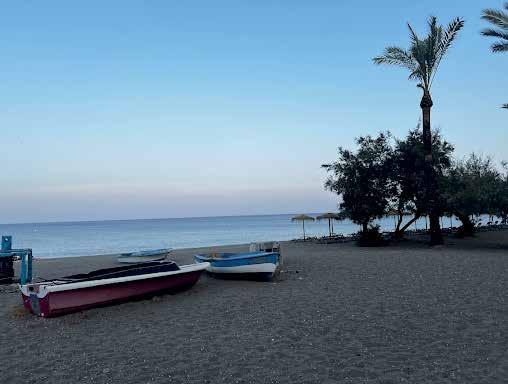
MIX: Sabinillas beach and the castillo
riedly.
Spend the morning up there and you’ll really notice the
Manilva’s calendar is full of things to do all year round, and its traditions are still very much alive.
CARNIVAL
Every February, the streets burst into colour, music and humour during the three-day Carnival. Flamenco rhythms and satirical songs fill the air as locals and visitors dress in bold costumes and dramatic make-up. Parades weave through town, competitions add a playful edge, and open-air performances continue into the evening. Children’s shows, regional muscatel wine and fresh seafood tapas make it one of the liveliest moments of the year.
SEMANA SANTA (EASTER WEEK)
Semana Santa is more intimate but equally powerful. Processions move slowly through narrow streets as residents watch from balconies lit by candles. Statues such as Nuestra Señora de los Dolores y Nuestro Padre Jesús Nazareno are carried by local brotherhoods. Some processions, like the midnight Good Friday march of La Soledad, unfold in silence; others are accompanied by drums and saetas. The events stretch from Manilva village down to Sabinillas, bringing the entire community together.
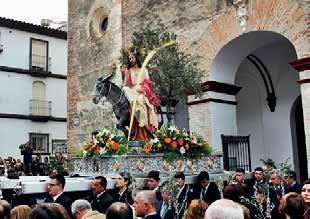

slower pace of life from the coastal resort of Sabinillas. This is what I recommend:
PILGRIMAGE OF OUR LADY OF FÁTIMA
Around May 13, families take part in a romería through the municipality, singing hymns and praying the rosary before ending the day with an open-air mass and communal gathering.
MANILVA PRIDE (JUNE 12-13 2026)
Manilva Pride has grown into an important annual event reflecting the town’s open and international character. With local families and residents from many backgrounds taking part, it feels like a natural extension of community life. Live performances and a welcoming atmosphere fill Plaza de los Maestros, highlighting inclusion and togetherness.
NOCHE DE SAN JUAN
On June 23, Sabinillas marks the start of summer with San Juan. Thousands gather on the beach for the ‘quema del júas’, where a satirical effigy is burned at midnight. Afterwards, people step into the sea to make wishes for the year ahead, while live bands and DJs turn the beach into an open-air celebration.
MANILVA PRIDE (JUNE 12–13 2026)
Manilva Pride has grown into an important annual event reflecting the town’s open and international character. With local families and residents from many backgrounds taking part, it feels like a natural extension of community life. Live performances and a welcoming atmosphere fill Plaza de los Maestros, highlighting inclusion and togetherness.
DAY OF OUR LADY OF MOUNT CARMEL (JULY 16)
Residents accompany the Virgin’s image on foot or in decorated carts to the Ermita de San Adolfo near Baños de la Hedionda. The day combines prayer, food-sharing, music and dancing, set against the backdrop of historic sulphur springs and green hills.
SAINT ANNE’S DAY (JULY 26)
The main patron saint festival begins with early morning music and children’s games, culminating in a procession through town. Evening celebrations continue with floats, live music, DJs and dancing into the early hours.
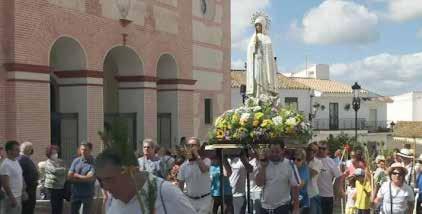
SAINT LOUIS DAY (AUGUST 25)
In Sabinillas, a seaside feria honours the neighbourhood’s patron saint. Mass and procession are followed by children’s activities, Holi-colour events, live bands and beachside festivities.
GRAPE HARVEST FESTIVAL (FIESTA DE LA VENDIMIA)
In September, Manilva celebrates its moscatel heritage. Flamenco performances, grape contests, local food markets and the traditional grape-stomping ceremony mark the start of the harvest season, blending wine culture with community celebration.
Apair of my favourite walks are Manilva River Canyon (Canuto de la Utrera) and the Ruta de los Molinos. But the best way to enjoy Manilva is the coastal walk. You should start your walk at Torre de la Sal, which is on the border with neighbouring Casares, but you can easily park your car there.
From the 15th to the 18th centuries, the tower was part of a chain of watchtowers that ran along the coast acting as an early warning system sometimes described as a ‘fire telegraph’. Guards stationed inside the towers scanned the horizon daily. If a ship approached with hostile intent, they reacted fast. By day, damp straw was burned to create thick columns of smoke. By night, dry wood flames cut sharply through the darkness. Signals could travel from Gibraltar to Málaga within hours, giving local militias just enough time to prepare.
The threat was real. And it wasn’t just Jack Sparrow swooping in for a bit of fun, it was the Barbary corsairs, North African pirates who raided small coastal settlements.
They weren’t just after gold or supplies; villagers were actually captured and taken to slave markets from Algiers to Tunis. Entire communities lived under that fear for generations.
As you continue, you’ll start seeing more beach bars. These chiringuitos are scattered along the sand and are ideal for a relaxed coffee stop in the morning, something cold in the afternoon, or lunch with your feet almost in the sand.
A little further west you reach Sabinillas, the liveliest part of the coastline and the most central beach area.
Sabinillas has all the facilities you could need. Fishing is still an important part of daily life here, and you’ll often see small boats heading out early or coming back in later in the day.
Along this stretch, especially between Sabinillas and the port, you’ll spot what looks like an old fishing boat stuck in the sand. Inside, hot coals glow. This is where the magic happens. The sardines five or six at a time are skewered onto a thin reed and propped beside the fire. The espetero knows exactly where to pierce the fish so it doesn’t fall apart when he turns it. He watches the wind. He shifts the boat slightly so the fish smokes instead of burns.

It’s a craft that comes from the coast of Málaga and has been passed down for generations.
The sardines arrive fresh from the sea straight onto your plate.
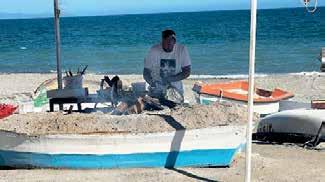

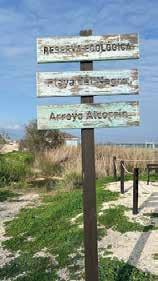
You eat them with your hands. No cutlery. Locals add a squeeze of lemon. A cold beer or a tinto de verano.
Seasonality still comes up in conversation, especially among older fishermen who grew up reading the sea like a calendar and insist sardines taste better in months without an ‘R’. But walk along the beach on any given afternoon and you’ll see the smoke rising from the boats, plates moving straight from grill to table. Whatever the month, sardines are still going onto the grill.
From Sabinillas, it’s a 30-minute walk to Puerto de la Duquesa. Built in the 1980s, the marina remains partly working, used by local fishermen as well as leisure boats. The port is arranged over three levels, with moorings below and restaurants and bars above. In summer evenings, it becomes busier with residents, expats and visitors heading out for dinner or drinks. Thursday night crafts markets add to the atmosphere. The port is laid out over three levels. Down at water level, you’re close to the boats and moorings. As you move up, you’ll find most of the restaurants and bars spread around the marina. In summer, it naturally gets busier in the evenings, with people heading out for dinner or drinks. The crowd is a mix of residents, expats and visitors, which gives the area an international feel without it being overwhelming.
“
Many of the bars offer live music during the week, and the nightlife is lively but manageable more relaxed marina evenings than big-club energy.
During the day, the port is practical too. You’ll find everyday essentials like ATMs, mini supermarkets, a business centre, laundry services, hair and nail salons, a barber and a florist. When it comes to food, there’s plenty of choice.
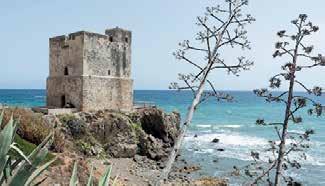
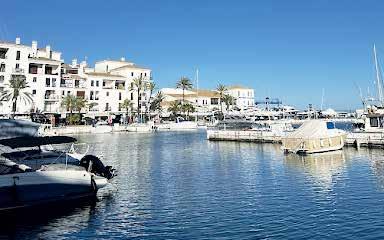
followed the arrival of the French in Spain and the Peninsular War, foreign troops occupied the castle. Around 50 soldiers were stationed here. Today the castle has a quieter role. Inside you’ll find two small museums, an archaeological collection and a fencing museum.
When you walk towards Punta Chullera, things gradually quiet down. The buildings are left behind you, the path feels more open, and it becomes less about restaurants and more about nature.
This stretch runs through the Reserva Ecológica Playas de Manilva, a protected coastal area created to preserve the local dunes and fragile ecosystems from urban development.
The protected coastal area was created to protect the lovely dunes
You’ll find local Andalucian dishes alongside Chinese, Indian, Mexican, Belgian and other international cuisines.
If you’d rather be on the water than beside it, boat trips and fishing excursions leave from the marina. You can also book activities like jet skiing or dolphin-watching tours directly from here.
West of Duquesa you will find the Castillo, a fortress built in 1767 to strengthen the coastline’s defences, at a time when pirate landings along this part of the Mediterranean were still a real concern. In the early 19th century, during the turmoil that






“
It’s considered one of the most important natural areas along this part of the Costa del Sol. Wooden walkways guide you across the sand to protect the landscape, and the atmosphere is noticeably calmer.
What makes this area unique is its plant life. It’s the only place in Spain where species such as jasione corymbosa and armeria hirta grow naturally. The seeds are carried across from North Africa by easterly winds, and the conditions here allow them to thrive. When they bloom, parts of the sand take on a soft lilac tone subtle, but striking if you catch it at the right time of year.
It’s a good section to finish your walk if you prefer a less builtup environment and simply want the sea beside you.
In the end, that’s what makes Manilva’s coastline so easy to enjoy. You can walk the whole route or just a part of it. Stop for lunch, swim, explore the port, or head for the quieter natural stretches. Everything connects smoothly on foot, and you can set your own pace the entire way.





Dear O P,
Your special section on Education (issue 486, February) was very interesting, but unfortunately it started off on the wrong foot! For 21 years I have been a volunteer teacher in a State Primary in Malaga, after a career in education in the UK in cluding being head of a 1,300 pupil independent school in London.
Education for most Spanish pupils starts not at age 6, but at age 2 to3. There are 3 years of Educación Infantil before Educación Primaria. And it is in Infantil, not in Primaria that they begin to learn to read, write and count.
Since most children move up year by year through Infantil and then into Primaria, there are often not many places for entry at Primaria. The places are taken by the homegrown pupils moving up.
A final point: applications for normal en try to schools in September 2026 finish on March 31. So get your skates on!
Jennifer Longhurst, Estepona

Just a heads up: Meta appears to be trying to suppress certain stories of yours from being viewed on Facebook.
My daughter sent me an article about how American planes have left Andalucia because Spain won't get entrenched in this war. Yet the app would NOT let me open the link.
Thank you for posting important stories like this…and in English. Tragically, many stories are not reaching us in America.
Billie Bakhshi, New York
I abandoned Britain for Spain a year ago. It is my new country and I am very happy to be here. A country which stands up for what it believes in.
Even giving dogs family rights. I made the right decision.
Angela Timms, via email



In reference to the Barca mayor’s suggestion blocking non-EU buyers, foreigners buying property is not what causes the housing crisis. It´s a lack of building to keep up with population growth as well as costs that are higher than wages. It’s just easier to blame foreigners
Joe Talamas, via Facebook
Why don’t Spanish people simply just stop selling to foreigners? They could instead sell at a bit of a discount to their fellow citizens. That way they will reduce the housing crisis. Oh, they want the extra money foreigners pay for their property? That’s fine. Stop complaining then.
Mark Walter Williams, Valencia
www.theolivepress.es







POLICE received 513 complaints of attacks on health workers in Spain last year- 26% more than in 2024.
Over 39% of cases involved physical violence, with doctors filing the most complaints, followed by nurses.
According to Police Nacional boss Manuel Yanguas the complaints though are 'nothing' compared to the actual 20,000 incidents involving health workers annually.
“They are being attacked and they are not reporting it,” he said.
The largest number of reported cases were in Andalucia within Sevilla, Malaga and Cadiz.
Mondays and Tuesdays had the highest number of incidents with the main ‘aggressive’ period between 11pm and 12pm.
SPAIN’s obesity crisis is increasingly affecting younger generations, with rates among 18 to 24 year-olds rising by more than 40% in recent years.
New analysis shows 55% of adults in Spain are overweight or obese, highlighting a growing concern among health experts.
Spain’s growing waistline may be worrying, but the UK’s figures remain even higher at around 64% of adults.
However, specialists warn that Spain faces a worrying shift among younger age groups.
Data from the Sanchinarro University Hospital in Madrid reveals that obesity in the 18-24 age group has climbed from under 5% to 7% between 2020 to 2023. While overall obesity across Spain has slight -
T is fascinating what a World Cup can set in motion.
While the spotlight shines on the superstar, as the tournament approaches, a preparation frenzy washes over millions around the world – from builders to lawmakers, from hotel workers to security forces.
Doctors are no exception and I have just returned from Atlanta, where I met dozens of colleagues from other national teams to coordinate the medical planning for the summer tournament – and it was not easy work.
Over several days, we designated referral hospitals for each of the venues from Mexico to Canada – and laid-out painstaking emergency protocols. As national team doctors, much of our work focuses on strengthening recovery strategies – essentially, we want players to arrive in the best possible condition for matches.
I like to call it ‘invisible training’ as many things are not visible on the

putting on
ly dipped from 16% to 15.2%, the bigger issue is the rise in overweight people, which increased from 37.6% to 39.8%.
Experts say this is often the precursor to full obesity.
Regional figures show stark differences across
the country.
The Canary Islands now have the highest obesity rate at 20.6%, followed closely by Murcia (20.1%) and Castilla-La Mancha (19.9%).
Elsewhere, Andalucia has 16.7%, Valencia 14.6% and Madrid recorded the lowest level at 10.3%.
Experts have also warned about the rise
By Karissa Key

in weight-loss injections such as Ozempic, Mounjaro and Zepbound, claiming that none are long-term solutions.
“These drugs can help in the short term, but the
effects disappear when patients stop taking them,’ said Dr Lopez-Nava, at Sanchinarro hospital noting studies showing people regain more than half a kilo per month after stopping treatment.
Instead, specialists insist that long-term lifestyle changes, better nutrition and psychological support remain the most effective way to tackle obesity.
Across: 1 Flyers, 4 Evade, 9 Gestapo, 10 Robin, 11 Tory, 12 Prairies, 14 Coffee table, 18 What else, 20 Scar, 22 Raked, 23 Novelty, 24 Owned, 25 Unused.
Down: 1 Fights, 2 Yes-or-no, 3 Roam, 5 Virginal, 6 Dubai, 7 Four seasons, 8 Angst, 13 If need be, 15 Locales, 16 Dwarf, 17 Frayed, 19 Askew, 21 Avon.
How it’s all the lateral, subtle tricks that make for the best sportsmen, writes Spain’s club doctor Dr Claudio Vazquez Colomo as he prepares for the World Cup
pitch – and yet, they are essential for performance and injury prevention.
I am talking about nutrition, rest, hydration, physiotherapy, and recovery strategies. They form the pillars of our approach, and in recent years, recovery strategies have evolved by combining traditional methods with emerging technologies.
“
One of the most notable developments is hyperbaric medicine, which has gained increasing attention within sports medicine. This treatment involves breathing oxygen at high concentration inside a pressurised chamber, which increases the amount of oxygen dissolved in the bloodstream and facilitates its diffusion into body tissues.
recovery after intense exercise and in inflammatory muscle processes. And here’s the good news: these therapies are no longer limited to elite athletes.
Increasingly, health centres are incorporating them for people who simply wish to remain active. Think of someone who walks several kilometres a day, plays golf on weekends, cycles regularly or continues running despite the passing of the years.
“ Most people don’t need to train harder, but simply recover better
In many of these cases, people are not trying to train harder – they just want to recover better.
This hyperoxygenation should promote muscle recovery, reduce inflammation and stimulate tissue repair processes such as angiogenesis – the formation of new blood vessels.
Research published in scientific journals has described improvements in
The sensation of heavy legs, muscular fatigue or minor joint discomfort are common, but if managed properly, allow people to maintain an active lifestyle for much longer.
A similar principle applies to cryotherapy. Short exposure to very low
temperatures triggers an astounding phys-
SPAIN has the highest number of births to mothers over 40 in Europe. More than one in ten children are born to mothers aged 40 or over - the highest in Europe. This is almost double the current EU average of 6% and well above the rate for similar Mediterranean countries such as France (5.6 per cent) and Italy (9.1 per cent).


iological response: blood vessels contract before dilating again, and the process reduces both pain and inflammation.
Cryotherapy has been used for many years in professional sport to accelerate muscle recovery after demanding training sessions or matches. Studies have shown it may delay muscle soreness and improve the feeling of recovery after exercise.
In practice, methods range from traditional ice baths to more advanced devices that cool down the body within minutes.
Another technology is infrared light therapy – also known as photobiomodulation. When infrared light penetrates tissues, it stimulates cellular activity at a mitochondrial level.
In plain terms, this means it can boost energy and tissue recovery. It may also help reduce inflammation and
accelerate muscle recovery after activity.
For many peo-


ple who exercise regularly – even at a purely recreational level – the real goal is not competition, but the ability to continue moving freely, without pain, for many years.
Walking, swimming, tennis, cycling or simply staying active are part of a lifestyle that protects cardiovascular health, joint mobility and overall wellbeing. Sleeping well, maintaining a balanced diet, staying properly hydrated and respecting recovery times remain the fundamental pillars. Ultimately, recovery is not something that only professional athletes should concern themselves with. It is also part of a broader personal health strategy.
A PATIENT in Gibraltar had a prostate tumour removed by a robot surgeon who operated remotely from London via a video link.
ESTEPONA’s mayor is under increased scrutiny after documents revealed a restaurant he handed to his son’s girlfriend ‘doesn’t have a licence or pay any fees’.
Zara rival
CHINESE fast-fashion giant Shein has opened an office in Barcelona to take on Zara and tap into the Spanish market.
REPATRIATION efforts by Spain have sparked debate over Dubai-based influencers, many of whom left home to avoid taxes.

Barca fan flies to the UK for crunch Newcastle clash - but ends up at the wrong stadium 589km away
A BARCELONA fan got a nasty shock when he went to watch his team in England - only to turn up at the wrong ground on the other side of the country.
The supporter made a horrible mistake for the Champions League tie against Newcastle United
By Ben Pawlowski

at St James’ Park, when he travelled to St James Park, the home of Exeter City, 589 kilometres south.
He only realised his error when he tried - and failed - to enter the 8,219-capacity ground
A YOUNG DJ thought he’d hacked his way into the high life staying in five star Spanish hotels for just one cent a night, only to get caught by showing off on social media.
The 20-year-old Spaniard was arrested while staying at the Ritz, in Madrid, this month.
Named as ‘Carlos’, he has been charged with fraud after he manipulated the online payment system on a travel website allowing him to book €1,000-a-night suites for just €0.01. He was caught after posting pic -
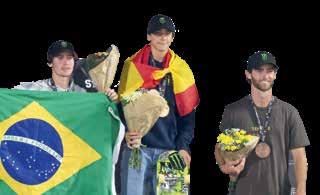
A SPANISH teenager has become the world’s best skateboarder.
Egoitz Bijueska, from Bilbao, won the world championships in Sao Paolo
with his Champions League ticket.
“He was so gutted,” Adam Spencer, support experience officer at Exeter City, told the Olive Press. “He hardly spoke any English, but we tried our best to help him.”
He was at least given a free ticket for the League One midweek match against Lincoln City, as
tures of his luxury Madrid stay on Instagram, having scammed other hotels and airlines to the tune of €20,000 by manipulating PayPal.
The music producer wasn’t difficult to track down as he checked in using his real identity.
See full story online
this month. The 15-year-old skated to victory, after coming fourth in the quarter finals and third in the semi finals.
well as some complimentary drinks. At the other end of the country, Barcelona left Tyneside on level terms after a 96th-minute penalty from superstar Lamine Yamal.
“We put him in a nicer seat much closer to the pitch than he would have been in Newcastle, and we’ve got no VAR, so I thought he may have had a better night,” added Spencer.
The unnamed fan had gone wrong after leaving London and putting
‘St.James Park’ in his phone and the railway station next to the stadium in Exeter has the same name.