
All about errania de The onda S R
CAPTURED!

Ronda has struck the imagination of poets, artists, bullfighters and musicians for thousands of years, writes Dilip
Kuner
RONDA doesn’t just appear; it confronts you. As the road bends, this captivating city leaps into view, rising like a white pearl surrounded by the rugged Andalucian countryside.
You know you are arriving somewhere special and this is confirmed when you begin to understand its geography: a hilltown named by the Romans as Arunda, meaning literally ‘surrounded by mountains’.
But Ronda, which is indeed encircled by sierras in every direction, is also a geologist’s dream, the city being hewn in two by a deep chasm carved by the Guadalevin River.
This adds to its complex history. Where the threads that make up the multicoloured fabric of Andalucia - Moorish architecture, Roman grandeur, bullfighting, poets and outlaws all happily intertwine.
Ronda is more than a destination; it’s a living chronicle where its stones feel the weight of centuries of stories.
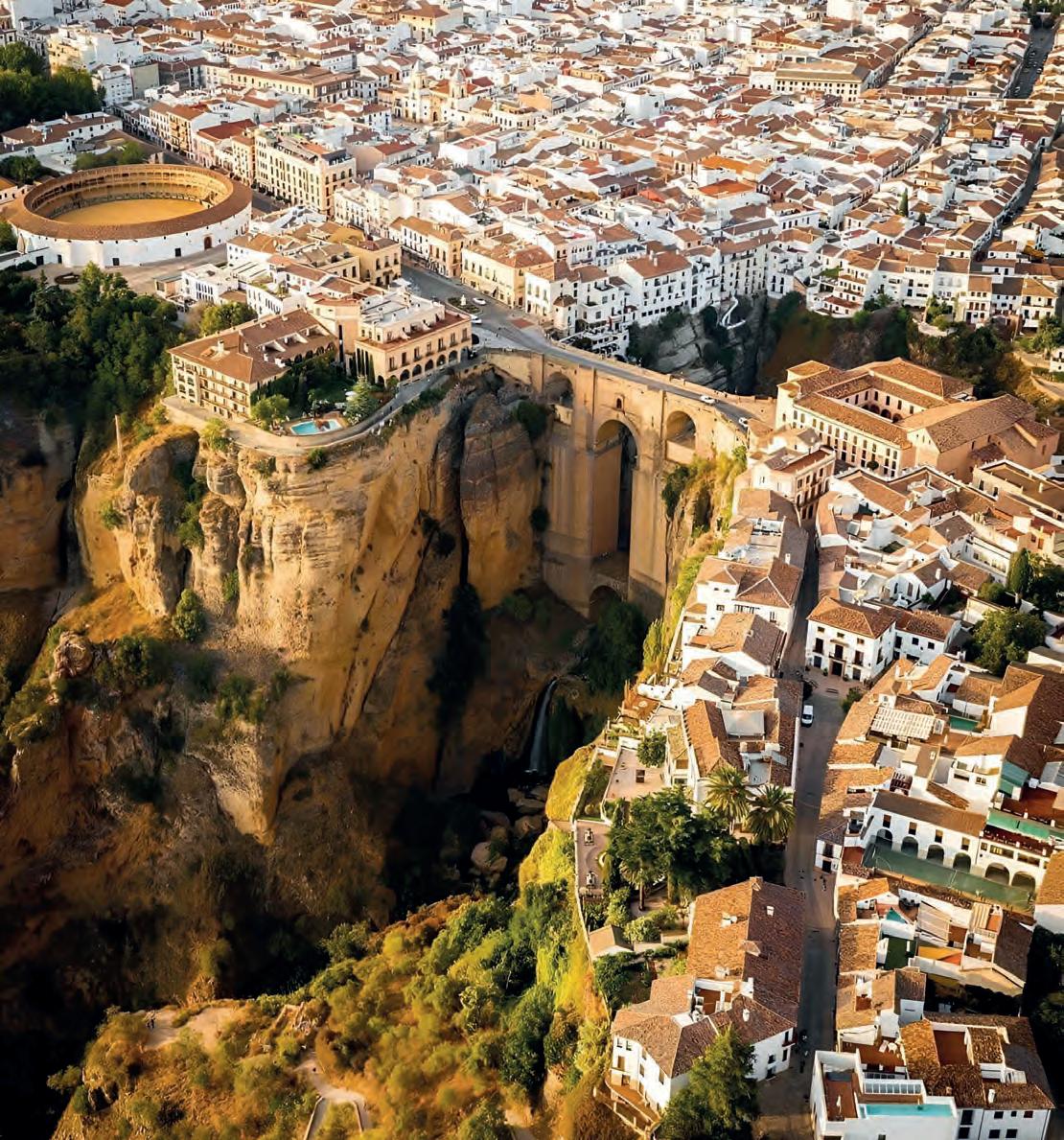
The visceral experience of Ronda begins with the Tajo, the breathtaking gorge that rips through its centre and spreads out into a deep valley below. Spanning this monumental divide is the Puente Nuevo (New Bridge). It’s the physical and spiritual heart of the city and you can’t go near it without feeling the sheer, dizzying height.
Secret
The bridge’s very existence is rooted in a devastating secret. Before this stone marvel stood here, a precarious wooden trestle-bridge was the only link across the 300-foot drop.
In 1740, that wooden structure failed, and 50 innocent Rondeños plunged to their deaths. The 40 years it took to reconstruct it wasn’t just engineering; it was an act of collective will to ensure the community would never be divided again. Today, it stands as a testament to resilience, offering views so spectacular that locals claim, ‘the birds fly at the feet of those who look out’.
Ronda’s layout is a simple historical map: La Ciudad (the Old Town and former Moorish medina) sits on the south side, looking ancient and labyrinthine, while El Mercadillo (the modern commercial district) sits on the north.
Then down below, outside the charming Arabic Almocobar gate, sits the San Francisco neighbourhood alongside the medieval walls that once defended the entire fortress.
Long before the Puente Nuevo, Ronda was already holding the line: The Celtic tribe, the Bastuli, knew the early importance of this rocky outcrop for trade, perhaps even along ancient Atlantic routes. When the Romans arrived, the city quickly grew in stature. They developed a unique ‘twin’ settlement colony: the defensible Arunda and the even
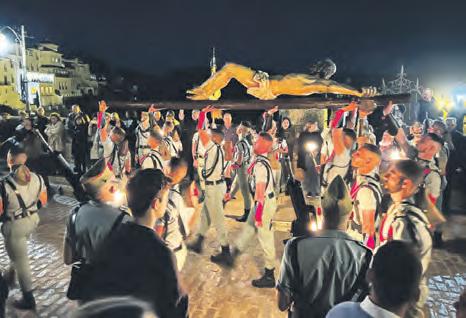
DRAMATIC: Extraordinary view of the Tajo gorge from above, while (top right) the Foreign Legion carries a virgin over the Puente Nuevo at Easter




Ronda’s Best Sports Bar
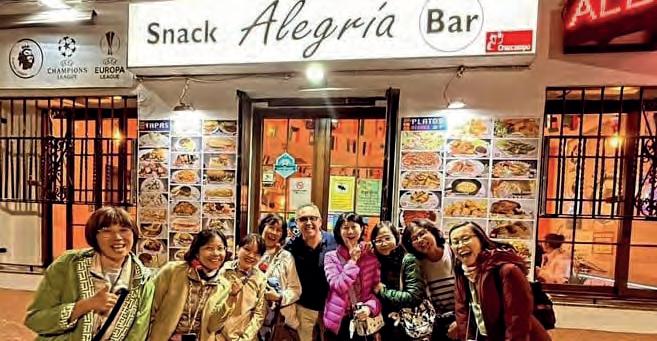





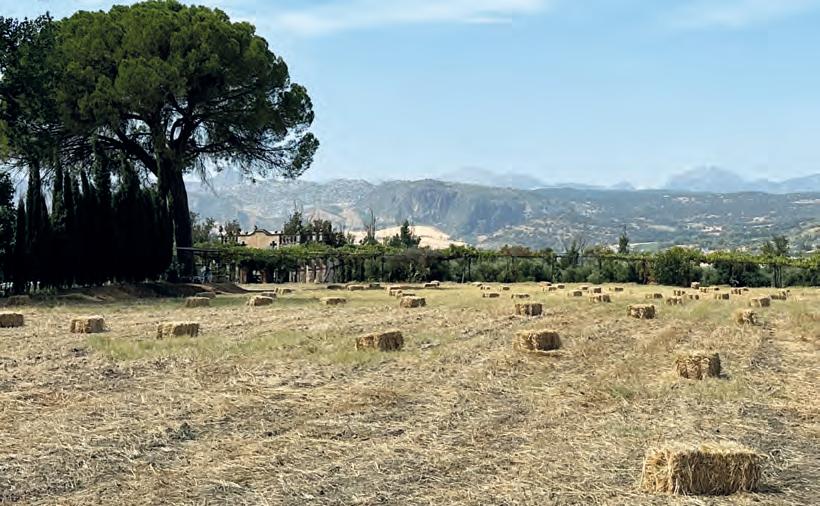
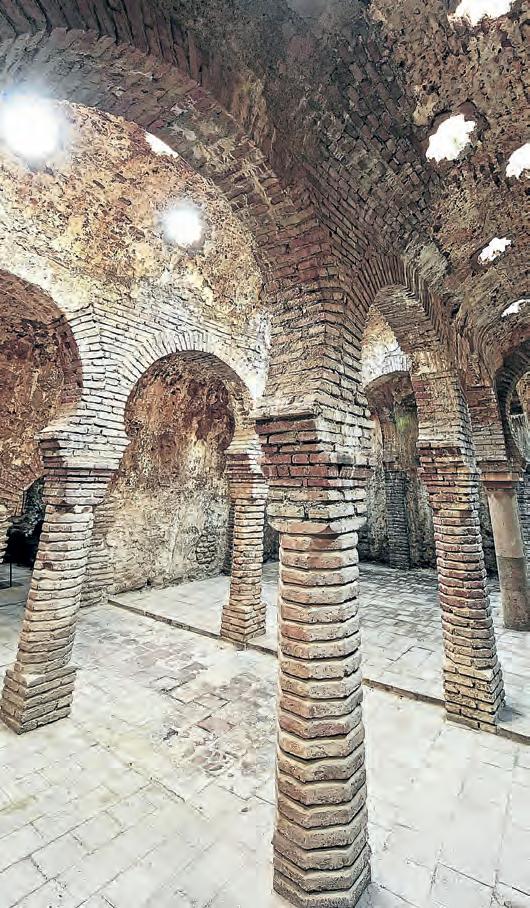
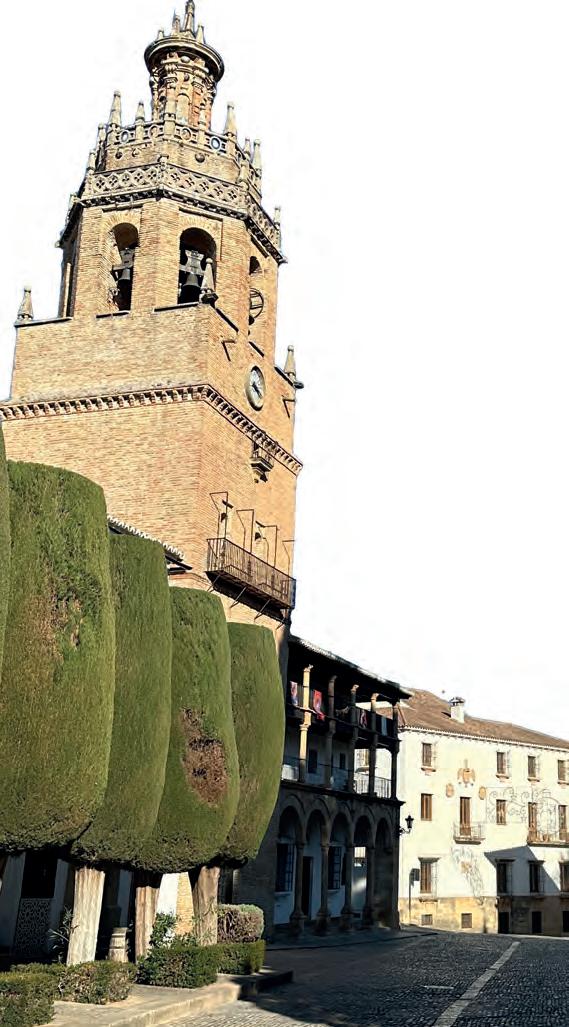
ATMOSPHERIC: The perfectly preserved Arabic baths and Hemingway working in Ronda and (above) the Cathedral which was once a mosque
A TRIP BACK IN TIME
better fortified town of Acinipo (Old Ronda) some 15 minutes west.
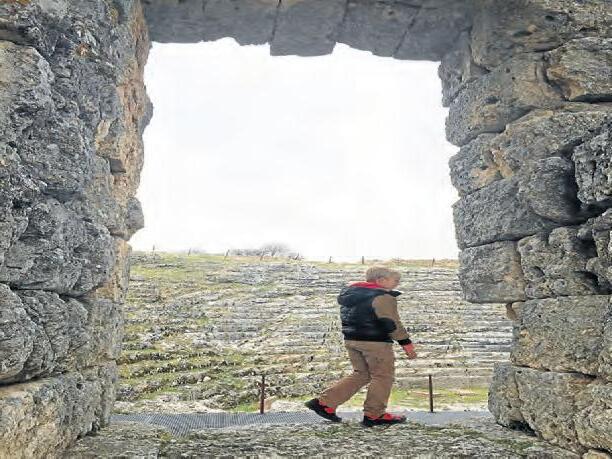
Do take time to visit the tranquil ruins of Acinipo, where you can still find considerable remains of its impressive Roman theatre.
Imagine the life that thrived here: Roman author Pliny mentioned Ronda in his writing shortly before he died during the eruption of Vesuvius in 79 AD, confirming its importance in ‘Baetica,’ Roman Southern Spain. Then came the Western Goths (or Visigoths). They were mainly farmers, and their brief period of wooden structures left little trace - a quiet interlude before the continent was changed forever.
800 years of Al-Andalus
The arrival of Muslim forces from Morocco in 711 AD transformed Ronda and dictated its destiny for eight centuries. It immediately became a powerful Arab city and fortress, and this influence remains palpably preserved today, especially in La Ciudad.
Stepping into the Old Town is like walking into a time capsule. It retains its original Arab street plan: a mesmerizing maze of narrow, winding lanes.
This wasn’t accidental architecture; it was highly practical, reflecting the ancient Arab proverb that ‘the sun is our enemy’.
The tight streets maximised shade and minimized the blistering summer heat, an effect enhanced by the beautiful geometric azulejos (tiles) used in the interiors.
The history here is one of constant friction. The area was central to the rebellion of the Muladis (Christians who converted to Islam) led by Omar Ben Hafsun, a fierce resistance that highlights how near-impossible it was to conquer this rocky perch.
The Arabic legacy didn’t just stay within the walls; it seeped into the
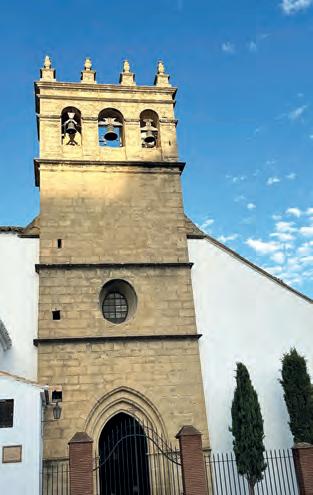
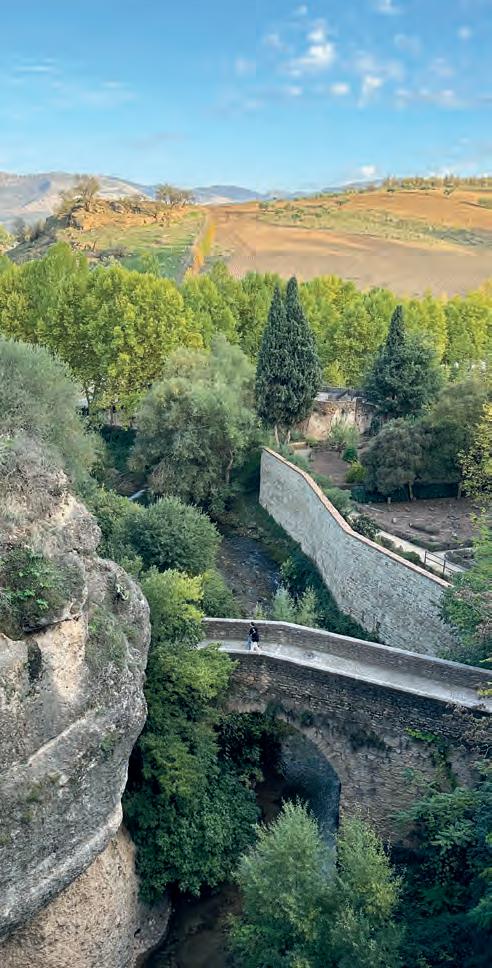
LAYERS OF HISTORY: From the so-called ‘Roman bridge’ to one of Ronda’s many ancient churches
From front page
very landscape. The local villages of the nearby Serrania still bear names like Arriate, Benaojan, Benadalid, and Farajan, all rooted in Arabic. Even the Spanish language spoken by the Rondeños carries the ancient heritage: when someone says ‘¡Ojala!’ (I wish!), they are invoking the name of the deity (Allah). And whether you believe it or not, some etymologists suggest the famous bullfight shout of ‘¡Olé!’ reveals those same ancestral Islamic links.
The Muslim era ended in 1485 when the Catholic Monarchs conquered the city (just seven years before the final push seized Granada) after a long struggle.
The peace was short-lived. The Christian rulers needed the talented Arab craftsmen, but the uneasy truce eventually broke down, leading to the brutal decree of forced conversion or expulsion.
Following a series of bloody uprisings by the Moriscos (converted Muslims), the final expulsion in 1571 ended a remarkable 700-year history, though pockets of resistance held out in the rugged nearby mountains for years.
What to visit: A walk through time
To understand this layered history, you must walk it. Your exploration should begin in El Mercadillo, the newer section of the city, where the monumental structure that demands attention is the Plaza de Toros de Ronda.
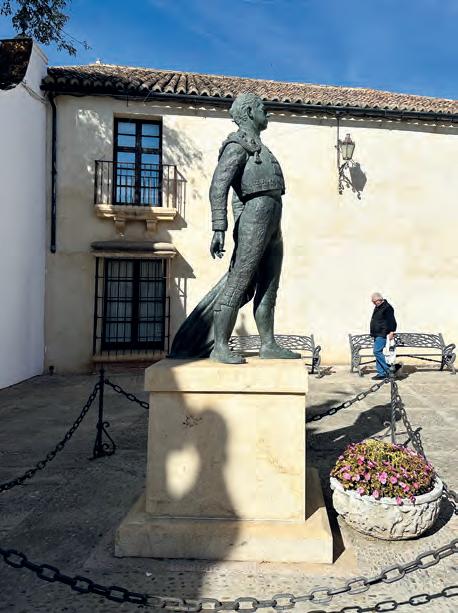
This is the oldest bullring in Spain and the undisputed birthplace of modern bullfighting, immortalised by the family of the legendary bullfighter Antonio Ordoñez (pictured top right), the man who defined its modern swagger and enjoyed the company of figures like Ava Gardner.
Its stunning, classical architecture speaks to the wealth of the 18th century, the same era that produced the Puente Nuevo. Nearby, you’ll find the Alameda del Tajo. This beautiful Spanish-style park is perfect for a leisurely stroll and greeting friends, and its unique views over the countryside make it essential viewing.
It has that wonderfully unique origin story: its construction in Napoleonic times was said to have been financed by a ‘swear box’! Anyone caught uttering curse words (palabrotas) had to contribute to the cost of the park.
Then you should cross the Puente Nuevo into the Old Town, and once in La Ciudad, the history becomes intimate. You are walking the Arab street plan, where key monuments whisper tales of conquest and nobility: Mondragon Palace: Once the residence of the Moorish king Abbel Malik, and later adapted by the Catholic nobility. Its beautiful Moorish-style courtyards and intricate tile work offer a visual testament to the fusion of cultures that followed the reconquest.
“ “ Its building in Napoleonic times is said to have been financed by a ‘swear box’!
ed outside the ancient Moorish walls, these baths are some of the best-preserved in all of Spain. They are a tranquil, atmospheric space that offers a quiet moment to reflect on the daily life of the city’s Muslim population a thousand years ago. Don’t forget to take the winding path down below the bridge to appreciate its staggering scale from the bottom of the gorge.
Poets, bandits, and Bohemian flair
Ronda’s dramatic setting has always ensured it is a magnet for artists, writers, and individuals living outside convention.
To walk its winding streets is to commune with romantic ghosts.
The impressive chronicle of literary and artistic authors - including Hemingway and Orson Welles - captivated by the city can be traced from ancient history to the present day.
Casa del Rey Moro (The House of the Moorish King): Despite its name, this palace was built after the Christians took Ronda, but it is famous for one unmissable feature: La Mina. This is a secret staircase of over 200 steps, carved directly down into the gorge during the Arab era. It was used to draw water and, in times of siege, to repel invaders. It is a staggering feat of defensive engineering that makes the walk down worth the effort.
Baños Arabes (Arab Baths): Locat-
Beyond Pliny, the list includes the poet-king of Sevilla, al-Mutamid; the Renaissance man and native of Ronda, Vicente Espinel, who is credited with inventing the modern Spanish guitar by adding a fifth string; and the Austrian poet Rainer Maria Rilke, who allegedly died after being pricked by the thorn of a rose, but who also had leukemia.
Perhaps the most poignant figure is Juan Ramon Jimenez, hounded by the Fascists, who famously confided his most secret thoughts only to his beloved mule, ‘Platero’.
The city’s allure extends to the vi-

sual arts: the English painter David Bomberg, described as the ‘poor
Jewish boy from London’, came here to create canvases bathed in Ronda’s intense golden light. He has had many followers. And let’s not forget the famous bandits (bandoleros) who thrived in the surrounding mountains, like the singing outlaw Tragabuches, whose tales still fuel Ronda’s vibrant folklore.
Tasting the Serrania: A final stroll
The city invites you to take a leisurely stroll, allowing you to appreciate in detail the features of the ancient Moorish medina, on the south bank of the Guadalevin River, which still preserves part of its walls, and to cross the Puente Nuevo, and stroll along the Alameda del Tajo, pausing in the nooks and crannies and monumental works that open their doors to visitors.
You can’t leave Ronda without experiencing its food - a robust celebration of the surrounding mountains and with plenty of talented local chefs.
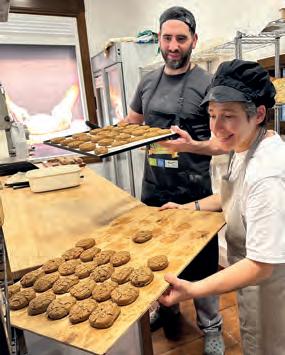
The culinary highlight is undoubtedly bull’s tail (rabo de toro), a rich, slow-cooked beef speciality served in a thick, savoury gravy, while its top chef Benito Gomez now proudly sits on two Michelin stars with his restaurant Bardal. There are so many other great local talents, such as Leo, who recently opened his own sough dough bakery Kachopan (right). Alternatively, you can recharge your batteries by hopping from bar to bar to enjoy the infinite variety of tapas, small, inexpensive snacks perfectly paired with the region’s local wines…

and there are nearly 30 bodegas producing vino in the nearby hills. Ronda’s modern spirit is best captured in its festivals. The people here have a long memory for conflict, especially the French invasion in the early 1800s. Today, Ronda and its nearby villages celebrate their history with joyous, annual costumed re-enactments of the defeat of the French, accompanied by several days of genuine communal partying, featuring plenty of wine, music, and dancing. From the quiet history of the Roman theatre at Acinipo to the vibrant energy of the modern districts, Ronda is a city that has mastered the art of survival and cultural fusion. It is a bold, unforgettable piece of history that continues to live right on the edge of the world.

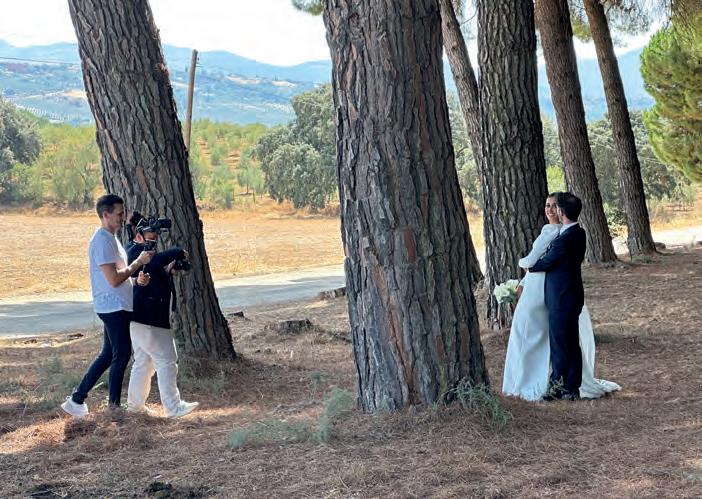
LANDSCAPE AND LEGENDS: Ronda is classic walking territory, as well as the perfect place to get married
LOCAL HERO: Torero Antonio Ordonez
ARTISANS: Mother dough bakers at recently-opened Kachopan
Photos by Jon Clarke
And
ROMAN RONDA A
BANDIT TERRITORY

THE Serrania was once a major stronghold for bandoleros (bandits) and the tiny towns of Benaojan and Montejaque were famously where many holed up.
But there is much more, such as the Cueva de la Pileta, near Montejaque (left), which has the oldest cave paintings in Spain, while Benaojan is the centre of the ham and sausage industry. There is also a fabulous walk from Benaojan Estacion down the river to Jimera de Libar, from where you can get the train back. At each end is a great lunch spot, with hotel Molino del Santo, when open in season, the obvious pick.
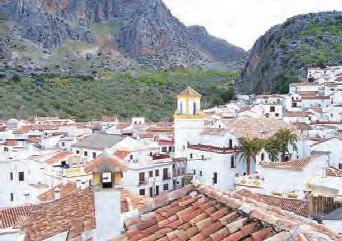
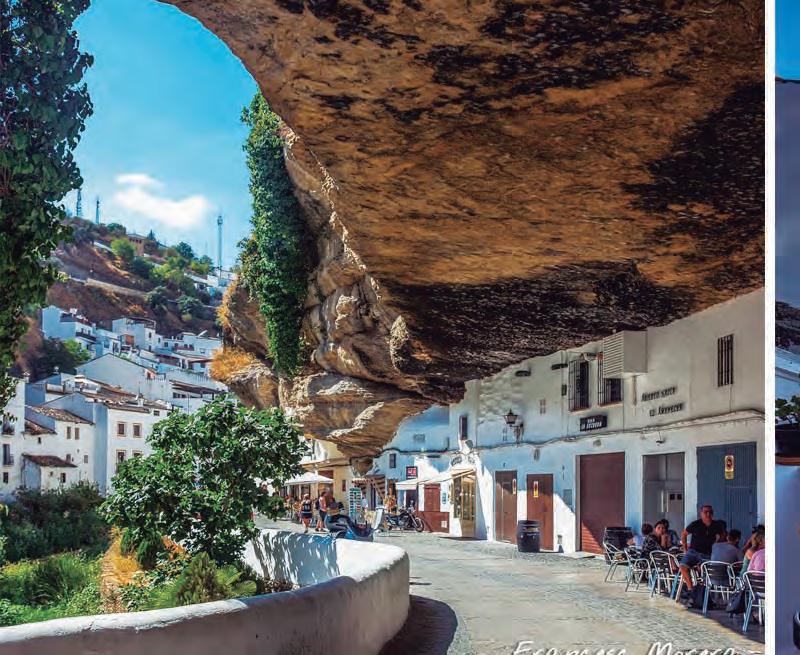
THE historic Roman town of Setenil de las Bodegas is a real eye opener and amazing for photography. Nestled in the rolling landscape, 20 minutes out of Ronda, it was built around a series of caves, which served to keep the wines of the Romans cool in summer, hence its name. It is best to leave your car outside the town, wander up to the old fortress before heading down to the famous overhanging cave for a fine tapas lunch.
THE STARCK EFFECT
15-minute drive from Ronda takes you to the ancient city of Acinipo, where the Romans built another ancient settlement
The highest hill for miles around, it still has much evidence of their skills with a large part of its amphitheatre intact and a lot more to look at, not to mention the views. The visitor centre is only open for the morning, but one can always climb up to the amphitheatre out of hours.

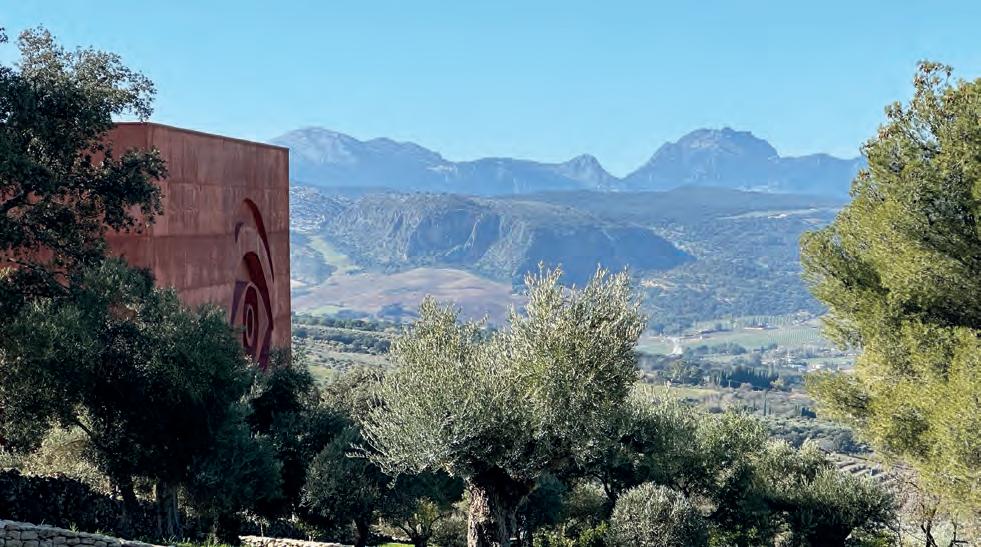
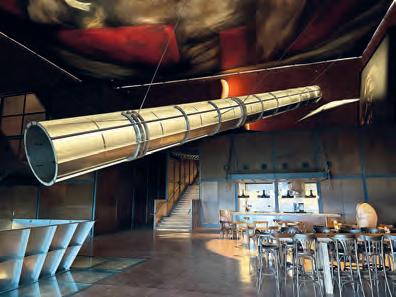

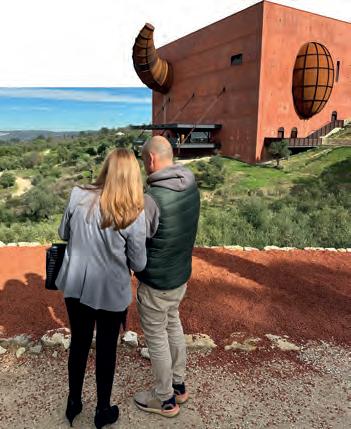
T cost well over 20 million and will hopefully create something of a ‘Guggenheim Effect’ for Ronda.
That is Philippe Starck’s amazing new organic olive mill.
A towering six-storey 40-metre giant made of concrete and steel it peers out over the beautiful Serrania like a beacon.
Built over four years, La Almazara - shaped in the head of a Picasso-style bull - is the largest and easily the most original in Europe.
Created by legendary designer Starck, it's a fully functioning mill, as well as museum that currently makes extra virgin organic olive
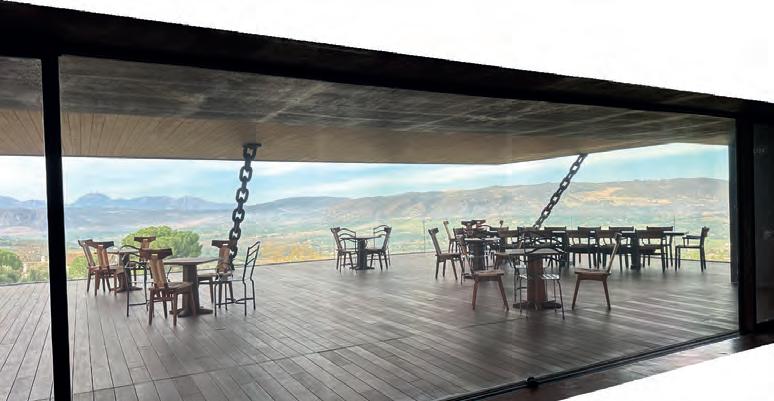
Into the abyss
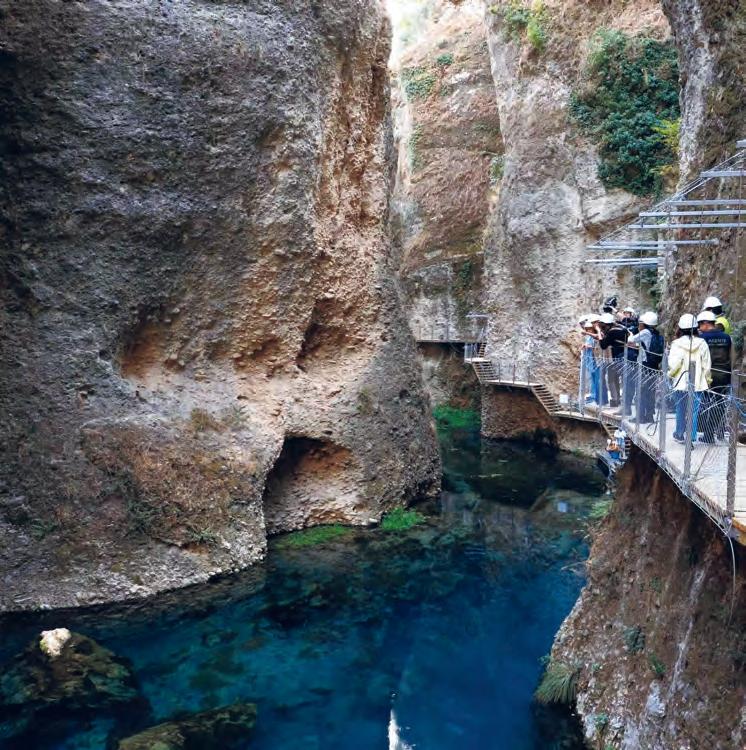
The Olive Press dives down into the Desfiladero del Tajo which will be one of Andalucia’s key highlights in 2026
IT will be one of the most exciting adventures for tourists in 2026.
When Ronda’s Desfiladero del Tajo is finally completed by early Spring it is expected to become as popular as the famous Caminito del Rey.
While not quite as hair-raising as the death-defying walkway near Antequera, the Ronda attraction will be more scenic and far more interesting for history lovers.
Giving tourists an incredible way to see the depths of the town’s breathtaking Tajo gorge, they will be led on a walkway from one side of the town to the other.
Starting from the historic old town, visitors initially walk down to the bottom of the famous Puente Nuevo, before being led along the side of the gorge and finally, all the way to the amazing Arabic baths.
Stretching 750 metres in length it will allow visitors to see the Guadalevin river and all its sluice gates and anti-flood measures up close and feel the magnitude of the impressive gorge from below.
Visitors can already do half the route by descending from the Mirador de Maria Auxilidora, down 100 steps to the entrance, where you purchase tickets for €5 and get handed an audioguide in various languages.
Apart from oddly having to wear a hair-net and a hard hat, you can currently walk down 250 metres to the foot of the famous bridge, which was finished in 1793.
It is the newest and largest of three bridges that span the 120-metre-deep (390 ft) chasm, cut through by the Guadalevin River.
From above, it is hard to appreciate the magnitude of this imposing 98m structure, but standing at its base gives you an awe-inspiring sense
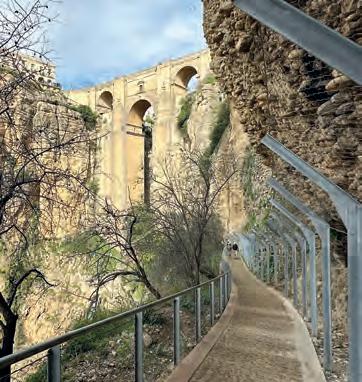
of its huge size.
Its construction began in 1759 and took 34 years featuring three upper arches and two giant pillars.
It’s an impressive stone construction and for two centuries it was the world’s highest bridge - and incredibly, it’s still open to traffic in both directions.
The bridge features a chamber above the central arch which was once used as a prison and during the Spanish Civil War became a torture chamber.
Some of the unlucky victims ended up being thrown from its windows to the river and rocks below.
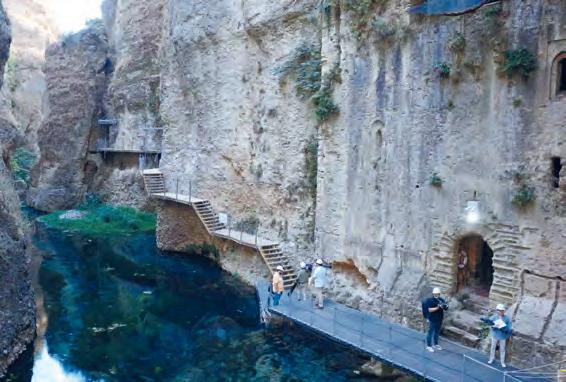
For those nervous of vertigo, fear not, as it isn’t suspended over the river, meaning it does not have terrifying high metal bridges like the Caminito del Rey. Visitors are only obliged to wear hard hats due to the danger of falling rocks, though there is also a metal roof to shield walkers. The only real danger is tripping over on the steps as you fiddle with your audio guide. At the end of the trail, there are also two amazing viewpoints from where you can enjoy the view and snap some insta-worthy pictures before heading back up into town.


WALKWAY: A brand new must-visit path has been carved into the side of the Tajo gorge

NEW RONDA IN THE
The Genal Valley’s incredible copper forest is the perfect winter escape, especially to visit its amazing black pigs, writes Jon Clarke
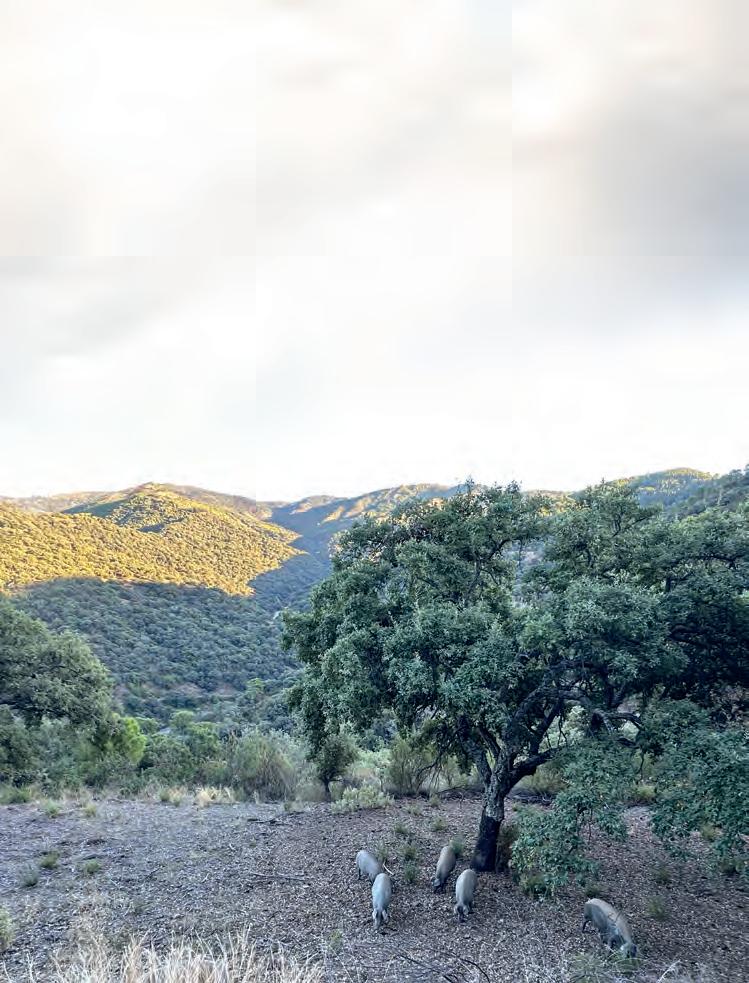
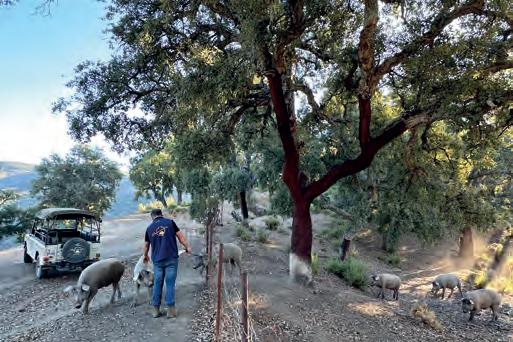
WE had driven up to the high point of Jose’s 340 hectare farm that straddles some of the wildest countryside in all of Andalucia.
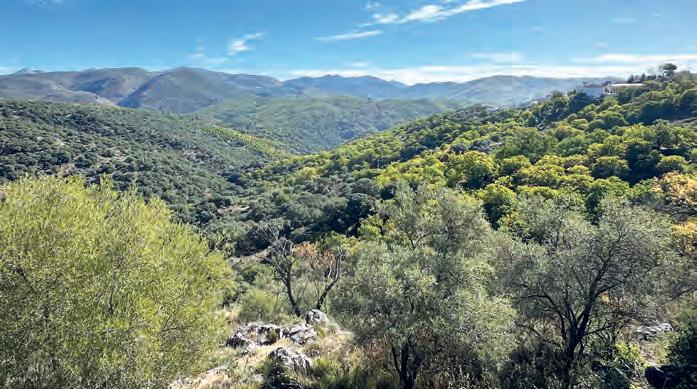
For as far as the eye could see was greenery - a wondrous mix of pines, chestnuts and oaks - and a few white dots that were the distant villages of Farajan and Juzcar.
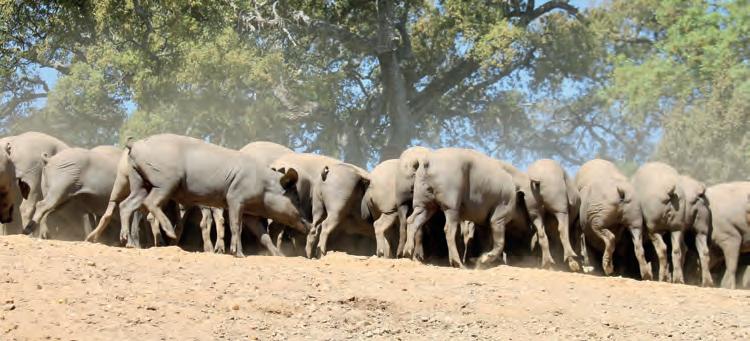
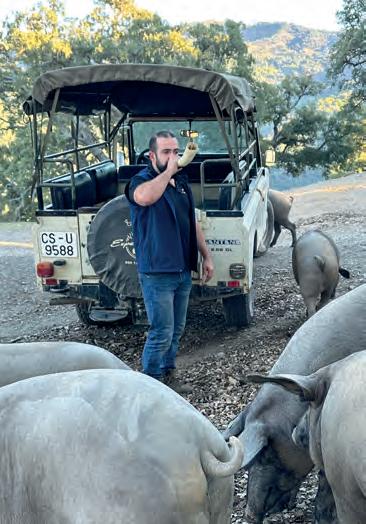
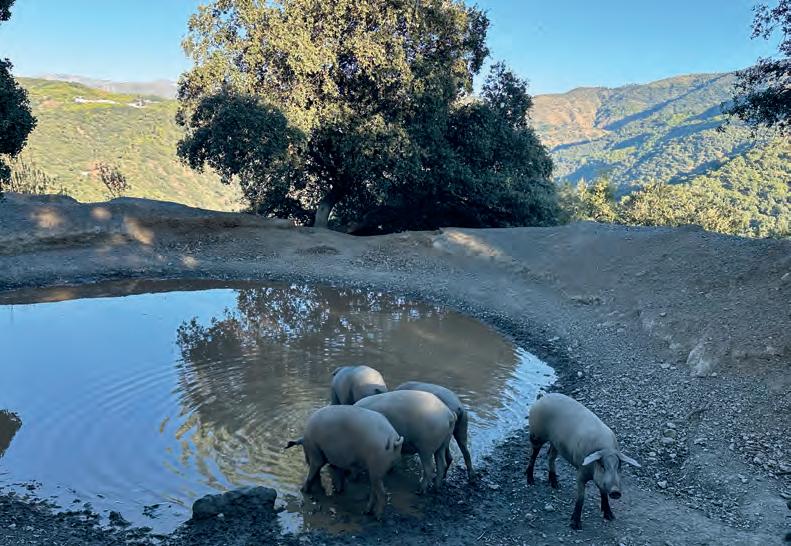
We had come to visit his black Iberian pigs who were predictably, nowhere to be seen. And then out came a horn with a deep guttural sound that reverberated miles around the valley. At first nothing, then slowly a distant rustle turned into a heavy rumble and suddenly out of the undergrowth trooped perhaps three dozen black Iberian pigs.
Delighted to see him they came over to say hello and then jumped into a big muddy pond right beside us.
“They love it to de-stress and cool down,” he tells me, adding they were easily the ‘happiest, most contented’ pigs in the world. And who was I to argue.
It turns out Jose’s business LanGenal only has around 160 of these wonderful free range pigs… and in order to be able to produce the best quality ‘Jamon Iberico de Bellota’ he cannot have many more.
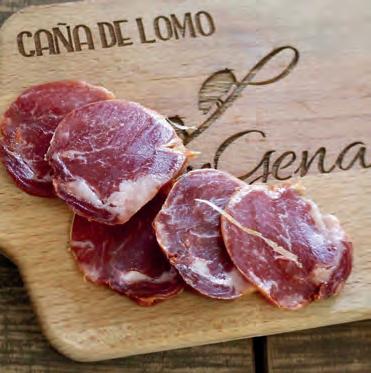
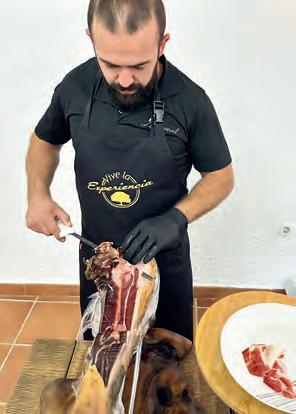
“There are only enough acorns and chestnuts to go around and the rules are strict,” he explains. “Luckily we also have other delicacies for them such as wild olives that are out in abundance this year. They are spoiled for choice” It certainly seemed so and the end result back at base was easily some of the nicest jamon I’ve eaten this year.
And no wonder, with Jose sending his pigs all the way to Guijuelo, near Salamanca, for a ‘humane’ slaughter and in order to dry them for an incredible three to years, before they are sent back to him to sell.
It’s a horribly long wait to get a return on his investment and he needs to buy up to 200 piglets each year to fatten up.
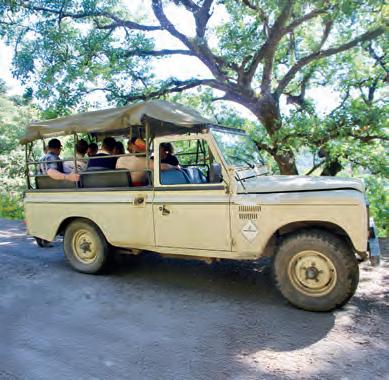

Now in his family for nearly a century, Jose is the third generation to work as a pig farmer and tells me he needs to now do tours of the estate with wine and tapas at the end in order to keep things going.
Jose sends his pigs all the way to Salamanca to be dried over five years
WPREACHING THE BLUES
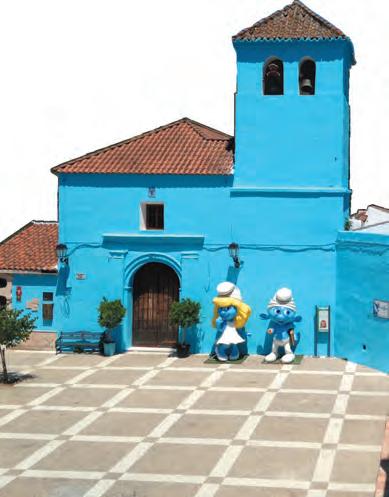
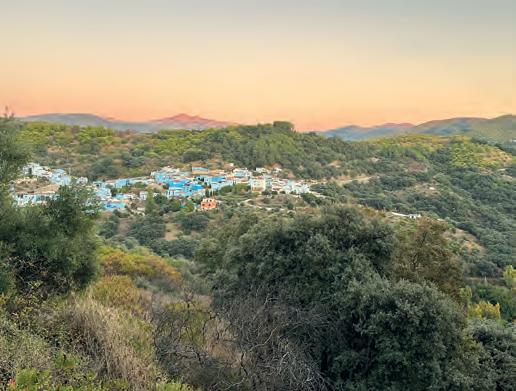
HILE it’s about as stunning as any of the pretty villages around Ronda, there is one big difference with Juzcar… it’s largely blue. This is thanks to the Smurf movie that in 2011 decided to use the tiny village as the mythical base of the tiny creatures. It has been used a handful of times since and voted to stay blue some years back. But apart from the many attractions for kids, based around the movie, it is also the perfect place for a walk and to see Griffon vultures and crag martins.
“I had 12 Dutchmen from Torremolinos this morning,” he adds. “They absolutely loved it and couldn’t believe that there is somewhere so wild just an hour inland from the coast.”
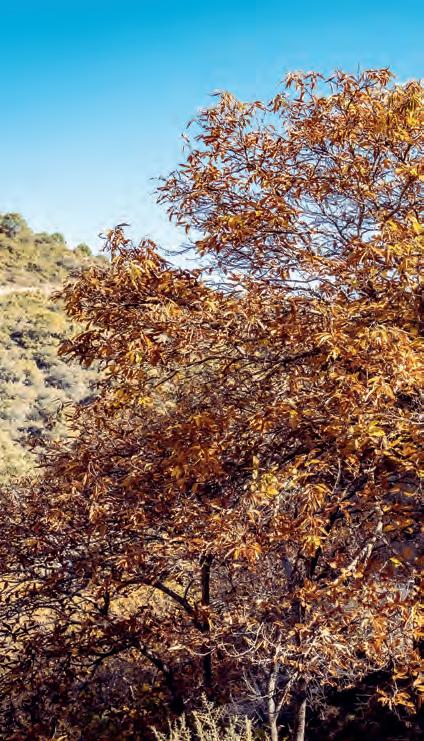
As autumn sets in and temperatures drop, the Genal Valley, between the Costa del Sol and Ronda, becomes a vibrant patchwork of reds, oranges and yellows.
Nowhere is this more true than the ‘Copper Forest’ as golden leaves fall to the ground and blanket forest floors.
You begin to see it when you are three quarters of the way up the incredible mountain road (A397) from Marbella.
It comes as one of the best mountain views in Spain, two rows of stunning peaks meandering off into the distance over 50km away.
Below you is the Genal Valley and while you could turn off early at Puerto El Madrono, you’ll miss the drama of seeing the huge sea of chestnut woods appearing as a backdrop.
Better to push on and take the turn off just before the Mirador de la Rueda and head down towards the formerly Moorish villages of Igualeja and Pujerra.
As you round the corner to Pujerra, an explosion of saffron, ochre and terracotta literally leaps out of the evergreen mass.
This is part of the so-called Bosque de Cobre which begins just a short walk out of the village and stretches as far as many of the nearby towns, including Cartajima and Parauta.
Stroll out from any of these villages - 12 in totaland you will soon find yourself in corridors of amber trees rippled through with sunlight on sunny days.
FALL
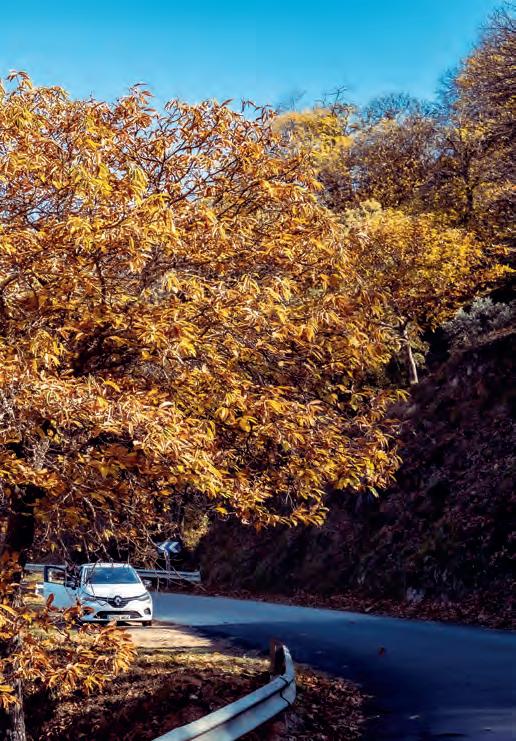
DRIVE: The winding roads snake through the copper-coloured trees
The forest twists like layers of gold ribbon around the small hill, so you’re sure to work up a sweat as you wander, enchanted by the leaves dropping slowly to the ground from mid November to early December.
Best place to stay
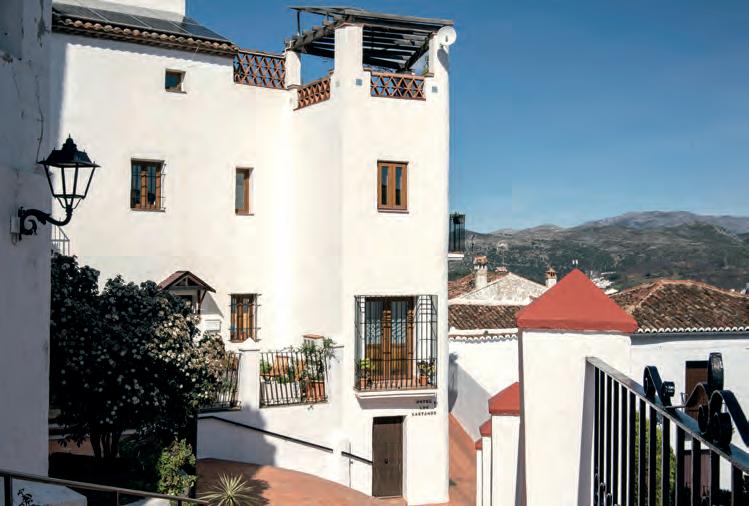
Looking for the best place to stay, make sure you book at Los Castanos in Cartajima, run by the award-winning hoteliers Frank and Antje.
This German pair arrived here a few years back with a few decades of political experience under their
belts back at home and in Brussels and with two kids in tow. They are the masters of looking after their guests with a superb breakfast and a ‘surprise dinner’ in advance and there is a great selection of local wines.
“The hotel as a whole should feel like home as soon as you walk in,” explains Frank, who trained as a lawyer in the UK before going into politics in Brussels. “Not fancy, but special and we offer our guests a 3-course surprise dinner every evening with influences from Israel, Greece, Italy, Morocco and especially Andalucia.”
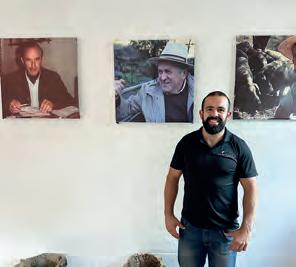
INDUSTRY: Jose summons his pigs (top) while (above) his father and grandfather
Spanish Immersion
Take a journey beyond the classroom with Hotel Los Castanos
THEY are the most incredible language courses in classic Andalucian scenery.
Created alongside Ronda’s celebrated Entrelenguas school, the week-long immersion courses in Cartajima guarantee you’ll be picking up the lingo in no time.
Even better, you enjoy all the amenities of the Los Castanos hotel, while improving your Spanish by at least one level, far away from the hustle and bustle of the costas.
A charming village where absolutely no-one speaks English, you will have to use what you have learned right away.
“We aim to bring you closer to rural Andalucia in all its facets,” explains Antje, a German politician, from Dresden, who has also worked in tourism for many years.
“After the language lessons we offer you different activities on each learning day. We will go out with you to experience the local way of life away from the main tourist attractions.
“You can learn about the village, the breeding and care of the famous Iberian pigs and learn about Spain’s export number one - olive oil.
“We will hike in the nearby chestnut and cork forests and visit typical Spanish bars for a bite to eat. You will learn more about how to prepare tapas and get to know the best wines of the region at a tasting.
“All activities will fit in with and complement your language lessons. We will always have someone there to help you if you have any doubts.
“The courses will take place in our hotel and breakfast and dinner will be served here as well. During the breaks you can relax on our roof terrace or have a typical siesta.”
The groups are normally just for six to eight people and the hotel can offer flexible dates for small groups. Visit: https://loscastanos. com/en/article/46.spanish-language-andlife.html
HIDEAWAY IN
HEART
CALLE IGLESIA, 42, 29452 CARTAJIMA, MALAGA RESERVATIONS@LOSCASTANOS.COM • +34 621 288 373
So much more at Moyla
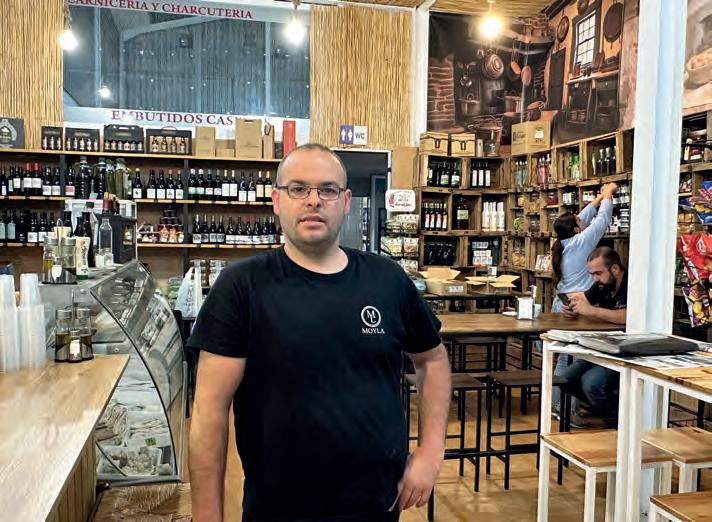
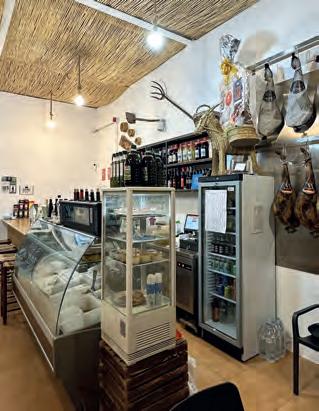
AT last Arriate has a proper shop selling the best quality foods and wines from around the Serrania. Run by local lad, Abel Lara (pictured) and his wife Maria Jose, it has the best quality hams, amazing cheeses and just about every other delicacy you can think of.
Called Moyla, you will find it in the industrial estate, with an adjoining cafe serving up breakfast, lunch and dinner from Monday to Friday. A great selection of wines by the glass and cold beers on tap are served up with a range of dishes. Make sure to try the amazing ta from nearby LanGenal in Farajan. And buy a leg if you can afford it for Christmas.
clinicapcinformatica


We repair all types of electical devicesComputers, stereos, TVs...



While billed as the ‘village of love’, it’s the amazing new
walk that should be your number one reason to visit

In search of
Cupid
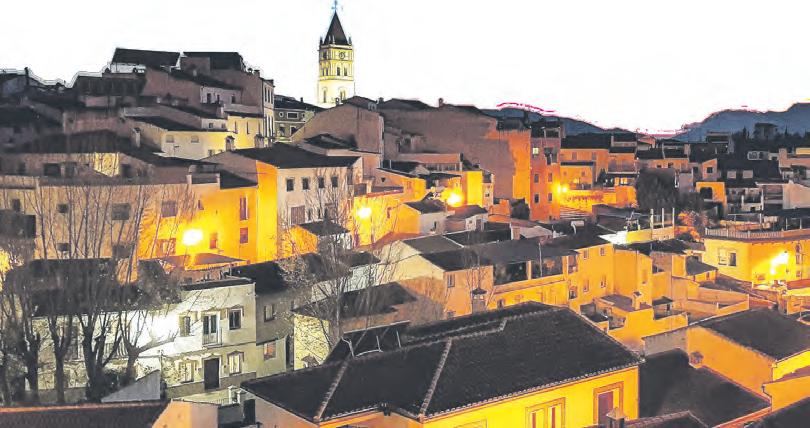
IT bills itself as the ‘village of love’ and encourages people to take a visit to cement their relationship or, who knows, perhaps get smitten. Either way, it is hard not to fall in love with Arriate, a charming white village that has no less than half a dozen songs in honour of its patron saint St.Valentine.



By Jon Clarke

links to the fated Greek god of lovemaking, Eros, who later became known as Cupid in Roman times.
“
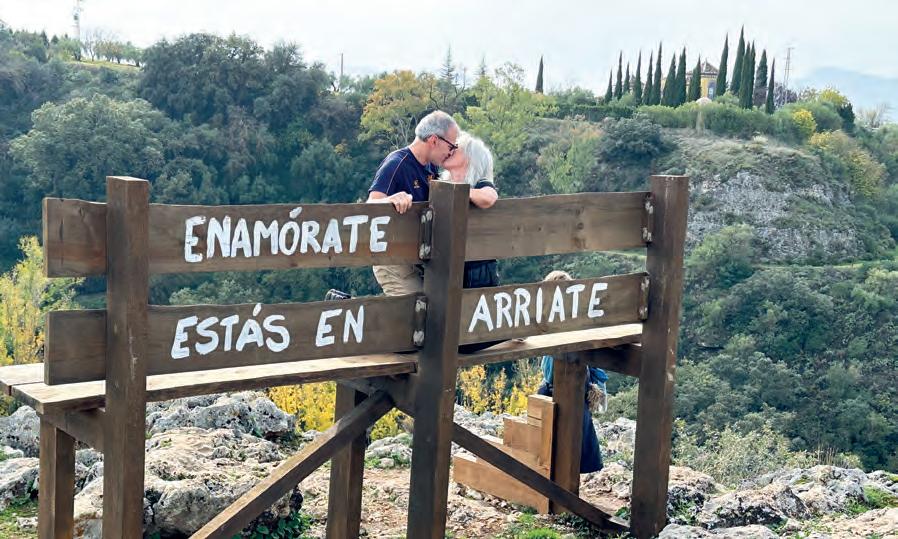
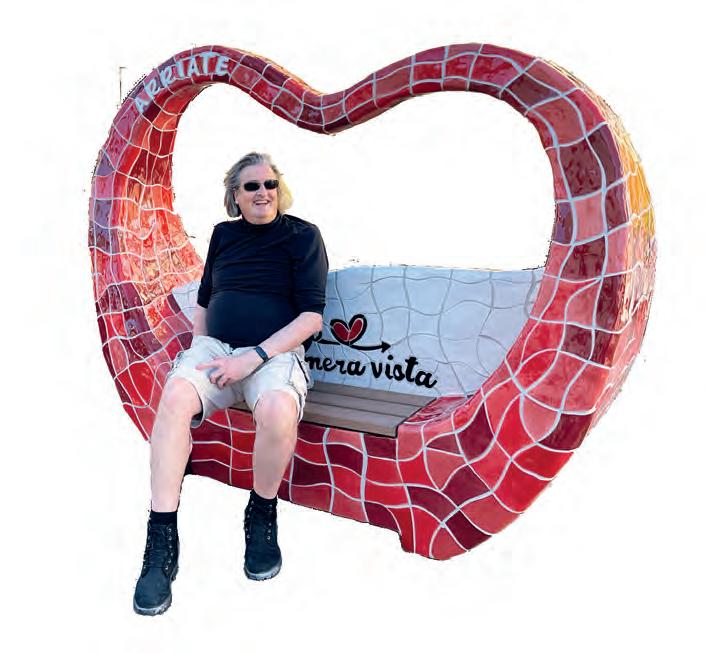
These include a circular bench designed for lovers as well as a giant Cupid’s arrow that doubles as the perfect viewing spot.
er Anet, who is a photographer by trade, who studied Geography at University. “It’s this natural way of life we want to promote to anyone thinking of visiting the area.” It is certainly a journey back through a land that time forgot, and you must look out for the extraordinary converted mill, which is easily one of the most interesting architectural gems of the Serrania.
And, best of all, is a new museum almost exactly half way round at the top, that also now doubles as a bar and cafe.
Enveloped in seductive mountains and with some of the warmest locals in Spain, if Cupid’s arrow is to strike anywhere this should be the place to bring a loved one for a long and (hopefully) dirty weekend.
Computers – Laptops – Tablets – Telephone
Computers – Laptops – Tablets – Telephone
Technical Service – Business Care – School Service
It was why Ernest Hemingway fell so in love with the Serrania de Ronda (he famously shouted from the rooftops about it being an aphrodisiac) and Arriate has long been linked to lovemaking.
“ A four kilometre circular walk that leads from the village up into the amazing hidden valley
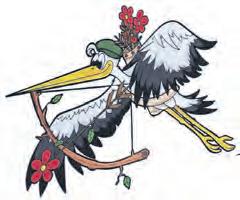
You can actually take a tour around the village following in the footsteps of Valentina, a lovestruck stork, who has been nesting in a high chimney stack for decades, frequently reappearing with a new mate.
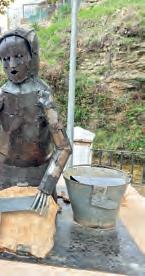
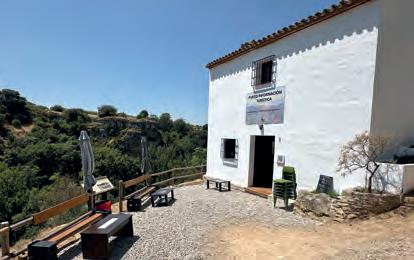
Called Arqueta de Peter, it serves a nice mix of snacks and has the most amazing cold beers. Even better, there is a museum on its top floor plus a series of old maps explaining the area. Once back in the village you will, no doubt, be ready for a proper lunch (or supper if you are staying the night)… and you are spoilt for choice.
However, there is another, even more exciting reason to visit Arriate these days; the wonderful walk up its river towards the Sierra de las Nieves National Park.
Digital Whiteboard – Web Design
Technical Service – Business Care – School Service
Computers – Laptops – Tablets – Telephone
Technical Service – Business Care – School Service
Hotel and Restaurant – Booking System Installation
Digital Whiteboard – Web Design
Hotel and Restaurant – Booking System Installation
Digital Whiteboard – Web Design
Sales and repair of iPad and Mac
It was in fact on February 14, 1630, that its enterprising locals coughed up a sizable 352,739 Maravedies (the currency back then) in order to buy their independence from nearby Ronda.
Hidden valley
Hotel and Restaurant – Booking System Installation
Sales and repair of iPad and Mac
Sales and repair of iPad and Mac
Calle Sevilla, 58, 29400, Ronda, Málaga 952 87 24 63 info@clinica-pc.es
Calle Sevilla, 58, 29400, Ronda, Málaga 952 87 24 63 info@clinica-pc.es
Calle Sevilla, 58, 29400, Ronda, Málaga 952 87 24 63 info@clinica-pc.es
ALL with a 2 year guarantee
ALL with a 2 year guarantee
ALL with a 2 year guarantee
An important day, it meant the village was finally able to take charge of its destiny. And that it certainly did.
BRAND NEW WEBSITE
The best deals for laptops, mobiles and printers in Andalucia
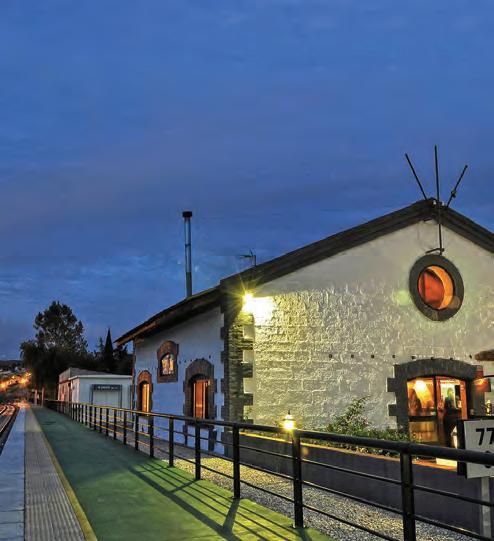
Keeping on the romantic tip, Los Caireles is a lovely conversion of the 1940s Cine Ideal, that is somehow still intact out back. It shut in 1988 due to dwindling audiences and firstly became a flamenco venue, before becoming a restaurant, with much of its original memorabilia, advertising and cameras still around. Even more romantic is the restaurant, El Muelle, run by Dutch expat Frank Rottgering, who converted this amazing 100-year-old railway
THE PARTY TOWN
https://clinica-pc.es/ BRAND NEW WEBSITE
https://clinica-pc.es/
https://clinica-pc.es/ BRAND NEW WEBSITE best deals for laptops, mobiles and printers in Andalucia
The best deals for laptops, mobiles and printers in Andalucia

Distinctly different to Rondawhose municipal boundaries actually surround it making it an island - its locals sound different, look different and even think differently.
For starters they have their own public holiday on St.Valentine’s day and now the town hall has even declared it Andalucia’s official ‘Pueblo de Amor’. Then there is the mythical local band, the Auroreros, who famously go round in the middle of the night serenading people with them.
But take a poke around and you will find a dozen other
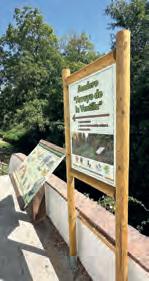
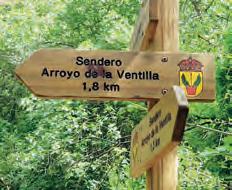
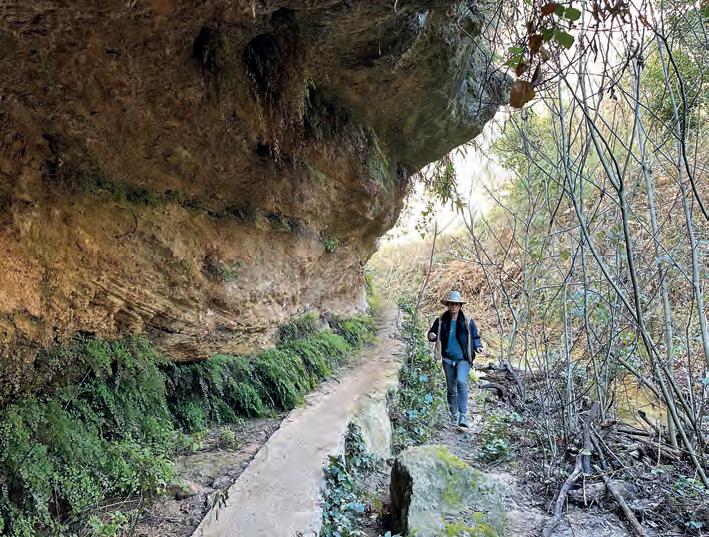
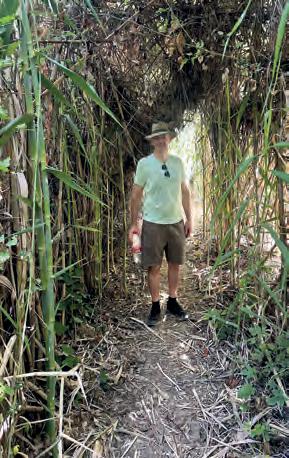
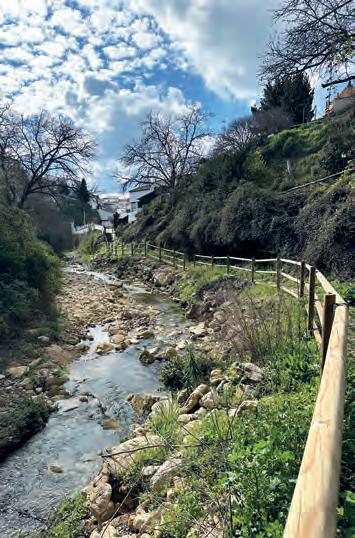
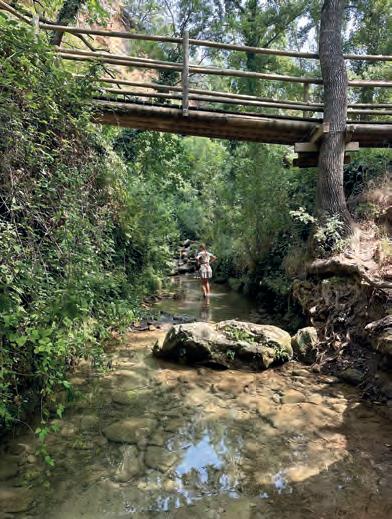
A four kilometre circular walk that leaves from the village up into the amazing hidden valley, the Arroyo de la Ventilla, and then comes back a different way. The little-known gorge - a mini version of Ronda’s Tajo - is crammed full of flora and fauna, including orchids, eagles and even wild animals including genets and stoats.
Even more interesting are the cave houses carved into the vertical sandstone cliffs and other evidence of man that goes back way before the Romans.
“It’s a breathtaking space and a real adventure for anyone looking for a genuine escape,” explains mayor Francisco Javi-
Arriate is famous for its love of partying and ferias, Semana Santa in particular, which is known throughout Spain for its intensity
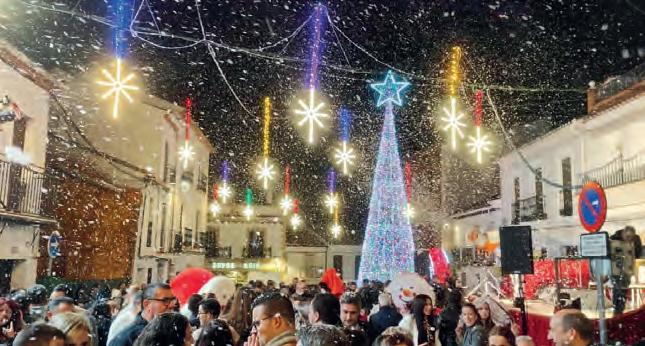
Other ferias are the Romeria in Spring, the Dia de la Vieja, a day when all the pensioners are taken out to the countryside, and the now famous Fiesta en el Aire, which takes place in October and sees around 40,000 visitors this year. The latest fiesta to be added to the list was the idea of councillor Carmen Orozco, who introduced amazing Christmas lights and a fun evening of artificial snow on Dec 6.
Arroyo de la Ventilla
Arriate

by
building.
He has a wonderful eye for detail and you will certainly get a roaring fire and candles in winter and the most romantic terrace for the sunset in summer.
Other places worth looking out for in town are Bar Kpri, that has a nice terrace and MalagaCana, which sits in the heart of town by the old church.
The best place to stay by far is Alcantarilla (www.alcantarilla.co.uk) a beautiful country estate with extraordinary gardens, just a short walk out of the village.
The three-bedroom cottage comes with a log-burning stove, candles and bath products, plus a pool table when you want a break from the romance.
WEDNESDAY TO SATURDAY | LUNCH AND DINNER SUNDAY | LUNCH ONLY

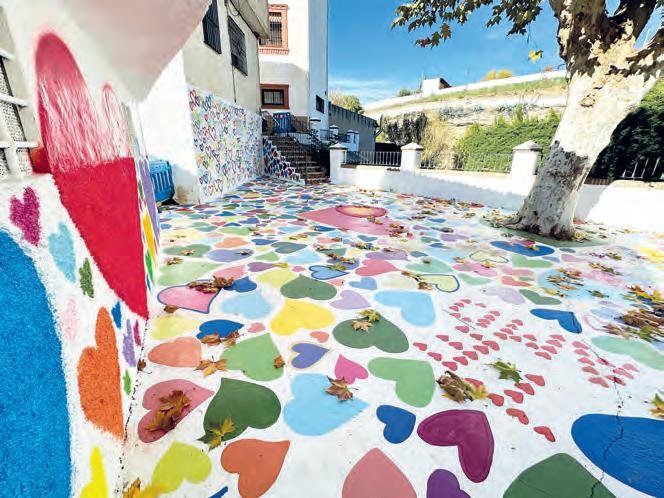
LOVESTRUCK: Star-crossed lovers kiss on a giant bench, while a tourist takes a pew on the love bench in hope of finding Cupid
CIRCULAR: The Arroyo de la Ventilla hike takes in the amazing bar/museum Arqueta de Peter
Photos
Jon Clarke
tel: +34 657 03 16 87
Calle Las Tiendas, Número 28 Plaza Carmen Abela, 29400 Ronda
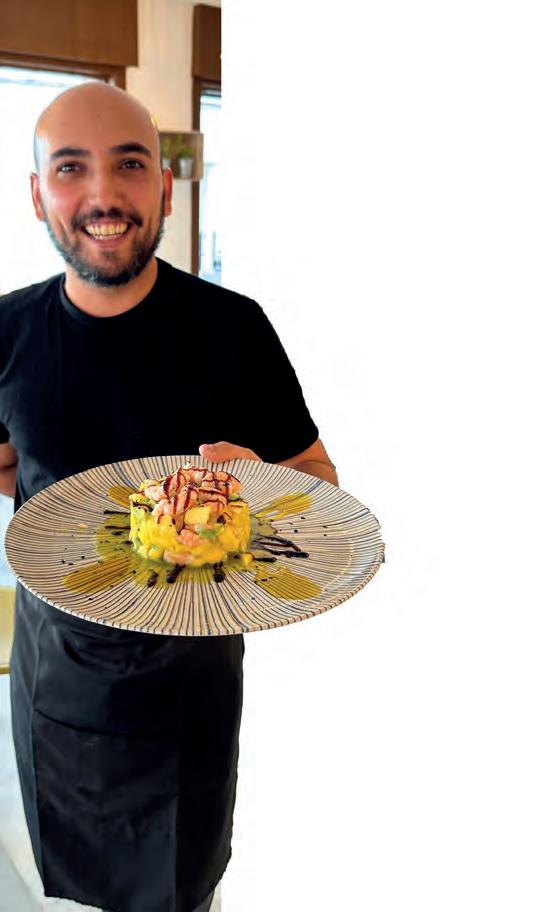
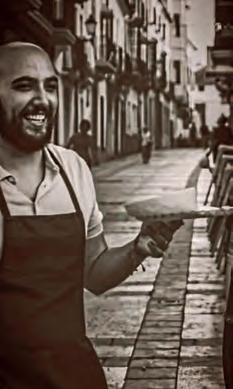
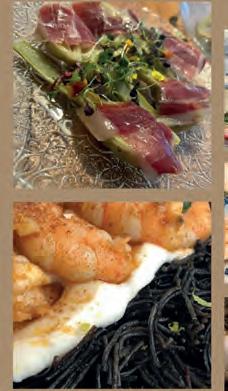
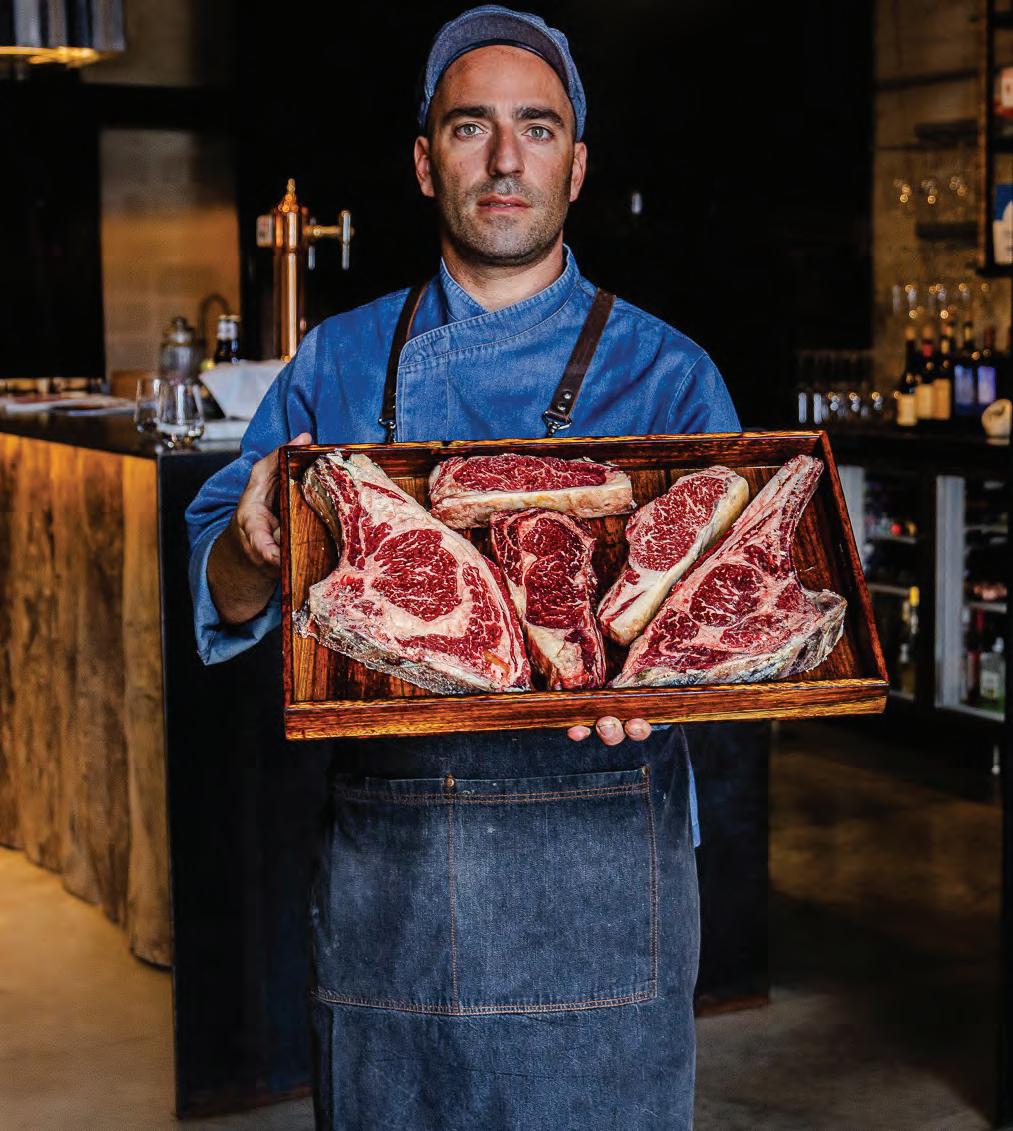
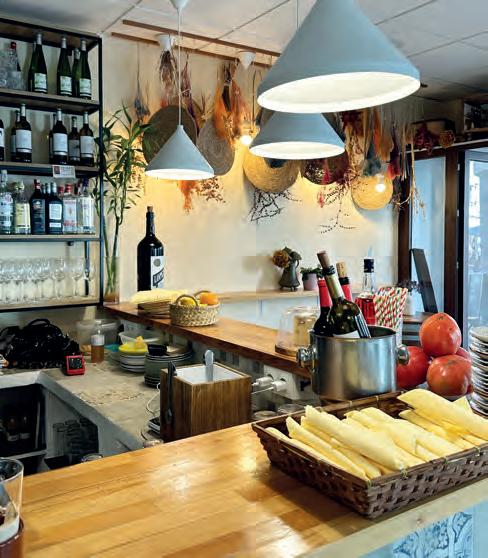
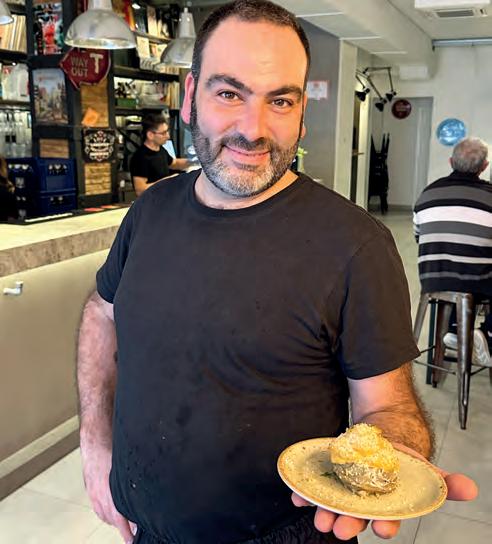
JOYOUS: Ruben and a dish at Mi Manuela, Martin at Kutral and Javi at Taberna Almacen
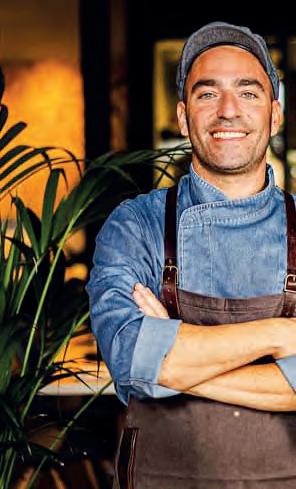
MASTERCHEF
IT might seem counterintuitive but you need to head deeper and deeper into the industrial estate to find one of the true secrets of Ronda.
This is Kutral, the spiritual home of Argentinian Martin Abramzon, who trained at three Michelin star Martin Berasategui in the Basque country, before falling in love and making Ronda his home.
An incredibly hip spot, which you’ll definitely need to book, this is where those-in-theknow come for easily the best steak you can eat in town.
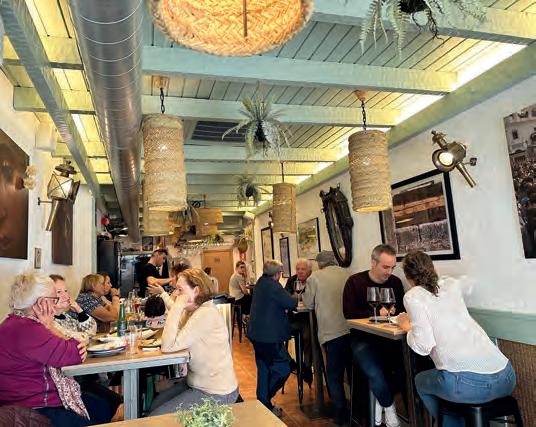
The exposed brick, high ceilings, and contemporary lighting create an exciting, yet intimate, dining experience.
Kutral, which fittingly means ‘fire’ or ‘hearth’, is built around a monumental Argentinian-style parilla (grill) where the magic really happens.
Martin offers up the best prime cuts, which are then expertly cooked over an open flame, imbuing them with a distinct, smoky depth.
But it’s a lot more than just steaks and you must expect some good local vegetable dishes, plus naturally the best empanadas around, not to mention splendid wines.
One of the best travelled foodies about, Martin knows the Spanish restaurant scene inside out and, no surprise, having run the kitchen in Ronda’s once-famous Michelin star joint Tragabuches.
He has also cooked for many celebrities, including Gareth Bale, Robert de Niro and Cristiano Ronaldo, both in Marbella and the nearby hills, but don’t expect him to tell you about it.
“It’s not me but Ronda that’s the real star,” he insists.
“There are so many good places to eat now and gastronomically we are offering more and more variety.”
He is certainly right, with the mountain town where I have lived for two decades completely changing in that time.
Since launching the Olive Press newspaper in Ronda in 2006 it has become a real melting pot at the end of the restaurant rainbow.
A cauldron of top quality ingredients and a chopping board
The Ronda dining scene has developed into one of Spain’s finest in the two decades I have lived there, writes Olive Press editor Jon Clarke
of talents, the Serrania de Ronda really has it all.
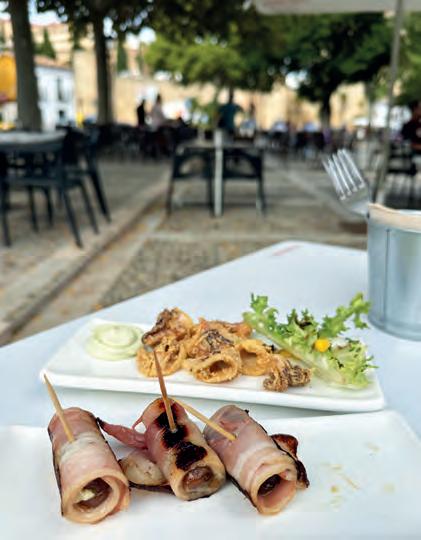
Having travelled far and wide to interview Spain’s best chefs - and usually trying their food - few places equal the joy of a tapas tour in Ronda in the heart of winter.
And if you want a proper blow up seat down meal you’ve got places like Bardal with two Michelin stars and Pedro Romero, which has been serving up the best Rabo de Toro in Spain for nearly half a century.
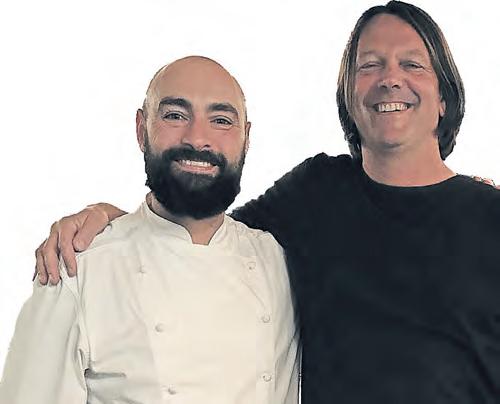
Top of the pile by some length is the kitchen of Benito Gomez at Bardal.
A Catalan dynamo, who has long been tipped as Spain’s next Three Michelin star maestro, his kitchen is a true reflection of the very best of the Serrania.
Having trained under Ferran Adria (from Spain’s famous El Bulli), he moved to Ronda via a stint at Adria’s sister restaurant Hacienda Benazuza, in Sanlucar la Mayor, near Sevilla. It was there around 2010 that I had, possibly, my most memorable meal in Spain… a 25-course masterclass, basically one dish for every year Adria had been in charge of El
I’ve eaten at Bardal various times before it got a star and since it won two and, there is no doubt, Benito is approaching that legendary meal… and if it is just a taster you are after, try his diffusion restaurant, Tragata, just around the corner.
Close by are, no less, than four other joints where the chefs have worked at leading Michelin star restaurants.
Javier Pimentel at Taberna Almacen is easily the most approachable, a man who lives and breathes food and is continually changing and upgrading his menu.
He learned from the godfather of Spanish cuisine, Pedro Subijana, at Akelarre in San Sebastian, a true cathedral of three star cuisine.
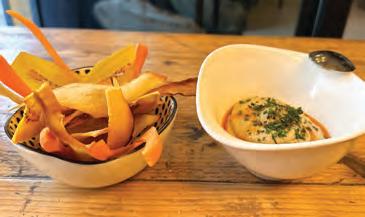
Next it was off to hone his skills with Malaga’s leading chef, Dani Carnero, of Kaleja, before he found his own furrow to plough in Ronda. This central spot is always busy and, particularly with locals, thanks to its exceptionally keen pricing, and I love his soups and stews, plus the fact he always has four or five specials every day, things like smoky baba ganoush, with
Bulli.
TOP OF THE PILE: Benito Gomez at Bardal with Jon Clarke

MOUNTAIN
fried sweet potato chips, dried carrots and bananas.
His ‘Mollete de Benaojan’ is a lip-smacking mini-bocadillo of blue cheese and local Iberian ham.
Garcia’s three Michelin star restaurant in Marbella, and before that, Tragabuches in Ronda.

lived.
The most exciting new talent in Ronda meanwhile, is Jose Luis Pascual, who is another well travelled chef, who’s done his time in Michelin kitchens.
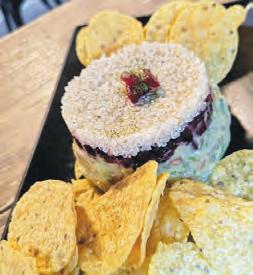
I love his fried prawn taco with onion guacamole and kimchi mayonnaise and a tuna tempura taco with a twist of lime. Both offer a taste explosion in the mouth.
“
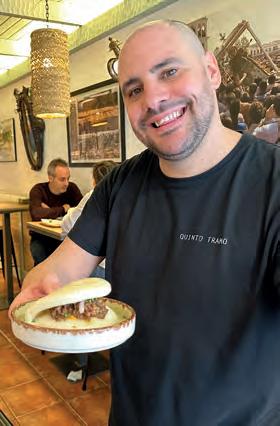
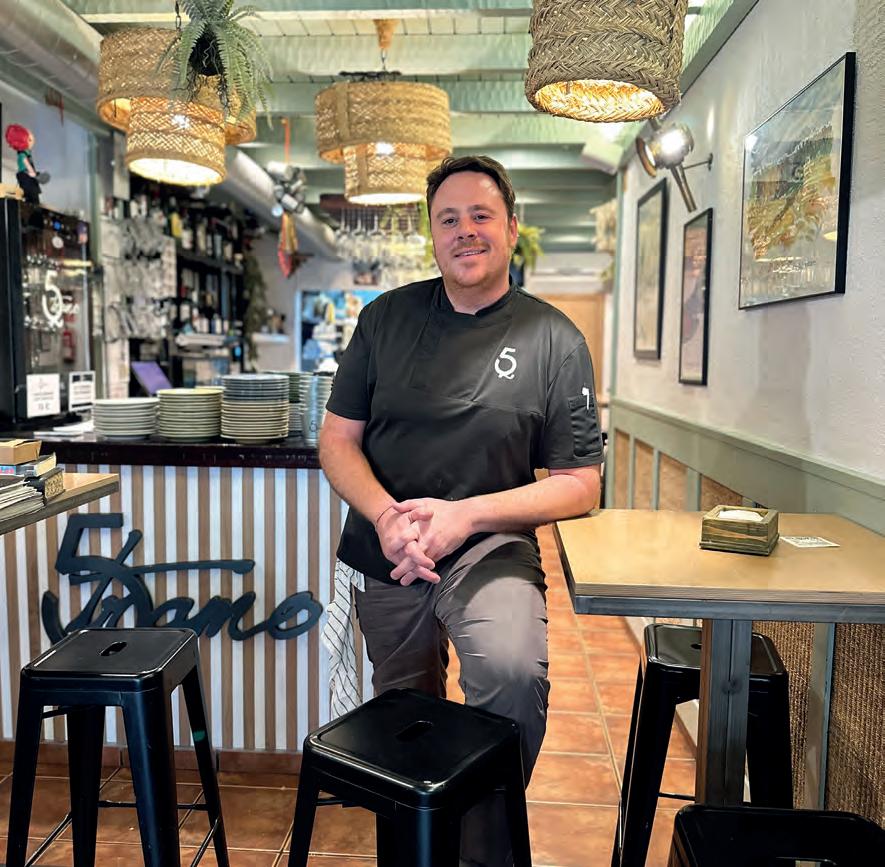
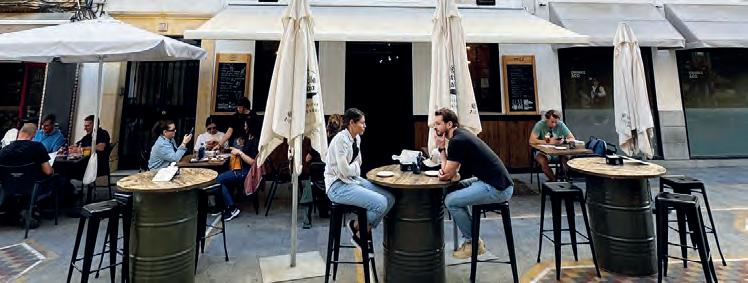
His highly-rated Quinto Tramo, which is the current hip spot for locals, is the very essence of Ronda style. Aside from the bullfighting memorabilia, esparto lamps and black and white photos, the menu is heavy on local dishes and ingredients.
This was where Jose’s parents long ran a hat shop in town (it opened nearly a century ago) and he and his brother have now finally taken over the space.
“ The dishes have hardly changed in decades with classics like bulls cheek (carillada) and oxtail
Another, seasoned culinary traveller is Jose junior at Tropicana, where Jose Sanchez junior and his dad in the kitchen run a popular joint. Jose junior also learnt his trade under famous three Michelin star genius Martin Berasategui in the Basque Region, although he learnt it in the sala.
It is what one might call bijoux in real estate terms but it certainly has ambience with quality food to match.
Everything is beautifully presented on branded grease paper and Jose is a perfectionist having done his time at Dani
It is a charming place to sit and expect to have plenty of vegetarian and gluten-free dishes on the menu, plus a decent number of specials, including a heart-warming bowl of tripe with onions and chorizo.
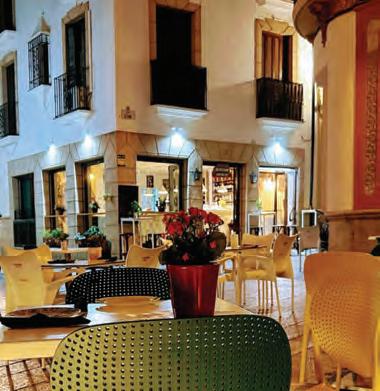
Nearby you will find charming Mi Manuela, in Plaza Carmen Abela, near to where the celebrated writer Cervantes once
The friendly young local couple who run it have some good ideas, a fabulous eye and offer great value. They are always doing specials by the day and the variety of rice dishes is worth checking out.
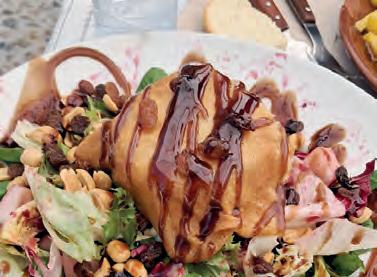
Best of all, was the amazing freshest mango and avocado salad with prawns, brought out by chef Ruben himself.
The wine list is good, while sitting in the plaza offers the right atmosphere for the perfect meal.
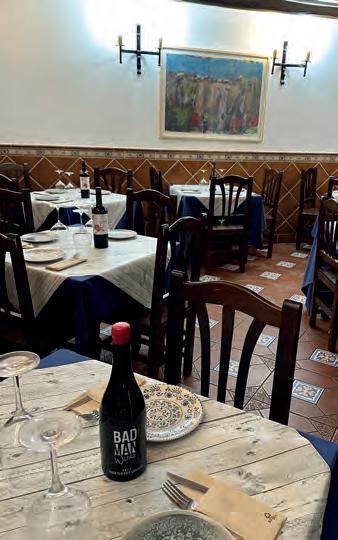
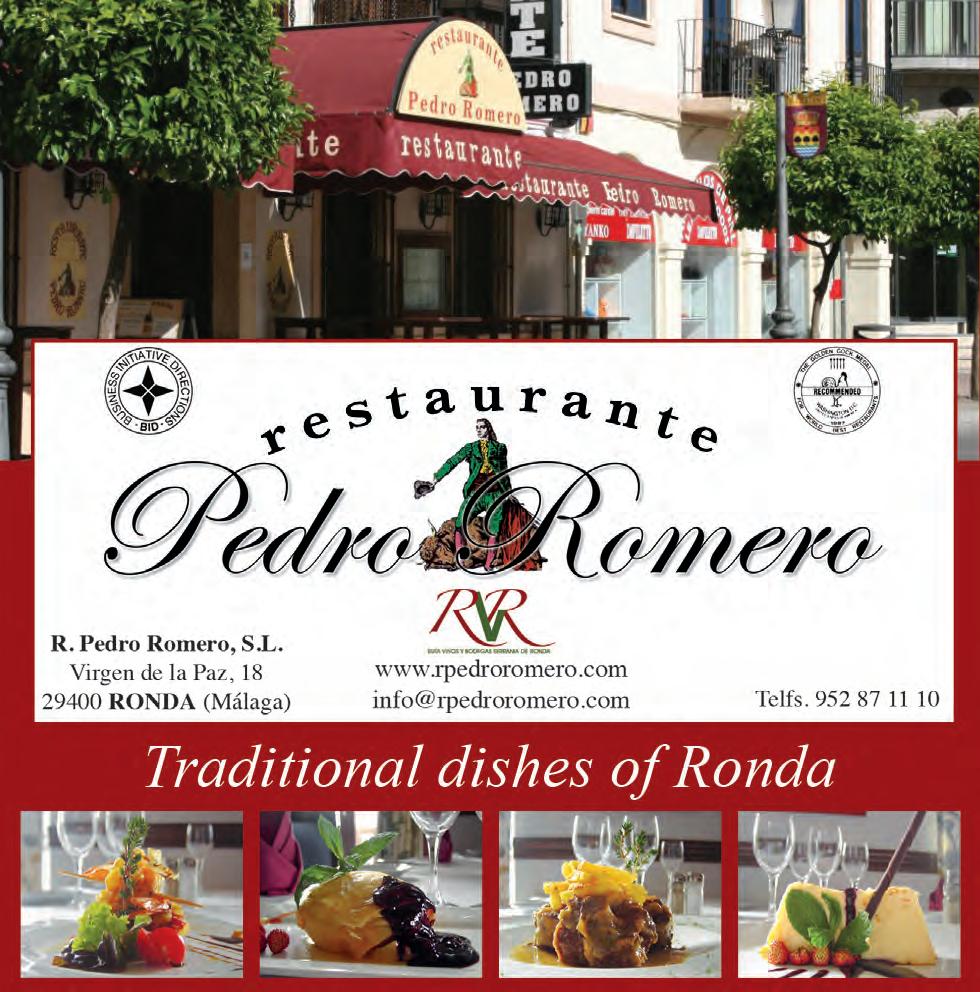
For tradition, you must obviously head to Pedro Romero, right opposite the bullring and about as classical as you can find.
Almost always busy and full of bullfighting memorabilia, it is named after the matador who founded modern bullfighting and put Ronda on the map.
A family business of three generations, it is currently bossed by brothers Carlos and Tomas, and their two daughters, while their grandfather, 90, still pops in to give some advice.
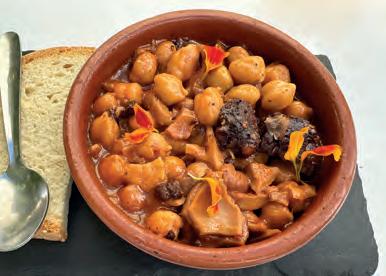
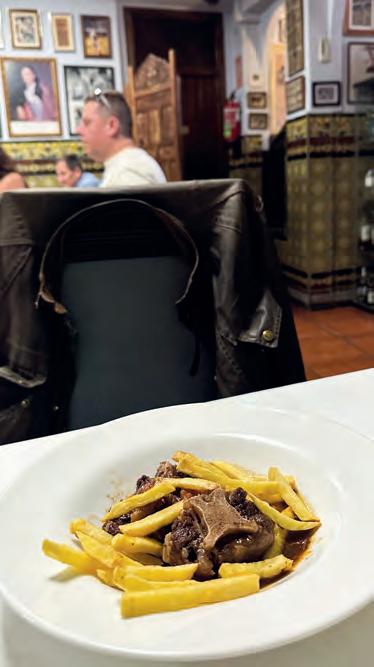
The dishes have hardly changed in decades and classics like bulls cheek (carillada) and oxtail (rabo de toro) are among the best you will eat in Spain. The bean soup starter turns Continues on next page
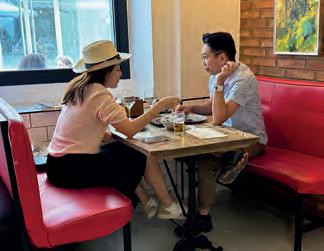

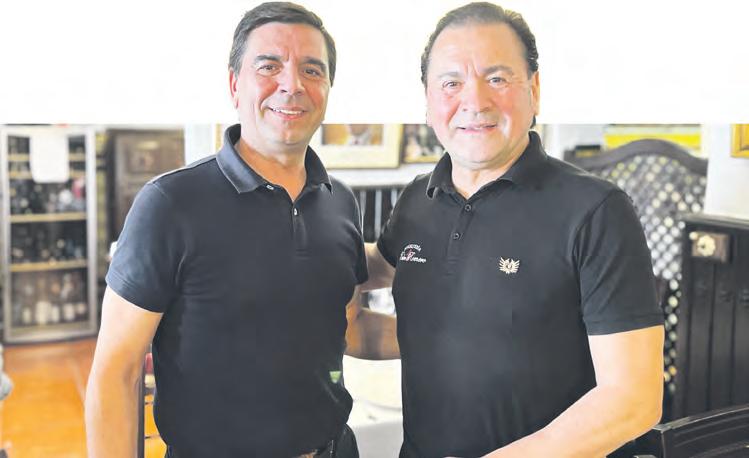
STARRY RISE: Jose Luis Pascal at Quinto Tramo and his brother Maitre Paco (left)
errania deonda R


Atmospheric and delicious
out to be the most hearty of dishes imaginable with chorizo, ham, bacon, black pudding and even more goodness that you can shake a carrot at.
If it is wine you are looking for, meanwhile, don’t miss Entre Vinos, which has over 100 wines (yes 100!) from Ronda, with more than a dozen wines by the glass.
There are some excellent tapas and it’s a charming place to while away a few hours, particularly on warm days on the terrace outside.
Make sure you try the warm pastrami bocadillo if it’s available as it is literally oozing goodness with avocado, lettuce and mustard.
Nearby is Siempre Igual, which is exactly that
‘Always the same’, it’s a bloody excellent place to enjoy tapas and some excellent wine with friends.
Run by a friendly family team from Cadiz, they always have some experimental new dishes and plenty of tables in the street to soak up the atmosphere.
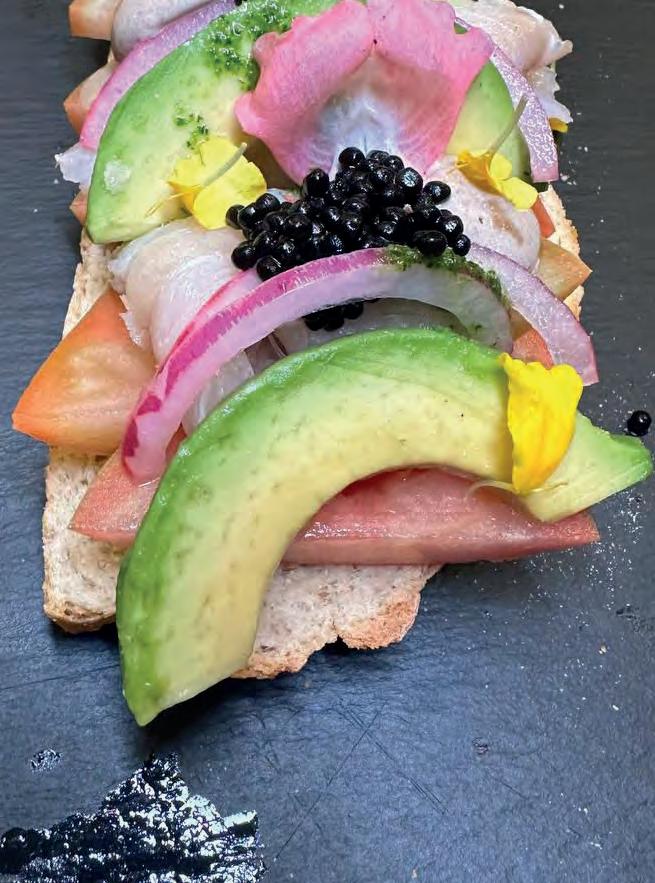
Looking for the best local produce you should head down to Barrafina, in an incredibly charming spot just inside the old Arabic city wall, down by the historic Almocabar gate.
Run by Spain’s former ham-cutting champion Juan Ramirez Gil, himself the son of the town’s first wine merchant, it focuses heavily on top quality ingredients.
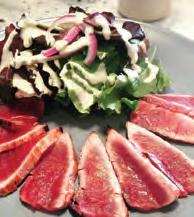
Aside from the best ham in Ronda, the goat’s cheeses from Grazalema are spectacular, while the tuna tartare and beef tataki are superb. Dishes like pulled pork brioche with dates and walnuts and a burrata with pesto and amazing local tomatoes on toast.
Next door in charming Barrio San Francisco square you’ll love Bar la Plaza, which is where Joaquin runs a tight ship running between his bar and the dozen or so perfectly sited tables in the shady square.
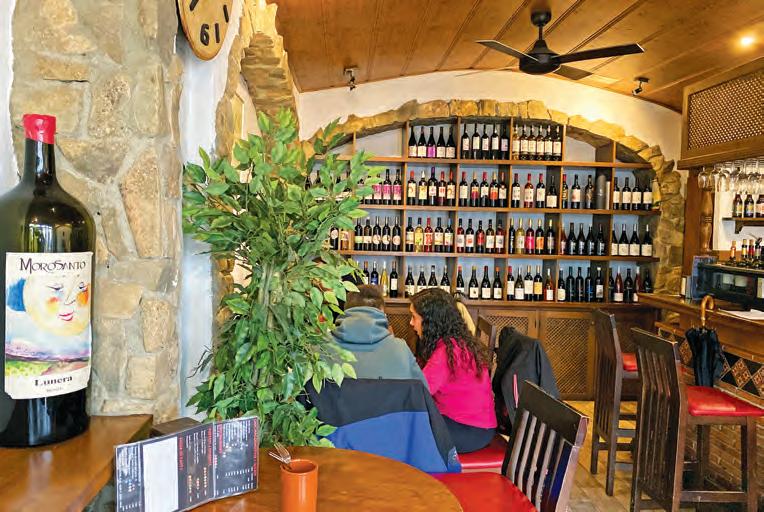

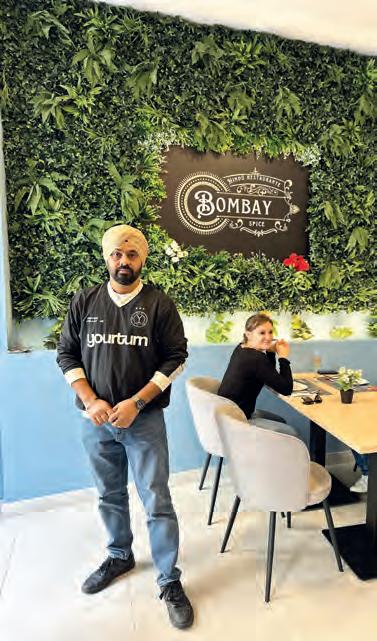
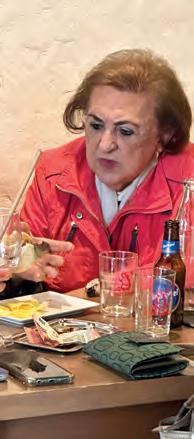
BEST IN SPAIN: The Rabo de Toro at Pedro Romero, while (below) Talwinder at Bombay Spice
BIG BOSSES: Tomas and Carlos at Pedro Romero, the most classic of Ronda’s restaurants
From previous page
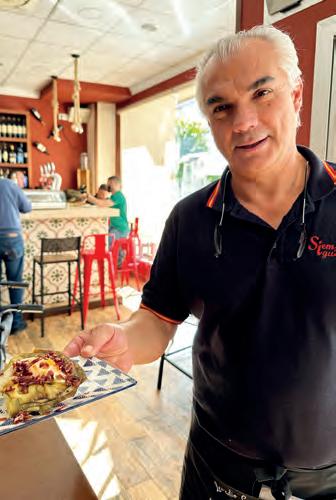
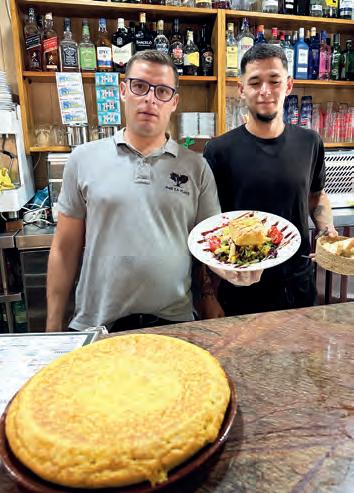
QUALITY: Boss at Siempre Igual and Juan shows off a dish at
below)
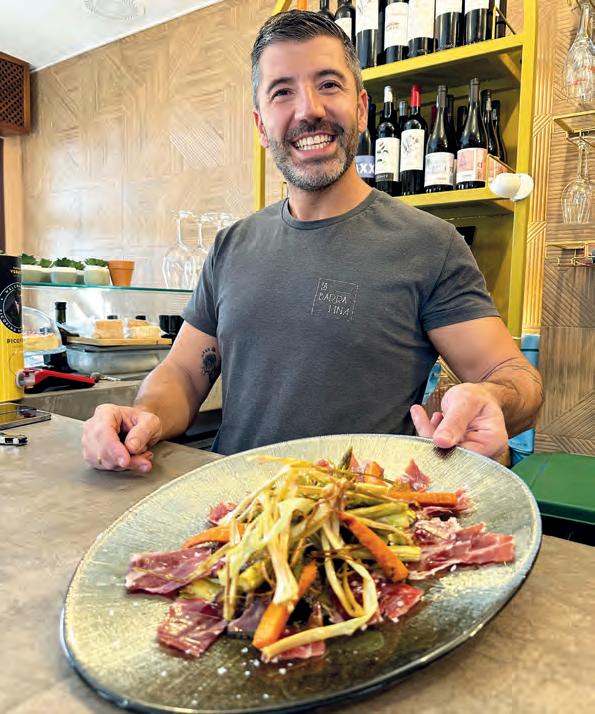
Not just amazing value, this friendly chap from nearby Algodonales, serves up excellent value hot and cold tapas from just €1.70 each.I particularly love his ‘salad of all life’ which doesn’t really do it justice, which is his version of Russian salad. I also loved his delicious callos (or tripe) for just €3, coming with black pudding and chorizo.
You should also try his meat dishes such as rabo de toro, which he slow cooks every day from the minute he opens.
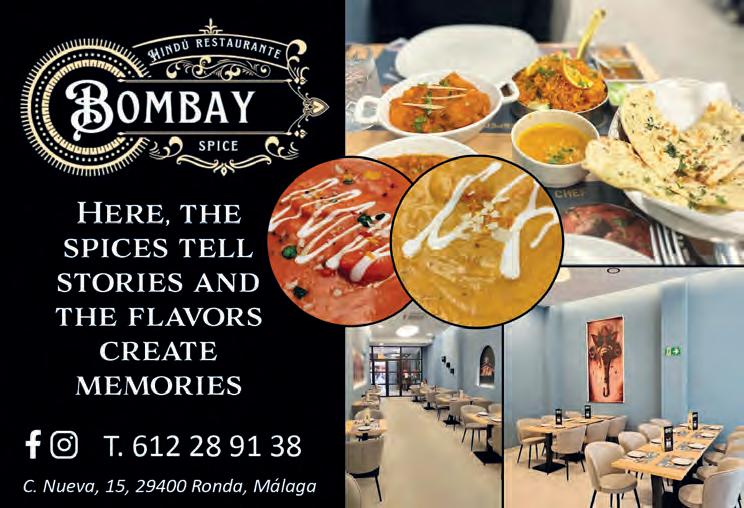
And finally, if you are really looking for something exotic, take a look at Bombay Spice.
Opened by Talwinder, who learnt his trade up on the Costa Blanca, it is a popular choice in the heart of town.
Specialising in Indian food from the subcontinent it will not disappoint.
Marvellous Muelle
If you’ve never eaten in a railway restaurant then you are in for a big surprise. Not only is El Muelle, in Arriate, very much the first class carriage, but this is a train to your taste buds. This all thanks to Dutchman Frank Rottgering, whose legendary joint sees regulars drive all the way from the coast and even Sevilla to eat each week.
Highly rated on Tripadvisor and it’s not hard to see why, it being both charming and atmospheric in equal measures.
Chef Isa is as popular with foreigners and tourists, as the locals, who love her generous servings and ability to change by the month and always offer specials of the day.
But there is simply no substitute for Frank himself, who is easily the most talented restaurateur in the Serrania, enthusiastic, inquisitive and interesting.
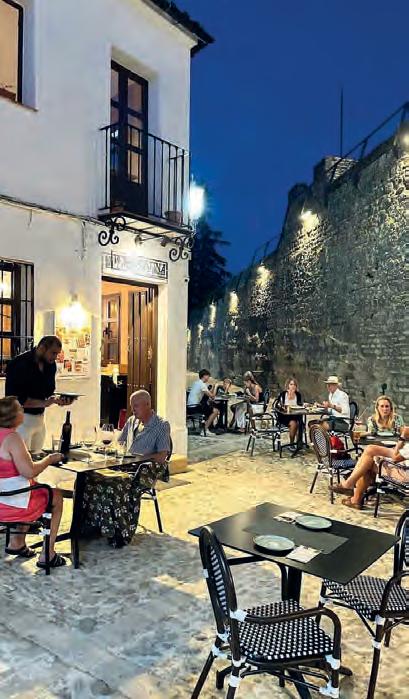
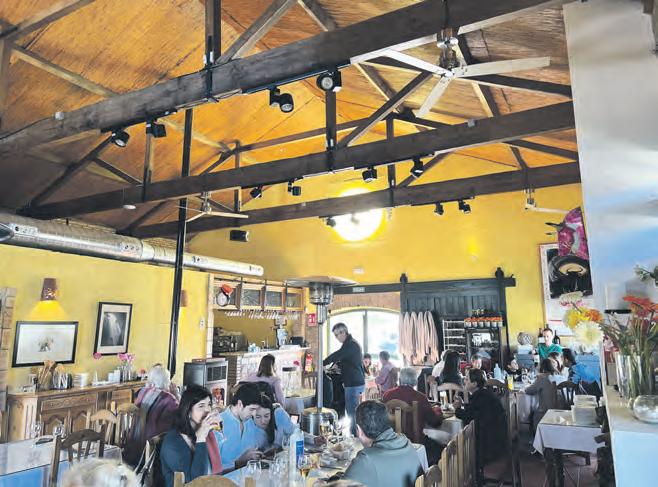

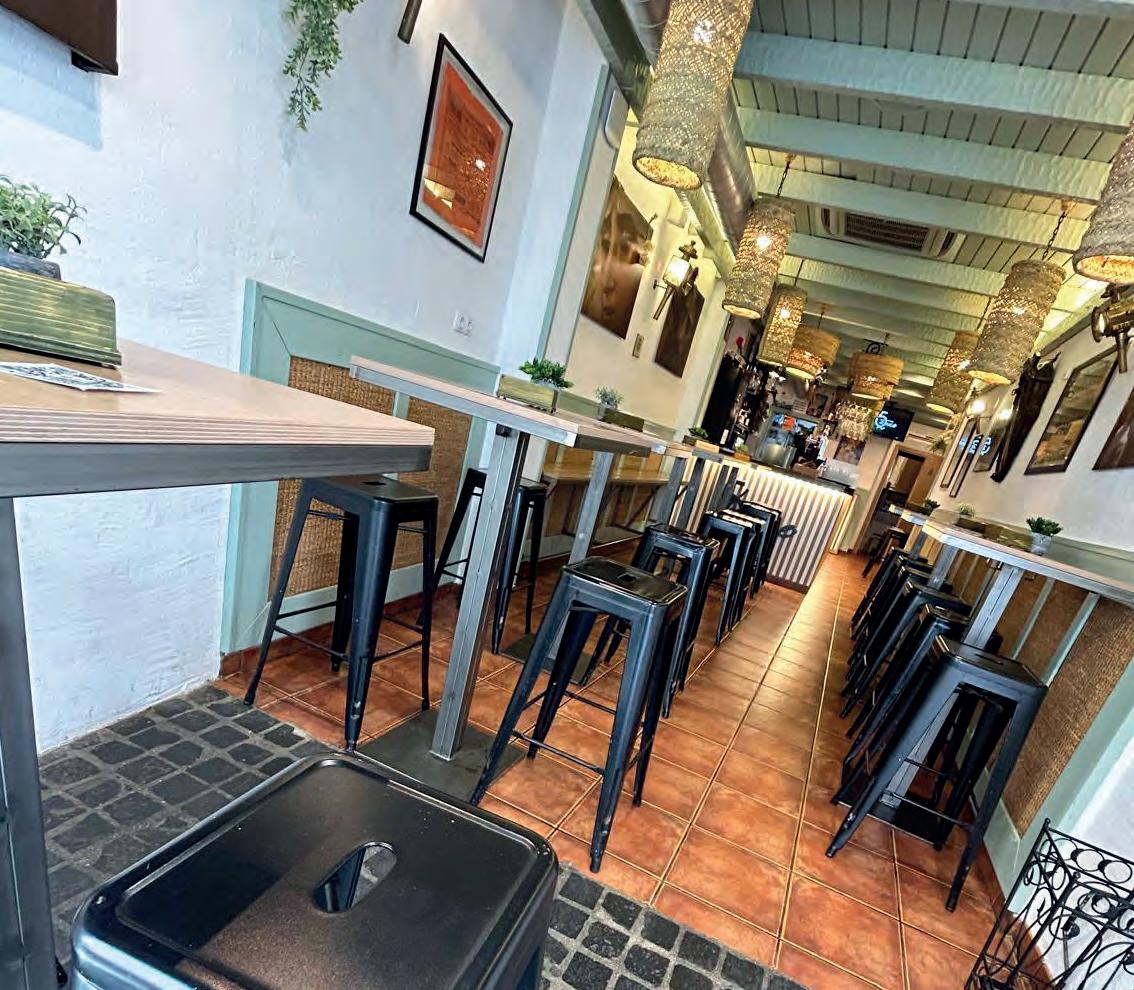


Barrafina (also
ENGROSSED: In wine and food at Entre Vinos (below 0left and far left) and (below) charming El Muelle
SILENT LUXURY
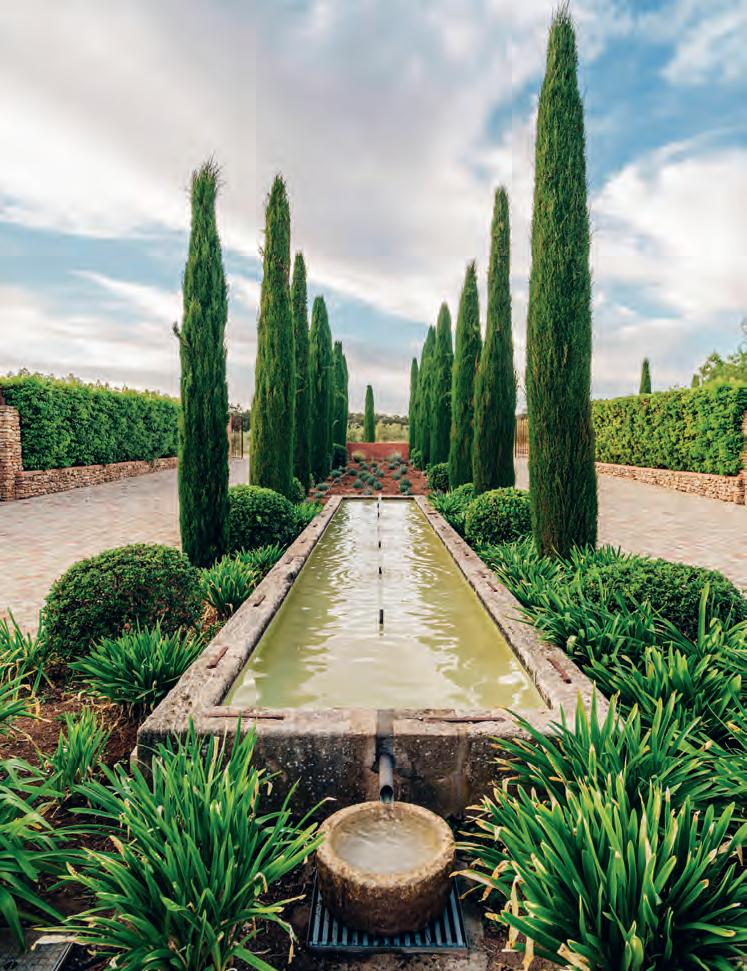
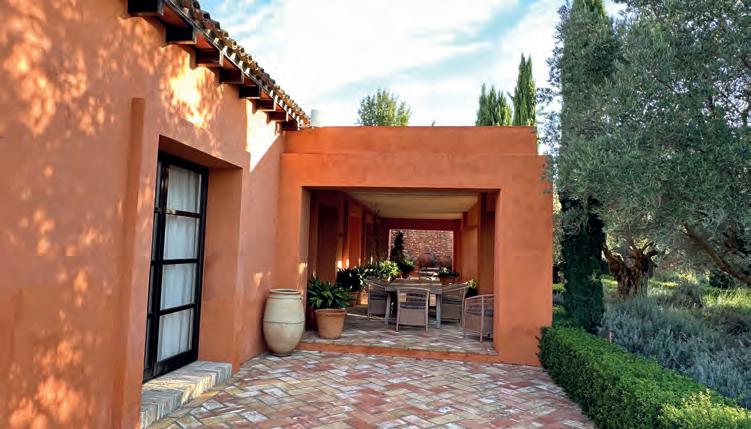
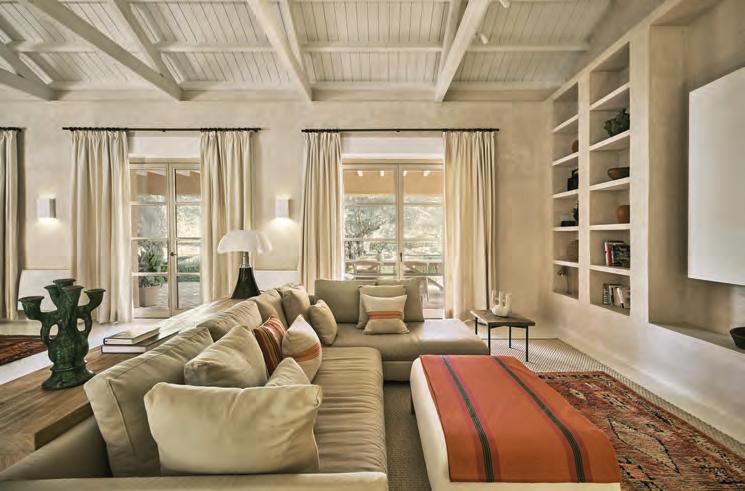

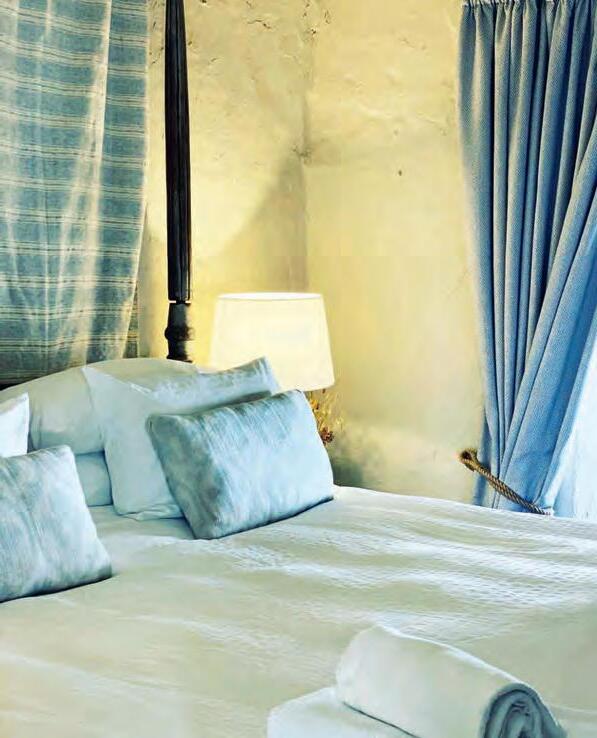
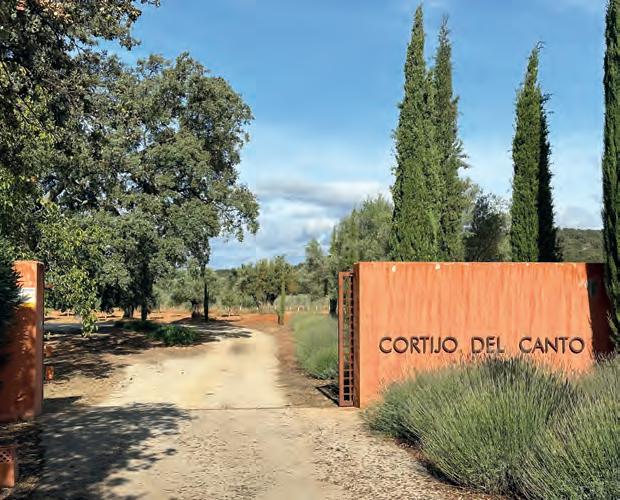
IT feels like the home of a Roman senator, while its arrival reminded me of a scene from Eyes Wide Shut
But while Stanley Kubrick would no doubt approve of this hidden world of the wealthy, Cortijo del Canto is actually the creation of an Argentinian architect.
Part Andalucian cortijo, part South American estancia, it is easily the most privileged place to stay in Ronda.
Hidden away in a giant private estate, ten minutes out of town, it is no surprise to learn recent guests have included Robert de Niro and Antonio Banderas.
They would have felt entirely cocooned in this fantasy world, now run by Marbella’s most exclusive five-star hotel group, Puente Romano.
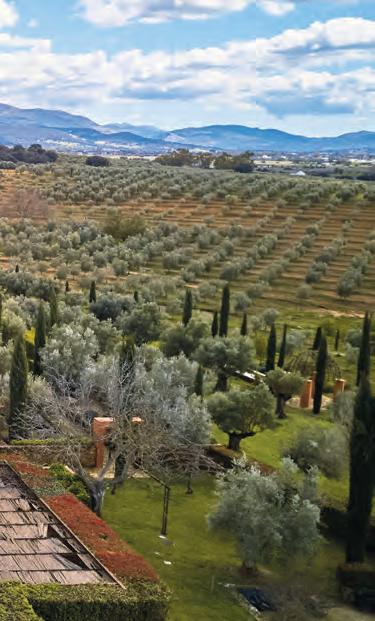
Surrounded by lush grounds of centenario oaks and vines and with a grand fountain for arrival, it is the sort of place you slowly sink into and wish
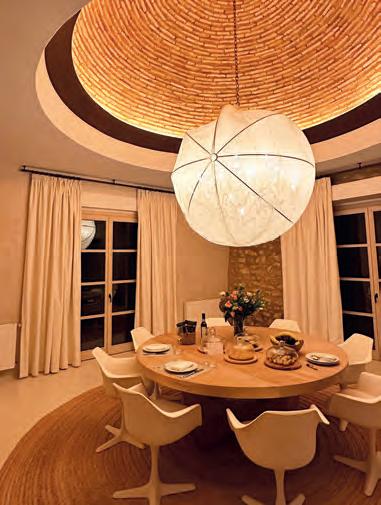
Ronda’s Cortijo del Canto is a true fantasy escape, where privacy is coupled with nature and history, writes Jon Clarke
you never had to leave.
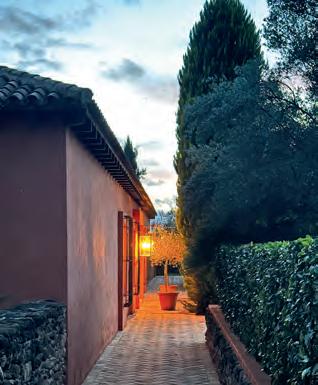
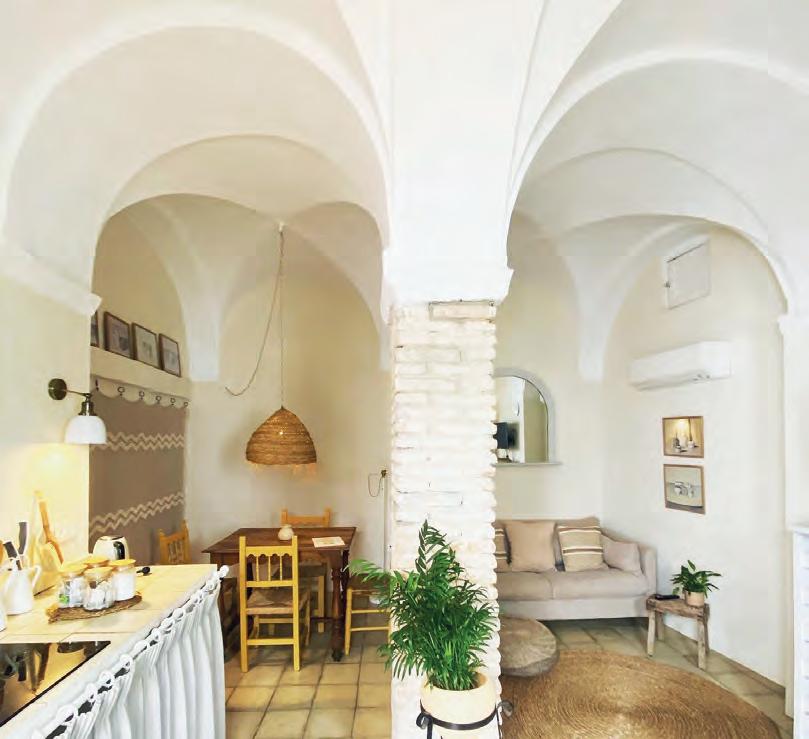
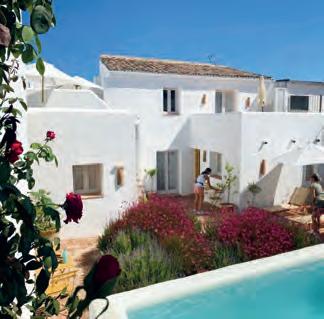
Set around a courtyard of wisteria and African lilies, its six ensuite bedrooms open out into private landscaped gardens full of lavender, rosemary and ancient olives. Its myrtle hedges doff their cap at the Alhambra, while its terracotta colours and matching pots are the true authentic colours of inland Andalucia.
The brainchild of architect Paco Guillen, who moved to Marbella from Buenos Aires in 1981, he had almost a blank slate when he started working on the property two decades ago.
Mixing what he learnt from the University of Buenos Aires, his design philosophy is rooted in the concept of ‘silent luxury’, as he describes it.
A principle mixing minimalism, functionality and the integration into natural surroundings, it means a building cannot just be aesthetically pleasing but must also tailor to its guests.
That it certainly does, including the carefully curated open areas, with state-of-the-art sound systems and TVs, all well hidden behind screens, while the heating system makes it incredibly comfortable in winter. There is naturally an open fire, candles and plenty of good books to read, while the kitchen and dining area is impressive and the fridges are stacked to the brim with drinks and snacks.
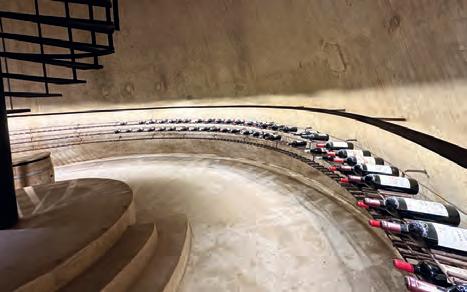
But the most exciting discovery is the wine cellar.
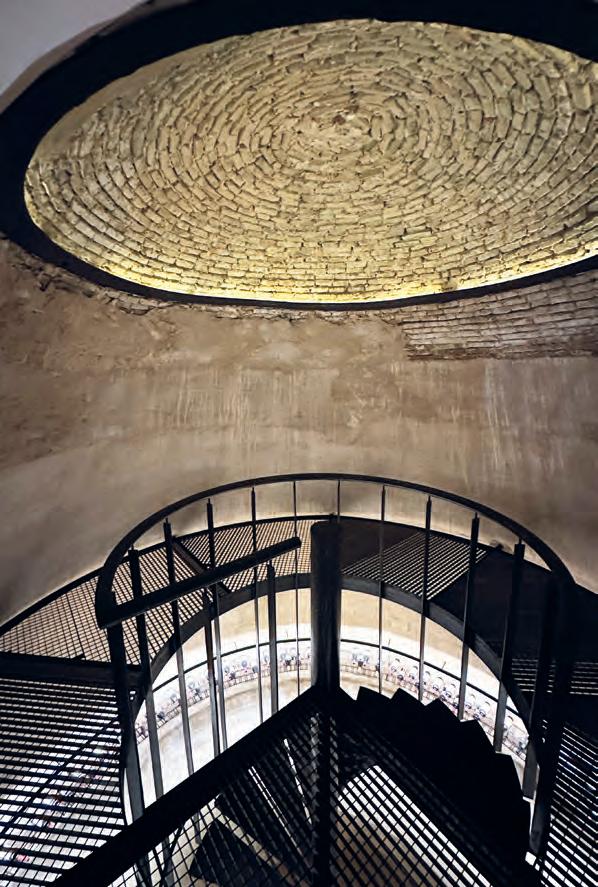
Part of an ancient farmhouse, which officially dates back to 1920, it is a huge underground water deposit - known as an aljibe in Arabic times - with a spiral staircase leading down to a giant circular rack of vintage wines, many from France.
Set across 16 hectares, the ‘resort’ also counts on a delightful pool, cinema and its own vineyard.
The Heredad del Canto estate was once a giant 300 hectare estate, which had its own school for the workers’ children, as well as its own train station.
The grounds offer plenty of walks, while you can borrow bikes, or alternatively organise a driver to take you into nearby Ronda for a tour.
A private butler service, chef and masseur can be provided on request. Guests can also be treated to private flamenco shows, olive oil tastings, and yoga classes.
“And you can make as much noise as you want here,”
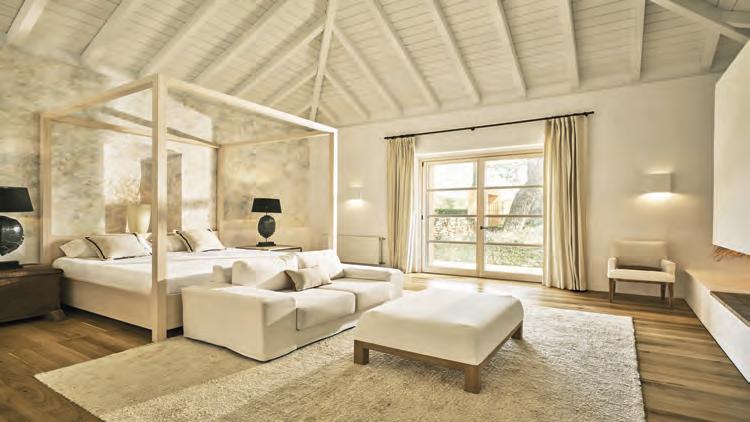
LUXURY: The villa is set up to five-star standards both inside and outside
explains the manager. “Nobody
and nobody is
plain.”
Costing from €10.000 a night - depending
the season - one would certainly
For more information visit www.hotel.puenteromano.com/stay/villa-el-canto/




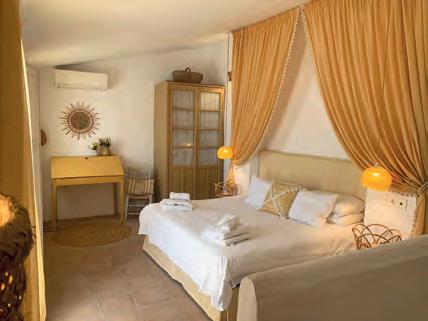
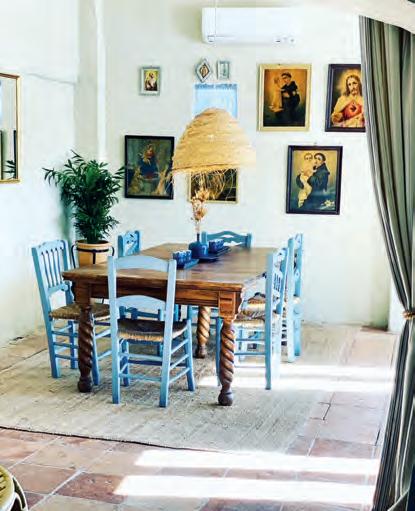

Ronda Properties Estate Agent
Inland Andalusia, c/San José, 1 29400, Ronda, Malaga, Spain
Tel: (+34) 952 187 313 Mob: (+34) 608 765 990 Email: info@rondaproperties.com www.rondaproperties.com Established in 2006 we specialise in inland
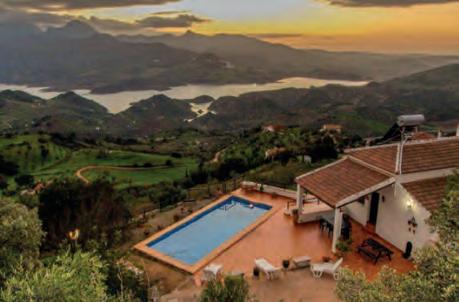
House, El Gastor, Cadiz
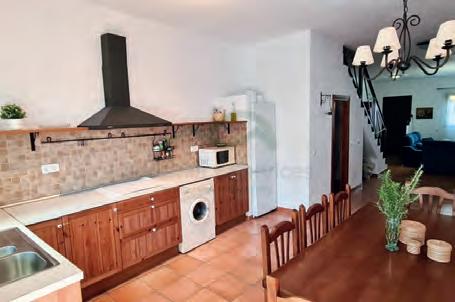
This elegant property offers an exceptional quality of life, surrounded by landscapes of great beauty and serenity. The house has four large bedrooms and two full bathrooms. The bright and cozy living-dining room is the perfect place to enjoy unforgettable moments, complemented by a modern kitchen with American bar that combines functionality and style. The house includes a cozy fireplace and a private pool from where you can admire stunning views, considered among the 50 most beautiful natural landscapes in the world.
Bedrooms: 4
Bathrooms: 2
Build: 145m2 Plot: 0m2
Ref: 102086 €430,000
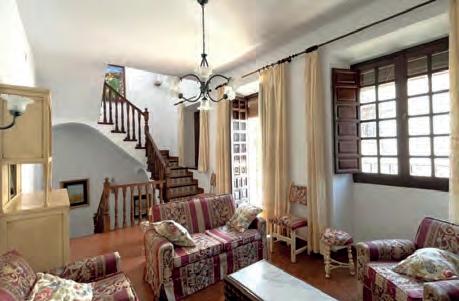
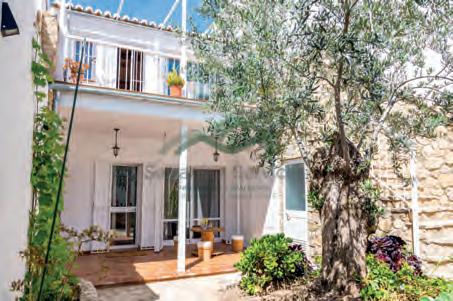
Located in the heart of the historic center of Ronda, this charming house combines the character of traditional Andalusian architecture with the comfort of a modern residence. Distributed on several floors, the property has 4 large bedrooms, 3 full bathrooms, a bright terrace ideal for enjoying the local climate and a cozy living room with fireplace, perfect for winter nights. One of the most outstanding elements is the beautiful handmade wooden staircase, which brings warmth and personality to the interior, harmoniously connecting the different levels of the house.
Bedrooms: 4 Bathrooms: 3
Build: 746m2 Plot: 14,025m2
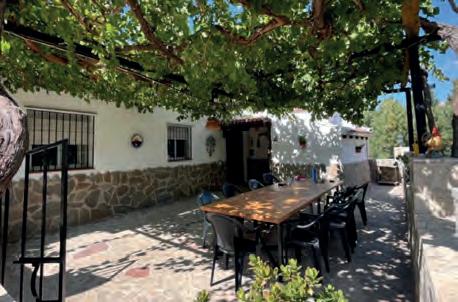
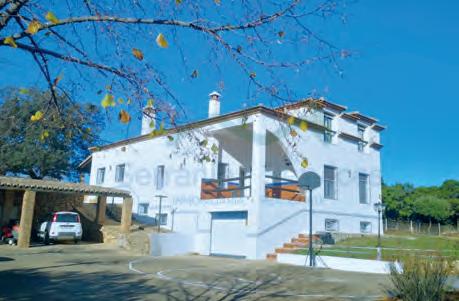
Located in a privileged natural environment a few minutes from the center of Ronda, this spectacular farm offers the perfect balance between tranquility, comfort and space, with a total area of 16,476 m² of land. The main house has 5 spacious bedrooms, 2 full bathrooms, a functional kitchen and a cozy living room with fireplace. The exterior is not far behind: it has a private pool, in addition to a covered garage, warehouse, and its own well, which guarantees water supply throughout the year.
Bedrooms: 5 Bathrooms: 2
Build: 99m2 Plot: 16.476m2

2
HOUSE, RONDA
RONDA

November 29thDecember 12th 2023
LOOKING FOR MORE CULTURE STORIES?
Scan to visit our website
Culture war
SPAIN is marking 50 years since the death of notorious dictator Francisco Franco, but instead of healing, the country’s still grappling with deep cultural and political divisions over his brutal legacy.
Franco died in his bed on November 20, 1975, aged 82, after a 36-year reign of terror. His regime, which followed the bloody Spanish Civil War, was marked by imprisonment, torture, and exile for anyone who dared to oppose him.
Half a century after Franco’s death, Spain is divided over how to remember the man who shaped the nation with fear, repression and violence
By Dilip Kuner

tatorship, but a surprising number - especially young people - still think it wasn’t all bad.
Experts blame so-
PALS: Franco greeted Hitler in Spain, but refused to join the war
cial media and poor education for the rise of a ‘revisionist’ narrative about Franco.
MASTER LOAN
A recent poll shows most Spaniards condemn the dic-
The dictator seized power with the help of Nazi Germany and Fascist Italy, wiping out Spain’s fledgling democracy. Since his death, Spain’s path to democracy has been anything but smooth. A 1977 amnesty was supposed to help heal the wounds, but critics say it swept the country’s dark past under the rug. Now, 50 years later, the dust is still there - and it's still stirring up a storm.
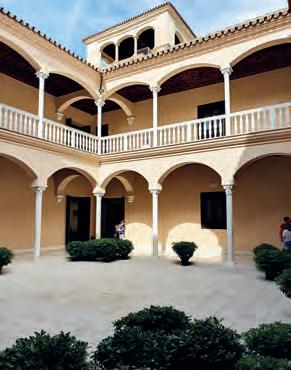
For Picasso exhibition
THE
“It’s an education problem,” says political scientist Paloma Roman. “Younger generations
A FAMOUS Picasso painting, Estudio con cabeza de yeso, has been loaned from New York’s Museum of Modern Art (MoMA) to Malaga’s Picasso Museum for its latest exhibition, Picasso: Memoria y Desea.
The 1925 painting, one of Picasso's most celebrated works, explores the tension between his cubist style and his pursuit of classicism. The artwork features a bearded bust alongside a sculpture’s remains, a book, and other objects.
According to exhibition curator Eugenio Carmona, the painting reflects Picasso’s transformation during this period, where the boundaries between modernity and classicism blurred. Carmona pairs Picasso’s work with that of 111 other 20th-century artists to explore themes of memory, desire, and political tension.
The exhibition, which opened last week, runs until April 12, 2026, at the Museo Picasso Malaga.
don’t know the full story and can easily be sucked into a false narrative.”
The political battle over Franco's memory is heating up, with the left-wing government
under Prime Minister Pedro Sanchez pushing to honour the dictator’s victims. They’ve exhumed his remains and started removing Francoist symbols from public spaces. But the conservative opposition isn’t having it, accusing Sánchez of ‘reopening old wounds’ to distract from his own scandals. Meanwhile, far-right groups are holding memorials for Franco, stirring up even more tension. On the other side, anti-fascist protests are set to follow. It's clear - Spain’s bitter cultural clash over Franco’s legacy is far from over.

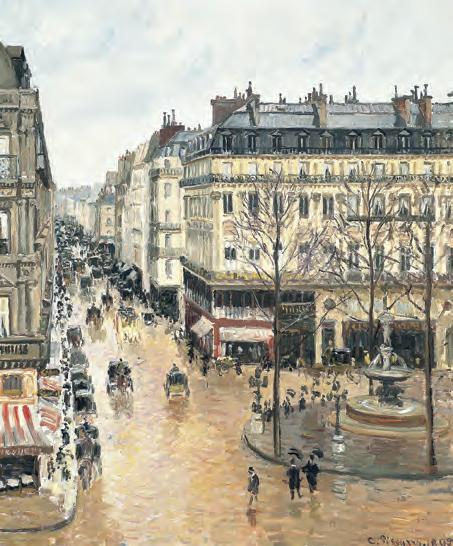
NAZI ART
CALIFORNIA is once again fighting in US federal court to return a valuable Camille Pissarro painting, looted by the Nazis, to the Cassirer family.
The painting, Rue Saint-Honoré in the Afternoon. Effect of Rain (above), was seized from Lilly Cassirer in 1939, and after WWII, the family received compensation, though far below its current value.
The artwork ended up in the collection of Spain's Thyssen-Bornemisza Museum in Madrid, where it remains today.
California's Attorney General, Rob Bonta, has intervened to defend a state law requiring the return of stolen art, a law passed to support families like the Cassirers. The law, which was contested by the museum, faced legal challenges, but Bonta argues it upholds fairness and moral responsibility.
The case, ongoing for two decades, is being closely watched for its potential to set a new precedent in international looted art disputes.
EURO MISTAKE
Why So Many Expats Are Gambling with Their Health Abroad
IF you live in Spain or elsewhere in Europe and are travelling abroad, there’s a good chance you’ve tucked your EHIC or GHIC card into your wallet and assumed you’re covered should the worst happen.
But according to a new survey by Staysure Expat, nearly 15% of English-speaking expats wrongly believe those cards give them full medical cover when travelling to the UK or across Europe.
What do the EHIC and GHIC Cover?
In reality, the European and Global Health Insurance Cards offer limited protection. They cover access to emergency state-provided healthcare, and nothing more. That means no private medical treatment, no repatriation if you need to be flown home, and no extras such as mountain rescue or private ambulance services.
The True Cost of a Medical Emergency
Even expats who return temporarily to the UK can face problems.
The NHS may not cover some treatments.
Without valid travel insurance, a sudden illness or accident could lead to thousands in medical bills — or leave you stranded overseas without a way home.
The financial impact can be devastating. Repatriation alone can bey very costly.
Last year, Staysure Expat paid out over 90,000 Euros on just one repatriation. Also, don’t forget the costs of lost luggage, cancelled flights, or other travel disruptions.
EHIC and GHIC Are No
Substitute
for Travel Insurance
“It’s worrying how many people assume their EHIC or GHIC will cover everything,” says Simon McCullock, Chief Growth Officer at Staysure.

He explained: “These cards are useful for accessing emergency state healthcare, but they’re no substitute for travel insurance.
Without full cover, you could face both financial and emotional distress if something goes wrong.
We are seeing a growing trend of older travellers with pre-existing conditions travelling further and more often, leading
to an increase in the frequency of these distressing stories. It’s important to understand the limitations of a GHIC card. Proper travel insurance can also provide protection in case of holiday cancellation, lost baggage and other risks to give allround peace of mind.”
The Hidden Risks for Expats in Spain
The issue goes even further for those living in Spain.
Many expats don’t realise that when taking out insurance, it’s their responsibility to declare circumstances without prompt — for example, medical conditions when buying travel insurance.
In the UK, insurers are required to ask health questions explicitly, but in Spain, that onus shifts to the customer.
Failing to disclose a condition could invali-
date a claim or severely limit your cover.
“When it comes to travel insurance, living in Spain, the onus is on the customer to be upfront about their health,” Simon adds. “At Staysure, we offer full medical screening, ensuring that at the point of need we can provide the cover that’s required — so you’ll have the peace of mind that you need.”
Peace of Mind for Expats
Staysure Expat, part of the award-winning Staysure Group with over 20 years of experience providing specialist insurance for British travellers and expats, offers tailored policies designed to meet the unique needs of those living abroad.
Whether you’re popping back home for a family visit or exploring new destinations in Europe, comprehensive travel insurance could be the smartest investment you make this year.

VENUE:

November 29thDecember 12th 2023
THE GOOD NEWS IS…
Marbella homes now three times pricier than Spain’s average as city becomes Europe’s ultra-luxury real estate capital
By Dilip Kuner
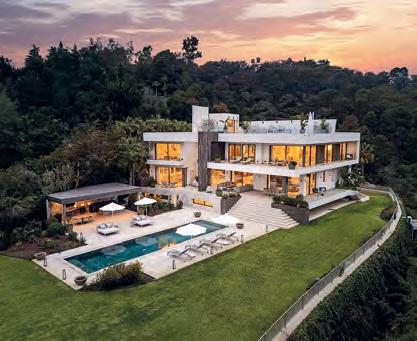
AVERAGE property prices in Marbella are now more than three times the Spanish national average, confirming its status as Europe’s new ultra-luxury capital.
According to The Marbella Property Market Report 2025 by Panorama Properties, the city has entered a phase of structural maturity, characterised by record values, a chronic shortage of supply, and sustained demand led by international investors.
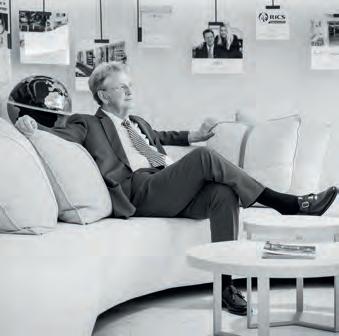
The report, written by Panorama Properties CEO Christopher Clover (pictured below), reveals that Marbella’s average sale price has reached €711,138, compared to the national figure of €210,361.
This, according to the report, shows how Marbella has transformed itself from a resort destination into one of Europe’s most coveted luxury real estate markets and is now competing with the likes of Saint-Tropez, Gs taad and Dubai.
According to Spain’s Notarial Statistics Portal, Marbella’s real transaction prices hit €4,228 per square metre in the 12 months to September 2025, rising to €4,509/m² during the summer quarter, which was a 12.6% annual increase.
and Miami,” Clover said. “We’ve reached a structural ‘new normal’ that extends far beyond the post-pandemic surge.”
Despite soaring values, the city’s market remains largely immune to interest rate fluctuations. “Less than 10% of homes above €2 million are bought with mortgage financing,” Clover explained. “ That speaks volumes about the financial strength of Marbella’s clientele.”
This high purchasing power has created what Panorama calls a ‘solid and sustainable price base’, supporting ste -
ady growth across all residential and commercial sectors.
Clover predicts continued, albeit moderate, appreciation. “Prices will keep rising - but at a more balanced pace - as demand and qualit y continue to evolve together,” he said.
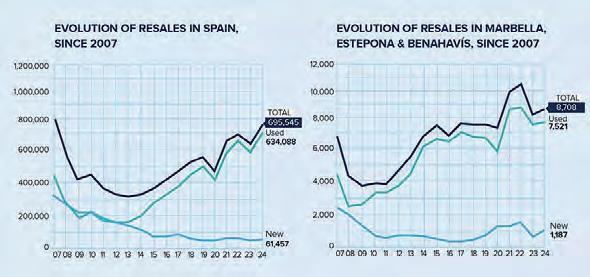
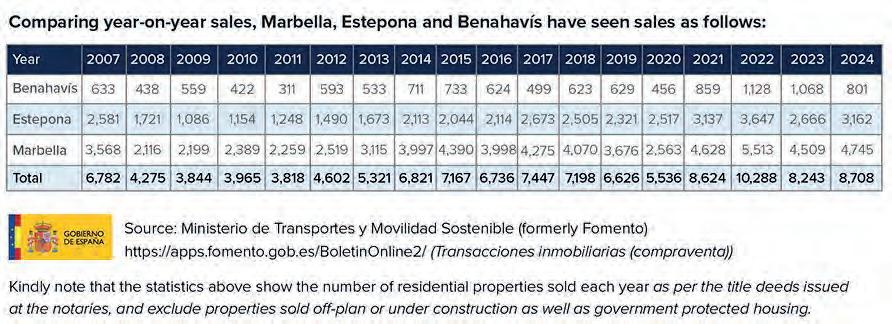
The so-called ‘Golden Triangle’ of Marbella, Estepona and Benahavis had a total of 8,708 property transactions in 2024, 31% above pre-pandemic levels. The Golden Mile and Nagüeles remain the most expensive enclaves, averaging €5,753/m², followed by Nueva Andalucia and Puerto Banus (€4,225/m²), and Marbella East (€3,857/m²).
At the top of the market, Puente Romano beachfront apartments are fetching €30,000/m², while high-end villas in Nueva Andalucia reach €14,000/ m²**, mirroring the prices of the world’s top-tier resorts.
“Marbella has stepped onto the world stage as never before and is now recognised alongside global hubs like Dubai
The typical buyer in Marbella today is younger, wealthier, and increasingly international.
The average age stands at 52, with more than half between 41 and 60 years old.
Foreign buyers dominate the market, representing 63.1% of all acquisitions in the year to September 2025. Britons lead the rankings (13.4%), followed by Dutch (9.6%), Swedish (8.8%), Germans and Poles. Interest from North American and Middle Eastern buyers has also surged, buoyed by new direct flights to Malaga.
This new wave of residents is no longer just buying vacation homes. Many are choosing to settle permanently, attracted by the Digital Nomad Visa and Spain’s Non-Lucrative Visa, which enable professionals to live and work remotely. “Today’s buyers are not merely investing in property — they’re investing in lifestyle,” said Clover. “Marbella has matured into a long-term safe haven for capital, family, and wellbeing.”
One of the report’s standout findings is the rise of branded residences - luxury
developments that merge architectural design with five-star hotel services. Marbella leads this European trend, surpassing Lisbon and the French Riviera, with more than a dozen such projects either underway or in development. Flagship ventures include the Four Seasons Resort & Private Residences Marbella, designed by Richard Meier; Design Hills Marbella by Dolce & Gabbana; Karl Lagerfeld Villas in Istan; Versace Villas in Nueva Andalucia; The Summit by Elie Saab in Cascada de Camojan; Marea by Missoni at Finca Cortesin; and future St. Regis and Ritz-Carlton hotels planned from redeveloped sites.
“ These world-renowned names align Marbella with international standards of excellence,” said Clover. “A Four Seasons presence alone will attract many high-net-worth individuals who’ve yet to discover the city’s magic.”
Beyond prestige, these developments generate employment, attract global capital, and bolster high-end services such as gastronomy, wellness and health tourism.
Yet, success brings strain. Marbella’s long-term rental market is buckling under pressure, with rents up 89%*since 2019 - from €848 to €1,600 per month - and double-digit annual increases in prime zones.
The shortfall is pushing workers and families to neighbouring towns like Ojen, Coin, Guaro and Manilva, where rents are also rising rapidly.
“Demand vastly outstrips supply,” Clover warned. “The key will be maintaining growth in the luxury sector while ensuring that essential workers can continue to live here. Without that balance, Marbella’s social and economic
ecosystem risks distortion.”
New regulations for tourist ren-
tals introduced in 2024 and 2025 - including registration with Andalucia’s housing registry and approval from homeowners’ associations - are expected to bring more order to the market. Meanwhile, a state proposal to impose 21% VAT on short-term rentals could redirect some properties toward long-term leases, though at potential cost to the tourism sector. On the planning front, Marbella took a major step for ward this year with provisional approval of its new General Municipal Planning Ordinance (PGOM), which simplifies administrative procedures and offers long-awaited legal certainty to thousands of homeowners affected by annulled development plans. Infrastructure is also improtainability, and lifestyle. Marbella’s market has evolved from speculative to selective.”

ving: proposed projects include expanding the highway between Puerto Banus and San Pedro, advancing the coastal train initiative, and enlarging Malaga Airport, which plans to double capacity between 2027 and 2031.
Investments in desalination and water treatment aim to guarantee long-term water security - a key factor for sustainable growth.
Marbella’s economy reflects its maturity.
The city now counts over 85,000 Social Security contributors and enjoys the lowest unemployment rate in its recent history. With just 9% of Malaga province’s population, Marbella generates 17% of all registered businesses, underlining its role as a regional economic powerhouse.
“Today’s buyers are more discerning and patient,” said Clover. “They know what they want - quality, sus -
Ultimately, Panorama’s report concludes, Marbella’s enduring strength lies not just in its luxur y properties but in its way of life. “Far beyond real estate,” Clover reflects: “Marbella’s true wealth is found in its culture, health, community, and the richness of experience that defines this remarkable city.”
Panorama Properties, founded in 1970 and regulated by RICS, is Marbella’s longest-established real estate agency.