As a new school year dawns, what you need to know

AS the summer sun begins to fade families across Spain have adapted for the return to school.
The start of a new academic year is a time of excitement, anticipation, and a touch of anxiety for students, parents, and educators alike.
In Spain, the education system has plenty of choice between public and private institutions, each offering their own advantages and challenges.
For parents, understanding these differences is crucial if they are to make informed decisions about their children’s education.
While the terms are underway it’s usually not too late to change.
The education system in Spain is structured into several stages, beginning with early childhood education Educacion Infantil followed
By Dilip Kuner

by primary education Educacion Primaria, secondary education Educación Secundaria Obligatoria, or ESO, and finally, post-secondary education, which includes both vocational training and university studies.
Education is compulsory from ages 6 to 16, encompassing primary and secondary education.
The country offers a mix of public and private schools, each with its own distinct characteristics.
Public schools are funded by the government, making them accessible to all students regardless of their socioeconomic background and are free.
These schools are managed by regional governments, leading to variations in educational policies and curricula across different regions.

In contrast, private schools operate independently and charge tuition fees. They usually offer far smaller class sizes, specialised programmes, and a more rigorous academic environ-
ment. As the new school year begins, families across Spain engage in a flurry of preparations.
The traditional back-to-school shopping spree is a common ritual, with parents and children alike selecting new school supplies, uniforms, and textbooks.
This ritual symbolises a fresh start and a new beginning, helping students transition smoothly into the academic routine.
The decision between public and private education is a significant one for many families. Several factors influence this choice, including location, academic performance, extracurricular activities, and personal values.
Public schools
are renowned for their accessibility and diversity. They are obligated to accept all students within their catchment area, fostering inclusivity and promoting a rich educational environment through the diverse backgrounds of their pupils.
However, public schools can face certain challenges, particularly in terms of class sizes and resource allocation.
In some regions, class sizes may be larger, and schools might experience resource shortages. Meanwhile, private schools offer a more personalised learning experience, with smaller class sizes and greater attention to individual needs.
These schools often provide specialised programmes in areas such as arts, sciences and sports.
In the case of many schools, these offer Cambridge exams
and allow pupils to take GCSEs and A-Levels.
Most offer an individualised learning plan, which wouldn’t be available in state schools and they are likely to have excellent purpose-built facilities.
They communicate with parents in their native language, making parent-teacher meetings a breeze.
International schools also provide a convenient pathway to enter the UK university system seamlessly. They are a popular choice with parents who come to Spain for contract work, or a limited time only, and don’t plan to remain here.
Parents can expect to pay from €10,000 to €35,000 per year, depending on whether the child boards at the school.
Parents will also have to buy uniforms and other extras for their children.
They can cater to students with specific interests or talents due to the resources they have access to.
Private schools often provide a variety of extracurricular programmes, including sports teams, clubs, and arts activities. Participating in extracurricular activ-
ities can help students develop new interests, build confidence, and make friends.
A parent’s view – state versus independent
Jenni Stephanides of Sevilla is both a parent and teacher, with one daughter attending a state school, while the other is at the international school where she teaches.
“Both girls started at the international school, as my
PROS
3 Your child will be involved in your local community
3 Their friends will live locally
3 They will quickly be fluent at Spanish / bilingual
3 There’s no need to transport your children to school
3 It is free of charge
CONS
2 Rigid structure based on continuous assessment
2 Difficult for parents who don’t speak Spanish to understand what’s going on
2 Not much creative learning, in terms of art, drama, etc.
2 It is relatively easy for your child to repeat a year. Re secondary education, the repetition rate is 5.5% for state institutions combined to 1.4% for independent.
husband and I work there.
We were offered free places, which ensured the girls could continue their education in the British system, in case we decided to move back to the UK.
“But after three years, my eldest daughter was moved up a school year. Because of her birthday, she had been placed into the correct academic year for the UK, but not for Spain –this was holding her
back educationally.
“My youngest meanwhile was placed into the correct academic year.”
“When we decided to stay in Spain, we gave both girls the choice to move to the Spanish system to integrate more with the local community. Both declined at the time.
“My eldest is about to start her final year and intends to attend university in the UK.
PROS
3 Cambridge exams are provided
3 Caters for entry to UK universities
3 International Baccalaureate entry
3 Individualised learning plan
3 Constant contact with parents / partici- pation in the learning experience
3 Speak to educators in English
CONS
2 The cost each year
2 Paying for school uniform, that your child must wear
2 Less immersion of your child in their local community
2 Friends might live further away
2 Child is less likely to be fluent at Span- ish
2 The need to transport children to school – possibly at a geographic dis- tance
2 The school holidays do not match Spanish holidays
However, my youngest moved to the Spanish system last year and thrived immediately.
“In the international school, she had many friends from around the world, but the Spanish girls didn’t include her, and she
AS students across Europe return to school, many families begin to consider how they can give their children a head start in an increasingly competitive academic landscape.
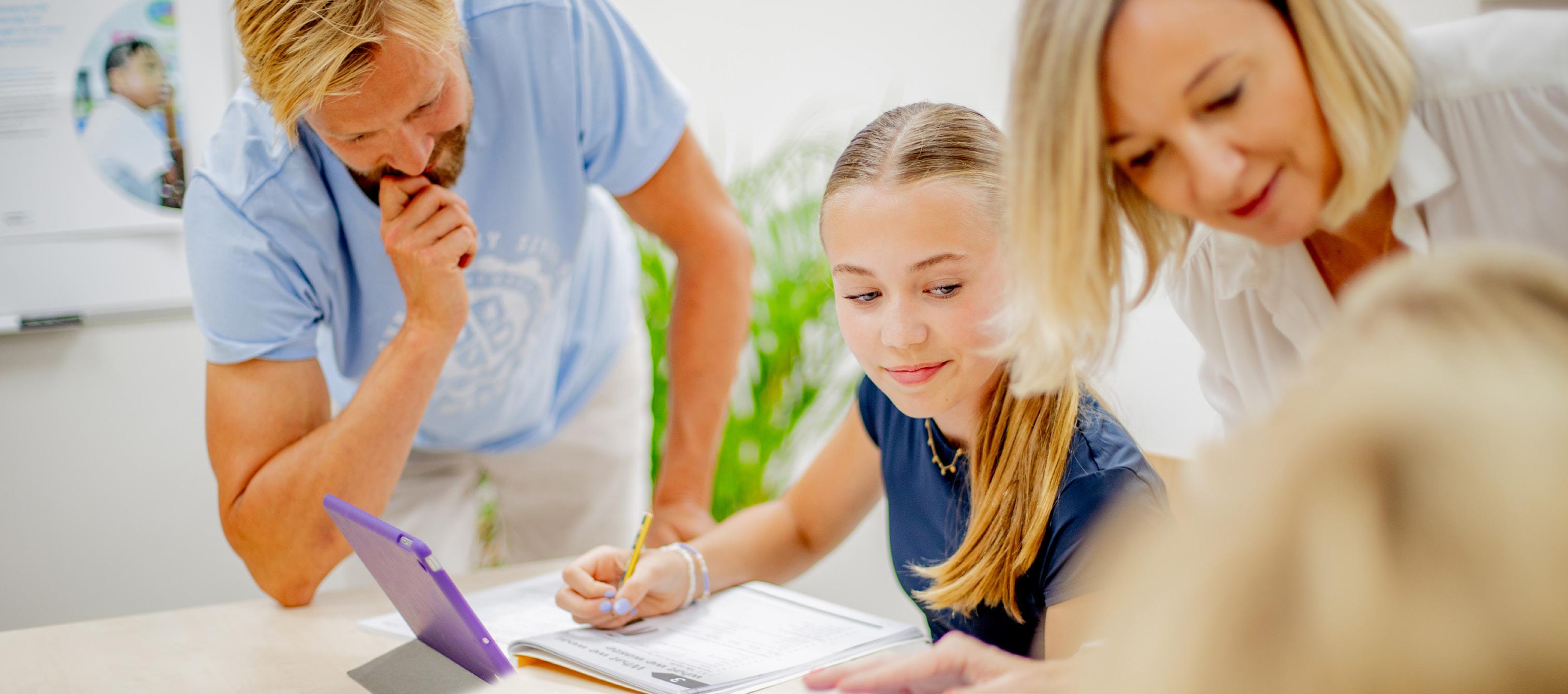
Unlike many traditional schools, CGA offers academic acceleration - allowing students to take on additional subjects or advanced courses like A-Levels or Advanced Placement (AP) beyond what is required for graduation or university entry.
So how does this help? Through a flexible curriculum and personalised learning environment, students have the opportunity to broad-
en their knowledge, showcase their ability to handle advanced study, and strengthen their university applications.
THE BENEFITS OF ACCELERATION
For students who want to excel academically or have clear university ambitions, acceleration offers a chance for them to deep dive into subjects of interest, take on additional courses, and build an impressive academic portfolio.
For example, student Caterina from Italy, has been able to pursue her flexible studies with CGA to advance her academics while balancing her career as an equestrian.
“The previous online schools that I had found did not have anywhere near a program like CGA does. And I really like that you could choose what type of programme you want to work with, for example, if I wanted to continue doing A-Levels or if I wanted to go with the American system, that was a very big plus for me.”
The Da Vinci program allowed her to progress at her own pace, excelling in areas of strength and receiving support in others. Her ability to take advanced courses, like calculus, despite a long hiatus from Maths, demonstrated the effectiveness of CGA’s approach.
As Caterina says, “If I wanted to do something more advanced, have fewer classes, or do a bit more on my own, then I could choose the Da Vinci program and tailor my program according to my needs.”
For students aspiring to attend prestigious universities in Europe and beyond, acceleration offers a significant advantage. By completing
wasn’t confident speaking Spanish.
“Now, she is fluent in Spanish, has achieved fantastic grades in her first year in the public system, and has many friends from the state system. My eldest stands by her decision to stay at the independent school.”
Peter Jones is the opposite.
Both his children started their education in inland Valencia province at a state school from a young age and enjoyed it and thrived.
But as they entered their teens Jones, a businessman, who spends his time travelling around Europe, agreed with his wife and their children that they should try out a private school on the Costa Blanca coast.
The investment has definitely paid off. They are completely bilingual
The family felt that they would get more chances to excel in arts and music and, above all, meet a more international group of children, who would in turn ‘broaden their horizons’.
“It has definitely worked and they are both loving it, with the eldest taking her A-lev -
els and planning a good university in the UK, while our younger daughter will probably do the international baccalaureate and go to university in Holland or Germany.” He continued: “While it meant coming up with around €2,000 more a month, it has definitely paid off. They are completely bilingual and still friends with their old local pals, who, of course, are all planning universities, if at all, in Spain.”

advanced subjects earlier than their peers, students can prove their ability to thrive in a demanding academic environment - something that is particularly appealing to universities looking for candidates with a strong academic track record.
KEY BENEFITS OF ACCELERATION AT CGA:
● Ability to take advanced subjects beyond the standard curriculum
● Personalised learning pathways tailored to each student’s strengths and needs
● Flexibility to explore different academic systems, like A-Levels or the American (AP) system
● Opportunity to build a stronger academic profile for university applications
● Support to balance advanced studies with personal interests and extracurricular activities
DEVELOPING ESSENTIAL SKILLS FOR THE FUTURE
Taking extra courses not only enhances academic achievement but also helps
students develop key skills such as time management, discipline, and independent learning. CGA student Eva from Russia demonstrates how balancing a demanding academic workload alongside her music career has made her more organised and independent in her studies.
“During high school, I want to achieve a deep knowledge of all my subjects… to do well on the external exams and at the same time I want to have enough time to work on my music… because of CGA I can at the same time focus on my academics and on my musical career,” says Eva.
For families across Europe considering academic acceleration, CGA offers a flexible and supportive environment where students can study at a pace that suits them, rather than having their courses and class schedules determined by their age.
This approach allows students to excel in their areas of interest and pursue a more challenging academic experience.
Starting September 2024!
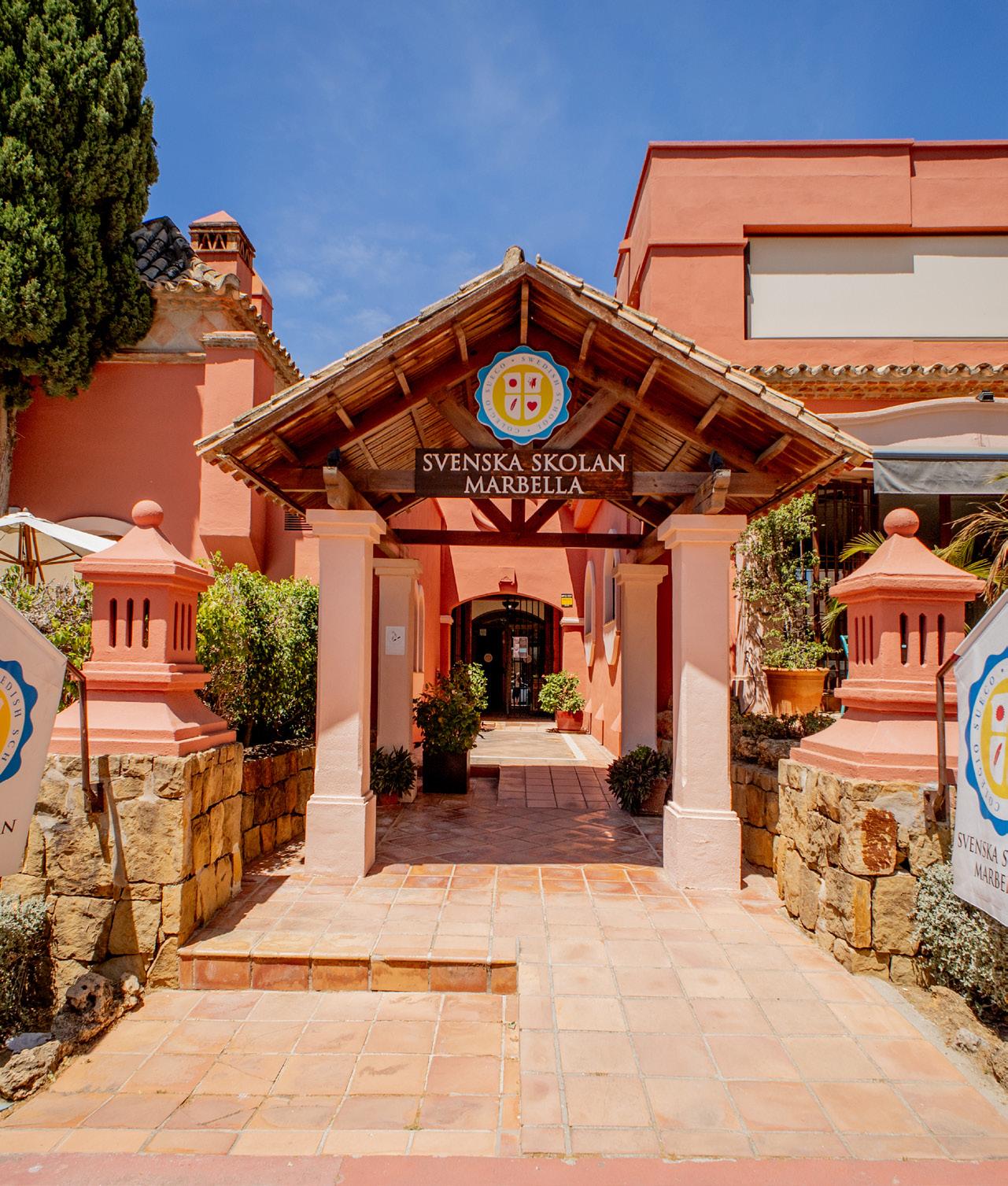
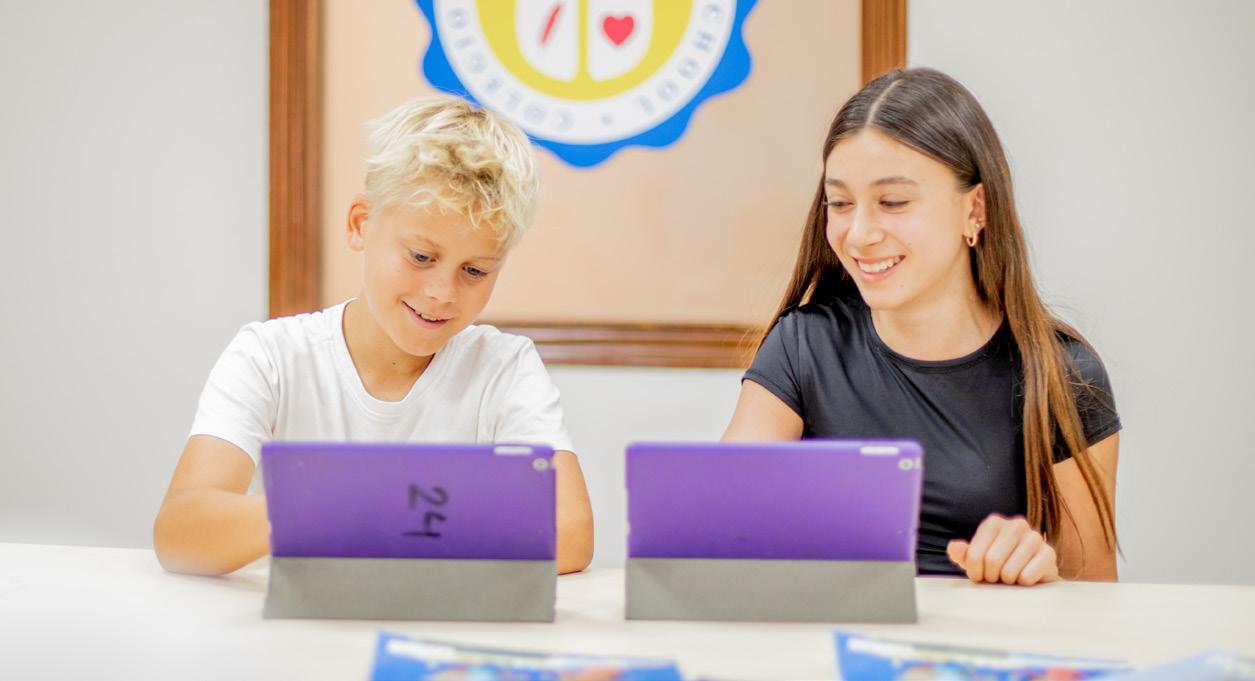
We are thrilled to unveil our brand-new International Curriculum, launched in September 2024! Perfect for secondary students and those eager to continue their studies in English within our vibrant Swedish environment, this programmme offers:
Globally Recognised Education: Equip yourself with the skills and knowledge to excel in our interconnected world.
Native English-Speaking Team: Benefit from the expertise and support of our dedicated, native-speaking educators.
Small Class Sizes: Enjoy personalised attention and a unique learning experience tailored to your needs.
Swedish Community: Immerse yourself in a supportive and culturally enriching Swedish setting. Optional additional Swedish lessons ensure a smooth transition back into the Swedish system with additional Swedish language support.
Unique International Environment: Experience a diverse, multicultural atmosphere that provides students with a globally recognised education that will equip them with the skills and knowledge necessary to thrive in an increasingly interconnected world.
Unlock endless possibilities and embark on an exciting educational journey with us.
All education is in English, but we continue to emphasize Swedish language and culture while promoting global awareness. By offering grades in Swedish language, we ensure the possibility for students to continue their studies in Sweden.
Located in Marbella, our school offers a unique international environment with great opportunities for cultural and social exchange.
WE’RE thrilled to announce the launch of our new International Curriculum, starting with Year 8 this academic year.
This innovative program aims to provide students with a globally-minded, culturally enriched, and academically rigorous education.
At Svenska Skolan Marbella, our mission is to nurture lifelong learners who are globally minded and culturally aware, ensuring they are prepared to thrive in an ever-changing world. We offer a safe and supportive environment where students are encouraged to reach their full potential and become responsible, compassionate members of society.
Our curriculum, based on the Cambridge Pathway, offers a broad and balanced education that fosters critical thinking, creativity, and a passion for learning. Subjects include English, Mathematics, Science, Global Perspectives, Modern Foreign Languages, Art and Design, Computing, Music, Physical Education, and Wellbeing.
We believe in the value of experiential learning. Students will have opportunities to participate in educational day
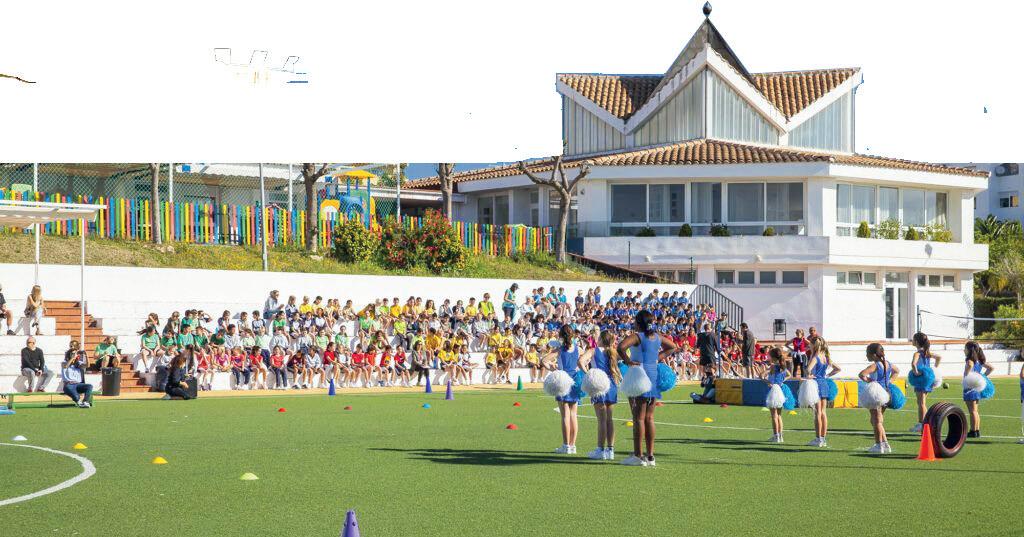
trips, residential trips, and a variety of extracurricular activities, including sports, arts, and clubs. Our state-ofthe-art facilities, including a football pitch, multi-activity area, padel courts, outdoor swimming pool, and indoor gymnasium, provide ample space for outdoor learning and recreation.
Swedish students will also have the opportunity to learn Swedish through the Sofia Distans program, ensuring they stay connected to their cultural heritage and have the option to continue their studies in Sweden in the future. We invite you to come and discover our facilities and learn more about our International Curriculum. Contact our admissions department to schedule a visit. We look forward to welcoming you to Svenska Skolan Marbella!
For more information please call +34 952 868 252 or visit the website www.svenskaskolanmarbella.com
THE increasing use of mobile phones by Spanish schoolchildren has raised concerns about the potential for cyberbullying. Experts warn that the unrestricted use of these devices can create a fertile ground for online harassment, especially among vulnerable young people.
A recent study revealed that a significant number of Spanish children have access to mobile phones at a young age. By the age of
By Dilip Kuner
14, over 90% of children have their own devices. This widespread availability has made it easier for bullies to target their victims online, often leading to severe emotional distress.
The National Police have observed a concerning trend of traditional bullying escalating into cyberbullying as children gain access to smartphones.

They emphasise the importance of educating young people about the potential dangers of online interactions and providing them
THE Spanish government has targeted the three Rs as it tries to improve academic results.
Earlier this year it announced an initiative aimed at improving students’ math, reading and writing skills.
According to Education Minister Pilar Alegría the programme will focus on providing students with the tools and resources they need to excel in these essential subjects.
“We're seeing too many kids struggling with basic maths and
with the tools to protect themselves.

reading,” the minister said. “This is unacceptable. It's time for a change.”
1 1 1 1 2 3
Resources will be devoted to teacher training and the programme will target younger students to ensure they have a strong foundation in these subjects from an early age. The minister also indicated that children who need extra support will have access to after-school tutoring and mentoring programmess, and parents will be encouraged to take a more active role in their children's education.
In response to these concerns, the Spanish Government this year introduced regulations aimed at limiting the use of mobile phones in educational institutions. These include a complete ban on mobile phones in Early Childhood and Primary Education facilities, as well as restrictions on their use in Secondary Education. While these measures are a step in the right direction, experts argue that more comprehensive strategies are needed to combat cyberbullying effectively. These include raising awareness among parents, educators, and students about the issue, promoting responsible online behavior, and providing support for victims.
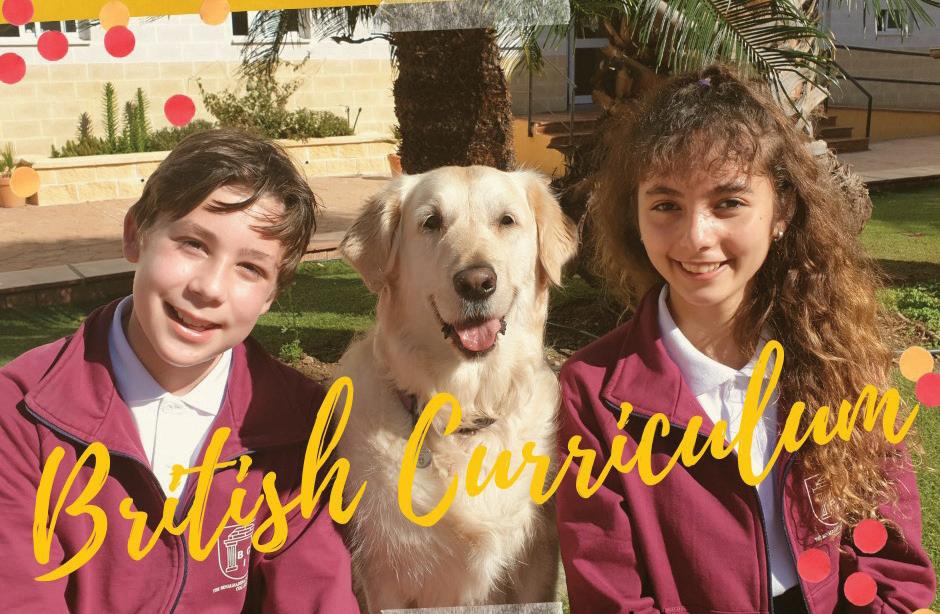


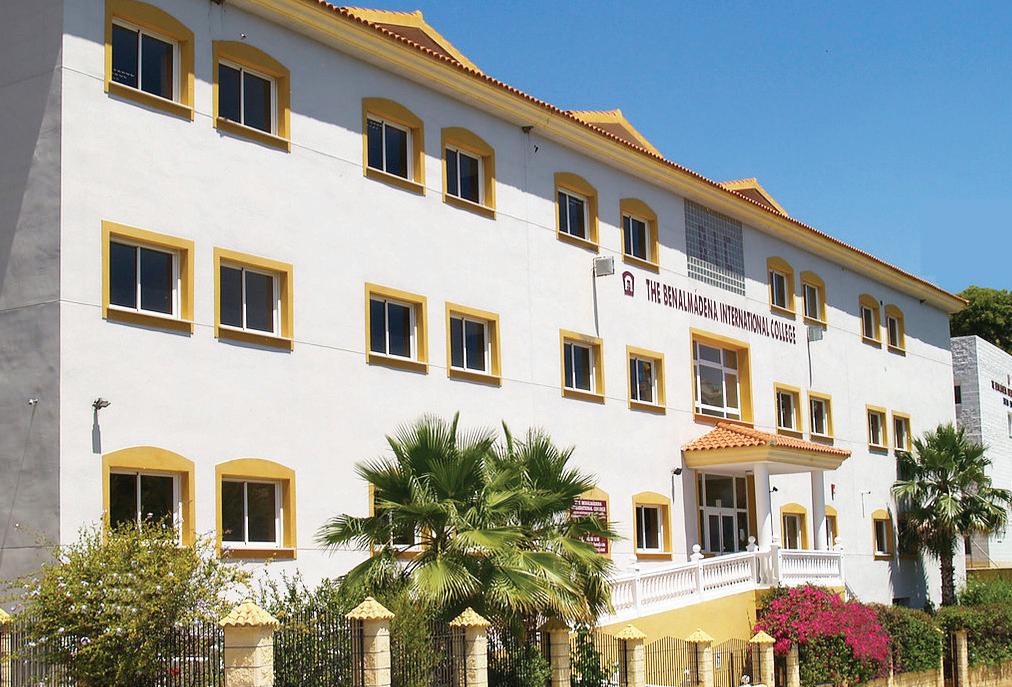
Your International School in Marbella
British and Spanish Curriculum
• Multidisciplinary Education
• Academic Excellence
• Experiences beyond the classroom
• Extensive Facilities
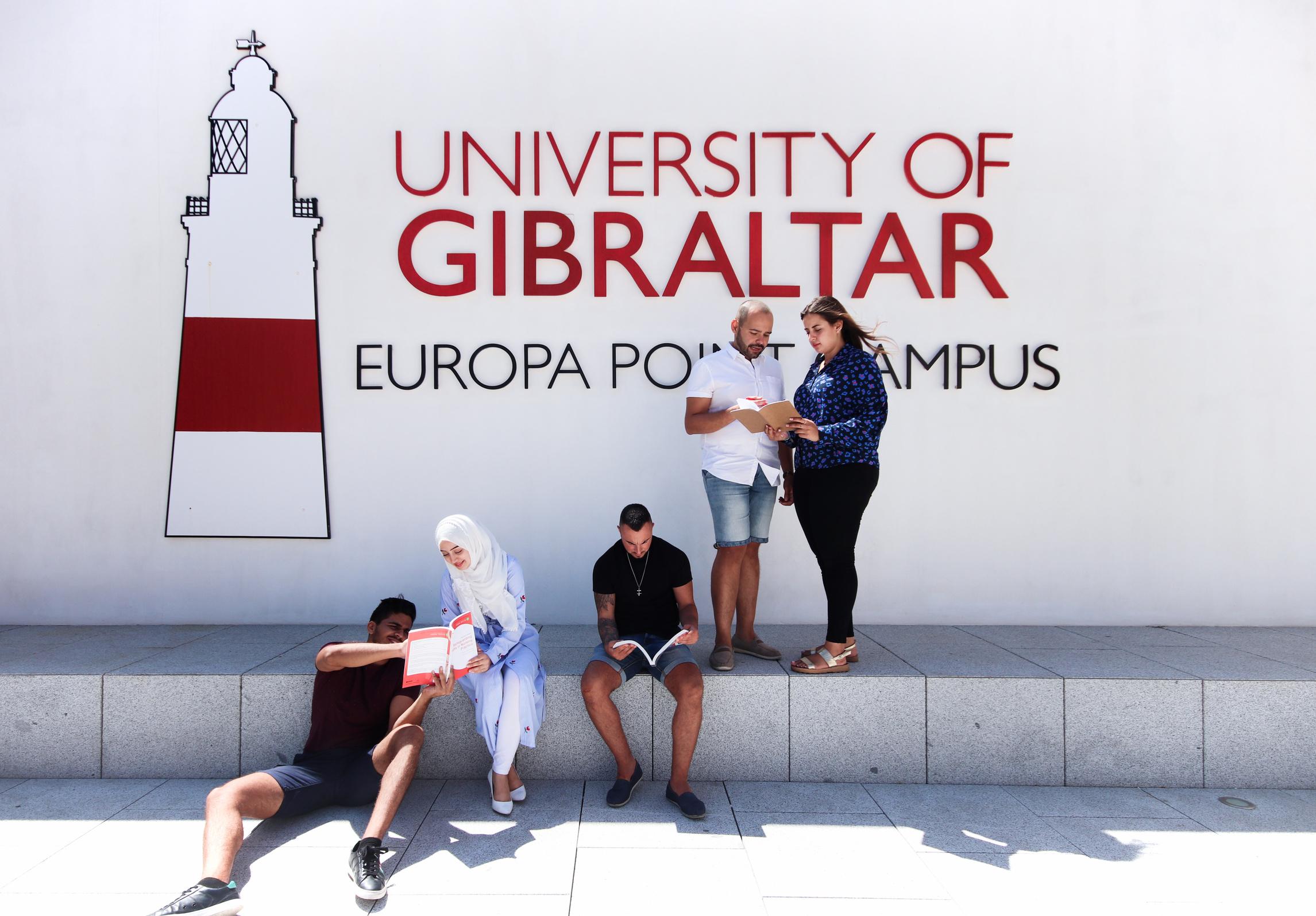
96%96%
of UoG students feel satisfied that the knowledge and skills they take away from their programme will support their career aspirations.

FOR the 50% of Brits who go to university or college moving into a damp, cold, shared flat with strangers has become something of a rite of passage.
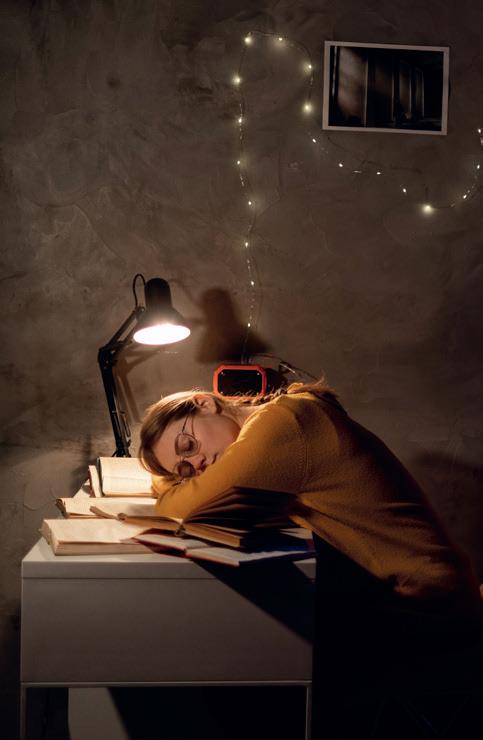
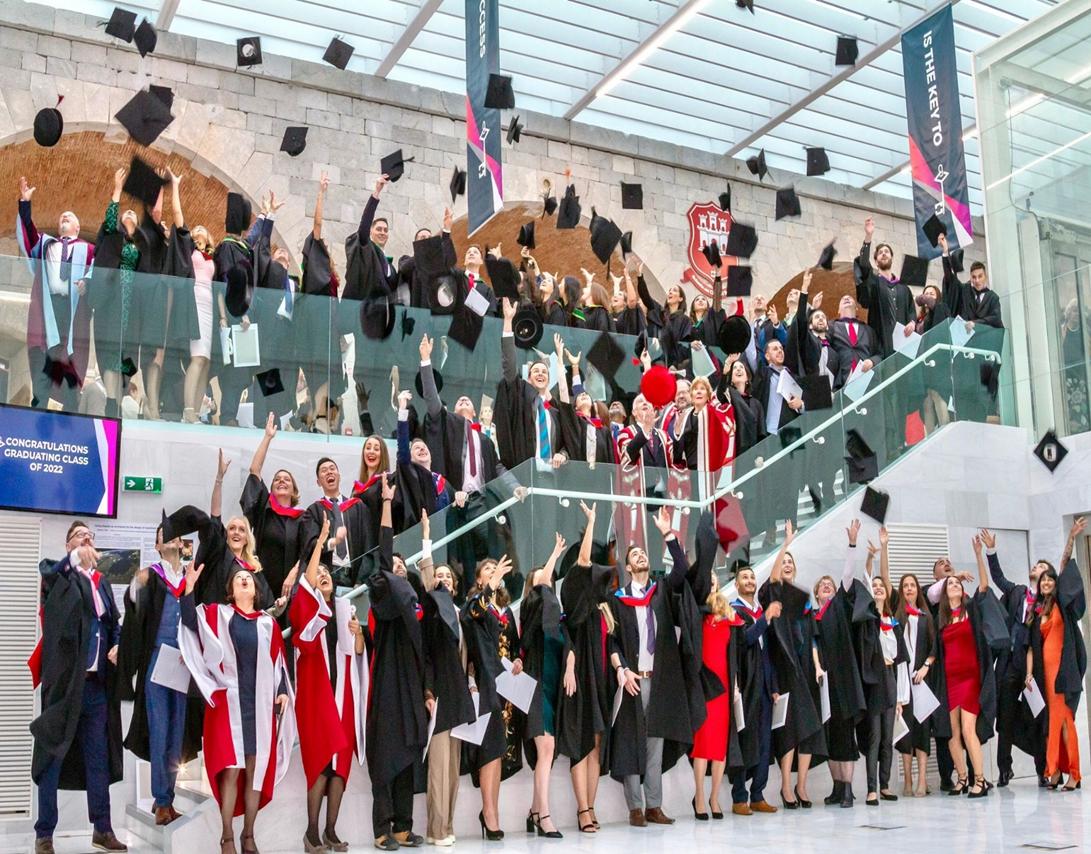
Many discover the endless washing up and how much toilet paper and energy bills cost.
For Spaniards, this is a relatively uncommon experience with only around 17% of students leaving their region to study.
By Dilip Kuner
Most students live at home or with grandparents, which perhaps explains how there are only 100,000 student beds in
THE UK and Spain earlier this year signed an agreement that streamlines access to universities in both countries.
This means easier transitions for students from either nation who wish to pursue higher education abroad.
Both UK and Spanish qualifications will be recognized for entry to universities in the respective countries. Students from either system can apply under the same conditions as those from EU member states.
This means that Spanish students can still access UK universities with recognition of their Baccalaureate results.

Similarly, students holding UK qualifications (including A-levels) will no longer need to take the Spanish general university entrance exam. Their qualifications will be directly translated through an agreed conversion table. A-levels and equivalent qualifications will be credited up to 10 points in the Spanish university entrance system.
LOCATED in the bustling heart of Sevilla, Nido El Porvenir, part of the Europe-wide Nido Living, is known as the premier choice for students seeking full-service, centrally located accommodation.
Being next to the Escuela de Comercio de Sevilla (EUSA) and just a five-minute walk from all major faculties of the University of Sevilla, it is an ideal location for both local and international students.
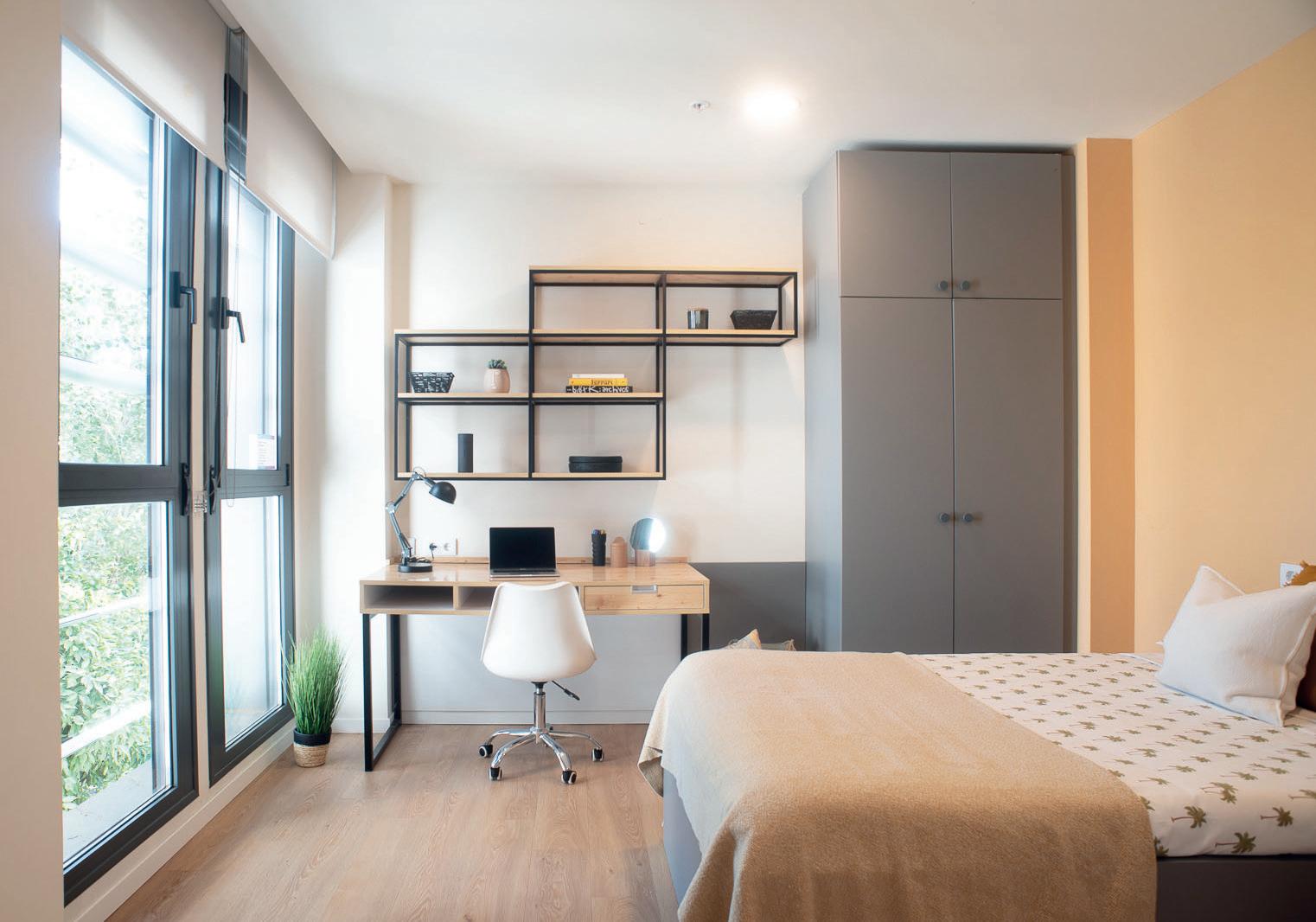
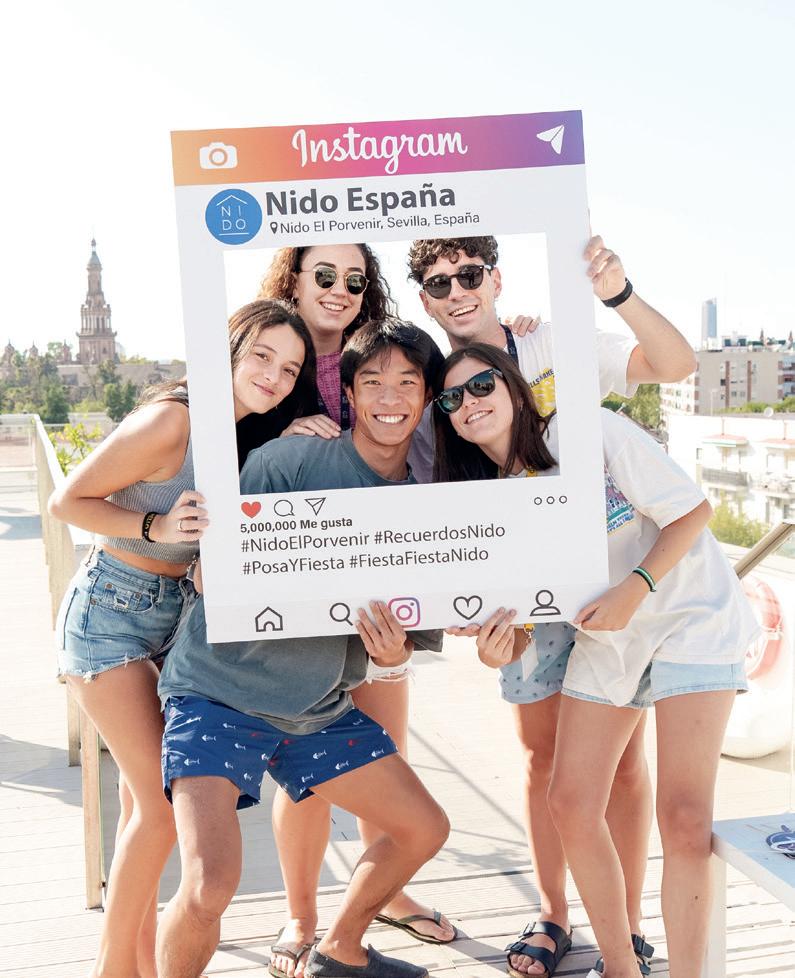
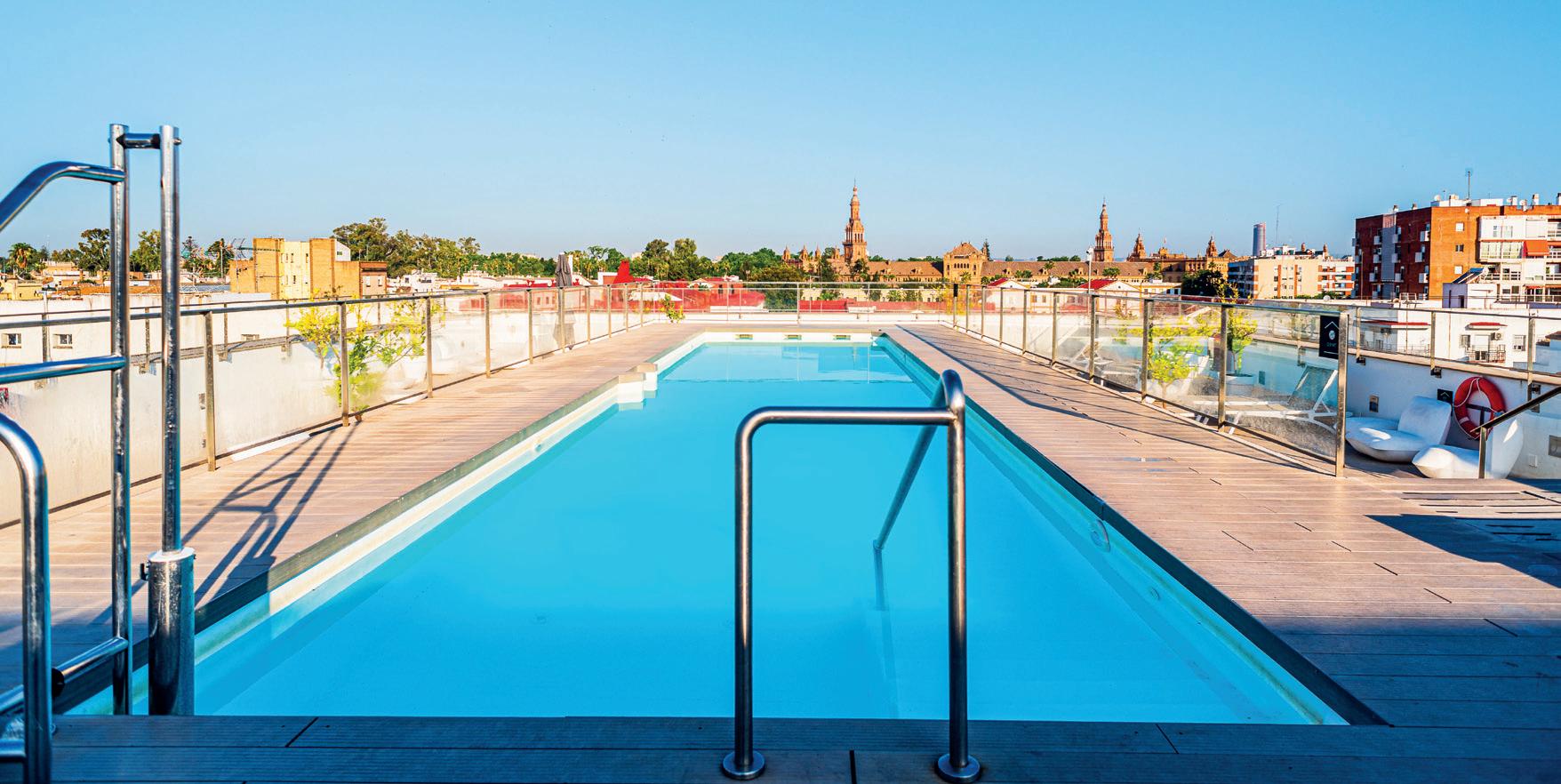
One of the standout features of Nido El Porvenir is its impressive rooftop swimming pool and terrace. This inviting space allows students to cool off and unwind after a long day of classes, providing a perfect setting to relax and socialise, while enjoying stunning views of the city.
The pool area not only combats the heat but is also the place for many of the activities the residence team organises to foster commu nity among resi dents.
The dedicated site team at Nido El Porvenir is available 24/7, ensuring that stu-
dorms versus 1.6 million students in Spanish universities. Recently, Spanish students have realised the benefits of moving away to study causing a surge in demand for student housing.
Spain’s popularity for Erasmus students has also influenced the demand, along with Latin American students.
The boom of dorm beds really took off during the pandemic, with investments reaching €140 million in the first part of 2021, up a whopping 140% from the year before.
The dorm industry in Spain escaped the economic impact of the pandemic, with hundreds of millions being invested by foreign companies from Canada to France.
There is a shortfall of 450,000 beds, partly due to the fact that most student dorms have historically been run by nuns who have laid down morally restrictive rules like splitting up girls and boys.
dents have support whenever they need it.
This commitment to service is reflected in the positive feedback from residents, who appreciate the staff's attentiveness and willingness to assist with any concerns. Regular social activities are organised to promote well-being and interaction among students, enhancing their overall living experience.
Nido El Porvenir offers hassle-free living, with all utility costs, included in the rent; from electricity and water, to internet and cleaning. The weekly cleaning and linen service further simplifies life for busy students. Rooms start at €595 per month, with options for private studio apartments and shared rooms in apartments sharing a kitchen and bathrooms.
For parents seeking a safe and engaging living environment for their children whilst they embark on their university careers, Nido El Porvenir stands out as the top choice in Sevilla. With its modern amenities, strategic location, and a supportive community, it is clear that this residence prioritises the needs and well-being of its students.




I am passionate about creative play and active involvement for both children and adults as the best way to learn a language. Together we can unleash your potential for fearless and fun adventures in English… in the classroom… and beyond…
I have worked across Primary and Secondary for 25+ years
Immersion English + Co with Georgina Gamble is a multi-sensorial teaching style and learning experience where students are surrounded by the language and a purpose to communicate for real reasons.
Immersion English provides access to an authentic, native learning experience based on the natural aquisition of language.
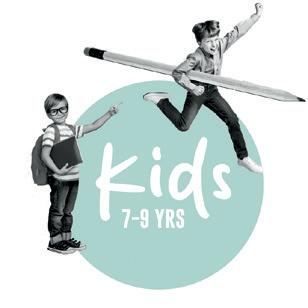
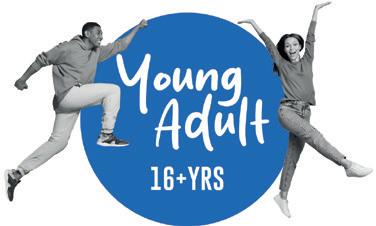
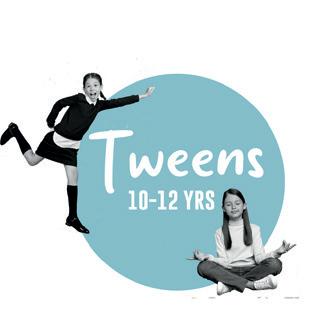

Take risks and experiment with language in a safe and playful space
Communication Collaboration Creativity
At Immersion English + Co, “THE THREE Cs” are underlying every teaching and learning objective in the classroom in order to enhance students’ skills while learning English.