Friday, April 17, 2026

Friday, April 17, 2026
Bryson Thadhani CO-EDITOR-IN-CHIEF
Payne County District Judge Michael Kulling spent three days this week hearing testimony on whether prosecutors and the court violated victims’ constitutional rights in the controversial case of Jesse Mack Butler.
The evidentiary hearing, held under Oklahoma’s Marsy’s Law provisions, examined how Butler’s
teenage victims and their families were notified as the case moved through Payne County District Court, including during negotiations that led to a no‑jail youthful offender disposition that sparked public outrage. As of Thursday, Kulling had not filed a written ruling.
Witnesses including court staff and members of the Payne County District Attorney’s Office were questioned about what information was shared with the victims, when they learned
of key hearings and plea discussions, and whether their objections were meaningfully considered. Attorneys for the victims asked Kulling to find that their rights were violated and to order new procedures to document that victims understand and agree that their rights have been honored, while prosecutors argued they followed Oklahoma law and said they are not required to apologize under the state’s Crime Victims’ Act.
Marsy’s Law, approved by Oklahoma

Josh Crutchmer remembers the exact night his life tipped.
He was 21, walking down The Strip with two hometown friends, looking for live music instead of another quiet drive through Payne County with Steve Earle and John Prine on repeat. Sound spilled from the upstairs doorway at
Wormy Dog Saloon. He climbed the stairs, sat down and watched a Red Dirt band play to a couple hundred college students.
“That is the day that I stepped out of my life and into my life,” Crutchmer said. “That’s what became my future.”
That future is oddly specific. By day, he is planning editor for the print
edition of The New York Times, deciding what leads the front page and how it looks in ink. By night and on weekends, he is a music journalist and author who has spent a quarter century chronicling Red Dirt music for outlets such as Rolling Stone and in books about the scene.
See LENS on page 4A
voters in 2018, amended the state constitution to guarantee crime victims rights such as notice of hearings, a chance to be heard and the right to confer with prosecutors, and allows victims to ask courts to enforce those protections. Kulling’s eventual written opinion is expected to clarify how those constitutional rights and the Oklahoma Victim’s Rights Act apply in Payne County courtrooms and in future plea negotiations.
news.ed@ocolly.com
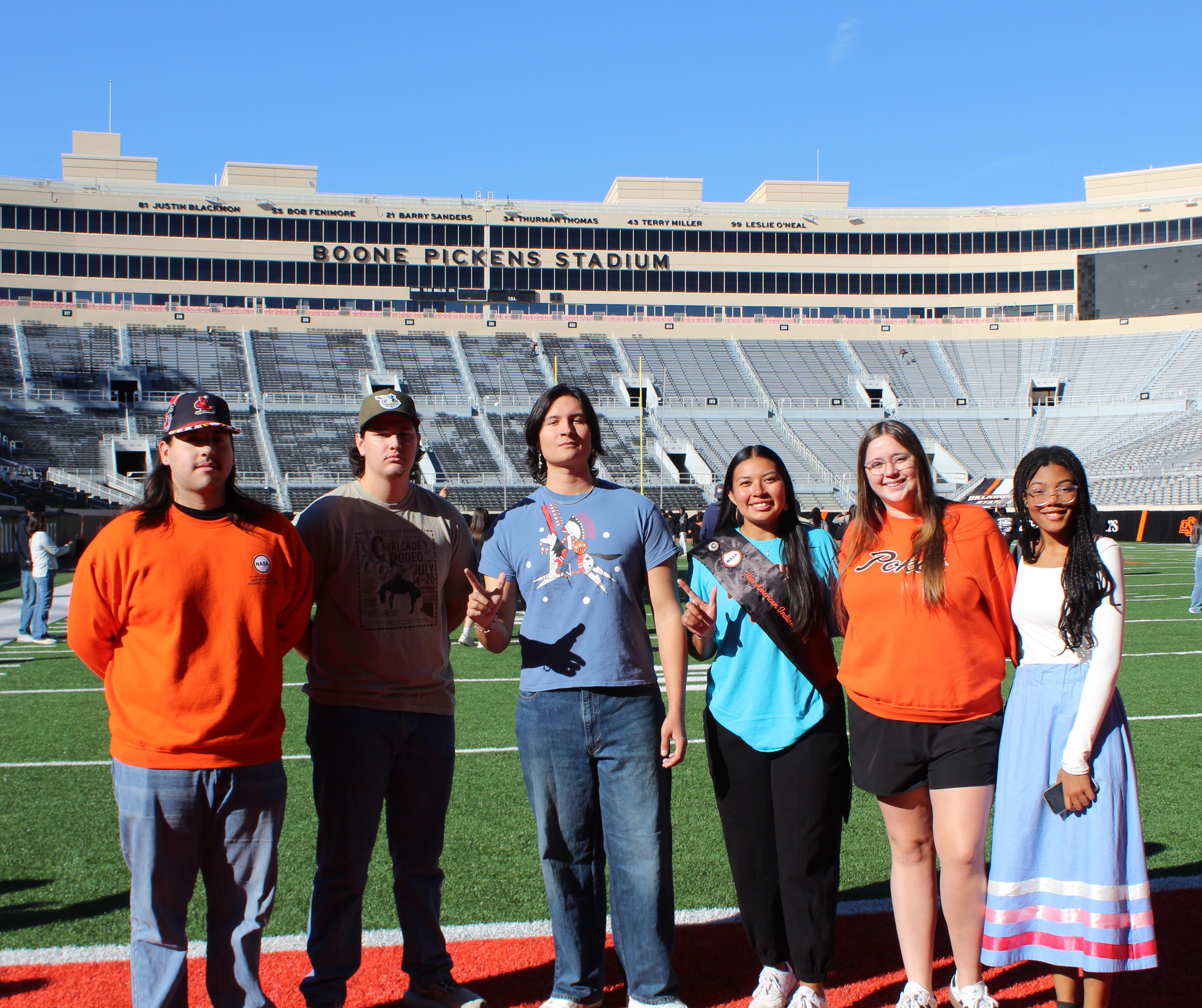
Oklahoma State Native American groups came together this week for Awareness Week.
The Native American Student Association and the Center for Sovereign Nations partnered to host a series of cultural events meant to celebrate Native identity, build community and educate the wider campus.
The week started with a stickball game on Monday, hosted by the Center for Sovereign Nations. Stickball is a traditional game from multiple tribes across Oklahoma. The next event was cornhusk doll making, where participants learned to craft traditional dolls from dried corn husks.
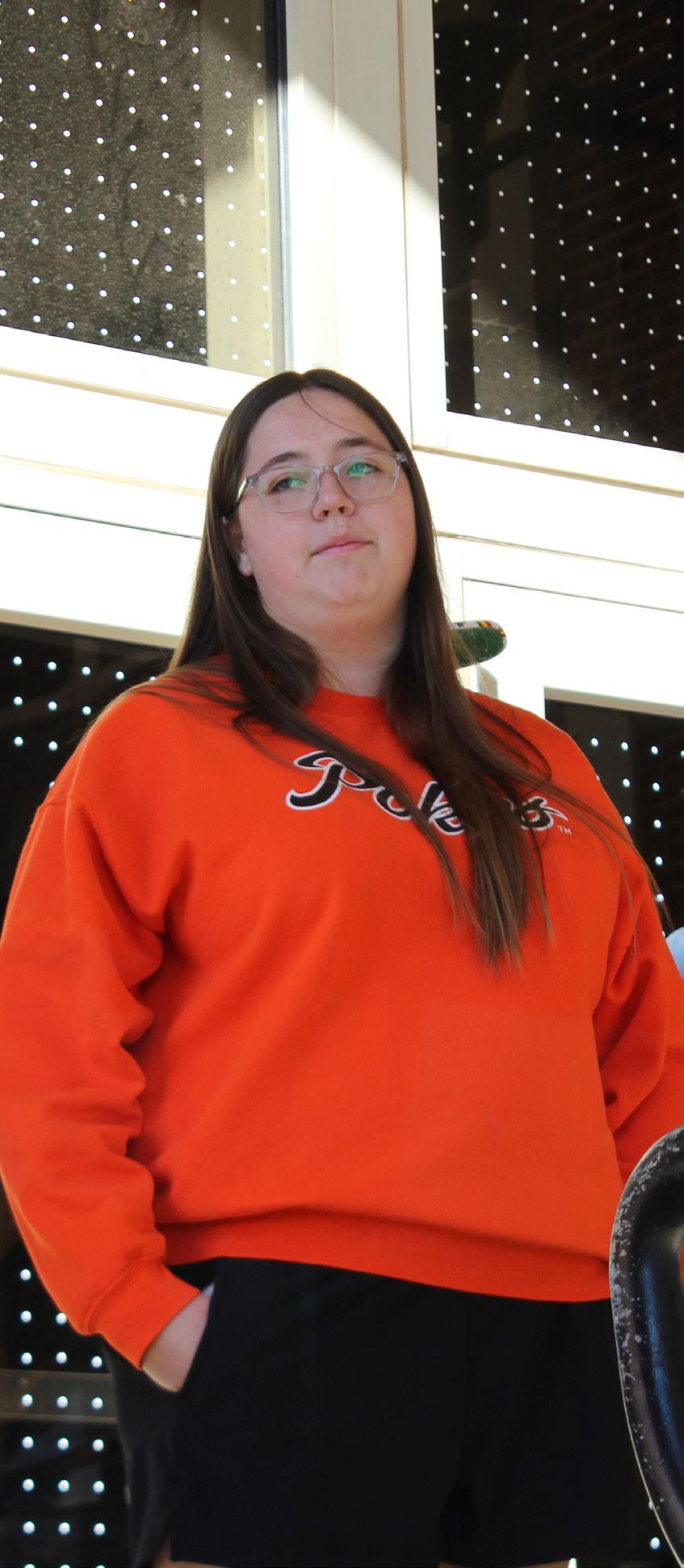
These events brought Native culture to the forefront at Oklahoma State, said Kellon Collington, a Cherokee Nation citizen and Miss American Indian candidate.
“I think that incorporating more cultural activities on campus, whether through the center or with Native Americans Student Association, we’re able to have more people be involved and come out and learn about our culture, our people, our traditions,” Collington said.
See NATIVE on page 2A
Continued from 1A Native
The events also gave Native students a chance to learn about the traditions of other tribes. Native American Student Association Vice President Rodney Stryker, a citizen of the Absentee Shawnee Tribe, said he has learned about the Sac and Fox Nation from Mister American Indian candidate Elijah Grass, who is a citizen of that tribe.
“I think all of our cultures are beautiful,” Stryker said. “They each have a certain way of doing things. So once you learn about my brother here, Elijah Grass, I learned a little bit about his way of thinking, and he’s learned a little bit about mine, and I think that’s important, because we’re all in this together, right? And if you understand what other people go through and what they have to do to keep living, then I think that’s all it’s about.”
To finish the week, Native American Student Association will host the Miss and Mister American Indian Pageant. The pageant celebrates Native cultures across Oklahoma and will crown this year’s Miss and Mister American Indian.
“There’s a lot of different pageants on campus, of MGC, and I just think that it’s really important that people see multicultural leaders in these pageants and at these events, because it just helps encourage
others, you know, that are Native, to be able to learn about Native American Student Association, to be able to learn about the center and things like that,” Collington said.
For many students, American Indian Awareness Week is about more than the individual events. It’s also a time to celebrate culture and find community.
“There’s a lot of things that we do, that we try to bring our cultures to these people around here, to make them feel more comfortable,” Stryker said. “Because I know a lot of the folks around here, we grew up around Native people back
chance to connect with Native American Student Association and the center.
“I feel like something like this can help Native students feel more welcomed and that there’s people that are aware of them and allows people to be able to take care of their identity, not have to worry about facing scrutiny and persecution for just being who they are,” Grass said. “So knowing that there’s people out there that are accepting and understand what they may be going through, I think that’s good.”
Finding community can mean more than just having
hard time thinking maybe not the way we’re supposed to, going through some addictions or anything like that. And so maybe if we all come together and share our stories, maybe then we’ll be able to come out on the other side.”
The Native community around OSU is tight knit, said Kinsee Burkett, a Cherokee Nation citizen and Native Americans Student Association secretary.
“This community will show up for you no matter what, through the highs and lows,” Burkett said. “We’re very consistent. We’re here all the time. I know the community
“We, as Indian people, need to stick together and help each other through all these hard times that they go through.”
STRYKER
RODNEY
home, and so when you come up here, it’s a little different, because you don’t see the same people that look like you, talk like you, act like you.
So I think it’s important that we’re showcasing these things because it gives people a sense of belonging, that they know that we see them, we see each other. And I think that’s why it’s important.”
The week also gives Native students who have not yet found community at OSU a
Editorial board
Co-Editors-in-Chief Bryson Thadhani & Parker Gerl editorinchief@ocolly.com
Design editor Katie Lehew design.ed@ocolly.com
Social media editor Jose Brito news.ed@ocolly.com
Assistant news & lifestyle editor Caleson Coon news.ed@ocolly.com
friends on campus. With Native Americans experiencing higher rates of violence and unsolved missing person cases, Stryker said having a strong support system matters.
“We, as Indian people, need to stick together and help each other through all these hard times that they go through,” Stryker said. “And, you know, it’s always hard to hear whenever one of your buddies or one of your family members is going through a
Assistant social media editor Megan Gibson news.ed@ocolly.com
Photo editor Chance Marick photo.ed@ocolly.com
Assistant photo editor Andon Freitas photo.ed@ocolly.com
here has been a constant in my life, and I want people to know that we’re here for them and that we’re a great resource for everybody — like for school, for friendship, whatever life advice, whatever — that we’re here.”
Native American Student Association leaders emphasize that the organization is open to all students, not just those with Native heritage.
“We’re a great community here,” Burkett said. “We’re
open to everybody. You don’t have to be Native to join Native American Student Association or to come into the center at all to be involved. And it’s those people who help us get the word out also, and help tell all of their friends and educate their friends, because it’s important to be educated on things.”
For non-Native students, Native American Student Association also aims to be an educational resource and a reminder that Native nations and cultures are very much present today.
“It really helps us whenever we’re able to educate others, because I’m always open to having a conversation about anything related to sovereignty or tribal nations, and I think that we always want to encourage more of those conversations to happen, whether it’s in the center or just on a sidewalk,” Collington said. “We’re here to represent not just us, but our families and our tribes and OSU too.”
Native American Student Association also serves as a way for Native youth to look up to college students who are already in higher education.
“We have Natives in higher education settings that are making a difference so that younger students have the opportunity to come into higher education and bring more awareness for generations to come,” Collington said.
news.ed@ocolly.com
BY AUDIE MARTIN I STAFF REPORTER
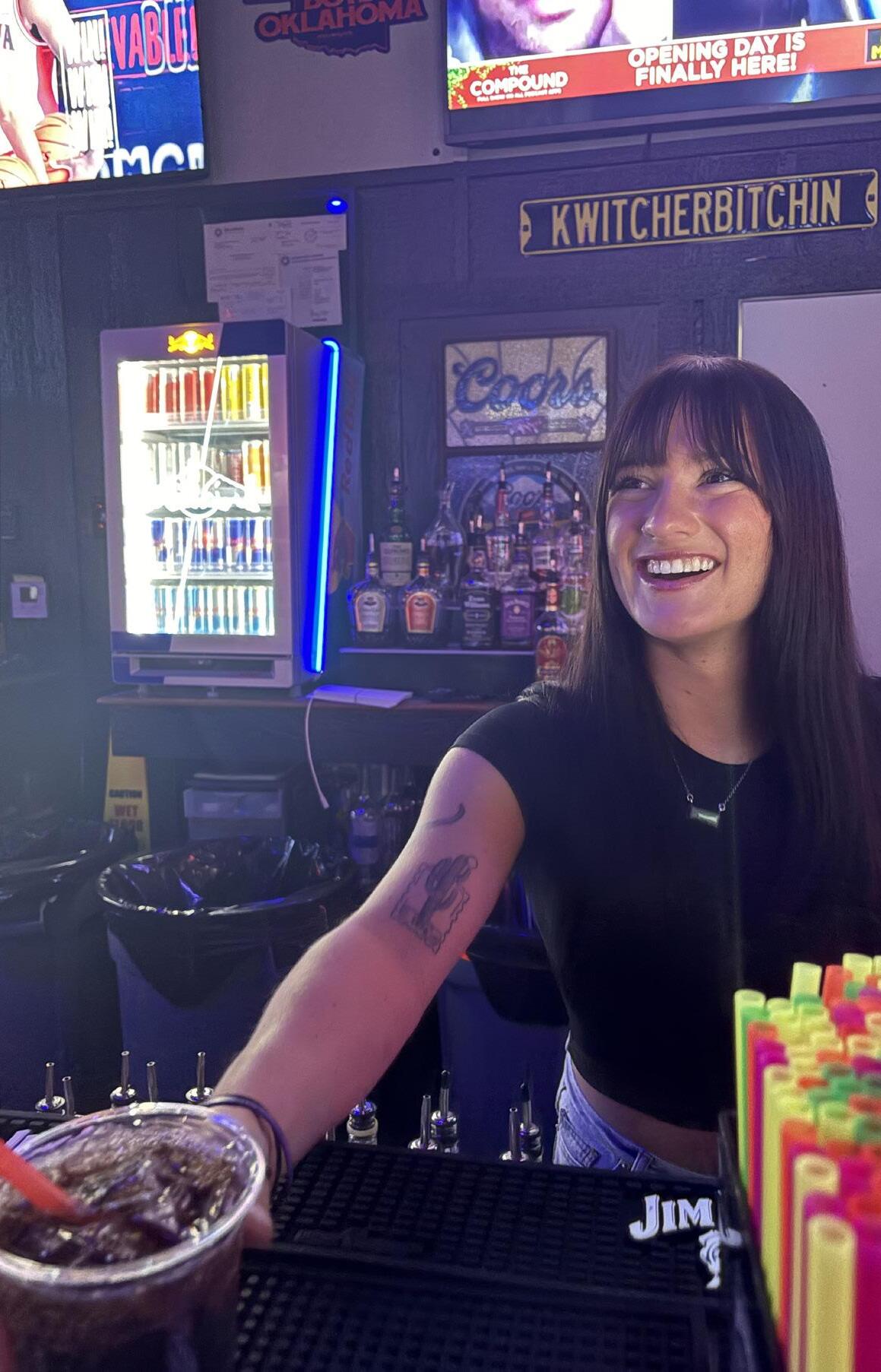
Underneath neon lights and blaring country music, Frankie Bradshaw pours vodka and repeats in her head the next four drinks she needs to serve.
Two lemon drop shots. One vodka Red Bull. One Michelob Ultra.
At Wormy Dog Saloon on The Strip, Bradshaw knows to keep the line rolling, her hands moving and the alcohol flowing. In a college bar scene, controlled chaos keeps Bradshaw on track.
“You should always be using both of your hands at the same time,” Bradshaw said.
After serving her 50th vodka soda with lime of the night, Bradshaw knows the next man in line is new to the bars. The wide-eyed college student asks for a double Coke and Jack Daniels. Bradshaw internally rolls her eyes a little.
“It’s like, you want double Coke?” Bradshaw said. “Which I never [say, but] sometimes, if I can tell they’re playful, I’ll joke with them.”
Bradshaw, 21, keeps her head on a swivel as she serves throughout the night. An animal science pre-vet senior at Oklahoma State University, Bradshaw has worked at Wormy Dog Saloon and The Dirty Rooster Saloon on The Strip since the week after she turned 21. After five months juggling both jobs, each shift feels the same; both floors are sticky, patrons want alcohol and drunken customers stumble onto barstools just the same.
At 4 feet 11, Bradshaw’s shorter stature makes some drunken customers feel the need to yell, whistle or snap to get her attention.
“If they’re yelling, we’re going to look at the person next to you, we’re going to get that line and then we’re going to come back to you,” Bradshaw said. “I don’t know, snapping is crazy. When people snap in our faces… I don’t really get irritated, I’m just like, ‘I’ll get back to you.’”
Bradshaw’s patience can be a stark difference against other bartenders’ blunt personalities.
At the Wormy Dog next to Bradshaw, James Whaley, who is known in the bar as “the bartender with the mustache,” grabs a bottle of premade lemon drop shots. Halle Sumpter stands at the register in her dirty HOKA shoes, joking with a patron as she hands him a beer. Five doors away at The Dirty Rooster Saloon, Jaycie Jackson serves her regulars, comfortable with the college bar scene.
Each bartender is a college student who found his or her way behind the counter for the tips and connections. With a base rate of $2-$4 an hour plus
shared tips, serving customers is how these college students keep their lights on or have extra spending money.
One man makes a point to tip as little as possible every time he comes into the Wormy Dog Saloon.
“He tips 1 cent or 10 cents, and it’s like, I appreciate all tips [but] at that point, don’t tip,” Bradshaw said. “You know what I mean? Well, I probably shouldn’t say that. I appreciate it, but I know he does it just to be irritating.”
Sumpter, 21, has had similar experiences. One time, a man began making inappropriate comments to some female patrons, Sumpter told the man to leave the women alone. After exchanging words, Sumpter told the man to leave the bar and tabbed out his $200 bill.
The man left a $1 tip.
“I feel like as long as you leave something, we’re grateful for it at the same time,” Sumpter said. “Now, there are going to be people who are going to be a little rude to you.
“They’re going to tip you a dollar, or they’re going to tip you 1 cent. But I truly do think it depends on how you encounter with people. Also at the same time, if you’re going to go to the bar, give them a little something because they’re working hard for you.”
Thankfully, the horror stories can be countered with just as many great ones. For Jackson, 22, her “bar grandpa,” an older male regular, has become a
bartenders are serving. Sumpter realized on her second week of bartending a way to make customers feel seen and tips to increase.
“If you remember somebody by their face or even their name and you know their order and they know they can just walk up to you and you have already started on it, then they’re going to tip a lot more,” Sumpter said.
Although remembering names and orders is beneficial, some patrons are bound to start trouble and will need to be asked to leave. As a Navy veteran and former bouncer and bartender at Outlaws, JR Murphy’s and Willies Saloon, Whaley has little hesitation in refusing service if a patron becomes aggressive.
“At the end of the day, we don’t have to have a reason to not serve,” Whaley said. “If we have to, I can be a smartass right back, and I love making people look dumb. And it’s really easy to make drunk people look dumb.”
A college town is bound to bring a few fake IDs. Sumpter recalls one of the worst fake IDs she had seen.
“He hands me his ID, and it’s the fakest thing I have ever seen in my entire life,” Sumpter said. “It was bent; it had gone through it.”
“Yeah, this is fake,” Sumpter said.
“No, it’s not,” the man said.
“It’s literally peeling off of the sides,” Sumpter said.
“I have just had it for a long
“If you remember somebody by their face or even their name and you know their order and they know they can just walk up to you and you have already started on it, then they’re going to tip a lot more.”
HALLE SUMPTER
time,” the man said.
highlight to her shifts.
“He gets [about] five nonalcoholic beers,” Jackson said. “So, it’s literally just me opening it and handing it to him. It’s super easy. And he tips anywhere from $30-$50 every single time on a $20 tab.”
Not only does her bar grandpa tip well, but also he comes to talk with Jackson about her schooling, dogs and boyfriend every Tuesday. For Jackson’s birthday, the man brought her a cast iron skillet, complete with steaks the next week. This isn’t only about tips, but rather connecting with the patrons
“Real IDs don’t peel,” Sumpter said.
Debates between real and fake IDs usually fizzle out quickly after bartenders offer to get police officers involved.
The real debate comes when to say enough alcohol has been enough. Cutting customers off requires bartenders to pay close attention to mannerisms such as slurred speech, stumbling around the bar or, from Sumpter’s experience, a man mistaking a trash can for a barstool.
Jackson said sometimes the

older customers need to be cut off more often than the college crowd. During the week of the Boys from Oklahoma concert series last year, Jackson told a group of older women it was too drunk to be served any more, the group began to swear about her. For Jackson, she understands why the women might be upset.
“I understand being upset and being cut off and those kinds of things,” Jackson said. “But also, in the next breath, if I’m telling you that it is unsafe for you to drink any more alcohol in this bar, it’s unsafe, whether you’re 21 or you’re 55. I don’t care.”
Jackson has spent a fair amount of time in Stillwater’s bars; her father was the road manager for Red Dirt band The Great Divide. Although she has seen an assortment of drunken characters, one story sticks out the most in her time as a bartender.
When opening The Dirty Rooster Saloon, there was a group of friends that found its way into a booth near the front door. A man who was heavily intoxicated came into the bar and began to flirt with a woman in the group of friends, who politely declined the man’s advances and said she had a boyfriend. Instead of accepting defeat or responding in a way Jackson has seen hundreds of times, the man did the unthinkable.
He dropped his pants and underwear, saying, “Are you sure he’s got something like this?”
“That was probably the first time I’d ever seen a naked man in a bar,” Jackson said.
“So that was pretty crazy. And I had glanced over and just saw superwhite butt cheeks
and I was like, ‘Oh, so this is happening right now.’”
Advances from patrons is frequent for the bartenders, and Bradshaw has no shame in turning them down.
“In the very beginning one of my co-workers was like, ‘If they’re hitting on us, they’re hitting on people over there,’” Bradshaw said. “So, you have that mentality, and you’re like, ‘They’re going to go hit on somebody else, so you’re not really hurting their feelings.’”
Bartending life isn’t glamourous; when the crowd has trickled out and the lights come up after “Closing Time” by Semisonic finishes playing over the speakers, there is plenty to do. The family atmosphere between bartenders at Wormy Dog Saloon and The Dirty Rooster Saloon keeps the bartenders pushing through the final piece of their shift. After the counters are clean, trash is taken out and any female bartenders have been walked safely to their cars, the group will occasionally complete the night with a celebratory iHop or Whataburger run. Because after all, what else is open at 3 a.m.?
“‘Please’ and ‘thank you’ goes a long way,” Jackson said. “In our society today, it’s not said enough; I think a ‘please’ and a ‘thank you’ every once in a while is probably one of the best things to hear in the bar industry.”
As the bartending group drives home, they’re ready to go to bed and do it all again tomorrow. Another night behind the bar, another line to keep moving and another vodka soda with lime to make.
news.ed@ocolly.com

Crutchmer started college down the Turner Turnpike in Norman, the son in a Soonerborn and Sooner-bred family that always assumed OU was the destination. He says he hated it almost immediately.
Halfway through his sophomore year he transferred to Oklahoma State in the spring of 1999, following high school friends. Stillwater fit: a campus he could walk, a stadium he could fall in love with and a journalism school small enough the news editorial students all knew one another. Before he turned 21, he and two friends drove through Payne County with folk and Americana on repeat. Turning 21 meant finally trying to find that sound in person. Within minutes of saying out loud that they needed to find a place with live music, he heard the Wormy Dog. Inside, Stoney LaRue introduced him to the people building the Red Dirt scene: Cody Canada, Mike McClure and Jason Boland.
At the same time, he was finding his place in a student newsroom that produced a small army of serious journalists. In the spring of 1999, he showed up at The O’Colly as what the staff called a contributing writer. Matt Clayton, the sports editor at the time, handed him the tennis beat and watched how he handled it.
“He quickly set himself apart by working hard and showing up,” Clayton said. “You never had to ask more than once. He would jump in with both feet.”
The O’Colly class around him included future Pulitzer finalists, Associated Press standouts and editors who would run newsrooms across the country. Clayton said the expectation was simple.
“You had to set yourself apart by being willing to work, being willing to show up and take edits,” he said. “Josh did that very well.”
Cary Aspinwall, a staff writer at The Marshall Project, spent years of journalism school with Crutchmer. They graduated together. She worked on features, while he lived on the sports side, writing and increasingly designing pages.
“Josh is kind of quiet when you first meet him,” Aspinwall said. “He was that quiet guy in the corner, always working and going to shows, and then all of a sudden he would just say something that came out of nowhere and cracked us all up.”
Most people on staff thought of him as a sports guy who was suddenly focused on page design. At the time, the School of Journalism and Broadcasting was seperated into neat tracks for TV, print and public relations; sports and design looked like the track Crutchmer would follow.
“We just thought of those bands as the ones playing the bars while we were in college,” Aspinwall said. “Josh was the much more devoted fan and went to all the shows. He was passionate about that music and very much an early advocate for it.”
He did what student editors are supposed to do. He chased clips, absorbed critiques from longtime adviser Jack Lancaster, learned to plan sections and balanced classes with late-night deadlines. Somewhere along the way, he also started steering his sports editor job toward the music that kept him up after deadline.
One night at the Wormy Dog, LaRue introduced him to Canada after a set and mentioned a different kind of assignment. Cross Canadian Ragweed, Jason Boland and LaRue were booked at Lucy’s Retired Surfers Bar in Austin on the same day Oklahoma State was scheduled to play Texas in football. Canada told
Crutchmer he should skip the game and cover the music.
“So that is what I did,” Crutchmer said. “I drove down to Austin. I skipped the football game, and I spent the afternoon on the patio of Lucy’s interviewing Cross Canadian Ragweed.”
The trip yielded a feature and a column that ran with a headline about Boys From Oklahoma taking over Austin. He keeps the clips in a stack in his New York apartment. Aspinwall remembers the choice as bold but logical.
“There were always guys who wanted to cover OSU football,” she said. “I am sure some of the sports guys were like, ‘What are you doing?’ But I think there was a point at which he would rather go to the concerts than another golf tournament.”
Clayton sees that era as proof of how deep the staff was.
“We had fun and enjoyed ourselves,” Clayton said. “But Josh was one of the ones who could really focus when we needed to be focused.”
By Crutchmer’s senior year, Red Dirt bands were sliding press kits that were stuffed with The O’Colly clips bearing his byline. The college newspaper that was supposed to be a launching point for his sports career was also becoming an unofficial archive for a Stillwater music scene that had not realized how big it would get.
as editors from around the world walk through what they will publish that day. By late morning, his attention shifts to the front page.
After graduation, he did what The O’Colly’s ambitious editors did in the mid-2000s. He took a job at The Oklahoman, moved to Oklahoma City and started designing and planning sports pages professionally. He sat with photographers such as Nate Billings to map out season previews weeks in advance.
“We would sit down, plan out the photographs we wanted, how we would get them done, how we would run them,” Billings said. “Working with him was always a really great collaborative process.”
At 25, Crutchmer became the paper’s ninth sports editor. For a while, he tried to split himself between editing and law school, starting classes at Oklahoma City University with a plan to become an attorney. That experiment ended quickly.
“He was going to be an attorney and then dropped out to do newspaper design,”
Billings said. “He loved doing this. This is what he really wanted to do.”
Billings calls him one of the funniest people he knows, with a mind that cuts through problems.
“He is really great at satire,” Billings said. “But that also means he can see how to fix things and run them successfully.”
From Oklahoma City he moved through larger newsrooms in Phoenix, Omaha, Chicago, Minneapolis and Buffalo before landing at the Cleveland Plain Dealer. At each stop he climbed into roles that let him edit graphics, shape Sunday packages and design pages that won awards.
In Cleveland, he helped oversee coverage of the Cavaliers’ 2016 NBA title and watched the printing plan explode.
“We were supposed to print 60,000 copies of the paper the day they won,” he said. “We ended up printing over a million. The presses did not stop running for a week. That put me on everybody’s radar.”
The New York Times hired him onto its print team. He carries the title of planning editor, a job that looks like a cross between traffic cop and architect.
His days follow a strict rhythm. His alarm goes off at 8 a.m. By 9, he is on his couch in Queens, logged into the Times’ morning news meeting
“The very first thing you ask is, ‘what is leading the paper?’ And you follow that up with ‘what is the visual alongside it?’,” he said. When you figure out what leads your paper from a content and a visual standpoint, everything else works itself out around that.”
A page one editor makes the final call, but when that editor is out, Crutchmer steps into the role. Even when he is not the one picking stories, he stays close because whatever sits above the fold shapes the rest of the paper.
The deadlines are constant. First deadline at 5 p.m., another at 8 p.m., an earlier one for Sunday. When the last page ships to the plant, the planning desk turns immediately to the next day’s report.
“It is nonstop,” he said. “The final deadline for the planners means we turn our attention to the next day.”
In his early 20s, he would have stayed in that cycle without stopping. Now he is more protective of his time, especially after seeing what nonstop news can do to a person.
“If you throw yourself into it and never stop, you risk severely damaging your mental health,” he said. “I write about music to clear my mind from the very real and intense job of planning The New York Times.”
“I love finishing my shift at the Times and going and writing about music for two hours,” he said. “It is healthier and cheaper than drinking myself into the same state.”
He never stopped filing Red Dirt stories as he moved through newsrooms. When Cross Canadian Ragweed played its final show in Chicago in 2010, he wrote about it for the Tribune. As bands broke up and reunited, he found ways to pitch them to editors willing to give space to an Oklahoma scene they barely knew.
The urgency to do more than sporadic features grew as he watched people he considered pillars of the scene die, including Tom Skinner, Brandon Jenkins and Jimmy LaFave.
“I thought, quite literally, I saw people dying and thought, if I do not put this down, if I do not write about this, it is going to get lost in history,” he said. “John Cooper of the Red Dirt Rangers said as much to me when I decided to write the first one.” Publishing his first book,
“Red Dirt Unplugged” in 2013, turned him from the kid with a notebook into someone trying to capture a scene that had mostly lived in late-night stories.
“I just assumed a responsibility to the scene, but also to myself, to share what I was seeing and hearing, because it was worth seeing and hearing,” he said. “At some point that becomes more about preserving than it does witnessing. And I am OK with that.”
Aspinwall has watched that shift from afar, both as a friend and as someone who also writes about Oklahoma from a national outlet.
“He really saw the potential for it to blow up and grow,” she said. “Now there is a whole new generation that has found the music. In my world, Josh is a page designer for The New York Times. For Red Dirt fans, he is the guy that wrote all these books that they love.”
From his vantage point at KOSU, where he hosts “Songwriters & Tour Riders,” Matthew Viriyapah sees the same thing. He interviewed Crutchmer in January for an episode about his latest book and his role in the scene.
“Through his position as a writer at Rolling Stone, he has been able to platform and spotlight Oklahoma artists to a wider audience that I do not think we otherwise would have,” Viriyapah said. “He is talking to the people that are really making moves in Oklahoma music right now.”
Crutchmer followed Wyatt Flores for more than 30 shows while reporting his latest project, embedding with the 22-year-old as his career took off.
“Going on tour with Wyatt Flores sounds insane to me,” Viriyapah said. “But it means you will be able to go back and read where an artist’s head was at at this particular time.”
“He really is picking up the torch from The Great Divide and Cross Canadian Ragweed and the Turnpike Troubadours and taking it to wherever he is going to take it,” Crutchmer said. “Getting to see him realize he was doing that was very special. It was a top five experience, a thrill of a lifetime. I would run it all back again if I could.”
Friends talk about him less as a job title and more as a particular kind of person. Clayton describes him as eccentric in the best way.
“Eccentric, great sense of humor, dry, very dry,” Clayton said. “He loves the pearl snaps and the bolo tie. That is kind
of his vibe. I have always found Josh to be an interesting cat, and we go way back. I am super proud of what he has made his career into.”
Billings calls him a “quiet genius” who is more interested in getting things right than getting his own credit.
“(He) cares about getting things done the right way and really cares about people,” Billings said. “One of the most impressive people I know.” Viriyapah sees the same thing in the way Crutchmer moves through venues where he is covering people who are, technically, his subjects.
“He is a huge part of that community,” Viriyapah said. “He is in the perfect position to be the historian of this music movement because he was there and he is an excellent journalist.”
Ask Crutchmer what he calls himself and the answer is simple.
“These days I say author and journalist,” he said. “I like to let my own name slip into the background of what I am doing whenever I can.”
The background has a way of catching up anyway. In December 2024, he stood on the floor of GallagherIba Arena as OSU’s winter commencement speaker, looking out at a sea of orange gowns. Students and professors stopped him at concerts to say they remembered what he said.
“I felt like the stuff that I had to say that day resonated,” he said. “Students coming up to me days, weeks, a year later at concerts and telling me they remember that speech and thanking me. That was a top moment for me.”
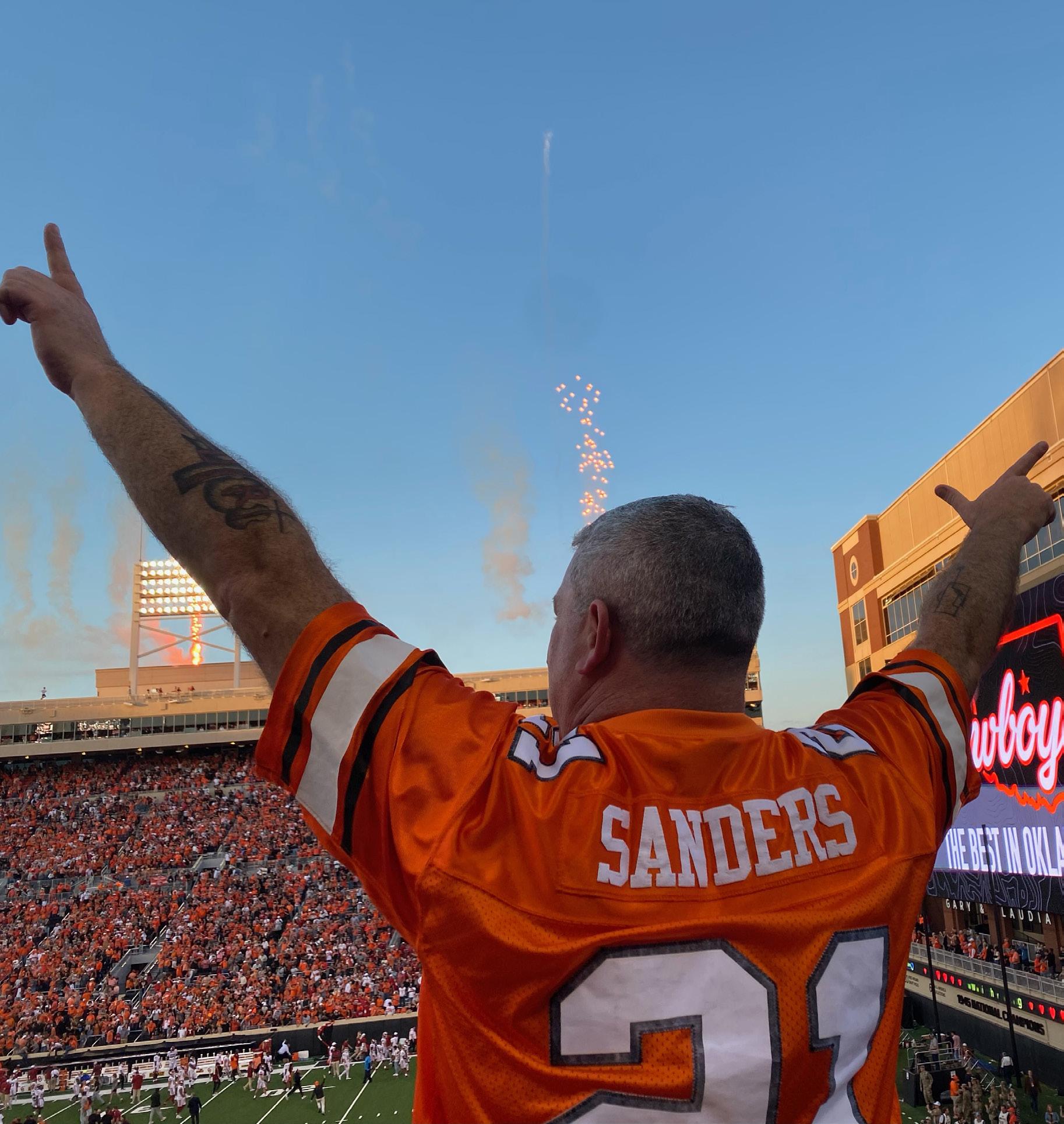
Crutchmer who has published five books, still hears the Wormy Dog when he closes his eyes and thinks about Red Dirt. The original room is gone, replaced by a larger bar on Washington that serves liquor instead of just beer, but the memory is fixed. When he watches a band with Red Dirt roots play Boone Pickens Stadium, he thinks about them crammed into that low-ceiling space in front of 150 people.
Twenty years from now, he says, he hopes the work, from front pages to set lists, adds up to one thing.
“That he tried to share the truth with the world,” he said. “Sometimes it was heavy and sometimes it was really fun, but it was always in service of you knowing about the world you inhabit, whether that is news, music or sports.”
Lilian Easter STAFF REPORTER
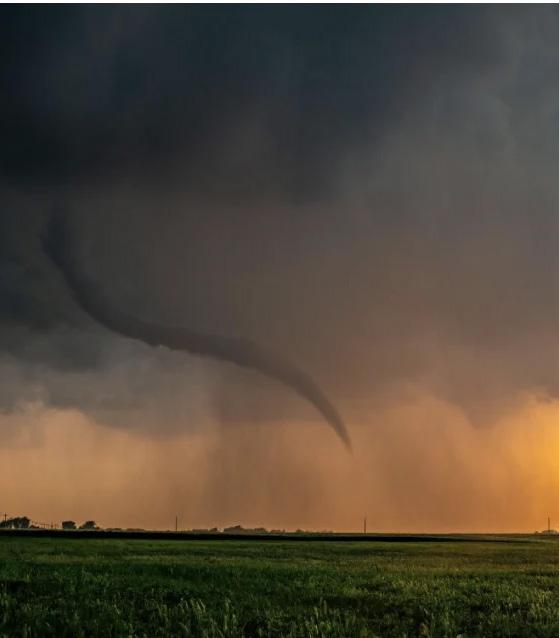
The road stretches for miles under a clouded, dark sky, where a distant storm is brewing.
For storm chasers, this is where science meets instinct and where curiosity can quickly turn into something more dangerous.
For Michael Seger, chief meteorologist for 2 News Oklahoma KJRH Tulsa, that moment came in 1990 after a tornado hit his home state of Indiana.
“That’s the first time I had seen damage from a high-end tornado in real life,” Seger said. “As a 13-year-old kid, I was completely fascinated with the power of nature, and that’s what sparked my storm and weather passion.”
With that fascination, Seger studied broadcast meteorology at Valparaiso University, where he gained early experience chasing storms in the field. His career brought him to Texas and Oklahoma, the heart of Tornado Alley, where storm chasing became both a professional tool and a personal pursuit.
His first tornado as a chaser came in 2007 near Olton and Edmonson, Texas. At the time, chasing looked different.
“Back then, we were using paper maps,” Seger said. “Now everything’s on your phone; it’s made chasing easier, but also more crowded.”
A surge in chasers
Storm chasing has grown rapidly in the past two decades, with smartphones, radar apps and livestreaming platforms making it easier to track storms — and drawing in many new chasers.
Mike Williams, a longtime Oklahoma storm chaser who later transitioned into a field meteorologist, said the difference is stark.
“There used to be maybe a few dozen people out there,” Williams said. “Now there are hundreds.”
The increase has created an issue known as “chaser convergence,” where large numbers of vehicles gather around a single storm on narrow rural roads, which can quickly become dangerous for both chasers and emergency responders.
Williams said he has seen situations where cell service becomes unusable and roads become impassable at the worst possible moment. In those cases, he said, the danger shifts away from the weather itself.
It isn’t always the tornado that causes safety concerns; it’s the people.
“The recklessness of many of them is more dangerous than the actual storms you’re chasing,” Williams said. “If the people around you are more dangerous than the storm, it’s time to step back.”
Close calls that change mindsets
For many chasers, it takes a close call to shift their perspective. Seger experienced that during the May 31, 2013, El Reno tornado, the world’s widest tornado at about 2.6 miles across, with mobile radar units clocking wind speeds over 313 mph within the storm.
“Just before the tornado crossed Highway 81, we finally got a visual of it and we realized that it was a monster tornado,” Seger said. “We thought it was coming towards us and we just had to get out of there. Then, after the fact, we hear Tim Samaras, his son Paul [Samaras] and Carl [Young] were killed. I know, between that and just how sickening the tornado was, I was just like, ‘I think I might be done storm chasing.’”
Williams had a similar moment in 2016 near Ninnekah, Oklahoma, when a tornado was in front of him in heavy rain and near-zero visibility.
“I was on air at the time and that tornado, I thought I was going to get hit,” Williams said. “I sat there silent on air. I felt my truck shaking and I just closed my eyes and said, ‘Please just don’t, please let me get out of this.’”
The storm passed in front of Williams, about a quarter of a mile away, and wiped out three or four mobile homes.
“It changed my perspective,” Williams said. “I don’t need to be right up on the storm anymore.”
Moments like those are common in storm chasing, where conditions can change rapidly and visibility can disappear in seconds.
Shane Helton, a First Alert storm chaser for KOCO 5, recalled one of the more intense experiences of his career, when two tornadoes passed directly over his vehicle within half a mile near Earlsboro, Oklahoma.
“When two tornadoes go over the top of your truck within 30 seconds and they’re right behind each other, you kind of freak out a little bit,” Helton said. “The guy chasing with me, it scared him to death. Which now he doesn’t chase with me anymore.”
Tucker White has wanted to be a chaser since he was 7. He now works for KOCO 5 as a broadcast media storm chaser.
On I-35 near Falls Valley in 2021, he experienced a quasilinear convective system tornado — a brief tornado that spins up quickly in a line of storms.
“I was in front of [the tornado] when all of a sudden a tree in front of me came down,” White said. “I was alone and it kind of scared me a little bit.”
Despite the risks, storm chasing is not just about adrenaline. For many, it is rooted in science and
forecasting. Chasers often spend hours or even days analyzing weather models, looking at factors such as instability, wind shear and moisture to determine where storms are most likely to develop.
“You’re basically doing your own forecast every morning,” Seger said. “Sometimes you’re right, and sometimes you’re not.”
Carlee Miller, a storm chaser with The Reaper Storm Chasers and a volunteer for Team Dominator Storm Recovery operating across the Plains, said it’s not as simple as waiting for the Storm Prediction Center to release its newest outlook.
“I’m looking at CAPE values, shear rate, how your dewpoint temperatures are going to be and where that boundary line is set up with how low your pressure system is moving,” Miller said. “It’s kind of like a big puzzle that you just put all together.”
Even with careful planning, there are no guarantees.
“There have been many days we’ve gone out and nothing happened,” Williams said. “Patience is part of the job.”
From adrenaline to awareness
As experience grows, many chasers say their approach changes. Early in a storm chaser’s career, the focus might be on getting as close as possible to a tornado. Over time, that often gives way to a more cautious mindset.
“The danger is not what excites me,” Seger said. “I just enjoy going out and watching nature do her thing.”
Bobby Hines, who has spent decades chasing storms across the region, said his priorities have shifted toward safety and perspective. That often means observing storms from miles away rather than directly underneath them.
“I used to want to get close,” Hines said. “Now I want to get it right.”
Hines said his experiences
showed that distance can be both safer and more rewarding. While tornadoes capture the most attention, he said chasers need to stay aware of everything around them.
“I pulled in front of a semi and he ended my chase day,” Hines said. “I’m that close to being dead if I’d have gone that much farther out. He hit me right across the hood and spins me out.”
Hines said tornadoes can be distracting; one second, he can be in awe of nature’s creation, and the next, he can get hurt.
Nighttime chasing adds another layer of risk, because tornadoes can be nearly impossible to see without lightning to brighten the sky.
“The best chases I ever had were a nocturnal chase,” Hines said. “We went out and the first tornado produced right after dusk, then we probably had five or six tornadoes that night. Sometimes you don’t see it until [the tornado] is right there.”
For all the risks, storm chasing continues to draw people in. More chasers occupy the roads, and thousands watch livestreams of chasers doing their thing.
The appeal lies in the rare moments of beauty, Hines said — a perfectly formed tornado in open fields or lightning branching across the sky.
Miller said her most memorable storm was June 8 in Dalhart, Texas.
“That one meant a lot to me because that was also my grandfather’s birthday and he passed in 2022,” Miller said. “Seeing this beautiful tornado dance across western Texas fields and it was not hurting anything, it was the best thing ever.”
Miller’s grandfather was an arborist and volunteered as a storm spotter in Kansas. Miller said she would go with him to spot storms, and he engraved that passion in her — and that is why she chases. Those moments exist alongside a more sobering
reality. Chasers often witness the aftermath of storms, which can damage homes, displace families and leave communities rebuilding.
“I’ve seen many aftermaths and I’ve seen people coming out of houses after tornadoes,” Williams said. “I don’t look at it like I want it to happen. It bothers me.”
That reality is often measured using the Enhanced Fujita Scale, commonly referred to as the EF scale. Meteorologists use the scale to rate tornado strength based on the damage they cause, rather than what they look like.
It ranges from EF-0, which produces minor damage such as broken tree limbs or damaged shingles, to EF-5, the most violent category, capable of leveling well-built homes and sweeping structures from their foundations. Ratings are determined after storms, when survey teams assess damage to buildings, vegetation and infrastructure.
That perspective underscores a central tension in storm chasing: the balance between fascination and responsibility.
“People starting don’t need to be storm chasers, they need to be storm spotters,” Hines said. “Know your roads, know your geography and know how to get out safely.”
A lifelong pull
For many chasers, the connection to storms never fully fades.
“What started as a fear as a kid became a curiosity,” Seger said. “I was completely fascinated with the power of nature.”
That fascination continues to drive him and many others back onto the road each spring. With experience comes a deeper understanding of limits.
“You don’t have to be right next to it,” Seger said. “Sometimes the most beautiful views are from a distance.”

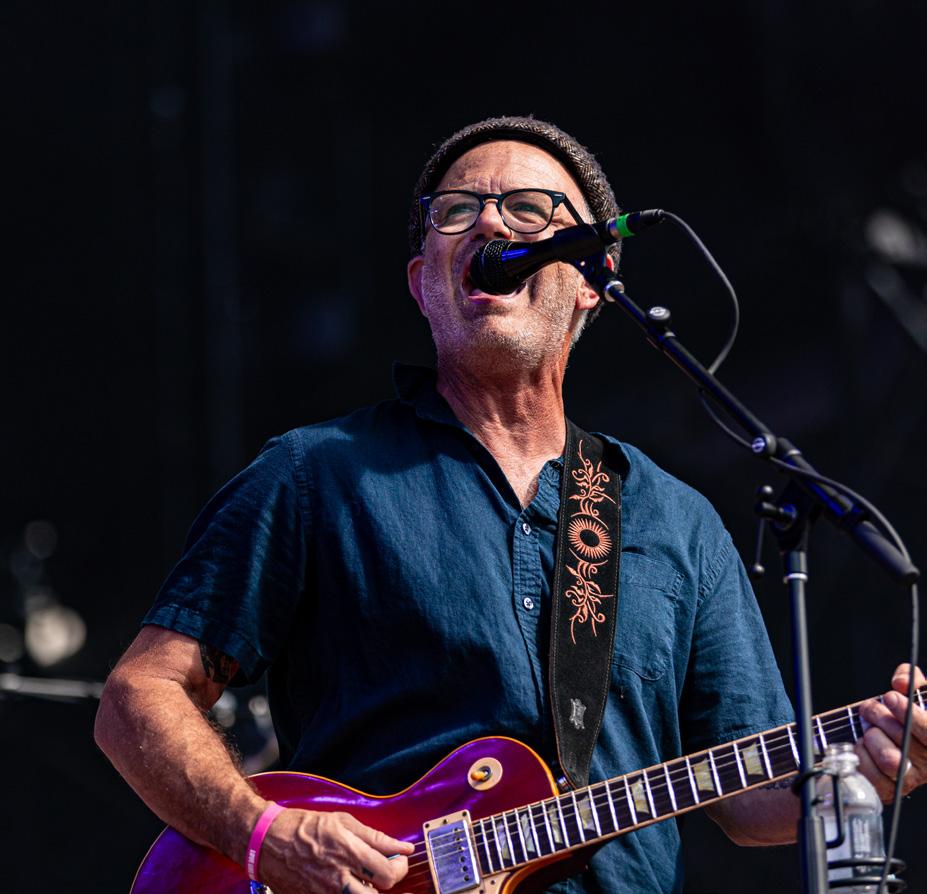
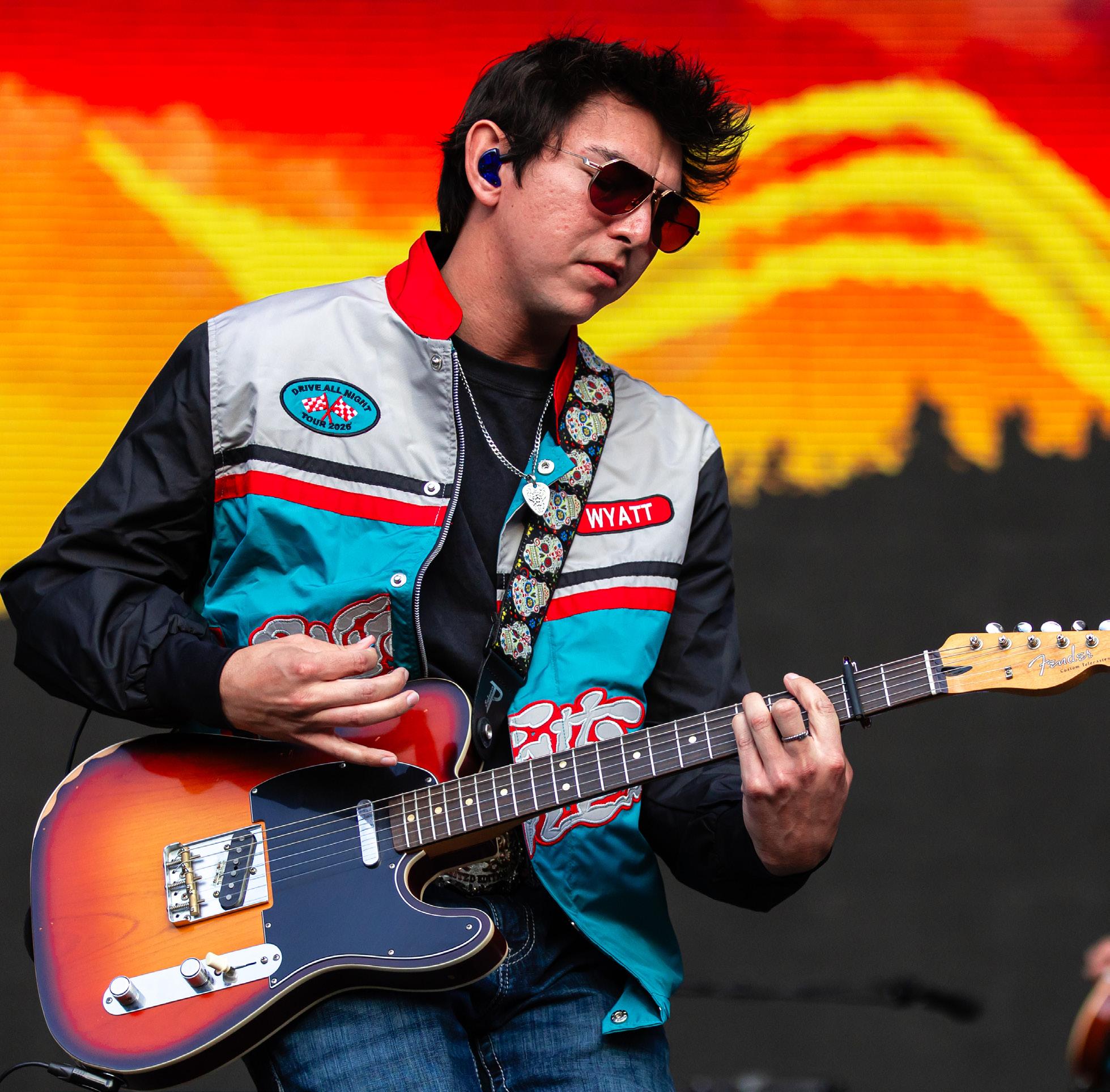



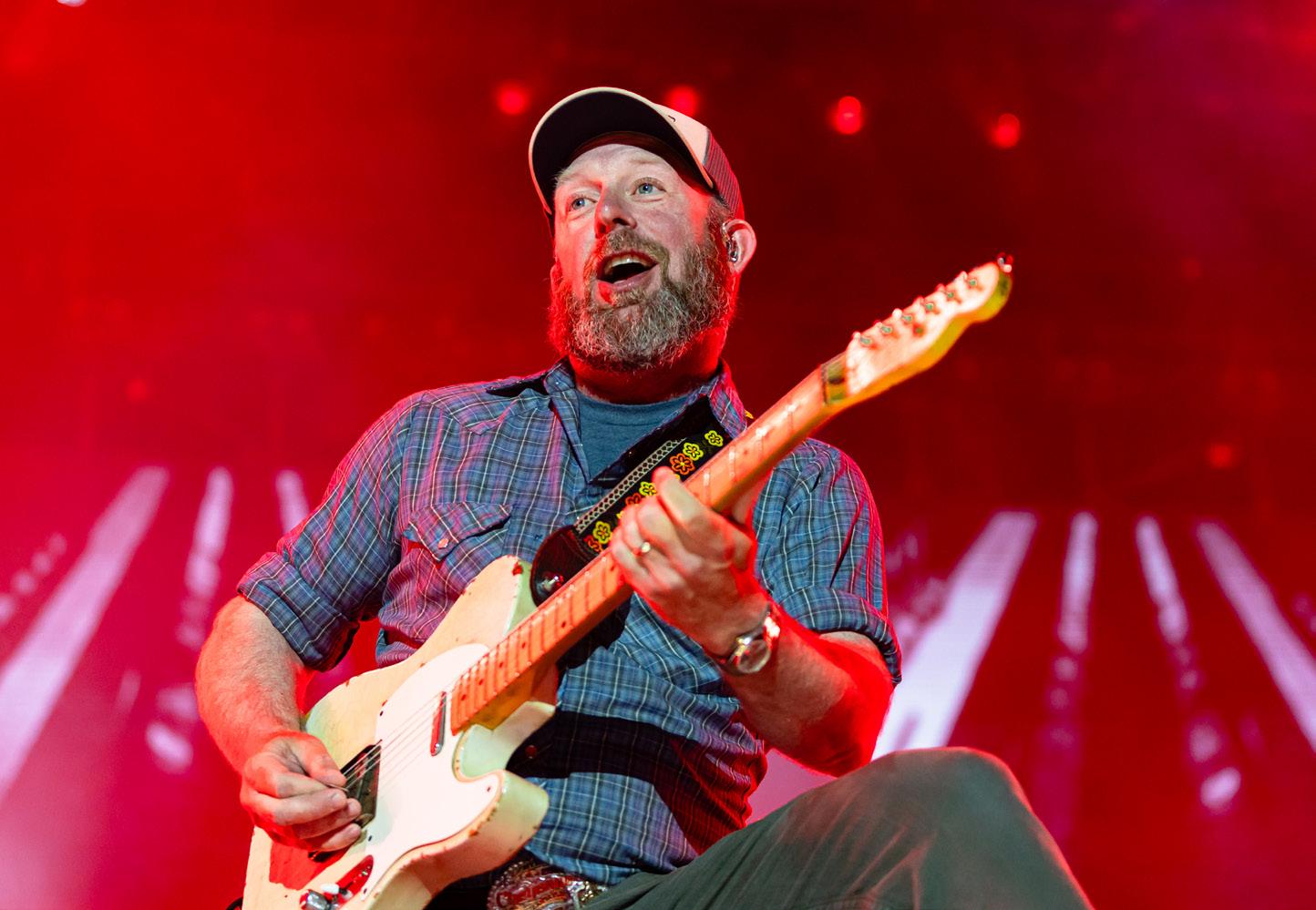



on his journey as a favored, local musician with his latest performance as a boy from OK.
The Boys From Oklahoma returned to town this past weekend for a crowd from in and out of town.
People ages eight to 80, were decked out in their boots and hats as the show began at Boone Pickens Stadium.
The Great Divide
Music began to pour from the speakers at 4:30 p.m.
Opening with “Round That Bend,” The Great Divide lit up the stadium as those all around stood on their feet in anticipation of all that was to come.
“Yesterday Road,” made the early start to the night worth it with each strum of the guitar. This was followed by classic and well-known favorites from the band, as they opened the show.
Shane Smith and the Saints
With more people flooding in to find their seats, food and friends, Shane Smith and the Saints stepped on stage to the sound of claps and cheers.
“The Mountain” was instantly recognized as Shane Smith and the Saints began to sing to the crowd. Its tempo allowed for the audience to match the energy that was being created by the band; so that the atmosphere could be an equal to the high and alive spirits of the dancing crowd and belting band.
Leaving the crowd with a notable last song of “All I See Is You,” it is no doubt that Shane Smith and the Saints continue to captivate fans with their unique sound and style of performance.
Wyatt Flores Wyatt Flores continues
April 24 • 7:30 pm
April 25 • 2:00 pm April 25 • 7:30 pm April 26 • 2:00 pm Seretean Center for the Performing Arts
$17 General $13 Senior (65+) $10 Student 405-744-6094 okla.st/theatre

Scan QR for more information
From his beloved songs like “Stillwater to “West of Tulsa,” the Flores looked right at home in the moments of his performance.
Voices across the stadium sang along as he performed his well-known cover of “How to Save a Life.” Hands contrasted against the blue sky above as voices leveled to match Flores’ rendition.
Before leaving the stage, Flores recieved the 2026 Oklahoma Music Hall of Fame Rising Star Award for passing 1 billion streams, being on national television as well as radio and touring the world.
Turnpike Troubadours
The Troubadours’ opening song was “The Bird Hunters,” with a dusty blue set as the sunset behind the stadium.
Throughout their performance, there was rarely a person in their seat. From dancing in the aisles (if you could get away with it) to raising a flashlight from one’s phone, the atmosphere was anything but dim.
Particularly when Turnpike performed their “On The Red River,” released in 2025, the iPhone flashlights shone throughout the whole stadium and swayed to the rhythm of the lyrics “back on the Red River, not hard to remember.”
Lead singer Evan Felkner gave the crowd a hint of reminiscence as he spoke of when the band lived in Stillwater for three to four years and how it was their “big wish” to play with Cross Canadian Ragweed. This was mere moments before he brought Flores back to the stage to
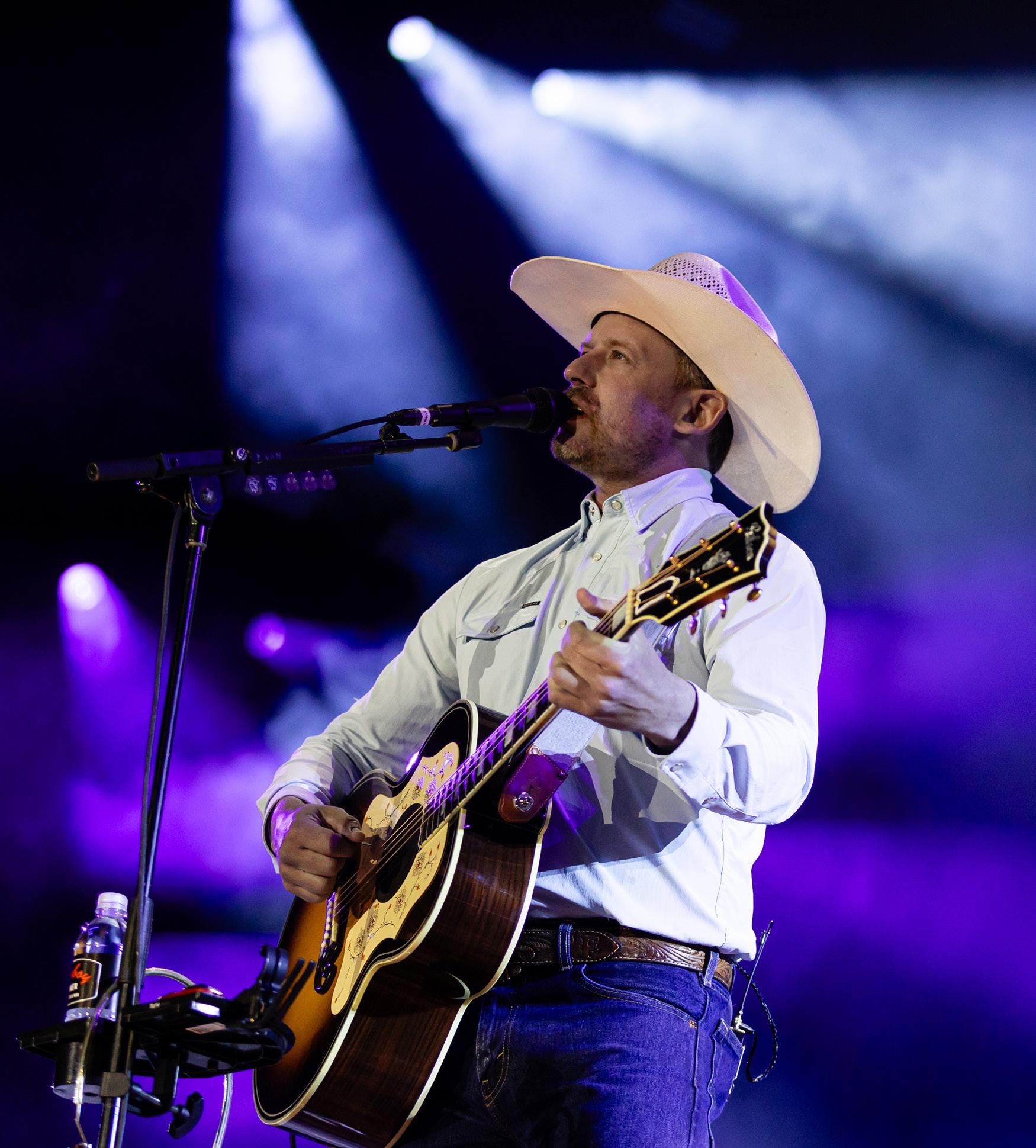
perform “A Tornado Warning.”
The band closed its set with “Heaven Passing Through,” leaving the audience in a multitude of feelings that only Turnpike could be responsible for.
Cross Canadian Ragweed
The moment most had been waiting was finally there as Cross Canadian Ragweed performed “Hammer Down” to announce their long awaited presence.


In the middle of their set, Ragweed brought Shane Smith and the Saints to sing “17.” The song Flores also performed earlier in the evening, singing “you’re always 17 in your hometown.”
The Ragweed classic was well received and loved as the crowd listened, sang and danced along.
Speaking of Flores, he came back on stage once again to join Ragweed for a rendition of “Alabama.” Flores sang
“Maybe I miss your loving, maybe I miss your kiss, just a little bit,” as if it was his own. Before closing the show, the members of Ragweed took a bow to the sound of fans erupting with an applause filled with excitement, exhaustion and contentment. Ragweed then exited the stage and left the crowd with memories until the next classic performance from Cross Canadian Ragweed.


Friday, April 17, 2026

Parker Gerl
OKLAHOMA CITY — An ace card typically overpowers everything in its way.
On Wednesday, the Cowgirls had an ace card of their own, and the same rules applied.
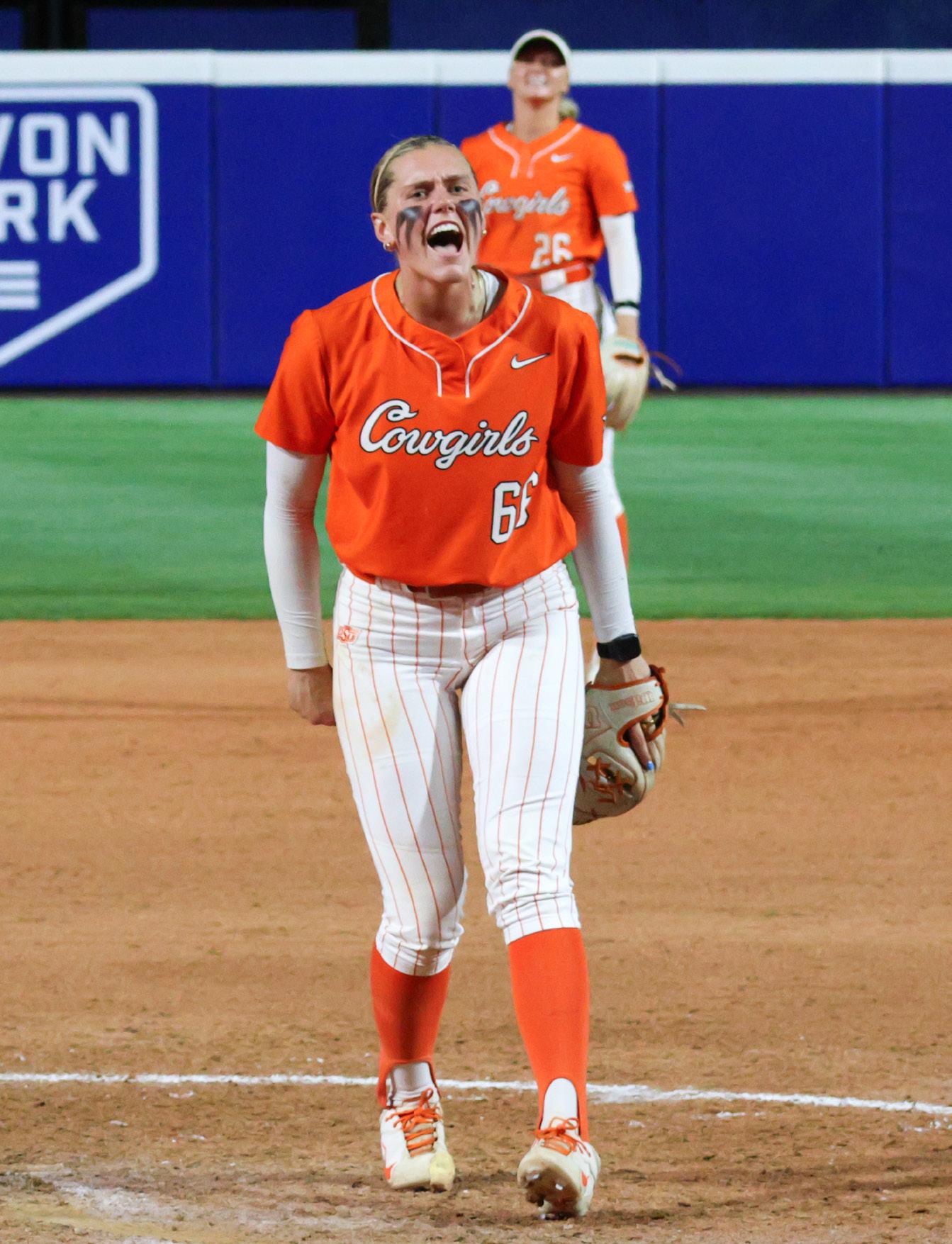
No. 21 Oklahoma State took down No. 1 Oklahoma 6-4 behind a complete-game effort from star pitcher Ruby Meylan, who stifled a potent Sooners offense for most of the night at Devon Park.
It marks the Cowgirls’ first win against a No. 1 team since May
14, 2022, when OSU defeated OU in the Big 12 Championship, and improves the Cowgirls’ record to 28-11 overall.
OU entered Wednesday night’s game No. 1 in the NCAA in hits, total runs, batting average and home runs. But Meylan kept college softball’s best offense in check by striking out nine batters, walking only one and giving up only two earned runs in seven innings.
She also tossed 133 total pitches and put up five scoreless innings.

Weston Wertzberger STAFF REPORTER
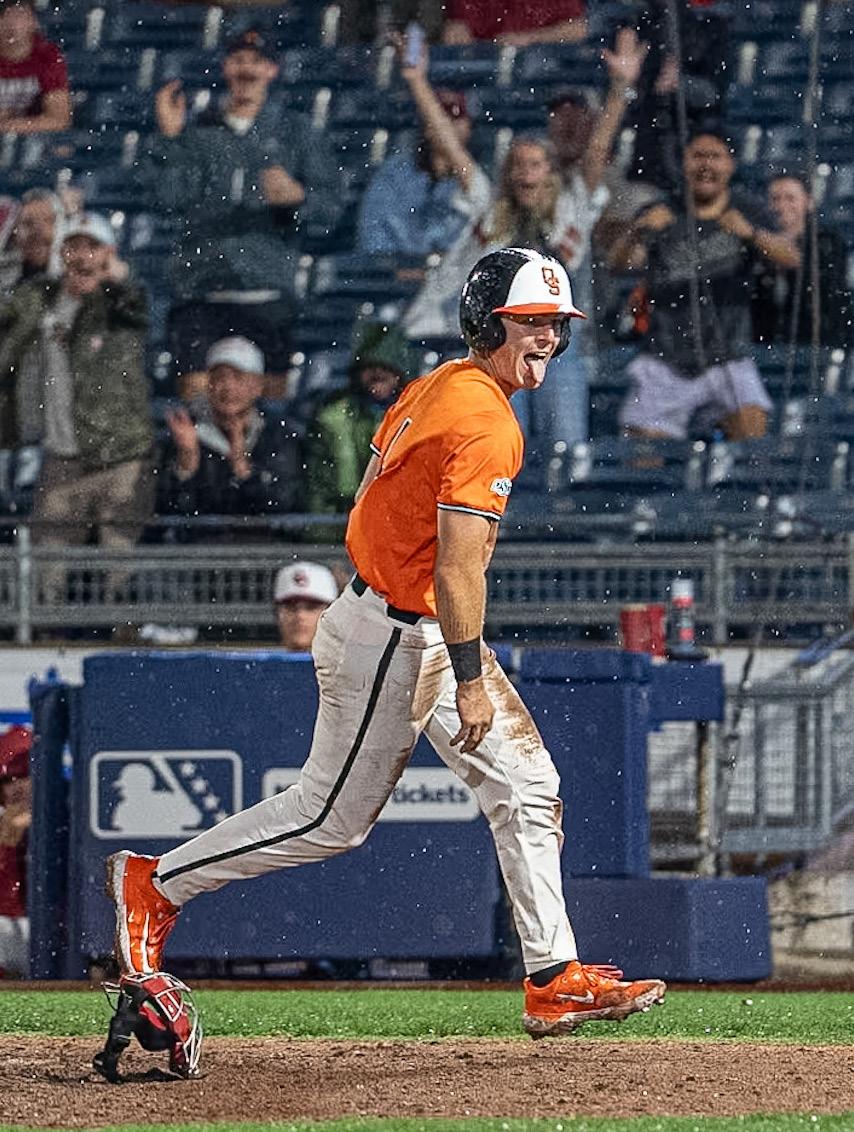
TULSA — Oklahoma State entered Tuesday night as one of the best teams in the country in home runs. OSU showcased its hot bats once again, hitting four home runs in a 7-3 win in eight innings at ONEOK Field due to weather.
The two teams met during opening weekend on Feb. 14 at the Shriners Children’s College Showdown, where the Sooners clobbered the Cowboys, 10-1.
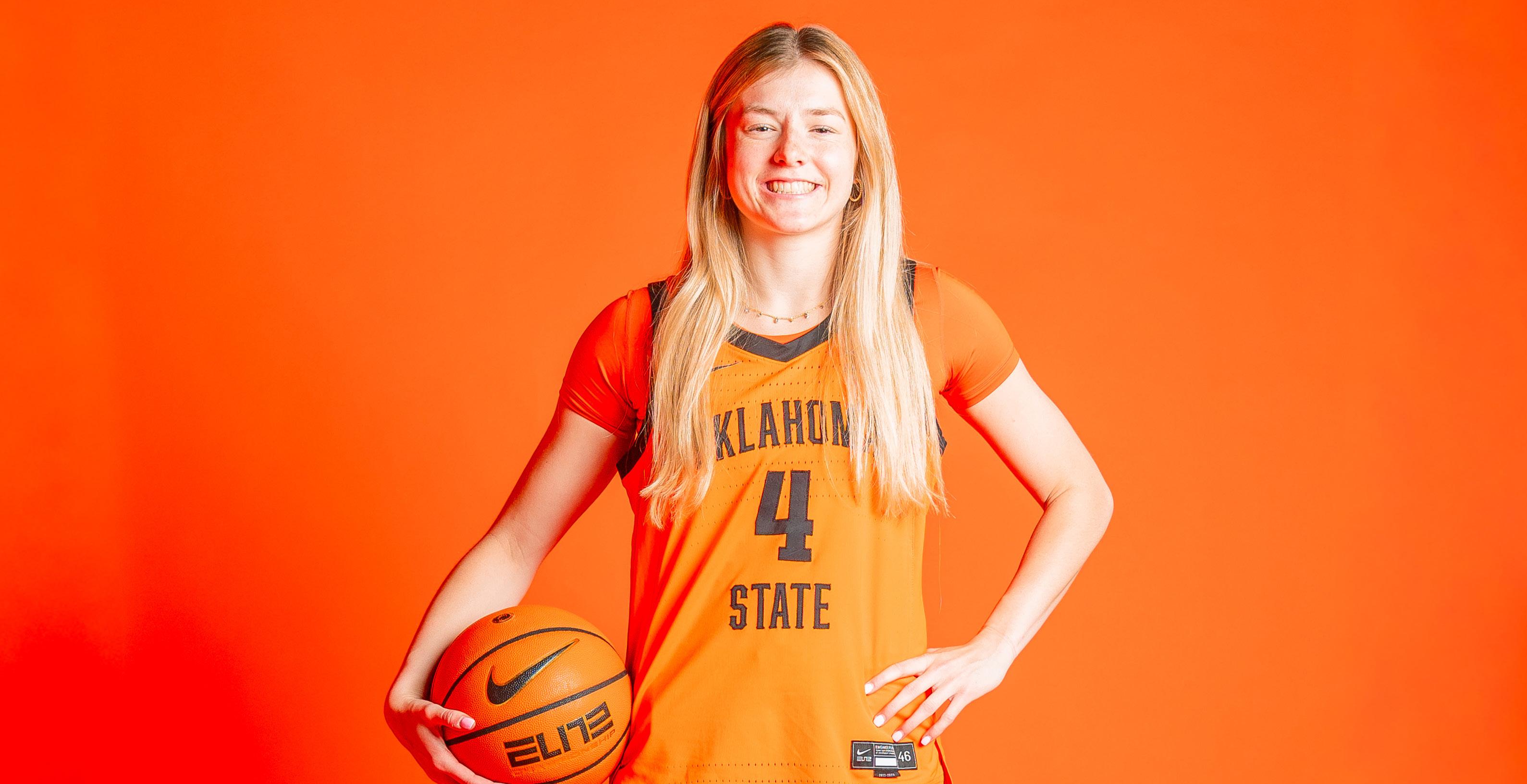
When Jacie Hoyt was coaching at the University of Missouri-Kansas City, she recruited a sharpshooter from Owasso.
Ellie Brueggemann.
BY CAYDEN COX I STAFF REPORTER
However, Brueggemann elected to go to Lindenwood and turned into a star player in three seasons with the Lions, allowing her to return to her home state and finish her college career at OSU.
“I’m coming home!” Brueggemann
said in an Instagram post announcing her commitment to OSU.
Not only does she return to a familiar place, but she will also play under a familiar face in Hoyt.
“She was recruited by coach Jacie to UMKC in high school,”
This time, OSU (23-14) got the best of OU (24-12) in the rematch. Brock Thompson got the Cowboys going in the top of the first inning with a one-out double to left field to get on base for the 31st consecutive game. The Sooners’ outfield mismanaged Thompson’s fly ball and it came back to bite them one at-bat later. Kollin Ritchie hit a moonshot to right-center for a two-run home run to give the Cowboys a 2-0 lead and their first against the Sooners this season.
See BEDLAM on page 4B
Brueggemann’s mom, Nicole, said. “That brings us full circle… (It’s) kinda neat that this has come back around like it has and she gets to play for (Hoyt).”
From a young age, Brueggemann was always a competitor.
Nicole recalled that Brueggemann and her brothers would “play for hours in the driveway” and that her brothers were “never easy on her.”
That led to countless hours of Brueggemann redefining her shot so she could get it over her brothers.
“She would come in and she was so determined she was going to score on them,” Nicole said. “We kept telling her, ‘You’re just gonna have to get your shot off faster.’ I honestly remember the day she came in and was like, ‘I scored.’”
Melody Stewart, Brueggemann’s coach at Lincoln Christian High School, could see her hard work in the driveway paying off, as Brueggemann caught her eye in PE class as early as fourth grade.
“Ellie’s been a pure shooter since she was a little bitty kid,” Stewart said. “I remember seeing her in PE going, ‘Wait a minute, this kid’s a little different.’ You could just tell by the fundamentals of her shot. Then, whenever I got to know her family and watched her brothers, all of them shot exactly alike. You could tell that all would get in the driveway and work on it.”
During her senior season at Lincoln Christian, Brueggemann shot 53% from the field, 43% from beyond the arc and led the Bulldogs with 14.4 points per game.
Under Stewart, Brueggemann played off the ball, but at Lindenwood, she was asked to be the Lions’ point guard — a position she was unfamiliar with.
Her first season had its struggles, as she finished with more turnovers than assists, but as her time at the position progressed, so did her skills. She finished her junior season leading the Lions with 102 assists.
Stewart knew Brueggemann was a knock-down shooter, but watching her passing game develop at LU stood out to Stewart.
“She didn’t play point guard for us, but then she went to Lindenwood and played point guard for them,” Stewart said. “I think watching her transition into that type of situation, as someone who never really had to handle the point guard position that much, was pretty cool to watch. Her ability to pass and find teammates is pretty, pretty unique in her game, too.”
Brueggemann got to show off her skills against Big 12 foe Baylor during her junior season.
In the first half against the Bears, she struggled, shooting 1 of 5 from the field, but took over in the second half, scoring 17 points and helping the Lions remain competitive BU.
After that game, Stewart knew Brueggemann had what it took to play at the Power Five level.
Once the Lions’ season ended, and former LU coach Amy Eagan took the job at New Mexico, Brueggemann faced a tough decision. Ultimately, she decided to enter the transfer portal.
After shooting 44% from beyond the arc, the seventhbest 3-point percentage in the country, Brueggemann was regarded as one of the top shooters available in the portal.
When Hoyt called Brueggemann, that familiar voice hit a feeling of home, and ultimately, she decided to transfer to OSU.
“I have known Ellie since I recruited her in high school when I was at UMKC,” Hoyt said in a press release. “She is someone who has always
stuck out to me as having the character and values that align with the culture our team hangs its hat on. She is one of the best 3-point shooters in the country and has great size and versatility and a hunger and gratitude for the opportunity on this stage in her home state.”
OSU wasn’t the only Power Five school interested in Brueggemann.
It was reported that Big Ten schools like Iowa and Nebraska were potential targets for Brueggemann, and that she had scheduled visits with the Hawkeyes and Cornhuskers.
But after visiting with Hoyt and the opportunity to play close to home arose, Brueggemann did not make the trips to Iowa City and Lincoln and opted to play for the Cowgirls.
“I think it really hit her
like I had the opportunity to not only play for coach Jacie and the staff, but I get an opportunity to play for my home state,” Nicole said.
“That means a lot, that’s a huge thing for her. She doesn’t take that lightly.”
Returning to her home state not only means a lot to Brueggemann, but it also gives her friends and family an opportunity to make the trip to Stillwater to watch her play.
“We’re ecstatic because the games are only 70 miles away,” Nicole said. “We’re gonna make it to all of them. My whole family is from Tulsa, so she’ll have a lot of fans.”
Brueggemann’s ties with OSU run back to her childhood, now, she will get to play for the team she grew up cheering for.
sports.ed@ocolly.com
Oklahoma State’s roster was nearly depleted.
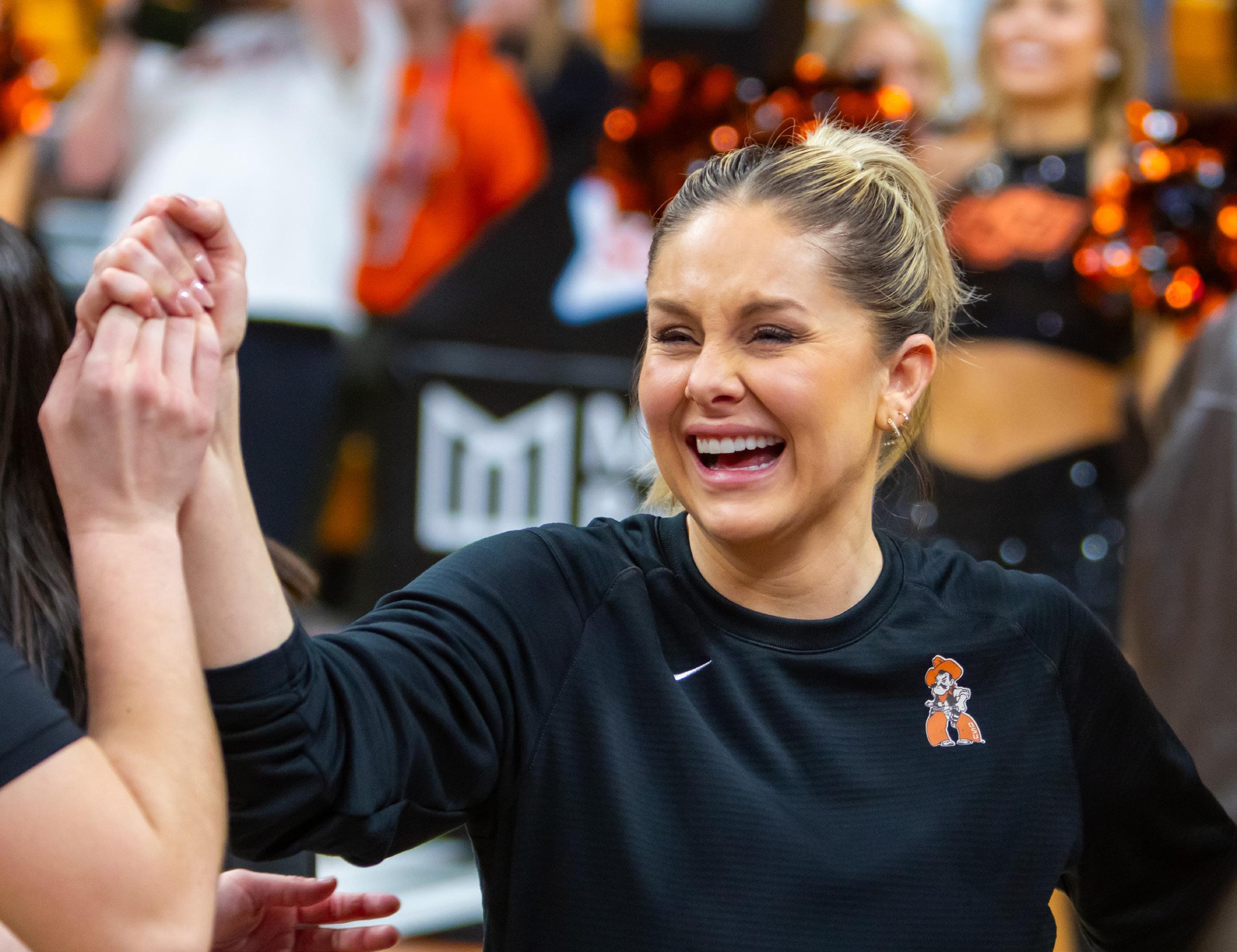
After the Cowgirls’ loss in the second round of the NCAA Tournament, nine OSU players entered the transfer portal, leaving coach Jacie Hoyt with the challenge of rebuilding her team through the portal.
Hoyt was up for the challenge, and has brought in four transfers so far, including a pair of former five-star recruits.
OSU likely isn’t done in the portal yet, but here’s everything you need to know about its newest additions.
Liv McGill, guard, Florida McGill is the biggest get for OSU in a long time.
Ranked the No. 2 overall player available in the portal by CBS Sports, she was a do-itall star with the Gators.
In two seasons at Florida, McGill took home All-SEC honors multiple times, earning a spot on the All-SEC Freshman team and All-SEC First Team honors this past season.
McGill was the lone player in DI to average 20, 6 and 6, with 22.5 points, 6.1 rebounds and 5.3 assists. She also wreaked havoc defensively, averaging 2.6 steals per game. She was also named an honorable mention AllAmerican.
While she received prestigious awards and lit up the stat sheet, she struggled from 3, shooting 26%. McGill was UF’s go-to option
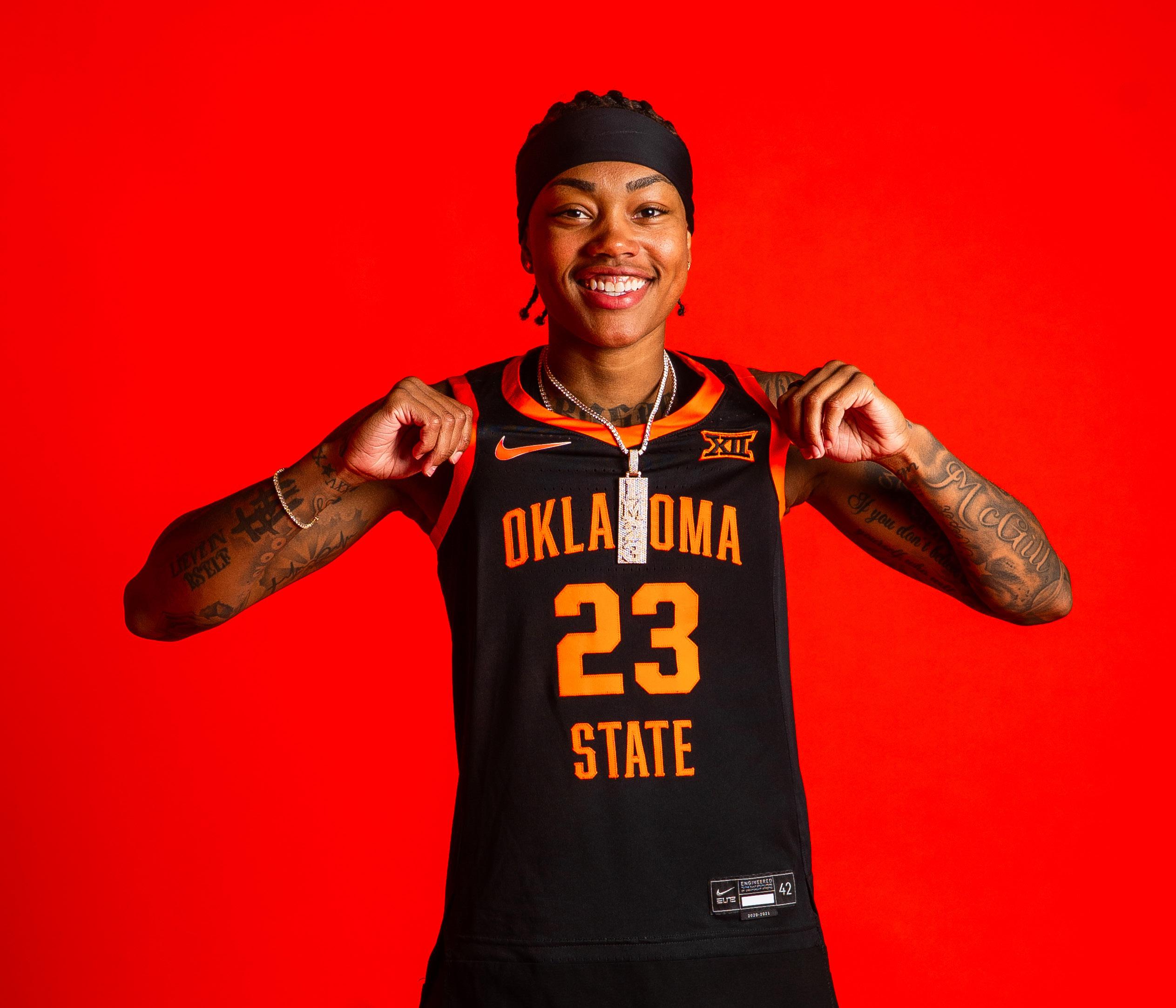
and its primary source of offense, which caused several defenses to zone in on her and led to her turning the ball over 5.3 times per game.
At OSU, McGill will likely play the point guard position, and in a system that lives off ball movement, she’ll be able to play more freely.
“Liv is arguably the most exciting player to watch in all of college basketball,” Hoyt said in a press release.
“She has elite quickness and an unbelieveable finishing package around the rim.”
LA Sneed, guard, Utah Sneed, a former five-star recruit, bounced in and out of the starting lineup at Utah. She averaged 6.3 points, 2.2 rebounds and 3.3 assists, and started in 16 games.
Although her shooting numbers were inefficient, shooting 39%, she made up for it on the defensive end, recording nearly a steal a game.
With three years of eligibility left, Sneed is likely a developmental piece for the Cowgirls but has the potential to be OSU’s next star.
“LA is one of the best true point guards in the country,” Hoyt said in a press release.
“Her experience as a true freshman in the Big 12 is a rarity and we cannot wait to build on that moving forward.”
Ellie Brueggemann, guard, Lindenwood An Oklahoma kid who’s a sharpshooter — sound familiar?
Like former Cowgirl Micah Gray, Brueggemann grew up an OSU fan and is a sniper from deep. Brueggemann, an Owasso
native, was widely regarded as one of the best 3-point shooters in the portal.
In three seasons at Lindenwood, Brueggemann earned All-OVC honors three times, including consecutive appearances on the AllConference first team.
During her junior season, Brueggemann had the seventhbest 3-point percentage in the country, shooting 44% from beyond the arc. She also starred against Power Five schools Baylor and Iowa. Against the Bears, she scored 20 points, and added 17 against the Hawkeyes.
She played the point guard position for LU, leading the Lions in assists with 102 total on the season. However, with McGill and Sneed set to be OSU’s point guards, Brueggemann will likely play off the ball.
With her 3-point skills and ability to play on and off the ball, she is the perfect fit for Hoyt’s system.
Talexa Weeter, guard, Fort Hays State Weeter took Division II by storm this past season.
She led all DII players in scoring, averaging 27.5 points, which led to her being named the DII player of the year. As a versatile player who can score at multiple levels, she’s currently on a 41-game streak scoring double-digits, and is a perfect fit for the Cowgirls.
While Weeter dominated at the DII level, OSU will hope that her game translates to the Power Five level.
“(Meylan) was on one today,” Sooners coach Patty Gasso said. “You could see that she was ready for this game, and that’s what competitors do. They step up in those big games.”
The Cowgirls got on the board first in the bottom of the second inning after Tia Warsop hit a double that scored Libby Jaques. But the Sooners quickly flipped their 1-0 deficit into a 2-1 lead when Kendall Wells hit a two-run home run off Meylan in the top of the third.
Meylan had quite the rebuttal, though.
She held OU scoreless in the fourth and fifth innings, while her offense plated four runs to take a 5-2 lead after five. Karli Godwin opened the floodgates with a moonshot home run to left field before Audrey Schneidmiller and Jayelle Austin each delivered RBI singles, and Rosie Davis scored on a groundout.
The Sooners fought back in the top of the sixth with two runs after Abby Dayton hit a laser, 2-RBI double off the left-field wall. That cut OSU’s lead to 5-4, and set up an opportunity for OU to tie or take a lead in the seventh.
But once again, Meylan came through in crunch time.
She put the Sooners down in order with a strikeout of Wells and two groundouts of Ella Parker and Gabbie
Garcia to secure the upset win for OSU.
Wells had gotten the better of Meylan earlier with the homer, but Meylan settled in and delivered one more scoreless inning.
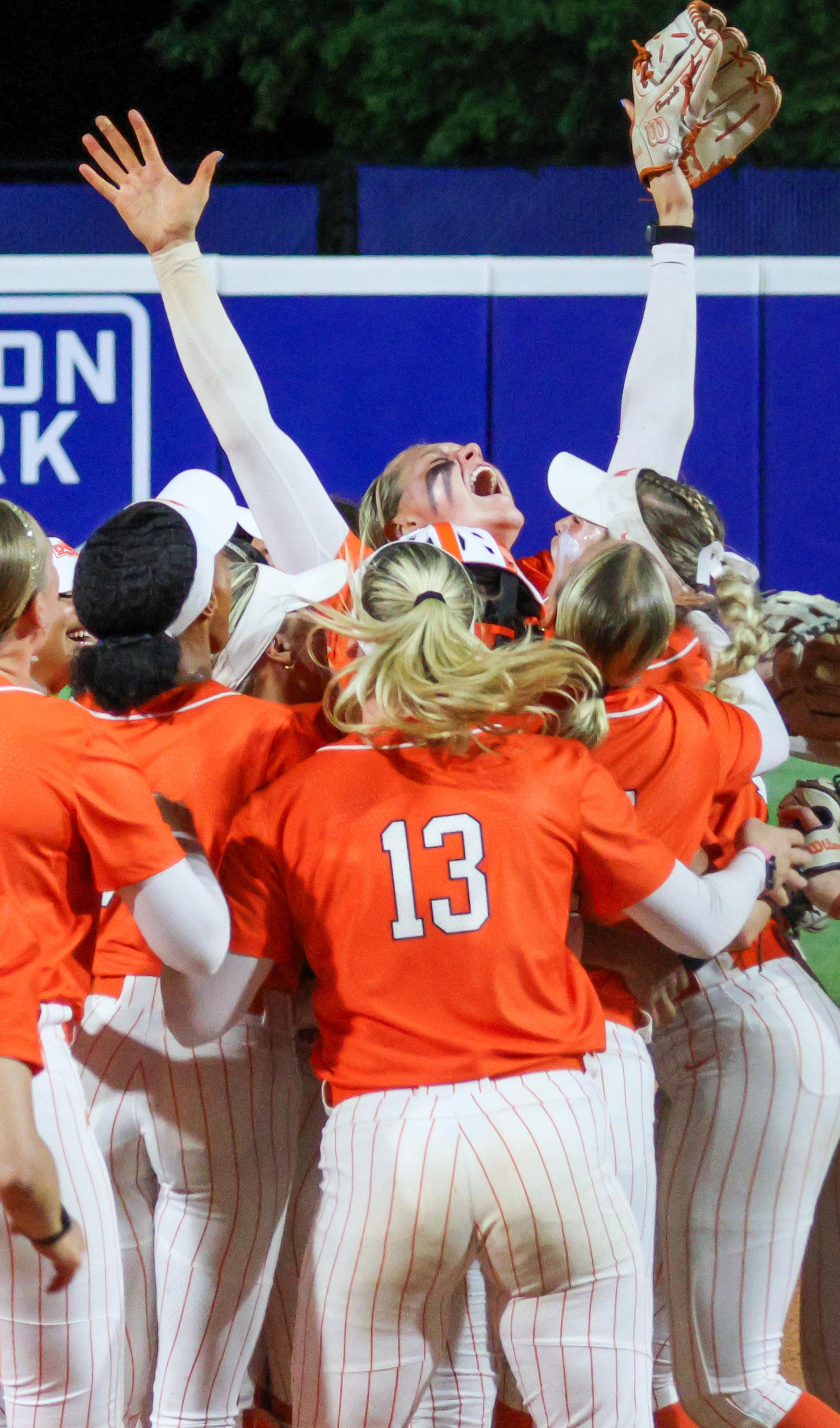
After the final out, Cowgirl players swarmed Meylan near the pitcher’s circle and celebrated with their ace after her 18th victory of the season.
“(I’ve reminded myself that) executed pitches beat really good hitters all the time,” Meylan said.
“I’ve gotten to a point this year, which has been super cool (and something) I’ve never felt in my career, being able to like only care about executing the next pitch.”
The Cowgirls finished with 10 hits and scored in every inning except the first. Warsop, Davis and Lexi McDonald each had two hits.
OSU has a three-game series this weekend against Arizona, but Cowgirls coach Kenny Gajewski said postgame he was always set on starting Meylan against OU, despite it being a midweek game.
Gajewski knew she wanted the ball, and he knew she was ready to deliver.
Meylan did just that, quieting an explosive Sooners offense to give the Cowgirls their biggest win of the season.
“I’ve been around great players in my time in this game,” Gajewski said. “… I’ve been around a lot of winning in my time. Ruby is at the top of that list.”

number one goal.”
That mindset has helped him become a tone-setter for an offense built on depth and power. It also reflects how much he has grown within the program.
For Alex Conover, the climb to the top of Oklahoma State’s lineup didn’t happen overnight.
It was earned one at-bat at a time.
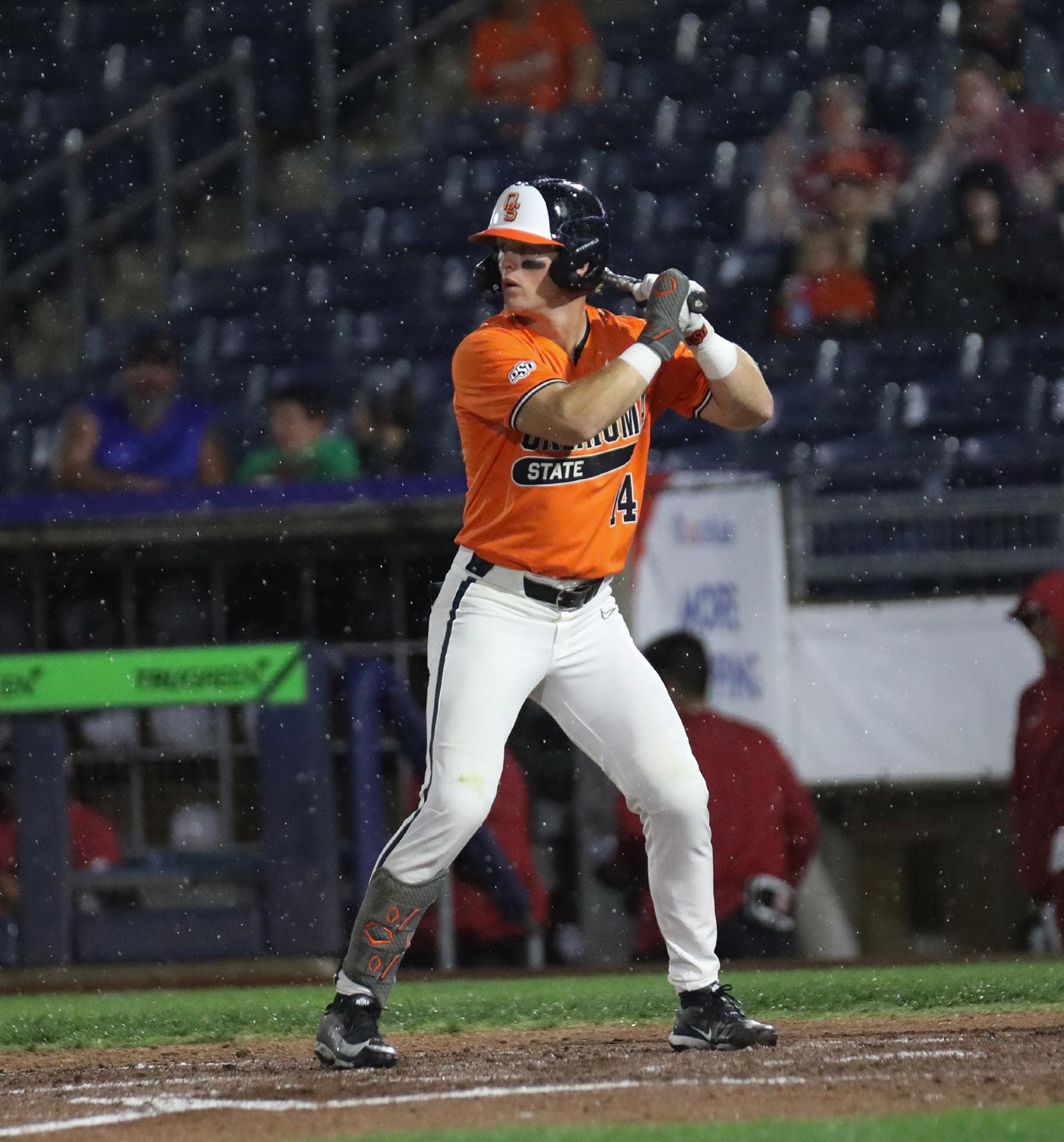
The junior outfielder has turned that steady progression into a key role at the top of the Cowboys’ order, providing both production and consistency as OSU’s leadoff hitter.
“I came from junior college and I stepped into a big Division I program just trying to earn my stripes and fight my way into the lineup,” Conover said after OSU’s win against South Dakota State on March 18. “... It was just survival of the fittest and I was just trying to get the bat on the ball in any way I could and let the game come to me and play hard and be a guy that could be relied on.”
That approach helped him carve out a role late last season. Now, it has turned him into one of the Cowboys’ most reliable offensive pieces.
Through 34 games this season, Conover leads OSU with a .341 batting average while posting a .464 on-base percentage and .528 slugging percentage. He has hit four home runs with 19 RBIs, continuing to build on the confidence he developed a year ago.
Conover’s impact goes beyond the numbers, starting with his role at the top of the lineup.
As the Cowboys’ leadoff hitter, Conover’s job is simple in theory: get on base.
In practice, it sets the tone for everything that follows.
“Putting the ball on the carpet number one and just creating first base is (great for the team),” Conover said. “Josh (Holliday) loves that and I love that. I think it really helps our team in the position that I’m in the leadoff spot. Seeing a good amount of pitches from the pitcher and then creating first base is always the
“Being able to really sit in with these guys and grow with them this past year, it’s amazing how much that helps you on the baseball field,” Conover said. “I’m so much more comfortable as a teammate and as a ball player, too.”
Comfort has turned into toughness, a trait OSU coach Josh Holliday values in his leadoff hitter.
“I like him best when he’s at his toughness mentality,” Holliday said. “I think he’s become an exceptional two-strike hitter. I think he plays better when he’s just trying to get on base. That’s when he starts driving the ball and hitting it hard. He’s a teamoriented kid. He plays the game for all the right reasons.”
That two-strike approach traces back to Conover’s high school days. Conover credits his high school coach, Breck Draper, for that approach at the plate. It’s where he learned how to battle with two strikes and not give away at-bats.
“You’ve got to be tough,” Conover said. “He taught me my two-strike approach. You see me spread out and box and really just try and fight my way through the rest of the bat. Foul off pitches and just put the ball in play. He was the one who taught me that.”
Conover’s toughness also has roots off the field.
With both parents serving in the military, Conover grew up around discipline and accountability — traits that now show up in his consistency at the top of the lineup.
Whether it’s working counts or setting the tone early, Conover has embraced the responsibility that comes with hitting leadoff. His path from fighting for a spot to leading off continues to shape who he is every time he steps into the box.

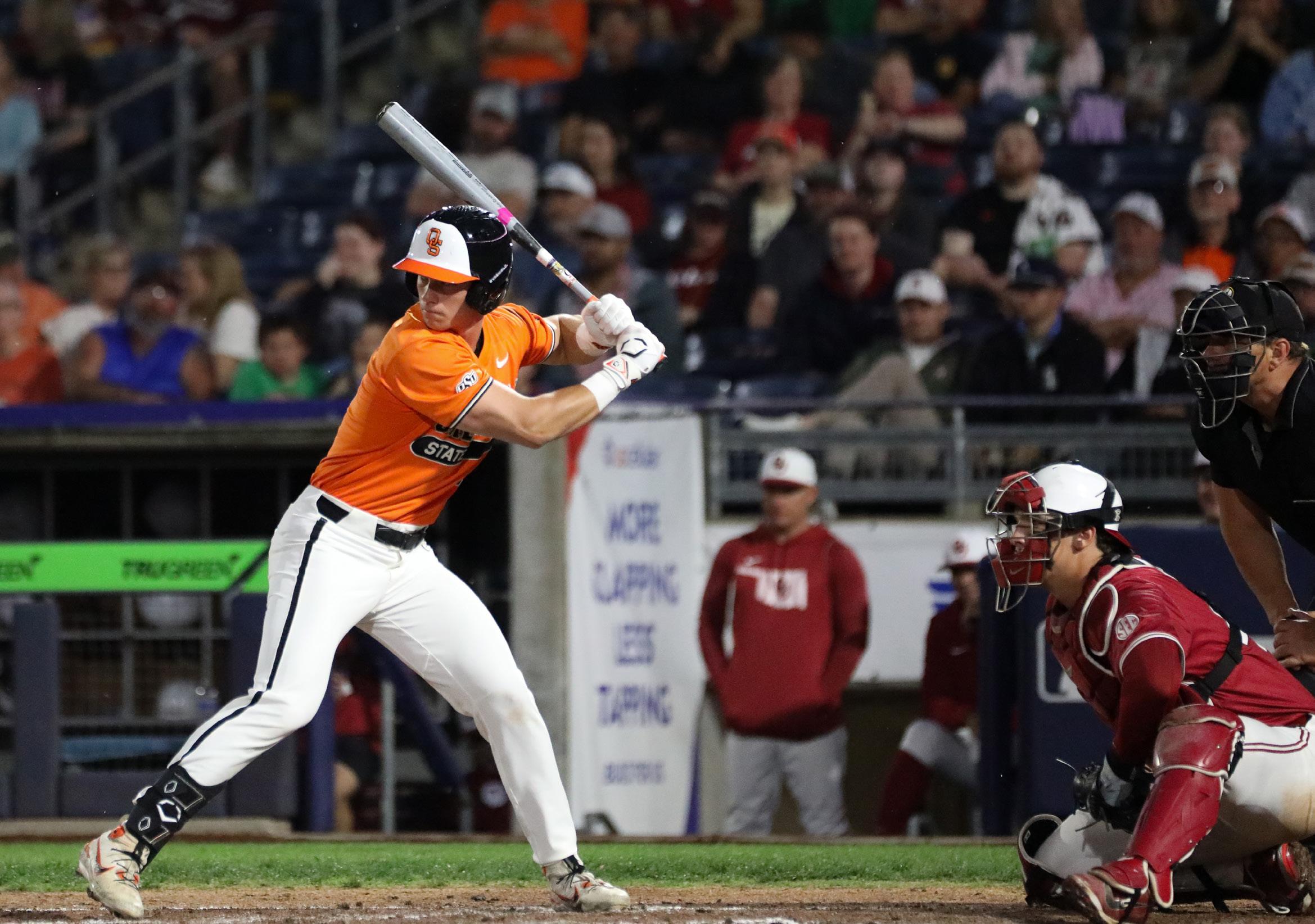
Ritchie became the third Cowboy in the Josh Holliday era to hit 21 home runs, alongside Trevor Boone (21 in 2019) and Nolan Schubart (23 in 2024). With a month of regular-season play remaining, he could be on top of that list.
Campbell Smithwick continued to build momentum for OSU with two outs by smothering a 1-2 pitch to right field to extend the Cowboys’ 3-0 lead.
OU’s starting pitcher Michael Catalano retired the side in the second and third innings, but the Cowboys would heat up at the plate once again.
Smithwick delivered his second home run of the night to center field for a solo score to increase OSU’s lead to four. Smithwick only had three home runs on the season.
Tuesday marked his first multi-home run game as a Cowboy.
Garrett Shull incised another three-run frame for the Cowboys in the fourth inning with a high fly ball to right field over the Sooners’ bullpen for a two-run home run as OSU rolled on to a 6-0 lead.
The Cowboys now have 79 home runs on the season and have hit at least four in a single game nine times this season. Originally, home runs weren’t the Cowboys’ biggest strength, in the first few weeks; they hit more than three home runs only once in the first 14 games.
In April alone, OSU has
done so five times, including the last three games.
Smithwick scored again in the sixth inning after Oklahoma reliever Drew Rerick threw two wild pitches and beat catcher Deiten LaChance in time for his third run.
The Cowboy pitching staff also showed resilience and skill against the Sooners, with starter TP Wentworth and reliever Brennan Phillips delivering strong
performances to keep the Sooners at bay.
Wentworth shut down OU in 3 1/3 innings of work with three strikeouts, two hits, two walks and no earned runs. His exit didn’t go as planned when he slipped on a 2-2 count with one out in the third inning, then grabbed his throwing arm as Holliday and the medical staff checked on him before walking to the dugout. Phillips came in relief after and continued where
Wentworth left off for OSU, finishing the bottom fourth frame with a strikeout and a groundout. The Sooners looked bound for a run in the seventh inning after the Cowboys made three errors, but recovered with a 6-43 double play to keep OU scoreless through seven.
Phillips finished his outing with 3 2/3 innings, striking out four batters while limiting OU to two hits and no earned runs.
The Sooners finally responded in the bottom of the eighth after back-to-back walks led to a three-run home run to right field for Jaxon Willits to cut OSU’s lead to four.
Immediately after, the game entered a rain delay at 9:37 p.m. 30 minutes later, the game was called, with the Cowboys taking a 7-3 win for their second neutral-site win of the season.
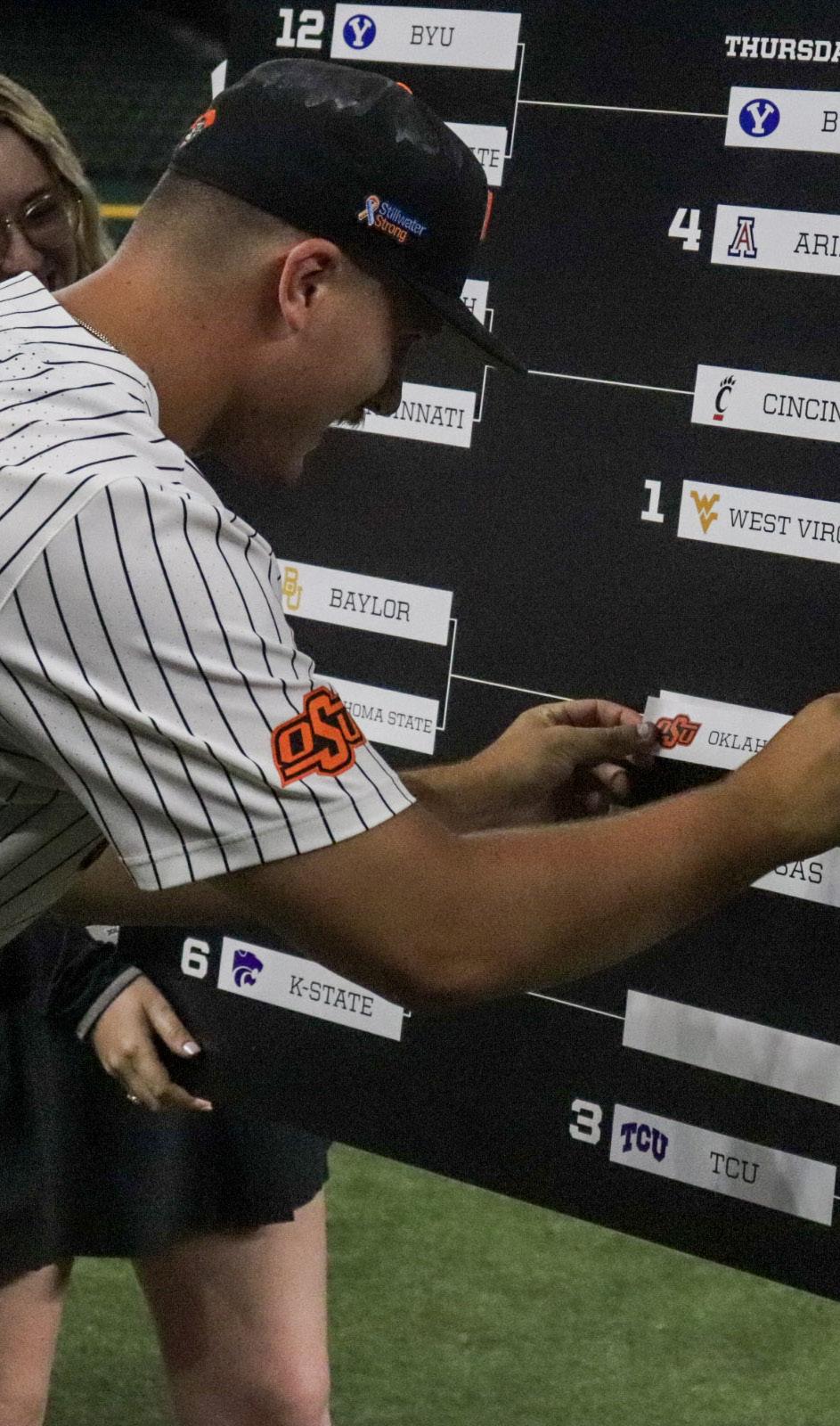
For the second consecutive season, the Big 12 Conference is changing its baseball tournament bracket format.
The bracket will consist of five single-elimination rounds, where the 9-12 seeds will play in the first round, the seven and eight seeds get first-round byes to the second round and the top six seeds get double-round byes to the quarterfinals.
This might not sound like a drastic change compared to last year’s bracket, where the 5-12 seeds played in the first round and the top-four seeds earned single-round byes to the quarterfinals, but it will make the path to the Big 12 Championship much harder for every team.
The top four teams won’t see game action until day three of the conference tournament, when they will face lowerseeded teams that have played at least one game and could be building momentum.
Meanwhile, the four lowestseeded teams would have to win five games without taking a single day off to win the tournament. Even if going for an at-large spot in the NCAA Tournament, it could take at least two or three wins for some teams to qualify.
Playing for multiple days without a single break, especially in scorching-hot Surprise, Arizona, where the conference tournament will be held, could cause fatigue for teams. Looking at the Big 12 standings currently, OSU could be in that spot.
The Cowboys (23-14) are ninth in the conference standings with a 7-8 record. This would put them in the first round of the conference tournament and would have to
win five games to claim the Big 12 title.
But OSU is also only two games behind Arizona State’s 9-6 conference record for fourth in the standings and a double-round bye in the Big 12 tournament.
If the Cowboys settled for an at-large spot in the Field of 64, they would be around the bubble, ranked 42nd in the RPI. D1Baseball has the Cowboys as the first team out, and Baseball America has them as the fifth team out. Big 12 play is now halfway complete, with five more weeks to go. Every result will matter for OSU, but this weekend’s series could be critical.
The Cowboys host Kansas (27-10) for a three-game series, riding a season-high 11-game winning streak, its longest since 1994. KU also holds a two-game lead for first place in the Big 12 at 12-3.
Most of OSU’s conference wins have come at home at O’Brate Stadium, with a 5-1 record, and the Cowboys are 15-3 at home overall, so grabbing a series win over a very competitive Kansas team will be necessary.
As for the Cowboys’ resume, they hold a 7-10 record against Quad 1 opponents with six games to go. Half of them are against KU, and OSU is coming off two pivotal wins against Kansas State in the series finale on Sunday and got revenge against Oklahoma on Tuesday.
Overall, if OSU can find a way to move into the top eight or even top six in the standings in a month from now, its path to the conference championship won’t be as difficult as it sounds.
But if the Cowboys find ways to fall short in multiple games and finish right where they are at ninth, it could be a difficult route in the Big 12 bracket.
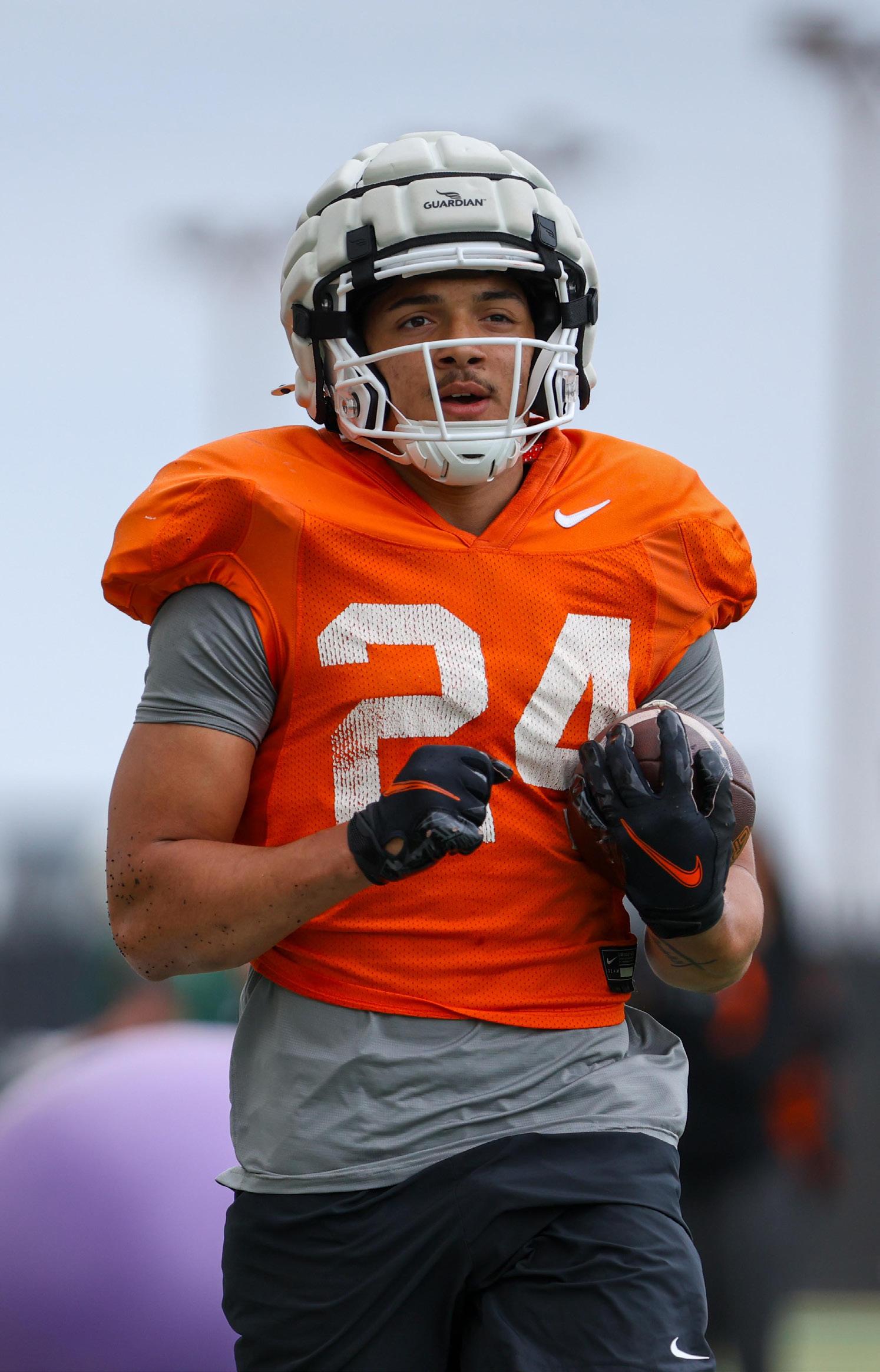
Before they shared the sideline at North Texas, Caleb Hawkins and Patrick Cobbs began a strong relationship dating back to Hawkins’ high school career.
It all started at a camp when Hawkins was at North Rock Creek High School, where he connected with Cobbs. Now reunited at Oklahoma State, that bond has helped them quickly adjust to a new scenery as the Cowboys look to revamp the running back room.
At North Rock Creek, Hawkins made his mark in his junior year, as he rushed for more than 1,100 yards and ran for 16 touchdowns.
That season’s performance caught the eye of Cobbs, who went to a spring football camp at North Rock Creek before Hawkins’ senior year in 2024. Cobbs was so impressed by what he saw out of Hawkins that he invited him to a camp in June, and Hawkins continued to amaze at the summer camp.
“He’s a big athlete,” Cobbs said. “When he came to camp, he ran well, he moved well, he caught the ball extremely easy.”
Hawkins’ senior year saw him play a larger role for North Rock Creek, playing on both the ground and in the air and dominating in both areas.
He rushed for 1,602 yards on 204 carries and scored 28 rushing touchdowns, while tallying 17 catches for 407 yards and three touchdowns through the air.
Defensively, Hawkins finished the year with 90 tackles, four interceptions and three forced fumbles.
“People didn’t know he played 130 snaps a game,” Cobbs said. “He played every snap on defense, every snap on offense, and sometimes his film probably didn’t look like it was super explosive, but once you go watch the kid and see him play, and how competitive he is, I mean, it’s easy.”
While he mainly focused on the gridiron, Hawkins also succeeded with track and field and basketball at North Rock Creek.
As a sophomore in April 2023, he qualified for the Oklahoma 3A long jump finals with a 22-1.5 leap at regionals. That same month, Hawkins high-jumped 6 feet twice.
He replicated that performance in his junior year, qualifying for state where he placed sixth with a long jump of 20-10.5. Hawkins posted season-best long jumps of 22-0 (twice) and 21-2.5. Per MileSplit, he high jumped 5-10 and ran an 11.47 in the 100-meter dash that spring.
Hawkins was pushed by his Dad, who played college basketball, to get on the court at North Rock Creek. He started dunking shortly before his freshman year began and used it as his primary scoring method throughout his career.
Hawkins received honors in track and field and basketball, but he did not receive honors for football, which Cobbs spoke about.
“It’s weird that Caleb all-stated in basketball and track, and didn’t all-state in football,” Cobbs said. “He won the long jump in track, and he’s dunking the ball all over the gym in basketball. I mean, the kid’s a freak athlete.”
Hawkins spoke about what he remembers from playing track and field and basketball.
“It was obviously exciting to play basketball and run track,” Hawkins said. “I miss it every once in a while, but I know what I came here to do is play football. That’s my love.”
He also discussed how track and field benefited his football performance.
“I also enjoyed track a lot,” Hawkins said. “That definitely helped me coming into football, getting more explosive out of blocks.”
As OSU prepares for its spring game on Saturday at Boone Pickens Stadium, Hawkins has shown himself to be a very coachable player, which is something Cobbs commends him for.
“He’s a smart kid,” Cobbs said. “You can tell him something, and he can have it locked in for a long time. He’s always hungry for more information, and that’s what’s going to make him special.”
Hawkins spoke deeply about his relationship with Cobbs and how beneficial it is to be with him at a new school.
“He’s like family to me,” Hawkins said. “He’s just always been there for me, he’s always checking in on me, making sure I’m ok. Him being there has just made it a way easier process.”
WHEN: Saturday, 4 p.m.
WHERE: Boone Pickens Stadium FORMAT: Offense vs. defense scrimmage
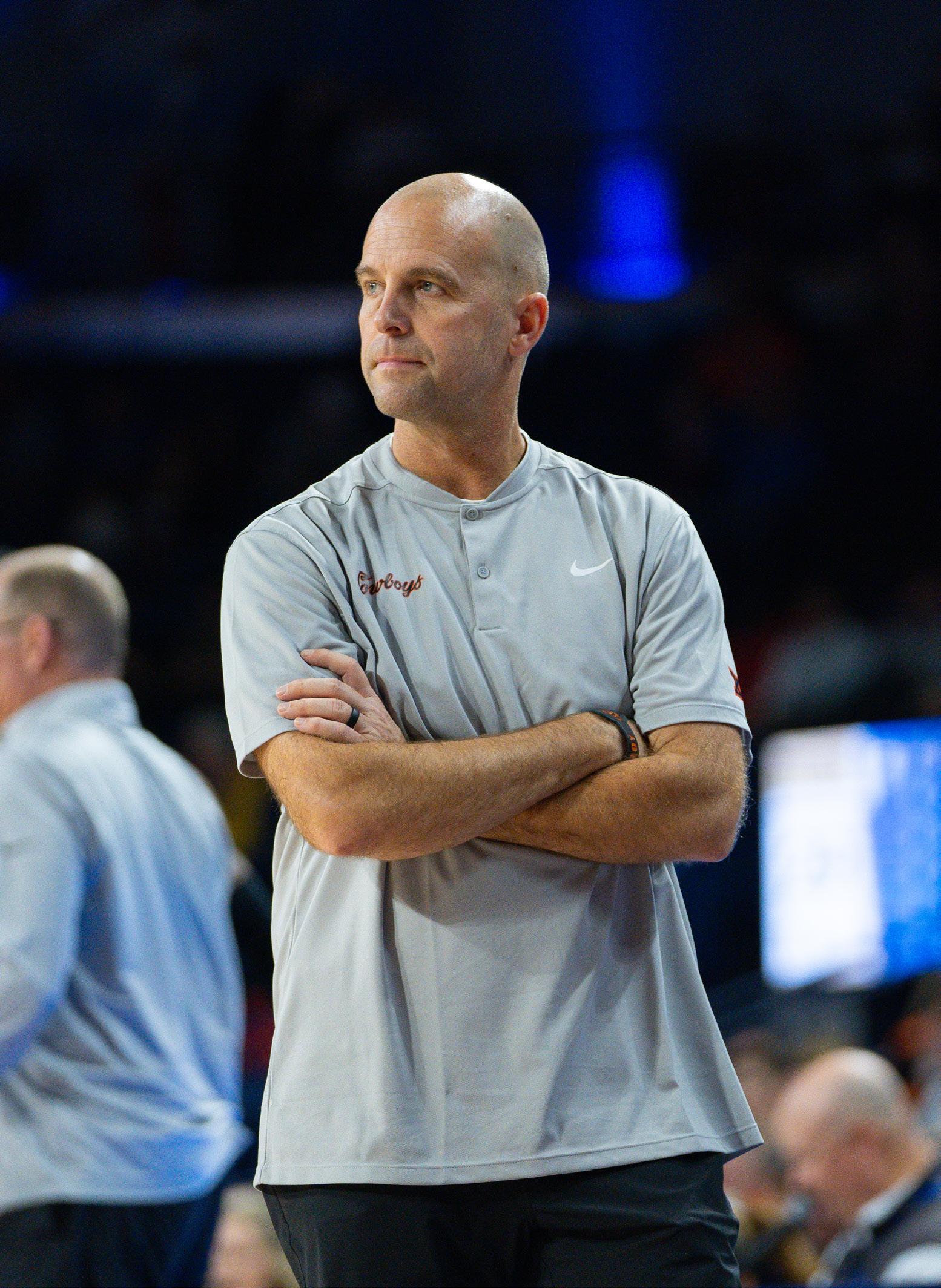
Steve Lutz is off to a hot start in the transfer portal.
When the portal officially opened on April 7, it was clear the Cowboys would target defense and size. The Oklahoma State coach has landed a little bit of both so far, with more help potentially on the way soon.
On Tuesday came the newest Cowboy. The Field of 68 reported that Kashie Natt, the reigning Conference-USA defensive player of the year, has committed to OSU — a big get for the Cowboys, as they were statistically the worst defense in the Big 12 this past season.
Natt is coming off a season averaging 10.8 points, 8.2 rebounds, 2.4 assists, 2 steals and 1.1 blocks for Sam Houston. In his first season at the Division-I level, he led Conference USA in steals (69) and finished second in rebounds (278), despite standing 6 feet 3.
According to KenPom, Natt’s steal percentage also ranked 20th nationally. He should be an immediate boost, as the perimeter is where OSU often struggled defensively.
But Lutz’s first portal pick-up came on Monday, and he’s coming to Stillwater from a blue blood.
Jonathan Givony first reported that North Carolina transfer Luka Bogavac pledged to OSU, giving the Cowboys more size and shooting for 2026-27. Bogavac, a 6-foot-6 wing, averaged 9.8 points, 2.5 rebounds and 2.2 assists for the Tar Heels and knocked down 35% of his 3s.
Bogavac also gives OSU a taste of high-level experience.
Prior to enrolling in college, Bogavac played in 55 games in two seasons for SC Derby Podgorica in his home country of Montenegro. He drilled 40% of his 3s in 2024-25, but struggled the season prior, only hitting 32% from deep.
Bogavac will turn 23 years old by the time next season starts. He was listed as a junior by UNC this past season.
Lutz’s first two portal gets are a strong start, but OSU still has ground to cover with 10 players from this past season either exhausting eligibility or entering the transfer portal.
The Athletic’s Tobias Bass reported last week that OSU was one of the schools to contract Jerald Colonel, a 6-foot-9 wing, from Stephen F. Austin. Colonel was voted Southland Defensive Player of the Year this past season and averaged 5 points, 7.3 rebounds, 1.3 assists and a league-leading 2.6 blocks.
Eli Rice is another player that OSU has reached out to, according to Bass. He averaged 6.7 points and 1.7 rebounds per game at Penn State this past season while shooting 39% from 3 on 105 attempts.
Overall, based on their reported targets, it’s clear Lutz and the Cowboys are looking to improve defensively on the perimeter and in the interior. They’ve also picked up some 3-point shooting in the process, a tool you can seemingly never have too much of.
With spring practices coming to a close, the season is inching closer, and we have a better indication of what each program could look like in 2026.
Parity has driven the Big 12 Conference for much of the past few seasons. Each team, no matter how weak or strong on paper, can carve a path to a deep run.
Here is one question for each Big 12 team as spring workouts come to an end.
Arizona: Can the Wildcats keep their momentum going?
Brent Brennan’s team was an afterthought heading into 2025 after a 4-8 season the year prior. The Wildcats proved doubters wrong instead, going 9-4 with a 6-1 record at home. That turnaround was led by quarterback Noah Fifita, who’s set to return after passing for 3,228 yards. Now it’s up to Brennan and Co. to build on the impressive showing.
Arizona State: Boley or Keene?
Kenny Dillingham hasn’t had to worry about quarterback for the past couple of seasons with Sam Leavitt running the show. But now Leavitt is at LSU with Lane Kiffin, and the Sun Devils are back to square one behind center.
Dillingham is deploying a quarterback battle between Kentucky transfer Cutter Boley and Michigan transfer Mikey Keene. Whoever wins the job will need to provide consistent play for ASU to succeed.
Baylor: One more time, Aranda?
Dave Aranda has been in this situation before as he enters his seventh season coaching the Bears.
Baylor chose to retain its coach after a 5-7 season in 2025 that fell way below expectations. But make no mistake about it, Aranda needs to get things back on track after his team has gone 16-21 in the last three seasons. He coached himself out of the hot seat in 2024 with an 8-5 record and needs to do it again.
BYU: Can the Cougars do more in the passing game?
BYU reached the Big 12 title game and had a heck of a season with 12 wins. But two losses came against Texas Tech in a similar fashion — the Red Raiders stifling its passing game for less than 200 yards.
Quarterback Bear Bachmeier is back to lead the offense, but the Cougars will need to become more effective through the air to reach their full potential. They’ll look to do so after losing their top three
receivers from last season, another potential roadblock.
Cincinnati: Can it recover from the loss of Sorsby?
The Bearcats had the luxury of a top quarterback in Brendan Sorsby behind center this past season. But that also left them victims of the quarterback carousel.
Sorsby jumped to Texas Tech after passing for 2,800 yards and 27 touchdowns, guiding Cincy to seven wins in its first eight games. After five straight losses to end the season and a quarterback downgrade, will the Bearcats remain competitive?
Colorado: Will Lewis turn things around?
After a 3-9 season in 2025, Deion Sanders needs a winning season in 2026.
He hopes that former fivestar quarterback Julian Lewis is the spark his Buffaloes need after the offense sputtered this past season. Lewis completed 52 of 94 passes for 589 yards and four touchdowns in limited action, but he has the tools to become a star in his second season.
Houston: Another leap inbound?
The Cougars turned heads in 2025 with a 10-3 season, but hope to keep on climbing.
With the return of quarterback Conner Weigman next to an improved offensive line and the addition of running back Makhi Hughes, a former 1,401-yard rusher, UH has tools in place to compete for a Big 12 title. Now it’s up to
coach Willie Fritz and Co. to get it done.
Iowa State: How fast can the Cyclones rebuild?
Matt Campbell accepted the Penn State job after 10 seasons with ISU and took 23 Cyclones with him, including quarterback Rocco Becht. With 55 total players lost, new coach Jimmy Rogers has a ton of work to do after bringing in 47 players from the transfer portal.
Kansas: Who wins the QB job?
KU hasn’t had to worry about the quarterback position for much of the past six seasons with dual-threat weapon Jalon Daniels.
But now that time is over.
The Jayhawks will let Isaiah Marshall and Cole Ballard battle for the starting job, with the winner tasked with turning things around in Lawrence after a 5-7 season in 2025.
Kansas State: Is Klein the missing piece for Johnson?
Former Texas A&M offensive coordinator Collin Klein is returning to his alma mater as a first-time head coach. And given his past success with quarterbacks, Klein needs to get the most out of talented senior Avery Johnson.
Johnson made progress in 2025 by cutting down on his turnovers, but his passing yards, passing touchdowns and rushing yards all decreased from his 2024 season.
Oklahoma State: What about the defense?
The Cowboys are expected


to have immediate success on offense behind quarterback Drew Mestemaker and the bevy of talent Eric Morris brought with him from North Texas.
But for OSU to turn things around in 2026, the defense is a part of that equation, too.
Defensive coordinator Skyler Cassity is working with several new faces and is tasked with a heavier rebuild on defense than Morris is on offense.
TCU: Is Craig enough to replace Hoover?
Josh Hoover was second in the Big 12 in passing with 3,472 yards and 29 touchdowns. Although he was sometimes turnover-prone, he often put the Horned Frogs on his back.
But Hoover opted to jump on the quarterback carousel and transfer to Indiana in the offseason. So, TCU brought in Harvard transfer Jaden Craig after he passed for 6,074 yards and 52 touchdowns in three seasons. His resume is impressive, but his skill set will need to translate well to the Power Four.
Texas Tech: Can the Red Raiders make up for key defensive losses?
TTU is the clear-cut favorite to repeat as Big 12 Champion, but it still has some changes to sort through.
Star defenders Jacob Rodriguez, David Bailey and Romello Height are no longer in Lubbock after they all departed for the NFL. Rodriguez led the team in

tackles with 128 this past season, and Bailey and Height combined for 24.5 sacks.
UCF: Can the Knights take advantage of a potential favorable schedule?
Year two of the Scott Frost 2.0 era features a heavily overhauled roster with 47 new players and a new quarterback in Alonza Barnett III. Luckily for the Knights, they get seven home games with no matchups against Texas Tech or Utah. If there was a time for Frost and UCF to build some momentum, 2026 would be the year to do it.
Utah: What does the Scalley era look like?
Kyle Wittingham built the Utes into consistent winners over the past 22 seasons. But with Wittingham now at Michigan, former defensive coordinator Morgan Scalley is taking the reins in Salt Lake City.
Following a legend in Wittingham won’t be easy, but Scalley watched him up close for years and has enough talent to be a Big 12 contender immediately.
West Virginia: Can the offensive line improve?
Rich Rodriguez’s team was sacked 31 times and allowed 5.83 tackles for loss per game in 2025. If the Mountaineers want to take pressure off their young quarterback — whether it’s Michael Hawkins or Scotty Fox Jr. — they’ll need to give them enough support up front.
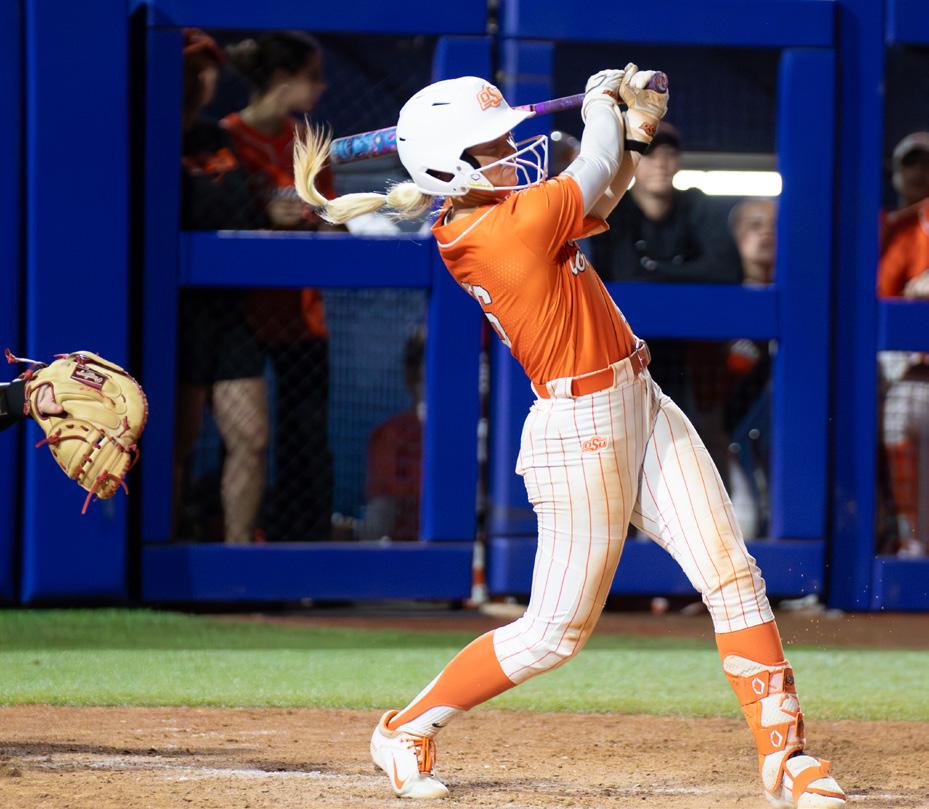
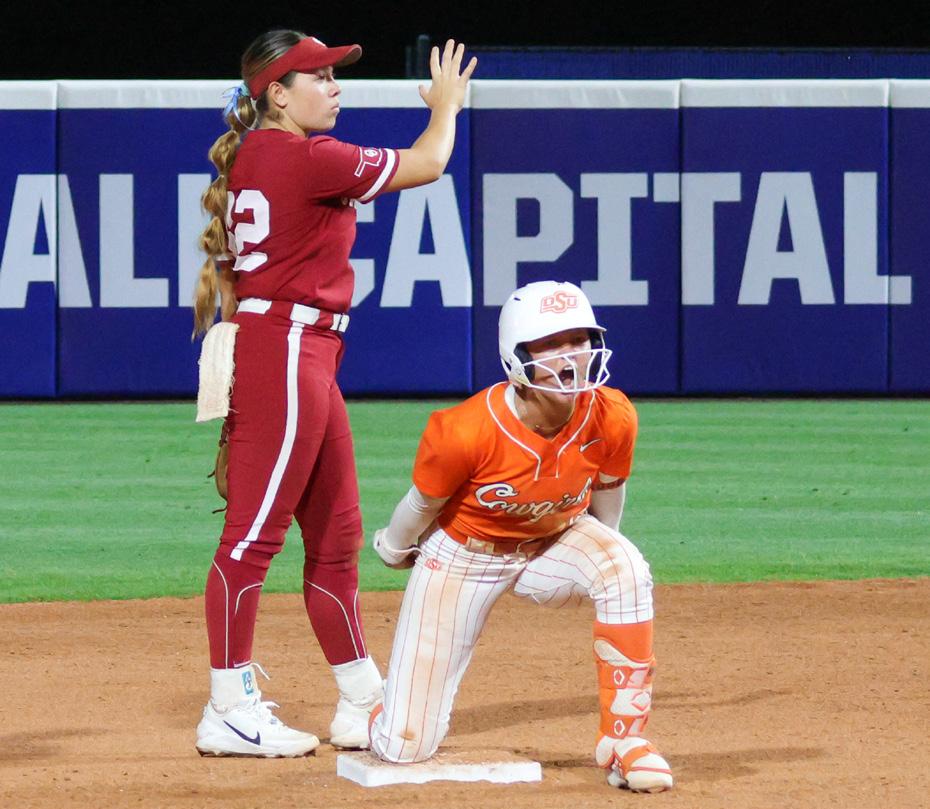
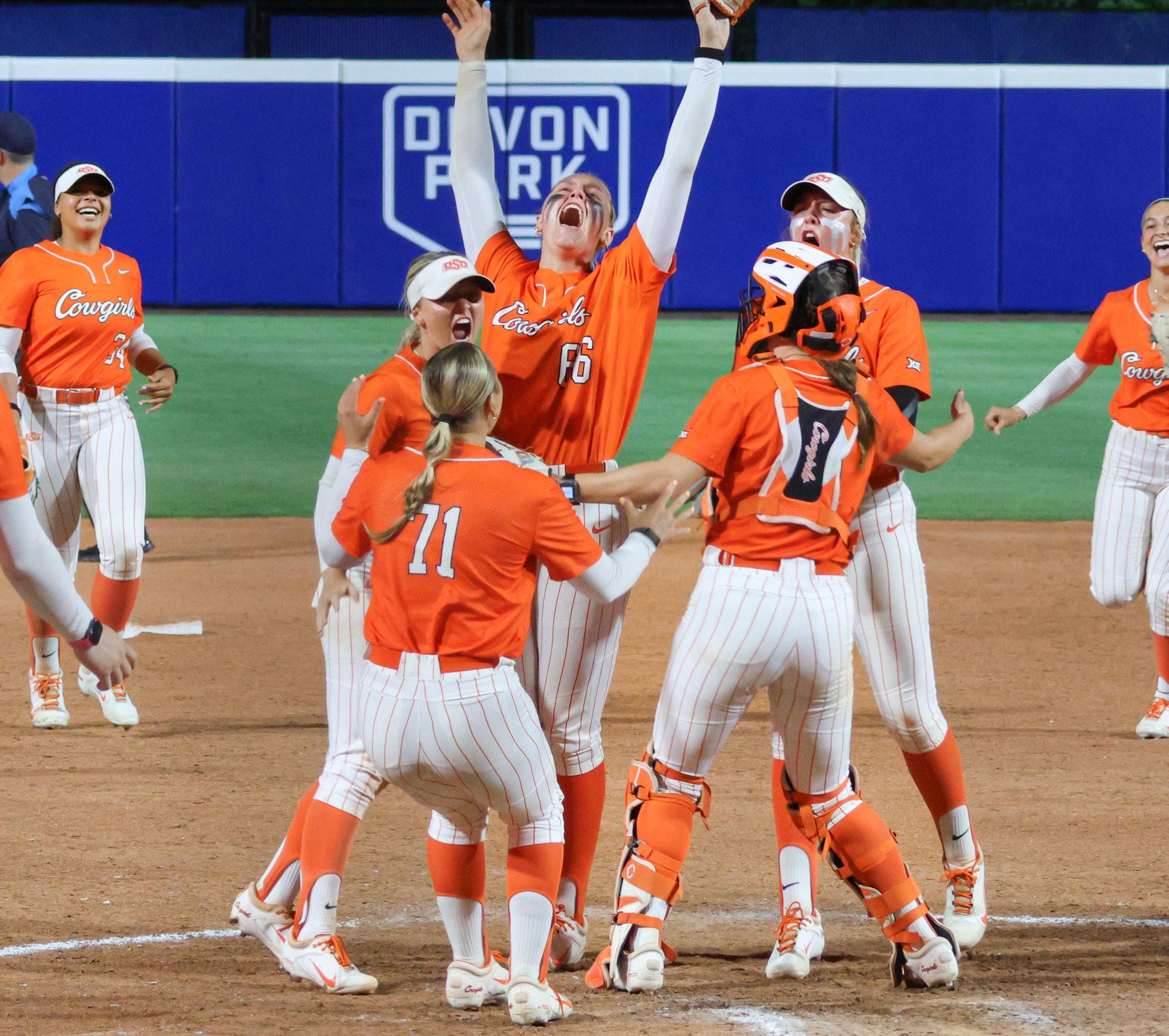
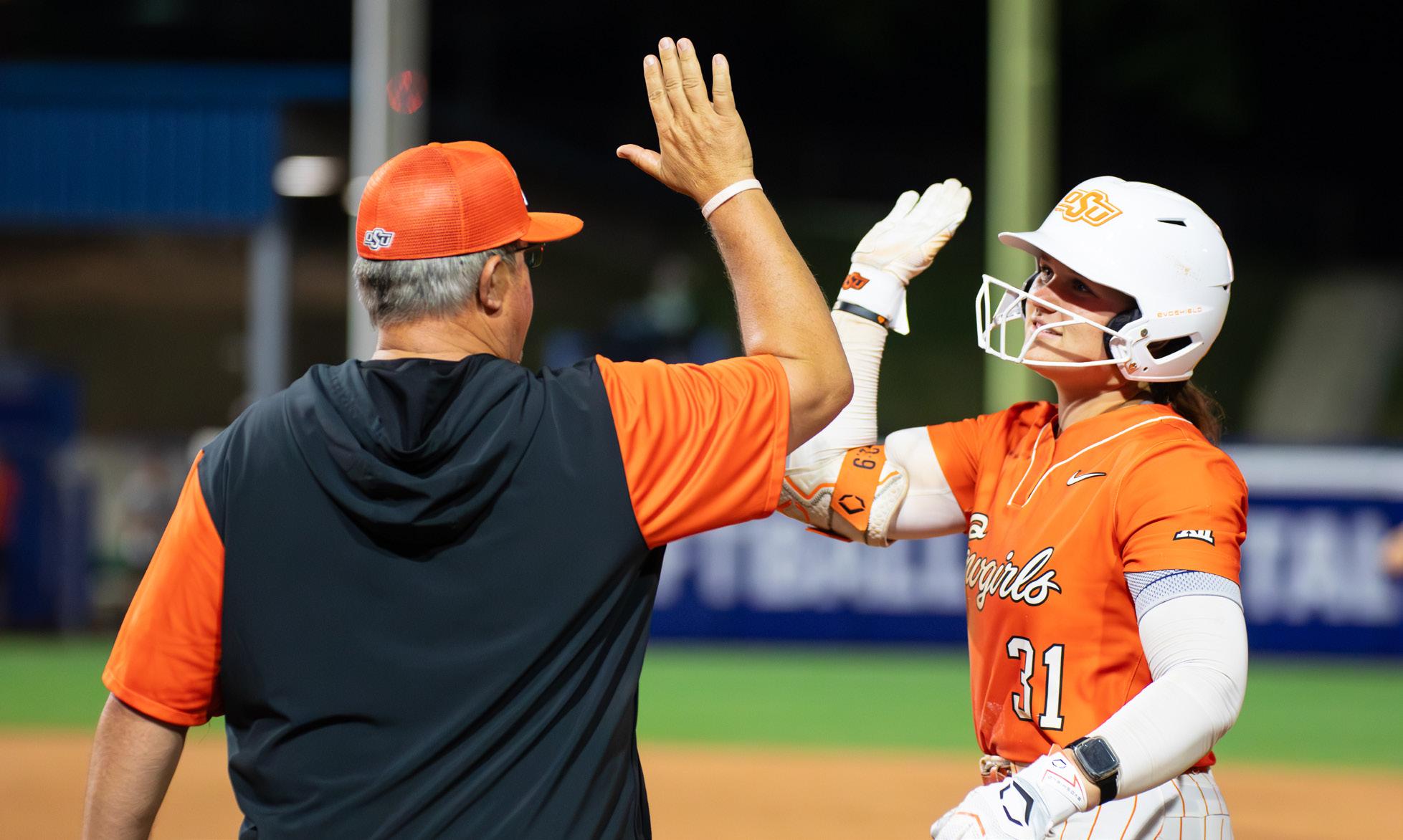
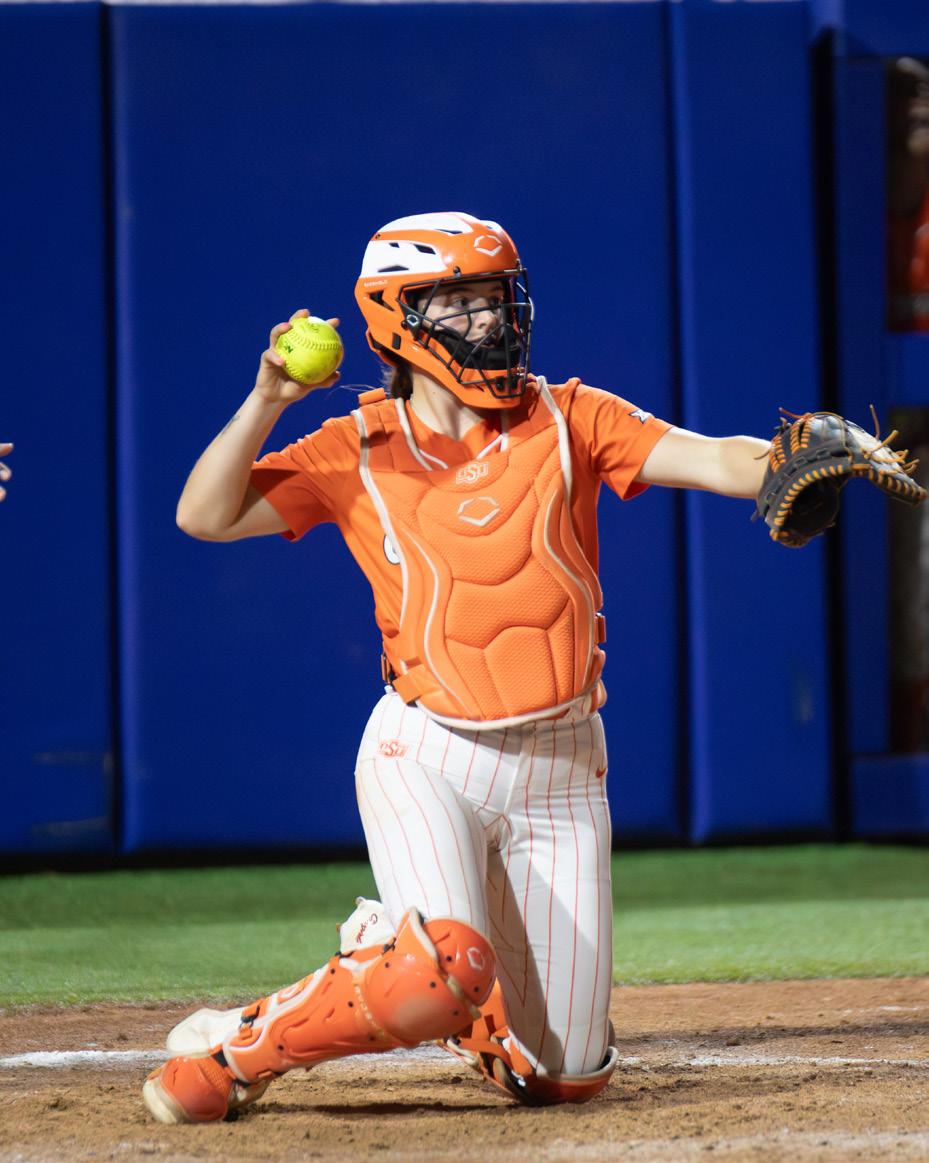
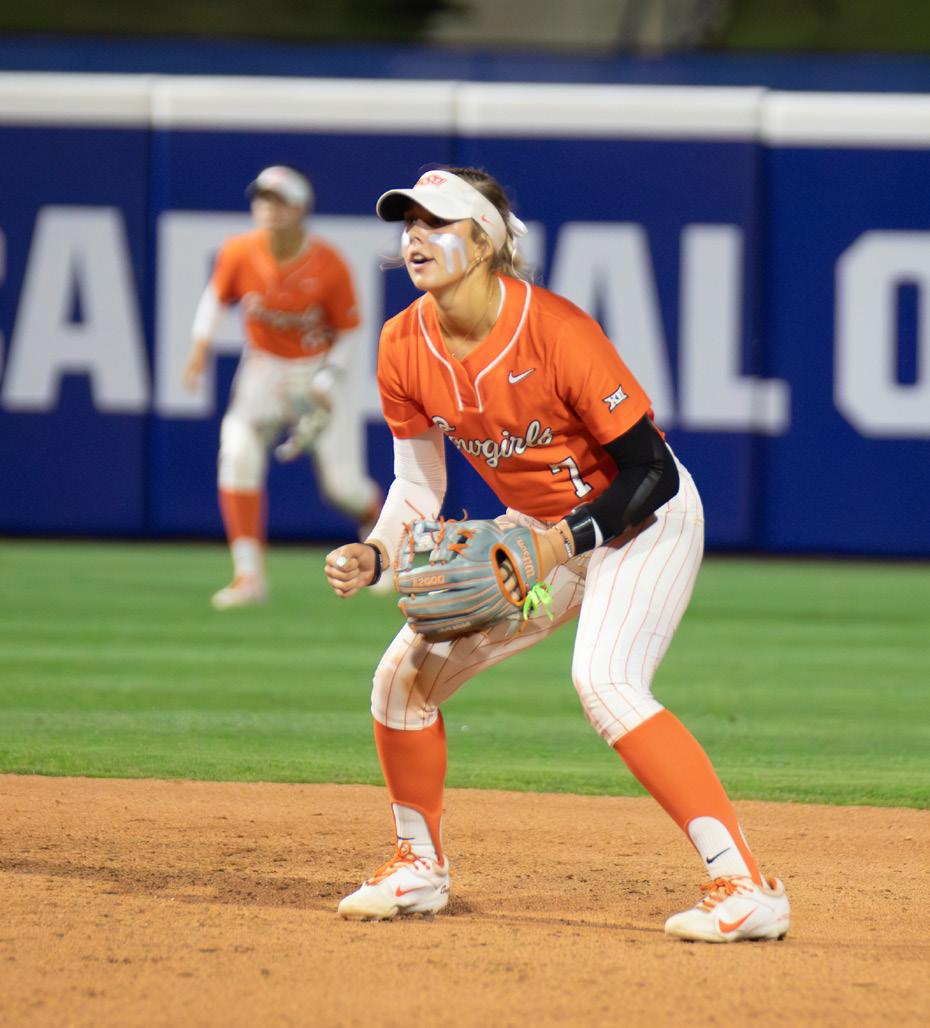
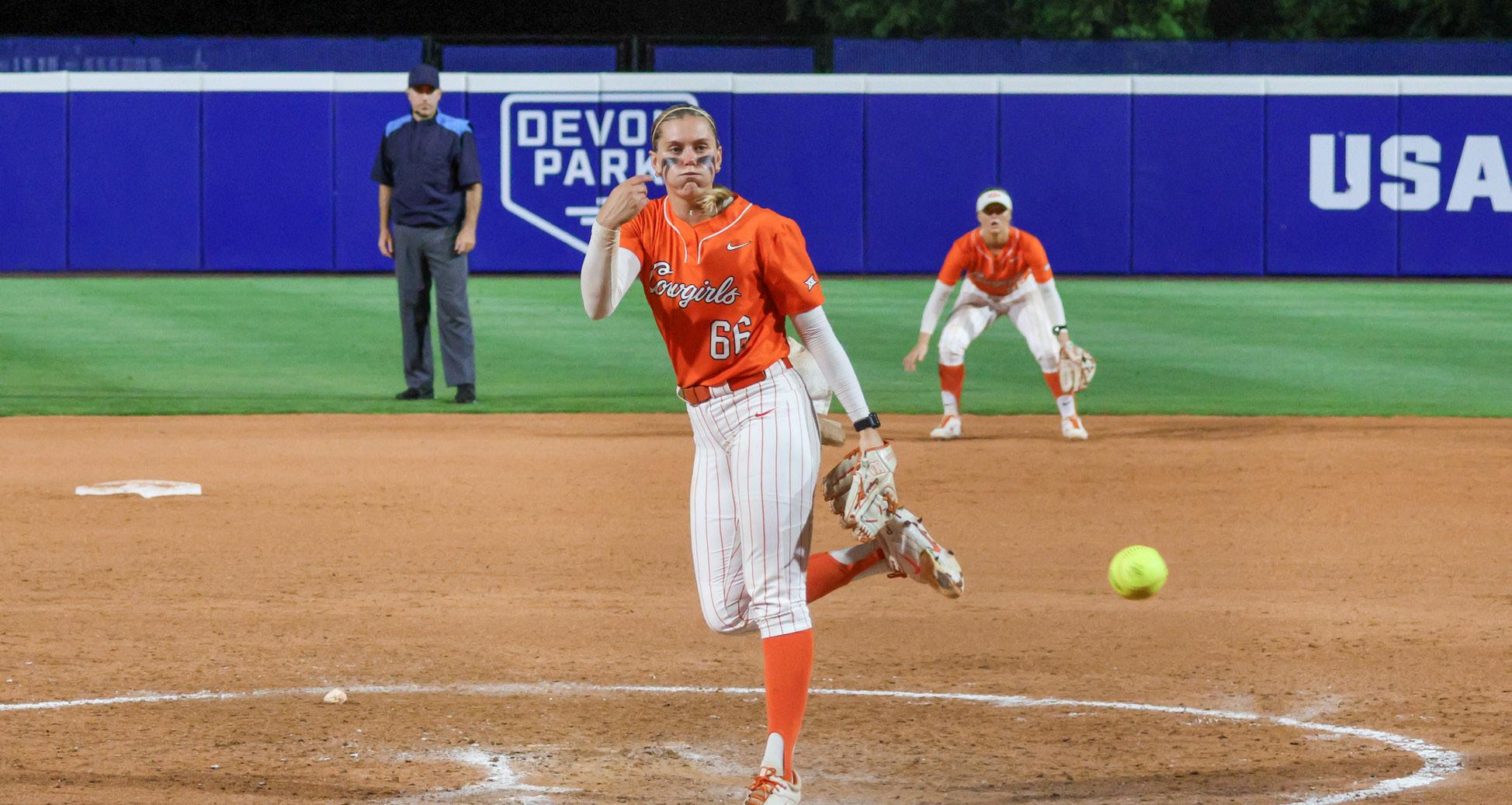


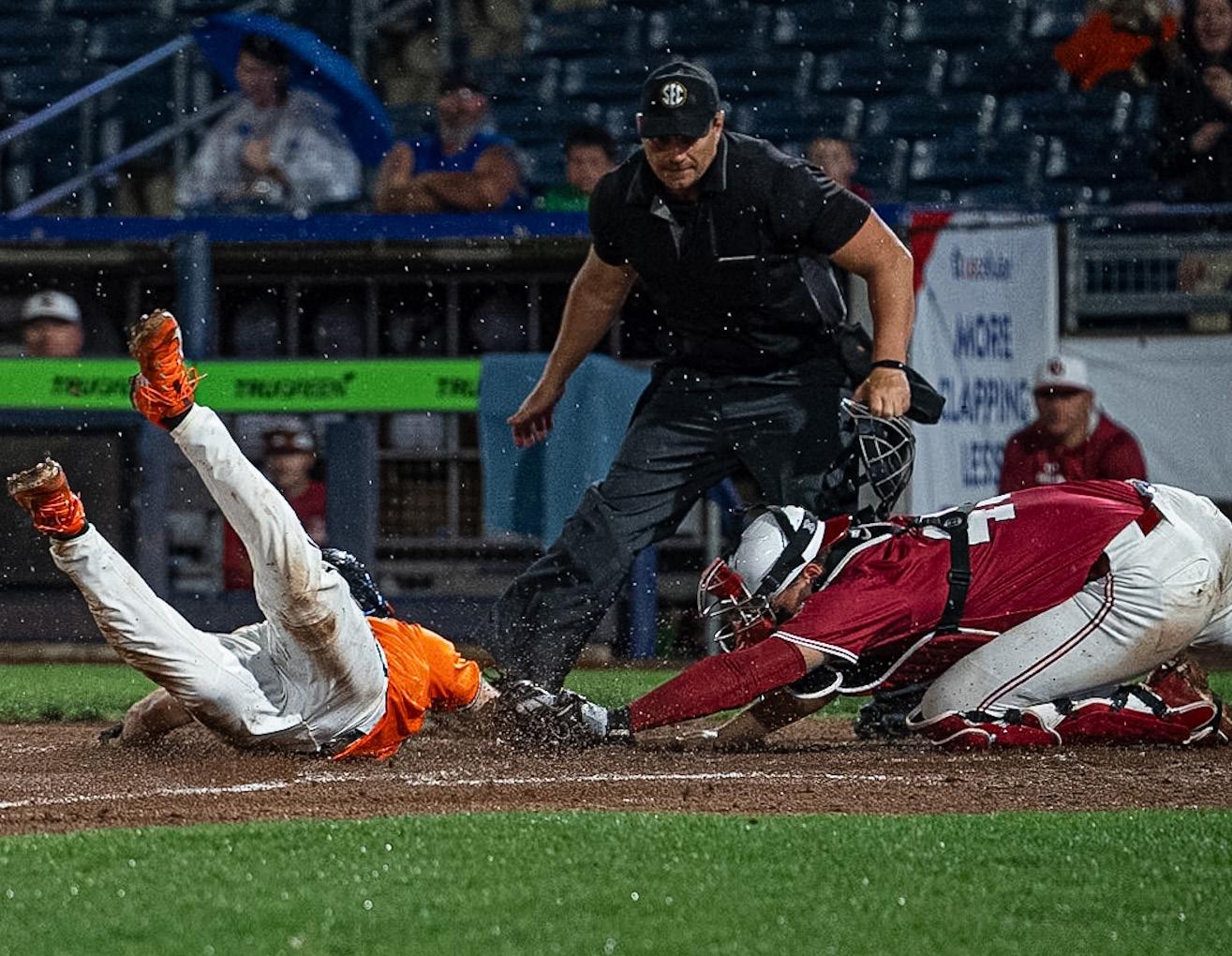
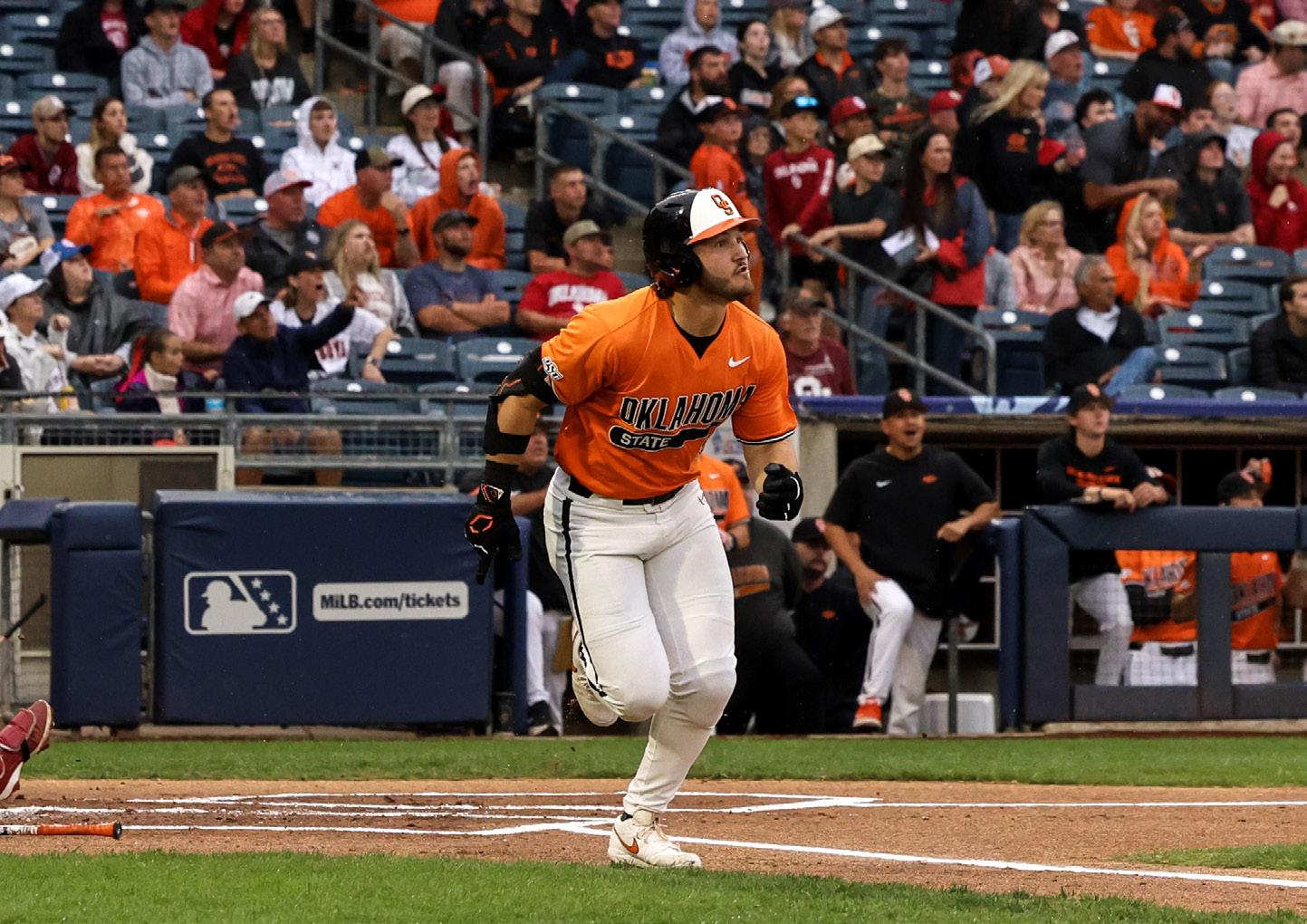

TIME OF GOD’S FAVOR!
“Seek the LORD while he may be found; call on him while he is near.” (Is.55:6 NIV)
It is worthwhile to take the time; to stop and consider your way of life and make resolutions; new steps to take to make your life more meaningful or productive. Maybe you are doing this, or maybe you have just given up on the whole idea.
Can you remember when you were a child, how time went by so slowly? It seemed like it took forever for the holidays to arrive. Now time passes so swiftly; the years seem to rush by. The turn of the century seemed so far away when I was younger. Now we are nearly twenty years into the 21st century.
I want to encourage you to stop and consider your life; especially the remainder. None of us know when our life may end. Jesus spoke of those who
would come into their purposes in the “eleventh hour;” right at the end of life’s work day.(Mt.20) You may think that it is too late to turn your life over to Christ; there is such little time left on “your calendar.” Yet, those who come in at the “eleventh hour” will receive the same wages as those who labored the whole day. We need to work in God’s purpose for our lives while we still have time. The Bible tells us the time is coming when “no man can work.” (Jn.9:4)
As you set your heart and get definite about trusting God with your life and serving him, you will find wonderful opportunities will open for you. You see God has his purposes for you planned out, and he will begin to open doors that you know nothing about. There will be such great satisfaction in serving and finishing what he has for you to accomplish. When your life does end, and it will, you will be so glad you have followed Christ. The Bible tells us that your labor for him is not in vain. (1 Co.15:58)