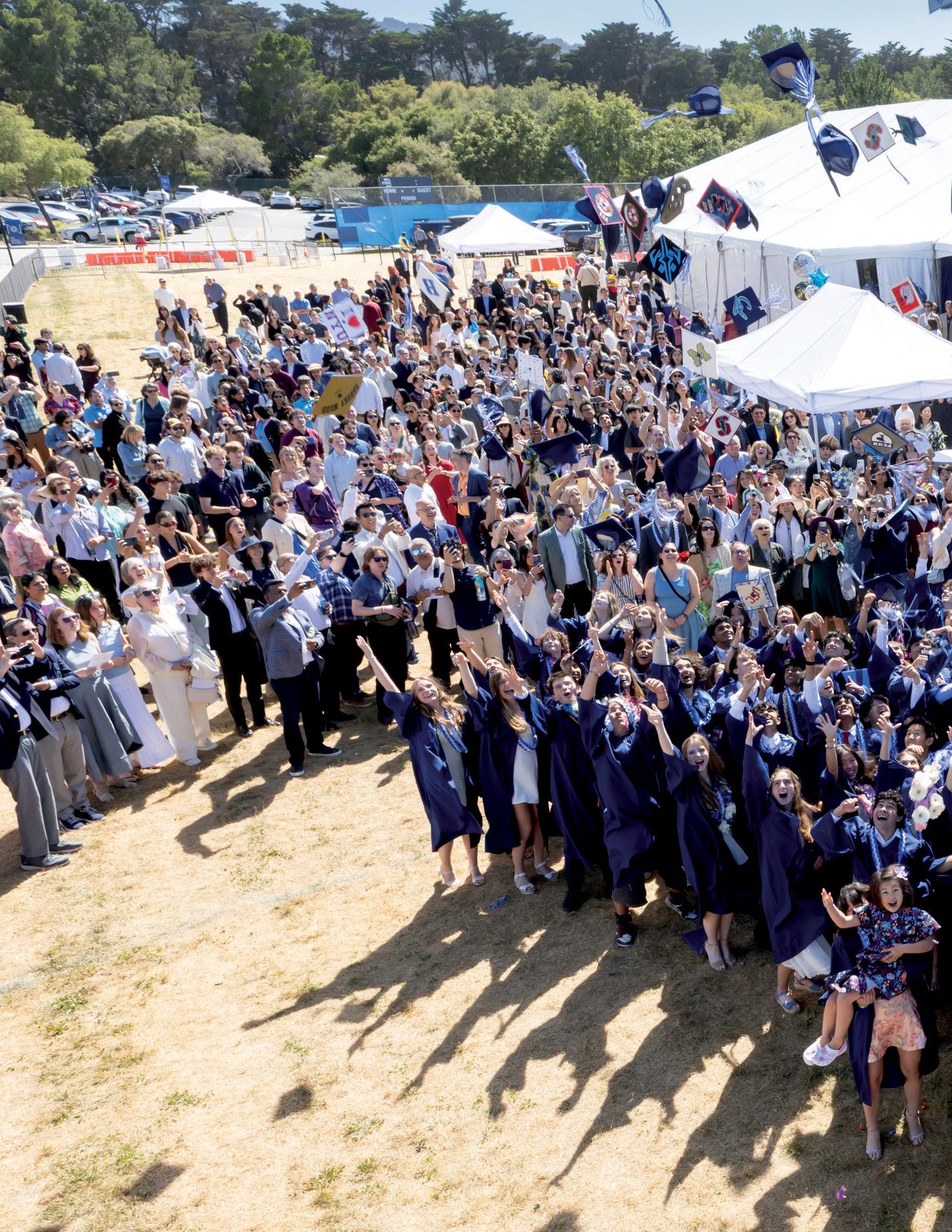
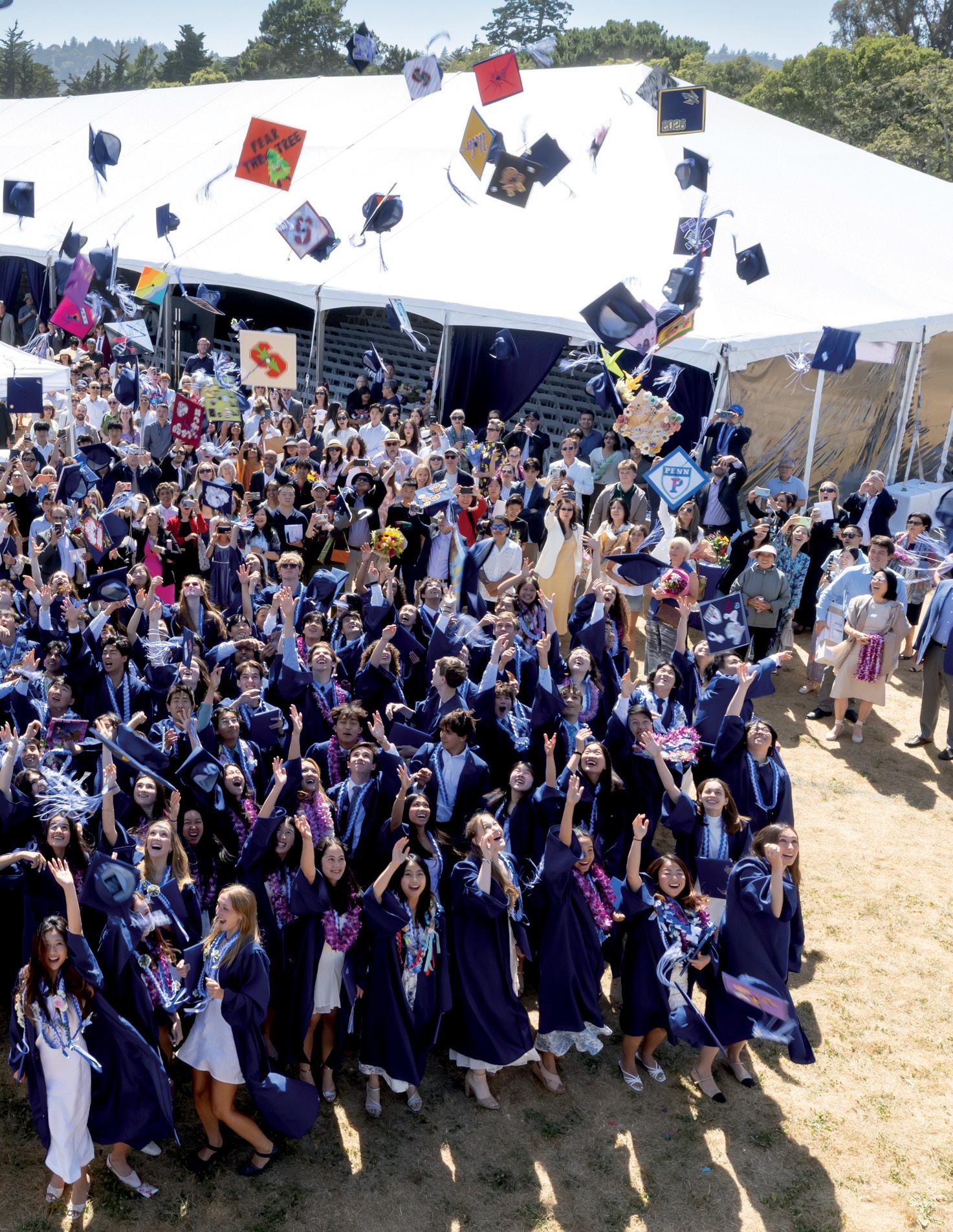
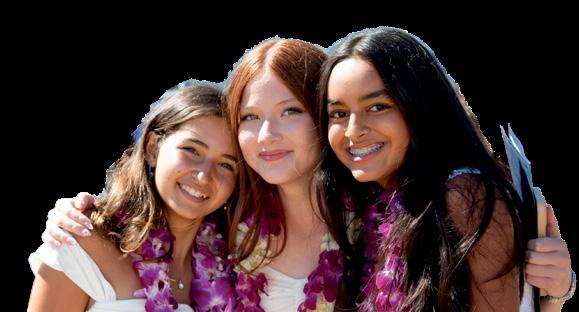
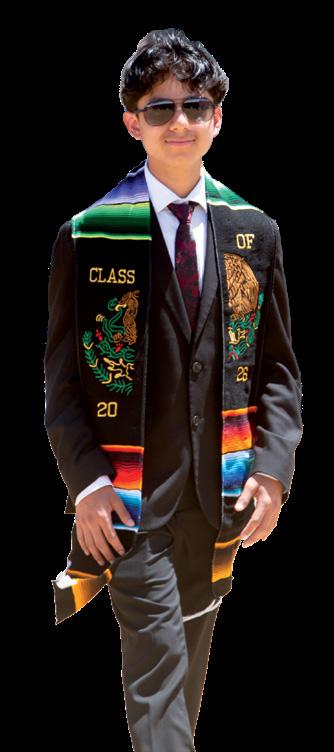
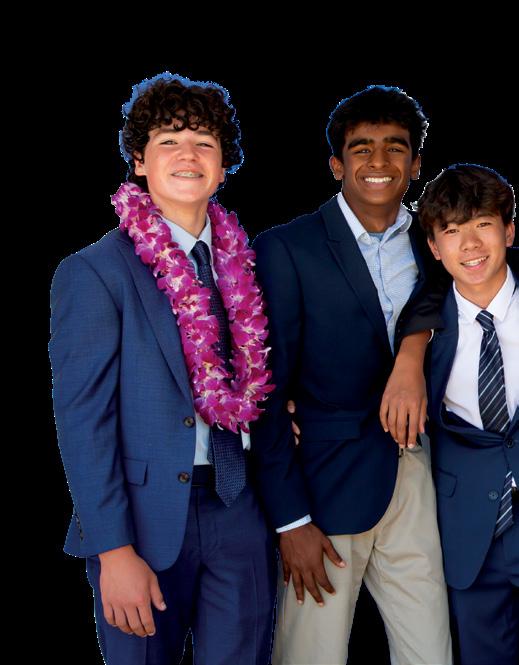
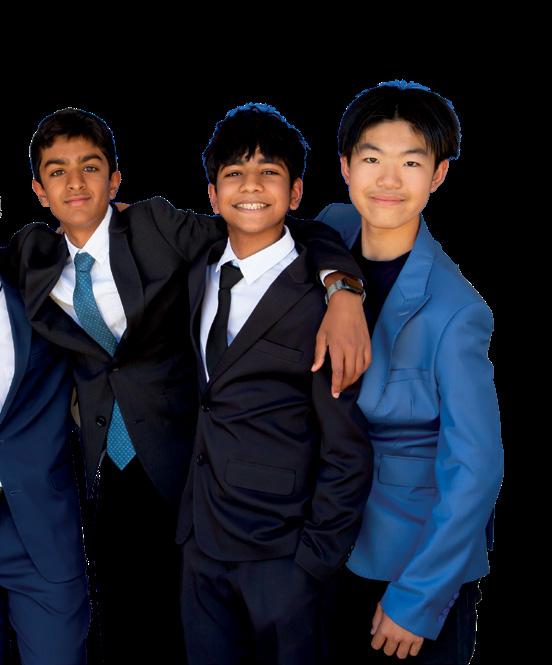
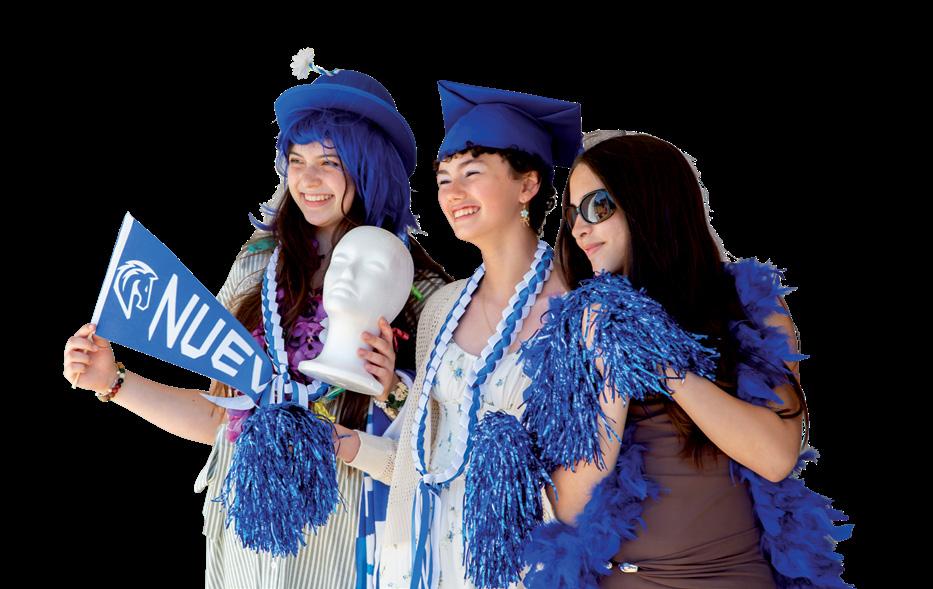
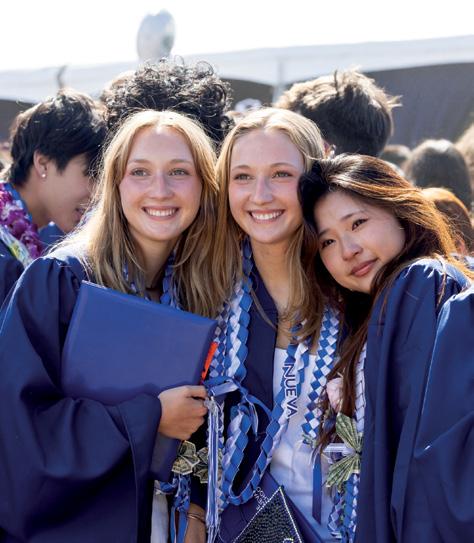
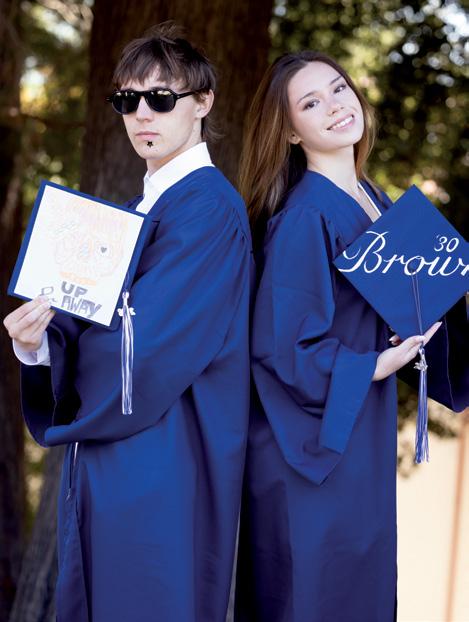
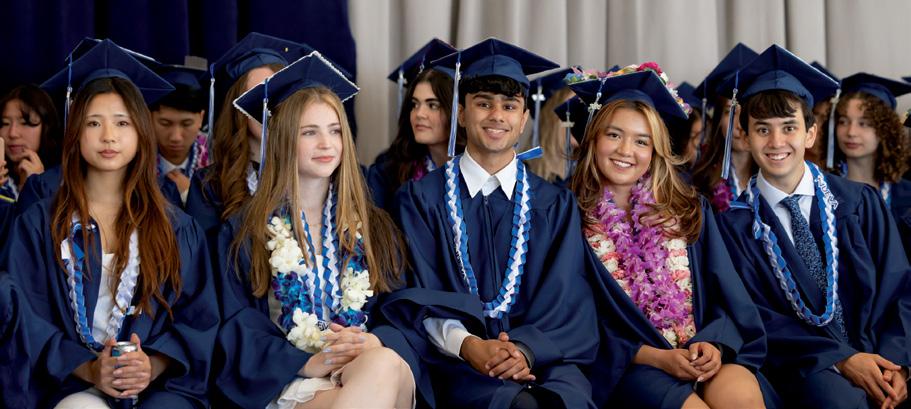
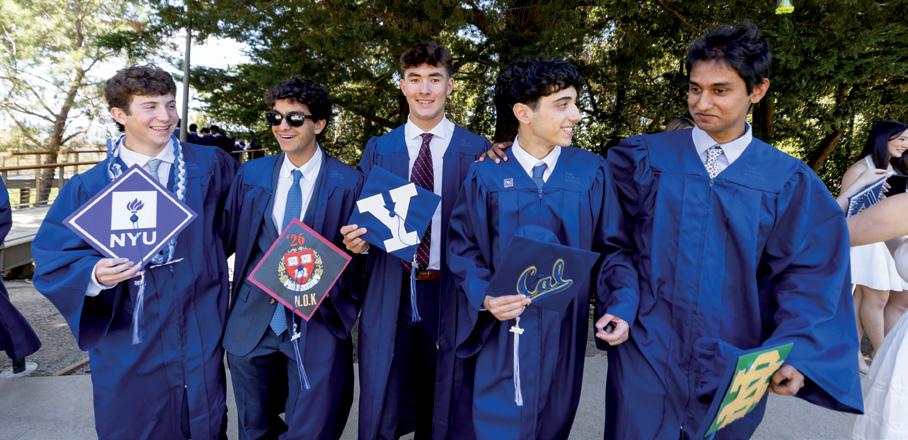
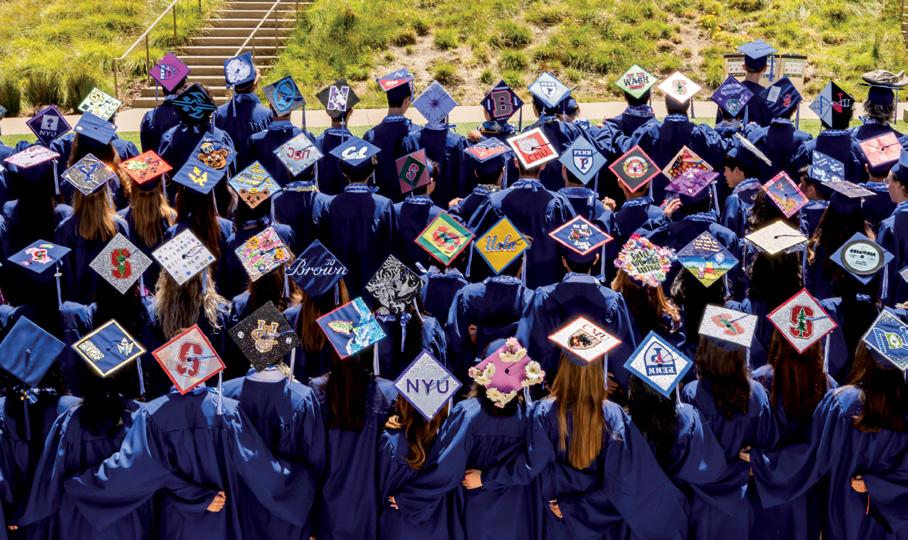
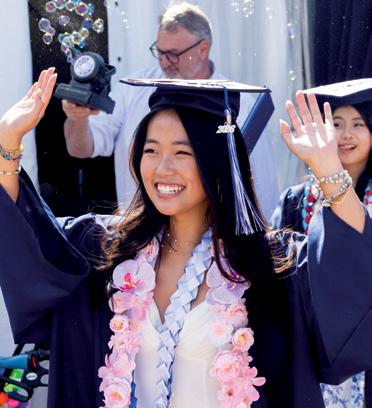
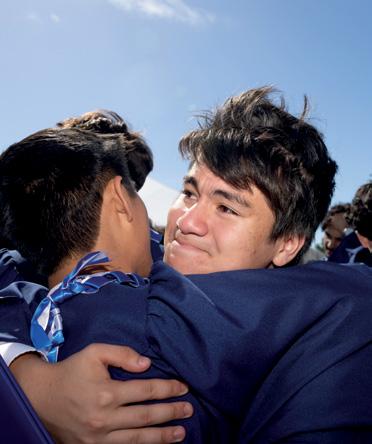
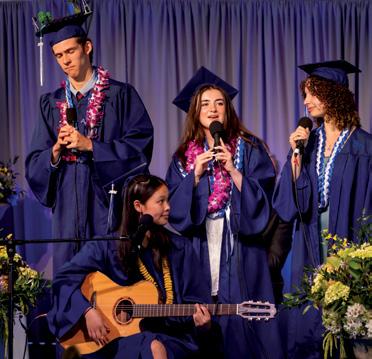
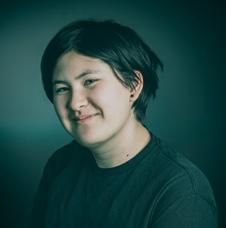
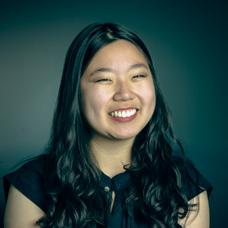
Hats off to the Class of 2026! On Sunday, June 7, family, friends, faculty, and staff gathered on the Hillsborough campus to celebrate the graduates. Rowan Brown ’26, Kayla Ling ’26, and faculty speakers Allen Frost and Amy Hunt shared stories celebrating this remarkable class. After receiving their diplomas and turning their tassels, graduates took part in a Nueva tradition: a recessional through a tunnel formed by the faculty and staff who supported them throughout their time at the school.
We often celebrate the moment of discovery: the ingenious solution or the unexpected connection. But artistic creation reminds us that discovery can also unfold slowly, through the act of making itself. Some forms of understanding emerge through sketching, revising, rehearsing, and performing, and only reveal themselves after returning to an idea again and again.
This feels especially important now. We live in a time increasingly preoccupied with speed and optimization. Artificial intelligence can generate images and music in seconds. The technology can also imitate language with fluency. The question that all this leaves behind is not simply what AI can make, but what making means.
Art has always offered a different answer. Its value is not found solely in the finished work, but in the act itself—in attention paid and imagination exercised through uncertainty. The painter standing before a blank canvas, the actor embodying a character, the musician listening for the right note: these are not simply acts of production. They are acts of becoming.
Perhaps this is why the arts remain so essential to life at Nueva. They teach us to live with ambiguity and cultivate forms of perception that deepen every discipline and enrich our community.
This issue of Nueva Magazine explores not just what our community can create, but who we become through the creating.
20 Making the Musical
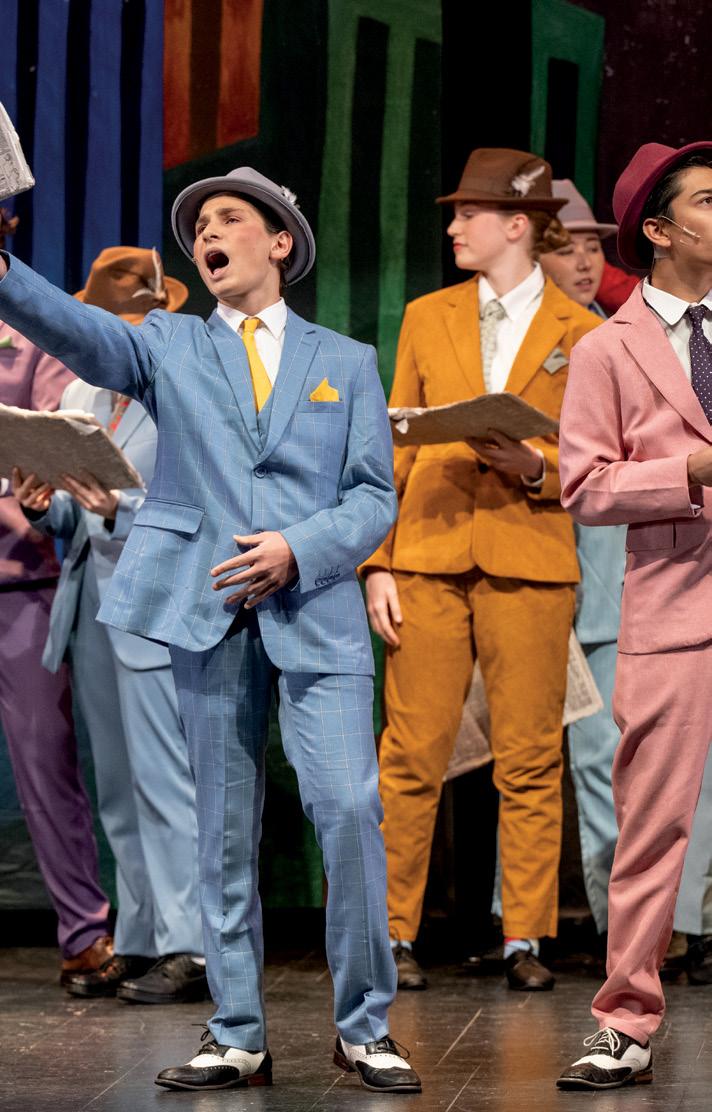
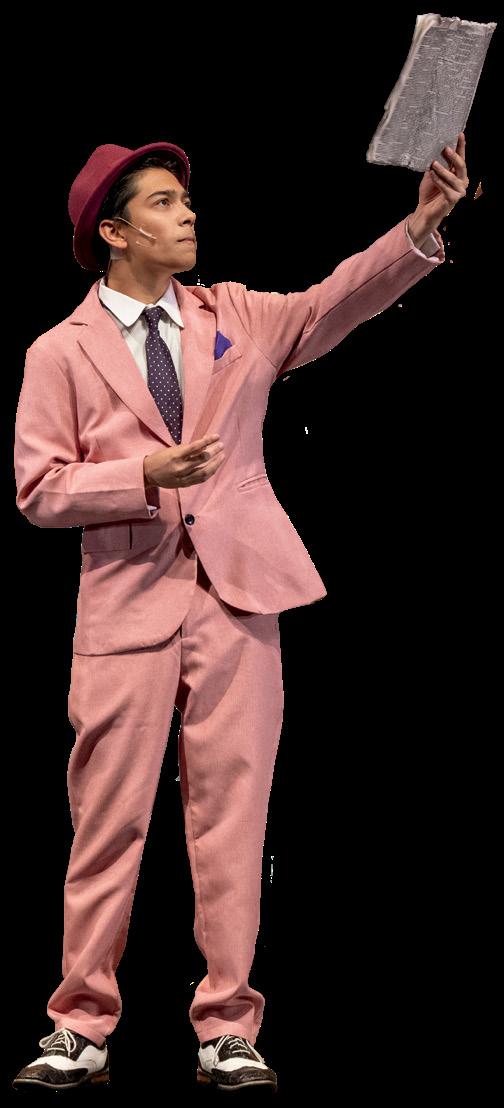
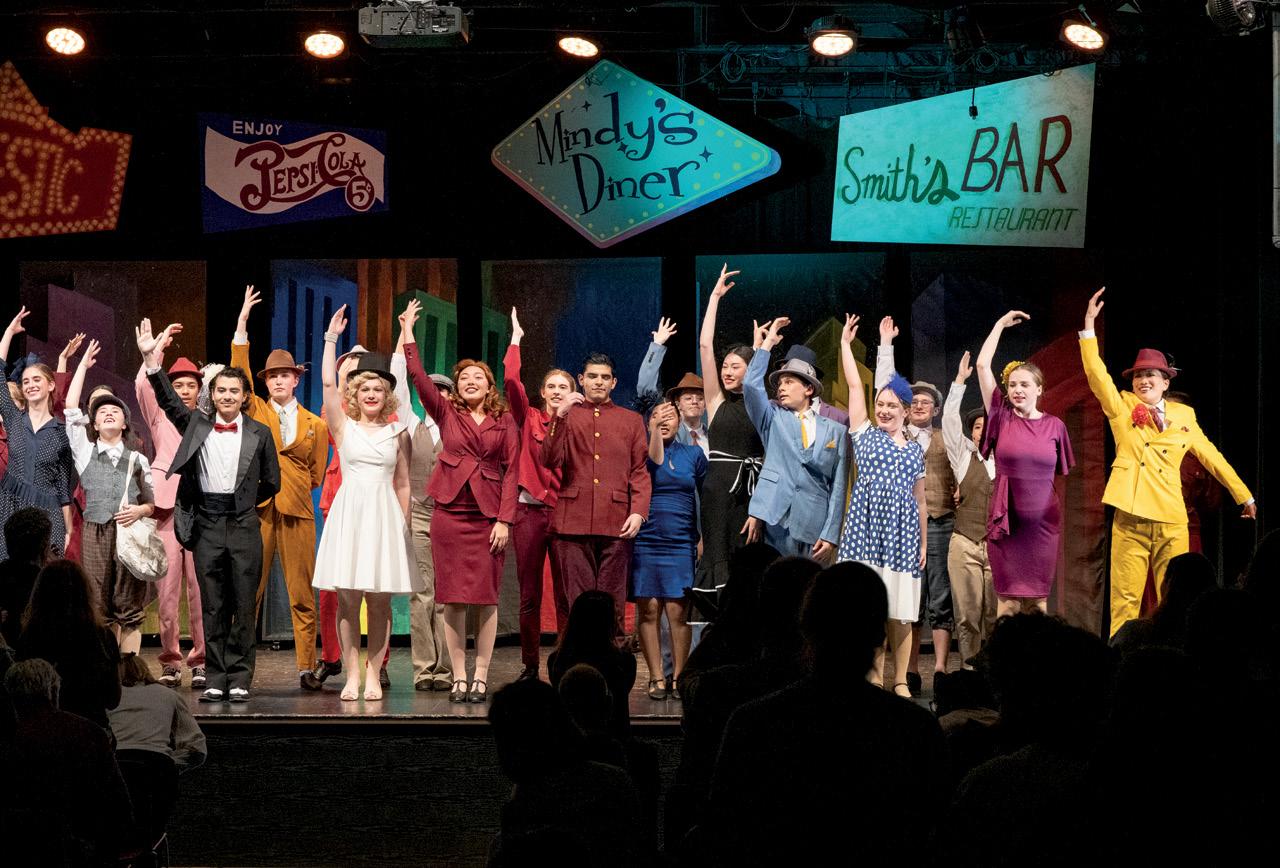
A behind-the-scenes look into the Upper School’s production of Guys and Dolls
29 Standing Ovation
Alumni reunite for a spectacular showcase
30
Profiles of Nueva music teachers written by their students
Why every seventh grader is required to take the stage

is published by the Communications Office for alumni, students, parents, grandparents, and friends of The Nueva School.
Director of Communications
42 What We Heard at ILC
A window into the ideas that shaped two days in March
40 The Human Hand
Art teachers Rachel Dawson and Nina Osborne reflect on generative AI and the irreplaceable act of making something by hand
Communications Manager
With assistance from summer interns Senya Salzmann ’26, Jax L. ’28, and Eva G. ’29.
ALUMNI NEWS
Diana A. Chamorro
Associate Director of Development for Alumni & Community Engagement
Elizabeth Gomez
Alumni Relations Manager
DESIGN
Aldeia / aldeia.design
PRINTER
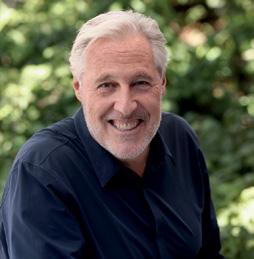
[O jogo bonito is] about elevating the level of play, eliciting the best from your teammates, and playing with passion and beauty. Even though this often describes a style of fluid futbol … I have come to believe that the arts may be one of the most powerful expressions of the beautiful game.” “
Having lived in Brazil, Spain, and Belgium—countries that are known to be futbol (football, soccer) powerhouses—I have learned to love the World Cup season every four years. And watching several games this summer in the 2026 World Cup reminded me of a Portuguese phrase I learned in Brazil, O jogo bonito, or ‘the beautiful game.’ It refers to futbol that is more than just scoring goals and making saves. O jogo bonito defines a style of futbol focused on artistry, creativity, grace, elegance, and joy. It’s about elevating the level of play, eliciting the best from your teammates, and playing with passion and beauty. Even though this often describes a style of fluid futbol and an overarching approach to a collaborative sport, I have come to believe that the arts may be one of the most powerful expressions of the beautiful game.
This issue of the Nueva Magazine highlights the arts in our school community, a key component of the Nueva experience for so many students. Engaging in arts education is so much more than just learning to paint, playing an instrument, or performing on stage. It is indeed a way to play the beautiful game in all aspects of life and learning, reflecting Nueva’s commitment to learn by doing, learn by caring. Immersing ourselves in artistic endeavors enables us to be wondrous, exhibit grace, pursue passion, and exude joy. O jogo bonito encourages us to interact with others in kind and loving ways, bringing out the best in our friends, classmates, and colleagues, as we do when we actively listen to each other in a musical ensemble or playfully respond to others in improv theater or constructively critique a visual portrait created by our classmates. Aspiring to play this beautiful game, within and outside of the arts, ensures we are the builders of cohesive communities and the architects of intercultural competence. When we elevate our own life game via artistry, we better ourselves, empower others, and make choices that benefit the world.
This is what an embrace of the beautiful game does for us, whether it is on the field, on the stage, in the studio, or in the classroom. It reminds us that excellence is not simply about individual achievement, but through elevating one another through creativity, empathy, and purpose. Enjoy learning more about how the arts at Nueva foster creativity, style, joy, and o jogo bonito
LEE FERTIG Head of School

In March, Middle School students brought Disney’s Frozen Jr. to life on the GCC stage across four performances in one memorable weekend. The musical featured beloved songs, vibrant costumes, and energetic performances that delighted audiences.
“I enjoyed portraying Olaf in Frozen Jr. because of how oblivious he is and how much fun it was to bring his silliness to the stage,” said Chloe N. ’31. “Right after the final curtain closed after the last performance was so memorable for me. Everyone was so happy, and it was really rewarding.”
To read about this spring’s Upper School musical, Guys and Dolls—and to watch a behind-the-scenes documentary—turn to page 20.
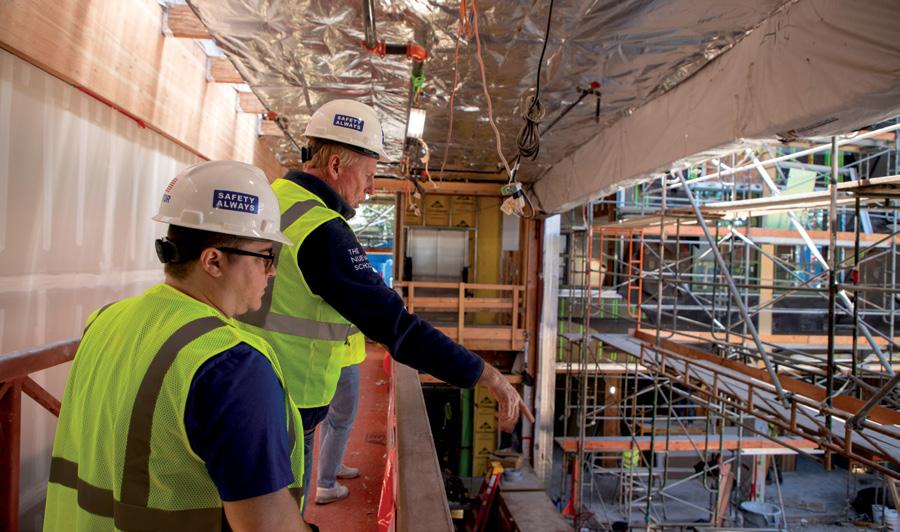
A First Look Inside
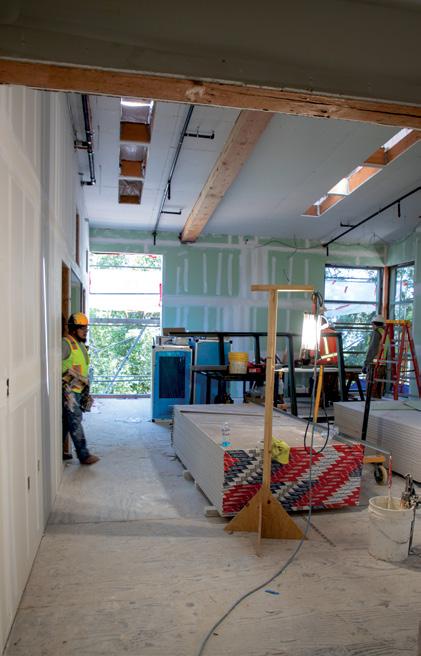
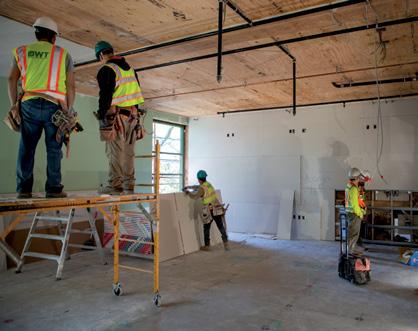
Construction is well underway on our new Arts & Administration Building—a purpose-built home designed to inspire creativity, collaboration, and community.
At its core, the building will house a permanent, state-of-the-art home for our Middle School arts program, featuring visual arts and music classrooms, a black box theater, private music instruction rooms, and a professional recording studio. When the doors open, the first floor will serve as a gallery where student work takes center stage.
The building will also include academic tutoring spaces, tech support offices, and administrative homes for departments such as Admissions, Development, and more.
Out front, a spacious plaza will serve as the campus’s new primary entrance, surrounded by fresh landscaping and outdoor areas made for connection.
Construction is currently on schedule and completion is expected in winter 2027.
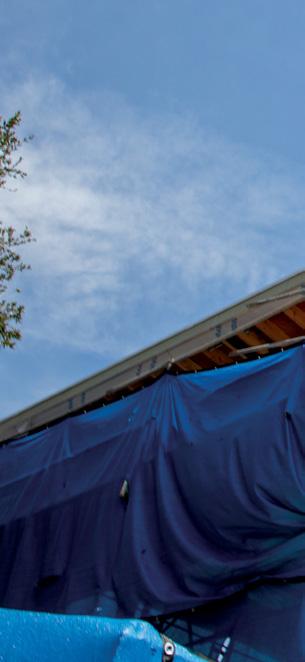
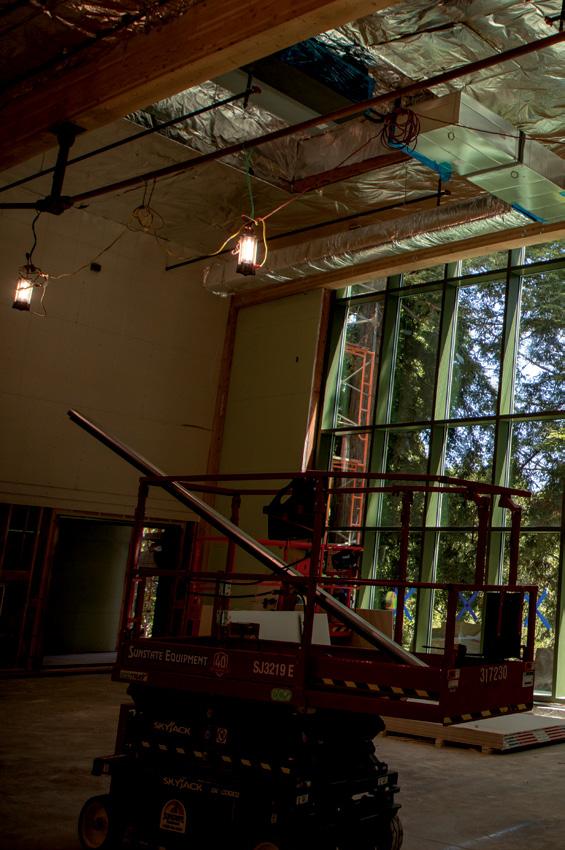

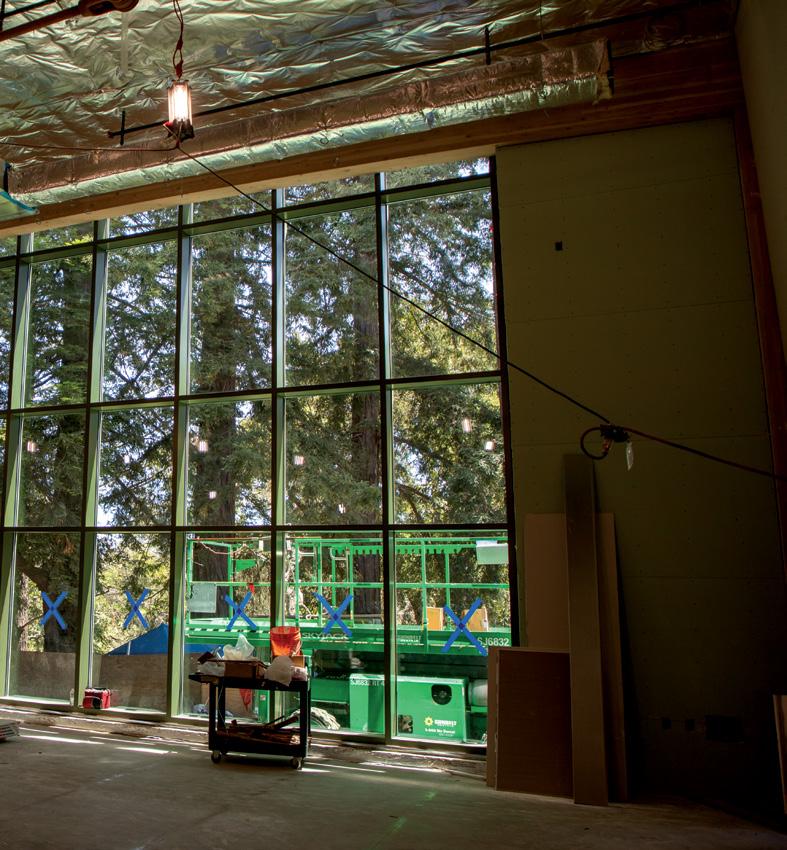
Clockwise from top left: 1) Director of Facilities and Operations Steve Osborne gives a tour of the construction site in mid-May. 2) The Arts & Administration Building will become the new front door to the Hillsborough campus, welcoming visitors and housing the campus check-in.
3) Two new art studios, complete with sinks and abundant natural light, offer flexible workspaces for every kind of artistic exploration. 4) Alongside administrative offices, the building will provide additional conference and meeting spaces. 5) The building’s centerpiece is a flexible black box theater and performance stage.
At first glance, Nueva’s Middle School improv electives might seem like fun breaks in the middle of a busy school day: laughter, games, performances, and no homework in sight. But inside Jenny Rosen’s classroom, students are learning how to listen, be positive, take risks, collaborate, and fail without fear.
“It’s a really, really fun class,” Jenny said. “They get to be silly. They get to have fun. They get to try new things. And subversively, they’re actually learning really good life skills, which they can take out into the world.”
Jenny builds her classes around the foundational principles of improvisation: listening, teamwork, positivity, adaptability, and the famous improv rule of “Yes, and.” The idea is simple: accept another person’s idea and build on it rather than shutting it down. Jenny frequently encourages students to think about how that mindset applies outside the classroom.
For fifth grader Ameena M. ’33, that lesson stayed with her long after the class ended.
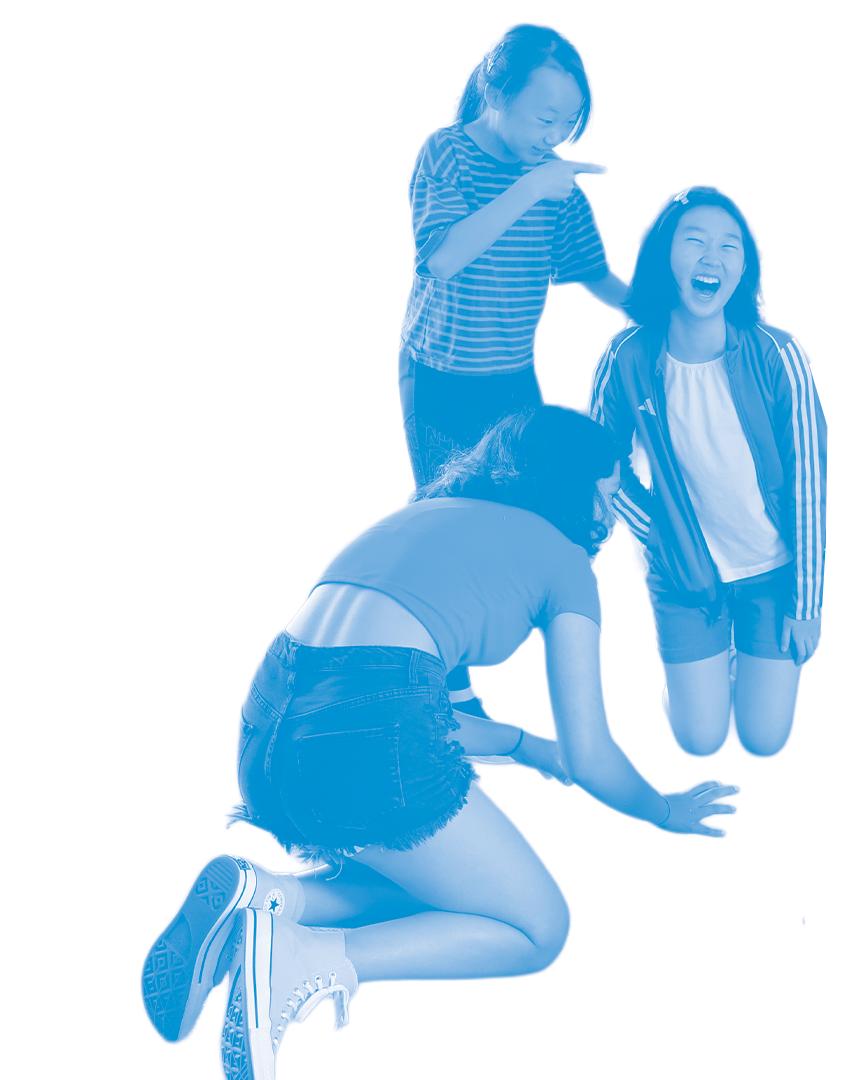
“I think about ‘yes, and’ all the time,” she said. “It helps me be a positive friend and person.”
Ameena first signed up because she loved creating skits in her free time and wanted to practice thinking quickly. But, she says, improv has changed the way she approaches teamwork and trying new things.
“One of the goals is to make your partner look good,” she explained. “I think this is a good lesson for teamwork in life generally.”
That spirit of collaboration is central to Jenny’s classes. On the first day, she tells students they are building an ensemble where everyone supports one another. Some students eagerly volunteer to perform, while others need time and encouragement before stepping into the spotlight.
One of Jenny’s favorite parts of teaching is watching hesitant students grow more confident over time. Recently, a student quietly told her the class had been “really transformative” for them.
“You can see them breaking out of their shell,” Jenny said. “For them to say that to me was worth everything.”
Middle School, Jenny said, is a great time for students to learn improv. At an age when perfectionism and social pressures can feel overwhelming, improv asks them to try anyway.
“I want them to learn to fail goodnaturedly,” Jenny said.
Over time, that willingness to fail— and keep going—helps students grow more confident taking big swings. During a Western-themed scene in seventh grade this year, “A student gets up without saying anything and tumbles across the stage like a tumbleweed,” she said.
“I’ve never seen that in Middle School. That was amazing.”
The moment stuck with Jenny because the student wasn’t trying to steal attention. Instead, he was listening closely, supporting the scene, and making an unexpected creative choice.
Sometimes the risk-taking is louder. Ameena remembers a musical improv class where students had to invent lyrics on the spot while a musician played keyboard accompaniment.
“We had no idea what to do!” she exclaimed. But instead of embarrassment, the room erupted in laughter.
“Improv makes me feel less embarrassed trying new things in front of my classmates,” Ameena said. “We are constantly trying new things—many of which we fail at, which is part of the point.”
Jocelyn C. ’32 signed up for improv looking for a place to sharpen her skills. “I wanted a safe space where I can learn to think on my feet and take risks,” she said. The skills she learned in improv have already carried into her other activities.
“In theater, I have used improv skills to build bigger, stronger characters on stage,” she said. “In speech and debate, I have used improv skills by using the ‘yes, and’ rule to respond to trickier arguments and improvise off of a mistake.”
For Jenny, these moments are proof that students are taking something lasting away from the class, even if they do not fully realize it yet.
“I hope some stuff sticks in there,” she said, “so that when they go out into the world, they have some of these skills hardwired into their brains.”
Maybe one day, Jenny says, students will find themselves struggling to start a college paper or facing a challenge they do not immediately know how to solve. And somewhere in the back of their minds, they will remember the lessons they practiced in middle school improv: start with the imperfect idea, say “yes, and,” and keep going.
— Holly Nall
QUOTED
“Make it a practice to get outside your comfort zone regularly. You’re not going to grow as a person by doing the things you already do and keeping to [the] status quo.”
CHRIS CONRAD
’17 , answering the question, “If you could go back to your high school self and give them one piece of advice, what would you say?” For more responses to this question, read the “Deep Dive into Alumni Data” story on page 66.
RECOMMENDED READING
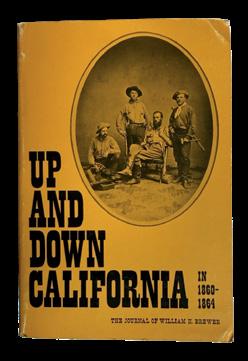
I occasionally emailed former Upper School history teacher Barry Treseler asking him for his course syllabus, and I have enjoyed every single book on his list. My favorite is Up and Down California in 1860–1864: The Journal of William H. Brewer. Brewer was a botanist and geologist who conducted California’s first geological survey. His descriptions of the landscape and happenings satisfied a deep atavistic yearning within me. I dream of seeing the history of California unfold, and hearing Brewer tell it is as close as I’ll ever get. His descriptions of the Bay Area, Yosemite, and the great flood of 1862 filled me with awe and gave me such a deep appreciation for my beloved home state. Highly recommended if you enjoy California history and ecological literature.
ZUBIN MOBEDSHAHI
Lower School PE Teacher

patterns, finding coincidences, and chasing clues while the main character races to fix a game that has become broken. This complex puzzle of a book really scratches the itch of nostalgic gaming and coding with a setting in the dreary Pacific Northwest.
JARED BRIGGS
Middle School SEL Teacher
Rabbits by Terry Miles. You are never quite sure where this cosmic chess match is going to take you next. On one hand, you have retro hipsters who hang around arcades and play on the dark web via Tor browsers. On the other, there is this mysterious game which— like Fight Club—you are never supposed to talk about. It is a game of following
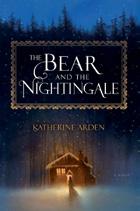
The Winternight trilogy by Katherine Arden, which begins with the first book The Bear and the Nightingale, is written as if it is the definitive text on Russian folklore. What author Madeline Miller does for Greek mythology, Katherine Arden does for Russian fables and legends. Dark and bittersweet, this is a layered fairytale to chill you even in the late summer heat.
LIANN YIM
US
Journalism Teacher & Assistant Director of Communications
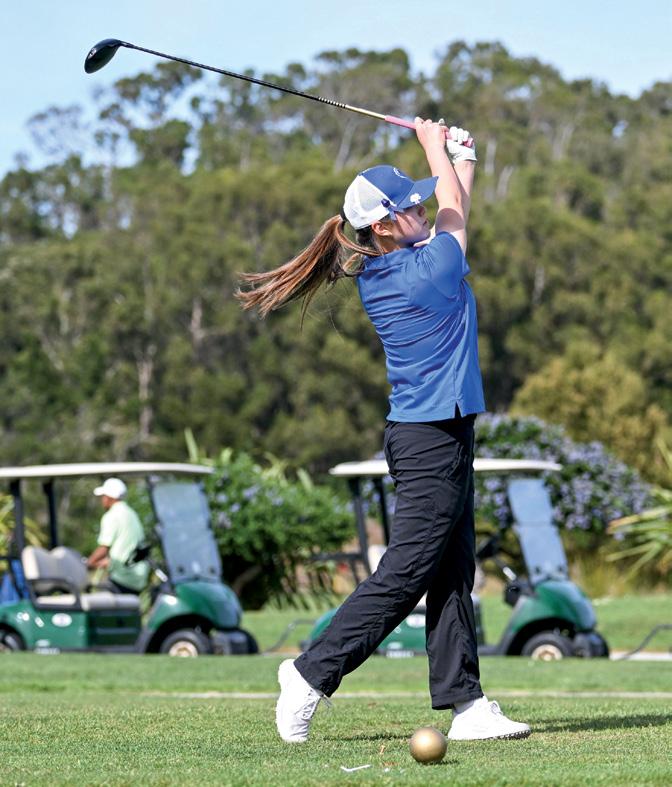
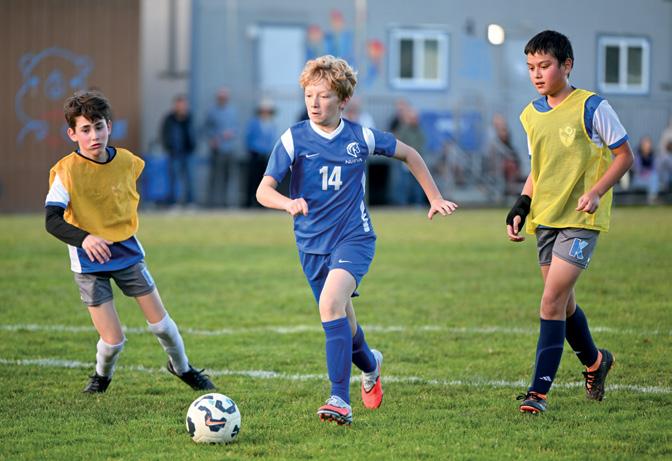
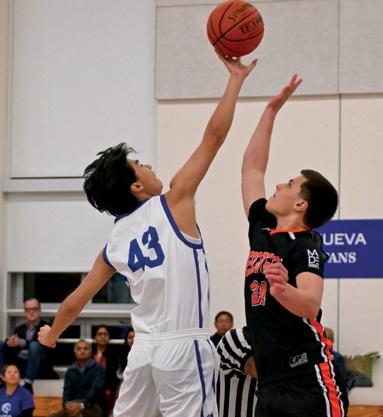
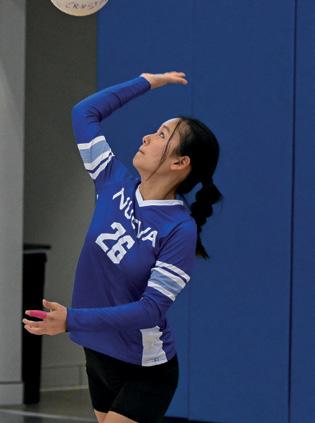
Eighth Grade Students
Deliver 100-word Speeches
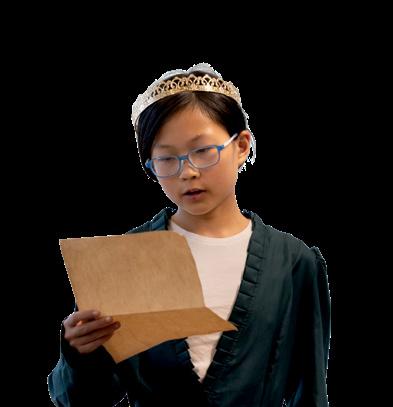
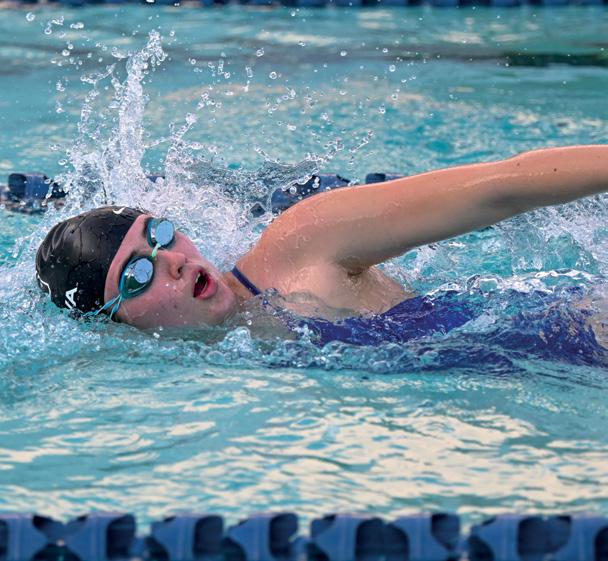
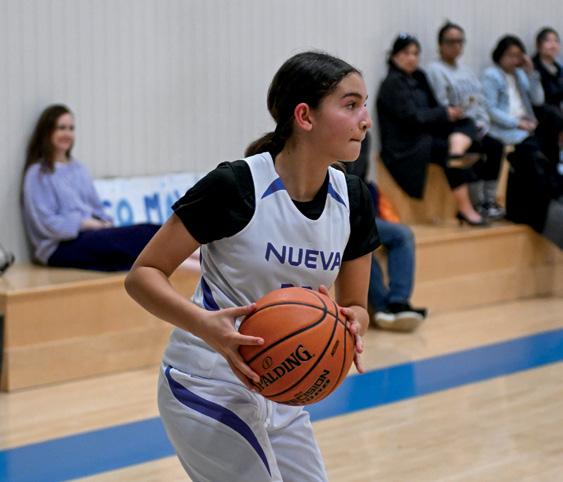
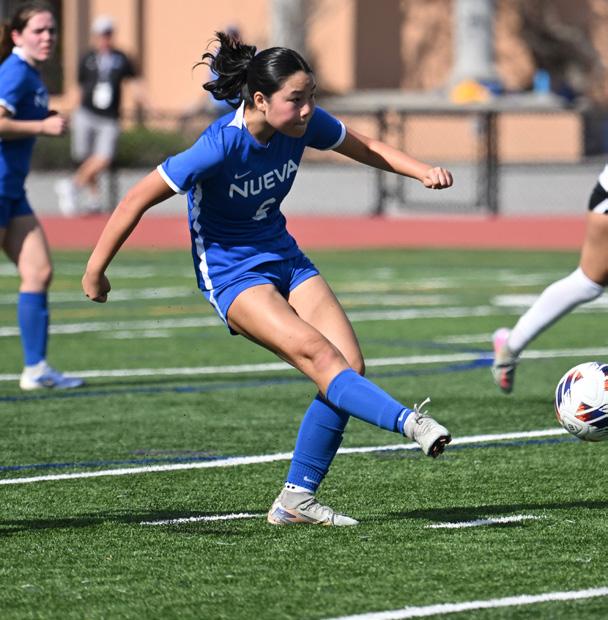
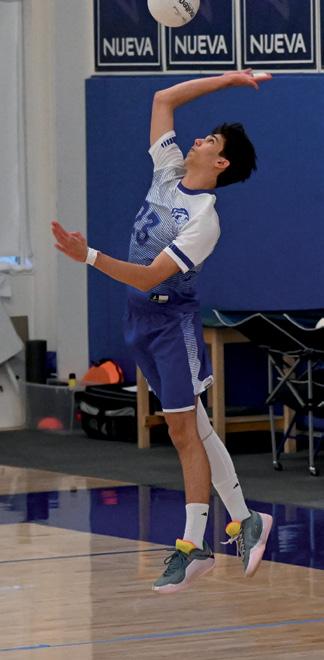
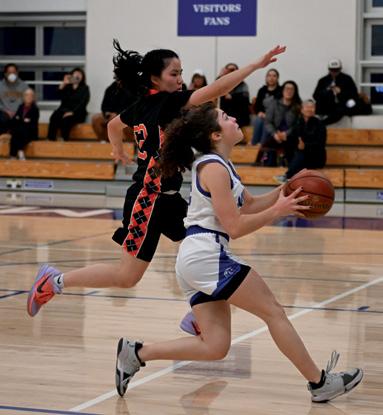
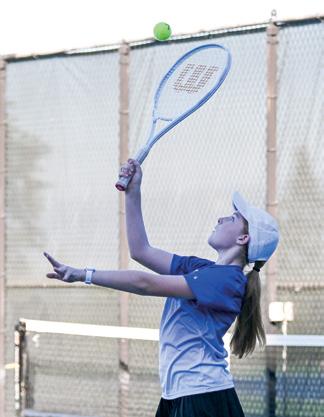
In a longstanding, beloved tradition, eighth grade students mark the conclusion of their time at the Hillsborough campus by delivering a 100-word speech at the Eighth Grade Celebration. In these brief remarks, they reflect on what they have learned, who they have become, and who helped them along the way. Since the COVID-19 pandemic, these speeches have been prerecorded and shown at the celebration. This year, however, the eighth graders insisted on giving their speeches live. Their wish was granted, and everyone in attendance was reminded why these speeches land differently in person: the emotion and delivery don’t translate the same way on screen. Here, we share four of those speeches, chosen for this arts-themed issue of Nueva Magazine because they speak to the impact sound, music, and theater have had on these students’ lives.
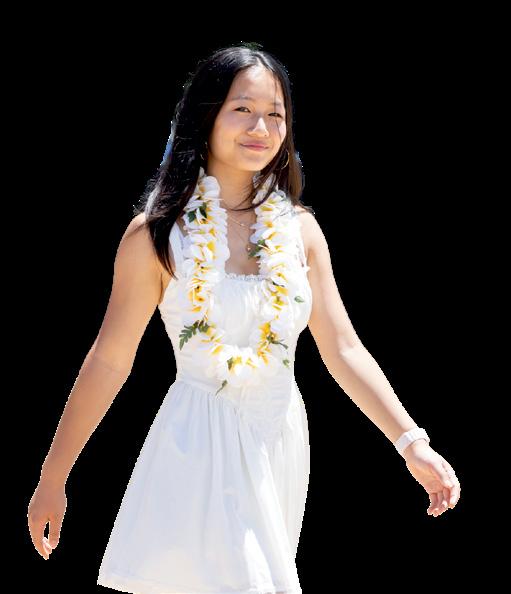
Two days before Quest, I learned to use a looper pedal with blurry instructions. During my frantic practice, timing became everything. Looking back, I realized this looper represents our middle school experience. Loopers take an isolated sound, repeat it, and layer it on top. We all started as single sounds, like the nervous first-day-of-school laughs or tears after falling on the stairs. But eventually, we layered them together. Now, we face a blank audio track. We will probably get handed blurry instructions. But we are ready. Because we know how to loop. We know how to layer. And we know how to play.
—Davis Z.
The cacophony. The noises of Nueva cram my ears—a harmonic blend of pencil scratches, staccato bounces of basketballs, and boisterous blabbing from sixth graders in our uniquely chatty library. Lively chaotic comfort. The squeak of Expo markers inscribing sketches and scatterplots into the whiteboard, those thirty seconds of dissonance as the kindergarten class marches past Block 6 Writing, the turbulent late-night scramble of STARPAP and my Protein Story Project. Giggly bubbles of joy rising from the mansion in the day, and the bursts of cheer on Quest Night. Every sound echoes lessons learned and friendships forged for my middle school symphony.
—Madi K.
We will get handed blurry instructions. But we are READY.
Because we know how to loop. We know how to layer. And we know how to PL AY.
DAVIS Z.
Here I am, back on stage, about to perform again—but this time it’s different. In April, I overlooked the crowd filled with parents, beads of sweat rolling off my face, and felt apprehensive about the magic to come, calculating the eight billion ways that I could fail spectacularly. Nueva is a place that challenges students, and has given me the spot on the stage I need to challenge myself time and time again. Now, I carry a different type of energy, rooted in sadness and completion, reminiscent of my time here. Thank you for letting me take the stage again.
Dear tally of completed speeches in EC201: Thanks, for NOTHING. I remember how much I shivered as you stared me down, the bright red expo pigment firing lasers into my soul. I contemplated for weeks— what if I write about music, accompanying myself and singing countless duets? Or the musical, and being Anna, one of the leads, this year. Maybe I can write about my years playing basketball, or even the memorable field trip in first grade to adventure park. What about my countless friends and hundreds of stories? What if I write about
—Sylvie Z.
At the Sunday, June 7 commencement for the Class of 2026—Nueva’s 10th Upper School graduating class—the ceremony included a special addition to the program: the presentation of a time capsule to a Lower School student.
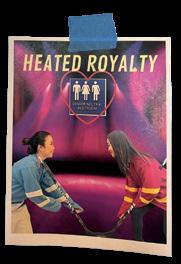
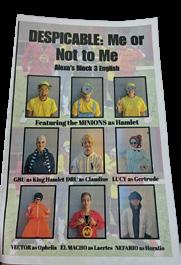
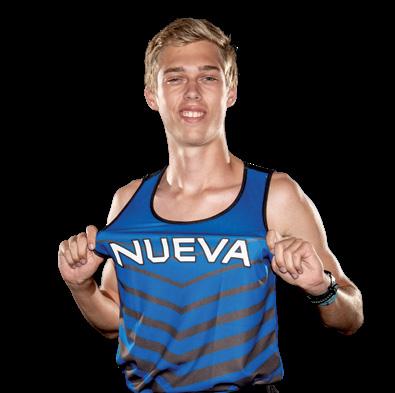
The time capsule, conceived of by 12th Grade Dean and Associate Director of College Counseling Phil Moreno, is destined to be buried at the San Mateo campus. It offers a small archive of this specific moment in time. It contains back issues of The Nueva Current; posters from this year’s Senior RenFaire, the Upper School’s beloved festival of adapted plays and novels; even a competition jersey belonging to Ryan Fitzpatrick ’26—the first athlete in Nueva and PSAL league history to win both the CCS Individual Championship and advance to the CIF State Track and Field Championship, setting a school record of 9:02.61 in the 3,200 meters.
Senior class student council rep Mylie Malden ’26 passed the time capsule to Nolan R., who represented the Class of 2036—which will be Nueva’s 20th Upper School graduating class.
“Today I have a very important job,” Nolan told the audience. He promised that his class would guard the capsule faithfully—no peeking, no shaking, and absolutely no trading it for Pokémon or football cards. He acknowledged that this would require more organizational discipline than he cur rently applies to tracking his water bottle.
But he was ready for the task. “When we open this time capsule, I’ll be 18 years old,” he noted, add ing, “Ten years ago, I wasn’t even born yet!”







“Thank you for trusting us with your memories and a piece of your story,” Nolan concluded. “Congratulations, Class of 2026. You’re going to do great things!”
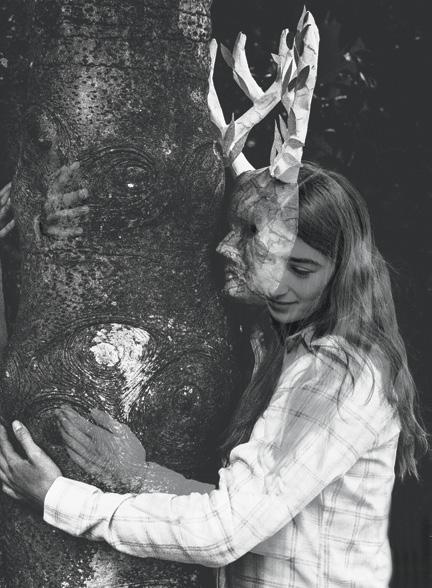
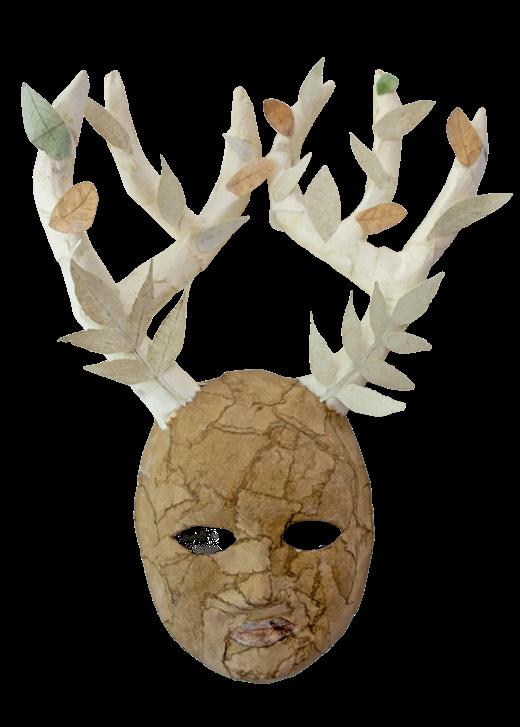
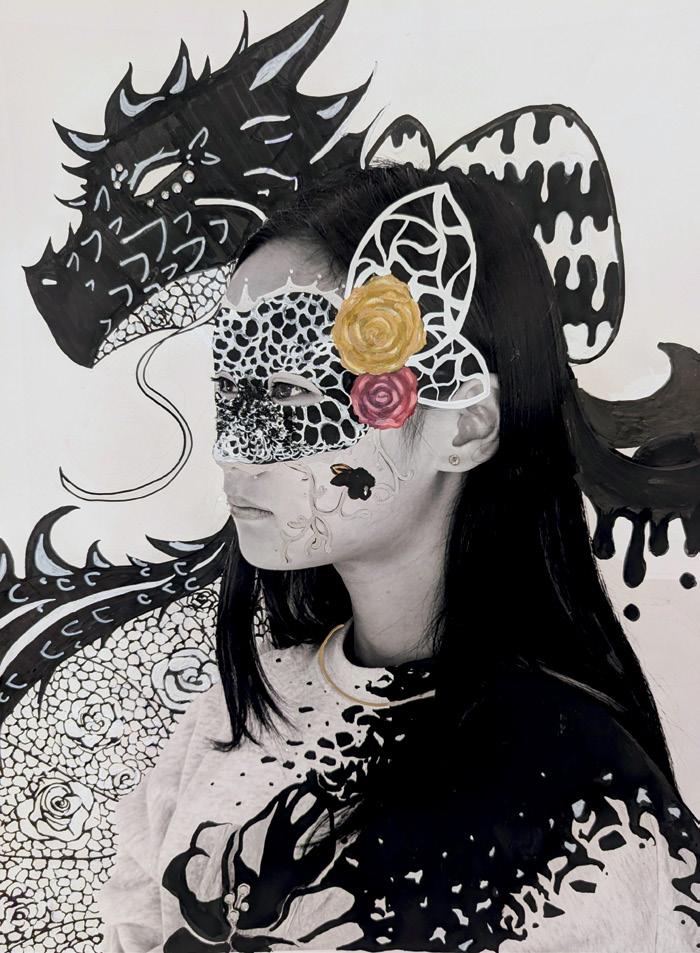
1A Zadie M. ’29 The Shapeshifter photograph 1B Mask: paper embedded with leaves, aluminum foil, tape, and paper mâché
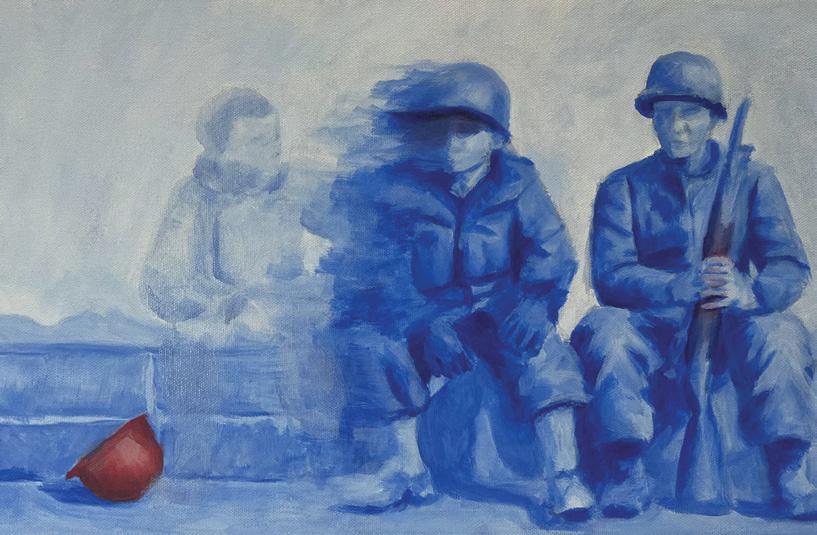
2 Maya W. ’27 War-Stained oil paints, Gamsol, Galkyd, canvas, brushes
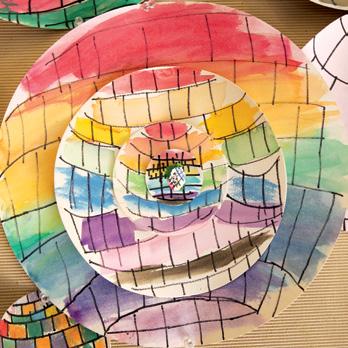
3 Aiden O. ’37 Nueva Disco Ball watercolor, marker, paper
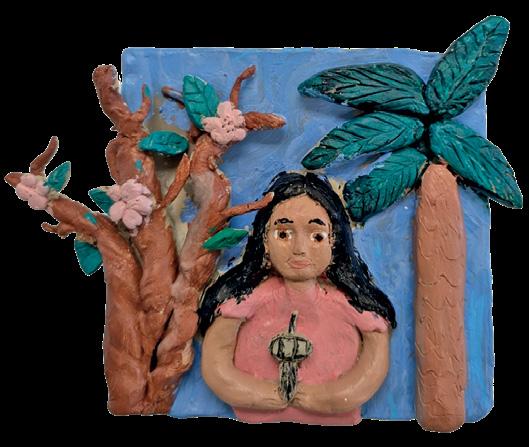
4 Ara K. ’33 Self Portrait relief in clay
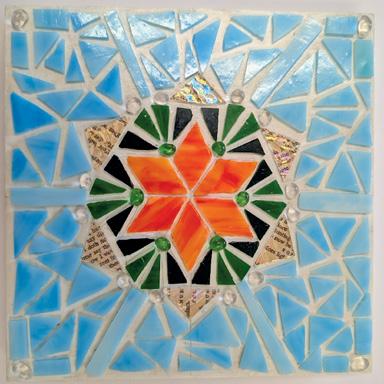
5 Audrey C. ’30 stained glass mosaic
6 Vincent M. ’34 Lascaux Cave Study charcoal on paper
7 Annabelle S. ’30 Self Portrait mixed media
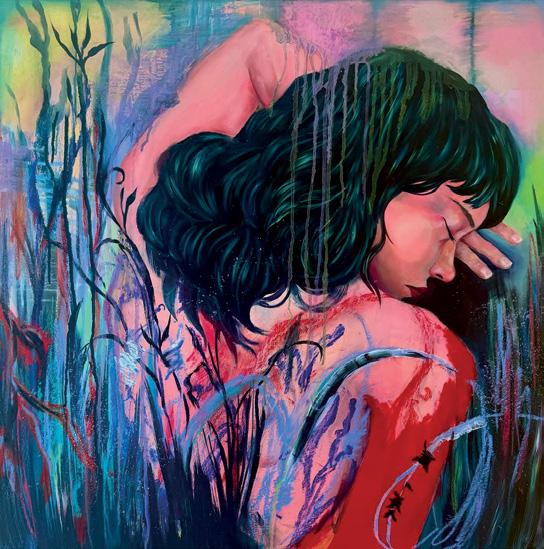
8 Audrey Z. ’26 I Want to Sleep Forever, But Spring is in My Body oil on wood panel
9 Emi Y. ’26 De La Nuit oil paint on canvas
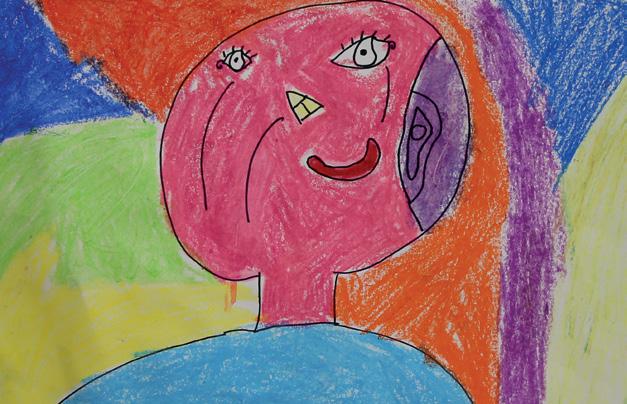
10 Mersenne M. ’37 Picasso Inspired Portrait marker and pastel on paper


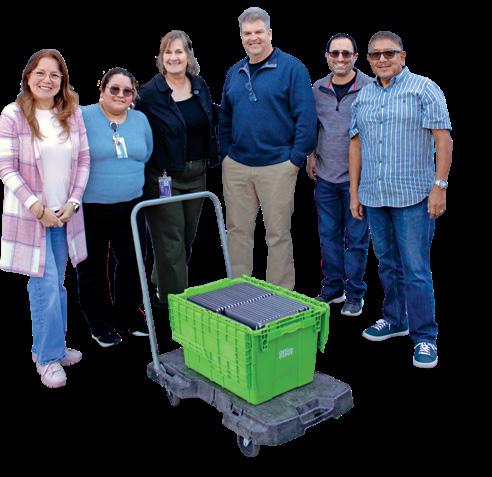
Every summer, Nueva’s technology department goes through a turnover process with student laptops. Nueva students receive a laptop in either fifth or ninth grade and use it for four years before the devices are cycled out. But that’s not the end of the story for these computers.
This spring, the tech department donated 50 retired Macbook Pro laptops to Upward Scholars, a nonprofit organization that supports adult immigrant community college students in San Mateo County. The laptops will give students greater access to online coursework and other digital resources, particularly for those who may not otherwise have reliable technology at home. This marks Nueva’s first year partnering with Upward Scholars.
“The computers are still perfectly good. They may not be brand new anymore, but they still have plenty of life left in them,” said Peter Abela, Nueva’s Information Technology and Media Support Technician. “If we can give a laptop a second life and have someone else use it again, that’s a great outcome.”
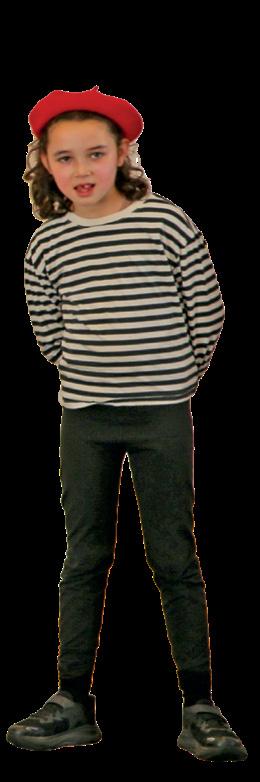
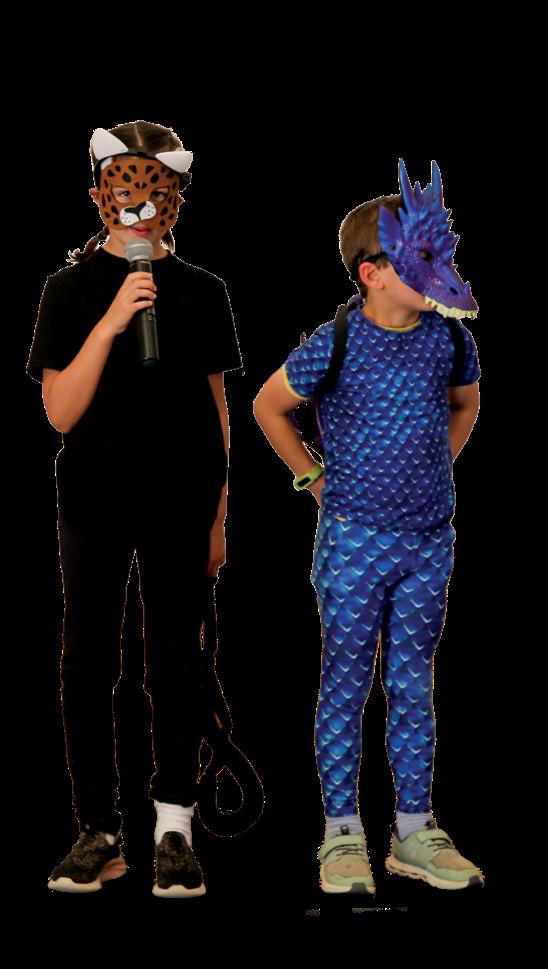
1st Grade Plays: This spring, first graders took the stage in original productions that showcased the creativity, confidence, and individuality of every student. Guided by teacher Colleen McPeek, students created their own characters, which were then woven into scripts based on ideas the students shared in interviews. “Through this process, students have learned to speak from the heart, project their voices, and respect the unique talents of their peers,” Colleen said. “The stage has provided a safe space for them to explore their individuality and share it with our community.”
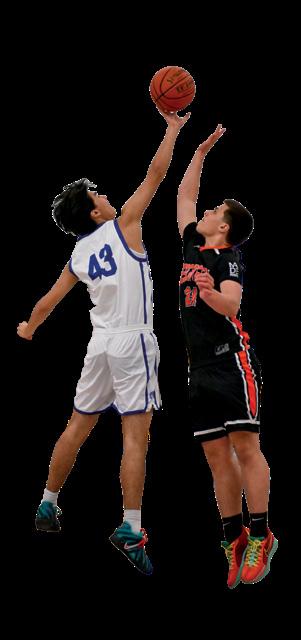
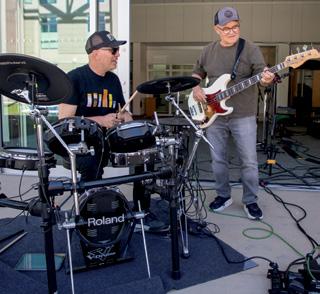
Steel Drum Jamboree: In May, students in first through 12th grades came together to perform in the Nueva Steel Band Jamboree, a lively all-school concert. Students performed alongside featured special guest and renowned steel drum artist Duvone Stewart. The San Mateo campus gym was transformed into a festive concert hall as performers filled the space with an energetic mix of calypso, samba, and popular music, including a performance by the Nueva Notes a cappella group.

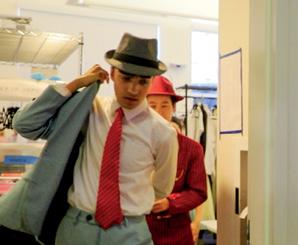
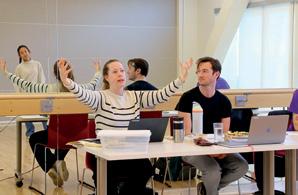
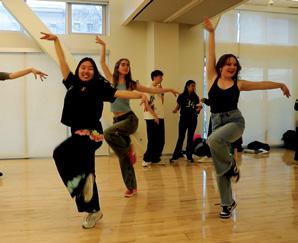
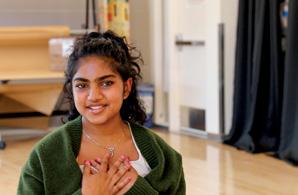
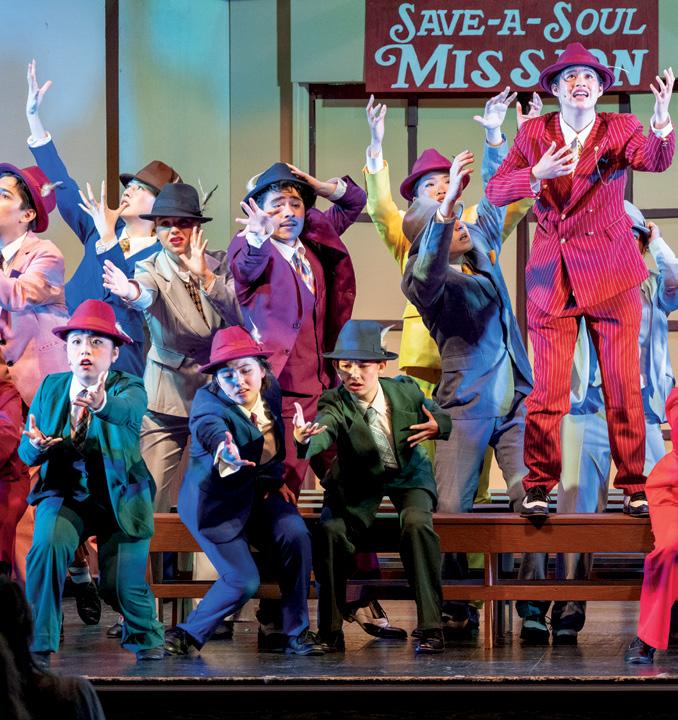
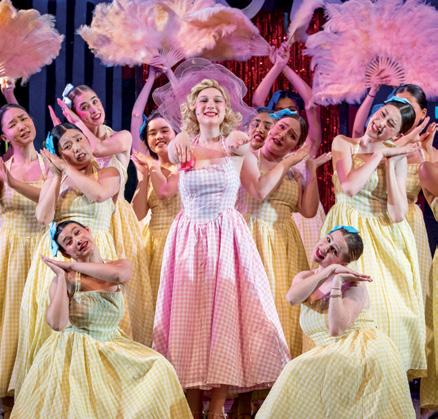
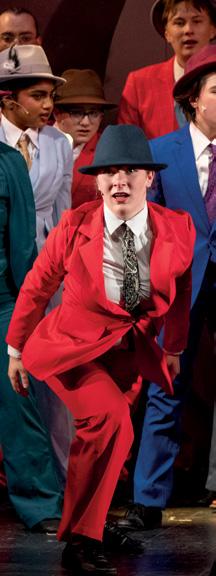
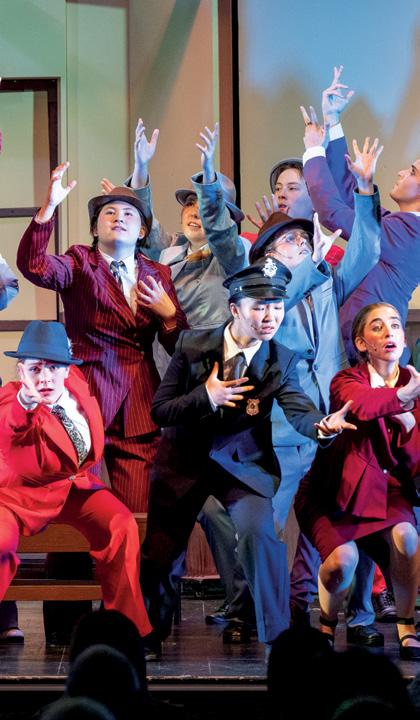
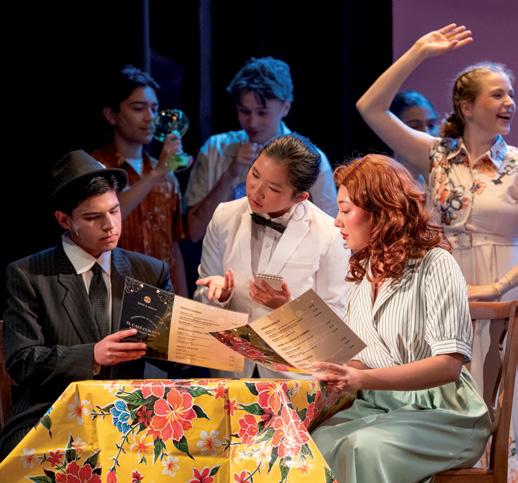
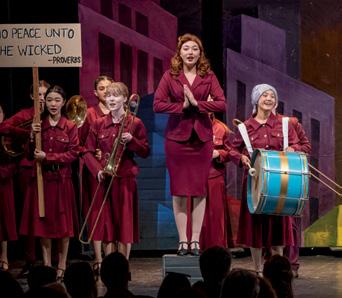
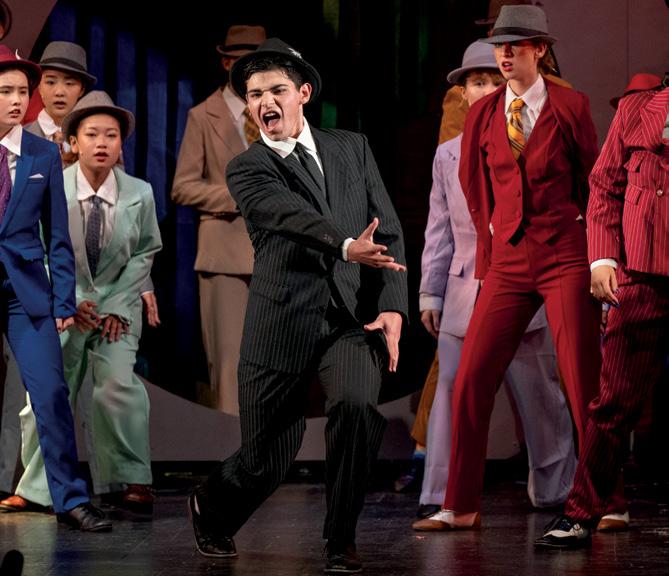
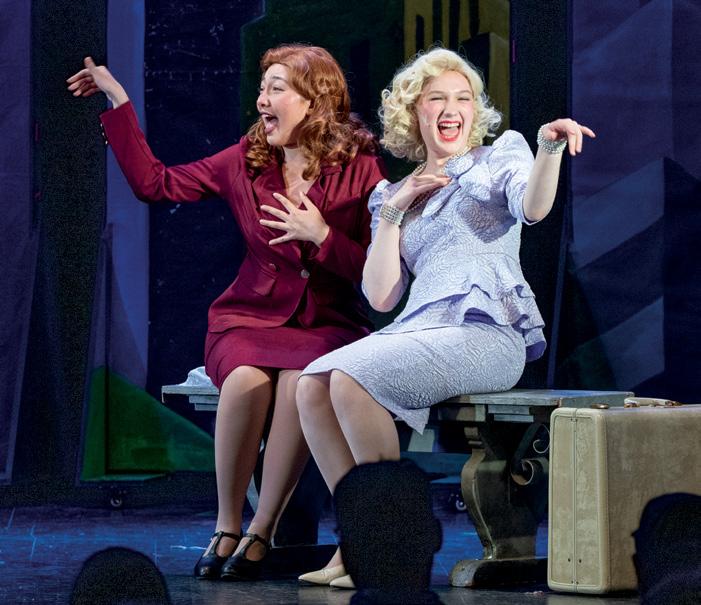
An behind-thescenes look from production to opening night
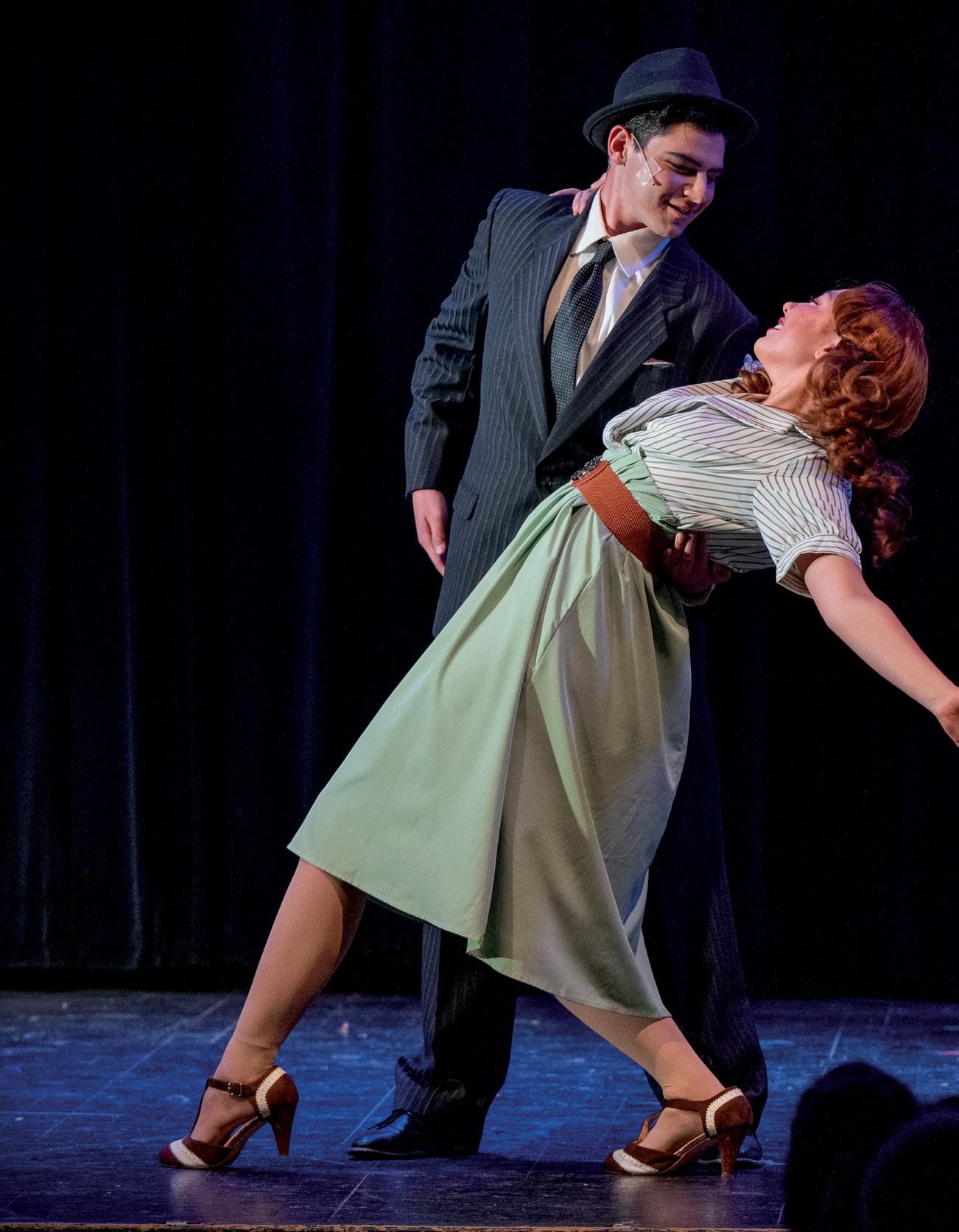

Theater is made in rooms and on stages, across months, by people who show up. To document that making, members of the communications team brought cameras into auditions, rehearsals, dance sessions, and the charged hours of tech week. The result is a short documentary and an interactive story that trace the arc from that first class in January to the final curtain in May. Where the student essays go inward, the digital work goes wide. Together, they’re meant to hold what print alone cannot: the noise, the movement, and the dozens of people who made it happen.
early January,
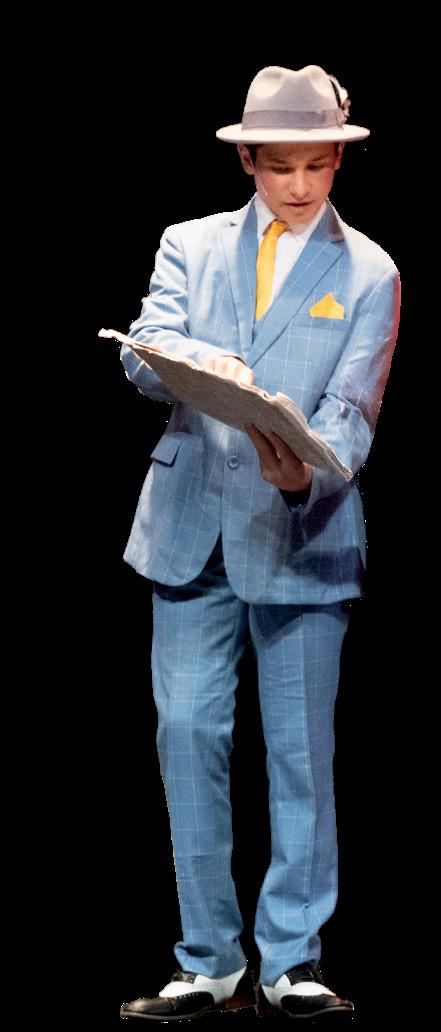
students filed into room 175B on the San Mateo campus and took a seat on the floor of the conference-room-turneddance-studio. Musical theater teacher and director Zoe Swenson-Graham pulled up a semester-long calendar on the projector—every class session and afterschool rehearsal, tech week, performance weekend—and told them the first order of business: choose a show.
“I think we’re the only program that lets you all pick,” she told the class. Zoe and her co-director, Zach Isen, had narrowed the field to two titles. The students would workshop both, then vote. This semester, Guys and Dolls—Frank Loesser’s 1950 Broadway classic about gamblers, showgirls, and romance in midtown Manhattan—won by a comfortable margin.
The spring musical is a semesterlong elective open to students interested in all aspects of theater, from performing on stage to working behind the scenes on the production side. The class covers voice work, stage movement, and character-building—but also costume design, dramaturgy, props, and stage management. Every cast member also joins a tech team. “I think it’s really important and valuable for an actor or a performer to understand different sides of the theatrical experience and the work that goes into it,” Zoe said. In practice, it functions as both a theater class and a fully mounted production, with rehearsals extending to two, then three afternoons a week as the performance weekend approaches.
Zoe’s core philosophy emphasizes process over product. “I really believe that if you have a joyful, collaborative, kind, patient process, it informs a better product,” she said. The class is graded, but the rubric covers both the measurable—can you be
Did you know?
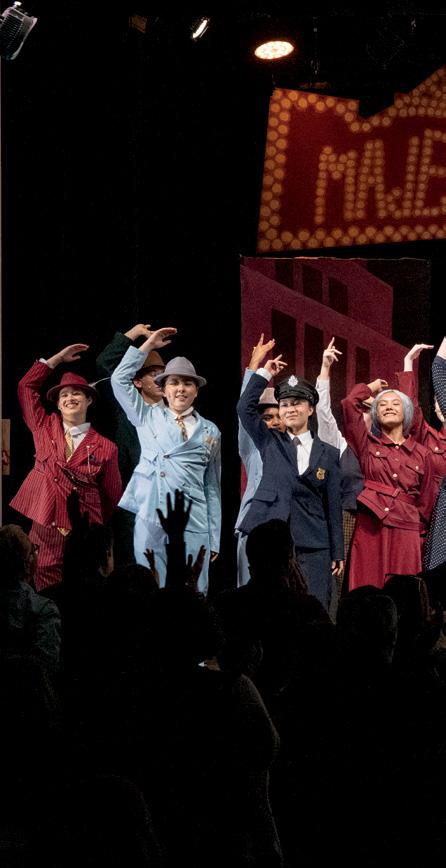
In addition to 34 cast members, there were six members of the stage crew who helped with 19 scene changes throughout the show.
heard, do you know the choreography, do you know your lines—and the harder-to-quantify. “The person that walked in on the first day of class and the person leaving on the last day—has there been growth as a performer, as an artist, as a person?” What she’s watching for from the start is clear: “Risk taking, boldness, choices, and the willingness to participate.”
That impact extends well beyond graduation, and many alumni attribute much of that impact to Zoe and Zach. Alumna Sophie Druskin ’25, who performed in eight shows with the program over four years, credits them with shaping who she is today.
“They really see something in people that they don’t always see in themselves. The amount of joy that they bring to the room every single day makes it such a beautiful thing to be in rehearsal with them,” said Sophie, who felt strongly about giving back to Zoe and Zach. She flew home from college after finals on a Saturday and was in the gym Monday morning for the start of tech week to help with sewing, painting, and anything else they needed.
For Zoe, what happens during the four performances in May is a sight to behold. “There is something so magical about young people being dedicated to something and working really hard at something, and then being able to share that with others,” she said. “And there is magic in the unrepeatable nature of a performance—it’s living, breathing art. It’s there, and then it’s gone, and it never exists in the same way ever again.”
The following four pieces were written by students inside the production—an ensemble actor, a dance captain, an actor in a supporting role, and a stage manager. Together, these four voices offer a view of Guys and Dolls from the inside.

(if an actor calls for their line, stage management is right there to give it to them.)
SENYA SALZMANN ’26
I’ll be honest with you: I don’t like singing. I don’t like dancing. I like acting a little bit, but it’s not what brings me joy. You know what brings me joy? Spreadsheets bring me joy. So when I was looking for a way to get involved in theater, I asked myself: what other options are there? That’s how I happened upon stage management. The role is hard to explain to people who haven’t seen it up close. A lot of stage
management is tech-week specific, and before that it’s mostly about keeping things organized. For Guys and Dolls, that meant going through each number and tracking who’s in what scene so Zoe and Zach don’t have to dig through notepads trying to keep track of all the moving pieces.
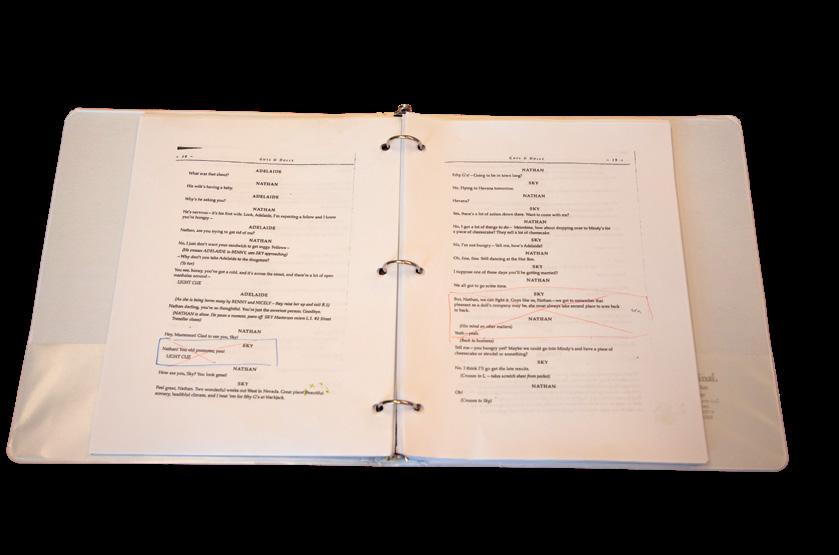
During rehearsals, the stage managers (this year I worked on a team with Deniz S. ’26 and Lily Z. ’27) stay “on book,” meaning if an actor calls for their line, someone from stage management is right there to give it to them. If a performer can’t make a rehearsal, we fill in and read their part so the scene can keep moving. The directors have enough on their hands giving feedback and moving people around the stage so it helps to have us covering this area.
piece should go so everything lands in the right place every show.
On opening night and throughout the weekend of performances, I’m backstage making sure everything runs smoothly. One of the things stage managers help with are quick changes—when an actor needs to be one character in one scene and a completely different character in the next. We help them pull off their wig and get into new clothes, all in a matter of seconds. It doesn’t always go smoothly—one run it’s perfect, the next someone can’t get their boot off. There are a lot of moving pieces, but the adrenaline rush that comes with each quick change makes it fun.
As soon as tech week hits, stage management really comes into its own. For the performances, we made a full scene-byscene breakdown: what sets are needed, where they need to be placed, and who’s bringing which props on stage. Part of this involves “spiking”—putting tape down on the stage marking exactly where each set
I don’t think the audience ever fully gets to see how much the backstage experience becomes part of your life after the fact. Even though I only did sound cues in our 2025 show, Chicago, whenever I hear those songs now, I think about that time. A part of each show will always stay with you in one way or another. I didn’t expect theater to do that to me. There’s no column for it in any spreadsheet.
TIN K. ’27
With just two weeks until opening night, rehearsal has turned into organized chaos. The realization that we will have to perform in front of an audience in the very near future has hit quite suddenly, and so the work ethic has amped up. On top of regular class sessions, rehearsals run from 3:45 to 5:45 p.m. three days a week. Everyone is called. During rehears al, not a single moment is to be wasted. There is always more work to be done.
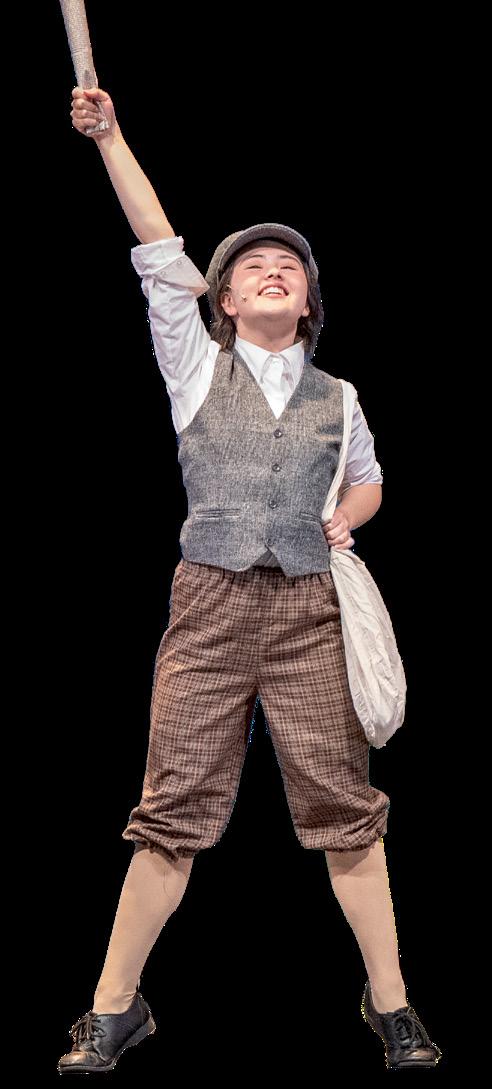
I like arriving a few minutes early to quickly run through any dance numbers I know we’re rehearsing. As one of the dance captains, it is my responsibility to know the choreography. It often involves not only knowing my own moves but also knowing what other people are dancing, even if their moves are different. It’s a thrilling type of challenge, because just being able to see the moves in your head isn’t enough; your body has to know it completely as well. Zach and Zoe are amazing choreographers, and they’ve created complex dances with a bunch of moving parts. To the audience, it may look neat, perhaps even automatic, but behind each spectacular number is weeks of rehearsals where we’re bumbling into each other and everyone somehow looks like they’re doing something different.
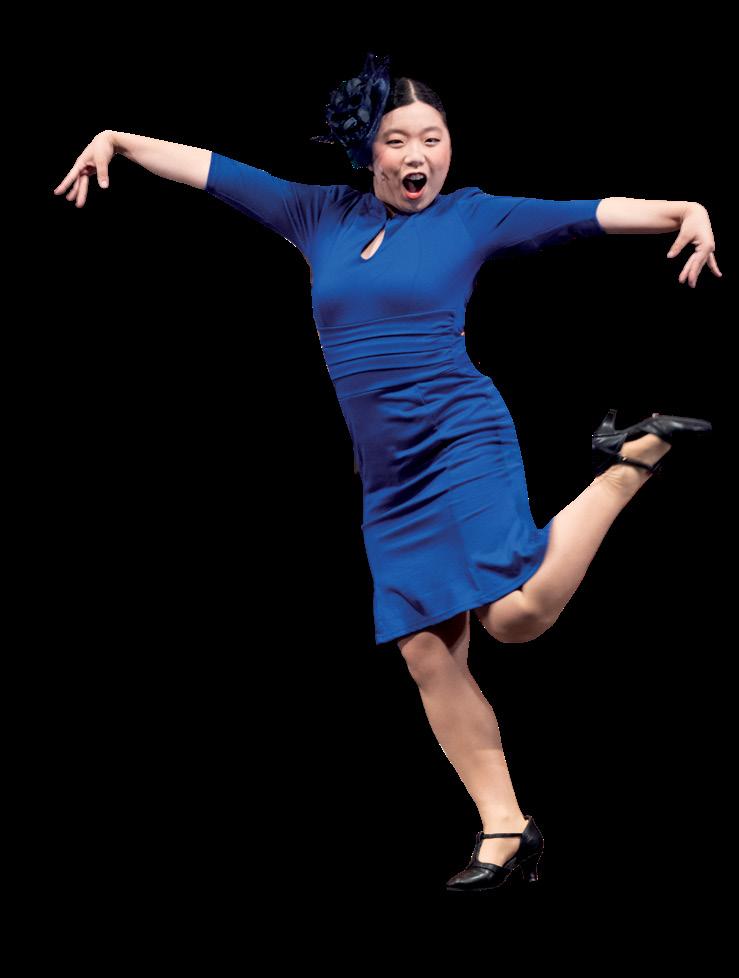
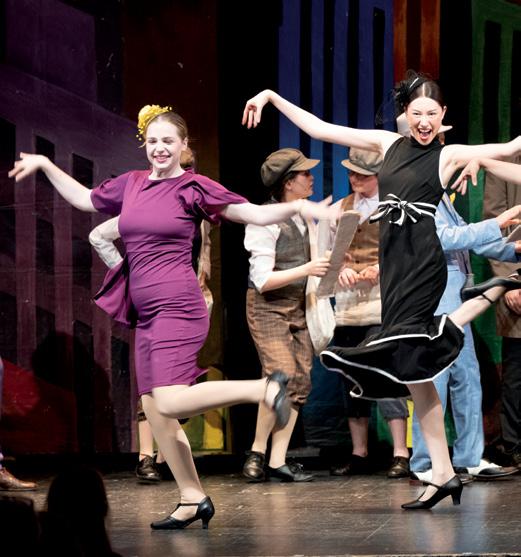
It’s probably no secret to my castmates that choreography rehearsals are my favorite. Anything involving physical storytelling is exciting, because you quickly realize that every single thing you do is communicating something. When Zach and Zoe do solo
When I hear the synchronized click-clack of our heels and dress shoes as we dance, it’s the most satisfying sound in the world, and it takes everything I’ve got not to yell in excitement.
work with the leads, the dance captains oversee the ensemble numbers and begin to tweak small details. It’s a slightly scary position to be in, because you’re constantly thinking, what does the audience see when we dance like this? When they see us all hunched over in “Crapshooter’s Dance,” will they realize we’re gangsters gambling in the sewers? When our legs are beveled and we’ve got our chins up in “Take Back Your Mink,” do we look like dancers at the Hot Box nightclub? It’s exciting how all these little details add up together to create this amazing show.
The final step before our actual performance is a week of after-school rehearsals from 3:45 to 8 p.m. on the actual stage at the Hillsborough campus. Until then, classes and rehearsals happen in the recently-converted 175 multipurpose rooms on the San Mateo campus. As we get closer to opening night, more people are practicing in character shoes. When I hear the synchronized click-clack of our heels and dress shoes as we dance, it’s the most satisfying sound in the world, and it takes everything I’ve got not to yell in excitement. Instead, I just grin and keep dancing.
“From letting us select the musical to going through the script and reallocating lines or addressing areas that might be problematic, we have a lot of choice.”
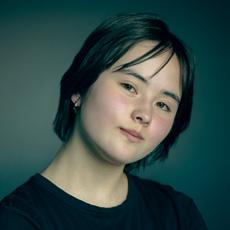
This is my third year in the Nueva Theater program, and people sometimes ask me why I keep coming back. The honest answer is there are three reasons. The first (albeit cheesy) answer is the community. Freshman year, the upperclassmen in theater really took me under their wing and made me feel like I belonged at Nueva. Now that’s something I really want to carry forward. I want to be like the person who helped me so much when I was first getting started.
The second reason is Zoe and Zach. They’re such kind, wonderful directors, and they give us so much autonomy to
make the show our own. From letting us select the musical to going through the script and reallocating lines or addressing areas that might be problematic, we have a lot of choice. For example, Guys and Dolls as one might imagine from the title, is a little old-school, a little sex ist. Before we even started rehearsals, we sat down and had a conversation as a whole cast. Zoe made a list of everything in the script we might want to deal with and we talked through each part as a group. There’s a lot of objectification of women in the original script— women are referred to as “dolls” throughout. One of the lines we discussed was Sky saying to Nathan, “Figuring weight for age, all dolls are the same.” That line is not a great vibe, but because it comes at the beginning of the show, it really helps establish who Sky is. We knew we wanted to preserve Sky’s character arc and still show him becoming a better
person over the course of the story, so we didn’t want to remove it entirely. Instead, we decided to cut the “figuring weight for age” part because that was just not the vibe we wanted, and kept “all dolls are the same,” enough to establish that Sky thinks all women are the same, while still softening some of the dated language we didn’t want to put on our cast members.
The third reason is how much I enjoy being in the ensemble. I think being in the ensemble is underappreciated, and it has taught me a lot, too. The leads are the
ones in the middle of the scenes, doing the big ballads by themselves, and that’s the glamorous role. No shade to them; they’re awesome. But over three shows, I’ve really come to value my ensemble track. You’re part of a group, and you know that how you perform matters to how everyone else performs. In the big numbers, it’s like a picture, everyone moving in sync, everyone doing the moves together. It makes me more motivated to practice and do well. You’re a smaller part of a bigger whole, and I really like that. Plus, I get to be in basically every fun number in the show. I get to be a gambler, a newsie, and a showgirl. How can I complain?
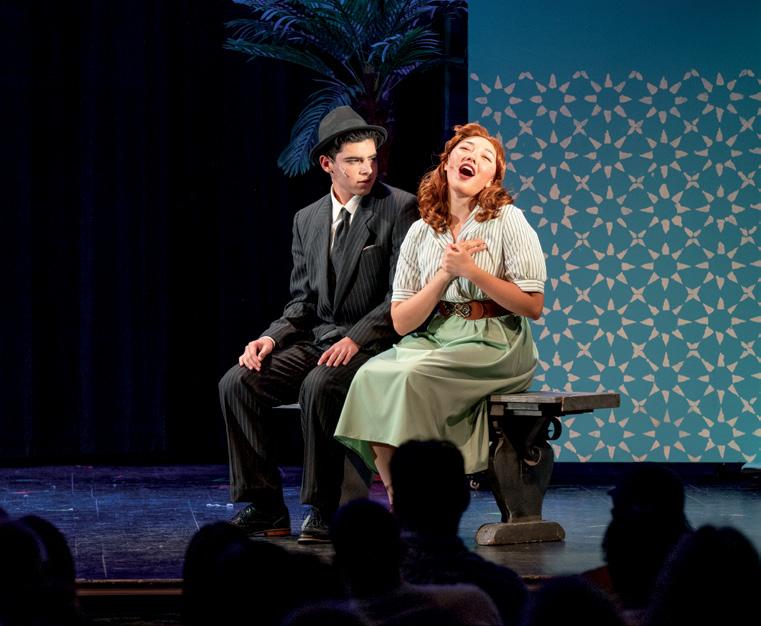
RAFI P. ’29
I walk into room 175 and join the circle of cast members sitting on the floor. After a quick attendance call, our teacher and director Zoe reads us the agenda for the day: what songs we will work on, who needs to try on costumes, and what the tech crew should be doing. I can’t help but look over at a number written in the corner of the whiteboard that has been ticking down for the last three weeks. Days left until opening: 4.
For the rest of class, 175 is a hub of activity. Sometimes, we are split between Zoe, our assistant director Zach, and the dance captains to practice different scenes and numbers. Other times, we stay together as one big group and work through a portion or all of the musical. Once class ends, we’re still not done. Shortly after school is out, we meet again for another two hours of rehearsal. An outsider might be stunned by the amount of time we spend rehearsing, but to us, it’s never enough and the energy is always frenetic.
Guys and Dolls is a challenging musical, and we spend a lot of time reviewing choreography and harmonies. One song I have particularly struggled with is “The Oldest Established” because of its four- and five-part harmonies, which involve four or five distinct musical notes being sung simultaneously by the cast. Adding to the challenge, the scene leading into the song is very low-energy, so I need to make a conscious effort to build up my energy before the song begins. On top of that, I sing the first line, and the aggressive opening brass cue often startles me and causes me to stumble over the fast lyrics.
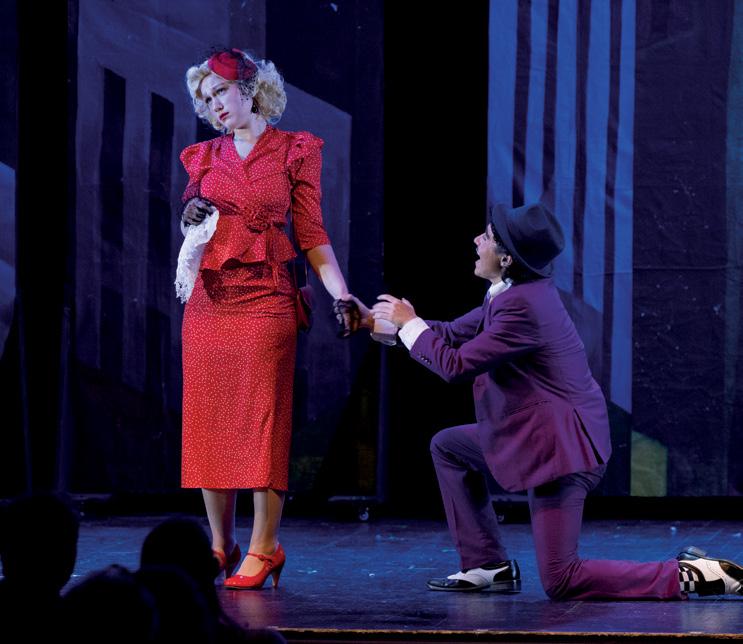
This musical has surprised me; despite being based off of stories written in the 1930s, the plot, characters, and human story still hold up today. It has a wit and charm that has allowed it to stay relevant throughout the years as a defining musical theater classic. The influence of Guys and Dolls has spread outside of the theater, too. One of its songs, “A Bushel and a Peck,” has become a staple goodnight lul laby. My dad grew up hearing this song almost every night before bed. I have been amazed that this musical I had previously dismissed as old and irrelevant still feels very modern.
In my role as Benny Southstreet, I have had the opportunity to interact with the leads and the ensemble, and everyone is so welcoming and supportive. As a freshman, I wasn’t close with many upperclassmen, and the musical was a great way to meet new people and make new friends. So when the number on the whiteboard finally hit zero, I realized I hadn’t just joined a musical— I’d found my people.
a
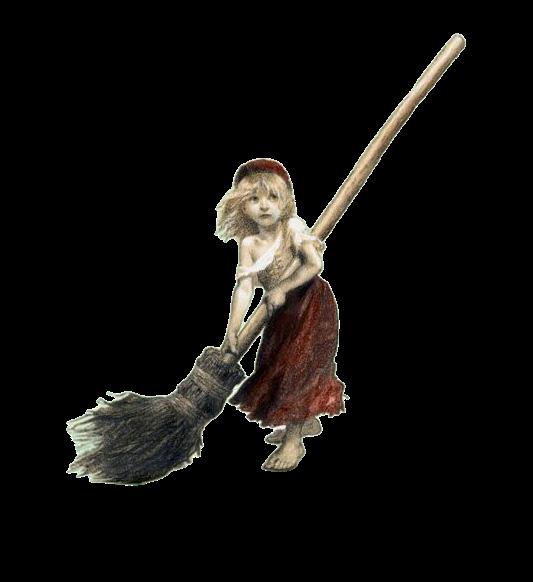
I must confess that, as talented as I knew Emily to be, I was imagining this to be a fairly ragtag affair ... How wrong I was!
BY STEVEN CHANAN ’80
Have you ever wondered what twenty-somethings do for fun on Saturday nights nowadays? Well, if we’re talking about Nueva alumni, the answer may—or may not!—surprise you.
Let me backtrack a bit. Back in early January, I was contacted by Emily Ross ’17, a member of Nueva’s first graduating high school class. I knew Emily as a fine musician—an accomplished cellist who I had accompanied many times both inside and outside of Nueva—and a “musical theater nerd” who enthusiastically participated in all of Nueva’s musical theater productions, including her role as Penelope Pennywise in “Urinetown” during her senior year. Emily explained that she was putting together a “sing-through,” as she called it, of the classic musical Les Misérables, with fellow Nueva musical theater aficionados, from Stanford (where Emily attended) and beyond.
Aitan Grossman ’11, a very accomplished pianist, was slated to provide accompaniment for the first act, and Emily wanted to know if I was willing and available to accompany the second act. “Absolutely!” I said.
I must confess that, as talented as I knew Emily to be, I was imagining this to be a fairly ragtag affair. “Les Mis” is a big, challenging musical, with complex interplay between music, dialogue, and song. How wrong I was!
When the day arrived, a Saturday in late January, Emily had created a detailed schedule for rehearsals at her family home starting mid-afternoon, followed by a light dinner. When the sing-through began at 7:30 p.m., I was absolutely blown away. Because Aitan was accompanying the first act, I was able to enjoy the performance as an audience member, and
it was truly of professional quality. Tim Isaacs ’12 sang the role of Enjolras with great verve and sensitivity, and Emily conducted with aplomb and sang as Fantine beautifully. As challenging as accompanying is in general, accompanying a musical is especially difficult, not least because the part is an orchestral reduction. Yet, Aitan truly nailed it. After a break between acts, I accompanied a very successful Act II, and when it was all over, the whole cast exploded in rapturous applause. We then all hung out, eating desserts and reveling in the post-performance glow till well after midnight.
With that success under her belt, Emily set her sights higher, and two months later we tackled the Stephen Sondheim musical Into The Woods. As challenging as Les Mis was, this musical is a whole other level, and our process reflected that. This time, we used the main hall of a church and began rehearsals with soloists in the early afternoon, and ensemble rehearsals later in the day. The performance started once again in the early evening after dinner, and while this performance was a bit choppier, it was still a joyful experience of music-making for the sake of music-making, a chance for friends to gather to do what they love.
For me, as a teacher who has taught at Nueva for 20 years now, this was a rare and inspiring opportunity to spend quality time with students I worked with well over a decade ago and see firsthand how some are managing to carve out time to do what they love amid the challenges of twenty-something life. I’m pleased to report that plans are underway for sing-through number three.
Steven Chanan ’80 was a Nueva student and Menuhin Scholar in the 1970s and returned as a teacher in 2005. He has performed a wide variety of roles in the past 20 years, including classroom math teacher, advisor, Math Contest Coordinator, Music Coordinator, accompanist, and fourth grade Constructing the Universe teacher.
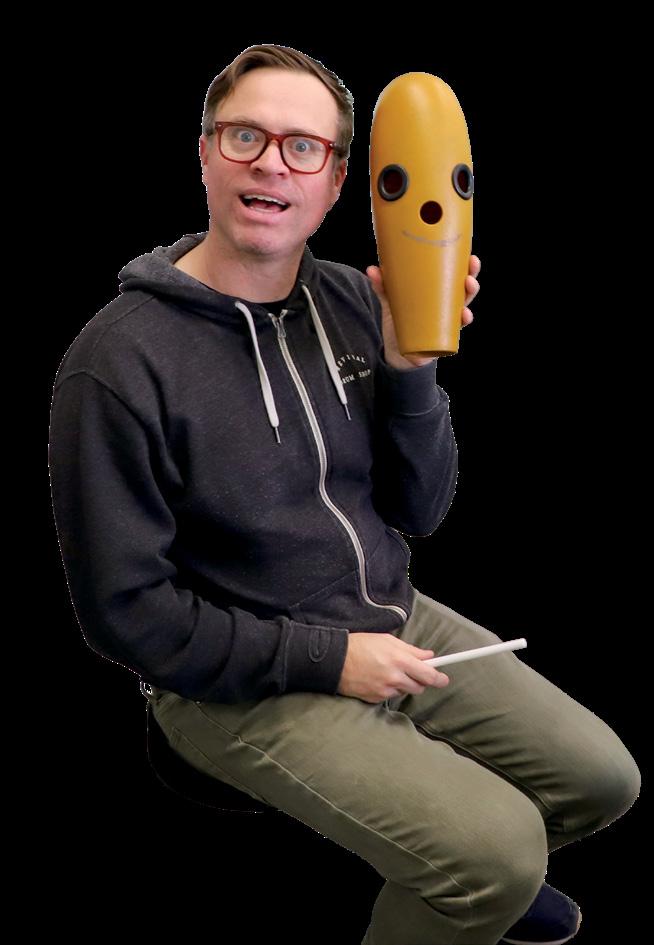
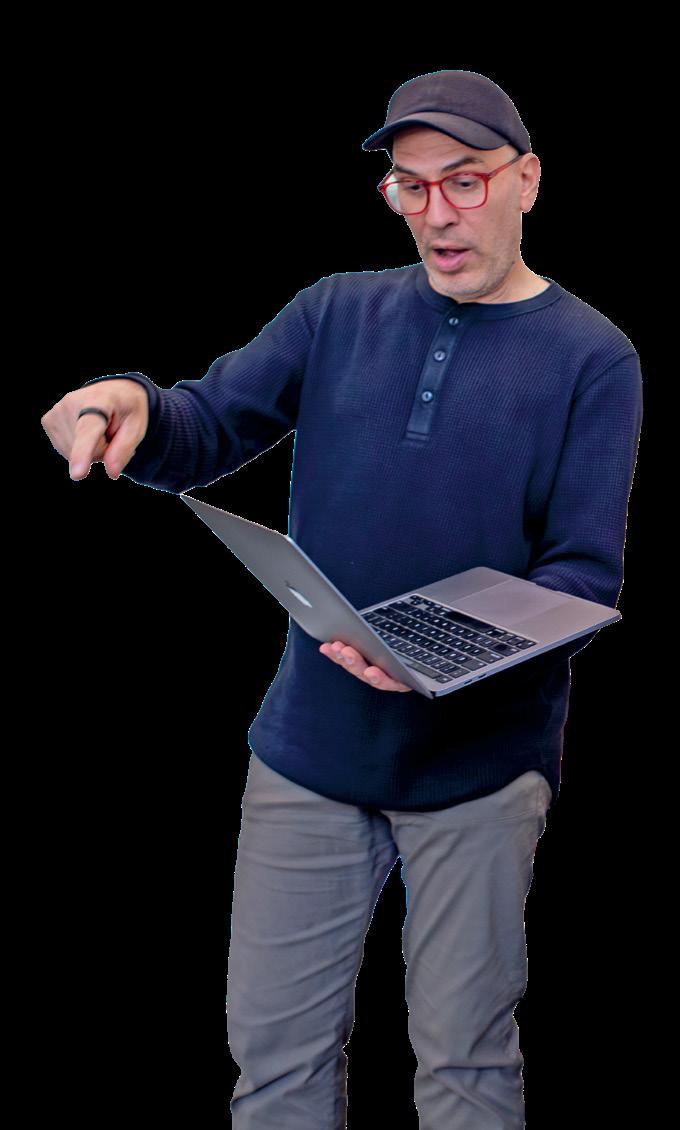
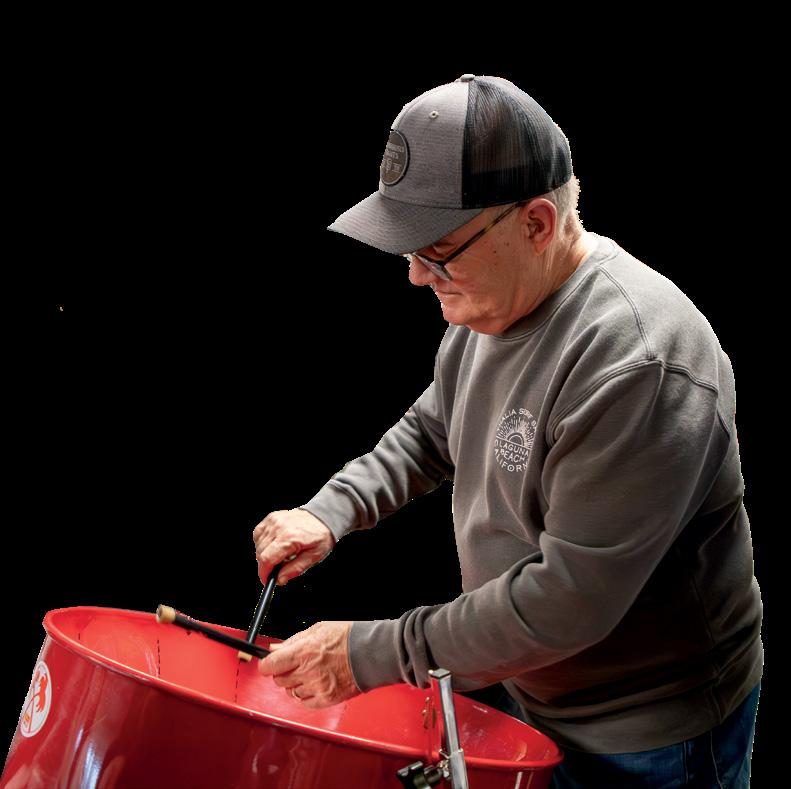
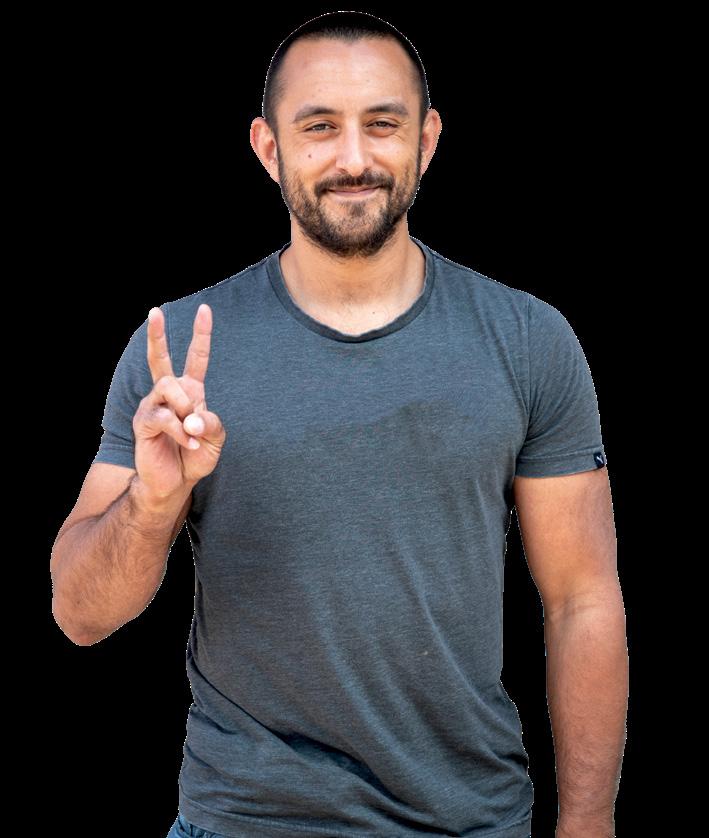
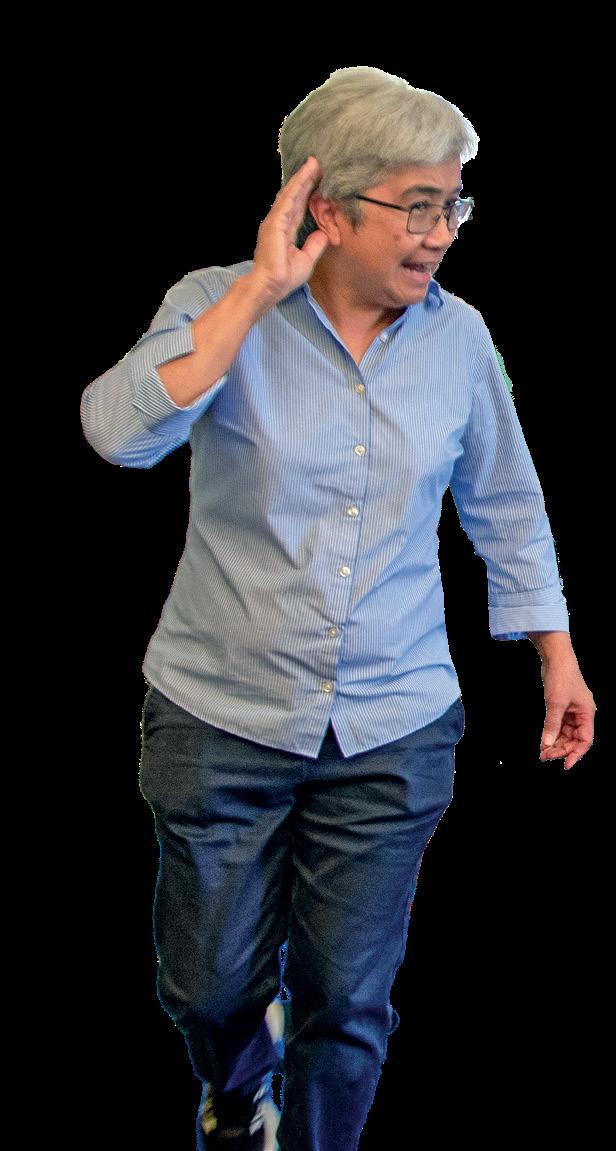
MUSIC AT NUEVA doesn’t begin with scales or theory. It begins with a room full of noise that slowly becomes a song, a door creaking that becomes the call of a whale, a teacher who hands you an instrument you’ve never touched and asks you to play it by the end of class. The teachers profiled here by their students have little in common stylistically—one runs a steel band that has played Trinidad Carnival; another drops tracks for 20 minutes before the lesson begins to reveal itself; a third incorporates dance so students learn how to move their bodies to the beat. What they share is a conviction that music belongs to everyone in the room, not just the students who already know what they’re doing. By the time the noise becomes a song, every student has found a place in it. Read on for profiles of these teachers written by students who have learned from them.
To take Steel Drums with Jim Munzenrider is to walk into a room of noise and leave from a room of music.
When you enter his classroom, you are met with a cacophony of sounds. Fragments of melodies dance around you while students happily warm up. As Jim walks into the room, organized chaos slowly resolves into a coordinated group of musicians waiting for direction from their mentor. What was once the sound of scattered noise calmly settles, and the room fills with focused anticipation.
Jim takes the complexity of learning music and imbues it with fun, which makes learning easier and more inclusive. Not everyone who joins this class has played steel drums, or even any instrument before. Often certain sections of the band have to slowly go through parts, a few notes at a time, or Jim might have us loop measures a few times to make sure the inexperienced people feel comfortable. He relies on more experienced students (some high school students have been playing in Jim’s steel band since they were in first grade) to make sure that everyone who is new is kept up to speed. A former classmate told me, “He always went above and beyond for the students. I’ve seen him stay in practice rooms for hours outside of class just to help students get the music down. He liked to think of himself as a ruthless teacher—or at least joked that way—but real ly he was always super caring and dedicated.” He makes everyone feel important.
While Jim and all of his students take their rehearsing seriously, the class itself is not a serious place. There is always time for lightness and joking. The steel band always plays
In Jim’s classroom, we all feel like we belong, and we all learn to be better musicians and better people.
“Happy Birthday” on their instruments for classmates’ birthdays. But Jim got tired of teaching the song over and over again, so instead he tells everyone to just hit whatever notes they want to the rhythm of “Happy Birthday” in the key of ‘D demolished’ as he likes to say.
When I was in Middle School Jim had a tradition of making microwave popcorn at the beginning of every class. One day the microwave started smoking and it set off the fire alarms. Suddenly firemen with gas masks and oxygen tanks came rushing in. After they realized nothing was wrong, Jim invited them to listen to what we were rehearsing, so we played “Pan Woman” by Ray Holman for an audience of firemen standing in the doorway. Unfortunately, Nueva Operations confiscated his microwave, so that was the end of popcorn, but not the end of snacks or good times with Jim. Another former classmate shared with me, “He kept practically a
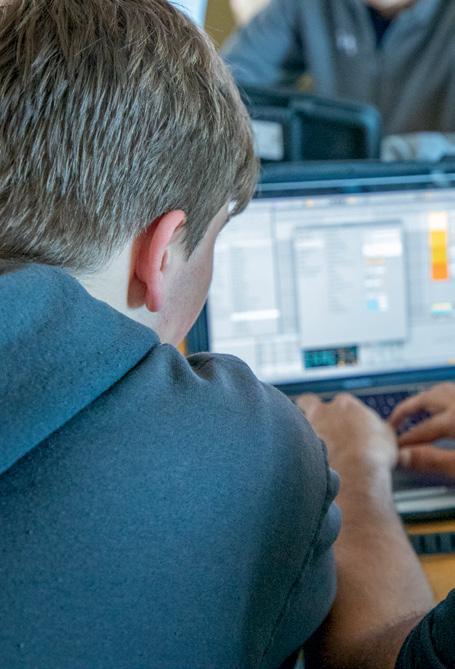
lifetime supply of Girl Scout cookies on deck in the Steel Shack. And he never failed on his promises to bring donuts or fudgesicles to steel band practice!”
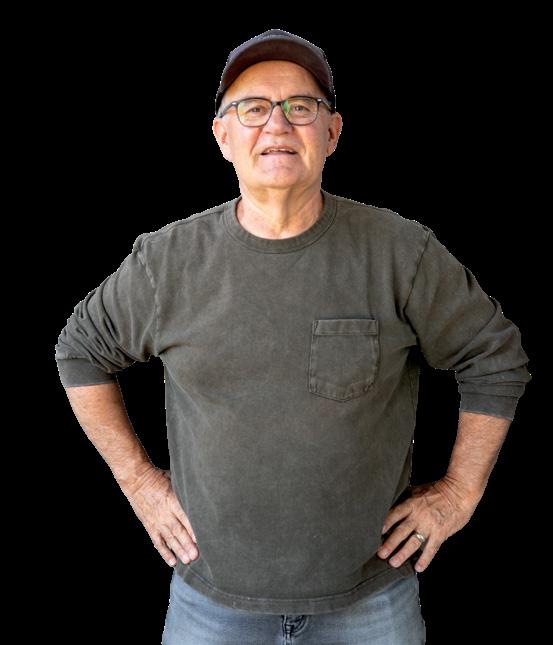
Somehow Jim makes musical complexity fun and accessible. In his classroom, we all feel like we belong, and we all learn to be better musicians and better people. Perhaps because of this, he has created a well-respected steel drum band, known for high-level performances. He has introduced us to musicians he knows and admires, and has given us the opportunity to play with people such as Ray Holman at SFJAZZ, pannists Robert Greenidge and Jeff Narell, calypsonian David Rudder, and even Tony Lindsay from Santana. He has taken students to Trinidad for Carnival and hopes to go again next year. Jim inspires us every day. When tour groups of prospective students come through his room, Jim always exclaims, “Enjoy your stay at the happiest place on earth when Disneyland is closed!” —Finn R. ’27
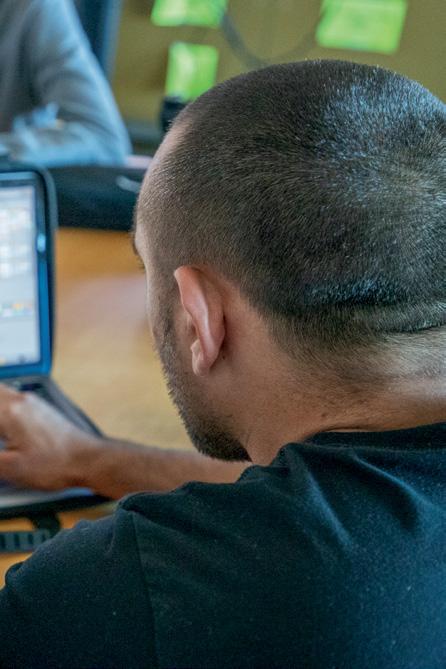
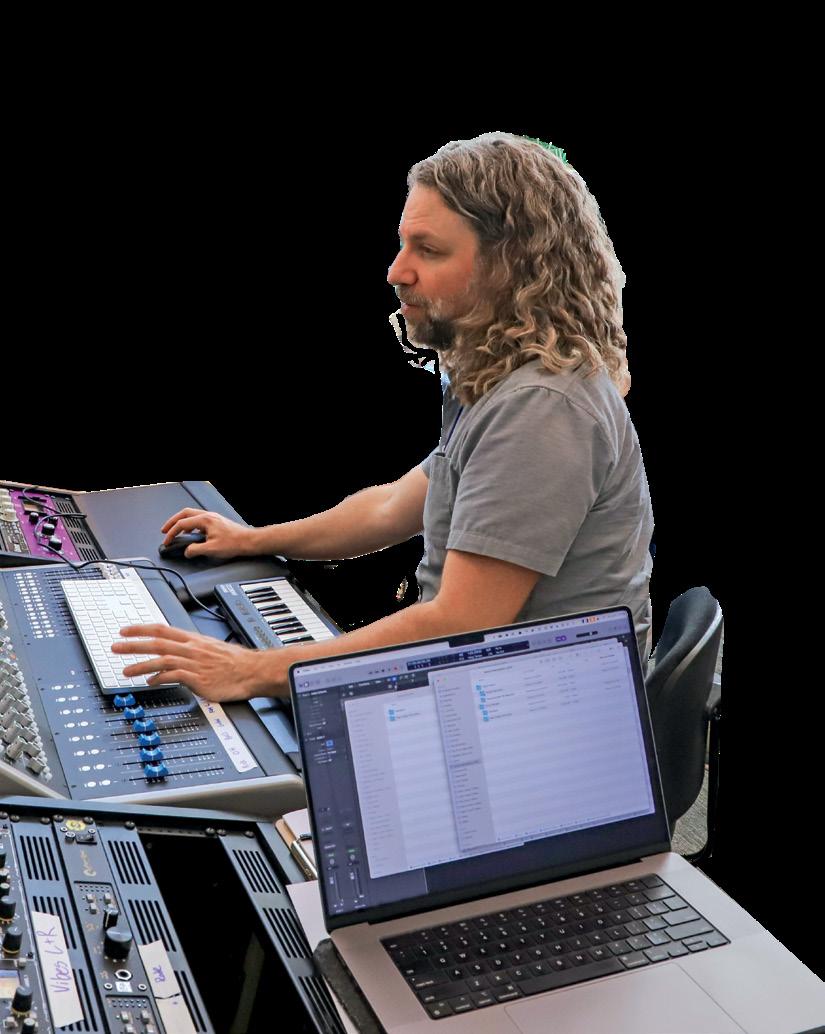
Cody Alan has forgotten more about music production than most people will ever learn. Spend just five minutes with him, and you’ll know what 17 years in the industry sounds like.
Which makes it stranger, in the best way, that he spends his mornings in a classroom with high schoolers, bringing in snacks and pulling up tracks for 20 minutes before anything resembling a traditional lesson begins. That’s just how class starts. You sit down, you eat something, you listen. He picks the music—something you probably wouldn’t have found yourself—and that’s the point. After the song ends, he pauses for the class to start picking it apart: what caught them, what instruments or effects they noticed, what it makes them want to experiment with. Cody is relentlessly curious, and he expects you to be too.
When you do get into it, you’ll see that he’s fluent in Ableton Live the way most people are in a first language. Ableton is the software most professional producers work in, and where students spend the semester. Early on, students grapple with interpretive prompts small enough to just get a feel for the software, before building toward full songs for their final projects.
Throughout all of it, Cody knows exactly where you’re stuck before you do. But he’s just as happy to pause the music-making entirely and talk about music, about life, about whatever is happening. He also runs the Upper School’s morning self-defense class and teaches No-Gi Jiu Jitsu on the side, which tells you something about him: Cody is a person who is serious about everything he decides to care about.
Music production is one of those things. Cody figured that out a long time ago; his job now is making sure you do too. —Callum S. ’27
Music class is very special at Nueva because everyone, no matter the skill level, can participate. I have been playing music and singing for over seven years, and I am still en gaged in Matt’s class and still learn a lot. In Matt’s fifth grade music class, everybody goes into summer break having played between three and six instru ments and having a feel for music that they never had before.
But let’s go back to the start of the year.
Our first unit was African dancing. We learned to move with the music and the rhythm. Matt played drums while a guest African dancing teacher led all the students in a dance. It was very fast-paced and good exercise. I heard classmates say, “Music is another PE class!” Next, we experimented with steel drums, and Matt taught us how to play a few songs. One of the last songs we learned, “Monkey Island,” let us let out our wild side and make monkey sounds! From steel drums we moved into Brazilian dancing. A special dance teacher came to Nueva and taught us, sometimes letting us make our own moves and sometimes teaching us a dance routine.
And finally, the last unit was the songs. For each song, everybody chose an instrument to play, with some staying on steel drums, some playing guitar or ukulele, some singing, and more! Matt also introduced us to songs we had never heard before. We played pop songs by artists like Coldplay and WALK THE MOON, went into the past with a song by The Monkees, and discovered bands some of us didn’t even know existed. My favorite moment was singing “Shut Up and Dance” by WALK THE MOON, a song I had never heard before this year.
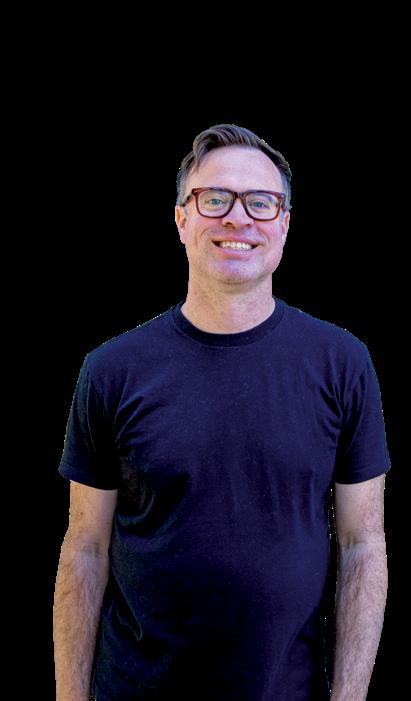
The fifth grade class had a great time, and Nueva students are so privileged to have Matt as our teacher. I cannot wait for Matt’s sixth grade music class— more new songs, more new styles, and more of what makes his class so special!
—Googy C. ’33
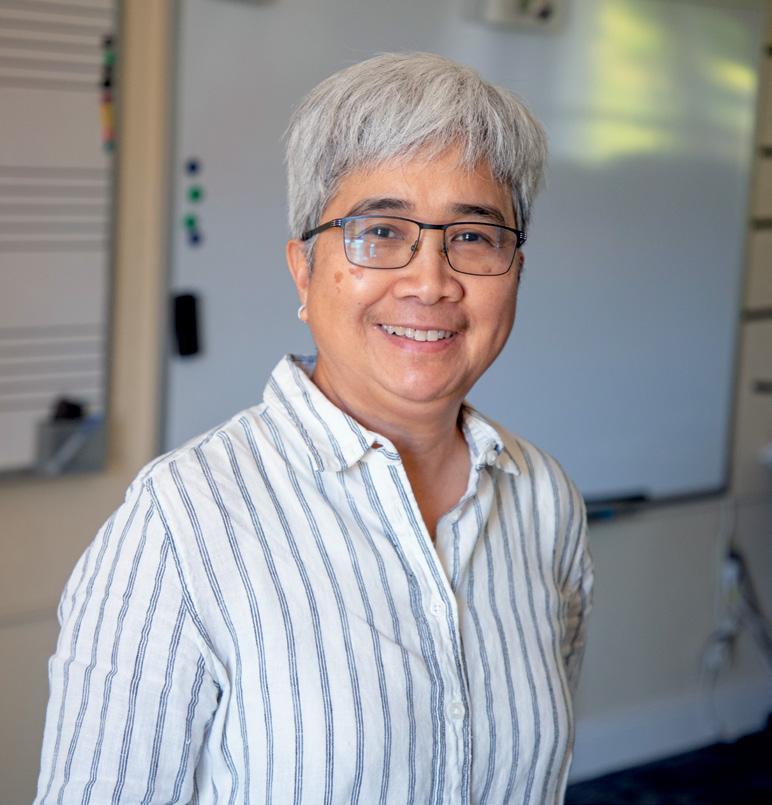
Gemma has been teaching here ever since I can remember. From kindergarten games of Fiddle-i-fee to fourth grade choir pieces, Gemma has been a constant inspiration for my musical growth. During COVID, students were divided into small cohorts of about fifteen people, and I was placed in Gemma’s group. I had a great time with all of the activities that she and the other teachers planned for us. Her music classes were also a highlight of the Lower School, with students scrambling to sign up for the end-of-class voice and piano performances she organized. Those performances—and the supportive environment around them—helped foster my love for performing.
What made Gemma’s classes special was how organized they were and how
prepared they made us feel; by the time the concert days arrived, we were always ready to perform. That structure helped me to develop stronger discipline while working on my oth er instruments. Gemma’s influence during the five years I was in the Lower School deepened my passion and general adoration of music, and her bright personality has inspired me to keep practicing choral singing with her in Middle School.
Thanks, Gemma!
—Toby G. ’31
Walking into Sound Experience, I had the vague notion that I’d be learning about sound. What I didn’t yet understand was that I would be given this opportunity to explore sound on a deeper level with a veteran of the craft.
Max Cowan is highly invested in our experience of the class—always wanting to make sure that we gain something out of the classes we take with him. He provides us with the necessary tools and shows us how to manipulate everyday sounds, such as a door opening, into the unexpected. Through his class, I discovered that noises like the whir of a cicada, howl of cat, buzz of a fly, and even the call of a whale can be derived from a single door creak.
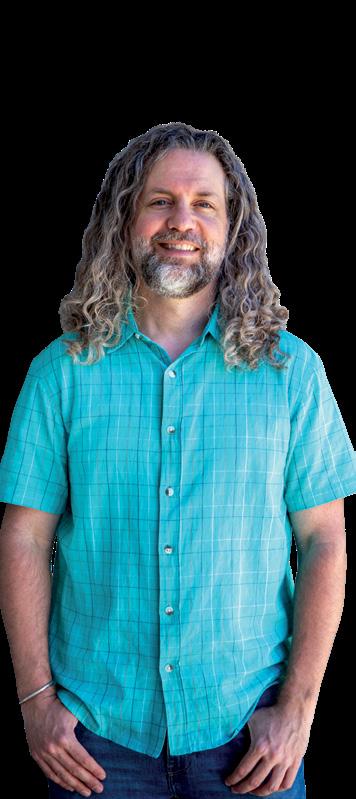
This class has shifted the way I think about sound—not as an isolated element, but as a connection to the world around us. Over the course of the semester we discovered how sound can become both a representation for something more tangible, like an object itself, or give insight into the emotion or memory of something more subjective, like an art form.
Max’s appreciation for this subject is contagious, and has given me a fresh outlook—one that regards sound with deeper meaning. Our assignments highlighted the aspects of manipulating audio tracks and clips that are essential when achieving the layers of depth that come with sound design. This came as we discovered the nuances of changing and playing upon sound audio when working on
animated shorts and movie clips, as well as various other projects.
The class felt like it was in a constant state of progression. Every day, Max introduced new concepts to us; ones that often arose because a student asked a one-off question and Max’s enthusiastic response was to either find out right then and there, or, if he already had an explanation, give the student their answer and further the discussion by both providing them with another point of view or bringing up a new piece of information not previously explored.
After having taken his class, I’ve come to learn that ultimately sound is interwoven into every aspect of our lives.
This class has become one of my favorites at Nueva; the deeper appreciation I’ve gained when it comes to sound and its effects on my surroundings is only a piece of why. —Yazzie A. ’29
During my past three years at Nueva, music has pretty much taken over my school life. Whether I was practicing for a piano recital or scrambling through band rehearsals for our next performance, it constantly kept me on my toes.
I owe all of my success and growth to my teachers, especially Jason Muscat. Jason has been there since the beginning of our band, back when we could barely get through the most basic songs, helping us grow into the band we are today. He always pushes us to step out of our comfort zones, but keeps things incredibly fun. One time my band decided to play “T.N.T.” by AC/DC. Now looking back on the song, it wasn’t that compli cated, but when we were playing it, I was scared, wondering if I would
But, honestly, nothing matches the suspense of waiting to hear where we land on the famous
“Muscat Rating” scale after a performance.
The Menuhin-Dowling Program offers an intensive, performance-focused path for music students at Nueva. Founded by legendary violinist Sir Yehudi Menuhin and violinist and educator Helen Dowling, the audition-based program combines rigorous private instruction with regular performance opportunities, mentorship, and musical community.
Open to vocalists and instrumentalists in first through eighth grade—with a new Upper School continuation—the program emphasizes both technical growth and artistic expression. Students receive two private lessons each week, perform in recitals and community outreach concerts, and attend monthly “Menuhin luncheons,” where they workshop pieces and engage with visiting professional musicians.
For Izzy C. ’28, who joined the program in first grade and has now participated for 10 years, one of the most meaningful aspects has been the community.
be able to play it. Jason pushed me and motivated me to keep working, and eventually it turned out great, thanks to his support.
But, honestly, nothing matches the suspense of waiting to hear where we land on the famous “Muscat Rating” scale after a performance. Jason gives out the Muscat Rating to all his bands as a way of providing feedback of their practice performance before their big day. We always hope to receive all six Cats (one for each of the letters of his last name), but most performers receive between four and five. It is something bands always look forward to before a performance.
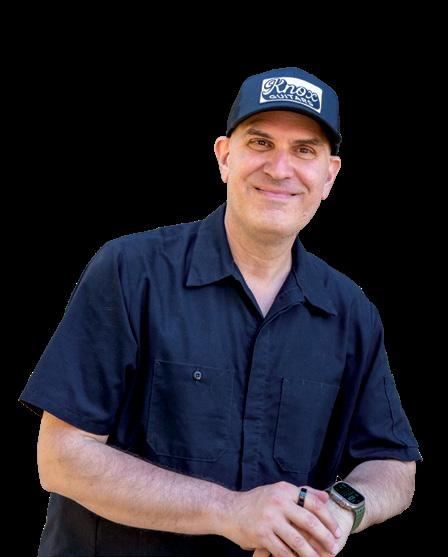
Music at Nueva definitely wouldn’t have been the same without him. Thank you, Jason, for making the journey so memorable.
—Ishan S. ’30
“One of my favorite parts of being in the program is being able to surround myself with people who are just as passionate about music as I am,” she said. “It’s allowed me to make so many meaningful connections.”
While rooted in classical music, the program has expanded to embrace jazz, musical theater, and contemporary music. Current students study piano, violin, and voice, with the potential to expand to clarinet and guitar in the future.
The program has long been shaped by dedicated private music instructors, including violin teacher Sin-Tung Chiu, who celebrated his 30th anniversary at Nueva in 2022, and pianist Eva-Maria Zimmermann, a Grammy-nominated musician who has taught at Nueva for more than two decades.
Izzy, who studies classical piano with Eva-Maria, is now among the first students continuing the program into Upper School. “It’s been really nice to still be able to have this community as I transitioned to the Upper School,” she said.
“I’m really grateful for how it’s helped me continue pursuing music even throughout my busy high school schedule.”


Story by Karen Tiegel, Middle School Division Head
Photos by Travis Watts
Why every seventh grader is required to take the stage
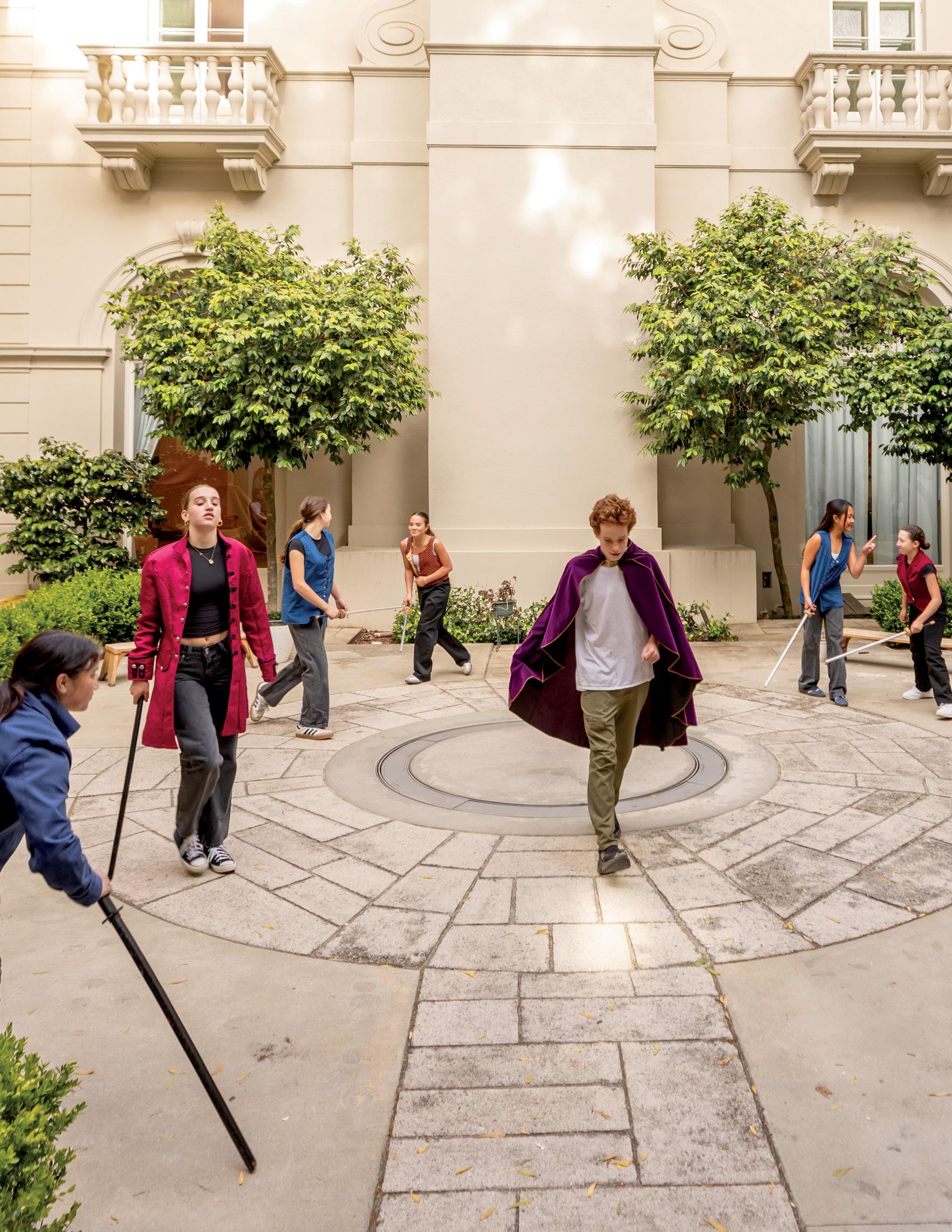
For a few weeks each spring, Nueva’s Hillsborough campus transforms into a stage. Swordfights, Shakespearean insults, and loud, dramatic voices can be found emanating from classrooms, the café, the library, and the Lower School courtyard. It’s Drama Conservatory season!
A semester-long program for seventh graders, the Drama Conservatory allows students to explore acting in a variety of ways. (For the 2026–27 school year, the program will be yearlong.) All students
must perform, and each student can choose from one of two Shakespeare plays to stage. In past years, students have also had the opportunity to study and perform a modern play with curricular
ties; participate in an actors’ intensive workshop; or dive deeper into improv.
Regardless of what play students choose, they all learn to find their voice, to build confidence in speaking, and to perform in front of an audience. In the first part of the program, every student learns stage combat, projection, ensemble work, the impact of body language, storytelling, and voice—the full cadre of live theater skills.
To inspire these budding thespians, the San Francisco Shakespeare Company
visits each year to perform a Shakespeare play.
The version of the Drama Conservatory we know today was started in the late 1990s. Longtime American Conservatory Theater actor and Nueva parent Dick Butterfield reinvigorated a dormant program because he saw firsthand the impact theater can have on people. He wanted students to learn how to think on their feet, take risks, and, sometimes, fail.
Drama Conservatory, Dick said, is, “instruction by masters of the craft in acting, Shakespeare, improvisation,
LEFT
text analysis, voice, and stage combat.” It allows students to experience the true rigor and discipline of the performing arts where everyone has a leading role.
Then Middle School
Head Andrew Salverda saw the Drama Conservatory program as a perfect fit for Nueva Middle School students. “Most important in my mind is the home-spun, student-driven, authentic quality of the work students were doing. They were given the agency to manage (with some adult help) tech, stage design and construction, and costuming. It was as much of a student production as we could make it, warts and all.”
More than two decades later, that spirit still defines the program.
Director Norman Gee has been leading productions with the Drama Conservatory since 2000. He shared that, even as an expert in Shakespeare productions, he has learned a number of new things about Shakespeare from Nueva students. “Young people come to it with fresh perspectives that I would never have considered. It’s exciting to say, ‘I can make that space for you.’ They start to learn to trust themselves.”
The impact of the conservatory is lasting. When Upper School Division Head Liza Raynal ’95 first returned to Nueva as a teacher, she helped steward the conservatory, which she had experienced as a student. “It helps a seventh
On the impact of the conservatory: “It teaches the life skills of public speaking and presence, the academic skills of textual work and narrative, and the human skills of empathy and ensemble.”
Liza Raynal, Upper School Division Head
grader become the eighth grader they are going to be,” she said. “It teaches the life skills of public speaking and presence, the academic skills of textual work and narrative, and the human skills of empathy and ensemble.”
Zubin Mobedshahi, who graduated from Nueva’s eighth grade in 2003, had never performed in theater before the Drama Conservatory. He also highlighted the program’s collaborative nature: “Participating in theater shows you how alive it is, and being part of a production is incredibly fun. It was one of the first times I understood firsthand the value of synergy and timing, working together to produce a living work of art that delights the audience and the actors.”
The skills that Zubin and Liza describe have helped to create a foundation that leads to excellence in the Upper School musical theater program. After closing night of this spring’s musical, Guys and Dolls, director Zoe SwensonGraham told the cast, “Drama skills are what we use in life off stage. Don’t be small. Take up space. Work together. And if a choice doesn’t work, try something else.”
Recently, I sat down with Grace Metos, the seventh grade dean in charge of the Conservatory, and alumnus Colin Tribble ’04, who teaches seventh grade humanities,
BELOW
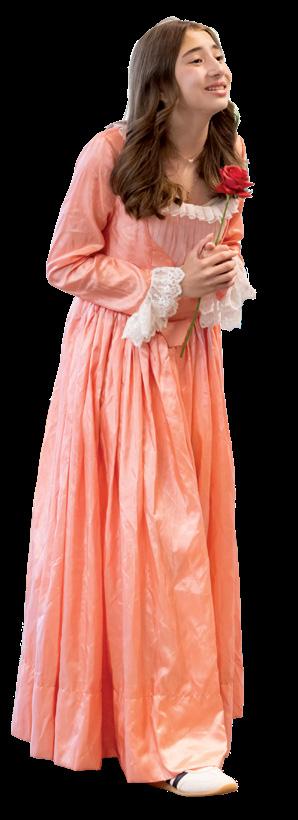
Alex M. ’31 as Romeo
Kylie S. ’31 as Benvolio
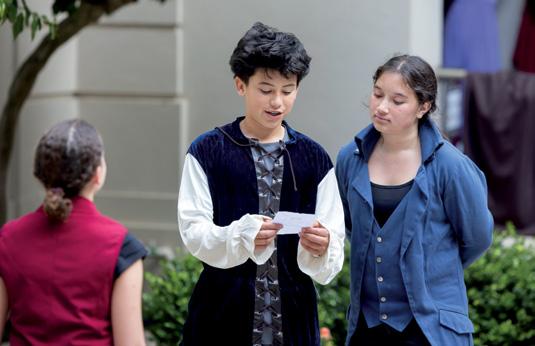
to talk about the program and the many curricular connections between the Conservatory and the wider seventh grade curriculum. Here are excerpts from our conversation, edited for clarity and concision.
Q&A
Why study Shakespeare in Middle School, and why two plays each year?
Colin: From the beginning, the Drama Conservatory has always been seen as a collaborative interdisciplinary project that brings the writing and the humanities curricula into the “learn by doing” space. There is a long-held belief that to understand Shakespeare and theater in general, you need to read it, see it, and perform it—which is not unique to Nueva. What is unique is that we’re willing to spend so much time on it—three classes each week for 10 weeks. It speaks to how we pedagogically approach doing something this ambitious, like reading two Shakespeare plays with seventh graders, and we know that they need to be able to manifest it by doing it and acting it out.
How do you approach teaching Shakespeare in your classes?
Grace: In writing class, we focus on the form and craft that Shakespeare can teach us so much about. We analyze the text in the context of the historical setting in which the plays take place. There’s an endless amount to discover on
the non-literal level that they dive into. I always love when, usually a couple weeks into reading Shakespeare, all of a sudden the students get how his language works, and I start hearing them laugh at the jokes without me explaining it to them. They learn that it’s not stuffy and old and unrelatable.
Colin: When we read Shakespeare in the classroom, we encourage students to read aloud, and teachers are there to support them. We’ve found that many students—even those who might struggle with reading aloud—actually step in and do it because the language is so different from how we speak today that it levels the playing field for everyone. Even when I read it, I make mistakes with how I pronounce things or I get tripped up. When students see their teacher having trouble figuring it out, they think, “Wait a second, I don’t have to say it perfectly.”
Social-emotional learning skills and collaboration are at the center of what we do at Nueva; how does the Conservatory tap into those skills?
Colin: Putting on a production of Shakespeare is the ultimate group project. Standing on stage, finding your voice, all of that is important, but the collaboration that goes into putting on one of these plays is a lot. Students are challenged to think: what do I do when I’m not the center of the scene? How do I support my friends and peers in different ways? What about coming up with
costumes? Where are we going to set this play? Is it going to be Romeo and Juliet in New York City in the mob era? They have to work together to make all of the decisions.
You bring in professional actors and directors to lead the Drama Conservatory classes. How does that aspect enhance the program?
Grace: This is the thing that stands out to me about the program: the fact that students get to work with professionals and visiting artists. It isn’t just the drama teacher or the humanities teacher teaching you how to perform in a Shakespeare play. It is these professionals who work in the Bay Area and who know the theater scene so well.
In what ways does the seventh grade trip to Los Angeles tie directly to the Drama Conservatory program?
Grace: The LA trip does a really good job of contextual izing theater within the arts more broadly. The trip focuses heavily on a variety of arts, including visual and perform ing arts, throughout LA. We see a live theater production. They also build on what they learn by taking acting classes, but this time geared towards film. They think about how to transfer the theater skills, but also the public speaking and storytelling skills and how those translate into film.
This program is unique to the Middle School in that all seventh grade students are required to do the Drama Conservatory. Why is that important?
Colin: This is the one time where everyone has to do theater. Nearly everywhere else that theater exists at Nueva, students make the choice to participate. And because of that we engage with students who would never otherwise pick to be on a stage. As people who’ve been at the Middle School for so long, we know that this is where our students find their voices and their confidence. We look at those eighth graders on stage sharing their Quest projects and giving their hundred-word speeches, and so much of that would not be possible without the seventh grade drama program. This is a rite of passage and a true culmination of seventh grade leading into eighth grade.
G.
You can’t create belonging just by saying ‘you belong.’ Belonging is this signal to the brain that you are a valued, competent member of a group. If students never have opportunities to earn a prestigious reputation as someone who brings value to the group, then you haven’t created the preconditions for belonging. It is teachers’ job to create experiences where students can earn the kind of meaningful reputation that allows them to have a sense of selfrespect and earn respect from peers.”
DAVID YEAGER

AI is a tool. No technology or person can tell everyone when to use AI or not use it, because that decision is rooted in human values, just like any tool we’ve ever used. We talk about AI as if it can solve all human problems with the click of a button. It cannot. There is no purely technological answer to human complexity. My thesis has always been: seize your agency. AI cannot take that away. Learn it, embrace it, use it to superpower yourself— but at the end of the day, human agency is at the core of this.”
FEI FEI LI
The questions came quickly at Nueva’s 2026 Innovative Learning Conference— urgent ones, complicated ones, and ones that cut straight to the heart of what education is for. Across two days in March, educators and school leaders gathered to consider what it means to teach, lead, and most importantly care for students in a moment when their futures are changing so rapidly. The conference brought together voices from education, academia, and industry, including David Yeager, Rosalind Wiseman, Denise Pope, and Ann Snyder. In the keynote conversation, “AI Ahead: Insights from Industry and
Something I really appreciate is when teachers understand that each student is interdisciplinary, that we are more than just students in one class. The most meaningful assignments are often the ones that let us connect what we are learning to our own interests.
LANGLEY
V. ’28
For me, being seen is not only about teachers being excited about my interests. It also goes the other way. Sometimes what makes a place feel like home is being able to ask a teacher about what they care about and having that turn into a real human connection.
ROWAN BROWN ’26

What it means to be human is a question whose answer is changing. It used to mean, among other things, that we are the most intelligent species on Earth. But we also have love, compassion, art, literature, music, and culture. How we educate our children about what it means to be human is a really deep question.
Part of learning what great writing, music, or storytelling looks like requires taste— and that requires teachers and mentors. Helping people understand what quality looks like is something education will always need to do.
CHRIS COX
Academia for PreK-12 Educators,” Fei-Fei Li, Samira Rahmatullah, Andrew Hall, and Chris Cox joined moderator Kevin Lynch for a wide ranging discussion on artificial intelligence and its implications for schools, not only for what students might learn, but for how they might think, create, connect, and remain fully human in the process.
The last word at ILC 2026 belonged to the students. The conference concluded with a special keynote panel conversation with Nueva Upper School students, who answered questions from audience members and reflected on the ways they feel seen, heard, and understood at school.
By the end of the conference, no single answer had emerged—which was the point. Across the many conversations about artificial intelligence, belonging, motivation, and human development, participants returned to a shared understanding: that the future of education will be shaped not only by new technologies, but by the values we choose to center. ILC 2026 offered a glimpse of what might lie ahead, showing us that the most important work of schools is not simply preparing students for a changing world, but helping them cultivate the curiosity, empathy, and sense of purpose needed to shape it.
Read more on our new Substack, The Questions That Shape Schools, which explores the essential questions driving preK–12 education today.
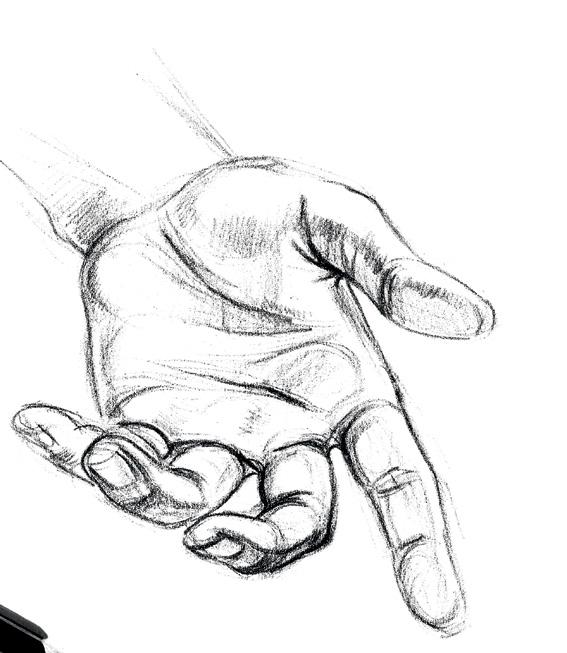
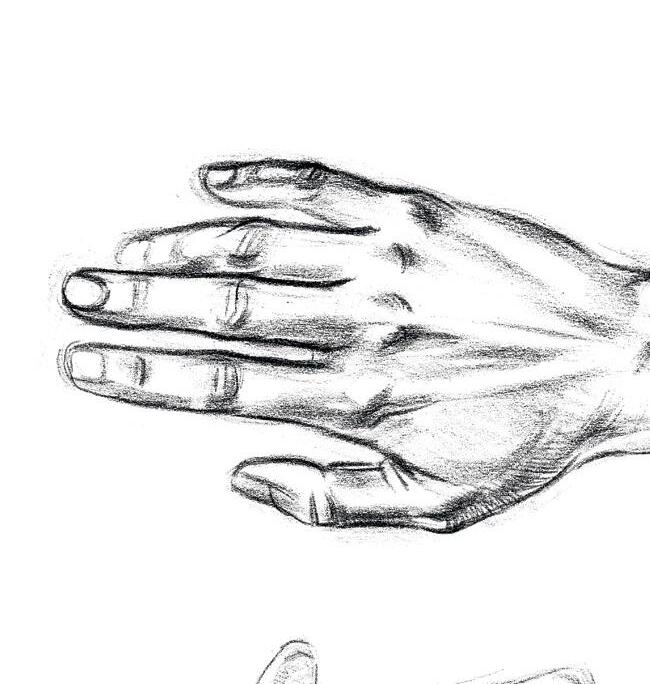
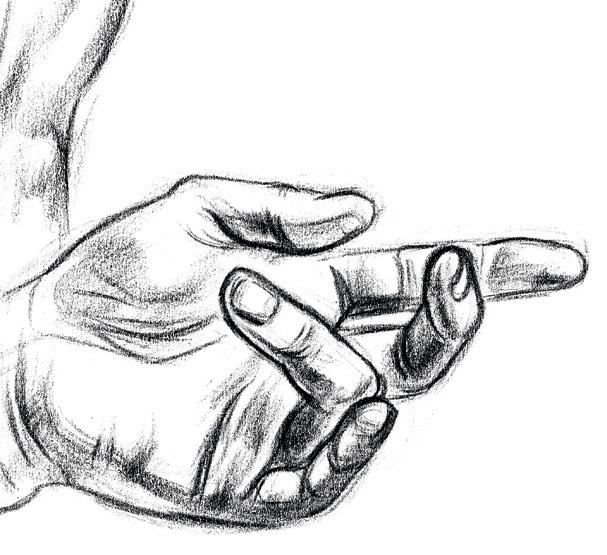
Rachel Dawson chairs the Upper School art department at Nueva, and teaches art at both the Upper School and the Middle School. Nina Osborne teaches art in the Middle School. We sat down with them to talk about what generative AI means for their students, their discipline, and the irreplaceable act of making something by hand.
Interview by Liann Yim
what feels exciting about aI and the arts?
Rachel: Honestly, what excites me most is on the administrative side. Writing artist proposals, tweaking statements for residency applications—that process takes so much time. AI has allowed for a real streamlining of certain tasks. I’ve also found it genuinely useful as a conversational brainstorming partner. When I’m turning an idea over in my mind, it’s a surprisingly good thinking companion.
Nina: I agree—as a collaborative tool for brainstorming, it’s useful for generating nuance around ideas. I’ve also found it helpful for discovering artists. If I’m thinking about a certain project for my students, I can describe the kind of work I’m looking for and be introduced to artists I might never have encountered otherwise.
Rachel: I’ve actually tried a version of that in the classroom. I’ve had students photograph their finished paintings and ask AI to generate a list of five to 10 artists they should look at based on what they made. What I love about it is that the artists it surfaces aren’t necessarily the canonical
AI will make people want to see more process. How did you make this? What is the story behind piece?—Rachelthis
hAContext is everything. Process is everything. That's what AI, for all it can do, cannot give us.
Nina osborne, middle school art teacher
names; they tend to be more contemporary, more in the current conversation. Sometimes I know the artists it comes up with; sometimes I don’t.
Nina: I’ve done something similar with my own kids’ artwork at home. They’ll make something and put it into AI, and there’s this wonderful moment where they feel a kind of kinship—like, I made something that resembles the work of this established person. It’s been a confidence builder.
that’s a generous use of the tool. but there’s a lot of concern among artists about how aI trains on existing work without consent. how do you grapple with that?
Rachel: I have so many concerns there. There’s a large group of artists right now creating work that specifically critiques generative AI, examining authorship, labor, originality, copyright. There’s an artist I keep thinking about, Hito Steyerl, who is one of the sharpest critics of AI-generated visuality. She talks about what she calls the “poor image”—this endlessly
l
compressed, circulated, contextless visual culture. There’s also Stephanie Dinkins, who investigates algorithmic bias and race. These are the conversations I find most intellectually alive right now. Not idea generation, but exposure—revealing the economics, the extraction, the statistical averaging, the collapse of authorship.
Nina: My concern is about the flattening. AI recycles existing imagery into something aesthetically pleasing, polished, and predictable, and not in a great way. A lot of the magic in art is born out of failure and struggle, the thing that’s not aesthetically pleasing in the moment.
Rachel: Yes, it’s the automation of taste. There’s a feedback loop of sameness happening. Certain styles become more dominant, and they reinforce themselves. I see a stylistic flattening—it’s like an aesthetic averaging.
but before it really became mainstream. The essay was about how society was already becoming a monoculture. Every condominium with the same Chipotle underneath, every coffee shop with exposed brick and faux-factory beams. It covered music, design, everything, and it was already depressing. Now I think about that essay compounding itself by a hundred.
when someone shows you a piece of art and you have that genuine “wow” moment, does your appreciation change the instant you’re told it was made with aI?
to make, but rather that the person went through a process where they had to learn skills, engage with struggle, and make decisions. It’s that accumulation of things that makes something feel distinctive or innovative, even if it builds on existing influences. When I know a student made something I know what they were working through. That context deepens everything. The process is documentation of the person.
Nina: I read an essay several years ago called "The Age of Average" by Alex Murrell. It was published right around the time that ChatGPT launched,
Rachel: Yes, and I’ve been thinking about why. It’s not necessarily that we value something that was difficult
Nina: Context is everything. Process is everything. That’s what AI, for all it can do, cannot give us.
Rachel: I think AI will make people want to see more process. How did you make this? What is the story behind this piece? Authorship has been something that a lot of artists have grappled with for a long time, and AI has renewed that conversation.
are you seeing students use aI in your classrooms?
Rachel: In the kinds of classes I teach—painting, ceramics, clay—it really hasn’t come up organically. Our projects are very process-based, evolving over long stretches of time, with clear analog skills built into each step. There’s not much entry point for AI to shortcut anything. But I had one student recently who was creating a map of San Mateo imagined as a network of computer chips. To help her visualize the concept quickly, she used AI—and then she went into Photoshop, built the whole thing by hand, printed it, and started constructing elements physically. So it was useful as a fast visual
There's also something to be said for sitting with discomfort ... the uncertainty of not knowing what to do next, and just letting that be.
rDRACHEL DAWSON, Chair of The upper school Art department upper & middle school art teacher
A lot of the magic in art is born out of failure and struggle, the thing that’s not aesthetically pleasing in the moment.—Nina
reference, not as a replacement for the making.
Nina: My students are fifth through eighth graders, so they are a little more removed from it. But something happened early this year that I haven’t been able to shake.
We were doing a unit on food, and I had slides of food paintings—spanning Cézanne, Matisse, all the way back to Flemish painters of the 16th century—those incredibly hyperrealistic works with chiaroscuro lighting, things that almost looked edible. And the fifth graders kept saying, “Are you sure these aren’t AI generated?” Over and over. “This has to be AI.” And I
felt so sad for those painters, whose entire life’s work is now being dismissed by an 11-yearold as a prompt output.
Rachel: It’s removed the wonder. I notice it on Instagram—funny videos, sweet animal moments—and now my first instinct is doubt. Is that real? My brother sent me a video from the San Diego Zoo where a mother otter held her baby up to the glass and the father came over holding a rock. It actually happened. And his first question was, “Is that real?”
Nina: Skepticism has replaced awe. That might be the thing I find saddest about all of this.
how do you help students value process and struggle when aI can shortcut so much of it?
Rachel: I would argue that AI does not create intention, embodied experience, risk, memory, or situated knowledge. It recombines patterns probabilistically. So in my classroom, I foreground slowness, material process, embodiment, and the joy of labor. The discovery that happens when you actually invest yourself in making something. I’ve noticed, anecdotally and just generally, a renewed interest in analog photography, weaving, ceramics, hand drawing. There’s a large contingent of
people, not just my students, who are actively refusing generative image-making, and that refusal itself becomes conceptual.
Nina: Starting with physical tools is important to me. Working in a sketchbook, drawing from life—those skills have been weakened, not just by AI but by digital tools over the past decade. My own handwriting has suffered. Even my endurance for taking notes by hand has decreased. So having students work somewhat removed from screens, drawing from observation, and then giving them projects that lean into their own specific human experience—their memories, their nostalgia. ChatGPT hasn’t lived your student’s life.
Rachel: There’s also something to be said for sitting with discomfort. Sitting with the uncertainty of not knowing what to do next, and just letting that be for a while. James Bridle—he wrote New Dark Age: Technology and the End of the Future—argues that computational systems create new forms of opacity rather than enlightenment, and he calls for a way of thinking that actually embraces uncertainty. That feels exactly right to me.
Nina: Nueva’s motto is “learn by doing, learn by caring” and that’s embedded in all of this. When I create something with my hands, it’s deeply satisfying—whether it’s fine art or
I’d want parents to know that in our classrooms, students are going through material processes, doing things that take labor, finding joy in that. No one is generating AI art here. —Rachel
crochet. The process itself is in a relationship with the mind, the heart. No one ever experienced satisfaction in their soul from generating an image. That’s just a different thing.
what skills or mindsets do you think matter most for young artists right now?
Nina: The ability to look at something and feel when it has genuine energy versus that flattened, recycled quality we see everywhere. Developing that kind of taste. And resilience—redefining what “messing up” even means, that messing up is OK and even encouraged. I say to my students all the time, “Just keep going.” There’s not a finality in every moment. You can keep working into something.
Rachel: Art as a window into the self. I’m always trying to guide students through a process where the real value isn’t the product at the end, it’s what happens as you
move toward it. There’s an intentionality and a resonance required in creative work— and an ownership of meaning and consequence—that only a person can hold.
what would you offer readers as food for thought as aI continues to reshape how we make and experience things?
Nina: Ultimately, I think this is bigger than AI—it’s really about our culture of consuming. We’re always buying, always consuming media. How do we stop for a moment and evaluate: What is my ratio of consuming to making? That’s a question I ask myself all the time. And then try to lean a little heavier in the making department, whether that means bringing a sketchbook wherever you go, or reaching for something to do with your hands instead of grabbing your phone.
Rachel: I’d want parents to know that in our classrooms,
I'd like for us to have more conversations about awe, about what it means to slow down, to make something, to sit with a creative struggle.—Nina
Fstudents are going through material processes, doing things that take labor, finding joy in that. No one is generating AI art here. But beyond that, if there are parents who haven’t thought critically about generative AI, I’d gently push back. The unauthorized scraping of artists’ work, the devaluation of illustrators and designers, the exploitation of artistic labor—those are real and worth talking about at the dinner table.
Nina: How do you cultivate a sense of wonder in your family? Wonder at the natural world, at things made by human hands—not just at what AI can produce, which is genuinely impressive. When you’re at the zoo and you see the otter mama holding her baby, do you know that really happened? Can you receive that wonder? I’d like for us to have more conversations about awe—about what it means to slow down, to make something, to sit with a creative struggle.

A highlight of Alumni Reunion on May 29 were hard hat tours of
Administration
The evening welcomed home generations
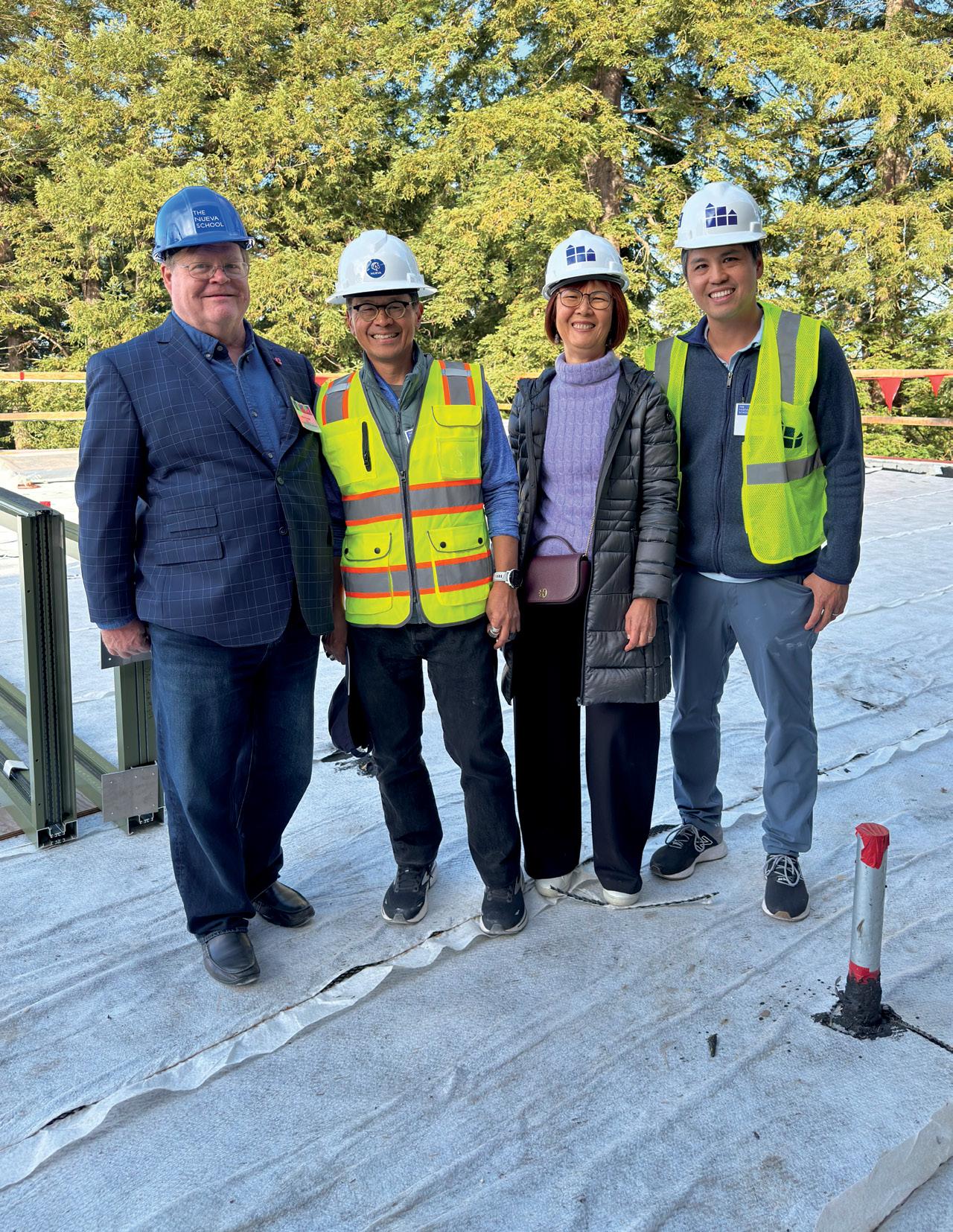
As we reflect on the 2025–26 school year, several themes emerged again and again across our alumni community.
There is the enduring strength of your connections to one another. The friendships formed at Nueva have grown into a lifelong network that continues to shape lives, careers, and communities. These bonds provide support across time and distance, as seen in the Class of 2017’s remarkable tradition of weekly Sunday dinners, which they have sustained for nearly a year (read more on p. 52).
Equally inspiring is your commitment to Nueva. Our alumni program thrives because of volunteers who invest their time, energy, and expertise in strengthening our community. Whether serving as Class Representatives, mentoring students, participating as panelists and guest speakers, or helping foster meaningful connections among alumni, your contributions make a lasting impact. This spirit of engagement continues to grow: this year, more than 20 members of the Class of 2026 volunteered to serve as Class Representatives, a record number that signals a bright future for alumni involvement.
Finally, there is the enduring spark of Nueva itself. Alumni consistently share how transformative their Nueva experience has been, not only during their years on campus but throughout their lives. You carry Nueva’s mission into the world in meaningful ways, serving as thoughtful leaders, innovators, and changemakers.
Thank you for keeping this community vibrant and for sharing your time, talents, and care with one another and with Nueva. Most of all, thank you for embodying the values that make this alumni community so extraordinary. We look forward to welcoming you back home to the Hillsborough and San Mateo campuses soon!
Sincerely,
DIANA A. CHAMORRO Associate Director of Development for Alumni & Community Engagement
ELIZABETH GOMEZ Alumni Relations Manager
CLASS REPS >> Associate Director of Development for Alumni and Community Engagement Diana Chamorro and Alumni Relations Manager Elizabeth Gomez gathered with the 2026 Class Reps at graduation.
Nueva Cup Golf Tournament
Monday, Oct. 5, 2026
Green Hills Country Club • Millbrae
NEW Palo Alto Meetup Friday, Oct. 9, 2026
5:30–7:30 p.m.
NEW Berkeley Meetup Friday, Oct. 16, 2026 5:30–7:30 p.m.
NEW Philadelphia Regional Social Friday, Nov. 6, 2026
6–8 p.m.
Boston Regional Social Saturday, Nov. 7, 2026 5:30–7:30 p.m.
Home for the Holidays Friday, Dec. 18, 2026 1–3 p.m.
Alumni Coed Soccer Game Friday, Dec. 18, 2026 4–5 p.m.
Alumni Basketball Game Friday, Dec. 18, 2026

Young Alumni Social & Conservation Ambassadors Intersession
Friday, Jan. 8, 2027 12–1:30 p.m.
All alumni & PALs are invited to attend Intersession from Jan. 5 to 8, 2027
New York City Regional Social Saturday, Jan. 30, 2027 6–8 p.m.
Claremont Regional Social Friday, Feb. 12, 2027 5:30–7:30 p.m.
Los Angeles Meetup Saturday, Feb. 13, 2027 12–2 p.m.
Chicago Regional Social Saturday, Feb. 27, 2027 6–8 p.m.
Alumni Reunion: Celebrating 60 Years of Nueva Friday, June 11, 2027 San Mateo Campus
Stay tuned! Read our monthly newsletter for announcements of additional events and details
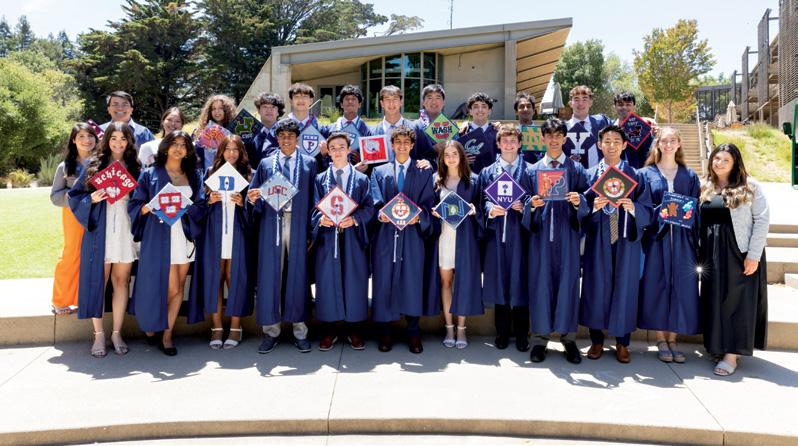
Alumni Reunion transformed the Hillsborough campus into a crossroads of generations on May 29, welcoming alumni, parents of alumni, teachers, and trustees for an evening of connection and celebration. Food trucks, live music, and glowing fire pits created a festive backdrop that invited old friends and classmates spanning the Classes of 1994 to 2025 to reconnect, reminisce, and share life updates.
A highlight of the evening was the opportunity to tour the Arts & Administration Building that is currently under construction. Guided hard hat tours gave guests a firsthand look at Nueva’s newest campus addition, linking the school’s future with the many memories and enduring legacy that continue to draw alumni back together year after year.
The reunion weekend also marked a special milestone for the Class of 2021, which gathered to celebrate its five-year reunion. With classmates returning from Boston, Chicago, and throughout the Bay Area, the evening offered a chance for members of the class to reflect on a senior year shaped by the pandemic, reconnect with old friends, and revisit the friendships and experiences that continue to define their Nueva story.
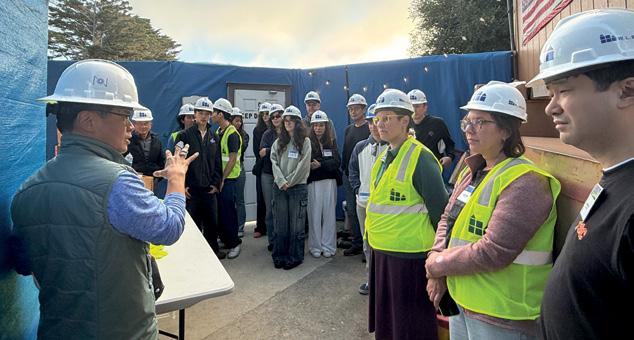
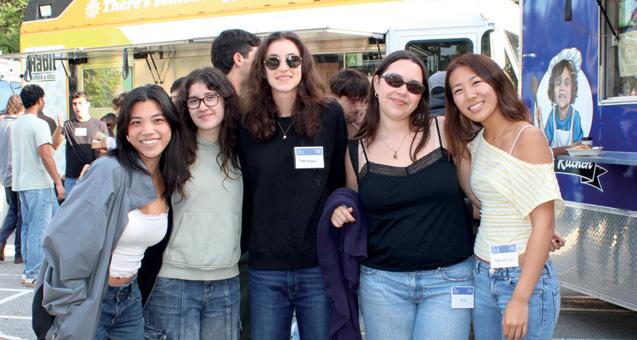
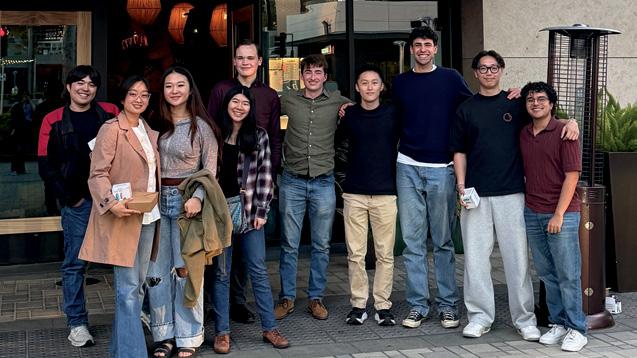
MavNet: Visit nuevaalumni.org to claim your profile, connect with your Nueva alumni community, and register for upcoming events!
Job Board: Does your team or organization have job or internship openings? Share them with the Alumni Office (alumni@nuevaschool.org) and help a fellow Nuevan expand their professional experiences!
Get Connected: Follow us @NuevaAlumni
FIND US ONLINE… nuevaalumni.org instagram @nuevaalumni
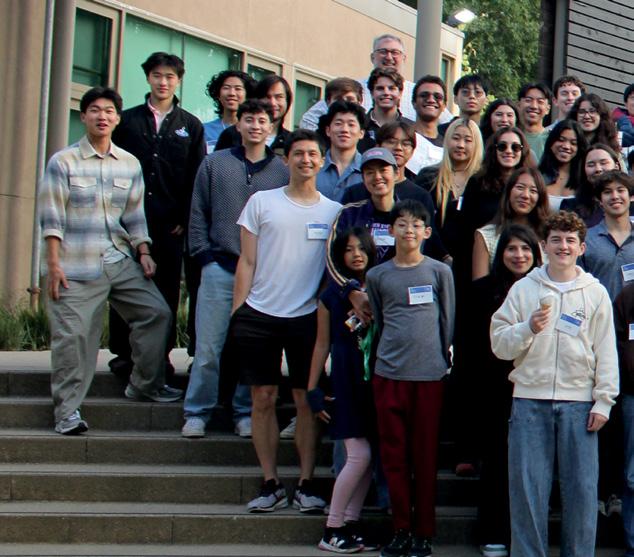
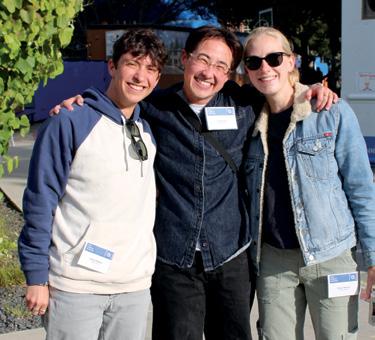
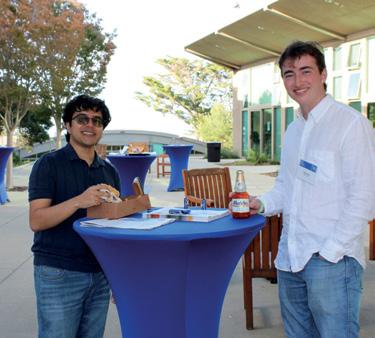
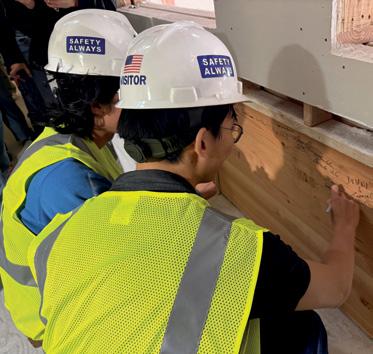
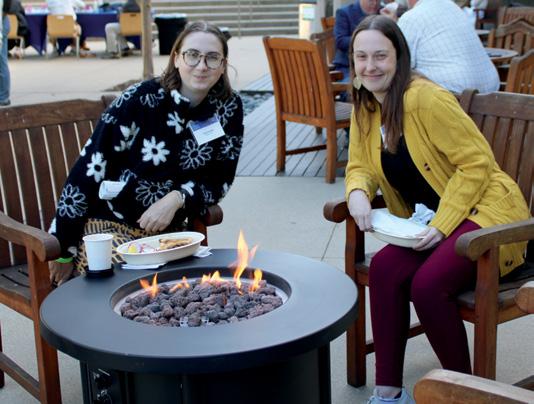
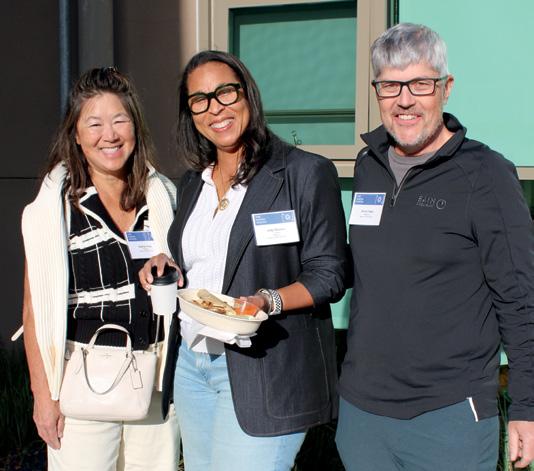
1 Hard hat tour of
2 Chloe Lau ’25,Chloe Medina ’25, Siana Kapoor ’25, Mira Hitz ’25, and Natalie Lai ’25
3 Class of 2021 five-year reunion dinner
4 Alumni Reunion celebration
5 Julian Robbin ’18, Oliver Cho ’17, and Hilary Nelson ’18
6 Vir Saini ’21 and Liam Drew ’21
7 Jackson Lee ’25 and Gavin Zhang ’25 sign a wall in the Arts & Administration Building
8 Clara Kelley ’11 and Amelia Roskin-Frazee ’11
9 Kathie Heap P ’19, ’22, Jody Sievers P ’22, ’27, and Simon Heap P ’19, ’22
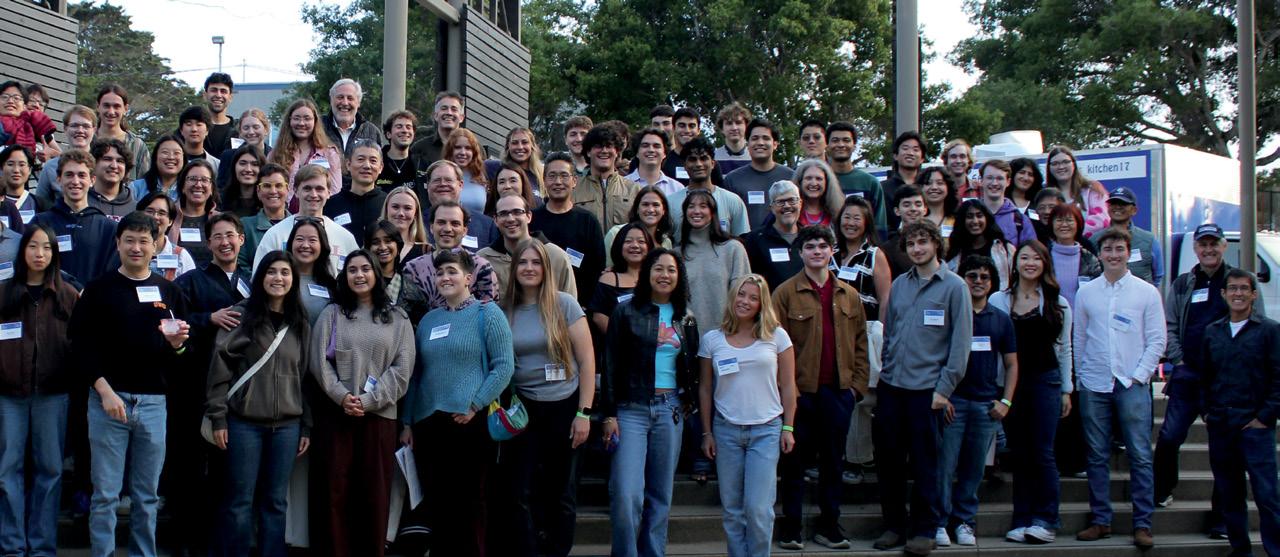
From reconnecting with members of Nueva’s founding class from 1967 to launching our inaugural Parents of Alumni social, we kicked off 2026 creating meaningful moments of connection across generations of the Nueva community! Gatherings were hosted in Chicago, Southern California (Claremont and Los Angeles), and Seattle to round out our slate of eight regional reunions over the 2025–26 school year. More gatherings are on the horizon as we continue visiting Nueva alumni across the country!
1 Aron Walker ’99, Jesse Valdez ’17, Kayte Chan ’25, Sid Chatterjee ’24, Mason Choey ’24, and Gray Chan ’25
2 Alumni at the Claremont regional social
3 Samara Bainton ’24,Maya Sprosts ’25, Clarabelle Rode ’25, and Maya Chow ’22
4 The Seattle regional social with Head of School Lee Fertig, Kemi Nakabayashi ’73, Alex Yan ’19, Elisa Garber ’12, and members of the Development and Communications teams
5 Chicago regional social
6 Ethan Deitcher ’25, Davis Dietzen ’25, Logan Xu ’25, Landon Pu ’25, Landon Xu ’25, Aanya Dhruv ’25, Aaron Huang ’24, and Brendan Wan ’25
7 Logan Xu ’25 and Landon Pu ’25
8 Tyler Huang ’22,Gabe Hawkins ’24, Aaron Huang ’24, Landon Xu ’25, Aanya Dhruv ’25, and Josie Belfer ’25
9 Parents of alumni Kim Overton P ’10, ’19, David Arrington P ’21, and David Mastrandrea P ’92
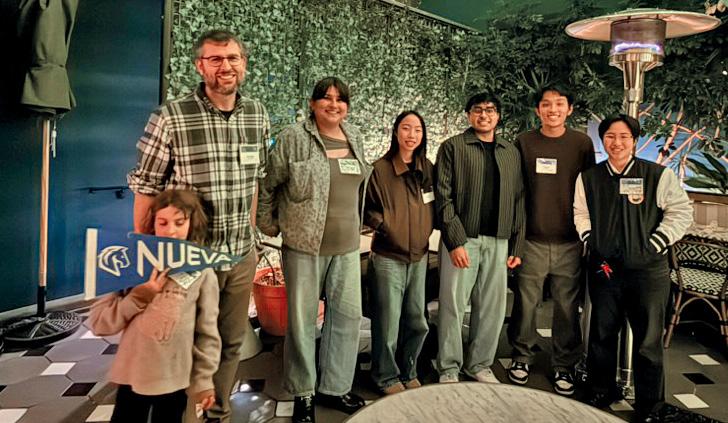
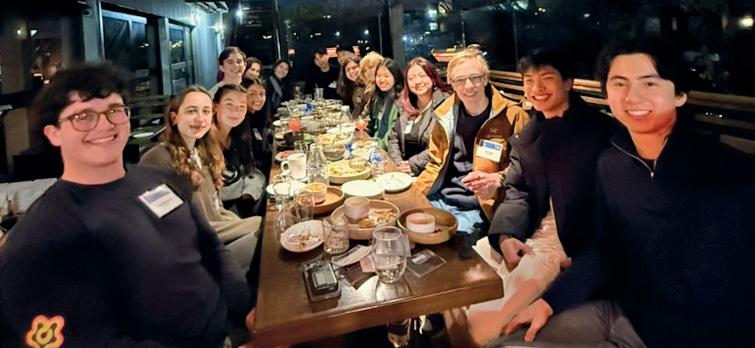
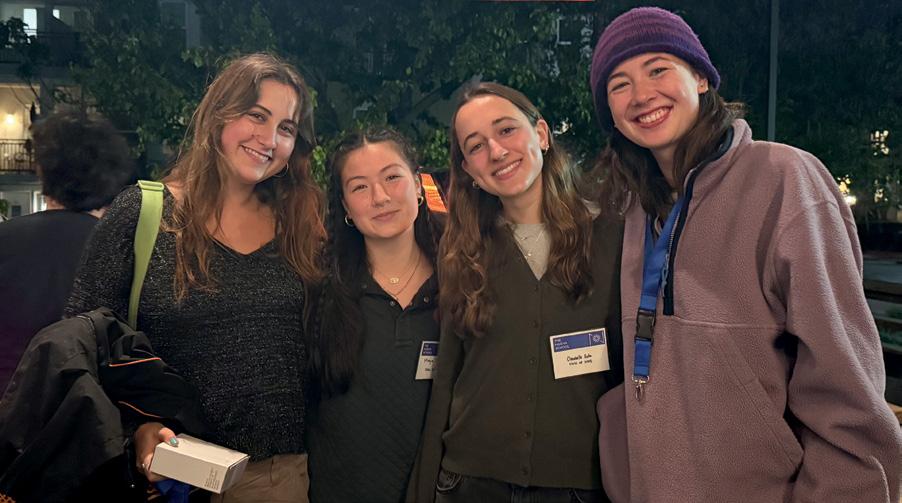
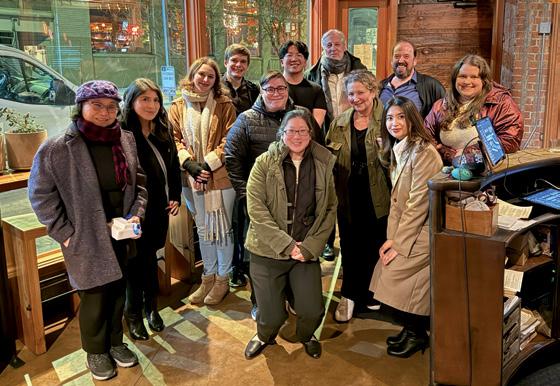
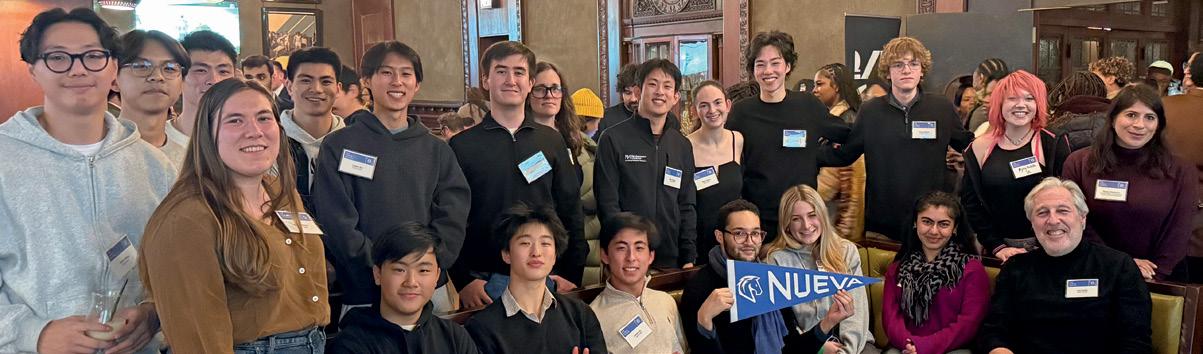
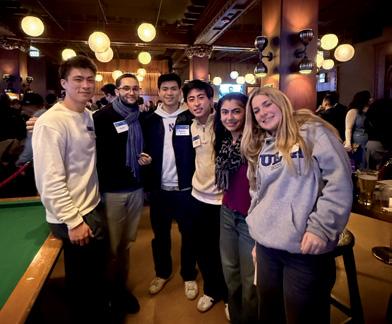
STORY BY DIANA A. CHAMORRO
PHOTOS BY KAYLA
LING ’26
ONE SEPTEMBER EVENING, Kat Swint ’17 gathered a few alumni friends at Rossotti’s Alpine Inn in Portola Valley for what was meant to be a low-key catch-up over food and drinks. Nearly a year later, that casual meetup has become a cherished Sunday night tradition for members of the Class of 2017, rain or shine. And for Kat it is just getting started.
Kat keeps the group chat—dubbed the “Regular Alpine Innvitees”—thriving, and her reasoning is simple: “They’re my favorite people on the planet! They’re kindred spirits. I love them dearly and I’m so grateful for the Nueva community.”
Whether it’s just a few folks or a robust group of 15, full-time Bay Area residents and those visiting home know they have a standing weekly invitation to catch up with their classmates.
“I’ve stayed very close to many of my classmates since graduation, but the meetup has also been a way to reconnect with people I wasn’t as close with in high school or had lost touch with after we graduated,” Kat said.
From meeting new spouses to bringing along younger siblings, Sundays at Alpine Inn reflect how foundational Nueva remains in the lives of members of the Class of 2017.
“It’s a consistent way to connect with people I love spending time with even if life gets busy and I don’t have the time or capacity to spend with people individually,” said Briana Das ’17. “I know that, barring travel or sickness, I will get to spend time with people I love every week.”
“Our lives are shaped by Nueva, and our friendships are rooted in it, so Nueva memories and experiences come up constantly,” Kat said. “We don’t sit around being nostalgic; it’s more that Nueva is the foundation everything else is built on, so it’s always there.”
“Our lives are shaped by Nueva, and our friendships are rooted in it, so Nueva memories and experiences come up constantly.”
As the group approaches nearly a decade since their Nueva graduation, an enduring thread of connection continues to weave together this unique community of classmates.
“What’s special about [our Sunday evening] banter is that there are a lot of big personalities in this group, many of which you would not expect to function in a harmonious fashion with one another—and yet they do. I think it’s a testament to the friendships that last the test of time,” said Zubin Aysola ’17.
The familiar rhythm of the gathering offers a sense of comfort and grounding as the demands of personal and professional lives continue to grow.
“We’re inherently so inextricably, truly intertwined,” added Oliver Cho ’17. “I hope we’ll continue to meet as often as possible—hopefully every Sunday for the foreseeable future. I don’t think any of us have plans to stop coming. If it needs to evolve to another place, then we’ll adjust. Even if there’s only two people who can RSVP each week, we still sit down to have dinner.”
Kat still marvels that a group of people nearly 10 years out from high school would still show up, week after week. She is grateful the tradition is as important to her friends as it is to her.
“These are my closest friends in the world,” she said. “No matter how busy my week gets, I know I’m going to see them on Sunday. It’s one of my favorite things in my life and I look forward to it every single week!”

STILL GATHERING
Nearly every Sunday, members of the Class of 2017 meet for dinner. What started as a simple meal has grown into concerts, Tahoe trips, and a tradition that welcomes whoever happens to be in town. Photos here are from the weekly Sunday dinner on May 31.
STORY BY ELIZABETH GOMEZ
Eleanor Arron ’25 took a chance on something niche—and found a community
The space to explore, be curious, and try new things is deeply embedded in the Nueva experience. For Eleanor Arron ’25, this took shape in an unexpected way: learning the bagpipes as her senior year Quest project and finding a new musical passion she has carried with her to Williams College. On campus, she’s even been affectionately dubbed the “bagpipe girl,” and has received widespread praise from the community.
For her senior Quest project, Eleanor wanted to explore something unfamiliar, moving beyond her previous focus on food and writing.
“I wanted to try something different, fun, and out there because it was my senior year and it was a good opportunity to do so. I’ve played the piano since first grade, so I have musical experience,” Eleanor said. “One thing about the piano is that so many people at Nueva play. I wanted to try something that was weird or niche.”
With a strong musical background—and a familiarity with her mother’s ringtone, “Scotland the Brave”—Eleanor began to wonder, why not the bagpipes? A chance meeting with a local piper one evening after dinner cemented that curiosity into a commitment.
That introduction opened the door to the local bagpipe community, including her private instructor, Ken Sutherland. With diligence and dedication to practicing daily, Eleanor gradually improved, eventually earning an unexpected invitation.
“By January of my senior year, I already could play a few tunes and achieved my goal of having something to present at the Quest Expo,” said Eleanor, who was invited to join a local piper band around the same time.
“Being a part of something bigger than myself is when playing the bagpipes went beyond Quest. It felt really good to be a part of this bigger group and not just doing it as a solo individual hobby.”
After performing with the band at competitions, she knew she wanted to continue playing the bagpipes beyond Quest and senior year.
“It was so much fun to be a part of this huge herd of pipers. I really felt that passion and that the community was behind me,” Eleanor said.
Fast forward to her first year of college: the bagpipes are not a subtle instrument, and Eleanor wasn’t sure how she’d continue playing in her new school community. With confidence and a bit of
bravery, she made a memorable debut at Williams’s annual Mountain Day, a beloved fall tradition that bridges art and the outdoors.
“People came up to me for weeks to talk about my performance,” she said. “It made me feel very welcome on campus, both in my identity as a musician, and as the ‘bagpipe girl’ specifically.”
With pride and enthusiasm, Eleanor maintains a regular practice schedule with her instructor—now over Zoom—and finds time to perform between academic commitments, often seeking out soundproof spaces on campus.
Looking back on her time at Nueva, she reflected, “Students typically get bogged down with the day-to-day academics, and Quest gives you a moment to learn and create something for yourself that you may not have necessarily had the chance to otherwise.”
For Eleanor, her senior Quest project was more than just a school graduation requirement—it became the starting point for a lasting passion. “Quest was the jumping-off point, but the bagpipes mean a lot more to me now,” she said.
She encourages Nueva students to step beyond their comfort zones and not let social pressure limit their experiences, noting that you never know where those experiences may lead. For Eleanor, it’s been sharing her love for the bagpipes with her welcoming and supportive Williams community and proudly embracing her identity as the campus’s “bagpipe girl.”
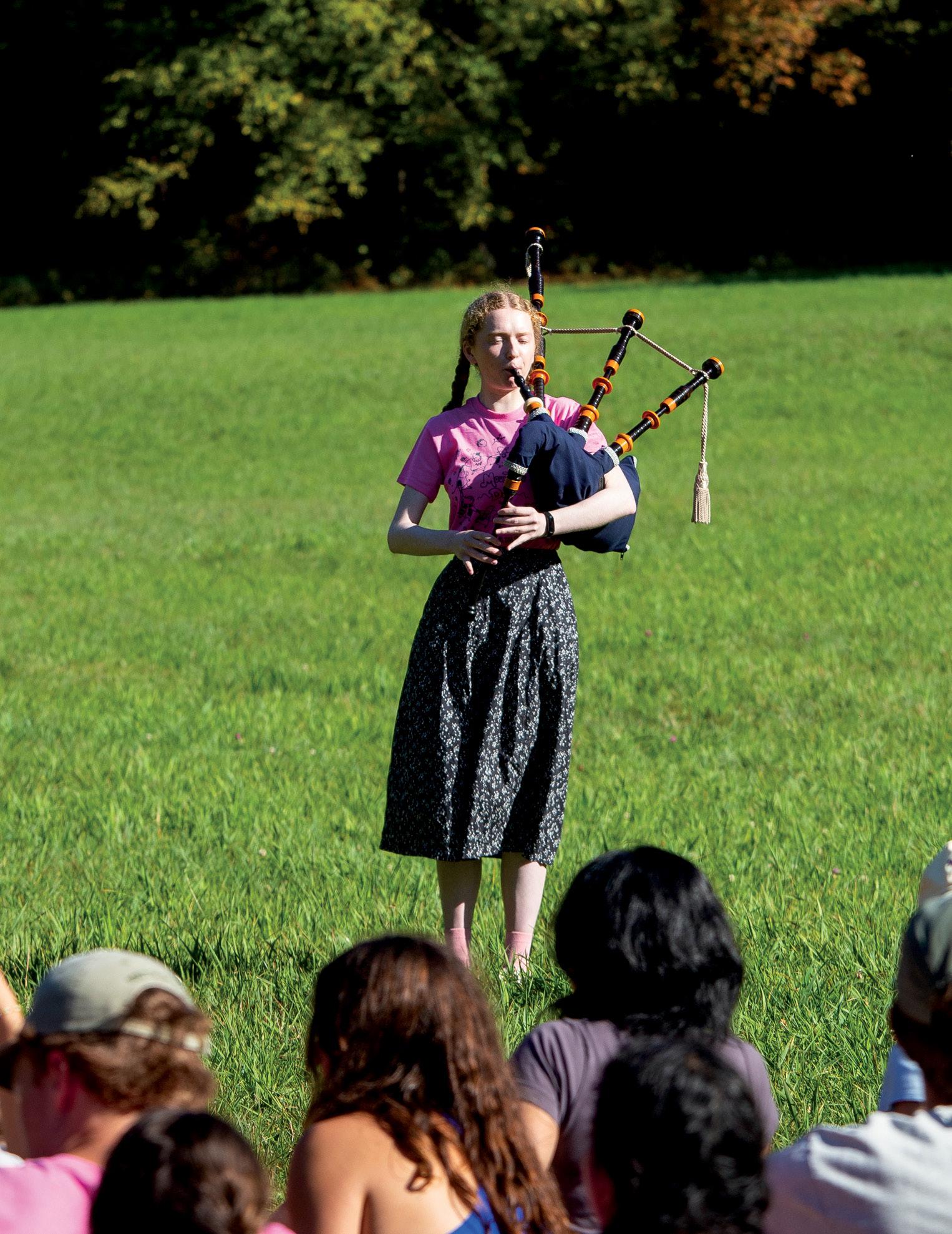
Mavericks were on the go throughout the winter and spring! From regional reunions to #NuevaNosh get-togethers, alumni enjoyed reconnecting both stateside and abroad.
What is #NuevaNosh? When three or more alumni gather over a meal or coffee, the Alumni Office will reimburse them up to $50. Visit MavNet to learn more!
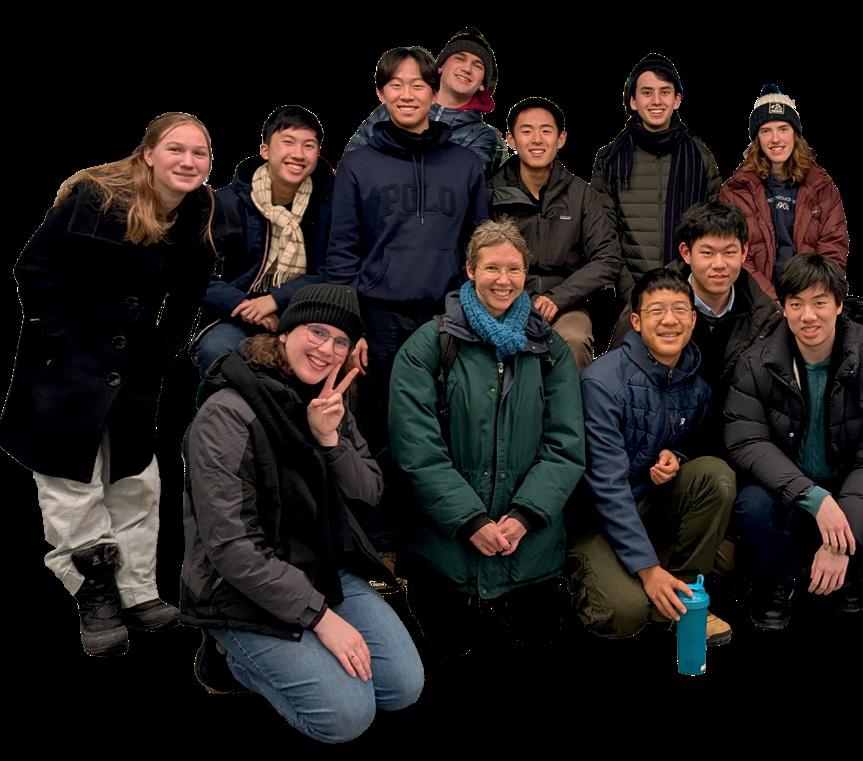
NEW YORK, NY ↓
Taking a break from working on a New York University production, Mari Marhefka ’25 joined students on the 11th grade library trip during an afternoon in the city.
DUBLIN, IRELAND ↑
While touring schools in Ireland, Associate Director of College Counseling Phil Moreno visited with Trinity College Dublin second-year Averi Marlin ’24.
EVANSTON, IL ↓
Northwestern journalism students Gabe Hawkins ’24 and Josie Belfer ’25 enjoyed a morning meetup on Jan. 31.
NEW YORK, NY →
From Nueva to New York City, Aryan Mehra ’25 (gap year/ Stanford) and Trevor Golob ’21 connected as colleagues at Palantir.
LOS ANGELES, CA ↑
Ethan Leeman ’25 (UCLA), Max Roche ’25 (Tufts), and Maya Sprosts ’25 (Harvey Mudd) #NuevaNoshed at Seogwan in Koreatown.
SOMERVILLE, MA ↑
Ryan Poon ’22 (Tufts) reunited with Ian Lum ’22 (Olin) and Akshar Ramkumar ’22 (Caltech) for a #NuevaNosh at Sakura Asian Bistro & Sushi in the
CAMBRIDGE, MA ↑
FanFan Jiang ’25 (MIT) (second from
#NuevaNoshed
CAMPUS ↑
← NEW YORK, NY
Class of 2024 friends
Kelly Poon (UC Berkeley), Sasha Cocquyt (Princeton), and Anping Zhu (Yale) hosted a spring break New York City #NuevaNosh on the High Line.
REDWOOD CITY, CA →
In December, Marcus Hirschman ’25 (UPenn)
#NuevaNoshed with Charlotte Stewart ’25 (Williams) and Vivi Levenberg ’25 (gap year/ Stanford) at Mazra.
SAN FRANCISCO, CA ↑
In
CA ↑
FRANCISCO, CA ↑
CA ↑
CA ↑
CA ↑
← LOS ALTOS, CA
Kaden Knight ’24 (Princeton) met up for a #NuevaNosh with Class of 2024 friends Meher Bhandari
Mellon) and Jack Roche
at Little Sky at State Street Market on June 6.
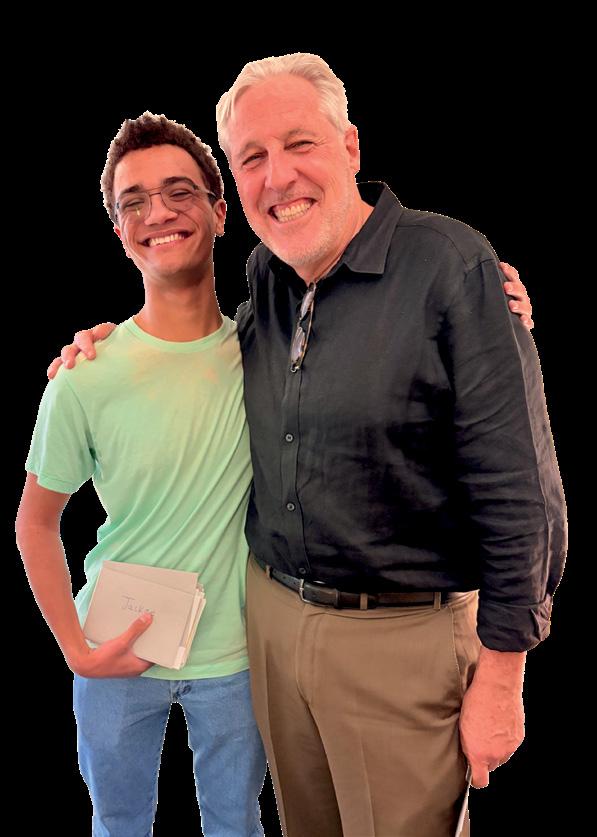
↓ TOKYO, JAPAN
Fulbright Scholar Sian Bareket ’21 took a break from her studies at the University of Tokyo to connect with the 12th grade Japan trip group in mid-April. Sian is pictured with Upper School Japanese teacher Chris Scott.

WE WANT TO HEAR FROM YOU!
Do you have news or personal updates you’d like to share? We invite you to submit a class brief about exciting personal events, including marriages or new arrivals, professional experiences or accomplishments, recent travel, reunions with fellow Nueva alumni, and more. nuevaschool.org/ classnotes

2010
Eric Dasmalchi was appointed by San Francisco Mayor Daniel Lurie to serve on the Treasure Island Development Authority Board of Directors, helping to implement the ambitious transportation and development plans for the island.
2011 Amelia Roskin-Frazee completed studies in sociology and received her Ph.D. from UC Irvine. She currently serves as a public interest scholar at UC Berkeley Law.
2012
Barnard College 2020 graduate Joy Barrett is currently enrolled in UC Berkeley and UC San Francisco’s five-year dual degree M.S./M.D. program. Prior to her graduate studies, she worked at NYU Langone Health as a dermatology research assistant.
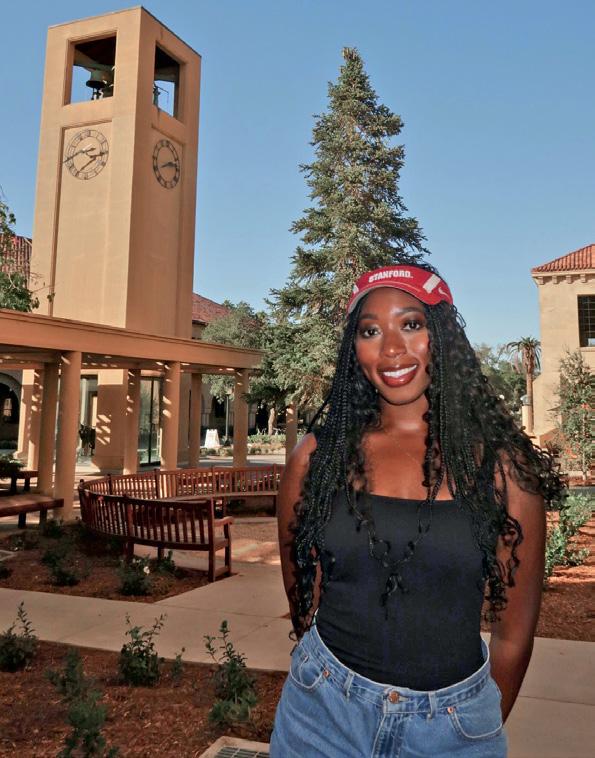
2016
Asante Spencer (MS ’16) is pursuing her master’s in policy, organization, and leadership studies at the Stanford Graduate School of Education. During her graduate program, Asante interned at the Stanford Center for Racial
Justice within Stanford Law School. This past spring, she attended Nueva’s Innovative Learning Conference, participating in engaging workshops and reconnecting with her Nueva community and former teachers.
2017 Oliver Cho continues to pursue their passion for making music. Outside of their professional pursuits, they enjoy spending time at the beach and quality time with friends and family. ¶ Emily Ross (inset right) is exploring how AI and large language models can make cooking easier by developing the platform cookwithshio.com. She would love to connect with fellow cooking and programming enthusiasts.¶ Kat Swint is living and working in the Bay Area. Outside of work, she enjoys spending quality time with her dog and turning the question of “which movie theater is best?” into a serious hobby.

program, which cultivates the next generation of industry leaders. At the conference, her team won the annual hackathon sponsored by Apple. Recognized by the organization as a Spark Award recipient, Sinead credits her time at Nueva for nurturing the creativity and curiosity that define her rising career.
2019 Sarah Hope (inset left) lives in Los Angeles, CA and works in advertising as a senior creative strategist at TubeScience.
2018 Sinead Chang lives in New York, NY and works at Day One Agency as a senior strategist on the Creative Strategy and Insights team. Last year, Sinead took part in the ADCOLOR FUTURES
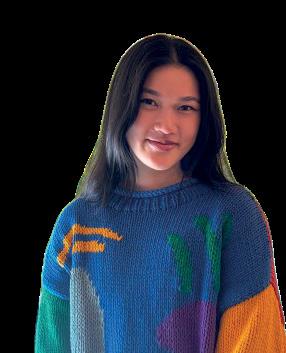
Ada Liv Weinstein was awarded a Fulbright student research grant to study weaving in Serbia in the fall. Since graduating from USC in 2024, she has taught art in the Bay Area and Los Angeles, CA, and returned to Nueva to lead a weaving and crochet workshop during Intersession 2026. Ada would love to connect with any Nuevans in Serbia or the broader Balkans region.
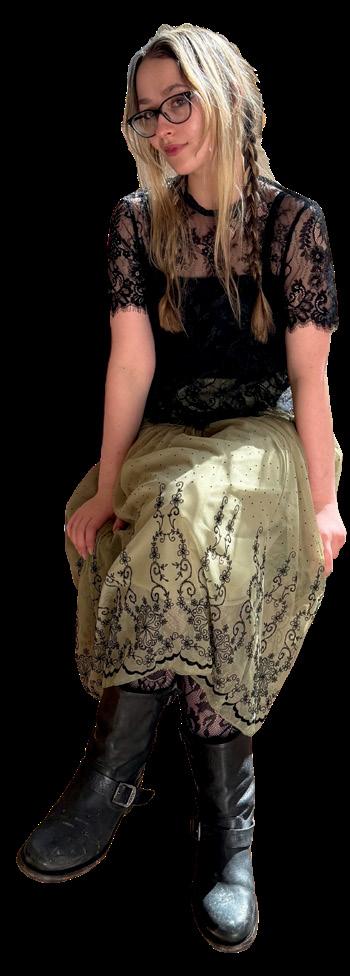
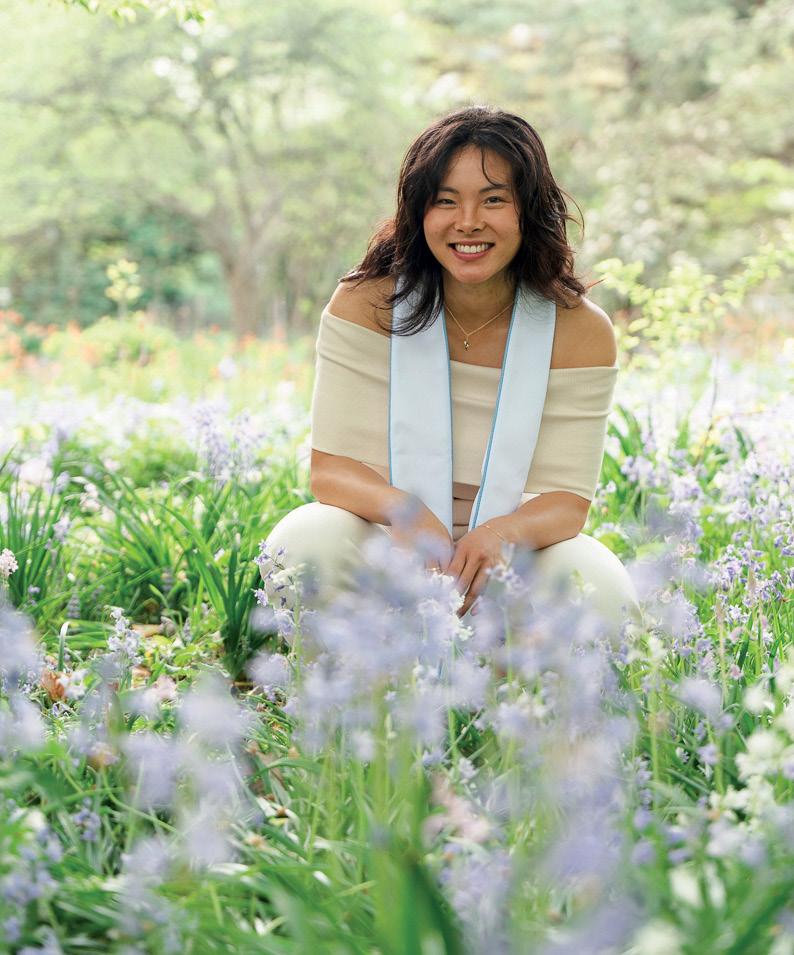
2021
Willow Taylor
Chiang Yang* received the prestigious Barry Scholarship and will pursue a master’s degree in political research at the University of Oxford beginning fall 2026. The 2025 University of North Carolina at Chapel Hill graduate enjoyed a gap year working, traveling, and conducting research. She spent time working on a rural farm in Germany and at a vineyard in Portugal before beginning part-time research with her undergraduate scholarship through the Morehead-Cain Foundation. In the fall of 2025, she was a presenter at the Philosophy, Politics, and Economics Society Conference in New Orleans,
LA. Outside of academics, she’s learning the cello, practicing guided meditation, competing in volleyball, and enjoying the San Francisco sunshine before heading off to Oxford.
Anjali Ramanathan ’20 is bringing a “Nueva-esque” experience to her 10th grade English classroom in the Newark, New Jersey public schools system. In the summer of 2025, she pivoted from enrolling in law school to answer an inner calling to pursue teaching.
From the U-shaped formation of the desks in her classroom to the “Learn by doing” and “Research is not a straight line” posters (inspired by retired eighth grade teacher, Cynthia Kosut), Anjali’s Nueva foundation is deeply reflected in the way she works with her students.
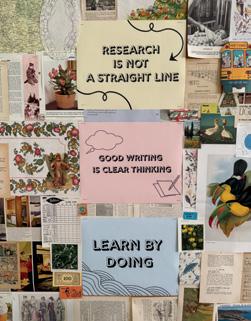
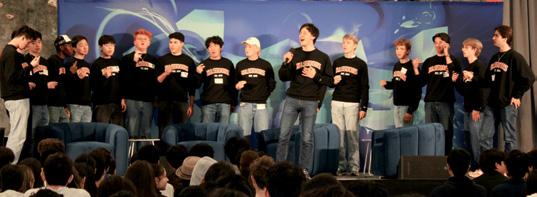
At a midMarch Upper School assembly, Brandon Cho, Nick Hu, and their a capella group, the Princeton Nassoons, performed a dynamic mix of jazz standards, R&B hits, and collegiate tunes at Nueva. Classmates since Nueva kindergarten, Brandon and Nick recently moved to New York City and are lucky to work only a few blocks from each other!
¶ Andrew Chu graduated from Harvard this spring with degrees in chemistry and physics. ¶ Recent MIT graduate Zandra Feland (inset right) earned her degree in mechanical engineering and moved to Washington, D.C. to work at an aerospace company. ¶ Karen Guo is pursuing her master’s degree at MIT. ¶ In June, Tyler Huang* graduated from Northwestern. Following graduation, he moved to Boston to begin working at an investment firm. He shared: “The past four years flew by and it feels like I was just graduating from Nueva. I had an incredible time at Northwestern and am extremely grateful to Nueva for preparing me so well.”
grid-enhancing technology company where he previously interned. ¶ Luca Nashabeh graduated from Columbia this spring with a double major in physics and math. In January 2026, he was named a Churchill Scholar and will pursue a master’s degree focused on theoretical physics at Cambridge in fall 2026. He then plans to return stateside to complete his Ph.D. in physics at MIT. ¶ Ryan Poon recently graduated from Tufts and will begin working as a software engineer at Bridgewater Associates in the fall. ¶ Akshar Ramkumar graduated from Caltech this spring. In January 2026, he was named one of 16 recipients of the Churchill Scholarship. Through the scholarship, he will spend the 2026–27 school year at Cambridge University, pursuing a master’s degree in advanced computer science.
2023
¶ Ian Lum graduated from Olin College of Engineering and joined LineVision, a
rising fourth-year at Harvard. He has enjoyed traveling abroad, including a previous program in Budapest, Hungary with fellow Nuevan Annli Zhu ’23 (Yale). ¶ Harvey Mudd rising fourth-year Akshay Seetharam studied abroad in Madrid, Spain during the spring semester. After a brief visit home, he spent the summer in Stockholm, Sweden while conducting research at the Karolinska Institute. ¶ Annli Zhu is a fourth-year math major at Yale.
Meher Bhandari completed her second year at Carnegie Mellon University, where she enjoyed pursuing courses related to her linguistics minor. ¶ Tulane chemical engineering major Charlie Berk (inset right) is enjoying attending popular events and the wonderful weather of New Orleans, LA. He names Mardi Gras and Bookfest with classmate Kaila Ehrlich ’24 (Tulane) as highlights. 
Micah Brown is studying cognitive neuroscience at Carleton College. Over the spring semester, they participated in a study abroad program in Vienna, Austria and spent much of the semester exploring a variety of music classes and connecting with friends. ¶ Adam Schauer is a
Sasha Cocquyt (inset right) is a member of Princeton’s lightweight rowing team. She is studying electrical and computer engineering. ¶ Kaden Knight completed his sophomore year at Princeton and is preparing for an exciting study abroad opportunity in Beijing, China this fall. 
Kelly Poon* (inset right) completed her second year at UC Berkeley, where she is roommates with fellow Nuevan Noor Zarrinnegar ’24. She enjoys spending time biking and being outside. Over the summer, she was a marketing intern at IBM in Austin, TX. ¶ Jack Roche is a linguistics major at Oberlin College. ¶ Occidental College rising third-year Roan Wanek earned the American Academy of Underwater Sciences diving certification with the Southern California Marine Institute this summer. ¶ During spring break, Yale third-year Anping Zhu (inset right) traveled to Taiwan for a Model United Nations conference. At Yale, he is majoring in global affairs, economics, and math. He spent the summer conducting field research in Rwanda.

¶ Jackson Lee* is studying recorded music and economics at NYU. In spring 2025, he was confirmed as Catholic at the Easter Vigil Mass at St. Joseph’s Church in Greenwich Village. Outside of classes, he’s learning to skateboard and looking forward to rooming with Leo Stoll ’25* (NYU) in the fall. ¶ Between classes, research, club frisbee, and climbing, Ethan Leeman had a busy first year at UCLA.
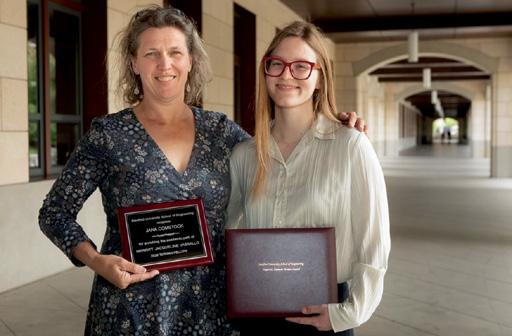
Kayte Chan* is transferring to Northwestern in the fall, where she will study biomedical engineering and science in human culture. She is looking forward to becoming a member of Northwestern’s policy debate team. ¶ Ethan Deitcher is planning to major in law, letters, and society, and chemistry at the University of Chicago. He is also a member of the undergraduate Moot Court team. ¶ FanFan Jiang completed his second year studying physics and computer science at MIT. He spent his summer building programming tools for graphic processing units.
¶ During her gap year, Vivi Levenberg spent the fall semester studying philosophy and homesteading in Maine; the winter attending culinary school in Italy; and the spring hiking 500 miles along the Camino de Santiago in Spain. After spending the summer at home, volunteering and working, she begins college at Stanford University this fall. ¶ Tufts University rising second-year Max Roche is studying international relations. Over the summer, he worked as a basketball coach. He looks forward to returning to the northeast for his sophomore year. ¶ Natalie Sepulveda is pursuing education and anthropology at Wesleyan University. This summer, they worked with elementary school students through the Big Lift Inspiring Summers Program, a San Mateo County summer camp focused on STEM and literacy.
¶ Maya Sprosts is studying engineering at Harvey Mudd.
In the fall semester, she will be the Committee for Activities Planning (CAP) director of the Associated Students of Harvey Mudd.
Merritt Vassallo ’20 received Stanford’s Frederick Emmons Terman Engineering Scholastic Award, presented to the top students of each year’s undergraduate senior engineering class. As part of the university’s springtime celebration, students each invited a former teacher who deeply impacted their lives. Merritt, who is currently pursuing her master’s degree in computer science at Stanford, invited Upper School math teacher Jana Comstock as her guest.
“I first had Jana as a teacher in seventh grade [at Nueva], where, in addition to the typical units on trigonometry and pre-calculus, she taught us about topics such as topology and knot theory—I still remember practicing the three Reidemeister moves! She instilled in me a desire to always look deeper, beyond the formulas, and dig into the fundamentals of why things work the way they do. When I took her proof-based linear algebra class in junior year, it totally reshaped my understanding of math and exposed me to a whole new way of thinking. I am so grateful for the foundational skills I learned from her and the intellectual curiosity that I take with me wherever I go.”
ALUMNI DATA
For the second year in a row, Upper School students in the journalism, statistics, and data science classes came together for an interdisciplinary research project exploring what becomes possible when data meets curiosity.
The project began with an invitation: What are you curious about? What could you measure, analyze, or visualize in order to better understand a system—or even imagine how it might change? From homework load and housing affordability to institutional policies and student experience, students were asked to turn everyday questions into structured inquiry, using data not just to describe the world, but to interrogate and improve it.
This year, journalism student Anwen Chen ’26 focused her investigation on a question both personal and expansive: where do Nueva graduates end up, and what do they carry with them from their time here? Working alongside statistics and data science students Livie Phan-Fields ’26, Andrew Z. ’29, and Liam Percer ’26, the group gathered responses from more than 75 percent of alumni from the Classes of 2017 through 2021.
Anwen worked with Diana Chamorro, Associate Director of Development for Alumni and Community Engagement, to connect with young alumni across a range of fields.
“To be honest, I felt like initially I underestimated just how strong Nueva’s alumni network is,” Anwen admitted. “With Diana’s help, I sent out dozens of different emails, only expecting to get ten or so responses in the end. You can probably guess how surprised I was then to see my inbox filling up with all of these alumni who seemed willing, even excited, to talk to me about their lives.”
Ultimately, she interviewed over 20 graduates to develop a feature that was published in the June issue of The Nueva Current. What emerged was a portrait of a generation in motion—one shaped by nonlinear paths, unexpected pivots, and recurring threads of agency, curiosity, and collaboration that many trace back to their years at Nueva.
WHERE ARE ALUMS LIVING?
36%
SF Bay Area, CA
18%
New York, NY 7%
Boston Area, MA
5%
Los Angeles, CA
IF YOU COULD GO BACK TO YOUR HIGH SCHOOL SELF AND GIVE THEM ONE PIECE OF ADVICE, WHAT WOULD YOU SAY?
“There are many joys that are unique to the life that you have right now. There is so much wonder in the world, and to make it exist is simply an act of choosing to see it.”
OM GOKHALE ’18
“Don’t lose your hobbies. You’ll be grinding away with your academics, but don’t forget that your hobbies will bring you just as much pleasure and happiness.”
SWETHA TUMMALA ’17
“Don’t give up on any of the things that you love. You don’t have to let go of something that you care about just because you’re not going to do it as your job.”
DANTE (GRACE) HOLMES ’21
WHAT ARE THEY PURSUING?
37% obtained or pursuing postgraduate degrees
23% work at tech/software companies
15% work in higher education
12% work in industrial/ consumer engineering
Scan the QR code to read more
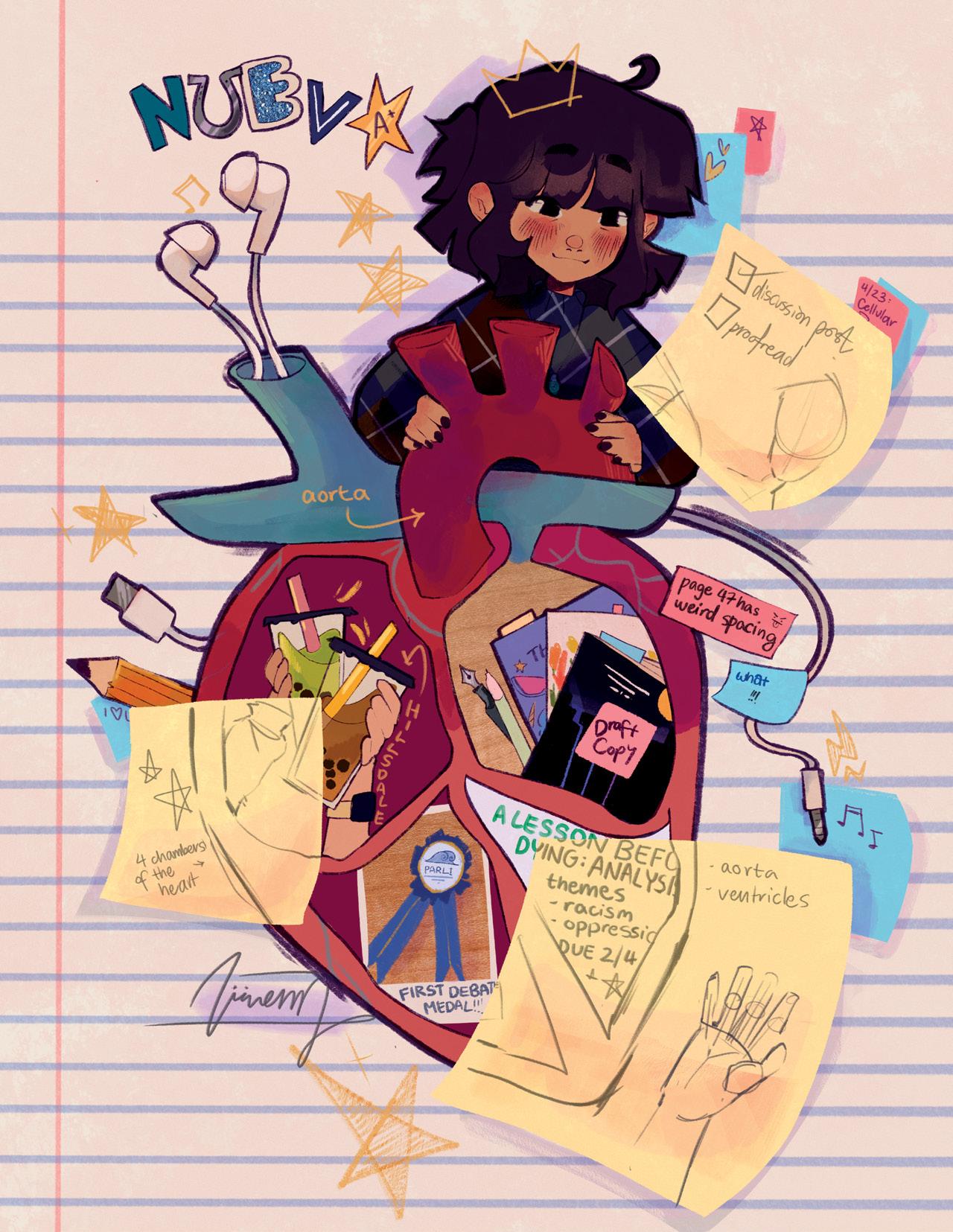
When I think about what I love about Nueva, there’s no single answer. To me, it’s like a beating heart, with each chamber reflecting a different part of this school I’ve come to love. Learning in this space for four years now feels strange, chaotic, and wonderfully weird—where a friend might passionately rant to you about the film Perfect Days, correct your split infinitive, or build you a D&D rapier on Halloween. End-of-year hangouts at Hillsdale Mall, laughing and editing the Mav Mind literary journal, the sweet adrenaline of a debate tournament, and community beating at the center of it all—that, to me, is Nueva.
Find the answers to the clues throughout the magazine and discover the secret website!
What does Zoe Swenson-Graham’s core philosophy emphasize?
What instrument did Eleanor Arron ’25 learn for her senior quest?
What book did Jared Briggs recommend?
Alumni Kelly Poon ’24 and Noor Zarrinnegar ’24 are roommates at what university?
What is the art by Aiden O ’37 titled?
What does each 8th grader give at their 8th grade celebration?
What musical did the Middle School perform in spring 2026?
What building is expected to be completed in Winter 2027?
Who was the special guest at the Steel Drum Jamboree?
What is the most important phrase in Jenny Rosen’s improv class?
What key does Jim Munzenrider have his students play “Happy Birthday” in?
What is the English translation of the Portuguese phrase “O Jogo Bonito”?
Fill in the spaces in the URL below before using the letters you discovered in the clues.

Monday, October 5, 2026 11 a.m. Shotgun Start Green Hills Country Club • Millbrae, CA
All parents, alumni, grandparents, and friends of Nueva are invited to participate in the tournament benefitting our alumni and athletics programs. The Nueva Cup is an inclusive tournament and all playing levels are welcome!
REGISTER for the tournament, learn about sponsorship opportunities, and/or donate a raffle item!

Friday, December 18, 2026 1:30–3:30 p.m. San Mateo Campus
Calling all Nueva alumni! Come home to Nueva for an afternoon of holiday treats, hot cocoa, and great company. Catch up with friends and former teachers and celebrate the season together.
REGISTER TODAY!