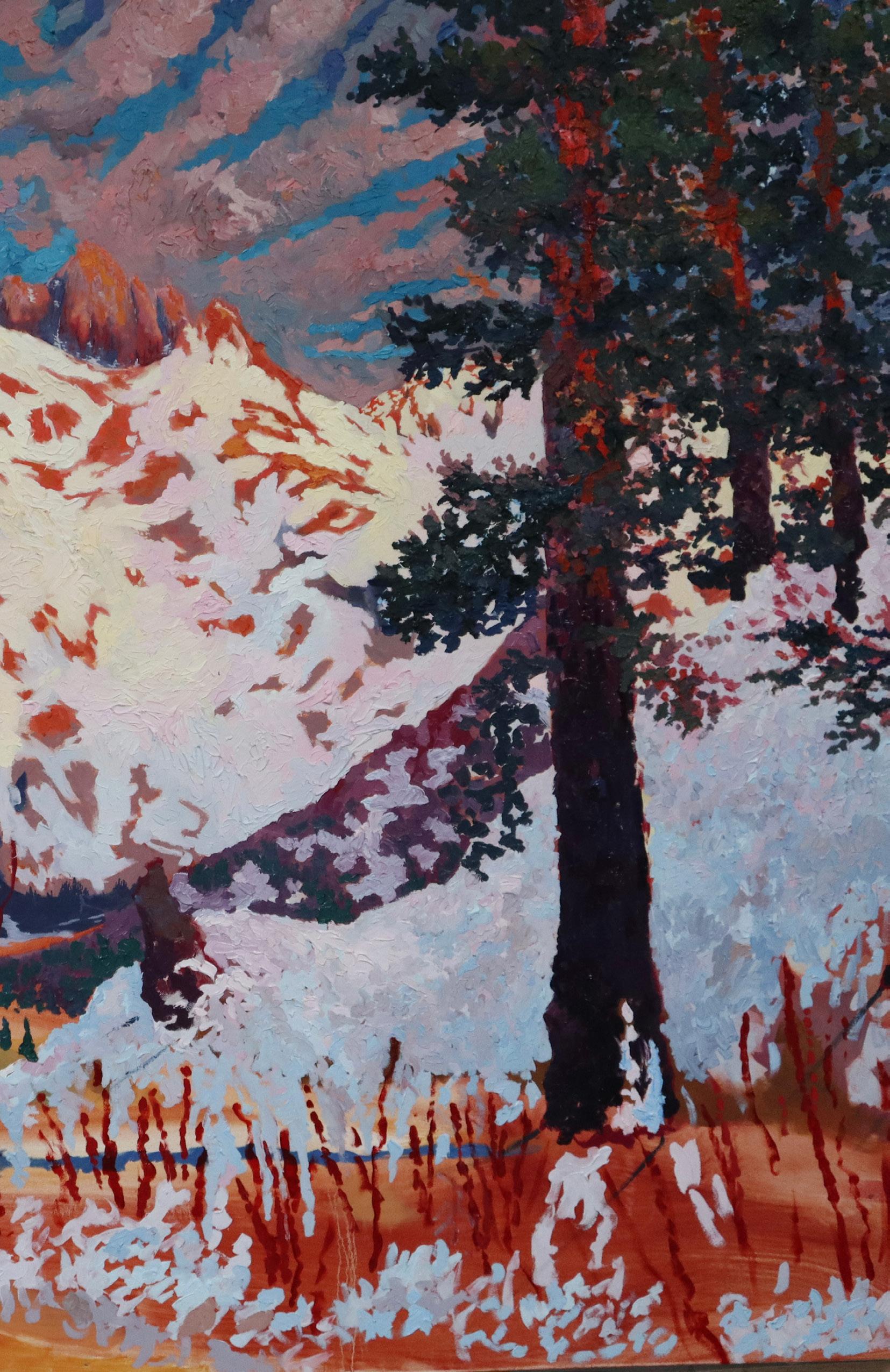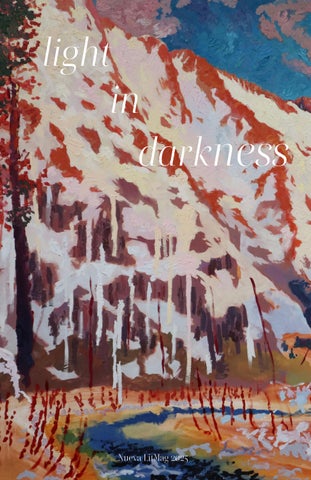
light in darkness
LitMag: Light in Darkness is set in Satoshi Variable, IvyOra Display, and Boska typefaces.
The magazine was designed in Adobe InDesign by Raya I. ’28 and Senna H. ’26.
Masthead
EDITORS-IN-CHIEF
Senna H. ’26
Raya I. ’28
STAFF MEMBERS
Hunter S. ’27
Emily F. ’27
Anya W. ’29
Yazmine A. ’29
FACULTY ADVISORS
Amber Carpenter
Jen Neubauer
Table of Contents
1 Visions of Warmth | Yazmine A. ’29
3 Falling Towards Home | Kepler Q. ’29
4 a thousand and two blues | Veda P. ’29
5 F0G_7031 | Zach M. ’26
7 Cold | Natalie N. ’28
9 Whitney Portal | Hayes S. ’27
10 白菜 | Anonymous
11 The Man at Trader Joe’s | Caroline L. ’28
14 My Shadow | Senya S. ’26
15 Admin’s Nueva | Senya S. ’26
16 Strawberry Rhubarb Pie | Valentina T. ’29
17 Between Cat and Dog | Zadie M. ’29
19 Pinnacles Poseur | Kayla L. ’26
21 GPS Route to an Old Friend Living in Hell (Apparently) | Amalia V. ’27
23 Fall Over the Valley | Hayes S. ’27
25 The Flowers | Raya I. ’28
32 Flower On a Dark Sea | Kepler Q. ’29
33 ode to the city of dreams | Anonymous
34 Trip to Grocery Outlet | Senya S. ’26
Letter from the Editors
Welcome to the inaugural winter issue of LitMag!
This year, instead of only publishing one issue at the end of the spring semester, we decided to put together a winter mini-issue: to showcase more work, and to offer a taste of what’s to come.
Winter is often seen as the season of dormancy and darkness. Trees lose their leaves, but there is something special in how bare they are—vulnerable but hardy, still alive. In this issue, we felt not just the honesty that can come out of barrenness but also the warmth of our contributors’ passion through their art. To our contributors, we say: keep the spark that drives your work alive. We were thrilled to read your work and will be thrilled to read more.
LitMag exists as a publication by and for Nueva. It is a space for reflection, discovery, and appreciation of art, and it is an archive of our community’s creativity throughout the years. We are so proud of each and every person who was brave enough to submit their incredible work.
We would like to give a tremendous thank you to our amazing faculty advisors Amber Carpenter and Jen Neubauer—thank you for your support, guidance, and enthusiasm! And, of course, a huge thank-you to our wonderful team.
If you would like to submit your creative work—or know someone who would—keep an eye out for our spring issue! LitMag is only as strong as the work that we showcase, and we are always looking for more submissions.
In the meantime, enjoy perusing this issue. We hope you’ll find something to love.
In creativity, Senna & Raya | Editors in Chief 2025-26
Visions of Warmth
Yazmine A. ’29 Hummmm Hummmm
I may wake up In the middle of the night With visions Of you
My mind can’t remember Your face
My eyes can’t Remember Your smile
But I know What You Were like
Hummmm
Hummmm
The heater turns on As my feet connect To the ground Below me Giving my body
Structure Just as you did
The night surrounds me As I walk
The cold halls And run my hand Along the walls
I let
The warmth Guide my mind
When I reach A door
My body Stops And My soul Contemplates Hummmm Hummmm
I hear your sound Again And it Beckons
My legs Move until Hummmm Hummmm Is the only thing I can hear And embrace is All I feel
My legs
Move until
You are standing there In front of me
I sit down
Pulling my feet
Up to my chest And positioning Myself On the tile Floor In front of My singular heater
You are here I say
As your Comforting hands Escape the vents And wrap themselves Around me.
Hummmm
Hummmm
I sink into your warmth And breathe a sigh of relief.
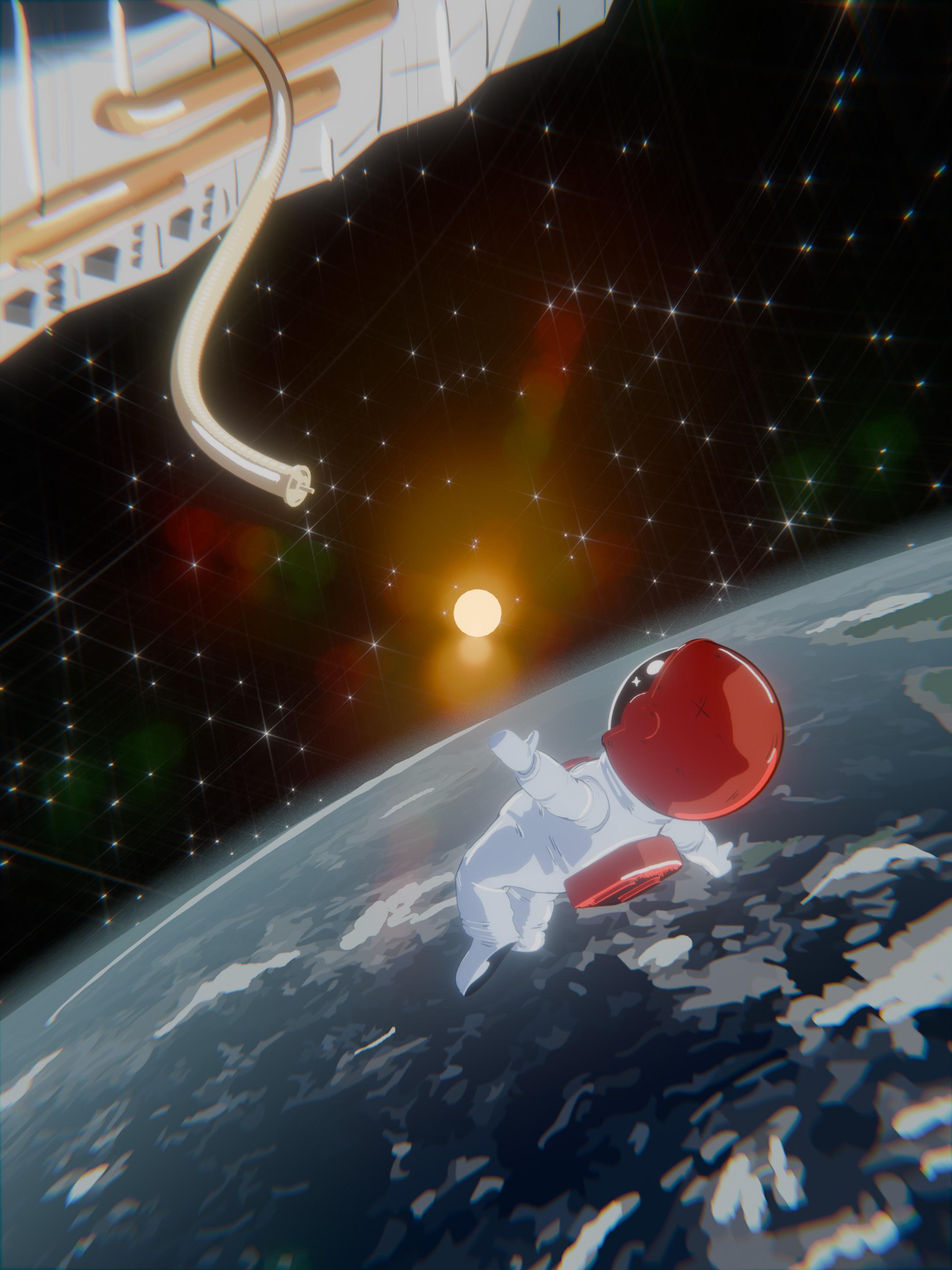
Falling Towards Home Kepler Q. ’29
a thousand and two blues
Veda P. ’29
I catch a glimpse of myself in the train window. Red scarf and rosy eyes among a thousand and two blues. The droplets begin to fall and I tense for a moment, then realize they’re falling on my hair and I relax.
The train hums softer at night. I might have thought it was tired, But something in the motion calls to me. Like me, it can’t help but live in the dark. The streetlights blur in time with the lo-fi in my AirPods.
A woman sits on the other side of the train, her posture mirroring mine. Usually, she’d be on her phone, texting someone she doesn’t know she’s going to lose yet. But tonight, she just watches the glass, maybe seeing herself, maybe someone else. We are all passing through reflections that forget our names when we leave.
But for a moment, they remembered.
The rain is gone now, dissolved into nothingness by the day, but the windows aren’t good at letting go. I rest my head against the cool glass and feel the city’s heartbeat slow, just for me.
Tomorrow I’ll be here again, the sunlight indelicately inviting itself into my tired mind. But for now, I’ll let myself be.

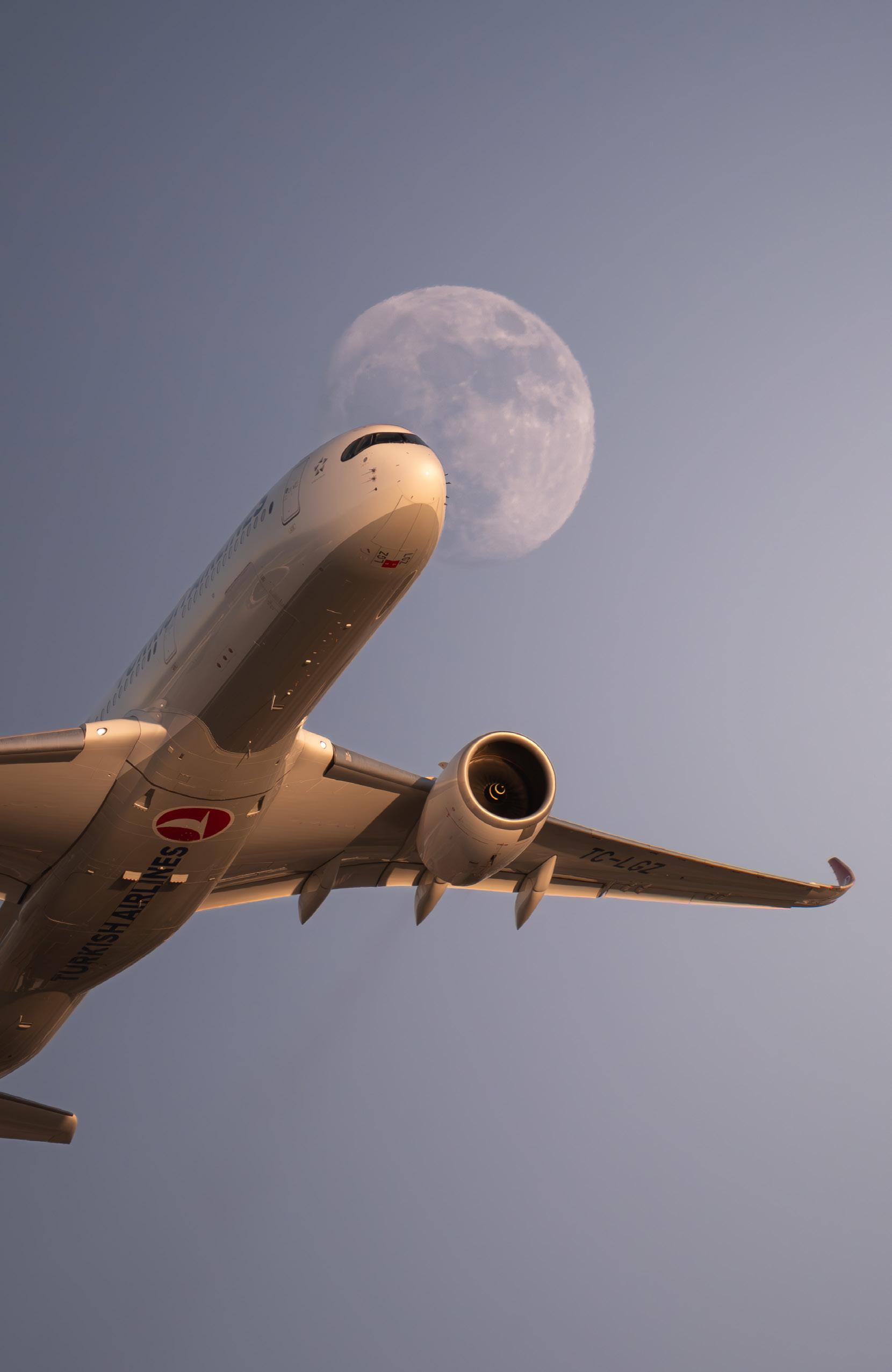
F0G_7031
Zach M. ’26
Cold
Natalie N. ’28
Trigger warning: This piece contains subject matter related to mental health struggles. Please read with care.
Vivienne was understandably cold; it was storming outside, the kind of weather with a constant heavy pouring rain that fell so hard it felt like you were trapped inside of a rushing waterfall, with icy air that sent chills through every single nerve in your body, and sharp fast winds that seemed to slice through the clouds, shrieking as the sky was torn apart. But she loved it — the way the watery droplets pelted her skin, how the cold left her numb and unable to feel anything (except for that same emptiness she had felt for the past year), and the tangled mess of hair the strong winds left on her head. The weather was her escape, a way to drown out and numb the pain.
The pills stopped working a while ago. Every time she saw her doctor, it was the same three phrases: “Have you been getting enough sleep” (the answer was always no — she was an insomniac), “Let’s try this medicine” (it was the same drug in a different bottle) or “How about a stronger dose” (she didn’t know if it was possible to take more without overdosing). The doctors could never help her forget. How could they?
They didn’t see the empty chair across from her at breakfast, or the note she hadn’t been able to touch since. Some nights, Vivienne still heard the echoes of his voice — that soft, deep laugh she loved so much. She would call out to him, whispering his name into the dark, hoping he’d answer. But he never did.
The doctors kept trying to fix what couldn’t be fixed. All the medicine seemed the same to her — strangely colored pain-killers and anxiety meds that left a bitter taste in her mouth
disguised as a panacea.
Vivenne stood on top of the cliff above the water, overlooking the beach and watching as watery beasts attacked the shore. The waves were monstrous and unmerciful, so tall and fast they could sink even seemingly unsinkable ships.
Over the roaring sound of the waves, she heard a sweet, melodic voice. The voice was warm and smooth; it was like honey had coated her cold heart. It beckoned her, calling her name.
Come, my love, the water is warm. I sing to you, A sweet song of woe and blue.
I’ll show you everything you’ve longed to find, So leave all your worries and troubles behind. I can take you to the land we walked before, Lost memories of the shore.
Come ashore, my love, my dear, My love, my love, I am waiting here.
Forget the world above the waves, Come with me to the watery grave.
Seek me where the voices sound For in these waters all is found.
The voice drew her in. Vivienne couldn’t resist, a magnetic force drawing her closer to the edge of the cliff and towards the dark watery depths.
She dove in. She was finally warm.
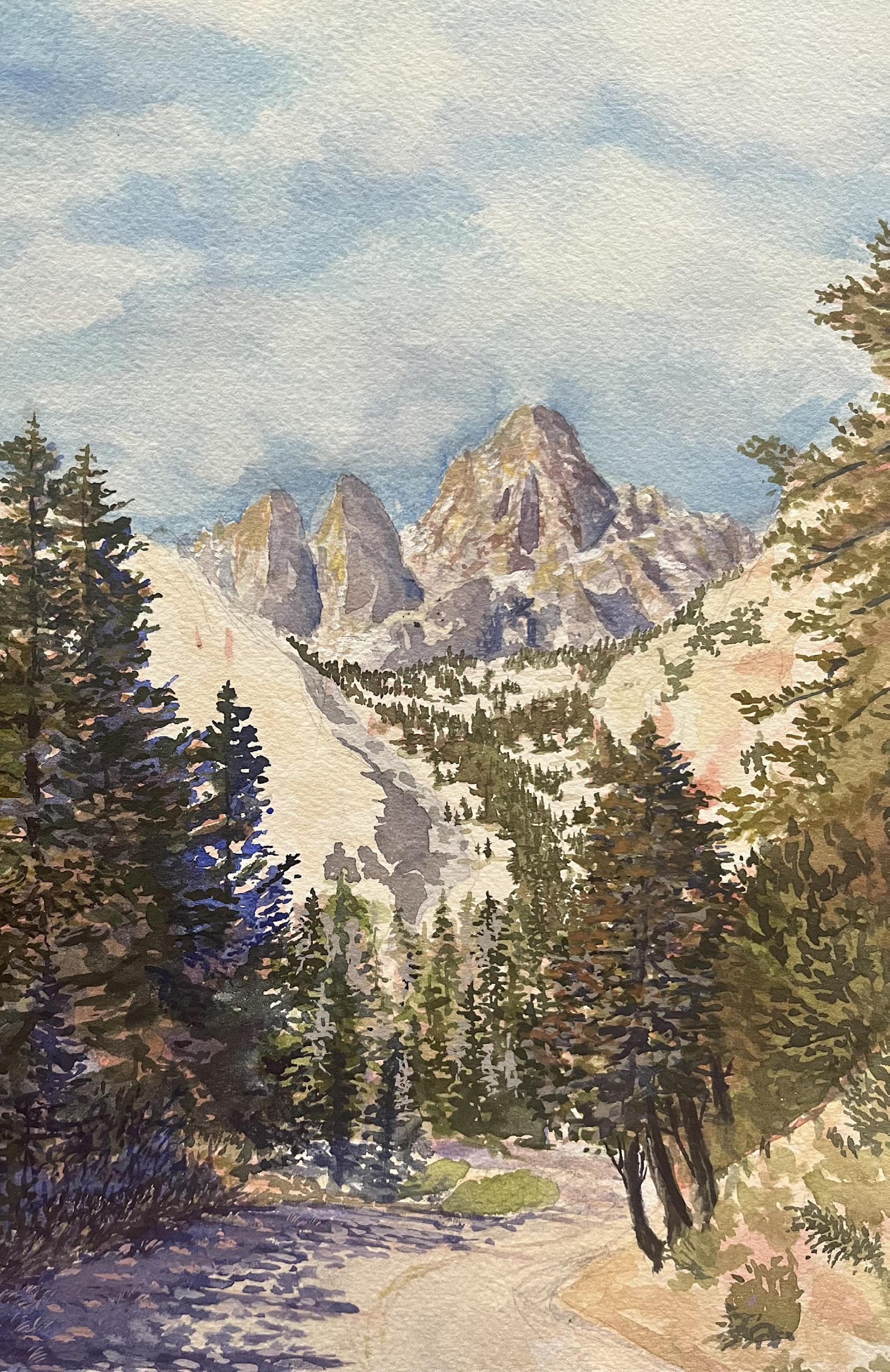
Whitney Portal Hayes S. ’27
Meat never satisfied me.
白菜 Anonymous
But you, bok choy, always have.
Bought on Irving St. in Sunset, The white fog surrounding me and you, From the store that calls me 靚女, Grandma brought you home on Sunday.
But before that, My ancestors brought you—
你
To the “Golden State”.
They looked for work While I look for you.
You suffice from Safeway and Whole Foods, The harsh lighting does your beauty no justice.
But you’re my favorite From the stores on Irving St. I call you pretty lady.
白菜, bok choy, white vegetable.
Chopped Boiled
Sautéed
Steamed
吃.
My chopsticks reach for you first.
綠色 and leafy, In all your glory.
The Man at Trader Joe’s
Caroline L. ’28
When they found him, I imagine he put up a fight. I imagine teeth had flown just as fists had connected and I imagine he’d remembered how his daughter hated when he fought with his wife but I also imagine it had been very hard to think of his daughter just then.
It was a cold night, I think, when they found him. I remember, very clearly, thinking that our little white suburbs were not an easy place to get to, as a criminal. He must have wanted very much to go to Trader Joe’s. I sometimes think about what he was looking for. The butter lettuce spring mix? The pancake mix? Maybe for the very same daughter he had been thinking of. Perhaps, like me, just three hours before, he had walked there for a nice fall stroll and a box of chrysanthemum tea that has that iconic Trader Joe’s style fox on the front, right near the lip where you fish your fingers around till you can grab purchase of a transparent little bag of leaves.
He had not been here before. No one had seen him, no one knew his name. He’d had on a winter coat and baggy carpenter jeans, not unheard of during colder fall days. And of course, there was the fact that someone had seen him play with a cat. All these pieces of a man I’d never meet, and already, I liked him. The police wouldn’t say what he did, but only that we were lucky they’d caught him. They caught a bad man, they said. Someone had seen him linger near the Ube Mochi Ice Cream boxes in the freezer aisle, and the cashier said he’d asked about his day. It must be hard, I think (I know) to be in a place where nobody knows you. You could disappear, he could have disappeared, and not a single person would have blinked. Or maybe, it would not have been until after he disappeared that they would notice he’d been there at all. It is this way, to be a tourist (or a traveler, or a fugitive), to be in a community not
unlike your own but so fundamentally different at its core, to be in a space where no one knows your name. When they found him, nobody had ever seen him.
I like to walk. It is therapeutic, in a way, to get off my mattress and finally stand up, walk, and keep walking, even after the fifteen paces it takes to get from my bed to the kitchen to pour a glass of milk. I do not seem like someone that would like walking, and my neighbourhood doesn’t exactly seem like the type of neighborhood people would like walking in. Here, people would rather spend that time making money and investing in stocks. Here, people would shrug and suggest their Tesla instead, after all, it practically drives itself. But I cannot drive and I think stocks are the embodiment of sports betting for the finance bro, so I like to walk. That morning, I walked to Trader Joe’s. It is a turn around the cul-de-sac, and then four blocks forward. You can get in two good three minute songs during that walk, or call your best friend to tell them about the shit that one asshole said to you in class, and you can probably beat that dead horse a couple times, maybe two, before you turn left. When I was little, I did not like left (I also did not like walking). Why would one go left, if the right way was already highlighted for them? It confused me, so I turned right. When you turn right, you can walk just a measly two blocks before you arrive at the local public library, little and unassuming. Really, the only marker of it being a library is the giant Rodin, Thinker replica outside, cast in some kind of bronze alloy, and just a little too large to think it real. I lived in that library for summers on end, before summers became summer programs and free time turned into more work.
After you turn left, you only have to walk five blocks along the highway until you finally get to turn right. It is nearly enough time to plan a group Halloween costume, and not even close to enough to describe your, at best, tenuous relationship to your family. To get to Trader Joe’s, you must always pass the Lucky’s. Inside the Lucky’s, you could buy a box of mini Werther’s for your friend who always has a couple to give to
you, who you know could always use a good Werther’s. And then you stroll out, singing Bennie and the Jets, and you keep going. You pass by—or more realistically: are passed by— the group of bikers. Four aging men with mountain bikes that probably cost more than their wives were okay with, who find joy in sitting with their fellow finance bros and getting from one side of the city to the other. I respect it, men of that age struggle with coping.
When you see the gas station, you’ve made it. It’s yellow, Shell label and all. Funnily enough, if you’re there at 1700 on week days, you get to see a yellow school bus pull up and drop off a toddling bunch of children, fresh out of gym or math, and so so ready to go home. One might flash her parent approval form that lets her walk home alone—at just ten years old, she’s so grown up, isn’t she? These are the first kids to leave the campus and the last to get home, but their parents will assure them every time they wake up at 0600 to catch the bus: this is a privilege.
Last thing, when you get to the stop light, the last thing keeping you from Trader Joe’s and his funhouse of organic, offbrand, healthy, food: do me a favour, will you? Press the metal circle on the light three times. It’ll bring me good luck, and the least the universe could give me right now is a bit of luck. I imagine that maybe, me tapping it three times, four hours before they found the man, gave him some luck, some time to text his family, some time. We all need a bit of time, sometimes.
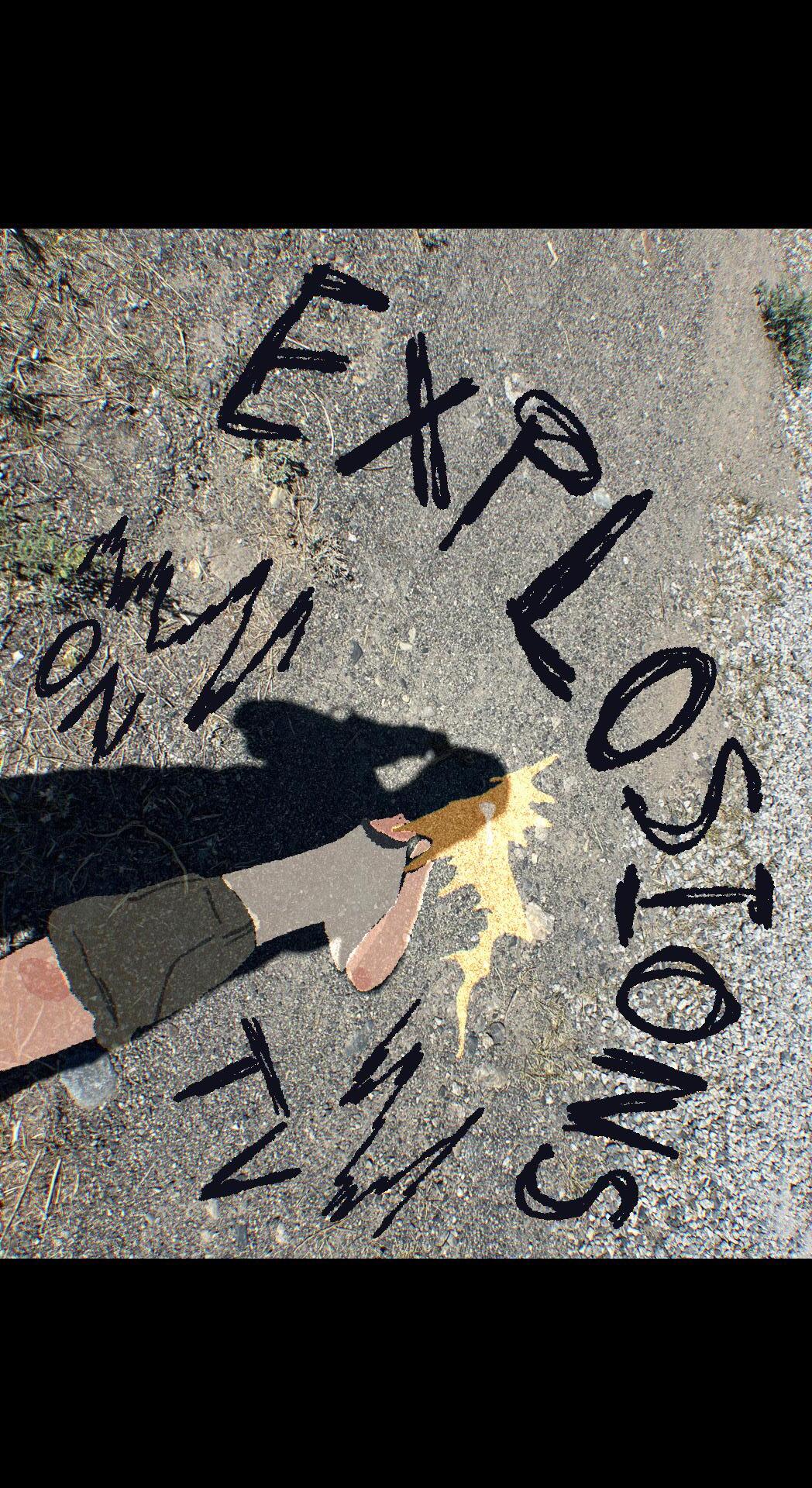
My Shadow
Senya S. ’26
Admin’s Nueva
Senya S. ’26
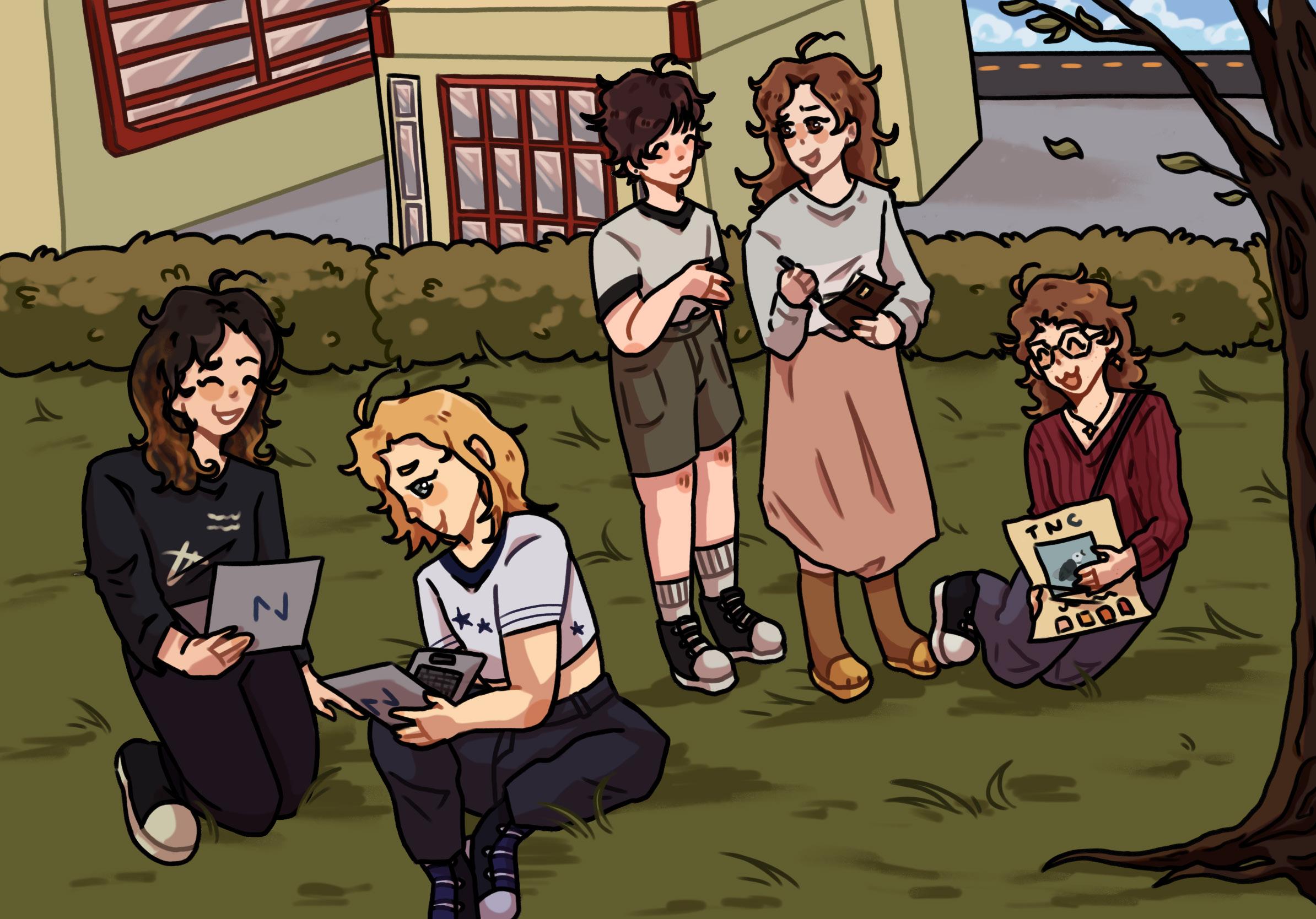
strawberry rhubarb pie
Valentina T. ’29
many say that indiana is the most boring place in the world, full of corn, fried food, and obesity. not everyone can see indiana through my eyes.
we found this place called “pots and pans pie co” bragging its best pies in the world. curiosity got the best of us so we bought their strawberry rhubarb pie. we took it back to the house and opened it up after dinner. it smelled glorious and it tasted even better. that’s a damn good pie.
strawberry rhubarb pie in the state with green hills and state fairs and soul food. indiana.
Between Cat and Dog
Zadie M. ’29
He says: Come outside to play! She says: No, why would you do that when everything you need is in here? He says: For adventure! Aren't you curious? She says: No I don’t need those things, now stay away. He says: But don’t you want to run across the yard and chase small animals up trees? She says: No, I may steal mother’s yarn when I want to play and chase you away when you come to bother. He says: Fine, but next time you’re coming. She says: No way. So he goes outside and she moves to the window; the one on the side of the house covered by bushes. She thinks: The world is all very exciting out there, but dangerous all the more. He would respond: The danger is small compared to the reward! Think of all you will never see if you chose to stay inside day after day. She thinks: Just one more, then I will come. The days pass and she never goes out. Yet the dog does; every single day. He comes back with stories of fields with flowers and small airplanes with feathers. She says: Tell me more about the airplanes. He says: I cannot, you will have to come see for yourself. She thinks: How can I tell him I am afraid of change? How can I tell him that I’ve always been an indoor cat and it's too late for me anyways? She’s scared and just wants him to go away so she shows him her claws, hoping that he will understand she has everything she needs right here. His ears droop and his tail hangs low as he shoves past the opening in the door that leads to the outside. She moves to the window again. He says (more desperately this time): Come! Please! I will show you everything I know and we shall find even more. She says: No, I cannot. Don’t we have enough anyways? He backs off. He always does, and heads across the yard towards the street. She watches him go; then notices the light glaring off of a fast approaching metallic figure. She says: Stop! Watch out! But he is too far away to-
hear–the beautiful spring air is a barrier to the musty state she lives in. She says: Come back! But he does not hear. Suddenly, she feels a stirring within her–an old thread, built from years of sitting on the couch and watching the world rotate through its beautiful seasons, is finally beginning to stretch. First one fiber snaps. Then some more. And finally the rest are unable to bear the weight any longer. She leaps off the couch and bounds out the door without a second thought. She says: Stop! He scampers away just as a monstrous metal box speeds along a trail of black. He says: You came outside! She says: No, I came for you.
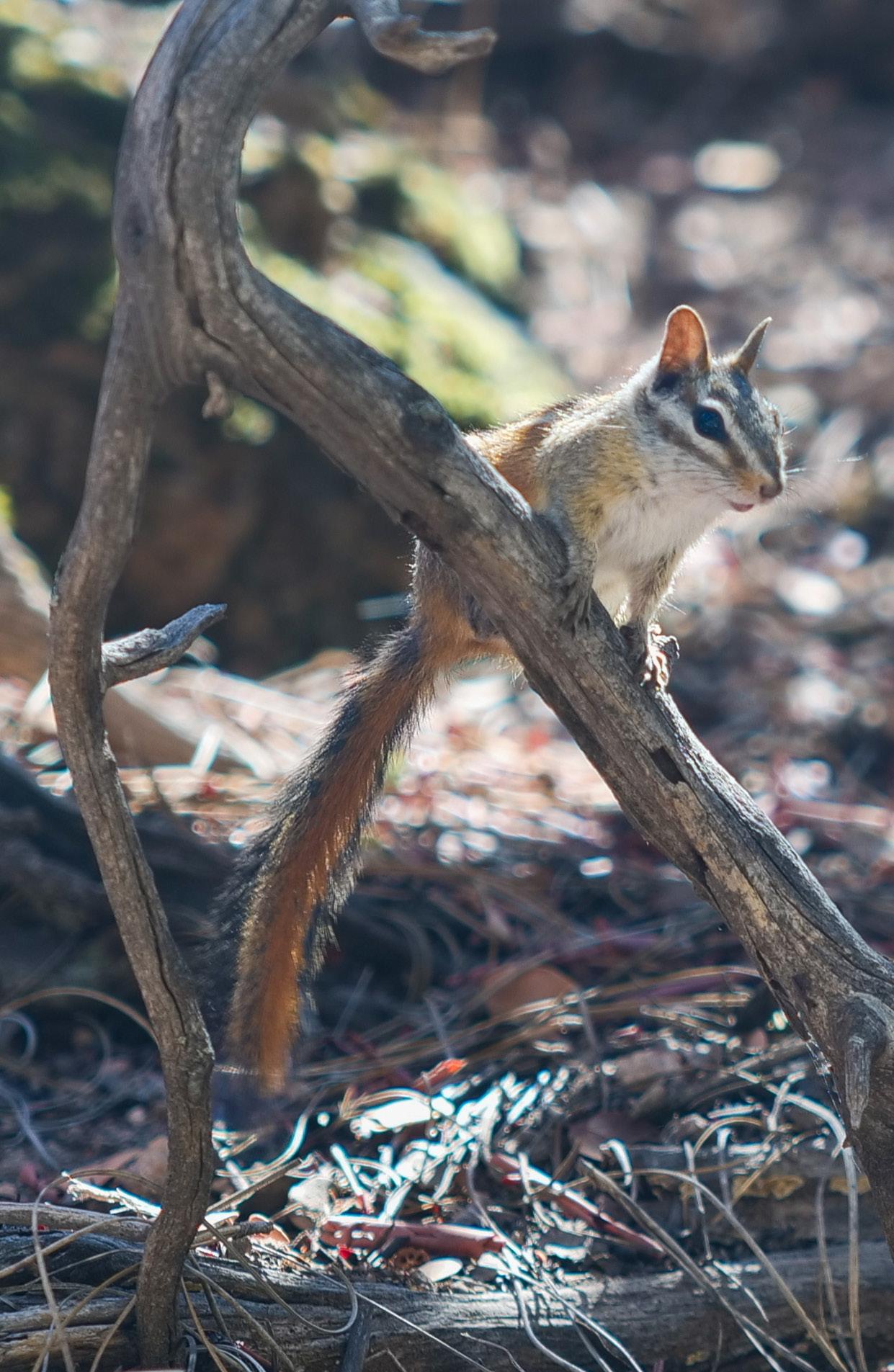
Pinnacles Poseur
Kayla L. ’26
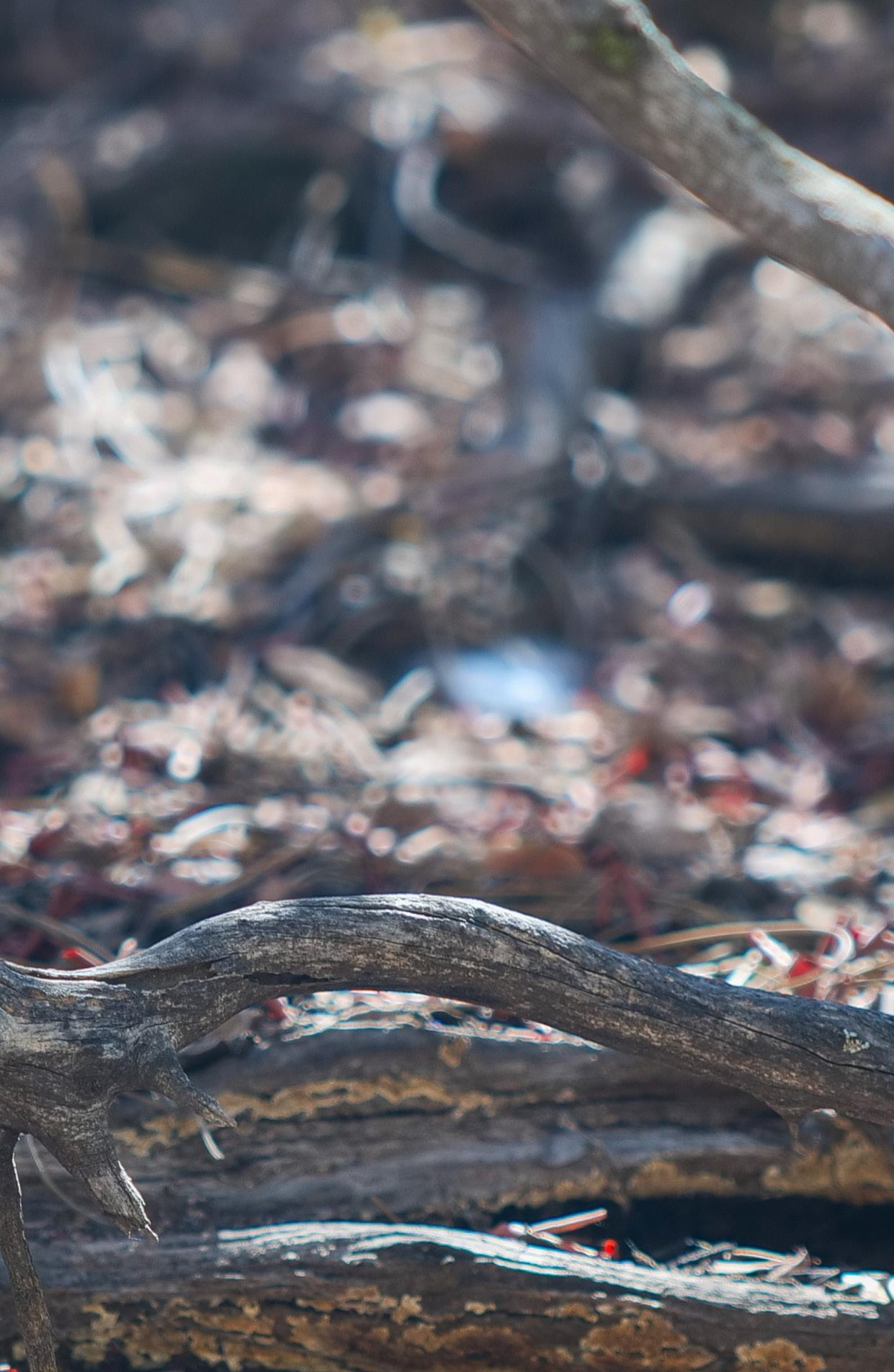
GPS Route to an Old Friend Living in Hell (Apparently)
Amalia V. ’27
There were never any real shorelines near enough to where I lived to get this sense of scale. The old country, ruins now, had docks, jutting out from cliffs and raised well above the water; the city was too far inland to ever get a good view of the ocean.
There was a lake, not too far away from the redwoods (so full of hope and bravery and now burned beyond even their nature of resistance). That was the closest I ever felt to this, walking alongside the still, murky waters and getting pebbles stuck in the soles of my boots, kicking at branches of trees, listening to brothers arguing with one another over something unintelligible.
When you sent me that letter offering that I come visit you and your new home in the desert, I did not for a second consider that you would walk with me, from your dust-filled camper van and three dying garden plots and rabbit hutch with no rabbits, to the sea. The ocean swallows sand, spits it back out, unwanted, then returns again, higher than before, foam and brine crackling through tiny golden flecks. I forget everything, for a moment. I had taken the lead, slightly, brisk and unsure of what to say or do or look at.
You walk up beside me, now.
“It’s nice, I like it here.” You’re reaching into your bag for the picnic blanket I packed. “S’the only real place where there’s a breeze—the rest of this hell hole is miserably hot in the day, miserably cold at night.”
It breaks me out of whatever trance I’m in, somehow, to hear you complaining. “It’s your fault for moving to live all the way out in the middle of nowhere,” I jab you in the shoulder (lightly, I don’t remember where you’re still healing). “Though, I guess I sort of did the same.”
“I’m sure your spot’s better than all this sand.”
“Again, completely on you for that decision.” There’s a pause, I turn from the horizon to help you set out the bits of food we’ve brought with us. “You really should come visit me sometime, I can’t believe—”
“That I got you to come here first? That’s a you problem, I fear—I wrote you faster! And even then, you took ages to make time for it.” There’s an edge to your words, a swallowed impatience. ‘You owe this to me, because you never came looking when I disappeared,’ is left unsaid. You glance out at the ocean, twisting the cap on a water bottle full of too-sweet lemonade. “Anyways, aren’t you in the arctic or somethin’ now?” You pause again, tap your fingers on the bottle, and make the face you always do right before you shift back to an unrelated thought, flee from a given topic.
I cut you off before you can, slipping back into old habits of messy conversations. “Anywhere that snows isn’t the arctic, idiot. And it’s nice there, nicer than this,” I add, as if defending the place I’ve barely accepted I belong in.
The ocean pushes ever-closer to us, threatening our shoes and my wicker basket of baked goods. For a moment, I don’t know if I agree with myself that the snow is better than this, than looking out and seeing nothing beyond blue and white sparking off one another.
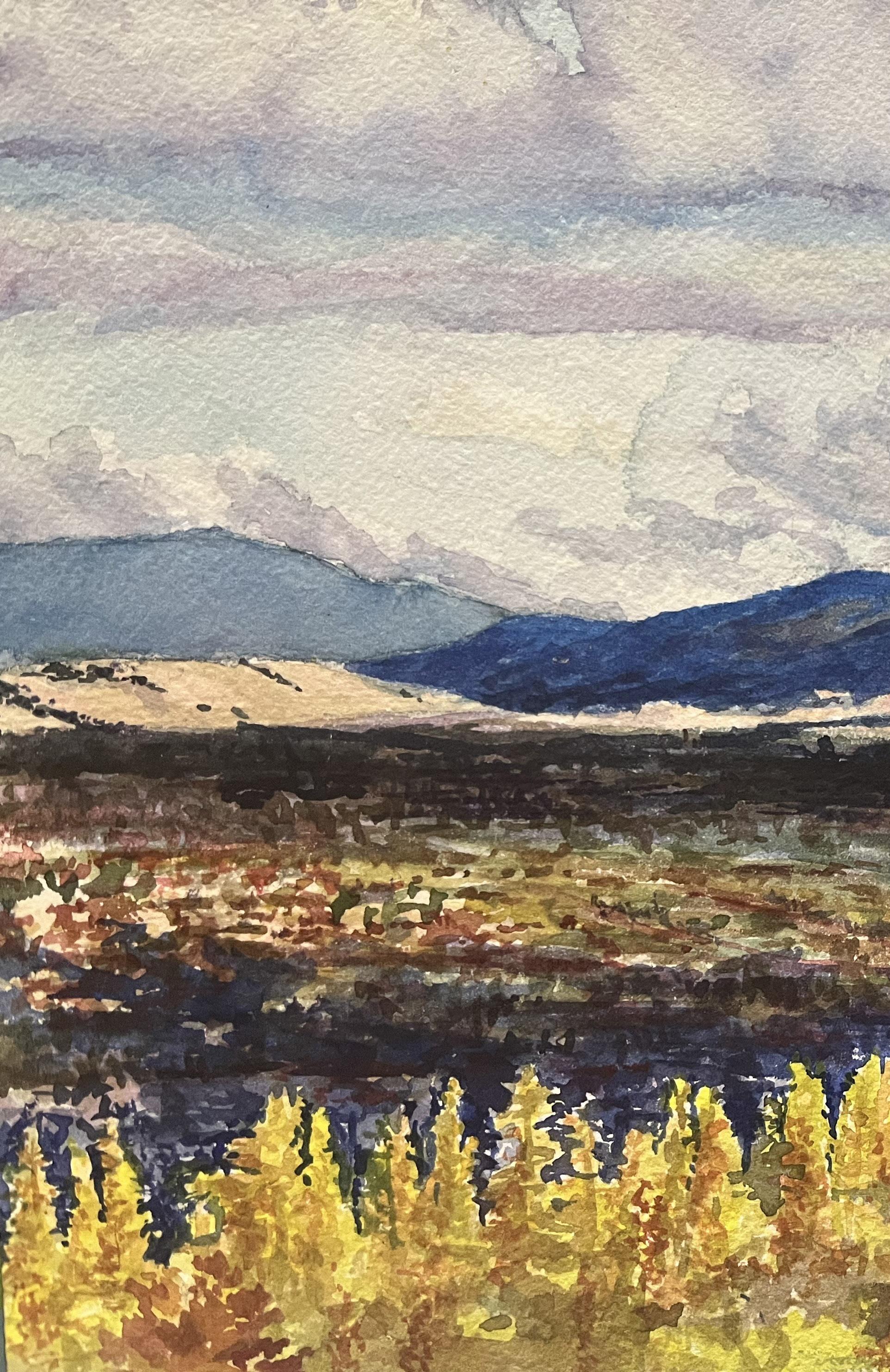
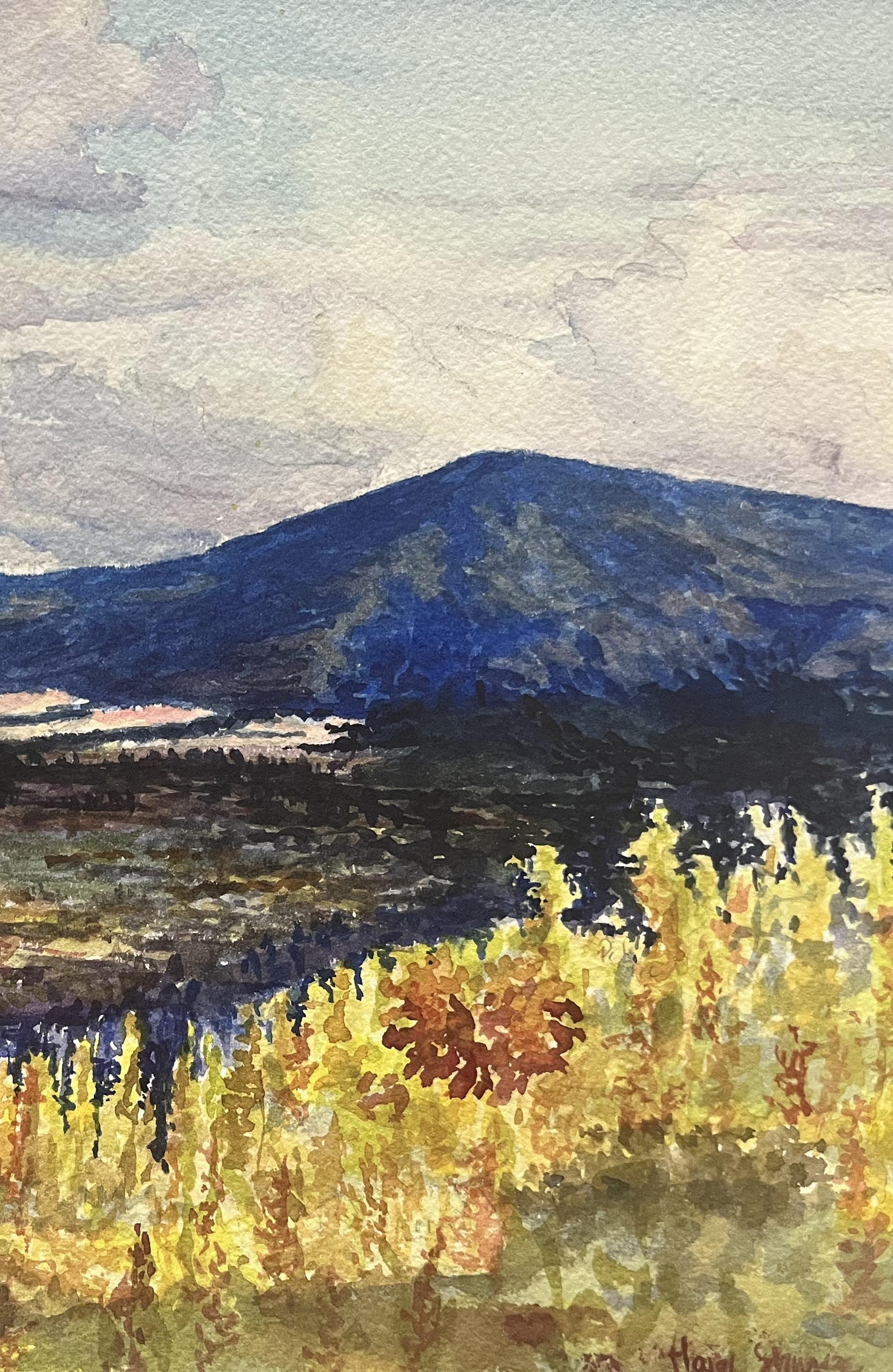
Fall Over the Valley Hayes S. ’27
The Flowers Raya I. ’28
Alex makes it to the station just in time, thundering across the platform and leaping over the yellow paint, sliding in just before the doors close. The subway car is silent, and he tries to slow his worried breathing and make himself inconspicuous against the wall. He thinks his schedule over and over: twenty minutes on the subway, a dash to complete an errand, and fifteen minutes to walk to his audition. Already, he’s cutting it close by about seven minutes—he couldn’t make it in time for the first train.
He’s just getting used to the death rattle, the booming vibration, when the train squeals to a stop. The lurch sends everyone out of their seats and onto each other, and for a moment, everything in the car is still. Then a wave of sound rises and breaks into ceaseless chatter, concern, annoyance. A mother grips her children until the skin of their arms turns white, hissing at them to stop screaming. An old man, rocking back and forth in his seat, makes a sort of distraught wailing sound. Alex watches people pull out their phones and frown at them, perhaps imagining that the screens contain some kind of explanation. He does the same and is confronted by the cascade of reminders he set to ensure that he wouldn’t miss his audition. The black around the subway car is impenetrable, and the claustrophobia he feels is very far from the stillness he’s been living in since the morning.
He remembers the quiet, early ritual—as always, he sat on the piano bench, hard and unforgiving against his body, his bare feet steeled by the pedals and his back humbled by the air around it. Wanting to preserve the sanctity of the music, he tried not to think about his pajamas and unruly hair and human body, which felt fevered and unwell. Shoulders down, Alex. He forgets this mandate when he gets lost, too often exiting a
phrase and finding himself bent over like the hunchback in the stained glass window, his spine etched in angular shards. Nothing else in his life allows him to forget so completely who and where he is. Nothing else in his life receives the same amount of care. Today he spent almost the whole practice bent over in concentration. The notes were garish, despite his yearning that they not be.
Garish or not, nothing resembling music is close to him now. All he can smell is stagnation, and still the system gives no announcement, no warning, nothing. He would do anything for motion. A little girl tugs on Alex’s pant leg and asks him, “When’s it going to start again?”
Frightened, he looks down at her and shrugs. “Soon,” he says, but his voice cracks, and he knows that she knows he’s lying.
Five minutes have passed, now ten. The train grinds to life after twenty, and at the cheer that rises, Alex only feels dread. As it rumbles in the right direction, he feels an undercurrent of unease and is convinced that it’s slower than usual—that they’ll stop again, that they might never get off. He has no reception and doesn’t know what he’d do with it anyway. He lets the shrieking of the wheels enter his brain.
When they are finally let out, he joins the pack of people pouring out into the station like rats. He lets their nauseating smell carry him up the stairs and into the air, which instead of being refreshing is humid and thick. The sky above him is a sickly white. Disoriented and fueled by panic, he begins to jog, weaving in and out, skipping across the sidewalks until he sees his destination, the tiny stand stuffed full with flowers. He breathes a sigh of relief at the sight of its faded awning, but feels a stab of anxiety when he sees the line, which is already winding down the sidewalk. He’s never seen it this busy before. He looks at the time, swears, and runs faster.
It’s getting really late. He’s stopped looking at his watch, because each minute that passes only makes him more nervous. The line at the flower stand is growing longer; it seems
that every single person who passes joins it, and by the time Alex arrives, it’s nearly doubled in length. He joins the queue, agitated. In the window, stems are stacked on top of each other like green beans and the flowers push their heads against the glass. A cluster of red roses stains a batch of white ones light pink. In front of Alex, a man talks on the phone to his girlfriend, assuring her that he’ll be there soon—he’s stuck in traffic. It’s February 14, Alex realizes, as he does every year. And this is the hour when men and boys are searching for Valentine’s Day gifts and deciding to stick with the classic, flowers. He wishes they’d buy chocolates instead, or jewelry. The flowers will rot anyway. (And if she finds them ugly, she’ll feel disgusted every time she looks at them, or she’ll throw them away and lie to you.)
The old stand-owner with the unplaceable accent is slow, slower than usual. Alex bounces on his feet and cracks his knuckles, seething with impatience. He wants to smack the customer in front of him, scream that he’s running late, tell him that his stupid girlfriend probably hates him anyway, the ugly, insensitive idiot that he is—
Someone prods his shoulder, and he realizes it’s his turn. Stepping up to the window, he asks for a bouquet of white magnolias.
“Eh?” The man leans forward. With a shot of despair, Alex realizes that it’s not the man he knows, although this one looks similar, perhaps a cousin or brother. Wide forehead, bronzed, leathery skin, dark eyes.
“White magnolias, the…” Frantically, Alex cups his hands and tries to sketch out the contours of the blooms. The thick, milky skin, the wide, sloping petals.
“I’m sorry, we do not have those.” The man looks up at him and gestures behind, to the ever-lengthening line, suggesting that they are busy and have been bought out.
Alex feels a pressure building in his head, feels his eyes stinging with desperation. “White magnolias?” he repeats weakly.
The man shakes his head, gesturing again. No one buys
magnolias on Valentine’s Day, Alex thinks. They buy goddamn roses. But he knows he can’t say this to the flower vendor. He knows he won’t walk away with the flowers he needs, the ones he’s bought every year since he was old enough to understand the story of the sister who barely was. He and his mother used to pluck them together, from the trees just by their apartment, whose existence was at once lucky and a bad omen: in his mother's family, magnolias were the flowers of funerals, the bridge between worlds.
A few years ago, though, the trees were cut down to make more sidewalk, and he found this stand. It’s far from his apartment, and his mother tells him she’s too busy to make the trek, although really, he thinks, she just doesn't want to have to remember every year. No other flower shop in the city sells magnolias, he’s pretty sure. He could try to find some, search and beg, but—he checks his phone, dreadfully—he’s already late. He racks his brain for some other flower and blurts out, “Lilies, then.”
After several agonizing minutes, he’s handed the bouquet and immediately feels sick. The petals are pointed at the tips and shot through with fruit-punch pink. They jostle with each other in the cellophane wrapping, demanding. He might as well bring puppets to his sister, or a monkey that leaps out of a metal box. As he’s dodging his way back to the sidewalk, a guy punches him on the arm and smiles loosely at the flowers. “Good luck with her, bro.”
Traffic, usually slow, is today glacial. Alex watches the crawl in dismay, wondering if the whole city has been slowed down. Everything but the numbers on his phone, that is; they ascend more and more rapidly. His calendar reminds him with a buzz that his audition is in ten minutes. He begins to dash, sidestepping strollers and knocking into bags. The cemetery is at the top of a hill, and soon he’ll have to run down it again, if he wants to make it to the audition. In his desperate sprinting, he collides with something light and fleshy—and there’s a cry, a guttural exclamation of hurt surprise.
He turns and sees an old woman scrambling at the sidewalk, searching with her fat fingers for her dentures, which have fallen out and are clacking and bouncing across the pavement. She looks up at him and forms unintelligible sounds with her reddish gums. Her voice is loud and high and he feels her disgust. Horribly ashamed, he crouches and drops the flowers, murmuring, sorry. Together their hands comb, rubbing the gritty sidewalk; he collects little acrylic stones that slick his palms with spit.
He hands the dentures to her and watches her sit back on her knees, the skin of her calves stretched paper-thin. When she has her teeth in, she begins to scold him: “You disgusting creature! My teeth, you think you can just touch them? Stupid kids, never look where you’re going, always the damn phone, can’t believe it. Don’t watch for an old woman, no, to you I don’t exist! And look what you’ve done, you hooligan!” She gestures lividly down the steep hill, where, he sees, her cart lies splayed. In its wake is a spray of objects, skittering in the wind and drifting rapidly away.
He holds out his hand and grips her soft arm, trying to haul her to her feet, and she slaps him, hard, across the face. He’s not a stranger to punishment, and suddenly he feels in control. This is just another exercise to test his strength. Complaining to his mother as a child about his piano scales, she always told him, “Alex, honey, sometimes you just have to suffer through it.” Then she would add: “I’m proud of you. You’re doing good.”
He knows what he has to do. Bending down, he begins to collect, in handfuls, the woman’s things. Plastic bottles of prescription with chalky pills spilling out of them. A garbage bag full of wrappers that crinkles and blows, scattering its contents, sending him chasing down the street. He thunders down the hill, pushed by a frightful inertia (finally, finally he is in motion), scooping whatever he can into his hands. Three bruised oranges. A ripped paisley sweater. An ancient cell phone with a thick crack down the middle. Four damp cartons of milk and
a roll of gauze and a toothbrush with lettering in another language. At the bottom of the street, he finds the cart. It’s bent but salvageable, and he snaps it into place and dumps the old woman’s things inside.
He can see her standing at the top of the hill. Her hands are on her hips and she is a dark pile of bulbous growths and rounded shapes, the sun blazing orange behind her. She calls to him, but he can’t hear her. The walk back up is endless. He’s lost all sense of time, and the rushing motion given to him by his task is gone—his life is stagnant once again. The most real thing, now, is the tiles of the sidewalk. Even they waver and lapse, blurring in his eyes. They become piano keys, and he is an ant, scurrying over them, not even knowing what he walks on.
When he finally reaches the top, he rolls the cart in front of her and picks up his bouquet from the ground.
The woman gruffs at him, snatching the handle of her cart protectively. “Idiot, see what you did,” she mutters.
“I’m sorry,” he says, again, softly.
“You should be,” she snarls, and turns abruptly, walking off with the teetering gait of an elderly person burdened by an asymmetrical body, stooping shoulders, old joints.
He watches her go. The cemetery isn’t far. In the distance, he can see the uneven stone blocks, rising up from the ground in a quiet, defiant defense of the helpless hollows they guard. Mindlessly, he trudges towards the gates and slips through them. He’s missing his audition. At the finality of this knowledge—there’s no rescheduling, he’s not special—he feels a stabbing ache, a hot regret. Suddenly it is real again.
He looks at his hands, huge and freckled on the back, his palms pink, unremarkable. Piano keys are smooth. They don’t damage his hands at all, and there’s no trace of the work he put in for this audition, the work for a room full of strangers to evaluate the correctness of the way he converses with an animal of wood and cloth and string. Shouldn’t the intimacy of the conversation be enough? And what a conversation, one he
gets to continue daily, tender and unguarded.
It’s more than he ever got with her. He was only five; he doesn’t remember anything beyond the ghost of a laugh, the flash of a hand waving in the air. He knows (now winding through the headstones, now feeling his thighs burn as he crests the last hill) that if he doesn’t sit by her small memorial, he’ll feel the phantom of her dissolve, and he will be left with a heavy blankness, the absence of an absence, the nullifying of his contract to live and breathe here, which states that everything he does must in some way be done in her honor, and that the cruel guilt of an unlived life must be his to carry and remember.
It takes him a minute to find her headstone, but he does. The heavy formality of the lettering always surprises him. Nika, November 8, 2011 – February 14, 2012. He sets the flowers on the grass embarrassedly. He checks his phone in spite of himself, but it’s dead. He’s missing his audition, he thinks again, dumbly, without really feeling anything. He’s missing many things, is a man of missings, of losses and incidents. Next year he’ll find the proper flowers for her, two bouquets instead of one, to make up for this time. He hopes she’ll forgive him.
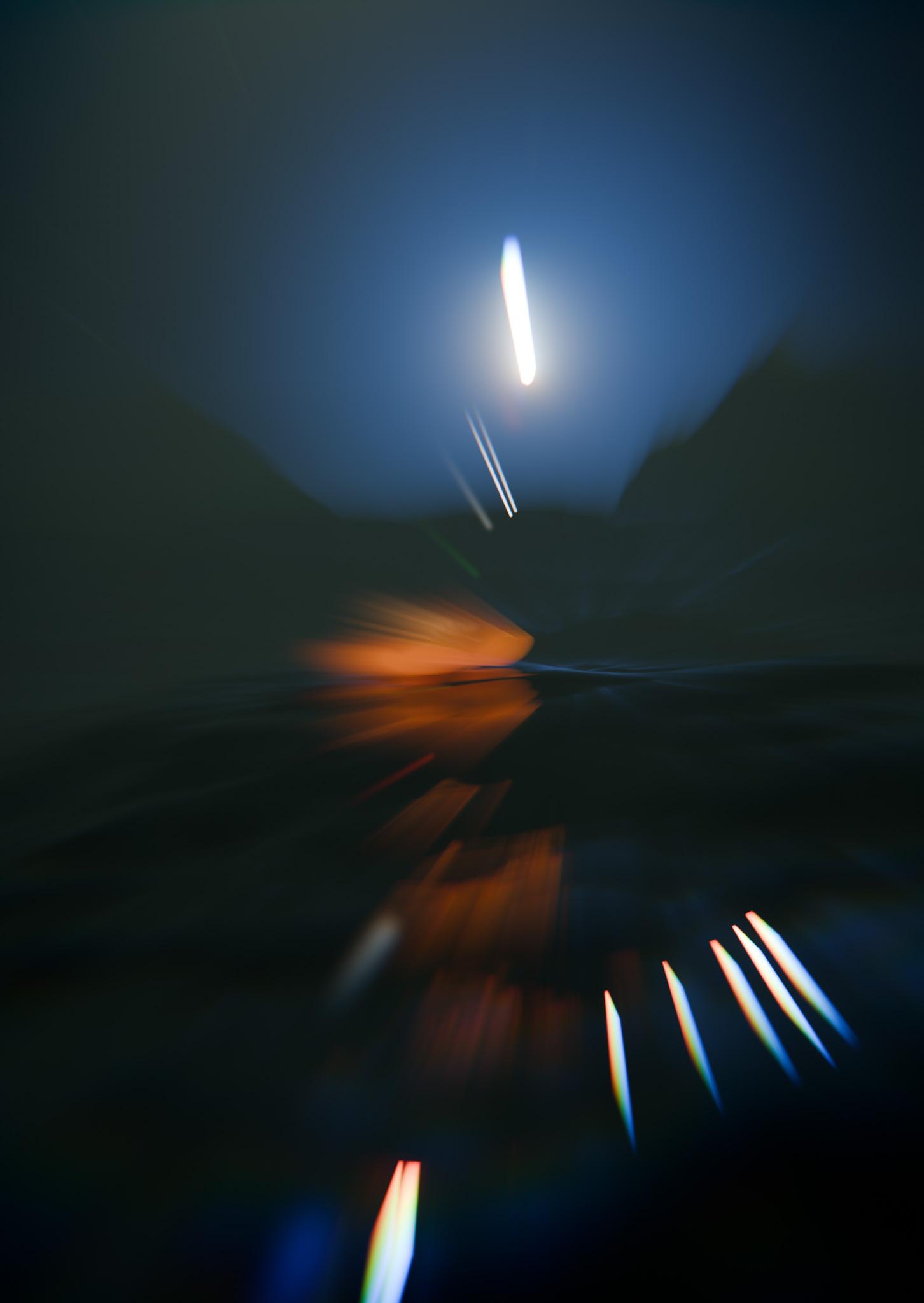
flower on a dark sea Kepler Q. ’29
ode to the city of dreams Anonymous
Pipelines of people pressed into the corners of a static-lit subway, students, paramedics, authors, pharmacists cradling their dented dreams.
Sidewalks flicker with languages, a shuffle of borrowed worlds and faces developing like polaroids. The city hums her lullaby— horns stuttering beneath skyscraping windows, solitude loud enough to dance by itself. This place is a baptism, a world that remakes you without asking your permission.
Yet for all your neon and noise, your teeth and tenderness, I still don’t know you, New York.
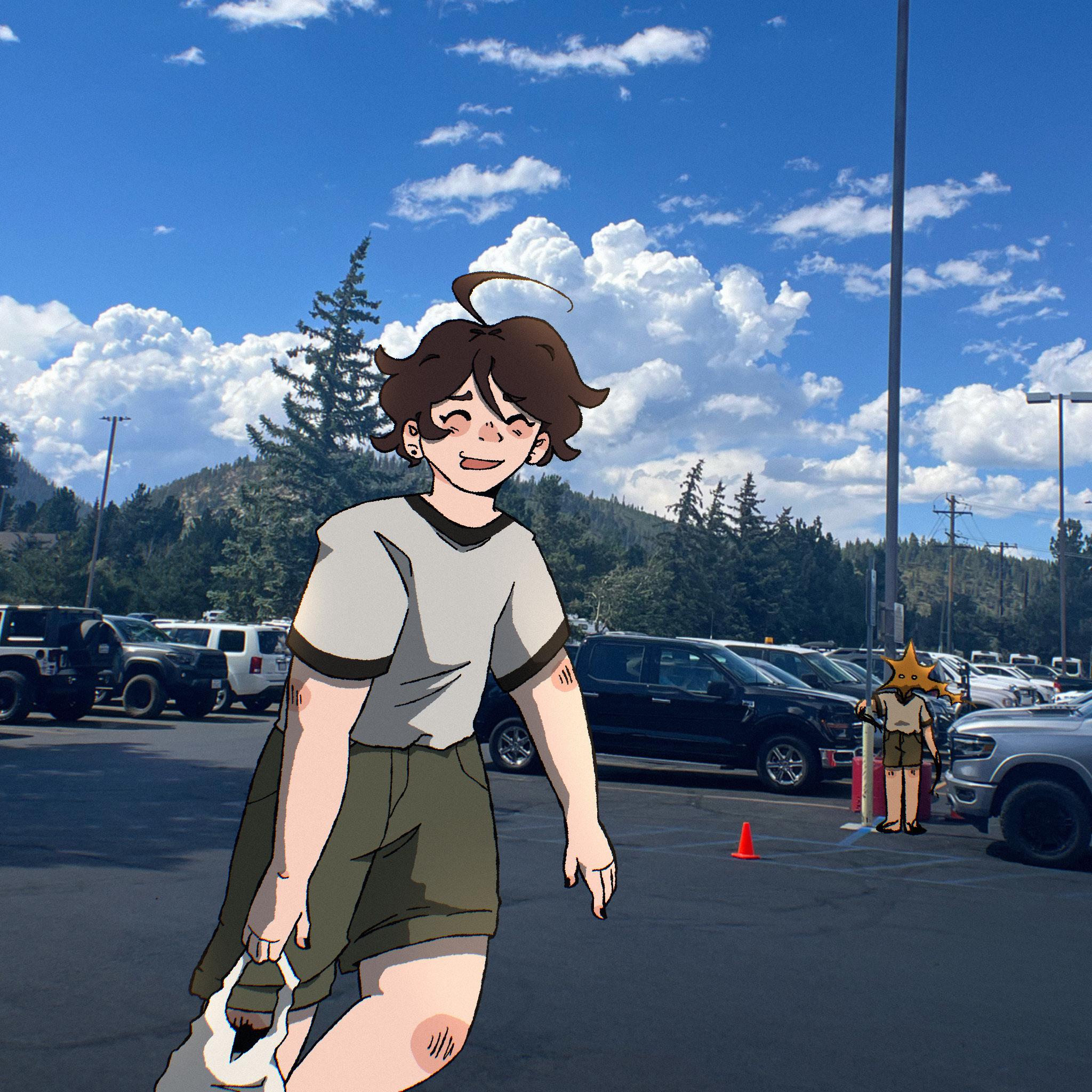
Trip to Grocery Outlet
Senya S. ’26
The Nueva LitMag is a publication produced by students in grades 9-12 at The Nueva School in San Mateo, CA, aiming to showcase a diverse selection of creative work from the student body.