NUEVA CURRENT THE
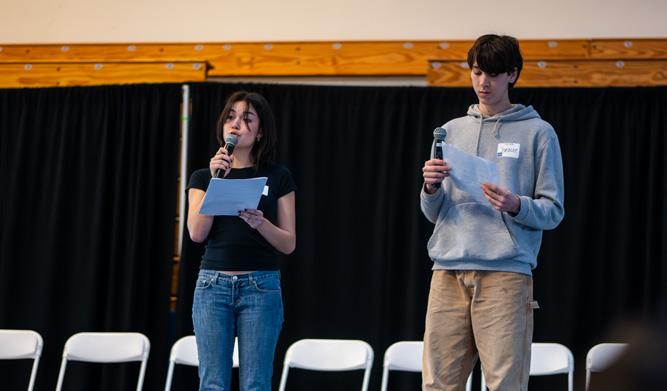
Students from Piedmont High School presented accounts and statistics on sexual assault at the first-ever Consent Assembly. [ P 2 ]


After a long hiatus, Ariana Grande and Beyoncé released new albums featuring fresh changes in direction. Read the reviews of their albums here. [ P 4 ]

Faculty and staff from

stage their
Romeo and Juliet for the senior class. [ P 12 ]

OPINION FEATURES
Two students respond to the House overwhelmingly passing a measure on March 13 that gives ByteDance a choice of selling TikTok within six months, or get removed from app stores. [ P 14 ]
ENTERTAINMENT
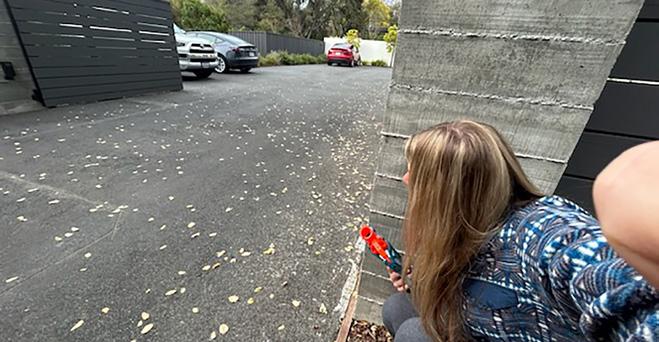
Go behind the scenes into the gradewide game of Senior Assassin, which has galvanized spirit and inspired devious feats and Machiavellian plots. [ P 17 ]
By Isabella X. and Natalie L.
I. STANDARDS-BASED GRADING IN THE CLASSROOM
The founders of Nueva’s Upper School never wanted the focus to be on grades.
“As an educational institution, our focus has always been to prioritize student wellness and curiosity as motivation among students, rather than relying on the external motivation of grades,” Upper School Assistant Division Head Claire Yeo said.
So when designing the new high school in 2013, early Upper School administrators turned to standards-based grading, a philosophy that emphasizes the mastery of learning rather than a letter grade. It identifies targeted factors like learning outcomes unique to each course and uses a scale of mastery as the metric for evaluating a student’s achievement.
They sought advice from Denise Pope, an academic pedagogy advisor and lecturer at the Stanford University School of Education. Pope’s approach centers on mitigating the impact of academic stress on students’ mental and physical well-being while promoting engagement in learning.
Aligned with this philosophy, the administration decided that excellence at Nueva wouldn’t be reflected in percentages up to “100%.” Rather, skills and competencies in a course would be evaluated on a rubric, ranging from insufficient evidence to mastery.
This system, officially known as
standards-based grading, has become increasingly accepted across the country in recent years. A 2021 study published by OSF studying a randomized group of 2736 ninth grade mathematics students determined that this learning approach was “optimally designed to help students learn.”
For students in grades 10 to 12, these rubric standards are still translated into a traditional letter grade on a student’s transcript for each completed class. Freshmen are given “practice” letter grades at the end of the spring semester that are not included in their official transcript.
While this may not align perfectly with Nueva’s educational philosophy, it was seen as a practical necessity.
“In the ideal world, standards-based grading does not have a letter grade attached to it,” Yeo said. “But, it is the most legible method to account for student mastery on a transcript, which is why they are used at Nueva.”
Upper School history teacher Chelsea
Denlow is no stranger to standards-based grading. Before joining Nueva, Denlow spent three years at Pacific Crest Community School in Portland, an independent school using standards-based grading. Denlow explains that a standardsbased approach aims to make grading less subjective.
“Grading at the end of the day is subjective. It just is. The difference between an A and an A-minus is often in the eye of the beholder,” Denlow said. But standardsbased grading offers rare insight into what factors constitute each letter grade: “You
have specificity where you’re really asking: how’s your argumentation? What’s the evidence? How’s your syntax?”
Upper School English teacher Alexa Hart adds that her department has also taken measures to ensure that those teaching the same course are on the same page. Before each school year, the 11thgrade team takes three anonymized student writing samples and grades them together. While grading English essays can’t have a definite “perfect answer,” Hart believes this calibration allows all the teachers to see— and grade—eye-to-eye.
“As a discipline team, because we have the same rubric across all four grades and a similar cadence of how many [major assignments] we give, there’s consistency,” Hart said.
For elective classes, which can be taught by a single teacher, calibration is less about getting everyone on the same page and more about deciding what exactly to expect on the page.
Jana Comstock has taught linear algebra at the Upper School for seven years, but continues to ask herself: “What do[es] success look like in my class?” And in a complex subject like linear algebra, it doesn’t always look like a perfect rubric.
“It’s very important to me that getting an A does not require you to hit all of the content objectives,” Comstock said. “I think it’s important not to just cross it off and say, ‘I’m done.’ I want students to realize there’s always more math.” [
04/08/24 VOLUME 7, ISSUE 5
every Upper School department got together to
adaptation of
THE NUEVA SCHOOL: 131 E. 28TH AVE. SAN MATEO, CA 94403 INSTAGRAM & TWITTER: @THENUEVACURRENT
ARTS & CULTURE NEWS
CONTINUED ON P 10 ] Demonstrating “mastery?” With average grades rising nationwide, how does Nueva’s standards-based grading model affect student outcomes?
Photo by Kayla L.
Photos by Ariana Grande Beyonce Albums
Photo by Holly Nall Photo by Jordan D. Image by Cato Institute
Collage by Isabella X. Images by Freepik and Natalie L.
Feminism Conference discusses progress, setbacks
Ninth annual event covered women in politics, workplace, and STEM
By Jackson H.
The ninth annual Nueva Feminism Conference was held on March 2 in the WRC, attended by students, faculty, and family from Nueva and other Bay Area schools.
Hosted by the Feminism Club, this year’s conference had the theme of “Celebrating Success” and featured both individual speakers and panels on Women in STEM and Women in Politics. In addition, the club continued its annual fundraising raffle for San Francisco-based nonprofit La Casa de las Madres, raising over $200 for survivors of domestic violence.
The individual speakers were Rabbi Rebecca Hecht from Peninsula Temple Beth El, discussing Jewish feminism, and Cortney Tunis, an activist and former director of Pantsuit Nation, presenting on feminist protest music.
The Women in STEM panel featured Nueva teachers in addition to women working at high levels in the private sector, such as Greta Meyer, CEO of menstrual health company Sequel and Ruchika Kumar, General Counsel of biotech non-profit OpenBiome.
The speakers highlighted areas of progress within the workplace, such as the increasing presence of reforms such as menopause work benefits and paternity leave.
Women in STEM panelist and Upper School math teacher Veena Krishnan stated that high school affinity groups were a key step forward for girls
and gender minorities in STEM.
“The difference now is people speak up more. It's not that [sexism has] gone away—it's still very much there, but affinity spaces remind you you’re not alone,” Krishnan said.
At the same time, many panelists expressed more mixed feelings about the state and trajectory of gender equality.
“We’re 50% of the world population and yet we are treated as an alternate reality,” said Kumar during the panel. “It still feels like nothing has really changed.”
For English teacher Alexa Hart, one of Feminism Club’s faculty advisors, a balance of those attitudes is useful.
“There’s work that we need to do. But in doing that work, we need to uplift each other, find allies, and leverage the leadership that we have,” Hart said. “I
appreciated both the realist messaging and the undercurrent of optimism that was built into the conference.”
Due to the small size of the event, this year’s conference featured a linear series of panels and speakers, a shift from small concurrent workshops in the larger conferences of previous years.
At its peak in 2018 and 2019, the conference had over 200 attendees, according to Hart. However, postpandemic conferences have not reached the same attendance levels.
“We are trying to build back towards pre-pandemic impact and numbers around the conference,” said Hart. “Last year, we did not have the attendance that we wanted. It was disheartening, frankly. We’ve tried to redesign the conference in light of that.”
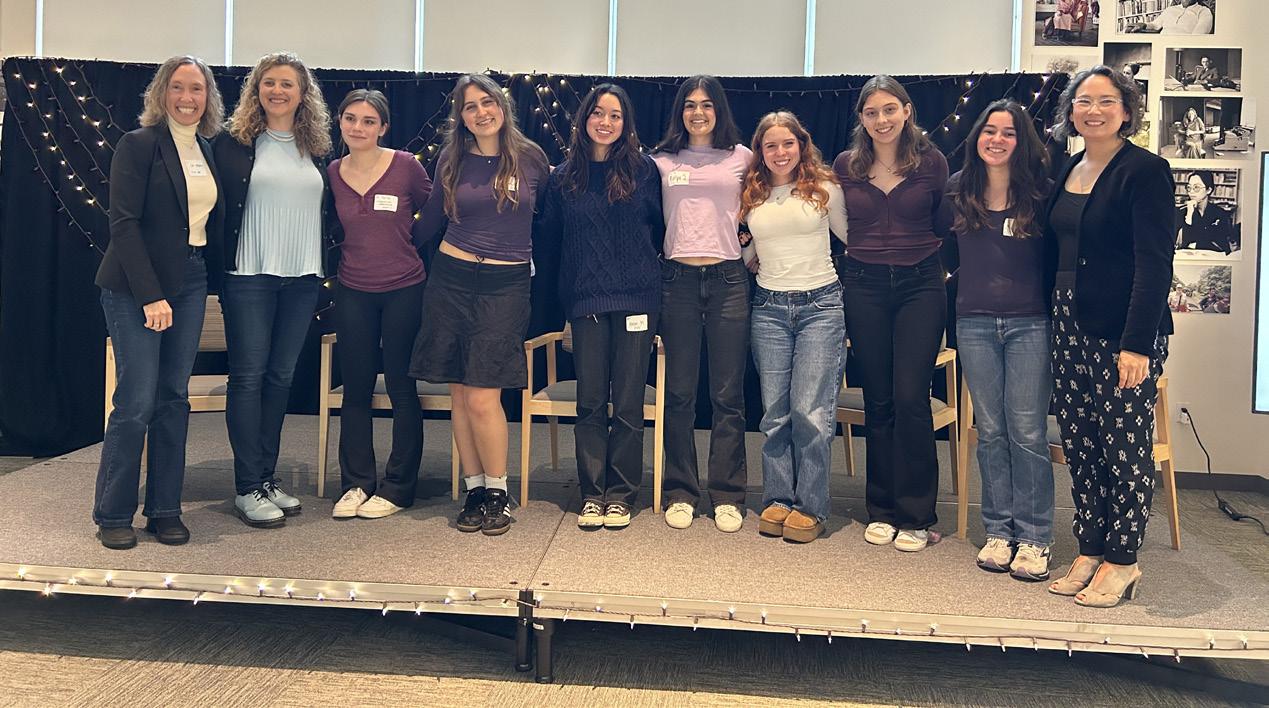
THE COLOR PURPLE
Members of the Feminism Club dressed primarily in purple, which the club had designated as the color for this year's Women's History Month at Nueva.
By the numbers
Recent snapshots of campus life was the duration of the Transgender Day of Visibility Walkout minutes
72
pounds
53

Connecting consent, personal identity, and a paint party
The Upper School's Consent Week aimed to destigmatize and educate students on sexual consent
By Kayla L.
The Upper School hosted its first ever Consent Week in early March, a program designed to give students a comprehensive outlook on sexuality and consent. The events during Consent Week included hour-long cross-grade debrief workshops, advisorybased conversations, and an all-school assembly with guest speakers from Piedmont High School.
On Wednesday, March 6, members from the Piedmont for Consent Club hosted a onehour in-person assembly for Upper School students and faculty on the potentially longterm and severe impacts of sexual harm. The speakers cited statistics and featured real Bay Area teenagers’ accounts of sexual consent and violence.
“Women ages 16 to-19 are four times more likely to be sexual assault survivors than the rest of the population,” said an anonymous guest speaker during the assembly,” one speaker shared.
Another speaker read an account from a witness of sexual assault. “Did I walk in before, or after, the rape? Could I have stopped it?” they asked.
After the Piedmont speakers exited the
stage, numerous Nueva students approached them with gratitudes such as, “good job!”, “I loved the presentation!” and “thank you!”
Seeing such engagement, Piedmont for Consent Club president Eve Tellegen expressed her enthusiasm for the positive influence their presentation had on the Upper School community “It was really awesome to see everyone listening so intensely. I hope it sparked some conversations,” Tellegenshe said.
Conversations continued that afternoon in consent-focused debrief sessions, ranging from a breakdown of the chemical effects of Rohypnol—commonly referred to as "roofies," a sedative medication frequently misused to incapacitate individuals for the purpose of sexual assault—to an affinity space called Masculinity and Consent to explore the intersections of patriarchy and sexuality.
In the Café courtyard, Psychology & SOM Teacher Amy Hunt and I-Lab Teacher Morgan Snyder hosted an interactive paint party to educate their participants about physical boundaries and collaboration.
In reflection of the week’s programs, Student Counselor Sydni Marmor, who directed and planned Consent Week since October, shared her intentions behind the
“When I say trans, you say power”
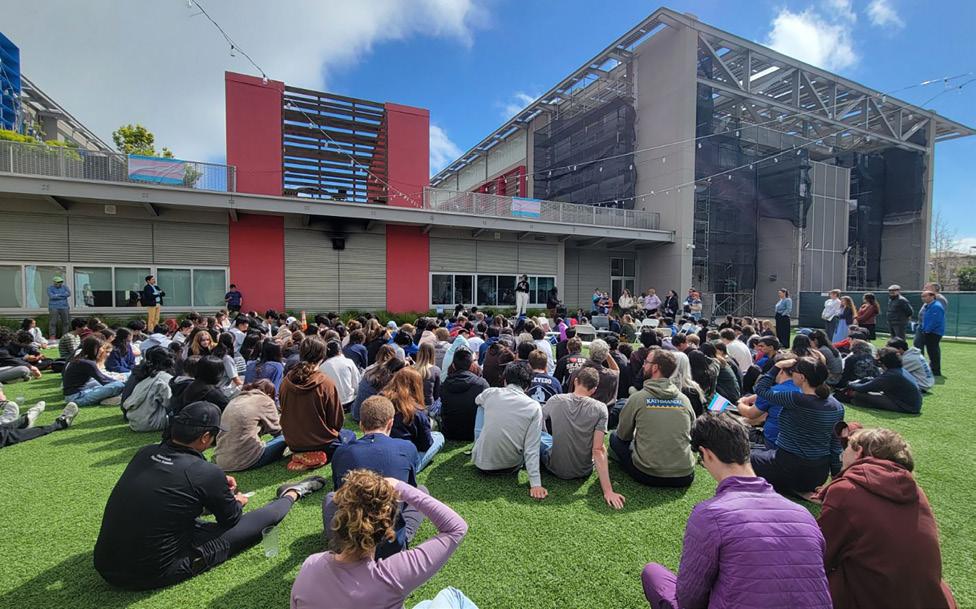
Transgender Awareness Walkout attracted over 100 participants
By Gabe H.
Over 100 students and faculty gathered on the Rosenberg Lawn at 10:45 a.m of April 3 to participate in the Trans Awareness Walkout, an event organized and facilitated by the Upper School’s Queer Student Union (QSU). In honor of Transgender Day of Visibility—an annual international holiday celebrating the contributions and achievements of transgender people—the event featured a protest along with student and staff testimonials from the transgender community.
The walkout was dedicated to Nex Benedict, a 16-year-old nonbinary student in Oklahoma who died by suicide the day after being severely bullied and assaulted by other students, according to a QSU co-lead who helped coordinate the event and wishes to remain anonymous.
“We felt we had to do something bigger to bring awareness to what has been happening and also to the community at Nueva,” the student said.
Sofia T. ’24, another co-lead of Nueva’s QSU, said that the goal of the walkout was to promote the strength of the trans community.
“The theme we wanted to emphasize for the event was trans strength and resilience in the face of adversity,” she said, adding, “We are hoping that attendees, specifically allies, left [the event] with a human[ized] sense of the struggles and joys of being transgender, as well as concrete steps they can take to be better allies.”
220
delegates
attended the Upper School Model UN conference on March 30 led by the Model UN club
According to Sofia, the event was well-received. Facilitators distributed 100 copies of How to Be an Ally, a booklet volume created by the Trevor Project, a suicide prevention nonprofit for LGBTQ+ youth, aimed at educating allies of the queer community.
After hearing peers share their stories about being transgender at the Upper School, Brie K. ’24 was motivated to share her story about coming out as trans.
“Seeing other people speak about really personal things inspired me to also go up there and share my story,” she said. “If I can affect even one person, that’s still a good thing done.”

COLOR CRAZE
During an afternoon debrief workshop students geared up in disposable smocks and participated in a paint party.
event.
“I thought to myself: ‘If I was a teenager and getting taught about consent… What do I wish I knew? " My hope was to facilitate conversations around the diversity and complexity of consent and the myriad of ways that it appears in our daily lives,’” she said.
After participating in the paint party with Hunt, Snyder, and 18 other students, Mylie M. ’26 shared that her workshop prompted her to reflect personally about consent.
“I think sexual consent is really important,
but this broadened my horizons about how consent applies to other aspects of everyday life,” Mylie said.
In the future, Marmor looks forward to directing more events surrounding consent that cater to the needs and interests of the student body.
“If there's anything that students would like to see or topics they want to talk about, I’d love to have those conversations and bring them to life. My door is always open,” Marmor said.
04/08/24 PAGE 2 NEWS
of colored chalk used in the Upper School Holi celebration on March 23
Photo by Stephanie Gonot
Photo by Samara B.
Photo by Rachel Freeman
Photo by Kayla L.
Local high school student journalists sue school district for alleged censorship
After censoring an article about sexual harassment, the Mountain View/Los Altos High School District is facing a lawsuit
By Gabe H.
Journalism is on the table in Mountain View.
Student journalists and teacher representatives of Mountain View High School’s student publication, The Oracle, sued the Mountain View/Los Altos High School District on Feb. 22 for alleged censorship and retaliatory behavior.
This action took place following a meeting between the school’s principal, Kip Glazer and The Oracle staff. After receiving an advance copy of the article in an administrative review of the issue, Glazer objected to many details in the print version, including the specificity with which reporters went into depth about sexual harassment on campus.
Among these were student perspectives on how a culture fostering sexual harassment at Mountain View High School had harmed them.
Before publishing the article, reporters Renuka Mungee, Myesha Phukan, Siona Mohan, and Hayes Duenow spoke to the accused directly, offering the chance for them to share their voices on the record. However, parents of one perpetrator went to the school administration, complaining that the article would harm their child if published, according to Mohan, a senior at MVHS and former editor for The Oracle
Subsequently, Glazer pressured the staff to redact details and “water down” content in the online version of the article, according to the lawsuit. During the meeting, Glazer warned the staff of “catastrophic consequences” if the article was not revised.
After the article was modified to be less explicit in its reference to harassment,
Glazer removed Carla Gomez from her role as journalism advisor and canceled the supplementary Intro to Journalism elective.
To fill the absence, MVHS promoted a theater teacher to replace Gomez, under the justification that the journalism elective did not have enough signups and that Gomez lacked the credentials necessary for a Career and Technical Education (CTE) track, a multiyear program created by the California Department of Education to prepare students for secondary education.
When the article was published in print, the administration insisted on its revision, which included the censorship of several sections.
Mohan said that pressure Glazer mounted on journalists at The Oracle was frustrating. She felt that by asking reporters to bury important details about sexual harassment, Glazer was undermining the core principles of journalism.
“The objective of journalism is to report accurately on what’s going on,” Mohan said. “Sometimes that will uplift the school but other times it’s bound to be more negative,” she added.
Senior Hanna Olson, editor-in-chief of The Oracle, suggested that the administration’s censorship stemmed from a desire to protect the school’s reputation. The article, she said, “didn't portray Mountain View High School in the way that administration would have wanted.”
The suit itself started as a complaint filed with the school district. The letter alleged that the district undermined students’ right to freedom of the press and stipulated that if their demands were not met within ten days of the complaint’s filing, its proponents would pursue legal action. After its review, the district’s response was deemed unsatisfactory
by Jean-Paul Jassey, a legal representative for The Oracle's plaintiffs. Brought forth by the parents of Olson, former staff member Hayes Duenow ’23, and advisor Carla Gomez, the status of the suit is still pending, but Olson said the team is hoping for a settlement.
“Nobody wants this to go further than that,” Olson said.
According to the lawsuit’s proponents, Mountain View High School administrators’ actions illegally undermined California’s Education Code §48907, legislation that protects freedom of the press for public school students. The law allows for student newspapers to publish journalism pieces regardless of approval from school administration.
In a press release, Olson wrote: “I want to ensure the long-term stability and prosperity of my school’s journalism program and
WHEN THE TRUTH IS CONTESTED
After the article was published in print last April, it's digitized version was edited to be less granular in its description of sexual harassment.
I want student journalists at my school to be empowered to stand by their rights to publish stories that need to be told.”
Mohan further emphasized that the censorship she faced underscored the importance of journalism, “reiterat[ing] how important free-speech is,” she said.
“Experiencing censorship directly made me realize how valuable true uncensored reporting is for our community,” she added.
Olson agreed, adding “the experience has taught me that journalism is a cornerstone for community and democracy.”
The plaintiffs are represented by Jassy Vick Carolan LLP, a law firm based in San Francisco.


Biden's 2024 State of the Union address emphasizes partisan divides ahead of election
The President focused on preserving democracy and a strong economy amid heckling
By Gabe H. & Jackson H.
On March 7, President Joe Biden delivered his third State of the Union address in the House Congressional Chamber. In his speech, he emphasized his administration’s economic accomplishments and reiterated his stances on foreign policy, abortion, consumer rights, and the climate crisis. This year’s speech was energetic, combative, and heavily focused on courting Biden votes in November’s general election.
While focusing on his legislative priorities around these issues, Biden repeatedly contrasted himself with Trump, with whom he referenced over a dozen times as “[his] predecessor,” without explicitly name-dropping.
Biden opened his speech with a grim
warning about democracy. He began, “freedom and democracy are under attack— both at home and overseas at the very same time,” citing the ongoing war between Russia and Ukraine and the Trump-backed insurrection on January 6. It was under the central point of democracy that he made his most pressing arguments.
Other than safeguarding democratic institutions, Biden emphasized gains in the economic sector, praising the economy’s post-Covid recovery, and distinguishing himself from Republicans on tax for corporations from the wealthy. He also applauded his administration’s response to the Covid-19 recession.
Biden briefly went off-script while he targeted “shrinkflation,” where companies reduce the size of products while keeping prices the same.
The President’s speech was characterized by heckling from Republicans, among the most common of which were “No” and “Liar” in response to Biden’s claim about Republican policy agendas. Heckling at the State of the Union reached a new level after a steady decade-long rise. Biden was actively combative and responsive with his hecklers.
Towards the end, Biden addressed the elephant in the room: his age.
"I know I may not look like it, but I’ve been around a while, and when you get to my age certain things become clearer than ever,” said Biden, adding, “The issue facing our nation isn't how old we are, it's how old are our ideas? Hate, anger, revenge, retribution are among the oldest of ideas."
Fact-checking Biden's claims:
The Biden administration has created 15 million new jobs
Ignores context. While unemployment is at its lowest in nearly 50 years, most of those 15 million created jobs were merely recovering from 2020 job losses.
Inflation in America is the lowest in the world
False. While the US's 3% inflation rate is markedly lower than the global average and the mean of countries with similarly wealthy economies to the US, it is not the lowest.
The Biden administration's laws brought in $650 billion in private sector clean energy investment
Misleading. The White House's estimates of private sector clean energy investment as a result of Biden's legislation include all investment commitments made by companies, even if they haven't yet been fulfilled.
Biden's proposed bipartisan immigration reform bill would reduce wait times in the asylum process
Ignores context. While the bill does move to hire more judges and create easier asylum paths for certain cases— such as refugees from Afghanistan—the bill functions in part by increasing the bar to enter the process in the first place.
PAGE 3 THE NUEVA CURRENT NEWS
Photo by Jennah Pendleton/Town Crier
Photo by Brookings
eternal sunshine is a masterclass in reflection and empowerment
Ariana Grande’s seventh album displays remarkable maturity in the face of personal challenges and public scrunity
By Owen Y-L.
When I first listened to “yes, and?”, Ariana Grande’s first release in three years, I nearly cried—not tears of joy, to be clear, but of disappointment.
“yes, and?”, released on Jan. 12, was evidently intended as a scream-long, ignorethe-haters anthem. But with its plunky housestyle beat and laughably childish lyrics like “Be your own f***ing best friend,” it falls flat and instead feels shallow and emotionless. The chorus’s forgettable melodic repetition would be the perfect soundtrack for pushing one’s shopping cart down a Target aisle—and that’s about it.
When Grande, my longtime idol, subsequently announced her seventh studio album, eternal sunshine, I was simultaneously hopeful and nervous: Would the album make up for the letdown single, or was “yes, and?” simply a harbinger for a new, bland era?
After listening to eternal sunshine, released on March 8, I decided it was a mix of both.
Thematically, eternal sunshine is her most mature record by far. Described by Grande as a “concept album,” its title and lyrical content reference the 2004 film Eternal Sunshine of the Spotless Mind, which follows former lovers undergoing a surgical procedure to erase all memories of each other. At the end of the movie, the two characters decide to try again at a relationship.
Over 13 tracks, Grande embodies a similar
maturity. Instead of seeking vengeance or overdramatizing her past relationships, she extends empathy to her lovers (and, equally, her haters) and gratitude for the lessons learned. eternal sunshine feels like the natural sequel—an older, wiser cousin—to her 2019 album thank u, next, in which she playfully proclaims, “I’m so f***ing grateful for my ex,” in the title track.
Lyrics have historically been one of Grande’s weaker points, but I found myself getting chills at several points during eternal sunshine. On the ballad “i wish i hated you,” Grande sings, “Our shadows dance in a parallel plane / Just two different endings / You learn to repair / And I learn to keep me in one place.” In “bye,” Grande reflects on a bygone relationship, “At least I know how hard we tried, both you and me / Didn’t we, didn’t we?”
Songwriting aside, no Ariana Grande album review would be complete without highlighting the true star of the show: Grande’s voice. I especially enjoyed the whisper-like vocal quality that permeates eternal sunshine, like a warm breeze enveloping the ears. She soars to a haunting falsetto in the bridge of “we can’t be friends (wait for your love)”, one of my favorite vocal moments of all time. I also appreciated and basked in her countless layers of harmonies in songs like “true story” and “the boy is mine”—her musical wit and arranging skills have never been more on display.
Her vocals on eternal sunshine are noticeably more restrained, however. There
Beyoncé’s Cowboy Carter breaks glass ceilings
Queen Bey has nothing to prove to the world. Except that she can also perfect the country genre.
By Gabe H.
Interested in line dancing with Beyoncé? Well, the queen has a simple stage direction: “Don’t be a b*tch.” In the fiery track “Texas Hold ‘Em,” released on Super Bowl Sunday alongside the wrenching “16 Carriages” as the first singles of her new album, she juxtaposes a triumphantly upbeat country track with a lighthearted repetition of this caustic line. Reflecting on her life’s trajectory on the latter track, Beyoncé vows to leave her insecurities in the past and venture forward in her royal lane.
“Sixteen carriages drivin' away / While I watch them ride with my fears away,” she sings, leading into the repeated lyric, “I might cook, clean, but still won't fold / Still workin' all my life, you know.” While the true meaning behind “sixteen carriages” is ambiguous, fans have speculated that it is an homage to the ample quantity of vehicles shepherding performers, sets, and crew members on her world tours. A born performer, Beyoncé luxuriates on the stage and “16 Carriages'' is a poignant reflection on how her double life as a mother of three children and a global superstar must straddle this dissonance.
In Cowboy Carter, which dropped on March 29, she presents the world with yet another album that is searching, cathartic, wise, witty, flawed, and achingly human yet godly sublime.
Before its release, Cowboy Carter had already broken glass ceilings. When “Texas

“Instead of seeking vengeance or overdramatizing her past relationships, she extends empathy to her lovers (and, equally, her haters) and gratitude for the lessons learned.”
are no showstopping belts or riffs. While I acknowledge that music does not have to be vocally ornate to be enjoyable, it almost feels like a waste for Grande’s talent to go unused. In many songs, the melodies seem to revolve around the instrumental, rather than the music framing her voice. Buried beneath pounding drums and aggressive synth patterns, her voice is almost an afterthought. Part of the problem is that the instrumental themselves are not interesting or strong enough. This leads to my biggest critique of eternal sunshine: it’s one of her least sonically diverse albums. The production is somewhat
dated, a generic Frankenstein of EDM, R&B, and trap that would belong more in 2016 than in a career-defining album such as eternal sunshine Despite underwhelming production and a lack of vocal acrobatics, it’s impossible to ignore that eternal sunshine is exactly that: a career-defining album. As a longtime fan, I have loved watching her come into her own as an artist—she has both songwriting and production credits on nearly every track. As Grande declares in “bye,” “I’m taking what’s mine.” And eternal sunshine is, most certainly, hers.

Hold ‘Em” topped the Billboard Country chart, she became the first Black woman to ever do so. A week later, “Texas Hold ‘Em” topped the Billboard Hot 100s charts, a first for Beyoncé’s multi-decades career.
The song has also courted controversy from country fans who believed Beyoncé was ill-equipped to tackle the genre. In midFebruary, an Oklahoma radio station refused to play “Texas Hold Em,” igniting widespread internet censure. Before later redacting this statement, the station’s general manager said: ‘"We do not play Beyoncé on KYKC as we are a country music station."
The 27-track album claps back against these criticisms in its very first track, the anthemic “American Requiem.” “And the rejection came, said ‘I wasn't country 'nough,’” Beyoncé sings. Off the bat, the track offers a moment of catharsis. In her reclamatory lyrics, Beyoncé justifies her presence in the wider country music canon, which has been called into question. In homage to her Southern roots, she declares, “Gadsden, Alabama / Got folk down in Galveston, rooted in Louisiana.” “If that ain't a country,” she declares, then what is? “American Requiem” immediately contextualizes the album in the politicized history of Black contributions to country music.
Cowboy Carter also presents a smorgasbord of collaborations with fellow trailblazers of the genre. Artists like Dolly Parton, Willie Nelson, and Linda Martell are frequent contributors to the album in intros peppered
throughout. Moreover, Beyoncé includes the voices of various other artists in a genrebending display. In “II Most Wanted,” she duets with Miley Cyrus: “I'll be your shotgun rider/'Til the day I die.” Accompanied by an upbeat guitar progression, this genrebending track evokes nostalgia in its melodic temperament. Moreover, Beyoncé’s efforts to honor Black country musicians are powerfully outlined in her inclusion of artists like Tanner Adell, Brittney Spencer, Martell, and Reyna Roberts, all artists who have made invaluable contributions to the genre but may not be household names like Parton and Nelson.
While Beyoncé’s musical collaborations provide a wide-ranging assortment of styles and musical experimentations, the centerpiece of the album is perhaps Beyoncé’s cover of Parton’s “Jolene.” Rather than presenting a mere cover of the iconic song (she does just that in her restrained cover of “Blackbird” by The Beatles), she changes key lyrics to establish an image of personal supremacy. In the song’s original lyrics, Parton begs a woman named Jolene to cease advances on her lover. “Jolene,” she sings, “I'm beggin' of you, please don't take my man.” However, in Beyoncé’s version, this call is less of a plea and more of an ultimatum. “Jolene, I’m warning you, don’t come for my man,” Beyoncé demands. Later, she sings “you don't want this smoke, so shoot your shot with someone else (You heard me).” Throughout the track, she epitomizes dominance, turning a classic country record on its head. This falls in line with the core theme
of Cowboy Carter: reclaiming a genre that has gate kept her from its entrance.
In “Daughter,” Beyoncé offers a haunting contemplation of her childhood growing up in the church—juxtaposing her perceived impurity with Christian societal norms. In principle, she longs for conformity, but her self-protection inhibits aspirations for purity. Meditating on her Christianity, she sings: "I'm the furthest thing from choir boys and altars/ If you cross me, I'm just like my father/ I am colder than Titanic water.” Midway through the track, she breaks into the aria Caro Mio Bien, set to an understated guitar accompaniment, which creates an unsettling dissonance. While the aria already holds sorrowful undertones, in Beyoncé’s rendition, it resembles a dirge.
The mystique of Beyoncé KnowlesCarter lies in the ever-evolving tenor of her discography. Through chart-topping pop albums like I am…Sasha Fierce (2008), bold interdisciplinary albums like her self-titled 2013 record Beyoncé, biting hip-hop albums like Lemonade (2016), and queer-affirming disco albums like Renaissance (2022)— Beyoncé is one of the only living artists who has mastered a breadth of genres while being armed with one of the most angelic and powerful mezzo-sopranos out there. Moreover, with a staggering 32 awards, she has won more Grammys than any other artist in history. Queen Bey simply has nothing to prove to the world—except that she can also perfect the country genre.
PAGE 4 CULTURE 04/08/24
Photo by Katia Temkin
On March 23, Grande became the fourth ’s Artist 100, Hot 100, Billboard 200, Hot 100 Songwriters, and Hot 100 Producers charts
Photo by Parkwood/Columbia/Sony/AP
Pop Culture Report Card
By Gabe H.

The biggest boon for pop cultural news of the 2024 cycle was born in late February when the Willy’s Chocolate Experience—an event concocted by scam artists promising an authentic Roald Dahl-esque venture through the factory—came to fruition. The event was marketed to families with young children and slated to have chocolate fountains, treats, and “optical marvels” reminiscent of the cherished Charlie and the Chocolate Factory. However, families traveled wide and far to the event but were left to fend for themselves with a walking tour around a dank warehouse. The scam was later investigated by local police. At least the attendees got those promised jelly beans, though! And while I don’t condone corporate catfishing, Willy’s Chocolate Experience gets a pass.

While attending the March opening night of Nicki’s Pink Friday 2 World Tour, I couldn’t escape the nagging feeling that I’d rather be dancing to her tracks at home. Let me preface this by saying I didn’t hate the show (Barbs, don’t come for me!). Nicki’s set design offered a futuristic and generative rendering of Gag City—the pink AI kingdom created by her fans under the template of her album cover—if jarringly reminiscent of Beyoncé’s Renaissance Tour design. The self-proclaimed greatest female rapper of all time also pulled all the stops with her pyrotechnics and high-caliber choreography. However, the show fell flat with Nicki’s lack of rapping and reliance on backing tracks. The setlist was also stunted, uncomfortably blending old hits with her newer songs and refusing to adequately capture the strength of the Pink Friday brand.

Never in history has there been an awards show more noxiously predictable than the 2024 Academy Awards. As predicted, the most overhyped film of the decade, Oppenheimer, took home Best Picture, earning trophies for Cillian Murphy for Best Leading Actor and Robert Downey Jr. Another low-point was Emma Stone’s win as Best Leading Actress for the innovative Poor Things, preventing Lily Gladstone from becoming the first Native American actress to win an Oscar. Nonetheless, Da'vine Joy Randolph’s triumphant win for The Holdovers had me in tears, so I’m only docking the overall ceremony to a C-.
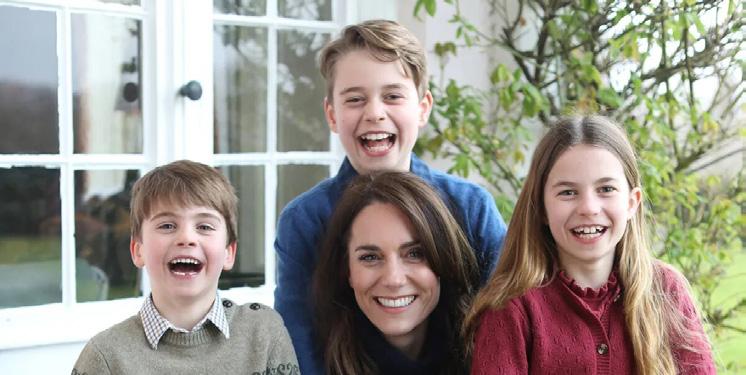
The other day, someone said to me, “Where is Kate Middleton and what are these AI-generated images of her? Something is not right. A portion of her sleeve is missing.” And after a five-minute internet deep dive, I couldn’t have agreed more more. The Princess of Wales sparked controversy in March after she admitted to doctoring a family photo, which many online users went on to claim was AI-generated, an accusation that was later confirmed by Middleton herself. However, when Middleton’s cancer diagnosis was revealed to the public on March 22, a seemingly innocuous saga about royal speculation became sinister. With the widely excoriated lives of royal women painting an unsavory portrait of hype culture (think Princess Diana), the endless online pursuit and harassment of royal women bears not only deathly consequences, but trivializes their humanity.
Swifties, you need to calm down
Taylor Swift’s fans’ overwhelming infatuation with the artist has gone too far
By Neel G.
As I walk through hallways full of Taylor Swift-crazed teens screaming over her latest public appearance, I roll my eyes in misery. When I scroll through TikTok, I’m constantly overwhelmed by a barrage of clips of Swift questionably winning yet another Grammy, releasing album after album—receiving yet more undeserved and misplaced praise. As billions of dollars and tiresome amounts of energy are given to Swift, it’s time to take a step back and rethink our culture's extreme adulation of and obsession with her every move.


While I can appreciate a few songs here and there myself, our generation's obsession with Swift extends beyond her music. Her aggressively passionate fans attach their self-identity and their entire personalities to Taylor herself. When she cries they cry, when she posts they post, whoever she seems to support or follow, they do the same. Her dating history, outfits, friendships, X (formerly known as Twitter) drama, and personal incidents seem to affect their mood on a daily basis, losing the ability to differentiate themselves and their emotions from her. They also project that obsession onto unsuspecting bystanders, as they become enraged at anyone who criticizes her or her music.
If I criticize her in front of my Swiftie friends, I’m immediately attacked— practically demonized! The Swifties’ infatuation with






the global superstar has grown exhaustive, leaving the rest of us suffocated by Swift’s toxic grasp of culture and media. At this point, it seems like the only topic of conversation for many Swifties is about Taylor Swift; constantly analyzing her every lyric, move, or relationship (whether she intended for that conversation or not). For instance, in
The real problem in 3 Body Problem is not physics
the Super Bowl, the attention of many viewers wasn’t on football; it was on Swift and her current boyfriend, Chiefs tight end Travis Kelce, or her random facial expressions during the game. While it’s great that Swift brought new viewers to football, they weren’t there for the game, or even for Kelce’s skills. She was distracting the public’s attention from football to herself—when Swift becomes the center of conversation, she dictates every aspect of culture, creating an unhealthy spectacle; she hoards public attention from other industries and professions, leading her inescapable and obsessive fanbase to every corner of our cultural happenings.
And, perhaps the most unbearable aspect of Swift’s cult-like fanbase is the overpowering expression of white culture. According to The Washington Post, three-fourths of Swifties are white; As Swift’s music is often celebrated as a deep connection to girlhood, and her music and persona is extremely mainstream (her face and name literally pops up everywhere), the white girl experience is the dominant form of feminism that we encounter.
Not only is it concerning, but extremely annoying. When everything your peers talk about is Taylor Swift, it becomes an irritating topic that you simply cannot relate to, especially when her grasp of culture extends so far (i.e. football, politics, fashion, film, etc.). Over and over again, I’m forced to listen to my peers sing her praise against my will. So, Swifties, if you ever catch yourself over-obsessing over Swift, rectify yourself and let us non-Swifties breathe.
 By Ellie L.
The Three Body Problem novel by Cixin Liu, translated by Ken Liu, is not easy for non-Chinese readers to understand. The already immensely technical book is complicated by themes of Chinese identity, history, and values—which cannot be easily explained by the added footnotes.
So when the reader gets fully immersed in the atmospheric, sci-fi world of the Three Body Problem, there is a sense of wonder and amazement that inspires fan fervor that has sold millions of copies worldwide, and made it a bestseller in the US, Japan, China, the UK, and more. But not every reader gets there.
The Netflix adaptation, differentially titled 3 Body Problem, attempts to fix that.
The 8-episode show simplifies the science and shifts modern-day action from China to the UK, allowing for a characterdriven approach that is centered on the Oxford Five, characters split from the singular book character Wang Miao. Other characters—in a bloodier, 1960s-esque timeline—as well as the basic premise— hostile aliens are 400 years away, but their shadow looms over the world in the form of a shadowy cult —are kept the same.
Showrunners Benioff and Weiss have emphasized that these changes were not made to “whitewash” the show. On the surface, the changes serve the adaptation well in appealing to a wider audience, especially given the several philosophical questions the show asks its central characters and the audience to deliberate on: If aliens are 400 years away, how much of a threat are they? If everyone you know
and love will be dead by then, should you fight back? Should you even try when your opponents are that much more advanced?
There are no easy answers in this world, but somehow, watching the Oxford Five—resilient Jin, tragic Will, brilliant Auggie, lazy Saul, and funny Jack—wrestle with these questions is simply not very interesting. The Oxford Five are simply never developed enough for viewers to care about their journey, a glaring mistake in a character-focused sci-fi show.
Each character is given screen time, but choppy pacing and quick transitions to focus on another member of the Oxford Five keep each physicist lackluster. Jess Hong shines as Jin, struggling with nonsensical experiment results—but her love triangle subplot with Alex Sharp’s Will and her boyfriend quickly takes over the screen in a redundant grounding attempt. Will, himself, is devastating in his insecurities and fear, but there is no time to sit in on that devastation, for Jovan Adepo’s Saul needs a mandatory drinking and hookup scene of the episode to remind viewers that, yes, he is still a main character. Jack’s witty lines and an entertaining performance by John Bradley are endearing for a moment before Eliza González’s Auggie has a sudden breakthrough regarding how to use her incredibly dangerous nanotechnology for good… except this is the first the viewers have seen of Auggie for two episodes, so, what was that moral dilemma again?
The show focuses on the group, but does not develop them enough as individuals viewers can actually be emotionally invested in. And so they are swallowed up by a show
that is stuffed with other, more interesting minor characters, and interspersed flashbacks to Mao-era physicist Ye Wenjie, whose choices have reverberations to the modern world.
The flashbacks are short but compelling, painting a gritty portrait of Ye Wenjie. With every tragedy—the death of her father to anti-intellectual Red Guards, betrayal by her journalist boyfriend, forced recruitment to an isolated secret laboratory—her character is easy to empathize with, though the consequences of her actions are still evident. With the stellar performances of Rosalind Chao and Zine Tseng who portray an elderly and young version of Ye Wenjie respectively, themes of Chinese identity and history, subtle as they are, clearly shape the world of the 3 Body Problem.
Nonetheless, the jumping between Ye Wenjie and the Oxford 5 is jarring, creating a mismatched narrative as the crisis unfolds against beautiful cityscapes and landscapes—where the show’s 160 million budget is clearly put to use. The threat of extraterrestrial life is left simple but eerie, and action sequences are well shot, punctuated by a funny line or two. Still, this excellence only exists in the fantastical, the scenes removed from modern-day life.
3 Body Problem is entertaining at times, and has moments of the grand moral complexity it hopes to explore. Chinese identity does not overwhelm viewers, visuals are beautiful, and the science is easier to understand. But the characters or why they deserve the viewer’s attention? That is not so clear.
PAGE 5 THE NUEVA CURRENT
Photo by The Guardian
Photo by TMZ
A fiasco in Glasgow: Willy Wonka edition A+
Nicki Minaj’s Pink Friday 2 World Tour: BAcademy Awards: C-
Photo by ABC
Kate Middleton saga highlights collective misogyny: F
Photo by Kate Middleton
Above, it excels. On the ground, it falters.
watch out
coming
next no one
ugh what would I do without her HOW COULD ANYONE DISLIKE HER? stalking her every move rn just bought 10 more cardigans
Photo by Netflix
football taylor is
for u
compares.
The Swiftie nation doesn't hold back when it comes to Taylor—but it does more harm than good.
OBSESSED CULTURE

FEATURES


 By Owen Y-L.
In the fair WRC, where we lay our scene, the dress rehearsal for Romeo and Juliet is in full swing.
“Places, everyone!” Allen Frost, Upper School English teacher and Teacher Mentor, claps his hands.
Heeding their director’s command, the actors quickly scramble to their positions, adjusting last-minute costume pieces and reviewing lines scribbled on notepads.
The cast? A star-studded assortment of teachers and staff from across the academic spectrum. On March 26, they took the stage in front of an audience of seniors, who will soon be adapting and performing their own Shakespeare plays in the beloved school tradition.
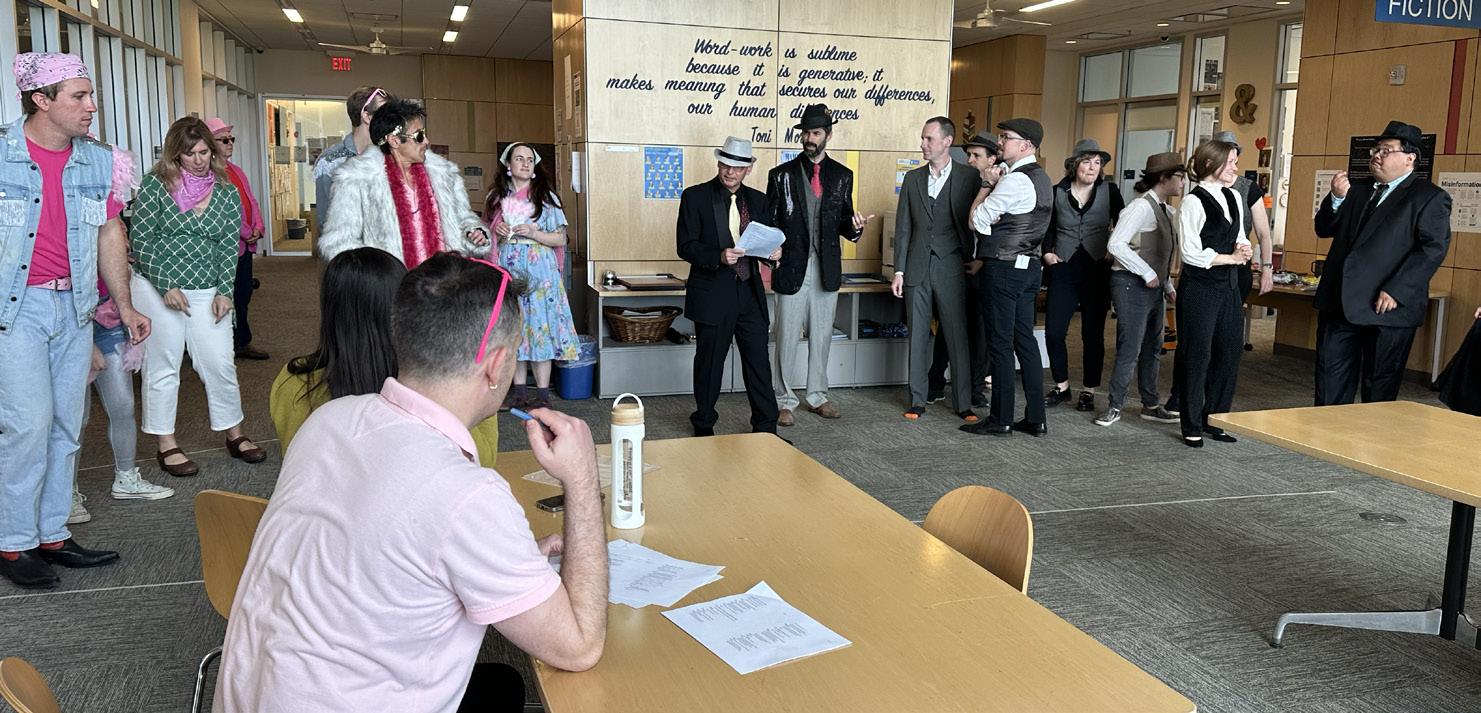
The show opens with members of the two warring houses striking poses on either side of the stage to the tune of Britney Spears’ “Heaven on Earth.” On the left side of the stage are the Montagues, an explosion of denim, hot pink, and sequins—a la Barbie. On the right, the Capulets, inspired by the movie Oppenheimer, are clad in 1940s-style vests, black ties, and fedoras.
Frost first pitched the idea for a teacherhelmed Shakespeare production at a faculty meeting in January, promising it would be “the most fun thing you’ll do at Nueva.” Before the end of the week, 35 people had expressed interest in participating.
“I mean, how could I not?” said Director of College Counseling Gavin Bradley, who plays the Apothecary. “Anything Allen does is going to be fun and crazy. And I wanted the whole college counseling office to be involved because it’s the seniors, it’s the people we work with the most closely.”
Upper School English teacher Gretchen Kellough plays a member of the house Montague. Having participated in theater in high school, she was eager to join.
“I’ve heard that students would be super excited if faculty participated more in things, so I thought, ‘Here’s the perfect opportunity,’” Kellough said. “I hope students can see a side of their teachers taking risks and not being afraid of being silly.”
Unlike typical productions, there were no auditions. Instead, Frost, who plays Mercutio, assigned roles based on personality and availability.
When Upper School computer science teacher Wes Chao was offered the role of Romeo, he felt excited for the opportunity to learn something new.
“I teach computer science. I haven’t looked at Shakespeare in 30 years,” Chao said.
Apart from attending a theater summer camp when he was 10, Chao had never performed in a production before, much less a role of Romeo’s magnitude. To memorize his many lines, Chao recorded himself reading through each of his scenes, using various accents or voices to differentiate the characters. Then, he would listen to the recordings while driving to work.
Upper School English teacher Brianna Beehler, who plays Juliet, also found a creative memorization strategy: she committed to memorizing one line each day during her Caltrain commute. Beehler participated in theater in high school but said this is the “biggest role I’ve ever gotten.”
Another challenge was working around faculty’s busy and scattered schedules. Frost had promised that faculty could participate as
little or as much as they wanted.
“I’m just trying to honor people’s time, because they’re volunteering to do this. I can’t just be like, ‘Please stay every day after school until six,’” he said.
Upper School SOM teacher Lee Holtzman, who is “literally just a random Capulet,” knew she couldn’t commit to a more demanding role, in case her young child fell sick or had an emergency. Still, she wanted to participate and requested a role with no lines.
“This is the most fun thing I’ve done all year,” Holtzman said, quickly clarifying, “Aside from hanging out with my own child, of course!”
Other faculty members chose to take on

of aesthetic inspiration.
Bringing that vision to life required a collective effort. Yeo and Frost thrifted many of the costume pieces, including the denim jackets and vests, and bought sequins, fringes, and other accessories. Upper School I-Lab Shop Manager Zoe Monosson purchased a bedazzler device to affix rhinestones. Many cast members and their families pitched in by bringing and decorating pieces.
Yeo doesn’t have any previous costuming or fashion experience. For her, the process “occupies a part of my brain that I love to, but rarely, use.”
“To see a vision fulfilled is kind of freaky. Teaching is a never-ending process, but a play


THESPIANS AT HEART
additional responsibilities. Upper School Assistant Division Head Claire Yeo designed and managed the costumes, with the help of Ariane Y. ’24, in addition to portraying Lady Capulet. While brainstorming an engaging theme for the show, she immediately thought of the 2023 movies Barbie and Oppenheimer “We’ve got two warring houses in Romeo and Juliet. What is a fun, interesting hook to bring our audiences in? Of course, Barbenheimer is the head-to-head of the season,” Yeo explained, referring to the viral box-office faceoff between the two blockbusters, which were released on the same day. The contrast between the “dark, sinister” tone of Oppenheimer and “ditzy, 80s, dayglow” Barbie was “a perfect opposition.”
Yeo put together a vision board with stills from the movies. She also cited Madonna’s “Vogue” music video, the 2023 film Saltburn, and “flamboyant-era Harry Styles” as sources
has a final product,” Yeo said. “I adored it. I mean, the entire cast looks beautiful.”
Waiting in the wings, behind the WRC staircase, Upper School psychology and SOM teacher Amy Hunt adjusts her flower crown. She chose to portray Friar Laurence as a “pagan sorceress” to highlight the existence of non-Catholic religions during Shakespeare’s time.
With a chuckle, Hunt observed that her costume, a black dress with a brown shawl, isn’t far off from what she wears on a daily basis: “This is me, 100 percent. Everything comes from my closet already.”
Nearby, Dean of Students Jackee Bruno, donning an inflatable sheriff and horse costume, prepares to go on stage. On his head, he wears a light-up cowboy hat covered in silver sequins.
“[Frost] gave me a role that literally matches my job. I’m trying to control the
FORBIDDEN LOVE
hooligans and restore justice—the same thing I do daily,” Bruno joked.
Yeo’s own costume, with a thrifted fur coat and gold platform heels, is completely sourced from her own closet. Her sunglasses are from 30 years ago; she purchased them with her first paycheck as a teacher. “That moment when the things you used to wear are all vintage now!” she remarked.
Behind the stage, Upper School math teacher Veena Krishnan isn’t wearing a costume. Nonetheless, she plays an equally critical role as the stage manager. Her duties, scribbled on orange Post-It Notes bordering her laptop, include moving set pieces and supervising props.
“I loved the idea of faculty coming together to create something so enjoyable, creative, and joyful,” Krishnan said. “I was not sure if I could devote time to all the rehearsals so I told Allen I would be happy to help him behind the scenes.”
Regardless of role, the cast and crew all highlighted the joy of gathering as a faculty outside of a strictly academic context.
“I feel like there’s all these secret talents. You just find out how funny some people are,” Beehler said. “It’s nice to see that coming out in different ways.”
Upper School chemistry teacher Paul Hicks agreed.
“I love getting to see teachers I don’t normally interact with getting to live their true self on the stage,” Hicks said.
As for his own true self, Hicks’ portrayal of the Nurse—complete with a blonde wig—was an instant crowd favorite. While he doesn’t have any previous acting experience, he described theater as his “second calling.”
“I really like my role. The Nurse is really funny—she’s a woman, but she’s also like a gay man. She’s all of us,” Hicks said.
Chao also observed a distinctly Nueva spirit of commitment and collaboration throughout the entire process. Many cast members memorized their lines, for example.
“It really reflects what it’s like to work here. When people are in, they’re all in. And that’s really fun and exciting,” Chao said.
Through the performance, Bradley aimed to demonstrate the faculty’s appreciation for the seniors as they prepare to graduate.
“This is our gift to them. They’re a really great group, and we’re excited that they’re about to launch,” Bradley said. “We want to give them one great memory as they head to the next thing.”
After the show, the cast formed a human tunnel for students to pass through as they exited the WRC. Students chattered excitedly, both in awe of their teachers and inspired as they work on creating their own Shakespeare renditions.
“We all know how incredible Nueva teachers are, but I was so impressed by how fully everyone committed to their characters, their costumes, and their performances,” Meher B. ’24 said. “While they’ve definitely raised the bar for our senior shows, I’m inspired by their creativity and dedication, and I’m even more excited to get started on our adaptations now!”
A backstage look at the faculty’s Barbenheimer-themed performance of Romeo and Juliet
Clockwise from top: Allen Frost, bottom left, gives notes to the cast during the dress rehearsal; Juliet (Brianna Beehler) confides in the Nurse (Paul Hicks); Romeo (Wes Chao) contemplates drinking poison.
The Montagues, left, duel with the Capulets, right. Upper School Play Director Zoe Swenson-Graham helped with the fight choreography.
04/08/24
FEATURES



Nueva beyond the numbers

As our school's reputation evolves, how does our culture continue to thrive?
By Josie B.
Nueva doesn’t do rankings. It doesn’t determine class rank, implement curved grading, offer AP classes, or feature a valedictorian speech at graduation. Students aren't even provided with their GPA. Amidst the demanding atmosphere of Bay Area high schools, the advantages of de-emphasizing comparison are undeniable: students are less stressed and can devote their time to learning for the sake of learning rather than competing for the sake of a predetermined outcome.
And yet, as Nueva tries to soften ranking’s grasp over students, it can’t seem to shake them, or at least, the outside world won't let them. At the end of 2023, Niche.com, a rankings and reviews website with over 140 million reviews, named Nueva the best high school for STEM in America, the best private K–12 school in America, and the best private high school in the Bay Area.
While these titles may sound grandiose, it is difficult to determine what they actually mean, let alone how they were derived. Even at a glance, Niche’s assessment of Nueva contains inaccuracies: Nueva is not a STEM or college-prep school, despite being ranked as both.
Our school’s mission and culture were built on the values of “learn by doing, learn by caring,” and those core values persist today. However, how does our learning-based community adapt to inevitable changes in Nueva's external reputation, whether it be in sports, college admissions, or high school rankings?
Director of College Counseling Gavin Bradley has spent his fair share of time thinking about Nueva’s reputation. If there was one thing he would like the community to know, he said, it’s that “rankings often oversimplify and mislead.”
“For the college process, we tell students not to look at US News or Niche.com. Look at what is the best ranking for you based on the quality factors you're seeking out,” Bradley said. “I don't think rankings are evil or terrible, but I do think they don't overwhelmingly serve the purpose that people imagine they do.”
Although externally imposed rankings, like those from colleges, may oppose Nueva's learning-based approach, Bradley says college counseling's ultimate goal is to demonstrate what makes each Nueva student unique.
“We get to tell the story of a school that wasn't designed around the college admissions process that sorts kids into boxes,” Bradley said.
According to Niche’s website, the “boxes” they use to calculate rankings are derived from “an annual evaluation of schools using information from the U.S. Department of Education and the opinions of students, alumni, and parents.”
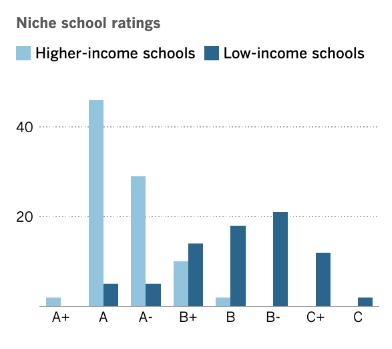
However, more goes into their rankings than what meets the eye. Niche.com not only profits from its school ratings by selling digital marketing services to schools but also tends to use survey data with very low response rates to produce their rankings. In addition, The San Diego Tribune has found that, on average, Niche.com rates schools with wealthier students and fewer Latino and
black students higher.
This subjective ranking process means that a high ranking on Niche.com is, at best, a tiny sliver of what makes a school “good” and, at worst, meaningless. But they still do have an impact. While rankings are nowhere near the forefront of the admissions office’s goals, they don't go entirely unnoticed.
“We don’t talk to Niche.com or other ranking websites, but we definitely notice when things happen. We keep an eye on rankings just in terms of how they affect our applicant pool and why people are attracted to Nueva,” said Associate Director of Admissions Emily Fedor.
Although Fedor recognizes that many applicants are interested in learning more about Nueva's matriculation and college rankings, she becomes concerned when that becomes the only topic families are pursuing.
“It's not a bad thing to ask about college when looking at high school, especially independent schools, because that is, for many families, the next step,” Fedor said. “But, If [applicants] are talking about it, we want to make sure we understand why they're being drawn to Nueva.”
Fedor doesn’t want any discussion about admissions to end on the topic of rankings.
“If [an applicant] says they're attracted to us because of ranking, we want to know, but have you done your research? Have you done your homework? What else about Nueva are you excited about?” Fedor added. “We want to attract families who are mission-aligned.”
Bradley agrees that clear communication of Nueva’s mission is vital for discussions with potential applicants.
Finding a moment of pause at allcove
Youth wellness and support center opens in San Mateo
By Ellie K.
Pause, just for a moment. Sit or stand, and breathe. Unwind. Reset.
At allcove—a space designed with, by, and for youth—individuals may find this moment of pause. Clinical Director Marc Rappaport describes allcove’s model as “one-stop shopping” for youth support: the center offers services in mental health, physical health, substance use, peer support, family support, and supported education and employment.
San Mateo’s location is the third allcove center in California, launched by Peninsula Health Care District. It opened its doors in a soft opening on Jan. 22, and its grand opening will take place once the center finalizes its physical health services.
It’s a “cove” (an open space surrounded by protection) for “all” (a center for inclusivity and togetherness). In addition to having several cove-like spaces throughout the center, allcove embodies its name; it is designed in a way that allows flexibility and structure to coexist, for
youth to manage their services and find security in an open setting.
“Where else could you go where on the same day and in the same visit you could see your therapist, your educational employment specialist, your substance abuse counselor, maybe even your medical doctor, and check in with the peer specialist?” Rappaport said.
Currently, youth ages 12 to 25 can receive allcove’s services independently without payment. However, after its first year, the center intends to charge insurance, while maintaining available and accessible services for everyone. Stanford is currently the implementation support provider for allcove, and the center has been backed by several grants.
Essential to the allcove experience is its emphasis on a “nonclinical feel,” Youth Behavioral Health Program Manager Jackie Alms said, encouraging youth to enjoy allcove as a space to hang out and find community in addition to receiving care. Youth
a naturally lit and spacious area with an assortment of snacks, a shelf of board games, several couches, a television, a foosball table, an air hockey table, and desks lining the walls. Each month, allcove organizes social events, from movie and game nights to résumé workshops.
Each decision toward designing the physical space, culture, and regular social events was led or supported by a Youth Advisory Group (YAG) member. Each allcove center organizes YAGs that represent the youth in the local community.
YAGs define the allcove experience, “steering the direction of the center’s development,” said Christine Z. ’24, who joined San Mateo’s YAG group two years ago. San Mateo’s YAG is comprised of 17 students who meet bimonthly, although the center is currently recruiting for the next cohort of youth advisors. Walking through the center’s halls, Christine pointed to the couches, art, paint colors, and room names—each one a representation of an idea that became reality.

“Youth are experts in their own care,” Alms said. “Without them as our advisors and overseeing the center, we would not be fully equipped to provide these amazing services.”
Prioritizing youth input not only benefits
“Having high rankings on sites like Niche.com might attract people who are not mission-aligned, and that means we have to do a good job at communicating to them what our values are,” said Bradley.
Head of School Lee Fertig is certain that Nueva's grounding in its mission to provide students with learning-based education minimizes any outside impact of rankings, “Nueva has embraced a best practice approach around standards-based grading that minimizes, even eliminates, any undue influence on assignment rubrics and grades.”
FALLING BEHIND



the center and its offerings but also provides a community for youth who may have had difficulties with mental health in the past.
“It seemed like it came into my life at the perfect time, and I've grown so much from working with them over the past two years,” Christine said. “If I can help anyone who was in my position two years ago, that would make it all worth it.”
Alms and Rappaport echo Christine's sentiment, wishing they could have had an allcove center during their high school days.
“I feel very strongly that I wanted to provide something to youth now that I didn't have and wished I had,” Rappaport said.
Today, meeting youth in the facility brings them comfort for the future of youth mental health support—Alms even considers it her own “moment of pause,” the promised service of all allcove’s centers.
“Seeing youth use the space is really impactful for me,” she said. “Just knowing that the work that we're doing here is so important gives me the ability to take a breather.”
Photos by Ellie Kearns
According to a study by The San Diego Tribune, Niche. com gave a majority of San Diego schools with students from higher-income families a grade of A- or higher. Meanwhile, schools that serve mostly lowincome students were primarily given grades in the B+ to C+ range.
PAGE 7 THE NUEVA CURRENT
Graph by The San Diego Tribune

Disciplinary action is evolving at Nueva
Community members comment on the strengths and weaknesses of the disciplinary system
By Aaron H.
Restorative justice has been Nueva’s guiding ethos for disciplinary action for years, even before the school called it restorative justice.
Rather than justice as “punishment,” which traditionally might look like detention or suspension that punitively isolates an individual, restorative justice conceives of justice as “repair” to the harm caused by conflict. The process of applying restorative justice to a situation often entails group conversations and discussions between the offender and the people harmed, focusing on rebuilding trust and community.
Focusing on the rehabilitation of those who have transgressed or broken community values and norms, and their reintegration into the community, restorative justice has been the core pillar of how the school handles incidents where a student has caused harm. In 2022, after a student publicly displayed an antisemitic slur as a username in a game of Kahoot! during an Upper School assembly, it was a restorative justice lens that guided how the administration handled the situation.
“I think the reason Nueva can adopt restorative justice practices is because it’s already in our bones,” said Upper School Division Head Liza Raynal in an interview for the 2022 spring/ summer issue of the Nueva Magazine.
While restorative justice continues to be utilized and practiced when handling harmful events to the community, Upper School Dean of Students Jackee Bruno believes there must be additional structures in place.
When Bruno joined two years ago, there was no definitive structure in place for responding to harmful incidents, he said. He understood restorative justice would be integral to his role as dean, but no guidelines outlined how to respond to students texting inappropriate messages in group chats or dirty lunch plates
strewn across campus. So Bruno started articulating a system, while always keeping one important thing in mind.
“Teenagers change everyday,” Bruno said.
“The mistake they made today is not who they are tomorrow and you shouldn’t hold it against them.”
In fact, Bruno believes that restorative justice can allow community members to hold “anger” towards students for a prolonged period of time.
After the antisemitic incident, which predated Bruno’s arrival at Nueva, months of school-wide meetings were held to discuss and learn as a community.
From what Bruno has heard, these meetings were vital to repairing the harm in the community—the incident took place before the entire student body. For more isolated incidents,
it takes everyone being willing to participate in it,” Samara said. “It will take longer than just having a punitive system. I don't think suspension in isolation makes sense as a punishment if you want people to learn from their mistakes.”
Samara believes that the Honor Council has been in a “transitional period” since she joined in her sophomore year. The council, which includes six students and two faculty members, has spent the past school year discussing with the administration what shape it should eventually take.
Though the Honor Council has not yet found its final form, Samara believes its primary goal should stay the same: “Representing the student voice in restorative justice at Nueva.” Samara and Bruno both agree that properly
“‘Inherently, for restorative justice to work, it takes everyone being willing to participate in it,’ said Samara Bainton ’24. ‘It will take longer than just having a punitive system. I don't think suspension in isolation makes sense as a punishment if you want people to learn from their mistakes.’”
however, the meetings can be drawn out in a way that might not benefit both the people harmed and the offender.
“When you’re the violator, you can't be done with the thing you did because it takes so long to spend the time sitting in circles being restored,” Bruno said. “So while I think it's meant to be great, it’s also kind of an awkward spotlight that can drag it on.”
For Samara B. ’24, a member of Nueva’s Honor Council, restorative justice is worth the investment of time when compared to punitive justice.
“Inherently, for restorative justice to work,
integrating restorative justice into the Upper School requires more consideration of the system’s limitations.
Bruno mentioned that one of these flaws is its innately reactive nature and needing to be done on a “case-by-case basis.” For Japanese teacher Chris Scott, this can be troublesome.
“It’s like whack-a-mole,” said Scott, referring to the case-by-case approach to punishment. “The problem comes up, boom, you whack it down. And that's not the way to go about this.”
Scott joined the high school in its second year. He appreciates what administrators have done to improve the disciplinary system in the
A bao-tiful journey with a purpose Student founds small bao bun business to fuel her passion for baking
By Jordan F.
At the peak of the COVID pandemic in 2020, Annabel Y. ’27 longed to return to the Asian bakeries of her childhood, so she decided to recreate this feeling by making her own pastries at home.
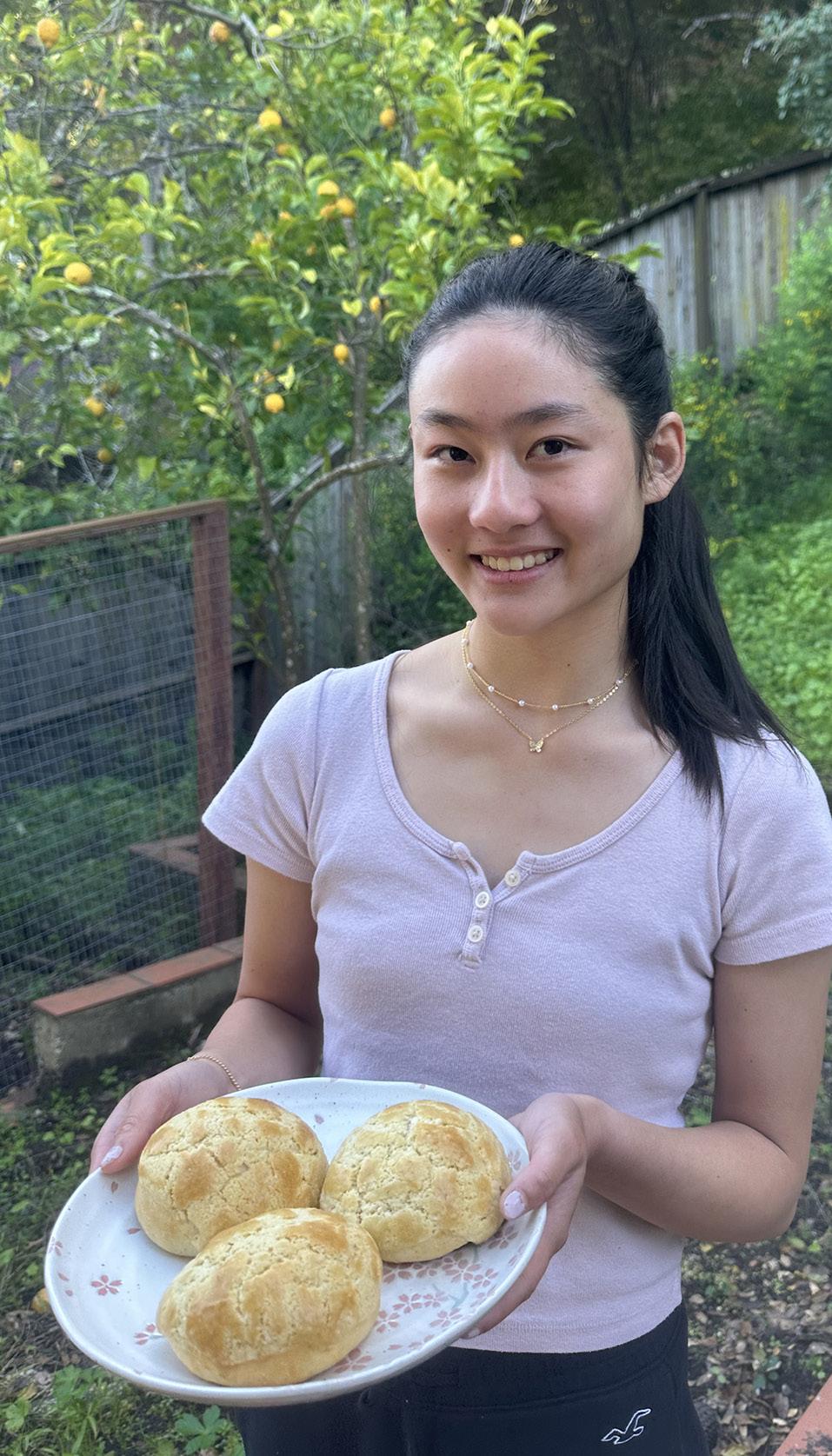
Impressed by how much her neighbors loved the bao buns that she shared, in 2021 Annabel created a business centered around bao buns—a fluffy sweet treat stuffed with filling wrapped inside dough—to support her passion for baking.
Annabel called her business “Little Bao Baos,” a name she and her mother created together. Now, she receives around three to five orders per week, and makes up to 30 bao buns in a day that she receives orders.
She started by posting advertisements on Facebook, then set up her own online site. At the early start of her business, she sold her baos more locally to people in Mountain View and Palo Alto, although as her business grew she started selling to broader communities.
On Fridays, she would go and deliver her baos, but now she also offers for people to pick it up from her. Annabel also offers a special gift wrapping service, allowing customers to send a sweet surprise to others.
Currently, Annabel offers four different types of baos. First is a pineapple bao, a sweet bao bun with a crunchy golden crust. Next is a classic bao, a bao with soft dough that is
slightly sweet. The chocolate bao is a sweet dessert bao made with tangzhong-based dough (an Asian pre-cooking technique to make bread fluffier) and filled with a rich chocolate filling topped with light chocolate powder. Lastly, she offers a pan of cinnabaos, also made with tangzhong dough featuring a sweet cinnamon filling topped off with a sugary glaze.
In addition to passion for baking, Annabel wanted to raise awareness for challenges faced by Asian American and Pacific Islanders (AAPI) and food-insecure individuals.
“There was so much anti-Asian hate at the time. Articles about elderly Asian Americans being attacked on the streets were constantly being published. My own grandparents have faced racism before and so have my parents. I thought that making baos could be a good way to increase awareness,” Annabel said.
Annabel took the initiative on this issue by creating a campaign, offering free bao buns in exchange for donating five dollars to support AAPI. The response was overwhelming, with donations totaling up to $500, which truly made her feel the impact of her baking.
Outside the campaign, she also committed to giving back by donating 10% of her profits to Second Harvest Food Bank to help provide food for those who didn’t have access to it, as this is a core value of her business.
Baking is not a new hobby for Annabel. From her early years, Annabel bonded with her mother over baking, a meaningful
experience that started her passion. She also noted that sharing baking goods with her friends and family means a lot to her.
“Every time I go to a family friend’s house, I always like to bake something,” Annabel said. “I've had a lot of good memories of eating the food that we share.”
She shared that all of the positive affirmations she gets about her baking makes her feel good and motivates her to keep going.
“I've always gotten emails and sweet notes saying how much customers liked my baos, which really means a lot to me.”
Beyond the kitchen, Annabel also shared that she has learned important life skills from her business. Before the start of her business, she didn’t have any experience with customer service and finances, but her small business allowed her to gain experience.
Recently, Annabel opened a small popup at Stanford Shopping Center’s Williams Sonoma, an upscale kitchen-supply store and currently is planning to have more pop-ups in the future. For Annabel, the success of her business isn’t measured solely in profits, but in the joy it brings to others. Despite the modest margins, she remains focused on her mission of spreading happiness and fostering connections through her baking.
“I don't make that much of a profit, but I’m not doing it for the money,” Annabel said. “It’s more to make people happy and have people experience the same joy I feel when I go to Asian bakeries.”
years since the pandemic, and also sees areas that can continue to be developed. Not all of these areas have to do with restorative justice.
For example, he is keen to see increased transparency—a crucial part of all justice systems—from administrators in explaining to faculty what exactly happened and how administrators dealt with it.
“I understand that privacy is extremely important, but there have been numerous things that have happened regarding online behavior and harassment and sometimes administration was very clear with us and sometimes was not,” Scott said. “And I think that that makes it very hard for us to address it in our classrooms and on our trips if we don’t know the full information.”
For US English teacher Amber Carpenter, restorative justice may not be ideal for smaller, less severe community violations, like the frequent and frustrating habit of students leaving the remains of their lunch—plates, dishes, utensils—all over campus. It was a pattern of behavior that Carpenter noticed right away when she joined Nueva in 2019.
Recently, Bruno and the Upper School Equity & Inclusion Coordinator Steven Mathis have attempted to tackle this issue. After repeated warnings about not cleaning up plates and continued violations, Bruno revoked off campus privileges for a group of students and tasked them with cleaning commonly trafficked areas after lunch. Following Bruno’s actions, dirty dishes continued to be strewn across campus, leading to Mathis sending an email to the Upper School student body, asking the community to reflect on the messes that they had made.
As Bruno, Samara, and many others work to find the most suitable implementation of disciplinary action, community members like Scott are glad to see an effort to create “clearer, more compassionate forms of discipline.”
04/08/24 PAGE 8
FEATURES
Photo by Camilla Yen
Photo by Cindy Chew
FLUFFY SWEET TREAT
Annabel Y. 27 holds a plate of her freshly homemade pineapple baos.
Clocking into senior year
Amid the home stretch of high school, these three seniors have taken up unique jobs
By Gabe A. & Milo K.

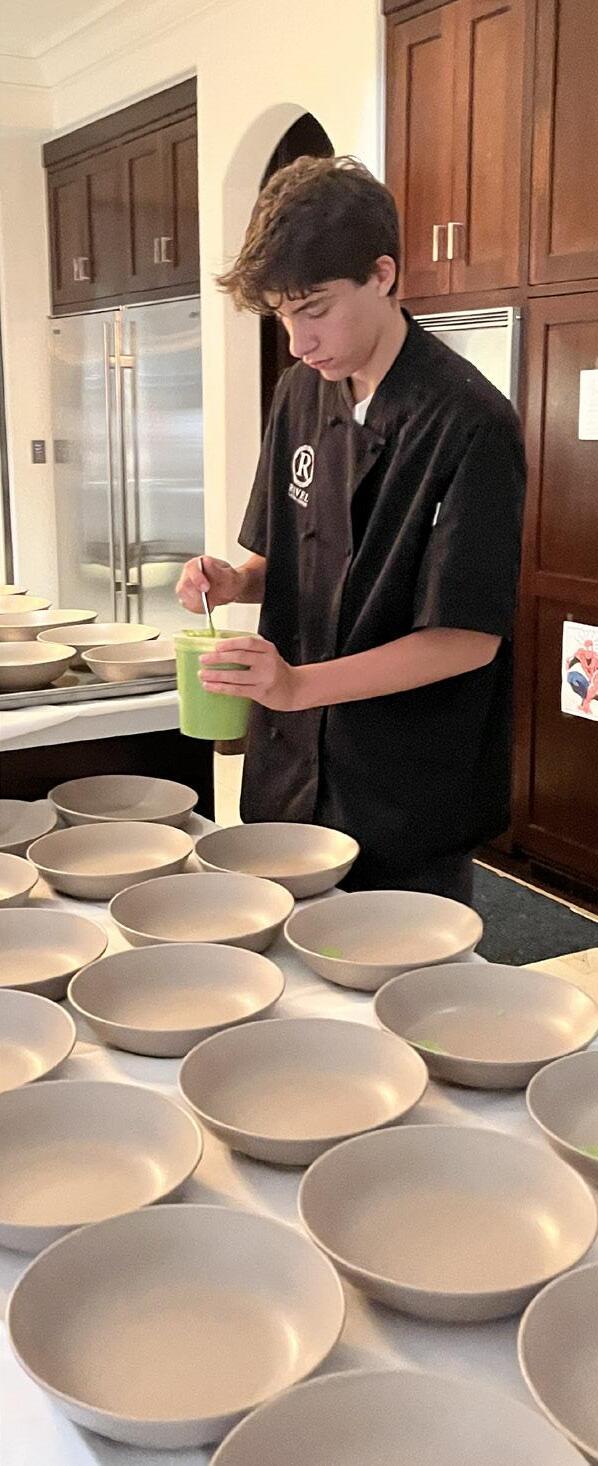
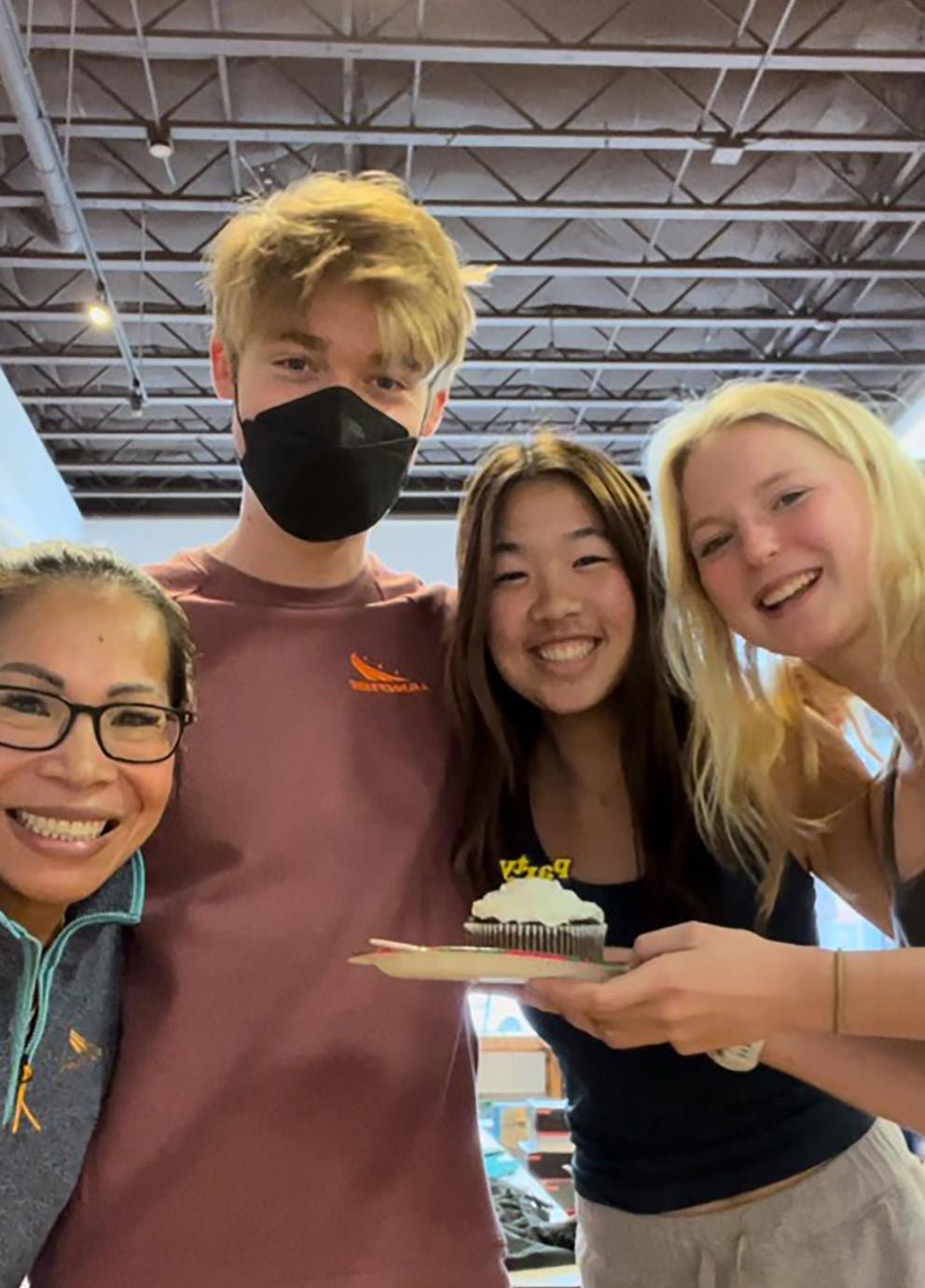
HARD AT WORK
Roan W.: Docent at Aquarium at the Bay
Roan W. '24 describes his job as a docent at The Aquarium of the Bay as straightforward. He gets his timecard, goes to one part of the aquarium, provides information about the various marine life, switches to a different part, and repeats the whole process. His biggest task is usually guiding people to the restroom. However, the stories he has are anything but simple.
Despite always having a passion for marine biology, he started volunteering at Pier 39 in 7th grade because he needed middle school community service hours. Rather than his current job, he was overlooking just sea lions—filing, educating, and counting.
However, after the COVID-19 lockdown, he has taken up a new role. From managing the touch pools to telling kids fun fish facts, his role as docent is much more front facing in nature.
Through this, Roan's found another love—teaching. He’s found a larger purpose in his job, allowing him to share his interests, values, and spark his passion in others.
“I like sharing things that I'm passionate about and teaching people about what's
really important right now: making sure that all of these beautiful animals continue to stay around for future generations and for the health of the ecosystem and the planet,” Roan said.
However, he always wants people to leave having a good time. Over anything else, he makes sure to keep the teaching fun, to cultivate an interest in learning and marine biology over anything else.
“I try to sprinkle in some funny facts about our animals. For example, flounders and varieties of other flatfish are born with their eyes actually on the opposite sides of their face. As they mature, one eye will migrate over to the other side of their face,” Roan said.
In this teaching, the animals are his greatest aides. Whether it is one of the 20,000 species at the aquarium Roan familiarized himself with or a crowd favorite, he always finds new stories to tell and witness with each individual animal.
“It's one thing being able to see the animals but being able to interact with them is something totally different,” Roan said “You can’t do that every day.”
Kelly P.: Gait analyst at A Runner’s Mind
Despite being a runner, Kelly P. '24 skipped over the local shoe store A Runner’s Mind during her job hunt.
“I really wanted a job, so I handed out resumes in downtown Los Altos. But I didn't do the running store,” Kelly said. “I thought I wasn’t a good enough runner, that I didn’t know enough about shoes. I was just really intimidated.”
A few weeks later, when Kelly was getting fit for track spikes at A Runner’s Mind, her dad mentioned the job search again. The general manager happened to be fitting her for shoes, and encouraged her to apply.
To get her job as a gait analyst—analyzing the way a client runs to recommend shoes that are most compatible with their running style—she had to undergo training over the summer, alongside other high school students who would soon become her coworkers.
“It's definitely a different relationship with the high schoolers because we're all like teenagers. Last year one of the guys would help me with my CAD homework,” Kelly said. “Because we are all runners, we also see each other at track and cross country meets, which is really fun.”
However, the strongest relationship she found might be with the general manager, Cindy, who encouraged her to apply in the first place.
“Over time, she has become almost a second mom to me. We sometimes get chicken tenders or boba [tea] together, and it’s just really fun to have that type of connection disconnected from school,” Kelly said.
Outside of getting free shoes when a brand drops a new pair, Kelly's running has improved thanks to the experience at A Runner’s Mind. When running with Nueva’s cross country or track teams, she notices how her work as a gait analyst can improve both her and her teammate’s running mechanics.
“This job helped me notice more things about myself, like where I land, what part of the foot I like to strike on,” Kelly said. “I can also help my teammates too, with shoe or form recommendations. At practice one time I was able to do a gait analysis on Sophia [Y. ’22] on my phone.”
However, her job’s benefits are not restricted to running. From closing notes requiring daily gratitude emails to finding an out-of-school community to increasing confidence, Kelly thanks the job for a lot of personal growth.
“Now that I have to talk to so many more people, I have become much more confident speaking up in classes or in everyday life,” Kelly said. “It’s also so satisfying to be doing something productive that is unrelated to school.”
Today, he confidently layers perfect medallions of cornish hen roulade, and seamlessly stuffs plump rolls with butterpoached lobster.
For Julian K. ’24, reaching this level of comfort in the unforgiving Michelin Star kitchen did not come without a steep learning curve.
He surveyed the stirring assembly: line cooks jostling churning pots, sprawling plates across the wait staff’s metal counter.
It was his first day working as a prep cook at The Village Pub, a contemporary FrenchMediterranean restaurant in Woodside.
“I felt so out of place,” he admitted. “Everyone was walking around with a mission.”
Julian had no choice but to frantically tuck the nerves behind his newly prized apron.
They placed him on the preparation line washing mushrooms. As Julian worked through 22-quart heapings of chanterelle and trumpet mushrooms, it was made clear he was only trusted with the monotonous tasks.
“If I wanted to do anything more, I would have to prove myself while I was there,” Julian said.
This goal seemed initially distant; Julian struggled to digest the unfamiliar systems that maintained workflow.
In one case, label abbreviations caused Julian to accidentally mistake corn for chicken stock, consolidating the two in the same container and ruining massive batches.
“I felt so awful,” Julian said. “I thought to myself, I'm not being invited back.”
Muddling in his dismay at the end of the shift, Julian cautiously approached the head of waiting: “Hey, can I come back tomorrow?
“Same time tomorrow.”
And just like that, Julian was whisked into a life of grueling eight hour shifts and minimum wage salary.
Among the occasional mishap—such as overblanching a dinner service’s worth of asparagus—Julian found that he didn’t have to make it over this hump alone.
At The Pub, the staff takes on a diligent ownership of their newcomers.
“They always say if one of the new guys messes up, it’s on the chefs for not explaining it clearer,” Julian said. “I love that philosophy.”
With that said, he was also expected to lean on their support, while wobbling his way towards autonomy.
“At one point they told me, ‘If you have to constantly ask how to do things, what’s the point of having you?’” Julian recalled.
Julian struggled to find a balance— asking questions to orient himself in the environment, while taking initiative to complete tasks independently. With
time and support he was able to reach an equilibrium, refining his culinary technique and familiarizing himself with the kitchen’s systems.
The chefs weren’t just culinary onboarders; outside of the kitchen, they took on the responsibility of assimilating Julian into their tight-knit workforce.
During “family meals”—a term for lunch break in the restaurant industry—the Sous Chefs would meld together a motley of the kitchen’s excess ingredients: from self-serve tacos, to homemade ramen, to a homey ground beef and rice. The staff would then squeeze into an outdoor table, tucked behind the restaurant’s backdoor entrance.
“It was honestly a really humbling experience,” Julian said. “Everyone inside the restaurant gets to sit down at such a nice venue, while we were right next to the dumpsters.”
Scarfing down their delicious meals and warding off swarms of hungry wasps, Julian intently soaked up the stories his coworkers would tell: from a bitter divorce, to struggles of immigration, and even lighthearted sharing of funny TikTok videos. In conversation Kleinknecht exercised his Spanish fluency to further connect with his predominantly Latino coworkers.
These interactions are what turned Julian from staff to family—taking the sharp edge off of the workplace’s otherwise abrasive environment.
The job started with his first family, though. Julian mother and stepfather were loyal patrons of The Pub, and eventually befriended the Head of Waiting, Melody Mitchell, and her husband Peter Temkin, a chef. After cooking alongside the Temkin at a fall gathering, Julian was invited to the restaurant as a “stage”—a trial intern. The following spring, he accepted the offer.
From his experience as a prep cook in a Michelin Star kitchen, Julian summarized the role in one succinct quality.
“The role of a chef is to lead more than anything,” Julian said. “Chef means chief in French. So as the chef you have to make sure your kitchen is running smoothly and that the guys are working well together but also know what to do and how to do it.”
Thus, Julian's time at the restaurant was not defined by the preparation of The Pub’s high-end cuisine, but rather the lifelong mentors that took him under their wing.
“One day, I hope to lead my own kitchen in the same way,” Julian declared.
PAGE 9 THE NUEVA CURRENT
FEATURES
Julian K.: Prep cook at Michelin-Star restaurant, The Village Pub
From left: The famous tunnel at the Aquarium of the Bay; Julian plates dishes at a catering service; Kelly poses with her coworkers at A Runner's Mind.
Photos by Aquarium of the Bay, Julian K., Kelly P.
demonstrating
With average grades rising nationwide, how does Nueva’s standards-based grading model affect student outcomes?


MASTERY?

in the Upper School course catalog, because it covers a greater breadth of mathematical concepts. As such, Comstock grades tougher than she does in what she calls “recreational” math courses, like Cryptology.
“My standards for Linear Algebra are higher because if you don’t do a certain amount in the fall [semester], when spring rolls around, you’re just not going to get as much out of the class,” Comstock said.
When these rubrics are translated to letter grades at the end of each semester, the results aren’t always what students anticipated.
Because there’s no universal system converting rubric scores into letter grades, Upper School Lead Learning Specialist Cathy Robinson is concerned with grading transparency within the Upper School’s “otherwise great” grading system. Robinson works closely with students with academic accommodations, and explained that because letter grades are only revealed at the end of each semester, it makes identifying which subjects to put more effort into more difficult. This disproportionately affects neurodivergent students.
“Neurodivergent students often require more time to complete assignments than their peers, resulting in reduced bandwidth for completing their work. Simply telling them to do their best in every subject isn’t practical,” Robinson said. “It has nothing to do with capability, but the logistics of time and scope.”
Aiken C. ’27, one neurodivergent student who has accommodations, added that the large array of rubric factors also raises challenges.
“Because there are so many things to account for on a rubric, as a neurodivergent person, I find it hard to focus on every specific thing. It’s just hard to manage it all,” he said.
Further complicating the application of standards-based grading are times when students request administrative intervention to discuss their grades, believing that they deserve a higher grade than awarded.
“In the process of converting a rubric to a single letter grade in standards based learning, there may be some areas and rubric items in which a student’s work is borderline [between two letter grades],” Yeo said. “Many students and parents request a grade review: sometimes this may result in a grade change,
For the past three years, the Upper School has piloted the “Academic Council” program, which has representatives from each department that meet weekly with Director of Teaching and Learning Lauren Pool.
While the Academic Council was not created solely to ensure alignment of academic standards, it has served as preparation for the robust “Discipline Lead” program, slated for official implementation in the 2024–2025 school year in addition to the current system.
The Discipline Lead program appoints teacher representatives, or department chairs, from core subjects to develop academic standards within their departments in collaboration with Pool and the administration.
“The hope in bringing the department chair forward is to create a streamlined process on how we iterate learning outcomes and course curriculums,” Pool said. “For example, I can say to the chairs, ‘I need you all to lead your department in developing written learning objectives for every unit in your subject’s course curriculum by the end of the month,’ and I can trust that they’ll make it happen.”
Yeo adds the integration of the department chairs will ensure that all students will have an “equitable experience” when their rubric is translated into a letter grade.
“In the next five years, I anticipate that our entire faculty will develop a shared vocabulary and understanding of performance equivalent to each level of a rubric standard,” Yeo said.
II. TRANSLATION TO LETTER GRADES
Despite the challenging curriculum—with 52 out of 144 courses in the 2023–2024 course catalog meeting the criteria for honorslevel rigor according to the University of California—most Upper School students consistently achieve high grades. Over the last four years, the Upper School has awarded 16,516 flat As and 2,854 A-minuses, compared to 109 C-range grades (C-plus, C, C-minus), according to data by Upper School Academic Data Coordinator Kevin Dineen. No grades below a C-minus have been given since 2019.
average GPA nears the 4.0 ceiling. This grade compression saw a sharp uptick in both high school and higher education during the COVID-19 pandemic.
A 2023 Sage OPEN study found that average undergraduate GPAs increased by 0.22 points on a four point scale in Spring 2020 and continued rising by 0.18 the subsequent two semesters. According to an ACT study, in high schools nationwide, the average GPA increased by 0.09 from 2018 to 2020, compared to 0.06 between 2016 and 2018.
Nueva has followed these trends. In the 2018–2019 school year, 71% of total letter grades given at the Upper School were As. During the 2019–2020 and 2020–2021 school years of remote and hybrid learning, these percentages jumped to 78.54% and 81.20%, respectively, and have stayed in a similar range since.
This may not be a symptom of changing grading criteria, but rather “a necessary response to the changing character of our students’ needs,” according to Yeo.
“Grade inflation is in part a consequence of the pandemic, when schools didn’t want to punish students for distance learning by awarding poor grades,” Yeo said. “This is only our second year of returning to “normal” teaching, [so we] accommodate our students’ ability, post-pandemic, to keep up with the workload.”
Even after returning to in-person learning, students spend less time in their eight classes each week due to the introduction of “Wednesdays of Wonders”—weekly half-day workshops in 2022-2023 and monthly sessions in 2023-2024.
Denlow notes that this has softened the course workload in her classes.
“I used to run my students much harder. My 11th-grade history class was without a doubt had a heavier workload—we used to have a yearlong running research project in addition to longer readings,” Denlow said.
While many community members have since elected to shed some Covid-era policies, higher grades have stuck around.
Yeo explained that “once students and families experience [higher grades], it’s hard for institutions to walk back that expectation.”
The standards-based grading system has
if you produce quality work—which most Nueva students do—then you’re going to get good grades,” Denlow said.
Hart agreed, believing the student body to be one factor toward persisting high grades. The other major cause, she believes, is that the teachers actively try to make courseloads manageable.
“We scaffold assignments in a way that makes them achievable,” Hart said. “There aren’t ‘gotcha’ assignments; there aren’t trick questions.”
Students also have the option to reassess major assignments. While the amount of available reassessments differs across teachers, courses, and departments, it’s universally another opportunity to demonstrate mastery of
81%
47% of total letter in the 2020-2021 increased during 71% in the 2018-2019 of United States with A-range according to University Press

“Reassessments are a fundamental part of standards-based grading—it allows you to demonstrate your progress over time,” Upper School math teacher Veena Krishnan said. Within the math department, Krishnan and her colleagues permit two opportunities for reassessment on each test during the same semester it was initially given.
Krishnan believes that reassessments are valuable, but highlights that this policy can result in similarly high grades for students with differing levels of performance.
“You cannot distinguish between a student who regularly reassesses and improves their rubric template by the end of the semester versus one who excelled on the first attempt,” Krishnan said.
Some teachers award higher grades as a strategy to deemphasize the importance of
PAGE 10 IN FOCUS

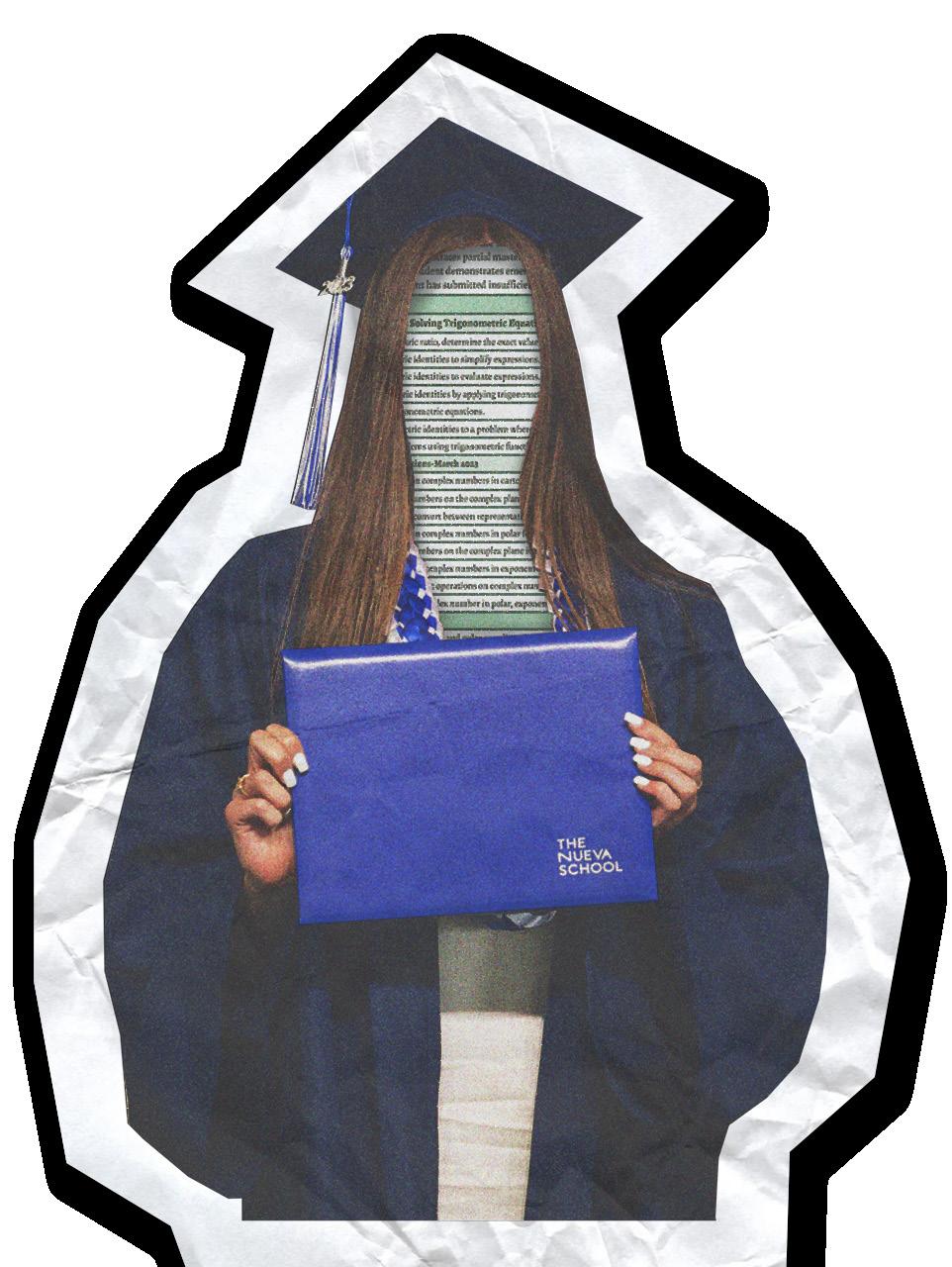


“In a system of standards based grading, there’s a clear sense of what students are expected to do and multiple opportunities for them to do so,” Dorrance said. “If students are intentional about incorporating the feedback I give them on their [previous] assignments, they can get an A in my class.”
Dorrance characterizes this grading system as a means to “level the playing field” for students with diverse abilities upon entering the class.
“Grading without considering personal growth rewards students for the levels of skills they come into the class with rather than how much they’ve learned in the class. That gives a premium to students who start with more developed skills,” Dorrance said.

This philosophy extends beyond the humanities sphere and into courses where performance is traditionally evaluated through tests and other quantitative measures.
Throughout his decades-long career as a high school and university teacher, Upper School math and economics teacher Ted Theodosopoulos has transitioned towards predominantly giving out higher grades within the A to B-plus range—even before Covid-era grade compression.
“As an instructor, I often ask myself: ‘Do you care more about students thinking that they know more than they do, or thinking that they know less than they do?’” Theodosopoulos said. “I care much more about the latter. I’m much more concerned about preventing students from feeling they
his pedagogy to allow students to find “distinct” ways to demonstrate their learning. Instead of tests and grading homework assignments, Theodosopoulos requires periodic self-assessments from students, where they present “artifacts” or samples of their work meeting rubric standards.
“I care most about teaching my students to become self-motivated and proud learners. If they have the evidence that they’ve done that in my class, they get an A,” Theodosopoulos said.
If students still don’t receive their desired grade, as a final measure, some choose to advocate to their teacher for a higher grade if they believe it is warranted.
Hart finds that discomfort during after school meetings usually arise around the unassuming A-minus.
“I have a handful of students every year who attempt to raise A-minuses,” Hart said. “I wish we could change the conversation around what an A-minus meant. [Students] think it’s a travesty or a moral insult. But it’s not! I would’ve been thrilled to have an A-minus.”
Students explain that while A-minuses seem like good grades for outsiders, the high saturation of flat As makes an A-minus seem inadequate.
“The quantity of flat As indicates to me that the entire differentiation between a good grade and a bad grade is an A and an A-, so I put a lot of pressure on myself to be perfect,” said Logan R. ’24.
This is not a symptom of senior cynicism, either. At the end of the fall semester, sophomores receive official grades for the first time. Unlike freshman practice grades, these scores remain on their transcripts. Emi Y. ’26 recalled that after grades were released, she immediately received texts asking what she got. When she replied “Oh, it was good,” they probed for more specificity.
“People are just so curious and it seems like getting anything less than an A is immediately stigmatized,” Emi said. “I’ve heard people say that if you get a B+ or a B, you’re not up to Nueva standards—which is crazy because a B+ is completely fine!”
Denlow, Hart, and Theodosopoulos believe anxiety around grades can be avoided
altogether. In their ideal worlds, students wouldn’t receive letter grades at all.
“As a teacher, I honestly don't care that much about the grades. I know the students do, but I don't. What I care about is if a kid is reading their feedback on their writing, internalizing that and pushing their next writing assignment,” Denlow said. “So I would be all for letting go of grades.”
Theodosopoulus added that translating rubric items into letter grades “takes too much time and energy for the faculty” while being “of questionable utility towards the learning process.”
Hart echoed these sentiments, but with one caveat: “I don’t know if colleges would let us get away with that.”
Denlow, Theodosopoulus, and Hart know high school grades don’t exist within a bubble. In senior year, students’ grade transcripts are pasted onto a PDF page and sent around the country to college admission officers, who use these grades to evaluate potential candidates.
III. IMPLICATIONS FOR COLLEGE ADMISSIONS
At the front of campus, the college counseling pod sees no shortage of anxious upperclassmen. Amongst these nail-biting, hand-sweating, and rambling students, the college counselors consistently hear one phrase: “I got an A-minus—I’m not getting into college!”
Director of College Counseling Gavin Bradley has heard it all, and quite frankly, is sick of it.
“There’s this myth [among students at the Upper School] that if you get one A-minus, you’re done. But I know that kids with Bs have been admitted to amazing Ivy and Ivy-plus colleges,” Bradley said.
While he acknowledges student concern that it’s “hard to distinguish yourself when there’s lots of As,” Bradley wishes students would recognize that their transcripts tell a story more multidimensional than letter grades.
“You get to be more interesting than most American high school students. You take more courses with more interesting titles—instead of AP Psych, you get Psychology and Memory,” Bradley said. “That's where you need to trust your transcripts and the interesting classes you get to take to tell your story.”
Bradley adds that more high schools are starting to adopt standards-based grading, and
colleges have come to understand that there’s a general shift away from grading on a curve.
However, in a test-optional world, Bradley notes that colleges are having a harder time distinguishing amongst high-performing candidates. If opting out of standardized testing remains an option, he is hesitant to go the full extreme and eliminate grades altogether.
He explains that college admissions offices are “giant sorting machines.” Students submit factors to sort—test scores, grades, course rigor, extracurriculars, and essays, to name a few—and the colleges use this data to select their preferred candidates. Quantitative factors, like test scores and grades, are easier to sort, making them preferable for schools with vast applicant pools. California’s public school system, the University of California (UC) schools, are one such example.
“The UCs are pretty unforgiving. They’re fine with you being an odd school that doesn't give them grades. But UCLA’s got 150,000 applicants. They don’t need Nueva kids,” Bradley said. “So if you’re not going to give them something to work with, they’ll still evaluate you, but it’s not going to be in the normal process and it might not turn out as well as you want.”
But the tides may be turning. Over the past few months, Brown University, Dartmouth College, Yale University, Massachusetts Institute of Technology (MIT), and University of Texas Austin have all announced intentions to reinstate mandated standardized testing. Admissions officers at Brown, Dartmouth, and Yale cited studies showing the benefits of standardized testing in recruiting diverse and low-income students.
It looks like the sorting machines will have plenty to sift through again. Whether this will allow Nueva grade averages to continue rising—or disappear altogether—is yet to be seen.
“It is within the Nueva ethos to be iterative and to change as we need to,” Pool said. “I want to continue valued-based conversations on grades at the Upper School that are anchored in the practical world we live in.”
In the meantime, Bradley encourages students to focus on factors other than just their grades.
“I understand that students feel like grades are the only thing they can control, but there’s so many other interesting things you can do with your time,” Bradley said. “You can fight and scratch and kick and scream to get straight As and still not get into all your top choice colleges.”
PAGE 11 FOCUS
STERY?
letter grades given at the Upper School 2020-2021 were flat As. This number during the pandemic years, rising from 2018-2019 school year.
States high school students graduate grades (A-plus, A, A-minus), a study published by John Hopkins Press in 2018.
Photo by Tim Griffith, Image by Isabella X. using photo by Travis Watts
Dressing for success
Navigating intersectionality and visual presentation as a TA
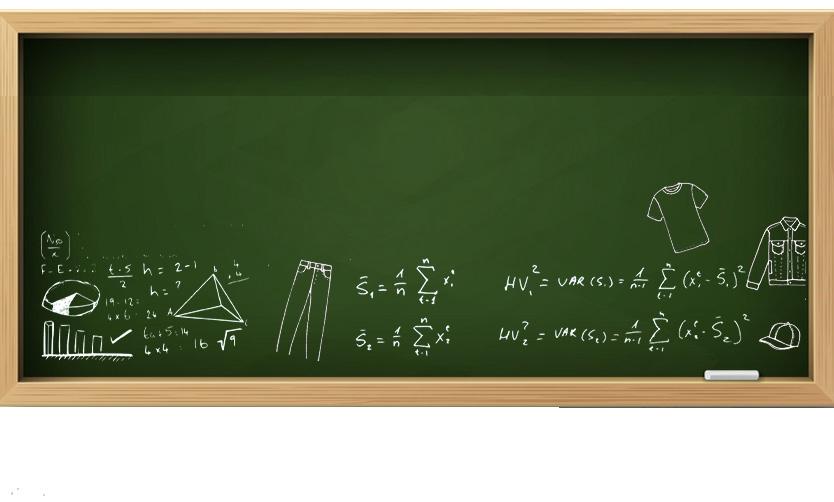 By Guest Writer
This student, who has elected to remain anonymous, wrote this piece in response to Issue 3's "Class shirt sparks discussion about gender dynamics in STEM classes."
I’ve finished my section of the slides. I’ve reviewed tomorrow’s activities and lesson plan, and thought of a couple questions I expect to come up after reviewing the material. I’ve even solved the warm-up questions in advance.
The only thing that remains is to pick an outfit for tomorrow.
(This should be the easy part — I should pick something comfortable, practical for the commute and weather, and that shows off a little bit of personality.)
But I cannot erase the words of my biology teacher in my mind. “I make sure that I wear dresses sometimes, because I don’t want my students to believe that a person wearing
a dress can’t be knowledgeable or have authority.”
And so I have a dilemma.
I could wear what I usually do — jeans, a t-shirt, a sweater, and a bomber-jacket-esque thing over that. But is it formal enough? Does it strike the perfect balance of “I-knowwhat-I’m-doing-so-you-should-respectme-and-actually-listen-when-I-speak” and “I’m-approachable-and-not-scary-come-askme-for-help”?
It feels too informal, so I move on. Buttondown instead of the t-shirt? But does it strike the right balance of “not-so-masculine-thatI’m-defying-gender-expectations-becausethat’s-apparently-bad” and “not-so-femininethat-I-won’t-be-respected?”
Oops, there I go perpetuating the idea that people who dress in a feminine way can’t be respected. I should wear a skirt or dress then. Then, I’ll be helping to break down patriarchal expectations in academia and STEM. (But what if I don’t have that authority yet? It’s the first day of class, maybe I need to establish that rapport first before I have the
Learning to say “sorry”
By Isabella X.
leeway to do that….)
And what if I’m not comfortable in a skirt or dress? (But since when have I had the luxury to care about my comfort?)
So I picture my teachers, the people whose patience and ever-present care I want to emulate tomorrow in the classroom.
Some of them wear more informal clothing — t-shirts, sandals, jeans, or basketball shorts. But they’re usually white. Teachers of color usually seem to be wearing (comparatively) more formal clothes — blouses, buttondowns, cardigans. Even within those who are not people of color, there’s a divide across gender — most female teachers are often wearing some kind of jewelry or makeup, and their clothes always seem clean.
It is at this point that I pause in front of the closet, wondering if I’m overthinking it, if it’s even real. Wondering if I’m just erroneously attributing all these things which are actually personal preference to race or gender.
And I might be.
But then I recall the days in chemistry where I was cut off countless times, the day
in i-Lab where I wore a dress and someone repeated my own observations back at me but slower, as though I wouldn’t be able to comprehend the words, the day in physics where a classmate in Math 2 insisted on explaining to me what a derivative was, while I was in calculus, and the day where a male classmate complained that it was unreasonable to say that there is sexism in the sciences.
I know it’s real.
Being feminine presenting or a person of color (or god forbid, both) is an impossible multivariable calculus problem where you try to optimize a function with a million-variable input (everything from the way you deliver content to the way you stand) for a single output — to be treated with respect as both a human and instructor.
It’s real. And unfair.
But for now, I will close the closet door. I’ll face it tomorrow instead, and hope as I go to bed that when I wake and open it again tomorrow, it will be in a fairer, kinder world.
The phrase is rare in Asian-American households, but it’s one we need start saying stiffly reached around my dad to grab a mug, before pausing. I brought two mugs down. Then, monotonously: “I’m heating up doujiang—do you want any?”
It surprised me each time how forcefully I could slam a door. Feet pounding into the hardwood floor, I hurled insults and “I’ll-never-talk-to-youagain!”s down the hallway, before sealing it off with that final, resolute slam.
Finally, I was alone. In the wary silence, I remembered my mom’s motto: “Life’s too short to go to sleep mad at your family.” I checked the time—7:24 p.m. Okay, great. I still had three hours.
Hour one consisted of distracting myself from the anger. I read my favorite books—Khaled Hosseini’s Kite Runner, at the time—and texted my friends. Not once did I mention the fight.
These were the olive branches that my family extended. Not words, not a
By hour two, I’d mostly forgotten about the fight. My parents hadn’t brought it up either. I could hear them in the living room, similarly distracting themselves, only with quarterly business reviews instead of emoji-bloated text threads.
Around nine, the fight had fallen far enough to the back of my mind for me to venture back out into the living room. I
But children model behavior after their parents, meaning that if parents don’t apologize—a habit entrenched in Confucian values or not—their children won’t either.
Such food-based peace offerings have become synonymous with Asian-American households... It’s one of those mutual experiences that transcends ethnic borders and political disputes...
real acknowledgement of fault. Instead, a mutual understanding that this fight wasn’t worth it.
Such food-based peace offerings have become synonymous with AsianAmerican households. TikTok is filled with skits about Asian moms offering cut and peeled fruit as stand-ins for apologies. It’s one of those mutual experiences that transcends ethnic borders and political disputes—a guarantee of common ground with strangers.
Writers online have mused that it might be a symptom of Confucianism, whose strict age-based hierarchy and emphasis on filial piety made parents shy away from apologizing to their children.
Leaving the bubble of my own household, I’ve had to learn to apologize. When I really had to say it, “sorry” stuck like a wad of phlegm at the back of my throat. No matter how much I tried, I couldn’t cough it up. Certain addendums made it a bit easier—phrases deflecting responsibility, like, “I’m sorry if you felt that my words were hurtful.” But for years, I couldn’t form a single sincere apology.
Only with continued feedback from my friends (and many, many failures) did these words start to feel natural. They aren’t
moments I want to relive—too many tears were shed for my liking—but I’ll look back upon them as a period of growth.
It’s still a work in progress. This lingering effect of my upbringing is why I cringe whenever I hear an “inability to apologize” being touted as a uniquely Asian, uncompromisable trait. Yes, it’s a testament to our communities’ resilience. But it’s also a learned behavior—and a reversible one.
If I could speak to the fruit-cutting, doujiang-microwaving parents of the world: teach your kids to say sorry. Swallow your pride and model the action. Because often, letting go of anger and moving on isn’t enough. We need to say the words: “I’m so sorry.”

PAGE 12
04/08/24
Photo illustration by Isabella X. Images by Freepik.
OPINION
R1000000 → R1:

I’m sick of the phrase, “you’re so autistic!”
The language of our hallway conversations is reinforcing dangerously ableist judgments
By Kayla L.
My earbuds were on full blast when I overheard a comment that unexpectedly startled me. Jokingly, a classmate teased another, “You’re so autistic!” I cringed, and then didn’t speak up. This experience inspired deep self-reflection.
In the past few months, I’ve noticed this phrase being propagated in many places around school, from loud hallway conversations to quiet library chats between friends. “Acoustic” and “a touch of the tism,” supposedly friendlier substitutions for “autistic,” are also rising in popularity, especially on social media. This vocab fills in for yet another popular choice: the r-slur, a pejorative slur for mentally disabled, or neurodivergent, people.
When I question people saying these things, they defend themselves, saying, “It was just a joke! I didn’t mean anything by it.”

CROWNING ACHIEVEMENT
It should mean something to everyone, because the language we use establishes a culture of what’s okay to be said.
However, it should mean something to them. It should mean something to everyone, because the language we use establishes a culture of what’s okay to be said. This “joke” is not funny. Neurotypical people have normalized something hurtful and ableist, and it needs to end. I hope my peers realize that when they say the r-slur, or “that’s so autistic,” they’re equating neurodivergence or a disability like autism with stupidity or inability. How is being autistic an insult?
When using this language, they also often don’t realize its deeper anti-neurodivergent history. The term “mental retardation” started out as a medical term in 1961—for the United
States, only officially changed in 2010—but then became an insult for and a way to bully people with disabilities in everyday language for decades after.
Jokes like “acoustic” and “a touch of the tism” have been claimed by some neurodivergent circles as humorous selfdeprecation, but the lingo has once again been misappropriated by neurotypical communities.
It’s now used to make casually insensitive jokes, at the cost of a community who are your classmates and friends. Your teachers and mentors. Your neighbors and family.
I have great respect for the neurodivergent and disabled people in this world and in my life, which makes me ashamed to admit my part in the problem. The day I overheard that ableist remark over my earbuds, I didn’t do what I should have done.
When faced with the r-slur, I call people out instantly. But in this case, I made up some lame excuses in my mind. Maybe
I misheard, or it would be rude to admit eavesdropping. Selfishly, I considered if it might make them like me less.
I couldn’t get over it. I wanted my classmates to know that their ableist jokes can be just as hurtful as the r-slur, especially when there are so many other words and ways to joke and tease our friends without inflicting harm on a real, diverse, historically disadvantaged, and too often forgotten community.
These past few months, I have personally committed to speaking out when I hear something ableist, big or small, even at risk of “ruining the vibe” or making “something out of nothing.”
I encourage others to do the same. This doesn’t need to mean launching into a spiel about the history of the r-slur or ableism. Just respond: “It’s not cool to say that.”
Another method is even simpler. Don’t laugh. Sometimes, silence speaks louder than words.
The incoming misinformation age
What will the new era of AI technologies do to the truth?
By Roan W.
In the span of just a few years, the hot point of contention has shifted from vaccines, to election denial, and finally, to generative AI. I’ve started to question the validity of all digital content put before me. How do I know this text isn’t written by a machine, or this image wasn’t generated from a random internet troll?
Thankfully, though, the main stopping point for the AI has always been the imagery. An AI voice might not line up with the movement of its subject's lips, or a piece of concept art for a movie character might have too many fingers. But things are starting to change—they have changed, and it all started with a golden retriever puppy happily bounding through a snowy landscape. The thing is, the dog isn’t real, nor the field. This video is the soulless machinations of OpenAI’s new model, Sora.
Sora is the next leap in AI generated content, which according to OpenAI, “can generate videos up to a minute long while maintaining visual quality and adherence to the user’s prompt.” In many cases, it’s capable of creating a video from as little as a sentence or two, making the tool incredibly accessible.
My concern comes from the accuracy of these AI generated images: some of them are indistinguishable from reality. OpenAI’s preview site for the model proudly displays
several example videos, ranging from aerial shots to videos of dogs slinking along balconies or lounging at the beach, many of which already have me convinced of their validity.
AI generated media has already been used in scams. The now-infamous Glasgow Willy’s Chocolate Experience, an “immersive experience” which exclusively used AIgenerated scripts and art in its promotional materials, swindled dozens of families out of thousands of dollars. Parents were enticed by pictures of wondrous candylands, only to be treated to plastic decorations and a single jelly bean.
These scams extend even further online than they do in the real world, with these emerging tools giving scammers access to all sorts of new ways to create convincing false information. More than ten percent of people have been targeted by an AI scam, and 78 percent of those who were targeted fell for the scam, according to cybersecurity company McAfee.
These scams don’t just target individuals, either. A film company in Spain was nearly scammed out of €250,000 when an AI clone of Benedict Cumberbatch called, requesting to be in their next movie, and according to the director Bob William, the AI Cumberbatch was “100 percent the real thing.”
And with the ability to accurately recreate someone’s face, voice, and now even create entirely new videos of them, the ability to
generate misinformation has never been more accessible. Just last year, a video of Ukrainian President Volodymyr Zelensky appeared on the front page of Ukrainian news network Ukraine 24, in which he appeared to call for his soldiers to lay down their arms and surrender to the invading Russian forces.
Upon basic inspection, the video was clearly an AI dubbing over a real speech, and Ukraine 24 denounced the video, claiming that they had been hacked by an unknown party. But what about the next one, and the next? How soon is the AI Biden doing drugs with his son? Even worse, the OpenAI terms of service were recently amended to remove restrictions around their services’ usage in military and warfare. It seems that there hasn’t been any attempts to stop AI misinformation, but rather, attempts to encourage it.
The more and more I hear about the amazing potential of AI imagery, the more furious I become. When will we stop looking at these technologies in amazement and realize that we’re meant to be horrified?
When a Kinder Egg chokes a child, we ban them immediately. When internet cafes are used for illegal gambling, we restrict them. Why haven’t we done either of these for a technology with the inherent ability to cause harm? If we continue on our current path, we will reach a point where the truth is dead and facts are optional. It’s not a matter of if, but when.
PAGE 13 THE NUEVA CURRENT OPINION
Sora's depiction of a Victoria crowned pigeon. The bird walks in a circle, occasionally glancing at the camera.
STUDENT STANDOFF
Goodbye, TikTok?
Passed by the House on March 13 and now pending Senate decision, a recent bill requires ByteDance, the Chinese tech company that owns TikTok, to sell the platform’s U.S. business within six months or face a nationwide ban. The bill blocks the 102.3 million active U.S. users from updating it, effectively rendering it unusable over time. Student weigh in on the ban.

TikTok isn’t a children’s game, Representative Pelosi
Discourse around the proposed ban on TikTok spotlight the urgent need for tech literacy in legislation
By Natalie L.
Former House Speaker Nancy Pelosi went viral on March 13 for using the phrase “tic-tactoe” in a speech endorsing the recent bill on TikTok.
“This is not an attempt to ban TikTok, it’s an attempt to make TikTok better. Tic-tac-toe, a winner,” Pelosi grinned, her arms gesturing a winning diagonal line of the game.
Ironically, my first encounter with this moment was through a TikTok recording of her speech under the account @dailymail. The top comment, boasting 45.7k likes, ridiculed: “She really thought she ate.”
I’m inclined to agree with the sentiment of many young people that Pelosi’s nonsensical exclamation aged her ideas. To the point where she was unable to distinguish between the social media platform and age-old games she played as a child, it’s easy to roll your eyes, leave a snarky comment, and scroll away.
But there’s a deeper issue at play.
Pelosi's sore lack of precision in describing the platform points to a troubling reality: legislators are inadequately equipped to understand the mechanisms of modern technology, and thus cannot effectively regulate its impacts.
Aside from archetypal concerns about safeguarding data user security, supporters of the recently endorsed bill contend that the app’s censorship algorithms allegedly prevents viewers from seeing content that doesn’t align with the Chinese Communist Party (CCP).
Republican senators Marsha Blackburn and Jim Risch have published articles titled “Communist China has Weaponized TikTok against America” and “TikTok: China’s Influence is Right at our Fingertips.” They caution against a digital dystopia, where short videos subtly imprint the agendas of the CCP onto teenagers across the nation.
However, upon closer examination, these claims appear to be largely unfounded.
A frequently cited criticism of the TikTok algorithm is ByteDance’s censorship against rhetoric that disaligns with the conservative




views of the CCP, according to The Verge. The app consistently censors comments and video captions that use vocabulary on topics of sex, drugs, and violence—such as everyday words like “dead” or “cigarette.”
From April to June of 2023, around 113 million videos were taken down, according to TikTok.
Some policymakers suggest that this is a tactic by China to stifle discourse among American users around topics such as gun and drug use that the CCP disapproves of.
What they don’t recognize, though, is that users have created a vocabulary of euphemisms and intentionally misspelled words for many of these words, such as “kicking the bucket” or “d3ad” to describe death, allowing them to circumvent censorship and participate in discussions. Moreover, this censorship reflects the preferences of numerous American users, where trigger warnings and careful language selection hold significant importance in online spaces.
It’s not that TikTok has no potential of being exploited, as with every online platform. However, when taking into account the context and flawed efficacy of the algorithm’s restrictions, it warrants increased vigilance by our government rather than an outright ban.
Perhaps I’m mistaken, and there are significant algorithmic concerns that elude my awareness as a seventeen-year-old high school student. However, it’s possible that these policymakers possess no more insight than I do.
And in that case, Pelosis’s gaffe serves as a reminder that in the digital age, ignorance is not an option for those signing off our laws. Policymakers must familiarize themselves with emerging technologies and, at the very least, have a thorough understanding of the terminology associated with them.
Only then can they develop informed regulations that balance security and individual freedoms.
Congress’s TikTok fixation is a dance of distraction
Our government needs to direct this energy toward more pressing issues
By Josie B.
Congress was surprisingly unified this March due to a rare consensus between Democrats and Republicans. And yet, the rallying force—social media privacy—is nothing new.
Does a social media app collecting users' data sound familiar? That’s because it is. TikTok’s owner, Bytedance, collects users' data to track their behavior and use targeted ads, but so does every other major social media company, whether it be Meta, X, or Snap.
In fact, one study by Citizen Lab, a research laboratory based at the University of Toronto, found that TikTok’s data-gathering techniques are almost identical to those of other American social media companies. According to Citizen Lab, TikTok had no “deviations of privacy, security, or censorship practices when compared to competitors, like Facebook.”
The one issue the House of Representatives can agree on is banning TikTok, although a ban would only ensue if the app were not sold to an American company. Yet, they don’t want to ban the threatening data-gathering software it uses; they just want to ensure that America controls it. So, if data collection is not the issue, given that we don’t see Meta on the chopping block, what is? Legislators claim to be pursuing the bill to protect American data from the Chinese
CORRECTIONS: The Nueva Current welcomes comments and suggestions. We seek to publish corrections and clarifications in the subsequent issue.
Please email any corrections to thenuevacurrent@nuevaschool.org.
government, as ByteDance is based in China. They argue that if the Chinese government were to access TikTok’s algorithm, it might put pressure on the app to control what content users see on the platform.
Yet, while legislators claim that propaganda spread on TikTok could pose a risk to national security, it isn’t like American media companies are all that adept at preventing propaganda from being spread via their feeds either. A study by AP News found that the Chinese government has also used influencers on Facebook and YouTube to push propaganda.
Privacy issues aside, it would be nice if this kind of bipartisan support for an issue could be applied to more substantial topics like gun violence or climate change. In addition, it would be nice if such support could be directed toward legislation Americans actually care about. According to the Pew Research Center, only 38% of Americans support a TikTok ban, while issues such as inflation or healthcare affordability have bipartisan support from more than 60% of Americans.
In the past year, Congress's inability to reach a compromise has brought the government dangerously close to a shutdown. Still, this bill shows that compromise is possible but consistently avoided, not that real progress is being made.
Corrections for Issue 4, published Feb. 18, 2022: On pg. 1, Martin Luther King Jr. was misspelled as Martin Luther King. On the same page, Amy Coney Barrett was misspelled. On pg. 5, Holocaust survivor Herb Barasch’s name was misspelled. On pg. 5, upper school SOM coordinator Lee Holtzman’s title was incorrectly labeled. On pg. 8 “front” is misspelled. On pg. 9, in “It’s not rocket science…oh wait, it is,” Ramanathan is misspelled. On page 12, Berkeley was misspelled. On pg. 13, in “A gateway to interdisciplinary adventure,” Huynh is misspelled. On Page 15, Abby Reider’s name was misspelled. On pg. 17, in “Crossword Puzzle,” the “Down” and “Across” column headers were switched. On the same page, the answer to Down 34 should be “ornery” not “onery.” On pg. 19, in “Winning as one,” “Girls soccer sprints into CCS season,” “Gotta get your head in the game,” “The community of the boys soccer team: how teamwork bolsters victory,” and “The community of the boys soccer team: how teamwork bolsters victory,” photographer Diane Mazzoni was not credited for the accompanying photos.
04/08/24 PAGE 14 OPINION
Visuals by Isabella X.
EDITORIAL TEAM
Aaron H. ’24
Editor-in-Chief
Ellie K. ’24
Isabella X. ’24
Managing Editors
Natalie L. ’25 News Editor
Owen Y-L. ’24
Features Editor
Josie B. ’25
Culture Editor
LiAnn Yim Faculty Advisor STAFF
Gabe A. ’24
Gabriel B. ’25
Jordan F. ’27
Neel G. ’27
Gabe H. ’24
Jackson H. ’26
Ethan H. ’25
Niam K. ’26
Milo K. ’24
Ellie L. ’26
Kayla L. ’26
Roan W. ’24
Alvin Y. ’26
THE NUEVA CURRENT strives to provide informative and impactful articles for our community. Our issues cover stories related to our school, the Bay Area, California, and other relevant spheres. We are dedicated to helping readers understand the ways in which we can all make a difference in the world around us. The opinions expressed in The Nueva Current belong solely to the writers and are not a reflection or representation of the opinions of the school or administrators.
QUESTIONS, COMMENTS, SUBMISSIONS
We welcome your voices. We accept photographs, letters to the editors, articles, illustrations, and other pieces of work. Please email us at thenuevacurrent@ nuevaschool.org.
STAY CONNECTED
www.thenuevacurrent.com
Instagram: @thenuevacurrent
Twitter: @thenuevacurrent
131 E. 28th Ave. San Mateo, CA 94403
OPINION
Nueva unveils neverbefore-seen grading scale
Administration announces halting of B and below grades, restricting teachers to As
By Milo K.
*This article is wholly fictional and intended for satirical purposes only*
Say goodbye to the days of hard work, late nights, and human-written essays, because Nueva is changing their grading scale. They will be switching from the typical “A to F” grading scale accepted by most schools around the country to an innovative new “A to A-” scale. In an all school email, they claimed this was in effort to reduce student stress and anxiety.
“In a community that emphasizes celebration of learning rather than the pressures involved with it, this transition is long overdue. It will allow students to avoid the anxiety involved with aiming for a grade,” Head of School Lee Fertig said. “That being said, we will continue to employ the rubric system to calculate grades.”
The change has come with some pushback from students and teachers alike. Teachers are worried this will create a “lackadaisical” classroom environment where students do the bare minimum for straight As. Additionally, they worry that the limited grading options will make them unable to reward the hard-working students who meet with them for multiple tutorials in the last week of school. On the other hand, high-achieving students worry that all Nueva students getting As make them pop less in college admissions.
“Because of this change, I’ve been so worried about the college admissions
EDITORIAL
Navigating Nueva's identity amidst external tides
By The Editorial Board
Nueva is a school built on remarkably strong values. For some students, our motto—“Learn by doing, learn by caring”—may even seem clichéd by its never-ending repetition. However, cliche or not, the phrase echoes throughout our campus—from the student artwork lining our halls to the countless student-run celebrations and fundraisers at our lunches. Our mission echoes in our classrooms, field trips, and clubs.
And yet, while our values remain strong, we can’t help but notice the external forces–such as grades, college admissions, and school rankings–constantly tugging on our school’s identity. Through this issue, we seek to probe our school’s systems and add
process. I've started six new clubs, and I’m giving my teachers $200 Blue Bottle gift cards as end of semester gifts in hopes of a good recommendation letter,” said overworked student Kayla Ling ’26.
In response, the administration has added an additional grade to the scale— “A Developing,” to be placed in between A and A-.
“While we considered having a grade above As, such as an A+ or A*, we feel like by having a higher tier and not giving it to all students, they might not feel as gifted as they are,” said Upper School Assistant Division Head Claire Yeo. “For students as special as the ones at Nueva, it is due time to have our grading system reflect that.”
Following the change, teachers were professionally developed in how to conduct their classes in the new system. They encouraged calculations of an average rubric score of 3.4 or above to be an A, 3.4 to 3.0 to be A Developing, and anything below to be an A-. However, they also allowed teachers to prescribe grades based on personal opinion.

“For students as special as the ones at Nueva, it is due time to have our grading system reflect that.”
due to the weariness of universities to accept the same magnitude of Bay Area legacy candidates.
Ninth grade will remain Credit/No Credit.
important nuance to how we continue to commit to our mission.
This issue’s centerfold, “Standardsbased grading: Is Nueva achieving ‘mastery’?” was born from our questions about grade inflation, but as we researched, interviewed, and investigated, we discovered this issue as a piece of a larger puzzle—how we balance our internal values and external obligations. In a school founded without grading as a core aspect of learning, how should we address this critical element in the outside world?
In other articles, such as the feature on Nueva’s rankings, we grapple with this as well. We had no say in our Niche ranking, yet it affects us nonetheless. Our applicant pool is affected by it. The
public perception of our school is affected by it. How can we simultaneously be what the rankings display us as—“#1 Best high school for STEM in the country”—while having a culture built on standards-based learning?
The Nueva Current is a platform that hopes to facilitate conversations on crucial issues. It is a position we do not hold lightly. We are grateful for the consideration and freedom provided by our community, administration, and readers—especially in an era when student publications such as Mountain View High School's The Oracle are actively fighting for this right. We work hard every issue to reaffirm the trust our community has in our student newspaper. The identity of Nueva is in the hands of its students; we urge you to actively shape it for your experience and the future.
THE NUEVA CURRENT
The Nueva
Current is distributed to current and alumni members of The Nueva School community. Press run is 600 copies. The Nueva Current is a member of the NSPA and CSPA. NSPA Pacemaker Finalist 2020, 2022, 2023. Pacemaker Winner 2022. Gold Crown winner 2023.
SATIRE
Photo by LiAnn Yim

1. Nueva students, informally 2. Pseudonym 3. Ripped off 4. Eagle's claw 6. Go on and on ACROSS
Connections
For each puzzle, find groups of four words that share a common link! Watch out for words that could belong in multiple categories.
Ex: “Pixar movies” (Brave, Cars, Coco, Up) or “___ button” (Belly, Hot, Panic, Snooze)
Religion is something that Nueva does not value. God is something people have no respect for. I hope as a community we can come together to build a communal respect for each other’s religious beliefs, because as of now certain people have no respect for religion. I hear people saying vulgar things about religion and God that makes me lose faith in people. I thought that acceptance was something that Nueva values yet religion is often laughed at. As a community we need to be more mindful of others’ religions and coexist as humans.
By Marcus H.



ACROSS
1.
Humble flex culture at Nueva has gotten out of control. We're not competitive, per se, but I think most students would agree to a certain degree of measuring up with each other. When we are constantly comparing ourselves to one another (especially with college looming on the horizon), every achievement and opportunity we have tends to be our defense. We will casually reference internships, summer programs, extracurriculars, and advanced classes all to get a leg up. It's human, we're teenagers, and I have no doubt these experiences have been awesome for them! But hearing a freshman talk about how they're in calculus daily is really irritating and just feels unnecessary.
— Annoyed Junior
I feel like people did not get the point of the consent assembly. I heard so many people joking about consent and vile things that they really should not be immediately after the assembly and throughout the rest of this week. And maybe I'm blowing things up, but that's such a shame, because I and everyone I've talked to found that assembly so powerful. So honestly, just please do better, students.
— Fed Up Student

7.
ACROSS
DOWN
Ask us anything
From drama to stress, we've got advice for you!
By Ellie L.
I miss when I was in kindergarten—we got nap time, walks, so many snacks, and most importantly, I had the endless energy to do things. These days I always feel so burnt out and I don’t have any motivation to do my homework. Any suggestions?
— Stressed Out Student
You are certainly not alone. Burnout is really common, even with adults. Motivation is just that hard! And as I grow older, I certainly miss those simpler days of kindergarten more and more.
Still, here are some easy strategies to help us through.
Think through what may be causing your lack of motivation. Have you been getting enough sleep and nutrients? Is there a specific assignment causing you massive amounts of stress? Are there distractions in your workspace?
There are likely multiple factors at play here and you probably cannot control all of them. That’s okay.
Focus on the things you can change, whether it’s moving your phone into another room, writing a to-do list, or setting a specific number of words to write. These habits might seem small, but they can really make an impact.
Still, sometimes, the best thing you can do for yourself is to take a break. When there’s no motivation, it’s incredibly hard to get anything done, and that time can be better spent resetting. In fact, in your question, there’s some good suggestions: going on a walk to get some fresh air or taking a well deserved snack break. You could also go on a bike ride, head to a park, journal or draw—simply do whatever makes you feel relaxed.
Just a nice break may be enough for you to feel fully rejuvenated. It probably won’t, at first.
If so, try talking to a friend or family member about your work. By hashing out ideas for an essay, delving into a math concept, or practicing vocabulary together, you might have much more fun when doing your work. Maybe you’re not going to get every bit of work done, but every little piece matters.
Don’t punish yourself for what you haven’t done yet; try rewarding yourself for the little things you’ve managed to accomplish. It is easy to wallow in thoughts of what you should be doing, whether that’s your homework, responding to emails, or exercising. But fixating on that shame will only paralyze you more.
Cut yourself some slack and stay realistic. When you hit a wall, sometimes you can persevere. But that’s not always possible. There is no shame in that.
If there’s anything kindergarten taught us through nap time, it’s that sleep can be rejuvenating. Call it a night, call it a day—and give yourself a little more love and respect. You’ve earned it.
04/08/24 PAGE 16
ENTERTAINMENT
Mini Crosswords
DOWN
1. Sail support 5. Wedding site 7. Quartet member 8. Where dos are done 9. Text message status
By Patrick Berger's Advisory (right) & Wes Chao (below)
PRINT
CAMEROON,
AUSTRALIA: Colonial locations of 10th grade English
1. Give way 2. English class assignment 3. Bakery buy 4. Nonverbal greeting 5. Go (for)
WEDDING LAP DANCE LIGHT HAWAII STONE CAMEROON WORD
MONEY AUSTRALIA RINSE VIETNAM BLEACH TART GREECE Answers: 1. WORD, TART, LAP, PRINT: Words that you can add an s to the beginning of / 2. STONE, RINSE, BLEACH, LIGHT: Wash types for jeans / 3. GREECE, DANCE, WEDDING, MONEY: Mamma Mia / 4.
VIETNAM, HAWAII,
DOWN
“Absolutely!” 4. Summer music
Man of morals 7.
8.
6.
Nursery purchase
Change the color of
2.
5.
offering
DOWN 1. Sculpt
Red state? 3. Winter neckwear 4. It's pitched
Bank
7.
8.
assassin
brand
ACROSS 1. Play group 5. Jousting weapon 6. Church keys?
Ward off
Senior
weapon
“Anybody home?”
The “R” of NPR 4. Blatant 5. Sea bed?
1. Taking things literally? 2.
3.
1. Pulsate 6. Throw with effort
Respected
Bat one’s eyelashes, say 9.
figure 8.
Kind of fairy
WORD FUTURE EXCEL STITCH ACCESS ENTER OUTLOOK THRIVE PRINT PATHS PREDICTION PROSPER SUCCEED BREACH WALK PROSPECTS UP EYE RANK BAD TEN NEWS WOUNDED TART CHEF STICK DEAD DOG WIND PACE CORN GEAR Answers: 1. THRIVE, EXCEL, PROSPER, SUCCEED: Do well / 2. PROSPECTS, OUTLOOK, PREDICTION, FUTURE: Looking ahead / 3. ENTER, HACK, BREACH, ACCESS: Log in / 4. STITCH, WORD, WALK, PATHS: Cross ____ Answers: 1. TART, CORN, EYE, UP: Pop ____ / 2. BAD, WIND, RANK, NEWS: Breaking ____ / 3. GEAR, DOG, CHEF, TEN: Top ____ / 4. DEAD, WOUNDED, PACE, STICK: Walking ____ Letters to the Editor Every single letter was written by a Nueva student about a current issue or event. Want to share something too? Check out the QR code on the bottom!
In need of advice? Have a question? Maybe a statement you need people to hear? Anonymously submit it here and it might get it answered (or published) in the next issue of The Nueva Current. — Believer in Basic Respect

For blasters, for fairy wands, and for glory!
First-ever Senior Assassin competition galvanizes Class of 2024 spirit and inspires adventurous plots
By Gabriel B.
I. Targets acquired
8:22 a.m., Feb. 27: Missed call from Izzy X..
8:28 a.m.: Missed call from Thomas J.. 8:28 a.m.: Kelly P. answers a call from Thomas J..
8:29 a.m.: Kelly calls Izzy.
“I was like: Oh my God, I know what just happened,” Kelly said.
Izzy and Thomas bore news of one of the first Senior Assassin eliminations. Thomas had camped out in front of Izzy's house for half an hour and was ready with a Nerf dart when she came outside.
As the 12th grade representative, Kelly organized the inaugural Senior Assassin, and it has infused some extra energy and competitive spirit into the class of 2024 since the return from February break.
“I thought it would just be a fun way to bring the grade together,” Kelly said. “Something fun to do as second semester seniors.”
She took inspiration from other high schools where Senior Assassin is already a tradition for the graduating class to bond over. In an effort to make the most of the grade’s senior experience, Kelly planned the activity at this point in the second semester because most special senior events, like beach or ditch day, are concentrated towards the end of the year.
Seventy-seven seniors signed up to play and formed 33 teams of two to three people. At the outset, on Feb. 26, each participant received a small Nerf blaster along with a fairy wand, which they must hold in order to shield themselves from any blast attempts. Kelly decided on the wand after finding one in her closet that was part of a Halloween costume from two years ago.
Teams were randomly assigned another duo or trio to target, and if they eliminated two players would acquire that team’s target. Once 40 players remained—a threshold reached on March 15— they had to wear tiaras to stay safe in addition to clutching their fairy wands. Since almost everyone had figured out who was after them by that point, Kelly also switched around the targets on March 24 in order to accelerate the game.
Even before it entered full swing, she anticipated grade-wide culture-building around the game. Her goal was to start a tradition, not only create an entertaining one-off for her class.
“I’m excited to see people bond with their teammates and create excitement about [the game], so that the next year’s seniors will be excited to play,” she said.
Kelly has made story posts for each elimination on the @nuevastuco Instagram account to build interest among the broader community and strengthen her case that the game should become a mainstay for the future. The publicity delivers the action and entertainment to anyone who checks the posts, even if the seniors are the only participants.
The live experience of watching the game unfold, meanwhile, has been exciting for Grade 12 dean Morgan Snyder, who supported Poon in the planning process.
“What’s been fun for me is seeing students who normally don’t interact connect with each other over this and seeing people get really competitive,” she said.
To help set intentions for the game, Snyder and Dean of Students Jackee Bruno workshopped the rules extensively with Kelly. While maintaining the spirit of the competition, they wanted to deemphasize gun culture and prevent inconveniences for the broader school community.
“I’m not going to lie, there’ve been some lines crossed and rules broken, but that often is part of playing a game,” Snyder said.
Overall though, she believes Poon has done well to address any incidents and keep on-campus Senior Assassin “school friendly and upholding of community norms.”
At school, seniors must only aim for each other, and they cannot modify their Nerf blasters or use any other type than the hand-sized one Kelly distributed. The latter policy was put into effect because on the first day a number of students brought much
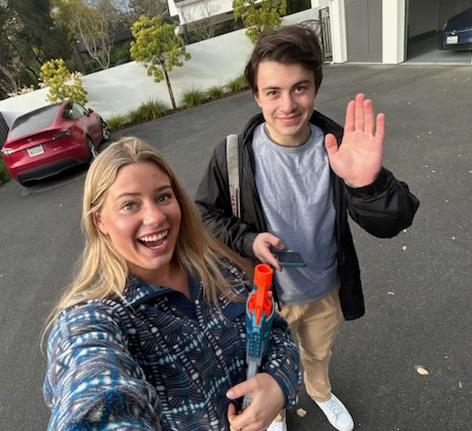

not have the time to join his teammate.
“I gained his trust,” Syon said. He even went as far as to discuss Senior Assassin while eating with Sava and his mom, who cooked for them.
The two then went up to Sava’s room. Syon hadn’t brought his own Nerf blaster, but now he had a way to get his target out. “I found his Nerf guns and I shot him with his own Nerf gun,” he said.
Before his elimination, Sava recorded a highlight of his own, a “devious assassination” of Averi M. while driving her down Highway 101.
Averi’s teammates Samara B. and Anya M., meanwhile, remained in the game throughout March. They were stuck on offense, though, from the start of the game until receiving new targets. They were not able to get past the duo of Brynn S. and 2023 Blammo champion Grant B., but it was certainly not for a lack of trying. (Blammo is a similar game, but played like standard tag instead of with Nerf blasters, and with

CAUGHT IN THE ACT
larger blasters (one to two feet long, Kelly estimated) or spray-painted theirs black.
“My biggest concern is the blasters being disruptive, or teachers getting anxious or concerned about it,” Kelly said.
Class, clubs, athletics, and other meetings are therefore off limits. That said, seniors have had to stay alert during breaks in the school day if they want to avoid elimination, or, on the flip side, capitalize on an opportunity to blast a player.
Given the restrictions on campus, plenty of thrilling Senior Assassin action has happened outside school grounds.
II. Game highlights
Spotlight I: Logan and Syon Cullen and Sava → Anya, Averi, and Samara → Brynn and Grant
One of the most cold-blooded eliminations took place when Syon P. went for a hike with Sava I. and Cullen D. one afternoon, and went over to Sava’s house for dinner afterward. Cullen, luckily for him, did
spoons for defense in place of wands.)
“[Brynn and Grant] didn’t know we had them, and then it became public information and now it’s been completely impossible,” Samara said, the week before targets changed.
To try and prevail against the odds, Samara hid under a blanket in the trunk of Sam P.’s car, and lay waiting for Brynn to come in. Brynn, along with Julia T., did get into the car, but somehow thought to ask if there was someone hiding. Julia, worried someone was trying to blast her, went and checked, and found Bainton when she lifted up the blanket. Julia tried to play it off by keeping quiet, but Brynn was rightfully suspicious and turned around and saw Samara.
“Sam and I orchestrated a whole plan, I was really proud of it, and came away with nothing,” Samara said, noting that lying in the trunk was not comfortable either.
No assassination attempts against Brynn and Grant had succeeded as of April 1. Switching targets was indeed a stroke of
good fortune for Samara’s team.
Spotlight II: Jordan, Julia, and Carina
Navon and Sam Z. → Charlie and Bodie
The team of Jordan D., Julia, and Carina T. tallied four total eliminations before falling out of the game the week the tiaras came into play. They went to remarkably great lengths to surprise a couple of those targets, and they had success to show for it.
The first was Navon S., whom Jordan easily eliminated within the first couple days.
“He announced to everyone on the couches that he lost his wand and so I got him out,” she said.
To follow that up, Jordan drove all the way down from San Mateo to Atherton in order to ambush Sam Z. before school one morning.
Sam had left his wand in his car, not thinking Senior Assassin would be a concern while he was home. Jordan, however, waited over an hour at his house. When Sam finally walked out of his garage, she missed her first blast attempt. A chase into the garage ensued, and Jordan triumphed on her second try, all much to the confusion of Sam’s parents, who were getting ready to leave for work.
Jordan and her team continued on to a new pair of targets after the successful stakeout.
Bodie C. invited Julia into his house, where she returned the welcome with a nerf dart, leaving Bodie’s volleyball teammate Charlie B. to keep their team alive. Knocking him out would be a highly involved operation for Julia and company.
They showed up to a Tulane University accepted students event Charlie was attending, but he was holding his wand the entire time. The attempt—captured on video and posted to Instagram—went awry and only bewildered everyone else in the program.
Still, Julia, Carina, and Jordan stayed undeterred. Charlie left school victorious from a volleyball game one evening and headed over to his girlfriend Ciara D.’ house. Not taking any chances, he carried his wand with him, but relented when Ciara told him to put it down. Ciara picked it up and did not give it back when Charlie asked.
“At that point I was like: Oh, it’s over,” Charlie said.
Unfortunately for him, this was part of a plan Carina had devised with Ciara beforehand. Moments later, on Ciara’ cue— saying “I’m so excited for Bonaire”—Jordan jumped out of a closet and blasted Berk.
“I’m sorry Charlie,” Jordan said after the fact.
The tiara requirement and new targets were instituted have prompted the number of remaining players to dwindle rapidly. Those still standing are the most invested, but with just 12 players on nine teams left as of April 1, the competition’s conclusion is in short order and will likely arrive before spring break.
Soon enough, the winners of Senior Assassin from the class of 2024 will be crowned and get to revel in the glory in the weeks to come.
PAGE 17 ENTERTAINMENT THE NUEVA CURRENT
Photo by Brynn S.
Brynn S. evaded Samara B.'s creative attempt to blast her after Julia T. (right) discovered Samara (left) in the trunk.
Jordan D. drove down to Sam Z.'s house at 7:00 in the morning and waited it out until Sam came outside to leave.
EARLY BIRD GETS THE TARGET
Photo by Jordan D.
Image by Nerf.com
Boys volleyball continues their winning streak
In the midst of an ongoing successful season, the team is gearing up for a potential showdown at the division playoffs
By Gabe H.
Before David Shields ’20 began coaching the boys volleyball team at Nueva, he was an inaugural member of the Upper School’s volleyball team. Having been involved in the volleyball world at Nueva since its inception, he’s had a front-row seat to its evolution.
When the team was started, it was largely recreational, a way for students to decompress after school by focusing on a team sport. They were hardly the winning team that they have shaped up to be in the last two years.
According to Shields, who is participating in his third season as coach, last year was the first of a winning streak. Yet this season has been even more rewarding.
“This season we're off to an even better start than we were last year,” he said.
This growth was exemplified at an early interval in the season. At a home game on Feb. 29, the varsity boys volleyball team triumphed against Sequoia High School, winning 3-2. This came just two days after winning their first game of the season against University Prep Academy, also 3-2.
“We started off really strong with a lot of excitement,” said team captain Cullen D. ’24. Having played volleyball at Nueva since freshman year, Cullen has witnessed the team’s cohesion over the years and marveled at the
strength and commitment of its players.
“The team is getting a lot better, and we're getting more interconnected,” he added.
“Volleyball is a very uplifting sport,” said Kevin S. ’26, adding “we’re a very momentumdriven team, build[ing] off of each other.”
Kevin said that the team enjoys playing video games collectively and embarking on off-campus trips. “Just in general,” he appreciates the community-minded nature of the team.
“It all builds onto our team culture,” Kevin added.
On the heels of their second place result in the Private School Athletic League last year, which prevented them from competing in the playoffs, the boys volleyball team is looking to make a major comeback.
“We’re going to be up against some hard teams this year,” said Bodie C. ’24, a middle blocker for the team. However, he feels optimistic about the team’s success.
“I think we are in a good position to win our league this year,” Bodie said.
After kicking off their season in late February, the team has already seen success. As of April 1, they have won 12 out of 20 of their games, carving a potential path to the
division playoffs in May. So far they have beaten schools like KIPP Navigate College Prep, DCP El Primero High School, and BASIS Independent Silicon Valley, to name a few.

Swimming team splashes their way to success
By Ellie L.
This year has brought a season of change to Nueva swimming. Coaches have switched, roster counts have changed, and the number of practices have increased. For club swimmers like Remi H-C. ’26, it can be challenging to make it to the Nueva practices, given the competing intensity of the school and club practice schedules.
So when the full team assembled at the first meet of the season, spirits soared. Eleven personal best swims were achieved at the meet and three school JV records were broken.
Hannah F. ’27, who joined the swim team this year, learned to trust her body and not “discount [her]self.”
“I [learned to] not be afraid of trying new things,” Hannah said.
For Remi, the meet was a reminder of the “unity” he knows the team will achieve by the end of this year.
“We suffered together, we triumphed together,” said Remi. “[Swimming] connected us.”
As for the rest of the season, goals are set for the WBAL qualifiers in late April, as well as personal goal times the class of ’23 gave
some members of the swim team. For Alaric L. ’25, these personal goal times are what he is focusing on.
“You’re always swimming against yourself,” said Alaric.
This rule applies to even relays, one of the main team oriented events of a meet. Relays require four swimmers, a number that previously limited the swim team to only 1-2 relays. But this year’s swimming team is the largest swimming team Nueva has ever seen, boasting 20 swimmers total. In particular, the girls team, which once struggled to find enough swimmers for the relays, now has enough swimmers to field five relays.
“Although swimming is considered an individual sport, it’s a lot more fun when you compete with a team and can do relays,” coach Cathy Polinsky said. “It really warms my heart to see how the team supports and cheers for each other at meets.”
This sentiment is echoed by swimming cocaptain Noor Z. ’24, who seeks to encourage this camaraderie on the team.
“I just hope [swimming is] a low pressure space where people can have fun [and] grow as a swimmer and teammate,” said Noor. “[Swimming] is a little miserable, [but] it forces us to grow closer and bond.”
In the immediate future, the team is shaping up to compete against Summit Shasta on April 23, a game that they anticipate to be an uphill win.
“Summit Shasta is our biggest competition,” said head coach and Middle School Science Teacher Gabriel Leggott. Nonetheless, the team is well on its road to victory “if [they’re] playing well, connecting, and communicating,” Leggott added.
The team is eager to make it to the playoffs in early May. In order to do so, however, they need to be first in the league.

READY, SET, SWIM!
Maia M. '27 races through the water as teammates cheer her on from the side.
2024 March Madness masterminds

Athletics Rep Zoe B. '24 set up a Nueva March Madness bracket group for students to participate in. Here are some the top results and achievements from up until the Final Four.
Alex W. '24
Alex correctly forecast 15 of the teams in the men’s Sweet 16, and at the end of the tournament’s first weekend ranked 12,670th out of more than 22 million brackets submitted on ESPN. His picks for the later rounds did not fare as well, but the feat he pulled off early on still holds as quite impressive.
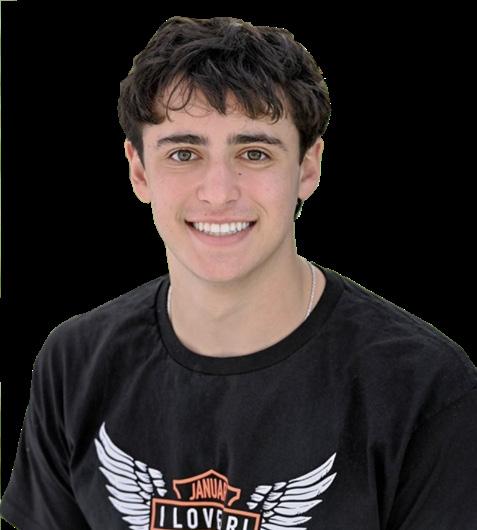
Rohan T. '25
Rohan's bracket momentarily stood in the 98th percentile of all ESPN entries after he accurately predicted all but one of the women’s Sweet 16 teams. He also called Iowa, South Carolina and UConn's runs to the Final Four, putting him at the top of the school bracket pool by the time the semifinals were set. The Iowa Hawkeyes were his pick to win it all.

Connor H. '26
Last year, Connor won the school bracket as one of the two participants to predict Connecticut’s 2023 men’s tournament title. This year, Connor ranked 16th in the group after two rounds, but his selections of UConn and Alabama to reach the Final Four proved correct and he has climbed to ninth. He picked UConn to repeat as champions.
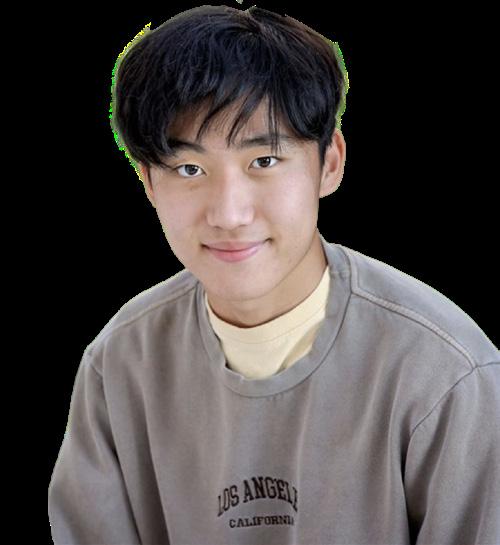
Julia C. '27
Julia ranked third in the schoolwide women’s bracket challenge and second in the men’s before the start of the Final Four. Her women’s championship pick South Carolina still had a shot at the title, and in the men’s bracket, her prediction of a UConn victory over Purdue in the April 8 national final remained a possibility.

04/08/24 PAGE 18 SPORTS
FAREWELL
The Boys Volleyball team is saying goodbye to six graduating seniors.
Photos by Josie B.
Photo by VYPE Media
A powerhouse on and off the field
Behind the scenes of the girls soccer team’s CCS run
By Niam K
Led by their 12 all-league players, the varsity girls soccer team made a passionate run to the Central Coast Section (CCS) Finals. With both the Private School Athletic League (PSAL) Offensive and Defensive Players of the Year Nueva made history by making it the furthest the team has ever been in the competition.
The playoffs started off with a commanding 8–1 victory over San Jose’s Gunderson High that set the tone for the rest of the postseason. Team captain and PSAL Offensive Player of the Year Kaila E ’24 led the way with an impressive four goals.
The team followed their strong outing against Gunderson with a masterful
Lunging to victory
Sophomore discusses fencing journey and pursues gold
By Alvin Y
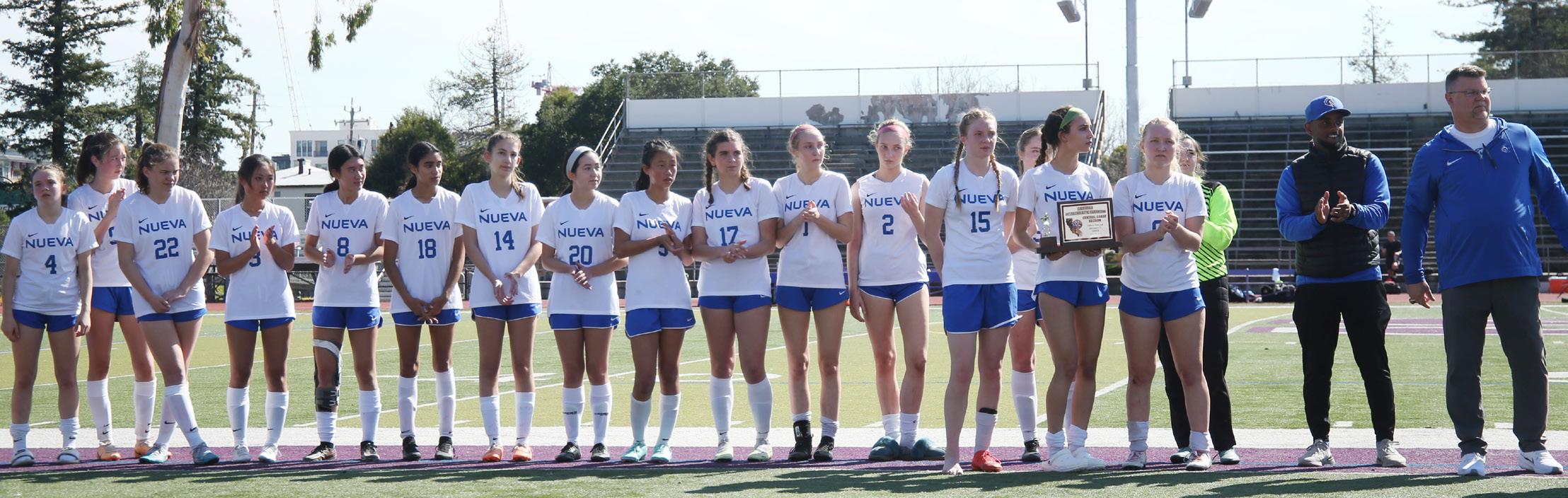
4–1 victory over Monterrey’s York High School in the CCS semifinals. Striker Siri P ’27 recounted the team's second-half comeback.
“We were not playing very strong during the first half of the game, so we came back after halftime more motivated than ever to finish the game strong,” Siri said. “I remember Lena C ’25 being a leader during that game, she played amazing and slowed the game down a ton helping us play calm and connect better.”
The secret behind their on-field success
lies in their preparation and team bonding. Senior team captain and PSAL Defensive Player of the Year Alyse G-M recounted the off-the-field actions the team took leading up to the match against York.
“After we made it past the first round and into the semis during February Break we were practicing every day,” Alyse said. “We did a lot of team dinners, holding everyone accountable making sure they were drinking enough water, eating well. We were really taking that week especially seriously.”

“The first memory of fencing I remember was thinking of lightsabers,” Govind admitted. “I was imagining I was in Star Wars.”
the beep from the system.
Holding his saber at a near 90-degree angle from his arm, he drops his arm and moves away from his opponent’s strike, countering with a blow of his own and landing it. The system beeps, signaling a successful blow, changing the score to 2-1. Govind eventually went on to defeat his opponent in a resounding 15 to 10 victory.

Each fencer typically practices one of the three modern disciplines: the saber, the foil, and the épée. The training for fencers commonly focuses on one of these three disciplines, allowing the athletes to hone their skills and excel during tournaments for their discipline. Govind currently focuses on saber and has done so for the entirety of his fencing career.
Govind, who has attended Nueva since sixth grade, is nationally ranked in the top 30 in the Under-17 Cadet Men’s Saber. Govind has been competitively fencing since age 10, attending a multitude of tournaments. His interest in fencing originated from his love of Star Wars as a child.
Govind typically practices around five days a week, with sessions lasting from three to four hours. Each practice centers around a different aspect of his style, developed after his model, USA fencer Colin Heathcock, as Govind had started competitively fencing around the time when Heathcock started to win tournaments.
“He’s a very fast and strong fencer,” Govind said. “I have access to a lot of his videos, and I’ve got a lot of my fancy skills which I use in tournaments from his tape.”
Fencing tournaments typically occur in two stages: the pool and elimination stages. Each pool consists of small groups of fencers, with each athlete facing another in a first-to-five match until everyone has fenced each other. Once completed, fencers are seeded into multiple brackets on their performance in the pool stages as elimination stages begin, where winners progress and losers are eliminated in a first-to-fifteen match.
In his five years of competitive play, Govind has faced numerous international opponents from China to Mexico and has placed in the top eight of multiple tournaments 26 times in his entire fencing career. Govind's first and most memorable win occurred in Sep 2018 during the Youth-10 Men’s Saber, his secondever tournament.
“It was a big ego boost,” he reminisced. “I talked about it for three years straight.”
However, even with this early success, Govind's latest tournaments have not gone how he wishes them to have gone, most notably in the Junior Olympics, where he placed 114th in Junior Men’s Saber from a field of 300 and 52nd in Cadet Men’s Saber out of 295, losing out in two tight matches during the elimination stages.
In Junior’s, Govind performed solidly in the pools stage, ending with a 4-2 record, seeding him as the third-best in his pool and the 165th in the elimination stages, eventually losing 15-14 in a first-round thriller. In Cadet’s, Govind again placed third in his pool, this
time however was seeded as the 75th and progressed to the third round before unfortunately losing 15-12 in another thriller to the eventual winner of the tournament.
“I felt as though I let myself and my coaches down,” he said. “I believe that with a bit more training, I think I could win both matches next time.”
Govind has faced some bumps along the way, but his ability to move on from the past and focus on his next opportunity defines his mental strength and dedication to the sport. Much of this ability comes from his early years, especially from the help of his parents, especially in the January North American Cup, where Govind lost early on.
“I was really sad after the early loss,” Govind recalled. “But my parents motivated me and told me it was all about cumulative progress. Two steps forwards, one step back. I applied that to my mindset and it worked for the next two tournaments.”
Even with some occasional times when Govind struggles, he always finds a way to rebound. In the March SJCC (Super Junior and Cadet Circuit), Govind first swept the pool stage, with his most difficult round reaching 5-3. He then moved on to the elimination round as he continued his dominance from the pool stage. Govind blew out his first opponent in the elimination round in a resounding 15-3 victory. However, Govind then faced his most difficult opponent in the tournament, where he fenced in an intense 12-15 loss to a higher seeded opponent.
“I did feel as though I could have gone further,” Govind said. “I still performed well, and I will keep practicing and building my skills. ”
Govind's next tournament occurs on April 25, where he plans to attend another North American Cup, this time with hopes of taking gold and winning his first tournament since 2018.
While the teams in past years were successful, this year’s team took it to the next level by achieving their goal of advancing far in the CCS tournament. Ehrlich credits this year's success to a variety of reasons.
“I think this is definitely the best Nueva team I’ve played with,” Kaila said. “Last year I think we relied more on individual talents and this year because our whole team was solid and our whole team was talented we were able to work together a lot more.”
Nueva Golf has record season with new freshmen, a closer culture, and cuts
By Jackson Hayward
The golf team has begun its 2024 season with a new energy, aided by a strong crop of incoming freshmen. However, as a result of that increased participation and a coaching transition, the team has implemented cuts for the first time, moving some former members of the varsity team to JV and leaving some people unable to play for the team at all.
The team so far has had a record season in the seven-school WBAL league. Since ending last year at the bottom of the standings, Nueva is now tied for third place with Menlo, just behind Sacred Heart and Crystal Springs. This is also the first season with new head coach Brian Schultze.
The varsity team this year consists of five freshmen, two juniors, and two seniors. The new blood has been welcomed by the rest of the team.
“It's pretty comfortable for us,” said one of the new freshmen, Cameron L ’27,” since most of the people there are in my grade.”
For those who got cut, the spring athletic season will be a lot more complicated. Being cut from an interscholastic sport leaves most athletes with two seasons worth of P.E. credit needed for the year, with only one season remaining. Some of these cut players opted to have golf be their outside of school sports credit.
But with a sport like golf, where only seven people can play in a match, a limited size might be necessary.
“There’s positives and negatives. I feel sad and disappointed for those people who wanted to try golf,” said Cami Y ’25. “At the same time, we’ve had a record season. We feel like we have a lot more in us to play well.”
In the meantime, the smaller team has developed a closer team culture.
“I’m trying to help make the team more cohesive. This year, we’re having celebratory dinners, trying new fun games after a round, and just fostering a bigger sense of community,” Cami said. “That’s really important to me.”
That closer community is being built at the same time as more tough requirements around practice commitments are being put into place.
“It is somewhat stricter this year. Last year, there was no contractual obligation to go to practices,” said Kevin C ’26, who has played on JV for the last two years. “This year, there’s a strict limit. For JV at least, you can not miss more than three practices.” That policy has been implemented by the new head coach.
PAGE 19 SPORTS THE NUEVA CURRENT
Govind R ’26 stands on the stage in a lamé, a fencing uniform, with a wire attached to his back, ready to fence against the third-ranked fencer in the nation. Remembering his training on explosivity, he awaits for
Photo provided by Govind R
Photo by master1305 via Freepik
Photo by David Gonzales
The high-speed motorsport that has been making laps around the Upper School Fast cars, driver drama, and worldwide popularity
 By Ethan H.
It’s lights out and away we go! Introducing one of the world’s fastest and most exhilarating sports: Formula 1. Few sports are as global as this one. Each race is held at a different circuit around the world, covering five of the seven continents every single year. With cars that race at speeds over 200 mph, F1 boasts iconic brands like Ferrari and McLaren everywhere it’s publicized.
What makes Formula 1 special from other popular motorsports is that each of the 10 teams is responsible for building their own car (except the engine), hoping to craft a chassis that maximizes speed, aerodynamics, and durability. Because of this, F1 is more than just a competition between the drivers, but between the ten manufacturers, or constructors, as well.
Interested yet? Here are the basics.
In Formula 1, there are two separate scoring systems. The first is for the drivers. There are two per team, and each is competing to earn individual points based on their race finish positions.

Max Verstappen
Red Bull’s unstoppable force. He is the reigning 3-time world champion and just broke over a dozen records this past season including most wins and most points in a single season.
All drivers who finish in the top 10 earn points that weekend. 1st place earns 25 and 10th earns one. Those who finish between 11th and 20th go home empty-handed. Whichever driver has the most points at the end of the season wins the World Driver’s Championship.
Separately, each team is fighting to win the World Constructor’s Championship, which is a cumulative score of their two drivers’ points. Each F1 event, or Grand Prix, takes place over a weekend and consists of three types of sessions across three days. First are the practice sessions, when drivers can learn the circuit and teams can test new upgrades on their cars. Next is qualifying, where each driver attempts to complete the fastest lap. The faster their lap, the higher their starting position is. Whoever gets the fastest lap wins pole position, the frontmost spot on the starting grid. Finally, the race is held on the third day of the Grand Prix weekend.
Recently, Formula 1 has grown significantly in popularity and made its way around Nueva as well. For Mia G. ’24, watching Formula 1 was a way for her

Lewis Hamilton
The GOAT. The British driver for Mercedes is a 7-time world champion. However, his championship days have come to an end, and the last time he won a race was in 2021. In February, Hamilton announced that he will be joining Ferrari next year with hopes of returning to his winning ways.
Volleying the team to success
Boys tennis season has seen a tripled win rate and a new coach
By Kayla L.
On the first day of practice, boys tennis team captain Oliver C. ’25 walked towards the practice vans in the Café Courtyard. Before him, he saw a large group of new freshmen teammates with their rackets out, already bouncing tennis balls and practicing their volleys. He pointed to this moment as his favorite of the season so far.
“They were ready. That excited me, because I was like, ‘this season is going to be great!’” he said.
His prediction proved true. Out of the nine matches the team has played so far, they have won five. This win record is significantly improved from last season, when the team won two matches out of 14. This season, the team even scored a 5-2 win against The King's Academy, to which they lost 1-6 last year.
Oliver primarily credits their newfound success to his four new ninth-grade teammates. “It’s tough when you lose players on varsity, but this year’s freshmen have been able to be very good at filling in the gaps,” he said.
Beyond an improved defeat rate, this season the tennis team has also welcomed a new coach, Gerald Sargeant. Additionally, the
team spirit and attendance dynamics have shifted.
“I do think people are more motivated to to show up. That's why there's more attendance, and hopefully that'll lead to match victories,” shared team member Vian Y. ’26.
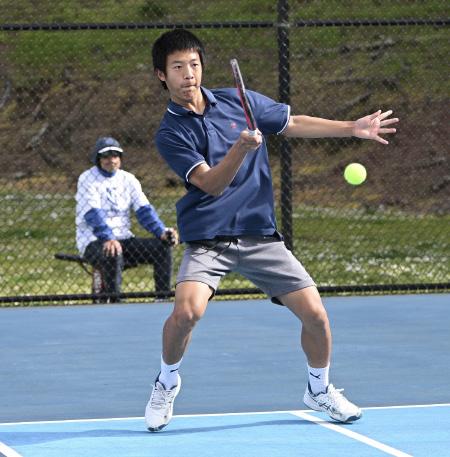
SMASHING WINS
to become closer with her dad. Together, they watched Netflix’s docuseries Drive to Survive, which covers Formula 1’s races, off-circuit politics, and everything in between.
“At first, I would be in and out of the room, standing in the corner watching the show,” Mia said. “But in the end, I got hooked and we binged all four seasons together. It became our thing."
Mia believes that the show is a great introduction for someone who may want to learn more about Formula 1, citing its ability to showcase the drivers and behind-the-scenes elements of racing in an engaging medium.
This year, Mia founded a Formula 1 club at Nueva with fellow fan Averi M. ’24. Like Gonzales, watching Formula 1 was a way for Averi to bond with her dad, who formerly competed in 24 Hours of Le Mans, a European endurance race.
“Racing has been a huge part of my life since I was little,” said Averi. “I have a lot of fond memories of going to watch and hang out [at races] as a kid.”
multifaceted it is. Formula 1 isn’t just a sport for car junkies, it’s also for strategists, physics fanatics, and engineering lovers too.
Formula 1 is even for the people who love gossip and drama, as it’s remarkably easy to get invested in the relationships between the drivers, many of whom grew up competing against each other in go-karting.
Another aspect of Formula 1 that Mia finds impactful is the female presence in the sport, specifically naming Hannah Schmitz, Red Bull’s head strategist who has been crucial to the team’s recent success, and Susie Wolff, the director of F1 Academy, a separate femaleonly racing series that aims to increase female participation in motorsport.
Beyond all the details, both Mia and Averi see Formula 1 as a way to connect and an easy topic to strike up a conversation about since there are so many moving parts.
“There’s an awesome little community around it,” said Averi. “And, it can create some unexpected friendships too,” added Mia.

Averi, she loves the sport because of how

Lando Norris
McLaren’s homegrown hero. The 24-year-old is still hunting for his first win in Formula 1, but he has established himself as a talented driver with 13 podiums and 645 career points over his first five years with McLaren.
Carlos Sainz
El Matador. The Spaniard is Ferrari’s second driver, though he needs to find another team next season with Hamilton’s looming arrival. He is the only non Red Bull driver to win a race in the last two Formula 1 seasons.
Track and Field team excels in speed—and community
Team focuses on bonding as a prerequisite to good meet performance
By Neel G.
When the senior captains left for college last year and three new coaches joined this year, the track and field team was committed to continuing its tight-knit community despite its large number of athletes. And, so far, that community has manifested both on and off the track through team hangouts and weekend meets.
“One of my biggest goals for the team is to be cohesive and supportive and to enjoy spending time with each other,” said long-distance coach David Eik. “People tangibly run better if there are teammates out there supporting them, on days that they have good performances and on days that they have bad performances.”
Six out of seven days, the track and field team is hard at work at the College of San Mateo or in the Nueva weight room. Whether freshman or
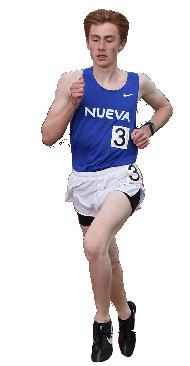
senior, each team member excels in tenacity, as they’ve been working hard since unofficial practices started back in December. Many have already improved their personal best times, which was unexpected this early in the season.
“The new freshmen and returning sophomores have extraordinarily improved,” said one of the team captains Teddy G. ’25. “I’m very excited to see what the season brings for everybody.”
So far, that improvement has been evident on the track and field.
With three successful meets behind their backs, they look forward to a season full of growth and passion. And Eik, along with the rest of the coaching staff, are eager to foster a speedy, thriving team.
“They're looking really strong. I would say the first couple of meets have been confidence boosters, for sure,” they said.
“And, there's a lot more growth to happen throughout the season. I know the coaching staff is really excited for what's to come, and I get the sense that the athletes are as well.”
04/08/24 PAGE 20
SPORTS
Photo from Motorsport Images, photo illustration by Owen Yeh-Lee
Photo by Diane Mazzoni
Harrison Q. '27 is one of four freshmen on the varsity team, contributing as both a singles and doubles player.
